American College of Dentists | International College of Dentists | Pierre Fauchard
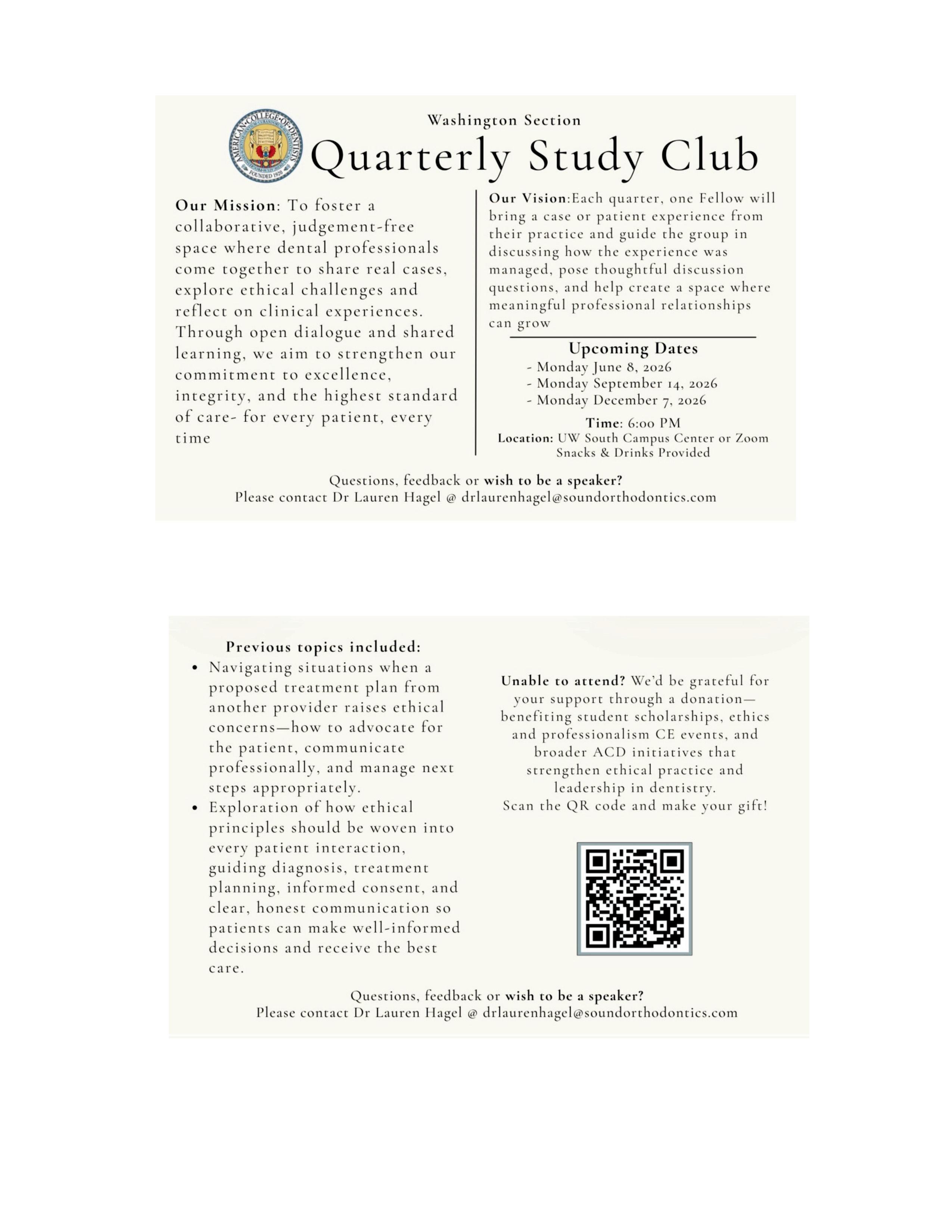
American College of Dentists
The mission of the American College of Dentists, ACD, is to uphold excellence, ethics, leadership and professionalism in dentistry. This honorary organization is known as “the conscience of dentistry” and the College has a current emphasis on leadership development.
International College of Dentists
The USA Section of the International College of Dentists (ICD) recognizes and promotes excellence in leadership with an emphasis on service.
Pierre Fauchard Academy
The mission of Pierre Fauchard Academy, PFA, is to recognize and develop outstanding leadership in the profession of dentistry. While the objectives of this honorary dental organization are many, education and support of dental students is an important focus.
Washington Section Tri-College Day
TMr. Scott Henderson with support of Washington Section leaders in the honorary colleges ACD, ICD, and PFA. ACD Section organizers included Darcie Morris, Susan Adams, Dat Giap, Robin Henderson, Lauren Hagel, and Larry Garetto. The ICD organizer was Mary Krempasky Smith and PFA organizers were Audrey Taft and Kim Trieu.
The day was designed to expose attendees to the multi-faceted and transformative
Speakers were experts in their field, yet the intent was not for them to take attendees on a deep dive of their subject matter but, rather, to use a TED Talk-style of abbreviated sharing
technology that is Artificial Intelligence, while also providing thoughts on important considerations for its ethical use. Speakers were experts in their field, yet the intent was not for them to take attendees on a deep dive of their subject matter but, rather, to use a TED Talk- style of abbreviated sharing to convey their message, encouraging attendees to remain inquisitive. This approach, and the order in which the speakers presented, was intended to help attendees discern how to address AI going forward. This is especially important given the rate at which this technology is evolving.
While the objectives of the day were to grow our aptitude around AI and enjoy fellowship amongst colleagues, the overarching goal was to raise money to support student scholarships that each of the three organizations award to dental students.
“ TECHNOLOGY CHANGES HOW WE PRACTICE, BUT ETHICS DEFINE
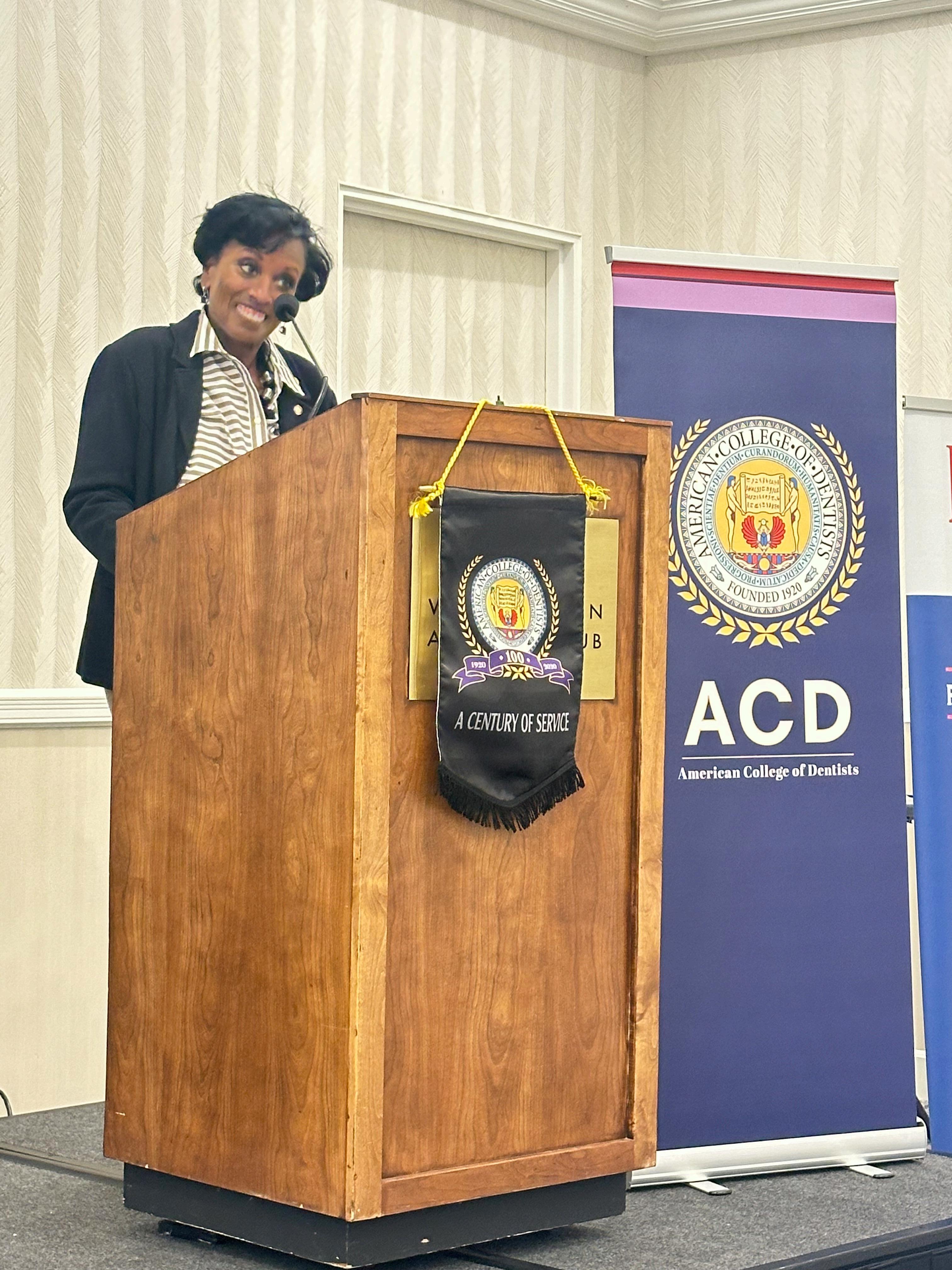
“May our leadership reflect courage in uncertainty, clarity in complexity, and unity in purpose.”
LaJuan acknowledged that we gathered with gratitude and purpose, mindful of the privilege to serve as healers, leaders, and stewards of trust within our communities.
Speaking to a room of leaders in dentistry, she asked that “our leadership reflect courage in uncertainty, clarity in complexity, and unity in purpose.”
She spoke to a “vision for the future where innovation enhances, not replaces, the human touch.”
LaJuan asked for our discernment to use artificial intelligence with “humility and accountability.” That we not only consider “what is possible, but also what is right.”
She asked for our strengthened “commitment to compassion and to the dignity of every patient we serve” with the remembrance that “these tools may guide us, but it is the human heart that gives them meaning.”
Dr. Hall’s words of inspiration for the day ahead proved to not only evoke our moral authority and bring focus and inspiration to our gathering, but it was as if she could predict how our study of AI would unfold. Al of the speakers that contributed to our learning would touch upon leadership being very important to how this technology will ultimately be used and also to the importance of distinctly human qualities that these tools cannot replace.
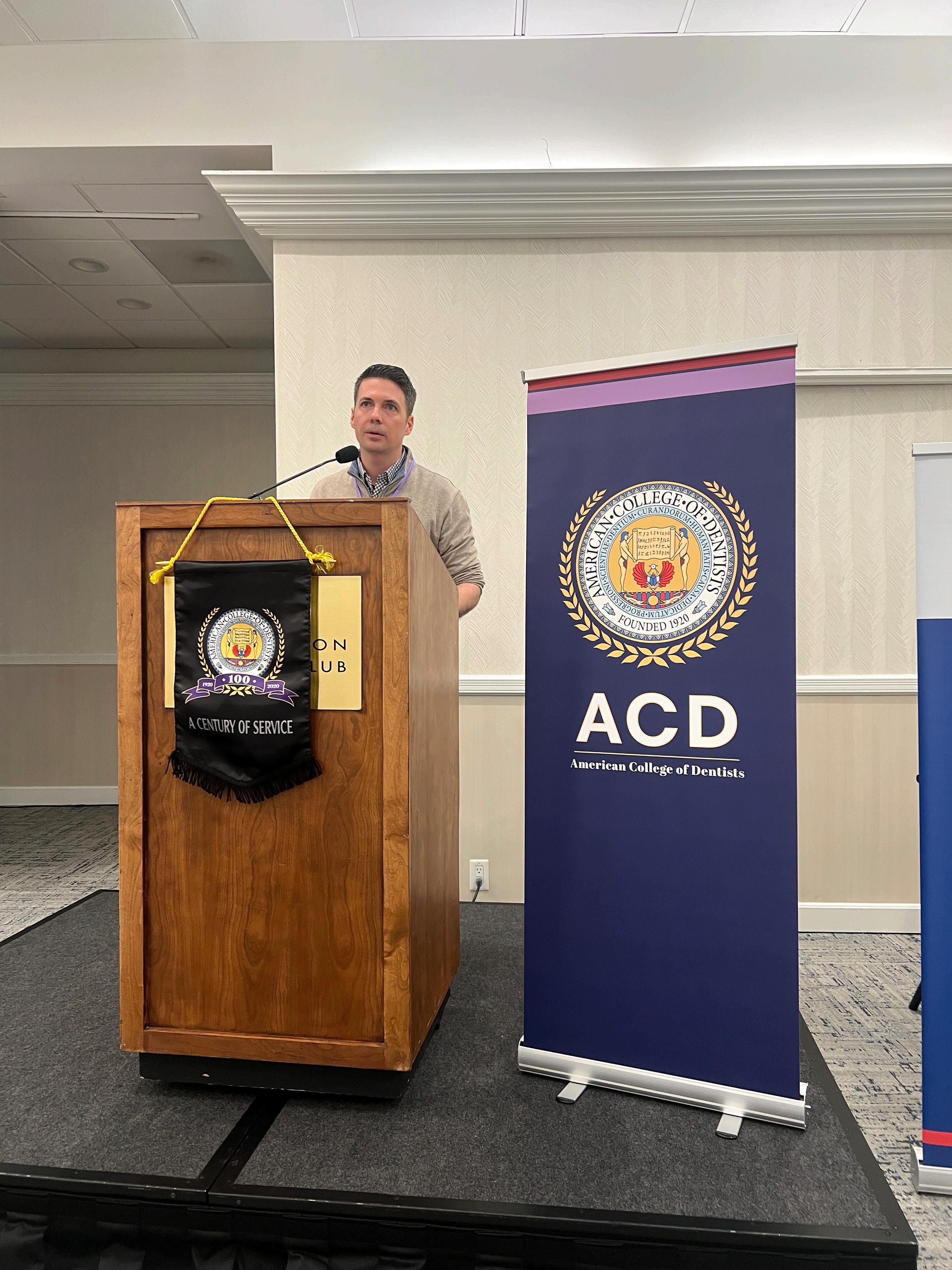
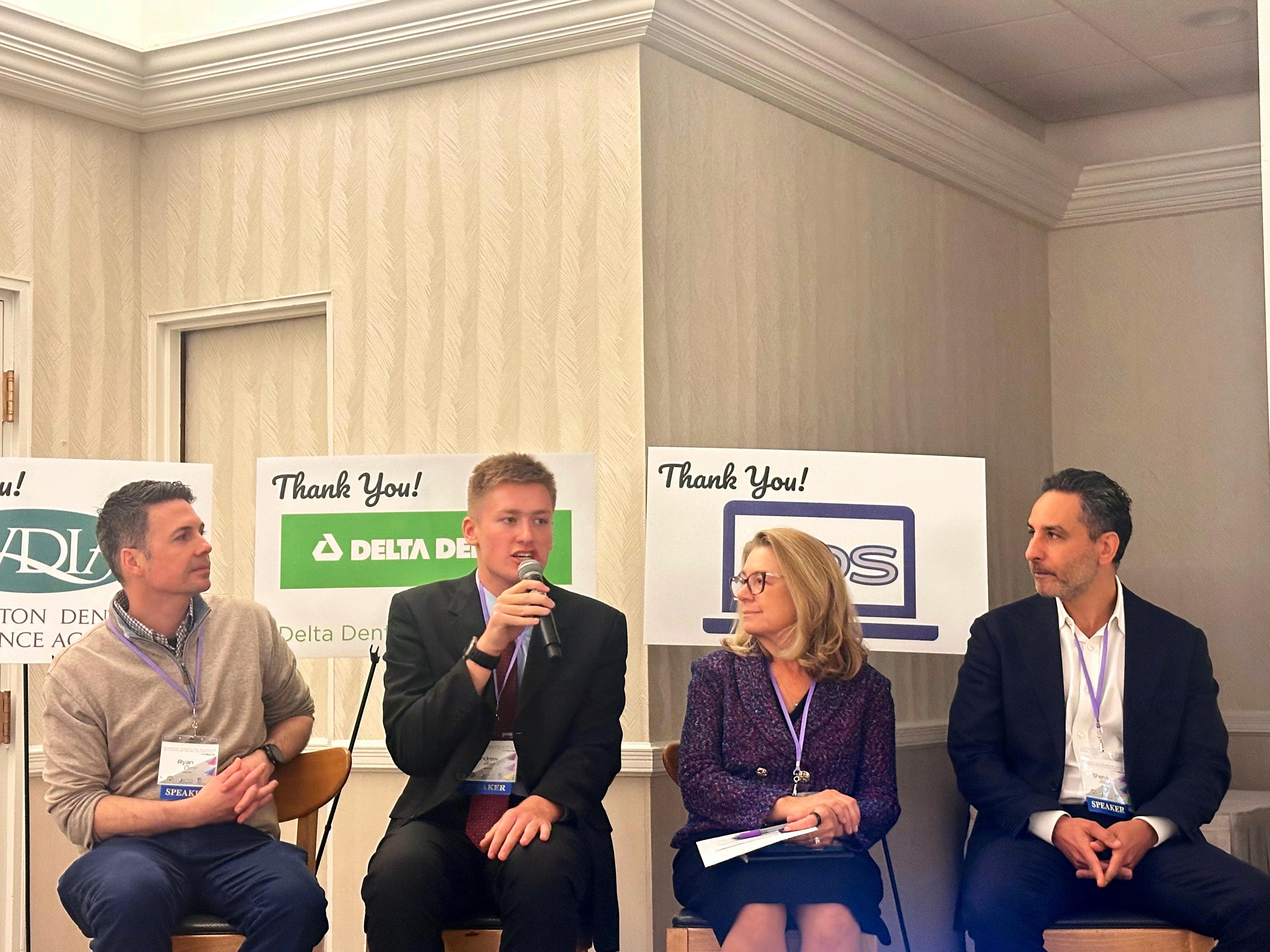
Cloud and AI at Microsoft, provided a keynote address full of powerful takeaways, not only on the use of AI in general, but also about the use of AI in dentistry. Ryan spoke to the intersection of AI and ethics and provided guidance on how dentists could think critically about this innovative technology in the context of their responsibility to patients. He reminded us that AI is already being used in dentistry with AI-assisted detection of early caries having sensitivity rates above 90%, where unaided detection is 65-70%. Ryan shared that AI does not diagnose, explain findings, answer questions, or treat the patient. It is the dentist that performs these roles. He stated “this is what trust looks like—- connection, presence, and joy —- and this is what must stay the same. Machines see patterns and dentists see people, and together they go further.” He provided other examples from outside of dentistry to further illustrate that “AI and human discernment go further together.”
“Ryan acknowledged that dentistry is very “human work” and while AI makes us faster and more efficient, “efficiency has a gravitational pull to it” with the risk being that “we allow efficiency to erode the human aspect. “ He stated that the defining question going forward will be the who prioritize humanity and trust in patient care.
The risk is that we allow efficiency to erode the human aspect. ” Ryan Currie
The guidance that Ryan provided to how dentists could employ critical thinking around AI was with the Jesuit concept of cura personalis, meaning “care for the whole person.” Dentists must not lose sight of dentistry being deeply human work treating patients who are vulnerable and relying on trust. Where AI increases speed and efficiency, instead of rushing, the dentist can slow down and shift the focus from just the tooth to the whole person. Ryan’s thought for the future is the more important the tools become, the more important that human qualities and professionalism become. He states that patient loyalty is not because of software. Rather, patients return because they trust their dentist. In closing, Ryan encouraged us to stay curious about the technology. His insight and many thoughtprovoking statements were the perfect way to start a day in consideration of the innovation, application, and ethical responsibilities around AI in dentistry.
Ryan Currie works at Microsoft where he focuses on AI-powered guidance, developer platforms, and building secure, trustworthy systems that globally serve both companies and individuals to achieve more. He will graduate with honors in May with a PhD in Leadership Studies from Gonzaga University. His research explores skills, leadership, and human-machine collaboration in the age of AI.
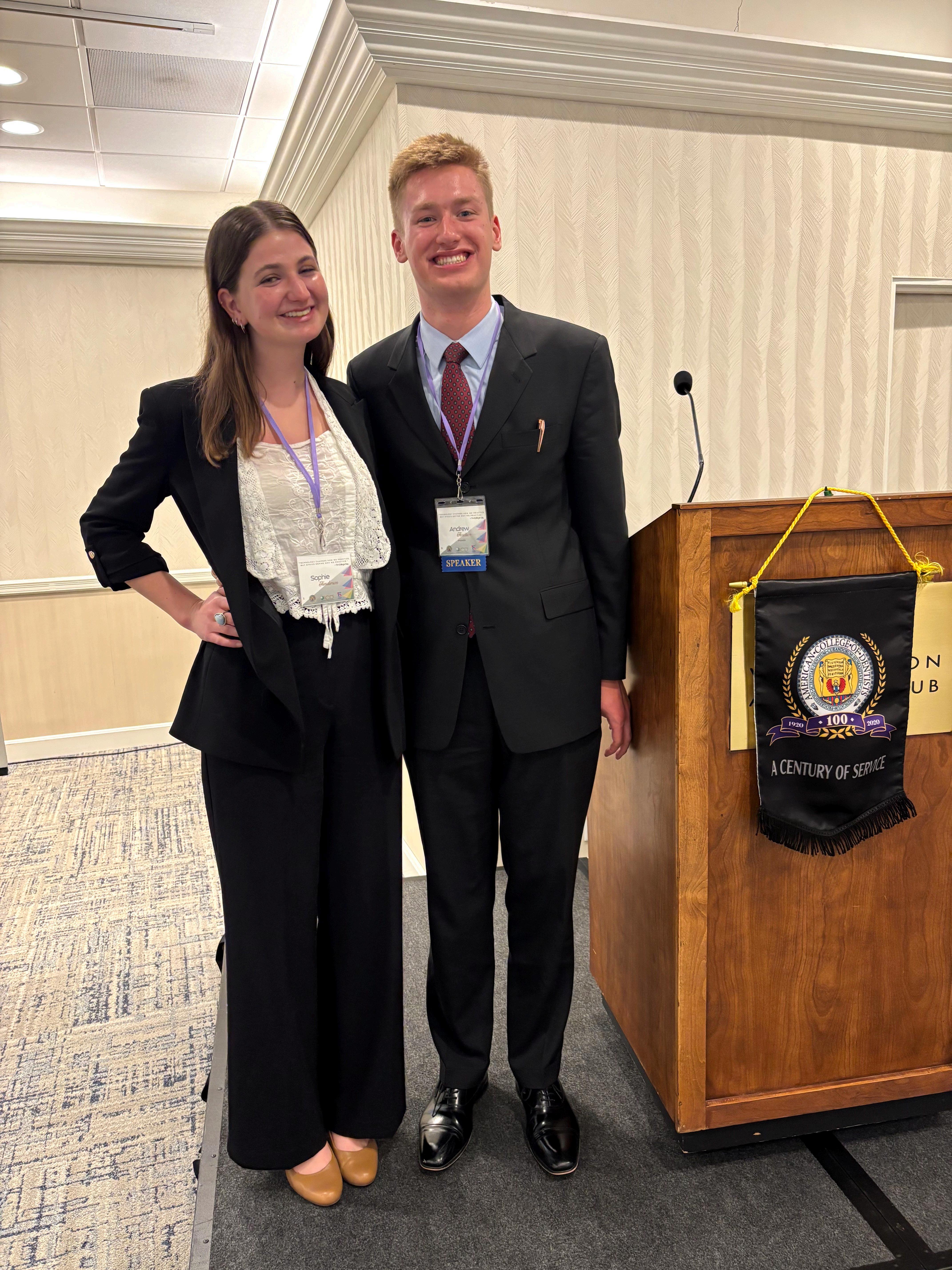
Andrew Howison, undergraduate student at Gonzaga University, is, according to his 2025 ChatGPT annual report, in the top 1% of ChatGPT users. His presentation was titled “Not Cheating, Just ChatGPT-ing.” Andrew kept us entertained as he described how he initially thought this would be the “easiest presentation ever” because he would simply have Chat create it. He then described the failures he experienced around that before moving on to highlight other examples of limitations of AI.
Andrew uses ChatGPT an average of 42 times per day for a wide variety of topics. He gave examples from his use of ChatGPT in training for a triathlon, for travel, and for help with academic studies. During use of ChatGPT in each of these applications, Andrew described how things were going along great with his use of AI— his endurance and speed were improving as he trained for his triathlon, he
“Don’t rush the plateau. It’s where your endurance becomes character.”
510 addition to post-market surveillance obligations.
brain activity when writing using AI versus just Google or using ones own brain— these instances, along with the failure of Chat to generate the “easiest presentation ever” for Tri-College Day, caused Andrew to pause and consider his use of AI.
Andrew realized that although AI is very valuable for some tasks, there are limitations around the more human conditions of resilience and perseverance. He recalled his ChatGTP annual report and the AIgenerated quote from his report: “Don’t rush the plateau. It’s where your endurance becomes character.” He realized that for some tasks— like athletic training, travel, academia— struggling through challenges and experiencing plateaus are how we build character and resilience and these are very human experiences that AI cannot do for us.
Andrew Howison is a student at Gonzaga University majoring in Business Administration with a concentration in Law and Public Policy. He is also pursuing minors in Philosophy and Entrepreneurial Leadership. A contracted Army ROTC Cadet and Army scholarship recipient, Andrew serves in a leadership role within Gonzaga’s Bulldog Battalion and he also serves as one of two student Regents on the University’s Board of Regents.
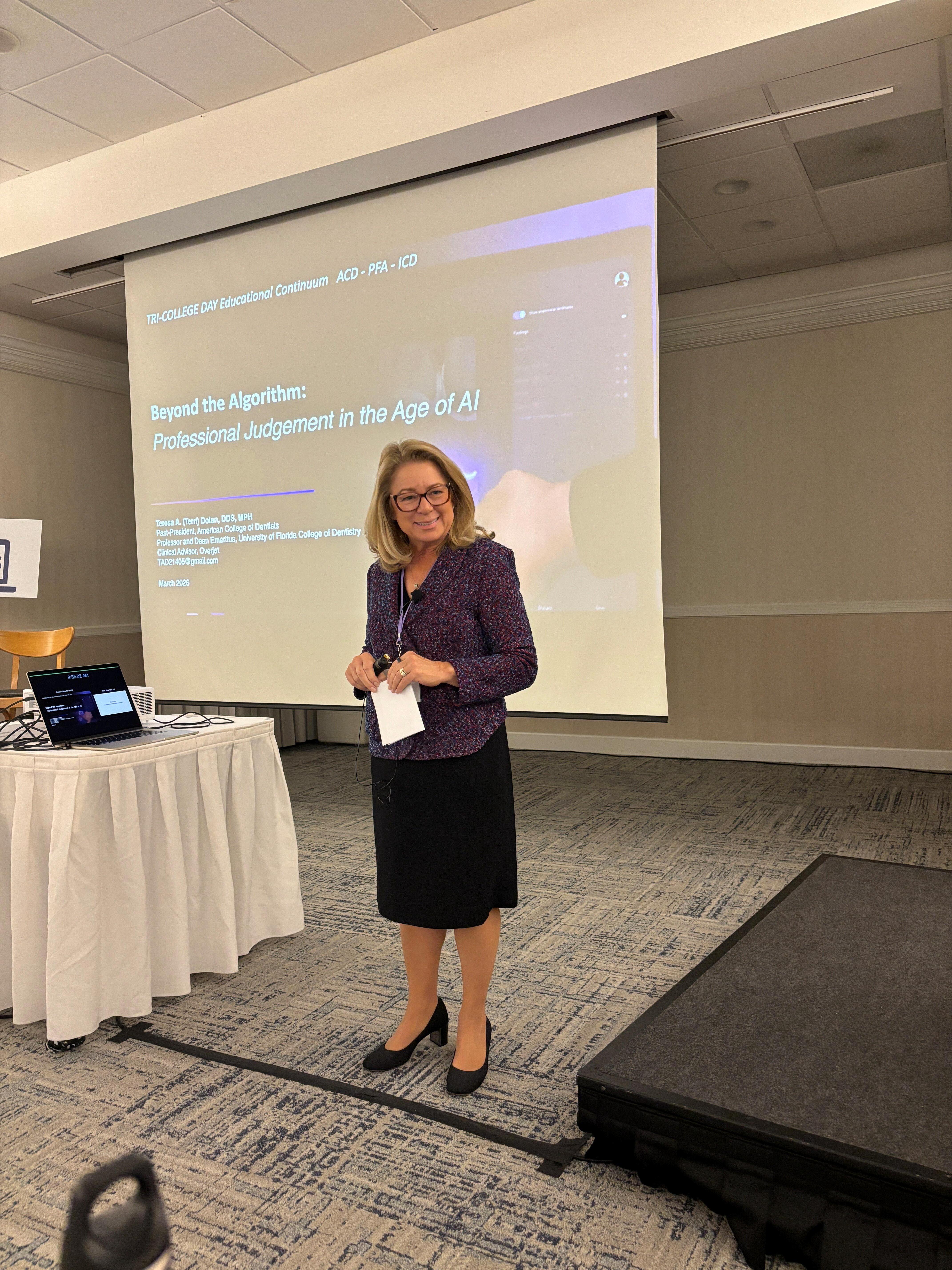
Dr. Dolan shared the framing around AI being the “Fourth Industrial Revolution,” whereas the first was the steam engine, the second was electricity which enabled mass production, and the third was the internet age which included email and texting and time communication. Unlike the previous revolutions, this one is happening at an exponential pace.
“ The algorithm sees pixels, you see a person.”
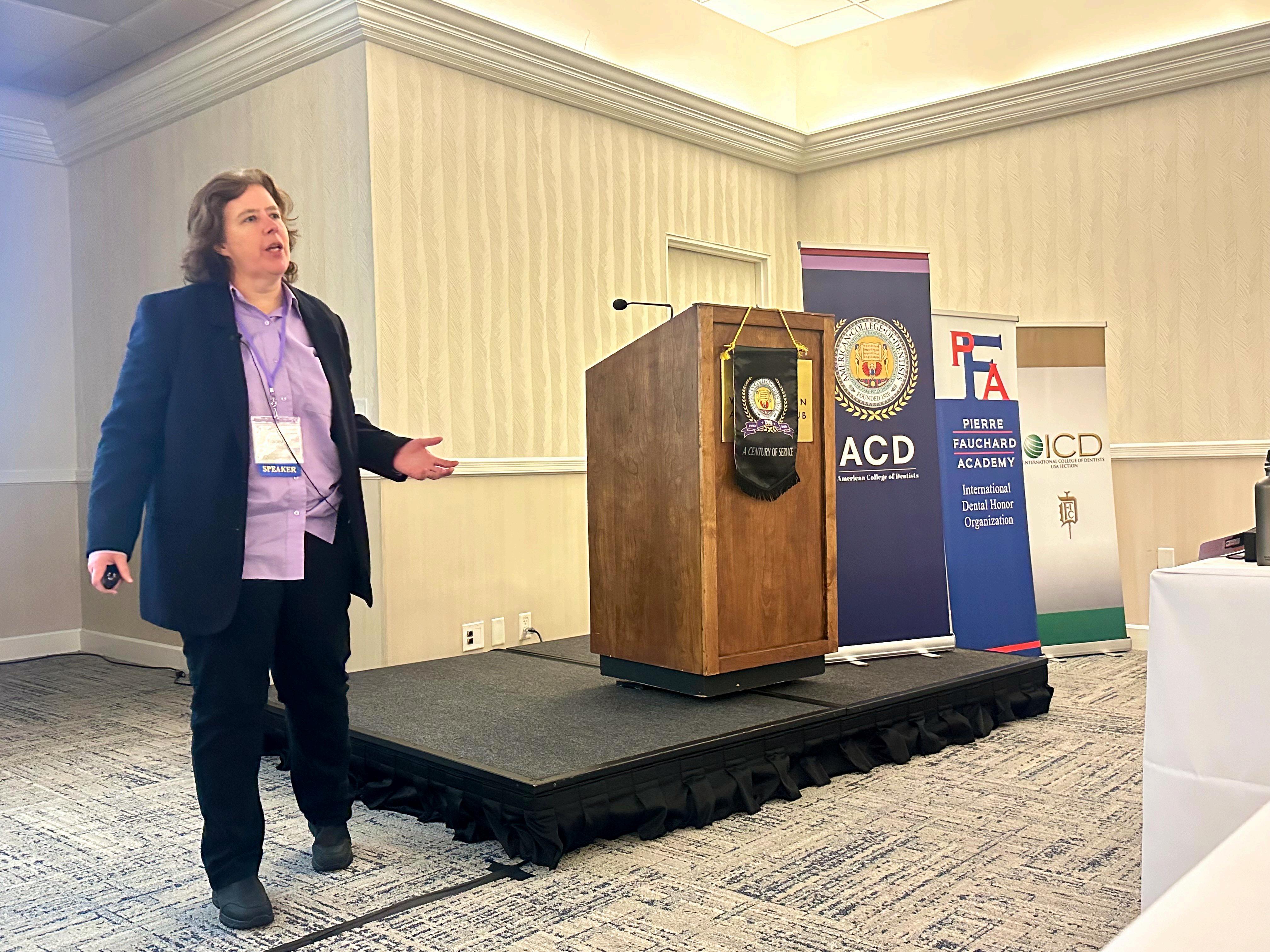
Terri shared a 2019 study that showed the impact that time pressure has on diagnostic accuracy including a 40% reduction in caries detection and 67% reduction in detecting signs of periodontal breakdown. This large variability contributes to inconsistencies in diagnosis and undermines patient trust. And, since a 2024 study showed that patients decline of recommended treatment, whereas with an AI highlighted finding of of people say they plan to follow through with treatment recommendations, the augmented value appears to be there in addition to the augmented intelligence. Importantly, highquality dental radiographs are
Terri’s presentation built-up to the pinnacle point being the ethical considerations in dental AI. She shared that “The algorithm sees pixels, you see a person.” She shared there are four ethical considerations. The first being Algorithmic
Washington Section Tri-College Day
Bias, as the training data for the software is largely insured urban individuals, which does not represent all communities, and therefore introduces bias. The second ethical consideration is Data Privacy due to the fact that dental radiographs are personal health information and, as such, must be protected. The third is Informed Consent and Communications, meaning that patients should understand that AI is being used and clinical teams should be knowledgeable about it. The fourth is Diagnostic Equity, as there is potential to worsen disparities if not carefully implemented.
Terri encouraged reflection on excellence, ethics, and leadership when evaluating AI tools and for careful review of indicationsfor-use, clinical studies, FDA documentation, integration with current systems, and user interfaces.
Dr. Teresa (Terri) Dolan, Past President of the American College of Dentists, is a Clinical Advisor and former Chief Dental Officer at Overjet. She previously served as Dentsply Sirona’s Chief Clinical Officer, leading the global Clinical Affairs function. She is also professor and dean emeritus of the University of Florida College of Dentistry where she served as dean and chief academic officer 2003-2013.
Tracey Hayes is an Associate Professor at Gonzaga University in the Department of Communication and Leadership. Her topic was “Ethical AI: The Quandaries & Questions.”
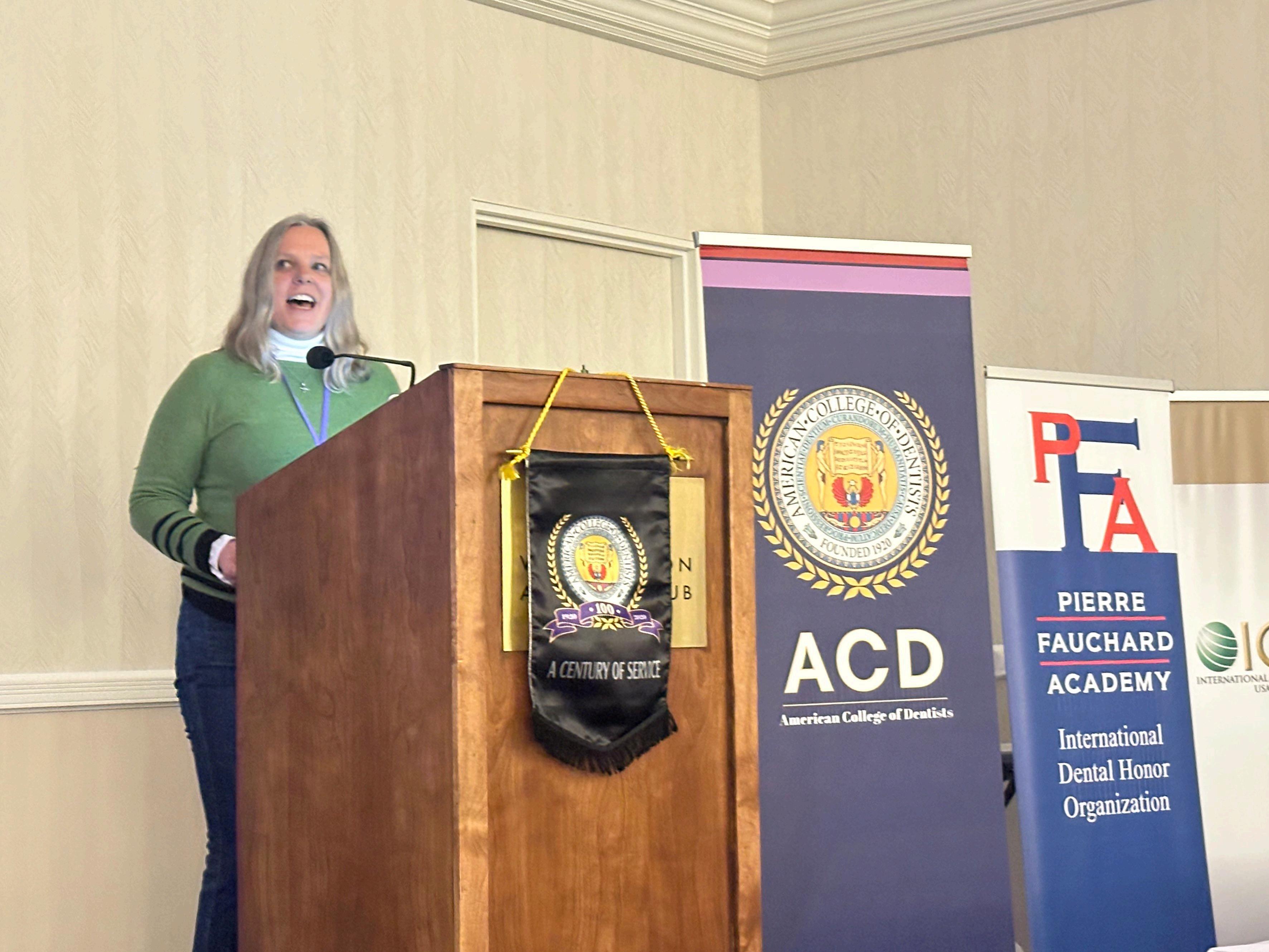
Dr. Hayes brought to light some of the ethical challenges and questions that are arising from the incredibly rapid advancement of AI. Her hope is that attendees will recognize “aha” ethical moments in everyday AI use.
“Dentistry isn’t a prompt. It’s a sequence of decisions under uncertainty.”
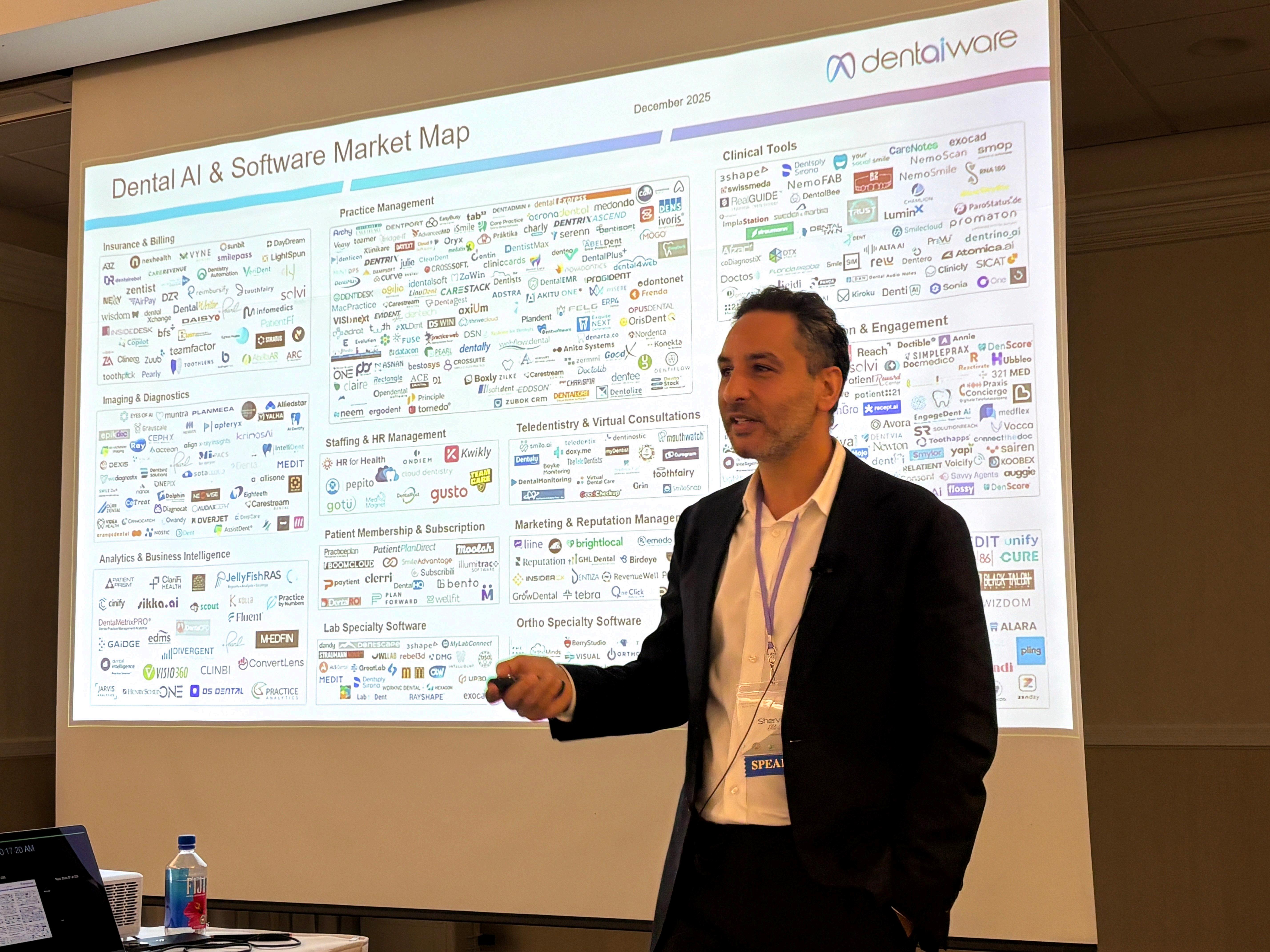
Shervin Molayem private practice periodontist specializing in the oral-systemic connection and advanced dental technology. His presentation was titled “Integrating AI into Your Workflow. Hard Truths and Clinical Payoffs.” Dr. Molayem highlighted current pain points in dentistry because “modern dentistry is clinically complex, timepressured, and fragmented, yet clinicians are expected to deliver consistent, trustworthy decisions without timely support, shared language, or aligned systems.”
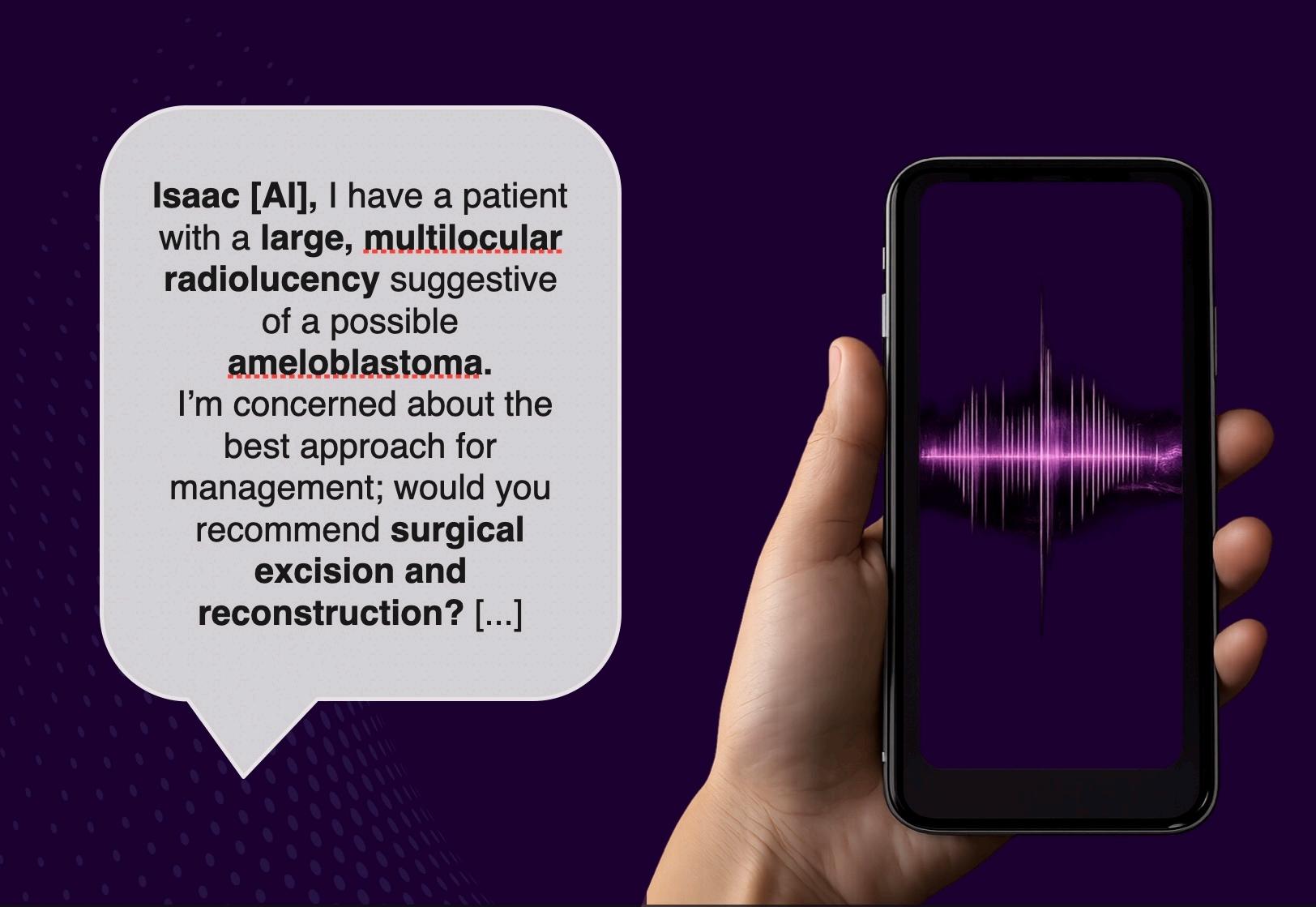
He states that generic AI fails because “dentistry isn’t a prompt, it’s a sequence of decisions under uncertainty.” As such, he co-founded Trust AI, an AI native dental patient management software. A key feature, is “Issac,” a free AI medical-dental “co-pilot” trained on dental literature and real-life cases. Issac has achieved 100% on his medical boards and is trying to get 100% on dental exams. Issac is accessible using your phone. Shervin states that the vision is to augment dental professionals, improve patient care, and restore trust in the profession.
Dr. Shervin Molayem is co-founder of Trust AI as well as Chief Dental Officer at OralBiolife. He is a graduate of UCLA Dental and USC Periodontics and has been in private practice as a periodontist for 16 years. He consults with dental startups, advises on periodontal and oral health products, and hosts podcast, “Voices of Dental AI.”
Her first example for consideration was the Waymo that she took to get to the airport in order to attend Tri-College Day. For her, the advantage in the use of an autonomous car meant that her family didn’t have to take her to the airport in the very early morning and she has had past issues with safety using Uber and Lyft. The ethical concern that she identified was a possible loss of jobs for human drivers with an increase in use of autonomous vehicles. She cited that 70% of U.S. goods move by truck and, where there could be reduction of error tied to human qualities of fatigue and poor driving decisions, we need to reflect on the employment and social impacts brought about by autonomous vehicles.
Tracey brought to light the inherent bias that exists in AI both from the standpoint of how AI becomes bias from learning from data that is bias to how AI builds in diversity, even if it makes no sense. An example of this included the prompt of “Generate an image of a 1943 German soldier” to which an output included an Asian female, an African-American male, and a Caucasian woman all of which are historically inaccurate.
The issue of data privacy was explored through many examples which illustrated the lack of control individuals have over much of their personal data.
She shared the ethical issue of sustainability as there is 9-10x the energy consumption for use of ChatGTP versus Google, which also includes high water use. Through examples of this fact, she urged thoughtful consideration to use AI when it is truly needed versus when a regular search or simpler tool would suffice.
Dr. Hayes shared concern with “outsourcing humanity” to AI because it is easier or comforting. An example she gave was “grief tech” where companies create avatars of deceased loved ones so people can continue to converse with them. The ethical questions she asked were “Does this help grieving, or does it hinder the grieving process and prevent moving forward?” She also questions whether the deceased explicitly consented to their likeness being used in this way. She pointed out that everyone will experience loss, and society needs to think through how to handle these technologies and the ethics of consent and emotional impact.
Tracey shared a story to demonstrate that humans can still “beat” AI and that human agency and creativity matter.
Tracey Hayes received her Ph.D. from Arizona State University in Writing, Rhetorics, and Literacies. Her research focuses on digital spaces and how these spaces impact our lives personally and professionally. This includies the social, economic, mental, and ethical aspects of our lives, and how we interact and communicate within these spaces. She was recently awarded the International Education Council in Global Engagement Faculty Development Grant for the Proposal “Across Boundaries: Ethical and Responsible AI” at Erasmus University in Rotterdam, The Netherlands. She is involved in the development and creation of the “Leadership in the AI Revolution” Graduate Certificate for the School of Leadership Studies at Gonzaga University.
Róisín Lally is an Assistant Professor in the Doctoral Program in Leadership Studies at Gonzaga University and her presentation was titled “From Human Imagination to Artificial Intelligence.”
Dr. Lally excitedly shared thought-provoking exploration of artificial intelligence through a philosophical lens, with urgent implications for the future of dentistry. Her central message, based on her life’s work on the philosophy of technology, is that technology is not separate from us it is an expression of human imagination, culture, and values. Dentistry, and its technological advances, is the same in that it is a reflection of human innovation.
Drawing on philosopher Gilbert Simondon’s concept of ontogenesis of technical objects, Dr. Lally described how all technologies including dentistry evolve through stages of development. From early tooth extractions and handcrafted dentures to today’s digital workflows, dentistry reflects a continuous process of refinement shaped by human needs and imagination.
AI, like many early technologies, is currently in an elemental stage potential but not yet fully defined. For
“
dentistry, this presents a unique and important opportunity to shape how AI is used in diagnosis, treatment planning, and patient communication; to ensure it enhances, not replaces, clinical judgment; and to align technological adoption with professional values.
Dr. Lally cautioned against using systems purely as tools for efficiency and control. In dentistry, this could result in overreliance on automation, loss of humancentered care, and ethical blind spots in decision-making. She encouraged what philosophers describe as a more “poetic” or thoughtful engagement with technology.
Before integrating AI into practice, Róisín encouraged clinicians and leaders to ask:
• What problem are we actually trying to solve?
Do we need this level of technology?
These questions are especially relevant as AI tools rapidly enter clinical workflows. Ethics should not be added after adoption they must be built into technology from the start.
embedded in the technology before we use the technology.”
As dentistry enters an AI-driven era, the profession has a rare opportunity not just to adopt new tools, but to intentionally shape the future of care
Dr. Róisín Lally’s academic work explores the ethical, philosophical, and cultural implications of technological development, with a particular focus on the historical context and future trajectory of artificial intelligence. At the intersection of ethics, technology, and leadership, Dr. Lally brings a distinctive lens to the study of AI.
TECHNOLOGY CHANGES HOW WE PRACTICE, BUT ETHICS DEFINE WHY WE PRACTICE. ” — Tri-College Day 2026
specialized legal background to the stage of Tri-College Day, as he has worked for over 25 years at the intersection of health care, law, and all things digital.
Dave acknowledged that “the pace of change is humbling” and that he has three reasons for sleepless nights around the topic of AI: excitement, fear of job displacement, and concerns for future generations. He referenced the once technological advancement of electricity, stating that when it came out, “it could burn the city down or it could light the city up.”
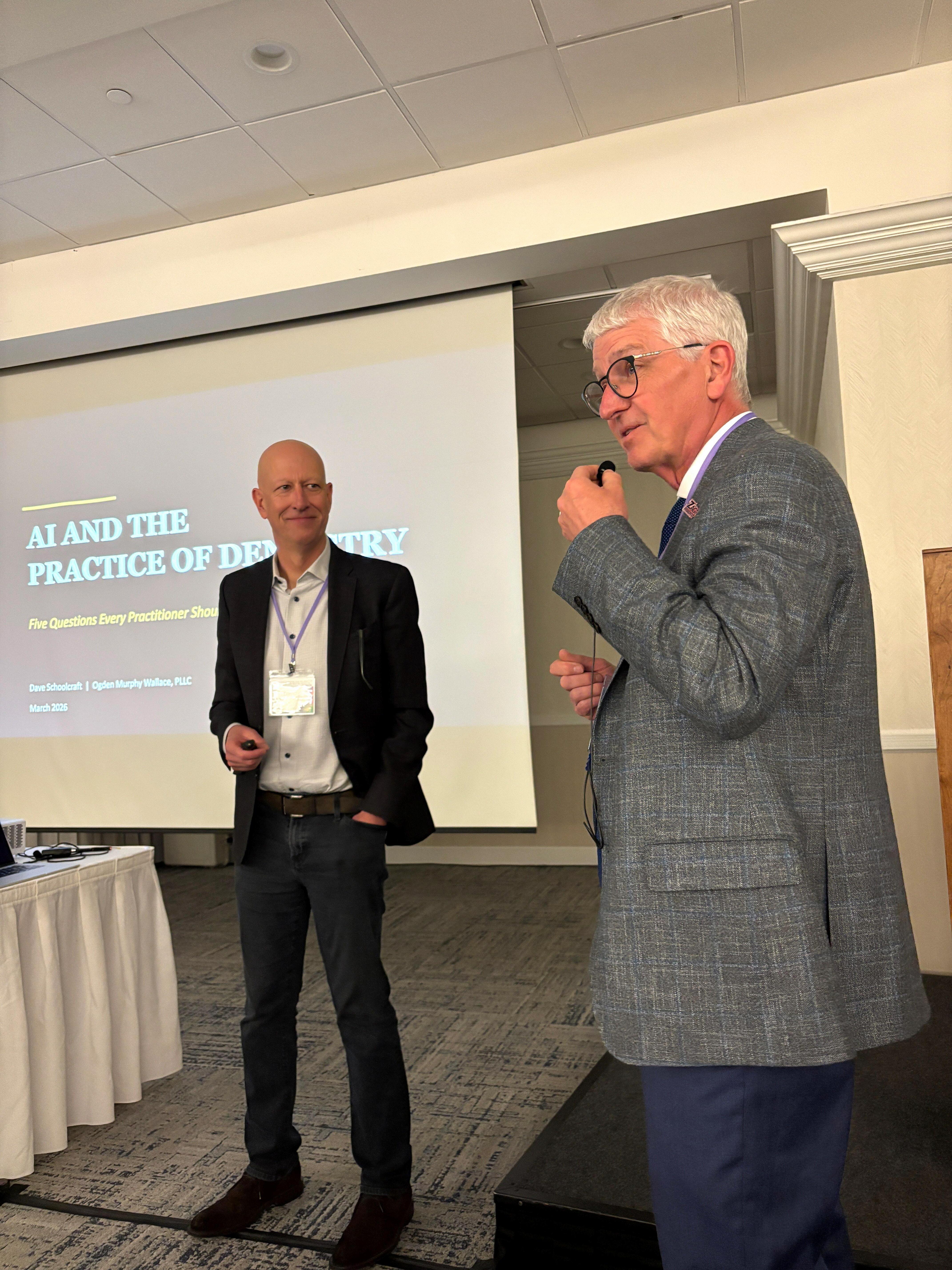
His speech was titled “AI and the Practice of Dentistry” and his exploration centered around “ practitioner should be asking” for navigating AI adoption. The first question is “Is it malpractice if I don’t use AI?” Or, could it be considered negligent to available? He predicts that AI could become such a part of practice that failing to use it might breach the standard of care in the future. There is a current gray area about disclosing use
Washington Section Tri-College Day
The second question is “Who has access?” Dentists must evaluate AI contracts and data use as AI vendors need access to data to deliver their services, but many overreach. Also, some AI systems require FDA clearance and others do not; dentists must understand this distinction.
The third question is “What happens when my front desk staff puts patients’ information into ChatGPT?” He states this is a HIPAA breach requiring patient notification.
The fourth question he explored was the liability triangle of “Who gets sued?” Where there is the dentist, the practice, and fficult to sue technology vendors and clinicians should assume they will be primary
nal question was “What should I do Monday morning?” To this Dave recommended taking inventory of what AI tools are being used in your practice, educating staff on use policy, and making sure appropriate contracts are in place.
Dave Schoolcraft, JD, is Partner and Chair of the Digital Health Team at the Ogden Murphy Wallace law firm in Seattle where he provides strategic guidance to health care provider organizations and technology companies seeking to drive health system transformation. He has a national practice advising clients on cial intelligence, data governance, health information privacy and security issues. He is the founder of the Digital Health Counsel AI Summit.
Panel Discussion | Morning Speakers
was initiated with a question focused on how bias is avoided as AI models train, given that the world itself is biased. The panel responded in agreement that, yes, AI will never be fully free of bias but the goal is mitigation, not elimination, of bias.
Ryan Currie shared that there are “guardrails” that sit on top of AI models to manage prompts, reduce hallucinations, and implement bias checks. There is also enforcement of “responsible AI” within large companies with ongoing evaluations to reduce hallucinations and bias over time, including AI tools correcting other AI systems.
A Lunch of Intentional Connections for Future Connecting
Dr. Dolan shared that in FDA-cleared and regulated companies, there is additional reliance on internal ethics and integrity, with chief dental officers playing a key role in questioning data sources, identifying potential bias, and pushing for external validations. An example of an external validation is a dental school testing AI tools on their own data, comparing this to their clinical experts, and
A question by attendee Brittany Dean raised concerns that AI could t-driven entities to handle patient communications and treat time-saved as capacity to see more patients for profit versus deepening relationships. The panel stressed that:
Dentists must act as leaders and thought leaders; upholding professional autonomy and the duty to act in patients’ best
Professional standards and ethics must be actively defended so that technology does not override core professional values. The profession, collectively, owns the responsibility to ensure technology is aligned with these principles, both in academia and practice.
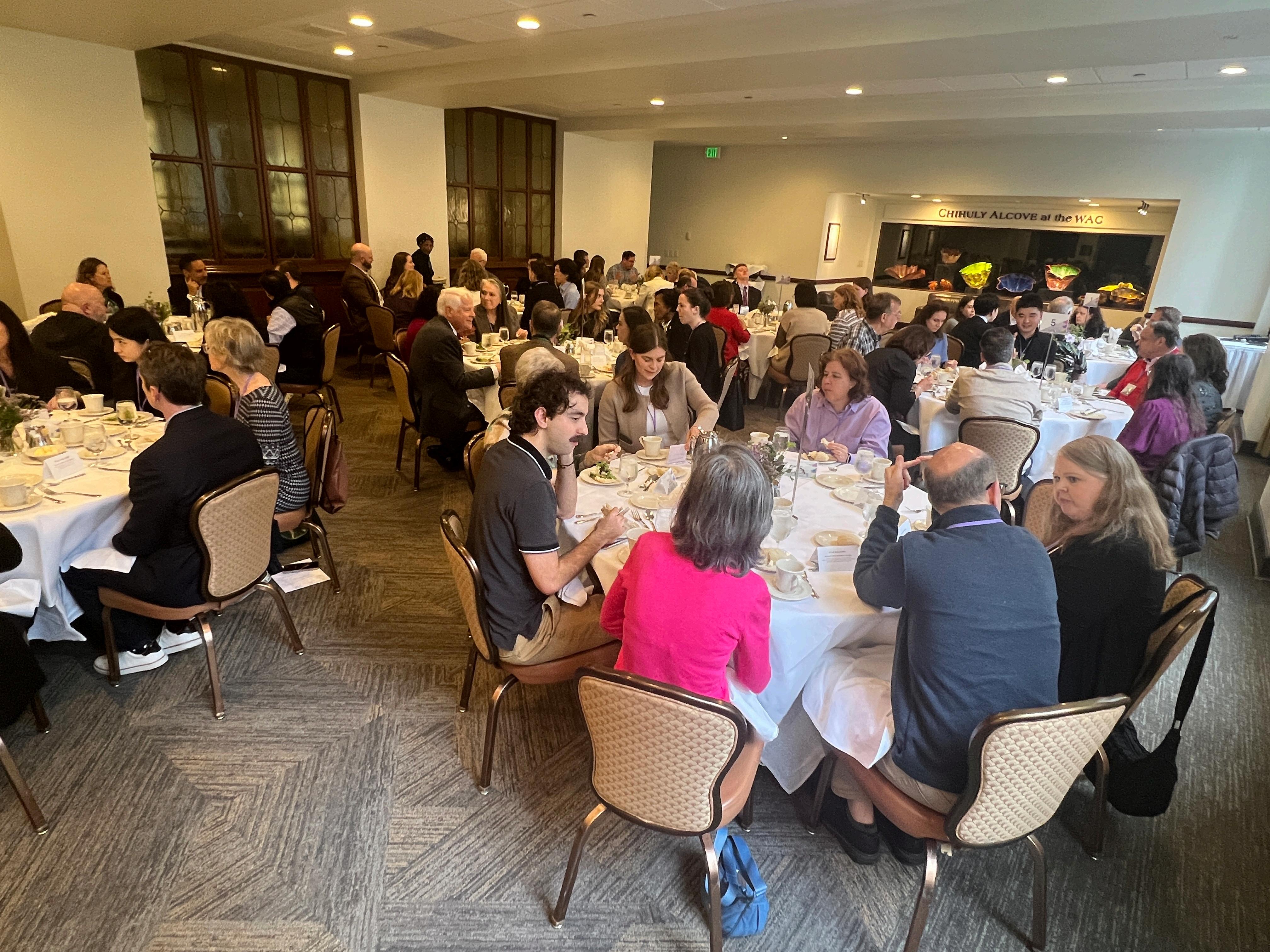
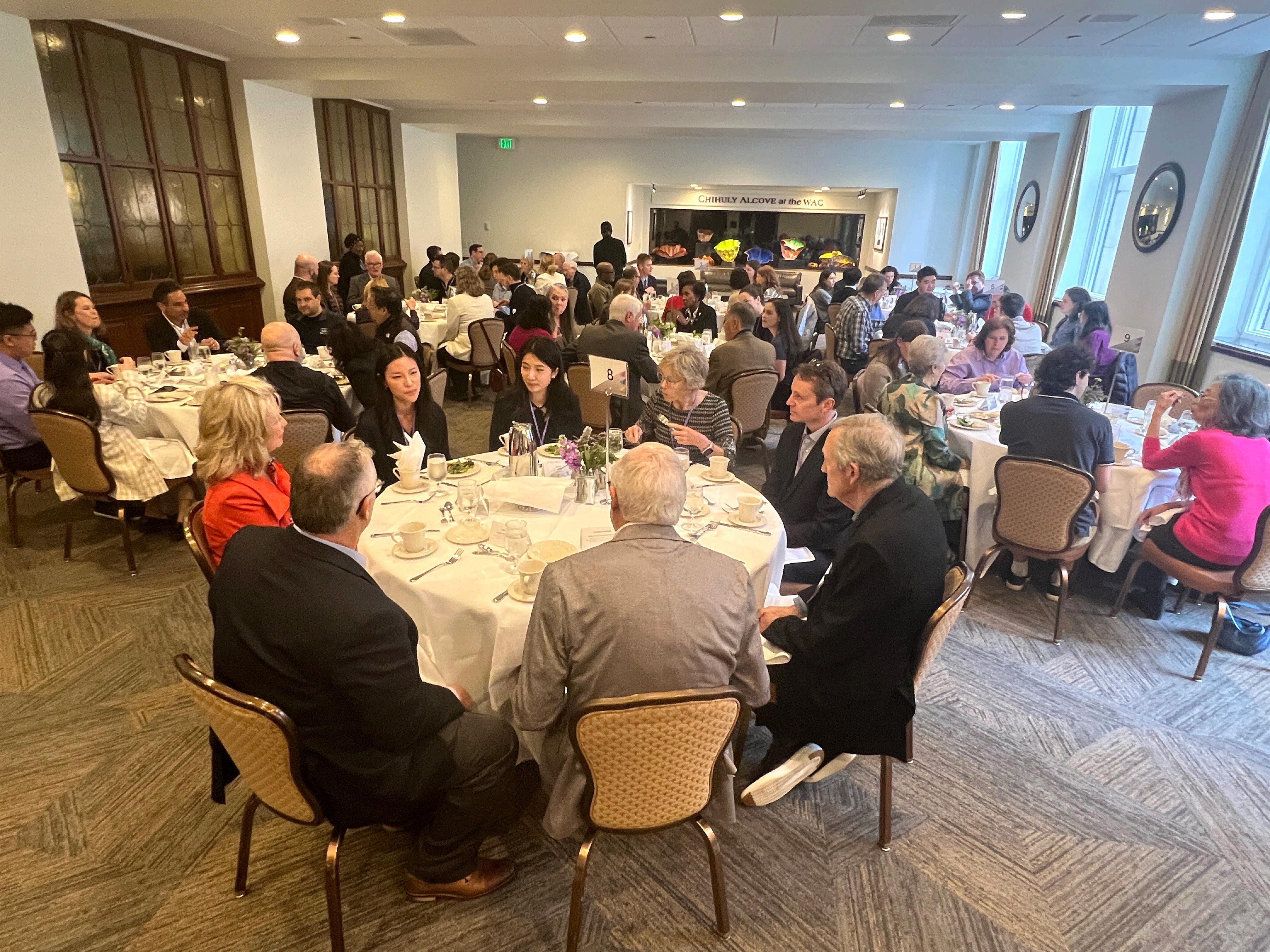
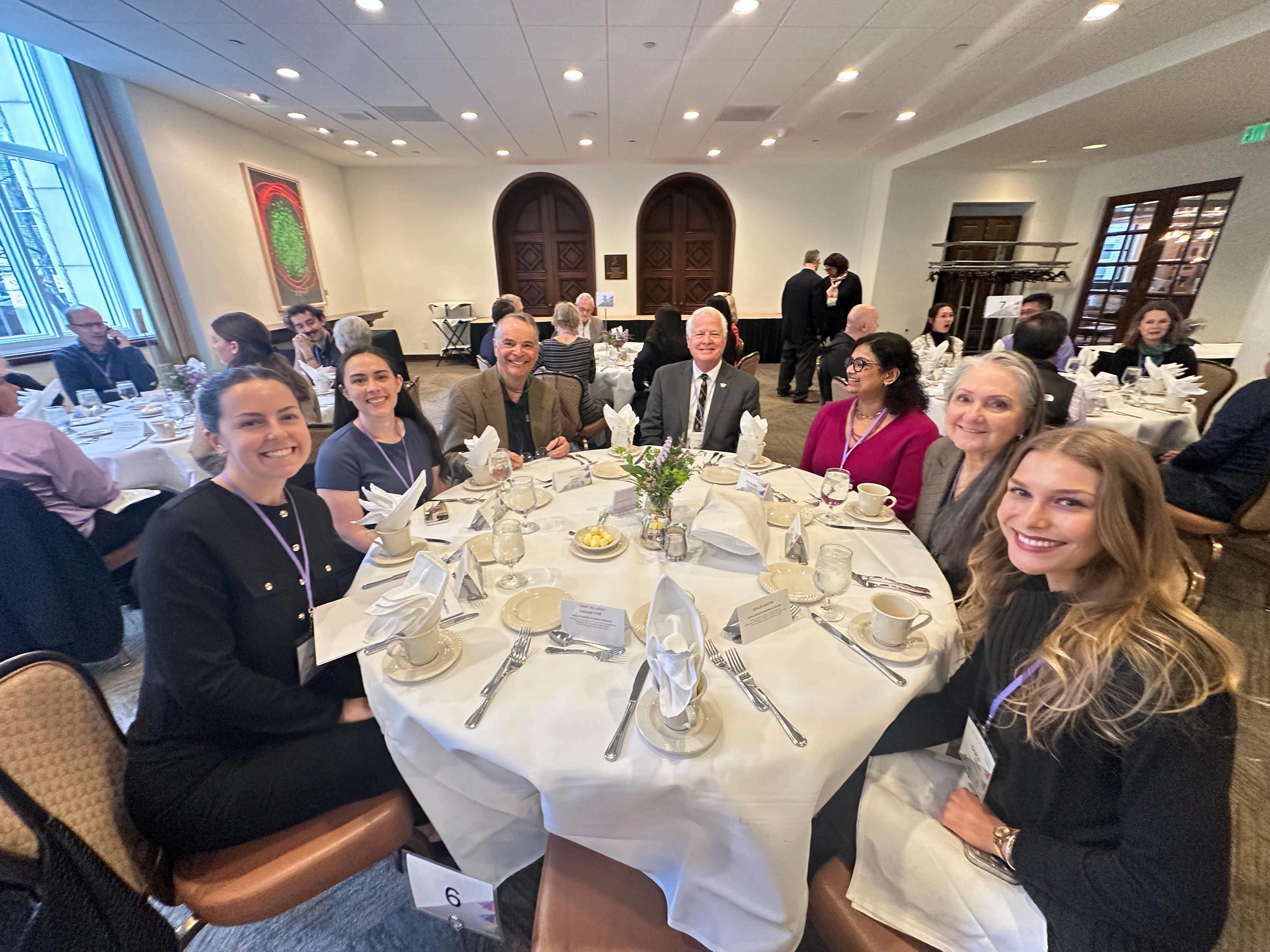
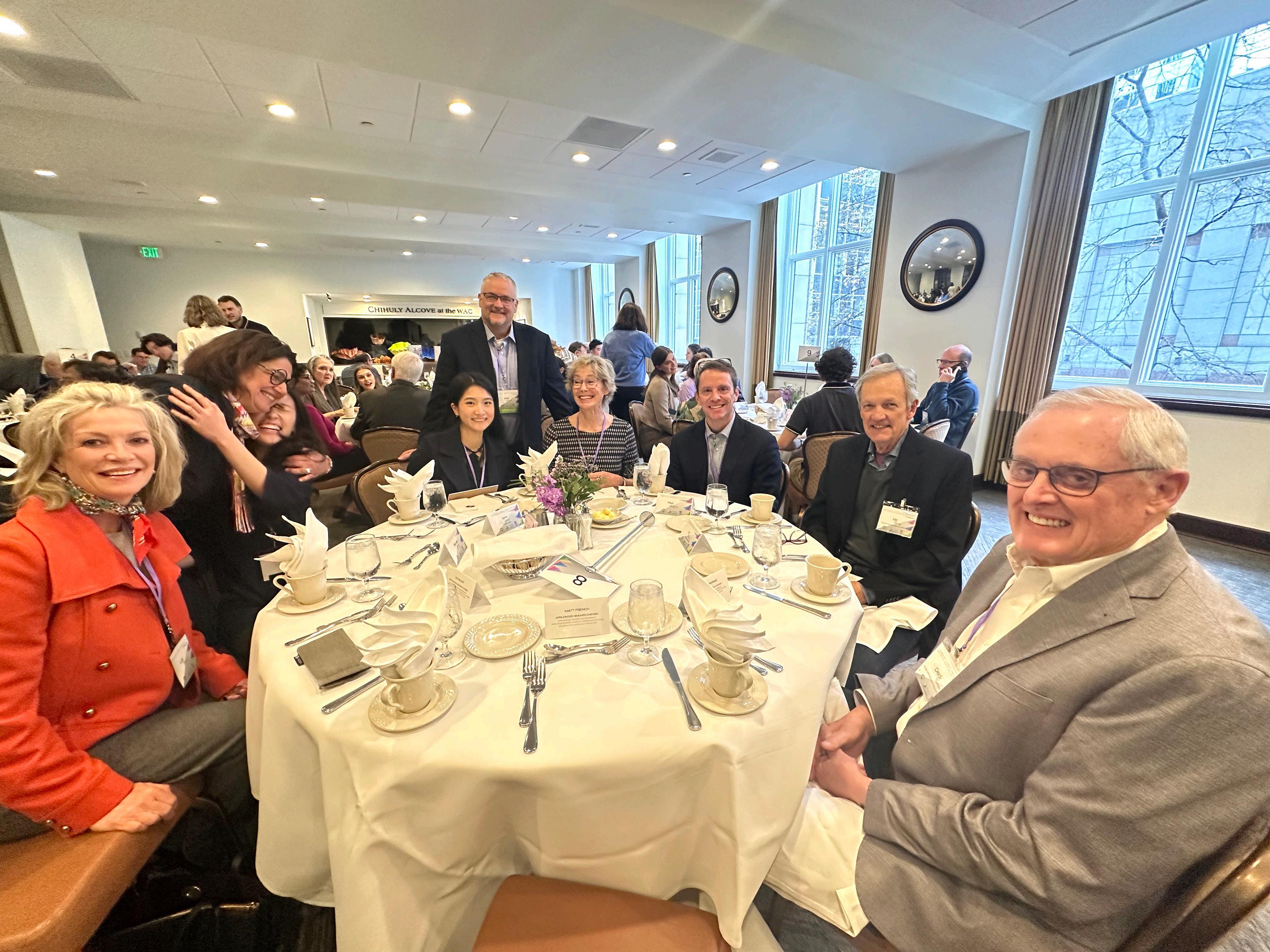
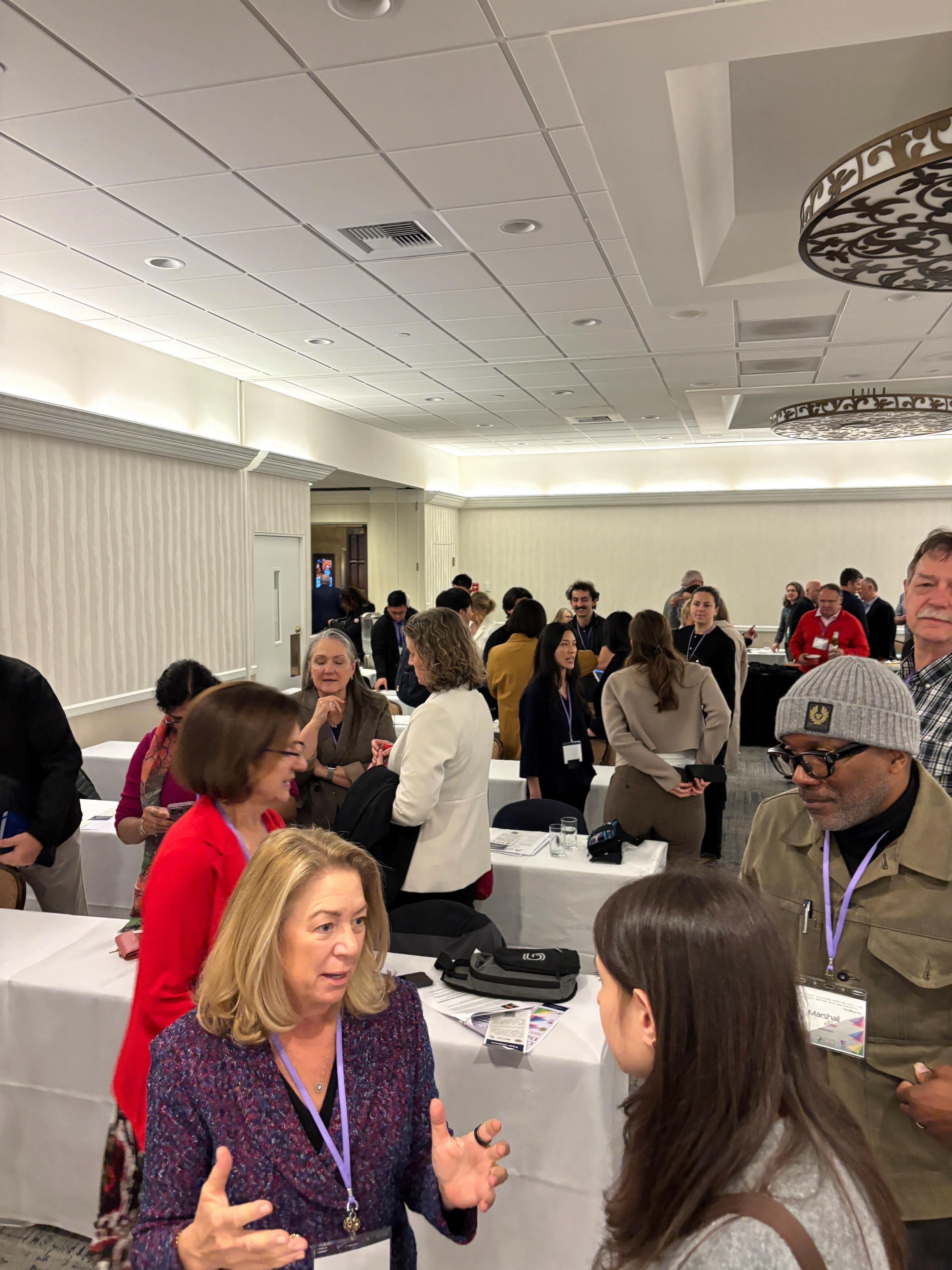
Lunch during Tri-College Day found attendees enjoying a beautiful room with delicious food and much conversation. There was assigned seating and each table was comprised of at least one dental student. Tables included a speaker from one of the days’ presentations or an event sponsor. Attendees were seated with friends and close colleagues. This was intentional and the room was full of much conversation as we enjoyed one another’s company.
On the center of the table was a deck of tabletopic conversation cards with [admittedly AIgenerated] questions of mentor-mentee relationships. The hope is that these conversations can help to drive a future mentor-mentee event for dental students and practitioners. Some of the responses indicated that a main goal of mentorship is to help with “the transition into real-world dentistry” including “non-clinical subjects such as leadership and business acumen.” The identified qualities in an ideal mentor included “good listener, patient, open to new ideas, and lifetime learner.”
If this describes you and you are interested in learning more about mentor-menteeship, please email WA Section ACD-SPEA Liaison, Erin Welter at dr.erinwelter@gmail.com.
Ryan Currie, Andrew Howison, Teresa Dolan, and Shervin Molayem
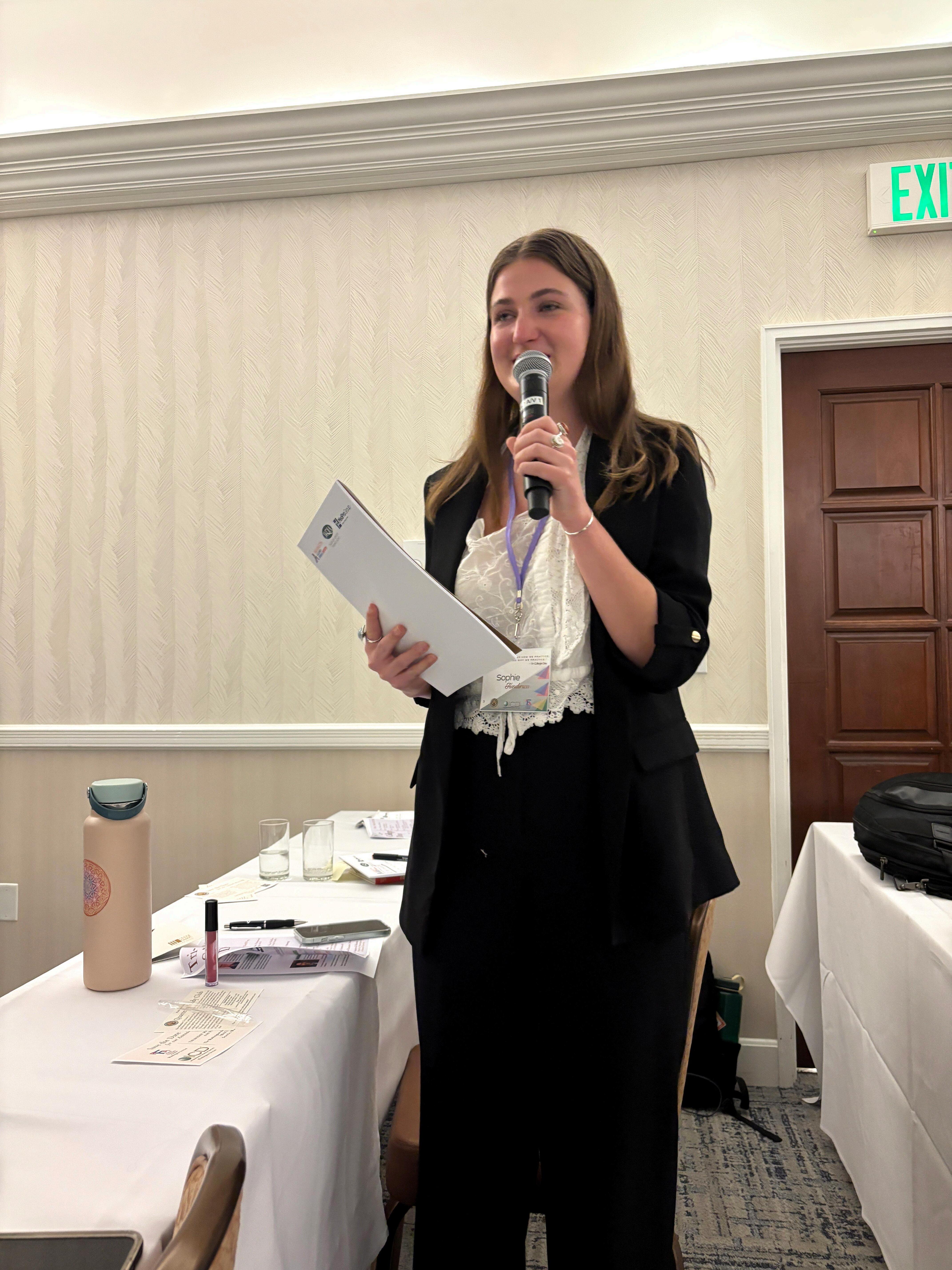
Sophie Henderson sparks the initial discussion
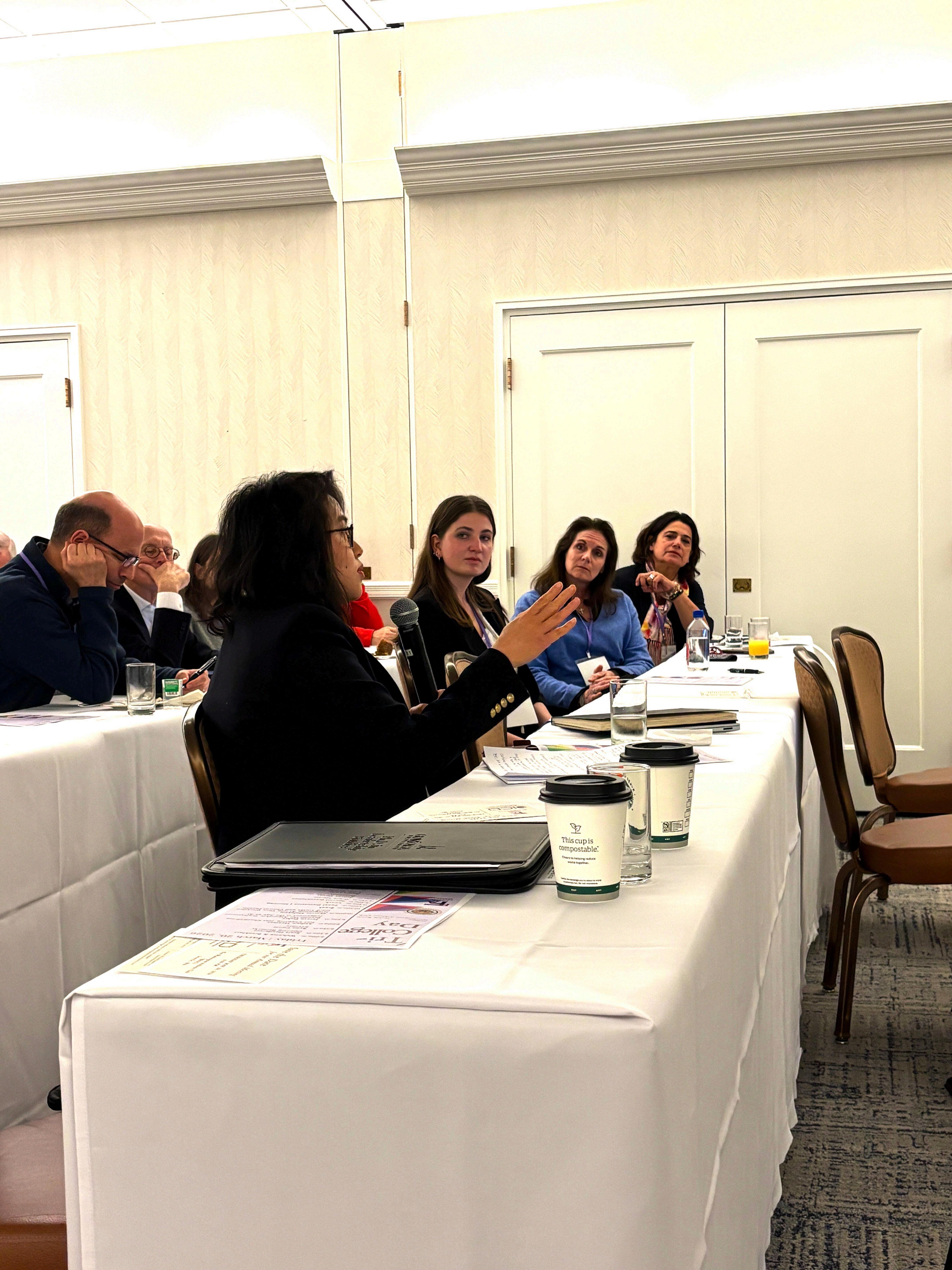
Kim Trieu adds to the discussion
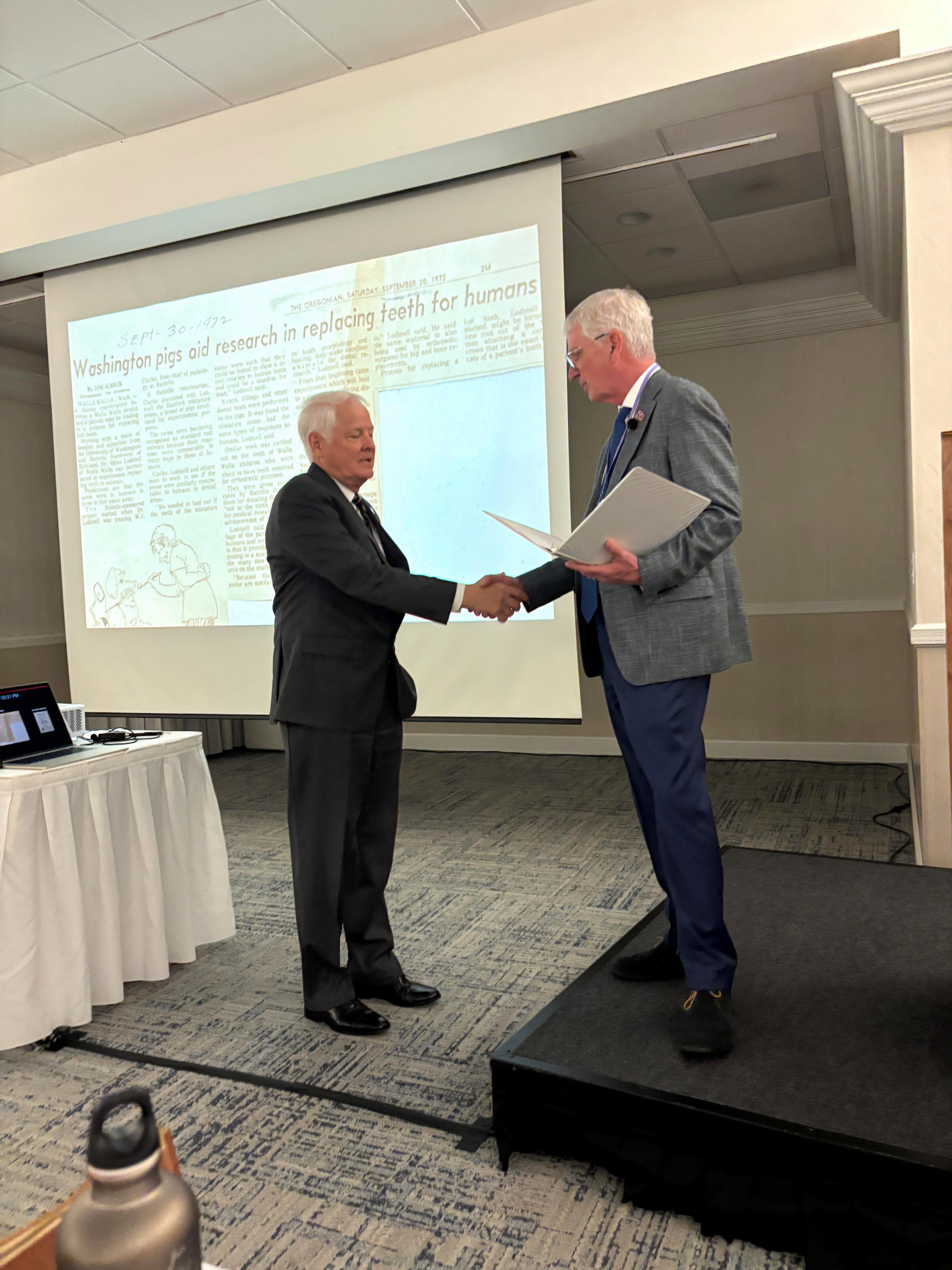
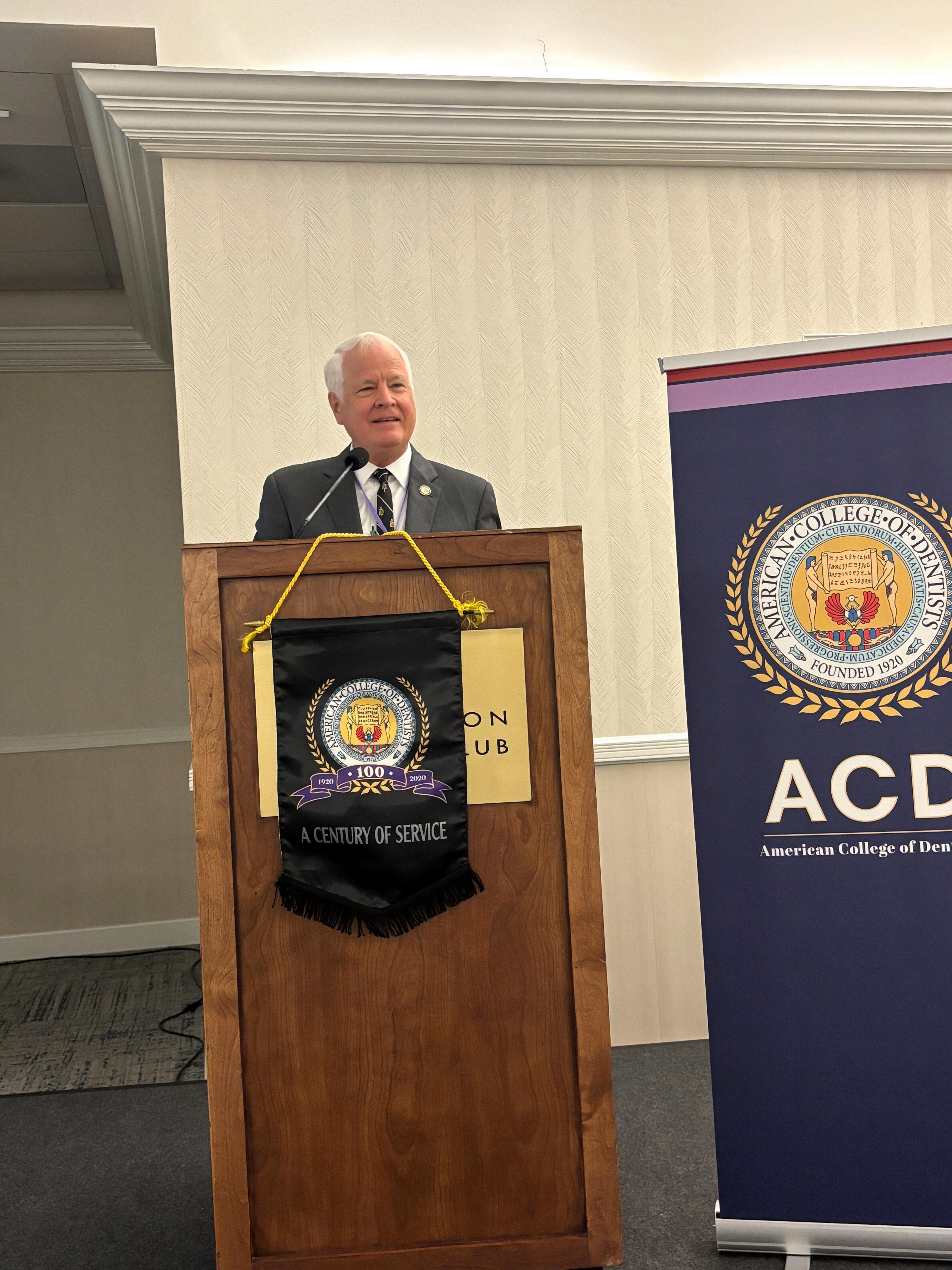
Special Presentation: Dr. A. Miles Lodmell
work in dental materials in the 1960’s when he was recruited to the Batelle, Pacific Northwest National Laboratory for an NIH-funded research project in conjunction with the UWSOD. He was placing and restoring implants in an animal model, the specially-bred Hanford-mini pig. This work was published in the Journal of Dental Research in 1975 and was reprinted in JADA in 1976. Miles is a proud member of the American Academy of Restorative Dentistry and the Operative Academy, which demonstrate his commitment to excellence.
Dr. Lodmell is a lifetime member of the Washington Athletic Club and he served as a sponsor of the Tri-College Day event through his membership. He became a member of the Club during dental school in order to play squash.
Miles leads a life dedicated to both professional and personal enrichment. His hobbies are extensive and include farming, hunting, fl y fishing, cross -country and alpine skiing, tennis, squash, racquetball, golf, auto mechanics, horseback riding, shopping, camping, piano, clarinet, and snowshoeing. He is currently undergoing a hip-replacement surgery and is most eager to get back to tennis.
Dr. Lodmell’s story was presented by long - time friend, Scott Henderson, who knows Miles through involvement in the Walla Walla Valley Dental Society where Scott serves as the Executive
(continued on page 9)
A Student’s Perspective
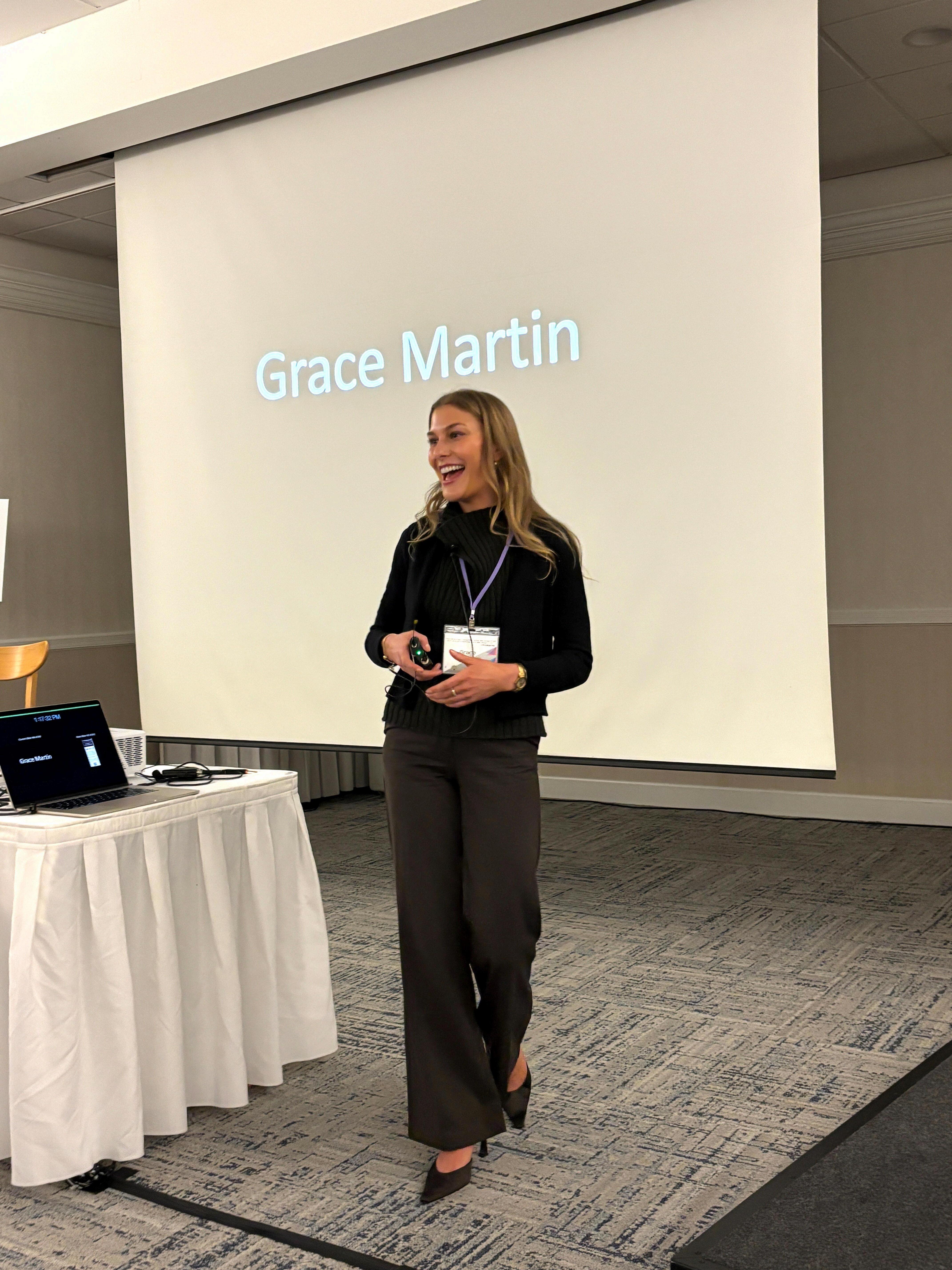
Tri-College Day is intended to be a very special day where attendees feel that it was time well spent. Hopefully they experience learning— and maybe gain a new viewpoint on an issue impacting dentistry. Hopefully they experience fellowship with others invested in the profession— and maybe they meet a new friend. But, there is another reason why Tri-College Day is so important; and that is, while the above objectives are meaningful, the impact of the day is intended to reach students with the proceeds of the day ear-marked for dental student awards from the Washington Sections of the ACD, ICD, and PFA. Today, we had a very special opportunity to hear from UWSOD RIDE student, Grace Martin. Grace is in her third year of dental school and she had her audience transfixed as she shared how much the ICD award that she received impacted her.
Grace captivated us with both her presence and her words from the moment she went to the front of the room at Tri-College Day. She so eloquently, and humorously, o kindergarten of losing her first tooth, which flew out across the classroom so she proceeded to enlist her classmates to crawl and search for her lost tooth.
She shared that her fascination grew when her dad would remove his flipper and show his “toothless pirate’s grin,” which mesmerized her and introduced her to dentistry’s transformative power. She came to see teeth as central to identity, confidence, and quality of life. She developed a passion to restore function so people could eat, smile, and live fully.
When Grace was 15, she saw her grandma develop severe osteonecrosis of the jaw. Her grandma was frightened, insecure, and repeatedly turned away by local providers lacking the skills to treat her condition. Eventually, her grandma was seen at the University of Washington School of Dentistry, where Dr. David Dean spent the day with her, doing all of the diagnostic imaging. This led to surgery and a long healing process, and eventual fabrication of a maxillary denture. Observing this, Grace decided she wanted to help solve such access and expertise gaps in dental care.
Grace found applying to dental school to be intimidating, primarily due to financial concerns. Her family would be unable to help her in this endeavor but she knew she had funded her entire undergraduate education with scholarships and grants and she hoped to do the same for dental school.
Grace was accepted in the the University of Washington School of Dentistry RIDE (Regional Initiatives in Dental Education) Program which trains students to practice in rural and underserved communities, like her grandmother’s. For her first offsite placement in Clarkston, Washington she was immediately asked by her preceptor to anesthetize the first patient. Having only previously practiced on her classmates prior to this, she was nervous but excited. When she retracted and saw a sinus tract above tooth #4, she felt the weight of the visible
dental disease in a
was introduced to advocacy. In her first year she attended Dental Action Day in Olympia and, initially, found the marble halls and environment intimidating. Ultimately, she learned that advocacy is about educating, not arguing, through sharing personal stories and explaining program impacts. She is now motivated to return to Dental Action Day every year after experiencing how a single conversation with a policy maker can have lasting effects.
Before receiving scholarship support, Grace worked multiple jobs. Scholarship awards have reduced the need to work outside jobs and allowed her more time with faculty, patients, and peers in clinic. It has enabled her to build a fuller life outside of school that supports her professional growth. Grace describes that scholarships have allowed a shift from “surviving dental school” to “actually getting to live it.”
Grace is very appreciative for a “full circle” experience. It was her grandma developing osteonecrosis that finalized her decision to pursue dentistry and she had the opportunity to fabricate a mandibular partial denture for her grandma.
Contribute to Student Awards
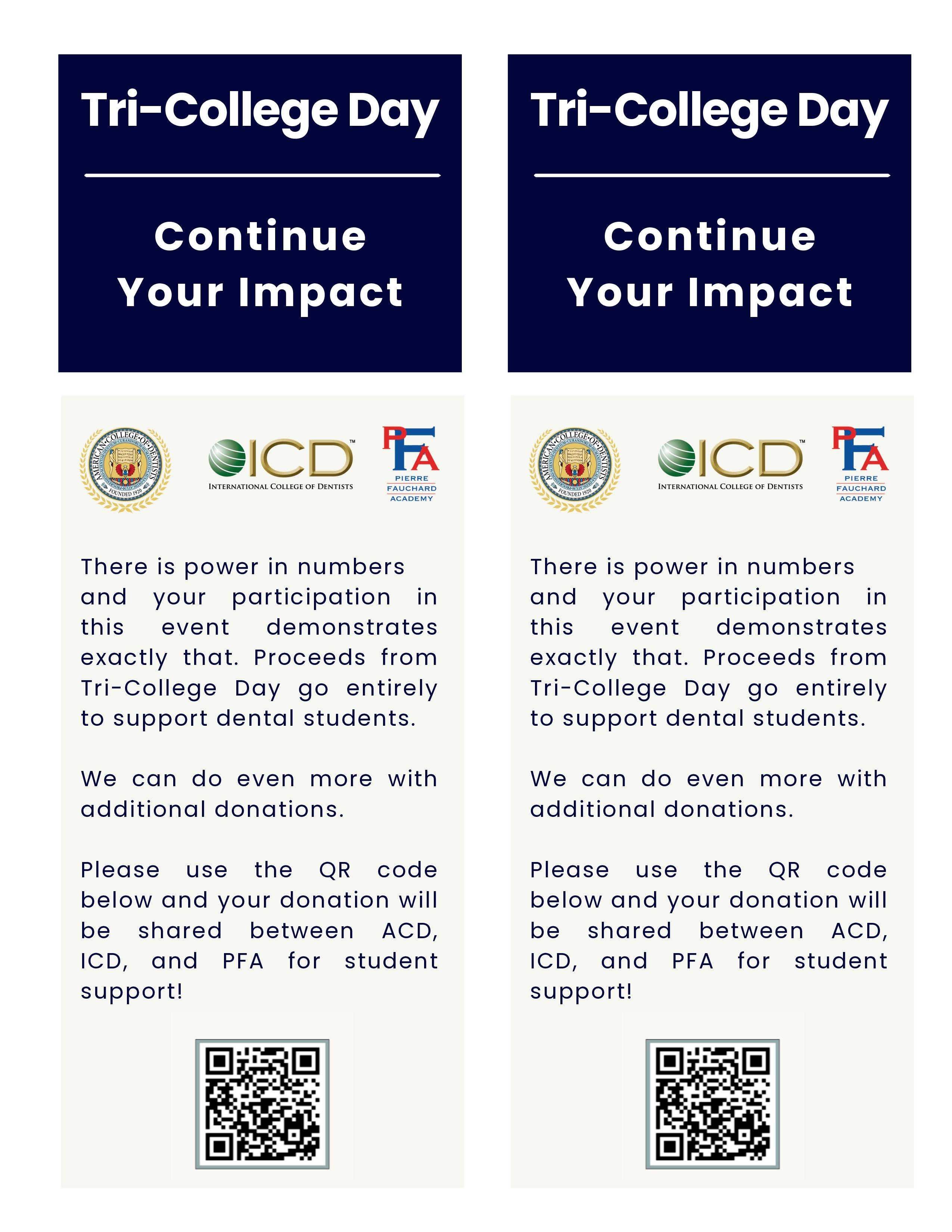
Use the QR code to donate for student awards from ACD, ICD, and PFA. Grace showed us how financial support enables students to thrive and ffectively.
Students bring a level of excitement that is palpable, and that was true for Tri-College Day. They enjoyed the topic of AI in dentistry as Sharon Jang, D3, said “the topic on AI is so fascinating and I look forward to learning more on how it will integrate in the These students had to juggle a lot in order to commit to this day of learning and networking. First, this was a meeting with expectations that they register in advance and follow-through with that commitment. Second, they had to speak to their instructors for permission to attend. This also speaks to the dedication to enrichment opportunities like this by the UWSOD for allowing these students to take advantage of this opportunity.
And, there is the fact that this was the Friday before their Spring Break officially started and the Friday of the ADEX Board exam weekend for the D4’s.
That only leaves one final consideration: How was this amazing opportunity for students financially supported? Individual student sponsors made this day a reality for these students and the students in attendance expressed much gratitude.
Student Sponsorship
Dr. Danny Tremblay5 students
Dr. Lauren Hagel2 students
Dr. Robin Henderson2 students
Special Presentation: Dr. A. Miles Lodmell
(continued from page 7)
Director and Miles still attends the majority of the meetings. Scott describes Miles as a “giant” of the profession who embodies innovation, service, humility, and professional mentorship.
Dr. Karen Homitz1 student
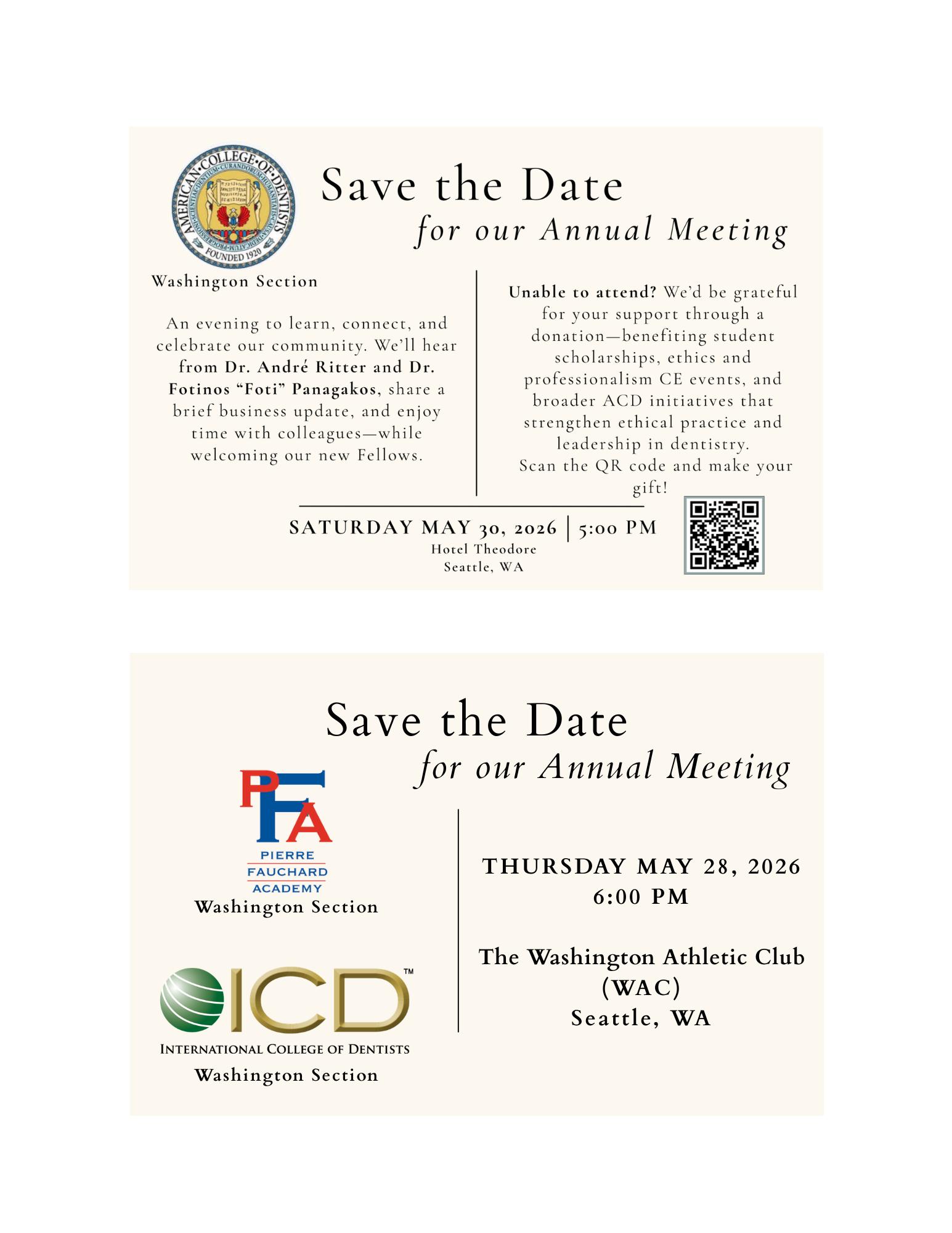
ICD and PFA WA Section leadership are hopeful that Dr. Lodmell and his wife, Bonnie, will be able to attend and be celebrated at the combined Annual Meetings for WA Section ICD and PFA on May 28, 2026 at the Washington Athletic Club
Craig Yarborough and Scott Henderson
Craig Yarborough, ICD USA President-elect
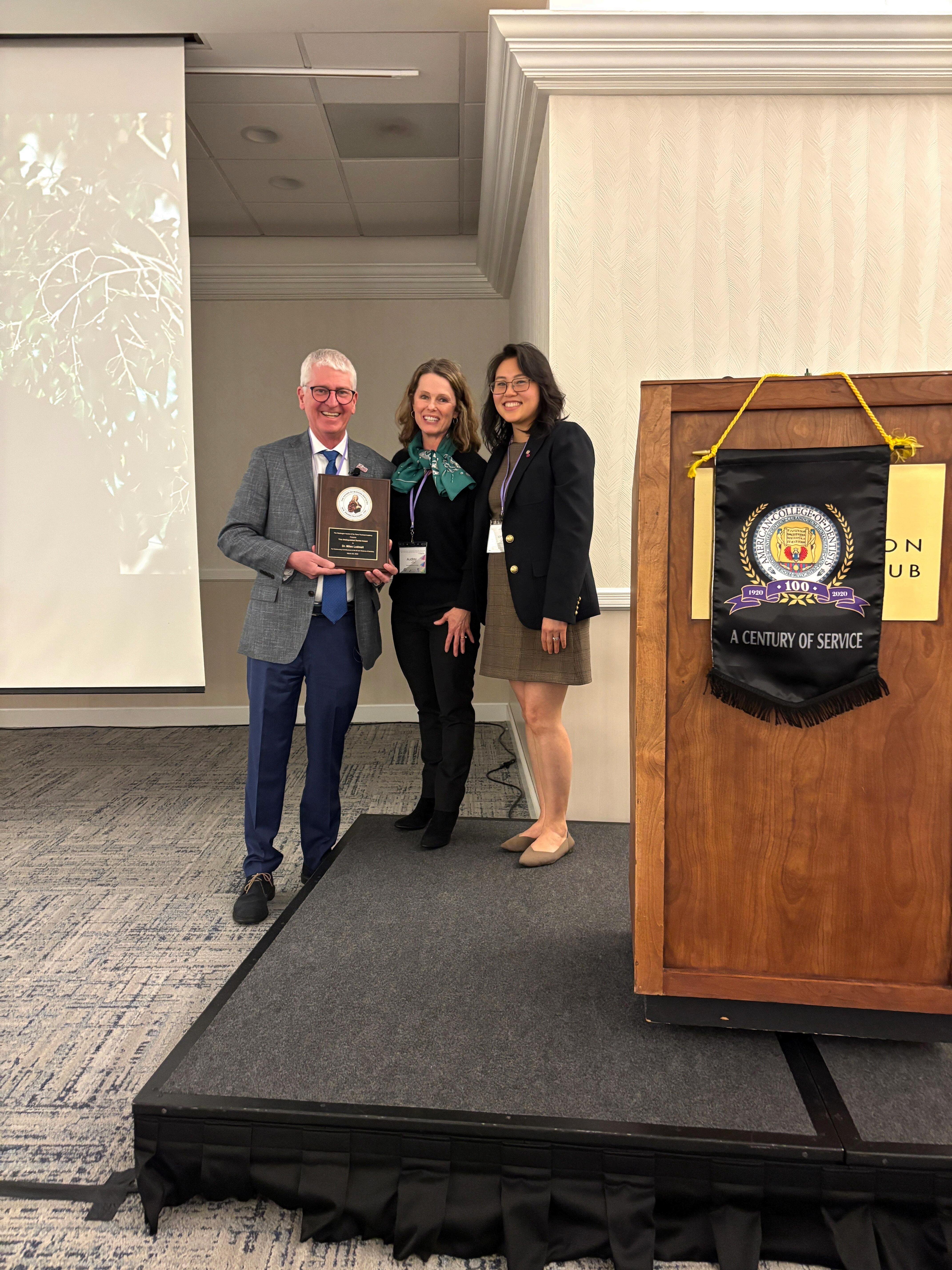
Scott Henderson and PFA WA Section Co- Chairs, Audrey Tatt and Kim Trieu
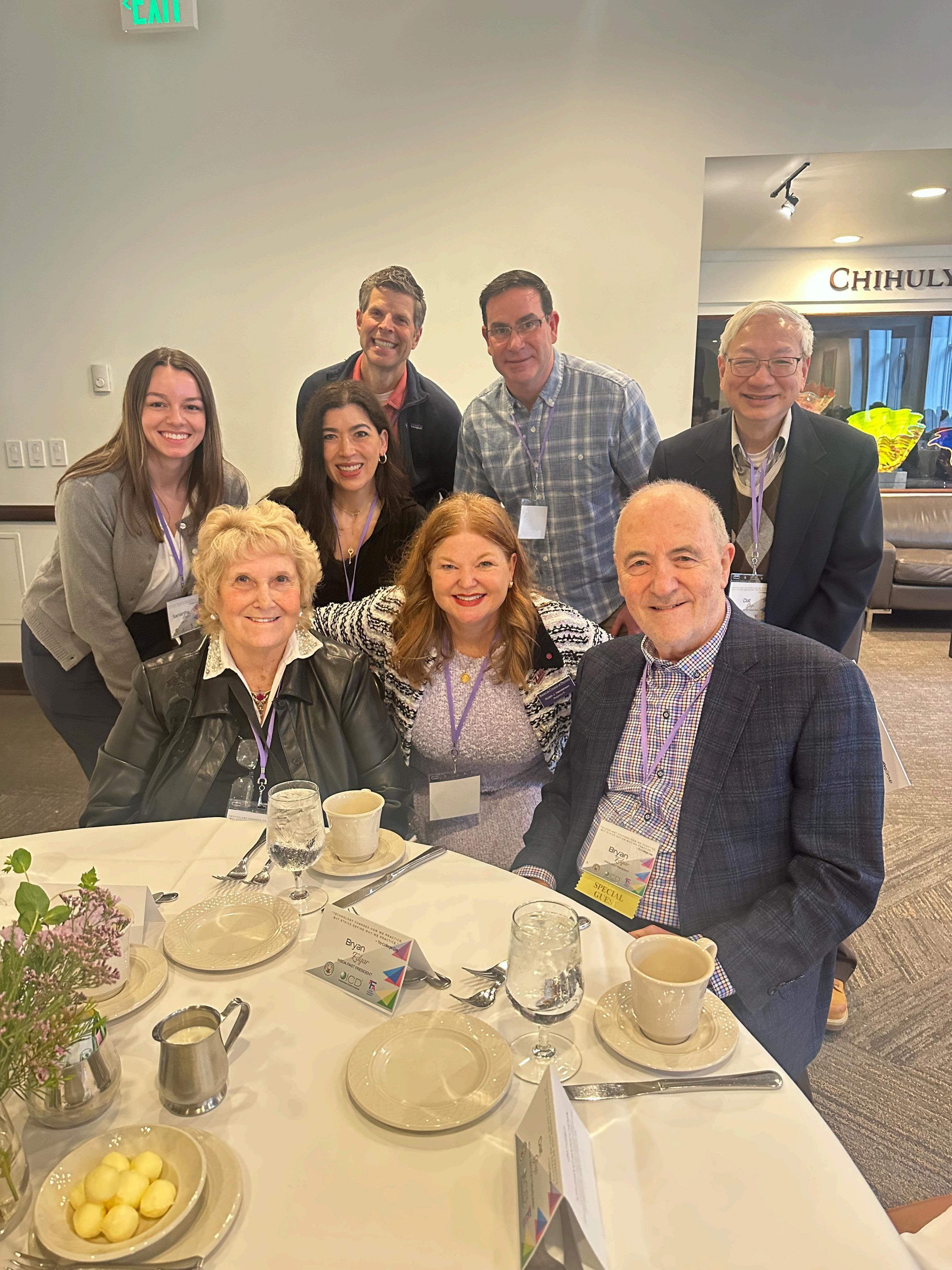
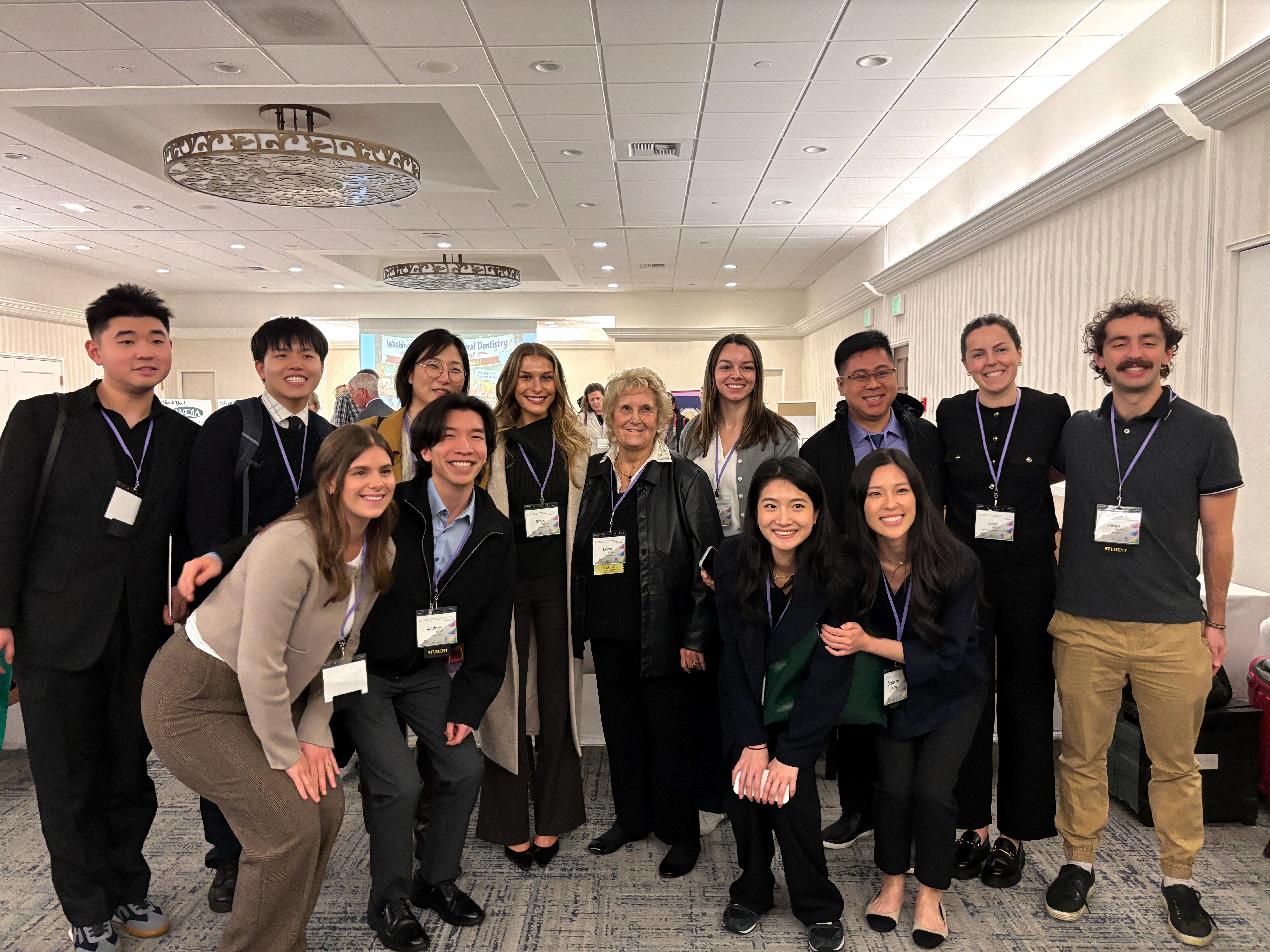
University of Washington Dental Students surround ADA Past President, Linda Edgar, at Tri- College Day
Reception Hosted by Washington Academy of General Dentistry
A reception was ideated and sponsored by the WAGD following the day of learning together. Attendees, speakers, and sponsors had a chance to connect further and enjoy one another.
Amazing leadership from California added to the day
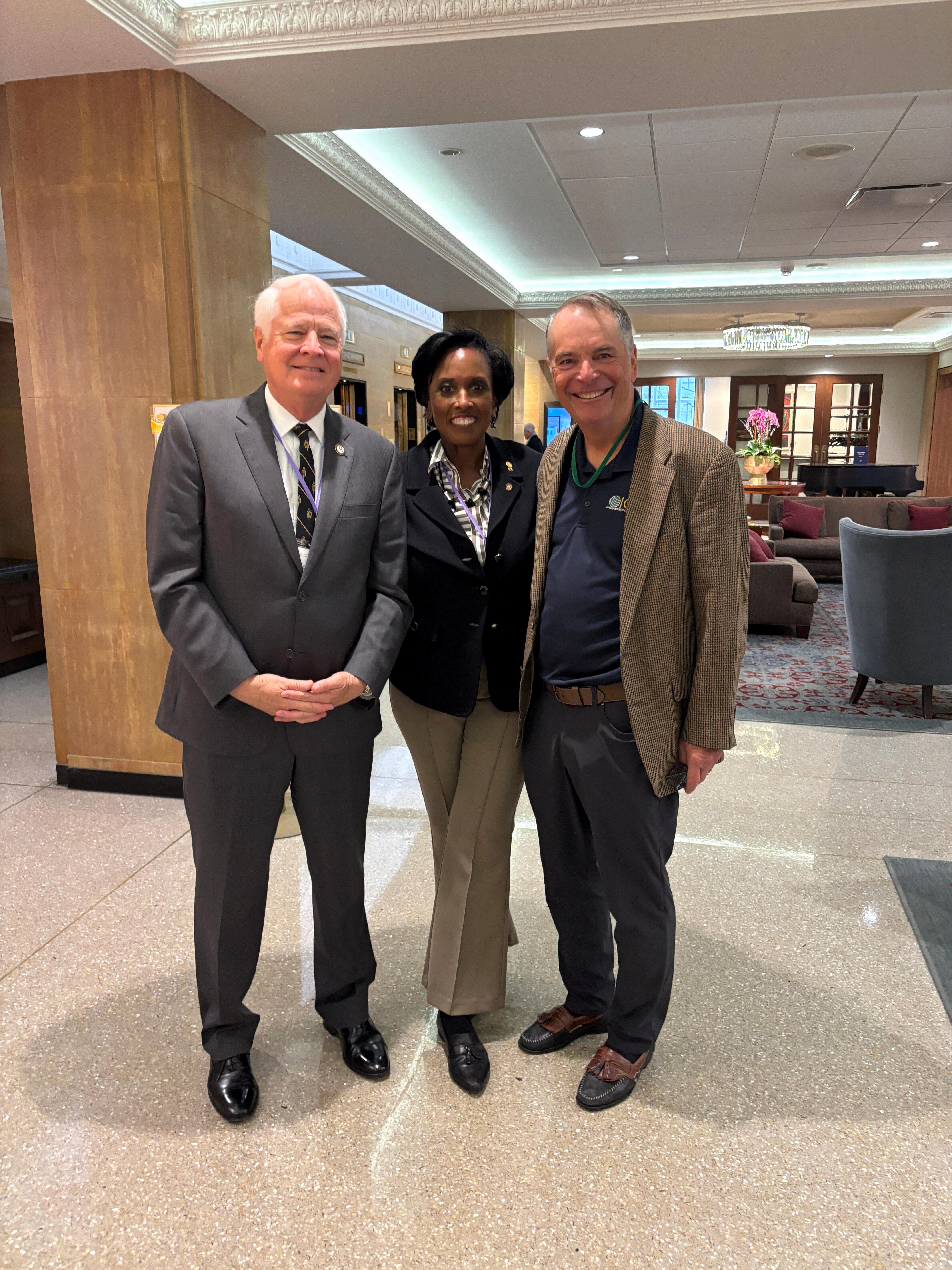
Carl Yarborough, ICD USA President-elect; LaJuan Hall, ACD Regent, Regency 7; Don Rollofson, ICD Deputy Regent, District 13
Danny Tremblay (center) sponsored five students to attend Tri-College Day and he enjoyed visiting with student leaders
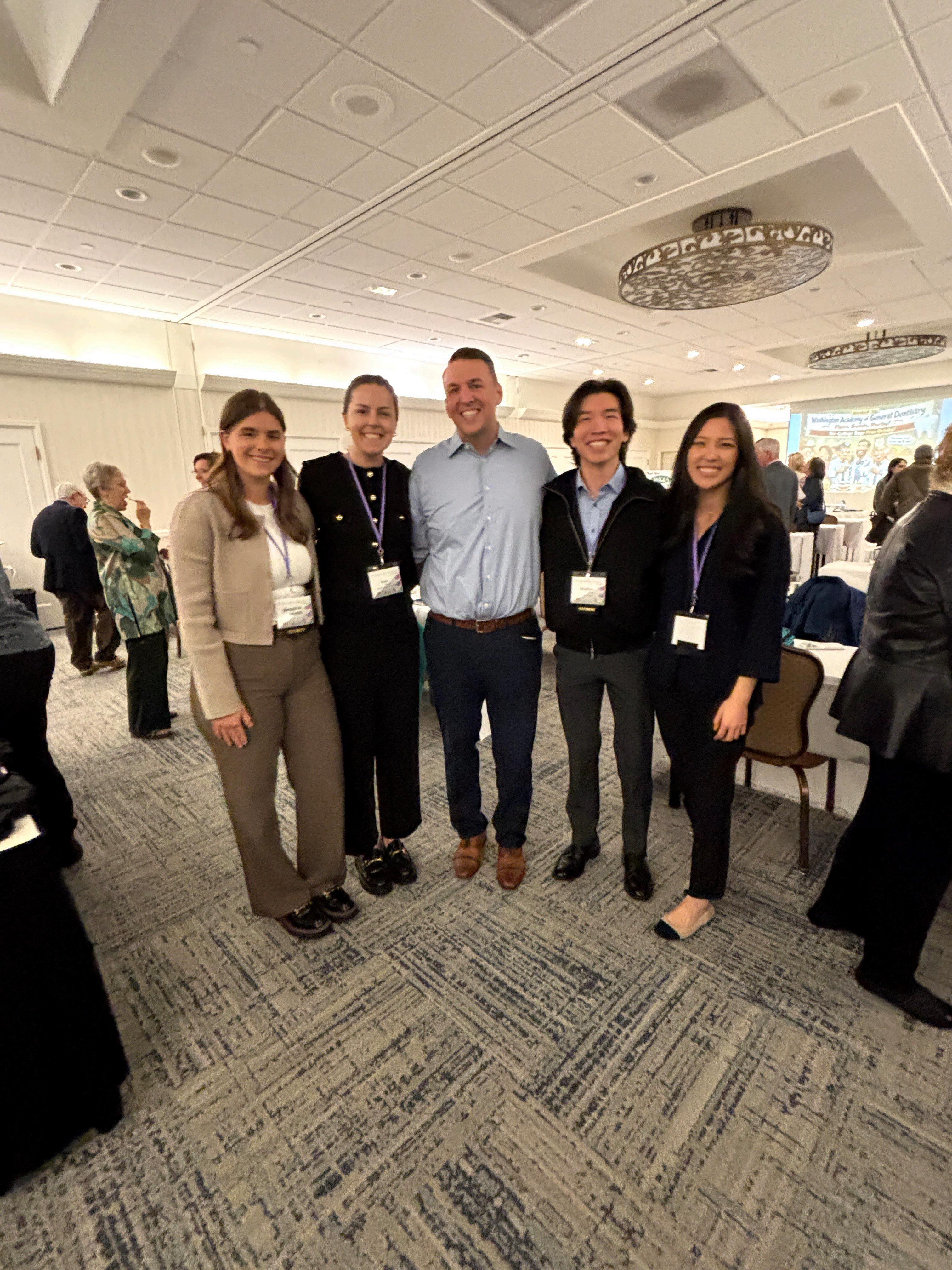
Annalise Kress, Immediate Past SPEA Regent, Regency 7; Kate Streck, SPEA Regent, Regency 7; Dr. Danny Tremblay; Andrew Pak, UWSOD SPEA, Sharon Jang, UWSOD SPEA
Leaders.
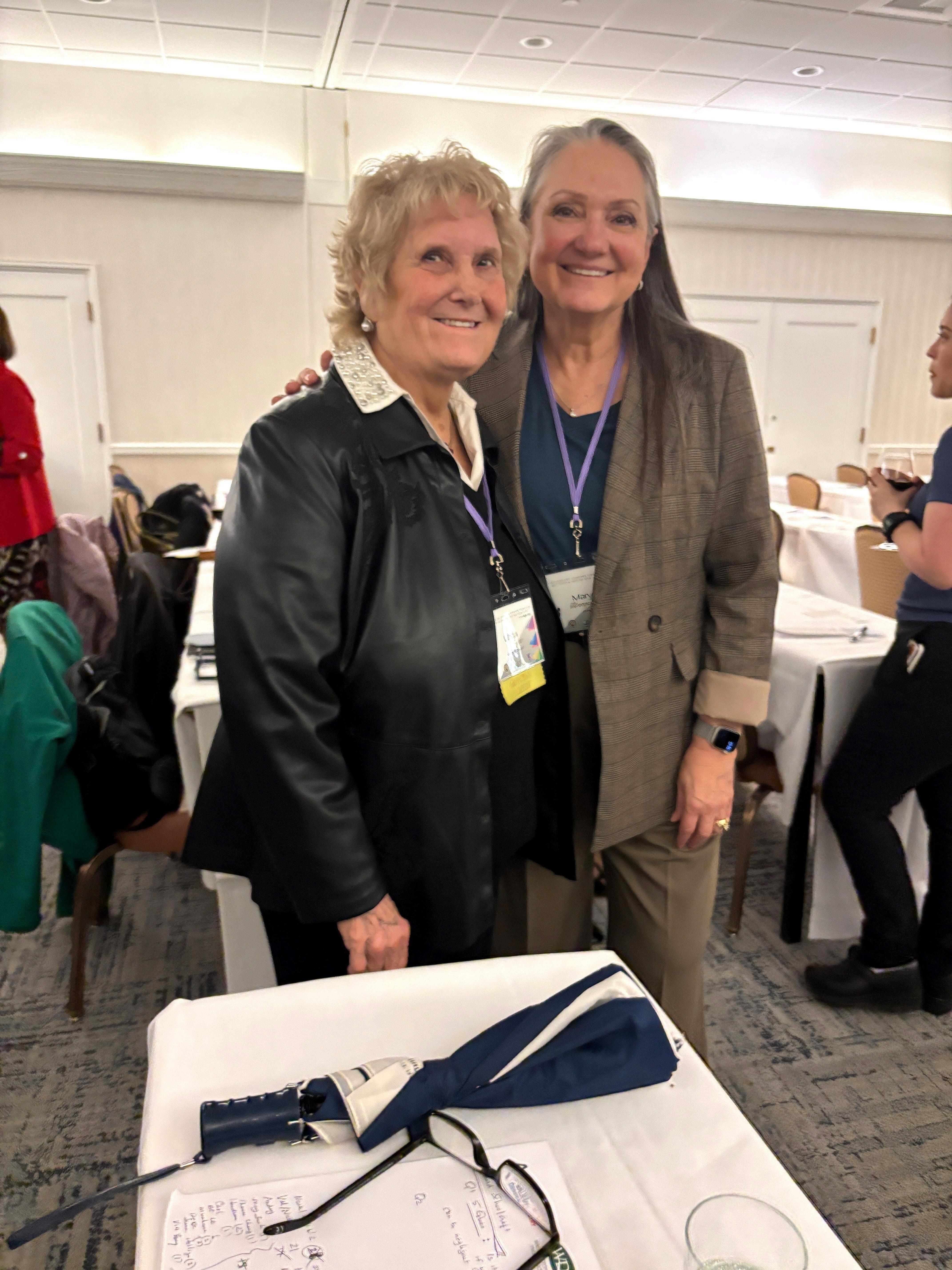
Linda Edgar, Past ADA President, and Mary Krempasky Smith, ICD Deputy Regent, District 11
The ethical and philosophical conversations continue
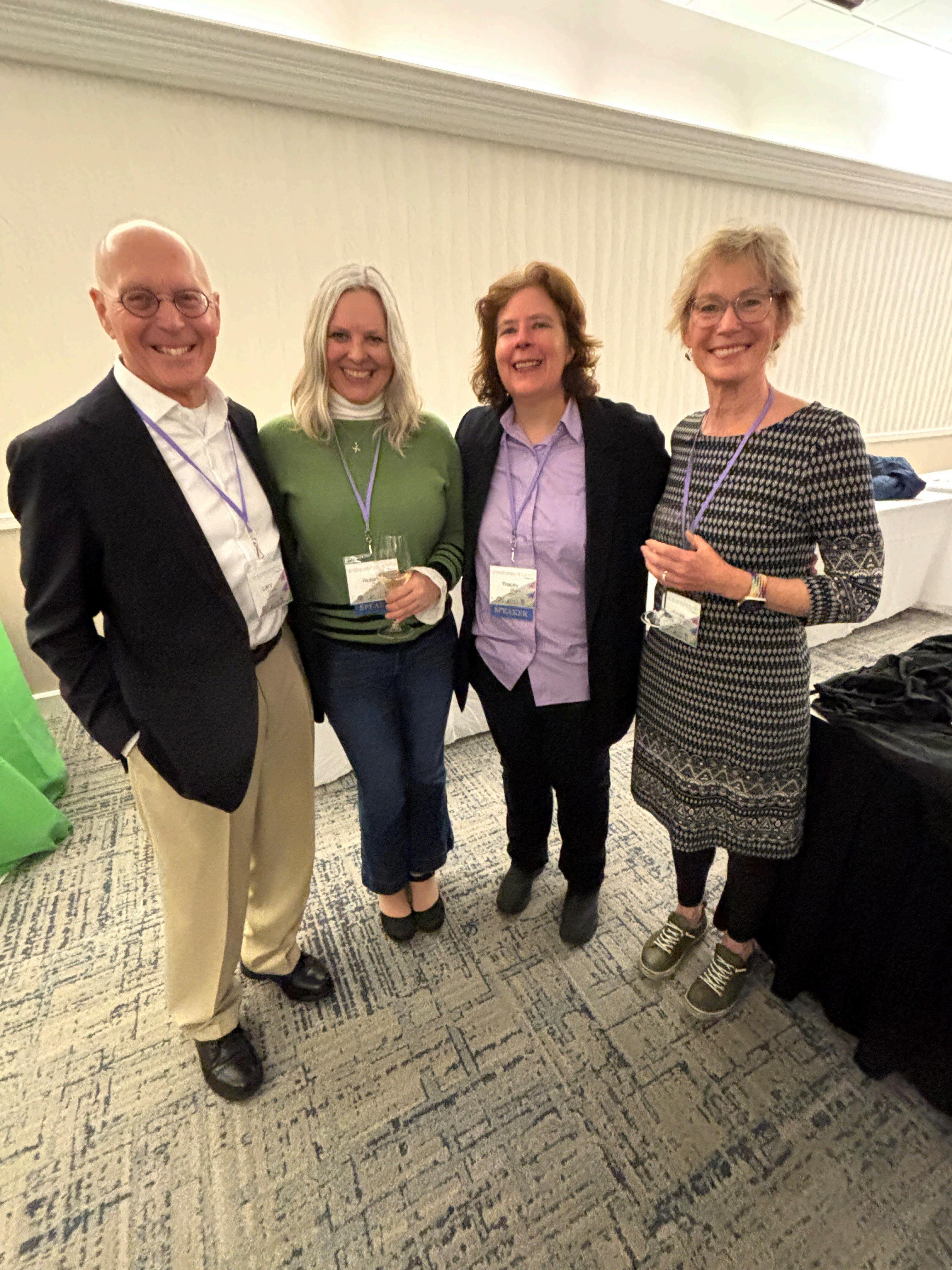
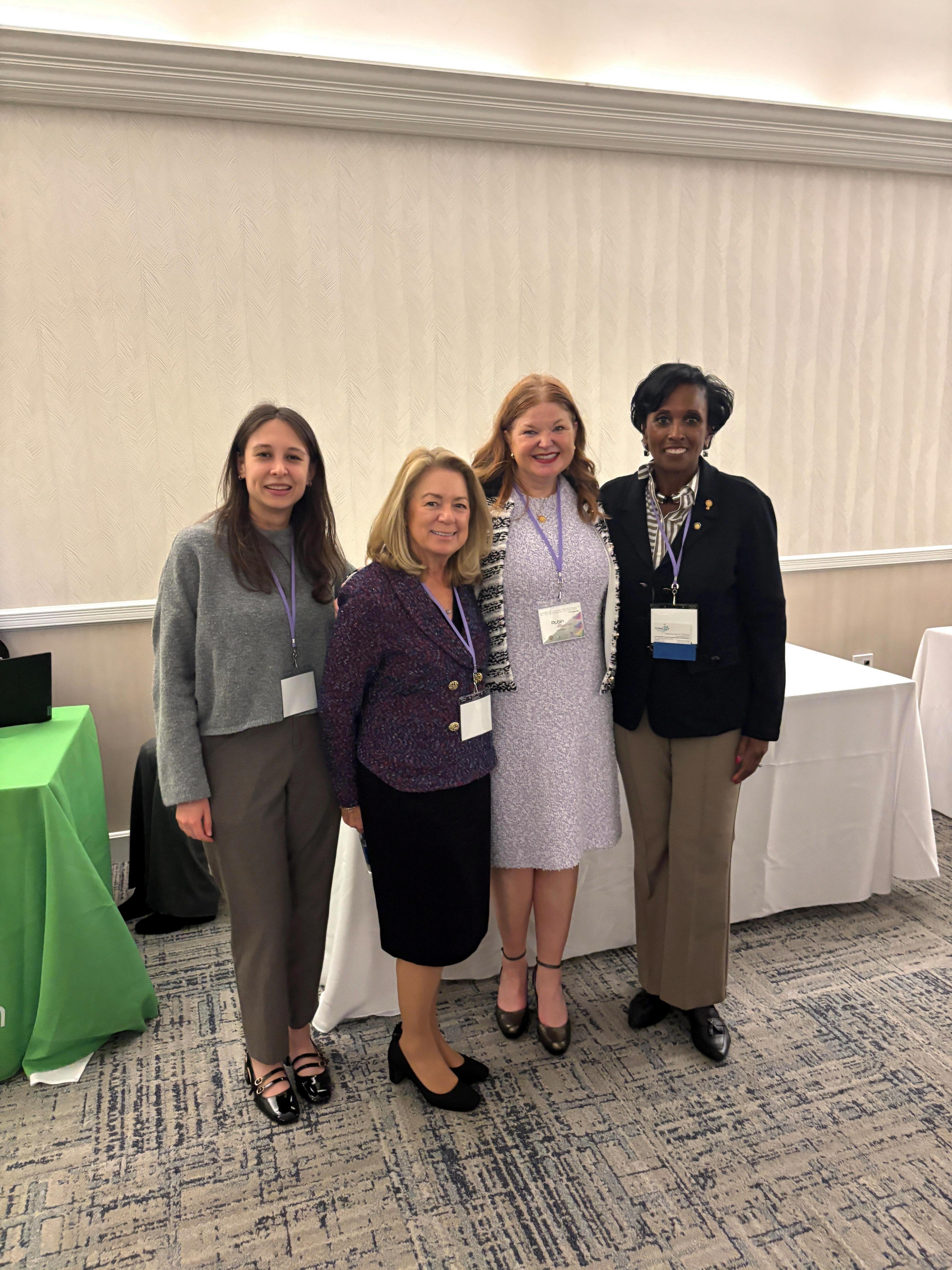
Dr.’s Larry Garretto, WA Section ACD board, Róisín Lally, philosophy speaker; Tracey Hayes, ethics speaker; Darcie Morris, WA Section ACD Chair
ACD Board of Regents
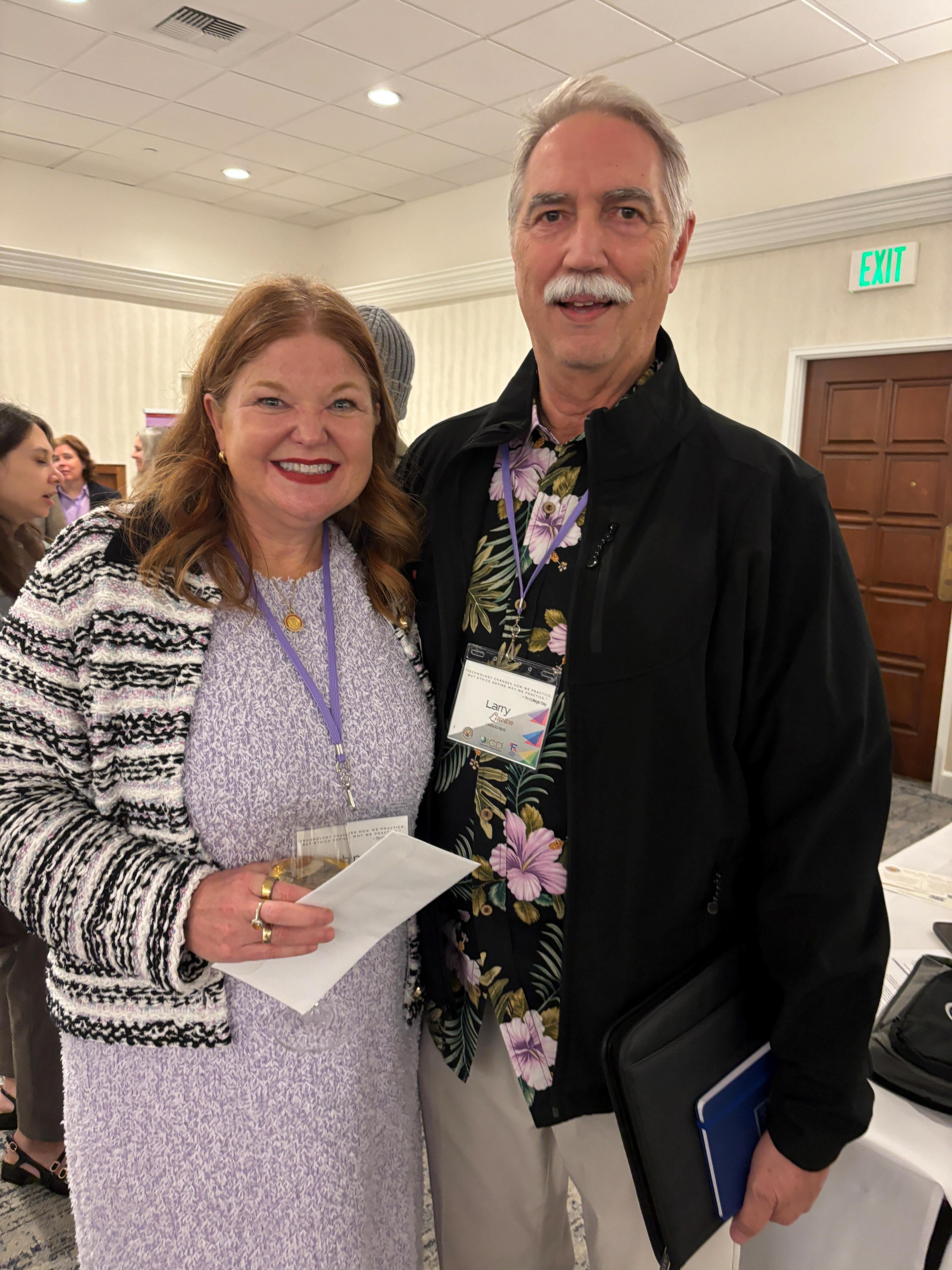
Above right: Robin Henderson, ACD Regent, Regency 8 and Larry Lawton, ACD Past Regent, Regency 8
“ TECHNOLOGY CHANGES HOW WE PRACTICE, BUT ETHICS DEFINE WHY WE PRACTICE. ” — Tri-College Day 2026
Where Sponsorship Maximizes Impact
Tri - College Day is more than a day of continuing education for dentists. It is an invigorating day of intentional choice to spend time together in consideration of important topics; especially focusing on the ethics surrounding such topics.
What made Tri-College Day 2026 truly special was the coming together of sponsors, colleagues, and extraordinary leaders in an atmosphere of genuine connection and shared purpose. There is something uniquely powerful about this community; where collegial relationships turn into lasting friendships, where conversations are grounded in mutual respect, and where people show up not just to learn, but to support one another and advance the profession together.
This year’s program reflected that spirit at every level. We were honored to learn from an exceptional group of speakers who were highly qualified, deeply specialized, and remarkably generous in sharing their expertise. Remember, these speakers donated their time and received no speaker’s fees compensation. From forward-looking insights on artificial intelligence to practical, real - world applications, the continuing education experience was both cutting - edge and immediately relevant. They weren’t just lectures they were moments of perspective - shifting learning, delivered by leaders who are shaping our future, while encouraging us to do the same.
Just as important were the thoughtful conversations around ethics particularly as new innovation accelerates and new technologies, like AI, become integrated into dentistry. These discussions reinforced our shared responsibility to lead with integrity, prioritize patient trust, and ensure that progress is guided by sound judgement and professional values. It was a powerful reminder that how we move forward matters
Our Sponsors
Equally meaningful was the role of our sponsors, whose partnership made it all possible. By helping to offset the cost of the event, they ensured that more tuition dollars could be directed to where they matter most recognizing and supporting dental students through meaningful awards. Our Tri - College Day sponsors’ investment did more than support a single day. It strengthened our community, elevated the educational experience, and helped create opportunities that will carry forward into the future of our profession.
Tri-College Day continues to stand as a reflection of what is possible when generosity, expertise, and community come together and this year was a powerful reminder of the impact we can make together.
Thank you, to the following event sponsors
“ TECHNOLOGY CHANGES HOW WE PRACTICE, BUT ETHICS DEFINE WHY WE PRACTICE. ” — Tri-College Day 2026
Please
Connect With Your Honorary Colleges and Strengthen Our Profession
TRI-COLLEGE DAY 2027
We are pleased to announce that you are cordially invited to Tri-College Day 2027 March 19, 2027 8:30 a.m. - 3:00 p.m. at the Washington Athletic Club Seattle, Washington