Prepared
info@collectivearchitecture.co.uk www.collectivearchitecture.co.uk
Prepared
info@collectivearchitecture.co.uk www.collectivearchitecture.co.uk
Collective Architecture is a 100% employee-owned, multi-specialist architectural practice based in Scotland UK, working across studios in Glasgow, Edinburgh, and Dundee.
We have over 25 years’ experience across a range of sectors which include housing, civic and culture, learning and enterprise, conservation, retrofit and strategic planning.
Our work encompasses individual building projects through to entirely new districts. Importantly, these are aligned to robust engagement methods and wider advocacy.
We work across public and private sectors, encompassing a range of views and approaches to foster friendly and collaborative outcomes.
In addition to delivering a vast array of architectural projects, we provide three areas of expertise - Energy, Strategy and Conservation.
Our approach and service aim to deliver socially responsible architecture by means of collegiate and collaborative practice, where the voices of people, nature and society are listened to and ideas shared.
Our clients and their projects have won numerous awards at local, national and international level in response to our consistent design quality, purpose-driven approach and creative solutions.
In 2025, we were awarded the AJ100 Employer of the Year.
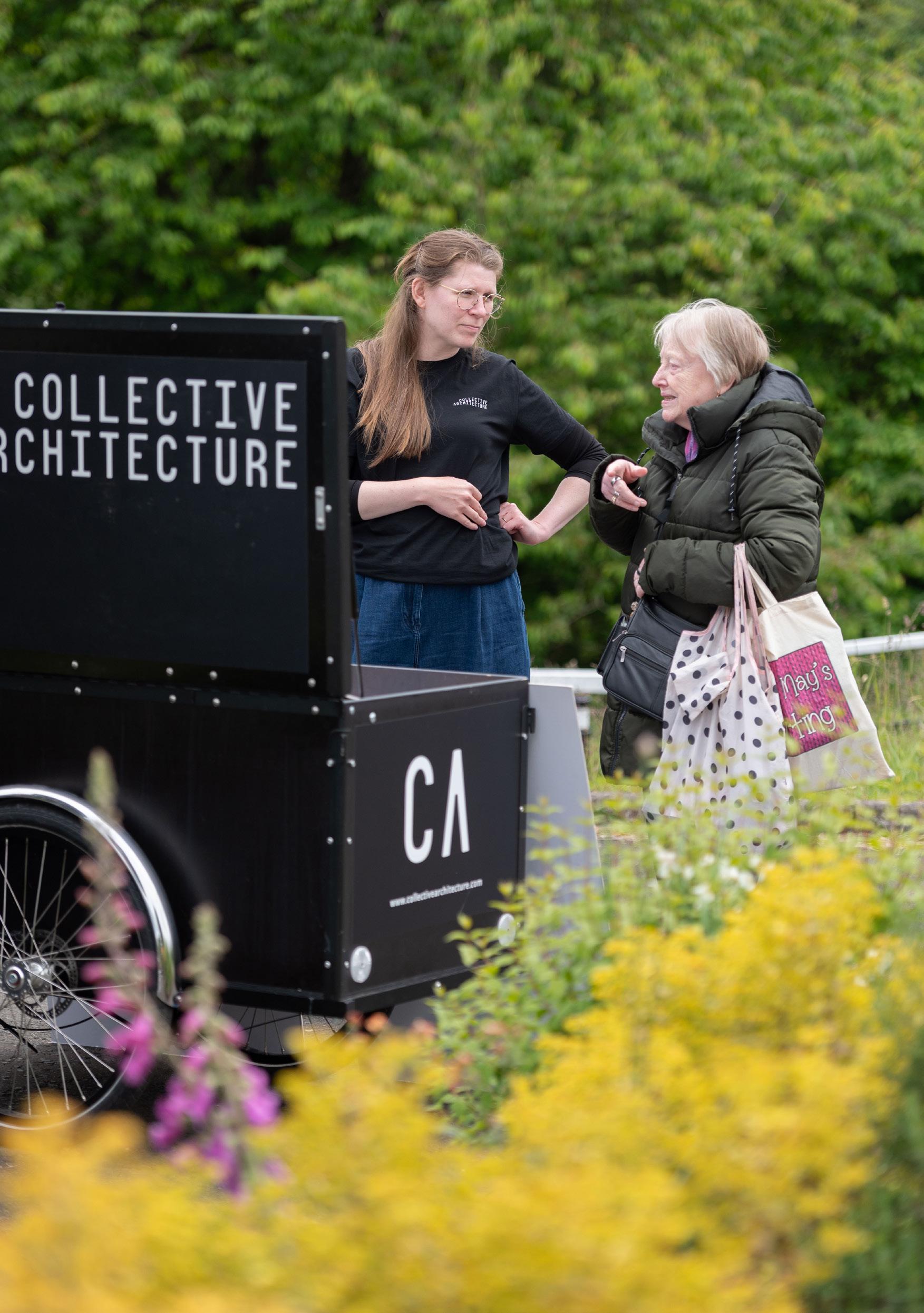
We consider each project to be special, regardless of its size and budget, and capable of providing a unique source of identity for each place, client and community.
We therefore develop an approach to suit each client and place’s need and potential, and apply this thinking to the delivery of any new project.
We value and foster people-centred design to create spaces and places that really work, and importantly, are loved and cared for by those who occupy them. We promote an emphasis on nurture and joy, prioritising people, comfort, health, and social well-being.
For over 25 years, have demonstrated a strong commitment to community, ecology and society. This is the most fundamental requirement in terms of sustainability; to ensure the long term viability of any new place and development, making sure it is strongly embedded it is locale.
We think creatively and holistically of ways to best evolve to our new realities. To minimise our carbon creation, we believe in conservation, re-use and retrofit as first principles while ensuring the creation of new buildings and places that are low-energy and low-carbon to tackle the climate crisis and build resilience for the future.
We shape buildings and spaces for, and with, everyone in society through our specialist skills, agility, and a participatory approach.
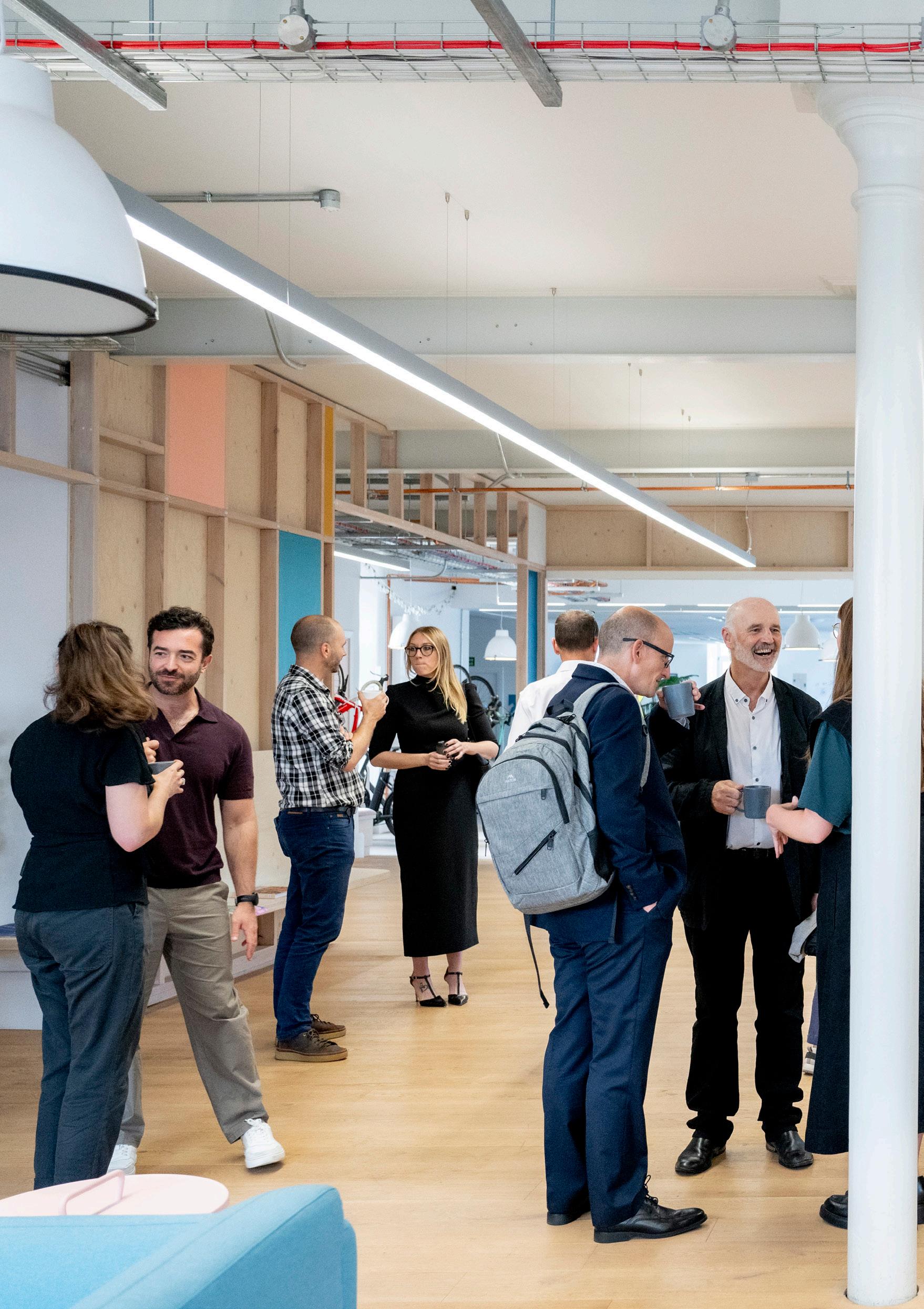
We occupy, and enjoy, the creative space between idealism and pragmatism.
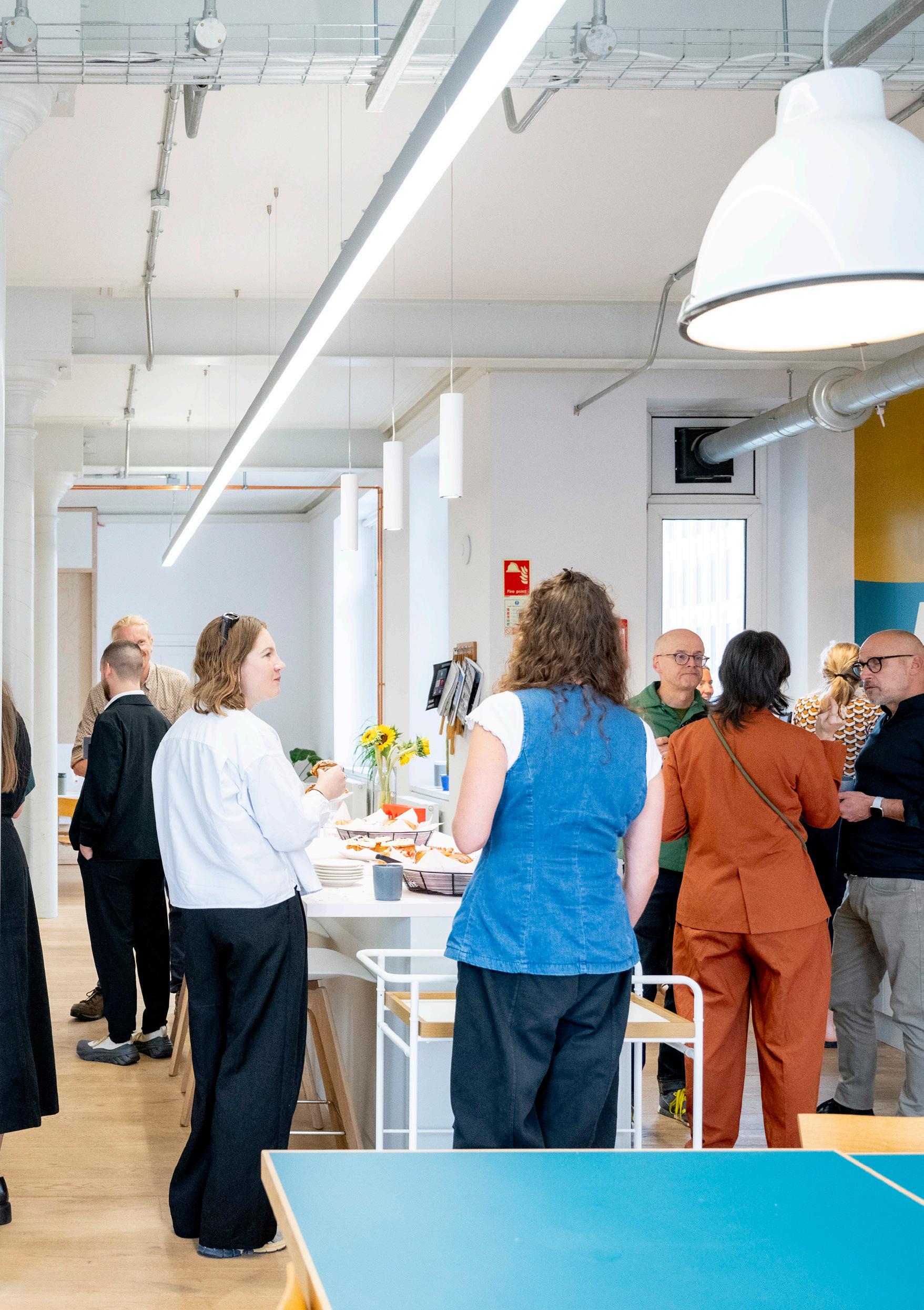
‘In many ways, Collective Architecture has been ahead of the curve and, as its raison d’être has aligned more and more with what one might expect an ideal practice of today to be, so too has its output become more consistent and the resulting awards and accolades more frequent…. Collective Architecture has demonstrated very successfully what amazing results are to be had with a thorough-going, committed and collaborative approach’.
Will Hurst, AJ Architect of the Year Award
We develop an approach to suit each client and place’s need and potential, and apply this thinking to the delivery of any new project.
Paisley Central Library
Renfrewshire Council / One Ren
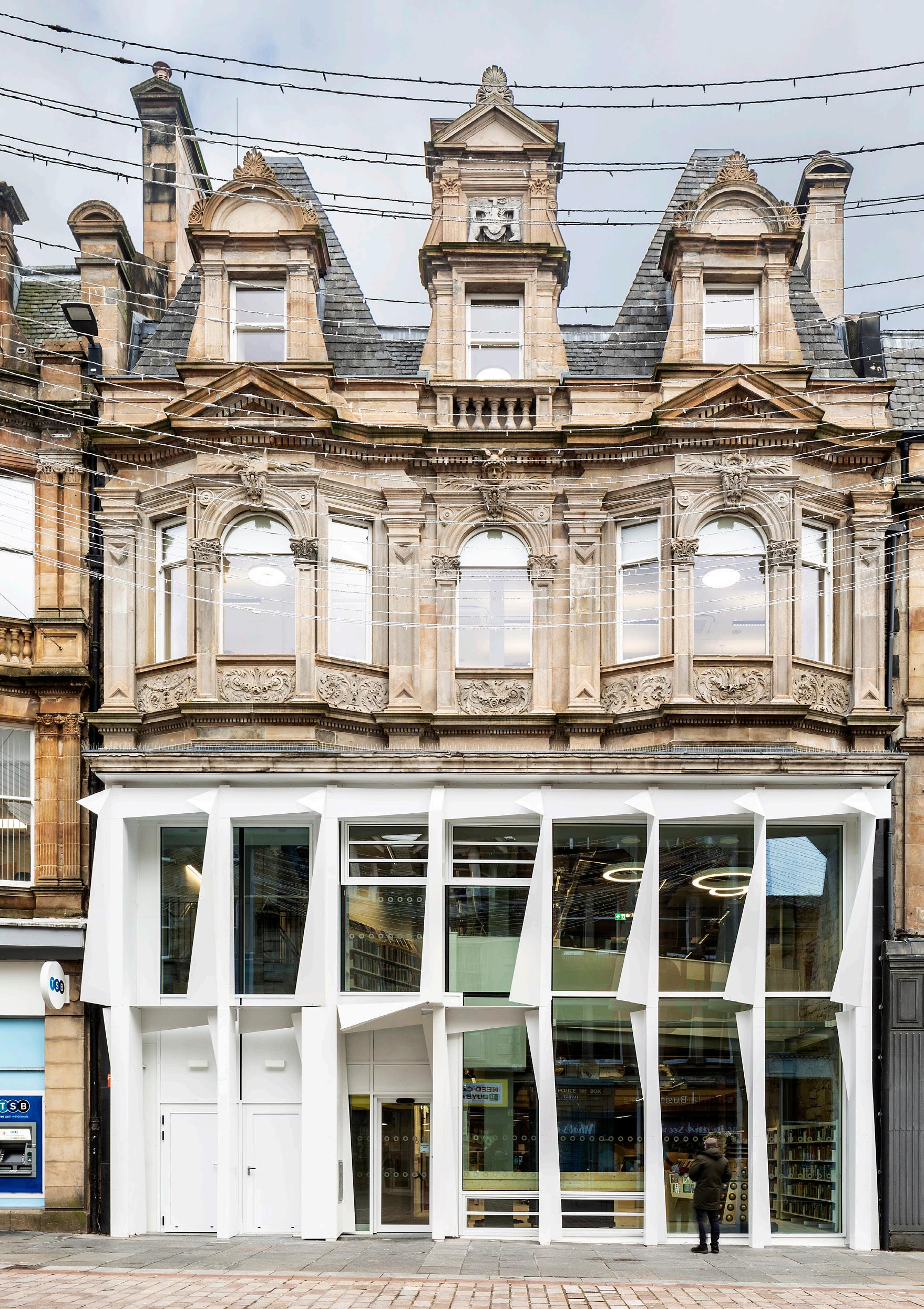
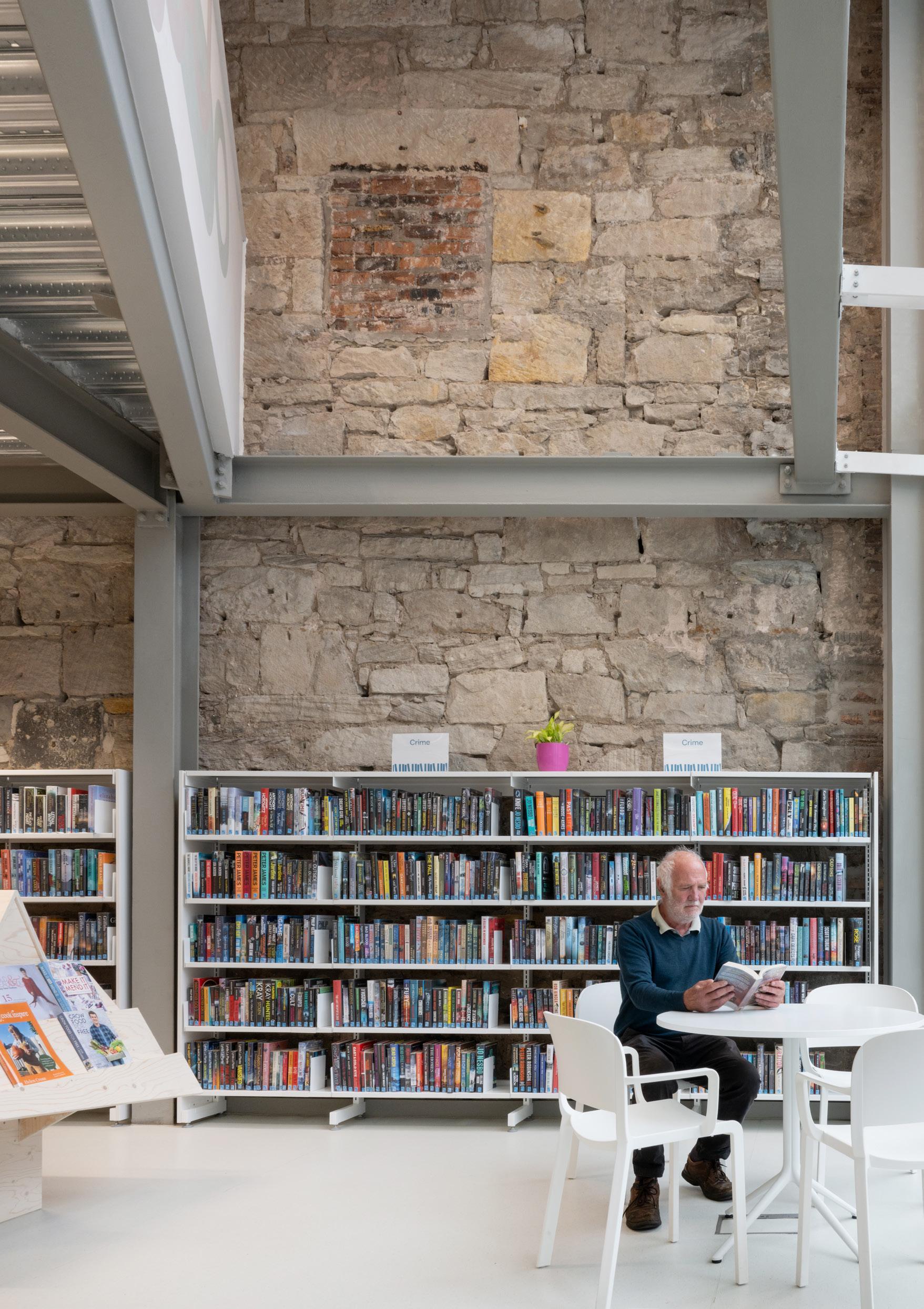
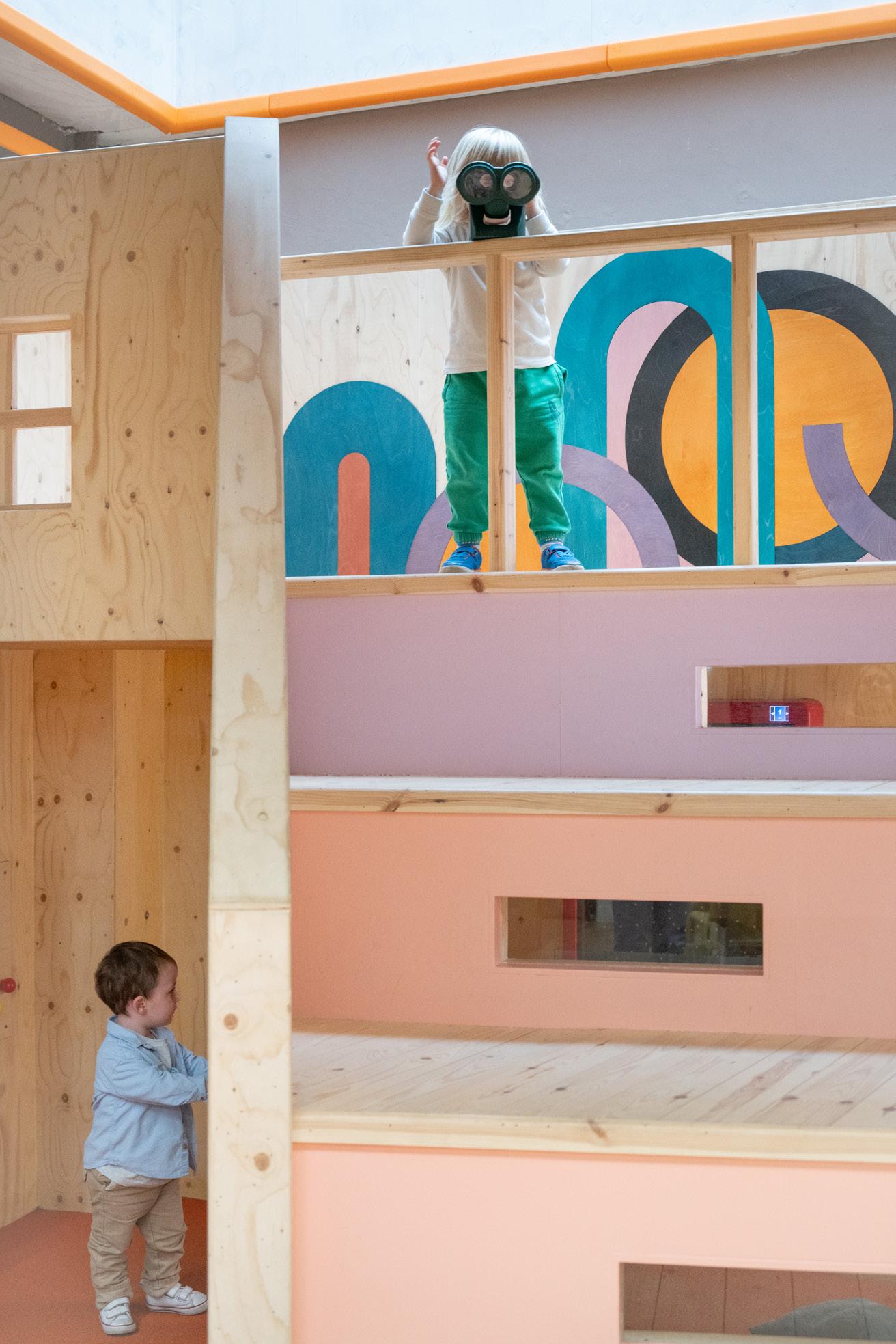
The new Paisley Central Library introduces a dynamic, communityfocused asset to the town’s main high street. It is a key element of the Council’s vision to transform a declining High Street into a vibrant cultural neighbourhood.
Set within a challenging historic building, the project has created nuanced spaces which tune into a range of users’ requirements: from secret rooms for children to play within; a first-floor “living room” housing the main library collection and and a tucked-away reading room which has become a social space for teenagers after school.
The City of Edinbugh Council
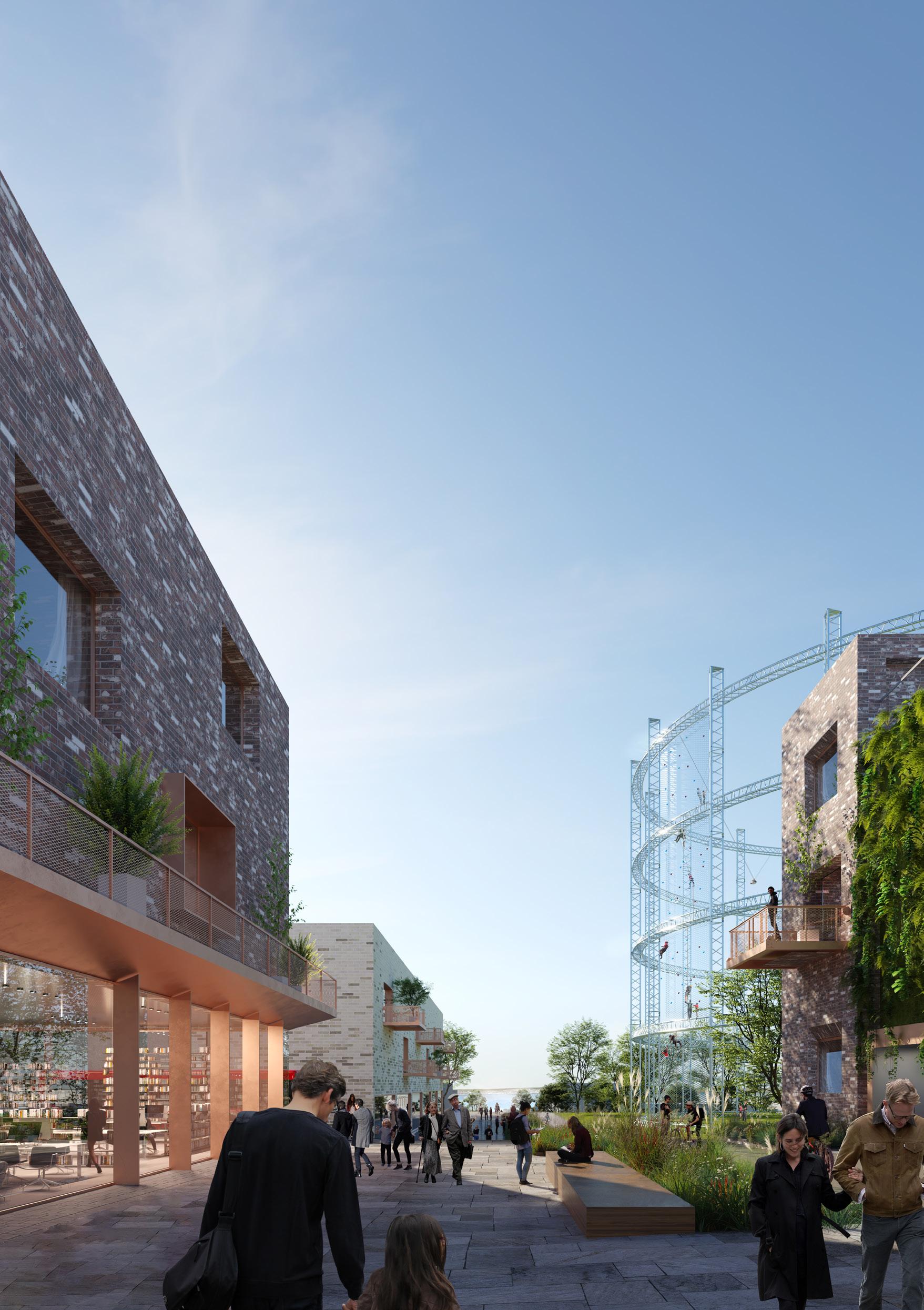
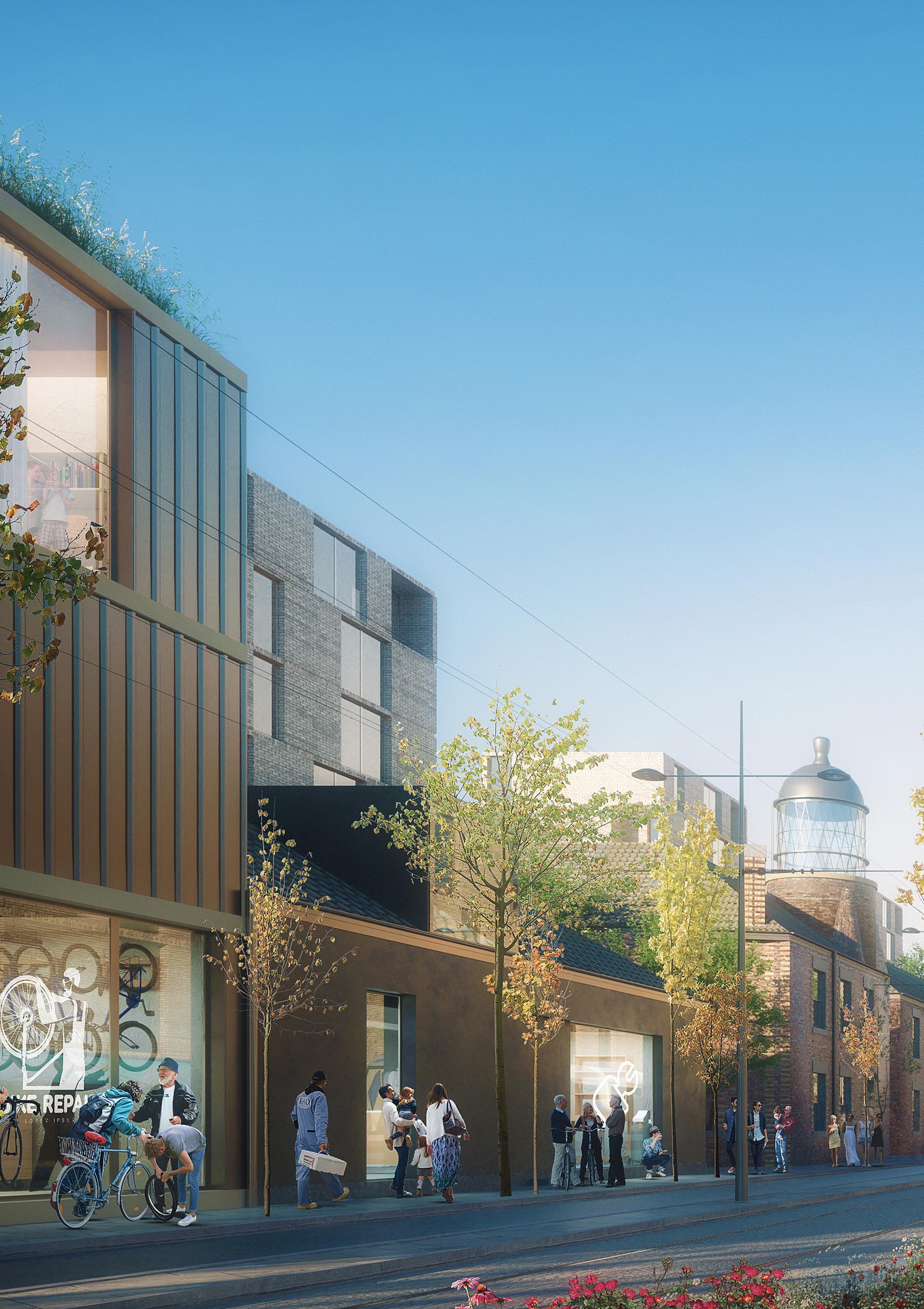
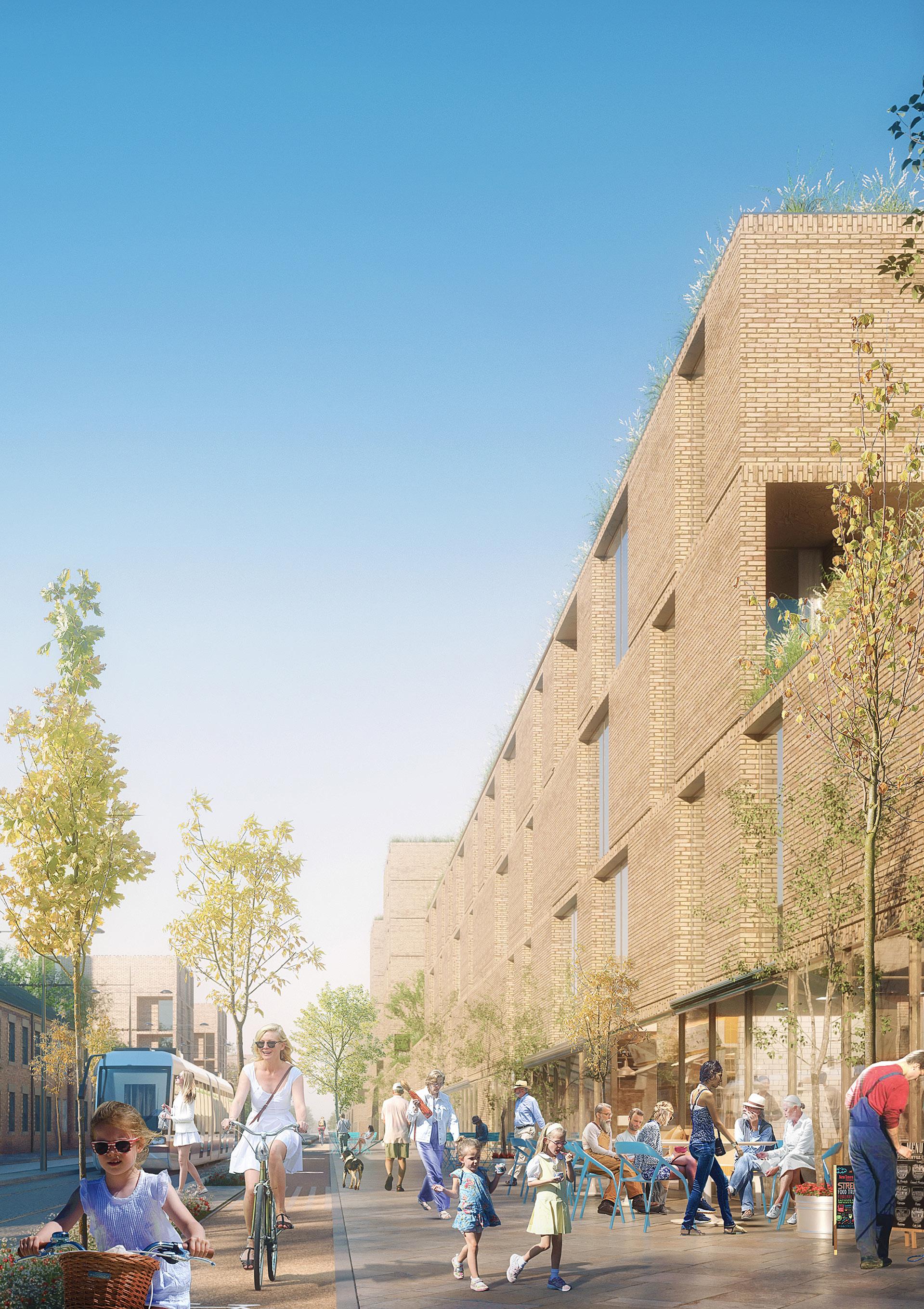
Collective Architecture delivered a vision and strategic framework to transform the coastal area of Granton to the North of Edinburgh to create a vibrant, productive, and liveable neighbourhood.
The framework was developed via intensive stakeholder and community engagement including project partners National Galleries Scotland, National Museums Scotland, Edinburgh College and Scottish Futures Trust.
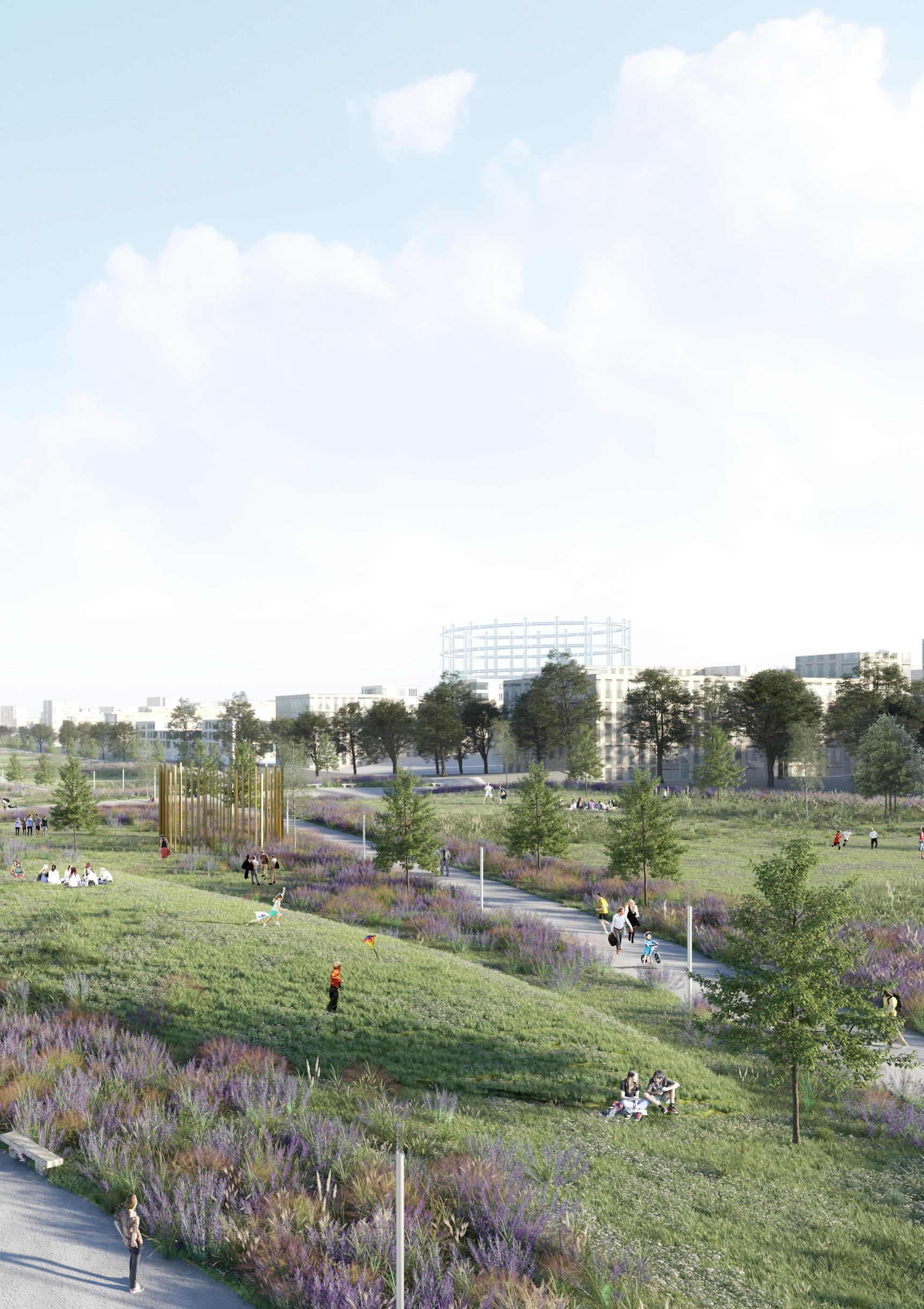
The site comprises around 200 hectares of open space and parkland, and 50 hectares of contaminated, derelict industrial land, with a gasometer and former station building at its heart.
The proposals build on the site’s ecological and cultural significance. Approximately 3000 new affordable homes of mixed size, typology, and tenure are knitted into the landscape and vacant sites, while existing infrastructure is enhanced with green-blue connections formed between new and existing communities. A new school, cultural facilities, commerce, and parks are integrated and connected via human scaled streets and avenues.
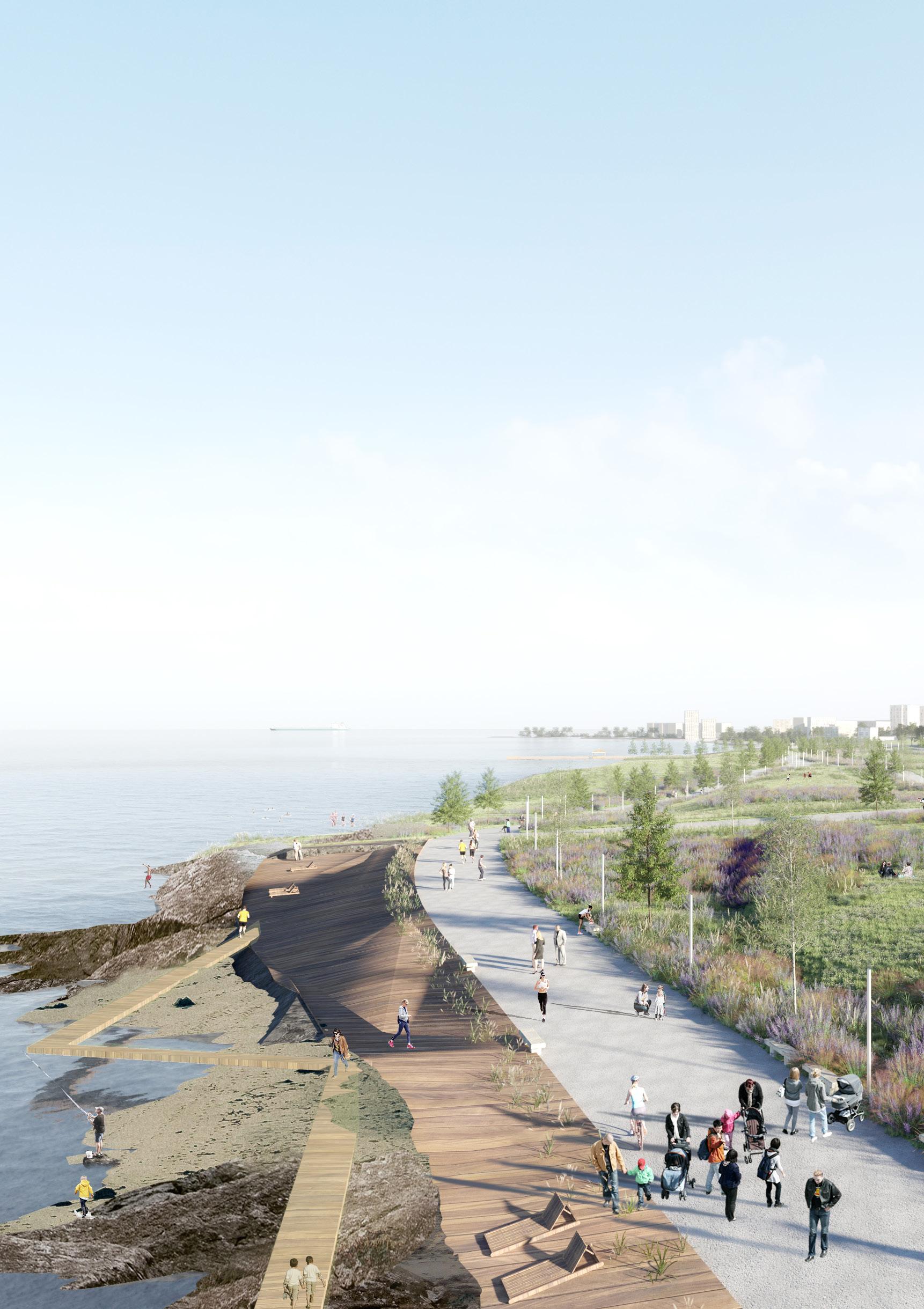
At the heart of the project is the creation of a new 10-hectare, flood resilient, dynamic coastal park, and a series of blue-green active travel routes which reconnect the waterfront to the City, the neighbourhood, and existing communities. The project also includes associated SocioEconomic, Learning, and Cultural Strategies.
Water Row Phase 1, Govan, Glasgow
Govan Housing Association
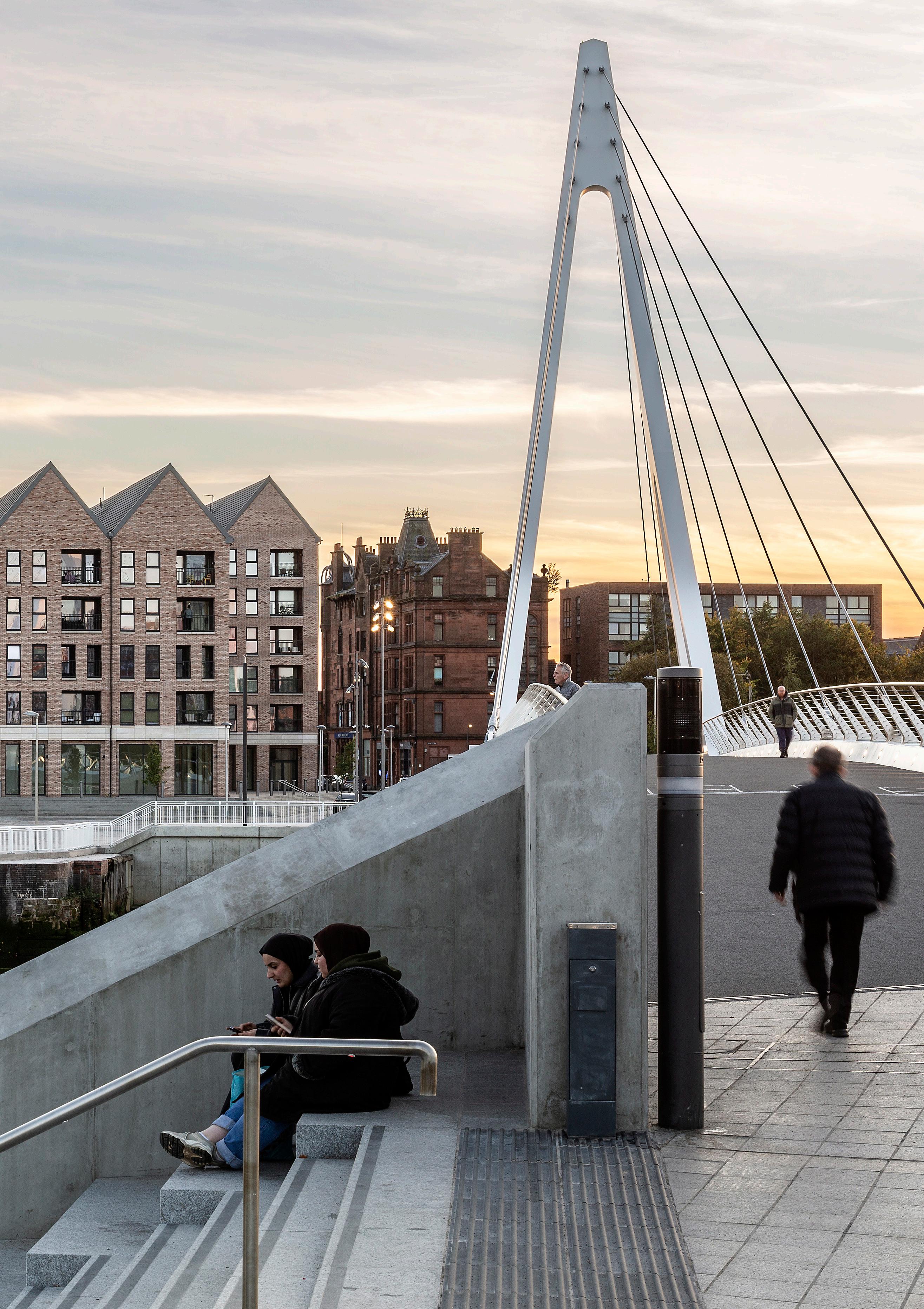
Collective prepared a strategic plan for Water Row which re-established Govan as a vibrant town centre, reconnecting it to key landmarks, the River Clyde, and the new Partick Bridge link.
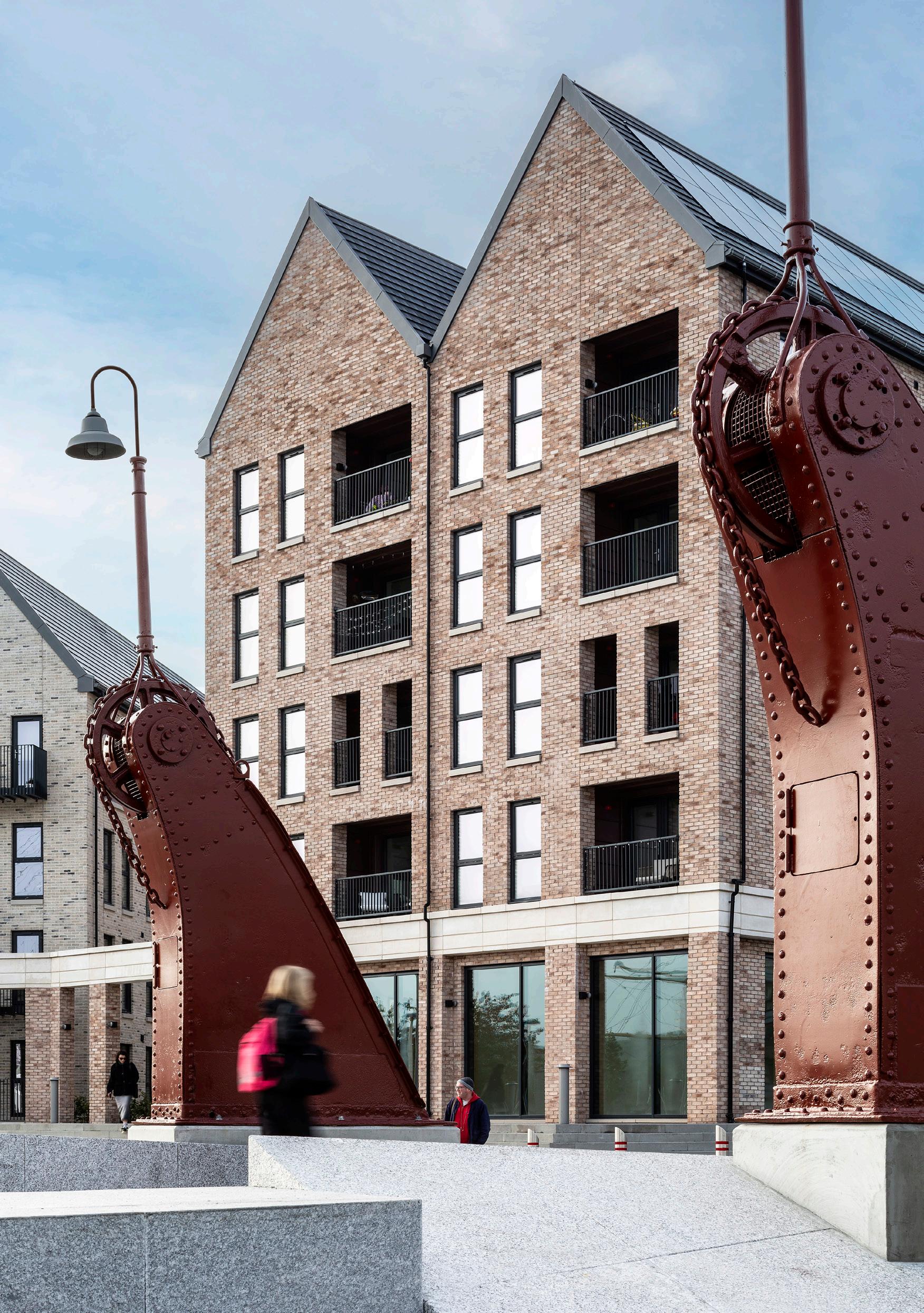
In 2025 we completed the design and delivery of Phase 1, providing 92 homes and 7 commercial units. This successfully reinforcing and defining vital urban edges around Govan Cross, the riverfront, to connect with the associated new bridge connection.
The new development, a key element of the Water Row vision, is a symbol of Govan’s reintegration with the north side of the river. The new bridge (by others) improves pedestrian and cyclist access to the waterfront, unlocking the area’s potential as a thriving destination for residents and visitors alike.
Water Row is an example of how thoughtful urban regeneration and carefully designed mised use development can breathe new life into a community. By weaving together sustainable living, community empowerment, and a respect for local heritage, this project has created a vibrant and inclusive waterfront destination that is truly putting Govan “back on the map.
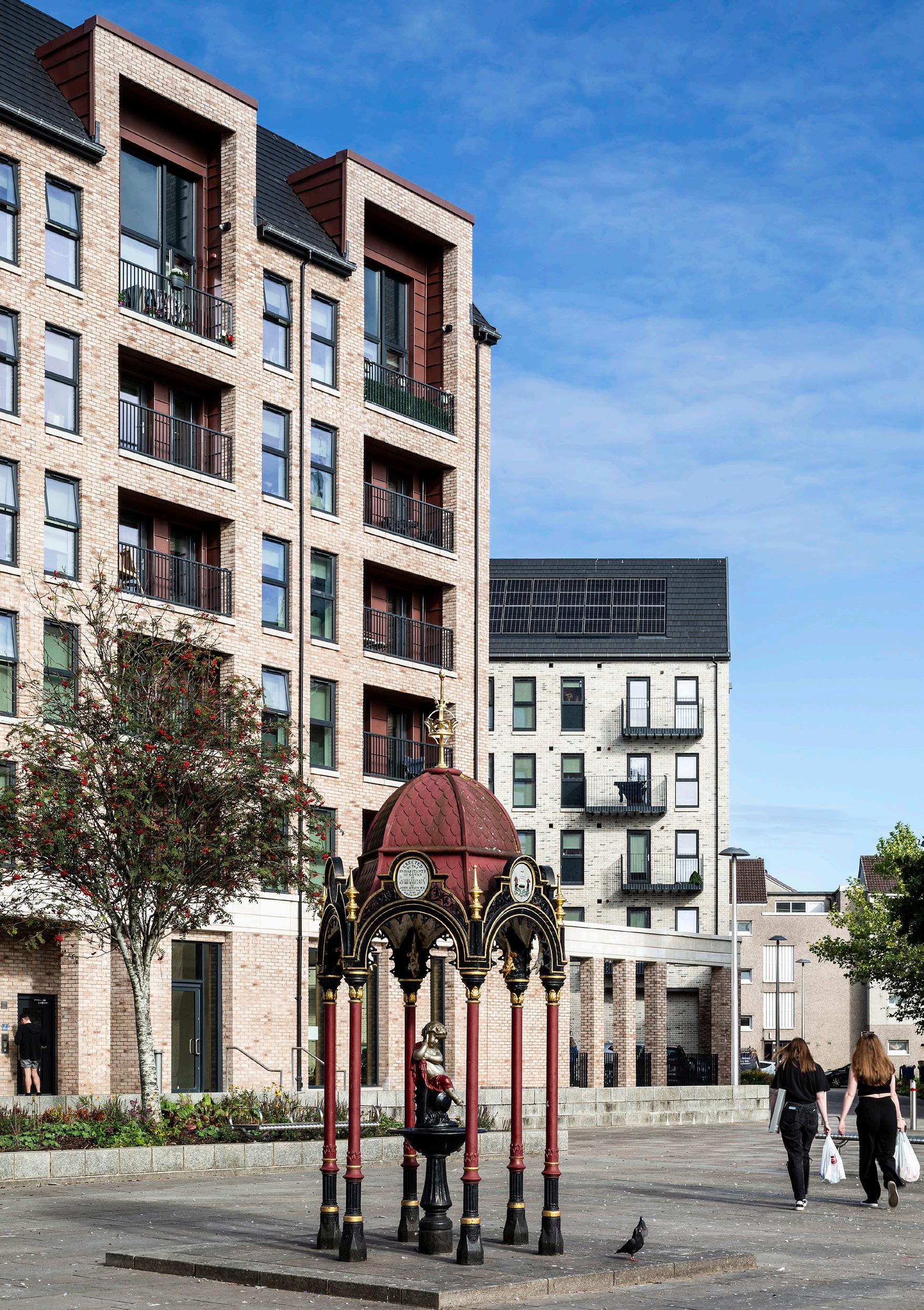
Water Row Phase 1, Govan, Glasgow.
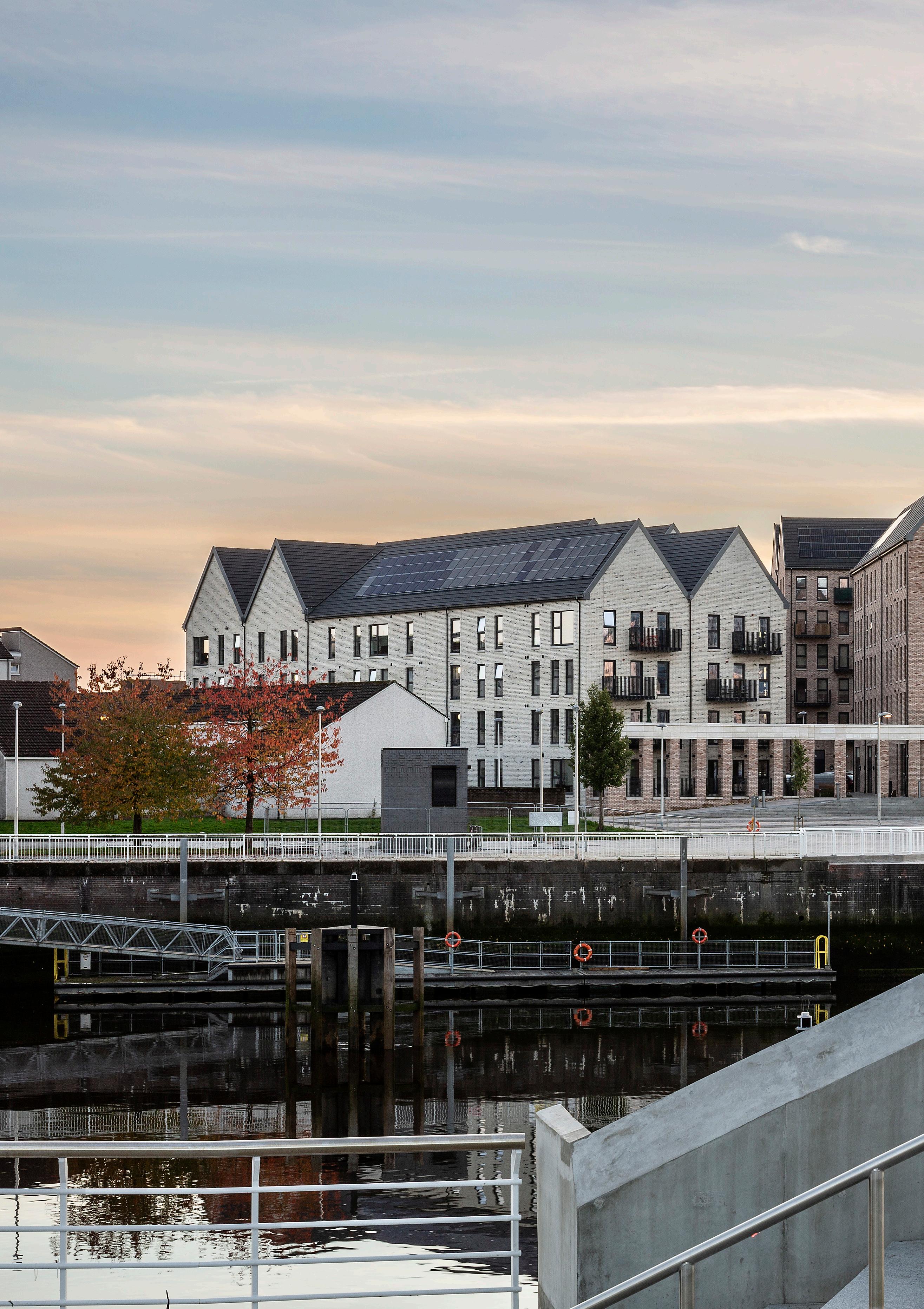
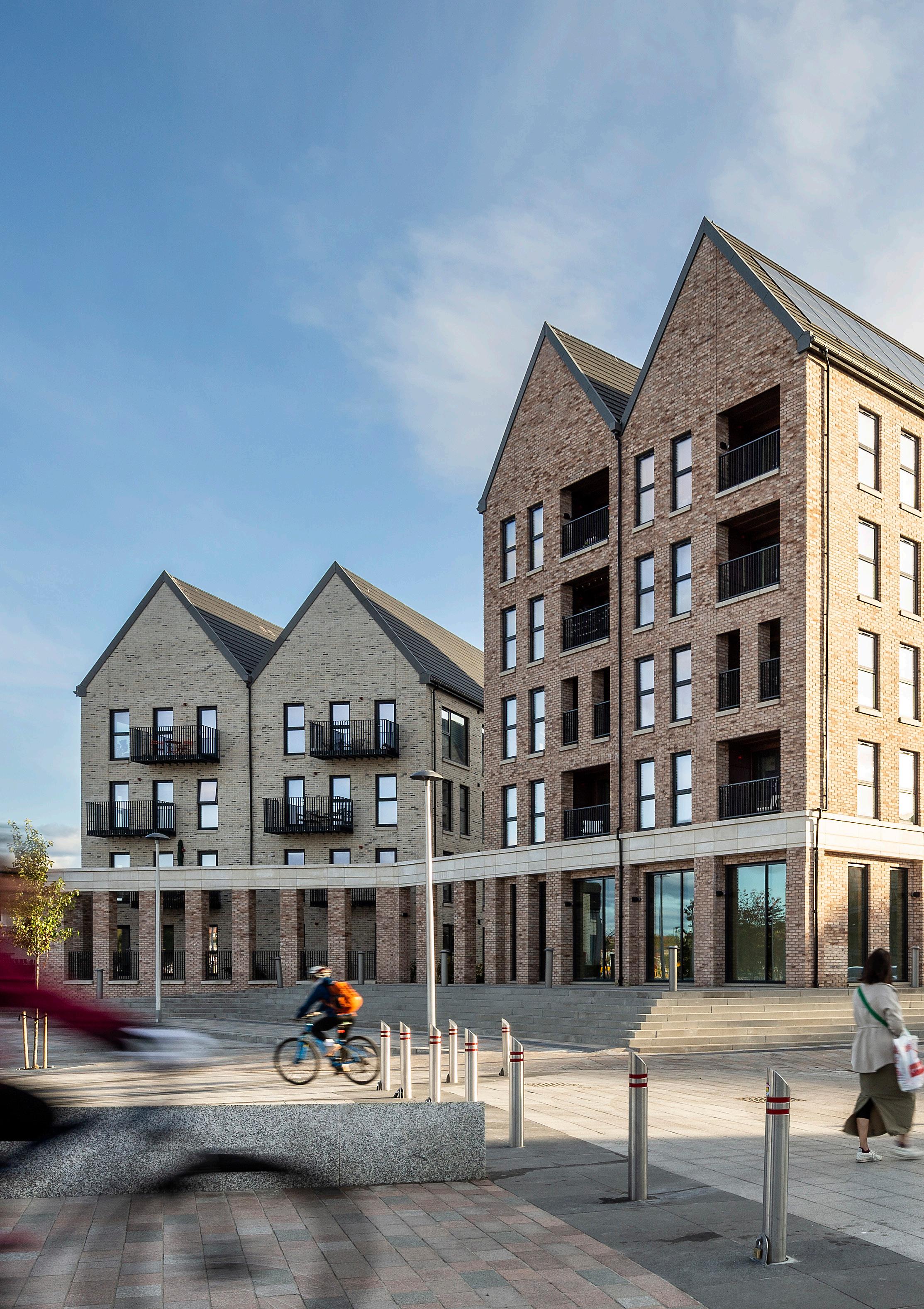
Water Row Phase 1, Govan, Glasgow.

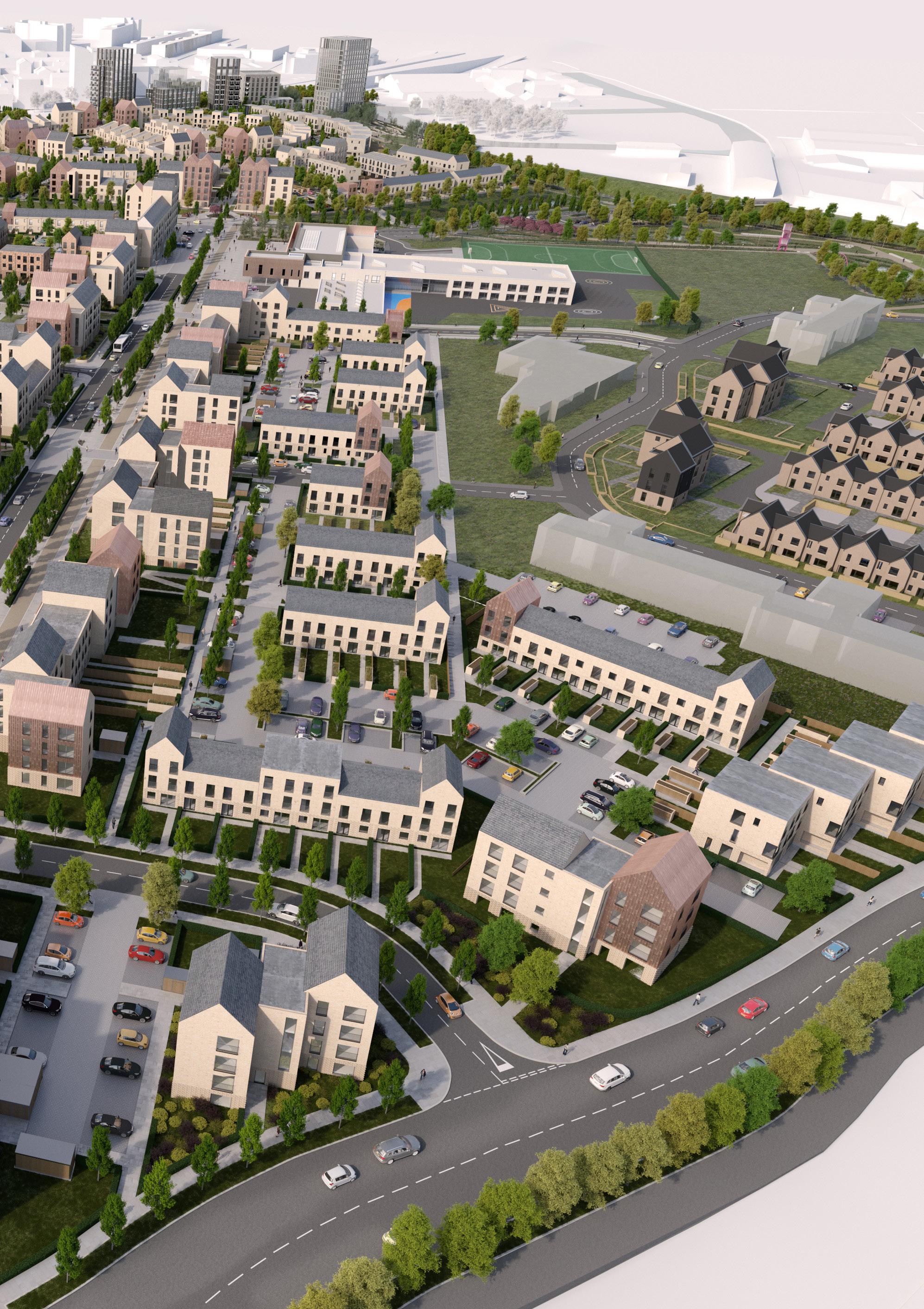
Sighthill, in the North of Glasgow, is Scotland’s largest regeneration project, and part of a series of transformational projects Collective Architecture have been involved with in the north of the city, from Dundashill, Hamiltonhill and Civic house. Sighthill developed from a transformational and achievable masterplan set by Glasgow City Council (the largest of eight Transformational Regeneration Areas (TRAs) in Glasgow). Built in the 1960s, Glasgow’s Sighthill estate has long had a strong community.
Collective Architecture’s involvement at Sighthill stems from their successful delivery of Phase 1 in 2015 which transformed an area formerly in decline to help create a thriving community. This awardwinning development for Glasgow Housing Association was delivered by CCG in collaboration with the design team and comprised of 141 new build houses and flats. Phase 1 formed part of three sites allocated for the reprovision of housing for tenants across five high rise blocks.
The current development phases provides 826 new homes for both sale and rent (628 for private sale and 198 for GHA mid-market rent), new commercial units, public spaces, tree-lined promenades, parks, blue-green infrastructure, a community school campus and an iconic garden bridge connecting the Sighthill neighbourhood to the Canal and City Centre.
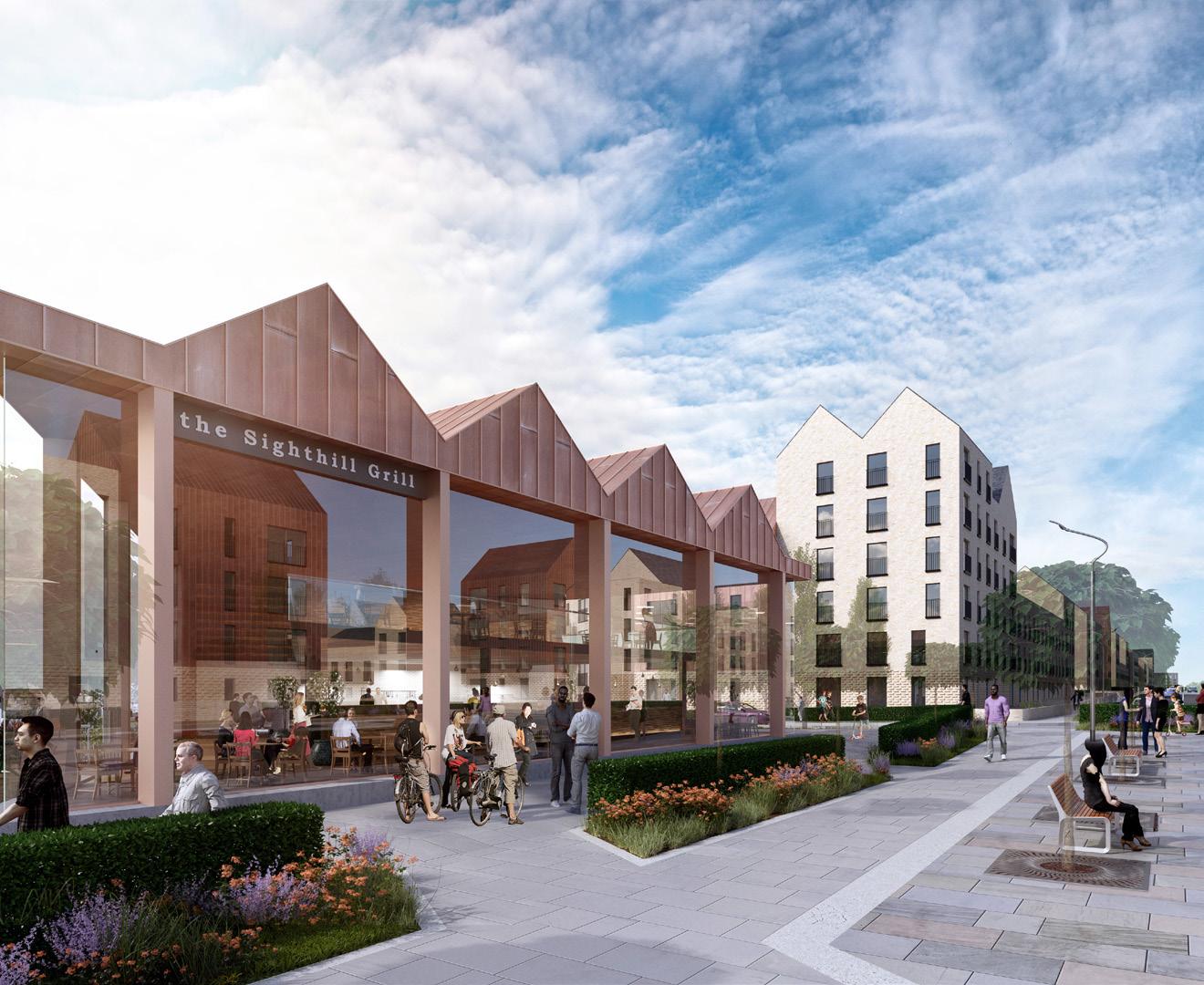
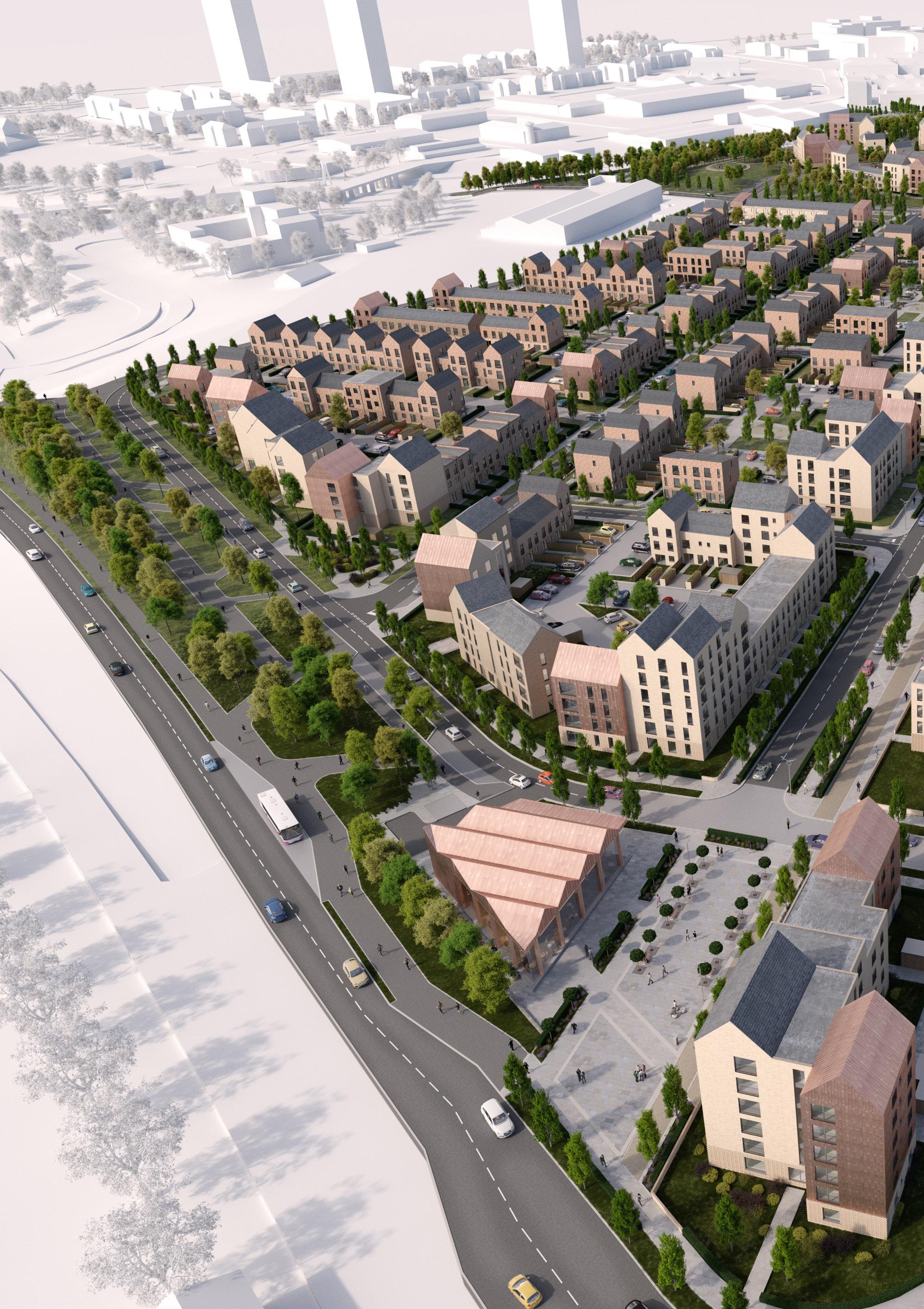
Sighthill Masterplan, North Glasgow
Bell Street Stables
Wheatley Homes
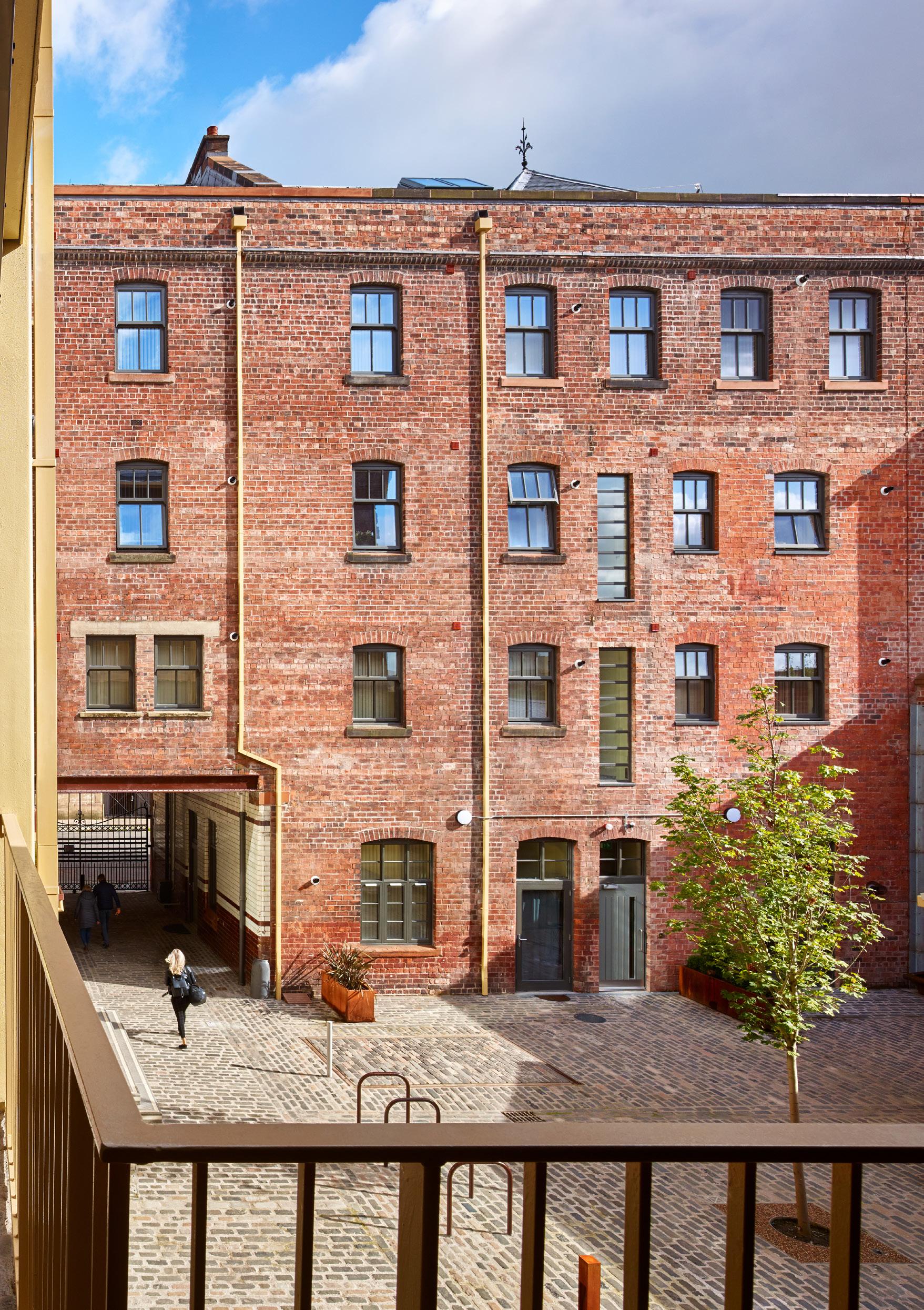
Alteration and redevelopment of a Category B listed former Glasgow Corporation multi-storey stable building to provide 52 flats for social rent. Important and rare features of the existing building including the original 1897 horse ramp and courtyard circulation are being retained to create a unique housing development in the centre of Glasgow’s Merchant City, close to transport hubs and amenities.
From the early design stages Collective sought to retain the remarkable circulation system and courtyard as the key elements in the history and character of the building. A car free development was agreed early on with planning to preserve the courtyard and the layouts developed to retain the large volume of the horse ramp. The new main access stair now gently climbs within the volume of the horse ramp, and the existing gangways are re-purposed for the tenants as generous access balconies. The balcony circulation was extended to the South courtyard elevation to create an intimate sheltered courtyard and allowing one external lift placed in the corner, with staggered entrances, to serve the majority of the flats without disturbing the internal historic fabric.
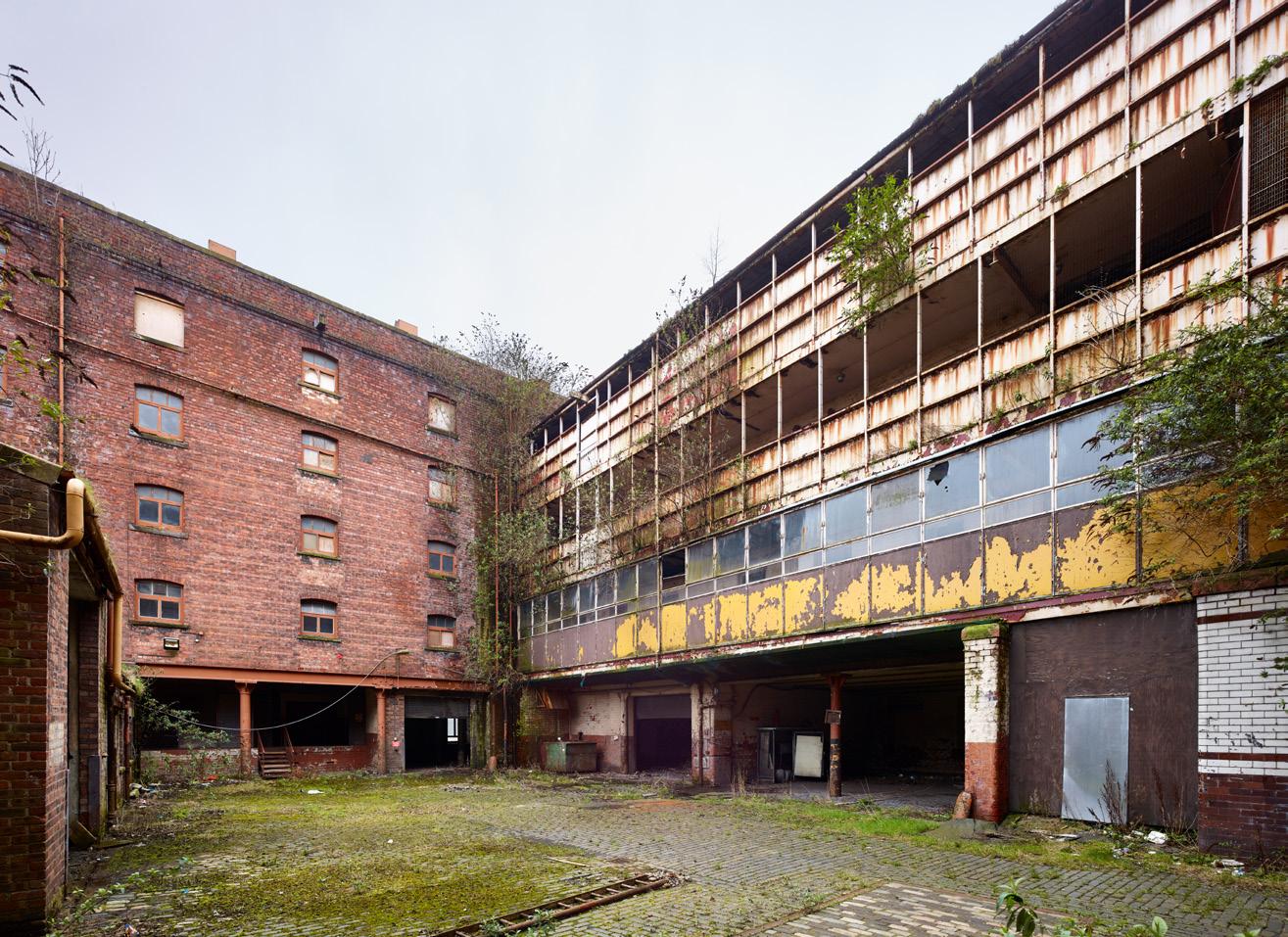
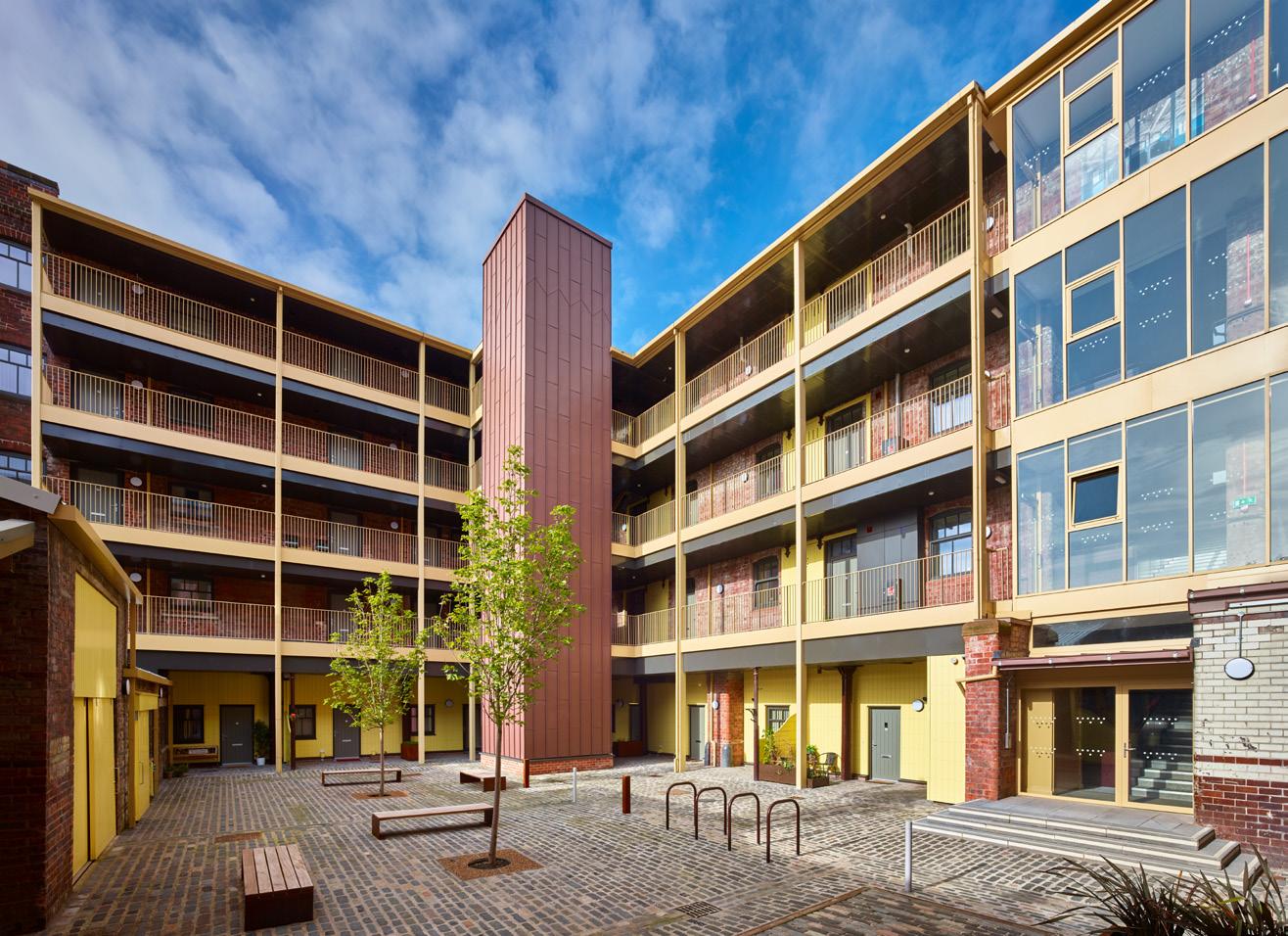
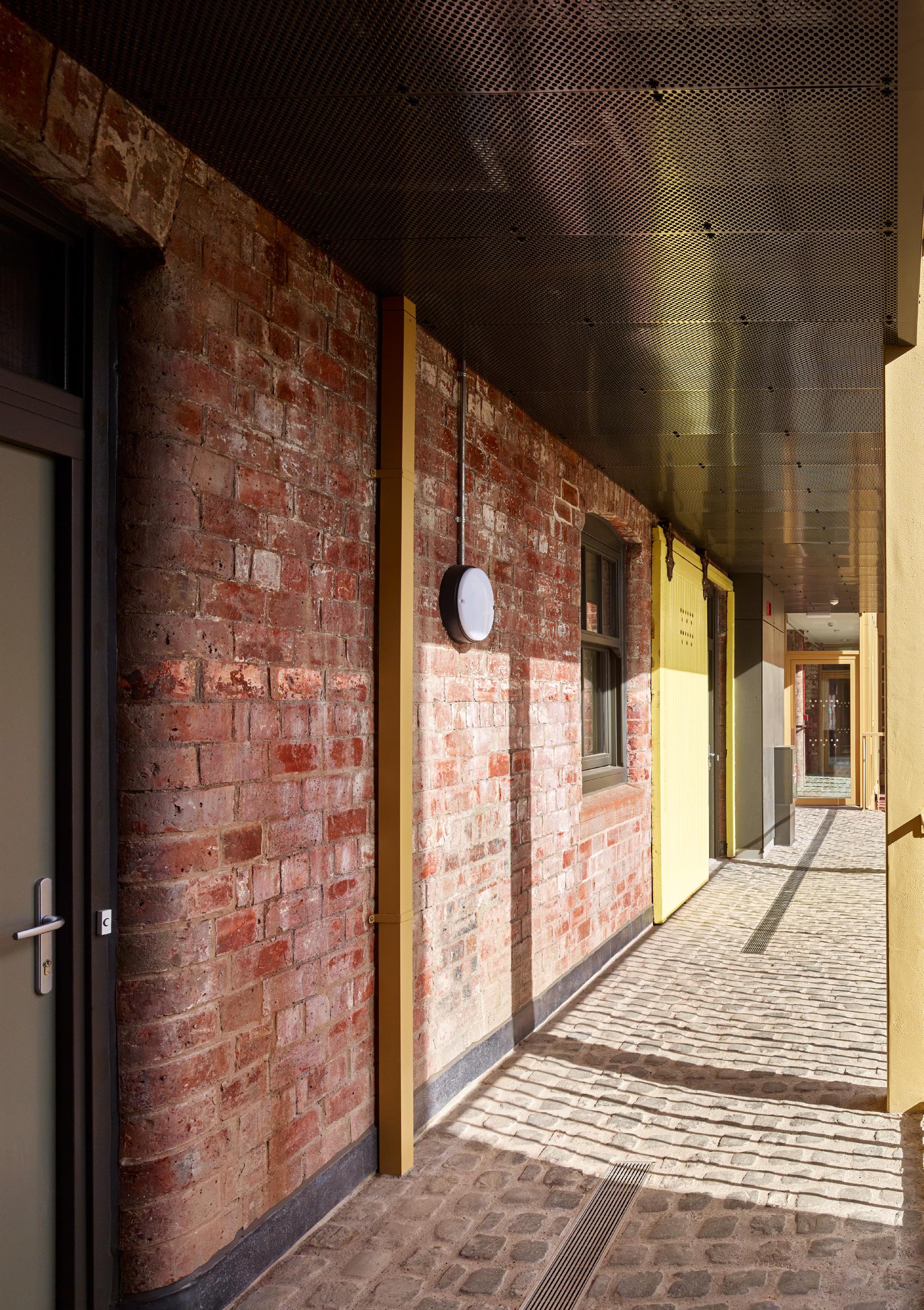
Bell Street Stables, Glasgow.
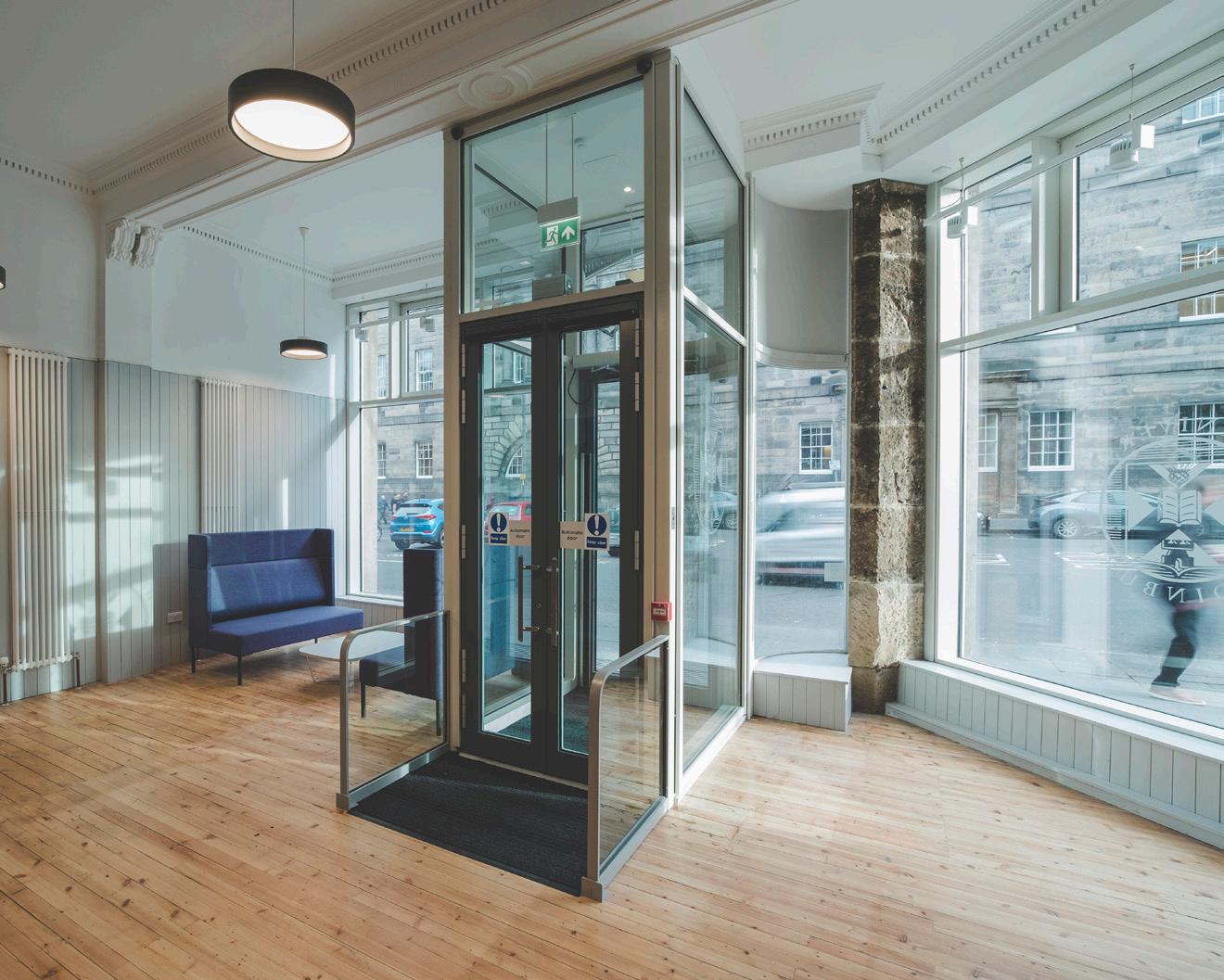
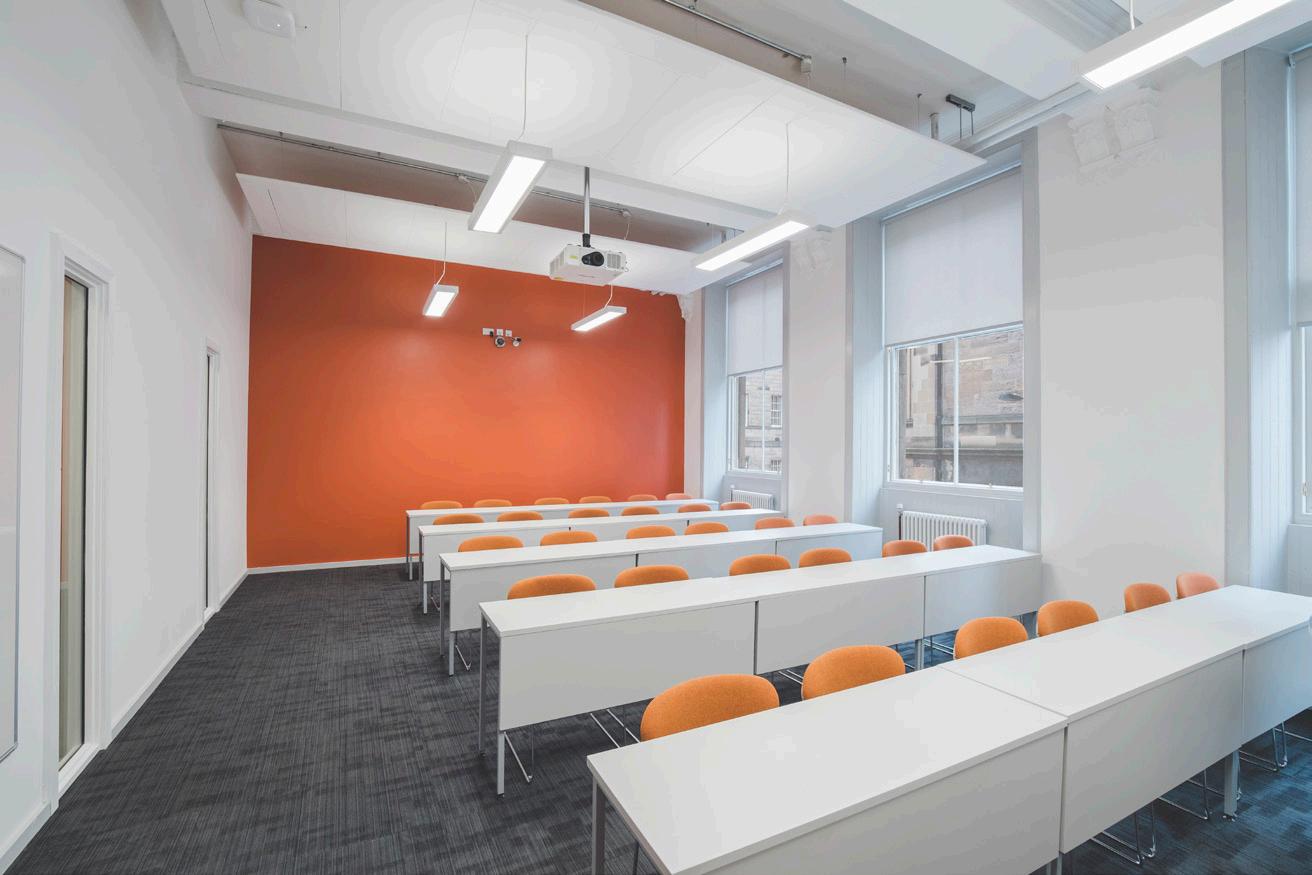
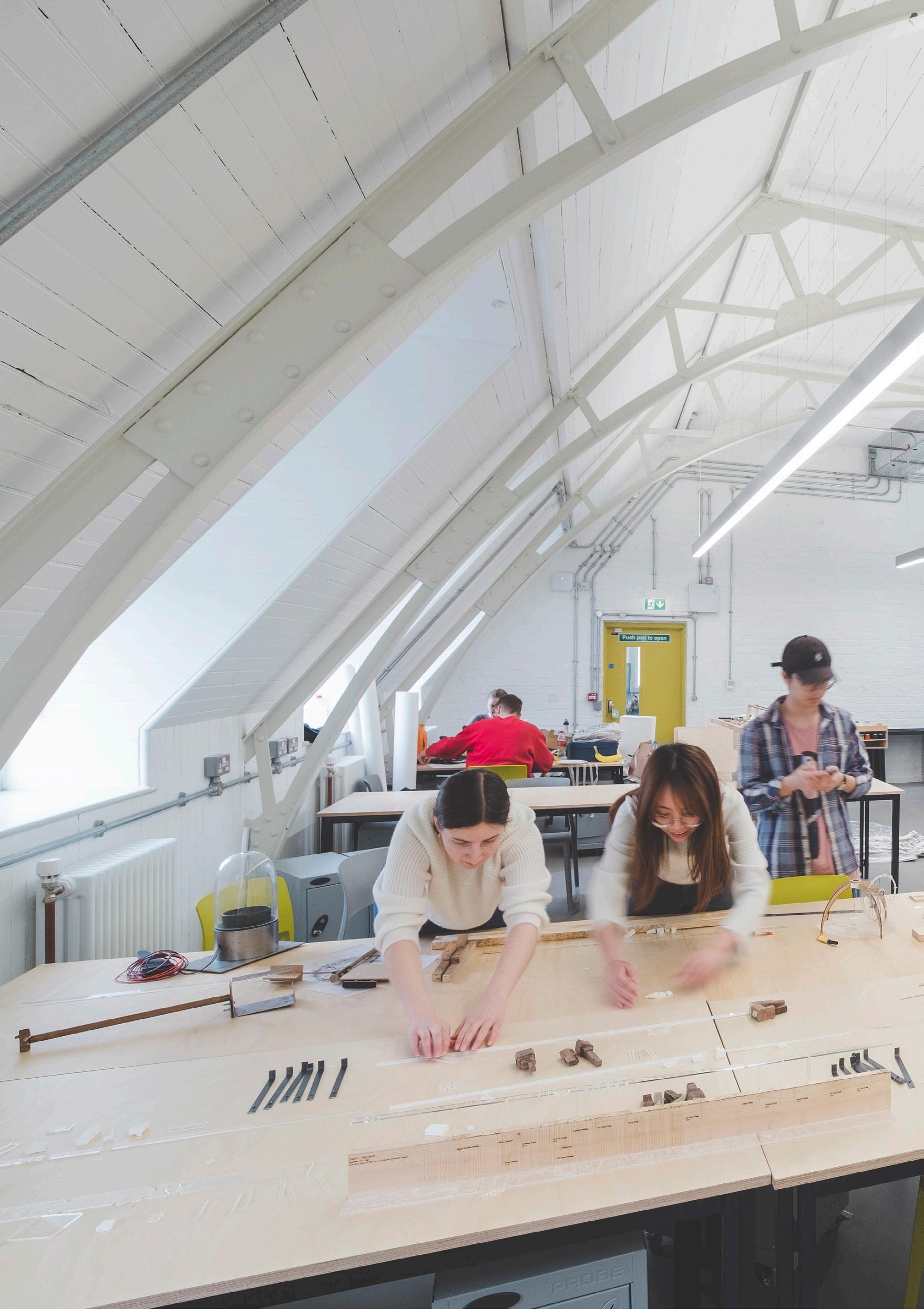
University of Edinburgh
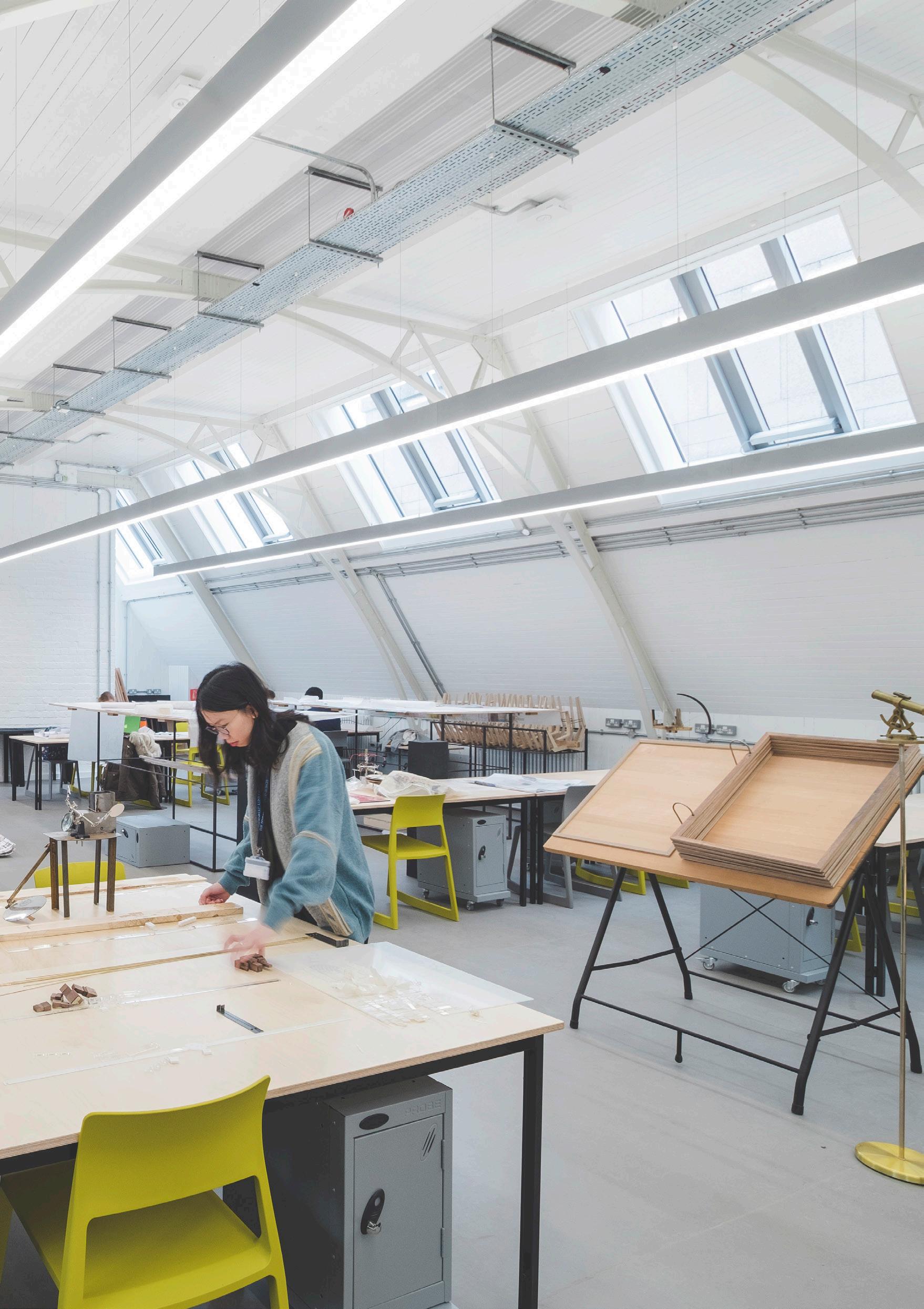
Conversion of a Category C listed office building to an academic facility that accommodates architectural school studios, exhibition spaces, teaching rooms and offices. The building, required conservation work to the existing facade as well as internal alterations to improve circulation and reconfigure the layout to suit the brief including installing a new lift in a redundant light well to make the building fully accessible.
7-8 Chamber Street, Glasgow
Titan Crane, Clydebank Clydebank Rebuilt
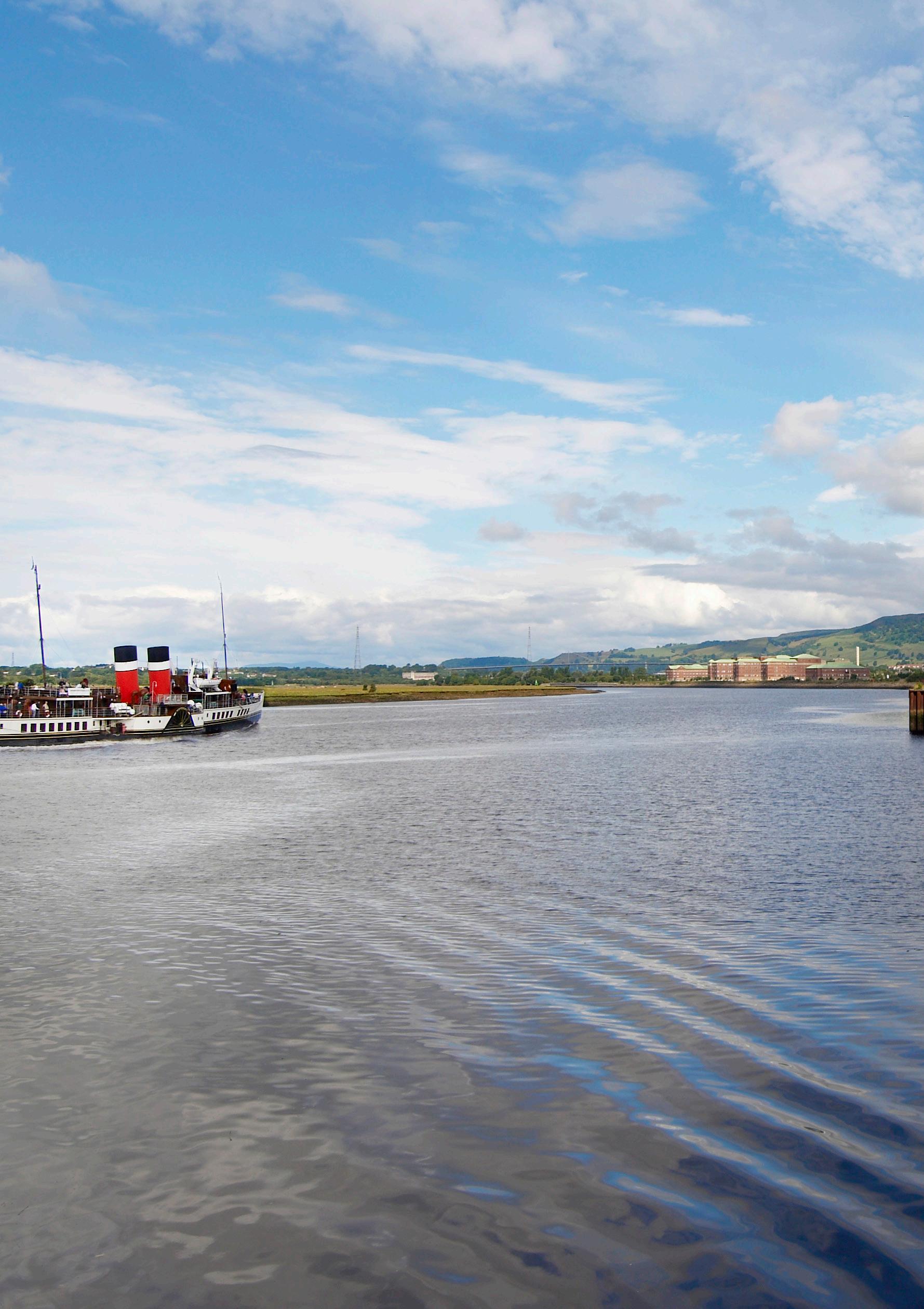
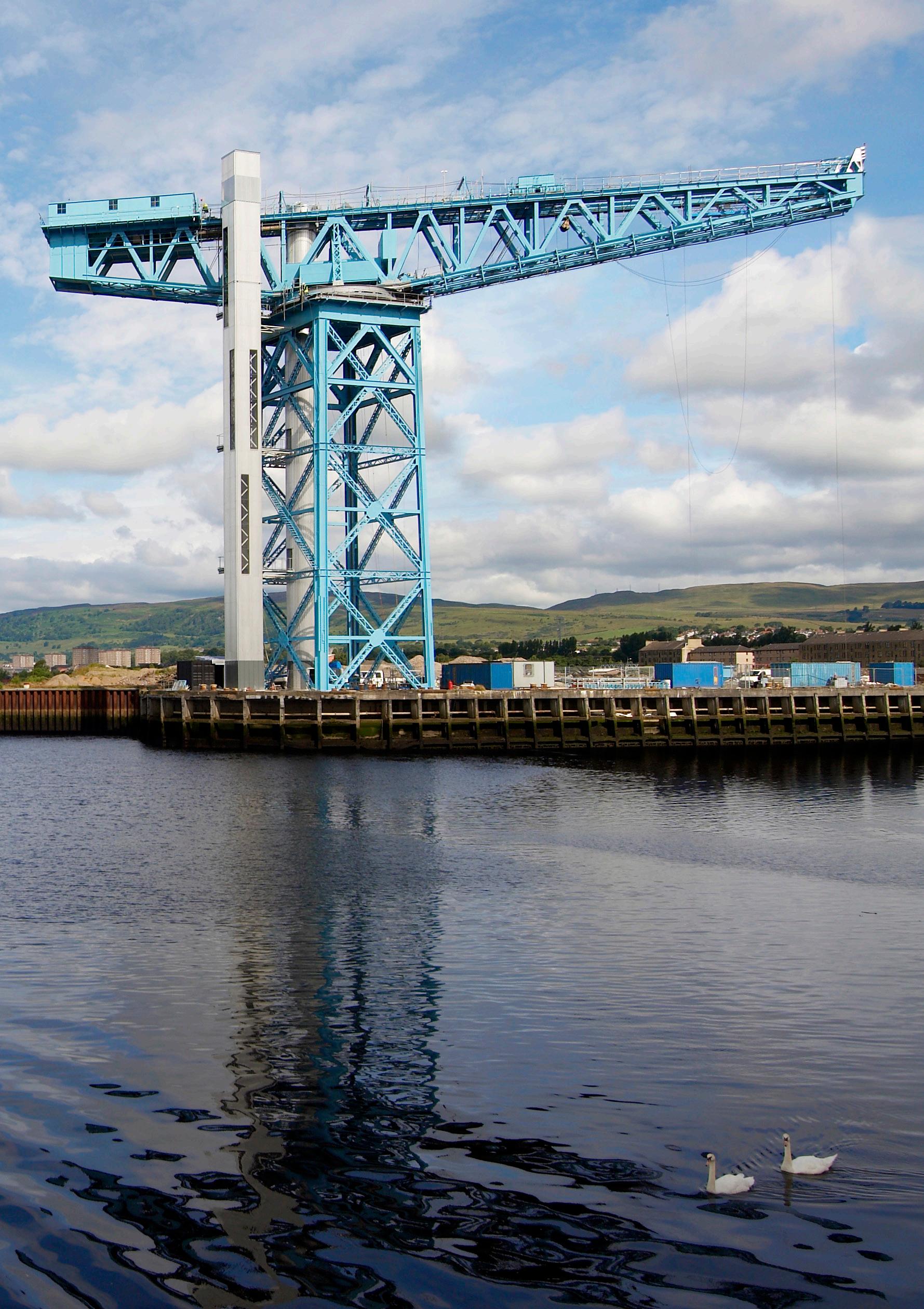
Titan Crane was a project focused on the conservation and refurbishment of the historic crane, restoring it to its former glory. Starting with a lighting strategy, Clydebank Rebuilt soon commissioned Collective Architecture to design a full restoration, helping Titan Crane to become a unique visitor attraction.
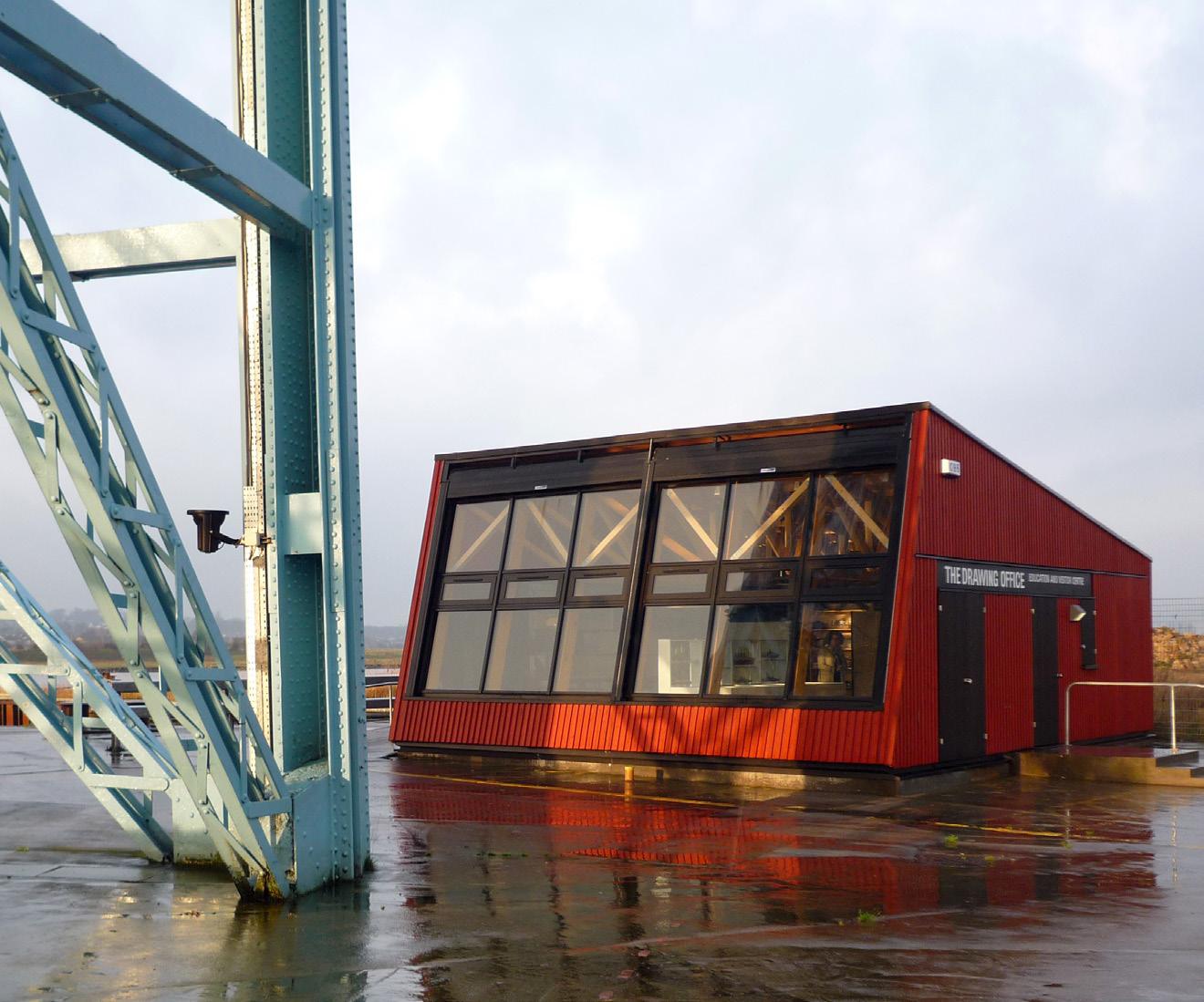
Following the success of the Titan Crane restoration project, Clydebank Re-built commissioned Collective Architecture to design a small visitor centre to augment the site. This was intended to be used as an exhibition space, learning area and reception. Collective Architecture collaborated with artist, Toby Patterson to design the interior of the space and the initial exhibition show.
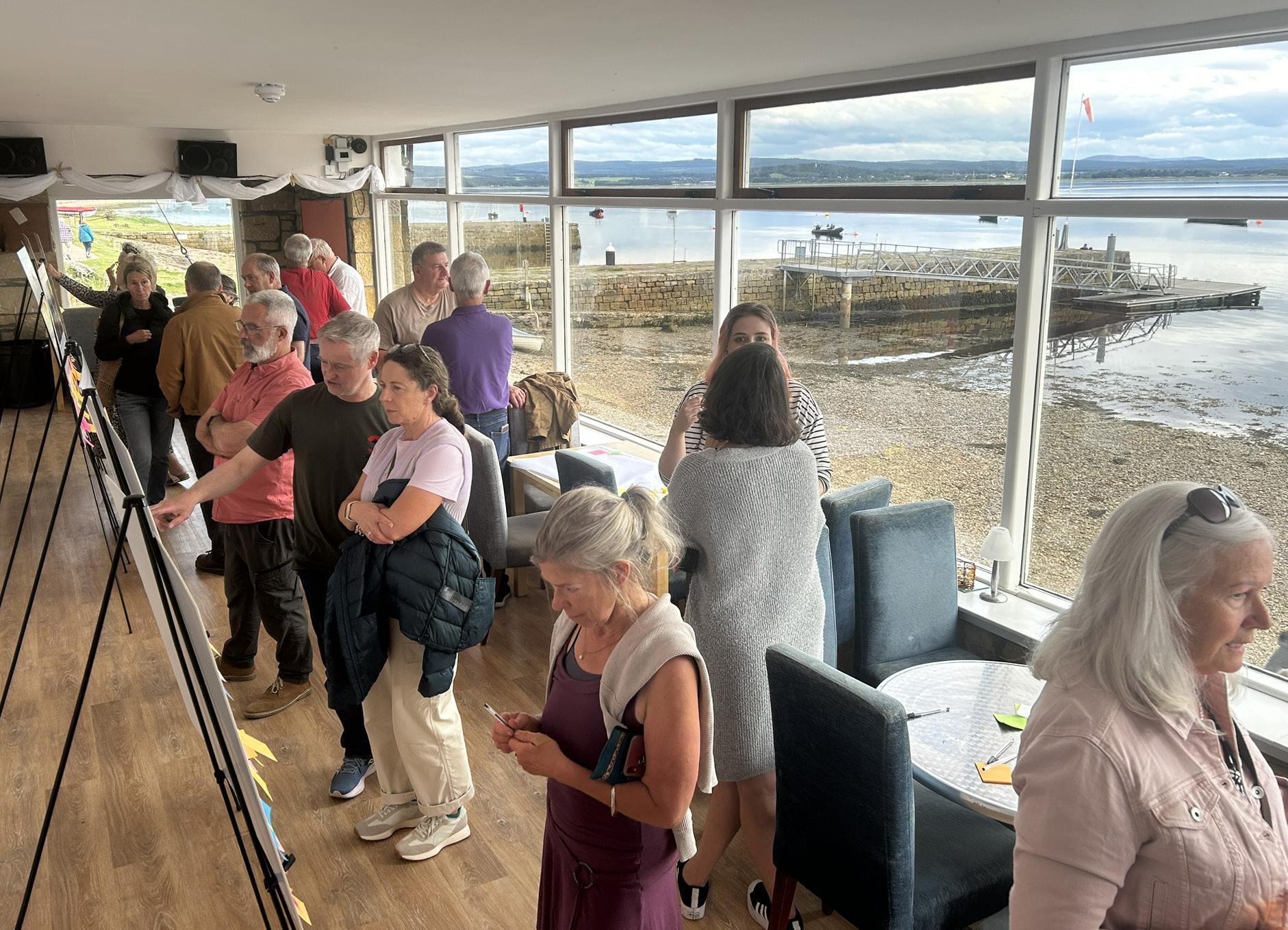
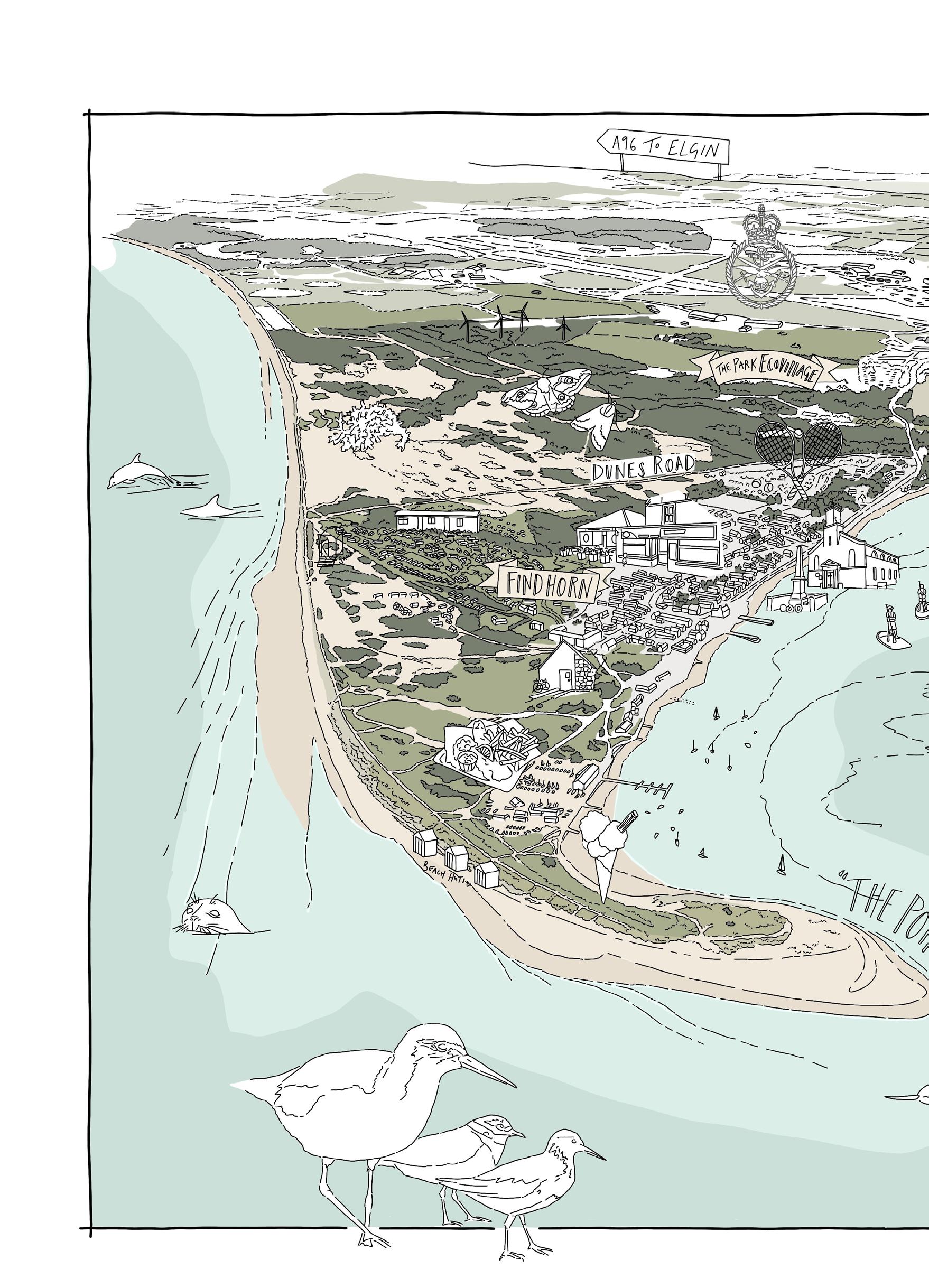
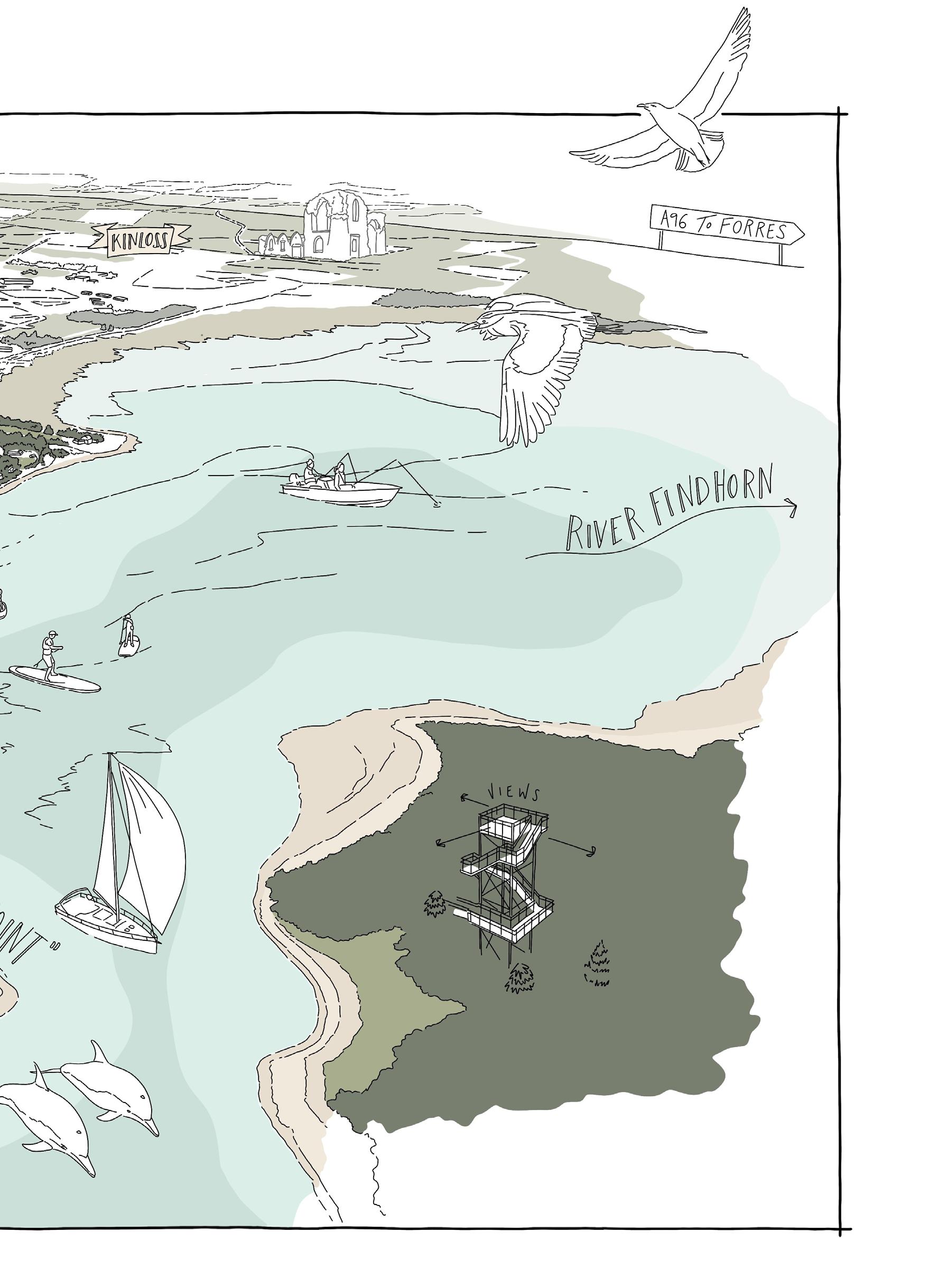
Findhorn Local Place Plan, Moray
The Findhorn Village Conservation Company
Development of a Strategy for the village of Findhorn, Moray on behalf of local residents via the Findhorn Village Conservation Company (TFVCC).
The team worked with local people to develop a Local Place Plan to submit to Moray Council in January 2025 to inform the evolving Local Development Plan.
This offered a unique opportunity for the community to express aspirations for the area’s future development, conservation and long-term resilience. This included addressing ongoing issues such as housing affordability and supply, demographic imbalances, and environmental threats such as coastal erosion and flooding, which reflect the ‘big challenges for a future Scotland, such as responding to the global climate emergency and tackling inequalities’.
The LPP will build on the previous 2017 Planning for Real process and actively guide TFVCC’s ongoing work as a community body, allowing them and the wider community to develop short-, medium- and longterm solutions together.
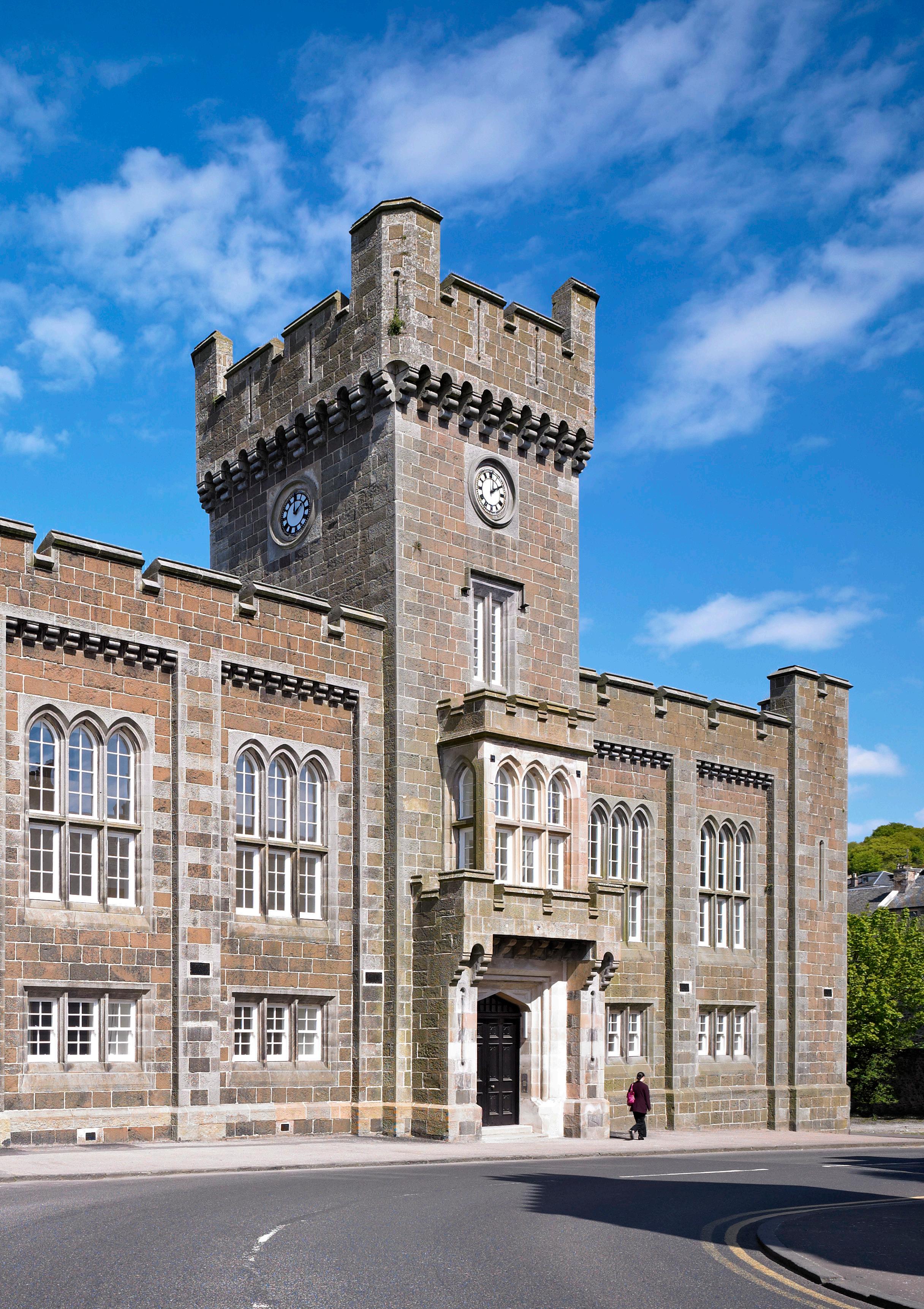
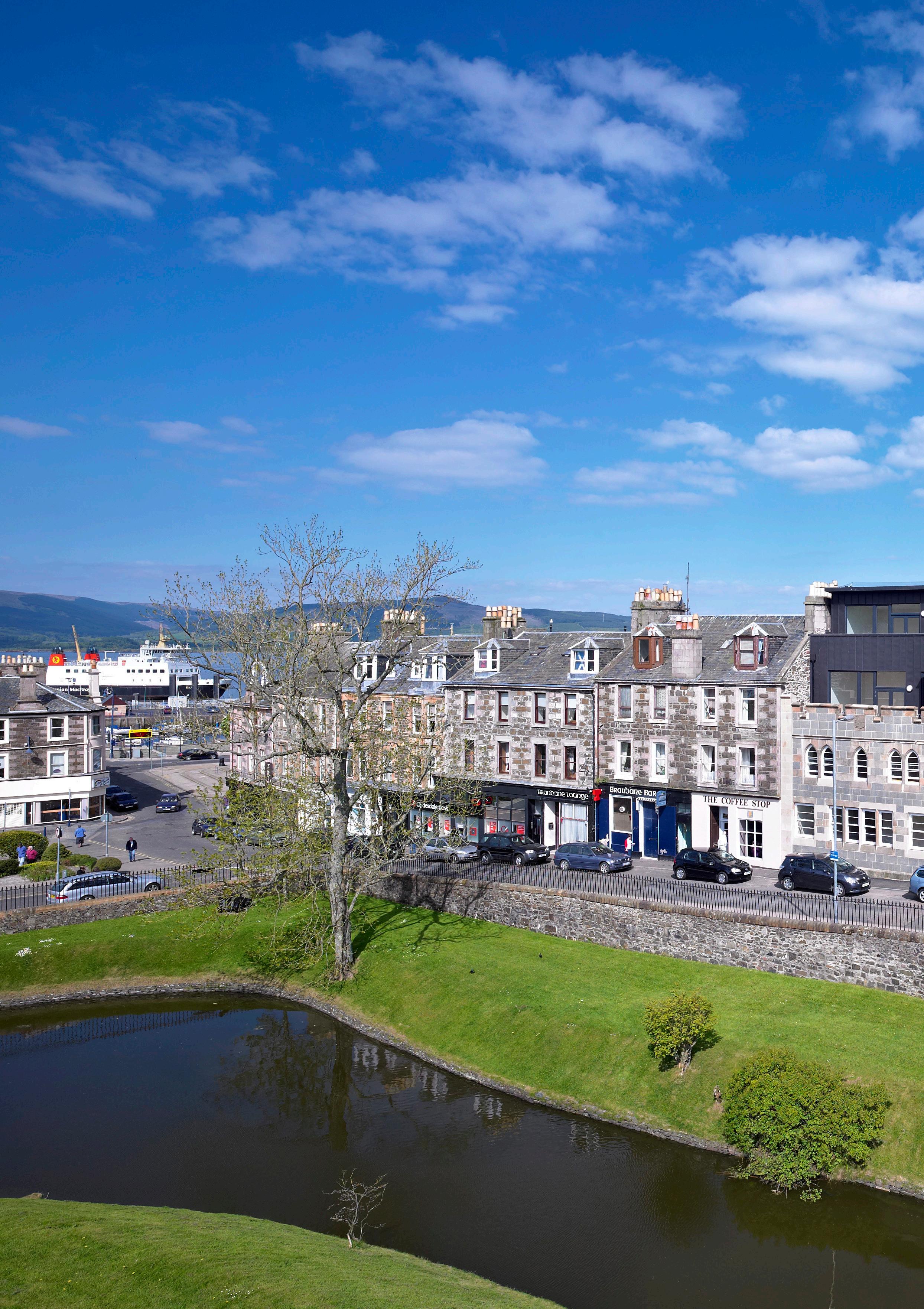
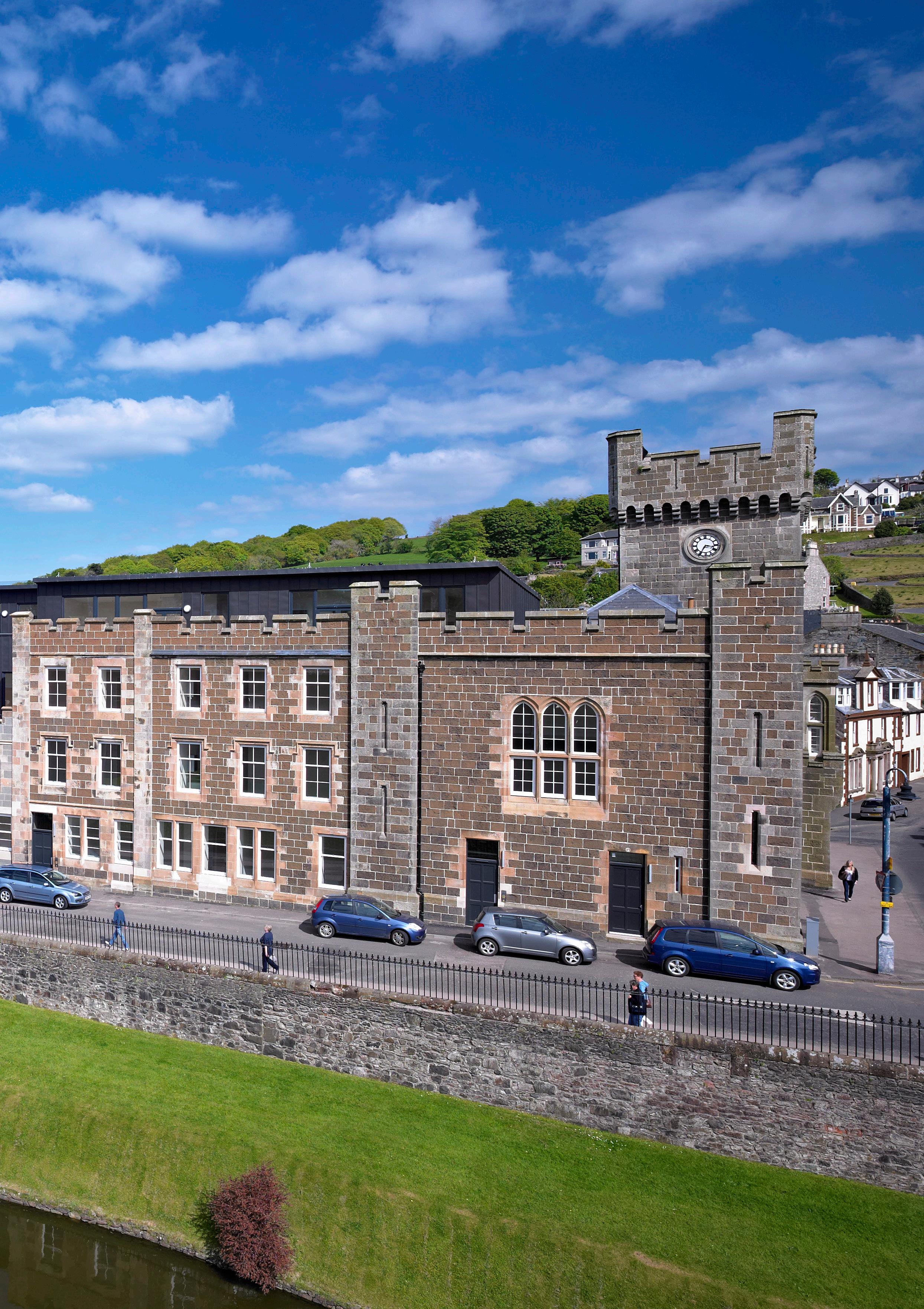
The Old Court House project was a restoration and renovation project of a historic building. Working with the client, Fyne Initiatives, Collective Architecture aimed to bring new life to the Old Court House, providing 25 new homes, while maintaining its historical significance and charm.
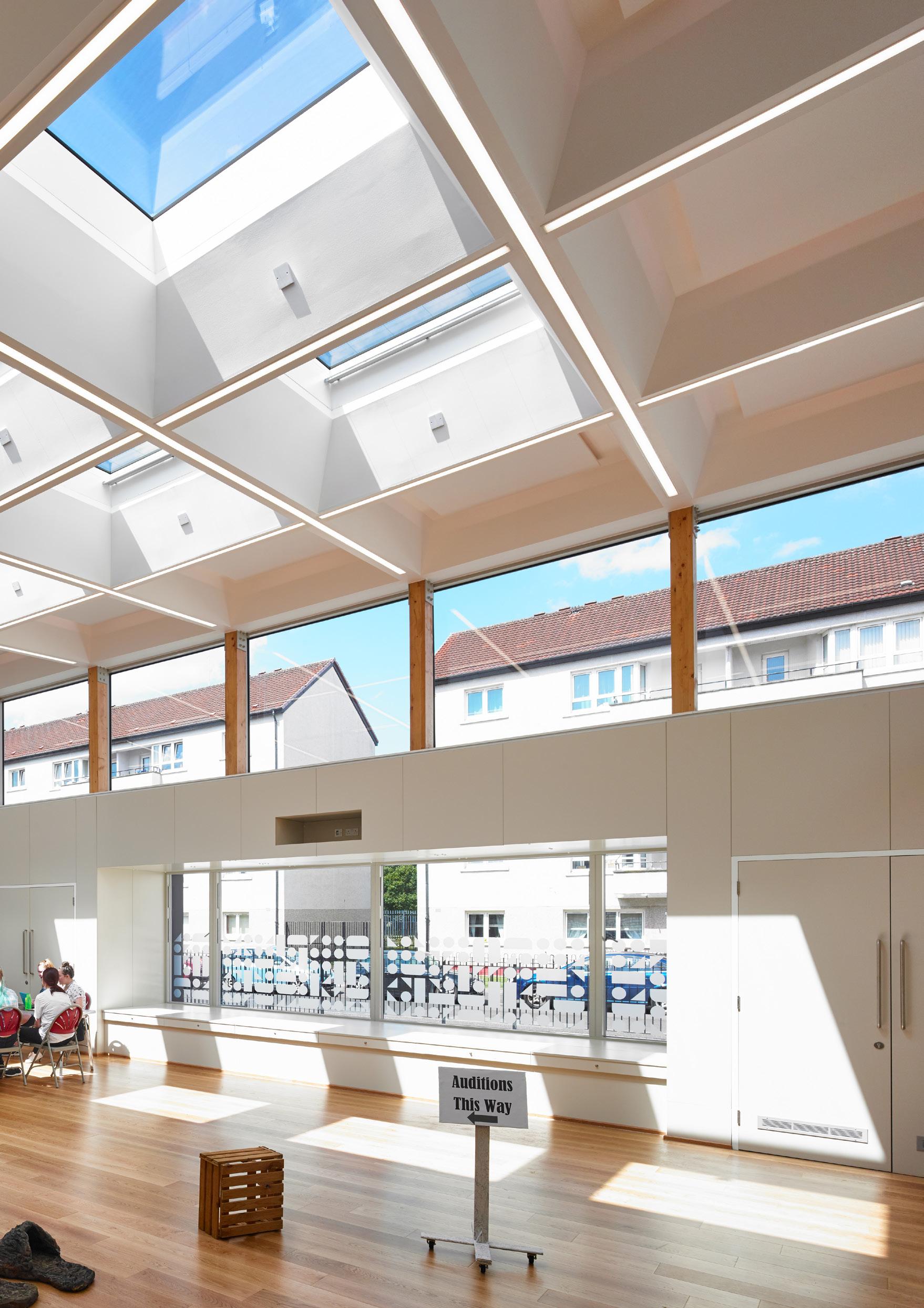
Barmulloch Community Residents Centre
Barmulloch Community Development Company
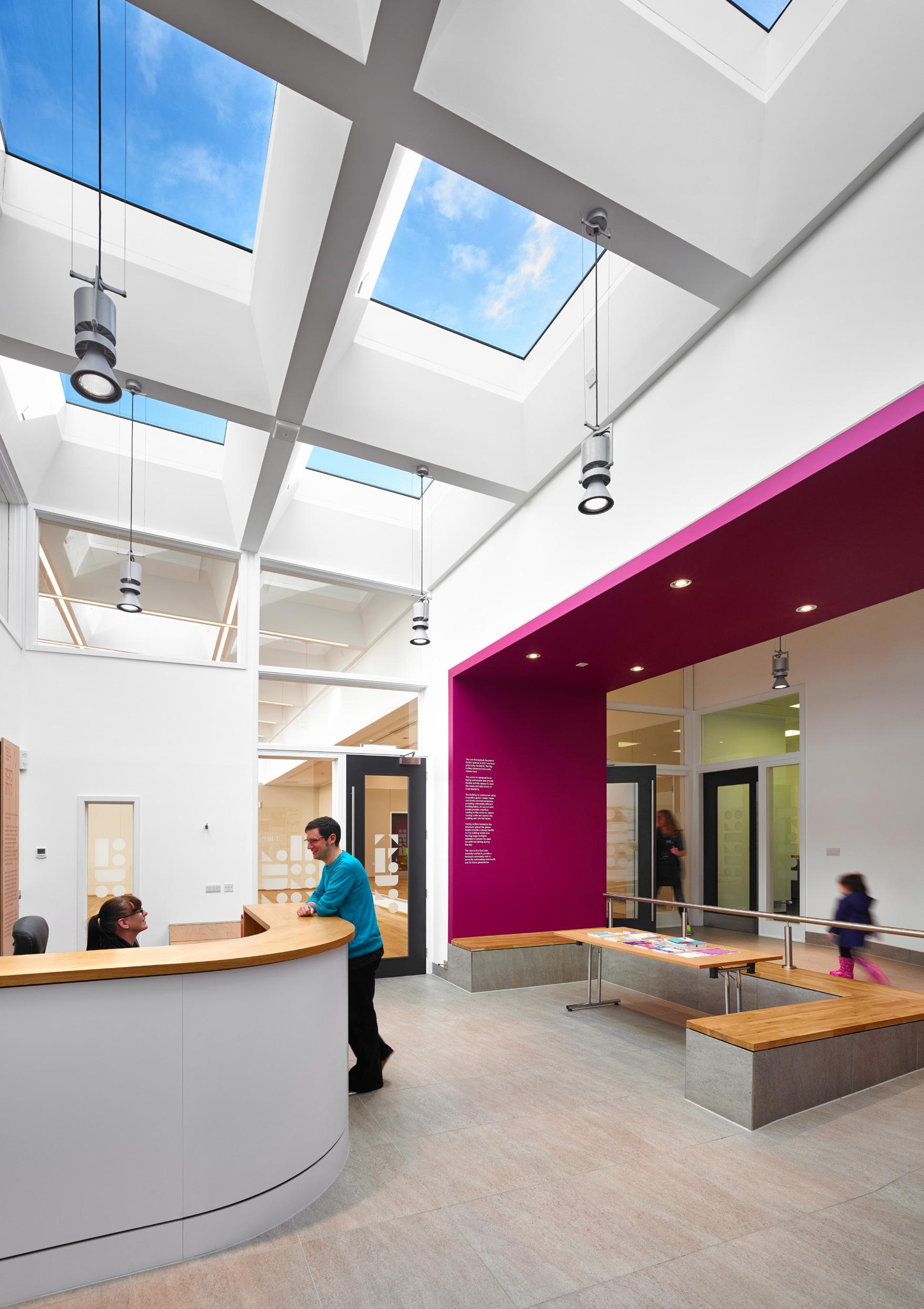
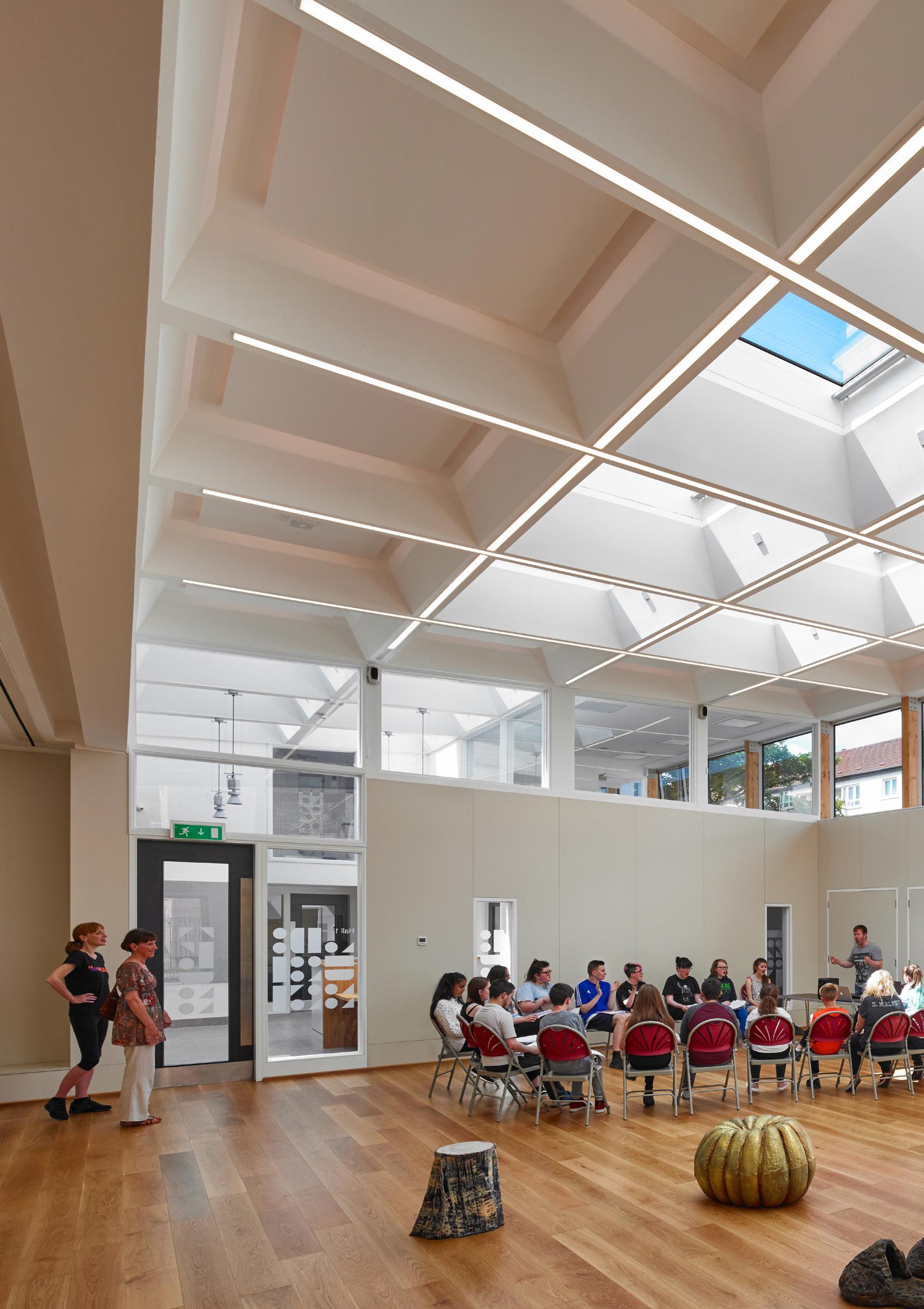
Barmulloch Community Residents Centre is a key local building that provides a flexible multi-functional community facility which acts as a hub for activities and services. The community centre’s proximity to Robroyston Park helps it to promote and push forward a new programme of education, exercise and social interaction for the future.
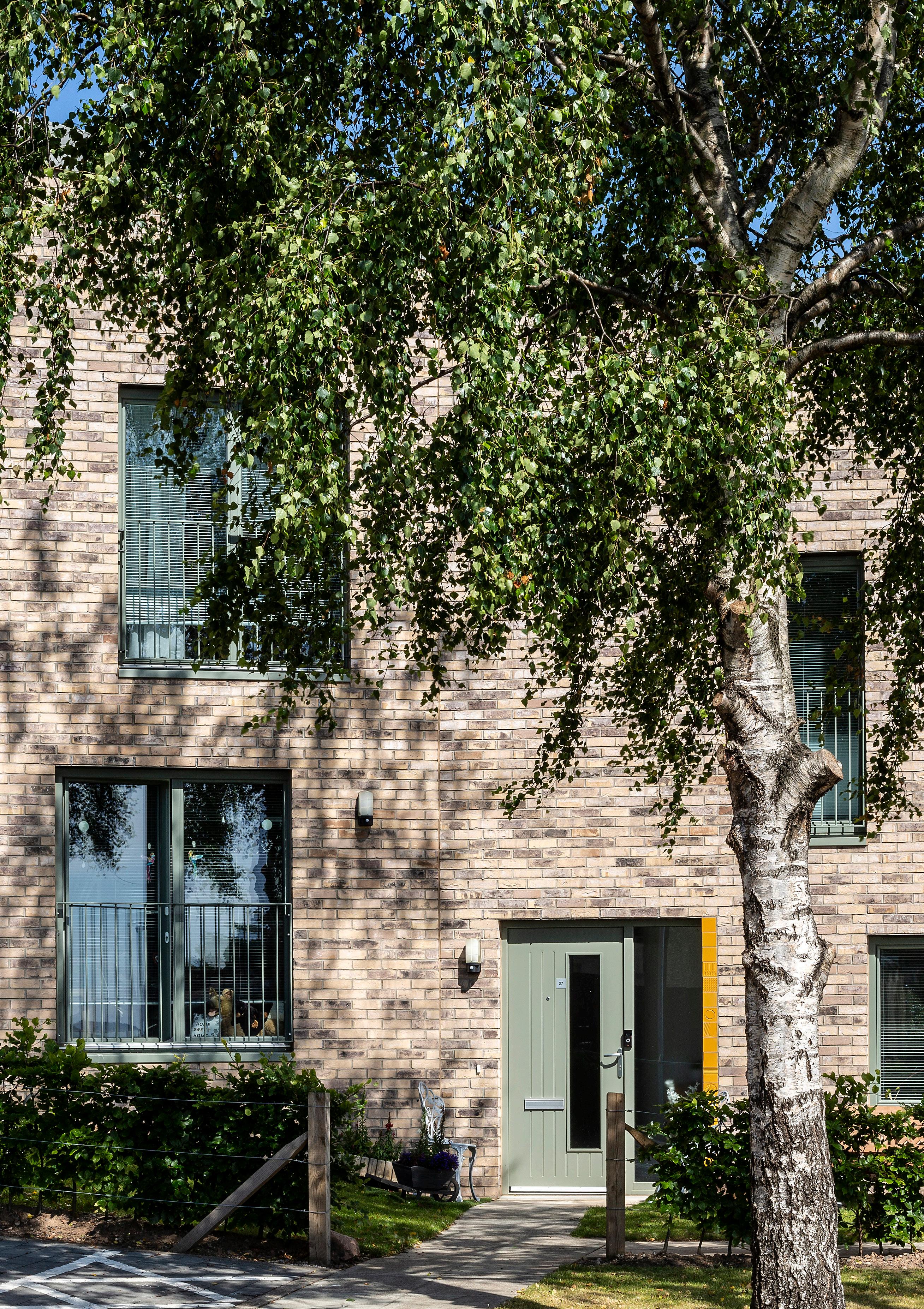
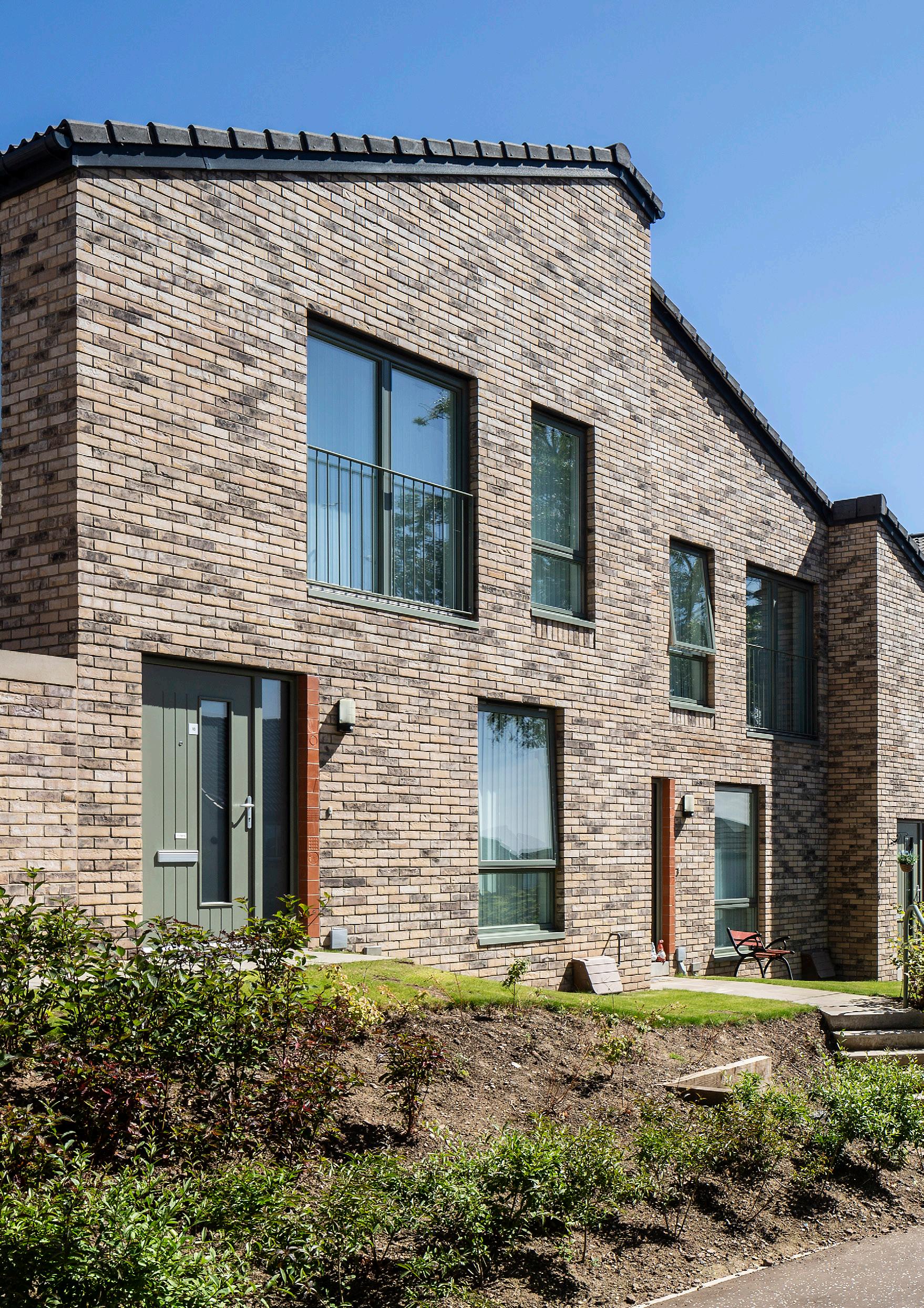
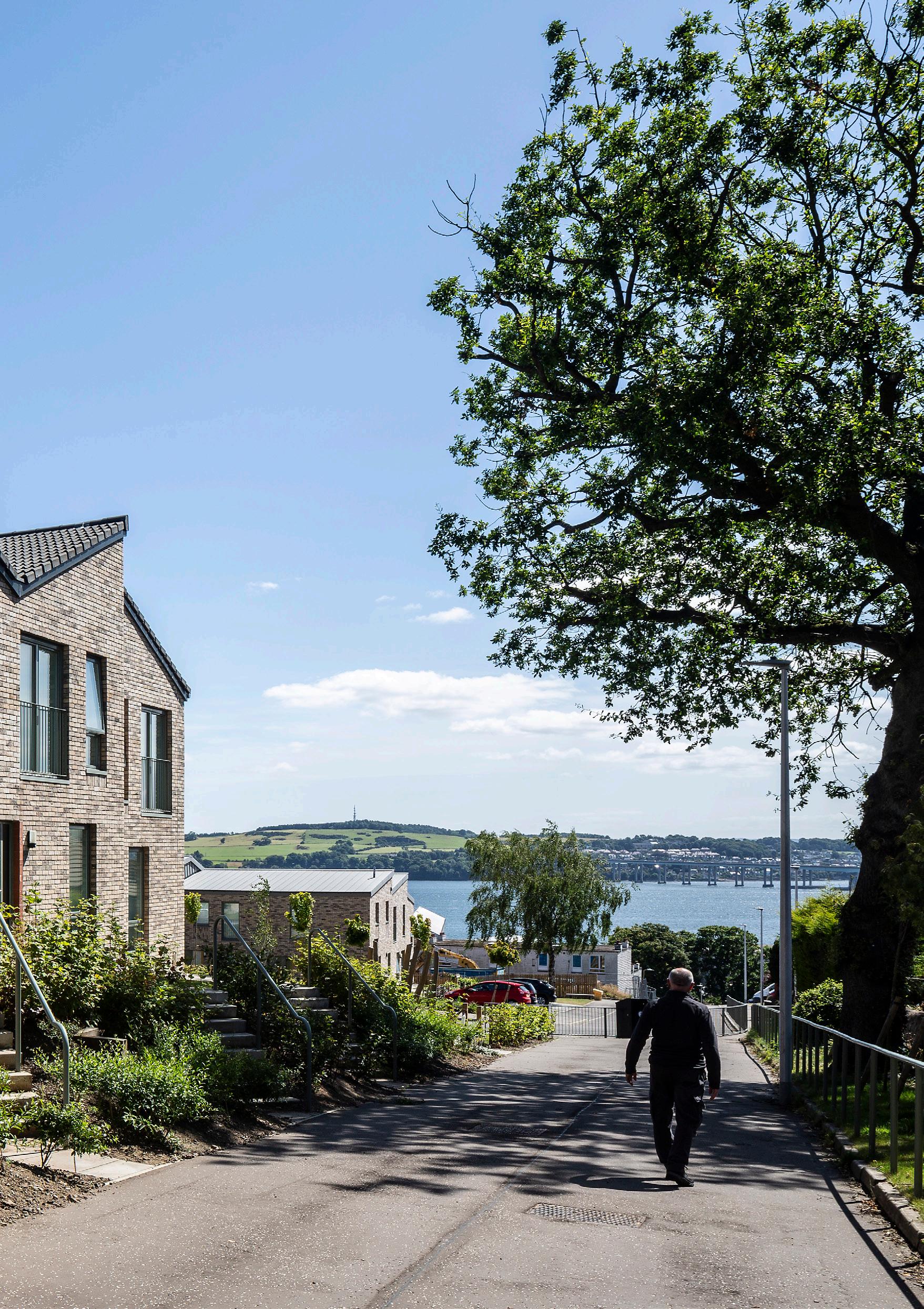
Ellengowan, Phase 1, Dundee
Hillcrest Homes
Ellengowan Regeneration replaces 124 post-war homes with poor thermal and acoustic insulation with a mix of flats, houses and a corner shop. The open space strategy retains the green, leafy character of the existing development to respect and retain its strong community spirit and the dwelling designs take advantage of the steeply sloping site to ensure all the living spaces enjoy views over the Tay to Fife.
Ellengowan Regeneration demonstrates an inclusive and contextsensitive approach, balancing modern needs with heritage preservation. Its varied housing types, thoughtful green spaces, and community-centric features foster a vibrant, sustainable neighbourhood that enhances the lives of residents and the wider area.
Platform 3, Dundashill
West Of Scotland Housing Association
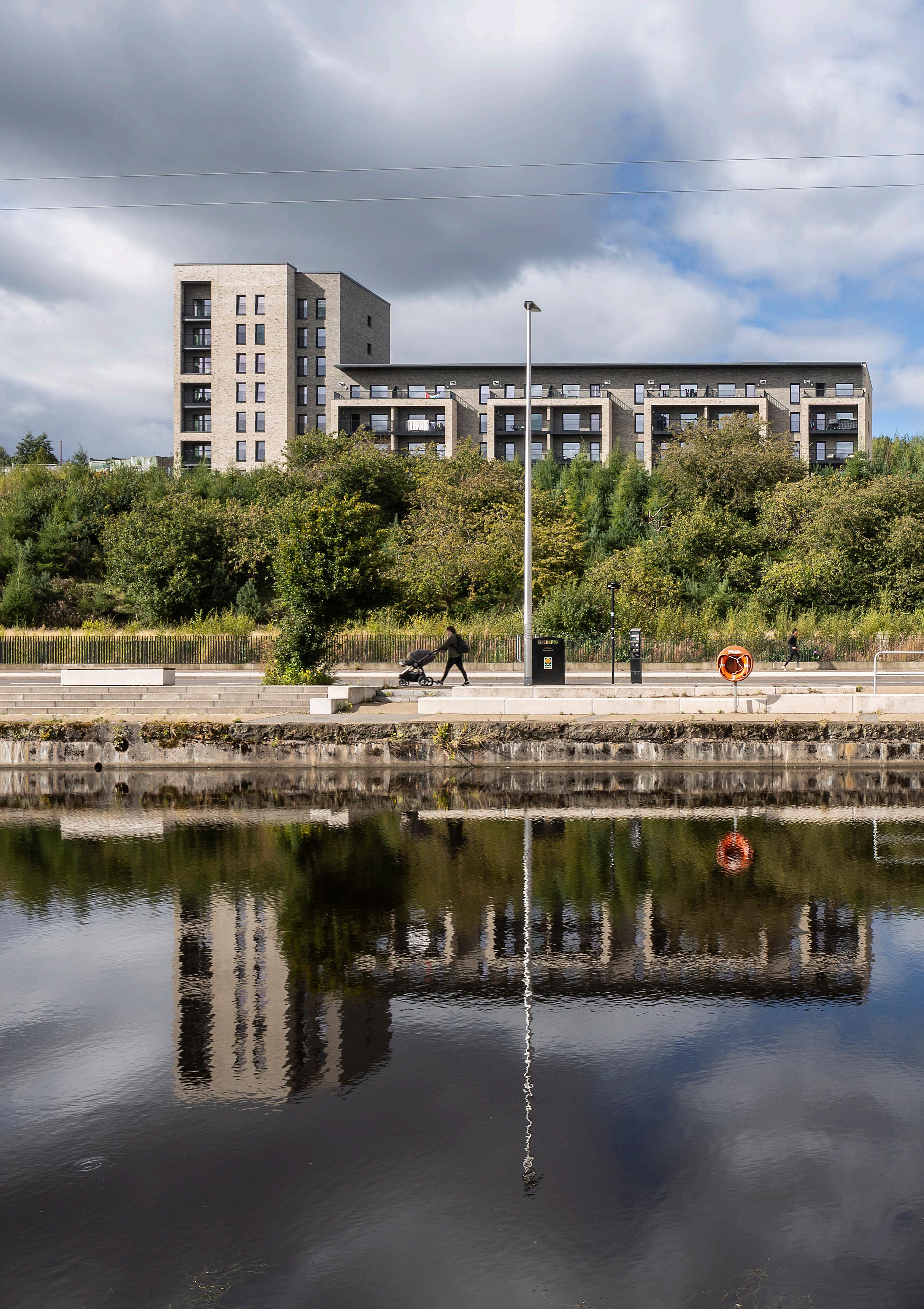
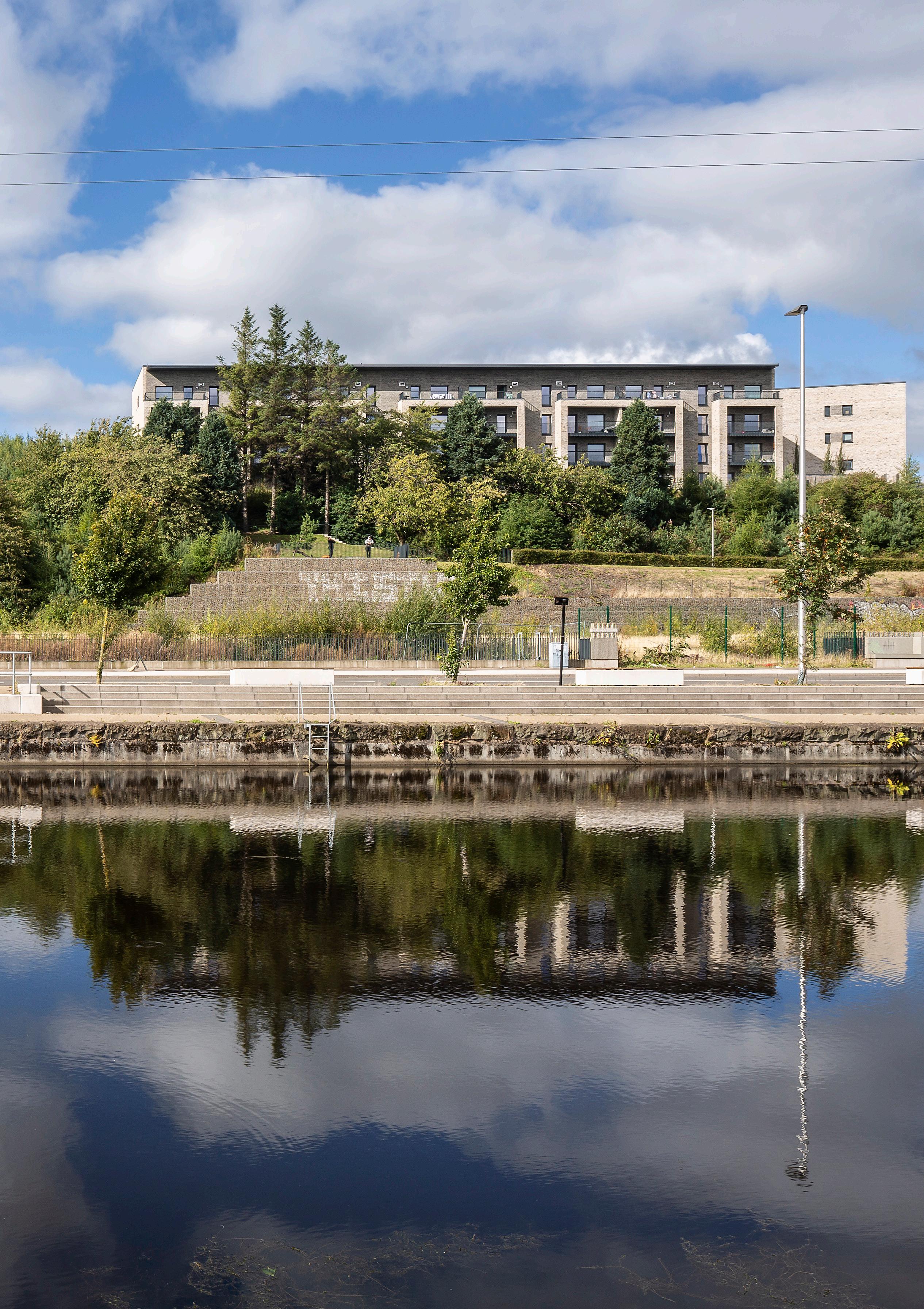
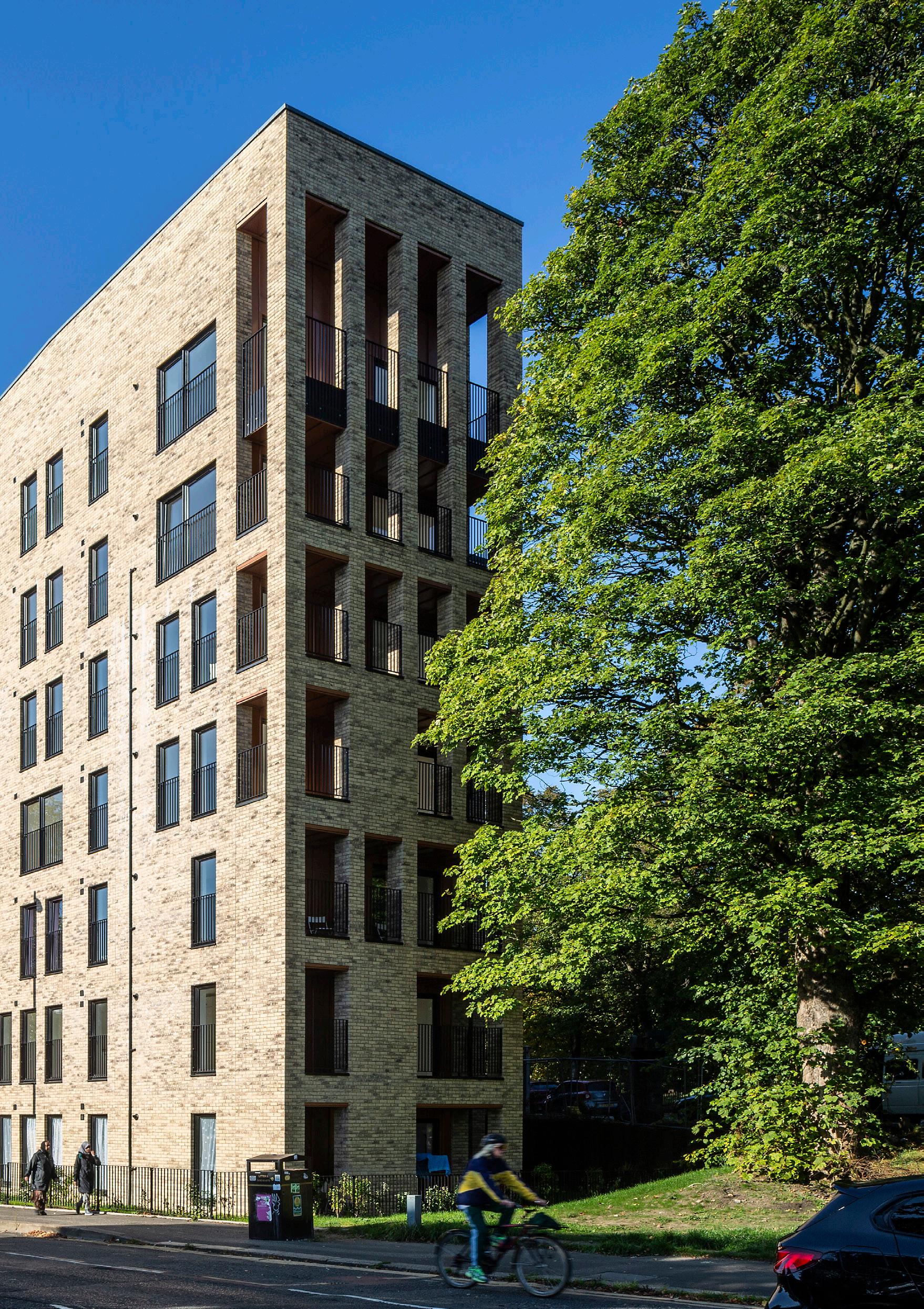
Platform 3, Dundashill is the first development within a wider strategic plan to be completed on the former Diageo Distillery site in north Glasgow. Elevated 14 m above public greenspace, the project features a series of four-storey apartment blocks and a seven-storey landmark building, all with balconies offering panoramic views of Glasgow.
Comprising 90 one-, two-, and three-bedroom mid-market apartments, the project is the largest Passivhausaccredited residential development in Scotland. It demonstrates an innovative mix of advanced construction methods and low-carbon technologies.
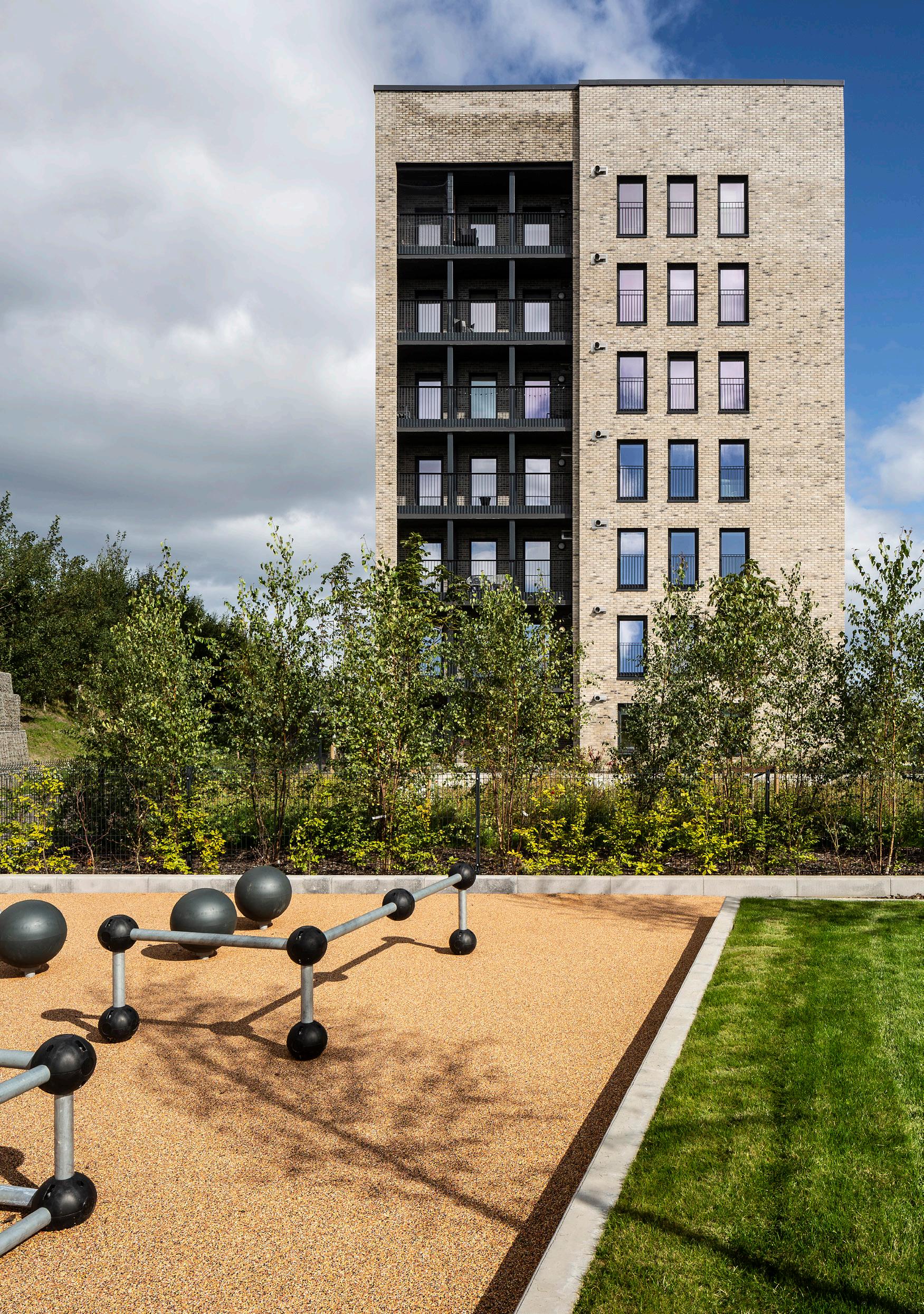
Platform 3 - North Glasgow.
Aberdeenshire Council / Hub North Scotland Ltd
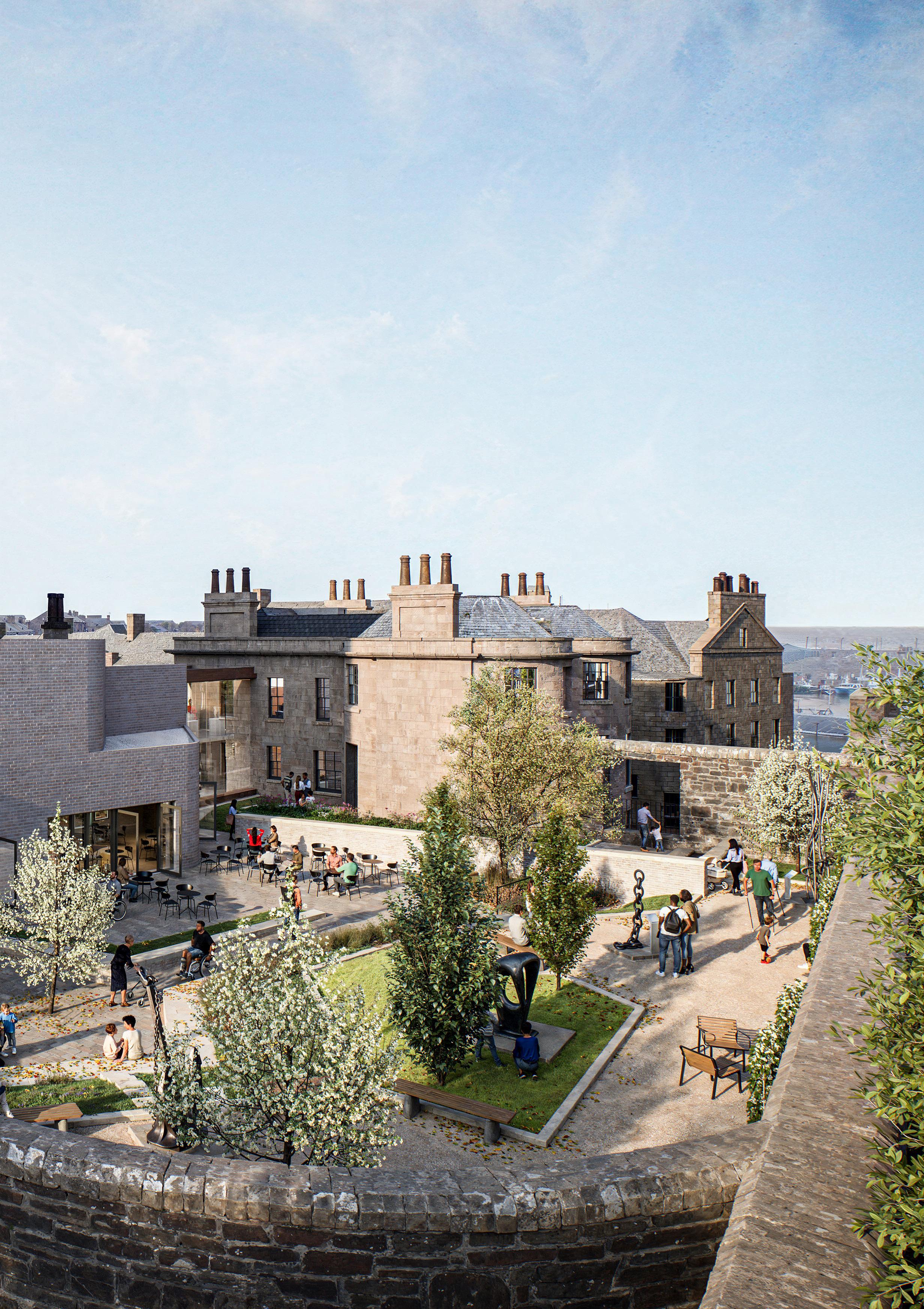
Redevelopment of the disused B Listed Arbuthnot House within the heart of Peterhead to form a new destination museum and cultural hub as part of the ‘Peterhead Cultural Quarter’ project.
The library will be relocated to sit alongside the museum, with a new café, restaurant and reinstated walled garden providing much needed facilities and spaces.
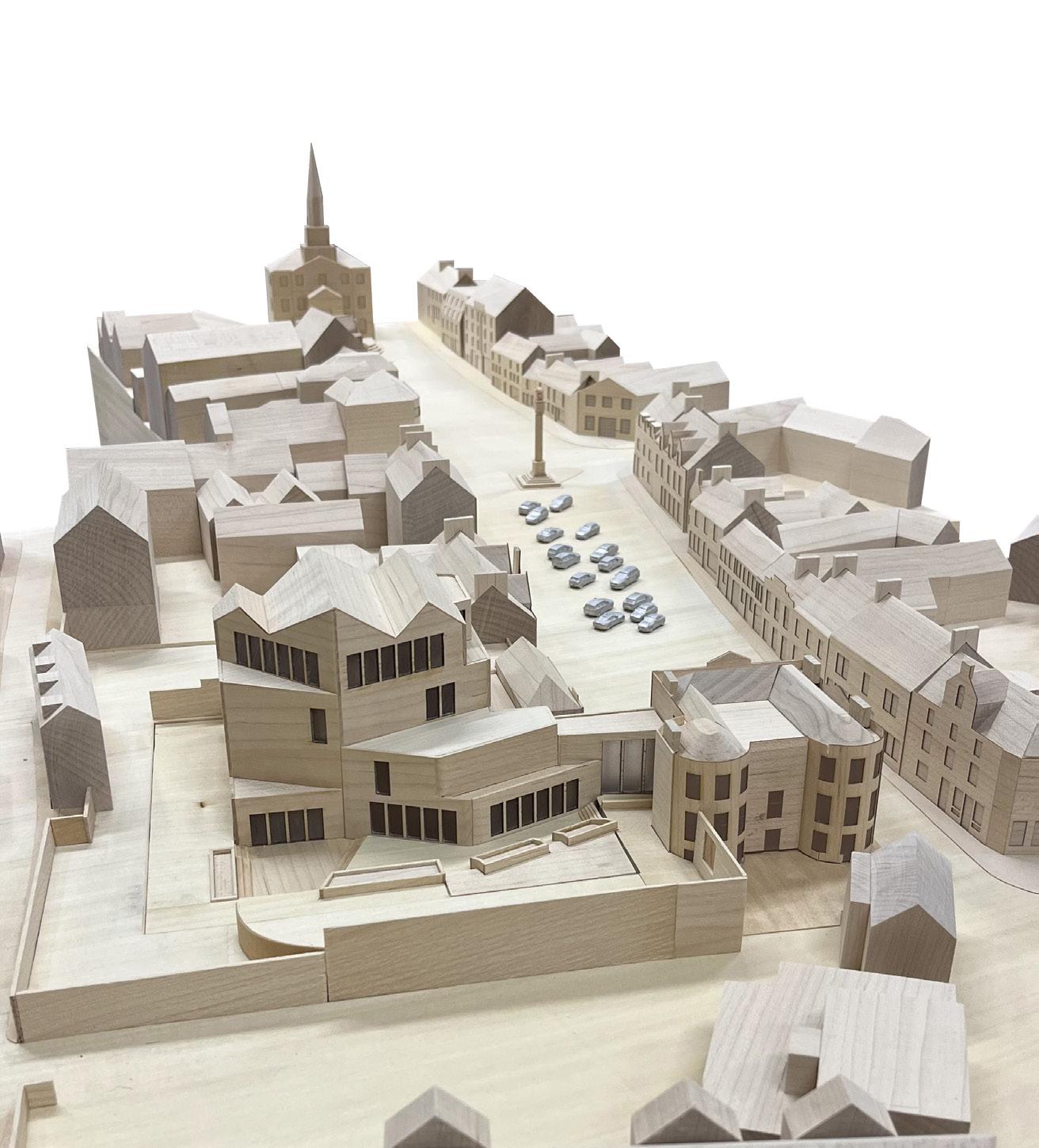
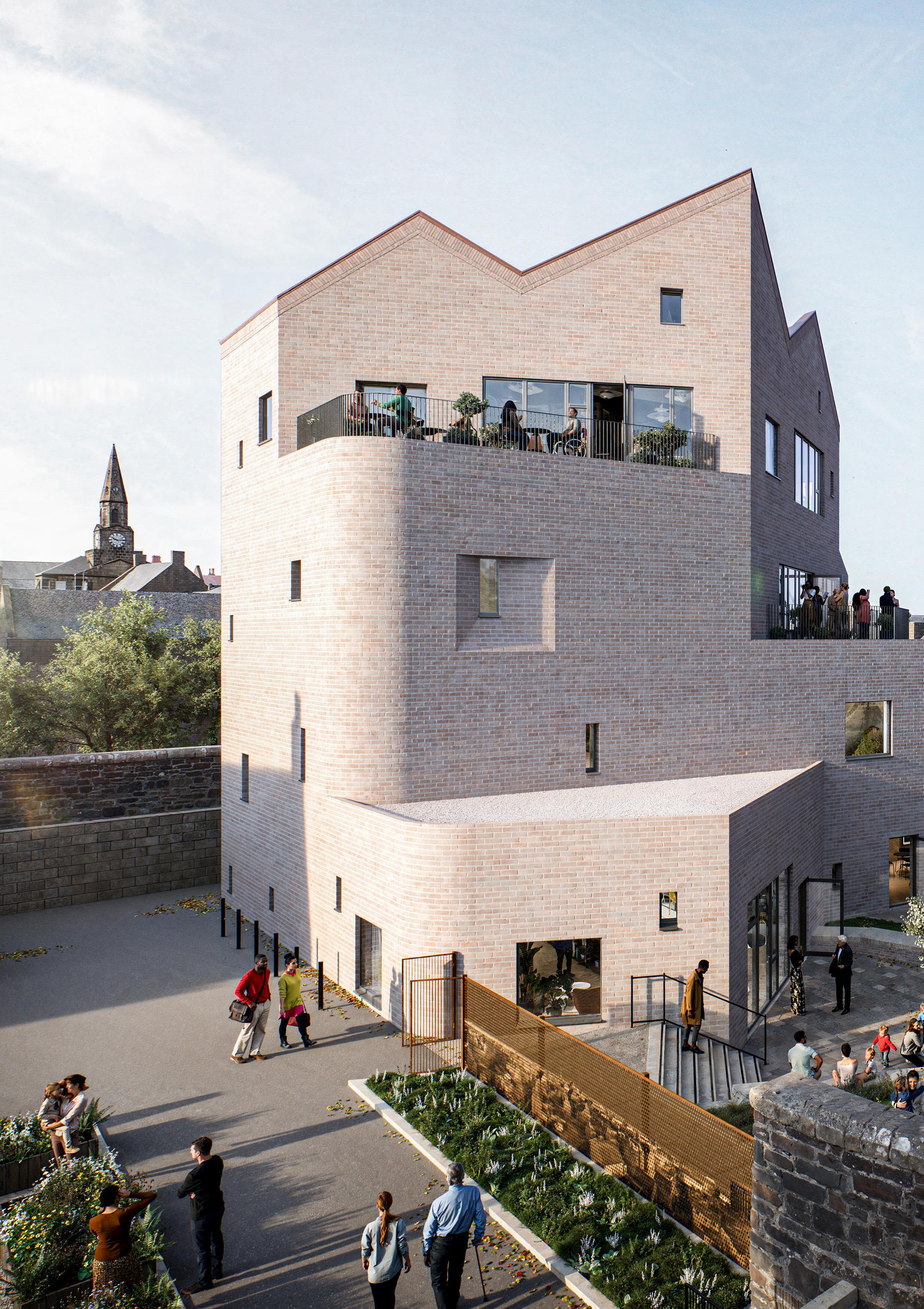
Museum of Aberdeenshire, Peterhead.
The Victoria Infirmary Redevelopment
Sanctuary Scotland
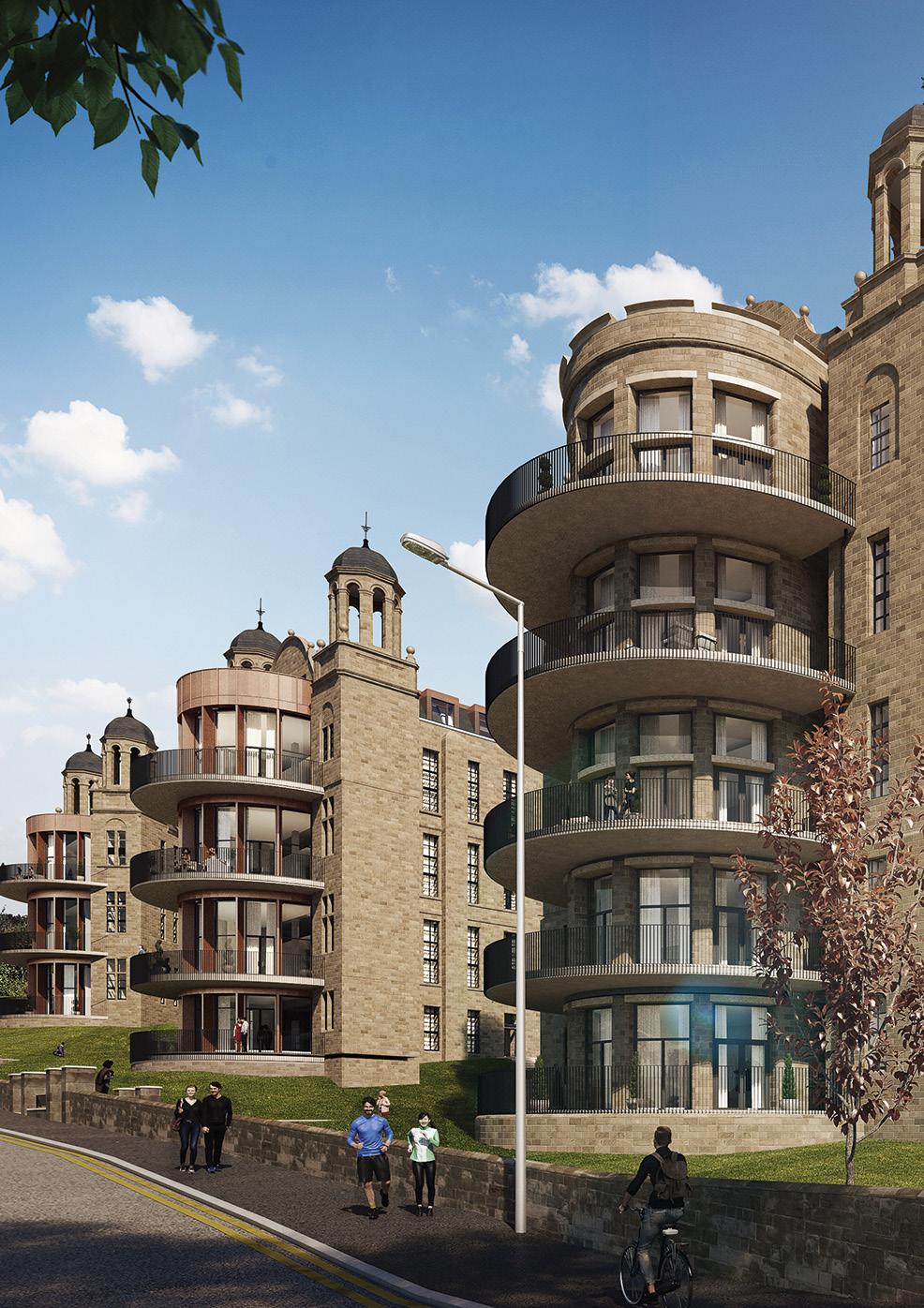
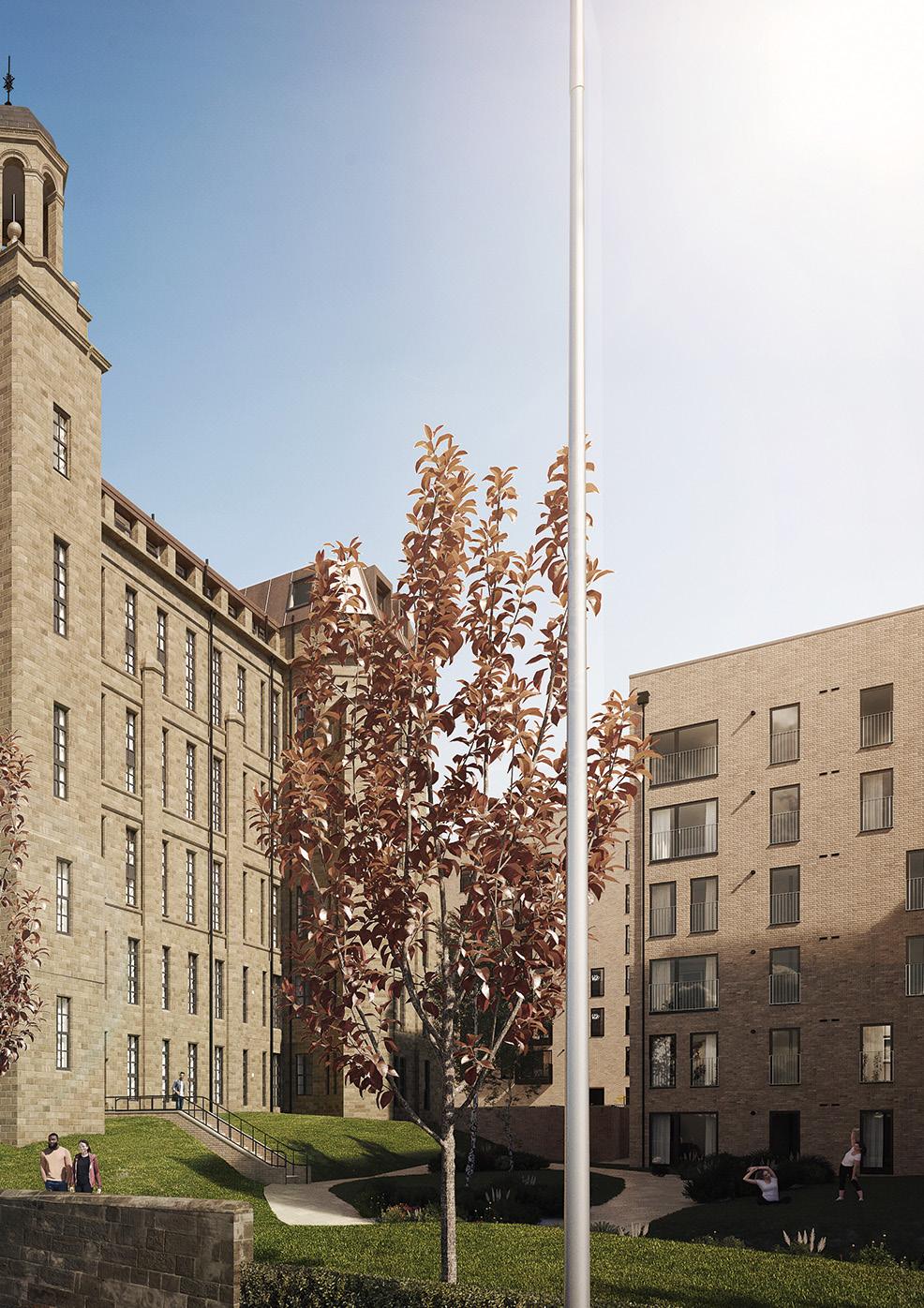
Collective Architecture was appointed in 2016 to develop a masterplan for the redevelopment of the Victoria Infirmary in Glasgow. The 3.75-hectare site, located beside Queen’s Park in Langside on the city’s south side, forms a key part of the character and identity of the Battlefield area.
Full planning permission was granted for 413 new build and refurbished flats alongside office space, retail units, and significant public realm improvements.
Phase 1 completed in 2025 delivers 136 new-build flats - comprising a mix of social rent, shared equity, and private sale homes - together with retail units and associated public realm works. A significantly improved pedestrian route now runs through the heart of the site, enhancing connections between Battlefield and Queen’s Park.
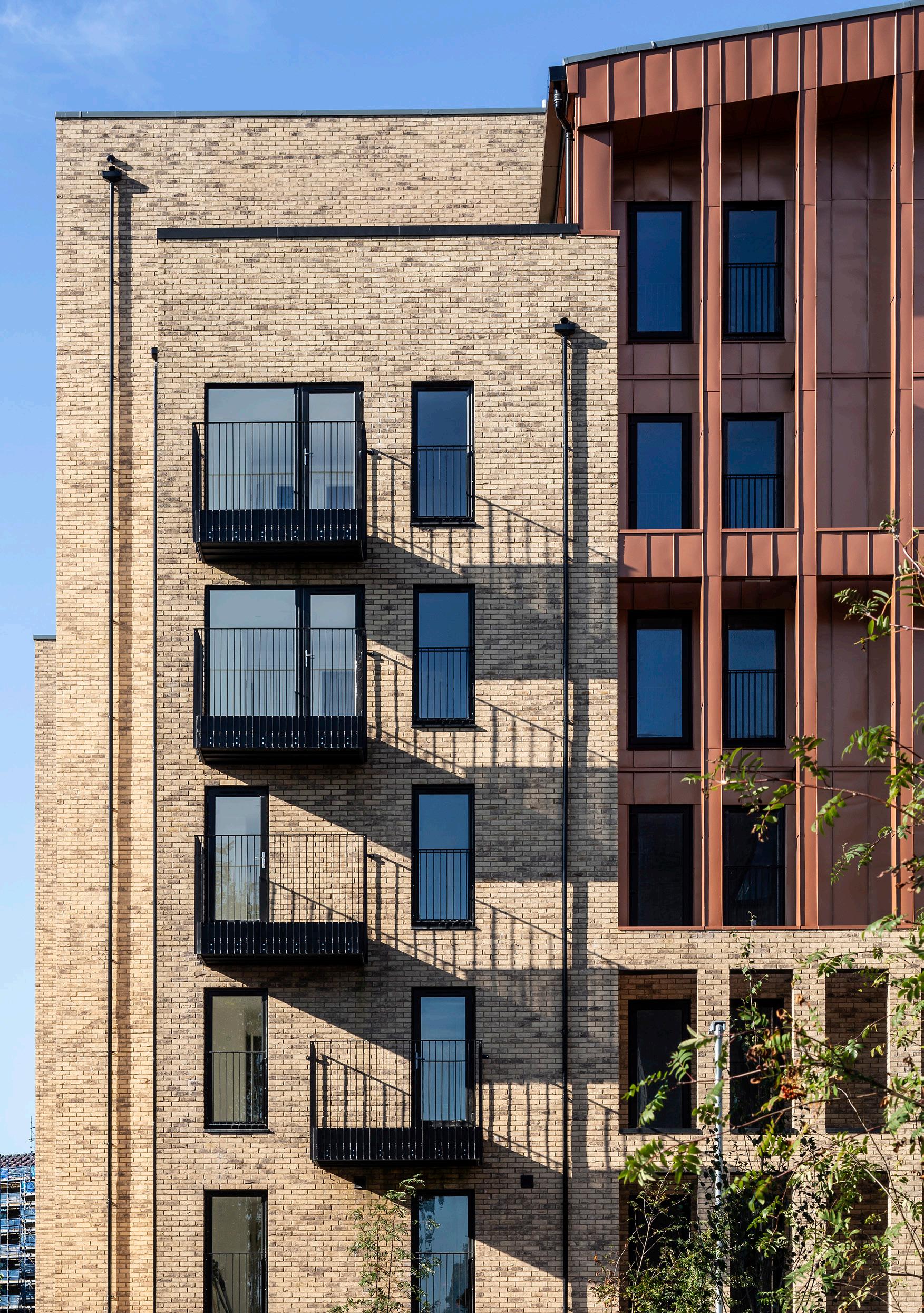
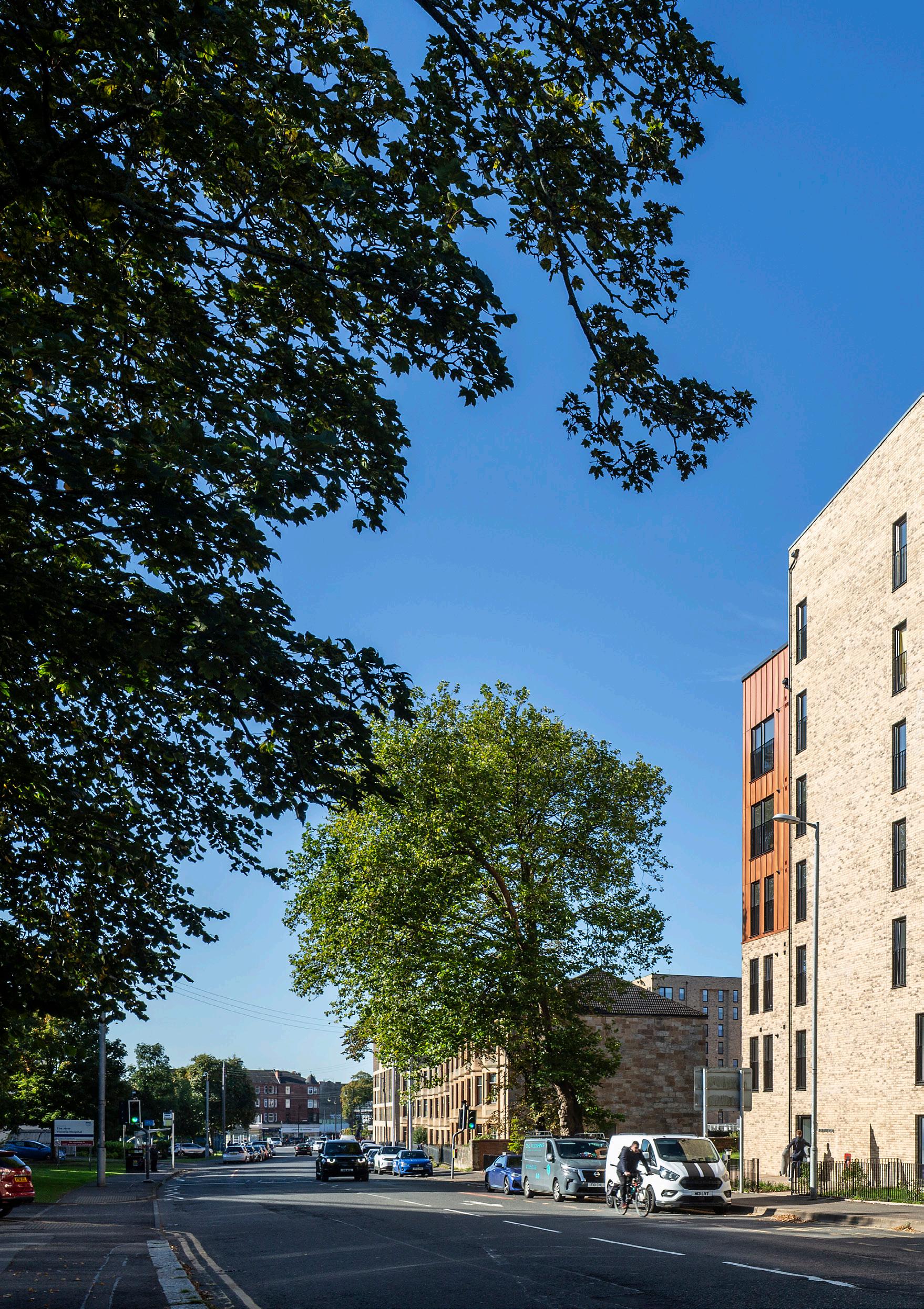
The Victoria Infirmary Redevelopment, Glasgow.
The Victoria Infirmary, Nightingale Wards Redevelopment.
The City of Edinburgh Council
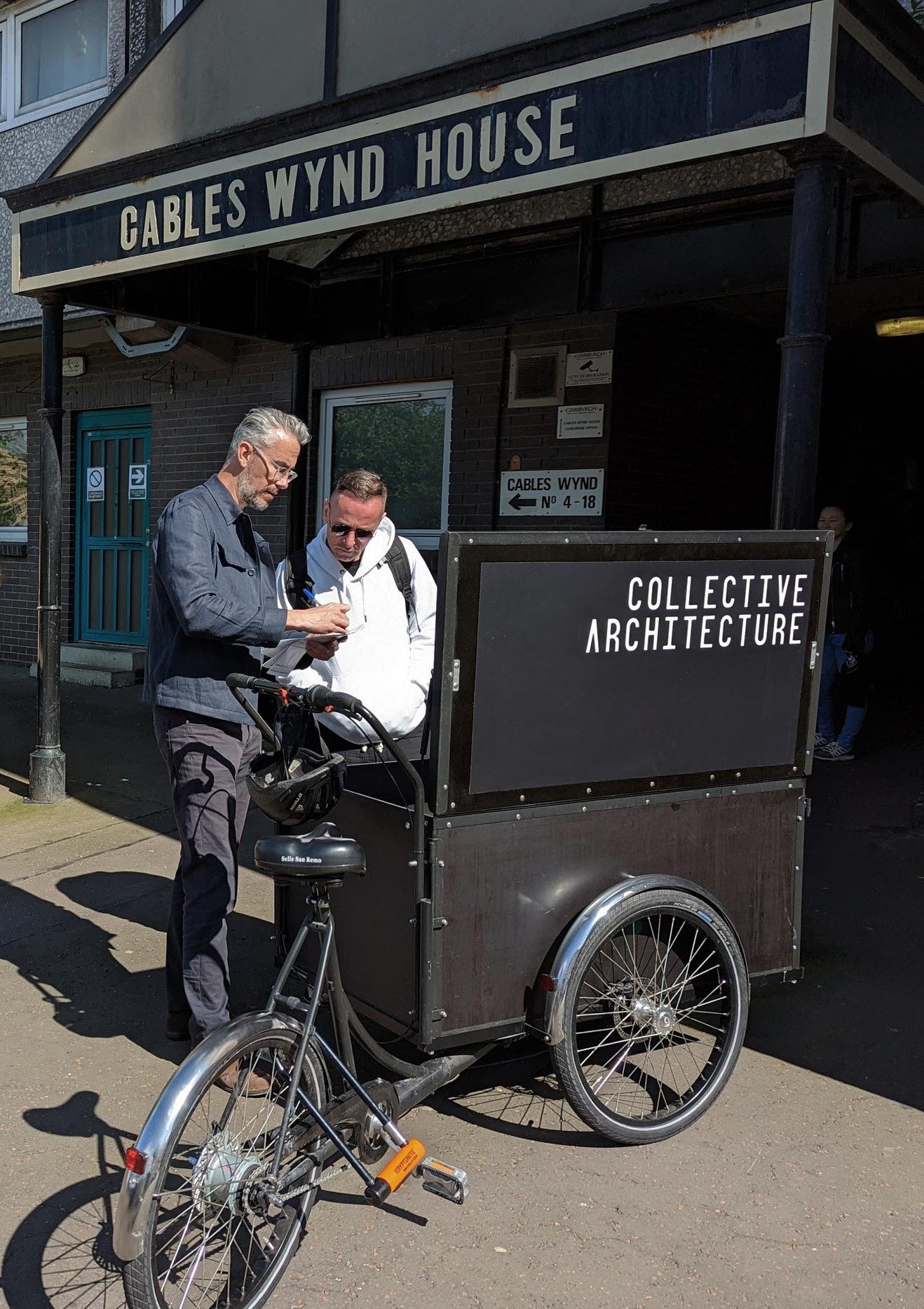
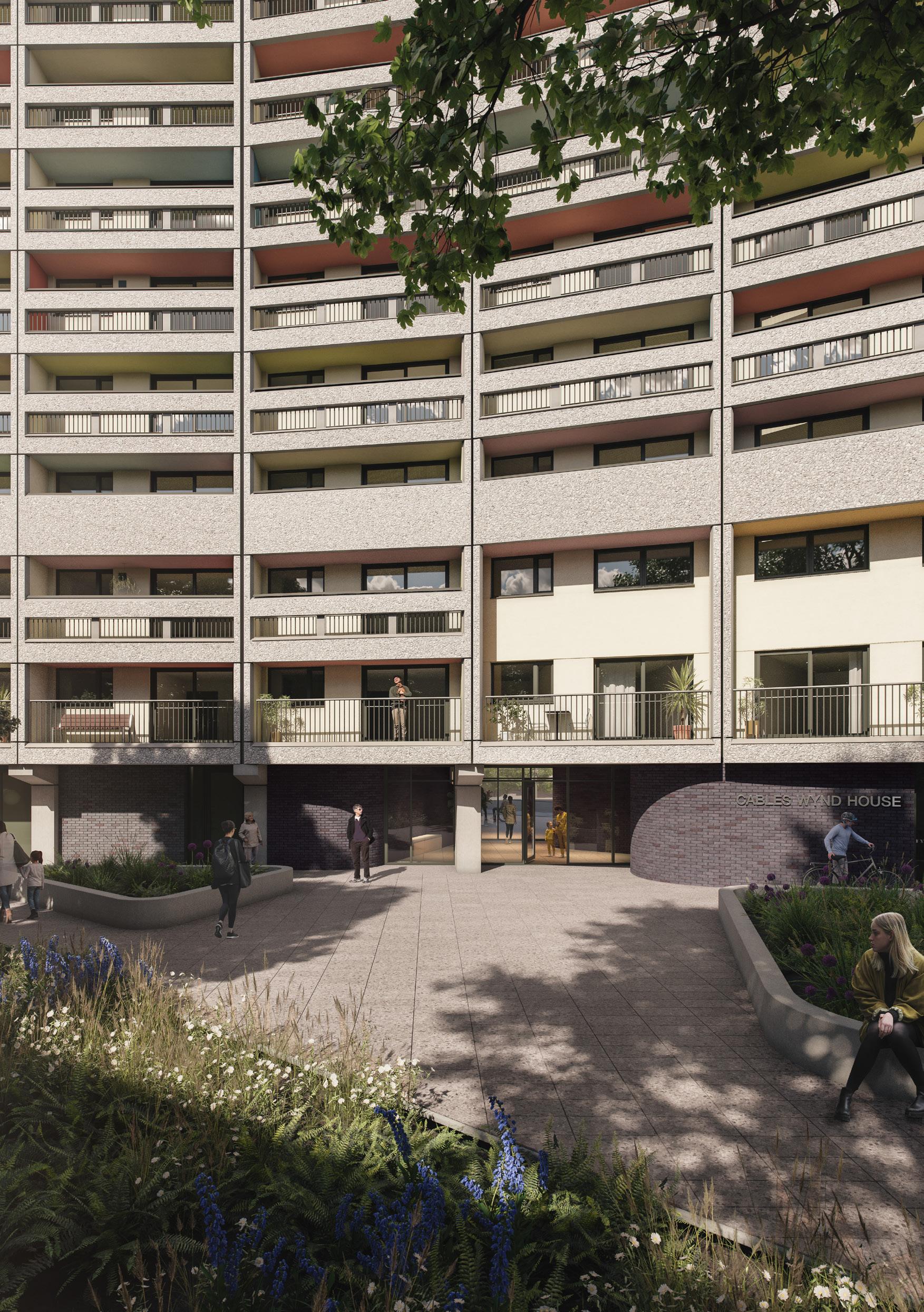
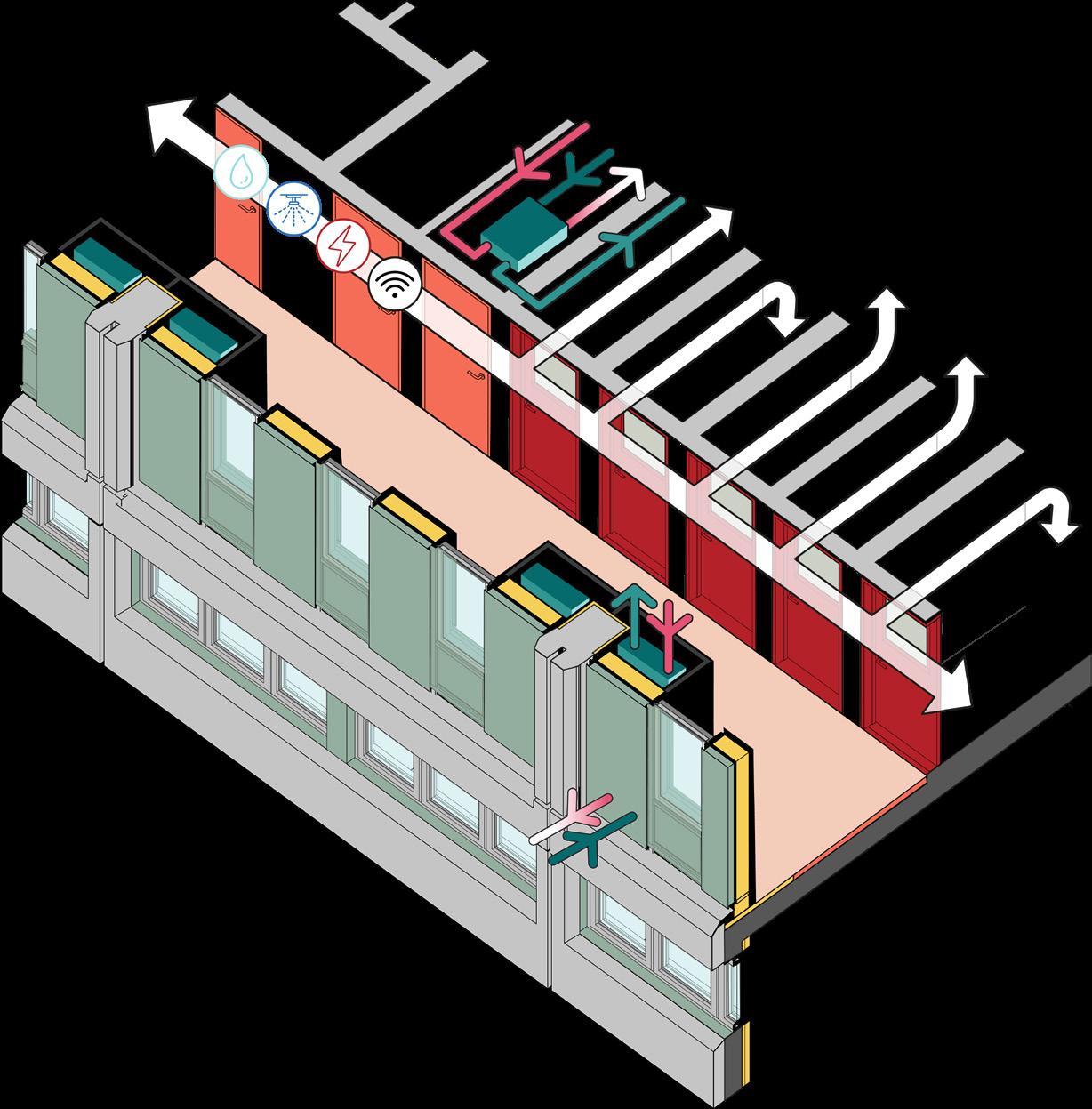
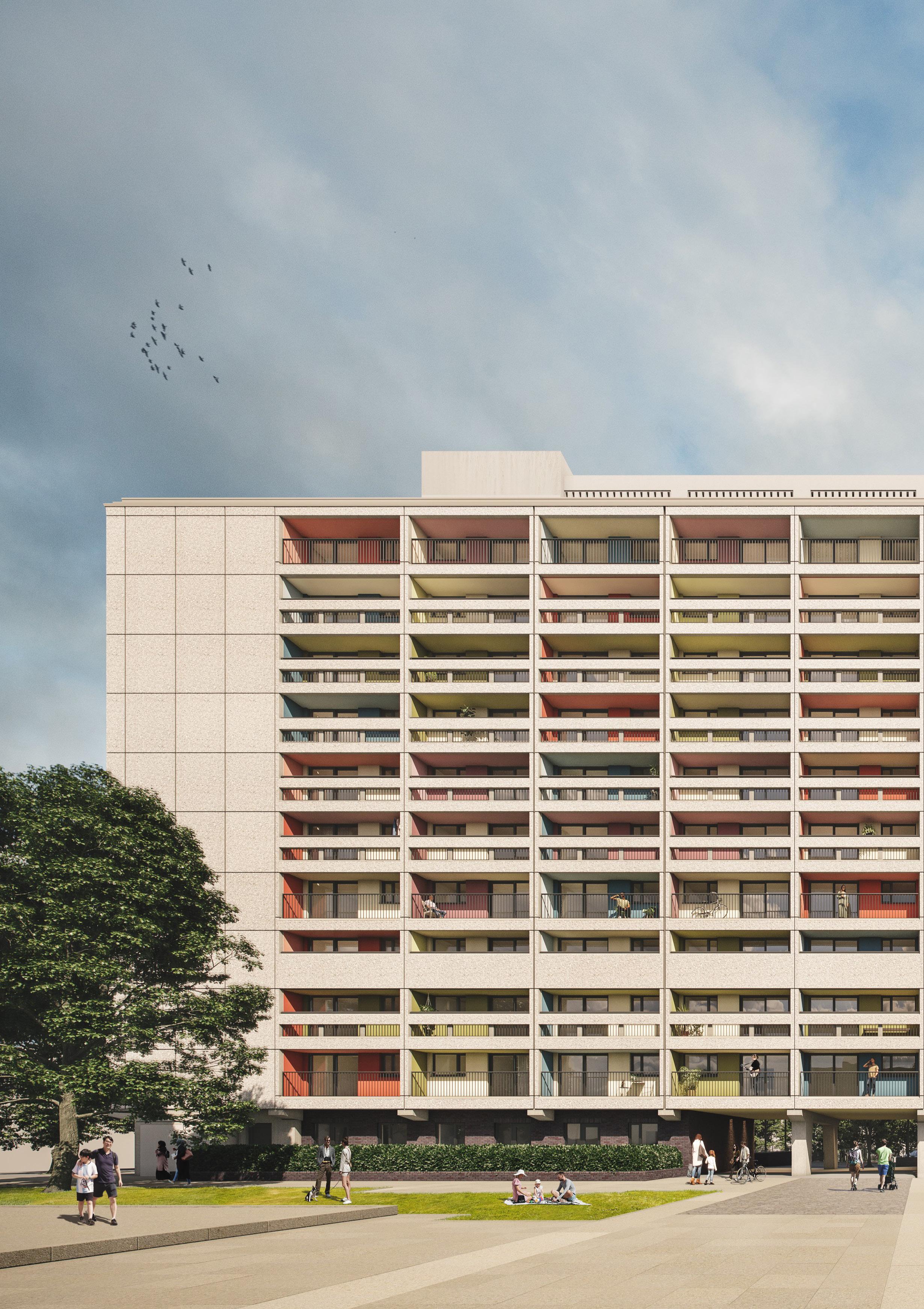
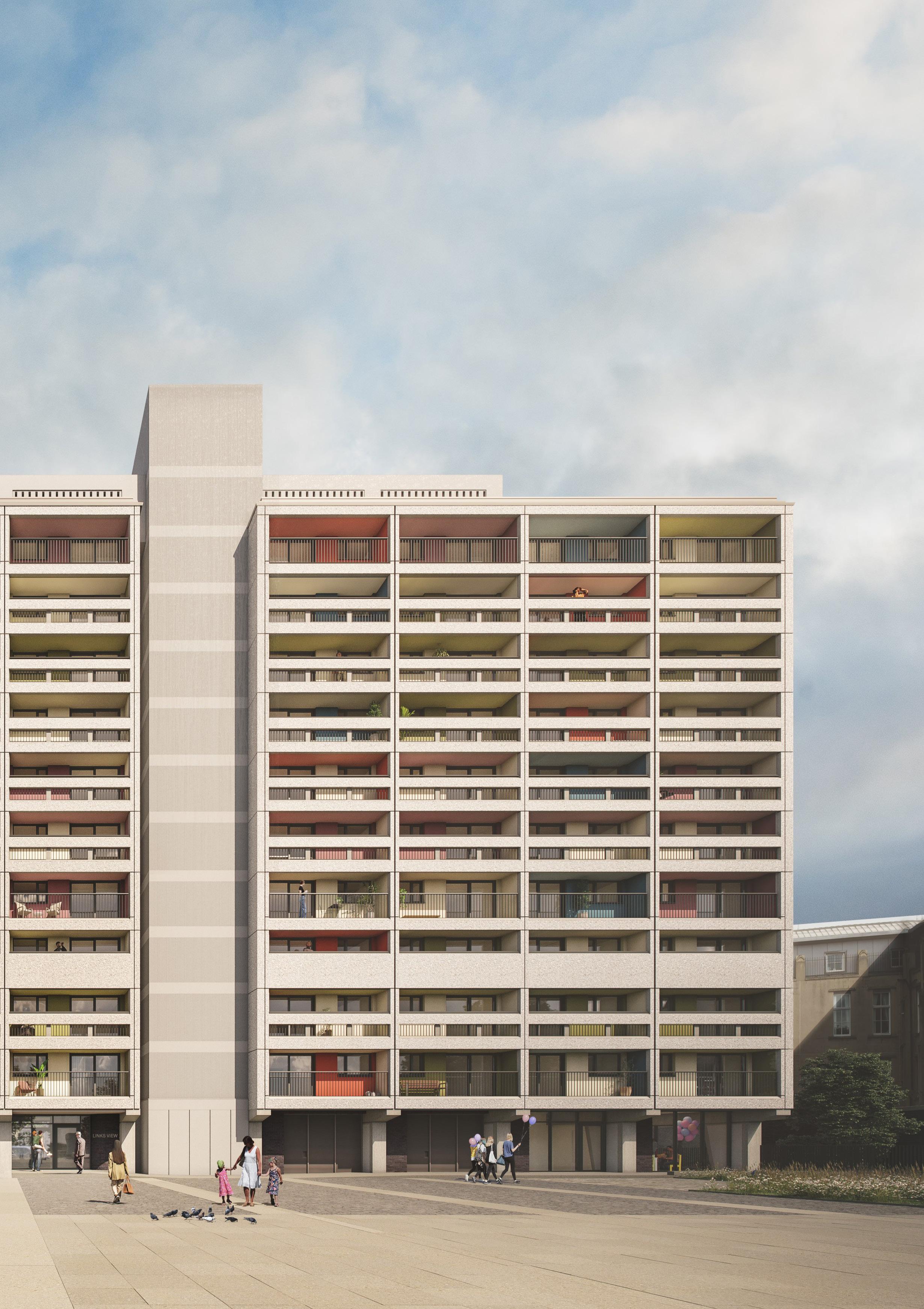
Energy-based retrofit and regeneration of two Category-A listed, brutalist residential towers in Leith, Edinburgh. The project puts people at the heart of retrofit, with resident and stakeholder engagement underpinning decision making and informing an approach which holistically balances energy, comfort, health and heritage.
Built in the 1960s and home to 310 households, these Category A listed buildings were originally designed by Alison Hutchison & Partners as part of a the Citadel & Central Leith Redevelopment Area. Pioneering in their use of materials and environmental technologies such as electric underfloor heating, they now require significant investment to meet 21st-century standards.
Developed alongside in-house specialist divisions Collective Energy and Collective Conservation, the retrofit strategy takes a respectful but ambitious approach. It aims to drastically improve energy performance while diligently conserving the architectural integrity of the two heritage assets. Predicted outcomes include an 88% reduction in space heating demand and an 80% reduction in overall energy use per dwelling.
Collective Gallery & The City of Edinburgh Council
Category A–listed suite of buildings at Calton Hill, Edinburgh. Works comprise the restoration of the City Observatory, the Transit House and boundary walls, along with the creation of three new buildings: a contemporary art gallery, a restaurant and a welcome kiosk, as well as extensive landscaping to allow the site to be opened to the public and made fully accessible for the first time in its two-hundred-year history.
The project required expertise in both architectural conservation and contemporary architecture to ensure that the existing buildings were sensitively restored, and that the new buildings had the architectural quality and integrity necessary to sit comfortably and respectfully alongside such significant Edinburgh landmarks.
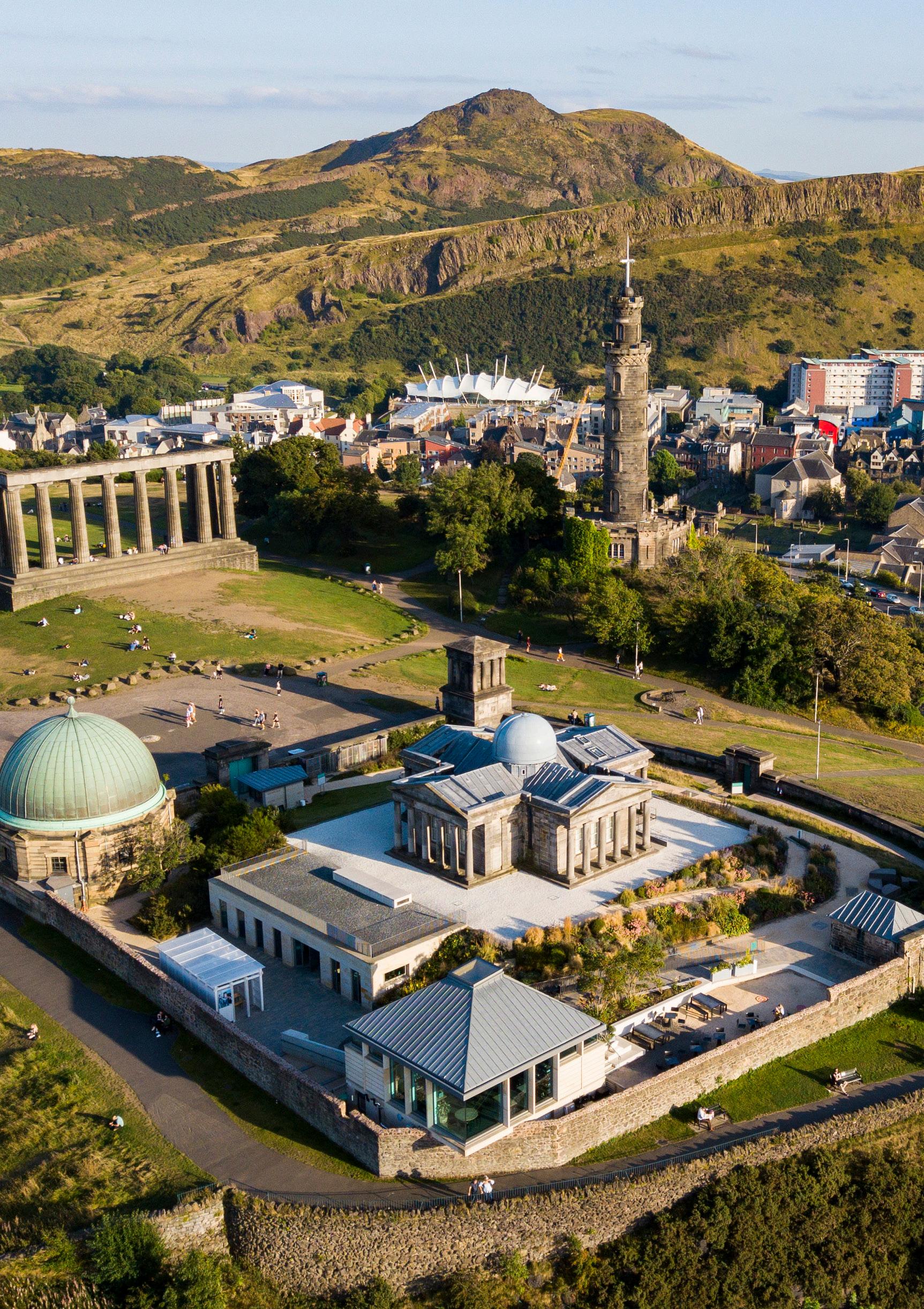
Calton Hill Observatory, Edinburgh.
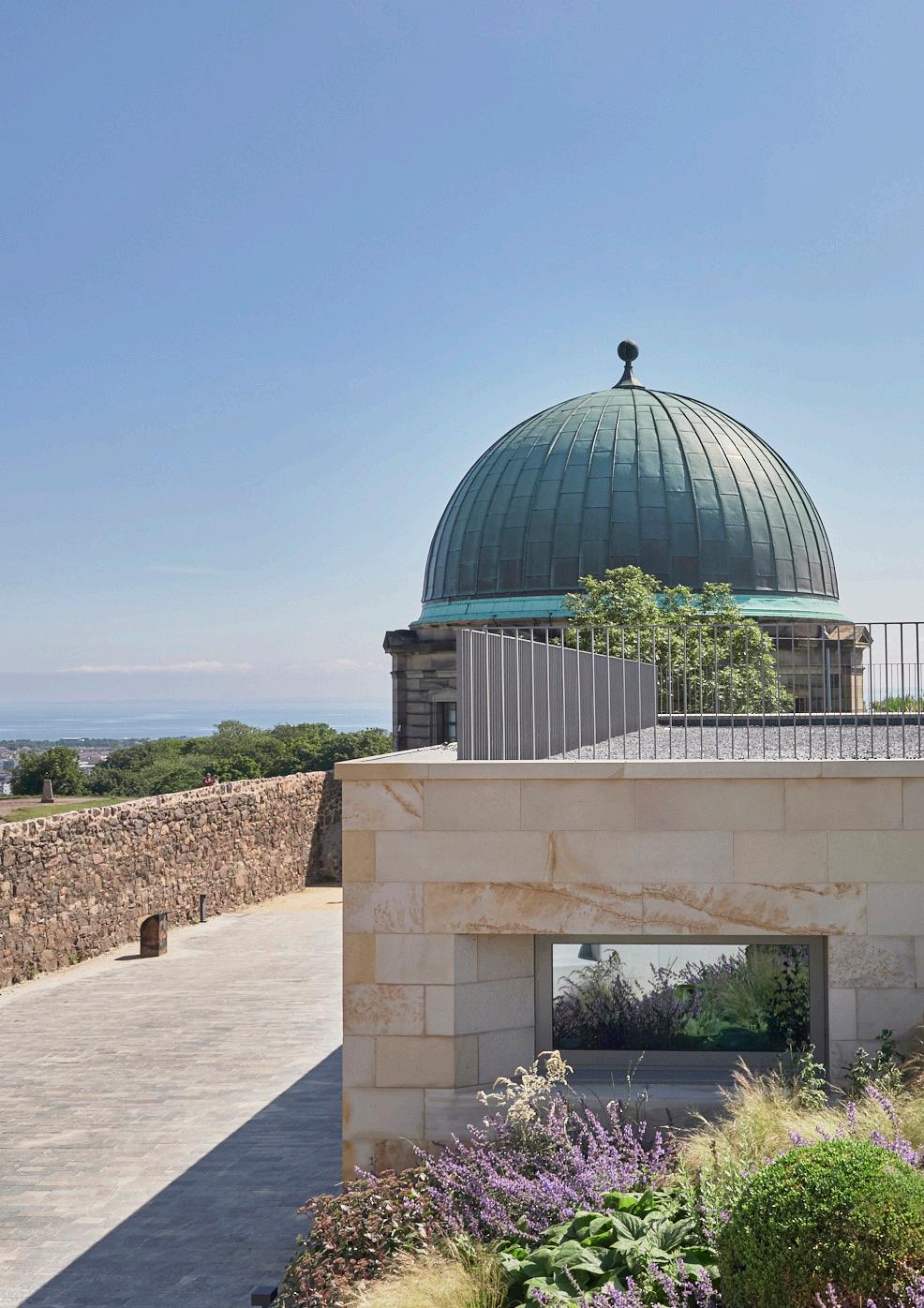
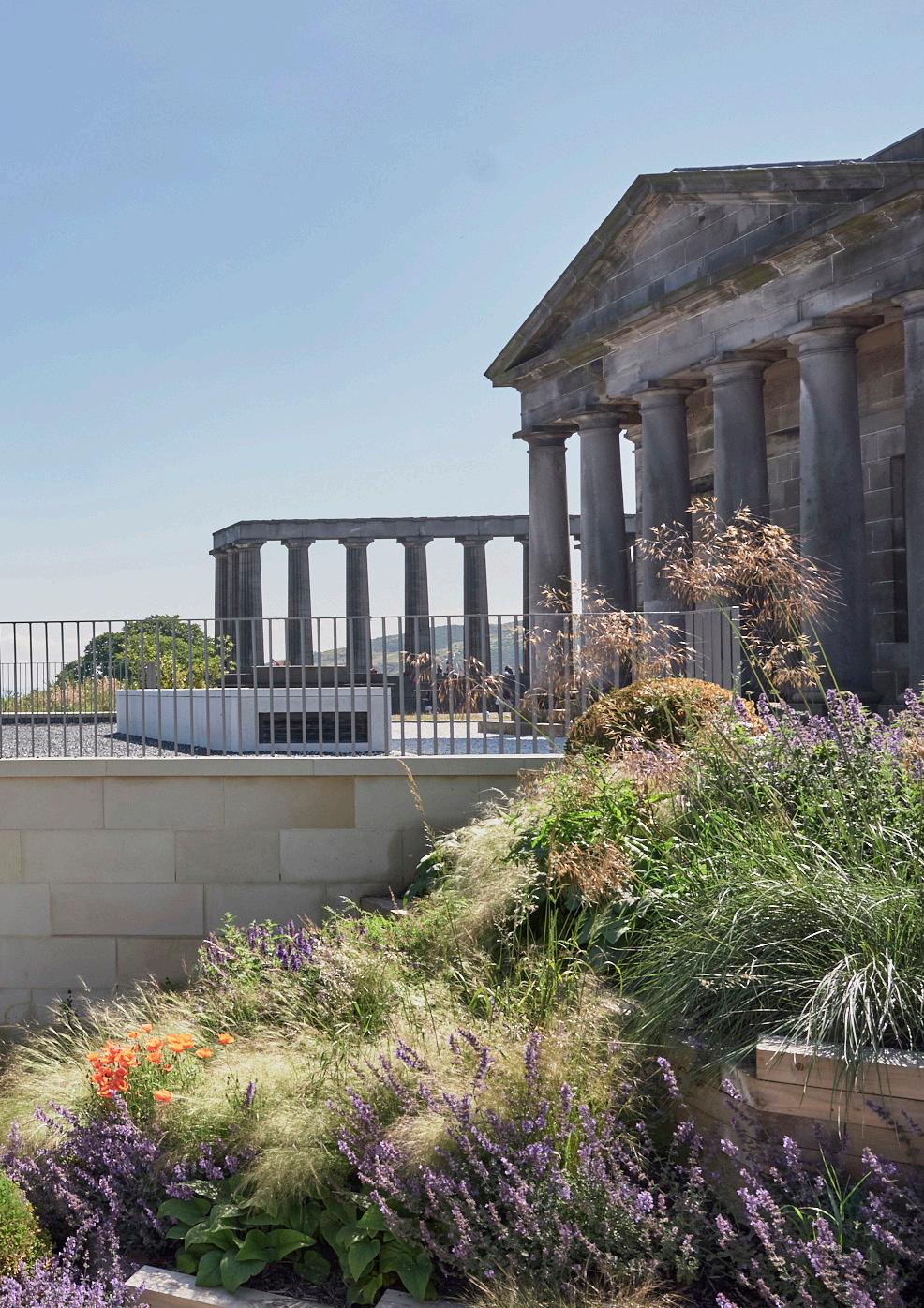
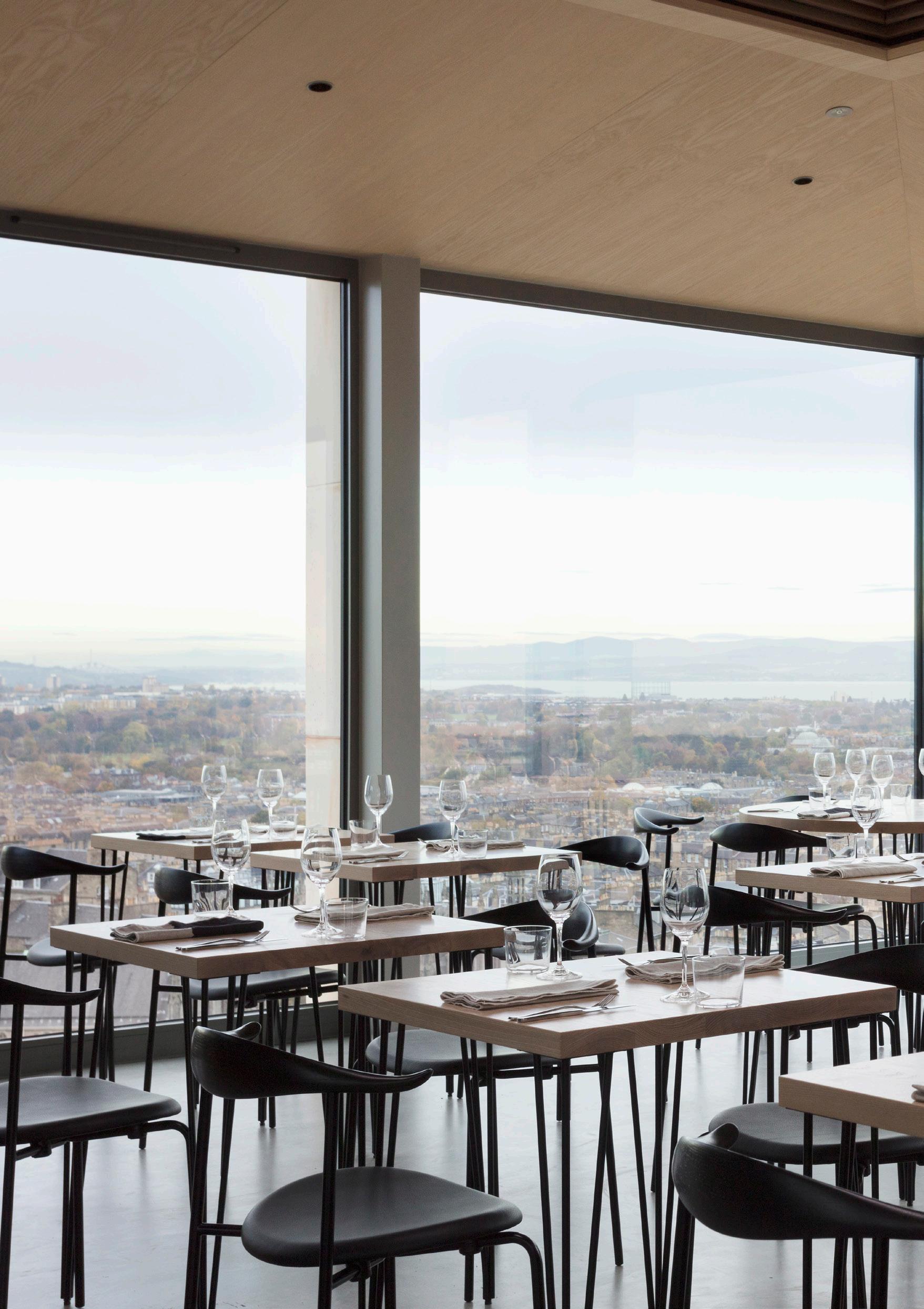
Calton Hill Restaurant. The Lookout, Edinburgh.
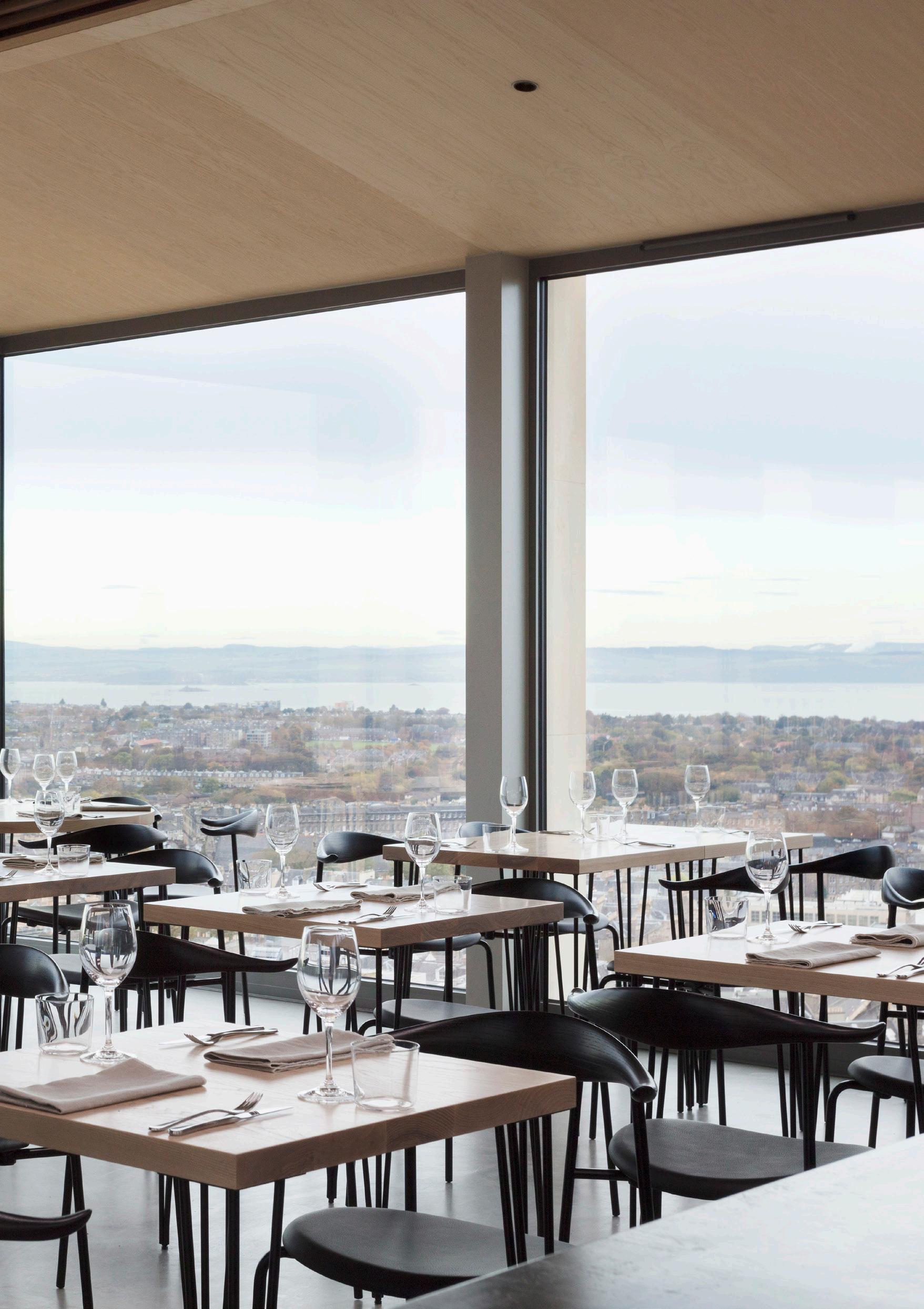
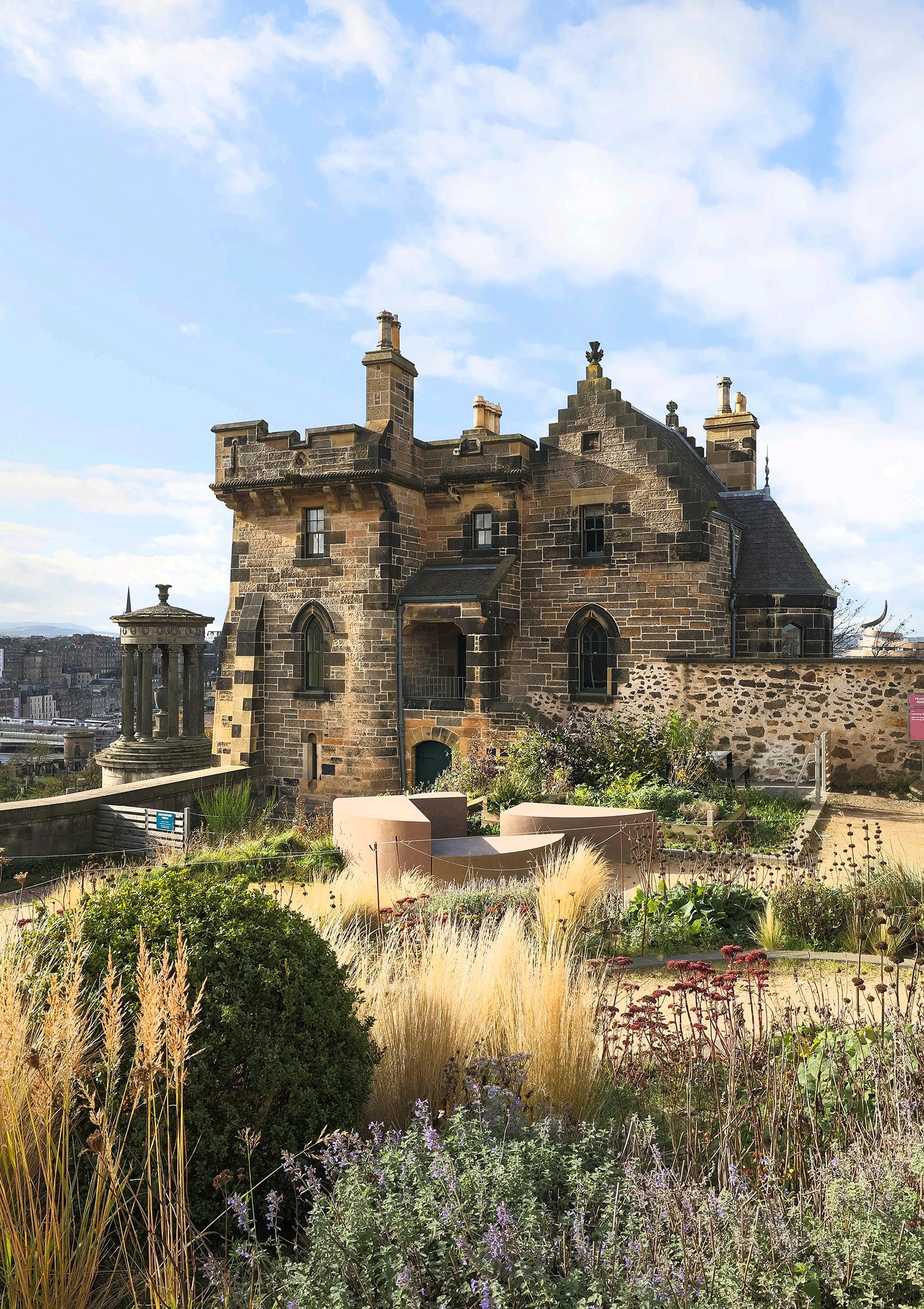
Obervatory House, Calton Hill, Edinburgh.


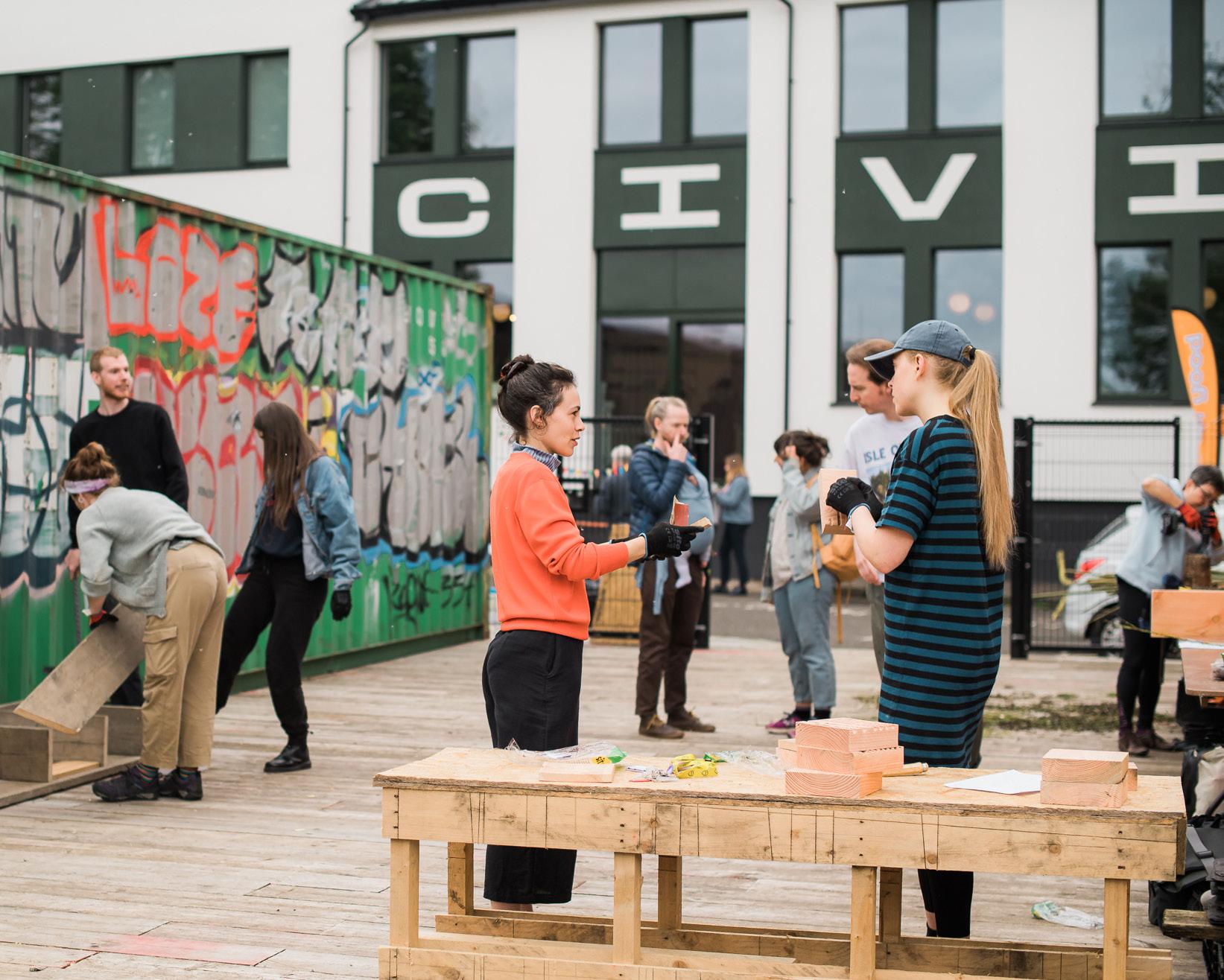
Civic House Retrofit, Glasgow
Agile City
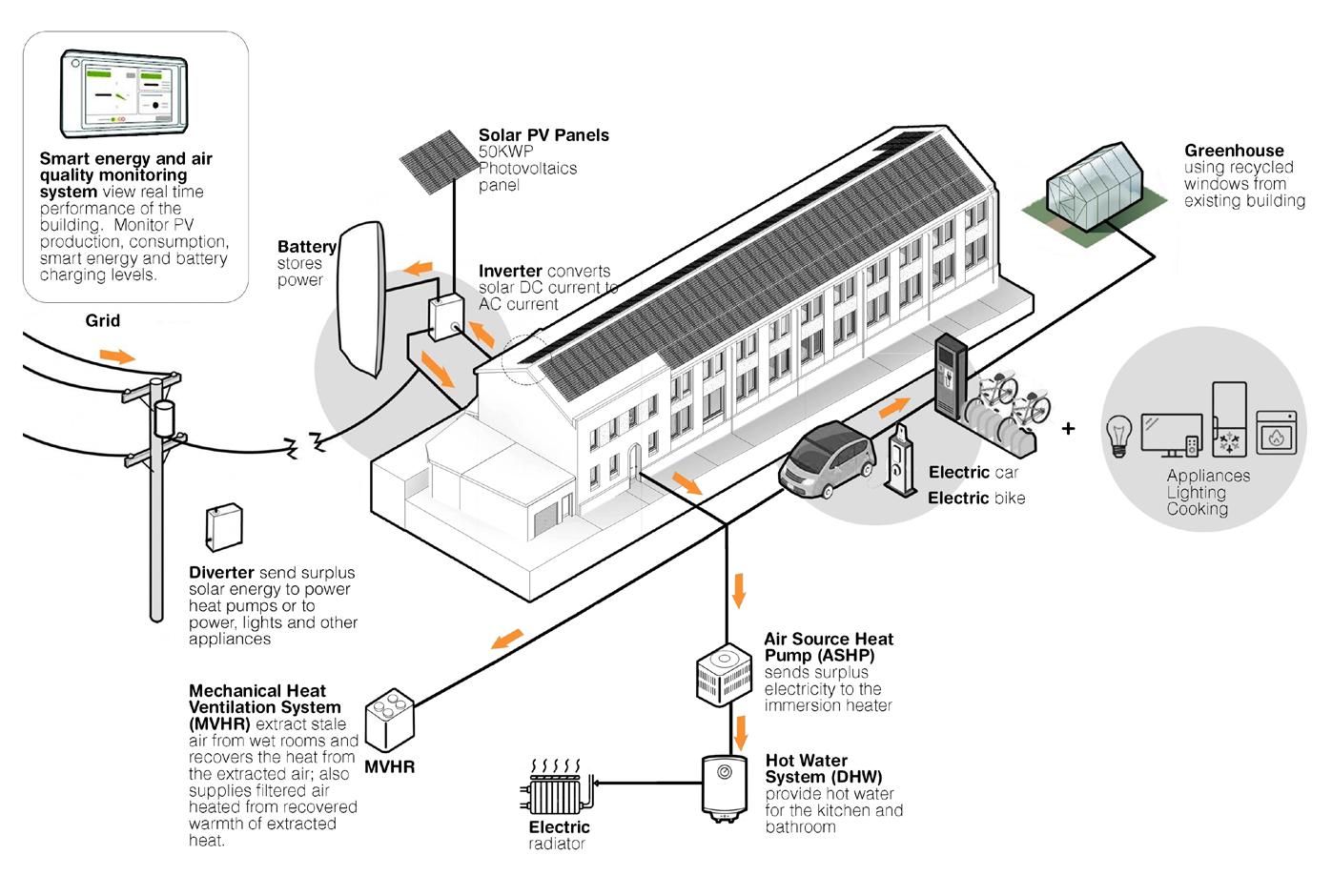
Collective Architecture was appointed by Agile City to facilitate an energy analysis and feasibility study to define the scope for retrofitting the existing building. Following a number of site visits and discussions with the client to identify key issues, the energy balance tool ‘Passive House Planning Package’ (PHPP) was used to verify space the heating demand before and after retrofit. Further to the completion of the study, it was agreed with client that a step-by-step retrofit approach and phased plan were to be considered in order to tie in with the client’s available funding.
As part of the ‘whole systems approach’, the refurbishment of Civic House included:
- External Wall Insulation
- High performance doors and windows
- Mechanical Ventilation Heat Recovery System (MVHR)
- Air Source Heat Pump
- Composite Insulated roof panel system
- Photovoltaics Panels – roof array 50kWp
Now complete, the project has won many awards including a GIA Sustainability Award, Scottish Design Award and was an AJ Retrofit Finalist.

‘Collective Architecture is not a factory, its practice culture is supportive and encourages all its staff to participate fully in the design process and the running of the firm. This cooperative ethos permeates the practice. As a client, this means that no matter who manages the project, or answers the phone, they are invested in the project’s success and you are guaranteed a proactive response.
Their design process inspires confidence and results in robust, characterful and rewarding buildings that result from a diligent, patient and critical reading of place, client need and artistic potential.’
Dhruv Adam Sookhoo
Visiting
Lecturer
and
ESRC Doctoral
Candidate, Newcastle University, former Head of Design for Home Group.
Collective Architecture is a 100% employee-owned, multi-specialist architectural practice based in Scotland UK, working across studios in Glasgow, Edinburgh, and Dundee.
We have over 25 years’ experience across a range of sectors which include housing, civic and culture, learning and enterprise, conservation, retrofit and strategic planning.
Our work encompasses individual building projects through to entirely new districts. Importantly, these are aligned to robust engagement methods and wider advocacy.
Collective Glasgow Studio 4th Floor
Albert Chambers
13 Bath Street
Glasgow
We work across public and private sectors, encompassing a range of views and approaches to foster friendly and collaborative outcomes.
G2 1HY
Collective Edinburgh Studio
3rd Floor
2 Commercial Street
In addition to delivering a vast array of architectural projects, we provide three areas of expertise - Energy, Strategy and Conservation.
Leith
Edinburgh
EH6 6JA
Collective Dundee Studio
Dundee Contemporary Arts
Our approach and service aim to deliver socially responsible architecture by means of collegiate and collaborative practice, where the voices of people, nature and society are listened to and ideas shared.
152 Nethergate Dundee
DD1 4EA
Our clients and their projects have won numerous awards at local, national and international level in response to our consistent design quality, purpose-driven approach and creative solutions.
For more information please call us or visit our website.
www.collectivearchitecture.co.uk
In 2025, we were awarded the AJ100 Employer of the Year.
T: +44 141 552 3001
E: info@collectivearchitecture.co.uk

