
During the past many decades, I have been asked by family members , friends, fellow writers, academic colleagues, advertising executives, TV and radio interviewers, book editors and publishers, and sometimes even total strangers what my favorite book of all time is. I’m pretty certain that you, my esteemed classmates, have had the same question posed to you at various points in your life.
My answer, depending on my age, memory, or emotional receptivity, has varied only slightly, as the books that have survived as my answers have also survived the test of time and have remained largely the same. And so, I have always chosen one from among this list of my all-time favorites: Dante Alighieri’s Inferno; Leonardo’s Notebooks; William Shakespeare’s Hamlet and Macbeth; Michel de Montaigne’s Essais; Ralph Waldo Emerson’s Essays & Lectures, Fyodor Dostoevsky’s Crime and Punishment; Franz Kafka’s The Trial; Marcel Proust’s À la recherche du temps perdu; the collected poems of Arthur Rimbaud, Stéphane Mallarmé, Emily Dickinson, W.H. Auden, Pablo Neruda, and Francis Ponge; Albert Camus’s Le Mythe de Sisyphe; and Arthur Miller’s Death of a Salesman.
Until now.
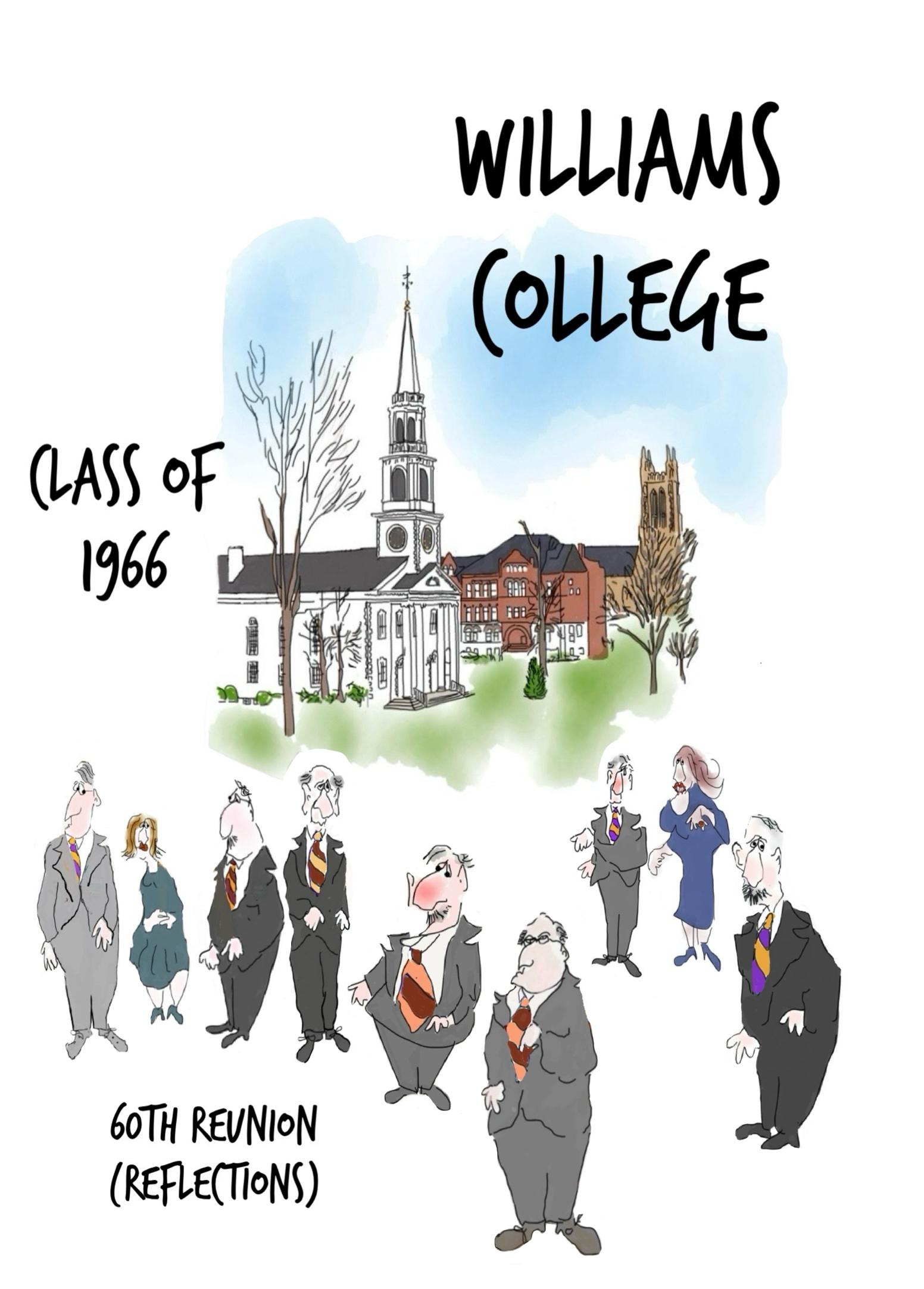
So now, if someone were to ask me the very same question, my reply would be, for the reasons to follow, a book that surpasses all of the above timeless, classic tomes. Namely, The Williams College Class of 1966 60th Reunion Book.
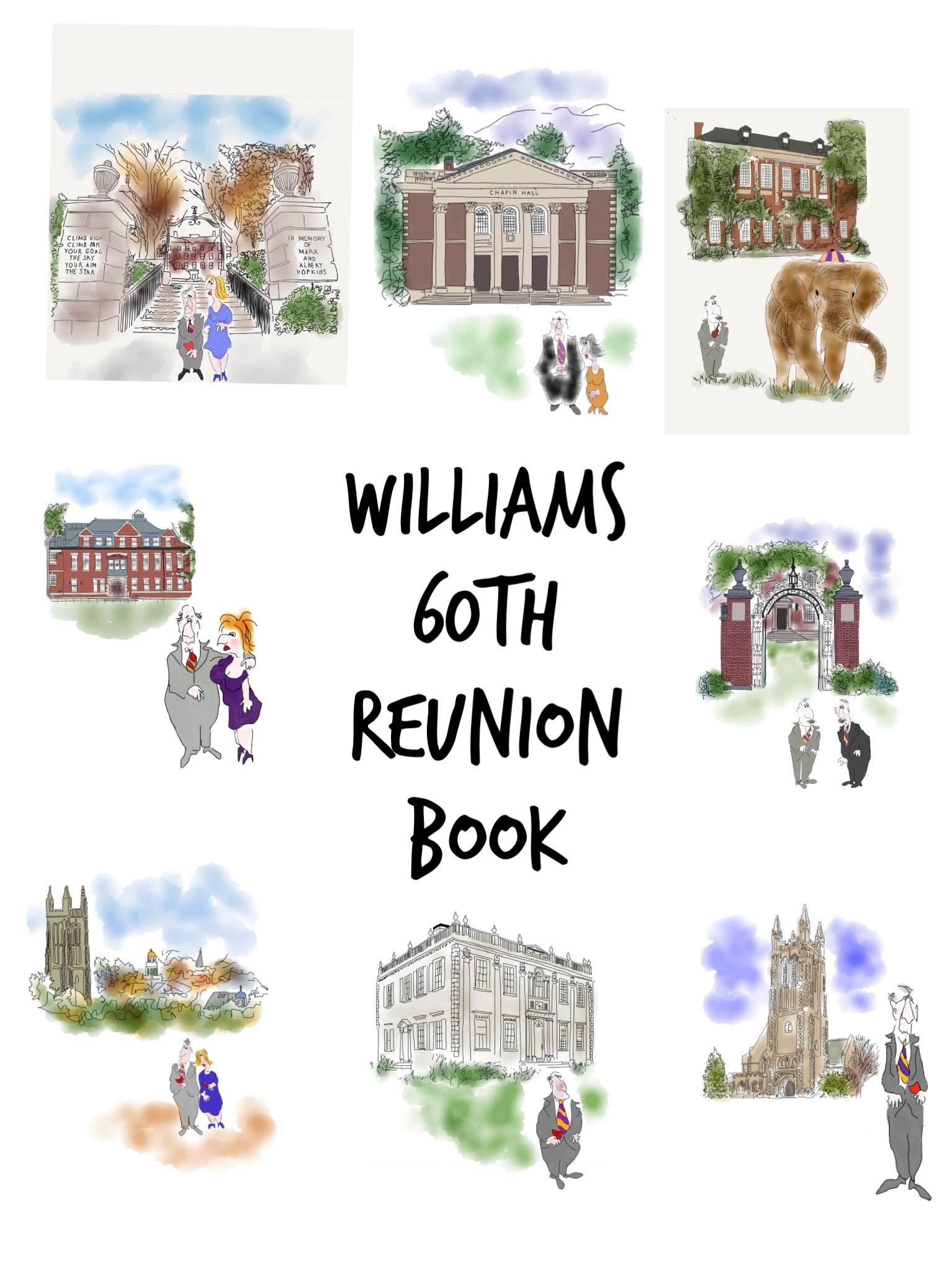
Graced by the well-written and deeply resonant reflections (is this, in part, a reflection of their Williams education?) of 1966 classmates (thanks so much to everyone who contributed theirs!) and the splendid cartoons of classmate Dan Cohn-Sherbok, edited lovingly by yours very truly, and with the enthusiastic support of 60th-reunion organizers Budge Upton and Allen Rork and our class Director of Alumni Engagement, Heather O’Brien, the book you are now about to flip through is a compilation of our recollections, ruminations, reflections, and opinions looking back on our formative and impactful years in Billsville.
How very special to have this tome now, just a few months before we (hopefully many of us) will reunite on our beloved campus to reconnect,
share memories, and opine with one another about our joys, sorrows, and challenges (happy and sad) now, since lo these SIXTY years!
I am hoping that you not only enjoy even treasure? reading and rereading these thoughtful, thought-provoking, and extraordinarily diverse essays, but I am also hoping that you will be attending our 60th to join in the fun, the camaraderie, and the fond reminiscing.
And speaking of Hope, to quote the immortal Bob…Thanks for the memories!
Our Reflections (in alphabetical order)
Bill Adams
Freshman year, I was in a quad in Sage C with my roommates Gil Watson, Rick Coughlin, and Karl Garlid. We became close as the year went on and had lots of fun. I remember that when Karl first arrived, he looked out the window and was totally amazed by the greenness of the trees and the landscape, because in California everything was pretty much brown by September. I enjoyed the freedom I had being away from home and without parental supervision. But I was not too responsible. I played pool or billiards for probably a couple of hours almost every day. Studying was not as high up there on my priorities list as it should have been.
Sophomore year, Karl and I and Cardy Crawford roomed together, and I eventually (on the unprecedented second round of rushing) got into Zeta Psi/Wood House in large part due to what Karl said to the rest of the house as they were deciding whom to take in that second round. Again, I played lots of pool and also lots of bridge. The deepening friendships I had with Karl and Cardy and Joe Bessey were a real plus in my life. I remained close to Joe, Karl, and Cardy for the rest of their lives. It saddens me that they have all passed on, but the wonderful memories remain. I was learning better academically, but not as well as I should have. I was, however, having a great time with my friends and my activities.
Despite having “bounced through the rushing system” but then been taken in the second round of rushing into Zeta Psi/Wood House, I was nonetheless elected treasurer of the house junior year and vice president senior year! Harrop Miller, who also bounced through the system as a sophomore and was later taken into the house, became president in our senior year. So there we were, two “bouncers” as president and vice president. Go figure! Living in the house for junior and senior years was fantastic. Lots of good times with good friends and housemates.
In the years since graduation, I have kept warm feelings for Williams and my memories. I’ve gone to many of the 5-year reunions, and I particularly like the minireunions after our 50th because we get to see folks from the
classes on either side of ours. Both of my children went to Williams, which has added to my loyalty. It’s hard to believe that we’re coming up to 60 years postgraduation. I feel very lucky to have gone to Williams and to have had so many good friends and good times there.
Pete Allen
Mitch’s reunion topic is much tougher than those for previous reunion books. It would have been a lot easier for me to just relate several key events from the previous decade to provide a personal timeline update.
When I contemplate my Williams path versus other possibilities, Robert Frost’s poem “The Road Not Taken” comes quickly to mind. It’s universal human nature to wonder about paths not taken (in my case, Middlebury or Princeton). It’s also common to either regret or overcredit one’s chosen path. However, summarizing briefly my response to this assigned topic, there’s never been a moment when I wished I had spent 1962-66 otherwise than maturing and learning at Williams with our class.
When I entered Williams after public high school, my older brother had just died after a yearlong battle with cancer, and I’d never left home for any real duration. My freshman roommates, JAs, and Sage C entrymates immediately became an indispensable “second family.” Clarence Chaffee was also an inspirational coach of tennis and squash, revitalizing me regularly from the crushing challenges of class preparation.
Some of our classmates always aimed to be doctors or lawyers, but I was among the uncertain many who seemed hopeful just to start an undefined future career after graduation and provide well for a wife and family. I had always been quite proficient with numbers, but my initial math-major track toward teaching (and coaching tennis) was dashed when numbers were soon displaced by “groups, rings, and ideals.” A shift to economics proved a much better match and qualified me for an MBA at Dartmouth, followed by a satisfying executive business career that concluded with a long marketing concentration.
I’ll always be grateful to Williams for helping me find my career direction, for stirring my general curiosity, and for recognizing the importance and
enjoyment of lifelong learning. Later, I also found unexpectedly that the reputation of a Williams degree often seemed a valuable credential when candidates for employment or promotions were being evaluated.
Since our 50th reunion, I’ve been enduringly proud of our class’s Reunion Gift commitments, inspired by our great Reunion Gift Committee. Budge Upton’s leadership and advocacy to support the new Environmental Center established in our name creates a forward-looking legacy for innovatively teaching Williams students about managing important climate issues.
Finally, I really look forward to our 60th reunion, hoping to engage with many of our remarkable daily blog posters whose paths only lightly crossed mine when we were on campus. Oh, and I’m looking forward to returning with Kris, my high-school sweetheart and wife of 60 years! Strolling around Williams always brings back nostalgic and fond memories for us both. Best wishes for everyone to enjoy our remaining days to the max!
Ten years since our last reunion. To borrow an old movie title, its passage could be characterized as “the good, the bad, and the ugly.” Let me start with the “bad.” In the past decade, we have lost many relatives, friends, celebrities, and connections at an accelerating pace. We have also watched as we and those we know decline, fighting new battles, physically and
mentally, as time marches on. One can only salute those who pass and those facing these inevitable changes.
Unfortunately, the last decade has been dominated by the “ugly”: the advent of Donald Trump. His narcissism has spearheaded countless attacks on all our fundamental institutions, sanctioning attacks on so many norms and societal values that, post-1966, most of us assumed were headed in the right direction: civil rights, women’s rights, the stupidity of endless wars, and a sense that we were a community composed of disparate parts working together to make things better for all.
But many “good” things happened, as well. Joan and I continued to forge our way back to living in Maine, a move supported by our two daughters, Kristin and Jennifer. Until just recently, I acted as an AAA arbitrator of major construction and development cases and served on a few boards as a director. At the same time, our friendships within the Williams community flowered. We have continued to be in constant contact with Stan and Carroll Possick, and Dick and Patty Pingree. Off and on, we have also seen Dave Tunick, while running into others in fall “minireunions” in Williamstown.
Planning for and attending the Oxford trip before the 50th reunion caused us to form a strong friendship with Jock and Barbara Kimberley and to start up one with Allen and Lyn Rork. Those experiences also led us to a greater understanding of the lives and careers of persons we already knew like Budge (and Kyle) Upton and Bill (and Margo) Bowden, Kent Titus, and many more.
The last decade also gave us a pandemic that helped spawn our Class Blog, which continues today (and to which I have occasionally contributed). Reminiscences on the blog about who or what was “best” often struck a chord, like Steve Fox adding my favorite, Mark Knopfler, doing “Telegraph Road.” The only downside of the political exchanges on our blog has been seeing that a distinct minority of classmates continue to view recent events as “policy changes” or well-thought-out steps, rather than self-aggrandizing measures made by a sick man who would be king.
Some more “good” for us: we plan to make it to the 60th . Perhaps you all will, as well.
Tom Anathan
Williams College taught me both directly and indirectly. The direct part was learning information, whether it was art history, economics, French (somewhat less successfully), or English. Ultimately, it was the inferential part of the equation, the thinking and reasoning part of the learning experience that meant so much to all of us.
One of the most “educational” parts of my experience at Williams was that I was asked to be a student teacher by the Religion department, which meant that I went to a remote corner of Stetson Library with test blue books and performed a preliminary review of what the students (my classmates) wrote in response to questions. I wasn’t asked to suggest grades, but I was supposed to provide a brief analysis of the written responses. The experience of reviewing test papers was incredibly helpful to me in gaining a better understanding of how to respond to questions. Probably as a result of that, I was called in my company’s office “the English Major,” which had its good and bad aspects. It meant that I became the proofreader of choice for a number of my colleagues.
One of the points that I didn’t dwell on at the time is the stunning talent of our classmates. Their accomplishments have been (and continue to be) remarkable. Despite my best efforts to lead him astray, my freshman-year roommate Jeff Rosen has had a more than distinguished career as one of the leading breast cancer researchers in the US. Many other classmates have had similar success professionally. My vague recollection is that there was a story we heard freshman year that as a result of a grant, a small percentage (5 percent or less?) of students were “late bloomers,” defined as students who were very bright but didn’t perform well in secondary school. I think that about 95 percent of our class thought that we got into Williams through that program.
Thanks to the efforts of George Helmer and others, we have a quarterly Zoom for Saint A members, which has helped facilitate staying in touch with a number of Saints including Chuck Dougherty and Allen Rork. The Class Blog has been an invaluable way to keep up with many of our classmates, and a huge thanks goes out to the faithful scribes who worked to make that happen. The information from that has been more than interesting.
Finally, the Williams community at large has been important to my family and me. We have taken a number of College-sponsored trips with Kennedy Richardson ’71 and his wife. For those of us fortunate enough to take it, the Oxford trip for us in our 49th year was spectacular.
I think Vroom called me a lazy slug, and Mitch more politely kept reminding me to write. My thanks to both of them. Finally, my thanks to my wife of 55 years, Patricia, who at this point in our lives probably knows more members of our class than I do.
Pete
Bagg
Foundations of my life: Parents Al (Wesleyan/MIT, electrical engineer; during WW2, he was part of the “Radiation Lab” at MIT, which developed and installed radar systems around the world). And Ruth (Skidmore, music; she was a professional mezzo-soprano and surrounded me and my two brothers with music for all of our time together).
I attended the Allendale School (now Allendale Columbia), an independent school in Rochester, New York. Allendale had a profoundly positive impact on me and enabled me to attend Williams.
Life Evolving: After Williams, I served two years in the US Navy as a junior officer on a destroyer based in Jacksonville, Florida. We made one deployment to Vietnam. I reflect on this time as a positive way to fill the years between college and life.
During this time, I met my future wife, Pat Leonard, who was so overwhelmed (ha!) by me that when I called her COLLECT from Hong Kong, she accepted the call (!). We eventually married in September of 1970 and have been together ever since. We have two children: Alison, an executive with the Massachusetts government; and Christopher, who runs his own triathlete coaching company, Campfire Endurance Coaching, in Bend, Oregon. Alison and her husband, Zach See, have two children, now approaching college and high school.
Professional history: I spent my whole working career in the high-tech world, not in a technical role, but in a variety of jobs that took advantage of my Williams learnings: analytical abilities and communications skills. There was a lot of stress, caused by my responsibilities and by the superfast growth that characterized the tech industry, but overall the experiences were positive and rewarding.
Giving Back: I was president of the Worcester, Massachusetts, Williams Alumni Association for a few years in the 1990s and have long been associated with the Touchstone Community School, a small independent school in Grafton, Massachusetts, as a Board member and leader.
Learnings (things that have stuck with me over the years): Bod Noyes, Intel executive, on the need to refresh the design of Intel’s microprocessor on a less-than-annual basis: “If you don’t cannibalize yourself, someone else will”; and…“If your proprietary technology has become a corporate religion, you are about to fail” (me).
All in all, a full and happy life. My overwhelming good fortune to have met Pat all those years ago is still the major reason for my happiness.
I consider Ron Dennis, our blind classmate, one of the most remarkable people I have ever come across. His ability to get through Williams was an inspiration to me and possibly to many others. He made my issues with dyslexia and the minor concerns of others seem almost inconsequential by comparison. I felt that if he could do it, I should somehow make it with flying colors, even if I seemed totally self-absorbed to those around me.
I also remember an Art History professor informing me that I was his worst student ever. And I can recall Professor Versenyi teaching us about Plato with a variation of the Socratic method and Professor Winston’s shock at my progress in Economics when I took the oral exam.
I feel lucky to have a few Williams friends still alive and clearly more socially active than I am.
Bob Bates
By the 60th reunion, I will be eighty-two years old. It’s hard to believe unless I look in a mirror or see myself in a security camera, both of which I try to avoid.
My years at Williams seem like a very long time ago, and indeed they were! I look back at them as an important time in my life, and that may be as much about my developmental age at the time as the institution itself.
I wanted a liberal-arts education that would give me a broad perspective on the world, and Williams certainly did that. I majored in Biology/Premed, and I got into a good medical school. I had good friendships.
I have enjoyed the e-mail Class Blog during the past few years, and it has given me a broader perspective on my classmates. During my Williams years, it seemed to me that students were more conservative than the class notes now suggest. The notes remind me how stimulating it was to be around smart, interesting fellow students.
Although I have a tremendous appreciation for Williams, I don’t seem to have the same high level of nostalgia and fondness as many of my classmates. It seems like a tribal instinct, and I don't seem to have as strong a tribal gene. It was only four years, and it doesn’t seem more important than many other parts of my long life. It seems as though some people have deeper feelings based on participation in varsity athletics or a close connection to a professor. I had neither of those.
I did have the feeling of Williams being an elitist college and somewhat insular, and by senior year I was ready to move on. I have great respect for the path Williams has taken since we matriculated: eliminating fraternities, becoming coed and more diverse.
At the time of writing this note in January, I have not decided whether I will attend the reunion. I live in Santa Cruz, California, and although I am in good health for an old geezer, I don’t relish airline travel. The Class Blog has provided information that I would get at a reunion, but it would be interesting to meet the people behind these posts. It would also be nice to see the campus.
David Batten
• Lane Faison, Whitney Stoddard: art for the uneducated and the future pros: Tunick, Powell, Lane.
• Nicolas Fersen, Robert Waite: bringing history alive.
• “Clay rhymes with lay, Hunt rhymes with cunt”: truly one of a kind. Ulysses brought to life.
• John Eusden: good guy trying to save my soul. Captain Harvard swim team, Air Force pilot, totally unassuming.
• Doris de Keyserlingk: first female prof with tenure; known for flipping her lit cigarettes into the corner of the classroom. Managed to flip one into her purse and caught it on fire, more memorable than three years of Russian classes. In awe of Michael Katz’s fluency in the language.
• Hal Crowther’s way with words foreshadowing his career as a writer; always a master of sarcasm.
• Best advice received at Williams from Topper Winder, an inveterate addict: don’t start smoking. Still sneaking a couple a day at 81.
• Recurring nightmare: once again having to read three Henry James novels in two 8-hour sittings, the ultimate punishment for procrastination.
• Books I still remember: The Education of Henry Adams, Let Us Now Praise Famous Men, Miss Lonelyhearts, Day of the Locust, Been Down So Long It Seems Like Up to Me.
• Short-lived intramural hockey career: boarded by some 200-pounder from Zeta Psi; chipped clavicle, still painful after several years.
• Folkways Records collection purchased as a freshman; divorce damage, 1988. Andy Burr on the guitar.
• Battles between Williams Hall and Sage Hall: attacks by snowballs, golf balls, 45-record discs.
• Food fights in Baxter Hall dining room.
• St. A’s Goat Room.
• Archimedes, Rutherford’s owl. (Dave, we miss you. RIP.)
• “Bat” Wrightington blowing his nose on a curtain in the Baxter Library reading room; when asked if he’d do that at home, he said, “We don’t have curtains at home.” Most memorable character in long leather (faux?) jacket on his bike.
• Captain of the Sailing Club with neither water nor boats.
• The orange wigs of Duke and the Darks.
• Doug Clark: Hot Nuts, Two Old Maids, My Ding-a-Ling.
• Driving to Skidmore to see Ingrid; driving to Wheaton to see Joanie “Boom Boom”; driving to Bennington to see What’s Her Face.
• Ticketed on the Taconic for doing 85 in a 50; failed to break the record time from Long Island to Williamstown.
• P.S.: August 1966, driving ’66 GTO across country with Punky and Diane Booth. He fell asleep in Chicago and didn’t wake up until we reached Palo Alto. Great copilot.
• P.P.S.: Quinquennial reunions.
At age 82, one would think that reflecting back to 18 would be problematic. But when it comes to Williams, it turns out that the trails leading back that far are not all that difficult to pick up.
I arrived in Williamstown a borderline atheist and left solidified in unbelief. Not much else remained static. It was Williams that introduced me to the law; from where I heard my first opera; at which I
learned of the sonata form and how to distinguish duple from triple time (usually); was introduced to Renaissance art and later treasured John Hunisac’s The Art of Florence, paging through it with my daughter as she grew up; and where I became poorly conversational in Russian taught by a tall guy who jumped on a desk or hid behind it to teach prepositions. It must have worked. After graduating, I immediately left for Williams-inHong Kong, spending two weeks by myself in the USSR including Kyiv. Still today, all these years removed, Kyiv is etched in my memory, thanks to Williams.
In Hong Kong, we hardy six ’66ers including John Citron, who helps keep these memories alive were on the edge of vast historical facts of which we knew little and appreciated less. Hong Kong was spending down its final years on its British lease. The Cultural Revolution in China had just launched, and we then understood little but sensed much about what was roiling China just miles away as we peered. Some mornings we awoke to look out over Hong Kong’s Victoria Harbor noting that “the fleet has come in,” telling us that the streets would be crowded and the prices elevated, so best return to the dorm after classes. Such was our brush with the military on R&R from Vietnam, another roiling change in the world that altered the world and our lives for decades. On our way back to the US, John and I spent four days in Taiwan and ever since are constantly reminded of its strategic importance and the almost ethereal beauty of Sun Moon Lake near Taichung.
This travel made me one day late to law school and thus the object of professorial ridicule. But Williams had properly prepared me for a life in the law and launched me into it with the propulsion of a rocket through cold war USSR, China in turmoil, Hong Kong enjoying its last years of “colonial liberty” Jimmy Li was probably dreaming of his first news outlet; Taiwan then under Kuomintang repression but later to become a democracy and source of advanced technology manufacturing that is not duplicated anywhere; and riding the transportation future that never really became the future. But I did become the lawyer Williams had dangled in front of me, dousing me in a world of momentous change…and then sixty years seemingly outran that rocket.
So here we are. Rejoined by a Blog! Still shaped by those four precious years, and experiences then that still seem to make a difference.
Ron Bettauer
I look back at my time at Williams with profound appreciation. Williams taught me how to think critically. I had sailed through high school, and my first classes at Williams showed me that I had to work much harder and really analyze issues, think creatively, and find solutions.
Moreover, the challenges at Williams were much more interesting than subsequently at law school. At the State Department legal office, I had been prepared by Williams to think on my feet, succeed in international negotiations, and develop new treaty texts and otherwise work to foster the application of international law more often inventing new approaches than applying existing norms.
And I remember with fondness many Williams professors in multiple disciplines, such as Jim Burns, Kurt Tauber, Laszlo Versenyi, Russell Bastert, and George Pistorius. The Purple Valley was an ideal place. I also appreciated being able to do my junior year abroad at the Sciences Po in Paris, allowing me to earn a one-year certificate there.
Other things that stick in my memory are my time at Prospect House, sharing a room there with Jim Meier, working on the cultural committee, and at one point arranging a piano concert in the adjacent dining hall given by my friend (and Philosophy professor) Steve Cahn. I continue to be amazed by the new facilities at Williams, am thankful that Williams seems for now to have escaped being a political target, and am encouraged that Williams is in the able hands of President Mandel. And the ’66 Class Blog, which has now reached the 1700s iteration, has refreshed my remembrance of classmates.
Bill Bowden
I grew up in Mountain Lakes, New Jersey, with my parents, two brothers, and a sister. My father was a high-school English teacher and my mother an elementary-school teacher. My siblings and I were all in college and graduate school at the same time, the total cost of which was far beyond the financial resources of my parents. My father encouraged me to apply to West Point or Annapolis but believed in the value of small, liberal-arts teaching colleges and therefore took all of us to visit the obvious candidates.
The Williams admissions process was much more informal in our day than it is now. Listening to Fred Copeland talk about Williams in his office, I distinctly remember my father eventually asking, “But what about the cost?” and Fred responding, “You can’t look at the sticker price; you have to look at the net cost,” and seamlessly beginning to describe the scholarship program at Williams.
Shortly after my visit, I received a letter advising me that I had been awarded a Tyng Fellowship covering four years at Williams and three of graduate school anywhere in the world, which immediately ended discussions of attending the military academies!
I will always be grateful to Williams for making it financially possible for me to attend, and I have spent quite a bit of time “giving back” to Williams both as an undergraduate and an alumnus, including serving as a class officer, class agent, chairman of the Alumni Fund, and Tyng Trustee. I was stunned to be awarded the Rogerson Cup at our 50th reunion for outstanding service to the college.
I met Margo, my wife of 58 years, at a Williams freshman mixer, and both our two children, Jennifer and Peter, attended Williams, as well. My career as a lawyer for the financial-services industry was very rewarding, particularly my government service as chief counsel for the Office of the Comptroller of the Currency, which was created during the Civil War and is the oldest federal regulator of the financial industry.
Margo and I lived mostly in New York but also spent time in Houston, Hong Kong, Zurich, Paris, London, and Washington, before moving to
Williamstown in retirement. Since then, we have thoroughly enjoyed auditing classes, teaching Winter Study courses, and interacting with undergraduates and Center for Development graduate students as a host family.
I’m very much looking forward to seeing as many classmates as possible in June.
Jon Britell
I came to Williams after four years at Taft School. At Williams, I worked at WCS-WCFM as secretary/treasurer and with the Purple Key Society. I was a member of Psi Upsilon for two years.
I was raised to go into business. By sophomore year, I began to severely question this path. During three summers at Williams, I traveled around the world. After junior year, I was an AIESEC consultant to the Nationalist Chinese government in Taiwan. After graduation in 1966, I attended Tulane University Law School before deciding to break with the past.
My career identity crisis severely strained my feelings toward Williams. The Blog and the formation of the Williams-Seattle group have done wonders to soften my feelings about the College. Having taken only Rocks and Stars at Williams, I enrolled in Columbia University School of General Studies to get my premed credits. I earned my MD at Abany Medical College in 1973.
I did a rotating medical internship at LA County/USC Medical Center, then trained in Internal Medicine and Hematology at the University of Oregon Health Science Center in Portland, OR. I received my training in Medical Oncology at Mayo Clinic, Rochester MN, and served there as an associate consultant while my wife (Catherine Wolleat, MD USC ’73) completed her training in Physical Medicine and Rehabilitation.
After five years in Denver, Cathy was recruited to help establish the Spinal Injury Unit at the Seattle VA Hospital, affiliated with the University of Washington.
I joined a three-man oncology practice in Renton, WA. I dedicated myself to my patients and to my staff, always working to ensure that they were up-to-date with the changes that transformed the practice of oncology during my thirty years of practice. In addition to chairing the hospital cancer committee for twenty years, I served on the American Society of Clinical Oncology Clinical Practice and Community Outreach Committees for seven years. I served as a surveyor for the Commission on Cancer of the American College of Surgeons for ten years, working to help over 100 cancer programs across the country understand the value and compliance requirements of national accreditation standards.
In 1993, I helped found the Washington State Medical Oncology Society (WSMOS). Over the next 32 years, in furtherance of WSMOS’s goals of maintaining access to quality care for Washington residents, I served in every conceivable administrative and executive role.
For the past eight years, I have been a consultant at WCG, an independent Investigational Review Board that oversees approval and administration of new oncology protocols. My role has been to help lay and professional Board members understand mechanism of action, risks, and potential benefits of new oncology drugs.
In my free time, I assisted Cathy’s music endeavors, being an enthusiastic facilitator and photographer at her music festivals. I was an avid bird watcher accumulating a modest life list of 1,600+ birds from all seven continents. Cathy and I have two sons, Patrick Britell MD and Scott Britell PhD; two daughters-in-law; and five grandchildren.
Andy Burr
Having taught at Williams for thirteen years and lived at the edge of the campus for forty-three, my recollections of undergraduate days are a small portion of the hearty stew of Williams memories bubbling in my aged brain pot. Since it’s such a thick mélange of foggy recollections mixed with more recent experiences, I thought I might write a bit about life in a small college town.
As you may imagine, the number-one liberal-arts college in America looks a lot different than it did in 1966, but in many ways it’s still the same place. For instance, the students are alarmingly like us. They’re smarter, half of them are women, a lot of them are people of various colors, but they’re mostly the same bright-eyed, enthusiastic middle-class kids that we were. Wait, that’s not entirely correct. They are much better behaved, and not so predominantly preppie.
I remember arriving at Williams in my Buddy Holly glasses and crew-cut hair and feeling that I had to get a pair of Bass Weejuns and grow longer hair, generally unkempt, if I wanted to fit in. And the last thing I wanted my new classmates to know was that I’d grown up on a dairy farm where I often smelled a bit like cow manure. Somehow, I managed to bumble through four years and graduate with a vague idea of a future career.
After four years in architecture school, I spent the next twelve living in Montreal, Idaho, California, Boston, and Manhattan, and I eventually landed back in Billsville in 1983, dragging along my new wife, who had never lived in a small town and was understandably skeptical.
To our great joy, we were welcomed by neighbors and particularly by my former teachers Lee Hirsche, E.J. Johnson, Lane Faison, and Whit Stoddard. They found me a job teaching architecture, recommended us to several clients, and before long we had an actual architecture practice. Soon, my city-girl wife became comfortable with country living, especially when she discovered she could walk out the door with our dog and shortly be deep in the woods or hiking up Greylock. And behold, there were two art museums, and within a few years Mass MoCA arrived with not just edgy art, but interesting events and festivals.
The College also offered concerts, movies, lectures, and the opportunity to audit classes. We also met many great friends, including artists, the “Hollywood crowd,” and especially writers.
Living in Williamstown is hard to beat. Our kids could walk the two blocks to school, we leave the keys in the car, rarely lock the house, mow our own lawn (never trust a man who doesn’t mow his own lawn!), and have many friends and neighbors on whom we can depend for a good dinner party or help in an emergency.
Right now, Williams, with its expanding reputation and the best president we’ve had in a long while, seems a bit like the center of an amiable universe. Come and visit!
Mike Burrows
“The Laughter that You Carry”
I remember our class being the first to break 300 an obscure fact I’ve guarded faithfully for almost 64 years but I’ve long since forgotten why breaking 300 mattered in the first place. Maybe we just liked being the biggest. At eighteen, you don’t need much.
I remember Edward R. Murrow speaking at Fall Convocation in Chapin Hall because nothing inspires a freshman like the world’s most serious man telling you to behave responsibly.
I remember the legendary Al Hageman inaugurating the Gurgle Society by hoisting the Grosswinner Cup outside of KA in the spring of 1963, an event so momentous that half of the upperclassmen claimed they predicted it, though none of them actually did.
I remember concerts by the Flamingos (“I Only Have Eyes for You”) and the Four Seasons (“Sherry”). I remember the folk revival of the ’60s and the performance by Brad & Sue, who became semicelebrities without releasing a single record.
And I remember standing in the House of Walsh when Lee Harvey Oswald shot Jack Kennedy. The room went still in a slow way a kind of stunned quiet settling over people who, moments earlier, had been arguing about nothing at all.
But here’s what I don’t remember…
I don’t remember locks on doors; I don’t remember locks on mailboxes; and I certainly don’t remember any Blue Light Emergency Phones operated by the campus police (now called Campus Safety Services, or CSS). Do you know that students today can call CSS and request an escort to walk with them across the campus after dark?. . .an escort!. . .blue lights dotting the campus like small beacons of anxiety, blinking away in the dark as if Williamstown were a war zone, not the same town where we once left our doors not just unlocked, but often wide open.
Who exactly is lurking behind the president’s house at midnight? A rogue Philosophy major? A moose? A confused Amherst student? A moose and a confused Amherst student?
In the old days, we had yelling instead of emergency phones, and our idea of safety was shouting, “I’m coming in!” before opening any door. The shift from unlatched doors to “Report Suspicious Activity” is more than just new hardware. I suppose it’s an “indictment of the times,” and we’re expected to accept it. That we must do so in the Purple Valley feels especially sad.
Despite the nocturnal campus dangers, most of my memories made their way through six decades without an escort. Breaking 300 never mattered.
The people did, and the laughter. The friends we made lifelong friends were, and remain, the very best of Williams: “It’s the laughter that you carry through the years as turn you old.” That’s what matters, the laughter.
So I guess I’ll stop trying to remember all the stuff I don’t remember. The truth is, I remember enough, and if I’ve forgotten a few things, so what? They were probably unimportant or incriminating.
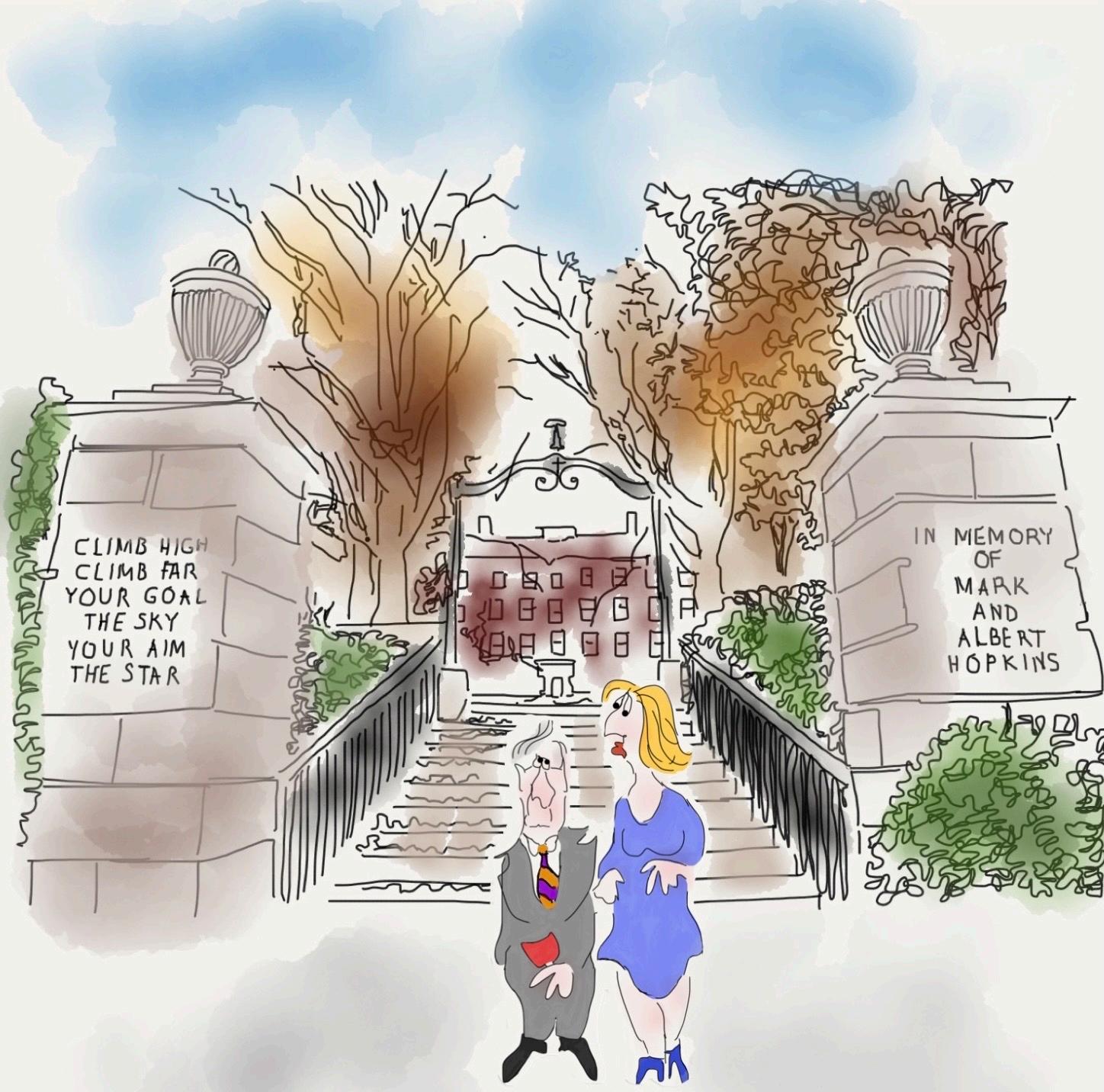
Dave Carrithers
As is no doubt true for many, Williams was a totally new world for me. Everything from culture to haircuts to architecture to topography and terrain contrasted with the suburban Chicago community in which I was raised. This was Park Ridge, also the home of Hillary Clinton, Harrison Ford, and our classmate Robert Krefting.
The first semester of college was glorious. The peaceful quiet of campus contrasted greatly with my overactive life as student body president of a high school numbering 3,000 students whose student council met daily.
I fondly recall that John Jacobs and I would walk to the tennis courts from Lehman Hall in the warm fall sun where Clarence Chaffee would monitor our efforts. I did not make the playing squad. I then tried squash for a time but gave that up to have more time for my piano work with Professor Kenneth Roberts, whose talents seemed to me equivalent to those of Glenn Gould. My last piece was Beethoven’s Piano Sonata No. 2.
Professor Roberts knew and greatly admired my future father-in-law, Frank Baker, who was on the music faculty at Bennington. The Baker family owned a house at 61 Bank Street in the West Village in NYC where my wife, Mary Baker, class of ’66 at Bennington, and I lived in a smaller
dwelling across the courtyard from the main house while I worked toward a PhD in History at NYU and Mary supported us with various jobs while also obtaining a Master’s degree in painting and graphics from Hunter College of the City of New York.
In 1970, we moved to Chattanooga, where we still reside. Mary brilliantly taught AP Art for forty-five years, first at the McCallie School (Ted Turner’s alma mater) and then at Girls Preparatory School. I taught first in the History Department and then in the Department of Political Science at UT Chattanooga.
It was the atmosphere at Williams that turned me into a professor. Oakley, Bahlman, Hyde, Bostert, Breiseth, and Waite seemed to me to lead ideal scholarly lives. It was in Breiseth’s course on the French Enlightenment that I first encountered Montesquieu. Cambridge University Press will publish my most recent work on that illustrious Frenchman this coming summer. This book, coedited and cotranslated with Philip Stewart, who knew our own Bob Mitchell at Harvard, is titled Montesquieu and His World: Selected Correspondence. My other work on Montesquieu can be accessed at Carrithersmontesquieu.com.
Had I not gone to a college like Williams where scholarship was highly praised, I might not have changed my career course from law to academia. I am very grateful for all I learned at Williams and all the people I was able to meet, above all Mary Baker Carrithers, who sang the lead in the musical The Boy Friend during our junior year. Our sixtieth anniversary is in June. We have two daughters and four grandchildren.
John Citron
An image emerges from Dylan Thomas’s A Child’s Christmas in Wales: “they stop at the rim of the ice-edged fish-freezing waves, and I plunge my hands in the snow and bring out whatever I can find.”
Mitch cautioned me about using this opportunity to opine about the national and international nightmares that fill our ostensible golden years.
Instead, what emerges for me was a postgraduation adventure with the 1966 Williams-in-Hong Kong program. Certainly, that experience differed greatly from 4 years mostly cloistered in the Thompson Biology Labs, which were built in 1893, 100 years after the founding of our dear alma mater. Unlike a number of my classmates, I had until then only once left the confines of the mainland United States (to portage canoes in Algonquin Provincial Park, Canada). So, as part of the program, we were given a roundtrip plane ticket with several weeks to reach Hong Kong for our positions as ESL (English as a Second Language) teachers at United College. For an additonal $100, we could make as many stops as we wished along the way, which afforded me the opportunity to visit England, France, Italy, Greece, Israel, Thailand, Taiwan, and Japan. Thus, having left as a callow youth, I returned feeling myself to be a citizen of the world. This perspective allows one to view the world differently and realize what an aberration the current xenophobic, bellicose, imperialist, and acquisitive land the US has become. Perhaps we always were. How did the US and the planet get to their current states? At how many turning points, often unrecognized when they were happening, were wrong choices made? Is this an inevitable human flaw?
Our “band of brothers” numbered 6 with 4 recent graduates (Arthur Benson, Lane Jennings, Jim Reardon-Anderson, and yours truly) and 2 soon-to-be seniors (Jonathan Lovell and Charlie Parham). We had a wonderful summer and life-changing experience. Again, in debt to Dylan Thomas, 3 of our group “alas, are no longer whinnying with us.” During this time, I read a book titled The Course of Modern Jewish History while perched on my dorm-room balcony with an expansive view of Hong Kong Harbor. Given my youth and the exotic setting, I developed some confusion as to what was Jewish and what Chinese in my life. Of course, this seems to have played out in the subsequent trajectory of later years.
Being caught up in the fantasy of our summer, Arthur and I explored staying on and were even offered teaching positions for the fall semester at St. Stephens College, a Boys’ Secondary School in Stanley on Hong Kong Island. At the last minute, I came to my senses and declined, realizing that I might never leave and likely would pass up my place at medical school. Looking back at turning points such as this one, I still wonder if this was the correct decision.
Recently, I became entranced by the title of a Willie Nelson song, “Funny How Time Slips Away.”

Dan Cohn-Sherbok
Ever since I was a little boy, I wanted to be a rabbi. My aspiration was to serve as a congregational minister in a large synagogue in New York or Boston or Chicago or Los Angeles. I had a vision of myself preaching about Judaism, teaching in religion school, and ministering to other Jews. I knew I would first have to go to college before enrolling in a rabbinical seminary. I chose Williams due to its outstanding reputation.
Williams, however, was not the ideal choice. It was isolated in upper Massachusetts. It had no female students and was dominated by fraternity life. I am very pleased that since we were students there, it has gone through a major revolution, abolishing the fraternities, widening the curriculum, and taking in women.
After graduation, I enrolled in the Hebrew Union College in Cincinnati. I studied there for five years. During this time, I served as a student rabbi in various Reform Jewish congregations. My experiences were disturbing. I discovered that the role of the rabbi was not as I had anticipated. Instead of being a preacher and teacher and pastor, rabbis were hired on short-term contracts as nothing more than synagogue salesmen.
Discouraged by this recognition, I enrolled as a PhD student at Cambridge University in England, where I met my wife, Lavinia. And four years later, I became a lecturer in Theology at the University of Kent in Canterbury. For over twenty years, I taught there before becoming a professor of Judaism at the University of Wales. In 2010, I retired, and we moved back to London and eventually also bought an apartment in Canterbury.
Through the years, I wrote a variety of books about Judaism. Yet I always drew cartoons. And I knew that although I liked writing books, my real passion was drawing. Over the years, Lavinia encouraged me to draw. She thinks my cartoons are much better than my theology. When I draw, the world disappears. I am lost in thought, in lines and colours and designs. The world around me melts away.
I am most grateful to our class for allowing me to contribute to the 50th Reunion volume and to the daily Blog. My special thanks go to Peter Koenig for including my cartoons in the 50th reunion book, and to John Gould and the late Joe Bessie and Bob Mitchell and Jacques Vroom for including my weekly jigsaws in the Blog.
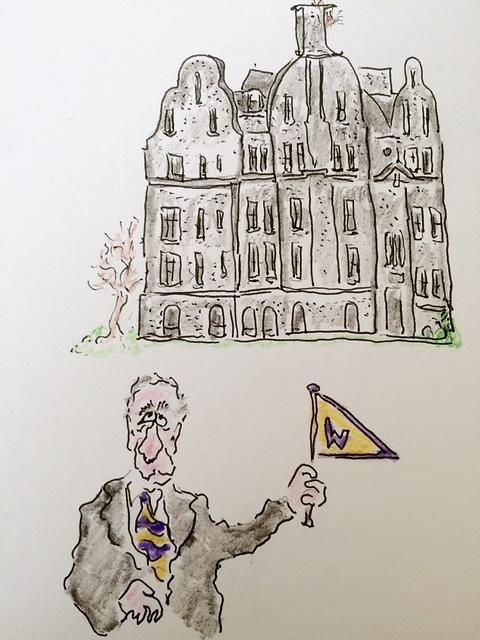
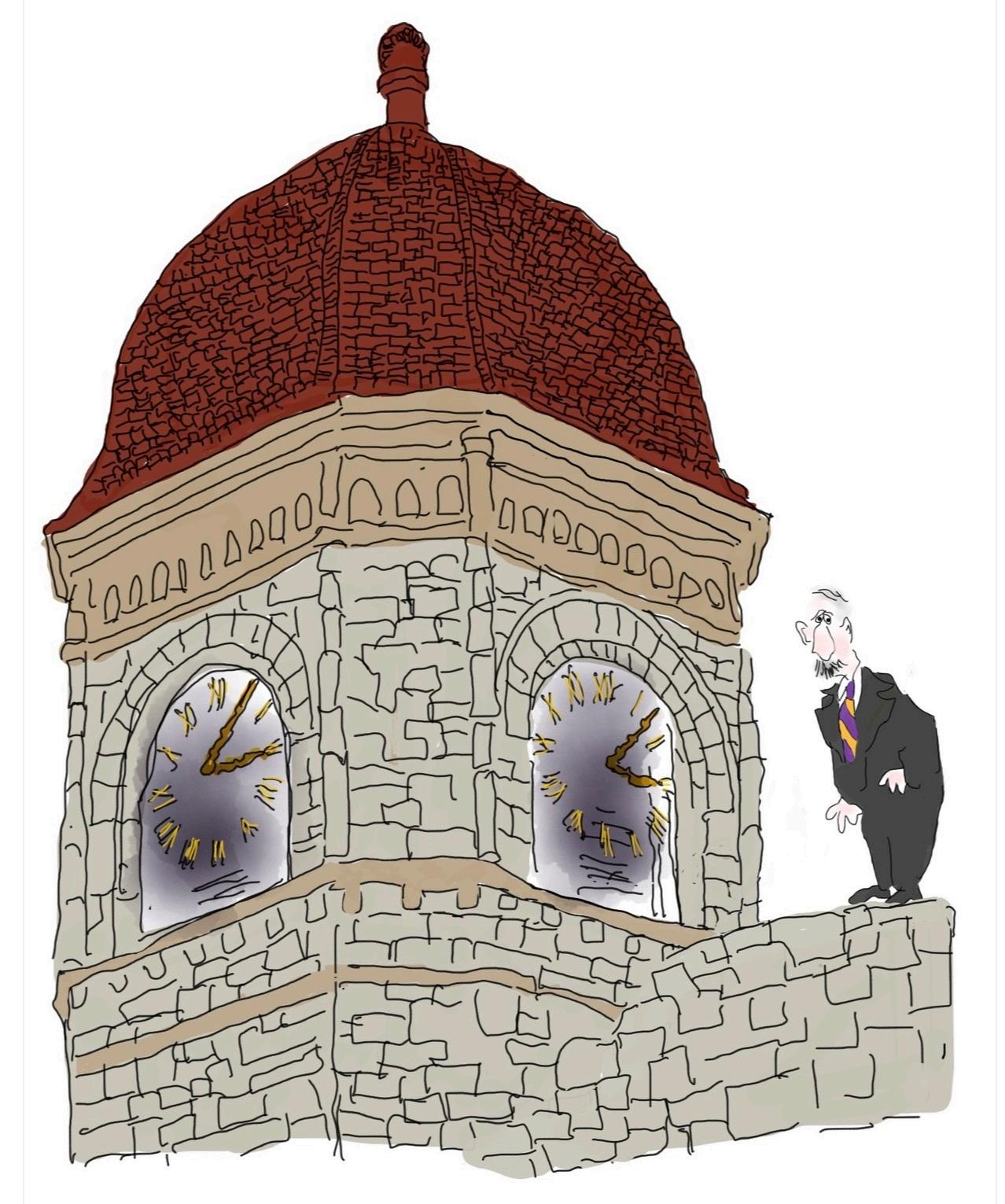
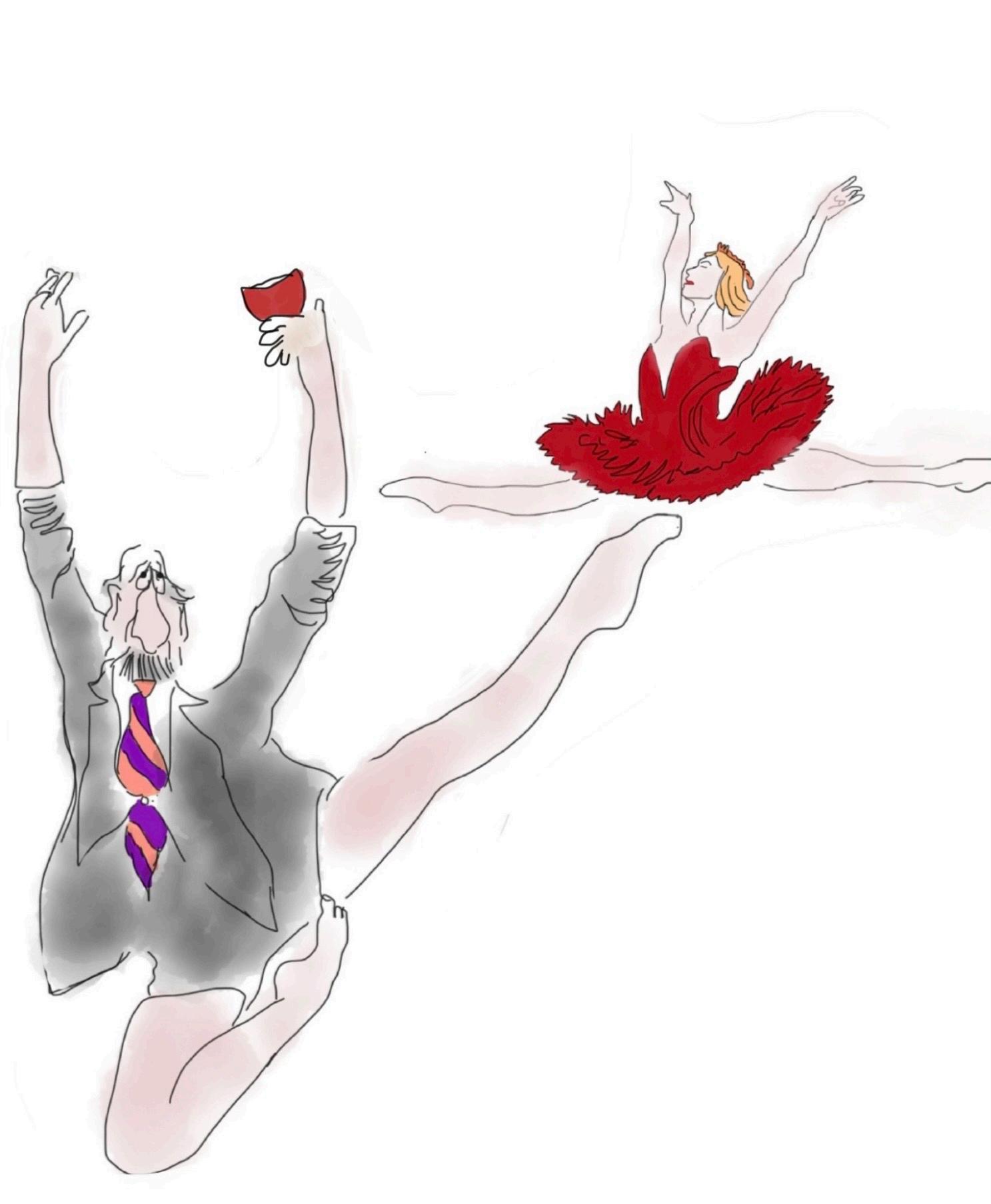
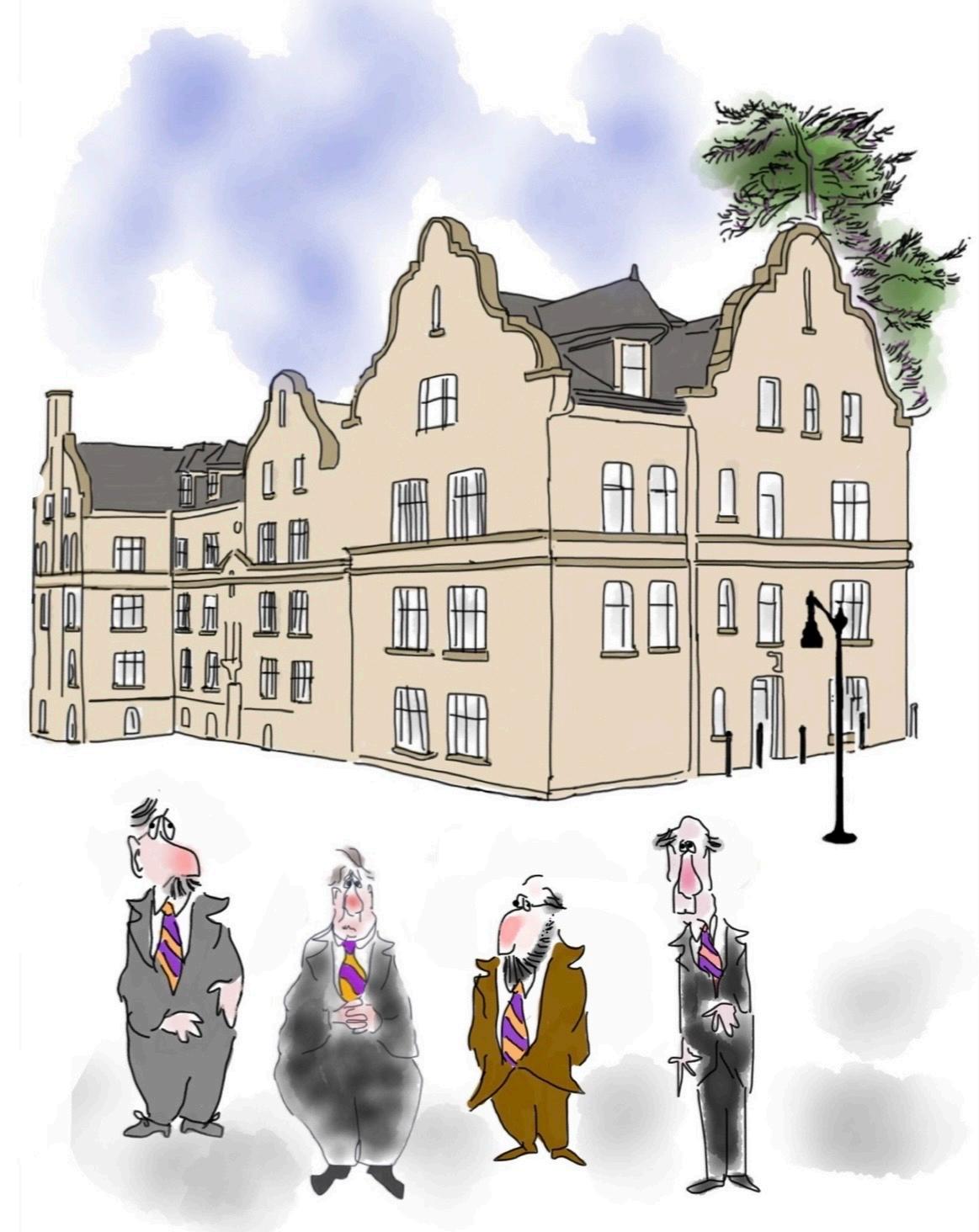
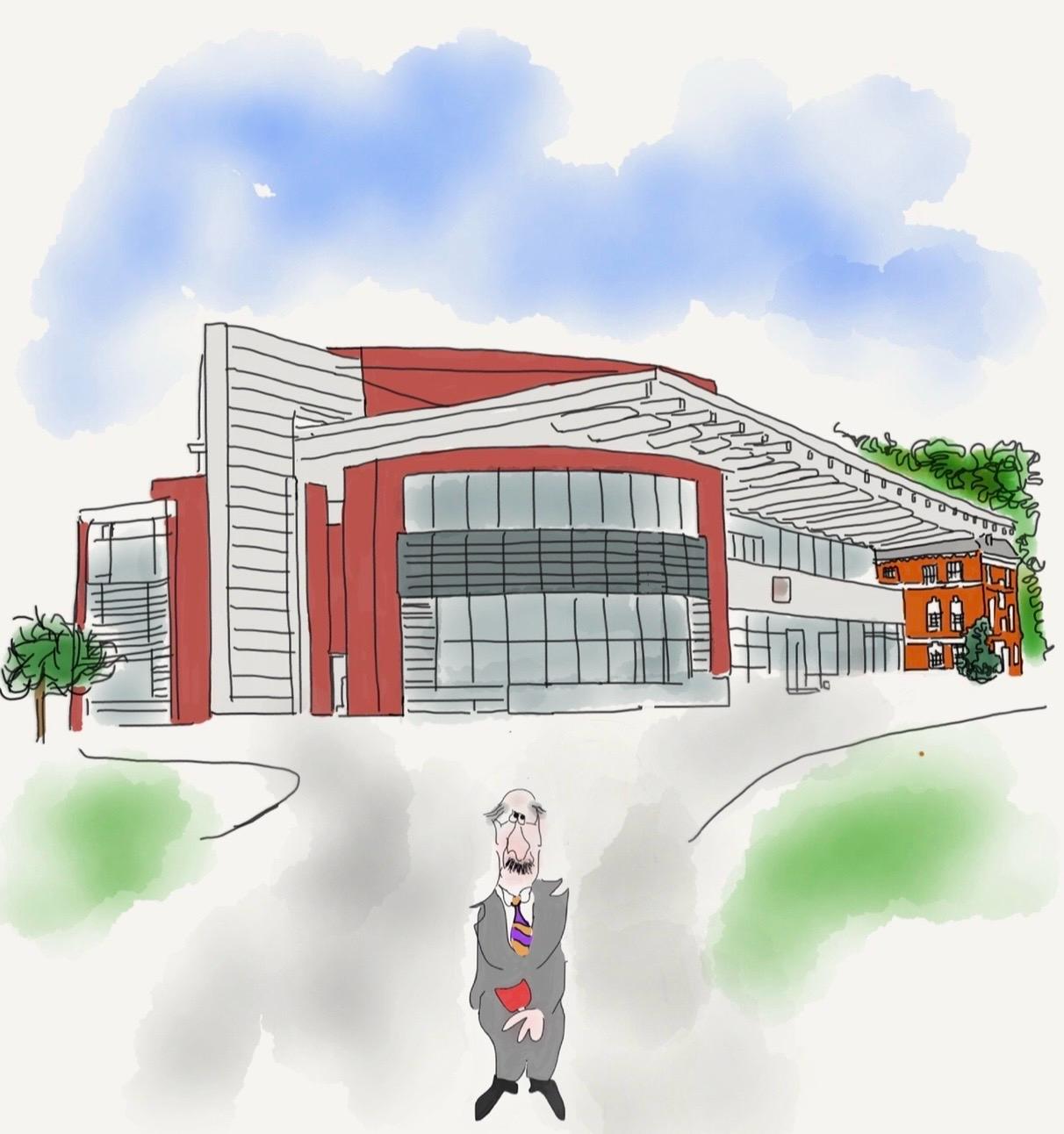
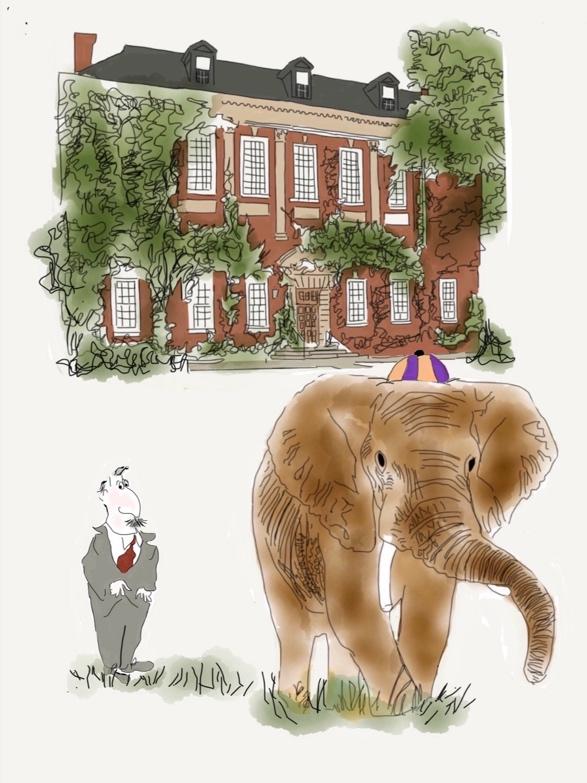
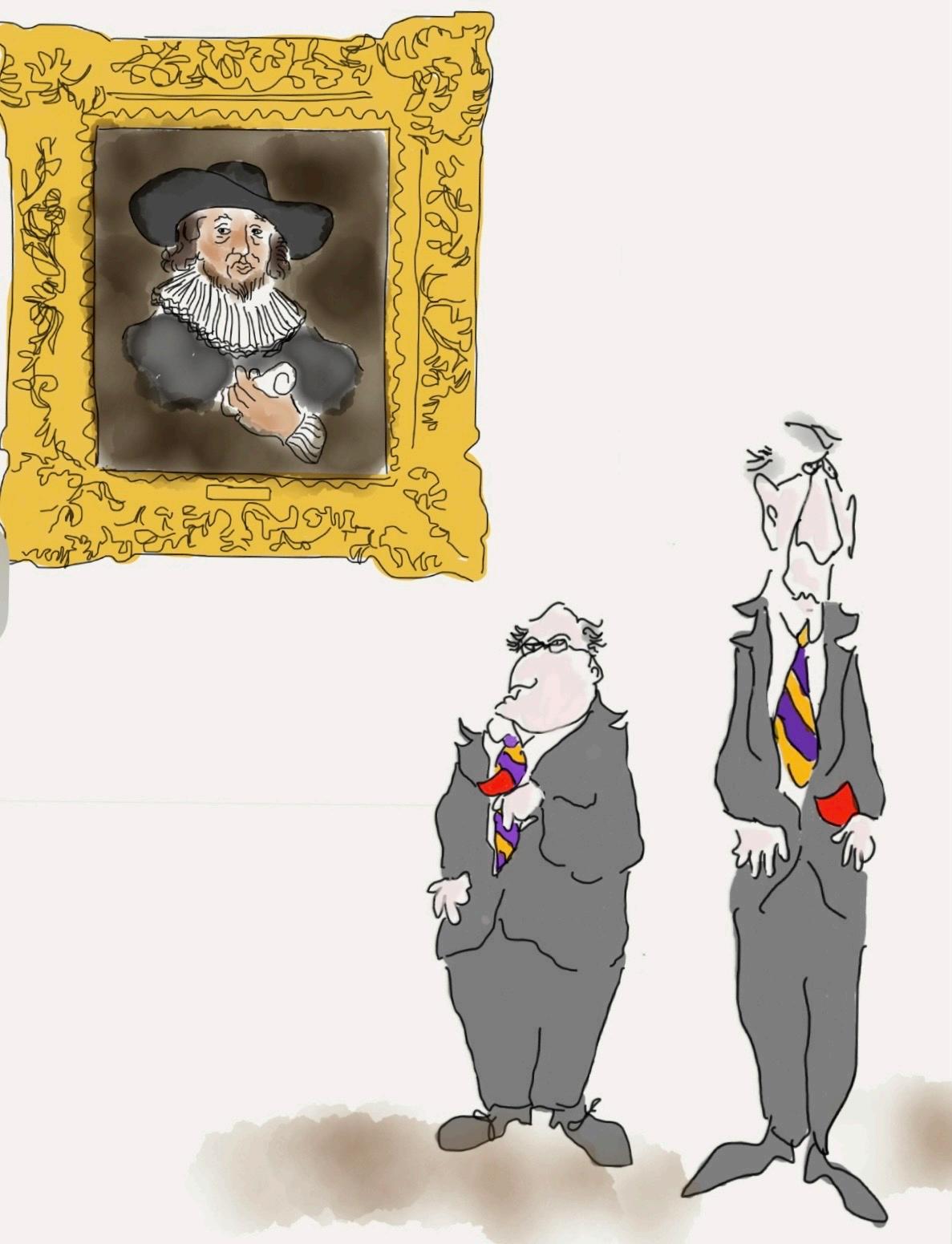
Every week, I sit in a comfortable chair with our cat, Cleopatra, next to me, take out my iPad and stylus, look at a photograph of a Williams building, and draw. And when I finish, I say to Lavinia, “Can you think up a gag?” I hand over the iPad and show her the drawing. And then she tells me what to write. As I draw the Williams cartoons, I step back in time to when I was in my early 20s with life ahead of me.
Graham Cole
I write this with full measures of regret and sadness to report that I will not be attending our 60th this June.
One of the activities that has enabled me to keep failing retirement so successfully has been volunteering for an organization placing Afghan students in schools and universities. One of the students Carol and I have come to know extremely well is graduating from a school in Virginia that weekend. So, as I trust you will understand, we must be there for this splendid young man.
Frankly, composing this piece has been a bit of a challenge. At my advanced age, my memories seem to resemble more a photo album of individual snapshots than a movie.
Taking the larger view, I can attest that I will be eternally grateful to Williams for a superior education and experience, and herewith, a few of the things I remember both well and fondly:
*Recalling my admissions interview with Fred Copeland, who put this nervous wreck immediately at ease with his very first question: “What room would you like, Graham?”
*Living with Cunningham and Nordness, roommates and friends for three of our four years.
*Sitting at one end of the log with such outstanding professors as Gaudino, Waite, Zilversmit, and Hyde, among others, at the other end.
*Getting my first English 101 paper back with more red ink than my script and discovering that I still had much to learn about writing. Humbling but very important. Williams taught me how to write and think.
*Serving as a JA in Morgan with Knox (a splendid partner) and playing a lot of bridge with our frosh charges.
*Playing on excellent and highly successful lacrosse teams with such stars as Annison, Halligan, Richardson, Upton, Gibbs, Bankes, Goldsmith, and Irwin, to name a few teammates. We played a schedule with D1 powers Army, several Ivies, Rutgers and did very well. We also taught Coach Robinson that we saw ourselves as both lacrosse players and students, which put an end to his fussing about some teammates arriving late to practice because of labs.
*Regularly barreling down to Vassar at very high speeds in borrowed cars to see my special lady and occasionally slaloming through herds of deer on the Taconic Parkway late at night.
Best of all, my prep-school roommate went to Harvard, and we regularly teased each other about who had the better college. I will never forget his conceding to me that Williams provided a much better education with only professors (and not instructors) teaching you and a richer sense of community.
Let me close with this epigram: “I don’t mind getting old, but no one told me it would happen so fast.”
Dan Coquillette
Dear Classmates, In reply to the passionate “exhortations” of Budge and Mitch, here are a few of my reflections on Williams for our 60th Reunion.
Our class really is special. Our reaction to COVID, the “Class Blog,” not only survives the lockdown, but flourishes. I do not always agree with the views expressed, but every week I seem to learn something new from my classmates. And this Reunion Book is the first post-50th book ever. In my many years in education, I have never seen anything like it!
The Williams we knew was a very different place from what it is now: male, much smaller, and really traditional. All my classes seemed to be in buildings built before the Civil War. I even went to Chapel and prayed to be more virtuous. I still remember my roommates, like Jeff Jones, Myle Holley, Steve Fox, and Forrest Paradise. And the extraordinary faculty, like Charlie Samuels, Robert Gaudino, Clay Hunt, Bobby Logan, Anson Piper, and the others. I have never seen, in forty years, a faculty so devoted to teaching. I do not think we knew how lucky we were!
As my fourteen grandchildren approach adulthood, my fondest wish for them is that they find a life partner like Judith (56 years and counting) and get an education like the one I had at Williams. I spent my life in higher
education, working my way up through the ranks from a “boot camp” adjunct lecturer to dean. We all saw some tough times, particularly Vietnam, that threatened the foundations of institutions. In all my hard days, I got comfort from a little framed letter on my desk, from Williams President Mark Hopkins to a “Young Friend,” dated 1855.
President Garfield, class of 1856, once described the essence of education as “Mark Hopkins at one end of a log and a student at the other.” On those days that seemed to involve endless issues of construction, endowment, and faculty and staff problems of all kinds, I had that letter on my desk. Education, in the end, is about a student and a teacher. That was my Williams, and that little note is there in front of me as I write this today. Best wishes to every one of you!
Hal Crowther
“Purple Memories?”
There are people in our class, maybe some of the people who knew me best, who will express surprise that I remember anything at all about the Williams years. But the class of ’66 with a few exceptions preceded the Aquarian drug experience, and no one younger is impressed by our stories of epic drinking, basically the same beverages our fathers abused in the 1930s.
My freshman year started out badly, with a nightmare night at the ThreeWays Bar over the NY state line, when a bouncer who claimed I was hitting on his girlfriend hit me over the head with a lead-weighted billy club concussion and threatened my half-conscious body with a deadly weapon. If Pete Richardson, my rescuer, had not been so large and imposing and sober I might not have survived my first semester. I consulted Dean Brooks, who warned me that Williams carried little weight across the state line, where New York state troopers had been known to lie under oath about incidents involving Williams students.
My second freshman setback has been exaggerated in the retelling, but according to the myth, I collapsed in the middle of Route 2 in midwinter and froze my face to the pavement. Dr. Urmy is no longer here to divulge
the details. But no one seems to recall that I spent the early part of that evening enjoying the mind-opening philosophical conversation of Morris Kaplan, easily the most brilliant member of the Class of ’63.
Not all of my most vivid memories are intellectual. Sophomore year, John Nesvig and I, patrolling the Bennington campus hopefully, were blindfolded and duped into carrying heavy iron candleholders into the forest. There, blindfolds removed, we witnessed a strange ceremony in a language unknown to us. Years later, from a Shirley Jackson biographer in one of the classes I taught at Duke, I learned that the older woman in the forest was indeed Jackson, and that we had attended a ritual of her coven of apprentice witches. Skidmore was always a safer bet.
Some of my best memories reoccur as snapshots, in perfect detail. My favorite English professor, Murray Baumgarten, playing second base in a softball game on the DU lawn; one stunning Bennington girl, flowers in her hair, dressed as a South Pacific enchantress for Phi Gam’s Fiji Island Party; the 300-watt grin on the face of my freshman roommate, Jim Straub, when I tapped him for Gurgle after he’d taken a year off from school.
And then there were the Supremes singing at DU’s spring lawn party, my chance to meet Diana Ross, who turned out to be born the same day I was born, in 1944. Finally, the proud smile on the face of my grandfather (born and raised in Digby, Nova Scotia) when our graduation speaker, Canadian Prime Minister Lester Pearson, asked how many of us in the Class of ’66 were born in Canada and I was the only one who raised his hand.
Rob Cunningham
I came to Williams as a golden boy from Nebraska. Shortly upon arrival, I realized that if I was golden, my classmates were platinum. After almost flunking my first paper in freshman English, I recovered my personal esteem, but it took a year. I was gradually saved by Professors Kershaw and Gaudino and subsequently flourished.
Williams accorded me a challenging but rich and solid foundation. I am a very proud Williams alum and appreciate every one of ’66’s more than 1,700 blog postings, which keep us together as a live community. I have read every one of those posts and now know some classmates well for the first time.
At 81, I’ve enjoyed a good and full life, starting with a wonderful wife, the late Diane Rigney, and a great daughter, Caitlin, now the director of photography at Boston College. My work included stints with both the Nixon and Carter White Houses, Citibank, IBM, Action for Boston Community Development, Mathematica, the National Institute of Education, Global Partners, and Charles Schwab.
Sometimes I chose to leave a job, and other times the job left me. For example, Ronald Reagan, upon taking office, thanked me for my service as the Carter Decision Analysis Team Leader and offered a graceful but firm good-bye. My brief tour in the Nixon White House was in my summer between graduate-school years at Princeton, doing field work in Kansas City and Seattle.
I have seen much of the world on business, first with Mobil Solar Energy Corporation as their International Marketing Coordinator. I sold solar panels in developing countries, with multiple visits to Southeast Asia, Polynesia, South America, and Africa. A Mobil helicopter once flew me to a Papua New Guinea village to gift the tribe solar panels and to eat a celebratory meal with the chief and his entire tribe. A Mobil translator instructed me to eat the boiled land crab on my plate with relish, or observing villagers would not consume theirs.
When Mobil Solar closed shop, I became International Director at Babson College. I developed international internships for Babson MBAs; created
midwinter seminars in France, the Czech Republic, Venezuela, Chile, and China; and reengaged Babson international alumni to support the school.
I cherish two special experiences. The first was managing a study of eight decisions President Carter had made in his first six months in office. (I was interviewed regarding study results by The Washington Post’s David Broder, whose article appeared on the Post’s op-ed page July 23, 1977.)
The second was sailing a 39-foot sloop from Maui to Seattle. I survived a ferocious storm, but it was close, and I made it. But it doesn’t match David Tunick’s multiple single-handed trans-Atlantic passages on his boat, Nightwatch.
In 2024, I embraced change, sold my home on Cape Cod, and moved to exceedingly comfortable Loomis Village, a retirement community in South Hadley, MA. I look forward very much to my 60th with you.
Lisle Dalton
Going to Williams was good for me in many ways. While I majored in American Studies and eventually went into medicine, the “log” experience gave me further insights to a liberal, humanism-based education such as was discussed in David Brooks’s recent article in the New York Times. Williams was not easy, and I recall often on a Friday night that I did not want to spend the next Friday night in the Sawyer library, but there I was.
After Williams, I went to Naval OCS, Supply Corps School, and on board the USS Truxtun DLG(N) 35 for duty during the Vietnam Era. We were the first ship on-site after the USS Pueblo was seized by the North Koreans. It was during this time that I decided to go to medical school rather than business school. Having Williams on my record certainly helped even though I graduated without any “laude”s.
I wish alumni were closer to where I live in Kentucky, where there are few Ephs. I do fondly remember going to several of the milestone reunions. The Oxford trip that we took in our 49th year from graduation was a great experience, and I hope that’s continued with current classes.
All in all, I am a proud graduate of Williams College who probably looks better as a graduate based on its reputation than I might have as an undergraduate. There are certain classes I wish now that I had taken, but I did learn academic perseverance, which put me in good stead when I started medical school.
Thank you, Ephraim Williams, and your gift of money and books to start the college many years ago.

David Dapice
I have trouble typing this because Mitch twisted my digital arm so hard.
I decided Williams was for me when a senior in my high school, then a year ahead of me, applied to Williams and did not get in. He had high grades, excellent SAT scores, was in the right clubs and sports, and was an awful person. A place that discerning seemed like a good choice.
Williams was terrific at academics still remember the 7:30 a.m. Physics classes and in winter it was -10 going to class and had gone up to zero when leaving. Hardly worth zipping up one’s coat.
I found out that my math intuition for infinite dimensional non-Euclidian geometry was insufficient and Russian language was fascinating but not easy. So I took the easy path of political economy, a mixture of economics, political science, and philosophy. That was fun and came naturally. Senior
year, Coleman Bird, Jim Harrison, Scott Johnson, and I cooperated on a joint paper that passed muster, and we all graduated.
There were many great classes, but for me, the ones with Robert Gaudino were the most memorable. There was an intensity and demand for engagement from him that created an obligation to take ideas seriously. I never took a class from Bill Gates but was a TA for him and learned a lot listening to him. Mentioning only two professors is for brevity, not neglect or disrespect to the many others.
We still had the dying days of fraternities, and I joined Theta Delta Chi under the lottery system. It was a good group still remember the charades. Trying to act out magnetohydrodynamics was…interesting. There were a lot of intellectuals.
My father was a CPA and advised his clients on financial matters. It seemed a logical step to advise governments; and Williams, with its Cluett Center, had a terrific asset. Students from around the world came for an MA in Development Economics and Policy. Some of those courses were open to undergraduates, and I mixed with them. Of course, many Williams professors also were engaged in advisory work, often with what was then called the Harvard Development Advisory Service. My first job after graduate school was with them in Indonesia.
Finally, there were friends who lasted, especially Art Perry. He was from Concord, MA, where I now live. I asked him then how neighbors got along there. He said, “Well, if they move in, we watch them for five or ten years, and if they are ok, we say hello.” Some others have passed away, and Steve Banks is in Canada, showing more foresight than many.
Ned Davis
Judith, my wife, and I reside in the Alwyn Court, an ornate historic co-op building located half a block from Carnegie Hall and a block south of Central Park. We’ve been here 28 years. So we’re in easy walking distance to all the Broadway houses, Lincoln Center, and the other infinite possibilities of this ever-changing mercantile city.
We are blessed with our four children living in the United States, graduates of Washington & Lee, Tufts, Michigan, and Williams, respectively. And an adopted daughter, Monica, in Accra, who is now a prominent and esteemed bank executive there, with four children of her own. One of our daughters, Ariel, is a Williams alum and about to release her first directed feature film, The Next Big One, a dark sci-fi comedy.
We have seven grandchildren, ranging in age from 5 to 27. The three oldest (all girls) have graduated with honors from Emory, Wake Forest, and the University of Chicago, respectively. The oldest grandson, my namesake, is headed to Tulane this fall, aspiring to exceed his grandfather’s partying ethic. Two other younger granddaughters are budding swimming superstars living in Lake Forest. The five-year-old grandson is following in his older cousin’s footsteps as a talented enforcer on the ice-hockey rink.
Judith (Salavetz) is an accomplished artist and author, enshrined in the Rock and Roll Hall of Fame for her record album and CD covers. These days, Judith mostly creates abstract paintings, still-life paintings, and freeform pottery made mostly at the renowned Clay Studio in Philadelphia.
After exiting Williams, I graduated from Harvard Business School. I spent most of my work years as an equities analyst, banker, and fund manager. From 2014 until my retirement last June, I initiated renewable energy investments for SDCL, a London-based worldwide leader in this realm. Since 2005, I have run North River Capital, an equity fund here in NYC, and continue to do so.
We Eph ’66ers have been blessed to be part of a great nation, with our 80plus post-WW2 years filled with unlimited opportunities, always under the aegis of America’s precious freedom. This freedom has protected our collective pursuit of happiness. Now, sadly, we are experiencing this halcyon era being abruptly terminated, crushed by a madman who is a would-be dictator. This process is particularly and personally scary for us because Judith, as a young child, escaped Russian tyranny in Hungary and violent Hungarian persecution of Jews. Judith reminds me every day of the horrors she and her family experienced under Nazi and Russian tyranny. We see every day now in this beloved country the scary parallels to Judith’s youth in the corrupt thuggery of the present administration. I am
proud to say we are both aggressively proactive in the Resistance against this tyrant and his sickening regime.
John Dickson
As a Physics major, I of course took an abundance of physics and math courses. To meet my division requirements, I dipped into (among other areas) art, philosophy, and religion. These three stand out because some of my warmest Williams memories are of classes in Architecture, Epistemology, Primitive Religion, and the Old Testament. Now 60 years later the panic over papers and exams has completely faded, and what remains is context for life. All of these have enriched my life in ways I could not have imagined when I was 20.
First SIXTY years??!! I am astonished and grateful.
Second My time at Williams: I wanted to go there the moment I saw those mountains, and I loved being there all four years. I was a proud Williams guy. I had a single in Sage F but soon connected with a group in Sage D: Terry Irwin, Bob Asbury (both gone), Jim Harrison, Coleman Bird, Nick Browne. With a few additions and subtractions, the core group stayed together even while joining different fraternities and (Terry and
Bob) getting married. Thanks to one of our JAs (Scott Buchart), four of us pledged Phi Gam. Nick followed Rich Lyons to St. A’s. It was a turbulent time of transition away from fraternities but the die-hard Fijis partied like it was 1953. No regrets, except for a few ill-considered pieces of stupid behavior that fortunately did not pull me down, or out. I do have two regrets in the academic area. I was an English major, doing well enough to be invited to join the Honors program. However, the H351 thesis requirement defeated me, and I withdrew. Also, I loved being part of campus life so much that I didn’t take advantage of a semester-abroad opportunity. Favorites Neil Megaw, Fred Stocking, Larry Graver, and Prof. Avery in (I think) his last year. I am extremely grateful for this introduction to literature and the classics. My professional and intellectual lives are built on this foundation. I went on to an MA from Columbia in Teaching of English and a 31-year career in independent schools as a teacher and administrator. Among my various book clubs over the years, there is my Classics Group: six (now five) men who by now have read four different translations of The Iliad and The Odyssey and gone on to Greek and Roman literature, history, and philosophy.
Third Professional: After 31 years in schools, I began my own business as an educational consultant, working with families whose kids were struggling or seeking changes. This introduced me to the whole world of therapeutic and special needs programs of all kinds, which broadened my perspective and began a new learning curve. It has been a rewarding and enriching experience. As of January 2026, I have sold this business and begun the retirement adventure.
Fourth Personal: Becky and I were among the class’s first married couples, and among its first parents. We were together for twenty-five years until mea culpa we weren’t. Our first son, Marc, died tragically in 2001. Chris, our second, lives a mountain-man life in VT, snowboarding and mountain biking, chopping and stacking his own wood, and (don’t tell) growing his own weed. I remain single, mostly happy.
Finally I remain very proud of my Williams affiliation. I was active on the 50th Reunion Gift Committee and couldn’t be more pleased to see that
the ’66 Environmental Center has at last achieved Living Building status. I look forward to celebrating this with everyone this coming June.
Ned Donoghue
“Waite, Waite, Don’t Tell Me!”
I’ve never regretted going to Williams.
I know a Williams degree helped me get into Duke Law School and also helped get me into the law firm with which I spent my career. I would not have been as comfortable in my skin at Princeton (where they at first rejected me but on appeal admitted me), Penn (to which I won a 5-year full scholarship, which I declined), or Gettysburg, my safety (my mother’s family were all over that school, including one who served as its 3rd president). Williams gave me an early admit in March 1962 in a call from Phil Smith. My father was exceedingly generous in letting me turn down an offer from Penn.
I loved being in a small town and a small school. I came from a small town. I was not ready for the big city until I graduated from law school. I was always glad to meet other Ephs along the way. And they never disappointed. I led our local alumni group for a couple of years and enjoyed that.
I wanted, in midcareer, to write a book. In part this was out of pique, because my brother’s first book (on money-market fund investments in 1981) went to #3 on the NYT bestseller list. But I had no idea what I would write about. “Just write about what you know”: I knew I enjoyed reading history, American history, particularly of the founding years.
After reading David McCullough’s John Adams, I thought that it would be very cool to write such a book. In the back of my mind, I also knew that my wife, Peggy O’Donnell, thought writers were pretty cool. As a teenager, she had met Bill Styron on the Vineyard. When she took me there, we met Art Buchwald and Mike Wallace. And I read Stacy Schiff (a Williams grad), who wrote about Ben Franklin’s improv gig. But what would I write about?
In 1966, I read this mention of the “Quaker exile” of 20 Quakers from Philadelphia by the Patriots in 1777. “Wait, what?” I said. I was a Quaker maven since age 5 but had never e-v-e-r heard of THAT before! It was 2014 when the librarian gave me this stash of 65 letters written by Quakers Henry and Elizabeth Drinker to each other while he was “exiled” to Winchester, VA, and she was left at home in a Philadelphia occupied by the British forces under General Howe! And nobody had described this whole episode in a comprehensive way in over 240 years despite how rich it was in curious period detail and surprising irony.
I remember thinking maybe I could be like Professor Robert G.L. Waite describing to a roomful of students his psychological profile of Adolf Hitler. I then and there decided that I wanted badly to be the one to tell this story. Penn State Press brought out my book in 2023. Scholarly praise has been high and public momentum is building, but while I’m no Waite, the story is a treasure.
Bill Ewen
Wow! Sixty years have passed since our final year together as Williams undergraduates! Reminiscing what was happening back in 1966, and what is happening today?
In February 1966, I returned from a varsity squash trip to Princeton and UPenn where both Williams and I got hammered, only to receive a call from home that my grandfather had just passed away. Having decided on a math teaching and coaching career, I was pleased to receive a Yale-Choate Fellowship for Teachers. I vowed to avenge my squash loss to Amherst the year before. Captain Pete Allen and I won our Amherst matches, only to lose the team contest.
On the tennis courts that spring, Pete and I worked overtime to regain the New England Intercollegiate Doubles Championship we had won as unseeded sophomores in 1964, defeating Yale in the semis and Dartmouth in the finals.
I began my teaching and coaching career that September at Choate, only to learn that my grandmother had just passed away. My parents came out to visit me that fall and then headed north to Vermont to give my mother the opportunity to grieve. On the way to Vermont, they drove through Williamstown and passed Chafe’s home, and Chafe was out in his front yard. They stopped; Chafe asked why they were there. My mother explained that both her parents had passed away. Chafe and Fran without hesitation invited them into their home and spent over an hour ministering to my mother’s grief. That is a lesson I never forgot throughout my over half a century coaching career. Chafe was and remains an inspiration to me both on and off the court!
Fast-forward to 2026.
In between was my marriage to Katie in 1968, followed by a 40-year career teaching mathematics at Hopkins School in New Haven and a 50year career coaching tennis and starting a varsity squash team.
We were blessed with 2 children: Gordon, born in 1974, a Special Olympics athlete, employed full-time for 30 years; and Kathy, born in 1980 and worked for 20 years as a coach training learning-disabled adults.
I am Gordon’s court-appointed guardian, overseeing financial and health logistics. This past May, Katie underwent surgeries for a ruptured appendix, three abscesses, and a pacemaker installation and is recovering slowly and steadily.
As an elder at Westville Bible Chapel, I seek by the grace of God to help people through pastoral and financial counseling; a Bible-teaching ministry; and conducting funerals, weddings, and baptisms.
In 2021, Katie and I joined a retirement community in North Branford, where I serve as treasurer of our employee scholarship fund, teach a Bible study twice a month, and joined hiking and pickleball groups and a choral group that sings to health-center residents.
How do I manage to put it all together? “Trust in the LORD with all your heart, and lean not unto your own understanding. In all your ways acknowledge him, and he shall direct your paths.” Proverbs 3:5-6
I did not take a music course at Williams, yet the expansion of my “intellectual horizon” to encompass classical music began there. Here’s the full story…
I grew up in a home with “popular” music but no classical music. Piano lessons did not register with me. I had a tin ear, ten fat thumbs, and no ability. We received mail during the summer of 1962 inviting us to join the Williams College Marching Band. I responded that I could not read or play
a note but was willing to play the bass drum or cymbals. I was invited in as the bass drummer. I “conducted” the band at pep rallies. I made my performance debut during our second year. Kenneth Roberts, a new instructor in Music who was the Marching Band master, programmed “Noye’s Fludde” by Benjamin Britten. He invited me to play the drum part. Because I could not read music notation, he gave me a personal cue for each drum thwack. The performance survived me.
While at Williams, I attended my first two classical concerts. The first, in Chapin Hall, was played by the Berkshire Symphony. I recall almost nothing about it. The second, at Smith College, was George Szell conducting the Cleveland Orchestra in Anton Bruckner’s Symphony No. 3. This made a huge impression on me. Years later, I received from another collector a CD from the broadcast. Some people collect coins or demitasse cups. I had become a collector of broadcast performances.
I had begun buying classical LPs, among which were recordings of Gustav Mahler’s First (Leonard Bernstein, New York Philharmonic) and Fourth (George Szell, the Cleveland Orchestra) Symphonies. MahlerMusik became my passion.
I continued my concert going while at UVa Law. A classmate, Gerry Mitchell, was the son of Howard Mitchell, the conductor of the National Symphony Orchestra. Gerry and I drove to DC for a midweek concert for twelve consecutive weeks, with one exception. The one we missed featured violinist Henryk Szeryng. Another violinist, Jack Benny, a friend of Szeryng, appeared at the box office before the concert and was escorted to the Mitchells’ box. Mrs. Mitchell organized a party at the Mitchells’ home following the concert. Szeryng and Benny played some short pieces for two violins. Benny performed his comedy routine. Gerry and I would have been at the party had we attended that concert, but…
During the 1980s, my music involvement continued. I subscribed to a classical music Listserv called the Mahler List. I resumed concert going on a more frequent basis. I also joined the Gustav Mahler Society New York and became a member of its Board of Directors.
Through these activities, I fell in with a group of fellows who collected broadcast concert performances. It’s a male disease, and I caught the bug.
I’ve traded broadcast concerts with fellows in the US, England, and on the Continent, and I now have a large collection. It is one of the more benign of the perversions.
Joe Feely
A 60th class reunion astounding! Who would have thought such an idea would have been viable 20 or 30 years ago?
In response to Mitch’s ambitious undertaking (and having finally overcome my inertia), I have a few thoughts to share on my Williams experience.
Williams was my first choice when I applied to colleges. The students or graduates of the College I knew were universally bright and interesting people. And, of course, Williams was known to be a well-regarded school academically. What better two reasons to want to attend Williams!
What I found freshman year was exactly that: bright, interesting students and challenging (intimidating?) course work. But of the two, what stands out more strongly are the memories of my classmates with whom I shared four very important years of my life. And, thanks to John Gould and the subsequent editors of our amazingly long-running class blog, the contributions of my classmates have only increased my respect for their accomplishments and knowledge.
Regardless of my lackluster academic performance at Williams, I did go on to complete a Masters in Architecture at Washington University and discovered that, as in high school, I once again felt I was an accomplished student. So, in addition to having made a number of wonderful friends at Williams, it seems I actually had matured academically and learned to think critically in my four years there.
Thank you, Williams and my classmates, for a rewarding and lifechanging experience!
Happy 60th!

Alan Fincke
I was fortunate to have attended two schools at the same time. One was in the Purple Valley during the academic year, and the other was in the deep South during the summers at the school of hard knocks selling books doorto-door. I somehow managed to benefit from both. As a seventeen-yearold entering Williams, I had no particular academic goals, but it had been pounded into me that a college degree was the prerequisite to success. My life goal was to make more than enough money to avoid the numerous arguments my parents had over financial problems and thereby achieve everlasting happiness. I had so much to learn.
The summer job was purely commission-based, and although you had a sales manager and were part of a crew, you were pretty much on your own. You had to learn quickly from your mistakes to survive, but the sky was the limit, and I thrived. My individual summer income in today’s dollars went from $20K to $100K as I built a business hiring classmates to join my crews. I became the top earner in the salesforce and had a lucrative job waiting for me postgraduation. My future was set, or was it?
My academic career was not so successful. There were no classes in entrepreneurship, as there are now. I was an outlier, and the course catalogue didn’t seem to line up with my interests or way of learning. One professor told me: you cannot serve both God and Mammon. I had trouble concentrating and disliked having to sit or read for any length of time. Today, I would have been diagnosed with ADHD and dosed accordingly. Yet despite my limitations, Williams taught, and I learned.
Through my friend John Rugge, I discovered the Religion Department, which I had avoided like the plague, having grown up as the unwilling son of a minister. I took a course with the bombastic Binx Little and then with the wonderful Professor Peck, who taught the life-changing course Psychology and Religion who knew the two could go together? He gave generously of his time through numerous office visits, and my perspectives gradually expanded as I learned to express myself through the spoken and written word.
A classmate’s father, a successful businessman and Goldwater Republican, was tickled pink by this budding capitalist’s successes and then thoroughly disgusted with Williams, whom he blamed when I decided to go to divinity school instead. But, perhaps like some of my classmates, I had gone through a maturation process, and my priorities changed. I discovered that money accumulation would not be my life’s path.
After a disastrous short stay at Harvard, I left academia for good. I got into carpentry and eventually formed a design/build company. A second career in real estate brought me back into sales. Throughout, the communication and reasoning skills honed at Williams have stood me in good stead. It took patient professors and a small miracle for me to get my degree. So, belated thanks to my Alma Mater!
Steve Fox
My first history course at Williams, in the fall of 1962, was a lucky accident. The instructor was Francis Oakley, no less, 31 years old and recently arrived from Yale. His British accent was both Liverpudlian and Oxonian, but generally understandable. It was the freshman course in early modern European history, and Mr. Oakley made it interesting. He carried his erudition lightly and excelled at managing class discussions. He was the best combination of teacher and scholar, deft at both, that I encountered at Williams.
As a sophomore, I took the two-semester course in US history from Russell Bastert. He never published a book and wrote not many articles. He was a teacher, not a scholar; I suppose he would not get hired by Williams today. But he ran that class, all of us sitting in a circle, like a conductor facing an orchestra. He addressed us by last name only, and we were called on without raising our hands. It was unwise to attend that class if one had skipped the reading.
I did my first real historical research in the spring semester of that course. My topic for the term paper was Paul Robeson, the black actor, singer, and left-wing activist. Mr. Bastert told me about the New York Times Index, a yearly compendium. I dived into those many volumes and emerged with 525 citations of articles about Robeson from 1918 to 1952. I looked them all up and became a historian.
A year later, I took the first Williams course in “Negro” history. It was taught by Fred Rudolph and Arthur Zilversmit. Mr. Rudolph was a historian of education, the author of an excellent history of American colleges; Mr. Zilversmit had written his dissertation on the abolition of slavery in the northern US. Neither was an expert on Black history, but in the spring of 1965, Williams needed that course as context for the urgent civil rights movement of the time. I learned about Monroe Trotter, the most militant black leader of the early 1900s, and he became the subject of my senior thesis and first book.
Those teachers and courses changed my life. At the same time, I was finding deeper, more candid friendships with my schoolmates. In the fall of 1963, as part of the general transition from fraternity life, the college
established two “social units” at the southern edge of the campus. We were not, I must admit, fraternity material. We were social unit turkeys, content to take rooms in Berkshire House and Prospect House.
For three years, I found my best friends in Berkshire. Myle Holley and Dan Coquillette were high-school classmates of mine from Lexington, Massachusetts. In my Berkshire entry, Ben Coplan, Ed Groszewski, and Jeff (Guffy) Jones became my best new friends. We ate and studied together, and they drank together. We lowered our male defenses and, at times, became more real and close.
After four years, I graduated as a somewhat improved person, socially and intellectually. Thank you, Williams.
Tom Gallagher
Williams had a remarkable faculty. They educated us, took an interest in us, and enjoyed doing it. Two examples of their interest follow.
Ten years after we graduated, I went into the Williams Club in New York, where Clarence Chaffee recognized me. If I had been on the tennis team this would not be remarkable, but I was someone he taught to play tennis in PT. He thought teaching us was important. I did spend two summers in Williamstown and played tennis often, so he saw me more than just in PT.
Twenty-five years after our graduation, I went to an American Physical Society meeting in Chapel Hill, where I encountered David Park, who was on sabbatical at UNC, and he recognized me. There were not so many physics majors, five in our class I believe, so remembering them is not an overwhelming task, but twenty-five years is a long time.
A concrete piece of evidence that the faculty enjoyed being at Williams comes from John Pfaltz, who taught Math 302 in Spring 1965. John was a two-year sabbatical replacement, whom I have come to know, since both of us wound up at the University of Virginia and have similar views of the city government. John thought Williams was simply wonderful and had only positive things to say about the College.
What makes Williams is not only the faculty, but the students.
The Class Blog, which I read religiously, reminds me of the latter. I particularly enjoy the insightful commentary on life in America.
Charley Gibbs
Even now all these years since I left our campus, I still believe that the four years at Williams have been the most influential four consecutive years in my life (so far): fun, failure, trying, success, pain, joy, love, dislike, learning, forgetting, friendships, stick-to-itiveness, and just getting through life.
While these may be feelings Williams administrative personnel may prefer not to hear, I think I learned more about handling life’s ups and downs and successes and failures on the football and lacrosse fields than I did in classes. But I still have fond memories of most classes and am grateful for the effort our professors made to produce wise, mature graduates.
Plus, I still have persistent fond memories of friendships cultivated in AD as well as those on campus and on athletic fields.
In all, I’d love to get to go do it again!
Jay Goldsmith
I never really felt like I fit in at Williams. A Jewish kid who grew up in Barry Levinson’s Baltimore of the 50s and early 60s, I went to public school and was barely seventeen when I arrived in the Berkshires in 1962. Much less worldly than my roommates in Sage B, I had never had a drink or smoked and was a virgin.
I chose Williams over several Ivies and Johns Hopkins because I was so impressed by the lacrosse program and the coach, Art Robinson. When I visited Williams on a late fall weekend in 1961, the lacrosse team came out and we played a pickup game at Cole Field, and then they took me to Smith and introduced me as a freshman! I obviously was impressed, as the other schools I visited did not put on that kind of welcome.
We were a poor family, and finances, even on a full scholarship, were difficult. I worked in the dining hall and drove President Sawyer’s car to pick up guests in Boston or New York or take his daughter back to Ithaca
College. Summers were spent waiting tables in the Catskill Mountains (The Marvelous Mrs. Maisel) so I would have enough money for the year. I did pledge fraternities (landed in Delta Phi), but my identity at Williams was pretty much lacrosse, and in our junior year, we had a helluva team. I managed to make it through to medical school and landed at Albert Einstein in New York in 1966.
Williams seemed isolated, yet the world events of those four years really shaped my life. The Cuban Missile crisis, the Kennedy assassination, and the student movement of the 60s had a profound effect on me. I wanted to be a pediatrician, but I opted for neonatology, which was less, well, “contagious.” Due to the death of the Kennedy premature baby in 1963, the subspecialty was created and quickly expanded. I have been fortunate to be one of the leaders in this young field for 50 years, working with the American Academy of Pediatrics, teaching and practicing in New Orleans, and writing over 140 peer-reviewed papers and 7 textbooks until my retirement in 2025.
Along the way, I married my young bride of 45 years (Terri), and we had 3 children, the youngest of whom became a surgeon. Our middle child, Aaron, is a severely disabled young man who now is the center of my life and teaches me what parenting is truly about. He lives at home, and we ride 5 miles every day on his special tandem tricycle.
As I look back on those years at Williams, I realize that even as a misfit, I had great experiences and learned much that helped shape my life. And now, as I read the Class Blog every day, I have a much greater appreciation for the many talents and wisdom of my classmates. God bless, good health, and long life to all!
David Goldstein
I suspect that as I have aged, my short-term memory has reached the point that by the time I read what everyone has been doing, I have already forgotten what I was asked to do regarding writing an essay.
In any case, I realized that writing a biography about my life wouldn’t really require 500 words, so my (equally brief) essay will just deal with what I think I have learned over the years since graduating from Williams.
Turns out that what has proven to be most important to my personal life isn’t much different from what most of us learned as children. Stable families, good friends, welcoming communities, a satisfying profession (for me, practicing medicine), the time to read good books and appreciate cultural activities, travel, and exposure to other cultures: all contribute to an appreciation of what life has to offer. Eating and drinking well doesn’t hurt, either.
It seems that there is something to learn and appreciate at each stage of life, and now that I am old enough to think of new retirees as mere youngsters, I find that my wife and I are ready to leave our home of fifty years and move to a senior living facility. Hopefully, there the chance to continue to learn, meet new interesting people, etc., will continue with the added benefit of no longer having to deal with maintaining a house and all the usual chores that seem to take up more energy than in the past. It will be a new chapter and yet another something to anticipate. I’ll get back to you once I am in my late 90s to let you know how it goes. Meanwhile, best of luck to all my classmates.
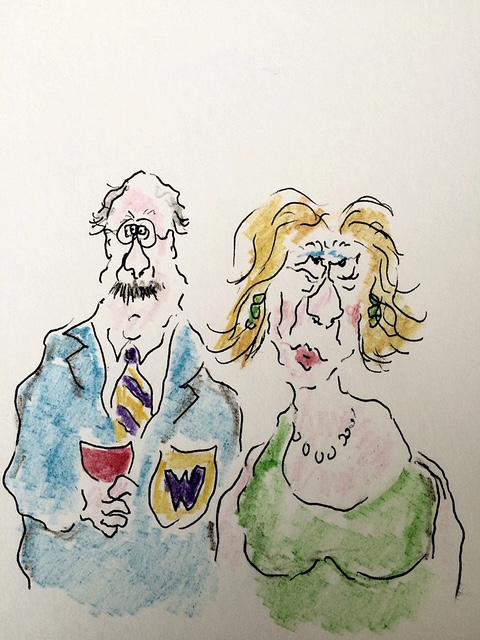
John Gould
Sorry I’m not able to contribute a Williams-focused essay for our Reunion Book, but in its stead, I humbly offer you a very short but true story titled “Spring Gothic” from the spring of 1968, during my vacation from the school where I was teaching in Evansville, Indiana:
On April 4, I was in New Orleans, having a picnic with a girl whose name and face today I frankly can no longer remember. She was nice, I recall, a student at St. Mary’s Dominican College, a friend of a friend, pleasant and kind. The sky had clouded over in the morning; and just as we got to the park by the levee, where we were going to eat, rain began to fall. We decided to return to her apartment. By the time we got back, the rain was coming hard. Her apartment was dark and musty in an old, high-ceilinged Victorian-era house. It was around three-thirty, but it seemed later. I turned on the television set.
There was an image of a building on a street. For a minute or two we could not understand what it meant. Then the announcer explained. Dr. Martin Luther King, winner of the Nobel Prize for Peace, had been shot and killed at a Memphis motel.
For a long while we sat quietly, watching the luminescent screen. Then the telephone rang. The girl answered it. “Hello. Yes. No, she’s not here.” There was a long pause. “Yes. I’ll tell her.” She hung up. I turned from the television. “That was my roommate’s parents,” she said. “They live in New Orleans. They want her to call home as soon as she gets in. They’re having a party celebrating the assassination. Drinking daiquiris.” I looked at her closely. It was quite dark in the room, but I could see that, swept up in shame and rage, she was silently, furiously weeping.
Tom Gunn
I hadn’t thought about how my time at Williams might impact my life. But now I realize that it was instrumental in my search for a meaningful career. After moving from Philadelphia back to Portland, Oregon, I spent six years working in a couple of jobs that were less than ideal for me. Then in 1982, I met the director of the Drake-Willock Dialysis plant in Portland.
He was aware of how significant it was to have a Williams College degree. That career change made life more fulfilling and rewarding for me.
I am grateful that Williams made this possible for me. I moved to Florida in 1984 after a promotion and career change from engineering to marketing. This led me to meet my wife, Pat, and the beginning of 39 wonderful years together. We retired early in 2001.
Over the years, I have been in touch with classmates Con O’Leary, Ron Worland, Roger Kubarych, and Tom Hellman. For the last 24 years, Pat and I have traveled around most of the US and Canada. We visited Italy and Greece and the UK (especially Scotland, where my family are from). We took two Viking River tours, Amsterdam to Budapest, and our latest trip was a Rocky Mountaineer train ride from Denver to Moab. Travel is a little more difficult now that Pat has Alzheimer’s and doesn’t walk very far. We are planning on being at the 60th Reunion.
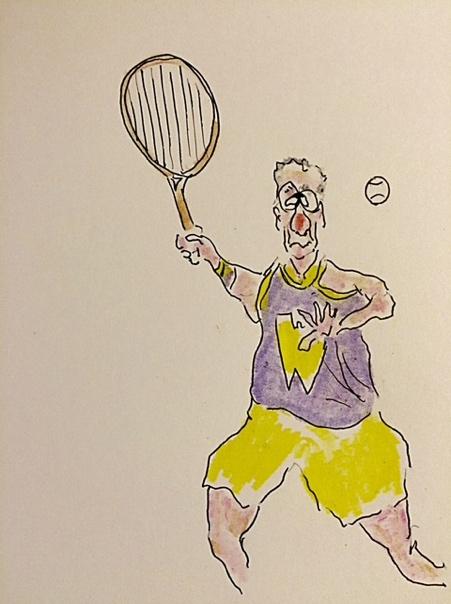
Am profoundly grateful to be a member of the Williams College Class of 1966. Our most enduring quality, from the convocation of freshman year to the present, has been solidarity and fellowship. Knitted together by whatever social, cultural, intellectual, and interpersonal events we experienced during those four formative years in Williamstown; undiluted by success or failure, by mental and physical struggles, or by frustrations, misadventures, misfortunes.
Our heritage manifests in our generous support for one another, in the
years that disappear when we meet, in our congenial agreements to disagree, in our warm and genuine celebration of one another’s lives.
While there are similar qualities in other graduating classes, I believe we have every right to claim singular status. Our class leadership over the years deserves a good deal of credit for that.
A raised glass to and fond memories of our classmates who predeceased us. Congratulations to us who have endured to celebrate the passage of 60 years since the day of our graduation.
Pete Haller
Writing this essay is difficult. How does one capture four years of experiences after six decades? And with a 500-word limit. I’ve used up a couple dozen already, so I better get started. Some thoughts follow.
NATURE: A great influence on me at Williams was Mother Nature. We were enveloped by Her…in the autumnal blaze of glory and hiking in the Berkshires, in the silence of the snow as it swirled around the corner of Sage Hall at night, and beside the Green River, where I took Professor Fred Rudolph trout fishing one day near the Mount Hope Farm.
FRIENDS: I probably knew the names and faces of 2/3 of our class. My closest friends were in Philip Spencer House and TDX. It’s not productive to list them all (there being a word limit), but they know who they are and are cherished. Four deserve special mention: Ed Cabaud, Bob Krefting, and Jim (“Taz”) Anderson. They were all roommates of mine at one time or another. They left us too soon. And, finally, Bob Mitchell, our Blog coeditor. He was then, and still is, like the brother I never had.
GIRLS: I considered transferring to the University of Wisconsin after sophomore year to be in a more normal social situation. Nevertheless, I returned and was privileged to eventually meet three wonderful young women from Skidmore, U. Rochester, and Montclair State. They deserve a shout-out. They became a district attorney, a French teacher overseas, and the host of a daytime news show in San Francisco, respectively. I hope I honored their presence. I am grateful to them and hope they are (still) well.
FRUIT FLIES: I was a premed for three years. Junior year brought genetics with Professor Larry Vankin. A semester-long class project was to construct a chromosome map of the common fruit fly. We bred tens of thousands of them. At least. They were put into a light sleep and then examined to determine phenotype, etc. Sounds easy. But science can be a jealous mistress, as many of you docs know. Sometimes this had to be done during off-hours. A date and I once spent part of a Saturday night in the Thompson Biology Lab doing the above tasks. She sneezed. It sent the day’s “hatch” all over a black tile floor. At night. Few were recovered. Most were stepped on. I am sure that several jumped on a bus to North Adams. Result? I got a C+. Wonder why I became a lawyer?
FINAL THOUGHT: I was privileged to attend Williams. We all were. I did not realize it at the time, but Williams’s bequest to me was a sense of intellectual curiosity and wonderment of the world. Other than my family and best friends, this has been the best part of my life.
A REALLY FINAL THOUGHT: I think I am under the 500-word limit. So, if I may be permitted, two more: BEAT AMHERST!
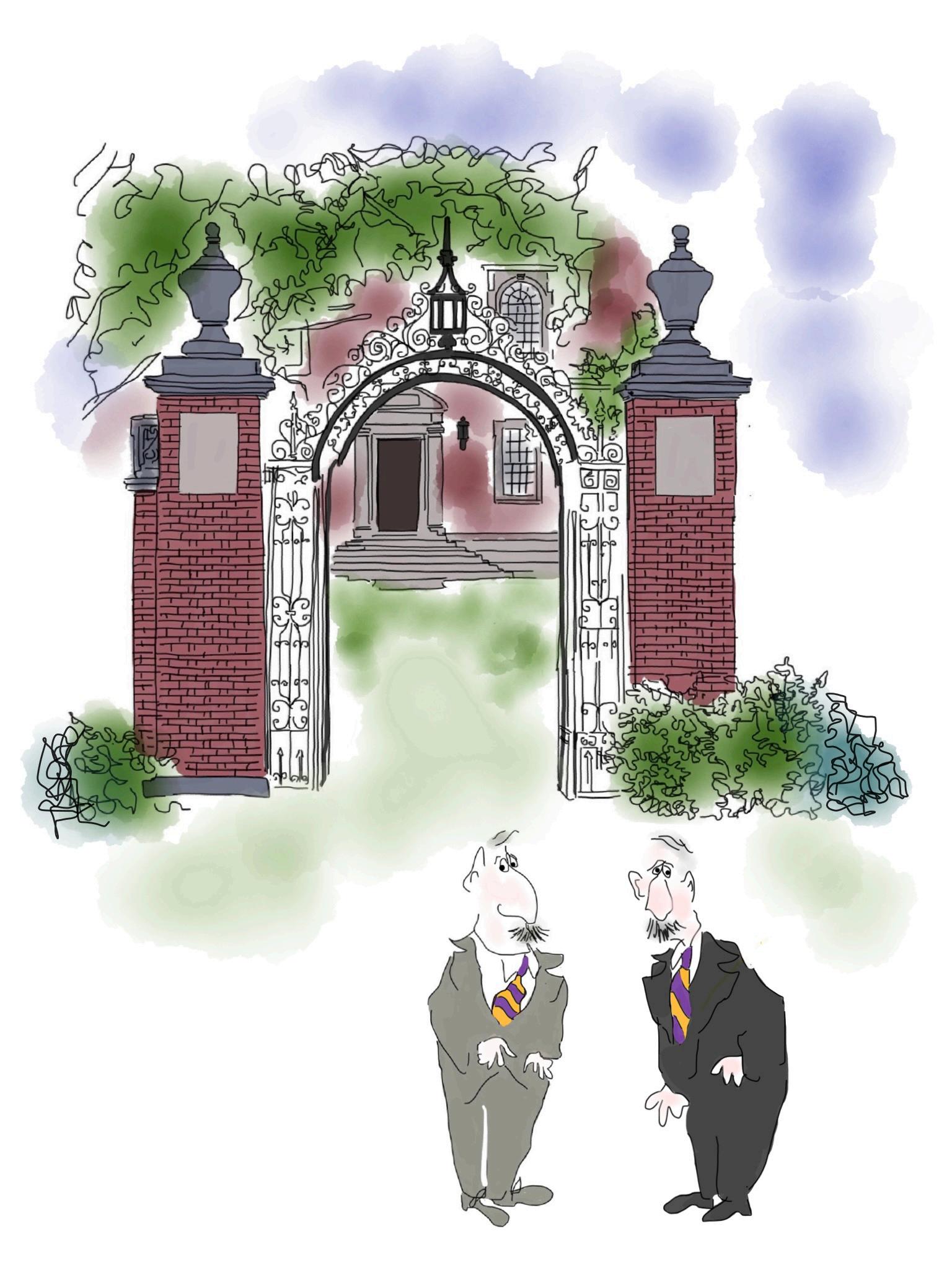
David Harrison
I applied and was accepted to Williams, having admired and hoping to emulate my predecessors from Deerfield’s class of 1961, Mike Annison and Bobby Hallagan. I entered a callow youth and exited a less-thanpolished young man. I broadened, however marginally, my English literature education but found myself a more comfortable home in the sciences, targeting medical school, which I found at Johns Hopkins.
Socially, I was fortunate to join AD, where I made a group of wonderful and invaluable friends to whom I remain bound this day and going forward. I am in touch with them frequently while, given geography, convening less so.
The New England small town was for me a comfortable and ideal venue with an optimal exposure to the seasons. A true winter invited a venture into downhill skiing, a love I have regularly pursued since.
While my English major and science courses represented the majority of classes, forays into art and architecture classes were both eye-opening and stimulating.
Given an all-male student body, we didn’t have the omnipresent benefit of female classmates; yet I never felt bereft, as there were many hilarious and memorable road trips as well as splendid weekend visitations.
Retrospectively, I would change little save having pushed personal physical conditioning more.
George Helmer
“Williams Foundations”
Williams has always been part of who I am a prestigious credential, wonderful reminiscences, lifelong friends, and guidance on many levels. As an old man, it’s impossible to imagine a younger self without Williams. So how did that happen?
Dad was a dedicated alum, so Eph influence began early on.
In 1959, every prep schooler wanted to aim for the best college. Williams was reputed to be the best college in or near Vermont, and this eighthgeneration Vermonter was irrevocably attached to his home state. I was told at St. George’s that to be accepted at Williams, I needed to rank in the top ten of my class. That required many predawn study hours to manage the attention deficiency, but so be it. I wasn’t much of an athlete and my SATs were only average for Williams, but I was a “leg” and squeaked in.
Freshman year was a social extravaganza! I never dreamed from my hinterland hometown or the confines of a “St. Grottlesex” boarding school that so many fascinating contemporaries could be assembled in one place! I spent a joyous year of “bull sessions.” Parties, and chasing young women. But I fell asleep during the History final, causing one less C- than required, and Dean Brookes kicked me out. But he always liked me, said I needed discipline, and promised immediate readmission upon completion of some military service. Six months of infantry training did help get my head straight, and I was back in Williamstown the next year.
I became a solid C+/B- student. Bottom fifth of the class notwithstanding, I actually learned some stuff. Faison and Stoddard launched my lifelong appreciation of art and architecture, Tom Price’s Anthropology inspired, and most notably I joined a fine crew of friends at St. Anthony Hall.
In 1967, the Williams thread continued for two years as I managed two of my Saints brothers in the Joyfull Noise. They turned out an album for RCA Victor, but the talent and dedication weren’t there to do more.
For reasons I can't explain, the attention deficiency vanished, and another leg up from Williams played out in the spring of 1969. I enrolled in two Anthropology courses at Dartmouth and read more in three months than any year in Williamstown. Williams set a high bar for academic excellence, and I was pretty good at Dartmouth. Jim Fernandez, the Anthropology chair, invited me to join his new master’s program. The studies were exhilarating, illuminating, but after two years, interest in academics began to fade, my girlfriend went to Morocco, Fernandez left for Princeton, and Rick Dodge and I drove to Tierra del Fuego.
Somehow, I found myself that year. I changed my name in 1972.
Good-Time Charlie was over, and life as a grown-up was off and running!
My 81 years have been wonderful, and I owe many debts of gratitude for that including a big one to Williams College.
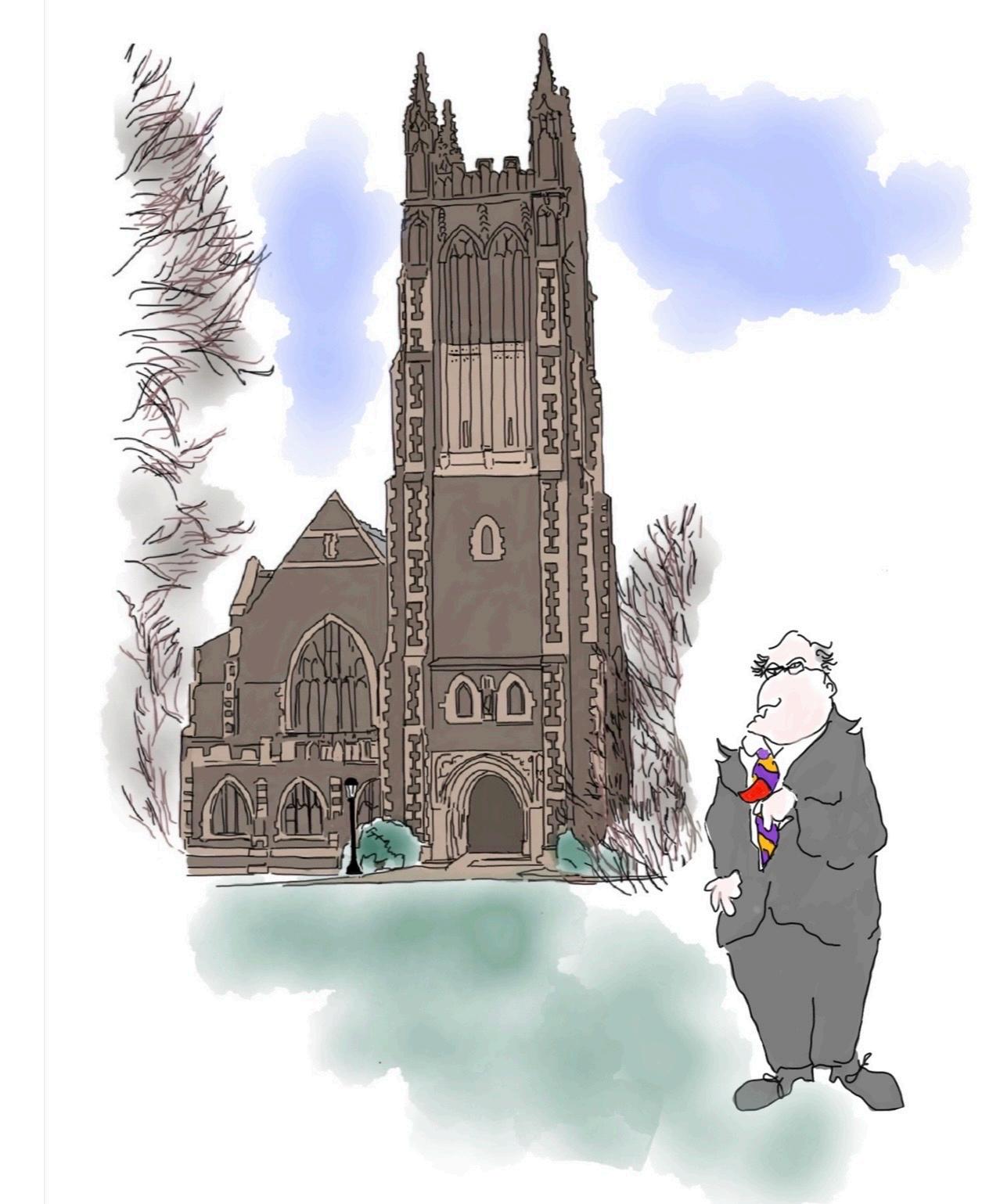
Paul Hirshman
I remember my time at Williams very fondly, but I was quite young when I went and could have derived more benefit if I had been more mature.
My intellectual experience at Williams was first-rate. I had many wonderful professors. Socially, I was not very mature, and that limited me. I am extremely grateful to Williams that it granted me a scholarship to Oxford, where I had a more rounded experience because I was then ready for it.
Probably the highlight of my intellectual experience at Williams was Art 101-102. I had an interest in art history even before taking the course, but the course developed my knowledge and left me with a lifetime passion.
I knew many wonderful classmates at Williams, too many to try to name them all, but I am very grateful for having had the chance to meet so many
outstanding people. I never went to a reunion because after Oxford I was at Harvard Medical School, which was very hectic, and then did my residency at Harvard and Stanford and stayed on the West Coast.
My wife is disabled as a result of an accident that occurred when I was at Stanford, so traveling to a reunion would have been tough, but we plan to try to attend this year. Best wishes to all.
Jeff Jones
Williams has played a significant, and unanticipated, role in my adult life: student in the 1960s, client for 35 years in the ’70s through the ’00s, and employer for 10 years in the 2010s. Two classmates were key players in the development of that lengthy relationship.
I had never heard of Williams until the fall of 1961, when my HS counsellor recommended it. I would have ignored her suggestion if I hadn’t learned that my 6th-grade classmate Ron Worland had already been accepted. Knowing that Ron was smarter than I, I decided to pursue the suggestion. I visited the Admissions Office on a cold, wet December day. I left with an offer of acceptance.
Four years at Williams were followed by the Navy, law school, and a judicial clerkship. After my second year of law school, I took a summer job with the Boston law firm Palmer & Dodge. I knew even less about Boston law firms than I had about Williams, but Dan Coquillette had clerked at P&D the summer before, so, again, I relied on the judgment of a classmate whom I knew to be smarter than I.
After my clerkship, I returned to P&D as an associate. Shortly after my arrival, a senior partner tasked me with a legal assignment from the College. The partner was Talcott M. Banks, who was a Trustee of the College and had been its principal legal counsel for many years. John Chandler’s history of fraternities at Williams describes Ted Banks as the Trustee who was Jack Sawyer’s most trusted advisor, and encourager, during the lengthy process of abolishing the fraternity system and laying the groundwork for coeducation.
The visit from Ted Banks initiated my career-long professional relationship with the College. When Banks retired in 1976, I succeeded him as the law firm’s relationship manager with Williams. Somehow the relationship survived through the presidencies of Chandler, Oakley, Paine, Vogt, Schapiro, Wagner, Falk, and Majumber. When I retired from P&D, I persuaded Morty Schapiro that it was time for the College to have an inhouse lawyer, and that I was the guy for the job. He agreed, but only after I said that I would work for free. After six months, Morty was won over, and I went on the payroll as a two-day-per-week employee. I said I’d do it for a year or two and ended up doing it for ten.
I was a believer in the College’s mission and got enormous satisfaction from working with some of the smartest, quirkiest, most dedicated, and most ethical people I have ever known. My work with the College was the longest and most rewarding relationship of my professional career.
I’m so grateful to Ron and Dan for the key roles they played in the unfolding of my connections with the College that I intend to remember them both in my estate plan. I have instructed our attorney to draft the following codicil to my will: “I remember Ron Worland and Dan Coquillette.”
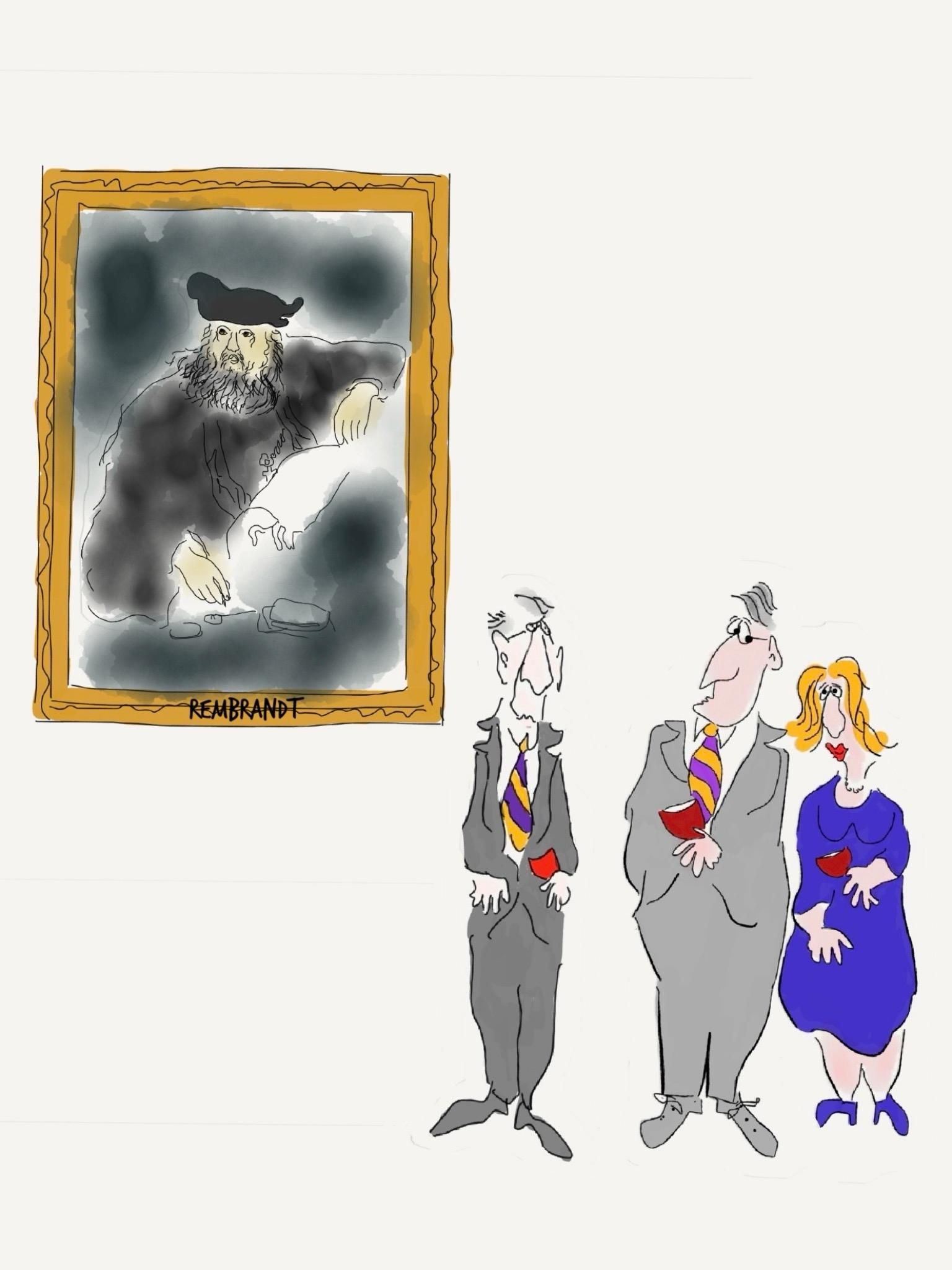
Tucker Jones
It’s hard to believe so much time has passed that it will be 60 years since we left Williams for the next stage in our lives. And it’s been ten years since that 50th Reunion milestone. Where has the time gone?
While my Williams connection has been limited by distance since our move to South Carolina, I have felt reconnected in so many ways by our Class Blog. It has been fascinating to read how our classmates’ lives have changed and grown. While some have concerns about the political discourse and the risks involved, I have enjoyed learning from the different points of view. What a perfect reminder of the liberal arts education we received! How could we all have such different points of view? And yet I am so grateful for the opportunity to consider new views that I might otherwise reject out of hand. For me, the exchange of views has served to strengthen that Williams connection in my eighties.
Michael Katz
I was diligently finishing work on my doctoral dissertation at Oxford when I received an unexpected letter from Professor Nick Fersen at Williams. My mentor, Doris de Keyserlingk, had retired from teaching, and the Russian Department was looking for a temporary replacement to teach Russian language and literature at my alma mater. It took me about thirty seconds to decide: I leapt at the opportunity to return to the Purple Valley to accept the challenge.
I’d had a mixed experience in my four years as an undergraduate. Mostly excellent teaching, some very close friends, but a difficult time socially: no girlfriend at home or at one of the women’s colleges close by, or not so close, and the difficulties of life in the first social unit (Prospect House) as a nonaffiliate. Fire alarms were set off on occasion at 2 a.m. by fraternity assholes to remind us of the results of the Angevine Report. But I survived and made my best lifelong friends: John Citron, Bob DuPlessis, David Tobis, and Willard Spiegelman all of whom I see and talk to regularly.
Williams treated its young assistant professors well, and my research took off with the college’s assistance and urging. I got to know my students and
am still in touch with a number of them, on my visits to Boston, New York, and Washington. They, too, have become lifelong friends.
My teaching and research benefited from generous support at the college, for which I remain eternally grateful. My four years in Weston Language Center included a service project at Berkshire Farm for Boys and teaching a class in Russian for adults at Drury High in North Adams. My twelve years as an instructor included acting in plays, serving on committees, and giving talks to publicize our department offerings.
I have attended several class reunions over the years and very much regret that I will have to miss our sixtieth. My wife and I will be cruising the Norwegian fjords in early June, and I won’t be able to join the fun.
I want to wish all my classmates good health and much happiness as they gather to commemorate this important event, and I sincerely wish I were there to join them.
Jock Kimberley
The other day, I had lunch with Spencer Beebe ’68, my Williams senioryear roommate, and a mutual friend who has been one of the primary architects involved in the renovation of MASS MoCA. Having spent a fair amount of time in Williamstown, he has developed an interest in Williams and thinks it would be a wonderful college for his daughter to attend. He wanted to get our thoughts on Williams, and why we picked Williams.
Prior to his arrival, Spencer and I were kicking around some of the usual thoughts about Williams, such as its world-class faculty, small classes, great facilities, and committed leadership. We concluded that the culture of Williams, the Williams community, and our fellow students are some of the most lasting impacts of our time at the College.
Our luncheon guest might have assumed we would expound on the terrific academic experience his daughter would be exposed to as a Williams student. But we decided to emphasize the wonderful and unique cultural environment she would be experiencing as an important reason for choosing Williams. I believe that one of the most enduring “takeaways”
for me is that the community of likable and kind people at Williams both students and faculty is perhaps the most lasting gift I received from my four years at Williams. The supportive community I found at the College turned a rather tumultuous time in my life into one of the best experiences I could have ever imagined.
I have always felt that a major part of my college education wasn’t just what I took away from the classroom, but what I learned from my fellow students. Over the years, I have come to the realization that belonging to and working within a culture that is compatible with your values is one of the most important life outcomes one should hope for. The experiences I had at Williams, the people I spent four years with fellow students, teachers, and coaches were absolutely critical in shaping my future.
I am eternally grateful for my Williams experiences. The College friendships I made have endured over the years and are absolutely essential to me, and especially so now that we are on the “downhill slope.”
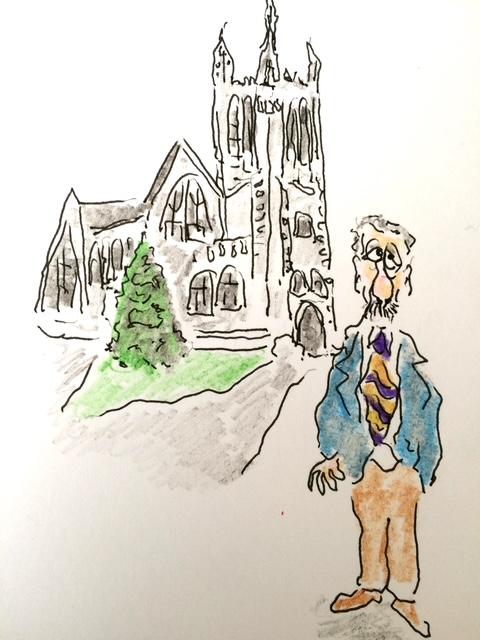
Winston Kipp
On a very cold morning in Maine, I stepped outside and drew a deep breath of clear, crisp, cold air. I was transported back to Williamstown to snow-covered paths and that sharp winter air so cold one’s nostrils would stick together. Before I arrived as a freshman, I had known Williamstown through my father, class of ’31. As a family, we would visit for football games in the fall and drive to southern Vermont in the summer and winter through Williamstown as well as over the Mohawk Trail. The beauty of the area made an enduring impression.
Four years at Williams reinforced my love for the outdoors and living in this environment. Hiking the hills, climbing Mount Greylock, and just being in the landscape contrasted sharply to my next four years of medical school living in Brooklyn, New York. I arrived at Williams not fully prepared for the academic demands. The discipline came with time, helped greatly by my professors, especially those in the premed program. I have felt that it was, in large part, the education and the people at Williams that allowed me to move forward into the medical discipline.
My career was very meaningful, but the one constant over these decades has been family, which has come first. For over 50 years, I’ve been blessed with Chris, my partner in life. Together we raised two children and now enjoy four grandchildren ages 14 to 6. Retirement has given us the joy of watching them grow and now standing on ski hills once again as spectators of racers, this time cheering for our grandchildren instead of our children.
Living in Maine since 1977 has been a natural extension of the outdoor world. In retirement, Chris and I replaced a family cottage in the Boothbay region with a year-round home. Looking at the islands and shifting light on the water, it’s hard to imagine living anywhere else. During the COVID Era, we were lucky to be in this outdoors without needing much protection, the population in this area being small. And we were visited by snowy owls coming down from the Arctic due to their tough winter and, the following winter, a stellar eagle from Russia making it to Maine.
One of the unexpected gifts of Williams has been the enduring alumni bond. Over the years, whenever I meet Ephs through business, travel, and even sports, there’s an immediate connection. I find myself wondering
about classmates I knew but lost touch with over the years, particularly those absent from our 50th Reunion and Reunion Book. And as we gather for our 60th reunion, I am struck less by the passage of time than by the continuity that Williams provides us in ways we did not fully appreciate at age 22. The paths we took have been varied, but they all began in the same valley. I look forward to reconnecting and renewing friendships.
Bill Kirby
I have lived for the past fifty years or so in a small town in Southside Virginia. My neighbors are patient, kind, self-reliant (hell, most of them have gardens), and, for the most part, tolerant. They live and die with the fortunes of the high school team, and their hearts go all aflutter when Dale Jr’s rear end gets a little loose in the turn. They are, again for the most part, the recipients of my goodwill and good wishes.
Healthwise I assume this is among the stuff we’re supposed to be reporting I’m okay, I think. I did have an issue recently with a bladder stone the size of a small boulder, which compromised the functioning of that organ. The fix was lithotripsy, a procedure whereby the stone is blasted into smaller fragments more easily dealt with by the bladder and the ancillary downstream apparati. Two weeks postprocedure, I have peed out enough stonelets to fill a small quarry. Such emissions are painful in the extreme, but true to my stoic nature (my wife will confirm this), I soldier on without grumbling.
I have four children and twelve grandchildren, none of whom, as far as I can tell, is a menace to the Republic. Although they live in far-flung places throughout the continental US, we are able to get together frequently, and I spend a good deal of my time these days doting.
I have thoroughly enjoyed our Class Blog. I marvel at those of us who sail solo across oceans, ski and run across continents, swim competitively, and are awarded their sport’s highest honor for a lifetime of contribution. I try to get to the Y a couple of times a week, where I do old-men’s stuff and get dizzy after fifteen minutes. I’m also super impressed with the erudition of my classmates. I sometimes share a post with colleagues just to show them I used to know smart people.
I look back at my years at Williams fondly. It is my conceit that Williams taught me how to think somewhat critically and write somewhat linearly (this effort notwithstanding). I suspect that I’m not alone in regarding my four years at Williams as among the happiest of my life and regretting that I didn’t take better advantage of all that Williams offered.
Lance Knox
The usual: Health and family active and good. Been in the Chicago area for fifty years despite Illinois fiscal and political dysfunction. With hip and knee issues this year, I am watching my bone health.
Williams: fond memories of experiences and people especially our class. But I don’t feel connected to today’s college. I am disappointed in the omissions and changing positions and programs. Where is the respect for all opinions and types of education? To me, it smacks of hubris. And canceling some common-sense requirements, like water safety, seems counterproductive in the cause of “inclusion.” I ask: Where are classic liberal arts?
Best to all.
Peter
Koenig
Privilege, privilege, privilege.
That’s my main memory of Williams. I not only enjoyed my privileges, but I took them as my birthright. The intimate classes with Gaudino and MacGregor Burns, fraternities, party weekends, road trips to Smith, Skidmore, Green Mountain.
Gone now. Leaving a faltering capacity for critical thinking. Along with the conviction that the divisions we began with Vietnam, the Civil Rights Movement have morphed into the hard-to-believe mess our country’s in now. Looking back, I can get as sentimental as anyone about Williams.
Personally, I remain too hung up on the years when I broke away from my dysfunctional family and joined my peers in the race for a big future. We were a tiny cohort being groomed for high positions in our society. And now, of course, it’s all ended in tears. Maybe that’s OK. Maybe, belatedly, we’re seeing the realities underlying the Hollywood rom-com within which much of the American elite has lived and dreamed for too long.
The Ivy League has always been schizophrenic spoon-feeding vaulting liberal values on the one hand; training students for power, prestige, and big money on the other. In one guise or another, that elitism, and the tragicomic pretensions that come with it, will endure forever.
But the divide between haves and have-nots in the US has grown extreme over six decades.
And now the US and the international post-World War II arrangements are coming apart at the seams.
So, in memory, I see Williams as a bucolic shelter from the big, urban Ivy power centers. Thinking back sixty years, I see us eagerly grabbing for our chance to gain what used to be called “leadership positions” and in the end, for most of us, earning at best Gentleman Cs in pursuit of honorable versions of those positions.
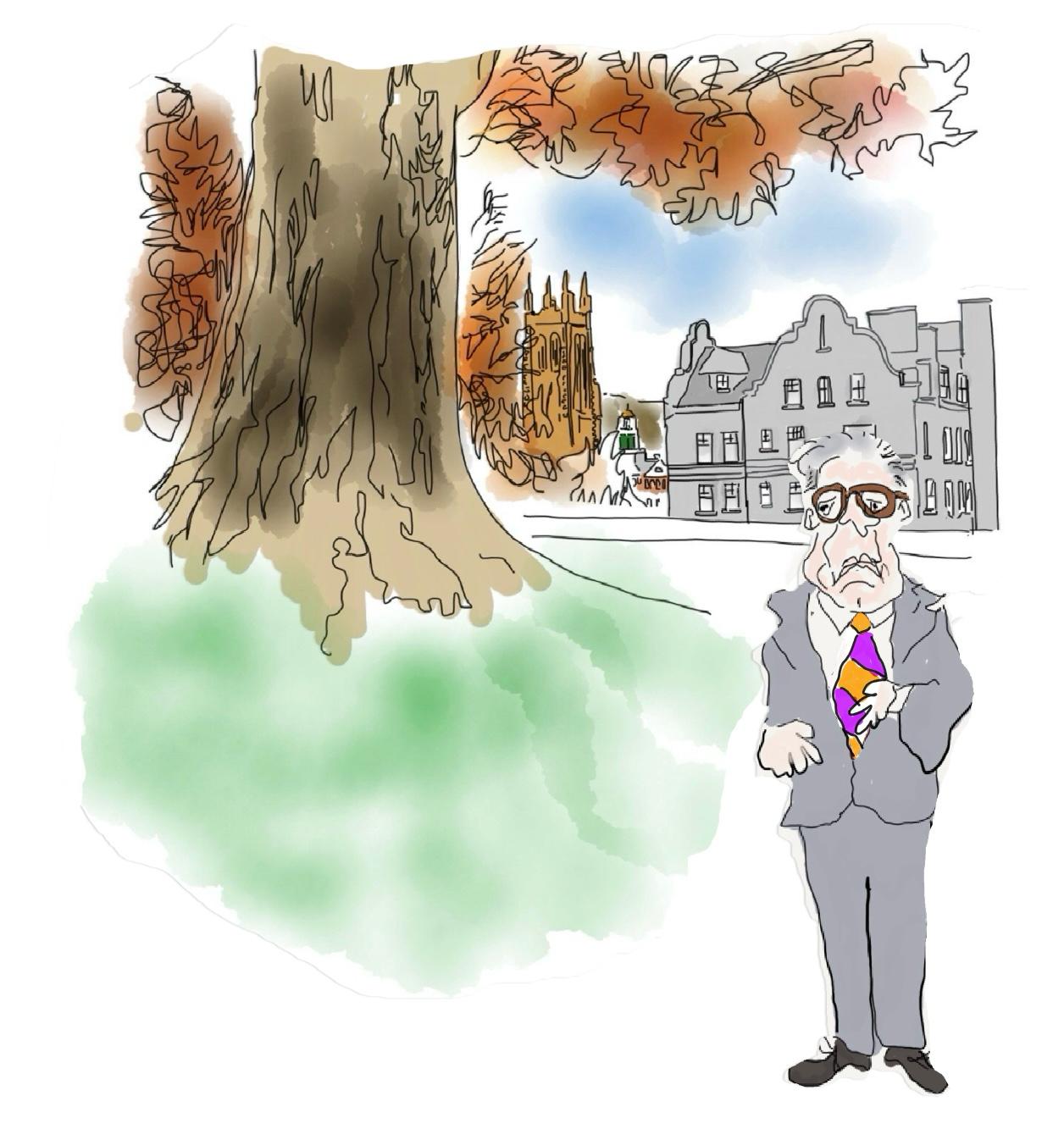
Dave Kollender
I have very mixed feelings regarding my four years at Williams.
I had been oriented toward science originally and discovered that that was not at all in my DNA. Art, design, and architecture beckoned, and the larger world beyond the Purple Valley.
I also ran up against discrimination and some injustices that served as an early inoculation against even bigger doses awaiting me in the US Navy and in the FBI. In that sense, my Williams education made me stronger!
Best memories: battling out wrestling matches and spending inspirational moments helping out in Prof. H. Lee Hershey’s attic studio in Goodrich Hall; first-hand experience of watching an artistic genius at work.
Williams also gave me a sense of the strength and importance of families and tradition, which I had already known but was strongly underlined as critically important to success. Hence, I sent my son, Adam, class of 2005, and daughter, Kirsten, who was accepted in 2007 but chose Cornell. But she did spend the summer of 2007 as a selectee for the Williamstown Theater Festival.
Jim Kramer
I was a bit of a lost soul as a public high school freshman, younger brother to an academic whiz kid four years my elder Cornell chemical engineering Phi Beta Kappa undergrad/Carnegie Mellon PhD/Oxford postdoc who would become a materials science teaching rock star at Cornell (30 years) and UC Santa Barbara (17 years).
Soon after the sudden death of our mother in 1958, my dad put me in the “transfer portal” as a frosh year repeat at a local independent day school, where I thrived, coming back to life out of my brother’s shadow.
Nonetheless, when I got to Williams, I was quite intimidated by those around me perhaps like half our class probably felt in those early days until I began to realize that I did belong, even as a sophomore foray into abstract vector spaces served to usher me unceremoniously out of being a math major into history…and even into a stroll inside art history.
While I thought about heading toward architecture, I wasn’t very sure I possessed the requisite imagination. Even so, I was inspired by the teaching of Whit Stoddard and Lane Faison, while being just as drawn to faculty members like Robert Waite.
Most significantly, though, I was even more inspired by those around me at Williams in class, in Chi Psi/Spencer House, in athletics (basketball and baseball), and even on the front porch of Spencer, where Wallball
reigned supreme, with daily battles with Bob Mitchell and others that seemed to prove that the “wallball world” favored short guys who were quick on their feet and could get low to the ground.
While clearly I was saved by the 1958 switch to an independent school (an important reason, I suspect, why I chose a career in counseling, teaching, and coaching in independent schools), Williams provided a connection with lifelong friends I continue to treasure.
Roger Kubarych
“Age
of Ambivalence”
Many have written about the bifurcation of American politics, culture, and demeanor, since 2016. I call it “The Age of Ambivalence.” It is in evidence in such disparate and inherently difficult topics as dealing with climate change, the cost of living, immigration, and more technical issues surrounding international trade and security. Ambivalence intrudes in
other personal issues like family life. The following are few thoughts related to them…
Most professionals working in large urban areas are eager to come to grips with global warming. For instance, they want cleaner ways of making and distributing electricity to power the electric cars they own or may aspire to own, but they resist the option of greater nuclear power plants. So auto companies are losing a lot of money and scaling back investments.
Another source of ambivalence is the housing market. Young people naturally want to buy homes they can afford, including low costs of houses, insurance, mortgages, utilities, and local taxes. But baby boomers like us like high prices so they can make larger bequests to kids and grandchildren, as well as the low costs of everything else. Many government policies raise all those costs, not least easy monetary policies and federal budget deficits.
Ambivalence regarding immigration is palpable and, to me, scary. Most people want a moderate amount of legal immigration, while most big corporations and almost all farmers want plentiful legal immigration. Illegal immigrants are a different matter where opinions are starkly different, especially within the Democratic Party and former Democrats.
The reality is that the public remains ambivalent about what the federal government can and should do about it. About the only part of the problem where there seems to be general agreement is that enforcers should not kill innocent citizens.
There is one topic that I can think of over the past ten years in which there is little ambivalence: dealing with China. Both Democrats and Republicans want to be tough on China, both on trade restrictions and on national security grounds. But even on policies toward the Chinese there is some ambivalence, especially on the behavior of China in setting controls on the production and exports of rare-earth materials and on Chinese provocative naval activities around the Philippines, Taiwan, and other neighbors.
Finally, what about family life? We want our children and grandchildren to have fulfilling lives and careers, wherever that takes them. But we also want them to be as close and as easy to get to as possible. That’s true for siblings and their families, too. We are fortunate that two sons and their families are in Manhattan. But the third family, long residents in Ann
Arbor at U of M, has moved to Ottawa not quite as far, but a lot harder to fly to.
Bottom line: Where did the various stresses, strains, and contradictions of the past ten years leave me? More ambivalent about a lot of things.
Stew Leber
“Almost Goodbye”
Coming from a public high school, I was somewhat unprepared for the rigors of Williams. Yeah, got an “A” or a “B” on some first-semester freshman-year midterms, basically from knowledge gained in advanced courses senior year at high, but that wore off quickly by semester’s end, and I received mostly C bars, D plu’s, and Ds. Didn't get any better second semester, or first semester sophomore year.
By second semester sophomore year, I was VERY aware that three D plu’s and you were a goner. As the semester came to a close, I thought I had scraped by with a D in Art, a D plu in Economics, but (saving grace) a C bar in Math. Got the D in Art but then almost lost it when postcard came to my fraternity house from Math and it was a D plu! Shit. I was on the train home. In desperation, I went to see my math teacher, Professor Pfaltz. For the record, he was lousy. One of those profs who obviously read the lesson plan the night before and was oblivious as to how to present it clearly to the class. A dummy. I went to plead my case that his D plu was expelling me from Williams, and he got out his book. Seemed that my grade point for the class was a 69.7, a D plu, whereas a 70.0 would have been the C bar I needed to stay afloat. I begged for a miserable three-tenths of one percent. He replied, “Tough Titties. A 69.7 is a 69.7.” Nice to see ya.
With tail between my legs, I trooped back to Phi Sig. Even though it was a Saturday, I called my Economics teacher, Professor Winston (had a red beard when hardly anyone had facial hair) at his home. Found the number in the phone book, believe it or not. He picked up, and I introduced myself (Stew Leber from Econ 202) and asked if I had indeed received a D plu (the one I was expecting). He replied slowly, and I quote what he said like it was only yesterday: “Let’s see…uhhhhh…ummm…Leber, Leber,
Leber…Well, I only gave out two Ds this semester, and your name doesn't ring a bell.”
YES! Ran downstairs to our Coke machine full of splits of beer, drank ten of them, and thanked The Lord. Got my shucks together, made it through senior year, and even graduated Number Two…in the bottom quarter of our class.
Have been terribly lucky ever since. I am blessed, live with an Angel, and I don’t even go to church. Regards to all.
Chip Malcolm
After retiring from my OB/GYN practice in Middlebury in 2014 at age 70, I settled into the fourth stage of life. I returned to the Addison Central school board after a 10-year hiatus and served until 2025. I continued my long board participation with The Opera Company of Middlebury as chair for 11 years, retiring in the fall of 2025.
Nance and I live in the same home in Middlebury since moving here in 1975 to set up my practice. All three of our children returned to Vermont after college and work, and we are fortunate to have them and our 6 grandchildren live within 25 miles.
My time is filled with travel, mostly Williams-sponsored trips to Vietnam, Morocco, Alaska, Netherlands, and recently to India; caring for the Middlebury property; enjoying our summer camp on Lake Dunmore; following Middlebury Union High School football (our son is head coach);
and multiple field hockey, ice hockey, and lacrosse games with our grandchildren.
The fourth stage of life is so far going well.
Williams continues to be a significant part of my identity. It gave me superb credentials to get accepted to med school, leading to a long and successful career of 40 years.
Williamstown is close enough to allow me to go there 1-2 times a year for events or games. Living in a “NESCAC” town provides plenty of opportunities to wear my neutral hat and quietly cheer on the Ephs when they come to town.
I applaud Williams for continuing its pursuit of excellence and its support for the liberal arts in today’s fractious world.
The COVID-inspired ’66 blog continues to be a wonderful communication vehicle and has certainly brought our class together, at the very least furthering our knowledge of one another. All things considered, I am quite content with my life.
Marty McLean
Williams entered my consciousness in high school when an upperclassman ahead of me went there. He was a big running back on the football team, and I looked up to him. I had a summer job in New Hampshire, and I really liked New England.
A visit to the campus senior year went well, and I had found my college, a decision I have never regretted.
At Williams, I found congenial classmates, inspiring teachers, and a beautiful environment. My athletic skills were sufficient to play football. I understand that in later years one of the coaches liked to tell the team that if they couldn’t play football at Williams, they couldn’t play anywhere, because there was no Division IV. I was surprised to learn that the big guy from my high school had not played at Williams. He wanted to continue as
a running back. The coaches wanted to make him a lineman. He quit. A life lesson, I guess.
One Friday afternoon sophomore year, John Ashton and I had to leave an American History seminar early to catch the team bus to an away game. Somewhat surprised, Professor Zilversmit didn’t object but expressed his hope that “you gentlemen write very athletic prose.” I loved studying history and made that my major. Exploring the Middle Ages with Francis Oakley was like being there. Maybe it was the British accent.
I also loved Fred Schuman’s international relations course. The first day of class, he explained why the course used his own textbook: “Because it is the best one.” It now seems dated. Nevertheless, “Red” Fred gave great lectures that often made me want to clap at the end.
We had to take two years of lab science. I decided biology was closest to the human interactions that I preferred to study, so that was my lab science, both years with Dr. Grant. Memorably, in one lab, he had classmates drink saline solutions with different concentrations and then measure the specific gravity of their urine. The results were as expected, except that those who got the highest concentration quickly vomited. In another lab, we needed fruit flies, but Dr. Grant was not going to follow the easy path and order them from a lab supply house. We were going to catch our own, so we put pieces of banana in bottles and placed them in a wooded area. We returned a week later, only to find an assortment of ants, flies, and spiders, but no fruit flies!
I went on to study international relations in grad school and to a career in the Foreign Service.
Williams was great preparation, although it took some effort to organize my thoughts when I did not have a historical chronology to follow.
Apart from academic preparation, I will always be grateful to Williams because it’s where I met my wife of almost sixty years. It hurt when my first girlfriend dumped me during my freshman year, but things turned out well in the end.
Jim Meier
Three anecdotes:
Walking back from class first semester freshman year with Philosophy prof Nathaniel Lawrence, who said, more or less (I believe it was on a Plato text), “Jim, before you challenge ideas, try harder to understand them.” That casual comment quietly touched my arrogant insecurity and has come to mind often. One consequence: I am aware that over time I have become slower to judgment, more inclined to consider other rationales and alternative motives.
Whitney Stoddard and I arranged to go skiing one Saturday morning at 8:00 a.m. After studying very late Friday night, I slept through my alarm, until, a few minutes after 8, Stoddard vigorously shook me awake. I quickly dressed and rushed out to his car and off to…Jiminy Peak? Brodie Mountain? Question to classmates: What would happen today if a faculty member barged into a student’s dorm bedroom?
Returning to Williams following a junior year in Spain and determined to go to India after graduation, I badgered Bob Gaudino to let me into his already-filled seminar on the Politics of India. Upon graduating, I chose the Peace Corps. Gaudino had directed training for a different India Peace Corps group the summer of ’66 and made a follow-up trip to India, staying with me in Andhra Pradesh, where I ran in-service training for high-school science teachers. (Of course, Hyderabad’s high-tech prominence achieved decades later obviously was due to my efforts!)
In 1968, I entered a Master’s program in Urban Planning at Columbia University.
Early in February 1969, I drove, with another Gaudino-trained exvolunteer, to Williamstown for a weekend with Bob. I brought my old downhill Head skis, and on Saturday we went cross-country skiing. Bob led us through an ungroomed trek, over a foot of unpacked snow. Nordic skiing on fixed-heel, heavy downhill equipment is ridiculous. I was hooked, nevertheless, and that marked the beginning of my Nordic career.
(Incidentally, the next day forecast an inch of snow as we talked late into Saturday night, and Bob read drafts of his forthcoming book, The Uncomfortable Learning, about the Peace Corps experience. On Sunday afternoon, my Peace Corps friend and I headed back to NYC. As I drove south down the Taconic State Parkway in a blizzard, a snowplow that was clearing a lane got stuck on an uphill. All traffic stopped. We slept in place in the car until awakened the next morning by emergency crews clearing from behind and spent the rest of the day navigating local roads back to NYC. This was the infamous snowstorm that felled Mayor John Lindsay.)
These were among the influencers imparting Menschlichkeit (Yiddish for humaneness, caring moral behavior), wisdom that matured over the years, and seeds of lifelong passions.
Awareness of aging became more acute the moment I turned 80, testing my determination and efforts at denial.
I’m still at it (denial). Skiing provides one clear benchmark for assessing slippage. Next week, my time in the 55-km Birkebeiner race in Wisconsin will be a concrete measure.
Harrop Miller
After Wayne State medical school, internship at Albany Medical Hospital, and urology residency back at Wayne State, I was sent by the Army to Fort Hood, Texas. My next stop was Abilene, where I have lived ever since.
I have been married and divorced twice. My first wife and mother of my two children, Sara, has passed away. My second wife, Lisa, and I married in 2000 and divorced in 2015.
Sara and Lisa have attended Williams reunions with me, as some of you may recall. Abilene has become my home now for many years. It would be unusual for me to go anywhere without running into a friend or two.
I smoke cigars with one group of friends and drink coffee with another. I have no plans to move.
Bob Mitchell
Well, it’s been 31.5 million minutes give or take since we walked the Gulielmensian campus together as undergrads, but who’s counting?
What I can count on, however, is the fact that our alma mater did in fact nourish me (Latin alma) in ways that, through these past six decades, I realize more clearly the longer I live.
I’ve gone through sixteen drafts of how I want to share my thoughts with you, and the best way I can do this is just to splurt them out, in one fell heartfelt, stream-of-consciousness swoop (kudos to The Bard for the expression and to Proust, Joyce, Wolff, Faulkner, and Kerouac for the innovative stylistic device). Hence…
first of all my life passions, ohmigod how you nourished them, my love of sports and competing and soccer and the lasting lessons of teamwork and pride and persistence, and squash and tennis too, and then my love of the humanities (art history, music, literature, languages, philosophy), which has become the fodder of many of my thirteen published books, and speaking of writing, my deepest joy, how you nurtured it when i first encountered the passion (from the latin patior, to suffer!) on your campus and the pain and the challenge (samuel beckett: try again. fail again. fail better.) of flow and word choice and editing (sportswriter red smith: “writing is easy: you just sit at your typewriter until little drops of blood appear on your forehead”), not to mention but i will of course my very first sip of scotch as a frosh (the joy still with me after 64 years) and learning to travis-pick on my martin 0018 acoustic guitar from mark smith ’65 in west college as a soph (the joy still with me after 63 years) and my very first romantic relationship (thank you, mt. holyoke!) and what i learned about myself including most notably how to confront humility for the first time (competing with the likes of great fellow athletes like budge upton on the soccer pitch and jim kramer on the spencer wallball porch) and studying alongside classmates way smarter than i and then there were my mentors, pistorius, savacool, stoddard, rudolph, megaw, who prepared me for my own teaching career (harvard, purdue, ohio state, school of visual arts) and introduced me to my lifelong inspirational creative spirits (lao-tzu, dante, montaigne, shakespeare, rilke, emerson, masaccio, leonardo, blake, rembrandt, et al.), then last but most important the friendships i developed that have endured all these years since those halcyon days and that have passed the test of time, namely, with haller and rubin and roesler and possick and kramer and upton and pearlman and tobis and allen and benson and bowden and gould and vroom and davis and crowther and (rip, alas) debevoise and cabaud and anderson and noll and storey ’65 and sorry if i omitted any names but, like j. alfred, I grow old…I grow old…oh yeah, and I can’t wait to see all my classmates at our 60th!
John Mitchell
“The Excitement Continues”
There was no life plan in the fall of 1962. College was expected, and I thought History would be an interesting major. (Not sure what I was going to do with it.) Fall of sophomore year, I took Economics and was hooked. (I still have the text.)
The early sixties were heady days in economics with the Kennedy tax cut proposal to stimulate activity. Keynes made the cover of Time in late 1965. I went to the University of Oregon for my graduate work and finished in 1970. I took a job at Boise State (Place with Blue Field) and stayed for 13 years. My model for teaching was Prof. Bill Gates. At lunch with a local Boise Cascade executive and former academic, I said I had 13 years of experience, and he asked if I had one year of experience 13 times. The question kept nagging at me.
I learned of the opening for chief economist at US Bank in Portland and left academia for the bank. It was a dream job covering ultimately six states speaking to Rotaries, conventions, and business groups and writing the bank’s publications for almost a quarter of a century. The bank let me rent a plane and fly to speeches if it was cheaper. A merger moved the job to a contractor relationship, which I ended after a bout with cancer. I still do presentations around the West, but the best description might be semiretired gigs in Sun Valley over the years, which meant a chance to catch up with roommates John Ashton and John Pryor.
My wife, Carol, and I bought a foreclosed condo in Coeur d’Alene, Idaho, in 2010 and moved here full-time in 2018. From one of the Bluest of the Blue to one of the Reddest of the Red a path that many seem to be taking with now the second-fastest population growth in the nation. It is also a lot drier, tax-friendly, and brighter than western Oregon. We spend a lot of time biking here and abroad and enjoying the Northwest. Geography has meant that getting back to events in the East has been problematic. I have maintained contact with my JA roommate, Chip Malcolm.
Williams excited me about economics and gave me role models for great teaching, and for that I will be forever grateful. Three years of athletic training experience and employment with Snapper and Jimmy was an added bonus. In 2025-26, watching the mercurial trade policy, Fed pressure, and insults and growing state capitalism is very troubling. Fortunately, the Supreme Court did
what the Framers intended. It prompts us to question whether our previous beliefs or teachings were mistaken, and whether we are undermining some of the foundations of our prosperity. Time will tell.
For us 80-plus-year-olds, I quote Greg Ip in the 2/19/26 WSJ: “There has never been a better time to be old.”
We lucked out.
Sandy Morhouse
As many of my classmates know, I have retired back to my roots in upstate Ticonderoga, NY, on the shores of northern Lake George. Several classmates have visited (all are invited) and experienced my antique (1927), 30-foot mahogany Hacker Craft speedboat. A smart-assed friend of mine once asked, “Did you buy it new?”
A visit would also include a tour of iconic Fort Ticonderoga, whose board I chaired for several years prior to January of 2025. Summer is a better visiting season than winter, as we are today (February 3, 2026) experiencing a foot of snow on the ground and our fifth consecutive day of below-zero temperatures. Lake George is frozen solid, south to north.
I am happily married to Patty Hogan, a former (many times) national platform tennis champion and member of the sport’s Hall of Fame. At age 66, she still teaches and keeps me young. She won’t let me play the sport, however, because she says that I am too aggressive and will hurt myself. She is right.
As several of you know and no doubt abhor (that’s too strong: let’s say, “strongly disagree”), I am an occasional conservative protagonist on our class’s outstanding Blog. Many of my old friends give it back at least “as good as they get.” I hope, however, that they appreciate what I am doing to fight global warming by embracing and inviting frigid weather up here in the Adirondacks.
I won’t “bury the lead”: Williams College changed my life.
I had gone to a large, so-so-quality public high school where I did not work very hard and was not the best student. I had never heard of Williams but applied at the urging of my father, a teacher. I don’t know why I was admitted. I was neither a Williams-quality athlete nor a musician. I certainly would not have been admitted by today’s standards.
I did not know how to study in the fall of 1962, and this became evident quickly. I received warning notices in both English and calculus in my first term at Williams. With the help of better-prepared, generous fellow freshmen, especially Steve Sankey and Tom Gallagher, I survived. Somehow, over the next few terms, I learned how to study and found that doing so made a difference. I liked economics and was reasonably good at it. I ended up graduating with a higher class rank than I had when I graduated from high school.
How did all this happen? Many superb teachers played key roles. None was more important than Bill Gates, the economic historian who was chair of the Economics Department. Bill stuttered quite intensively. However, that did not prevent him from being an exuberant and skilled teacher. Indeed, Bill had learned to use his stumbling over words like productivity as an effective teaching strategy. I certainly felt that I needed to be well prepared for class in order to “help” Bill get through the tough words. Bill’s example was important to me because I also stuttered quite intensively. When stressed, as I usually was, I could not speak a whole sentence without stumbling over at least one word. Bill’s example convinced me that stuttering need not be a decisive liability.
Many years later, I developed the confidence as a teacher to tell students on the first day of class that I stuttered. They could help me by calling out the word I could not speak. I said that if they got the word right, we would just move on. If they got it wrong, it might be the start of a more interesting conversation. That always elicited laughs and helped me to relax a necessary condition for overcoming the stuttering. Without Bill’s example, I doubt that I would have learned to do this.
Bill also played an unanticipated role in my life. As a senior at Williams, I had applied to MIT, Harvard, and Yale for graduate school in economics. MIT clearly had the strongest program, and that was where I intended to enroll. One day, Bill told me that he had just visited Yale’s economics department and was impressed. Given how much I admired Bill, I went to Yale. There I met an attractive and interesting biology graduate student named Mary Jo, who became and still is my best friend, my wife, and love of my life.
Thank you, Bill!
Larry Niles
At the outset, let it be known that I’d never attempt to write publicly about my Williams experience, nor have any thought I have anything worthy to say. I do this only out of loyalty to the cause. Blame Mitch, not me.
First Impressions: Early in my first history class (Dudley Baumann or possibly John Hyde?), we were given three accounts of an early 1000 AD battle between warring factions in Ireland. The Battle of Clontarf or Gandalf or something like that. We were asked to read each account and write an essay about what really happened. I bit…and after many hours came up with what my high-schooled brain decided was the only correct rendering of that event. Yet the lesson we were being taught was that there was no correct account, that not only could the three accounts not be reconciled, but the actual “history” of this battle was permanently obscured by prejudices and the passage of time. “Wait,” I thought. “Are we not here to regurgitate facts, enduring historical details?” Not so, I was told. We’re here to learn to think critically. Analyze for ourselves. And that, in a nutshell, is what, possibly despite myself, I got out of my four years in Williamstown.
Despite my desultory attendance record and attenuated attention span, I think in some way I learned to think critically, to observe, to make myself open to other lines of thought. That’s the essence of an exceptional liberalarts education, the educational backbone that supported us as we wandered off into our more specialized lives.
Lasting Effects: That Williams education has served me well, helping me navigate the convulsions of law school and the realities of practicing law, and giving me a platform for expanding my interests into the running of schools and, for twenty-eight years, running a bike-touring business. Did courses in art history, geology, economics, and Greek literature help me with that? It’s not a straight line, but I think the answer is yes.
Reflected glory: Having Williams College 1966 on my résumé has always opened doors of opportunity…whether it was for a federal clerkship, a job in San Franciso, or even when interviewing for a position on the local school board. In every instance, the implied worth of a Williams education was an important consideration. That Williams diploma definitely has clout. And I certainly take pride in Williams’s reputation in the world, the huge prestige and honor earned by so many members of our class, members whose vast intelligence and expertise is on display almost daily in the highly informed and interesting postings on our Blog (even if some positions taken might make Mark Hopkins tumble backward off his log).
Last and maybe most important, friendships. I enjoyed a twenty-plus-year law partnership with a great friend (Charley Gibbs), have a standing monthly lunch date with another, and continue to meet up with 8-10 classmates for a three-to-four-day get-together annually. These are the most important, and enduring, of all my friendships.
Steve O’Brien
Susan and I will be celebrating our 48th wedding anniversary this April. I have 3 children from a previous marriage, 2 daughters and a son. and we have a son and daughter. I have 4 grandsons. One is 28 years old and the other three in their late teens. All good athletes: golf and soccer.
We are “Snow Birds” for tax purposes, living in Boca Grande, Florida, and Nantucket, Massachusetts, when we aren’t traveling. It has been an exciting decade for us. We have been to Chile, the Galàpagos, Newfoundland, India, Mexico, England, Wales, Scotland, Ireland, The Netherlands, Alaska, Idaho, Maine, Texas, Wyoming, and cruising in the Caribbean; and we are going to Viet Nam and Hong Kong in March. During some of these visits, we have brought our fly rods with us, not passing up an opportunity to cast for a trout or a salmon.
Having survived open-heart surgery in 2018, I have changed my “exercise” activities. I have given up upland bird and duck shooting in exchange for croquet and golf. However, I do miss seeing my Labrador retrieving a canvasback that was zipping over my decoys or making a good shot on a ruffed grouse flushed from a “secret” cover. We now have traded in our Labs for Margaret, our brilliant 6-year-old Cavapoo! We both feel blessed to have our health.
Doug Olcott
I spent my junior year at Williams in the College Year in Athens program, where I got my first training in the Minoan and Mycenaean civilizations, which underlie many of the “classical” sites of ancient Greece. (Dan Cohn-
Sherbok was also in this program.) I had already begun the study of Latin and Ancient Greek at The Albany Academy and continued that study my first two years at Williams; but though Williams had an excellent art museum, it contained few physical remains of ancient civilizations.
That year of study abroad, and continued study of ancient literature and art history at Williams, helped get me accepted at Stanford University, where I earned a PhD in Classical Greek Archaeology.
The ongoing restoration of the Jerome House on the campus purchased by Colleen Taylor and her family it is the former summer home of my great-grandparents, Eugene Murray and Paulina von Schneidau Jerome, built for them in 1887-88, with help from photographs commissioned by Paulina that survive in several albums we provided to her is another ongoing connection with Williams.
I am assembling a catalog of the more interesting family members who once lived or visited there and their activities, which include Jennie Jerome, mother of Winston Churchill, some of which I showed at a presentation for class members at the house in October of 2023 and can do so again for our 60th reunion. Johnny Sundstrom was a close friend of mine, as was Jesse Winchester when he was at Williams, and I was happy to hear from Bailey Young that members of his family may be staying at the Jerome House, which is now an Airbnb, during our 60th .
Other Williams connections:
The Conservation Department at Williams has restored several objects from the Ten Broeck Mansion in Albany, which my family donated to the Albany County Historical Society in 1948.
Though my wife, Marianina, can no longer travel long distances for health reasons, I plan to travel to my niece’s vacation home on Lake Champlain with my daughter, Angelica, after our reunion, near where I spent many summers for fun and for races. My first geology teacher at Williams, John MacFadyen, introduced me to the Mystic Seaport Museum, where I could study the history of ocean-going sailing in our country.
In support of environmental studies at Williams and after earning a master’s in that field post-Stanford with training in GIS and Remote
Sensing, I currently volunteer at the Eel River Canyon Preserve for the Wildlands Conservancy, accessible from my organic ranch and farm in Mendocino County, CA. I am currently a member of and volunteer for the Solano Land Trust protecting the Jepson Prairie and Olcott vernal pond from development. Continuing my playing music with Jesse Winchester at Williams and in Germany, I play with and record young musicians at our Berkeley studio managed by my son-in-law, playing an electric keyboard and an acoustic bass guitar made for me by classmate Norm Urmy.
Con O’Leary
Not a great deal has changed in my life since our last reunion. I cut back on the teaching load and no longer teach Constitutional Law to the undergraduates. I still conduct two classes at UConn Law School, which are a great deal of fun.
When I think about the impact Williams had on my life, I realize it’s been quite a lot.
I took mostly history and political science courses, but also some science courses. Together, these courses gave me a greater understanding of how life and the world work. Thanks to the great teachers at Williams, the “love of learning” was, I realized much later, instilled in me.
I much prefer biographies and actual histories. Although, after a visit to the San Diego Maritime Museum, I must confess I got hooked on the Patrick O’Brien “Master and Commander” series of novels. These cover the life of the fictious Captain Jack Aubrey and his friend Steven Maturin during the Napoleonic wars. Twenty-one books in total, and I nearly went blind reading them all in one year! The movie Master and Commander, with Russell Crowe and based on them, is one of my favorites.
I discovered when I began to make my way in life, especially in politics, that I was pretty well educated and I did love to learn and I could hold my own in debate or analysis of the problems we all face in life. I grew more confident and could discuss things with civility and win over some folks and generally get the job done.
I think I can say that I was “educated.” I sometimes think that in recent years, students may be more concerned with being trained. Those “practical” courses have grown in popularity, and the humanities courses have shrunk in attendance. I hope this is merely a cycle and that young people will discover the “love of learning” and fulfillment of a good education. I remain a great supporter of a liberal-arts education!
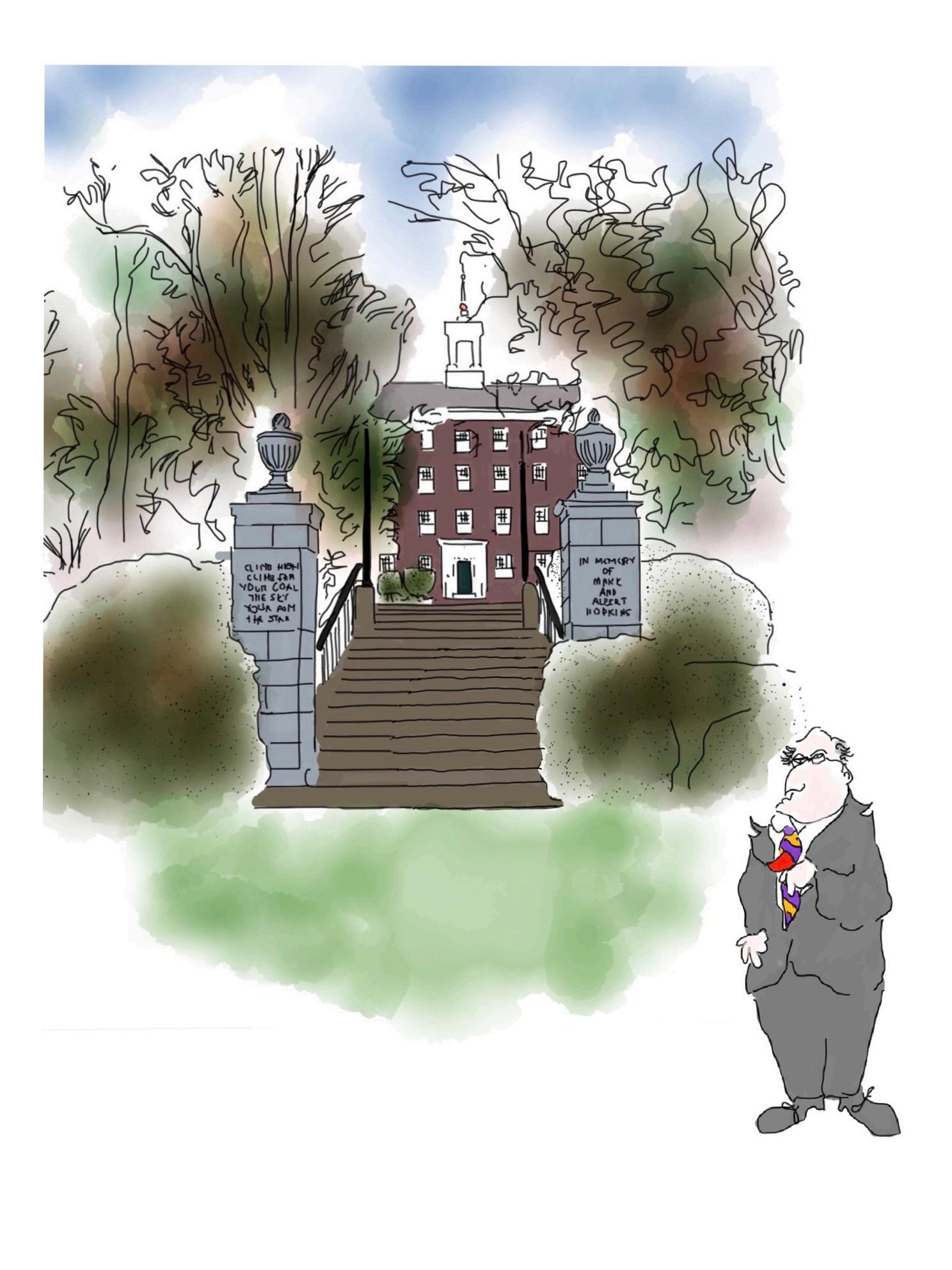
Alan Pearlman
I swam in high school and wanted to continue competing in college. A friend, a ’65 swimmer, was happy at Williams. I knew that the swim team had been successful and that the coach was terrific. Being a team member all four years was one of the most formative experiences I had, not just at Williams, but in life.
I was the slowest swimmer on the team, but Coach Muir gave me a chance to compete. I interacted with other students on campus, but I spent more time with (listed alphabetically) Jack Iliff, Al Kirkland, Jim Rider, Don Rodger, Tony Ryan, Lew Sears, and Doug Stevens than with anyone else. Being a teammate, and representing Williams, taught important lessons.
I spent 40 years at the University of Washington, on the School of Medicine faculty. While UW colors are purple and gold, Williams and Washington are vastly different. My son’s friend’s father, an All-American swimmer at UW, won the Bronze Medal in the 200-meter breaststroke at the 1976 summer Olympic Games. I was surprised to learn, in May 2009, that UW’s swimming program was being terminated because of “budget reduction” considerations.
As classmates know, many Division-I collegiate athletes in “revenue sports” are paid to compete. The NCAA acknowledges that D-I schools have major athletic programs (e.g., football and basketball), substantial funding and media exposure, and extensive athletic scholarships. Elite student-athletes often aim for professional careers. In contrast, Williams is a D-III school; these prioritize a well-rounded college experience, emphasize academics over athletics, and do not offer athletic scholarships.
At major universities, many “nonrevenue” sports have been dropped (or forced to find other funding) because of financial constraints. Football and basketball generate substantial revenue (ticket sales, television contracts) and benefit from large contributions from alumni. Nonrevenue sports (e.g., swimming and gymnastics) are at a fiscal disadvantage; for years, the UW competed in a “short course” (25-yard) pool and had no diving program. When finances determine program viability, sports like swimming suffer.
My time at UW has reinforced the value of D-III athletics. While D-III competition is generally not at the “elite” level, it is hard to consider D-I
competitors as “student athletes.” At Williams, athletes are students first; sports are an important part of their education, but not to the detriment of classroom performance.
The National Association of Collegiate Directors of Athletics (NACDA) gives an award (the Learfield Directors’ Cup) annually to the most successful programs in each division of collegiate athletics. Interested classmates can find details online. In D-III, Williams has by far had the most success, winning the Cup 22 of the 28 times it has been awarded!
Many classmates did not participate in athletics, but I suspect that those involved in the theater, outing club, college radio station, and other campus activities also learned the value of preparation, teamwork, a shared commitment to success, and the pride in representing alma mater. For me, the opportunity to “fight for dear old Williams” was truly a key part of my college education.
Stan Possick
My wife, Carroll, and I spent the month of January, 2026, in Williamstown, where I was teaching a seminar in the 2026 Winter Study Program. The class, “The history and the practice of psychological healing,” had nine students, one of whom was my granddaughter Sophie, which added to the specialness of this experience for me.
Although I closed my psychiatric clinical practice in 2014, I continued to teach courses and to supervise Yale psychiatry residents and clinicians training to become psychoanalysts at the Western New England Institute for Psychoanalysis until this past summer. I am still on the voluntary faculty at Yale and on the faculty at the analytic institute, but my roles in each setting have become far more limited during the past six months.
Carroll and I will be celebrating our 58th wedding anniversary on June 30, 2026. We have had a long and happy marriage. However, during the past six years, each of us has had to deal with major medical concerns and surgery. I had coronary artery bypass grafting surgery (CABG) in February, 2020, just weeks before the COVID pandemic. About 1-½ years later, Carroll was diagnosed with an adenocarcinoma in her right lung.
She had partial lobectomies of two lobes of her right lung. We have both been doing well since then.
Our children and grandchildren are thriving. Both of our sons, Steve and Jeff, are married to remarkable and caring partners, Valeria and Jennifer. Jennifer (pulmonology), Valeria (anesthesiology), and Steve (cardiology) are physicians. Jeff is an investment banker and cohead of environmental and climate-solutions investing at his bank.
Our grandchildren seem very engaged in their lives. Graham, a 17-year-old junior at Cheshire Academy in CT, is studying for an international baccalaureate degree, and he is very involved in musical and theater activities at his school. He spent part of last summer on an archeological dig in Spain. They were excavating an ancient Roman site there. Sophie and Zoey are nonidentical twins who just turned twenty. Zoey is a sophomore at Wesleyan, where she heads their Habitat for Humanity program. She is interested in government, international relations, and social-justice issues. She worked for a charitable organization in NYC last summer. Sophie is a sophomore at Williams, where she serves as a tour guide for visiting potential applicants and their families. She has a strong interest in studio art, psychology, and English literature. She worked as a counselor at a camp for autistic children this past summer.
My years at Williams, my experiences there, and friendships, old and new, with other students in our class remain among my most cherished memories and ongoing relationships.
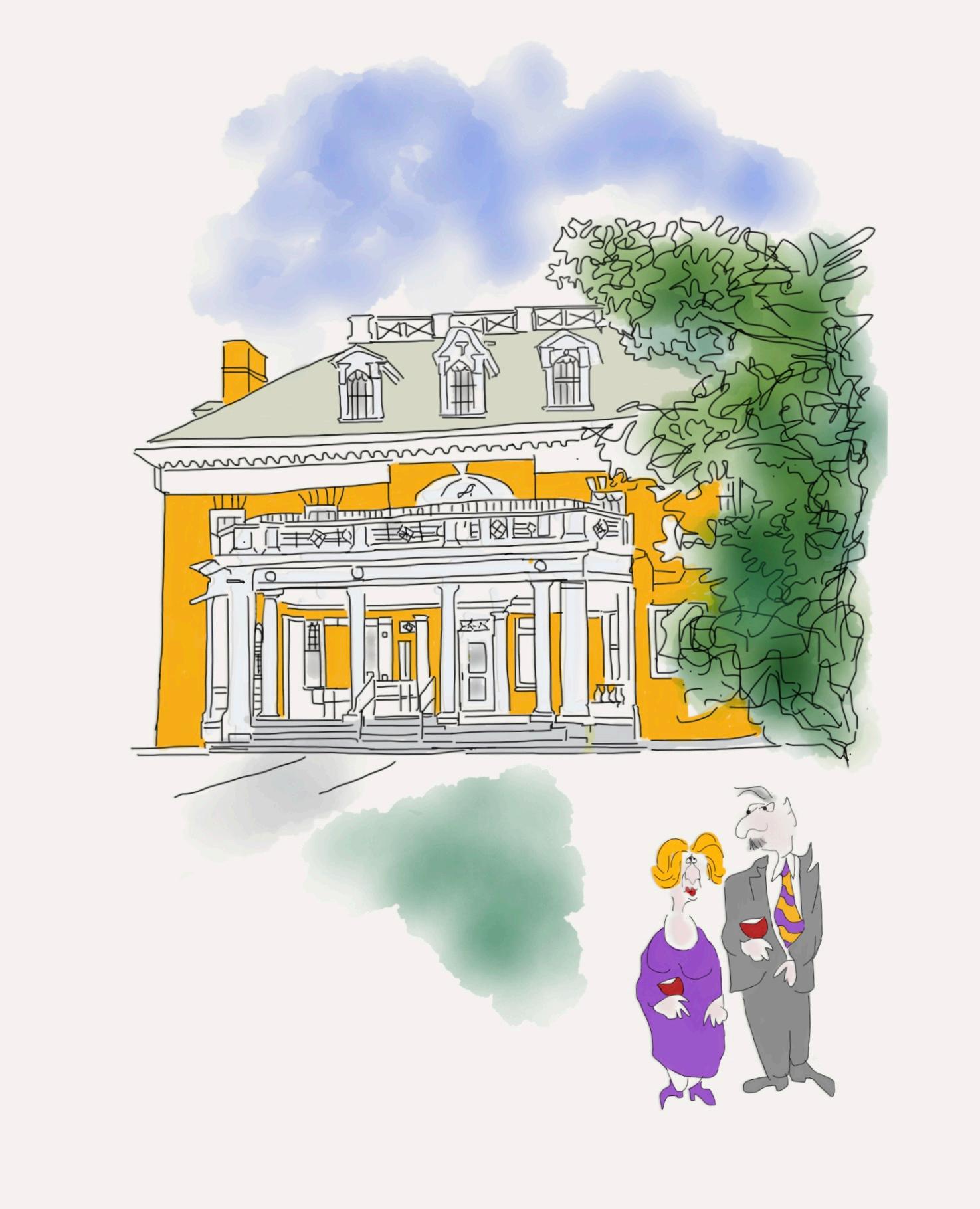
Ron Promboin
Let me start by saying that Williams hasn’t particularly affected my life directly since 1966, beyond reunions, occasional local events, and my résumé.
I went to Stanford (PhD), expecting to join the academic community, but the market was almost dead when I was ready to teach. So over the years, I consulted and worked for a few consulting firms (including Arthur Andersen in its dying year they brought me to northern Virginia, where I’ve lived since). Even my fifteen years with the Federal Home Loan Bank of Chicago had a variety of projects that resembled my consulting engagements. After leaving that bank, I joined a small consulting firm that valued businesses and business assets.
In 2001, Arthur Andersen recruited me to a DC valuation position, and I’ve lived in suburban Virginia since then. (Andersen’s demise was as much news to me as to anyone else, since I was in a different practice from the one that blew up.) I finally did get to teach full-time in the Maryland MBA program early this century, as a visiting professor of management for a couple of years. It was OK, but I suspect a career position would have been a better experience, if only for establishing a repeating course implementation. Driving from northern Virginia to College Park certainly wasn’t a high point of my experience!
When I was at Williams, I was a competitive bridge player, primarily in organized tournaments (we had an informal Williams team that won an intercollegiate event in Rochester in 1965). My interests have changed over time, and I “haven’t touched a card” since the late 1980s. I have no recreational competitions these days.
In recent years, I’ve done a fair amount of travel, primarily with commercial organized groups. I’ve been to the Pacific Northwest, Atlantic Canada, Ireland, Austria, Hungary, the member countries of the former Yugoslavia, and France. I’ve also visited my sister in Colorado. I haven’t decided where to go this year.
Peter Richardson
The experiences I had at Williams that are most important have centered around friendships. The nature of some relationships has shifted, of course. But many have remained durable, dynamic, and reliable.
We are now sixty years out. I got together recently with a half-dozen classmates for several days. Conversations ranged from acknowledging predictable late-life issues to remembrances of both lighthearted and difficult times along the way. There was comfort and ease as we examined the terrain of our lives.
There is another connection that’s been occurring within a smaller group. We are conducting Zoom calls monthly. Occasionally, we share sensitive personal topics or current adventures. Invariably, we will seek to explain to one another what is happening today in our democracy. The conversations are rarely conclusive, but they are always affirming.
I credit Williams for grounding and sustaining the vitality of friendships.

Bill Roe
On a cold winter’s evening in early 1962, I was enjoying a few moments by a warm fire when Fred Copeland showed up at our home in Minnesota, looked me in the eye, and told me that I would be a freshman student at Williams in the fall. The “independent streak” in me made me want to head in a different direction from that of my two older brothers and much older uncles, but the only polite and appropriate response to Mr. Copeland was a hearty “Thank you” and “I will be there.” That brief visit set me on a path that greatly changed and influenced my entire life.
From the earliest days at Williams, I met new and lifelong friends. I became acquainted with fellow students in all my classes, whose paths I continued to follow as they progressed through their impressive and successful lives after Williams.
I was invited to partake in significant leadership positions at the college and experienced my own personal successes in sports and other interests. Most of all, sophomore year at a DU lawn party, one sunny afternoon, I met my future wife and life partner, and that alone makes my entire Williams experience a rousing success!
As I moved from a high school where the academic program was limited and well defined, Williams presented me with opportunities to participate in a variety of academic areas that were of particular interest to me.
Courses as diverse as art, religion, and American social movements all fit nicely with my major in History and provided me with a broad educational experience.
During those formative years, I also learned many important life lessons. Sharing, teamwork, loss, love, humility, courage, inclusion, leadership, all of which played out through living and surviving together. I have applied many of these lessons of the Williams experience to my military service, business career in manufacturing, and, after my retirement, philanthropy in the promotion of early education for disadvantaged youth.
My Williams education has been one of my most significant life experiences and, fortunately for all of us, continues today through our wonderful Class of ’66 Blog.
Bob Roesler
Like nearly all of the Class of 1966, I arrived at Williams in late August of 1962 not really understanding what to expect or what I could or couldn’t do. I had had a fairly successful high-school career and thought I could hold my own with the private-school classmates. In the end, I think I did.
I roomed with Ed Cabaud and Pete Haller my freshman year in Sage C thinking I knew how to study and how to be on my own. I should have paid more attention to Ed’s and Pete’s style and study habits. Midsemester warnings saw me in Dean Hanson’s office being questioned about where I might be in the second semester; he suggested that the Army might be a good alternative. With some luck and slightly better study habits, I made it to sophomore year. I was then lucky enough to room with Bob Rubin and Bob Mitchell in West College, where better study habits and some slight maturity got me to semester break.
Then my experience radically changed: I returned to campus in January 1964 married and expecting the birth of Carolyn (the first of 5). Talk about growing up! With assistance from the two Bobs, Rusty Powell, Ray Carey, and many other ’66ers, I made it to June of 1966 and graduated with honors in History.
Could I have made it elsewhere? I don’t know, but I definitely benefited from the examples of my classmates and the patience of my professors Frank Oakley, Anson Piper, Fred Schuman, the Science Department (I got by and completed those requirements) and the growing belief that I could make it to support my family and make some contribution.
Williams was and is a nurturing institution as well as a wonderful educational environment. The College promotes growth, maturity, and an openness to all manner of subjects and experiences. The camaraderie of the Class of ’66 and our general acceptance of one another regardless of our backgrounds enriched my life and helped me move forward to indeed make some small contribution to the legal world in Vermont. Although none of my five children was privileged to attend Williams, I believe their exposure at events and especially reunions impressed upon them the magic of the “Happy Purple Valley.” Those impressions and experiences are some of the strongest legacies of Williams.
I am looking forward to June and to renewing friendships and acquaintances. Our individual stories and lives are all unique, but Williams is a touchstone for all of them.
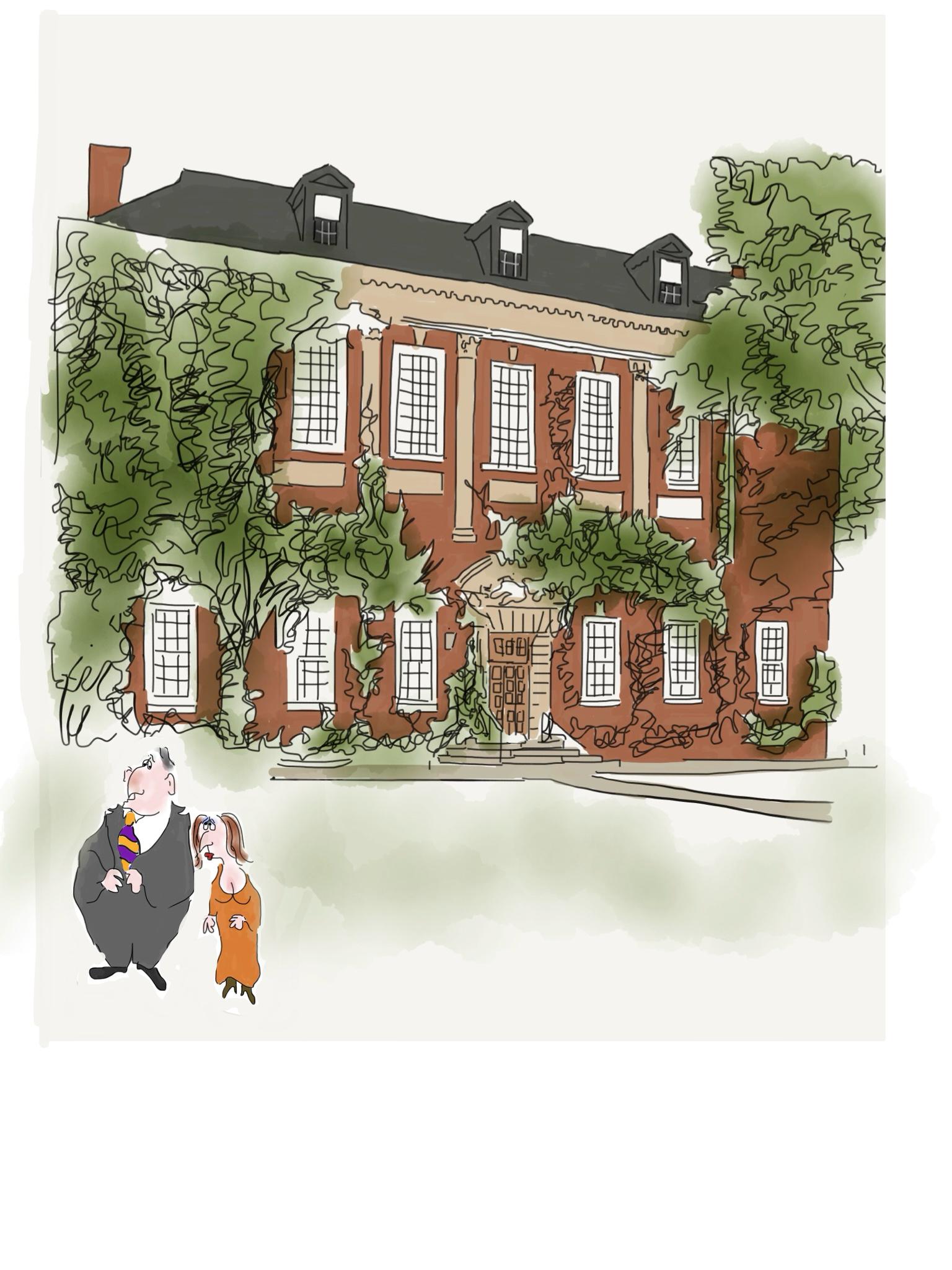
Allen Rork
“Places”
When I walked across the stage in Mission Park, June 1966, I was certain Williamstown was the last place in which I would spend any time again other than the rare football game. Reunions? What the hey were they? (Uncle Eph didn’t train incipient alums very well in ’66.)
Boston, New York, Simsbury, Fairfield, Williamsburg… So, after those few places, in May 2017, Lyn and I moved to Williamstown!!!??? What were we thinking…or were we? Maybe a really wrong turn off a busy highway or something like that.
No. More like things change. We had two daughters. They grew and made choices, good ones. We turned 60, retired, wanted an academic community…Williamsburg (William & Mary). Volunteered at W&M for 11 years, didn’t stop working, just stopped getting paid.
Daughters got married, lived in Massachusetts (Williamstown, Concord), had six babies (3 in Williamstown, 3 in Concord). Two new grandparents started missing the exciting new grandkids, and their parents and decided we needed a new academic community.
Voilà: Williamstown!
We bought and renovated a condo and over the past eight years have been very happy enjoying the many advantages our new hometown offers free auditing of Williams courses, music presentations, golf at Taconic, walking the beautiful landscapes, meeting a great network of friends, engaging in fascinating volunteer work, etc.
Of course, our grandkids were excited to have grandma and grandpa nearby, although that ebbs over time as they grow and friends and activities displace seniors and family…the natural sequence of things.
During last year’s reunions, I had breakfast with a woman from the class of ’75 at her 50th with whom I had worked in the reinsurance and investment business. Her take was that Lyn and I are in a very good place. I guess that’s too not bad for being somewhere that sixty years before I was certain I’d never be again.
Doug Rose
Times were changing, Williams was changing, but education provided continuity. I took from Williams a fascinated observation of two professors, Robert Gaudino and Laszlo Versenyi, each finding a personal path to meaning in scholarship. We were encouraged to join. In a freshman honors section of political science, Kurt Tauber graded partly on participation. Students raised their arms to be called on. By the time a student spoke, the discussion had often moved on, requiring a revision of what one planned to say to keep it relevant.
Williams still carried much of the 1950s. There was compulsory chapel, fraternities, the priority of football, and an all-male campus. Gargoyle circulated. Liquor could be bought in New York at eighteen. There were car trips to women’s colleges, 78-rpm records checked out of the library,
waiting tables as a work-study job, making hard cider. Fraternity pledging followed elaborate protocols. A large share of classmates came from prep schools. I was addressed in class as “Mr. Rose.” Wednesdays brought cookies with Mrs. Harpo, the wife of Dean of Freshmen Hansen.
At the same time, the 1960s were taking shape. There was the Twist, and the Rolling Stones. A small group of students, along with Chaplain John Eusden, went to Birmingham, Alabama, to support Martin Luther King Jr. The Shirelles sang at a campus dance. The Angevine Report led to the end of fraternities. There was a Black dining table, the “Hobbit Club” at Fred Rudolph’s, independent residence, and openly gay students. A twentypound bag of M&M’s served as a doorstop. There were plans to go coed. Quantitative political science began to appear. I interviewed Brookline residents for a Hofferbert survey and ran a counter sorter. It was possible to gently needle President Sawyer at a dinner.
A four-year summer research job for Jim Burns provided credentials, library experience, and contact with current scholarship. My classroom experience prepared me for graduate-level coursework. The Williams credential carried recognition and occasional resentment of privilege.
My own path differed from that of many classmates. I entered with the class of 1965 and graduated in 1966 under arrangements that did not foster familiarity with the class of 1966. My freshman residence was Lehman, while most students experienced Williams or Sage. Junior and senior years I lived off campus, with no roommates from the class of 1966. I dropped out for a year and changed majors. I received low grades in Russian, English, an independent study, and math. None of my closer friends Bill Bennett, Lee Richmond, Jay (Kelso) Davis were originally members of the class of 1966. I will read with interest the reflections of my classmates.
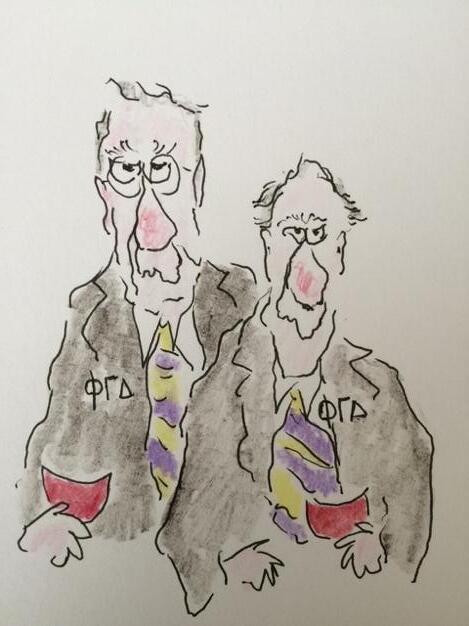
Jeff Rosen
My first thought is to be thankful that we are still here to enjoy a 60th reunion.
Looking at the chaos here and abroad, Madeline and I feel very fortunate every night when we sit down and have a nice dinner and because we have our daughter and two wonderful grandchildren nearby in Austin.
On a professional level, I am excited to see two of the research findings from our laboratory moving into clinical trials for the treatment of metastatic breast cancer. My interactions with trainees in the laboratory, including two Williams students, for the past two summers keep me energized.
Morning walks including conversations with our dog are cathartic and keep me moving.
The value of a Williams education is reinforced daily by our Class Blog and discussions about national and international events. Our class was influenced by the Vietnam War and the drive to register voters in the South. The launch of Sputnik in 1957 was an impetus to support science, and data-driven science was respected. A perfect time to start my career.
The attacks on higher education and the attempts to limit what is being taught and to rewrite history make me appreciate even more our “liberalarts” education. The term woke was never part of our vocabulary. My hope is we can survive the next three years, that the current administration will not continue to eviscerate the biomedical research enterprise and other important institutions like the CDC and EPA, and that the diversity that has made America great will not be destroyed.
My grandparents escaped from the shtetl and immigrated through Ellis Island more than a century ago. I pray we will still provide the same opportunity for other immigrants.
In hindsight, we were all privileged to attend Williams.
Best wishes!
Bob Rubin
My high school class was roughly 1,200 students, and in my junior year I was on track to go to an “Ivy” until I spoke with our principal or, rather, he spoke with me.
I had been sitting in his office suite doing clerical tasks (extracurricular credits) when he stopped by my desk and asked about my college plans. I mentioned the Ivies, and he told me that they would be just like high school: good education, large, and generally impersonal. He suggested Williams College as a place that was smaller than my graduating class and where I would be able to form friendships with both students and faculty and be an individual rather than a number. He may or may not have been right about the Ivies, but he was spot-on about Williams.
This was proven to me shortly after the start of freshman year, when my JA drove me to the infirmary in the middle of the night with a fever of 104 and I was subsequently diagnosed with mononucleosis. In those days, that usually meant a return home and the loss of a semester or a year. Not at Williams! Virtually all my teachers plus the dean of freshmen came to visit and assure me that I could “ease” back into academics and not to worry. That sense of community (“We have your back”) would be replicated constantly over the next 64 years.
While I continue to be in touch with classmates from Spencer House and former roommates, over the years I’ve gotten to know many with whom I didn’t interact while in Williamstown. Whether through working on our 25th and 50th reunions, Lance Knox’s January get-together in NYC, or Williams Alumni Travel, I’ve always come away from those events discovering or rediscovering what an interesting group of people we are, whether doctors, lawyers, diplomats, or businessmen. Our Class Blog reinforces this daily (I hope it continues at least until our 70th).
Both my kids went to Williams (’95 and ’98). If I believe them, it was not because my wife and I pushed them (we didn’t), but because of you. We attended every reunion and, when we lived in Boston, every Homecoming where they met you and your kids as well as faculty friends, and they liked what they saw. The older one went on an extensive college visit trip with me with Williams being the last stop. After spending a night with students
and meeting the daughter of one of our classmates, she told me the trip was nice, but none of the places were as “comfortable” as Williams. So while the education was great, it is the lifelong association with the Williams community and its values that I cherish most.

John Rugge
Many people think of a college education as being all about classroom courses. For me, Williams College was more than that.
As an incoming freshman, I arrived at Williams Hall to find an empty dorm room that needed furnishing, and that wasn’t easy. During the summer that followed, I took out my first-ever bank loan a whopping $250 to buy and then sell used chairs and sofas from around the area. My best memory is having entered an upscale store in Pittsfield and asking about furniture that had been traded in. The salesman pointed me to their building next door. After exploring this run-down, three-story warehouse, I returned to the sales guy, who asked if I had found anything I wanted. My reply was, “Yes…everything.” Next, we negotiated prices the chairs for five dollars each and the sofas for $10. Then came renting vacant space on Main Street and selling all of them for $10 and $20.
The next summer, my roommate, Alan Fincke, convinced me to sell encyclopedic dictionaries door-to-door in Black neighborhoods down South. After explaining to one mom how her kindergartener really needed
this dictionary, I would turn down the block and let another know how perfect this encyclopedia would be for her son in college.
Then came 1965 and a summer internship with Congressman Sam Stratton. With six classmates working for their reps, I was selected to arrange weekly meetings with various elected officials. First was Adam Clayton Powell, who was in the headlines because of a multimillion-dollar lawsuit against him. I couldn’t help asking him about the lawsuit he was facing. His reply was “Which one?” The next week, our group met with a young senator going by Bobby. Being considerate, none of us leaned forward to ask about his brother’s time in the White House.
Sometime later, during med school, I spent a summer canoeing in Labrador and then started cowriting a book about it. During internship, an editor at Alfred A. Knopf called with an offer of publication. So I paused my medical residency to rent a house in the Adirondacks and spent that summer finishing The Complete Wilderness Paddler. Then I decided to practice the next few months in Chestertown, a small mountain town where all three physicians had departed that same season.
Once having started, there was no way for me to leave. Most all the physicians in the surrounding towns were World War II refugees facing retirement. Unintentionally, I found myself “founding” a network of community health centers (FQHCs) that has grown to include 26 centers with a thousand staff caring for more than half the population of a rural area the size of Connecticut. Medical school was not enough for this. I also depended on my experience as an entrepreneur (all that used furniture), as a salesman (not dictionaries, but the need for these small towns to provide clinical facilities rent-free), and as a grant writer comfortable with approaching public officials at all levels. Thank you, Williams College.
Lew Sears
Williams enriched my life. Classmates were smart, stimulating, serious, and better prepared than I was (probably as a 10 percenter). Studies, swimming, singing, and sleep encapsulated my freshman year. I met my life partner between freshman and sophomore years. We were married in 1964, had a child in ’65, and graduated in ’66. I graduated with a
confidence level born out of the fact that my classmates were as smart and talented as anyone I would likely meet in life.
Williams’s reputation facilitated a first job after college on a GE training program. I picked up an MBA (not as challenging as many courses at Williams) and spent many years in great corporations before spending the last fifteen years working with several CEOs on leadership, strategy alignment, and organization effectiveness. I retired in my midseventies having worked for great people on stimulating projects and situations around the world.
My North Star has been my wife and our 62-year marriage. Three wonderful kids, six grandkids, some very supportive in-laws, and a sprinkling of dog and cat support staff put into focus the importance of family. We made a conscious effort to locate close to our kids, which we have been able to do. In our travels around the country, we have been fortunate to retain distant friends and meet a wonderful group of new friends, many much younger than Sharon and myself.
I shared with my grandchildren on my eightieth birthday the lessons I’ve learned on my journey so far…
1. Don’t put off a conversation with another that is sincere and you know will make them feel good or happy about themselves.
2. Let things go that upset or anger you. It is your choice to decide how you wish to spend your time in the future.
3. People tend to look at the glass as half-full or half-empty in life. A halfempty outlook focuses on the darkness. There is a healthier orientation. Others see both in us. Which is more effective to one’s health and relationships?
4. The half-full outlook on life can be a source of joy, positivity, and gratefulness, which radiates in a room.
The “blue zone” characterizes the keys to a fulfilling, long life well lived. Williams provided an early opportunity to develop my curiosity, experience the intricacies of relationships with others apart from family, bask in the natural beauty of the Berkshires, and develop my physical abilities as I was able.
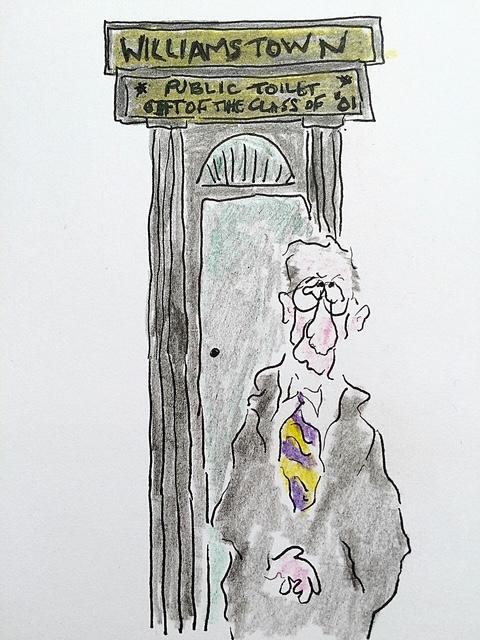
Marty Shulkin
The first thought that comes to mind in remembering my experience at Williams is gratitude for the opportunity to attend such a premier liberalarts college with classmates who had a passion for learning while forming close bonds of friendship with one another.
During the time I was there, I didn’t truly appreciate all that Williams was providing to me. In thinking about it now as we approach our 60th reunion (also a landmark I would never have imagined), I realize how lucky I was to attend a small all-male school, in a valley surrounded by the purple mountains and where the town and campus were essentially one. The size of our class and the relative isolation of the campus from any major city created an environment that caused us to work hard during the week and play hard on the weekends. The school clearly embodied the ideal of Mark Hopkins on the log. For me, it was a wonderful fit.
Having spent four years boarding at prep school and having a number of Andover classmates entering Williams at the same time eased much of the trepidation that I might have had as a first-year college student.
Most important, I was fortunate to have Frank Foley and Lee Comfort as roommates my freshman year. I couldn’t have chosen better roommates, and we soon became close friends. With Punky Booth, Jay Montgomery, and Ralph Bankes living directly across the hallway, the six of us formed a close friendship that lasted throughout our years at Williams. I’m happy to
say that I was able to get together with both Lee and Frank in Miami this year. It was wonderful reconnecting with both of them and sharing stories from our time at Williams.
I followed Frank to Psi U and met Albie Booth, Jim Ryder, and Don Rodgers, among others. I was also introduced to gables racing by David Tunick and Sandy Delone. If you think David’s solo trips across the Atlantic were dangerous, they pale in comparison to drunk gable racing. The people I met had many varied personalities and interests, from sports to art to opera to drinking to motorcycles; but no matter the differences, these were universally the brightest people you could find in one place. In addition to being academically excellent, most were accomplished in other pursuits, whether sports, art, or literature. I realize now that being exposed to such high achievers on a daily basis, whether in the classroom, the sports fields, or a road trip to one of the many women colleges within an hour’s drive, gave me great confidence in my future law studies, and the practice of law.
I started Williams as a premed, but after a D from Professor McGraff in freshman chemistry, I made the wise decision to switch to an English major. I loved the English and art classes at Williams. The small classes focused on the Socratic method required you to be prepared to defend your interpretations against classmates who were smarter than you. As I studied Shakespeare or Ulysses in depth, the class discussions with professors who challenged me taught me to analyze writings critically, to defend my position orally, and to write with clarity.
After Williams, I found law school very easy. More important, my experience at Williams taught me skills that formed the foundation of my approach to the practice of law. This led to a 55-year career that I truly enjoyed, finally retiring from the full-time practice at the end of 2023. Whatever modicum of professional success I’ve enjoyed at the law is largely grounded in the experiences I had at Williams.
Jon Smith
I went to Williams, sight unseen (no college trips back East in those days) with essentially no expectations other than I thought I wanted to be a “scientist.” How times changed! Four years later, I graduated in American
History and Literature. Learned to love music and art, now especially landscape painting and photography, e.g., Ansel Adams.
Made some good friends, including Rodney Traeger, Bob Krefting, Jim Rider, Rich Dugan, Dick Murnane, Bob Johnson, Bob Mitchell, Pete Haller, John Trainor, and others. I also ran a little cross country and the mile in track. Average at best but liked Coach Plansky and teammates.
Three days of law school convinced me that I had no idea what I was doing and I knew I was going to be drafted, so I enlisted into the Army. Basic at Ft. Lewis, Washington, in winter, advanced at Ft. Holabird in Baltimore. Then two and a half years in Akron, Ohio, doing background checks on people who needed a security clearance. Made more good friends there.
Attended Hastings Law School 1970-73. I was able to take several classes in environmental law and water law. I worked for two and one-half years with the US Army Corps of Engineers working on Clean Water Act cases and attended George Washington University on a Corps-sponsored program to get an LLM in environmental law.
I worked at the San Francisco Bay Conservation and Development Commission (BCDC) from 1980 to 2007. I loved the environmental and land-use aspects of the job but not so much the administrative stuff. I made many good friends there.
After retirement, I fell in love with landscape photography, both with film with a 4-by-5 view camera and later digital. Own my own printer. Lots of opportunities, as we have lived in the SF Bay Area, on the Big Island of Hawaii, and very close to Lake Tahoe as well as traveling through the Southwest.
And the best shall come last. I have now been married for 40 years to a wonderful woman, and we have two grown children of whom we are very proud, and two wonderful grandchildren whom we adore. We have moved a lot and traveled a lot. Currently live in the Coachella Valley, where it is lovely except in summer, where temperatures can reach 115-120. How lucky can one get.
Oh yes, we also have had three cats and five dogs, the latest and current dog being an Australian Labradoodle who weighs about 20 pounds and loves to “steal” anything not nailed down and run around a lot. She is a true love and delight.
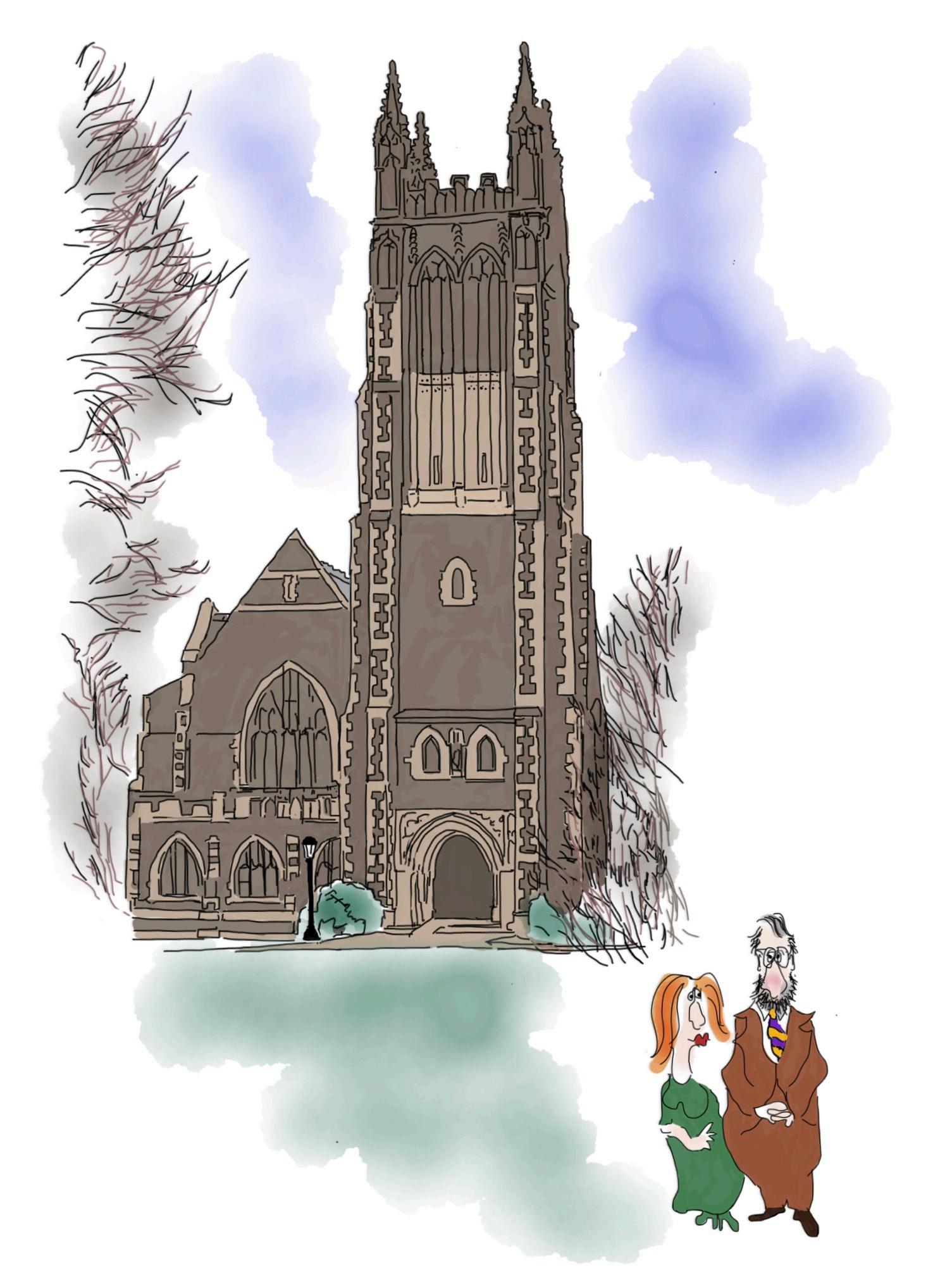
Willard Spiegelman
Some years ago, I quoted a remark of Voltaire’s in a piece I was writing: “After eighty, all contemporaries are friends.” I made an incorrect attribution. The quotation certainly sounds like something Voltaire might have said, but the source was Ninon de l’Enclos (1620-1704), the great writer, religious skeptic, and courtesan, who in fact was a financial benefactor of the young Voltaire. (You should look her up.)
I mention this not only to reacknowledge the wisdom of the remark, but also to suggest that learning something new every day confirms that one is
still alive, sentient, and has something to be grateful for. A teacher is never too old to be corrected.
At more than eighty, we have all reached well beyond our autumnal period. What now? Looking back nostalgically is an inevitable, selfindulgent temptation for the old. I try to resist its lulling and alluring siren call. Having taught the final classes of my forty-five-year career in the spring of 2016, I left Dallas one year later and returned to the East Coast. People here asked variations of a polite question that always began with three words: “Do you miss…?” Many direct objects filled out their inquiries. My answer was always the same: no. There was, I realized, no point in looking back. Looking ahead? Another impractical choice. We all know what lies ahead. Instead, I became and expect to remain something of a Zen practitioner. I live in the moment, the only reality. So far, this habit seems to be working. And I have also tried to adopt the yogic principle of “Santosha” as a modus operandi. It means contentment, not so much in the sense of comfort and satisfaction as of acceptance.
I write this little note on a cold but sunny day in Stonington, Connecticut. (Where is global warming when I want it?) I have just returned from what I assume will be my final colonoscopy a history of pesky, precancerous polyps made my gastroenterologist recommend one last probe. He, by the way, is a Williams alumnus. We have bonded several times, briefly and preanesthetically, over the wisdom of our choice of alma mater.
This little note began with a quotation from a distinguished seventeenthcentury Frenchwoman. I’ll end with a line from another Williams alumnus, Stephen Sondheim, ’50: “I’m still here.” If you are reading this, you are here as well, still learning, and hoping for more of life’s pleasures.
Peter Stern
There’s no question that my Williams experience/education played a pivotal role in my future development.
My most vivid memory occurred on 11/22/63, when Alan West, PhD, walked into our physical chemistry class and announced: “The president has been shot.” His face was somber (more than usual), and class was
immediately dismissed. We were dumbfounded. I spent the weekend with classmates glued to the TV at Psi U as the tragic sequelae of the assassination unfolded.
Retrospectively and on a brighter note, the stimulating liberal-arts education made me a better person and sharply contrasted with the sterile science prerequisites for my future in medicine. Social interaction, lifelong friendships, and respect for differences of all types were part of my growth package. In essence, my four years in Williamstown were a time of great personal development and minimal responsibilities and served as a catalyst for my future career in medicine.
Upon leaving the Purple Valley, I found myself in St. Louis at Washington University School of Medicine, where I met Sandy, my beloved wife of 56 years. Following 2 years in the USAF, I was privileged to receive my orthopaedic training in the Harvard program along with Tom Thornhill, friend, scholar-athlete, and classmate at Williams. Following a fellowship in hand surgery, Sandy and I settled in Cincinnati in 1979 and never left.
We have three children (including a daughter who went to Williams) and seven grandchildren. All three live out west (Golden, CO; Seattle; and San Francisco). Thirty years ago, we built a second home in Wilson, WY, the best investment ever, as it became the focus of countless, memorable family gatherings.
I thoroughly enjoyed my career as a full-time academician and was privileged to serve as chairman of the University of Cincinnati Orthopaedic Department for 22 years. Teaching and mentoring medical students, residents, and fellows became a passion and left a legacy of which I am quite proud.
I was also privileged to serve in several national orthopaedic leadership positions, including the American Board of Orthopaedic Surgery. The ABOS (like all medical boards) serves to protect the best interests of the public. Rest assured, the vast majority of orthopaedic surgeons practice high-quality care, and joint replacement and fracture care has greatly enhanced the quality of most sixty-sixers’ lives.
In closing, I’ve always suspected I was a “ten-percenter.” I firmly believe my experience at Williams, combined with hard work, permitted a great run both personally and professionally.
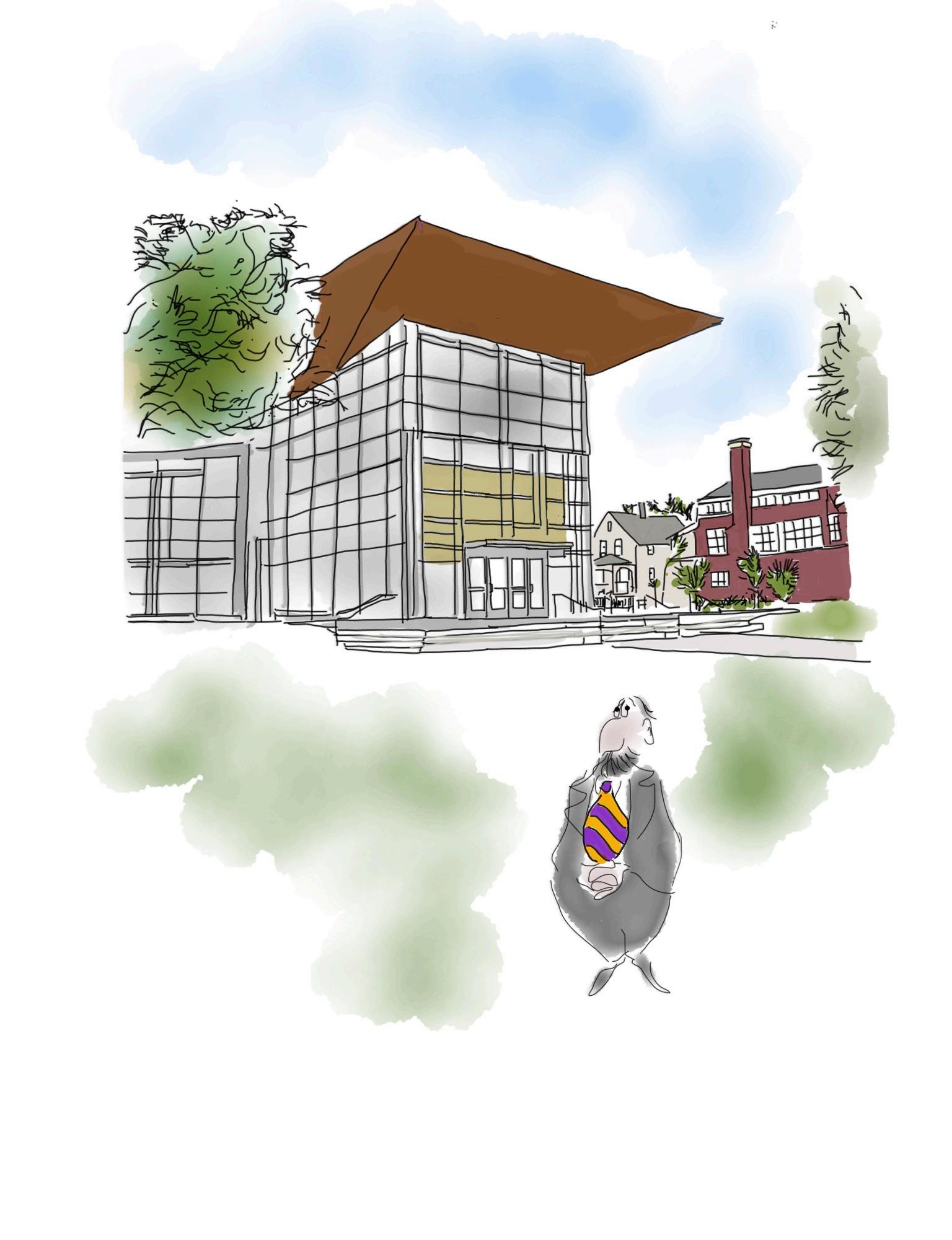
David Tobis
Mitch, Thanks for encouraging us to say whatever we’d like in 500 words.
I feel a deep connection with Williams. I cherish the lifelong friendships and more recent one with guys I barely knew on campus Steve Atlas, Peter Richardson, and Peter Koenig. We were brought together by our love for Jeff Jones and the fellowship that our class created in Jeff’s name.
When we were on campus, Williams was an environment where we could reconsider long-held beliefs. We were encouraged to explore. In my case, although I loved science, I realized that medicine was not for me.
Most compelling for me was exploring social-justice activism: going to Mississippi with Williams faculty and students during the height of the civil rights movement to rebuild a church during spring break in 1965. Williams allowed us to organize on campus against the Vietnam War, despite the college’s long connection to the CIA.
Those experiences opened a new world for me. I am deeply grateful to Williams for its role in fostering that exploration. I traveled a bumpy road to find my path, but I created a life of adventure, happiness, and purpose.
After a career as a sociologist and activist, working to reform child welfare systems in the US and globally, I now spend much of my time fighting to preserve our fragile and tattered democracy.
I have concerns, not so much about my life, but about where the country is going and the role Williams has played and will play to prevent democracy from being pushed into fascism.
In recent years, the Trustees refused to lead or even join the fight against fossil fuels. Indeed, despite the fiscal feasibility of divesting from fossil fuels, the Trustees, led by individuals connected to that industry, refused to divest, even though hundreds of other colleges and universities did so. Fossil fuels, championed by the Trump administration and endorsed by the college, are leading to the degradation of the Earth.
More recently, Williams momentarily took a principled stand as the first US college to refuse to sign a contract with the Trump administration on Diversity, Equity, and Inclusion. After the college and the faculty read the agreement, the College signed the contract requiring that it not engage in any DEI activity that the Trump administration deemed discriminatory. It accepted Trump’s bribe in order to continue receiving NIH and NSF funding. Again, self-interest defined Williams’s decision.
Free speech and dissent have been muted on college campuses across the country, including on ours. Perhaps the brutality of ICE and CBP in Minnesota will awaken Williams, as it has other schools.
We’re living in a national nightmare, watching democracy be dismantled. Most analysts of authoritarianism believe we have already left democracy behind and arrived at competitive authoritarianism. Whether we will land in the quicksand of controlled authoritarianism, which many call fascism, is an open question. What role will Williams play in preventing that from happening?
To date, Williams has been self-protective, not courageous.
David Tunick
The problem is reducing the profound impact of Williams in my life to 500 words. It began at ten years old, when I first learned that there was a Williams. Here’s a small sampling of transformational relationships and experiences that followed:
Roger Mandle ’63, JA: I walk into Sage the first day of school, and there’s my JA, brush in hand, painting my introduction to art as a serious discipline. I ultimately switched from preparing for medical school to majoring in art history and a career in the art world. Roger, who became a prominent museum director and president of RISD, remained a great friend until his passing in 2020.
Prof. Bill Pierson: He came into class with a Rembrandt etching offered for sale to the college museum. He said if his wife would let him, he’d sell the family car to buy it. His conviction and passion made an enormous impression on me, especially coming from the stolid, strait-laced Yankee that Prof. Pierson personified. That was the first I ever knew an art market even existed.
Prof. S. Lane Faison, Jr.: He was an infectiously enthusiastic teacher (and former Monuments Man), but I was not a diligent student and had skipped several Mondays of his weekly seminar on art criticism and the essays due weekly. One afternoon, I saw Prof. Faison in the Student Union and ducked behind a column, but he had spotted me. Instead of a condemnation, he asked me to stop by his house after dinner. I thought, uh-oh, that’s where I’d be excoriated and cast out. On arrival, though, he asked if I liked opera. I had neither been to nor ever listened to an opera and said so. He put Boris Godunov on the stereo, produced a bottle of Scotch, and explained the story and the music, playing the opera twice while the two of us sipped shots to something like 2 a.m. He never mentioned my skipping classes or my overdue papers. In the follow-up, I turned in every late paper and never missed class again (and I became an opera fan). Talk about the other end of the log!
Alumni: In my mid-30s, long-arranged mortgage financing to purchase a townhouse in NY for residence and gallery canceled. The closing was too soon to undertake again the demanding steps to achieve substitute
financing. By chance, Jim Deely, Williams ’43, dropped in when this was happening. Jim was a distinguished art collector and banker in the hierarchy of Citibank. We had met through Williams, and Jim had become a friend and client. I was in the dumps, and he asked what was wrong. Long story short: based solely on the personal relationship, I had a new bank mortgage the very same day without submitting any forms or statements. Williams does it again!
More to follow for the 65th!