Robotic Bricklaying: Infrastructure Revolution

Explore how robotic bricklaying is transforming large-scale infrastructure projects. This innovative approach accelerates construction, reduces costs, and improves safety.
By Cognitive Market Research




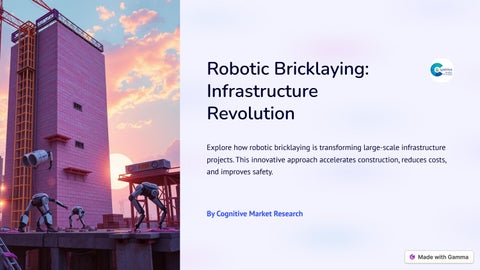
Explore how robotic bricklaying is transforming large-scale infrastructure projects. This innovative approach accelerates construction, reduces costs, and improves safety.
By Cognitive Market Research
Labor Intensive
Traditional bricklaying relies heavily on manual labor.
Time Consuming Projects often face delays due to slow bricklaying processes.
Safety Risks
Construction sites pose safety hazards for workers.
Automation
Robots automate the bricklaying process.
Increased Speed
Faster construction timelines are achieved.
Enhanced Safety
Reduced risk of accidents on site.
Increased Efficiency
Robots work continuously, improving productivity.
Reduced Costs
Lower labor costs and faster project completion.
Improved Accuracy
Precise brick placement minimizes errors.

Robotic bricklaying systems offer unparalleled precision. They automate repetitive tasks and are controlled by advanced software.

Planning
1
2
Project assessment and system design.
3
Setup
Robotic system installation and calibration.
Operation
Automated bricklaying process.
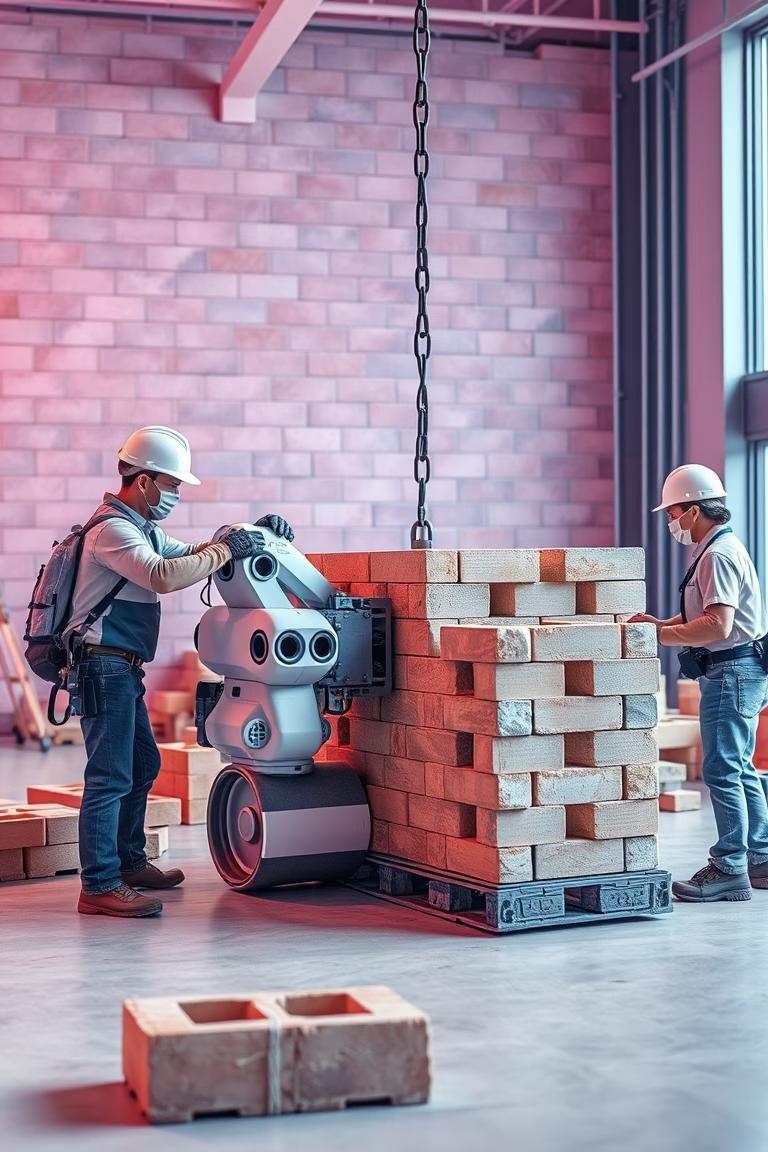
Robotic bricklaying led to faster project completion. It also resulted in significant cost savings and a safer construction site.
AI Integration Smarter robotic systems.
3D Printing On-site structure creation.
Sustainability Eco-friendly materials.
Robotic bricklaying offers transformative benefits. It enhances efficiency, reduces costs, and improves safety. Embrace innovation for future success.