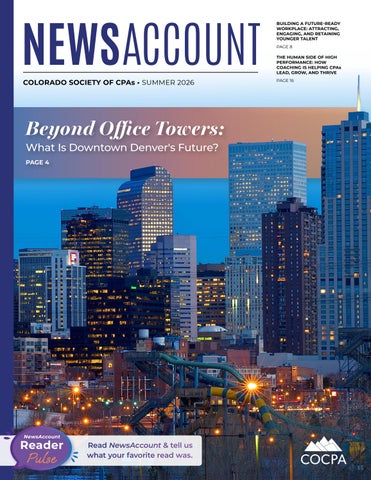
4 Beyond Office Towers: What Is Downtown Denver's Future?
Five years after the COVID-19 pandemic upended office life and emptied downtown business districts across the country, Denver's urban core is once again showing signs of energy and activity. For downtown Denver’s accounting firms, the office is now less about individual desk work and more about collaboration, mentoring, relationship building, and culture.
8 Building a Future-Ready Workplace: Attracting, Engaging, and Retaining Younger Talent
Creating a future-ready workplace – that not only attracts younger talent but keeps them engaged for the long haul – requires more than just adjusting policies. It demands a deliberate cultural shift rooted in respect, development, and adaptability.
10 Reimagining Leadership, Value, and Growth in Accounting
Artificial intelligence (AI) is changing accounting faster than many firms expected, but the bigger challenge may be how firms lead, communicate, and differentiate themselves during this transformation. Expert Jennifer Wilson shares why the profession must move beyond “AI sameness” by rethinking everything from leadership habits to delegation strategies.
14 Rulemaking: A Primer
With SB26-076 signed into law, the next chapter of CPA licensure modernization begins — not in the legislature, but in the hands of the State Board of Accountancy. COCPA Director of Government Relations and Advocacy Cole Buerger explains what that means for Colorado’s CPA community.
16 The Human Side of High Performance: How Coaching is Helping CPAs Lead, Grow, and Thrive
As rapid change reshapes the profession, accountants are feeling the pressure. Through the COCPA Coaching Collaborative, members are finding practical strategies, a fresh perspective, and support that is helping them lead more effectively, manage stress, and build sustainable careers.
A publication of the Colorado Society of Certified Public Accountants Vol. 72, No. 1 Summer 2026
Officers
Alexandra "Alexie" Tune, Chair
Jim Gilbert, Vice Chair
Tiffany Davis, Treasurer
Tobias "Toby" Clary, Immediate Past Chair
Alicia Gelinas, Secretary
Directors
Paul Elggren, Lindsay Holliday, Tiffany Knight, Dana Lambert, Doug Reeb, Stephanie Simon, Kelly Watson
Editorial Board
Isaac Adamu, Piyali Chatterjee, Ken Fichter, Laura Theiss, Michael West, Charlie Wright
Kelli Davis, Editor Tori Fogliano, Blue Ocean Ideas, Design
NewsAccount (ISSN #10899952) is published quarterly by the Colorado Society of Certified Public Accountants, 720 S. Colorado Blvd., Suite 500N, Glendale, CO 80246. NewsAccount is published in Winter, Spring, Summer, and Fall and reports information, news, and trends in the accounting profession. The Colorado Society of CPAs assumes no liability for readers’ business decisions in reference to advertisements or other information included in this publication. Links to external websites are provided for convenience and are not under the control of the COCPA. The inclusion of such links does not constitute an endorsement of the content or the views expressed therein.
Membership dues include a $2.00 one-year subscription to NewsAccount 303-773-2877 • 800-523-9082 Fax: 303-773-6344
AI May Change the Tasks, but as CPAs, We Still Drive the Decisions
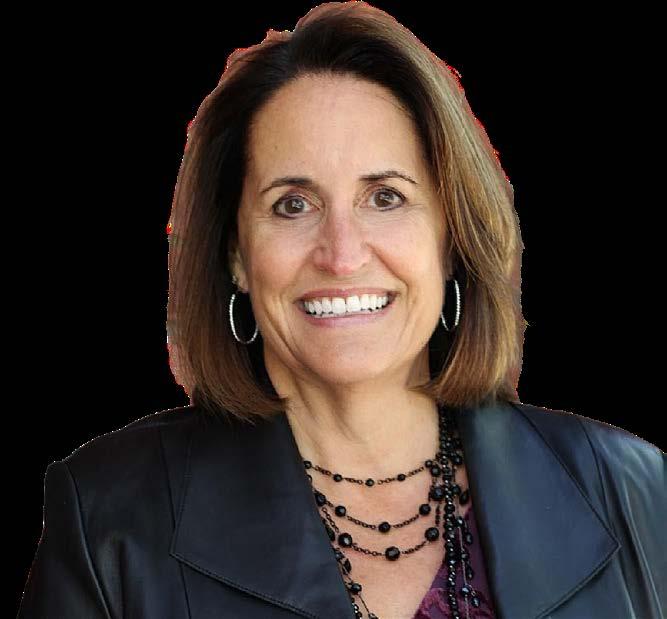
BY ALEXANDRA TUNE, CPA, MACC, CHAIR
CPAs working in every area of the profession are talking about artificial intelligence (AI) and its impacts. Audit testing, data analysis, document review, summarization, and parts of tax preparation are becoming faster and more automated.
Naturally, that has created anxiety, especially among students and young professionals who wonder whether there’s still a place for them in accounting.
The answer: Absolutely!
The profession doesn’t need fewer accountants. It needs accountants who can think critically, exercise sound judgment, ask better questions, and evaluate the output generated by AI. That’s where the real value will be.
CHANGE IS NOTHING NEW
The history of the accounting profession is filled with innovation, change, and upheaval. Technology has continuously changed the profession, and that change will continue.
The firms and professionals who succeed won’t be the ones resisting change; they’ll be the ones learning how to use these tools effectively while continuing to provide the insight, judgment, and leadership that clients and organizations still need.
AI is a productivity tool. It’s not a replacement for professional skepticism, ethics, experience, or human judgment. Someone must still oversee the process, understand the business context, and recognize when something doesn’t look right.
Companies want confidence that the information and insights produced by these tools are accurate and reliable. Governance still matters.
That’s why CPAs are uniquely positioned to lead in this environment. We already work in a profession built around trust, analysis, accountability, and standards. Those skills become even more important as AI is increasingly integrated into accounting and finance functions.
THE PROFESSION READY INITIATIVE
The bigger question is whether we’re preparing the next generation for this shift. If AI is performing some of the foundational tasks that historically helped young professionals learn, how do we make sure they still develop the judgment and decision-making skills they’ll need later in their careers?
This is just one reason the AICPA launched the Profession Ready Initiative , a longterm effort focused on understanding where skill gaps exist for early-career professionals and how accounting education and training must evolve.
Taking place over the next several years, the initiative is examining how firms, employers, and educators can better prepare future CPAs for a workplace where automation handles more routine work and professionals are expected to contribute at a higher level much earlier in their careers.
That means training will look different than it has in the past. More simulations; scenario-based learning; an emphasis on communication, analysis, and critical
thinking; and less focus on repetitive manual tasks that technology can now perform in seconds.
OTHER OPPORTUNITIES
There’s another risk to which we should also be paying attention. As AI becomes more common, there’s concern that work products, communication, and even ideas could start looking and sounding the same. Many business leaders are already discussing this concept of “AI sameness.”
It’s one of the reasons I’m looking forward to the COCPA’s PEAK: The Colorado Accounting and Finance Summit , Nov. 11-12, where keynote speaker Jennifer Wilson will explore how professionals can use AI strategically without losing the human perspective and expertise that makes their work valuable.
I encourage you to join us for what promises to be an important and timely conversation. (See the article, “Reimagining Leadership, Value, and Growth in Accounting,” on page 10, for a preview of Wilson’s expertise and insights.)
Another opportunity for members of our profession to gather comes on Aug. 27, at this year’s CPAs Make a Difference event at the Denver Museum of Nature and Science.
Moving the event from November to August is a big change, but one that we’re excited about, and it’s always a great opportunity to celebrate CPAs’ impact across our communities.
FINAL THOUGHTS
As I look ahead, I feel confident. This profession has adapted before, and we’ll adapt again. Change can be uncomfortable, but it also creates opportunity for those who are willing to grow with it.
Alexandra Tune, CPA, MAcc, leads Deloitte’s Denver Office Audit & Assurance Technology and Emerging Growth Practices, specializing in the technology, healthcare, and health technology industries. Reach her at atune@deloitte.com
Beyond Office Towers: What Is Downtown Denver's Future?
BY NATALIE ROONEY
As downtown Denver evolves beyond the traditional 9-to-5 workday, businesses, residents, tourists, and city leaders are redefining what makes an urban core thrive.
At 5 p.m. on a recent weekday, urban planner Brad Segal stepped onto Denver's newly reopened 16th Street and saw something he hadn't seen in years.
"Man, 16th Street was crowded," he says. "People were out."
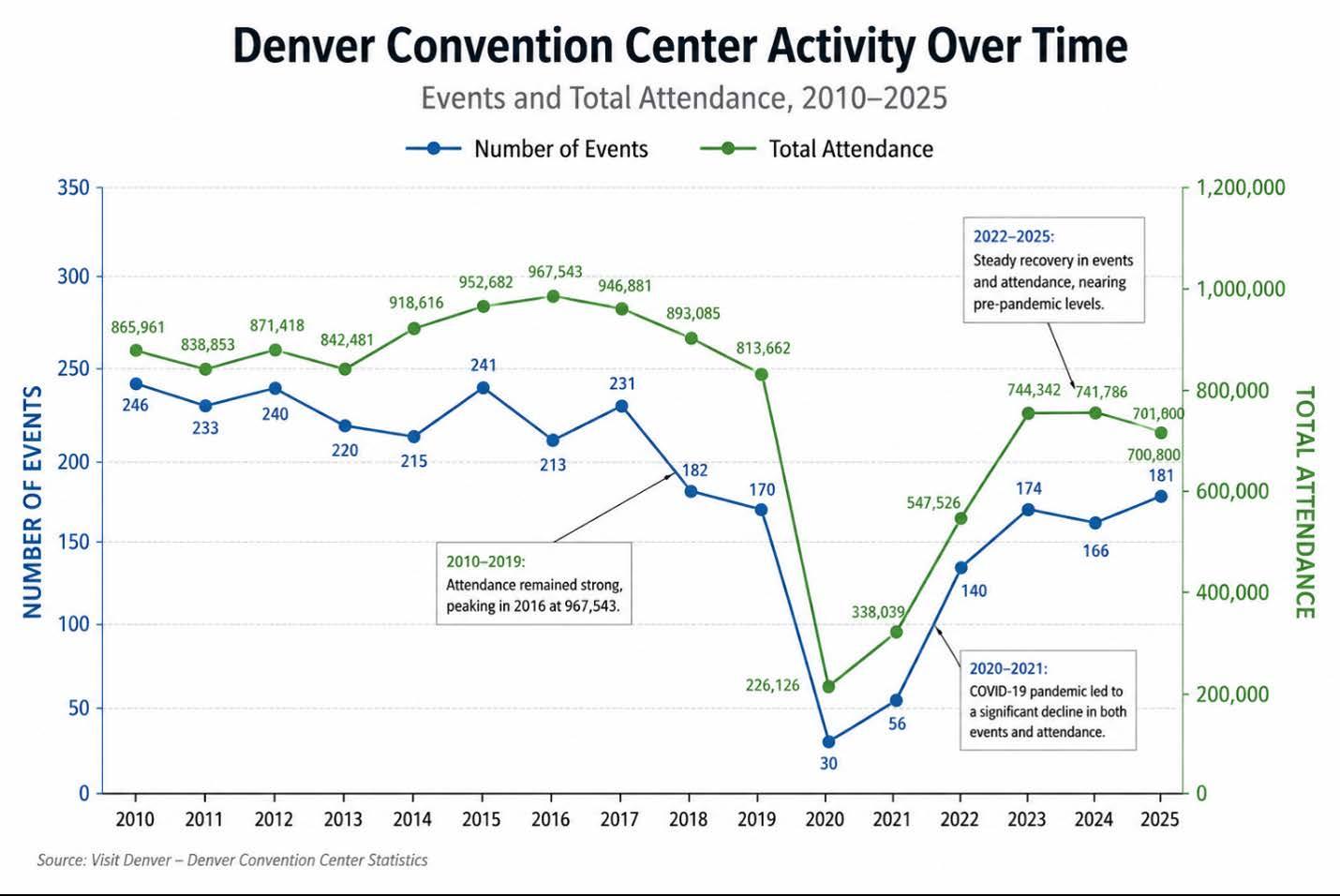
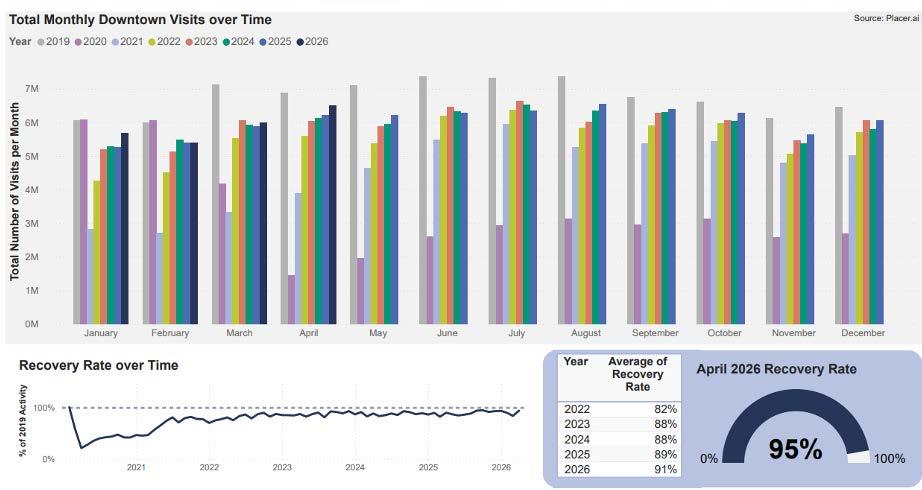
Five years after the COVID-19 pandemic upended office life and emptied downtown business districts across the country, Denver's urban core is once again showing signs of energy and activity. Convention traffic continues to rebound from pandemic-era lows. Restaurants and theaters are busy. Sports and concerts are drawing crowds downtown. Younger residents are filling apartment buildings in neighborhoods like LoDo and RiNo. Yet one thing is very apparent: The city's recovery doesn't look like it did before 2020.
Employers are rethinking the purpose of office space itself. Office towers still sit partially vacant. Hybrid work has permanently altered commuting habits. Downtown foot traffic patterns have shifted from weekday lunch rushes to evening and weekend crowds.
The question facing Denver today is no longer whether downtown can return to what it once was. Rather, planners, business leaders, and employers are asking: If downtowns are no longer built exclusively around office workers, what are they becoming instead?
A DOWNTOWN BUILT AROUND OFFICE WORKERS
For decades, American downtowns were designed around a simple pattern: Commuters arrived in the morning, worked all day, grabbed lunch, met friends or colleagues for happy hour after work, then returned home to the suburbs.
Denver was no exception.
"We became very reliant on the employee population downtown," says Segal, president and founding partner of Progressive Urban Management Associates, a consulting firm focused on downtown revitalization efforts across the country.
Before the pandemic, downtown Denver was booming. Office development surged, tech companies expanded, and restaurants and retailers followed the growing daytime workforce.
But according to Carrie Makarewicz, Ph.D., associate professor and chair of the Department of Urban and Regional Planning at the University of Colorado Denver, many of the trends reshaping downtowns today were already underway long before the pandemic.
Makarewicz points to decades of shifting urban development patterns that steadily changed the role of downtowns. Jobs moved to suburban office parks. Retail evolved. Rail transit systems were designed as hub-andspoke systems for daily commuters traveling
into city centers from outside the core – but not for people who lived and worked within the city, in between the spokes.
Now that many of those workers no longer need to commute five days a week, downtowns are being forced to adapt.
A TALE OF TWO DOWNTOWNS
Denver's office vacancy rate remains among the highest in the country, particularly in older office buildings constructed in the 1970s and 1980s. Some buildings are now functionally obsolete, lacking the amenities and infrastructure that today’s tenants expect.
URBAN OUTLOOK
CONTINUED FROM PAGE 5
Makarewicz describes many of the structures east of LoDo as isolated towers surrounded by concrete plazas, wide streets, and little street-level activity.
"These outmoded office buildings and large blocks were never really designed for people to linger," she says. While parts of downtown Denver continue struggling with office vacancies, other neighborhoods are thriving.
Segal describes Denver today as a tale of two downtowns.
Lower Downtown, affectionately known as LoDo and anchored by Union Station, has largely regained its pre-pandemic vitality thanks to its mix of housing, restaurants, hotels, entertainment, transit access, and public spaces.
"It's more mixed use," Segal says. "People live, work, and recreate there."
Makarewicz agrees. "Union Station has been a success. It's a place you want to be."
She points to the neighborhood's walkability, smaller-scale buildings, public gathering spaces, bike path connections, and active street life as reasons it continues attracting residents and visitors.
Farther east, however, large sections of upper downtown remain dominated by aging office towers and wide one-way streets that feel less welcoming to pedestrians.
Those areas now face difficult questions about what comes next. Some office buildings may eventually convert to housing or other uses, but others may prove financially impossible to redevelop.
Makarewicz references a downtown office building listed for auction with a starting bid of just $750,000.
"Only one of the three elevators works," she describes. "The HVAC system is non-functional."
She believes downtowns can no longer rely solely on office workers to sustain them.
"The key is having activity throughout the day and evening," Makarewicz says. "Residents, students, visitors, workers, and families all play a role in creating that."
DOWNTOWN AS A DESTINATION
Among the clearest shifts happening in downtown Denver today is how and when people use it.
Before the pandemic, downtown activity centered heavily around weekday business hours. Now, evenings and weekends are driving some of the strongest foot traffic.
"Usage patterns have flipped," Segal says.
Sports, concerts, conventions, theater performances, festivals, restaurants, and entertainment have become critical downtown draws.
Tourism and conventions have become increasingly important pieces of downtown's economic picture. While office workers once drove much of the activity, major conferences, sporting events, and cultural attractions now bring thousands of visitors into the city center throughout the year.
Convention attendance has steadily recovered from pandemic lows, helping support restaurants, hotels, and other downtown businesses.
The Denver Performing Arts Complex remains busy. Dazzle Jazz recently relocated nearby and now hosts live, nightly performances. Younger residents increasingly visit downtown for experiences rather than simply going to work.
"Downtown Denver is regaining the fun aspect," Segal says.
The redesign of 16th Street is also beginning to reshape perceptions.
"The redevelopment process was rough," Makarewicz says. "Businesses weren't sure of the investment."
Now, she sees a more welcoming corridor emerging, featuring trees, shade, seating, and public gathering areas that encourage people to spend time there.
"The design has really helped," she says.
Makarewicz believes successful downtowns must offer more lowcost, accessible public spaces where people of varying ages and income levels feel comfortable gathering.
She points to the importance of what planners call "third spaces" — places outside home and work where people can socialize, relax, and connect.
"We need these spaces and reasons for people to be there," she says.
THE CPA PERSPECTIVE: WHY OFFICES STILL MATTER
While downtown Denver's future may depend on more than office workers, offices remain an important part of the equation. CPA firms, law firms, and other professional service providers, along with financial institutions and other employers still help generate the daily activity, relationships, and economic connections that have long defined city centers.
The question is not whether offices matter, but what role they will play in a downtown that serves a broader mix of people and purposes. For accounting firms, the office is increasingly less about individual desk work and more about collaboration, mentoring, relationship building, and culture.
After a series of mergers left Wipfli operating multiple offices across the Denver area, the firm consolidated into a single office in RiNo, the River North Arts District just north of downtown.
"We wanted to have one location in the Denver metro area to drive collaboration and bring everyone together under one roof," says Pete Aden, CPA, Wipfli's Rocky Mountains market leader.
Thanks to hybrid work arrangements, the firm also significantly reduced its office footprint.
Aden says he has noticed generational patterns emerging in how employees use office space. Younger employees and older professionals tend to come into the office more often, while many middle-career employees who balance suburban commutes and family schedules prefer the flexibility of working from home.
Still, Aden believes younger staff gain important benefits from working in person.
"It's the indirect conversations that people pick up on," he says. "Two partners are talking about a conversation, and you just overhear it."
Those spontaneous interactions are difficult to replicate remotely.
Kate Johnson, CPA, a senior accountant at Wipfli, experienced that firsthand when the firm relocated to RiNo.
"I was such a proponent of the office moving downtown," Johnson says.
At the time, she lived nearby and walked to work several days a week.
"As a younger staff member moving into a senior role, it was so beneficial to be there," she says. "The camaraderie, peers, and leaders are there for quick questions."
She also valued the sense of community downtown offered as a young professional.
"When you're fresh out of college, you’re used to people surrounding you every day," Johnson says. "Community and camaraderie."
The Wipfli office itself has become more than simply a place to work. Employees gather on the rooftop patio, participate in office events, and socialize in the surrounding neighborhood.
Aden believes those experiences still matter for recruiting younger professionals.
"When young kids are choosing where to go and they see our office location, they're excited about it," he says.
Similar patterns are emerging at RubinBrown's LoDo office.
Matt Beerbower, CPA, the firm's Denver managing partner, says employees use the office in a variety of ways depending on their role, but younger professionals consistently seek opportunities to work alongside colleagues and learn from those around them.
"The newer folks like to be in daily," Beerbower says. "They've always wanted to work together."
Despite changing work habits, he believes one thing remains constant: "The benefits of being together haven't changed," he says.
A DOWNTOWN THAT PEOPLE CHOOSE
Downtown Denver's future likely will not depend on recreating the 2019 version of itself.
Instead, planners and business leaders increasingly believe that success will come from continuing the evolution already underway, creating a downtown that serves residents, visitors, students, workers, and businesses throughout the day and evening.
Segal believes downtowns continue to serve an essential civic role. "It's still the public square," he says. "It's where we go to celebrate big events or protest. These are things that bring people together."
Makarewicz agrees that human connection remains central to downtown's future.
"People tend to have a richer experience at their jobs when they're interacting with their teammates," she says.
The role of downtown may simply be changing from a place where people had to go into a place people actively choose to experience
That transition is still unfolding.
Office vacancies remain a challenge, and some buildings may never recover. Downtown Denver will continue to compete with suburban and neighborhood office hubs like Cherry Creek for tenants and investment. City leaders still face questions surrounding affordability, transit, and public safety.
But the energy returning to neighborhoods like LoDo and RiNo suggests that downtown Denver is evolving rather than disappearing.
"There's still a lot of work to do," Makarewicz says. "But people want places where they can interact, connect, and spend time together."
Building a Future-Ready Workplace: Attracting, Engaging, and Retaining Younger Talent
FBY ALEXANDRIA ROMERO, CPA, CGMA, MPACC
As the accounting profession continues to evolve amid changing expectations, emerging technologies, and shifting demographics, one priority stands at the forefront: building a workplace that not only attracts younger talent, but also keeps them engaged and inspired for the long haul.
irms and finance departments alike are realizing that traditional pathways, rigid expectations, and outdated workplace norms are no longer sustainable in an environment where younger professionals are seeking meaningful work, transparent leadership, and flexible structures. Creating a future-ready workplace requires more than just adjusting policies; it demands a deliberate cultural shift rooted in respect, development, and adaptability.
UNDERSTANDING WHAT YOUNGER TALENT VALUES
Younger professionals bring with them a strong desire for purpose, connection, and progress. They are driven not only by professional success, but by the ability to contribute meaningfully to their teams, communities, and the broader mission of their organizations. For many, work is no longer the central definition of identity. Rather, it is one important part of a well-rounded life that also prioritizes health, family, and individual passions.
This generation is asking for clarity, flexibility, and growth. That means organizations must reframe the conversation from “How can they fit into our model?” to “How can we evolve our model to better support their potential?”
It all starts with listening – genuinely and consistently. When younger team members raise concerns about being overworked, underpaid, or unappreciated, these sentiments should not be viewed as complaints, but rather as early indicators of disengagement. These are signals that something must shift.
CREATING A CULTURE OF BELONGING
One of the most powerful tools for retention is fostering a true sense of belonging. This goes beyond social connection; it’s about building a workplace where individuals feel safe to share ideas, challenge, and grow. It’s about honoring differences in background, life experiences, and communication styles. It’s also about employees seeing themselves reflected in the firm’s values and leadership practices. Ways to strengthen belonging in the workplace include:
• Empathetic leadership: Invite feedback and engage in active listening. Be aware of nonverbal signals and listen without immediately offering solutions. Validate experiences without defensiveness.
• Cultural awareness: Learn about and celebrate team members’ diverse backgrounds, work styles, and traditions. Avoid assumptions; ask respectful questions.
• Strong onboarding programs: First impressions matter. A thorough and welcoming onboarding process that explains the “why” behind procedures helps build early connection and confidence.
LEADING WITH EMOTIONAL INTELLIGENCE
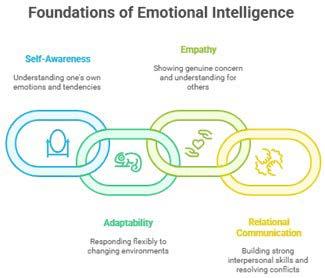
Technical expertise alone is no longer enough. Successful leaders must be emotionally intelligent mentors and communicators. Younger professionals thrive under leaders who are self aware, transparent, and people focused. Key elements of emotional intelligence that foster retention and engagement include:
• Self awareness: Understand your own emotional triggers, strengths, and communication tendencies.
• Adaptability: Recognize when the environment has changed and respond appropriately rather than rigidly.
• Empathy: Demonstrate genuine concern for others’ experiences. Respond with understanding, not judgment.
• Relational communication: Foster strong interpersonal skills by providing meaningful feedback, celebrating successes, and resolving conflict with integrity.
In today’s hybrid and high-paced work environments, boundaries are equally important. The best leaders are those who respect time off, promote work-life integration, and demonstrate through action that wellbeing is not optional, it is expected.
ENHANCING THE EMPLOYEE EXPERIENCE
Younger professionals are drawn to organizations that tell a clear and motivating story – one that reflects vision, values, and opportunity. A robust employee experience means more than perks; it encompasses connection, autonomy, and the ability to contribute to work that feels important.
To build an employee’s experience that retains and energizes:
• Provide flexibility: Allow team members to have input on when and where they work, with clear hybrid policies that reduce ambiguity and build trust.
• Thoughtfully manage workload: Avoid burnout by smoothing peaks in the workload and distributing engaging, skill-building assignments throughout the year.
• Clarify growth paths: Implement role-specific competency frameworks so that individuals know what is needed to advance and how success will be measured. Define both technical and leadership growth tracks.
• Invest in mentorship: Pair newer team members with experienced professionals to transfer institutional knowledge, strengthen your talent pipeline, and bridge generational perspectives.
EMBEDDING
CAREER DEVELOPMENT IN YOUR ORGANIZATION’S FRAMEWORK
Younger professionals want to feel that they are moving toward something meaningful. A clear and personalized development framework can be a deciding factor in whether someone stays or leaves.
Start with a structured onboarding plan that outlines expectations for the first 30, 60, and 90 days. From there, design professional growth plans that align individual goals with firm or organizational needs. These plans might include stretch assignments, cross training, or projects to lead.
Celebrate progress often. Milestone achievements, whether big or small, deserve recognition. Whether it is a team announcement, a handwritten note, or a meaningful one-on-one conversation, these moments affirm that growth matters.
Leadership development should also be an intentional offering. Consider building internal leadership programs that prepare individuals for future roles; clearly explain what is needed to become a manager, partner, or director; and provide feedback loops along the way. Transparency around advancement is key to retaining high performers.
MEASURING PROGRESS AND IMPACT
Building a future-ready workplace is an ongoing journey, not a checklist. To evaluate progress, organizations should implement performance indicators that reflect not only operational efficiency, but cultural health.
Consider the following metrics:
• Retention rates among employees with 0-5 years of tenure
• Engagement and satisfaction surveys with actionable follow-up
• Promotion and development data segmented by level and role
• Mentorship program participation and effectiveness ratings
• Onboarding success indicators, such as time to confidence or autonomy
These data points tell a broader story about how well your culture is supporting talent and where gaps may exist. The goal is not to be perfect, but to be intentional. When you treat your workplace culture as a strategic asset, you invest in something that compounds over time.
FINAL THOUGHTS
Attracting, engaging, and retaining younger professionals is not just a staffing strategy – it is a leadership imperative. Members of the next generation of CPAs are asking important questions about purpose, balance, and clarity around how they can make a meaningful impact. This is an opportunity to be embraced. When organizations rise to meet these expectations with curiosity and commitment, they don’t just future-proof their talent pipeline; they revitalize the profession itself.
As leaders, decision makers, and mentors, we are uniquely positioned to shape that future – one where people feel seen, supported, and motivated to stay. Let’s meet this moment with open minds and thoughtful action, not only adapting to what is ahead but instead helping to define it.
Based in Pueblo, Alexandria Romero, CPA, CGMA, MPAcc, is Director, CPA Pipeline, with the AICPA. Reach her at Alex.romero@aicpa-cima.com
Adapted with permission from the New Jersey Society of CPAs
Reimagining Leadership, Value, and Growth in Accounting
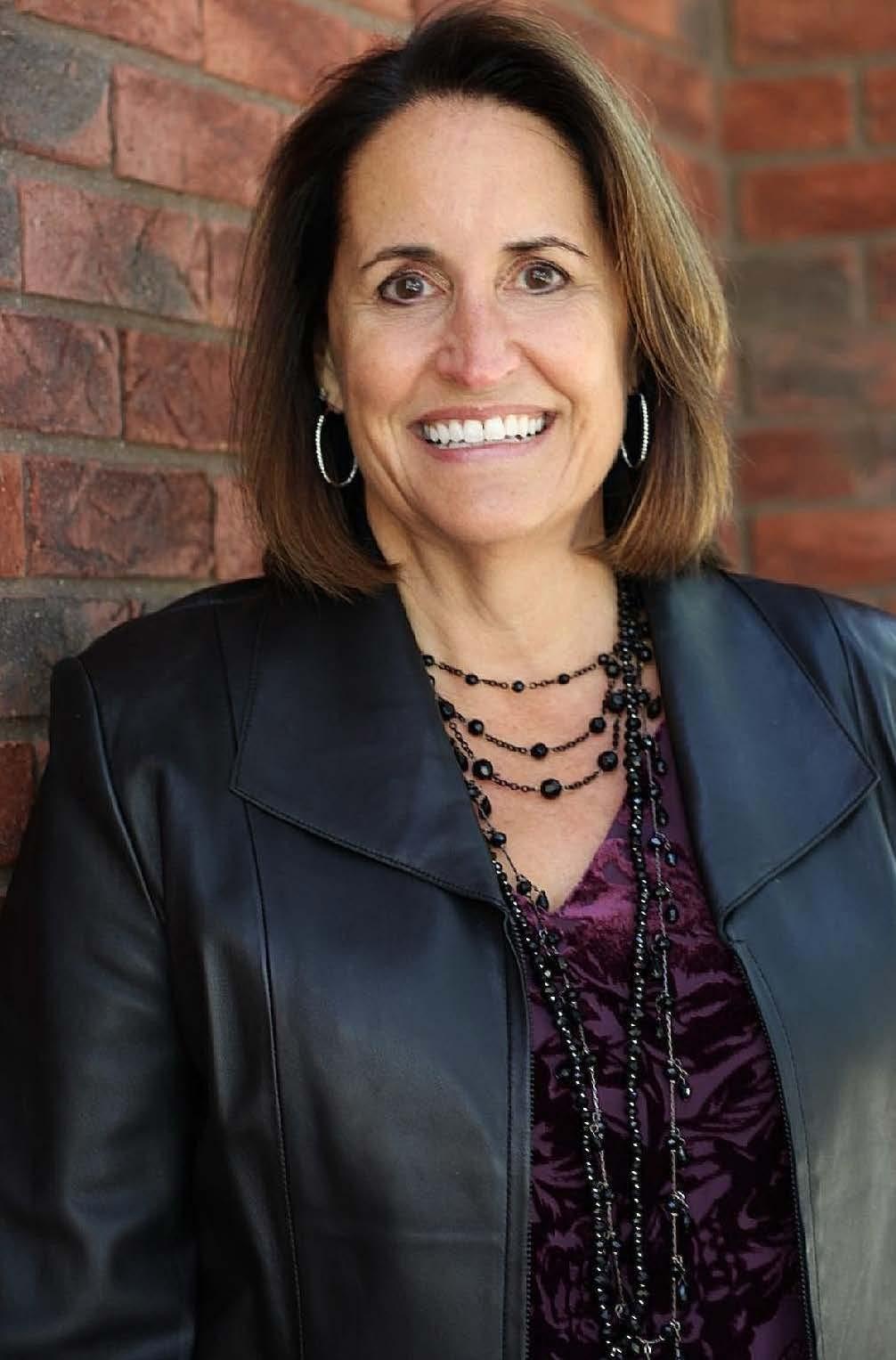
Jennifer Wilson
BY NATALIE ROONEY
Artificial intelligence (AI) is changing accounting faster than many firms expected, but the bigger challenge may be how firms lead, communicate, and differentiate themselves during this transformation. Ahead of her sessions at the 2026 PEAK Conference, one expert speaker shares why the profession must move beyond “AI sameness” by rethinking everything from leadership habits to delegation strategies.
When Jennifer Wilson , partner and co-founder of Convergence Coaching, talks about AI and the accounting profession, she isn’t making random predictions. She’s watched disruption impact the profession before. She remembers what happened when personal computers first arrived in accounting firm offices.
“I was 17 when the microcomputer was invented,” Wilson says. “I went to work for an accounting software distributor and traveled the Midwest demonstrating accounting software to firms, explaining how everyone was going to have a computer on their desk and clients would do their own books,” she says. “Firm owners were scared to death. They thought the technology in the hands of clients was going to remove their relevance and steal their work.”
Sound familiar?
“It’s the same story now, with AI, decades later,” she says.
“While AI may close some doors in terms of services needed, or job skills made obsolete, it will also open new doors to services clients need and opportunities to elevate our work.”
Wilson will bring that perspective and more to the COCPA 2026 PEAK: Colorado Accounting and Finance Summit , where she’ll deliver the keynote session, “Avoid AI Sameness: Adding Truly Transformative Value to Clients,” along with two breakout sessions focused on leadership and delegation.
While the topics may sound diverse on the surface, Wilson sees them all as interwoven because, as she explains, AI is forcing all businesses to rethink how they operate, how leaders communicate, and how work gets done.
“AI is creating a sea change, so we have to reimagine every aspect of our business, which includes our leadership strategies,” Wilson says. “This process is going to be creating an all-new organization while we’re running the current one, kind of like working on an airplane from the wing while it’s in flight.”
GETTING BEYOND THE SAMENESS
Wilson doesn’t mince words: AI isn’t an evolution. It’s a revolution , and she believes firms are at risk of focusing on the wrong thing.
“The shift to using AI to deliver services and run our businesses will cause us to really focus on differentiation and adding value,” she says.
“Right now, AI in any title gets everyone’s attention. But underneath it, the real conversation is: who are we going to be for our clients and customers, and how can we add value?”
Wilson’s keynote session explores the growing risk that firms will begin producing work that feels indistinguishable from what anyone else, or even clients themselves, can generate using AI tools.
“We have to be careful not to fall into the trap of just hitting the easy 'cut and paste' button on AI and giving the client something they could get themselves,” she emphasizes.
The shift is already happening so much faster than many firms realize. Wilson points to both consumer AI tools and profession-specific platforms that are already reshaping workflows, client expectations, and revenue.
“BlueJay, CoCounsel, Claude, Co-Pilot – your clients are all using these same tools,” she says. “For some of these tools, they’re taking what used to be an eight-hour research project to 30 minutes. AI is stripping time from jobs, and that impacts revenue models, pricing, and how firms think about value.”
If firms rely too heavily on AI-generated content without adding deeper insight, context, and strategic thinking, Wilson says they risk blending in.
“We’re in trouble if we’re doing AI cut-and-paste and not going deeper, not customizing and personalizing,” she says.
She has also seen clients take their CPA’s deliverables, feed them into AI tools, and ask the technology to simplify the instructions or tell them what might have been missed or how the AI tool might streamline the CPA instructions.
“The CPA must do these things before they send them to the clients, or, over time, they can risk the client/CPA relationship entirely,” she cautions.
At the same time, Wilson sees enormous opportunities for those who are willing to evolve because AI can free CPAs from repetitive tasks and create more space for higher-value conversations and advisory work.
“AI will save time so we can be more for clients and employers,” she says. “More anticipatory, more relational, and more solutions oriented.”
THE MOST COMMON ROADBLOCKS TO GREAT LEADERSHIP
Wilson’s breakout session on leadership roadblocks will focus on five common patterns she sees repeatedly while coaching both up-and-coming and established professionals.
Some leaders struggle to speak up and contribute. Others dominate conversations. Many wrestle with confidence, vulnerability, or communication habits that continue to hold them back.
“Leadership development is about looking at yourself honestly,” Wilson says. “In my session, I’ll ask participants to look at themselves and ask: Is this a roadblock I run into? Or if not, do I know someone who does?”
One challenge she sees often, particularly among emerging leaders, is a reluctance to speak up.
“About half the people we coach aren’t verbally contributing in group conversations and aren’t very visible either,” she says. “Their inner dialogue inhibits their confidence and essentially holds their tongue.”
Fear of being wrong, not wanting attention, or worrying about embarrassment can all prevent people from participating fully in meetings and client conversations. But in a profession that’s increasingly moving toward advisory work and relationship-based service, silence is problematic.
“People can’t follow you if they can’t hear your thoughts,” Wilson says. “You’re not leading if you’re not expressing.”
On the other end of the spectrum are professionals who overcontribute and unintentionally dominate discussions.
“There’s almost an equal number of people who carry all the verbal weight,” she says. “Both sides need strategies.”
Wilson believes all of these communication dynamics matter even more in the AI era. As more back-office and technical tasks become automated, professionals will need stronger interpersonal and relational leadership abilities.
“In the past, the accounting profession attracted people who sat in the back room and ground out work,” she says. “Now, while AI may take more work from the back room, we’re going to need our people to have confidence generating solutions in the front room with clients.”
That means employers need professionals who can communicate clearly, build trust, anticipate client needs, and guide conversations confidently.
“It all becomes more verbal, more relational, and more visible,” Wilson says.
The good news is that these skills can be developed.
“I’ve watched people completely transform,” Wilson says. “Sometimes they just need someone to help them recognize what’s holding them back and practice new approaches to build confidence.”
THE POWER OF EFFECTIVE DELEGATION
Wilson’s third PEAK session tackles another challenge that many leaders know well but struggle to execute consistently: delegation.
“Delegation is a lifelong practice,” she notes. “Just like exercise and healthy eating, sometimes you fall off track, but you get back on and delegate some more. It’s not optional.”
PEAK
CONTINUED FROM PAGE 11
The problem, Wilson says, is that many professionals unknowingly reinforce bad delegation habits. They fail to communicate clearly, avoid setting deadlines, or step in and take back the work themselves. Over time, that creates frustration for both leaders and team members.
“We all see ourselves make these mistakes,” she says. “No matter how experienced we are.”
One of the most common delegation pitfalls is lacking specificity.
“People say things like, ‘I need you to take the lead on this’ or ‘get to this when you can,’” Wilson points out. “There’s so much murkiness in delegation.”
Another major stumbling block is failing to document expectations clearly.
“If it’s not in writing, it didn’t happen,” she says.
Wilson sees delegation as another critical piece of the profession’s transformation. As firms rethink workflows and responsibilities, leaders will need to use the Keep, Stop, Start process to determine what work they should continue doing, what work should be delegated to others, and what may no longer need to happen at all.
“What will I stop doing to make room for what I need to start doing?” Wilson asks, adding that this “stop things to start things” mentality applies both professionally and personally.
“You can’t just keep adding starts all the time,” she says. “It’s impractical. What are you giving up?”
PREPARING FOR REINVENTION
Flowing through all three sessions is the same core message: The accounting profession is entering a period of significant reinvention, which carries tremendous opportunity.
When firms first adopted computers and accounting software decades ago, many feared technology would replace accountants entirely. Instead, the profession evolved, client expectations changed, new opportunities emerged, and CPAs are more in demand than ever.
Wilson believes AI will follow a similar pattern, though at a much faster pace, noting that the goal isn’t simply to learn about AI tools or leadership theories. The goal is to think differently about how the profession is changing and how accounting professionals must evolve alongside it.
While technology may transform how work gets done, Wilson believes the future still belongs to professionals who can think critically, communicate clearly, and create meaningful value for clients and teams alike.
“Yes, this is a massive transformation,” she says. “But those who embrace it and stay focused on relationships, leadership, and value can thrive.”
Don't miss PEAK: The Colorado Accounting and Finance Summit , Nov. 11-12 at the Sheraton Denver West in Lakewood. Designed to inspire, educate, and connect Colorado's accounting and finance professionals, this immersive experience will offer opportunities for learning, networking, and collaboration. Register today!
MEMBERSHIP PROGRAM
Support Your Team. Support the Profession.
The COCPA 100% Membership Program helps save your team time and money. At the same time, it demonstrates your organization’s commitment to the profession. Together, we are 100% strong. Benefits include:
CONCIERGE-STYLE attention from COCPA’s membership team
RECOGNITION of your firm and team (both online and in print)
DISCOUNTS towards training that helps make your team smarter
STREAMLINED dues processing
So much MORE!
Learn more about the
THANK YOU to our 100% Member Firms
Causey Demgen & Moore, PC
Cherry, Ogle & Quinn, PC
Eide Bailly
FORVIS, LLP
Grant Thornton LLP
Haynie & Company
Johnson and Associates, CPAs, PC
Kundinger, Corder & Montoya, PC
Marrs Sevier & Company LLC
MGPM, PC
Moss Adams LLP
Plante Moran LLP
Reese Henry & Company, Inc.
Rubin Brown, LLP
Soukup Bush & Associates
CPAs, PC
WhippleWood CPAs, PC
Rulemaking: A Primer
BY COLE BUERGER
With SB26-076 signed into law, the next chapter of CPA licensure modernization begins — not in the legislature, but in the hands of the State Board of Accountancy. Here’s what that means for Colorado’s CPA community.
The passage of SB26-076 was a genuine win for Colorado’s accounting profession. After years of advocacy and collaboration, the bill was signed into law in May 2026, opening the door to three new pathways to CPA licensure — ones that better recognize the range of education and experience that aspiring CPAs bring to the table.
But a bill signing is not the finish line. Before any of those pathways become real for a single candidate, the State Board of Accountancy must translate the law’s broad intentions into specific, enforceable rules. That process — called rulemaking — is where the details are decided. And details, in licensure, matter enormously.
FROM STATEHOUSE TO RULEMAKING
Think of a new law as the outline and rulemaking as the full draft. Legislation sets the direction — in this case, three distinct licensure pathways — but it leaves room for the regulatory agency to fill in the specifics: what counts as qualifying experience, how many credit hours meet the standard, what it means to hold a bachelor’s degree for licensure purposes. For SB26-076, that agency is the State Board of Accountancy. The Board will now undertake a formal rulemaking process to put the law into practice. That process has four stages, each designed to ensure that the public — including professional organizations like the COCPA — has a meaningful chance to weigh in before the rules become final.
THE FOUR-STAGE RULEMAKING PROCESS
1. Notice of Proposed Rulemaking
The Board drafts its proposed rules and files a formal notice with the Colorado Secretary of State. That notice includes the draft language and a timeline for public input. Once published, the clock starts — and so does the opportunity for stakeholders to engage.
2. Public Comment Period
Anyone — individuals, businesses, schools, professional associations — can submit written feedback on the proposed rules. You don’t have to attend a hearing or hire a lobbyist. If you have a perspective on how the rules should work, you can put it in writing and submit it. It’s one of the most direct ways for working professionals to shape regulatory outcomes.
3. Public Hearing
The Board holds a formal hearing where stakeholders can speak directly to Board members — sharing experiences, raising concerns, or supporting particular approaches. The COCPA will be there. We also encourage members with relevant experience in hiring, education, or career transitions to consider showing up and making their voices heard.
4. Final Adoption and Publication
After the hearing, the Board weighs all the input it received and votes on whether to adopt the rules as proposed, revise them, or send them back for more work. Approved rules are published in the official state registry and become law on their effective date.
WHAT THE COCPA IS WATCHING
The COCPA has already submitted a letter to the State Board laying out our members’ priorities for how SB26-076 should be implemented. Those recommendations came from a broad stakeholder process — including educators, employers, and practitioners from across the state. A few areas stand out as especially important to get right.
Keeping the Three Pathways Distinct SB26-076 was designed to offer genuinely different routes to licensure — not three variations of the same requirements. We’ve seen some states effectively neutralize that intent by applying identical education standards across all pathways.
The COCPA is pushing back on that approach, recommending that the Board set requirements that reflect what each pathway is actually asking of candidates.
For the bachelor’s degree pathway — which pairs an accredited bachelor’s degree with two years of qualifying experience — we recommend that the Board maintain the current educational standards already in place for exam eligibility:
• A minimum of 27 semester credit hours in accepted accounting coursework
• No more than six of those hours in introductory-level accounting courses
• At least one auditing course of three or more semester credit hours, focused on U.S. Generally Accepted Auditing Standards (GAAS)
For the other two pathways — a bachelor’s degree plus 30 additional credit hours with one year of experience, and a post-baccalaureate degree with one year
of experience — we recommend a higher academic bar. Our stakeholders largely viewed these pathways as closest in spirit to the traditional 150-hour model, and we believe the rules should reflect that:
• A minimum of 33 semester credit hours in relevant accounting coursework
• No more than six of those hours in introductory-level courses
• At least one auditing course of three or more semester credit hours, focused on U.S. GAAS
What “Bachelor’s Degree” Means Going Forward
The law shifts focus from counting credit hours to recognizing degree attainment. That’s a meaningful change, and the rules need to reflect it. We’re recommending a definition that focuses on whether a recognized baccalaureate degree was actually conferred by an accredited institution, rather than anchoring everything to a specific credit-hour count that could become outdated as higher education continues to evolve.
Defining “One Year” of Experience
The new two-year experience pathway only works if everyone agrees on what a year means. We’re recommending that 1,800 hours equals one year — consistent with Colorado’s current standards — and a five-year window to complete the two-year requirement, giving candidates room to navigate real-world career timelines.
Protecting Colorado’s Reciprocity Standards
As other states adopt varying licensure models, questions about reciprocity — how CPAs licensed elsewhere can practice in Colorado — are becoming increasingly complicated. We’re urging the Board to consider requiring a longer period of active practice before granting automatic reciprocal licensure, as a way of ensuring demonstrated competency rather than just paper equivalency.
WHY YOUR VOICE MATTERS
Rulemaking can feel like insider baseball —
who can sit for the exam, what qualifies as enough experience, and how CPAs from other states can work in Colorado. These aren’t abstractions.
The COCPA will be at the table throughout — submitting comments, testifying at the hearing, and making sure the Board hears from the profession. We’ll keep members updated through our advocacy channels as the process unfolds. If you have questions or experiences that should inform the rules, we want to hear from you.
THE BOTTOM LINE
Getting SB26-076 across the finish line took years of effort. Getting the rules right will require sustained engagement over the months ahead. The rulemaking process is where the law becomes real — and where the CPA community’s voice carries real weight.
Cole Buerger is the COCPA Director of
The Human Side of High Performance: How Coaching is Helping CPAs Lead, Grow, and Thrive
BY NATALIE ROONEY
As rapid change reshapes the profession, accountants are feeling the pressure. Through the COCPA Coaching Collaborative, members are finding practical strategies, a fresh perspective, and support that is helping them more effectively lead, manage stress, and build sustainable careers.
While the accounting profession has always come with the pressures of deadlines, client expectations, long hours, and constant change, some CPAs say today’s pressures feel more intense.
Firms are navigating staffing shortages, the AI revolution, private equity investment, evolving client expectations, and the shift from compliance work to higher-level advisory services. At the same time, professionals are trying to manage growing workloads while protecting their time, energy, and personal lives.
For some CPAs, professional coaching is becoming part of the solution.
ENTER THE COCPA COACHING COLLABORATIVE
In fall 2025, the COCPA Coaching Collaborative (CCC) launched its first cohorts, with a second set rolling out in summer 2026. The CCC brings together CPA coaches who understand the profession firsthand and help participants work through the operational, leadership, and personal challenges that often lead to stress and burnout.
For coaches Doug Slaybaugh and Carla Greenan, the goal isn’t to “fix” accounting professionals. Instead, they’re helping participants perform at a higher level while creating careers and lives that feel sustainable.
“We want accounting professionals to see that coaching can be transformational,” says Slaybaugh, founder of The CPA Coach. “CPAs can be skeptical around the topic of coaching. We want them to understand this is something people are really benefitting from.”
IN A PRESSURE COOKER
Slaybaugh, a CPA, retired firm partner, and professional coach with more than 25 years’ experience in the profession, says accounting has entered a period of concentrated change.
“The industry remained mostly unchanged for a very long time,” he notes. “Then in the last five years we’ve had COVID, private equity coming into the profession, pipeline issues, a retiring workforce, artificial intelligence, and the shift to advisory services. Everything is happening faster than ever.”
That pace of change is affecting professionals at every level.
“Everyone is feeling some version of pressure that’s unique, whether it’s more accountability or higher expectations,” Slaybaugh says. Greenan sees similar challenges from a different perspective. A former CPA who spent more than two decades in corporate leadership roles before becoming a coach, she now works primarily with high-achieving working parents and professionals.
“People in professional services tend to have very high expectations of themselves,” Greenan notes. “The culture creates this need to always be available and responsible and get it all done even though the list never ends.”
For many women and working parents, that pressure becomes even more layered.
“There’s this second system running in their brain all the time,” she says. “Schedules, logistics, school meetings, work deadlines, kids’ sports. It’s like having 40 browser tabs open in your head all day long. No wonder people are exhausted.”
WHEN SYSTEMS CREATE STRESS
Much of the stress in accounting firms is often blamed on workload alone, but Slaybaugh says inefficient systems and our own habits frequently worsen the pressure. One of the biggest issues he sees is the growing partner bottleneck.
“Everything lands on the partners,” he points out. “They’re the last ones reviewing work, handling client issues, dealing with billing, onboarding clients, managing staff, and trying to grow the business – all at the same time.”
As firms automate lower-level work and expand advisory services, the problem can actually intensify.
“There’s more high-level work available for partners now, but the underlying burden hasn’t gone away,” Slaybaugh says. “They don’t have the energy or time to focus on the most valuable things they should be doing.”
The healthiest firms are learning to protect professionals’ time.
“Firms that are doing this well recognize what someone’s highest and best use really is,” he says. “Then they look at how to leverage, delegate, or automate everything else.”
Those concepts aren’t just applicable to firm leaders.
Greenan says many professionals unintentionally create additional stress because they struggle to establish boundaries.
“High performers are rewarded for saying yes,” she says. “They tell themselves stories like, ‘If I say no, people will think I’m not committed,’ or ‘They won’t ask me again.’”
The problem became even more complicated after the pandemic blurred the boundaries between work and home.
“We got used to always being available,” Greenan says, “and we never really went back.”
SMALL CHANGES CAN MAKE A BIG DIFFERENCE
While some challenges require organizational change, both coaches say that individuals can take practical, immediate steps to reduce stress and create more capacity.
Slaybaugh says one of the biggest stressors is distraction.
“Performance is the realization of potential minus the interference that gets in the way,” he says. “Distractions are one of the biggest forms of interference.”
Constant emails, Teams messages, notifications, meetings, and interruptions throughout the day all add up to interference.
“One of the first things I work on with clients is removing that interference,” Slaybaugh says. “Turn off notifications. Close Outlook when you’re not using it. Block time on your calendar. Decide who truly deserves your attention.” He also encourages professionals to rethink how they spend their time.
“A 30-minute meeting might only need 15 minutes,” he says. “If someone asks you to review something, ask yourself who else could handle it. Leverage your team.”
Greenan similarly encourages professionals to protect their mental bandwidth during high-pressure seasons.
HELPING GREAT PROFESSIONALS GROW
Both coaches acknowledge that coaching can still carry a stigma in the profession.
“There’s this idea that if someone has a coach, something must be wrong,” Slaybaugh says. “But coaching isn’t only for people struggling. Sometimes it’s for people who are already successful and want to perform at an even higher level.”
Greenan agrees. “We’re not fixing people,” she emphasizes. “We believe our clients already have the answers that work for them. Coaching helps them strengthen performance, better manage time and energy, and move toward the kind of life and career they want.”
Both coaches compare professional coaching to athletic coaching.
“The best athletes in the world still have coaches,” Slaybaugh says. “Those coaches help them improve performance, even at the highest level.”
"Have a plan. Know your top two priorities for the day. Not 20 priorities. Two or three."
She also recommends reducing decision fatigue whenever possible.
“At home, create support systems,” Greenan says. “Weekly family meetings, meal planning, syncing schedules. Anything that reduces the number of decisions you have to make during the week.”
Even small habits can help create better transitions between work and home.
“These transitions don’t have to take a lot of time,” she says. “Sometimes 90 seconds is enough. Sit down, take a breath, step outside, or intentionally shift your mindset before moving from work mode to home mode.”
Another important mindset shift is learning to stop focusing only on what didn’t get done.
“High achievers tend to end the day thinking about everything left undone on their list,” Greenan says. “Instead, acknowledge what you did accomplish. Usually, it’s a lot more than you realize.”
Greenan adds that coaching also provides a safe space for conversations professionals may not feel comfortable having inside their firms.
“Leaders need coaches, too,” she says. “Sometimes you just need someone who can help you get unstuck and move forward more clearly.”
FINDING CLARITY THROUGH COACHING
For Erin Moore, CPA, founder of Affinity CPA, the CCC arrived at just the right time.
After beginning her career in public accounting and later launching her own outsourced accounting firm, Moore found herself struggling with many of the same challenges other firm owners face.
MAXIMIZING POTENTIAL
CONTINUED FROM PAGE 17
“Growing my firm has been a real trial-and-error process,” Moore says. “Trying to scale revenue, figure out capacity, hire people, train them, and build systems – everything.”
When she learned about the CCC through the Society’s Independent Accountants Alliance , she decided to join Slaybaugh’s CPA Practice Strategies cohort.
“In some ways, the stress management cohort appealed to me,” Moore says. “But I felt like the root of a lot of those stressors was really practice management.”
She joined the program with a list of practical business questions, but the coaching conversations quickly became more strategic.
“Doug asked questions that really made me think about what my vision is for my firm,” she says. “He helped me identify patterns that were making me unhappy.”
Moore says the accountability and follow-up after each session helped her put ideas into action.
“After each session, he’d send notes, takeaways, and homework,” she says. “Knowing I’d have to report back gave me the push to actually try things without putting them off or coming up with reasons why they wouldn’t work.”
One of the biggest shifts involved pricing and valuing her services.
“I’m pricing differently now,” Moore says. “I’m charging more appropriately for the value we provide, and I’m surprised how often clients accept it without question.”
The coaching also helped her rethink her firm’s long-term direction.
“In the first session, Doug asked me what kind of firm I would actually want to work in,” she says. “That concept has stayed with me. Now when I bring on a new client, the goal isn’t just adding to my own workload. It’s about building a firm.”
Moore believes coaching helped her step back and take a more focused, strategic approach to her business instead of simply continuing to react to daily pressures.
The program is designed to create smallgroup environments where accounting professionals can discuss challenges openly while learning practical strategies from coaches who understand the realities of the profession.
For Greenan, the broader goal is helping professionals move beyond survival mode. “I talk a lot about moving from surviving to thriving,” she says.
“No one thrives every moment of every day. That’s unrealistic. But coaching can help
“As advisors, we ask our clients to be willing to step back and examine their businesses, to make changes ... I don’t know how we can be good advisors if we’re not willing to do that ourselves.”
She also believes the coaching helped normalize conversations around dealing with challenge and uncertainty.
“There’s some humility involved,” Moore says. “You’re admitting that something isn’t working or that you don’t have all the answers, but what you get from it is incredibly clarifying and worthwhile.”
HELPING CPAS THRIVE
The CCC currently includes cohorts focused on CPA practice strategies, retirement planning, and work-life planning.
create more moments where people feel like they’re living and working in a way that aligns with what they really want.”
Slaybaugh hopes more CPAs begin to see coaching not as a sign of weakness, but as an investment in growth and themselves.
“Sometimes coaching helps people overcome challenges,” he says. “But often it’s about helping good professionals become even better. That’s where the real opportunity is.”
New CCC cohorts are launching July 24. Learn more here
Just like a good peanut butter and jelly sandwich, insurance and risk management work better together.
When you purchase CAMICO’s Accountants Professional Liability insurance , you are not just insuring your business. You also have access to CPA-focused risk management services and resources — such as unlimited guidance from in-house specialists, education and training, an online library of loss prevention resources (sample letters, articles, archived issues of CAMICO’s newsletter, alerts, and much more), and proactive claims support. With 40 years of experience protecting CPAs there is very little that CAMICO’s team of experts hasn’t seen.
Visit www.camico.com to learn more.
CPAs say about CAMICO.
What's Your “And”?: How Sharing Personal Passions Enhances Workplace Performance, Culture, and Relationships
IBY JIM BRENDEL
Here is a question you may not have been asked at work recently: What do you do outside of the office? Not the surface-level pleasantry, but a genuine, curious inquiry into what lights you up when you are not crunching numbers or reviewing client files.
f that question feels oddly out of place in your professional world, author John Garrett has something important to say to you.
Garrett’s book, What’s Your “And”?: Unlock the Person Within the Professional , is a challenge – backed by real research and real people – to one of the accounting profession’s most stubborn assumptions: that the best professionals are defined entirely by their technical expertise and professional credentials.
Garrett argues that the opposite is true. The hobbies, passions, and quirks that CPAs leave at the office door every morning are not distractions from their professional identity; in reality they’re just what the profession is missing.
THE CPA WHO BECAME A COMEDIAN
Garrett brings considerable credibility to this conversation, as he is not an outsider looking in at the accounting world — he lived it. A Notre Dame graduate who passed the CPA exam and worked at PricewaterhouseCoopers, he was as “inside” the profession as it gets. He also happened to be performing standup comedy on the side.
Rather than hide that fact, Garrett eventually leaned into it, ultimately leaving public accounting to build a career as a professional comedian, keynote speaker, and culture consultant. He has since written two Emmy
Award-nominated shows, released a comedy album on Sirius XM, and appeared on stage more than 2,000 times. Accounting Today has named him one of the 100 most influential people in the profession.
Garrett’s personal journey forms the backbone of the book, which he uses as a launching pad for a broader argument, supported by hundreds of interviews from his podcast, What’s Your “And”? The podcast has now topped 600 episodes and features accountants, lawyers, consultants, and other professionals discussing their outside-ofwork passions.
Nearly 40 of those real-life stories are included in the book, offering specific examples and making it an easy read.
THE CORE IDEA: YOU ARE MORE THAN A CPA
The central premise of the book is simple: While we introduce ourselves professionally with a title – “I’m a CPA” – who we actually are is far richer than that.
We are CPAs and marathon runners. CPAs and beekeepers. CPAs and competitive chess players, ballroom dancers, amateur astronomers, volunteer firefighters, and novelists.
That “And” — the thing we do outside of work — is not just a footnote to our professional identity. Garrett argues it is a defining feature of who we are, and when we share it authentically with colleagues and clients, our professional relationships grow stronger and deeper.
Garrett builds a persuasive case that suppressing our outside interests in the name of “professionalism” is actually counterproductive. When people feel they must check their full selves at the door, engagement suffers, turnover rises, and the human connections that drive client loyalty and team cohesion wither.
Employees from marginalized groups such as racial minorities, LGBTQ+ professionals, first-generation college graduates, or people with disabilities often face even greater pressure to mask their identities.
Garrett draws on his own research and the real experiences of other professionals to show that team members who know each other’s “Ands” communicate better, more readily trust each other, and are more likely to go above and beyond for one another.
For CPAs specifically, this message resonates. The accounting profession has long struggled with persistent stereotypes — that accountants are bland, numbers obsessed, risk averse, and interchangeable. These stereotypes have also historically served to exclude people whose backgrounds, communication styles, or appearance don’t fit a default mold. Garrett does not dismiss those stereotypes outright. He acknowledges them and then systematically dismantles them, showing that the most effective accounting professionals are not those who conform most completely to the generally accepted CPA stereotype, but those who bring a more complete version of themselves to their work.
PRACTICAL AND PEOPLE CENTRIC
One of the book’s genuine strengths is that it does not stop at inspiration. Garrett is careful to include a practical framework through which leaders and employees alike can begin to build cultures where outside interests are welcomed and celebrated.
He addresses the hesitation of many professionals to reveal personal details at work — worrying about being judged, seeming unprofessional, or simply not knowing how
to start those conversations. His advice is practical, accessible, and free of jargon. Managing partners and firm leaders will find particular value in the chapters aimed at organizational culture. Garrett is direct: If you want to attract and retain top talent in a competitive market, you must create an environment where people feel seen as human beings, not just billing units.
As many accounting firms grapple with staff shortages and high turnover, that message is worth taking seriously. The book makes the case that something as simple and costless as genuine curiosity about your team members’ lives outside the office can have an outsized impact on engagement and loyalty.
Garrett also speaks directly to the client relationship dimension, which will resonate with practitioners in public accounting. When a client knows that his or her CPA is also a jazz musician or a youth soccer coach, the relationship shifts. It becomes warmer, more personal, and more resilient.
In a profession where so much of client retention comes down to relationships, that point alone is worth reading this book.
THE VERDICT
What’s Your “And”? is not a book about worklife balance in the traditional sense. It makes a sharper argument than that: The boundary between “who you are at work” and “who you are everywhere else” is a false and ultimately damaging one.
For CPAs, who are not used to sharing personal information, Garrett’s message might be uncomfortable to hear at first, but the examples are convincing.
Whether you are a sole practitioner, a manager at a regional firm, a partner at a Big Four firm, or a chief financial officer at a Fortune 500 company, the themes of What’s Your “And”? will stick with you the next time you start to introduce yourself as just “I’m a CPA”. So, the question stands: What’s your “And”?
Retired Moss Adams partner Jim Brendel is active in the community as a volunteer, board member, and audit committee member, and serves on the COCPA Diversity, Equity, and Inclusion Committee. Reach him at jim.brendel1@outlook.com . To learn more about the DE&I Committee’s activities, contact Stacy Svendsen at stacy@cocpa.org
What’s Your “And”? Share Your Story.
IN REMEMBRANCE
DEthics, Service, and Heart: Remembering Dan Cronin
BY KELLI DAVIS
Whether you were looking for technical guidance, professional mentorship, parenting advice, or a personal role model, Dan Cronin was your man. Beyond his deep knowledge of and commitment to the accounting profession, you could count on Dan for a lively conversation about the Denver Broncos, a word of encouragement, and a reminder to look for the best in people.
aniel J. Cronin, who from 1992 to 2012 served as the COCPA’s Technical Services Director following a successful, decades-long career in public accounting, passed away Feb. 20, 2026, at age 94.
Longtime COCPA member Bill Lajoie, CPA, who today works closely with the Society’s Peer Review program as a technical reviewer, knew Dan personally and professionally for decades. His respect for his friend and former colleague is clear.
“I knew Dan in the CPA world, especially in peer review. He is on the Mount Rushmore of the CPA profession, and mine personally for all of the help and wisdom he provided me, and the integrity that stood out above all,” Lajoie says.
PUBLIC ACCOUNTING BEGINNINGS
A graduate of Denver’s Regis Jesuit High School, Dan earned his degree from Regis College, now known as Regis University. Following his military service in the Korean War, he began his accounting career with Haskins and Sells in Denver, later working with Main LaFrentz & Co.
He and his wife, Peg, whom he wed in 1953, later moved eastward as Dan led the global peer review division of Peat Marwick Main & Co. (eventually known as KPMG following subsequent mergers) out of its New York office.
Marilee Lau, CPA, who now serves as a consulting CPA for the COCPA Peer Review program, met Dan in 1974 when she was a manager, working first with him at Main LaFrentz and later as a partner at KPMG, both in the Western Region.
“I especially remember Dan’s ability to teach and mentor young professionals, as well as managers and partners,” Lau says. “His concern for people, their careers, and their families made him special. He was always there to listen, counsel, or help, be it personally or professionally.”
A 20-YEAR SECOND ACT WITH THE COCPA
In 1992, as a second act to his career, Dan brought his expertise –along with his endearing warmth and an unwavering commitment to the highest ethics – to the COCPA, overseeing the Society’s Peer Review Department and sharing his significant technical knowledge with members.
“Had an ethics question? Ask Dan. Needed to know something about peer review or proper application of an accounting standard? Ask Dan,” remembers retired Society CEO Mary E. Medley.
“Before Google, we were privileged to have Dan Cronin on the phone, down the COCPA hall, and in Colorado CPAs’ corner – and mine – for 20 years. I will forever be grateful that Dan said yes when I asked him to join the COCPA team following his retirement from a stellar career in public accounting,” she adds.
For now-retired COCPA staff member Susan Vachereau, Dan’s steadfast dedication to ethics stands out.
“I remember one of our members saying after he took Dan's ethics class that he felt like he’d been to church,” she laughs. “I feel lucky to have worked for him. He was smart, dedicated to his profession, respected by his colleagues, and a joy to be around.”
PUTTING PEOPLE FIRST
Beyond his professional talents, Dan is remembered for his peoplecentered leadership.
Terry Cervi, who, like Vachereau, reported for many years to Dan as a peer review coordinator, shares, “One of my favorite memories captures Dan perfectly. When he first started at the Society, he was heading into a managers meeting, and I jokingly asked him to remember to ask Mary [Medley] about my bonus. When he came out, he told me Mary wouldn’t approve it – but he would – and he handed me a quarter.
“From that point on, quarters became his signature,” she continues. “Anytime there was a job well done, a clever comment, or a moment worth recognizing, he’d hand out a quarter. What started as a joke turned into something much more meaningful.
“Those quarters became invaluable because they represented Dan’s way of acknowledging people, encouraging them, and making them feel appreciated in a simple, genuine way.”
Ever committed to working hard, Dan also made time for fun and recognized the boost that the latter provided to staff.
“Dan was always looking out for the COCPA staff, whether it was calling an occasional early end to the Friday-afternoon workday, picking up Dairy Queen for the staff, or gathering us for games for the last hour of a Friday. He was just an overall great guy,” says longtime COCPA staffer Jill Turner, who currently serves as peer review coordinator.
LET’S
TALK SPORTS
Dan was a life-long sports fan, always rooting for the Notre Dame Fighting Irish, Denver Broncos, Colorado Avalanche, and Colorado Rockies.
“He had great love of sports, and was a terrific basketball player at Regis High,” Lajoie remembers. “I am a Notre Dame alumnus, and we managed to fit Irish football into just about every conversation.”
Always with his sense of humor at the ready, Cervi remembers, “Dan was a Colorado Rockies fan. In his later years, he was using a walker. He would introduce himself: ‘Hi. I'm Dan Cronin, and this is Larry,’ referring to his walker, named after popular Rockies player Larry Walker.”
ROOTED IN SERVICE AND FAMILY
Licensed as a CPA for 53 years and endlessly giving of his professional talents, Dan traveled in his 80s with wife Peg to Kyrgyzstan, where he spent six months assisting local accountants in developing accounting processes and standards to enable this new nation to qualify for World Bank loans.
Dan was a devoted family man; he and Peg had nine children – seven daughters and two sons. As his family lovingly noted in his obituary, he “provided everything from tricycles, bicycles, and skis to tuition for summer camp, boarding school, and college.”
Turner recalls, “When I was pregnant with twins, Dan, a father of twins, always told me, ‘God only gives you what you can handle.’ I got great parenting advice from him.”
Peg, Dan’s wife of 68 years, passed away in 2022. The Cronins are survived by their nine children, 13 grandchildren, and four great-grandchildren.
Lajoie notes that above all else, Dan was “a truly great human being who continuously sacrificed his time and resources to meet the needs of others.”
“Heaven has gained the wisest of saints in welcoming Dan Cronin,” Medley seconds.
Donations in Dan Cronin’s memory may be made to the Sisters of St. Francis, c/o Sister Ellen McCabe, 713 E. Park Ave. #105, Santa Maria, CA 93454.
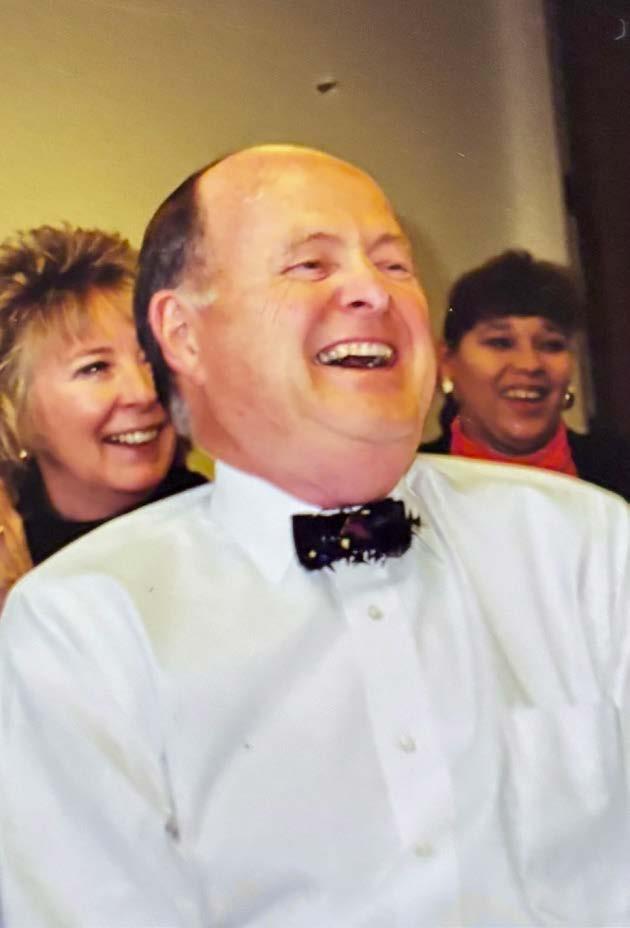
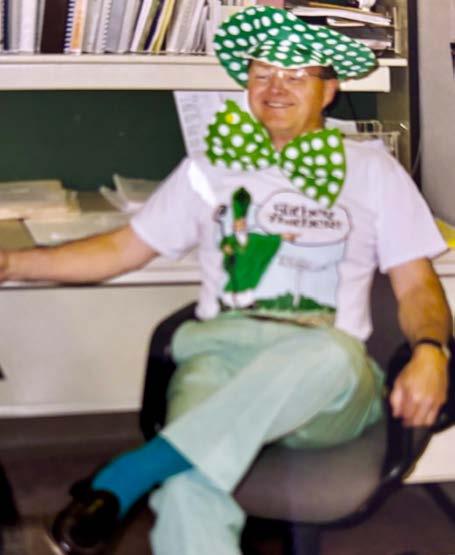
PEER REVIEW IS SERIOUS BUSINESS, BUT DAN MADE TIME FOR JOY AND LAUGHTER AS WELL.
Act Today to Minimize Risk Tomorrow: How Your Story Will be Told to a Jury
BY RON KLEIN, J.D.
What proactive steps can CPA practices take to help positively impact how a jury sees its actions in the event of a client lawsuit? Calling upon COCPA Platinum Partner CAMICO’s 40 years spent gathering thousands of CPA liability experiences and distilling the resulting learnings into realworld risk implications, Vice President, Risk Counsel Ron Klein, J. D., weighs in.
In the event of a lawsuit, it’s important for CPAs to reflect on how the actions for which they are being sued will be portrayed to the jury. The gap between the experienced reality and the story told at trial can be significant and illustrates what CPAs must do today to minimize risk tomorrow.
When looking at a situation in hindsight, it is important to note that history can sometimes be “rewritten” to benefit the client: “Why didn’t my CPA warn me about what was going to happen? I was relying on my CPA’s expertise for financial help.”
The good news is that CAMICO’s vast experience and research help to inform us as to what factors and preconceived notions sway jurors. As such, the guidance contained in this article is designed to raise your awareness and help you to recognize (before the “milk is spilled” and a claim occurs) what triggers may sway jurors, as well as the proactive risk-management steps you can take to improve your chances of a favorable outcome.
A CASE STUDY
For example, let’s take a “garden variety” embezzlement claim. As the CPA experiences it, it goes something like this:
For the past six years, the CPA has been providing tax preparation services as well as occasional assistance to the sole accounting employee, including closing the books at year end.
During this period, the CPA meets face to face with the client/owner less than a dozen times, visits the client’s office another dozen times, and communicates by email and phone several times a month, usually with the client’s accounting employee.
While helping to close the books at the end of year six, the CPA finds a number of vendor payments in a suspense account. When the CPA asks the owner about the payments, the owner does not recognize any of the vendors. From there, the embezzlement quickly unravels. It turns out that the accounting employee had embezzled more than $275,000 over the past 10 years, having begun four years before the CPA even obtained the client.
After a few years of litigation, including more than 700 written interrogatories, 80 hours of depositions, and 90,000 documents, the attorneys on both sides now have a better understanding of what occurred than any of the participants, including the CPA.
What does the jury hear? Given the necessary compaction of time, each of the attorneys – for the plaintiff and the defendant – will focus their cases. Each will select four or five key documents and some testimony they feel is particularly impactful - usually from an expert and one or two eyewitnesses.
The jury will have no sense of the actual expectations of the client/plaintiff before the discovery of the embezzlement. Juries most often place little weight on the professional standards that guided the CPA.
WHAT SPEAKS LOUDEST TO JURIES
From the testimony, evidence, and argument, each juror will decide. From jury research and many previous embezzlement claims, CAMICO knows that juries will likely decide based upon the following.
• Whether the jury believes the CPA “warned the client of risk and advised the client of opportunity” in financial and tax matters. In embezzlement cases, this burden increases because juries believe CPAs are the fraud police and embezzlements are common.
Most juries believe that the CPA’s “advising and warning” antennae should be hyper-sensitive during difficult economic periods. Some even believe “anyone can do a CPA’s job when times are good, but when we really need the CPA — that’s when the CPA should really be tuned in.” In other words, expectations are elevated amidst challenging economic times.
• Written documentation (“in plain English and not legalese-speak”) to support the scope and limits of the services for which the client engaged the CPA. It is ideal to have a current, signed engagement letter that specifically mentions that the contracted services are not designed to detect fraud.
As well, have in place a written communication informing the small business client of embezzlement risk, which includes ways by which the client can manage embezzlement risk, including the importance of timely bank reconciliations, requiring substantiation for each check, and monthly review of the bank statement by the owner.
This written communication allows the CPA’s attorney to make the argument that the CPA warned the client of the risk of embezzlement and advised the client of suggested actions to reduce its risk.
With the good evidence described here, the CPA attorney will be able to turn the tables, forcing the jury to consider whether the client met its obligations to protect itself. The best offense is a good defense.
Is it necessary to have the engagement letter signed and current, and the communications in writing? Absolutely. Jurors do not like to rely upon verbal communications, which are always disputed.
Further, the jury expects the party with the power and knowledge (the CPA) to carry the burden of documentation. This is especially true of CPAs because juries view CPAs’ job as documenting everything of significance.
NEGATIVE CONSEQUENCES
What happens at trial if the CPA did not fully meet the expectations of the jury to warn and advise?
Without a good written warning communication about the small business' risks of embezzlement, instead of the CPA’s attorney arguing that the CPA warned about embezzlement risk and that the client failed to do what was necessary, the client’s attorney will argue that the CPA left the financially unsophisticated client unaware of the risk and unprepared to deal with it.
It is not unusual for clients who signed blank checks (for convenience) to argue that their CPA never advised them not to sign blank checks. Thus, rather than jurors focusing on how well the CPA warned the client and whether the client took appropriate defensive action, their attention turns to how and how often the CPA had a chance, but failed, to catch the embezzlement.
Did the CPA in our example know that bank reconciliations were months behind,
or how vendor payments were processed at the client’s office? A jury’s expectations are that the CPA, after six years of service to the client, will have a profound knowledge of how the business works, even with limited services. In the jury’s mind, the CPA’s duty expands with time.
OTHER MEASURES TO HAVE IN PLACE
Just as it is the CPA’s job to inform the client of embezzlement risk, it is CAMICO’s job to inform the CPA of embezzlement risk as well. We strongly recommend the following, especially when it comes to working with small business clients:
• Have a signed and current engagement letter that specifically addresses embezzlement and fraud, and warns that the services requested are not designed to detect them.
• Send an initial written warning letter informing the client about embezzlement risk, the appropriate way to process payments, bank reconciliations, and monthly review of the bank statements and checks by the owner.
• Be aware of the importance of timely bank reconciliations. If the client is more than two months behind with bank reconciliations, that is an embezzlement alert, likely requiring at least a written communication with the client.
A struggling economy exacerbates the potential for embezzlement claims, as many businesses and individuals are under growing financial strain. Increased financial need will likely increase pressure and rationalization for fraudulent behavior (e.g., “My line of credit has been canceled,” “My retirement funds shrank,” or “I need this money.”)
Understanding the gravity of these pressures is crucial to effective fraud prevention and detection. Public perception is that CPAs have a “nose for fraud,” regardless of the limitations of the engagement.
While the expectation that CPAs will detect fraud is extremely difficult to meet, the expectation to advise and warn is much less difficult. By advising and warning clients of their fraud/ defalcation exposures and responsibilities, CPAs can minimize liability stemming from the expectation that CPAs will detect fraud.
The actions recommended above will not only provide you with the best defense in the event of a lawsuit, but there is also a good chance that they will prevent or help discover future embezzlement situations.
In such cases, the CPA becomes a hero to the client rather than a target – the best win-win of all.
Ron Klein, J.D., is risk management counsel with CAMICO. He has been with CAMICO since its 1986 inception and has managed the claims department for 25 years. Reach him at rklein@camico.com
In addition to comprehensive policy coverage, COCPA Platinum Partner CAMICO offers policyholders practice- and risk-management services, expertise, and tools, such as unlimited access to in-house experts, subpoena and consultation services, assistance with potential claims and reported claims, and more. Learn more at camico.com .
Treat Data as Your Organization's Most Valuable Currency
BY GREG TANNER
In the modern enterprise, data is no longer just a byproduct of doing business. It is the core asset that dictates whether an organization thrives or merely survives.
We operate in an environment characterized by high-velocity disruption. Markets shift overnight and competitors emerge from unexpected places. In this landscape, relying on intuition is a guaranteed path to obsolescence. Success now requires a fundamental rethinking of how we collect, secure, and leverage data.
Most organizations sit on massive repositories of raw information. While they collect customer metrics, financial records, and operational statistics, they remain paralyzed when it comes to using this information to make actionable decisions.
The problem is not a lack of information. We must move beyond simple storage and begin to strategically use data through a practice called intelligence arbitrage.
WHAT IS INTELLIGENCE ARBITAGE?
Intelligence arbitrage is the practice of finding gaps in the market by understanding your own operational realities better and faster than anyone else. It requires organizing your data streams so that leaders can spot inefficiencies and opportunities before they become obvious to the broader market.
To practice intelligence arbitrage effectively, leaders must foster a culture that respects empirical evidence. This means moving away from anecdotal decision making. Every project, every investment, and every strategic pivot must be justified by concrete metrics.
When you achieve this level of clarity, you stop competing on the same playing field as everyone else. You begin to create a competitive moat, dictating the terms of engagement because your decisions are grounded in absolute, undeniable reality.
NEUTRALIZING SECURITY THREATS
Capitalizing on this information requires an ironclad foundation. You cannot leverage an asset that is compromised.
Security must be the bedrock of your infrastructure. Modernizing your IT environment is not just about speed or efficiency; it is about protecting the lifeblood of your company. Threat landscapes are evolving with the same high-velocity disruption as the markets themselves.
A breach does more than incur financial penalties. It shatters trust and neutralizes your competitive advantage. Building secure frameworks and establishing rigorous access controls ensures that your strategic assets remain exclusively yours.
Too often, executives view cybersecurity as an information technology problem rather than a strategic imperative. This is a fatal miscalculation. Securing your network is the first step in unlocking the value of your information.
OPERATIONAL FLUIDITY: CRITICAL TO COLLABORATION
When your infrastructure is resilient, your teams can collaborate freely. They can share insights across departments without the constant fear of exposure. This operational fluidity is what separates agile enterprises from sluggish laggards.
Achieving this operational fluidity requires a true commitment to modernization. Legacy systems are the enemy of speed, creating silos that trap valuable insights in isolated departments. Sales does not talk to operations, for example, and finance does not understand customer success.
Breaking down these silos requires intentional architecture. You must build systems that allow information to flow seamlessly and securely across the entire organization. This modernization process can be painful. While it requires significant investment and a willingness to challenge established workflows, the cost of inaction is far greater. Organizations that refuse to modernize will find themselves unable to compete.
FINAL THOUGHTS
Ultimately, the organizations that will dominate the next decade are those that treat their data as their most valuable currency and, in turn, invest in the systems required to protect it. They will develop the frameworks needed to understand it. They will use it to build a competitive moat, insulating themselves from the chaos of the modern market.
The answers to your most pressing business challenges are already written in your systems. The question is whether you have the discipline, security, and strategy to read them.
Based in Denver, Greg Tanner is the chief executive officer of Cynthetic Systems. Reach him at greg.tanner@cyntheticsystems.com.
TECHNOLOGY USERS GROUP
Looking for an opportunity to connect with your COCPA colleagues to discuss technology, its impact on the accounting profession, and future trends? Click here or contact Stacy Svendsen at stacy@cocpa.org to learn more about the COCPA Technology Users Group.
INTRODUCING
Coaching Collaborative COCPA
A L GR OW TH . RE A L SU P P O R T. JUST FOR MEMBERS.
The COCPA Coaching Collaborative (CCC) offers targeted, small-group experiences led by expert coaches who understand the accounting profession inside and out
Whether you’re transitioning into a new chapter in your life (or career), building your firm, looking to regain your energy/focus, or working on leveling up your leadership, the CCC gives you a trusted space to grow with guidance and accountability
With the COCPA Coaching Collaborative, you’ll be guided by a team of CPAs and experienced professional coaches who understand both the challenges of the accounting profession and the deeper personal journeys behind professional grow th With backgrounds spanning public accounting, to holistic wellness, our coaches bring a powerful blend of empathy and real-world insight to ignite your potential, and build lifelong skills
3 Focus Areas:
6 Interactive Sessions: per cohor t Just 5-10 Members: Per Group Special Member Rate: $997 .
Michelle Kooi Doug Slaybaugh
Carla Greenan
CAREER CHRONICLES
Don’t Let Someone Else Manage Your Career
BY A. TOM HALL, CPA, CFA
In the second installment of a progressive, three-part series focused specifically on career development, Career Chronicles columnist Tom Hall explores the value of actively engineering the direction of your career rather than waiting for someone else to direct it.
Many years ago, as a newly graduated staff auditor at Deloitte in Denver, my first assignment after some brief training was on the audit engagement of a number of mutual funds. While the two other new hires on the job didn’t enjoy the work, I found that it suited me well. Learning about different kinds of investments – how they operated and how to audit them – was interesting to me.
One of the benefits of working for a public accounting firm as an auditor is your exposure to various industries, which presents a unique opportunity to really figure out where your interests lie. My first and second years with the firm included work in high tech, manufacturing, non-profit, higher education, governmental, and even the beef industry.
Amidst these numerous sectors, I kept gravitating back to the mutual fund industry as my favorite. Because I had worked hard and performed well on that first engagement, I was asked to repeat it the following year. Afterward, it still held the most interest for me, so I told the senior in charge, the manager, and even the partner of my enthusiasm and how I could be valuable on other, similar engagements in the future.
And I didn’t just mention this once, but on a few different, strategically selected, occasions. My logic was simple: If you have to schedule people at my level on a particular job, why not schedule someone who will not only perform well but also has an interest in the industry? This will motivate them to learn more about the industry, which will produce even better performance, etc.
It was a virtuous cycle, and I took the opportunity to share with others what I hoped would be my increasingly significant role within the sector that most grabbed my attention.
MY STRATEGY WORKED
Thereafter, I was invited to be on other mutual fund engagements, where my passion and expertise grew further. My initial exposure, interest, and my repeated follow-up requests eventually led to several other meaningful positions throughout my career: a 15-month stint in the Deloitte Cayman Islands office to gain offshore hedge fund experience; 10 years at Goldman Sachs in its hedge fund administration group, two years as the chief financial officer of a start-up hedge fund, three years at PIMCO as head of Fund Reporting (coming full circle back into the mutual fund industry), and finally to where I am now as an accounting professor at the University of Denver.
I have had a wonderful career, largely because I found the work fascinating and fulfilling. All of this happened because early on, I identified a particular interest and from there tried to actively build a specific path for myself.
SEEK OPPORTUNITIES THAT ENGAGE YOUR INTERESTS
You might get lucky and have a great mentor who is deeply invested in your success and can help you navigate your career and create pathways and opportunities for you. Or, you might not.
Either way, identify what types of work and business sectors especially intrigue you, set your own goals, and work to make them happen. If necessary, go back to school for more education. Study to obtain a certificate or valuable license. Listen to podcasts, read journal articles, learn new software … whatever it takes.
Ask for the kind of work that will fuel your own professional development rather than just waiting to do what the boss tells you to do. Make no mistake: You must pay your dues early on and there will be plenty of doing what the boss – and others in the organization – tell
you to do. But if you work hard and prove your value, the time will come when you can speak up and express your interest in particular types of work. The more interesting you find the work, the less it will feel like “work” and the more fulfilled you’ll be.
TAKE CHARGE OF YOUR PATH
The point: Manage your career yourself. Don’t wait for someone else to do it. Oprah Winfrey said, “If you're sitting around waiting on somebody to save you, to fix you, to even help you, you are wasting your time. Only you have the power to move your life forward."
I love that sentiment! See yourself as someone who can create the life he or she wants rather than just waiting for and taking whatever comes. Work to be the engineer of your life and not just a passenger on the ride.
With substantial experience in both public accounting and industry, Tom Hall, CPA, CFA, is a Professor of the Practice with the University of Denver School of Accountancy, and a regular NewsAccount columnist. Reach him at tom.hall@du.edu.
PROFESSIONAL COMMUNITY
Welcome, New COCPA Members
The COCPA welcomes the following new members, who joined between March and May 2026.
ACTIVE FELLOWS
Caroline "Grace" Allbritten
Deana Arnold Gomez
Aubrey Bagwell
Yijie "Callie" Bao
Dorothy "Annette" Barnes
Bridget Bigden
Kira Bivans
Dean Buelter
Emily Burgess
Ann Chaptman
Sanlyn Chavez
Kook Chu
Calvin Cohen
Renee DeRoeck
Natalie Espinoza
Tess Gosselink
Faith Hanks
Alexander Hetherington
ACCOUNTING OR FINANCE PROFESSIONALS
Samuel Belmonte
Cori Brandow
Eric Dershem
Sean Doyle
Alexander Hartley
Eric Hjalmquist
Claire Jimenez
Allison Middleton
Coty Morris
Elizabeth Nelson
Melissa Post
Ian Ross
STUDENTS
Yajaira Acosta
Brenda Astorga
Madison Bower
Shelby Brubaker
Lucas Calhoun
Claire Chesher
Olivia Dannhaus
Joshua Delong
Joseph DiGiuseppe
Austin Egan
Rediet Erro
Sarahellen Farfan
Judith Fernandez
Rojas
Caitlynn Garcia
Ryan Green
Virginia St. John
Kalina Strohmier
Hilary Taylor
Emily Torgler
Jason Welk
Shaine Wieber
Paul Hoffmann
Evan Koeber
Tommy Lee
Griffin Lemcke
Danielle Madden
Ashton McAnally
Cassandra Mikolajczak
Lucas Miller
Daniel Rudy
Chloe Hart
Aaron Jimenez
Jocelyn Jones
Allison Kichler
Kennedy Larson
Amy Logan
Reyna Macaluso
Mason Mai
CPA CANDIDATES
Spencer Adams
Brighten Baldwin
Morgan Black
Talia Blue Eyes
Andrea "Rayn"
Bryant
Timothy Cloran
Siddhant Manoj
Kabra
Cheri McCallister
Rhett Morgan
David Neas
Lily O’Grady
Claire O'Leary
Andrew Olson
Know any of these members? Reach out and welcome them to our community!
Visit the COCPA Member Directory at cocpa.org/member-directory.
Kyle Sharma
Angela Weinell
Paul Weist
Andrew Wellham
Jill Weston
Victoria Wolske
Monick Wronski
Danna Young
Arlene Cushman
Nick DiPonio
Zach Dustin
Kaden Goostree
Ryan Green
Colin Hube
Cody Michalik
Conner Poteete
Danielle Roche
Garrett Rogers
Lily Rottenborn
Christian Tilelli
Tymla Welch
Mausam Parajuli
John Peterson
Julius Petersen
Mason Putnam
Robert Schmick
Nicholas Scott
Bakary Sise
Noah Sondrol
Britta Swedin
Michael Tetteh
Donald Thornton
Matthew Toerber
John "Cole" Umbaugh
Isabella Williams
CLASSIFIEDS
D&R ASSOCIATES OF COLORADO
CPA Firms or Partners. We represent a number of quality CPA firms and sole practitioners who are looking to merge, acquire, or sell their practices to other CPA firms. Locations are in the Metro Denver, Boulder, Colorado Springs and Evergreen areas. This is an opportunity to ensure your future as well as help your clients by expanding your services to them. Why settle when you can select? Established in 1939. For further information, please contact Phil Rubeck at D&R Associates of Colorado: 720-446-7020, or email dandrassociatesofco@aol.com.
SELLING YOUR FIRM IN 2026? LET’S TALK!
Sell with Confidence. Exit with Ease. With over 34 years of combined experience, we know how to assist you in selling your firm with confidence. Our processes are proven, personalized and confidential helping you find the “win-win” deal you are seeking.
As Certified Business Intermediaries, we’re dedicated to providing a seamless experience, combining professional wisdom with a personal touch. Our brokers are the only Certified Business Intermediaries (CBI) specializing in the sale of CPA firms in the country. When you are ready to sell, we have the buyers, financing contacts and the experience to assist you with the successful sale of your firm! Contact us TODAY to take the first step!
Contact us TODAY to take the first step. Kathy Brents, CPA, CBI, at 866-260-2793 or Kathy@AccountingBizBrokers.com, or visit our website at www.AccountingBizBrokers.com
CURRENT LISTINGS:
Albuquerque Firm Gross $303k (NEW)
Fort Collins Virtual Gross $225k (Sold)
Colorado Based Virtual Payroll Service Gross $703k (Sold) Albuquerque, NM Virtual Gross $730k (Sold)
RICH WOBBEKIND
Updates and Opportunities Related to COCPA Committees and Other Groups
DIVERSITY, EQUITY, AND INCLUSION COMMITTEE
The Diversity, Equity, and Inclusion (DE&I) Committee thanks Kaitlin Borncamp, CPA, NTP, who on behalf of the committee presented “Eating for Energy” at the spring COCPA Member Appreciation Days. Watch for more information in the coming months on the wintertime edition of Member Appreciation Days , a members-only free CPE event slated for Dec. 9-10.
See page 20 for past DE&I Committee chair Jim Brendel’s review of the book, What’s Your “And”?: Unlock the Person Within the Professional. In the book, author John Garrett – a former CPA who is now an Emmy-nominated comedian and podcaster – argues that there is so much more to CPAs beyond their technical expertise. By sharing their authentic selves with colleagues and clients, CPAs’ professional relationships grow stronger and deeper.
INDEPENDENT ACCOUNTANTS ALLIANCE
In April, Independent Accountants Alliance (IAA) members met in person for networking and conversation. As part of that month’s Member Spotlight, Bailey Smith, CPA, shared her professional journey, including more than 20 years’ experience in both public accounting and private industry.
In May, Southwest Colorado IAA members brought together new and returning members, along with some accounting students, at its Live and Local meeting in Durango. Melissa Nelson, CPA, moderated a discussion on upcoming changes to the Uniform CPA Exam, along with strategies for passing the exam.
MEMBER CONNECTIONS COMMITTEE
Sponsored by the Member Connections Committee (MCC), the COCPA 2026 Summer of Fun is in full swing. With a lively wine tasting at Bigsby’s Folly kicking us off in May, followed by Colorado Rockies baseball in June, still on tap this season are:
• Drive Your Connections: Golf and Great Conversations at Rino Country Club , July 23, 4:30-6:30 pm
• Fetch & Friends: A Dog-Friendly Social at Skiptown Bar and Park , Aug. 19, 4:30-7:30 pm
Congratulations to Brianna Shultz, CPA, who won the interactive wine tasting match game at Bigsby’s Folly.
Summer of Fun is spreading across Colorado this year, with events being planned around the state. Members in the Colorado Springs area, join us July 30, 5-7 pm, for Summer of Fun for Everyone –Colorado Springs edition. We’ll meet at the Red Leg Brewery, 2323 Garden of the Gods Road, Suite 107, for connection, conversation, and community.
Watch cocpa.org for details on other Summer of Fun for Everyone events around the state.
NONPROFIT WORKING GROUP
As part of its ongoing commitment to helping those in the nonprofit community, the Nonprofit Working Group continues its partnership with the Colorado Nonprofit Association to host a virtual program series, Office Hours: Ask a CPA. Thanks to Tiffany Knight, CPA, Nathan Oberle, CPA, and Krystal CookMatson, CPA, who recently presented on the Form 990.
The following “Office Hours: Ask a CPA” sessions are on tap in the coming months, each presented virtually from noon to 1 pm:
• Thursday, Aug. 27: Open Forum Q&A featuring a panel of CPAs and an attorney
• Thursday, Oct 29: Budgeting and Q&A
TECHNOLOGY USERS GROUP
Technology Users Group (TUG) members met in person on May 4 for a roundtable discussion on tech stacks. We thank Teresa Plaugher, CPA, and Debbie Gilmore, CPA, for leading the discussion, and COCPA Silver Preferred Partner Xero , which sponsored the event.
Be on the lookout for future in-person TUG gatherings, as well as the group’s regular virtual meetings
See page 26 for the technology-focused article, “Treat Data as Your Organization’s Most Valuable Currency,” written by past TUG presenter Greg Tanner. Tanner asserts that data is a core organizational asset whose use dictates whether the organization thrives or merely survives. He offers strategies for moving from simply storing data to thoughtfully managing and leveraging it.
Upcoming Tax Study Group Meetings
The COCPA Tax Study Group meets virtually, alongside the occasional in-person meeting, to discuss the latest issues facing sole practitioners and small- to mediumsized CPA firms. Engage in multiple roundtable discussions each month:
→ Wednesday Tax Study Group: Generally meets online from noon to 1 pm the first Wednesday of every month.
→ Tuesday Tax Study Group: Generally meets online from noon to 2 pm the second-to last-Tuesday of every month.
Upcoming virtual meetings include:
→ Wednesday, July 8
→ Tuesday, July 21
→ Wednesday, Aug. 5
We extend our sympathies to the family and friends of Charles Ellis Izlar , Savannah, Ga., a 38-year COCPA member.
Visit the COCPA Tax Study Group page to learn more and register.
MOVERS & SHAKERS
What was your favorite read this issue?
Scan & tell us!
Kevin Gibson, CPA, principal of Tax Advisory and Consulting, LLC, was named to the Glenwood Springs-area Post Independent’s “Local’s Choice” list as Best Accounting Firm.
Brandon Powers, CPA, joined Weaver in Denver as a tax partner.
Get paid faster and simplify billing with 8am CPACharge, trusted by 25k+ accounting professionals.
Purpose-built for accounting professionals
Faster reconciliation with next-business-day deposits