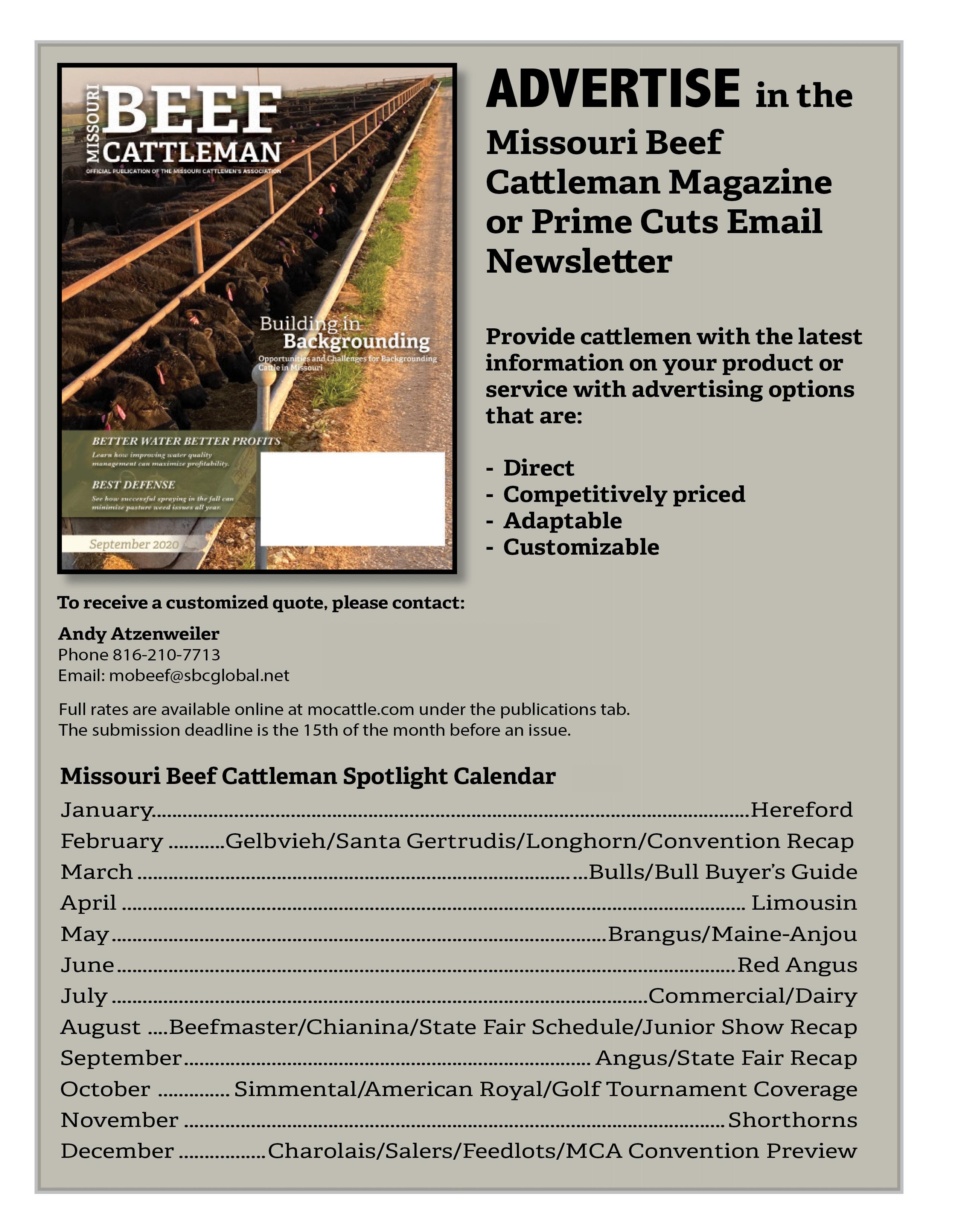
Andy Atzenweiler: Editor/Production/Ad Sales 816-210-7713 • E-mail: mobeef@sbcglobal.net
Missouri Cattlemen’s Association
MCA Website: www.mocattle.com
Mike Deering, Executive Vice President - Ext 230 Mike@mocattle.com
Sally Schmidt, Manager of Communications and Marketing – Ext 235 • Sally@mocattle.com
Miranda Zumbehl-Howard, Manager of Membership – Ext. 231 Miranda@mocattle.com
Lisa Stockhorst, Manager of Operations and Strategic Solutions – Ext 234 • Lisa@mocattle.com
Missouri’s CattleWomen
http://mocattle.com/missouricattlewomen.aspx
Missouri’s Cattlemen Foundation www.mocattlemenfoundation.org
2026 MCA Officers
Anita Vanderwert, President 573-808-3000 • 620 State Route P, Fayette, MO 65248
Deb Thummel, President-Elect 660-541-2606 • 12601 Hwy. 46, Sheridan, MO 64486
Alex Haun, Vice President 816-345-0005 • 1031 SW 600 Rd., Holden, MO 64040
Vance Keaton, Treasurer 417-825-4853 • 5863 W. State Hwy 76, Anderson, MO 64831
Chris Cloud, Secretary 417-358-8459 • 7825 CL 173, Carthage MO 64836
Jeff Reed, Past MCA President 903-279-8360 • P.O. Box 35, Williamsville, MO 63967
2026 MCA Regional Vice Presidents
Region 1: Ethan McNeill, 325 McMurry St. Paris, MO 65275 636-544-9943
Region 2: Blake McDonald, 250 Clonts Rd. Sullivan, MO 63080 • 573-205-7914
Region 3: Danny Ross, 5514 Gaston Rd Eunice, MO 65468 • 417-932-4964
Cover Photo:
Cover photo by Sally Schmidt
Region 4: Dale Buhman, 3751 SW Taylor Rd. Clarksdale, MO 64430 • 816-244-9249
Region 5: David Wolfe, 7761 Mount Vernon Rd Pilot Grove, MO 65276 • 660-834-3232
Region 6: Warren Love, 8381 NE Hwy ZZ Osceola, MO 64776 • 417-830-1950
Region 7: Nathan Isakson, 20706 Lawerence 2022 Everton, MO 65646 • 573-578-2518
Director At-Large: Stephanie Gable, 5622 State Hwy E Oak Ridge, MO 63769 • 573-256-3279
MCA Regional Grazing Coordinators
Region 2 - Doug Mertens 573-489-5261 doug@mocattle.com
Region 3 - Kenneth Ball 417-818-6400 kenneth@mocattle.com
Region 4 - Micah Hans 636-201-6846 micah@mocattle.com
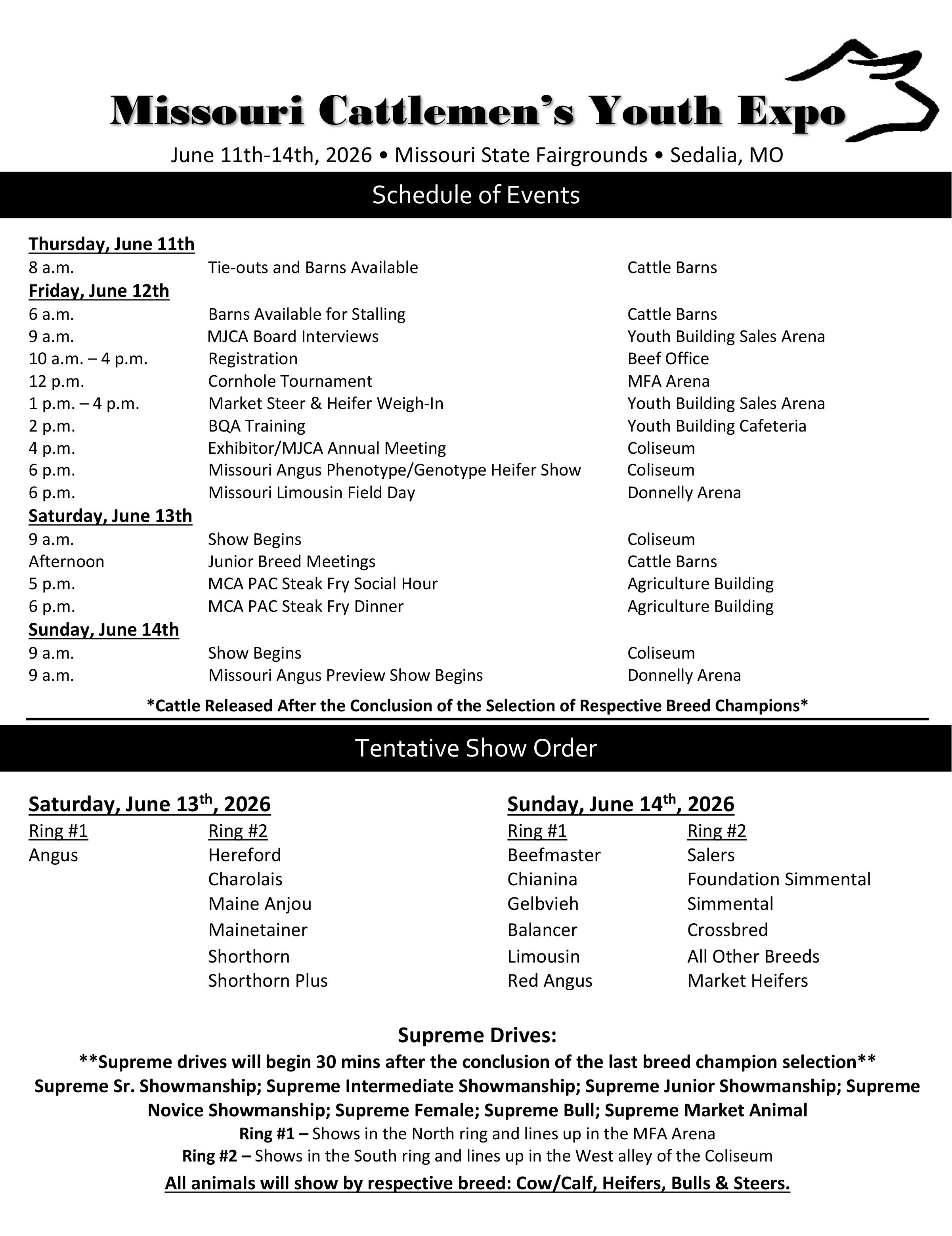
Missouri Cattlemen’s Youth Expo
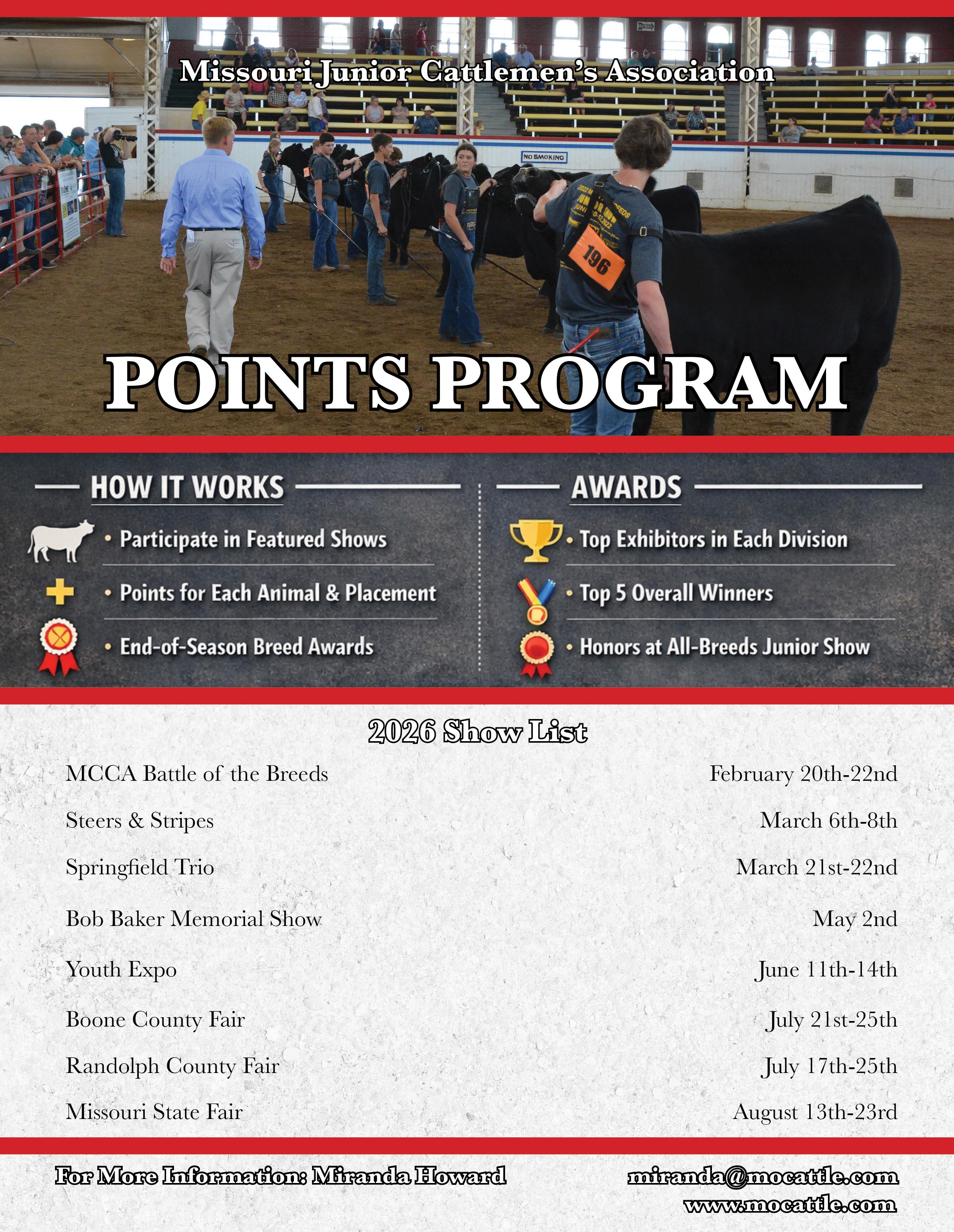
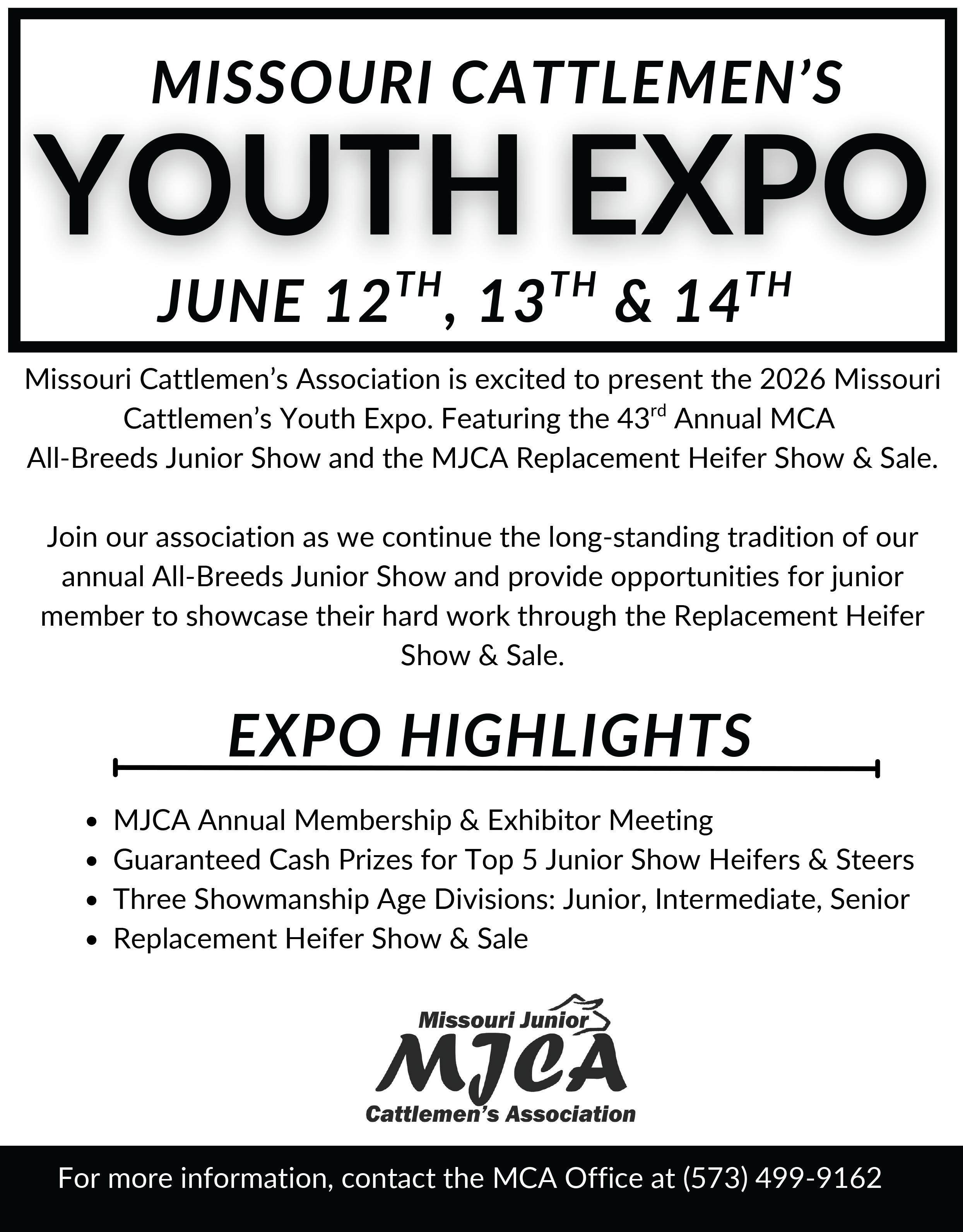
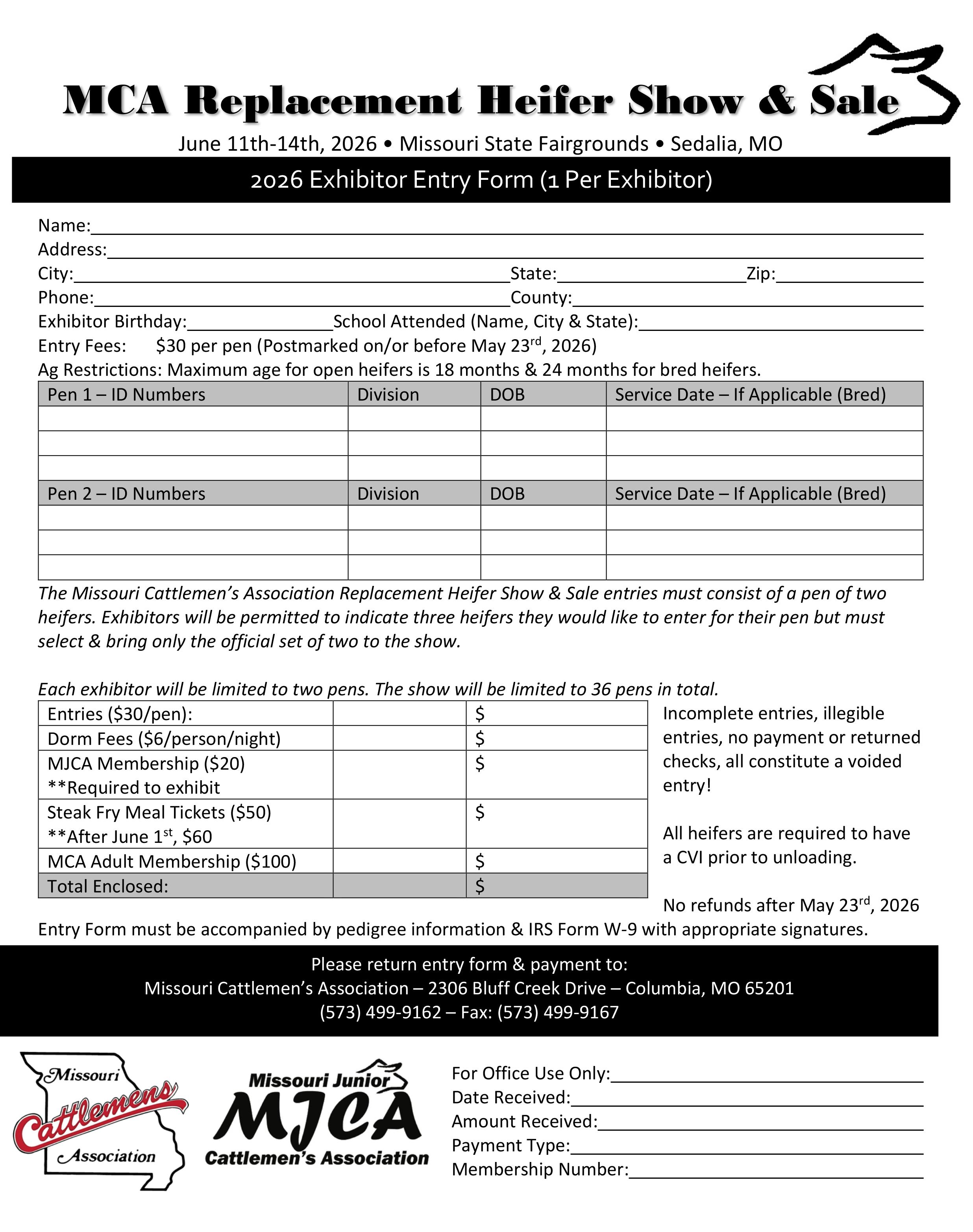
It is almost time for the “can’t miss” weekend of the summer. The weekend will include both the 43rd Annual MCA All-Breeds Junior Show and the 3rd Annual MJCA Replacement Heifer Show & Sale. The expo will feature long-held traditions such as the MJCA Photo Contest, MJCA board interviews and elections and the MJCA annual meeting while also bringing in new opportunities for junior members to feature their hard work at the state level. To learn more about both events, please turn to PAGES 29-34 or visit mocattle.com under junior programs.
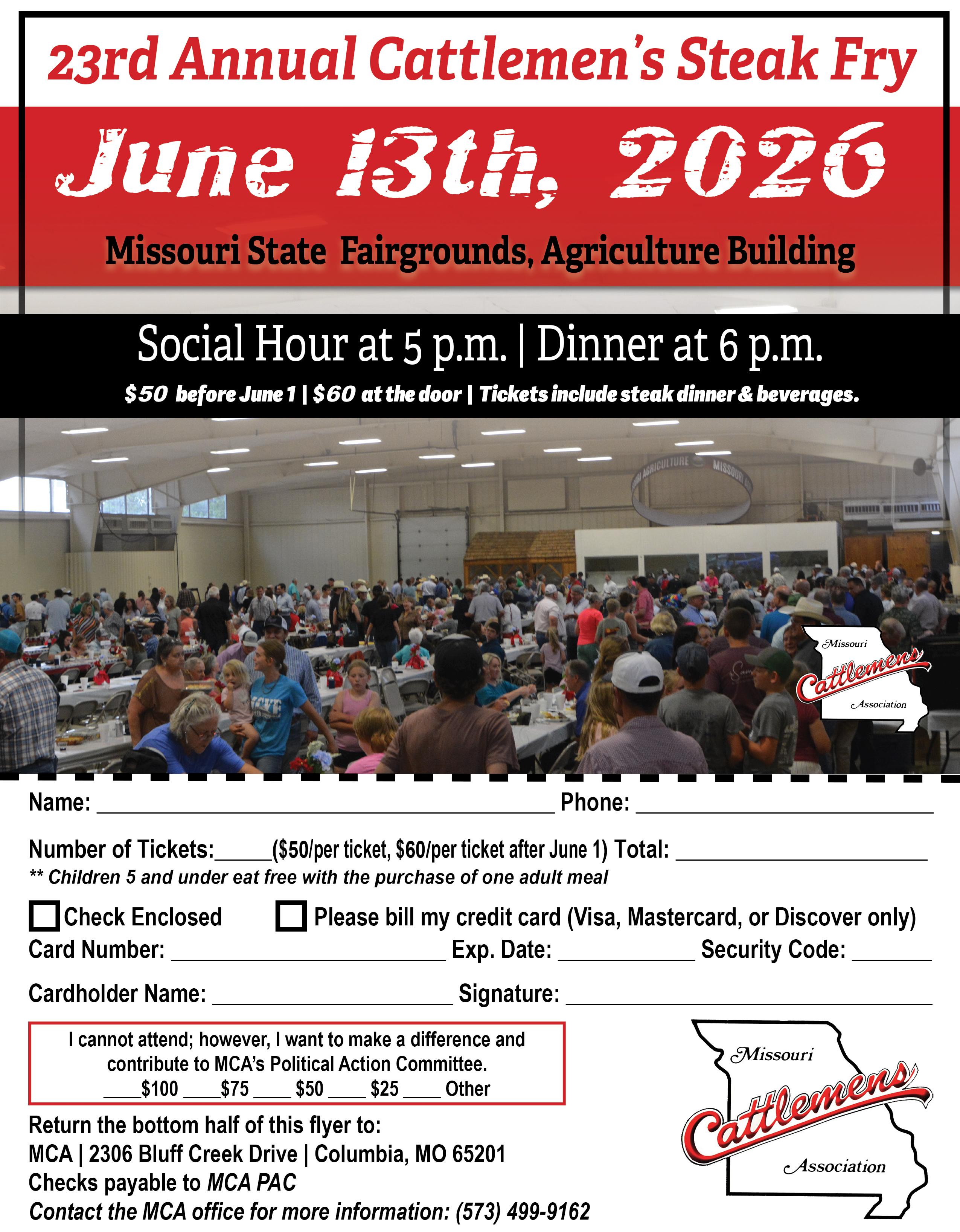
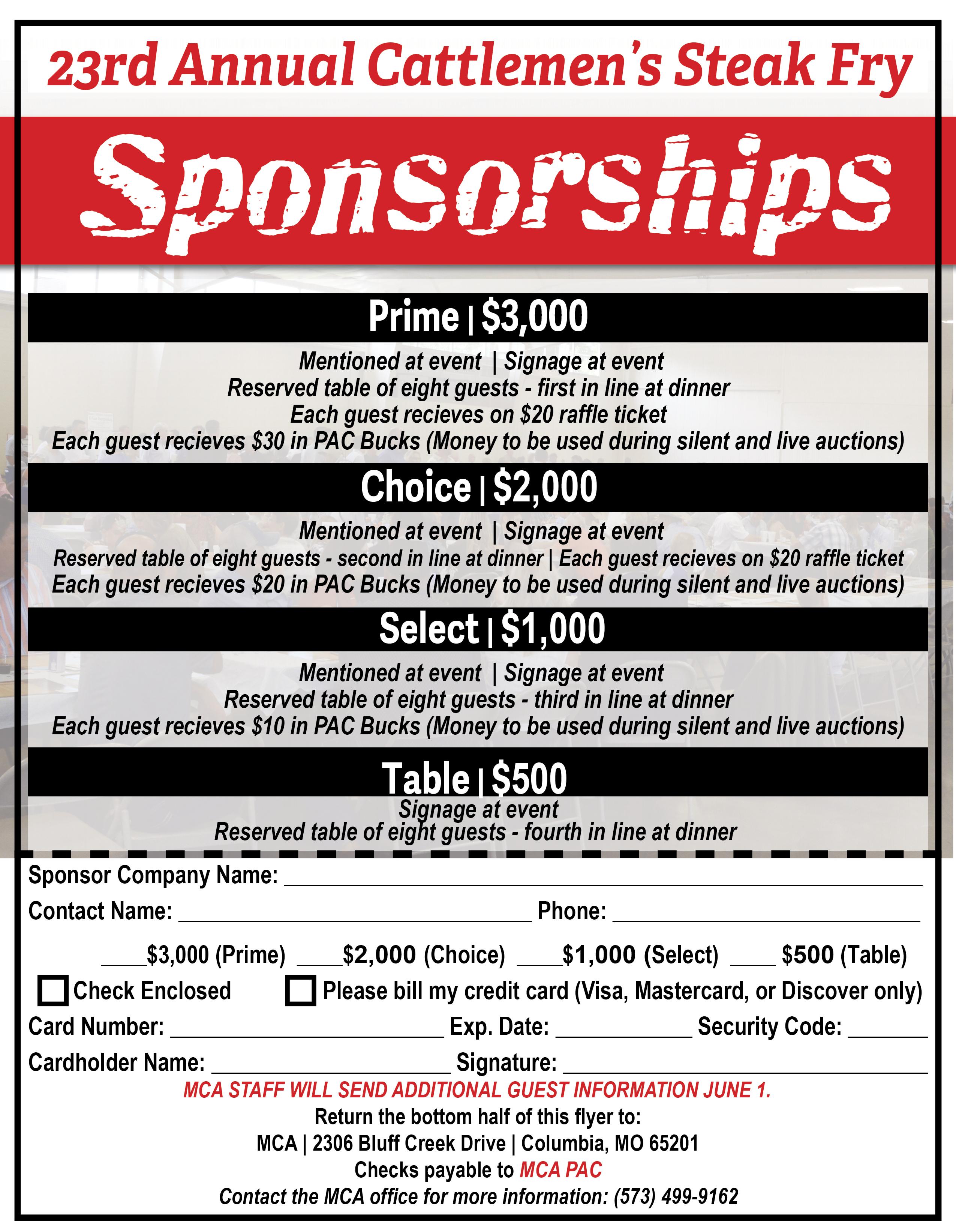
23rd Annual Cattlemen’s Steak Fry
The Cattlemen’s Steak Fry will be held on Saturday, June 13th. Join us for a great steak dinner, raffles, live and silent auctions and great conversation. You’ll find the details in this month’s magazine and on our website. This event is open to the public and we welcome all people who wish to celebrate Missouri’s beef industry. Funds raised will benefit the MCA Political Action Committee to help elect leaders who understand and value agriculture to guide our state’s policy, now and in the future. For more information and registration instructions, see PAGE 36.
Show-Me-Select Heifer Replacement Program
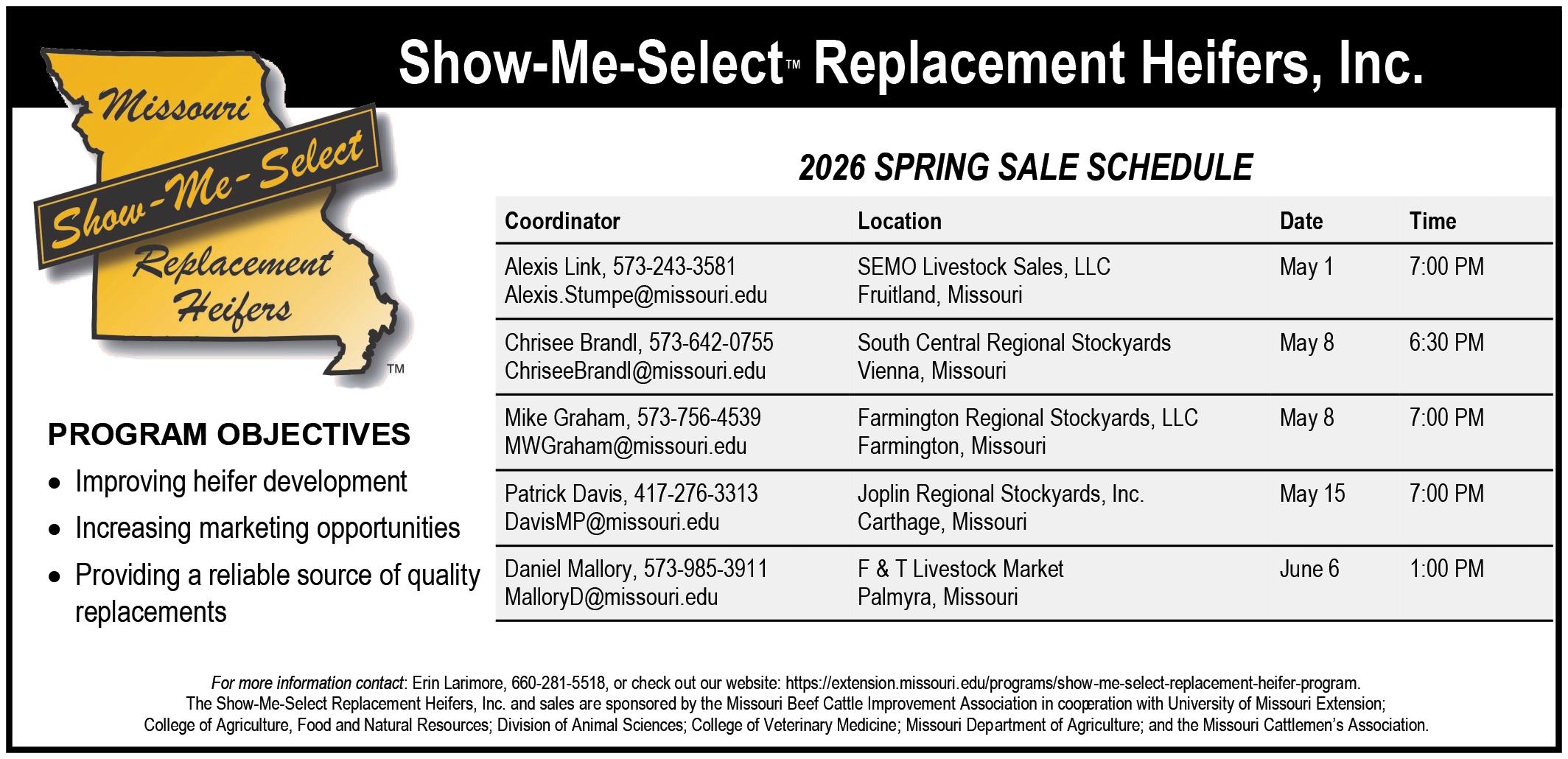
We are partnering with Show-Me-Select again this year for an exclusive new member promotion drawing. All new Missouri Cattlemen’s Association members will be entered to win a drawing for a $2,000 credit to a Show-Me-Select Replacement Heifer sale. To be considered a new member, you must not have been an MCA member within the last 12 months. Credit must be redeemed in the same calendar year at any of the spring or fall sales. Learn more on PAGE 85 .
Cartridges for Cash
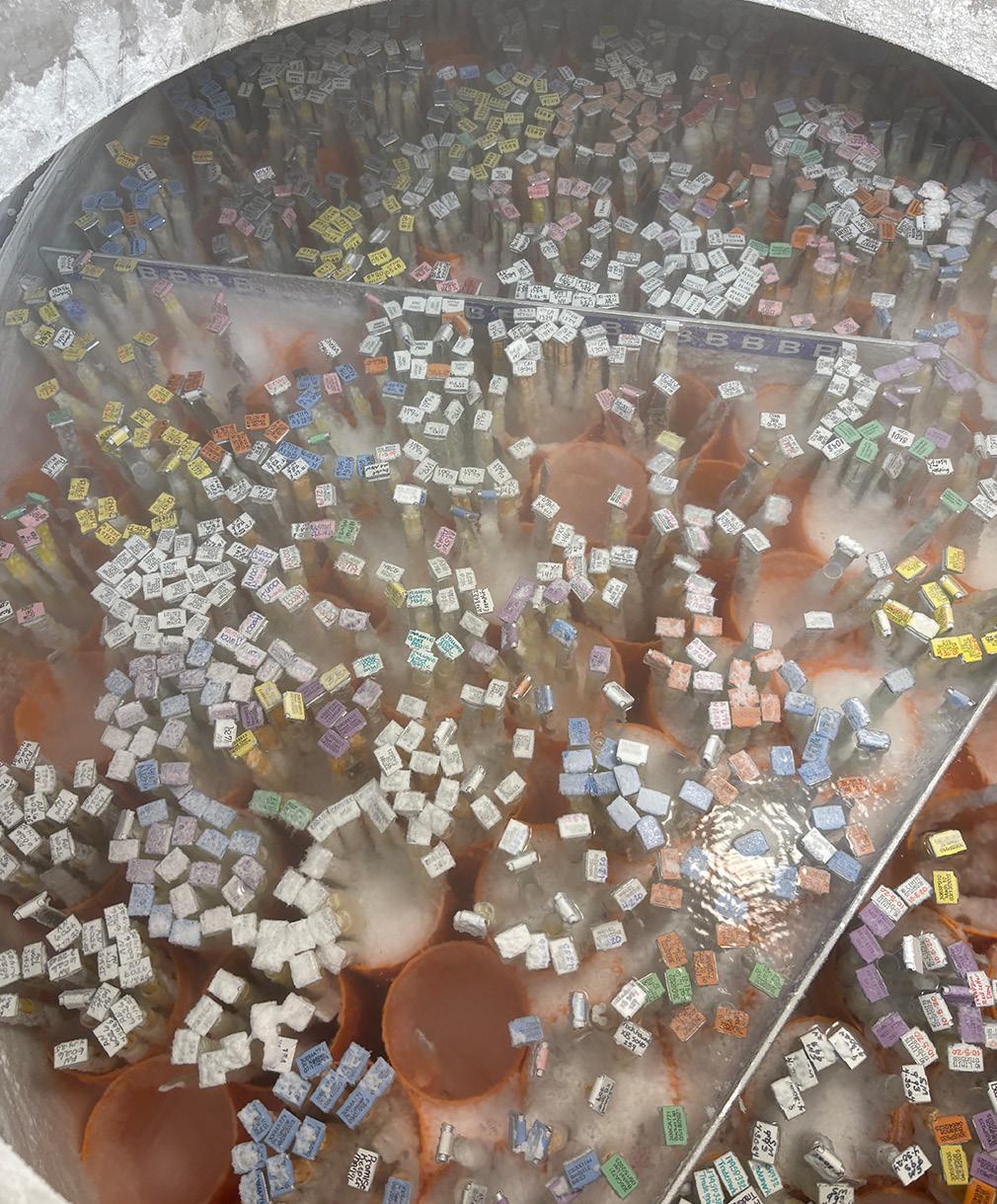
We are excited to be working with Merck Animal Health on the Cartridges for Cash program to raise funds for our association’s junior programs. We want to challenge our affiliates to a competition. The group that collects and turns in the most cartridges will win a $1,000 scholarship to award to a junior member of their choice. Each county should collect the Ralgro wheel and Revalor cartridges used by their members and bring them to either one of the Board of Director’s meeting held each quarter or to the annual convention in January. We will keep a tally of the cartridges collected from each county throughout the year and the winner will be announced at the 2026 Missouri Cattle Industry Convention & Trade Show after all cartridges are counted. To learn more about the Cartridges for Cash program, see PAGE 65.
Michael Fennewald, Rolling Thunder Farms LLC, Holden, MO
Terry Gentry, Cameron, MO
Dennis & Lorie Wilmes, Rea, MO
Vincent Couldry, CCC- Couldry Cattle Co, St. Joseph, MO
Catcher Parks, Brookfield, MO
Baylor Stearns, Marceline, MO
Piper Belcher, Neosho, MO
Emersyn Jordon, Goodman, MO
Blake Hierholzer, Clark Shewmake Funeral Home Inc, Granby, MO
Abby Belcher, Neosho, MO
Blake Hierholzer, Clark Funeral Home, Neosho, MO
Branden Schutt, Hermann, MO
Austin Williams, Tebbetts, MO
Caleb & Alyson Wilson, CA Wilson Cattle Co, Sedalia, MO
Cory Evans, C-3 Farms, Florance, MO
Chuck Lentz, Bolivar, MO
Scott Rhodes, Back 40 Farm, Everton, MO
Aaron & Jessica Long, L Diamond Ranch LLC, Lockwood, MO
Brock Utecht, Whitetail Properties Real Estate, Marshfield, MO
Norris & Annette Sloan, Sloan Farm, Mtn. Grove, MO
Whitley Nipp, Pierce City, MO
Tom Leslie, Laan Limousin, Urbana, MO
Jary & Marsha Douglas, Grove, OK
Artea Kirkland, Missouri Blessed Ranch LLC, Los Angeles, CA
Cornell Kirkland, Missouri Blessed Ranch LLC, Los Angeles, CA
Michelle Moore, Missouri Blessed Ranch LLC, Los Angeles, CA
President’s Perspective with Anita Vanderwert
Communicate.
Collaborate. Connect.
Across Missouri, I’ve been encouraged by the way our members continue to show up. From county cattlemen’s scholarship dinners to auctions and events, we’re seeing strong support for the next generation and for the future of our industry. That kind of engagement doesn’t happen by accident. It reflects a shared commitment to investing in people, in communities and in agriculture.
That same commitment to showing up, especially where it matters most, guides decisions at the state level as well. Recently, our Executive Vice President, Mike Deering, approached the officer team and executive committee with a request to run for the Missouri State Senate while continuing to serve in his role with the Missouri Cattlemen’s Association. After thoughtful consideration, the executive committee unanimously approved that request.
This decision was not made lightly. It came with clear expectations. Mike will continue his relentless leadership of the association, and the executive committee expects no lapse in operations or service to our members. The work of MCA remains the priority and we are confident in the systems and team we have in place to ensure that standard is upheld.
It’s also important to recognize that this is not unprecedented. Across the country, we’ve seen leaders successfully serve both an industry and in elected office. The executive director of the Missouri Grocers Association has served as a state representative while maintaining his leadership role. The executive vice president of the Mississippi Cattlemen’s Association
currently serves as a state senator. Like any model, there have been lessons learned along the way but today, it is working well. We intend to lean on those experiences to guide us and avoid pitfalls.
If Mike is successful in his campaign, there will be appropriate adjustments made to reflect the dual responsibilities. Transparency and accountability will remain central to how we operate.
More importantly, we see this as a potential opportunity for the Missouri Cattlemen’s Association. Having a trusted, proven advocate with deep roots in our industry, serving in the legislature could open doors. It should strengthen relationships, increase our visibility and create new opportunities to tell agriculture’s story in meaningful ways.
This moment reflects exactly what we mean when we say: Communicate. Collaborate. Connect. We are communicating openly with our members about decisions that impact the association. We are collaborating by learning from other organizations and working together as a leadership team to set expectations. We are connecting by building stronger ties between our industry and those making decisions that affect our way of life.
As we move forward, our focus remains unchanged as we serve Missouri cattle producers with integrity, consistency and a clear voice. Thank you for continuing to show up for your communities, for this association and for the future of Missouri agriculture.
MCA President
CattleWomen’s Corner with Jennifer Poor
Your Voices Do Matter
Sometimes being a beef farmer or rancher can be one of the most frustrating occupations out there. We give our blood, sweat and tears to get these calves on the ground. Sometimes no matter our efforts, effort is not enough and for whatever reason, the calf dies. As I write this article, Jason, Cooper and I are knee deep into our calving season. In one week’s time, we have had to pull three calves, only to have one calf live. I’m not going to dive into if it’s the bull’s genes, the cow’s pelvic measurement, weather, bad luck, etc. That’s not the point. The point being, we work our tails off to ensure that we have healthy calves and sometimes that’s
Officers of the Missouri CattleWomen
President: Jennifer Poor
417-372-0227 • poorfarmscattle@gmail.com • Pomona
President Elect: Mandy Weigand 660-909-6781 • weigandranch@hotmail.com • Warrensburg
Vice President: Carolyn Dieckman
660-668-3605 • medieckman@yahoo.com • Cole Camp
Secretary: Terry Bettels
660-424-3444 • cbettels55@gmail.com • Butler
Treasurer: Mary Kay Lyle
816-387-1930 • marykaylyle@gmail.com • Savannah
Past President: Marsha Corbin
660-232-1836 • oldtrailsregion@gmail.com • Dover
CattleWomen President
just not in the cards. That’s life and it can be extremely frustrating. However, when things like this happen and there’s no clear explanation, I remind myself to lean on my faith. I trust that God has a reason, and I just have to be patient (which is not one of my strengths) and wait for His plan to unfold.
Sometimes being involved with Missouri Cattlemen’s Association (MCA) and Missouri CattleWomens (MCW) is a lot like what we experience when our calving season isn’t going as planned. We work, cry and fight hard for what we believe in, yet sometimes things do not go as we think they should. Regardless, I encourage you to get involved with MCA and MCW. Your voices DO matter and need to be heard. We have several councils that need voices like yours. I encourage you to take a look at the list and see where your skill set fits best. If you are interested in speaking with the chairperson or your region’s representative of any of these council’s just let me know and I will get you in touch with them:
• Ag and Food Policy
• Animal Health Care/Wellness
• Cattle Marketing
• Tax and Credit
• Property Rights
• Livestock Marketing
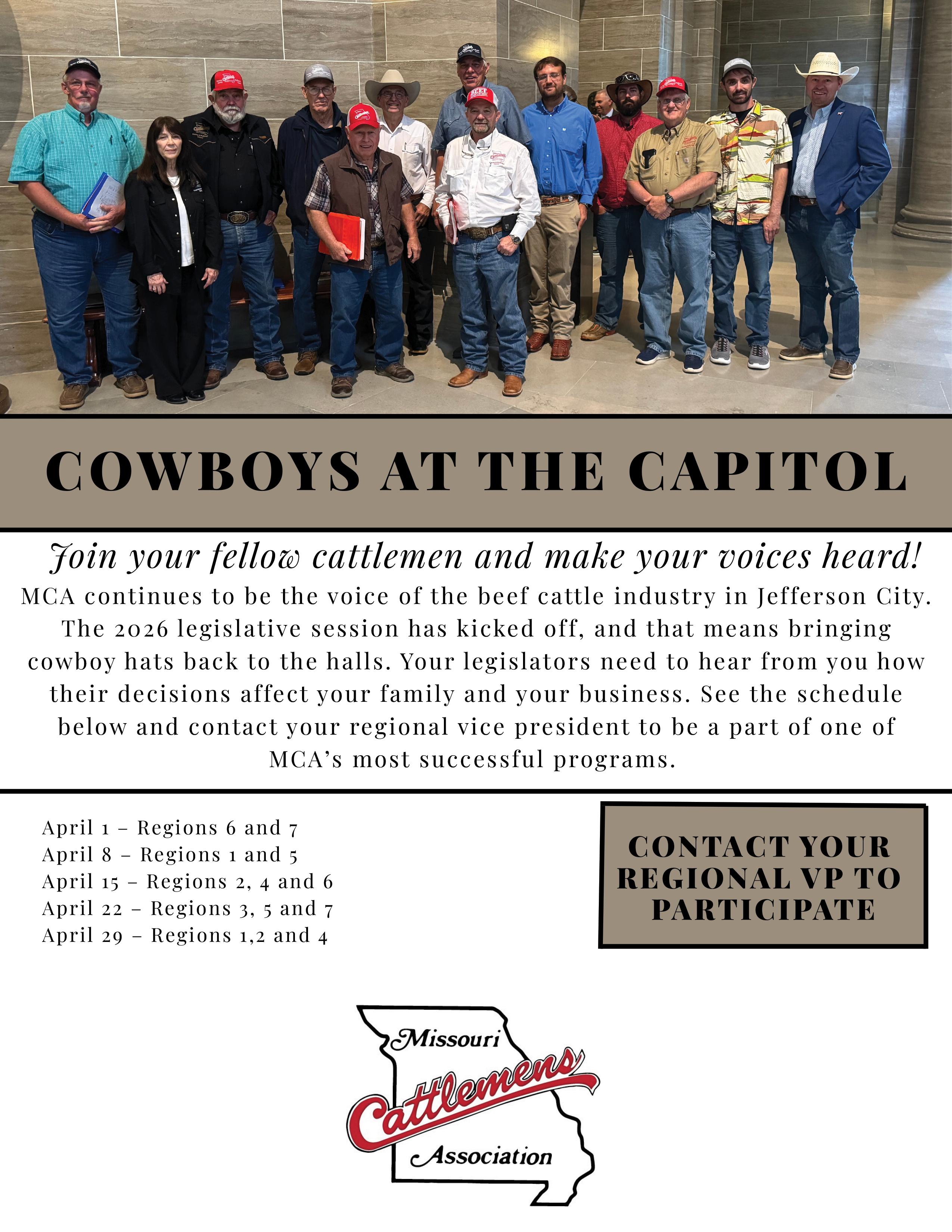
Don’t want to commit to a council? That’s okay! Make your voice heard at Cowboys at the Capitol every Wednesday (January through April). If you are like me,
and get tongue-tied when speaking with legislators, that’s okay! As a rule, there is always someone in your group that can be the “speaker”. Your PRESENCE still MATTERS!
The CattleWomen can always use members on committees. If you feel compelled to become a board member for your region or would like to help on a committee, please reach out to any one of us. Our contact information is on the left side of this article. We look forward to hearing from you.
If you know me, you know that I like to eat! There really isn’t a food that I will not try at least once. This month’s recipe just sounded good and if we are honest, it’s hard to beat a good brisket and deviled eggs. Enjoy!
Brisket Deviled Eggs
Classic deviled egg flavors go rogue with leftover smoked beef brisket to kick it up a notch.
• Prep Time: 15 min • Cook Time: 20 min • Total Time: 25 min
Ingredients:
1/2 cup cooked (Leftover) Smoked Beef Brisket, chopped, divided
6 hard-boiled eggs, peeled and halved 1/4 cup reduced-fat mayonnaise
Cooking:
1 tablespoon yellow mustard
1 teaspoon water
1/8 teaspoon garlic salt
1 jalapeno pepper, seeded and chopped 1/2 teaspoon smoked paprika
Reserve 2 tablespoons brisket; set aside. In a large mixing bowl, combine egg yolks, mayonnaise, mustard, water and garlic salt until smooth. Stir in remaining brisket and jalapeno.
Divide mixture evenly and spoon into egg whites. Top with reserved brisket and sprinkle with paprika. Refrigerate, covered, until serving.
Cook’s Tip:
Mix it up! Use pickled red onion or pickle relish as a colorful garnish.
Straight Talk
with Mike Deering
A Fair Deal
The legislative session is now full speed ahead. Legislators just returned from spring break and are energized to move their respective priorities forward. Let’s just pray that the renewed energy is used for the good of the state rather than grandstanding and political theatre.
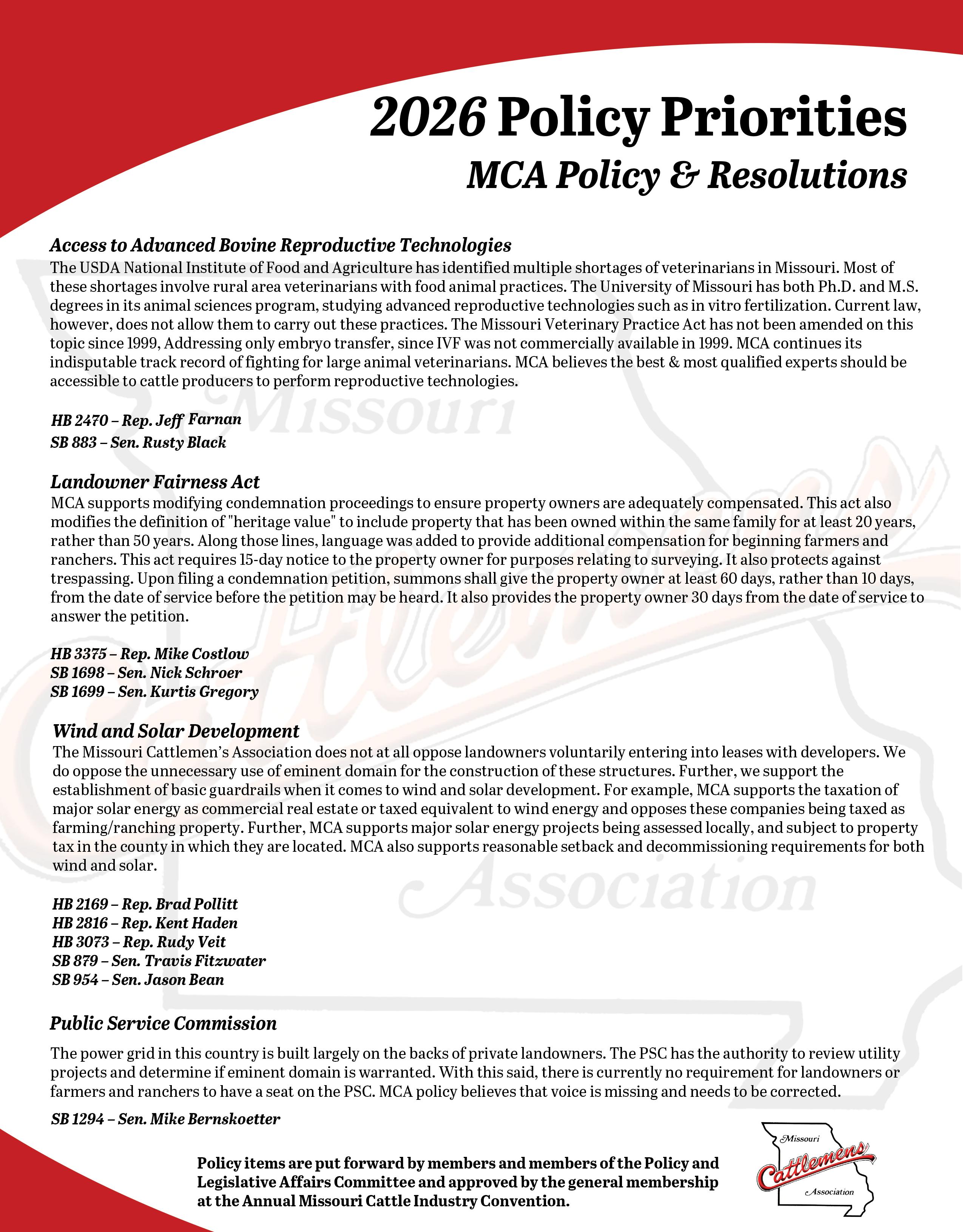
Landowners - farmers to hunters to homeowners - need to unite and push for the Landowner Fairness Act sponsored in the House (HB 3375) by Rep. Mike Costlow (R-108) and in the Senate (SB 1698 and SB 1699) by Sens. Nick Schroer (R-2) and Kurtis Gregory (R-21). This legislation could be a gamechanger for how landowners are treated in Missouri during eminent domain condemnation proceedings. Too often, our property is viewed as vacant space and not respected for what it means to families in rural and more urban areas alike.
The Landowner Fairness Act updates Missouri’s eminent domain laws to restore balance, transparency and due process for landowners in the condemnation and construction process. Landowners should not be sitting ducks for private, for-profit companies looking to take private land for private gain. The rules currently lack robust protection for property owners, and this bill makes sure they are informed, treated fairly and protected.
The legislation makes certain that landowners are properly informed of compensation rights by strengthening pre-condemnation notices and offers in writing. It gives the landowner the ability to propose alternative locations for the project and requires the developing entity to prove good-faith consideration.
When it comes to compensation for the property, this bill truly focuses on leveling the playing field by making sure the deal is fair. We need to end this game of corporations
Executive Vice President
with low balling landowners. These condemning entities will be required to consider tax consequences and other real financial impacts when drafting an offer. The bill deters corporations from giving joke offers by allowing the property owner to recover attorney fees when condemners undervalue the property and force the landowner to fight back. It requires additional compensation if the property has been in the family for more than 20 years and enhances compensation for beginning farmers.
The legislation protects landowners during and after construction by establishing clear standards, including a 15-day written notice prior to surveyors stepping foot on the property. It also puts land restoration standards in place the condemner must follow whether that’s fence repair, erosion control or stump removal. Decommissioning requirements for abandoned structures are also clearly defined.
The Landowner Fairness Act is a comprehensive piece of legislation that makes the condemnation process fair across the board. We know there will be some opposed to fairness because it disrupts this deceptive scheme of using big money and government muscle to acquire cheap land. It is past time to right the wrong and we will not back down when it comes to fighting for landowners in this state. It is a privilege to again partner with Missouri Farm Bureau in this quest for fairness. Fight for your rights by attending Cowboys at the Capitol (schedule on page 89).
Observations from the Field
with Doug Mertens, Region
Two Grazing Coordinator
Planning Pays Off
This time of year, I often get questions about how I write a grazing plan. To be honest until I stepped into the Regional Grazing Coordinator role, it was not something I had given much thought to. Now, it is a regular topic of discussion, and I have spent more time learning what goes into building a successful plan.
In the past, I typically suggested that producers focus on three main things: the number of acres in a pasture, the number of cows grazing it, and the available forages. While those are important, I have learned there are several other factors that need to be considered.
Summers can be busy with vacations, cattle shows and fairs, and kids’ or grandkids’ sporting events. These commitments may keep you away from the farm for a few days at a time. By marking these dates on the grazing calendar, you can plan and place cattle in pastures with reliable water sources, secure fencing, and easy access to whoever is checking on them in your absence.
Working cattle is another key consideration. Tasks like weaning fall calves, working cattle, or performing AI work are much easier if the cattle are near the facilities rather than on the back forty. Since many of these activities happen around the same time each year, adding them to your grazing calendar helps ensure cattle are where you need them when the time comes. It is also worth thinking ahead about where females should be when turning bulls out.
Seasonal tasks like haying and pasture spraying should also be part of your plan. Although timing depends on weather, these activities typically occur around the same period each year. Planning for them can reduce the hassle of opening and closing gates for equipment and help prevent cattle from getting out. Additionally, some herbicide applications come with grazing restrictions, so having cattle in the right place ahead of time can save both time and frustration.
Your Missouri Cattlemen’s Regional Grazing Coordinators are available to help you develop a grazing plan. If you are trying this for the first time, do not hesitate to reach out to one of us, we are happy to help.
A well thought out grazing plan can help you maximize your pasture’s potential. Taking time now to consider the upcoming season can make your grazing season less stressful and hopefully more productive in the months ahead.
Have a safe spring! Doug
For help with management of native grass, or for help identifying plants or weeds (feel free to text pictures) contact Missouri Cattleman’s Association Grazing Coordinators:
Region 2 • NE MO
Doug Mertens
Doug@mocattle.com
573-489-5261
Region 3 • SW MO
Kenneth Ball
Kenneth@mocattle.com
417-818-6400
Region 4 • SE MO
Micah Hans
Micah@mocattle.com
636-201-6846
Regional Range Report
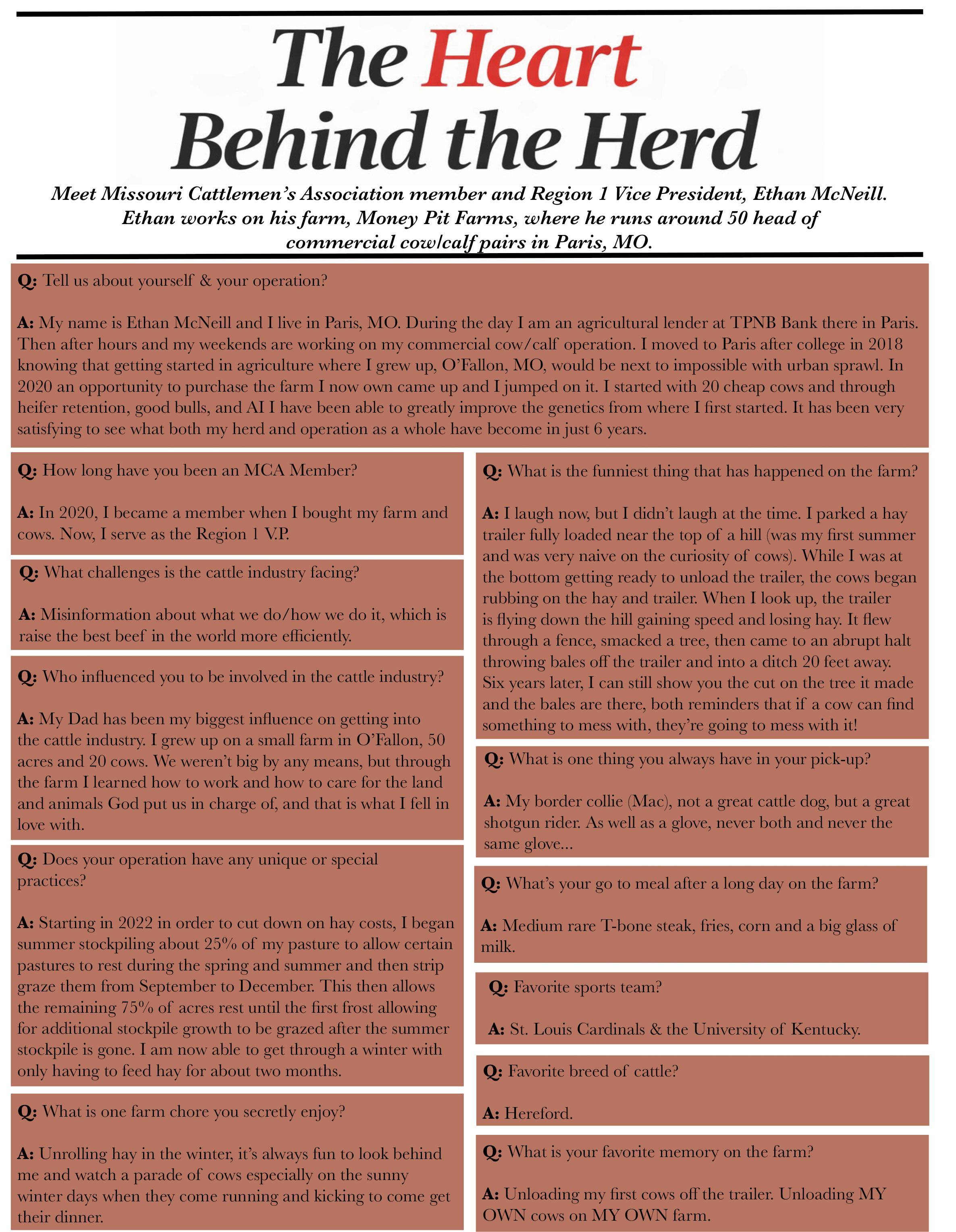
by Ethan McNeill, Region 1
Crazy Weather - As Always
Region 1, and really most of Missouri, has experienced quite the roller coaster to close out winter and kick off spring over the past few weeks. As I’m writing this, it’s a sunny 60 degrees, though you’d better hold onto your hat when you step outside. Just four days ago, temperatures climbed to 90 degrees, making it a welcome day to do chores in a t-shirt and jeans again. Now, the forecast for March 15th–19th is calling for snow and frigid temperatures. If there’s one thing Missouri weather proves time and time again, it’s that you never quite know what the next week will bring.
With how spotty rains have become over the last few years, I try to remind myself and others that we need to be thankful for every drop we get whenever we get it. However, when hay lots are torn up with ruts and the bale bed is sidelined, when ground that was solid just two weeks ago has turned to mud, that sense of thankfulness can be hard to hold onto.
However, with all those fluctuations and continuous rains, things are starting to feel like spring again, calves hit the ground, pasture green up and ponds are start to fill again. Overall, mother nature has cooperated with us so far without too many curveballs being thrown our way.
We have had a busy 1st quarter across Region 1. Between MCA’s Annual Meeting at Margaritaville, local meetings/banquets and Cowboys at the Capitol visits, our members have been active from their pastures to the halls of the Capitol in Jefferson City. We have had two successful trips to the capitol on February 4th and
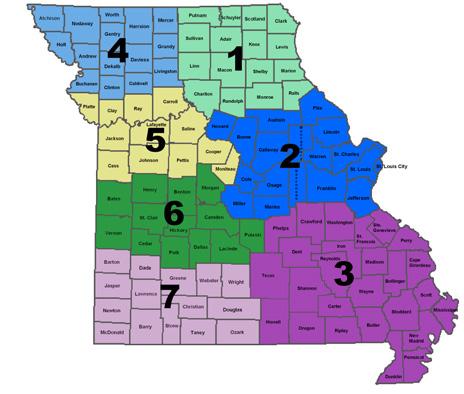
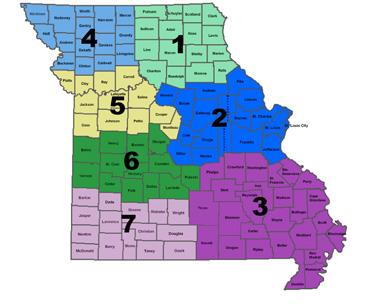
Region 1
Region 2
Region 3
Region 4
Region
March 11th while still planning another two trips in April on the 8th & 29th. I fully understand that this type of event is out of a lot of people’s comfort zones, it was my first few times as well, it is intricate to the success of our association to ensure our voices are being heard.
Both Randolph-Chariton and Macon County affiliates had very successful and well attended scholarship banquets on February 7th, Linn County had theirs on the 14th and Lewis-Marion County following on the 21st. As I write this letter I am also helping prepare for Monroe-Shelby’s-Dueling Pianos event on March 14th. These banquets are always a fun time spent with area producers that are helping to reinvest in the youth of today. I was also able to attend Clark County’s annual meeting on the 10th. Here I was able to give an update to local members on current legislative issues as well as the current happenings at the state level of MCA. At this meeting, Doug Mertens was able to introduce himself to members and discuss how he can assist producers in his role as the Regional Grazing Coordinator for Region 2.
Overall, I feel as though our producers continue to be optimistic about the state of the cattle industry across the nation. Missouri is predominantly a cow/calf state and we are well positioned to capitalize on the current market for our quality product. While outside factors such as the issues at our southern boarder or conflict in the middle east can throw some volatility to the market, the fundamentals appear to be remaining strong and hopefully producers are able to continue to capitalize on these higher returns.
Your BEEF CHECKOFF NEWS
Beef Demand Breaks Records in 2025
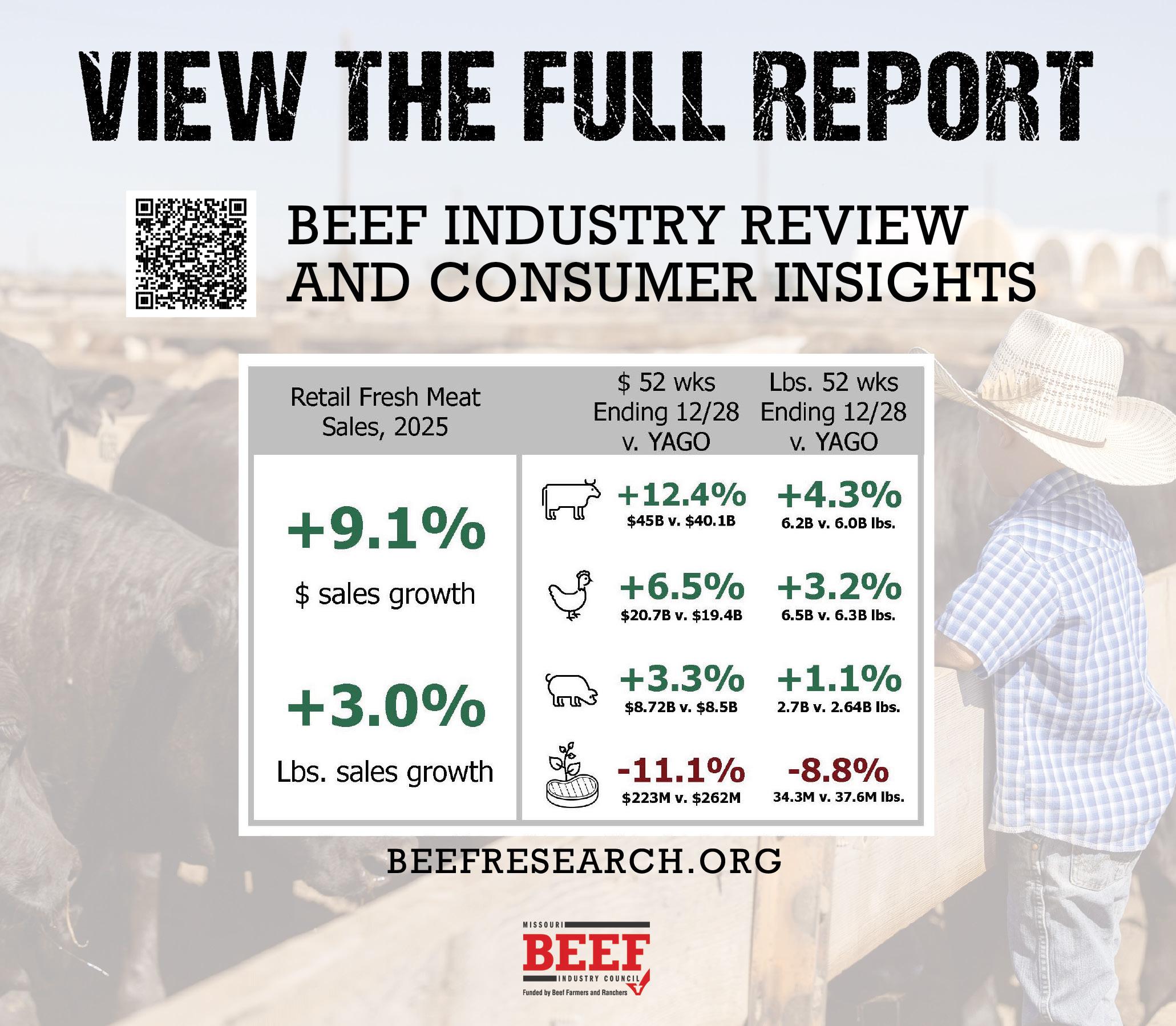
The beef industry achieved a record-setting year in 2025, with retail sales surpassing $45 billion and volume exceeding 6.2 billion pounds. That marks a 12.4% increase in value and a 4.3% growth in volume yearover-year. These statistics were released at the National Cattlemen’s Convention in early February by the Beef Research team at the National Cattlemen’s Beef Association, a contractor to the Beef Checkoff. Even more encouraging, consumer demand shows no signs of slowing as the industry moves into 2026. While the full report contains a wealth of valuable insights, the headline numbers alone provide reassurance that beef continues to dominate the meat case.
Beef maintained its strong momentum in 2025, with both total value and volume of fresh beef sales at retail increasing significantly. Beef continues to hold the largest share of fresh meat retail sales when measured by dollar value. Beef accounts for 57% of retail market share in dollars and 37% of the market share in volume. Chicken narrowly leads volume sales at 39%, but beef’s higher value continues to secure its position as the top revenue driver in the meat department.
When examining beef market share by product type, fresh ground beef leads by a wide margin. Ground beef accounts for 46% of total beef volume sold at retail. Steaks follow with 23% of pounds sold, while roasts make up 11% of retail volume. These trends are reflected in consumer eating habits at home as well. According to the research, 62% of consumers reported eating fresh ground beef at home within the past week. Steak remains a popular choice, with 36% of consumers enjoying it at home during the same timeframe, while 26% reported preparing a roast.
Despite this strong demand, price sensitivity among consumers continues to rise. The research indicates that willingness to pay for steak and ground beef is beginning to lag behind actual retail prices. This gap underscores
the continued importance of communicating beef’s value to consumers, not just in price, but also in taste, versatility, and nutritional benefits.
Protein has been one of the most talked about nutrition trends over the past year, and beef is well positioned to benefit from it. According to the report, more than onethird of consumers say beef is their top protein choice. In addition, nearly three-quarters of Americans report eating beef at least once per week.
Diet trends are also playing a role. The research shows that 57% of Americans report following some type of diet, and among those consumers, high-protein diets continue to grow year-over-year. With 25 grams of highquality protein in a 3-ounce serving, beef naturally fits into many of these popular eating patterns. As protein continues to be a priority in the recently released Dietary Guidelines, beef remains a natural fit for many consumers’ nutrition goals.
Another major driver of beef demand is messaging around how beef is raised and grown. Consumers today are increasingly interested in the origins of their food, and animal welfare ranks as one of their top concerns when choosing a protein. The research found that 67% of consumers report having no concerns about how beef is raised. Among the remaining 33% who do have concerns, animal welfare ranks as the top issue, followed by questions about hormones, antibiotics, and vaccines.
While the majority of consumers express confidence in the beef industry, the 33% who still have concerns represent an important opportunity for education. Programs like Beef Quality Assurance (BQA) play a key role in building trust with consumers by demonstrating the industry’s commitment to responsible cattle care, sustainability, and producing a safe, high-quality product. This type of transparency is increasingly important, especially when 41% of consumers say that how food is raised or grown is a top factor when making purchasing decisions.
The research also examined foodservice trends, offering valuable insight into beef’s presence in restaurants. Beef appears on 90% of menus in the United States, demonstrating its continued importance in the foodservice sector. Nearly half of consumers reported ordering a beef burger at a restaurant within the past week in 2025, while more than one-quarter ordered a steak. Beef demand in foodservice has now surpassed pre-pandemic 2019 levels and is projected to continue growing through 2027.
With strong retail sales, steady consumer demand, and continued growth in foodservice, it is an exciting time to be part of the beef industry. For those of us connected
to production agriculture and for those who advocate for the industry every day, these results are especially meaningful.
None of this success happens without the hard work and dedication of cattle producers. They listen to consumers, adapt to changing expectations, and work tirelessly to raise a safe, nutritious, and high-quality product. Producers also invest in the Beef Checkoff, which helps support research, education, and promotion that strengthens demand for beef. Thanks to their commitment, the beef industry continues to thrive, and the future of beef looks incredibly strong.
Pork Exports Open 2026 on High Note; Beef Variety Meat Value Record-High
Source: USMEF
U.S. pork exports trended higher year-over-year in January, led by another outstanding performance from leading market Mexico, according to data released by USDA and compiled by the U.S. Meat Export Federation (USMEF). January beef exports were lower than a year ago due to the prolonged lockout in China, but export value per head of fed slaughter was more than $415 – the highest since March and reflecting solid demand in other markets. Beef variety meats were a major bright spot, with export value topping the previous monthly high reached in December.
Kingsville Livestock Auction
Kingsville, Missouri
Hwy. 58 • 45 Miles SE of Kansas City, MO Special Cow & Bull Sale Saturday, April 18 • 11:00 a.m. For information call Rick, Jeremy, or Jared Anstine 816-597-3331 Visit our website kingsvillelivestock.com or E-mail us at: anstineauction@gmail.com
Cattle Sale Every Tuesday 9:00 a.m.
Broad-based Growth for January Pork Exports
January pork exports totaled 250,861 metric tons (mt), up 3% from a year ago, while value increased 4% to $692.1 million. In addition to Mexico, exports were larger year-over-year to Japan, South Korea, Canada, Central America, Colombia, the Dominican Republic, the ASEAN and Taiwan.
“Very impressive start to the year for U.S. pork in Mexico and other Western Hemisphere markets, but strengthening demand in Asian destinations is especially encouraging,” said USMEF President and CEO Dan Halstrom. “The U.S. industry continues to capitalize on consumers’ growing demand for convenience-oriented products at both retail and foodservice, and this is reflected in our recent export results.”
Beef Variety Meats Shine in January, but China Remains Absent
Beef exports totaled 92,558 mt in January, down 10% year-over-year. But value fell just 3% to $780.1 million, as exports have commanded higher prices. However, prices are still not being maximized to the degree that would be possible with China back in the mix. When excluding China from the January results, exports increased 5% in volume and climbed 16% in value. January beef shipments trended higher year-over-year
Missouri Beef Industry Council Director Election Legal Notice
Notice is hereby given that the Director of Agriculture will be conducting an election to fill three positions on the Missouri Beef Industry Council Board of Directors. One regional council member is to be elected in each of Regions 2, 3 and 4. Terms of office are three years.
Any cattle producer within the specified regions of the State of Missouri who is producing cattle for market and the legal owner of one or more head of cattle becomes eligible to vote in the election by registering at his/her respective Farm Service Agency (FSA), or electronically at http://mda.mo.gov/councils/ prior to July 20, 2026. Cattle producers who have voted in any of the previous three (3) elections are not required to register unless their address has changed.
The Missouri Department of Agriculture will mail ballots to registered producers on August 12, 2026. Ballots must be postmarked no later than August 31, 2026 to be valid.
Any qualified producer may be nominated and have his/her name placed on the ballot provided the independent nomination is accompanied by petition of not fewer than 100 producers in the nominee’s region and written permission of the candidate. Petitions must be delivered to the Director of Agriculture on or before July 20, 2026. Petition forms are available from the Missouri Department of Agriculture by calling 573-751-5611.
to Korea, Japan, Taiwan, the Caribbean, the ASEAN and South America, with export value also increasing to Mexico, Canada and Central America.
Beef variety meat exports were especially strong in January, increasing 6% from a year ago to 27,511 mt (the largest in more than four years), while value soared 46% to a record $126 million.
“Beef variety meat value reaching new heights for the second consecutive month is great news for cattle producers and for the entire supply chain,” Halstrom said. “With cattle numbers being tight, it is more critical than ever to maximize the value of every animal. And while much of this export growth was driven by tongues and skirts going to Japan, demand was strong in a wide range of markets.”
January Lamb Exports Down Slightly From a Year Ago
Coming off a robust performance in 2025, January exports of U.S. lamb muscle cuts totaled 238 mt, down 7% from a year ago, while value fell 1% to $1.44 million. Exports increased year-over-year to the Bahamas, Japan, Taiwan, Costa Rica and Panama, but shipments to Mexico trended lower and no exports were reported to Canada.
A detailed summary of the January export results for U.S. pork, beef and lamb, including market-specific highlights, is available from the USMEF website.
COUNTY NEWS
See What’s Happening in Your County
Newton and McDonald County Cattlemen
The January meeting of the Newton and McDonald County Cattlemen’s Association was held Tuesday January 20th, 2026 at 6:30 p.m. The meeting was held at Crowder College, 601 Laclede Ave. Farber Bldg-Wrights Conference Room. The meeting was sponsored by Hunke Spray Service and Brant Mettler with Corteva. It was our annual Chili Cook-off. There were 14 different chilis to choose from. The winner of the cook off this year, Mrs. Hounschell, received a new apron. Our second place was Mrs. Patty West and with Mr. Fred Parks having the 3rd place entry. Desserts were provided by members and wives. Cookies, pies and homemade ice cream rounding out the offerings.
Lynn Moorehead called the meeting to order by thanking our sponsors and then turned the floor over to Brian Hall. Brian discussed the upcoming BQA Training that will be taking place on February 10th at the Pineville Community Center. He encouraged all members to sign up. The event will include free BQA certification with dinner being provided. The trainers for the event are Elizabeth Picking, Ian McGregor and Jennifer Lutes.
Tracy Gorman discussed the upcoming Tri-County Livestock and Forage Conference that will be held Thursday February 12th at 2S Angus in Seneca, MO. She encouraged all to attend. The presentations will include Resilient Farm Financials with Multi Species Grazing presented by Jennifer Lutes, Understanding EPD Relationships presented by Heath Cobine and
Regenerative Agriculture for Soil Health by Rodney Saunders.
Ian McGregor discussed the upcoming Spring Forage Conference that will be happening in Springfield with Dr Peter Ballerstedt as the keynote speaker.
Lynn Moorehead led us in the Pledge of Allegiance and Ronnie Tosh led us in prayer before our meal.
It was announced that Dr. Dale Kunkle has donated the heifer this year to be auctioned off as our fundraiser for the Crowder Ag Department. The money is used to help with scholarships for the department’s travel seminars and other expenses.
Jenny Drake read the minutes from the last meeting. Jerry Davis gave a detailed treasurers’ report showing members exactly where the money was being used and how. Jenny moved that both reports be accepted with Alan Drake seconding the motion passed unanimously.
Shawna with Crowder explained that the students would be getting the calf that Dr. Kunkle donated ready for the auction. They plan to have her halter broken and up to show standards. Students will be responsible for feeding and caring for the animal while she is at the Crowder Farm. She then turned the floor over to a group of students who had just returned from a travel seminar to Costa Rica. 18 students were in Costa Rica from January 1st-10th. Students took turns discussing what
they learned at the different locations that they visited. They toured a Lily farm where most of the Lilies are imported to the U.S. to Walmart stores. They discussed how they were required to do two journal entries a day with what they were learning and provide a 1,500 word essay when they returned. They also toured a coffee plantation that raises the coffee for Chick Fil A.
Jarod Hunke introduced Brant Mettler with Corteva as our speaker for the night. Brent went over what chemicals can be used to control ButterCup and other weeds. He discussed what can be mixed with fertilizer for weed control and when the best time to spray for certain weeds. NovaGraze is one chemical that can be used without killing legumes. He also talked about how DuraCor killed 140 different weeds. He also provides members with a new Range and Pasture weed ID guide to take home. The guide helps ID weeds and provides treatment that can be used to kill and control the weed.
Gary with JROTC got up to discuss the work the students did with the donations that the Cattlemen’s provided. The students visited nine nursing homes this year at Christmas presenting gifts of blankets, socks, lotions and goody bags.
The March meeting will be held on Thursday March 12th due to Crowder being out of session for Spring Break on our regular meeting date.
The association bought a table for $250 as a fundraiser for the McDonald County 4-H in Southwest City and they had sent a thank you card.
Dr. Chet Daniels announced that Crowders Advanced WorkForce will be opening in Joplin with a Ribbon Cutting ceremony.
Lynn thanked everyone for coming and Jenny Drake moved the meeting to be adjourned with Randy Drake seconding, the motion passed.
Linn County Cattlemen
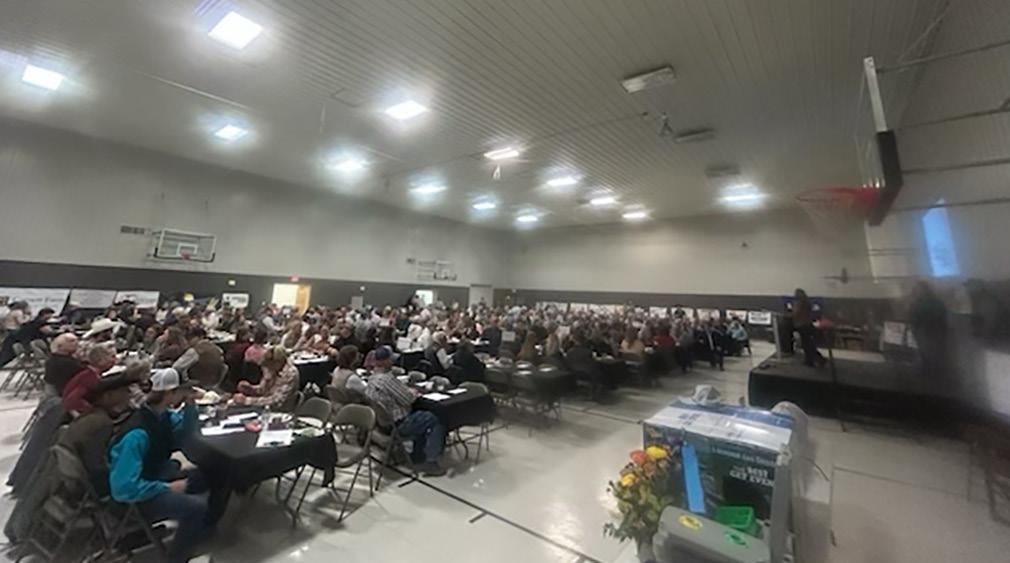
Linn County Cattlemen had an exciting start to the year with our annual banquet that was hosted on February 14th with approximately 345 in attendance. A prime rib dinner was served by B & C catering. Entertainment for the evening was provided by the Peterson Brothers followed by our annual fundraising auction. The event raised approximately $25,000 which will be used for scholarships and Beef promotions throughout the year. We are very thankful to all our sponsors and all those in attendance. A special thank you to Shawn Sayre for auctioning off the items for the evening.
We followed that with the March 3rd meeting where we had 2 different presentations. First speaker was Jordan Boone from Corteva who discussed Pasture Weed Control. Our second presentation was given by Kevin Glaubius from VitaFerm who discussed livestock nutritional needs and their new product, SureStart.
Following the presentation a short business meeting was held. The group discussed donating to the Kansas/ Oklahoma fire relief. A scholarship committee was set up. Finished the evening making plans for May Beef month.
Every Monday: Slaughter Cattle 12:00 p.m. Selling All Classes of Cattle 12:30 p.m.
1st Thursday Nite of Each Month: 6:00 p.m. Bred Cows and Breeding Bull Sale
573-999-7197 (owner)
Glenn Stegman 573-619-8495
Newton and McDonald County Cattlemen
Livingston County Cattlemen
The Livingston County Cattlemen’s Association (LCCA) was formed following outreach by then President-Elect Anita Vanderwert, who shared a vision with region 4 Vice-President Dale Buhman for establishing a local affiliate. Interest from area beef producers was immediate. Vanderwert and Buhman connected an initial group with Mike Deering, Deb Thummel and Miranda Howard. From these early discussions, the group expanded to include additional producers who now serve as officers and board members. The leadership team reflects a wide range of ages, a diversity credited with contributing to the organization’s early momentum. Throughout the formation process, LCCA benefited from the continued support and guidance of Dale Buhman, Deb Thummel and Anita Vanderwert.
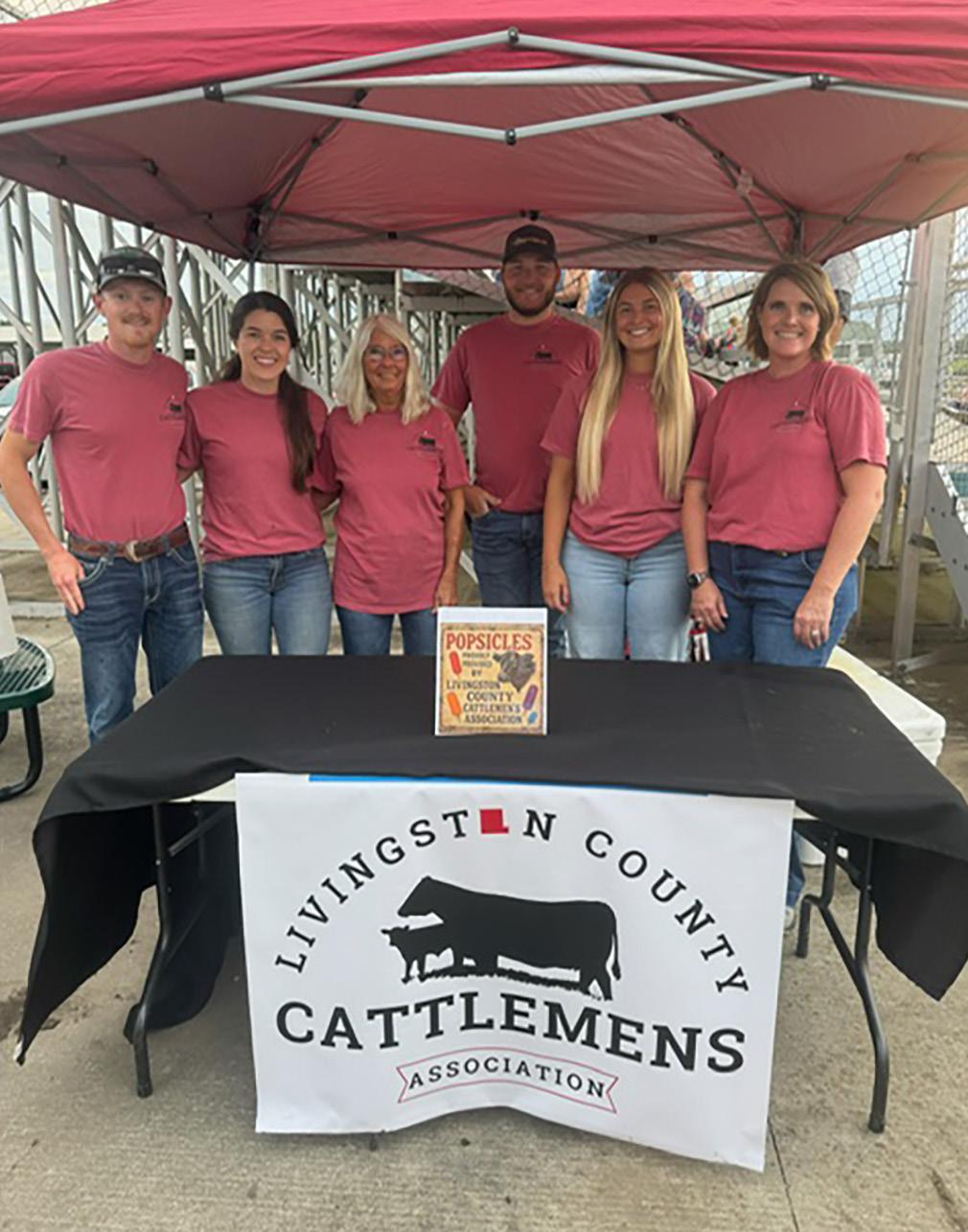
As bylaws and a mission statement were finalized, the board prioritized community involvement. Members volunteered at the Livingston County 4-H and FFA Fair, where board members Brady Bothwell and Clayton Walker assisted during the beef show. That evening, members provided popsicles for youth participating in the Farm Kid Challenge, strengthening connections with local families and young producers.
LCCA hosted its first official event in August 2025, when Missouri Cattlemen’s Association Executive Vice President, Mike Deering, formally welcomed the organization as an affiliate. Guest speaker, Matthew Jenkins, presented on cost-share programs. More than 80 guests attended.
In November, Merck Animal Health sponsored a steak dinner and informational meeting titled “Setting the Cow Herd Up for Success.” The event attracted more than 120 attendees and featured a presentation by the Chillicothe FFA Ag Issues team.
The association began 2026 by attending the MCA Convention, where members were recognized for their achievements, including top hand recruiter Brice and Tiffany Walker, Allied Industry Leader Dewayne McCauslin, MCA scholarship recipients Beau Ann Graves and Carman Woodworth, and Missouri Beef Ambassador Claire Walker. Brandon Bothwell was named chair of the Tax & Credit Council.
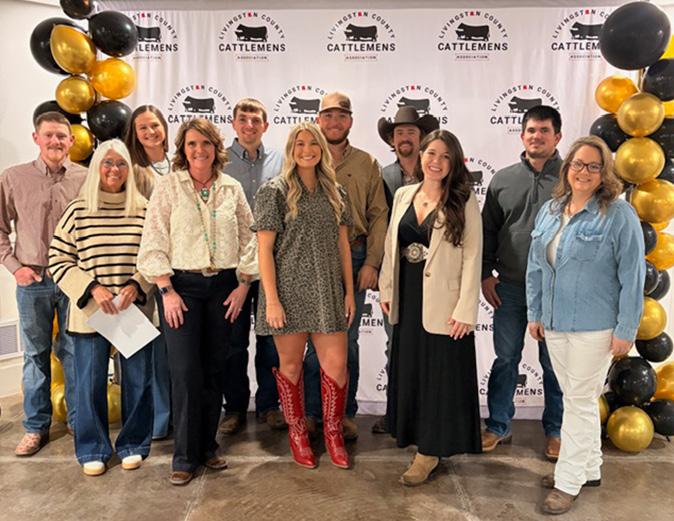
The inaugural Livingston County Cattlemen’s Ball was held at the 3C Event Center and welcomed a sold-out crowd of 250 attendees. Proceeds from the event support LCCA’s mission to promote local beef producers and fund Beef Supervised Agricultural Experience (SAE) grants for area FFA students.
LCCA members also supported Kansas wildfire relief efforts, organizing donations that resulted in the delivery of eight semi-truck loads of hay and one truck of supplies to Ashland, Kansas.
Looking ahead, LCCA has a full schedule planned for the remainder of 2026, including a Trans Ova facility tour in April, awarding FFA Beef SAE grants in May, the annual meeting and appreciation dinner on June 4, volunteer support at the Livingston County 4-H and FFA Fair beef show in July, staffing the Missouri State Fair Beef House in August and an informational speaker in September. The association has also secured its banquet venue for 2027.
The Polk County Cattlemen’s Association was proud to support an important milestone for agricultural education in our region. The board approved the use of our large cooker on March 7th, to assist Lacy Sukovaty and the Missouri State University Agriculture Department, as they prepared burgers for the dedication and ribbon cutting of the AG Innovation Hub and Small Animal Education Center.
This event marked a significant investment in hands-on learning and future workforce development for students pursuing careers in agriculture. Polk County Cattlemen were honored to play a role in fueling the celebration and supporting the next generation of agricultural leaders.
The dedication was held in conjunction with MSU’s annual Darr Difference Day, a tradition focused on service, community engagement and strengthening connections across the agricultural community. By
Gelbvieh and Balancer® Bulls & Females Specializing in Balancers® for the Modern Rancher Ertel Cattle Company • 660.234.2654 26694 Anchor Way • Greentop, MO 63546 www.ertelcattle.com • gertel@ertelcattle.com
partnering with MSU for this event, our association continued its long-standing commitment to supporting education, collaboration, and the advancement of agriculture in Polk County and beyond.
Supported March “Beef & Teeth” 4-H To- Go Kits
The Polk County Cattlemen’s Association was proud to once again support local youth education through the March “Beef & Teeth” 4-H To- Go Kits. This program helps teach students about the importance of good nutrition, strong agricultural foundations, and healthy habits — all in a fun, hands-on format.
Thanks to the association’s sponsorship, 20 Polk County classrooms and homeschool families received this year’s kits. Each participating group was provided a copy of Beef Strong by Amanda Radke, a children’s book that highlights the value of beef in a balanced diet while celebrating the hard work of farm and ranch families.
By helping place these books directly into the hands of local students, Polk County Cattlemen continue to invest in agricultural literacy and support the next generation’s understanding of where their food comes from. Programs like “Beef & Teeth” strengthen the connection between youth and the cattle industry, reinforcing the importance of both nutrition and agriculture in everyday life.
The association is grateful for the opportunity to partner with Polk County 4-H and local educators to make this outreach possible. Supporting youth programs remains a core part of our mission and we look forward to continuing these efforts throughout the year.
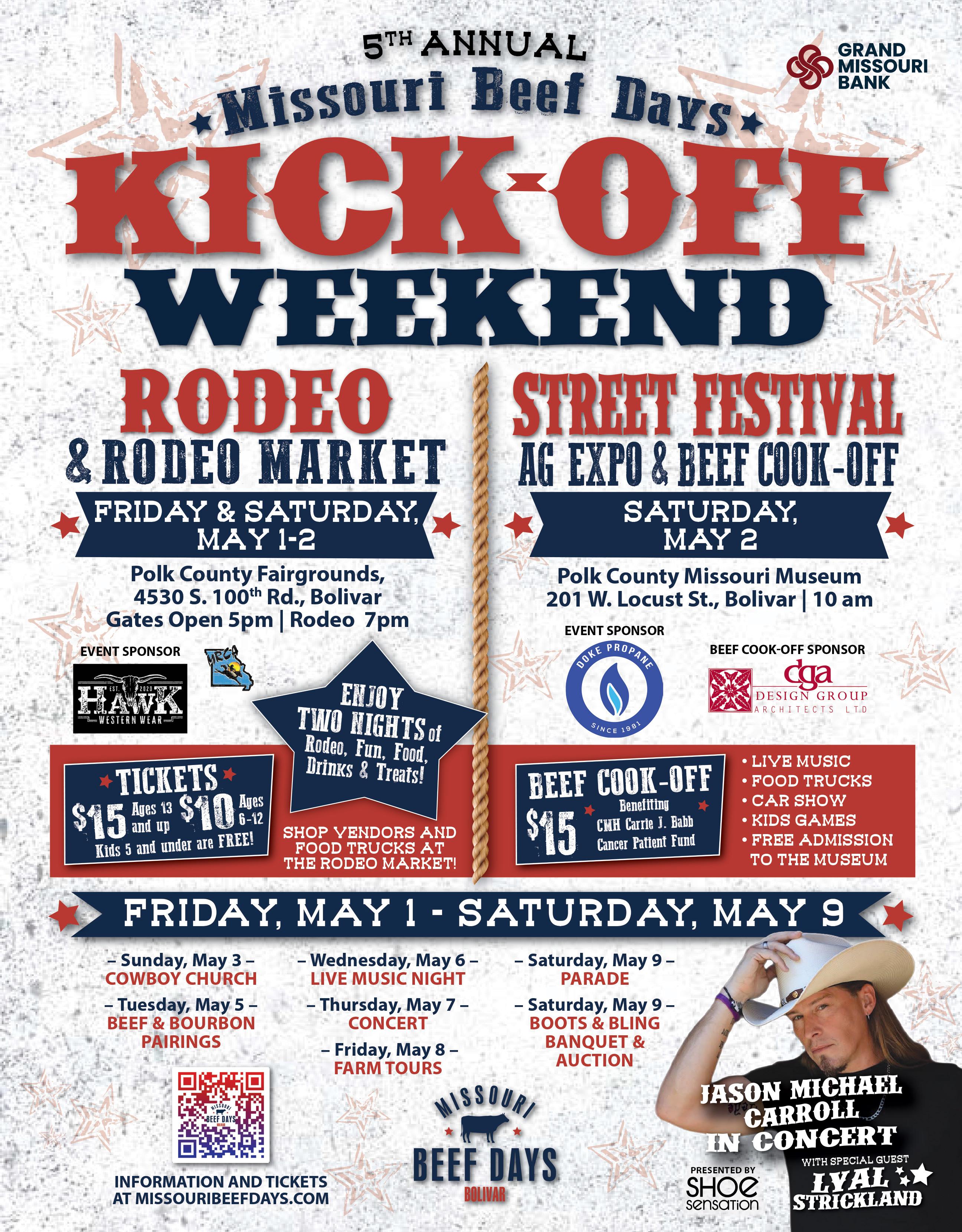
Preparing for Missouri Beef Days — Volunteers Needed!
The Polk County Cattlemen’s Association is already hard at work gearing up for Missouri Beef Days, one of the biggest celebrations of our local cattle industry and the people who make it strong. This event continues to grow each year, and with that growth comes new opportunities for our members to get involved, lend a hand and showcase the pride we have in Polk County agriculture.
Behind the scenes, our board and volunteers have been planning, organizing, and coordinating the many activities that make Missouri Beef Days such a success. From cooking and serving to event setup, youth outreach and community engagement, it truly takes a team to bring this celebration to life.
As we move into the final stretch of preparation, we are looking for volunteers who are willing to step in and help where they can. Whether you have an hour, a day or a specific skill you’d like to offer, your involvement makes a meaningful difference.
We invite all members — and anyone interested in supporting the cattle industry — to join us at our April
meeting on the 9th at 6:30 p.m. This will be the perfect time to sign up for volunteer slots, learn where help is needed most, and be part of the excitement leading up to Missouri Beef Days.
Together, we can make this year’s celebration one of the best yet. Your time, energy and commitment are what keep our association strong and our community connected.
We look forward to seeing you in April and working side-by-side to make Missouri Beef Days a success.
We would like to send a special thanks to our monthly meeting sponsors:
February 12th meeting was sponsored by Crown Power and Ryan Carr with Vermeer
March 12th meeting was sponsored by Brant Gideon with Gideon Ag Drones and Dexter McIntrye with Missouri Farm Bureau Insurance
April 9th will be sponsored by Pat Douglas with Douglas, Haun and Heidemann over Estate and Business Planning.
Southeast Missouri Cattlemen
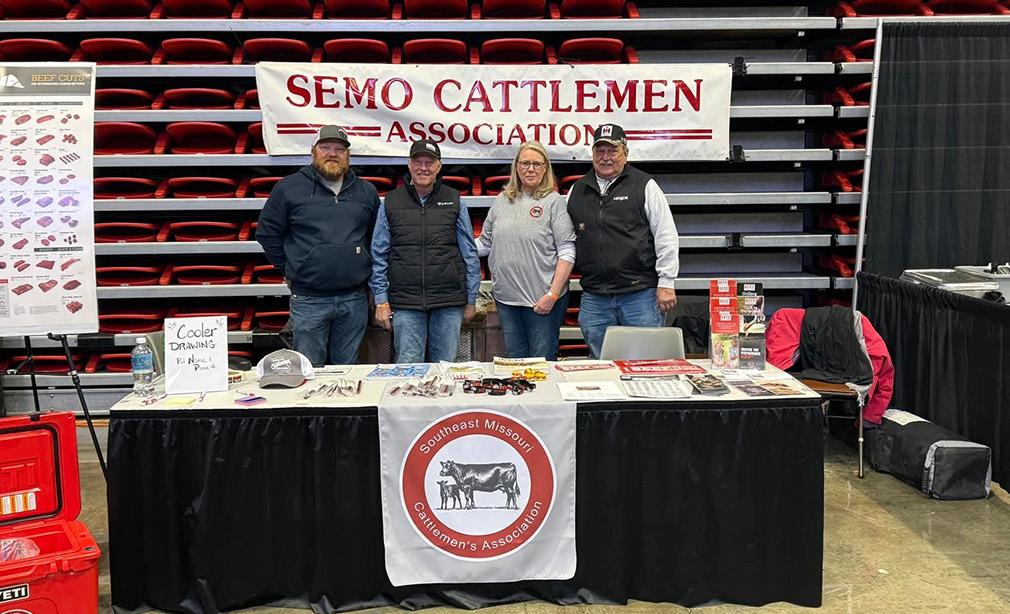
The SEMO Cattlemen’s Association has been busy as 2026 begins. On January 24th, the SEMO Cattlemen had a booth at the 6th Annual When Pig Fly Indoor BBQ Fest. Several memebers passed out educational material as well as answered question. This event allowed the group to promote beef to an audience within our counties as well as beyond.
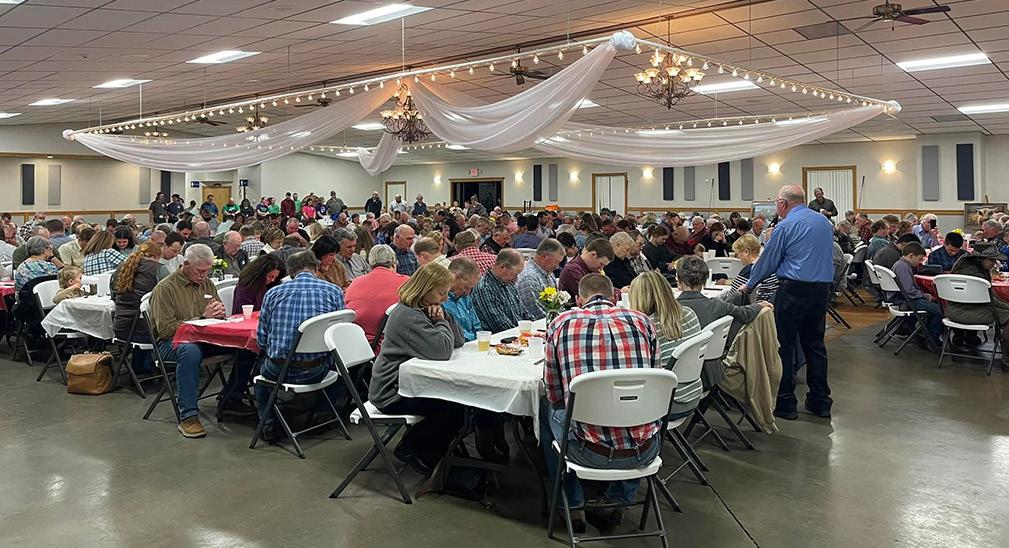
The next event for the SEMO Cattlemen’s Association was the Annual Banquet. The SEMO Cattlemen’s Annual Banquet was held on February 19th at the Jackson Knights of Columbus Hall. At the event, there was a meal as well as a few different raffles, a silent auction and a live auction. This event allows members to socialize with each other.
The third event of the year is an educational program, where Dr. Jill Boyer will present on “Theileria vs. Anaplasmosis: What Does That Mean for My Herd?” and share what local producers should know about these diseases and how they can impact herd health. This event was March 17th at the University of Missouri Extension Office in Cape Girardeau. This event was open to members of SEMO Cattlemen’s Association as well as none member.
As spring approaches, the SEMO Cattlemen’s Association is working to plan additional educational events as well as beef promotional events.
Dallas County Cattlemen
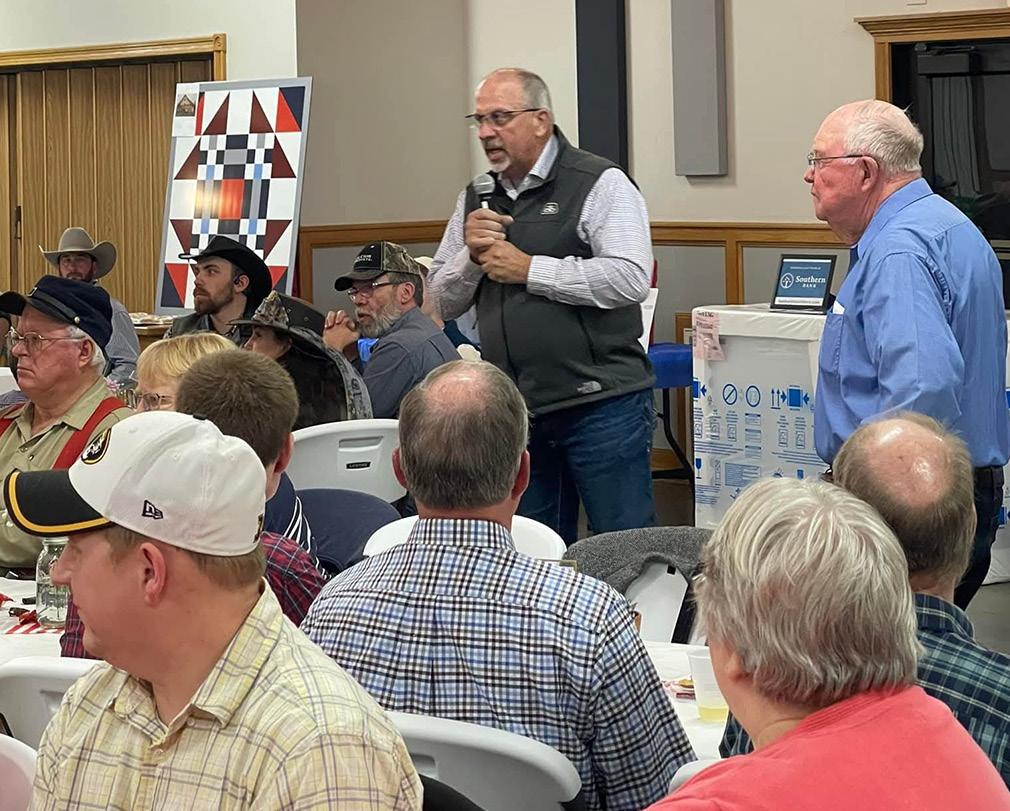
With the Asian Longhorn Tick becoming an increasing problem in the United States today, members of the Dallas County Cattlemen’s Association (DCCA ) heard from a veterinarian at the March 10th meeting about the importance of being vigilant in trying to prevent the tick’s emergence within their herds.
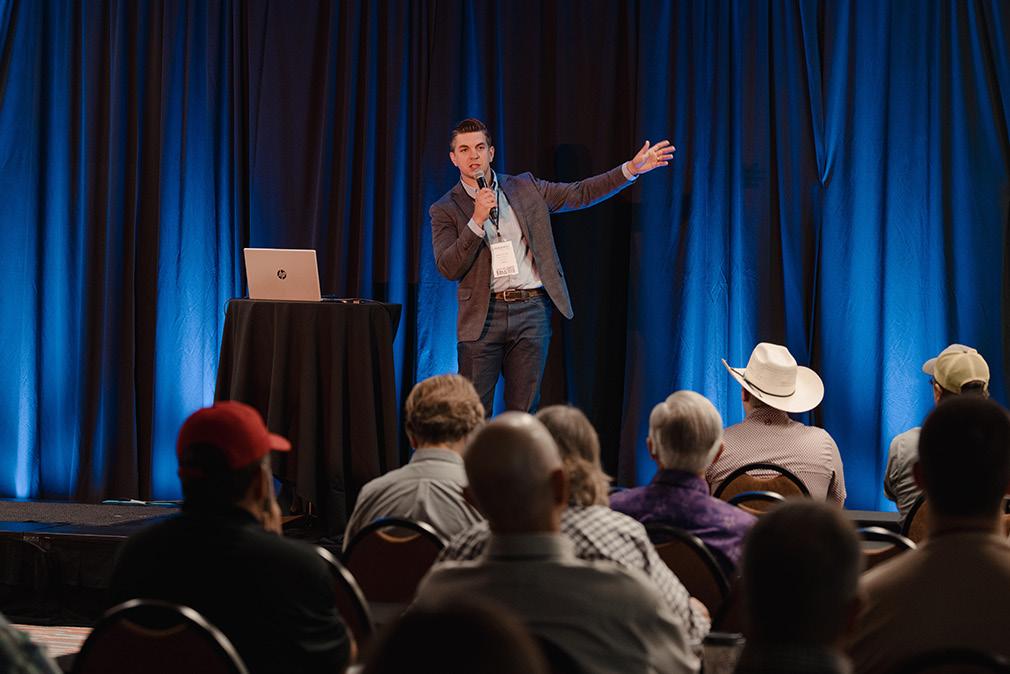
Dr. Robert Gentry, technical services vet-cattle for Medgene Labs, spoke to the 105 in attendance at Prairie Grove School. Medgene is an immunological services provider that makes vaccines and helps with surveillance of diseases in different species of livestock. Medgene is fully licensed under prescriptions from a licensed veterinarian. Its labs are located in Brookings, S.D., and the company is a leader in producing vaccines for animal health.
Tick infestations on cattle cause disease transmission, anemia, loss in productivity and damage to hides. Whereas topically applied insecticides formulated against ticks can offer a short term relief, ticks develop resistance to them, reducing their effectiveness. In the U.S. alone, ticks and tick-borne pathogens cost the cattle industry $13-19 billion annually.
Ticks feeding on animals immunized with tick vaccines have been found to have reduced feeding, reduced egg laying, reduced egg hatching and impaired larval development. Together these effects reduce the number of feeding ticks, reduce the tick burden and interfere with the ability of ticks to transmit diseases such as Anaplasmosis and Theileria.
A tick must have blood to reproduce and does not need a male. Most females can lay up to 3,000 eggs. It is vitally important when vaccinating cattle that clean needles be used on each animal since disease can be transferred via the blood from one animal to another.
Medgene has a number of vaccines available to producers including a five-way vaccine as well as hornfly, wart, and coronavirus vaccines. The Asian tick
vaccine involves a two-time vaccination given three weeks apart then a booster once a year. Local vets set the price which usually averages $4.50 to $5.00 per dose.
Also offering advice to cattlemen was Dr. Jim Rhoades. Both, he and Dr. Gentry, explained the differences of cattle infected with Anaplasmosis versus Theileria (caused by ticks). Anaplasmosis mainly affects older cattle whereas Theileria kills both calves and adults. With anaplasmosis cows will exhibit aggressive behavior. Those infected with Theileria will go off feed immediately.
In addition, attendees heard brief remarks from Jeff Brown, University of Missouri Livestock Specialist Andy McCorkill, and Buffalo FFA students. Brown is running for District 142 representative in Jefferson City which is currently held by Jeff Knight who is term limited.
Earlier in the evening members and guests enjoyed grilled hamburgers, all-beef hotdogs, and sides sponsored by Medgene and DCCA. Special thanks to Medgene and Dr. Gentry for the excellent program as well as a big thank you to our DCCA cooks and the ladies who helped prepare the meal.
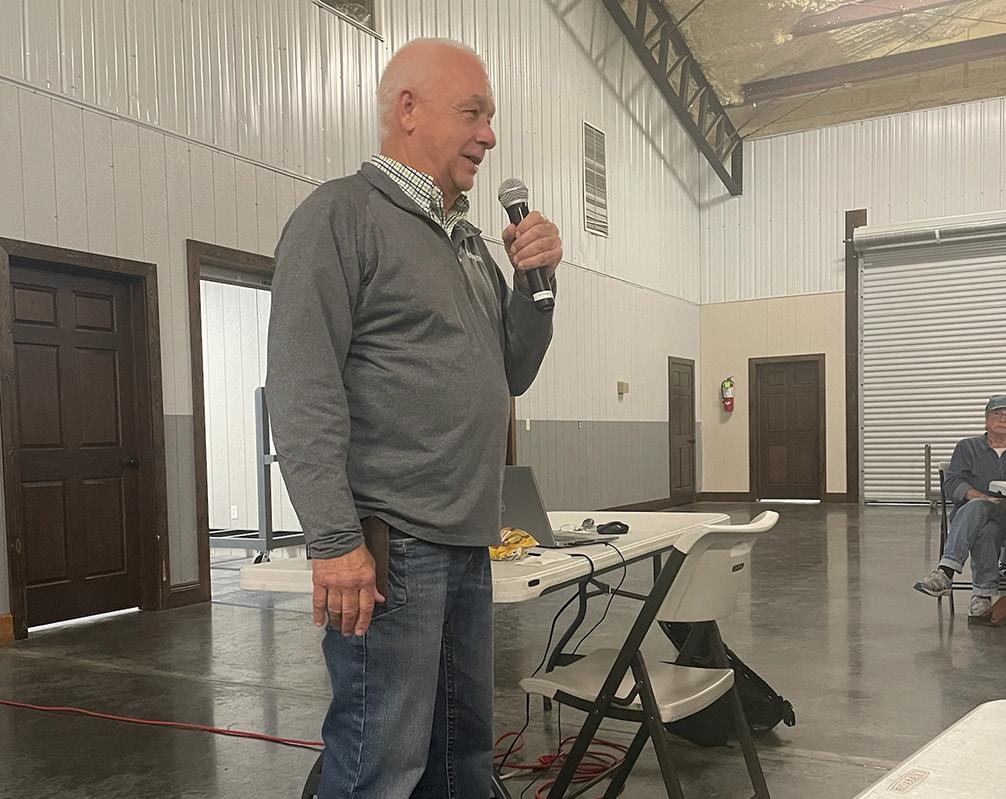
Dr Robert Gentry speaking at DCCA meeting.
Selecting for Success with Sex-sorted Semen
Sex-sorted semen opens up many possibilities for producers, from targeted replacement heifer production to planned terminal matings. The process of sorting semen creates challenges, which Dr. Jordan Thomas, University of Missouri, discussed during Fall Focus 2025.
Source: by Lilly Platts for ASA
Sex-sorted Semen Adds Options
Thomas began by explaining that to understand the potential benefits of sex-sorted semen, producers need to consider the basic financials of the cow-calf cycle. The number one cost cow-calf producers incur is feed, most of which goes into the cow herd. The second highest cost is replacing open cows, either by developing replacements or purchasing females. For producers who breed for their own replacements, setting those females up for success starts at conception. Females that breed earlier in the season and calve earlier not only have more time to recover and re-breed, but their female offspring are older and consequently start their productive cycle in a better place.
Using 60-day breeding and calving seasons as an example, Thomas explained that the yearly cow-calf cycle is undeniably demanding for females. A cow that gets bred early in the 60-day breeding season will calve at the start of the 60-day calving season. Factoring in a 283-day gestation period, that female will have around 82 days between calving and the next breeding season to recover. A female that breeds at the end of that 60-day cycle will also calve at the end of the 60-day calving season, and only have around 22 days to recover. Females go through a postpartum anestrus period (no heat cycle), and the female that only has 22 days to recover is not going to suddenly jump to the beginning
Buffalo Livestock Market
1 mile west on Hwy 32 • Buffalo, MO 65622 Barn: 417-345-8122
Sale Every Saturday 12:00 Noon
• Selling 1200 to 1700 head Farm Fresh Cattle weekly
• Special Stock Cow and Bull Sale 3rd Tuesday night of each month at 6:30 p.m.
• Pre-Vac Feeder Calf Sales 2nd Saturday of every month in conjunction with Regular Sale (Pfizer Pre-Vac, BLM BPre-Vac, Bayer Program, Mo Quality Assurance. LMA-Vac and MFA Health Track)
Order Buying Service Available
Owners… Lyle Caselman Leon Caselman 417-345-7876 H 417-345-4514 H 417-533-2944 cell 417-588-6185 cell
of the 60-day breeding season. “These later-conceiving, later-calving cows don’t just magically become earlierconceiving cows next year,” Thomas said.
The first breeding and calving season is especially demanding for heifers. Thomas shared that common advice has been to only select heifers born toward the beginning of their calving season, which ensures that they will be more mature when they enter the production cycle. Sex-sorted semen can give producers the option to further home in on the production of replacement heifers both by selecting specific genetics, and also selecting a group of cows to calve earlier in the season. While it might be prohibitive to breed the entire cow herd earlier in the season due to weather or other factors, it could be feasible to do so with a smaller group of females selected exclusively for producing replacements.
Maternal crosses are only one side of the coin with sex-sorted semen. Commercial producers can select more heavily for terminal traits, like carcass and growth, or seedstock producers can be more specific in their matings to produce registered bulls.
Common Challenges
Thomas and his team are currently working on a USDA-funded research project focused on improving the success of sex-sorted semen. The process of sorting semen changes the structure of the sperm cell, which can create challenges. The head of each sperm cell has projections sticking out, and signaling molecules, which are eventually cleaved off in order to interact with the reproductive tract. “What happens with sex sorting is sort of like what normally happens with capacitation, which is this process of sperm cells acquiring the capacity to fertilize an oocyte. This normally happens in the tract, and with sex-sorted sperm cells, often a larger proportion of them have those important molecules
Continued on page 72
cleaved off. This isn’t necessarily bad because they would go through a process like that anyway, but it changes their useful lifespan,” Thomas explained.
With conventional semen, the timeframe during which sperm cells are traveling and still fertile is longer than with sex-sorted semen. This means that breeding has to be closer in time to a female’s actual ovulation window with sex-sorted semen. Fresh semen can improve this, but logistically this is prohibitive for producers.
Another challenge Thomas and his team are interested in is the differences in fertility rates among bulls. In some scenarios, a bull’s fertility will be different between conventional and sex-sorted semen. “Another thing we propose to address with this grant, which we have honestly really struggled with, is addressing that there are bull-to-bull differences in fertility with sexsorted semen. Just because a bull has high fertility with conventional semen, believe it or not, doesn’t even mean that he will successfully sort and freeze sexed semen that is viable,” Thomas said.
Tips for Success
The shorter fertile lifespan of sex-sorted semen requires more accurately timed AI breeding. Tracking when
Meyers Truck Service
especially important when using sex-sorted semen. Thomas said, “I think we all forget this, but ovulation
estrus in cattle. It’s closer to 30 hours after the onset of estrus.”
AI synchronization protocols can be effective, but Thomas cautioned that with sex-sorted semen, tracking estrus expression is still important. Estrus detection aids, like patches, are a good tool for making sure a female has actually come into heat. Additionally, checking females for heat more frequently can improve the success of sex-sorted semen. “Devote time to check those animals at least three times per day,” Thomas
Hwy 42 West • Vienna Missouri 65582 45 Miles South of Jefferson City
Selling All classes of Cattle Wednesday • 10:00 a.m.
Featuring ‘Star-Vac Program’ Cattle Weekly DVAuction Service for convenient online viewing & bidding
For More Infor mation Call
David Patton Of fice Ross Patton Bill Patton 573-308-6655 573-422-3305 573-308-6657 573-308-6658
Visit our website: www scrsvienna com or E-mail us: scrsvienna@gmail com
“Make South Central your Livestock Market”
shared. “The reason is, our best recommendation with AI and sex-sorted semen following detected estrus is to be closer to the 18–24-hour window after the detection of estrus for the actual AI to occur, rather than the 12hour time window that might be more acceptable with conventional semen.”
For example, a female in heat in the morning would still be bred at night with sex-sorted semen, but by adding a check in the afternoon, a female that is in heat midday could be bred the next morning instead of that evening.
Timed AI protocols are popular because when done correctly, producers can get high conception rates in less time, and with less labor. Thomas shared that if a producer wants to utilize sex-sorted semen, they should pick a synchronization protocol that is well-validated with sex-sorted semen, and one where animals actually express estrus before breeding.
Sex-sorted semen can open up many possibilities for producers who want to be extremely selective in their mating decisions. Sex-sorted semen is more expensive than conventional, and producers should ensure that their system is set up for success. “I would only consider using sex-sorted semen if females have an activated estrus detection aid, and I would also have conventional semen on hand,” Thomas concluded.
Managing Potassium and Phosphorus When Prices are High
Source: University of Missouri Extension
COLUMBIA, MO. – Farmers know that fertilizer prices fluctuate. They have seen a substantial shift in potassium (K) and phosphorus (P) prices, from low prices in the 2020 growing season to the highest prices in the past decade for fertilizer purchased now for the 2026 growing season.
When high fertilizer prices shock the system farmers often ask if they can delay their P and K applications until next year, when prices may be lower. The quick answer is yes – if your soil test levels are near recommended levels, says University of Missouri Extension state nutrient management specialist John Lory.
Lory likens soil tests to the gas gauge on a car. “If your gas tank is full, you know you can travel 500 miles before the tank runs dry,” he says. “If you are making a trip that is 200 miles, you can, with confidence, make that trip once without refilling your tank. The second trip is also likely fine. But you know you will need to refuel before completing the third trip.”
A soil test at or above recommended levels is much like a gas gauge reading full. On most Missouri fields, an optimum soil test level means you should be fine skipping one year without refilling the tank, Lory says. Many farmers already apply P and K on alternate years.
But what if you did not apply last year? Can you take another year off? The way MU Extension’s recommendation system is designed, one more year should not be a problem, he says.
Options for managing high fertilizer prices
Lory lists options for reducing fertilizer costs this year:
• Do not apply fertilizer to fields that are at or above optimum soil test levels. Extensive research shows that soils at optimum soil test levels do not see increases in yield from the fertilizer applied that year. A benefit of following soil tests is you have the flexibility to skip a year of application if needed. Why not take advantage of this benefit in a year when price is high?
• Not comfortable with going to zero? A second option is to cut fertilizer rate by 50% or less of removal rate. Most yield response to fertilizer is driven by the first 30% to 50% of the fertilizer applied. If you are nervous about going to zero, going halfway will likely provide 100% of the yield benefit this year, even on low-testing soils.
• The most conservative option is to limit fertilizer rate to removal rate. In a year of high fertilizer prices, there is no reason to apply more than the crop removal rate. “If your field happens to be responsive to added P and K this year – a big if! – crop removal rate is guaranteed to maximize yield,” says Lory.
In some cases, however, soil test recommendations don’t fully identify fertilizer need. Lory has seen potassium deficiency symptoms associated with highly compacted areas of the field because restricted root growth prevents the plant from getting to the K in the soil. Cool soils also can temporarily limit the availability of phosphorus.
“Often these conditions lead to transient deficiency symptoms that the plant grows out of as soils warm and become less saturated,” he says.
Finally, sandy soils and soils with low organic matter may not have the same capacity to withstand multiple years with no fertilizer application; they have a smaller gas tank.
Fertilizers help sustain crop production on agricultural soils. Soil testing helps farmers understand the nutrient status of soils. “When fertilizer prices are high, we can also use soil testing to understand the risks of not applying fertilizer,” Lory said.
For more information on nutrient management, go to https://muext.us/NutrientManagement.
Missouri Red Angus Breeders
Ken & Brenda Keesaman
816-675-2503 • C: 816-390-4988
Kody Keesaman 816-724-1432
Kolten Keesaman 816-808-2846
3803 SW Rogers Rd. • Osborn, MO 64474
Ken@kkfarmsredangus.com www.kkfarmsredangus.com
Harris 417-389-2987 Jacob Dunn 417-434-0335
Alpha-gal Syndrome Changes How we Socialize
Source: University of Missouri Extension
COLUMBIA, MO. — For some people, an invitation to dine out brings anxiety instead of anticipation. According to the nonprofit organization Food Allergy Research & Education, one in four Americans are affected by at least one of the top nine food allergies.
Karen Funkenbusch, health and safety state specialist with University of Missouri Extension, says the rising number of Missourians diagnosed with alpha-gal syndrome (AGS) is changing how individuals and families eat and socialize. Alpha-gal syndrome causes allergic reactions to red meat and other mammalderived products.
A 2025 MU Extension survey of more than 1,000 respondents found that dining and social situations have a big effect on the mental health of people with AGS. Nearly two-thirds reported anxiety or depressive disorders, nearly half said the condition affected daily life, and 63% said they avoid eating out or attending social events because of fear of food contamination.
“Social isolation, loneliness, depression and anxiety are often hidden side effects of food allergies like AGS,”
Funkenbusch said. “The fear of accidental exposure and misunderstandings from others can greatly affect quality of life.”
The challenges are often greater in rural areas, where social gatherings frequently center around food and restaurant options are limited. “Some rural communities may have only one fast-food restaurant and little variety,” Funkenbusch said. “Also, many social activities in rural communities center around sporting events where concession stand foods are the only choice.”
Dining out requires advance planning. Funkenbusch recommends calling restaurants ahead of time to discuss allergies and kitchen practices.
“It’s not just what’s on the menu,” she said. “Crosscontamination can occur when food is prepared on shared surfaces or with utensils that have contacted meat, dairy or other mammal-derived products.”
When eating away from home, she advises choosing simple foods with few ingredients or bringing prepared meals.
“Think ‘fins and feathers’ and whole foods,” said Eden Stewart, who leads MU Extension’s interdisciplinary AGS team.
Grilled chicken or fish, steamed vegetables and salads are usually safer choices. Stewart cautions that dressings, desserts and processed foods may contain hidden mammal-derived ingredients such as gelatin or dairy.
MU Extension recently released a series of guides on understanding and managing alpha-gal syndrome. The publications are available for free download at https:// muext.us/AGSguides.
Open communication, self-advocacy and mental health support can help manage the social and emotional impacts of AGS. Funkenbusch urges people to disclose their condition, explain how to respond to an allergic reaction and always carry an epinephrine auto-injector.
Awareness of AGS remains limited, including among health care professionals. A Missouri Department of Health and Senior Services survey found that 78% of primary care physicians nationwide have little to no knowledge of the condition. Funkenbusch said the gap may be wider in rural areas, where outdoor exposure to ticks is more common.
But there is some progress. More Missouri restaurants are adapting menus and practices to accommodate AGS and other food allergies.
MU Extension continues to raise awareness through education and outreach. Information on AGS-related programs and events is available at https:// muext.us/AGS.
Funkenbusch encourages anyone experiencing stress, anxiety or depression related to chronic illness to seek support. “Reach out,” she said. “Call or chat with someone who will listen.”
In partnership with MU Extension’s Show-Me Strong Farm Families program , MU Psychological Services Clinic offers free, confidential telehealth counseling by licensed mental health counselors who understand agriculture and rural communities.
To learn more or request services, visit https://muext. us/SMSFF, email adpsc@missouri.edu or call 573-8824677. For immediate help, call or text 988.
Learn to Rebuild, Retain a Better Cow Herd May 5-6 in Columbia
Hands-on program focuses on genetics, nutrition and reproductive management.
Source: University of Missouri Extension
COLUMBIA, MO. – University of Missouri Extension will hold an educational program on rebuilding and retaining the cow herd May 5th-6th at the MU Beef Research and Teaching Farm in Columbia.
Jamie Courter, MU Extension state beef genetics specialist, said the program will help beef producers make long-term, profitability-focused decisions. Courter will be joined by beef reproductive physiologist Jordan Thomas, beef nutritionist Eric Bailey and an MU
Extension ag business specialist Wesley Tucker for the program, “Retain With Intention: Building a Better Missouri Cow Herd.”
The program will focus on helping producers make informed decisions about replacement heifers by using genetics, nutrition and reproductive management, Courter said.
“The goal is to equip producers with practical tools to identify, develop and manage females that will remain productive in the herd long term,” she said.
“Rebuilding the cow herd is more than keeping back a few extra heifers. It’s about making intentional decisions that shape your operation for years to come.”
Courter says this multifaceted, hands-on program will provide tools to evaluate genetics, nutrition, fertility and performance data when selecting and developing
Continued on page 84
replacement females. Participants will leave with a clear, step-by-step framework for choosing heifers that fit their environment, improve longevity and strengthen longterm profitability.
By the End of the Program, Participants Will be Able to:
• Evaluate replacement heifers using performance records, genomic information and visual appraisal to make more informed retention decisions.
• Develop a nutrition plan that supports proper growth, puberty attainment, and first-breeding success in replacement females.
• Design a reproductive management strategy that improves first-service conception rates and long-term fertility.
• Calculate the long-term economic impact of heifer retention versus sale at weaning.
• Implement a structured replacement selection framework tailored to their operation’s environment, forage resources, and marketing goals.
Topics Include:
• Defining breeding objectives for replacement females.
• Using EPDs, genomic tools and performance data in heifer selection.
• Development strategies to ensure heifers reach puberty and breed early.
• Reproductive benchmarks and management for firstcalf heifers.
• Economic considerations and marketing alternatives for replacement females.
• The program is 7:30 a.m. to 4 p.m. Tuesday, May 5th, and 7:30 a.m. to noon on Wednesday, May 6th.
The MU Beef Research and Teaching Farm is at 5169 Old Millers Road, Columbia, MO.
Register by April 28th at https://pears.io/events/ mu/5052.
Capitol Update with Nancy Giddens & Shannon Cooper
Filing Season is Tough
Each election cycle brings a familiar rhythm to those of us who work around the Missouri Capitol. Filing season arrives, candidates line up to place their names on the ballot, and the political landscape begins to shift once again. For those of us who advocate for agriculture, it is always a bittersweet moment.
On one hand, a new election cycle creates the opportunity to meet future leaders. Fresh candidates step forward from communities across the state. Many bring backgrounds in farming, ranching, or rural business. Others simply carry a genuine curiosity about how agriculture drives the state’s economy. For organizations like the Missouri Cattlemen’s Association, these moments mark the beginning of new conversations and new relationships that will shape policy for years to come.
Building relationships with legislators is at the heart of effective advocacy. Most lawmakers arrive in Jefferson City eager to learn. They want to understand how policies affect the producers in their districts and how agriculture fits into the broader state economy. Those early conversations often lead to lasting partnerships. Over time, some legislators become strong voices for cattle producers and rural communities.
That is the hopeful side of filing season. It is a chance to find the next generation of agricultural champions in the Missouri General Assembly.
Yet the other side of the moment can be difficult. Term limits guarantee that every cycle brings the departure of experienced legislators who have spent years learning the complexities of agriculture policy. Many of them have walked pastures with producers, toured sale barns, and listened closely to the challenges facing Missouri cattle operations.
This year that sense of transition is especially noticeable as respected leaders like Sandy Crawford and Lincoln Hough move on from their time in the legislature.
Both have been steady allies for Missouri agriculture. Senator Crawford has long been recognized for her understanding of rural issues and her willingness to listen directly to producers. Whether the conversation centered on property rights, water issues, or the day-to-day realities of operating a farm, she consistently brought a practical perspective shaped by her deep connection to rural Missouri.
Senator Hough likewise built a reputation as a thoughtful policymaker who understood the economic importance of agriculture. His leadership and willingness to engage on complex issues, ranging from state budget investments to adverse impacts of black vultures, helped ensure that the voice of Missouri producers was part of key legislative discussions.
For those of us who spend long hours working in the Capitol, these relationships go beyond policy debates. Over time legislators become trusted partners and, often, genuine friends. Watching them conclude their legislative service is a reminder of how quickly the cycles of public service move.
Still, agriculture has always been about continuity and renewal. Just as one generation of producers passes knowledge to the next, the same process occurs in public service. New candidates will step forward. New lawmakers will arrive in Jefferson City. And new champions for Missouri agriculture will emerge.
Filing season reminds us that while the faces in the Capitol may change, the mission remains the same. Our job is to ensure that Missouri’s cattle producers continue to have a strong voice at the Capitol, today and for the generations that follow.
Post Rock Cattle Co. • 2.28.2026 • Barnard, KS Cowman’s Kind Bull & Female Sale
7
6
Buck Ridge Cattle Co Sale
3.2.2026 • Wright County, MO.
April 1
SALE CALENDAR
Crowder College Calf Auction, JRS, Carthage, MO
April 2 T Bar S Females for the Future Sale, Online
April 2
April 3
Leachman Cattle I-70 Gateway Spring Bull & Female Sale, Kingdom City, MO
Meyer Cattle Co. Sale Bowling Green, MO
April 4
April 4
April 4
April 4
April 4
April 6
April 9
April 11
Andras Red Angus Bull Sale, Manchester, IL
Four State Angus Association Sale Springfield, MO
Gardiner Angus Ranch Spring Production Sale, Ashland, KS
Peterson Farms Bull Sale, Mountain Grove, MO
Gilbert Cattle Co Sale, Oldfield, MO
Brockmere Sale, New Cambria, MO
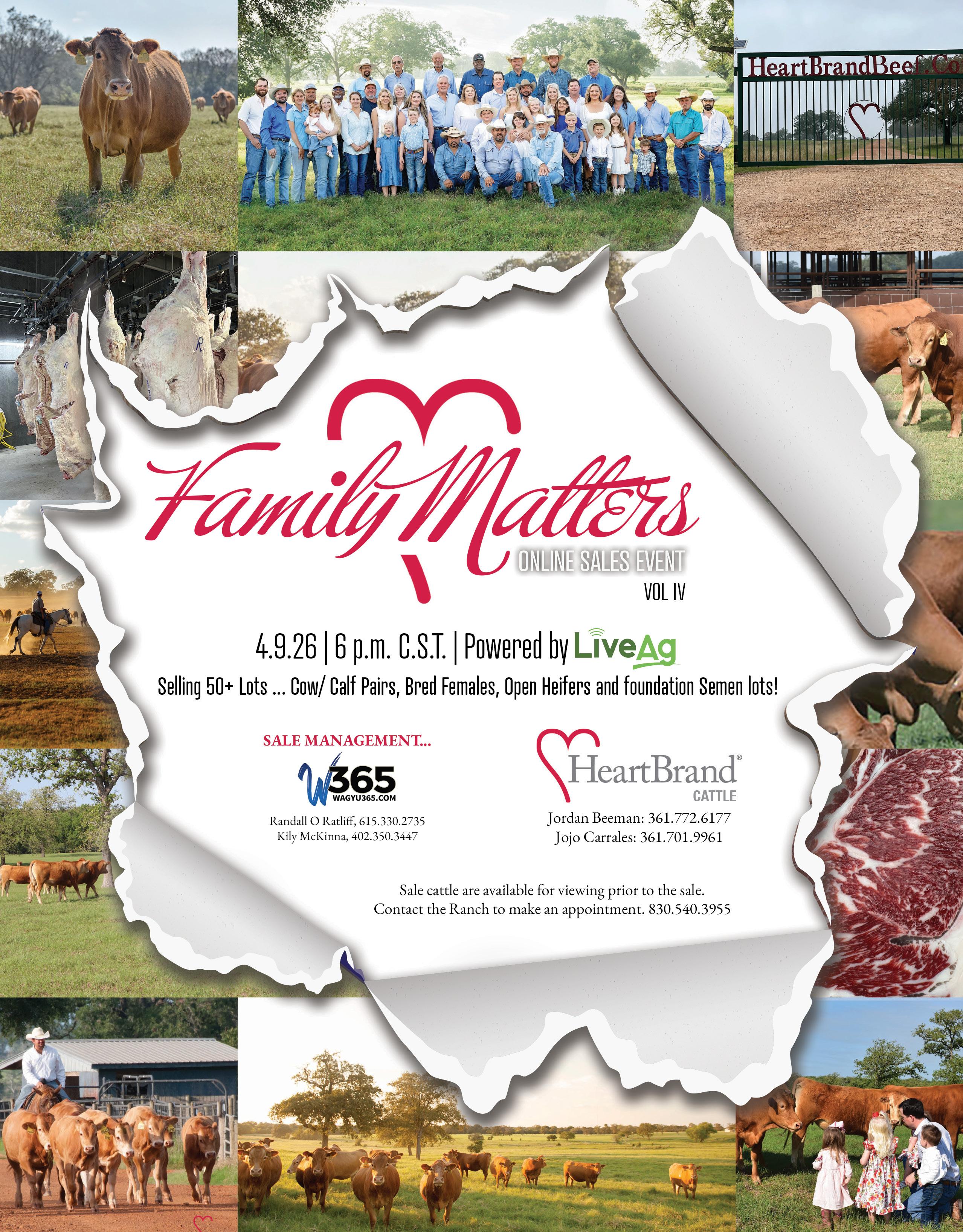
HeartBrand Cattle Family Matters Online Sale
Fink Beef Genetics Sale, Randolph, KS
April 11 The Irreplaceable Showcase Production Sale, Old Three Wagyu, Brenham, TX
April 11 The Renaissance Sale, Strafford, MO
April 11 Lucas Cattle Co. Spring Bull & Female Sale, Cross Timbers, MO
April 14
Sydenstricker Influence Sale, New Cambria, MO
April 16-17
Next Gen Cattle Co., Flint Hills Spring Classic Sale, Paxico, KS
April 18 WMC Cattle Co. The Complete Dispersal Sale, Wasola, MO
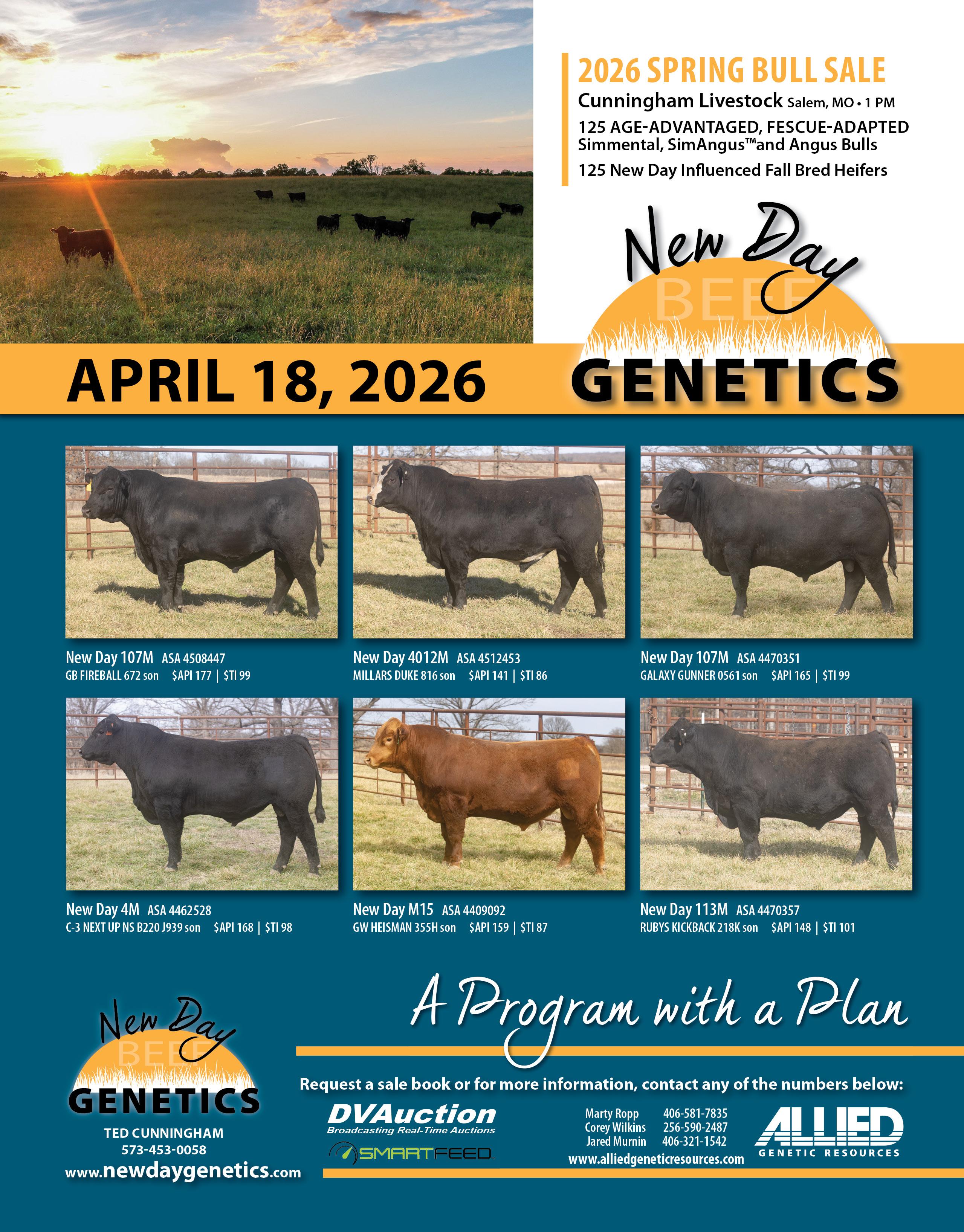
April 18 New Day Beef Genetics Spring Bull Sale, Salem, MO
April 25 Heart of the Ozarks Angus Sale, West Plains, MO
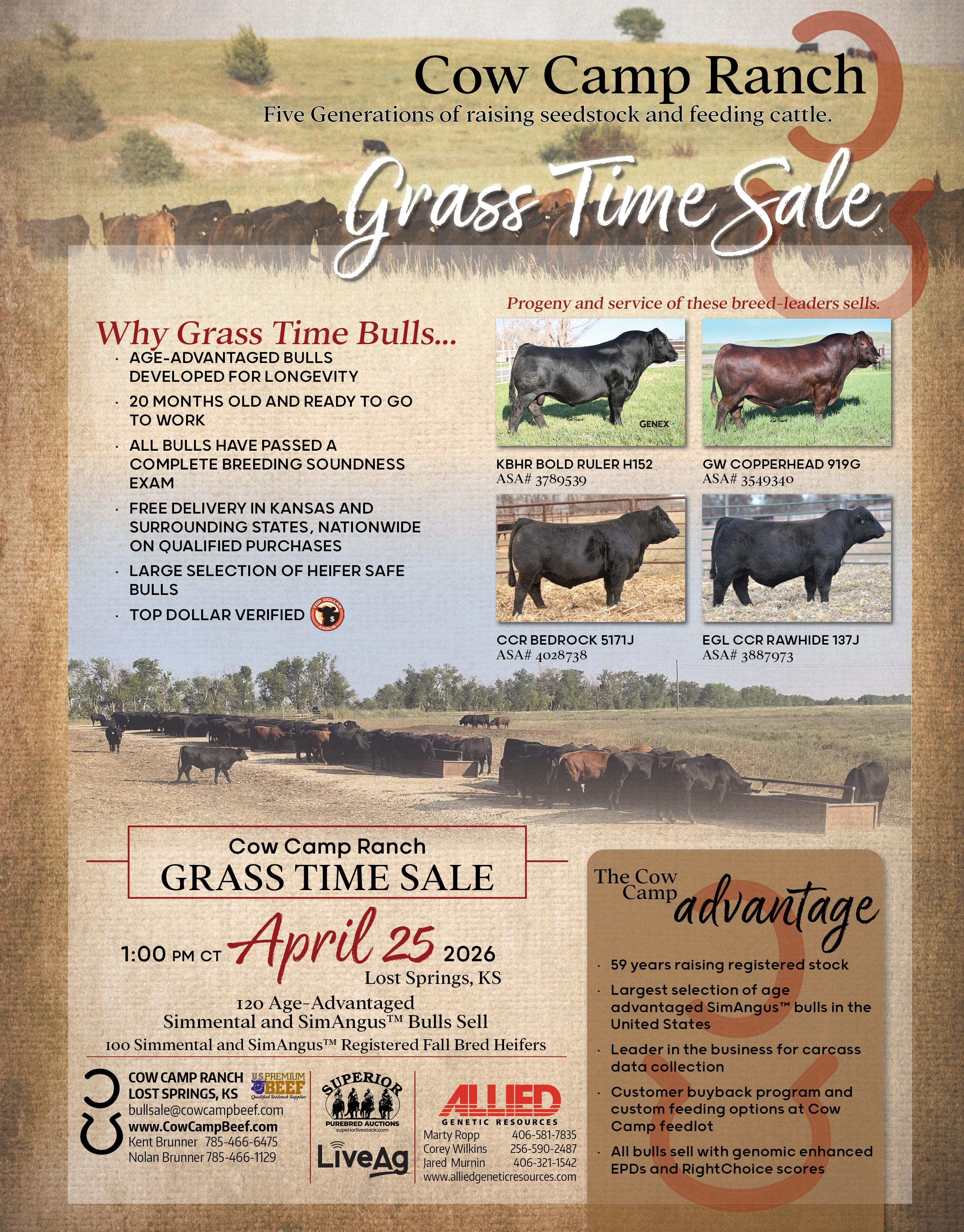
April 25 Cow Camp Ranch Grass Time Sale, Lost Springs, KS
April 25 Missouri Limousin Breeders - Great American Pie Sale, Lebanon, MO
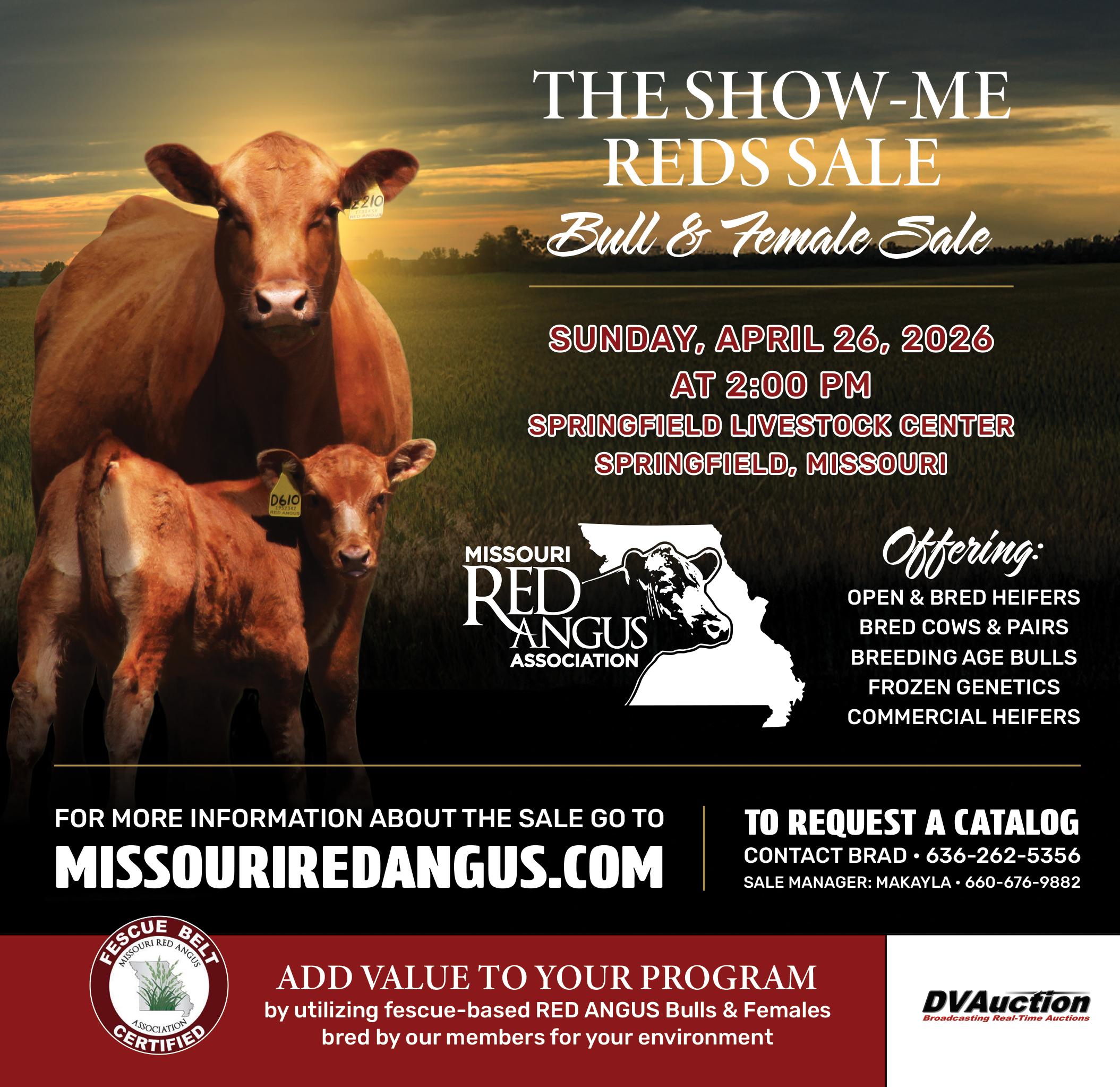
April 26 Missouri Red Angus Association - The Show-Me Reds Sale, Springfield, MO
May 1 Best of Both Worlds Bull Sale, Wright County Livestock Auction, Mtn Grove, MO
May 1 Southeast Missouri SMS Sale, Fruitland, MO
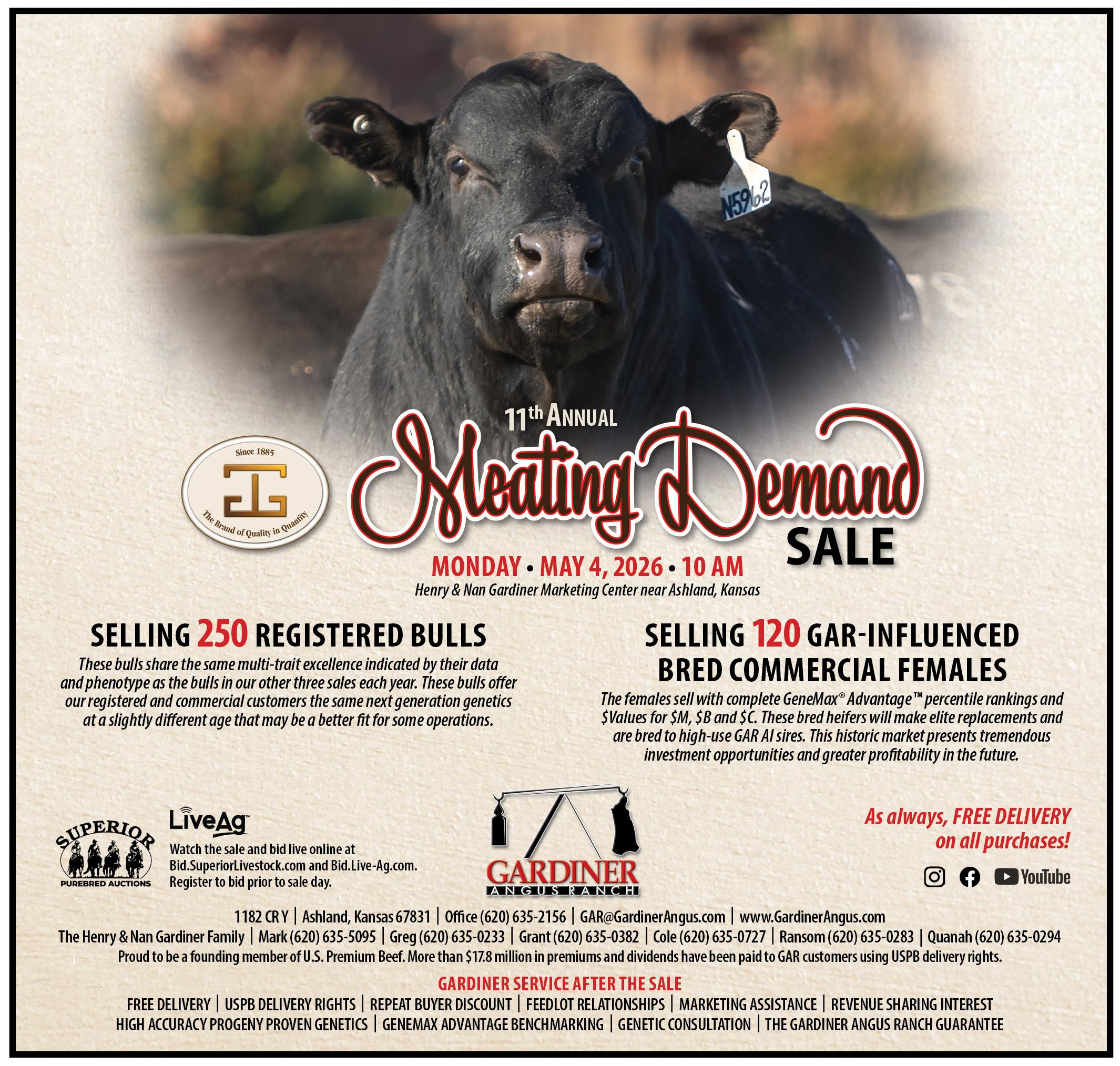
May 4 Gardiner Angus Meating Demand Sale, Ashland, KS
May 1-9 Missouri Beef Days Celebration, Bolivar, MO
May 7 Midwest Prime Akushi Spring Time Spectacular Sale, Weatherby, MO
May 8 East Central Missouri SMS Sale, Farmington, MO
May 8 South Central Missouri SMS Sale, Vienna, MO
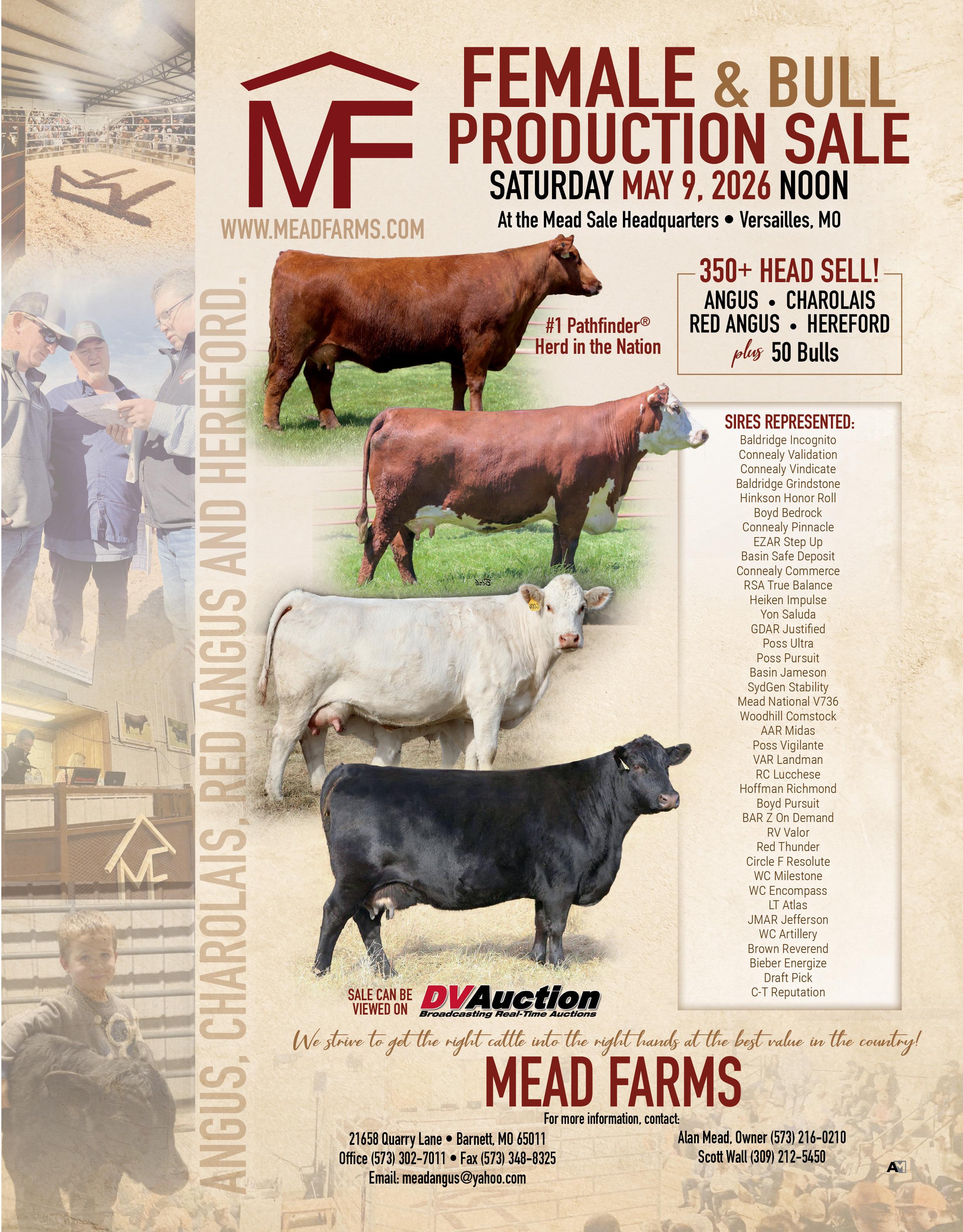
May 9 Mead Farms Spring Female & Bull Production Sale, Versailles, MO
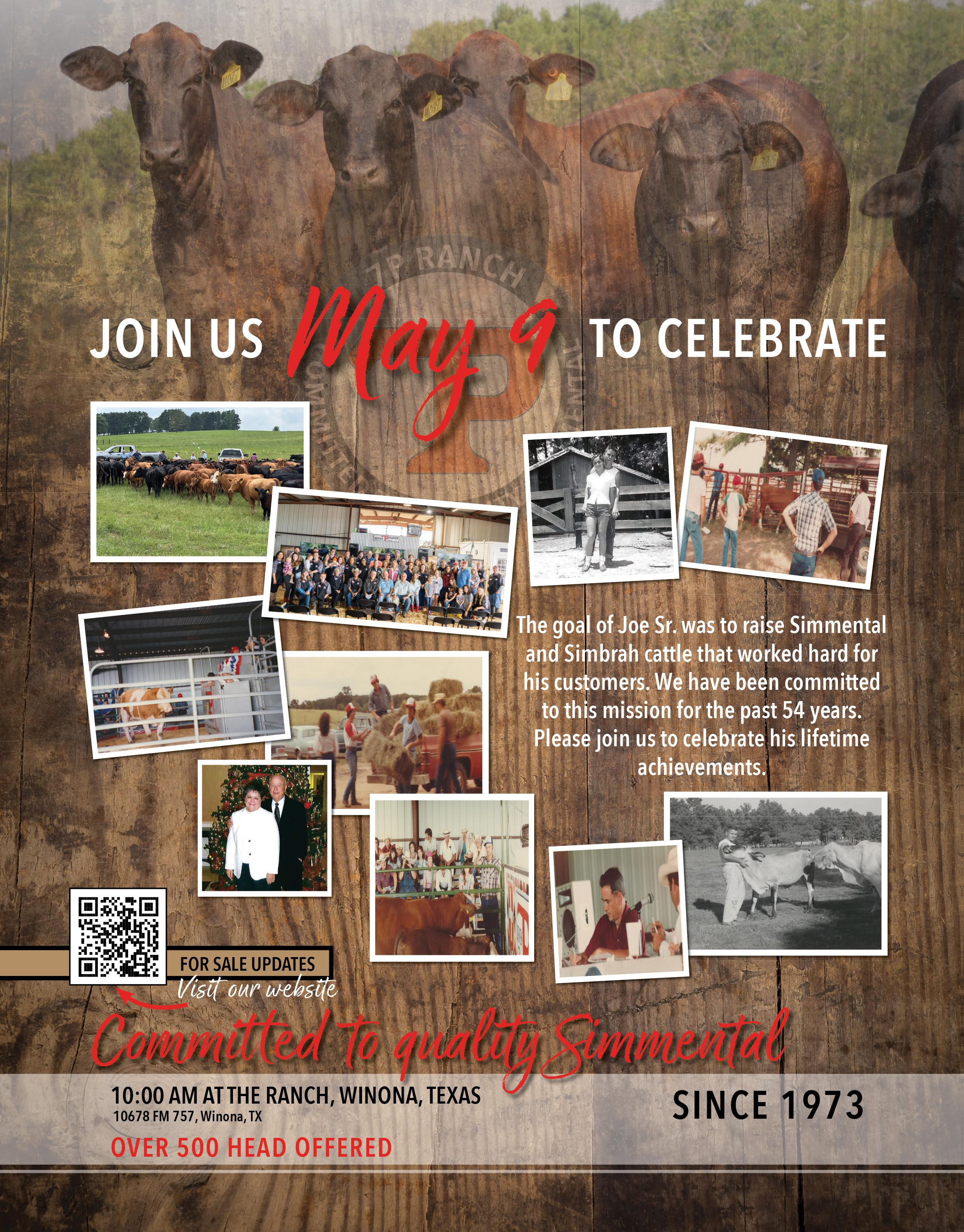
May 9 7P Ranch Dispersal Sale, Winona, TX
May 15 Southwest Missouri SMS Sale, Carthage, MO
May 22-24 MLBA Field Day, Springfield, MO
June 6 Eastern Missouri SMS Sale, Palmyra, MO
MBC Classified
The MBC Classified column appears monthly. Classified advertising is only 50¢ per word. Send your check with your ad to Missouri Beef Cattleman, P.O. Box 480977, Kansas City, MO 64148. Deadline 15th of month before an issue.
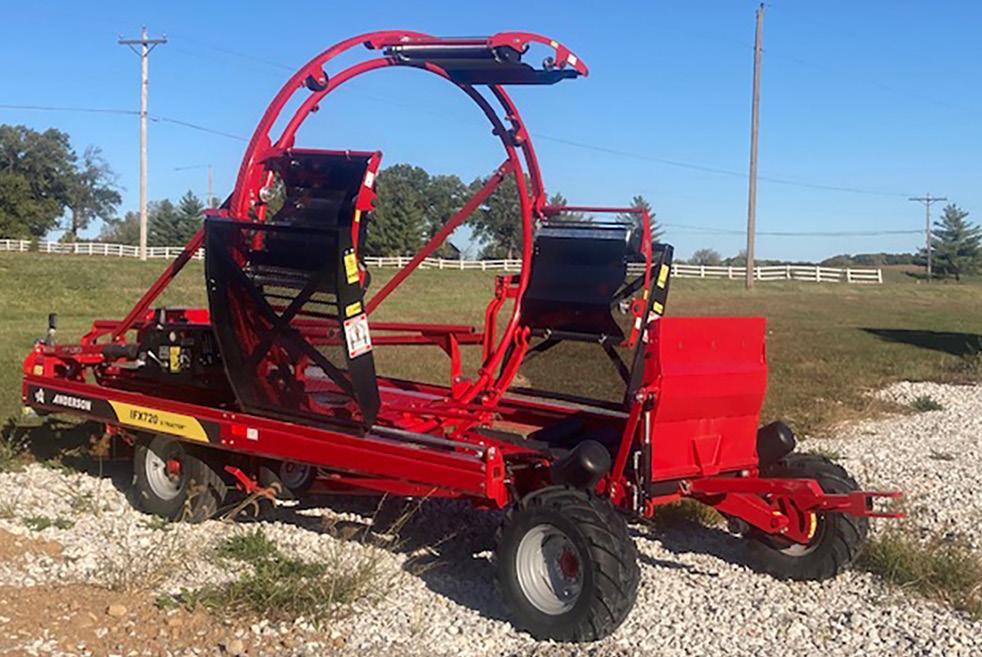
“REESE” DISC MOWERS, CADDY V-RAKES, “REESE” TUBE-LINE BALE WRAPPER, AITCHISON DRILLS, SELF-UNLOADING HAY TRAILERS, HEAVY DUTY BALE AND MINERAL FEEDERS, FEED BUNKS, BALE SPIKES, CONTINUOUS FENCING, COMPLETE CORRAL SYSTEMS, INSTALLATION AVAILABLE: Tigerco Distributing Co. 660-645-2212, 800-432-4020 or www.tigercoinc.com.
BLACK SIMMENTAL BULLS SINCE 1993: Calving Ease, Attractive, Athletic, Sound Footed and Docile. We Deliver. Mike Williams, Higginsville, 816-797-5450
SYCAMORE CREEK SIMANGUS BULLS & BRED HEIFERS FOR SALE. Great EPDs. Wayne and Anita Vanderwert -15 minutes from Columbia. 573-808-3000 or 303-506-3508
SIM-ANGUS BULLS - Top EPD’s for Calving Ease and Growth. Lynn Snow Call Matt McQuitty 660-924-8037.
Scott Cape, Owner of Jim’s Motors in Cuba, Missouri.