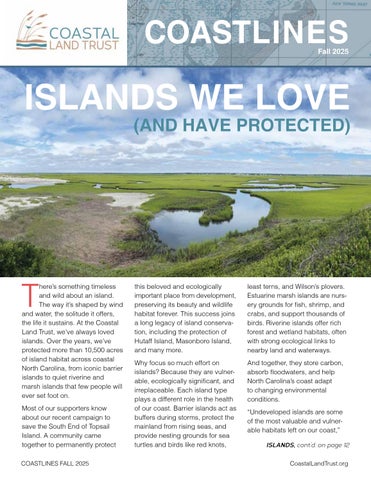
ISLANDS WE LOVE (AND HAVE PROTECTED)
There’s something timeless and wild about an island.
The way it’s shaped by wind and water, the solitude it offers, the life it sustains. At the Coastal Land Trust, we’ve always loved islands. Over the years, we’ve protected more than 10,500 acres of island habitat across coastal North Carolina, from iconic barrier islands to quiet riverine and marsh islands that few people will ever set foot on.
Most of our supporters know about our recent campaign to save the South End of Topsail Island. A community came together to permanently protect
this beloved and ecologically important place from development, preserving its beauty and wildlife habitat forever. This success joins a long legacy of island conservation, including the protection of Hutaff Island, Masonboro Island, and many more.
Why focus so much effort on islands? Because they are vulnerable, ecologically significant, and irreplaceable. Each island type plays a different role in the health of our coast. Barrier islands act as buffers during storms, protect the mainland from rising seas, and provide nesting grounds for sea turtles and birds like red knots,
least terns, and Wilson’s plovers. Estuarine marsh islands are nursery grounds for fish, shrimp, and crabs, and support thousands of birds. Riverine islands offer rich forest and wetland habitats, often with strong ecological links to nearby land and waterways.
And together, they store carbon, absorb floodwaters, and help North Carolina’s coast adapt to changing environmental conditions.
“Undeveloped islands are some of the most valuable and vulnerable habitats left on our coast,”
ISLANDS, cont’d. on page 12
A NOTE FROM THE EXECUTIVE DIRECTOR
Dear Members and Friends,
As I write this letter to our members, we are experiencing a considerable heat wave, and I am reminded again of how important it is to preserve the lands we protect along the coast for the benefit of all. Much of our region is undergoing change based on natural forces and from the continued influx of people who love the coast. The Coastal Land Trust has reason to be proud of major milestones attained this year including the completed restoration of Reaves Chapel and the initial closing on the South End of Topsail Beach. There are exciting projects underway, ranging from sound front properties to areas with great potential for
longleaf pine restoration. Our state’s land conservation trust funds remain a stable source of funding for our projects, but uncertainty about the availability of federal funding of land conservation projects is a real concern for the next few years. Nonetheless, we expect to continue to find ways to protect the special places along the coast. Finally, it is sad to have to say farewell to our colleague,
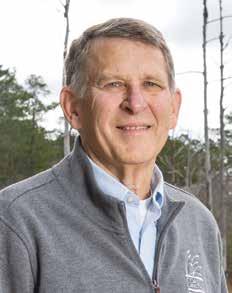
Eric Vreeland (see article page 14). Eric’s leadership has kept us on course and his contribution to the successful Topsail campaign was key. We wish him fair winds and smooth seas as he embarks on a new adventure and we search for an able replacement to head our development and communication efforts.
Harrison Marks Executive Director Coastal Land Trust
PLANNING THE NEXT FIVE YEARS
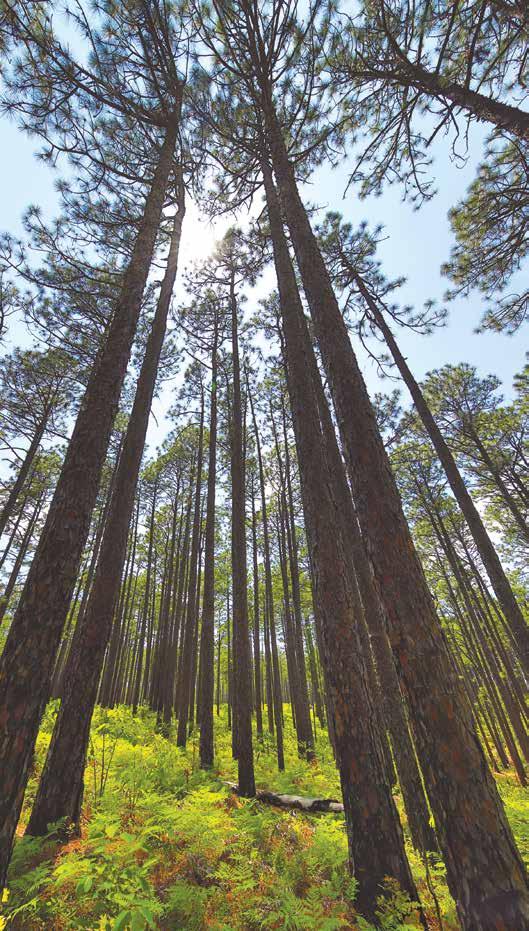
The Coastal Land Trust’s Board of Directors is mid-way through a strategic planning process to strengthen the organization’s ability to protect significant lands throughout North Carolina’s coastal plain. The strategic planning process generally occurs every five years to reassess priorities, chart our long-term goals, and ensure the Coastal Land Trust remains mission focused.
For this planning cycle, the Board hired a consultant to guide our strategic plan and share successful conservation ideas and approaches from more than 30 years of working with land trusts across the nation. In April and May, the organization conducted interviews, held focus groups, and surveyed a sample of individuals across the state’s coastal region, including some longtime supporters, government officials, other conservation organizations, and landowners. The feedback from this effort was incorporated into strategic discussions.
A one and half day retreat in late June set the foundation of the strategic planning process, and a second retreat is scheduled for September to develop specific goals and actions. We look forward to sharing a completed plan with members and supporters in the coming year.
Photo credit: Gary Michael Flanagan
A DECADE OF IMPACT Highlights of the AmeriCorps Service Program
The Coastal Land Trust is a leader in environmental education and land stewardship in eastern North Carolina. Much of the credit goes to the 13 AmeriCorps NC service members who served with the Coastal Land Trust between 2016 and 2025. With the support of this program, the Coastal Land Trust’s environmental education program was able to reach more than 32,500 individuals and received 5,608 hours of donated time from volunteers. AmeriCorps NC service members helped serve marginalized communities, build collaborative relationships with schools and community groups, and supported land management and stewardship needs of the organization.
Through the training of AmeriCorps, service members become skilled and knowledgeable employees prepared to enter the workforce. The Coastal Land Trust has been fortunate enough to hire two members as full-time employees after they each completed two years of service: Bryce Tholen (Environmental Education Stewardship Coordinator) and Lauren Waibel (Volunteer and Trail Coordinator).
Federal funding supported this program through Conservation Trust for North Carolina, enabling the Coastal Land Trust to be a host site for AmeriCorps NC service members. This program was further defined as Resilience Corps NC, an initiative of the national program with a focus on addressing climate change through community education, disaster support, and environmental stewardship. In 2024, the State of North Carolina had nearly 700 service sites and 3,300 service members. The dedicated workers who served through this program gained leadership skills, work experience that prepared them for a professional career, and the opportunity to earn the Segal AmeriCorps Education Award.
The Coastal Land Trust is among 35,000 organizations throughout the nation that was impacted by loss of federal funding for this valuable program in
the spring. Each of the13 service members hosted by the Coastal Land Trust since 2016 served 1,700 hours per year with the exception of this year, when our two members served a reduced 1,295 hours before the program ended abruptly. Thankfully, the Coastal Land Trust was in a financial position to respond quickly and hire Floyd Pearsall and Lauren Waibel for this year as temporary employees for the
2024-2025
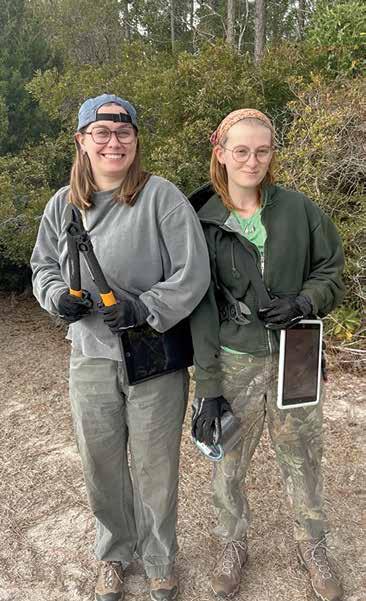
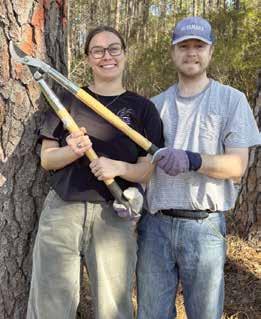
AmeriCorps Service Members, Lauren Waibel and Floyd Pearsall, working hard at Everett Creek Preserve, Onslow County.
remainder of their expected service term.
Serving the Coastal Land Trust through the AmeriCorps NC program has shaped amazing new leaders in conservation, as demonstrated in the success stories of two of Coastal Land Trust’s former service members.
Ivanna Knox
2020-2021 AmeriCorps NC Environmental Educator and Volunteer Coordinator
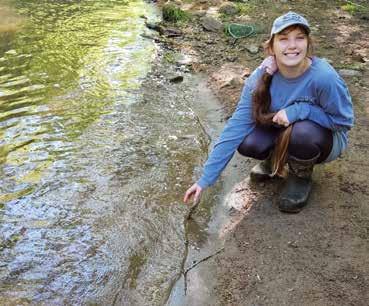
After her service year, Ivanna earned an M.S. in Environmental Science at the University of North Carolina Wilmington and worked as a Research Assistant using longleaf pine tree rings to reconstruct historical precipitation patterns. After graduating, she worked as a seasonal technician monitoring sea turtles and shorebirds in Ocracoke, NC followed by a position with the Sapelo Island National Estuarine Research Reserve collecting water, weather, and fish data. Now, Ivanna is a biological science technician for the Pisgah National Forest, monitoring aquatic species like hellbenders and brook trout, planning restoration events, and managing an environmental education program called the Pisgah River Rangers.
Service Year Reflections: “Working for the Coastal Land Trust through AmeriCorps gave me such a wide breadth of experience. I learned how to monitor conservation easement properties, animate educational videos, plan outreach events, coordinate volunteer opportunities, and learn about the important work of a land trust. It was the perfect jumping board before heading into graduate school. The education stipend AmeriCorps members receive upon completion of the program combined with my research assistantship allowed me to graduate with my master’s degree debt-free which is something I will be forever grateful for, especially as a first-generation college graduate.
Event coordination and working with community partners has helped me in every single role I have had since working for the Coastal Land Trust. I learned so many great skills about how to manage an event and lean on partnerships to make them more robust and build a community in doing so.
My most memorable moment was Pollinator Palooza
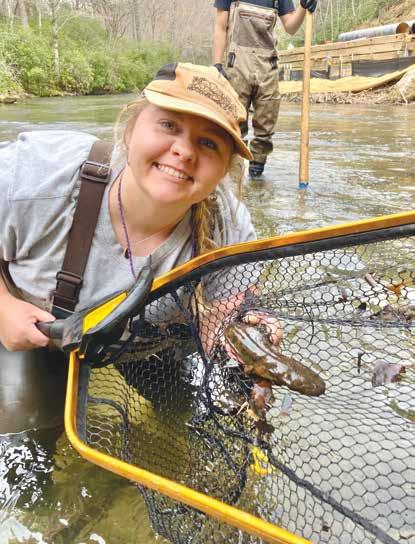
Ivanna Knox completing a preconstruction survey of hellbender salamanders for Pisgah National Forest.
2021. On the heels of Covid 19, providing environmental education for the community was quite a challenge! However, with some creativity, support from the Coastal Land Trust staff, and amazing community partners, I was able to create a series of videos including a Venus flytrap paint tutorial, composting basics, and a native garden instructional video that we paired with take home kits.”
Advice to future conservationists: “I would tell students who are interested in working in conservation to be open to anything and not to be afraid to put yourself out there. I have worked in so many jobs outside of my field, but every one of them has left me a more well-rounded employee which has led me to where I am today. I also tell students to apply to everything they’re interested in, because the worst thing that can happen is they say, “no”, but worse than that is not trying at all. Shoot for the moon, land in the stars.” - Ivanna
AMERICORPS, cont’d. on page 6
Lillie Reiter
2018-2019 AmeriCorps NC Environmental Education and Volunteer Coordinator
After her service year, Lillie worked as an Outreach Assistant at the NC Aquarium at Fort Fisher. She brought marine animals and topics to students ages PreK-12 for two years until the nature of her job shifted due to Covid 19. She then became the Live Animal Manager at the Schiele Museum in Gastonia, NC where she managed staff, interns, and volunteers and cared for the ambassador animals on the farm and exhibits. Currently, Lillie is the Animal Ambassador Curator at the NC Museum of Natural Science in Raleigh.
Service
Year Reflections: “Being an AmeriCorps Service Member gave me confidence to have big ideas and taught me how to be resourceful. The program at the Coastal Land Trust was structured really well for education and outreach, so I studied how that was established and have incorporated that process into every one of my jobs. It taught me how to break down big projects into smaller steps, make achievable timelines, prioritize tasks with efficiency, and deepen my critical thinking skills. I believe this has made me a better candidate when applying for jobs.
While serving the Coastal Land Trust, I became skilled at managing both people and expectations, making sure volunteers stayed safe and engaged throughout their workday. I also learned how to create community connections which helps me find partnerships for utilizing ambassador animals for conservation and education.
One unforgettable moment was when out monitoring a conservation property, Mellissa Dionesotes,
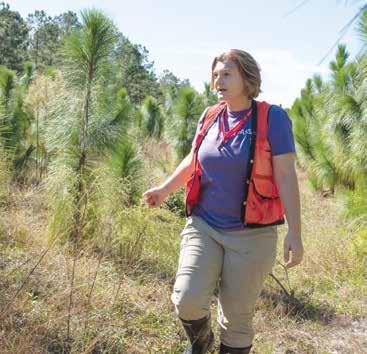
the Coastal Land Trust’s Land and Stewardship Manager, and I lost the GPS signal and ended up wading waist-deep through mud. We emerged looking like swamp creatures and laughing. What a memorable ride home!”
Advice to future conservationists: “Go for it! Do volunteer opportunities until you find a place where you enjoy working. Then find an internship/job and don’t be afraid to make mistakes. AmeriCorps taught some of my cohorts that their positions weren’t their passions – which is great information to have because they didn’t spend years finding that out.
Conservation isn’t just preserving land or doing research. It can also be educating, engaging the public, and creating safe spaces for people to enjoy the natural world. Don’t let anyone’s definition of conservation stop you from defining it for yourself.”
- Lillie

THE BENEFITS OF THE AMERICORPS NC PROGRAM HAVE BEEN INVALUABLE to the Coastal Land Trust and a wide variety of communities throughout North Carolina. The organization is actively addressing the loss felt due to the unexpected termination of the program and is
encouraging folks to consider making a generous gift. You can help bridge the gap in funding for environmental education and land stewardship so that future generations can continue to learn about, and connect to, coastal North Carolina.
Lillie Reiter at Coastal Land Trust’s Everett Creek Preserve, Onslow County.
Photo credit: Volunteer Benedetto
CRUISING FOR COASTAL CONSERVATION
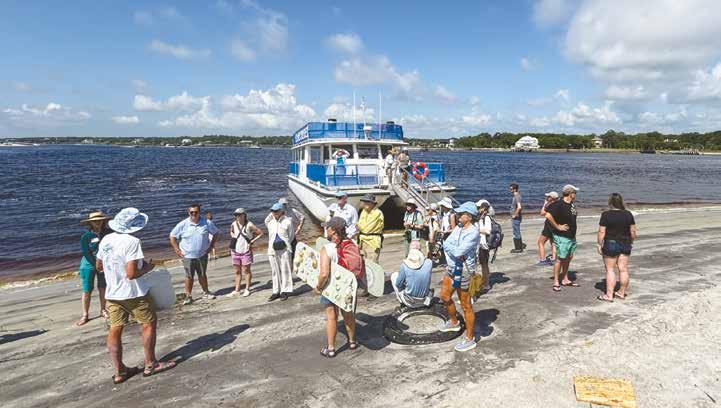
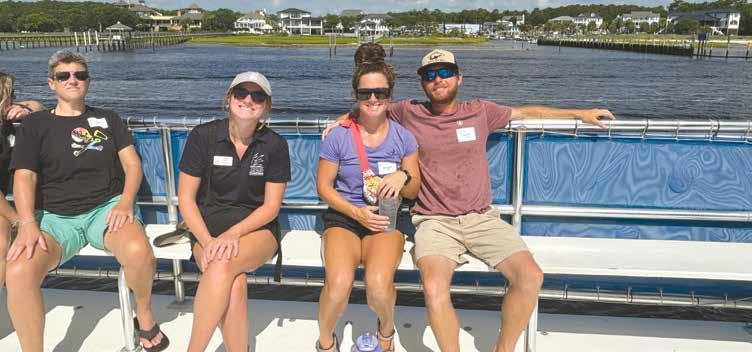
Coastal Land Trust Legacy Society and Tidewater donors enjoyed a boat trip to Masonboro Island in June for an afternoon excursion and educational lecture on barrier island ecology and coastal conservation from Carolina Ocean Studies.
On the morning of June 21st, more than 30 supporters joined Coastal Land Trust staff for an exclusive boat trip to Masonboro Island – to show our appreciation for Tidewater-level donors ($1,000+) and members of the Coastal Legacy Society.
Led by Carolina Ocean Studies, the trip included a walk on the beach and an informative program sharing the rich history and ecological importance of Masonboro Island. A highlight for many was spotting an American oystercatcher along the shore, an exciting glimpse of the wildlife this protected island supports.
Coastal Land Trust staff also shared highlights about the protection of Masonboro Island and our broader work along the Cape Fear River during the boat trip. This outing was a revival of the Coastal Land Trust’s Tidewater donor cruises of years past.
We’re especially grateful to our Coastal Legacy Society members – a group of supporters who have included the Coastal Land Trust in their
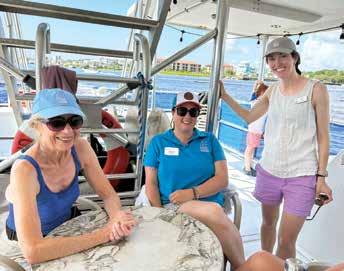
From L to R: Janette Hopper, Associate Director Jesica Blake, and Board Member Laurie King convene on the main deck with anticipation of exploring the island.
estate plans. Estate gifts are one of the most powerful ways to leave a legacy of conservation in coastal North Carolina.
To learn more about the Coastal Legacy Society, contact Harrison Marks at harrison@coastallandtrust.org.
COASTAL LAND TRUST FUNDING PARTNERS
$25,000 – $100,000 +








$2,500 – $9,999






NATIONAL FOOD EQUIPMENT SERVICES
$1,000 – $2,499










CLARK PROPERTIES OF OCRACOKE, LLC




• Carol Sue Blueberry Farm
• Cheerwine
• The Country Club of Landfall
• Davey Resource Group


DUKE ENERGY CORPORATION PAC















BRUNSWICK COUNTY HISTORICAL SOCIETY






• Wild Bird and Garden $500
• Dunn, Pittman, Skinner & Cushman Attorneys at Law
• Hunt Brothers Pizza
• Lackey Lighting and Irrigation
• Perfetti
• Resource Management Systems, LLC
• Village Craftsmen of Ocracoke, Inc.
ROUNDS LLC
POINT CLAN, LLC
GENERAL ASSEMBLY REINSTITUTES
CONSERVATION TAX CREDIT
North Carolina’s General Assembly recently reestablished the Conservation Tax Credit Program, which allows landowners to receive a tax credit for donating or selling land at a bargain sale (less than the appraised value) to a qualified organization like the Coastal Land Trust. The tax credit of up to 25% of the fair market value of the donation is set to expire at the end of 2026. The conservation tax credit is in addition to a federal tax deduction that may be available to landowners donating or selling land or a conservation easement at a bargain sale. Eligible property includes land used for forestland or farmland
SCRAPBOOK: SOUTH END SUMMER, SOUTH TOPSAIL PRESERVE
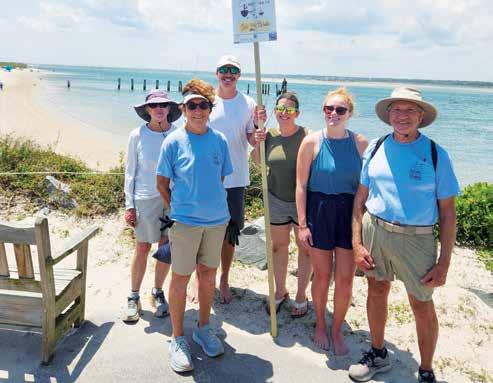
From L to R: Michele Rivest, Nancy Patton, Environmental Education and Stewardship Coordinator Bryce Tholen, Land and Stewardship Manager
Mellissa Dionesotes, Office and Event Coordinator Lizzie Barkley, and Roy Costa going the extra mile installing bird nesting signs along South Topsail.
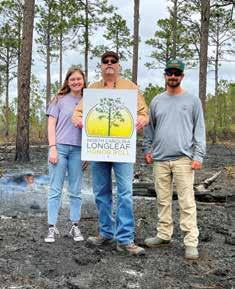
Conservation landowner Marty Lanier, with family, accepting his recognition into the NC Longleaf Honor Roll in 2022 from the NC Forest Service, US Fish and Wildlife Service, NC Agriculture and Consumer Services, and the Coastal Land Trust.
preservation, fish or wildlife conservation, military buffers, floodplain protection in certain counties, historic landscape conservation, public trails, or public trail access.
North Carolina previously had a conservation tax credit from 1983 through 2013, which served as a model for other states and was instrumental in facilitating land and conservation easement donations.
If you have an interest in conserving all or a portion of your property, please contact Lee Leidy (252-335-9495; Lee@ CoastalLandTrust.org) or Kenneth Lingerfelt (910-726-3065; Kenneth@CoastalLandTrust.org) for more information.
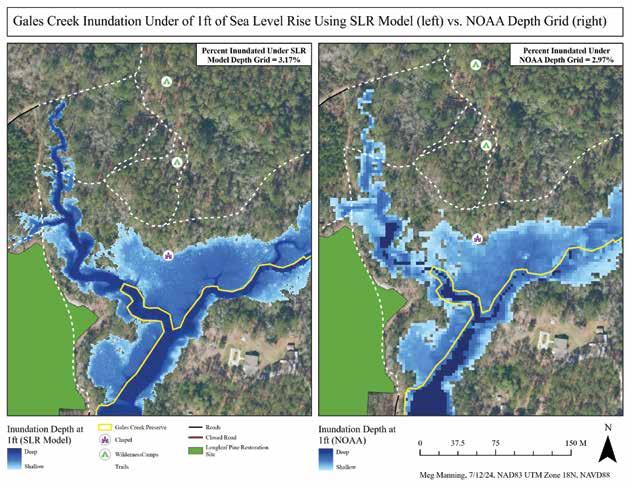
Map created by 2024 Duke Stanback Fellow, Meg Manning, comparing NOAA’s 3-meter resolution dataset (right) to her 1-meter resolution model (left) for a portion of the Coastal Land Trust’s Gales Creek Preserve (Carteret County) with 1 foot of sea level rise.
Findings from our Duke Stanback Fellow
Our 2024 Duke Stanback Fellow Meg Manning recently completed her master’s thesis as part of the Master of Environmental Management program at Duke University’s Nicholas School of the Environment. Meg partnered with the Coastal Land Trust on a project which addresses a growing challenge in coastal conservation: the lack of tools to precisely forecast near-term sea level rise at a parcel scale.
North Carolina is experiencing some of the highest rates of sea level rise in the nation, putting low-lying coastal areas at increasing risk of high-tide flooding, saltwater intrusion, erosion, and habitat loss. Meg’s project downscaled regional sea level rise models to create high-resolution (1-meter) inundation depth grids for five vulnerable tracts near Onslow Bay, forecasting 1 to 3 feet of sea level rise.
North Carolina is experiencing some of the highest rates of sea level rise in the nation, putting low-lying coastal areas at increasing risk
By applying NOAA’s detailed methodology and using LiDAR-based (remote sensing technology) elevation data, Meg generated hyper-local flood projections that more accurately reflect the nuances of site-level hydrology. Her findings showed that regional datasets tend to overestimate inundation extent and miss key features like drainage patterns and connectivity networks. Notably, the differences between regional and parcel-scale models were greatest at the earliest stages of inundation – when precision matters most for planning.
Meg’s work provides the Coastal Land Trust with powerful, climate-driven data to inform both land management and conservation strategy. The depth grids she produced will directly support our Director of Land Protection in prioritizing acquisitions and enhancing resilience across the coastal plain.
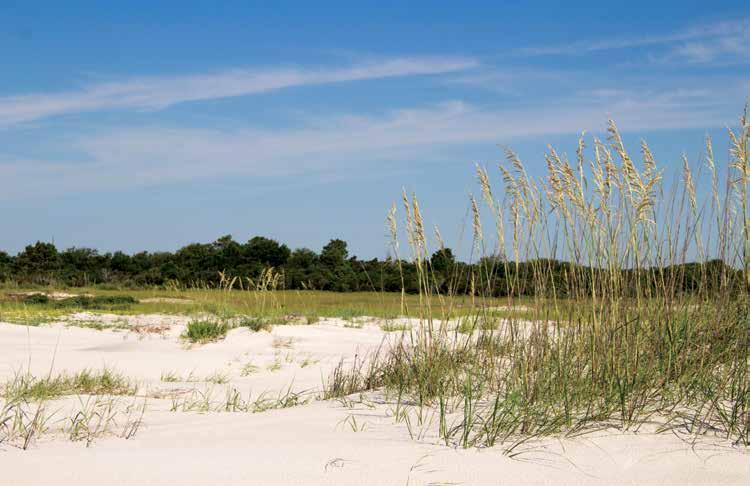
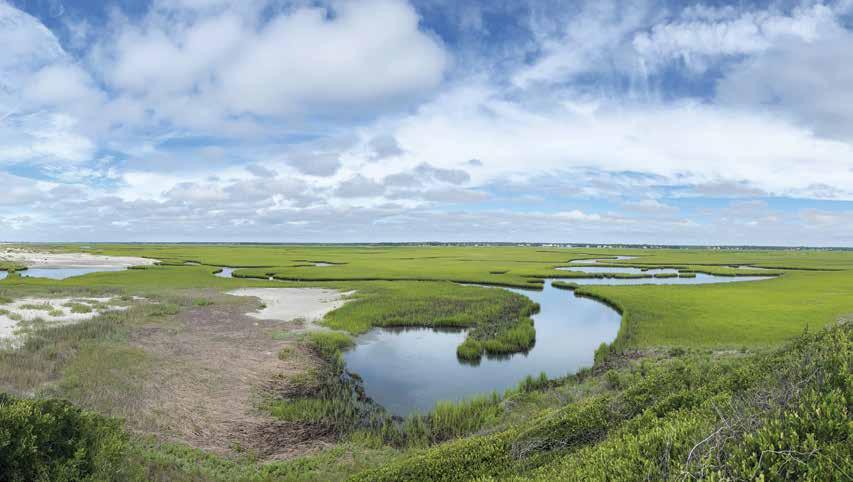
Bird Island Reserve encompasses 1,400 acres of oceanfront, salt marsh, maritime habitats, and tidal creeks.
ISLANDS, continued from page 1
says Kenneth Lingerfelt, our Director of Land Protection. “When we protect them, we’re protecting water quality, wildlife habitat, and the ecological integrity of North Carolina’s coast.”
Here are just a few of the special places you’ve helped the Coastal Land Trust protect:
• Bird Island - This iconic island, famous for its “Kindred Spirit” mailbox, was saved in 2001 and 2002 thanks to a coalition of local residents, Audubon North Carolina, the NC Coastal Federation, the Coastal Land Trust and the State of North Carolina. Today,
it continues to inspire community involvement and remains a symbol of conservation success.
• Masonboro Island - Our involvement with Masonboro stretches back decades through a partnership with the Society for Masonboro Island, which eventually merged with the Coastal Land Trust. Our commitment to this remarkable barrier island continues today.
• Brown’s Island - Located just north of Harker’s Island in Carteret County, Brown’s Island is an estuarine marsh island of more than 600 acres. It’s home to shorebirds and
waterfowl, live oak and longleaf pine forests, and white sand beaches. Now owned and managed by the North Carolina Wildlife Resources Commission, its conservation ensures that this island will never be developed.
• Turkey Quarter IslandSituated in the Neuse River in Craven County, Turkey Quarter Island spans more than 1,400 acres and provides vital forested wetland habitat along an important stretch of river. This project reflects the Coastal Land Trust’s broader commitment to protecting less-visible — but no less valuable —
Photo credit: Stuart R. Borrett
inland island ecosystems.
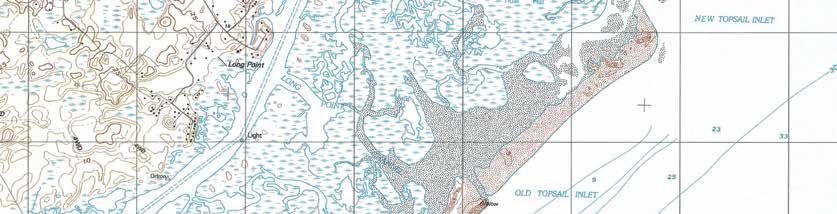
• Hutaff Island – In 2021, the Coastal Land Trust purchased the 1,200-acre Hutaff Island, one of the last privately-owned pristine barrier island and salt marsh complexes in North Carolina. Hutaff Island is bound to the north by Old Topsail Inlet (which closed in 1998) and Lea Island, to
the west by the Intracoastal Waterway, to the south by Rich Inlet, and to the east by more than two miles along the Atlantic Ocean. Protecting this wild and uninhabited place in perpetuity keeps the island’s dynamic ecosystems intact and protects critical habitat for sea turtles, vulnerable beach-nesting birds, and a
host of other rare and threatened wildlife.
Our island work began more than 30 years ago. Since then, your support has allowed us to protect thousands of acres of island habitat — wild places that safeguard biodiversity, protect water quality, and offer a legacy of natural beauty for generations to come.
You’re Invited: Coastal Views, Oysters, Music, and More!
Let’s celebrate a successful year of conservation in eastern North Carolina! Join the Coastal Land Trust on Oct. 11 from 4 – 7 pm on the beautiful Stern-Anderson property overlooking the Intracoastal Waterway for the free Annual Celebration and Lawn Party. Enjoy…
• Dinner from Salt and Charm
• Raw oysters donated by Waterman’s Choice
• Creative mocktails and other beverages
• Dessert from Half Moon Ice Cream Truck
• Live music from Masonboro Sound
• Connect with fellow Coastal Land Trust supporters
• and more!
This is also the organization’s annual meeting in which new members of the Board of Directors will be elected. We can’t wait to celebrate with you! Visit www.CoastalLandTrust.org/Celebrate or the QR code to learn more and register.

IN HONOR OF
Graeme Melton
Don Moran
APRIL 15, 2025 –JULY 15, 2025
Susie Ward
Eric Williams
IN MEMORY OF
Tammy Marker Finch
Lorna E. Davis
John R. Murchison II
Tom Roberts
Charlie Stehman
Richard Dodd
ERIC VREELAND DEPARTURE
Eric Vreeland, who has been a key member of the team since 2022, said farewell to the Coastal Land Trust in July and relocated to Durham to be closer to family. Eric has accepted a position with the Emily K Center which conducts programs designed to build on the academic, career, and leadership potential of students who are traditionally underrepresented in higher education. Eric will be their Chief Advancement Officer.
In addition to his leadership of the Coastal Land Trust’s fundraising and communication programs, Eric played a key role in the extraordinary campaign that was essential to protecting the South End of Topsail Beach. Eric’s children have expressed nonnegotiable demands to return
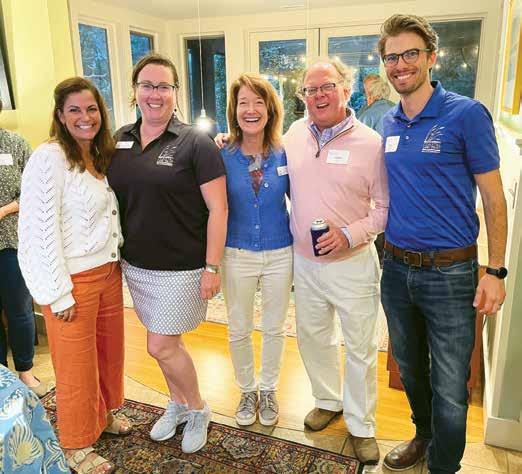
From L to R: Board Member Merrie Jo Alcoke, Associate Director Jesica Blake, Attorney and Northeast Director Lee Leidy, John Leidy, and former Director of Strategic Advancement Eric Vreeland celebrate the beloved Springer’s Point Preserve at the annual Party for the Point in Ocracoke.
for signature Coastal Land Trust events like Flytrap Frolic and Party for the Point, so we look forward to seeing Eric in
the future. A search for new Director of Development is underway as this newsletter goes to press.
NATURE TRIVIA
From page 2
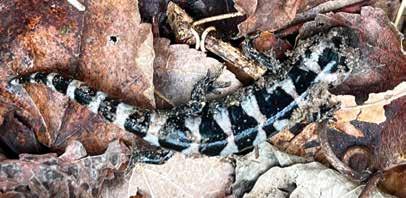
Answer: A. Marbled salamanders (Ambystoma opacum) create burrows and tunnels and spend most of their time underground. The adults are nocturnal and spend daylight hours under leaves, woody debris, or in burrows. Source: NC Wildlife Resources Commission.
Photo credit: David Allen
WELCOME TO THE TEAM
Mary Catherine Parker Administrative Assistant
Mary Catherine grew up in Annapolis, Maryland where she learned to drive the family boat on the Chesapeake Bay and pick hand-caught crabs! She graduated from Arcadia University in December of 2018 with a bachelor's degree in political science and moved to Wilmington in 2021 to explore a coastal city similar to the one she grew up in.
In her free time, Mary Catherine loves to read and can play classical piano. She is passionate about our environment and waterways. Working for the Coastal Land Trust is a dream come true, and she’s excited to contribute to its mission.
Bridget Crabtree Development Associate
Bridget Crabtree brings a background in nonprofit leadership and donor stewardship to the role of Development Associate with the Coastal Land Trust.
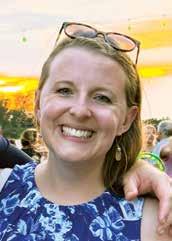
Bridget holds a B.A. in Leadership in the Public Sector from NC State University, and is currently completing her Master of Nonprofit Leadership and Management from Arizona State University. Her professional experience spans service with AmeriCorps in Washington State, membership development with the Girl Scouts-North Carolina Coastal Pines, and most recently, roles in donor relations at the University of North Carolina Wilmington.
Bridget has served on the Town of Leland Parks and Recreation Board, leads a local Girl Scout troop, and currently serves on the Resource Development Committee for the YMCA. She is passionate about connecting people to purpose and helping preserve the places that make the coast so special.
Outside of work, Bridget enjoys traveling with her family, exploring national and state parks, swimming, and spending time at the beach.
Lauren Waibel Volunteer and Trail Coordinator
Lauren Waibel grew up in Baltimore and spent her childhood exploring the Gunpowder River, Assateague Island, and the Outer Banks. Lauren graduated from the University of Vermont in 2022 with a BA in Sociology and minors in Environmental Studies and Studio Art, shortly before moving to Wilmington. In her time at the Coastal Land Trust, Lauren has enjoyed becoming more closely acquainted with the communities and ecosystems of Eastern North Carolina. Lauren loves being in the woods, swimming in all bodies of water, travel, and the fiber arts.
GARDEN UPGRADES
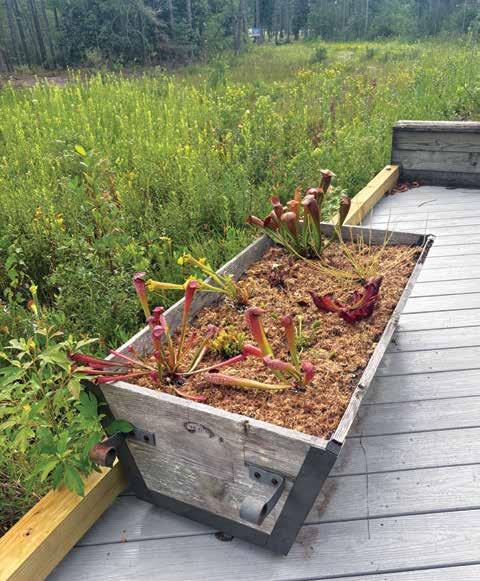
Wilmington’s Stanley Rehder Carnivorous Plant Garden received new enhancements over the summer. The Coastal Land Trust partnered with the City of Wilmington and Blue Ridge Exotics (who brought the supplies as well as their expertise) to build and install new carnivorous plant boxes. These are a great way to experience carnivorous plants up close without having to venture into the garden. They’re also portable and will join the Coastal Land Trust education staff for classroom programs this fall. The City of Wilmington also installed a new deck on the platform overlooking the garden – making the walkway easier to navigate. Open daily from sunrise to sunset, come enjoy the garden to experience these upgrades for yourself. The Stanley Rehder Carnivorous Plant Garden is located at 3800 Canterbury Rd, Wilmington, NC 28403.
NATURE’S WATER FILTERS
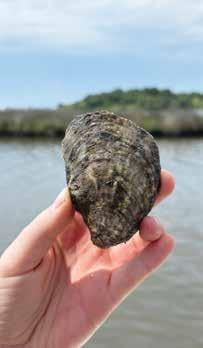
The Coastal Land Trust’s conservation work is essential to the longterm health of North Carolina’s coastal waters and the fisheries that depend on them. By protecting riparian buffers (vegetative zones between water and land) we help maintain the natural filtration systems that trap sediment, prevent erosion, filter pollutants and excess nutrients, and absorb stormwater. These buffers are critical for preserving water quality, sustaining wetland habitats, and supporting the diversity of
species that rely on them. Healthy land and riparian buffers promote healthy waterways and, in turn, the healthy fisheries that sustain us. Oyster populations, for example, filter pollutants in our estuaries, provide habitat for other marine life, and contribute significantly to the resilience of our coastlines. So, the next time you savor local oysters or shellfish, remember the larger story – protecting land today helps keep our waters, wildlife, and natural communities healthy for generations to come.
SCRAPBOOK: SAVE THE SOUTH END CELEBRATION
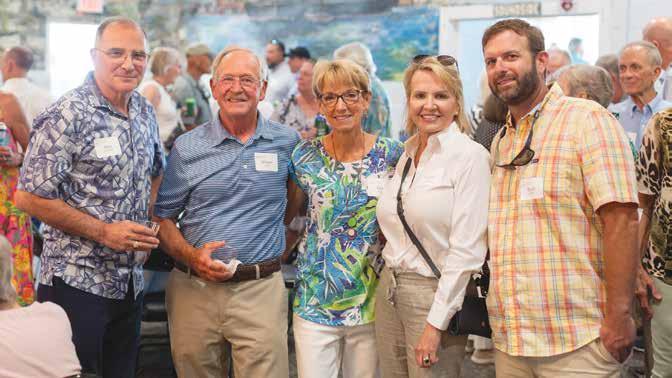
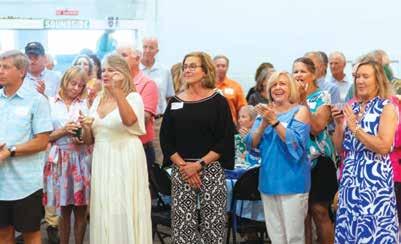
Topsail volunteer committee members, William and Vicky Snyder, link arms with friends in celebration of recent purchase of the South End.
on this page
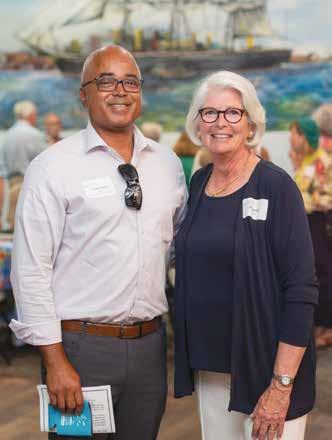
Tancred Miller, Director of the NC Division of Coastal Management, and Topsail volunteer committee member Penny Burrell share a joyful moment celebrating the power of strong community partnerships that made this coastal conservation project a success.
Photos
credit to Austin T. Birch
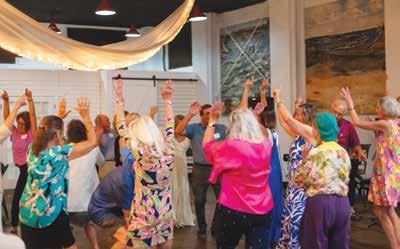
Above and below: Nearly 180 people attended the Topsail Celebration and enjoyed dancing, tasty food, and good company.
SCRAPBOOK: FLYTRAP FROLIC
This year’s Flytrap Frolic at the Stanley Rehder Carnivorous Plant Garden in Wilmington was a record-breaking event with more than 1,000 people coming out to celebrate and learn about carnivorous plants. From arts and crafts, games, and face painting to information tables and garden guides, the event had something for everyone.
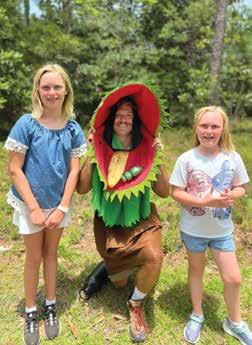
Environmental Education and Stewardship Coordinator (and Flytrap Frolic Extraordinaire) Bryce Tholen poses with sisters eager to start the scavenger hunt.
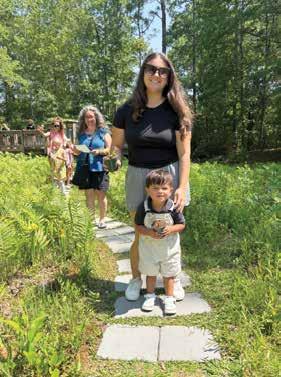
Flytrap Frolic is fun for the whole family –visitors of all ages enjoyed getting their very own ethically sourced flytrap plant.
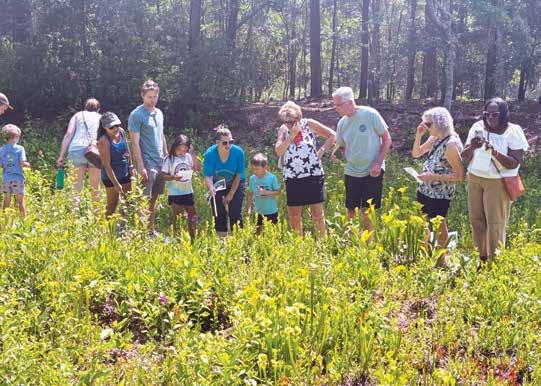
Land and Stewardship Manager Mellissa Dionesotes amongst several first-timers to the garden in awe of seeing pitcher plants up close.
BOARD OF DIRECTORS
President Bob Emory New Bern, NC
Vice President
Merrie Jo Alcoke New Bern, NC
Lorrie Basnight Greenville, NC
Vice President/Secretary
Hannah Holt Wilmington, NC
Bernest Hewett
Bolivia, NC
Ken Hines
Treasurer Nick Parker Wilmington, NC
Wilmington, NC
Lorrie Basnight Greenville, NC
Bernest Hewett Bolivia, NC
Ken Hines
Wilmington, NC
Laurie McComas King Wilmington, NC
Hal Kitchin
Wilmington, NC
Yoshi Newman, Ph.D. Greenville, NC
Chad Pearson Wilmington, NC
Bill Rich Ocracoke, NC
Dr. Stan Riggs Greenville, NC
Brian Rubino Kitty Hawk, NC
Ann Cary Simpson Chapel Hill, NC
Cheryl Bradley Smith Pine Knoll Shores, NC
Mary Tillery Chapel Hill, NC
23rd Annual Golf Tournament
Country Club of Landfall
September 15
Open Hike Day
Everett Creek Preserve September 20
Fire in the Pines Festival
Halyburton Park
October 4
MAIN OFFICE
3 Pine Valley Drive Wilmington, NC 28412 (910) 790-4524
Annual Celebration and Lawn Party
The Stern-Anderson Property October 11
Open Hike Day
Everett Creek Preserve October 18
Harrison Marks Executive Director harrison@CoastalLandTrust.org
Lizzie Barkley Office & Event Coordinator lizzie@CoastalLandTrust.org
Jesica C. Blake Associate Director jesica@CoastalLandTrust.org
Bridget Crabtree Development Associate bridget@coastallandtrustorg
Mellissa Dionesotes Land and Stewardship Manager mellissa@CoastalLandTrust.org
Trick or Treat on the Trails
Everett Creek Preserve October 25
Hike with a Veteran in Partnership with Blue Star Connect Outdoors
Everett Creek Preserve November 1
Drink Local, Conserve Local Swells’a Brewing November 15
www.CoastalLandTrust.org/events

STAFF
Kenneth J. Lingerfelt Director of Land Protection kenneth@CoastalLandTrust.org
Mary Catherine Parker Administrative Assistant marycatherine@ coastallandtrust.org
Bryce Tholen Environmental Education and Stewardship Coordinator bryce@CoastalLandTrust.org
Lauren Waibel Volunteer and Trail Coordinator lauren@CoastalLandTrust.org
Laura Wilson Development and Communications Specialist laura@CoastalLandTrust.org
NORTHEAST OFFICE
Lee L. Leidy Attorney and Northeast Region Director Elizabeth City, NC 27909 (252) 335-9495 lee@CoastalLandTrust.org
ADDITIONAL CONTACT
Lena Austin O’Neal Springer’s Point Preserve Steward lena.oneal@nccat.org


3 Pine Valley Drive Wilmington, North Carolina 28412
This paper is printed on Forest Stewardship Council (FSC) certified paper, ensuring environmentally and socially responsible forestry practices.
Scan for ways to connect!

SCRAPBOOK: FIELD TRIP FUN AT BERN PRESERVE
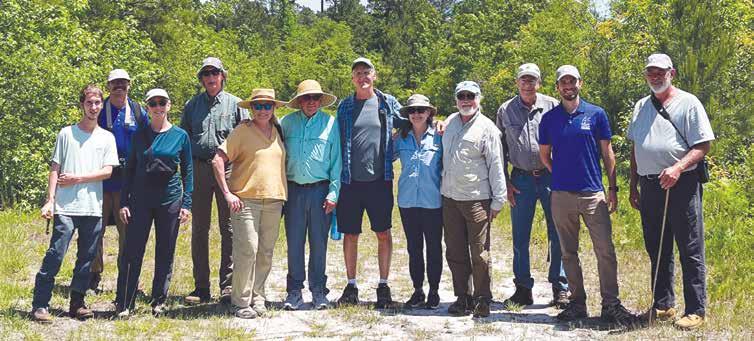
Coastal Land Trust members were treated to a visit to the Bern Preserve in Craven County prior to attending the Mid-Coast Celebration in May. Environmental Education and Stewardship Coordinator Bryce Tholen and forester Tim Tabak (2nd and 4th from left) impressed visitors with the property’s natural history and the Coastal Land Trust’s longleaf pine restoration and red-cockaded woodpecker habitat expansion efforts at the Preserve.