COASTLINES










When the Coastal Land Trust identi es a new conservation property we generally don’t talk much about it until it is acquired. Details are rarely publicized because it is important to respect the privacy of landowners and partners throughout the conservation process and the search for funding, which often takes several years to complete.


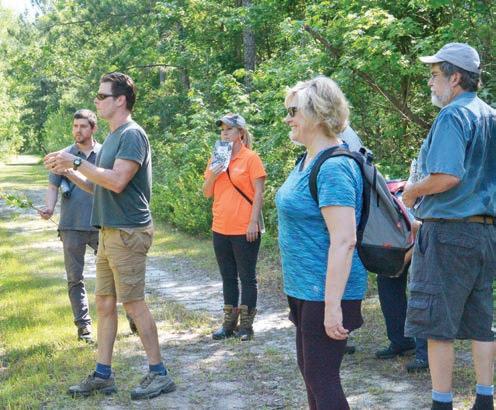
“This is one of the most exciting things I’ve heard about in a long time,” stated Alan Craig, as he listened to Clay Swindell, an archaeologist with the Museum of the Albemarle, explain the possible signi cance of a fragment of pottery he held in his hand. Alan, one of the Coastal Land Trust’s Conservation Ambassadors (advisors), along with Board members and sta took a tour of a 1,000-acre property in Bertie County in May.

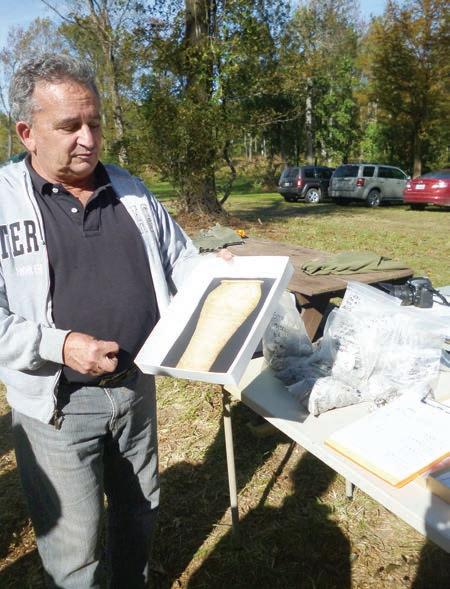
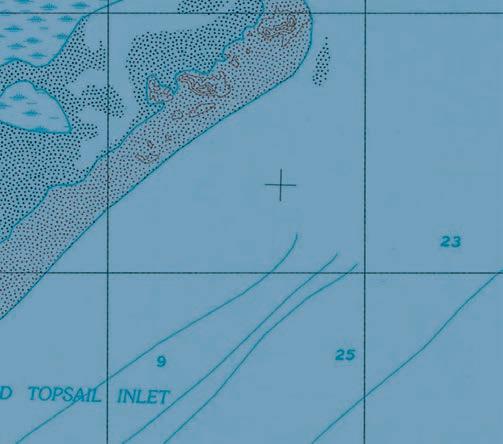
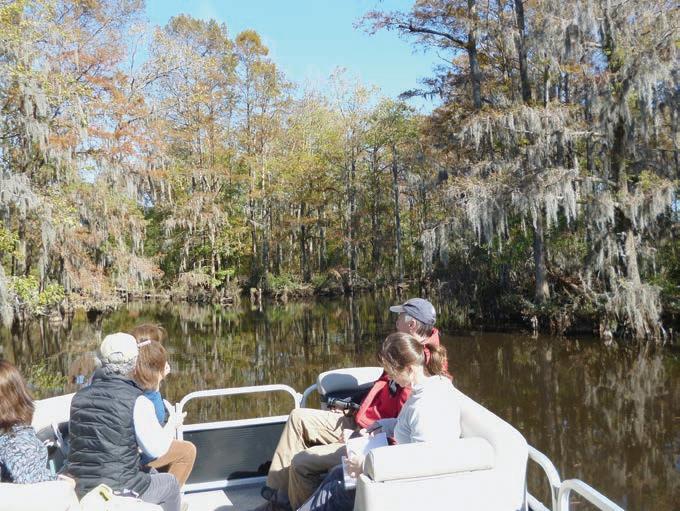
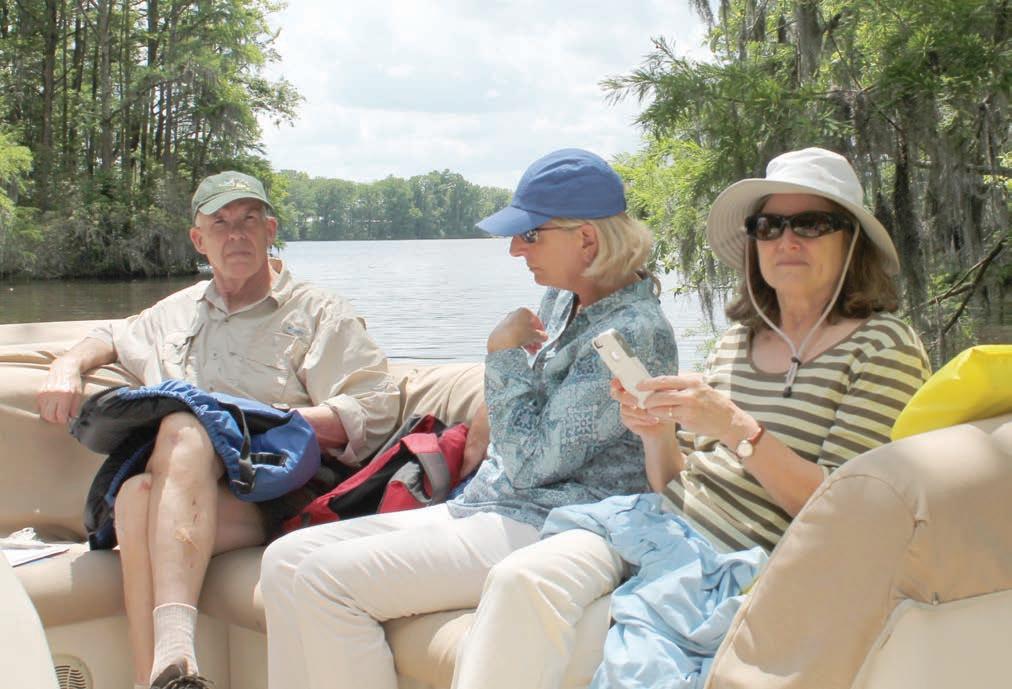
Michael Flannelly, one of the property owners, guided half the group on a boat trip along 3.5 miles of Salmon Creek, the property’s southern boundary. While Michael and his group observed an impressive array of wildlife—Bald Eagle, Wood Ducks, Prothonotary Warblers—along a scenic backdrop of towering cypress trees, the others stood with Clay on another portion of the property trans xed on the pottery shard. Clay explained that on this point of land situated at the con uence of the Chowan River and Salmon Creek, archaeologists such as himself and Dr. Nicholas Luccketti, with James River Institute for Archaeology and the First Colony Foundation, have uncovered artifacts that may reveal clues to a 400+year old mysterythe Lost Colony of Roanoke Island.
Excavation work on this site, now known as “Site X,” has revealed not only numerous Algonkian Indian artifacts, but also English artifacts attributable to the pre-Colonial period and indicative of settlement by the Roanoke colonists, such as Surrey-Hampshire English Border
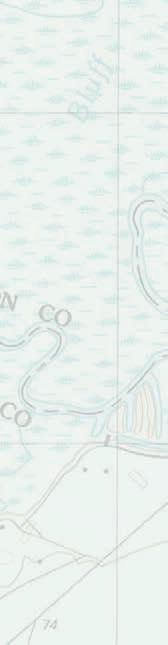
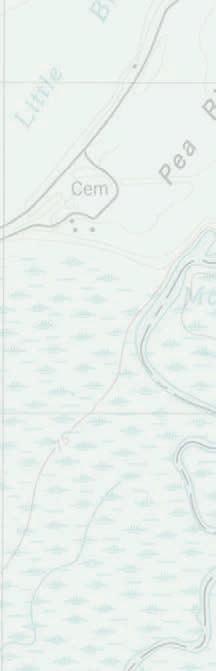
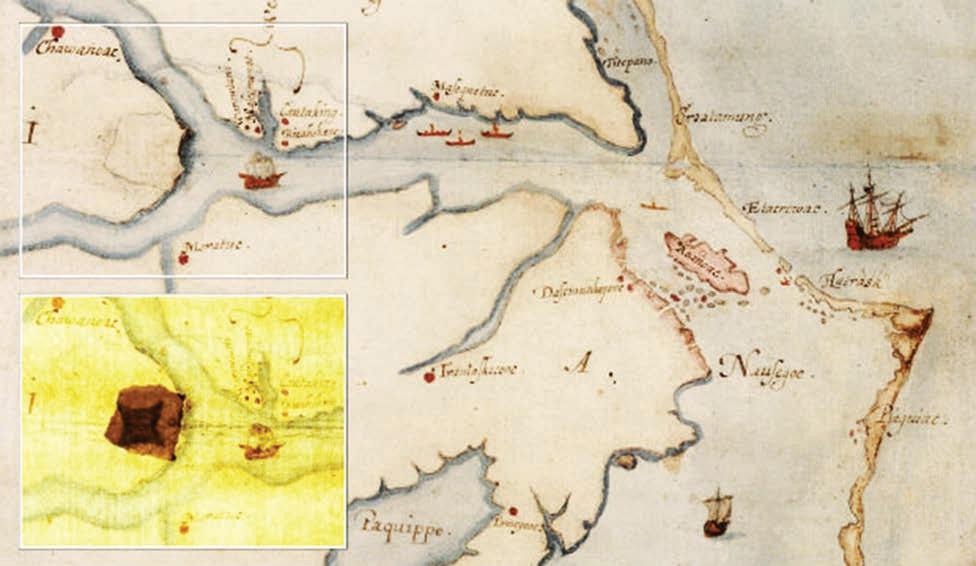
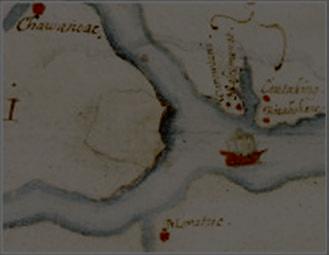
Ware (e.g., the pottery shard). Based on the archaeological ndings, historical site description, documentary and cartographic (John White’s c. 1585-1587 Virginea Pars map) evidence, First Colony Foundation believes this is where a group of survivors from the Lost Colony may have relocated after arriving at Roanoke Island in 1587.
Why does Clay believe that the pottery found at Site X was from the Lost Colonists versus later settlers to the area? He pointed out that “the pottery is a good time marker because the English supplier changed in the
Last year our sta compiled a list of the Coastal Land Trust’s Top 40 priority projects, including Salmon Creek, to guide our long-term conservation work throughout the Coastal Plain. The real estate market is rebounding, endangering some of our coast’s most signi cant lands, while at the same time, the state is reducing funds for conservation. The ability of the Coastal Land Trust to conserve parcels on our Top 40 list will be dependent on willing sellers, and the availability of public conservation funding.
Salmon Creek is such a remarkable property under immediate threat of sale on the open market that the Coastal Land Trust Board agreed that this project justi ed the risk of taking out a loan to save the land before all our permanent funding is in place. This is a rst for us, but there is urgency with this parcel, which is permitted for a 212-slip marina and 2,800 housing units. It won’t wait two years to be secured for conservation.
You can help protect Salmon Creek and reduce the risk of losing more of the Top 40. Increase your annual membership gift this year and invite others to join the Land Trust. Make additional donations to support quick action to protect the most urgent projects like Salmon Creek. And make your voice heard—tell your legislators that you support more, not less, state funding for land and water conservation!
A healthy coastal environment rewards us all and o ers wonderful new places to enjoy nature and coastal history — and mystery, too! Thank you for being a valued partner in coastal conservation.
M. Herlevich Executive DirectorMAIN OFFICE
131 Racine Drive, Suite 202 Wilmington, NC 28403 (910) 790-4524 (910) 790-0392 Fax







Camilla M. Herlevich Executive Director ext. 206 camilla@CoastalLandTrust.org
Jim Coyle Business Manager ext. 204 jim@CoastalLandTrust.org
Mary Ellen Slugg


Legal and Administrative Assistant ext. 208 maryellen@CoastalLandTrust.org

Jesica C. Blake


Director of Stewardship and Community Conservation ext. 203 jesica@CoastalLandTrust.org






Christopher Ketchie Stewardship Biologist ext. 207 chris@CoastalLandTrust.org

Tatum Justice Stewardship Assistant ext. 201 tatum@CoastalLandTrust.org
Vann Pearsall
Director of Development ext. 210 vann@CoastalLandTrust.org



Beth W. Steelman Development Associate, Major Gifts ext. 200 bsteelman@CoastalLandTrust.org
Stephanie Borrett Director of Donor Relations ext. 209 stephanie@CoastalLandTrust.org
Anna Wachtel Development Assistant ext. 201 anna@CoastalLandTrust.org
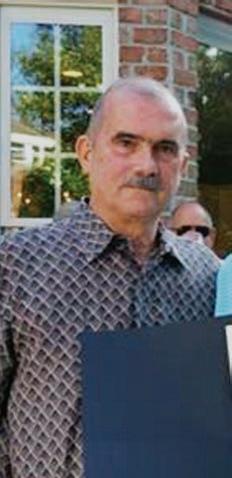

Janice L. Allen
Deputy Director 3301-G Trent Road New Bern, NC 28562 (252) 634-1927 janice@CoastalLandTrust.org

Lee L. Leidy
Northeast Region Director Attorney at Law 205 N. Water Street, Suite 1 Elizabeth City, NC 27909 (252) 335-9495 lee@CoastalLandTrust.org
www.CoastalLandTrust.org
currently completing her second year of graduate school in Communication Studies at the University of North Carolina at Greensboro.

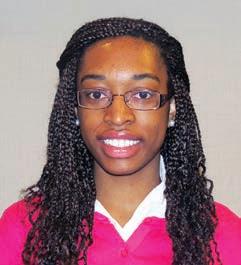
During the summer, Genevieve served as our Marketing and Development Intern. She worked on several projects which include the Gullah Geechee Partner Application, the National Register of Historic Places nomination for the Kerr-McGee site for the Town of Navassa, aided in the planning for the Lake Waccamaw State Park Dedication, and provided assistance to the development team at the Coastal Land Trust.
This internship was an awesome experience for Genevieve and she’s grateful to gain knowledge in research and writing while learning about conservation in the coastal region of North Carolina.
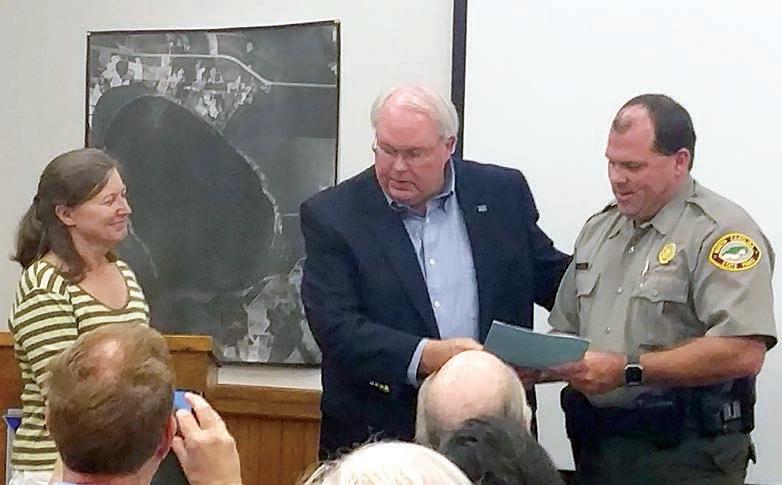
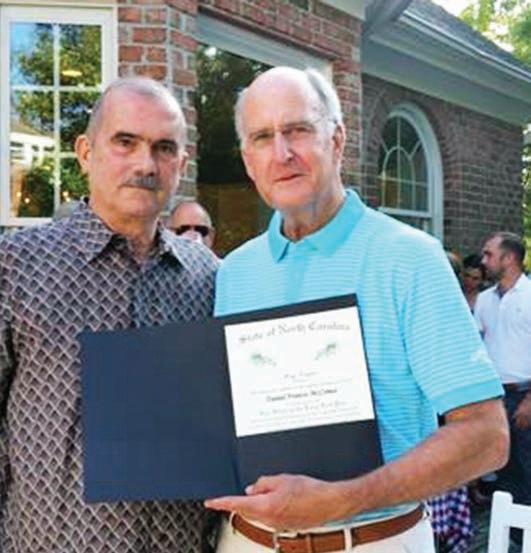
Congratulations to Danny McComas for receiving the Order of the Long Leaf Pine by Governor Cooper. This prestigious award is given in recognition of exemplary service to the State of North Carolina and its communities. Danny served on the Board of Directors of the Coastal Land Trust. When he served in the General Assembly, he championed the NC Conservation Tax Credit, and the legislation allowing for the Land Trust’s special license plate.
A project initiated by the Coastal Land Trust in 2012 has resulted in 197 acres being added to Lake Waccamaw State Park plus the conservation of an additional 1,143 acres, which will be managed by the Coastal Land Trust as a nature preserve. The project, Waters of the Waccamaw, features 3 ½ miles of waterfront along the Waccamaw River, just south of the existing state park and Mile Marker 1 of the Waccamaw River Blue Trail.
The 197-acre tract donated to Lake Waccamaw State Park includes more than 1 ½ miles of frontage along the Waccamaw River. The state’s plans for its new property will include the development of some new backcountry campsites along the river, access points to be used for ranger led canoe programs, and for future resource protection.
This tract will also open the door to many Interpretive Educational opportunities to include birding, tree/ shrub identification, reptiles, and
aquatic macroinvertebrates. Funds for this project were received from private support and public grants.


Gov. Roy Cooper announced on June 13th, that he had named Merrie Jo Alcoke as representative of the governor’s Eastern O ce. Ms. Alcoke, an attorney and a native of Craven County, has resigned her position on the Board of Directors of the Coastal Land Trust, where she was serving as Vice President. “We wish Merrie Jo well in her new position,” said Coastal Land Trust President Ann Simpson, “but we will certainly miss her energy and good judgment as a Board member.”
The Coastal Land Trust had two of its nominees receive conservation awards during the 2017 Land Trust Assembly in Hendersonville in May. The NC Land Trust awards are given annually to businesses, nonpro ts, governments, and individuals who lead e orts to protect streams, farms, parks, forests, and trails that help provide safe drinking water, clean air, fresh local foods, and abundant recreational opportunities for all North Carolina families.
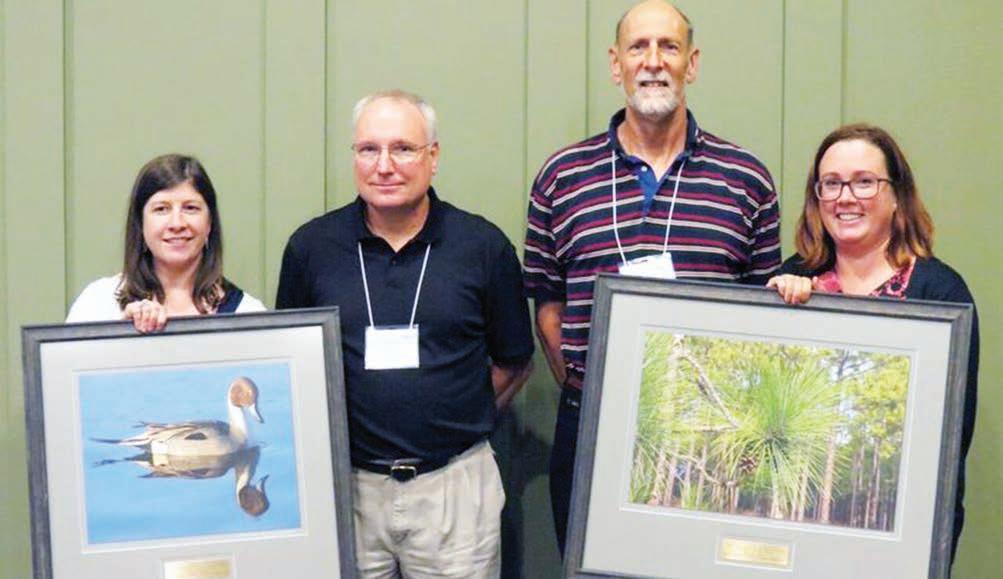
Holt C-Store has played a major role in the long-term success of the Coastal Land Trust. Holt C-Store is a third-generation, family business that today operates/leases 22 retail convenience stores in the southeastern and Sandhills regions of North Carolina.
Holt C-Store has been a leading corporate supporter of the Coastal Land Trust for 15 years, encouraging its management and owners to volunteer with community nonpro ts, from land trusts and conservation groups, to animal protection, schools, and women’s centers.
“At a time when nonpro ts are urged to deliver results, Holt C-Store’s contributions of time, talent and treasure make it possible. When Holt C-Stores people roll up their sleeves, sparks y,” said Coastal Land Trust Executive Director Camilla Herlevich.
North Carolina Wildlife Resources Commission biologists, Tommy Hughes and David Allen, signi cantly helped the Coastal Land Trust advance the work of conserving coastal lands. They are exceptional land trust
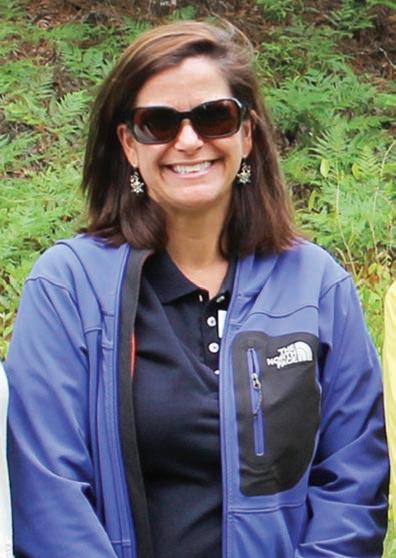
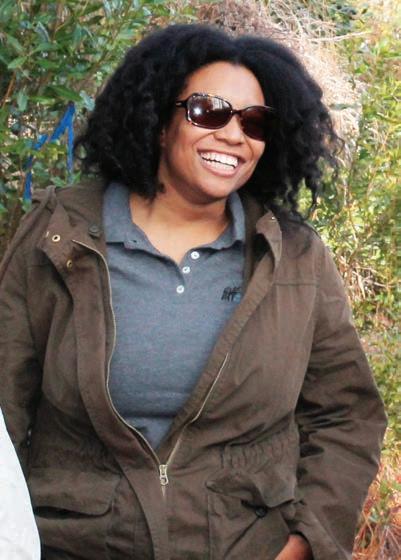
Melanie Allen, a Coastal Land Trust Board
member, has recently accepted a position as Network O cer at the Mary Reynolds Babcock Foundation. A native of Greensboro, Ms. Allen formerly served as Conservation and Diversity Coordinator at the Conservation Trust for North Carolina, where she helped guide the Coastal Land Trust’s strategic planning process.
partners most deserving of recognition at the North Carolina Land Trust Assembly.


With almost 60 years of wildlife management expertise between them, they have been around the forest and have used their knowledge to protect, enhance, and manage some very special places. They are at the top of their game and well-respected in the conservation community with passion and commitment toward conservation of North Carolina’s biological diversity.
Tommy Hughes, Coastal Plain Ecoregion Supervisor, is responsible for overseeing the management of over 500,000 acres of coastal game lands which include habitat restoration, infrastructure improvements, and sta supervision.

However Tommy still nds time to partner with the Coastal Land Trust to assist with numerous land conservation projects including: 600-acres of bottomland hardwood and cypress-gum swamp in three tracts along the Cape Fear River added to Whitehall Plantation Game Lands in Bladen County; 1,000 acres of impenetrable pocosin added to Angola Bay Game Lands in Pender County; and over 900 acres of longleaf pine forest packed with rare plants and animals
added to the Croatan Game Lands in Carteret County.
David Allen, Coastal Faunal Diversity Coordinator, works tirelessly to survey, conduct research, and conserve habitat for our coastal non-game species. And he supervises a team of biologists that focus on sea turtles, colonial waterbirds, herps, and landbirds.
Dave has helped the Coastal Land Trust in a multitude of ways: installing nesting boxes for the federally endangered red-cockaded woodpecker on our Gales Creek Preserve; conducting breeding bird point counts at our Everett Creek and Dupont Preserves; assisting us with the Forest Legacy Landbird grants; guiding some of our nature tours, and periodically providing boat rides out to our marsh island preserves.
“Tommy and Dave have been instrumental in helping the Coastal Land Trust identify collaborative land conservation projects, prepare the necessary grants, promote projects through NCWRC Headquarters for approvals, and coordinate with State Property O ce on closings,” said North Carolina
Coastal Land Trust Executive Director Camilla Herlevich.

 By Genevieve Barnes Marketing and Development Intern
The Coastal Land Trust, in partnership with the Town of Navassa, has been working toward conserving culturally signi cant places in Navassa. A long-term goal of the Town of Navassa is to construct a Gullah Geechee Cultural Heritage Center, as well as conserve lands with historical and cultural signi cance to Gullah Geechee people and their community.
The Gullah Geechee people are direct descendants of slaves from West and Central Africa. These enslaved Africans were brought over to the United States from primarily rice-producing regions and were forced to work for over two centuries along coastal plantations from North Carolina to Florida.
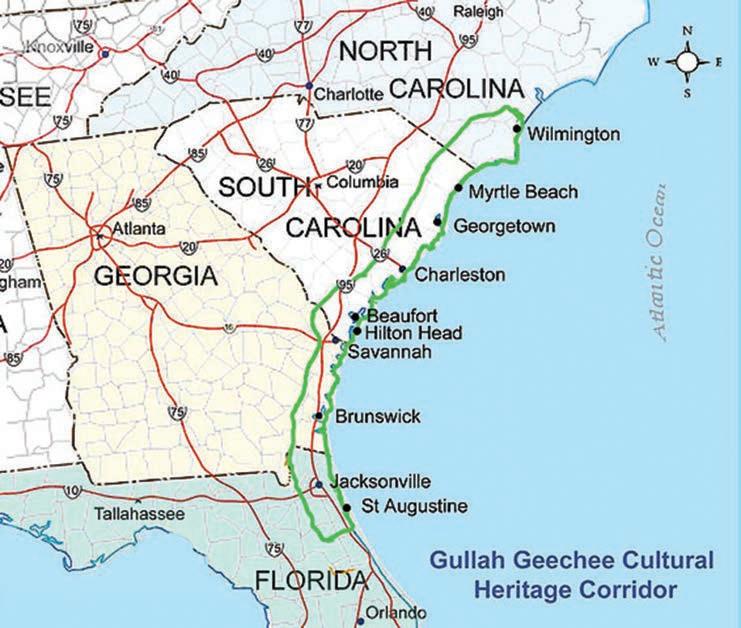



Focusing on the Navassa area is a logical extension of the Coastal Land Trust's e orts to conserve the large plantation lands that lined the banks of the Cape Fear River for almost 20 miles south of the Town of Leland and Navassa in Brunswick County which is a part of the Gullah Geechee Cultural Heritage Corridor. To date, the Coastal Land Trust has conserved over 11,000 acres of historic rice plantation lands including Orton Plantation, Old Towne Plantation, Pleasant Oaks Plantation, Goose Landing Plantation and Clarendon Plantation located south of the Town of Navassa.
Navassa Mayor Eulis Willis is a Gullah Geechee descendant and he believes that “There is a lack of history on Afro-American history in the southeastern region of North Carolina. I believe it is very important to document our history for future generations to come.”
The Coastal Land Trust continues to focus on protection within the
1620’s making it easy to distinguish between older and newer makes.”
And this early English pottery has only been discovered at a few sites— Roanoke Island, Jamestown, and Site X—centuries after the colonists disappeared. Could the pottery simply have been traded with Native Americans? Not likely, according to Clay, as Native Americans made their own pottery. Other artifacts discovered at Site X such as a 3-inch aglet (covers the end of a 16th Century shoelace), a Snapuance Firing Pan (a type of int lock) and pieces of North Devon plain baluster jars (used to preserve dried sh or other perishables on a sea voyage), also serve as indicators of the early colonists’ presence according to the archaeologists.
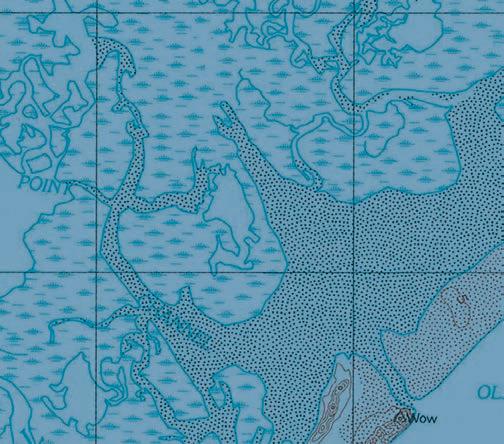
Equally intriguing is Site X’s location in relation to Roanoke Island where the 117 colonists rst landed with Colonial Governor John White. Site X is a nger of mainland that juts into the Chowan River at Salmon Creek and lies approximately 55 miles from
Genevieve Barnes was recruited through the Conservation Trust for North Carolina’s Diversity and Conservation Program to work with the Coastal Land Trust’s marketing and development department this past summer. To learn more about this program, visit www.ctnc.org.
Roanoke Island. John White, who mapped this region from an earlier exploratory expedition in 1584, advised the colonists to be prepared “to remove from Roanoak 50 miles into the maine” prior to his setting sail back to England for much needed supplies.
And there is the 2012 British Museum’s discovery (using X-ray spectroscopy and other light imaging technology) of a hidden fort symbol located under a patch on John White’s map at this general area suggesting possible plans for an English settlement there. Finally, the Choanokes, Native Americans living along the western bank of the Chowan River, were apparently friendly to the colonists. A Chowanoke village, Metacuuem (Metaquem), was believed to have been situated on this very property along Salmon Creek. Would it not make sense for the beleaguered and poorly provisioned colonists to seek refuge in a place known to John White and where potentially helpful Native Americans were thriving?
Are you curious about what happened next and how the Coastal Land Trust is involved? Go to www. CoastalLandTrust.org/siteX.
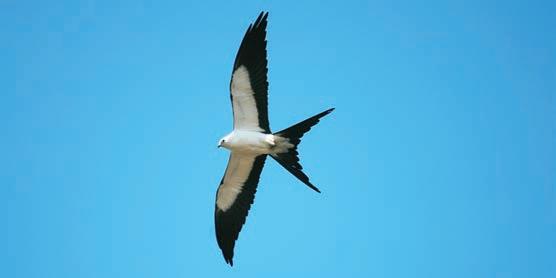
Swallow-tailed Kites spend a lot of time in the air even when they are thirsty. Instead of landing on the ground beside a water source like many raptors do, these birds quench their thirst while they are airborne. They use their aerobatic skills to skim gracefully over the surface of a lake, river or pond and dip their beaks into the water to get a drink.

Everett




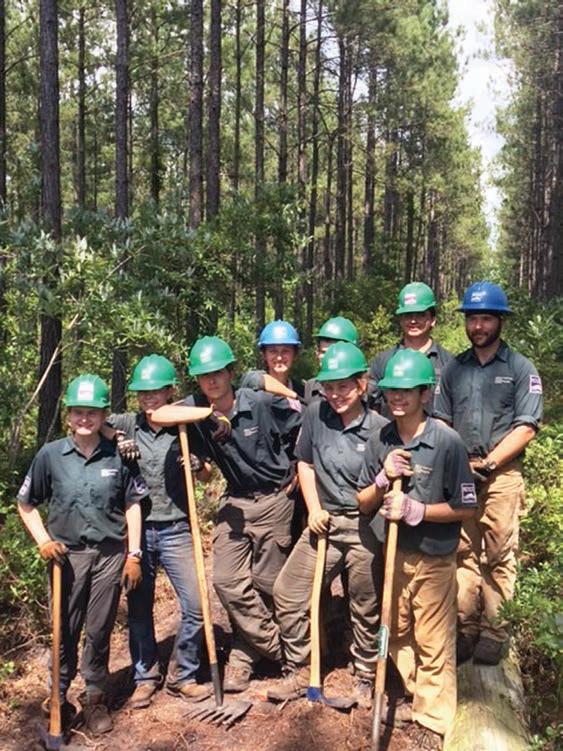
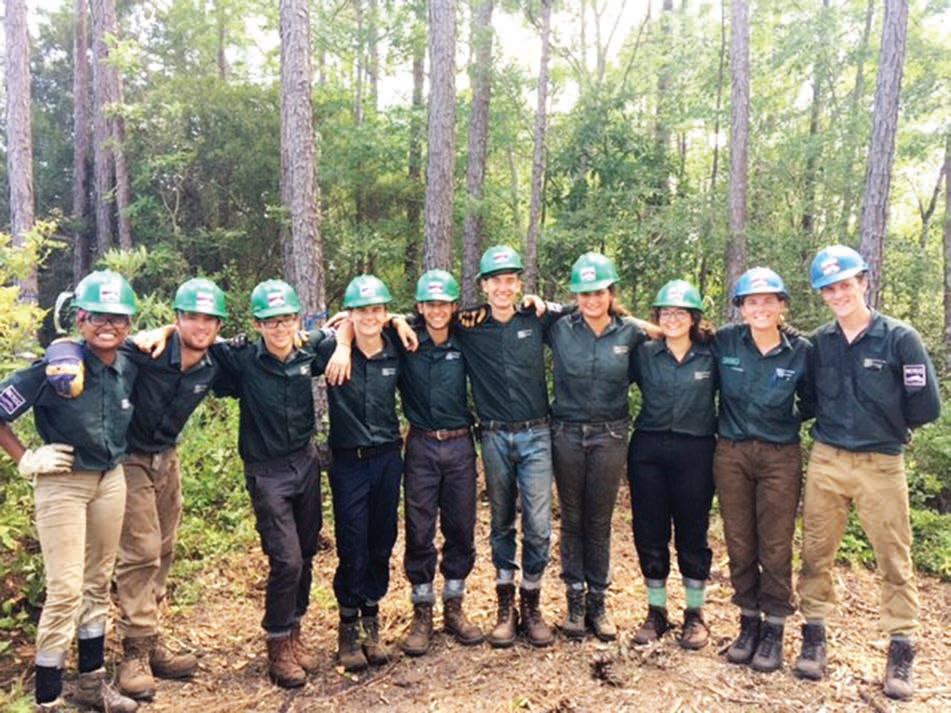
Thanks to support from the Slick Foundation, the Coastal Land Trust received four North Carolina Youth Conservation Corps (NCYCC) crews this past summer. The youth worked at Everett Creek Nature Preserve, Brunswick Nature Park, Gales Creek Preserve, and Magnolia Farm Preserve. NCYCC provides young people with an understanding and appreciation of North Carolina’s natural lands and waterways. The crews work on variety of projects which include trail construction and maintenance, habitat restoration, planting trees and community garden work.



a
Each crew consists of 8 to 10 members who work ve seven-hour days under the close supervision of two highly trained adult leaders on high-priority conservation projects. Youth and young adults (ages 1624) develop leadership skills, community service, and gain knowledge working on environmental stewardship projects in local, state, federal, or land trust properties within North Carolina. The program o ers a paid summer job, an opportunity to give back to the community, and for many participants, a life-changing experience.































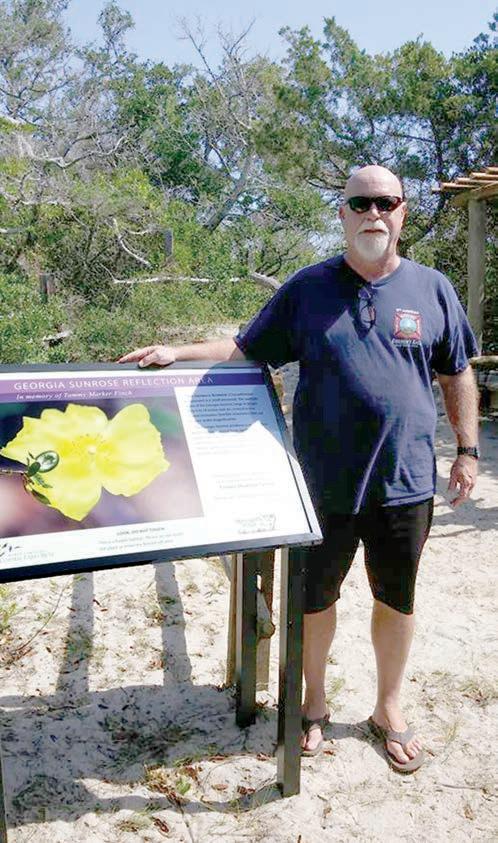





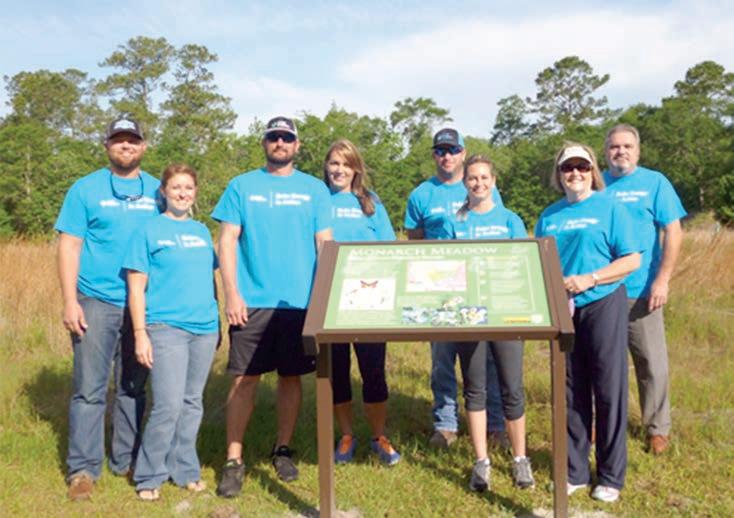
Millie Chalk, Customer Relations Manager at Duke Energy Duke Progress (front right) with volunteers at the Preserve’s Monarch Meadow sign.
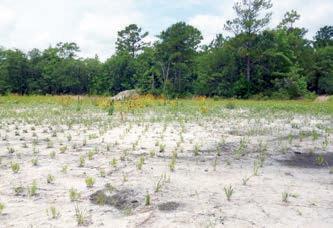
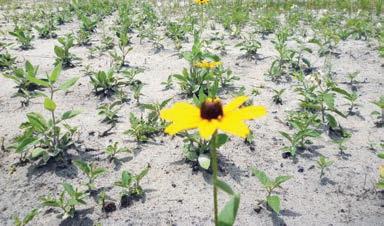
A group of volunteers from Duke Progress worked with Coastal Land Trust sta to put in a seed mixture from Mellow Marsh Farm (Pollinator Seed Mix) on one of the areas at the Everett Creek Nature Preserve , and planted 3,000 plants (small plugs-Mellow Marsh) along with some larger native plants purchased from Pender Pines. The plugs included Swamp milkweed, Butter yweed, Coreopsis, Cone ower, Wild bergamot, Ironweed, Black-eyed susan, Seaside goldenrod, Swamp sun ower, Big bluestem, Indian blanket, Little bluestem, cardinal ower and aromatic aster.
Wilmington, North Carolina 28403 COAST LINES






























































































































































































































































131 Racine Drive, Suite 202 NORTH CAROLINA CO ASTAL LA ND TRUST

















































W IN D DO WN T HE WACCAMAW: Columbus County JUNE 3, 2017
U.S. Postage PAID Permit No. 316 Wilmington, NC

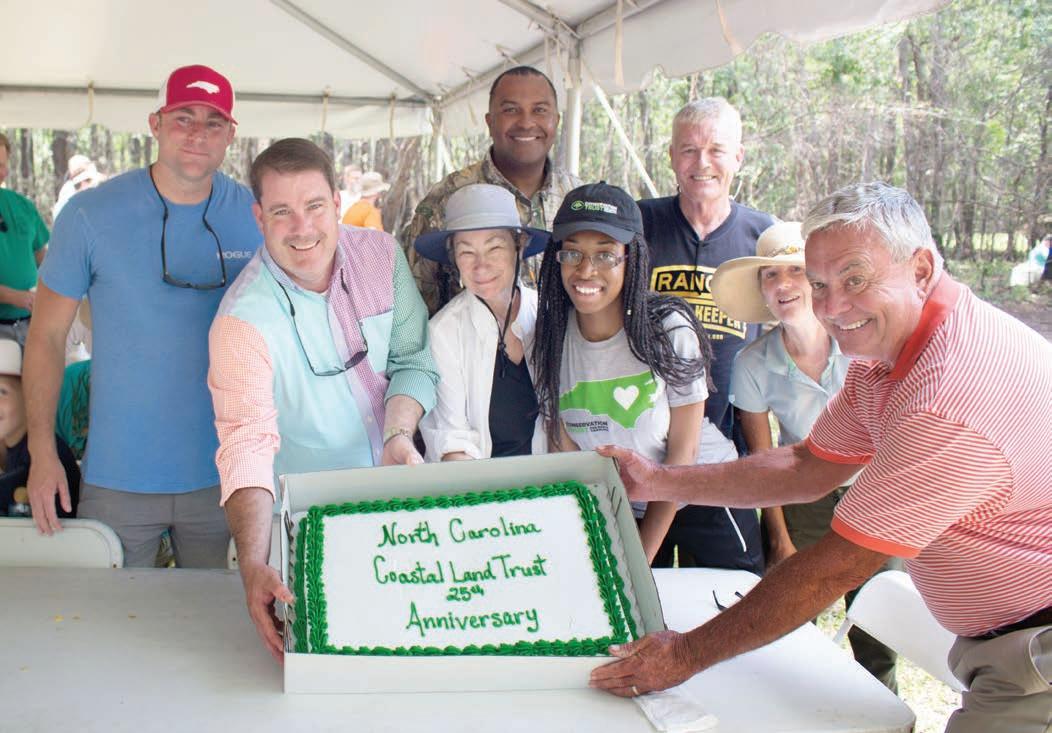
Smith, friend of the Coastal Land Trust and Board member of Winyah Rivers Foundation, put on quite a party for the Coastal Land Trust’s 25th Anniversary on Saturday, June 3rd. Doug and many of his friends organized a van shuttle,
Doug
canoes, low country boil (for lunch), tent, and even anniversary cake! There were over 50 people in attendance (not all of them canoeing) including folks from the local newspaper (The News Reporter) and dignitaries: State Senator Danny E. Britt, Jr., State Rep. Brenden Jones, District Court Judge Willie “Fred” Gore, Columbus County Commissioner P. Edwin Russ, Columbus County Chamber of Commerce & Tourism
At right, front row from left: Rep. Brenden Jones, Camilla Herlevich, Coastal Land Trust Intern Genevieve Barnes, Janice Allen and Columbus County Commissioner Edwin Russ.
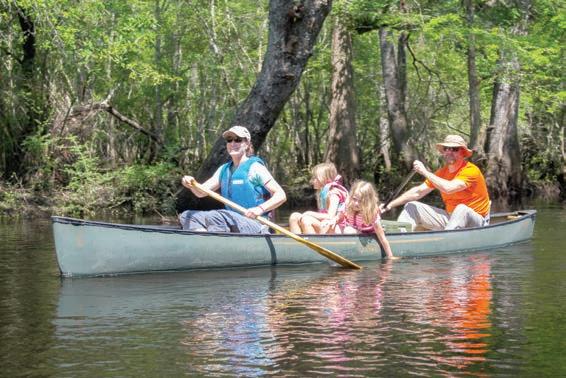
Below right: Heather and Will Summer and their children paddle down the Waccamaw.
Which Bird of Prey drinks water while airborne? (a) Merlin (b) Swallow-tailed Kite (c) Cooper’s Hawk Answer on page 4 NATURE TRIVIA
• JO I N T H E C O A S T A L L A N D T R U S T F O R A • www.CoastalLandTrust.org PAGE 8