COASTLINES
What is a Global biodiversity h otspot?
The designation Global Biodiversity Hotspot is given only to regions on Earth with at least 1500 endemic species of plants and greater than 70% loss of habitat. Together, these 36 hotspots comprise just 2.3% of the Earth’s land surface, but they support more than half of the world’s native plant species and almost half of native birds, mammals, reptiles and amphibians.
Applying the scientists’ rigorous criteria, a wide swath of our own continent’s coastal plain – stretching from Cape Cod south to the Florida Keys and west to Tamaulipas, Mexico – is among the most threatened reservoirs of plant and animal life on Earth, and joins 35 other global hotspots.
Many of the other global hotspots are in exotic and faraway places – the Himalayas, Madagascar, and the Andes, for example. But sometimes something precious is “right under your nose, but goes unnoticed,” said Dr. Reed Noss of the University of Central Florida, writing for the scientists who announced the new Hotspot.
Surprise!!! Our coast is a GLOBAL BIODIVERSITY HOTSPOT!

 By Camilla Herlevich Director, North Carolina Coastal Land Trust
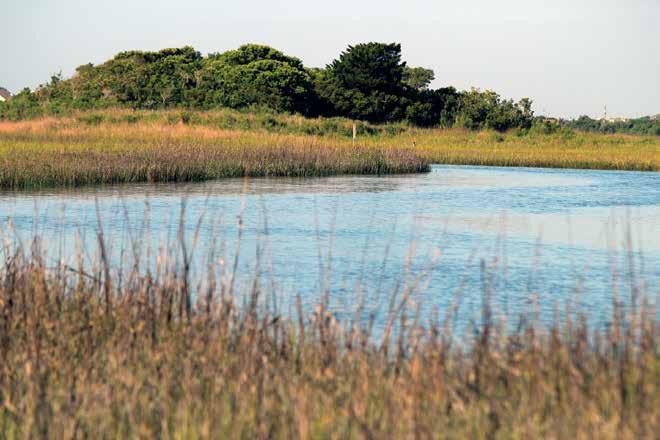
Wilmington Mayor Bill Saffo recently issued a proclamation celebrating the news that the North American Coastal Plain was recognized by a consortium of international scientists as a “Global Biodiversity Hotspot,” one of only 36 such areas on the entire planet.
These are places that are both biologically
rich – and deeply threatened. “This designation means a great deal to the City of Wilmington. We are keenly aware of the importance of this ecosystem and are pleased to partner with the Coastal Land Trust to protect the Venus Flytraps and other carnivorous plants at Wilmington’s own Piney ridge Nature Preserve,” said Mayor Saffo.
It’s not just the Mayor of the City of Wilmington who is excited by the news.
Wild about the Waccamaw!
“We’ve always known that nature here at the coast is rich, beautiful, and wonderful,” said Camilla Herlevich, Executive Director of the Coastal Land Trust. ”recognition of our focus region as a new Global Biodiversity Hotspot has really energized the Coastal Land Trust’s staff and volunteers. As one of the top five land conservation groups in the United States working in this region, we’re going to kick it up a notch to raise even more money and save even more land.”
The Coastal Land Trust is wild about the Waccamaw river. It is one of North Carolina’s most remote, most beautiful, and most ecologically significant rivers. Its water chemistry and geology are quite rare on the coast; as a result, many of the plants and animals that flourish in, and along, the Waccamaw are found nowhere else on earth. Namesake creatures like the Waccamaw spike and Waccamaw fatmucket (freshwater mollusks) can be found on the river bottom filtering water and siphoning microscopic food while the Waccamaw killifish and Waccamaw silverside fish dart through the clear waters of Lake Waccamaw occasionally swimming downriver. On land, colorful songbirds such as Black-Throated Green and Prothonotary Warblers flit through the canopy while river otters play among the tangled tree roots below. It is a wild place, and one to be wild about conserving.
The Coastal Land Trust recently acquired another property along the Waccamaw river. On May 27, 2016, the Coastal Land Trust purchased 669 acres in Columbus County which is contiguous and downstream of another 671 acres acquired in 2014. These two parcels comprise our new 1,300-acre

VOLUME 16 // ISSUE 2 SUMME r 2016
NORTH CAROLINA COASTAL LAND TRUST
PAGE 1 www.CoastalLandTrust.org
WACCAMAW, continued on page 5
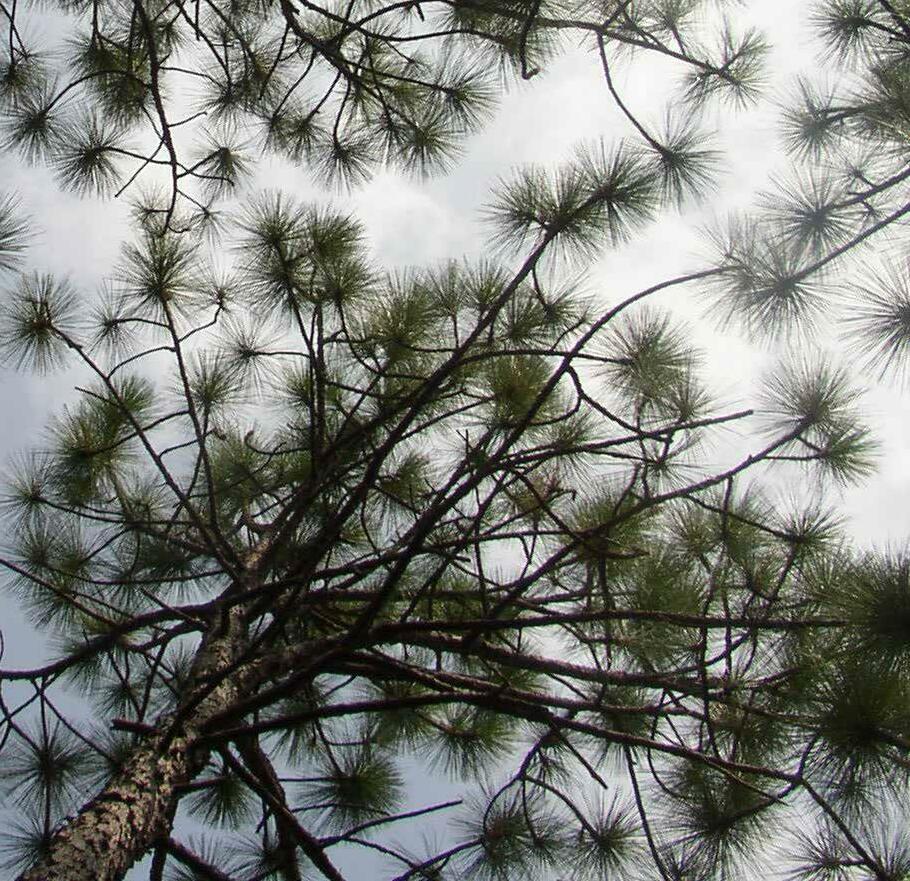
Intern Ashley Gordon explores the Waccamaw River by canoe.
Photo by Stuart R. Borrett


COASTLINES April 17, 2017 Holt Cstore Golf Tournament at Landfall Country Club September 10, 2016 “Show Me” Tour at Everett Creek Preserve September 17, 2016 Annual Celebration Lawn Party on the Intracoastal Save the Date December 24, 2016 –January 1, 2017 NCCLT Closed for the Holidays
LAND TRUST LEADERS
Camilla Herlevich
Jason Kesler and Lee Leidy
are
Representatives from the US Fish & Wildlife Service receive the Federal Government Conservation Partner of the Year Award. Janice Allen, Deputy Director, far right.

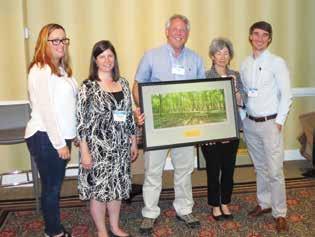

Gene and Sue Huntsman

receive Order of the Long Leaf Pine
Among the most prestigious awards conferred by the Governor of North Carolina is The Order of the Long Leaf Pine. It is awarded to persons for exemplary service to the State of North Carolina and their communities that is above and beyond the call of duty and which has made a significant impact and strengthened North Carolina.
The Huntsmans helped the Coastal Land Trust build a nature trail at Sea Gate Woods in partnership with the Carteret County Wildlife Club.
Coastal Land Trust Deputy Director Janice Allen said, “They are great at trailblazing!”
LAND TRUST INTERNS
Jasmine U. Cooper
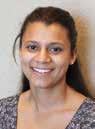

Jasmine U. Cooper’s task as a marketing intern this past spring was to re-write website content, find new ways to make the website easier to navigate, and create an interactive map displaying all the properties the Coastal Land Trust has helped protect. She is hopeful that the improved website will attract a larger audience and encourage them to get involved with NCCLT.

Ashley Gordon
Ashley Gordon is a Master of Environmental Management student at the Duke University Nicholas School of the Environment, concentrating in Coastal Environmental Management. She graduated from Miami University (OH) in the spring of 2015 with a Bachelor of Science in Zoology and Environmental Science. This summer, she is assisting the Coastal Land Trust with stewardship activities and spatial analysis of climate resiliency data for protected lands along the Waccamaw River.
Gabrielle Henry-Bermudez
Gabrielle HenryBermudez was the marketing research intern for the Coastal Land Trust last spring. Her main responsibility consisted of finding new target audiences for spreading the Land Trust message. She worked with the development team to create two surveys: one for businesses in the local community and one for our existing members. Both
surveys were made to help guide the organization down the right path to increasing community awareness and membership.
Kyle Heuser
Kyle Heuser grew up in South Florida in the greater Fort Lauderdale area. He received his BA in English from the University of Florida in 2014 and moved to North Carolina after graduating. He spent a year in the Triangle before beginning law school at the Wake Forest University School of Law in 2015. This summer, as a Coastal Land Trust law clerk, Kyle has assisted with legal research on the many challenging issues faced by the trust, written memoranda on the best practices for the trust to adopt, and has participated in field outings to learn more about the overall work of the Coastal Land Trust.
Caroline Kealoha
Caroline Kealoha, who comes from the Portland, Oregon area, is a rising sophomore at Duke. As a stewardship intern for the Coastal Land Trust, her main goal for the summer is to increase outreach with the community. She is also working on a few side projects that have to do with Civil War history and sea turtles. “Not combined,” she quips, “but wouldn’t that be cool”?
Samantha Liu
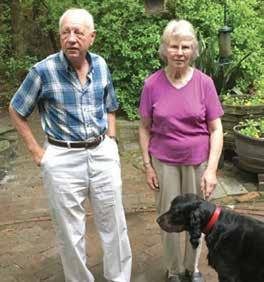
Yinan Liu (Samantha) is originally from a “small” city, with a population of seven million, called Tangshan in Northern China. She is a rising second year law student at Wake Forest University School of Law. Growing up in a highly-polluted industrial city,
Kindred Spirits
Samantha has a perfect vision in mind of what will happen if people stop caring for the environment and pursue economic development only. As a summer legal intern, she is working on corporate compliance matters and helping the Coastal Land Trust prepare for Land Trust Accreditation renewal. Samantha says that she is “excited to learn about the land conservation practices in the United States as well as to offer her knowledge of law to assist the Coastal Land Trust in addressing its mission to enrich the coastal communities of North Carolina.”
Joseph Spreight
Prior to attending Wake Forest Law School Joseph was heavily involved in the real estate industry in Eastern North Carolina. He was a residential home builder in Greenville, Maysville, and Jacksonville, land developer, and also owned investment property.
Joseph graduated from Washington and Lee University with a degree in Economics. In his free time he enjoys playing basketball, golf and soccer as well as spending time with my identical twin 4 year old boys, Alex and Ward.
PAGE 3 www.CoastalLandTrust.org COASTLINES
Executive Director Camilla Herlevich has been elected to membership in the North Caroliniana Society, dedicated to the promotion of increased knowledge and appreciation of North Carolina’s heritage.
Board member Jason Kesler and Lee Leidy, Attorney and Northeast Region Director, have both been appointed to the North Carolina Natural Heritage Advisory Committee, which oversees the creation of Dedicated Nature Preserves and Registered Heritage Areas, and the development of Natural Heritage Program policies.
Stanback Volunteer Conservationist of the Year Award winner Tony Doster with representatives from the NC Land Trust Council and Coastal Land Trust Stewardship Director Jesica Blake and Executive Director Camilla Herlevich.
The Coastal Land Trust had two of our nominees receive awards at the North Carolina Land Trust Council’s Annual Assembly recently. We
proud of our volunteers and partners who conserve North Carolina’s natural resources!
Photo by Brad Rich
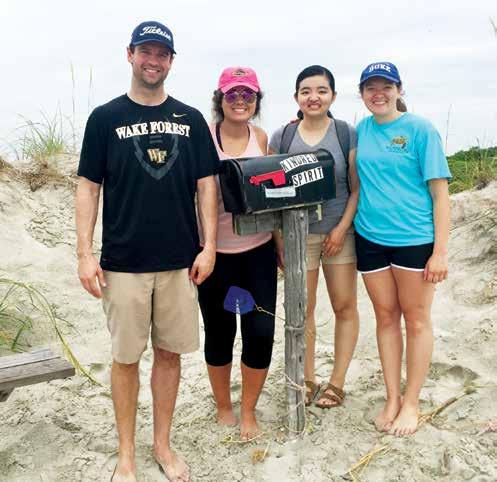
Summer interns visit Bird Island for an educational beach walk. From left are Joseph Spreight, Caroline Kealoha, Samantha Liu and Ashley Gordon.







































Foundation and Corporate Sponsors • Ace Transport LLC • Air-Call Communications • Atlantic Marine Inc. • CarolinaEast Health System • Carol Sue Blueberry Farm • Coldwell Banker Commercial Sun Coast Partners • Cothran Harris Architecture • Earney & Company LLP SOUTHERN DIVERSIFIED TIMBER INGRAM AND COMPANY, INC. LOCALLY DISTRIBUTED BY R.A. JEFFREYS The Murchison Group of Wells Fargo Advisors, LLC • East Carolina Dermatology • ECS Carolinas LLP • Hanover Center • HVW Legacy Holdings FLP • Kusek Financial Group • Land Management Group • Liberty Petroleum • McKim & Creed • Mount Olive Pickle Company, Inc. • Orton Longleaf LLC • Rountree Losee LLP • S&D Coffee • Southern Insurance Agency, Inc. • Steele Electrical Contractors • Waste Management • Wessell & Raney LLP • Whole Foods Market BARTRAM SPONSORS LIVE OAK SPONSORS TIDEWATER SPONSORS COASTAL STEWARDS COASTLINES www.CoastalLandTrust.org PAGE 4 EDDIE
JO AllISON
AND
SMITH FAMIlY FOUNDATION, INC. JIM TEACHEY REAlTOR
Earth Day Acquisition Marks Military Partnership Milestone
On April 22, 2016, the North Carolina
Coastal Land Trust celebrated Earth Day with the purchase of 302 acres of forested land along the headwaters of Mill Creek in Carteret County near Newport. This property lies between two portions of the Croatan National Forest now connecting thousands of acres of public and privately-conserved forest land, home to black bear, bobcats, and a myriad of songbirds. The 302-acre property, which will be owned and managed by the Coastal Land Trust, features significant habitats such as longleaf pine forest, pocosin, and brackish marsh along over 2,400 linear feet of Mill Creek, a tributary of the Newport river.
In addition to its water quality, wildlife and wetlands values, the property lies beneath a busy (and noisy) military flight path that leads to the main runways at the Marine Corps Air Station (MCAS) at Cherry Point. Since development of the property would be incompatible with military flight training, MCAS Cherry Point partnered with the Coastal Land Trust to purchase the property. The Mill Creek project marks a milestone as the 20th Coastal Land Trust property acquired to help buffer Marine Corps installations at the coast since 2006. “We’re so proud of these 20 projects in 10 years that benefit the US Marine Corps here at the coast,” said Janice Allen, deputy director of the Coastal Land Trust. “Those 20 projects add up to more than 8,000 acres of land that buffer the bombing range, main base and outlying landing fields from incompatible development that may
affect their training.”
Major funding to purchase the property was provided by the Department of the Navy and the NC Clean Water Management Trust Fund. In addition, Golden LEAF Foundation and the Conservation Trust for North Carolina each provided grants in support of the Coastal Land
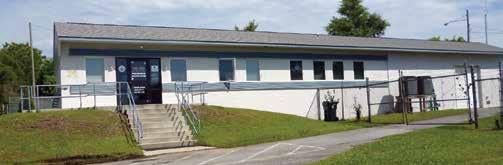

PARTNERSHIP SECURES LAND AND BUILDING fOR RECREATIONAL ACCESS TO LOCAL WATERWAyS
A collaboration between the City of New Bern, Coastal Land Trust and the Harold H. Bate Foundation carried this project to fruition. The Coastal Land Trust provided a grant from the Harold H. Bate Foundation of $50,000 to the City of New Bern, which was applied towards the purchase price of the property. Other funds for the purchase came from the City itself and the state of North Carolina’s Coastal Waterfront Access grant program.
“The Coastal Land Trust is grateful to the Harold H. Bate Foundation, and thrilled to be able to contribute to this project”, said Janice Allen, deputy director of the Coastal Land Trust. “The location of this parcel on New Bern’s waterfront means that lots of people will be able to get outside and enjoy the region’s beautiful waterways.”
Trust’s efforts to plan and execute the project successfully. “This tract stood out like a “hole in the donut;” we wanted to make certain that it would continue to be a wooded, natural area, both from the standpoint of its location on the borders of the Croatan National Forest, and from the standpoint of the pilots overhead, as they fly back and forth to Cherry Point Air Station,” said Janice.
continued from page 1
nature preserve that hosts over three miles of protected riverfront. The Coastal Land Trust received grants from the State Clean Water Management Trust Fund and Duke Progress Energy’s Water resources Fund, and combined those with the remaining U.S. Department of Justice settlement funds to carry out this conservation project.
What are we planning with this newly expanded 1,300+acre Waccamaw river Preserve? The Coastal Land Trust will restore some of the managed pine stands to bottomland hardwood forest (possibly also planting rare Atlantic white cedar), will lease a majority of the preserve for hunting and fishing to a local hunt club, and is considering transferring about 200-acres to the adjacent Lake Waccamaw State Park. Anyone can explore the nature preserve by canoe or kayak. In fact, the entire Waccamaw river in North and South Carolina has been nationally designated as a “Blue or Water Trail.” you can put in at Mile Marker#1 at the dam at Lake Waccamaw State Park and float approximately four miles to the old burned out bridge at the far corner of our nature preserve, and paddle back upstream to the dam. Or if you are really strong and adventurous, you can continue to paddle on past the old bridge and take out at the Dock road Bridge, an approximate nine-mile trip. Whatever your preference, make sure you pick up a water trail map (www. americanrivers.org/assets/pdfs/blue-trails/Waccamaw- river-Blue-Trail-Map. pdf) and go prepared with plenty of water and supplies for a wild time on the Waccamaw!
PAGE 5 www.CoastalLandTrust.org COASTLINES COASTLINES
LAND ACqUISITIONS
In late January 2016, the City of New Bern purchased a 1.5+ acre property with a 2,700-square foot building located on Country Club road. The property is located adjacent to the City’s 140-acre Lawson Creek Park and will be used for water-based recreation--canoeing, kayaking, sailing and paddle-boarding. The building now houses the City’s Department of Parks and recreation staff offices and provides storage for canoes and kayaks, and restroom and shower facilities for visitors.
Trivia Answer (from page 8): c. 4 people (data from NC State University and A&T State University Cooperative Extension-www.ncsu.edu/projects/treesofstrength/ benefits.htm) Have 5 minutes to spare to help the Coastal Land Trust? Take this quick online survey!
WACCAMAW,
www.CoastalLandTrust.org/survey
Photo by Stuart R. Borrett
Take Your Best Shot Using a Wildlife Camera
 By Janice Allen, Deputy Director, Coastal Land Trust
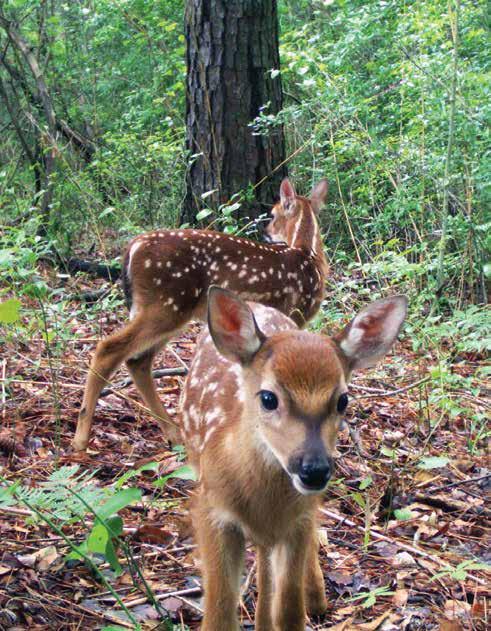
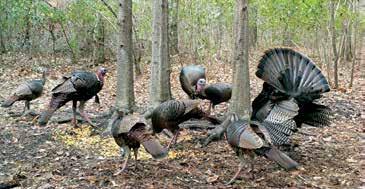
The use of trail cameras to document the comings and goings of wildlife on the land is nothing new. Hunters often set them up to get intel on the big buck or wild turkeys frequenting their favorite hunting grounds. Wildlife enthusiasts use them to find out what species are present on their land. After viewing the amazing trail photos of bears, bobcats, deer, turkeys, raccoon, foxes (and sometimes all of them together!) that Joe Hughes has taken over the years, it is obvious that one can get some very professional photos just by following a few guidelines.
Yep, Joe Hughes knows a thing or two about the use of wildlife cameras. Sitting with him at his cabin (Hughes Lodge) on his Craven County farm, Joe explained that if you want to up your game with the trail photos, you need to first find the right location to set it up. That means knowing a bit about the wildlife you are hoping to photograph, their habits and habitats. A game trail or path is always a good bet, or perhaps, you can throw out some corn (be careful what you are
feeding wildlife as you do not want to run afoul of local wildlife regulations!) in a strategic area near, or in, the woods that may attract some wildlife. Good camera placement is key. The height of the camera, its angle and the amount of light in the area all will affect the quality of your photos. Try experimenting a bit to find just the right spot and set up. Also, don’t forget about composition. i.e., make sure you have a nice background for your photos. Of course, the higher the resolution of your camera, the higher the quality of photos (5-8 megapixels is suggested).
Implementing Joe’s suggestions from his years of trail camera use, you can take your best shot at capturing the wildlife on your property!
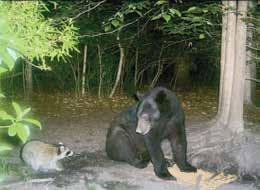
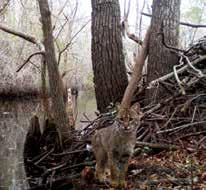
Below are a few of Joe’s wildlife photos taken on his property using a Browning Trail Camera HD (bear and raccoon) and Cuddeback Trail Camera (turkeys). Also, included are some photos taken along the Northeast Cape Fear River in Pender County with a Reconyx PC900 Hyperfire Profession IR (infrared) camera by the North Carolina Coastal Federation, Wildlands Network and Cape Fear River Watch.
Kendall
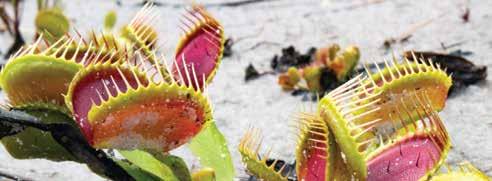
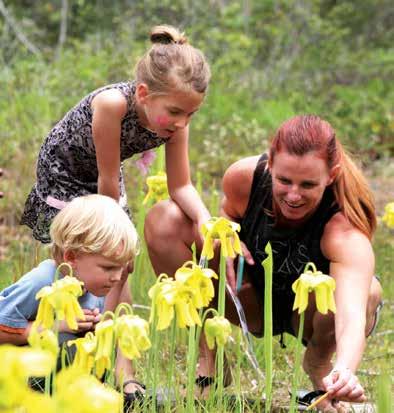
flytrap is a meat-eating killer – think ‘Little Shop of Horrors’. At the end of each leaf is a pair of terminal lobes that, when triggered, snap shut trapping prey. As the insect struggles, the trap tightens, and the flytrap secretes enzymes, turning the prey to liquid for easy digestion. Also carnivorous, pitcher plants and sundews are often neighbors, along with many varieties of moss.
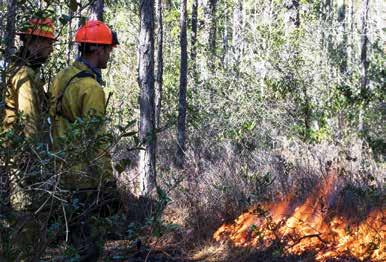
My gratitude goes to the North Carolina Coastal Land Trust for allowing me to witness and photograph the controlled burn. The mission of the Coastal Land Trust is to conserve natural habitats, provide educational opportunities, and to promote responsible land stewardship. For more information on the Coastal Land Trust’s activities, membership, and opportunities to make a real difference in protecting our rich natural heritage, visit their website at http://www.coastallandtrust.org.
THANK YOU, PAIGE
did
survey out at
Sam Hatcher
of our Onslow Bight Longleaf grant. For the past several years, he reported just hearing the common birds, but this year he had an RCW (Red Cockaded Woodpecker) and a bunch of brownheaded nuthatches, both of which are FWS priority birds! So, the recent burn might have really jazzed things up out there!
COASTLINES www.CoastalLandTrust.org PAGE 6
Fawns – NC Coastal Federation, Wildlands Network and Cape Fear River Watch
B I rd COu NT AT SAM H ATCHE r
Smith of U.S. Fish and Wildlife Service just
his annual bird
Camp
as part
FIRE, continued from page 8
FAR RIGHT: Smokey and the Bandit, Joe Hughes
CENTER RIGHT: Let’s Talk Turkey!, Joe Hughes
RIGHT: Bobcat, NC Coastal Federation, Wildlands Network and Cape Fear River Watch
The Coastal Land Trust gives a big shout out to Elizabeth (Paige) Brown for volunteering as our field trip photographer. Paige has offered her time and photography expertise to the Coastal Land Trust for several recent events including our Flytrap Frolic, Everett Creek Planting Day and Field Day at Five Eagles Farm. We thank you Paige for your amazing photos, your love of wild flowers and wild things, and your support of the Coastal Land Trust!
The guys with Premier Forestry kept everything under control at the prescribed burn at Gales Creek at Camp Sam Hatcher.
PRESCRIBED BURN AT C AMP SAM HATCHER
SCRAPBOOK

PAGE 7 www.CoastalLandTrust.org COASTLINES COASTLINES
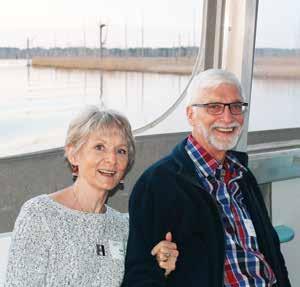
Wells Fargo Advisors was the presenting sponsor for the Cape Fear River cruise in Wilmington.
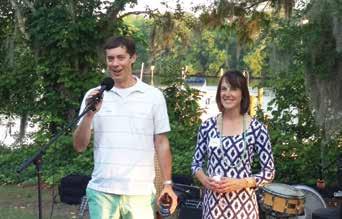
RIGHT: Liz and Paul Hosier.
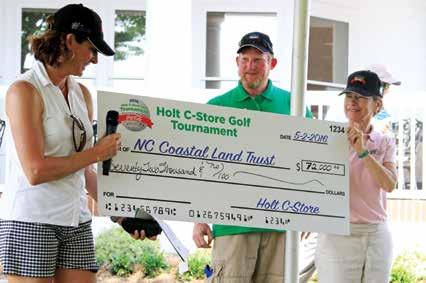
The 2016 Holt C-Store Golf Tournament, Title Sponsor Coca-Cola, was the most successful fundraising golf tournament for the Coastal Land Trust yet. A record number of golfers had a terrific day playing the Nicklaus Golf Course at the Country Club of Landfall.
From left: Holt C-Stores Director of Operations Hannah Holt; Coastal Land Trust staff Vann Pearsall, Development Director; and Camilla Herlevich, Executive Director.
Charlie Brummitt, member of both Piedmont Land Conservancy and the Coastal Land Trust.
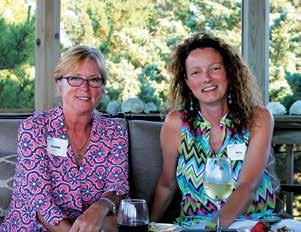
Jennifer Rich and Amy Spencer.
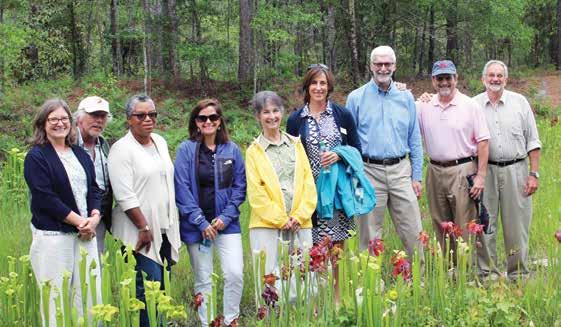
Board members are dazzled by the sea of pitcher plants in the Stanley Rehder Carnivorous Plant Garden. From left: Board President Ann Simpson, John Fussell, Lovay Wallace-Singleton, Merrie Jo Alcoke, Sadie Price, Hannah Holt, Paul Hosier, Coastal Land Trust Ambassador Royster Hedgepeth, and Robert Perry.
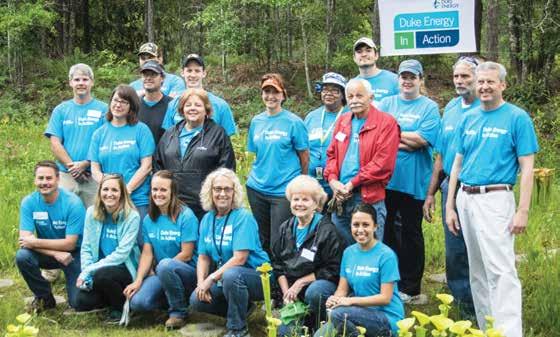
The Rehder Carnivorous Plant Garden continues to flourish, and got a big boost from 20 Duke Energy Employee Volunteers who planted 400 new flytraps! Duke’s “Energy in Action” volunteers, led by John Elliott (standing, second from left) and April Arellano England (seated, second from right), pause for a group photo in the garden.
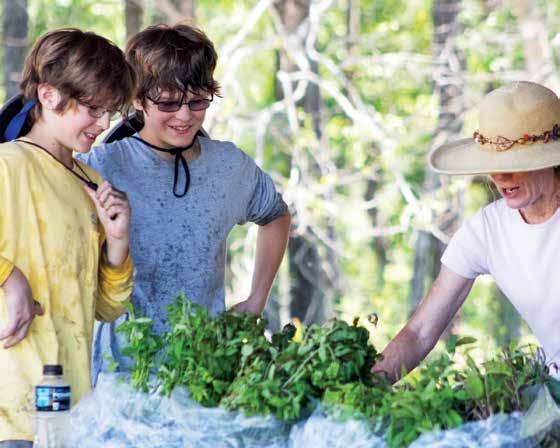
Adult volunteers and students met in May to help create a natural garden at the Coastal Land Trust’s Everett Creek Preserve at Sneads Ferry in Onslow County. The garden will provide habitat for Monarch butterflies and other pollinator species. Student volunteers Gage and Garrett Grady from Arendell Parrot Academy in Kinston pick up a tray of plants from Janice Allen, deputy director of the Coastal Land Trust.
PAR ty FOR t HE POIN t: O CRACOKE, M Ay 21, 2016 ISE: C APE F EAR R IVER, W ILMIN gtON, M ARCH
“BE
O u R VA-LAND- t INE” S u NSE t CR u
17, 2016
u
D
KE ENER gy IN AC t ION: W ILMIN gtON, M Ay 20, 2016
BOARD ON t HE MOVE: B OARD M EE t IN g AND gARDEN tO u R, W ILMIN gtON, M Ay 5, 2016
Party hosts Charles and Audrey Cushman.
S u NSE t ON t HE t REN t: N EW B ERN, M Ay 14, 2016 POLLINAtOR g ARDEN PLAN t IN g DAy: E VERE tt C REEK P RESERVE, S NEADS F ERRy, M Ay 14, 2016
t tO t
F
HOLt g OLF tO u
t: W ILMIN gtON, M Ay 2, 2016
A tOAS
HE COAS t: gREENSBORO,
EBR uARy 28, 2016
RNAMEN
By Paige Brown Coastal Land Trust Volunteer
a 60-mile radius in North and South Carolina, the Venus flytrap
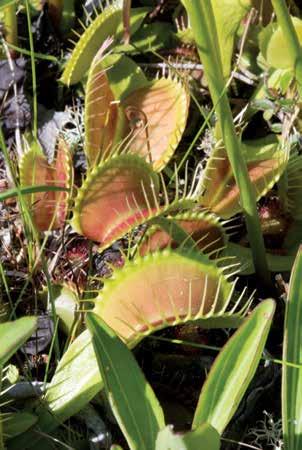
rich diversity of plant life thrives in its aftermath. Native only to
While many understory plants are killed during a burn, a
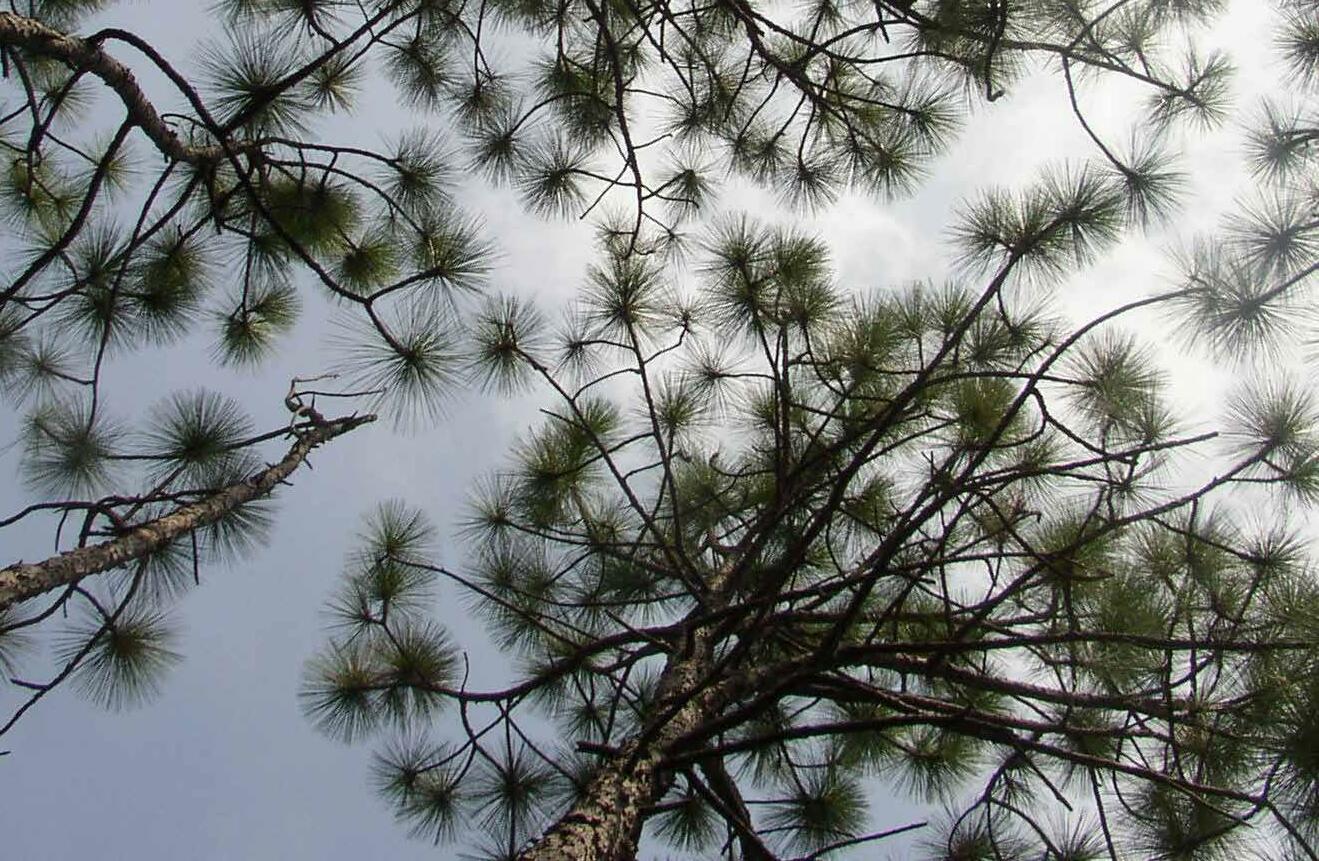
longleaf pine habitat.
tailed deer. More than 30 species of wildlife depend on the
endangered red-cockaded woodpeckers, red fox, and white-
squirrels, pileated woodpeckers –think Woody Woodpecker,
reasonably open. This open forest habitat is the home of Fox
competition for the young pines and keeping the forest floor
Periodic controlled burns kill the undergrowth, reducing
businesses, making human intervention necessary.
towns grew, they were suppressed to protect homes and
Natural fires once nurtured these forests; but as cities and
located in the coastal plains of North Carolina.
controlled burn that would benefit this longleaf pine habitat
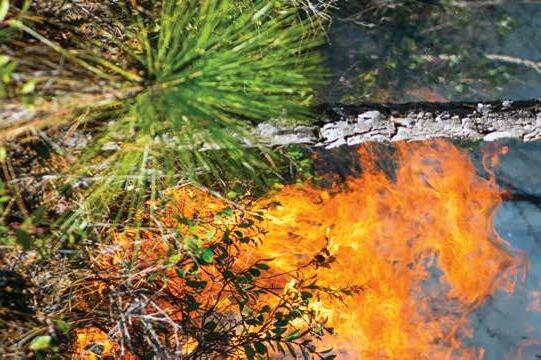
the undergrowth. This fire was no accident, but a carefully
the woodland, a living, breathing presence consuming all
Fire in the Pines
W
sound was thunderous as the fire roared through
as flames licked at the trunks of the trees. The
Wilmington, North Carolina 28403
131 Racine Drive, Suite 202 NO r TH CA r OLINA COASTAL LAND T r UST
U.S. Postage PAID Permit No. 316 Wilmington, NC
www.CoastalLandTrust.org PAGE 8
Non-Profit Org.
hite ash fell like snow and smoke filled the airCOAST LINES
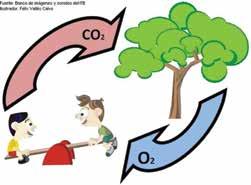
6th Annual Flytrap Frolic, Wilmington, April 22, 2016 NAtuRE tRIVIA One large tree can supply a day’s supply of oxygen for _____ people. a. 2 b. 3 c. 4 Answer on page 5
FIRE,
continued on page 6
W INE N Ot…It’S F RIDAy, W ILMIN gtON, A PRIL 29, 2016 Make Your Summer Gift Today! CoastalLandTrust.org/SummerGift
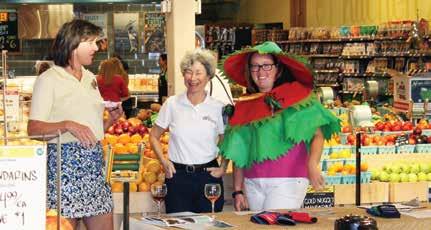
From left, Diana Corbett, Camilla Herlevich with Ms. Flytrap (Jesica Blake) at Whole Foods’ benefit for the Flytrap Frolic.
Photos by Paige Brown
