NORTHEAST OFFICE
Lee L. Leidy
Northeast Region Director Attorney at Law 205 N. Water Street, Ste. 1 Elizabeth City, NC 27909 (252) 335-9495 lee@coastallandtrust.org
CENTRAL OFFICE
Janice L. Allen
Deputy Director
3301-G Trent Road New Bern, NC 28562 (252) 634-1927 (252) 633-4179 Fax janice@coastallandtrust.org
MAIN OFFICE
131 Racine Drive, Suite 202 Wilmington, NC 28403 (910) 790-4524 (910) 790-0392 Fax

Camilla M. Herlevich Executive Director ext. 206 camilla@coastallandtrust.org
John Napiecek Business Manager ext. 204 john@coastallandtrust.org
Jesica C. Blake Director of Stewardship ext. 203 jesica@coastallandtrust.org
Jennifer Avesing Stewardship Biologist ext. 207 jennifer@coastallandtrust.org
Tatum Justice Stewardship Assistant ext. 201 tatum@coastallandtrust.org
Vann Pearsall Director of Development ext. 210 vann@coastallandtrust.org
Beth W. Steelman Development Associate/ Volunteer Coordinator ext. 200 bsteelman@coastallandtrust.org

Stephanie Borrett Development Assistant ext. 209 stephanie@coastallandtrust.org


STAY IN TOUCH
NORTH CAROLINA COASTAL LAND TRUST
COASTLINES
NC Coastal Land Trust in the Community
Ceremony
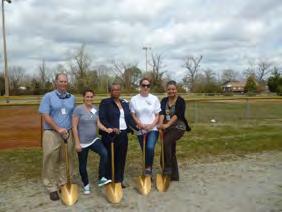
After two years of cul tivating the Veterans Employment Base Camp and Organic Garden, Lovay Wallace-Sin gleton’s dream of a garden to benefit homeless and disabled veterans became a reality on March 28, 2014, in New Bern.
Wallace-Singleton, a 20-year air traffic controller for the U.S. Navy and a disabled veteran, said the purpose of the Veter ans Employment Base Camp and Organic Garden will be to decrease the veteran homeless population in Craven County,
enhance the quality of life for disabled veterans and increase organic produce in the coun ty. The Veterans Employment Base Camp and Organic Garden worked with the Coastal Land Trust to apply for grants until its non-profit status was finalized. The project fits into the Land Trust’s farmland conservation and military partnership efforts. Visit www.veteransorganicgarden. com for more information about the Veterans Garden and those it will serve.
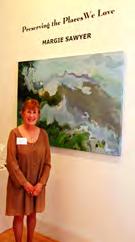
Margie Sawyer was the featured artist in the Jenkins Gallery in April in Elizabeth City during Arts of the Albemar le’s First Friday Art Walk in. Her exhibit, “Preserving the Places We Love,” was highlighted in collab oration with the NC Coastal Land Trust. The Land Trust was select ed to benefit from the proceeds of a portion of the sales from her exhibit. A well-known regional artist, Margie has award-winning works exhibited in local, state and regional shows.
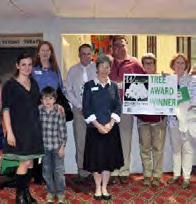
recognition programs as incentives to encourage a healthy, safe and attractive natural environment for the City of Wilmington. The Pre serve is home to the Stanley Rehder Carnivorous Plant Garden and is held under conservation easement by the Coastal Land Trust. Receiv ing the award from Nina Johnston (with sign), Superintendent of Parks and Urban Forestry for the City, is Executive Director Camilla Herlev ich (center front). Representing the Preserve with Camilla are (back row from left) Julie Rehder, Stanley Rehder Carnivorous Plant Garden, and Dan Sheret, volunteer. Also pictured are Jennifer O’Keefe and son Quinn, City volunteer Jerry Bell and Barbara Sullivan.
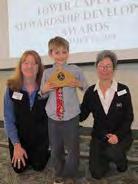
In February, Leo Jack was recognized by the Low er Cape Fear Stewardship Development Coalition for his very special stewardship of our region’s native Venus flytrap. After learning that more than 1,000 Venus flytraps were stolen from the Stanley Rehder Carnivorous Plant Garden, Leo decided to step up to protect his local environment by donating all of his birthday money to help replant the flytraps. Because of his unselfish act, he brought greater attention to the need for increased protection of one of our region’s precious resources.
Piney Ridge Nature Preserve was recognized in March by the Wilmington Tree Commission for outstanding environmental design. The Commission’s purpose is to promote and endorse programs and policies to support, maintain and grow our urban forest, increase public education and establish award and
VOLUME 14 // ISSUE 2
From left: Steven Maharrey, Brittany Atkinson, Lovay Wallace-Singleton, Rebecca Brooks and Heather Harkley.
SUMMER 2014
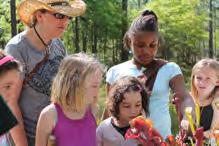
Far left: Bright yellow and red pitcher plants are easy to spot, but you have to get low to the ground to see the Venus flytraps.
Left: Local Girl Scouts visit the educational booth set up by the NC Carnivorous Plant Society to learn about pitcher plants.
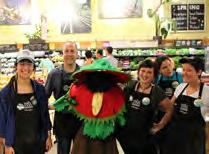
Whole Foods held their popular Fourth Friday event the night before the Flytrap Frolic to benefit the Coastal Land Trust. Whole Foods Team Members with Ms. Flytrap are from left: Ferris (Customer Service Team Member), Tyler (Associate Store Team Leader), Lynn (Demo Team Member), Erin (Marketing Team Leader) and Leilani (Demo Specialist).
PAGE 1 www.CoastalLandTrust.org
Coastal Land
Pre-Press Composition
Copycat Printshop, Wilmington, NC WEB FACEBOOK
www.CoastalLandTrust.org NC
Trust
By:
Margie Sawyer with Patterns
With Leo, who is holding his Stewardship Champion Award, are Julie Rehder and Camilla Herlevich.
Wilmington
Fly Trap Frolic Wine Not...It’s Friday
Groundbreaking
“Veterans Garden”
Tree Commission Award
Leo
Jack Award Arts of the Albemarle
Coastal Land Trust Hosts Assembly
at Pine Knoll Shores
Coastal Land Trust
Janice
Each year, the staff and board members of the 24 land trusts located throughout North Carolina gather together to gain the skills, knowledge and resources they need to better protect and care for our state’s land and water re sources. On April 28th – 30th, the Coastal Land Trust welcomed the group to Trinity Center, a beauti ful conference center nestled in the maritime forests of Pine Knoll Shores.
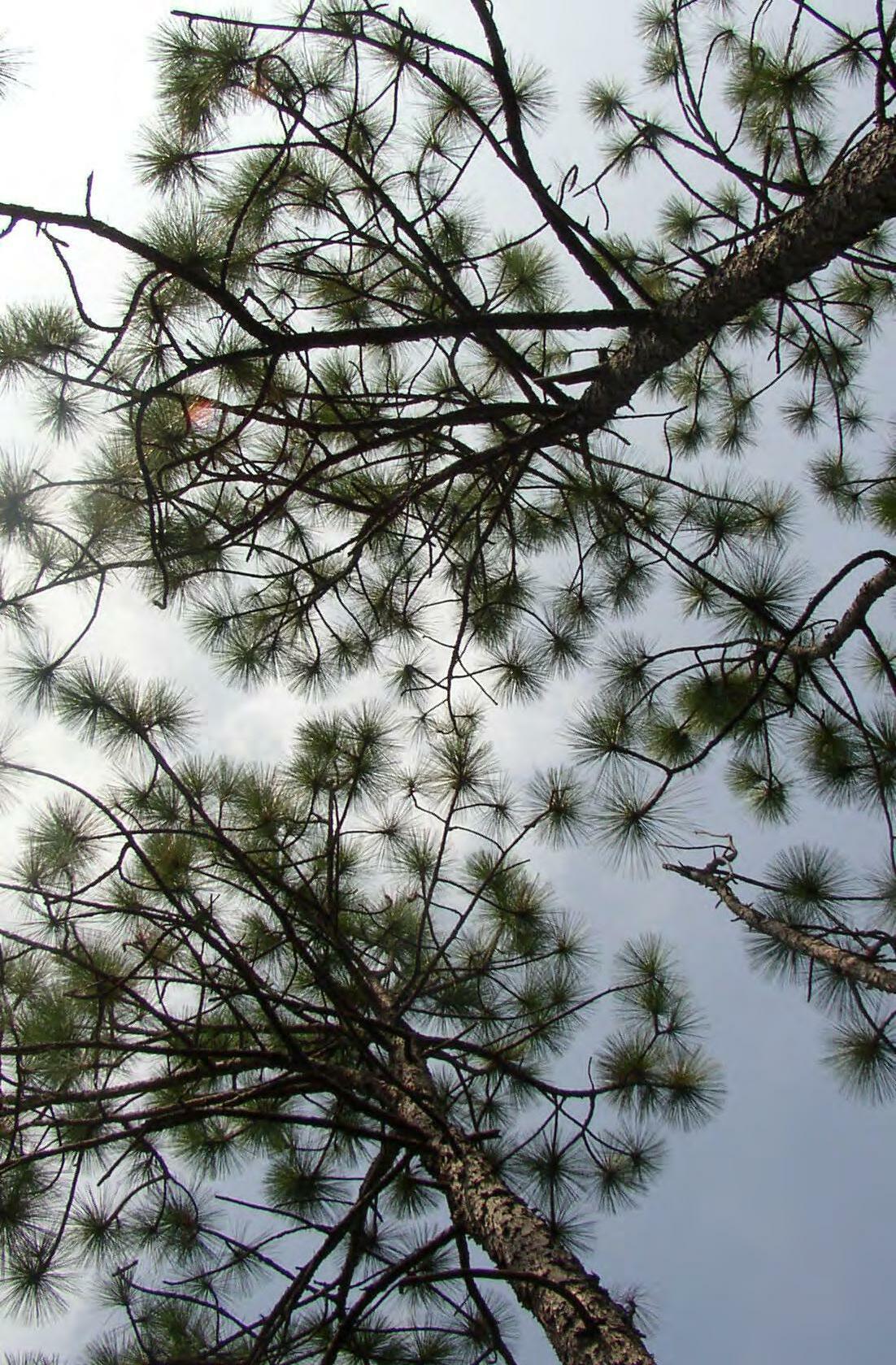
To kick off the event, staff members of the Coastal Land Trust conducted a tour of the Camp Sam Hatcher Preserve. The field trip included a hike through
leads a hike through the longleaf
a mature longleaf pine forest and across streamhead pocosin to a high ridge overlooking Gales Creek.
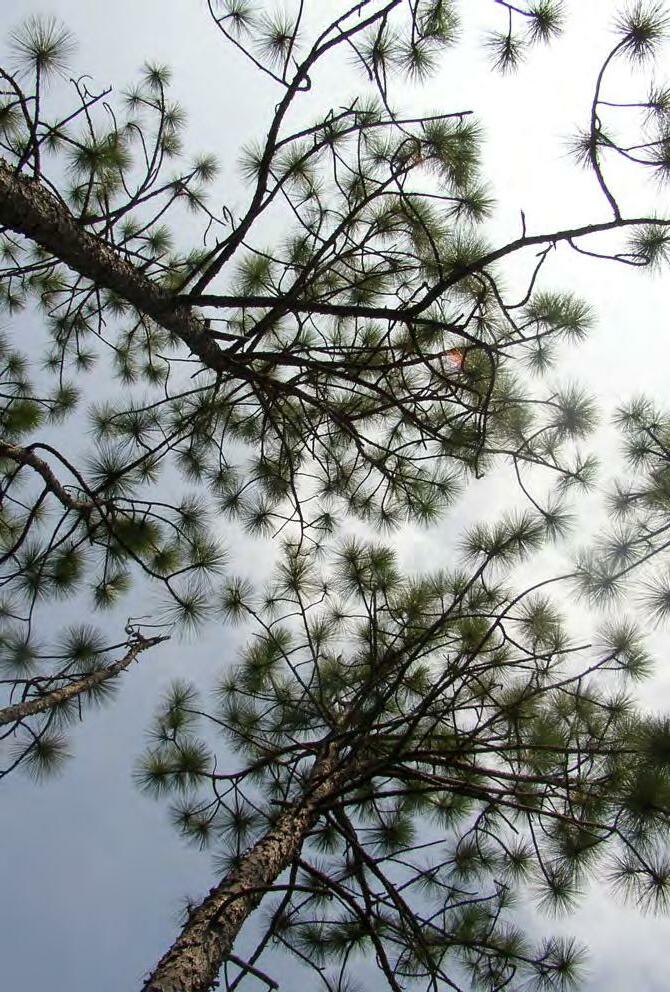
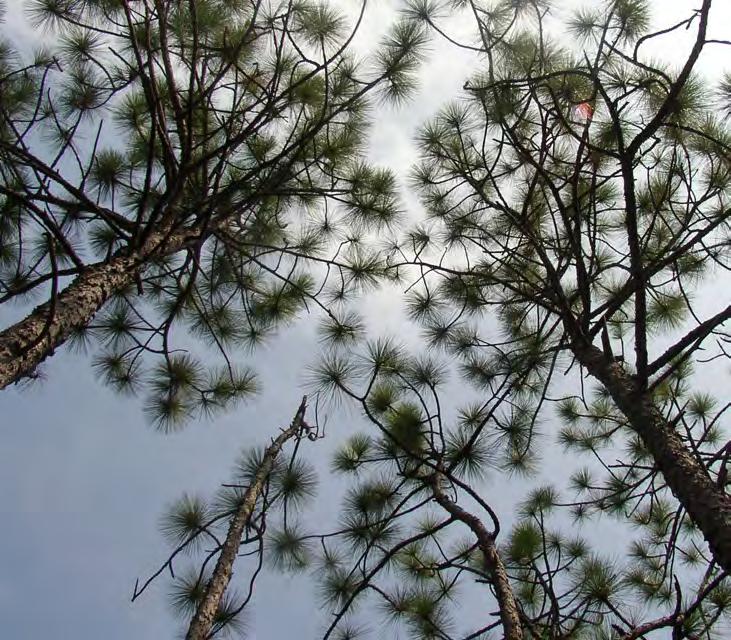
David Allen and John Carpenter of the North Carolina Wildlife Resources Commission talked to the group about the ecology of the federally endan gered red-cockaded woodpeck er, the only North American woodpecker to create its nesting and roosting cavities in live pine trees. The red-cockaded woodpecker seeks out old pines, primarily longleaf pines over 7080 years of age, that often have red heart fungus that softens the heartwood, making drilling
Louis Moore Bacon Awarded
into the tree a bit easier. Dave explained that one significant way to help these rare birds is to install nesting boxes in suitable habitat since it takes the birds anywhere from 6 months to 3 years to create their cavities.
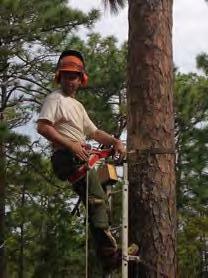
Perched atop a thin aluminum ladder about 10-feet above the ground, John showed how the boxes are installed – by cutting a section out of the tree using a chain saw and “inserting” the nest box into the tree. Unlike putting up a bluebird box on a fence post, please do not try this at home! Dave and John plan to put in two nest box inserts at Camp Sam Hatcher which
hopefully will help woodpecker families on the preserve and in the adjacent Croatan National Forest.
Allen’s cavity box proved invaluable during the aftermath of Hurricane Hugo, when hundreds of new artificial cavity boxes were drilled and inserted into pine trees in less than a year, providing roosting and nesting sites for hundreds of birds that might have died without them.
The group walked to the 30-acre cleared area to learn about Coastal Land Trust’s longleaf forest restoration efforts and then hiked up to one
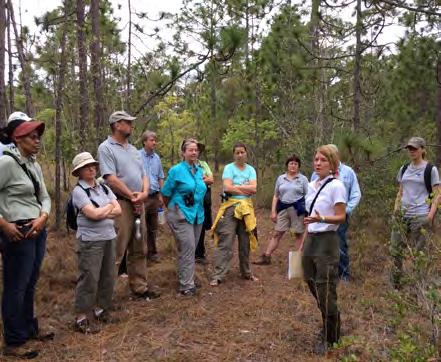
of the primitive camp sites to discuss future environmental education and recreation op portunities for school children. The tour ended with a picnic lunch at the outdoor chapel overlooking Gales Creek. All participants learned a bit about the longleaf ecosystem, enjoyed the camaraderie and appreciated the walk through Camp Sam Hatcher!
Stanback Volunteer Conservationist of the Year
At the 19th annual North Carolina Land Trust Assembly, Louis Moore Bacon was honored by North Carolina land trusts for promoting conservation. He was recognized for his leadership in conservation and was named Stanback Volunteer Conserva tionist of the Year.
“Louis Moore Bacon is uniquely qualified to be recog nized as one of the inheritors of Fred Stanback’s conservation legacy. His donation of a conser vation easement of more than 6,442 acres at Orton Plantation is one of the most significant conservation donations in the history of the Coastal Land Trust,” said Coastal Land Trust Executive Director Camilla Herlevich.
Louis Moore Bacon is an inspirational advocate for con servation and the protection of natural resources. Raised with an appreciation for the outdoors, Ba con developed a respect for the natural world, which has driven his enthusiasm for land and water
conservation. In 1992, he creat ed the Moore Charitable Foun dation to support organizations that preserve and protect wildlife habitat. The foundation has provided significant funding to more than 200 local, national and international conservation organizations.
Also receiving awards for Conservation Leadership from the land trusts were: NC Senator Harry Brown of Jack sonville, who was recognized for his work protecting the state’s conservation trust funds; Bull City Running in Durham, a local business known for its efforts to get people out on trails; the town of Davidson, which is dedicated to preserving open space; Muddy Sneakers, a thriv ing nonprofit in western North Carolina that introduces nature to 5th grade students; and Tim Sweeney, a dedicated volunteer passionate about protecting the eastern Blue Ridge Mountains and foothills.
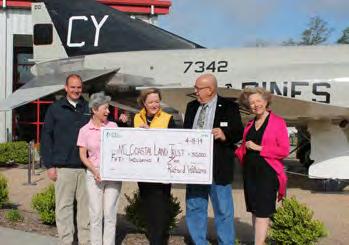
Millie Chalk (center wearing vest), District Manager for Government and Community Rela tions at Duke Energy, presents a check for $50.000 to the North Carolina Land Trust which will be used for its “Military Encroachment Project.” The goal of the project is to acquire significant coastal conservation properties, which, if developed, would encroach upon the mission and growth of military bases, airfields, bombing ranges and flight paths.
Accepting the check (from left) are Havelock Mayor Will Lewis, Coastal Land Trust Executive Director Camilla Herlevich, Havelock Commissioner and Land Trust Board member George Liner and Havelock Commissioner Brenda Wilson, who also serves on the Craven Commu nity Foundation Board.
PAGE 2 COASTLINES
John Carpenter of the NC Wildlife Resources Commission is installing cavity inserts (nest boxes that are actually inserted into the tree) to shelter federally endangered red-cockaded woodpeckers.
Deputy Director
Allen
pine forest at Camp Sam Hatcher.
Military
Nonpareil in French means “without equal,” a reference to the male bird’s dazzling plumage. Painted Buntings are medium-sized finches with stubby, thick, seed-eating bills. They often come to feeders. Painted buntings breed in the coastal Southeast, including NC and in the south-central U.S.
Duke Energy Supports
Encroachment Project
Trivia Answer - B (Painted Bunting)
Press Conference Calls Attention to Flytrap
SCRAPBOOK
at Seagate Woods
Be My VaLANDtine Cruise
Holt CStore Golf Tournament Party for the Point
Left:
Rocky Point | March 8, 2014
Carteret County | April 18, 2014
Wilmington | March 27, 2014
River Landing | Wallace | May 20, 2014
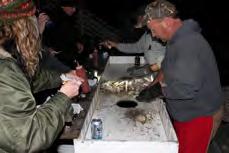
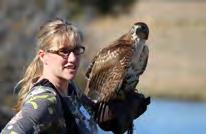
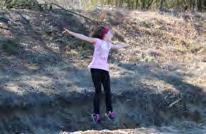
From Top: Lab swims to retrieve decoy; Falconer Dr. Joni Gnyp, is a veterinarian and the owner of the Rocky Point Animal Hospital; It’s time for a shuckin’!; If there’s a ditch, you just have to jump it.
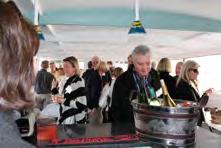
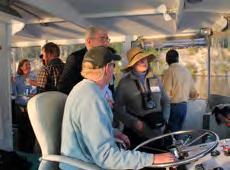
Left: Coastal Land Trust Major Donors enjoy a custom charter up the Northeast Cape Fear River with Captain Doug Springer, who, with wife Diane, owns Wilmington Water Tours.
Right: Randy and Betty Ann Beard sworth provide a “captive” audience for “Captain” Doug.
PAGE 3
Photos courtesy of Jenn Moore.
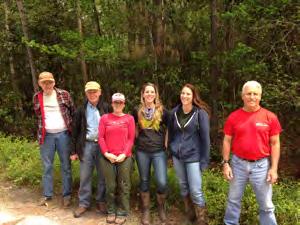
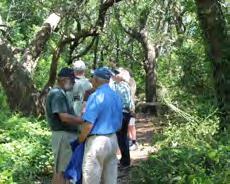
The Seagate Woods preserve annual trail maintenance day with Bob Reed (who was visiting from Boyne City, Michigan), former board member Don Hoss, new employee Tatum Justice, Stewardship Biologist Jen Avesing, former intern Michelle Lopez and volunteer Michael Snyder. Over a mile of trail was improved after last winter’s ice storms.
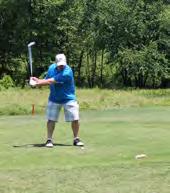
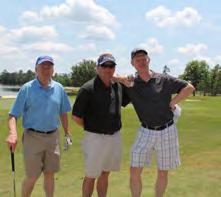
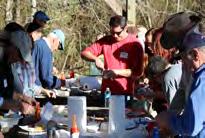
Clockwise from top left: S&D Coffee Golf Team members Gary Sheetz, Gary Edwards and Alan Hilton; The swing’s the thing; Hannah Holt, Camilla Herlevich and Rich ard Stafford, representative for Coca Cola, a major sponsor of the tournament.
The Party for the Point event included an invitation to tour Springer’s Point, “The Jewel of the Northeast,” earlier that afternoon.
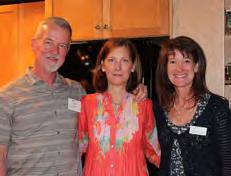
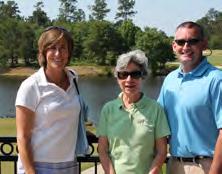
Left: Ed and Susan Norvell hosted a par ty to benefit Spring er’s Point at their home on Ocracoke. With Ed and Susan is Lee Leidy, Northeast Region Director for the Coastal Land Trust.
Trail Maintenance
Field Day at Five Eagles Farm
First Colony Inn, Nags Head | February 27, 2014
Stanley Rehder Carnivorous Plant Garden | April 25, 2014
Ocracoke | May 17, 2014
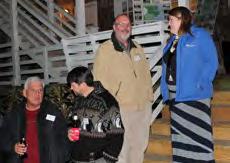
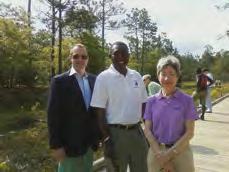
From left: Jim Soles, with event hosts Bob Oakes, George Wood and Beth Storie.
Burr…. What a great month to eat oysters!
Kevin Hicks, president of the Board of the Coastal Land Trust, Dr. Charles Tita, Director of Continuing and Distance Education at UNC-Pembroke and Land Trust Executive Di rector Camilla Herlevich attended a press conference called by Representative Ted Davis to bring attention to the need for legislation to increase the penalties for poaching flytrap plants and seeds.
Roast for the Coast
Greene Wilson, Attorneys at Law HealtHabit Land Management Group Mailbox Express































Mount Olive Pickle Company, Inc. NC Subway Group, Inc. Southern Insurance Agency, Inc. Sumrell, Sugg, Carmichael, Hicks & Hart, P.A.
Summer Interns Bring Great Skills to Coastal Land Trust
Anastasia is a summer 2014 legal intern with the Coastal Land Trust. She is a rising second-year law student at Wake Forest University School of Law and is interested in exploring the prop erty law, tax law and corporate law markets. This summer, Anastasia is assisting the legal and business staff at the Coastal Land Trust with corporate record-keeping and compliance, Board of Directors and Executive Committee matters, as well as various legal research, drafting and editing projects. Before attending law school, Anastasia worked for two years as a paralegal in a law firm, and before that she worked for a year as a project manager in a textiles firm. With her past professional experiences and passion for the outdoors, Anastasia is very enthusiastic about spending her summer working for the Coastal Land Trust. In her spare time, Anastasia loves running, reading, traveling and spending time with her family and her Shih Tzu, Petunia.
Tommy is interning with the Coastal Land Trust this summer through the Stanback Internship Program. He is a rising second year graduate student at Duke University’s Nicholas School of the Environment. He is currently pursuing dual master’s degrees in Environmental Manage ment and in Forestry. Tommy is working to assess potential threats that climate change may have on the Coastal Land Trust’s preserves and is conducting research to aid the Coastal Land Trust in developing a climate adaptation strategy. He is very interested in climate change and how humans will respond to environmental issues in the coming decades. Tommy grew up in the Pocono Mountains of Pennsylvania, which greatly influenced his love of hiking and passion for the care of our natural environment.
Racheal began working with the Coastal Land Trust in May 2014 as a legal intern. As a rising second-year student at the University of North Carolina at Chapel Hill, she is both a Juris Doctor candidate as well as a Master’s candidate in the City & Regional Planning program. Her duties with the Coastal Land Trust include assisting with land acquisitions, purchase agree ments and conservation easements. Through her work with the Coastal Land Trust, she hopes to contribute to its dedication of preserving the heritage and historic value of North Carolina’s lands for future generations. In her free time, she enjoys traveling, blogging and volunteering for Habitat for Humanity.
CORPORATE SPONSORS
Anastasia Bond - Legal Intern
Tommy Caggiano - Duke Stanback Intern
Racheal Hammond - Legal Intern
SUMMER 2014 PAGE 4 www.CoastalLandTrust.org BARTRAM
LIVE OAK SPONSORS TIDEWATER
COASTAL STEWARDS Atomic Cycles Cothran Harris Architecture East Carolina Dermatology Great Outdoor Provision Company Kitchen Gardeners International In Our Backyards, Inc. Trent Cadillac Soo’s Chocolate & Bakery Ladies AUZ VFW 9960 Cape Carteret Garden Club Hyundai of New Bern RICHARD CHAPMAN CLEVE FUND
SPONSORS
SPONSORS
LUKENS
TIMBER ENTERPRISES, LLC
SOUTHERN DIVERSIFIED
BUDWEISER
POINT
Foundations and Grantors For the Veterans Garden
ISLAND
PIEDMONT NATURAL GAS FOUNDATION
TIMBER
GLOBE
CLAN, LLC
Message from the President
Our Mission: Enriching Coastal Communities
Although I travel throughout the country each month on business, I always look forward to coming home to my family and to my own community of Wilmington. Our family enjoys the Flytrap Frolic and the Field Day at Five Eagles Farm, both of which are hosted on properties protected by the Coastal Land Trust.
As President of the Coastal Land Trust, I enjoy seeing how our conservation projects contribute to the quality of life in other coastal communities, too. In New Bern, the Veterans Garden project will provide healthy local produce and a place for disabled veterans to find transitional employment. Near Greenville, the Bray family has created a place for kids in their community to enjoy nature while learn ing about science, at their own family nature preserve, protected with conservation easements. And on Ocracoke Island, the community comes together each year to support Springer’s Point Preserve. The mission of the Coastal Land Trust is: To enrich the coastal communities of our state through the acquisition of open space and natural areas, conservation education and the promotion of good land stewardship. Let’s keep at it!
Message from the Director
Creating Communities for Conservation
Land and nature matter to us as individuals—we enjoy a solitary walk in the woods or a paddle down the river. But land and nature can also bring us together and enrich our communities. The stories in this newsletter celebrate such places and such communities.

I am grateful for those who’ve joined the Coastal Land Trust’s giving circles—the communities of donors who are members of the Tidewater Society, the Live Oak Society or the William Bartram Lead ership Circle.
And I’m also grateful to be a member of the community of land trusts. It’s incredibly inspiration al to see how the research and scholarship of Dr. Stan Riggs can be used to make our coastal commu nities safer and more resilient places. Or to see how Dave Allen’s technique to “create a better bird box” was used to save literally hundreds of magnificent red-cockaded woodpeckers after Hurricane Hugo. Or to welcome young people, and their fresh ideas and enthusiasm, to land trust work.
You, too, as a member of the Coastal Land Trust, are a part of the larger community of conserva tionists in our state and nation. It’s thanks to you that our coastal communities are enriched!
Stewardship Duties Swell
Board on the Move - A Time for Science
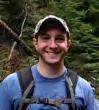
Tatum obtained her B.S. in Biology from Salem College and has worked with agencies such as the Carolina Beach State Park and AmeriCorps in Colorado. Her fa vorite aspect of working in land conserva tion is preserving the ecological habitats unique to the North Carolina coast where she grew up. When she’s off the clock she enjoys
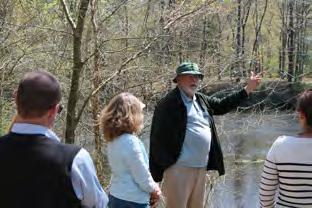
Right: John Bray, who with his wife, Nancy, owns A Time for Science Nature and Science Learning Center near Ayden, points to Con tentnea Creek during a “tractor pull and wagon tour” of the property. The field trip was incorporat ed into the April Board meeting in Greenville. A Time for Science is under conservation easement to the Coastal Land Trust.
By
PAGE
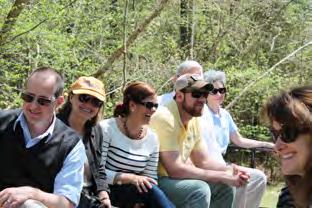
Left: In the wagon (left to right): Board mem bers Kevin Hicks, Ann Simpson, Merrie Jo Alcoke, Jason Kesler; staff Camilla Herlevich and Lee Leidy. Land Committee member Randy Beardsworth is hidden behind Camilla.
The Coastal Land Trust preserves the forests, waterways, beaches and farms that make our coast such a great place to live, work, and play.
Since 1992, we’ve protected more than 61,000 acres in the Coastal Plain of North Carolina.
COASTLINES
purchasing a specialty plate, you can fund our future by creating a new sustainable revenue stream that can greatly increase our ability to protect the beauty of the NC coast. For each plate on the road, the Land Trust receives $20 to fund coastal conservation – the other $10 supports tourism and highway beautification throughout the state. Visit www.CoastalLandTrust.org/licenseplate for more information on how you can get yours today!
Justice Joins Staff
Tatum Justice has been with the Coastal Land Trust since January 2014 in the posi tion of Stewardship Assistant. Her duties include assisting the Stewardship Depart ment with annual monitoring, trail work, restoration efforts and development ac tivities.
traveling, hiking, camping and looking for her next adventure!
Family Fun Day at Brunswick Nature Park PAGE 6
natural heritage. Look for the Coastal Land Trust in your workplace giv
state and has raised over $7.5 million to preserve our
at public and private sector workplaces across the
itable-giving drive. ESNC participates in campaigns
hundreds of environmental groups through a char
ly-conscious employees and workplaces to support
and Lawn Party October 4, 2014
Coastal Land Trust Annual Celebration
support. It is an opportunity for environmental
of these organizations which brings much-needed
resources. They promote participation in the work
about the value of protecting North Carolina’s natural
organizations. Giving campaigns educate employees
gage employees in the work of over 70 environmental
businesses across the state to en
EarthShare NC partners with

Save the Date Workplace Giving A Way to Give More
COAST LINES September 20, 2014
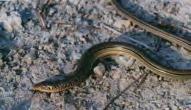
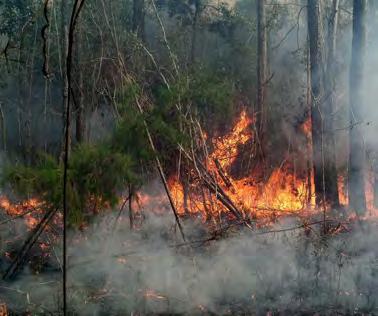
Above: Prescribed burn at Everett Creek Preserve. Right: A mimic glass lizard finds a home.
Nature Trivia
C. Prothonotary Warbler Answer on Page 2
A. Ruby-throated hummingbird B. Painted Bunting
how your business can get involved! Photo Credit: James Parnell The French name for
Vann Pearsall (910) 790-4524 x210 for information on U.S. Postage PAID Permit No. 316 Wilmington, NC
bird is it?
ing campaign (SECC #1113, CFC # 91392) or contact Non-Profit Org.
131 Racine Drive, Suite 202 Wilmington, North Carolina 28403 “nonpareil.” Which
this bird species is
NORTH CAROLINA COASTAL LAND TRUST
a prescribed or con trolled burn over 65 acres of our Everett Creek Preserve in Onslow County on March 14th, 2014. The purpose of the burn was to clear out small trees and brush to open up the forest floor to sun light which will allow the growth of grasses and forbs (herbaceous flowering plants) that attract a diversity of wildlife.
Fire once occurred naturally on a regular basis on the Coastal Plain, ignited by lightning and fueled by an understory of grass and pine straw found in many habitats in this region. Native Americans once used fire intentionally to clear land, improve habitat
Directors Board members serve three, three-year staggered terms. Board members are elected each year by the membership during the annual meeting. TREASURER Sadie S. Price Wilmington, NC PRESIDENT Kevin Hicks Wilmington, NC VICE PRESIDENT Edward Norvell Salisbury, NC & Ocracoke, NC SECRETARY Ken Shanklin Wilmington, NC
Alcoke New
City, NC
E. Hosier Wilmington, NC David Huffine Wilmington, NC
If you like to watch wildlife, many song birds such as Bachman’s sparrow and pine and prairie warblers as well as many other non-hunt ed wildlife such as pinewoods tree frogs and mimic glass lizards live in fire-adapted forests. Some cool wildlife species occasionally need a hot forest!
The Coastal Land Trust is proud
to be a member of EarthShareNC!
John Fussell Morehead
John Haley,
Wilmington, NC
Oakes Nags Head, NC Peter Rascoe, III
Shores,
Board of
Paul
Merrie Jo
Bern, NC
III
Bob
Southern
NC
Bob Jones Wilmington, NC
Jason L. Kesler Wilmington, NC
George Liner Havelock, NC
Ann Cary Simpson Chapel Hill, NC
George H. Wood Kill Devil Hills, NC
Land Trust By the Numbers TOTAL ACRES PROTECTED: TOTAL HOUSEHOLD MEMBERSHIPS: 61,986 1,715 SOME LIKE IT HOT! Prescribed Burning
T
Clark Wright New Bern, NC
at Everett Creek
he Coastal Land Trust contracted with
Premier
Forestry to carry
out
Fire in the forest can be very useful and even essential to the health and productivity of many wild life habitats in the Coastal Plain. Indeed, many of our native Coastal Plain plants and animals are adapted to periodic fire. The benefits of fire include: killing back of certain plant species, nutrient recycling, opening up the forest floor to sunlight, the stimulation of new plant growth, and controlling pests and/or invasive plants. Even when fire kills some trees there are positive wildlife benefits because many cavity nesting birds and their insect prey depend on dead, decaying trees. Frequent fires help maintain habitat structure, for example, an open park-like setting in a longleaf pine forest.
for wild game and reduce insect populations. Within the last century, fires were sup pressed because of fear for loss of human struc tures and health. Many wildlife species declined because of the removal of fire in their habitats. Now that the science of prescribed burning allows for safe and controlled fires, land man agers are using the tool as a way to restore and maintain important native habitats like longleaf pine forests and the wildlife species that depend on them.
