SAFE SKIES & SAVING HABITAT
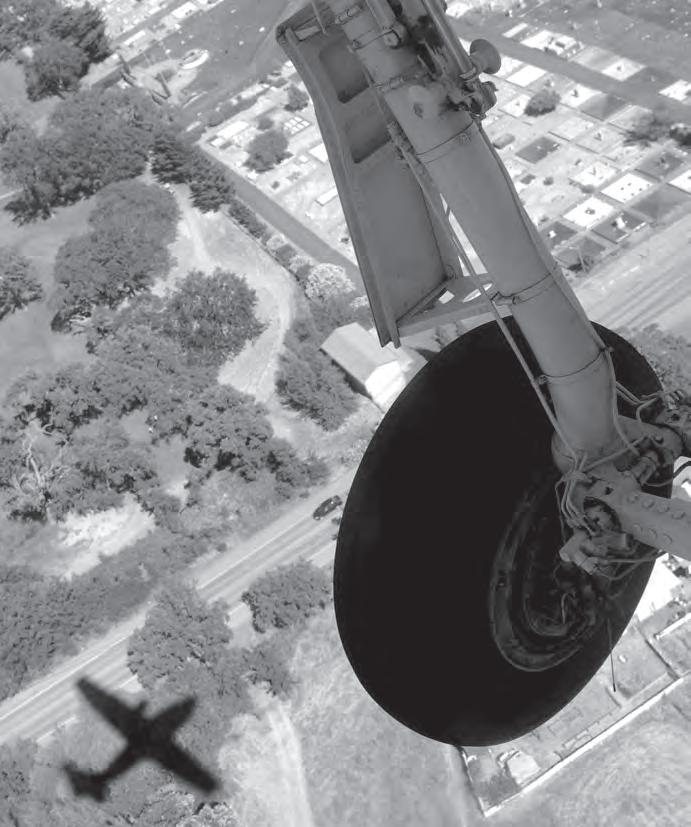
Room to Roam
Everyone knows that wildlife needs safe places to raise their young, and places to find food and water. Large animals may need hundreds of acres to range and roam, and even small ones, like butterflies, birds and fish, may travel great distances to places that meet their specialized needs.
The same concept applies to people, too. We all need safe places to raise our families and places to get outdoors and enjoy nature. Sometimes people, too, have specialized needs for lots of land. For example, the pilots being trained at coastal North Carolina’s military bases need great swaths of undeveloped land to fly over as part of their practice runs.
In fact, development that encircles military bases is much more than an inconvenience; it can restrict training and testing to such an extent that training success and the safety of soldiers and civilians could become compromised.
Fortunately, all across the country, land trusts are partnering with the military to protect special places that protect wildlife while also helping the military create a safe environment for training our soldiers. The Coastal Land Trust has joined forces with the US Marine Corps, saving land for wildlife and for pilots and soldiers.
Great Partners: the Marine Corps and the Coastal Land Trust
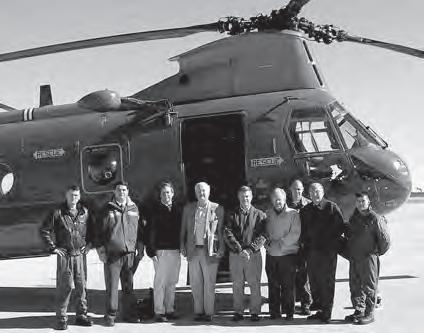
Partnering for Wildlife
Craven and Carteret Counties end in a peninsula that reaches into Pamlico Sound. There, for generations, watermen have plied their open boats, living off the fish and shellfish. Hunters are drawn by abundant ducks and other wildlife. Except for large-scale farming operations, much of the region remains “undiscovered” and is a haven for wildlife.
Partnering for Soldiers
This area is important to the military, too. Dave Plummer, a Regional Airspace Coordinator for the Marine Corps, notes that many of the parcels in the region “are critical because they exist under restricted airspace along a delta that enables high speed, low altitude target run-ins to the Air Station at Cherry Point.”
The Henry family owns land there – a mosaic of woodland, marsh and waterfront along Turnagain Bay. “The airplanes fly so low that the pilots wave to me from their window,” says Lacy Henry. Not surprisingly, his family’s land is among the parcels that the Coastal Land Trust and the Marine Corps identified as priorities for acquisition.
A Record of Success
Since 1996, the Coastal Land Trust and the Marine Corps have completed twelve acquisitions of land or restrictive easements – including the property owned by the Henry family – that will protect either Cherry Point or Camp Lejeune, securing almost 6,600 acres in Craven, Carteret, and Onslow Counties. Parcels protected include tracts beneath practice flyways, within noise buffers, near bombing ranges, and adjoining the main gate of the Air Station at Cherry Point and parts of the Base Camp at Camp Lejeune. Habitat protected includes river marsh, longleaf pine flatwoods, riverine swamp forest, and headwaters of freshwater creeks. The partners have brought more than $24 million in capital grants for land acquisition to the region, from the Department of Defense, from the NC Clean Water Management Trust Fund, and from philanthropists Fred and Alice Stanback.
The Jobs Bonus
If our military bases keep their flyways and training grounds protected, they can compete more successfully for new units to be deployed there. That means jobs for eastern North Carolina. And that’s exactly what is happening as a result of the partnership between the US Marine Corps and the Coastal Land Trust. In December, the Navy announced its decision to base 8 squadrons of the new F-35B Joint Strike Fighters – 128 planes plus the 1,194 military personnel to go with them – at Cherry Point. Thousands of civilian and construction jobs will also follow. This “jobs bonus” has captured the attention of both Progress Energy and Golden LEAF Foundation, which have provided generous support to the Coastal Land Trust to carry out our work.
VOLUME 11 ISSUE 1 SPRING 2011 Continued on page 3
If our military bases keep their flyways & training grounds protected, they can compete more successfully for new units to be deployed there.
Board of directors
Board members serve three (3) year staggered terms. Board members are elected each year by the membership during the annual meeting.
PRESIdEnT
John Thomas Rocky Point, NC
VICE PRESIdEnT
Linda Murchison Wilmington, NC
Samuel B. Dixon Edenton, NC
Noel Fox Wilmington, NC
Jwantana G. Frink Southport, NC
Robert F. Harrell Nags Head, NC
Chandra Hawkins Raleigh, NC
Donald E. Hoss Beaufort, NC
Michael Murchison Wilmington, NC
staff
Main Office
131 Racine Dr., Suite 202 Wilmington, NC 28403 (910) 790-4524 (910) 790-0392 Fax
Camilla M. Herlevich Executive Director
John Napiecek Business Manager
Nancy Preston Outreach Coordinator
Jesica C. Blake Director of Stewardship
Cassie Gavin Land Protection Specialist
Jennifer Rogers Stewardship Biologist
Kristen Howell Cape Fear Arch Coordinator/ Conservation Specialist
Vann Pearsall Director of Development
SECRETARy
Diana G. Corbett Wilmington, NC
TREASURER
Kevin Hicks Wilmington, NC
Edward Norvell Ocracoke, NC
Ken Shanklin Wilmington, NC
Elizabeth Powell Storie Manteo, NC

Sadie Price Wilmington, NC
William David Webster Wilmington, NC
Clark Wright New Bern, NC
New Bern Office 3301-E Trent Road New Bern, NC 28562 (252) 634-1927 Phone (252) 633-4179 Fax
P resident ’ s M essage
P artnering with the M ilitary
As an Aviation Machinist Mate during WWII at Glenview Naval Air Station in Glenview, Illinois, I didn’t get a chance to fly jets over the ocean. But I know that it’s serious work to keep airplanes property maintained and to keep pilots safe. And I certainly understand the need to keep flight paths unobstructed – whether our pilots are flying over Midwestern farm fields or the Atlantic coastline. And as a pilot with more than 10,000 hours in the air, I know the hazards that can result from airspace that isn’t secured.

So I’m delighted that the Coastal Land Trust is saving land that keeps our young Marine pilots safe in the skies above, and also protects wildlife habitat and water quality on the ground below. What a fantastic partnership!

Edenton Office 112 W. Eden Street Edenton, N. C. 27932 (252) 449-8289 (252) 482-0239 Fax
d irector ’ s M essage
g uns or B utter ?
The old adage was used to convey the choice that government decision-makers had to make – do they put their money towards defense or towards domestic programs? On occasion, however, there are programs that meet both goals. That’s the case with the Coastal Land Trust’s part nership with the US Marine Corps. Government grants designed to ensure that soldiers train safely are also protecting wildlife habitat. And as a bonus, they are helping to sustain – and grow – our economy here in eastern North Carolina.
The Coastal Land Trust is proud to play a role in protecting the soldiers and pilots who train at Cherry Point and Camp Lejeune.
We’re also very, very grateful for support from Progress Energy and the Golden LEAF Foundation. These funders don’t typically awards grants to land trusts, but they both have made exceptions for our military partnership project, because of its direct impact on creating jobs.
P eo P le in the n ews
The Coastal Land Trust had the pleasure of participating in StoryCorps’s mobile booth during their visit to downtown Wilmington in April. For those unacquainted with the project, StoryCorps is “an independent nonprofit whose mission is to provide Americans of all backgrounds and beliefs with the opportunity to record, share, and preserve the stories of our lives” (via StoryCorps website).
Camilla Herlevich interviewed long time Coastal Land Trust supporter Mr. Albert Corbett about Airlie Gardens. Mr. Corbett’s grandparents purchased the gardens in 1948 and later sold the property, with a conservation easement placed on it, to New Hanover County in 1999. Today, Airlie Gardens is one of the treasured jewels of southeastern North Carolina.
Ms. Lee Leidy interviewed Mr. and Mrs. Bray, two of the Coastal Land Trust’s landowners. Mr. and Mrs. Bray are passionate about land conservation and promoting science education. Both have worked tirelessly and dedicated their lives to these endeavors – before and after “retirement”. North Carolina Coastal Land Trust has worked and assisted the Brays in placing their land in permanent conservation. This protected land is now the home of “A Time for Science”, a nature and learning center developed by the Brays to give children and adults opportunities to “experience nature, do science and have fun.”
VOLUME 10 ISSUE 5
Nc coastal laNd trust statistics
Acres Protected 47,000 Acres Household Memberships . . . . . . . 2093 EMAIL info@coastallandtrust.org wEBSITE www.coastallandtrust.org
Janice L. Allen Deputy Director
Pre-Press Composition & Printing By: Linprint Company, Wilmington, NC 2
Lee L. Leidy NE Region Director Attorney at Law
Save the Date! June 4th wildflower walk at Bw wells Savannah June 18th Cocktails for the Coast new Bern Sept. 10th Brunswick County Family Fun day & Annual Meeting Visit the Coastal Land Trust website at www.coastallandtrust.org for more information on these upcoming events
r ecent l and a cquisitions
Jarrett’s Bay, Carteret County - Phase I
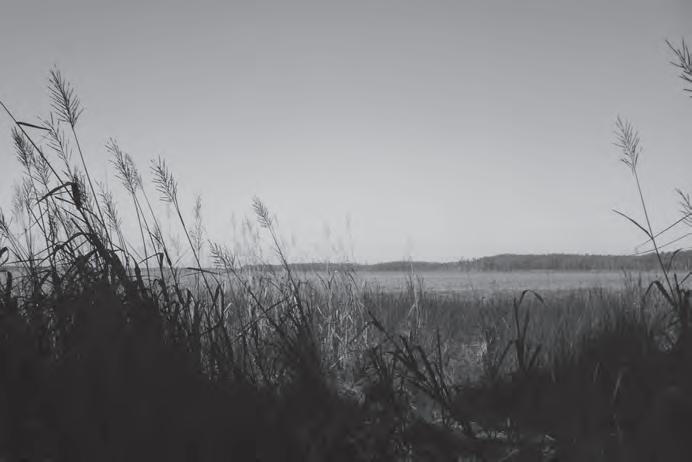
In November 2010 the Coastal Land Trust protected over 1,154 acres on Jarrett’s Bay and Core Sound in Carteret County. We worked in partnership with the Clean Water Management Trust Fund and the Navy to acquire a water quality conservation agreement on 624 acres and a Navy restrictive easement over the entire highly developable property.
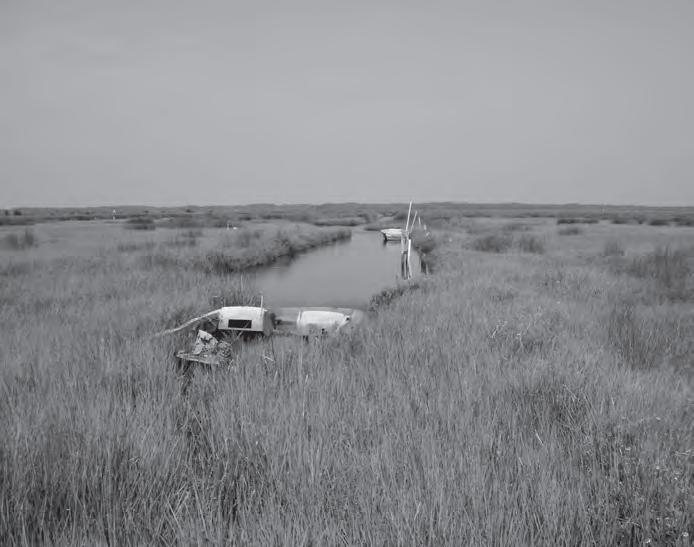
The Jarrett’s Bay property is a large peninsula that extends into Jarrett’s Bay and Core Sound in eastern Carteret County near the Town of Davis. Once the site of a historic freed black community formed after the Civil War, the uplands (known locally as Davis Ridge) host pristine maritime forest overlooking a vast estuarine marsh. The scenic property not only has historic and ecological significance but is also important to the Navy. Indeed, the tract is considered to be key within the Coastal Land Trust’s Cherry Point Encroachment Partnership project because it lies directly under a Military Training Route for the Marine Corps Air Station Cherry Point.
Our Jarrett’s Bay project is one of a group of conservation acquisitions that the Coastal Land Trust has undertaken in partnership with the Navy and Clean Water. For the November closing, the Navy provided funds in the amount of $425,350 and Clean Water provided $575,000 towards the total purchase price of $1,000,350. Clean Water also provided funds for transactional expenses such as survey, title work and closing costs. The Coastal Land Trust was awarded another Clean Water grant for a second phase of this Jarrett’s Bay project; so we are currently working in partnership with the Navy to protect another 375 acres at Jarrett’s Bay.
Turnagain Bay, Carteret County, Phase III
The third and final phase of our ongoing Turnagain Bay project was completed in December 2010. In phases I, II and III the Coastal Land Trust worked in partnership with the Navy and Clean Water to conserve the 3,500-acre Turnagain Bay property owned by Mr. Lacy Henry. This large property is now permanently protected by water quality conservation agreements and Navy restrictive easements. Clean Water financed these projects because of the great amount of waterfront and important wetlands protected. The Navy worked with us as a part of an effort to prevent development from encroaching on military bases. The Turnagain Bay property falls within a strategic landscape scale conservation plan entitled the “Onslow Bight Conservation Design Plan” developed by the Onslow Bight Conservation Forum, a multi-agency organization with representatives from several federal and state agencies including MCAS Cherry Point, Camp Lejeune and the NC Wildlife Resources Commission.
In June 2007 the Coastal Land Trust completed phase I and protected over 1,953 acres of the Turnagain Bay property. Then, in June 2009, the Coastal Land Trust protected an adjacent 900 acres on the South River and Eastman Creek (phase II). The property protected in phase II is part of the Luken’s Island peninsula, where the Neuse River meets the Pamlico Sound and hosts pristine wetlands and significant bird breeding habitat. The surrounding waters host primary oyster habitat, fish nursery areas and are used for commercial and recreational fishing.
In December 2010 the Coastal Land Trust protected over 785 acres on Eastman Creek, the South River, Buck Creek and Doe Creek. The Coastal Land Trust acquired a water quality conservation easement on 370 acres, a donated conservation easement on 45 acres and a Navy restrictive easement over 740 acres, protecting 2.7 miles of riparian buffer. The protected property and its waterways host longleaf pine forests and pristine wetlands. For the phase III closing, the Navy and Clean Water provided equal funds in the amount of $1,258,000 each towards the purchase price of $2,516,000. Clean Water also provided funds for transactional expenses. Mr. Henry sold all these conservation agreements at a bargain sale price and has become a supporter of the Coastal Land Trust.
c oastal l and t rust J oins e arth s hare nc
The Coastal Land Trust has been accepted as a member of EarthShare NC, a workplace giving campaign for environmental organizations in North Carolina EarthShare NC is an opportunity for environmentally-conscious employees and workplaces to support hundreds of environmental groups through a charitable giving drive ESNC participates in campaigns at public and private sector workplaces across the state and has raised over $7 5 million to preserve our natural heritage If your company has a workplace giving program, look for EarthShare NC organizations on your campaign materials and designate to the Coastal Land Trust . If you don’t see us on the list, or you’re interested in bringing EarthShare to your business, contact Vann Pearsall, director of development, at vann@coastallandtrust .org .
VOLUME 10 ISSUE 5 3
A beautiful piece of land Down East. Jarret’s Bay, Core Sound.
Staff Photo
Another scenic coastal property protected.
Staff Photo
d onor s P otlight
n orth C arolina ’ s P rize w inning C onservation t rust F unds at r isk
The North Carolina state parks system has just been named one of four finalists for the 2011 National Gold Medal Award for Excellence in Parks and Recreation Management. As a finalist, North Carolina advances to the next round of consideration along with state parks systems in Florida, Missouri and Michigan, with a winner to be announced in October.
The North Carolina state parks system attracts more than 14 million visitors each year. In difficult economic times, parks, playgrounds, greenways, and trails are needed and used even more than usual because people are looking for things to do close to home that don’t cost any money. Parks are vital for healthy communities and contribute to lowering our health care costs. The state’s Parks and Recreation Trust Fund also provides money to counties for ballfields, nature parks and gardens.
North Carolina also has a nationally recognized program to protect our rivers, shorelines and streams, the Clean Water Management Trust Fund. These two conservation programs, together with two more that protect farmland and natural heritage, don’t take a big bite out of the state budget. But they do provide a lot of impact. Places as varied as Wilmington’s Halyburton Park, the Latham-Whitehurst Nature Park, Springer’s Point Preserve at Ocracoke, Airlie Gardens, Holly Shelter Game Land, Chimney Rock State Park are just a few of the special places that have been preserved with funds from the Conservation Trust Funds. Even our coastal military bases have benefitted from the Conservation Trust Funds, which are used to match federal dollars to preserve strategically important lands near Cherry Point and Camp Lejeune. So here’s a crisp salute and thank you for our
s P ecial e vents
state’s Conservation Trust Funds and for the people who manage them! The Coastal Land Trust, along with sister land trusts and conservancies in other parts of the state, are hard at work, making sure that our legislators in Raleigh know that these programs are important to you.
We understand that all state programs, including these, should expect some budget cuts this year. Our message is simply to avoid cutting these programs to such an extent—with cuts much, much more drastic than those being made to other state programs—that the state could lose out on the chance to save parks and special places in the future, when the economy rebounds.
After all, conservation is all about recognizing the need to conserve what we have for the future.
Five Eagles Field day
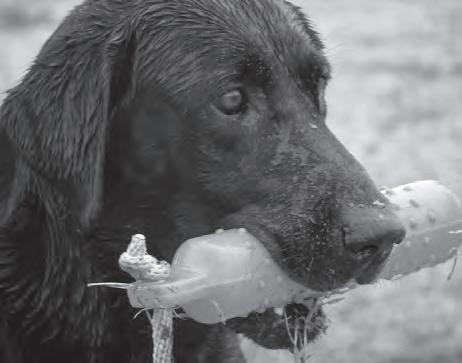
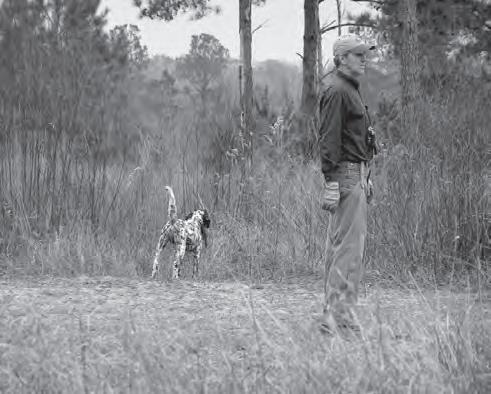
On February 26, 2011, over 100 friends and guests converged on Five Eagle Partners Farm in Rocky Point for a great afternoon of music, food, and field sports. The afternoon also featured a very popular retriever demonstration and a quail hunting demonstration.
Red Beans and Blue Grass
Kefi’s was the place to keep warm on January 16, 2011, as Development Committee member Bryan Stange and Cliff Ray organized another great event for the Coastal Land Trust. Over 70 people came out to enjoy a great chili dinner, to the high lonesome sound of the Hewletts Creek Boys. Thanks to Cliff and Bryan, as well as the folks at Kefi’s for a great evening of fun and fellowship.
norvell Party
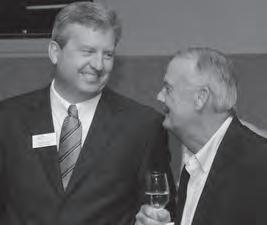
On November 20th, Coastal Land Trust Board member, Ed Norvell, and his wife, Susan, hosted a Party for the Point at their home on Ocracoke Island. With a full Indian Summer moon and a fall chill in the air outside, things were warm,
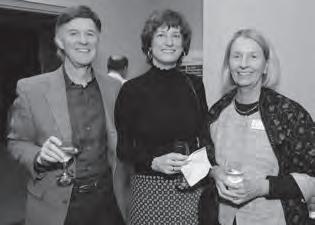
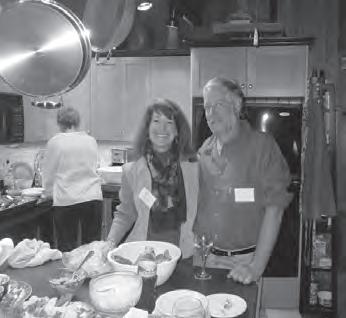
toasty and lively inside! This fundraiser for North Carolina Coastal Land Trust’s Springer’s Point Preserve on Ocracoke was a huge success and a wonderful way to usher in the holiday season. Food was provided by The Flying Melon and beverages were provided by Tommy’s Market, both of Ocracoke. Additionally, Sanctuary Vineyards, in Jarvisburg, N. C., provided a preview of its award-winning peach wine to guests. When marketed, a portion of the proceeds from the sale of the wine will benefit North Carolina Coastal Land Trust. Many thanks to the Norvells for a fabulous evening and for helping to keep Springer’s Point Preserve open to the public!
B.w. wells: Pioneer Ecologist Exhibit Opens!
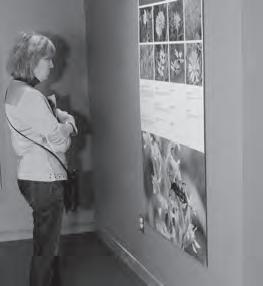
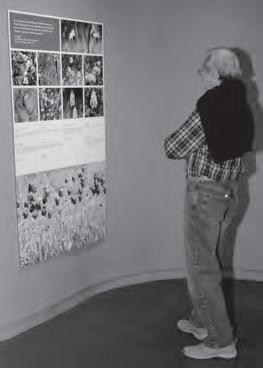
On March 3, 2011, the Cape Fear Museum, in partnership with the Coastal Land Trust and Progress Energy, held a preview for the new exhibit featuring B.W. Wells, the groundbreaking ecologist who discovered and studied the wet pine savannah in Pender County. NCCLT and museum members received a sneak peak at the new exhibit and walked away with a small sampling of the savannah; a carnivorous plant propagated by Southeastern Community College!
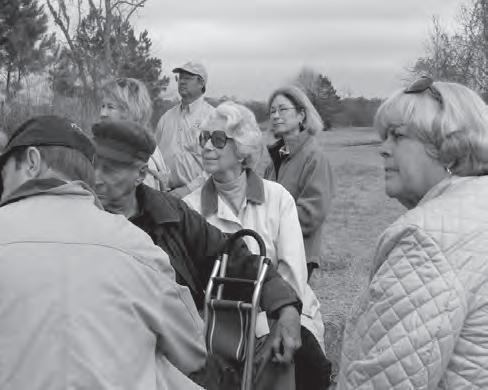
Guests enjoying the guided quail tour at the Thomas property.
VOLUME 10 ISSUE 5 4
Mr. David Huffine and his four legged companion flushing the quail.
Mission accomplished. A retriever after securing a bumper.
Mr. John Elliott and Mr. Don Cooke, both with Progress Energy.
A guest enjoys the new B.W. Wells exhibit.
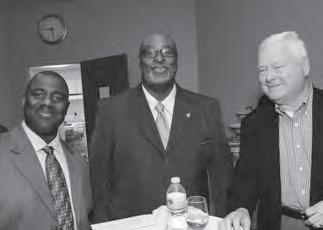
Mr. Bob McCall of Progress Energy, Commissioner Jonathon Barfield, & Michael Ryan.
Frank Ward, Ms. Frances Goodman, and Ms. Linda Murchison.
The B.W. Wells exhibit highlights the flora and fauna of the Wells Preserve.
It is with great appreciation that we recognize the following members for supporting the mission of Coastal Land Trust for more than 10 consecutive years . It is your devotion that drives land conservation in the coastal plain of North Carolina .
17 Years
Mr. and Mrs. J. Richard Good Mr. and Mrs. Joseph H. Hughes Mr. David Paynter Mr. Stuart Paynter Mr. and Mrs. Fred Stanback, Jr.
16 Years
Mr. Sam Byrd Mrs. Mary Joslin Mr. and Mrs. Robert Kimzey
15 Years
Mr. and Mrs. W. D. Ferebee, Jr. Mr. and Mrs. William R. Watson
14 Years
Mr. and Mrs. James P. Carty Mr. and Mrs. Neal Cheek Mr. and Mrs. James Deal, Jr. Ms. Camilla M. Herlevich and Mr. James T. Brier
13 Years
Mrs. Agnes R. Beane Dr. and Mrs. William R. Berry Dr. and Mrs. John C. Huffman Mr. and Mrs. Stephen Pizer Mr. and Mrs. Andrew C. Preston
12 Years
Dr. and Mrs. David A. Adams Mr. and Mrs. William Campbell Mr. and Ms. David E. Huffine
Mr. Kyle H. McIntyre Ms. Mandy Misner and Mr. Martin Willard Mr. and Mrs. Reid Murchison Mr. Michael Murchison and Ms. Barbara Sullivan
Mr. Larry L. Parks, Jr. Mr. and Mrs. William A. Raney, Jr. Mr. and Mrs. Charles Roe Mr. and Mrs. J. G. Weld
11 Years
Mr. and Mrs. D. Scott Corbett
Mr. and Mrs. Stephen L. Derynck Mr. H. McDonald Felder
Mr. and Mrs. John A. Hagan Ms. Barbara L. Hennrich
Mr. Roland L. Jones
Mr. and Mrs. Bernard E. Kane, Jr. Mr. and Mrs. Omar Mardan Mr. Samuel C. Rankin
Mr. and Mrs. Jay H. Russell Mr. and Mrs. Ben Steelman Mr. and Mrs. Bruce Vrana Dr. and Mrs. Brent Wilshire
10 Years
Mr. and Ms. John M. Camp, Jr. Mr. and Mrs. Murdock M. Dunn
Mr. and Mrs. Christopher Harris Mrs. Elizabeth Holsten
Thank You!
Mr. and Mrs. Jesse V. Jackson
Mr. and Mrs. Brian McMerty Mr. Michael W. Rodelius
Mr. and Mrs. Peter Schulz
Dr. and Mrs. Henry P. Singletary Mr. Robert W. Smith and Ms. Mary Dowcett
a nnual r e P ort L and G rants
VOLUME 10 ISSUE 5 5
O peratin G i nc O me e xpenses
Federal 7% State 19% Members & Corporate 74% Contributions & Member Support 92% Government 2% Other 6% Land Acquisition 45% Outreach, Membership Services, & Fundraising 20% Land Stewardship 19% Conservation Planning 3% Education 10% General Administration 3%
131 Racine Drive, Suite 202 Wilmington, North Carolina 28403
















The North Carolina Coastal Land Trust enriches the coastal communities of our state through the acquisition of open space and natural areas, conservation education and the promotion of good land stewardship.
The Trust is active throughout the Coastal Plain of North Carolina: its beaches, river corridors, farms, forests and marshes, its sandhills and savannas, its public parks and greenways. We aspire to bring together citizens and landowners, natives and newcomers, to set aside lands for conservation.
Organization U S Postage PAId Wilmington,
Permit No 316 I N THIS ISSUE
Nonprofit
NC
C orporate S pon S or S WrightSboro WholeSale FloriSt, inC.
Cape Fear Retriever Club 1 Safe Skies & Saving Habitat 2 President’s Message Director’s Message People in the News Save the Date 3 Recent Land Acquisitions Coastal Land Trust Joins EarthShare NC 4 Donor Spotlight Special Events 5 Years of Service Annual Report
North Carolina Coastal Land Trust thanks these
Slick Enterprises J.L. Morris Enterprises
