

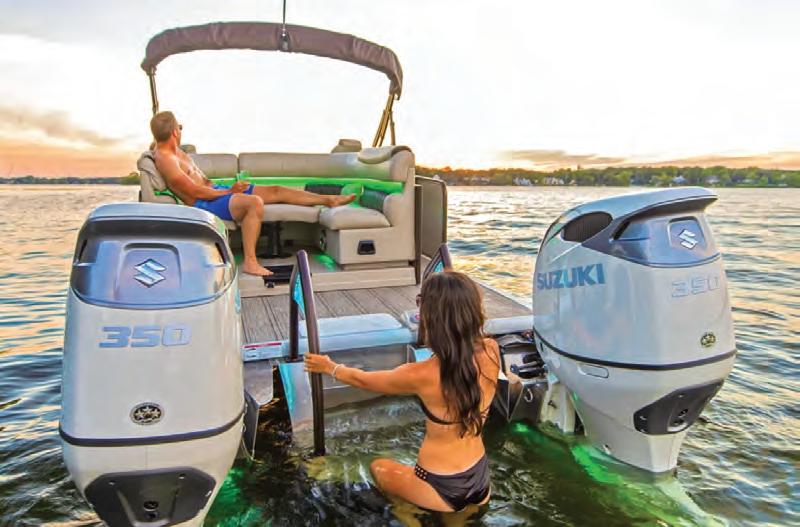
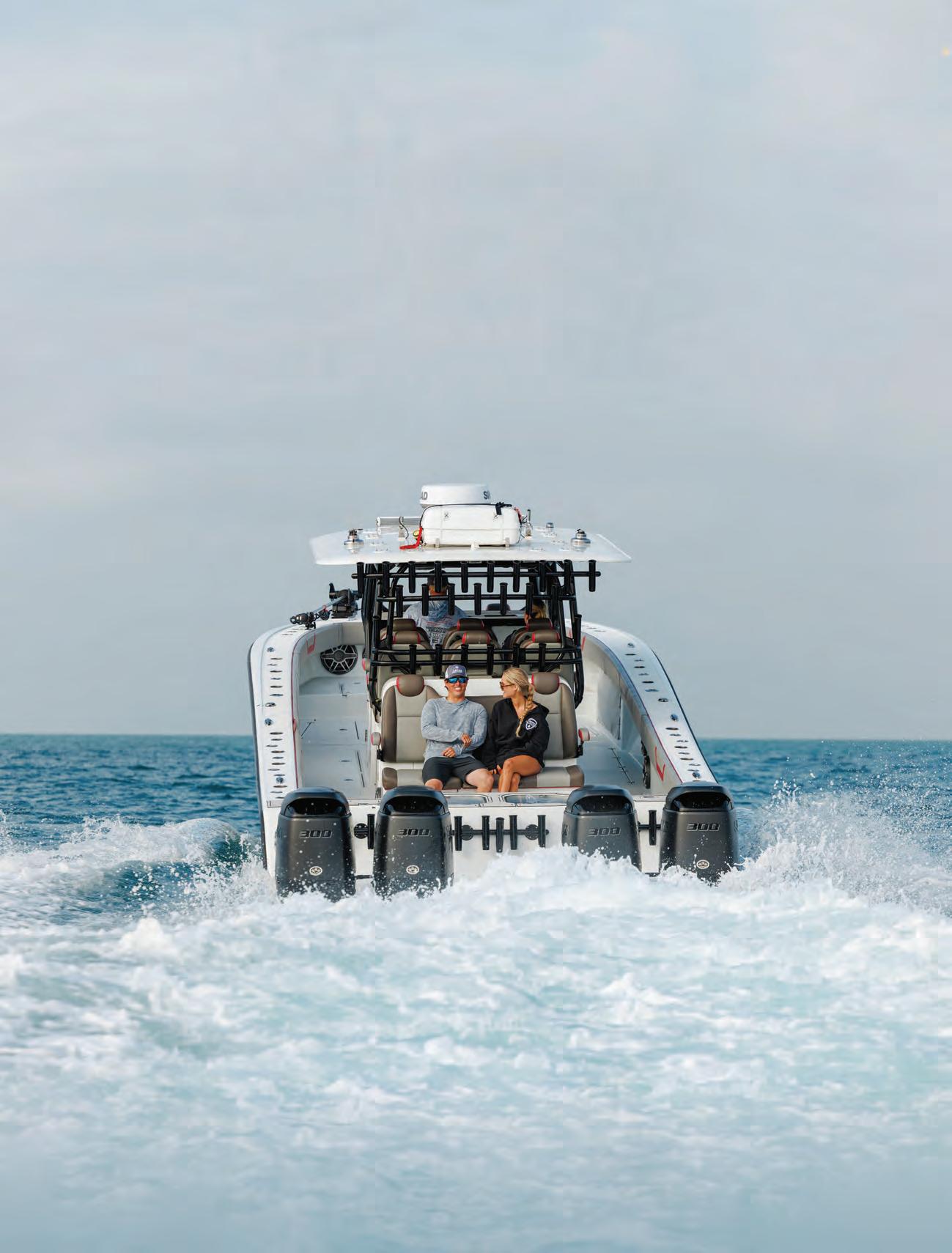
From Memorial Day through Independence Day, Suzuki Marine is turning up the heat with the Ultimate 7-Year Warranty on qualifying new 150350hp outboards with no participation fee. Whether you’re planning offshore runs, sandbar weekends, fishing trips, or sunset cruises, there’s never been a better time to power your adventures with Suzuki Marine. Built for dependable performance and exceptional fuel efficiency, Suzuki outboards are engineered to keep you on the water longer and worry less.
A 7-year warranty speaks volumes about the confidence Suzuki Marine has in its products—and now customers can experience that peace of mind all summer long. If you’ve been considering a repower or shopping for a new boat, now is the time to visit your authorized Suzuki Marine dealer or visit suzukimarine. com and take advantage of one of the
best promotions of the season!
Running May 22 through July 3, this limited time 7-Year Warranty gives boaters even more confidence in the

For years, I’ve spent time on rivers, streams and backcountry waters that most people will never see. Places that feel untouched. Wild. Worth protecting.
But over time I started noticing something that didn’t belong.
Discarded fishing line.
Sometimes it’s barely visible—caught in a branch or wrapped around a rock. Other times it’s impossible to ignore. Tangled, drifting, or worse…impacting wildlife that never should have encountered it in the first place.
The truth is, most anglers don’t leave it behind intentionally. But it’s there. And if you spend enough time on the water, you’ve seen it.
I know I have.
For a long time, I did what many of us do. I noticed it… and kept fishing.
At some point, that changed.
I stopped asking if it was my place to do something about it—and started asking if it was my responsibility.
That shift is what led to Pack Out More™.
It’s not complicated. It’s not about perfection. It’s about a simple idea: If you enjoy the water, leave it better than you found it.
One piece of line. One piece of trash. One small decision at a time.
Because movements don’t start with big moments. They start with small actions
By Joe Woody
that people choose to repeat.
And when enough people make that choice, something bigger begins to take shape.
A new standard.
A new kind of angler.
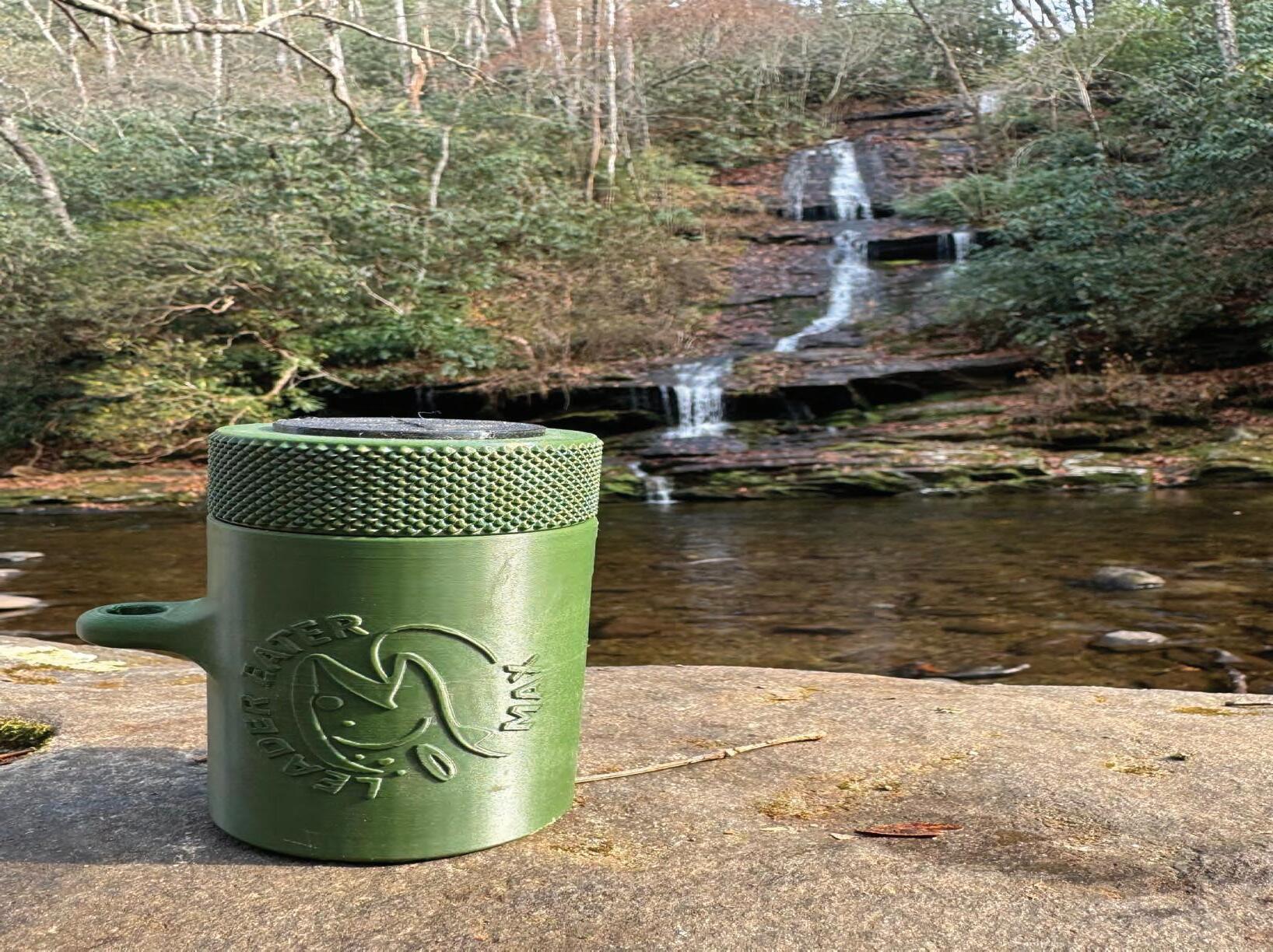
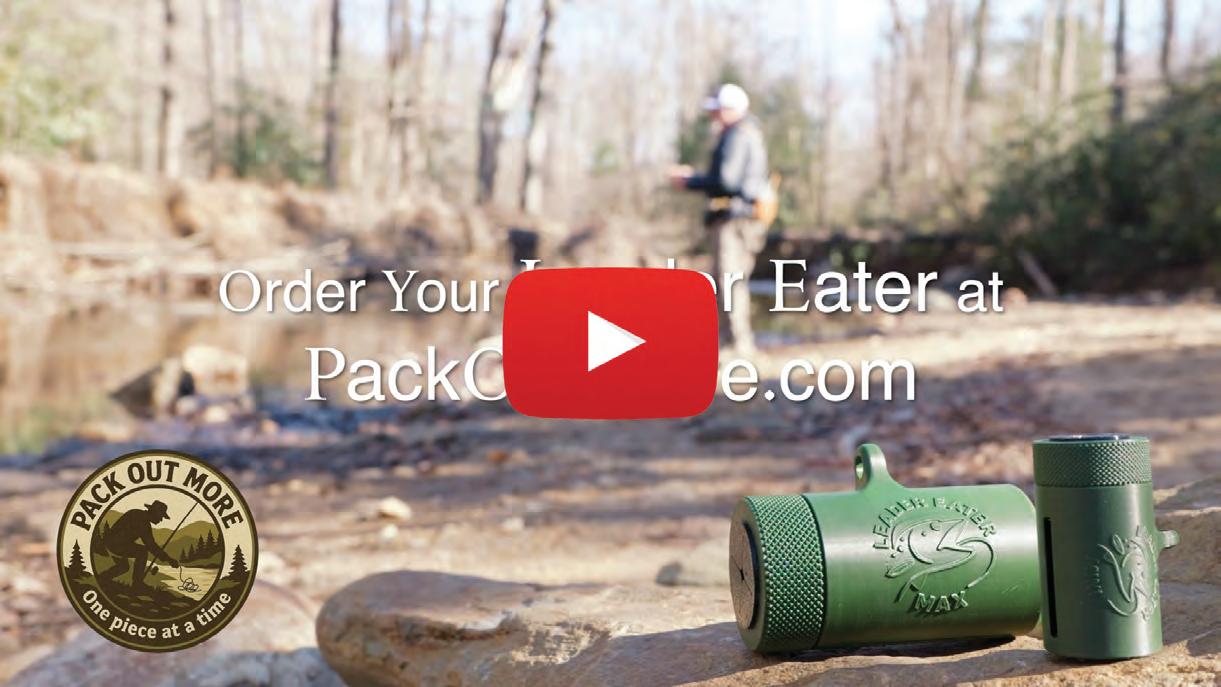
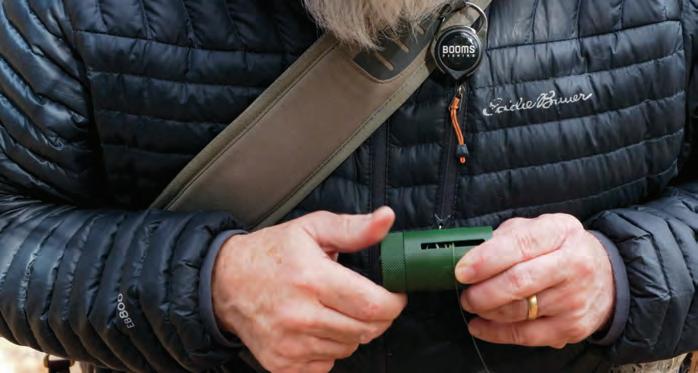
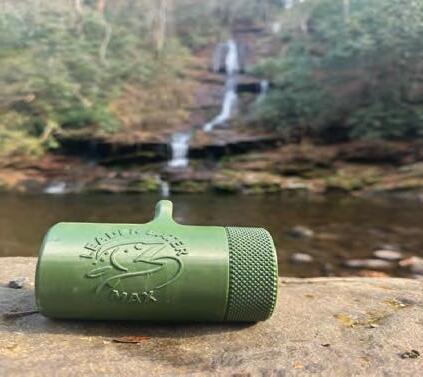
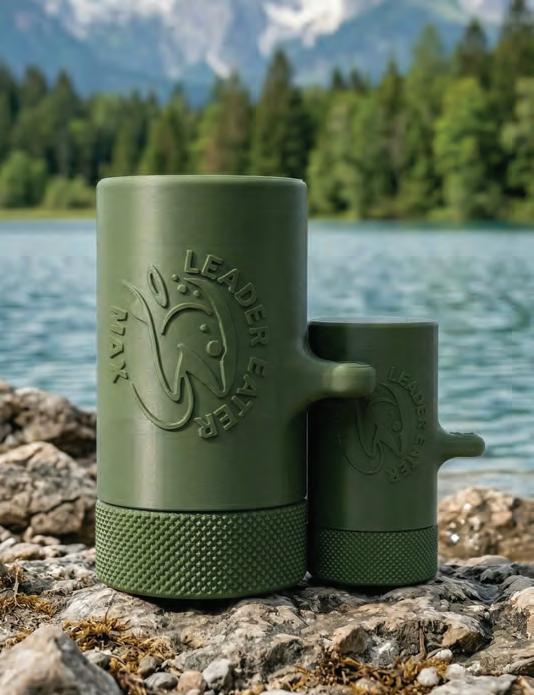
To make that action easier, we created the Leader Eater™—a simple, purposebuilt tool designed to help anglers remove and safely collect discarded fishing line and small debris while they’re on the water.
If you’re ready to be part of this shift, you can learn more and get yours at PackOutMore.com
Because this only works if enough of us decide to start.
Be
Pack Out More™ starts with a simple decision—one piece at a time.
The Leader Eater® was built to make that decision easier, giving anglers a simple way to remove and safely collect discarded fishing line and small debris while on the water.
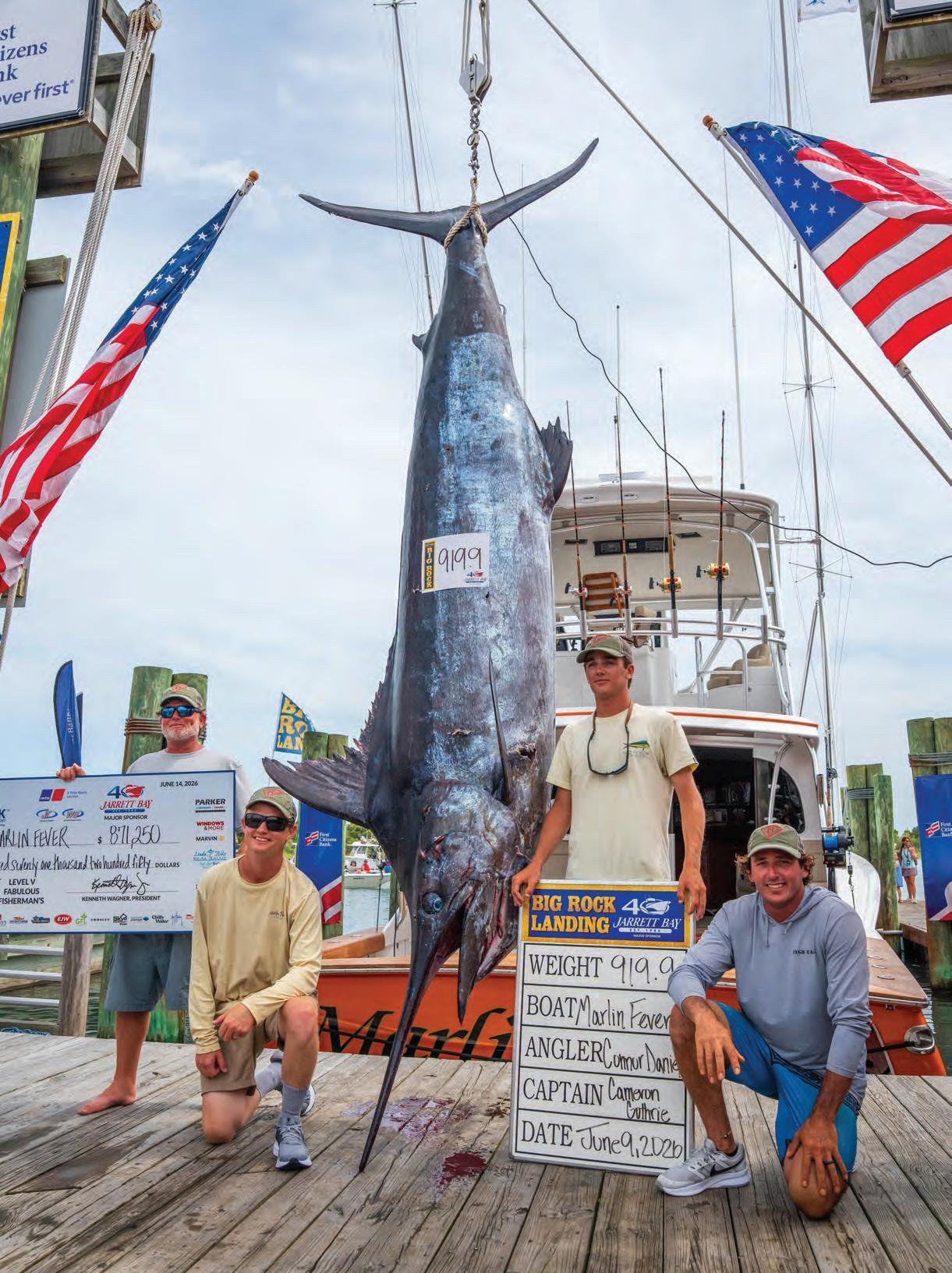
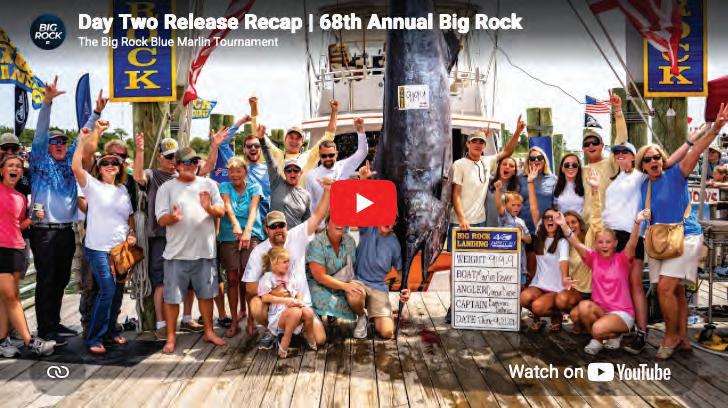
History was made, big checks were paid, and an insane at-the-buzzer leaderboard shakeup took place at the 68th Annual Big Rock Blue Marlin Tournament, held June 5–14, 2026 in Morehead City, North Carolina.
Marlin Fever brought the heat to Big Rock Landing on Day 2, bringing a tournament record-breaking 919.9 lb. blue marlin to the scales, securing the Level V Fabulous Fisherman’s Prize worth $871,250 as the first blue marlin of at least 500 pounds weighed in. Eighteen-year-old Connor Daniel served as the designated angler and fought the fish for roughly two hours. (The crew later reported the marlin had recently eaten two sailfish!)
Captained by Cameron Guthrie, the 63’ Jarrett Bay out of Wilson, NC, held the top spot on the leaderboard through Saturday’s final weigh-ins, delivering Marlin Fever the championship—and a staggering $6,513,188 payday.
And while Marlin Fever’s historic catch swept all the blue marlin categories, it was the nail-biting weigh-in that came just before 10 p.m. on the last day of the tournament that topped off a dramatic week and sent spectators on the dock into a frenzy.
After a grueling 6.5-hour fight, Haphazard, a 60’ Spencer out of Manteo, NC captained by Joey Belton, delivered a true buzzer-beater. The team arrived at Big Rock Landing just in time to weigh in one last blue marlin. It was 635.6 pounds—enough to catapult them into third place for heaviest blue marlin, knocking Free Ranger’s 597.4-pounder off the podium at the last minute. What an ending!
Fender Bender finished in second with its 644.1-pound blue marlin weighed on Day 3, worth $467,962.50. Haphazard’s catch earned the team a $311,975 payday.
In the release division, Double G captured the title with 1,850 points after releasing four blue and two white marlin, earning
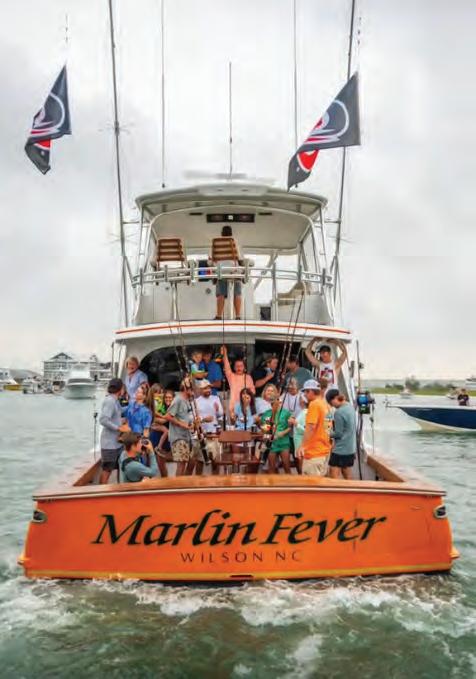
$168,937.50.
Doc Fees claimed the dolphin title and $584,500 with a 66.10-pound mahi; Magic Moment won the wahoo division with a 53.4-pound catch; and Watertight won the tuna division with a 70.8-pounder.
A total of 278 boats fished for a piece of the tournament’s record $9,038,225 purse.
For official results, payouts, and future dates, visit tournament.thebigrock.com and check them on facebook @bigrocktournament for all the tournament highlights.
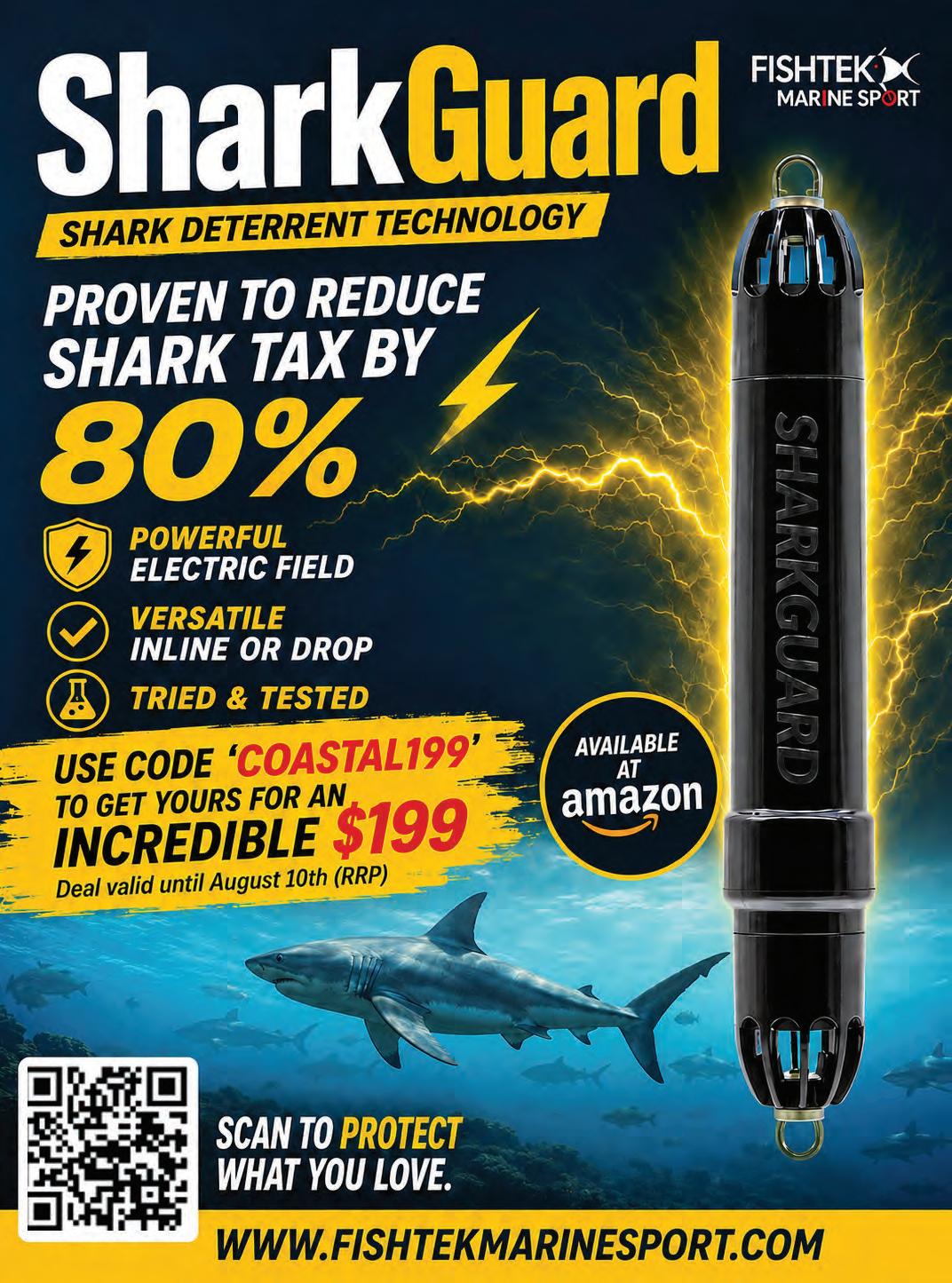
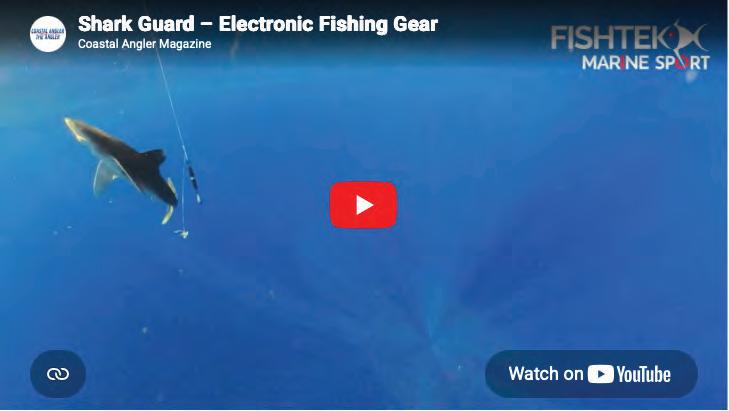

Yanglers have just shrugged and called it part of the game.

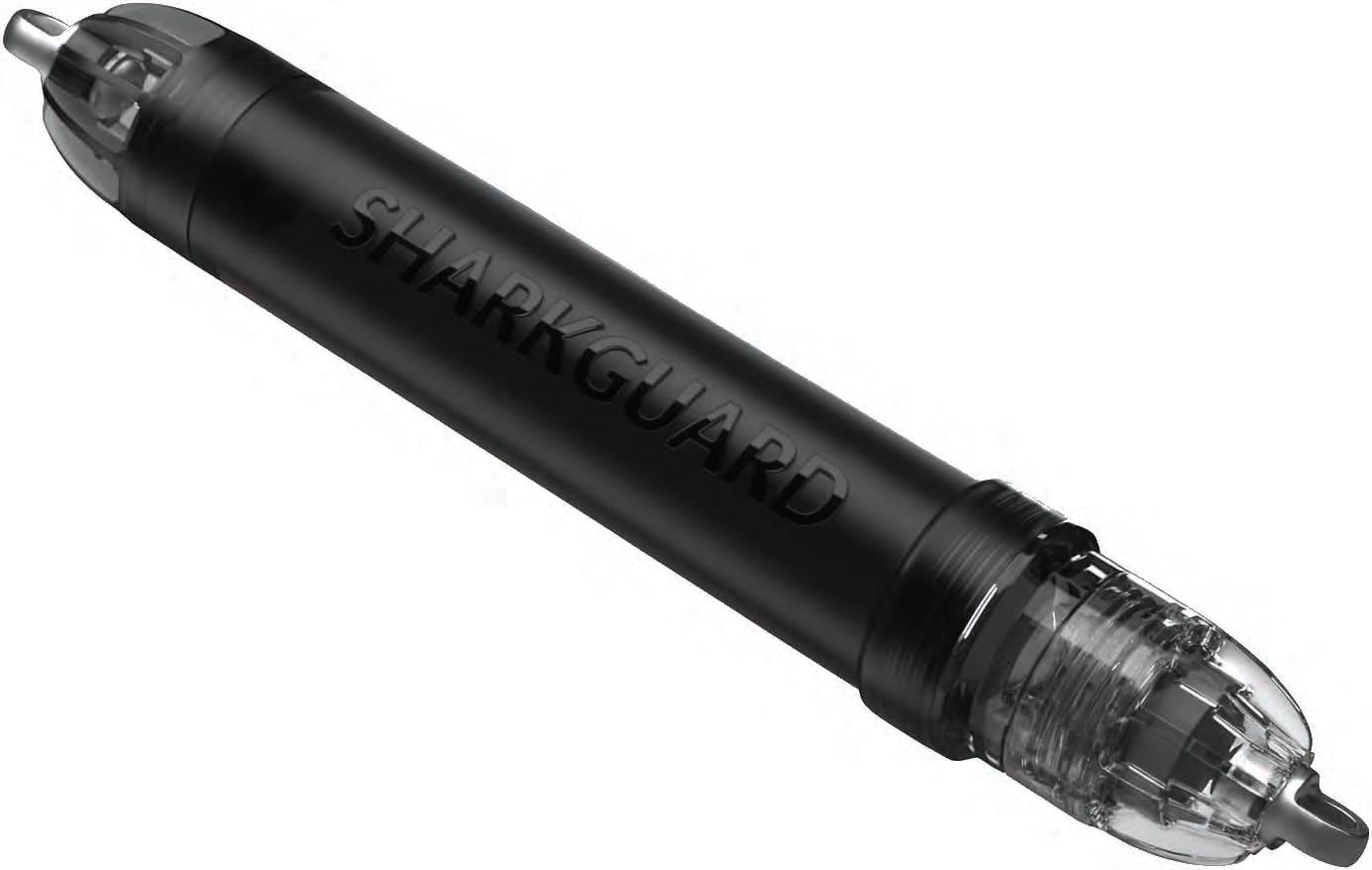
Born in the commercial longline industry — where captains run razor-thin margins and won’t spend a dollar on anything that doesn’t deliver — SharkGuard uses proven electric pulse technology to deter sharks from targeting hooked fish. When hardened commercial fishermen adopt a product, recreational anglers should take notice.
Other than the fact it truly works, what makes SharkGuard different is its versatility. Run it inline or slide it down to the fish mid-fight using a traveller rig. That kind of real-time adaptability is rare in any tackle category, and it won’t deter your target species either.

The results back it up. Controlled trials in Australia and Florida show dramatic reductions in shark depredation. Whilst Stateside, Captain Nikolas Kunsis tested SharkGuard in what he calls “the shark bite capital of the world” and landed multiple quality snook and redfish with zero shark follows or damage. Wherever you fish, if you’re paying too much tax, SharkGuard belongs in your kit.
Start landing fish again.
Coastal Angler readers can grab SharkGuard on Amazon at
TIM BAREFOOT
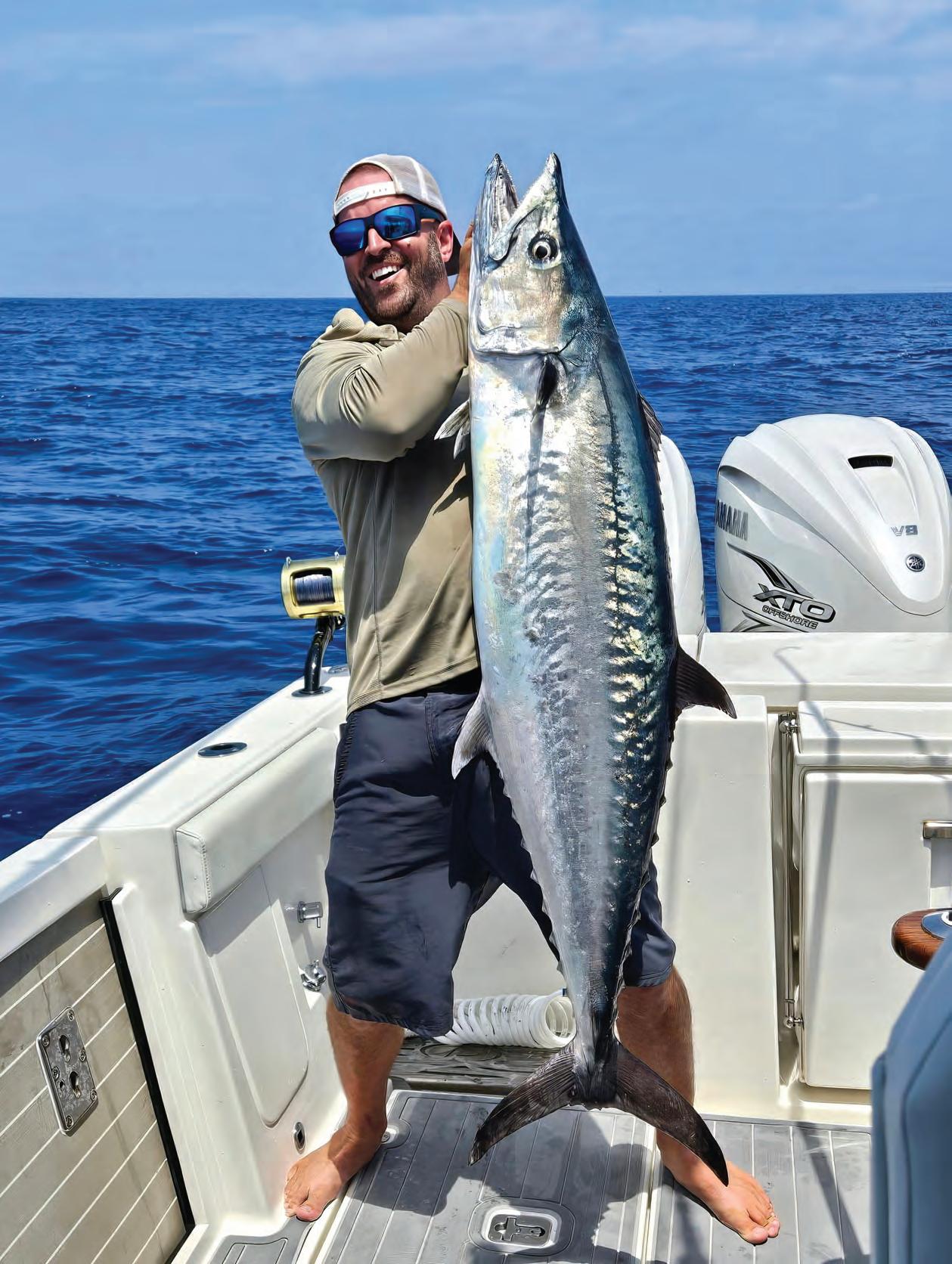
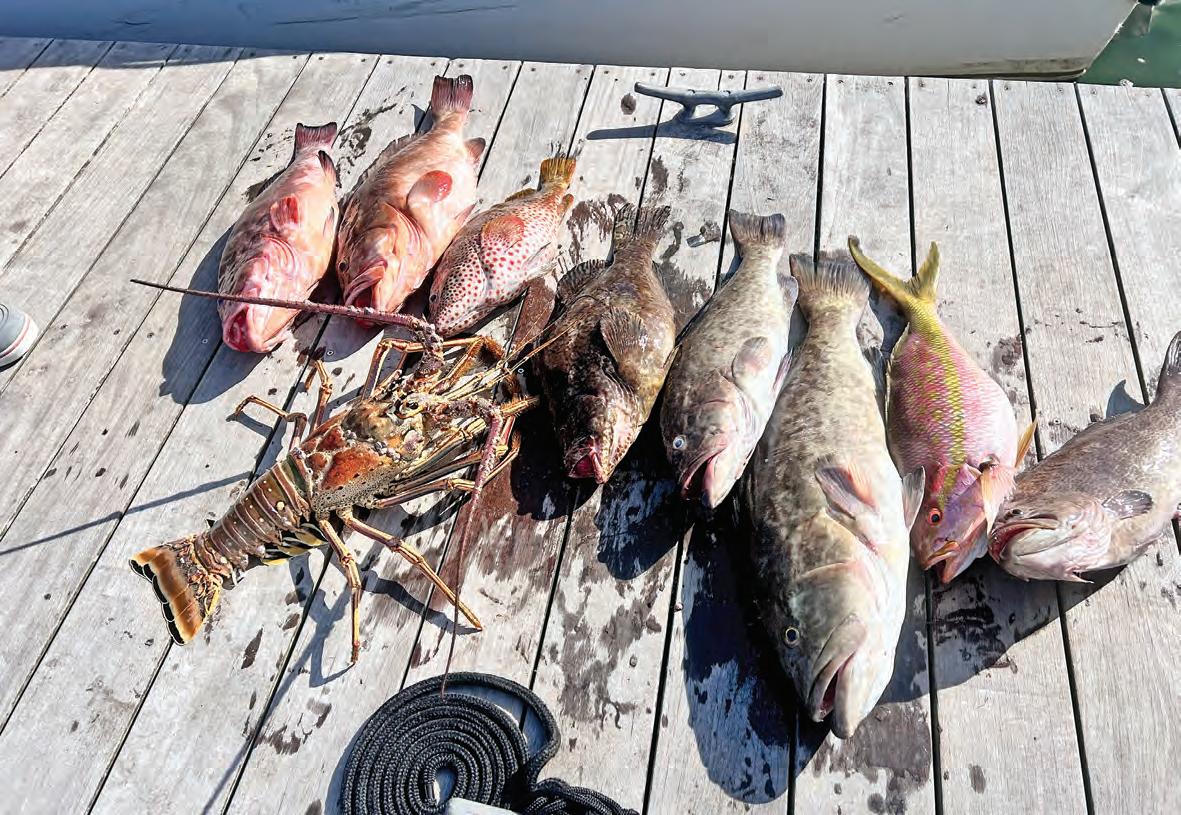
The surface water temperature will continue to climb in July, but the water temperature on the bottom will regulate itself to where it needs to be. This is time of year to catch all the tropicals, starting now until early fall. Of course, the grouper and snapper bite will be off the chain, but this is when you will see all the snapper and grouper show up way north of Florida (as seen in photo). They will be available outside of their usual haunts and, of course, an occasional lobster. This is truly the time of year to catch a giant grouper as well. I cannot emphasize this enough, but this is the time of year to spend an hour or more if necessary to Sabiki live cigar minnows and sardines for the ultimate bites on the bottom, not to mention the light line. Don’t be surprised to catch a giant wahoo on a 5-inch live cigar or sardine…elephants eat peanuts.
I would strongly suggest not playing loud music, not stomping around the deck, nor slamming cooler lids because the sailfish and dolphin will swim up to the boat and check you out. This is when you need to have a pitch rod ready. It’s never a bad idea to have

a large squid on a pitch rod. Nothing in the ocean can refuse a well presented squid on the light line or pitch bait. It’s also not a bad idea to keep a frozen squid 50 to 75 feet deep using a small amount of weight (depending on the current).
When the current is not running hard, a 1/4 or 3/8 oz. will get it down to the perfect depth. If the current is running a little bit, a 1/2 to 3/4 oz. might be needed. I would also suggest a live bait under a float or under the kite for the ultimate presentation. If you have the correct weather pattern, I would strongly suggest spending the night offshore and using lights to attract the bait fish. When you have a livewell chock full of live cigar and sardines and squid for the daylight bite, your success rate dramatically increases. Live squid or a live sardine on the bottom on a decoy jig has a life expectancy of five seconds or less. Don’t ask them to bite, demand the bite. Ask and you shall receive, my brothers and sisters. I’m not into all the “fishing,” per se; I’m into the catching...and there is a huge difference. If you have the correct bait and make the correct
presentation, you will get the bite!
Yes, we always carry a couple boxes of frozen cigar minnows and a box of frozen squid, but we always look for live bait, and we will spend some time on a school of bait using the Sabiki.
The fish are just like us. We prefer to eat breakfast, maybe lunch, and a good dinner. Be there for the daylight bite or the late afternoon bite. Put some beautiful live bait on the bottom and expect immediate bites on the decoy jig.
One of the most important pieces of advice for fishing in July is to ensure your children are prepared for the weather. Afternoon thunderstorms are common during this month, so it’s essential to dress them appropriately and be ready for sudden squalls. This preparation is a fundamental part of the fishing experience.
Beyond safety, take the opportunity to teach your children the proper way to care for and release fish. These practices instill a sense of respect for nature and promote responsible fishing. The lessons learned during these outings will stay with them for a lifetime, making each fishing trip both enjoyable and educational.
Learn more tips and techniques from Tim Barefoot at barefootcatsandtackle.com and on his YouTube channel: @timbarefoot5698.


Pack Out More™ starts with a simple decision— one piece at a time. The Leader Eater® was built to make that decision easier, giving anglers a simple way to remove and safely collect discarded fishing line and small debris while on the water. The Pack Out More Kit combines the Leader Eater Mini and Max so you’re equipped wherever you fish.

Stop the shark tax! Developed from the rigours of commercial fisheries and tested, SharkGuard has a scientifically proven 83% success rate at deterring sharks and rays. Using a specialised electronic pulse SharkGuard uses sharks’ sensitivity to electricity to repel and deter shark interaction. Paying the taxman? Shark depredation? Whatever you call it, SharkGuard helps you reduce shark interactions, land more fish.
























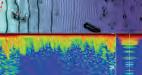
TZT16X | 22X | 24X








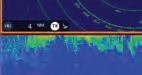



































TZT10X | 13X






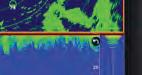
TZT9E | 13E











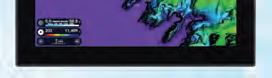















When helm and 13 TZtouchE to view and in
When helm space is at a premium, the 9" and 13" TZtouchE MFDs give you maximum screen area to view their eye-popping TZ MAPS charts and builtin TruEcho CHIRP™ Fish Finder with Side-Scan.

Plus, TZtouchE is fully networkable with the TZtouchXL family of 10", 13", 16", 22", & 24" MFDs and a wide range of best-in-class sensors – legendary Furuno Radars, Sonars, Fish Finders, Autopilots, and more.

Furuno... The reason to level up your helm!


Marine Electronics



Furuno is expanding its line with the introduction of the TZMAP9 and TZMAP13, two new, powerful all-in-one stand-alone Multi Function Displays with built-in TruEcho CHIRP™ Fish Finders that bring the power of Furuno’s acclaimed TZ MAPS cartography to smaller vessels desiring to operate from a single display. Designed for boaters who want simplified, reliable navigation without network complexity, these models deliver powerful features through a user-friendly multi touch interface for a variety of boat types and sizes.

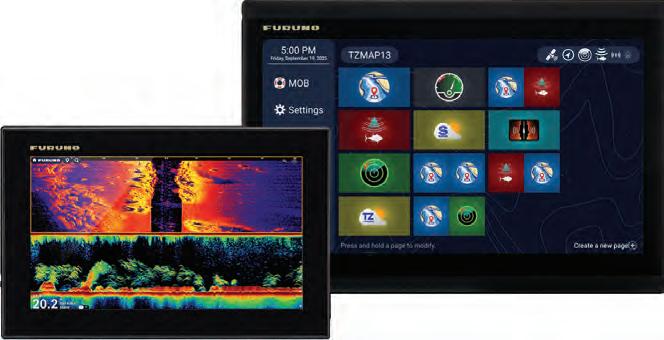
The 9” TZMAP9 and 13” TZMAP13 feature responsive, sunlight-readable multitouch displays powered by a streamlined version of the TZtouchXL operating system. These MFDs are equipped with a 300W/600W/1kW, single-frequency TruEcho CHIRP™ or dualfrequency CW Fish Finder, CHIRP Side-Scan capability (230kHz or 455kHz), and advanced chart plotting capability built around Furuno’s revolutionary TZ MAPS platform. With a free My TimeZero account, waypoints and routes can be easily backed up or retrieved from the cloud with just a few taps, ensuring critical data remains safe and secure.
Designed for simplicity while retaining advanced functionality, these units support Radar options such as the Solid-State Doppler DRS2DNXT and DRS4DNXT. They also offer integration with the TZ iBoat App and support AI Routing, helping boaters plan smarter, safer routes. TZMAP units come ready-to-navigate out of the box with pre-loaded,
official NOAA Vector charts for the entire coastal US. For a serious upgrade at an incredible value, optional TZ Maps charts can be purchased directly from the MFD. TZ Maps delivers customizable, detailed cartography built on a foundation of official hydrographic charts, high-resolution BathyVision™ bathymetry, satellite imagery, and community-sourced data. It’s the most intuitive and powerful charting system Furuno has ever offered, and it’s built right into every TZMAP9 and TZMAP13. Plus, your first chart purchased through the TZMAP
MFD is available at a special low introductory price of only $150an incredible price for the entire USA, or any other chart area. With details this precise and coverage areas this large, TZ MAPS is one of the most affordable chart options on the market.
From bay boats to kayaks and sailboats to cruisers, the TZMAP9 and TZMAP13 offer an accessible entry point into Furuno’s navigation ecosystem. These units are ideal for boats 16’ and up in need of essential fish-finding tools, cutting-edge charts, and affordable Radar options in a clean, stand-alone package.



By Will Schmidt

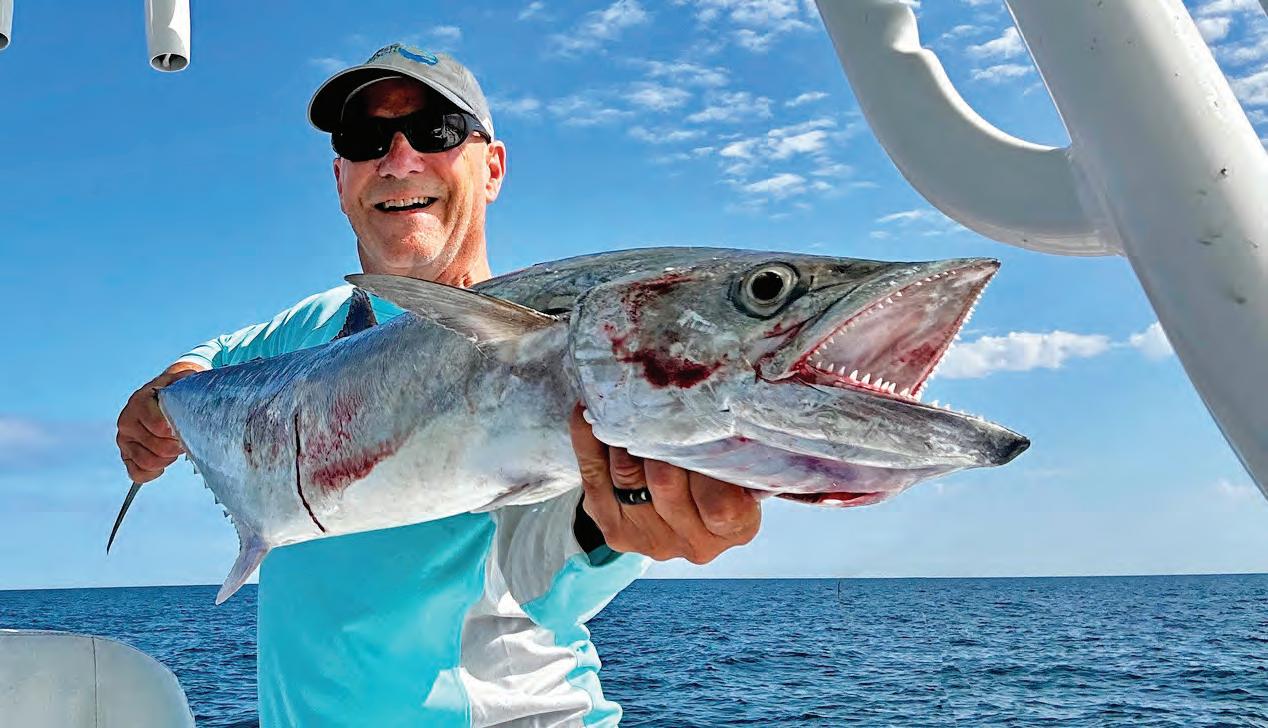
can be slow, especially when targeting big fish. The good news is there are some tournament proven techniques that can really help.
Perhaps the most well know tactic to bring kings to you is chumming. There are several forms. Cutting up chunks of threadfins and tossing them into the current is certainly a tried-andtrue method. This is a great method especially if you are anchored. The challenge here is getting enough bait to keep the flow going. Another option we use in tournament fishing is a constant drip of menhaden oil. Using a bag like an IV bag you can set have a slow drip continually putting scent in the water as you troll. It’s great for covering ground and still helps to bring fish to you at the same time. Unfortunately, menhaden oil has become a bit pricey.
Made of reflective strips that look like a school of bait, they shine like an underwater disco
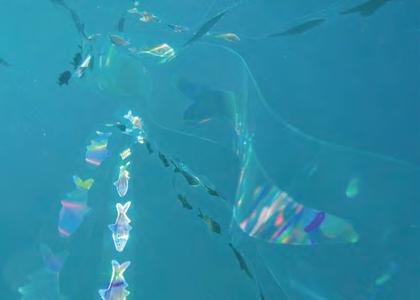
These techniques work great, but on tournament days I believe there is so much
two hooks wired about 5 inches apart with a stinger off the second to create a larger profile offering. I believe the added flash of multiple
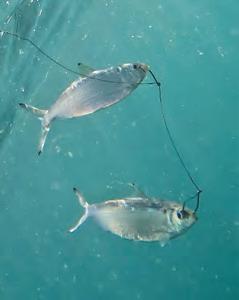
ball. Plus are easy to use and reusable so they are cost effective. Simply attach them to a kite rod or cleat and toss them over the side. I’ve literally had fish in my spread within seconds of deploying the dredge.
For baits I do prefer big blue runners, but sometimes they can be hard to come by. A good trick when big baits are sparse is to double up smaller baits, like sardines or threadfins. I use
For tackle I like 20 to 30 pound trolling gear like a Shimano Terez medium action rod with Talica A 16. For years we went very light on our tackle thinking that kings had soft mouths and needed to be babied. While they are somewhat more delicate, a big fish is tough and you still need gear that can do the trick. This setup has a light enough tip and silky smooth drag to help absorb the initial hit but plenty of backbone to battle a hardier smoker king. A mono top shot also helps with that opening blow.
For me the key to kingfish fishing is to combine looking for them while also having them look for me. Adding the dredge to my spread is a real gamechanger.
Will Schmidt is a seasoned tournament angler who has been writing about fishing for more than two decades. Follow him on Instagram @saltynstrong.

Electric Outboard Motor
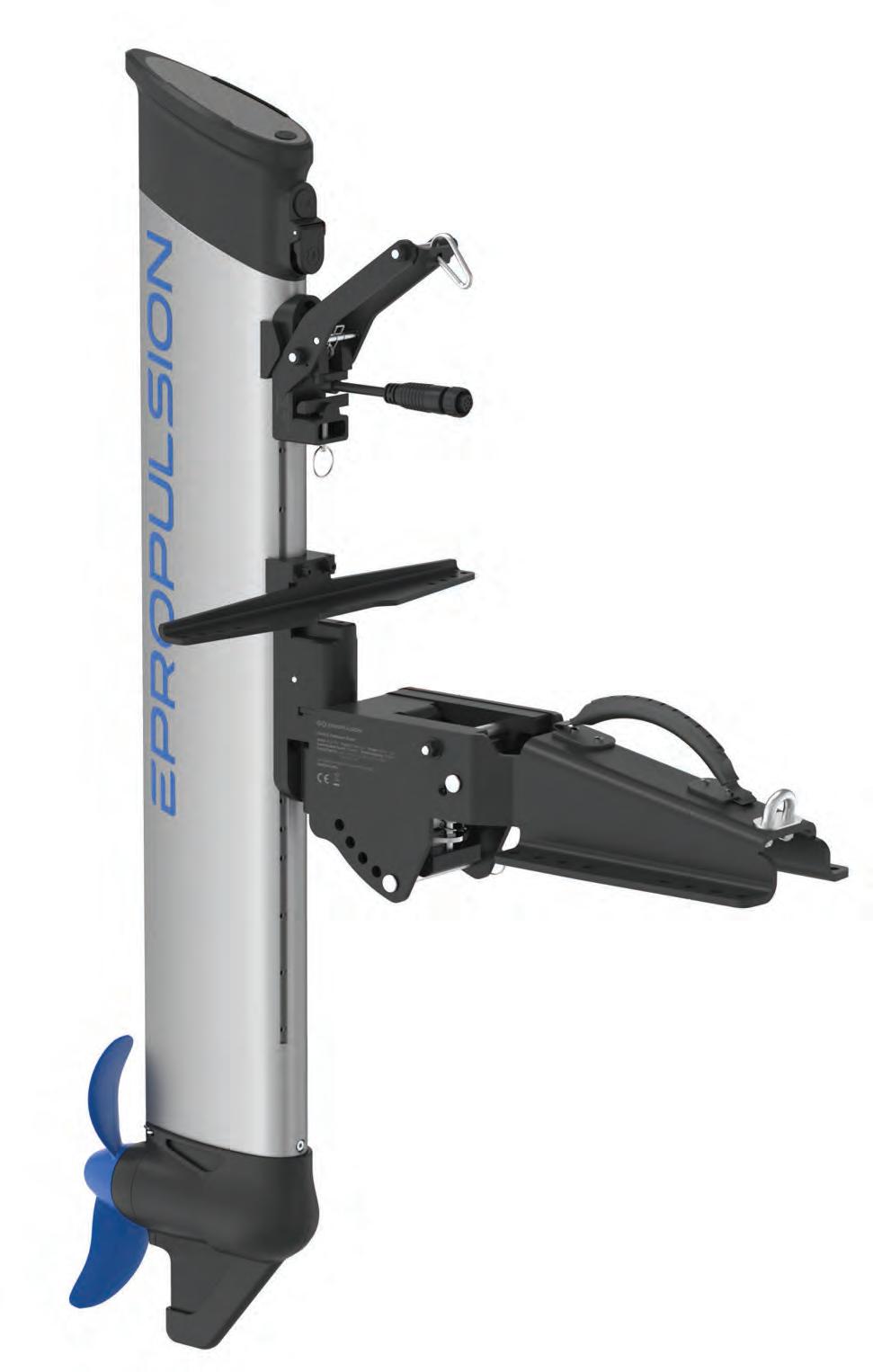
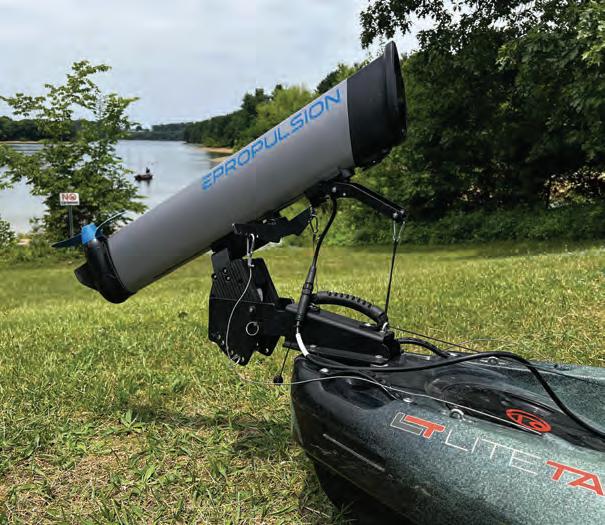
Building on the award-winning technology that shattered convention with its highly portable eLite, ePropulsion expands with the introduction of its kLite 750 — a powerful, silent, eco-friendly electric outboard motor contained in a lightweight and compact form factor ideal for recreational or fishing kayaks alike.

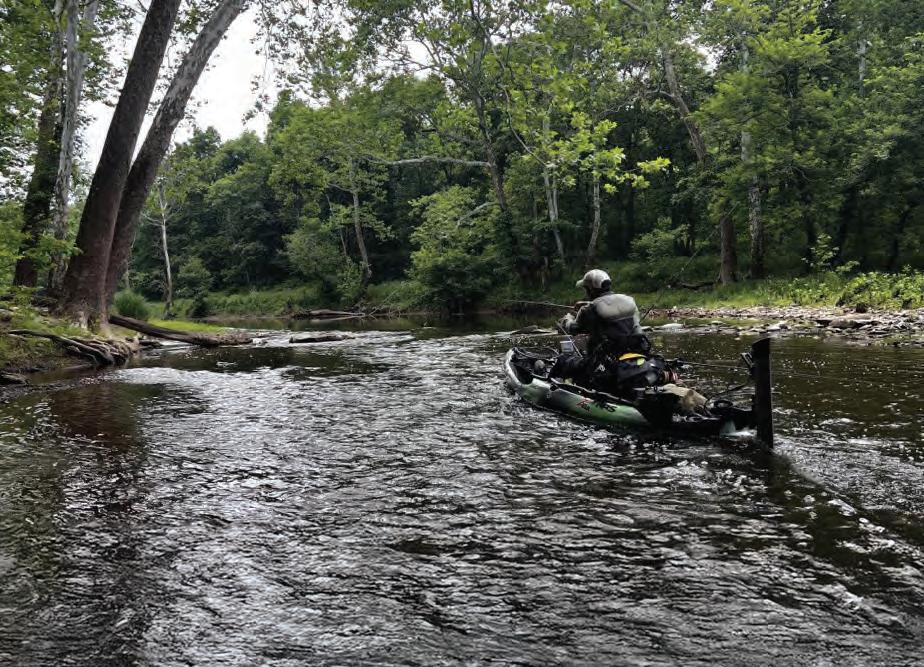


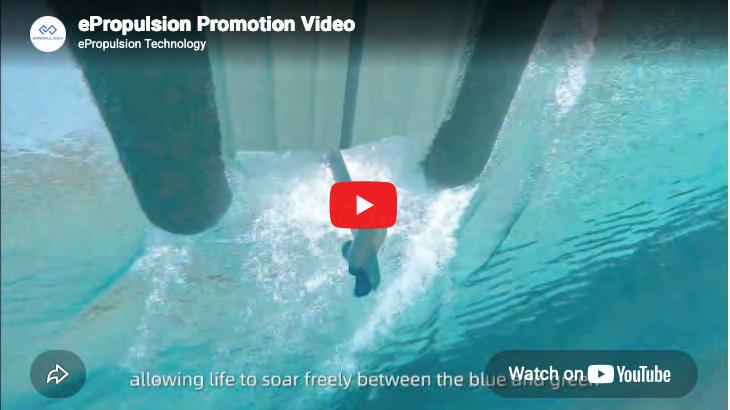
Global leader in marine electric propulsion systems and services, ePropulsion Americas recently announced that it is entering the powered kayak market with the all-new kLite 750 electric outboard. Building on the award-winning technology that shattered convention with the highly portable eLite, the kLite 750 is powerful, but contained in a lightweight and compact form factor ideal for recreational or fishing kayaks alike.
Coming in under 15 lbs. with a 378Wh integrated battery, it is perfect for quick trips and carry-in access. Optional accessories allow third-party battery recharging while fishing or floating. Go Mode delivers 500W continuous power or double tap the mode switch for a 750W Sport Burst (60 seconds) to shoot rapids or punch through rips. Toggle to Fish Mode for refined low-end control to hit every laydown and pocket. The kLite operates in less than seven inches of water or it can be adjusted deeper for big water. The rudder-shaped design steers even when the throttle is off. It has a spring-tensioned mechanism that delivers up to 300W in reverse, ensuring the propeller won’t kick up and spook fish. The spring gives way smoothly on collision with underwater objects or rocks or manual lift.
A separated display keeps your eyes on the water. The sun-shaded color monitor mounts on console, deck, or track. The low-profile throttle tucks beside the seat without snagging clothing. Users simply snap motor onto mounting pin, connect steering lines and cables, and anglers are ready to fish in minutes. The unit includes a grab handle in case the mount blocks your kayak’s existing carry handle.
“When we showed our original prototype at ICAST last year, the interest was substantial,” Tom Watson, president of ePropulsion Americas. “The eLite has already been revolutionary for tenders and small craft, and we are confident that the kLite is going to take kayak anglers to new and exciting places.”
The kLite will be on display at ICAST 2026, in booth #1608, July 14-17,
2026, and will also be available for on the water demonstrations on July 14. Units will be available for purchase in August, 2026. .
For more information on ePropulsion or its revolutionary electric motors and accessories, visit www.ePropulsion.com or contact jeff.little@epropulsion.com.
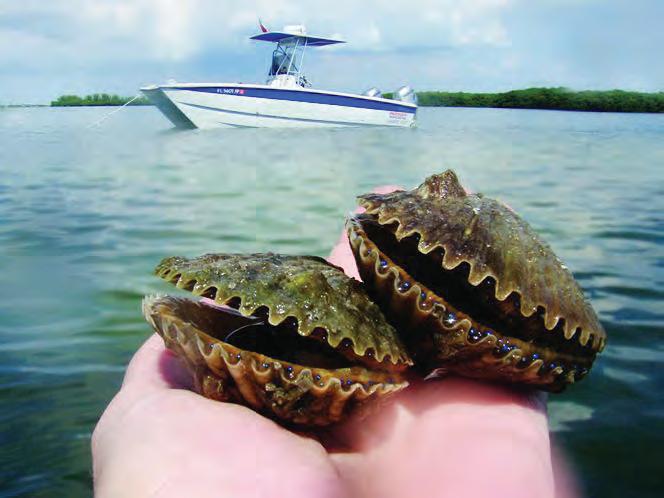
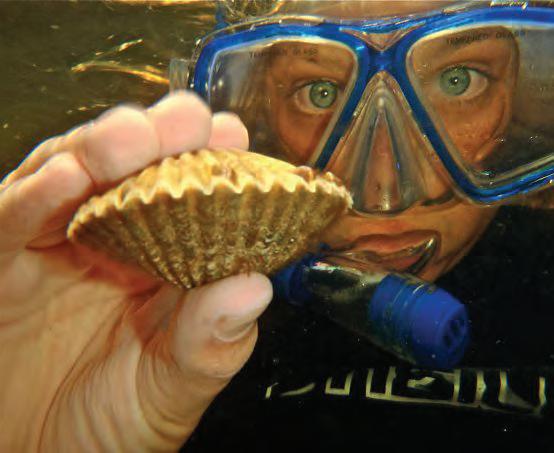
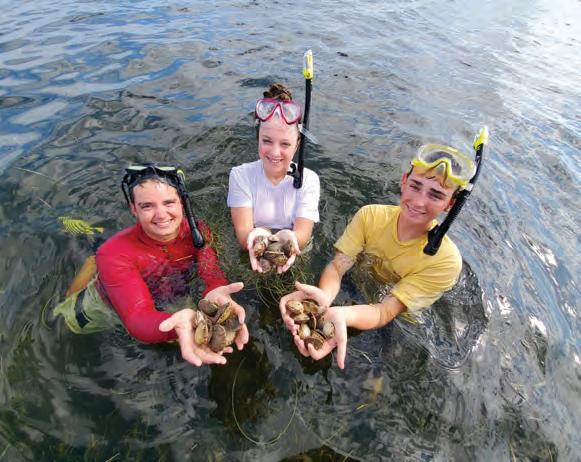
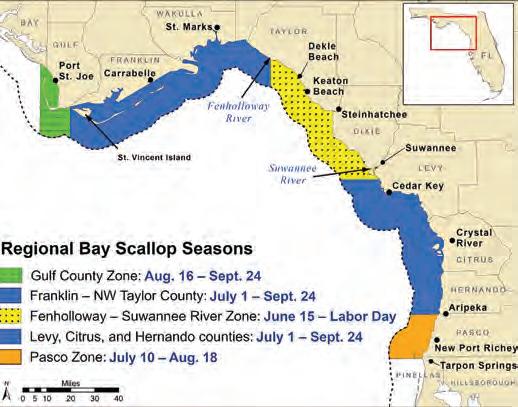
You’d be hard pressed to find better Florida family fun than kicking around in the shallows to pick up scallops. Bay scallop seasons open across most of Florida’s west coast this month, so grab your mask, fins, snorkel and mesh bag, load up the kids and hit the water. Here’s what you need to know to get in on the action.
Daily Bag Limits:
Gulf through NW Taylor County & Levy through Pasco County:
• Per person: 2 gallons of whole bay scallops in shell or 1 pint of meat
• Per vessel: Maximum of 10 gallons of whole bay scallops in shell or 1/2 gallon bay scallop meat (1/2 gallon = 4 pints)
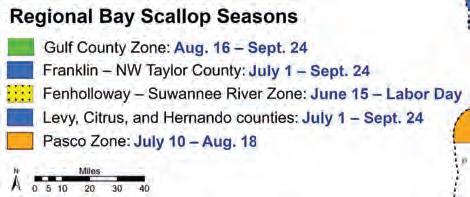
Fenholloway through Suwannee River Zone: June 15-30:
• Per person: 1 gallon whole bay scallops in shell or 1 cup shucked
• Per vessel: 5 gallons whole or 2 pints meat

July 1-Labor Day
• Per person: 2 gallons of whole bay scallops in shell or 1 pint of bay scallop meat
• Per vessel: Maximum of 10 gallons of whole bay scallops in shell, or 1/2 gallon meat
NOTE: Vessel limits do not allow an individual to exceed their personal bag limit.
Minimum Size Limit: None
Legal Gear: Harvest permitted only by hand or by using a landing or dip net
Commercial harvest of Florida bay scallops is prohibited. Recreational harvesters need a Florida saltwater fishing license to harvest bay scallops unless they are: 1) Exempt from needing a license, or; 2) Have a no-cost shoreline fishing license and are wading from shore to collect scallops (i.e. feet do not leave bottom to swim, snorkel, or SCUBA and harvesters do not use a vessel to reach or return from the harvest location). Direct transit of legallyharvested bay scallops is allowed through closed areas.
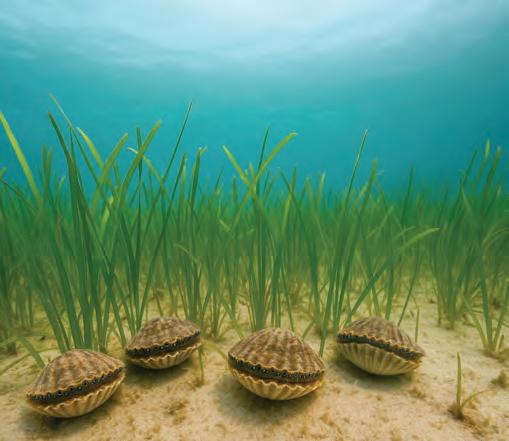
If you’ve never been scalloping before, don’t worry about learning how. Did you have to learn how to Easter egg hunt? Just get your gear on, jump in the water and look down. You’ll see them. Their light-colored shells stick out against the seagrass. Just grab them with your hand—they don’t bite—and put them in your mesh bag. Keep harvesting until your bag is full (usually a couple of fun hours) then when home, open the shell, take out the scallop, prepare and enjoy the fruits of your fun!
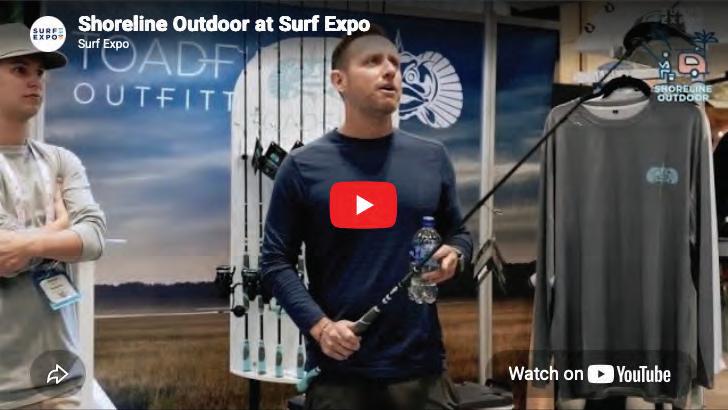
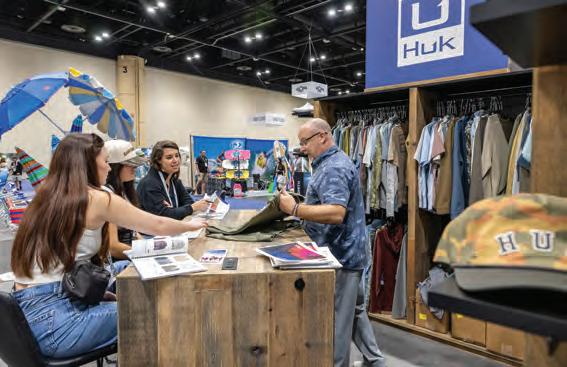

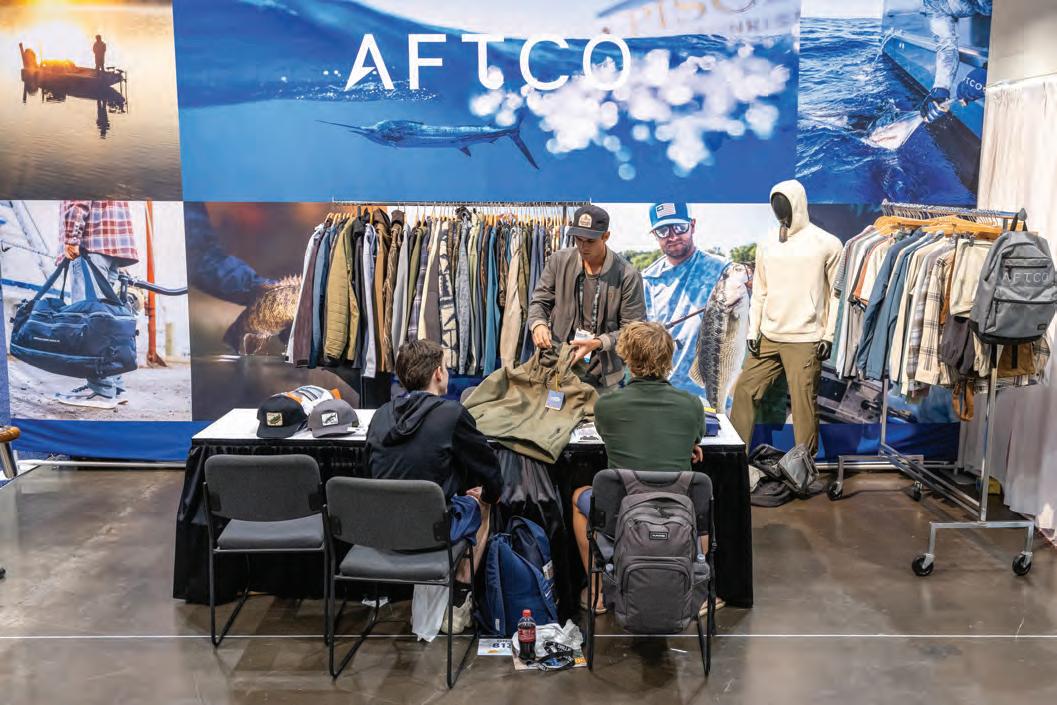
This September, Surf Expo brings the industry back together as the go-to marketplace for coastal, outdoor, and lifestyle retail. Back at the Orange County Convention Center in Orlando from Wednesday through Friday, September 16–18, 2026, the show keeps its 50th anniversary celebration going with three days of product discovery, networking, and real business opportunities. This year, the September show moves to a Wednesday–Friday schedule, giving retailers a more efficient buying experience. With the Labor Day rush behind them, buyers can focus on what matters: discovering new products, meeting brands, and building assortments for the seasons ahead.
The shift smart buyers already understand is that consumers don’t shop by category—they shop by how they live. A fishing trip, a beach day, a weekend camping escape, or everyday coastal living all reflect the same mindset: products need to work together across moments. Surf Expo brings these connected lifestyle categories together in one place, helping you build assortments the way your customers buy.
Thousands of qualified retail buyers from across the U.S. and beyond attend Surf Expo to source new products, connect with established and emerging brands, and gain insight into the trends shaping the next season. From major volume buyers to independent shop owners, this is the marketplace where retailers discover what will drive sales in the months ahead. From Shoreline Outdoor, Surf and Swim to Resort & Souvenir, Coastal Gift & Decor, and Boutique, Surf Expo spans the full spectrum of coastal and lifestyle retail. Instead of fragmented buying, you’ll discover complementary products side by side—making it easier to cross-merchandise, identify assortment gaps, and build more cohesive, profitable offerings.
For Coastal Angler readers, Shoreline Outdoor is where it all comes together. Sitting at the intersection of coastal and outdoor living, this category covers everything your store needs across boating, fishing, paddling, hiking, and camping—products designed to move seamlessly from land to water. The natural overlap with surf, swim, and coastal lifestyle categories creates opportunities to expand your assortment without losing focus on your core angling customers.
If your brand lives in the fishing, boating, outdoor, or coastal lifestyle space, Surf Expo puts you face-to-face with the buyers who matter most. The show floor is intentionally designed to spark partnerships, connecting you with a focused, qualified audience of retailers actively sourcing for the seasons ahead.
This crossover audience is your advantage. Buyers walking the Shoreline Outdoor aisles also stock surf, resort, swim, and gift—meaning retailers discover your products you might never reach through traditional channels. For five decades, Surf Expo has helped brands break into new markets, both domestically and internationally. If you’re ready to grow, this is the marketplace where it happens.
Surf Expo is where the industry builds relationships, does business, and discovers what’s next. For 50 years, it has remained a central hub for coastal, outdoor, and lifestyle retail—evolving alongside the way consumers actually shop.
WEDNESDAY

CAPT. MIKE SMITH
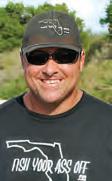
Are you having trouble catching tarpon this summer? It ain’t easy but you can get them to eat your artificial lures if you present them the correct way. Yes, size and profile are important too, but the retrieve is the key to catching more tarpon.
The first thing that you have to master is the tarpon retrieve. Tarpon are a no-frills species of game fish as it relates to your lure presentation. They typically do not like lures with a lot of action. There are days when they will hit anything that you put in front of them, but those days are few and far between.
A great summertime lure for tarpon is a 5.5 inch jerk bait with a nice long twist-lock hook nicely centered so it tracks perfectly straight and doesn’t wobble on the retrieve. Cast it out a few feet in front of a gulping tarpon and reel it slowly back.
Another great lure for this situation is your favorite 3-inch artificial shrimp—as
long as it falls slowly through the water column and stays horizontal as it sinks. Present this lure to gulping tarpon by casting a few feet in front of them and let it fall to the bottom. That’s it. Don’t twitch it or move it at all, just let it fall. If they are hungry, they will eat it as it falls. Natural looking shrimp with gold glitter is a good choice.
This no-action tarpon retrieve idea works for fly fishermen too. Present your purple and black tarpon toads or deceivers in front of the tarpon and work it back as slow and steady as you are able.
One of this captain’s favorite tarpon lures is the D.O.A. shallow running Bait Buster. This lure is a mullet imitation that tracks perfectly straight and has very little tail action. Purple works great in low light scenarios and a more natural look works better when it’s sunny and clear. You know the drill. Just cast it in front of the tarpon and
reel it back slowly without twitching.
When it gets super hot and the tarpon move to deep water, another D.O.A. lure that works great is the 3/8-oz. regular TerrorEyz. You typically won’t see the tarpon but they are probably facing into the current so cast upcurrent and slowly reel back, keeping the lure near the bottom. This is very effective around bridge pilings and deep docks. You will also pick up a lot of really big snook this way too.
Tarpon are about the best inshore game fish that you can catch. They are ranked #2 as the best sport fish on the planet behind the blue marlin. Hopefully this article will help you catch more.
Go get ‘em.
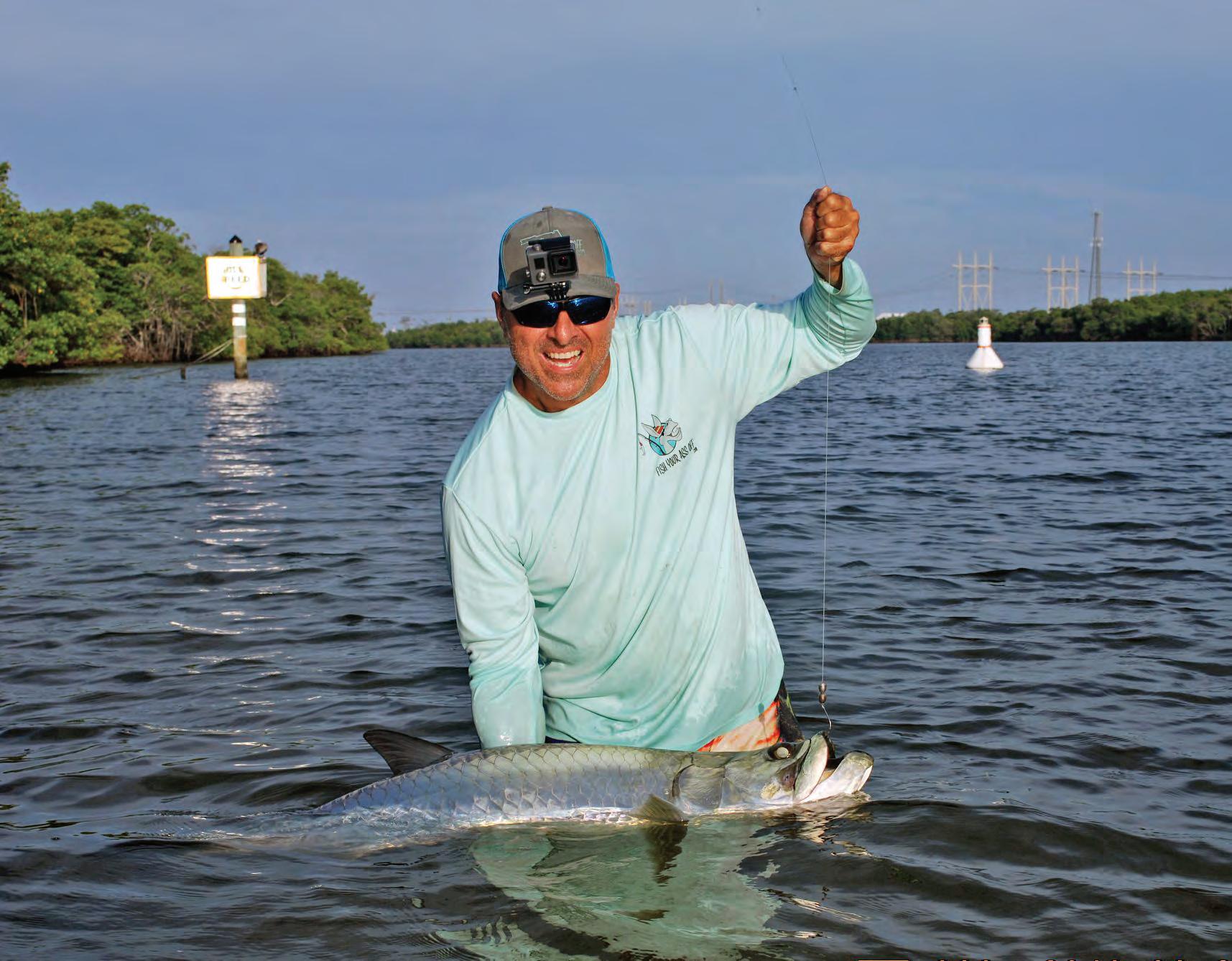

Capt. Mike Smith, owner of Fish Your Ass Off Charters, is an inshore fishing guide who has been fishing the inshore waters, oyster bars and grass flats of Florida for more than 40 years. Reach him at (561) 339-2317, email: contact@ fishyourassoff.com or visit fishyourassoff.com.
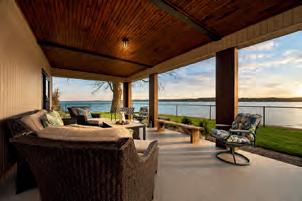
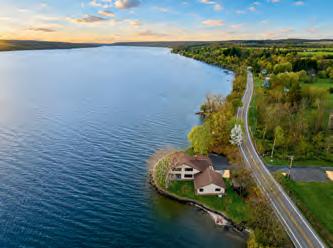
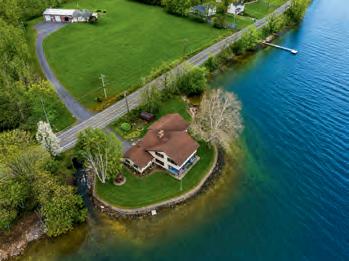

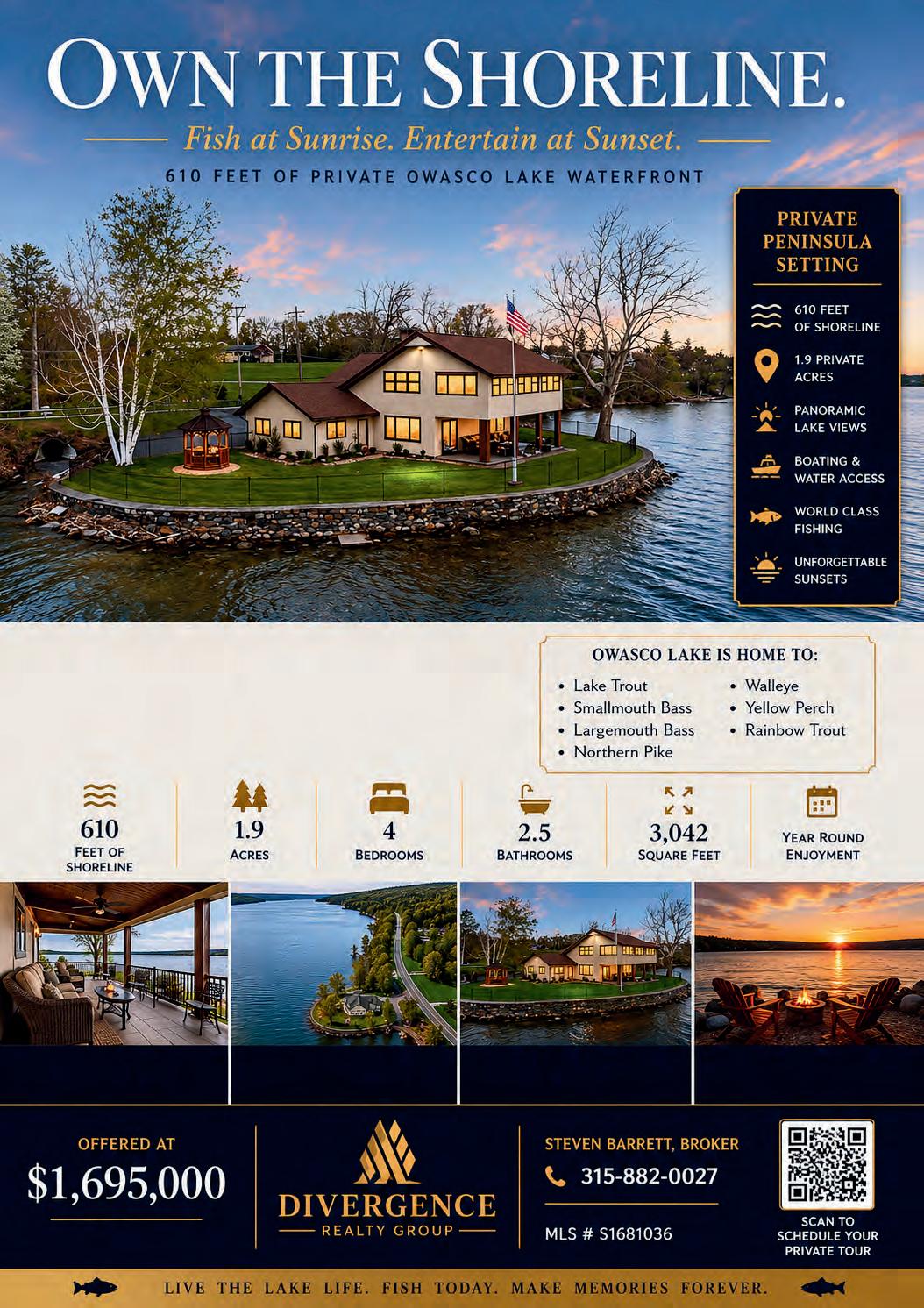
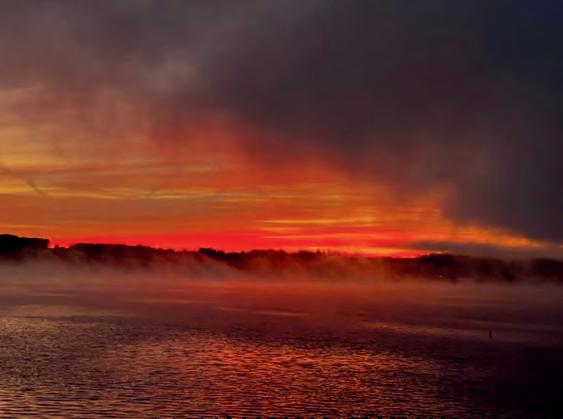


Surrounded by water on multiple sides, this extraordinary Owasco Lake estate offers 610 feet of private shoreline , 1.9 acres, world class fishing, and memorable sunrises and sunsets.
A rare opportunity to own one of the Finger Lakes' most distinctive waterfront properties.
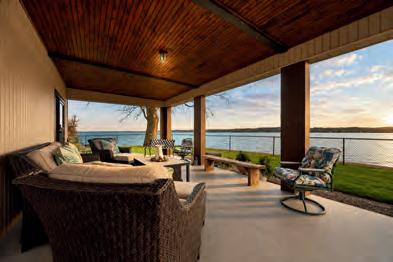
RELAX. UNWIND
Enjoy the view.
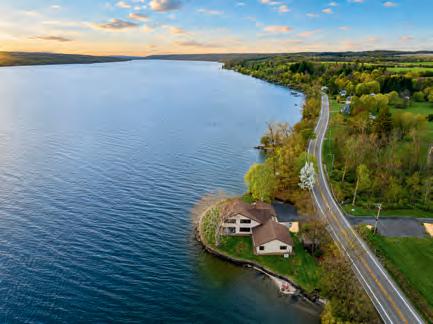
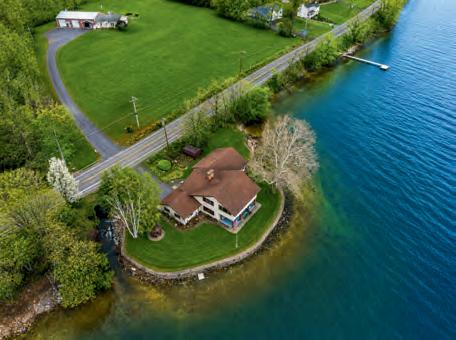
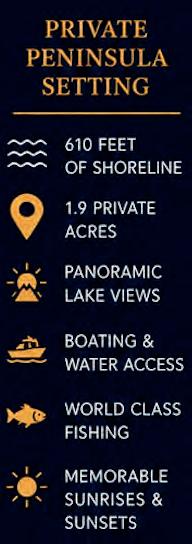
PRIVATE PENINSULA SETTING
Rare. Exclusive. All yours.
WATER ON MULTIPLE SIDES 610 FEET OF SHORELINE
By
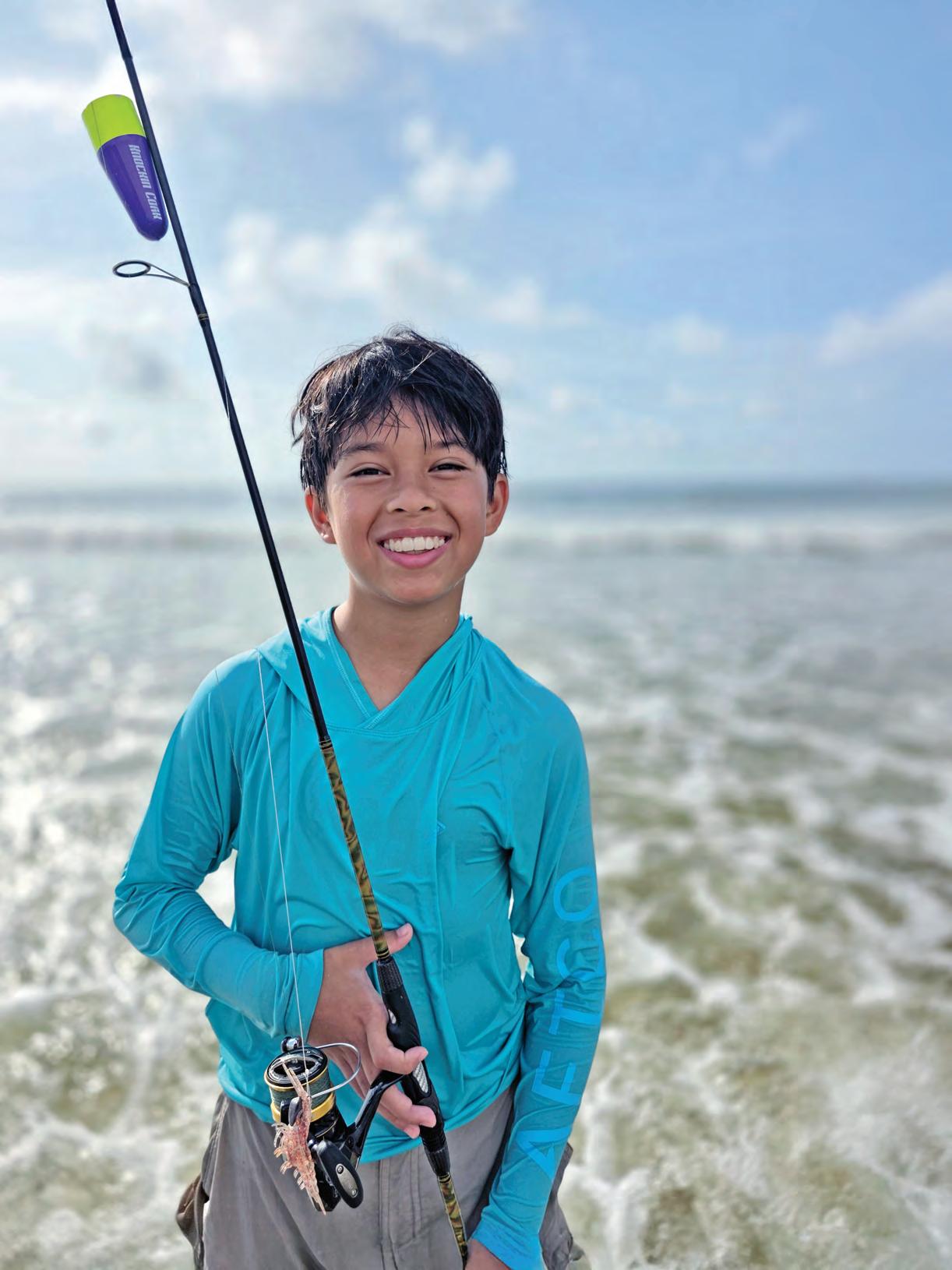
One of my favorite things about fishing isn’t catching fish myself—it’s watching a kid catch one. There’s something special about seeing a young angler’s face light up when a cork disappears, and a speckled trout starts pulling back. Over the years, I’ve introduced a lot of kids to fishing, including my own boys, and one of the easiest ways I’ve found to help them succeed is with a popping cork.
Kids don’t always have the patience to wait on a fish to bite. They want to cast, reel, and stay involved. A popping cork gives them something to do while keeping a bait or lure in the strike zone. Every pop creates noise and commotion that imitates feeding fish, helping trout locate the bait. More importantly, it keeps kids engaged and focused.
When fishing live bait, it’s hard to beat a lively shrimp under a popping cork. Whether you’re fishing shorelines, reefs, or grass beds, the cork attracts trout while keeping the bait at the proper depth. The sound gets their attention, and the shrimp does the rest. It’s a simple setup that consistently catches fish and builds confidence in young anglers.
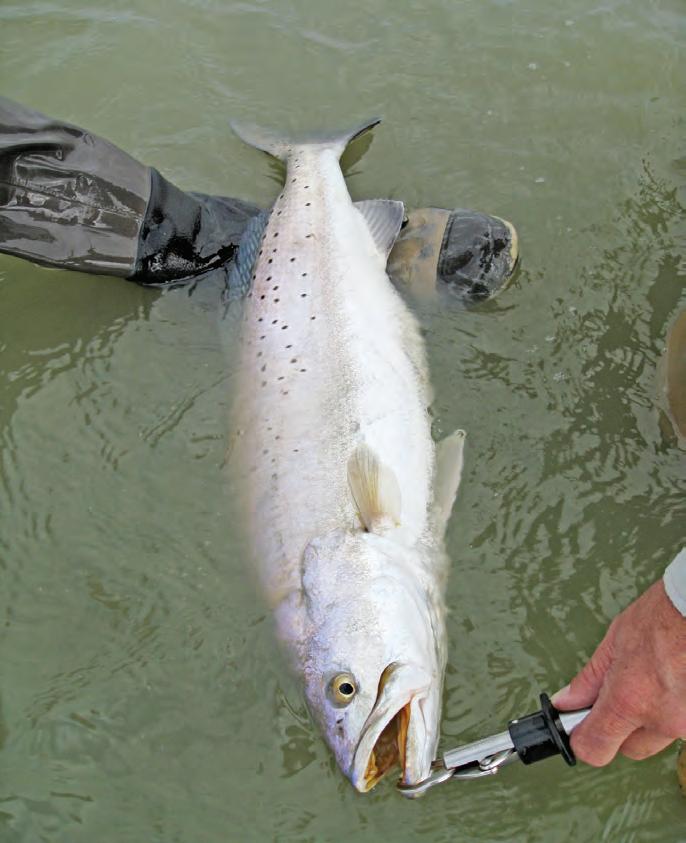
Artificial lures work just as well. I often prefer them when fishing with kids because I spend less time rebaiting hooks and more time helping them catch fish. A soft plastic under a popping cork allows kids to cast, pop, and retrieve while covering water efficiently. It also
to work a lure without making things overly complicated.
One thing I’ve learned is that tackle designed for adults doesn’t always hold up when kids are involved. Rods get dropped, tackle gets stepped on, and gear gets bounced
around the boat. That’s one reason I’ve moved away from many traditional wire-style corks.
Most anglers have opened a tackle box and found a wire cork bent after a day on the water. Once the wire is bent, the cork rarely casts the same. Many wire designs also have several moving parts that can tangle during a cast, especially in the hands of a young angler. Over time, the wire can even nick fishing line, creating weak spots that often show up when a good trout is hooked. Durability is another advantage of hard-plastic corks. Unlike foam designs that can crack, chip, loose its color, hardplastic corks can handle years of abuse in a boat and continue performing like new. At the end of the day, taking kids fishing should be fun. A durable popping cork paired with live bait or a soft plastic lure keeps things simple, productive, and exciting. The more bites kids get, the more they stay interested, and that’s how future anglers are made.
Take a kid fishing, I will!
Capt. Michael Okruhlik is the inventor and owner of Knockin Tail Lures® — knockintaillures.com. knockintaillures.com

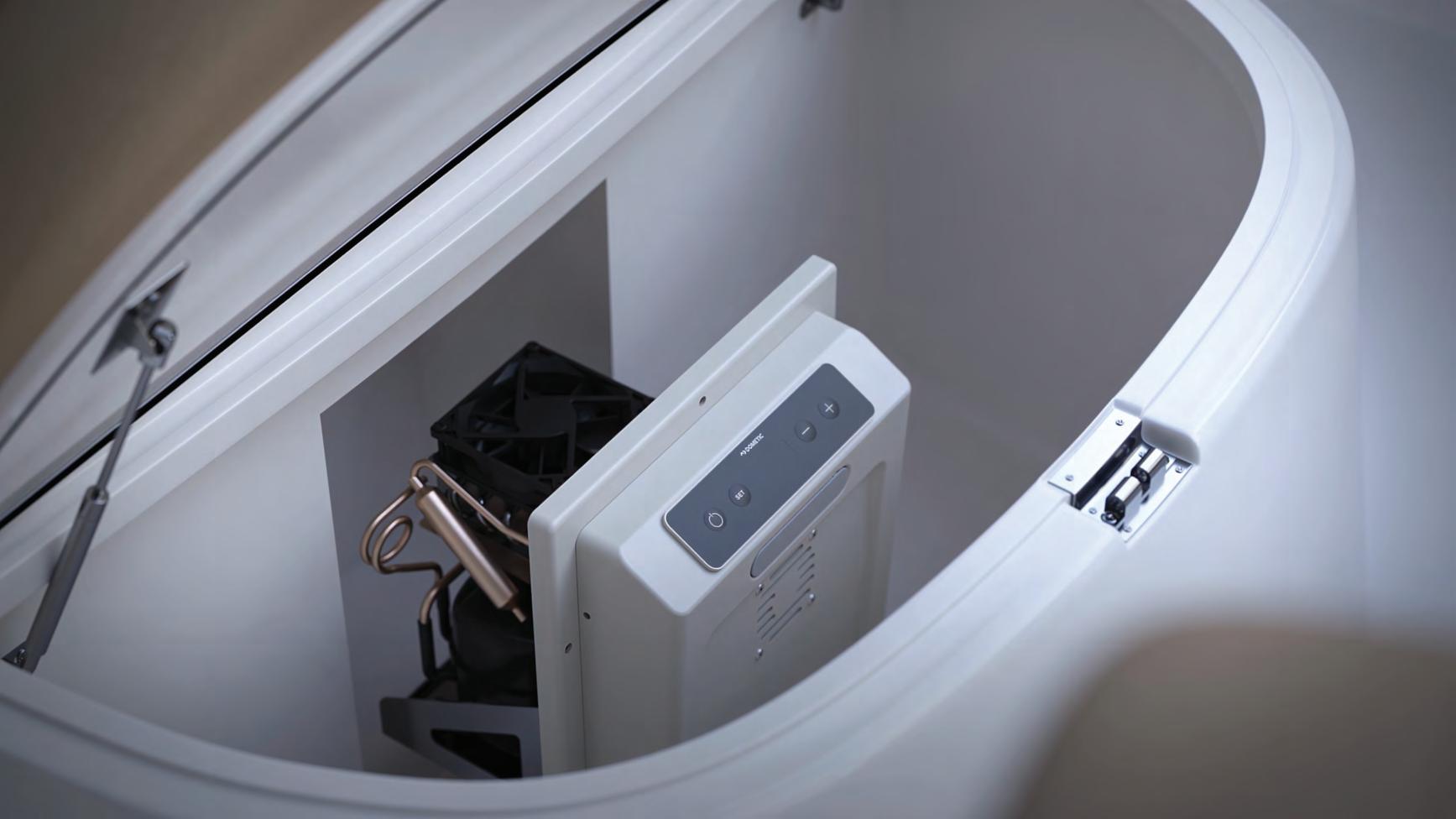

The Dometic CSX is a self-contained cooling system engineered for effortless installation and reliable performance. Ideal for volumes between 50 and 400 L, it combines a high-efficiency compressor, fan-cooled evaporator and digital temperature control in one space-saving unit. Simply drop it in, connect power, and enjoy consistent cooling without the complexity of remote couplings.




Florida anglers are always looking for ways to keep their food, drinks, and day’s catch cold and fresh during long, hot days on the water. That usually means stopping on the way out of the marina for many pounds of block or cubed ice, then moving food and drinks around throughout the day to keep them cold and prevent them from getting soaked or waterlogged.
Fortunately for Florida’s coastal and offshore anglers, leading outdoor brand Dometic recently launched an ingenious solution — the CSX Series “Coldmachine” self-contained refrigeration system. How ingenious? Over the past few months, Dometic’s CSX Series was honored with a 2025 NMMA Innovation Award at IBEX and a 2025 DAME Design Award at METS Trade in Amsterdam. Engineered to accommodate storage volumes from 60L up to 400L, the CSX Series combines a high-efficiency compressor, fan-cooled evaporator, and digital temperature control in one space-saving unit.
refrigerator or freezer without the complexity of remote couplings. Utilizing Dometic’s refrigeration technology proven in the RV and marine markets, the CSX Series features fanassisted airflow to accelerate cool-down times and maintain consistent temperatures — even as ambient conditions fluctuate over the course of the day. Built-in LED compartment lighting helps boaters see and access items easily, even when installed in a boat’s interior spaces.
This system’s compact footprint makes it ideal for use in a variety of spaces found on today’s boats. With an easy-to-install design, anglers just need to mount it in place, connect 12/24VDC power and enjoy a space-saving
Dometic’s integrated digital temperature control and precise thermally sensitive sensor delivers optimal cooling performance and energy efficiency. An automatic defrost logic embedded in the system’s electronics helps prevent ice buildup on the evaporator.
The CSX Series “Coldmachine” comes
in two refrigerator versions and one deep-freezer version. The CSX200 refrigerates up to 200L, the CSZX400 refrigerates up to 400L, and the CSX150FZ provides up to 150L freezing capacity.
Its compact footprint makes in an ideal addition to the builtin cooler/seating area forward of the console on many popular offshore center console and larger bay boats. With a CSX Coldmachine unit installed, anglers can do away with buying bags and bags of ice while enjoying better allday-long cooling performance. They can also focus on catching fish and enjoying time on the water, rather than dealing with meltwater or soggy sandwiches. In addition, the deepfreeze version is ideal for keeping rigged or whole baits and boxes of chum frozen solid until they’re needed, saving money and wasted bait.
This performance and convenience upgrade makes the Dometic CSX “Coldmachine” a great boat improvement project before the summer fishing season arrives.
To learn more, visit your nearest Dometic Marine retailer or visit


Iam excited to share my first trip to Costa Rica with you, but there are so many reasons to visit Costa Rica, it’s hard to know where to begin. Let’s start with getting to know a bit about this beautiful South American country. We have all heard of it, maybe visited, but how much do we really know?
Costa Rica is the most biodiverse country in the world, with a whopping 500,000 species of wildlife, many of them classified as rare or endangered. Costa Rican culture embraces the environment and has saved 25% of its land and designated it as conservation land. Costa Rica
has 12 ecological zones and over 100 national parks, reserves and refuges of protected lands.
Costa Rica is also part of the Pacific Ring Fire Circle and has over 200 volcanic formations traced back over 65 million years. Of these formations, there are around 100 of them that actually show any signs of activity, and only five are classified as active.
Costa Rica has been named one of the top “Happiest Places to Live” and boasts an average life expectancy of over 80 years. I do think the laid-back and relaxing lifestyle that Costa Rica has is a great recipe for a long, happy life.
As far as weather goes, there is no real bad time to visit Costa Rica; the most popular times are December through April as tourists are ready to escape the cold winters. I went to Costa Rica in August and during that time of year you get the afternoon rains, and everything is in full bloom and lush.
For my first journey to Costa Rica it was decided to visit the southern portion of the region and I set my sights on the coastal town of Puerto Jimenez. Puerto Jimenez is a small town of about 3,200 residents and it is located on the eastern side of the Osa Peninsula. Puerto Jimenez is bordered
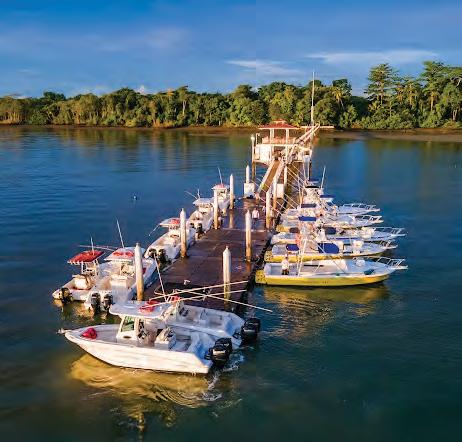
on one side by the world-famous Corcovade National Park and the other side by the Golfo Dulce (Sweet Gulf). The Golfo Dulce is a very unique place and during certain times of the year it is home to humpback whales that come to breed, give birth and nurse their young. The Osa Peninsula is teaming with all types of wildlife— from tropical birds, sloths and monkeys to jaguars and crocodiles, just to name a few. Keeping in step
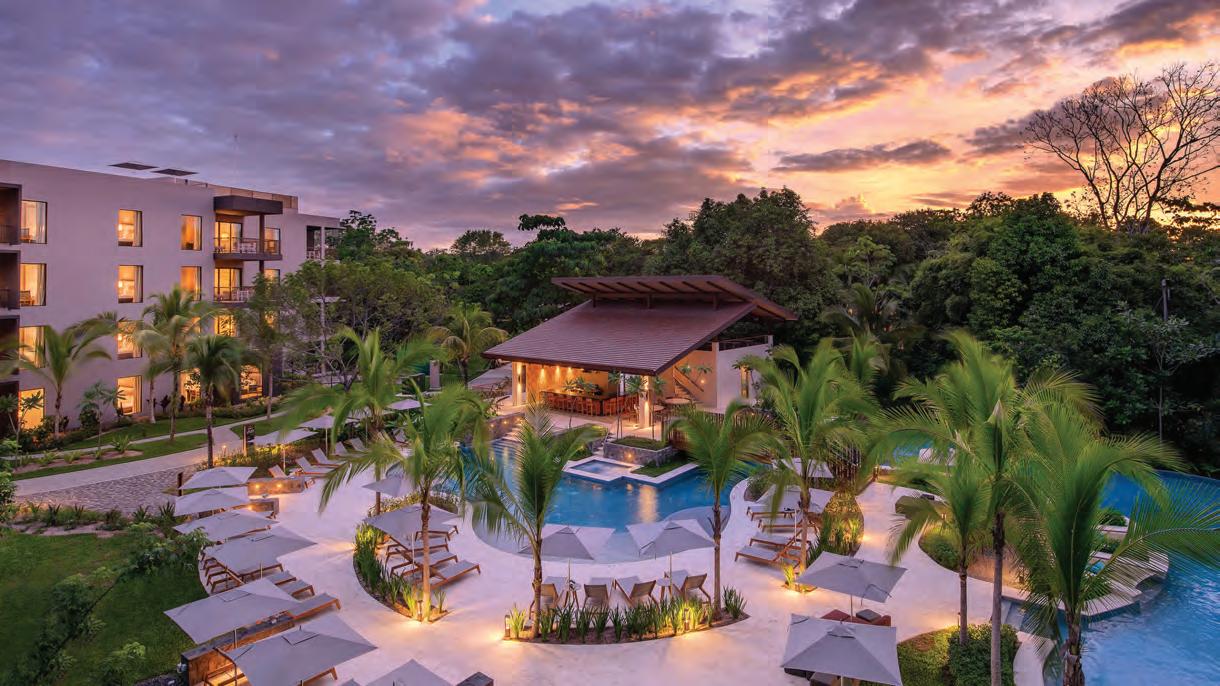
with the local wildlife, I decided to stay at the famous Crocodile Bay Resort which I believe is the oldest resort in the area; they broke ground in June of 1999. Back in the day, this was “the place to stay and fish,” and that reputation still holds true. It’s heaven on earth. Recently, they have undergone a major upgrade, and built Botanika Osa Peninsula by Hilton—a tranquil, upscale retreat in the middle of the coastal rainforest. Over the years

Crocodile Bay has entertained Oscar-winning actors, rock and roll stars, country singers, World Series and Superbowl winners and now me...Misty Wells.
We arrived in a small commuter plane from San José, landing just two minutes from the resort and was greeted by a large Crocodile Bay welcome committee. I was blown away by the resort; I could not believe that this styled masterpiece was in the middle of the rainforest. I am no stranger to roughing it. Filming the Python hunt in Season 1 of my TV show, Let’s Take It Outside, I had to sleep in my truck in the Everglades.But I have to be honest. I could get used to this place. The resort
was just jaw-dropping; the lagoon-style swimming pool area, the exterior lounge areas throughout the resort, and the 5-star accommodations were a far cry from “the old days.”
Now, of course, another reason people travel from all over the world to Crocodile Bay is the world-class fishing, and I was no exception. I was there to catch my first roosterfish. The rest of my crew flew in a bit later in day and I told them to rest up as we were heading out early for some inshore fishing and filming the next morning.
Fishing Day 1: We met down at the dock at 7 a.m., boarded the vessel Crocodile Rock and headed out. We were all excited as we headed out
the Peninsula, the captain told us there had been humpback whale sightings the day before and I was hoping we would see them as well. Of course, off to the right as we headed out, we spotted three huge humpback whales all hanging out together and communicating with fin slaps on the water. Michael, one of my crew, launched the drone and was able to get what I call “NatGeo footage.” It is just epic. I can’t wait for you to see it in the episodes.
It was time to get fishing, so we headed up the coast for about 25 minutes when the captain said it was time to wet a line. Our fishing crew was made up of myself, my good friend Stephen,
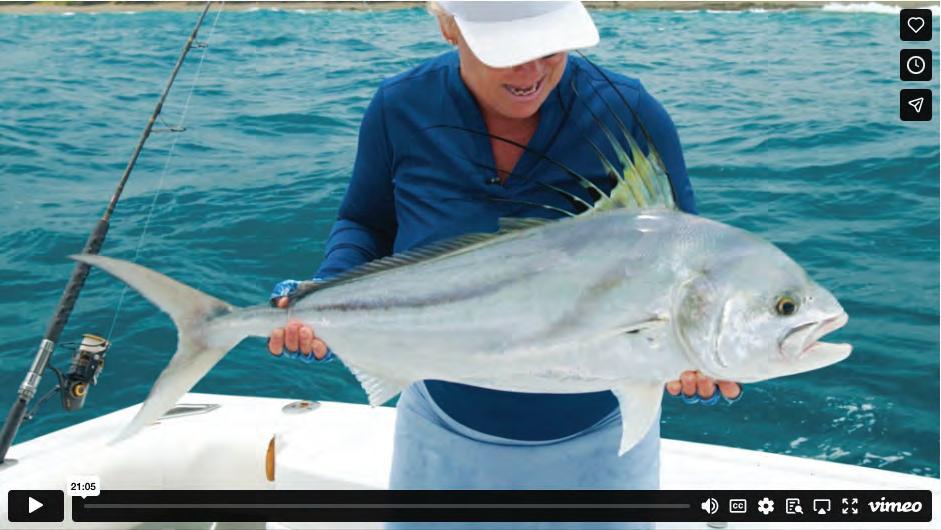
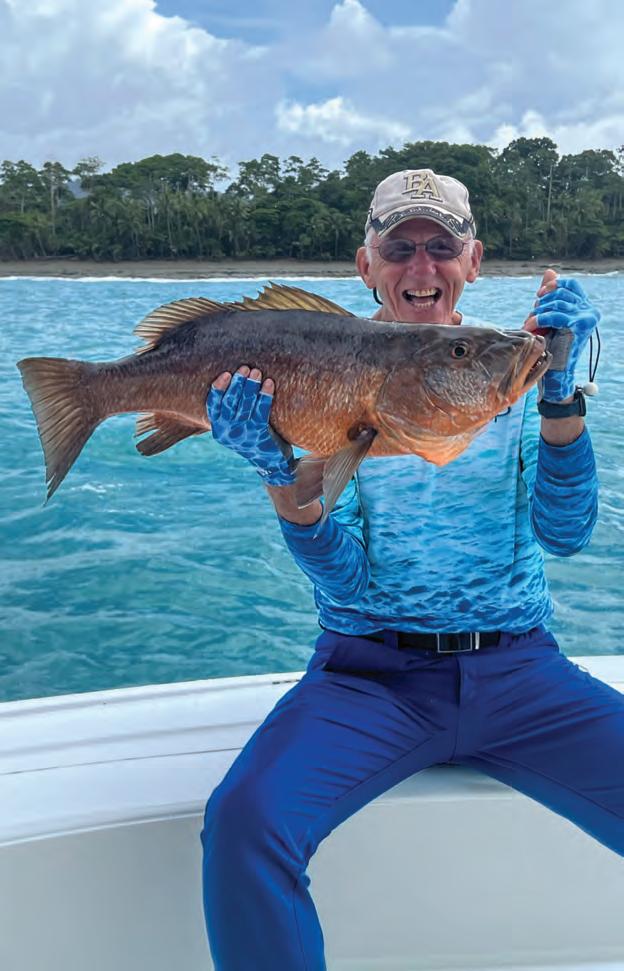
Stephen’s dad John (Pappy), and Robert. First on the rod was Pappy. He came out of the gate swinging, landing a huge cubera snapper. Pappy was so happy as he had never caught a snapper that big. It brought tears to his eyes. That snapper was a great start to such a perfect fishing day. I caught my first roosterfish— and it was the biggest one of the day! Stephen and Robert both caught nice-sized roosterfish, and we all caught various jacks and landed a huge red snapper. The action was nonstop on that inshore trip, We could have filled two fish boxes, and we did take that nice red snapper back for a hookn-cook.
Fishing Day 2: On our second day, we were changing up the game and going offshore fishing looking to target sailfish, marlin and yellowfin tuna. We headed down to the dock, a little sore from the day before but really excited. Pappy and Stephen had never landed a sailfish, so we all decided that if we got hooked up, they were first on the rods. As luck would have it, the first rod went off about 30 minutes into trolling. It was a nice-sized sailfish. Pappy jumped into action and got to work on that fish; she really put on
north looking for the school of dolphin. We didn’t have to look too hard. The captain pulled up right next to the pod and kept pace as we started casting into the huge school of dolphin and yellowfin tuna. It was a sight to see, dolphins and tuna jumping out of the water, working together to school up their catch. (You have to think about it for a moment...mammals and
Costa Rica and its people is that they are huge conservationists. With two tunas in the box, they suggested we release the rest. “How much can four people eat?” We could have caught tuna for days, but if you have ever fished them you know how hard they fight, and we were ready to head back to rest and have some cold drinks at the pool.
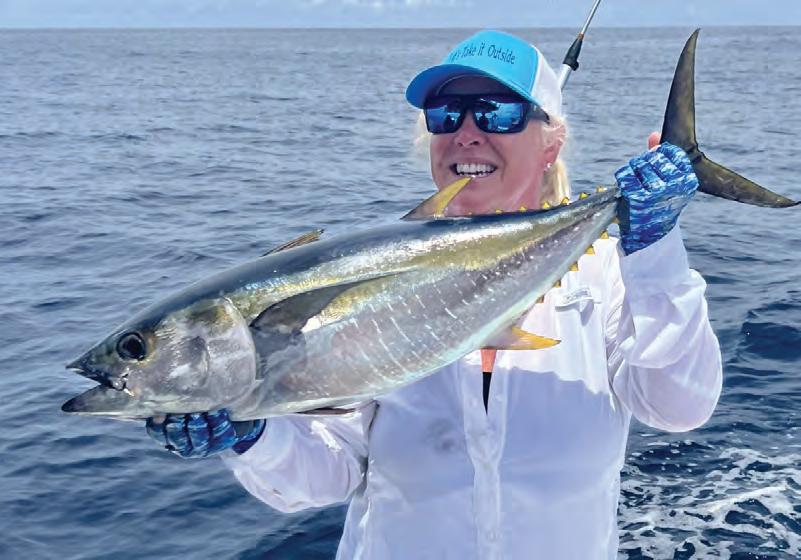
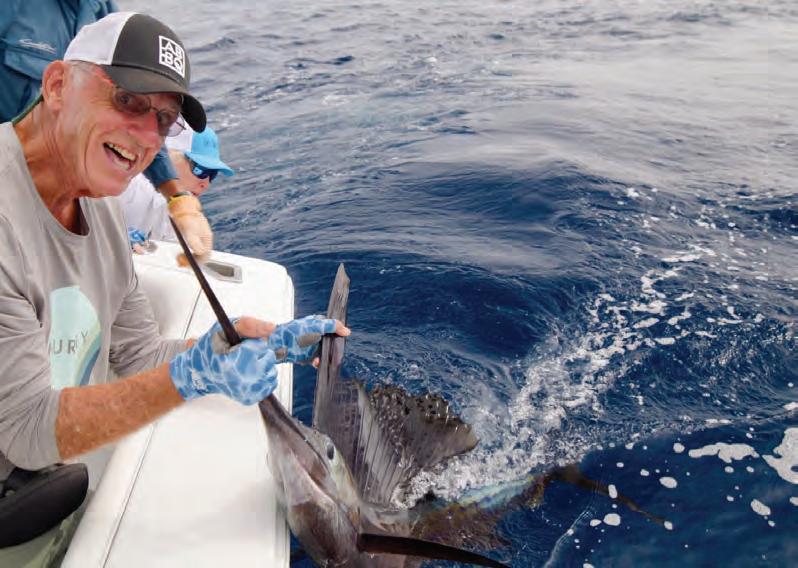
a nice show and made quite a few jumps. Pappy was able to get her to the boat, we got the leadertouch and released the fish. Almost right away Stephen’s rod went off and he started working on sailfish #2! The captain and mate did an excellent job of coaching him through the process, and here comes another leader-touch and release. We got rigged back up and started to troll again when a call came over the radio: a pod of dolphins was spotted about a 1/2 mile away from where we were trolling. Fishing in Costa Rica dolphins are good news. The captain told us the yellowfin tuna travel with dolphins to school up bait fish and we needed to head over there right away. We reeled everything in quick and headed
fish working together in nature to accomplish a common goal.) Almost immediately two rods went off and Robert and I got to work trying to land these big tuna. These tuna we had hooked were about 40 to 50 lbs. each and, if you’ve never hooked a tuna, they know how to fight. Both tuna were nice sized, so we decided those looked like dinner to us and threw them in the box.
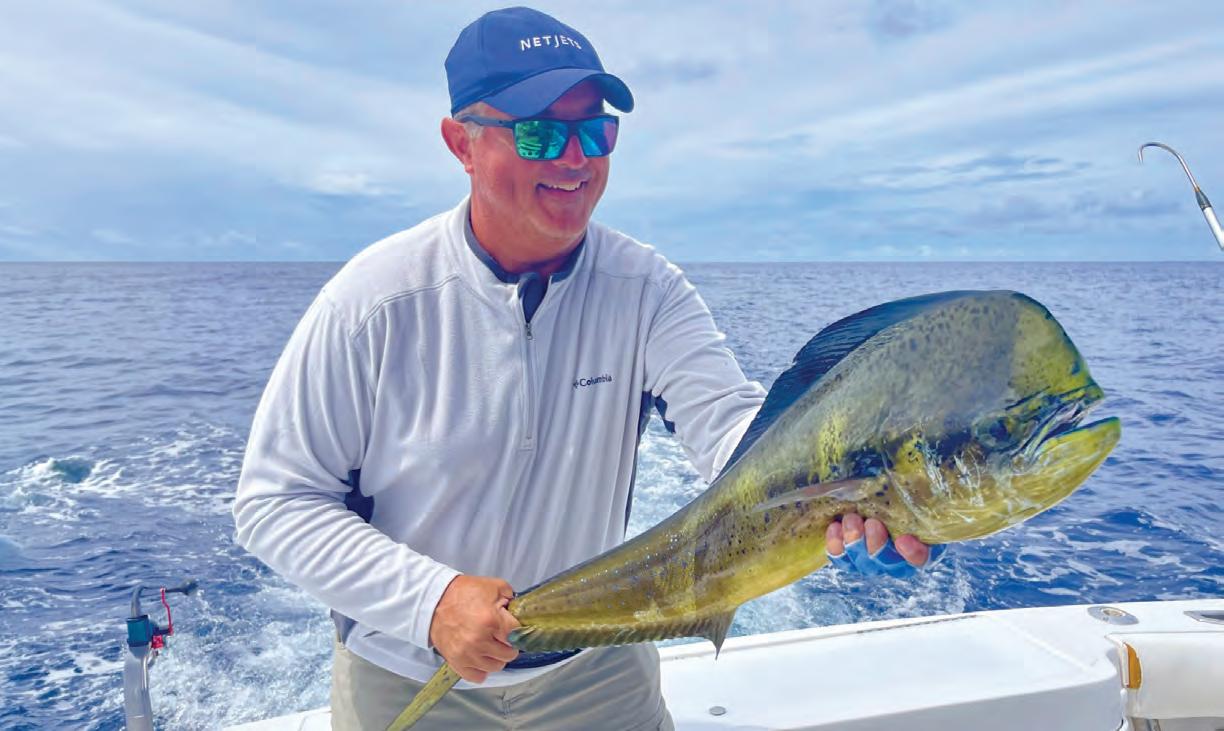
Next up was Pappy. True to form he landed a nice yellowfin weighing about 45 lbs.. Since we already had two in the box, we decided to release that “big boy.” Stephen was the last up on the rod and, as it turned out, he landed the biggest tuna of the day; I would say about 75 lbs.—a beast.
One of the many things I love about
I can honestly say the two days of fishing in Costa Rica was some of the best fishing I have ever done. I love that you have a choice of inshore or offshore daily, and you can be in fishing position within a half an hour. The boats that Crocodile Bay has are pristine, new tackle and the crew is some of the best in the world. They made sure our trip was perfect. I know it does not always work like this, but if I could have scripted how I wanted the episodes we were filming to go, it would have been just like it happened.
Tune into my tv series— Let’s Take it Outside —on Discovery Channel, Discovery GO & Plus, Wild TV, Waypoint TV, Carbon TV and more, so you can see firsthand how beautiful Crocodile Bay Resort is and how epic the fishing is in Costa Rica. And when you’re ready to stay, play and fish at Crocodile Bay, tell them Misty sent you.
Tight Lines!
Misty Wells is an award-winning Florida-based outdoor personality, producer, and host of the fishing and adventure TV show “Let’s Take it Outside,” which airs on the Discovery Channel and other networks. As a prominent outdoor writer and conservationist, she is known as the first female host of an outdoor show on Fox Sports and for founding “A Reel Future,” her non-profit devoted to teaching the passion of fishing and conservation to foster children— 4,000 children and counting.
Visit www.MistyWells.com as well as AReelFuture.com to learn more.

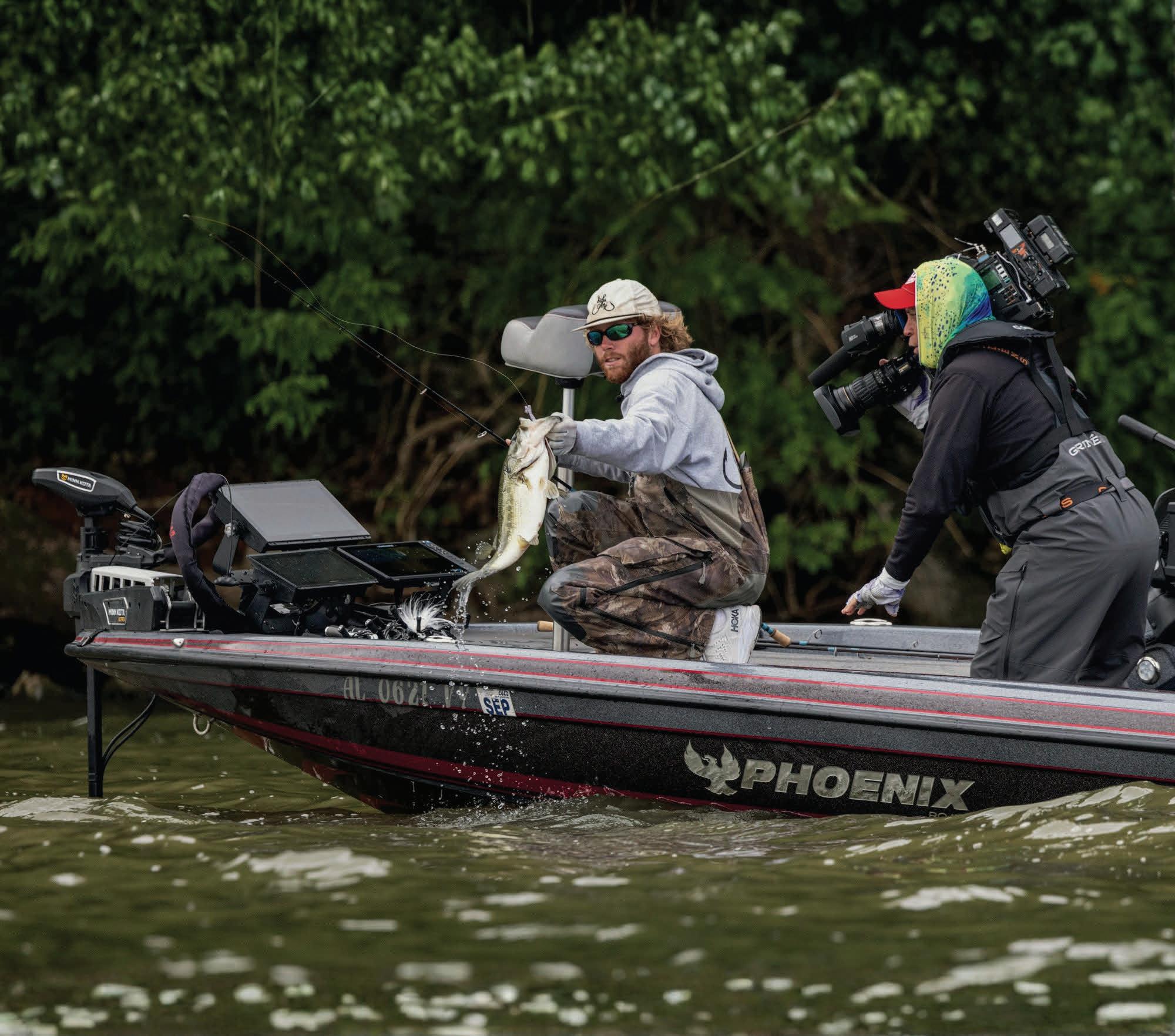
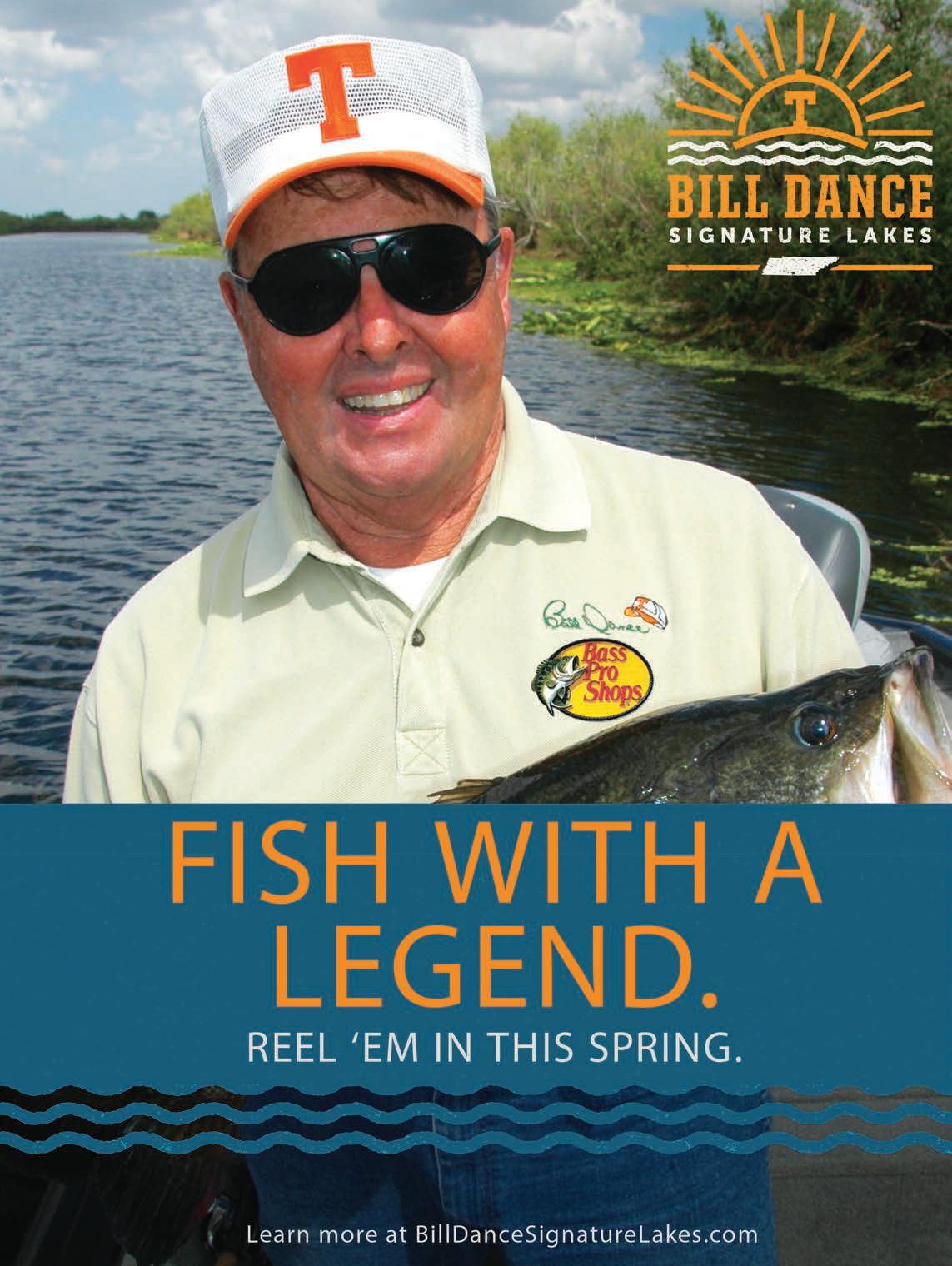
43,000 acres of legendary fishing from trophy bass, to world class sauger. A true Bill Dance Signature Lake.

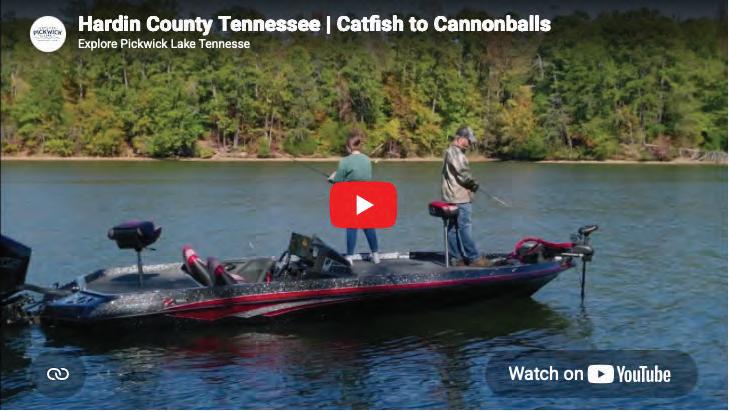
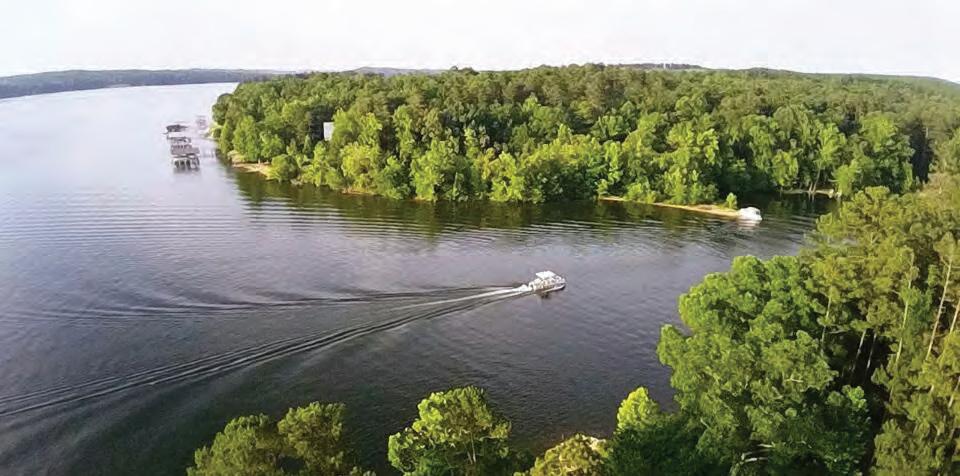
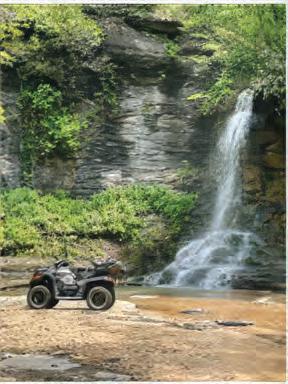
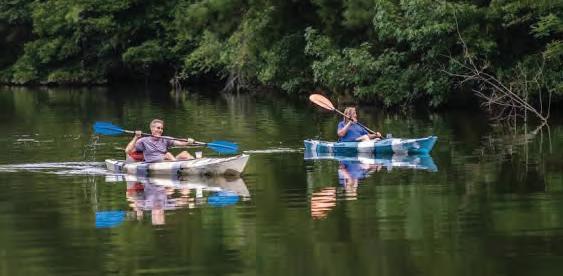
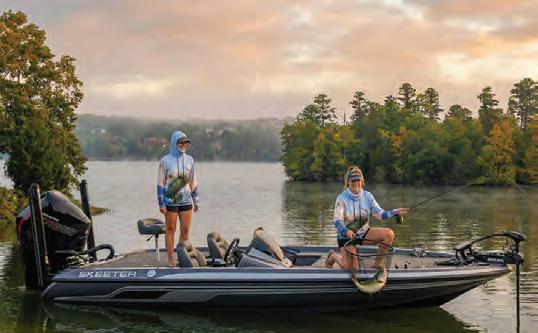
Located on the Tennessee River where Tennessee, Alabama, and Mississippi meet, Hardin County is a premier southern destination built for anglers. While the area offers endless outdoor adventure, the true heartbeat of Hardin County lies in its world class waters, rich history, and deepfried southern traditions.
Sitting idyllically on the banks of the river is Savannah, the county seat and the proud “Catfish Capital of the World.” This historic town is home to friendly family parks, historic homes, and the roots of authentic southern comfort food. For the ultimate post fishing feast, head to nearby Hagy’s Catfish Hotel Restaurant. Perched right on the riverfront, this legendary hot spot has been serving up baskets of golden hushpuppies and pristine fried catfish to locals and traveling anglers for over 80 years.
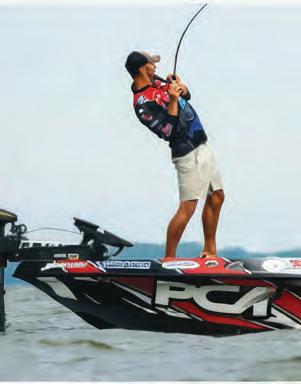
For those visiting to bend a rod, the opportunities are endless. Whether you prefer targeting catch on the main lake, working the current below the dam, slipping into a secluded cove, or casting from the bank, fishing is big business in the area. Explore Pickwick TN has rolled out the red carpet for the sport, consistently recruiting major tournament circuits like BASSMASTERS and Major League Fishing to these fertile waters.
On the shore of Pickwick Lake sits Pickwick Landing State Park. Featuring a recently renovated lodge, full-service marina, championship golf course, and convenient boat rentals, it serves as the ultimate launchpad for a weekend on the water. Boaters coming off the lake can grab a bite at the restaurant located within the Lodge or tie up to enjoy great local pizza, burgers, or flavorful BBQ around Pickwick. The Pickwick area is so deeply tied to the water that it has become an ideal retirement destination for anglers looking for pristine lakefront properties or quiet acreage with rambling creeks.
By TAM Staff
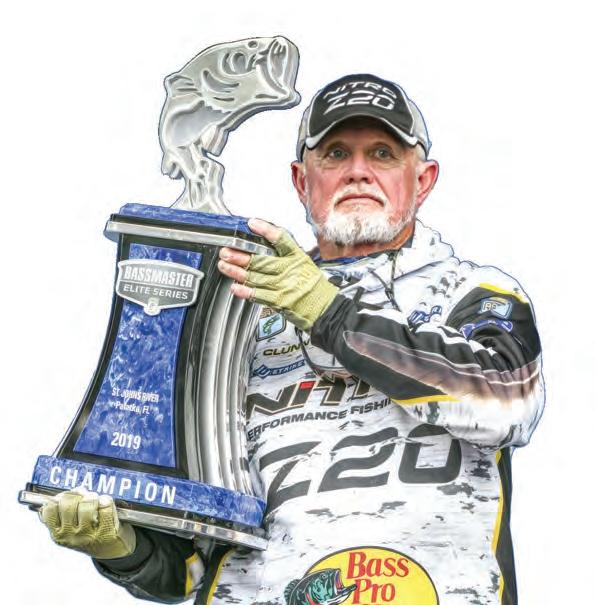
Few names in professional bass fishing command the respect and admiration of Rick Clunn. Over a career spanning more than five decades, Clunn has become one of the most influential anglers in the history of the sport, setting records, winning championships, and inspiring generations of tournament fishermen.
Born in Missouri in 1946, Clunn developed a passion for fishing at an early age. What began as a love for the outdoors eventually evolved
into one of the most remarkable careers in professional angling. Throughout his journey, Clunn became known not only for his tournament success but also for his unique philosophy of fishing, emphasizing intuition, observation, and a deep connection with nature.
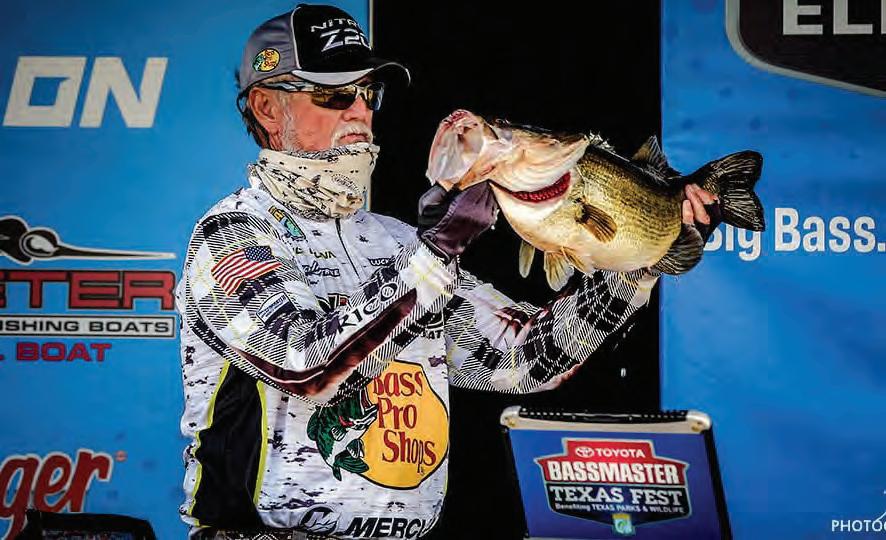
Clunn burst onto the national stage when he won his first Bassmaster Classic in 1976 on Alabama’s Lake Guntersville. He followed that victory with another Classic title in 1977, becoming the first angler to win backto-back Bassmaster Classics. Those victories established him as one of the sport’s rising stars and marked the beginning of a legendary run. His dominance continued throughout the 1980s. In 1984, Clunn delivered one of
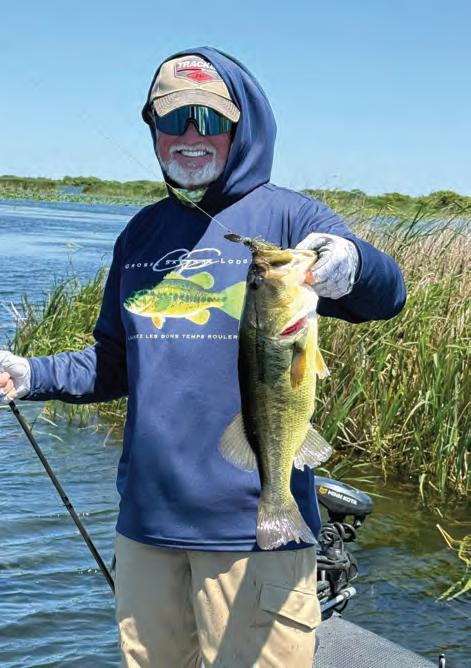
the Year title in 1988 and claimed numerous tournament victories across both B.A.S.S. and FLW competition. Throughout his career, he qualified for 32 Bassmaster Classics and set a record by qualifying for 28 consecutive championships, a testament to his consistency and longevity.
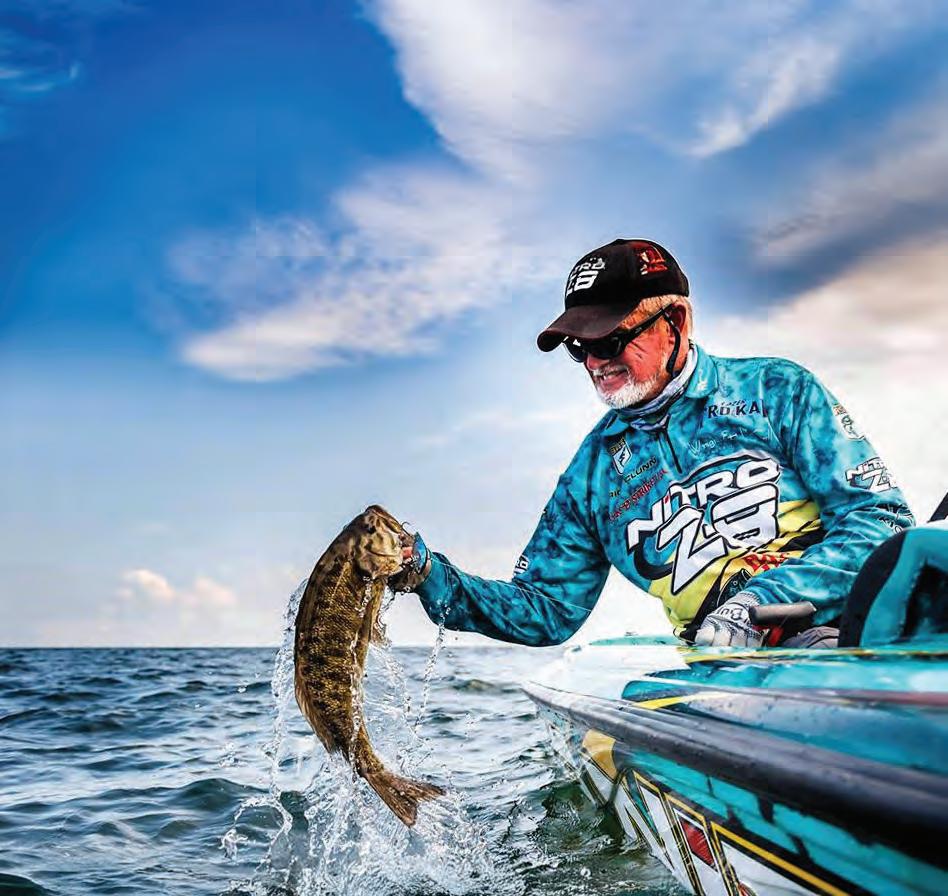
What separates Clunn from many other tournament anglers is his approach to fishing. While many competitors rely heavily on technology and data, Clunn has long advocated trusting instinct and understanding fish behavior. His philosophy has influenced countless professional anglers and helped shape modern tournament strategy. Many Elite Series competitors have cited Clunn as the angler they admire most.
Even as he entered his seventies, Clunn continued to make history. In 2016, he became the oldest angler ever to win a Bassmaster Elite Series event. He broke his own record in 2019 at age 72, proving
that experience, patience, and knowledge can still triumph at the highest levels of competition.
Clunn’s impact extends far beyond tournament results. He was inducted into the Bass Fishing Hall of Fame in 2001 and has received numerous honors recognizing his contributions to the sport. In 2024, he was awarded the Ray Murski Lifetime Achievement Award for his extraordinary influence on professional fishing and a career that has spanned six decades.
Today, Rick Clunn is widely regarded as one of the greatest bass anglers of all time. His achievements on the water are legendary, but his lasting legacy may be the wisdom and inspiration he has shared with anglers around the world. Through
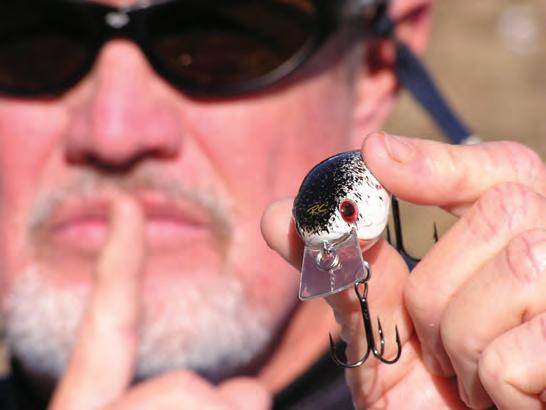
Never accept that ALL of your BEST moments are in your past.”
- Rick Clumm
innovation, perseverance, and an unwavering passion for fishing, Clunn has helped define what it means to be a professional bass fisherman.
For many in the fishing community, Rick Clunn is more than a champion—he is the standard by which greatness is measured.
ATYLER WOOLCOTT
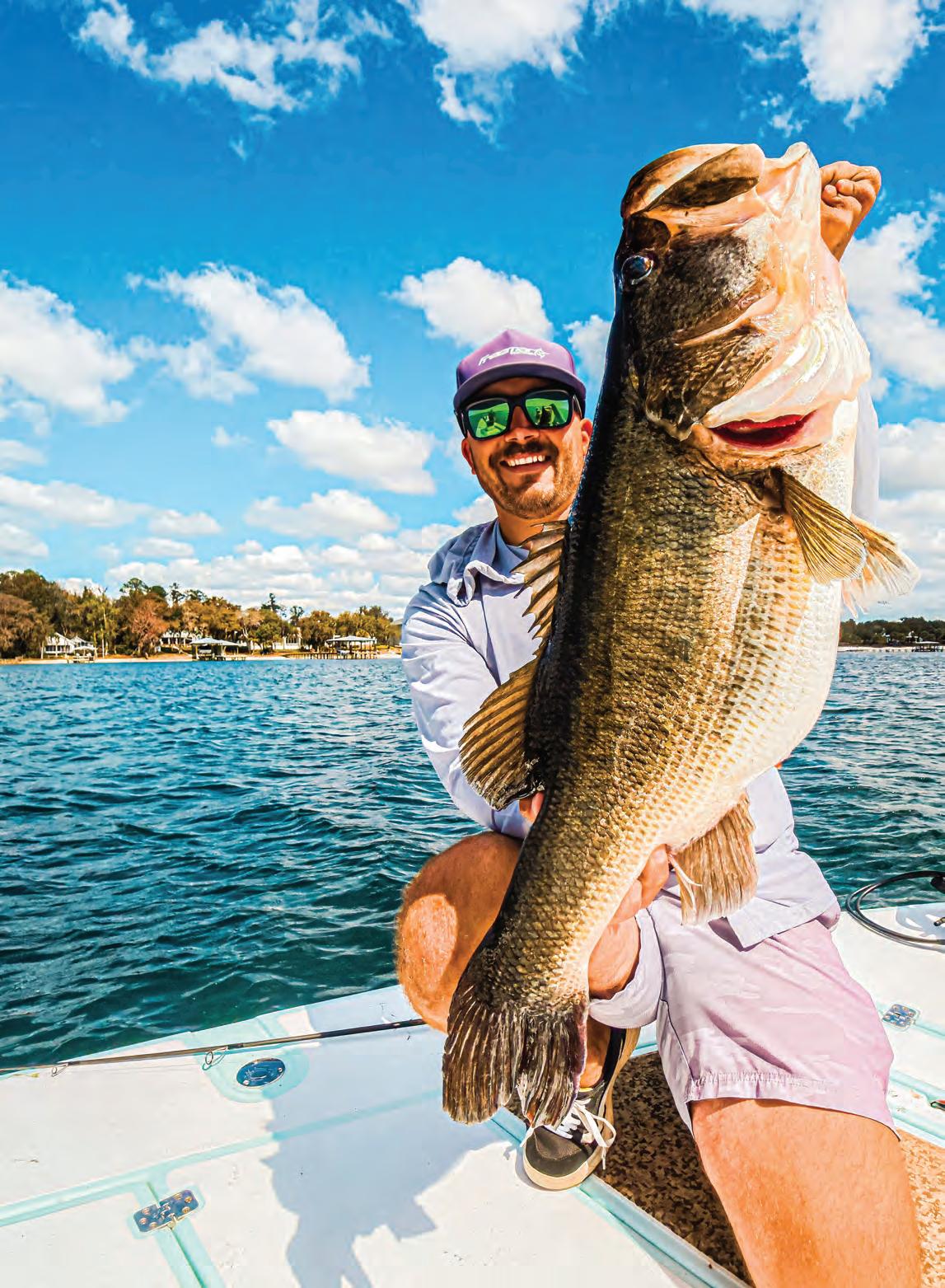
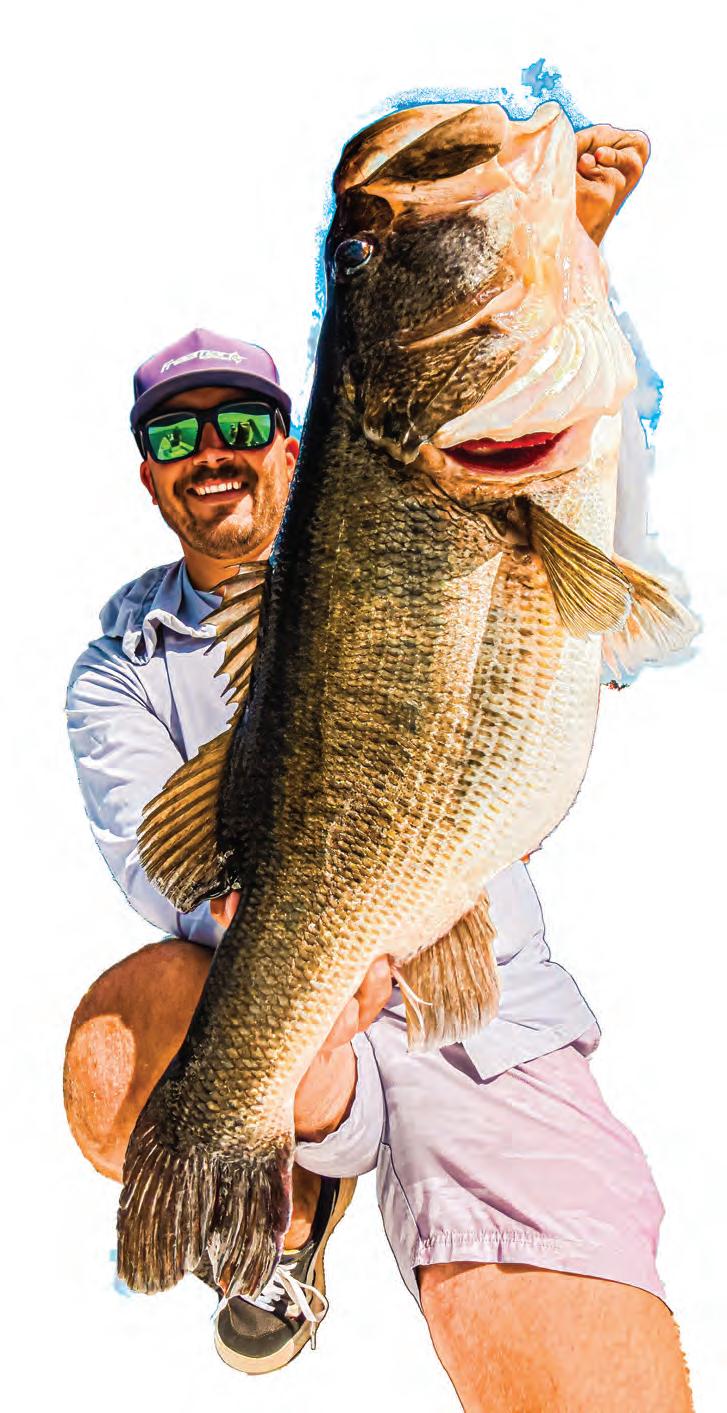
s the summer season settles in and water temperatures rise, many anglers automatically downsize their presentations in hopes of getting more bites. While smaller baits can certainly catch fish, summer can also be one of the best times of year to target trophy bass with larger-profile lures. Big bass still need to feed, and they often prefer a larger meal that provides more energy with less effort.
One of the biggest reasons larger baits excel during the summer months is the abundance of bigger forage. Bluegill, shad and other baitfish have had months to grow, giving bass access to larger prey. Matching the size of the available forage can often help anglers attract the attention of the biggest fish in the area.
Large worms, oversized swimbaits, big jigs, and magnum-sized topwater baits are all excellent options for targeting quality fish. While these presentations may not generate the same number of bites as smaller offerings, they often appeal to more mature bass that are willing to commit to a larger meal. Many anglers are surprised by how often a giant bass will choose the biggest bait in the boat.
Confidence is key when fishing larger baits. There may be longer periods between bites, but anglers should remember that the goal is quality rather than quantity. Staying committed to a bigger presentation can be difficult, especially when other anglers are catching smaller fish, but patience is often rewarded with the fish of a lifetime.
If you’re looking to improve your chances of catching a trophy bass this summer, don’t be afraid to upsize your offerings. Bigger baits won’t guarantee a giant on every trip, but they can help put the odds in your favor. Sometimes one bite is all it takes, and that bite often comes from the biggest fish in the lake.
Capt. Tyler Woolcott is a professional tournament angler, as well as owner/operator of Florida Big Fish Adventures, providing bass and saltwater guided fishing trips: www.floridabigfishadventures.com.
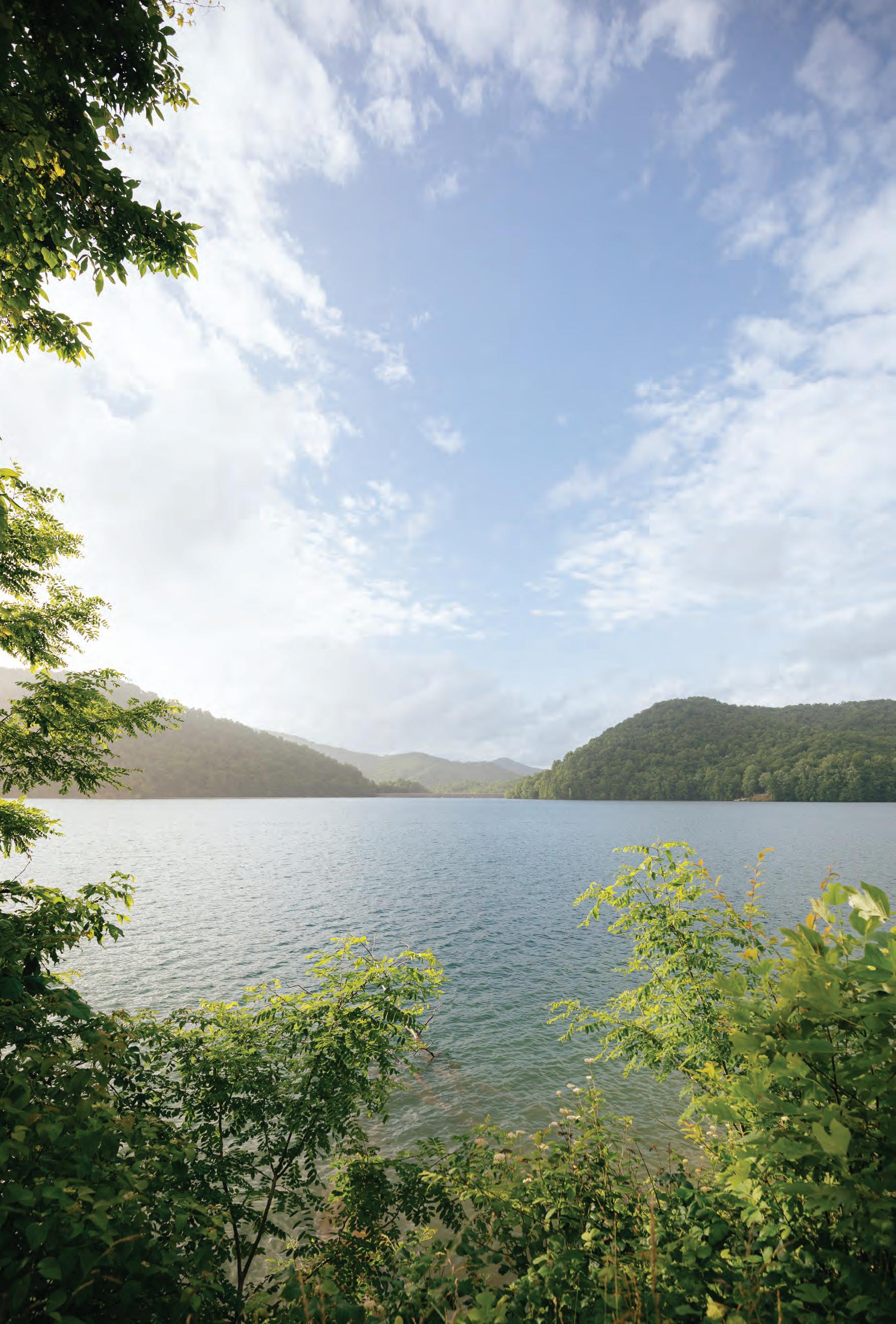


Forty-nine reservoirs stretch across the Tennessee Valley like a string of pearls. And for those who love to fish, those lakes are just as valuable. Whether it’s bass, crappie, walleye, or catfish, whether for sport, food, or just fun, you can find world-class lake fishing only hours away from any spot in the Tennessee Valley. From more than 11,000 miles of shoreline or while floating on more than 700,000 acres of water, residents and visitors will quickly learn why this area is considered one of the best fishing destinations in the U.S. and, some would say, the world.
Fishing from the shore can be restful and rewarding—and anyone can do it. All you need is a little intel about how to find a spot where the fish might be biting. Here are a few tips for successful shore fishing from the Tennessee Wildlife Resources Agency:
• Fish are often swimming near the shore in the spring and fall. If you’re fishing from the shore in the heat of summer, do it in the evening or early morning—or even after dark.
• Fish near-unique features such as docks, logs, trees, rocks, or rocky areas; aquatic vegetation; or places where creeks enter the water.
• When fishing in moving water, look at the surface for boils and breaks—this means there is some underwater structure blocking the current, which could be the perfect hiding place for fish.
• Begin fishing (casting) close and parallel to the bank, then work your way outward (fan casting) toward deeper water.
• If you don’t get any bites, try switching baits. If this doesn’t work, move to another hole.
• Wear polarized sunglasses so you’ll be able to see fish as well as submerged objects more clearly. (Your eyes will also be protected from the tackle.)
If you love outdoor sports—boating, hunting, fishing—and the natural world, or if you just like to observe wildlife, build birdhouses, maintain a bird feeder or are just curious about the critters in your backyard, the Tennessee Wildlife Resources Agency is here to help enrich your outdoor experience. Visit us at www.tn.gov/twra/



By Riley Love

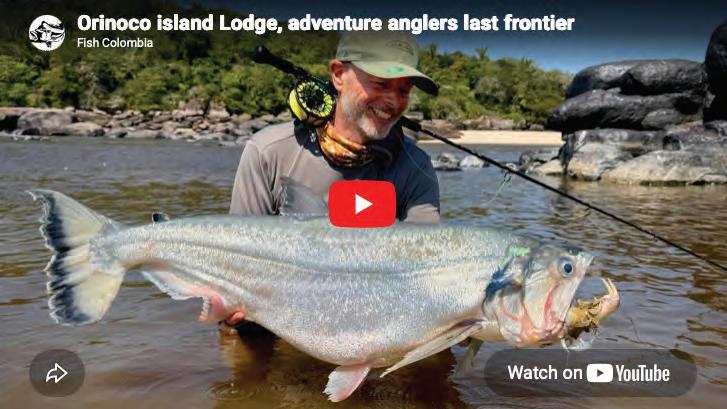
Some fishing destinations are about the fish. Others are about the journey.
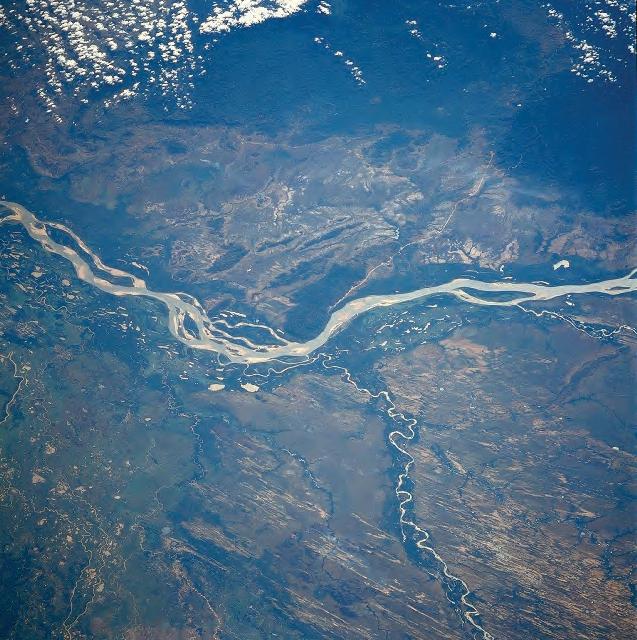
The remote waters surrounding Orinoco Island Lodge in Colombia offer both, blending history, wilderness, and world-class angling into an adventure that feels like stepping into another era.
Long before modern anglers arrived with casting rods and braided line, the first people crossed a frozen land bridge during the Ice Age and followed migrating game into this vast region. The mighty Orinoco River has witnessed centuries of exploration and conflict. Christopher Columbus described its mouth during his third voyage in 1498. German explorer Ambrosius Ehinger ventured here in 1529 before meeting his fate from a poisoned arrow, an effective veto by the native Warao Sir Walter Raleigh searched these waters for the fabled city of gold, Manoa, while the legendary naturalist Alexander von Humboldt sailed his Spanish corvette, Pizarro, upriver documenting the incredible plants and wildlife that still define the region today.
Today, jetliners replace sailing ships, carrying anglers from around the world to one of the most remarkable fisheries on Earth.
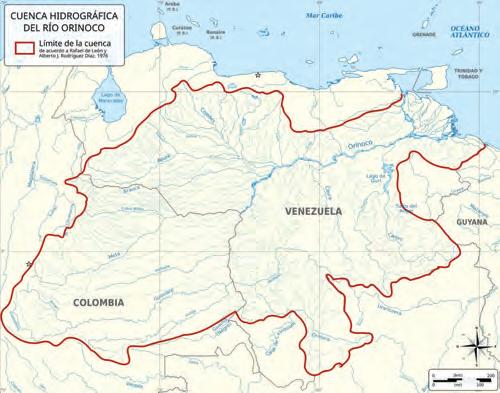
The Orinoco River basin of Colombia is enormous—one of the largest river systems in the world and among the most biodiverse places on the planet. Colombia ranks second only to Brazil in biodiversity despite being a fraction of its size. Everywhere you look, life thrives. Toss a few crumbs overboard during a riverside lunch and the water comes alive with exotic fish displaying colors and shapes unlike anything
found in North America.
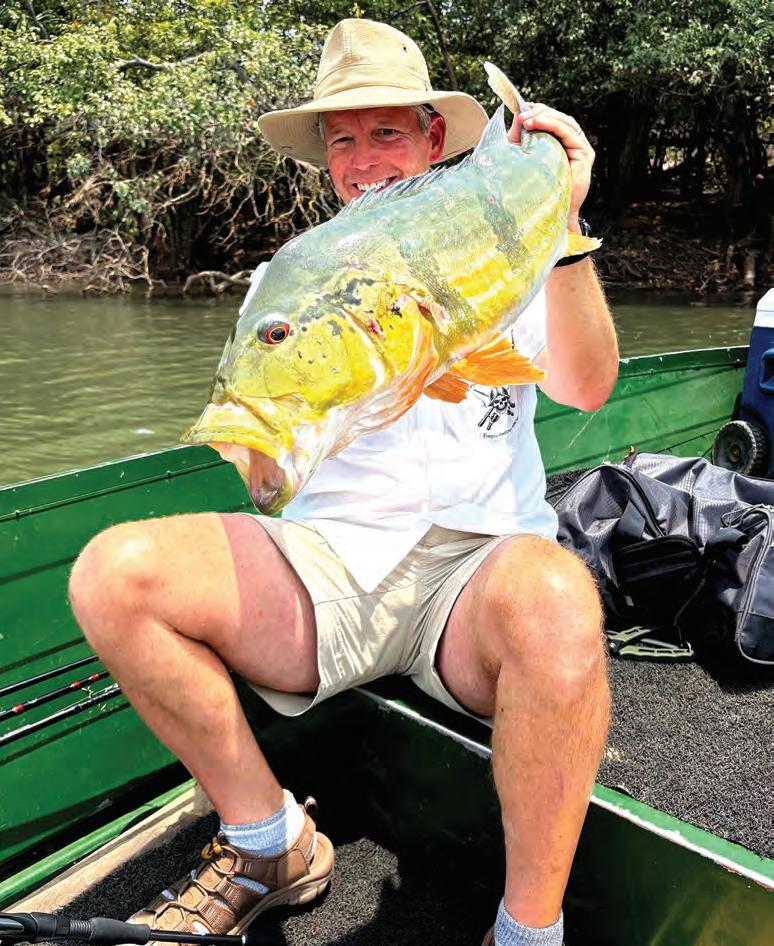
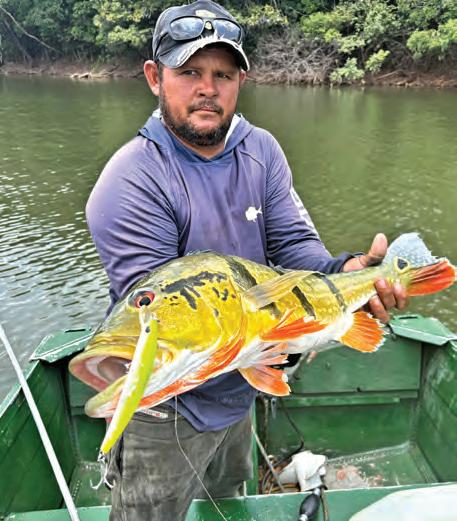
For many anglers, the primary attraction is the peacock bass. Forty years ago, only four species were commonly recognized. Today, scientists have identified at least 15 species along with numerous hybrids. These fish are among the most beautiful freshwater predators in existence, combining breathtaking colors with explosive power. A trophy peacock bass strike feels less like a bite and more like a violent collision.
The operation, Fish Colombia, founded by Alberto “Beto” Mejia, provides access to some of the basin’s most productive waters through Rio Orinoco Lodge and an upriver camp near the Rio Tuparro. During the dry season, typically November through April in the region, anglers can target fish concentrated in
sprawling lagoons and channels. The environment is so dynamic that camp structures are dismantled and stored before seasonal floods swallow the entire area beneath rising water.
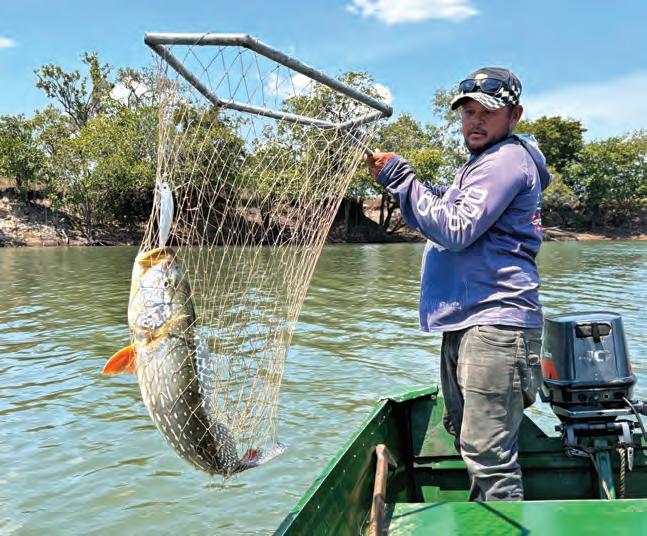
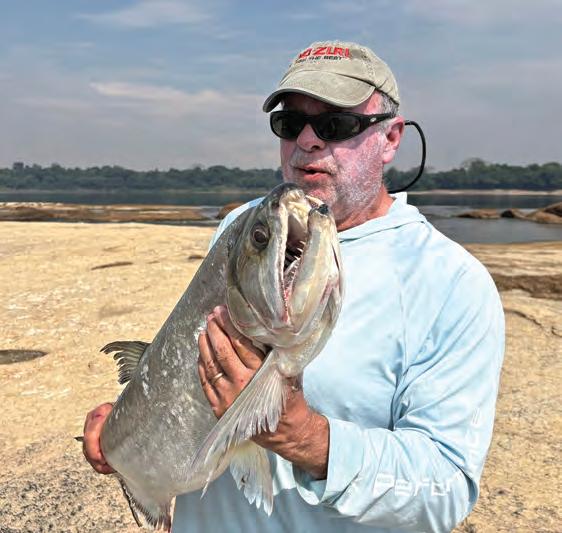
While peacock bass may be the headliners, they are far from the only stars of the show. Pacu, giant catfish, and acrobatic sardinata provide constant action. Then there’s the fish many anglers travel thousands of miles specifically to catch—the legendary payara.
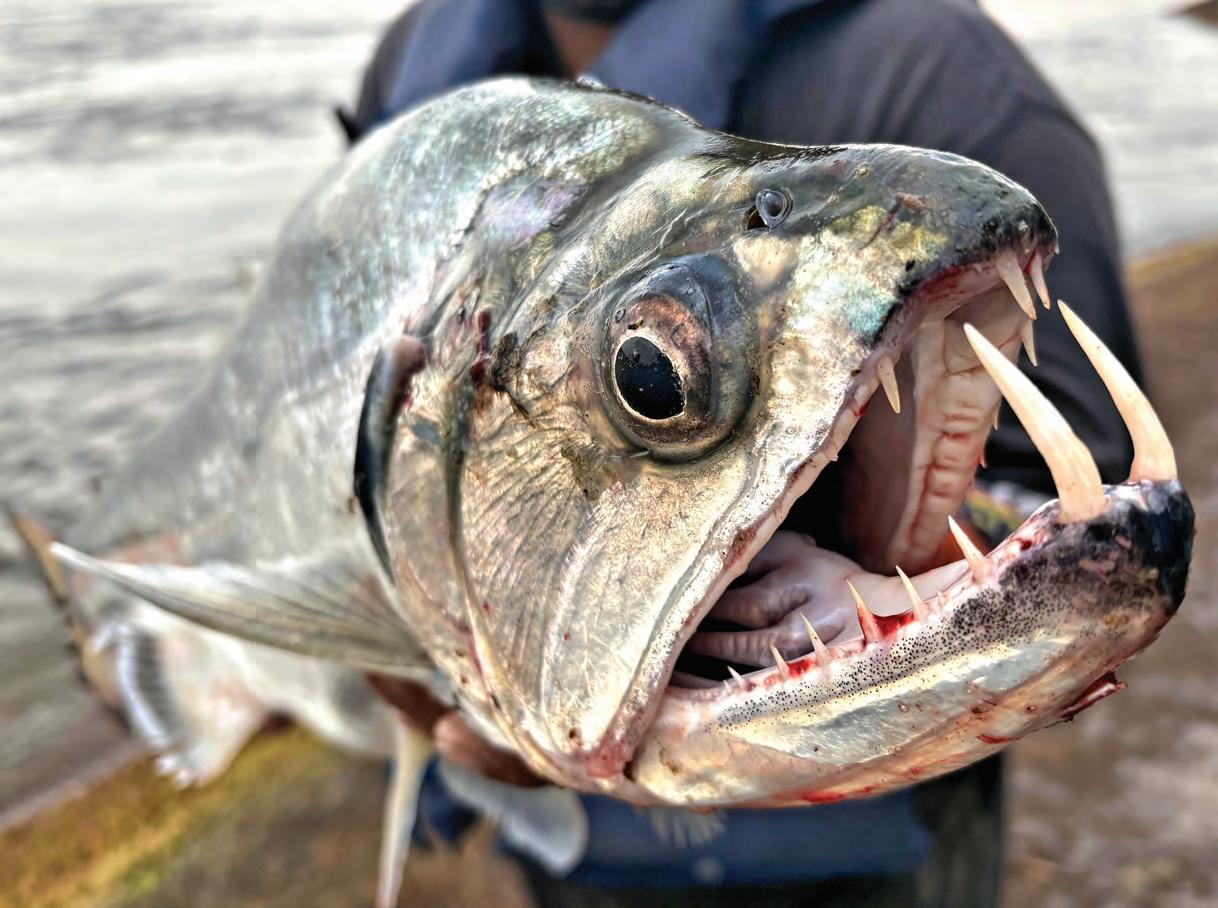
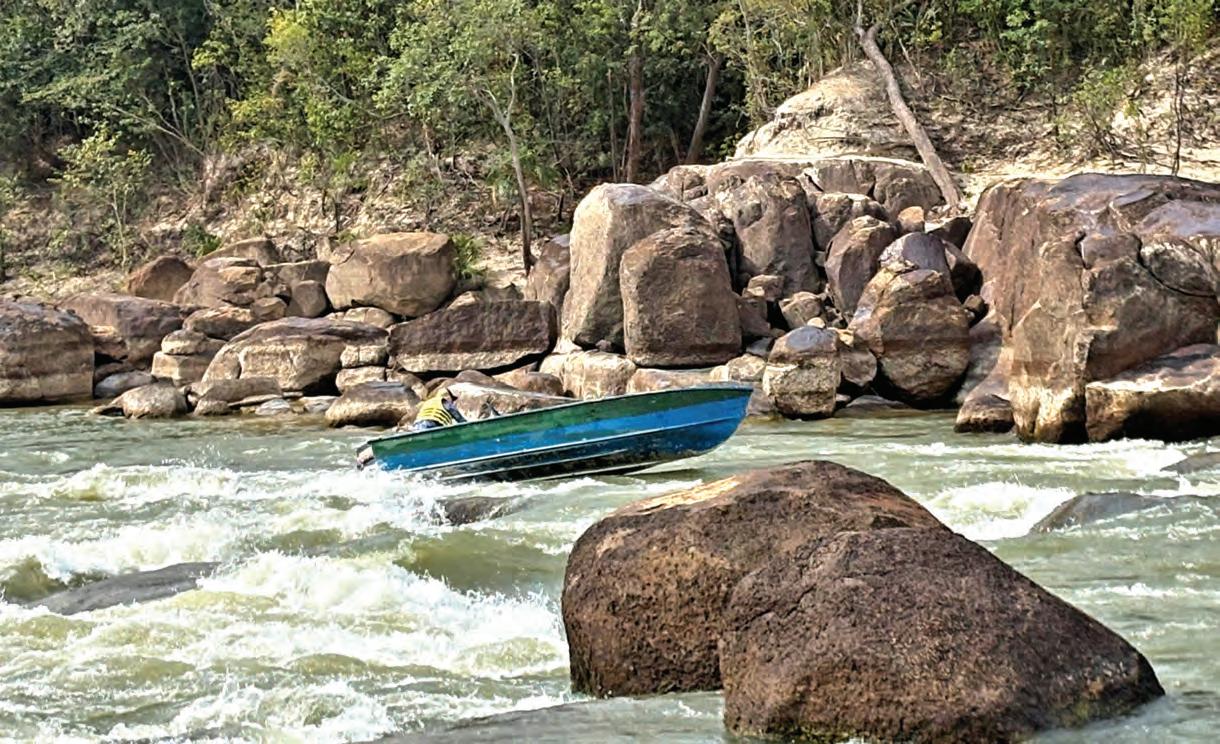
Armed with oversized vampire-like fangs, payara are pure speed and aggression. Their strikes are instantaneous, their jumps spectacular, and their runs blistering. Hooking one in the class-IV rapids between massive granite boulders and white quartz sands is an experience that leaves even seasoned anglers shaking.
On our trip we slayed multiple 20-pound peacocks and hard-fighting payara, but the memories extend far beyond the fish. The Orinoco remains one of the last true frontiers in sportfishing—a place where history, exploration, and incredible angling come together in a way few destinations on Earth can match.
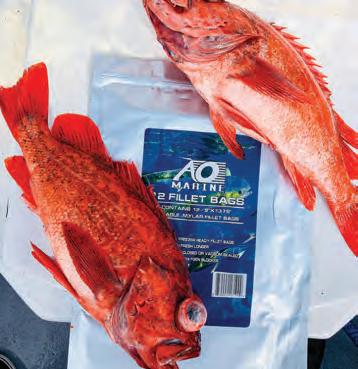
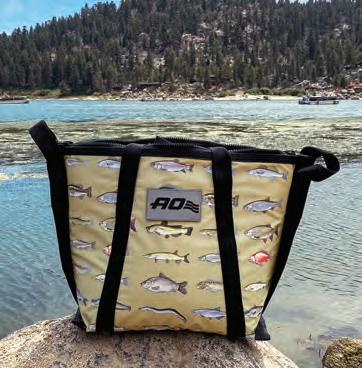


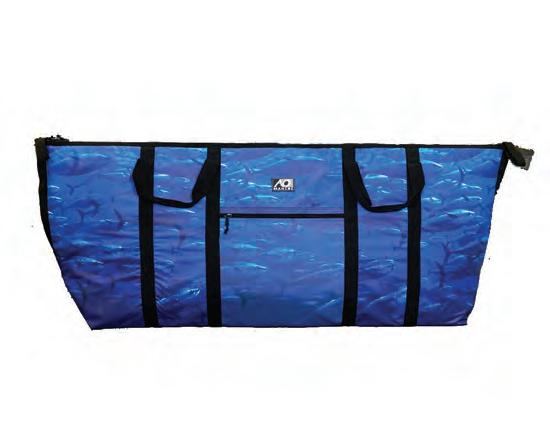
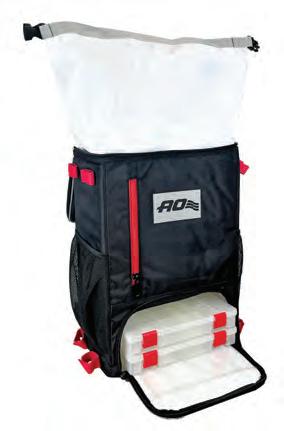
, the leader in high-performance soft-sided coolers, is hitting the water this year with new, upgraded fishing products. Our fishing team partners told us what they needed, and we listened!
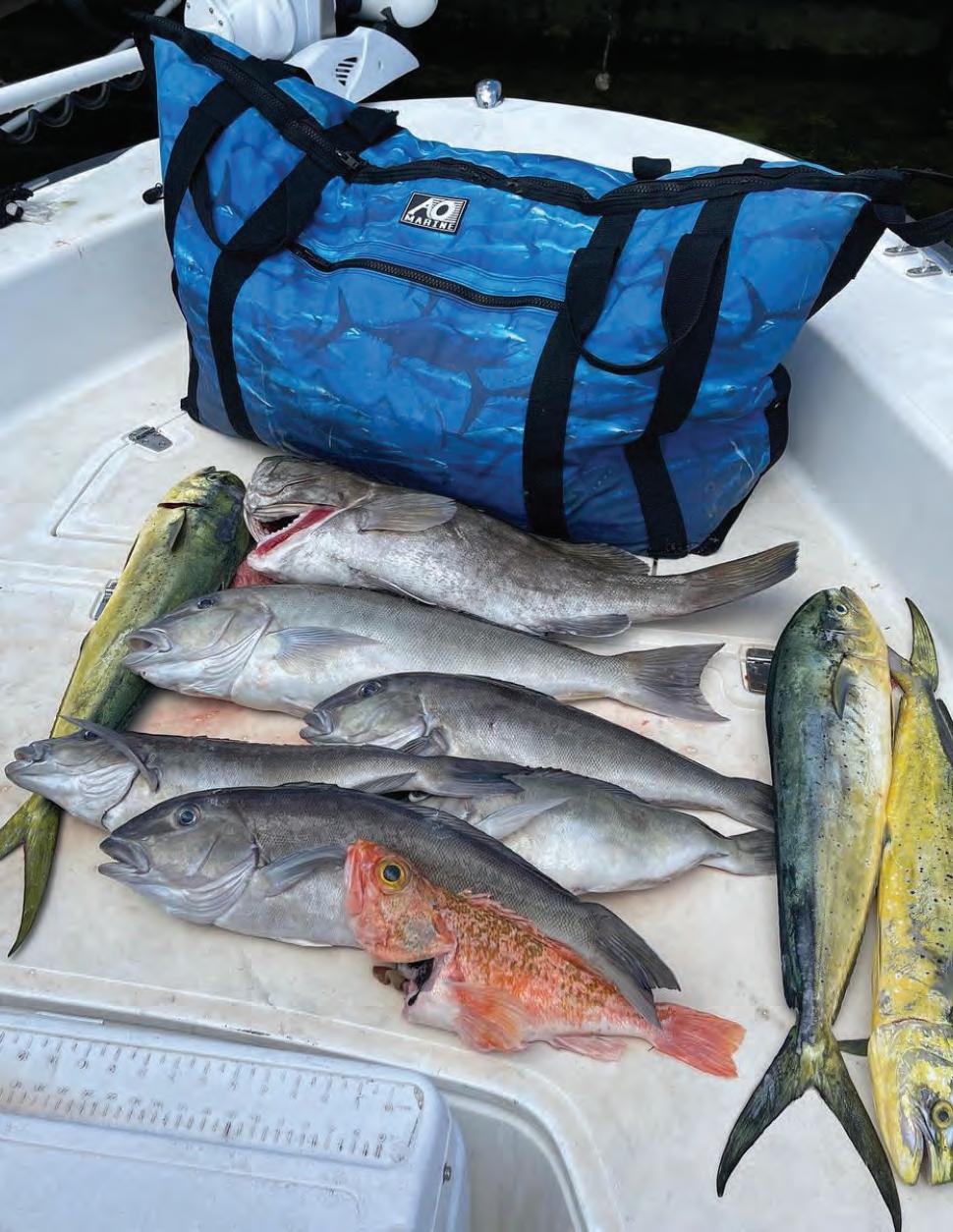
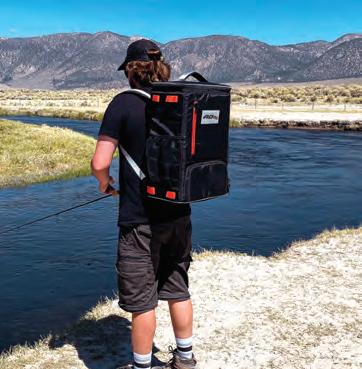
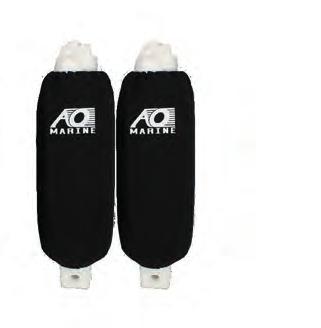
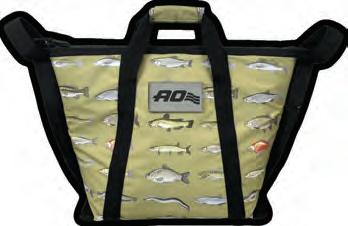
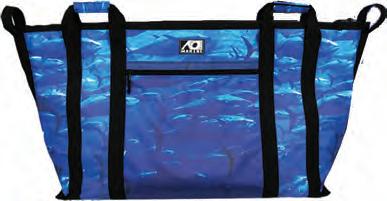
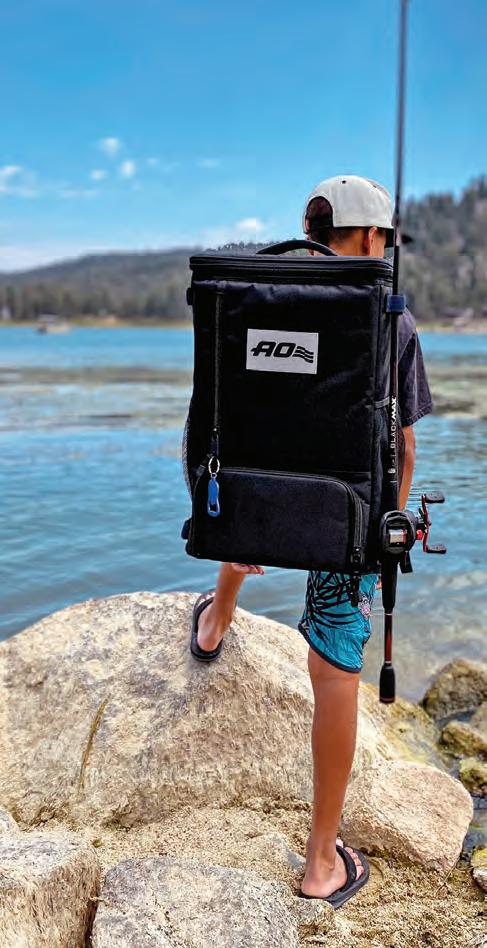
Products are in stock and ready to ship; The Fishing Cooler Backpack, 2, 4 & 6ft Fish bags, Fillet bags, Boat fenders, EVA Traction pads, Inflatable Docks, ISUPs, and of course, our high-performance coolers specifically designed for use on boats, guaranteed not to leak, and to keep ice cold for up to 24 hours.
Thirty years ago, AO was launched to provide active, hard-core people with quality products at a reasonable price. We started selling our soft-sided coolers to the hard-core, go-fast boaters and fishermen in Lake Havasu. We aimed to keep ice in our coolers for up to 24 hours in 120-degree Havasu heat. That goal was accomplished 30 years ago, and we’re still at it.
We know our customers; they fish and boat in the summer and ride the dunes or trails in the winter. AO products give those high-octane souls greater freedom to embark on and enjoy what’s important to them.
Make sure that your gear does not hold you back from doing what you love. AO products are built to handle whatever offshore adventure is coming next.
AO is flexibly rugged, seriously fun, and honestly real!
We’re looking for active, adventurous folks that demand quality and performance from their gear. Share your adventure and send us your fish story or photo.


By A. deGruchy
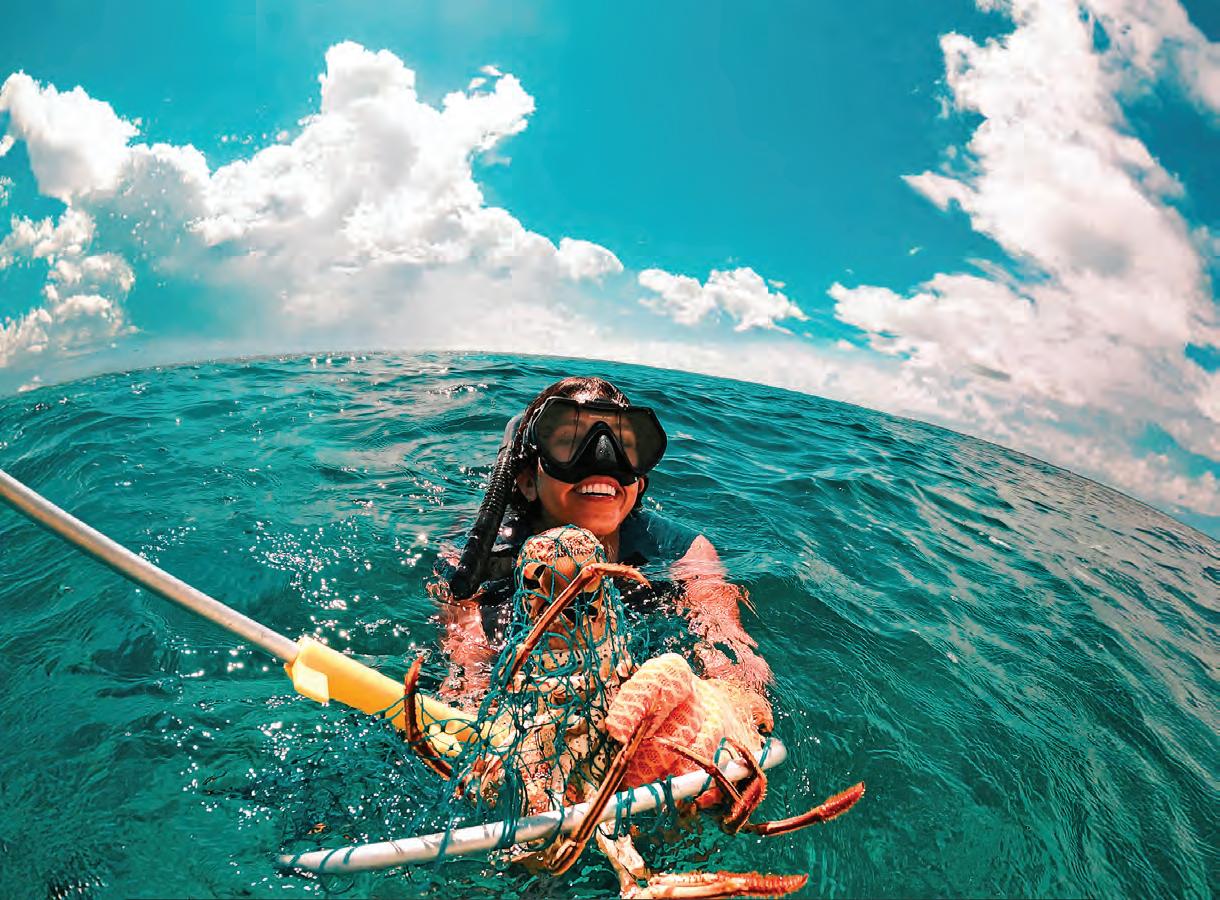
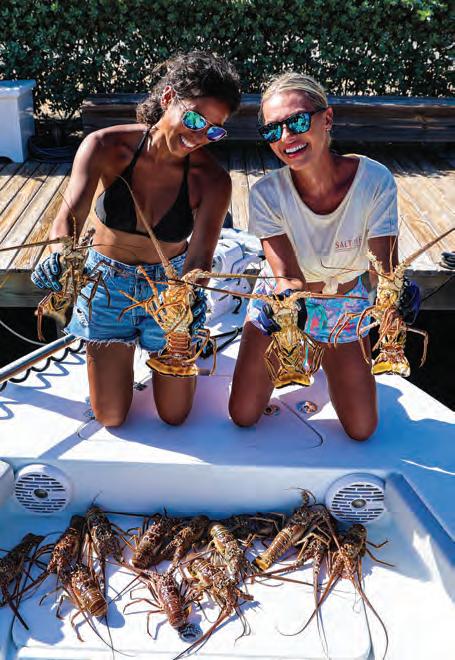
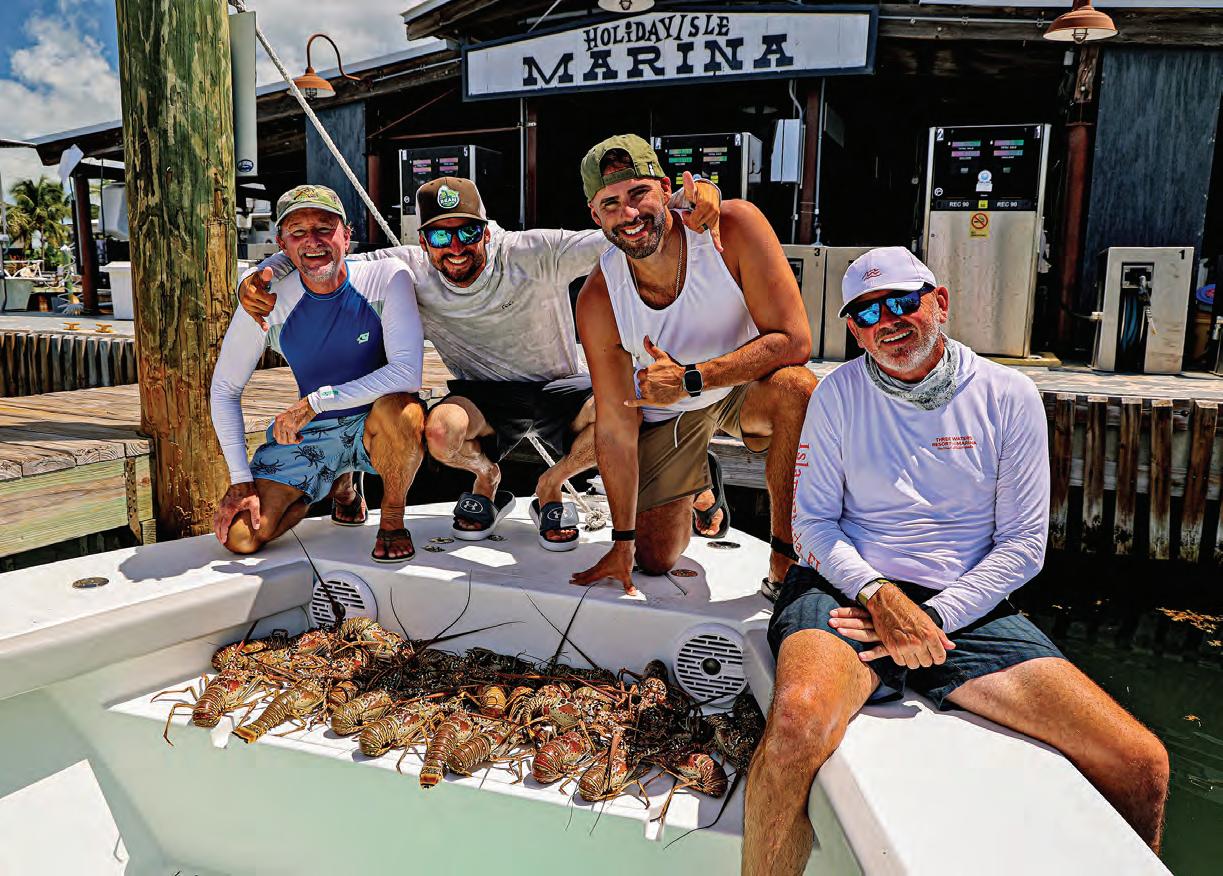
Every July, the Keys go a little wild for two days. The spiny lobster sport season, or “mini season,” always hits the last Wednesday and Thursday of the month, so in 2026 that’s July 29 and 30. It’s your two-day jump on the regular season before it opens August 6, and trust me, the water gets packed. Know the rules before you launch and you’ll have a blast instead of a ticket.
First, the boring but unskippable part: paperwork. For 2026, non-residents can only grab a short-term license in person at a Monroe County Tax Collector office, and they’re closed weekends.
Gear-wise, keep it simple: tickle stick, net, gloves, and a gauge. No spears, hooks, or traps down here. Measure every bug in the water (carapace bigger than three inches), leave the tail on until you’re back on land, and toss back any female carrying eggs.
The biggie is the bag limit: six lobsters per person, per day, the whole day. That’s half what the rest of Florida gets, and don’t try to be sneaky about it. You can’t grab your six, run ‘em to the dock, and head back out for round two. That’s “double-dipping” which is illegal, and the fines aren’t fun. Six means six.
If traveling to the Keys for mini lobster
season, respect the locals. Remember, the Keys are home to a lot of folks and one of the most fragile reefs anywhere, so a lot of the “be cool” stuff is also straight-up the law. Give people their space, too.
Heads up on the 300-foot rule during mini season: basically the whole Keys is offlimits nearshore. You can’t dive or snorkel within 300 feet of anyone’s house, dock, canal or marina. And don’t mix it up with the no-night-diving rule, that’s a separate mini season thing, so plan on daylight only. Fly your dive flag, idle down when you’re within 300 feet of one, and grab a buddy because the water’s a zoo. Don’t touch, stand on, or anchor on the coral, steer clear of no-take zones like John Pennekamp and the Dry Tortugas, and never mess with someone’s trap, that one’s a felony.
Bottom line: carry your license, measure in the water, keep it to six and whole, and dive in daylight. Check MyFWC.com for the full rundown before you head out, and have fun out there.
Follow all of deGruchy’s adventures at @bean_sportfishing on Instagram and YouTube.
John Deere equipment brings the power, performance and productivity, so you get more time to land a trophy. We’ll help you land the right machine with special offers making it an even better catch. Stop in and leave tasks in your wake.





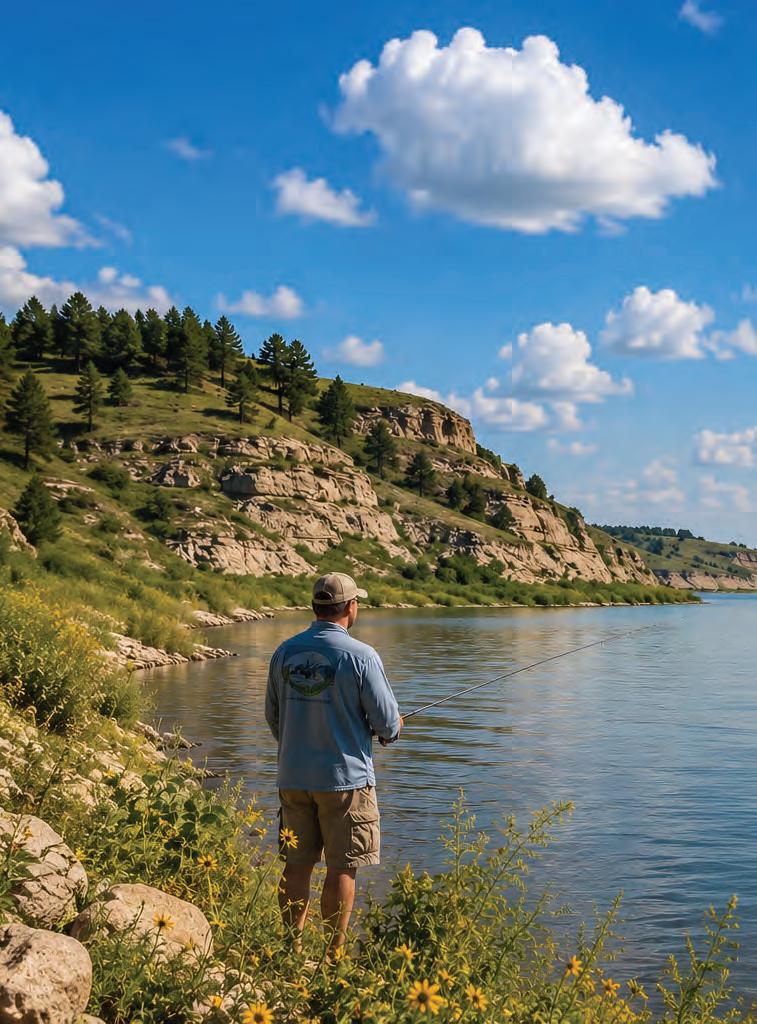
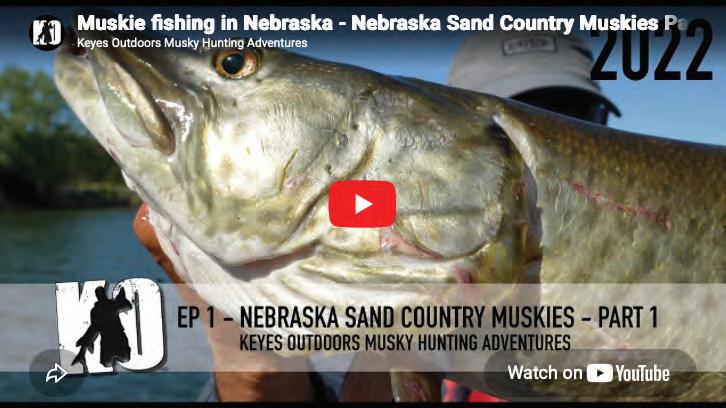
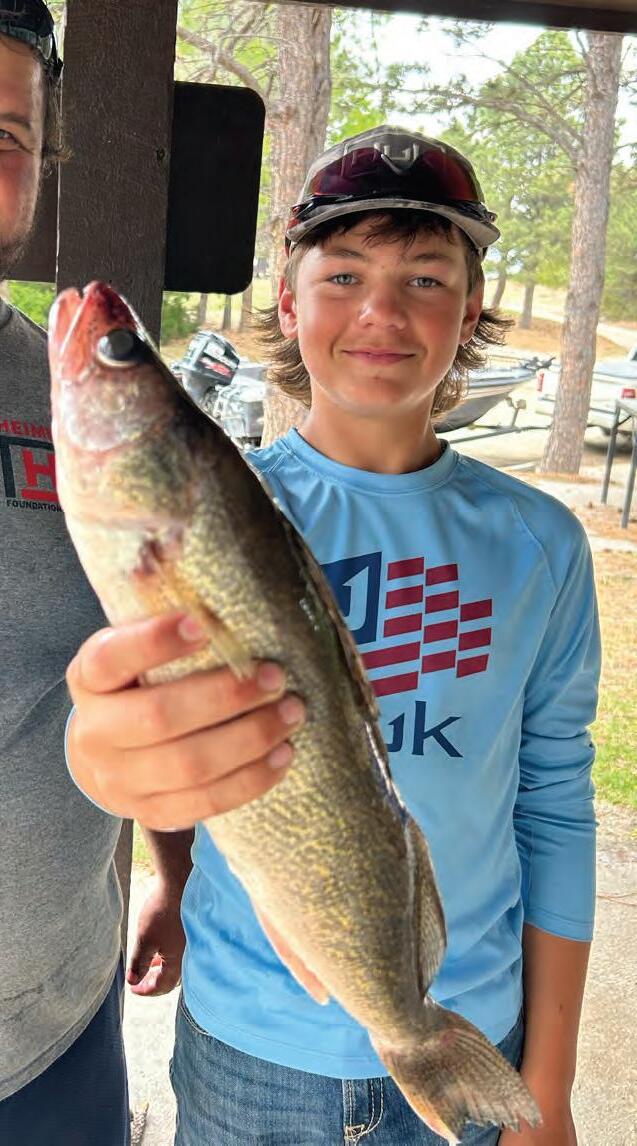
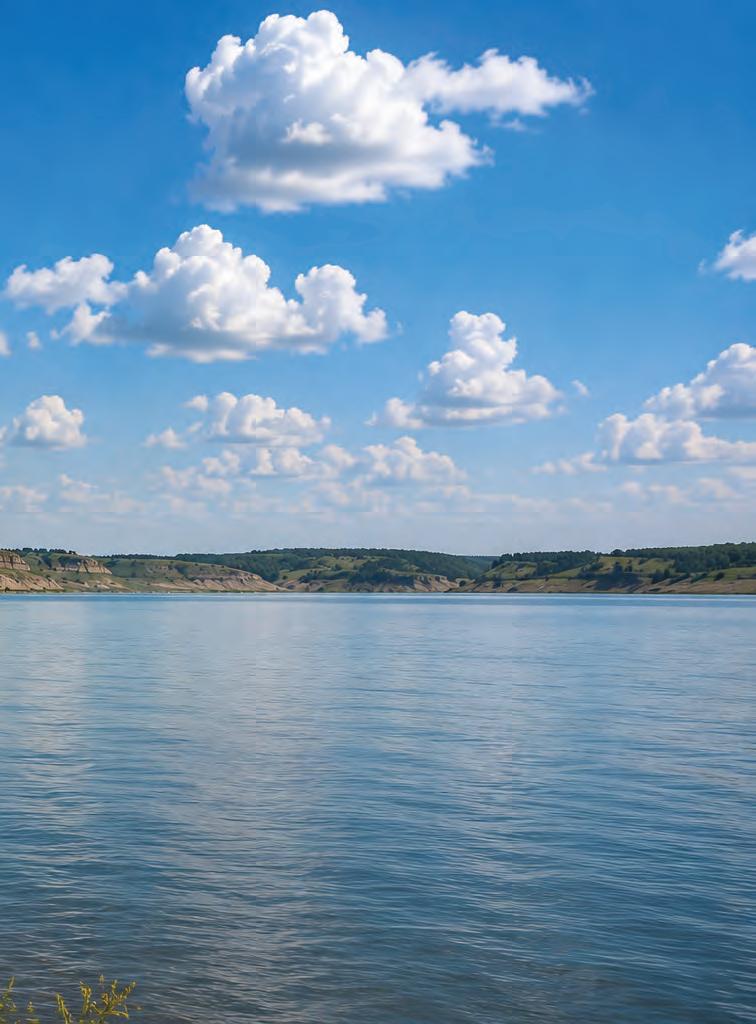
The first light of an early June morning spilled across the rolling Sandhills as anglers launched their boats onto the waters of Merritt Reservoir near Valentine, Nebraska. Summer was beginning to settle in, bringing warm days, cool mornings, and some of the year’s best fishing opportunities.
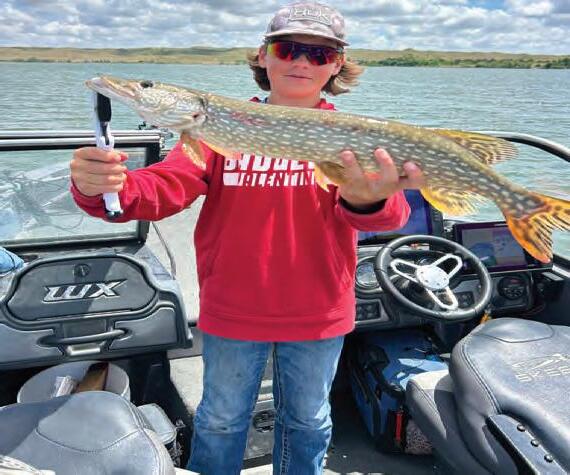
Walleye anglers worked points, drop-offs, and underwater structure while families enjoyed steady action from crappie, bluegill, and bass along the shoreline. Northern pike lurked in the shallows, ready to surprise anyone willing to cast a lure their
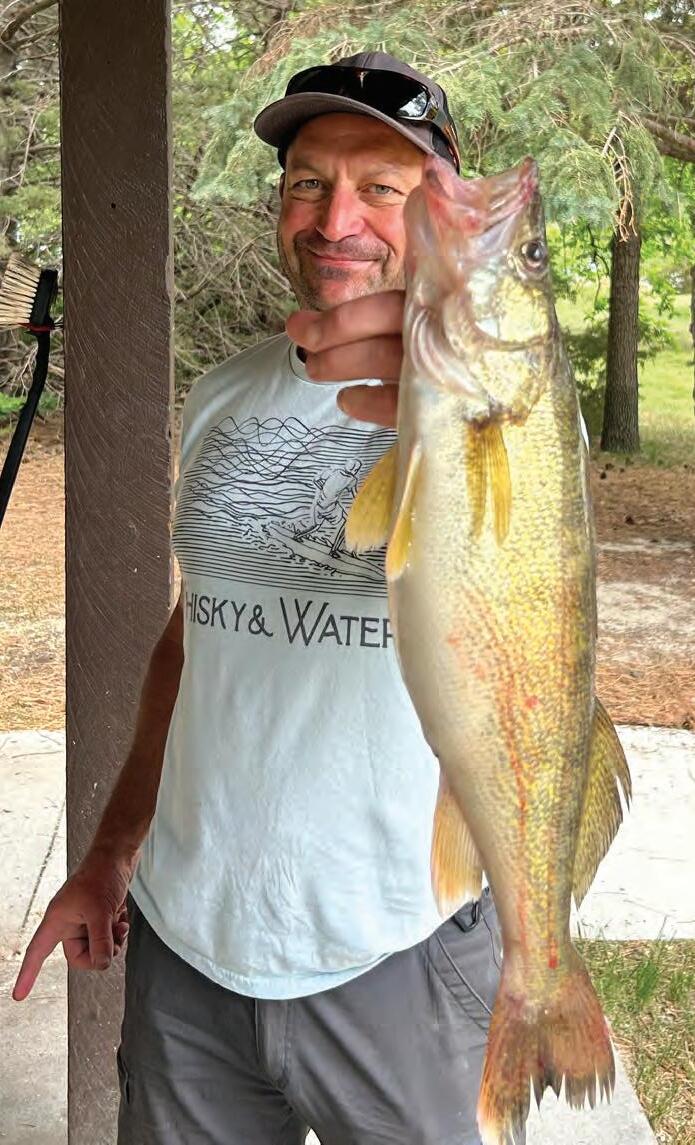
way. Above the lake, bald eagles and other wildlife added to the beauty of the Sandhills landscape.
As the day warmed, coolers filled with a few keeper fish and anglers swapped stories about the one that got away. The combination of productive fishing, wide-open scenery, and peaceful waters made for a perfect day outdoors.
For many visitors, an early June trip to Merritt Reservoir is more than just a fishing excursion— it’s a chance to experience one of Nebraska’s most scenic destinations and create memories that will last long after the lines are reeled in.
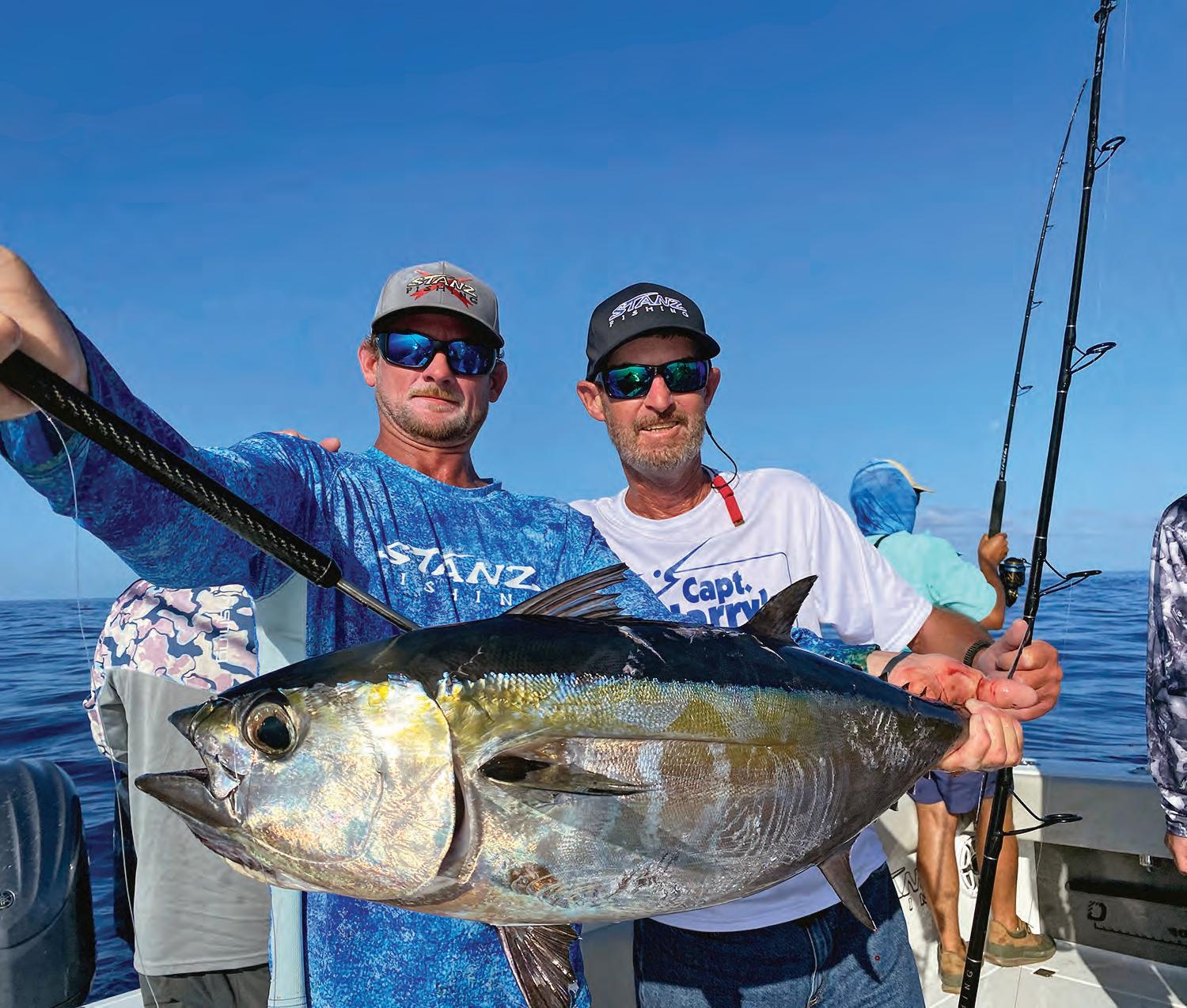
NOAA Fisheries recently adjusted the Atlantic bluefin tuna daily retention limits for recreational fishermen. The adjusted limits took effect June 1, 2026, and will extend through December 31, 2026, unless NOAA takes additional action later in the year to further adjust the retention limits or close the fishery.
As of June 1, 2026, the retention limits will be:
Highly Migratory Species Vessel/Permit Type
Private vessels with Highly Migratory Species
Angling permits
Charter boats with Highly Migratory Species
Charter/Headboat permits, when fishing recreationally
Headboats with Highly Migratory Species
Charter/Headboat permits, when fishing recreationally
Limit per Vessel per Day/Trip (lengths in curved fork length)
2 bluefin tuna measuring 27 to <73”, of which only 1 may be a large school/small medium bluefin tuna (47 to <73”)
3 bluefin tuna measuring 27 to <73”, of which only 1 may be a large school/small medium bluefin tuna (47 to <73”)
6 bluefin tuna measuring 27 to <73”, of which only 1 may be a large school/small medium bluefin tuna (47 to <73”)
Note: The retention limits are per vessel, per day/trip — not per angler. Regardless of the duration of a fishing trip, no more than a single day’s retention limit may be possessed or retained at the end of the trip upon landing. For example, whether a private vessel (fishing under the Angling category retention limit) takes a two-day trip or makes two trips in one day, the day/trip retention limit of 2 bluefin tuna, of which only 1 may be a large school/small medium, applies and may not be exceeded upon landing.
The changes apply to Highly Migratory Species Angling and Highly Migratory Species Charter/Headboat permitted vessels when fishing recreationally. The daily retention limits are effective for all areas except for the Gulf of America, where NOAA Fisheries does not allow targeted fishing for bluefin tuna.
Highly Migratory Species Angling and Highly Migratory Species Charter/Headboat permitted vessel owners are required to report the catch of all bluefin tuna retained or discarded dead within 24 hours of landing or the end of trip by:
• Accessing the Highly Migratory Species Permit Shop
• Using the Highly Migratory Species Catch Reporting app
• Calling 888-872-8862 (Monday through Friday 8 a.m.-4:30 p.m.)
Keep up with all federal fishing rules and regulations at: fisheries.noaa.gov.
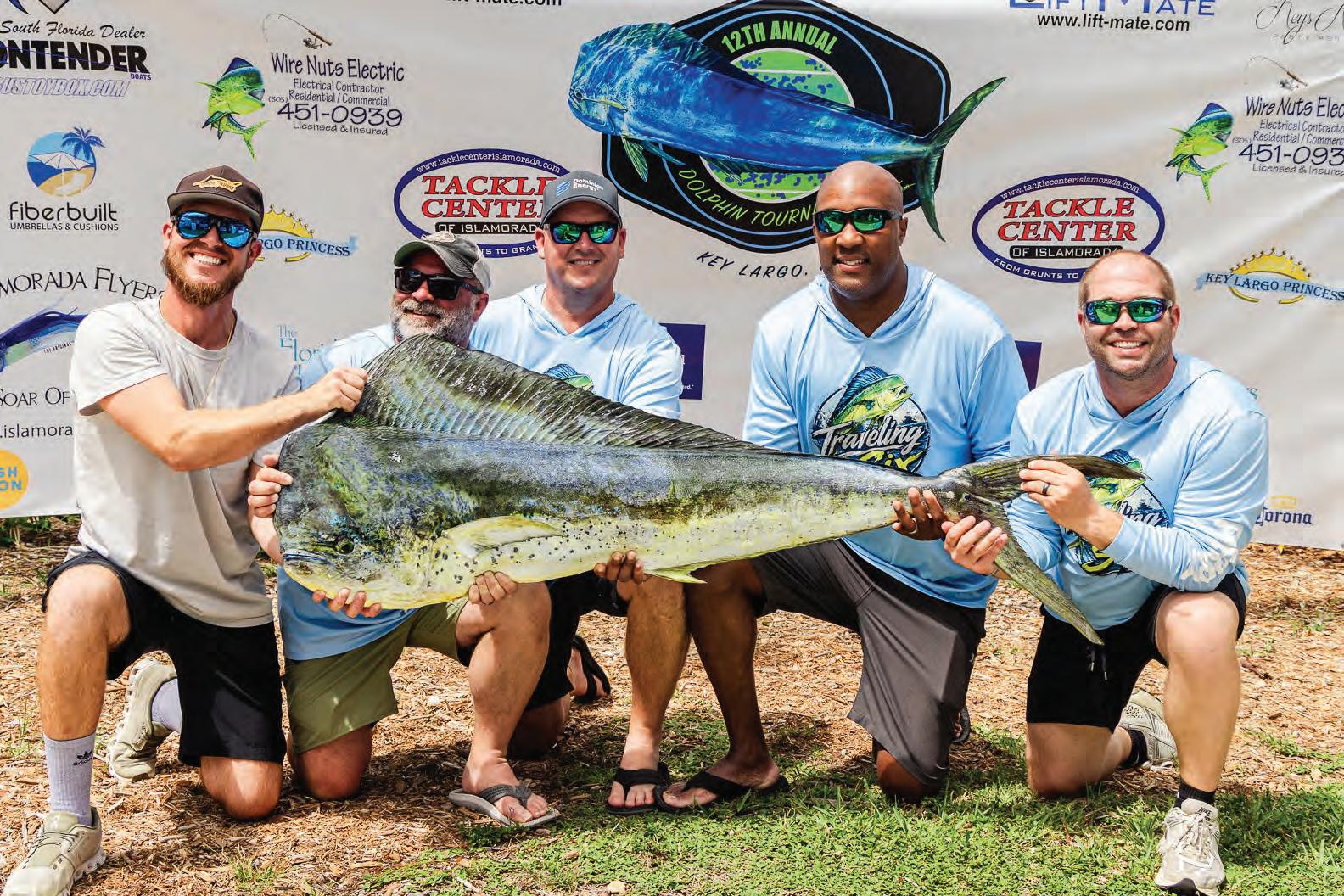
kippers Dockside Restaurant in Key Largo hosted the 12th Annual Skippers Dolphin Tournament May 29-31 with 53 teams made up of 195 anglers competing for over $96,000 in cash. Anglers were allowed to weigh two fish on Day 1 and two on Day 2, but it would be the combined weight of three fish that would determine the winners.
Team Traveling Six—consisting of I’m Bit Charters Capt. Angel Ramon; Boots Brinn and Carlos Eason of Chesapeake, VA; Shane Darnell of Yorkville, IL; and Carl Perry of Chocowinity, NC—got to the winner’s circle weighing in 78.6 pounds of dolphin. The combined weight of their largest three fish, a 10.9 pounder plus a 16.1 and 51.6 would win $31,840! The 51.6-pound dolphin caught by Shane Darnell also won the team $7,988 for the Largest Fish Award.
Second Place team, The Reel Deal captained by Alex Sal Debogory, caught a combined weight of 45.4 pounds to win $17,630. The team of Marina and James Daniel, Luis Jimenez, Richard Williams and Pat Delvechio weighed in fish at 20.6, 16.5 and 8.3 pounds. Richard caught the 16.5-pound dolphin to win the Largest Fish Senior Angler winning $1,000.
Third Place team was Conetagious 1 run
by Captain Brian Cone with anglers Travis Bennett, Reef Bennett, Andy Cone, Eli Lankford and Kelly Matcena, who caught a total of 42.1 pounds winning $8,420.
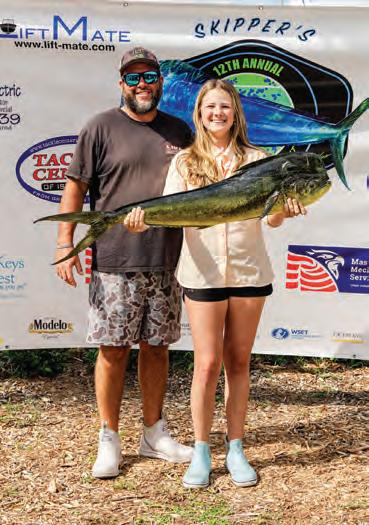
Lucy Lima of Ringwood, IL won $2,000 for Largest Fish Lady Angler with the 13.5 pounds aboard Team Fibs. Second Largest Fish Lady Angler prize of $1,000 was won by Abby Crouthers of Wildwood, MO with 12.1 pound dolphin fishing aboard Natural II.
Junior anglers competed for top three places, with Reef Bennett of Tavernier, FL taking first place with his 14.6 pound fish winning $500. Second would go to Lucy Lima of Ringwood, IL winning $250 with a 13.5 pounder, and Andy Cone won $100 with a 8.6 pound dolphin.
The largest other species fish winners each took home King Sailfish Trophies and $750 each including Prime Time angler Jeff Schmidinger from Jacksonville, FL with a 19.9 pound kingfish; Mi Cura angler Vito Penza of Naples, FL caught a 16.4 pound wahoo; and Just Cuz’s angler Joseph Thompson of Chicago, IL landed a 20.1 pound tuna.
Skippers Dockside Restaurant highlighted their fabulous seafood for the kick-off party, which was sponsored by Gus Toy Box. The
pulled pork, mac and cheese, rice and beans, and caesar salad, all followed by desserts.
Don’t miss next years tournament fishing on June 5-6, 2027! For information visit SkippersTournaments.com








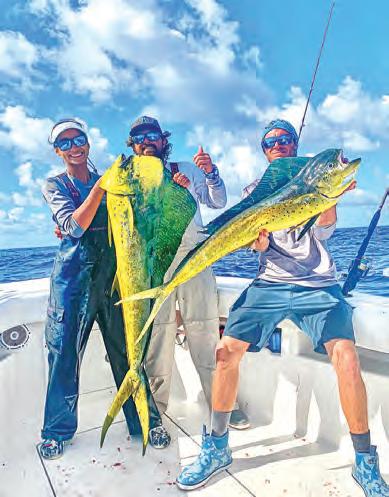
If you love the fishing, boating and outdoors lifestyle, and dream of being in business for yourself— but not by yourself— now is the time to spring into action and become a Coastal Angler or The Angler Magazine Co-Publisher. No Experience Neccesary—We Will Train You! We have freshwater and saltwater territories available throughout the country and abroad. Ask one of our specialists about franchise availability in your area.
SCAN THE CODE TO VIEW OUR BROCHURE:


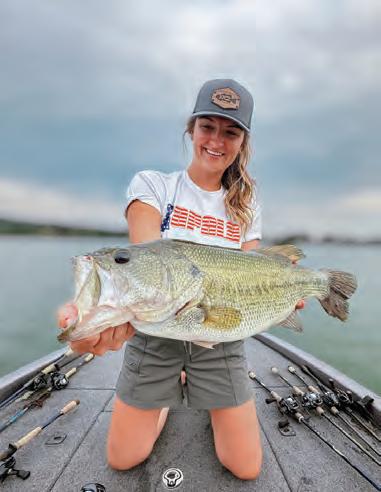

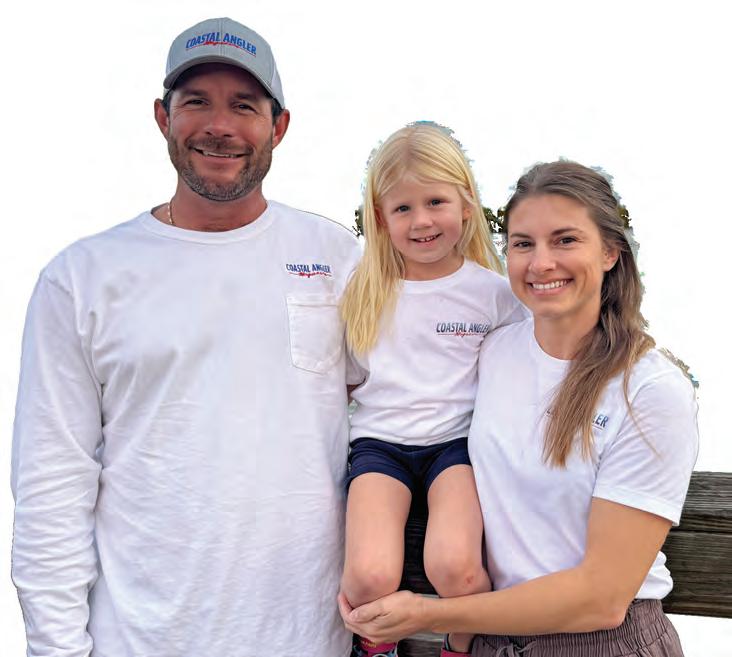
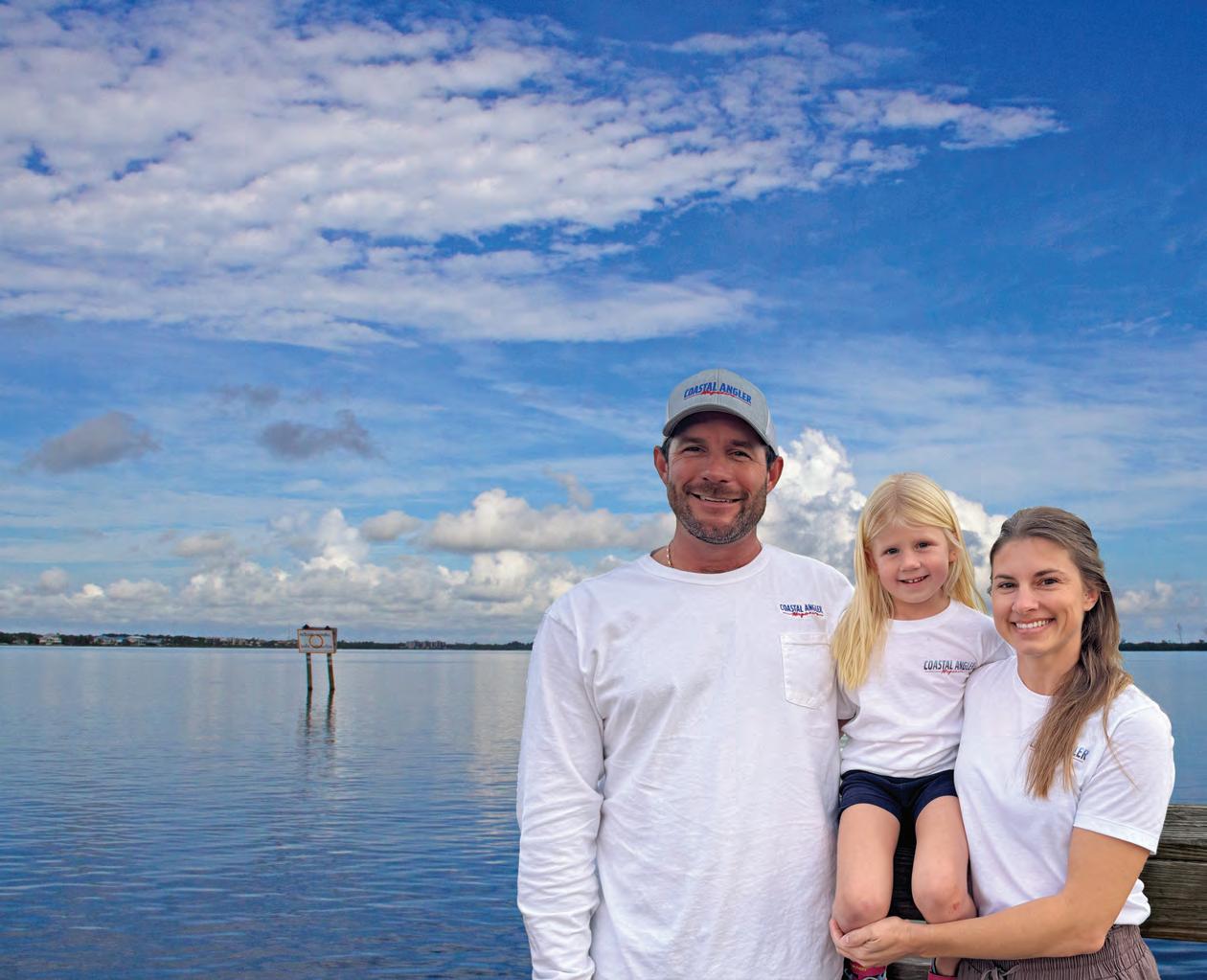
An exceptionally rewarding and fulfilling business opportunity, as a Co-Publisher of your area’s Coastal Angler Magazine or The Angler Magazine, you’ll enjoy the benefits of controlling your own time and future while being a part of the largest outdoor publication in the U.S. Our proven franchise publishing system enables individuals with no prior publishing experience to publish a credible and profitable localized version of our award-winning, free monthly magazine. With a combined readership of over one million per month and distribution to over 11,000 businesses in four regions, our brand is well known throughout the fishing world, and our magazines are recognized as well-designed, thoughtful publications that provide newsworthy and entertaining content pertinent to the marine and fishing industries, as well as respected resources for localized fishing reports, tournament news, tide charts, catch photos and more.
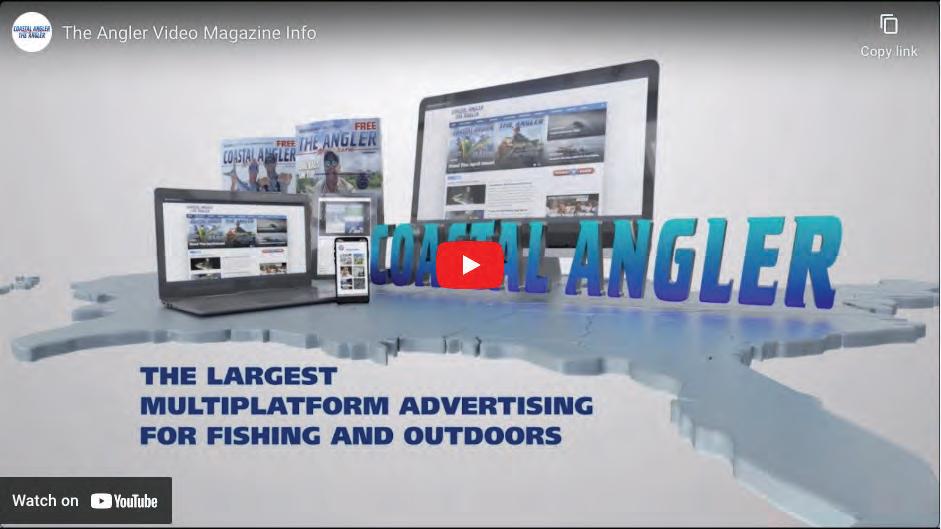
The Angler Video Magazine connects fishing and boating enthusiasts with industry news and shared community interests in a unique, industry-first format — a video magazine. Sent to over 3.2 MILLION licensed anglers, The Angler Video Magazine is provided to its readers for FREE. No subscriptions or payments are required for viewing.
Support The Angler Video Magazine’s mission to provide FREE content to the recreational fishing and boating communities and industries throughout the world by sharing, subscribing and advertising.