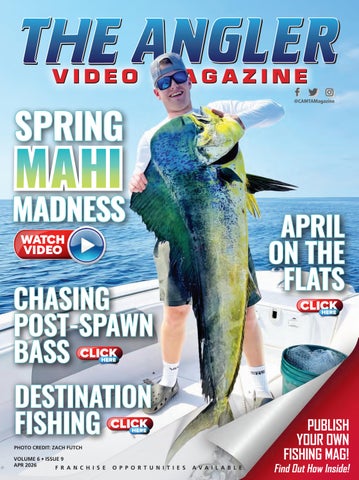
SPRING MADNESS MAHI





















Purpose-Built, Made Just For You.
























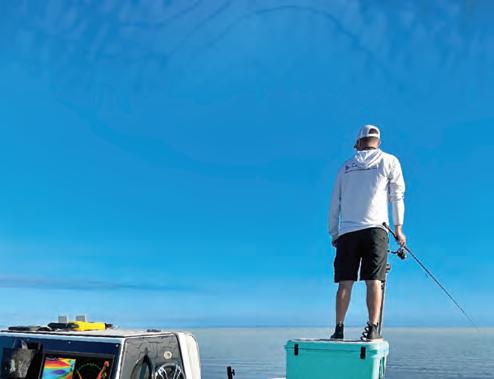





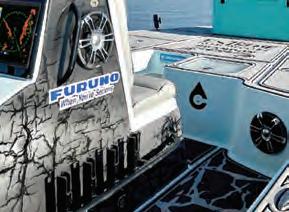










With this streamlined MFD, Furuno is bringing big-boat confidence to everyone. & More Fish
Less Stress







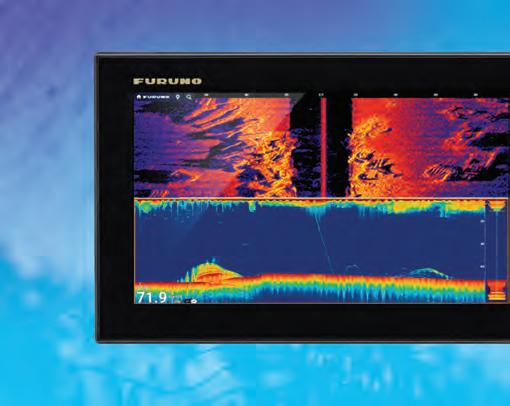
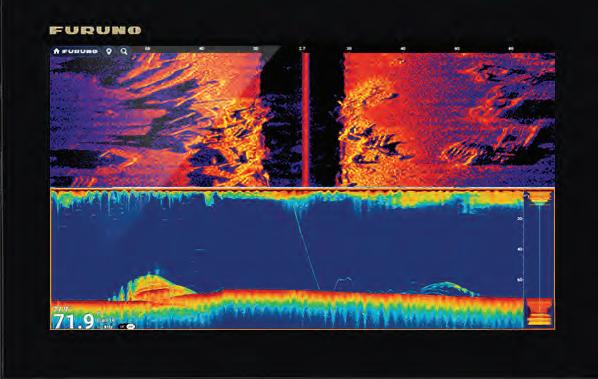
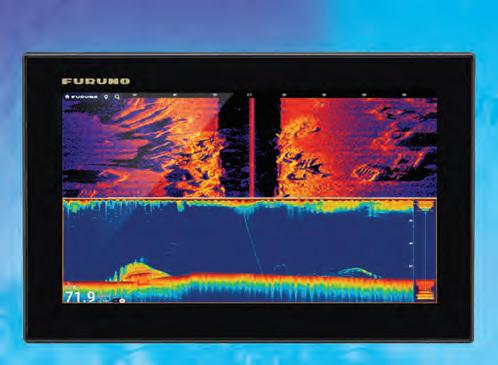
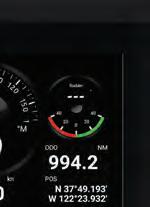
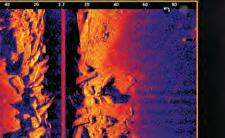
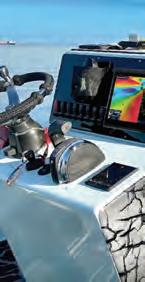
Furuno is expanding its line with the introduction of the TZMAP9 and TZMAP13, two new, powerful all-in-one stand-alone Multi Function Displays with built-in TruEcho CHIRP™ Fish Finders that bring the power of Furuno’s acclaimed TZ MAPS cartography to smaller vessels desiring to operate from a single display. Designed for boaters who want simplified, reliable navigation without network complexity, these models deliver powerful features through a user-friendly multi touch interface for a variety of boat types and sizes.

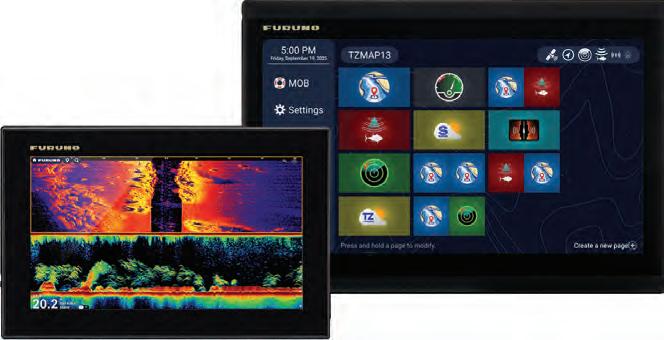
The 9” TZMAP9 and 13” TZMAP13 feature responsive, sunlight-readable multitouch displays powered by a streamlined version of the TZtouchXL operating system. These MFDs are equipped with a 300W/600W/1kW, single-frequency TruEcho CHIRP™ or dualfrequency CW Fish Finder, CHIRP Side-Scan capability (230kHz or 455kHz), and advanced chart plotting capability built around Furuno’s revolutionary TZ MAPS platform. With a free My TimeZero account, waypoints and routes can be easily backed up or retrieved from the cloud with just a few taps, ensuring critical data remains safe and secure.
Designed for simplicity while retaining advanced functionality, these units support Radar options such as the Solid-State Doppler DRS2DNXT and DRS4DNXT. They also offer integration with the TZ iBoat App and support AI Routing, helping boaters plan smarter, safer routes. TZMAP units come ready-to-navigate out of the box with pre-loaded,
official NOAA Vector charts for the entire coastal US. For a serious upgrade at an incredible value, optional TZ Maps charts can be purchased directly from the MFD. TZ Maps delivers customizable, detailed cartography built on a foundation of official hydrographic charts, high-resolution BathyVision™ bathymetry, satellite imagery, and community-sourced data. It’s the most intuitive and powerful charting system Furuno has ever offered, and it’s built right into every TZMAP9 and TZMAP13. Plus, your first chart purchased through the TZMAP
MFD is available at a special low introductory price of only $150an incredible price for the entire USA, or any other chart area. With details this precise and coverage areas this large, TZ MAPS is one of the most affordable chart options on the market.
From bay boats to kayaks and sailboats to cruisers, the TZMAP9 and TZMAP13 offer an accessible entry point into Furuno’s navigation ecosystem. These units are ideal for boats 16’ and up in need of essential fish-finding tools, cutting-edge charts, and affordable Radar options in a clean, stand-alone package.
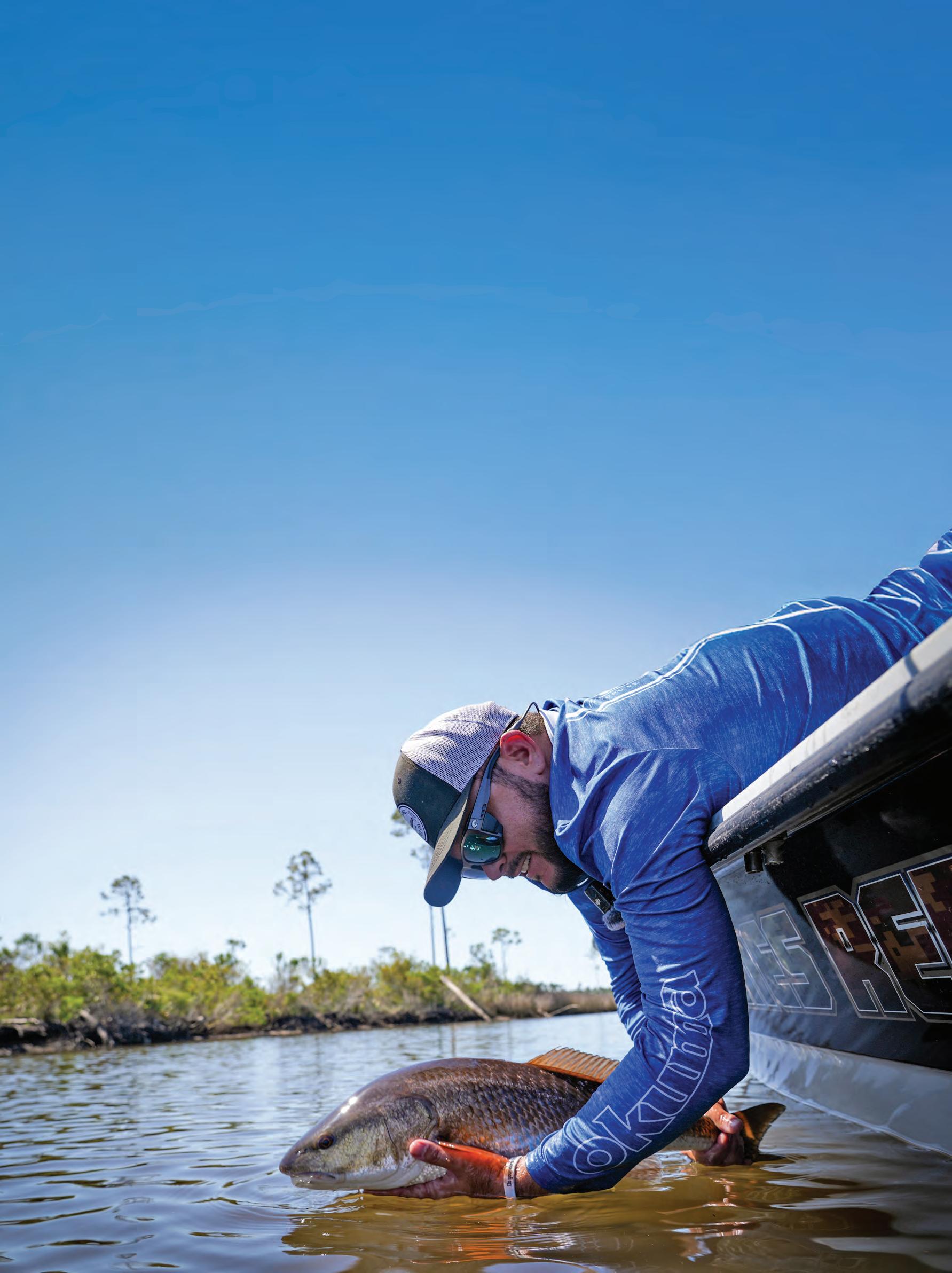
By Capt. Michael Okruhlik
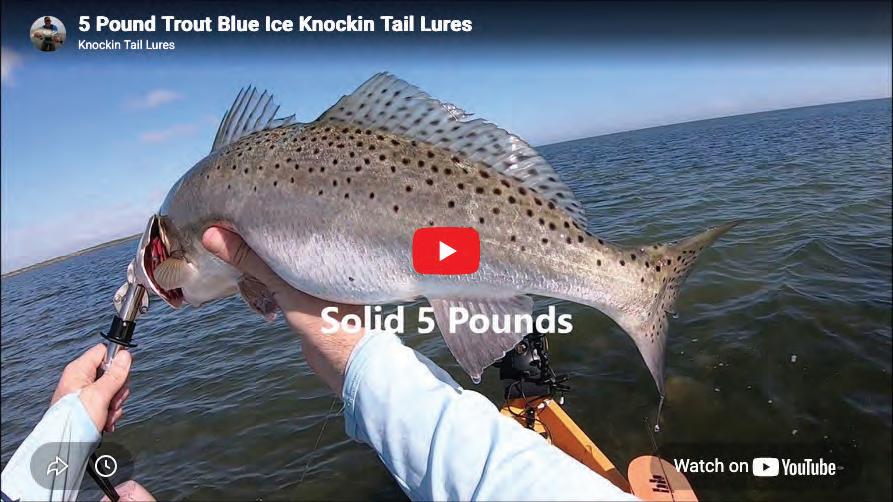
If March is the warm-up, April is go time. Longer days, greener water, and steady warming trends flip the inshore switch from “transition” to “feed.” The bait is thicker, the tides feel stronger, and the fish are no longer just staging — they’re hunting. April is when things start getting fun in a hurry. The key word this month is movement. By April, speckled trout are pushing onto reefs, sandbars, and grass edges with more consistency. Redfish are cruising shorelines, flooded grass, and marsh drains with purpose. Flounder settle into ambush points along drop-offs and current seams. Water temperature swings aren’t as drastic as early spring, but bait movement tied to tides becomes critical. Instead of asking where the warmest water is, start asking: Where is the cleanest moving water? Where is bait being pushed? Where is current creating ambush points? Points, drains, and wind-blown shorelines shine in April. If water is moving and bait is present, predators won’t be far away.
Unlike the slower midafternoon bites of late winter, April often rewards early risers. That first light window can be electric — especially on calm mornings with bait dimpling the surface. This is when topwaters re-enter the rotation in a serious way. There’s nothing subtle about an April blowup. But don’t force it. If fish are swiping and missing, switch to a soft plastic or suspending bait and clean up the followers.
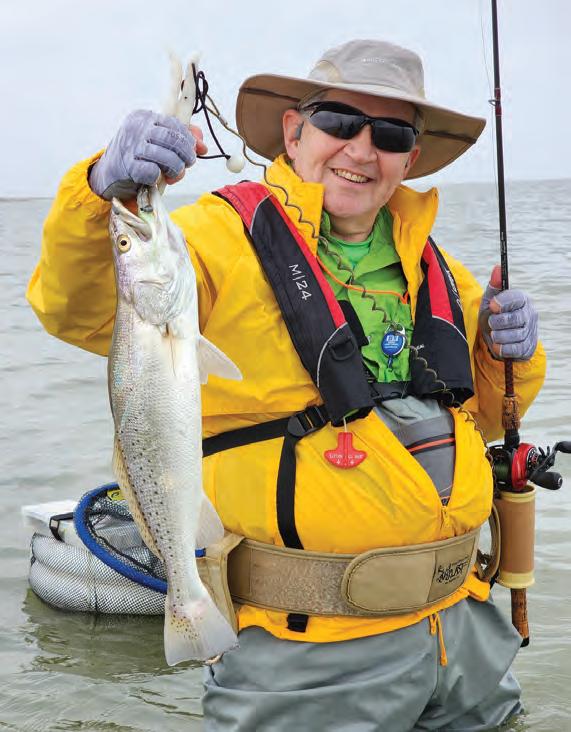
April fish are more aggressive, but they’re still opportunistic. Paddletails, shrimp imitations, and swimbaits all shine, especially when worked with a confident, steady retrieve. Water clarity should dictate your approach. In cleaner water natural colors and subtle action are key. In stained water, vibration and contrast matter more. If fish are chasing, cover
water. If they’re following but not committing, slow down and add pauses. Let the fish tell you what they want.
April breezes can stack bait against shorelines and points. Wind creates feeding lanes. Instead of hiding from it, position yourself to use it. Drift with it. Fish into it. Work the edges it creates. Wind plus tide plus bait equals opportunity.
Next trip, challenge yourself by starting on a wind-blown shoreline and working it thoroughly. Then move to a protected drain and compare activity. Pay attention. Which has more bait? Which has more strikes? Fishing in April is less about luck and more about reading conditions in real time.
April feels alive. The marsh hums. Birds dive. Mullet scatter. The sun carries warmth instead of warning. It’s the month where confidence returns, patterns stabilize, and fish feed longer and harder. Somewhere between the first cast and the last drift, you’ll remember why spring inshore fishing is hard to beat. The water’s warming and the fish are moving. Are you taking a kid fishing?
Capt. Michael Okruhlik is the inventor and owner of Knockin Tail Lures®.

For years, I’ve spent time on rivers, streams and backcountry waters that most people will never see. Places that feel untouched. Wild. Worth protecting.
But over time I started noticing something that didn’t belong.
Discarded fishing line.
Sometimes it’s barely visible—caught in a branch or wrapped around a rock. Other times it’s impossible to ignore. Tangled, drifting, or worse…impacting wildlife that never should have encountered it in the first place.
The truth is, most anglers don’t leave it behind intentionally. But it’s there. And if you spend enough time on the water, you’ve seen it.
I know I have.
For a long time, I did what many of us do. I noticed it… and kept fishing.
At some point, that changed.
I stopped asking if it was my place to do something about it—and started asking if it was my responsibility.
That shift is what led to Pack Out More™.
It’s not complicated. It’s not about perfection. It’s about a simple idea: If you enjoy the water, leave it better than you found it.
One piece of line. One piece of trash. One small decision at a time.
Because movements don’t start with big moments. They start with small actions
By Joe Woody
that people choose to repeat.
And when enough people make that choice, something bigger begins to take shape.
A new standard.
A new kind of angler.
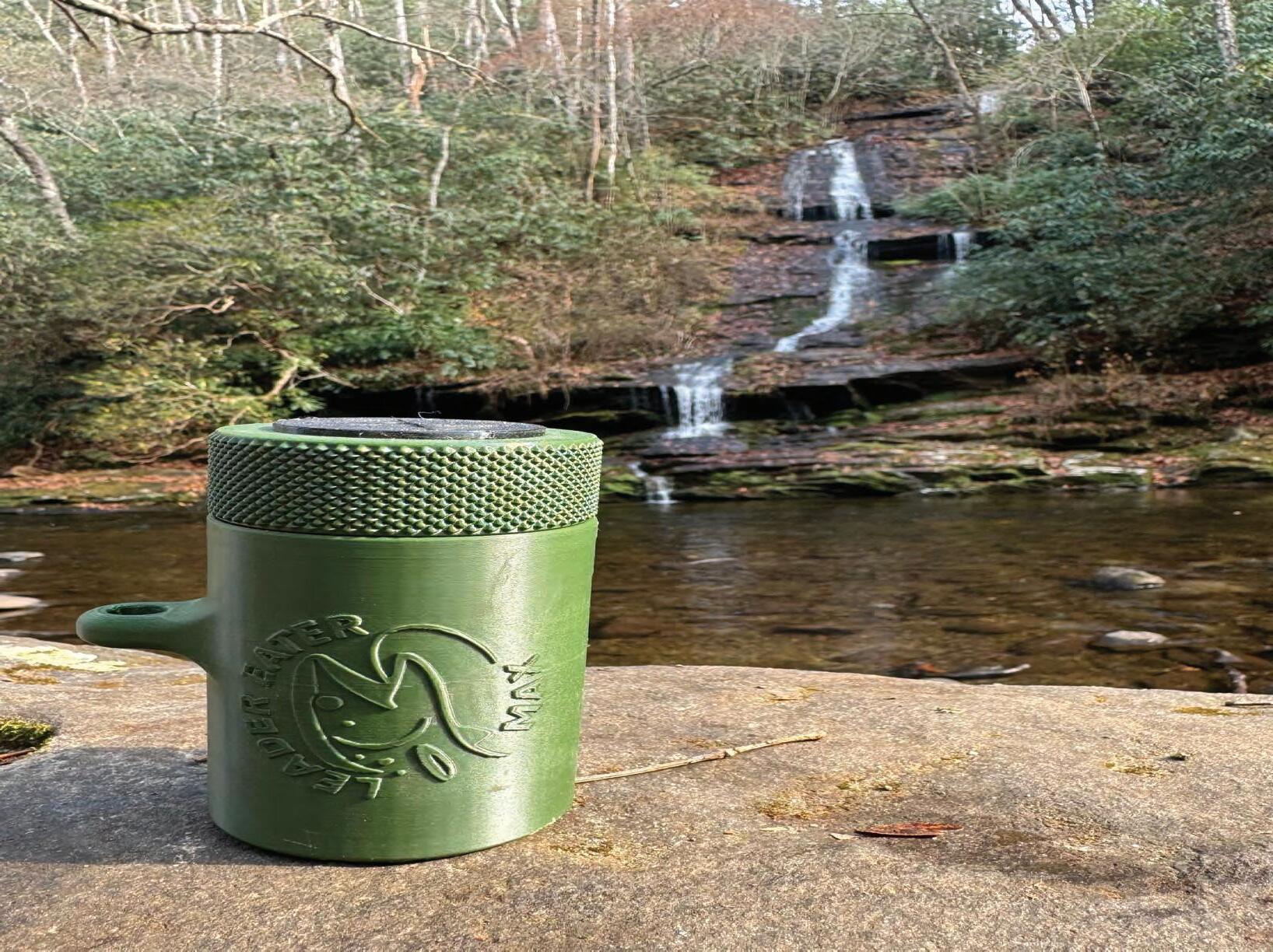
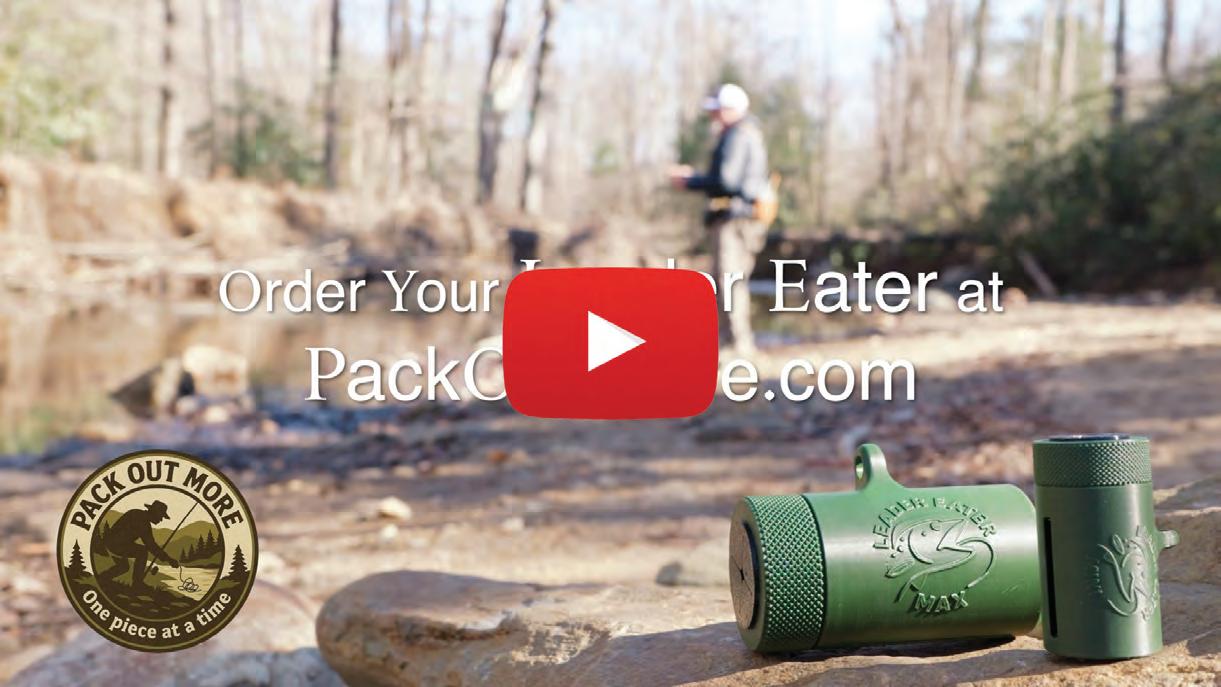
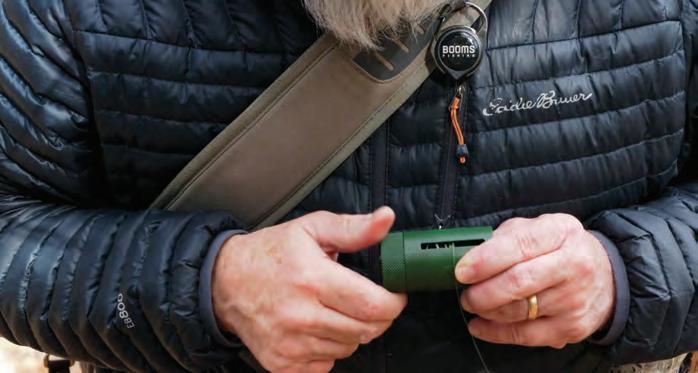
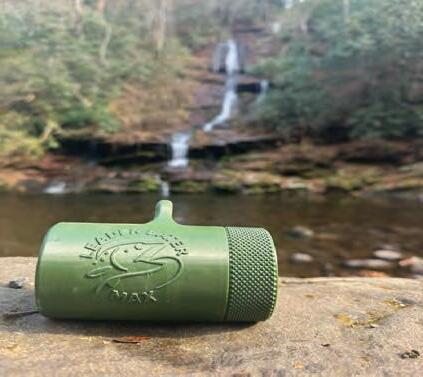
To make that action easier, we created the Leader Eater™—a simple, purposebuilt tool designed to help anglers remove and safely collect discarded fishing line and small debris while they’re on the water.
If you’re ready to be part of this shift, you can learn more and get yours at PackOutMore.com
Because this only works if enough of us decide to start.
Be
Pack Out More™ starts with a simple decision—one piece at a time.
The Leader Eater® was built to make that decision easier, giving anglers a simple way to remove and safely collect discarded fishing line and small debris while on the water.
The FSK16 “low-rider” design puts you right at water level, giving anglers unmatched control and easy access when it’s time to reel in and release fish. Its low-profile design makes landing your catch smoother and safer, while also providing a stable platform for casting in calm lakes, rivers, or coastal waters.
The newly patented, external inflatable rigid keel enhances tracking and stability while reducing drag, allowing the boat to glide efficiently across the water. With speeds of up to 21 mph, you can cover more ground quickly and reach your favorite fishing spots without delay.
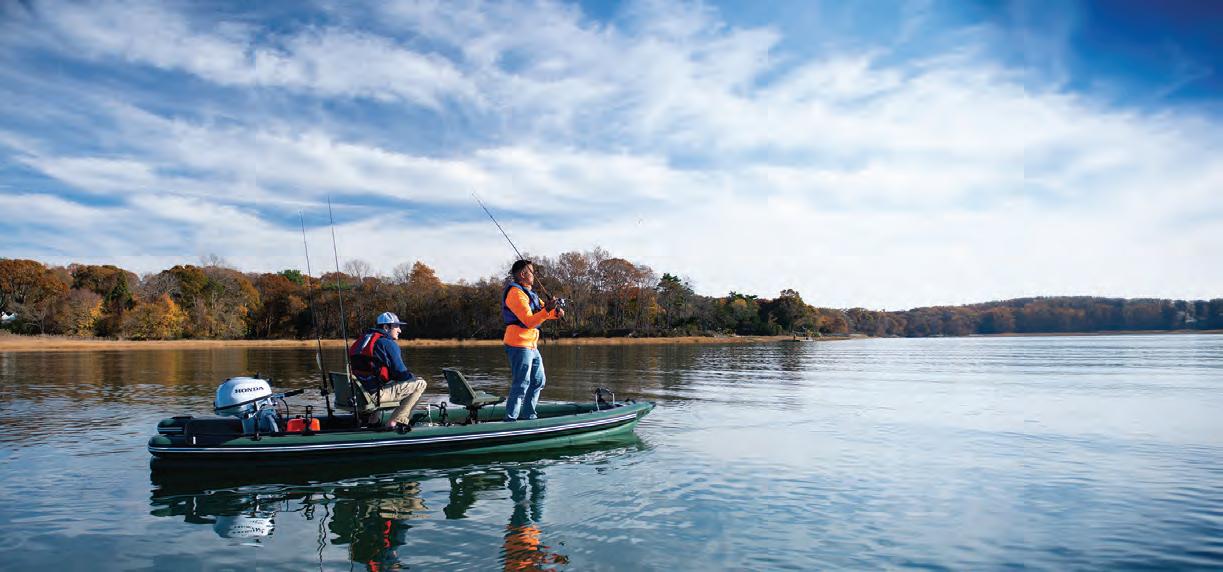
Built to comfortably accommodate 1–3 anglers, the FSK16 offers ample space for rods, tackle boxes, coolers, and other essential gear. Whether you’re heading out for a solo morning run or a full day with friends, this versatile craft combines performance, comfort, and convenience in one streamlined package.
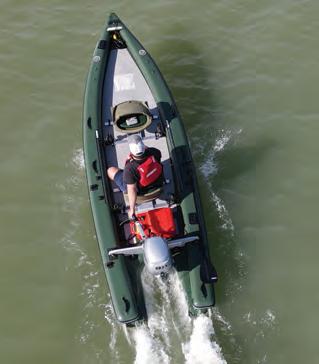
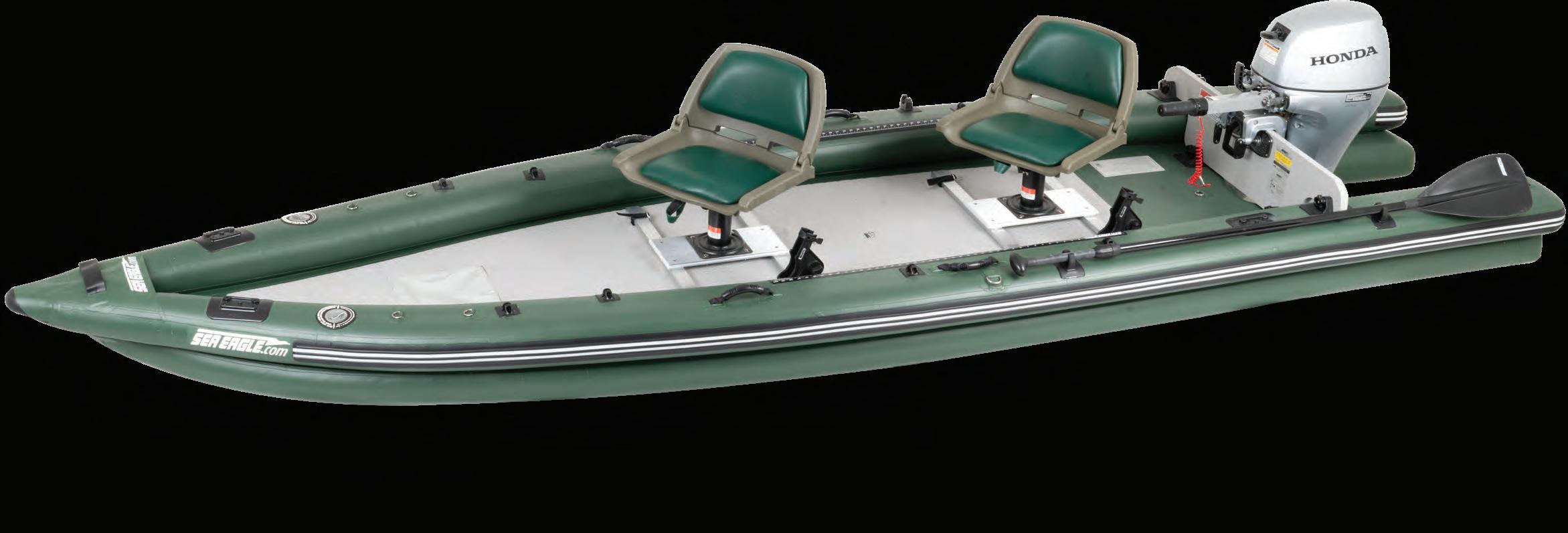
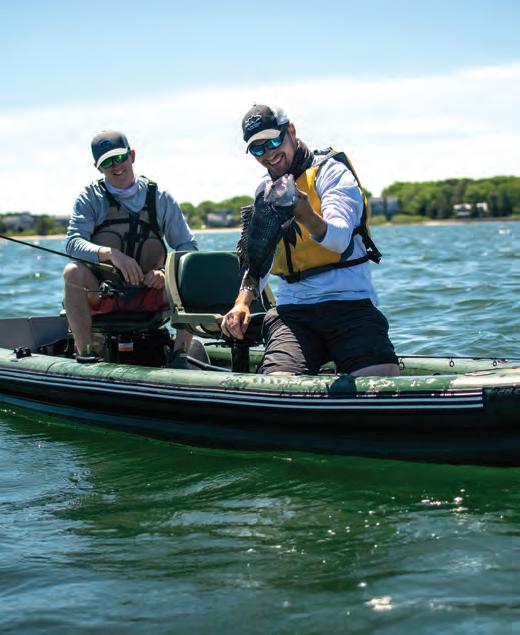

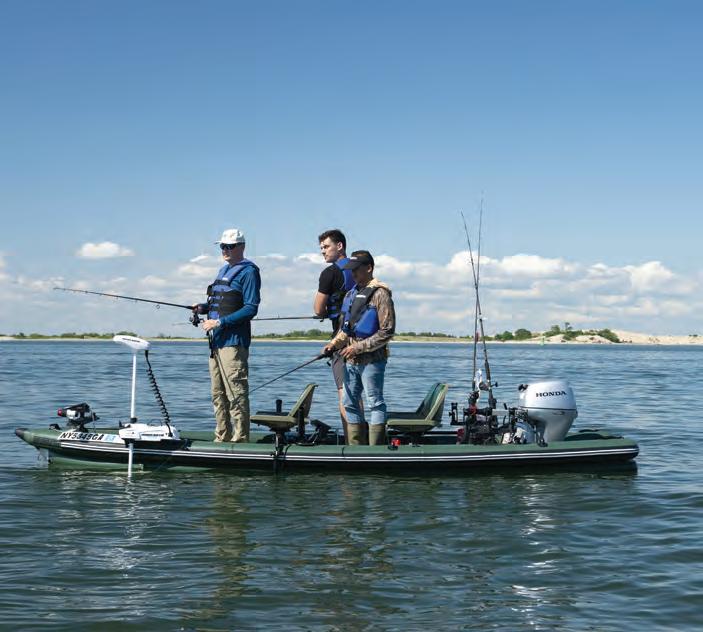
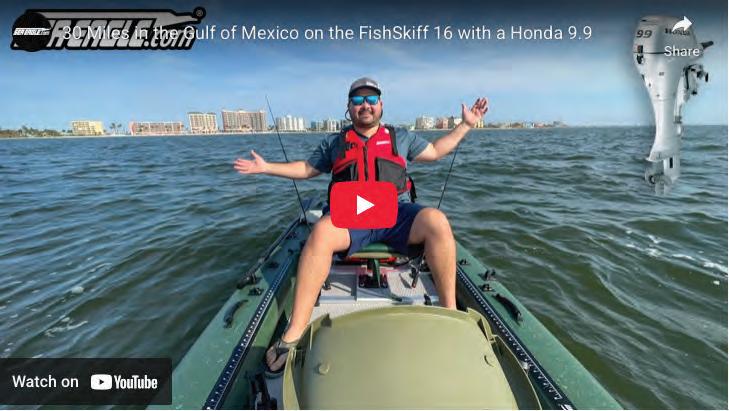
The Sea Eagle FishSkiff 16 stands out because it delivers the performance of a rigid fishing skiff in a fully inflatable design. Built by Sea Eagle Boats, this 16-foot inflatable isn’t just a casual lake raft — it’s a serious fishing platform engineered for anglers who want capability without the complications of traditional boat ownership.
What makes the FishSkiff 16 truly special is its high-pressure drop-stitch construction. Unlike typical soft-bottom inflatables, this boat inflates to a rigid 10-15psi, providing a stable platform you can confidently stand on while casting. The hull is designed to plane efficiently with a small outboard (up to 10 hp), meaning it performs more like a compact skiff than a dinghy. Yet when deflated, it rolls up for storage in a garage, shed, or even the back of a vehicle. No trailer. No marina fees. No long-term storage headaches.
A major difference between the FishSkiff 16 and most inflatable fishing boats is its patented external inflatable keel. This feature improves
tracking, handling, and lift, helping the boat plane faster and run more efficiently. Many inflatables are limited to displacement speeds and tend to wander in wind or current. The FishSkiff’s keel design gives it better directional stability and a smoother ride in light chop, which is critical when running to a distant fishing spot.
This boat isn’t just inflatable — it’s purposebuilt for anglers. The wide beam and flat interior provide excellent stability for stand-up casting. EVA foam deck padding improves traction and comfort during long days on the water. Integrated mounting pads allow for rod holders, fish finders, and accessories. There are built-in measuring rulers along the tubes, and the lowprofile sides make it easier to land fish.
With a high weight capacity (1,765 lbs), it comfortably supports multiple anglers plus gear, coolers, and batteries. Despite that capacity, the hull itself is relatively lightweight, making setup and transport manageable.
Because it’s inflatable and lightweight, the FishSkiff 16 drafts shallow. That means access
to back bays, flats, river stretches, and skinny water where larger fiberglass boats can’t go. For bass, redfish, pike, or inshore anglers, this opens up productive water that’s often less pressured.
Unlike many budget inflatables, this boat features multiple independent air chambers for safety redundancy. The reinforced material is designed to handle abrasion from docks, sandbars, and gear. It’s built for real fishing environments, not just calm recreational paddling.
Most inflatable fishing boats prioritize portability but sacrifice speed, rigidity, and customization. Traditional skiffs offer performance but require trailers, storage, maintenance, and higher costs. The FishSkiff 16 bridges that gap — combining true planing performance, stand-up stability, and serious fishing features in a roll-up package.
For anglers who want freedom, flexibility, and real capability without the burdens of boat ownership, it offers something genuinely unique in the inflatable market.
CAPT. MIKE SMITH
Are you tired of catching tons of 13 inch speckled trout and 16 inch snook? It’s time for you to switch to a big topwater lure to catch big springtime fish. A walk-the-dog type of lure is an excellent choice. I like Zara Super Spooks, MirrOlure Top Dogs and Rapala Skitter Walks the best. Make sure to choose a lure that is at least four inches long. Hungry springtime fish are ready to eat a big meal as the water temperatures rise.
A larger lure has many advantages over smaller baits. The larger profile and length creates more vibrations to attract monster fish from long distances. A larger lure allows you to cover more water because you can make longer casts. A larger lure also discourages most of the smaller fish from biting. You will catch fewer fish but they will be of much better quality.
Pro Tip #1: Do yourself and the fish a

favor and smush down the barbs on your treble hooks. You won’t lose any fish as long as you keep the line tight. The hooks will also come out of the fish and your hand much more easily. The best topwater lure colors for speckled trout and snook are silver and white. Choose lures with silver or white sides and bellies. The back color doesn’t really matter because the fish will hit from under and behind the lures. The best retrieves for a walk-the-dog lure includes a pause every ten feet or so. Quite often you will get a vicious reaction bite right after the pause.
Pro Tip #2: The best leader material for walk-the-dog lures is monofilament. Monofilament line floats versus fluorocarbon line that will sink and negatively affect your topwater lure’s action. A short heavy leader, 12 to 15 inches is a great choice. Long leaders will often
negatively affect your lure presentation. Many fishermen believe that you can’t use topwater lures in the middle of the day. But they are wrong. You can use a topwater lure all day and catch huge speckled trout and snook. Topwater lures do work the best in low light scenarios. It can be sunrise or sunset but cloudy or stormy days are also great times to use big topwater lures. If you find a school of mullet, cast your topwater lure just outside of the school. You want to make it easy for the snook and trout to distinguish your lure from the rest of the school.
Spring is a great time to catch huge snook and speckled trout with big topwater lures. These fish need to fatten up again after fasting through much of the winter. They would rather eat one large calorie meal than have to chase a bunch of small fish around for the same caloric input.
Capt. Mike Smith, owner of Fish Your Ass Off Charters, is an inshore fishing guide who has been fishing the inshore waters, oyster bars and grass flats of Florida for more than 40 years. Reach him at (561) 339-2317, email: contact@ fishyourassoff.com or visit fishyourassoff.com.





Tucked into the northeast corner of Mississippi, Tishomingo County offers anglers a surprisingly diverse and scenic freshwater fishery that feels far removed from the typical Southern landscape. According to Explore Tishomingo County, the area is defined by clear lakes, winding creeks, and access to the Tennessee River system—creating a destination where both casual fishermen and serious anglers can find productive water.
At the center of it all is Pickwick Lake, a well-known hotspot that consistently produces quality fish. This lake is particularly famous for its trophy smallmouth bass, but it also supports strong populations of largemouth bass, crappie, catfish, and bluegill. The structure here is what makes it special— expansive open water transitions into
creek channels, rocky points, and shallow coves, giving anglers multiple patterns to work depending on the season. Whether you’re dragging jigs along ledges or casting into backwater pockets, Pickwick offers year-round opportunity and even hosts tournaments and guided trips for those looking to dial things in.
For a quieter, more laid-back experience, Tishomingo State Park provides access to smaller waters like Haynes Lake, a 45-acre fishery ideal for bank anglers and small boats. Here, you’ll find a steady bite of bass, crappie, catfish, and bream—perfect for a relaxed day or introducing someone new to fishing. The park’s rugged terrain and wooded shoreline add to the experience, making it feel more like a backcountry trip than a typical lake outing. Running through the park, Bear Creek offers a completely different style of fishing.
This rocky, flowing creek is ideal for anglers who prefer light tackle and moving water. Spotted bass, sunfish, and even smallmouth can be found in its deeper pools, especially along shaded banks and current breaks. It’s a place where fishing blends with exploration—casting between paddles as you float through sandstone bluffs and hardwood forests. What makes Tishomingo County stand out isn’t just the fishing—it’s the accessibility and variety. From full-service marinas and boat ramps to remote creeks and shoreline spots, anglers can tailor their trip to match their style. Whether you’re chasing trophy bass on Pickwick or easing into a quiet morning bite on a small lake, this corner of Mississippi delivers a well-rounded, under-the-radar fishing experience worth exploring.

By Capt. Richard Andrews
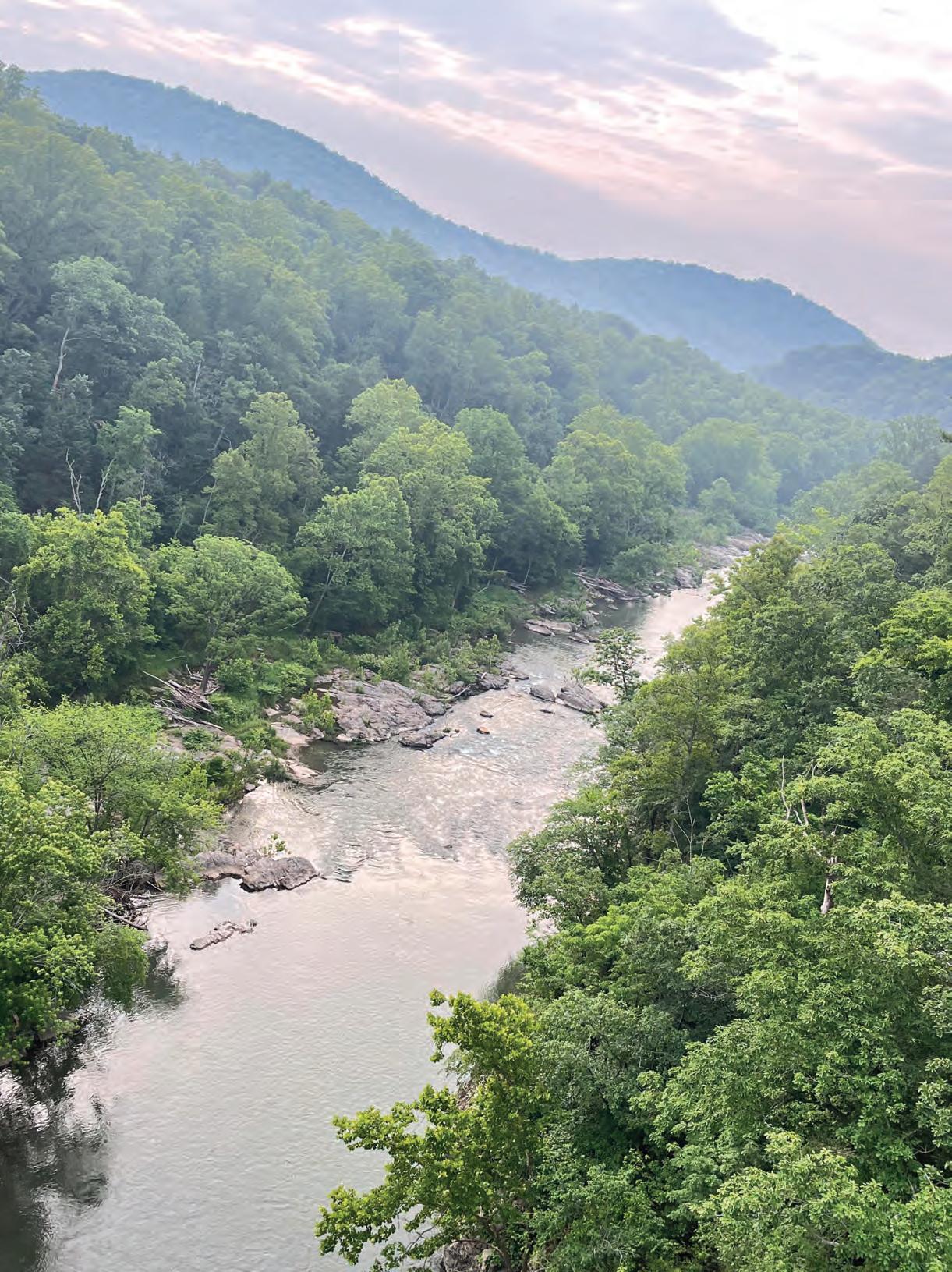
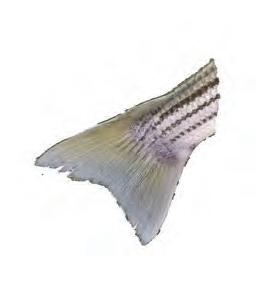
Due to its unique location along the Eastern Seaboard and with its expansive Pamlico and Albemarle Sound estuaries, the second largest in the nation, North Carolina hosts some of the most consistent year-round opportunities for striped bass on light tackle and fly. Resident sub-adult stripers inhabit these estuaries and their tributaries year-round due to the plentiful supply of bait and relatively stable seasonal water temperatures.
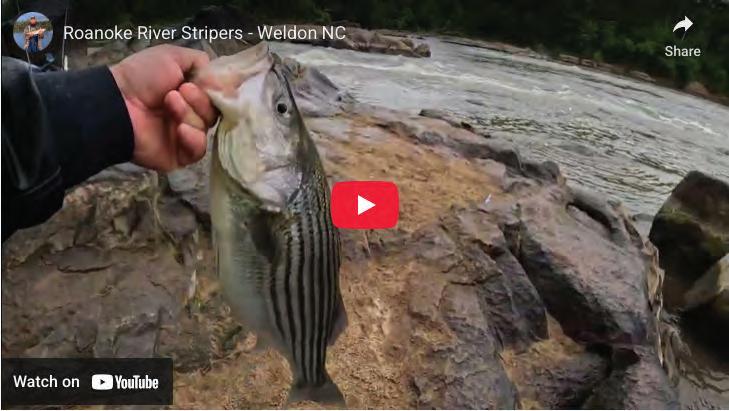
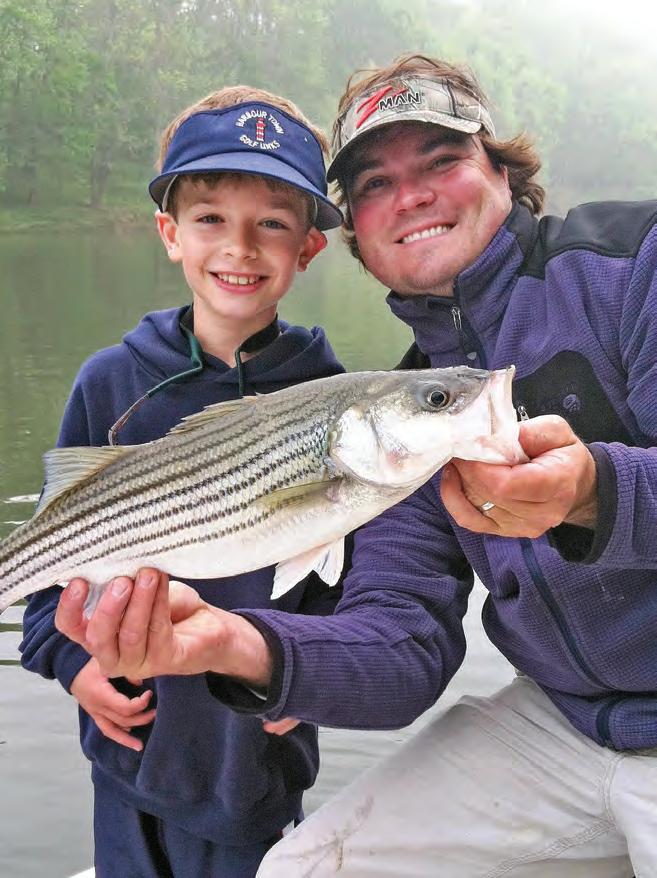
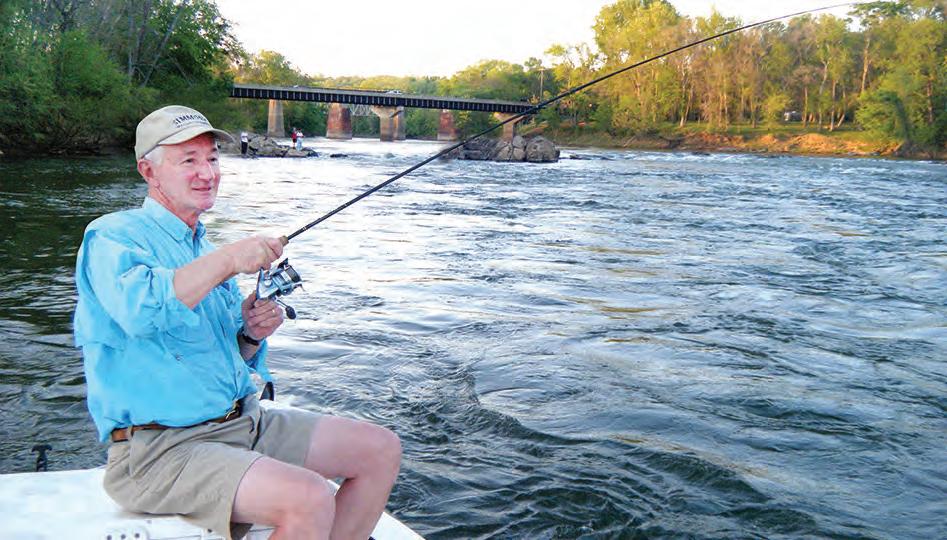
The pinnacle of North Carolina light tackle striper fishing is the April-May spawning runs on the Roanoke River, upriver near the town of Weldon. This area is a very popular fishing destination in the spring, and anglers from all over North Carolina, Virginia, and other locations around the country come to experience its unique striper fishery. Aside from the sheer numbers of fish and the frequent opportunity to hit the elusive triple digit mark, what makes the Roanoke River spring striper fishery so great is the variety of ways in which an angler can catch these exciting fish and how easily young or inexperienced anglers can catch fish there.
We catch fish from December through January along the Roanoke’s lower reaches near the lower river town of Plymouth and the possibility for big numbers casting artificials or with flies is always very real. But, during March and early April, as the water temps warm into the upper 50s and low 60s, the fish start to migrate up the river for their annual spawning run, and that’s when the action gets really hot. When the fish gather in great numbers in the upper reaches of the North Carolina section of the Roanoke near Weldon, many eastern NC fishing guides offer charter trips there in the spring to take advantage of the opportunity for 100plus fish days.
The most popular way to catch stripers upriver around Weldon is to use shad minnows. Shad is what locals call juvenile (3-5”) alewife and blueback herring. Simply put, they are striper candy. They are popular baits for lake fishermen and they work great in the river, too. They can be caught in the lakes with a cast
net or purchased at local bait dealers for around $10/dozen. Experienced Roanoke striper anglers carry a large shad tank with several hundred frisky live baits, ready to be devoured by hungry stripers.
When the fish are biting aggressively, they can be easily caught by casting a soft plastic bait on a 1/4 -1/2 ounce jig head (weight depends on water level and flow velocity). I prefer the Z-Man MinnowZ, SwimmerZ, JerkZ, or StreakZ in a variety of natural colors that mimic the alewifes and bluebacks. Most baits will drift with the current, so anglers cast upstream and let the current bring their baits back toward the boat. If a large school is located, dropping anchor and figuring out the optimal casting angle to give your bait the best presentation in the current is the best way to stay on them and put some big numbers in the boat.
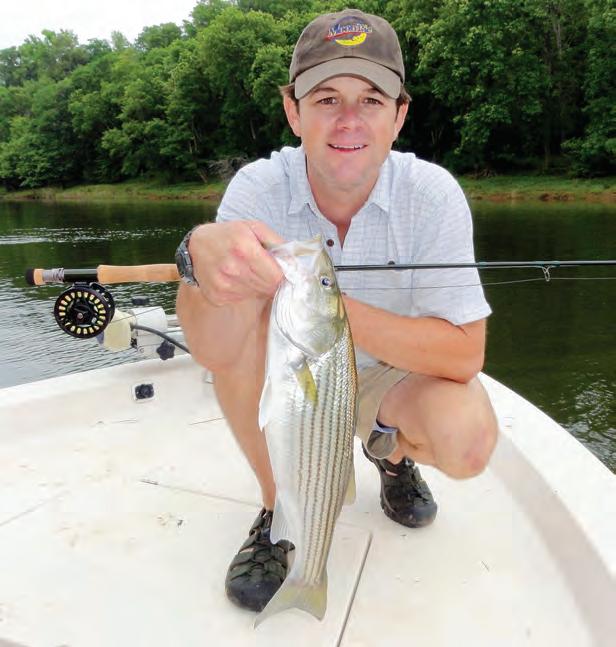
For topwater enthusiasts and fly fishermen, May is usually the best time to come. Water temps push into the upper 60s and low 70s, and the fish become much more active and aggressive. As a result, topwater baits such as Zara Spooks or Storm Chug Bugs are very effective in the early mornings and late afternoons, or even all day on overcast days. Most fly anglers use 6-8 weight setups with 250-450 grain fully sinking line, depending on water levels. I recommend the Teeny TS series lines. A variety of Clouser or deceiver patterns will work. The most important aspect of catching these stripers on a fly is using the proper
presentation. Allowing the line to carry the fly down to the strike zone combined with a really fast strip (two-handed is effective) will usually do the trick.
In the Roanoke River Management Area, the N.C. Wildlife Resources Commission manages the regulations. For striped bass, the keeper season opens on March 1 and closes April 30. Anglers are allowed two fish/person/day 18”-22” and only one of those fish can be over 27” so for all practical purposes, this is catch-andrelease fishing. Peak fishing in the upriver area is usually the last two weeks of April and first two weeks of May. Despite keeper season having ended, the fishing remains excellent in May with even better opportunities for topwater and fly fishing. If you enjoy catching striped bass on light conventional or fly tackle, you really should book a charter to experience this magnificent fishery. A knowledgeable local guide is recommended, as the upper area of the Roanoke is quite rocky, and can easily damage lower units and boat bottoms of the uninitiated.
Whether you are a beginner who can barely cast a spinning rod or an experienced saltwater fly fisherman, you owe it to yourself to come to the Roanoke River in the spring—you won’t be disappointed. It’s a beautiful river and a great time to be on the water, enjoying time with family and friends, and above all, a world class striper fishery!
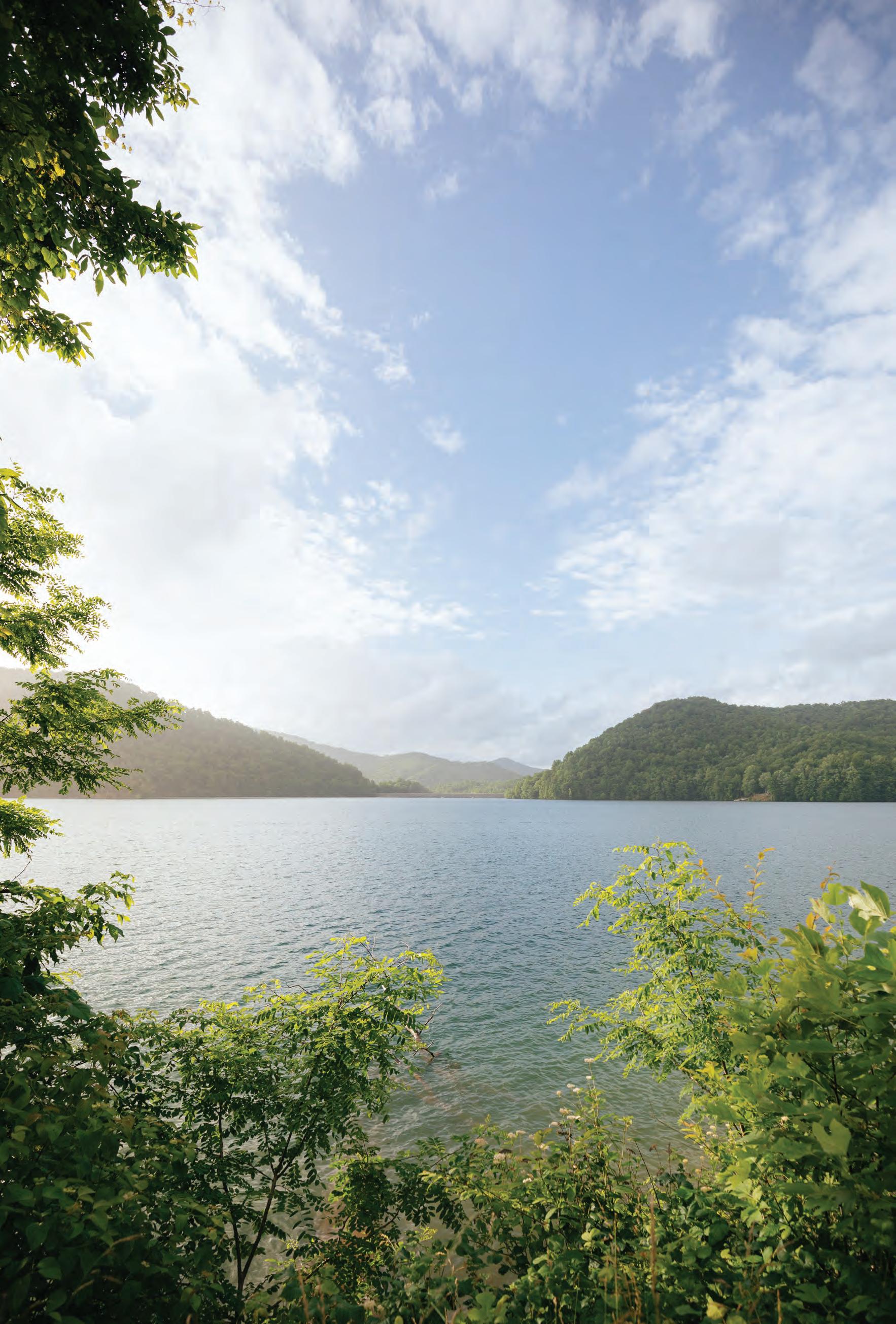

Every spring there comes a point when the bass that were locked on beds just days earlier seem to vanish. Anglers who were catching fish shallow suddenly struggle to get a bite and assume the spawn is simply over. In reality, those bass haven’t gone far—they’re just
beginning the post-spawn transition. As they leave the spawning areas, they start moving toward deeper water and begin feeding again to recover from the energy they burned during the spawn.
During this transition, bass rarely make a long move all at once. Instead, they
TYLER WOOLCOTT
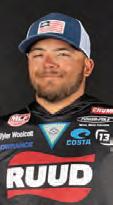
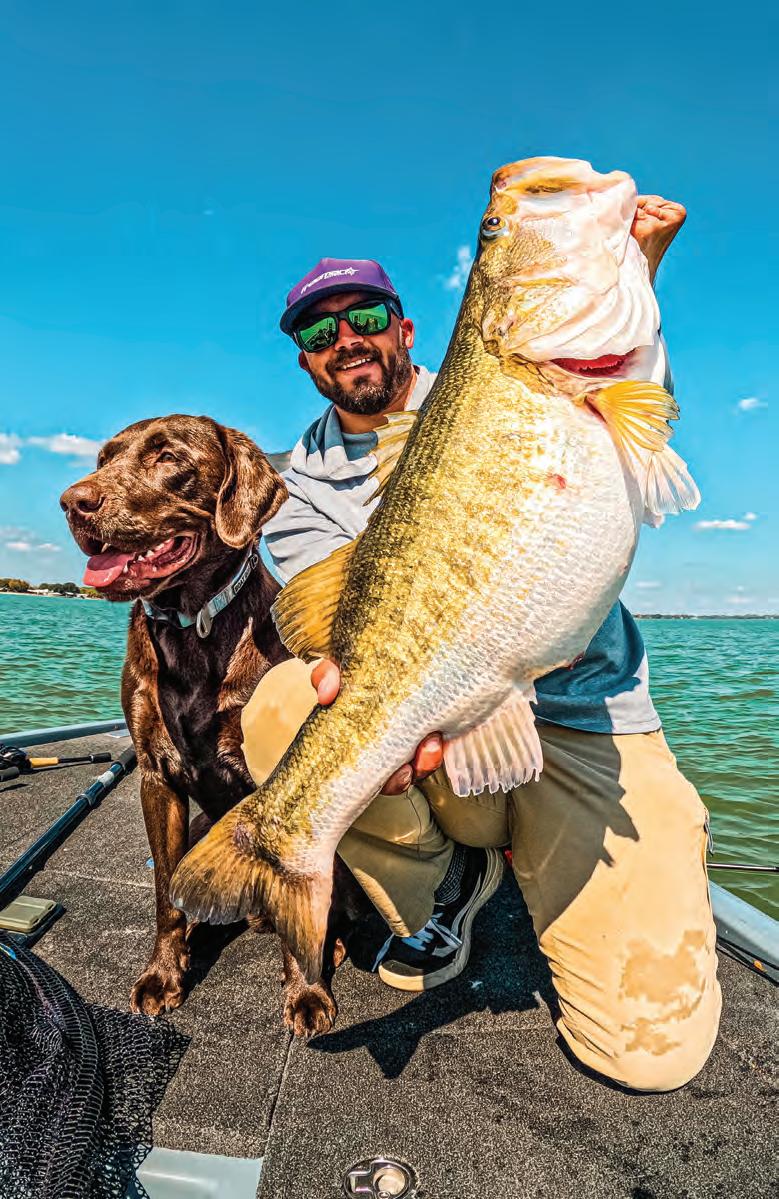
stop along the first pieces of structure outside spawning pockets. Secondary points, isolated grass patches and grass edges, docks, brush piles, and small drops just outside shallow spawning areas all serve as feeding zones for these post spawners. These spots are perfect locations where bass regroup before continuing toward their deeper summer patterns.
The key to finding post-spawn bass is understanding the routes they use to leave spawning areas. Knowing general areas of the lake where large populations of fish spawn is a major key to figuring out where they will go after they are done. Because they dont go far. Creek channels, subtle ditches across spawning flats, points, shell bars all act like underwater highways. Bass naturally follow these paths as they move out, and the first quality cover along those routes often holds the biggest fish. Anglers who focus their efforts along these transition routes can intercept bass before they disperse across the lake.
As bass begin feeding again, reaction baits or something low and slow are often the most effective way to locate active fish. Jerkbaits, jig head minnows, big worms, sometimes even a glide bait allow anglers to cover water quickly and trigger aggressive strikes from bass that are looking for an easy meal. Early and late in the day, topwater lures can also produce explosive bites as bass take advantage of baitfish and bluegill moving through the same areas.
The post-spawn window doesn’t last long, but it can be one of the most productive periods of the season for anglers who understand it. By staying close to spawning areas, targeting the first structure outside shallow flats, and covering water with moving baits, anglers can capitalize on bass that are eager to feed again. When everything lines up, this short transition often produces some of the heaviest fish of the year.
Capt. Tyler Woolcott is a professional tournament angler, as well as owner/operator of Florida Big Fish Adventures, providing bass and saltwater guided fishing trips: www.floridabigfishadventures.com.

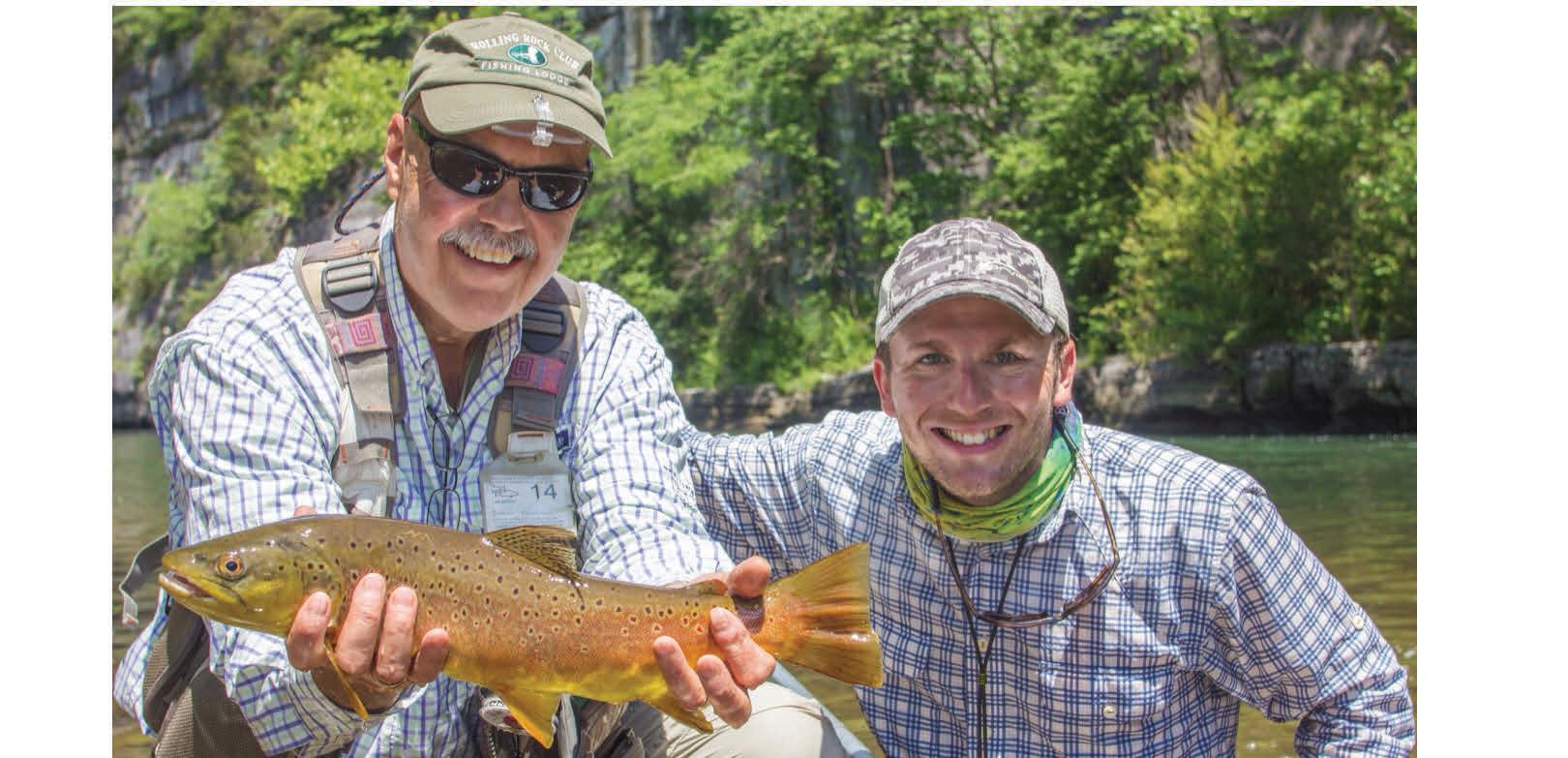





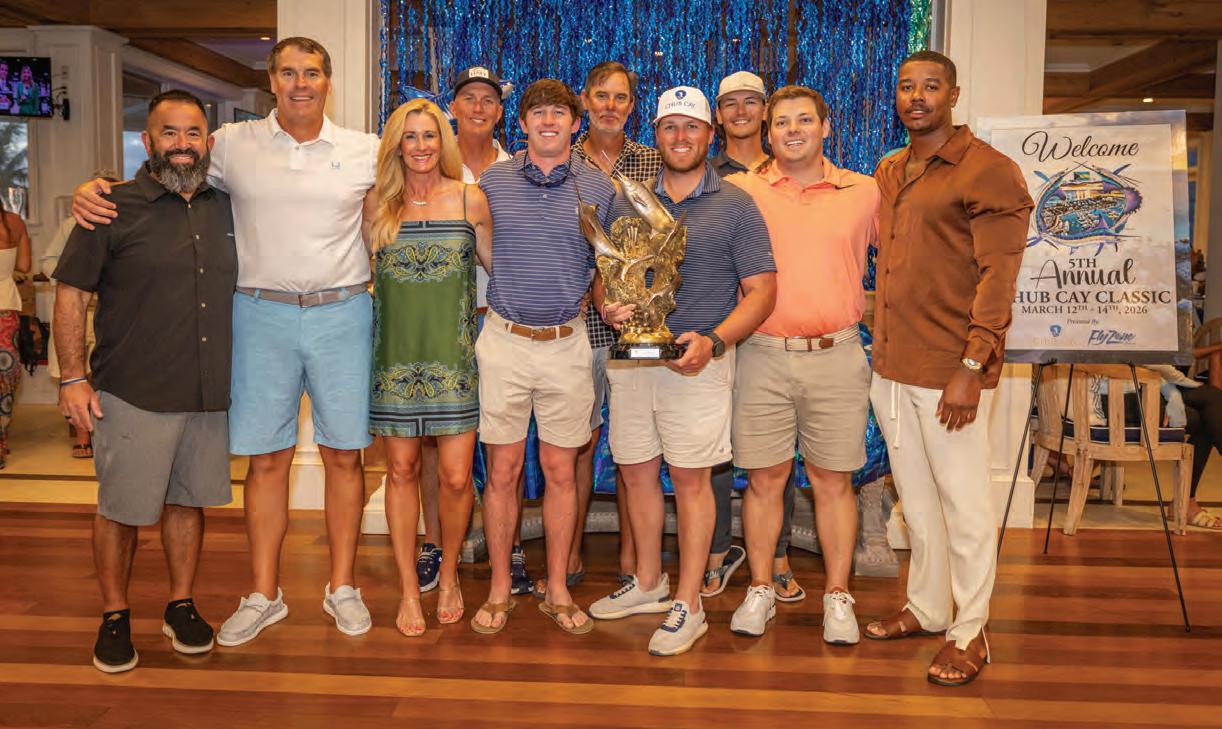
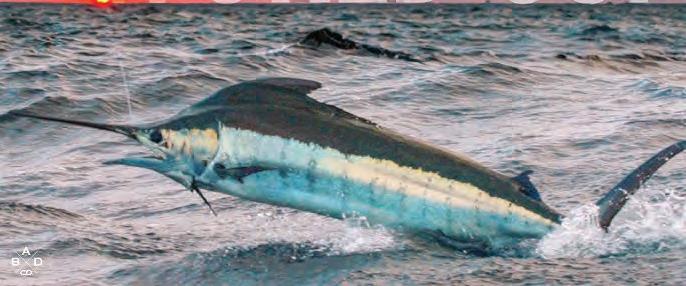
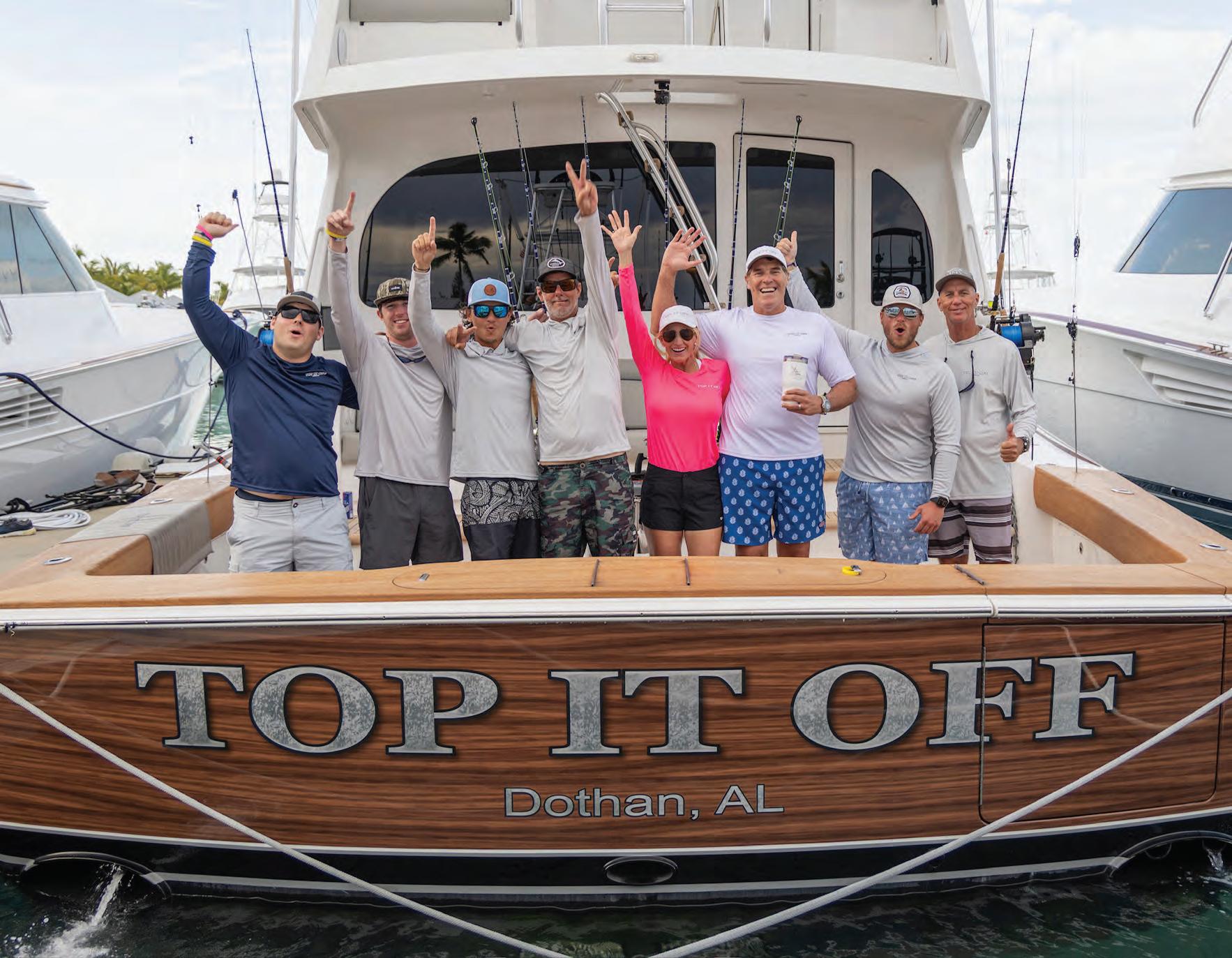
Twenty-six boats converged on the Chub Cay Resort and Marina in The Bahamas last week for the 5th Annual Chub Cay Classic. Top It Off started off the first day with a double-header on blue marlin and never looked back. The husband and wife team of Chris and Amy Dupree each caught a marlin and Amy was named the tournament’s Top Lady Angler. The 68 Viking, based in Dothan, Alabama, is run by Capt. Hal Weaver.
Lit Up, also a 68 Viking based in Fort Lauderdale with owner/skipper Todd Struyk, finished in second place based on time with two blue releases on the scorecard. Fins, a 74 Viking based in Destin, Florida, rounded
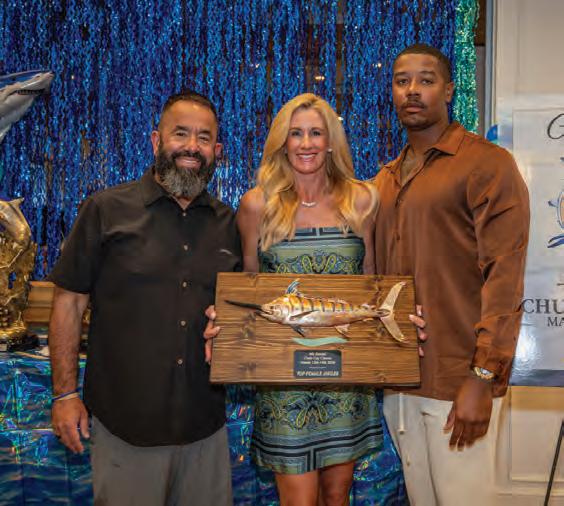
out the standings with 800 points (one blue, three sailfish). The Fins team consisted of four husband and wife couples. Under the allbillfish release format, blue marlin scored 500 points each. White marlin count for 200 and sailfish are worth 100 points.
Twenty-three billfish were released during this year’s Classic, hosted by the exclusive Chub Cay Resort & Marina Club, located at the southern tip of the Berry Islands in the Bahamas. The final tally included 10 blue marlin, one white marlin and 12 sailfish during two days of fishing.
No Le Hace, a 59 Spencer run by Capt. Freddy “Potatoes” Vicens, weighed the heaviest
mahi at 26 pounds. Mr. Mackie, a Viking 68 with Capt. Kevin Alexander at the helm, brought a 46-pound wahoo to the scales.
“We had Chamber of Commerce beautiful Bahamas weather and good fishing,” says Tournament Director Robert “Fly” Navarro. “The teams enjoy the camaraderie and atmosphere with one location, one marina and one club house. Chub Cay is the ideal venue for these fun, family-friendly events.”
The 6th Annual Chub Cay Invitational will be held April 9-11, 2026. To enter, email Navarro at fly@flyzonefishing.com. For additional information about the resort and marina, visit: www.chubcay.com.
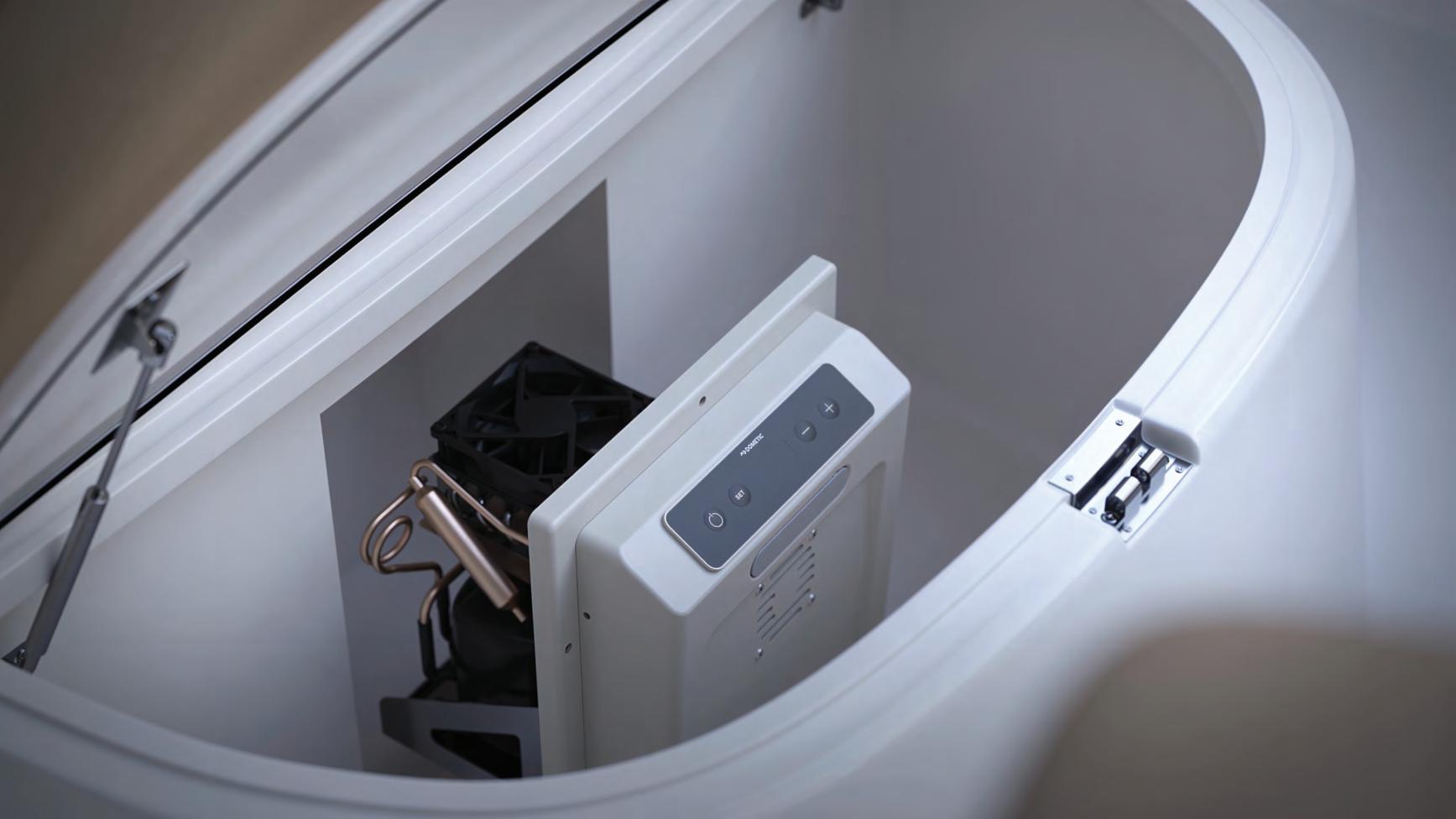

The Dometic CSX is a self-contained cooling system engineered for effortless installation and reliable performance. Ideal for volumes between 50 and 400 L, it combines a high-efficiency compressor, fan-cooled evaporator and digital temperature control in one space-saving unit. Simply drop it in, connect power, and enjoy consistent cooling without the complexity of remote couplings.




Florida anglers are always looking for ways to keep their food, drinks, and day’s catch cold and fresh during long, hot days on the water. That usually means stopping on the way out of the marina for many pounds of block or cubed ice, then moving food and drinks around throughout the day to keep them cold and prevent them from getting soaked or waterlogged.
Fortunately for Florida’s coastal and offshore anglers, leading outdoor brand Dometic recently launched an ingenious solution — the CSX Series “Coldmachine” self-contained refrigeration system. How ingenious? Over the past few months, Dometic’s CSX Series was honored with a 2025 NMMA Innovation Award at IBEX and a 2025 DAME Design Award at METS Trade in Amsterdam. Engineered to accommodate storage volumes from 60L up to 400L, the CSX Series combines a high-efficiency compressor, fan-cooled evaporator, and digital temperature control in one space-saving unit.
refrigerator or freezer without the complexity of remote couplings. Utilizing Dometic’s refrigeration technology proven in the RV and marine markets, the CSX Series features fanassisted airflow to accelerate cool-down times and maintain consistent temperatures — even as ambient conditions fluctuate over the course of the day. Built-in LED compartment lighting helps boaters see and access items easily, even when installed in a boat’s interior spaces.
This system’s compact footprint makes it ideal for use in a variety of spaces found on today’s boats. With an easy-to-install design, anglers just need to mount it in place, connect 12/24VDC power and enjoy a space-saving
Dometic’s integrated digital temperature control and precise thermally sensitive sensor delivers optimal cooling performance and energy efficiency. An automatic defrost logic embedded in the system’s electronics helps prevent ice buildup on the evaporator.
The CSX Series “Coldmachine” comes
in two refrigerator versions and one deep-freezer version. The CSX200 refrigerates up to 200L, the CSZX400 refrigerates up to 400L, and the CSX150FZ provides up to 150L freezing capacity.
Its compact footprint makes in an ideal addition to the builtin cooler/seating area forward of the console on many popular offshore center console and larger bay boats. With a CSX Coldmachine unit installed, anglers can do away with buying bags and bags of ice while enjoying better allday-long cooling performance. They can also focus on catching fish and enjoying time on the water, rather than dealing with meltwater or soggy sandwiches. In addition, the deepfreeze version is ideal for keeping rigged or whole baits and boxes of chum frozen solid until they’re needed, saving money and wasted bait.
This performance and convenience upgrade makes the Dometic CSX “Coldmachine” a great boat improvement project before the summer fishing season arrives.
To learn more, visit your nearest Dometic Marine retailer or visit
.
By Dennis McGuire
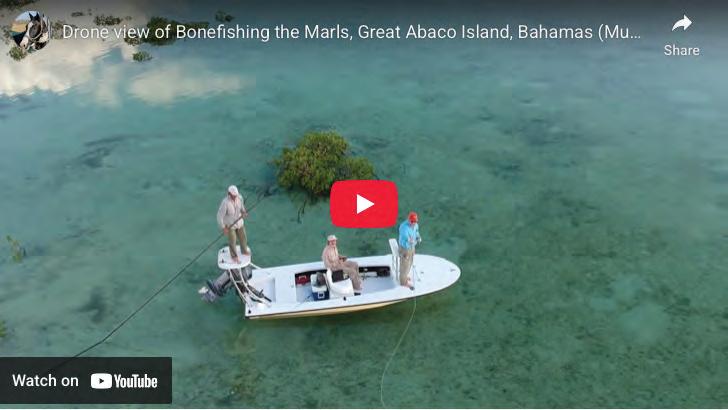
Your line sails past you as it loads effortlessly onto the clear glassy flat. Carefully, you strip the line of your 9-weight fast action rod hoping your handmade fly will attract the mouth of a coveted bonefish. The fly is presented perfectly, a few feet in front of the oncoming school. Silver flashes dart near your fly as you silently hope that one of them takes the bait. The flash darts again, and within an
instant a fish is hooked and the school is in a frenzy. Silver flashes frantically fade into the distance as the line screams off your reel. Holding on, you wait for the right moment to gain some line. The fish runs, taking the backing line with it. After it seems like the fish is miles away, the line stops screaming. You quickly reel in but the fish takes again, nearly dumping it. This exciting cat and mouse game continues for a few minutes until the fish finally tires enough for you to reel it in. Finally,
I am carefully holding my first bonefish. We stayed at a fishing lodge near Schooner Bay, a new development with a great marina and access to the fishing grounds. There are plenty of great locations to stay throughout the island from Crown Haven in North Abaco to Sandy Point in South Abaco. Depending on the type of fishing you want to do, Abaco has some of the best guides and lodges in the world, and there is no shortage of places to stay. We chose to stay near Sandy Point, near the most
southern point of the island. Sandy Point is a quiet fishing town. The locals spend most of their time catching some of the best and freshest seafood that the Bahamas has to offer. Whether it’s a crab boat going out and checking pots, a guide polling in inches of water looking for bones, or a lobster fisherman setting up lobster condos for trapping, the people of Sandy Point are busy finding ways to make a living off of their bountiful resource.
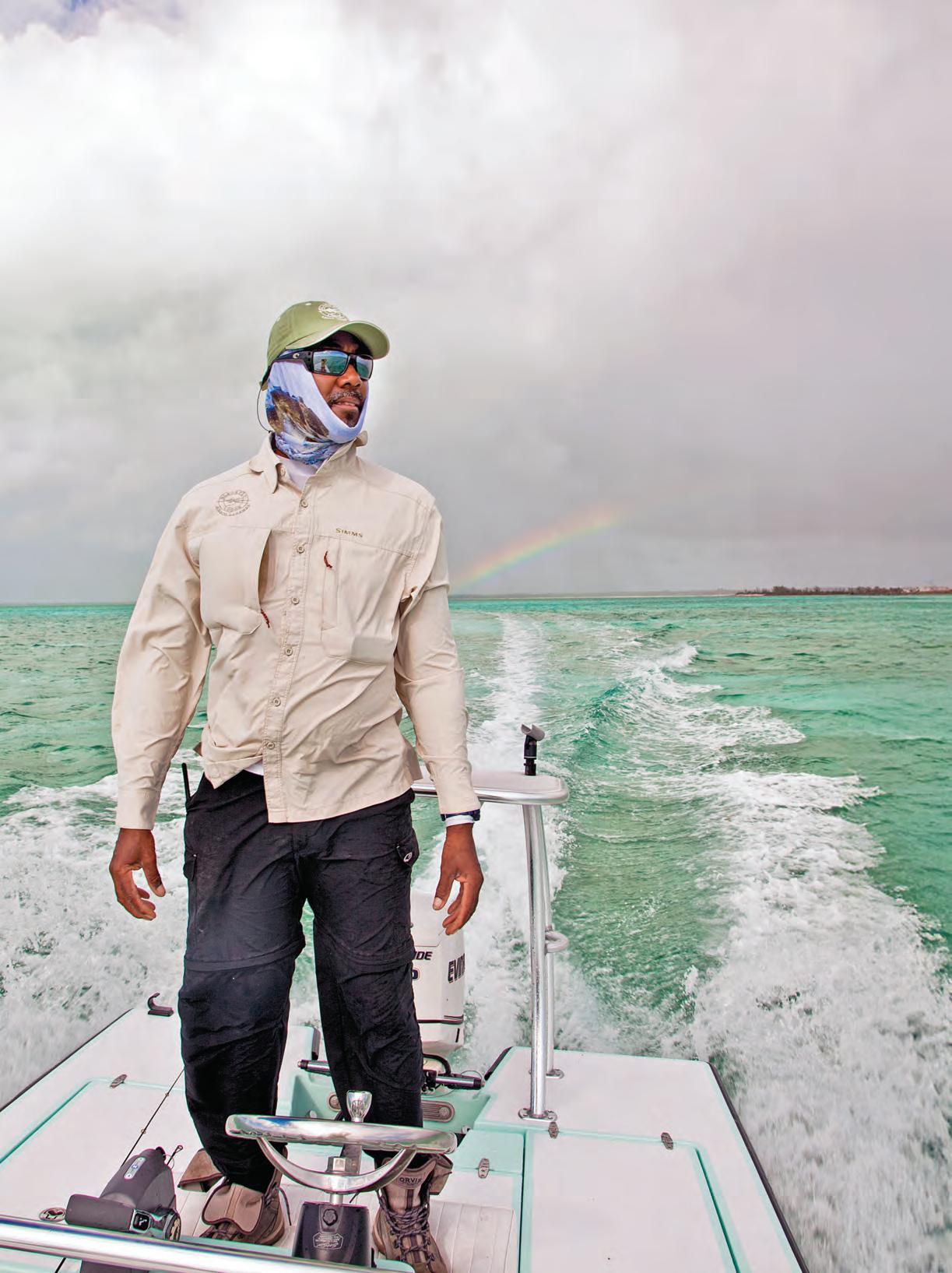
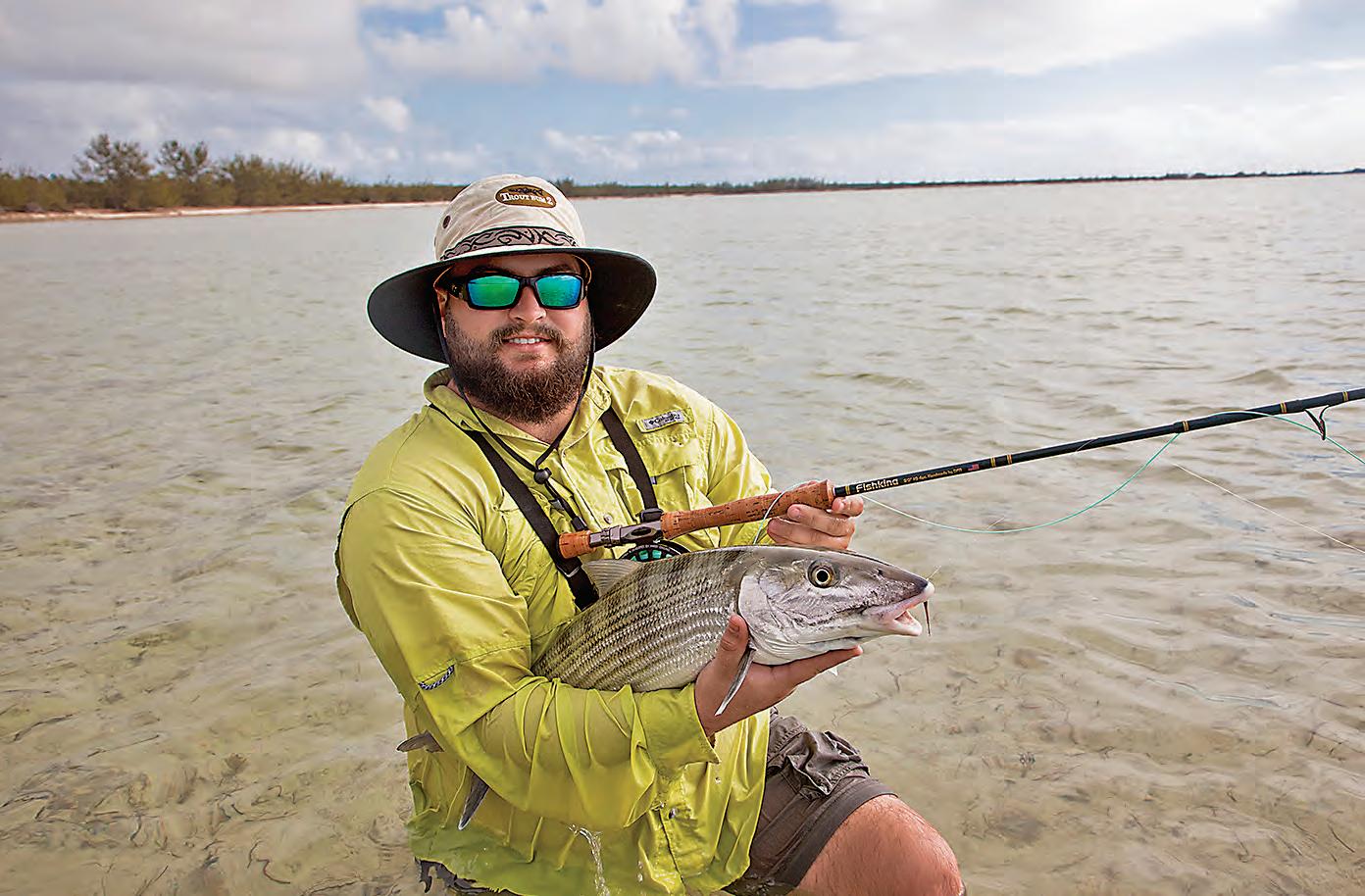
Our guide, Paul Pinder, is a giant of a man. All geared up in Sims, Orvis and Buffs, he was ready to take us to catch our first bonefish. Within minutes from shoving off, he says, “grab this 12-wt., there is a permit.” I thought, “No way is this place that covered in fish that we could swim from the dock to see the first permit.” We have fished in the Florida Keys and it took at least an hour of driving the flats to get a spot that looked like this. I grabbed the 12-wt. and was nervous to get a shot at the illusive permit. I make a few casts, but the fish is out of reach. We continue to track fish all throughout the day. Finally a school of bones are close enough to throw to. I make a cast, too short. I make another, just right. The fly sinks in the water, and just as it hits the sand it makes this little puff. This sand puff is like ringing the dinner bell for bones. The fish turns and goes after it. Another fish tried to bump it out of the way, but the bigger one is no match for him and takes the fly, and we’re off to the races. This is my first bone. Excited to hear the line scream off the reel, I try to keep the fish out of the mangroves, pulling on the rod. I land the fish and take a photo with my first bone. It was a fish to remember. We fish like this for most of the day, staking bones, having lunch, picking up fresh conch to eat later, and learning how to be a better fly fisherman from Paul. We end our day on the town flat—a great place to learn how to cast the fly rod. So, my girlfriend,
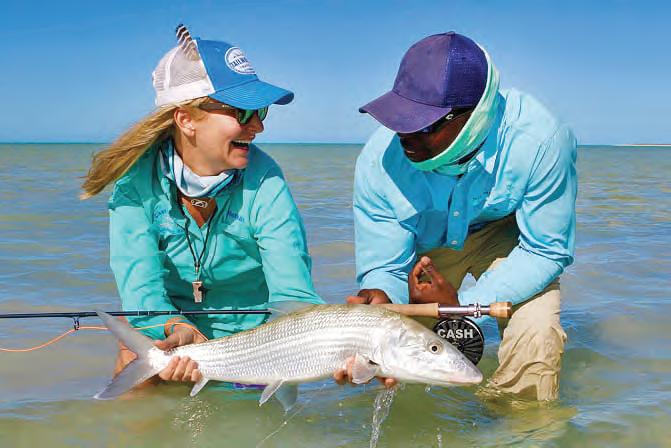
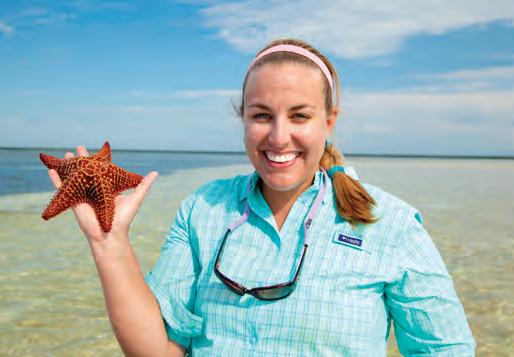
Caroline, hangs out with Paul to learn how to cast, and I go and stalk some more bones, this time on foot. Bones were tailing everywhere. As far as I could see, they had their noses in the sand looking for crabs and shrimp, and their tails were in the air. Beautiful sight!
I have never been to a place that you could
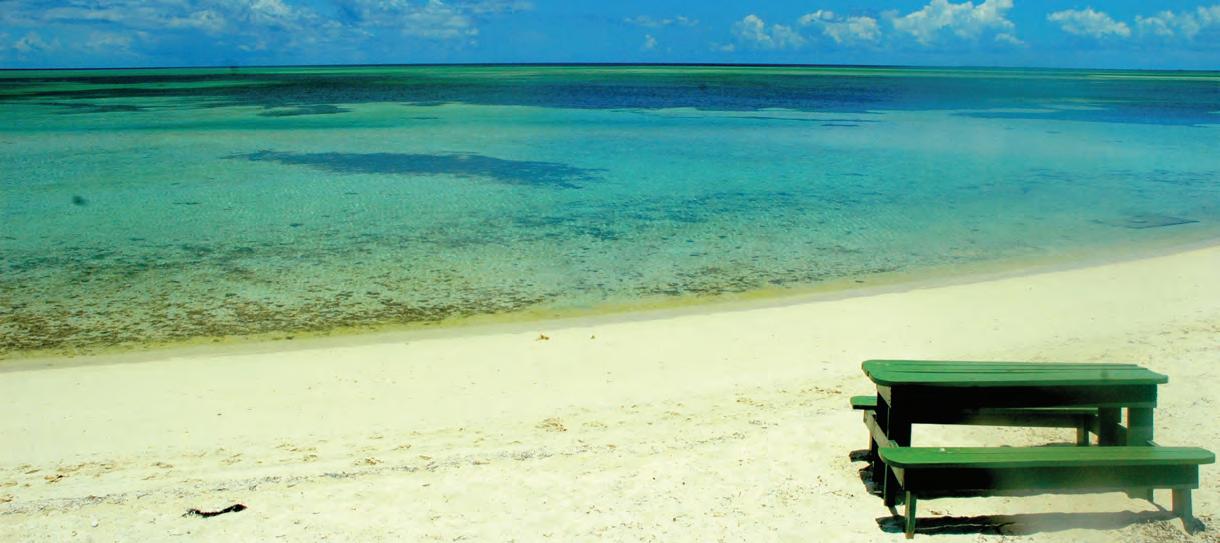
drop off your girlfriend with the guide to learn how to cast, watch the guide clean fresh conch, and walk around on a beautiful flat and catch as many bones as you’d like and do it all only an hour’s flight from Florida. Abaco is a great spot for beginners and expert alike. Experiencing the Abacos was surreal. From the moment I landed at the airport in Marsh Harbour, I felt all of my stresses and worries drain away. The fishing was an absolute dream. Leaving the docks at Sandy Point with bonefish expert and guide, Paul Pinder, is a moment I will never forget. From catching my first bonefish to going on a conch hunt, I couldn’t have asked for a better experience. The water was so beautifully clear that we got to see turtles, manta rays, sharks, a flash of a permit, and hundreds upon hundreds of red starfish. As they say in the islands “I go to come back”….and I certainly will.



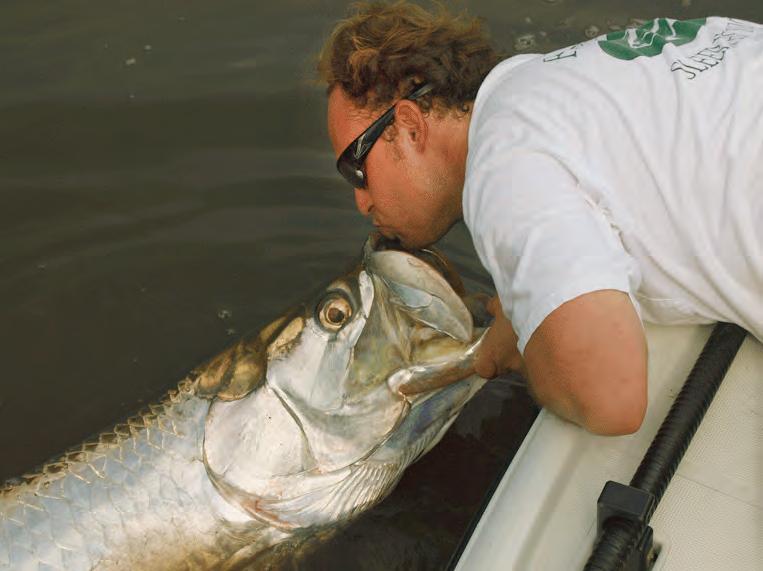
Athree-day expedition into the heart of the Everglades National Park delivered the kind of fishing trip that stays with you forever.
Running deep into the mangrove wilderness with our guide, we camped miles from civilization and woke before dawn to rivers alive with rolling tarpon. Sixty-pounders ghosted past the boat, and true giants—some pushing 200 pounds—materialized beneath the black water like submarines.
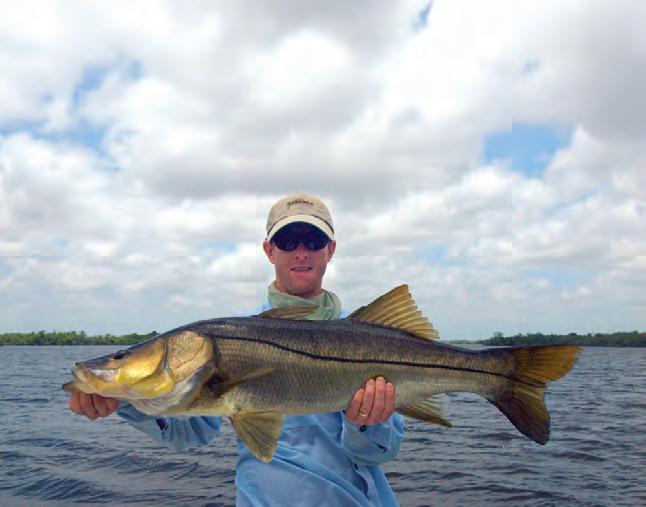
We hooked smaller fish, jumped a few monsters, and watched one massive tarpon launch skyward before throwing the hook in spectacular fashion. Between shots at silver kings, we battled trophy snook and redfish in inches of water.
Remote, raw, and humbling, the Everglades proved one thing: when it comes to monster tarpon, the hunt is every bit as thrilling as the catch.
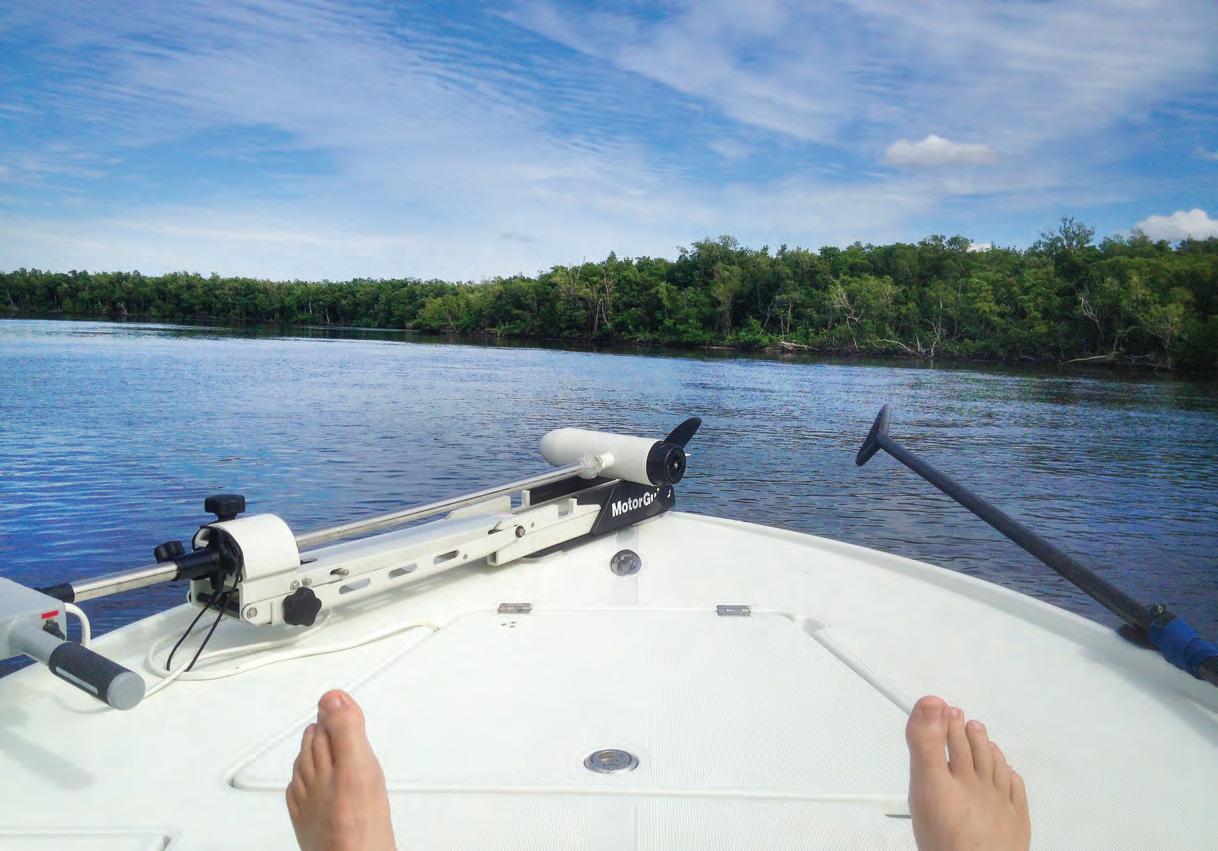

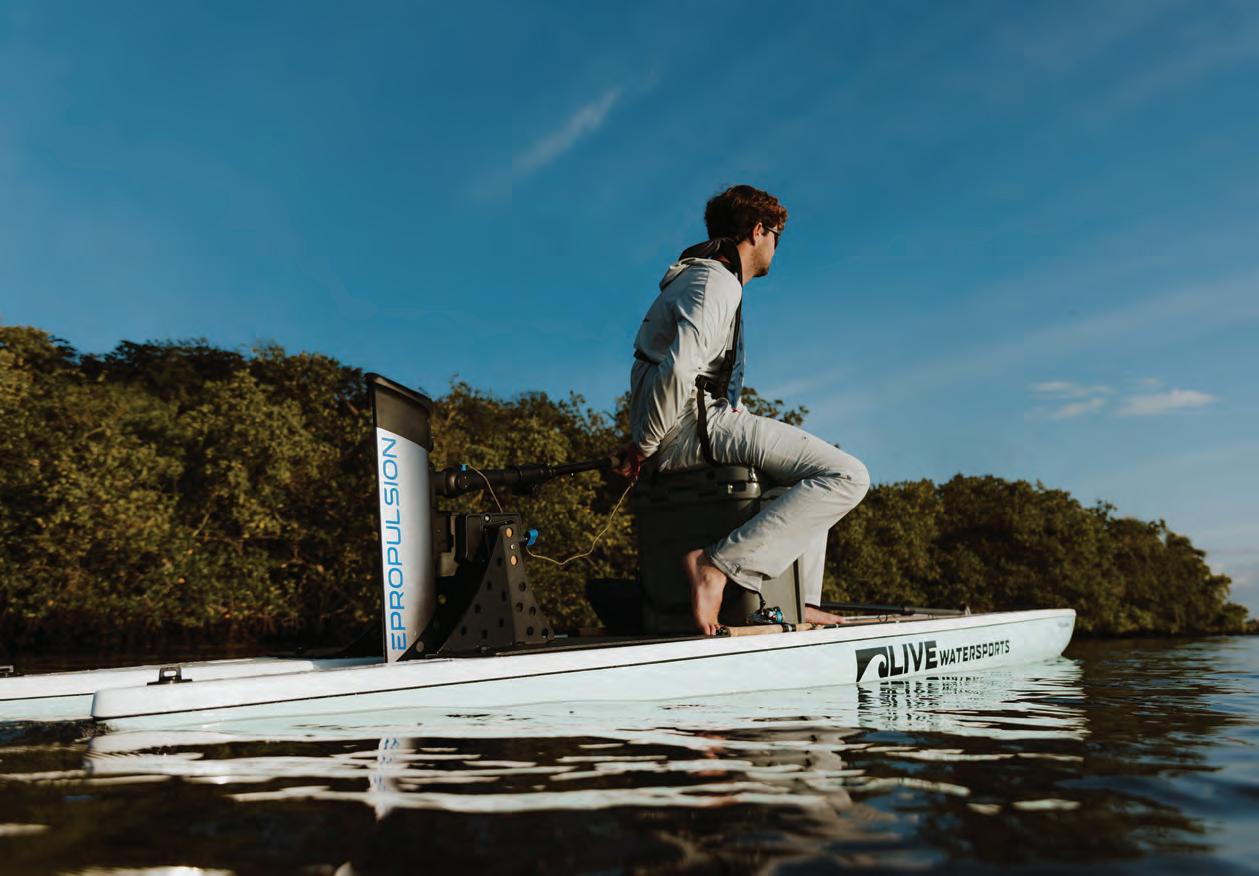
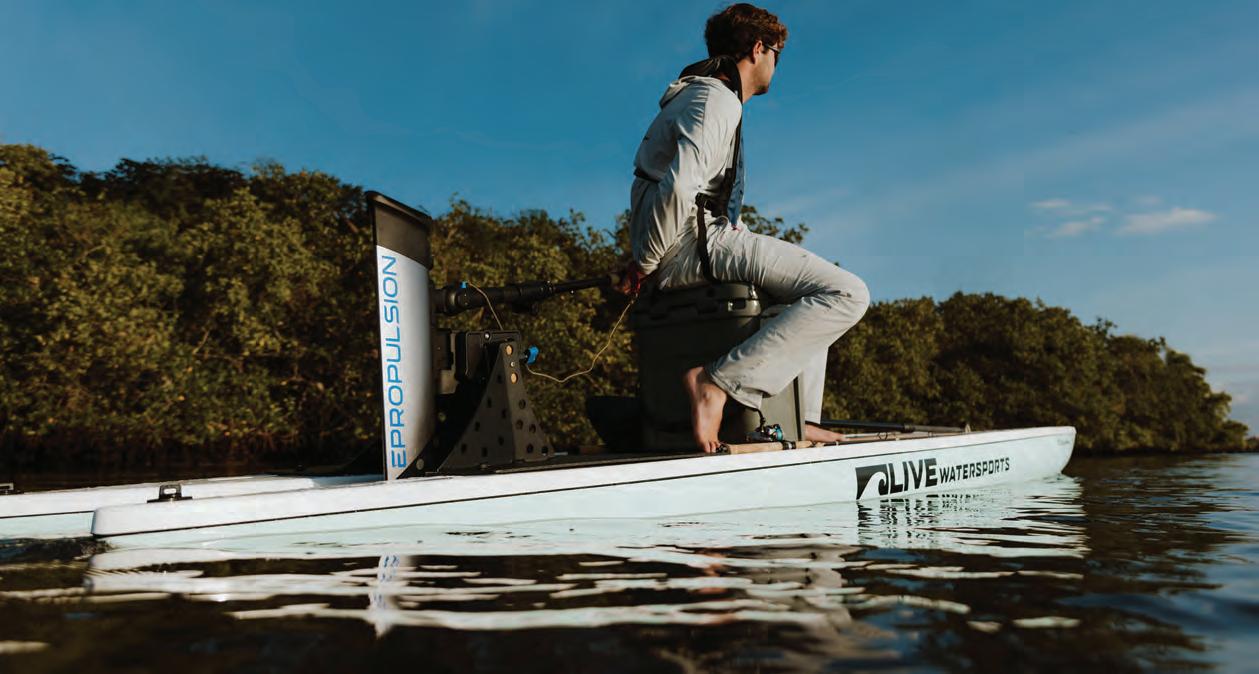
Whether you’re fishing from a paddleboard, kayak, canoe or small boat, the ePropulsion eLite 500W redefines your on-water experience with innovative features and commitment to sustainability. Designed to be the most compact and lightweight electric outboard in its class, the eLite is an easy-to-use alternative to small internal combustion engines for enthusiasts worldwide. Max 5.6 miles at half throttle and 3.5 miles at full throttle.



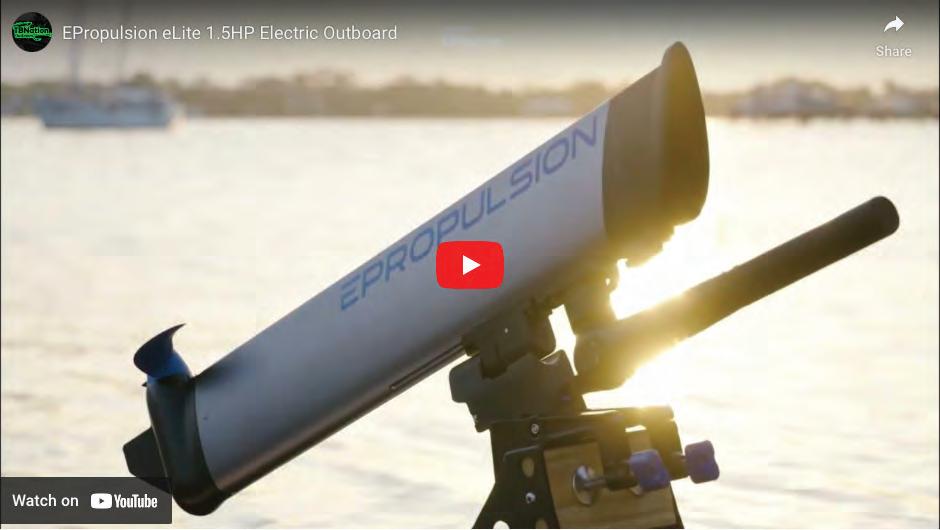
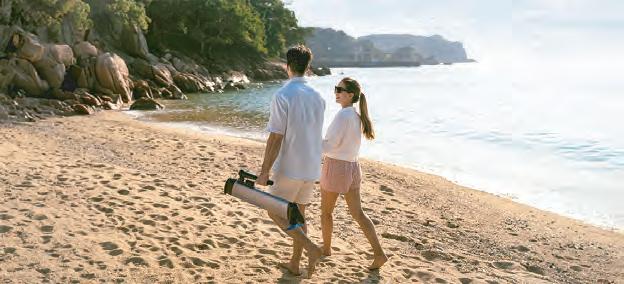
In general, the trend in boating these days is bigger is better. Right? Engine horsepower is getting higher and higher, and boats are being built able to accommodate two, four, even six engines. But what about the other end of the spectrum—anglers and cruisers that are looking for the ultimate in portable propulsion? Whether you are looking for a boost for your kayak or a reliable motor for your inflatable fishing boat or tender, the perfect engine should be lightweight, easy to take on and off, easy to use and provide the range and speed for almost any conditions. It should be self-contained, so you don’t have to deal with lugging around a fuel tank, or even have to purchase and safely store gasoline on your boat. Electric propulsion is the way to go, but no one has really gotten the right combination of affordability, reliability and power—until now.
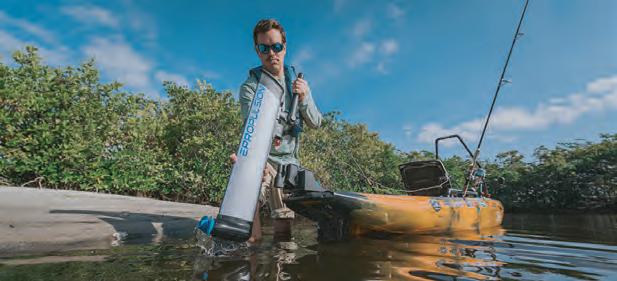
The ePropulsion eLite, which has been created for the tender and smaller boating market, represents a new era in clean, quiet, and ecofriendly marine propulsion. The direct-drive motor and advanced propeller design delivers high efficiency with near-silent operation, especially attractive for anglers, as it is less likely to scare away fish. With a focus on minimal maintenance and cutting-edge technology, this addition to the ePropulsion range raises the bar in electric boating standards.
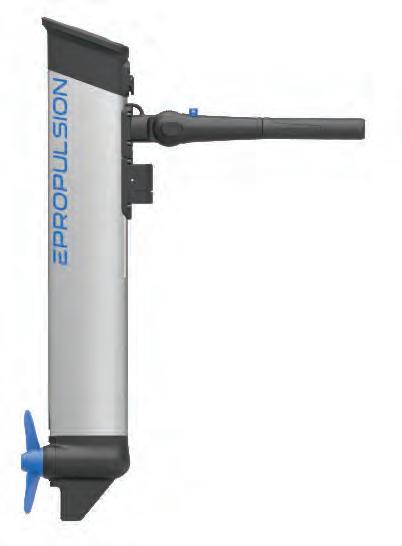
Designed to be the most compact and lightweight electric outboard in its class, the ePropulsion eLite 500W electric outboard is an easy-to-use carbon-free solution for small engine application. Its Sport mode adds an additional 50% boost in power for challenging conditions bringing the
Whether you’re fishing small boat, the ePropulsion reliable companion. Max throttle and 3.5 miles
top speed to over five miles per hour. With multiple charging options, including 110/220V AC, 12V DC and solar with the use of optional ePropulsion converters, the eLite can be fully charged in around four hours. For added capability and convenience, the engine includes a USB-C output that allows users to charge and power other electrical devices. At just under three-feet in length and weighing 14.7-pounds including the built-in battery, the eLite stores easily and the one-click quick-release bracket allows for installation and removal in a matter of seconds. For exceptional portability, the tiller handle converts to a perfectly balanced carry handle. With multiple trim and tilt angles, adjustable steering resistance and shaft length, and a shallow-water mode, the eLite is completely customizable. Its Smart Battery Monitoring System efficiently optimizes performance, carefully regulating battery level, temperature, and remaining state-of-charge all displayed on an ultra-simple interface, leading to extended range, a more energy-efficient operation and longer battery life. Built to last, it is IP67 waterproof, and is constructed of aviation-grade aluminum alloy for lighter weight and greater durability. In addition, the anti-ground auto kick-up feature protects the motor from accidental damage. Available for under $1,000, it is also the most affordable electric outboard in its class. There’s no time like today to upgrade to the electric outboard of the future. The ePropulsion eLite is in stock and ready to take you quietly and sustainably to your next adventure.
Experience the eLite Go Electric. Go Silent.

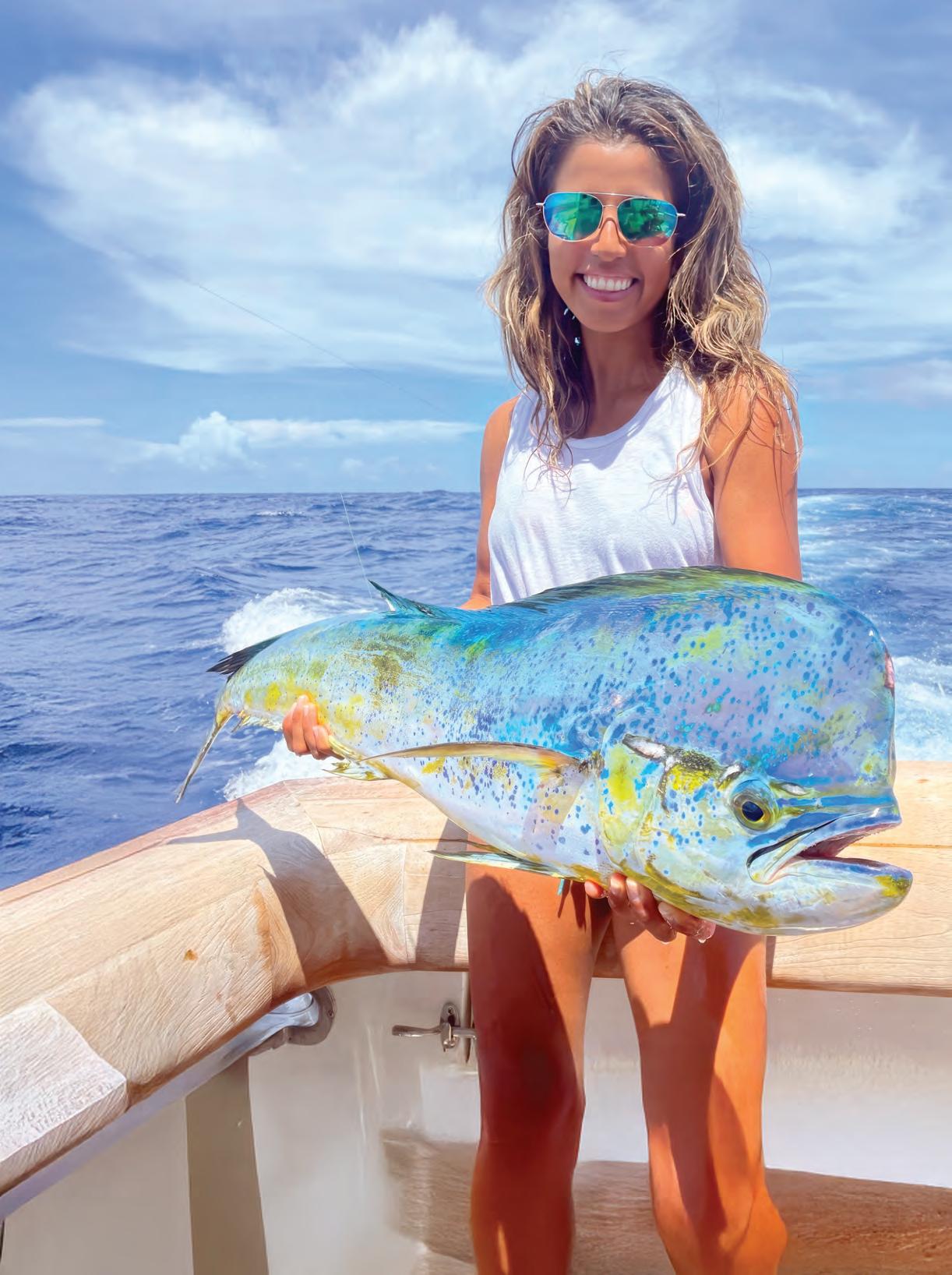

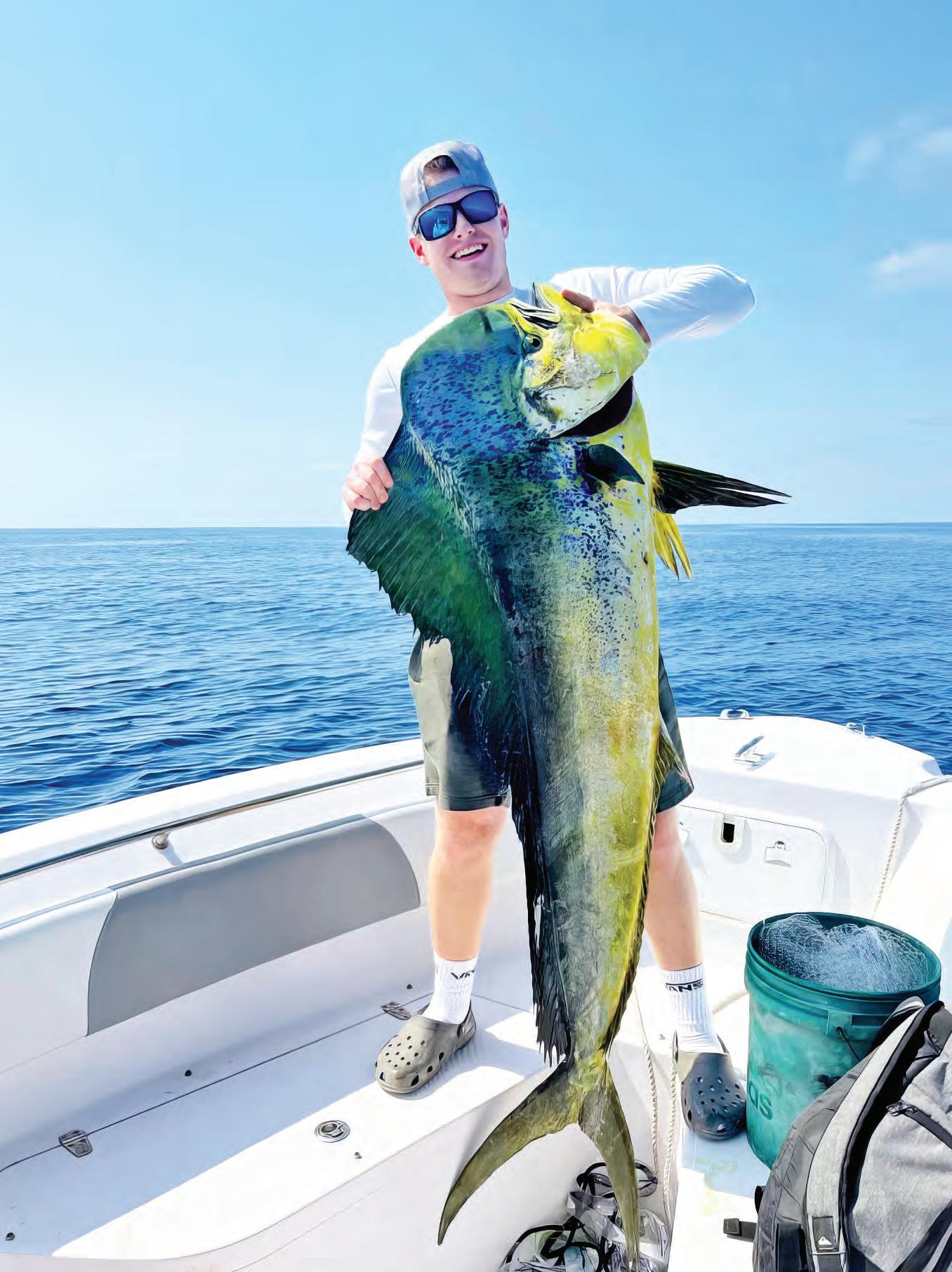
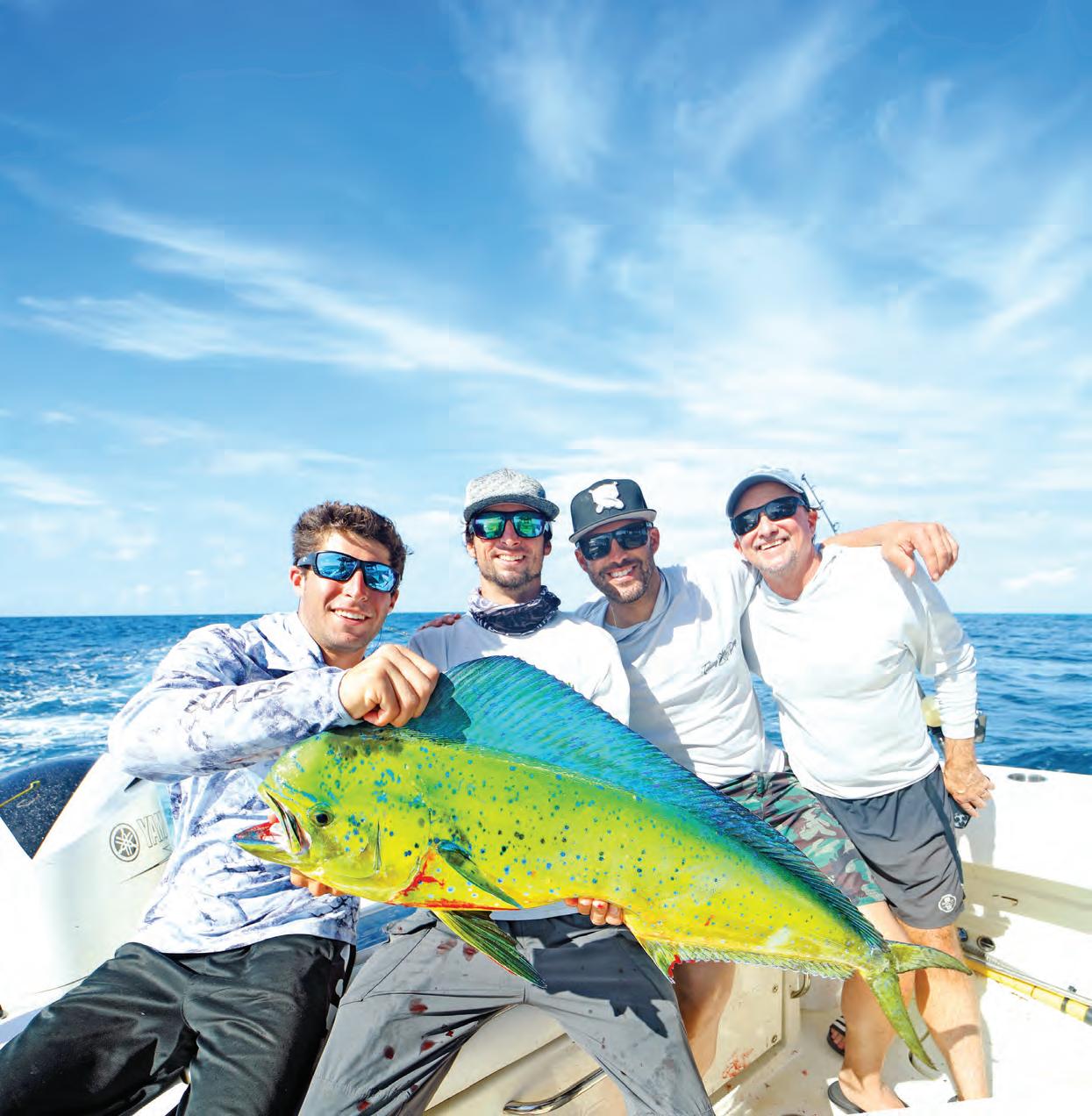
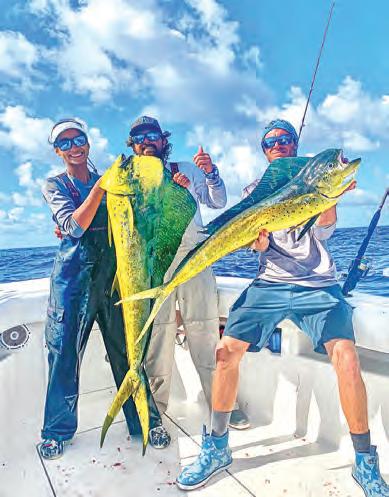
ahi season is one of those drop everything and go times of year, and when we begin to slide from spring into summer, you can usually count on schools showing up offshore. The warmer the water, the better it gets, especially when you find clean blue water, good current edges, weed lines, floating debris, or any kind of structure holding bait in that 75- to 82-degree range. Fishing with Bean Sportfishing in the Florida Keys and other parts of the state, over the past few years we’ve definitely seen more smaller fish and fewer big cows and bulls, but that doesn’t mean they’re gone. When conditions line up, there’s always a chance a quality mahi-mahi is mixed in with the schoolies.
Mahi love anything moving, so live bait is tough to beat, and when they’re really fired up, you can even catch them on fly. Tackle-wise, we like running a 6500 size setup because you never
By A. deGruchy
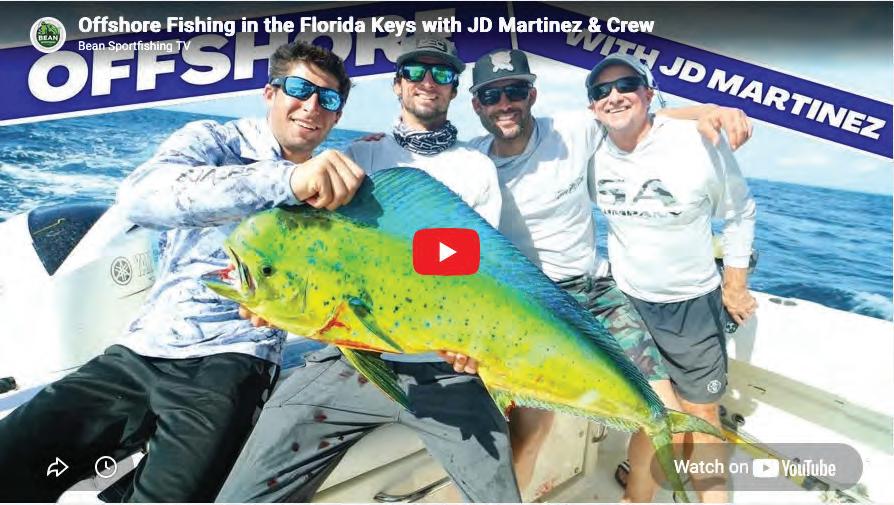
know when a better fish shows up. The Penn Slammer IV 6500 paired with a Carnage III rod is a go-to for us, and the Penn Spinfisher VII 6500 spinning combo is another solid option. We’ve had great success using the Mustad 7766D 6/0 hook, and for bait we’ll typically fish whitebait or troll Islamorada Flyers depending on the day.
When it comes to the table, blackened or fried mahi is hard to beat, and we only keep what we’re going to eat that day. Even though mahi are one of the fastest-growing fish in the ocean, conservation still
matters, and being mindful about what you harvest goes a long way.
Bean Sportfishing can run this type of trip, but it’s highly weather dependent offshore. If you’re looking to book a dedicated offshore charter in The Keys, I highly recommend LegaSea Charters. Capt. Joey can be reached at legaseacharters.com.
If you’re planning on visiting Islamorada, book at the fabulous Three Waters Resort and reach out to us about a special captain’s discount.
Follow deGruchy’s adventures on Instagram @bean_sportfishing and on YouTube @ BeanSportfishing. To book a charter, visit beansportfishing.com.
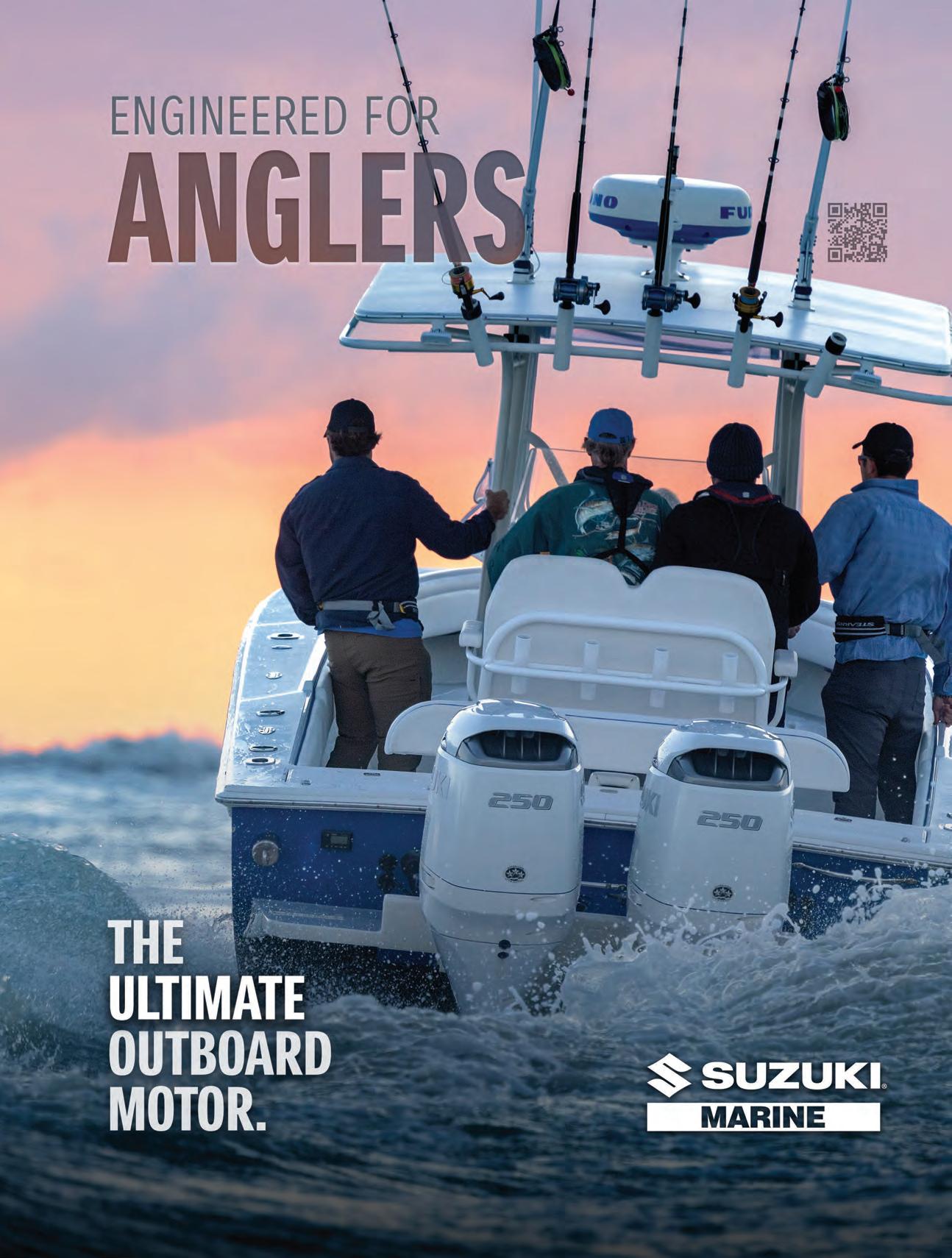
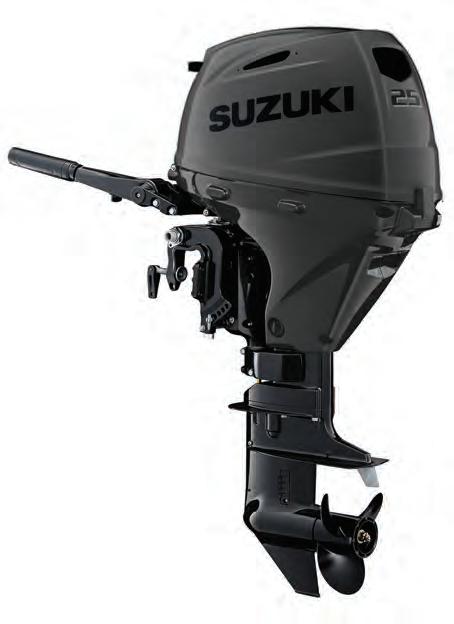
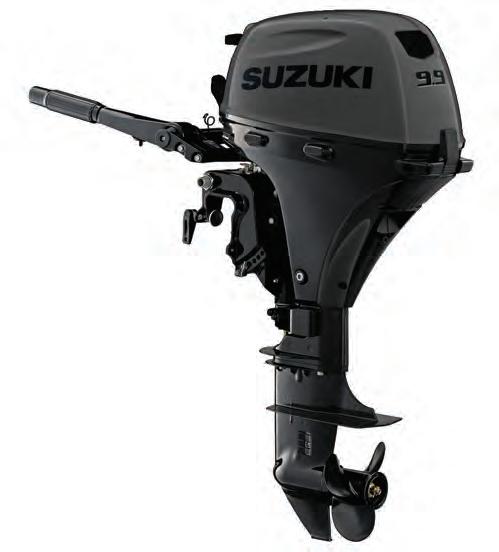
Suzuki Marine USA opened the 2026 Minneapolis Boat Show by unveiling two important new additions to its growing STEALTH LINE® family of outboard motors. These two new models—the Stealth Line 9.9HP and 25HP—bring this popular look to an especially high-volume segment of the overall boating market. They also bring their Stealth Line family to 10 total models ranging from 9.9 to 350HP.
These two newest additions are an ideal power match for wide range of freshwater fishing and hunting boats, combining Suzuki’s proven performance, fuel efficiency and reliability with a distinctive look that matches the popular look of larger Stealth Line outboards. “Our dealers and boat building partners have been asking for kicker motors that provide a bold and cohesive appearance for their vessels, regardless of size,” said Brandon Cerka, VP Sales and Marketing for Suzuki Marine USA. “The 9.9HP outboard is an industry standard kicker choice for aluminum boat builders, particularly for small hunting and walleye boats. And our 25HP is a perfect choice for larger kicker applications that require additional thrust and power. When boaters pair either of these new outboards with our higher-horsepower Stealth Line models on the transom, their boat gets a one-of-a-kind look that stands out from the pack,” added Cerka.
Suzuki’s STEALTH LINE outboards feature a distinctive matte black finish from top to bottom with matching chrome black accents, for a look that gives
any boat a touch of “luxury sportscar” attitude. As a bonus, the light absorbing properties of this matte black finish eliminate the need for owners of aluminum hunting boats to camouflage or repaint their motors, providing dealers with a ready-made solution for this important part of the market.
Under their distinctive cowls, these Suzuki motors offer features and technology honed over 60 years in the outboard business. For example, both the 25HP and 9.9 Suzuki motors offer advancements like battery-less electronic fuel injection for easy starting and better performance, and Suzuki Lean Burn Control for enhanced efficiency. In fact, Suzuki’s 25HP outboard won an NMMA Innovation Award for bringing a range of breakthrough features to this class of smaller boats.
“This is another example of how Suzuki Marine listens to its business partners and responds quickly to give the market what it wants,” said Cerka. “These motors give us a clear advantage in a very important segment of the overall boating market. More importantly, they give boaters a chance to go Full Stealth Mode with their aluminum fishing and hunting boats.”
By CAM Staff
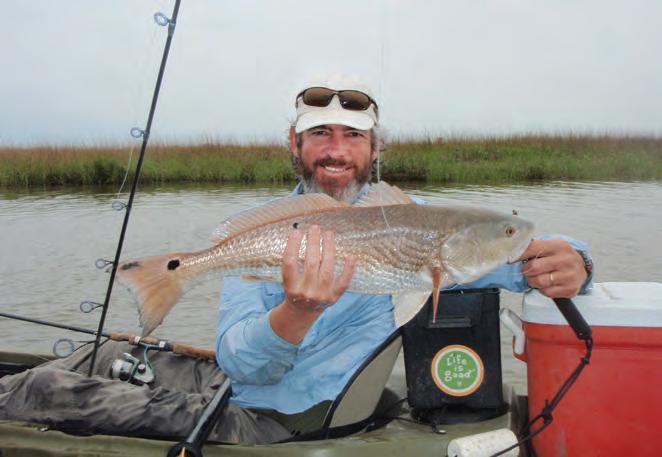
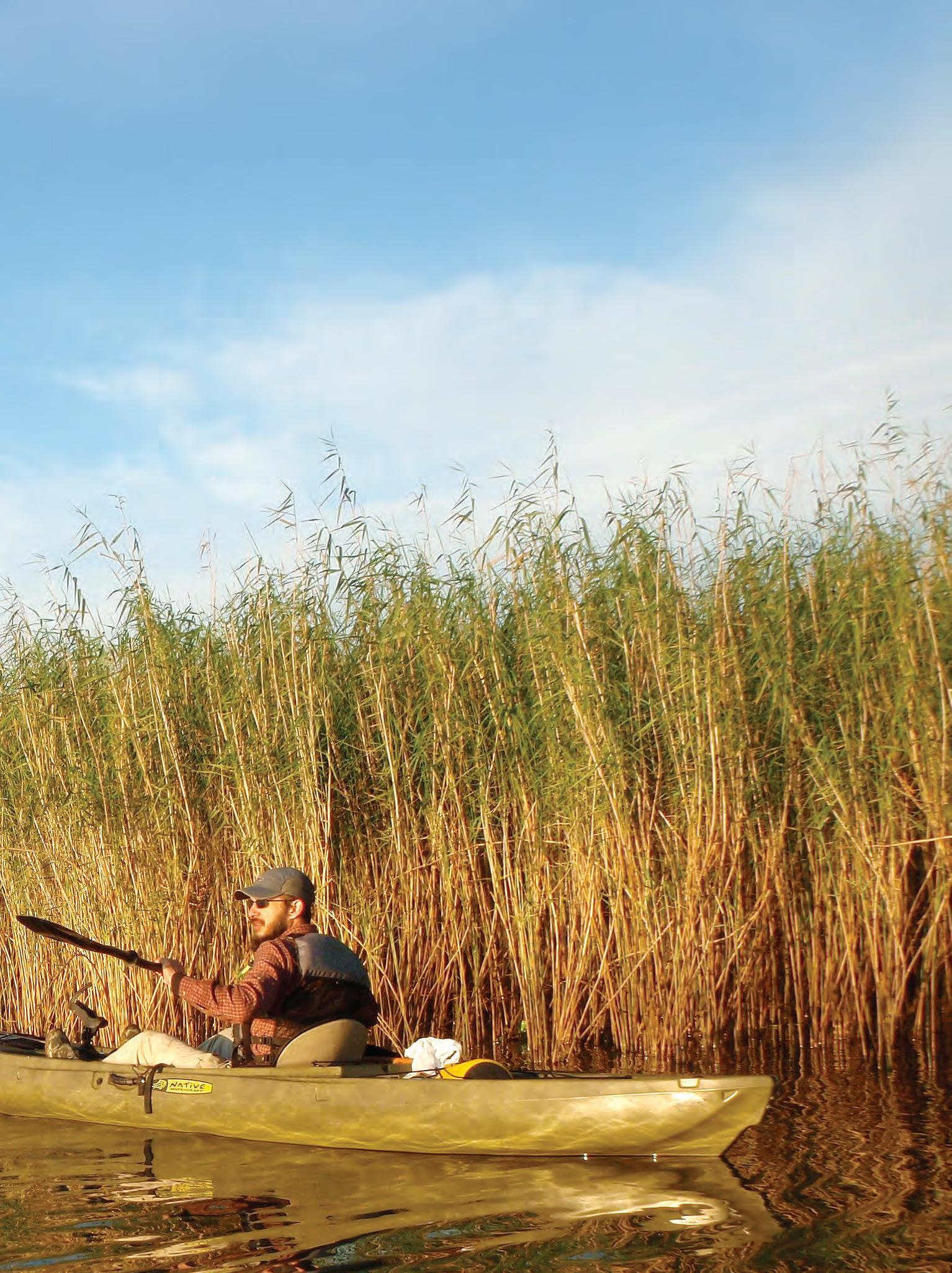
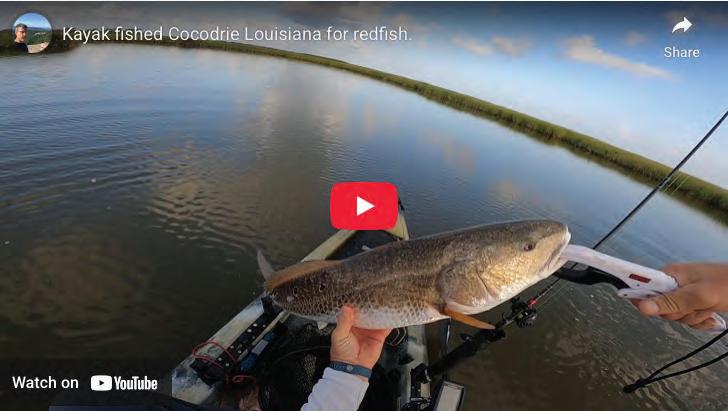
After watching the wind for the perfect window, a trip down Hwy 90 to Cocodrie delivered exactly what we came for — explosive redfish action from the seat of a kayak.
Launching from Coco Marina, we didn’t have to paddle far before hearing that unmistakable topwater blow-up. Working grass lines and marsh cuts with plugs like the Super Spook Jr., we watched redfish crush baits in inches of water, proving once again that they’ll hammer a surface lure with reckless abandon.
From slot reds to a 32-inch marsh brute, the action never slowed. In Cocodrie, long paddles aren’t required — just a good tide, a steady retrieve, and a willingness to hold on tight.
Kayak fishing paradise? Absolutely.
The fishing, shrimping and crabbing village of Cocodrie is located where LA Highway 56 abruptly ends deep in the heart of Louisiana’s fabled saltwater marsh. Mention the word Cocodrie to any saltwater fish-chasing Louisiana native and you’ll likely get that faraway look of desire that comes from knowing that even in a marsh habitat as massive as Louisiana—this is one very special place to go fishing.

If you love the fishing, boating and outdoors lifestyle, and dream of being in business for yourself— but not by yourself— now is the time to spring into action and become a Coastal Angler or The Angler Magazine Co-Publisher. No Experience Neccesary—We Will Train You! We have freshwater and saltwater territories available throughout the country and abroad. Ask one of our specialists about franchise availability in your area.
SCAN TO VIEW OUR BROCHURE:

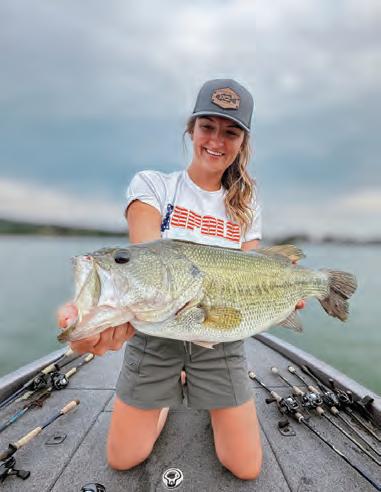

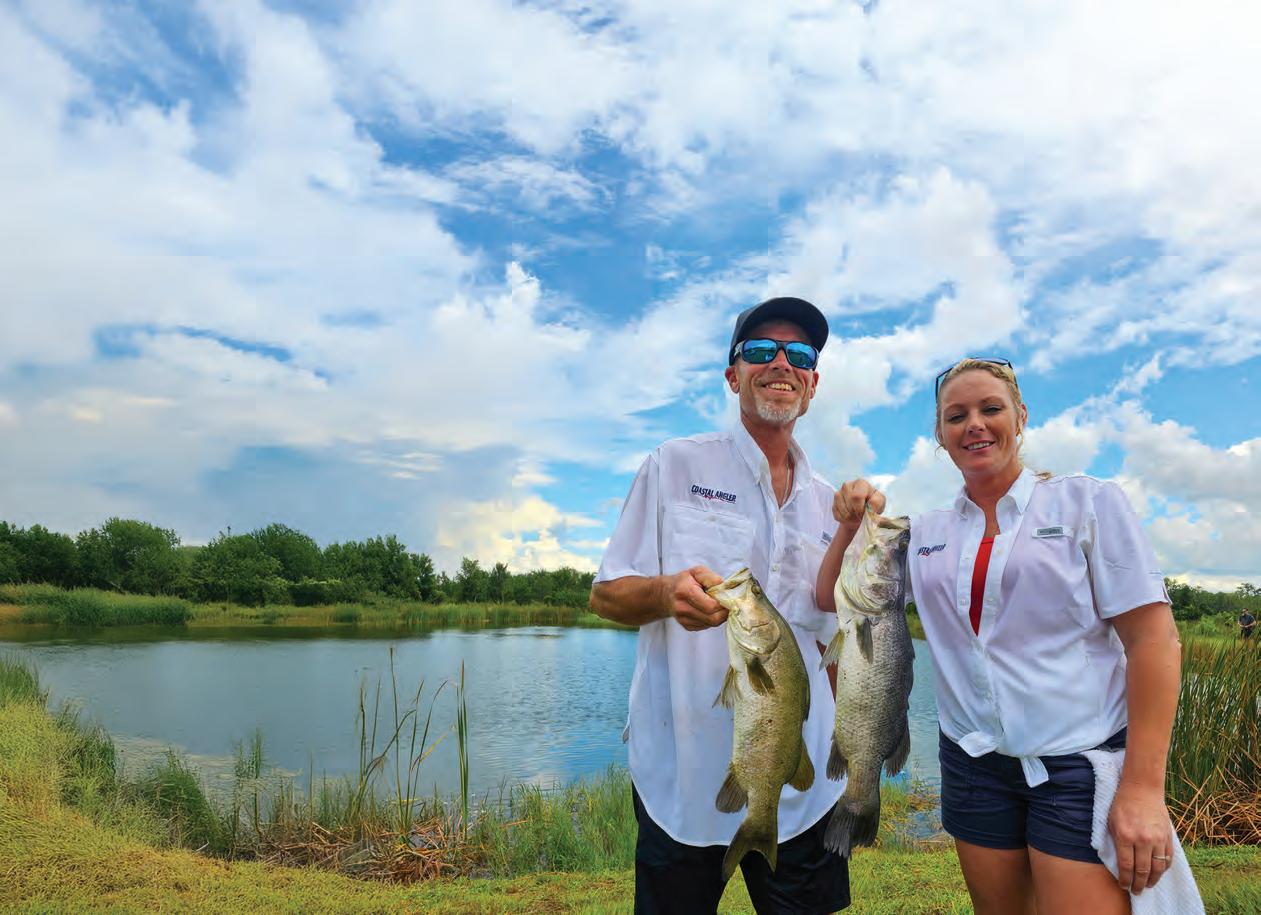
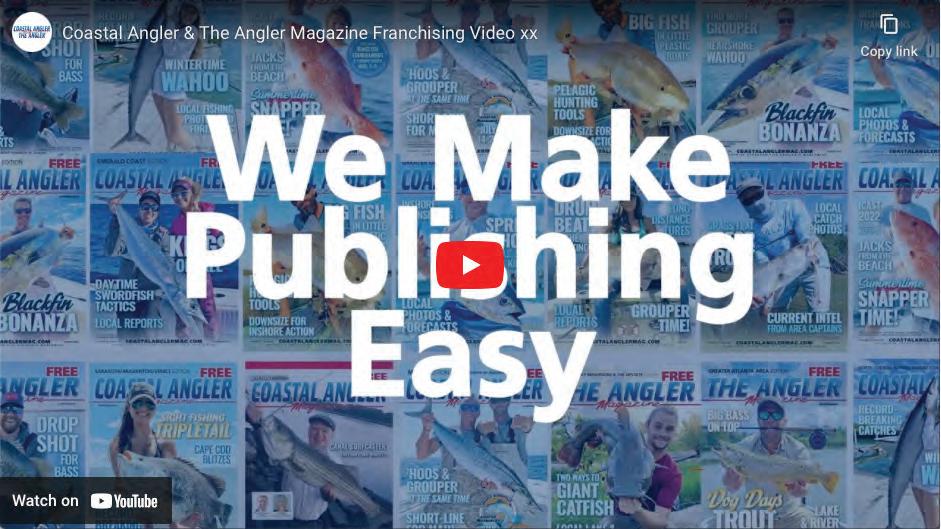
An exceptionally rewarding and fulfilling business opportunity, as a Co-Publisher of your area’s Coastal Angler Magazine or The Angler Magazine, you’ll enjoy the benefits of controlling your own time and future while being a part of the largest outdoor publication in the U.S. Our proven franchise publishing system enables individuals with no prior publishing experience to publish a credible and profitable localized version of our award-winning, free monthly magazine. With a combined readership of over one million per month and distribution to over 11,000 businesses in four regions, our brand is well known throughout the fishing world, and our magazines are recognized as well-designed, thoughtful publications that provide newsworthy and entertaining content pertinent to the marine and fishing industries, as well as respected resources for localized fishing reports, tournament news, tide charts, catch photos and more.
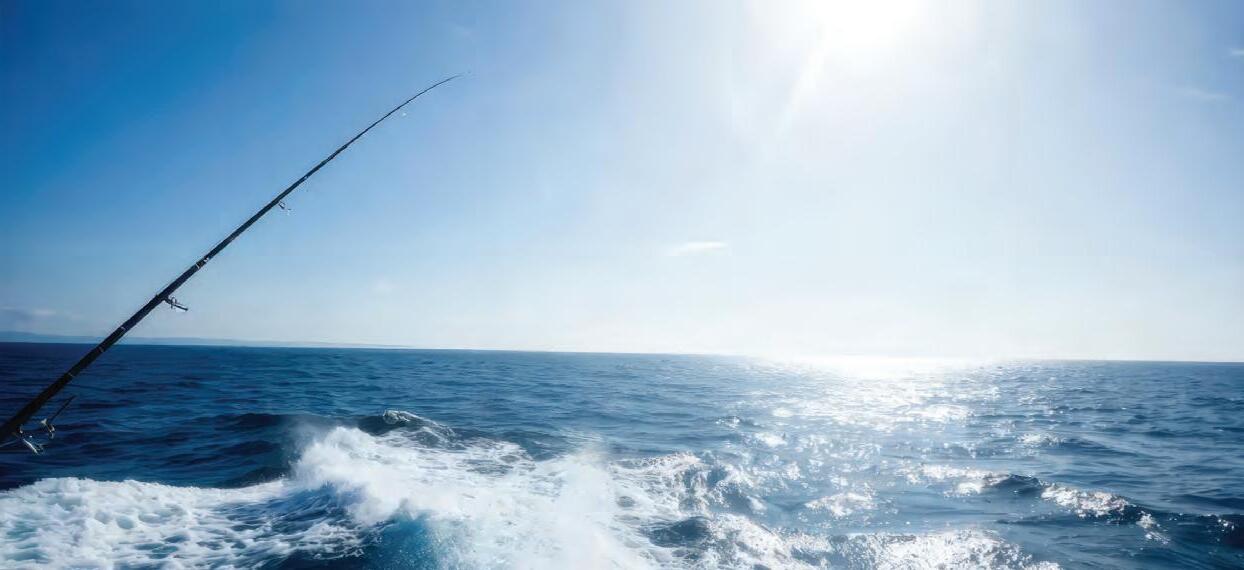
It’s no fish tale when you run with a John Deere. You can get everything done faster and easier, so you get more time on the water. Plus, our special offers make them the catch of the day.





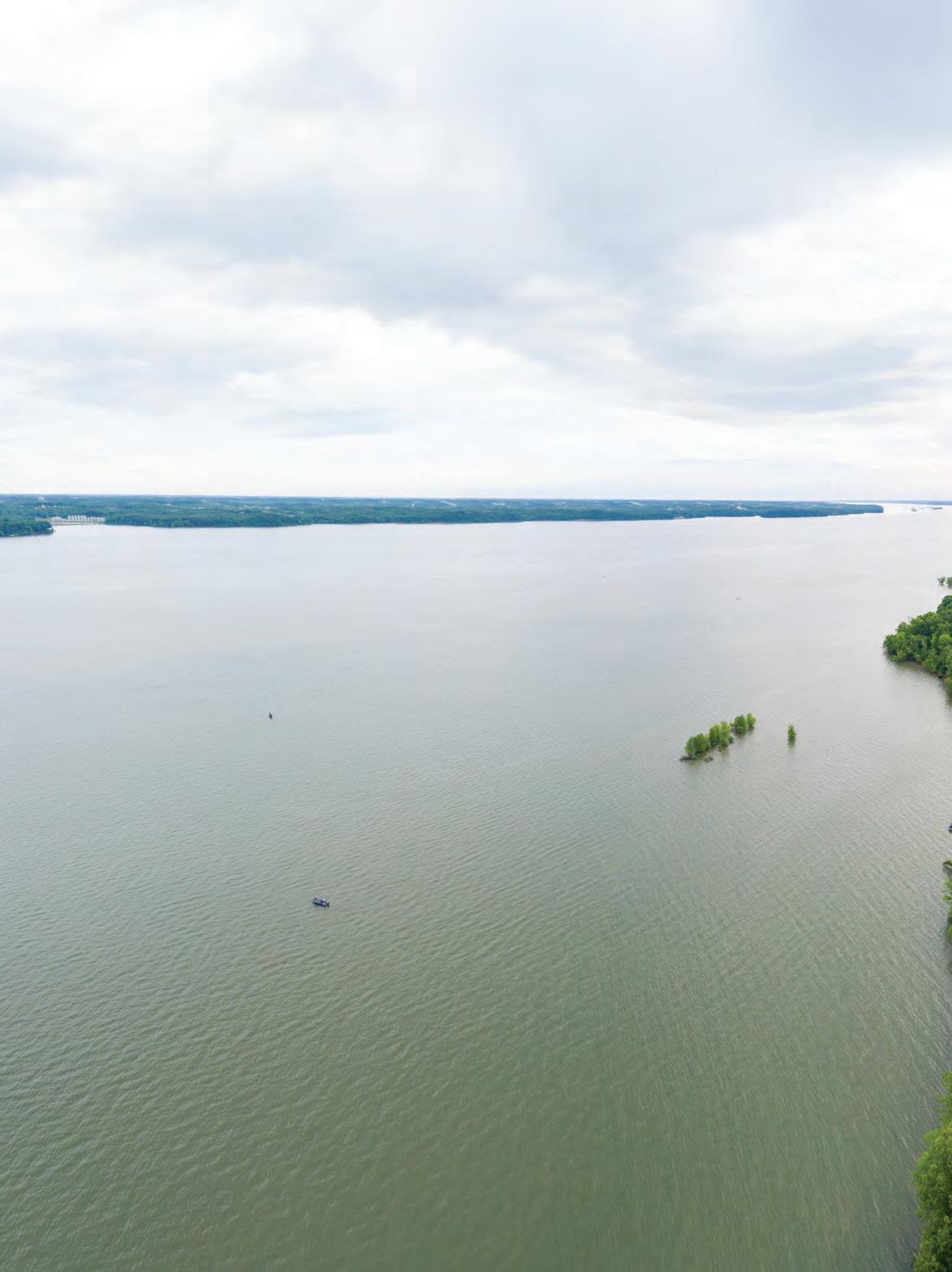
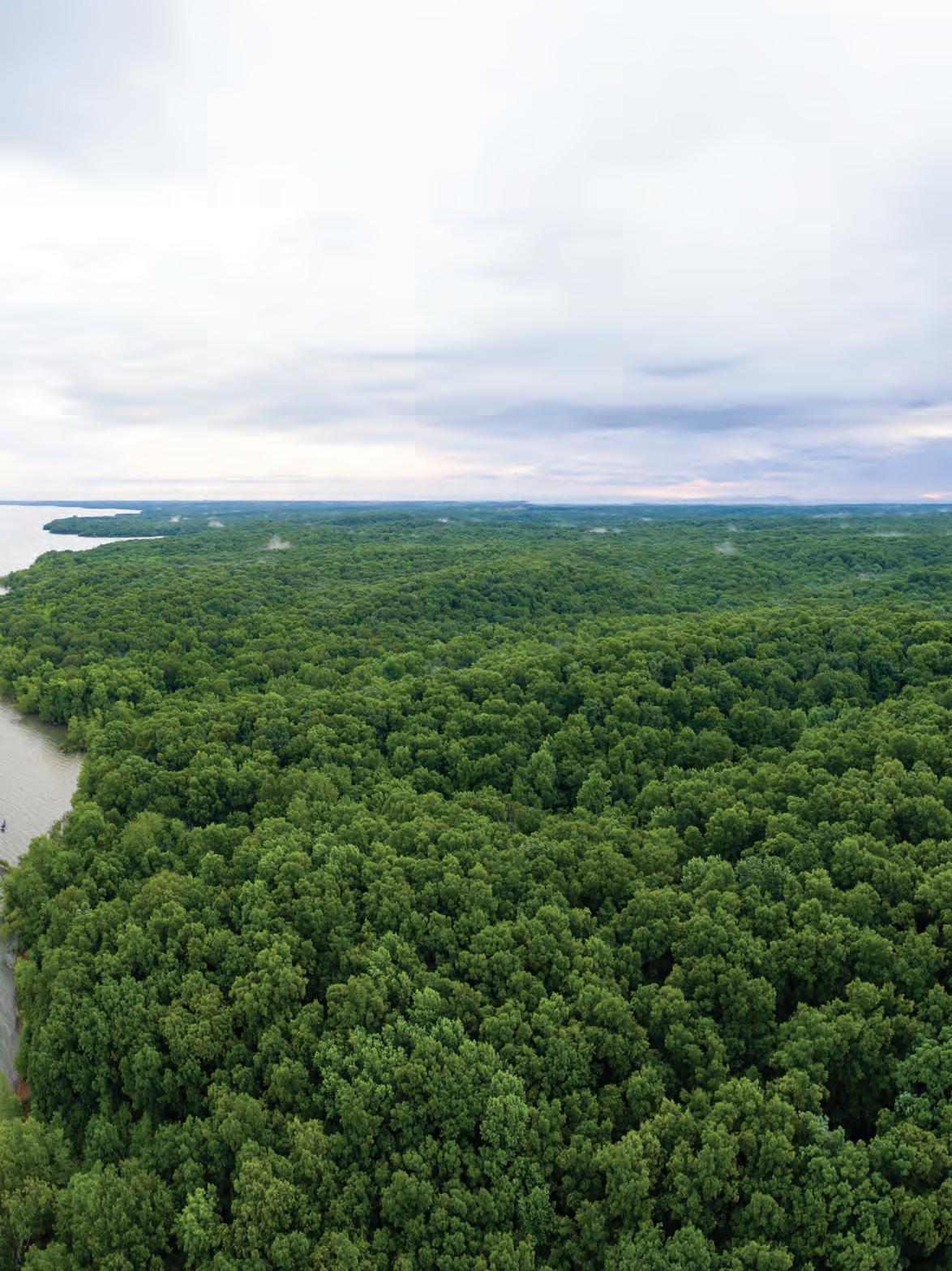
As the last bite of winter gives way to the gentle stirrings of spring, Kentucky Lake comes alive. Located along the western edge of the Bluegrass State, this sprawling body of water—technically a reservoir—has long been a mecca for anglers, especially those in search of springtime crappie. But behind the shimmer of crappie scales and the quiet drift of jon boats lies a deeper story— one rooted in both the region’s history and its responsibility to the future.
The Legacy of the Lake
Kentucky Lake stretches a remarkable 184 miles from the Tennessee state line to the northernmost point at the Kentucky Dam, making it the largest reservoir in the state and one of the largest in the U.S. The lake was formed in 1944 with the completion of the Kentucky Dam, a key project by the Tennessee Valley Authority (TVA). The TVA’s mission was to harness the power of the Tennessee River for flood control, hydroelectric power generation, and regional economic development.
The creation of Kentucky Lake had far-reaching effects on the local landscape. Once an area of rolling hills, dense forests, and winding riverbanks, the damming of the Tennessee River
By Julie Graham- ExploreTRV
transformed the region into a vast reservoir. Today, the lake covers over 160,000 acres, with an average depth of 8-10 feet, though some areas reach even deeper. Its shoreline stretches over 2,000 miles, offering countless coves, islands, and inlets that make it a paradise for anglers.
The development of Kentucky Lake didn’t just provide electricity; it reshaped the local economy. The lake attracted tourism, fishing, and recreational activities that continue to significantly contribute to the region’s economy. Fishing enthusiasts quickly discovered the lake’s potential as a world-class destination for crappie, bass, and catfish, earning it a reputation that has only grown over the decades.
Feeding Kentucky Lake are several major tributaries, each playing a key role in the crappie lifecycle and the overall ecosystem. Blood River, Jonathan Creek, and Big Sandy River are among the most well-known arms of the lake, offering shallow flats, brush-laden banks, and ideal spawning grounds as water temperatures rise in spring. These areas warm quickly, pulling fish from deeper waters and making them favorite spots for locals
and tournament anglers alike. In early spring, the backs of these creeks become hotspots, especially where submerged timber and man-made structures provide cover.
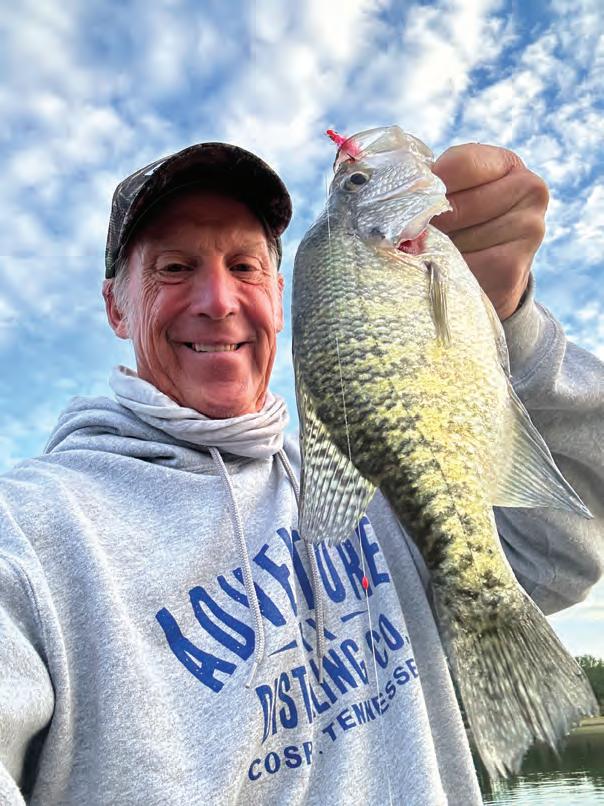
Every seasoned angler knows: spring is crappie season. As water temperatures creep into the low 60s, crappie begin their migration from deep winter haunts to shallow spawning grounds—brush piles, stumps, and submerged structures along the shoreline.
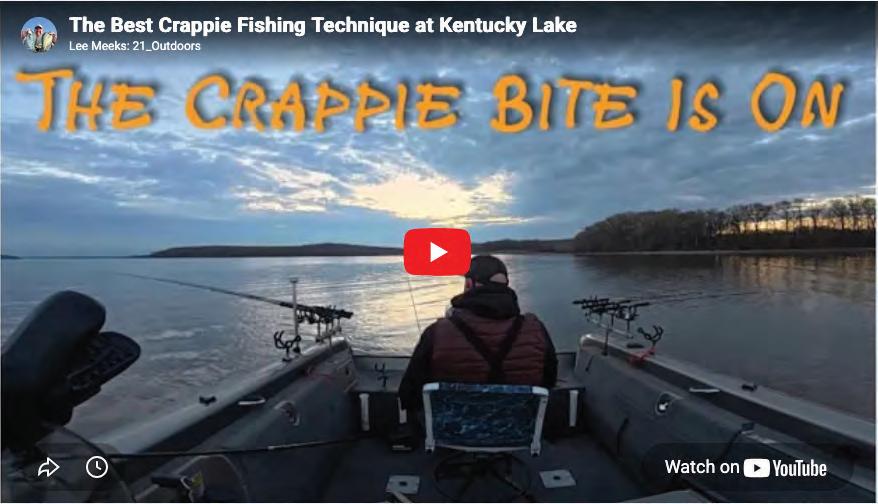
Preferred bait and techniques vary by angler, but some classics stand the test of time. Live minnows, often rigged under a slip float, are a go-to for many, especially during the pre-spawn. Using local live bait is one of the smartest choices you can make when fishing the Tennessee River lakes. Stretching over 900 miles, the Tennessee River system is rich with diverse aquatic life, and local bait naturally matches what fish are already feeding on. This increases your chances of getting a strike while also helping to protect the ecosystem by preventing the spread of invasive species. Local live bait is fresher, more active in the water,
and readily available at nearby bait shops— making it both effective and convenient for any angler.
• Fisherman’s Friend Bait and TackleGrand Rivers, KY – Open daily - 6:30 am to 7 m
• Sportsman’s Bait and TackleGilbertsville, KY- Open daily- 6 am to 7 pm
• Fast Eddie’s Bait and Tackle- Benton, KY- Open daily- 5 am to 8 pm
Jig fishing is equally effective, with popular choices like 1/16 or 1/32 oz. soft plastics in chartreuse, white, and monkey milk colors. When the bite gets tough, tipping jigs with a small minnow or switching to hand-tied hair jigs can coax hesitant fish. Long-line trolling and spider rigging also dominate certain sections of the lake, especially in the deeper channels near creek mouths.
Mornings on the lake feel almost sacred this time of year. Fishermen—some in sleek bass boats, others in aluminum skiffs passed
down through generations—fan out across coves and creek arms, quietly working the banks. The goal is the same: feel the tap of a crappie on the line, set the hook, and haul in what many call the “gold of the lake.”
Crappie fishing also stands out as one of the most affordable and accessible ways to introduce young people to the outdoors. A simple rod-and-reel combo, a few hooks, floats, and a bucket of minnows are often all it takes to get started. Unlike high-stakes tournament fishing or gear-heavy pursuits, chasing spring crappie keeps the focus on fun, patience, and learning the fundamentals— how to read water, handle fish responsibly, and appreciate the quiet between bites.
Bank fishing simply takes finding the best spot. In the spring, crappie move closer to the shore to spawn. Look for shallow, warmer waters with nearby shelter, such as coves, creek mouths, or the backs of bays.
For many families around Kentucky Lake,
these early trips become a rite of passage, where a child’s first crappie often comes with a lesson in respect for nature and the value of conservation.
But as productive as Kentucky Lake can be, it’s not immune to pressure. Increasing fishing pressure, shoreline development, sedimentation, and the spread of invasive species like Asian carp have all put stress on the ecosystem.
“Crappie are resilient, but like any resource, they’re not unlimited,” says a local fisheries biologist with the Kentucky Department of Fish and Wildlife. “It’s up to all of us—agencies, anglers, and communities— to make sure this lake stays healthy for future generations.”
To that end, conservation-minded efforts are gaining steam. Anglers are encouraged to follow size and creel limits, participate in habitat restoration projects, and report the presence of invasive species. Meanwhile,
local organizations are working to educate the public and promote sustainable practices, from catch-and-release methods to responsible boat operation during the spawn.
Kentucky Lake not only serves as a hub for recreational boating and fishing, but it also plays a crucial role in the conservation efforts of the area. Habitat restoration projects, invasive species management, and partnerships between state and local authorities have all helped preserve the ecological balance that supports Kentucky Lake’s thriving fish populations.
For many, the draw of spring crappie fishing
isn’t just the thrill of the bite—it’s the chance to connect with the natural rhythm of the season. To sit in a quiet cove as the dogwoods bloom. To pass along stories, rods, and values to the next generation.
At its core, Kentucky Lake is more than a reservoir. It’s a living, breathing legacy—a place where history, sport, and stewardship come together on every cast.
To fish on Kentucky Lake, anglers need a valid fishing license from either Kentucky or Tennessee. The reciprocal agreement between the two states allows fishing from Eggner’s
Ferry Bridge in Kentucky to the Governor Ned McWhorter Bridge in Tennessee, including all embayments and tributaries, except Blood River in Kentucky. It’s important to note that anglers must adhere to the fishing regulations of the state in which they are fishing. This means following Kentucky’s regulations when fishing in Kentucky waters and Tennessee’s regulations when fishing in Tennessee waters. For more detailed information on fishing licenses and regulations, you can visit the Kentucky Department of Fish & Wildlife Resources website at fw.ky.gov or the Tennessee Wildlife Resources Agency website: www.tn.gov/twra. html.
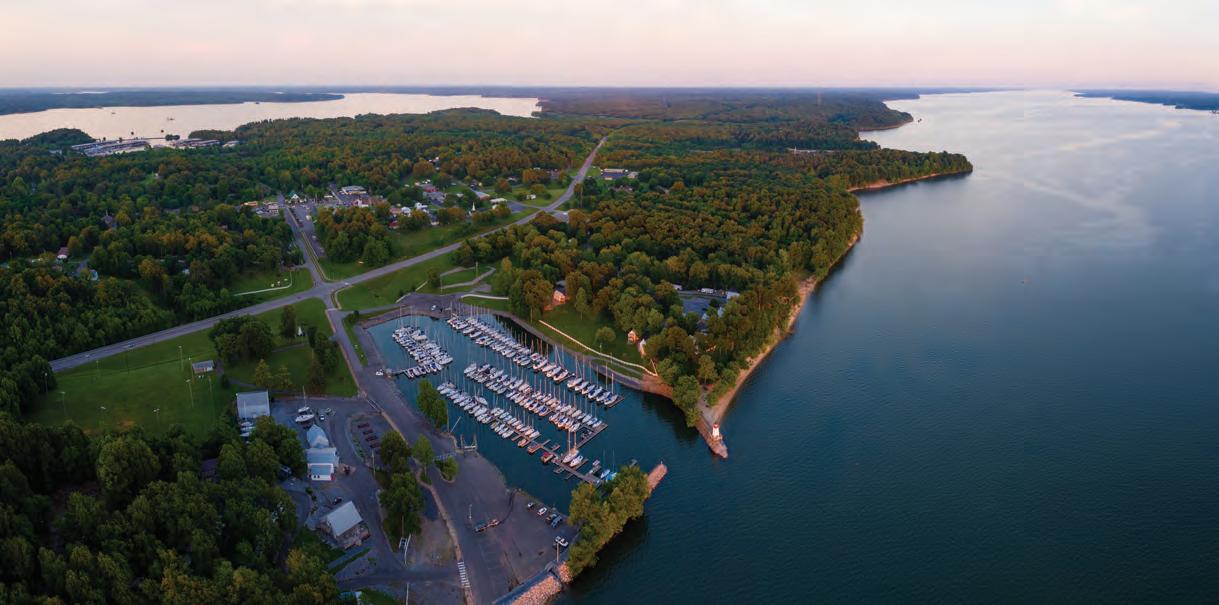


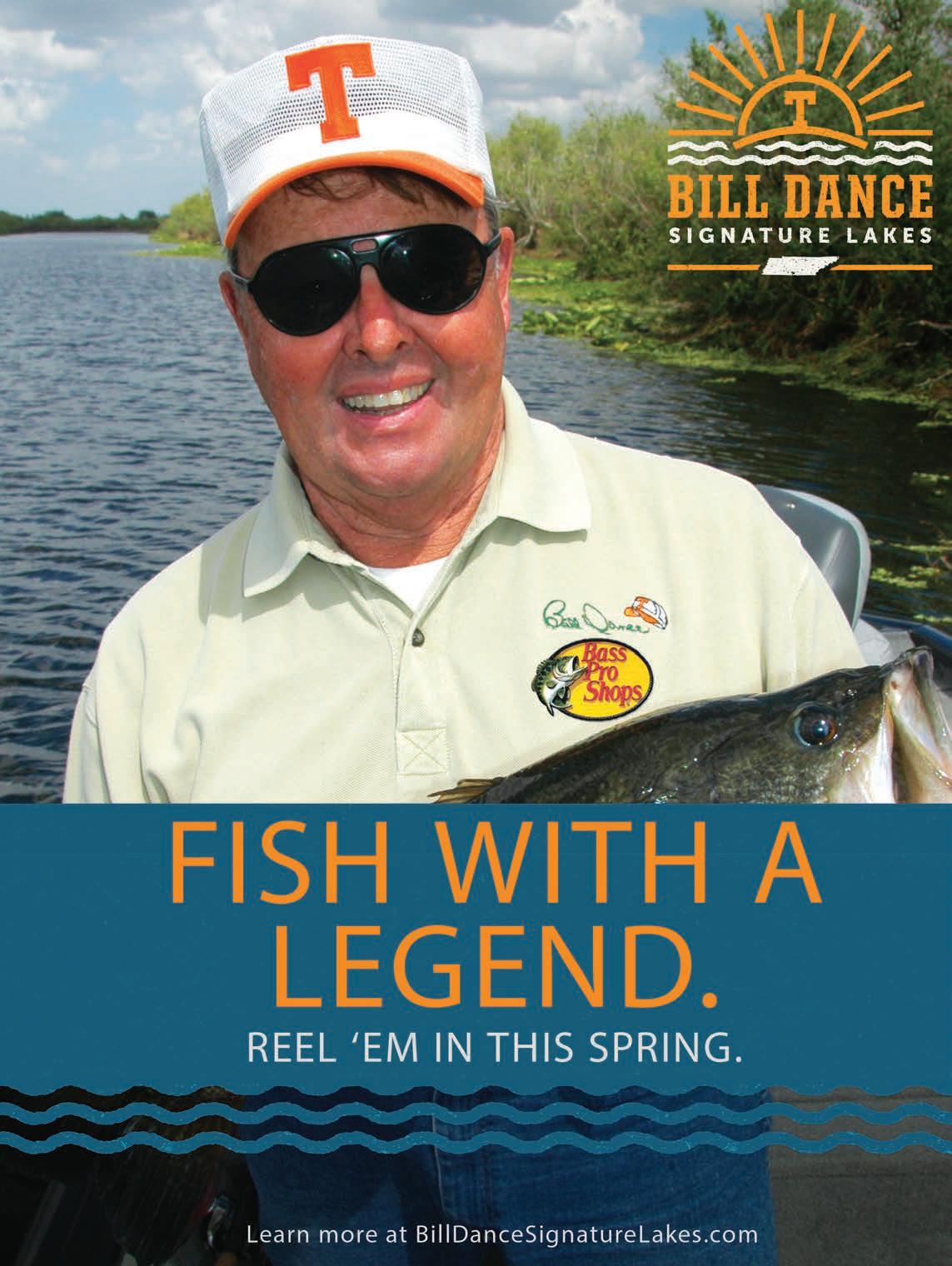
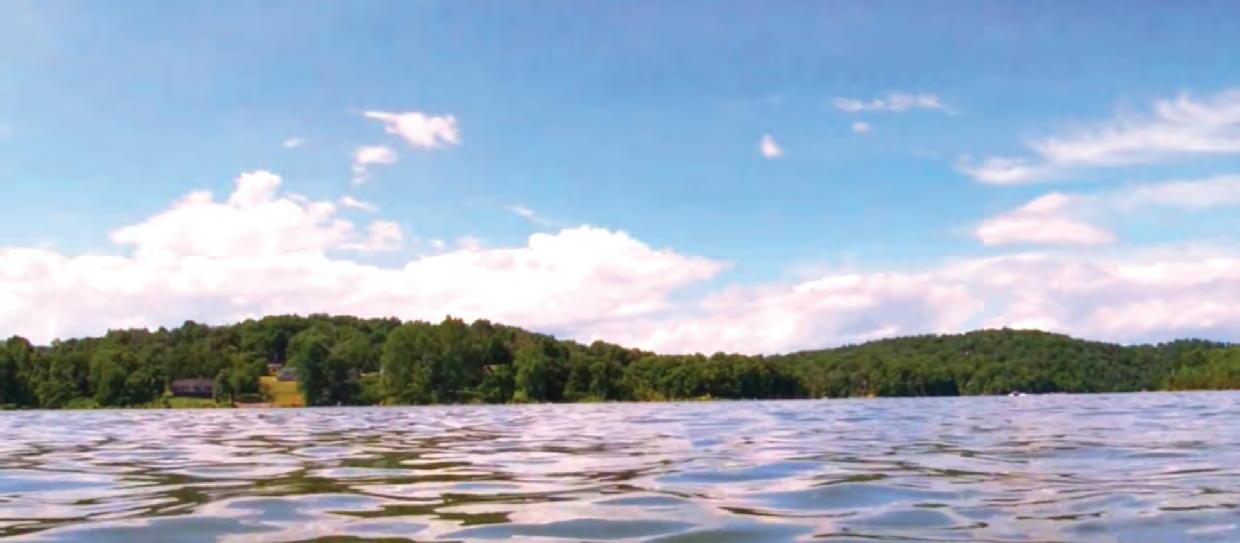
Forty-nine reservoirs stretch across the Tennessee Valley like a string of pearls. And for those who love to fish, those lakes are just as valuable. Whether it’s bass, crappie, walleye, or catfish, whether for sport, food, or just fun, you can find world-class lake fishing only hours away from any spot in the Tennessee Valley. From more than 11,000 miles of shoreline or while floating on more than 700,000 acres of water, residents and visitors will quickly learn why this area is considered one of the best fishing destinations in the U.S. and, some would say, the world.
Fishing from the shore can be restful and rewarding—and anyone can do it. All you need is a little intel about how to find a spot where the fish might be biting. Here are a few tips for successful shore fishing from the Tennessee Wildlife Resources Agency:
• Fish are often swimming near the shore in the spring and fall. If you’re fishing from the shore in the heat of summer, do it in the evening or early morning—or even after dark.
• Fish near-unique features such as docks, logs, trees, rocks, or rocky areas; aquatic vegetation; or places where creeks enter the water.
• When fishing in moving water, look at the surface for boils and breaks—this means there is some underwater structure blocking the current, which could be the perfect hiding place for fish.
• Begin fishing (casting) close and parallel to the bank, then work your way outward (fan casting) toward deeper water.
• If you don’t get any bites, try switching baits. If this doesn’t work, move to another hole.
• Wear polarized sunglasses so you’ll be able to see fish as well as submerged objects more clearly. (Your eyes will also be protected from the tackle.)
If you love outdoor sports—boating, hunting, fishing—and the natural world, or if you just like to observe wildlife, build birdhouses, maintain a bird feeder or are just curious about the critters in your backyard, the Tennessee Wildlife Resources Agency is here to help enrich your outdoor experience. Visit us at www.tn.gov/twra/



It’s official … say hello to spring. Anglers can now look forward to targeting a wide variety of species, including blackfin tuna, wahoo, African pompano, and many other sought-after fish. With these species actively feeding during their migration north, the opportunities for successful catches are abundant. Whether you prefer trolling, drifting, or bottom fishing, the spring months bring a wealth of options to fill your cooler with quality fish.
The troll bite will probably die as soon as the sun gets up around the nine or ten o’clock timeframe. This is when you need to change tactics. Stop trolling. Put the trolling motor over and start making strategic drifts with the light line out while bottom fishing. I would also suggest putting a couple baits out under the kite, as this is the most effective presentation with very little to no leader in the water. Have at least one person dedicated to the kite baits, if you’re fishing a kite.
This is one of the best times of the year
TIM BAREFOOT

to spend the night, especially here in North Carolina, as the night bite could be crazy good. Put the bright lights out and you will draw the squid, cigar minnows, sardines, and all the predators to you like moths to a porch light. If you have the ability to spend the night, April could be the month you see the ultimate results. Everything including flying fish are very susceptible to a Sibiki rig. Fill the live well with live baits and start fishing on the daylight bite. Fish are like us; they like to eat breakfast and dinner, so be there early and late.
Be sure to keep an eye on the recorder while on the drift for the mid water marks. In addition to fishing for the snappers, have rods at the ready for fish that show on the recorder way off the bottom. These may very well be the African pompano, so have a rod ready with a jig that you can fire down and erratically jig upwards 25 to 50 feet off
the bottom and then let ascend back to the bottom. Repeat over and over as this will get bites!
It’s not just African pompano that frequent these deeper waters. During the middle of the day, wahoo can be found surprisingly deep, and tuna also inhabit these depths. It only takes a few wahoo, black fin or pompano to make a great box of fish to take home.
This is also a good time to target the smaller snapper with smaller baits on “chicken rigs” with small circle hooks. When you’re on a good bite (using small circle hooks) I would strongly recommend feeling the bite, winding tight to it and stopping. This is when another snapper will jump on the second bait. You will load up quickly with delicious groceries when you’re catching two at a time.
Check out my videos and you will understand how I like a double tackle and how I like catching them two at a time. Bring the heat… It’s on!
Learn more tips and techniques from Tim Barefoot at barefootcatsandtackle.com and on his YouTube channel: @timbarefoot5698.



Use Promo Code CAM10 for 10%
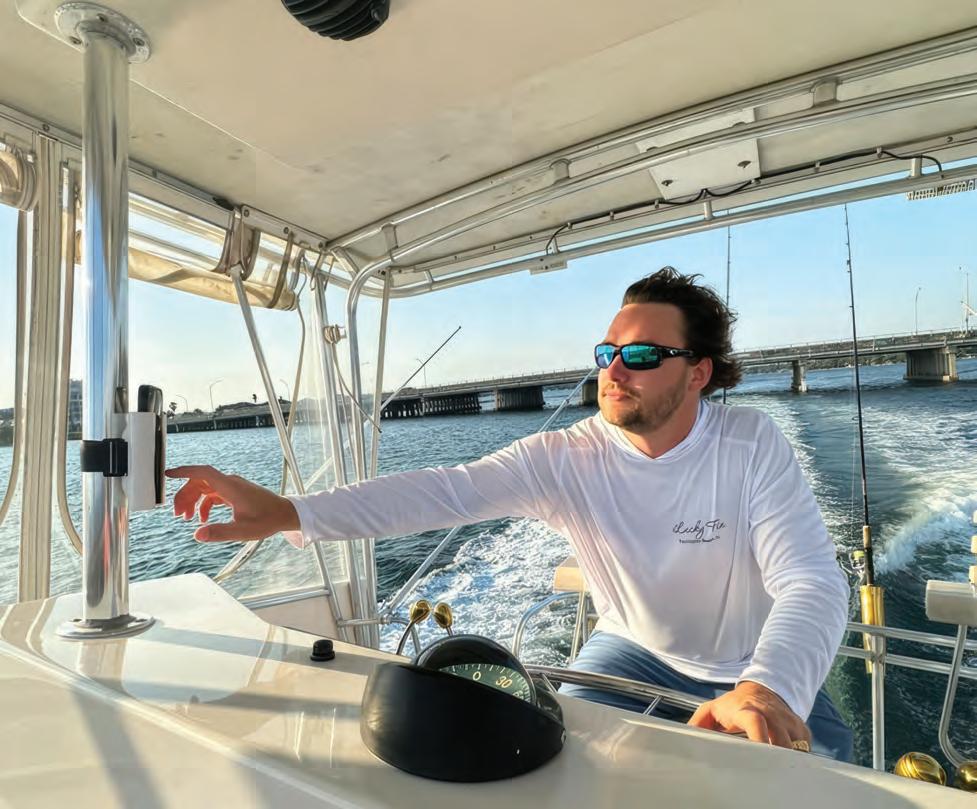
Tired of worrying about your cell phone slipping, falling, or getting damaged while you’re out on the water?
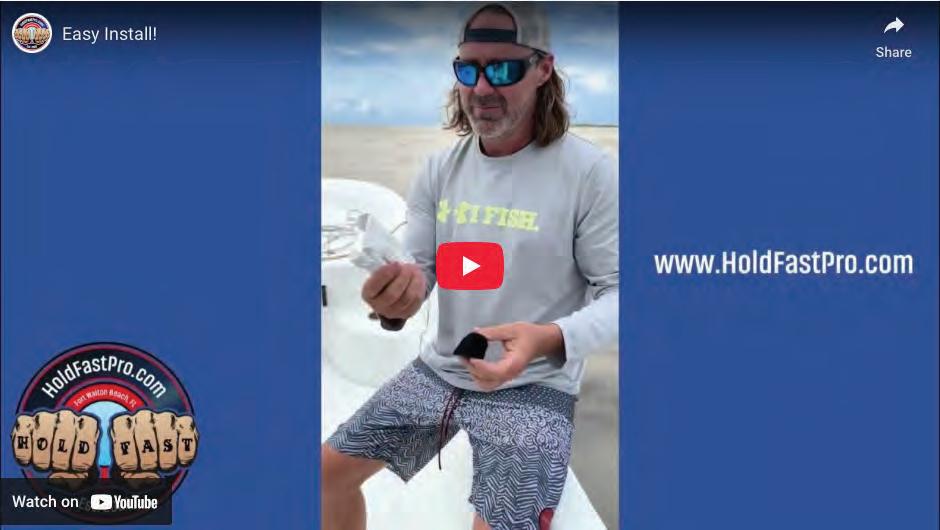
Hold Fast Pro provides the must-have boat accessory that gives you exactly what you need—a STRONG HOLD and FAST ACCESS to your cell phone.
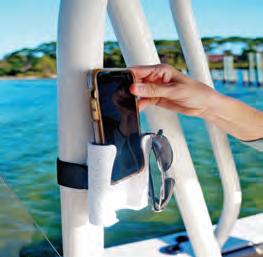
Built to handle the water, salt, and sun, our adjustable boat phone holder boasts a secure design, versatile features, universal fit, and the ultimate in durability and convenience.

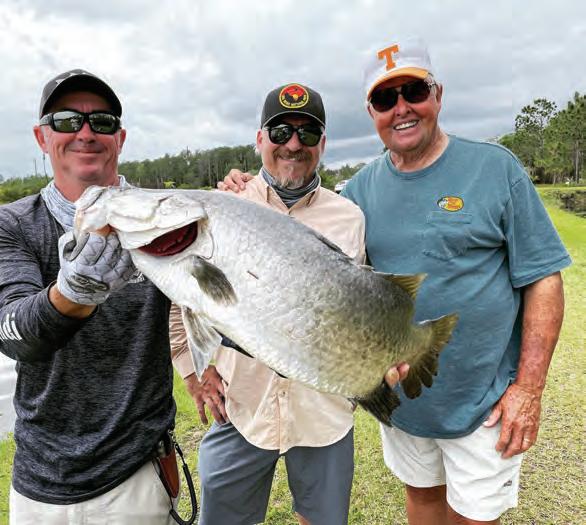

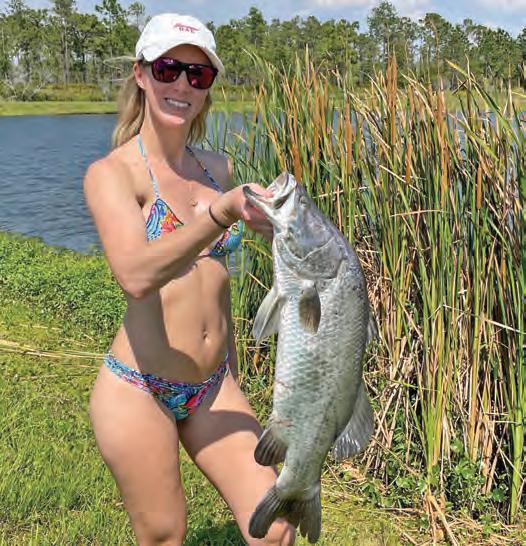
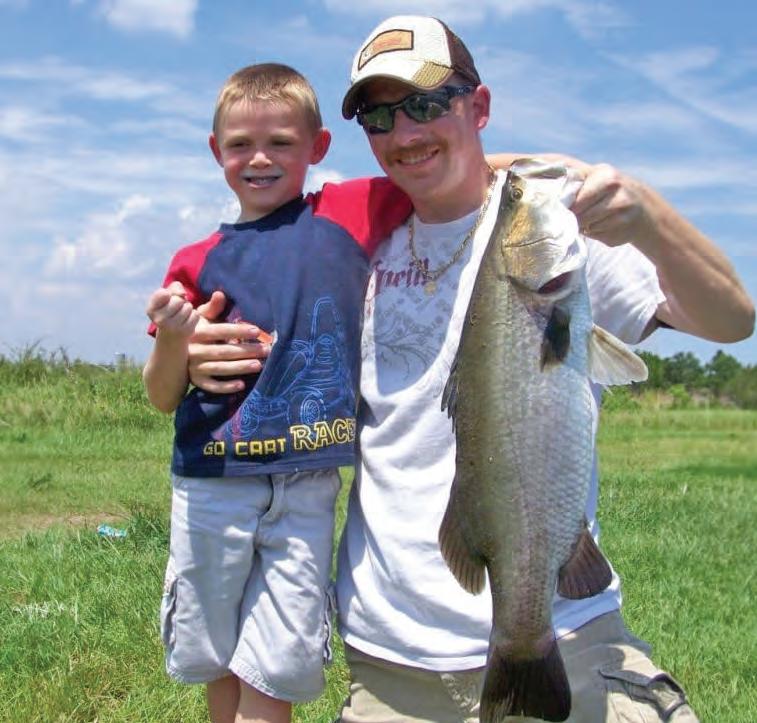
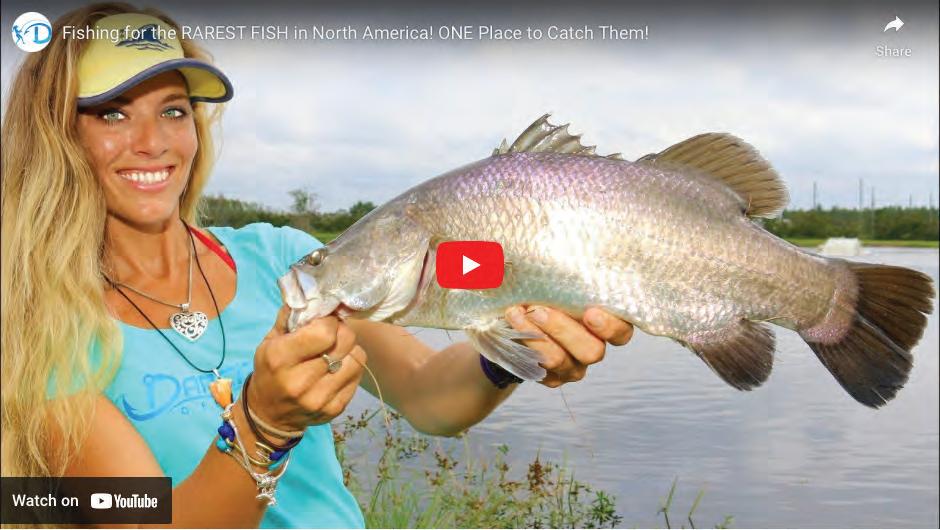
If you’re an avid angler seeking a one-of-a-kind fishing adventure, look no further than Osceola Outback Adventures. Located in Central Florida, just 45 minutes from the Orlando airport, Disney, and other attractions, this full-time guide service offers some of the Sunshine State’s most unique fishing experiences.
At Osceola Outback, you can embark on an unforgettable barramundi fishing expedition. What makes this experience truly special? Well, Osceola Outback is the first and only Barramundi guide service in North America. Native to Australia and weighing as much as 100 pounds, barramundi are hard-hitting, drag-screaming fighters that love to leap out of the water to display their power. The property is a working farm, ensuring that no angler goes home without hooking up multiple times. It’s a rare opportunity to catch these impressive fish!
Florida is a go-to state for bowfishing, thanks to its warm climate and abundant “non-game” fish. Osceola Outback offers both daytime and nighttime bowfishing trips. You’ll have the chance to shoot tilapia, gar, bowfin, and catfish in the state’s extensive network of lakes, ponds, and rivers.
Airboat Bass Fishing: Explore Uncharted Waters
For an adrenaline-pumping experience, try airboat bass

fishing. Osceola Outback’s custom-built airboats are equipped with 8-foot Blade Power-poles, trolling motors, and full walkaround fishing decks. With seating for three anglers and 500-horsepower motors, these boats can take you to places you’ve never explored before. It’s common for two anglers to land 60+ bass in a single 4-hour trip. Keep an eye out for alligators, wading birds, and birds of prey!
Known worldwide for huge stringers of largemouth bass, the Kissimmee Chain of Lakes offers fantastic fishing opportunities. Osceola Outback provides fully rigged bass boats, and their captains are United States Coast Guard certified and licensed. You can choose between fishing with artificial lures or locally caught live wild shiners.
Here’s something truly unique: Osceola Outback is the only place in the world where anglers can land an International Inshore Slam. This prestigious achievement consists of catching barramundi, peacock bass, and largemouth bass all in one location. With barramundi native to Australia and weighing up to 100 pounds, this is an angler’s dream come true.
Whether you’re a seasoned angler or a first-timer, Osceola Outback Adventures promises unforgettable fishing experiences. So grab your gear, cast your line, and get ready for an adventure like no other!
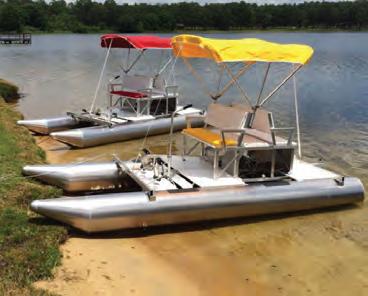
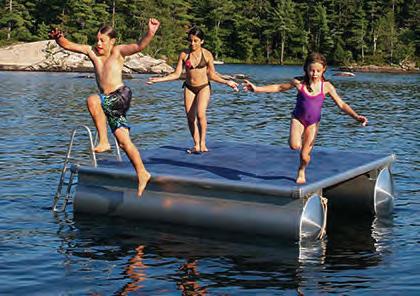
Both kids and adults will enjoy hours of fun with an Aqua Swim Raft floating dock. The Aqua Swim Raft is built with the same high quality standards as the Aqua Cycle™ pontoon paddle boats, making this the best choice for Resorts and Home Owners alike.
• WIDTH: 70" • HEIGHT: 47"
• LENGTH: 13' • WEIGHT: 286 pounds
• TUBE DIAMETER: 15"
CAPACITY: Four Adults or 800 pounds (reduce by accessories and gear) Rear sun deck with retractable ladder for boarding in deep water. Two passengers face forward and two face backward. The front passengers pedal.
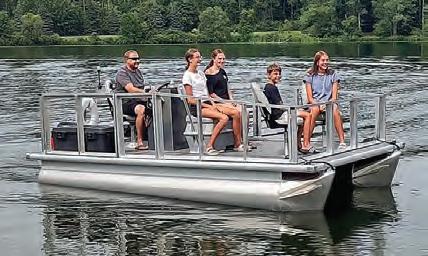
Quick-Release Railing System: Easily attach and detach railings for versatile use and convenient storage.
Spacious Deck: Offers ample space for passengers, gear, or materials, making it suitable for both leisure and light commercial activities.
Durable Construction: Built with high-quality materials to withstand various water conditions and ensure longevity.
Lightweight Design: Facilitates easy transport and launching, allowing for hassle-free adventures on the water.
Versatile Use: Ideal for recreational outings, fishing trips, or transporting goods, catering to a wide range of boating needs.
At its February meeting, the Florida Fish and Wildlife Conservation Commission (FWC) approved new management regions and regulations for spotted seatrout fishing in the State of Florida. The rule changes establish nine management regions for spotted seatrout as well as regional regulations for recreational and commercial fishing.
These new regulations will go into effect on April 1, 2026:
OPEN/CLOSED SEASONS
Recreational
» Panhandle: Open March 1–Jan. 31; Closed February.
» Big Band, Tampa Bay, Sarasota Bay, Charlotte Harbor, Southwest, Southeast, Northeast: Open year-round.
» Indian River Lagoon: Open Jan.1–Oct. 31; Closed Nov. 1-Dec. 31.
Commercial
» Panhandle, Big Bend, Tampa Bay, Sarasota Bay, Charlotte Harbor, Southwest, Southeast: Open Jun. 1–Oct. 31; Closed Nov. 1–May 31.
» Indian River Lagoon: Open May 1–Sept. 30; Closed Oct. 1-Apr. 30.
» Northeast: Open June 1–Nov. 30; closed Dec. 1–May 31
BAG LIMITS
Recreational
» Big Band: Five (5) fish per person.
» Panhandle, Tampa Bay, Sarasota Bay, Charlotte Harbor, Southwest, Southeast, Northeast: Three (3) fish per person.
» Indian River Lagoon: Two (2) fish per person.
Commercial
» 50 fish (1 SPL);100 (≥2 SPLs) in all regions.
SLOT LIMITS
» Recreational - 15-19 inches
» Commercial - 15-24 inches
OVER-SLOT ALLOWANCE
Recreational
» Panhandle, Big Bend, Tampa Bay, Sarasota Bay, Charlotte Harbor, Southwest, Southeast: One (1) fish overslot allowed per vessel or per person if fishing from shore
» Indian River Lagoon, Northeast: None
Commercial
» All Regions: None.
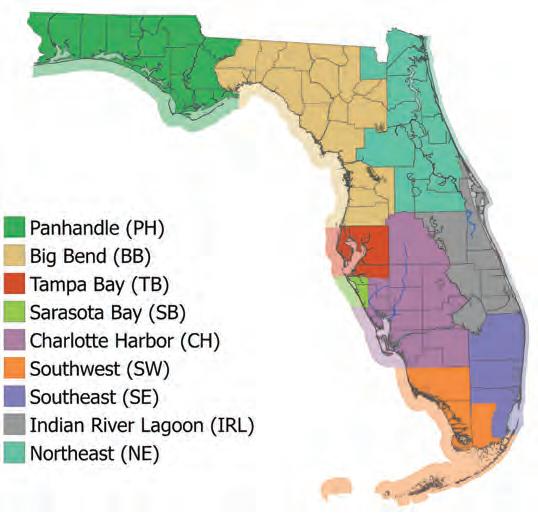
This regional management strategy has been implemented for some of Florida’s most popular inshore species, including redfish and snook, and now spotted seatrout. These regions and regulations are part of the FWC’s holistic management approach for Florida’s most popular inshore fisheries. This approach takes a more holistic view of the fishery by
evaluating multiple metrics, including fishing, stakeholder experiences and environmental factors, at a smaller regional scale. It improves our understanding of regional differences in environmental conditions and stakeholder experiences and provides greater flexibility to address localized concerns.
For the full FWC commission meeting agenda and links to background reports, go to myfwc.com/about/commission/commissionmeetings/. For current spotted seatrout annual reviews, visit MyFWC.com/Marine and click on “Recreational Regulations” and “Spotted Seatrout.” These documents provide a summary of the management metrics in each new management region.
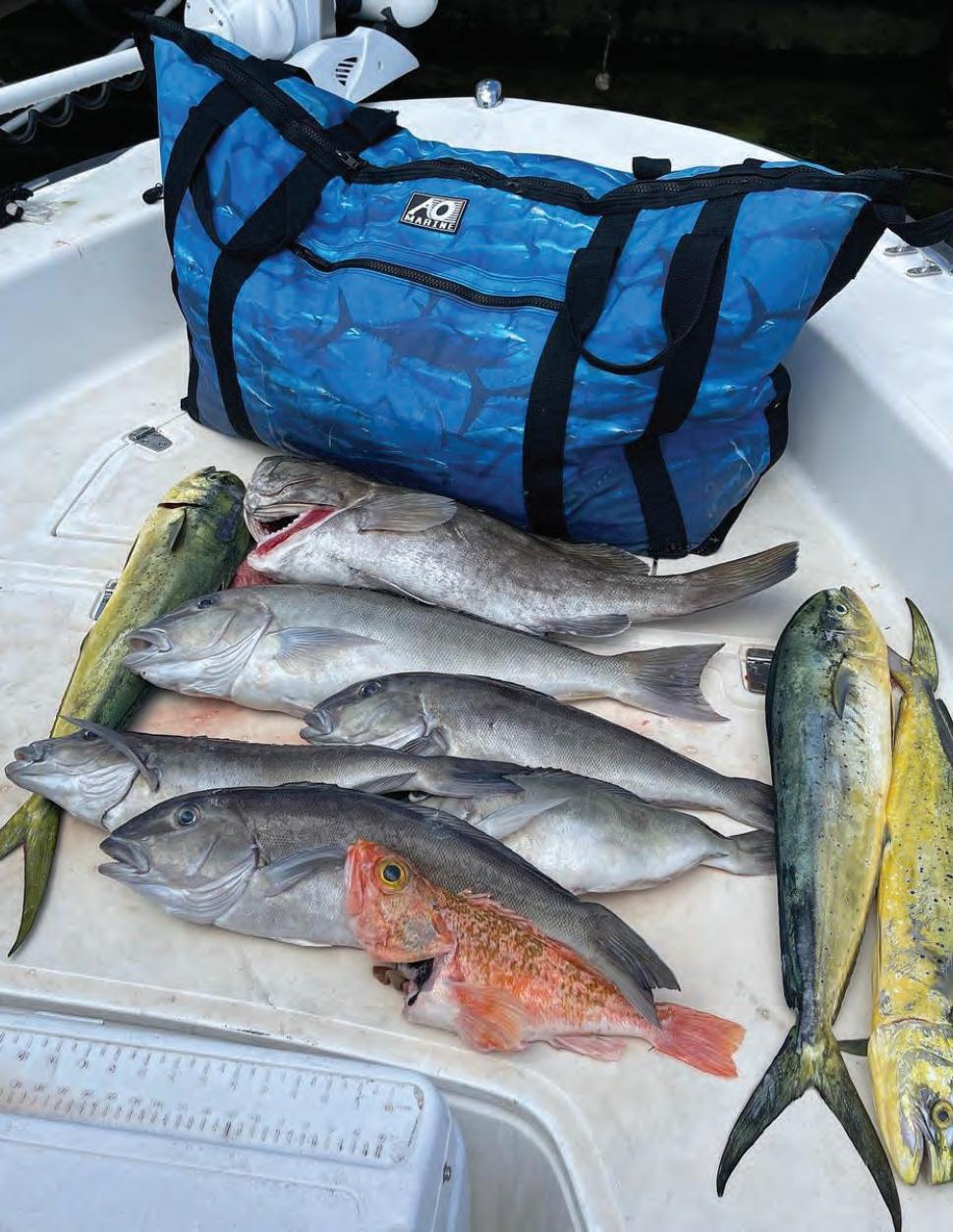
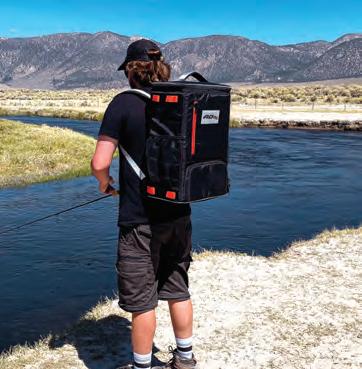

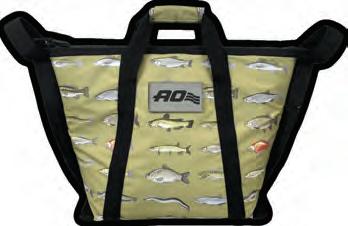
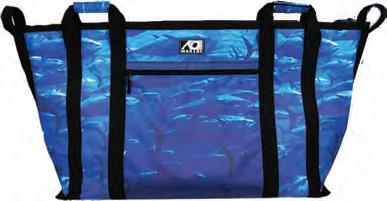
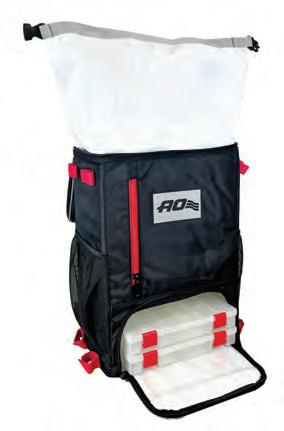
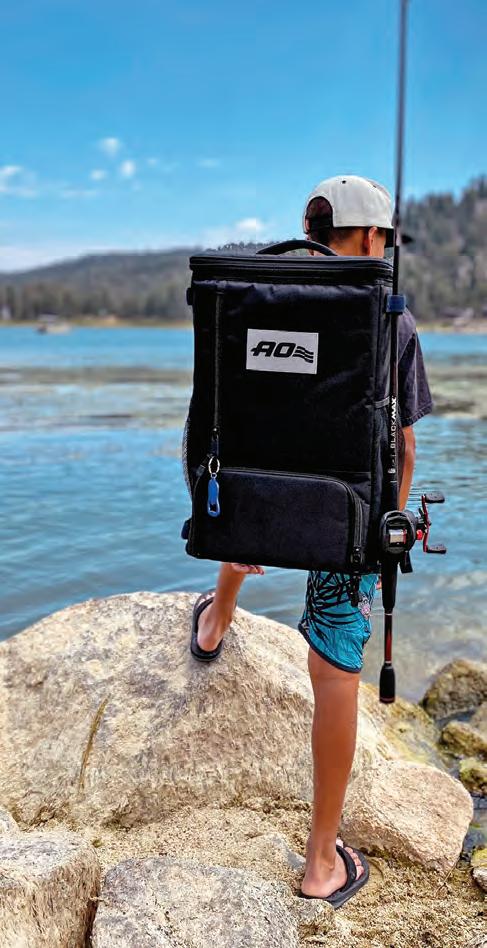
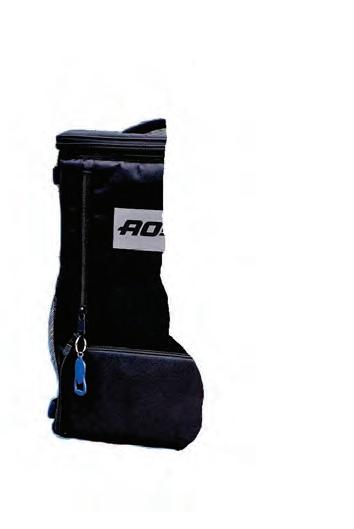
, the leader in high-performance soft-sided coolers, is hitting the water this year with new, upgraded fishing products. Our fishing team partners told us what they needed, and we listened!
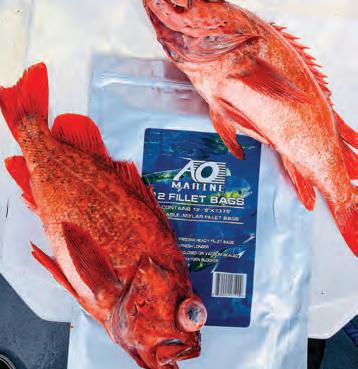
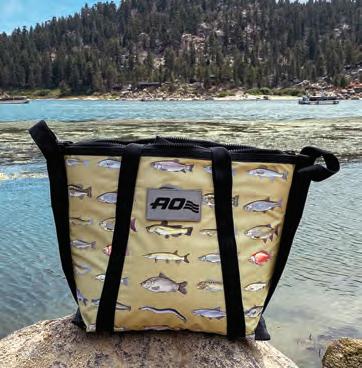
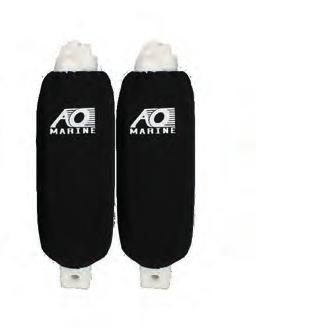
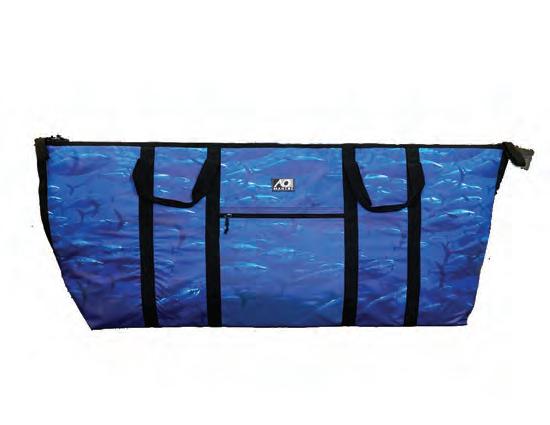
Products are in stock and ready to ship; The Fishing Cooler Backpack, 2, 4 & 6ft Fish bags, Fillet bags, Boat fenders, EVA Traction pads, Inflatable Docks, ISUPs, and of course, our high-performance coolers specifically designed for use on boats, guaranteed not to leak, and to keep ice cold for up to 24 hours.
Thirty years ago, AO was launched to provide active, hard-core people with quality products at a reasonable price. We started selling our soft-sided coolers to the hard-core, go-fast boaters and fishermen in Lake Havasu. We aimed to keep ice in our coolers for up to 24 hours in 120-degree Havasu heat. That goal was accomplished 30 years ago, and we’re still at it.
We know our customers; they fish and boat in the summer and ride the dunes or trails in the winter. AO products give those high-octane souls greater freedom to embark on and enjoy what’s important to them.
Make sure that your gear does not hold you back from doing what you love. AO products are built to handle whatever offshore adventure is coming next.
AO is flexibly rugged, seriously fun, and honestly real!
We’re looking for active, adventurous folks that demand quality and performance from their gear. Share your adventure and send us your fish story or photo.


The Angler Video Magazine connects fishing and boating enthusiasts with industry news and shared community interests in a unique, industry-first format — a video magazine. Sent to over 3.2 MILLION licensed anglers, The Angler Video Magazine is provided to its readers for FREE. No subscriptions or payments are required for viewing.
Support The Angler Video Magazine’s mission to provide FREE content to the recreational fishing and boating communities and industries throughout the world by sharing, subscribing and advertising.