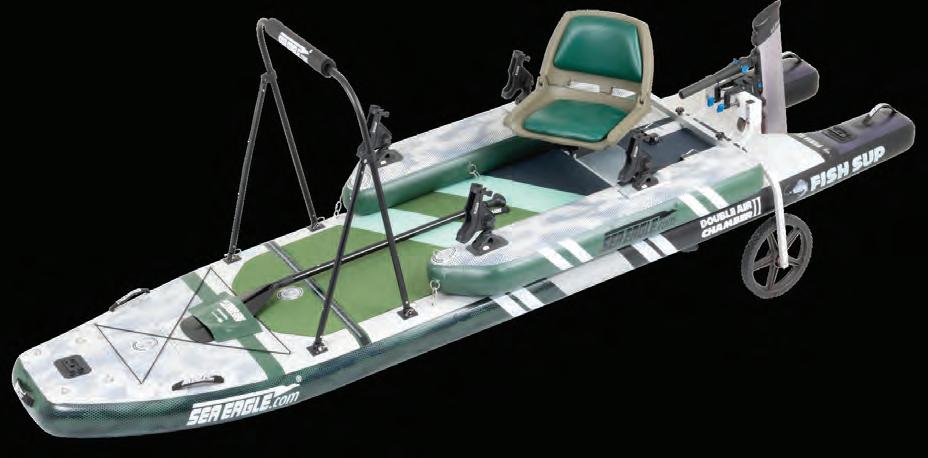
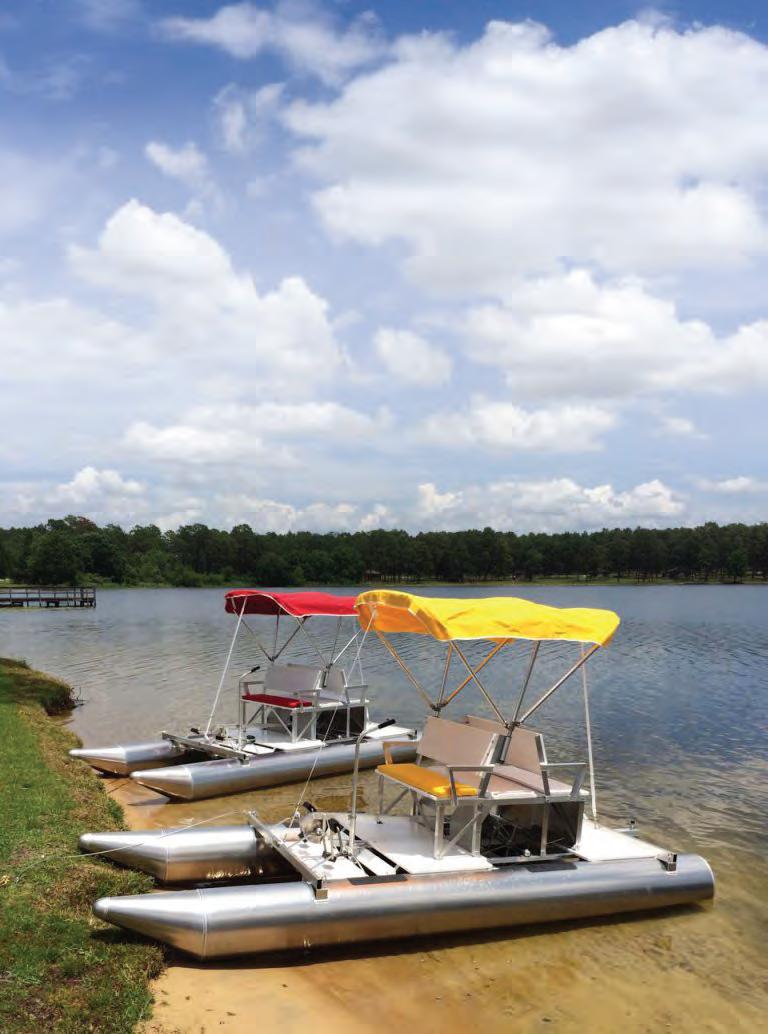
The versatility of the FishSUP™1210 is unmatched! Use it bare bones with just the board, a paddle & your !shing gear or deck it out with swivel seat, side pontoons, casting bar, motor and more! Incredibly stable, extra wide, swallow-tail !shing SUP holds up to 500 lbs! The FS1210 takes electric and gas motors up to 3 hp. There’s even an option for a bow trolling motor.
Choose From 6 Packages
Starting At Just $999
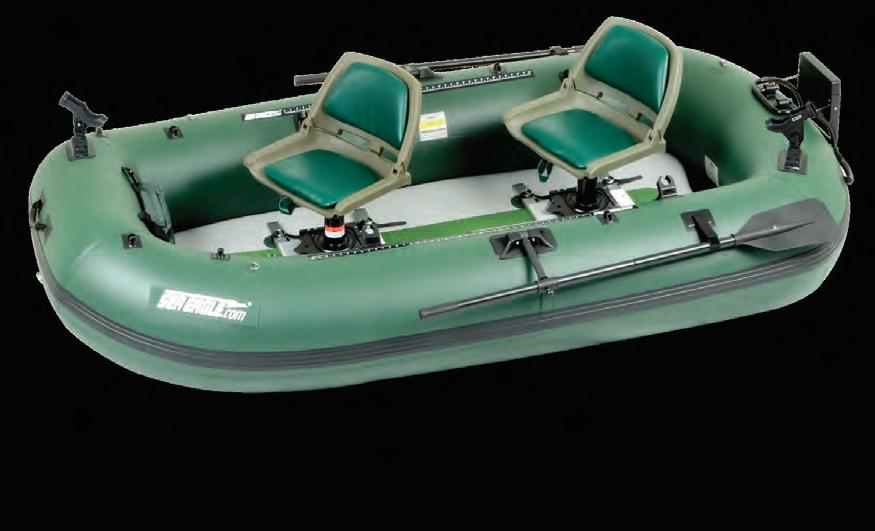
Perfect for !shing rivers, lakes and bays. The STS10 is a lightweight, roomy 1 or 2 person pontoon boat that’s packed with features anglers need & love including 2 built-in !sh rules, 4 built-in rod holders & 2 Scotty® mounts for more rod holders, anchor locks, camera posts or any other Scotty® accessory. Now available with a drop-stitch in atable oor or wooden oorboards.
Choose From 7 Packages
Starting At Just $1449
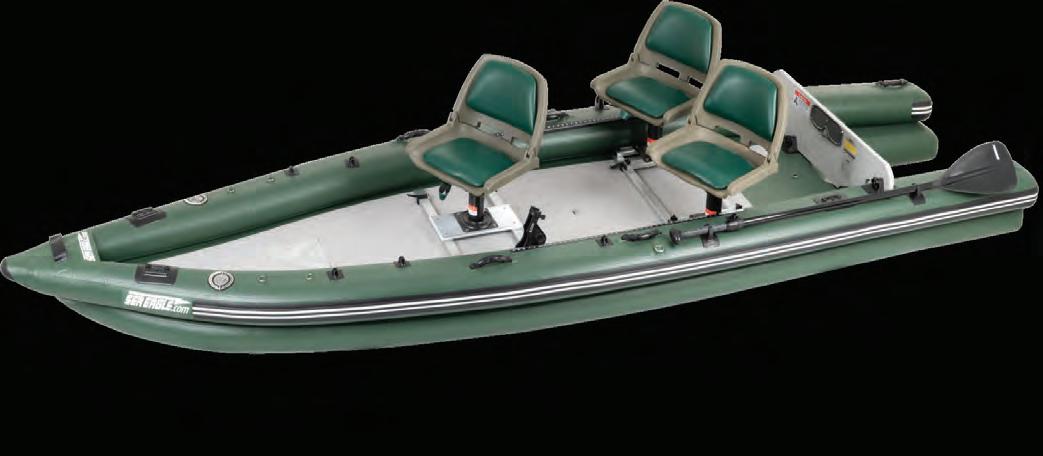
This “low-rider” gives you access to the water to reel in and release !sh easily. With a new patented outside, in atable, rigid keel the FSK16 glides through the water at speeds up to 21 mph to get you to the !sh fast! Perfect for 1-3 anglers and room for plenty of gear.
Choose From 9 Packages
Starting At Just $2999

















Ever see a commercial harbor full of Furuno Marine Electronics and wonder why the pros rely on us?


See why here










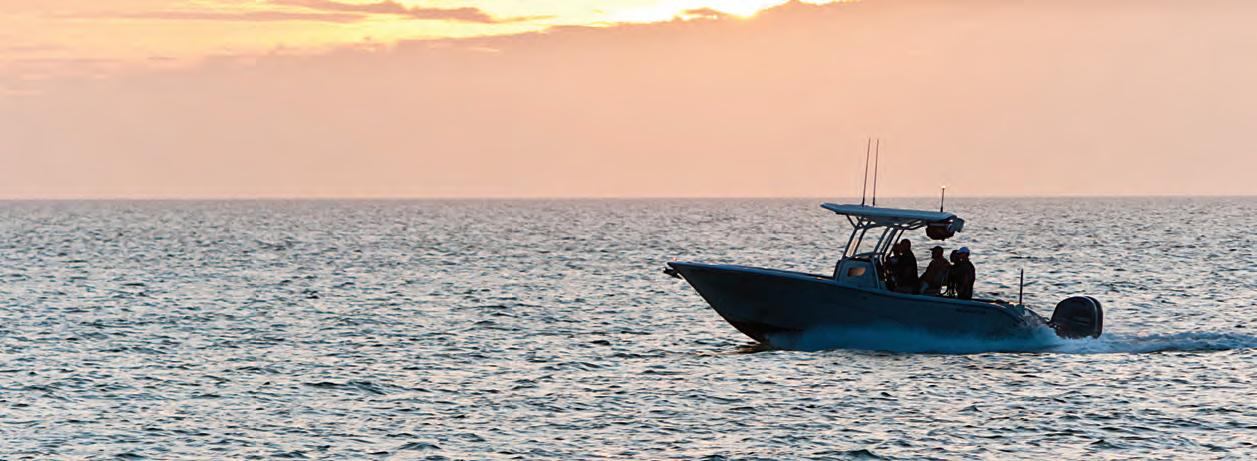
Are you ready to embark on your next on-water adventure? Before you set sail, here are fve things to know about boat insurance.
1. Boat insurance isn’t just for accidents
With comprehensive coverage, you’ll also be protected fnancially for theft, vandalism, and unexpected events like storms if you need repairs or replacements due to damage.
2. Accidents can happen to anyone
When accidents happen, boat insurance offers liability coverage for damages or injuries you cause while boating, up to specifed limits. It can also cover lawsuit costs if you’re sued.
3. Boat insurance can cover medical payments
Boat insurance offers a range of optional medical payments coverage limits, helping to cover medical expenses if you’re in an accident or someone is hurt on your boat, regardless of fault.
4. Most lenders require boat insurance
If you fnanced your boat, you’ll likely need boat insurance since most lenders require boat insurance to protect their investment. Additionally, some marinas or municipalities require proof of insurance for docking.
5. Progressive offers specialized boat coverages
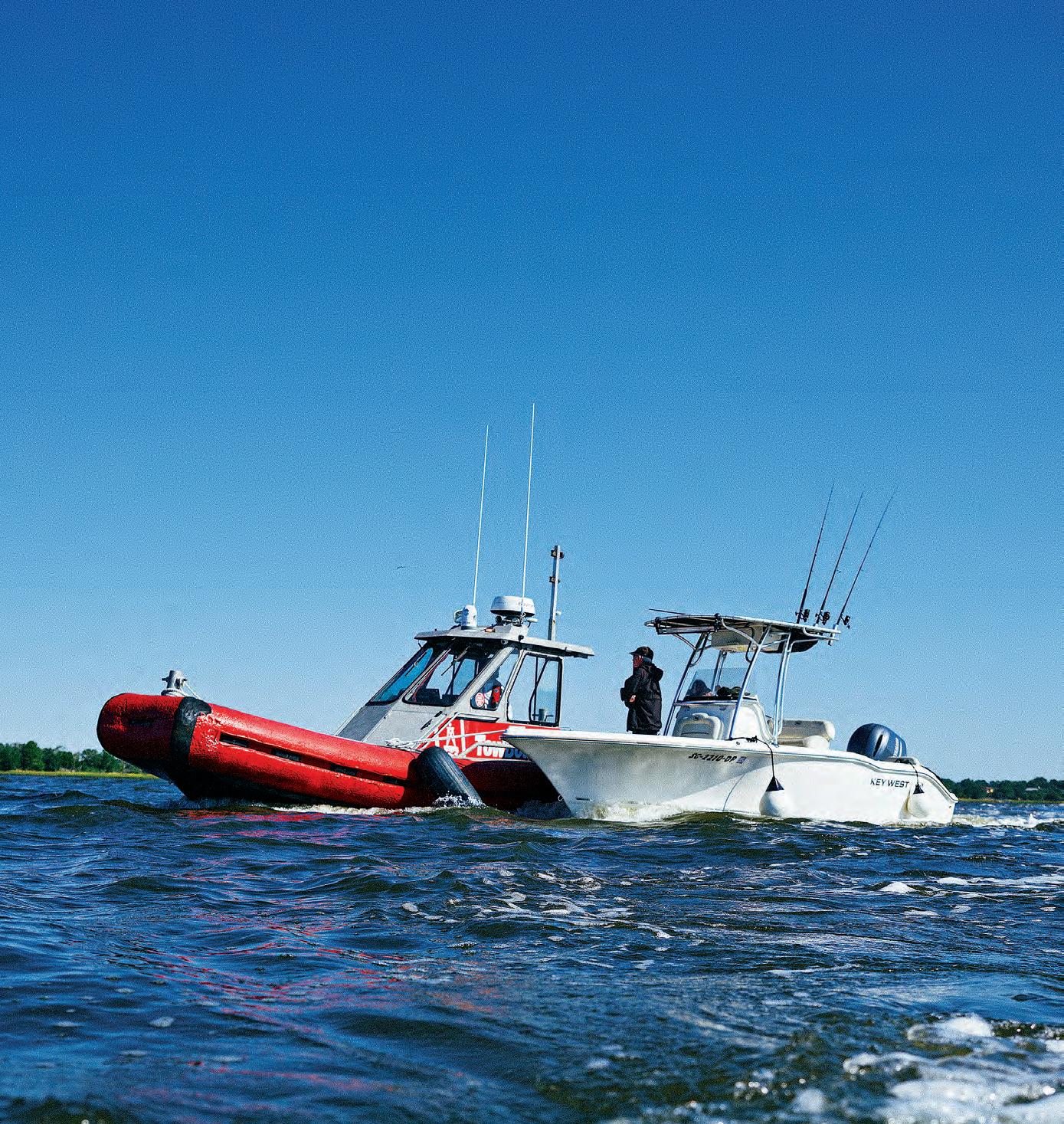
Ever worry about getting stuck on the water? Progressive’s Sign & Glide® On-Water Towing coverage** can help. It’s an additional coverage that steps in if your boat is disabled or breaks down on the water, paying for on-water towing, jump starts, soft ungroundings, and fuel delivery. Fuel cost isn’t included.
Don’t let unforeseen circumstances disrupt your voyage. Cruise with confdence thanks to Progressive Boat insurance. Because when it comes to your boat, peace of mind is the ultimate luxury.
Scan to get a quote in as little as 4 minutes.
to learn more.













By Will Schmidt
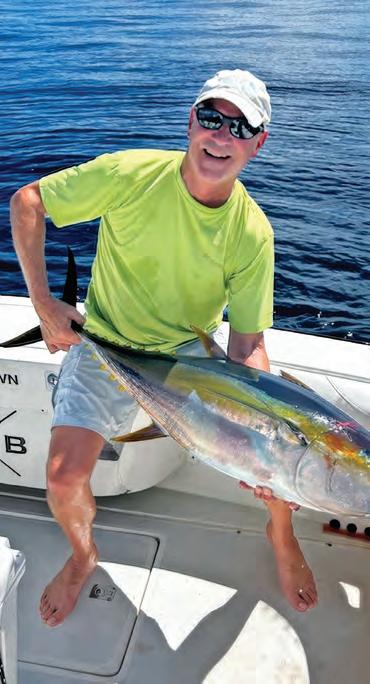
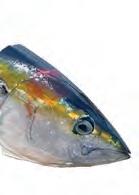
Tere were birds diving, porpoise rolling and he y yellow n tuna skyrocketing like Fourth of July reworks. Both on the water and in the boat, the energy was palatable. With one angler on the bow ready to cast a top water plug into the fray and me in the stern with ready to deploy live bait, the boat throttled back. !e plug went ying, meanwhile I simply dropped my bait behind the boat and started freelining. Almost instantly the plug was blasted in the air but not connecting. Meanwhile, I tossed a handful of baits o the back of the boat. By now the fray had subsided but the sh were clearly still looking for an easy meal. 50 feet behind me one of the chummers was blasted overhead by a 150 pound yellow n who was skyward bound a er it. Just below I could see my bait franticly swimming as another engulfed it, leading to a great battle before releasing the 100 pound class sh.
While top water shing for tuna is all the rave right now, it really makes sense to deploy multiple tactics to take advantage of these opportunities, as the school o en retreats as the boat nears. Our back up plan is very simple and almost always produces sh. As the boat gets into casting range of the school, we drop live bait o the stern and free line them. We always keep a couple ready to go. !is way, if the school disappears there are other baits ready for those who have been plugging.
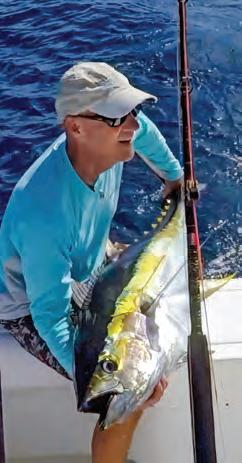
For bait google eyes or blue runners, rigging them on a 10/0 circle hook is ideal. Bridling the bait and using a non-slip loop knot presents the most natural movement as the baits ee. Also, tossing a handful of chummers in, as the surface activity disperses, usually brings shing looking to pick up stragglers into the strike zone. Chumming really helps keep the sh around, so make sure you have plenty of bait. When you get hit, give it a ve count real tight and hang on!
I like to use a bit heavier tackle with the live bait, as we o en seem to nd bigger sh. My go to is Shimano Terez BW Roller Striper medium heavy with a Talica 25A. I use 80lb braid to 80lb mono. !is is a great set up that’s fun for sh from 40 to 140 and can handle the occasional really big one. the rod with a better ghting angle. It also helps to keep the line away from the gunnel as a spiraling sh ascends. !is is a great asset for many anglers on these tough sh.
Will Schmidt is a seasoned tournament angler who has been writing about shing for more than two decades. Follow Will on Instagram @saltynstrong.


In Florida, we don’t wait on spring the way the rest of the country does. Our bass start thinking about the spawn early, and that in-between window when they’re moving from winter patterns to-ward the beds is one of the most exciting times to be on the water. It’s not full-blown bed fishing yet, and it’s not the deep winter grind either. It’s the transition. And if you hit it right, it’s when the biggest fish in the lake are at their absolute heaviest and most catchable.
During this phase, big females don’t just rush the shallows. They stage first. Think outside grass lines, ditch intersections, shell bars, canal mouths, and hard-bottom spots just off spawning flats. They want easy access to both worlds shallow enough to move up when conditions warm and deep enough to slide back if a cold front rolls through. Instead of randomly covering water, suc-cessful anglers focus on these “inbetween” areas where bass pause before committing.
The fun part about fishing the transition is that these fish are still in feeding mode. They’re fueling up before the hard work of spawning, which means reaction baits can shine. Swimbaits and
TYLER WOOLCOTT
lipless crankbaits are great for covering water along staging edges, especially around submerged vegeta-
tion. If they’re holding tighter to cover, slowing down with a Texas-rigged creature bait or a wacky-rigged stick worm can seal the deal. The key is not getting too shallow too fast; a lot of an-glers run straight to visible bedding areas and skip right past the best fish.
Florida weather adds another layer to the puzzle. A few warm, stable days can push fish forward in a hurry, while a stiff north wind can reposition them just as quickly. The calendar matters less than conditions. Watch water temperature trends, pay attention to wind direction, and look for areas that warm first, especially protected shorelines with darker bottoms. Transition bass adjust daily, some-times hourly, and the anglers who adjust with them are the ones holding up the heavy fish.
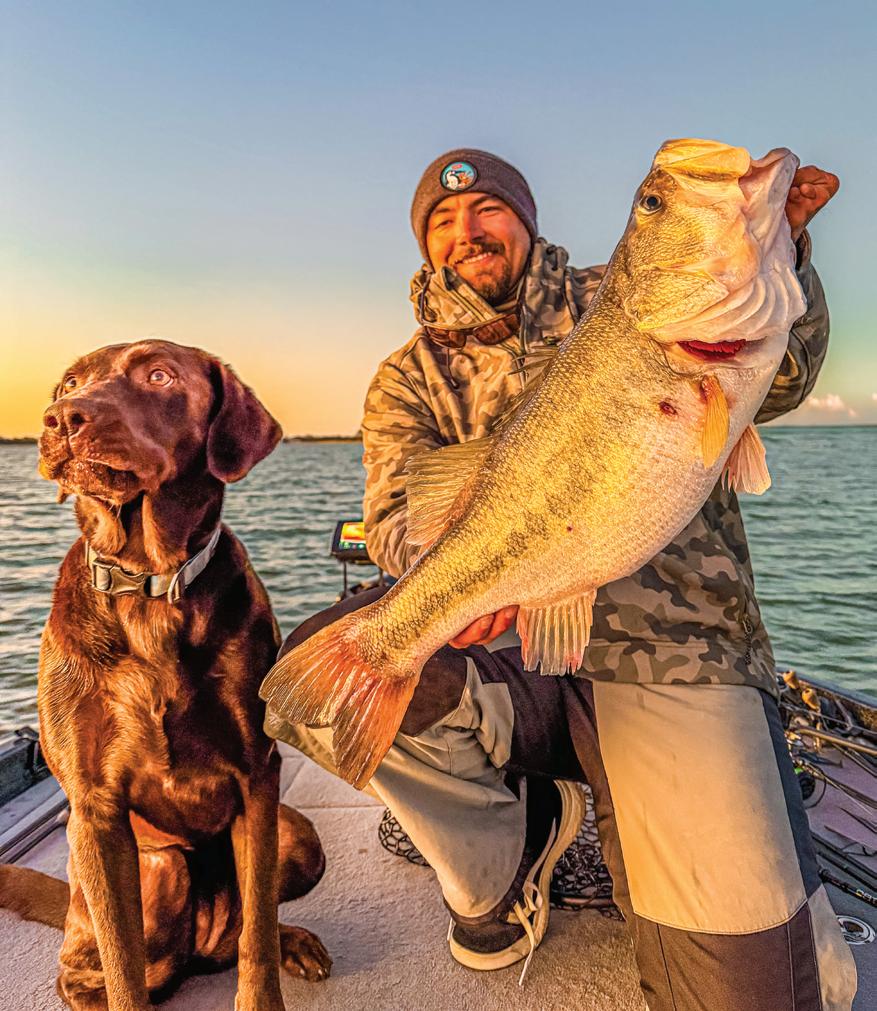
For me, this window is one of the most exciting times of the year. You’re not just sight-fishing beds, you’re hunting moving giants that are feeding and positioning with purpose. They’re thick, strong, and aggressive enough to commit. When you connect with one during the spawn transition, it’s not just another bite it’s often the bite that defines the season. And in Florida, that fish can show up on any cast.
Capt. Tyler Woolcott is a professional tournament angler, as well as owner/ operator of Florida Big Fish Adventures, providing bass and saltwater guided fishing trips: www.floridabigfishadventures.com.


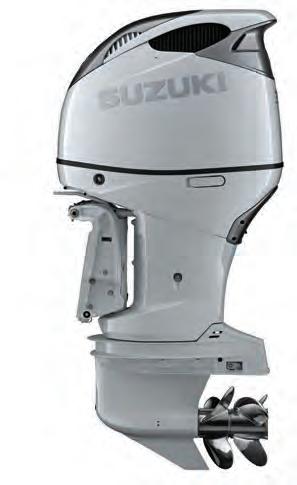
Mastry Engine Center has received the Suzuki Marine Super Service Award and has been ranked #1 in Suzuki Marine US Sales! 60 YEARS OF REPOWER EXPERIENCE!

RePower Packages designed to best ft your needs and not stretch your budget. Financing available.

Rest assured, all Mastry Suzuki RePowers are backed by Suzuki’s industry leading 5-year factory warranty.

Stationed strategically around the East Coast, all Suzuki RePower Centers have achieved the highest level of Suzuki certifcations to meet and exceed your repower needs.
When Considering A Repower, Consider These Factors:
•Every Authorized Mastry Suzuki RePower Center has decades of repower experience providing proper rigging, controls, propeller matching and in water testing
•With a Mastry Suzuki RePower, owners gain improved performance, less noise and greater reliability
•Mastry Suzuki RePower’s exclusive Owner’s Edge Program*
•Mastry Suzuki RePower Centers use authentic Suzuki OEM parts and have factory certifed technicians

Since 2014, Mastry Engine Center, has been building the premiere Suzuki Outboard repower network in Florida. Today, Authorized Mastry Suzuki Outboard Centers have been exceeding expectaions in the Southeast for over two decades. Recently Suzuki Marine requested Mastry Engine Center to expand the network throughout the Northeast. Now boat owners from Maine to Florida can be assured of the best support for their Suzuki outboard repower project. All Authorized Mastry Suzuki RePower Centers provide the best options, information and package pricing for excellent performance in repower.



*Get with the Program!
When you purchase a new Suzuki outboard from an authorized Mastry RePower Center you qualify to become a member of the Mastry Suzuki Owner’s Edge. Owners receive an identifcation card that provides them with important information about their Suzuki outboard motor as well as a passport to additional benefts during ownership. Members enjoy a detailed engine maintenance schedule, Mastry Suzuki RePower Trade Program and special pricing from Mastry Suzuki Partners.














We print and deliver 5000 copies of The Angler Magazine every month and distribute it to over 200 local business partners. Often, locations change, but here are a few businesses where you can always find a free copy.
AVON PARK
Avon Park Chamber of Commerce
Walmart
Wild Turkey Tavern
Bill Jarrett Auto
Huston Chevrolet
Huston Dodge/Jeep
SEBRING
Sebring Chamber of Commerce
Fish Candy
Food For Thought
Alan Jay Ford
Alan Jay Chevy/GM
Veterans Administration
McKibbons
McPhails Auto
Sebring Toyota
YMCA
Walmart
SPRING LAKE/LORIDA
Gator Shack
Spray and Pray

Sebring Resorts
Seven Hotel
LAKE PLACID
Lake Placid Chamber of Commerce
Lake Placid Western Wear
Lake Placid Marine
Lake Placid Historical Society
Bass Addict
The Bait Shop
LAKEPORT
Brighton Seminole Casino and Hotel
Big Water Bait and Tackle
Brighton Trading Post
Lakeport Quik Shop
OKEECHOBEE
Okeechobee Chamber of Commerce
Fast Break Bait and Tackle
Skull Hill Archery
Garrards Bait and Tackle
Lake and Trail USA
Eli’s Western Wear
Walmart
PALMDALE
Gatorama
Fisheating Creek Outpost
KOA Holiday RV Park
CLEWISTON
Clewiston Chamber of Commerce
Jolly Rogers Marina
Roland Martin Marina
Hampton Inn
Walmart
LABELLE
LaBelle Chamber of Commerce
Walmart
LaBelle Ranch Supplies
Red Rooster Restaurant
Bridgestreet Auto Parts
WAUCHULA
Wauchula Chamber of Commerce
Caloosa Outfitters
Thousand Trails
Alan Jay Ford

Alan Jay Jeep/Chrysler
Walmart
ARCADIA
Arcadia Chamber of Commerce
Gator Guns
Arcadia Golf Course
Walmart
Eli’s Western Wear
Capital Pawn


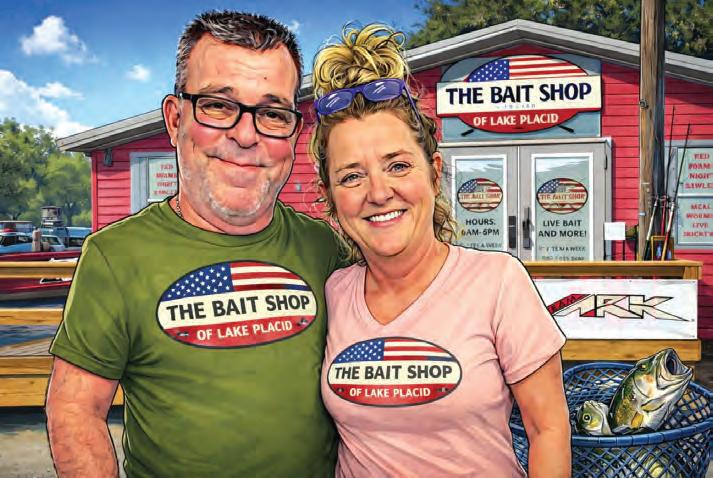
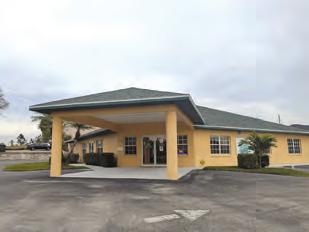
If you haven’t visited the Bait Shop in Lake Placid, you’re missing the boat. This tackle shop has more fishing tackle than you can imagine, as well as live bait. Shiner and minnow tanks take up a wall as you walk through the store, but the huge inventory of fishing lures is overwhelming. A lifetime of fishing has gone into the selection of lures and assorted tackle.
John and Michelle have one of the best bait and tackle stores I’ve seen in years, and it is a must–see, must–stop on your way to Lake Okeechobee or any one of the many lakes in and around Lake Placid. Located on the south end of the city, it can be a little challenging to find, but it’s well worth the effort!
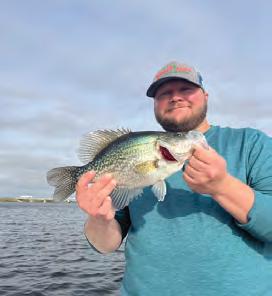
March is crappie season, folks, and The Bait Shop is open 7 days a week from 6 am to 6 pm, so bring your bait buckets because they’ve got plenty of minnows and shiners.
The Bait Shop of Lake Placid










By Stephen Rampersand
We left Pace, Florida, just outside of Pensacola, where fishing has always meant salty air and sandy beaches. Our waters are defined by pompano in the surf, cobia cruising the shoreline, and long days spent on local piers casting hardtails or frozen cigar minnows for king mackerel, sailfish, and tuna.
South Florida is something else entirely, especially when fishing means ditches, canals, and ponds hidden in plain sight.
For months, my boys had been obsessed with peacock bass and snakeheads. These were not ordinary fish. Their colors looked painted on. Their reputations were built on aggression and violence at the end of a line. Fish known for explosive strikes, blistering runs, and the habit of launching themselves completely out of the water. It sounded like another country, not another region of Florida. Yet these fish are here, thriving in canals, ponds, and drainage systems all across Miami and the surrounding areas.
Peacock bass were introduced decades ago to help control invasive species and create a new freshwater fishery. They are true gamefish, fast, powerful, and relentless. Because they require warm water year-round, South Florida is the only place in the United States where they can survive. Snakeheads, along with other exotic species like knifefish, cichlids, exotic catfish, and oscars, arrived later through aquarium releases and accidental introductions. They quickly spread through the connected waterways, turning forgotten canals into wild and unpredictable fisheries. Aggressive, powerful, and completely unfamiliar to us, they felt more like something from the tropics than suburban Florida.
The idea of catching them was exciting.
The idea of where we would catch them felt strange and completely foreign.
As I started digging into the options online, it became clear this was not the kind of charter I was used to searching for. There were no glossy websites, no sponsored captains in logo-heavy jerseys, no promises wrapped in marketing language. This fishery lived mostly off the grid. It was run by everyday anglers who had grown up in South Florida and learned their waters the hard way, through years spent in backways and forgotten corners of the landscape.
From what I could tell, much of the fishing was not even done from boats. It happened from land, under highway bridges, along drainage ditches, and in residential neighborhoods where canals cut quietly between houses. It felt raw, improvised, and completely outside the traditional charter world I knew.
We followed a few captains online, watched their videos, studied the places they fished, and eventually reached out. Then we rolled the dice. We made our decision and booked the trip.
The long drive from the Panhandle to South Florida gave
us plenty of time to imagine what might be waiting. Big fish. New species. Explosive strikes. Hours on the road allowed excitement to build and expectations to rise. By the time we arrived, the trip had already grown larger in our minds.
Then reality set in.
We pulled up to a house, not a marina. No dock. No boats in slips. Just a driveway and a truck waiting at the curb. My boys looked at me, then back at the truck. Iguanas moved through nearby yards, and dogs barked in the distance. A jon boat sat in the bed of the truck, and a bucket of minnows was strapped down beside a handful of rods.
Either we were about to give my boys the fishing experience of a lifetime, or we were about to spend a long day chasing internet promises down roadside canals. There was no way to know which one it would be.
I remember thinking how quickly disappointment can take the wind out of a kid’s sails. To be honest, I was concerned.
The captain stood waiting outside. There was no formal introduction and no rundown of the day. We loaded our gear into the back of the truck, and with a simple nod, we all climbed in.
The drive was quiet. We turned off the interstate and stopped near a fence. On the other side was a narrow canal that looked more like a drainage ditch than a fishery. That was the moment the doubt really settled in.
A Jon boat.
A bucket of minnows.
A roadside canal.
The boat slid into the water, a minnow went out, and the adventure officially began.
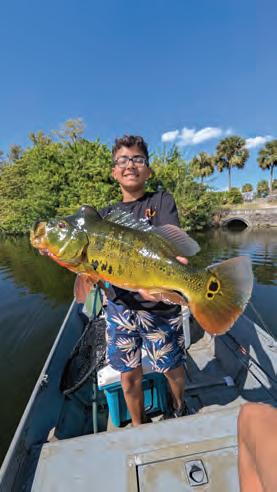
Within minutes a rod bent hard and the surface erupted. A peacock bass exploded from the canal, bright colors flashing as it jumped and shook. Then another. Then another. Just like that, the doubt began to dissolve.
Fish after fish came to the boat. Peacock bass in the three to five pound range mixed with solid largemouth bass. Fish chased bait to the surface and launched themselves clear of the water. My boys were laughing, shouting, comparing every catch. There were no scales. No measurements. It did not matter... Well, it always matters; but no time for that!
Two hours passed without any of us noticing. Even though none of us were ready to stop, the guide said he had another spot, one even better than the first. We loaded the jon boat back into the truck and headed out again.
The next stop was even harder to believe. An industrial parking lot with a pond hidden behind it, the kind of place you would drive past without slowing down. Once again the boat went in. Once again the rods bent almost immediately.
This time the fish were bigger. Stronger. About an hour in, I hooked something that stayed deep and pulled hard, peeling drag and refusing to surface. I was sure this was the giant peacock bass we had all been hoping for.
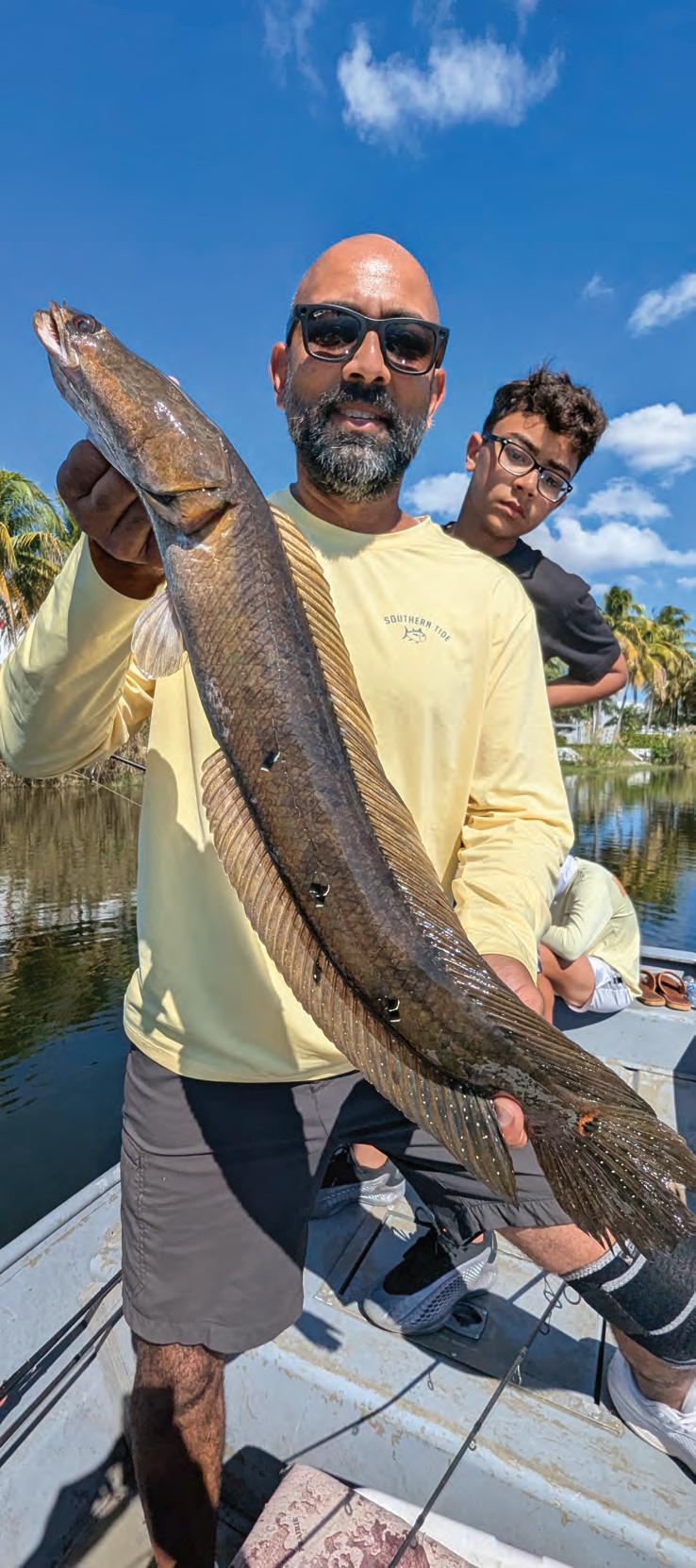
When it finally came up, everything stopped. Snakehead.
Thick bodied. Powerful. Staring back at us like it belonged exactly where it was. The boys leaned in close, wide eyed. This was real, and unbelievably cool.
If the day had ended there, it would have been enough.
But there was one more stop.
We loaded the boat back into the truck and headed out one final time. We pulled into a quiet neighborhood lined with massive homes and trimmed hedges. A small opening led to a beautiful pond with a fountain in Continued on page 15








By Peggy Choquette
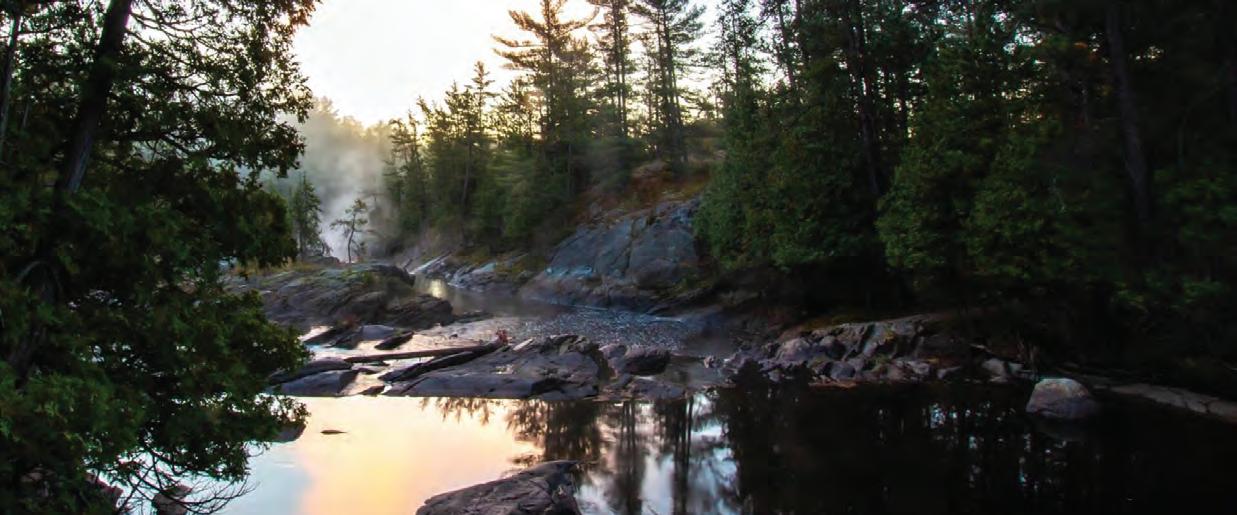
For generations, the women in our family have found connection and peace on the shores of Georgian Bay and the rivers of northern Ontario, not only with each other but with the land itself.
This tradition began with my great-great-grandmother, whose spirit still lingers in the ripples of the water and the quiet hum of the pines. She, too, would take her daughters out on the same waters, teaching them not just how to fish, but how to listen to the land, how to bond with each other in the silences between the cast and the reel, and how to respect the natural bounty of the earth.
My grandmother carried this legacy forward, passing it down to my mother, who, in turn, shared it with my sister, learning and connecting and me. The women in our family fished to connect, to gather, feed their families and to heal. They fished not just with poles and worms, but with their hearts, and
Jesse A. Choquette Owner-Operator
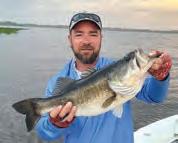
each catch was more than just a fish—it was a memory, a lesson, a conversation, or a quiet understanding passed between mother and daughter, grandmother and granddaughter.
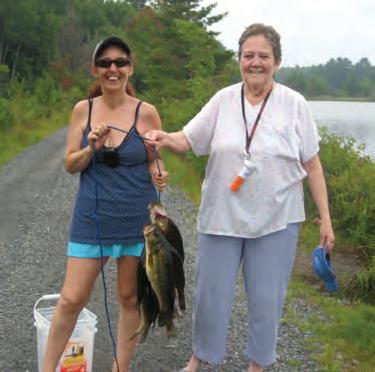
A few years ago, my sister, decided to go fishing. But this time, the only person available to join her was our mom. Their relationship had been a bit turbulent over the years, and the thought of spending an entire afternoon on a quiet, secluded shore must have seemed daunting to both of them. But off they went, with nothing more than fishing poles, some worms, a five-gallon bucket, and a dish towel.
They settled on the shore surrounded by the majestic pines that had witnessed the stories of our family for generations. The water was calm, the air crisp, and for hours, they fished. The silence between them wasn’t uncomfortable—it was full of memories, of stories told and untold. My sister had won many tournaments over the years, but this day it was our Mom that shone, filling that bucket with bass and pike. The bucket grew heavier with each catch, but they didn’t mind—the weight of the fish was nothing compared to the weight of the shared experience, the quiet understanding between mother and daughter.
At one point, a couple wandered along the shore, curious about their day. They asked how the fishing was going, and without missing a beat, our mom, quickly adjusted the towel and replied, “Oh, not bad,” casually brushing off the true extent of their catch. Beneath the dish towel their bounty splashed in the cool water raising a few eyebrows. My sister had thought the towel was there to protect the fish from the sun, but in reality, it was there to protect their prized spot on the water.
When they finished for the day, the bucket was so full that they needed to enlist the help of a friend to wrestle it back to the car. It was a long walk, and the image of my mom and sister, carrying that bucket, struggling but laughing together, has become one of my favorite memories.
They weren’t just carrying fish—they were carrying the weight of generations, of love, healing and connection., and it was a beautiful thing.
Months later, when I returned home from Florida for a visit, my family gathered to break bread and share the fish they had caught that day. It was with pride and humor that Mom share the story of their 5 gallon bucket bounty. And when we ate the fish they had caught, it wasn’t just about the fish—it was about the stories we shared, the bonds we formed, and the peace we found in the simplicity of that moment.
Two weeks ago our Mom passed away peacefully at our family home, at the age of 83. As I reflect on her life, I remember the beautiful simple moments, shared laughter, beautiful struggles. These are the threads that weave us gently into the fabric of our history.
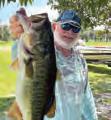
This has been an unusual winter for spec (crappie) fishing on the Lake. Low air temperatures followed by record-breaking heat, combined with the lake dropping to 12 feet, have made speckled trout fishing a challenge, especially for the anglers jigging.
But the lake’s water temperature is starting to stabilize. The last of the crappie (specs) are coming in to spawn, making Indian Prairie, Harney Pond, and the Kissimmee River the places to catch fish, especially right before the full moon.
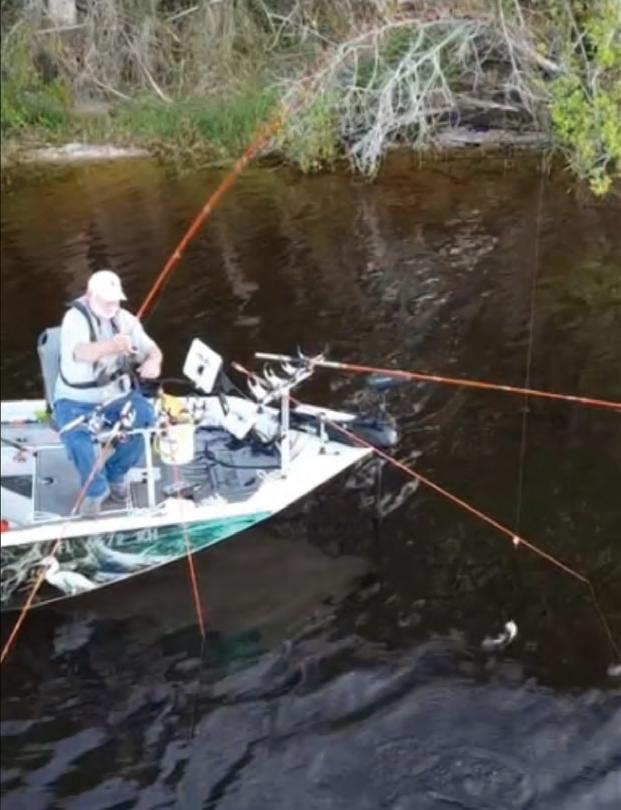
Recently, spider rigging has been the best way of catching your limit. Try a Mafia rod, 8 to 14 ft., with a Garrard’s Tackle minnow on a number six gold hook at the end of six lb. test line. Approximately 10 to 14 ft. depth is where the fish are being caught. Nights are the most productive when the light on your boat is on. If you’re not into night fishing, be on the water an hour before dark or in the morning hour before daylight.
Whenever you choose to fish, be sure to stop in Garrard’s Tackle and get your equipment set up before you hit the lake. Garrard’s also offers guide services from knowledgeable anglers. Captain Bob, Captain Danny, or I will be happy to take you out for a day of fishing on Lake Okeechobee. Give us a call at 863-763-3416.

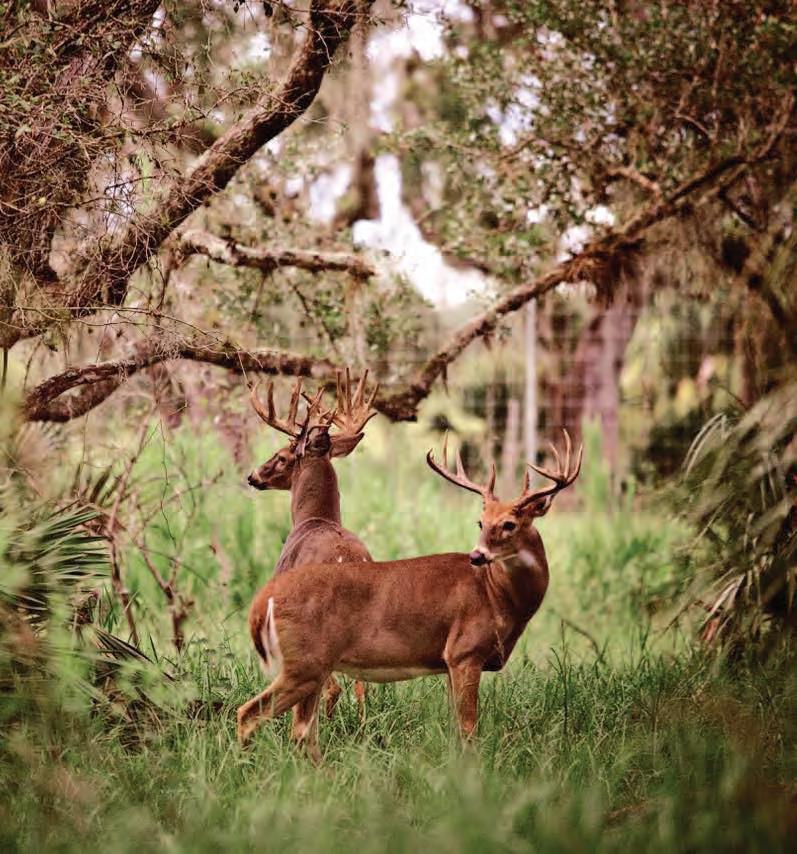
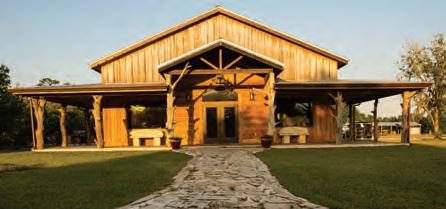
Located on 2,000 acres of Florida bays, pines, palmettos, and oaks, outside the small town of Lake Placid, the Lightsey Family Ranch is perfect for the avid hunter and outdoorsman. Owner and lifelong hunter, Lee Lightsey, offers you to a one-of-a-kind hunting experience, including wild hog, quail, pheasant, turkey, deer, and alligator hunts. During your hunt you are welcome to stay at our lodge which features room for up to 28 guests, a large lobby with a true old Florida feel, and a full time Chef ready to prepare your meals.


Tickets $20 per person * TICKET INCLUDES: Admission + choice of one signed book (others available for purchase day of event) LIMITED SEATING: CALL TODAY AND RESERVE YOURS EARLY! 863-304-1079

Beach House Books and More & Coffee Café 3210 Physicians Way, Sebring, FL 33870 863-304-1079 beachhousebooksandmore@gmail.com www.beachhousebooksandmore.com
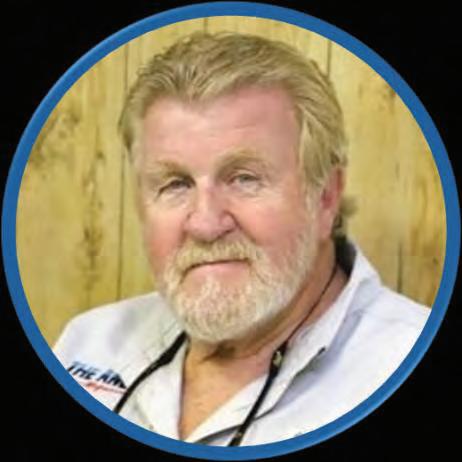
By Don Norton
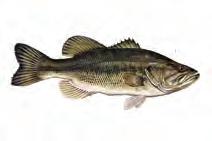
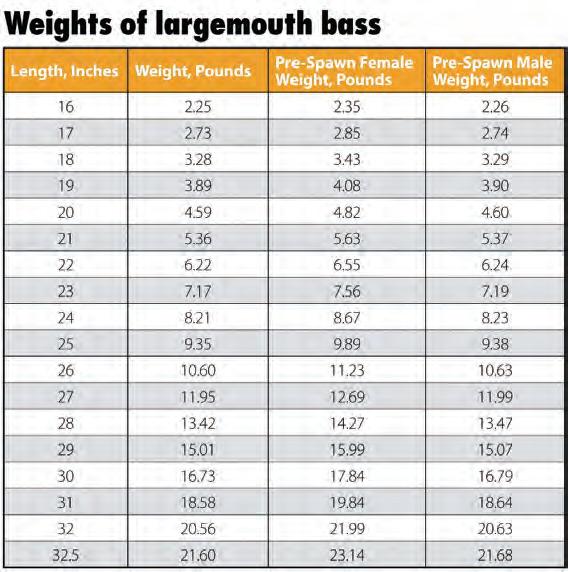
Lots of anglers either forget their scales or forget to put in new batteries when they want to weigh a fish. Others don’t have a scale and don’t feel they need one. And, still others prefer to “guesstimate”.
The pros and cons of estimating the weight are pretty straightforward. You’re not going to get the correct weight, no matter how many fish you’ve caught, and if you’re looking for an opportunity to submit the fish to the FWC TrophyCatch program, they won’t accept a fish that has not been weighed on accurate scales. Plus, you’ll never know what the fish actually weighed.
On the other hand, I’ve yet to meet an angler who “under-estimates” the weight of a fish. I’m guilty of it myself. I always guess a bass weighs more than it actually does. I can’t tell you how many big fish I’ve caught that I immediately guessed weighed 10 pounds or more, only to find out they weighed 8 or 9 pounds.
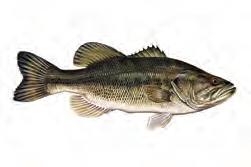
In my opinion, an easy estimate of weight, based on length along is 12” one pound; 14-15” two pounds; 16” three pounds; 17-18” four pounds; 19-20” five pounds. Once you’ve crossed that 5 pound mark, it becomes increasingly difficult to estimate the weight. I’ve seen 10 pound bass that only measured 24” and others that were over 28”.



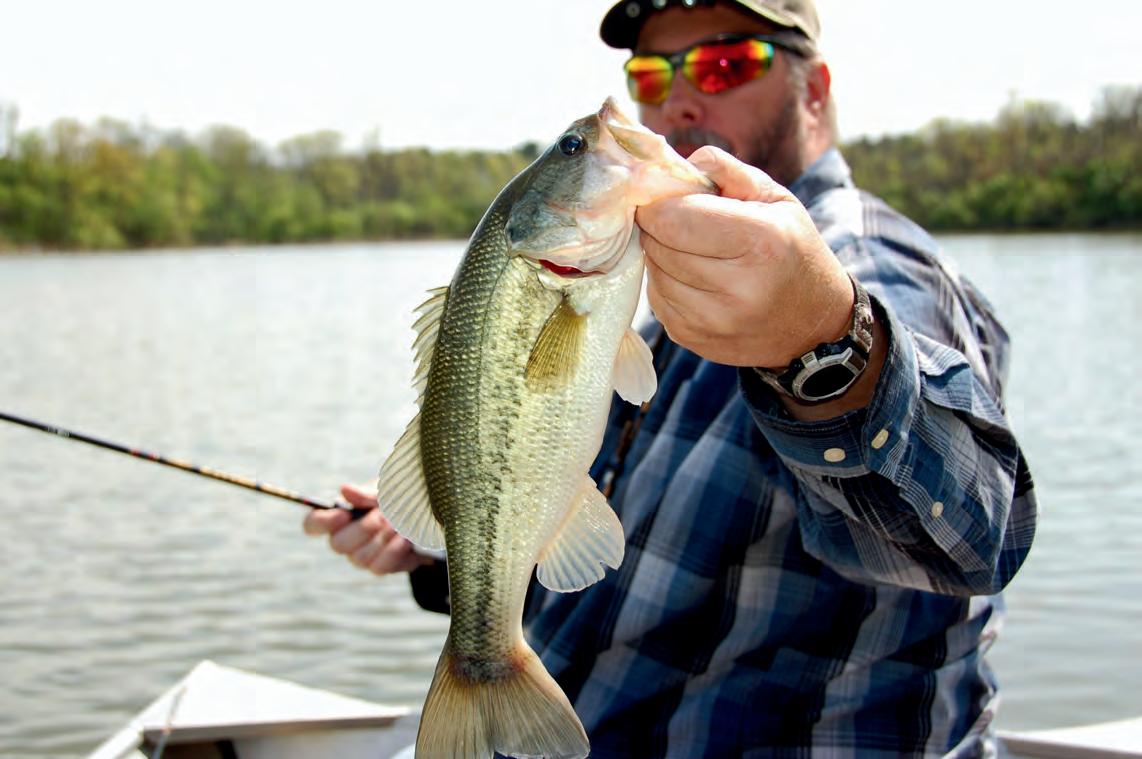
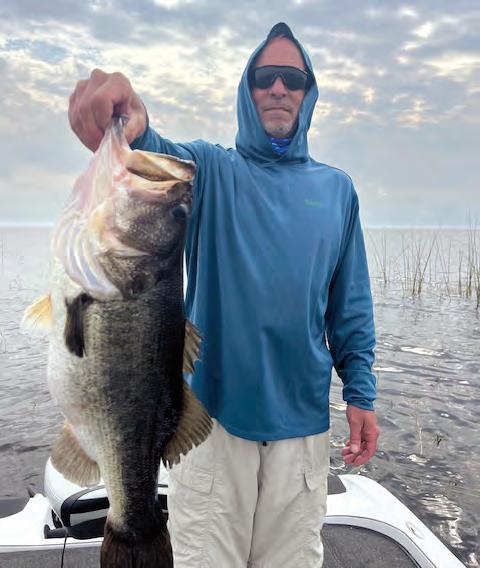
Experience world-class b ass fishing in the heart of Okeechobee, FL, where every cast is an opportunity for an unforgettable catch.

he current Lake Okeechobee water level is around 13.00 ft, so please use extreme caution for everyone’s safety. Given that we are already dealing with low water conditions this early in the season and even lower water levels moving forward, be prepared to see more than normal boat activity/fishing in deeper water areas such as the Kissimmee River and Canals this summer. Perhaps try fishing during the week to avoid the weekend traffic.
The bass and crappie bite have been good with days catching quantity and quality size bass and limits of crappie, so if you haven’t booked your fun time on the water, now is a good time to call me for your next family bass/crappie/ bream trip.
Bass lures that are producing bites: swim jigs/chatter baits/swimming senkos/flapp’n shad/swim bait; worms; shallow crank baits; top water and flip’n pitching craws/senkos/. Color patterns are: white; bream/shad colors; tilapia; black/blue; Junebug; redbug; and watermelon/red or watermelon/purple.
Live-bait for bass has been producing, giving up some fun, consistent action. The crappie bite has been doing well with both live minnows and jigging. The advantage to jigging for crappie is that you can cover water quickly until you find an active area where they are concentrated, and you are able to get inside the grass areas. If you crappie fish with minnows, try starting along the lake’s grass edges or the River or Canals. Areas to try for Crappie and Bass have been Buckhead Ridge to 4th point; Horse Island; Harney Pond canal; certain parts of Observation Shoal on down towards Clewiston around the Blue Hole area; parts of Dupree Bar, Grassy, Kings Bar and some areas on the East side such as Hendry Creek and J&S. Crappie lure body colors can be: Chartreuse; Green’s; White; Yellow’s; some shades of Pink.
I hope this information helps you to have a more productive day fishing. To






book a trip, call me at 863-228-7263 and be sure to check out my up-to-date website www.southfloridabassfishing.com. I am happy to answer all your questions/ concerns; have availability to accommodate “group” trips; Veteran discounts; offer hotel discounts, and suggest “things to do” for those family members who’d rather take in the local sites.

All about bass fishing for older guys and gals.
Don’s got a lot of wild and crazy stories and some good, solid information about fishing as you get older.
— “This guy tells it like it is. No BS, just good solid fishing information.”
— “I like your easy-going style. It’s pretty clear that you know bass fishing.”
— “You’re a great storyteller. I’ve already learned a few tricks of the trade.”
— “You hit the nail on the head. First time I ever heard anyone say that.”
— “I had a similar situation happen to me, and I ended up doing exactly what you did.”

s we bring in March, hopefully, we also bring in warmer weather. We had some seriously cold days at the beginning of February. During those cooler times, our game fish will migrate to warmer locations. Areas with deep water with dark bottoms. The deeper water provides a warmer bottom as the water cools from the surface down. The darker bottom absorbs heat, providing warmth on sunny days.
Charlotte Harbor is very fortunate to have many areas that offer this type of sanctuary. There are two main rivers that flow into the north end of the harbor. We have the Myakka River and the Peace River, both of which offer deep water for winter fishing. We also have miles of man-made canals that offer depth and warmth.
As the waters begin to warm, these fish will become more active and start to feed more heavily. The key to targeting fish that have been dormant for a while is patience. Slow down your presentation and the size of your bait if possible. While looking for fish beginning to transition to the flats, look for areas with access to deep water. These fish will stay close to these areas for a little while, just in case a cool front moves in. Cooler water does not mean the fishery shuts down; it just means you have to adapt and change your technique. Instead of a live well of pilchards, visit the local bait shop and get a few dozen shrimp. Slow your approach down, try fishing some deeper water. You may just be surprised how good it goes.
— Capt. Dave Stephens | 941-916-5769 | www.backbayxtremes.com


By Stephen Rampersand
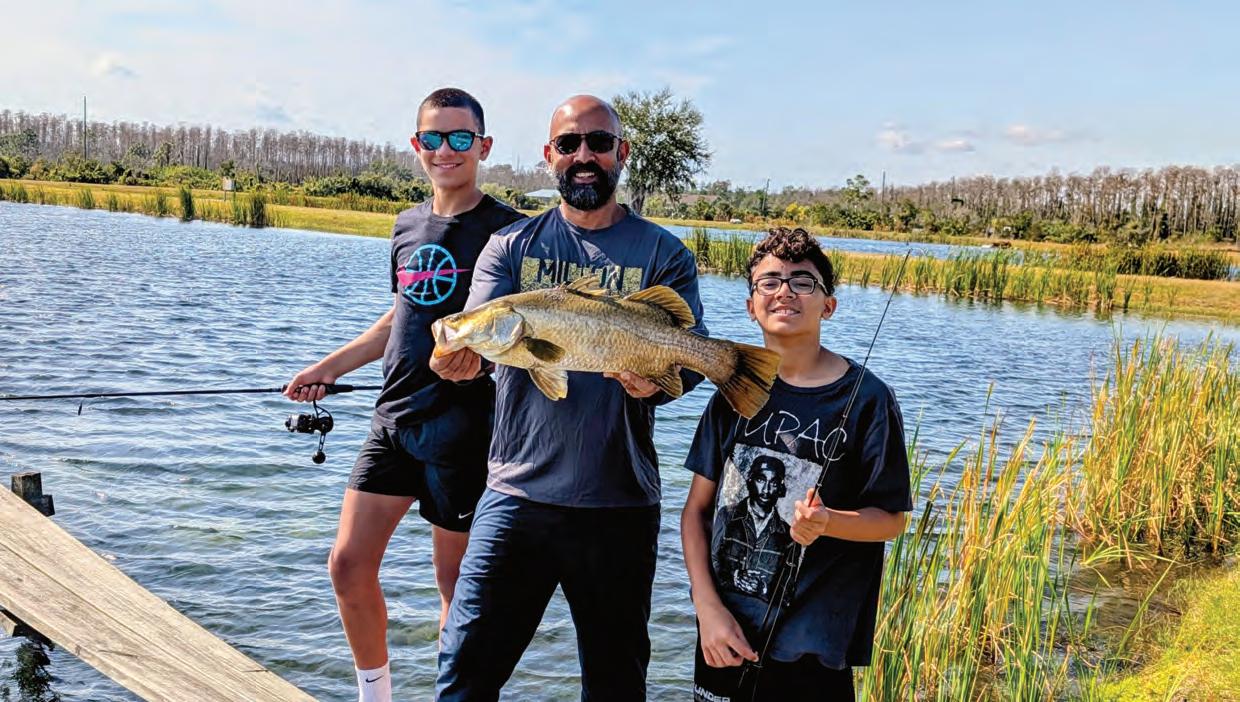
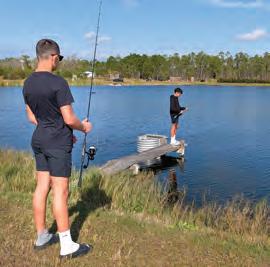
Some trips are just fish stories. Others become memories you tuck deep into your heart and pull out for years. Our recent adventure from Pace, Florida, to the quiet crossroads of Holopaw firmly landed in the second category. With snow once again creeping into the forecast back home in the Panhandle, we loaded up light spinning tackle and a small box of our favorite lures, NLBN swimbaits, and Whopper Ploppers, and pointed the truck south. Along the drive, we talked about familiar St. Cloud staples like Sip and Dip Donuts and The Catfish Place, but the real focus never shifted. We were chasing the idea of landing a truly memorable species on the list.
Holopaw is not a place most folks can point to on a map. Sitting just outside Kissimmee and St. Cloud and comfortably removed from the rush of Orlando, it is one of those single-stoplight towns you usually only hear about in a good country song. Just beyond that light sits a destination more anglers should know about, Osceola Outback Adventure, locally known simply as The Pit.
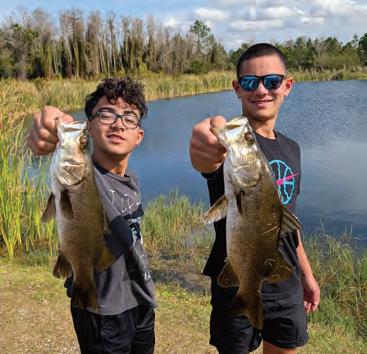
At The Pit, you are not chasing bass or bream. You are targeting river predators from the Amazon and Australian systems, species that most anglers only see on television or online. Barramundi, clown knife fish, peacock bass, walking catfish, tilapia, and Oscars all thrive in these waters. Osceola Outback Adventure offers guided fishing experiences that feel worlds away yet remain unmistakably
Florida. Our sights were set on barramundi... big ones!
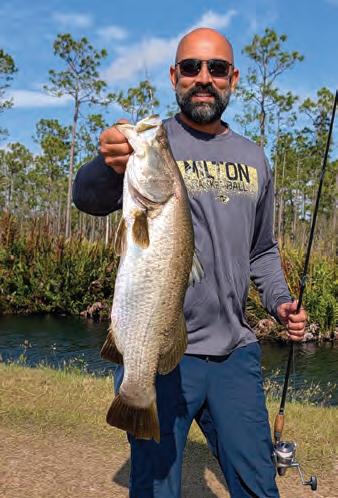
As we rolled down SR 192 and saw the single stoplight ahead, we knew we were close. Holopaw. With 4 miles to go, the anticipation continued to build. Then we saw the sign for Osceola Outback Adventure. A turn onto a rough dirt road led deeper into a quiet stretch of land until the trees opened up to reveal the pond. Beautiful! Beautiful might seem like an odd word for a farm pond, but after a long drive and hours of expectation, it fit perfectly. And, for a dad and his two boys ready to check another species off the list, it felt just right.
We met our guide at the gate, grabbed rods from the truck, and wasted no time getting started. There was no easing into the morning. Lines were in the water almost immediately.
The fish were there and seemed just as eager to bite as we were to catch them. Fish after fish and picture after picture followed. As the sun climbed and the water warmed, the action only improved. The runs grew longer, the head shakes stronger, and the jumps more dramatic, reminding us that these fish were built for power.
The best way I can describe a barramundi is this. Take what we love most about snook and tarpon and roll it into a freshwater package. The power, speed, and aggressive attitude are all there. They boil, they jump, and they never seem eager to surrender. It is freshwater fishing with a saltwater mindset.
While the barramundi delivered everything we hoped for, the lasting takeaway came from something far less measurable. Watching my boys move in sync with the water and the landscape around them was a reminder of why places like this matter. Nature has a way of slowing us down, sharpening our attention, and restoring a sense of balance that often gets lost. When a trip offers both unforgettable fishing and that kind of grounding, it becomes more than a good day on the water. It becomes a chapter you carry with you, and one you are always ready to revisit.
By Capt. Valerie Morrell
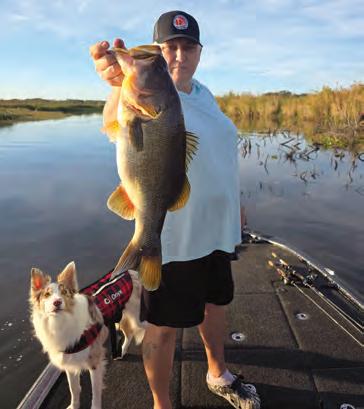
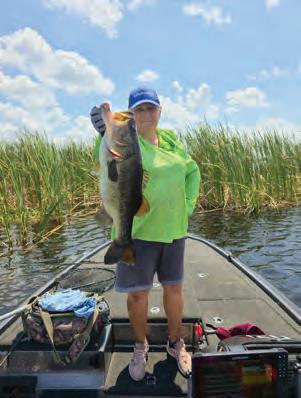
If Florida is the bass fishing capital of the world, then Headwaters Reservoir (Fellsmere) is its crown jewel. While this 10,000-acre marvel produces yearround, March is the undisputed “magic hour.”
What sets Headwaters apart from other Florida lakes is its man-made habitat. Engineered with deep pits adjacent to shallow flats, it provides the perfect migration routes for bass moving from deep winter haunts to shallow spawning grounds. If you’re looking to land the double-digit trophy of a lifetime, there is quite literally no better time to have a line in the water.
As water temperatures stabilize, the “big girls”, massive female largemouth bass, move into the shallow, submerged vegetation to spawn. Unlike other times of the year when these fish are buried in deep cover or suspend-
ed in open water, March brings them right to the doorstep.
At this time of the year, the lake becomes a visual playground: Acres of crystal-clear water with mottled patches of fresh, green hydrilla allow you to spot massive females looking to spawn. Bass are naturally more aggressive this month, defending their territory against anything that swims by.
The reservoir is a jungle of hydrilla and lily pads. Rig a weightless swim senko, a chatter bait, or swim bait in various shades of black and blue to skim over the grass or drop into an opening. Or tempt the a wallhanger with a 9’ wild, golden shiner.
Got your attention? If you’re interested in a bass fishing guide trip to Headwaters, give me a call at 863-633-7335. Dates are filling quickly, so don’t delay, call today! We’ll fish for trophy largemouth bass using live or artificial bait; your choice! For more information on Headwaters and other guide (trips) outings for trophy largemouth bass, visit my website at morrellfishing.com.

By Don Norton
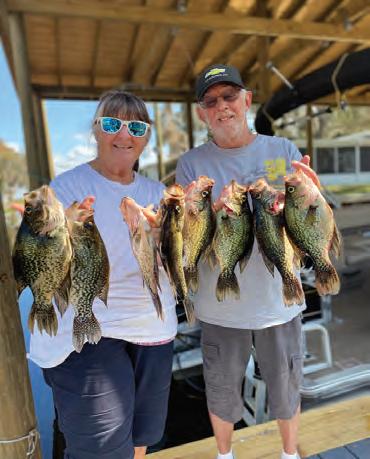
f you’re visiting Highlands County in March and you’re look ing for something to do, you might want to give crappie fish ing a try.
The season usually starts in late fall and ends each year around mid-April, followed closely by bluegills and bass. Crappie, bass, and bluegill can all be caught year-round, but during the late fall and into the win ter months, crappie move into the shallows to spawn and become much easier targets for anglers.
Most trips start early; however, she is very accommodating for those of you who prefer a later start. She’ll even give you a hand cleaning the fish.
This has been a tough year for finding and catching crappie due to several extreme cold fronts passing through South Cen tral Florida in January and February, dropping water temperatures to their lowest levels in years. With cold front after cold front, crappie move off their beds and seek the safety of warmer, deeper water offshore.
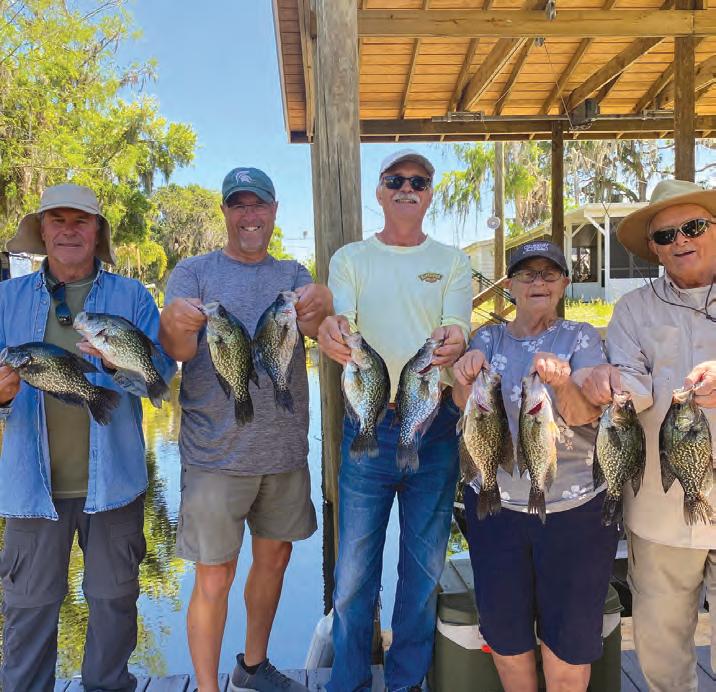
But that means catching crappies in March should be some of the best fishing in years.
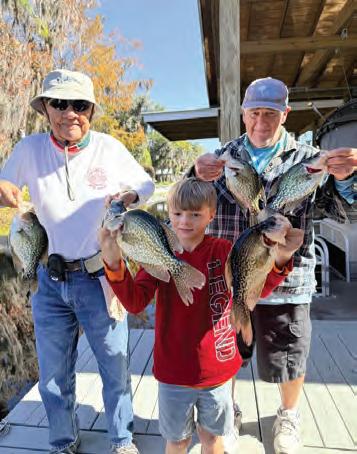
accommodating for those of you who prefer a later start. She’ll even give you a hand cleaning the fish.
So, who do you call?
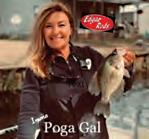
The Poga Gal, aka Tangie Neff has been providing crappie guide trips for the last few years in her 18’ Sun Tracker Bass Buggy, equipped with a sun canopy and power pole on Lake Istokpoga. The craft easily accommodates up to four adults or a number of children. Most trips start early; however, she is very
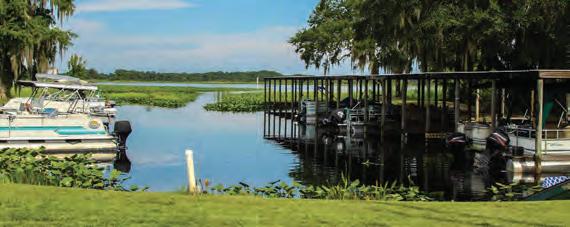
If you’re not familiar with Lake Istokpoga, it’s the largest lake in Highlands County, covering over 26,762 acres. The oblong-shaped lake, which is 5 miles wide and 10 miles long, is fed by two creeks, Arbuckle Creek and Josephine Creek, and offers numerous fishable areas.
The Poga Gal lives on the lake with her husband, Corky, one of the bestknown bass-fishing guides on the lake. Together, they operate Corky and Tangie’s Guided Bass Tours.
Tangie loves fishing for crappies and bluegills. She’s also a bass tourna-
in the state for trophy bass, and although it may not be the hottest lake for crappie, you will catch a lot of 9” and 10” fish, with an occasional 12 incher.
We’ve been down here in Florida for quite a while, and I just love Lake Istokpoga, she said in a recent conversation. It is one of the most beautiful lakes I’ve ever fished.
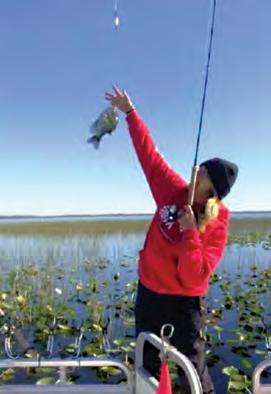
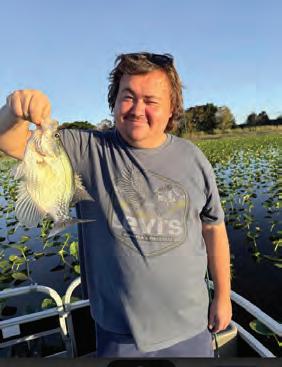
The Poga Gal has made quite a name for herself for both her fishing skills and her charismatic personality. Just ask any of her clients. They’ll tell you she’s a lot of fun to fish with, and she can put you on the fish.
Tangie also has a small bait shop called Creekside, located at 4971 on US Route 98 at Neiberts Fishing Resort in Sebring, Florida.
So, this should be the month to get out there and catch some of Florida’s finest-eating fish. Whether you’re visiting the area or you’ve lived here for years, give The Poga Gal a call and enjoy a fun-filled trip on Lake Istokpoga catching crappies.
The Poga Gal provides everything you need for a successful trip. You do need a fishing license, and you might want to bring along a cooler with your favorite drinks or snacks. You can book a trip by calling 937-217-8076. But do it today. March is always the best month of the year for crappie fishing, and this year, it should be outstanding!


the center. No boat this time. Just rods, minnows, and calm water.
Every cast produced something. Peacock bass. Largemouth bass. Bluegill. Cichlids. We were told to stay near the opening and fish around the fountain.
Then I heard my oldest yell, “I got him.”
I turned to see him running down the bank, rod doubled over, drag screaming. Ahead of him something was moving fast through the grass [on land]. I dropped my rod and began to run towards him.
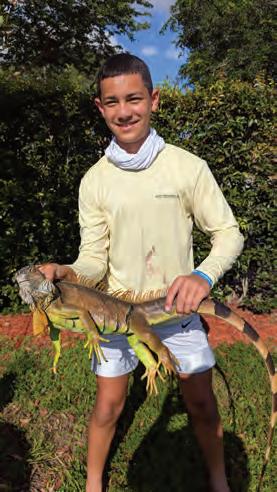
As I got closer, I realized he had hooked the largest iguana I had ever seen in person. It leaped into the water and the fight continued. Thrashing. Swimming. Drag pulling. For five minutes he chased and fought this baby dinosaur, then spent nearly as much time figuring out how to get it out of the water and wrangle it long enough for a picture. He was completely locked in.
With the all important photos finally taken, he released it carefully. After a lightning quick run and a graceful belly slide, the iguana disappeared back into the water, leaving us standing in awe.
When it was over, he smiled, rod still in hand.
It was moments like this, scattered throughout the day, that reminded me what it was all really about.
It was never just the fish. It was about showing my boys that fishing is more than locations or species. It is curiosity and patience. It is the willingness to try something unfamiliar and trust that the water will teach you something if you give it the time. It was watching them learn that the best days on the water rarely look the way you expect them to.
Years from now my boys may not remember the exact number of fish we caught or how much they weighed. But they will remember standing beside their father, rods in hand, in places most people drive past without a second glance. They will remember the excitement of a bent rod, the laughter between bites, and the realization that real adventure often begins far from a marina.
My wish is that those moments will remain, as clear and vivid as the colors of a peacock bass exploding from a quiet canal.

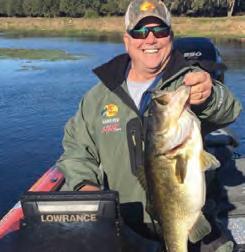
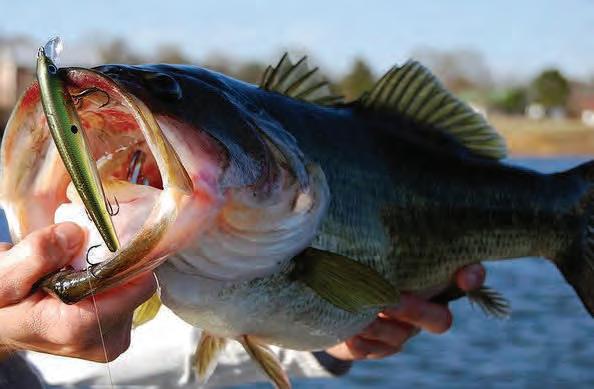


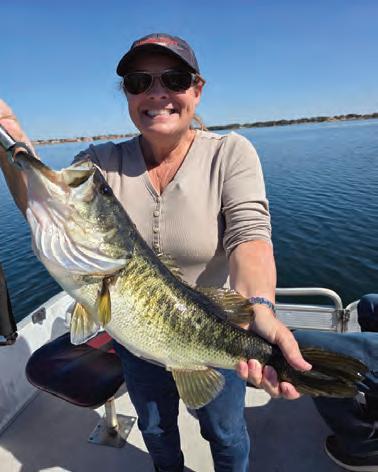
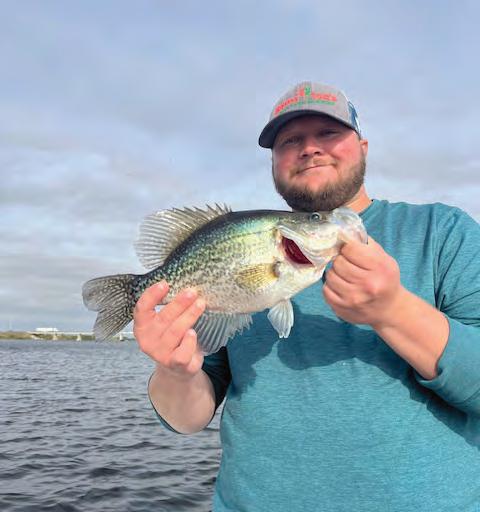
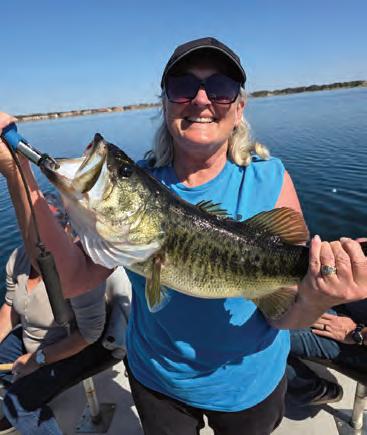
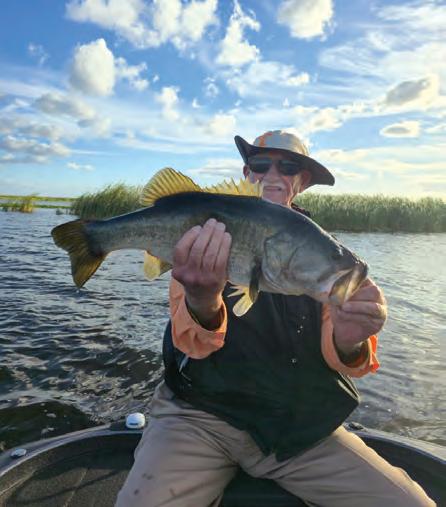
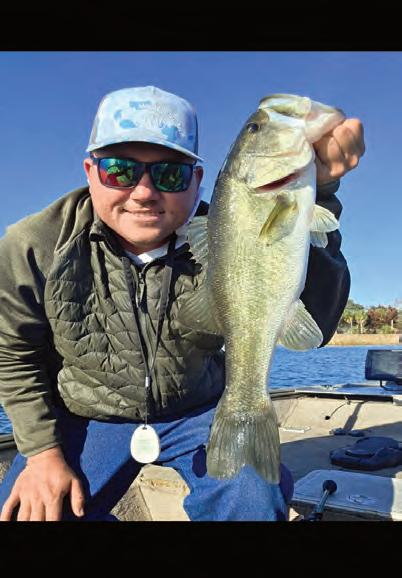
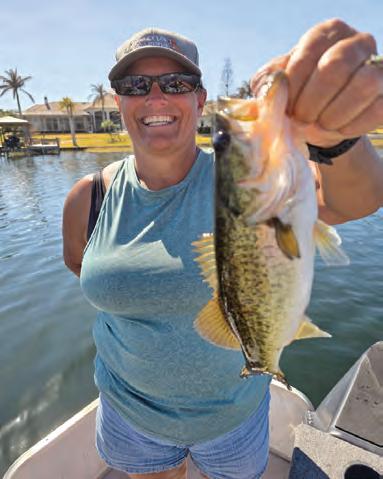





At its February meeting, the Florida Fish and Wildlife Conservation Commission (FWC) approved new management regions and regulations for spotted seatrout shing in the State of Florida. e rule changes establish nine management regions for spotted seatrout as well as regional regulations for recreational and commercial shing.
ese new regulations will go into e ect on April 1, 2026:
OPEN/CLOSED SEASONS
Recreational
» Panhandle: Open March 1–Jan. 31; Closed February.
» Big Band, Tampa Bay, Sarasota Bay, Charlotte Harbor, Southwest, Southeast, Northeast: Open year-round.
» Indian River Lagoon: Open Jan.1–Oct. 31; Closed Nov. 1-Dec. 31.
Commercial
» Panhandle, Big Bend, Tampa Bay, Sarasota Bay, Charlotte Harbor, Southwest, Southeast: Open Jun. 1–Oct. 31; Closed Nov. 1–May 31.
» Indian River Lagoon: Open May 1–Sept. 30; Closed Oct. 1-Apr. 30.
» Northeast: Open June 1–Nov. 30; closed Dec. 1–May 31
Recreational
» Big Band: Five (5) sh per person.
» Panhandle, Tampa Bay, Sarasota Bay, Charlotte Harbor, Southwest, Southeast, Northeast: Four (3) sh per person.
» Indian River Lagoon: Two (2) sh per person.
Commercial
» 50 sh (1 SPL);100 (≥2 SPLs) in all regions.
» Recreational - 15-19 inches
» Commercial - 15-24 inches
OVERSLOT ALLOWANCE
Recreational
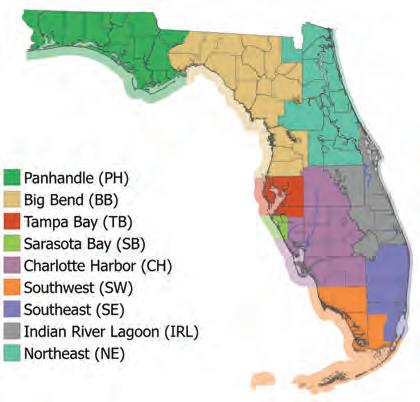
» All Regions: None. is regional management strategy has been implemented for some of Florida’s most popular inshore species, including red sh and snook, and now spotted seatrout. ese regions and regulations are part of the FWC’s holistic management is approach takes a more holistic view of the shery by evaluating multiple metrics, including shing, stakeholder experiences and environmental factors, at a smaller regional scale. It improves our understanding of regional di erences in environmental conditions and stakeholder experiences and provides greater exibility to address localized concerns.




» Panhandle, Big Bend, Tampa Bay, Sarasota Bay, Charlotte Harbor, Southwest, Southeast: One (1) sh over-slot allowed per vessel or per person if shing from shore
» Indian River Lagoon, Northeast: None
Commercial
For the full FWC commission meeting agenda and links to background reports, go to myfwc.com/about/commission/commissionmeetings/. For current spotted seatrout annual reviews, visit MyFWC.com/Marine and click on “Recreational Regulations” and “Spotted Seatrout.” ese documents provide a summary of the management metrics in each new management region.
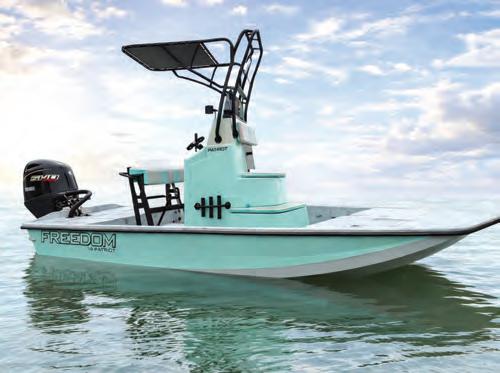
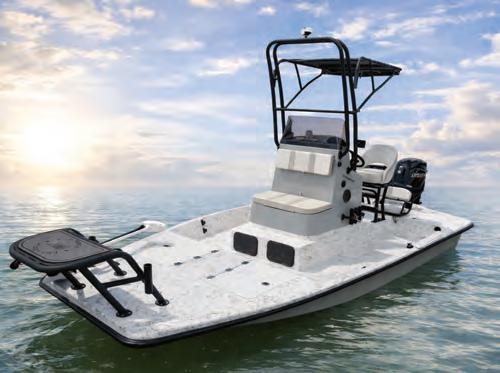

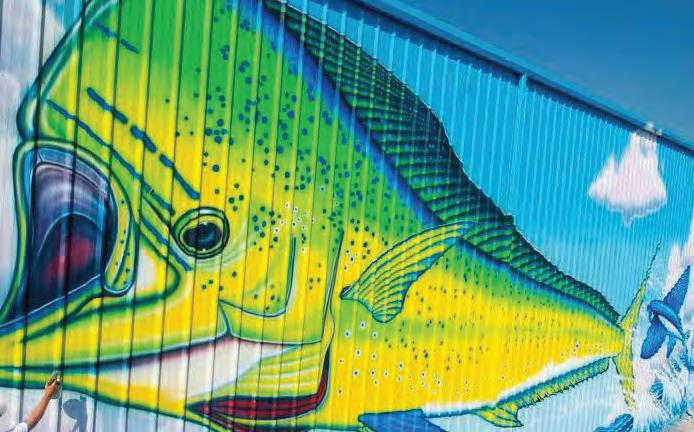

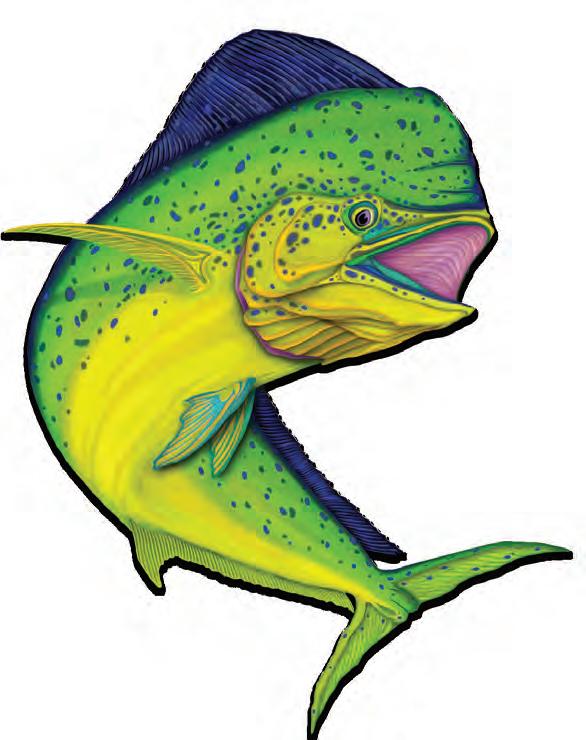
















It’s no fsh tale when you run with a John Deere. You can get everything done faster and easier, so you get more time on the water. Plus, our special offers make them the catch of the day.


By Capt. Jim Ross
s a charter captain, as well as a regular contributor to the Brevard County, Florida edition of Coastal Angler Magazine, every year there are certain events that happen that I try to predict in advance so that clients and readers can catch more !sh. However, there are many times that even we so called “professionals” don’t get it exactly right. Obviously, my crystal ball isn’t 100 percent correct all of the time...maybe it needs a tune up. LOL!
ings like the giant black drum schooling up, spring cobia run, June tarpon run, fall mullet run, and winter pompano run aren’t things you can pin down to a certain day of the month, but most of the time we can at least predict the month. Hopefully, I can achieve at least a 90 percent e ciency rating a er doing this report for the past 25 years.
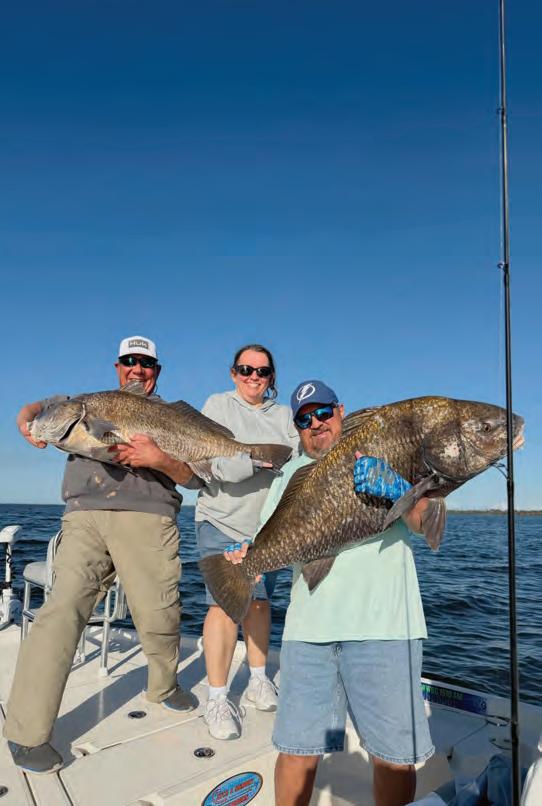
I was just telling my clients one day last week, a er catching a bunch of small trout and a couple of lady!sh, that the big uglies were probably going to show up in a few weeks and if they had a chance to come back out with me then that they may have a shot at catching some much larger !sh than the ones we had landed that morning. Just !ve minutes a er saying this I spotted something unusual about 500 yards up the at. It was exactly what I had just been talking about- a 300 !sh school of 30 to 50-pound black drum.
e !sh in this big school were happy-tailing and waking as they pushed their way down the at. We eased up to them, cast our shrimp in their direction, and as you !gured, the battles were on. All three anglers were hooked up to huge drum that had absolutely no respect for them. Drags screamed, rods doubled over, and dozens of yards of line dumped o their reels. Grunts and groans were heard between laughter and smiles as they worked to tire these beasts. e boat deck looked like a country bar dance oor as anglers shu ed and two-stepped under and over each other in an e ort not to lose their prized catches.
We ended up extending the trip from a 3/4 day to a full day outing because each !sh took 15 to 25-minutes to land.
e moral of the story? Don’t ever count on !sh to be there and don’t ever think that it’s not quite the right time to catch them. e bottom line is just go !shing every chance you get. at is the only way that you can be sure to catch your next memory.
Capt. Jim Ross is owner/operator of Fineline Fishing Charters on Florida’s Space Coast and host of “Catch a Memory Outdoors” live radio show and podcast. www. neline shingcharters.com • www.catchamemoryoutdoors.com





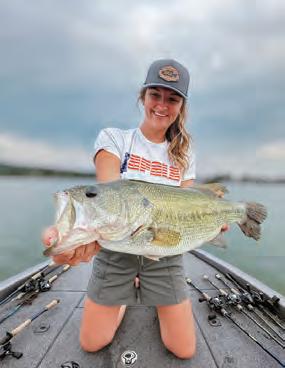



So many anglers have a “go-to” color lure that they swear by. What they do not understand is that the color of your lure barely makes the top three most important factors for catching tons of !sh.
Mistake #1 - e number one mistake anglers make is ignoring the importance of the size and pro!le of the lures they use. When snook, tarpon, red!sh, speckled trout or ounder are feeding, they o en become laser focused on that particular forage species. In other words, if they are feeding on a 6-inch mullet your 3-inch paddletail or shrimp lure will probably be ignored.
PRO TIP: Have a few of your rods rigged up with various sizes and pro!les of lures on them. I like to have a 3-inch paddletail, an arti!cial shrimp and a 4- to 5.5-inch jerk bait ( uke) rigged up when I can’t determine what bait is around. Try all three sizes and pro!les of lures until you !gure out what the !sh in the area are feeding upon.
Mistake #2 - e number two mistake most anglers make is thinking one retrieve style works best for all of the !sh all of the time. ere are so many di erent factors to consider when retrieving your lures. Here are a few to consider:
• Is the water cold or hot? Fish are cold blooded and move more slowly in cold water. is means that you have to slow down your retrieve when the water is cold. Conversely, you want to move your lure faster when the water is hot.
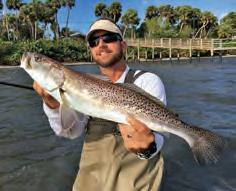
• What species are you targeting? Di erent !sh species like di erent retrieves. For instance, the best retrieve for a red!sh is slowly bouncing your lure o of the bottom. A tarpon likes a low and steady retrieve. A ounder likes a very slow bounce/dragging retrieve no higher than 12 inches from the bottom. A speckled trout likes a vertical jig and will usually hit the lure as it falls through the water column. Snook like a fast and erratic retrieve most of the time.
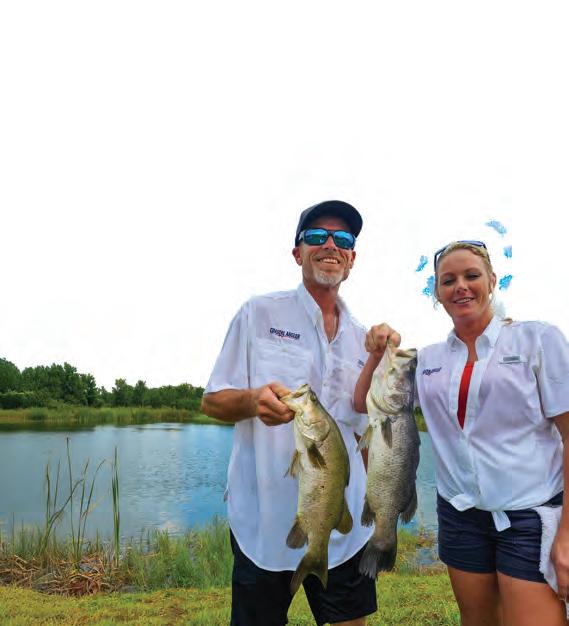
• Is the water clear or murky? Low light, cloudy skies and murky water scenarios makes it harder to get a !sh’s attention. Use a retrieve or lure that creates vibrations and ashes in the water. You also want to fan cast the area keeping your lure placement close together because they are less apt to seek out your lure. When it is sunny and the water is clear it is easier to get the !sh’s attention. You can make your casts further apart and make the !sh come to your lure.
Mistake #3 - e third biggest mistake is thinking !sh care about lure colors. A saltwater tackle box with white lures and something dark like root beer or purple is all that you need to catch any !sh. PERIOD. e bottom line is that if you want to catch more !sh, switch up your sizes and pro!les and vary your retrieves for di erent species and conditions. I GUARANTEE that you will catch more !sh.
Capt. Mike Smith is owner of Fish Your Ass O Charters.Reach him at (561) 339-2317, contact@ shyourasso .com or shyourasso .com.








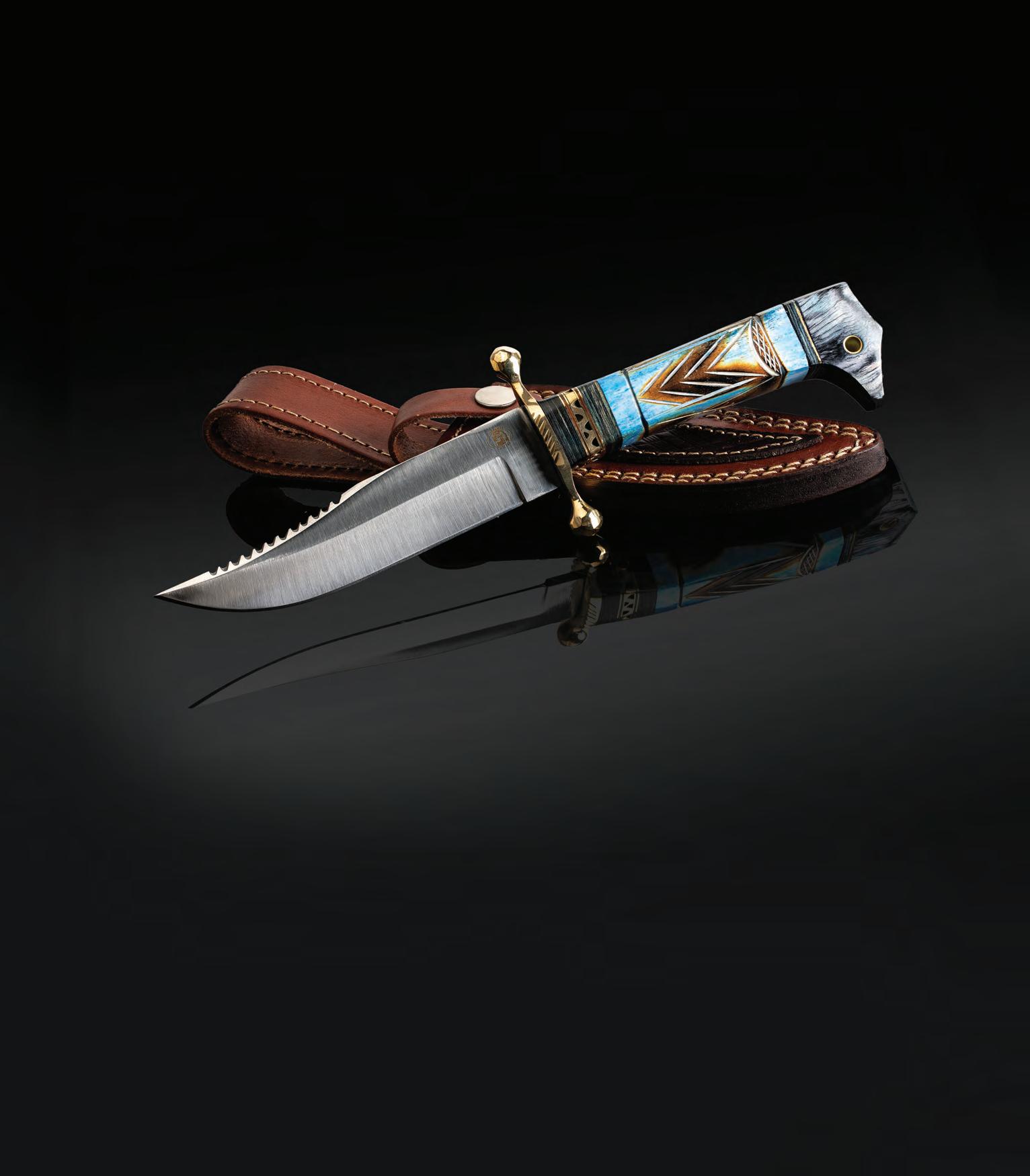
“It’s a beautiful knife with a great blade and a sure grip” — William B. Wilmington, NC
My friend Sergio is a mixed martial arts fighter. His shoulders are broad. His muscles have muscles. He’s not the kind of person you want to be on the wrong side of.
This manly man has a saying about being tough: You should either know how to fight or look like you do.
The message is simple enough. People spoiling for a fight usually don’t pick the biggest guy in the bar. If you look like someone who shouldn’t be messed with, you likely won’t be. With our Blue Bone Bowie Knife on your hip, that’s exactly the message you’ll send.
As beautiful as it is functional, this knife is 10" overall and features a high-quality 420 surgical stainless steel blade with a serrated spine. The handle is constructed of genuine natural bone with redwood spacers. On the handle you’ll find design work that’s carved by hand, a testament to its craftsmanship.
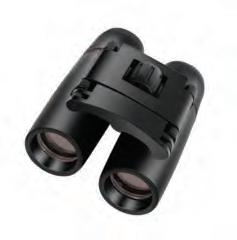
This knife is stick tang, meaning it won’t wimp out when you need it. This knife also features brass hand guards and brass spacers with file work, so you won’t lose your grip. For easy carrying, it comes with a genuine tooled leather sheath. CALL NOW! If you’re one of the rst 700 587 callers for this ad, we’ll throw in a pair of Stauer HD Pocket Binoculars — a $99 value — ABSOLUTELY FREE!
Walk around with the Blue Bone Bowie Knife and you’ll feel a lot safer. I know I do.
Knife Speci!cations:
• 10" overall length
• 420 surgical stainless steel and stick tang construction
• Genuine natural bone and redwood hand-carved handle
• Genuine leather sheath included
Blue Bone Bowie Knife
EXCLUSIVE FREE
Stauer Pocket Binoculars a $99 value with your purchase of the Blue Bone Bowie Knife
$299 $79* + S & P Save $220
*Special price only for customers using the offer code. 1-800-333-2045
Your Insider Offer Code: BBK164-02
California
please
regarding