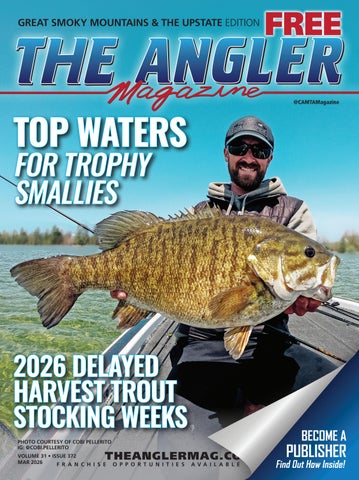
TOP WATERS FOR TROPHY SMALLIES

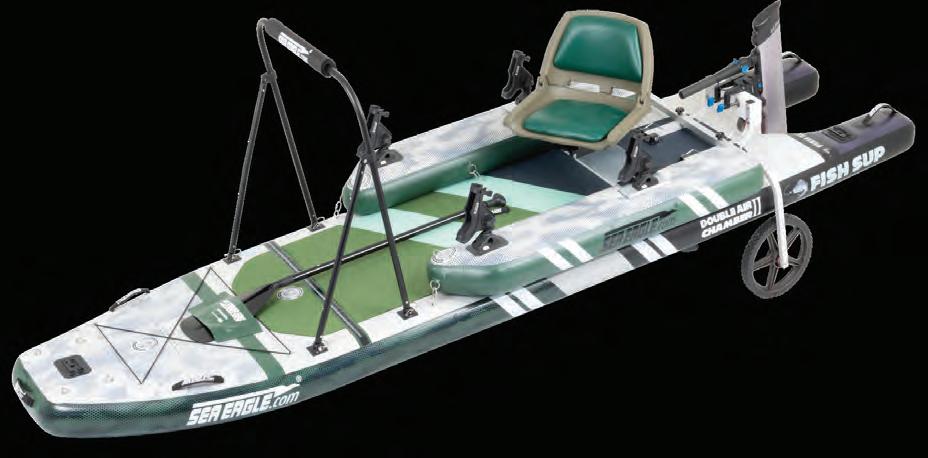
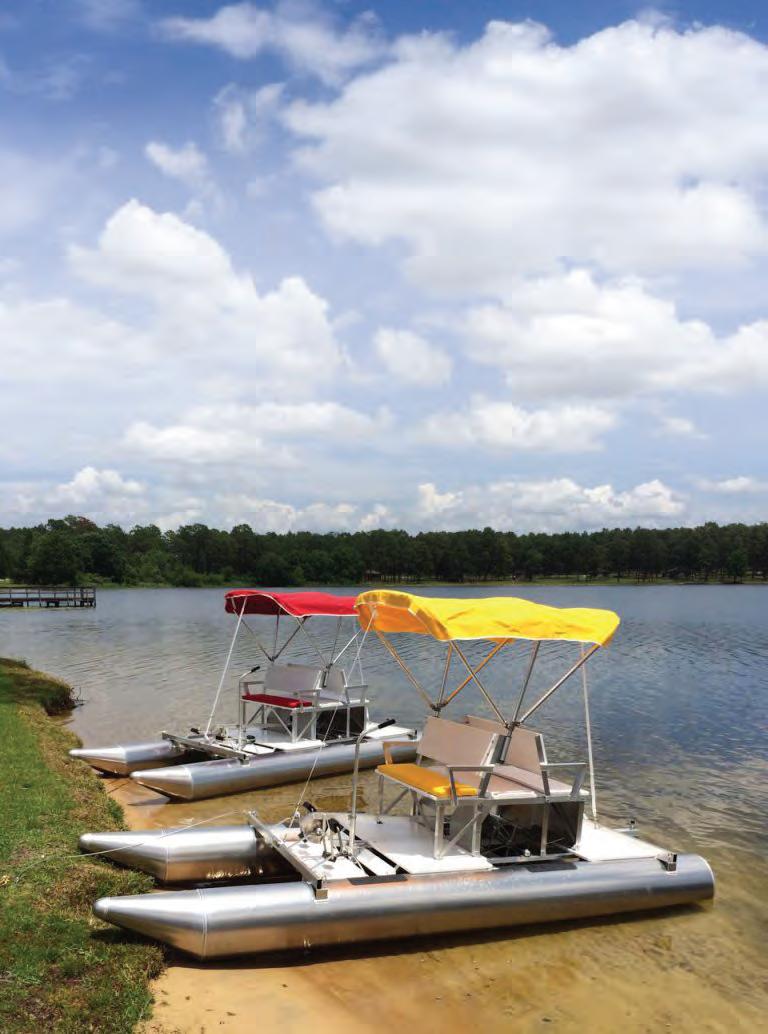
The versatility of the FishSUP™1210 is unmatched! Use it bare bones with just the board, a paddle & your !shing gear or deck it out with swivel seat, side pontoons, casting bar, motor and more! Incredibly stable, extra wide, swallow-tail !shing SUP holds up to 500 lbs! The FS1210 takes electric and gas motors up to 3 hp. There’s even an option for a bow trolling motor.
Choose From 6 Packages
Starting At Just $999
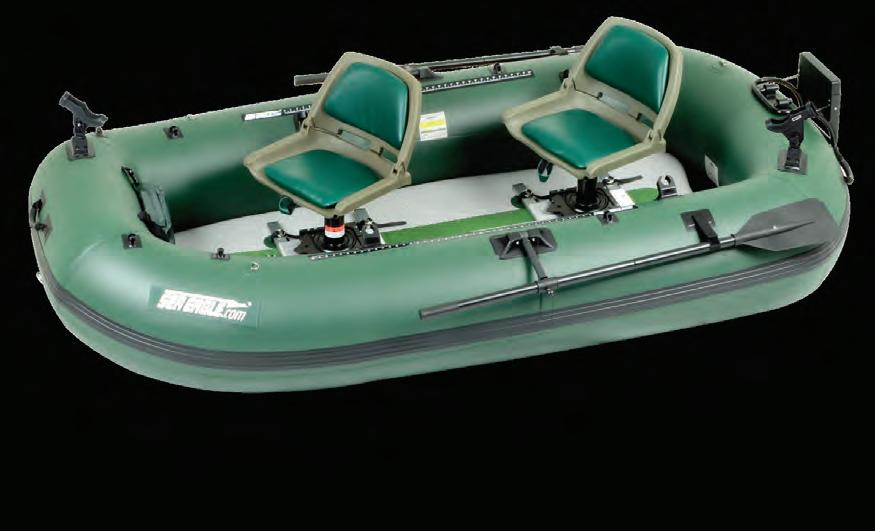
Perfect for !shing rivers, lakes and bays. The STS10 is a lightweight, roomy 1 or 2 person pontoon boat that’s packed with features anglers need & love including 2 built-in !sh rules, 4 built-in rod holders & 2 Scotty® mounts for more rod holders, anchor locks, camera posts or any other Scotty® accessory. Now available with a drop-stitch in atable oor or wooden oorboards.
Choose From 7 Packages
Starting At Just $1449
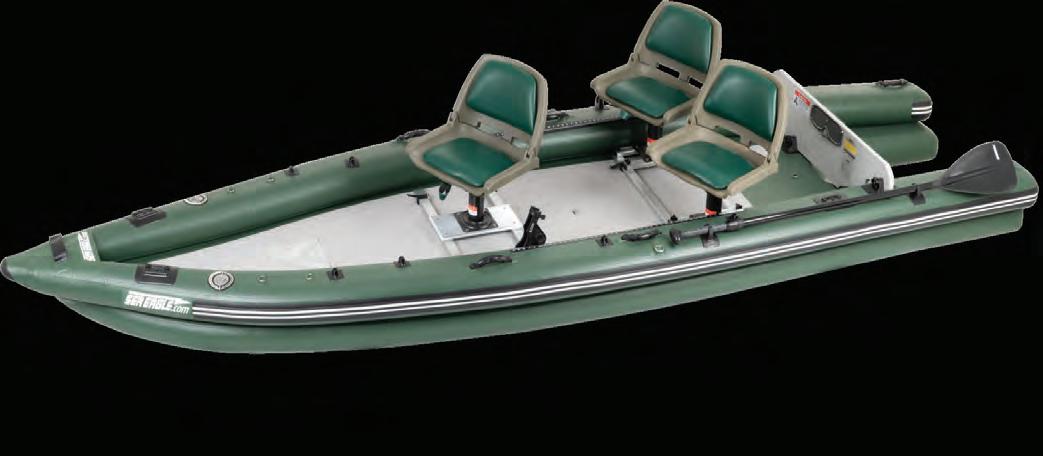
This “low-rider” gives you access to the water to reel in and release !sh easily. With a new patented outside, in atable, rigid keel the FSK16 glides through the water at speeds up to 21 mph to get you to the !sh fast! Perfect for 1-3 anglers and room for plenty of gear.
Choose From 9 Packages
Starting At Just $2999



















Ever see a commercial harbor full of Furuno Marine Electronics and wonder why the pros rely on us?


See why here










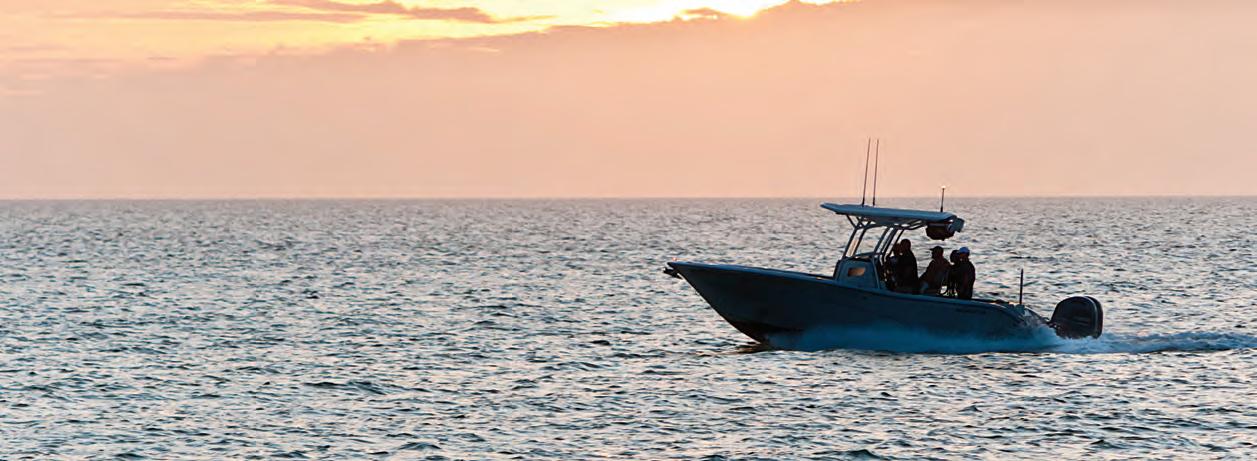
Are you ready to embark on your next on-water adventure? Before you set sail, here are fve things to know about boat insurance.
1. Boat insurance isn’t just for accidents
With comprehensive coverage, you’ll also be protected fnancially for theft, vandalism, and unexpected events like storms if you need repairs or replacements due to damage.
2. Accidents can happen to anyone
When accidents happen, boat insurance offers liability coverage for damages or injuries you cause while boating, up to specifed limits. It can also cover lawsuit costs if you’re sued.
3. Boat insurance can cover medical payments
Boat insurance offers a range of optional medical payments coverage limits, helping to cover medical expenses if you’re in an accident or someone is hurt on your boat, regardless of fault.
4. Most lenders require boat insurance
If you fnanced your boat, you’ll likely need boat insurance since most lenders require boat insurance to protect their investment. Additionally, some marinas or municipalities require proof of insurance for docking.
5. Progressive offers specialized boat coverages
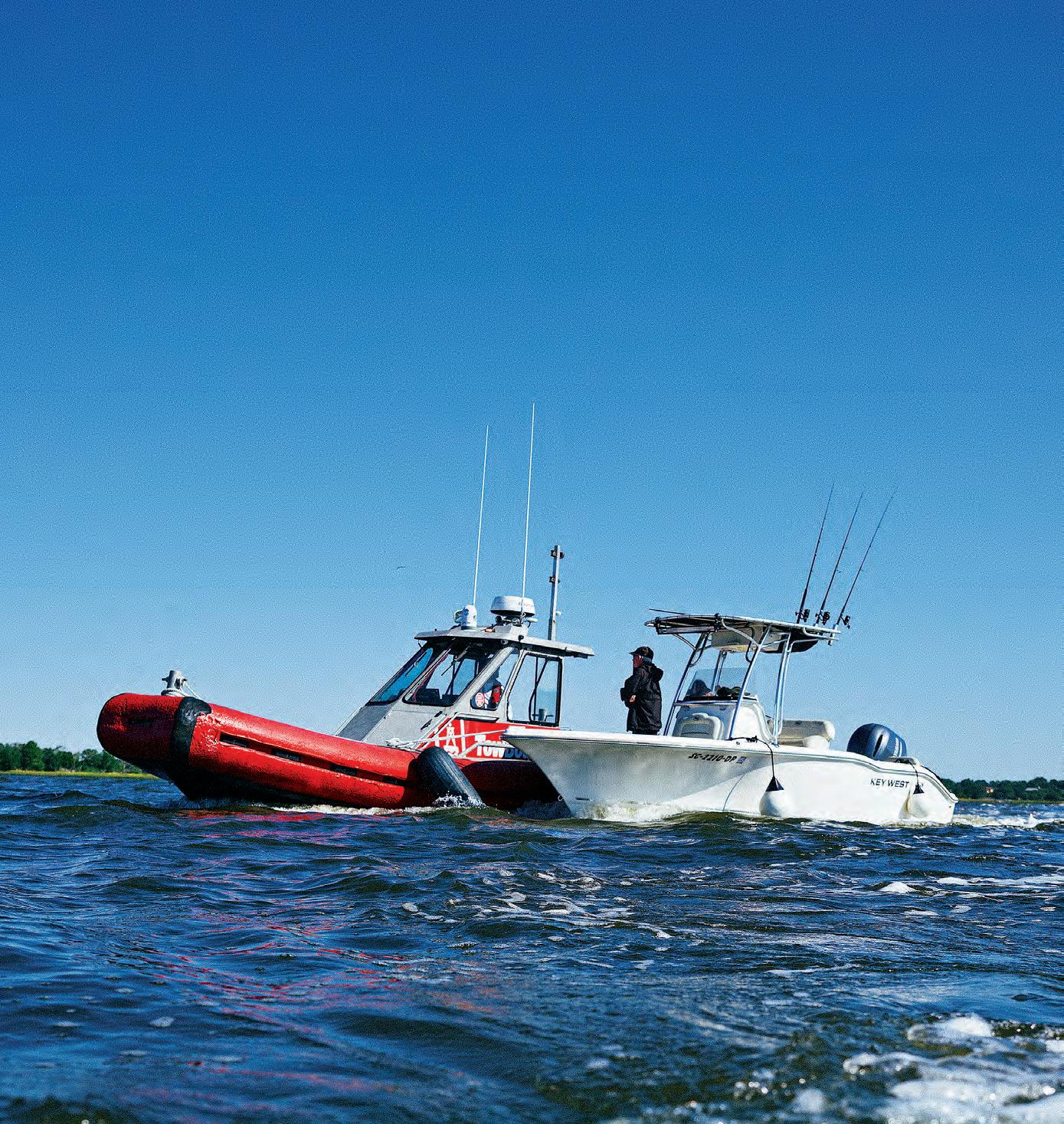
Ever worry about getting stuck on the water? Progressive’s Sign & Glide® On-Water Towing coverage** can help. It’s an additional coverage that steps in if your boat is disabled or breaks down on the water, paying for on-water towing, jump starts, soft ungroundings, and fuel delivery. Fuel cost isn’t included.
Don’t let unforeseen circumstances disrupt your voyage. Cruise with confdence thanks to Progressive Boat insurance. Because when it comes to your boat, peace of mind is the ultimate luxury.
Scan to get a quote in as little as 4 minutes.
to learn more.














By Will Schmidt
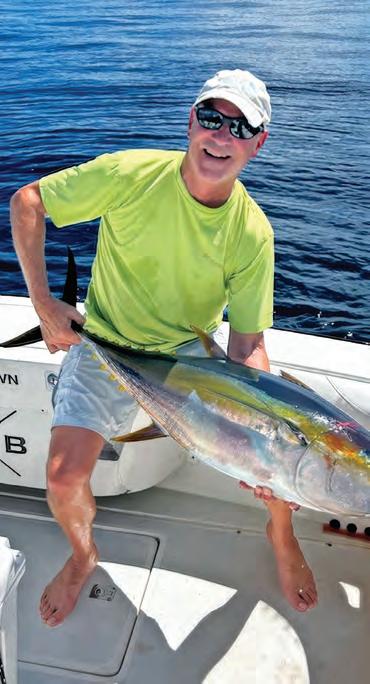
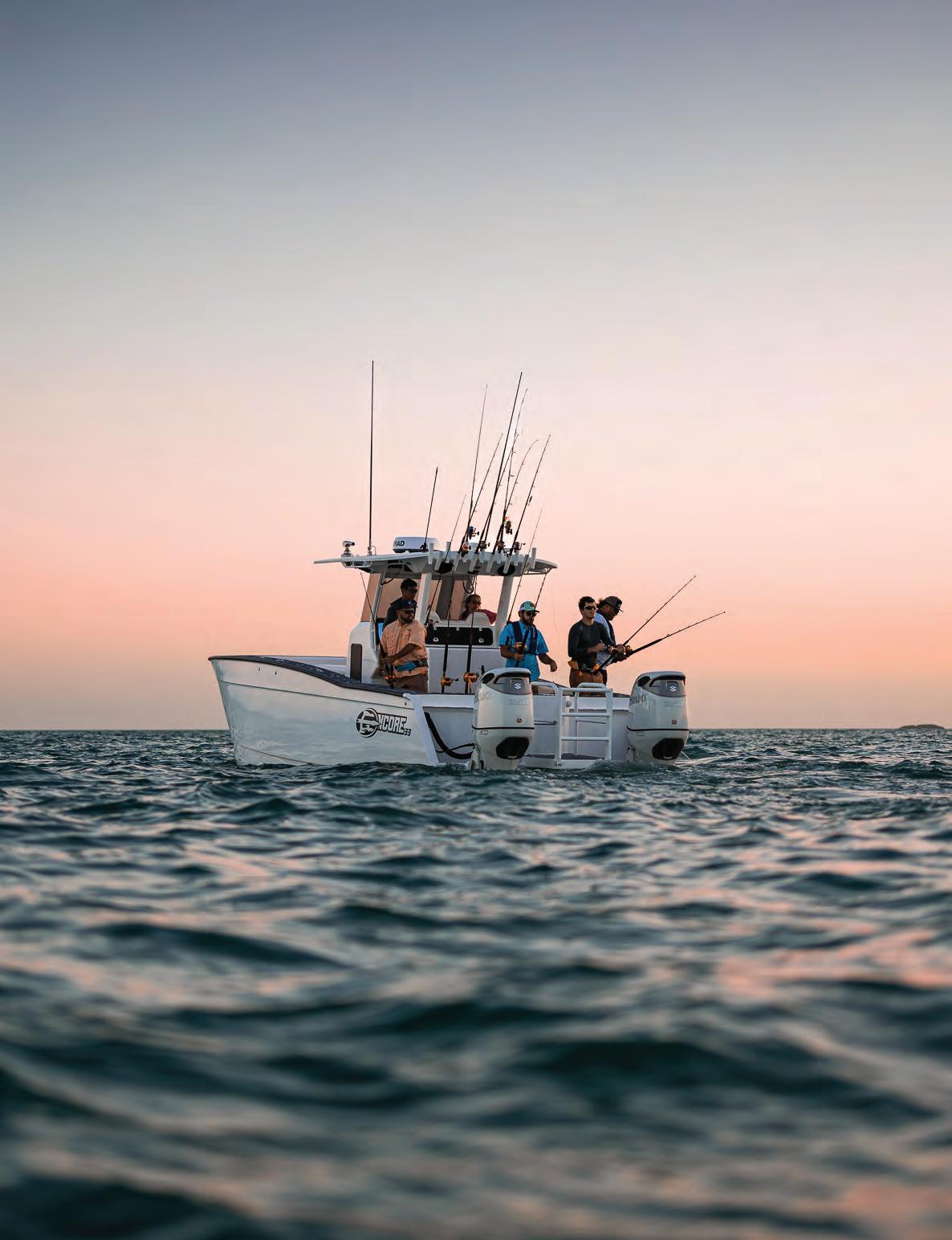
Tere were birds diving, porpoise rolling and he y yellow n tuna skyrocketing like Fourth of July reworks. Both on the water and in the boat, the energy was palatable. With one angler on the bow ready to cast a top water plug into the fray and me in the stern with ready to deploy live bait, the boat throttled back. !e plug went ying, meanwhile I simply dropped my bait behind the boat and started freelining. Almost instantly the plug was blasted in the air but not connecting. Meanwhile, I tossed a handful of baits o the back of the boat. By now the fray had subsided but the sh were clearly still looking for an easy meal. 50 feet behind me one of the chummers was blasted overhead by a 150 pound yellow n who was skyward bound a er it. Just below I could see my bait franticly swimming as another engulfed it, leading to a great battle before releasing the 100 pound class sh.
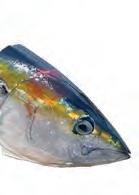
While top water shing for tuna is all the rave right now, it really makes sense to deploy multiple tactics to take advantage of these opportunities, as the school o en retreats as the boat nears. Our back up plan is very simple and almost always produces sh. As the boat gets into casting range of the school, we drop live bait o the stern and free line them. We always keep a couple ready to go. !is way, if the school disappears there are other baits ready for those who have been plugging.
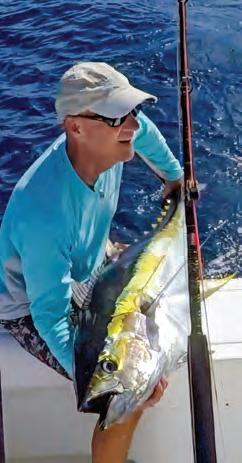
For bait google eyes or blue runners, rigging them on a 10/0 circle hook is ideal. Bridling the bait and using a non-slip loop knot presents the most natural movement as the baits ee. Also, tossing a handful of chummers in, as the surface activity disperses, usually brings shing looking to pick up stragglers into the strike zone. Chumming really helps keep the sh around, so make sure you have plenty of bait. When you get hit, give it a ve count real tight and hang on!
I like to use a bit heavier tackle with the live bait, as we o en seem to nd bigger sh. My go to is Shimano Terez BW Roller Striper medium heavy with a Talica 25A. I use 80lb braid to 80lb mono. !is is a great set up that’s fun for sh from 40 to 140 and can handle the occasional really big one. the rod with a better ghting angle. It also helps to keep the line away from the gunnel as a spiraling sh ascends. !is is a great asset for many anglers on these tough sh.
Will Schmidt is a seasoned tournament angler who has been writing about shing for more than two decades. Follow Will on Instagram @saltynstrong.
By Alex McCrickard/DWR
The Virginia Department of Wildlife Resources (DWR) is tasked with managing freshwater fisheries across the state of Virginia using best available science. Our biologists utilize a variety of fisheries methodology to collect information on the health of our fisheries. Data derived from scientific fisheries methodology is known as fishery-independent data and is key to managing our fisheries for the best interest of the public. Examples of fishery-independent surveys include electrofishing, gill netting, and trap netting surveys that our biologists implement to manage these public resources. Additionally, angler-derived data or fishery-dependent data is data that is collected from recreational and or commercial sources. Fishery-dependent data can also play a role in the management of our fisheries.
The Online Virginia Angler Recognition Program (OVARP) is one unique source of fisheries-dependent data that our agency collects annually. OVARP is a voluntary program where anglers can be recognized for the catch of trophy-sized freshwater fish. Different minimum lengths and weights are required to reach trophy “citation” size for the 30 different species in the program. Of particular
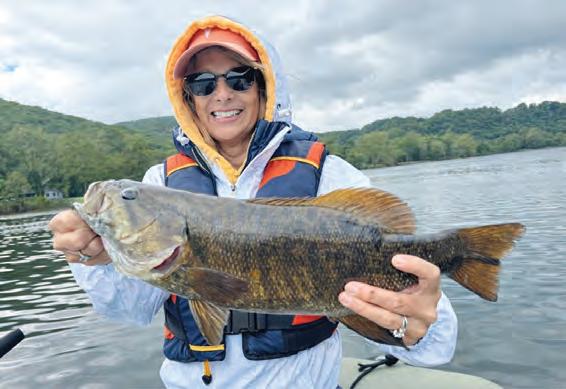
interest to Virginia anglers are the numbers of citation smallmouth bass that are caught annually from public waterbodies throughout the state. Smallmouth bass must be a minimum of 20” to be a length citation and 5 pounds to be a weight citation. You can receive a citation for either length, weight, or both. Regardless, we are talking about truly large smallmouth bass here! Below is the list of the top five waterbodies by total numbers of smallmouth bass citations from 2025. It should be noted that this is a voluntary program based on the honor system. Not every citation caught in Virginia is entered into the program so this is simply a reflection of the data collected from the past year within the OVARP.
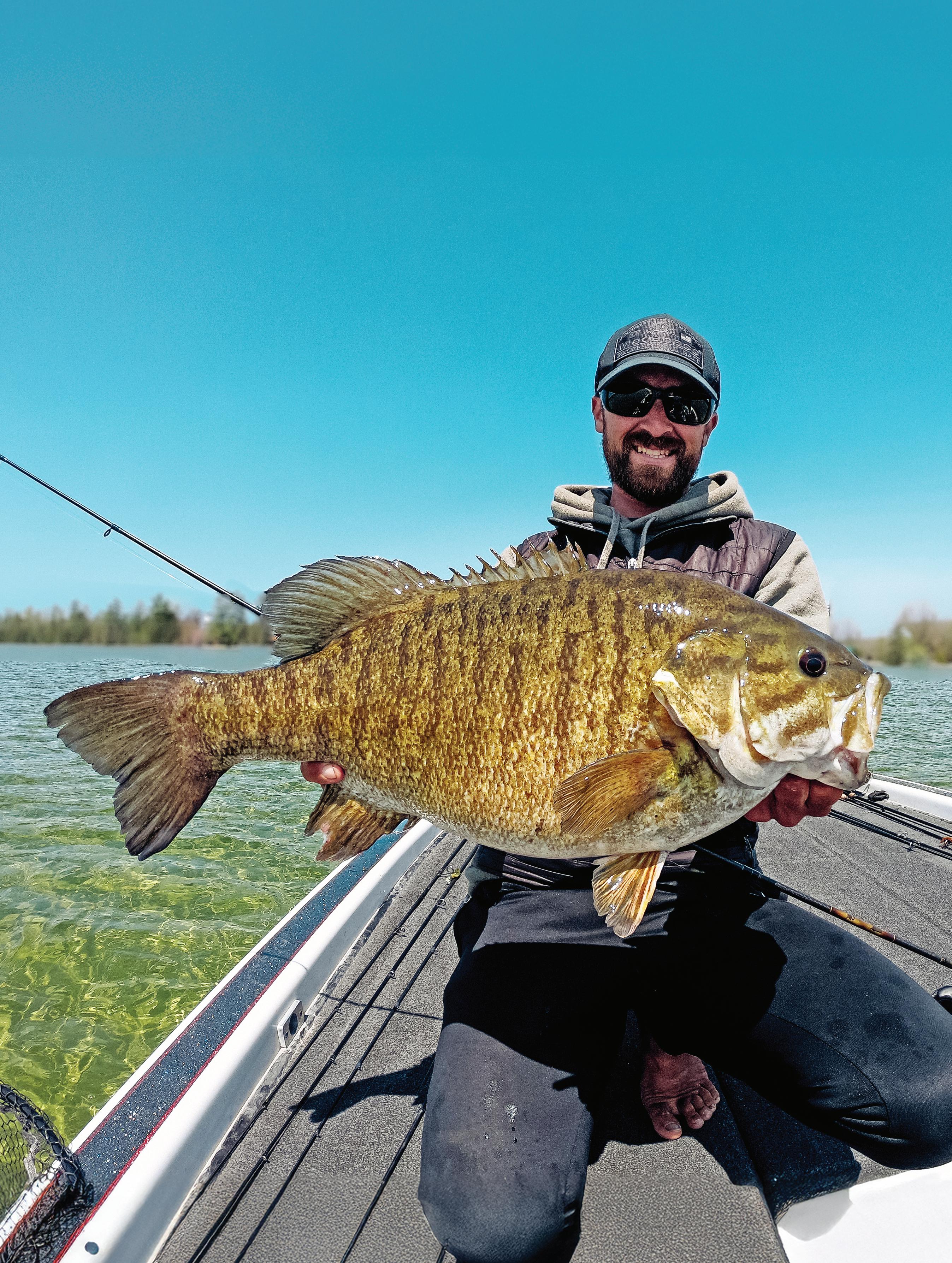
1. The New River has long been renowned as a trophy smallmouth bass fishery. The New produced 130 citation smallmouth bass catches through OVARP in 2025, giving it the #1 ranking in the top waters list. Fishing the New is special as it’s an ancient river system that happens to be the oldest on the North American continent. “Despite a few years of poor year classes in the late 2010s, good numbers of quality fish still remain for anglers to target. And recent above-average spawning classes, especially on the upper New, bode well for anglers
as these fish grow to adult size,” said Jeff Williams, DWR Regional Fisheries Manager.
“In the Upper New River, catch rates remain consistent with the previous few years,” added Kristin Chestnut-Faull, DWR Fisheries Biologist. “Areas with a high abundance of fish include Fields Dam down through Ivanhoe. Good numbers of 16-plus fish can be found below Fields Dam and from Austinville to Foster Falls. If you’re targeting the Lower New River, abundance is high throughout. Higher numbers of larger fish (16+”) can be found from Claytor Dam downstream through Eggleston. Year classes in both the upper and lower sections of the river have remained consistent, supplying fish for anglers for the next several years,” continued Chestnut-Faull. Floating the New River is the best way to cover ground when fishing for smallmouth bass. Late winter and early spring give the angler opportunities at catching trophy smallmouth bass!
2. The James River ranked #2 for producing citation smallmouth bass catches in 2025 with 49 citation catches awarded through OVARP. The James has long been known as a top smallmouth destination from its headwaters at the confluence of the Jackson and Cowpasture rivers all the way to the fall line in downtown Richmond. However, recent reductions in smallmouth bass abundance have many anglers concerned. “The non-tidal James River has experienced noticeable reductions in smallmouth bass abundance in recent years,” said Hunter Hatcher, DWR Fisheries Biologist. “This certainly isn’t ideal, but the result is an abundance of forage for the fish that remain, leading to rapid growth rates and excellent potential for a trophy catch on your next outing. For best success, anglers should target transition areas where deep runs and pools meet shallow rocky riffles. The hotter the weather gets, the more you’ll want to key on riffles and moving water. You’ll be surprised how shallow big smallmouth will be during the dog
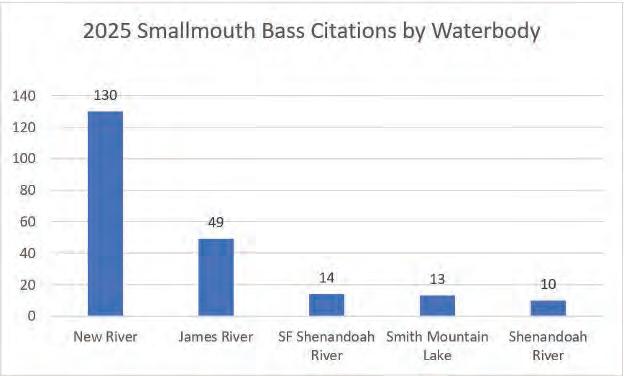
The top five waterbodies rated by total numbers of smallmouth bass citations caught in 2025. This ranking is simply a reflection of the data collected over the past year within OVARP.
days of summer. Take note of current breaks created by boulders, rock ledges, and woody debris,” said Hatcher. Additionally, it should be noted that late winter and early spring can be the best time of the year to target truly big smallmouth bass in pre-spawn mode. Floating the James is the best way to cover water in search of big smallmouth bass!
3. The South Fork of the Shenandoah River ranked #3 in 2025 with 14 citation smallmouth bass entered through OVARP. The South Fork begins at the confluence of the North River and South River near Port Republic and flows 97 miles to meet the North Fork to ultimately form the mainstem Shenandoah River in Front Royal, Virginia. The

South Fork is popular and renowned for its aesthetic beauty. DWR Fisheries staff sampled the South Fork Shenandoah River in the fall of 2025. “Our catch rate dipped slightly compared to the ’23 and ’24 sample and is below the long-term average,” said Jason Hallacher, DWR Fisheries Biologist. “Despite the recent dip in catch rate, the population looks favorable, with good numbers of quality fish. Overall, our sample yielded high numbers of 8 to 11” smallmouth, with a solid number of quality sized fish (> 11”),” Hallacher noted. Anglers visiting the south fork can expect to fish a variety of habitats from riffles and deep bends to rocky flats and with 20 different access sites, all sorts of different float trips are possible.
4. Smith Mountain Lake might be best known for its trophy striped bass fishery, but anglers searching for trophy smallmouth bass should not overlook this top destination. Smith Mountain Lake ranked #4 for citation smallmouth with 13 citations being caught in 2025. This scenic impoundment is large, at 20,600 acres located in Bedford and Franklin counties. Smith Mountain Lake has deeper water habitat in addition to rock shoals, submerged brush piles, fallen trees, coves, and numerous big points. In the spring, anglers can target boat docks and piers; just remember to be courteous to local landowners. Smith Mountain Lake provides one of the only opportunities for anglers to catch big smallmouth bass in a lake setting!
5. The Shenandoah River ranked #5 for citation smallmouth with 10 citations being caught in 2025. Just northeast of Front Royal, Virginia, the South Fork and North Fork come together to form the mainstem Shenandoah River. Anglers can target smallmouth bass in both the North Fork and South Fork in addition to the mainstem from its formation all the way down to its confluence with the Potomac
River near Harpers Ferry. “The mainstem and the South Fork have the highest density of trophy fish,” said Hallacher. “The South Fork’s smallmouth population has been a consistent numbers fishery for the last 10 years. However, over the past few years, the population has trended toward larger fish and the potential for citations is there. The mainstem is also on the upswing after three straight years of average spawning. Smallmouth numbers are increasing and your best chance for catching a trophy smallmouth can be found from Warren Dam to the Route 7 landing. The North Fork has the lowest numbers of bass overall, but within the middle reaches around Woodstock and Edinburg, anglers can expect to find quality fish,” continued Hallacher.

By Marla Holbert
Over the past decade, the nation’s youth fishing movement has proliferated exponentially and may be the fastest growing segment of the fishing industry. One of those youth anglers (now a freshman in college) is Louisville, Tenn. native Carson Holbert. He’s the 2025 Major League Fishing High School National Champion; a three-time Bassmaster All-State Team member; the 2025 Tennessee Wildlife Federation’s Youth Conservationist of the Year; and is believed to be the youngest angler to ever qualify for a Bassmaster Kayak National Championship. And he accomplished all this before turning 19 last December.
Holbert’s love for fishing was first ignited on the Mississippi Delta as a 7-year-old military brat, while taking boat trips with his family. “I just loved getting on the water and catching anything and everything,” Holbert said. “Boat fishing, fishing off a bridge or off a river bank-it didn’t matter where I was as long as there was a rod in my hand.”
That passion turned serious when his parents retired in east Tennessee area and he began competitive tournament fishing in middle and high school. His high school career included winning tournaments in Tennessee, Georgia and Okla., eventually leading him to sign with the 5-time collegiate fishing national championship powerhouse, the University of Montevallo in Alabama.
“Last year was really a turning point for me, winning the MLF National Championship on Grand Lake in Oklahoma and then
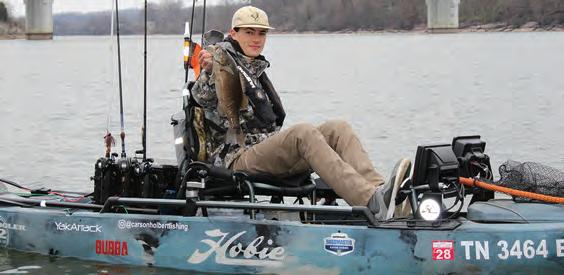
qualifying for the Kayak Bassmaster National Championship last fall,” Holbert said. “It’s kind of come full circle, because my first major win was on Nickajack Lake, which is one of the bodies of water in play for the championship.”
Holbert qualified for the 2025 Bassmaster Kayak Classic through the Angler of the Year points race, fishing three out of six possible tournaments across the country last year. In all, nearly 600 people competed in one or more of the Bassmaster national kayak opens, with


Provided by Captain Jim Durham, Owner StriperFun Guide Service, Tennessee and Kentucky Walleye, Bass, Crappie and Muskie Charters, Superbaittanks.com, Captain Jim Marine Electronics and much more…DATE OF REPORT: March 2026
Greetings to my readers!
I hope that the world finds you and your family doing well!
LAKE CUMBERLAND AND CHEROKEE LAKE
STRIPERS – DALE HOLLOW WALLEYE
LAKE CUMBERLAND
The early spring striper fishing on Lake Cumberland (southern

KY) is terrific, with limits of nice 10-to-15-pound stripes caught on many days and the occasional 20 pounder as well! We troll live bait on planer boards 10 to 30 feet deep concentrating on main creek channel points. We also cast Captain Jim “Striper Magic” lures. With five full time guides StriperFun offers day trips on Lake Cumberland year-round (weather permitting).
CHEROKEE LAKE
The striper–hybrid fishing on Cherokee Lake is very popular with our clients. In April we troll live bait on planer boards 10 to 30 feet deep and also downline on suspended schools of fish, concentrating on main creek channel points.
The striper and hybrid fishing is simply off the chart! 20 and 30 fish days are frequent (TN allows catch and release)! With three full time guides StriperFun offers day trips on Cherokee Lake year-round (weather permitting).
DALE HOLLOW IN TENNESSEE!
We begin each year walleye fishing on Dale Hollow fishing at night under hydro glow lights (a great product we sell!) on lake points with drop offs and grass bed edges. Our techniques include jigging, live bait “snagging” and casting – casting a variety of lures – blade baits and jigging spoons. You will want to anchor up and be in place at least an hour before sunset. it is best to spend time during daylight hours “scouting” these lake points, grass beds or drop offs so you are not disoriented at night.
It is great to be alive and be a “free” American! I look forward to seeing all of you this year on the water. Always remember to stop and shake the hand of a person in uniform or wearing garb that shows they are a veteran! Their service is why you speak English, can vote and can enjoy the freedoms you do!
Until next time, blue skies and tight lines!

DANDRIDGE, Tenn. — The Tennessee Wildlife Resources Agency (TWRA) has partnered with Friends of Douglas Lake (FODL), a nonprofit, all-volunteer organization dedicated to improving and sustaining fish populations in Douglas Lake, to enhance fish habitat. FODL is one of more than 150 chapters of the Friends of Reservoirs foundation, which operates in 37 states.
Friends of Douglas Lake works closely with landowners, volunteers, TWRA, and the Tennessee Valley Authority (TVA) to enhance existing fish habitats and introduce new ones safely and effectively. These habitats provide cover for young fish during their critical first years, increasing survival rates, while also benefiting adult fish.
“The mission of Friends of Douglas Lake is to boost fish populations by improving their habitat which, research has shown, aids reproduction,” said Buddy Bumpus, co-founder for FODL. “We promote being good stewards of this beautiful resource so that future generations may enjoy it. We are excited to partner with TWRA and other entities within the Douglas Lake community to make a difference in the quality of fishing.”
“Friends of Douglas Lake will operate independently but under TWRA’s guidance,” said John Hammonds, TWRA Reservoir Fisheries Biologist. “Their efforts will focus on refurbishing existing habitat sites and establishing new ones on private land within Douglas Reservoir. This includes assisting landowners with obtaining or modifying 26a permits (required for shoreline construction or modification) and applying for grants through the National Fish Habitat Partnership and Friends of Reservoirs. Anyone can join Friends of Douglas Lake or Friends of
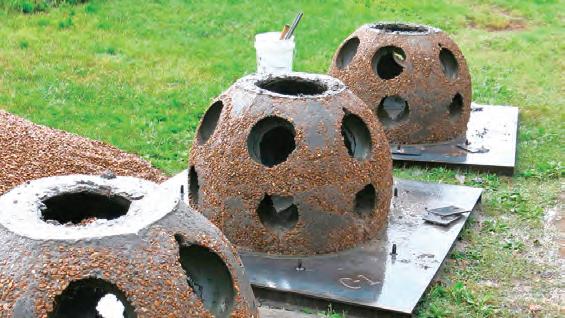
Examples of fish habitat enhancement projects on Douglas Lake, made possible through a partnership between the Tennessee Wildlife Resources Agency (TWRA) and Friends of Douglas Lake (FODL). These efforts help provide critical cover for young fish, improve survival rates, and support healthy populations for future generations. Learn more at friendsofdouglaslake.com.
Reservoirs to support habitat projects locally and nationwide.”
This partnership allows TWRA to continue managing habitat projects across East Tennessee reservoirs while Friends of Douglas Lake addresses local needs. Public requests for habitat assistance on Douglas Reservoir will be directed to the group, enabling them to use their time and resources to support private landowners and improve fish habitats throughout the reservoir.
To learn more or get involved, visit friendsofdouglaslake.com and friendsofreservoirs.org.
The Tennessee Wildlife Resources Agency is responsible for protecting, managing, and conserving fish and wildlife species for the benefit of Tennesseans and visitors. The Agency also maintains public safety through law enforcement and safety education on waterways.
HIGH SCHOOL CHAMPION continued from page 6
the top 50 points finishers automatically qualifying for the 2025 classic.
“I was a little nervous because I was limited by my high school fishing schedule last year and could only squeeze in three kayak opens,” he said. “So, it was a big relief to find out I made the cut.
“Kayak fishing has made me a much stronger angler,” he continued. “It’s forced me to slow down and be more strategic in how I approach tournaments. It’s also forced me to understand the importance of planning and map study.”
Carson has leveraged his success by reaching out to potential sponsors. His tenacity helped make several key connections and secure sponsorship from companies and organizations such as Lithium Pros batteries, Greater Smoky Region Tourism, Bubba, Powell Rods, The Lake Lodge at Chickamauga, True South Custom Lures, Alewels Country Meats and Cliff Harris Automotive Group.
The 2025 Bassmaster Kayak Classic National Championship will be held March 11-12 on Chickamauga and Nickajack Lakes. Fans can follow along both days through the TourneyX app. The top 10 anglers will be recognized on stage March 13 at Thompson Boling Arena in Knoxville, Tenn., during the opening day of the Bassmaster Classic.
Oh how I love
The harbingers of spring, Tree frogs sweet chirping, Birds as they sing.
Consistent and concise, Persistent and precise, Choirs of earthly angels, God’s perfect device.
By William Bumpus
Life’s resurrection
Never ceases to amaze, Grace manifested, With each passing day.
People, take notice! Stop, smell the air! Know your salvation, Lies within there.

Oh how I love
The harbingers of spring, And the sweet peace and comfort, They always do bring.
These ambassadors of revival, These couriers of hope, Prove life springs Eternal, For all to take note.
There with green jonquils, As they reach for the sun, Nature’s redemption, Completely begun.


By Tom Champeau, Pisgah Chapter of Trout Unlimited
The North Carolina Wildlife Resources Commission (NCWRC) has operated the Bobby N. Setzer Fish Hatchery located in the Pisgah National Forest outside Brevard since 1983 when they took over from the U.S. Fish and Wildlife Service (USFWS). The facility was built in the 1950’s and was already in need to renovation before being damaged by Tropical Storm Fred in 2021. Funding was secured by NCWRC in 2023 for a total renovation of the facility and plans were underway to begin the project last year. However, Hurricane Helene damaged the Armstrong Fish Hatchery near Marion, and NCRWC deferred renovating Setzer until Armstrong was repaired and brought back into operation.
Renovating Setzer is badly-needed; crumbling concrete raceways and water pipes compromised production and the obsolete design precludes the use of state-of-the-art technology to raise fish more efficiently. Advanced water treatment and recycling, and shaded raceways will reduce nutrient and organic waste loading and elevated

water temperatures of discharge water. A modern facility will significantly reduce the downstream impacts to the Davidson River from discharge water.
The plan is to demolish most of the existing infrastructure and build a completely new facility. The renovation is expected to take two years at a cost of nearly $40 million with $20 million from the NC Wildlife Endowment Fund and $20 million from funds approved by the General Assembly in 2023. After completion, production will begin and will take another year before the facility will have stock-size fish available for release. If all goes well (managing construction delays, timely procurement of aquaculture equipment, working out bugs of the new system, etc.) the facility will be able to release fish in 2029. But may be 2030 until the hatchery is back to normal production.
The Setzer Fish Hatchery is the state’s largest and produces about 60% of all trout stocked in NC waters. An aging facility that is vulnerable to further damage from future storm events puts the state’s trout putand-take fishery in serious peril. According to the NCWRC, trout fishing in the state’s 26 counties that support trout generates about $1.3 billion each year. Relying on a hatchery that is held together with duct tape and bailing wire is a bad idea. Replacing this facility will ensure that the state’s trout fishing industry is sustainable and will reduce the downstream impacts of hatchery discharges on a highly-popular catchand-release section of the Davidson River.
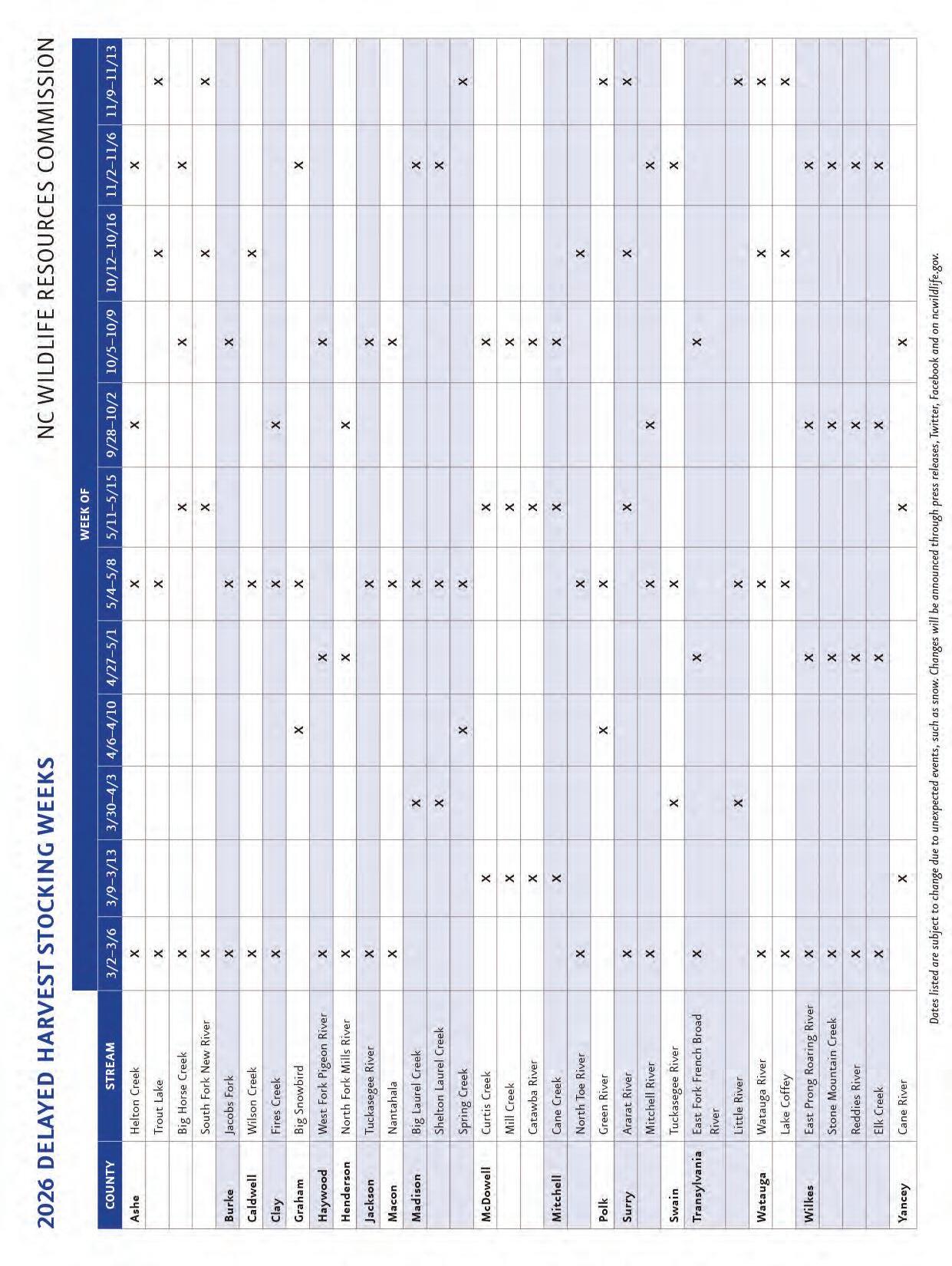
During construction, NCWRC will rely on the Armstrong and Marion hatcheries as well as a private hatchery recently purchased near Rosman. NCWRC is also working with the USFWS, other states, and private hatcheries to obtain additional fish to include in their stocking schedule. The NCWRC website updates information about the project and recently released the projected stocking schedule for 2026 (https:// www.ncwildlife.gov/fishing/trout-fishing-north-carolina). Their goal is to stock all Delayed Harvest and Hatchery Supported locations under the Public Mountain Trout Water program. That said, fisheries managers

RENOVATION continued from page 14
will be working with a significant reduction in the number of trout available to stock.
So, what does this mean to anglers who enjoy fishing Delayed Harvest and Hatchery Supported streams? This is a large segment of the angling public. According to NCWRC, 1,500 miles of the state’s 8,000 miles of trout waters (19%) receive hatchery fish, and about 80% of the state’s trout anglers prefer fishing stocked streams. Their favorite streams should still receive fish, albeit lower numbers and sizes. The plan that NCWRC is developing to offset the reduction in fish availability will hopefully satisfy the large segment of trout anglers who like to fish for stockers. If your finances allow, many fly fishing outfitters offer guided and unguided fishing on sections of streams that they own or lease that contain fish purchased from private hatcheries. The demand for this service will be high so check around if you are interested in this option.
Over 80% of NC trout streams are Wild-designated supported by naturally-reproducing populations, and while many are not as easy to access as most stocked waters, those on public lands are great places to fish and are close to well-known hiking trails. Many trout anglers, biologists, and forest managers are concerned about the potential impacts of significant increases in anglers fishing Wild and headwater “blue line” streams. Higher fishing pressure on these small streams increases the potential for overharvest, high catch-and-release hooking mortality, and fish stress from being caught during summer. A large increase in foot traffic along stream banks could tramp down vegetation that provide habitat for adult stages of aquatic insects and stabilize bank soils preventing erosion and sedimentation.
Providing information like “Leave No Trace”, “Keep Fish/Em Wet”, and other practices to reduce our impact in these smaller, sensitive streams is important. Please share these important reminders as we talk
to anglers, especially our out-of-state visitors who may not be exposed to messaging in our local areas.
-Make sure you clean and sanitize your boots, waders, and landing net to remove potential aquatic invasive species that you may have picked up in other locations.
-Be careful as you enter, exit, and transverse streams to avoid damaging vegetation.
-Use barbless hooks.
-Blueline trout are small, don’t net them - just bring them in, briefly handle with wet hands, and release immediately.
-Resist the urge to photograph your catch. Less handling reduces stress and mortality.
-Bring a thermometer and don’t fish when the water temperature is over 68 degrees.
-Small streams have slippery rocks that will cause you to fall - use a wading staff even in tiny, shallow streams. Three points of contact will keep you upright.
Also, for your safety, many Wild Waters and blue lines are in remote areas with no cell coverage. Fish with a buddy and tell someone where you are going and when you expect to return to cell coverage. The newer phones have the capability to transmit texts via satellite but need an open sky. A tree canopy within a deeply-cut valley may not allow your cell phone to connect with a satellite. A GPS signaling device like a Garmin may send a stronger signal but can also be less reliable in deep valley streams. Carry a whistle that produces a loud, shrill sound. Mountain streams are loud, and you will not be heard shouting for help if you are injured.
Be careful for yourself and the environment around you. Practice catch-and-release and treat your catch with care. When you are fishing a stocked stream, enjoy the day and try to put less emphasis on how many or how big the trout you catch.



By Ronnie Parris
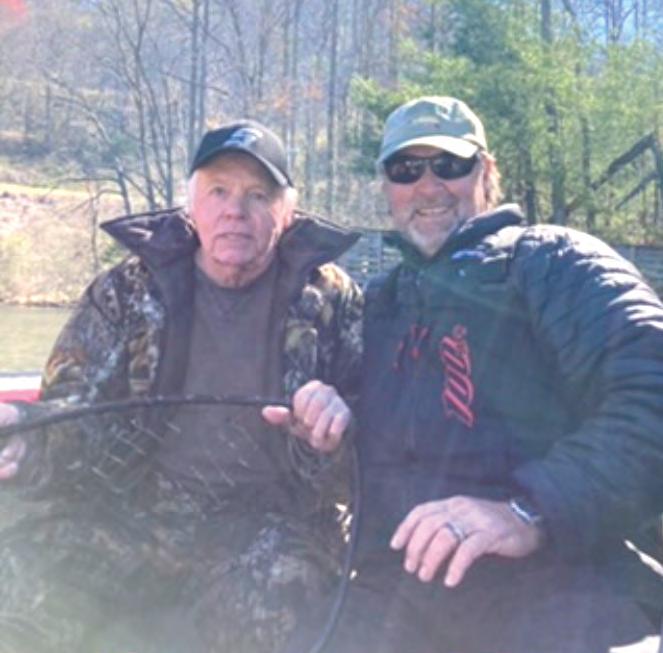
As I write this, it’s with a heavy heart that I report our family has lost its patriarch. His name was Ivor Parris, born to Fred and Wilma Parris of Alarka. To me, I always just called him Dad. Growing up, he was bigger than life to me. I thought no man could outwork, outhunt or outfish him. He was my hero.
From my earliest memory I was his shadow, following him up our mountain creeks, carrying the wild trout he would catch using a forked stick for a stringer. Back then it was more than just sport; what we could bring home was supper for the day. Mom said he would leave the house carrying me to go hunting or fishing, carrying a diaper in one pocket and a bottle in the other. So, I guess it’s no wonder I ended up choosing to run a guide service for a living.
From the stories he would tell, I could remember little bits and pieces about my first few years in the woods, and I could see the pride in my dad’s face as he would recount our adventures. I remember him taking us to Wayah Bald, where I killed my first deer, up on Mason branch, where I killed my first rabbit and groundhog and many trips in the boat, catching walleye on Fontana. I could write all day of all places and trips in the woods where we made memories.
I remember the lessons he taught while we worked in the evenings after school when he got home from work. Dad wasn’t perfect but he always strived to be on the right side. He took us to church at East Alarka Baptist, where I first gave my soul to the Lord. He always said nothing else matters if you don’t know you’re right with God. I never heard him turn a neighbor or a stranger in need away.
Dad wasn’t an educated man and never finished high school. He quit in the ninth grade to help Papaw Fred with logging. This being said, Dad was one of the smartest people I ever knew. He could tear anything mechanical apart and fix it, regardless of problem. In the last few years dementia was taking a toll on Dad, stealing his memory little by little, but on January 7th it was a stroke and a heart attack that took him away from us.
I have a lot of selfish moments when I want him back. But I know from the life he lived, he’s finally made it home with Jesus. I know he’s reunited with his parents and siblings and many friends that had gone home before him. As bad as I miss him, all I can do now is try make him proud of me and do what I can for my family. Because family was Dad’s most prized possession.
In my mind, Dad is always with me. I can always feel his presence, and I know one day I’ll see him again and he will have a perfect mind and body. Until then, we will carry on like he would have wanted us to, living our best life in these beautiful mountains he loved so much.

Lake Fishing Guides – Ronnie Parris, Owner & Head Guide LAKE,
We o er both full and half day trips with the most competitive rates available. All tackle and supplies you will need while you are on your trip is covered by our listed price.

By Steve DeBlois
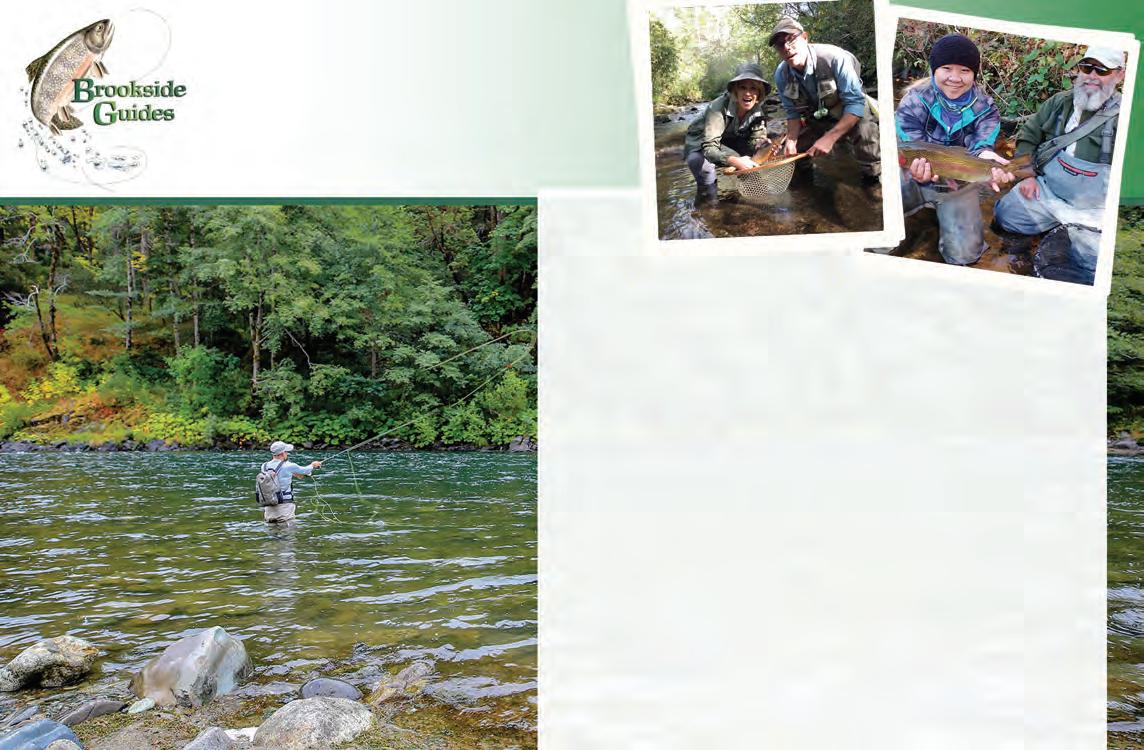
As winter is coming to an end, the daffodils begin to bloom, March winds are blowing, and Spring is right around the corner. You have been sitting at home all winter thinking about fly fishing. YouTube, Reddit, TikTok and even a book or two have been filling your mind. And while many of you are completely confused by this fly fishing thing, why take the journey alone? Think of other sports like tennis and golf. Sure, you can grab some gear and chase the ball around, but instructions shorten the learning curve and reduce much of the frustration, and that is where https://www.brooksideguides.com can help.
Brookside Guides are a team of professional guides who spend their lives working to improve their skills to best serve you. They understand that each of us are on a journey and the importance of helping each client on their own journey. We often work with clients who have never been on the water as well as fly fishers who have traveled the globe. Each person has their own idea of what fly fishing is and we want you to experience it your way. As you develop your skills, we are alongside you. We know our own limits and when you are ready for the next coach. As guides, we are coaches to help you along your journey. We have clients who enjoy a day or 2 each year on the water with their families, and clients who take their journey into competitive fly fishing and fly casting. If you are interested in learning to fly fish or want to improve your
Brooksideguides.com serves Asheville, NC to Greenville, SC in the Blueridge Mountains. Let us guide you on your journey to learn to fly fish. –Fish Well and Do Good
By Scott Norton
We are looking at another transition very soon. The water is as cold as it will be for the rest of the season, and we are going to have some warm days very soon that will kick this transition into full speed. We will still have threats of winter weather, but as soon as there is a week of a warming trend, bass will start their migration to the spawning areas.
In places where there is wood and rock, the sun will heat these areas up and fish will move in to get away from colder waters. This is where thinking ahead will help you. Find where these areas are and spend time and try to find a pattern. Once you can say they are here or not, then find what they want to eat and replicate that to the rest of the lake.
Baits to use will be spinner baits, A-rigs, jigs, flutter spoons, jerk baits, blade baits, and crank baits are what you want on deck. This should cover what the mood of the day is. Remember those bass are going to be slow so you do not need heavy line or aggressive baits; if you find clear water you need to downsize your line. If you catch one, it will feel like you have hooked a wet log. They will not fight much, so thin line is a must. If you have muddy water from run off then you do not have to worry about down-sized line. You will need darker color and maybe a chartreuse color mixed in so they can see the bait.
You are now coming up on a new season, so check your hooks for weakness and sharpness. Your line is another weakness as well, so check for too much memory and fraying. These will kill your chances of landing big fish. If you do not have fraying line, I can bet you will have tight coils in your line from memory. A trick you can use is to stretch enough line out you would need for a long cast and pull on it and stretch it a little to straighten out the coils. If you find fraying line you will need to cut that section out and hope you have enough line left on your reel. You will still need to replace your line for the new season anyways. If you are on a budget, you can use line conditioners to give longer life to your line. Not as good as replacing it, but that is for you to decide. Try and plan your trips on warm days or on weeks where you have a warming trend. This will increase your odds of good timing. Some of these plans involve being at a good place at a good time. Try and plan on getting rid of anything that can cause you issues because this is the time of year for catching giants and you do not want just a fish story to tell.
Scott Norton is a Western North Carolina native. Born in Asheville, N.C., he is a long-time hunter, angler and weekend warrior.

By Capt. Jim Ross
s a charter captain, as well as a regular contributor to the Brevard County, Florida edition of Coastal Angler Magazine, every year there are certain events that happen that I try to predict in advance so that clients and readers can catch more !sh. However, there are many times that even we so called “professionals” don’t get it exactly right. Obviously, my crystal ball isn’t 100 percent correct all of the time...maybe it needs a tune up. LOL!
ings like the giant black drum schooling up, spring cobia run, June tarpon run, fall mullet run, and winter pompano run aren’t things you can pin down to a certain day of the month, but most of the time we can at least predict the month. Hopefully, I can achieve at least a 90 percent e ciency rating a er doing this report for the past 25 years.
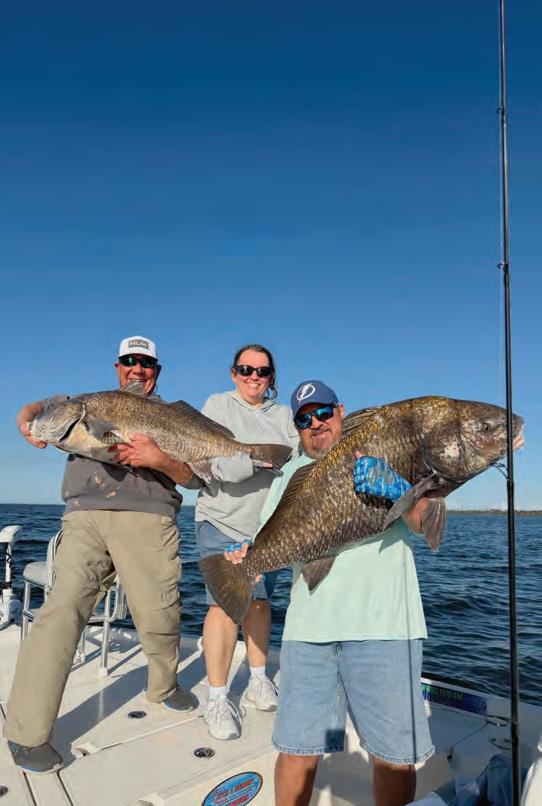
I was just telling my clients one day last week, a er catching a bunch of small trout and a couple of lady!sh, that the big uglies were probably going to show up in a few weeks and if they had a chance to come back out with me then that they may have a shot at catching some much larger !sh than the ones we had landed that morning. Just !ve minutes a er saying this I spotted something unusual about 500 yards up the at. It was exactly what I had just been talking about- a 300 !sh school of 30 to 50-pound black drum.
e !sh in this big school were happy-tailing and waking as they pushed their way down the at. We eased up to them, cast our shrimp in their direction, and as you !gured, the battles were on. All three anglers were hooked up to huge drum that had absolutely no respect for them. Drags screamed, rods doubled over, and dozens of yards of line dumped o their reels. Grunts and groans were heard between laughter and smiles as they worked to tire these beasts. e boat deck looked like a country bar dance oor as anglers shu ed and two-stepped under and over each other in an e ort not to lose their prized catches.
We ended up extending the trip from a 3/4 day to a full day outing because each !sh took 15 to 25-minutes to land.
e moral of the story? Don’t ever count on !sh to be there and don’t ever think that it’s not quite the right time to catch them. e bottom line is just go !shing every chance you get. at is the only way that you can be sure to catch your next memory.
Capt. Jim Ross is owner/operator of Fineline Fishing Charters on Florida’s Space Coast and host of “Catch a Memory Outdoors” live radio show and podcast. www. neline shingcharters.com • www.catchamemoryoutdoors.com






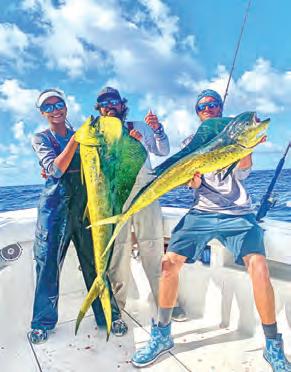
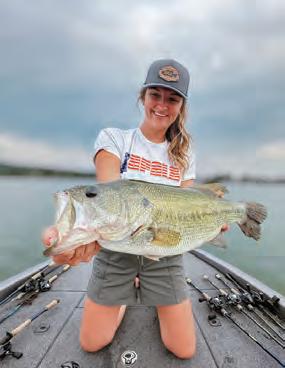



So many anglers have a “go-to” color lure that they swear by. What they do not understand is that the color of your lure barely makes the top three most important factors for catching tons of !sh.

Mistake #1 - e number one mistake anglers make is ignoring the importance of the size and pro!le of the lures they use. When snook, tarpon, red!sh, speckled trout or ounder are feeding, they o en become laser focused on that particular forage species. In other words, if they are feeding on a 6-inch mullet your 3-inch paddletail or shrimp lure will probably be ignored.
PRO TIP: Have a few of your rods rigged up with various sizes and pro!les of lures on them. I like to have a 3-inch paddletail, an arti!cial shrimp and a 4- to 5.5-inch jerk bait ( uke) rigged up when I can’t determine what bait is around. Try all three sizes and pro!les of lures until you !gure out what the !sh in the area are feeding upon.
Mistake #2 - e number two mistake most anglers make is thinking one retrieve style works best for all of the !sh all of the time. ere are so many di erent factors to consider when retrieving your lures. Here are a few to consider:
• Is the water cold or hot? Fish are cold blooded and move more slowly in cold water. is means that you have to slow down your retrieve when the water is cold. Conversely, you want to move your lure faster when the water is hot.
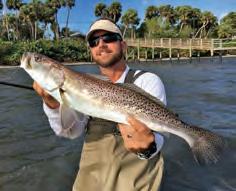
• What species are you targeting? Di erent !sh species like di erent retrieves. For instance, the best retrieve for a red!sh is slowly bouncing your lure o of the bottom. A tarpon likes a low and steady retrieve. A ounder likes a very slow bounce/dragging retrieve no higher than 12 inches from the bottom. A speckled trout likes a vertical jig and will usually hit the lure as it falls through the water column. Snook like a fast and erratic retrieve most of the time.
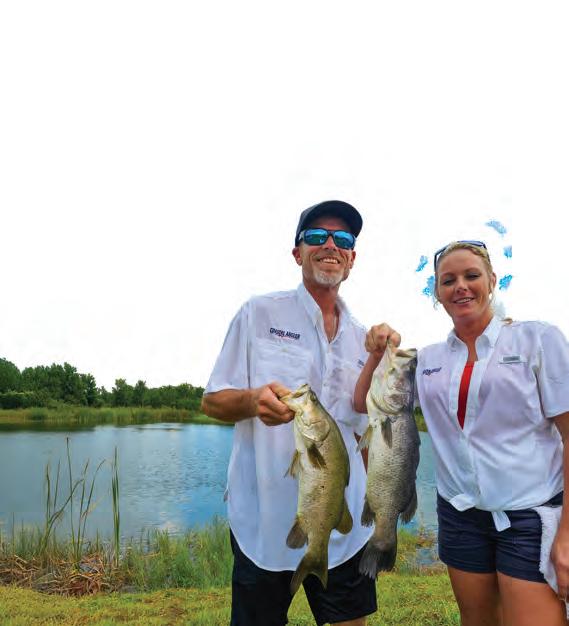
• Is the water clear or murky? Low light, cloudy skies and murky water scenarios makes it harder to get a !sh’s attention. Use a retrieve or lure that creates vibrations and ashes in the water. You also want to fan cast the area keeping your lure placement close together because they are less apt to seek out your lure. When it is sunny and the water is clear it is easier to get the !sh’s attention. You can make your casts further apart and make the !sh come to your lure.
Mistake #3 - e third biggest mistake is thinking !sh care about lure colors. A saltwater tackle box with white lures and something dark like root beer or purple is all that you need to catch any !sh. PERIOD. e bottom line is that if you want to catch more !sh, switch up your sizes and pro!les and vary your retrieves for di erent species and conditions. I GUARANTEE that you will catch more !sh.
Capt. Mike Smith is owner of Fish Your Ass O Charters.Reach him at (561) 339-2317, contact@ shyourasso .com or shyourasso .com.










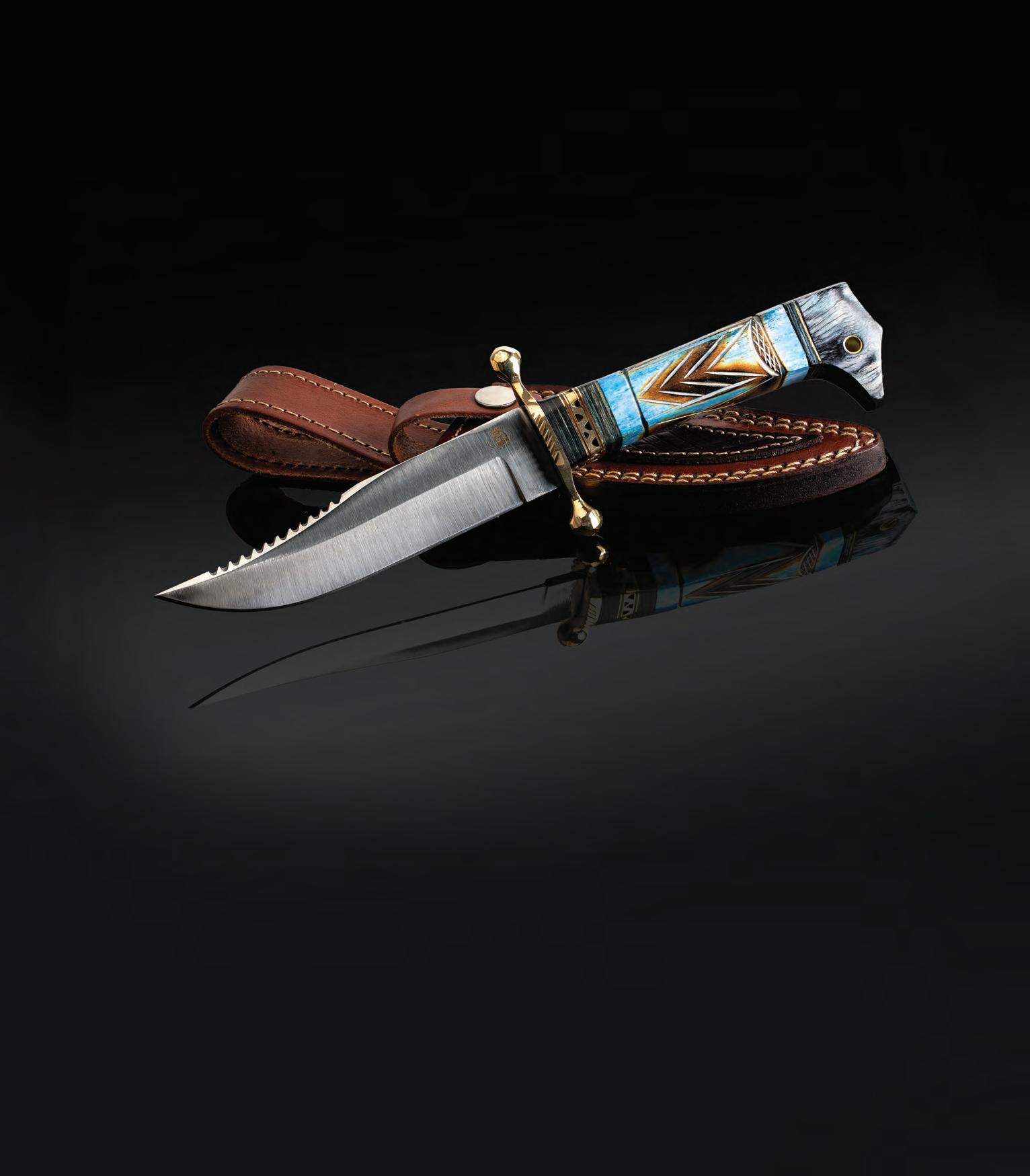
“It’s a beautiful knife with a great blade and a sure grip” — William B. Wilmington, NC
My friend Sergio is a mixed martial arts fighter. His shoulders are broad. His muscles have muscles. He’s not the kind of person you want to be on the wrong side of.
This manly man has a saying about being tough: You should either know how to fight or look like you do.
The message is simple enough. People spoiling for a fight usually don’t pick the biggest guy in the bar. If you look like someone who shouldn’t be messed with, you likely won’t be. With our Blue Bone Bowie Knife on your hip, that’s exactly the message you’ll send.
As beautiful as it is functional, this knife is 10" overall and features a high-quality 420 surgical stainless steel blade with a serrated spine. The handle is constructed of genuine natural bone with redwood spacers. On the handle you’ll find design work that’s carved by hand, a testament to its craftsmanship.
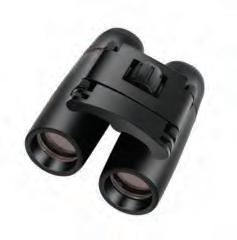
This knife is stick tang, meaning it won’t wimp out when you need it. This knife also features brass hand guards and brass spacers with file work, so you won’t lose your grip. For easy carrying, it comes with a genuine tooled leather sheath. CALL NOW! If you’re one of the rst 700 587 callers for this ad, we’ll throw in a pair of Stauer HD Pocket Binoculars — a $99 value — ABSOLUTELY FREE!
Walk around with the Blue Bone Bowie Knife and you’ll feel a lot safer. I know I do.
Knife Speci!cations:
• 10" overall length
• 420 surgical stainless steel and stick tang construction
• Genuine natural bone and redwood hand-carved handle
• Genuine leather sheath included
Blue Bone Bowie Knife
EXCLUSIVE FREE
Stauer Pocket Binoculars a $99 value with your purchase of the Blue Bone Bowie Knife
$299 $79* + S & P Save $220
*Special price only for customers using the offer code. 1-800-333-2045
Your Insider Offer Code: BBK164-02
California
please
regarding