ODE TO FISHING FATHERS LOCAL FORECASTS & PHOTOS



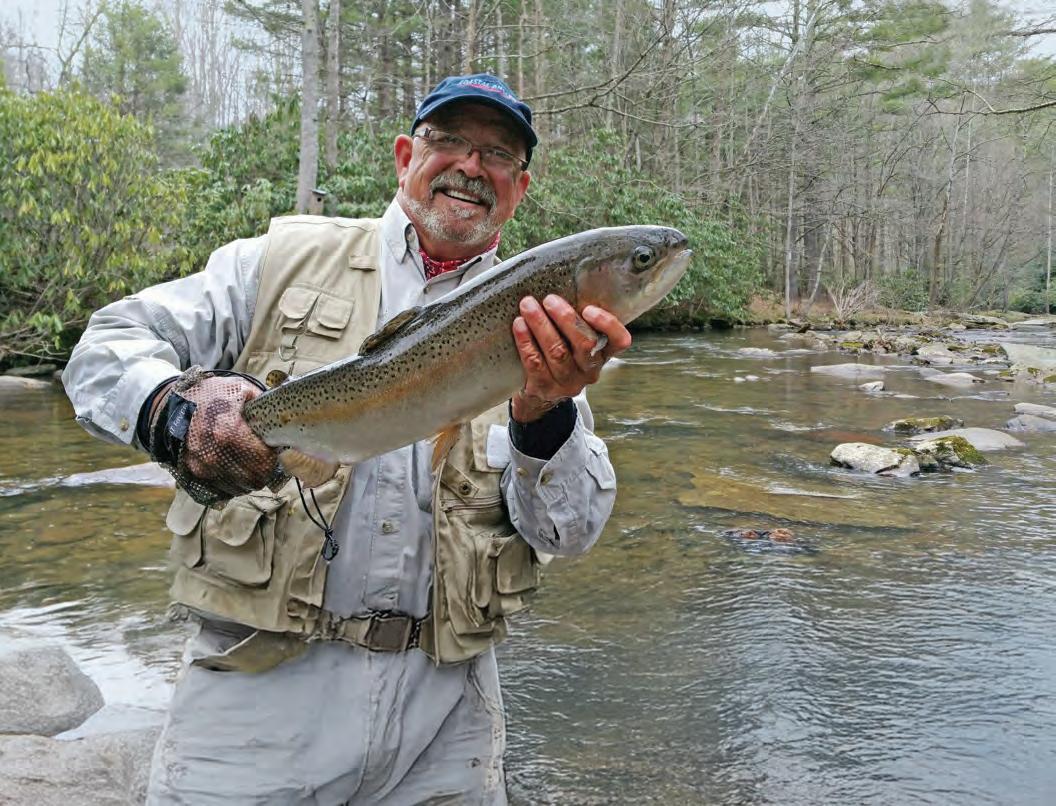
The outdoor and shing community lost a true leader with the passing of Ben Martin, Editor in Chief of Coastal Angler Magazine and !e Angler Magazine
For years, Ben helped shape the voice of one of the most respected outdoor publications in the country. rough his leadership, passion for shing, and dedication to storytelling, he built more than just a magazine— he helped create a community. From o shore anglers and weekend surf shermen to guides, writers, photographers and advertisers, Ben had a way of bringing people together through a shared love of the outdoors.
ose who knew him understood that his passion went far beyond publishing. Ben cared deeply about the shing lifestyle, conservation, and the people behind every story. He believed in supporting local communities, giving outdoor enthusiasts a platform to share their experiences, and keeping shing alive for future generations.
His impact could be felt across every edition, every article, and every relationship he built throughout the industry. He was respected not only as a leader, but as a friend, mentor, and advocate for the outdoor world.
While his passing leaves a tremendous void, Ben’s legacy will continue to live on through the countless lives he touched and the publication he helped grow into a trusted voice for anglers everywhere.
e Coastal Angler and e Angler Magazine family mourns the loss of a remarkable man who dedicated his life to the sport, the industry, and the people he loved.
Rest easy, Ben. You will be deeply missed.

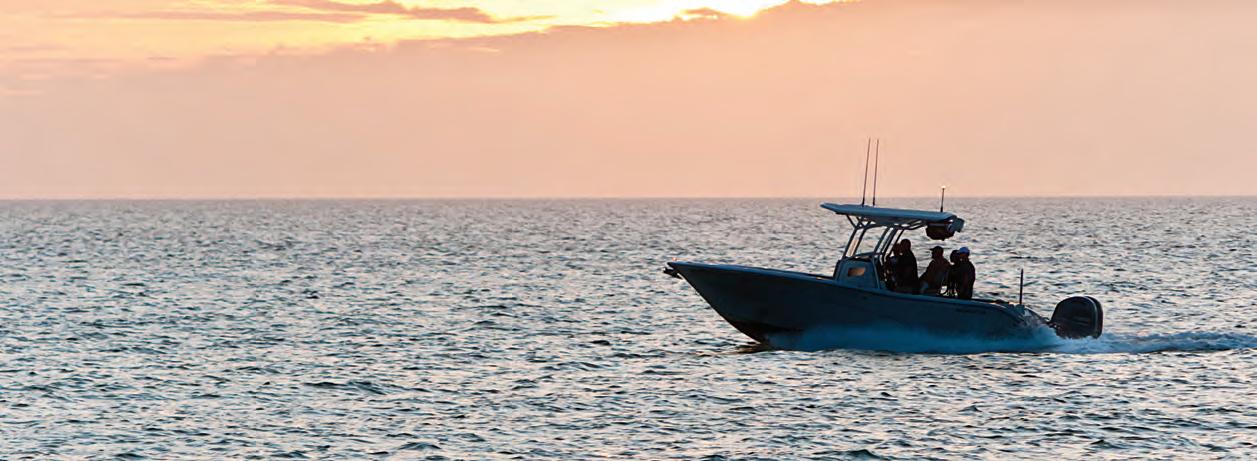
Are you ready to embark on your next on-water adventure? Before you set sail, here are fve things to know about boat insurance.
1. Boat insurance isn’t just for accidents
With comprehensive coverage, you’ll also be protected fnancially for theft, vandalism, and unexpected events like storms if you need repairs or replacements due to damage.
2. Accidents can happen to anyone
When accidents happen, boat insurance offers liability coverage for damages or injuries you cause while boating, up to specifed limits. It can also cover lawsuit costs if you’re sued.
3. Boat insurance can cover medical payments
Boat insurance offers a range of optional medical payments coverage limits, helping to cover medical expenses if you’re in an accident or someone is hurt on your boat, regardless of fault.
4. Most lenders require boat insurance
If you fnanced your boat, you’ll likely need boat insurance since most lenders require boat insurance to protect their investment. Additionally, some marinas or municipalities require proof of insurance for docking.
5. Progressive offers specialized boat coverages
Ever worry about getting stuck on the water? Progressive’s Sign & Glide® On-Water Towing coverage** can help. It’s an additional coverage that steps in if your boat is disabled or breaks down on the water, paying for on-water towing, jump starts, soft ungroundings, and fuel delivery. Fuel cost isn’t included.
Don’t let unforeseen circumstances disrupt your voyage. Cruise with confdence thanks to Progressive Boat insurance. Because when it comes to your boat, peace of mind is the ultimate luxury.
Scan to get a quote in as little as 4 minutes.
to learn more.




























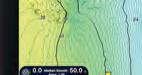


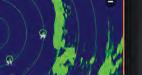


TZT16X | 22X | 24X



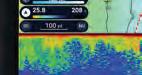


























TZT10X | 13X





TZT9E | 13E

























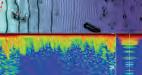
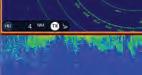
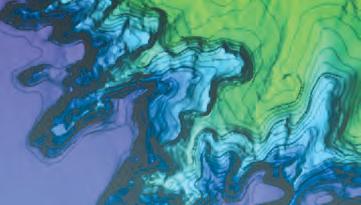
When helm space is at a premium, the 9" and 13" TZtouchE MFDs give you maximum screen area to view their eye-popping TZ MAPS charts and builtin TruEcho CHIRP™ Fish Finder with Side-Scan.
Plus, TZtouchE is fully networkable with the TZtouchXL family of 10", 13", 16", 22", & 24" MFDs and a wide range of best-in-class sensors – legendary Furuno Radars, Sonars, Fish Finders, Autopilots, and more.
Furuno... The reason to level up your helm!


Marine Electronics




By Scott Norton
If you have been catching bass and all the sudden it is like the fish have disappeared, what is happening is those females have backed out and are now in recovery mode. This will last a few weeks, but you will have multiple waves of bass doing this. They will not eat after laying their eggs because the spawn takes a lot out of them. Remember each wave will take a few weeks to recover so it is not like 2 weeks go by and all is recovered.
Slowly they will recover and split up into two different groups. One group will go shallow and another will go deep. So, what do you do during the recovery period? There are a few options to choose from: one is fish for the fry guardians, and option two is target the females that are in groups that have already recovered or go after the ones that spawn late and have not laid the eggs yet.
The fry guardians are the males that are protecting their brood. These bass will hang out in the shallows where the fry are more protected. If you decide to go this direction, make sure you get those fish back in the water so they can get back to taking care of business. Just know if something bad happens to a guardian the fry are fair game to all the predators and you will lose a lot of the next generation so manage your resources well.
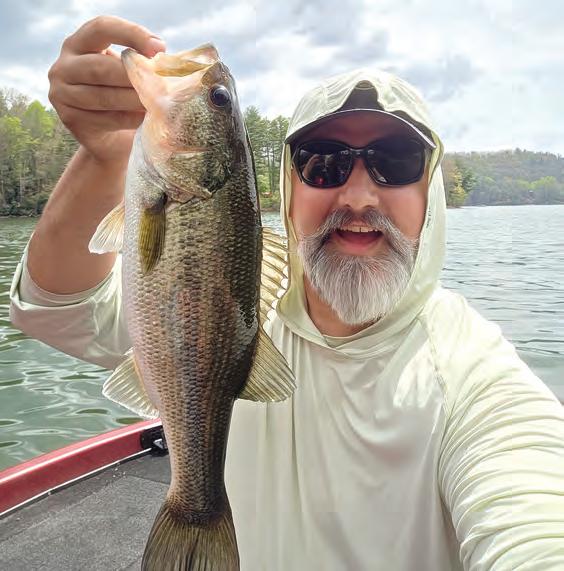

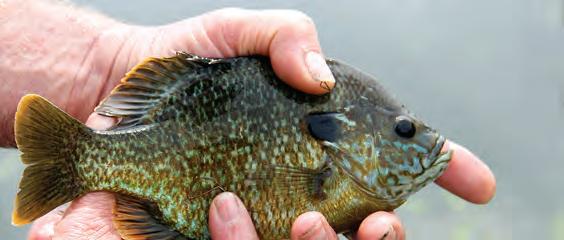
Let us talk about baits to use in these situations. If you are going to target the females going deep there are so many baits that will do the job. You will need to use baits that are subtle like baits with no rattles and subtle action. Strolling is a very good technique to use if you have front facing sonars. Other baits like lipless cranks, swim-baits, spinnerbaits, Senkos, and blade baits are a great choice. If you are targeting shallow bass use swim-baits, glide-baits, Senkos, jigs, flukes, spinnerbaits, and top water baits. These should cover all the bases for most of your situations.
You will have the shad and the bluegill spawn to look forward to as well. Once these bass are ready to feed, they will wreck house going after these fish trying to fatten back up. This is a fun period if you catch them feeding in this moment. To get into the action you will need to be on the water early before the sun hits the water. If you catch one of those days where it is rainy and overcast, you could possibly fish this way all day. I hope this helps. Go have fun and turn someone on this wonderful sport.
Scott Norton is a Western North Carolina native. Born in Asheville, N.C., he is a long-time hunter, angler and weekend warrior.


By Ronnie Parris
Hey folks, I hope all is well. It’s that time of year again where you are shifting gears to keep up with the fish. We are just coming off of one of the best shoreline bites ever. The spotted a smallmouth bass bite was off the chain this year and as usual you go from catching 30 one day to 8 or so the next, your left scratching your head wondering what you’re doing wrong. Simple answer is nothing there just not there anymore. They’ve moved out in deeper water and more open water to rest up a recoup from the spawn.
This is what we call the transition period. It can be great or slow

We o er both full and half day trips with the most competitive rates available. All tackle and supplies you will need while you are on your trip is covered by our listed price.
depending on moon phase and weather, but I love it. I swap boats and grab my trolling tackle. You may catch a mixture of species, and I may be multiple depths so I troll downriggers dipsey divers flat lines and planner boards to cover every level these fish can hide in my target species range from rainbow brown a steelhead as far as trout to spotted and smallmouth bass with the occasional crappie yellow perch threw into the mix.

Lures vary from day to day, but I usually have spoons small divers such as flicker shad and also small Repalas. But really any minnow imitations will work. As far as depth I’m hitting from a foot deep to whatever my deepest fish I’m marking on my fish finder. If I had to pick a magic depth to catch everything it would probably be 30 ft Watch for a thermocline fish tend to hang out close to it. As far as speed I stay between 1.5 and 2 miles per hour but occasionally you will hit schooling fish and just want to stop and cast to these fish.
This is an awesome time to take kids out because it’s usually warm and the bites usually good. So, there it is when the bank bite slows just hit the water and watch that fish finder. Have fun, be safe and, as always, take a kid fishing.

By David Ramsey
Just what if it didn’t really end in 1977 on the bathroom floor of a Memphis mansion? What if, instead, he has been spending his golden years right here, among the hills and hollers of the good ol’ southern Blue Ridge? Well, the absolute, unadulterated, somewhat but not really, true truth is—he has been. Sort of. For about the last 15 years. Guess I better back up a bit and explicate.
The day started out with lightning. No, I didn’t suffer a direct strike to my already COVID-weary brain, as you might be thinking by now. But to hear my perpetually electrical-storm-freaked-out wife tell it, I likely would have by now and probably will one day—if not for her. I just wanted to go fishing in the Smoky Mountains—but, as she ALWAYS does, she just had to go and look at the weather forecast for the area to which I was headed. That’s when the sermon (which I can recite by heart) began. (Hey! Maybe when they cut the Weather Service enough to change forecasting into foreguessing, she’ll stop paying attention and I can go fish in peace! Okay sorry, that’s not funny. I really, truly do not want our Weather Service gutted, okay?)
I’m often reminded, by someone who should know, that I might be a little crazy, but even she’ll admit I ain’t stupid. So, I eased the tension of the moment with a solemn promise not to set foot in woods or waters on this trip if even there was the slightest hint of an electrical storm brewing, and that I would not even remove from the travel tube any of my various graphite superconductors (fly rods). Of course, I sealed the deal by inviting her to go with me (told you I wasn’t stupid.) And then all was well and a good day lay ahead, not to mention a certain Smoky Mountain stream,

alleged by some folks to hold four different strains of Salmoninae,—plus, I still had another compelling reason for this Smokies road trip concerning the aforementioned King of Rock & Roll.
As I crossed over Soco Gap and descended onto the Cherokee Qualla Boundary (despite the tourist-pleasing “reservation” signs at the entrances, their land is not actually a government reservation), I felt the familiar, fishwater-induced rush building up inside. And then, almost as quickly as it came on, the rush was quelled by a massive double clap of thunder. Within seconds, waves of wind-driven rain came at us head-on and hard, and I could barely see the lines on the extremely steep and winding mountain road. Looked like the fishing trip might be a wash (get it?), but I eased on down the mountain, praying hard we wouldn’t end up taking the fast and direct way down after missing one of the 26,000 hairpin curves.
We finally reached the valley floor, facing both a continuing torrent and the now certain fact there would be no fishing that day. After a few more bummed-out, rain-weary miles, suddenly a small sign by the road snapped me out of my funk and reminded me of my trip’s other purpose. With spirits now lifting, I was about to make a right turn straight into the parking lot of the semi-famous and much-beloved Cherokee Elvis Museum.
The building which houses the museum is quite small and left us to wonder just how much of the legendary artist it might really have to show. Once inside, we quickly realized two things: one, there really was a lot, I mean A LOT, of Elvis in the place; and two, the operator/proprietor, Mrs. Dee Smith, was as much a part of the place and its spirit as any photograph or historical article on display. We found ourselves more captivated by her stories and her authenticity as a devoted, lifelong Elvis fan than any of the thousands of items she had collected and exhibited.
Mrs. Smith spoke with a sense of wonder and awe of the two live Elvis performances she attended in the early 70s, almost as if they had happened last week. She related how countless other fans had given her items for the museum over the years, and she shared the stories that came with each of those treasures. Every imaginable kind of memorabilia lines walls and shelves. Elvis lamps, glassware, shirts, paintings, toys, dolls, even an unopened set of Elvis Pez dispensers are some of the things you’ll see. There are hundreds of books on Elvis, records, tapes, concert tickets and souvenirs and the list goes on and on. If you love photographs and you are an Elvis fan then this is the place for you; there are literally hundreds.
But while we were certainly fascinated with the countless items wedged into this small space, paying tribute to one of the world’s best known and loved musical artists, we came to appreciate even more, Dee Smith, the warm, open and truly genuine person who chose many years ago to share, free of charge, her admiration for that artist.
Go there and you will find Mrs. Smith sitting in her favorite chair, small record player nearby, playing her favorite Elvis songs. She will smile an honest smile, welcome you warmly and within a few minutes you, too, will declare that Elvis lives and can readily be seen at an amazing little spot (right next to that special trout stream I didn’t get to fish,) deep in the Great Smoky Mountains.
NOTE: The Cherokee Elvis Museum is located in Cherokee, NC on Highway 19, right beside Littlejohn’s Campground and a spit and a whistle from Soco Creek. The hours are 11:00 am until 3:00 pm, Mon thru Fri and closed on Sat and Sun. Ph. 828-497-0791
David Arthur Ramsey is an outdoor photographer, writer and conservationist, born and raised in the mountains of northeastern Tennessee. His outdoor writing and photography have been published locally, regionally and nationally and are most often associated with work to preserve and protect threatened lands and waters throughout the Southern Appalachian Mountains.
By Matt Mittan
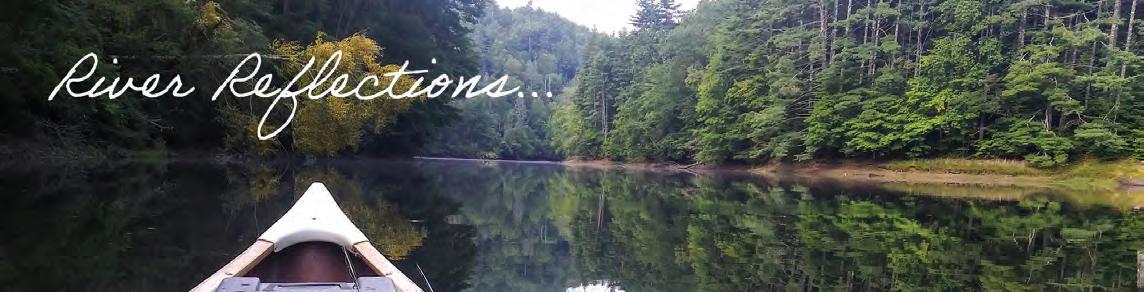
In the heart of our youth, nestled among the Lily-pad tangled waters of a remote island on an undeveloped lake, my friends and I discovered the magic of true escapism. These were the days when we would boldly conquer that secluded patch of paradise, pitching our tents for weeks at a time. It was a journey of unbridled camaraderie, where the shrub lined shores and cool dark waters were our playground, and nature was our canvas. As the campfires burned deep into the night, we etched memories that would forever be bound to our hearts.
Our island expeditions weren’t just about camping; they were about venturing into the wilderness, living by the rhythm of the lake, and

learning about the value of friendships and the art of survival. Of course we didn’t look at it that way at the time. It was just a fun break from our regular routines. There were no roads to get there. Only long paddles back across a remote lake, around long shrub islands and across a sea of
Our island expeditions weren’t just about camping; they were about venturing into the wilderness, living by the rhythm of the lake, and learning about the value of friendships and the art of survival.

continued from page 2
thick water plants until we would get to a single island rising out of the water. We called it “Wild Island”.
So many funny things happened during our trips. On one memorable night, our peaceful slumber was shattered by uninvited guests – a band of curious otters. Underneath the moon’s gentle glow, these playful critters ransacked our supplies, turning our campsite into their own personal treasure trove. One audacious otter even dashed across a friend’s sleeping bag, sending him leaping up in bewilderment. While it may not have been the best way for him to wake up, it gave the rest of us laughs that lasted decades.
Then there was that unforgettable evening, where a touch of youthful curiosity got the better of one of our companions. A closed can of baked beans found its way into the heart of our campfire, with all of us dashing for cover to avoid the consequences. Within moments, the tranquil night was shattered by a loud boom and as the fire exploded into a frenzied shower of hot coals, we all hollered out in primal howls from behind the cover of various trees.
But beyond these comical misadventures, our time on that island was a masterclass in the art of bonding with nature - and with each other. There’s a profound beauty in taking a leap of faith, leaving the conveniences of modern life behind, and embracing the simple joys of living by the lake’s edge. It’s in those cold swims in the middle of the lake, the endless hours spent by the campfire trading stories, and the collective groans as we vented about whatever angst filled issue was bothering us that day.
Thes island adventures taught us the true value of getting out into the wild with friends. It’s about creating memories that are etched in
your soul, shared laughter that reverberates through the years, and the irreplaceable bonds forged in the crucible of wilderness living. It’s about embracing the unplanned moments, the otter intrusions, the exploding campfires, and realizing that these are the stories that will be told and retold around campfires for generations to come.

In a world that seems to spin faster with each passing day, the memories of these island escapes still serve as our refuge, our sanctuary. They were a reminder that, no matter where life takes us, the value of true friendships and the joy of embracing the great outdoors will forever hold a place in our hearts – even long after we stop making them together.
So, here’s to the timeless value of venturing into nature with friends, creating memories that will stand the test of time and etch smiles on our faces, no matter where life’s journey may lead.
Matt Mittan is a long-time broadcaster, writer and Licensed Guide in North Carolina. Visit MattMittan.com to reach out to Matt.
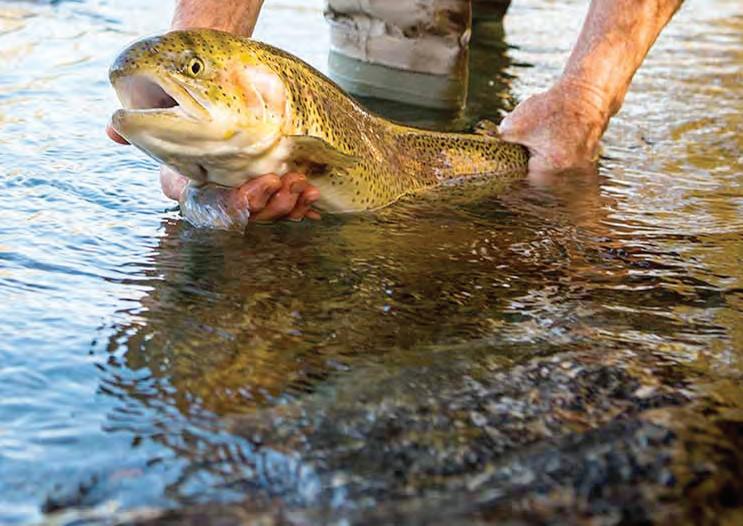
RICHMOND, VA – As a result of a recent water level issue at the U.S. Forest Service’s (USFS) Glen Alton Pond in Giles County, the Virginia Department of Wildlife Resources was not able to stock the pond on the published dates for this Youth-Only Stocked Trout Water. The water level has returned to normal, and the pond was stocked on April 20. The pond will be stocked two more times before June 15, although the exact dates for those two remaining stockings have yet to be determined. However, youth anglers can see when the pond is stocked on DWR’s Daily Trout Stocking Schedule.
Also, the third youth-only trout stocking at USFS’s Two Ponds in Smyth County will now occur on May 30 instead of the previously published May 6. This is being done to accommodate a kid’s fishing event at Two Ponds. The event is being moved to this location given the continued drawdown at Beartree Lake. More information regarding the kid’s fishing event at Two Ponds is available by calling the USFS Mount Rogers Office at (276) 783-5196.
By Perry Hensley
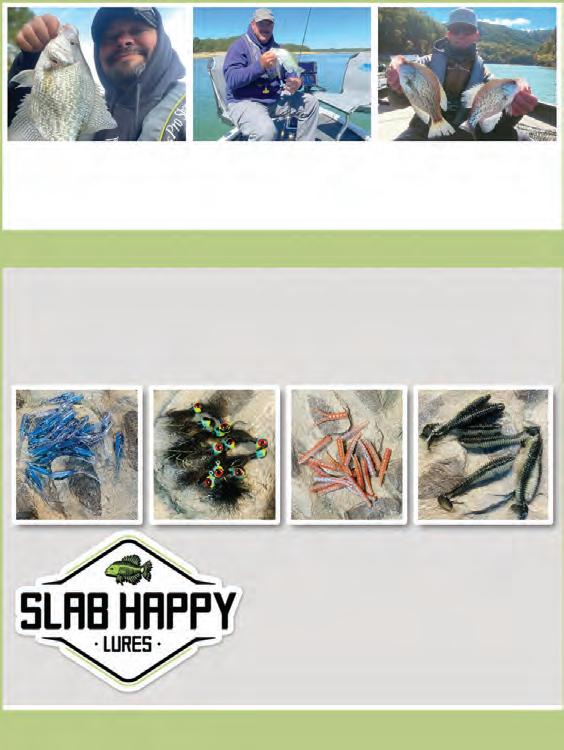
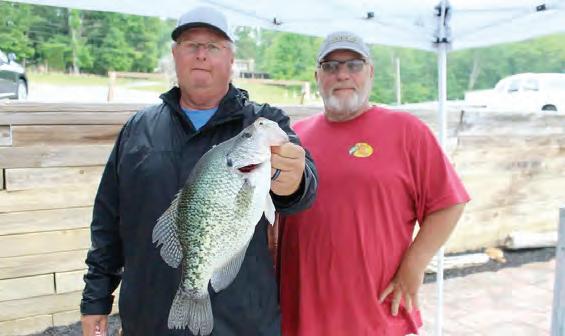
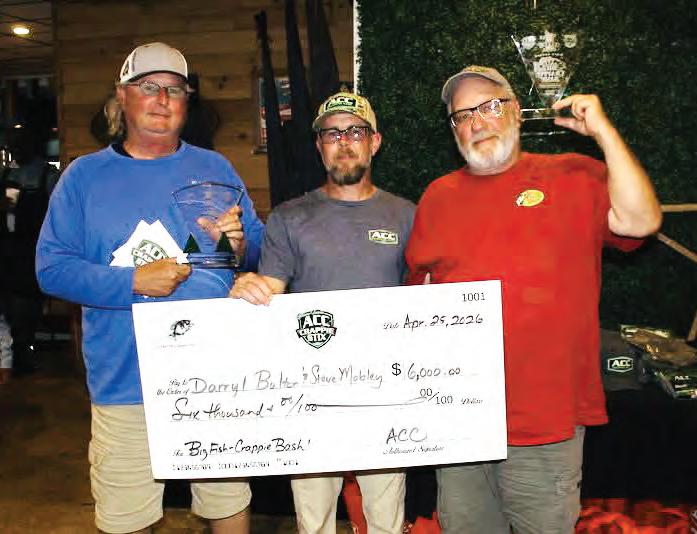
When registration opened for the 2026 ACC Big Crappie Bash, it did not take long for the tournament to hit its 100boat limit. Anglers from 12 different states made their way to Watts Bar Lake during the week of April 25th, all chasing the same dream — landing one giant crappie worth thousands of dollars.
This year’s format once again proved why the Bash has become one of the most exciting crappie events in the Southeast. For seven straight hours, the biggest crappie weighed during each hour earned a massive $1,500 payout. On top of that, an additional $6,000 prize awaited the angler who brought in the single largest crappie of the entire tournament.
With nearly every boat carrying two competitors, the lake was packed with anglers scanning electronics, working brush piles, and hunting that one fish capable of changing the entire day with a single weigh-in.
The event also drew some of the most recognized personalities in the crappie fishing world. YouTube creators including Andrew Nordbye, Davis Lenzen, Chris Gill, and Matt Xenos joined anglers from across the country in pursuit of tournament glory.
As always, Watts Bar Lake proved to be both beautiful and unpredictable.
My partner, JD Dyer, and I hit the water Thursday morning ahead of tournament day. Unfortunately, the bite became tougher with each passing day, and by tournament morning it was at its worst for us. While we managed several quality fish in the 1.40- to 1.50-pound range, we simply could not connect with the elusive 2-pound crappie that was needed to seriously compete in this field.
Still, tournaments like this are about far more than the weigh-in stage.
The fellowship among anglers, the excitement of competition, and the opportunity to spend time outdoors enjoying God’s creation are what continue to make events like the Big Crappie Bash special year after year. Win or lose, days spent on the water creating memories are days well spent.
A special thank you goes out to Andy Lehman, tournament director Matt Xenos, and Jimmy and Ray Pratt for the hard work they invested into making this year’s Bash one of the best yet.
The good news for crappie anglers everywhere? The next Big Crappie Bash is already

set for the final Saturday of April 2027. If this year was any indication, anglers will want to register early because spots disappear fast.
As always: Get up! Get out! And make those memories in the outdoors while enjoying all that our Creator has given us. God Bless!

By Tom Champeau, Pisgah Chapter of Trout Unlimited
With summer finally here, trout anglers enjoy getting out of hot waders to “wet wade.” During summer, aquatic insects are abundant and terrestrial insects like ants, hoppers, and inch worms provide a wide smorgasbord of fly options.
The North Carolina Wildlife Resources Commission stocks streams designated as Delayed Harvest through May and Hatchery Supported for much of the summer for those who seek easy access to fishing. Check with the NCWRC website for details on their stocking program at https://www.ncwildlife.gov/fishing. The Cherokee Tribal Fish Hatchery, operated by the Eastern Band of Cherokee Indians Natural Resources Department also stocks over 200 locations across Cherokee’s Qualla Boundary streams.
For those anglers who prefer fishing for wild rainbow and brown trout, or higher elevation streams for native brook trout, early summer offers the best fishing. Fish are hungry and the water is at ideal temperatures for trout activity. We love our trout and to be responsible anglers, we must pay close attention to water temperatures as summer progresses. One item that all trout anglers should have during summer is a thermometer.
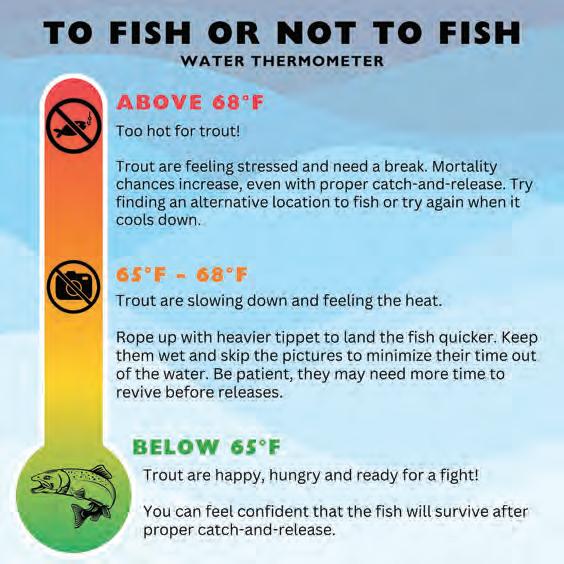
All trout species in Western North Carolina become stressed as temperatures exceed 68 degrees. They become less active, consuming less food which slows growth rates. As temperatures move into the 70’s, mortality rates can increase with younger trout being most vulnerable.

Continued, see OPTIONS FOR TROUT ANGLERS Page 24


GATLINBURG, Tenn.—Beginning
April 30, Great Smoky Mountains National Park will transition its backcountry permit reservation system to Recreation.gov. This transition will improve reliability, security and customer support for backcountry users.
Visitors with existing reservations do not need to do anything—the park will honor all permits issued before the switch.
The $8 per person, per night backcountry camping fee will remain the same. The following fee changes will support the operation and maintenance of the park’s reservation system on Recreation.gov:
• New $6 non refundable fee per permit

• Appalachian Trail thru hiker pass will increase from $40 to $44.50.
• Maximum permit fee will no longer be capped at $40.
The park’s Backcountry Office manages more than 100 campsites and
shelters and provides personalized assistance to thousands of hikers each year. Staff are available daily from 9 a.m. to 5 p.m., both in person and by phone, to answer questions, review itineraries, offer safety guidance and notify hikers of trail closures or severe weather conditions that may affect travel plans. Backcountry fees support critical services including staffing, equipment and supplies and the maintenance of backcountry campsites and shelters.
Thousands of hikers have used the park’s backcountry reservation system each year since 2013 to access the Smokies’ remote wilderness areas. The reservation system helps protect natural resources, improve the visitor experience and enhance safety. Learn more about backcountry camping in the Smokies: https:// www.nps.gov/grsm/planyourvisit/backcountry-camping.htm

By Jim Mize
The first time I fished the Santee Cooper lakes was over forty years ago. An elderly gentleman and I loaded my jon boat into the back of my truck, piled in a three-horsepower outboard, an electric motor, a battery, one small paddle, and two life jackets, woke at four a.m., then drove until just after sunrise to unload all this stuff and begin to fish. We launched at Jack’s Creek, and we had to travel very little to put together a nice stringer of bluegill and crappie for a fish fry.
Now, after these forty-plus years, my companions and I took a more leisurely approach to fish the same waters. This time, we took up temporary residence at the Relaxed Retreat at Carolina King, which is located just across the cove from the Jack’s Creek launching area.
The Relaxed Retreat, if you haven’t heard, is under new ownership and the change is noticeable. The cabins look new and come with all the amenities of home including internet, cable television, and more. Step over to the general store and you can rent a wide range of boats from kayaks to pontoons. We chose a jon boat outfitted almost exactly as the one I fished from all those years ago.
Our goal on this trip was simply to unwind. Few approaches accomplish this as readily, at least for me, as flipping popping bugs and jig flies toward cover to fool a gullible bluegill. And cover is something Lake Marion, the upper Santee Cooper Lake, has plenty of.


Continued, see AUTHOR SPOTLIGHT Page 20


continued from page 18
and the gusts of wind blew upwards of twenty miles per hour. But we did our best.
Presenting one more challenge was the cold front that passed through the night before, knocking the fish off their routines. The result was that even the bluegill were laying low in the morning. After fighting the wind with mixed results, we decided to grab lunch and switch tactics.
Over lunch, we discussed the wind and repercussions of the cold front, and decided the fish just weren’t moving much. Rising temperatures in the afternoon were likely to help, so after sandwiches consumed with the view from our cabin calling us back to the water, we headed back out.
This time, we fished slower, deeper, and as close to structure as we could place our flies. I used a small jig fly that seemed to be the ticket. Whenever I found remaining structure from an old pier, it seemed to have fish around it. Existing piers worked about as well, especially when I could land a fly underneath them.
By the time the afternoon was coming to an end, we had each caught fish and smiled a bit at the spunky little bluegill that fought like no one told them they were little. On a fly rod, these fish are sport enough when the goal is to forget your troubles. I suspect a cricket underneath a cork would work just as well.
Many of my trips to the Santee Cooper lakes during this forty-year span have been to chase the larger fish these lakes are famous for. Usually these were catfish or stripers, the sort of fish that bend rods just slightly more flexible than broom handles.
And on other occasions, I have joined others to tease crappie out of brush piles. Usually, these trips were with the people who knew where the brush and thus the crappie would be. This was always essential as being off by just a few feet could mean the difference between catching

fish and merely drowning minnows.
Regardless of the fish I pursue, my primary goal these days is to enjoy the trip. And perhaps, one of the biggest changes when I fish these Santee Cooper lakes is that I have now become the elderly gentleman in the boat.
But casting flies from a jon boat is still one of my favorite ways to relax, and bluegill still seem to cooperate in these endeavors. So, if you see an old guy trying to roll a popping bug or jig fly back underneath all that Spanish moss while alligators look on, it could be me. And if you want to tell me where to find some fish, I will listen attentively.
NOTE: Should you need lodging, a launching ramp, boat rental, or other amenities, you can find more information on the Relaxed Retreat at https://carolinakingretreat.com/
Jim Mize usually writes humor because it doesn’t require fishing success. His latest book of humor, The Haunted Outhouse, is now available on Amazon or you can order autographed copies at www.acreektricklesthroughit.com.


Provided by Captain Jim Durham, Owner StriperFun Guide Service, Tennessee and Kentucky Walleye, Crappie and Muskie Charters, Superbaittanks.com, Captain Jim Lures and Marine Electronics and much more.
DATE OF REPORT: June 2026. Greetings to my readers! I hope that the world finds you and your family doing well!
The Laurel River Dam Trace is located in the Daniel Boone National Forest. We fish for Stripers in the “cold” trace waters that flow out of the Laurel Lake Dam for a mile then into the Cumberland River! This area

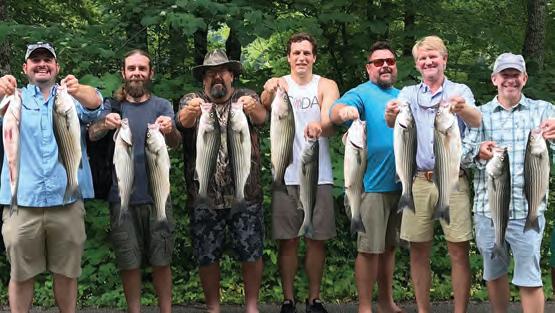
is located only 25 minutes from Corbin KY, 20 minutes north of Jellico TN and only 55 minutes south of Lexington KY. Limits are caught frequently, with some 30 to 40 fish days as well (catch and release is allowed)! Prime season is June, July and August!
Captain Jim’s StriperFun Guide Service Cumberland River Adventures fishes in the Cumberland River for several reasons.
• First, the Stripers are much larger in the Cumberland River system than other freshwater areas. There is an average of over 15 Stripers caught annually in excess of 50 pounds and 40-pound fish are not uncommon. The smallest fish we generally catch daily is over 3 feet long! These fish mostly eat high protein Rainbow Trout, large Gizzard
Continued, see CAPTAIN JIM Page 24
continued from page 14
Thermal tolerance is dependent on literally thousands of proteins that drive trout’s cellular functions. Proteins are enzymes that fail to function outside their specific temperature ranges. Hooking and playing a trout in waters over 68 degrees maximizes stress levels which greatly increases mortality rates. Please follow the guidelines illustrated in the figure to keep fish healthy.
Over the past couple of decades, daytime temperatures in many rivers in our area have exceeded 68 degrees earlier in the summer. Data collected by the NCWRC at stocking sites have documented this trend. Fisheries managers have been forced to modify stocking locations and schedules due to high temperatures in some cases.
Western North Carolina has also been experiencing below average rainfall for several years despite what Hurricane Helene brought. River flows have been reduced and severe drought conditions so far this year are very concerning. Drought and low flows allow temperatures to rise faster.
So, what are options for trout anglers as the summer progresses?
Anglers who practice catch-and-release may have to limit their fishing during the early morning hours. Overnight, most mountain streams cool below 68 degrees, however, many heat up again by early afternoon. Use a thermometer and your best ethical judgement. Whenever handling your fish, get them back into the water as fast as you can. Save photos for cooler months.
For those harvest-oriented anglers who like to fish stocked waters, taking home fish within legal limits is a good use of the resource that will likely die from heat stress anyway. Catch-and-release advocates probably are cringing and turning red reading this but providing a put-and-take fishery in a stream where summer temperatures cannot sustain a wild trout fishery is a valid management goal. Stocked trout do not survive very long in lower elevation streams that heat up into the mid to high 70’s during most summer days.
Wild trout anglers can usually find stream temperatures below 68 degrees at higher elevations, especially in tributaries with full tree canopies. It takes more effort to access these streams, but cooler temperatures and less chance of seeing other anglers make it worthwhile.
JIM continued from page 22
Shad and Skip Jack and also fight the current all day, making them much heavier and stronger than “lake” fish.
• TN allows the use of Rainbow Trout as bait. We use 1 to 3 pound bait.
When a big river Striper comes after a large bait, the bait will be tail dancing all over the surface trying to get away. Sometimes the “dance” will last half a minute (as you watch the big predator circling the prey!) until the Striper finally gets the big bait then its “Kabam”!! The rod gets yanked down and the reel is screaming!
We also catch huge fish casting Captain Jim Special (see our website store) Striper Magic “glide” baits! This fishing is not for the faint of heart however! These big fish hit like freight trains, making long powerful runs in the constantly flowing waters of the river! We use large rods, heavy duty reels, 50-pound test line and titanium hooks!
It is great to be alive and be a “free” American! I look forward to seeing all of you this year on the water. Always remember to stop and shake the hand of a person in uniform or wearing garb that shows they are a veteran! Their service is why you speak English, can vote and can enjoy the freedoms you do!
Until next time, blue skies and tight lines!
With full State licensing and insurance, all Captain Jim’s Guide Service guides (13 guides on 16 waterways) can take you on a safe, fun and unforgettable fishing adventure! Check out all of our fishing services as well as our exclusive “online” store at www.striperfun.com or call 931-403-2501 to make reservations today.
Still measure the temperature before you fish as not all tributaries have the same thermal patterns.
To better understand which tributaries within a watershed stay cold over the summer and provide refugia for trout during the hottest periods, scientists and volunteers from many agencies and organizations are installing automatic temperature loggers in many sites across the Southern Appalachians. These devices record water temperatures every hour and store data for six months before having to be visited by scientists to download the data. This important information is critically important to identify tributaries that maintain ideal temperatures for trout and which ones experience stressful daytime heating. With a few seasons of data, a listing of streams that maintain temperatures suitable for daylong fishing could be available to anglers.
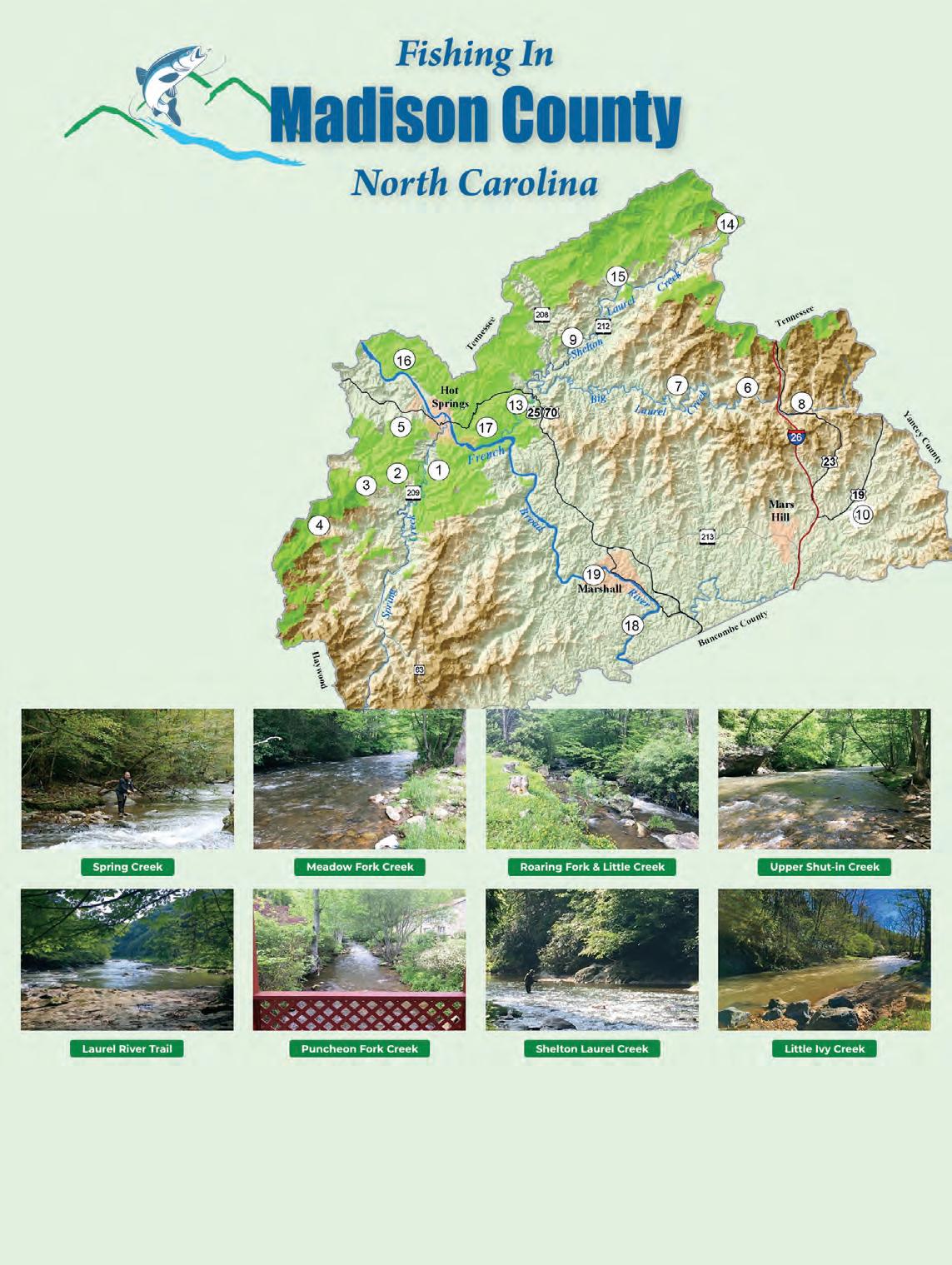
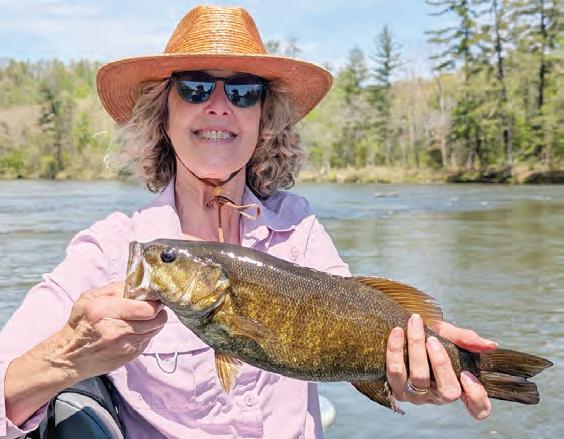
Another great option is to switch species such as smallmouth bass and panfish (redbreast, green, bluegill, pumpkinseed, and redear sunfish). Good riverine fisheries for these and other gamefish species are the French Broad, New, Tuckasegee, Little Tennessee, Nolichucky, and Cheoah. Some rivers have public access from the bank, but best success occurs when easing down the river in a float boat, canoe, or kayak. Many ponds and reservoirs support excellent cool and warmwater fisheries that can be best fished from a boat, although some offer bank fishing access.
Casting small streamers near downed brush and root wads will tease feisty sunfish from their hiding places, and target smallies from their favorite structure such as rock piles, bedrock channels, and ledges. Smallmouth go for crayfish patterns, poppers, and streamers, and those opting for spinning gear do well with jigs, soft-bodied jerk baits, and plastic worms fished “Carolina-style.”
Fishing is good from May through October and pound for pound, few fish fight harder than smallmouth bass.
So beat the heat of summer by exploring some higher trout streams or target bass and panfish in our larger rivers, ponds, and lakes. Stay hydrated and have a great summer!

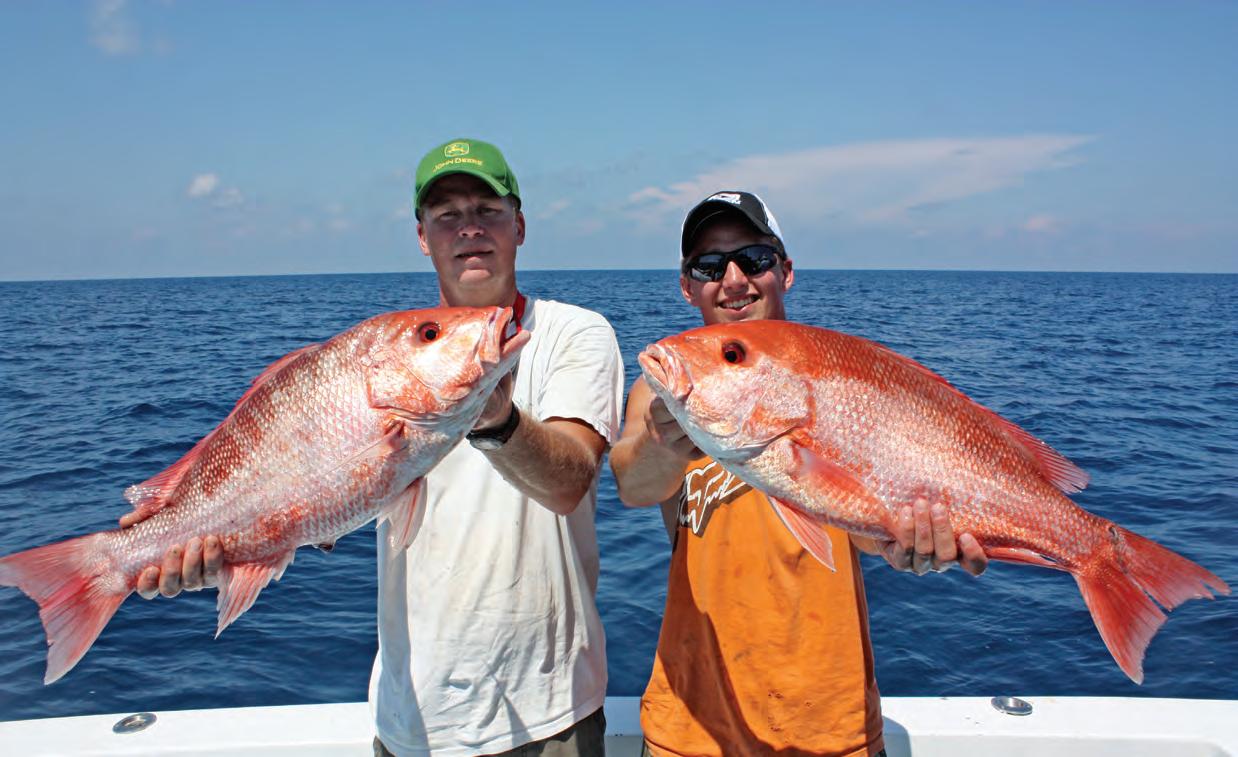
Anglers across the South Atlantic will enjoy a signi cantly longer red snapper season in 2026, thanks to a new management strategy approved by NOAA Fisheries. rough an Exempted Fishing Permit (EFP), individual states are taking the lead on data collection and management, resulting in a dramatic increase in shing days compared to previous federal seasons. Georgia, South Carolina, and North Carolina will have more than two months (62 days) for recreational Atlantic red snapper shing, while Florida will have 39 days split into several windows.
Florida recreational anglers will see the most substantial change, with a season split into summer and fall windows. is expansion aims to reduce regulatory discards— sh that are caught and released but do not survive—by allowing more sh to be kept.
• Summer Window: May 22 – June 20
• Fall Window: October 2–4, 9–11, and 16–18
• Regulations: e daily bag limit is one sh per person. Notably, there is no minimum size limit for Florida under this permit, a move designed to further reduce discard mortality.
Georgia and the Carolinas
North Carolina, South Carolina, and Georgia are also participating in the pilot program, o ering a continuous two-month season for their residents.
• Season Dates: July 1 – August 31, 2026
• Regulations: e bag limit remains one sh per person. Size limits vary by state: South Carolina maintains a 20-inch minimum, while Georgia and North Carolina have no minimum size for this speci c season.
Mandatory Reporting Requirements e success of this pilot program hinges
on accurate data. For the 2026 Atlantic red snapper season, mandatory reporting is a core requirement.
• Florida: Recreational anglers must have a valid saltwater shing license and a (free) State Reef Fish Angler designation. All red snapper landings must be reported via the FWC EFP Reporting app or website - https://app.myfwc.com/crossdoi/ redsnapperreporting/. While passengers may keep their limit on for-hire trips, captains and crew members are prohibited from retaining red snapper on charter or headboat trips.
• Georgia and the Carolinas: Private recreational anglers must use the VESL app or website (https://blue ndata.com/projects/ red-snapper-with-yamaha) to record their red snapper harvest and discard information to participate in the 2026 red snapper season. For-hire operations who qualify must have a current federal permit and record their harvest and discard information through their appropriate reporting program. is shi toward state-led management re ects a growing e ort to balance the health of the red snapper stock with the needs of the recreational shing community. By gathering more precise catch data through these state programs, o&cials hope to create more sustainable and predictable seasons in the years to come.
Red snapper are highly sought a er by anglers because they’re one of the best-tasting sh in the ocean. ese aggressive sh tend to concentrate around reefs, wrecks, and other deep-water structures, which makes for some fun and fast-paced catching when you can nd them.
e 2026 Gulf red snapper recreational shing season features a record-breaking 140day harvest period in Florida state and federal waters. e season spans both summer and fall periods, extending all the way into January, with exact limits and dates varying depending on your location and shing permit.
Florida Private Recreational Gulf Season
Florida anglers enjoy the longest season in state history with a 140-day allowance. Bag limit is 2 sh per person, per day, and you must sign up for a no-cost State Reef Fish Survey.
• Summer Season: Open daily from May 22 through July 31.
• Fall Season: Open daily from September 1 through October 4.
• Weekend Openings: Select weekends continue through the rest of the year:
» ree-day weekends in October (Oct. 9-11, 16-18, 23-25, 30-Nov. 1)
» Two-day weekends in November (Nov. 7-8, 14-15, 21-22)
» anksgiving weekend (Nov. 26-29)
» Two-day weekends in December (Dec. 5-6, 12-13, 19-20).
» Christmas weekend (Dec. 25-27) and New Year’s (Jan. 1-4).
Federal For-Hire Gulf Season
For federally-permitted charter/for-hire vessels, the federal waters season in the Gulf of America runs for 147 days and is open June 1 through October 26. Limit of 2 sh per person, per day.
Other Gulf States Regulations and dates vary outside of Florida:
• Louisiana: e season opened on May 1 for private anglers and for-hire charters (state waters), open 7 days a week until quotas are met. e bag limit is 4 sh.
• Alabama: e season opened on May 22, running 7 days a week until the quota is reached.
• Texas: State waters are open year-round.
Always check with your state’s shing and wildlife agency for the most up-to-date rules and regulations.
the sh bite, and sometimes they don’t. Learning to accept both outcomes gracefully is a lesson many adults still struggle to master.
ey also teach resilience. Every angler loses sh. Hooks snag. Weather changes. Boats break down. Yet shermen keep going. Children who grow up shing learn early that frustration is temporary and persistence o en pays o

By Chatwick G. Peterson III
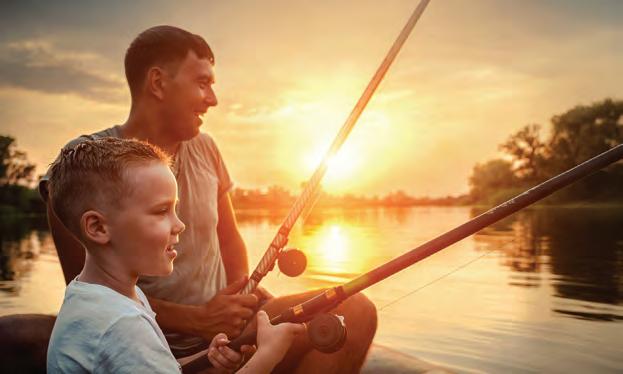
here’s something timeless about a father teaching a child to sh. Long before the rst cast is made or the rst sh is landed, something deeper is already taking place on the shoreline, in the boat, or along the quiet bend of a creek. Fishing becomes more than a hobby—it becomes a bridge between generations.
For many fathers, shing is one of the rst ways they learn to teach patience, con dence, and respect for the outdoors. It starts with simple things: showing a child how to hold a rod, how to bait a hook, or why you move quietly near the water. ose lessons may seem small in the moment, but they o en become memories that last a lifetime.
A child rarely remembers every sh they catch. What they remember is who was standing beside them. ey remember early mornings wrapped in hoodies while the world was still waking up. ey remember snacks in the tackle box, tangled lines that somehow got xed, and the excitement in their father’s voice when a bobber nally disappeared beneath the surface. ey remember the encouragement a er losing a sh and the celebration a er catching even the smallest bluegill.
Fishing fathers teach far more than technique. ey teach patience in a world that moves too fast. Fishing forces children to slow down, observe, and appreciate the moment. ere are no instant rewards on the water. Sometimes


Perhaps most importantly, fathers who sh with their children create space for conversation. Some of the best talks happen when there’s no pressure to talk at all. Sitting side by side in a boat or along a bank has a way of opening doors. Kids ask questions. Fathers share stories. Life slows down enough for real connection to happen naturally.
In today’s world, where screens compete for nearly every waking moment, teaching a child to sh may be more important than ever. Fishing pulls kids outdoors and reconnects them with nature. ey learn where food comes from, how ecosystems work, and why conservation matters. ey begin to understand that lakes, rivers, and oceans are not just places for recreation, but resources that deserve protection.
A father teaching a child to release a sh carefully may also be teaching stewardship without ever using the word.
Not every shing father is perfect. Some are patient teachers while others struggle to untangle knots without frustration. Some own expensive boats while others sh from muddy banks with secondhand rods. But none of that truly matters to a child. What matters is presence. Time is the real gi
Years later, long a er tackle boxes rust and rods are replaced, many sons and daughters discover that shing was never really about the sh at all. It was about learning who their father was. It was about shared silence, laughter, stories, and traditions passed down one cast at a time.
And eventually, something remarkable happens: the child grows up and begins teaching another child how to sh. e knot may be tied di erently. e tackle may change. e old family hotspots may even disappear. But the tradition continues. One generation passes something meaningful to the next—not just a skill, but a way of life.
Fishing fathers help shape patient, observant, and connected children. ey teach kids to appreciate nature, value time, and understand that some of life’s greatest moments happen far away from crowds and noti cations.
In the end, the greatest catch a father ever makes may not be the sh on the line, but the bond built beside the water.



TIM BAREFOOT

June will begin the widespread warm water, instead of just pockets like in spring. Starting now you can catch tuna, wahoo and dolphin anywhere in that 70+ degree water. From now through October, I would put an emphasis on securing big, hardy live baits for the light line. If nothing else, jig up some small snappers wherever you are bottom shing and keep one underneath a oat or under the kite, along with one without a oat that can get some depth. Of course, I like to nd bait to sh around, not just bait on the surface. Don’t hesitate to get these light line baits deeper in the water column. at 75- to 100-foot depth is notorious for wahoo, as well as yellow n tuna during the middle of the day when the sun is high.
I would suggest spending some time posted up on top of a big stack of bait and dedicating at least one person to jigging up dozens of live cigs and sardines. is is the ultimate bait for either the light line or on the bottom. If you put a lot of cigar minnows or sardines on the decoy jig, its life expectancy is under ve seconds on the bottom, but just getting it to the bottom sometimes can be a challenge. We never leave the dock without a couple boxes of frozen cigar minnows and live pin sh this time of year, but nothing, in my humble opinion, is any better than a live cigar or sardine on the jig.
later.
e summer solstice will be June 20—the longest day of the year. It will be daylight right a er 5 a.m. and sh are just like us. ey like to eat breakfast and dinner, so go early. Be there for the daylight bite or stay late and, if you feel froggy, spend the night. ere is nothing like that night bite under the lights. It is a “National Geographic moment” at night under the lights. You see everything. Be sure to dip up some squid for the daylight bite or put them back down at night. Squid will de nitely come to the lights and are easy to catch, but beware—they will bite you and spew very black ink. is is a great time of year to take the kids. You could have big, high-pressure cells that will keep the seas at for days and they will be amazed to see all the life under the lights at night. But dress your kids properly and teach him how to harvest sh and take care of the sh you want to release. Take plenty of videos because they will never want to forget these trips.
Calm seas and tight lines, Ben Martin. We’ll sh together again someday...
Visit barefootcatsandtackle.com for more tips and techniques.


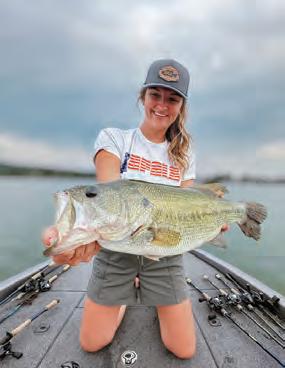



When the water starts warming and o shore schools of bass begin grouping up on ledges, hard spots, and deep structure, few techniques can trigger giant bites like a deep-diving crankbait. For Joey Bloom, deep cranking is one of the best ways to locate aggressive sh and force reaction strikes from bass that might ignore slower presentations.
“Deep cranking is all about triggering sh,” Bloom explained. “You’re covering water fast, crashing the bait into structure or bottom, and forcing those big bass to react.”
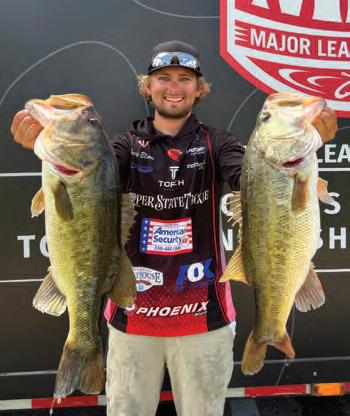
One reason the technique is so productive is the amount of water it covers. Deep-diving crankbaits allow anglers to e&ciently sh o shore structure in the 10- to 25-foot range while maintaining constant bottom contact. Bass o en position around underwater points, shell beds, creek channel bends, submerged roadbeds, rock piles, and ledges where bait sh collect. By making long casts and grinding a crankbait through those highpercentage areas, anglers can quickly locate active schools.
According to Bloom, some of the best locations to target are hardbottom transitions where so bottom changes to hard, rock changes to clay or gravel, o shore humps near creek channels, and isolated structure that sits away from heavy shing pressure.
“Anytime you nd current, bait, and hard structure together, you’ve got the ingredients for giant bass,” Bloom said. “ e biggest thing is making repeated casts from di erent angles until you contact the sweet spot.”
A deep crankbait becomes even more e ective when it continuously de ects o cover. e sudden change in direction mimics injured bait sh and o en causes bass to strike out of instinct. Many anglers believe those violent reaction bites are what separates deep cranking from nesse shing.
Having the proper gear is critical for shing oversized crankbaits all day. Bloom prefers a longer rod in the 7-foot-6 to 7-foot-9 range with a moderate action. e so er parabolic bend helps absorb the surge of big bass while keeping treble hooks pinned during long ghts. Longer rods also increase casting distance, which helps the bait reach maximum depth and stay in the strike zone longer.
When it comes to reels, Bloom relies on slower gear ratios in the 5:1 or 6:3:1 range. Deep-diving crankbaits create tremendous resistance in the water, and lower gear ratio reels provide the torque needed to grind those baits e&ciently without exhausting the angler.
Pairing that setup with 10- to 12-pound uorocarbon line helps maximize diving depth while maintaining sensitivity. Bloom believes the combination of the right rod, reel, and line can be the di erence between occasionally catching sh and consistently landing giant o shore bass.
“When that crankbait starts digging and bouncing o the bottom, you know it’s any moment that a giant bass is going to eat it,” Bloom said. “ at next cast could be the biggest bass of your life.”
You can !nd all your tackle needs at Copper State Tackle and use BLOOM10 for your checkout discount!
www.copperstatetackle.com

Suzuki Marine has partnered with Fuel 1 to provide an opportunity for its dealer network to o er certi ed Sustainable Marine Fuels to its customers right from their facilities. By teaming up with Fuel 1 — a national retailer of advanced fuel delivery and portable fueling systems — Suzuki Marine is helping its dealers better serve their communities by meeting an important consumer need, maximizing the performance and reliability of their customer’s boats, and supporting sustainability goals important to Suzuki Marine and the entire recreational boating industry.
Working with Fuel 1 provides Suzuki Marine dealers with important advantages, such as the ability to deploy a fully supported fueling ecosystem with zero capital investment. Fuel 1 will provide free Micro-Station Deployment; fully branded portable fueling stations installed at participating dealer locations. In addition to direct fueling solutions, portable distribution systems including 20-gallon exchange pods and tote programs make it easy for customers to fuel their boats with PurFuels’ 93-octane, ethanol-free fuel that has been developed speci cally for marine operating conditions.

“Making sustainable marine fuels more accessible in di erent areas of the country is a great win for our dealers and customers alike,” said Brandon Cerka, Suzuki Marine Vice President Sales & Marketing. “ is partnership is also a major step in Suzuki Marine’s ongoing e ort to reduce the environmental footprint of boating. We have long supported the industry’s e orts to educate the boating public about these cleaner burning, more sustainable fuels. Now, we are stepping up to the plate to help get this fuel to more boaters, using their trusted Suzuki Marine dealers as the source,” added Cerka.
e program also makes strong business sense for dealers. A revenue sharing model will provide dealers with solid pro ts and recurring income. Fuel 1 will manage all compliance, liability, inventory, refueling and pointof-sale systems, making it easy for dealers to provide this valuable service to both loyal and new customers. Fuel 1 provides unmatched business and marketing support, including national marketing campaigns to drive customers to the dealership, dealer spotlighting across Fuel 1 Direct and partner platforms, invitations to participate in Fuel 1’s national sponsorships and marine events, and customer aggregation tools to help position dealerships as a preferred destination for premium marine fuel.
“We have used these fuels exclusively at our Suzuki Marine U.S. Technical Center during engine testing, durability trials, and performance benchmarking. Over years of testing, we have proven that these fuels help Suzuki Marine’s products run at peak performance, e&ciency, and durability in real-world conditions. We have every con dence in these fuels and are pleased to be o ering them to our customers,” added Cerka.
To learn more about the key bene!ts of PurFuels sustainable marine fuel, visit www.fuel1direct.com





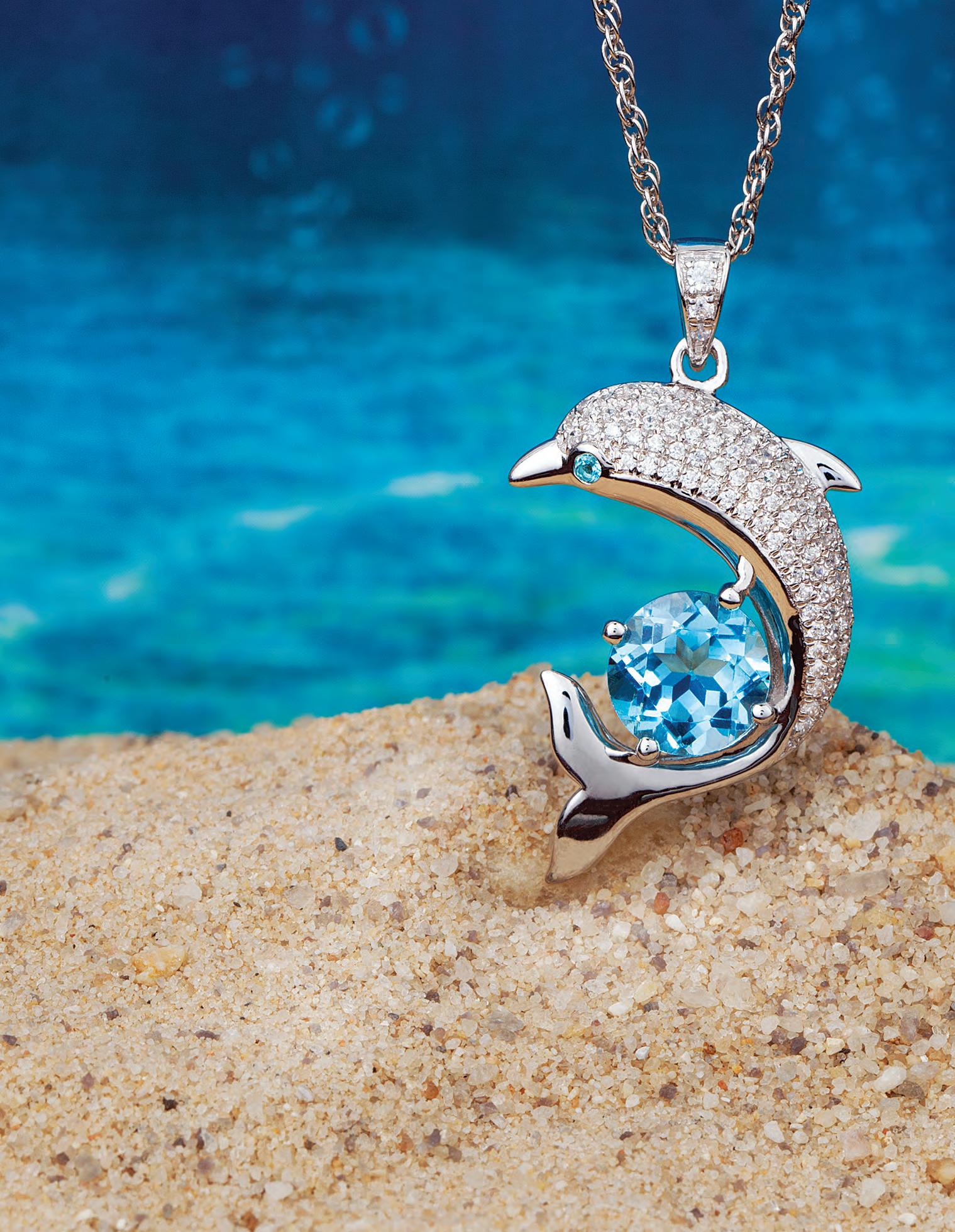
Here’s a memorable beach moment: You’re basking in the warm sun, toes in the sand, letting the gentle turn of the foam-capped waves lull you into a state of complete relaxation. As your eyes scan the endless horizon of blue on blue, you’re rewarded with the site of a school of dolphins making their way across the sea. There’s no denying their signature shape as they leap from the water. If you don’t see anything else extraordinary the rest of the day, you can take solace knowing you’ve witnessed some of nature’s most playful and intelligent creatures in their natural habitat.
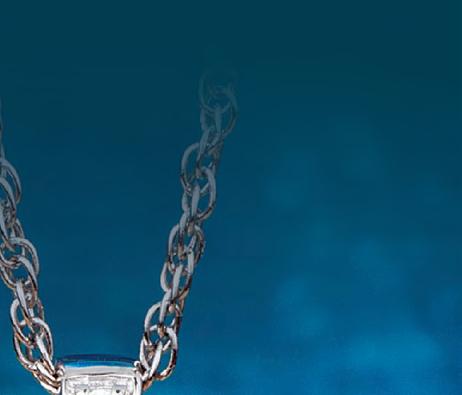
Why not recreate that special toes-in-the-sand moment with our DiamondAura® Dolphin Pendant? The beloved sea mammal has been captured mid-jump in a rhodium-finished setting. And tucked into its fins are a full two carats of shimmering blue DiamondAura.
Nothing captures the shimmering color of the ocean in the midday sun like blue DiamondAura. With its sparkling clear blue color and high refractive index, DiamondAura is one of our top sellers. And with our special price, you have quite the catch. Satisfaction guaranteed or your money back. Enjoy the DiamondAura Dolphin Pendant for 30 days. If it doesn’t pass the test swimmingly, send it back for a full refund of the item price.
Limited Reserves. A full 2 2/5 total carats of DiamondAura in a rhodium finished setting for this price is as rare as a dolphin sighting. We cannot guarantee availability for long. Call today!


Limited to the first 1900