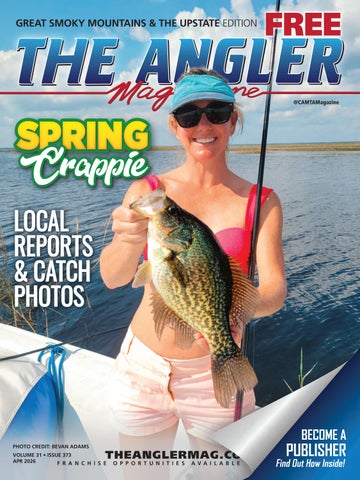

Crappie
LOCAL REPORTS & CATCH PHOTOS

Suzuki, the “S” logo, and Suzuki model and product names are Suzuki Trademarks or ®. © 2026 Suzuki Marine USA, LLC. All rights reserved
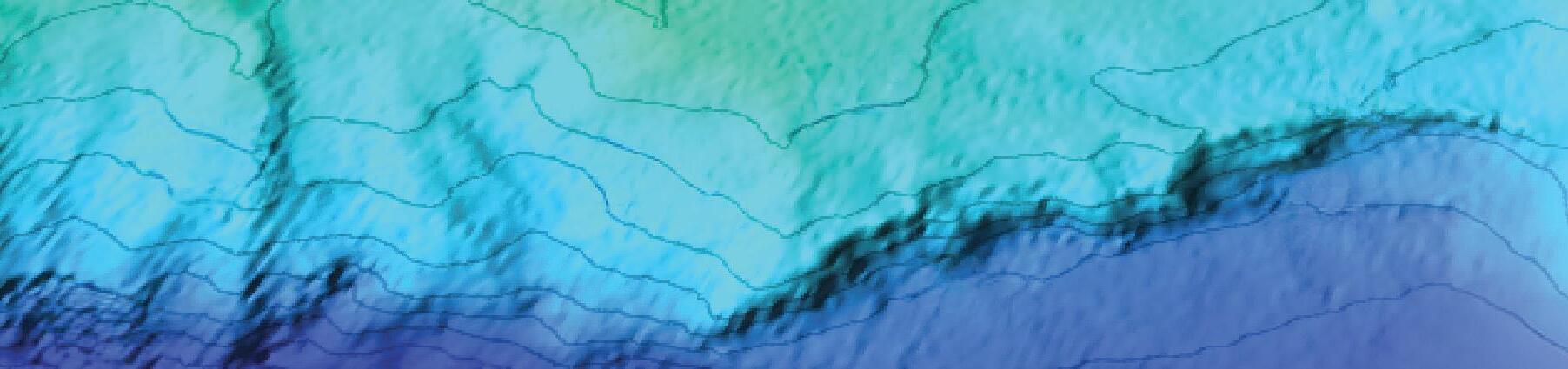























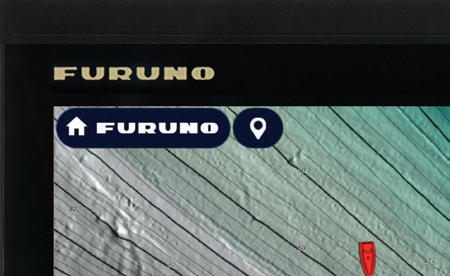






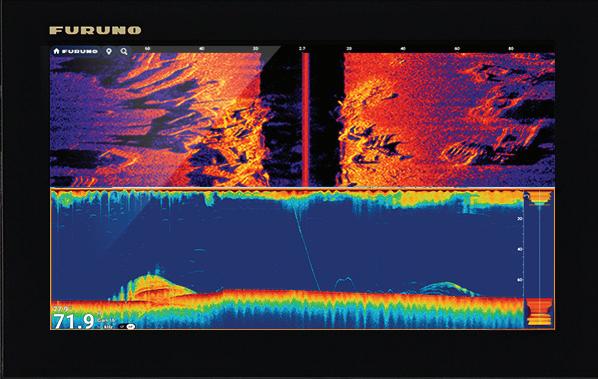
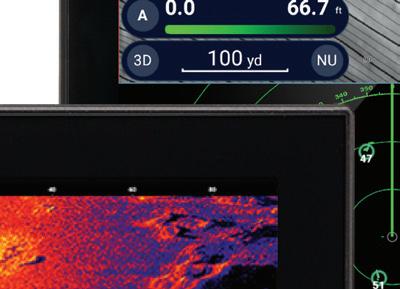
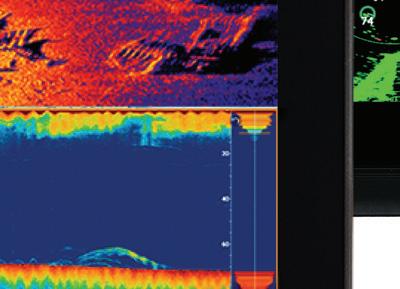
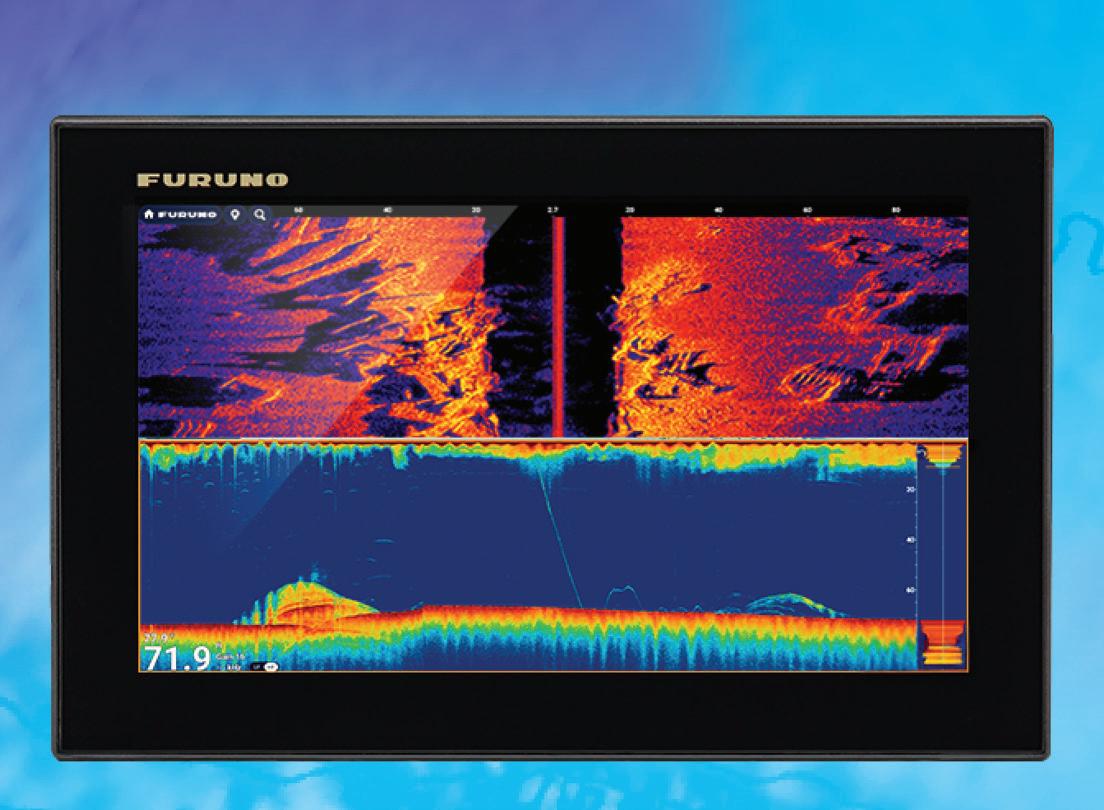
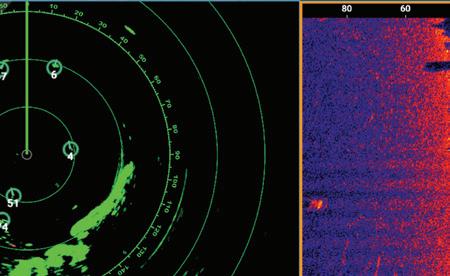
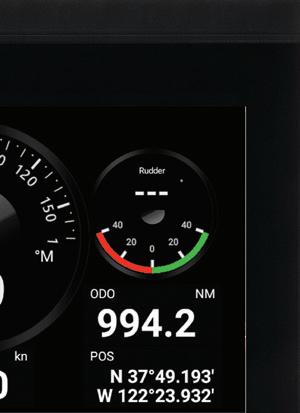




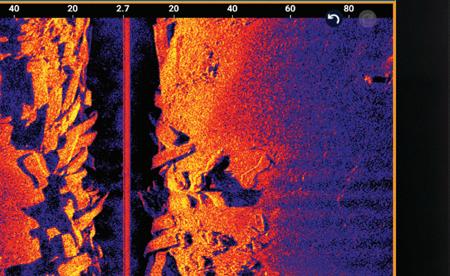










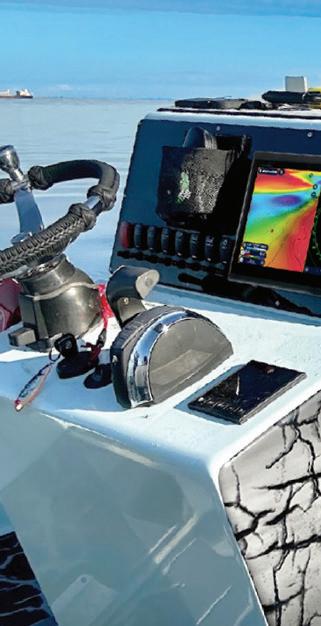





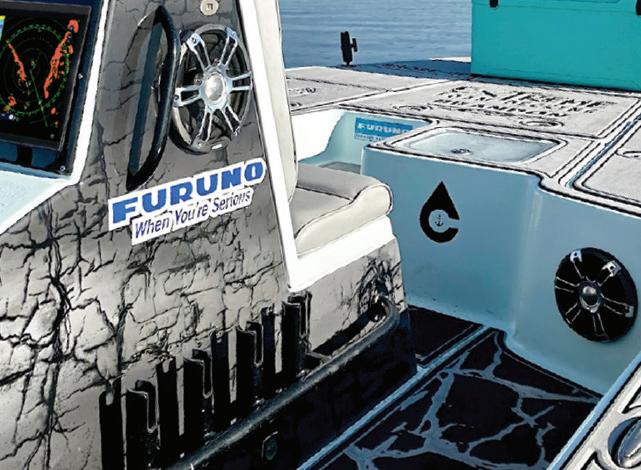








Find Less Stress
With this streamlined MFD, Furuno is bringing big-boat confidence to everyone. & More Fish













Less Stress








TZMAP9 - 9"
fve things you should know about boat insurance
Are you ready to embark on your next on-water adventure? Before you set sail, here are fve things to know about boat insurance.
1. Boat insurance isn’t just for accidents
With comprehensive coverage, you’ll also be protected fnancially for theft, vandalism, and unexpected events like storms if you need repairs or replacements due to damage.
Accidents can happen to anyone
When accidents happen, boat insurance offers liability coverage for damages or injuries you cause while boating, up to specifed limits. It can also cover lawsuit costs if you’re sued.
3. Boat insurance can cover medical payments
Boat insurance offers a range of optional medical payments coverage limits, helping to cover medical expenses if you’re in an accident or someone is hurt on your boat, regardless of fault.
4. Most lenders require boat insurance
If you fnanced your boat, you’ll likely need boat insurance since most lenders require boat insurance to protect their investment. Additionally, some marinas or municipalities require proof of insurance for docking.
5. Progressive offers specialized boat coverages
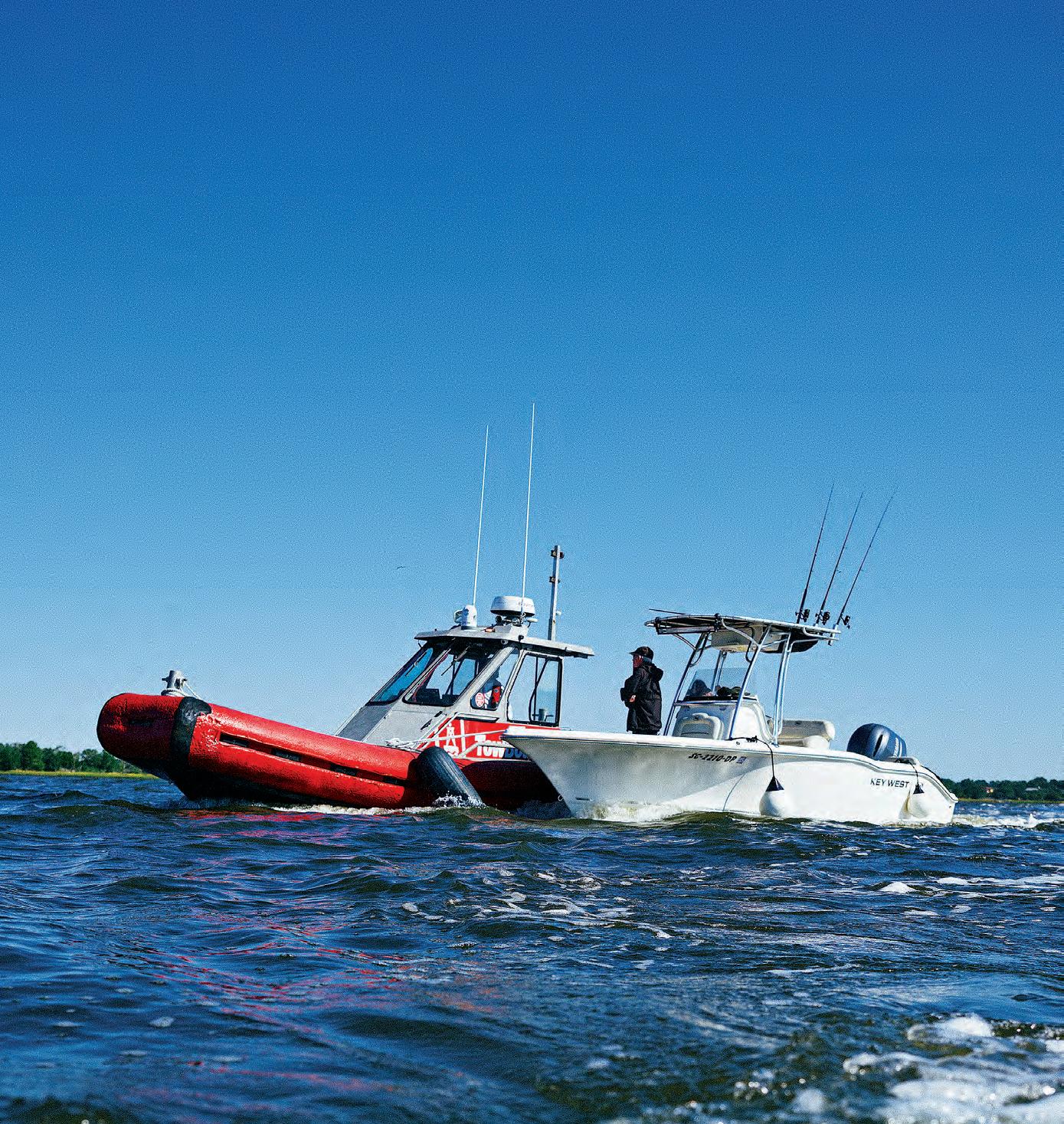
Ever worry about getting stuck on the water?
Progressive’s Sign & Glide® On-Water Towing coverage** can help. It’s an additional coverage that steps in if your boat is disabled or breaks down on the water, paying for on-water towing, jump starts, soft ungroundings, and fuel delivery. Fuel cost isn’t included.
Don’t let unforeseen circumstances disrupt your voyage. Cruise with confdence thanks to Progressive Boat insurance. Because when it comes to your boat, peace of mind is the ultimate luxury.
Scan to get a quote in as little as 4 minutes.
to learn more.















By A. deGruchy
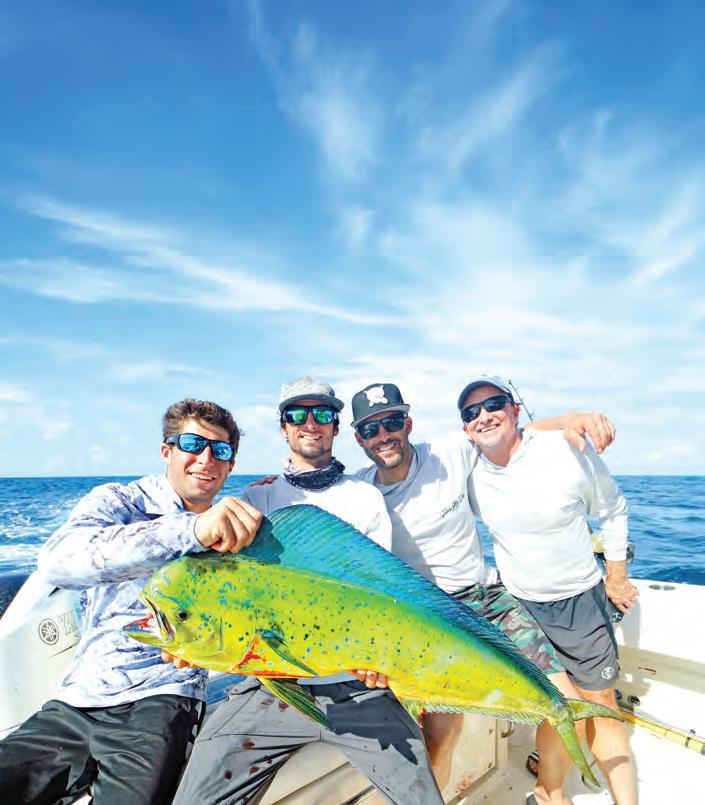
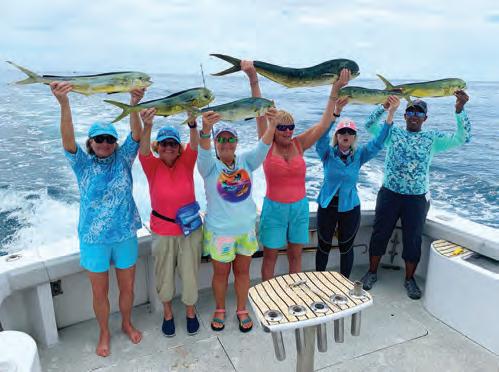
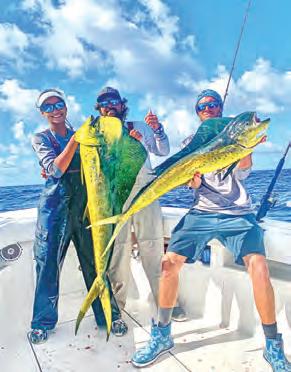
Mahi season is one of those drop everything and go times of year, and when we begin to slide from spring into summer, you can usually count on schools showing up o!shore. e warmer the water, the better it gets, especially when you nd clean blue water, good current edges, weed lines, oating debris, or any kind of structure holding bait in that 75- to 82-degree range. Fishing with Bean Sport shing in the Florida Keys and other parts of the state, over the past few years we’ve de nitely seen more smaller sh and fewer big cows and bulls, but that doesn’t mean they’re gone. When conditions line up, there’s always a chance a quality mahi-mahi is mixed in with the schoolies.
Mahi love anything moving, so live bait is tough to beat, and when they’re really red up, you can even catch them on y. Tackle-wise, we like running a 6500 size setup because you never know when a better sh shows up. e Penn Slammer IV 6500 paired with a Carnage III rod is a go-to for us, and the Penn Spin sher VII 6500 spinning combo is another solid option. We’ve had great success using the Mustad 7766D 6/0 hook, and for bait we’ll typically sh whitebait or troll Islamorada Flyers depending on the day.
When it comes to the table, blackened or fried mahi is hard to beat, and we only keep what we’re going to eat that day. Even though mahi are one of the fastest-growing sh in the ocean, conservation still matters, and being mindful about what you harvest goes a long way.
Bean Sport shing can run this type of trip, but it’s highly weather dependent o!shore. If you’re looking to book a dedicated o!shore charter in e Keys, I highly recommend LegaSea Charters. Capt. Joey can be reached at legaseacharters.com.
If you’re planning on visiting Islamorada, book at the fabulous ree Waters Resort and reach out to us about a special captain’s discount.
Follow deGruchy’s adventures on Instagram @bean_sport shing and on YouTube @BeanSport shing. To book a charter, visit beansport shing.com.


SMOKY MOUNTAINS NORTH CAROLINA/ SOUTH
CAROLINA/GEORGIA
Great Smoky Mountains National Park’s Air Quality Affects Stream Quality and Trout
By Tom Champeau, Pisgah Chapter of Trout Unlimited
Due to concerns about the effects of air pollution on public health, air quality in the U.S. has steadily improved since 1970. Enactment of the Clean Air Act under the Nixon Administration initiated programs to improve the Nation’s air quality. Reductions in smog, ozone-depleting compounds, mercury emissions, and pollutants that cause acid precipitation have occurred in the U.S. and in many other countries; proving that with international cooperation, public demand, development of new technologies, and political responsibility, air pollutants can be reduced from our emissions and air quality can improve. Problem areas still exist in many regions; however, our ability to reduce air pollution is powerful if we possess the public will to make the necessary changes.

Emissions from the combustion of fossil fuels (coal, oil/gasoline, and natural gas) load the atmosphere with sulfur and nitrogen oxides that increase the acidity (lower pH) of rain and snow. Sulfate and nitrate
(From Kulp and Abramson, 2022)
Credit: Resource Brief - Water Quality GSMNP and M. Kulp and C. Abramson. 2022. Water Quality Monitoring GSMNP.
molecules also come down as dry particulates, and with rain and snow, are incorporated into the soil. Acid precipitation decreases the capacity of soil to buffer or neutralize acids before they seep or flow into streams. Reduced soil buffering capacity, soil nitrogen and sulfate saturation, and lower soil pH create complex changes in soil and stream water chemistry. Aluminum and other elements are leached from altered soils that are harmful aquatic life.
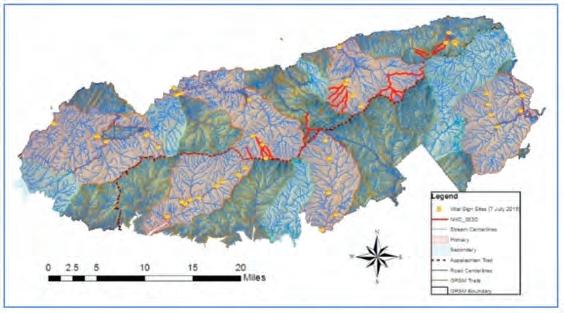
Matt Kulp, Supervisory Fishery Biologist with the Great Smoky Mountains National Park (GRSM) oversees a long-term study of the impacts of acid deposition on stream water quality in the park. Acid deposition has negatively-impacted brook trout and many other aquatic animals in nearly half of GRSM streams. Volunteers, including members of Trout Unlimited chapters from TN and NC, collect water samples from many of the sites analyzed for this study (Figure 1).
Atmospheric sulfates and nitrates along with other air pollutants such as mercury and ammonium travel for long distances, and the geography and elevation of the GRSM traps these pollutants as wind currents move from west to east. The geology of many of the park’s watersheds is low in limestone, and streams within these sensitive watersheds are poorly buffered from acid deposition. Other factors that scientists factor into the impact of acid deposition in GRSM are varying rainfall patterns within the park, forest age/timber harvest history, plant species composition, soil type, and geological composition.
The good news is improved technologies have reduced sulfate and nitrate emissions of power plants and vehicles in areas of the Southeast that contribute to GRSM’s “airshed” and subsequently, air quality within the park has improved dramatically. Since 1993, nitrogen oxides and sulfur dioxide have declined by 72% and 94%, respectively. Over the past 30 years, average rainwater pH in the park rose from 4.3 (very acidic) to 5.3 (normal rainwater is a weak carbonic acid). As pH is measured on a logarithmic scale, the park’s rainfall pH is 10 times better than before 1993.
Figure 1. Map of six primary watersheds and sampling locations for GRSM water quality monitoring. Impaired streams are shown in red.

The bad news is the nitrogen and sulfur loading into the soil changes soil chemistry and it may take decades to show improvement. Stream water quality is more dependent on soil chemistry than air quality. Over time, scientists predict that with improved air quality further reducing acid deposition, soils will lose excess nitrogen and sulfur and retain more calcium that will increase soil buffering capacity. The buffering ability of park streams is measured by the Acid Neutralizing Capacity (ANC) - the degree that positively-charged atoms neutralize negatively-charged atoms that acid deposition loads into watersheds.
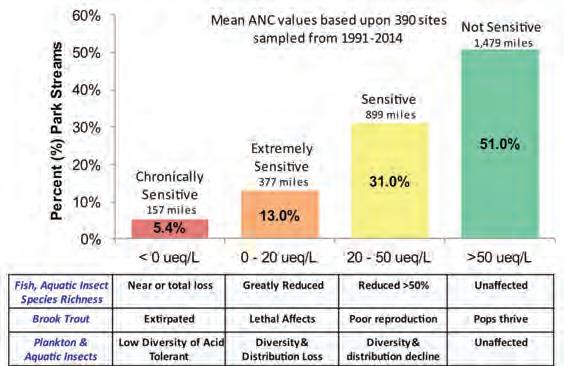
Nearly half or 1,434 miles of streams in the park have reduced ANC with significant impacts to aquatic organisms (Figure 2). In these sensitive streams, brook trout suffer poor reproduction, high mortality, and have been eliminated from the most sensitive streams. Streams that are sensitive, extremely sensitive, and chronically sensitive to acidification effects account for 31%, 13%, and 5.4% of park streams, respectively. Some less sensitive (higher ANC) streams drain watersheds that have more limestone and other rocks that leach cations into the soil and stream. Overall, 51% of streams in the park have geochemistry, rainfall patterns, and forest type and age that sufficiently buffer the effects of acid deposition (Figure 2).
Most stream monitoring sites show fairly stable levels of nitrate and sulfate (Figure 3 - horizontal arrows), which indicates that air quality improvements are not causing further soil loading of nitrogen and sulfur. Stream acidity (pH) is also stable in most streams which is good; however, ANC reductions are still occurring in most streams in the study (Figure 3 - downward arrows). With declining ANC, stream pH may decrease in some streams currently rated as good or moderate. Over the long term, ANC is expected to stabilize and gradually improve as soils lose excess nitrogen and sulfur that accumulated from decades of acid deposition. However, recovery times cannot be predicted. Continued monitoring of
-
streams in GRSM will hopefully show increases in ANC over time and recovery of trout populations in impacted streams.
Significant reductions in harmful gases that cause acid precipitation, ozone depletion, health-impacting smog, and other problems are powerful proof that improving air quality can be achieved through human ingenuity and public will. However, much more must be done to reduce the emission of greenhouse gases, carbon dioxide, methane, and nitrous oxide. Primary sources and percent contribution of greenhouse gases are manufacturing - 30%, electricity - 28%, agriculture - 19%, transportation

Figure 2. Acid neutralizing capacity (ANC) of GRSM streams and ecological impacts of ANC on aquatic health. (From Kulp and Abramson, 2022)
Credit: Resource Brief
Water Quality GSMNP and M. Kulp and C. Abramson. 2022. Water Quality Monitoring GSMNP.

IShirtsleeve Weather
By James McManus
always look forward to this time of year. Although this hasn’t been a really hard winter, there’s nothing like fishing in shirtsleeves for the first time of the year. Fish are either already spawning or thinking about it. Most fish are up towards the headwaters even if they don’t actually make a spawning run. In Fontana that means up any of the main Tuck, Nantahala or Little Tennessee arms, but there are also concentrations in any of the smaller creeks like Chambers. Hazel, Eagle and Forney.
There is more bait in the lake than there has ever been and everything we’re catching are just little butter balls. That actually makes fishing a

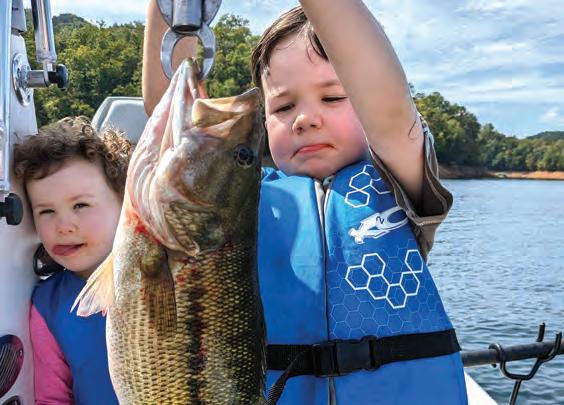
little tougher at times because it seems most species don’t have to go far or expend much energy to fill those bellies. With live scope, or the equivalent, we are able to see fish ganged up on the bottom; sometimes they will hit and sometimes not. Your best plan is to locate them and then try and wait them out. There may only be an hour or less when they are really active, but at some point, if you are patient, they will get active.
Stay prepared this time of year. A 30 degree drop in temp and accompanying wind rise can change an enjoyable outing into a shiver fest. Well, enjoy this time of year, take a young’un on nice days and be thankful God’s given us such beautiful lakes to fish.
Later, Capt. James
Capt. James McManus owns 153 Charters. Give him a call for a great day on the water at (828) 421-8125



Giant Browns
By Ronnie Parris
Hey folks, I hope you are doing well. I’m sure loving these warm days, and the fish are too. With the water heating up, the forage fish are really getting their feed on, working the surface, eating zooplankton. And in turn, we’re starting to see some good top water and shallow water feeding going on. I love just working feeding fish and catching whatever is biting best at the time, but lately we have been seeing some really big brown trout coming out of Fontana.
These giants are feeding primarily on threadfin and blueback herring but seem to be eating lots of crayfish and small bluegill fry too. If you’re looking for a line stretching, these brown trout will definitely fit the bill. I’m always amazed at how a trout this size will be just dog fighting at 30 ft. and come up like a smallmouth and jump. Better have your leaders changed and your drags set.
Now there have always been a few brown that spawn in the river and run up some of the freshwater streams, but I’m pretty sure some if not most of these fish are being pushed from the Tuckaseegee delayed harvest areas. These fish are getting all the shad they can eat, so they are really healthy and are a blast, especially on light tackle. I’ve caught several running my trolling setup, some coming from 30 to 40 ft depth, but the majority have come on surface lures trolling at 5 to 10 ft deep.
Coloration is a little different from the browns caught back in the park streams. These browns have more of a silver sheen instead of the gold you see on the ones caught in creeks like Hazel Creek. As far as baits, they can be taken with a large variety. Minnows, worms and crayfish are all good choices as far as live baits, but I usually troll spoons

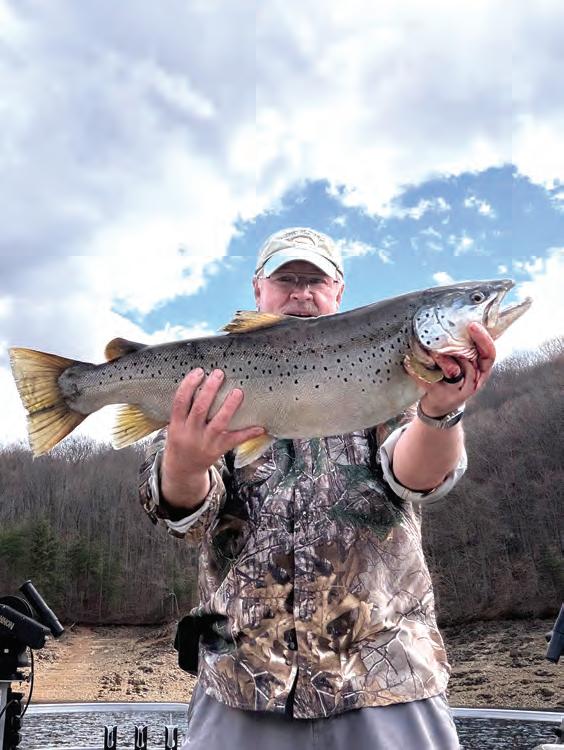
and small plugs, such as Rapalas flicker shads, as well as spinner rigs. I think the lure is not as important as getting it in front of their face when they are in a feeding mood. I got on a 30 minute frenzy the other day and had fish on almost constantly. Then there was a slight weather change and they just shut down.
If you’re looking for an exciting fight, these big browns are gonna fit the bill, so get out there and get hooked up on one of these monsters. And as always take a kid fishing.

We o er both full and half day trips with the most competitive rates available. All tackle and supplies you will need while you are on your trip is covered by our listed price.
Fontana Lake Fishing Guides – Ronnie Parris, Owner & Head Guide LAKE, CREEK & RIVER FISHING • FLY FISHING • CAMPING
Wildlife Agency Offers Guidance as Animal Encounters Increase in Spring
RALEIGH, N.C. (March 13, 2026) - Spring is a busy time of year for N.C. Wildlife Resources Commission (NCWRC) biologists. Warmer weather brings wildlife out from winter slumber. Spring is when many species are on the move looking for mates and securing territories for the breeding season. Wild parents are busy building temporary nests or dens and securing enough food to support newborn young.
“This is the time of year people begin to call us about a wildlife encounter they’ve had; the weather’s nice, so both people and wildlife are out and about,” said Extension Biologist Falyn Owens.
From late summer through early spring, the N.C. Wildlife Helpline receives 100 to 300 calls per month. That spikes up to 700+ calls beginning in March through July. The species that receive the most calls are deer, followed by bear, birds, raccoons and fox.
NCWRC provides helpful guidance for people when encountering wildlife during this active time of year.
BLACK BEARS– Be proactive now by locking up human-provided foods, like garbage, birdseed, and pet food. Ensure livestock is properly secured with electric fencing. Acting now can ensure people and bears can better coexist in your community throughout the year.
Do not feed or provide medication to bears showing hair loss; it can harm them and may be illegal. In the spring and summer bears shed their thick winter coat and their fur may appear thin or patchy for a time. This is a natural cycle and not a sign of mange or other health concerns. Contact the N.C. Wildlife Helpline (866-318-2401) with any concerns about wild animals.
LONE CUBS– people may come across cubs that are alone––most likely waiting for their mothers to return from foraging. Never handle, feed or move a cub that’s suspected of being orphaned as this puts people and the cub at risk. Instead, note the location and contact the N.C. Wildlife Helpline (866-318-2401) or the appropriate district wildlife biologist. For information about living responsibly with black bears, visit BearWise®.
SNAKES– There are many ways to coexist with snakes. They start becoming active when temperatures reach 60°F and above. NCWRC advises to stay calm and give a snake plenty of space to move on its way and avoid killing snakes. They play a vital role keeping rodent, slug and pest insect populations in check. In fact, 10 of North Carolina’s 38 native snake species are endangered, threatened or of special concern. Please report rattlesnake or Northern pine snake sightings to HerpMapper.org or by emailing a photo, GPS coordinates, date and time of the observation to rattlesnake@ncwildlife.gov or through the pine snake reporting tool.
COYOTE– Sightings begin to rise in spring, peaking around May as they search for food to support hungry newborn pups. While coyotes are rarely aggressive toward people, they are opportunistic hunters, so smaller pets should be closely supervised when outdoors, especially around dawn and dusk. Tips to protect pets include:
• Remove outdoor food such as pet food, fallen fruit, food waste and bird feeders.
• Haze coyotes away (yell, spray with a water hose) from homes and businesses to keep them wary of humans.
• Install fencing at least 6 feet tall and prevents digging underneath. Coyotes build dens in brushy or wooded areas to protect their pups. A den may be nearby if a coyote is seen staring at or following humans. NCWRC advises to calmly leave the area and inform others to avoid the location for a few weeks. As soon as the pups can survive outside of the den, the coyotes will no longer use the shelter.
FOXES– Foxes give birth between late February and April. The pups (or “kits”) start exploring outside their den by late spring and early
summer. Foxes are nocturnal, but it is not unusual to see them during the day, especially in spring and summer. They are shy and usually not aggressive but can lose their fear of people if they’re being fed. Similar to coyotes, foxes are opportunistic and will take advantage of accessible pet food, garbage and small rodents that are attracted to bird feeders, (i.e., squirrels, mice). They are well adapted to living around people and thrive in neighborhoods.
• Springtime shedding - like many other furry species, foxes grow a new summer coat in spring, so seeing a fox with patchy fur or hair loss is not necessarily a health concern. Do not feed or provide any medication to foxes with hair loss, instead, report concerns to the NC Wildlife Helpline (866-318-2401).
• Nature’s rodent control - their appetite for mice and rats, and the occasional groundhog is a great benefit for homeowners and farmers.
• Relocation isn’t an option - In North Carolina, it is illegal to relocate foxes or other rabies vector species (e.g., raccoons and skunks) to prevent unintentional spread of disease to people or other wildlife. Removing these species from your property requires euthanizing the animal and a license or permit from the Commission.
If fox have made a den under your deck, raised porch or crawl space, consider these options to get it to move elsewhere:
• Place a bright spotlight or strobe light on the ground, pointed toward the den entrance.
• Play talk radio next to the den at high volume or frequently make loud noises in the immediate area.
• Install a motion-activated sprinkler near the den entrance or throw small objects in the adult foxes’ direction to assert that their presence won’t be tolerated.
RABBITS– Rabits give birth to several litters throughout the spring and summer. People may see juvenile rabbits in plain sight, or newborn “kits” in shallow holes tucked among clumps of thick grass, under shrubs, or in the middle of open lawns. Rabbit nests often resemble a small patch of dead grass. Female rabbits (or “does”) actively avoid their nests and visit only once or twice per day for a few minutes to avoid attracting predators. If a young rabbit is outside its nest and appears to be healthy and unharmed, leave it alone. The mother will usually return after humans leave the area. If you believe a wild animal needs help, contact either the NC Wildlife Helpline or a licensed wildlife rehabilitator for advice before taking any other action.
AIR QUALITY continued from page 4
- 16%, and buildings - 7% (source: Rhodium Group, 2022). Increasing demands for electricity as nations develop, and the expanding use of artificial intelligence will result in significant increases in carbon emissions worldwide. How the warming planet will impact our local climate and cold water habitat required by Southern Appalachian Brook Trout is an area of great concern and current research.
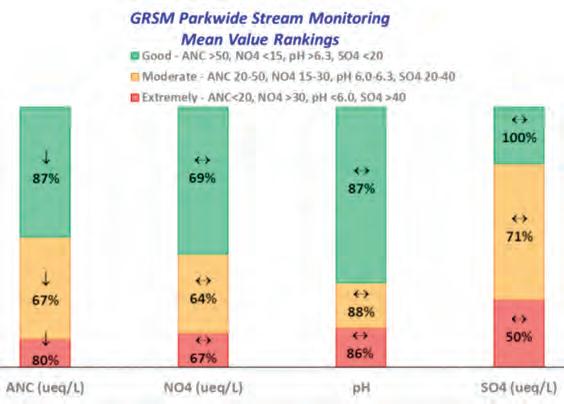
Figure 3. Percentage of GRSM water quality sites that fall into various categories as noted in the legend. Within each category, the dominant trends (stable or declining) are noted with percentage (%) of sites that reflect that trend. (From Kulp and Abramson, 2022)
Credit: Resource Brief - Water Quality GSMNP and M. Kulp and C. Abramson. 2022. Water Quality Monitoring GSMNP.
ANIMAL ENCOUNTERS continued from page 9
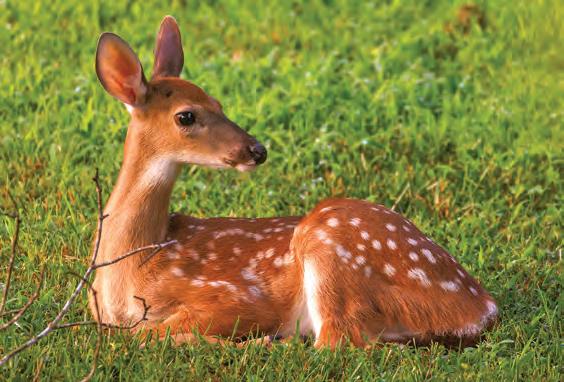
DEER FAWNS_ Fawns are born in late spring and early summer. As newborns, they have spots and very little scent, which protects them from predators. Female deer, or “does,” leave their fawns alone for most of the day. Never touch or move a fawn lying quietly by itself; its mother will expect to find it where she left it. If a fawn is bleating loudly, appears thin or injured, or has visible diarrhea, contact a licensed fawn rehabilitator for advice or contact the NC Wildlife helpline at 866-318-2401. Fawns found within primary and secondary Chronic Wasting Disease surveillance areas cannot be rehabilitated or transported out of surveillance areas. This is to prevent the spread of CWD, a highly contagious and always fatal disease in deer. The placement of bait, food or food products (other than bird feeders or for permitted purposes) to purposefully congregate wildlife is also not allowed from January 2–August 31 in primary and secondary surveillance areas to reduce the spread of CWD. Read more on the harms of feeding deer.
SONGBIRDS– Songbirds nest throughout spring and early summer. Knowing the difference between a nestling and a fledgling bird can help determine if one actually needs help. Nestlings are featherless and helpless––unable to survive outside their nest for long. They may be gently returned to the nest. If the entire nest has fallen, place it back in the tree or construct a makeshift nest. Fledglings have feathers and can walk, hop or fly short distances. They may look helpless but have left the nest and are learning to fly. Leave fledglings alone unless they are clearly injured or in immediate danger. In those less common cases, contact a licensed songbird rehabilitator. Keeping cats indoors and dogs on a leash are great ways to help fledgling birds survive this vulnerable learning stage.
RACCOONS– Raccoons are increasingly more common for humans to encounter, even during the daytime as they are losing their nature fear of people and the abundance of food for the taking. Visiting Coexisting
with Raccoons to learn more including non-lethal options and trapping information.
HELLBENDERS and MUDPUPPIES– Hellbenders and Mudpuppies are most likely to be seen in spring, mainly due to more people (especially anglers) venturing into their habitat when hatchery-supported trout waters open in early April. Mudpuppies and hellbenders are harmless to humans–neither poisonous, venomous, or otherwise toxic–although they may try to bite if someone picks them up. They are “bio-indicators” of good water quality as they are sensitive to pollution. If sighted, these large and unique salamanders should be left alone. Both species are listed as Species of Special Concern in N.C. Report sightings to Lori.Williams@ncwildlife. gov and include a physical location (GPS coordinates preferred) along with a photo or video if possible, or contact the NC Wildlife Helpline, 866-3182401 to provide details of the observation.
NOTE: It is a Class 1 misdemeanor with a fine and up to 120 days in jail for taking, possessing, transporting or selling mudpuppies or hellbenders. If anglers happen to catch one by hook and line, they should carefully remove the hook if possible or cut the line close to the hook and return the salamander back to the water. Learn more by visiting the NCWRC’s mudpuppy webpage and hellbender webpage.
Basic rules for any wildlife encounter:
• Never feed or handle a wild animal.
• Leave a young animal alone. Wild parents rarely abandon their young, even if they detect human scent.
• If unsure whether an animal needs help or have questions about wildlife removal:
Contact the NC Wildlife Helpline, Monday through Friday, 8 a.m. – 5 p.m., at 866-318-2401 or by email, HWI@ncwildlife.gov, visit the agency’s frequently asked questions, contact a licensed wildlife rehabilitator or wildlife control agent.


“Mini-Adventures”
By Matt Mittan
“It is what it is.”
I’ve caught myself saying that phrase more often as I’ve gotten older. At first, it sounded like wisdom—acceptance, maybe even maturity. But the other day it occurred to me that sometimes it’s really just a form of resignation, wearing nicer clothes.
And I’m not quite ready for that.
Like most of us, I’ve felt the changes that come with age. My body doesn’t always cooperate the way it used to. Over the past few years, I’ve also been reminded—through the loss of friends and loved ones— that time is not an unlimited resource. That realization has a way of sharpening your perspective.
Lately I’ve noticed something else. I run into a lot of men around my age, and a common theme shows up in our conversations. They talk about the things they always planned to do when they retired— travel, fishing trips, long hikes, exploring the outdoors. But somewhere

along the way their bodies changed, or life got complicated, and now those plans feel out of reach.
That’s a sobering thought. As a military medic veteran and lifelong outdoorsman, I don’t think I ever really gave much thought to getting older. I was too busy feeling “invincible.” But Father Time lays down for no one.
This got me thinking about something I’ve started calling “miniadventures.”
They aren’t epic expeditions or bucket-list journeys. They’re smaller, more realistic experiences we can work into the lives we actually have— between jobs, family responsibilities, and the thousand other obligations that fill our calendars. They can also adjust to our physical, financial, or
Continued, see MINI ADVENTURES Page 22

TRY SOMETHING NEW: FISH AMERICA’S OLDEST RIVER
By Dr. Peter Brookes
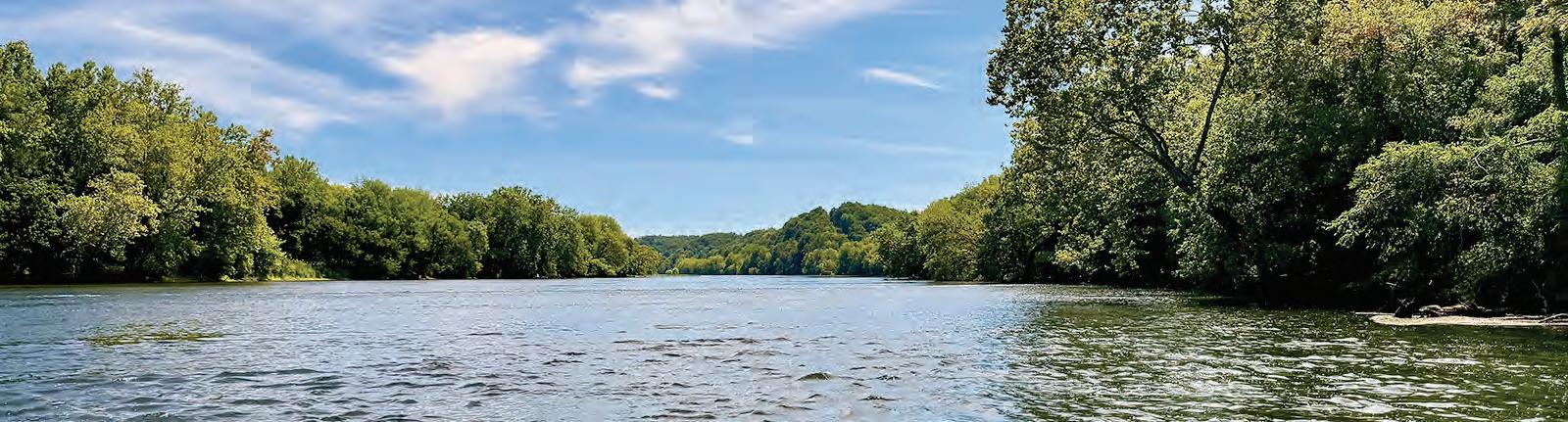
Besides being one of the finest warmwater fisheries in the Eastern United States, the iconic New River in Southwestern Virginia provides a classic case of what your high school English teacher might call a “misnomer.”
The New River is hardly new.
While the river was new at one time to the English explorers who gave the waterway its name, the 320-mile New River is now considered to be one of the world’s oldest rivers; many geologists estimate it to be the second oldest river after Egypt’s Nile. We’re talking 300 million years old.
The iconic New River in Southwestern Virginia Photo by Dr. Peter Brookes
AMERICA’S OLDEST RIVER
continued from page 13
At a minimum, geochronologists think the New River probably ranks in the top 10 of the world’s oldest rivers; most experts seem to agree that it’s America’s oldest river, certainly the oldest on the East Coast. Interestingly, the New also flows north (actually northwest) from its North Carolina headwaters through Virginia for 160 miles and then into West Virginia. This contrasts with most Eastern U.S. rivers that flow southerly. The New’s waters eventually empty into the mighty Mississippi.
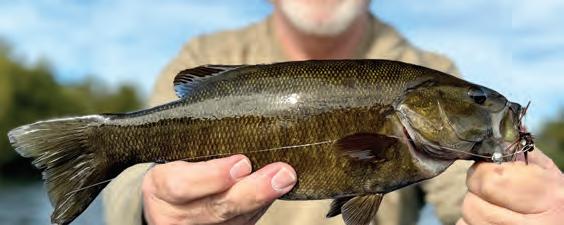
And, fluvial fun facts aside, this time of year, it’s one of Virginia’s bestkept smallmouth bass fishing secrets. Indeed, the New is considered one of the best bronzeback fisheries in Virginia alongside the James, Shenandoah, and Rappahannock. It’s also one of the best in the Eastern U.S. outside of the likes of the Susquehanna, Delaware, and St. Lawrence rivers.
For trophy smallies, the New is understandably on the bucket list of many Virginia and out-of-state conventional/fly anglers. Indeed, the Virginia Department of Wildlife Resources (DWR) told me that more than 95 citation-sized smallmouth (i.e., 20 inches long and or 5 lbs.) have been caught (and reported to DWR) in the river so far just this year.
No surprise that the current DWR state record for smallmouth bass—a brute of 8 lbs. 1 oz.—was caught in the New in 2003. While that mailbox of a fish is clearly in the “super-citation” category, I’m guessing that there are even bigger bronzebacks in the New. I’ve heard it said more than once: If you want to catch a boulder beast of a lifetime, go to the New River.
But it’s not all good news for the New.
The river has fish species of concern: the Alabama bass, a recent invasive. This aggressive bass looks very similar to the spotted bass, and biologists worry it could not only outcompete largemouth, but hybridize with smallmouth and spotted bass, potentially undermining the fishery’s
vitality. To prevent this, anglers can assist DWR with its surveillance of Alabama bass in the New River–and elsewhere in Virginia waters by reporting and documenting a suspected Alabama Bass catch.
I feel comfortable writing that the New River ranks among the top-tier warm water fisheries in the Eastern U.S., especially for smallmouth bass, walleye, and muskie; some consider it a top-five to top-10 destination for warm water fishing east of the Mississippi River. Whether visiting the New River is old or new for you, you can get your Virginia fishing license online here or, better yet, download the Go Outdoors Virginia Mobile App from which you can get DWR info and or buy a fishing (or other) license on the fly.
The New has incredible biodiversity for an inland, non-estuarine river, offering ancient geology, striking scenery, and year-round opportunities for great fishing. It’s a waterway where anglers can come for a shot at something special, including a DWR fishing citation and or record. Perhaps best of all: It’s right here in Virginia.
Dr. Peter Brookes is an award-winning outdoor writer. Hook up with him at brookesoutdoors@aol.com

A smallmouth bass caught on the New River. Photo by Dr. Peter Brookes

Springtime Strategies
By James Lackey
Spring is almost here and usually by mid-March warmer weather brings warmer water and a change in seasons. The streams and rivers begin to warm; insect life and trout start to become more active. The trout’s metabolism increases as the water warms, insects begin to hatch and trout start to feed and move more.
Springtime in the Southern Appalachians can be unpredictable. You may have days in the 70’s or 80’s and then you may have days in the 40’s or 50’s with cold nights. Spring weather for the fly fisherman can be unpredictable by adapting to these changes can be challenging and rewarding.
Water temperature during these times plays a key role in a fisherman’s success. Always have a stream thermometer and learn the boundaries of temperature and how important it is. When you see water temps in the high 40’s to low 50’s fishing should be good because aquatic insect hatches occur when water and days begin to warm.
Trout usually feed on what is most abundant. Usually midges, mayflies and stoneflies are always present in most streams and rivers but they may be present in different sizes, colors and different stages in their life cycle. Figuring out patterns that are consistent can be challenging. Remember, I said consistent. It’s not a pattern where you catch a fish every cast or every other cast. If you are getting fish to the fly the catching will come and your probably close to where you need to be with your set-up and your fly selection.
One important tool that is rarely used is the stomach pump. With training and practice, it’s very simple to use and it does not hurt the
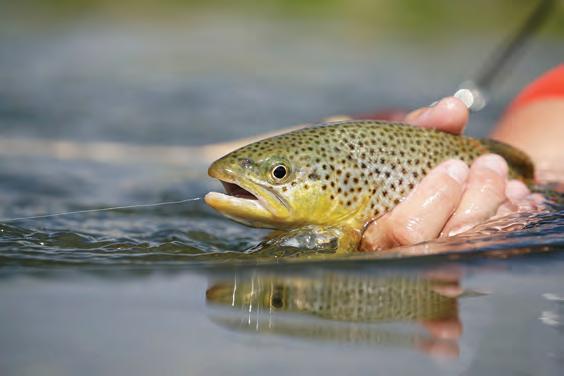
fish in any way and it tells you what the trout are eating and that’s great information.
A dry dropper set up usually 5X fluorocarbon is a good standard. 7 ½ or 9 foot leaders is all you need for length. Fly selection can get confusing, viewing Instagram will make it worse, but your elk hair caddis with a pheasant tail dropper size 16 or 18 consistently will produce. Search patterns like a yellow Chernobyl with a rainbow warrior dropper may produce and don’t be afraid of the midges especially the Zebra midge (black or red) especially if fishing slows.
Spring is an exciting time for Fly-fishermen, do your homework, slow down and remember your presentation brings it all together and is the most important tactic you have. Good Fishing!
Jimmy Lackey has been a Guide for 11 years for Hunter Banks Flyfishing 704-477-9856 Jameslackey9856@gmail.com

Fly Fishing in Damascus, Virginia
By Hunter Faust
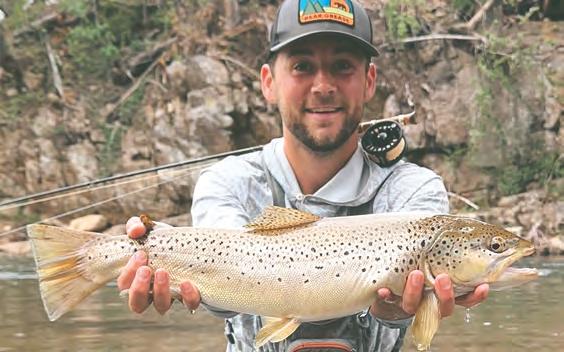
Fly fishing in Damascus VA is a true hidden gem, with the surrounding waters boasting a great, wild population of brown and rainbow trout. This walkable adventure town has ample fishing opportunities within its town limits, making it suitable for new and seasoned anglers alike.
Conveniently situated between Beaverdam Creek, which flows out of Shady Valley through the Cherokee National Forest on its way into Damascus and Whitetop Laurel Creek—one of Trout Unlimited’s top 50

If you like a little extra challenge and adventure the blue lining opportunities are endless. The Jefferson National Forest, Mount Rogers National Recreation Area and Grayson Highlands State Park are all home to the prize jewel of Appalachian fly fishing, the brook trout.
If you are interested in fishing tail waters, Damascus is 30 minutes from the South Houston River and 45 minutes from the Watauga River. The town’s proximity to world class trout waters is what makes it the perfect base camp for anyone looking to learn a new skill, challenge themselves or simply enjoy time on the water with a laid-back mountain town to retreat to after fishing.

blue ribbon trout streams in the whole country—it’s safe to call Damascus a Trout Town.
CAPTAIN JIM DURHAM FISHING
KY / TN FISHING REPORT
OGreetings to my readers! I hope that the world finds you and your family doing well!
CUMBERLAND RIVER, LAKE CUMBERLAND, CHEROKEE LAKE STRIPERS – DALE HOLLOW WALLEYE CUMBERLAND RIVER STRIPERS
The stripers in the Cumberland River are some of the largest “freshwater” stripers in the world! We have clients come visit us to go after these Cumberland River monster stripers from every State in the USA and even from several foreign countries.
The Cumberland River stripers we catch are massive! Because we use large 2-to-3-pound trout as bait, our “smallest” fish daily generally at about

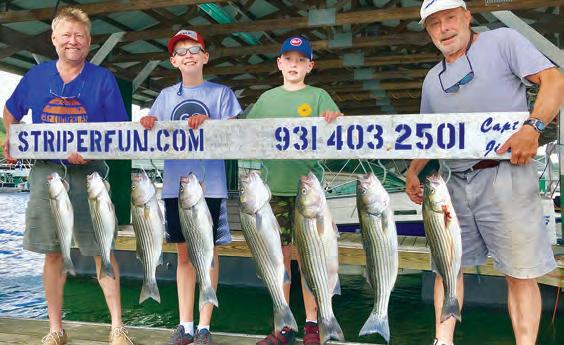
20-pounds with an average striper of about 30-pounds a day (with a good chance at a 50-pound fish!).
LAKE CUMBERLAND
StriperFun offers day trips on Lake Cumberland (weather permitting) on the western end of the lake year-round (with client pickups at Grider Hill Marina Resort and Halcomb’s landing launch ramp by the dam). We have availability for up to a maximum of four (4) per boat. We use only the freshest live gizzard and alewives shad and Captain Jim Umbrella rigs and Glide baits targeting suspended schools of fish holding in up to 100 feet deep over the river and creek channels.
CHEROKEE LAKE AND LAKE
The striper and hybrid fishing on Cherokee Lake is very popular with our clients. In April we troll live bait on planer boards 10 to 30 feet deep
Continued, see CAPTAIN JIM


Small Creeks. Forgotten Fish. Real Stories
By Creek Life Lure Co.
Some people grow up with ball fields and bright stadium lights. I grew up with quiet creeks.
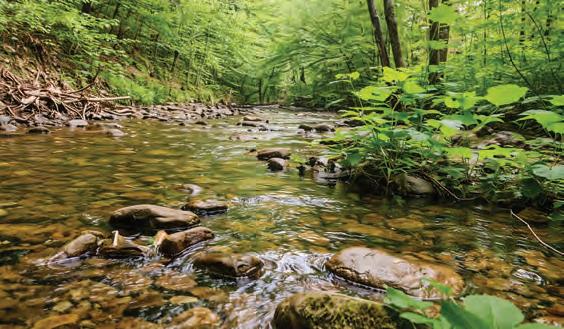
As a kid I spent countless hours wading through shallow water, turning over rocks, watching little fish dart through the current. Most people never notice what lives in those small streams. To them it is just a ditch on the side of the road or a ribbon of water in the woods.
To me it was a whole world.
I learned early that the creek had a way of slowing life down. The sound of water moving across stone, the shade of the trees leaning over the banks, the feeling of cold water around your legs on a hot summer day. Out there nothing else mattered. No noise. No pressure. Just the quiet rhythm of moving water.
For me those creeks became more than a place to fish. They became a place to breathe.
There were seasons of life where things felt heavy and hard. Times when my mind was loud and the world felt like too much. When that happened, I always found myself walking back to the water. Standing in a small current somewhere, watching minnows move through the rocks, listening to the same sound that had been there long before me. Somehow the creek always had a way of putting things back in place.
Years later that same feeling became the foundation for Creek Life Lure Co. I started the company with a simple idea. Small creeks and the fish living in them deserve just as much respect as the big lakes everyone talks about. There are incredible species living in those waters. Fish with colors most people have never seen and names most anglers have never
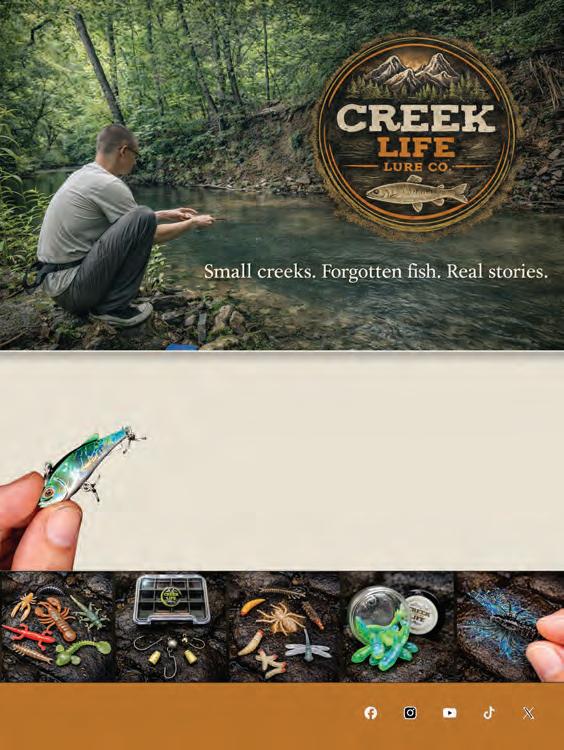
heard. They are often overlooked, but they are every bit as wild and beautiful as anything swimming in deeper water. The baits I create are built around that world.
They are small, detailed soft plastics designed for the kind of fishing that happens when you step into a creek and start exploring. Many of them are inspired by real creatures you find under rocks and along the banks. Stoneflies, craws, little aquatic insects that trout, bass, and other creek fish feed on every day. Every bait also carries a story. A memory from the water, a piece of creek life, or a reminder of the small things that make fishing meaningful. Because to me fishing has never just been about catching fish. It is about slowing down. About paying attention to the little things. About standing in a quiet current somewhere and remembering what it feels like to be alive.
Those creeks shaped who I am. In many ways they helped keep me here. And that is the heart behind everything I make. Because in the end, no matter how small the stream or how overlooked the fish might be, every one of them has a story worth telling. And every fish deserves one.
MINI ADVENTURES continued from page 12
time limitations.
A short hike on a local trail. An early morning paddle. An hour spent casting into a quiet stretch of water. Even just a drive to scout a lake you’ve never fished. Simple things, really. But I’ve discovered that even small outings can unlock something inside us. They get us moving. They clear our heads. Sometimes they even spark the kind of thinking and reflection that only seems to happen when you’re outside.
I often joke that “the recliner is a decliner.” It’s a catchy phrase, but the truth is that resisting that pull isn’t always easy. I fight it myself more often than I’d like to admit.
Still, I’m convinced that we don’t have to accept the narrow definition of what life is supposed to look like as we age. We still have the ability to create experiences that keep us engaged, curious, and connected to the outdoors.
So in the months ahead, I’ll share some of the mini-adventures I’m discovering along the way. And I’d love to hear about a few of yours too. Because sometimes the smallest adventures are the ones that keep us truly alive. And sometimes they’re the ones that remind us we’re not done yet.
*Matt Mittan is a long-time broadcaster, writer and Licensed Guide in North Carolina. Visit MattMittan.com to reach out to Matt.
Logical Success
By Scott Norton
Getting prepped for the spawn can have its challenges. Serious anglers plan and execute their work early in the winter so that failures are at minimum when that warming trend starts to happen. The most important thing you can do if you plan on success is to be logical about eliminating situations that can actually ruin your chances at setting new personal records. If you have a list of things to do this should be your number one priority.
Things that can happen are mechanical failures and gear failures. Your boat has to be reliable if you are going to even attempt to run it. You can run into a situation that can ruin your trip or snowball into a failure that can ruin your season. The most common failures are your batteries and electronics. Dead batteries and corrosion of you connection points on your electronics will only ruin your day. If you are the type of person that neglects your boat is where the domino effect will take you out for the season. In the winter make sure you have your marine mechanic look over the health of your motor and hull. Have them write down things to be aware of so you will know when to plan an appointment. Once things warm up getting your boat in will take time because this will put you in the back of the line. Make sure you spend the winter downtime marking things off that list.
The next plan is something you can do yourself. Take all your out and choose what you’re going to use in the start of the season. You will find things like bad line, not enough line, rust on your hooks, bad bearings in your reels, broken or bent rod guides, expired registration, bad or expired fire extinguisher, or just being out of terminal tackle or baits. The list can be long and that’s why you need to know before hitting the water. The earlier
you take care of these issues the more confidence you will have before the first day out. Many of us when we were young have either went with that friend that did not plan and you would take a vacation day or clear your schedule to only run into problems as soon as you get to the lake. I will say, ask me how I know. Many times, have I fished from the shore or docks because a friend did not plan correctly. Many of us have bought our own boats just so you can have an uninterrupted trip. We can never have a crystal ball, but we can stack the odds in our favor. Always have a plan and experience will come in time. Do your research and ask a pro for help. Today there are so many resources at your fingertips, so why not use them.
Norton is a Western North Carolina native. Born in Asheville, N.C., he is a long-time hunter, angler and weekend warrior.
CAPTAIN JIM continued from page 20
and also downline on suspended schools of fish, concentrating on main creek channel points. With numerous full-time guides on each waterway, StriperFun offers day trips on Cherokee Lake and year-round (weather permitting).
DALE HOLLOW IN TENNESSEE!
We begin each year (beginning April 1st) fishing on walleye fishing on Dale Hollow fishing at night under hydro glow lights (a great product we sell!) on lake points with drop offs and grass bed edges. Our techniques include jigging, live bait “snagging” and casting a variety of lures, blade baits and jigging spoons. We then begin day trips in June, running through October.
It is great to be alive and be a “free” American! I look forward to seeing all of you this year on the water. Always remember to stop and shake the hand of a person in uniform or wearing garb that shows they are a veteran! Their service is why you speak English, can vote and can enjoy the freedoms you do!

Scott








COME JOIN




Hello Spring!
TIM BAREFOOT

It’s o!cial…say hello to spring. Anglers can now look forward to targeting a wide variety of species, including black n tuna, wahoo, African pompano, and many other sought-a er sh. With these species actively feeding during their migration north, the opportunities for successful catches are abundant. Whether you prefer trolling, dri ing, or bottom shing, the spring months bring a wealth of options to ll your cooler with quality sh.

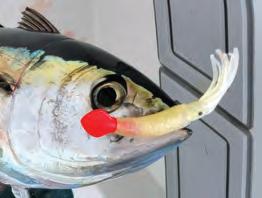
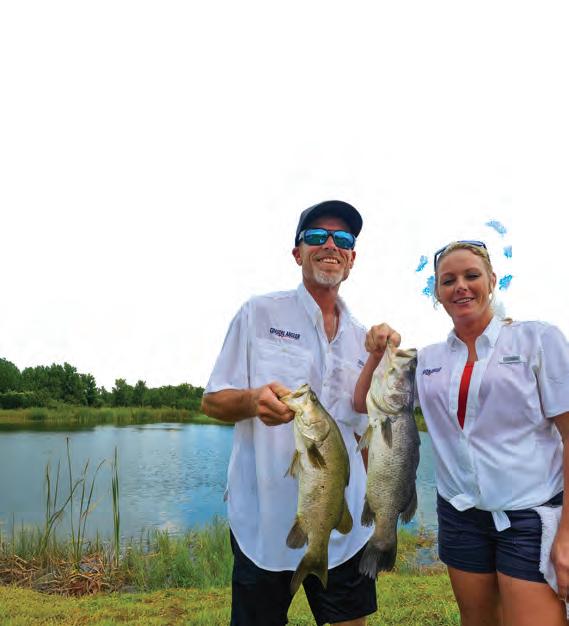
e troll bite will probably die as soon as the sun gets up around the nine or ten o’clock timeframe. is is when you need to change tactics. Stop trolling. Put the trolling motor over and start making strategic dri s with the light line out while bottom shing. I would also suggest putting a couple baits out under the kite, as this is the most e ective presentation with very little to no leader in the water. Have at least one person dedicated to the kite baits, if you’re shing a kite. is is one of the best times of the year to spend the night, especially here in North Carolina, as the night bite could be crazy good. Put the bright lights out and you will draw the squid, cigar minnows, sardines, and all the predators to you like moths to a porch light. If you have the ability to spend the night, April could be the month you see the ultimate results. Everything including ying sh are very susceptible to a Sibiki rig. Fill the live well with live baits and start shing on the daylight bite. Fish are like us; they like to eat breakfast and dinner, so be there early and late.
Be sure to keep an eye on the recorder while on the dri for the mid water marks. In addition to shing for the snappers, have rods at the ready for sh that show on the recorder way o the bottom. ese may very well be the African pompano, so have a rod ready with a jig that you can re down and erratically jig upwards 25 to 50 feet o the bottom and then let ascend back to the bottom. Repeat over and over as this will get bites! It’s not just African pompano that frequent these deeper waters. During the middle of the day, wahoo can be found surprisingly deep, and tuna also inhabit these depths. It only takes a few wahoo, black n or pompano to make a great box of sh to take home. is is also a good time to target the smaller snapper with smaller baits on “chicken rigs” with small circle hooks. When you’re on a good bite (using small circle hooks) I would strongly recommend feeling the bite, winding tight to it and stopping. is is when another snapper will jump on the second bait. You will load up quickly with delicious groceries when you’re catching two at a time.
Bring the heat… It’s on!
Learn more tips and techniques at barefootcatsandtackle.com and on Barefoot’s YouTube channel: @timbarefoot5698.
The Best Infatable Fishing Boats
Best For Lightweight Solo Fishing
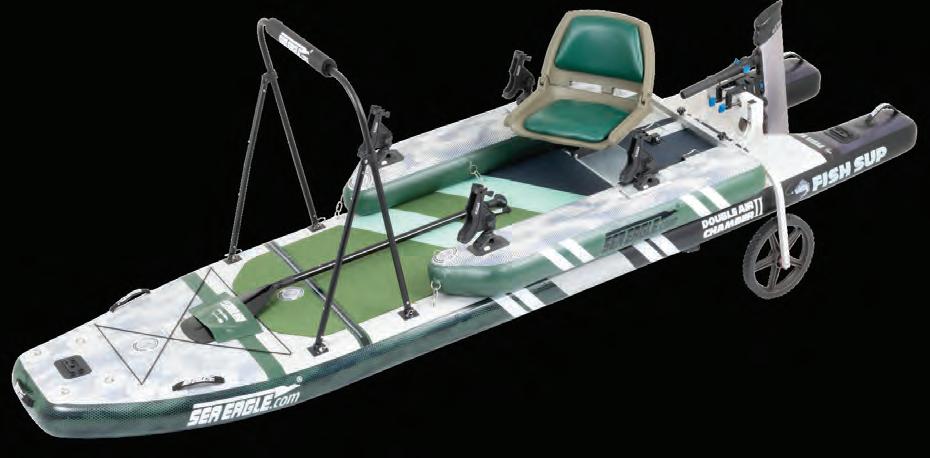
The versatility of the FishSUP™1210 is unmatched! Use it bare bones with just the board, a paddle & your !shing gear or deck it out with swivel seat, side pontoons, casting bar, motor and more! Incredibly stable, extra wide, swallow-tail !shing SUP holds up to 500 lbs! The FS1210 takes electric and gas motors up to 3 hp. There’s even an option for a bow trolling motor.
Choose From 6 Packages
Starting At Just $999
Best For Lightweight Tandem Fishing
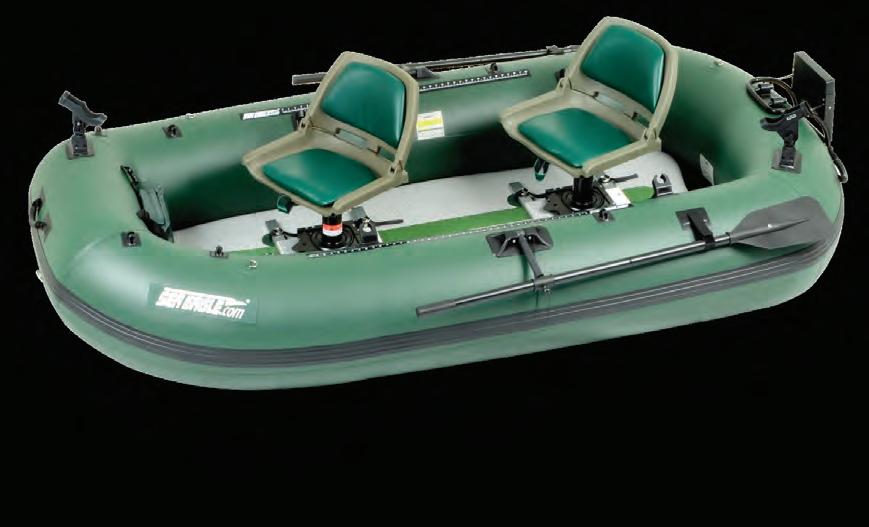
Perfect for !shing rivers, lakes and bays. The STS10 is a lightweight, roomy 1 or 2 person pontoon boat that’s packed with features anglers need & love including 2 built-in !sh rules, 4 built-in rod holders & 2 Scotty® mounts for more rod holders, anchor locks, camera posts or any other Scotty® accessory. Now available with a drop-stitch in atable oor or wooden oorboards.
Choose From 7 Packages
Starting At Just $1449
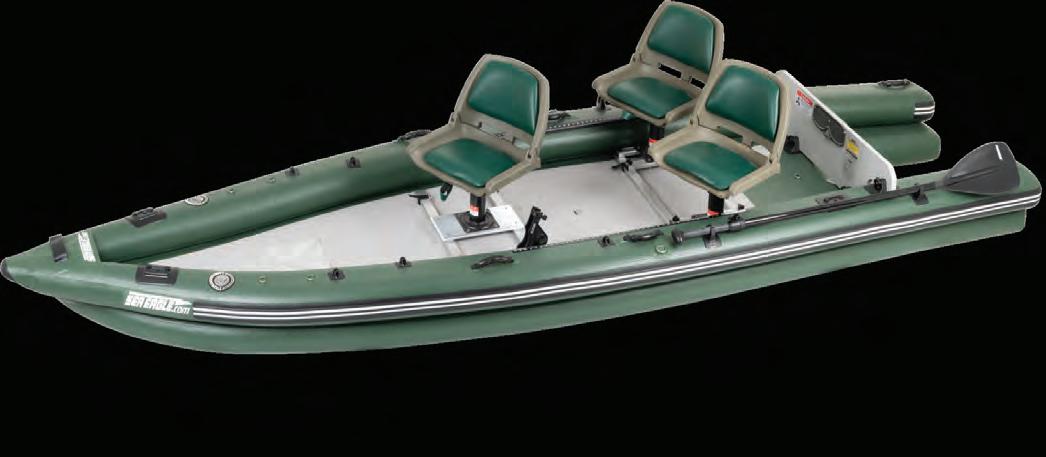
Best For Lightweight Fish Ski! for 1, 2 or 3 Anglers
This “low-rider” gives you access to the water to reel in and release !sh easily. With a new patented outside, in atable, rigid keel the FSK16 glides through the water at speeds up to 21 mph to get you to the !sh fast! Perfect for 1-3 anglers and room for plenty of gear.
Choose From 9 Packages
Starting At Just $2999


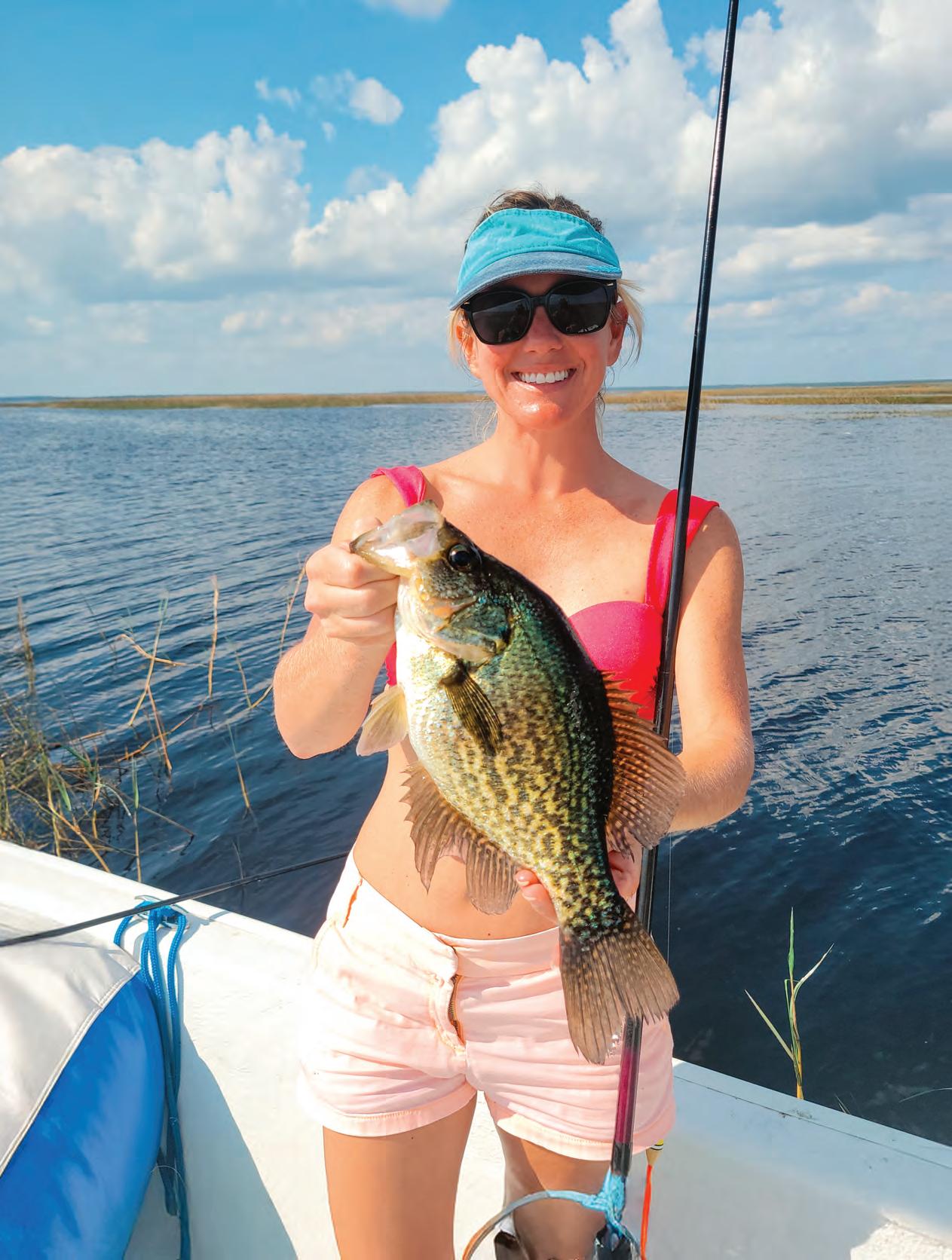
CRAPPIEFISHINGONKENTUCKYLAKE
By Julie Graham- ExploreTRV
Spring

As the last bite of winter gives way to the gentle stirrings of spring, Kentucky Lake comes alive. Located along the western edge of the Bluegrass State, this sprawling body of water—technically a reservoir—has long been a mecca for anglers, especially those in search of springtime crappie.
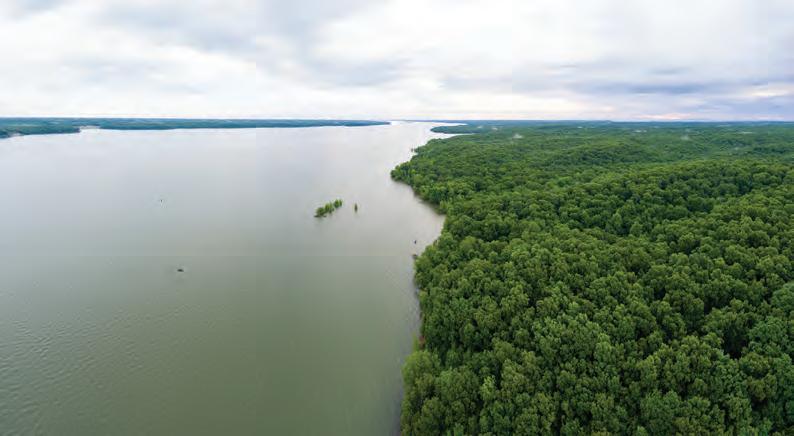
Kentucky Lake stretches a remarkable 184 miles from the Tennessee state line to the northernmost point at the Kentucky Dam making it the largest reservoir in the state and one of the largest in the U.S. e lake was formed in 1944 with the completion of the Kentucky Dam, a key project by the Tennessee Valley Authority (TVA). Today, the lake covers over 160,000 acres, with an average depth of 8-10 feet, though some areas reach even deeper. Its shoreline stretches over 2,000 miles, o ering countless coves, islands, and inlets that make it a paradise for anglers. Fishing enthusiasts quickly discovered the lake’s potential as a world-class destination for crappie, bass, and cat sh, earning it a reputation that has only grown over the decades. Feeding Kentucky Lake are several major tributaries (Blood River, Jonathan Creek, Big Sandy River) that become shing hotspots in early spring, especially where submerged timber
WHY BUY NEW WHEN YOU CAN RENEW?!?


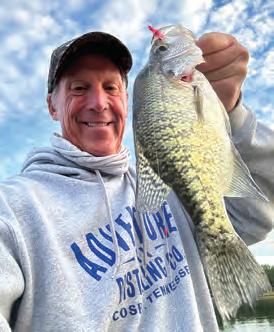
and man-made structures provide cover. Every seasoned angler in this region knows spring is crappie season. As water temperatures creep into the low 60s, crappie begin their migration from deep winter haunts to shallow spawning grounds— brush piles, stumps, and submerged structures along the shoreline. Preferred bait and techniques vary by angler, but some classics stand the test of time. Live minnows, o en rigged under a slip oat, are a go-to for many, especially during the pre-spawn. Jig shing is equally e ective, with popular choices like 1/16 or 1/32 oz. so plastics in chartreuse, white, and monkey milk colors. When the bite gets tough, tipping jigs with a small minnow or switching to hand-tied hair jigs can coax hesitant sh. Long-line trolling and spider rigging also dominate certain sections of the lake, especially in the deeper channels near creek mouths.
Mornings on the lake feel almost sacred this time of year. Fishermen, some in sleek bass boats, others in aluminum ski s passed down through generations, fan out across coves and creek arms, quietly working the banks. e goal is the same: feel the tap of a crappie on the line, set the hook, and haul in what many call the “gold of the lake.” For many, the draw of spring crappie shing isn’t just the thrill of the bite. It’s also the chance to connect with the natural rhythm of the season while sitting in a quiet cove as the dogwoods bloom, passing along stories, rods, and values to the next generation. At its core, Kentucky Lake is more than a reservoir. It’s a living, breathing legacy—a place where history, sport, and stewardship come together on every cast.
For more information on shing licenses and regulations, visit the Kentucky Department of Fish & Wildlife Resources website - fw.ky.gov - or the Tennessee Wildlife Resources Agency website - www.tn.gov/twra.html.





“I never expected it to be so beautiful that it takes your breath away.”
— Kaya C., on Stauer Opals
In a quaint village, nestled between rolling hills, lived a young woman with a deep appreciation for gemstones. Her grandmother gifted her a delicate cross pendant adorned with opals. "e opals shimmered with a mesmerizing play of colors, reflecting hues of blues, greens, and fiery oranges. Her grandmother shared the legend of the opals, believed to bring hope, purity, and luck to those who wore them.
Using this story as inspiration, Stauer brings you the Opal Spirit Cross Pendant. With over 2 total carats of Kyocera lab-created opals set in .925 sterling silver encased in yellow gold, this pendant is a radiant celebration of beauty and craftsmanship. Each opal captivates with a kaleidoscopic dance of fiery oranges blending into oceanic blues, streaked with flashes of vibrant green that seem to come alive with every movement. "e shimmering opals are skillfully arranged to create an enchanting, otherworldly glow, embodying the spirit of hope and harmony.
"is breathtaking combination of color and craftsmanship is available as a limited availability of

only 930 pieces, making it a rare and treasured addition to your jewelry collection. Plus, when you order today, you’ll receive the gold-!nished sterling silver chain—a $69 value—absolutely free!
Don’t miss your chance to own this exclusive tribute to timeless elegance and meaningful symbolism.
Necklace Speci!cations:
• 2 ½ ctw. Kyocera lab opals and DiamondAura® accents
• Yellow gold-finished .925 sterling silver setting
• 18" gold-clad .925 sterling silver chain Opal