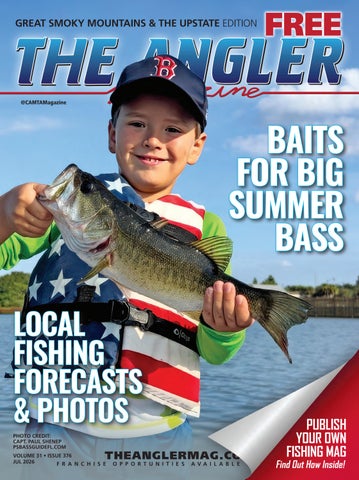

BASS
LOCAL FISHING FORECASTS &

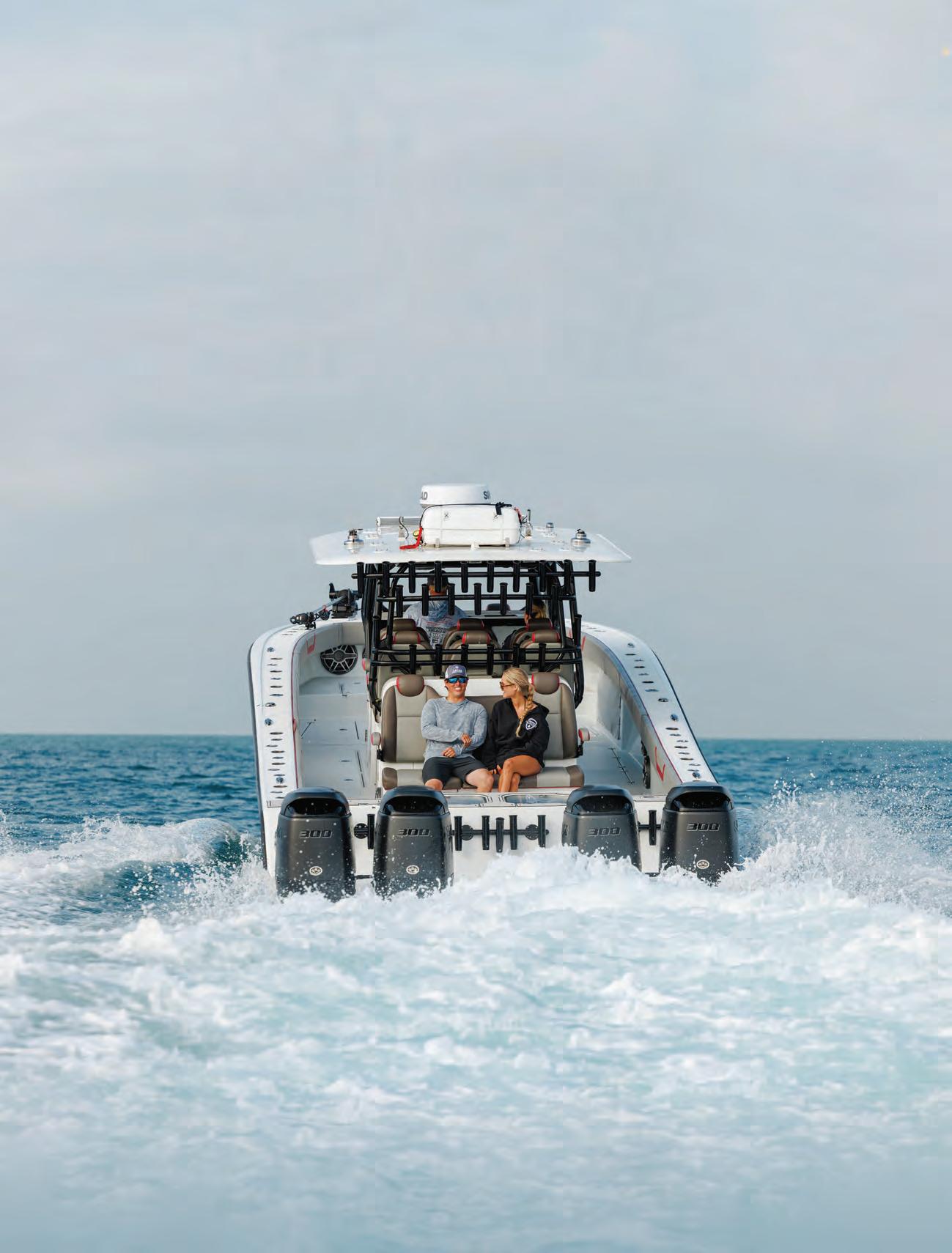




MFDs 9"-24"

















TZT16X | 22X | 24X 24X































TZT10X | 13X





TZT9E | 13E























space 9"
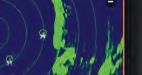
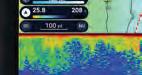
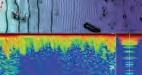
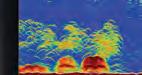
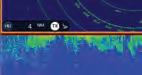
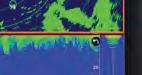
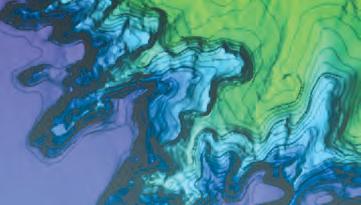
When helm space is at a premium, the 9" and 13" TZtouchE MFDs give you maximum screen area to view their eye-popping TZ MAPS charts and builtin TruEcho CHIRP™ Fish Finder with Side-Scan.


Plus, TZtouchE is fully networkable with the TZtouchXL family of 10", 13", 16", 22", & 24" MFDs and a wide range of best-in-class sensors – legendary Furuno Radars, Sonars, Fish Finders, Autopilots, and more.
Furuno... The reason to level up your helm!

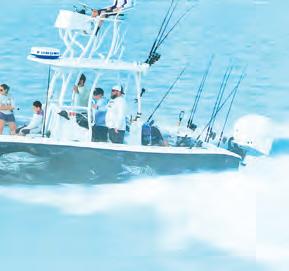




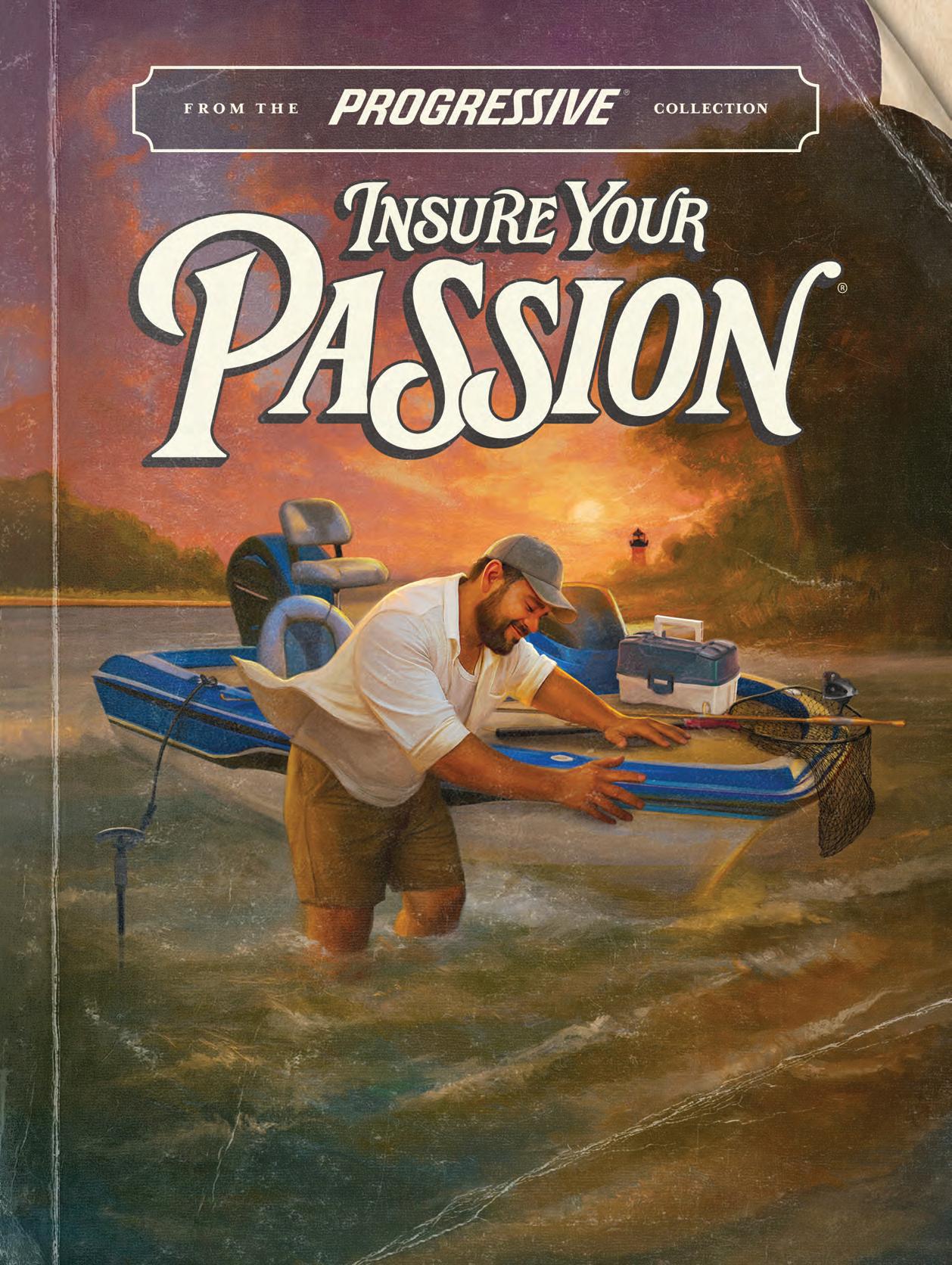
fve things you should know about boat insurance
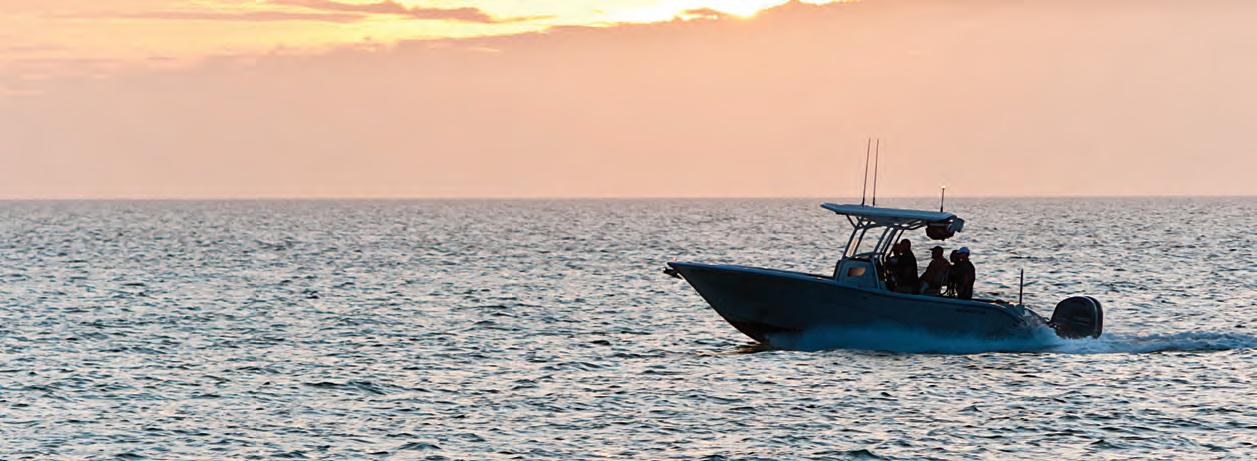
Are you ready to embark on your next on-water adventure? Before you set sail, here are fve things to know about boat insurance.
1. Boat insurance isn’t just for accidents
With comprehensive coverage, you’ll also be protected fnancially for theft, vandalism, and unexpected events like storms if you need repairs or replacements due to damage.
2. Accidents can happen to anyone
When accidents happen, boat insurance offers liability coverage for damages or injuries you cause while boating, up to specifed limits. It can also cover lawsuit costs if you’re sued.
3. Boat insurance can cover medical payments
Boat insurance offers a range of optional medical payments coverage limits, helping to cover medical expenses if you’re in an accident or someone is hurt on your boat, regardless of fault.
4. Most lenders require boat insurance
If you fnanced your boat, you’ll likely need boat insurance since most lenders require boat insurance to protect their investment. Additionally, some marinas or municipalities require proof of insurance for docking.
5. Progressive offers specialized boat coverages
Ever worry about getting stuck on the water?
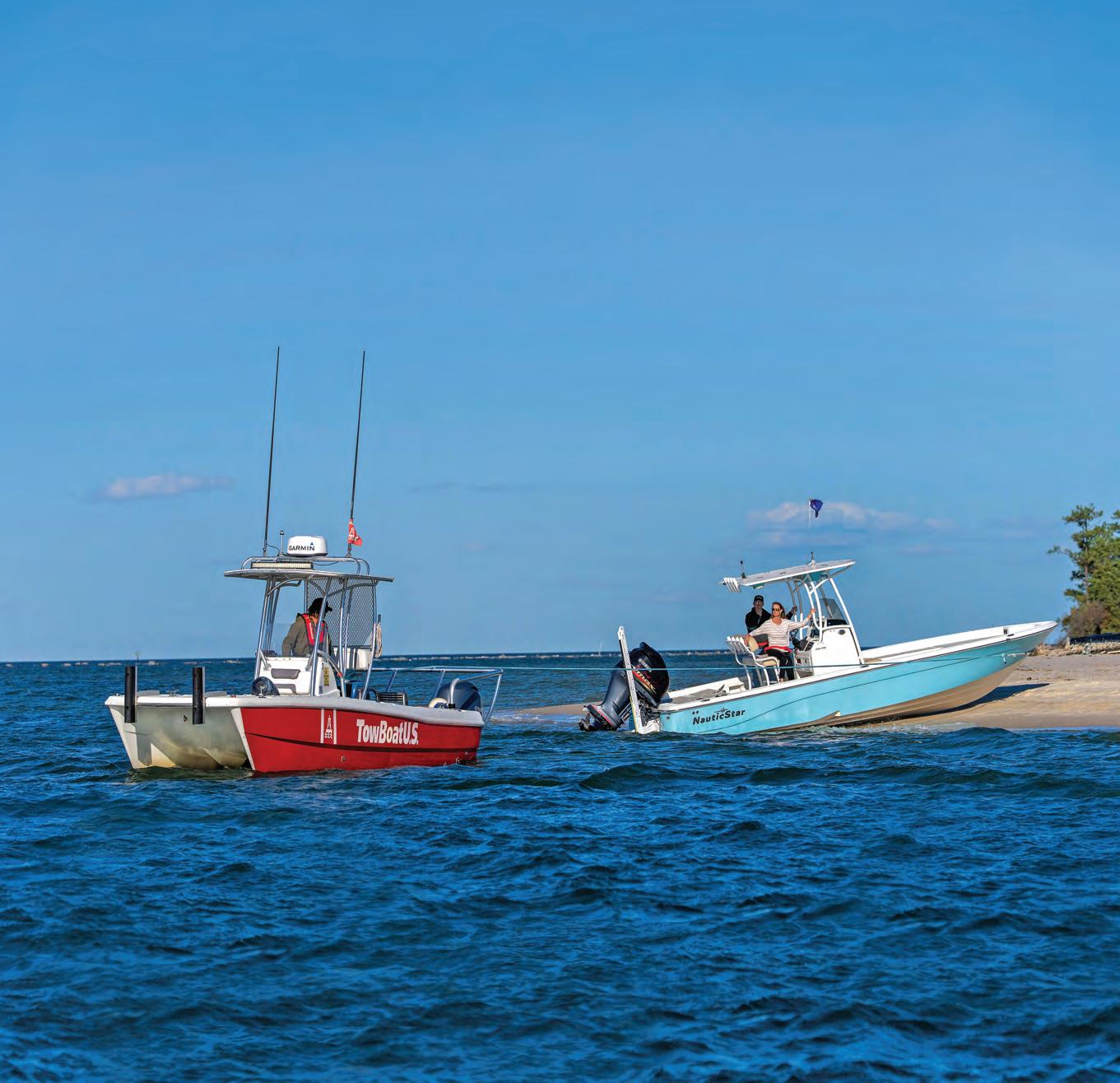
Progressive’s Sign & Glide® On-Water Towing coverage** can help. It’s an additional coverage that steps in if your boat is disabled or breaks down on the water, paying for on-water towing, jump starts, soft ungroundings, and fuel delivery. Fuel cost isn’t included.
Don’t let unforeseen circumstances disrupt your voyage. Cruise with confdence thanks to Progressive Boat insurance. Because when it comes to your boat, peace of mind is the ultimate luxury.
Scan to get a quote in as little as 4 minutes.
to learn more.














By Will Schmidt
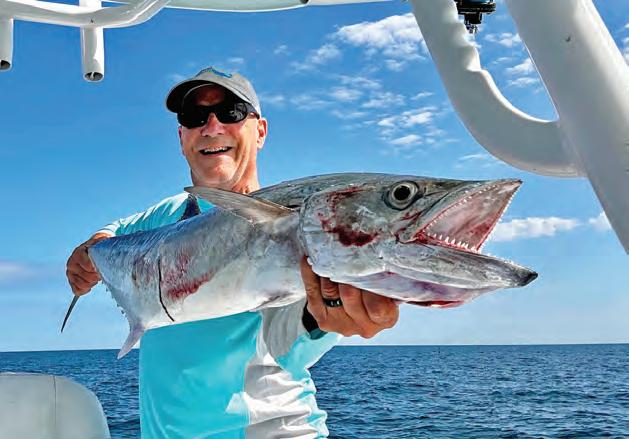
Nothing quite gets your heart rate up like the sound of drag screaming as a king rips line from the reel. Maybe it’s so exciting because for many, king!sh !shing can be slow, especially when targeting big !sh. e good news is there are some tournament proven techniques that can really help.
Perhaps the most well know tactic to bring kings to you is chumming. ere are several forms. Cutting up chunks of thread!ns and tossing them into the current is certainly a tried-and-true method. is is a great method especially if you are anchored. e challenge here is getting enough bait to keep the ow going. Another option we use in tournament !shing is a constant drip of menhaden oil. Using a bag like an IV bag you can set have a slow drip continually putting scent in the water as you troll. It’s great for covering ground and still helps to bring !sh to you at the same time. Unfortunately, menhaden oil has become a bit pricey.
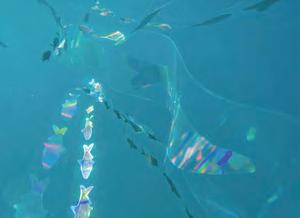
ese techniques work great, but on tournament days I believe there is so much scent in the water that they become less e$ective. So, now my new go to is to add an extra sensory stimulation in the form of eye candy. Speci!cally, a Fish Razr mylar dredge. Made of re ective strips that look like a school of bait, they shine like an underwater disco ball. Plus are easy to use and reusable so they are cost e$ective. Simply attach them to a kite rod or cleat and toss them over the side. I’ve literally had !sh in my spread within seconds of deploying the dredge.
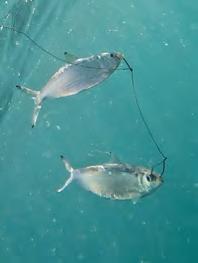
For baits I do prefer big blue runners, but sometimes they can be hard to come by. A good trick when big baits are sparse is to double up smaller baits, like sardines or thread!ns. I use two hooks wired about 5 inches apart with a stinger o$ the second to create a larger pro!le o$ering. I believe the added ash of multiple baits helps as well.
For tackle I like 20 to 30 pound trolling gear like a Shimano Terez medium action rod with Talica A 16. For years we went very light on our tackle thinking that kings had so mouths and needed to be babied. While they are somewhat more delicate, a big !sh is tough and you still need gear that can do the trick. is setup has a light enough tip and silky smooth drag to help absorb the initial hit but plenty of backbone to battle a hardier smoker king. A mono top shot also helps with that opening blow.
For me the key to king!sh !shing is to combine looking for them while also having them look for me. Adding the dredge to my spread is a real gamechanger.
Will Schmidt is a seasoned tournament angler who has been writing about shing for more than two decades. Follow Will on Instagram @saltynstrong.

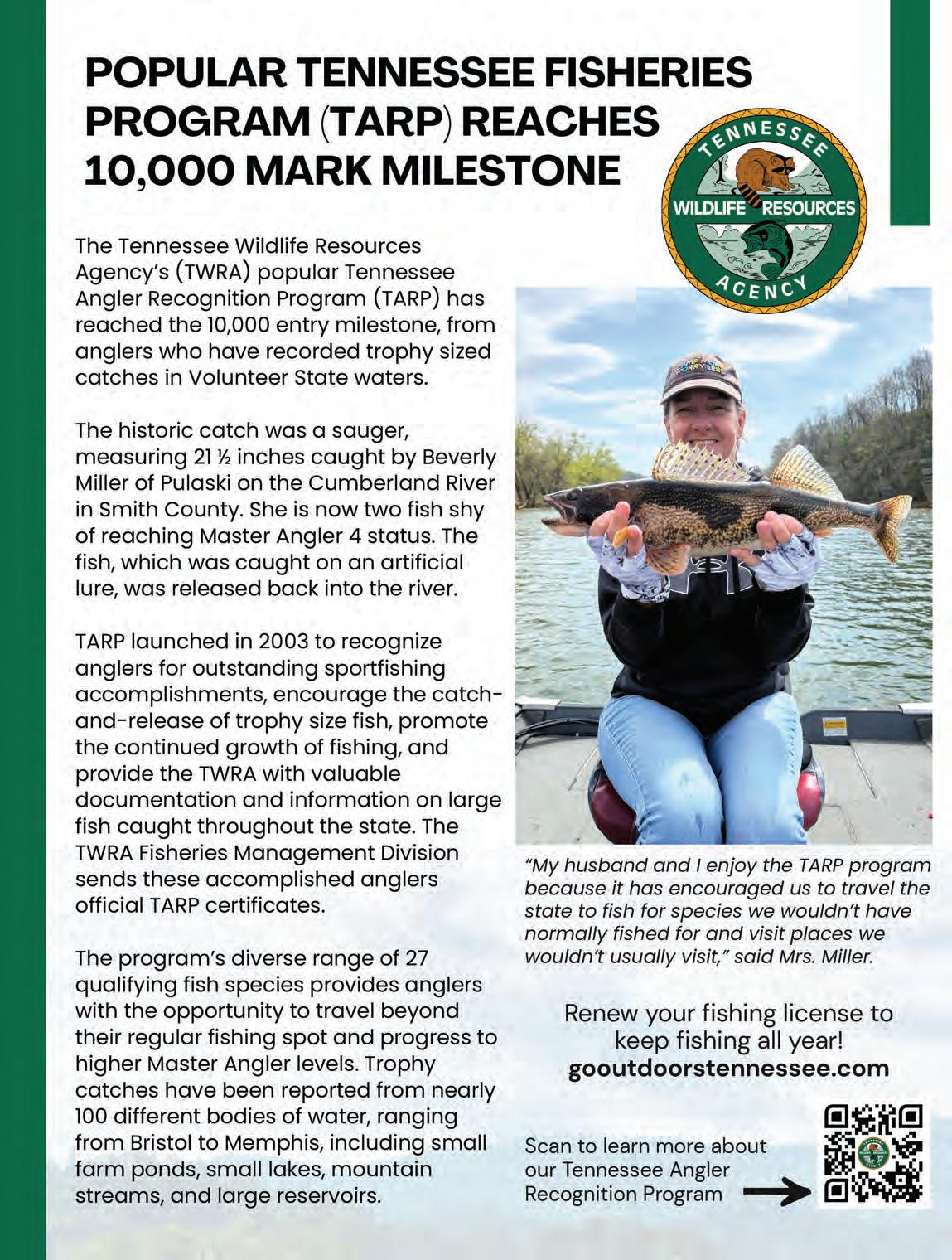
SMOKY MOUNTAINS
TENNESSEE/VIRGINIA/KENTUCKY/ALABAMA
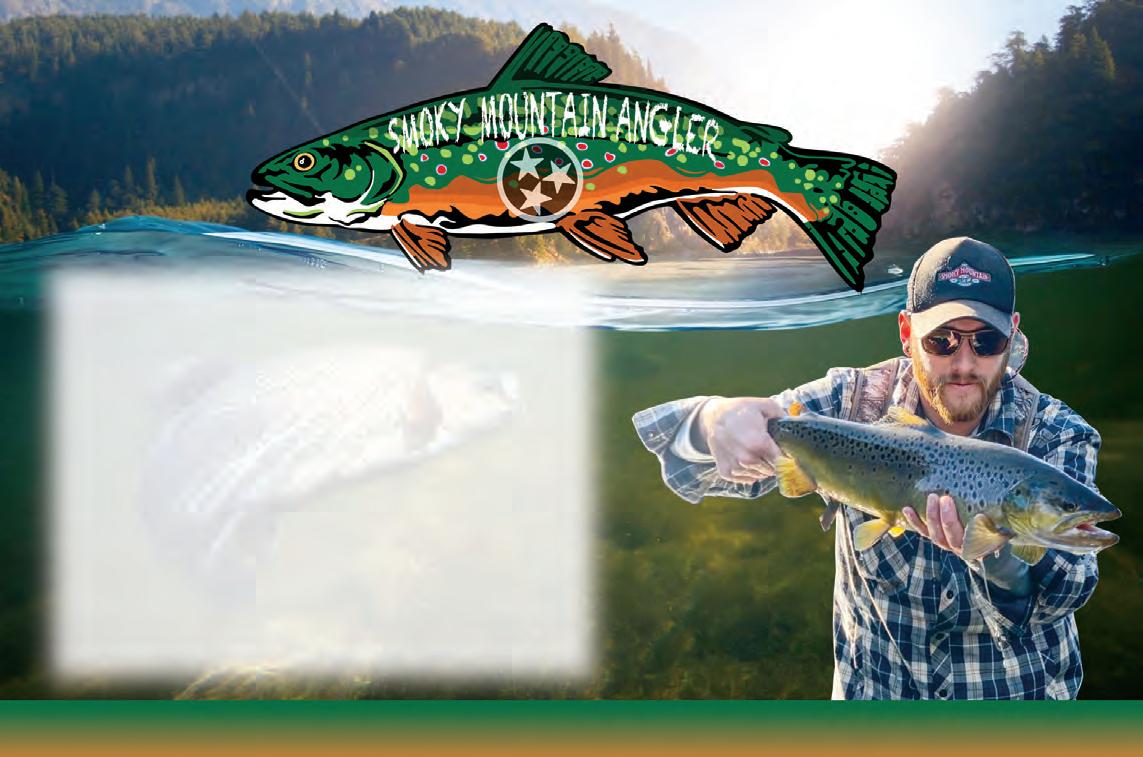
Fly Fishing Whitetop Laurel Creek Virginia
By Jim Marsh
It seems like there’s a Laurel Creek everywhere there are trout streams in the Eastern United States. About two miles East of Damascus is an old railroad bed called the Virginia Creeper Trail. It doesn’t have any of the rails or cross ties remaining. It’s now a very nice hiking trail that follows the Whitetop Laurel Creek for about two miles upstream. It provides access to some very good fly fishing water.
There’s a Laurel Creek close to the Whitetop Laurel Creek that I will mention just to avoid any confusion. It runs across the Tennessee and the Virginia state lines, into the Whitetop Laurel and then through the little town of Damacus, Virginia.
Route #58, east of Damascus, parallels much of the Whitetop Laurel Creek for a long way. When the road leaves the creek, you can use the Virginia Creeper Trail.
The area along the road is stocked with trout by the state. Catching trout is no problem there. It’s a beautiful, medium size stream with the typical run, riffle, pool type water that flows down the mountain. It’s fairly easy to fish from the banks or by wading in most areas, although some of the pools get rather deep.
The best part of the Whitetop Laurel Creek is the special regulation waters in Taylor Valley. Getting there takes a few turns out of Damascus.
After heading East out of Damascus, turn right and you will soon cross the state line into Tennessee. Not far, maybe a mile, you will turn left on 725. You will go back into Virginia and come to the intersection of 725 and 726 where you will again see the Whitetop Laurel Creek.
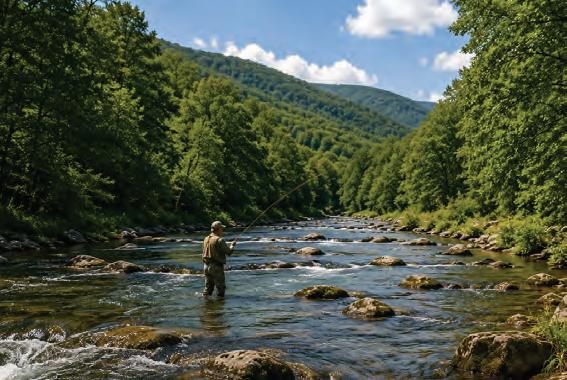
Just upstream (and downstream) from that point are special regulation waters, single hook artificial only, and lots of wild trout.
The Whitetop Laurel is one of the better freestone stream in the State of Virginia. It offers easy to access areas with stocked trout as well as lots of wild trout in secluded areas you can access with a little effort. This has the effect of keeping those desiring to catch the stocked trout in easy to access sections of the creek and leaves most of the wild trout for those who are interested only in the sport of catching and releasing trout.
Whitetop Laurel Fly Fishing Guide:
Fly fishing Whitetop Laurel Creek is a pure pleasure. It’s book perfect, small stream fly fishing. The wild trout are aggressive and requires some skill to catch but the rewards are great. A road doesn’t follow the Taylor Fork Sections. You will have to hike up or down the stream. By the way, the fishing is also good downstream at the end of the #725 paved road. It flows off the mountain down to the Virginia Creeper area.
Some of the best fishing in both the stocked and the wild trout areas is during the surfer hatch which seems to last a long time. For one reason they have both the true Sulfurs and the Eastern Pale Evening duns, both called sulfurs by the locals. You will see the trout go nuts over the spinner falls late in the afternoons.
The lower special regulation area runs from the lower gate in Taylors Valley downstream to Straight Branch, a small tributary stream. The upper special regulation area runs from the first trestle located above the upper gate in Taylors Valley upstream to Green Cove Creek.
You want to fish Whitetop Laurel Creek in an upstream direction using a lot of short upstream and up and across cast. The pocket water areas have a lot of conflicting currents and the more fly line you can keep out of the water, the better off you are. If trout are rising, fish a dry fly but if you don’t see any insects or trout rising you are probably better off fishing a nymph. The High Sticking method of nymphing works great in this stream.
This is a neat stream to fish. The little town of Damascus in also a neat place to stay. Laurel Creek flows right through town and the people are all laid back type folks that cater to hikers and anglers. There are several neat places to stay and eat in the area.
Whitetop Laurel Creek Hatches & Trout Flies:
Our information on aquatic insects is based on our stream samples of larvae and nymphs, not guess work. We base fly suggestions on imitating the most plentiful and most available insects and other foods at the particular time you are fishing. Unlike the generic fly shop trout flies, we have specific imitations of all the insects in the White River and in all stages of life that is applicable to fishing. If you want to fish better, more realistic trout flies, have
Continued on page 4
a much higher degree of success, give us a call. We not only will help you with selections, but you will also learn why, after trying Perfect Flies, 92% of the thousands of our customers will use nothing else. 1-800-594-4726.
TFishing with Children over the Summer
last almost two months. Locals refer to both of these hatches as Sulphurs and they are very similar.
By Andrew A. Cox
Whitetop Laurel has a huge, very diverse population of aquatic insects that hatch throughout most of the year. The pH of the water is good and there are several mayflies and caddisflies that reside in the creek that you wouldn’t expect to find in most Eastern Appalachian mountain freestone streams. The most consistent hatch is the usual Blue-winged Olives. There are several species that hatch months of the year. The best hatches start in February and last through June. There is a second hatch that occurs in October and early November.
• Little Black Winter Stoneflies start the first hatches of the year late January through March. Little Brown Stoneflies (actually in the same family as the Little Blacks) hatch in March and until the middle of April.
• The Giant Black Stoneflies start hatching the third week of April. It can last for six weeks.
• Yellow Sallies start a couple of weeks later and hatch into the first of July.
he Summer months are now here along with the advent of the summer school vacation time period. For many children, they have time on their hands and are looking for activities to keep themselves busy. Fishing could be a good activity for them to engage during the summer months. Many families also schedule their family vacations during these months. Incorporating fishing into family vacation outings can encourage a child’s interest in angling.
• Whitetop Laurel Creek has a decent hatch of Eastern Green Drakes that starts about the first of May and last around three weeks.
• There are also plenty of Light Cahills that hatch in late May and June. You will find them in the faster water.
• Slate Drakes start hatching in late June and continue on through September. These large mayflies are very important to imitate.
• Mahagony Duns start hatching in late August and last for about two months.
• There are a few Grannon Caddisflies that hatch in March. The hatch last about a month from the lower to the higher elevations.
• Shorten the fishing day; do not expect to spend the entire day from sun-up to sundown fishing with a child. Short time periods are in order to maintain interest. Take frequent breaks from fishing, maybe interspersing fishing with another outdoor activity.
• Be prepared with drinks and snacks for use over the course of the fishing day
• Green Sedges are fairly plentiful in the creek. They normally hatch from about the first of May through June. There are also some Little Shorthorn Sedges that hatch near the same time.
• Be prepared to take frequent bathroom breaks
• The Cinnamon Sedges and a few Spotted Sedge species of caddisflies hatch from about the first of May through July. These are the most important caddisflies. They are plentiful in some areas of the creek.
• The Golden Stoneflies start last week of May and can hatch until the last week of June.
• One of the first mayflies to start hatching are the Blue Quills. They start about the first of March and can last until the middle of April.
When taking a child or young person fishing, they are not going to approach the same as an adult. Their attention span is much shorter, and children will likely require fish action to maintain their interest.
• Quill Gordons start about the same time and last about a month. This is one of the better hatches of the Whitetop Laurel Creek.
Consider the following points when taking young people fishing:
• Use fishing equipment appropriate for the child’s skill level and size. They may require starting out with spincast reels and shorter rods, then later graduating to open face spinning reels
• The Hendricksons start hatching about the first of April. The hatch last about a month but is usually not very heavy but enough to get the trout’s attention.
• American March Browns start hatching near the end of April and last almost two months. This hatch is never concentrated but well worth imitating.
• Target fish that are easy to catch in order to maintain the child’s interest. Seek a mixed bag of fish species to include panfish, catfish, and bass if fishing warm waters.
• Eastern Pale Evening Duns start hatching around the first of May and last through June.
• Look for hatchery supported trout waters if fishing in cold water settings. These hatchery supported fish may be easier to catch than wild trout.
• About two weeks after this hatch starts, the Sulphurs start hatching and
• The Great Autumn Brown Sedges start hatching in October and can last until December.
• Plan to go fishing only when the weather is good. Children will most likely not enjoy being outdoors when it is overly hot, cold, or raining.
• Summertime is terrestrial time and imitations of grasshopper, ants and beetles. Inch worms also are plentiful and fall and get blown into the water. The terrestrials become important about the middle of June through September.
• Midges hatch throughout the entire year but are most important during the winter.
• Plan to use a variety of baits to include both artificial and live baits. Be prepared to tie knots, rig tackle, and bait hooks. You may also be required to make some casts for the child if they are unfamiliar with the equipment
• Do not expect the young person to cast perfectly. Prepare for line tangles and hooking up on shoreline and underwater obstructions. Try to pick open fishing locations that do not have a lot of trees, rocks, or weeds to minimize tangles.
• Streamers are effective in the creek, especially when the water is slightly high and stained. Imitations of sculpin, small minnows and small crawfish will work great at times.
• Expose young people to conservation and protecting the fishing locale. Do not litter and discard used fishing line, bait holders, drink and
We always recommend “Perfect Flies”. They are not only the most realistic imitations you can purchase, but they are also the most effective flies you can buy. They have proven to work great on Whitetop Laurel Creek on many occasions. We hope you give them a try if you haven’t already done so.
Continued, see FISHING WITH CHILDREN Page 10


CAPTAIN JIM DURHAM FISHING
KY / TN FISHING REPORT
Greetings my readers! I hope that the world finds you and your family doing well!
STRIPER FUN GUIDE SERVICE ON THE LAUREL DAM TRACE
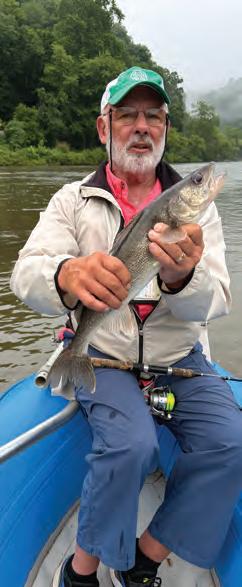
The Laurel River Dam Trace is located in the Daniel Boone National Forest. We fish for Stripers in the “cold” trace waters that flow out of the Laurel Lake Dam for a mile then into the Cumberland River! This area is located only 25 minutes from Corbin KY, 20 minutes north of Jellico TN and only 55 minutes south of Lexington KY. We run 3 boats there.
Limits are caught frequently, with some 30 to 40 fish days as well (catch and release is allowed)! Prime season is July and August!

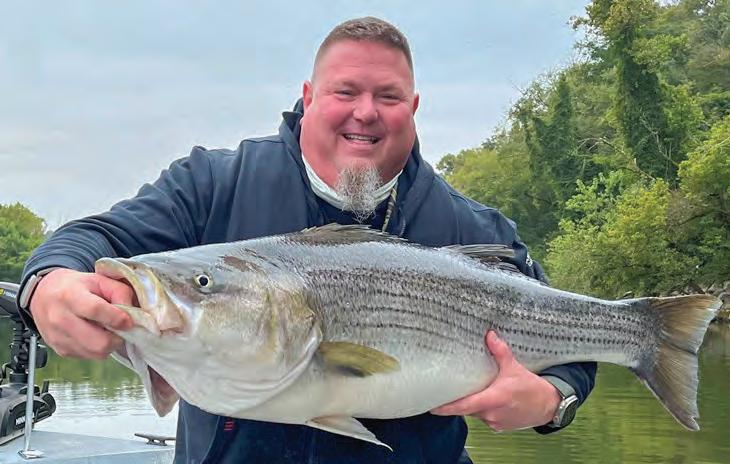
STRIPER FUN GUIDE SERVICE ON THE CUMBERLAND RIVER
Captain Jim’s StriperFun Guide Service Cumberland River Adventures fishes in the Cumberland River for several reasons.
• First, the Stripers are much larger in the Cumberland River system than other freshwater areas. There is an average of over 15 Stripers caught annually in excess of 50 pounds and 40-pound fish are not uncommon. The smallest fish we generally catch daily is over 3 feet long! These fish mostly eat high protein Rainbow Trout, large Gizzard Shad and Skip Jack and also fight the current all day, making them much heavier and stronger than “lake” fish.
• TN allows the use of Rainbow Trout as bait, and we catch large Gizzard Shad in the allowed creeks and use them in the KY waters. We use 1 to 3 pound bait.
When a big river Striper comes after a large bait, the bait will be tail dancing all over the surface trying to get a way. Sometimes the “dance” will
Continued, see CAPTAIN JIM Page 24


Beanpole Sells His Fly Rod
By Jim Mize
My kitchen table looked like stuffed animals had staged an MMA fight and none had fared well. Fur, feathers, and synthetics lay in clumps where we had littered the surface with fly-tying materials. This way, we could sort through them and easily pick out what we needed.
Beanpole and I often got together to tie flies at my house. Nell appreciated not having the mess, and I didn’t mind having trimmings on the floor. After all, Moose, my black Lab, started shedding about this time of year, and I was sweeping every morning anyway. Besides, the fly trimmings just added a little color in the dustpan.
I sat staring at a pack of Awesome Possum dubbing, trying to imagine what the possum had done to earn this title. It must be hard to be awesome when you’re a possum. This one must have been exceptional.
Beanpole was focused on his vise, trying to get rubber legs in just the right spot on a hopper. He squinted as his fingers held the rubber legs against the hook shank, and at one point he stuck his tongue out the side of his mouth. Once he had it tied down, he looked up and lobbed a question that landed with the impact of a grenade.
“Do you want to buy my fly rod?”
I looked over at him, once again focused on tying the hopper and tried to guess what was going through his mind. The odds of me doing that were somewhere between winning the lottery and being struck by lightning. Maybe that’s how the Awesome Possum died. The hair did look a little singed.
“You buying another one?” I asked.
“Not exactly.”
I had learned over the years that Beanpole’s mind was complex to the average person. Clearly, there was more to this response, so I thought about the usual progression of questions I had to ask to get something out of Beanpole when he didn’t want to tell me. So, I jumped ahead about five questions and got to what I really wanted to know.
“Tell me what happened.”
Beanpole looked up sheepishly realizing I had guessed right. There was a story behind the question, and I wouldn’t leave him alone until he shared it. We had done this dance before, and the song always ended the same way.
“Well, I went fishing last week on Humility Creek. It was still cold, the trout were on the bottom, but I was picking up one now and then on weighted nymphs drifted under an indicator. Mostly, they were rainbows.”
Beanpole took a sip of his Cheerwine as if he needed some liquid courage. Then, he proceeded with the story.
“You know that big hole where the creek turns? I was almost to the bend when two Canada geese started honking at me. They were up on the opposite bank in front of some brush. Not your normal honk, but faster and more aggressive. I figured they were going to nest there, so I tried to give them plenty of room.”
“Good decision,” I interjected.
“Yeah, you know I had been buzzed once by a goose in a similar situation. Had to fend him off with my fly rod. Came straight at my head looking like a Boeing 757 trying to land. Thought I was going to die.”
Beanpole gazed into space as if remembering the event, shuddered, then came back to finish his story.
“Anyway, the geese were getting more and more excited and finally one took off. I thought it was going to come at me, so I braced to defend myself. But it just flew down the creek honking as it went. That left one goose on the bank. It was still honking, but not quite as much.”
“I thought I was in the clear then, so I went back to fishing. After every few casts, I would ease a couple steps downstream and keep drifting those nymphs, watching the indicator for any sign of a bite. The goose and I were
still watching each other, but it seemed fairly calm for a goose. I had almost forgotten about it and was just concentrating on the drift, the fish, and that indicator.”
“That’s when it happened.”
Beanpole paused as if I might let the story end at this point. He always did this, and I wondered if he was checking to see that I was paying attention. So, I asked the obvious question.
“What happened?”
Beanpole looked me in the eye to tell me the next part.
“The goose flew off the bank straight at me. I braced for a flogging as it got closer, but instead, it swooped down and tried to grab my indicator. I think someone had been feeding the goose, and my white indicator probably looked like food. Anyway, the goose tried to grab it.”
“He plopped down in the stream and was pecking at the indicator. Apparently, it was moving and the goose was flapping to stay close to it in the current, pecking at it over and over, more frantic each time.”
“What did you do?” I asked.
“It was all a reflex. I tried to yank the indicator away, but the line must have run between the wing feathers on the goose. Next thing I know, I’ve hooked it.”
In my mind, I could see the bend in the stream, Beanpole with his rod up, and the goose flogging the stream, flailing and splashing, slinging water in all directions. Probably every fish for a hundred yards had taken cover.
“What happened next?”
“Well, the goose didn’t respond well to that,” said Beanpole. “It honked like crazy, and I’m in the creek with a goose on a four-weight. It’s trying to take off, and I’m trying to get unhooked. It’s flapping like crazy, getting a foot or so above the stream, and then my line gets tight and I pull it back down.”
“I’m trying to sort the line from between its wing feathers, water is splashing everywhere. I’m backing up to get away; the goose is half in the water and half in the air, and it was just a total mess. That was when I realized it.”
“Realized what?”
“You can’t land a goose on a four-weight.” I nodded. I hadn’t thought about it before, but Beanpole was probably right.
“What did you do then?” I asked.
“I just grabbed my line and broke it. Maybe if my fly was bigger or my tippet stronger, I would have had a chance. But it’s impossible to land a goose on a size 18 pheasant tail and 5X tippet.”
“And that’s why I want to sell my four-weight,” added Beanpole.
“So, you’re giving up fly fishing just because you hooked a goose?” I asked incredulously.
“No, but if I’m going to hook geese, I’m going to need a heavier rod.”
I stared at Beanpole across the table, tying flies, preparing for the coming season, and thought to myself that in his world this was the logical conclusion.
“What kind of rod do you plan to buy?” I asked, letting him share exactly where his thoughts had brought him to.
“Probably an Ugly Stik.”
I nodded and went back to tying flies. Maybe he was right.

“Beanpole Sells His Fly Rod” is an excerpt from Jim’s new book, The Haunted Outhouse. You can find it on Amazon or get autographed copies at www.acreektricklesthroughit.com



On Bears
By Joe Woody
Experience the Magic of Fall in Galax, VA: A Journey rough Nature’s Palette
Bears have been on my mind a lot lately and not the “Hey Boo Boo… Pick-a Nick Basket” kind either. I’ve literally just been running into them more than I ever have.
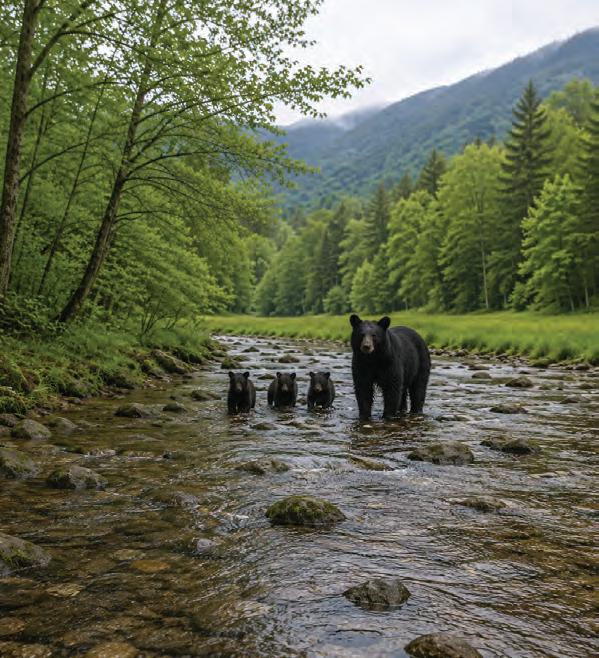
AEight to ten years ago, a bear encounter was a fairly rare occurrence. Now it’s odd if I don’t see one. On a recent trout fishing trip up Palmer Creek in Cataloochee Valley with my buddy and fellow Angler Magazine writer Ben Bailey, we ran into three sets of Mama Bears and cubs within a quarter mile of each other.
Then…a fella got eaten up on Hazel Creek a few years ago. Park Rangers don’t know if the bear actually killed the person yet, but they did find the bear eating on the remains. It happened at Campsite 82 or Calhoun as we like to call it. It’s roughly 9 miles up the trail from Proctor if you know the area. I’ve spent a lot of time there…alone.
s the scorching heat of summer gives way to the cool and crisp days of fall, Galax, Virginia, emerges as a captivating destination for travelers seeking a breathtaking autumn experience. Nestled amid the Blue Ridge Mountains, Galax transforms into a wonderland of vibrant colors and seasonal delights, making it an ideal place to relish the magic of the fall season.
I’ve had literally dozens of bear encounters in the back country over the last few years and most of the time the bear is either running away or indifferent to me. I did have a bear follow me all the way into the Linville Gorge a few years back. That was sobering but the bear was a youngster and was scared off with just a look.
But something different is going on. Food is abundant. Mamas are having two and three cubs at a time and they’re surviving. Bear hunting is not as popular as it once was in our mountains. My worry is when the food goes away after a dry summer…what are all these bears going to eat.
I fear that the unfortunate event on Hazel Creek will most likely happen again with more and more frequency. I’m not an alarmist. I don’t want to have open season on bears, but we are going to have to be more diligent in the back country. I’ll leave bear management to the experts…but…
Galax sits adjacent to the worldfamous Blue Ridge Parkway, a scenic highway renowned for its awe-inspiring vistas and leaf-peeping opportunities during the fall. As the foliage begins to change, the hills and valleys transform into a medley of reds, oranges, and yellows. Take a leisurely drive along the parkway, hike one of the numerous trails, or !nd a peaceful spot to revel in the beauty of nature’s autumn masterpiece.
Nothing says fall like pumpkins, apple cider, and apple butter! Visit local orchards and farmers’ markets to sample fresh apple cider, pick
I now carry a handgun on fishing trips. People who plan to take walks in the woods should probably invest in some bear spray at least.
where nature’s beauty and
await. For more information: www.VisitGalax.com


Galax offers an abundance of seasonal delights. So, pack your bags and start your mountain adventure to Galax,
warm hospitality
Getting back to those mama bears and cubs we saw on Palmer Creek. When we made it back to the parking lot, a young couple asked if we’d seen any bears. I carelessly mentioned the encounters we had just up the trail. The couple then made a bee-line up the trail to view the bears with their two year old son in tow. We have to be more careful.
Drifting The Tuck
By Ronnie Parris
Hey folks, I hope you’re doing well. I’m loving this weather. I’m glad we’re getting some rain now, so the streams are in better shape this month.
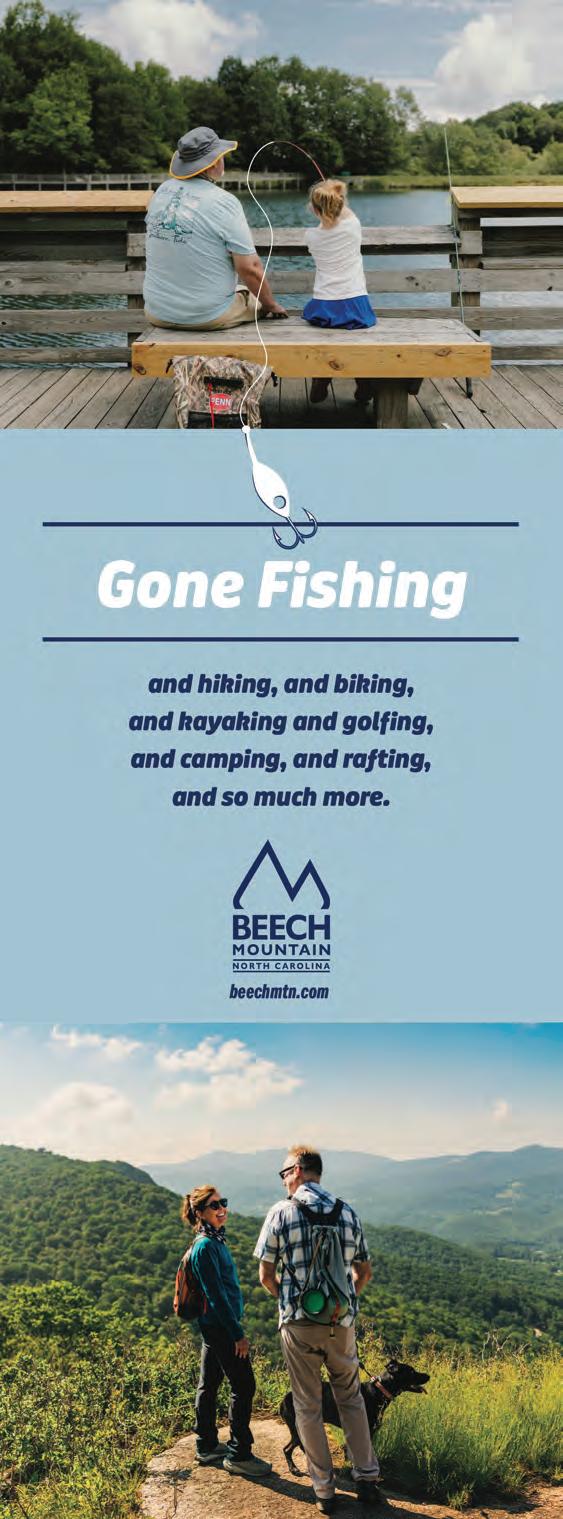
I just wanted to talk about a few tips on fishing out of a drift boat. The section I like to fish is through the Bryson City area of the Tuckaseegee, I’m usually concentrating on trout when I finish this area, but you will catch the occasional walleye or a smallmouth bass. As I write this, the delayed harvest section has just opened up so the public can fish with any preferred bait or lure, and they can also keep seven trout per person today we were fishing with nightcrawlers because we had had very hard rains and the water was dingy
One of the first fish we caught today was a nice walleye, followed by several rainbows ranging in size from 10 inches up to our biggest which was around 18 to 19 inches the bite was slow and you really had to try to get your bait right on the bottom as visibility was terrible.
I’ve got a few clients that only fish with artificial lures such as flicker shads and Repalas. Although you don’t catch as many fish as you do with live bait, you tend to catch bigger fish. On these lures, presentation is everything if you don’t wanna lose a lot, you better not cast too far upstream or you’ll hang up and lose your lure.
The majority of my clients are fly fisherman. Now my preferred way to fly fish is using dry flies, but this tactic is not as good in the Tuckaseegee River. When fishing in the river with flies, I prefer streamers such as Woolly Buggers, Girdle Bugs, Clowser Minnows. Also, Prince Nymphs, Hare’s Ear
We o er both full and half day trips with the most competitive rates available. All tackle and supplies you will need while you are on your trip is covered by our

nymphs, Rainbow Warriors, or the Mop Fly also work great. So according to what you like to fish with, you can usually adapt your style and catch fish on the Tuckaseegee. It’s very important if you’re fishing during the time of the year when fish have to be released, so be sure to handle the fish as gently as possible and be sure to wet your hands before handling the fish. And if you’re gonna take a picture, do it quickly and get the fish back in the water as quick as possible.
Whether you use a rubber raft or a cataraft, or one of the fiberglass drift boats, this will help you get into the harder to reach areas that can’t be accessed wading. I suggest using a drift boat if water levels are high, making it unsafe to wade, or you’re simply getting up in age and your mobility is Continued, see Drifting The Tuck Page 24


Snorkeling in Appalachian Streams Revival of an Avid Fish Watcher
By Tom Champeau, Pisgah Chapter of Trout Unlimited
Since I was a little kid, I was mesmerized about what lived in the water. I suppose I was influenced watching Sea Hunt, Flipper, Voyage to the Bottom of the Sea, and The Undersea World of Jacques Cousteau, and cannot remember when I got my first mask and snorkel. Growing up in Michigan, I braved many chilly lakes to see what was beneath the surface.
I got SCUBA-certified in college while taking a class in underwater research methods as part of my biology major. My career as a fisheries biologist was in Florida, and I used SCUBA to measure aquatic vegetation communities, evaluate fish population abundance and behavior, construct fish attractors, and even inspect the condition of boat ramps. Seeing fish interacting in their environment helped augment the standard fish population data collected with nets and electrofishing gear.
Living in Florida is a dream come true for a snorkel and SCUBA diver. The Florida Keys is the third largest coral reef system in the world. The first time I dived off Key Largo, I was amazed by all the popping and clicking sounds coming from thousands of coral polyps. Summer lobster season is a treasured tradition for many Floridians, and snorkeling the grass flats along the Gulf Coast for scallops is great family fun in hotspots such as Homosassa, Steinhatchee, and St Marks.
Florida hosts the world’s greatest concentration of freshwater springs in the world, including many of the largest and deepest. On a hot summer day, the water is a refreshing 70 degrees as you descend down to the bottom of a spring bowl to a vent that constantly discharges water from the massive Floridan Aquifer. The state’s karst geology created these surface connections to deep limestone layers that formed as ancient seabed’s millions of years ago.
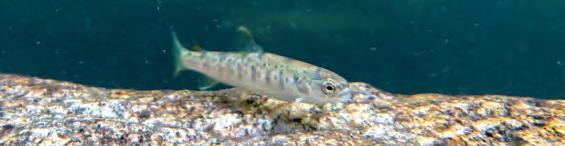
Some sinkhole formations offer divers a surreal trip into dim caverns, some massive in size. Only with specialized training and equipment should divers enter a cavern where the surface entrance is not visible and flashlights are needed. Entering a cave with only basic SCUBA is an invitation with death and dive clubs post signs at cave entrances picturing the Grim Reaper warning the untrained to venture no further.
Crystal clear spring runs like Ichetucknee, Rainbow, and Weeki Wachee are fascinating to snorkel, just drifting with the current is an amazing experience. While many folks understandably worry about alligators and venomous cottonmouths, we usually had a spotter in a canoe or kayak with us making sure these critters stayed away; and over decades of Florida freshwater diving and snorkeling, I never had a scary encounter. Swimming with manatees in coastal spring runs is incredible, and the Three Sisters Spring in Crystal River is one of two areas (Homosassa River being the other) where you can legally get in close proximity to these gentle herbivores.
While it is fun to reminisce about my diving experiences while living in Florida for 38 years, I sadly have to share that the coral reefs, grass flats, and springs are not what they were in the early 1980’s when I first experienced them. Climate change has warmed waters of the Gulf and Florida Straits causing coral bleaching - when stressed coral expel symbiotic algae living in their tissues, leaving them vulnerable to starvation and disease. The last trip I made in 2017 was so depressing - the coral sounds I found so amazing were gone, just silence as I swam among bland rocks that used to be covered with living coral of many colors. Fish still congregated around the rocks, but they were different species, and less diverse and abundant.
Groundwater pumping to quench the thirst of Florida’s 23 million residents, agriculture, and industries reduced discharge of many springs and hundreds of years of nutrient enrichment of the state’s porous soils increased phosphate and nitrate levels coming out of the springs triggering blooms of filamentous cyanobacteria. Along spring runs, healthy beds of eelgrass have been replaced by noxious algal mats. Out in the bays, this nutrient enrichment (cultural eutrophication) has decimated many grass flats around the state. I don’t mean to depress you, and some folks who didn’t see these resources 40 years ago can still have wonderful, unforgettable experiences. But for me, I know and have seen too much.
Leaving Florida seven years ago for western North Carolina has provided me an unexpected and wonderful appreciation for experiencing our rivers and streams. My joy of watching the underwater world has been renewed. With a wetsuit (I lived in Florida too long to tolerate cold water), mask and snorkel, I love to spend warm summer days snorkeling when it is too hot to fish for trout anyway.
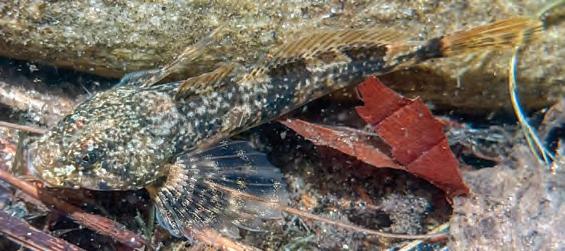
In the Davidson River near Brevard for instance, I typically see over a dozen different species of fish utilizing rocks, ledges, riffles, and runs as their various adaptations allow. Coming across the ancient amphibian, the Hellbender, is a
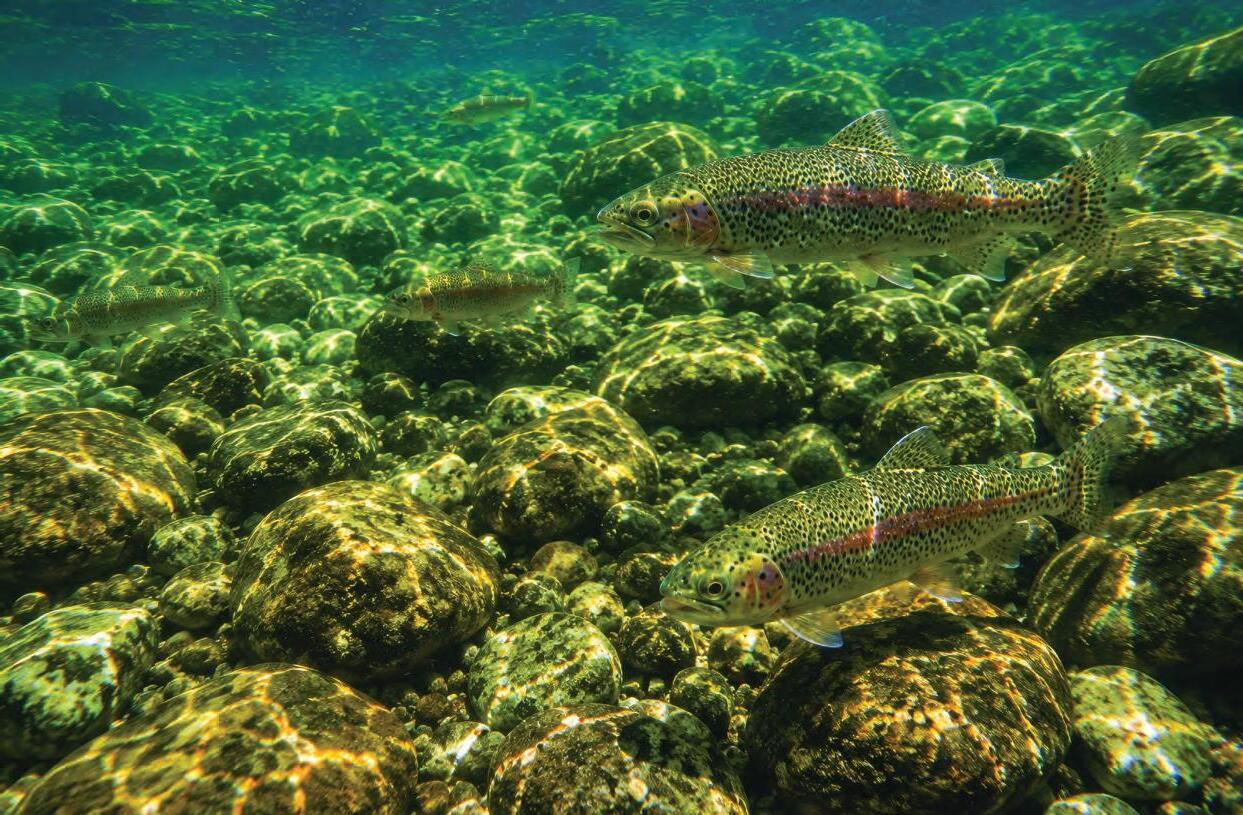
special treat as this is one of the largest salamanders in the world and has existed for millions of years in clear, cool rivers of the eastern U.S. While habitat loss has greatly reduced its current range, state and federal protections along with proper management of forested watersheds will help conserve this species.
If you are interested in taking upriver snorkeling, I have a few tips. First watch some YouTube or TikTok videos - an internet search for “underwater videos of Appalachian snorkeling” will yield a good list. Produced by Freshwaters Illustrated in 2019, “Hidden Rivers” is an excellent choice. If you are interested but desire help, Oxbow River Snorkeling out of Rosman is a guide service that provides equipment and expert interpretation. Check out the North Carolina Wildlife Resources Commission’s Blue Ridge Snorkel Trail website that provides detailed information on over ten public sites. The Pisgah River Rangers are offering free snorkel programs every Wednesday in July at the Davidson River near Brevard. Instruction and all gear are provided. For information and registration, visit https://linktr.ee/pisgahriverrangers.
As an avid trout angler, I have learned a lot about how trout of various species (rainbow, brown, and native brook) and wild vs hatchery-raised orient in different habitats and flow velocities. It is fascinating to see how they use subtle bottom structure to maintain position within the best feeding lanes. If you move slowly and can stay still, spooked trout will quickly return to where you saw them flee and resume their normal behavior. Sometimes it is not possible to differentiate between wild and hatchery fish, but most times, at least in the Davidson, I can tell by their size, behavior, and habitat preferences.
A few tips to stay safe: Never snorkel alone - dive with a buddy or have an observer on shore watching you all times; keep yourself downstream of downed trees and any woody debris - the depths and currents will surprise you and you don’t want to get washed into a debris pile. Rocks are slippery so I wear an old pair of wading boots. Take frequent breaks to rest and warm up. Moving around in the current and cold water is exhausting and you can become hypothermic very quickly. Finally, if you have any health conditions, talk to your doctor to see if snorkeling in cold water is wise.
So, consider trying out the fun and amazing experience of river snorkeling and fish watching. What you learn will help your fishing success and you will gain a tremendous appreciation for our diverse aquatic ecosystems. The essayist Scott Russell Sanders wrote. “We treat with care what we love, and we love only what we have truly learned to see, with all our senses alert.”
Life in the Shade
By Scott Norton
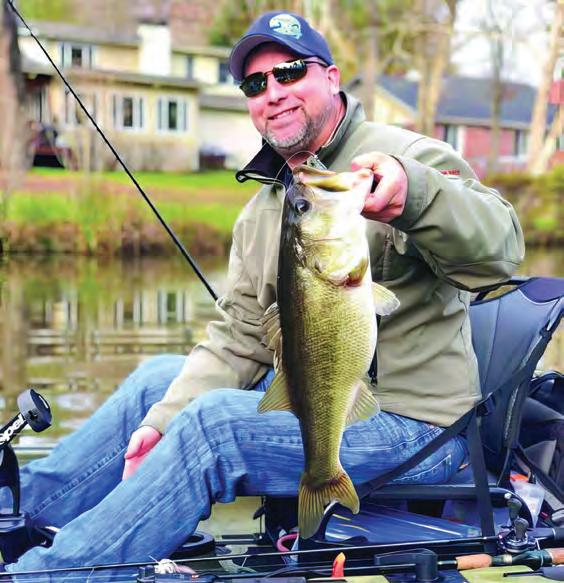
Summertime heat is warming the waters, and bass are splitting up into two groups. One group stays shallow and the other goes deep. No one knows why this happens. The group that stays shallow will be in the shade line because bass do not have eyelids. The other group goes deep to also hide from sun exposure in drop offs and in the color line. You will hear that bass go on a journey back to the main lake and that does happen to some fish but not all. There are lots of attractive places where there is a current or some nice vegetation to hang around on.
If you want to target this shallow bass look for docks, lay-downs, Lilly pads, and grass. The deep bass will find structure or suspend deep enough to where the sun penetrate at that depth. This is the only thing to give bass a personality.
Now is the time to catch them with any bait because their metabolisms are at their peak. The problem with this is that the smaller bass are faster and nimbler than the larger sized bass. You will have to deal with catching smaller ones with seldom catches of the larger size. The anglers offset this by using big baits. Now you are targeting just larger bass. Remember to go with natural colors in clear water and brighter colors the dirtier the water is.
You can also use nature to tell you where signs of life are like birds on the banks trying to eat fish. The comeback of the bald eagle is another way to track life in the deeper water. Vegetation is one of those as well. Learn to be aware of your surroundings and things start to make sense.
The further of time from the spawn you will notice the fishing pressure starts shutting things down. One of the best ways to catch bass is at night on a full moon. Fish at this point will start to pattern the angler and will go nocturnal. This is the element of surprise by changing your pattern. They do get smarter so you will need to try different game plans. Some anglers will try using baits bass have never seen to trigger a feed response.
The shad and bluegill spawn is something to look forward too. Knowing that this is happening can get you the catches of your life. Once they key in on this forage the bass will lay out if you imitate what they are feeding on. Bass will school up and push these fish up shallow. This makes it easy for them to take turns feeding. This a great time to fish. Enjoy.


Change is Constant
By Capt. James McManus
Ihave been fishing with Florida folks lately and reminded how blessed we are to live where we live. Reports of 97+ degrees and 100% humidity don’t make me hook up the boat and head south; I am content to stay on Fontana and wear a light jacket almost every morning.
The fishing’s been good if a little unusual for early summer. The spotted bass have spawned late and apparently very aggressively. Most show signs of heavy fighting with bite marks and bloody tails but that typically heals quickly. The trout bite has been good and expect the top water bass bite to improve over the next couple of weeks. Trolling has been the ticket as everyone is moving offshore following the spawn.
I took a week off and pulled my boat north to Lake Michigan a couple of weeks ago. They salmon fish just like we fish in the summer, but with much larger boats equipped with mates, multiple downriggers, huge flashers and dodgers, and more spoons than I thought existed. There must be a thesaurus on spoon names. It would be interesting to know the origins, but everyone seems to have them memorized. Was lucky enough to catch salmon and steelhead on my boat, so I was thrilled with that.
Whether fishing north, south or right here, the common thread is that all fisheries are constantly changing. Florida waters, from reports I get, are deteriorating, while waters north are improving. I think the human element has the most to do with that, more people, more destruction, less people, better conditions. While we certainly have more folks each year it hasn’t gotten to the tipping point yet, and let’s pray it doesn’t. We need to keep an eye open and let the wildlife folks know if big change comes and hopefully stay ahead of anything detrimental to our fishery.
So, enjoy our area, and don’t be afraid to try new things; it’s a new world every day. Thank God for our beautiful waters and call if you want to catch a few. Later, Capt. James Just cast it in front of the tarpon and reel it back slowly without twitching.


GA Teen Angler Makes History at BFL
By TAM Staff
Eighteen-year-old Jack Story of Atlanta, Georgia, made bass fishing history at Lake Murray, South Carolina, capturing the 43rd annual Phoenix Bass Fishing League All-American Championship Presented by T-H Marine and becoming the youngest champion ever to win the prestigious grassroots event.
While many of his classmates were celebrating high school graduation, Story was focused on a much bigger stage. Leading the tournament from start to finish, he brought a three-day total of 15 bass weighing 61 pounds, 8 ounces to the scales and secured the $100,000 top prize along with a coveted berth in REDCREST 2027, Major League Fishing’s premier championship event.
Story opened the tournament with a commanding 22-pound, 11-ounce limit and never relinquished the lead. His final-day catch of 17 pounds, 7 ounces was enough to hold off a hard-charging field that included runnerup Brooks Anderson of Georgia, who finished just 10 ounces behind with 60 pounds, 14 ounces.
Fishing techniques centered around blueback herring patterns proved key to Story’s success. Raised on Georgia’s Lake Lanier, he has developed an exceptional ability to target offshore bass using forward-facing sonar and soft-plastic jerkbaits. Throughout the event, a weightless Zoom Fluke in chartreuse and herring colors accounted for much of his catch.
Despite the victory margin, the final day was far from easy. Story struggled to locate his offshore fish early and was forced to make critical adjustments, including targeting bedding bass and fry-guarding fish he had located during practice. One timely late-day cull ultimately helped preserve his narrow lead.
When the final weights were announced, the usually composed teenager couldn’t contain his emotions.
“My hands were shaking so bad this morning I had to retie my leader knot several times,” Story said. “Everybody who has supported me made this possible.”
In the co-angler division, Zachary Howell of Tipton, Iowa, claimed the championship with nine bass weighing 28 pounds, 6 ounces, earning the $50,000 top prize. Howell dedicated the victory to his grandmother, who recently passed away after encouraging him to compete despite her battle with cancer.
Hosted by Capital City Lake Murray Country Regional Tourism, the 2026 BFL All-American showcased the nation’s top grassroots anglers and delivered one of the most memorable championships in tournament history.
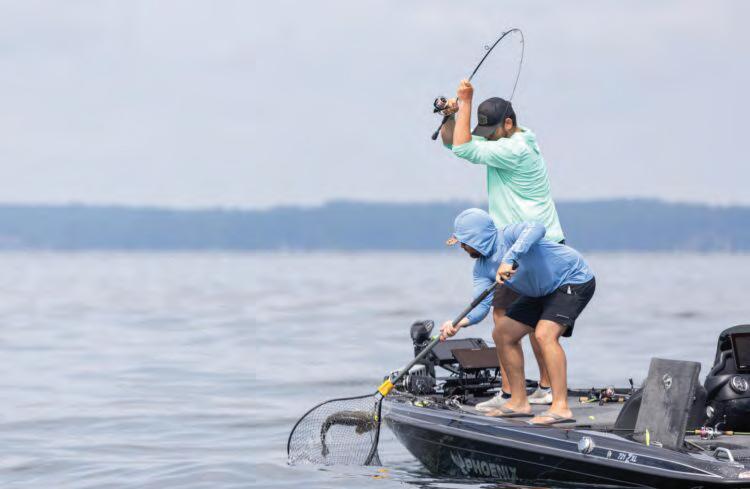
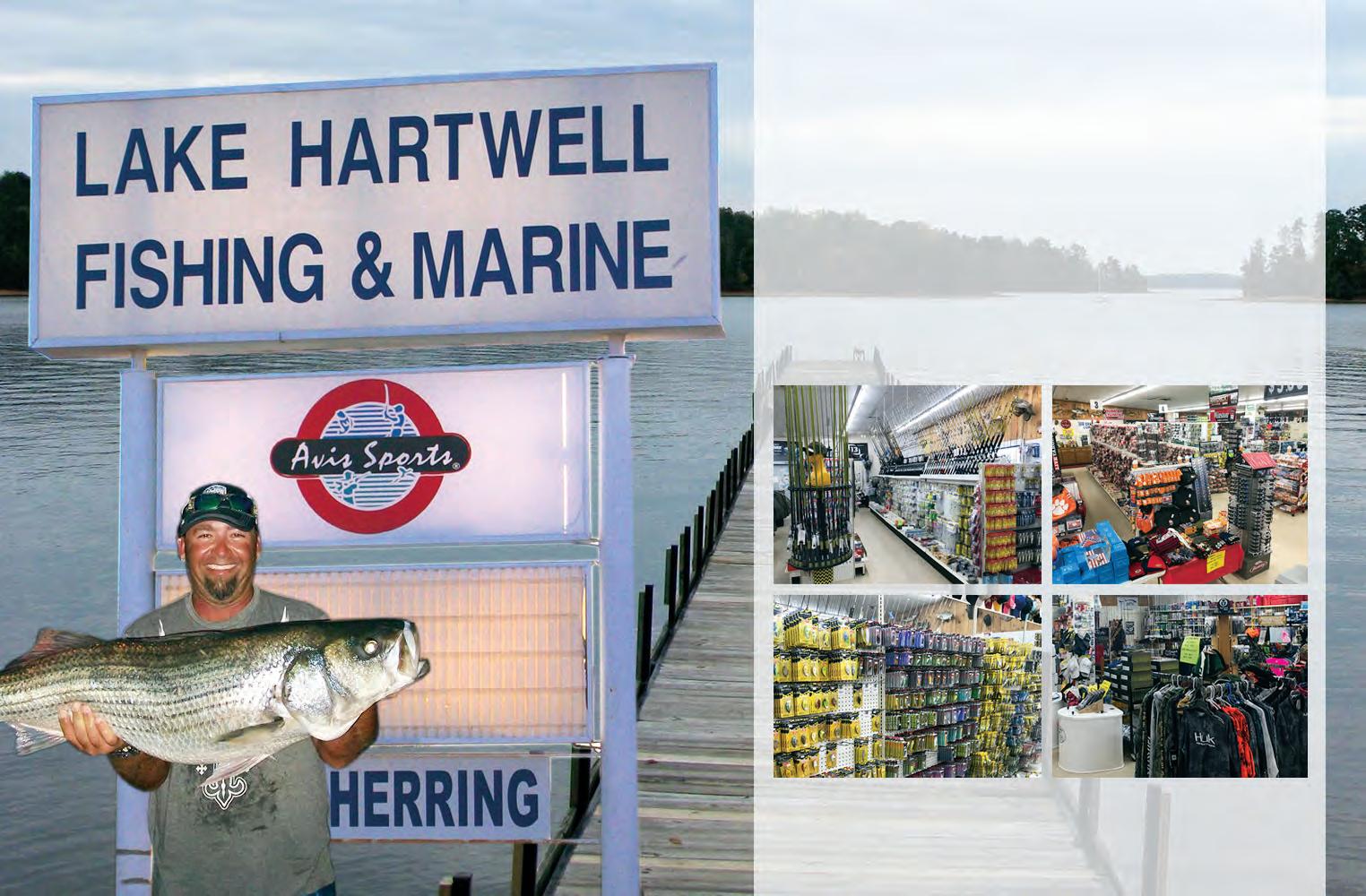
Photos by MajorLeagueFishing.com
DRIFTING THE TUCK Continued from page 14
compromised. Drift boats are also good for taking children, as it’s unsafe to try to wade with small children. As far as one boat being better than the other, each have their pros and cons, I like the rubber raft with a fishing frame simply because I don’t have to worry about rocks damaging my boat. Whatever your style of boat or your preference in fishing technique, the Tuckaseegee is place for a fun day on the water. So, get out there and enjoy all that nature has to provide, and as always, take a kid fishing!
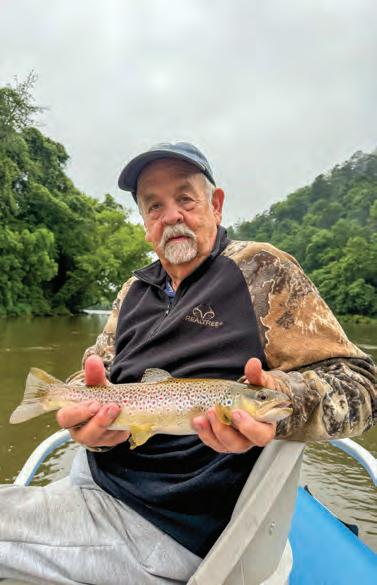
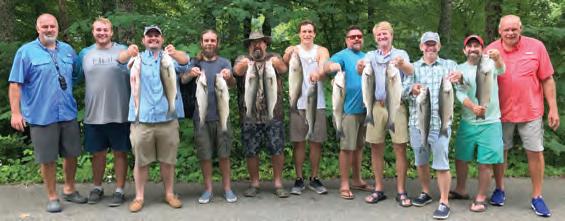
last half a minute (as you watch the big predator circling the prey!) until the Striper finally gets the big bait then its “Kabam”!! The rod gets yanked down and the reel is screaming!
We also catch huge fish casting Captain Jim Special (see our website store) Striper Magic “glide” baits and my mini umbrella rigs!
This fishing is not for the faint of heart however! These big fish hit like freight trains, making long powerful runs in the constantly flowing waters of the river! We use large rods, heavy duty reels, 50-pound test line and titanium hooks! JULY, AUGUST, SEPTEMBER AND OCTOBER ARE GREAT MONTHS TO FISH!
It is great to be alive and be a “free” American! I look forward to seeing all of you this year on the water. Always remember to stop and shake the hand of a person in uniform or wearing garb that shows they are a veteran! Their service is why you speak English, can vote and can enjoy the freedoms you do! Until next time, blue skies and tight lines!
With full State licensing and insurance, all Captain Jim’s Guide Service guides (19 guides on 18 waterways) can take you on a safe, fun and unforgettable fishing adventure! Check out all of our fishing services as well as our exclusive “online” store at www.striperfun.com or call 931-403-2501 to make reservations!
CAPTAIN JIM Continued from page 6

JOIN



TIPS FROM A PRO

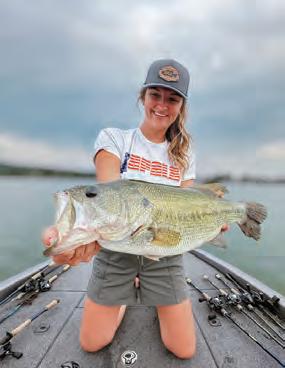
BIGGER BAITS FOR BIG SUMMER BASS
ATYLER WOOLCOTT

s the summer season settles in and water temperatures rise, many anglers automatically downsize their presentations in hopes of getting more bites. While smaller baits can certainly catch !sh, summer can also be one of the best times of year to target trophy bass with larger-pro!le lures. Big bass still need to feed, and they o en prefer a larger meal that provides more energy with less e ort.
One of the biggest reasons larger baits excel during the summer months is the abundance of bigger forage. Bluegill, shad and other bait!sh have had months to grow, giving bass access to larger prey. Matching the size of the available forage can o en help anglers attract the attention of the biggest !sh in the area.
Large worms, oversized swimbaits, big jigs, and magnumsized topwater baits are all excellent options for targeting quality !sh. While these presentations may not generate the same number of bites as smaller o erings, they o en appeal to more mature bass that are willing to commit to a larger meal. Many anglers are surprised by how o en a giant bass will choose the biggest bait in the boat.
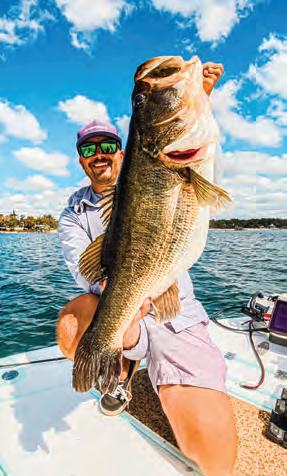
Con!dence is key when !shing larger baits. $ere may be longer periods between bites, but anglers should remember that the goal is quality rather than quantity. Staying committed to a bigger presentation can be di cult, especially when other anglers are catching smaller !sh, but patience is o en rewarded with the !sh of a lifetime.
If you’re looking to improve your chances of catching a trophy bass this summer, don’t be afraid to upsize your o erings. Bigger baits won’t guarantee a giant on every trip, but they can help put the odds in your favor. Sometimes one bite is all it takes, and that bite o en comes from the biggest !sh in the lake.
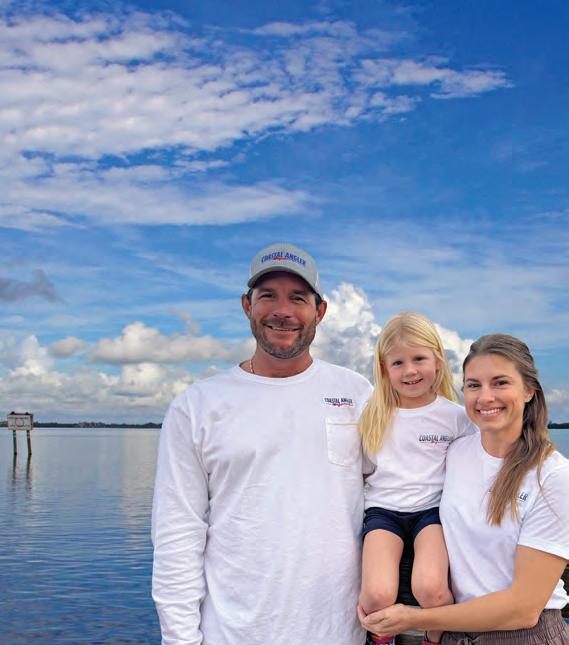
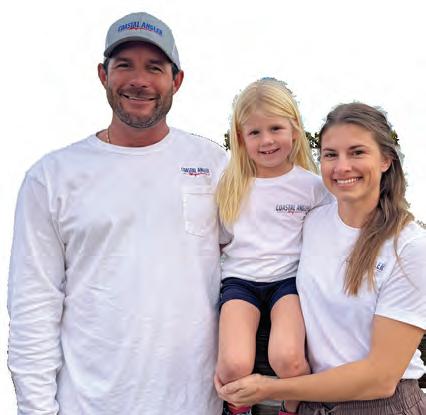
Capt. Tyler Woolcott is a professional tournament angler, as well as owner/operator of Florida Big Fish Adventures, providing bass and saltwater guided shing trips: www. oridabig shadventures.com.
RECORD-BREAKING
919.9-LB. BLUE MARLIN WINS OVER $6.5 MILLION IN BIG ROCK TOURNEY
History was made, big checks were paid, and an insane at-the-buzzer leaderboard shakeup took place at the 68th Annual Big Rock Blue Marlin Tournament, held June 5–14, 2026 in Morehead City, North Carolina.
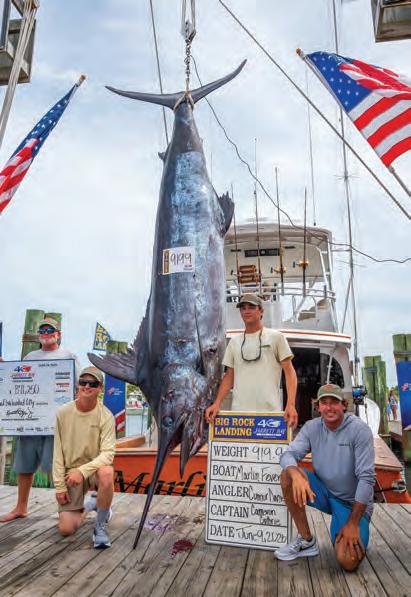
Marlin Fever brought the heat to Big Rock Landing on Day 2, bringing a tournament recordbreaking 919.9 lb. blue marlin to the scales, securing the Level V Fabulous Fisherman’s Prize worth $871,250 as the !rst blue marlin of at least 500 pounds weighed in. Eighteen-year-old Connor Daniel served as the designated angler and fought the !sh for roughly two hours. ($e crew later reported the marlin had recently eaten two sail!sh!)
Captained by Cameron Guthrie, the 63’ Jarrett Bay out of Wilson, NC, held the top spot on the leaderboard through Saturday’s !nal weigh-ins, delivering Marlin Fever the championship—and a staggering $6,513,188 payday.
And while Marlin Fever’s historic catch swept
all the blue marlin categories, it was the nail-biting weigh-in that came just before 10 p.m. on the last day of the tournament that topped o a dramatic week and sent spectators on the dock into a frenzy.
A er a grueling 6.5-hour !ght, Haphazard, a 60’ Spencer out of Manteo, NC captained by Joey Belton, delivered a true buzzer-beater. $e team arrived at Big Rock Landing just in time to weigh in one last blue marlin. It was 635.6 pounds—enough to catapult them into third place for heaviest blue marlin, knocking Free Ranger’s 597.4-pounder o the podium at the last minute. What an ending!
Fender Bender !nished in second with its 644.1-pound blue marlin weighed on Day 3, worth $467,962.50. Haphazard’s catch earned the team a $311,975 payday.
In the release division, Double G captured the title with 1,850 points a er releasing four blue and two white marlin, earning $168,937.50.
Doc Fees claimed the dolphin title and $584,500 with a 66.10-pound mahi; Magic Moment
WHY BUY NEW WHEN YOU CAN RENEW?!?


won the wahoo division with a 53.4-pound catch; and Watertight won the tuna division with a 70.8-pounder.
A total of 278 boats !shed for a piece of the tournament’s record $9,038,225 purse.
For o cial results, payouts, and future dates, visit tournament.thebigrock.com and check them on facebook @bigrocktournament for all the tournament highlights.





July Can Be Hot!
TIM BAREFOOT

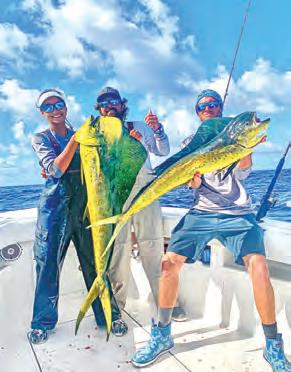
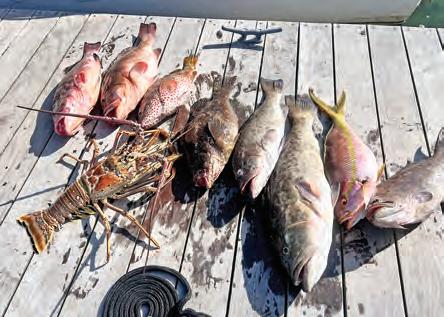
The surface water temperature will continue to climb in July, but the water temperature on the bottom will regulate itself to where it needs to be. $is is time of year to catch all the tropicals, starting now until early fall. Of course, the grouper and snapper bite will be o the chain, but this is when you will see all the snapper and grouper show up way north of Florida (as seen in photo). $ey will be available outside of their usual haunts and, of course, an occasional lobster. $is is truly the time of year to catch a giant grouper as well. I cannot emphasize this enough, but this is the time of year to spend an hour or more if necessary to Sabiki live cigar minnows and sardines for the ultimate bites on the bottom, not to mention the light line. Don’t be surprised to catch a giant wahoo on a 5-inch live cigar or sardine…elephants eat peanuts.
I would strongly suggest not playing loud music, not stomping around the deck, nor slamming cooler lids because the sail!sh and dolphin will swim up to the boat and check you out. $is is when you need to have a pitch rod ready. It’s never a bad idea to have a large squid on a pitch rod. Nothing in the ocean can refuse a well presented squid on the light line or pitch bait. It’s also not a bad idea to keep a frozen squid 50 to 75 feet deep using a small amount of weight (depending on the current).
kite for the ultimate presentation. If you have the correct weather pattern, I would strongly suggest spending the night o shore and using lights to attract the bait !sh. When you have a livewell chock full of live cigar and sardines and squid for the daylight bite, your success rate dramatically increases. Live squid or a live sardine on the bottom on a decoy jig has a life expectancy of !ve seconds or less. Don’t ask them to bite, demand the bite. Ask and you shall receive, my brothers and sisters. I’m not into all the “!shing,” per se; I’m into the catching...and there is a huge di erence. If you have the correct bait and make the correct presentation, you will get the bite!
Yes, we always carry a couple boxes of frozen cigar minnows and a box of frozen squid, but we always look for live bait, and we will spend some time on a school of bait using the Sabiki.
When the current is not running hard, a 1/4 or 3/8 oz. will get it down to the perfect depth. If the current is running a little bit, a 1/2 to 3/4 oz. might be needed. I would also suggest a live bait under a oat or under the
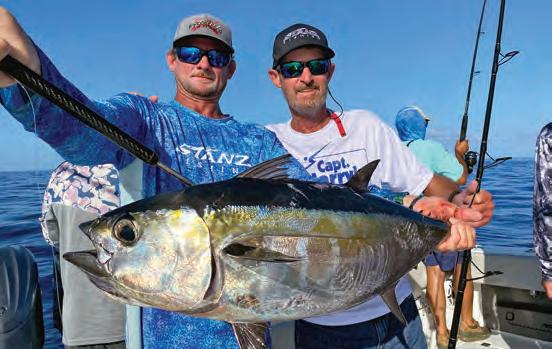
NOAA RAISES LIMITS ON ATLANTIC BLUEFIN TUNA
NOAA Fisheries recently adjusted the Atlantic blue!n tuna daily retention limits for recreational !shermen. $e adjusted limits took e ect June 1, 2026, and will extend through December 31, 2026, unless NOAA takes additional action later in the year to further adjust the retention limits or close the !shery.
As of June 1, 2026, the retention limits will be:
Highly Migratory Species
Vessel/Permit Type
Private vessels with Highly Migratory Species
Angling permits
Charter boats with Highly Migratory Species
Charter/Headboat permits, when fishing recreationally
Headboats with Highly Migratory Species
Charter/Headboat permits, when fishing recreationally
Limit per Vessel per Day/Trip (lengths in curved fork length)
2 bluefin tuna measuring 27 to <73”, of which only 1 may be a large school/small medium bluefin tuna (47 to <73”)
3 bluefin tuna measuring 27 to <73”, of which only 1 may be a large school/small medium bluefin tuna (47 to <73”)
6 bluefin tuna measuring 27 to <73”, of which only 1 may be a large school/small medium bluefin tuna (47 to <73”)
Note: $e retention limits are per vessel, per day/trip—not per angler. Regardless of the duration of a !shing trip, no more than a single day’s retention limit may be possessed or retained at the end of the trip upon landing. For example, whether a private vessel (!shing under the Angling category retention limit) takes a two-day trip or makes two trips in one day, the day/trip retention limit of 2 blue!n tuna, of which only 1 may be a large school/small medium, applies and may not be exceeded upon landing.
$e !sh are just like us. We prefer to eat breakfast, maybe lunch, and a good dinner. Be there for the daylight bite or the late a ernoon bite. Put some beautiful live bait on the bottom and expect immediate bites on the decoy jig.
One of the most important pieces of advice for !shing in July is to ensure your children are prepared for the weather. A ernoon thunderstorms are common during this month, so it’s essential to dress them appropriately and be ready for sudden squalls. $is preparation is a fundamental part of the !shing experience.
Beyond safety, take the opportunity to teach your children the proper way to care for and release !sh. $ese practices instill a sense of respect for nature and promote responsible !shing. $e lessons learned during these outings will stay with them for a lifetime, making each !shing trip both enjoyable and educational.
Learn more tips and techniques at barefootcatsandtackle.com.
Who is a ected?
$e changes apply to Highly Migratory Species Angling and Highly Migratory Species Charter/Headboat permitted vessels when !shing recreationally. $e daily retention limits are e ective for all areas except for the Gulf of America, where NOAA Fisheries does not allow targeted !shing for blue!n tuna.
Catch reporting
Highly Migratory Species Angling and Highly Migratory Species
Charter/Headboat permitted vessel owners are required to report the catch of all blue!n tuna retained or discarded dead within 24 hours of landing or the end of trip by:
• Accessing the Highly Migratory Species Permit Shop
• Using the Highly Migratory Species Catch Reporting app
• Calling 888-872-8862 (Monday through Friday 8 a.m.-4:30 p.m.)
Keep up with all federal shing rules and regulations by visiting https://www. sheries.noaa.gov.

From Campfire to Summit
A premium Damascus blade — at a price that cuts deep
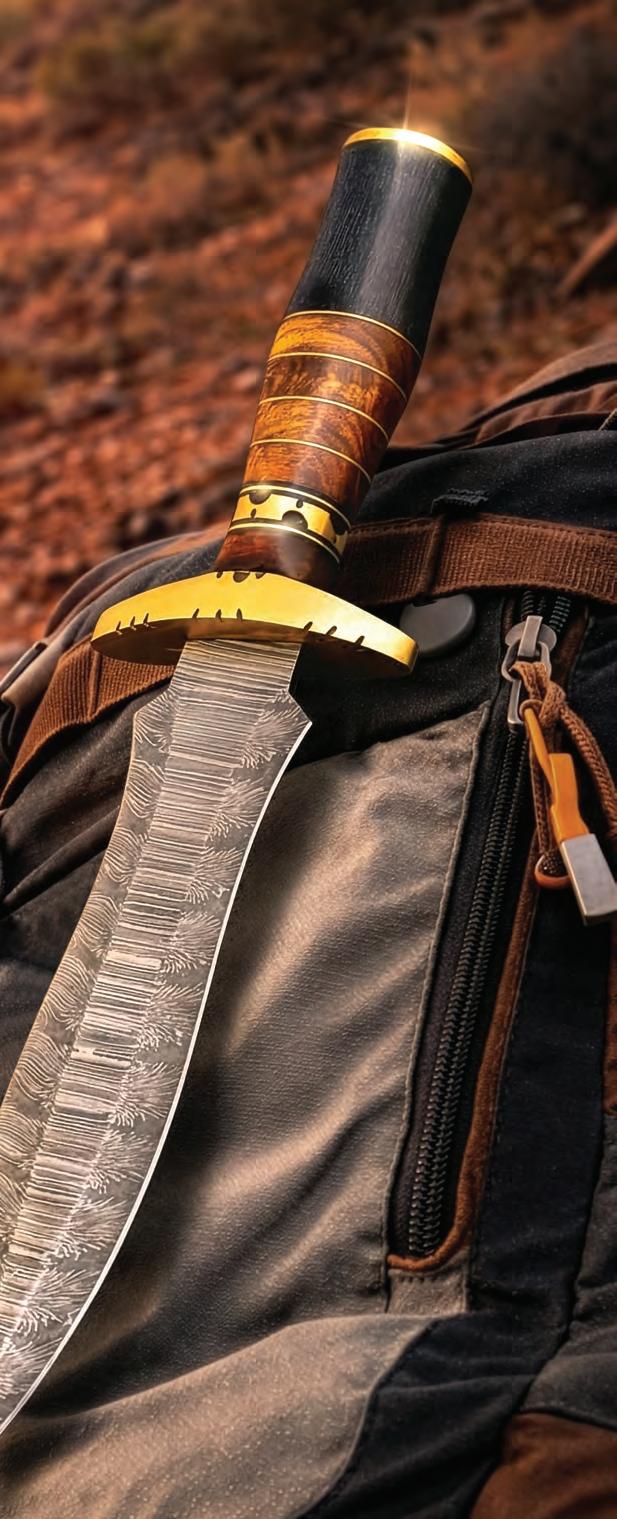
For centuries, Damascus steel has been prized for its strength, beauty and legendary performance. Its distinctive flowing patterns have made it one of the world’s most sought-after blade materials. The problem? Genuine Damascus knives often come with premium price tags. That’s why we created the Stauer Damascus Explorer Knife. Built for adventurers, outdoorsmen and collectors alike, this handsome knife combines rugged utility with timeless craftsmanship. Whether you’re preparing kindling, tackling camp chores or simply admiring its artistry, it’s a blade you’ll be proud to own.




EXCLUSIVE
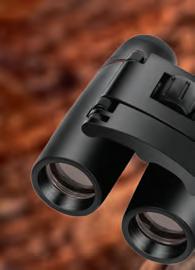
Stauer Pocket Binoculars a $99value with your purchase of the Damascus Explorer Knife

The first thing you’ll notice is the striking Damascus steel blade. Its signature rippled pattern isn’t just beautiful — it’s the mark of a centuries-old forging tradition. At a full 8 inches long, the blade offers impressive cutting power while maintaining excellent balance and control.
The rich rosewood handle provides a comfortable, secure grip, while the included sheath keeps your knife protected and ready for action. Every detail reflects the kind of quality typically found in knives costing far more.
Thanks to Stauer’s direct-to-you model, we’re able to offer this premium Damascus blade at an exceptional value. But supplies are limited, and once this shipment is gone, we can’t promise another opportunity at this price.
If you’ve been looking for a knife that blends performance, craftsmanship and value, now is the time to act. Damascus Explorer Knife PLUS FREE Binoculars $349* Offer Code Price Only $99 + S&P Save $250 1-800-333-2045


*Discount is only for customers who use the offer code versus the listed original Stauer.com price.


Knife Specifications
• Damascus steel blade
• 8" blade. 13" overall length
• Rosewood handle
• Sheath included
What customers are saying about Stauer knives...
“First off, the shipping was fast and the quality is beyond what I paid for the knife.Overall, I am a satisfied customer!” — D., Houston, Texas




California residents, please call 1-800-333-2045 regarding Proposition 65 regulations before purchasing this product. $99 +FREE Binoculars Impossible PriceONLY

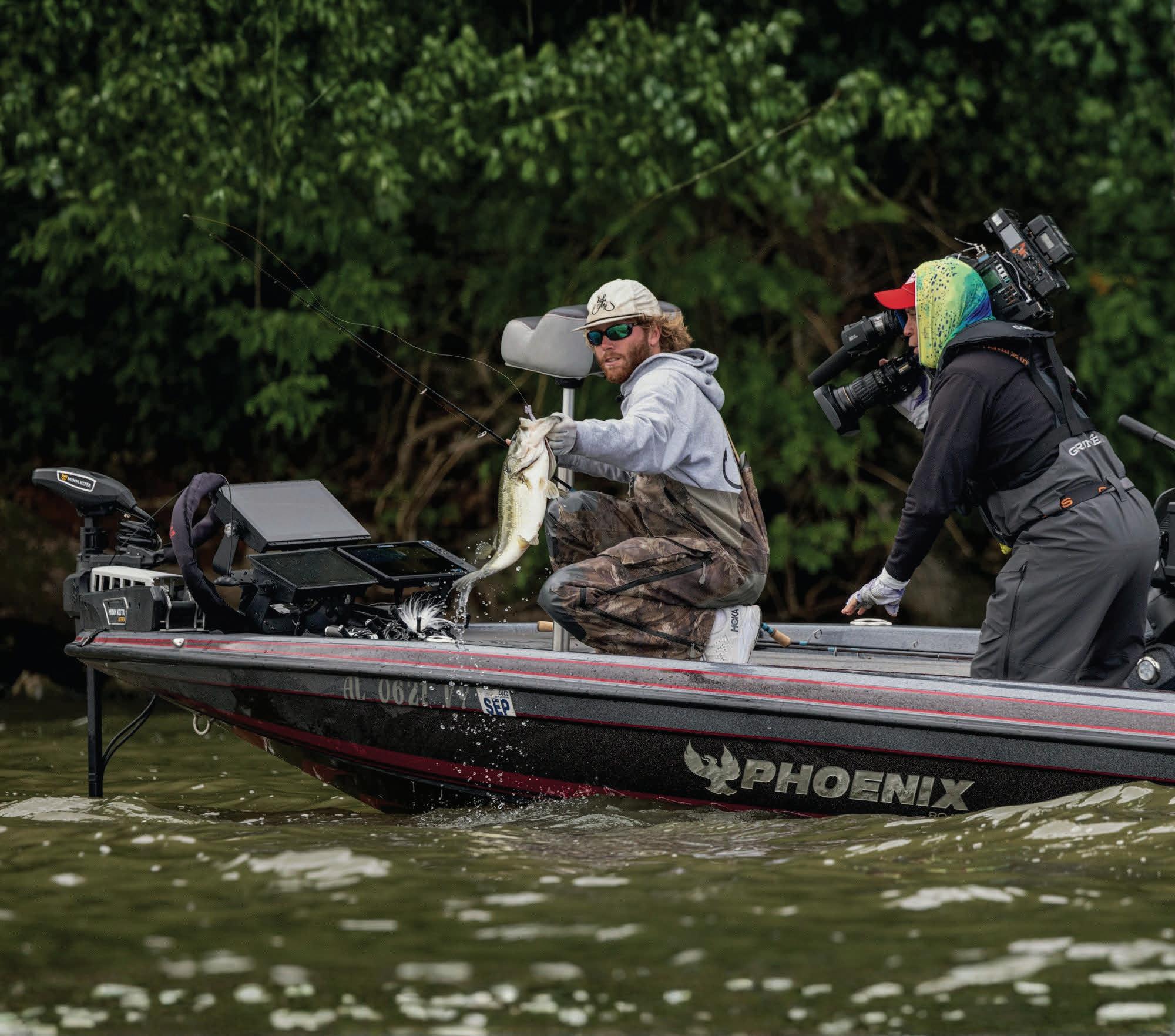
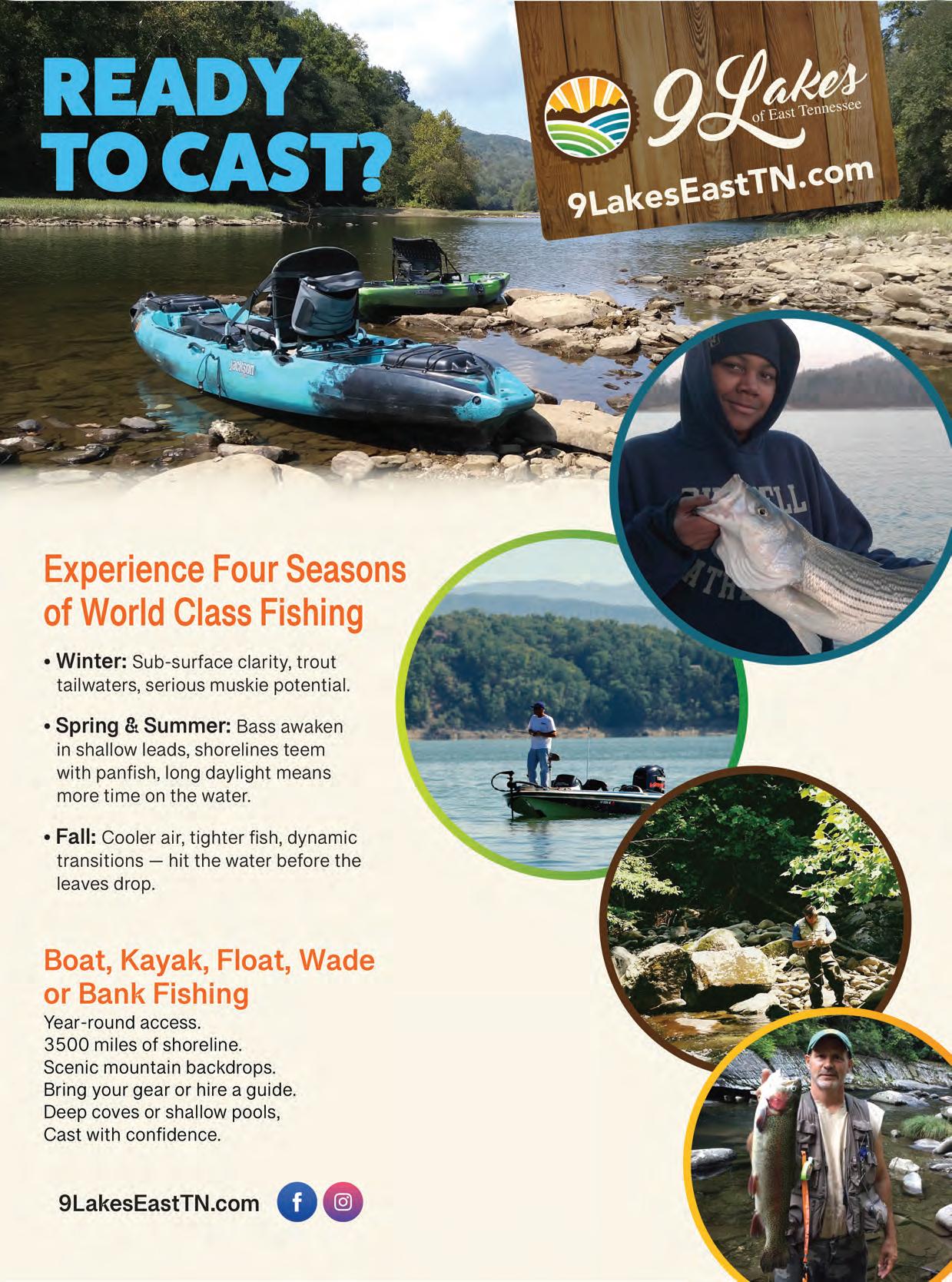
43,000 acres of legendary fishing from trophy bass, to world class sauger. A true Bill Dance Signature Lake.