
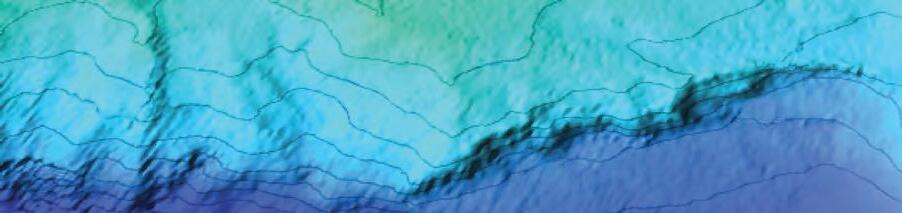





















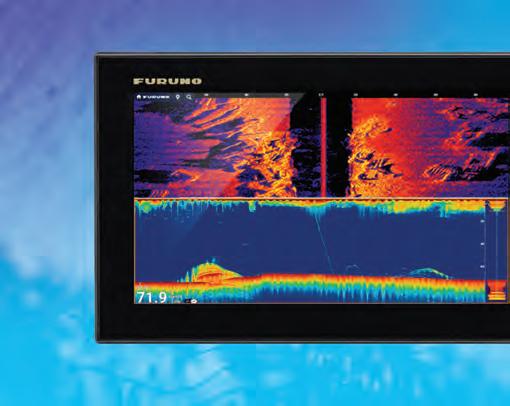

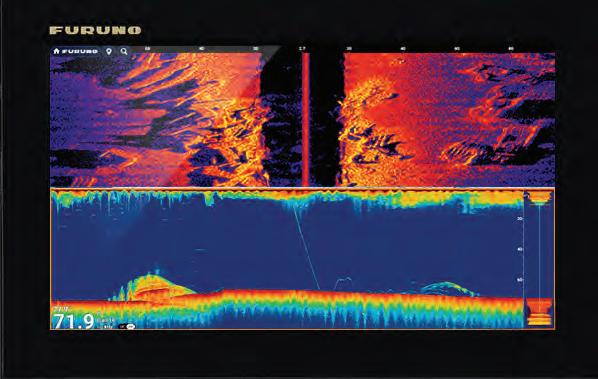
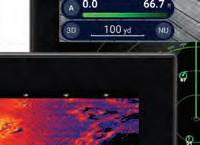
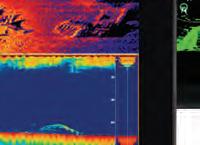
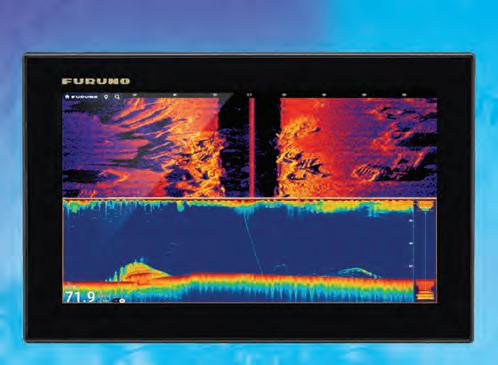
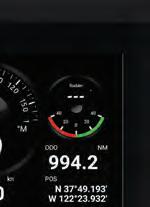




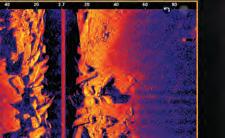

















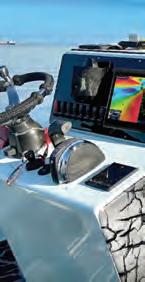
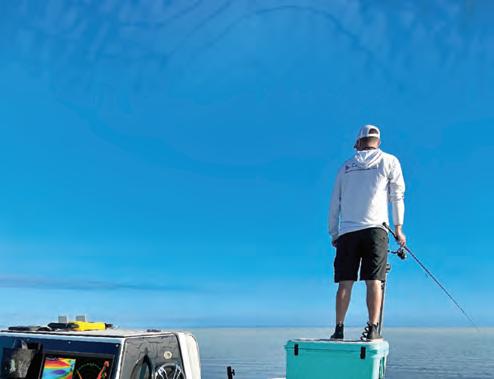



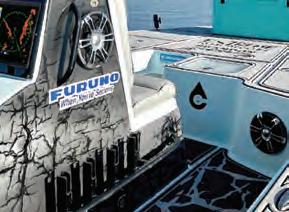





With this streamlined MFD, Furuno is bringing big-boat confidence to everyone. & More Fish
Less Stress






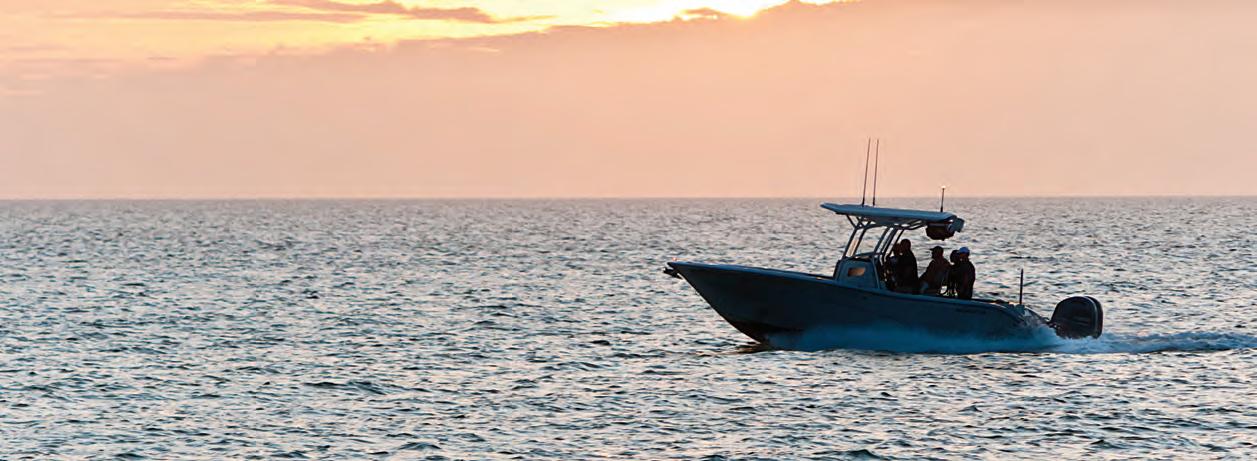
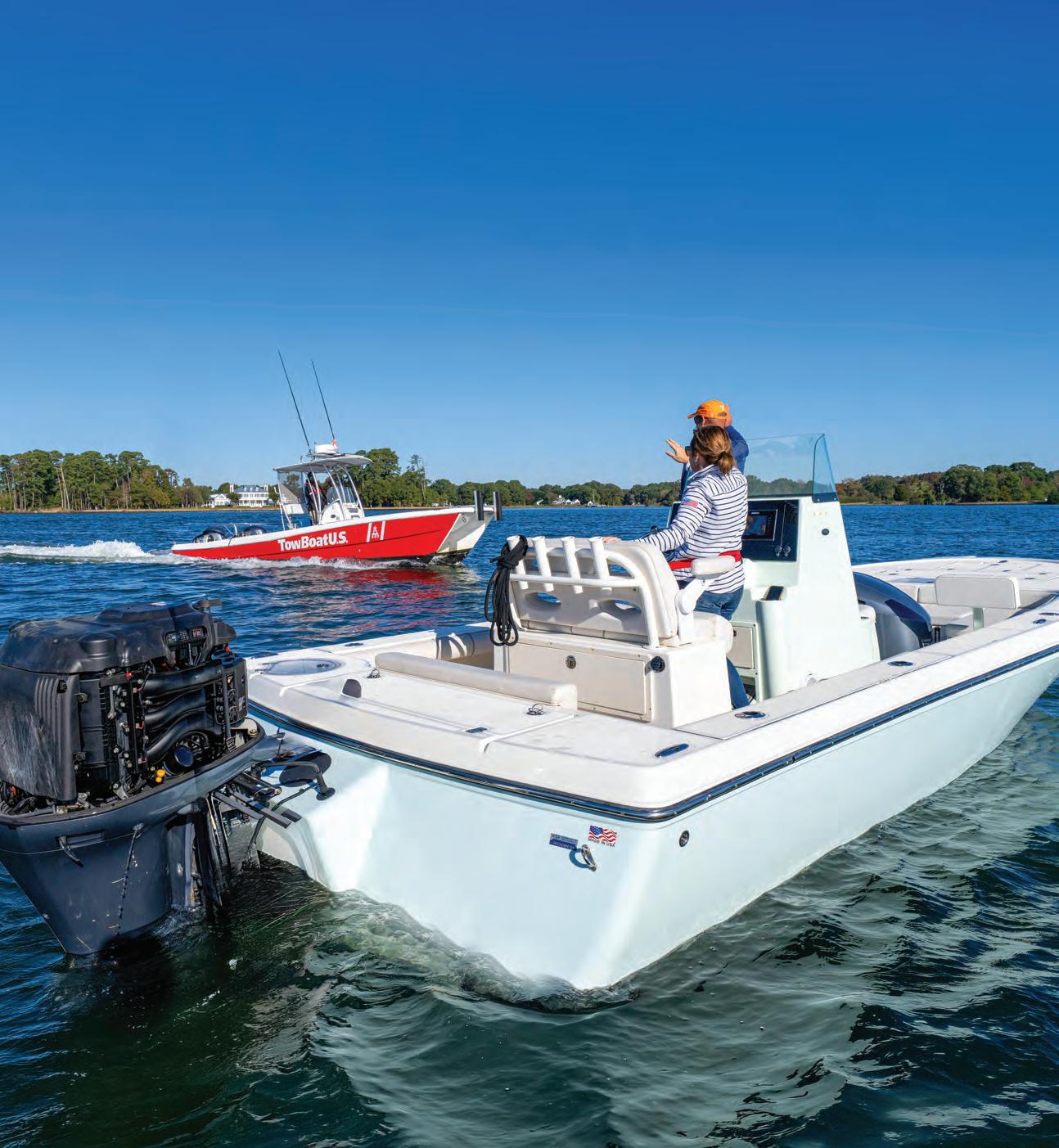
Are you ready to embark on your next on-water adventure? Before you set sail, here are fve things to know about boat insurance.
1. Boat insurance isn’t just for accidents
With comprehensive coverage, you’ll also be protected fnancially for theft, vandalism, and unexpected events like storms if you need repairs or replacements due to damage.
Accidents can happen to anyone
When accidents happen, boat insurance offers liability coverage for damages or injuries you cause while boating, up to specifed limits. It can also cover lawsuit costs if you’re sued.
3. Boat insurance can cover medical payments
Boat insurance offers a range of optional medical payments coverage limits, helping to cover medical expenses if you’re in an accident or someone is hurt on your boat, regardless of fault.
4. Most lenders require boat insurance
If you fnanced your boat, you’ll likely need boat insurance since most lenders require boat insurance to protect their investment. Additionally, some marinas or municipalities require proof of insurance for docking.
5. Progressive offers specialized boat coverages
Ever worry about getting stuck on the water? Progressive’s Sign & Glide® On-Water Towing coverage** can help. It’s an additional coverage that steps in if your boat is disabled or breaks down on the water, paying for on-water towing, jump starts, soft ungroundings, and fuel delivery. Fuel cost isn’t included.
Don’t let unforeseen circumstances disrupt your voyage. Cruise with confdence thanks to Progressive Boat insurance. Because when it comes to your boat, peace of mind is the ultimate luxury.
Scan to get a quote in as little as 4 minutes.
to learn more.













You probably noticed my attempt at a little humor with that title—just what we need a!er a long closed season. In my personal view, the closure has been unnecessary, much like the situation with Atlantic red snapper. Many of us are simply trying to catch seabass and grunts for dinner, but we keep getting pushed o our favorite spots where red snapper and gags are abundant. Yet, these species are still considered endangered. I think you know where I stand on this topic, so I won’t dwell on it any further.
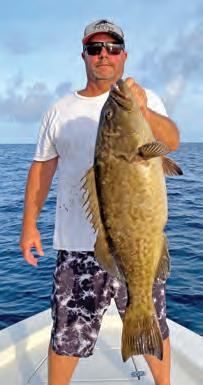
As warm water moves in closer to the beach, expect to nd king sh and cobia frequenting the same spots where you’re catching gags when the water temperature rises above 68°F. Always have a pitch rod ready as cobia may swim right up to the boat. However, don’t be surprised if you catch cobia while bottom shing with a decor jig and an appealing bait. In fact, more cobia are o!en caught on the bottom than on the surface when anchored up and targeting grouper.
schools of cigar minnows and sardines on them. You don’t need to look any further when you nd this combination of bait because the sh will be right there. It’s always a good idea to keep one person on the Sabiki jigging up. A live sardine or a live cigar on a decoy has a life expectancy of under ten seconds around any kind of sh. We try to never leave the marina without a couple boxes of frozen cigar minnows and live pin sh. at live pin sh can sometimes be the best selection of all because it’s too large for any of the trash bites.
TIM BAREFOOT
of other species like vermilions, mangroves, grunts and seabass.

In addition to all the other stu on the bottom, it’s always good to keep a light line out for kings, black n, wahoo and dolphin. It’s not a bad idea to keep one under a %oat (so you can keep an eye on it) and another one without a %oat, but you have to be mindful of that bait getting back into props or under the boat tangling other lines.
I’ve always said, “Find the bait, nd the sh.” Go to all your familiar haunts with structure of one kind of another, whether it’s ledges, rock out crops, wrecks, etc. e bonus will be nding
Any kind of little snapper about the size of your hand makes for the ultimate bait. I’m no longer shing for barely-legal gag or scamp. Instead, I’m looking for one good bite at a time. I’ll let that bait soak on the bottom and be patient waiting for the old man to show up. Don’t get me wrong, more sh have been caught on frozen cigar minnows and sardines than all the other baits combined, but a live one is simply irresistible to every grouper and/or snapper out there. Period. Nearly everything on the bottom will take a whack at it, but only the sh with the correct sized mouth can eat that small snapper. Because the creel limits are so low, you’ll easily reach your grouper limit. Once you have, it’s wise to take advantage
If you’re anchoring and not just using the trolling motor, it’s a great idea to %y the kite. Keep a couple baits suspended with little to no leader in the water. Live greenies, cigs or sardines under the kite is the ultimate presentation. You can even get away with %uorocarbon using circle hooks depending on the current. Don’t hesitate to put a bait out with a small amount of weight in front of it to get it down 30 to 50 feet behind the boat. is will get you that large wahoo bite. ere are so many options available this time of year in the warmer water, so be ready to take advantage of all of them once you ll your cooler with one species or another. is is the ideal time to broaden your approach and become skilled in targeting not only di erent types of snapper and grouper, but also pelagics.
MAY you nd calm seas, tight lines and delicious dinners this month!
Learn more from Tim Barefoot at barefootcatsandtackle.com.




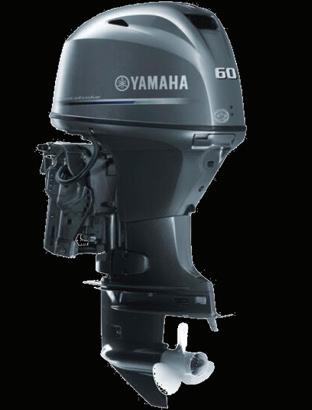
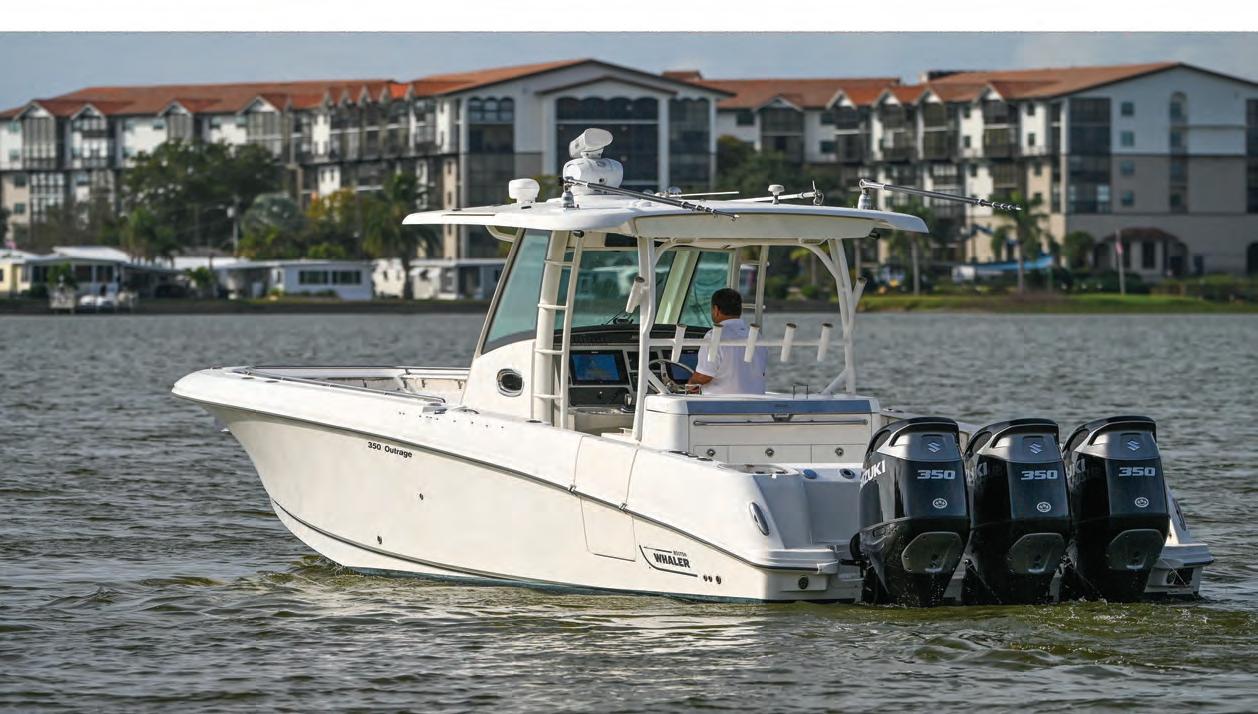
Mastry Engine Center has received the Suzuki Marine Super Service Award and has been ranked #1 in Suzuki Marine US Sales! 60 YEARS OF REPOWER EXPERIENCE!

RePower Packages designed to best ft your needs and not stretch your budget.
Financing available.

Rest assured, all Mastry Suzuki RePowers are backed by Suzuki’s industry leading 5-year factory warranty.

all Suzuki RePower Centers have achieved the
Stationed strategically around the East Coast, all Suzuki RePower Centers have achieved the highest level of Suzuki certifcations to meet and exceed your repower needs.
When Considering A Repower, Consider These Factors:
•Every Authorized Mastry Suzuki RePower Center has decades of repower experience providing proper rigging, controls, propeller matching and in water testing
•With a Mastry Suzuki RePower, owners gain improved performance, less noise and greater reliability
•Mastry Suzuki RePower’s exclusive Owner’s Edge Program*
•Mastry Suzuki RePower Centers use authentic Suzuki OEM parts and have factory certifed technicians

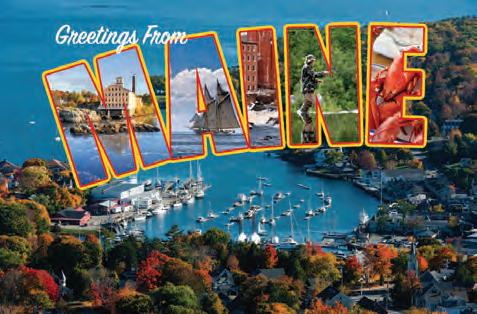
Since 2014, Mastry Engine Center, has been building the premiere Suzuki Outboard repower network in Florida. Today, Authorized Mastry Suzuki Outboard Centers have been exceeding expectaions in the Southeast for over two decades. Recently Suzuki Marine requested Mastry Engine Center to expand the network throughout the Northeast. Now boat owners from Maine to Florida can be assured of the best support for their Suzuki outboard repower project. All Authorized Mastry Suzuki RePower Centers provide the best options, information and package pricing for excellent performance in repower.
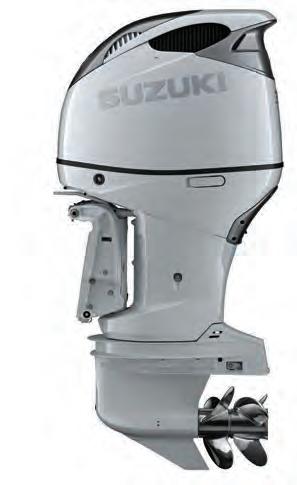

When you purchase a new Suzuki outboard from an authorized Mastry RePower Center you qualify to become a member of the Mastry Suzuki Owner’s Edge. Owners receive an identifcation card that provides them with important information about their Suzuki outboard motor as well as a passport to additional benefts during ownership. Members enjoy a detailed engine maintenance schedule, Mastry Suzuki RePower Trade Program and special pricing from Mastry Suzuki Partners *Get with the Program!

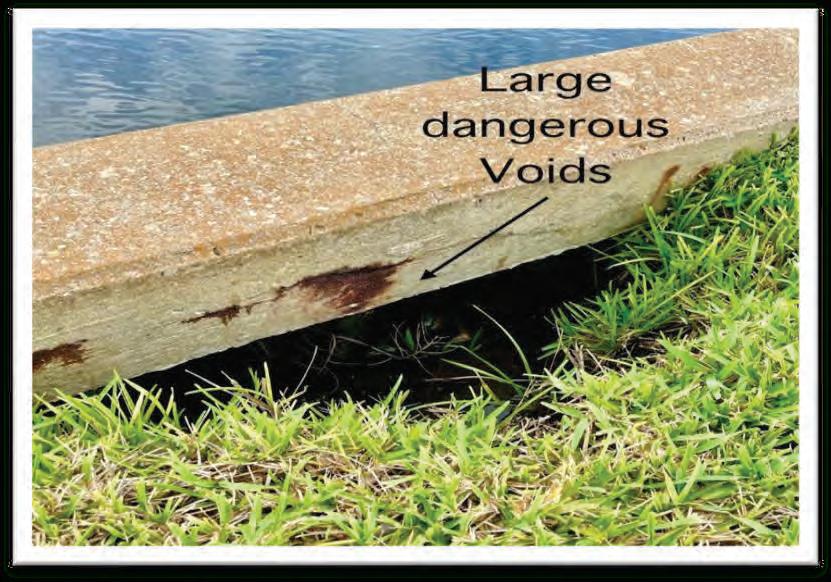
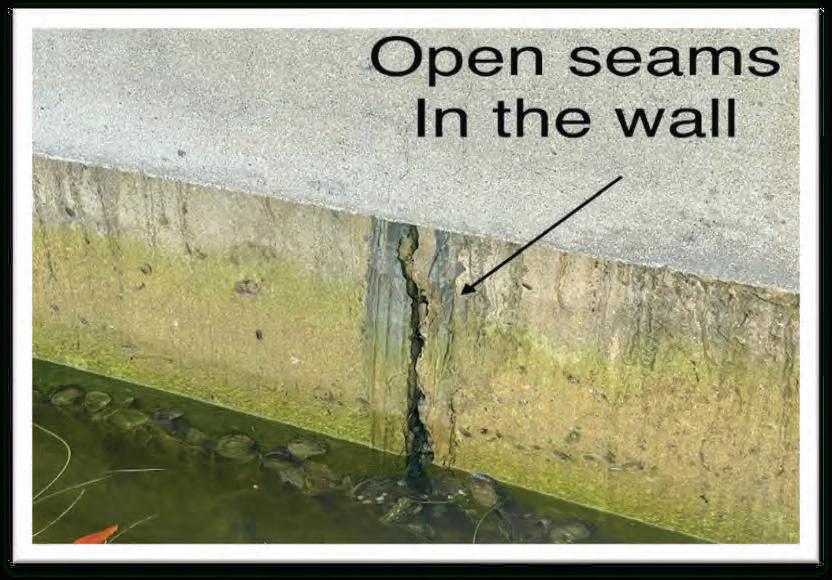
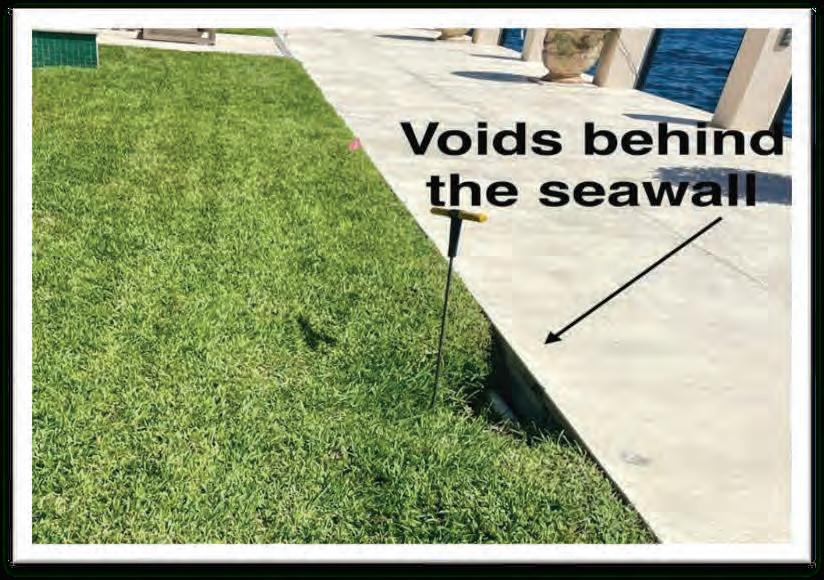
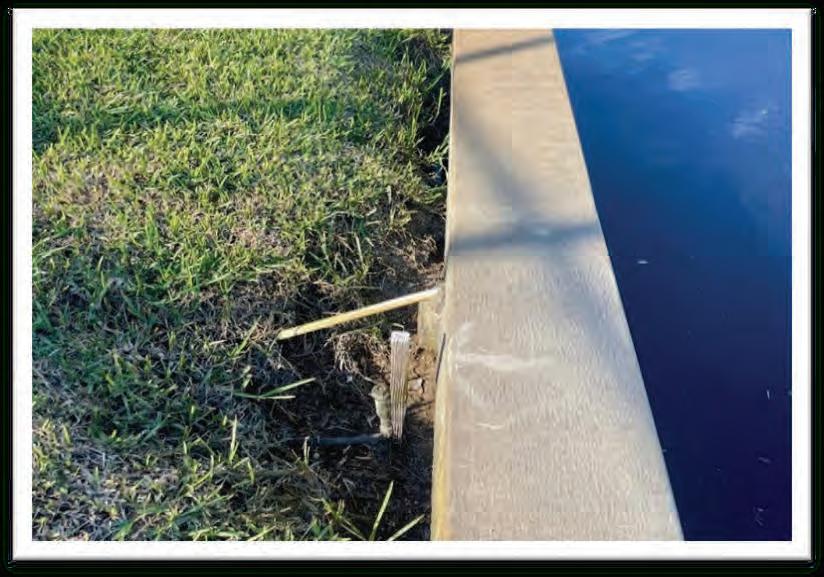



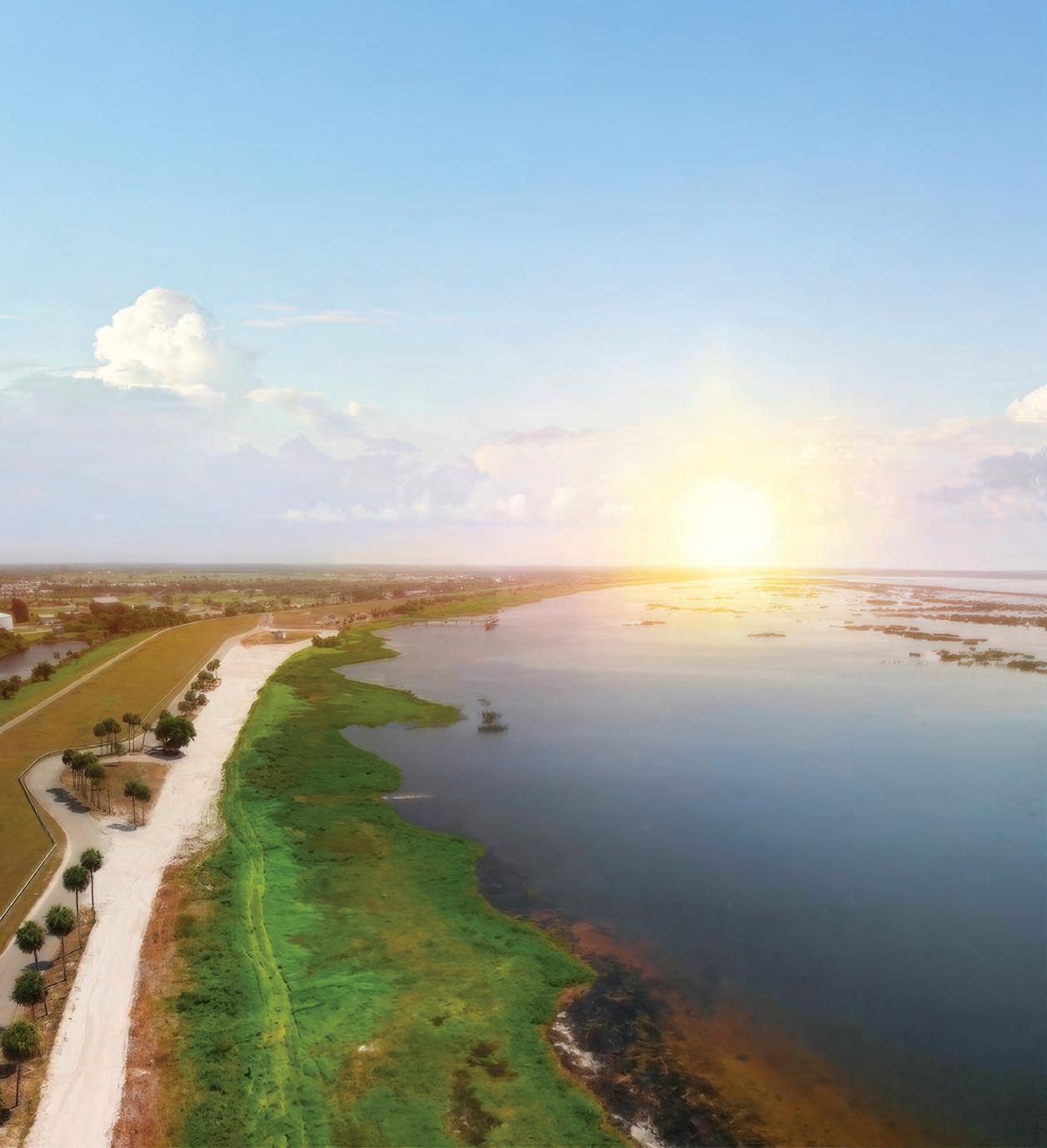
Rescuing South Florida’s ecosystem has for a long while relied on federal and state collaboration on really big and expensive plans. Plans like the Comprehensive Everglades Restoration Plan, CERP, or the Operation Schedule for Lake Okeechobee, LOSOM, are intended to return the hydrology of South Florida to a more natural state than the big public works projects of the 20th century created. The legacy of those projects have had huge cultural and ecological impacts on South Florida.
Returning the flow of water—volume, timing, location and quality—to South Florida is vital to restoring a healthy and resilient ecosystem. There are, however, serious obstacles to overcome before healthy flow can be restored. Many of the canals that were constructed to drain and convey water from Florida’s wetlands
also carried millions of tons of soil and organic material into lakes, rivers and lagoons. Before muck became the pollution problem that it is, it was soil, “Black Gold,” that was the foundation of Florida’s agricultural industry. Billions of tons of muck has been deposited into Florida’s lakes, waterways and lagoons.
Muck is the preeminent problem in Lake Okeechobee and the Indian River Lagoon.
The legacy load of phosphorus in muck is the single biggest challenge to moving healthy water from Lake Okeechobee into the Everglades. The Consent Decree with the National Park and the Tribes requires that water contain no more than 10 parts per billion (ppb) phosphorus, while lake water is often 140 ppb and the muck
is often many more times that amount. Muck in the tributaries and the Indian River Lagoon supplies nutrients that feed algal blooms that can crash and lead to fishkills and low light levels that have killed off the seagrasses. Muck is often resuspended by turbulence and blocks light penetration for photosynthetic organisms. Dissolved oxygen in and around muck is very low and mostly only supports anaerobic bacterial life.
One could theoretically dredge the many million cubic yards of muck at great expense. But much of it is contaminated with toxic minerals or salts so it must be treated and disposed of as toxic waste rather than becoming a soil amendment. But what if one could oxygenate the muck? What would happen if
POOR
FAIR
GOOD
BEST
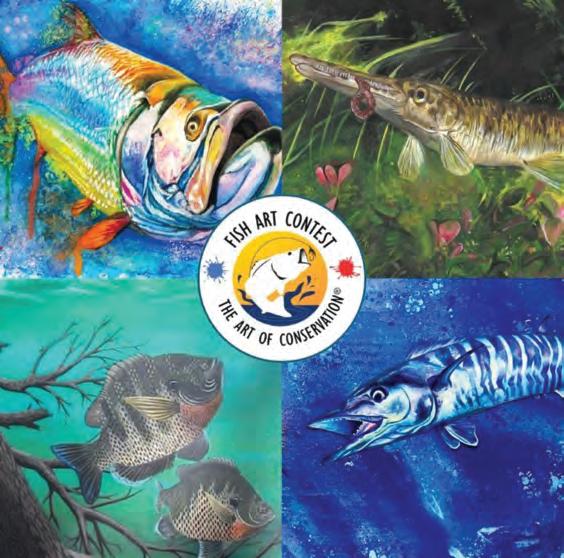
The Florida Fish and Wildlife Conservation Commission (FWC), in collaboration with Wildlife Forever, is pleased to announce the winners of the 2026 Florida Fish Art Contest. Students in kindergarten through 12th grade submitted artwork for a chance to win state and national honors plus prizes. This contest encourages students to depict native fish species in their natural Florida habitat and to learn about what those species eat and where they live.
The winning artists in each grade bracket (freshwater and saltwater) were selected by the FWC and will advance to the National Competition to be judged for top prizes, such as Best of Show. Winners are: Grades 10-12
Winners: Emily Jin (Sarasota) and Savannah LaViolette (Miami-Dade)
Runners-Up: Jordyn Collins (Lee) and Beckett Smith (Pinellas) Grades 7-9
Winners: Sebastian Romo (Sumter) and Mila Das (Duval)
Runners-Up: Enni Lin (Orange) and Kelly Ryan (Charlotte) Grades 4-6
Winners: Qingliang Zhang (Alachua) and Emma Zhang (Broward)
Runners-Up: Amelia Chu (Seminole) and Jessica Ma (Alachua) Grades K-3
Winners: Tristan Thomas (Hillsborough) and Chandler Watkins (Martin) Runners-Up: Maverick Thomas (Hillsborough) and Zohaan Ahmad (Broward)
“The level of talent and creativity showcased by these young artists is truly inspiring,” said FWC Commissioner Sonya Rood. “The Florida Fish Art Contest provides a unique opportunity for students across the state to engage with fishing and conservation. Their artwork not only reflects impressive skill, but also a growing appreciation for Florida’s native fish species and the importance of protecting them.”
This program fuels creativity while cultivating the next generation of anglers and conservation stewards by encouraging them to discover and value Florida’s fisheries.
Visit MyFWC.com/education/programs/fish-art/ then scroll down and select “Winners 2026” to view all the winning artwork from this year.
Capt. Gus Brugger Pattern Setter Charters (772) 360-6787
www.WelcomeToSebastian.com
From the backwater creeks to the offshore reefs and beyond there will be something biting every hour of every day in May. Hope you got enough rest this winter, because now it’s time to do some serious fishing
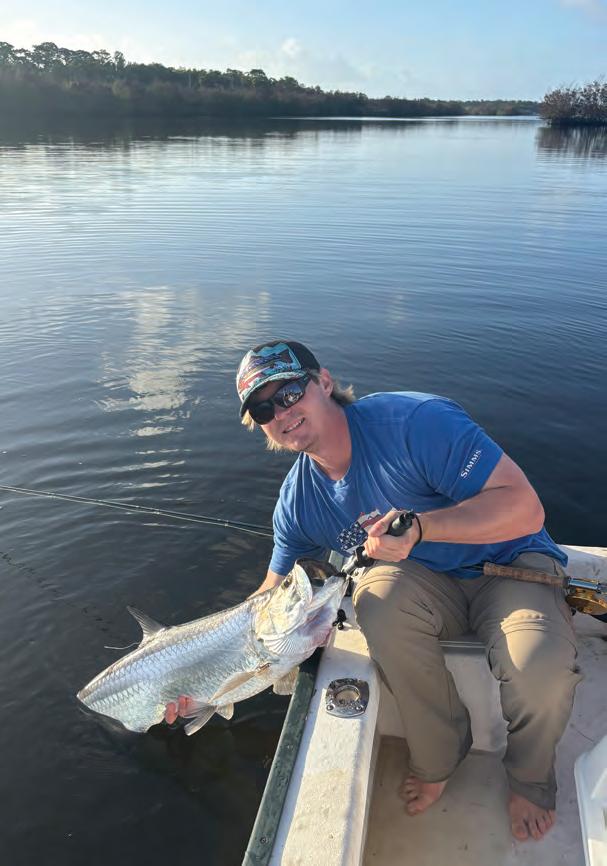
SEBASTIAN RIVER – May is the best month for tarpon and snook in the Sebastian River. Snook of all sizes can be found around docks and shoreline cover throughout the system. The docks between the railroad and U.S. 1 bridges can hold some giant snook both day and night in May. Freelining large live mullet at dawn and dusk around the bridges and oyster bars of the lower river is a good way to hook a trophy, and skipping D.O.A. shrimp and jerkbaits under the docks is productive when the sun is high. Tarpon from 5 to 50 pounds will generally be found in both forks of the river above the railroad bridge, with the larger fish often favoring the north fork. Casting D.O.A. TerrorEyz, MirrOdine plugs and flies to rolling fish is a fun and productive way to target tarpon. Live mullet can also produce exciting surface strikes from tarpon, sharks
and big jacks throughout the river.
INDIAN RIVER LAGOON – Snook will be utilizing the shoreline cover of the lagoon to set up ambushes for passing mullet and other baitfish. Any docks, mangrove overhangs and fallen trees warrant a cast with a jerkbait or D.O.A. shrimp. These same locations and techniques also hold the promise of producing gator trout and slot-sized reds. If you find a school of bait on a shallow grass flat, trout, redfish, jacks and ladyfish should be close by. Topwater and suspending plugs and weighted and unweighted jerkbaits will do the trick.
Daytime anglers using live croakers, pinfish, greenies and mojarra around the jetties and rip rap areas of the inlet should find snook willing to bite. Fishing plugs and bucktails from the shoreline, south jetty and catwalks at night is also a productive and popular way to catch a Sebastian Inlet snook. May 31st marks the end of the snook season. Keep an eye out for small crabs drifting out with the tide as the bull reds and the occasional permit won’t be far away.
– Glass minnows and the predators that feed on them generally make an appearance in the late spring and early summer. It can be a true blitz with Spanish mackerel and bonito clearing the water chasing glass minnows while tarpon, kingfish, jacks and sharks lurk underneath. Tight lines!
SEBASTIAN AREA OFFSHORE
Capt. Terry Wildey
Big Easy Fishing Charters (772) 538 - 1072 www.bigeasyfishingcharters.com captwildey@bellsouth.net
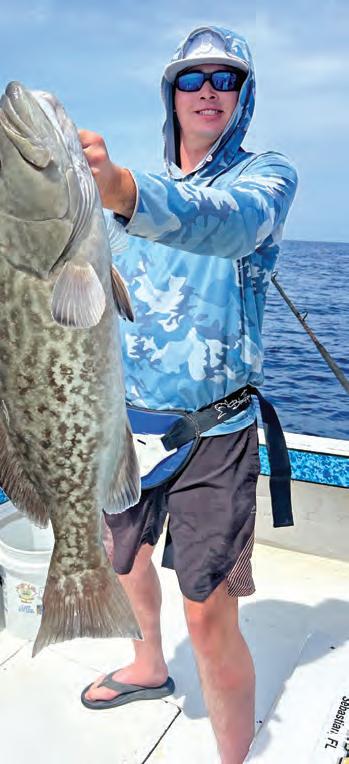
It’s grouper time! It’s been four months since the season closed, but May 1st is the opening of grouper season. So up your gear.
I would recommend 80 lb. main line and leader, a #8 circle hook and enough lead to hold bottom for the depth and current you’re in. I like either a live grunt, pinfish, big pilchards or croakers for live bait. And pogies for dead bait. Best areas will be rock piles and ledges in 60, 90, 160 and 240 feet. Remember, sometimes the best fishing is on some of the smallest marks of fish, on some of the smallest pieces of bottom. There should be some good trolling too. Look for that rip where there’s a temperature and color change. If there’s a weedline with flying fish or bait, then work it ’cause that’s where they should be. I usually start looking in the 120-foot area but you may have to run out to 160, 240, or even 600 feet. Ballyhoo
trolled with or without a lure will produce bites. It’s always good to have a few live baits, pilchards or herring in case you see a picky one.
Always have a bait rigged on wire run either on a downrigger or cigar lead. This will target that wahoo and is pretty good at enticing a dolphin bite in that middle-day time when the bite seems to slow down or stop.
For all of you fishing the reefs in the 60-foot and 90-foot range, expect some good action if you can sneak them by the sharks. There should be good numbers of mangrove snapper, triggerfish and lane snapper and, remember, with the sharks there will be cobia.
As always, be courteous to your fellow angler; you never know when you’ll need a tow. And support your local tackle shops—we’re lucky to have them. If you don’t have access to a network of fisherman, then join a fishing club. I recommend Sebastian Fishing Club; look them up on Facebook.
“Fish On...Gotta Go!”

Capt.
Capt.
Capt.
Capt.
Capt. Scotty
Jim Moir
Capt. Bo Samuel
Capt. Adam
Capt. Terry Wildey














1F 2:46 AM 0.17 L
9:05 AM 2.35 H
2:57 PM -0.18 L
9:39 PM 2.55 H
2SA 3:23 AM 0.21 L
9:41 AM 2.31 H
3:34 PM -0.14 L
10:16 PM 2.5 H
3SU 4:00 AM 0.27 L
10:17 AM 2.27 H
4:10 PM -0.07 L
10:53 PM 2.43 H
4M 4:36 AM 0.34 L
10:53 AM 2.2 H
4:46 PM 0.01 L
11:31 PM 2.34 H
5TU 5:13 AM 0.43 L
11:31 AM 2.13 H
5:24 PM 0.11 L
6W 12:11 AM 2.25 H
5:52 AM 0.51 L
12:11 PM 2.05 H
6:04 PM 0.21 L
7TH 12:53 AM 2.16 H
6:35 AM 0.57 L
12:56 PM 1.97 H
6:49 PM 0.3 L
8F 1:39 AM 2.1 H
7:26 AM 0.6 L
1:47 PM 1.93 H
7:41 PM 0.37 L
9SA 2:29 AM 2.06 H
8:23 AM 0.57 L
2:45 PM 1.92 H
8:42 PM 0.42 L
10SU 3:21 AM 2.05 H
9:22 AM 0.48 L
3:48 PM 1.98 H
9:45 PM 0.41 L
Capt. Scott Fawcett
Off the Chain Fishing Charters (772) 285-1055 offthechainfishing.com fishscottyf@bellsouth.net
SEBASTIAN INLET
TIME OFFSET
High Tide -48 min
Low Tide -24 min
HEIGHT OFFSET
High Tide .93 feet
Low Tide 1.0 foot
VERO BEACH (OCEAN)
TIME OFFSET
High Tide -55 min
Low Tide -35 min
HEIGHT OFFSET
High Tide 1.45 feet
Low Tide 1.36 feet
11M 4:16 AM 2.08 H
10:19 AM 0.32 L
4:52 PM 2.11 H
10:45 PM 0.36 L
12TU 5:11 AM 2.15 H
11:12 AM 0.11 L
5:53 PM 2.29 H
11:42 PM 0.27 L
13W 6:05 AM 2.24 H
12:03 PM -0.11 L
6:50 PM 2.48 H
14TH 12:35 AM 0.17 L
6:58 AM 2.35 H
12:53 PM -0.32 L
7:43 PM 2.66 H
15F 1:26 AM 0.07 L
7:49 AM 2.46 H
1:42 PM -0.49 L
8:36 PM 2.8 H
16SA 2:16 AM -0.01 L
8:40 AM 2.55 H
2:33 PM -0.61 L
9:27 PM 2.88 H
17SU 3:06 AM -0.04 L
9:32 AM 2.61 H
3:24 PM -0.64 L
10:19 PM 2.89 H
18M 3:57 AM -0.04 L
10:25 AM 2.63 H
4:17 PM -0.6 L
11:11 PM 2.84 H
19TU 4:51 AM -0.01 L
11:19 AM 2.59 H
5:13 PM -0.49 L
20W 12:04 AM 2.75 H
5:48 AM 0.04 L
12:15 PM 2.52 H
6:11 PM -0.33 L
21TH 12:58 AM 2.64 H
6:48 AM 0.09 L
1:14 PM 2.43 H
7:12 PM -0.15 L
ST. LUCIE INLET
TIME OFFSET
High Tide +55
Low Tide +1 hr; 42 min
HEIGHT OFFSET
High Tide 1 foot
Low Tide .50 feet
FORT PIERCE (SOUTH JETTY)
TIME OFFSET
High Tide -31 min
Low Tide -18 min
HEIGHT OFFSET
High Tide 1.14 feet
Low Tide 1.50 feet
22F 1:54 AM 2.51 H
7:51 AM 0.12 L
2:17 PM 2.34 H
8:16 PM 0.02 L
23SA 2:51 AM 2.4 H
8:54 AM 0.11 L
3:21 PM 2.28 H
9:20 PM 0.15 L
24SU 3:48 AM 2.31 H
9:55 AM 0.07 L
4:26 PM 2.26 H
10:21 PM 0.24 L
25M 4:44 AM 2.24 H
10:50 AM 0.02 L
5:27 PM 2.28 H
11:18 PM 0.29 L
26TU 5:38 AM 2.2 H
11:40 AM -0.03 L
6:22 PM 2.31 H
27W 12:09 AM 0.31 L
6:27 AM 2.18 H
12:26 PM -0.08 L
7:11 PM 2.35 H
28TH 12:55 AM 0.31 L
7:12 AM 2.17 H
1:09 PM -0.1 L
7:55 PM 2.38 H
29F 1:38 AM 0.31 L
7:54 AM 2.17 H
1:50 PM -0.12 L
8:35 PM 2.39 H
30SA 2:19 AM 0.31 L
8:35 AM 2.17 H
2:29 PM -0.12 L
9:14 PM 2.39 H
31SU 2:58 AM 0.31 L
9:14 AM 2.17 H
3:08 PM -0.1 L
9:53 PM 2.37 H
Early summer has always been a favorite time of year for me while growing up fishing off the Treasure Coast. School's out, the seas are calm, the bait is here, and the fishing is usually pretty great. Aside from grouper season opening back up this month, historically speaking, May has always been the kickoff to our best dolphin fishing of the year. Unfortunately, they don’t show up nearly as big or as consistently as they used to, but it’s still a good time of year to target them, along with wahoo and even some marlin. The Hill, The Peanut, The Pinnacles, Loran Tower ledge, and Juno ledge are all good places to focus. I’m hoping this year will follow suit as the leading edge of the sargassum island makes its presence known as it slowly approaches.
Troll ballyhoo rigged on J
hooks, naked or skirted, along weedlines and current rips using light to medium tackle. Have a small spinning rod with a jig on it handy to pick off schoolie mahi, this is a good time of year to bring a fly rod too if you’re into that. When you come across a nice school of mahi it’s sometimes hard to not beat up on them. It takes a good bit of self-control to leave them chewing and move on to the next spot, but it will return itself ten-fold if everyone started to self-regulate. Please fish responsibly and don’t take advantage of the fishery when opportunities like this arise.
May is one of those months where you should fish a down rod. Whether you’re trolling or live baiting, a down rod or deep bait this time of year as the water warms works wonders. Start out with a loose drag because you will catch many sails, dolphin and kings on this bait, and a tight drag at first will encourage pulled hooks.
May also offers great swordfishing and nice weather windows making Bahamas trips and long range trips a possibility. Yellowfin tuna, blue marlin and gaffer dolphin are migrating their way to the north right now and venturing a little further offshore than normal can pay off big. Whichever style of fishing you decide to do this May, I hope your next trip is Off the Chain!
JENSEN BEACH (INDIAN RIVER)
TIME OFFSET
High Tide +2 hrs; 17 min
Low Tide +3 hrs; 4 min
HEIGHT OFFSET
High Tide .48 feet
Low Tide .92 feet
JUPITER INLET
TIME OFFSET
High Tide -10 min
Low Tide -9 min
HEIGHT OFFSET
High Tide 1.08 feet
Low Tide 1.42 feet
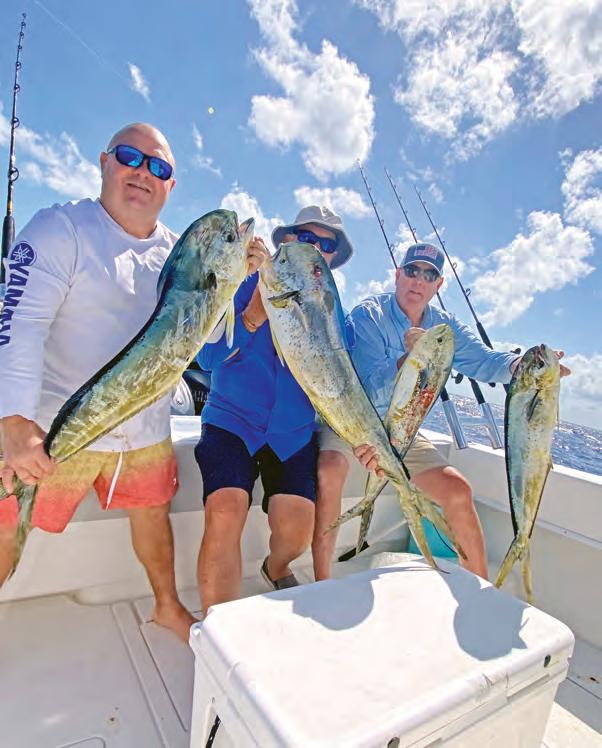
MARTIN COUNTY INSHORE NEARSHORE
Capt. Jonathan Earhart
Chaos Fishing Charters (772) 341 – 2274
www.chaosfishingcharters.com
jon@chaosfishingcharters.com
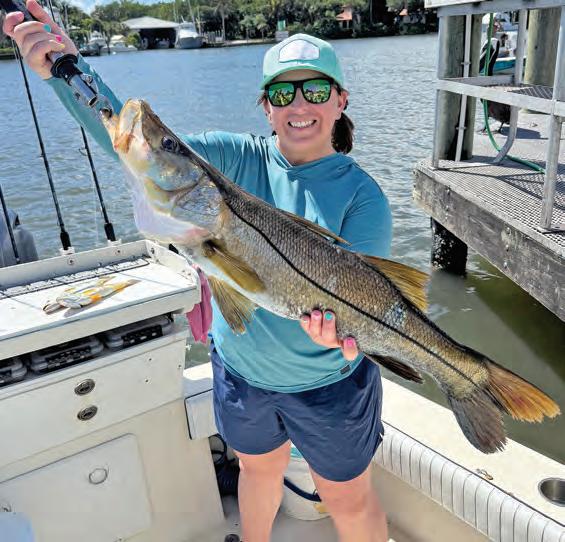
May has always been a great month for fishing here on the Treasure Coast. Inshore snook fishing is at its peak for finding keepersized snook before the season comes to a close and the summer snook spawn kicks off. Live bait fishing on or around local jetties will produce the most action. Pilchards, sardines, croakers, pinfish and mullet are all great choices. Circle hooks with 40-60 lb. leaders will ensure the fish make it boatside and don’t chafe off during the battle. Expect some large jacks, redfish and tarpon in the mix when
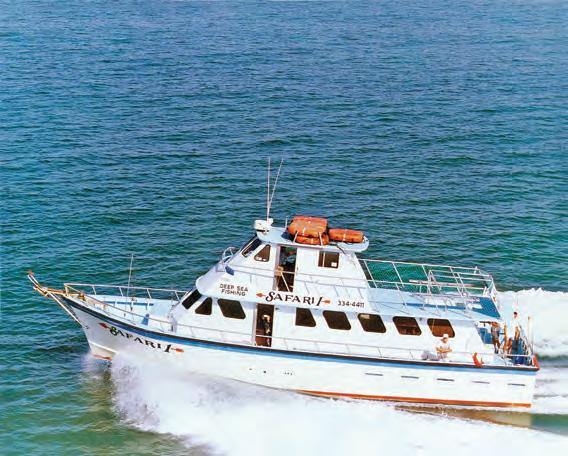
Safari I Deep Sea Fishing
Pirates Cove Resort and Marina 4307 SE Bayview St. Port Salerno Reservations: (772) 334-4411 www.safari1deepseafishing.com
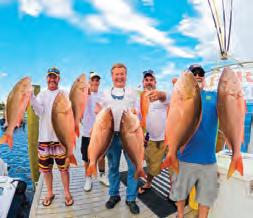
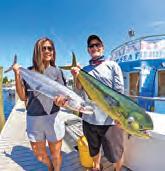
Full contact bottom fishing will highlight the warm spring days of May as the Florida sun illuminates an offshore playing field that will be ripe with grouper and snapper. The catch-and-keep season for grouper will open on the first day of May, ending a four-month closed season on these tasty bottom brawlers. Near coastal anglers will break out their heavy tackle and target the many species of grouper that inhabit the wrecks and reefs east of Stuart. Gag, red, black and scamp groupers are some of the most prevalent species of the family that will be found just offshore of the St. Lucie Inlet. The naturally occurring coral reef line in depths of 110- to 160-feet of water, generally known to locals as the “8 Mile Reef,” will be the go-to zone for dialing in successful grouper fishing.
Deploying live baits from an anchored or drifting boat will produce the best results for “grouper digging.” The velocity of the horizontal flow or current and bottom temperatures are the main variables for strategy decision making when positioning one`s boat over top of a grouper honey hole. Heavy tackle will be a mandatory
targeting snook locally this month. Larger tarpon are roaming the channel edges. Catch them using live or dead large mullet on the surface or on the bottom with a fish finder rig along the channel edges. Sit, wait and soak baits for the silver king. We are also seeing good schools of rolling fish along local beaches south and north of the St. Lucie Inlet, often in 8- to 10-feet water depths.
Nearshore fishing action has been consistent for snapper, jacks, cobia, kingfish, permit, sharks and goliaths. Nearshore reefs and wrecks are producing good bottom fishing and surface action when freelining a live sardine or threadfin. Add a trace wire leader for toothy mackerels if you’d like to add one to the cooler. Remember to reel those bottom fish in quickly; goliaths will often wait until you catch a few snappers, then they start to eat your catch if you don’t reel in very quickly. Tight lines...
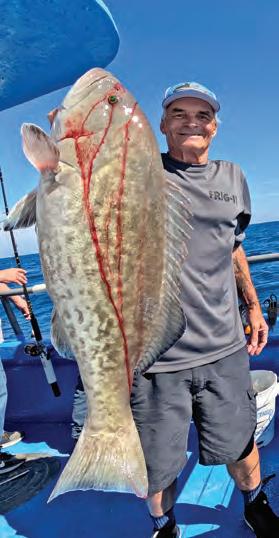
Beach in these depths, historically, are home to large gag and red grouper, and will be hot spots for grouper grocery getters. While bottom fishing at these depths, anglers will also be pleasantly surprised to get attached to jumbo
mutton and mangrove snapper, who are reef mates and will live right alongside the grouper family. May will provide a toasty backdrop for exciting bottom fishing for the offshore anglers of Martin County.
necessity for steering a big grouper to one's floating platform—4/0 to 6/0 reels spooled with heavy braid of 100- to 200-pound test and terminal tackle to match the main line will yield the most successful end results.
Grouper species can also be found and targeted in shallower depths, especially on reef structures in 70- to 80-feet of water that comprise the natural reef line known as the “6 Mile Reef.” Natural coral ledges east and north of Jensen



ST. LUCIE COUNTY OFFSHORE
Capt. Bo Samuel
Pullin Drag Charters (772) 971-6661
facebook.com/Pullin-Drag-Charters catpainbofishing@gmail.com
April still gave us plenty of windy days to work around, so we are definitely looking forward to a much calmer May. This month grouper season begins, the snapper bite remains on fire, and the kings and mahi are already moving in! While the mahi aren’t as big as we’ve seen in past years, this is still a great time of year to target them with plenty of larger ones in the schools. In general, local anglers are anticipating more time on the water with plenty of “pullin’ drag” action both inshore and offshore.
The opening of grouper season on May 1st has meat hunters dreaming of landing a prize fish and a bag full of delicious fillets for dinner. Bottom fishing is a top priority as we target gag, black, red and scamp. We’ve been getting great
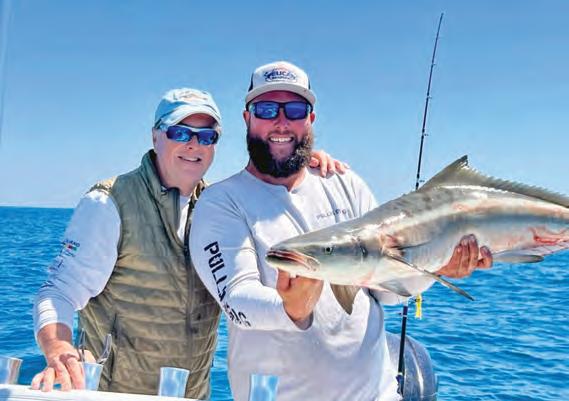
grouper and snapper bites hitting the shallower reefs and wrecks so you shouldn’t have to go further than 90–120 feet or so. Since successful grouper catches require good quality bait, I recommend live croakers, pilchards and threadfins with just enough weight to hold bottom. Also, be prepared for goliath grouper encounters as they are hooked frequently on bottom fishing trips. Goliath are still a protected species although there is a limited harvest with a special permit due to a higher population now.
May is a terrific time for trolling for kingfish and mahi in 70 to 100 feet. For mahi, put your focus along weedlines and color changes, with
an eye out for diving birds as well. Naked and skirted ballyhoo both work great. Remember that mahi are schooling fish, so when you hook one, be ready for other quick hookups and a whole lot of excitement. Cobia are also found this time of year, especially swimming along with sea turtles, large rays and even sharks. These “brown bombers” are a top favorite for anglers of all ages, known for their amazing fight and equally amazing taste. I always keep a pitch rod ready for a surface sighting of a cobia or tripletail.
The Treasure Coast waters make fishing dreams come true and after nearly twenty years of fishing here, I wouldn’t want to be anywhere else!
I highly recommend local bait and tackle shops like DeBrooks Fishing Corner for all your tackle needs plus your current issue of Coastal Angler Magazine. So take advantage of some warmer, milder days and see why we live in a fishing paradise on your own custom charter trip. I’m based out of the historic Little Jim Bait & Tackle where they will cook your catch to perfection and serve it with a smile. It’s hard not to brag when the ocean is my “office” and we’re always Pullin Drag!
Meat hunters will continue bottom fishing as their go-to strategy for salty groceries. We expect large mutton and mangrove snapper congregating in good numbers along the 70- to 90-foot reef line. Threadfins, finger mullet, sardines and cut bait are great choices. Last month gave us some super snapper days and we are still pullin drag on some good size fish. Monster muttons are true saltwater trophies for anglers of all ages.
If you would like to take advantage of the calmer days of April on our beautiful Treasure Coast waters, just come over to my home base, the historic Little Jim bait & Tackle, and we’ll get you booked and hooked! Celebrate the arrival of Spring by hopping on a charter for a salty time Pullin Drag!

St. Lucie Flats Fishing Charters (609) 820-6257
www.stlucieflatsfishing.com
Wehave had one heck of a winter/spring this year. Rapid water temperature swings along with some very breezy conditions have made the inshore fishing a bit of a challenge for 2026. May is the great transition month when we leave all that behind. We begin to embrace the warmth and favorable conditions the Treasure Coast has to offer.
Snook fishing continues to improve along seawalls, docks and mangrove shorelines, especially on the outgoing tide. Focus on areas with moving water and bait presence near inlets and deeper residential canals. Early morning and late evening bites have been best, with fish responding well to live pilchards, threadfins and slow-worked soft plastics. As temperatures rise, expect snook to stage closer to passes and
Miss Fort Pierce Fishing (772) 766-0191
www.fortpiercefishing.com
Comingout of an extremely windy winter and usual windy April, we’re now into May. As the wind subsides the fishing should heat up. We are seeing the mangrove snappers move around and really start to eat; that should improve in the depths from 120 to 150 feet on rough hard bottom. The mutton snappers should start to feed as well on the sand and soft bottom adjacent to the reef structure in the same depth. Look to use grunt plugs, sardines and live finger baits to get ’em.
In May, we will continue to catch some triggerfish, lane snappers and white grunts wih a two-hook, highlow “chicken” rig, using squid or fresh cut grunt strips.
Look to see more cobia and mahi as a month goes on.
In addition, new red snapper regulations should come into effect. It appears that we’ll have a 30 day season starting May 22. We’ll see...
The Miss Fort Pierce will continue to sail daily on our all day trips departing by 7 a.m. by reservation only. Our trips are limited to 28
bridges, setting up for their prespawn movement.
Trout are spread out across the grass flats from Sebastian down toward the southern end of Jensen. Look for cleaner water over potholes and mixed grass where baitfish are holding. Trout are feeding aggressively during low-light periods, with topwater plugs producing explosive strikes at first light. As the sun gets higher, switching to soft plastics or a Vudu shrimp under a popping cork has been effective. Keep an eye on water clarity; cleaner water is holding better numbers of fish.
Tarpon activity is steadily building, particularly around inlet, bridges and areas with strong tidal flow. Juvenile tarpon are active in backwater creeks and residential canals, while larger fish are beginning to show along the main lagoon edges. Live mullet and crabs are top baits, but artificial presentations like swimbaits and large jerkbaits can draw reaction strikes when fish are rolling. Early mornings with calm winds offer the best opportunities to find rolling fish looking for an easy meal.
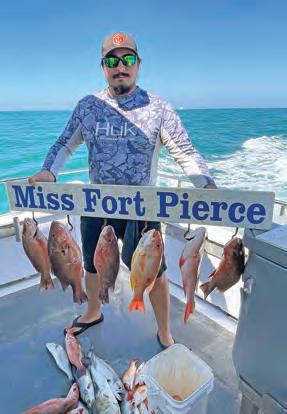
passengers so there’s never any crowding. Towards the end of May we’ll restart our evening trips on Wednesday and Friday nights from 4 p.m. until 11 p.m.
Specialty red snapper trips are listed on our calendar, departing Thursday evenings at 7 p.m. and Sunday mornings at 5 a.m. specifically fishing for red snapper on our 11-hour trips. The boat is also available for private fishing and cruising charters, including private red snapper trips. Go to www.fortpiercefishing.com to make your reservation and look at our calendar of trips.
Keep tight lines. Be safe on the water and we look forward to seeing you out there on board.
Overall, bait presence is the key factor right now. Find the schools of mullet, glass minnows, pins and pigs, and predators are not far behind. Prioritize moving water, fish the edges of current seams, and adjust presentations based on light conditions. With stable weather and warming trends, expect all of our inshore favorites to remain active and increasingly aggressive through the Treasure Coast area.
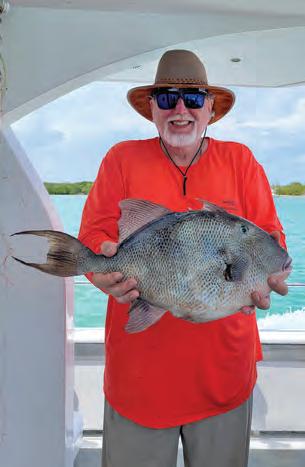
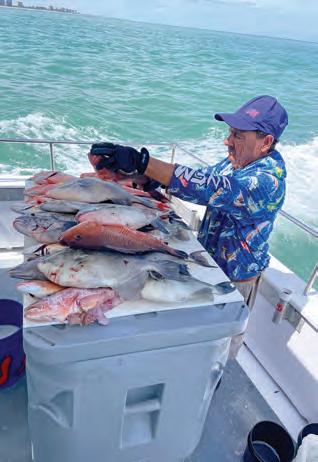

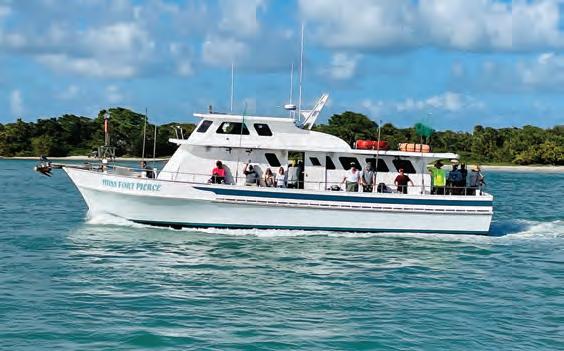

Stuart’s boating tradition began in 1916 with the founding of the St. Lucie River Yacht Club along the St. Lucie River in downtown Stuart. The club thrived for years as a center for sailing and fellowship until a hurricane in the mid-1930s destroyed its clubhouse and docks. The facilities were never rebuilt, leaving Martin County without a full-service yacht club for more than 50 years.
On January 13, 1988, five local yachtsmen— Fred Slack, Peter Weber, Lester Lott, Sam Luckey and Earl Vansciver— met over lunch with a shared vision to revive the area’s yachting heritage. From that meeting, the Stuart Corinthian Yacht Club (SCYC) was born, founded on the true spirit of Corinthian yachting: seamanship, sportsmanship and camaraderie.
The Club grew quickly, holding its first meeting in July 1988 with 44 attendees and soon hosting its first overnight cruise to the Pelican Yacht Club in Fort Pierce. SCYC was officially incorporated in November 1988 and adopted its bylaws shortly thereafter.
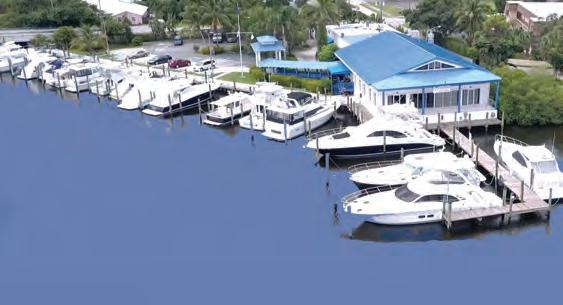
In 1990, the club purchased property in Manatee Pocket at Horseshoe Point Road and Capstan Avenue in Port Salerno, establishing a permanent home. Construction began in 1992 on a modern 5,000-square-foot clubhouse and first-class marina, which were completed in August 1993. Honoring its roots, SCYC recognized William Oughterson and Kenneth Stimmell—members of the original St. Lucie River Yacht Club— as honorary members, allowing the Club to proudly trace its heritage back to 1916. Charter membership was completed in November 1993.
Today, the Stuart Corinthian Yacht Club provides fine dining, an active cruising program, a variety of social events, a marina featuring 25 slips and great views. Membership in the Stuart Corinthian Yacht Club offers the added benefit of reciprocity with many other yacht clubs, since SCYC is a member of the Yachting Club of America. While owning a boat is not required for membership, those with a passion for boating, waterrelated activities and a vibrant social environment are encouraged to reach out for a tour, information on membership or inquiry on renting the clubhouse by calling (772) 2211900 or visiting myscyc.com.





MAY 8 - 9
St. Lucie Chamber’s 30th Annual Fishing Frenzy Ft. Pierce City Marina https://stluciechamber.org/fishing-frenzy-65/
MAY 15 - 16 Stuart Sailfish Club KDW Tournament
Sailfish Marina of Stuart www.stuartsailfishclub.com/kdw-tournament/2026
MAY 16 2026 D.O.A. Paddlers Tournament
River Palms Fish Camp, Jensen Beach doalures.com/products/2026-paddlers-tournament-rules
MAY 22 - 23 TCBA Memorial Weekend Fishing Tournament
Pirates Cove Marina & Resort https://fishtcba.com/
MAY 29 - 30 The Lucky Duck Tourmament & Race
Conchy Joe’s, Jensen Beach https://miatc.org/luckyduck
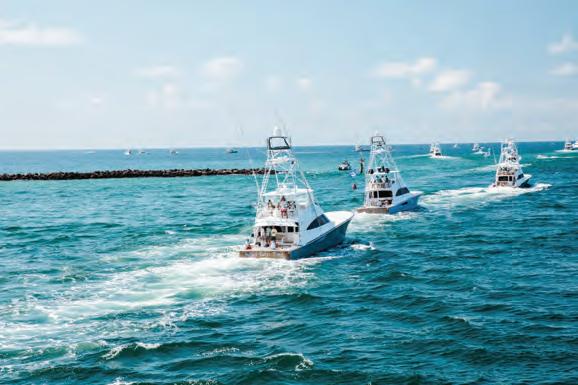

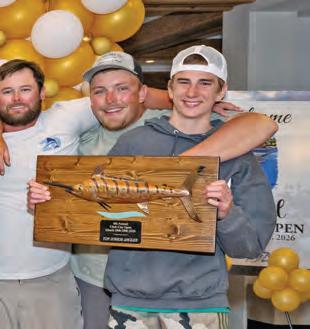
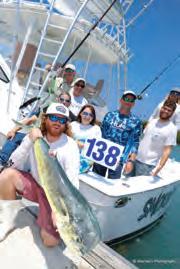
Sempre Duro, a 68 Ricky Scarborough run by owner Chris Stavola, started out strong and finished on top with a special catch to win the 2026 Chub Cay Open, held March 26–28, 2026 in The Bahamas. The team scored two blue marlin releases early on the first day and held off challengers. But it took the effort of teenager Jack Morino to secure the victory. On the second day of fishing, the crew thought they had a white marlin on and put Morino in the chair. But after the fish started peeling line, it was confirmed as a blue marlin. Morino fought the stronger billfish successfully and that catch earned first place honors and the Junior Angler trophy.
Gina Lisa, a 75 Jim Smith run by Capt. Danny Scotti, released a blue marlin, white and sailfish on the last day to earn second-place honors. Marlin Brando, a 68 Viking with Capt. Cody Mitchell on the flying bridge, was the third-place team.
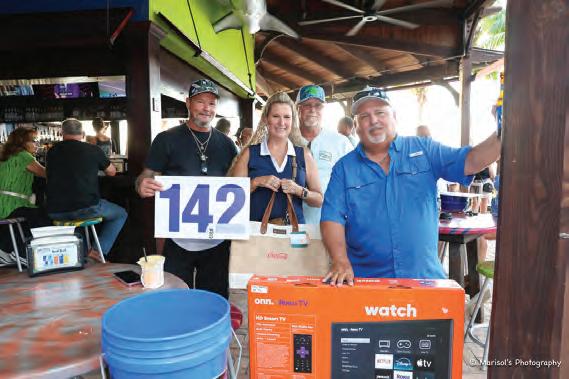





Captain Keith Greenburg/Krazy Salts, an 80 Viking, challenged the leaderboard but came up just a bit short. The boat scored four sails in five minutes, (a triple-header and a single) to add to an earlier single that morning.

Twenty-one boats competed in this year’s tournament, hosted by the exclusive Chub Cay Resort & Marina Club, located at the southern tip of the Berry Islands in the Bahamas. Seven blue marlin, three whites and 23 sailfish were caught during two days of fishing. Under the Open’s billfish release format, blue marlin scored 500 points each. White marlin count for 200 points and sailfish are worth 100 points.
The competition for the Top Lady Angler trophy was intense. Pam McAteer, fishing aboard Maverick, narrowly beat out Rhonda Stryker on Wingman, based on time. The two each re-leased a blue and two sailfish.
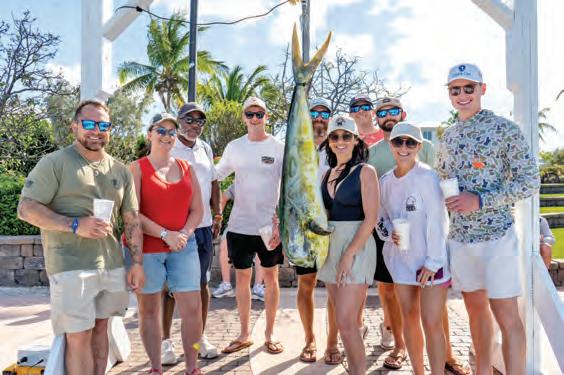
Hos N’ Around weighed the top meat fish—a 26-pound dolphin, while Y Not III brought a 13-pound wahoo to the scales.
“What a great tournament. We had some exciting fishing and the cold front that was supposed to hit stalled, so the weather was great,” said Tournament Director Robert “Fly” Navarro.


For more information about the tournament, the resort and marina, visit chubcay.com.
Inshore, Offshore & Freshwater!
Youth, Junior & Adult Categories!
A Waterfront Fundraiser to Support Youth Boaters & Anglers
Friday & Saturday, May 29-30
Conchy Joe’s ~ Jensen Beach
Part Fishing Tournament - Part Rubber Duck Race
100% Benefiting Our Next Generation of Anglers!
The Lucky Duck is more than a fishing tournament—it’s a community-powered initiative dedicated to helping local youth succeed through academic achievement, life skills development, and workforce training. By supporting both the MIATC Skidmore Scholarship Foundation and Project LIFT, the Lucky Duck and its partners strengthen the impact of established organizations that are making a direct difference in the lives of today’s youth and tomorrow’s leaders.
THANKS TO OUR SPONSORS!

TREASURE COAST











one could bind the phosphorus and promote nitrification while raising the dissolved oxygen in the water column? What if one could promote aerobic microbes to consume the organic materials in muck and return the water body to a sandy bottom with abundant plants and animals?
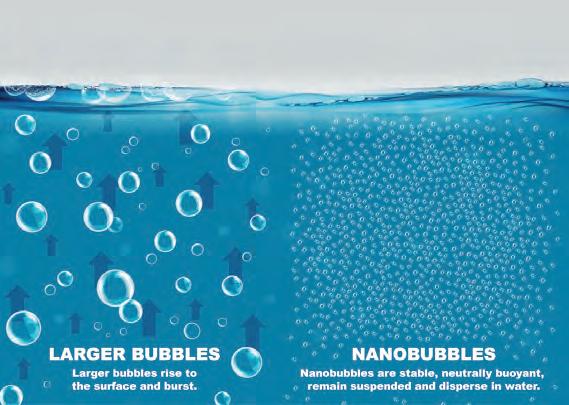
Aeration has long been used in processing wastewater helping to leverage microbial decomposition. But lagoons, rivers and lakes are large waterbodies that complicate the dispersal of bubbles over such a large area, and bubbles usually float to the surface. However, there is
technology that can make bubbles so small that they actually sink. The nature of these bubbles repels each other, so they naturally diffuse across the bottom. The bubbles are enriched air so they are not biocidal. These bubbles are called nanobubbles, one billionth of a meter accross, smaller than a bacterium. They do their work at the molecular level and they just might be a game changer for returning the most polluted lake in America to a healthy ecosystem.



To learn about the benefits of supporting Indian Riverkeeper, visit www.theindianriverkeeper.org or call (772) 341-4953.




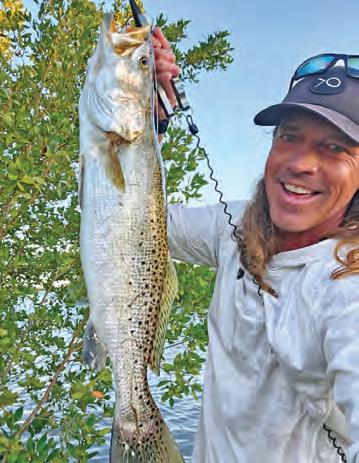
Brett Henderson with his 27-inch seatrout.

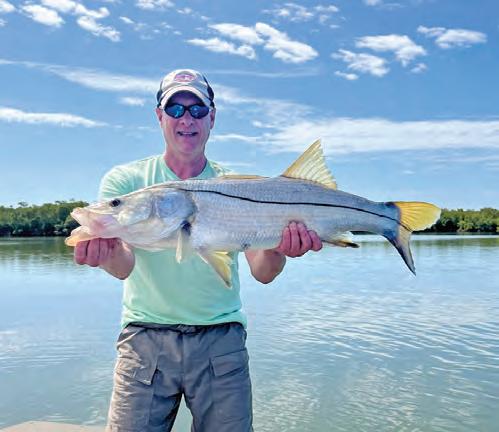
The day started cold & foggy, but ended warm & sunny for James Savastano, who caught the prize of the day — his 15 lb. 34-inch personal best snook!

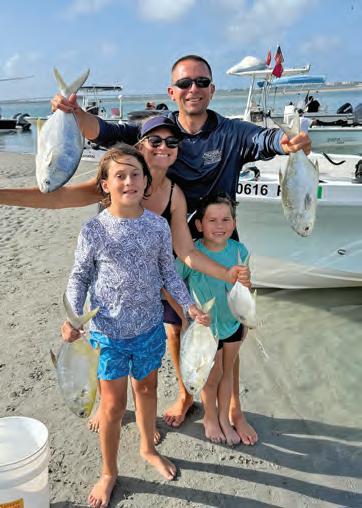
The Marts family getting in on the pompano and sandbar action in Stuart!
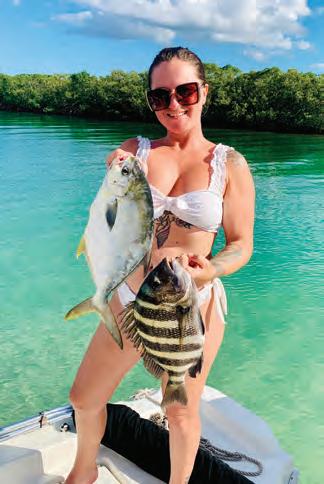
Cassie Wilkey said she had a very fun day on the water with family, doubling up on pompano and sheepshead.

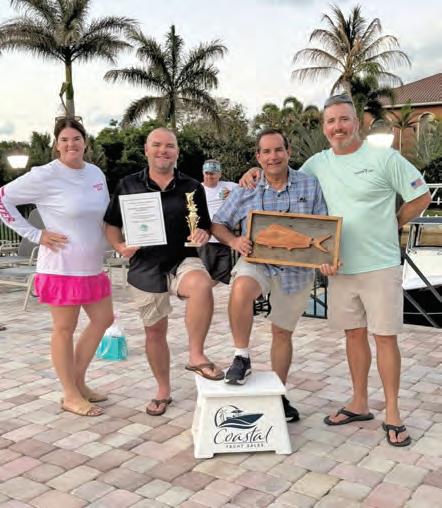




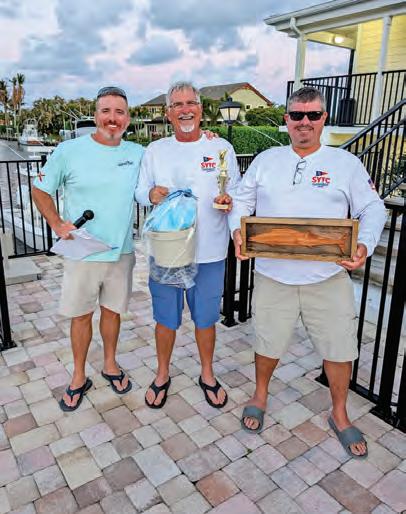
Soundings Yacht and Tennis Club Fishing Classic winners: (Left) 1st Place, Anthony Conti and John Schwartz, whose Overall catch included 7 snook; (Right) 2nd Place, Paul Tousignant and Jim Schaefer whose Overall catch included 4 snook and mixed bag of snapper. They also won the “Inshore Trash Fish” category with a 5 lb. jack.

Scan the code or visit coastalanglermag.com to submit your photos and catch details.


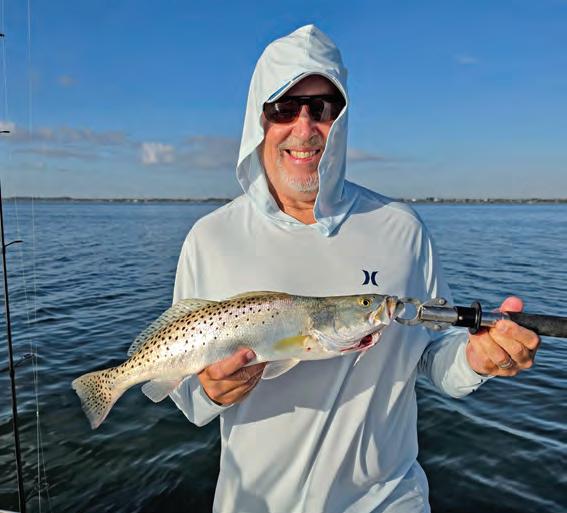
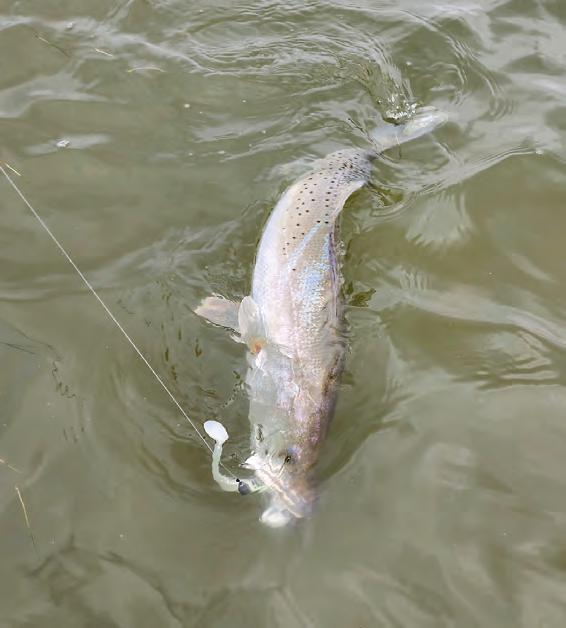
If you’re a big trout enthusiast like me, you know there’s still time le to chase a personal best—if you haven’t had your ll over the past few months. While most anglers focus on trophy speckled trout from December through early April, May quietly remains one of the most underrated windows of the year. With the full moon in late May, many of those big females will hold eggs all month, giving anglers one last legitimate shot at a heavy trout before the spawn wraps up.
What makes May even better is how enjoyable it is to be on the water. e cold winter grind is behind us, waders can nally come o , and the warmer conditions allow for a more aggressive approach. Unlike winter, when slow presentations dominate, May lets you sh with more con dence and energy. Topwater explosions become a real possibility again, and there are few things more exciting than watching a big trout crush a lure on the surface.
at said, topwaters aren’t the only tool in play. Slow-sinking and suspending baits still produce, and so plastics—especially paddle tails—shine this time of year. With water temperatures rising, trout are more active and willing to chase.
Adding sound, like a subtle tail rattle, can make a noticeable di erence in getting bites from these larger sh. Sizes from 3” to 5” can all be e so don’t hesitate to mix it up until you nd what they want.
Location plays just as important a role as lure selection. I like to focus on grass knee- to waist-deep water, especially those with nearby drains from small lakes or creeks. areas concentrate bait and naturally pull in predators. Subtle features—like potholes, small depressions, or even a one-foot drop-o —can hold sh and shouldn’t be overlooked.
Approach is everything in shallow water. Whether you’re wading or shing from a kayak, stealth matters. Position yourself far enough o your target area to avoid spooking sh, especially in clear conditions. Cover water methodically with a fan-cast approach, working from short casts to longer ones. Starting close allows you to pick o sh in front of you before potentially spooking them with longer casts.
By Capt. Michael Okruhlik
Shallow water may look too skinny to hold quality sh, but time and time again it proves otherwise. e key is reading the conditions,


they want to be. Some days they’ll be scattered across a at, while other times they’ll stack up along a subtle edge or current break.
May is your last real shot at an egg-heavy trophy trout before summer patterns take over. Take advantage of the warmer weather, sh with con dence, and enjoy the experience. And if you can, take a kid shing—they like big trout too.
Capt. Michael Okruhlik is the inventor and owner of Knockin Tail Lures® — knockintaillures.com.
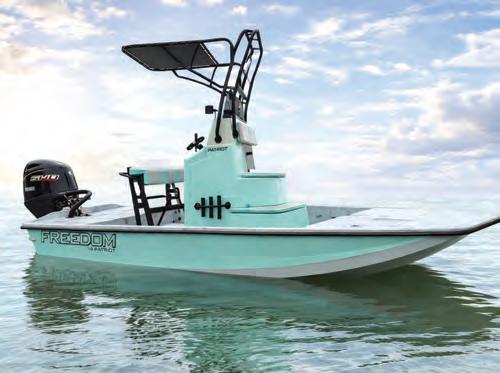
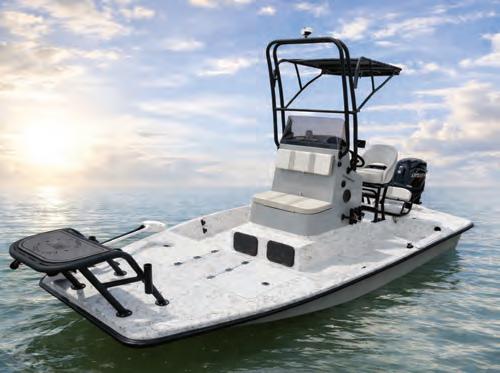

By A. deGruchy
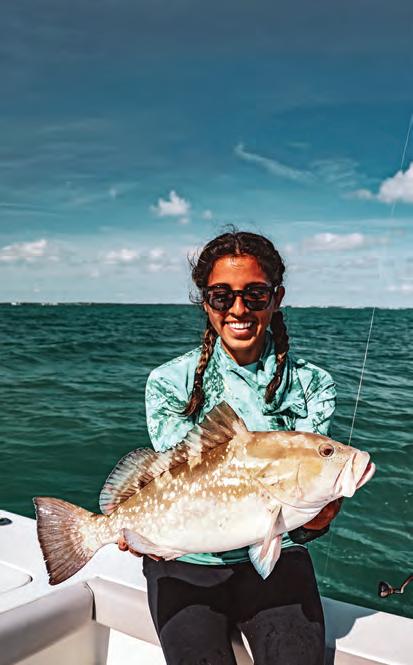
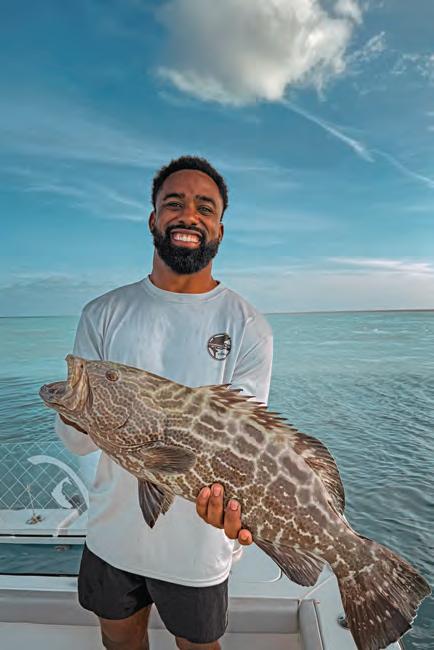
ay 1st marks one of the most anticipated days in the Florida Keys: the reopening of grouper season. e Florida Keys o ers a variety of grouper species, each with its own habits and appeal. Black grouper are the top prize, known for their size and power, typically found on deeper reefs and wrecks. Red grouper
are more common on patch reefs and ledges and are a great target for steady action. Gag grouper show up more in deeper water and are prized for both their ght and table quality.
Grouper shing is all about positioning and strength. ese sh live in holes, ledges, and wrecks, and when they bite, they immediately try
to return to structure. Success depends on getting your bait down quickly and pulling hard the second you feel a strike. ere is no waiting. You either win the rst few seconds or lose the sh. Tackle matters. A heavy-duty setup using PENN conventional reels paired with strong rods gives you the drag and li ing power needed to keep sh out of the rocks. On the terminal side, circle hooks are the standard for reef shing, improving hook placement and supporting conservation. Pair these with heavy leader and enough weight to stay pinned to the bottom. Live bait like pin sh or grunts is ideal. Bigger baits o en mean bigger grouper, especially when targeting black grouper o shore.
It is also important to understand that grouper are a slow-growing species. Many take years to reach legal size, and they are particularly vulnerable during spawning periods. at is why strict regulations, seasons, and gear requirements exist. Responsible anglers follow the rules, handle sh carefully, and use tools like descending devices when releasing sh from deeper water.
Here in the Keys, your approach can vary based on conditions. O shore trips o er a shot at larger sh in deeper water, while patch reef shing can provide more consistent action and shorter runs. Both are productive, and the best option o en depends on weather and current conditions. Show up prepared, sh hard, and respect the resource so it stays strong for years to come.
For more real-world shing action in the Florida Keys, follow Bean Sport shing on YouTube



www.adamsmarine.com To Reserve a Spot Call: 352-447-1950 Email: info@adamsmarine.com











It’s no fsh tale when you run with a John Deere. You can get everything done faster and easier, so you get more time on the water. Plus, our special offers make them the catch of the day.


Lipless vibrating lures have long been staples in bass !shing, but few create more debate—or more bites—than the lipless crankbait (rattle trap) and the chatterbait. While both rely on vibration to trigger reaction strikes, their e ectiveness depends heavily on forage, seasonal timing, and even the rod and reel used to !sh them.
A lipless crankbait is a hard-bodied bait designed for speed and sound. Its tight vibration and internal rattles allow bass to locate it from long distances, making it ideal when !sh are actively feeding on bait!sh like shad. ese baits excel in open water or over submerged grass, where anglers can burn them, yo-yo them, or rip them free to trigger reaction strikes. For rattle traps, rod selection plays a major role in landing !sh. A 7’ to 7’3” mediumheavy rod with a moderate or moderate-fast action is ideal. e slightly so er tip allows bass to fully load the rod before the hooks engage, reducing the chances of pulling treble hooks free during surging !ghts. e longer length also helps make long casts, which is critical when covering water or targeting schooling !sh. You typically want to throw the trap on a faster gear ratio reel like a 7.1 or 7.3. e faster gear ratio helps pick up the line on long cast when you get a bite and need to catch up with the !sh.
A chatterbait, or bladed jig, produces a wider, thumping vibration and a more natural pro!le when paired with a so plastic trailer. is lure shines around shallow grass, docks, and wood, especially in stained water where bass rely more on vibration than sight. Chatterbaits o en mimic bluegill or bream, making them deadly around spawning areas and shallow cover. Because chatterbaits use a single heavy hook, anglers bene!t from a slightly di erent rod setup. A 7’ to 7’4” medium-heavy rod with a fast action provides the backbone needed to drive the hook home while still o ering enough tip to keep !sh pinned. is setup also allows anglers to control !sh quickly when pulling them out of thick cover.
Beyond lure, reel, and rod choice, matching the hatch remains one of the most important elements of success. Bass o en focus on a speci!c


By NPFL Pro Angler Joey Bloom
forage, and lures that match the size, color, and movement of that prey get bit more consistently. Chrome or white rattle traps imitate %eeing shad in open water, while green pumpkin or bluegillpattern chatterbaits blend perfectly into shallow cover scenarios. To maximize these techniques, anglers must learn to follow the bait throughout the season. In late winter and early spring, bait move toward warming %ats, making rattle traps excellent search tools.
A er the spawn, bluegill become a primary food source, and chatterbaits excel around shallow cover and spawning grounds. In summer, bait o en shi s to deeper grass lines or o shore structure, where slow-rolled chatterbaits can shine. Come fall, shad migrate into the backs of creeks, and rattle traps once again dominate as bass feed aggressively ahead of winter.
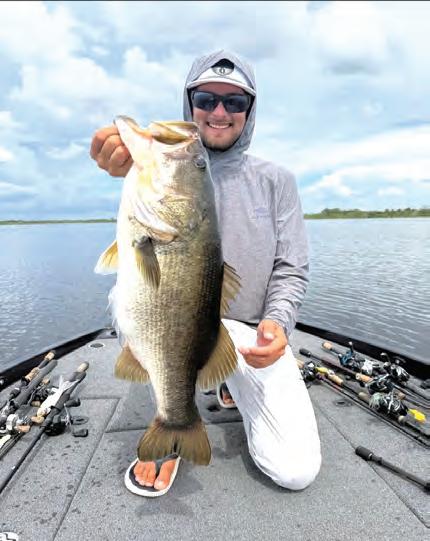
By pairing the right vibrating lure with proper reel and rod length and action—and matching it to seasonal forage—anglers can signi!cantly increase e ciency and landing percentage. In bass !shing, success o en comes down to details, and choosing the right reel and rod can be just as important as choosing the right bait.
Follow all of Joey Bloom’s shing and fun on Instagram, Facebook, and YouTube at Joey Bloom Fishing.






CAPT. MIKE SMITH

any anglers haphazardly run around searching for !sh. ey see a !shy looking point and anchor up and start casting. Hours later they give up and go home empty handed.
at !shy looking point probably does have !sh on it some of the time, but not all the time.
What did they do wrong? ey forgot that !sh move around based on water temperatures, food resources, currents, water quality and the presence of larger predators. In my experience, 80% of the !sh will be in 20% of the area based on those conditions.
Here are the three most important pro tips to help you catch more !sh.
1. Find Feeding Fish. My !shing charters always start by scanning mangrove shorelines, grass %ats, and spoil islands for feeding !sh. Obviously, this is the easiest way to !gure out where the !sh are.
If you can !nd baits being crushed by predatory !sh, then start casting there. Even if you only !nd nervous bait, that’s still a great spot to start casting.
2. Find Food Resources. When the !sh are not actively feeding your next best bet is !nding bait. Sometimes the bait is obvious and you can start casting along the edges of the schools.
If you can’t actually see any bait then let the birds tell you where it is and what size it is. Birds always know where the food is. When you see diving pelicans or a great blue heron perched on a mangrove branch you know there is bait there.
e various bird species will tell you what lures to cast. When you see small wading birds like snowy egrets, little blue herons, green herons and tri-colored herons, then you know to cast something small. is really helps because you can grab your three-inch paddle tail or 2.75 inch shrimp and know that you are !shing with the right size lure. ose smaller herons usually target baits that are three inches or smaller.
When you see great white egrets, great blue herons and brown pelicans it gets a little harder to !gure out the size of the baits to use. You know there is food there but those birds will eat anything from a two-inch minnow up to an eight-inch mullet.
is is when you need an assortment of di erent sizes and pro!les of lures. I usually have a three-inch paddle tail, an arti!cial shrimp and a four to !ve and half inch jerkbait (%uke) rigged on my rods. Start casting until you !gure out what the !sh want on that day.
3. Find Moving Water. e next important factor is moving water. All of the predatory inshore species that you want to catch like a little bit of current.
ey will typically be facing into the current waiting for some unsuspecting food resource to %ow past their ambush point.
Your strongest currents are going to occur during the full moon and the new moon. Coincidentally, the best !shing occurs around these two moon phases.
Go get ‘em!
Capt. Mike Smith, owner of Fish Your Ass O Charters, is an inshore shing guide who has been shing the inshore waters, oyster bars and grass ats of Florida for more than 40 years. Reach him at (561) 3392317, email: contact@ shyourasso .com or visit shyourasso .com.
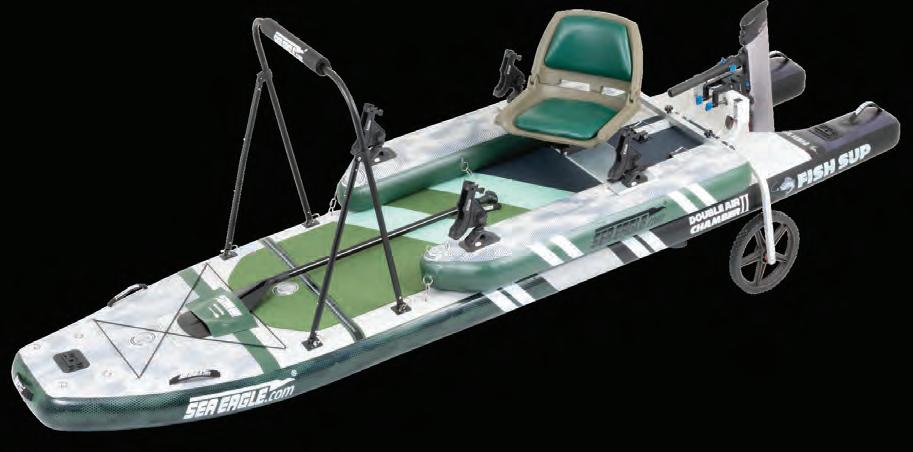
The versatility of the FishSUP™1210 is unmatched! Use it bare bones with just the board, a paddle & your !shing gear or deck it out with swivel seat, side pontoons, casting bar, motor and more! Incredibly stable, extra wide, swallow-tail !shing SUP holds up to 500 lbs! The FS1210 takes electric and gas motors up to 3 hp. There’s even an option for a bow trolling motor.
Choose From 6 Packages
Starting At Just $999
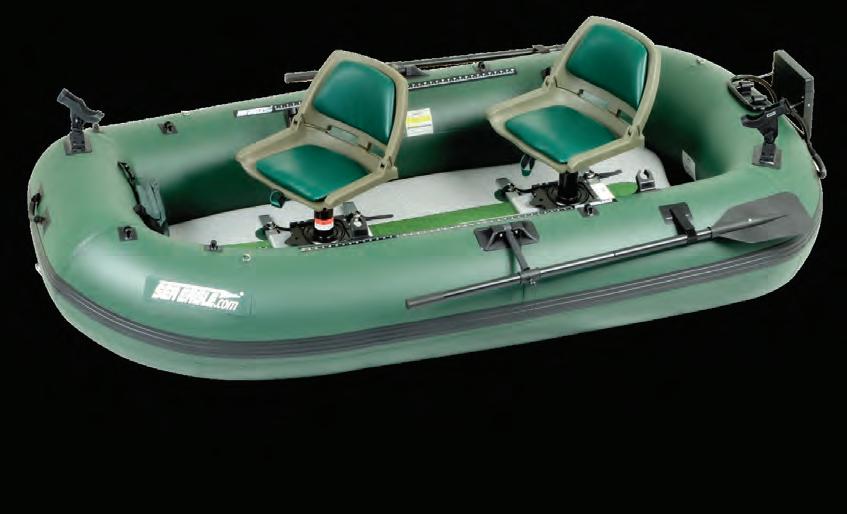
Perfect for !shing rivers, lakes and bays. The STS10 is a lightweight, roomy 1 or 2 person pontoon boat that’s packed with features anglers need & love including 2 built-in !sh rules, 4 built-in rod holders & 2 Scotty® mounts for more rod holders, anchor locks, camera posts or any other Scotty® accessory. Now available with a drop-stitch in atable oor or wooden oorboards.
Choose From 7 Packages
Starting At Just $1449
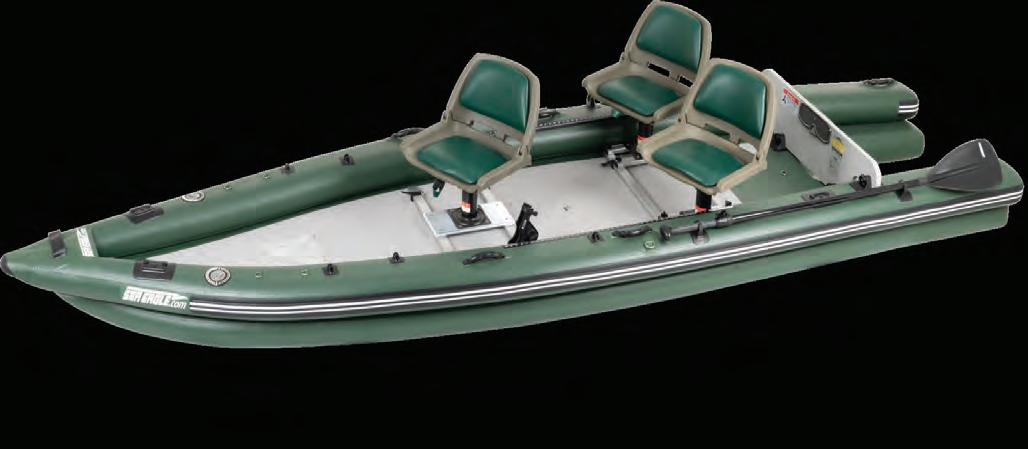
This “low-rider” gives you access to the water to reel in and release !sh easily. With a new patented outside, in atable, rigid keel the FSK16 glides through the water at speeds up to 21 mph to get you to the !sh fast! Perfect for 1-3 anglers and room for plenty of gear.
Choose From 9 Packages
Starting At Just $2999


Every spring, it feels like the bank bite will last forever. Fish are shallow, visible, and predictable cruising, spawning, and guarding fry. It’s the time of year when con!dence is high and decisions feel easy. But like everything in !shing, that window doesn’t stay open long. Before most anglers realize it, the !sh that were once easy to !nd have simply vanished.
at disappearance marks the beginning of what seasoned anglers know as the o shore shi . As water temperatures climb and the spawn wraps up, bass begin pulling away from the bank and setting up on o shore structure. Ledges, shell beds, brush piles, and subtle depth changes start to hold more !sh than the shoreline ever could. It’s not an overnight move, but it happens quickly enough that many !shermen get le behind, still casting to water that’s no longer alive.
One of the biggest mistakes anglers make during this transition is assuming the !sh have stopped biting. In reality, they’ve just relocated. Instead of being scattered along miles of bank, bass begin grouping up in smaller, more de!ned areas. e challenge
TYLER WOOLCOTT

shi s from covering water visually to understanding what lies beneath the surface. It becomes less about instinct and more about intention reading depth, structure, and subtle changes that aren’t visible at a glance.
Making the adjustment isn’t always easy, especially for anglers who are comfortable !shing shallow. It requires slowing down, trusting your electronics, and committing to areas that might not show immediate signs of life. But once you connect with your !rst o shore group, everything changes. What felt like a tough day can turn into a %urry of action in just a few casts, o en with better quality !sh than what the bank was o ering.
e o shore shi is more than just a seasonal pattern—it’s a turning point. It separates those who react to changing conditions from those who anticipate them. As summer approaches, the anglers who embrace the move away from the bank will !nd themselves ahead of the curve, dialing in on schools of bass that are no longer pressured by the crowds. And while the shoreline may feel empty, the real action is just a little deeper.
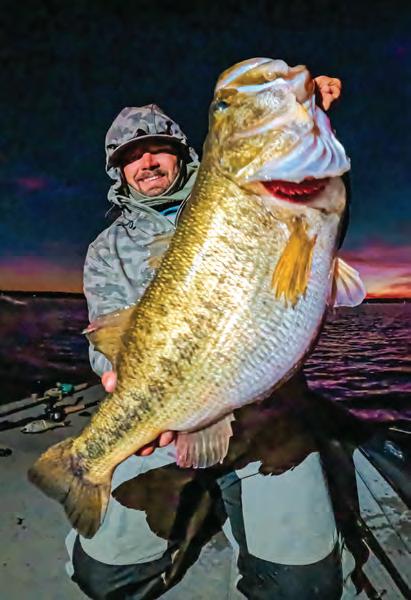
is a professional tournament angler, as well as owner/operator of Florida Big Fish Adventures, providing bass and saltwater guided shing trips: www. oridabig shadventures.com.


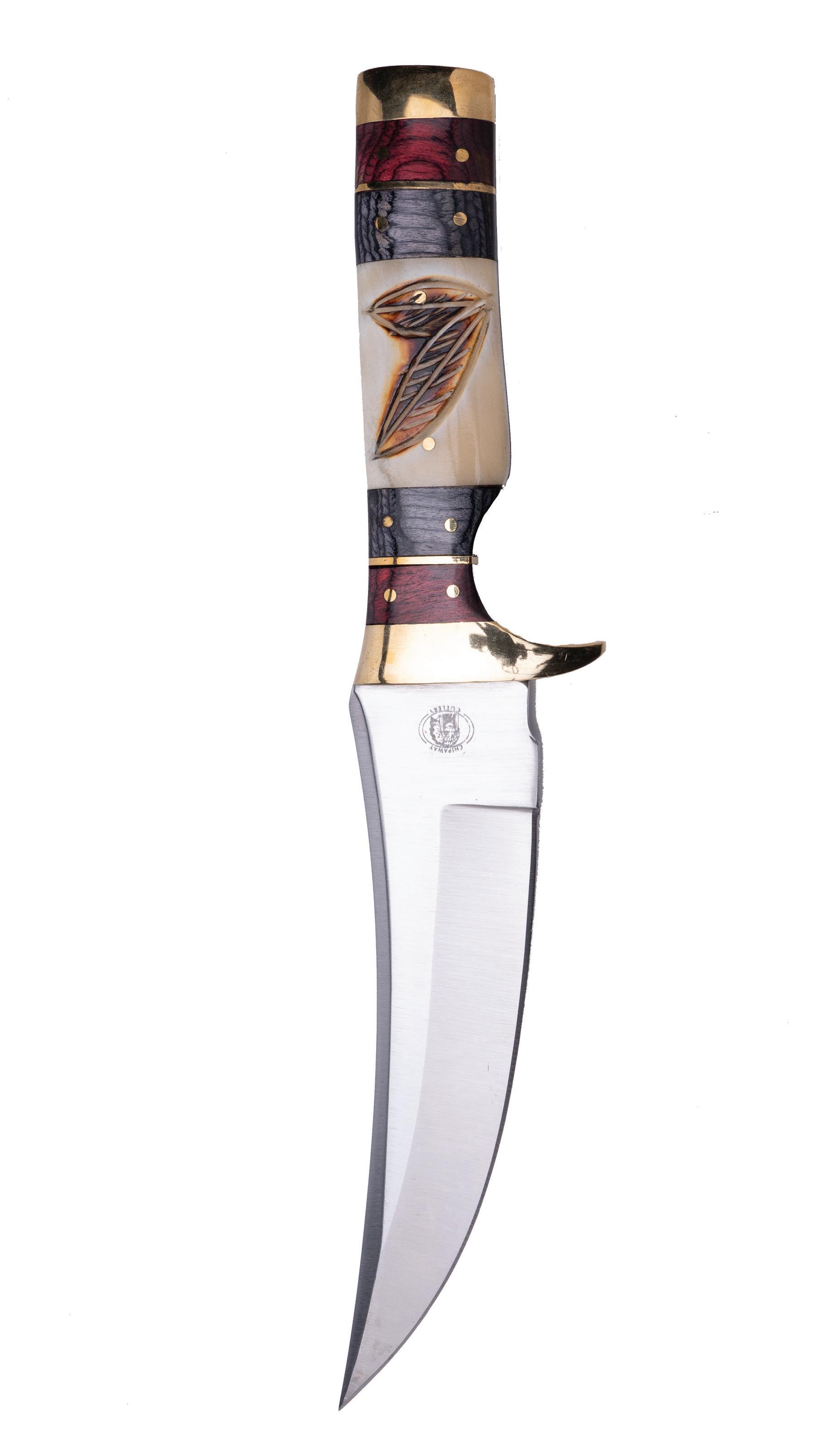
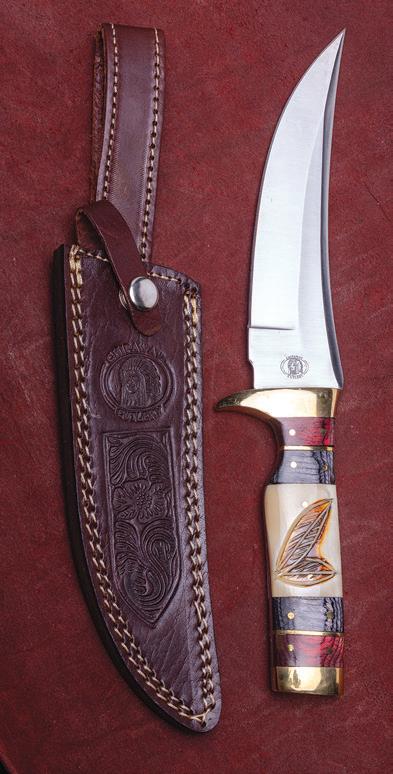
The very best hunting knives possess a perfect balance of form and function. They’re carefully constructed from fine materials, but also have that little something extra to connect the owner with nature. If you’re on the hunt for a knife that combines impeccable craftsmanship with a sense of wonder, the $79 Huntsman Blade is the trophy you’re looking for.
The blade is full tang, meaning it doesn’t stop at the handle but extends to the length of the grip for the ultimate in strength. The blade is made from 420 surgical steel, famed for its sharpness and its resistance to corrosion.


The handle is made from genuine natural bone, and features decorative wood spacers and a hand-carved motif of two overlapping feathers— a reminder for you to respect and connect with the natural world.


This fusion of substance and style can garner a high price tag out in the marketplace. In fact, we found full tang, stainless steel blades with bone handles in excess of $2,000. Well, that won’t cut it around here. We have mastered the hunt for the best deal, and in turn pass the spoils on to our customers.
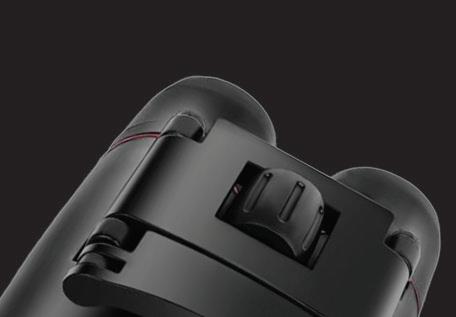
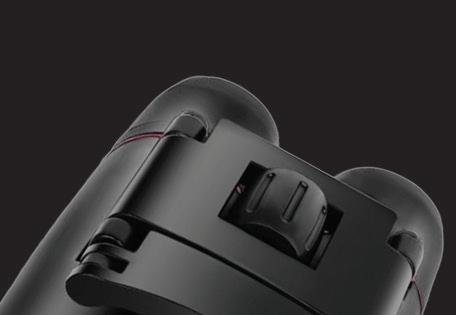
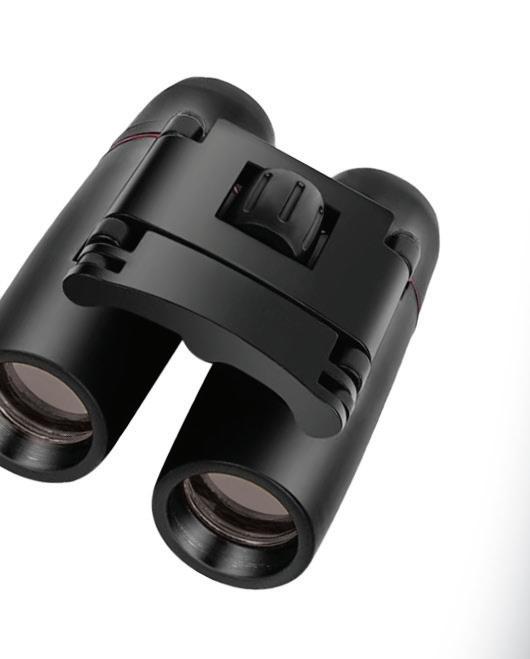
But we don’t stop there. While supplies last, we’ll include a pair of $99 Stauer power pocket binoculars and a genuine leather sheath FREE when you purchase the Huntsman Blade.
Your satisfaction is 100% guaranteed. Feel the knife in your hands, wear it on your hip, inspect the impeccable craftsmanship. If you don’t feel like we cut you a fair deal, send it back within 30 days for a complete refund of the item price.
Limited Reserves. A deal like this won’t last long. We have only 1120 Huntsman Blades for this ad only. Don’t let this beauty slip through your fingers. Call today!
Huntsman Blade $249*

Stauer® Pocket Binoculars -a $99 valuewith purchase of Huntsman Blade
Offer Code Price Only $79 + S&P Save $170 1-800-333-2045
Your Insider Offer Code: HBK321-03
You must use the insider offer code to get our special price.

*Discount is only for customers who use the offer code versus the listed original Stauer.com price.
What Stauer Clients Are Saying About Our Knives
“This knife is beautiful!”
— J., La Crescent, MN
“The feel of this knife is unbelievable...this is an incredibly fine instrument.”
— H., Arvada, CO

14091 Southcross Drive W., Dept. HBK321-03 Burnsville, Minnesota 55337 www.stauer.com
California residents please call 1-800-333-2045 regarding Proposition 65 regulations before purchasing this product.
• 12” overall length; 6 ¹⁄2” stainless steel full tang blade • Genuine bone handle with brass hand guard & bolsters • Includes genuine leather sheath