
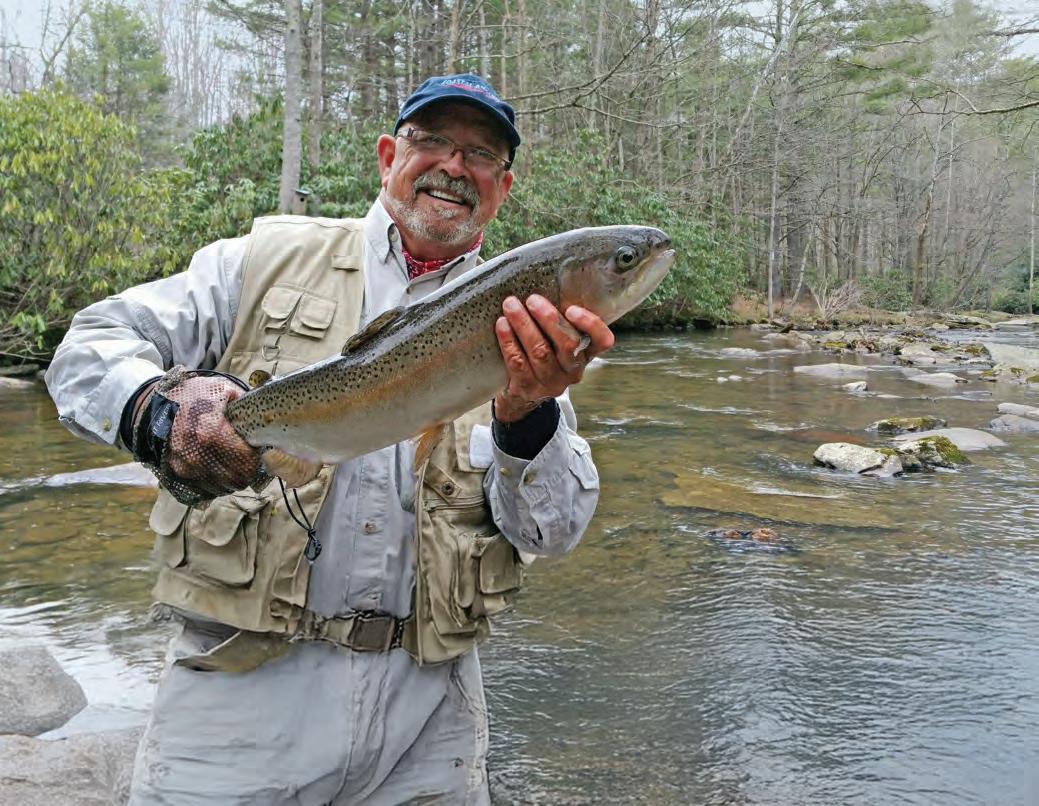
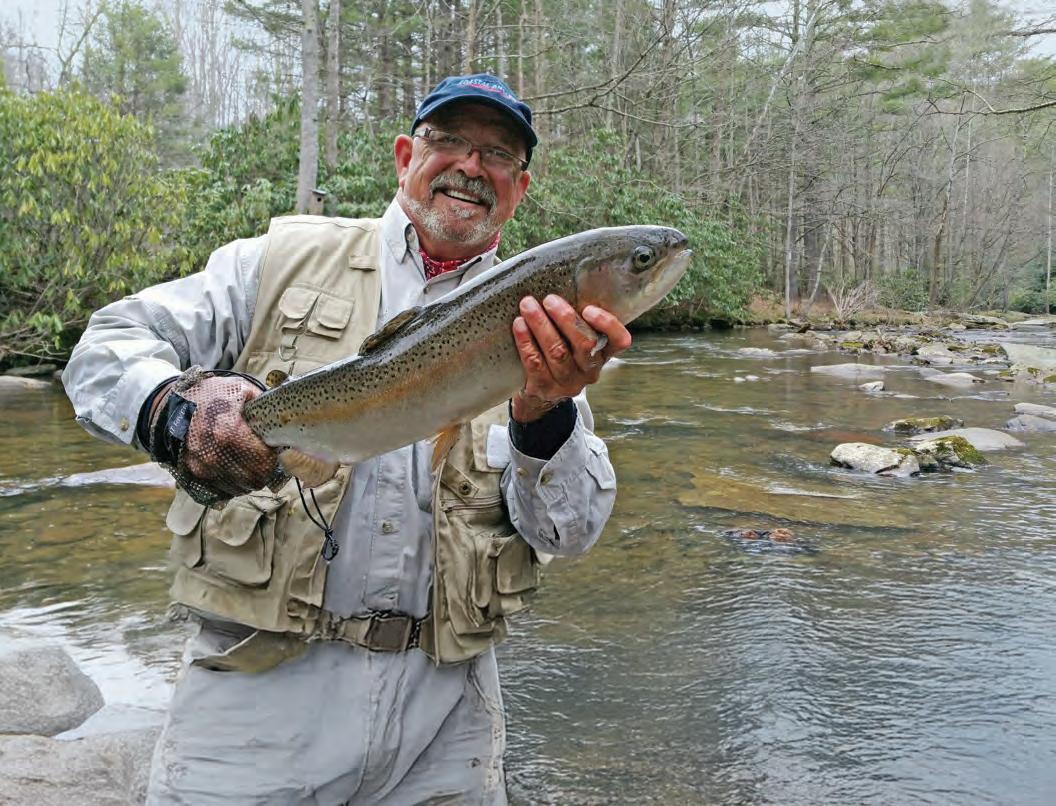
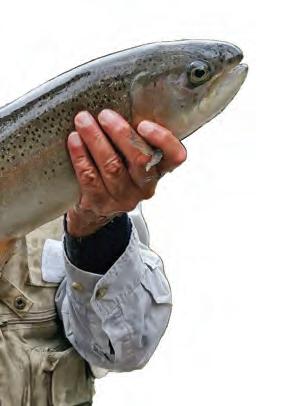
The outdoor and shing community lost a true leader with the passing of Ben Martin, Editor in Chief of Coastal Angler Magazine and !e Angler Magazine
For years, Ben helped shape the voice of one of the most respected outdoor publications in the country. rough his leadership, passion for shing, and dedication to storytelling, he built more than just a magazine— he helped create a community. From o shore anglers and weekend surf shermen to guides, writers, photographers and advertisers, Ben had a way of bringing people together through a shared love of the outdoors.
ose who knew him understood that his passion went far beyond publishing. Ben cared deeply about the shing lifestyle, conservation, and the people behind every story. He believed in supporting local communities, giving outdoor enthusiasts a platform to share their experiences, and keeping shing alive for future generations.
His impact could be felt across every edition, every article, and every relationship he built throughout the industry. He was respected not only as a leader, but as a friend, mentor, and advocate for the outdoor world.
While his passing leaves a tremendous void, Ben’s legacy will continue to live on through the countless lives he touched and the publication he helped grow into a trusted voice for anglers everywhere.
e Coastal Angler and e Angler Magazine family mourns the loss of a remarkable man who dedicated his life to the sport, the industry, and the people he loved.
Rest easy, Ben. You will be deeply missed.

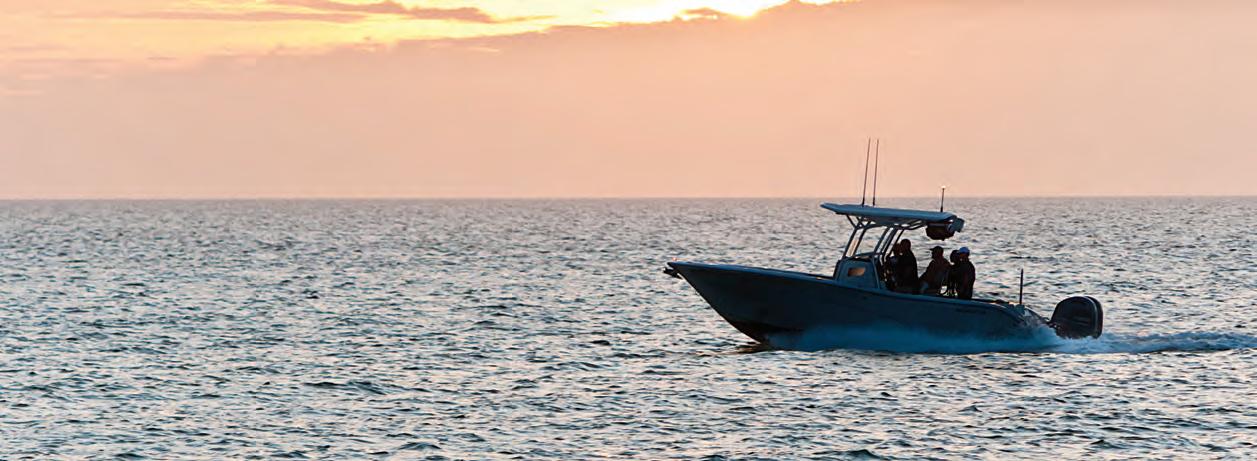
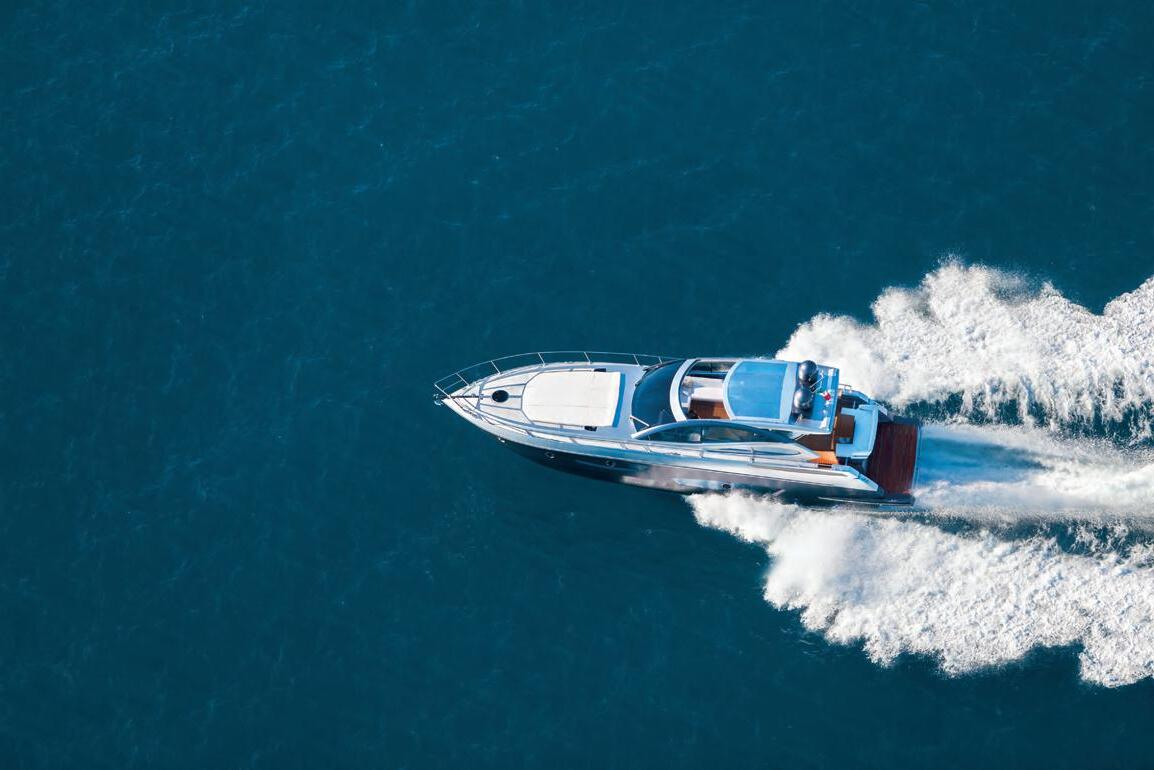
Are you ready to embark on your next on-water adventure? Before you set sail, here are fve things to know about boat insurance.
1. Boat insurance isn’t just for accidents
With comprehensive coverage, you’ll also be protected fnancially for theft, vandalism, and unexpected events like storms if you need repairs or replacements due to damage.
2. Accidents can happen to anyone
When accidents happen, boat insurance offers liability coverage for damages or injuries you cause while boating, up to specifed limits. It can also cover lawsuit costs if you’re sued.
3. Boat insurance can cover medical payments
Boat insurance offers a range of optional medical payments coverage limits, helping to cover medical expenses if you’re in an accident or someone is hurt on your boat, regardless of fault.
4. Most lenders require boat insurance
If you fnanced your boat, you’ll likely need boat insurance since most lenders require boat insurance to protect their investment. Additionally, some marinas or municipalities require proof of insurance for docking.
5. Progressive offers specialized boat coverages
Ever worry about getting stuck on the water? Progressive’s Sign & Glide® On-Water Towing coverage** can help. It’s an additional coverage that steps in if your boat is disabled or breaks down on the water, paying for on-water towing, jump starts, soft ungroundings, and fuel delivery. Fuel cost isn’t included.
Don’t let unforeseen circumstances disrupt your voyage. Cruise with confdence thanks to Progressive Boat insurance. Because when it comes to your boat, peace of mind is the ultimate luxury.
Scan to get a quote in as little as 4 minutes.
to learn more.





























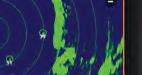


TZT16X | 22X | 24X



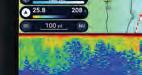
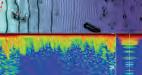
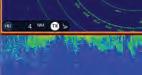






















TZT10X | 13X





TZT9E | 13E






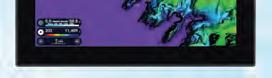


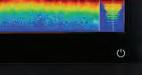















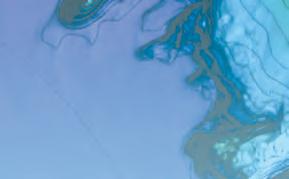
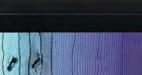
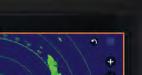
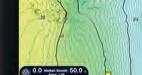
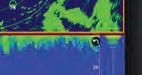
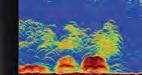
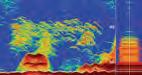
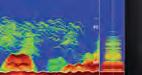
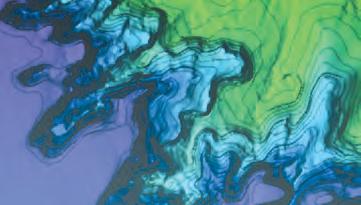
When helm space is at a premium, the 9" and 13" TZtouchE MFDs give you maximum screen area to view their eye-popping TZ MAPS charts and builtin TruEcho CHIRP™ Fish Finder with Side-Scan.
Plus, TZtouchE is fully networkable with the TZtouchXL family of 10", 13", 16", 22", & 24" MFDs and a wide range of best-in-class sensors – legendary Furuno Radars, Sonars, Fish Finders, Autopilots, and more.
Furuno... The reason to level up your helm!


Marine Electronics


By A. deGruchy
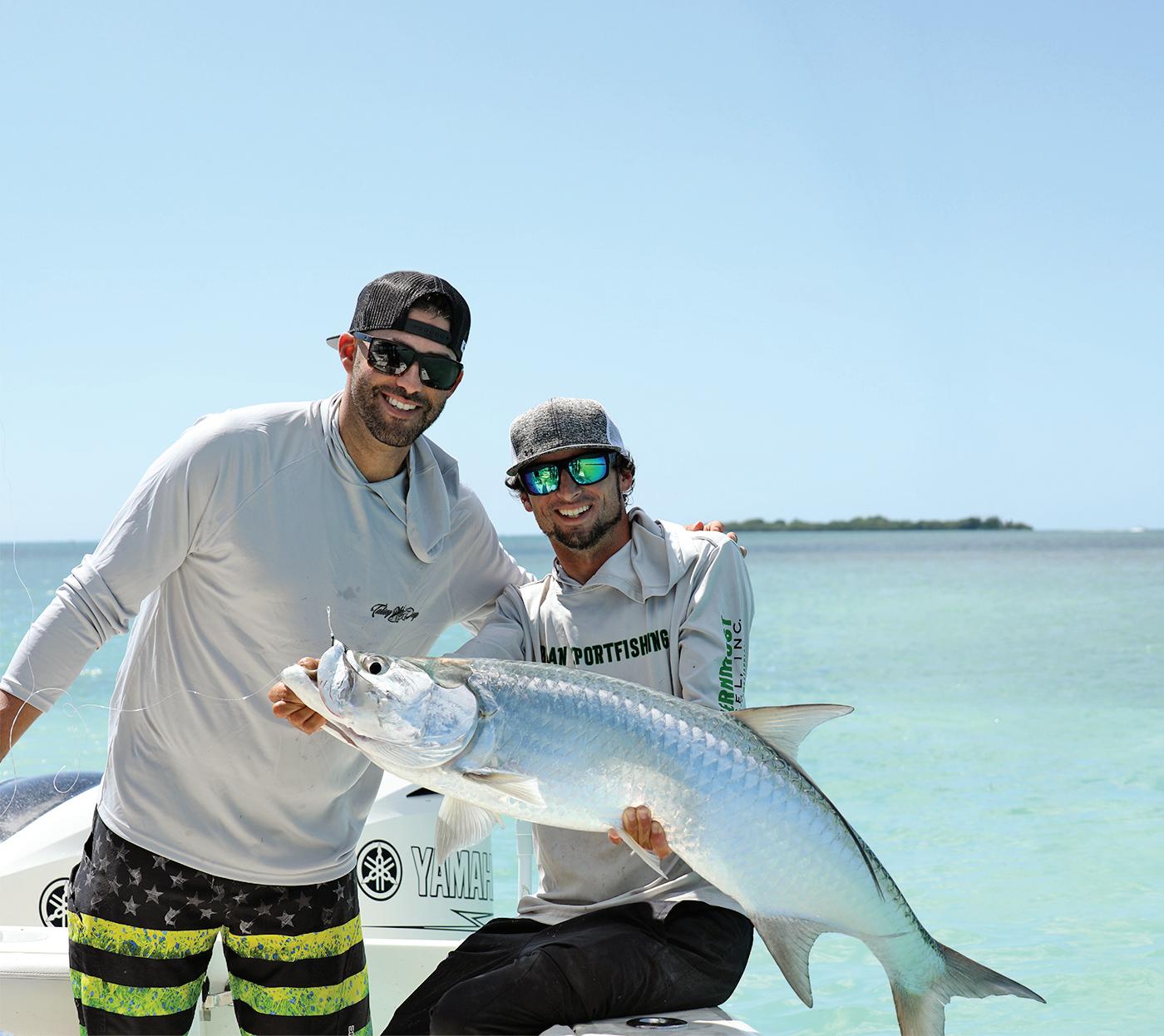
the next. Hooking one is not just shing. It is a fullbody workout.
Tarpon are notorious for their ght, and for good reason. As soon as it happens - things get crazy… line screams o the reel, the rod loads up, and then this sh launches into the air like it is trying to shake every bad decision its ever made. I’ve seen this dozens of times and it will seriously never get old.
For summer tarpon shing in the Keys, we NEED dependable gear that can handle heat, salt, and serious drag pressure. !e PENN Slammer IV paired with the PENN Carnage III rods is a strong setup for battling big sh. !e reel has the power and durability needed for long ghts, while the Carnage III rod gives you the backbone to stay connected when a tarpon starts digging deep. Savage Gear Pulse Tail Mullets can be extremely e ective (I’ve witness and can attest to the fact that Tarpon like these). !e right clothing matters too. Summer in the Keys is hot, bright, and salty, so sun protection is not optional. On top of the heat, reeling in a Tarpon will 100% have you sweating, I promise.
Note, Tarpon shing is NOT easy. !ere o%en is A LOT of downtime waiting for that bite. You might wait, cast, miss, jump one, lose one, and then nally connect with the sh you came for. However, that’s what makes it special. Every moment feels earned, every jump gets your heart going, and every release is a something you remember.
hen the summer tarpon run heats up, the Florida Keys become one of the best places to chase the Silver King. !ese sh
are built like silver freight trains. !ey roll through the channels, bridges, ats, and backcountry looking calm one second, then explode into the air
Ready to chase the Silver King in the Florida Keys? Book your tarpon trip at beansport shing.com and for more real-world shing action in the Florida Keys, follow Bean Sport shing on YouTube.


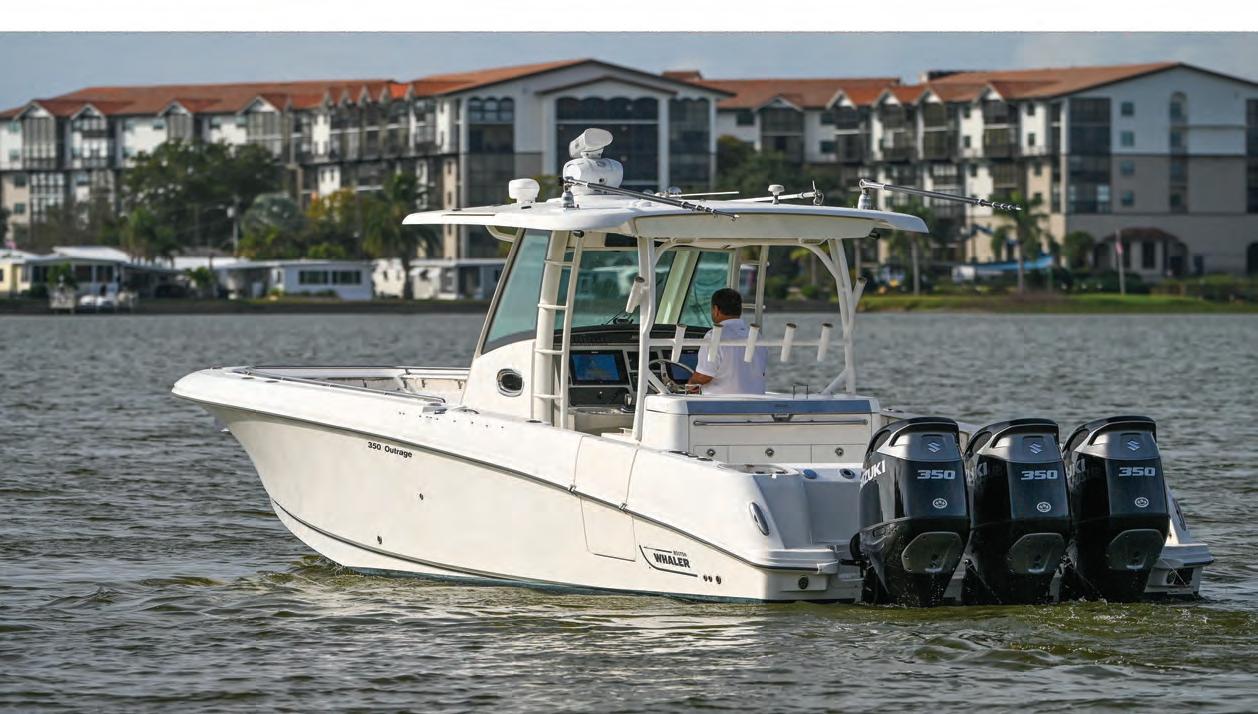
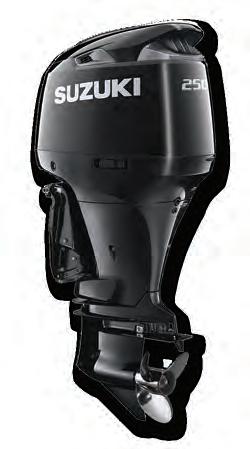
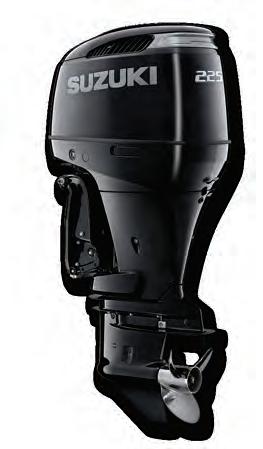
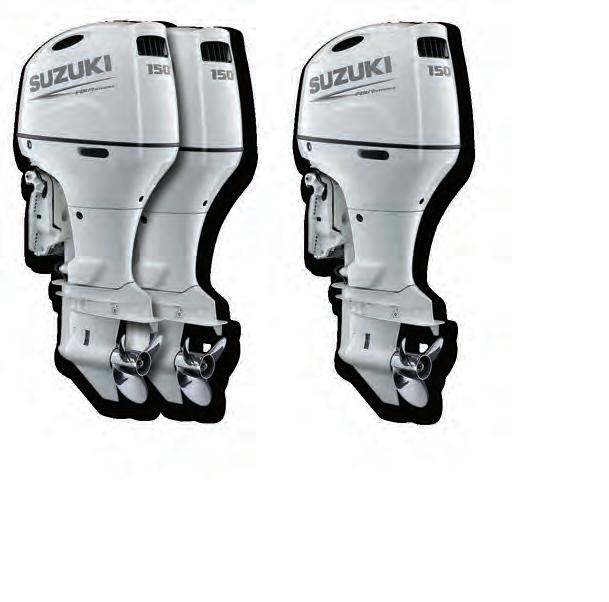
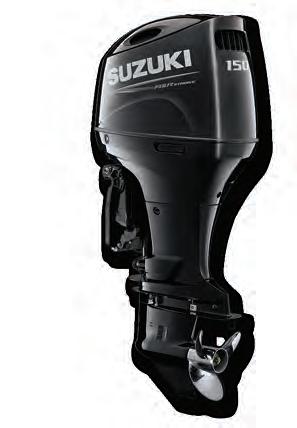
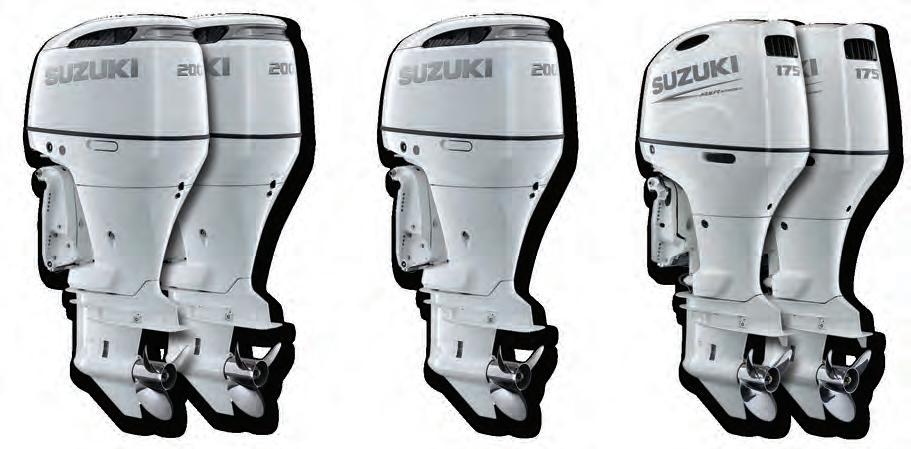
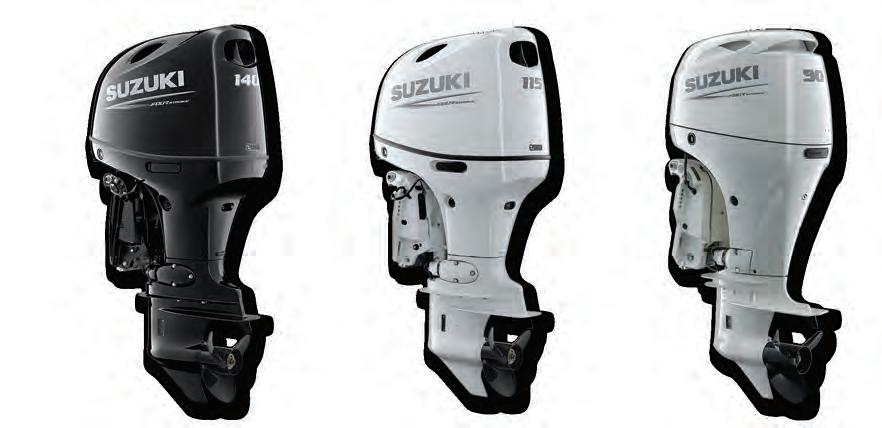
Mastry Engine Center has received the Suzuki Marine Super Service Award and has been ranked #1 in Suzuki Marine US Sales! 60 YEARS OF REPOWER EXPERIENCE!

RePower Packages designed to best ft your needs and not stretch your budget. Financing available.

Rest assured, all Mastry Suzuki RePowers are backed by Suzuki’s industry leading 5-year factory warranty.

Stationed strategically around the East Coast, all Suzuki RePower Centers have achieved the highest level of Suzuki certifcations to meet and exceed your repower needs.
When Considering A Repower, Consider These Factors:
•Every Authorized Mastry Suzuki RePower Center has decades of repower experience providing proper rigging, controls, propeller matching and in water testing
•With a Mastry Suzuki RePower, owners gain improved performance, less noise and greater reliability
•Mastry Suzuki RePower’s exclusive Owner’s Edge Program*
•Mastry Suzuki RePower Centers use authentic Suzuki OEM parts and have factory certifed technicians

Since 2014, Mastry Engine Center, has been building the premiere Suzuki Outboard repower network in Florida. Today, Authorized Mastry Suzuki Outboard Centers have been exceeding expectaions in the Southeast for over two decades. Recently Suzuki Marine requested Mastry Engine Center to expand the network throughout the Northeast. Now boat owners from Maine to Florida can be assured of the best support for their Suzuki outboard repower project. All Authorized Mastry Suzuki RePower Centers provide the best options, information and package pricing for excellent performance in repower.
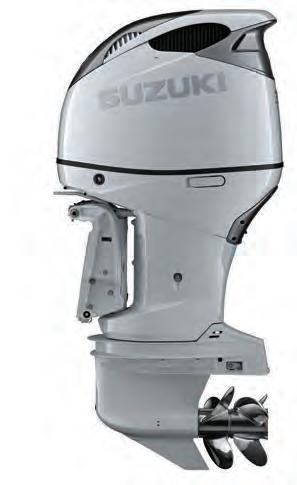

When you purchase a new Suzuki outboard from an authorized Mastry RePower Center you qualify to become a member of the Mastry Suzuki Owner’s Edge. Owners receive an identifcation card that provides them with important information about their Suzuki outboard motor as well as a passport to additional benefts during ownership. Members enjoy a detailed engine maintenance schedule, Mastry Suzuki RePower Trade Program and special pricing from Mastry Suzuki Partners *Get with the Program!


Snook !shing in Florida gets me hooked every time. ey !ght like crazy, pulling you toward every dock or root they can !nd right a er you set the hook. I’ve tried di erent methods over the years, but so plastic paddletails always pull me back in.
One thing I like about them is how they let you cover a lot of area without looking unnatural. In places like mangrove lines or around docks and passes, they just match what snook eat every day. Like mullet or those small shad, the way it swims seems right. I think that con!dence comes from knowing it mimics the bait so well.
A lot of people !sh them too quickly, ripping the lure back fast. Snook can be aggressive, sure, but I !nd better results when I slow it down. Let the thing hang in the zone longer with a twitch here and there. at steady pull with pauses beats the erratic stu most days. It feels like the !sh just need time to commit.
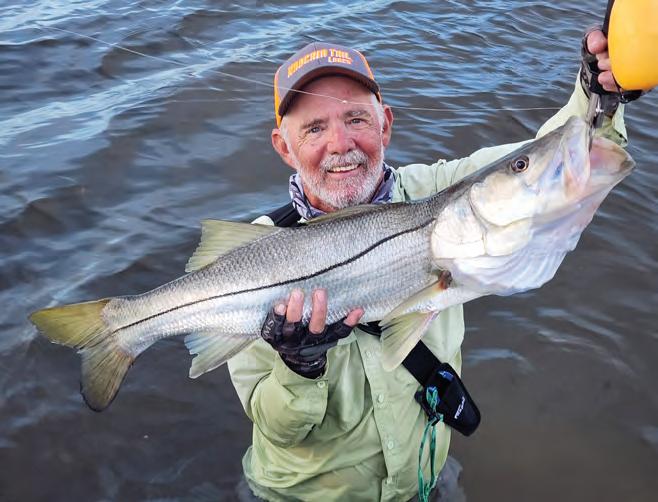
Current makes a big di erence, too. I always look for moving water if I can. It pushes the bait around and lines up the snook in spots like points or under bridges. ose dock corners turn into traps when the tide picks up. Positioning up current helps; let the lure dri in naturally. Snook handle that %ow easily and strike at stu coming their way.
My setup stays basic most times. Grab a three- to !ve-inch paddletail on a jig head. Lighter ones for shallow spots around mangroves, heavier for deeper passes with more pull. Colors, well, natural ones in clear water, I guess, brighter if it’s murky or dark out. Not sure why, but it seems to matter sometimes.
Early mornings along mangrove banks are my go-to. Cast long parallel


By Capt. Michael Okruhlik
to the shore, hit every little pocket or drain. Strikes o en come right near the edge, so you have to be accurate. Around the docks, I try skipping under as far as possible. Big snook hang in the shade there, especially when it’s warmer.
at thump when they hit, you’d better be set. ey dive for structure right away, trying to wrap your line. Just keep pressure steady, don’t let up. Florida snook spots are top-notch, and paddletails work well in that role. Hard to go wrong with them for inshore stu
Capt. Michael Okruhlik is the inventor and owner of Knockin Tail Lures® — knockintaillures.com.
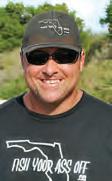
CAPT. MIKE SMITH
Have you ever had one of those summer days when you catch tons of !sh but they are all small? is happens to the best of us. e best way to !x this dilemma is to use bigger lures. Bigger lures are your best bet for big !sh in the hot summer months.
1. e best topwater lures are a large walk-the-dog lure like a Zara Super Spook, Rapala Skitter Walk or a MirrOlure Top Dog. ese lures are a great choice in low light and dirty water scenarios.
When !shed in water depths of 4 feet or less, you can expect monster snook, trout and red!sh to crush this lure type.
Pro Tip: Smush the barbs down so you injure yourself and the !sh as little as possible, and always pause the lure retrieve every 8 feet or so for a second or two.
2. My second favorite big topwater/ sub-surface lure for summer !shing is a 5.5-inch jerkbait (%uke). is lure is great for water depths of 4 feet or less but is a much better choice for skipping into structure.
Large snook and red!sh love to tuck
up under mangrove limbs and docks. A 5.5-inch jerkbait is the kryptonite to catch those super !sh lurking in heavy structure. You can rig it weedless or nose hook it with a 1/0 octopus hook or circle hook.
Pro Tip: e best retrieve for this lure type is a twitch-twitch-twitchpause where the lure falls a foot or so before beginning your retrieve again.
3. My third favorite summertime lure is the 4-inch paddletail. is is probably your best lure choice if you are new to !shing because it is easy to master.
Many days the best retrieve is a steady one. Just cast it out and reel it back in. When the !sh are more !nicky, then a twitch-twitch every few feet is a good addition to the retrieval cadence.
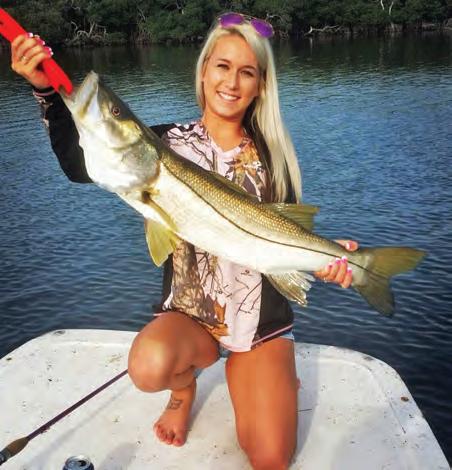
e great thing about this lure choice is your complete control of the depth you want to !sh. If you want to get it deeper, just use a bigger jig head. It is a good idea to have 1/8, 1/4, and 3/8 ounce jig heads to cover the water column e ectively.
ere are lots of large forage species around in the summer months so you should increase the size of the lures you are pitching to better “match the hatch.” You just might catch your personal best snook, tarpon, red!sh or speckled trout with those bigger lures.
Go get ’em.
Capt. Mike Smith, owner of Fish Your Ass O Charters, is an inshore shing guide who has been shing the inshore waters, oyster bars and grass ats of Florida for more than 40 years. Reach him at (561) 339-2317, email: contact@ shyourasso .com or visit shyourasso .com.
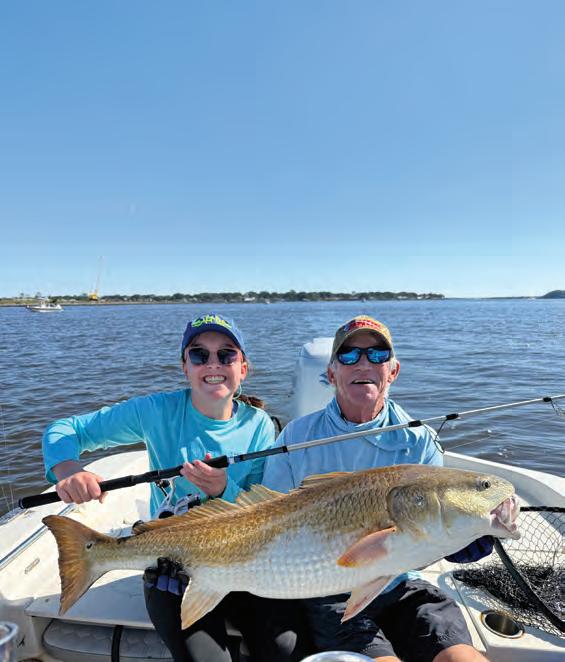
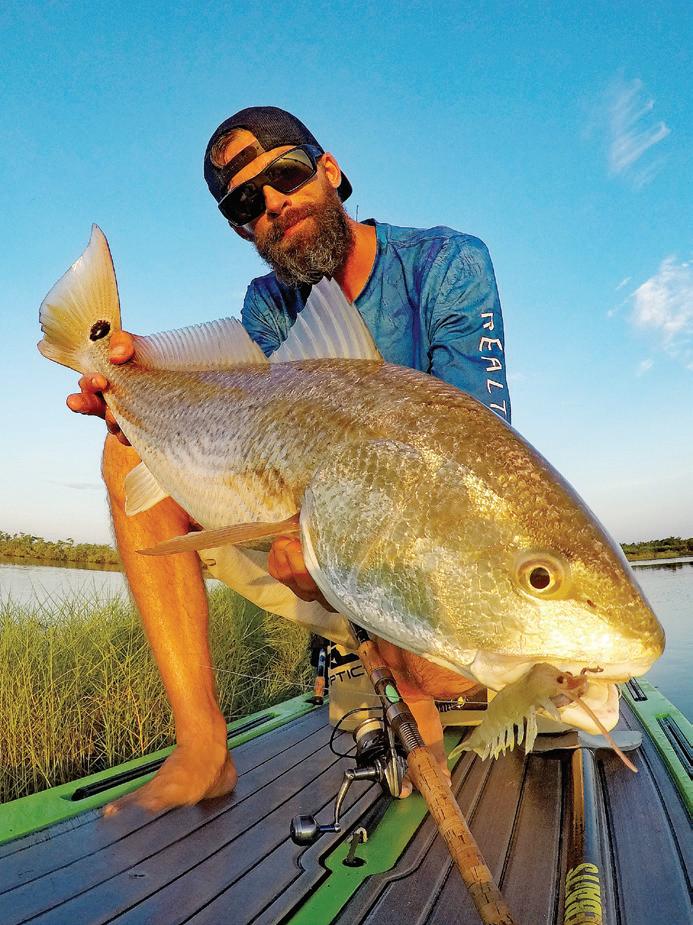
On October 13, 2025, Emily Di Perna was !shing the St. Johns River in Jacksonville, Florida, when she landed this 20-pound red drum. With this !sh, Emily has set the IGFA Junior Women’s 10-kg (20 lb) Line Class World Record for the species. She was !shing with Capt. Don Dingman when this record drum struck a blue crab.
A er recording the weight on a certi!ed scale, Emily was able to release the !sh safely.







John Deere equipment brings the power, performance and productivity, so you get more time to land a trophy. We’ll help you land the right machine with special offers making it an even better catch. Stop in and leave tasks in your wake.

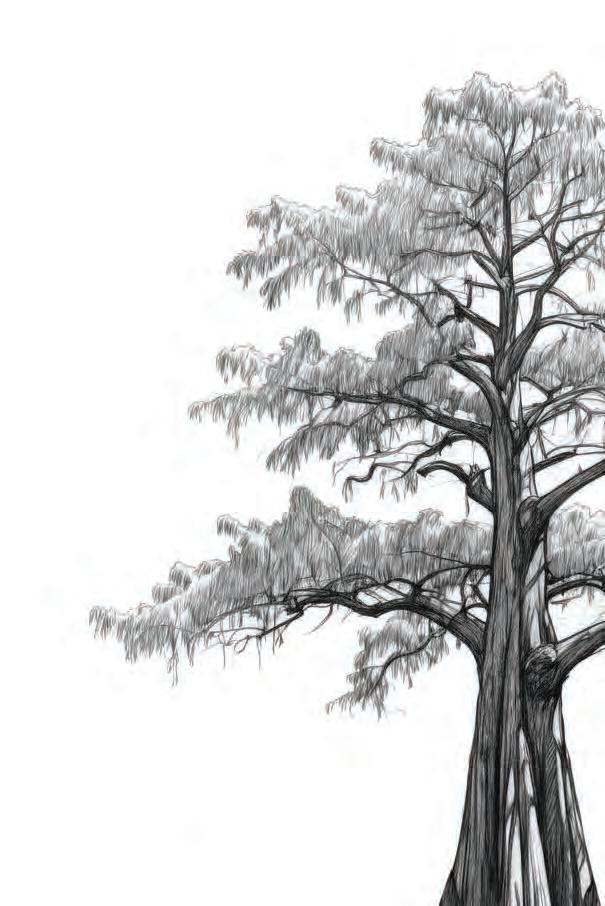



Florida’s history is defined by its wet wilderness. We and this state are largely water. Water is essential to life and is fundamental to earth’s ecology. In Florida, water is around, over and under us always. Imagine Florida 150 years ago, its land mass about 65+ million acres of which over 24 million acres were wetlands. In Florida water is everywhere. The extent to which Florida has been drained is shocking, and it underscores how valuable the remaining wetlands are. Wetlands are large evapotranspiration vapor pumps that cycle liquid water through rainfall and absorption. Florida is flat. Even though the elevation gradient is not great, all water in the state flows. Water is in constant motion either through the water cycle, slowly moving down stream or percolating through the porous karst geology. Subterranean Florida is a flowing wet world too. Florida’s springs and flooded cave networks are some of the worlds most extensive. Even where limestone is replaced with gravel and other sediments water flows through the underground aquifer.
It is said that water is the universal solvent. It carries with it traces of everything it dissolves. It also carries chemicals, metals, minerals,
nutrients and living organisms. Our ecosystems are fed, flushed and intoxicated by contact with water as it flows by. Florida’s entire food cycle is influenced by the water cycle. Natural systems rely on waters flowing at proper timing, volume, quality and rate. This applies to surface waters and groundwaters. Groundwaters are the unseen equivalents to the surface waters above and contain the legacy of what happened to water on the surface before it percolated into the aquifer.
Florida actually has a few aquifers, generally deep, shallow and surficial. A hundred years ago when southern Florida was mostly wetlands, water was filtered by plants, organisms, soil and sand, then it percolated down into the groundwater and flowed on its way. People have not only changed the landscape, but they have altered the timing, volume, quality and rate of surface water flows, but also that of the water that seeps into the groundwaters below. These groundwaters are also connected into the lakes, bays, estuaries and nearshore reef systems. The hydraulic pressure kept salt water from
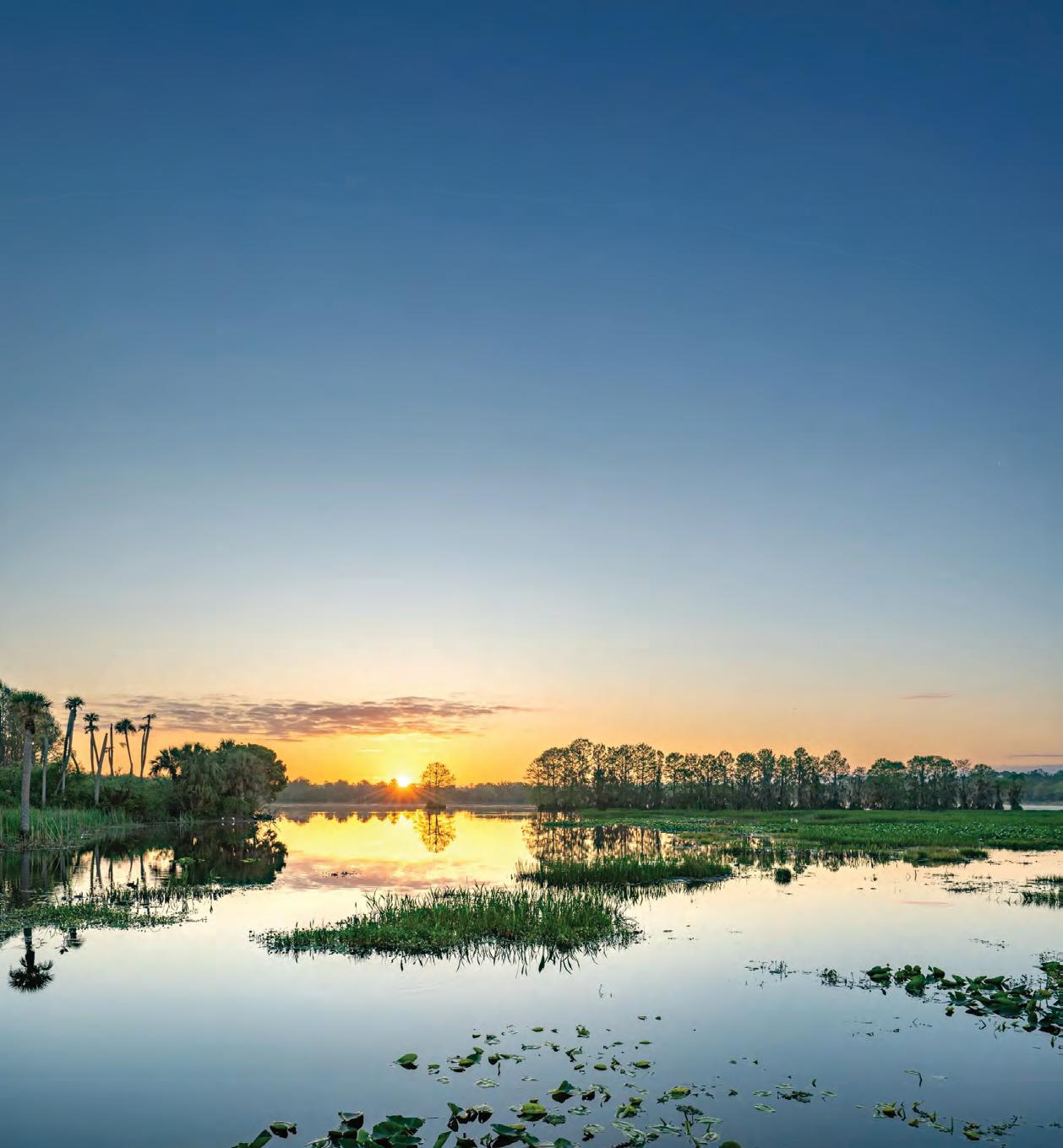
intruding into the aquifer, and the system was in equilibrium.
Sculpting the land for agriculture, urban development and managing floodwaters using a gridwork of canals, impoundment reservoirs and control structures have wasted immeasurable amounts of water and changed the course and nature of water on the surface and below. Surface waters rush to tide carrying the chemical imprint of everything it touches, and groundwater slowly absorbs the pollutants and nutrients that it encounters or those that wastewater systems inject into it.
The loss of wetlands not only affect wildlife that were once dependent on them, but there are unseen consequences that put our future comfort, safety and lifestyle in serious jeopardy. We have withdrawn too much precious water. We continue to have an out of sight, out of mind attitude. This is not exclusively because of overpopulation; it reflects choices that were made. We need to be mindful of what we put down the well and who will drink it.
To learn about the benefits of supporting Indian Riverkeeper and its efforts, visit www.theindianriverkeeper.org




By The Recreational Boating & Fishing Foundation
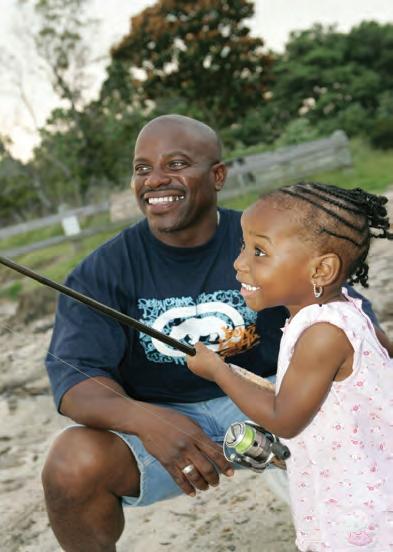
How were you introduced to fishing? For many, their fishing journey began with family and friends. Perhaps their dad or grandpa took them as children to cast a line at a local lake, or they hit the water with a neighborhood friend.
As of 2023, four in ten people in the United States said family or friends took them fishing for the first time, and 78% said they went fishing to spend quality time with friends or family. It’s clear that family and fishing are closely linked. Unfortunately, despite providing a wide range of benefits, especially to women’s mental and physical wellbeing, including improved happiness, grit, patience, confidence and health, young girls’ participation in fishing drops off around the age of 12 and research shows that female anglers stop fishing at an 11% higher rate than their male counterparts.
It’s hard to say exactly why this is, but it’s likely due to a combination of factors. Some girls may feel excluded from fishing and boating trips, which are often geared toward boys, coming to feel like it’s not meant for them. In other cases, whether due to common gender expectations or a belief that their daughters have outgrown the activities, well-meaning fathers might stop inviting their daughters to go fishing and boating. Whatever the case, girls are missing out on the fun, life-changing activities found in fishing and boating. To change that, Take Me Fishing™ encourages dads to invite their daughters back on the water this Father’s Day. For girls and women especially, fishing is a powerful tool for personal growth and empowerment, and Take Me Fishing is committed to inspiring more girls to discover the benefits of fishing.
an important antidote to combat excessive screen time.
What’s more, research has shown a consistent link between high social media use and mental health problems for girls. In addition to more time spent with good old dad, fishing and boating offer a reprieve and can promote a sense of balance in an increasingly digital world, and women who fish report greater mental strength and stress management than those who don’t.
Recent research from Take Me Fishing and Ipsos shows fishing can have a wide range of benefits for girls who stick with it, making the case for more dad and daughter time on the water. Of the women surveyed, one in four say fishing improves their mood, brings them peace and helps them manage their mental health and long-term stress. Women who fish also reported greater perseverance and were more likely to say setbacks don’t discourage them.
Other findings from the survey include:
• Almost half of women who fish say that fishing teaches them patience and helps develop their confidence.
• Women who fish report higher self esteem than women who don’t.
• One in five women who fish feel like they can do anything they set their mind to.
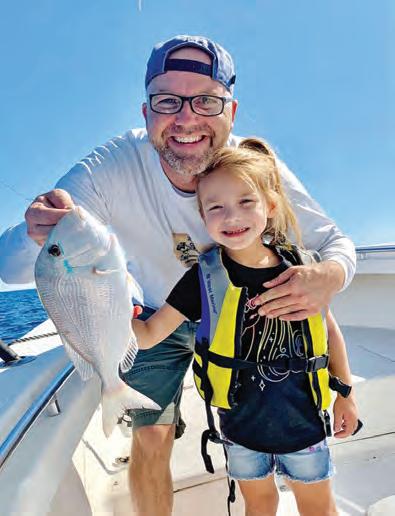
For dads looking to spend quality time with their daughters this Father’s Day, fishing and boating are fun outdoor activities that come with many benefits, not least of which is time away from screens. In a world where young children spend an increasing amount of their day on computers, phones and other devices, two outdoor activities can provide
Through fishing, women and girls can boost their mental and emotional well-being and improve their quality of life. By taking their daughters fishing, fathers play a pivotal role in this journey of discovery and can help their girls build lifelong confidence and self esteem.
POOR day basically means the fish will either steal all your bait or will not even touch your line.
FAIR day means that you July catch one or two fish but you will have to work hard to do so.
GOOD day means that you will catch enough fish to feel gratified.
BEST day means that you will catch something almost every time you cast your line in the water.
JUNE 1 FAIR Evening
JUNE 2 GOOD Evening
JUNE 3 GOOD Evening
JUNE 4 FAIR Evening
JUNE 5 GOOD Evening
JUNE 6 GOOD Evening
JUNE 7 BEST Evening
JUNE 8 BEST Morning
JUNE 9 POOR Morning
JUNE 10 POOR Morning
JUNE 11 POOR Morning
JUNE 12 POOR Morning
JUNE 13 POOR Morning
JUNE 14 POOR Evening
JUNE 15 POOR Evening
JUNE 16 GOOD Evening
JUNE 17 BEST Evening
JUNE 18 POOR Evening
JUNE 19 POOR Evening
JUNE 20 FAIR Evening
JUNE 21 FAIR Morning
JUNE 22 POOR Morning
JUNE 23 FAIR Morning
JUNE 24 GOOD Morning
JUNE 25 GOOD Morning
JUNE 26 BEST Morning
JUNE 27 FAIR Morning
JUNE 28 FAIR Morning
JUNE 29 GOOD Evening
JUNE 30 GOOD Evening
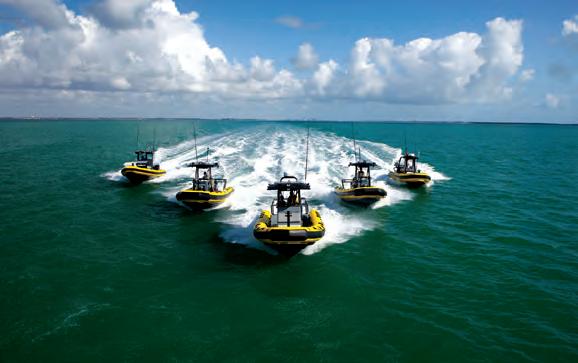
FROM Sea Tow is happy to extend it’s service to include tows from Nothern Bahamas, Green Turtle, West End Marsh Harbour, Hope Town and Grand Cay to the U.S.
Whether you need a timely tow or help offshore, Sea Tow Captains are standing by 24/7.
Why wait? Join today and get 2 months free! (That’s a $28 value!) Use discount code: TCT. Join Sea Tow Treasure Coast \ 772-225-3144 800-4-SEATOW
seatow.com/local/treasurecoast
Capt. Gus Brugger Pattern Setter Charters (772) 360-6787 www.WelcomeToSebastian.com
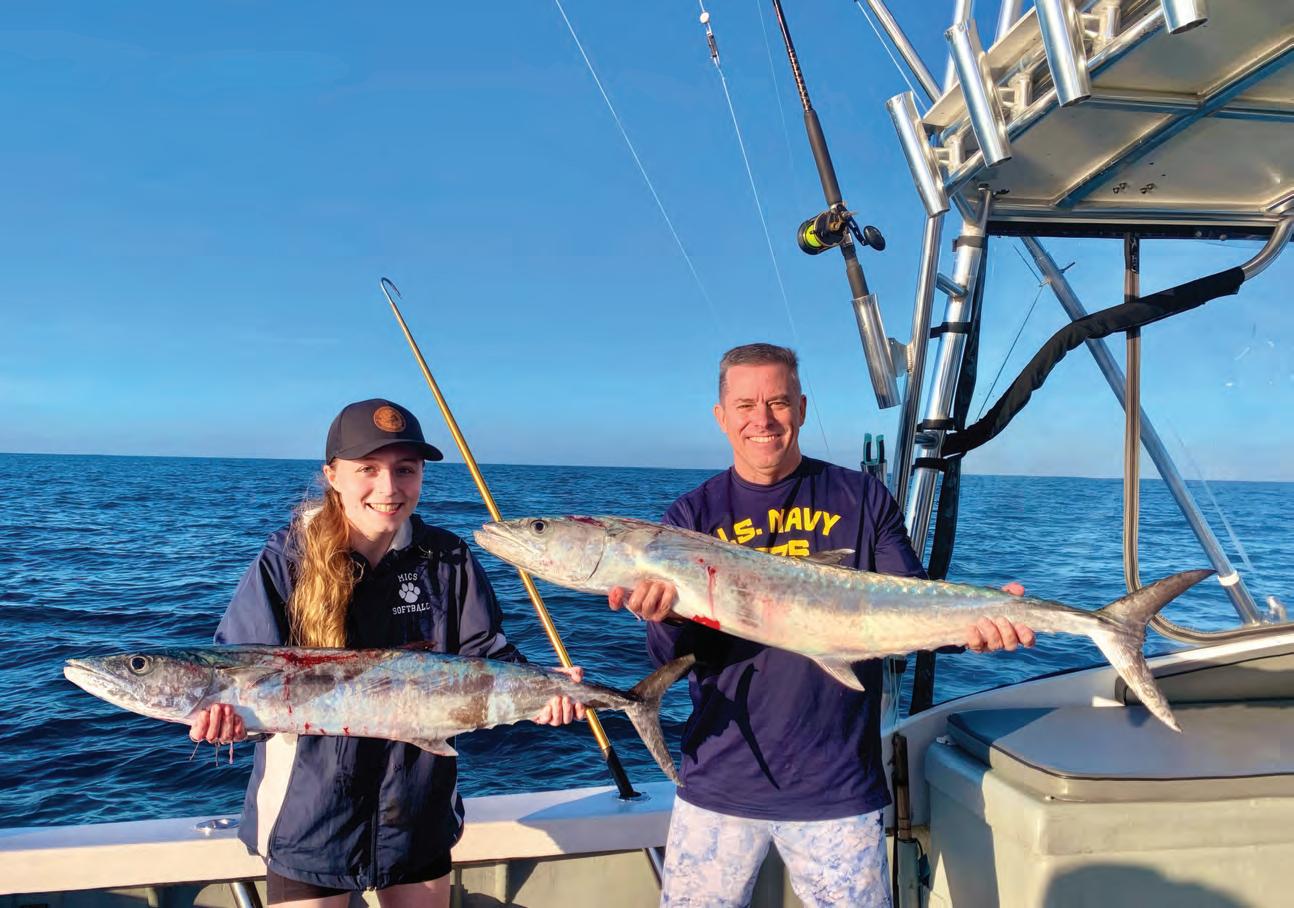
Withthe seagrass flats of the Indian River Lagoon recovering nicely, inshore fishing for trout, reds, snook and tarpon is still a viable option in June. If you have had enough light tackle fishing over the last six months and want to stick a hook in something that will make your arms ache, June is the month. Many local small boat anglers like to take advantage of the normally calm and predictable weather conditions of the summer to get outside Sebastian Inlet and target oceanic species that are out of reach at most other times of the year. June sees migrations of glass minnows and greenies within a couple miles of the beach. These are often shadowed by predators including Spanish mackerel, bonita, big jacks, smoker kingfish, cobia, 100-pluspound tarpon and the occasional dolphin or sailfish.
INDIAN RIVER LAGOON – Fishing topwater plugs over grass beds in the early morning will provide the best shot at shallow water trout and reds. Find where the bait fish are and there should be some predators nearby. After the sun is up, a D.O.A. jerkbait or suspending plug may draw more strikes. Snook of all sizes will be laid up tight to docks and mangroves getting out of the sun during the day, so pitch a D.O.A. shrimp into the cover on stout tackle and hold on. Tarpon
can also be found in the lagoon in June; look for smaller tarpon in the backwaters and larger ones in some of the deeper open water basins.
SEBASTIAN RIVER – The top of the list in the Sebastian River in early summer is tarpon. There are tarpon throughout the Sebastian River, but the larger fish seem to frequent the entire north fork and the lower south fork after June 1. MirrOlure suspending plugs, D.O.A. Terror-Eyz jigs, Yo-Zuri 3D minnows and flies are all good artificials for both tarpon and snook. Live mullet are the bait of choice in the Sebastian River.
SEBASTIAN INLET – Snook season is now closed until September 1, but the summertime catch and release action can be fantastic. With fewer fishermen and good weather anglers can try some new techniques and different areas of the inlet to target snook just for fun. Bull redfish are regular visitors to the inlet, especially on full and new moon outgoing tides. Permit also show up if small crabs are migrating on outgoing tides.
NEARSHORE ATLANTIC – Be sure to have some 6- to 10-inch mullet in your livewell and some Sabiki rigs to catch greenies in your tackle box when you head outside Sebastian Inlet. Having live bait to slow troll or pitch at schools of large migrating tarpon, smoker kingfish, jack crevalle, cobia, mahi and even sailfish is a must when fishing the calm, clean nearshore waters in June and July. Concentrating your efforts around schools of bait, areas of bottom structure, or just keeping a sharp lookout for fish breaking water while you cruise within sight of the beach will increase your chances of battling fish weighing in the double or even triple digits.
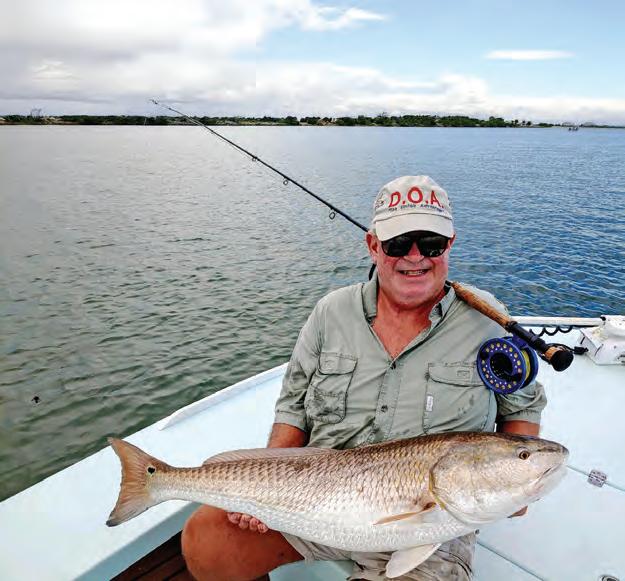
You can skip the live bait in the summer, just ask George Vogel of Sebastian who is holding a big Sebastian Inlet redfish that took his fly.
Capt. Terry Wildey
Big Easy Fishing Charters (772) 538 - 1072 www.bigeasyfishingcharters.com captwildey@bellsouth.net
Juneis finally here, my favorite month of the year for fishing. We also have Atlantic red snapper season open until June 20! The good weather gets us more days offshore, combined with more consistent water quality. And warm, clean water equals more consistent fishing. Remember though, when the water gets warm and clear, fish get picky. Light fluorocarbon leaders and live bait will produce more bites. Fortunately live bait should be more readily present both inside and outside the inlet. We’ll see good catches of mutton snapper, mangrove snapper and kingfish.
Last year we only saw a mild thermocline, but we did have a couple of good days fishing the beach reefs, though it passed quickly. This year we should have some good kingfish on the 80- to 90-foot reefs; the bigger fish will be hitting live bait. Strip baits trolled behind a SeaWitch and 3-1/2 Drone Spoon also works well.
For those trolling offshore there should be some schooly dolphin, some even into the 80- and 90-foot reefs. They’re always a nice addition to the box. It’s good to have a couple light spinners ready with a #4 or #5 Mustad short shank with a 30# fluorocarbon leader in case a school swims up while you’re anchored. Have some chopped up pieces of squid ready to throw to keep their interest as well as to stick on the hook to capitalize on the opportunity. Bottom fishing should be good on the reefs in 80 to 90 feet as well. Clear water is going to require light leaders and live bait to entice a bite.
As usual, the ever-growing shark problem will be something to deal with. If there’s any upside to the abundance of sharks, it’s that they’ve had cobia traveling with them.
There’s a thin line between fishing heavy enough line to horse the fish in before the sharks eat them yet light enough to get the fish to bite. I’m hoping some group, individual or fishing club will put together a shark fishing tournament. One tournament of 100 boats would start putting the uneven balance back where it should be. Meat from the sharks could be donated to local food banks. Believe me, people that are saying this is a sign of a healthy ecosystem do not see what’s really happening out there.
As always, support your local tackle shops, and be courteous to your fellow anglers (who you might need help from one day), as well as law enforcement, including our FWC. They’re just doing their job.
Fish On! Gotta Go...

Capt. Gus Brugger Capt. Rocky Carbia
Capt. Jonathan Earhart
Capt. Scott Fawcett
Capt. Scotty Gold Jim Moir
Capt. Bo Samuel
Capt. Adam White
Capt. Terry Wildey

1M 3:36 AM 0.33 L
9:52 AM 2.15 H
3:45 PM -0.07 L
10:31 PM 2.35 H
2TU 4:13 AM 0.36 L
10:31 AM 2.12 H
4:22 PM -0.02 L
11:10 PM 2.31 H
3W 4:51 AM 0.39 L
11:11 AM 2.08 H
4:59 PM 0.04 L
11:50 PM 2.26 H
4TH 5:30 AM 0.41 L
11:53 AM 2.03 H
5:38 PM 0.11 L
5F 12:29 AM 2.21 H
6:12 AM 0.41 L
12:37 PM 2 H
6:21 PM 0.19 L
6SA 1:10 AM 2.17 H
6:57 AM 0.38 L
1:25 PM 1.98 H
7:09 PM 0.26 L
7SU 1:53 AM 2.12 H
7:46 AM 0.32 L
2:18 PM 2 H
8:04 PM 0.32 L
8M 2:39 AM 2.1 H
8:40 AM 0.21 L
3:16 PM 2.06 H
9:05 PM 0.35 L
9TU 3:30 AM 2.09 H
9:36 AM 0.07 L
4:18 PM 2.15 H
10:07 PM 0.34 L
10W 4:25 AM 2.12 H
10:33 AM -0.09 L
5:20 PM 2.28 H
11:07 PM 0.29 L
Capt. Scott Fawcett
Off the Chain Fishing Charters (772) 285-1055 offthechainfishing.com fishscottyf@bellsouth.net
SEBASTIAN INLET
TIME OFFSET
High Tide -48 min
Low Tide -24 min
HEIGHT OFFSET
High Tide .93 feet
Low Tide 1.0 foot
VERO BEACH (OCEAN)
TIME OFFSET
High Tide -55 min
Low Tide -35 min
HEIGHT OFFSET
High Tide 1.45 feet
Low Tide 1.36 feet
11TH 5:23 AM 2.17 H
11:30 AM -0.27 L
6:22 PM 2.42 H
12F 12:05 AM 0.2 L
6:23 AM 2.26 H
12:25 PM -0.43 L
7:20 PM 2.57 H
13SA 1:00 AM 0.11 L
7:22 AM 2.37 H
1:20 PM -0.57 L
8:17 PM 2.69 H
14SU 1:55 AM 0.02 L
8:20 AM 2.48 H
2:15 PM -0.65 L
9:11 PM 2.77 H
15M 2:49 AM -0.05 L
9:16 AM 2.56 H
3:10 PM -0.68 L
10:04 PM 2.81 H
16TU 3:43 AM -0.1 L
10:12 AM 2.6 H
4:04 PM -0.63 L
10:56 PM 2.8 H
17W 4:37 AM -0.12 L
11:07 AM 2.59 H
4:59 PM -0.52 L
11:46 PM 2.74 H
18TH 5:33 AM -0.12 L
12:02 PM 2.54 H
5:55 PM -0.36 L
19F 12:37 AM 2.64 H
6:30 AM -0.11 L
12:58 PM 2.46 H
6:52 PM -0.17 L
20SA 1:27 AM 2.52 H
7:27 AM -0.09 L
1:55 PM 2.36 H
7:51 PM 0.01 L
21SU 2:18 AM 2.37 H
8:25 AM -0.06 L
2:53 PM 2.26 H
8:50 PM 0.18 L
ST. LUCIE INLET
TIME OFFSET
High Tide +55
Low Tide +1 hr; 42 min
HEIGHT OFFSET
High Tide 1 foot
Low Tide .50 feet
FORT PIERCE (SOUTH JETTY)
TIME OFFSET
High Tide -31 min
Low Tide -18 min
HEIGHT OFFSET
High Tide 1.14 feet
Low Tide 1.50 feet
22M 3:09 AM 2.24 H
9:20 AM -0.04 L
3:52 PM 2.19 H
9:48 PM 0.31 L
23TU 4:01 AM 2.12 H
10:14 AM -0.02 L
4:51 PM 2.15 H
10:43 PM 0.39 L
24W 4:54 AM 2.04 H
11:05 AM -0.01 L
5:47 PM 2.14 H
11:35 PM 0.43 L
25TH 5:46 AM 2 H
11:53 AM -0.01 L
6:39 PM 2.15 H
26F 12:24 AM 0.43 L
6:35 AM 1.99 H
12:39 PM -0.03 L
7:26 PM 2.18 H
27SA 1:09 AM 0.42 L
7:22 AM 2.01 H
1:23 PM -0.05 L
8:10 PM 2.22 H
28SU 1:52 AM 0.39 L
8:07 AM 2.05 H
2:05 PM -0.07 L
8:51 PM 2.26 H
29M 2:33 AM 0.36 L
8:49 AM 2.08 H
2:44 PM -0.08 L
9:31 PM 2.3 H
30TU 3:13 AM 0.33 L
9:31 AM 2.1 H
3:23 PM -0.08 L
10:10 PM 2.32 H
Summer is here, school is out, and the seas are calm. How can June not be one of our favorite months to fish here on the Treasure Coast?
Best of all, we've been granted an Atlantic red snapper through June 20, then another three consecutive three-day weekends in October!
The summer red snapper season opening, plus open grouper season, the Bahamas being only a couple hours away—and some of the best mahi, sail and tuna action we’ve had in months—usually makes June a favorite for all locals and tourists. The calm seas cater to smaller boats, family outings and a run and gun style of fishing that can really load the box up fast.
Expect some of the biggest mahimahi of the year to hit the docks in June, along with the occasional wahoo. Focus trolling or live baiting around weedlines, pieces of float and under birds in depths typically from 100 to 1000 feet. That is a big range, but once you find them you shouldn’t have to move much.
Both trolling and live baiting work well this time of year, but keep in mind, if you’re not catching,
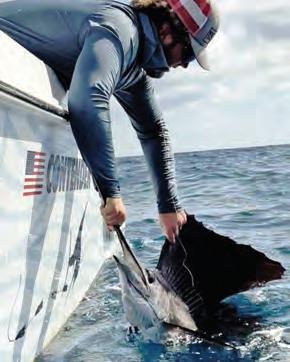
move! Whether you’re looking for tuna, dolphin, sails or even grouper, if you’re not getting bites, try another area.
June is also a great time of year to target swordfish. The calm seas make this much more productive, easier to schedule and the fact that you cover so much ground also gives you a great chance of coming across weedlines or flotsam holding mahi or tripletail, even wahoo. For snapper and grouper fishing in our local waters, check out Capt. Rocky’s deep sea fishing report for the scoop on bottom fishing this June.
With all these options, I hope you’re able to get out there this June and take advantage of some of these opportunities. Please give me a call if you have any questions or if you’d like to set up a trip. I hope to see you out there and your next fishing experience is Off The Chain!

JENSEN BEACH (INDIAN RIVER)
TIME OFFSET
High Tide +2 hrs; 17 min
Low Tide +3 hrs; 4 min
HEIGHT OFFSET
High Tide .48 feet
Low Tide .92 feet
JUPITER INLET
TIME OFFSET
High Tide -10 min
Low Tide -9 min
HEIGHT OFFSET
High Tide 1.08 feet
Low Tide 1.42 feet
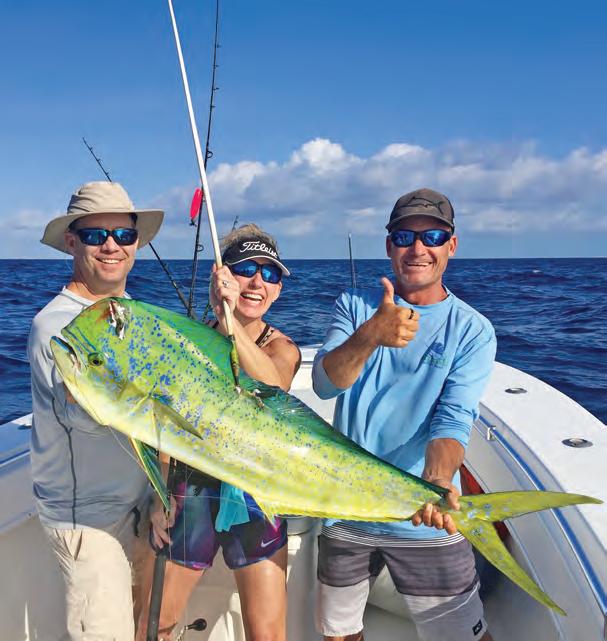
Capt. Jonathan Earhart
Chaos Fishing Charters (772)341 – 2274
www.chaosfishingcharters.com
jon@chaosfishingcharters.com
Snook fishing has been very productive lately around the bridges, dock lights, seawalls and mangrove shorelines. The early morning outgoing tides have consistently provided the best bite. While live pilchards and threadfins are yielding great action, artificial
lures are also effective if you can accurately match the hatch.
The tarpon bite is improving daily, with fish seen rolling around the inlet, channel edges and deeper holes in the river. Live mullet and crabs are the ideal choice once the current starts moving. Additionally, jacks are extremely active this month. If you spot birds diving, it is a strong sign that jacks are underneath pushing bait to the surface. In these areas, anything shiny should trigger a strike.
Trout fishing has improved on the cleaner grass flats, particularly in the early hours before the sun gets high. Bouncing soft plastics through potholes near the St. Lucie power plant has been producing
Capt. Rocky Carbia
Safari I Deep Sea Fishing
Pirates Cove Resort and Marina 4307 SE Bayview St. Port Salerno Reservations: (772) 334-4411 www.safari1deepseafishing.com
June will open the window to the start of the forever Florida summer season. Generous amounts of solar heat and sunshine will illuminate an offshore ocean that will welcome the near coastal anglers of Martin County.
Bottom fishing will again be this month`s best offshore strategy decision for “meat hunting,” allowing anglers to target the many species of snapper and grouper that populate
good numbers.
The inlet is also seeing plenty of action on moving water. Big snook are stacked around the rocks, hitting live bait and flair hawks during the early morning and late afternoon. Just outside the inlet, Spanish mackerel and blue runners are abundant around the bait pods and react well to small spoons and jigs. Further out, kingfish action has picked up in 60to 90-feet of water, with slow-trolled live bait around the reefs producing the best results. We have also spotted a few cobia cruising around rays and leatherback turtles, so keep an eye out as you never know what might appear this time of year.
Tight lines!
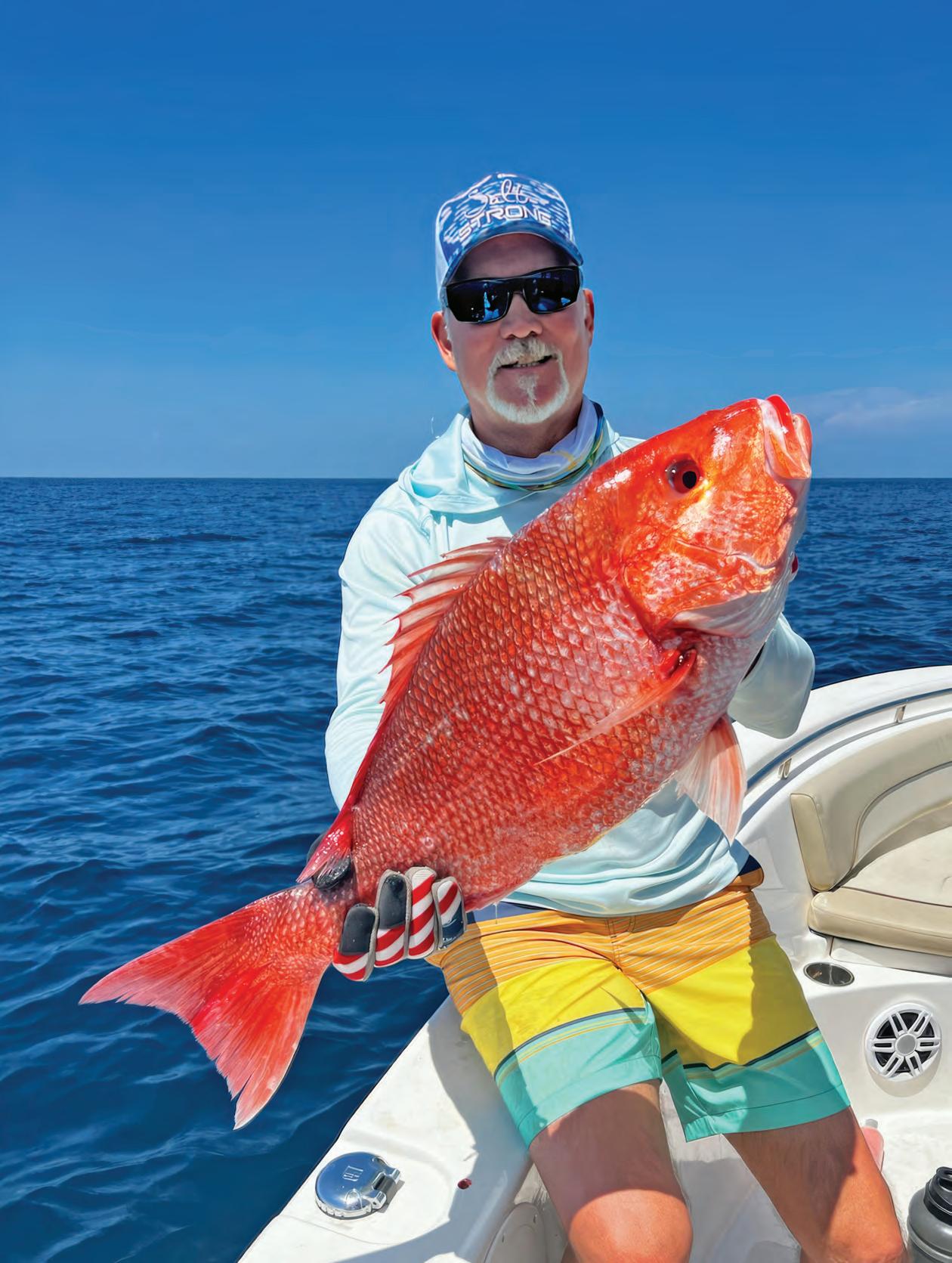
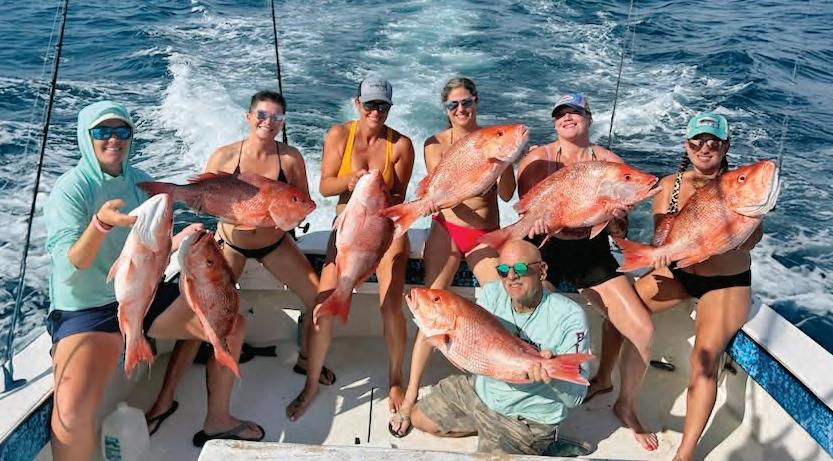
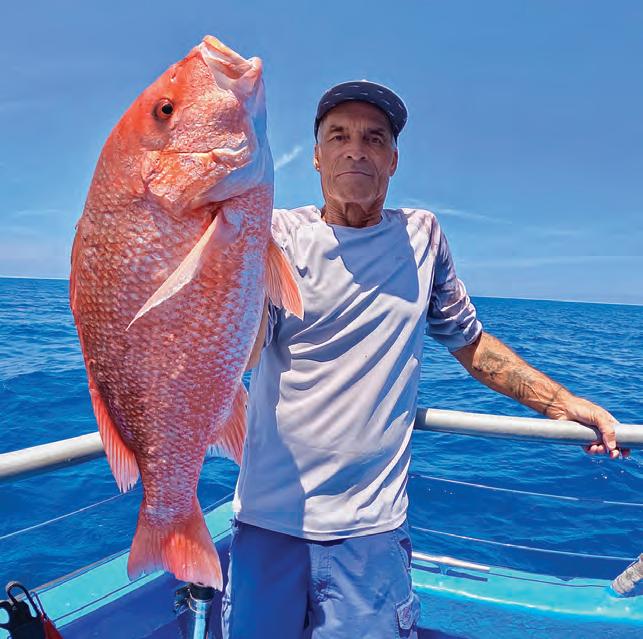
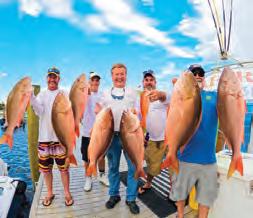
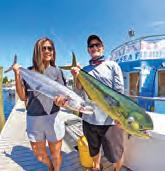
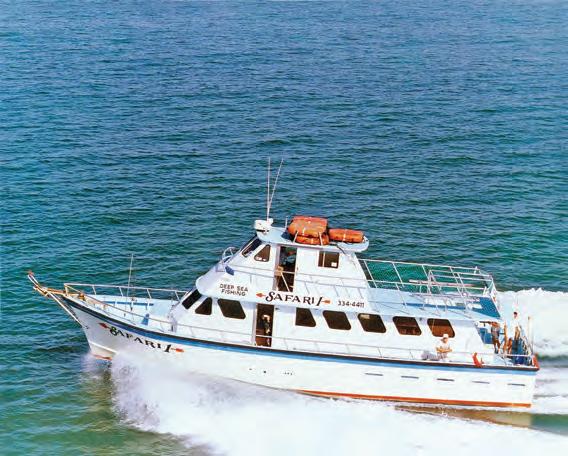
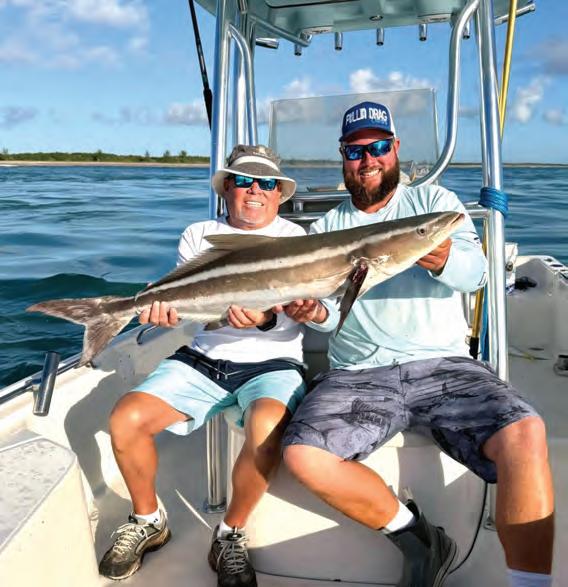
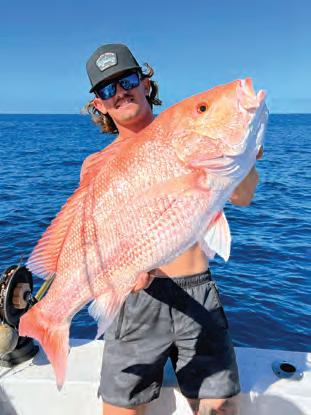
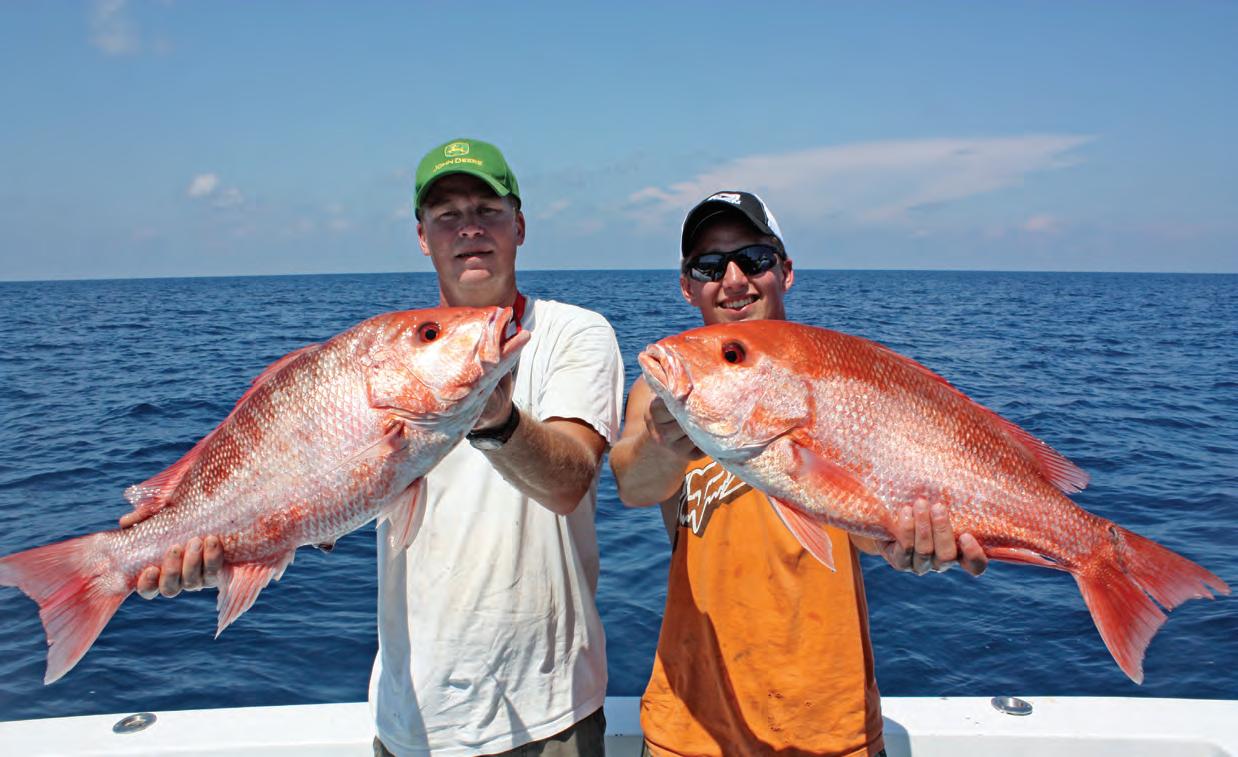
June anglers will be in bottom fish heaven as a brief “catch & keep” season on true red snapper opens. Jumbo true red snapper caught by Billy Payne aboard the Safari 1.
while actively bottom fishing at the same time. This method of covering the entire water column will increase all around fishing success and increases the potential for stand-up excitement.
Besides bottom drops on some of our deeper structures, anglers who cherish a snapper dinner will angle towards the expansive southern reef line in depths of 60to 80-feet of water, east of Hobe Sound and Tequesta, where many species of snapper tend to reside.
Large representatives of the mutton, mangrove and cubera family of snapper patrol these reef contours and are prize saltwater trophies for even the most seasoned of offshore anglers. Cobia will also be found among these naturally occurring coral reef zones, known to locals as “The Loran Tower Ledge.” The days of June will offer a sun-toasted backdrop for grocery getting fisherman who fish the entire water column in the near coastal waters of the Treasure Coast.
area reef zones. June bottom fishing will be extra attractive this year, as a brief “open season” on true red snapper will continue through June 20. Along with red snapper, the open catch-and-keep season on most species of grouper will be in full swing during the days of June, as fishing crews continue to dial in their precise positioning skills over top of structures in 70 to 180 feet of water. Deep artificial reefs located in 150 to 180 feet, just east of our St. Lucie Inlet, will be location-specific hot spots and will prove to be fish magnets for all species of saltwater fish, especially large gag grouper. Bottom fishing strategies will also allow fishing crews to deploy a dead stick surface spread of flat lines with live or dead baits that enable fisherman to catch topwater species like mahi, king mackerel and sailfish,



ST. LUCIE COUNTY OFFSHORE
Capt. Bo Samuel
Pullin Drag Charters
(772) 971-6661
facebook.com/Pullin-Drag-Charters catpainbofishing@gmail.com
Summerhas arrived on the Treasure Coast and that means the fishing is heating up with an abundance of fish and bait. Weather patterns in June have calmer winds, warmer water temperatures, and plenty of opportunities to check fish off that salty grocery list. June is one of my favorite months from inshore to offshore and the beautiful Fort Pierce Inlet, as live bait is easier to find both inside and outside the inlet, and there will be many ideal days to stay cool on the blue.
Whether trolling or bottom fishing, meat hunters will do well this month. Mahi, king mackerels, cobia, grouper and snapper are all part of the mix providing great nonstop action most days. Local anglers are consistently landing decent dolphin and kingfish and
I expect that to continue. We are finding schooly mahi offshore from 70 to 150 feet on a slow troll, looking especially around weed lines, floating debris, color changes and birds diving on bait fish pods. These fish generally chew just about anything from live and cut bait to lures. Nice muttons, mangos and grouper are being reported on the
productive 70- to 90-foot reefs. Live bait like pilchards, pinfish and sardines are top choices for targeting these hungry reef dwellers. For some cooler night fishing trips, we plan to target snapper since the mutton bite tends to be significant around the full moon.
Atlantic red snapper season officially opened in May with NOAA
announcing a record 39 days for recreational red snapper fishing off the Florida coast. May 22 until June 20 and then October 2-4, Oct. 9-11, and Oct. 16-18 are the allowed days— and the most ever since the fishery was first closed due to overfishing in 2010. The bag limit is one fish per angler, per day, following the 10-fish snapper-grouper aggregate.
The week of June 6-14 is National Fishing and Boating Week which encourages anglers of all ages to explore local waters and enjoy fishing. To celebrate, the Fort Pierce Police Department is hosting its inaugural “Cops and Bobbers Youth Fishing Event” on June 11 from 9 a.m. to 2 p.m. It’s a free event for ages 6 to 16. Get more registration and sponsorship info at https://www. fppd.org/456/Youth-Activities.
I invite you to jump on board and enjoy for yourself why our Treasure Coast is a fishing paradise. Come visit my home base across the big new bridge, the historic Little Jim Bait & Tackle, and we can plan your custom charter trip for fishing, family, friends and fun! Remember to support local bait and tackle shops like DeBrooks Fishing Corner.
I hope you make fishing a part of your summer fun because dinner’s in the bag when you fish with Pullin Drag!













Capt. Adam White
St. Lucie Flats Fishing Charters (609) 820-6257
www.stlucieflatsfishing.com
Juneis one of the most exciting months of the year for anglers fishing the Treasure Coast and the surrounding waters of Fort Pierce Inlet. Summer patterns begin settling in, water temperatures climb into the mid 80s, and bait schools become thick along the beaches, inlet and shallow flats. This combination creates outstanding opportunities for shallow water king mackerel, migrating tarpon and aggressive snook throughout the Fort Pierce area.
One of the more unique bites
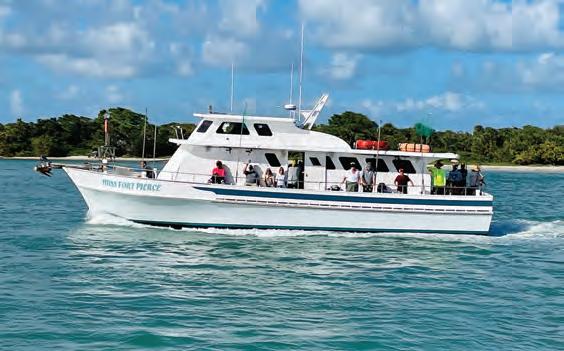
Miss Fort Pierce Fishing (772) 766-0191 www.fortpiercefishing.com
June has arrived, the most pleasant time of the year to fish. Mangrove snapper have been schooling up, and at times the bite has been intense and highly entertaining. Fish should be caught from 65- to 120-feet of water on all the rough bottom and high peaks. Baits of choice seem to be the good oldfashioned grunt, plugs, and live mojarra or finger mullet. Fish with 30- or 40-pound test line, preferably fluorocarbon, using a 12- to 15-foot leader rigged with an egg sinker or a three-way swivel and bank sinker. Be patient and wait for the right bites.
We're seeing more and more
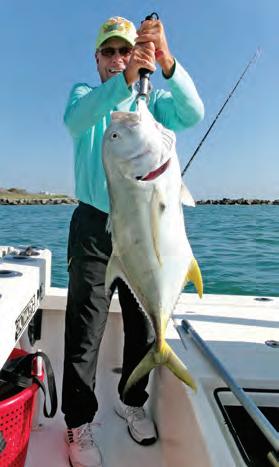
in June is the shallow water king mackerel fishery just off the beaches. Large schools of threadfin herring gather along the coastline in as little as 10- to 25-feet of water, and smoker kings are never far behind. Slow trolling live baits such as pilchards, blue runners and mullet around bait pods can produce fast action, especially early in the morning before boat traffic increases. The best areas are typically along the beaches north and south of the inlet where clean green water pushes close to shore. Cobia are also common around the same bait schools so keep a pitch rod ready.
Tarpon fishing along the beaches reaches peak season during June. Early mornings with light east winds and calm surf offer ideal sight-fishing conditions. Schools of migrating tarpon cruise just outside the breakers and along the color
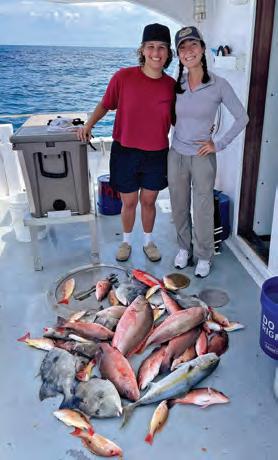
mahi-mahi swimming around the reef area, so always have a spinning rod ready to go with a single hook and no weight to pitch a tasty morsel to one of these lit-up mahi. Red snapper fishing is underway.

changes, often rolling on the surface and feeding aggressively on glass minnows and pilchards. Live mullet, greenies and swimbaits all produce well, but patience and accurate casts are critical when targeting these fish in clear water. First light is my favorite time to look for rolling fish on the beach.
Inside the river and around dock lights, snook fishing becomes excellent as fish feed heavily ahead of their summer spawn. Bridges, mangrove shorelines and seawalls around Fort Pierce all hold quality fish during June tides. Early morning topwater action can be explosive, while live pilchards and soft plastics fished around structure remain consistent throughout the day. Moving water is key, and outgoing tides near the inlet often produce the best snook bite of the month.
We still have until June 20 to catch them. The Miss Fort Pierce is continuing to target red snapper exclusively on Thursday nights and Sundays, and bottom fishing the rest of the time on our regular 7 a.m. schedule. Wednesday and Friday afternoons we continue to do our 4 p.m. to 11 p.m. afternoon
trips, mostly targeting mangrove snapper.
If you’d like to join us for a private outing, please call our office at (772) 766-0191 or visit our website—fortpiercefishing.com— for information and reservations. Be safe out on the water. We look forward to meeting you.



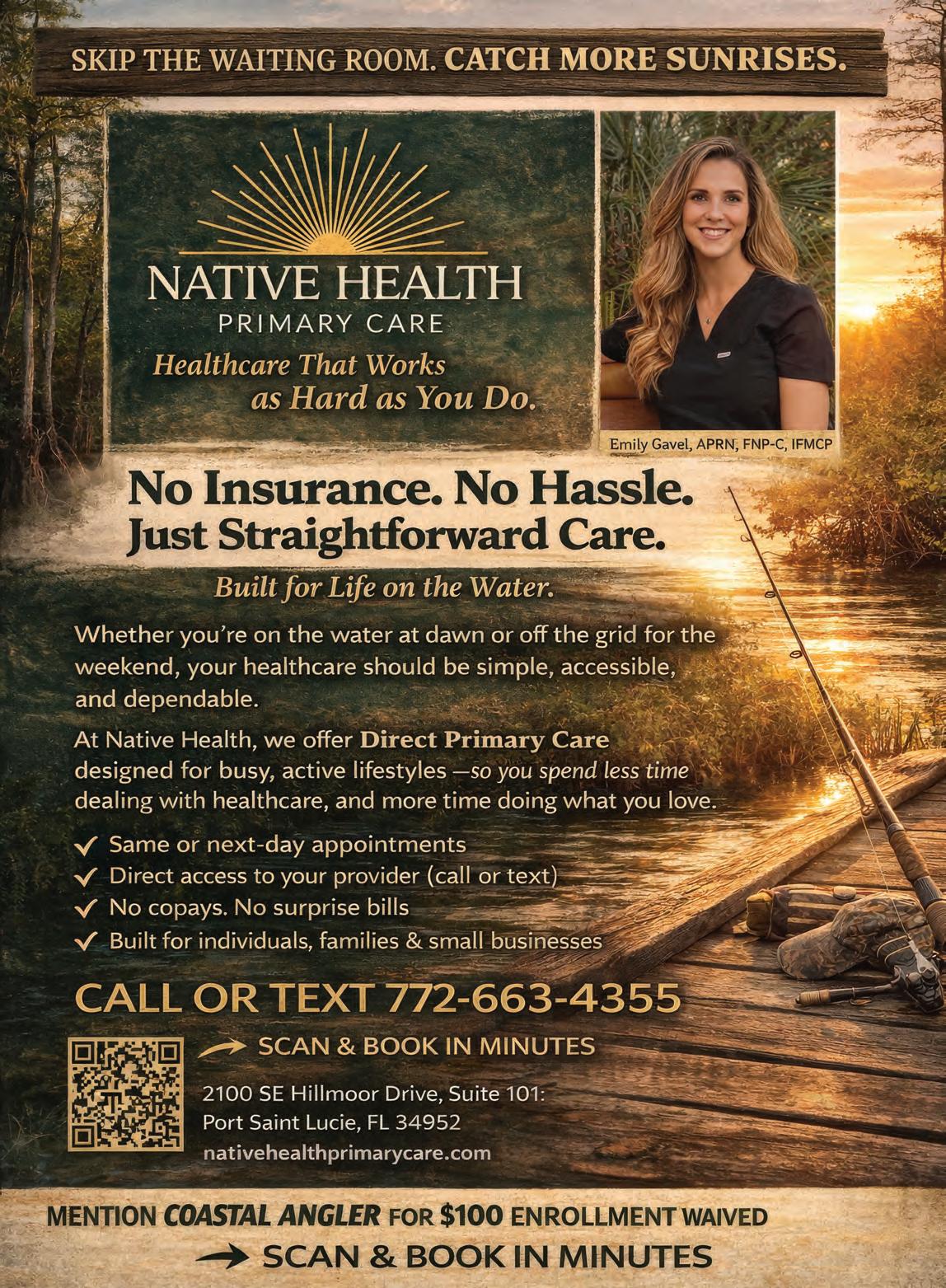
Founded in 2020, DRIFT was built on more than three decades of hands-on experience supporting offshore energy operations around the world. The team’s background includes operating and supporting offshore service vessels, integrating and maintaining work-class ROV systems operating in depths of up to 20,000 ft., and delivering electrical, hydraulic, manufacturing, and fabrication support for complex offshore projects. Working in demanding offshore environments where reliability is critical helped shape the company’s practical, solutions-driven approach and reputation for dependable technical support.
Today, DRIFT Marine, part of the DRIFT Group, operates from a purpose-built 5,000 sq. ft. facility in Palm City, Florida. The facility supports center consoles, offshore boats, fabrication, and inhouse service work, while larger sportfish vessels and yachts are serviced dockside and on location
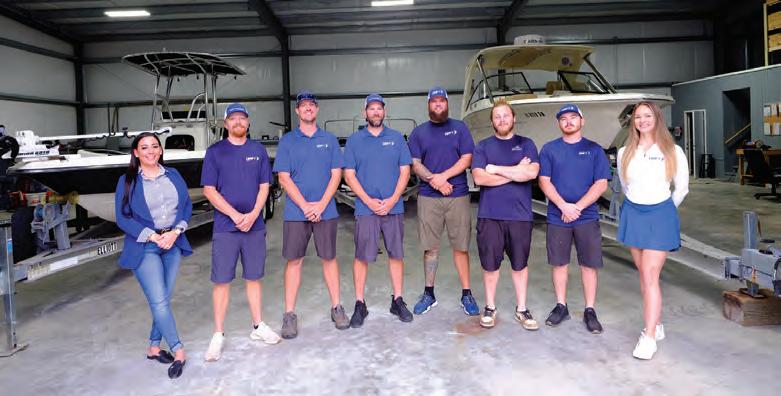
by the company’s mobile service team throughout South Florida and the Treasure Coast. The team provides high-quality marine electrical, rigging, mechanical, hydraulic, fabrication, and outboard service support, with a strong focus on clean, reliable, and serviceable solutions built to last.
From complete refits to day-to-day maintenance and troubleshooting, DRIFT Marine combines offshore-level standards with practical marine experience to deliver dependable solutions for boat owners across the region. The company has built a strong reputation for clean installations, attention to detail, and a professional approach to every project, whether supporting private owners, sportfish programs, or larger custom vessels.
In early 2026, DRIFT Marine further strengthened its in-house capabilities through the incorporation of Murphy Marine Electric, including Alex Murphy and his team, into the
DRIFT Group. Well-known across South Florida for high-quality yacht and sportfish electrical work, Murphy Marine brought decades of additional experience across single-phase and three-phase power systems, custom electrical upgrades, and marine service work.
Together, the combined team now brings over 100 years of marine and offshore experience to the local marine industry, applying offshorelevel workmanship, attention to detail, and professionalism to every project.
At DRIFT Marine, the approach is simple: no shortcuts, no guesswork, just quality work done right the first time.
For marine electrical, rigging, upgrades, and vessel support services, get in touch with the team at DRIFT Marine for a free estimate. (772) 298-7135 • support@drift-marine.com
Complete with a 5,000 sq ft purpose-built facility capable of supporting large center consoles, and offshore boats, DRIFT Marine delivers high-quality marine electrical, rigging, fabrication, and full system rebuilds, all under one roof. From clean installations to advanced electronics integration, every project is built to be reliable, serviceable, and built to last.
Need support dockside? DRIFT Marine also offers convenient mobile marine service for larger boats and yachts throughout the Treasure Coast and surrounding areas. Backed by decades of hands-on experience across marine and offshore operations, their team is committed to delivering clean, reliable workmanship, professional service, and dependable solutions for every client, every time.
Marine electrical & vessel rewires
Hurricane storage & haul-out programs
Marine electronics integration
Solar, inverter & lithium battery upgrades
AC/DC electrical & shore power systems
Fuel tanks & fuel system upgrades
Trolling motors, jack plates & Power-Poles
Custom lighting & switch panel systems
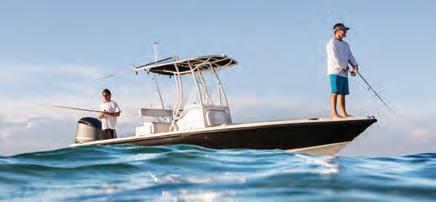
Outboard servicing & dockside support by service boat
Trailer repairs, wiring & brake service

TheFlorida Fish and Wildlife Conservation Commission (FWC) recently responded to the federal approval of Florida’s Exempted Fishing Permit (EFP), allowing the state to assume management of the recreational Atlantic red snapper fishery in both state and federal waters beginning in 2026. With approval of the EFP, Florida will implement a 39-day Atlantic red snapper season in 2026, a significant expansion from the two-day federal season allowed in 2025—an increase of more than 1,800 percent. The season will include:
Summer Season: May 22 (Memorial Day Weekend) through June 20 Fall Season: Three-day weekends in October (October 2–4, 9–11, and 16–18)
“This is a major milestone and success for Florida’s Atlantic red snapper anglers and the fishery overall. FWC has worked relentlessly to make this day a reality for Florida’s anglers, but it would not have been possible without the widespread support from those who care about the health and access to our robust Atlantic red snapper fishery,” said FWC Chairman Rodney Barreto.
“The Florida Fish and Wildlife Conservation Commission is leading the way, and with approval from NOAA Fisheries, we’re opening the door to a 39-day recreational season. This is a major step forward, giving anglers meaningful new opportunities to catch and keep Atlantic red snapper while strengthening our commitment to conservation,” said FWC Division of Marine Fisheries Management Director Jessica McCawley. “By pairing expanded access with improved data collection through Florida’s State Reef Fish Survey, we’re proving that smart, state-led management can deliver both better fishing experiences and a more sustainable future for this iconic species. FWC would like to thank Congressman Rutherford and the Red Snapper Congressional Task Force, along with members of the recreational industry, for their strong support that got us to where we are today.”
Florida’s EFP approval follows years of success in the Gulf, where state management increased the red snapper season from just three days under federal control to 127 days—an increase of over 4,100 percent. This same model will now be applied to the Atlantic fishery, using Florida-specific data and real-time management tools to better reflect the health of the stock.
The expanded Atlantic and Gulf seasons are expected to generate significant economic activity across Florida’s coastal communities, supporting charter operators, bait and tackle shops, restaurants, hotels, and Florida’s broader recreational fishing industry.
Florida continues to lead the nation in recreational fishing and boating, with more than 4 million licensed anglers, 950,000 registered vessels, and a $31.3 billion boating industry supporting over 100,000 jobs statewide.
Florida’s ability to offer this extended season is made possible by the datadriven management approach of the Florida’s State Reef Fish Survey (SRFS).
Anyone fishing for red snapper from a private recreational vessel—in state or federal waters—must be registered as a State Reef Fish Angler (with annual renewal), even if exempt from fishing license requirements. Registration is available at GoOutdoorsFlorida.com.




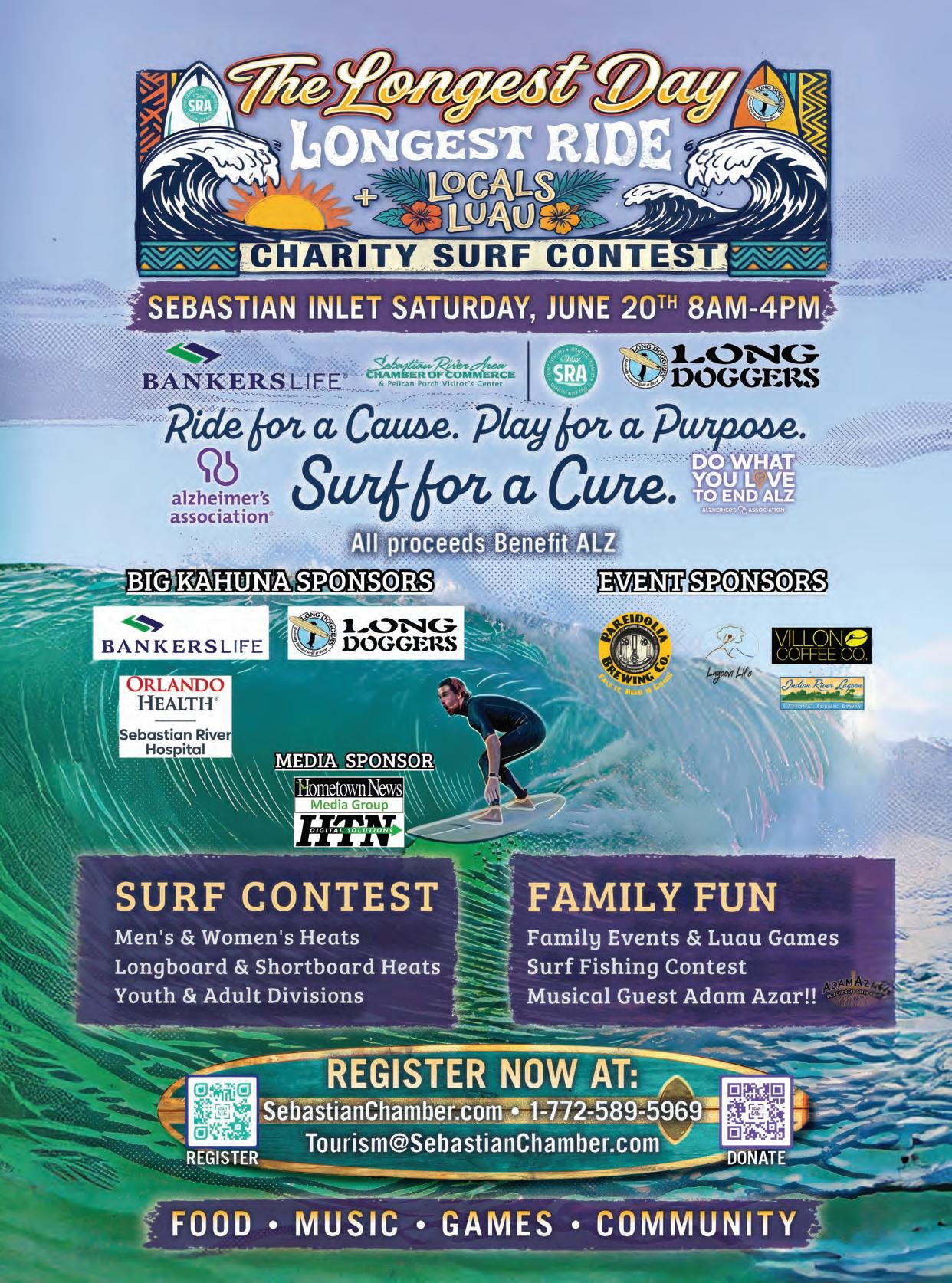
JUN 1 - AUG 31
Stuart Sailfish Club Endless Summer
Sailfish Tournament
Sailfish Marina of Stuart https://www.stuartsailfishclub.com/tournaments



JUNE 12 - 14
Mar tin County Firefighters Benevolent
Fishing Tournament
Pirate’s Cove Resort & Marina, Stuart mcfba.org/mcba-fishing-tournament
JUNE 19 - 20 5th Annual Indian River FireFighters
OffShore Fishing Tournament
Sebastian Saltwater Marina, Sebastian https://www.irffb.com/fishing-tournament
JULY 10 - 12
One More Bite Sailfish Challenge
Sailfish Marina, Stuart onemorebiteoutfitters.com/pages/omb-sailfish-challenge
JULY 17 - 18 Fish Fam Jam 2026
Pirates Cove Resort & Marina, Stuart https://familiesrecover.org/fishing/




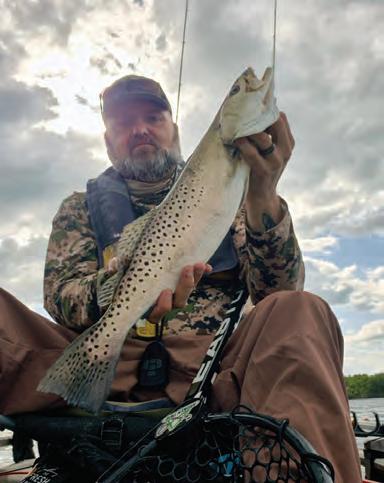
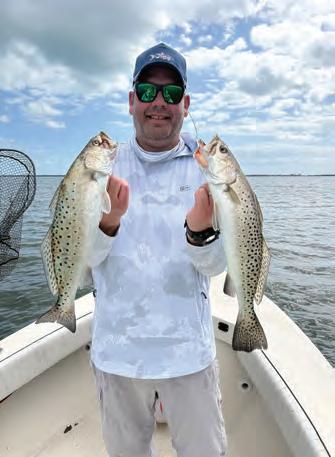
Chris Parker with a nice 20-inch seatrout, caught recently in Ft. Pierce.


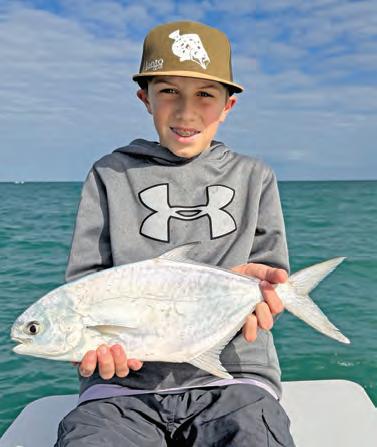
Miles nabbed this 15-inch pompano throwing a gold spoon in between hundreds of bluefish.
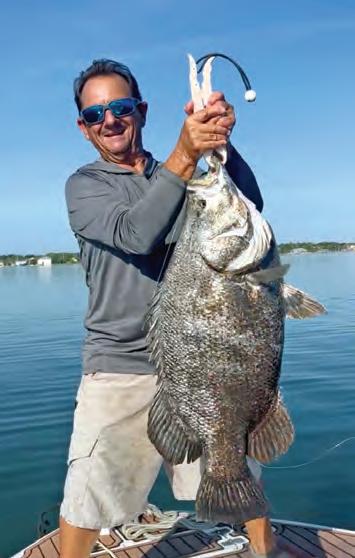
Matt Vigliotti caught this 29.5-inch, 22.8 lb. tripletail in the Indian River using a live pilchard.
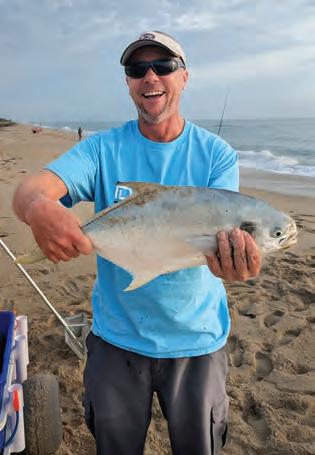
Todd Hingle with his PB pompano, caught near Sebastian Inlet on sandfleas. It measured 18.75 inches to the fork.

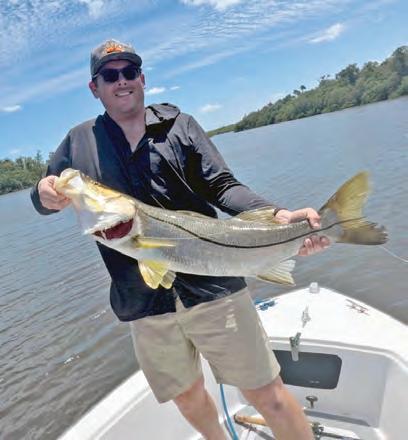
Elliott with a full-grown snook, caught on NLBN.

Connor Henderson hooked a nice 35-inch redfish off the dock.



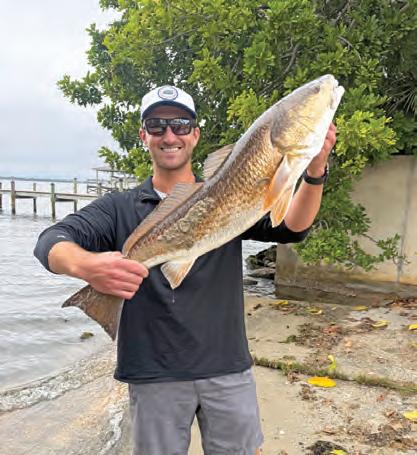
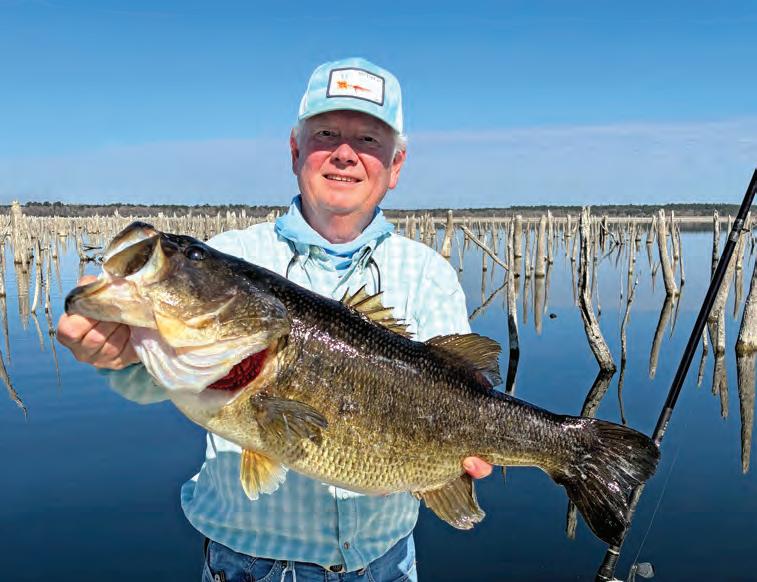
TrophyCatch Season 14 is still going strong as Florida’s annual spawning season winds down. Multiple double-digit and Hall of Fame bass were submitted in the last quarter, including the lucky catch below. !e latest totals for the TrophyCatch program are::
• 13,349 Lunker Club (8-9.9 lbs.) bass
• 3,372 Trophy Club (10-12.9 lbs.)
• 176 Hall of Fame (13+ lbs.)
• 16,897 Total approved bass submissions to date If you’ve participated in TrophyCatch, your data is included here!
TrophyCatch Season 14 launched on October 1st, 2025 and allows anglers until September 30th, 2026 to pursue and land an 8+ lbs. bass. !is unique program unites anglers who document their bass, conservation partners who award prizes and your catch data which helps sheries managers understand where, when and how the
biggest bass are being caught in Florida. It takes all three groups collaborating for this program to be successful.
And for Putnam County anglers, there’s an exciting opportunity to win an awesome shing trip prize package when you submit and have catches approved for TrophyCatch that are from Putnam County!
!e TrophyCatch program is brought to you by the Florida Fish and Wildlife Conservation

Commission (FWC), and their conservation partners. !e FWC mission is “Managing sh and wildlife resources for their long-term well-being and the bene t of people.” !ese programs collect valuable data through citizen-science, encourage shing and conservation and bring enjoyment to Florida anglers.
Register for TrophyCatch or view approved angler catches at TrophyCatch.com.


By Will Schmidt
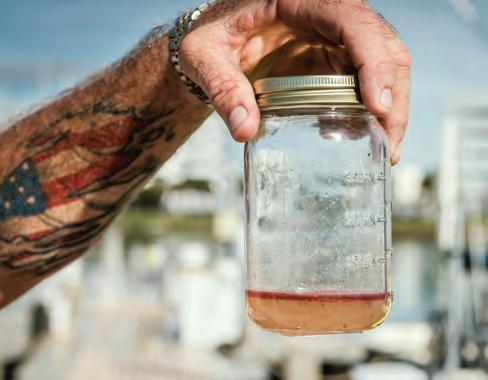
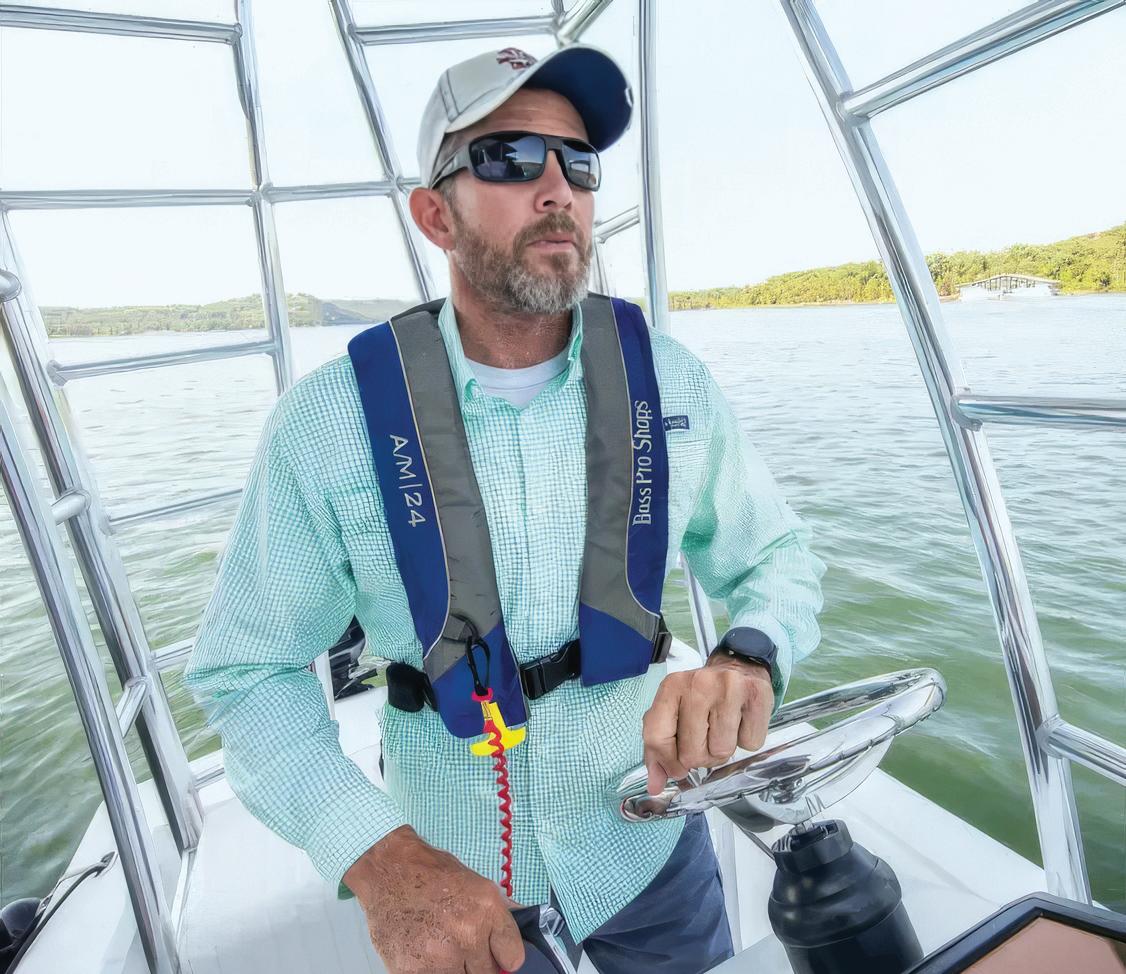
There’s been a troubling trend that I’m hearing while out on my boat. The Coast Guard broadcasting an unmanned vessel alert. This potentially deadly scenario seems to be happening now on a regular basis, and a few precautions can take this from a life-or-death situation to an easily survivable event. With the summer boating season soon to be underway, now is a great time to revisit some basic safety protocols. Perhaps the two biggest safety items on a boat are often the most overlooked
and underused pieces of equipment. First, life jackets. Gone are the days of the bulky bright orange life jackets that are uncomfortable and impeding. The new self-inflating styles are both comfortable and unencumbering. These are far more user friendly and yet many resist. The truth is the self-inflating vest or hip pack versions are comfortable and don’t restrict you in any way. Should you fall overboard they can truly be life savers.
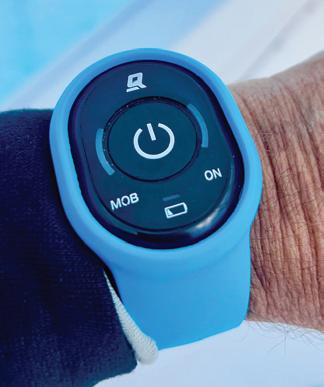
The second most underused item is your kill switch. Even though they are mandated on vessels 26 feet or less while on a plane, most people still don’t use them. The biggest complaint with these is that they tether you to the helm. However, as your boats have gotten smarter, so has the kill switch. There are products like the Fell Marine 1st Mate system which wirelessly protect the users. This genius devise uses geo fencing to define your boat’s area and activates the system should the small wearable fob cross the boundary. By allowing movement around the boat untethered there is no excuse at all for not utilizing the kill switch, even while not on plane. Should the captain fall overboard the engine(s) stop and if the system is not reset in a definable amount of time it will send messages for help. This is great for solo fishing where an errant wave can be disastrous. As a bonus it can also be set up as an anti-theft device.
Another lesser used device is your fire extinguisher. One of the most terrifying events that can happen on a boat is fire. If that should occur, every second counts. Having your fire extinguisher close at hand is a must, and finding an out-of-the-way spot to mount this gear is essential. There are many mounts available, and being prepared for this type of emergency is the smart thing to do.
Clearly there are many other required pieces of equipment as well as suggested items. From flares to first aid kits, no one wants to use them, but when they are needed, they are crucial. Before heading out, make sure everyone knows where all these items are stored. Time can be of the essence in an emergency and having the crew waste valuable time searching for safety items could make all the difference in the world.
Will Schmidt is a seasoned tournament angler who has been writing about fishing from more than two decades. Follow Will on Instagram @saltynstrong.
“4EverYoung has transformed my life in ways I couldn’t have imagined. My mood has stabilized, my energy levels are consistent, and I just feel healthier overall. It’s like I’ve been given a new lease on life, and I can’t recommend it enough.” ~David R.

Discover the range of health and wellness services that 4Ever Young provides to help you combat aging and showcase your best features. Whatever your concerns, 4EverYoung is ready to help you look and feel your best with an array of youth-reviving services using the latest technologies and most sophisticated techniques currently available. Whether in-office or via our telehealth services, our holistic approach ensures your path to aging with vitality is tailored to your unique needs.
Our VIP membership packages provide year-round product and service discounts and VIP access to 4EverYoung events & specials.

Gabby Ryan, MA-LME Managing Director - CEO 772-510-9040•GabbyR@4EverYoungStuart.com “Come See Me at the 4EverYoung Stuart




The Angler Video Magazine is the hot, new platform from Coastal Angler and The Angler Magazines connecting fishing and boating enthusiasts with the latest industry news, gear, product reviews, tips, how-to’s and more...







By Capt. Lukas Brickweg
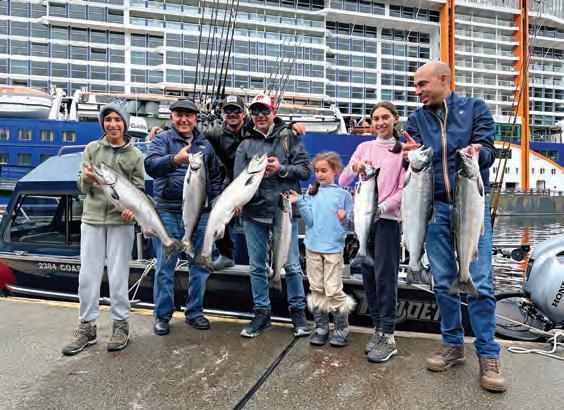
Ketchikan, Alaska isn’t just another cruise ship port; it’s widely recognized as one of the top shing locations in Alaska—and for good reason. For cruise ship guests looking to experience an authentic Alaska shing in a limited window of time, the quality and diversity of shing found here is unmatched anywhere else on the Inside Cruise Passage.
Why book a shing excursion in Ketchikan? Due to the sheer productivity and diversity of nearby waters, combined with a variety of species types and trip times, this is revered as a must do cruise excursion. It o%ers a chance to
get out of the bustling downtown, reel in massive catches and have your catch shipped home. In addition, these waterways always provide areas for calm, scenic waters abundant with wildlife sightings.
Depending on the season, guests can hook into all ve types of wild paci c salmon, with each o%ering a unique ght and experience. Add to that the opportunity to drop lines for Paci c halibut, and you have a shery that delivers both action and assortment. Ketchikan’s waters are also home to an impressive range of additional species including lingcod, rock sh, and Paci c cod, giving guests a true Alaska shing experience. !is diversity keeps the day exciting, especially for rst-time anglers and families, and ensures there’s always something happening on the rod.
For cruise ship guests on a tight schedule, quality and convenience matter! Ketchikan consistently produces an opportunity to catch trophy sh! !e size and strength of the sh they hook astonishes guests. !is reputation for quality shing is why experienced anglers and rst-timers alike rank Ketchikan as the best shing port on an Alaska cruise.
At Ketchikan’s Finest Fishing Charters, we focus on putting guests in the right place at the right time. Our captains know these waters intimately and adjust techniques based on tides, seasons, and conditions to maximize success. !e result is a shing experience that consistently exceeds expectations, which is re ected in our top rated reviews and repeat guests year a er year.
Another major advantage for cruise ship excursions is the downtown cruise ship harbor location. Being located steps from where cruise ships dock means less time commuting and more time shing. Guests appreciate the simplicity; walk o% the ship, step aboard, and start shing.
If you’re cruising to Alaska and want the best possible shing excursion, Ketchikan delivers unmatched diversity, dependable action, and true trophy potential, combined with convenient harbor access and one of the highestreviewed charter operations in town. Ketchikan’s Finest Fishing Charters o%ers cruise ship guests an authentic Alaska shing experience, rich sheries, wildlife abound and unforgettable moments for the entire family. Step o% your cruise ship and straight into some of the best shing Alaska has to o%er.
To book your Alaskan shing adventure with Ketchikan’s Finest Fishing Charters, visit ketchikan shingtrips.com, call (907) 617-4717 or email ketchikan shingtrips@gmail.com.
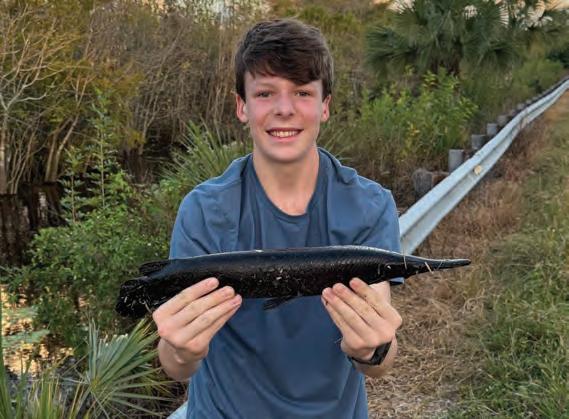
Ayoung angler from South Florida recently reached out to the Fish and Wildlife Research Institute’s freshwater sheries team with a truly remarkable catch. While our biologists occasionally encounter very dark gar and other species in the Everglades and throughout South Florida, this sh stood out as something special. It is believed to be a rare melanistic Florida gar.
Melanism is a condition marked by an unusually dark appearance caused by excessive melanin in the skin, scales, fur, or feathers. It is relatively uncommon in wildlife and is not something biologists see very o en, making this catch especially unique.

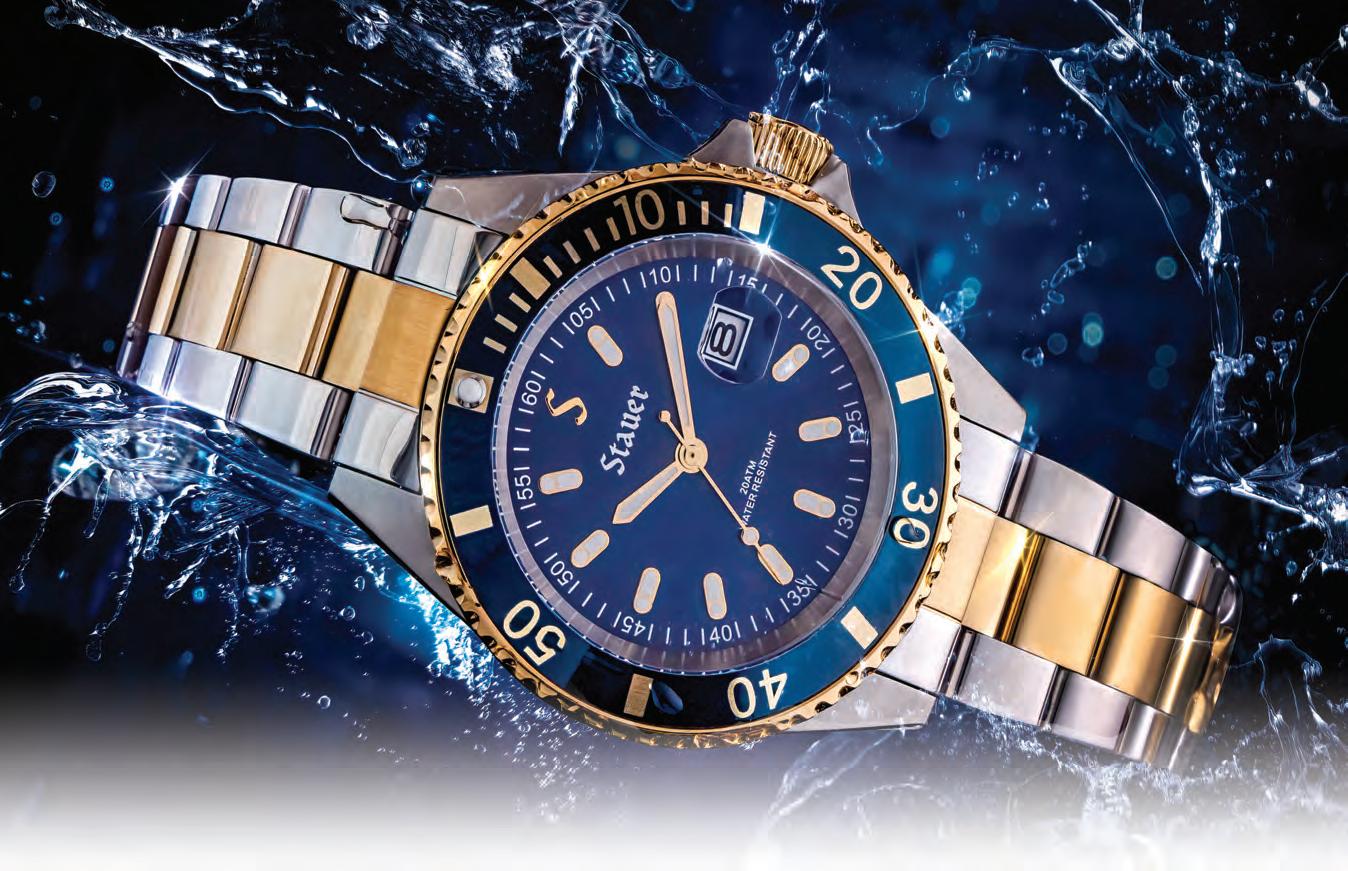
Themarket’s swimming with overpriced dive watches. We’re here to tell you those guys are all wet. At Stauer our philosophy is everyone deserves the best without having to dig deep into their pockets. We’ve been in the watch industry for decades and know more than a thing or two about getting the ultimate bang for our buck— which means we can pass the fruits of our know-how onto our clients.
Case in point: The Explorer Dive Watch. This tough-as-nails sophisticate would cost you in the thousands if you got it from a high-end retailer that’s really in the business of selling a big name more than a quality watch. We keep the big names out of the equation so we can price this top-notch timepiece for just $99 ––a price that let’s you dive in and have enough left over for an excursion or two...or three.
You’re getting a lot for your money with this watch. The Explorer is the perfect companion in any locale–– whether you’re exploring coral reefs or investigating the rum options at a beachside bar. With a case, band and crown of stainless steel, this watch is built to last, and its water resistance rating of 20 ATM means it can handle most of your aquatic adventures to a depth of 678 feet. The striking metallic blue face reflects the
deep waters it was designed to explore and it’s sporty screw-down crown can take the pressure in stride.
Your satisfaction is 100% guaranteed. If you are not completely convinced you got excellence for less, simply return the Explorer Dive Watch within 30 days for a refund of the item price. At Stauer, we never leave our customers high and dry. Limited Edition. Sure you could give your hard-earned money to those other guys, but why would you? We’ve got the thinking man’s timepiece right here. This watch takes six months to engineer and it’s already making waves, so we can’t guarantee it will be around for long. Call today, and experience how good it feels to get true luxury for less.


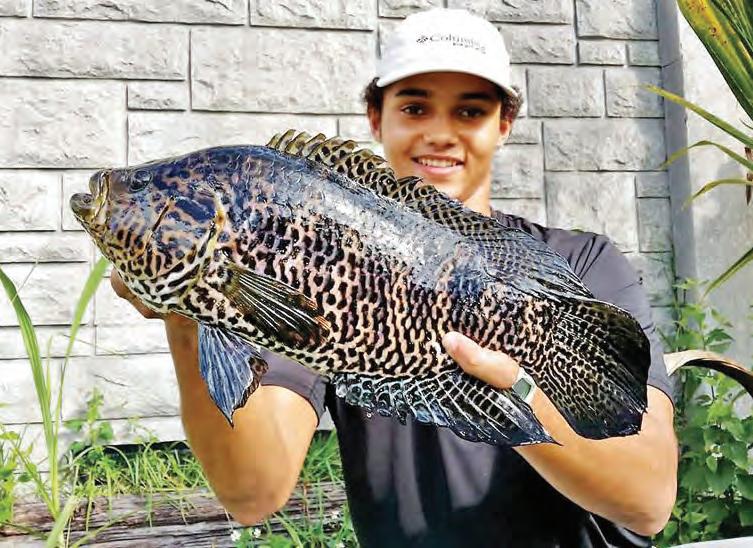
The Jaguar Guapote is a large, non-native freshwater cichlid now established in southeastern Florida’s coastal canal systems, with records as far north as the West Palm Beach area.
It has a robust, semi-elongated body with a large oblique mouth and prominent canine teeth, and is easily recognized by its broken lateral line and striking black-spot and blotch pattern along a pale body — reminiscent of a jaguar’s spots.
!is species is an aggressive predator, feeding mainly on small sh and aquatic insects, but also consuming snails, worms, and other prey.
In Florida, jaguar guapote tolerate poor water quality and warm temperatures, thriving in canals and sluggish waters. !ey spawn on hard surfaces, with both parents guarding eggs and young.
!ough valued by some anglers and considered good to eat, this nonnative predator can impact native sh communities due to its voracious feeding habits.
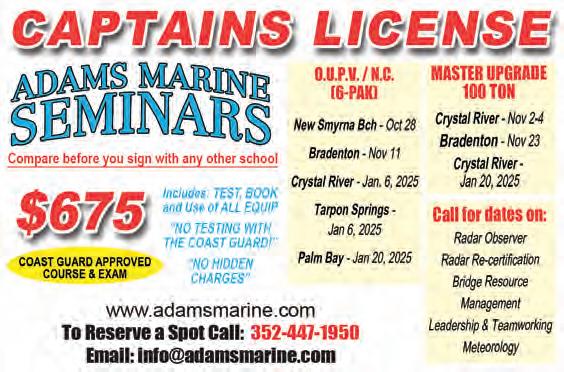
Lake Mary/Sanford - Jun 1
Crystal River - Jun 15
Tarpon Springs - Jun 15
New Smyrna Bch - Jul 6
Palm Bay/Melb - Jul 20
Bradenton - Aug 10
www.adamsmarine.com
To Reserve a Spot Call: 352-447-1950 Email: info@adamsmarine.com



WPalm Bay/Melb - Aug 1
Bradenton - Aug 22
Call
dates on:


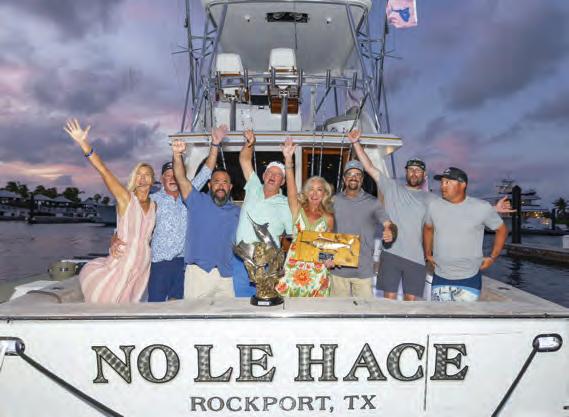
eather played a big factor in the 6th Annual Chub Cay Invitational Tournament that just concluded in the Bahamas. A strong low pressure system with high winds forced multiple boats to sit out, but the remaining eet didn’t let that damper spirits. By the time the frontal boundary had passed, the sh turned on and No Le Hace, a 57 Spencer led by Capt. Freddy “Potatoes” Vicens and team, had captured rst place. No Le Hace released three sail sh and one blue marlin and all were caught by Denise McMahan, who was also named Top Lady Angler for the event.
On the rst day of shing two blue marlin, one white and four sail sh were tallied. Blues successfully released count for 500 points, whites are 200 and sails score 100.
No Le Hace made its charge on the second day. Invicta, a 44-foot Contender center console run by Michael Buxton, released a blue the rst day, followed by the rst sh of Day Two, a white marlin. !at earned the team second-place honors. Sempre Dura, a 68 Ricky Scarborough with owner Chris Stavola at the helm, locked up third place with a sail sh in the morning and a blue marlin a er lunch.
!e radio and dock was buzzing with Waterline’s (Capt. Jake Gri th/58 Viking) epic ght on light tackle. Rob McCall fought a big yellow n tuna for ve hours, 20 minutes on a Tallica 25 with 40-pound main line, 60-pound leader and a 7/0 circle hook. !e sh ate a ballyhoo on the right long outrigger line and was nally boated at 5:04. !e boat made it back to the scales within the two-hour deadline, with everyone cheering on. When the sh was nally weighed, it registered 140 pounds, easily winning the heaviest meat sh for the Invitational. !at catch also was the largest game sh in Chub Cay Resort’s tournament history. Waterline also weighed a 38-pound dolphin to sweep the game sh categories.
“ !e Invitational is a members-only event following the Chub Cay Classic and Chub Cay Open, which are open to the public,” says Tournament Director Robert “Fly” Navarro. “ !e weather was a factor early, but we still had some outstanding shing overall, including Waterline’s epic catch.”
!e dates for next year’s tournaments are set. !e Chub Cay Classic kicks o% on March 11-13, 2027. !e Cub Cay Open will be held April 1-3, followed by the Chub Cay Invitational on April 15-17, 2027.
For more information about the tournaments, the resort and its amenities, visit www.chubcay.com.
Anglers across the South Atlantic will enjoy a signi cantly longer red snapper season in 2026, thanks to a new management strategy approved by NOAA Fisheries. rough an Exempted Fishing Permit (EFP), individual states are taking the lead on data collection and management, resulting in a dramatic increase in shing days compared to previous federal seasons. Georgia, South Carolina, and North Carolina will have more than two months (62 days) for recreational Atlantic red snapper shing, while Florida will have 39 days split into several windows.
Florida recreational anglers will see the most substantial change, with a season split into summer and fall windows. is expansion aims to reduce regulatory discards— sh that are caught and released but do not survive—by allowing more sh to be kept.
• Summer Window: May 22 – June 20
• Fall Window: October 2–4, 9–11, and 16–18
• Regulations: e daily bag limit is one sh per person. Notably, there is no minimum size limit for Florida under this permit, a move designed to further reduce discard mortality.
Georgia and the Carolinas
North Carolina, South Carolina, and Georgia are also participating in the pilot program, o ering a continuous two-month season for their residents.
• Season Dates: July 1 – August 31, 2026
• Regulations: e bag limit remains one sh per person. Size limits vary by state: South Carolina maintains a 20-inch minimum, while Georgia and North Carolina have no minimum size for this speci c season.
Mandatory Reporting Requirements e success of this pilot program hinges
on accurate data. For the 2026 Atlantic red snapper season, mandatory reporting is a core requirement.
• Florida: Recreational anglers must have a valid saltwater shing license and a (free) State Reef Fish Angler designation. All red snapper landings must be reported via the FWC EFP Reporting app or website - https://app.myfwc.com/crossdoi/ redsnapperreporting/. While passengers may keep their limit on for-hire trips, captains and crew members are prohibited from retaining red snapper on charter or headboat trips.
• Georgia and the Carolinas: Private recreational anglers must use the VESL app or website (https://blue ndata.com/projects/ red-snapper-with-yamaha) to record their red snapper harvest and discard information to participate in the 2026 red snapper season. For-hire operations who qualify must have a current federal permit and record their harvest and discard information through their appropriate reporting program. is shi toward state-led management re ects a growing e ort to balance the health of the red snapper stock with the needs of the recreational shing community. By gathering more precise catch data through these state programs, o&cials hope to create more sustainable and predictable seasons in the years to come.
Red snapper are highly sought a er by anglers because they’re one of the best-tasting sh in the ocean. ese aggressive sh tend to concentrate around reefs, wrecks, and other deep-water structures, which makes for some fun and fast-paced catching when you can nd them.
e 2026 Gulf red snapper recreational shing season features a record-breaking 140day harvest period in Florida state and federal waters. e season spans both summer and fall periods, extending all the way into January, with exact limits and dates varying depending on your location and shing permit.
Florida Private Recreational Gulf Season
Florida anglers enjoy the longest season in state history with a 140-day allowance. Bag limit is 2 sh per person, per day, and you must sign up for a no-cost State Reef Fish Survey.
• Summer Season: Open daily from May 22 through July 31.
• Fall Season: Open daily from September 1 through October 4.
• Weekend Openings: Select weekends continue through the rest of the year:
» ree-day weekends in October (Oct. 9-11, 16-18, 23-25, 30-Nov. 1)
» Two-day weekends in November (Nov. 7-8, 14-15, 21-22)
» anksgiving weekend (Nov. 26-29)
» Two-day weekends in December (Dec. 5-6, 12-13, 19-20).
» Christmas weekend (Dec. 25-27) and New Year’s (Jan. 1-4).
Federal For-Hire Gulf Season
For federally-permitted charter/for-hire vessels, the federal waters season in the Gulf of America runs for 147 days and is open June 1 through October 26. Limit of 2 sh per person, per day.
Other Gulf States Regulations and dates vary outside of Florida:
• Louisiana: e season opened on May 1 for private anglers and for-hire charters (state waters), open 7 days a week until quotas are met. e bag limit is 4 sh.
• Alabama: e season opened on May 22, running 7 days a week until the quota is reached.
• Texas: State waters are open year-round.
Always check with your state’s shing and wildlife agency for the most up-to-date rules and regulations.
the sh bite, and sometimes they don’t. Learning to accept both outcomes gracefully is a lesson many adults still struggle to master.
ey also teach resilience. Every angler loses sh. Hooks snag. Weather changes. Boats break down. Yet shermen keep going. Children who grow up shing learn early that frustration is temporary and persistence o en pays o

By Chatwick G. Peterson III
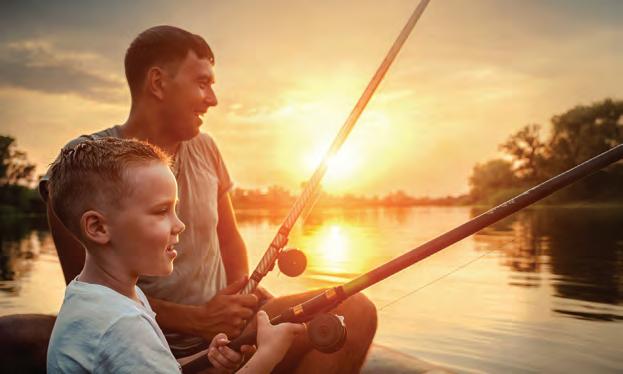
here’s something timeless about a father teaching a child to sh. Long before the rst cast is made or the rst sh is landed, something deeper is already taking place on the shoreline, in the boat, or along the quiet bend of a creek. Fishing becomes more than a hobby—it becomes a bridge between generations.
For many fathers, shing is one of the rst ways they learn to teach patience, con dence, and respect for the outdoors. It starts with simple things: showing a child how to hold a rod, how to bait a hook, or why you move quietly near the water. ose lessons may seem small in the moment, but they o en become memories that last a lifetime.
A child rarely remembers every sh they catch. What they remember is who was standing beside them. ey remember early mornings wrapped in hoodies while the world was still waking up. ey remember snacks in the tackle box, tangled lines that somehow got xed, and the excitement in their father’s voice when a bobber nally disappeared beneath the surface. ey remember the encouragement a er losing a sh and the celebration a er catching even the smallest bluegill.
Fishing fathers teach far more than technique. ey teach patience in a world that moves too fast. Fishing forces children to slow down, observe, and appreciate the moment. ere are no instant rewards on the water. Sometimes

Perhaps most importantly, fathers who sh with their children create space for conversation. Some of the best talks happen when there’s no pressure to talk at all. Sitting side by side in a boat or along a bank has a way of opening doors. Kids ask questions. Fathers share stories. Life slows down enough for real connection to happen naturally.
In today’s world, where screens compete for nearly every waking moment, teaching a child to sh may be more important than ever. Fishing pulls kids outdoors and reconnects them with nature. ey learn where food comes from, how ecosystems work, and why conservation matters. ey begin to understand that lakes, rivers, and oceans are not just places for recreation, but resources that deserve protection.
A father teaching a child to release a sh carefully may also be teaching stewardship without ever using the word.
Not every shing father is perfect. Some are patient teachers while others struggle to untangle knots without frustration. Some own expensive boats while others sh from muddy banks with secondhand rods. But none of that truly matters to a child. What matters is presence. Time is the real gi
Years later, long a er tackle boxes rust and rods are replaced, many sons and daughters discover that shing was never really about the sh at all. It was about learning who their father was. It was about shared silence, laughter, stories, and traditions passed down one cast at a time.
And eventually, something remarkable happens: the child grows up and begins teaching another child how to sh. e knot may be tied di erently. e tackle may change. e old family hotspots may even disappear. But the tradition continues. One generation passes something meaningful to the next—not just a skill, but a way of life.
Fishing fathers help shape patient, observant, and connected children. ey teach kids to appreciate nature, value time, and understand that some of life’s greatest moments happen far away from crowds and noti cations.
In the end, the greatest catch a father ever makes may not be the sh on the line, but the bond built beside the water.


TIM BAREFOOT

June will begin the widespread warm water, instead of just pockets like in spring. Starting now you can catch tuna, wahoo and dolphin anywhere in that 70+ degree water. From now through October, I would put an emphasis on securing big, hardy live baits for the light line. If nothing else, jig up some small snappers wherever you are bottom shing and keep one underneath a oat or under the kite, along with one without a oat that can get some depth. Of course, I like to nd bait to sh around, not just bait on the surface. Don’t hesitate to get these light line baits deeper in the water column. at 75- to 100-foot depth is notorious for wahoo, as well as yellow n tuna during the middle of the day when the sun is high.
I would suggest spending some time posted up on top of a big stack of bait and dedicating at least one person to jigging up dozens of live cigs and sardines. is is the ultimate bait for either the light line or on the bottom. If you put a lot of cigar minnows or sardines on the decoy jig, its life expectancy is under ve seconds on the bottom, but just getting it to the bottom sometimes can be a challenge. We never leave the dock without a couple boxes of frozen cigar minnows and live pin sh this time of year, but nothing, in my humble opinion, is any better than a live cigar or sardine on the jig.
later.
e summer solstice will be June 20—the longest day of the year. It will be daylight right a er 5 a.m. and sh are just like us. ey like to eat breakfast and dinner, so go early. Be there for the daylight bite or stay late and, if you feel froggy, spend the night. ere is nothing like that night bite under the lights. It is a “National Geographic moment” at night under the lights. You see everything. Be sure to dip up some squid for the daylight bite or put them back down at night. Squid will de nitely come to the lights and are easy to catch, but beware—they will bite you and spew very black ink. is is a great time of year to take the kids. You could have big, high-pressure cells that will keep the seas at for days and they will be amazed to see all the life under the lights at night. But dress your kids properly and teach him how to harvest sh and take care of the sh you want to release. Take plenty of videos because they will never want to forget these trips.
Calm seas and tight lines, Ben Martin. We’ll sh together again someday...
Visit barefootcatsandtackle.com for more tips and techniques.

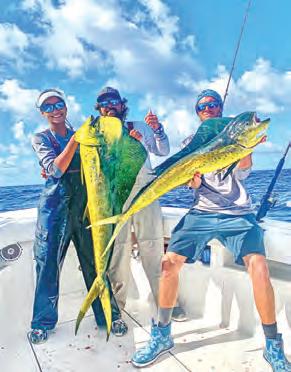
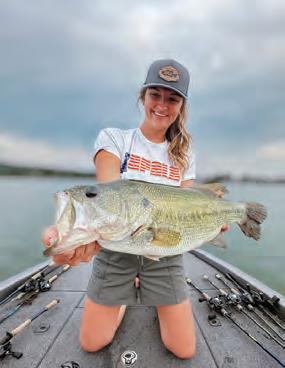




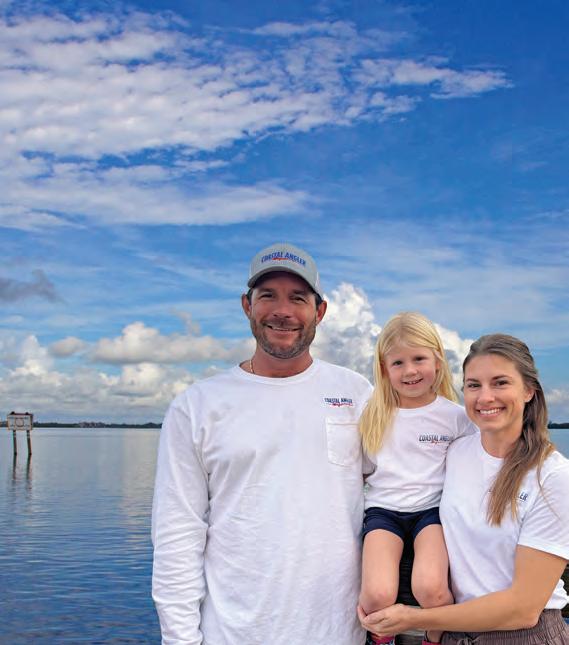
When the water starts warming and o shore schools of bass begin grouping up on ledges, hard spots, and deep structure, few techniques can trigger giant bites like a deep-diving crankbait. For Joey Bloom, deep cranking is one of the best ways to locate aggressive sh and force reaction strikes from bass that might ignore slower presentations.
“Deep cranking is all about triggering sh,” Bloom explained. “You’re covering water fast, crashing the bait into structure or bottom, and forcing those big bass to react.”
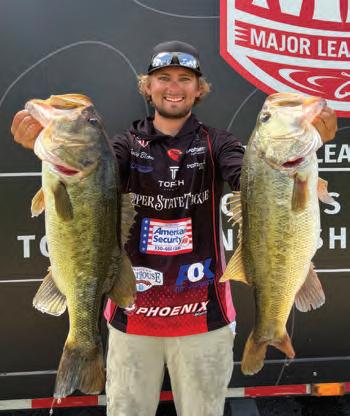
One reason the technique is so productive is the amount of water it covers. Deep-diving crankbaits allow anglers to e&ciently sh o shore structure in the 10- to 25-foot range while maintaining constant bottom contact. Bass o en position around underwater points, shell beds, creek channel bends, submerged roadbeds, rock piles, and ledges where bait sh collect. By making long casts and grinding a crankbait through those highpercentage areas, anglers can quickly locate active schools.
According to Bloom, some of the best locations to target are hardbottom transitions where so bottom changes to hard, rock changes to clay or gravel, o shore humps near creek channels, and isolated structure that sits away from heavy shing pressure.
“Anytime you nd current, bait, and hard structure together, you’ve got the ingredients for giant bass,” Bloom said. “ e biggest thing is making repeated casts from di erent angles until you contact the sweet spot.”
A deep crankbait becomes even more e ective when it continuously de ects o cover. e sudden change in direction mimics injured bait sh and o en causes bass to strike out of instinct. Many anglers believe those violent reaction bites are what separates deep cranking from nesse shing.
Having the proper gear is critical for shing oversized crankbaits all day. Bloom prefers a longer rod in the 7-foot-6 to 7-foot-9 range with a moderate action. e so er parabolic bend helps absorb the surge of big bass while keeping treble hooks pinned during long ghts. Longer rods also increase casting distance, which helps the bait reach maximum depth and stay in the strike zone longer.
When it comes to reels, Bloom relies on slower gear ratios in the 5:1 or 6:3:1 range. Deep-diving crankbaits create tremendous resistance in the water, and lower gear ratio reels provide the torque needed to grind those baits e&ciently without exhausting the angler.
Pairing that setup with 10- to 12-pound uorocarbon line helps maximize diving depth while maintaining sensitivity. Bloom believes the combination of the right rod, reel, and line can be the di erence between occasionally catching sh and consistently landing giant o shore bass.
“When that crankbait starts digging and bouncing o the bottom, you know it’s any moment that a giant bass is going to eat it,” Bloom said. “ at next cast could be the biggest bass of your life.”
You can !nd all your tackle needs at Copper State Tackle and use BLOOM10 for your checkout discount!
www.copperstatetackle.com

Suzuki Marine has partnered with Fuel 1 to provide an opportunity for its dealer network to o er certi ed Sustainable Marine Fuels to its customers right from their facilities. By teaming up with Fuel 1 — a national retailer of advanced fuel delivery and portable fueling systems — Suzuki Marine is helping its dealers better serve their communities by meeting an important consumer need, maximizing the performance and reliability of their customer’s boats, and supporting sustainability goals important to Suzuki Marine and the entire recreational boating industry.
Working with Fuel 1 provides Suzuki Marine dealers with important advantages, such as the ability to deploy a fully supported fueling ecosystem with zero capital investment. Fuel 1 will provide free Micro-Station Deployment; fully branded portable fueling stations installed at participating dealer locations. In addition to direct fueling solutions, portable distribution systems including 20-gallon exchange pods and tote programs make it easy for customers to fuel their boats with PurFuels’ 93-octane, ethanol-free fuel that has been developed speci cally for marine operating conditions.
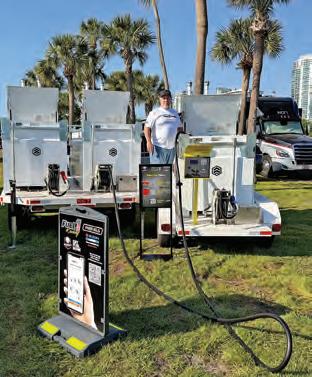
“Making sustainable marine fuels more accessible in di erent areas of the country is a great win for our dealers and customers alike,” said Brandon Cerka, Suzuki Marine Vice President Sales & Marketing. “ is partnership is also a major step in Suzuki Marine’s ongoing e ort to reduce the environmental footprint of boating. We have long supported the industry’s e orts to educate the boating public about these cleaner burning, more sustainable fuels. Now, we are stepping up to the plate to help get this fuel to more boaters, using their trusted Suzuki Marine dealers as the source,” added Cerka.
e program also makes strong business sense for dealers. A revenue sharing model will provide dealers with solid pro ts and recurring income. Fuel 1 will manage all compliance, liability, inventory, refueling and pointof-sale systems, making it easy for dealers to provide this valuable service to both loyal and new customers. Fuel 1 provides unmatched business and marketing support, including national marketing campaigns to drive customers to the dealership, dealer spotlighting across Fuel 1 Direct and partner platforms, invitations to participate in Fuel 1’s national sponsorships and marine events, and customer aggregation tools to help position dealerships as a preferred destination for premium marine fuel.
“We have used these fuels exclusively at our Suzuki Marine U.S. Technical Center during engine testing, durability trials, and performance benchmarking. Over years of testing, we have proven that these fuels help Suzuki Marine’s products run at peak performance, e&ciency, and durability in real-world conditions. We have every con dence in these fuels and are pleased to be o ering them to our customers,” added Cerka.
To learn more about the key bene!ts of PurFuels sustainable marine fuel, visit www.fuel1direct.com



Here’s a memorable beach moment: You’re basking in the warm sun, toes in the sand, letting the gentle turn of the foam-capped waves lull you into a state of complete relaxation. As your eyes scan the endless horizon of blue on blue, you’re rewarded with the site of a school of dolphins making their way across the sea. There’s no denying their signature shape as they leap from the water. If you don’t see anything else extraordinary the rest of the day, you can take solace knowing you’ve witnessed some of nature’s most playful and intelligent creatures in their natural habitat.
Why not recreate that special toes-in-the-sand moment with our DiamondAura® Dolphin Pendant? The beloved sea mammal has been captured mid-jump in a rhodium-finished setting. And tucked into its fins are a full two carats of shimmering blue DiamondAura.
Nothing captures the shimmering color of the ocean in the midday sun like blue DiamondAura. With its sparkling clear blue color and high refractive index, DiamondAura is one of our top sellers. And with our special price, you have quite the catch. Satisfaction guaranteed or your money back. Enjoy the DiamondAura Dolphin Pendant for 30 days. If it doesn’t pass the test swimmingly, send it back for a full refund of the item price.
Limited Reserves. A full 2 2/5 total carats of DiamondAura in a rhodium finished setting for this price is as rare as a dolphin sighting. We cannot guarantee availability for long. Call today!
Limited to the first 1900