
Suzuki, the “S” logo, and Suzuki model and product names are Suzuki Trademarks or ®. © 2026 Suzuki Marine USA, LLC. All rights reserved





















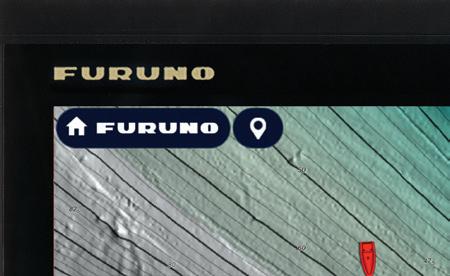
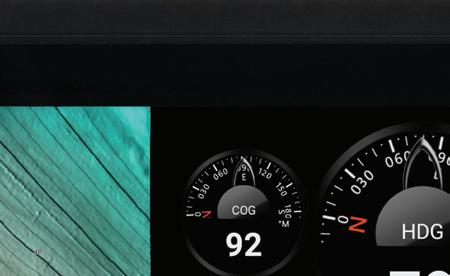


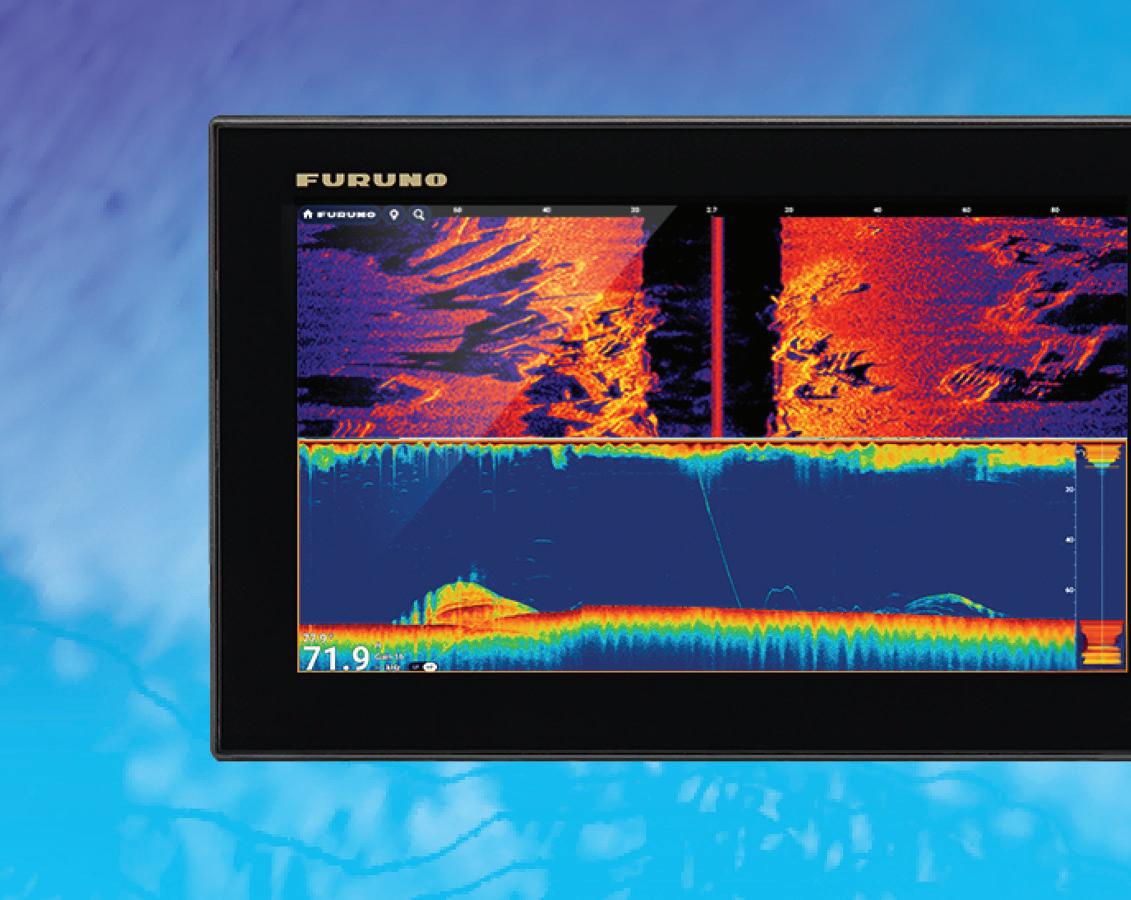

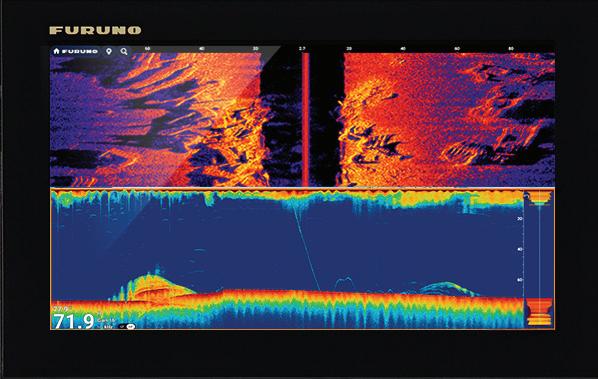
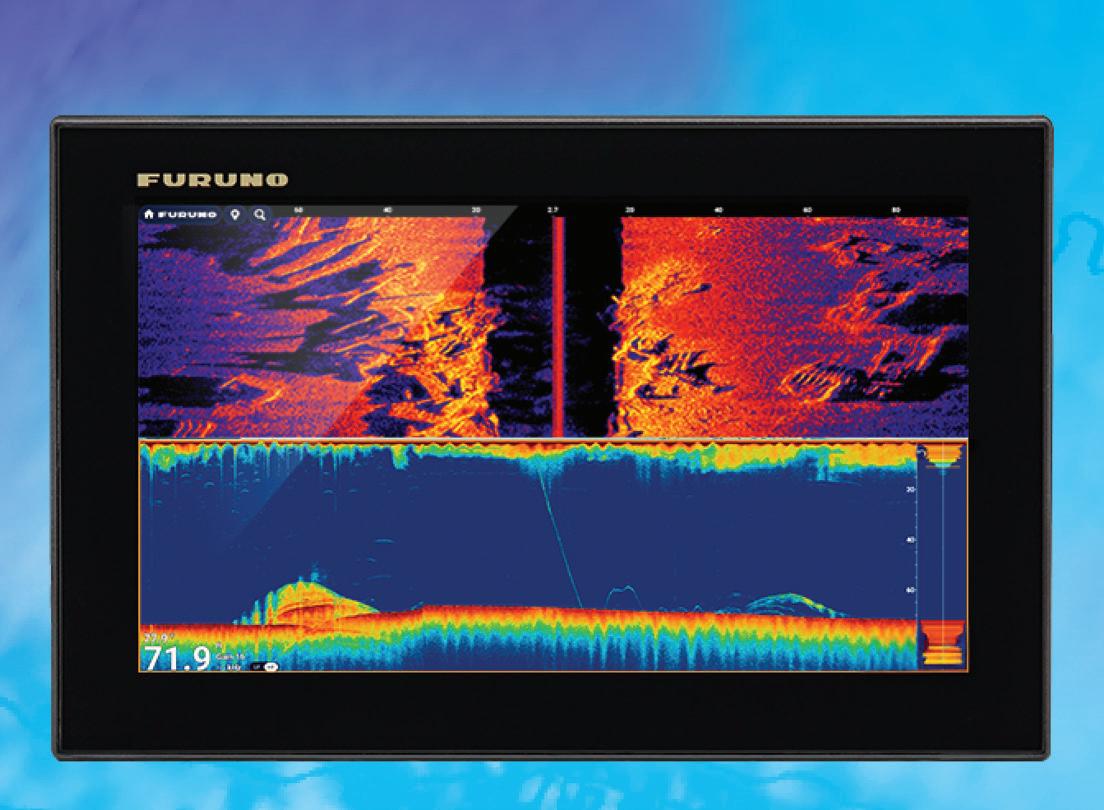
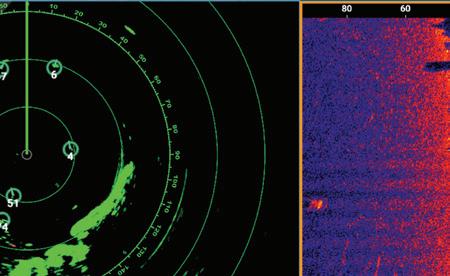



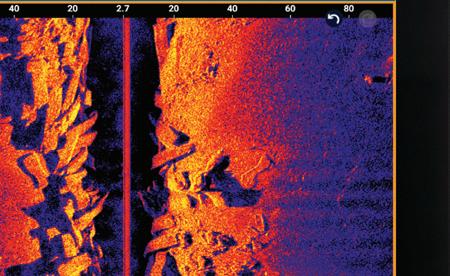








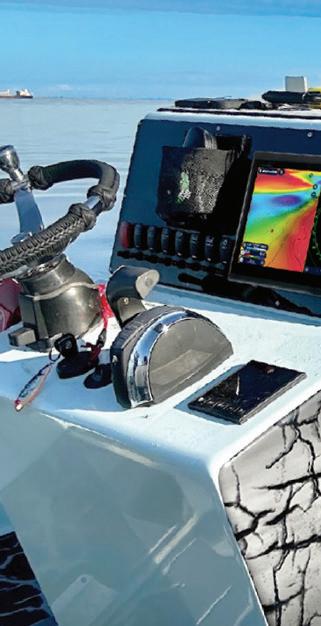




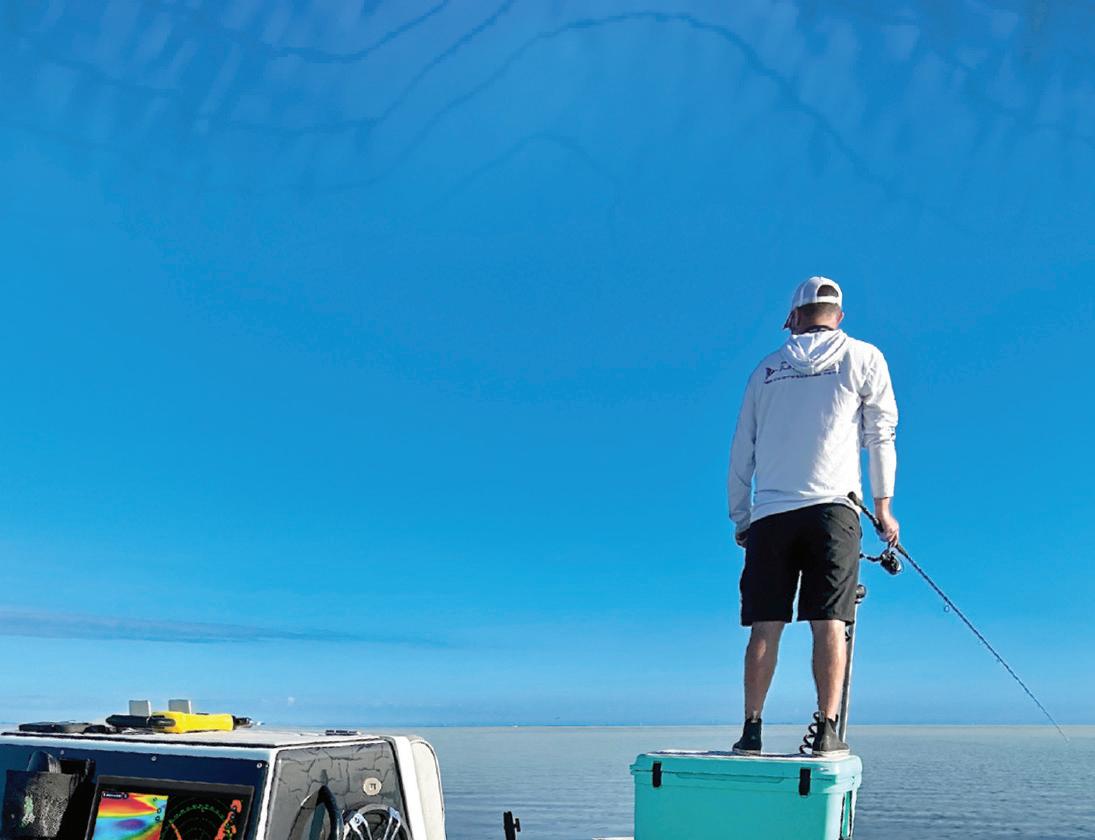
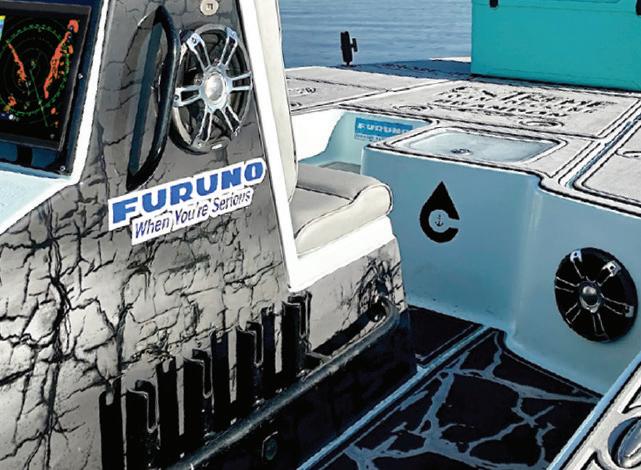



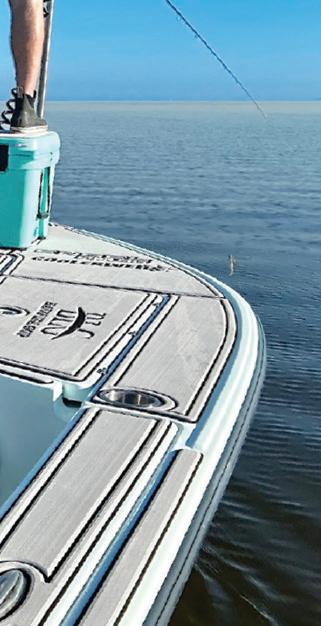





With this streamlined MFD, Furuno is bringing big-boat confidence to everyone. & More Fish











Less Stress





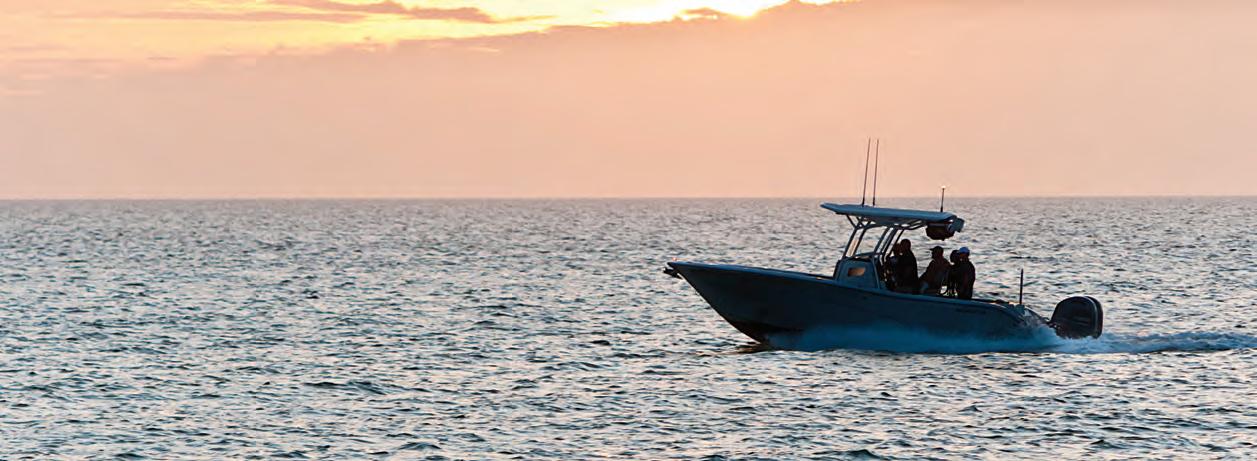
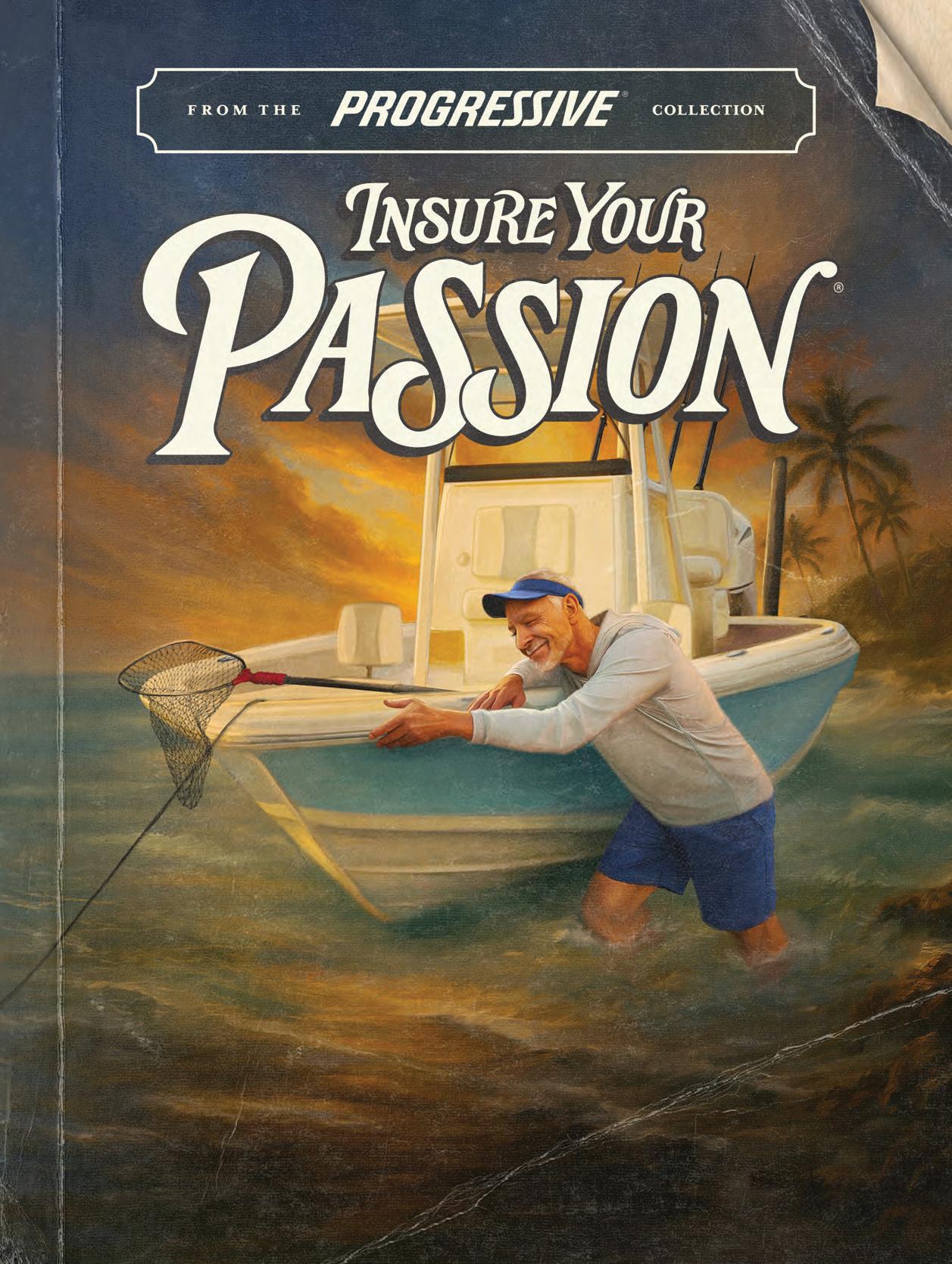
Are you ready to embark on your next on-water adventure? Before you set sail, here are fve things to know about boat insurance.
1. Boat insurance isn’t just for accidents
With comprehensive coverage, you’ll also be protected fnancially for theft, vandalism, and unexpected events like storms if you need repairs or replacements due to damage.
Accidents can happen to anyone
When accidents happen, boat insurance offers liability coverage for damages or injuries you cause while boating, up to specifed limits. It can also cover lawsuit costs if you’re sued.
3. Boat insurance can cover medical payments
Boat insurance offers a range of optional medical payments coverage limits, helping to cover medical expenses if you’re in an accident or someone is hurt on your boat, regardless of fault.
4. Most lenders require boat insurance
If you fnanced your boat, you’ll likely need boat insurance since most lenders require boat insurance to protect their investment. Additionally, some marinas or municipalities require proof of insurance for docking.
5. Progressive offers specialized boat coverages
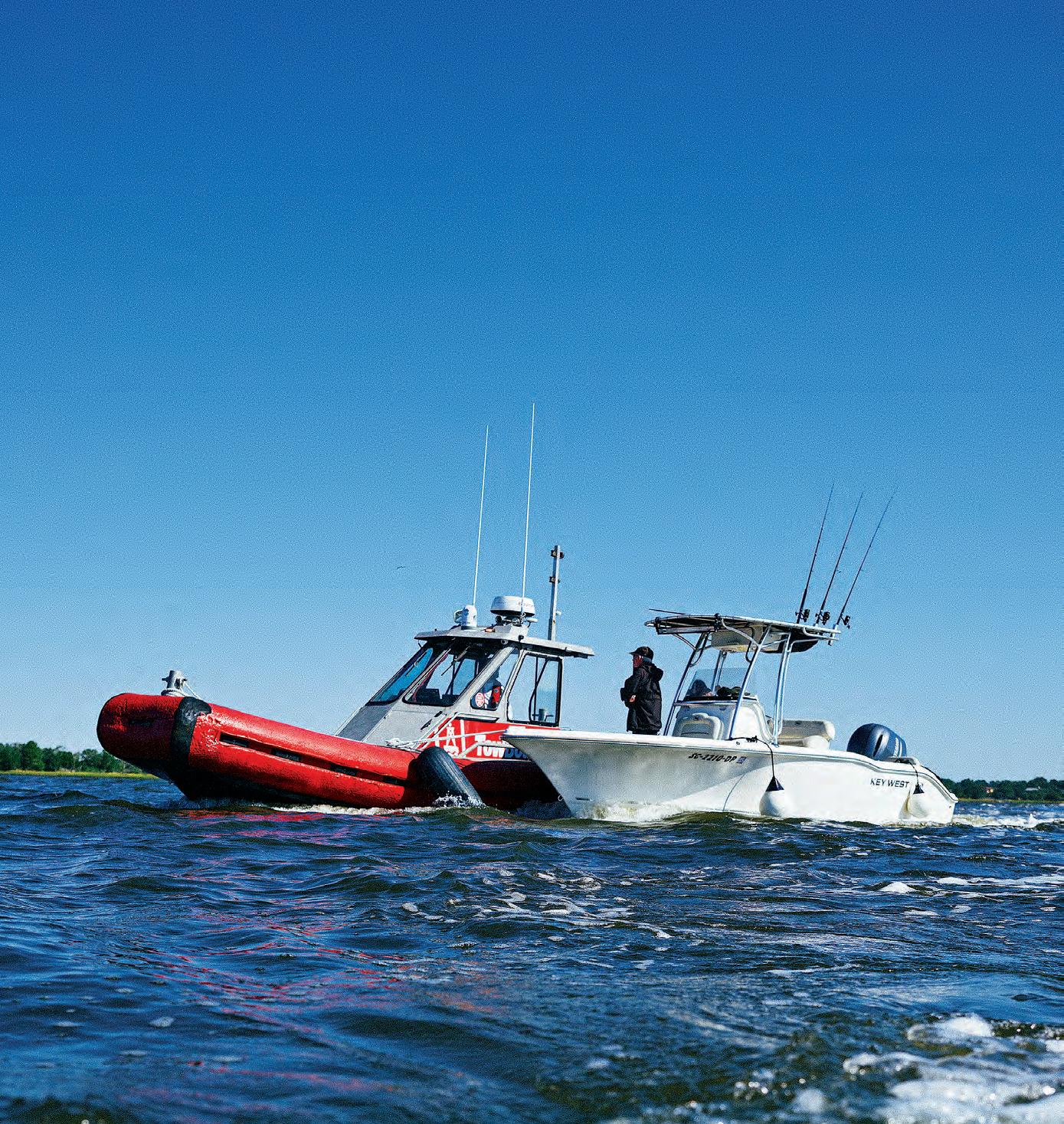
Ever worry about getting stuck on the water?
Progressive’s Sign & Glide® On-Water Towing coverage** can help. It’s an additional coverage that steps in if your boat is disabled or breaks down on the water, paying for on-water towing, jump starts, soft ungroundings, and fuel delivery. Fuel cost isn’t included.
Don’t let unforeseen circumstances disrupt your voyage. Cruise with confdence thanks to Progressive Boat insurance. Because when it comes to your boat, peace of mind is the ultimate luxury.
Scan to get a quote in as little as 4 minutes.
to learn more.












By A. deGruchy
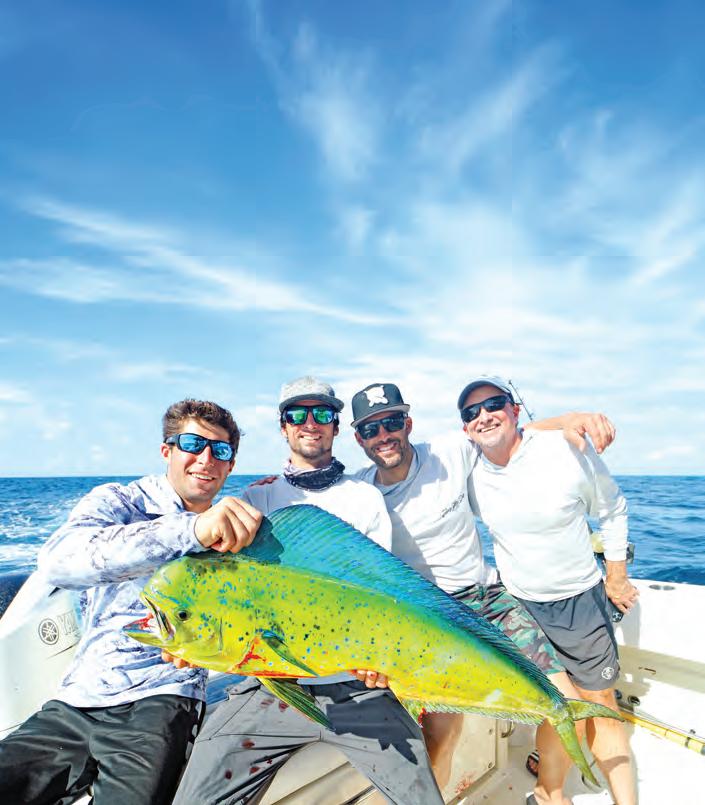
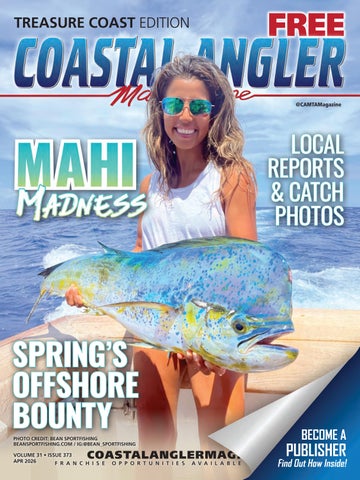
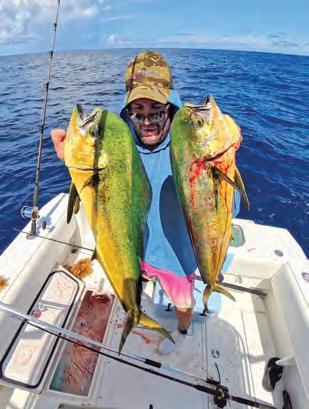
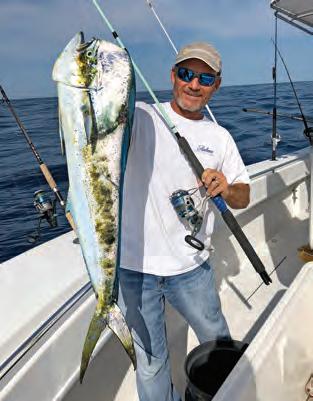
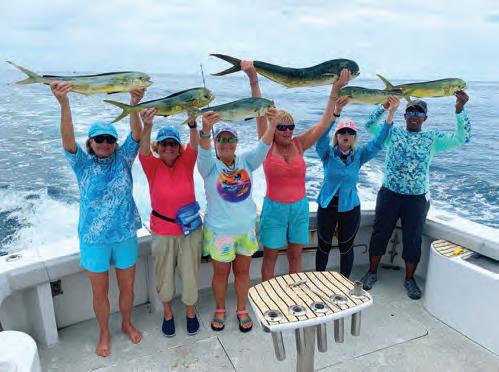
Mahi season is one of those drop everything and go times of year, and when we begin to slide from spring into summer, you can usually count on schools showing up o!shore. e warmer the water, the better it gets, especially when you nd clean blue water, good current edges, weed lines, oating debris, or any kind of structure holding bait in that 75- to 82-degree range. Fishing with Bean Sport shing in the Florida Keys and other parts of the state, over the past few years we’ve de nitely seen more smaller sh and fewer big cows and bulls, but that doesn’t mean they’re gone. When conditions line up, there’s always a chance a quality mahi-mahi is mixed in with the schoolies.
Mahi love anything moving, so live bait is tough to beat, and when they’re really red up, you can even catch them on y. Tackle-wise, we like running a 6500 size setup because you never know when a better sh shows up. e Penn Slammer IV 6500 paired with a Carnage III rod is a go-to for us, and the Penn Spin sher VII 6500 spinning combo is another solid option. We’ve had great success using the Mustad 7766D 6/0 hook, and for bait we’ll typically sh whitebait or troll Islamorada Flyers depending on the day.
When it comes to the table, blackened or fried mahi is hard to beat, and we only keep what we’re going to eat that day. Even though mahi are one of the fastest-growing sh in the ocean, conservation still matters, and being mindful about what you harvest goes a long way.
Bean Sport shing can run this type of trip, but it’s highly weather dependent o!shore. If you’re looking to book a dedicated o!shore charter in e Keys, I highly recommend LegaSea Charters. Capt. Joey can be reached at legaseacharters.com.
If you’re planning on visiting Islamorada, book at the fabulous ree Waters Resort and reach out to us about a special captain’s discount.
Follow deGruchy’s adventures on Instagram @bean_sport shing and on YouTube @BeanSport shing. To book a charter, visit beansport shing.com.



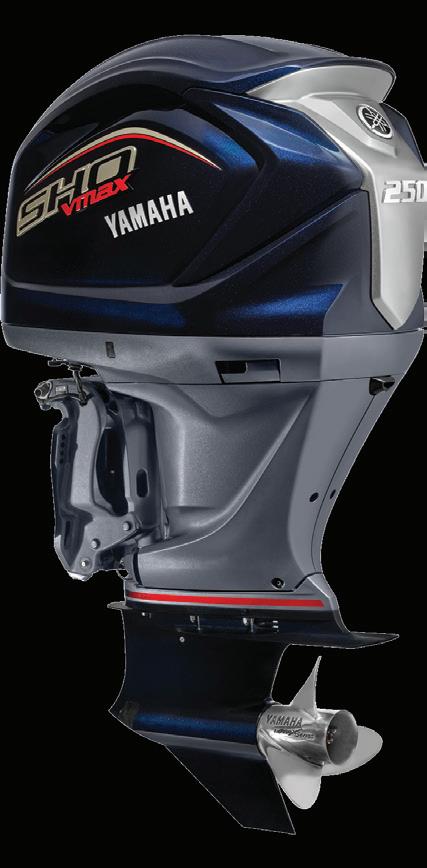
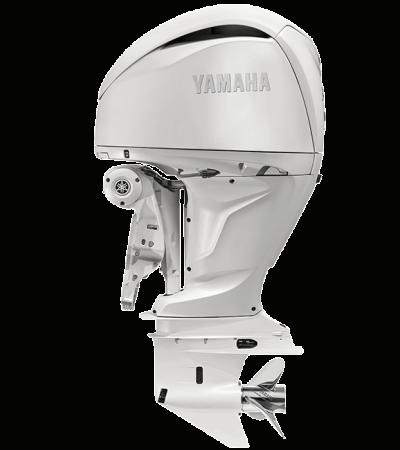

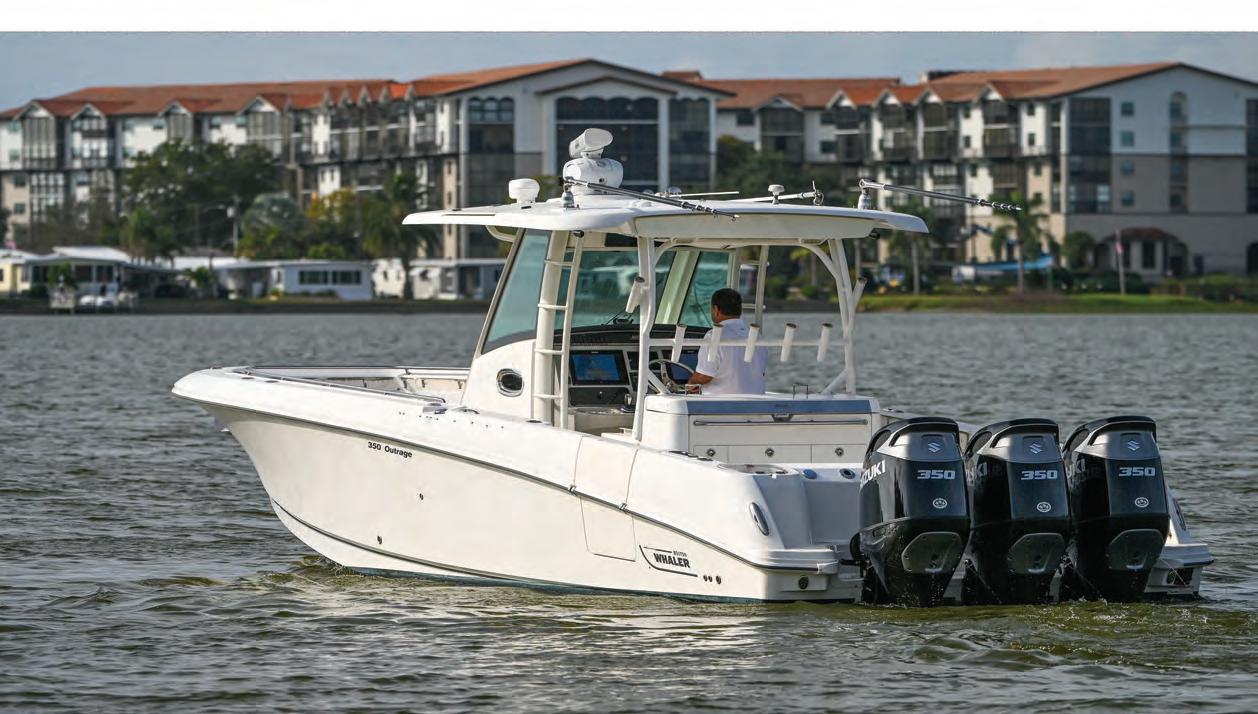
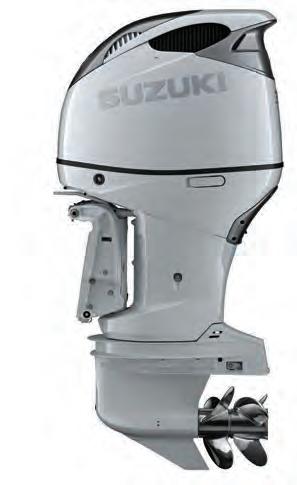
Mastry Engine Center has received the Suzuki Marine Super Service Award and has been ranked #1 in Suzuki Marine US Sales! 60 YEARS OF REPOWER EXPERIENCE!

RePower Packages designed to best ft your needs and not stretch your budget. Financing available.

Rest assured, all Mastry Suzuki RePowers are backed by Suzuki’s industry leading 5-year factory warranty.

highest level of Suzuki certifcations to meet and
Stationed strategically around the East Coast, all Suzuki RePower Centers have achieved the highest level of Suzuki certifcations to meet and exceed your repower needs.
When Considering A Repower, Consider These Factors:
•Every Authorized Mastry Suzuki RePower Center has decades of repower experience providing proper rigging, controls, propeller matching and in water testing
•With a Mastry Suzuki RePower, owners gain improved performance, less noise and greater reliability
•Mastry Suzuki RePower’s exclusive Owner’s Edge Program*
•Mastry Suzuki RePower Centers use authentic Suzuki OEM parts and have factory certifed technicians

Since 2014, Mastry Engine Center, has been building the premiere Suzuki Outboard repower network in Florida. Today, Authorized Mastry Suzuki Outboard Centers have been exceeding expectaions in the Southeast for over two decades. Recently Suzuki Marine requested Mastry Engine Center to expand the network throughout the Northeast. Now boat owners from Maine to Florida can be assured of the best support for their Suzuki outboard repower project. All Authorized Mastry Suzuki RePower Centers provide the best options, information and package pricing for excellent performance in repower.

*Get with the Program!
When you purchase a new Suzuki outboard from an authorized Mastry RePower Center you qualify to become a member of the Mastry Suzuki Owner’s Edge. Owners receive an identifcation card that provides them with important information about their Suzuki outboard motor as well as a passport to additional benefts during ownership. Members enjoy a detailed engine maintenance schedule, Mastry Suzuki RePower Trade Program and special pricing from Mastry Suzuki Partners.



As another exciting season on the water gets underway, we want to take a moment to offer a sincere thank you to the community that continues to support Coastal Angler Magazine. Whether you grab a copy at your local tackle shop, flip through it at the marina, or read it while planning your next trip offshore, we’re grateful to be part of your time on and around the water.
This year is especially meaningful for our family as we continue our role as the new owners and publishers of the magazine. As a family— myself, Kim, and Charlotte—we are honored to carry Coastal Angler Magazine forward and continue building on the strong foundation that has made it such a trusted voice among local anglers. Our goal is simple: to keep delivering the stories, fishing insight, and coastal lifestyle content readers look forward to each month.
Of course, none of this would be possible without the businesses that partner with us. To our clients and advertising partners, we appreciate your continued support and for trusting Coastal Angler Magazine to help connect your businesses with anglers throughout our region.
We’d also like to give a spotlight to the talented writers and contributors who fill these pages with knowledge, experience and stories from the water. Your dedication and passion are what make this magazine such a valuable resource for readers across the coast.
With such strong encouragement from the community, we’re also excited this year to give back by supporting several local tournaments and events. Tournament season is one of our favorite times of the year. There’s a special energy around the docks as anglers begin preparing for the months ahead, rigging gear, scouting spots, and swapping stories about the fish that didn’t get away…and maybe a few that did.
These events showcase what makes our local fishing culture so special: camaraderie, friendly competition and a shared love for life on the water.
From our family to yours, thank you for reading and supporting Coastal Angler Magazine. We’re excited for the season ahead and look forward to seeing many of you out there.
The Simpson Family Coastal Angler Magazine – Treasure Coast grant@coastalanglermagazine.com kim@coastalanglermagazine.com 772.631.7443
POOR day basically means the fish will either steal all your bait or will not even touch your line.
FAIR day means that you July catch one or two fish but you will have to work hard to do so.
GOOD day means that you will catch enough fish to feel gratified.
BEST day means that you will catch something almost every time you cast your line in the water.
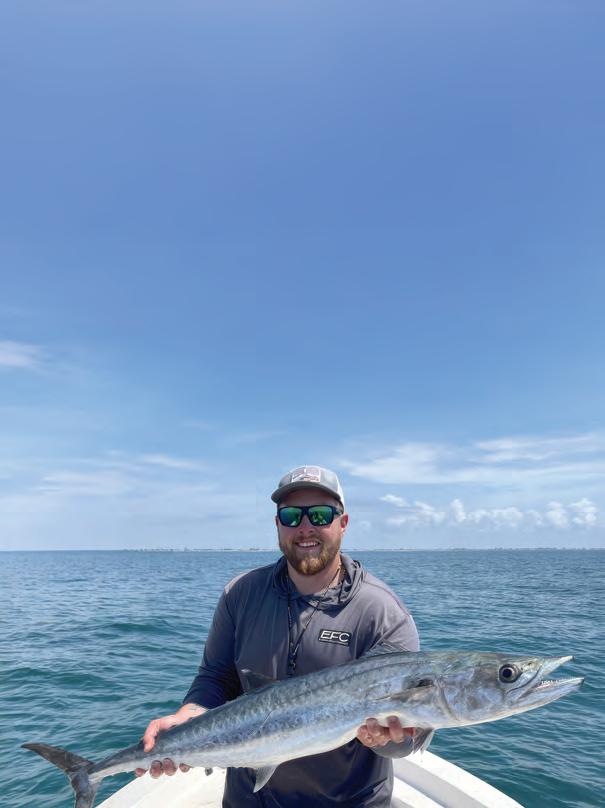
As the Florida Fish and Wildlife Conservation Commission’s (FWC) Catch a Florida Memory continues its 10-year “Catch-aversary” celebration in 2026, the FWC is excited to announce that the Triple Threat Throwdown is back for Season 4!
The challenge officially began on March 1 and runs through Sept.13, and is designed for saltwater anglers who celebrate Florida’s unmatched iconic fishing opportunities and demonstrate dedication to Catch a Florida Memory.
One lucky Triple Threat Club member will be selected in a random drawing to win a comprehensive kayak fishing bundle valued at over $4,500. This year’s bundle includes a Bonafide SKF117 Kayak, a premium Mustad fishing gear bundle, an extensive Yak Attack kayak accessory kit, a Power-Pole Micro Spike Driver, and additional accessories. This generous package is made possible by Catch a Florida Memory’s Season 4 Premier Partners: Bonafide, YakAttack, Mustad and Power-Pole.
“As we continue to celebrate
Catch a Florida Memory’s 10-year anniversary, we are proud to launch the fourth season of Triple Threat Throwdown to further recognize Florida’s accomplished saltwater anglers,” said Jessica McCawley, Director of FWC’s Division of Marine Fisheries Management. “This challenge highlights anglers who truly know what it means to Catch a Florida Memory.”
This Triple Threat Throwdown builds on the foundation of Catch a Florida Memory with an exclusive opportunity for anglers who have earned membership in the Triple Threat Club and submit a qualifying recognition during the challenge period. To become a member of the Triple Threat Club, anglers must achieve recognition in all three Catch a Florida Memory programs: Saltwater Grand Slam, Saltwater Reel Big Fish, and Saltwater Life List (minimum qualification: 10 Fish Club).
Current Triple Threat Club members earn an entry into the
Inshore, Offshore & Freshwater! ENTRY FEE: $60 PER ANGLER
YOUTH, JUNIOR & ADULT CATEGORIES
Jr. Anglers Can Win a Scholarship to Chapman Safe Boating Program! CAPTAIN’S MEETING: MAY 29 • 6 PM @ Conchy Joe’s
A Waterfront Fundraiser to Support Youth Boaters & Anglers
Friday & Saturday, May 29-30
Conchy Joe’s ~ Jensen Beach
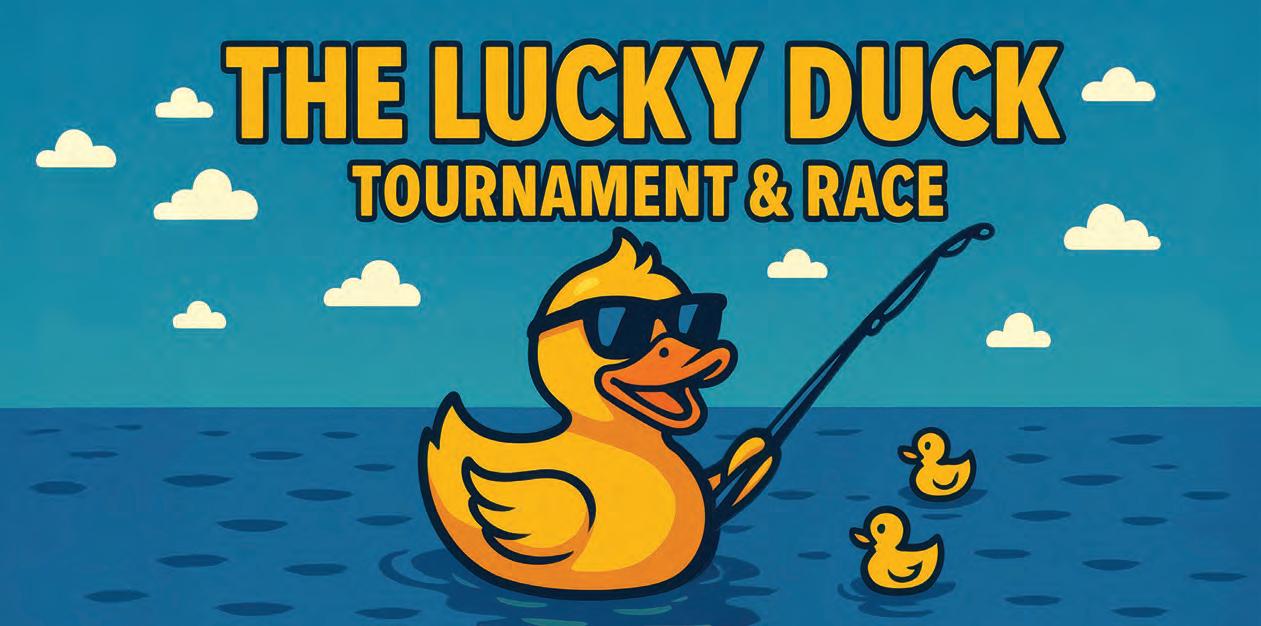
Part Fishing Tournament - Part Rubber Duck Race
100% Benefiting Our Next Generation of Anglers!
Proceeds of the Lucky Duck will go toward supporting youth through Safe Boating Education, Career Development, and On-Water Experiences across the Treasure Coast, giving kids safe, affordable access to the water and the skills they need to thrive in our unique coastal community.
THANKS TO OUR SPONSORS!
TREASURE COAST





Capt. Gus Brugger
Pattern Setter Charters (772) 360-6787
www.WelcomeToSebastian.com
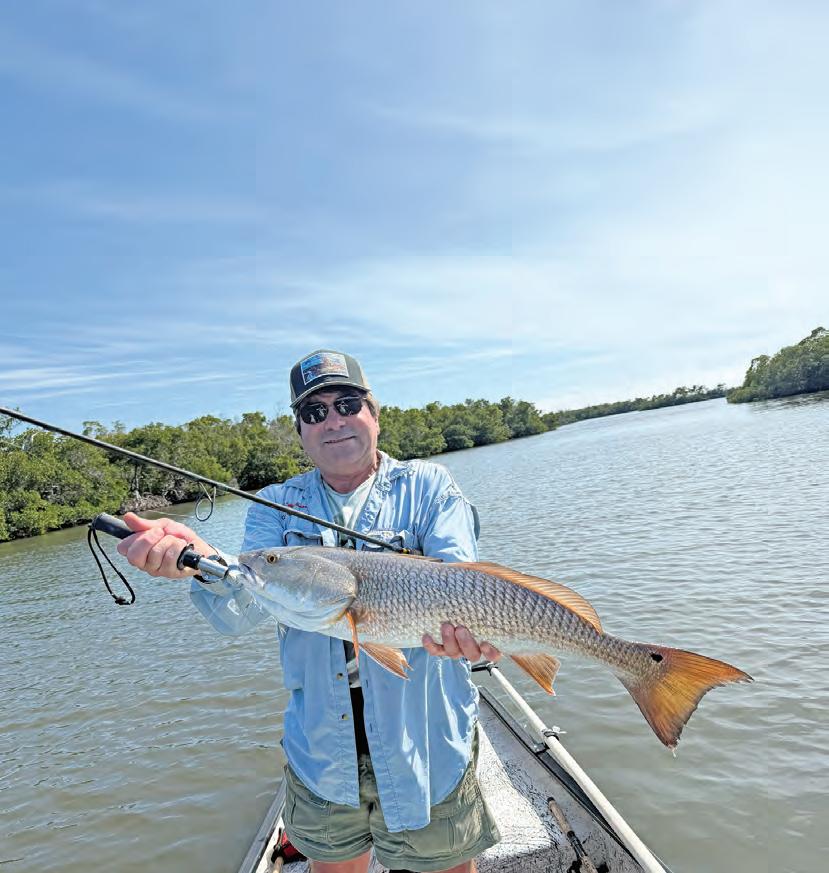
This year I am looking to April to be an indicator of the resurgence of the Indian River Lagoon fishery. Will the extensive seagrass beds that seemed to magically appear last summer still be intact? If so, will enough trout and redfish have been drawn to them in the last six months to reestablish that productive aspect of the lagoon fishery? If the grass remains and is being colonized by shrimp, crabs, baitfish and juvenile gamefish we are moving in the right direction. I look to April to provide answers to these questions because, historically, it is a month with a wide variety of species available and with fishing conditions generally favorable enough for anglers of all skill levels, using a variety of techniques, to expect to catch them. With just about every species of fish available in the Sebastian area in April, the biggest dilemma for inshore anglers can be deciding what to fish for
SEBASTIAN RIVER – Snook and tarpon of all sizes are available in good numbers in the Sebastian River in April. D.O.A. shrimp, TerrorEyz jigs, MirrOlures and live mullet will catch just about everything you will encounter in the Sebastian River. Cast small plugs, jigs and flies to rolling tarpon in both forks of the river and work the docks and shoreline cover with jerkbaits and D.O.A. shrimp for snook. Bull sharks can be caught on live and dead baits fished on the bottom
or below a float in the lower river between the railroad and U.S. 1 bridges.
– April’s list of available lagoon species is the most extensive of the year. Work the mangrove shorelines and docks with D.O.A. shrimp, jerkbaits and plugs for snook and redfish. The spoil islands, grass flats and shoreline points with baitfish activity should hold trout and redfish. Backwater culverts and canals are great places to look for juvenile tarpon and snook of all sizes. Deeper areas adjacent to flats and islands offer ladyfish, jacks, bluefish and some pompano. The techniques used to catch just about all the species can be as simple as live shrimp below a float, bouncing a D.O.A. jerkbait or working a suspending or topwater plug. Wade fishing with live shrimp or artificials is also a great way to pursue trout, reds and snook this month.
– April’s warmer temperatures will make snook fishing the focus of Sebastian Inlet anglers. Redfish and big jack crevalle will also be available. Live croakers, pigfish, pinfish, pilchards, mojarra and shrimp will all catch fish during the day. After dark, jigs and plugs are equally effective.
Pompano and whiting are the main quarries of surf fishermen in the spring. Sand fleas and cut clams are the baits of choice for pompano and whiting, but a pink goofy jig can be deadly when the surf is calm. The waters from the beach out a couple of miles can boil with schools of Spanish mackerel and jumbo-sized jack crevalle. When the weather is calm, a boat ride down the beach can really pay off; keep your eyes open and have some stout spinning tackle on board for double digit jacks, the occasional cobia and an early school of migrating tarpon. Tight lines!
SEBASTIAN AREA
OFFSHORE
Capt. Terry Wildey
Big Easy Fishing Charters (772) 538 - 1072 www.bigeasyfishingcharters.com captwildey@bellsouth.net
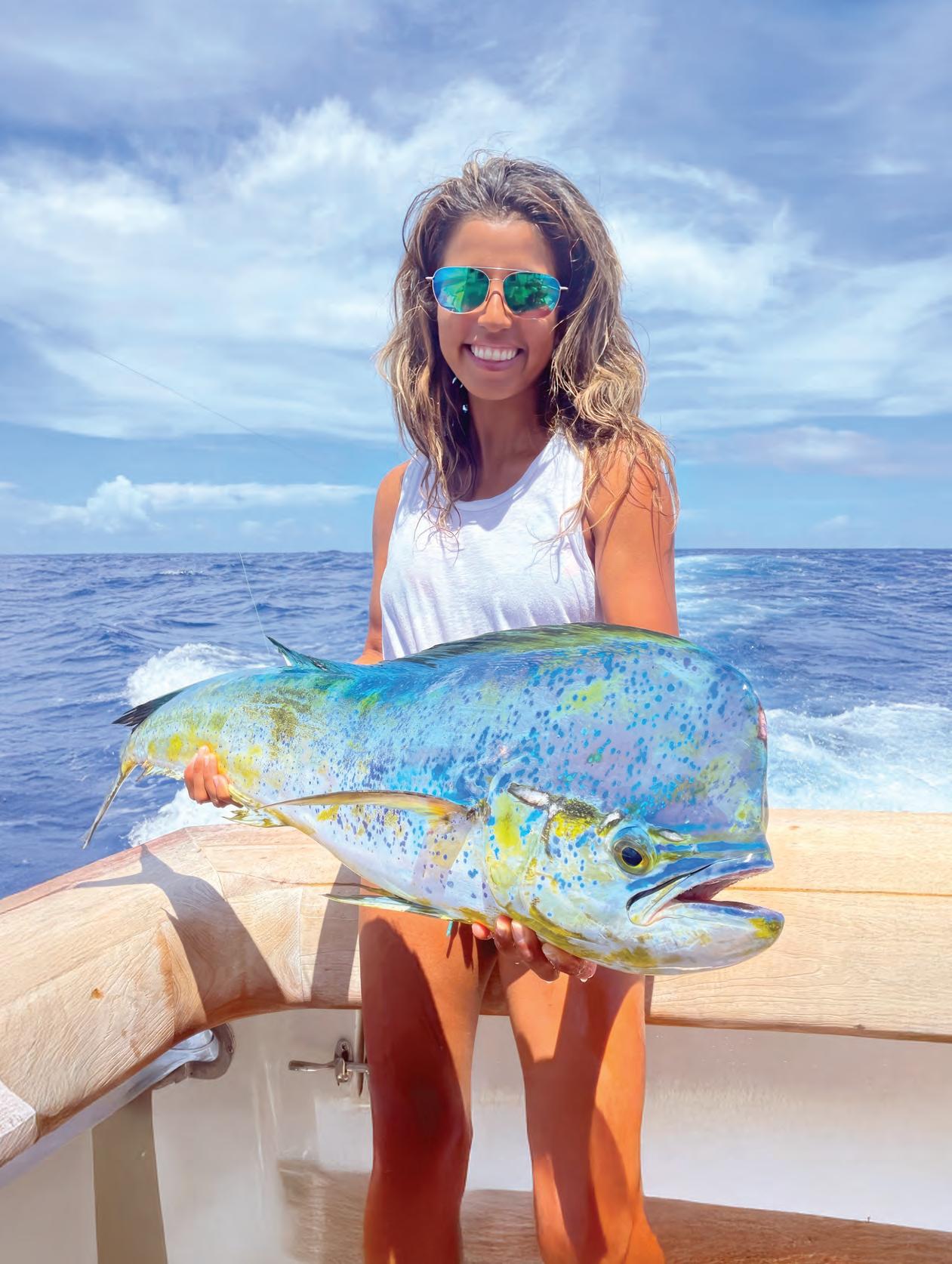
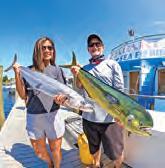
It’s dolphin time! If you haven’t yet prepared, you need to get busy as mahi-mahi will be traveling north up the Gulf Stream on their spring migration and they’ll be on a constant feeding journey up the coast.
There’s a misconception that they’re all in the Gulf Stream, although we do find them on the edge of the stream, where the cooler coastal water goes from mid 70s to 80 or even higher. Mahi are always out wandering the mid Atlantic. As usual, look for them on the western edge of the Stream where there’s that combination of temperature change of a degree or two, color change, combined with sargasso weed with bait underneath it. This edge that’s usually caused by two different speeds of current, usually running north and south, will eventually produce fish. Ballyhoo rigged with a #7 or #8 Mustad, on 60# to 80# mono works
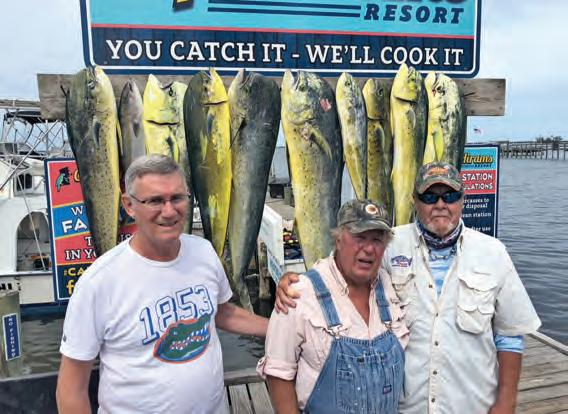
fine. If you like, even a small lure in front helps draw attention. I usually troll this spread of four to five baits at 6 knots. Sometimes I’ll pull some small artificials if I’m trying to cover ground looking for fish because I can pull them at 7 and 8 knots without worrying about my ballyhoo washing out.
I always have a downrigger running 50’ to 60’ down with a ballyhoo behind a bullet-headed lure.
This I’ll rig on a #7 wire for the toothy wahoo and kingfish. The down line will also produce some nice mahi in midday when the surface bite slows down.
Until the mahi-mahi show up don’t pass up the bottom bite in 85’ and 90’. Should be a good mangrove and triggerfish bite, along with some kingfish and cobia.
I’ll see you on the edge.
Fish On...Gotta Go!

Capt. Scott Fawcett
Capt. Scotty Gold Jim Moir
Capt. Bo Samuel
Capt. Adam White
Capt. Terry Wildey

1W 2:31 AM -0.11 L
8:59 AM 2.49 H
2:48 PM -0.3 L
9:26 PM 2.61 H
2TH 3:12 AM -0.07 L
9:36 AM 2.46 H
3:26 PM -0.31 L
10:05 PM 2.59 H
3F 3:50 AM 0 L
10:11 AM 2.4 H
4:03 PM -0.27 L
10:42 PM 2.53 H
4SA 4:28 AM 0.09 L
10:46 AM 2.32 H
4:40 PM -0.18 L
11:18 PM 2.43 H
5SU 5:04 AM 0.21 L
11:20 AM 2.23 H
5:16 PM -0.06 L
11:55 PM 2.31 H
6M 5:41 AM 0.34 L
11:56 AM 2.12 H
5:54 PM 0.07 L
7TU 12:35 AM 2.18 H
6:19 AM 0.47 L
12:35 PM 2.02 H
6:35 PM 0.2 L
8W 1:19 AM 2.06 H
7:03 AM 0.59 L
1:19 PM 1.92 H
7:23 PM 0.31 L
9TH 2:09 AM 1.96 H
7:58 AM 0.68 L
2:11 PM 1.84 H
8:21 PM 0.39 L
10F 3:06 AM 1.92 H
9:02 AM 0.69 L
3:14 PM 1.82 H
9:27 PM 0.42 L
Off the Chain Fishing Charters (772) 285-1055 offthechainfishing.com fishscottyf@bellsouth.net
and quicker hooksets.
Fishing deeper baits along the reef often leads to some exciting surprises. Cobia, mutton snapper and amberjack are all common visitors, and they’re always welcome additions to the day’s catch. When one of those fish grabs a down bait, though, it’s important to move quickly and apply steady pressure to keep them coming toward the boat.
SEBASTIAN INLET
TIME OFFSET
High Tide -48 min
Low Tide -24 min
HEIGHT OFFSET
High Tide .93 feet
Low Tide 1.0 foot
VERO BEACH (OCEAN)
TIME OFFSET
High Tide -55 min
Low Tide -35 min
HEIGHT OFFSET
High Tide 1.45 feet
Low Tide 1.36 feet
11SA 4:08 AM 1.93 H
10:08 AM 0.63 L
4:23 PM 1.87 H
10:30 PM 0.39 L
12SU 5:07 AM 2 H
11:05 AM 0.48 L
5:29 PM 2 H
11:28 PM 0.3 L
13M 6:02 AM 2.12 H
11:56 AM 0.27 L
6:28 PM 2.19 H
14TU 12:19 AM 0.19 L
6:51 AM 2.25 H
12:42 PM 0.04 L
7:21 PM 2.41 H
15W 1:08 AM 0.07 L
7:38 AM 2.38 H
1:26 PM -0.19 L
8:10 PM 2.62 H
16TH 1:54 AM -0.03 L
8:23 AM 2.49 H
2:10 PM -0.39 L
8:58 PM 2.78 H
17F 2:40 AM -0.09 L
9:08 AM 2.58 H
2:56 PM -0.53 L
9:46 PM 2.87 H
18SA 3:26 AM -0.11 L
9:53 AM 2.62 H
3:42 PM -0.59 L
10:34 PM 2.88 H
19SU 4:14 AM -0.07 L
10:41 AM 2.61 H
4:32 PM -0.56 L
11:25 PM 2.83 H
20M 5:04 AM 0.01 L
11:31 AM 2.56 H
5:25 PM -0.47 L
21TU 12:17 AM 2.71 H
5:58 AM 0.12 L
12:25 PM 2.47 H
6:22 PM -0.31 L
ST. LUCIE INLET
TIME OFFSET
High Tide +55
Low Tide +1 hr; 42 min
HEIGHT OFFSET
High Tide 1 foot
Low Tide .50 feet
FORT PIERCE (SOUTH JETTY)
TIME OFFSET
High Tide -31 min
Low Tide -18 min
HEIGHT OFFSET
High Tide 1.14 feet
Low Tide 1.50 feet
22W 1:14 AM 2.57 H
6:58 AM 0.23 L
1:24 PM 2.37 H
7:25 PM -0.14 L
23TH 2:14 AM 2.44 H
8:05 AM 0.3 L
2:30 PM 2.28 H
8:34 PM 0.01 L
24F 3:18 AM 2.35 H
9:14 AM 0.3 L
3:40 PM 2.23 H
9:43 PM 0.1 L
25SA 4:22 AM 2.31 H
10:20 AM 0.23 L
4:50 PM 2.26 H
10:48 PM 0.15 L
26SU 5:22 AM 2.31 H
11:19 AM 0.13 L
5:54 PM 2.33 H
11:46 PM 0.16 L
27M 6:17 AM 2.34 H
12:11 PM 0.01 L
6:50 PM 2.43 H
28TU 12:37 AM 0.16 L
7:05 AM 2.36 H
12:57 PM -0.09 L
7:39 PM 2.5 H
29W 1:24 AM 0.15 L
7:48 AM 2.37 H
1:39 PM -0.16 L
8:22 PM 2.56 H
30TH 2:06 AM 0.16 L
8:27 AM 2.37 H
2:19 PM -0.19 L
9:01 PM 2.57 H
Asthe seasons change along Florida’s Treasure Coast, April consistently stands out as one of the most exciting months of the year. The ocean begins to settle down, daylight stretches a little longer each evening, and the fishery really starts to come alive. When those three things line up, it creates the kind of conditions anglers look forward to all winter.
Springtime marks the beginning of a major movement of pelagic species along our coastline. The reef systems that run roughly six to eight miles offshore become a natural highway for migrating fish. Sailfish, blackfin tuna, mahi, wahoo, kingfish and bonito all pass through these waters, often sticking around for months as baitfish gather along the reef edge. While there are plenty of ways to catch them, fishing live bait is usually the most dependable approach when the goal is steady action and variety. Trolling definitely has its place—especially when targeting species like wahoo, mahi or blackfin—but suspending lively baits under kites often produces the most consistent bites during the spring run.
Threadfin herring, goggle eyes, sardines and blue runners are all excellent choices, and when they’re flown properly from Tigress kites they create a natural presentation that’s difficult for predators to ignore.
One of the unfortunate challenges anglers continue to face locally is shark depredation. Sharks have become extremely aggressive around hooked fish, often intercepting them before they reach the boat. Because of this, many anglers have backed away from mid-water and bottom fishing closer to shore, knowing how difficult it can be to beat the tax collectors.
JENSEN BEACH (INDIAN RIVER)
TIME OFFSET
High Tide +2 hrs; 17 min
Low Tide +3 hrs; 4 min
HEIGHT OFFSET
High Tide .48 feet
Low Tide .92 feet
JUPITER INLET
TIME OFFSET
High Tide -10 min
Low Tide -9 min
HEIGHT OFFSET
High Tide 1.08 feet
Low Tide 1.42 feet
Location is just as important as bait. Small details in the water often make a big difference. A slight color break, a stronger push of current, floating weed or a defined edge along the reef can all concentrate bait and attract predators. Setting up drifts anywhere from roughly 75- to 200feet of water and letting the boat work gradually north along the reef line can lead to some outstanding fishing.
For tackle, I prefer a versatile setup that matches our local fishery well.
A Blackfin Rods OTC circle-hook rod in the 6’3” to 6’6” range paired with Shimano BFC reels makes an excellent combination for 15– to 25pound class fishing. When sending a bait deeper in the water column, I like to step up to a slightly heavier rod with braided line for better sensitivity
Beyond the reef, April also provides excellent opportunities offshore. Swordfishing can be very productive this time of year, and calmer sea conditions often make it possible to venture across to the Bahamas. Early spring fishing there can be spectacular, with yellowfin tuna, large mahi, wahoo and both blue and white marlin making regular appearances. The mutton snapper fishing on the Bahama banks can also be truly exceptional.
If someone asked me to pick just one month out of the entire year to spend on the water, April would definitely be near the top of the list. No matter how you choose to fish this spring—whether it’s live baiting the reef, trolling offshore, or making a run across the Gulf Stream—I hope your next trip is Off The Chain! If you have any questions about current conditions or would like to book a trip, feel free to reach out anytime.
Capt. Jonathan Earhart
Chaos Fishing Charters (772) 341 – 2274
www.chaosfishingcharters.com
jon@chaosfishingcharters.com MARTIN COUNTY INSHORE
Spring fishing has been steady both inshore and nearshore on the Treasure Coast lately. Inshore, we can expect good snook action using both live bait and artificials. Pilchards, pinfish, mullet and croakers will be a good choice for larger snook. A 40-60 lb. leader with 4/0-6/0 circle hooks works well and ensures you don’t lose many fish due to leader fraying. Topwaters, subsurface and rubber swim baits will also work well for snook this month. Expect some
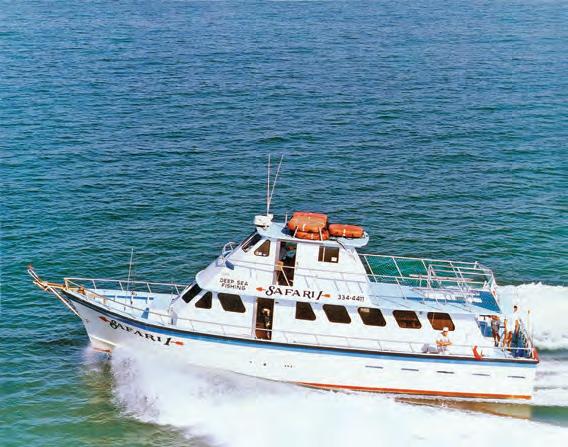
Safari I Deep Sea Fishing
Pirates Cove Resort and Marina 4307 SE Bayview St. Port Salerno Reservations: (772) 334-4411 www.safari1deepseafishing.com
April’s local seascape will play host to some of the most prized saltwater grocery trophies in the world. Snapper, mahi, king mackerel and cobia will top this briny hit list and will be found around and atop the renowned reef system east of our St. Lucie Inlet. The offshore fish hunters of April will delight in engaging strategies that involve both surface and bottom fishing during open, user-friendly, weather windows this month. April can still be a windy month that produces rough sea conditions, so anglers (as always) will need to continue to monitor daily offshore forecasts.
Cobia can make a strong appearance during the golden days of April and will be found in many dynamic scenarios of the local, liquid playing field. Hungry packs of cobia will be attracted to all types of reef structures, both naturally occurring and artificial, and will fall to live and dead baits presented throughout the water column. Live baits are especially effective and will prove to
snapper, sea trout, redfish, jacks and the occasional tarpon mixed in.
We still have a few pompano lingering around the local flats and beaches. I usually tie on a couple goofy jigs or rig a few rods with designated pompano chicken rigs and bring sand fleas for some late season pompano fishing this month.
Nearshore fishing has been excellent for big jack crevalle swimming in large schools along the beaches. Cast a lure or live bait out and hold on! Also, while cruising nearshore keep an eye out for cobia, kingfish, sharks, permit and tarpon. Again, cast to the lead fish and hold on!
Reef fishing has been good nearshore for smaller snapper, cobia, kingfish, sharks and goliaths. Reel your snappers in quickly because the goliaths will eat them if you don’t practice a fast retrieve.
be irresistible to a cobe in the right mood.
Besides being found around bottom structures, cobes tend to follow and swim along with larger sea animals, like manta rays and southern stingrays, turtles and sharks. Casting to a cobia towing behind a larger sea creature is best achieved using threeto four-ounce jigs tipped with a long ribbon of squid. Bottom fishing for the many species of the snapper family will continue to be a go-to strategy for Treasure Coast meat hunters in April.
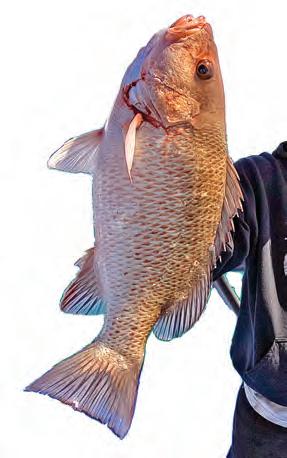
Large mutton and mangrove snapper will be available in good numbers along the reef line in 70 to 90 feet of water, allowing fishermen to test their angling finesse while attempting to capture these fish athletes of the ocean floor. Wrestling a large snapper to the surface can be a full-contact and exhilarating moment, made more
satisfying as the filets hit the frying pan.
With this in mind, pack the cooler with plenty of dead bait, catch some “live-ies” if you can, and have an assortment of jigs standing by. And don’t forget to pull out some coastal recipes to fully enjoy the salty grocery trophies of April.



ST. LUCIE COUNTY OFFSHORE
Capt. Bo Samuel
Pullin Drag Charters (772) 971-6661
facebook.com/Pullin-Drag-Charters
catpainbofishing@gmail.com
action on the Treasure Coast includes some highly prized trophy fish like cobia, snapper, mahi-mahi, sails and king mackerel. This time of year, most of the windy days are behind us and we expect to see some great weather, great water quality—and great bait fish. While some say spring is in the air, I say it’s in the water!
Area anglers are anticipating the migration of larger mahi (dolphinfish) from down south knowing that it’s “dolphin time” again. We always have some mahi off the Treasure Coast, but this is when we see the bigger ones start working their way north as the cooler water temperatures begin to warm up. Mahi are amazing acrobatic fish known for their aerial
antics and brilliant colors plus great taste. When trolling offshore in 70 to 100 feet, look for weed lines, diving birds, any floating debris and color changes. Naked and skirted ballyhoo both work great, but you have to
keep lines free from weeds so they swim properly. Remember mahi are schooling fish, so when you hook one be prepared for others to stay in the area providing lots of fun action. A 20-inch minimum fork length
applies for the Atlantic.
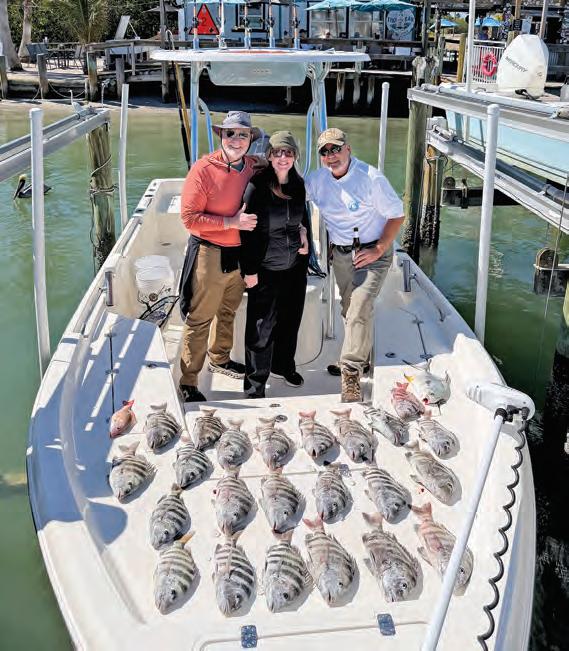
Meat hunters will continue bottom fishing as their go-to strategy for salty groceries. We expect large mutton and mangrove snapper congregating in good numbers along the 70- to 90-foot reef line. Threadfins, finger mullet, sardines and cut bait are great choices. Last month gave us some super snapper days and we are still “pullin drag” on some good size fish. Monster muttons are true saltwater trophies for anglers of all ages.
Snook fishing remains a great option, with some beautiful keepers being caught drifting the Fort Pierce Inlet. Significant amounts of overand-under slots have been reported as well. Fishing around docks and other structures with fast moving currents can produce notable snook action, too. Best bait choices are live pilchards, pinfish, croakers and select shrimp. A keeper between 28 and 32 inches will make your day...and your dinner.
If you would like to take advantage of the calmer days of April on our beautiful Treasure Coast waters, just come over to my home base, the historic Little Jim Bait & Tackle, and we’ll get you booked and hooked! Celebrate the arrival of spring by hopping on a charter for a salty time Pullin Drag!












St. Lucie Flats Fishing Charters (609) 820-6257
www.stlucieflatsfishing.com
April is one of the most productive and consistent months of the year for inshore fishing around Fort Pierce. As water temperatures stabilize in the mid to upper 70s, bait becomes increasingly abundant throughout the Indian River Lagoon and along the nearby beaches. Schools of mullet, pilchards and glass minnows begin to fill the flats and channels, and predator fish follow closely behind. The longer daylight hours and warming conditions create an active feeding window that often lasts throughout the day, making April a favorite month for anglers targeting a variety of species.
Snook fishing typically begins to heat up significantly during April.
Miss Fort Pierce Fishing (772) 766-0191 www.fortpiercefishing.com
It’s been a tough winter for fishing, to say the least. We’ve experienced many weather related fronts which have given us a good amount of sustained wind. This year was a little different with an unusual amount of northwest wind.
With the northwest wind, it pushes a lot of sediment from the ocean floor from inshore off, pushing bait and fish to the offshore reefs. Generally, the water temperature on the surface remains right around 73 or 74 degrees for the majority of the winter, and bottom temperatures have been relatively on the warmer side with the exception of some pockets of cold water which only lasted a few days. Now with the easterly breeze starting to move in, which is traditional in March to the beginning of April, we should see the bait and fish start to migrate into the west more and more.
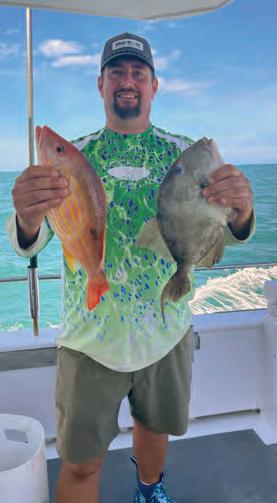
Up into the cold front, we had some of the best bottom fishing we could ask for. A tremendous amount of lane snappers and an increased amount of large sized triggerfish were caught.
We are starting to see more and more mangroves every trip for those
Fish that spent the cooler months tucked deep into creeks, residential canals and mangrove shorelines begin pushing out toward points, docks and shallow flats. Early mornings often produce the most consistent action, particularly around seawalls, mangrove edges and current-swept structure. Live pilchards, pinfish and soft plastic jerk baits are reliable choices. As the month progresses and water temperatures continue to climb, more snook begin staging near the Inlet and adjacent beaches in preparation for their summer spawning migration.
Trout fishing also improves across the lagoon’s grass flats during April. Healthy seagrass beds in two to four feet of water often hold good numbers of trout, especially on moving tides. Anglers drifting or quietly working these flats with live shrimp, small pilchards or paddletail soft plastics frequently encounter steady action. Trout tend to be most active during the early morning hours or on overcast days when they roam the flats more aggressively.
Tarpon also begin to make their early seasonal appearances around the bridges, deeper channels and the inlet by late April. While the main migration peaks later in the spring, anglers occasionally encounter rolling fish, offering the first exciting
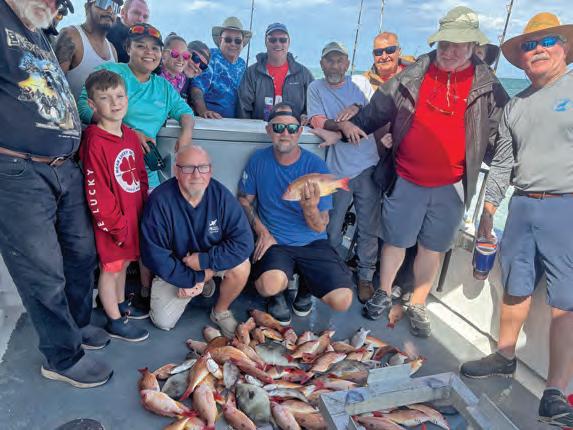
who are fishing for them, and some of the medium- to larger-size class have been starting to show up.
Cobes have made their appearance as well, though we have seen a small amount of keeper cobia and a lot of undersize fish.
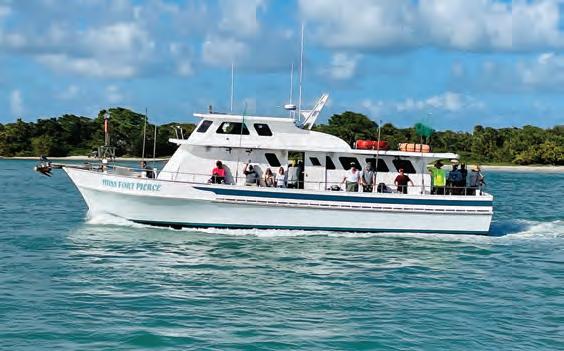
The Miss Fort Pierce will continue to sail daily on our all day trips by 7 a.m., returning back at 3 p.m. She is also available for private group charters for business, social gatherings and families.
One final note on our maintenance. We have our engines finally dialed in almost all the way, and the speed is incredible. If you’d like to join us and one of our voyages, visit www.fortpiercefishing.com and make your reservation.
forward to seeing you out there!
opportunities of the year to target these powerful gamefish.
Overall, April will provide an excellent variety and some of the most dependable inshore fishing conditions of the entire spring season in the Treasure Coast.





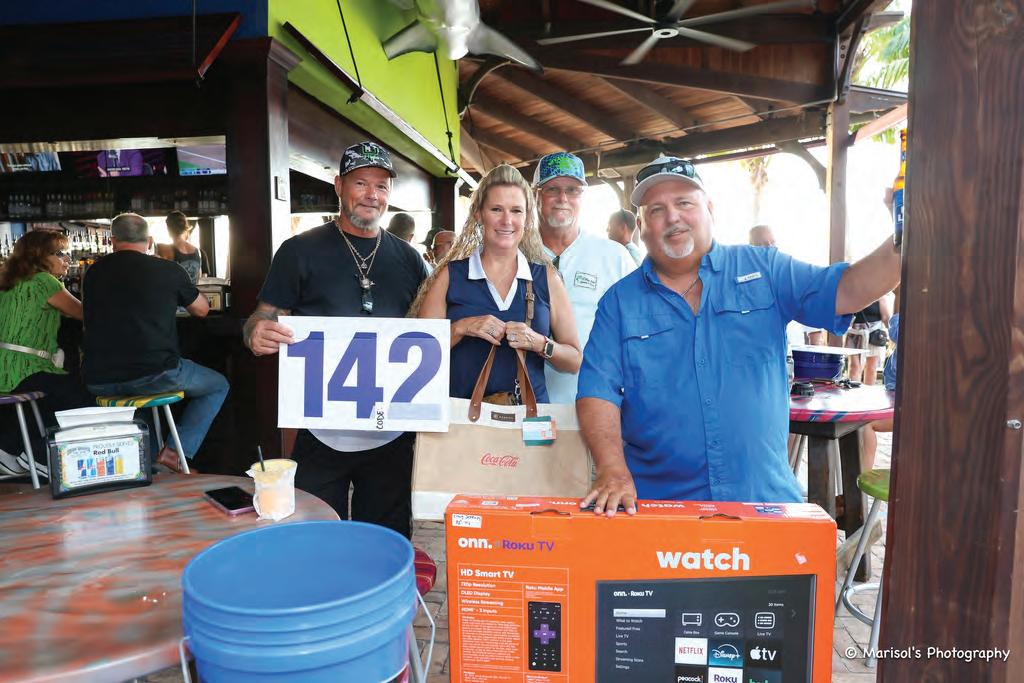


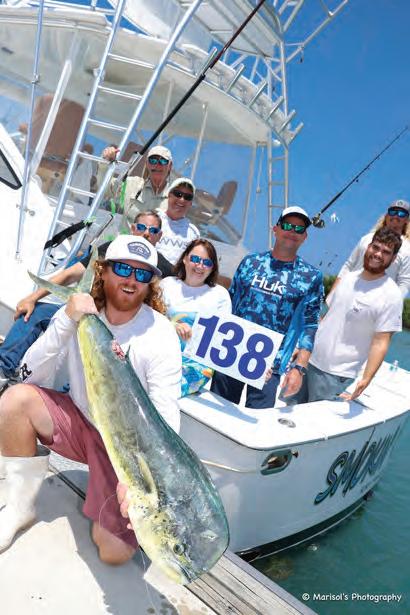


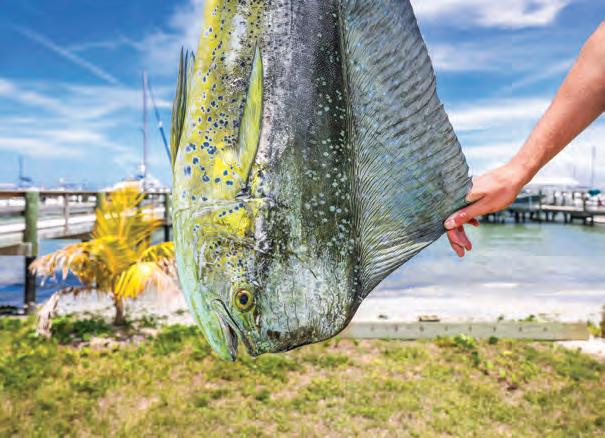
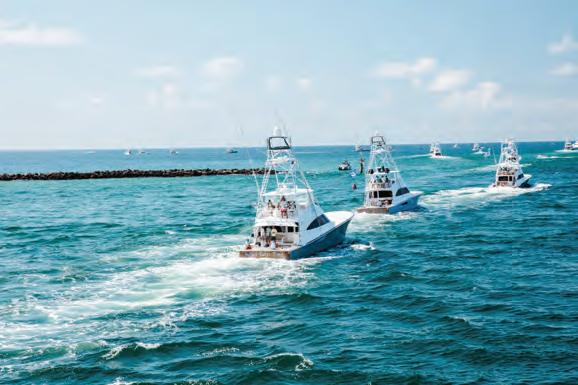
The St. Lucie County Chamber of Commerce will host its 30th annual Fishing Frenzy on May 8-9, 2026. Presented by St. Lucie Outboard Marine, this offshore dolphin-only fishing tournament will follow IGFA rules and offers cash and prizes—with a $10,000 grand prize for the heaviest dolphin. Watch the boats roll in, see the big dolphin catches hit the scales, and find out who takes home the bragging rights and the big prizes!
A captain’s party will take place at Square Grouper on Fri., May 8, from 4:30-6:30 p.m., with a mandatory captain’s briefing at 6:45 p.m. (where at least one team member must attend).
Cast off on Sat., May 9, at 6 a.m. Boats may fish within a 50-nautical-mile radius of the Fort Pierce Inlet. Tournament weigh-in begins at 2 p.m. at Fort Pierce City Marina.
Tournament boat entry fee is $275 until May 1, so grab your crew, fire up the boat, and register now before the Early Bird pricing is gone! Register online until Thurs., May 7, or drop by the Square Grouper on May 8 to register before the captain’s briefing. For rules and online registration, visit: stluciechamber.org/fishing-frenzy-65/.
MAY
MAY 15 - 16
MAY
Sailfish Marina of Stuart www.stuartsailfishclub.com/kdw-tournament/2026
Pirates Cove Marina & Resort https://fishtcba.com/
MAY 29 - 30 The Lucky Duck Tourmament & Race Conchy Joe’s, Jensen Beach https://miatc.org/luckyduck





or other inquiries, contact Grant Simpson at 772.631.7443 or email grant@CoastalAnglerMagazine.com
Throwdown for each new recognition submitted during the challenge period. New Triple Threat Club members earn one entry upon achieving Triple Threat status, plus additional entries for each subsequent recognition earned between March 1-Sept.13.
The prize package will only be delivered to a location within the state of Florida or can be made available for pick up.
For more information on program specifics, how to submit catches and to learn more about earning recognitions, visit CatchaFloridaMemory.com or email
AnglerRecognition@MyFWC.com. And don’t forget, Catch a Florida Memory is celebrating its 10-year Catch-a-versary all year long with new challenges and enhanced prizing, so sign up today and get fishing! Remember to always handle fish responsibly and adhere to all fishing regulations. Your fishing license and responsible fishing practices ensure the sustainability of Florida’s fisheries. Learn more at MyFWC.com/SFR.
Spiny Lobster Season closes April 1.






By Jim Moir, Indian Riverkeeper Executive Director
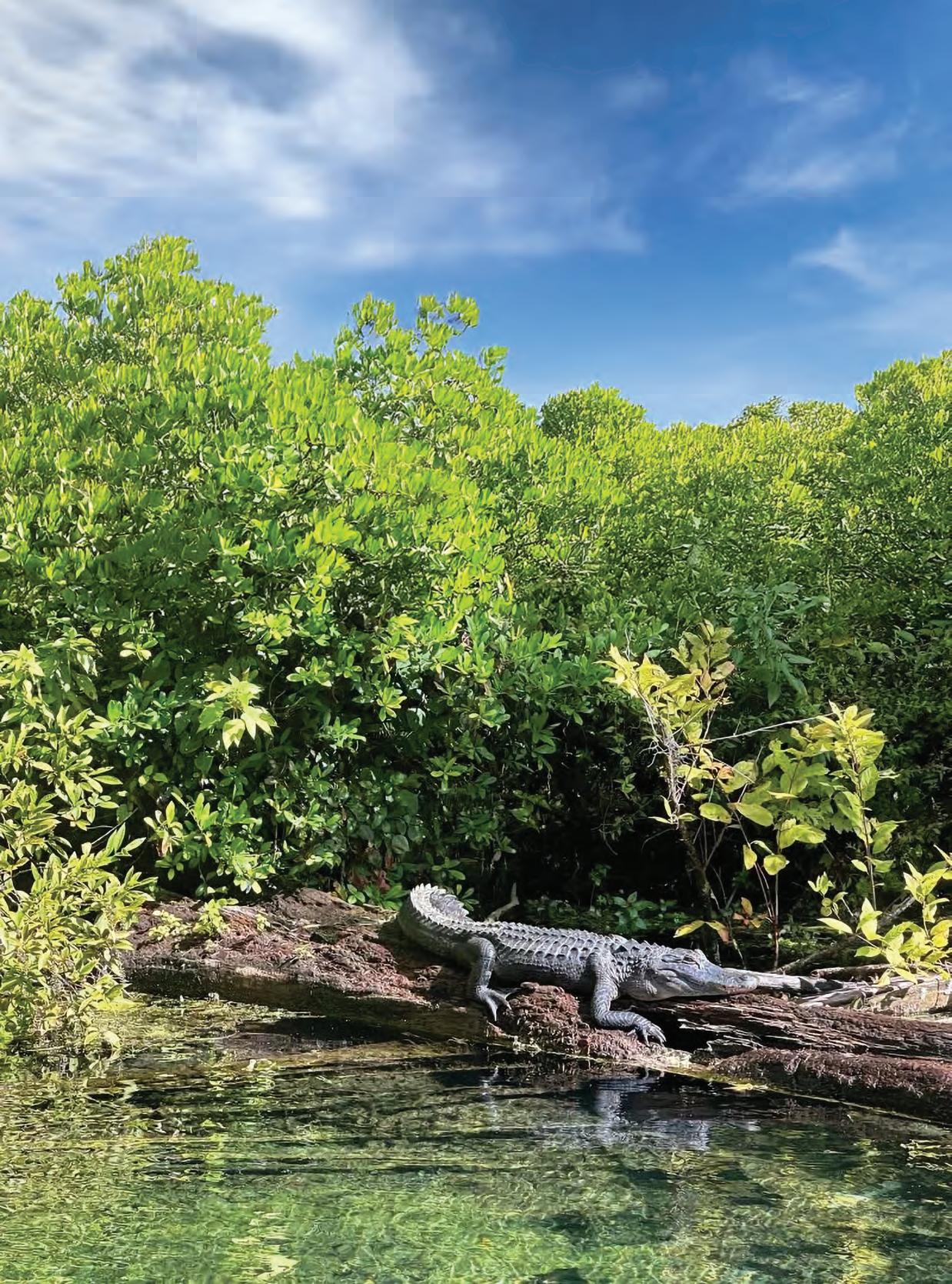
Bison and beavers, alligators, sea turtles, manatees, mangroves and corals, parrot fish and sheepshead are all species that alter environments and change landscapes. Glaciers and sea level rise also change landscapes dramatically. All of the landscape changes these things influence happen on a time scale much slower than what human technology can manage. Nature can be sudden; hurricanes, earthquakes and volcanic eruptions can quickly change landscapes dramatically. But man’s engineering prowess operates on a time scale never before experienced.
Geologically, Florida is not very old. The limestone underlying the peninsula actually originated as part of the continent of Africa. The peninsular shape evolved as a series of reefs and accumulated sand in the last couple million years. Most, 60 percent or so, of the sand on Florida’s east coast is quartzite that comes from the erosion of the Appalachian Mountains, carried south by the longshore countercurrent of the Gulf Stream and deposited along with crushed coral and seashells as beach sand. Much of Florida’s topography, such as it is, are sand dunes, beach sand mounded by the wind. Most of
what we know as Florida happened since the ice ages only 14 to 7 thousand years ago. Geologically, yesterday.
It’s true earth’s climate is always changing. It’s not true that it’s a hoax. Ecosystems take a while to adapt to change; if they can’t evolve, they fail. What is true about today’s climate change is that the rate of change is faster now than ever before, ecosystems are failing, and human technology is responsible.
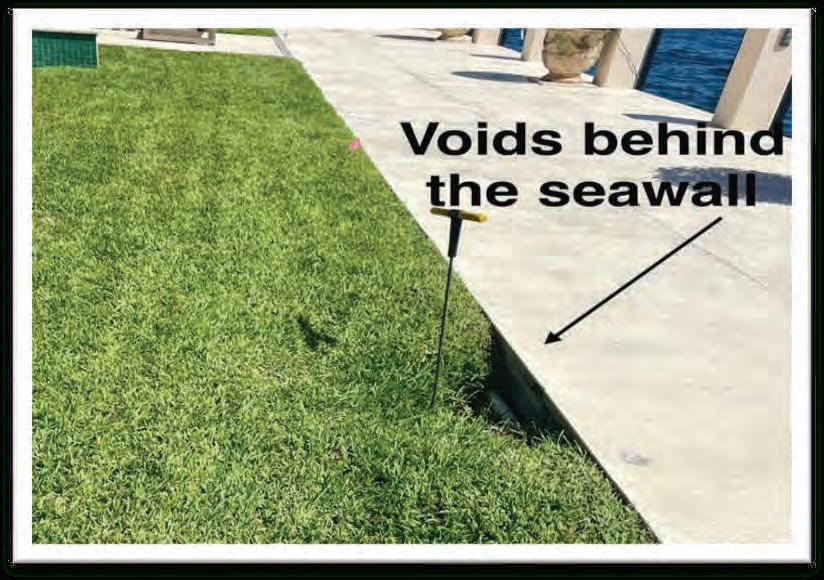
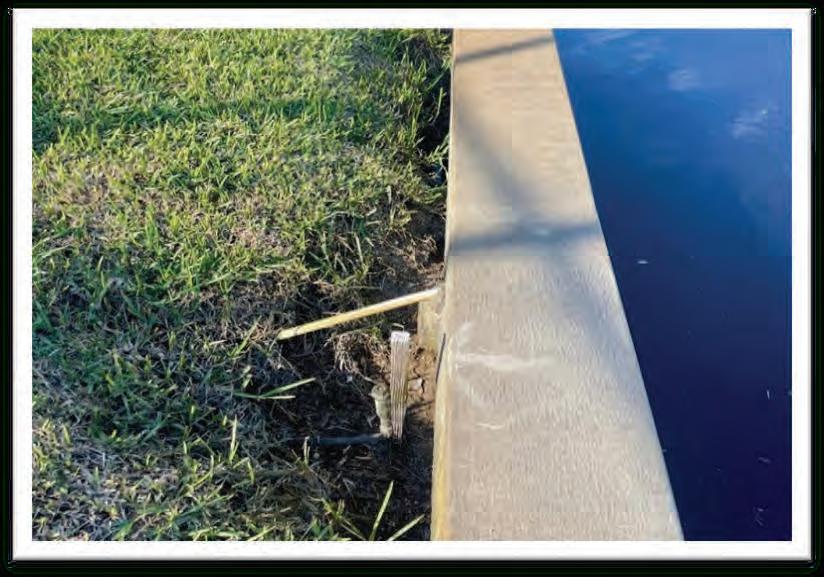
Inlets and harbors naturally form because of geologic formations and turbulence in coastal currents. But for reasons of convenience and commerce, communities have decided to dredge and harden their ports and harbors. As beaches erode, folks decide to do renourishment projects. When an inlet is dredged perpendicular to the shoreline, the peninsular building sediment carried by the longshore current is often blown away from the beach by ebbing tidal current. Often when inlets are dredged and deepened the sediment smothers living coral reefs. Killing coral reefs destroy ecosystems and accelerate erosion. Hardened shorelines often accelerate erosion of the down-current beach. These examples of unintended consequences from engineered resiliency projects are very common. There
is an economic feedback loop between the Federal government, municipalities, engineering firms, contractors and permitting agencies that keep the cycle going.
The natural course of water is to meander. Older rivers and natural inlets are curvilinear and constantly changing, which is not commercially acceptable. Rather than designing inlets with sand bypass pumps and mimicking natural jetty orientation we spend huge sums of money maintaining and “improving” beaches and ports hundreds of miles from trans-continental railroad hubs.
Perhaps we should think about how priceless coral reefs have become because of warming seas and coral disease. Think about how important mangroves and healthy sloped beaches are to lessen the impact of strengthening hurricanes. If we study how natural systems adapt to change, maybe we can apply lessons learned to larger engineered resiliency projects and not destroy priceless living ecosystems.
To learn about the benefits of supporting Indian Riverkeeper, visit www.theindianriverkeeper.org or call (772) 341-4953.








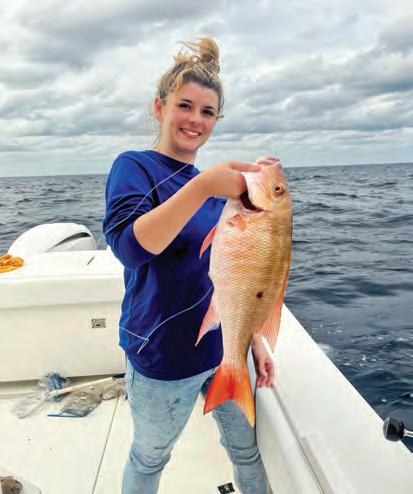

Elayna Whitten hooked this 21-inch mutton snapper off the coast of Jupiter with a long neon jig.

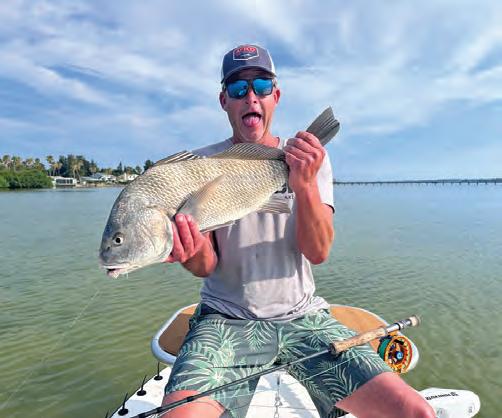
This nice black drum was swimming with a school of reds when Nate Weis hooked it with his 8wt fly rod.
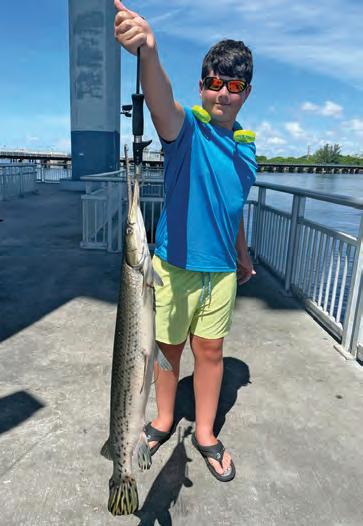

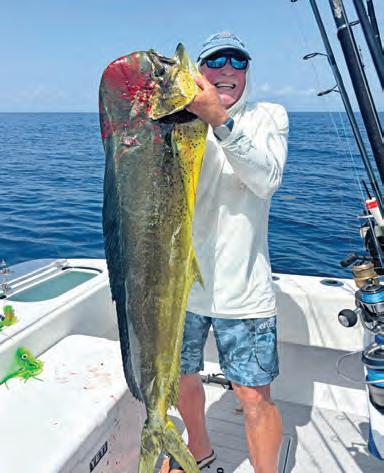

this nice 7 lb.

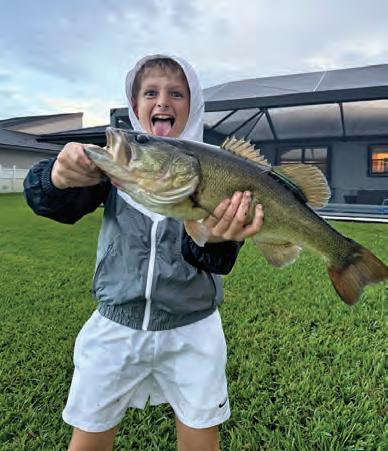
in his neighborhood pond on a live nightcrawler worm and bobber.

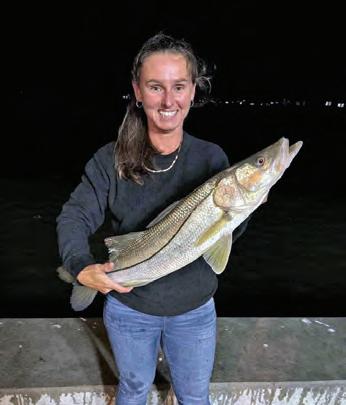
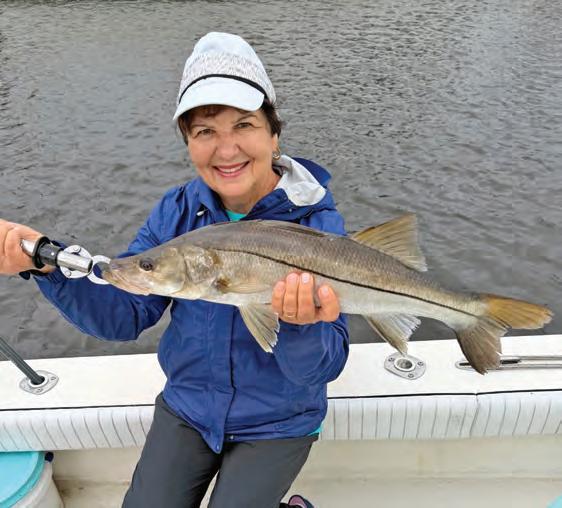
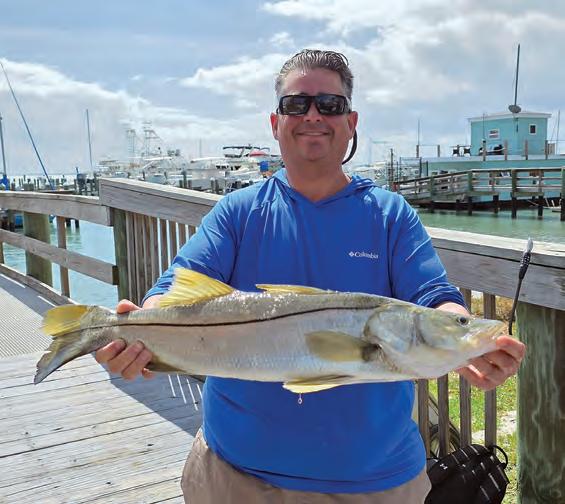
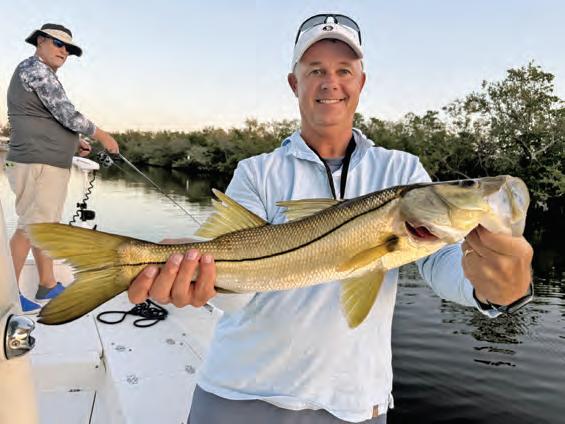
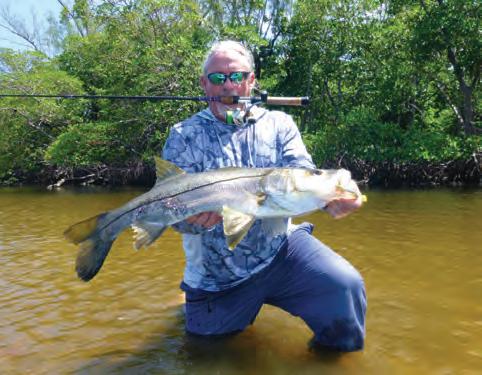
Shara Linsinbigler caught this 28.25-inch snook on a live croaker she got from the Snook Nook.


CAPT. MIKE SMITH
Are you tired of catching tons of 13 inch speckled trout and 16 inch snook?
It’s time for you to switch to a big top water lure to catch big springtime sh. A walk-the-dog type of lure is an excellent choice. I like Zara Super Spooks, Mirrolure Top Dogs and Rapala Skitterwalks the best. Make sure to choose a lure that is at least four inches long. Hungry springtime sh are ready to eat a big meal as the water temperatures rise.
A larger lure has many advantages over smaller baits. e larger pro le and length creates more vibrations to attract monster sh from long distances. A larger lure allows you to cover more water because you can make longer casts. A larger lure also discourages most of the smaller sh from biting. You will catch fewer sh but they will be of much better quality.

e best topwater lure colors for speckled trout and snook are silver and white. Choose lures with silver or white sides
Pro Tip #1: Do yourself and the sh a favor and smush down the barbs on your treble hooks. You won’t lose any sh as long as you keep the line tight. e hooks will also come out of the sh and your hand much more easily.


and bellies. e back color doesn’t really matter because the sh will hit from under and behind the lures. e best retrieves for a walk-the-dog lure includes a pause every ten feet or so. Quite o en you will get a vicious reaction bite right a er the pause.
Pro Tip #2: e best leader material for walk-the-dog lures is mono lament. Mono lament line oats versus uorocarbon line that will sink and negatively a ect your topwater lure’s action. A short heavy leader, 12 to 15 inches is a great choice. Long leaders will o en negatively a ect your lure presentation. Many shermen believe that you can’t use topwater lures in the middle of the day. But they are wrong. You can use a topwater lure all day and catch huge speckled trout and snook. Topwater lures do work the best in low light scenarios. It can be sunrise or sunset but cloudy or stormy days are also great times to use big topwater lures. If you nd a school of mullet, cast your topwater lure just outside of the school. You want to make it easy for the snook and trout to distinguish your lure from the rest of the school.
Spring is a great time to catch huge snook and speckled trout with big topwater lures. ese sh need to fatten up again a er fasting through much of the winter. ey would rather eat one large calorie meal than have to chase a bunch of small sh around for the same caloric input.
Capt. Mike Smith, owner of Fish Your Ass O Charters, is an inshore shing guide who has been shing the inshore waters, oyster bars and grass ats of Florida for more than 40 years. Reach him at (561) 339-2317, email: contact@ shyourasso .com or visit shyourasso .com.
= approximately 8”
(10) year

First
If March is the warmup, April is go time.
By Capt. Michael Okruhlik
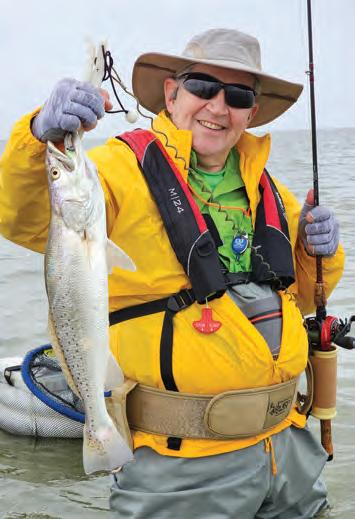





Longer days, greener water, and steady warming trends ip the inshore switch from “transition” to “feed.” e bait is thicker, the tides feel stronger, and the sh are no longer just staging — they’re hunting. April is when things start getting fun in a hurry. e key word this month is movement. By April, speckled trout are pushing onto reefs, sandbars, and grass edges with more consistency. Red sh are cruising shorelines, ooded grass, and marsh drains with purpose. Flounder settle into ambush points along drop-o s and current seams. Water temperature swings aren’t as drastic as early spring, but bait movement tied to tides becomes critical. Instead of asking where the warmest water is, start asking: Where is the cleanest moving water? Where is bait being pushed? Where is current creating ambush points? Points, drains, and wind-blown shorelines shine in April. If water is moving and bait is present, predators won’t be far away.
Unlike the slower mid-a ernoon bites of late winter, April o en rewards early risers. at rst light window can be electric — especially on calm mornings with bait dimpling the surface. is is when topwaters re-enter the rotation in a serious way. ere’s nothing subtle about an April blowup. But don’t force it. If sh are swiping and missing, switch to a so plastic or suspending bait and clean up the followers.
April sh are more aggressive, but they’re still opportunistic. Paddle tails, shrimp imitations, and swimbaits all shine, especially when worked with a con dent, steady retrieve. Water clarity should dictate your approach. In cleaner water natural colors and subtle action are key. In stained water, vibration and contrast matter more. If sh are chasing, cover water. If they’re following but not committing, slow down and add pauses. Let the sh tell you what they want.
April breezes can stack bait against shorelines and points. Wind creates feeding lanes. Instead of hiding from it, position yourself to use it. Dri with it. Fish into it. Work the edges it creates. Wind plus tide plus bait equals opportunity.
Next trip, challenge yourself by starting on a wind-blown shoreline and working it thoroughly. en move to a protected drain and compare activity. Pay attention. Which has more bait? Which has more strikes? Fishing in April is less about luck and more about reading conditions in real time.
April feels alive. e marsh hums. Birds dive. Mullet scatter. e sun carries warmth instead of warning. It’s the month where con dence returns, patterns stabilize, and sh feed longer and harder. Somewhere between the rst cast and the last dri , you’ll remember why spring inshore shing is hard to beat. e water’s warming and the sh are moving. Are you taking a kid shing?
Capt. Michael Okruhlik is the inventor and owner of Knockin Tail Lures® — https://knockintaillures.com.





It’s no fsh tale when you run with a John Deere. You can get everything done faster and easier, so you get more time on the water. Plus, our special offers make them the catch of the day.










TIM BAREFOOT

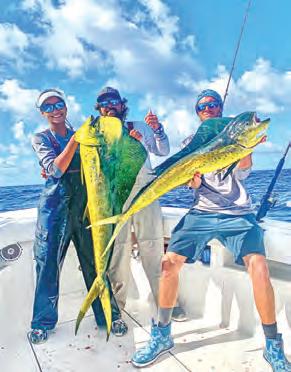
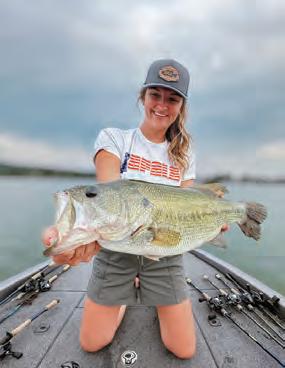
It’s o!cial…say hello to spring. Anglers can now look forward to targeting a wide variety of species, including black n tuna, wahoo, African pompano, and many other sought-a er sh. With these species actively feeding during their migration north, the opportunities for successful catches are abundant. Whether you prefer trolling, dri ing, or bottom shing, the spring months bring a wealth of options to ll your cooler with quality sh.

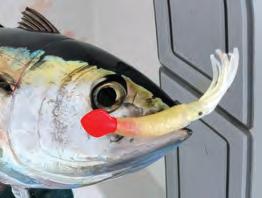
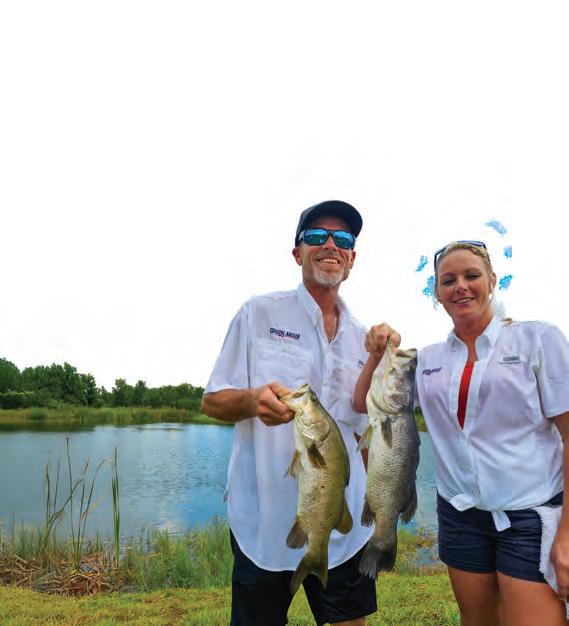
e troll bite will probably die as soon as the sun gets up around the nine or ten o’clock timeframe. is is when you need to change tactics. Stop trolling. Put the trolling motor over and start making strategic dri s with the light line out while bottom shing. I would also suggest putting a couple baits out under the kite, as this is the most e ective presentation with very little to no leader in the water. Have at least one person dedicated to the kite baits, if you’re shing a kite. is is one of the best times of the year to spend the night, especially here in North Carolina, as the night bite could be crazy good. Put the bright lights out and you will draw the squid, cigar minnows, sardines, and all the predators to you like moths to a porch light. If you have the ability to spend the night, April could be the month you see the ultimate results. Everything including ying sh are very susceptible to a Sibiki rig. Fill the live well with live baits and start shing on the daylight bite. Fish are like us; they like to eat breakfast and dinner, so be there early and late.
Be sure to keep an eye on the recorder while on the dri for the mid water marks. In addition to shing for the snappers, have rods at the ready for sh that show on the recorder way o the bottom. ese may very well be the African pompano, so have a rod ready with a jig that you can re down and erratically jig upwards 25 to 50 feet o the bottom and then let ascend back to the bottom. Repeat over and over as this will get bites! It’s not just African pompano that frequent these deeper waters. During the middle of the day, wahoo can be found surprisingly deep, and tuna also inhabit these depths. It only takes a few wahoo, black n or pompano to make a great box of sh to take home. is is also a good time to target the smaller snapper with smaller baits on “chicken rigs” with small circle hooks. When you’re on a good bite (using small circle hooks) I would strongly recommend feeling the bite, winding tight to it and stopping. is is when another snapper will jump on the second bait. You will load up quickly with delicious groceries when you’re catching two at a time.
Bring the heat… It’s on!
Learn more tips and techniques at barefootcatsandtackle.com and on Barefoot’s YouTube channel: @timbarefoot5698.
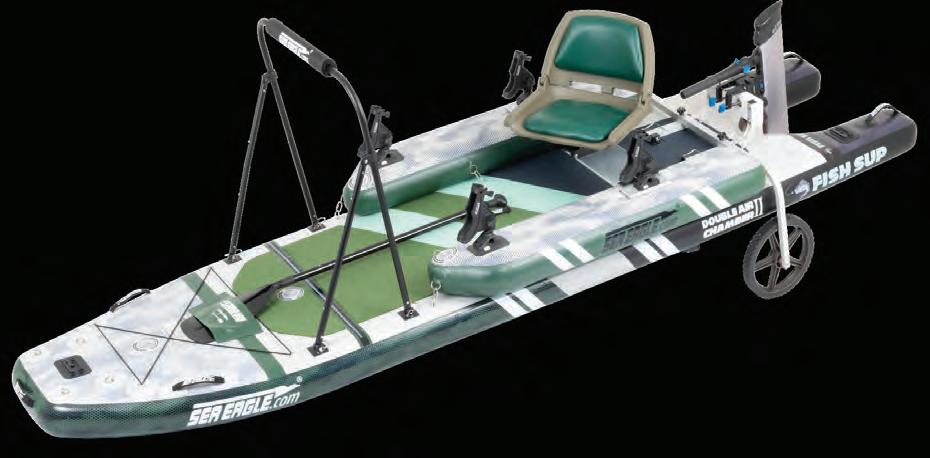
The versatility of the FishSUP™1210 is unmatched! Use it bare bones with just the board, a paddle & your !shing gear or deck it out with swivel seat, side pontoons, casting bar, motor and more! Incredibly stable, extra wide, swallow-tail !shing SUP holds up to 500 lbs! The FS1210 takes electric and gas motors up to 3 hp. There’s even an option for a bow trolling motor.
Choose From 6 Packages
Starting At Just $999
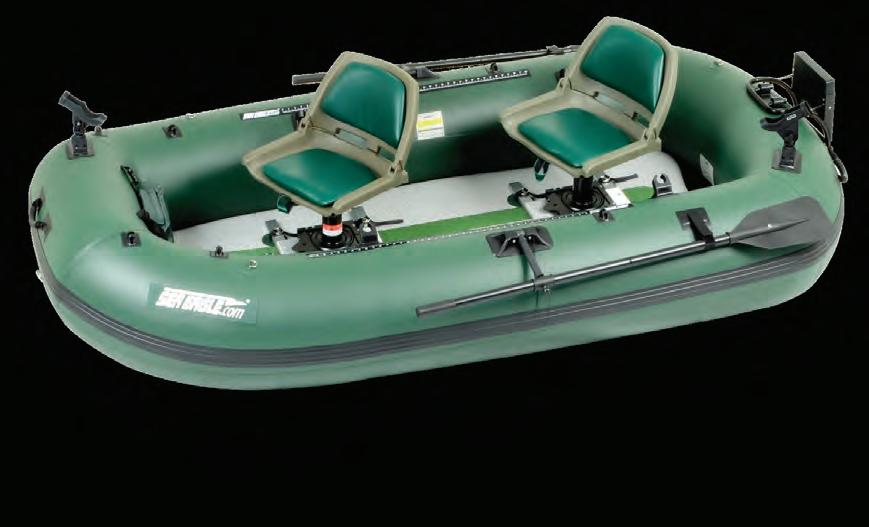
Perfect for !shing rivers, lakes and bays. The STS10 is a lightweight, roomy 1 or 2 person pontoon boat that’s packed with features anglers need & love including 2 built-in !sh rules, 4 built-in rod holders & 2 Scotty® mounts for more rod holders, anchor locks, camera posts or any other Scotty® accessory. Now available with a drop-stitch in atable oor or wooden oorboards.
Choose From 7 Packages
Starting At Just $1449
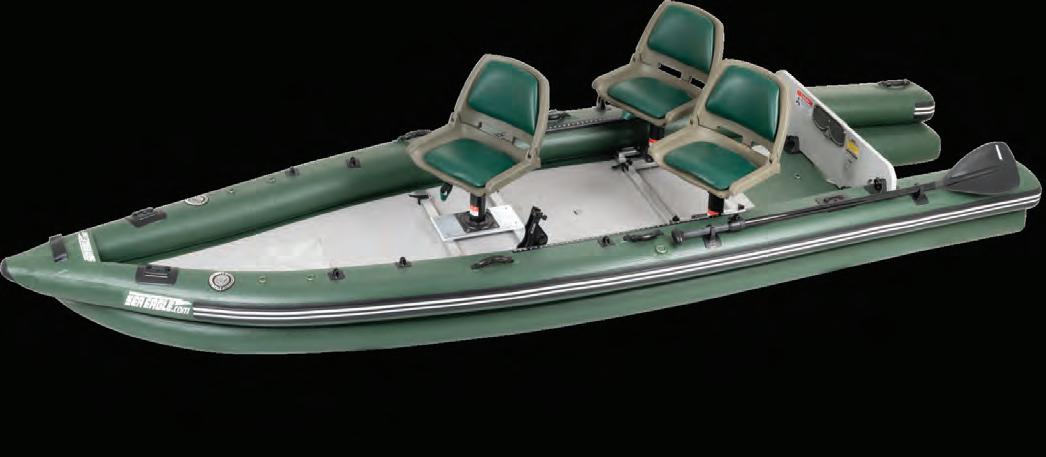
This “low-rider” gives you access to the water to reel in and release !sh easily. With a new patented outside, in atable, rigid keel the FSK16 glides through the water at speeds up to 21 mph to get you to the !sh fast! Perfect for 1-3 anglers and room for plenty of gear.
Choose From 9 Packages
Starting At Just $2999


By Julie Graham- ExploreTRV

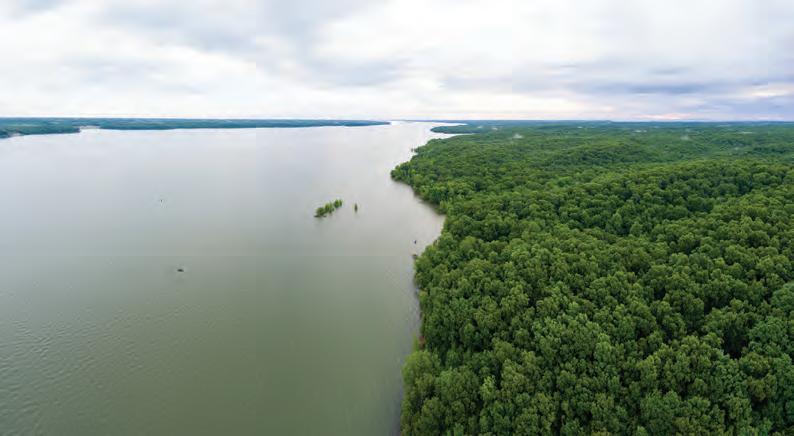
As the last bite of winter gives way to the gentle stirrings of spring, Kentucky Lake comes alive. Located along the western edge of the Bluegrass State, this sprawling body of water—technically a reservoir—has long been a mecca for anglers, especially those in search of springtime crappie.
Kentucky Lake stretches a remarkable 184 miles from the Tennessee state line to the northernmost point at the Kentucky Dam making it the largest reservoir in the state and one of the largest in the U.S. e lake was formed in 1944 with the completion of the Kentucky Dam, a key project by the Tennessee Valley Authority (TVA). Today, the lake covers over 160,000 acres, with an average depth of 8-10 feet, though some areas reach even deeper. Its shoreline stretches over 2,000 miles, o ering countless coves, islands, and inlets that make it a paradise for anglers. Fishing enthusiasts quickly discovered the lake’s potential as a world-class destination for crappie, bass, and cat sh, earning it a reputation that has only grown over the decades. Feeding Kentucky Lake are several major tributaries (Blood River, Jonathan Creek, Big Sandy River) that become shing hotspots in early spring, especially where submerged timber


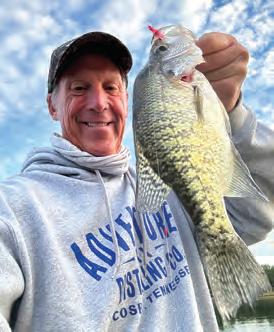
and man-made structures provide cover. Every seasoned angler in this region knows spring is crappie season. As water temperatures creep into the low 60s, crappie begin their migration from deep winter haunts to shallow spawning grounds— brush piles, stumps, and submerged structures along the shoreline. Preferred bait and techniques vary by angler, but some classics stand the test of time. Live minnows, o en rigged under a slip oat, are a go-to for many, especially during the pre-spawn. Jig shing is equally e ective, with popular choices like 1/16 or 1/32 oz. so plastics in chartreuse, white, and monkey milk colors. When the bite gets tough, tipping jigs with a small minnow or switching to hand-tied hair jigs can coax hesitant sh. Long-line trolling and spider rigging also dominate certain sections of the lake, especially in the deeper channels near creek mouths.
Mornings on the lake feel almost sacred this time of year. Fishermen, some in sleek bass boats, others in aluminum ski s passed down through generations, fan out across coves and creek arms, quietly working the banks. e goal is the same: feel the tap of a crappie on the line, set the hook, and haul in what many call the “gold of the lake.” For many, the draw of spring crappie shing isn’t just the thrill of the bite. It’s also the chance to connect with the natural rhythm of the season while sitting in a quiet cove as the dogwoods bloom, passing along stories, rods, and values to the next generation. At its core, Kentucky Lake is more than a reservoir. It’s a living, breathing legacy—a place where history, sport, and stewardship come together on every cast.
For more information on shing licenses and regulations, visit the Kentucky Department of Fish & Wildlife Resources website - fw.ky.gov - or the Tennessee Wildlife Resources Agency website - www.tn.gov/twra.html.



“I never expected it to be so beautiful that it takes your breath away.”
— Kaya C., on Stauer Opals
In a quaint village, nestled between rolling hills, lived a young woman with a deep appreciation for gemstones. Her grandmother gifted her a delicate cross pendant adorned with opals. "e opals shimmered with a mesmerizing play of colors, reflecting hues of blues, greens, and fiery oranges. Her grandmother shared the legend of the opals, believed to bring hope, purity, and luck to those who wore them.
Using this story as inspiration, Stauer brings you the Opal Spirit Cross Pendant. With over 2 total carats of Kyocera lab-created opals set in .925 sterling silver encased in yellow gold, this pendant is a radiant celebration of beauty and craftsmanship. Each opal captivates with a kaleidoscopic dance of fiery oranges blending into oceanic blues, streaked with flashes of vibrant green that seem to come alive with every movement. "e shimmering opals are skillfully arranged to create an enchanting, otherworldly glow, embodying the spirit of hope and harmony.
"is breathtaking combination of color and craftsmanship is available as a limited availability of

only 930 pieces, making it a rare and treasured addition to your jewelry collection. Plus, when you order today, you’ll receive the gold-!nished sterling silver chain—a $69 value—absolutely free!
Don’t miss your chance to own this exclusive tribute to timeless elegance and meaningful symbolism.
Necklace Speci!cations:
• 2 ½ ctw. Kyocera lab opals and DiamondAura® accents
• Yellow gold-finished .925 sterling silver setting
• 18" gold-clad .925 sterling silver chain Opal