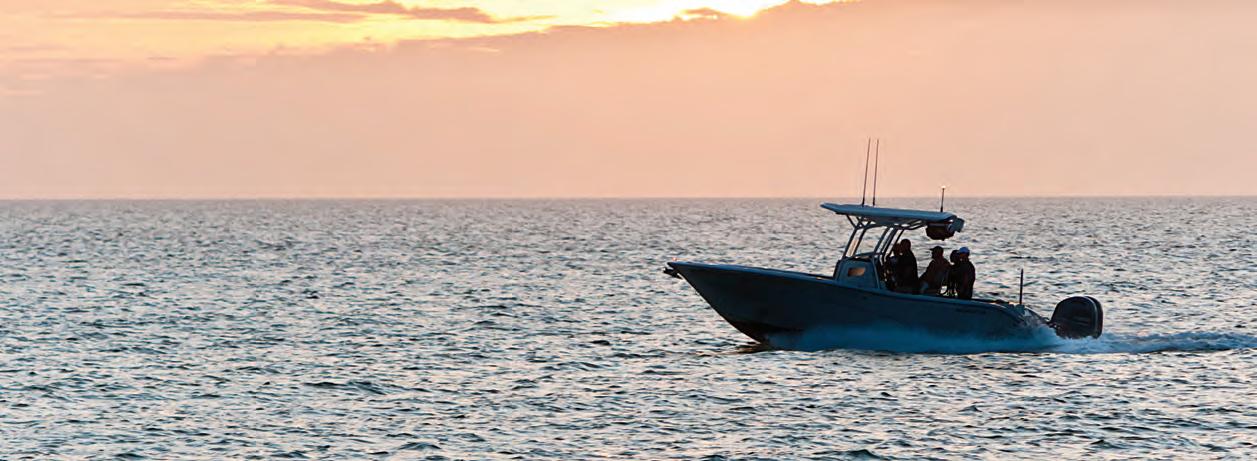
fve things you should know about boat insurance
Are you ready to embark on your next on-water adventure? Before you set sail, here are fve things to know about boat insurance.
1. Boat insurance isn’t just for accidents
With comprehensive coverage, you’ll also be protected fnancially for theft, vandalism, and unexpected events like storms if you need repairs or replacements due to damage.
2. Accidents can happen to anyone
When accidents happen, boat insurance offers liability coverage for damages or injuries you cause while boating, up to specifed limits. It can also cover lawsuit costs if you’re sued.
3. Boat insurance can cover medical payments
Boat insurance offers a range of optional medical payments coverage limits, helping to cover medical expenses if you’re in an accident or someone is hurt on your boat, regardless of fault.
4. Most lenders require boat insurance
If you fnanced your boat, you’ll likely need boat insurance since most lenders require boat insurance to protect their investment. Additionally, some marinas or municipalities require proof of insurance for docking.
5. Progressive offers specialized boat coverages
Ever worry about getting stuck on the water?
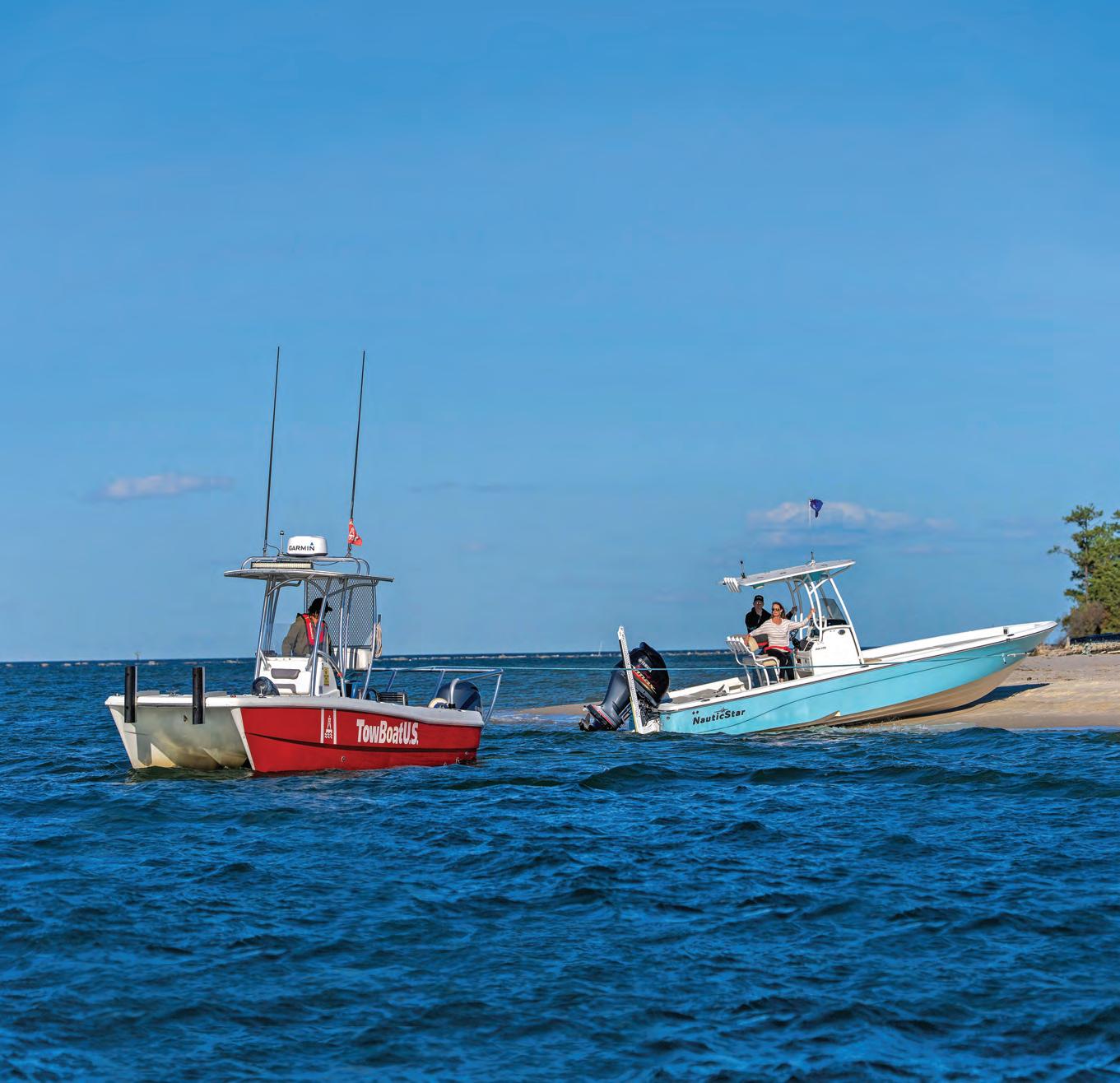
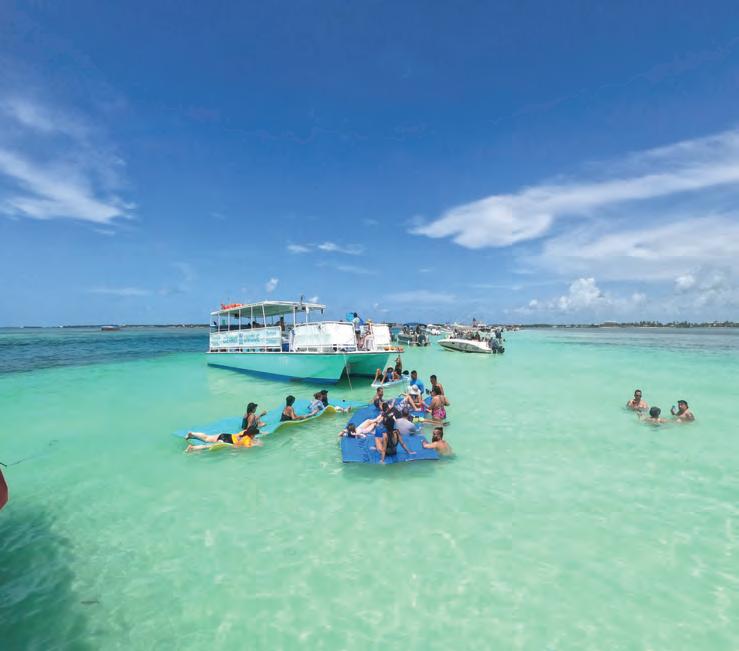
Progressive’s Sign & Glide® On-Water Towing coverage** can help. It’s an additional coverage that steps in if your boat is disabled or breaks down on the water, paying for on-water towing, jump starts, soft ungroundings, and fuel delivery. Fuel cost isn’t included.
Don’t let unforeseen circumstances disrupt your voyage. Cruise with confdence thanks to Progressive Boat insurance. Because when it comes to your boat, peace of mind is the ultimate luxury.
Scan to get a quote in as little as 4 minutes.
to learn more.















By Will Schmidt
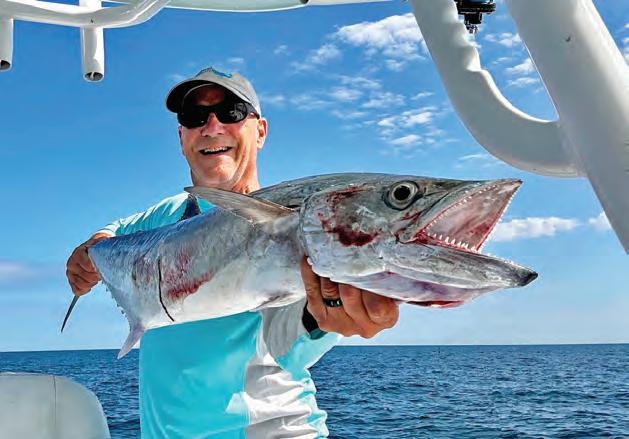
Nothing quite gets your heart rate up like the sound of drag screaming as a king rips line from the reel. Maybe it’s so exciting because for many, king!sh !shing can be slow, especially when targeting big !sh. e good news is there are some tournament proven techniques that can really help.
Perhaps the most well know tactic to bring kings to you is chumming. ere are several forms. Cutting up chunks of thread!ns and tossing them into the current is certainly a tried-and-true method. is is a great method especially if you are anchored. e challenge here is getting enough bait to keep the ow going. Another option we use in tournament !shing is a constant drip of menhaden oil. Using a bag like an IV bag you can set have a slow drip continually putting scent in the water as you troll. It’s great for covering ground and still helps to bring !sh to you at the same time. Unfortunately, menhaden oil has become a bit pricey.
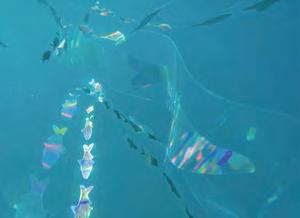
ese techniques work great, but on tournament days I believe there is so much scent in the water that they become less e$ective. So, now my new go to is to add an extra sensory stimulation in the form of eye candy. Speci!cally, a Fish Razr mylar dredge. Made of re ective strips that look like a school of bait, they shine like an underwater disco ball. Plus are easy to use and reusable so they are cost e$ective. Simply attach them to a kite rod or cleat and toss them over the side. I’ve literally had !sh in my spread within seconds of deploying the dredge.
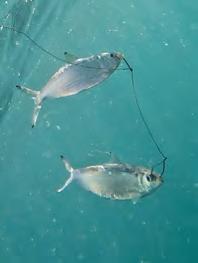
For baits I do prefer big blue runners, but sometimes they can be hard to come by. A good trick when big baits are sparse is to double up smaller baits, like sardines or thread!ns. I use two hooks wired about 5 inches apart with a stinger o$ the second to create a larger pro!le o$ering. I believe the added ash of multiple baits helps as well.
For tackle I like 20 to 30 pound trolling gear like a Shimano Terez medium action rod with Talica A 16. For years we went very light on our tackle thinking that kings had so mouths and needed to be babied. While they are somewhat more delicate, a big !sh is tough and you still need gear that can do the trick. is setup has a light enough tip and silky smooth drag to help absorb the initial hit but plenty of backbone to battle a hardier smoker king. A mono top shot also helps with that opening blow.
For me the key to king!sh !shing is to combine looking for them while also having them look for me. Adding the dredge to my spread is a real gamechanger.
Will Schmidt is a seasoned tournament angler who has been writing about shing for more than two decades. Follow Will on Instagram @saltynstrong.

IN THE KEYS Lobster Season Lobster Season Lobster Season Lobster SeasonMINI
By A. deGruchy
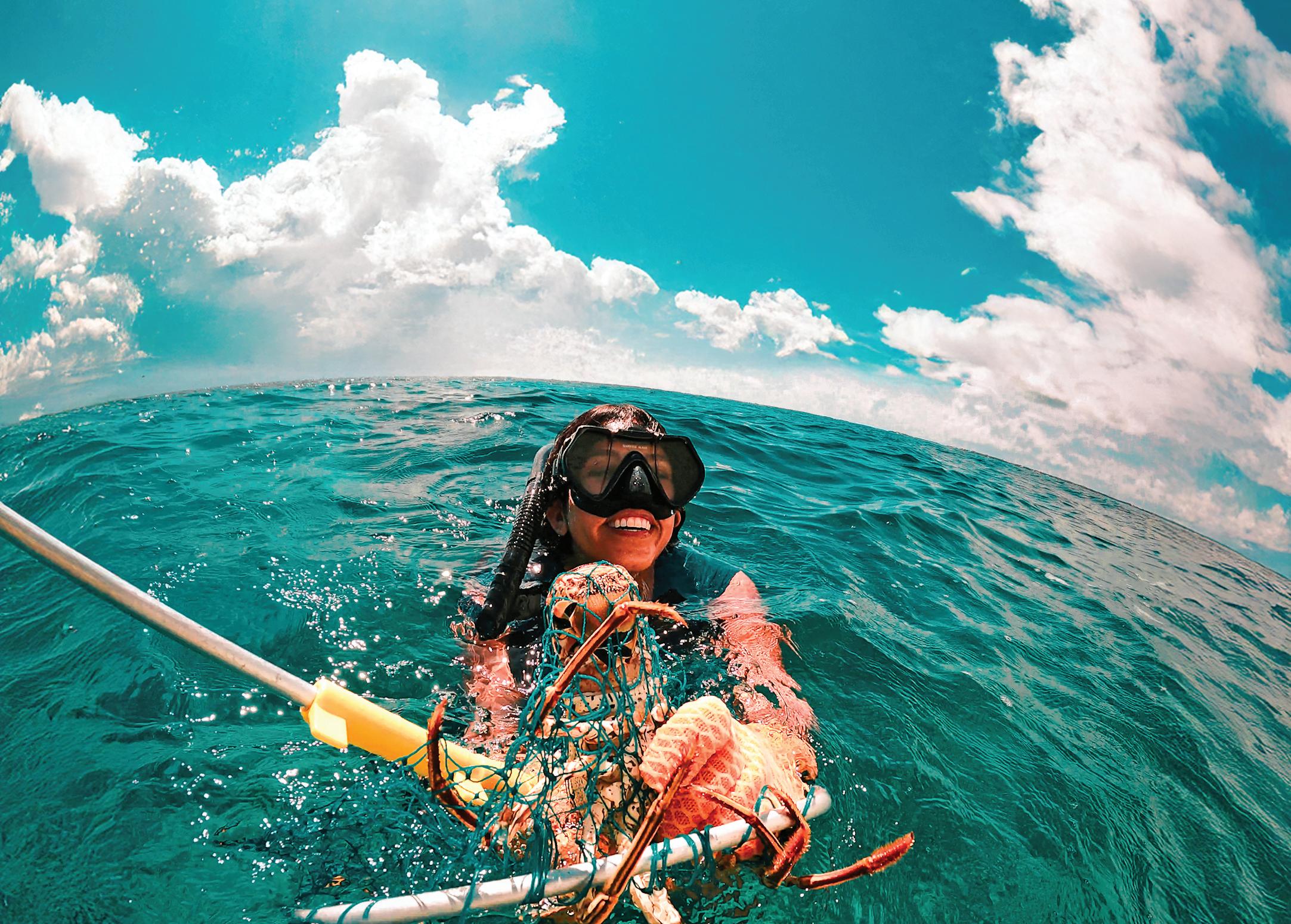
Every July, the Keys go a little wild for two days. !e spiny lobster sport season, or “mini season,” always hits the last Wednesday and !ursday of the month, so in 2026 that’s July 29 and 30. It’s your two-day jump on the regular season before it opens August 6, and trust me, the water gets packed. Know the rules before you launch and you’ll have a blast instead of a ticket.
First, the boring but unskippable part: paperwork. For 2026, non-residents can only
grab a short-term license in person at a Monroe County Tax Collector o ce, and they’re closed weekends. Gear-wise, keep it simple: tickle stick, net, gloves, and a gauge. No spears, hooks, or traps down here. Measure every bug in the water (carapace bigger than three inches), leave the tail on until you’re back on land, and toss back any female carrying eggs.
person, per day, the whole day. !at’s half what the rest of Florida gets, and don’t try to be sneaky about it. You can’t grab your six, run ‘em to the dock, and head back out for round two. !at’s “doubledipping” which is illegal, and the #nes aren’t fun. Six means six.
If traveling to the Keys for mini lobster season, respect the locals. Remember, the Keys are home to a lot of folks and one of the most fragile reefs anywhere, so a lot of the “be cool” stu$ is also straight-up the law. Give people their space, too.
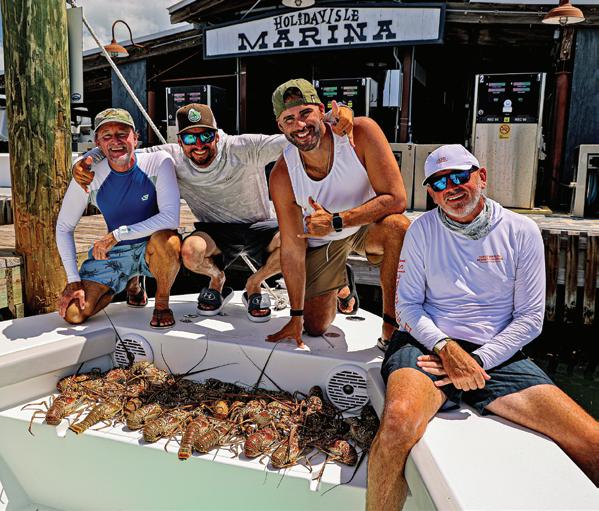
Heads up on the 300-foot rule during mini season: basically the whole Keys is o$-limits nearshore. You can’t dive or snorkel within 300 feet of anyone’s house, dock, canal or marina. And don’t mix it up with the no-night-diving rule, that’s a separate mini season thing, so plan on daylight only. Fly your dive ag, idle down when you’re within 300 feet of one, and grab a buddy because the water’s a zoo. Don’t touch, stand on, or anchor on the coral, steer clear of no-take zones like John Pennekamp and the Dry Tortugas, and never mess with someone’s trap, that one’s a felony.
Bottom line: carry your license, measure in the water, keep it to six and whole, and dive in daylight. Check MyFWC.com for the full rundown before you head out, and have fun out there.
!e biggie is the bag limit: six lobsters per
Follow all of deGruchy’s adventures at @bean_sport!shing on Instagram and YouTube.


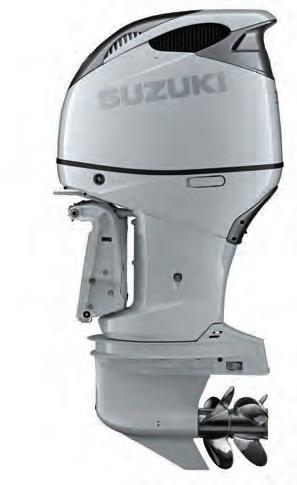
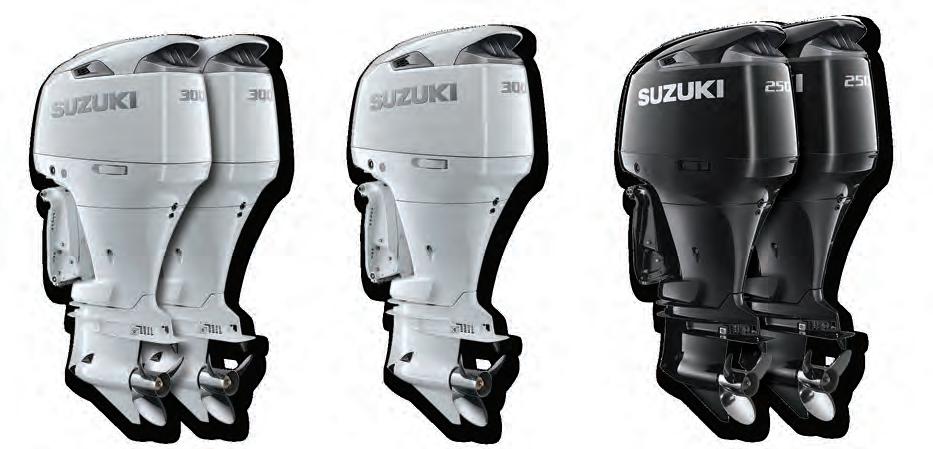
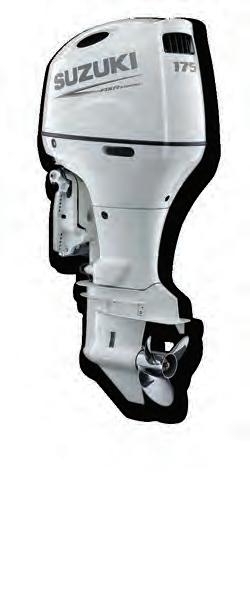
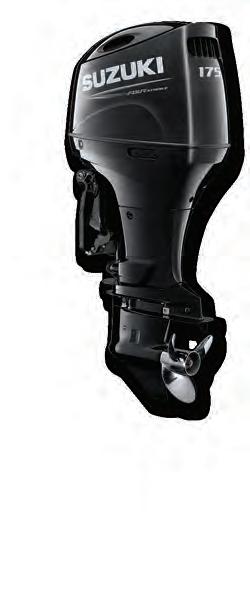
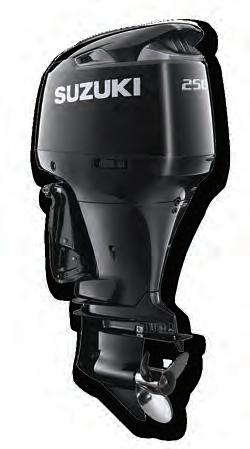
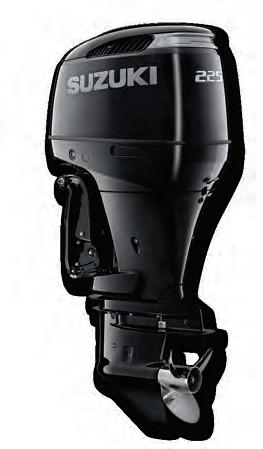
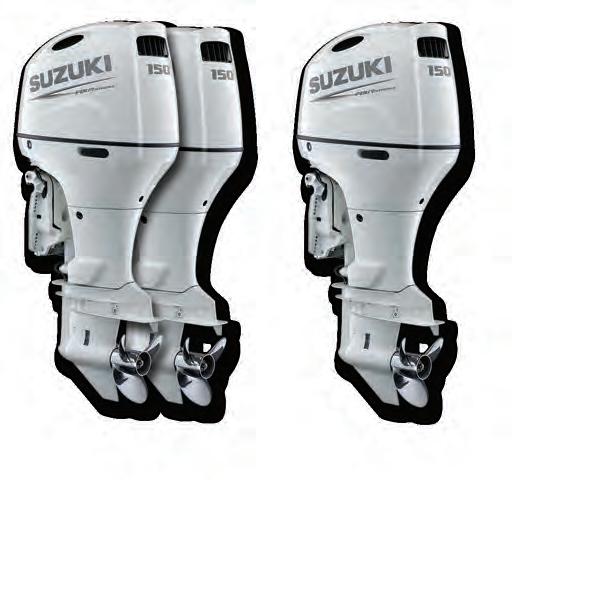
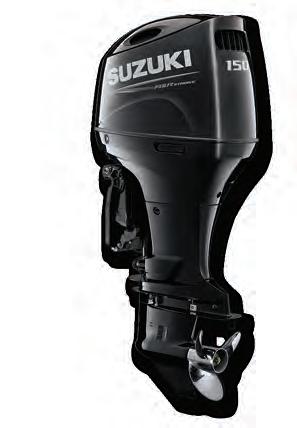
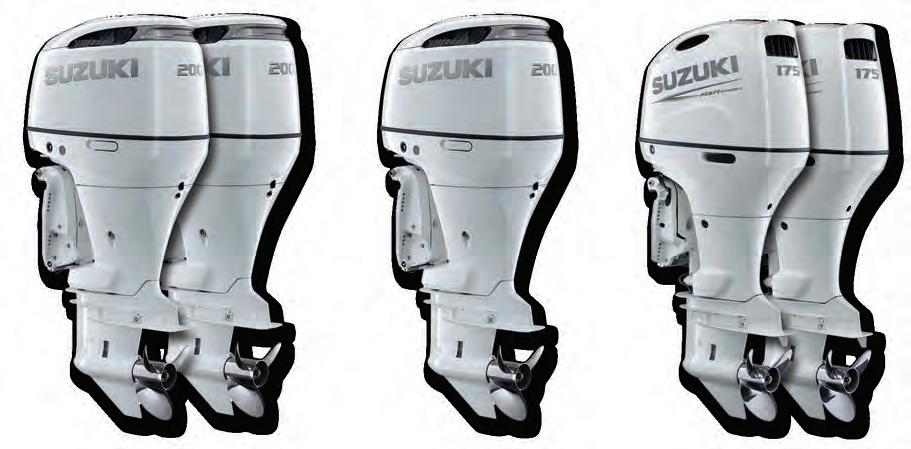
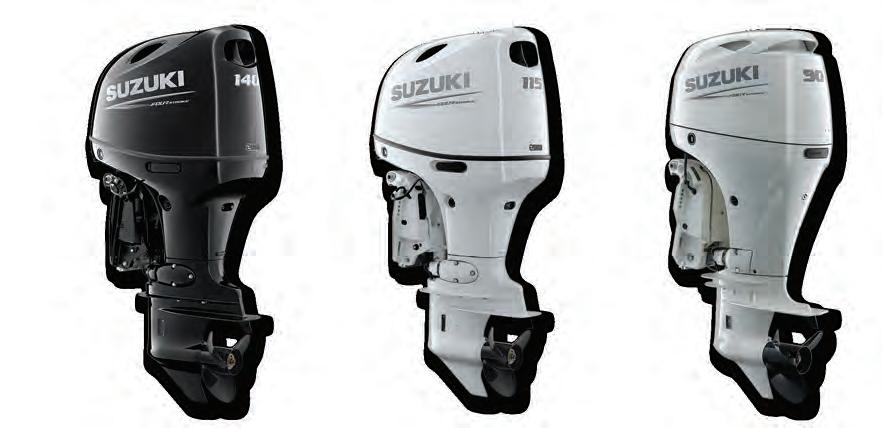
Mastry Engine Center has received the Suzuki Marine Super Service Award and has been ranked #1 in Suzuki Marine US Sales! 60 YEARS OF REPOWER EXPERIENCE!

RePower Packages designed to best ft your needs and not stretch your budget. Financing available.

Rest assured, all Mastry Suzuki RePowers are backed by Suzuki’s industry leading 5-year factory warranty.

Stationed strategically around the East Coast, all Suzuki RePower Centers have achieved the highest level of Suzuki certifcations to meet and exceed your repower needs.
Stationed strategically around the East Coast, all Centers the highest level meet and exceed your repower needs.
When Considering A Repower, Consider These Factors:
•Every Authorized Mastry Suzuki RePower Center has decades of repower experience providing proper rigging, controls, propeller matching and in water testing
•With a Mastry Suzuki RePower, owners gain improved performance, less noise and greater reliability
•Mastry Suzuki RePower’s exclusive Owner’s Edge Program*
•Mastry Suzuki RePower Centers use authentic Suzuki OEM parts and have factory certifed technicians

WE’VE GOT YOU COVERED!
Since 2014, Mastry Engine Center, has been building the premiere Suzuki Outboard repower network in Florida. Today, Authorized Mastry Suzuki Outboard Centers have been exceeding expectaions in the Southeast for over two decades. Recently Suzuki Marine requested Mastry Engine Center to expand the network throughout the Northeast. Now boat owners from Maine to Florida can be assured of the best support for their Suzuki outboard repower project. All Authorized Mastry Suzuki RePower Centers provide the best options, information and package pricing for excellent performance in repower.



with the Program!
When you purchase a new Suzuki outboard from an authorized Mastry RePower Center you qualify to become a member of the Mastry Suzuki Owner’s Edge. Owners receive an identifcation card that provides them with important information about their Suzuki outboard motor as well as a passport to additional benefts during ownership. Members enjoy a detailed engine maintenance schedule, Mastry Suzuki RePower Trade Program and special pricing from Mastry Suzuki Partners
SECURING THE SHORELINE: WHY EXPERTISE MATTERS IN SEAWALL REPAIR
By SlabFix
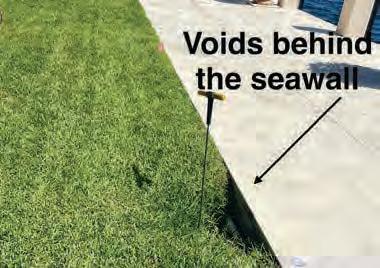
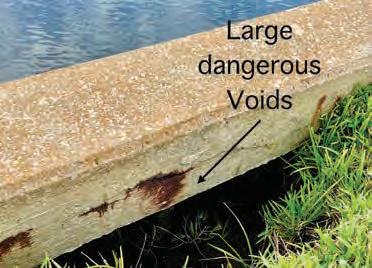
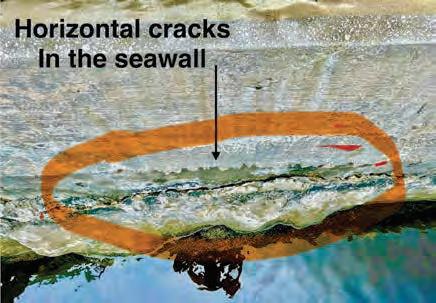
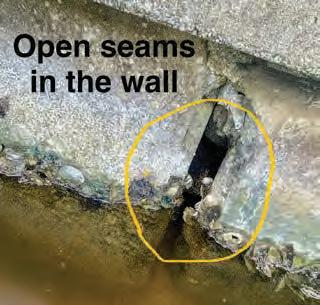
Seawalls are the unsung heroes of coastal and waterfront properties. Day in and day out, these structures endure the relentless punishing forces of tides, currents, and storms. Yet, because much of their critical infrastructure remains hidden beneath the water or buried under the soil, seawall deterioration o!en goes unnoticed until disaster strikes. When a seawall begins to fail, the integrity of the entire property is compromised. Resolving this high-stakes issue requires more than just a quick cosmetic patch; it demands specialized engineering, proven techniques, and a team with an unblemished track record. at is precisely where Slab Fix has established itself as the gold standard in the seawall repair industry. e mechanics of seawall failure usually begin from behind the wall. Over time, #uctuating water levels and heavy rains wash away the supporting soil through tiny cracks or failing joints. is
process, known as erosion or void formation, leaves the land behind the wall completely hollowed out. Property owners might $rst notice sinkholes, dipping concrete slabs, or a slight tilting of the seawall cap. Attempting a DIY $x or hiring a general contractor without specialized marine construction experience o!en leads to recurring failures and wasted capital. Seawall restoration is a precise science that requires a deep understanding of hydrostatic pressure, soil mechanics, and advanced material science.
Slab Fix has earned its reputation as an industry leader by mastering this complex science. Instead of relying on disruptive, expensive, and environmentally damaging excavation methods, the company utilizes cutting-edge polyurethane foam injection technology. is innovative process involves drilling small, non-invasive holes into the a ected areas and injecting a high-density,
eco-friendly polymer. e material expands to $ll hidden voids, binds with the existing soil, and creates an impermeable barrier that stops future erosion in its tracks. By stabilizing the soil and sealing the wall from within, Slab Fix restores structural integrity without altering the shoreline’s natural aesthetics.
Beyond technical expertise, the true measure of Slab Fix’s success lies in its stellar reputation. e company’s consistently great reviews re#ect a deep commitment to customer satisfaction and operational excellence. Waterfront homeowners and commercial property managers alike routinely praise the team for their transparency, punctuality, and minimal disruption to daily life. Clients frequently note that the crew takes the time to explain the engineering behind the repair, providing peace of mind during what can otherwise be a highly stressful situation. is wealth of positive feedback serves as a testament to their reliability and the long-lasting durability of their work.
Protecting your waterfront investment requires proactive maintenance and the right partners. Choosing an inexperienced contractor can result in catastrophic wall failure, costly property damage, and severe environmental $nes. With Slab Fix, property owners gain access to unparalleled expertise, state-of-the-art repair technologies, and a proven history of success. By addressing the root cause of seawall decay with precision and care, Slab Fix ensures that your shoreline remains secure, beautiful, and resilient for decades to come.




Fishing TRENDING






GUARANTEED LOWEST
OKIDS, POPPING CORKS, AND SPECKLED TROUT
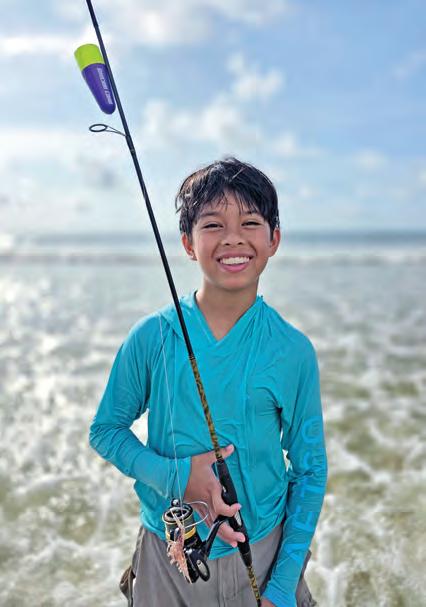
Kids don’t always have the patience to wait on a $sh to bite. ey want to cast, reel, and stay involved. A popping cork gives them something to do while keeping a bait or lure in the strike zone. Every pop creates noise and commotion that imitates feeding $sh, helping trout locate the bait. More importantly, it keeps kids engaged and focused.
When $shing live bait, it’s hard to beat a lively shrimp under a popping cork. Whether you’re $shing shorelines, reefs, or grass beds, the cork attracts trout while keeping the bait at the proper depth. e sound gets their attention, and the shrimp does the rest. It’s a simple setup that consistently catches $sh and builds con$dence in young anglers.
ne of my favorite things about $shing isn’t catching $sh myself—it’s watching a kid catch one. ere’s something special about seeing a young angler’s face light up when a cork disappears, and a speckled trout starts pulling back. Over the years, I’ve introduced a lot of kids to $shing, including my own boys, and one of the easiest ways I’ve found to help them succeed is with a popping cork.
Arti$cial lures work just as well. I o!en prefer them when $shing with kids because I spend less time rebaiting hooks and more time helping them catch $sh. A so! plastic under a popping cork allows kids to cast, pop, and retrieve while covering water e&ciently. It also teaches them how to work a lure without making things overly complicated.
One thing I’ve learned is that tackle designed for adults doesn’t always hold up when kids are involved. Rods get dropped, tackle gets stepped


By Capt. Michael Okruhlik
on, and gear gets bounced around the boat. at’s one reason I’ve moved away from many traditional wire-style corks.
Most anglers have opened a tackle box and found a wire cork bent a!er a day on the water. Once the wire is bent, the cork rarely casts the same. Many wire designs also have several moving parts that can tangle during a cast, especially in the hands of a young angler. Over time, the wire can even nick $shing line, creating weak spots that o!en show up when a good trout is hooked.
Durability is another advantage of hardplastic corks. Unlike foam designs that can crack, chip, loose its color, hard-plastic corks can handle years of abuse in a boat and continue performing like new.
At the end of the day, taking kids $shing should be fun. A durable popping cork paired with live bait or a so! plastic lure keeps things simple, productive, and exciting. e more bites kids get, the more they stay interested, and that’s how future anglers are made.
Take a kid $shing, I will!
Capt. Michael Okruhlik is the inventor and owner of Knockin Tail Lures® — knockintaillures.com.



Florida Keys SUMMER IN THE KEYS
By: Capt. Greg Poland
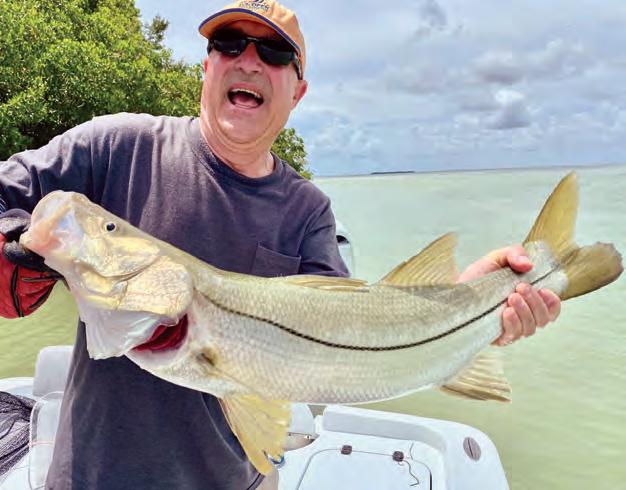
Idon’t know about you, but it’s been hot out on the water! I’ve been fishing under the shade of the bridges up and down the Overseas Highway, but now that the silver kings are moving away from the bridges, I find myself back out in the sunshine and really glad to have a T-top to hide from the midday sun and afternoon showers.
My fishing will shift from local waters back to the Flamingo Bay area, especially on those calm mornings when an early start makes all the difference. We’ll be concentrating on the shorelines for snook and juvenile tarpon, and it’s the perfect time for a family trip if you’d like to introduce your kids to the beauty of the Everglades.
I’ve been fishing the Glades since junior high and still love everything about it. There is nothing quite like watching a pod of dolphins chase down a school of mullet or seeing an osprey swoop down to grab a fish and carry
it back to one of the many nests scattered along the mangrove shorelines. The fishing can be incredible, with opportunities to catch a wide variety of species, and we’re fortunate to have this amazing National Park so close and accessible. If you’ve never experienced the Everglades and would like to come fishing with me for the day, my contact information is below.
If bringing home dinner, it is a great time to head offshore for mahi-mahi. Look for weed lines, floating debris, and diving birds. If you have SiriusXM Fish Mapping, turn it on and use it. I rely on it every time I head offshore, and it definitely helps narrow down productive areas. With the price of fuel these days, every little advantage count. A good pair of binoculars can be a huge help, especially for those fishing from smaller boats without towers. I like to scan the horizon for birds and floating debris, then work those areas thoroughly.
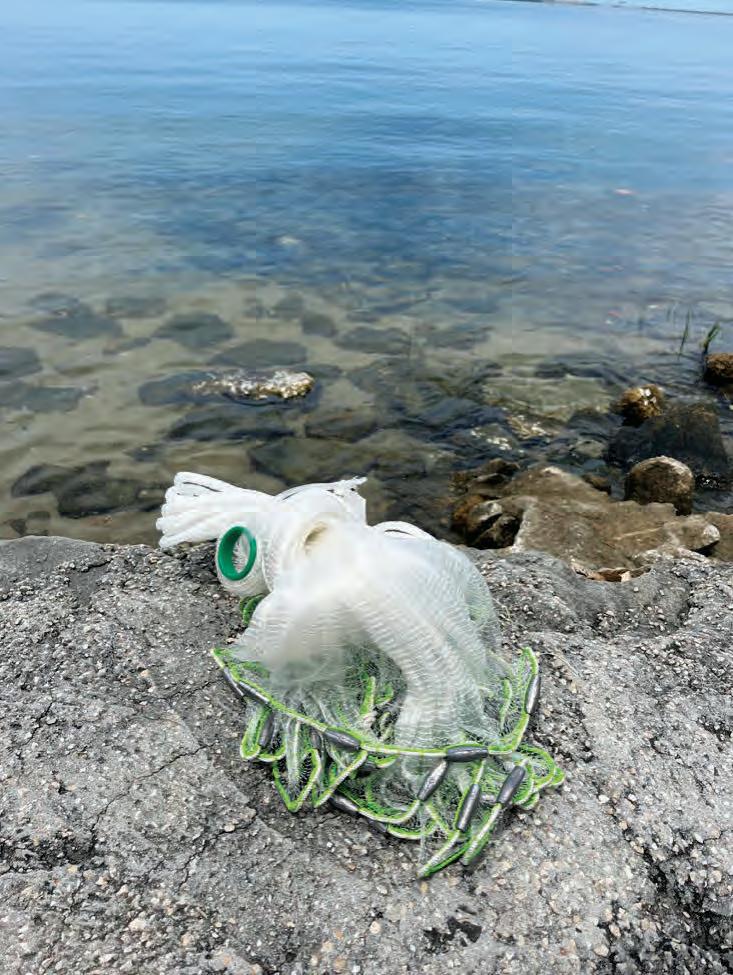
Live bait is always an advantage, so dust off that cast net or Sabiki rig and fill the livewell before heading out. If live bait isn’t an option, don’t worry. I’ve been having good luck with squid, which is readily available at the local tackle shops, as well as smaller trolling lures. Once I locate a weed line or floating debris, I like to put out a trolling lure while we continue searching. When we find a school of mahi, we’ll cast a spinning rod rigged with squid or live bait out in front of the fish and hold on tight.
One of my favorite tricks is to leave the first fish in the water alongside the boat. Doing so often keeps the rest of the school around and gives everyone a chance to grab a light spinning rod or fly rod and enjoy some fastpaced action. If you’re lucky, you can catch and release plenty of fish while keeping a few of the larger ones for dinner.
MANGROVE SNAPPER
By: Capt. Angelia Swanson
One of the fish we encounter every day in the Florida Keys is the Mangrove Snapper and July is a hot month for targeting these prized fish due to it being the prime time of their spawning season. They are copious! These fish can literally be found everywhere. They can tolerate salinity levels unlike any other reef fish, so they can be found all the way from the estuaries of the Everglades, to the mangrove forests of the back country, to the residential canals and sea walls, and all the way out to the open waters of the Atlantic. Their name actually comes from their juvenile habitat being amongst the dense mangrove roots.
They are so versatile and resilient that they can be found in the Atlantic Ocean from New England all the way to South America. There is a vibrant commercial and recreational fishery for them and they are even used for ornamental aquariums. Also called the grey snapper, these fish have amazing abilities. They can camouflage their color to blend in with their surroundings, and even more surprising, they have night vision. They have a reflective layer in the back of their retina that allows them great sight in low light conditions. This allows them to easily feed through the night on shrimp and crabs. They are equipped with incredibly sharp teeth. Beware when handling these innocent looking snapper! Use a dehooker and keep clear of the vampire looking fangs. They also
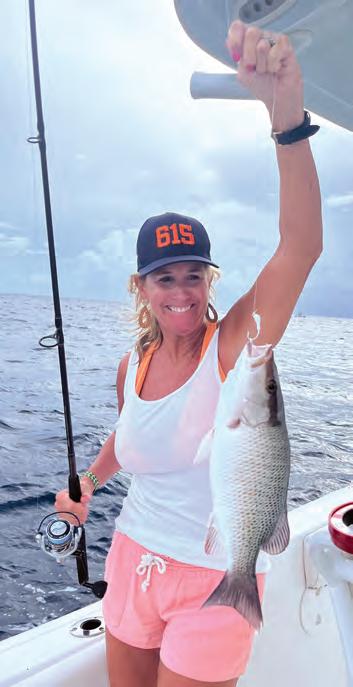
have distinctive lines or “rings” on their scales. These rings, as with some other species, allows scientists to study them and determine their age and the water conditions they have been living in.
July is prime time to target them on the reef due to this spawning season. They are masters of reproduction and can spawn several times during a single season, peaking around the full moons in June, July, and August. They have insatiable appetites and seem to bite very well with a simple knocker rig and a variety of baits including cut ballyhoo, squid, frozen or live shrimp, and live pilchards. As with most reef fishing, use chum. As I always say “chum and they will come”! I usually place a chum bag at the surface and a weighted chum cage about half way down. I believe that this helps bring the fish up from the bottom for a more successful bite. Why do we target these plentiful snapper? Because they are some darn good eating! With a legal-size limit of ten inches total length and a five per day bag limit, you can earn yourself a great meal chasing these snapper. The meat is firm, white, flaky, and mild like we always want and they can be prepared in a variety of ways. They are also some great little fighters who will provide an exciting fishing experience. If you are in the Keys this month give me a call and let me show you how we get it done!


By: Capt. Bruce Andersen
July in the Florida Keys is one of the most beautiful times of the year to be out on the water. While summer temperatures can certainly be hot, the weather offshore is often far more comfortable than people expect. Light breezes, sunny skies, and calm seas are common throughout the summer, and there are plenty of days when the ocean looks like a sheet of glass. On mornings like these, the crystal-clear waters of the Florida Keys are breathtaking. What could be a better time for a day of fishing? Whether you’re heading offshore or spending the day on the reef, it’s hard to beat the beauty of a calm July day on the Atlantic Ocean.
COOLING OFF OFFSHORE
blackfin tuna can also provide exciting action offshore, especially during the early morning hours. Whether trolling, live bait fishing, or casting to fish found under floating debris, offshore anglers have plenty of opportunities for excitement all summer long.
Fishing during the middle of summer typically revolves around two main opportunities: offshore fishing for mahi-mahi and blackfin tuna, and reef and bottom fishing for a variety of snapper and grouper species. Both options can provide excellent action and offer anglers a chance to bring home some outstanding fish.
Offshore, mahi-mahi fishing remains one of the highlights of the summer. Throughout July, schools of mahi continue their migration through the Gulf Stream, and anglers can experience some outstanding fishing. These colorful and hard-fighting fish are always a favorite. Along with the mahi,
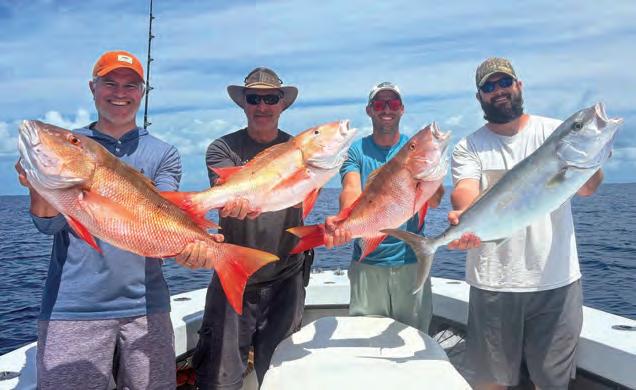
On the reef and wrecks, July brings the mangrove snapper out to the reef for the spawn. Many of the reefs that normally produce yellowtail snapper, along with a variety of other snapper and grouper species, become loaded with mangrove snapper. These fish often gather in big numbers, creating excellent opportunities for anglers looking for some fast action and a great meal. At the same time, yellowtail snapper, mutton snapper, and several species of grouper continue to provide steady action on the reef and deeper bottom spots.
If you’ve ever wanted to experience fishing in the Florida Keys, July is a fantastic time to do it. There are hundreds of skilled captains and guides throughout the Keys who are ready to help you make the most of your time on the water. Whether your chasing mahi offshore, battling tuna, or catching snapper on the reef, come experience the excitement of fishing in the Florida Keys!
— www.captaineasycharters.com | You can reach Captain Bruce Andersen at Capt. Easy Charters, MM 85, call 305.360.2120 or email at: captbrucekey@comcast.net


Capt. Joel’s FISHIN’ HOLES
By: Capt. Joel Brandenburg
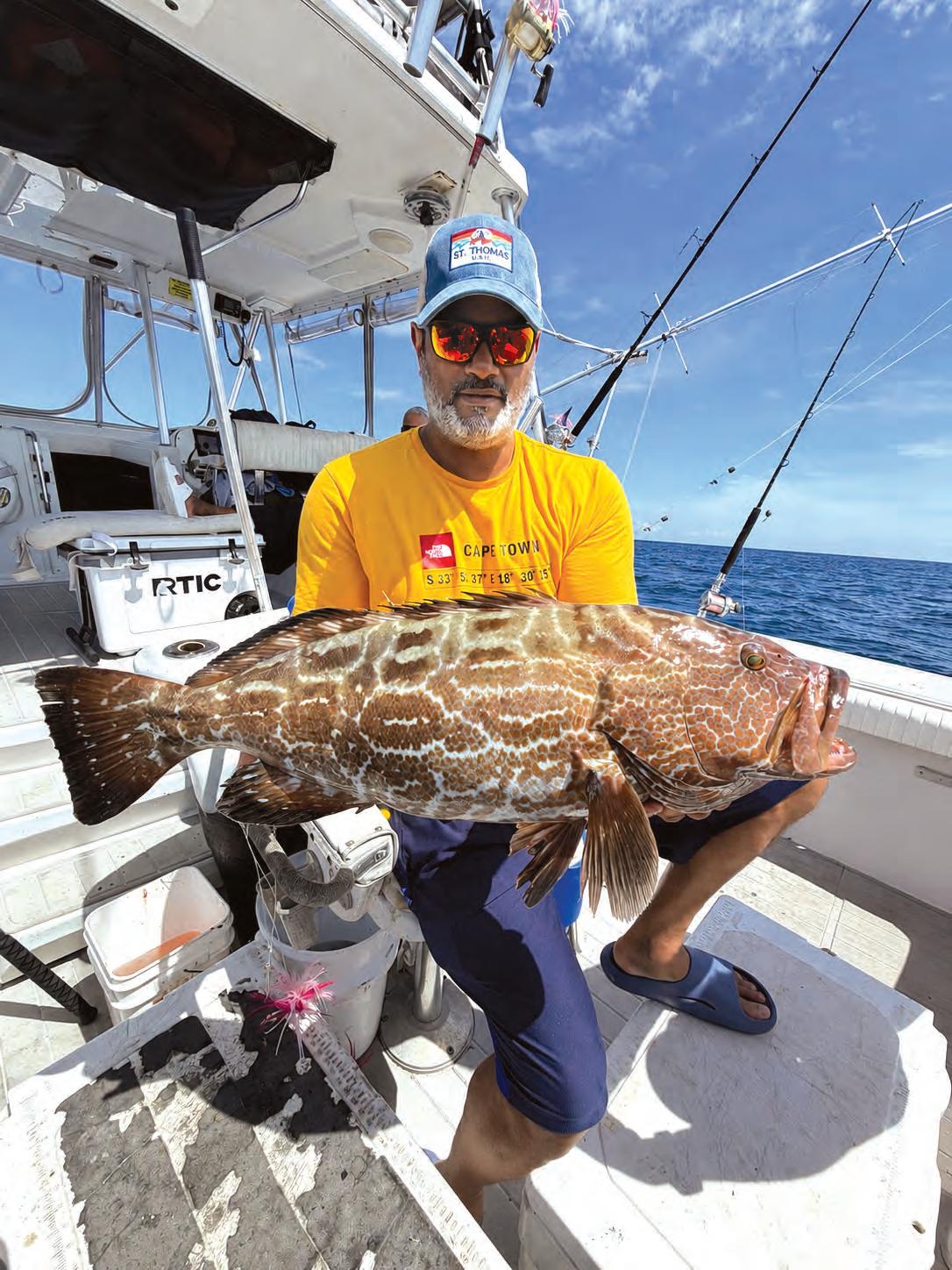
The Florida Keys offer some of the best black grou per fishing in the world. These hard-fighting fish are prized for their powerful runs, delicious table fare, and ability to challenge even experienced anglers. Wheth er you’re fishing the patch reefs, wrecks, or offshore ledges, understanding black grouper behavior can significantly in crease your success.
Black grouper are commonly found throughout the Florida Keys in depths ranging from 20 to over 300 feet. They prefer structure such as coral reefs, rock piles, wrecks, and underwater ledges where they can ambush baitfish. Larger fish are typically found in deeper water, while small er grouper often inhabit shallower reefs and patch reefs.
One of the most productive methods for catching black grouper is live bait fishing. Live pinfish, grunts, blue runners, and speedos are among the most effective baits. When fishing live bait, use a heavy conventional setup spooled with 50- to 80-pound braided line and a fluorocarbon leader ranging from 60 to 100 pounds. A strong circle hook is recommended to ensure solid hookups while reducing harm to the fish.
Position your boat directly over or slightly up-current from the structure. Drop the live bait to the bottom and allow it to swim naturally. Black grouper typically strike aggressively and immediately attempt to return to the reef. The first few seconds after the hookup are critical. Anglers must apply maximum pressure to pull the fish away from the structure before it can cut the line on coral or rocks.
Another productive technique is trolling deep-diving plugs along reef edges and drop-offs. This method allows anglers to cover large areas while locating active fish. Deep-diving lures that imitate baitfish can trigger strikes from grouper holding close to the bottom. Once a produc tive area is located, many captains switch to live bait to target larger fish.
Vertical jigging has also become increasingly popular in the Florida Keys. Heavy metal jigs worked near the bottom can entice aggressive grouper, especially during periods of strong current. This technique is effective around wrecks and deeper reef systems where grouper often feed on schools of baitfish.
Timing can play a major role in black grouper success. Many experienced Keys captains prefer fishing around tide changes, particularly during moving water. Grouper tend to become more active when currents increase, allowing them to ambush prey more effectively. Early morning and late afternoon






Water temperature is another important factor. Black grouper fishing is generally productive year-round in the Florida Keys, but many anglers experience exceptional fishing during the spring and fall months when water temperatures are moderate and baitfish are abundant.
Patience and proper boat positioning are essential. Black grouper often remain tight to structure, and even small adjustments in boat placement can make a significant difference. Successful captains spend considerable time studying their electronics to locate ledges, isolated rocks, and wrecks that hold fish.
As with all Florida fishing, anglers should familiarize themselves with current regulations before heading out. Grouper seasons, size limits, and bag limits can change, and compliance helps ensure healthy fish populations for future generations.
For anglers seeking a thrilling fight and outstanding seafood, black grouper represents one of the premier targets in the Florida Keys. With the right bait, tackle, and knowledge of local structure, fishermen can enjoy exciting action and the opportunity to land some of the largest and most powerful reef fish found in Florida waters. Whether you’re a visiting angler or a seasoned Keys fisherman, black grouper fishing remains one of the most rewarding experiences the region has to offer.

— To book a charter with Captain Joel Brandenburg of Ana Banana fishing Company call 813–267–4401 cell or 305–395–4212 office or visit www.marathonkeyfishingcharters@ gmail.com or come visit with us in person at poncho’s fuel dock located at 1280 Ocean View Ave. Marathon Florida Keys.



9
6
5
2
1
20
21






5
1
21
23




SWORDFISH DREAMS AND MAHI MAYHEM
By Beth Steele
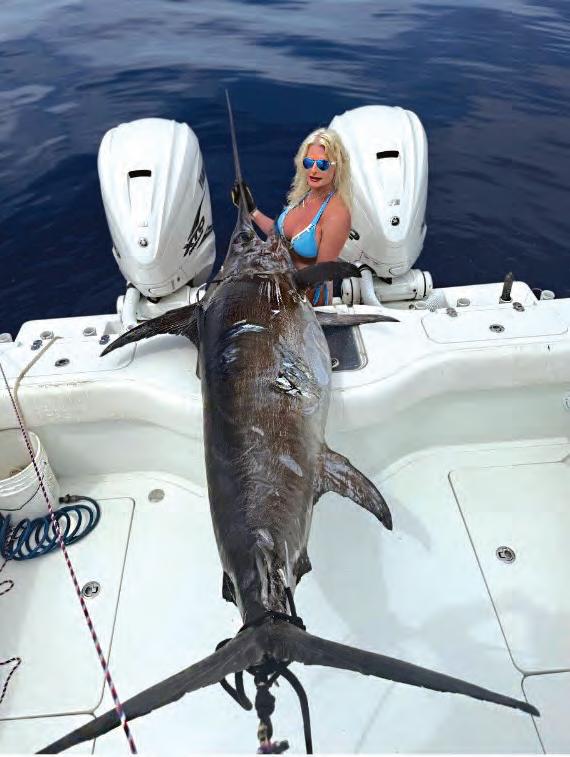
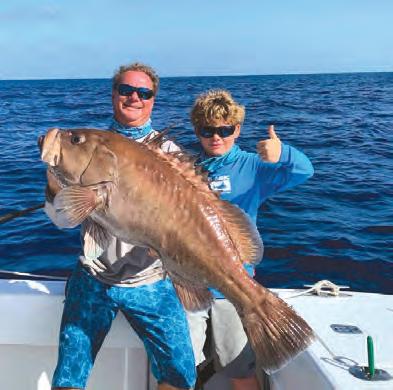
Some days on the water remind me exactly why I do this. After hours of patience, preparation, and anticipation, we landed a swordfish that tipped the scales at an incredible 416.8 pounds. Getting that giant over the side of the boat was a moment I will never forget. There was definitely a lot of pulling and adrenaline. It’s the kind of fish that anglers dream about and spend countless hours chasing. We took it to Bass Pro for the weigh in. It was epic to watch the spectators’ faces as they lifted it up on the forklift for the official weight.
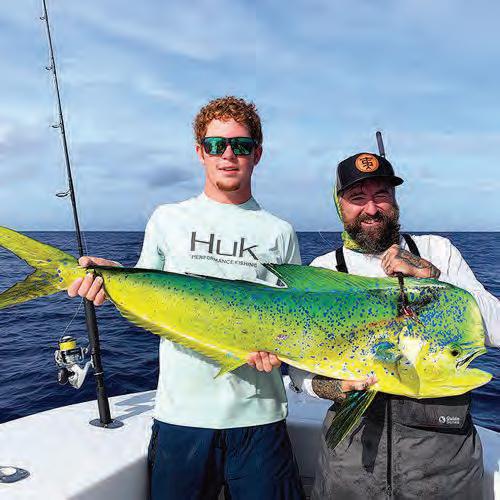
While the swordfish stole the spotlight, the mahi fishing has also been nothing short of spectacular. The mahi have been everywhere, providing nonstop action and keeping rods bent throughout the day. From schoolies to quality gaffers, these colorful fish have made every trip exciting and have filled coolers while creating unforgettable memories.
What makes offshore fishing in the Florida Keys so special, is that every trip is different. One day you’re chasing mahi under floating debris, and the next you’re battling a swordfish that weighs over 400 pounds. It’s these moments, the surprises, the challenges, and the victories that keep us coming back.
As summer fishing heats up, the offshore bite is proving that now is the time to get out there. Tight lines, calm seas, and hopefully a fish of a lifetime waiting at the other end of the line!
—
Beth Steele, CEO of Hooker Booker | fishing@thehookerbooker.com | FB/IG/TW: @hookerbookerllc


THE HEART OF SUMMER FISHING
By Caitlyn Gatrell
July is one of my absolute favorite months of the year to fish the backcountry. Sure, the heat can be relentless, and the afternoon thunderstorms can pop up like clockwork. But, it’s truly some of our most exciting fishing op portunities during the heart of summer.
Our waters really become alive during this mid-year season. Wildlife like dolphins and birds are seen playing around nature’s playground. Beautiful sunrises and sunsets paint the sky with gorgeous hues, making some of the prettiest sceneries.
Tarpon season remains in full swing, where I’ve spent early mornings and later evenings watching these fish roll across the surfaces. While the major migration may have already pushed through, there are still plenty of tarpon around our beaches, passes, mangroves and deeper channels and cuts. If you’ve ever witnessed a silver king launch itself completely out of the water chasing bait, you know exactly why so many anglers look forward to this season.
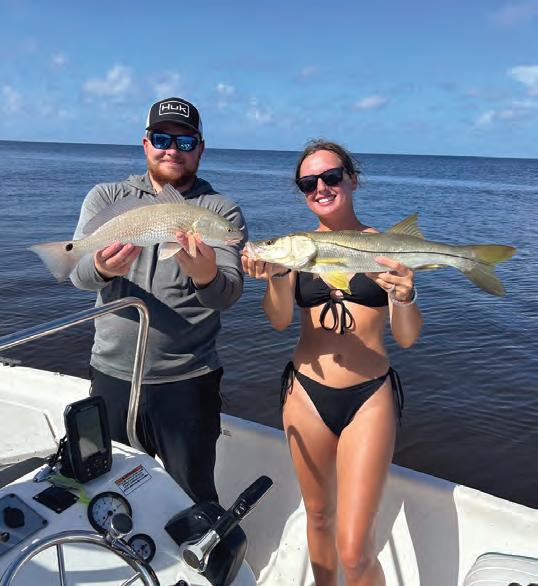
July also marks the peak of snook spawning season in our area, and we have lots of opportunities to hook up to some big ones. Sometimes they’re stacked at our honey holes, can be sight casted, or they can pop out of nowhere even. Even when I’m targeting other species, it’s hard not to appreciate the sight of a large snook and want to try and catch them. I have still yet to enter the 40in club for snook and it’s one of my biggest fishing bucket list items!
Other smaller species are out and about during the summer, including
NoPavement
the popular mangrove snapper that inhabit many habitats. July is a fun time to catch a few and harvest them, making a yummy summer dinner, especially as these fish have a continuous open harvest. Trout and redfish are also caught commonly during the summer here, providing more gamefish that can make a fishing trip even better.
Summer fishing in the backcountry comes with one major factor that every angler learns to respect–the weather. Afternoon thunderstorms are simply part of his time of year, sometimes occurring daily. Matter of fact, as I write this, we’ve been in a period where it rained every afternoon the whole last week.
f you don’t mind the rain, it’s rewarding to fish directly after the storm, or even during one if it’s safe enough. A good rain can cool down the water, create moving currents, provide pressure changes that fire up fish, and concentrate bait around certain areas. But, if that’s not your cup of tea, early morning trips and being off the water before the afternoon are usually drier.
While July may test our tolerance for heat and humidity, it also offers some of the best fishing of the year. Between the rolling tarpon, spawning snook, active inshore life, and ever-changing weather patterns, there’s never a dull day on the water. I’m gearing up for my next trip now as we finish this article! Tight lines to all!









FloridaKeys

If you have a catch to brag about send your picture and caption to: flkeys@coastalanglermagazine.com

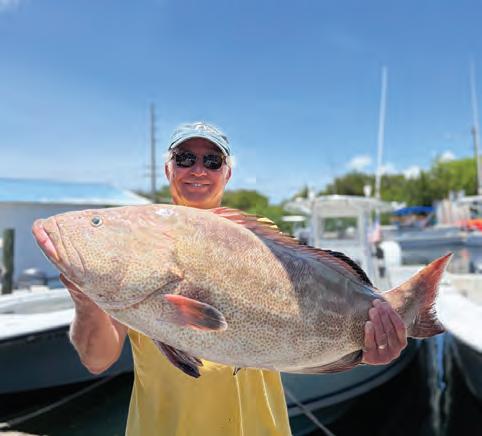
Capt. Ron with a beauty landed off Key West
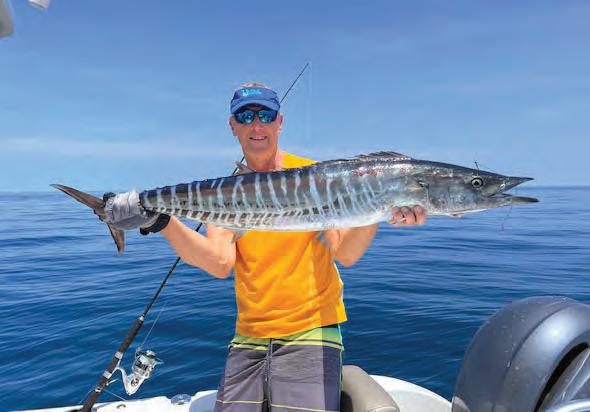
Steve caught this 42” Wahoo fishing w/SheLures in Marathon just off the reef.
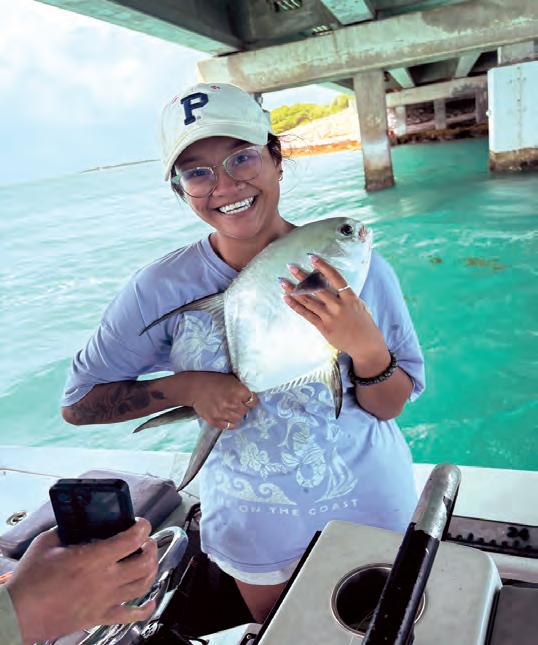
Briana with a nice permit fishing w/Capt. John-Paul Bank in Islamorada
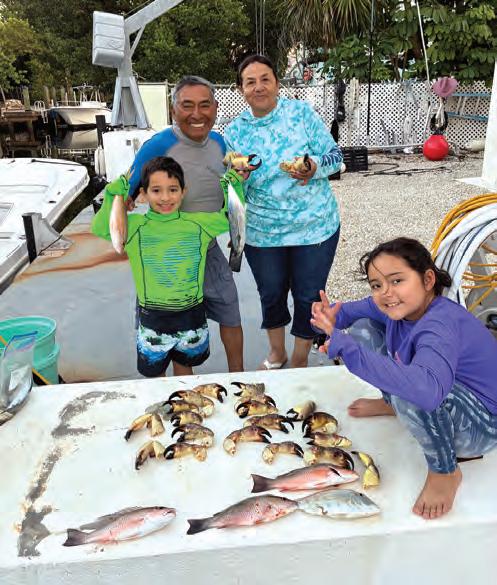
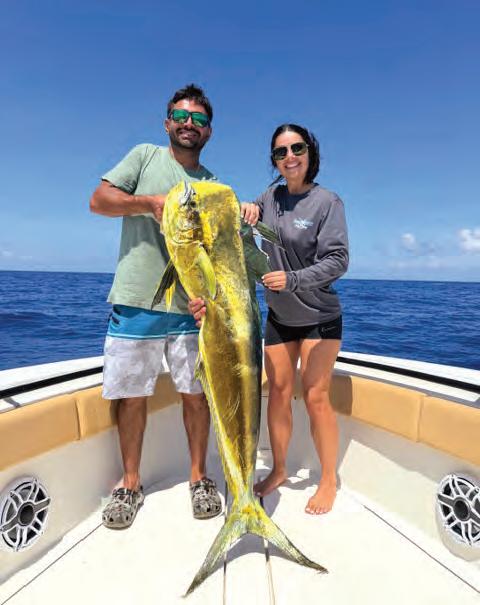
The Uribe family with a nice catch
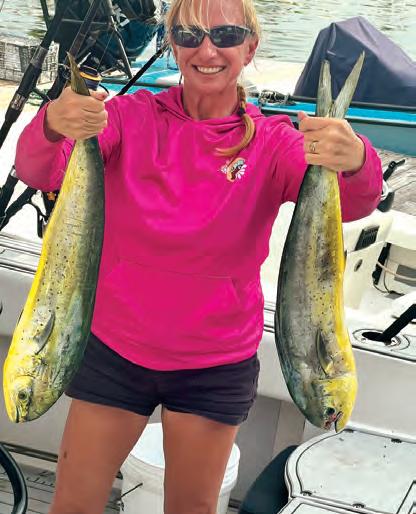
Katie with her hands full of mahi caught in Key West
July Can Be Hot!
TIM BAREFOOT

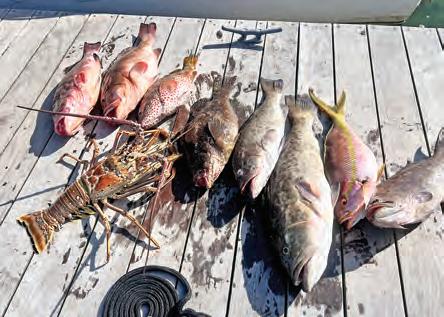
The surface water temperature will continue to climb in July, but the water temperature on the bottom will regulate itself to where it needs to be. $is is time of year to catch all the tropicals, starting now until early fall. Of course, the grouper and snapper bite will be o the chain, but this is when you will see all the snapper and grouper show up way north of Florida (as seen in photo). $ey will be available outside of their usual haunts and, of course, an occasional lobster. $is is truly the time of year to catch a giant grouper as well. I cannot emphasize this enough, but this is the time of year to spend an hour or more if necessary to Sabiki live cigar minnows and sardines for the ultimate bites on the bottom, not to mention the light line. Don’t be surprised to catch a giant wahoo on a 5-inch live cigar or sardine…elephants eat peanuts.
I would strongly suggest not playing loud music, not stomping around the deck, nor slamming cooler lids because the sail!sh and dolphin will swim up to the boat and check you out. $is is when you need to have a pitch rod ready. It’s never a bad idea to have a large squid on a pitch rod. Nothing in the ocean can refuse a well presented squid on the light line or pitch bait. It’s also not a bad idea to keep a frozen squid 50 to 75 feet deep using a small amount of weight (depending on the current).
kite for the ultimate presentation. If you have the correct weather pattern, I would strongly suggest spending the night o shore and using lights to attract the bait !sh. When you have a livewell chock full of live cigar and sardines and squid for the daylight bite, your success rate dramatically increases. Live squid or a live sardine on the bottom on a decoy jig has a life expectancy of !ve seconds or less. Don’t ask them to bite, demand the bite. Ask and you shall receive, my brothers and sisters. I’m not into all the “!shing,” per se; I’m into the catching...and there is a huge di erence. If you have the correct bait and make the correct presentation, you will get the bite!
Yes, we always carry a couple boxes of frozen cigar minnows and a box of frozen squid, but we always look for live bait, and we will spend some time on a school of bait using the Sabiki.
When the current is not running hard, a 1/4 or 3/8 oz. will get it down to the perfect depth. If the current is running a little bit, a 1/2 to 3/4 oz. might be needed. I would also suggest a live bait under a oat or under the
NOAA RAISES LIMITS ON ATLANTIC BLUEFIN TUNA
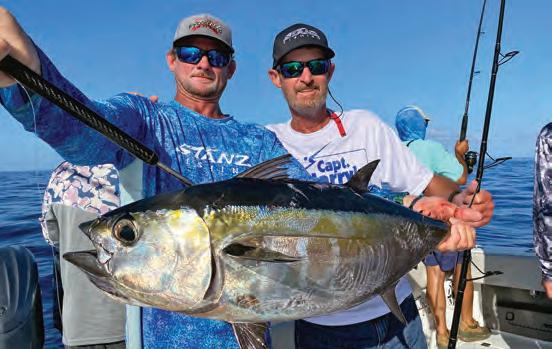
NOAA Fisheries recently adjusted the Atlantic blue!n tuna daily retention limits for recreational !shermen. $e adjusted limits took e ect June 1, 2026, and will extend through December 31, 2026, unless NOAA takes additional action later in the year to further adjust the retention limits or close the !shery.
As of June 1, 2026, the retention limits will be:
Highly Migratory Species
Vessel/Permit Type
Private vessels with Highly Migratory Species
Angling permits
Charter boats with Highly Migratory Species
Charter/Headboat permits, when fishing recreationally
Headboats with Highly Migratory Species
Charter/Headboat permits, when fishing recreationally
Limit per Vessel per Day/Trip (lengths in curved fork length)
2 bluefin tuna measuring 27 to <73”, of which only 1 may be a large school/small medium bluefin tuna (47 to <73”)
3 bluefin tuna measuring 27 to <73”, of which only 1 may be a large school/small medium bluefin tuna (47 to <73”)
6 bluefin tuna measuring 27 to <73”, of which only 1 may be a large school/small medium bluefin tuna (47 to <73”)
Note: $e retention limits are per vessel, per day/trip—not per angler. Regardless of the duration of a !shing trip, no more than a single day’s retention limit may be possessed or retained at the end of the trip upon landing. For example, whether a private vessel (!shing under the Angling category retention limit) takes a two-day trip or makes two trips in one day, the day/trip retention limit of 2 blue!n tuna, of which only 1 may be a large school/small medium, applies and may not be exceeded upon landing.
$e !sh are just like us. We prefer to eat breakfast, maybe lunch, and a good dinner. Be there for the daylight bite or the late a ernoon bite. Put some beautiful live bait on the bottom and expect immediate bites on the decoy jig.
One of the most important pieces of advice for !shing in July is to ensure your children are prepared for the weather. A ernoon thunderstorms are common during this month, so it’s essential to dress them appropriately and be ready for sudden squalls. $is preparation is a fundamental part of the !shing experience.
Beyond safety, take the opportunity to teach your children the proper way to care for and release !sh. $ese practices instill a sense of respect for nature and promote responsible !shing. $e lessons learned during these outings will stay with them for a lifetime, making each !shing trip both enjoyable and educational.
Learn more tips and techniques at barefootcatsandtackle.com.
Who is a ected?
$e changes apply to Highly Migratory Species Angling and Highly Migratory Species Charter/Headboat permitted vessels when !shing recreationally. $e daily retention limits are e ective for all areas except for the Gulf of America, where NOAA Fisheries does not allow targeted !shing for blue!n tuna.
Catch reporting
Highly Migratory Species Angling and Highly Migratory Species
Charter/Headboat permitted vessel owners are required to report the catch of all blue!n tuna retained or discarded dead within 24 hours of landing or the end of trip by:
• Accessing the Highly Migratory Species Permit Shop
• Using the Highly Migratory Species Catch Reporting app
• Calling 888-872-8862 (Monday through Friday 8 a.m.-4:30 p.m.)
Keep up with all federal shing rules and regulations by visiting https://www. sheries.noaa.gov.