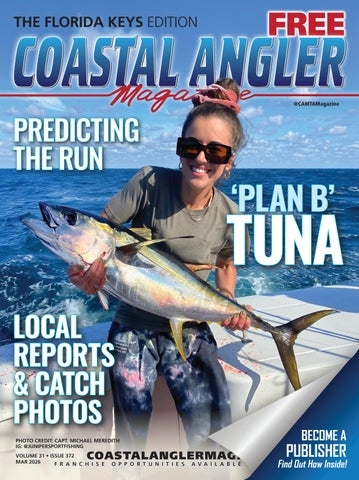
PREDICTING THE RUN

The Best Infatable Fishing Boats
Best For Lightweight Solo Fishing
The versatility of the FishSUP™1210 is unmatched! Use it bare bones with just the board, a paddle & your !shing gear or deck it out with swivel seat, side pontoons, casting bar, motor and more! Incredibly stable, extra wide, swallow-tail !shing SUP holds up to 500 lbs! The FS1210 takes electric and gas motors up to 3 hp. There’s even an option for a bow trolling motor.
Choose From 6 Packages
Starting At Just $999

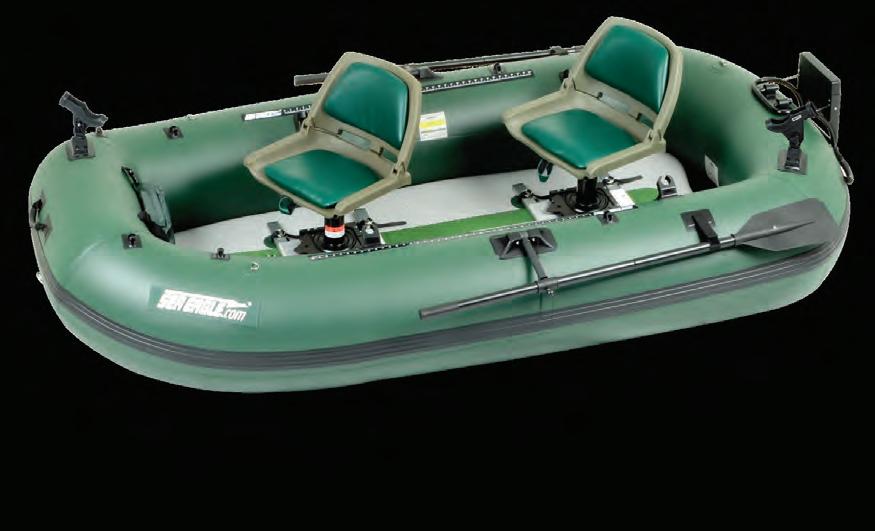
Best For Lightweight Tandem Fishing
Perfect for !shing rivers, lakes and bays. The STS10 is a lightweight, roomy 1 or 2 person pontoon boat that’s packed with features anglers need & love including 2 built-in !sh rules, 4 built-in rod holders & 2 Scotty® mounts for more rod holders, anchor locks, camera posts or any other Scotty® accessory. Now available with a drop-stitch in atable oor or wooden oorboards.
Choose From 7 Packages
Starting At Just $1449
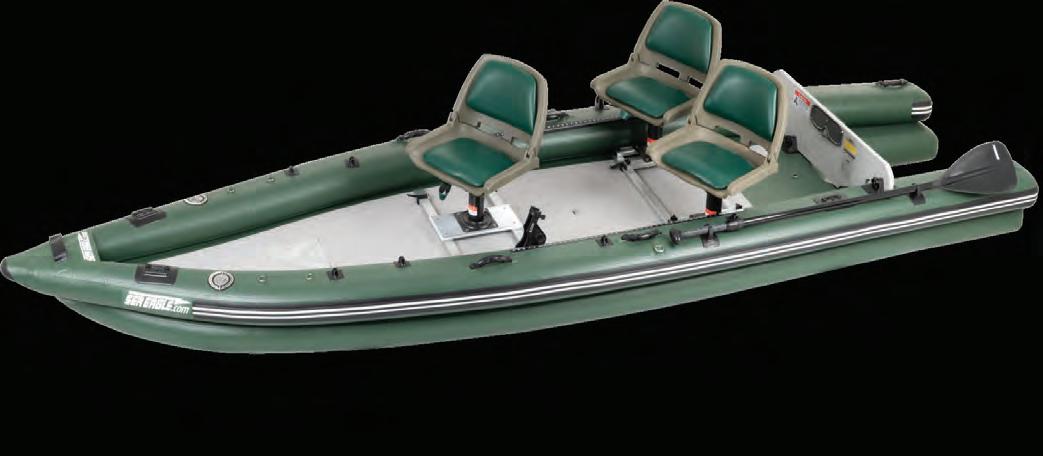
Best For Lightweight Fish Ski! for 1, 2 or 3 Anglers
This “low-rider” gives you access to the water to reel in and release !sh easily. With a new patented outside, in atable, rigid keel the FSK16 glides through the water at speeds up to 21 mph to get you to the !sh fast! Perfect for 1-3 anglers and room for plenty of gear.
Choose From 9 Packages
Starting At Just $2999














TRUST BR AND MARINERS
Ever see a commercial harbor full of Furuno Marine Electronics and wonder why the pros rely on us?


See why here










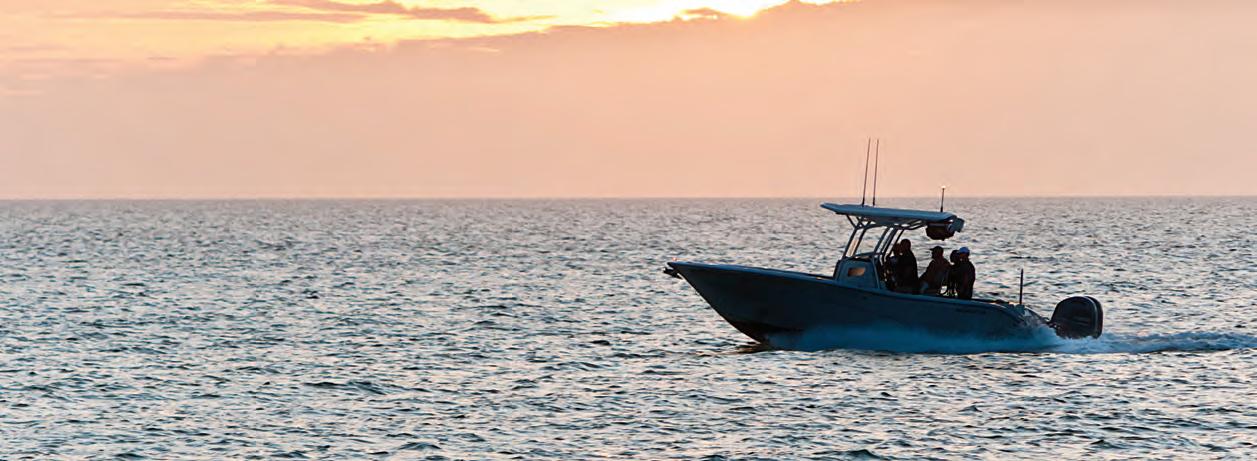
fve things you should know about boat insurance
Are you ready to embark on your next on-water adventure? Before you set sail, here are fve things to know about boat insurance.
1. Boat insurance isn’t just for accidents
With comprehensive coverage, you’ll also be protected fnancially for theft, vandalism, and unexpected events like storms if you need repairs or replacements due to damage.
2. Accidents can happen to anyone
When accidents happen, boat insurance offers liability coverage for damages or injuries you cause while boating, up to specifed limits. It can also cover lawsuit costs if you’re sued.
3. Boat insurance can cover medical payments
Boat insurance offers a range of optional medical payments coverage limits, helping to cover medical expenses if you’re in an accident or someone is hurt on your boat, regardless of fault.
4. Most lenders require boat insurance
If you fnanced your boat, you’ll likely need boat insurance since most lenders require boat insurance to protect their investment. Additionally, some marinas or municipalities require proof of insurance for docking.
5. Progressive offers specialized boat coverages
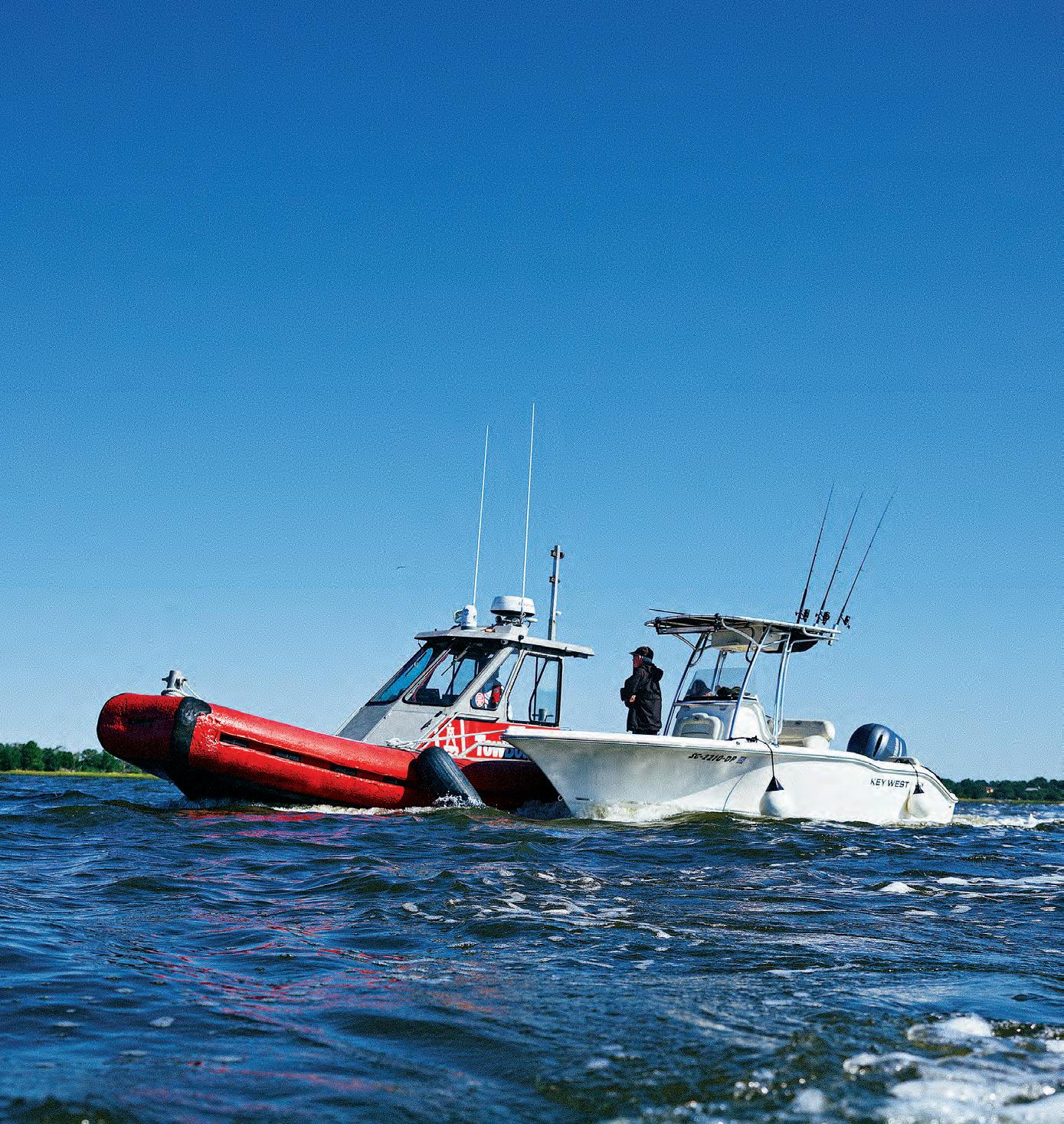
Ever worry about getting stuck on the water? Progressive’s Sign & Glide® On-Water Towing coverage** can help. It’s an additional coverage that steps in if your boat is disabled or breaks down on the water, paying for on-water towing, jump starts, soft ungroundings, and fuel delivery. Fuel cost isn’t included.
Don’t let unforeseen circumstances disrupt your voyage. Cruise with confdence thanks to Progressive Boat insurance. Because when it comes to your boat, peace of mind is the ultimate luxury.
Scan to get a quote in as little as 4 minutes.
to learn more.















By Will Schmidt
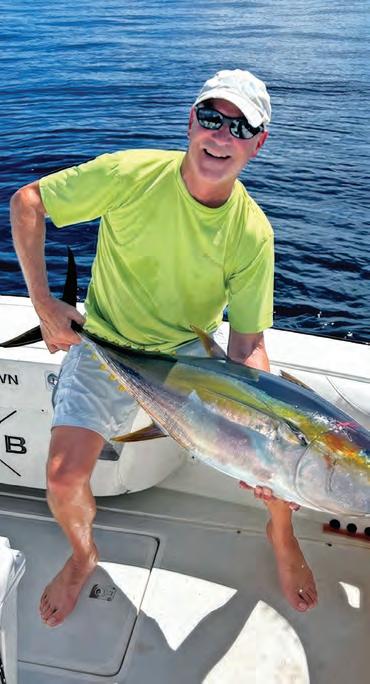
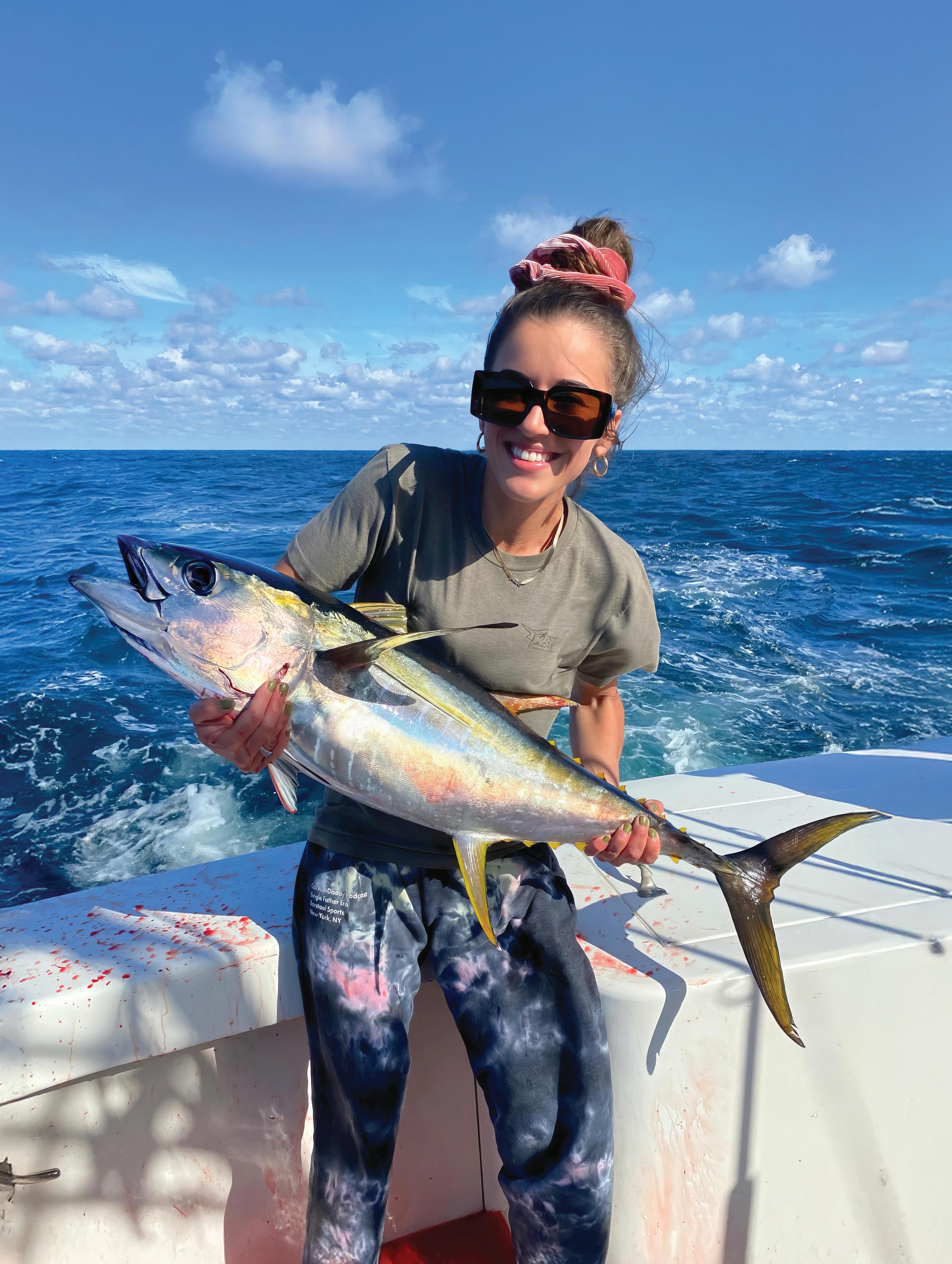
Tere were birds diving, porpoise rolling and he y yellow n tuna skyrocketing like Fourth of July reworks. Both on the water and in the boat, the energy was palatable. With one angler on the bow ready to cast a top water plug into the fray and me in the stern with ready to deploy live bait, the boat throttled back. !e plug went ying, meanwhile I simply dropped my bait behind the boat and started freelining. Almost instantly the plug was blasted in the air but not connecting. Meanwhile, I tossed a handful of baits o the back of the boat. By now the fray had subsided but the sh were clearly still looking for an easy meal. 50 feet behind me one of the chummers was blasted overhead by a 150 pound yellow n who was skyward bound a er it. Just below I could see my bait franticly swimming as another engulfed it, leading to a great battle before releasing the 100 pound class sh.
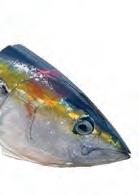
While top water shing for tuna is all the rave right now, it really makes sense to deploy multiple tactics to take advantage of these opportunities, as the school o en retreats as the boat nears. Our back up plan is very simple and almost always produces sh. As the boat gets into casting range of the school, we drop live bait o the stern and free line them. We always keep a couple ready to go. !is way, if the school disappears there are other baits ready for those who have been plugging.
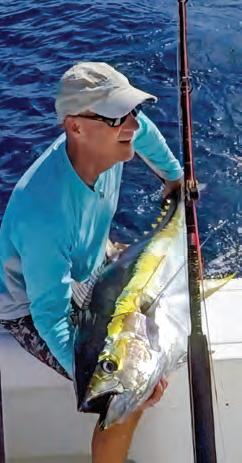
For bait google eyes or blue runners, rigging them on a 10/0 circle hook is ideal. Bridling the bait and using a non-slip loop knot presents the most natural movement as the baits ee. Also, tossing a handful of chummers in, as the surface activity disperses, usually brings shing looking to pick up stragglers into the strike zone. Chumming really helps keep the sh around, so make sure you have plenty of bait. When you get hit, give it a ve count real tight and hang on!
I like to use a bit heavier tackle with the live bait, as we o en seem to nd bigger sh. My go to is Shimano Terez BW Roller Striper medium heavy with a Talica 25A. I use 80lb braid to 80lb mono. !is is a great set up that’s fun for sh from 40 to 140 and can handle the occasional really big one. the rod with a better ghting angle. It also helps to keep the line away from the gunnel as a spiraling sh ascends. !is is a great asset for many anglers on these tough sh.
Will Schmidt is a seasoned tournament angler who has been writing about shing for more than two decades. Follow Will on Instagram @saltynstrong.


Florida’s Spawn Transition: Where the Giants Get Caught
In Florida, we don’t wait on spring the way the rest of the country does. Our bass start thinking about the spawn early, and that in-between window when they’re moving from winter patterns to-ward the beds is one of the most exciting times to be on the water. It’s not full-blown bed fishing yet, and it’s not the deep winter grind either. It’s the transition. And if you hit it right, it’s when the biggest fish in the lake are at their absolute heaviest and most catchable.
During this phase, big females don’t just rush the shallows. They stage first. Think outside grass lines, ditch intersections, shell bars, canal mouths, and hard-bottom spots just off spawning flats. They want easy access to both worlds shallow enough to move up when conditions warm and deep enough to slide back if a cold front rolls through. Instead of randomly covering water, suc-cessful anglers focus on these “inbetween” areas where bass pause before committing.
The fun part about fishing the transition is that these fish are still in feeding mode. They’re fueling up before the hard work of spawning, which means reaction baits can shine. Swimbaits and
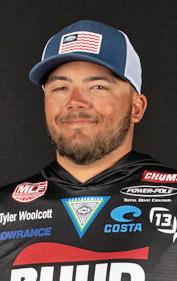
TYLER WOOLCOTT
lipless crankbaits are great for covering water along staging edges, especially around submerged vegeta-
tion. If they’re holding tighter to cover, slowing down with a Texas-rigged creature bait or a wacky-rigged stick worm can seal the deal. The key is not getting too shallow too fast; a lot of an-glers run straight to visible bedding areas and skip right past the best fish.
Florida weather adds another layer to the puzzle. A few warm, stable days can push fish forward in a hurry, while a stiff north wind can reposition them just as quickly. The calendar matters less than conditions. Watch water temperature trends, pay attention to wind direction, and look for areas that warm first, especially protected shorelines with darker bottoms. Transition bass adjust daily, some-times hourly, and the anglers who adjust with them are the ones holding up the heavy fish.
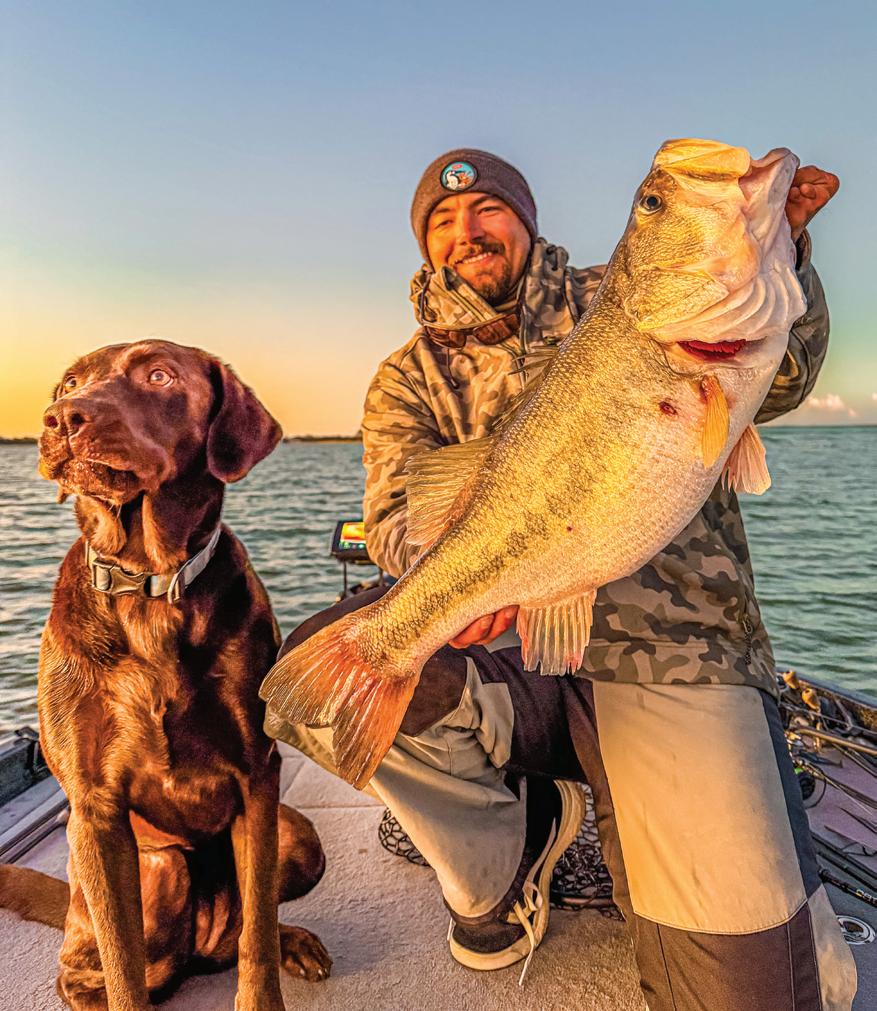
For me, this window is one of the most exciting times of the year. You’re not just sight-fishing beds, you’re hunting moving giants that are feeding and positioning with purpose. They’re thick, strong, and aggressive enough to commit. When you connect with one during the spawn transition, it’s not just another bite it’s often the bite that defines the season. And in Florida, that fish can show up on any cast.
Capt. Tyler Woolcott is a professional tournament angler, as well as owner/ operator of Florida Big Fish Adventures, providing bass and saltwater guided fishing trips: www.floridabigfishadventures.com.
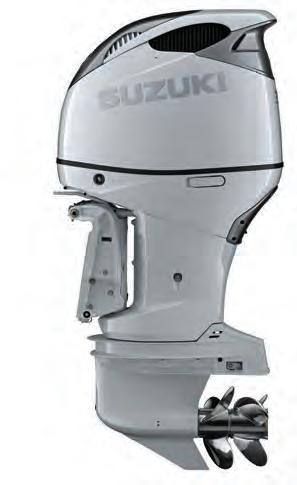
Mastry Engine Center has received the Suzuki Marine Super Service Award and has been ranked #1 in Suzuki Marine US Sales! 60 YEARS OF REPOWER EXPERIENCE!

RePower Packages designed to best ft your needs and not stretch your budget. Financing available.

Rest assured, all Mastry Suzuki RePowers are backed by Suzuki’s industry leading 5-year factory warranty.

Stationed strategically around the East Coast, all Suzuki RePower Centers have achieved the highest level of Suzuki certifcations to meet and exceed your repower needs.
When Considering A Repower, Consider These Factors:
•Every Authorized Mastry Suzuki RePower Center has decades of repower experience providing proper rigging, controls, propeller matching and in water testing
•With a Mastry Suzuki RePower, owners gain improved performance, less noise and greater reliability
•Mastry Suzuki RePower’s exclusive Owner’s Edge Program*
•Mastry Suzuki RePower Centers use authentic Suzuki OEM parts and have factory certifed technicians

WE’VE GOT YOU COVERED!
Since 2014, Mastry Engine Center, has been building the premiere Suzuki Outboard repower network in Florida. Today, Authorized Mastry Suzuki Outboard Centers have been exceeding expectaions in the Southeast for over two decades. Recently Suzuki Marine requested Mastry Engine Center to expand the network throughout the Northeast. Now boat owners from Maine to Florida can be assured of the best support for their Suzuki outboard repower project. All Authorized Mastry Suzuki RePower Centers provide the best options, information and package pricing for excellent performance in repower.


*Get with the Program!
When you purchase a new Suzuki outboard from an authorized Mastry RePower Center you qualify to become a member of the Mastry Suzuki Owner’s Edge. Owners receive an identifcation card that provides them with important information about their Suzuki outboard motor as well as a passport to additional benefts during ownership. Members enjoy a detailed engine maintenance schedule, Mastry Suzuki RePower Trade Program and special pricing from Mastry Suzuki Partners.







Florida Keys
WINTER FISHING
By: Capt. Greg Poland
March is a great time to fish in the Florida Keys. Now that we are transitioning from winter fishing to spring fishing, depending on the weather there are plenty of solid options for catching fish.
On windy days, the backcountry of the Everglades shorelines are hard to beat for snook and redfish. Medium spinning gear with jigheads tipped with live shrimp or pinfish work well. Carry a range of jighead weights so you can adjust to the current and fish different parts of the water column. Focus on undercut banks, downed trees, and shoreline structure that holds bait as those areas are always worth fishing slow and thoroughly.
When conditions are calm, I like to switch gears and fish the Atlantic side for pelagic species. A 20 lb. spinning outfit paired with live pilchards, threadfin herring, or ballyhoo is a great setup. Take the time to load the livewell will pay off, especially when live chumming to get the bite going. On the right days, the reef edge can be excellent and it’s an easy run offshore out of Islamorada.
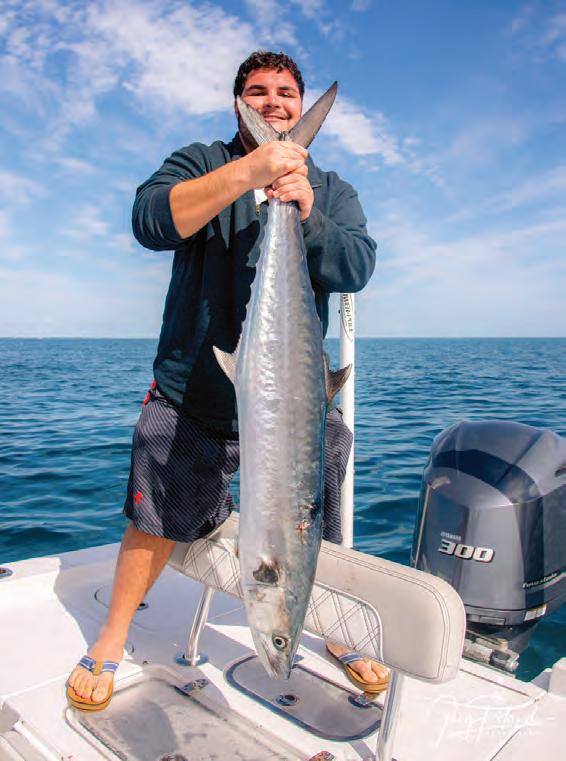
March is also a transition month, with Spanish mackerel still active in the Gulf, along with the chance of kingfish, cobia, and the first tarpon of the season showing up on warm days. Patch reefs continue to produce a solid mixed bag of snapper and other bottom fish with a chum bag and a few shrimp.
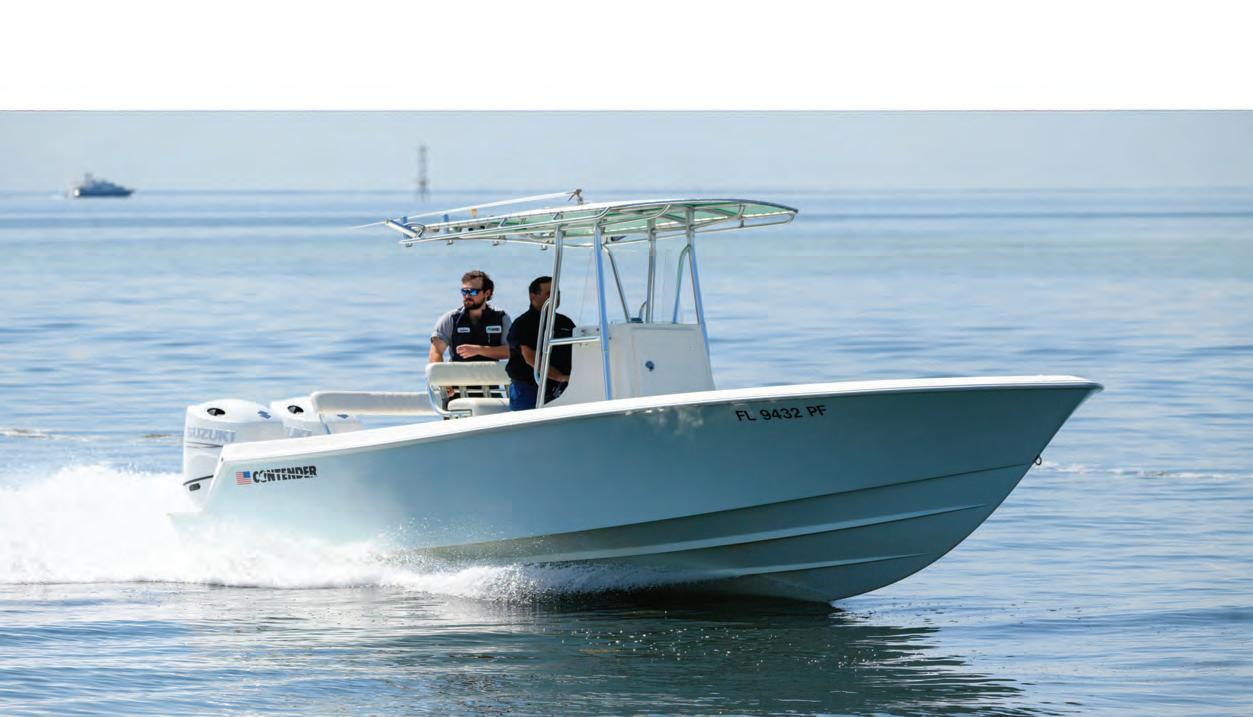
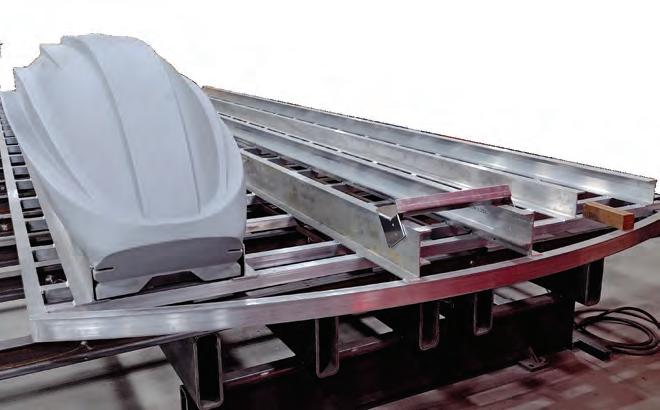
Whether you’re fishing the backcountry, the reef, or offshore, March offers something for everyone. If you’re interested in booking a charter, I’d love to get on the water with you my website is www.gregpoland.com I have a new Contender 29ft Bay Boat in the mold, I am so excited to get in it for the season to be able to spend a little more time out on the Gulf Wrecks and venture out a little further into the backcountry. I think its going to be the perfect boat for my charters here in the Florida Keys. — Visit Capt. Greg at 305.393.3327 or email gregpoland@icloud.com | Instagram: gregpoland Facebook: Fishing in the Florida Keys with Capt. Greg Poland
SHRIMPING
Iam always up to try something new, and since I have been having all kinds of new experiences lately, when asked if I wanted to go shrimping I said “heck yea”! Previously when I thought about shrimp I thought about big boats with nets. I thought about Forrest Gump. Seriously!
Shrimping was just another thing that never even crossed my radar. The conditions need to be just right for successful shrimping. The best months are December through March because it needs to be cold. Really cold! And I truly think we were out there on the coldest night of the year because we were freezing! It also has to be at night with a strong outgoing tide. If you can get all of these conditions following a cold front and with a full moon, you just hit the best shrimping conditions possible.
The spots you will want to target are under bridges and tight cuts where there is a lot of water flow. You will need some strong, green, submersible LED lights to drop in the water around the boat. These lights will draw the shrimp right in.
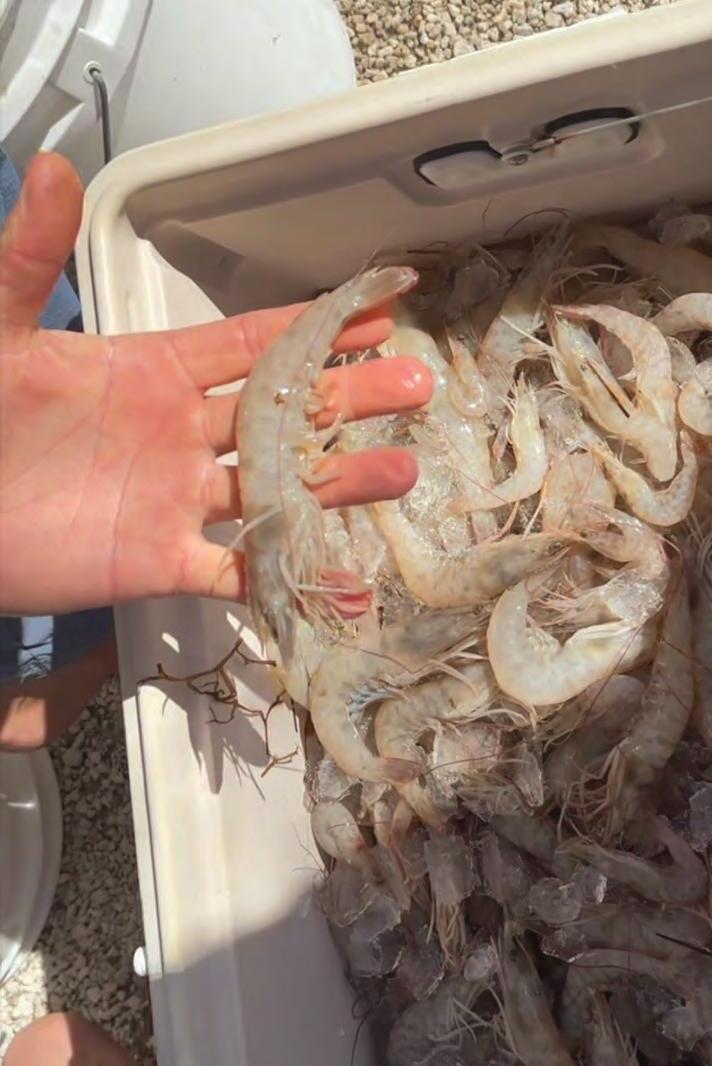
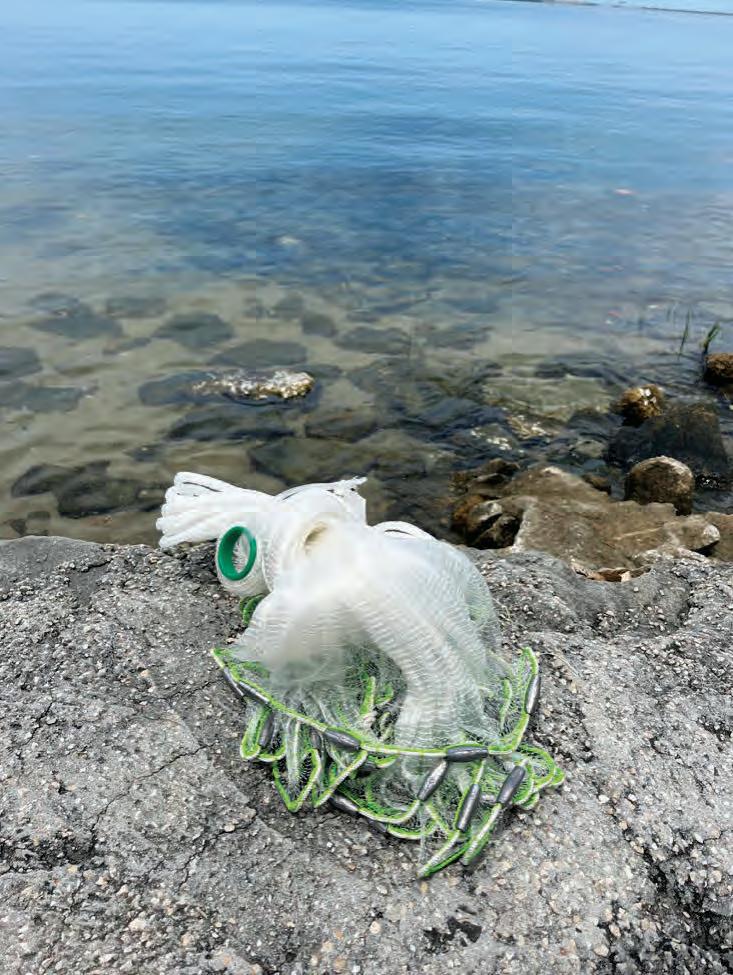
We used a long cylindrical net behind the boat that was constantly catching for us, and we also used specialized long handled dip nets that were used to actively catch the passing shrimp by hand. There were tons of small blue crabs that passed as well and we were able to catch a couple of decent ones. These shrimp we caught were really nice sized. Bigger than I have seen at a bait shop in a while. And they can be used for bait or as delicious table fare.
There is a five gallon per boat per day limit, and we caught ours that cold night. You also need the proper recreational fishing license from FWC.
I learned a lot that night shrimping for the first time. It is a great activity to get out on the water at night and have some fun with friends and family. It is really very easy. The shrimp you catch yourself, just like the fish, tastes better! And think of all of the money you save at the fish market!
If you want to try your hand at shrimping, you won’t regret it. There are many instructional videos online with more detailed instructions on what to do and different techniques to use. One great part is you don’t need a big boat. You could shrimp from just about any small vessel. But make sure you bundle up because it was COLD! Layers work best and watch out for those wind gusts. The equipment is easily found at local tackle shops. Meagan and Eddie at Angler Eddie’s in Tavernier has everything you need at a reasonable price. Now get out there and catch some shrimp!


By: Capt. Angelia Swanson

MARCH’S TURNING POINT
By: Capt. Bruce Andersen
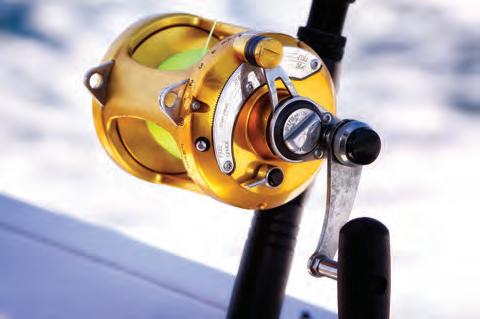
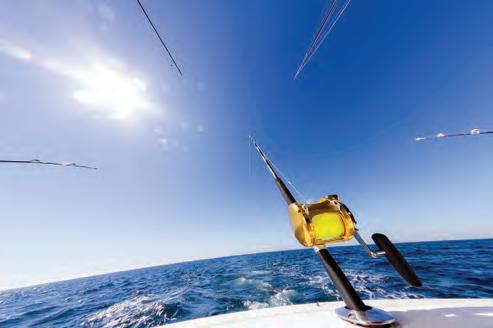
March is one of my favorite months in the Florida Keys, and this year I’m especially excited to feel spring finally arriving. We’ve had a longer, colder winter than usual, and while the fishing has still been very good, I’m more than ready for warmer mornings, hopefully calm seas, and the steady transition into our spring patterns. March really feels like a turning point on the water, and it’s when everything starts lining up just right.
This past winter fishing season has been a strong one. The sailfishing has been excellent, with plenty of action on the edge and offshore. Along with sails, we’ve seen consistent catches of other highly migratory pelagic species such as blackfin tuna, kingfish, and wahoo. These fast-moving predators thrive in our winter conditions, and the good news is that this type of fishing should continue to be productive through March and into the coming months. As the water warms, we’ll also begin to see more mahi-mahi showing up in the mix, adding even more excitement offshore.
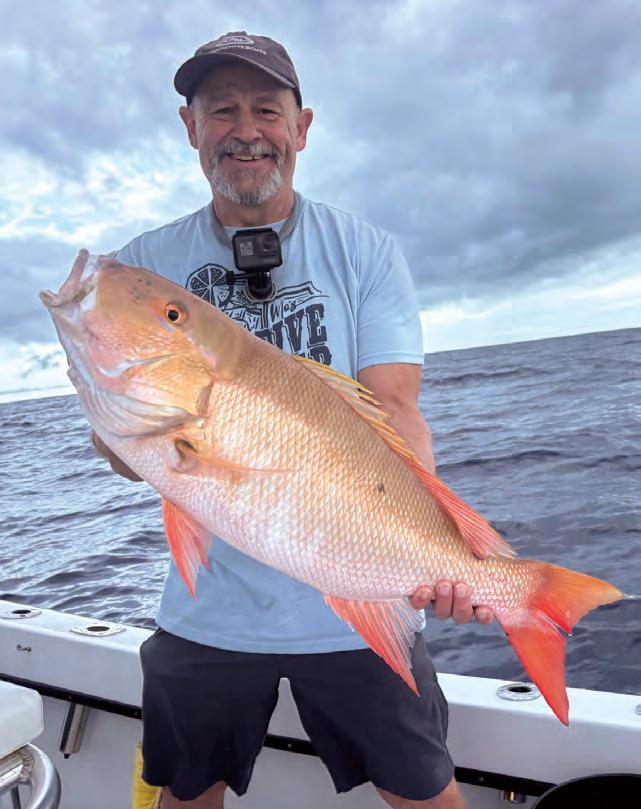
Bottom fishing has also been outstanding this winter and shows no signs of slowing down as we move into spring. Mutton snapper fishing has been particularly strong, and anglers have been rewarded with quality fish. In addition, amberjacks, almaco jacks, grouper, and a variety of other bottom dwellers have been biting well. These fisheries typically remain productive through the spring and into summer, making March a great time for anglers who enjoy pulling hard-fighting fish off the bottom.
One area that really starts to shine in March is reef fishing. During the coldest parts of winter, reef fishing can slow down a bit, but as water temperatures rise, the action picks up quickly. March marks the beginning of consistently better yellowtail snapper fishing, along with a mix of other snapper species and plenty of steady action. Reef fishing continues to improve throughout the spring and stays strong well into the summer months.
If you’re looking to take advantage of some of the best fishing the Florida Keys has to offer, March is a fantastic time to be on the water. I invite you to come fishing with me aboard my charter boat, The Captain Easy, out of Islamorada, Florida or with any of the other professional, experienced guides that the Florida Keys has to offer. Whether you’re after offshore pelagics, bottom fish, or reef action, spring in the Keys has something for everyone!

Capt. Joel’s FISHIN’ HOLES
By: Capt. Joel Brandenburg
We target mangrove snapper year-round in Marathon Florida Keys as they are a blast to catch on light tackle spinning gear. Many people will tell you after they eating a mangrove snapper that it’s the best tasting fish they’ve ever had! Gorgeous, white, flaky, firm, meat, not very fishy tasting, mangrove snapper tastes excellent no matter how you cook it. FWC offers generous bag limits with an open season for mangrove snapper. Because we frequently fish for them, we understand their pre-spawn, spawn and post-spawn feeding patterns, therefore, we are always trying to increase our quality and quantity mangrove snapper catches. Over the years we have learned where the big schools dwell and how to bag quality sized mangrove snapper. Here are a few of my tips how to target large quantity of mangrove snapper and good quality mangrove snapper.
* Use a bait big enough for big mangrove snapper to eat, make sure your bait is too big for small and medium sized mangrove snapper to fit in their mouth. For example, a chunk of ballyhoo as big or bigger than your thumb is too big for a small or medium size mangrove snapper to fit in their mouth, but just the right size for a large mangrove snapper to suck in. If you are fishing with a chunk of ballyhoo on a jig head many times you’ll feel a peck, peck, peck and following a few pecks you’ll feel a boom. Set your hook on the booms, not the pecks, because the pecks are smaller snapper trying to fit the bait in their mouth, but they can’t. The boom is when the big snapper moves in and pushes the little ones out of the way and sucks the bait in and runs off with it.
I used to think when the line companies came out with fluorocarbon and claimed it was more invisible to the fish than regular monofilament line that it was a hoax to increase revenues after getting slaughtered in the marketplace by braided line companies.
* Big snapper love structure. All snapper love structure, but the big ones make a home out of the structure where the smaller snapper come and go. For example, after hurricane Irma in 2017, many big trees were blown off of our islands and onto the flats. They would land in 3 or 4 foot of water and the tree’s giant root balls would anchor their selves in the grass flats. Over time, heavy currents from full and new moon tides made 8 to 10-foot divots under the root balls. We used to catch giant mangrove snapper under those root balls. Eventually, the wood rotted away and over time petrified remnants of the wood would still remain on the bottom with a big white sand divot on the flats that hold big mangrove snapper. We catch the big ones off of wrecks, patch reefs and jagged ledges. Some docks and marinas also hold giant mangrove snapper.






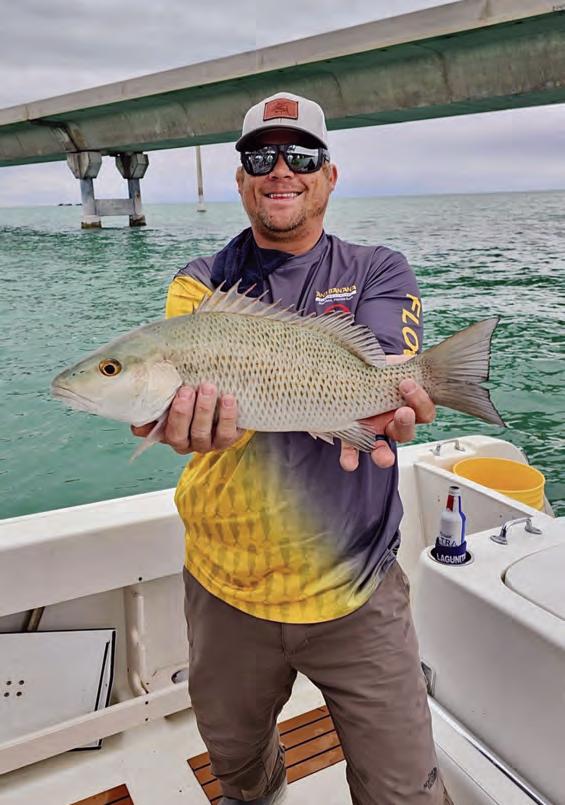
* More is less when it comes to snapper fishing. Even though snapper are very plentiful and hungry fish, they are still smart, and the biggest ones got big because they are hard to outsmart. You can easily outsmart them by using smaller hooks than you would think that you would want. Lighter monofilament, fluorocarbon leader than you would think that you would need smaller weights or jig heads then you might think you would need. Most of the time, we catch the big ones on 10 or 12 pound test monofilament fluorocarbon leader. I used to think when the line companies came out with fluorocarbon and claimed it was more invisible to the fish than regular monofilament line that it was a hoax to increase revenues after getting slaughtered in the marketplace by braided line companies. However, after years of research and development, I don’t think fluorocarbon is a hoax at all. I’m convinced it’s definitely scientifically engineered to be more invisible to fish. Other than smaller line, we love to use 1/16-ounce jig, heads, or in some cases where there is a slack or slow tide we like to use 1/0 short shank, “J” Hook. My personal favorite hook even though I don’t believe it’s made in the USA is Mustad.
* Use a lot of chum. Once you get the big mangrove snapper in a feeding frenzy from chumming they are a lot easier fooled into eating your hooked bait. It’s almost like they get drunk on chum. We like to use a floating chum ring net off the back of the boat. Our favorite chum is sold at several bake shops in town called green tournament chum. Green tournament chum is made in Virginia and for some reason, our Florida Keys snapper breakdance over Virginia made chum, I can’t figure that one out.
The bigger snapper seem to be caught outside the chum line or far back in the chum line. The smaller ones feed in and around the chum bag close. If you are fishing in the Florida Keys or anywhere in South Florida you won’t regret targeting mangrove snapper.
— To book a charter with Captain Joel Brandenburg of Ana Banana fishing Company call 813–267–4401 cell or 305–395–4212 office or visit www.marathonkeyfishingcharters@ gmail.com or come visit with us in person at poncho’s fuel dock located at 1280 Ocean View Ave. Marathon Florida Keys.



9
8
5
1
20
21


26




9
8
5
2
1
18
19
20
21
22
23
24
25
26
27
IN THE KITCHENwithJessica Tropical Wahoo Street Tacos
By: Jessica Hendrie
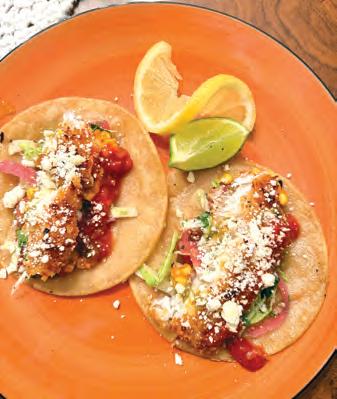
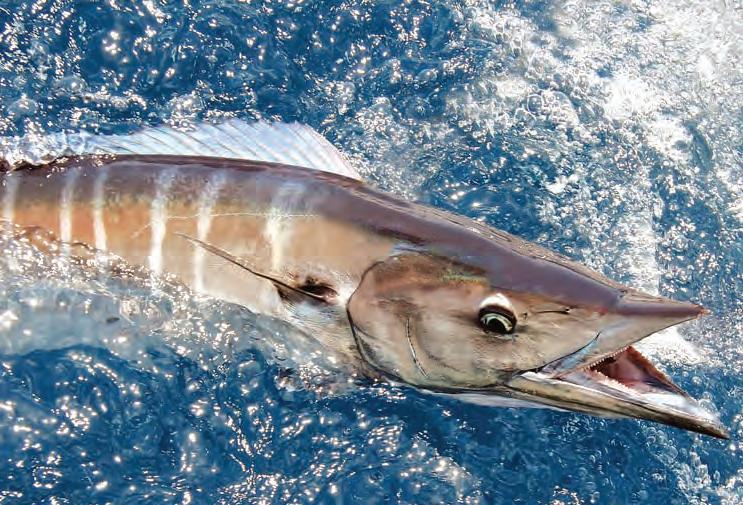
Wahoo is one of the most prized fish in South Florida, and for good reason! It’s fast, powerful and when it hits the deck, everyone knows dinner will soon be something special. Most people keep it simple with grilled, blackened or sashimi but Wahoo is clean and its firm texture makes it perfect for dishes that go beyond usual dock side dishes. One of my favorite things to make with wahoo are tropical street style tacos. After a long day on the water, the last thing I was is a complicated recipe. This dish comes together quickly, but they still feel like you put a lot of time and effort into them. The mild, buttery taste of the fillets takes on season beautifully, and when paired with a bright mango slaw and warm tortillas, it turns into a dish that’s equal parts fresh, sweet, and even savory.
Start with your fresh wahoo. Cut it into small, even strips and season them to your liking. I also recommend adding smoked paprika and brown sugar to your seasoning mixture. You can thank me later! Don’t forget to add a squeeze of lemon or lime. Heat your skillet with light olive oil and cook the wahoo for just a few minutes on each side. It doesn’t take long, once it’s flaky, it’s done. Overcooking is the only real mistake you can make here so be careful.
While that cooks, throw together a quick slaw with shredded cabbage, diced mango, thin slices of red onion, and chopped cilantro. Squeeze some more fresh lime over it and add a spoonful of mayonnaise or a dash of coconut milk for a light yet tropical dressing. The sweetness of the mango and brightness of the lime balance the richness of the fish nicely. Warm your tortillas however you like and start preparing them by layering your prepared foods. It’s a simple meal that feels like a celebration every time.
I hope you enjoy this recipe and use it as much as my family and I does! Take it, make it your own, change it, claim it. And as always, happy fishing!

2026 WINTER FISH FREEZE
By Caitlyn Gatrell
Winter has been a bit rough for our local waters during this 2026 season. Rough in the sense that it disrupted our marine environments, put a damper on fishing trips, and even killed off some of our wildlife. The temperatures have been pretty low a lot of the days, and the cold isn’t something our area is used to too well. Here and there, yes, but this has been more intense, and our fisheries have been feeling it. Not to mention, there have been some pretty low tides displacing species as well.
The early February freeze brought chilling temperatures to Southwest Florida, some areas in the feels-like of the 20s. Water temperatures have also even hit the 50s at times, making it pretty uncomfortable for some species. Species such as catfish, snook, and tarpon have been found dead in various areas of Southwest Florida due to the cold. Some regions have even seen deeper wildlife like mutton snapper floating at the surface.
The freeze definitely has affected the fisheries, as it made lesser chances at hooking up to fish. Some are still biting, but others are hiding, moved to warmer areas, or unfortunately didn’t pull through. Not to mention, the
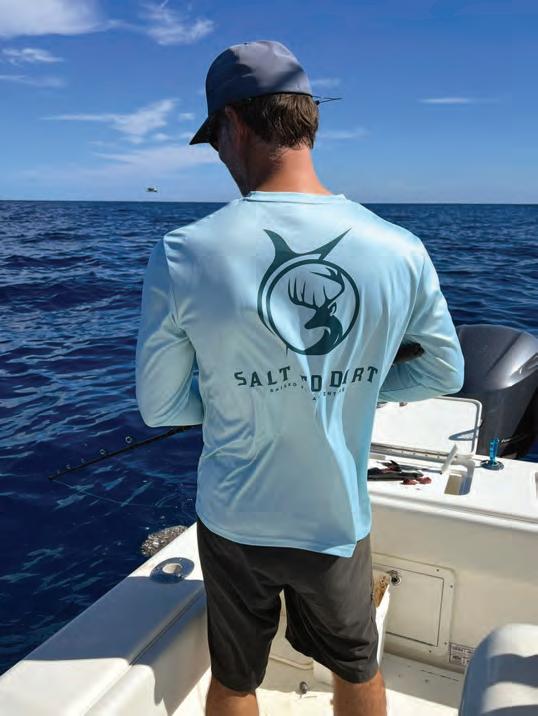
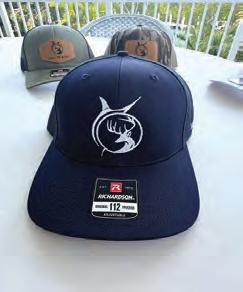
NoPavement
JustSaltandDirt
cold temperatures and windy conditions don’t make for the best trips on the water. If you have the right gear it’s doable, but as someone who’s braced it before, it’s not very enjoyable. And for businesses that rely on fishing, like fishing charters, this time is a little harsh.
If anything, right now is a better time for sight-seeing trips, island walks, shell searching, and camping trips. Take time to immerse yourself in nature with a break from the heat (but make sure to stay warm!). It also will help maintain fish populations with their sudden impact by not further decreas ing anything.
We haven’t been out much this winter, especially right now, but I’m really looking forward to the warmer temperatures and fishing trips soon. I want the fisheries to bounce back and for marine life to thrive. I also think it’d be a good idea to monitor the populations if the freezes continue and more fish lives are lost. Perhaps even temporary regulations can be put in place to make sure they can repopulate before fishing is good again or people harvest hurting species. Time will only tell what will occur!










FloridaKeys
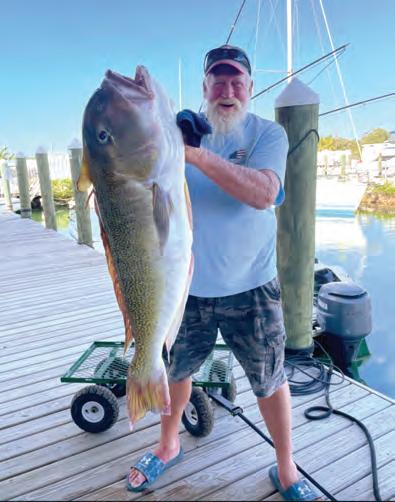
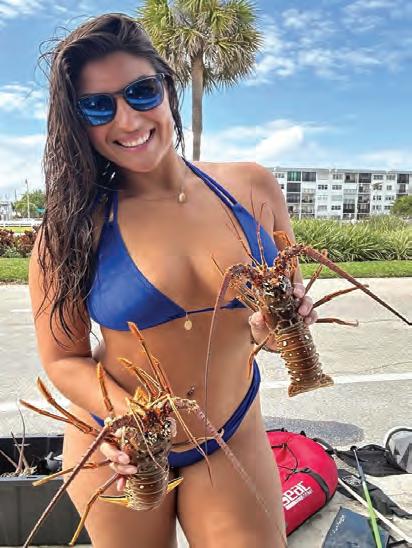
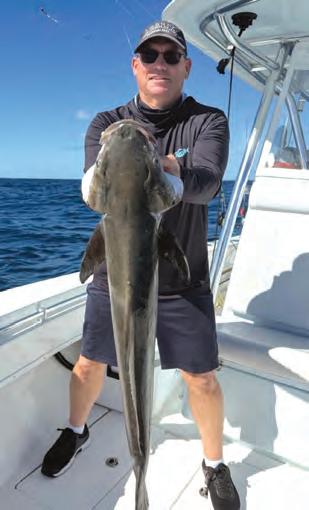
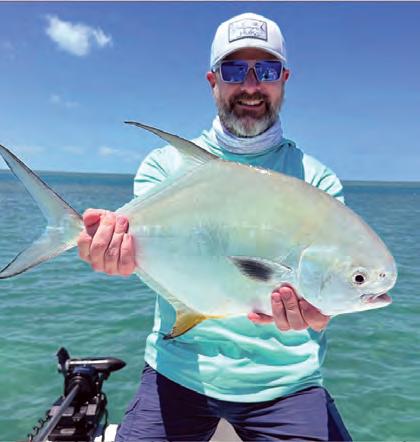
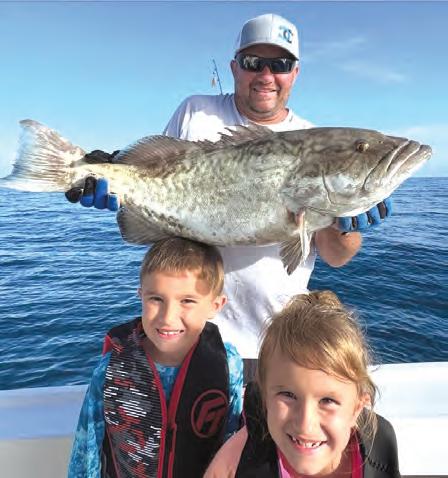
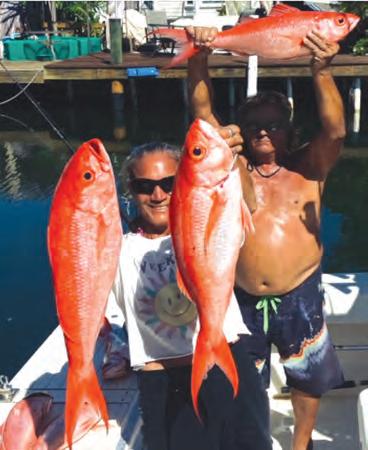
If you have a catch to brag about send your picture and caption to: flkeys@coastalanglermagazine.com
Permit time fishing with Capt. Bryson off Key West
Lauren with a couple of nice bugs
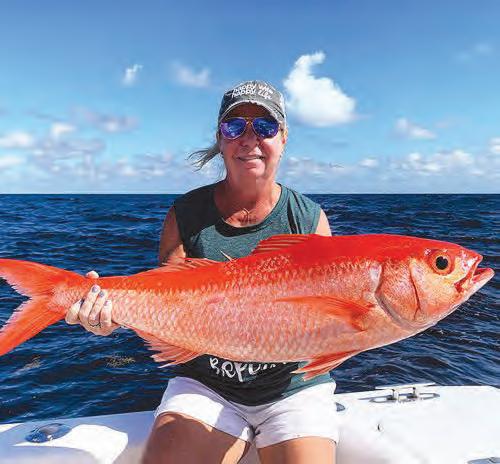
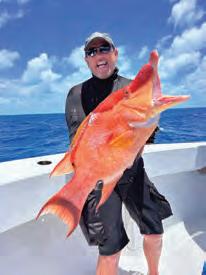
Carla Cyphers with some nice Queen Snappers 30 miles off Marathon.
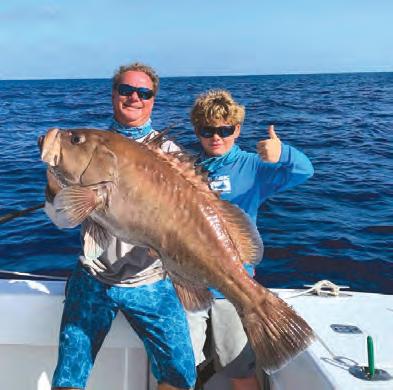
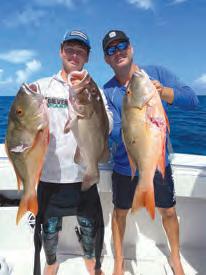
Family caught Gag Grouper fishing w/Capt. Billy Norris
Cobia catch aboard imbitcharters fishing out of Islamorada
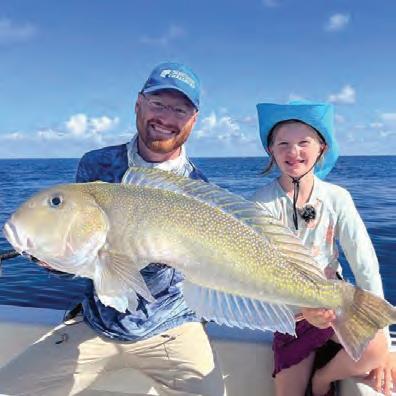
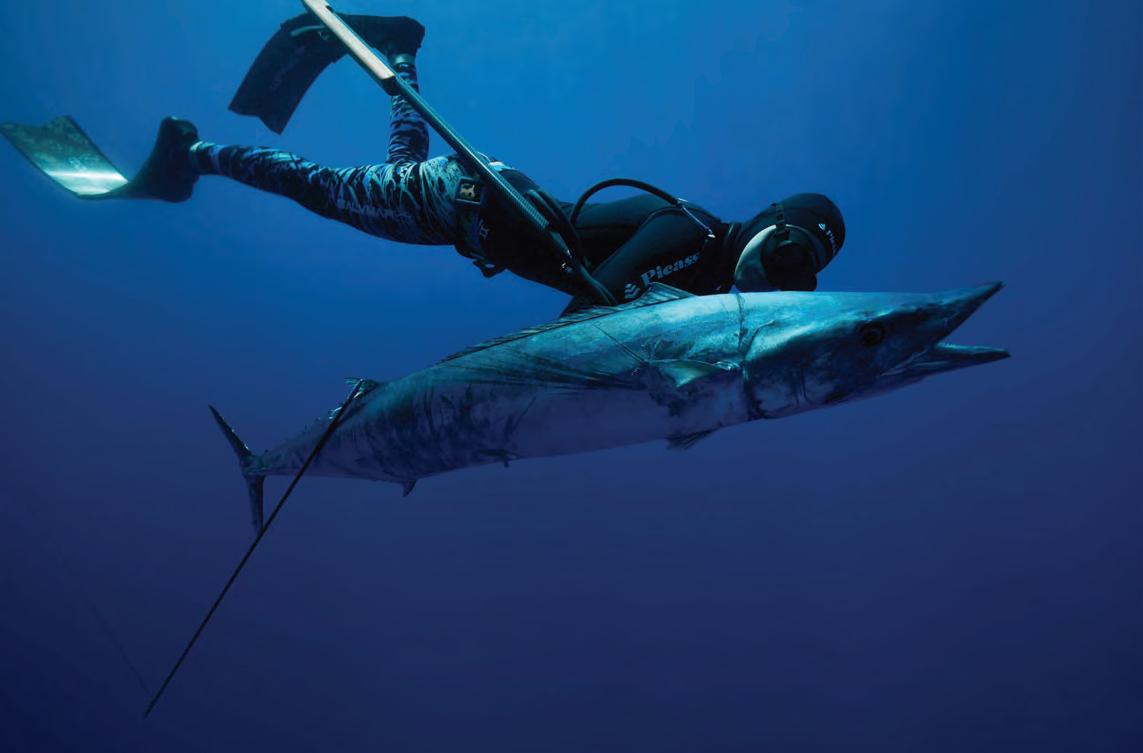
Mike Ferris with a beautiful Golden Tile landed off Marathon fishing w/Reel Legends





NEW SPOTTED SEATROUT REGS TAKE EFFECT APRIL 1
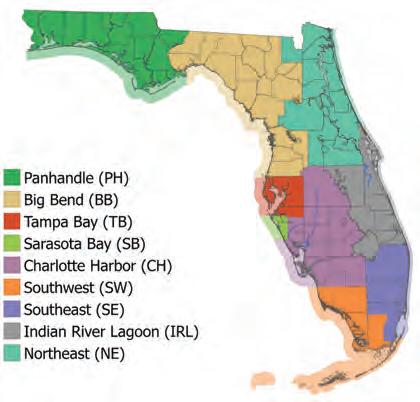
At its February meeting, the Florida Fish and Wildlife Conservation Commission (FWC) approved new management regions and regulations for spotted seatrout shing in the State of Florida. e rule changes establish nine management regions for spotted seatrout as well as regional regulations for recreational and commercial shing.
ese new regulations will go into e ect on April 1, 2026:
OPEN/CLOSED SEASONS
Recreational
» Panhandle: Open March 1–Jan. 31; Closed February.
» Big Band, Tampa Bay, Sarasota Bay, Charlotte Harbor, Southwest, Southeast, Northeast: Open year-round.
» Indian River Lagoon: Open Jan.1–Oct. 31; Closed Nov. 1-Dec. 31.
Commercial
» Panhandle, Big Bend, Tampa Bay, Sarasota Bay, Charlotte Harbor, Southwest, Southeast: Open Jun. 1–Oct. 31; Closed Nov. 1–May 31.
» Indian River Lagoon: Open May 1–Sept. 30; Closed Oct. 1-Apr. 30.
» Northeast: Open June 1–Nov. 30; closed Dec. 1–May 31
BAG LIMITS
Recreational
» Big Band: Five (5) sh per person.
» Panhandle, Tampa Bay, Sarasota Bay, Charlotte Harbor, Southwest, Southeast, Northeast: Four (3) sh per person.
» Indian River Lagoon: Two (2) sh per person.
Commercial
» 50 sh (1 SPL);100 (≥2 SPLs) in all regions.
SLOT LIMITS
» Recreational - 15-19 inches
» Commercial - 15-24 inches
OVERSLOT ALLOWANCE
Recreational
» All Regions: None. is regional management strategy has been implemented for some of Florida’s most popular inshore species, including red sh and snook, and now spotted seatrout. ese regions and regulations are part of the FWC’s holistic management is approach takes a more holistic view of the shery by evaluating multiple metrics, including shing, stakeholder experiences and environmental factors, at a smaller regional scale. It improves our understanding of regional di erences in environmental conditions and stakeholder experiences and provides greater exibility to address localized concerns.


» Panhandle, Big Bend, Tampa Bay, Sarasota Bay, Charlotte Harbor, Southwest, Southeast: One (1) sh over-slot allowed per vessel or per person if shing from shore
» Indian River Lagoon, Northeast: None
Commercial
For the full FWC commission meeting agenda and links to background reports, go to myfwc.com/about/commission/commissionmeetings/. For current spotted seatrout annual reviews, visit MyFWC.com/Marine and click on “Recreational Regulations” and “Spotted Seatrout.” ese documents provide a summary of the management metrics in each new management region.
















SPEND LE TIME ON TASKS More Time Fishing
It’s no fsh tale when you run with a John Deere. You can get everything done faster and easier, so you get more time on the water. Plus, our special offers make them the catch of the day.


PREDICTING THE RUN
By Capt. Jim Ross
s a charter captain, as well as a regular contributor to the Brevard County, Florida edition of Coastal Angler Magazine, every year there are certain events that happen that I try to predict in advance so that clients and readers can catch more !sh. However, there are many times that even we so called “professionals” don’t get it exactly right. Obviously, my crystal ball isn’t 100 percent correct all of the time...maybe it needs a tune up. LOL!
ings like the giant black drum schooling up, spring cobia run, June tarpon run, fall mullet run, and winter pompano run aren’t things you can pin down to a certain day of the month, but most of the time we can at least predict the month. Hopefully, I can achieve at least a 90 percent e ciency rating a er doing this report for the past 25 years.
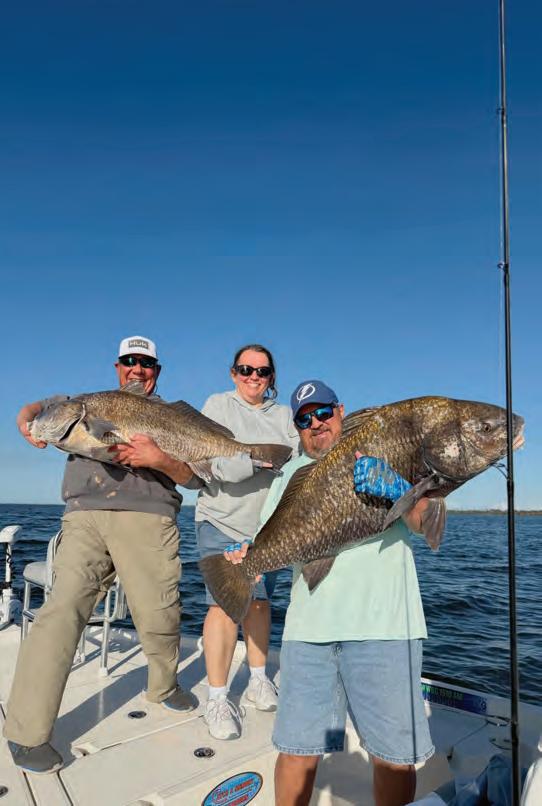
I was just telling my clients one day last week, a er catching a bunch of small trout and a couple of lady!sh, that the big uglies were probably going to show up in a few weeks and if they had a chance to come back out with me then that they may have a shot at catching some much larger !sh than the ones we had landed that morning. Just !ve minutes a er saying this I spotted something unusual about 500 yards up the at. It was exactly what I had just been talking about- a 300 !sh school of 30 to 50-pound black drum.
e !sh in this big school were happy-tailing and waking as they pushed their way down the at. We eased up to them, cast our shrimp in their direction, and as you !gured, the battles were on. All three anglers were hooked up to huge drum that had absolutely no respect for them. Drags screamed, rods doubled over, and dozens of yards of line dumped o their reels. Grunts and groans were heard between laughter and smiles as they worked to tire these beasts. e boat deck looked like a country bar dance oor as anglers shu ed and two-stepped under and over each other in an e ort not to lose their prized catches.
We ended up extending the trip from a 3/4 day to a full day outing because each !sh took 15 to 25-minutes to land.
e moral of the story? Don’t ever count on !sh to be there and don’t ever think that it’s not quite the right time to catch them. e bottom line is just go !shing every chance you get. at is the only way that you can be sure to catch your next memory.
Capt. Jim Ross is owner/operator of Fineline Fishing Charters on Florida’s Space Coast and host of “Catch a Memory Outdoors” live radio show and podcast. www. neline shingcharters.com • www.catchamemoryoutdoors.com



COME JOIN




PRO FISHING TECHNIQUES
Top 3 Mistakes
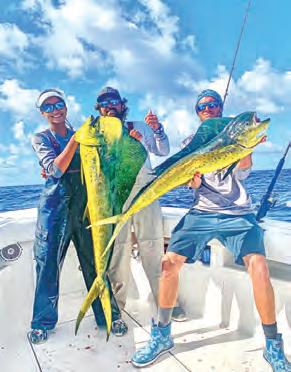
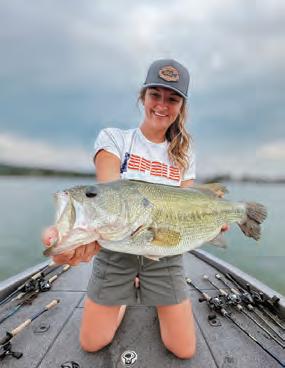
So many anglers have a “go-to” color lure that they swear by. What they do not understand is that the color of your lure barely makes the top three most important factors for catching tons of !sh.
Mistake #1 - e number one mistake anglers make is ignoring the importance of the size and pro!le of the lures they use. When snook, tarpon, red!sh, speckled trout or ounder are feeding, they o en become laser focused on that particular forage species. In other words, if they are feeding on a 6-inch mullet your 3-inch paddletail or shrimp lure will probably be ignored.
PRO TIP: Have a few of your rods rigged up with various sizes and pro!les of lures on them. I like to have a 3-inch paddletail, an arti!cial shrimp and a 4- to 5.5-inch jerk bait ( uke) rigged up when I can’t determine what bait is around. Try all three sizes and pro!les of lures until you !gure out what the !sh in the area are feeding upon.
Mistake #2 - e number two mistake most anglers make is thinking one retrieve style works best for all of the !sh all of the time. ere are so many di erent factors to consider when retrieving your lures. Here are a few to consider:
• Is the water cold or hot? Fish are cold blooded and move more slowly in cold water. is means that you have to slow down your retrieve when the water is cold. Conversely, you want to move your lure faster when the water is hot.
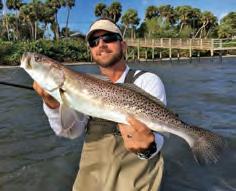
• What species are you targeting? Di erent !sh species like di erent retrieves. For instance, the best retrieve for a red!sh is slowly bouncing your lure o of the bottom. A tarpon likes a low and steady retrieve. A ounder likes a very slow bounce/dragging retrieve no higher than 12 inches from the bottom. A speckled trout likes a vertical jig and will usually hit the lure as it falls through the water column. Snook like a fast and erratic retrieve most of the time.
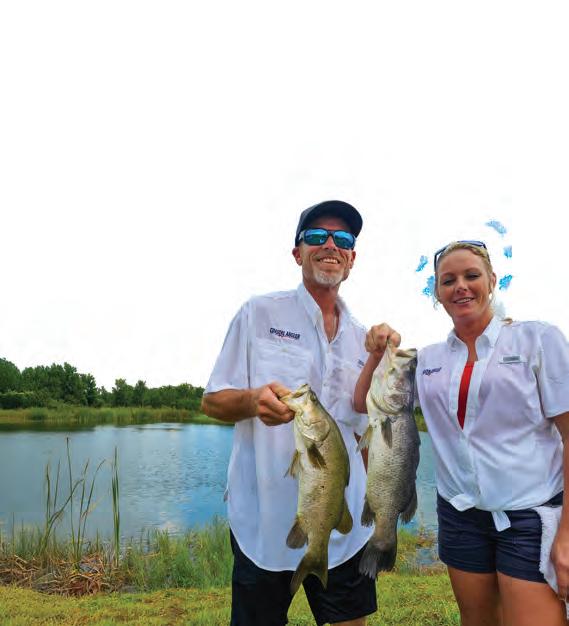
• Is the water clear or murky? Low light, cloudy skies and murky water scenarios makes it harder to get a !sh’s attention. Use a retrieve or lure that creates vibrations and ashes in the water. You also want to fan cast the area keeping your lure placement close together because they are less apt to seek out your lure. When it is sunny and the water is clear it is easier to get the !sh’s attention. You can make your casts further apart and make the !sh come to your lure.
Mistake #3 - e third biggest mistake is thinking !sh care about lure colors. A saltwater tackle box with white lures and something dark like root beer or purple is all that you need to catch any !sh. PERIOD. e bottom line is that if you want to catch more !sh, switch up your sizes and pro!les and vary your retrieves for di erent species and conditions. I GUARANTEE that you will catch more !sh.
Capt. Mike Smith is owner of Fish Your Ass O Charters.Reach him at (561) 339-2317, contact@ shyourasso .com or shyourasso .com.



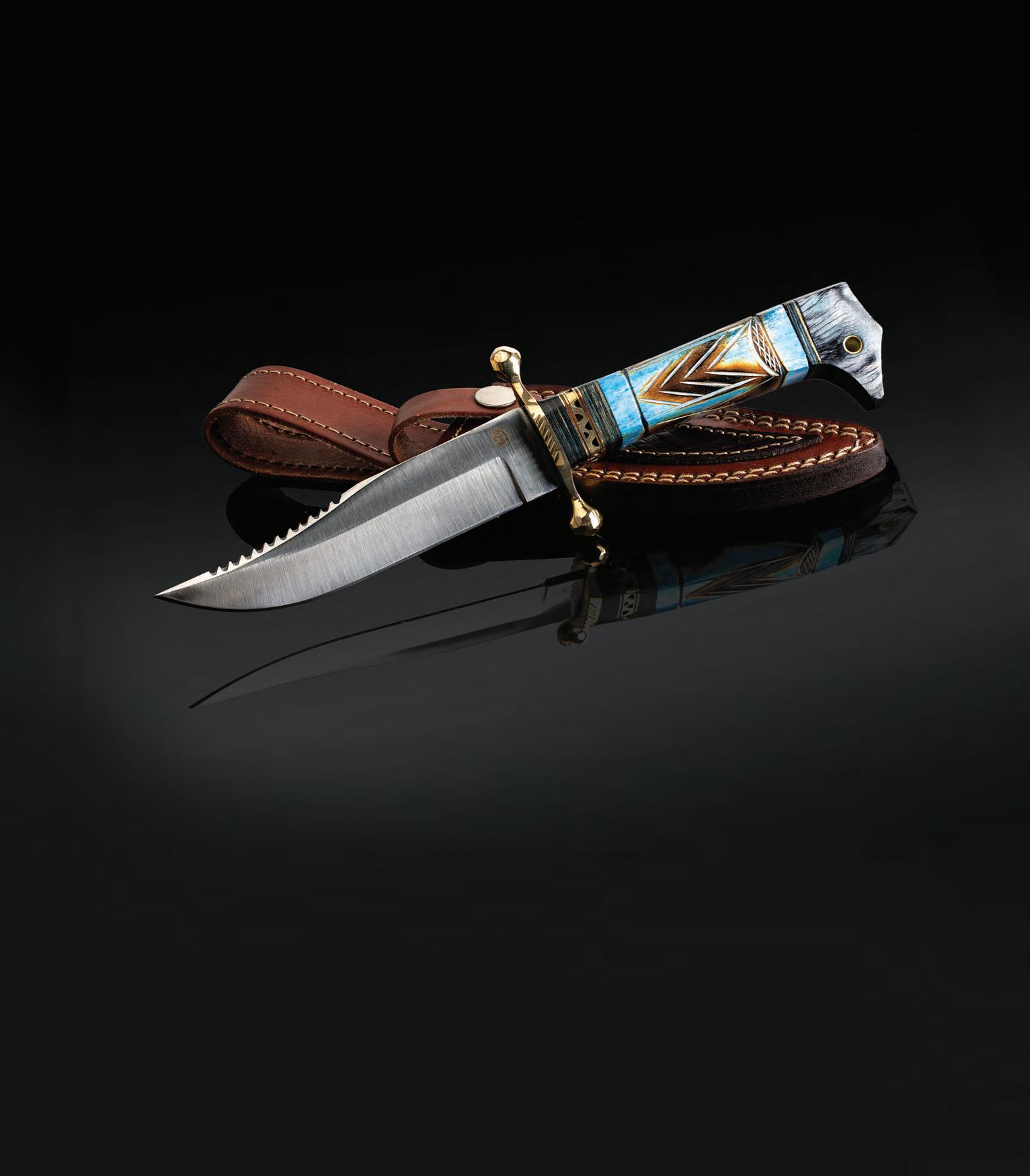
“It’s a beautiful knife with a great blade and a sure grip” — William B. Wilmington, NC
My friend Sergio is a mixed martial arts fighter. His shoulders are broad. His muscles have muscles. He’s not the kind of person you want to be on the wrong side of.
This manly man has a saying about being tough: You should either know how to fight or look like you do.
The message is simple enough. People spoiling for a fight usually don’t pick the biggest guy in the bar. If you look like someone who shouldn’t be messed with, you likely won’t be. With our Blue Bone Bowie Knife on your hip, that’s exactly the message you’ll send.
As beautiful as it is functional, this knife is 10" overall and features a high-quality 420 surgical stainless steel blade with a serrated spine. The handle is constructed of genuine natural bone with redwood spacers. On the handle you’ll find design work that’s carved by hand, a testament to its craftsmanship.
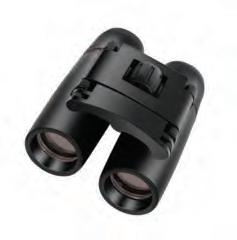
This knife is stick tang, meaning it won’t wimp out when you need it. This knife also features brass hand guards and brass spacers with file work, so you won’t lose your grip. For easy carrying, it comes with a genuine tooled leather sheath. CALL NOW! If you’re one of the rst 700 587 callers for this ad, we’ll throw in a pair of Stauer HD Pocket Binoculars — a $99 value — ABSOLUTELY FREE!
Walk around with the Blue Bone Bowie Knife and you’ll feel a lot safer. I know I do.
Knife Speci!cations:
• 10" overall length
• 420 surgical stainless steel and stick tang construction
• Genuine natural bone and redwood hand-carved handle
• Genuine leather sheath included
Blue Bone Bowie Knife
EXCLUSIVE FREE
Stauer Pocket Binoculars a $99 value with your purchase of the Blue Bone Bowie Knife
$299 $79* + S & P Save $220
*Special price only for customers using the offer code. 1-800-333-2045
Your Insider Offer Code: BBK164-02
California
please
regarding
THE ULTIMATE OUTBOARD MOTOR
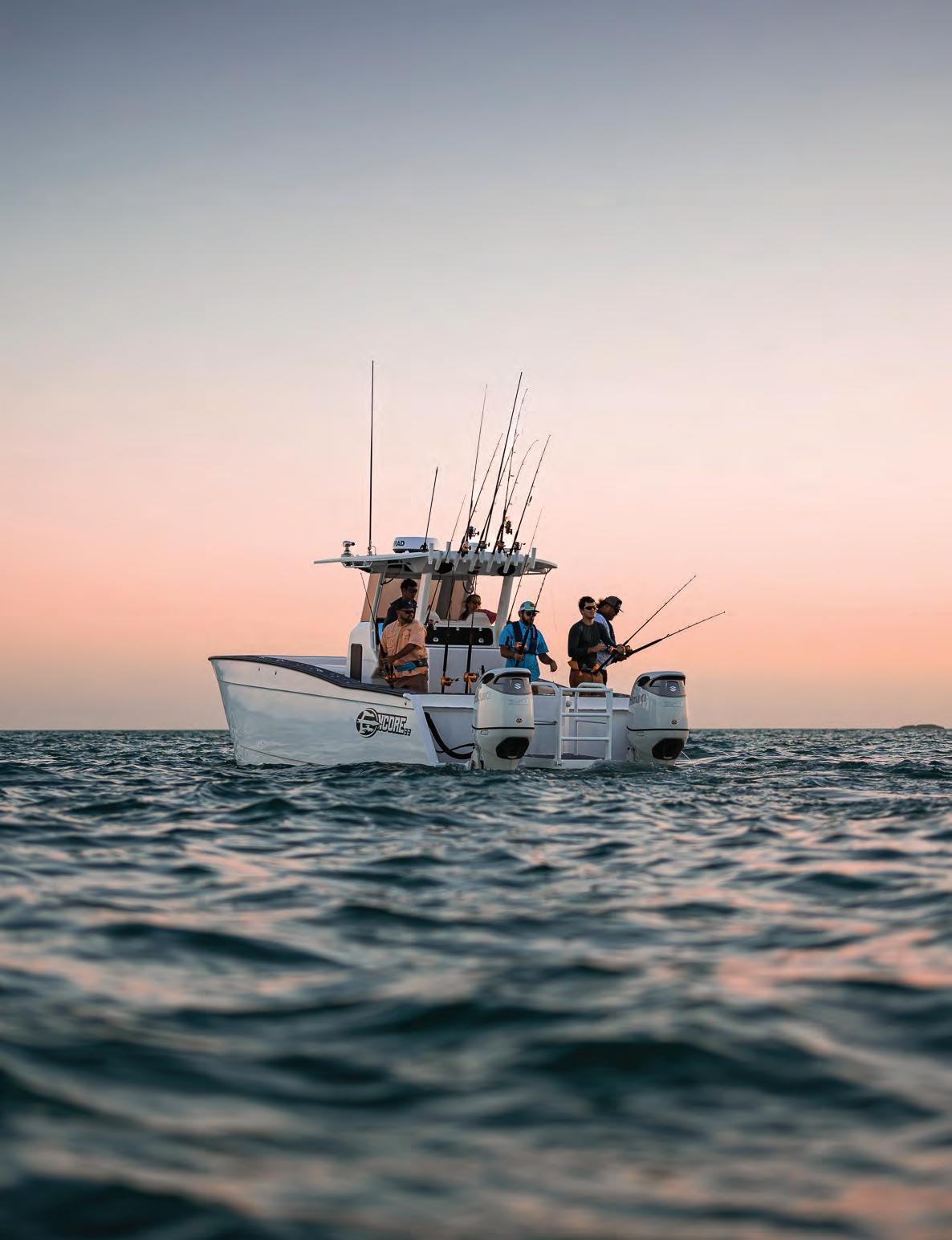

Suzuki, the “S” logo, and Suzuki model and product names are Suzuki Trademarks or ®. © 2026 Suzuki Marine USA, LLC. All rights reserved.