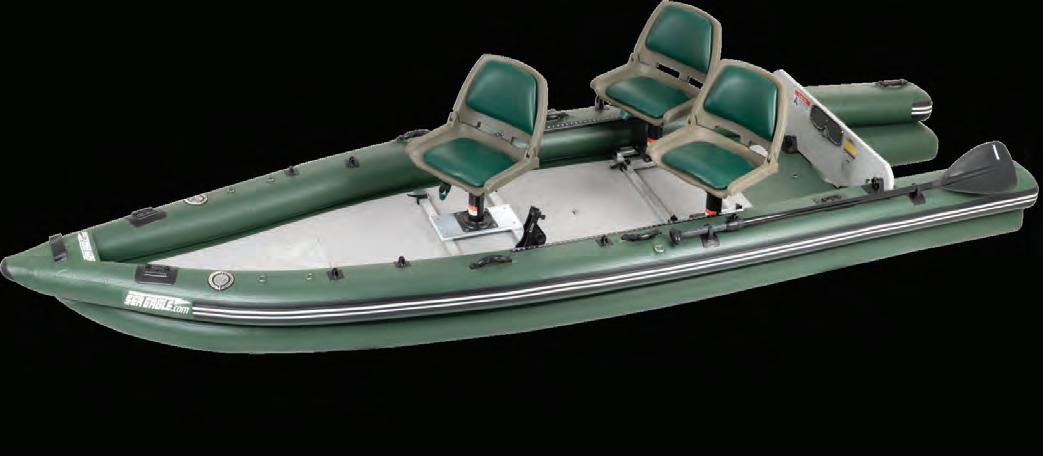
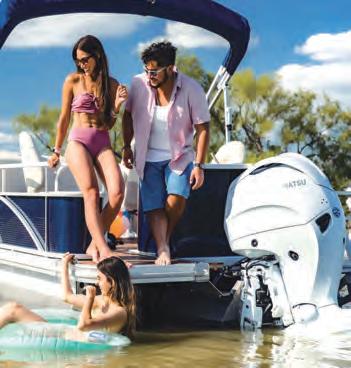
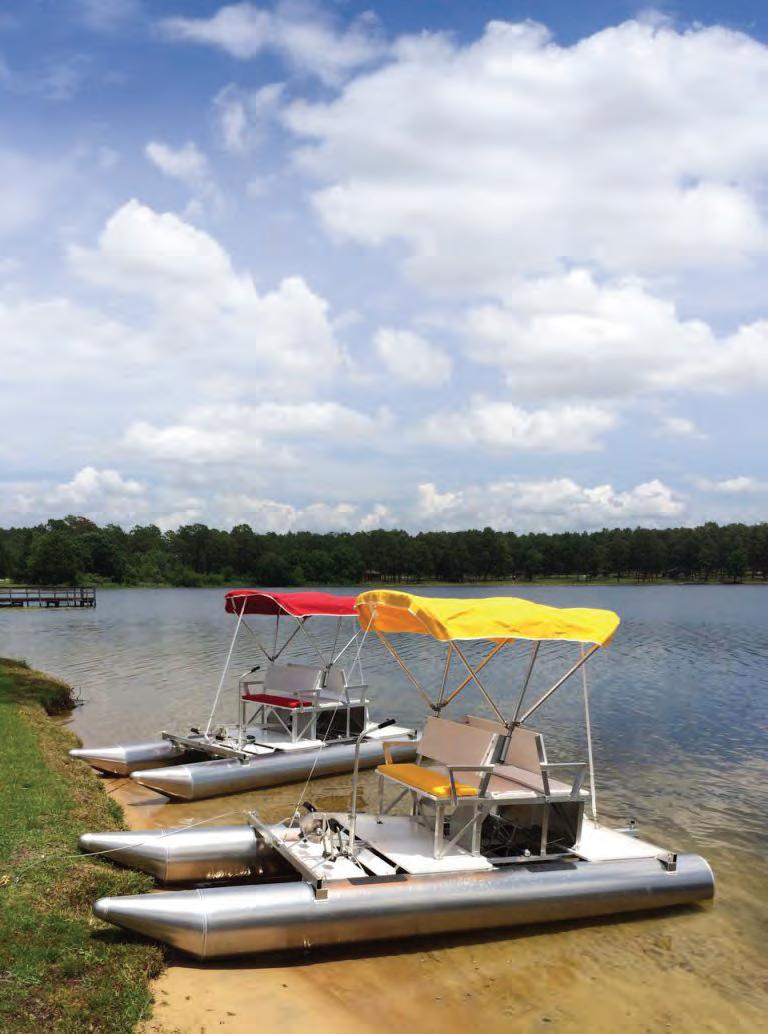
The versatility of the FishSUP™1210 is unmatched! Use it bare bones with just the board, a paddle & your !shing gear or deck it out with swivel seat, side pontoons, casting bar, motor and more! Incredibly stable, extra wide, swallow-tail !shing SUP holds up to 500 lbs! The FS1210 takes electric and gas motors up to 3 hp. There’s even an option for a bow trolling motor.
Choose From 6 Packages
Starting At Just $999

Perfect for !shing rivers, lakes and bays. The STS10 is a lightweight, roomy 1 or 2 person pontoon boat that’s packed with features anglers need & love including 2 built-in !sh rules, 4 built-in rod holders & 2 Scotty® mounts for more rod holders, anchor locks, camera posts or any other Scotty® accessory. Now available with a drop-stitch in atable oor or wooden oorboards.
Choose From 7 Packages
Starting At Just $1449
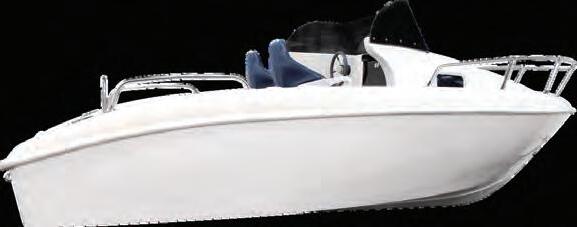
This “low-rider” gives you access to the water to reel in and release !sh easily. With a new patented outside, in atable, rigid keel the FSK16 glides through the water at speeds up to 21 mph to get you to the !sh fast! Perfect for 1-3 anglers and room for plenty of gear.
Choose From 9 Packages
Starting At Just $2999
















Ever see a commercial harbor full of Furuno Marine Electronics and wonder why the pros rely on us?


See why here










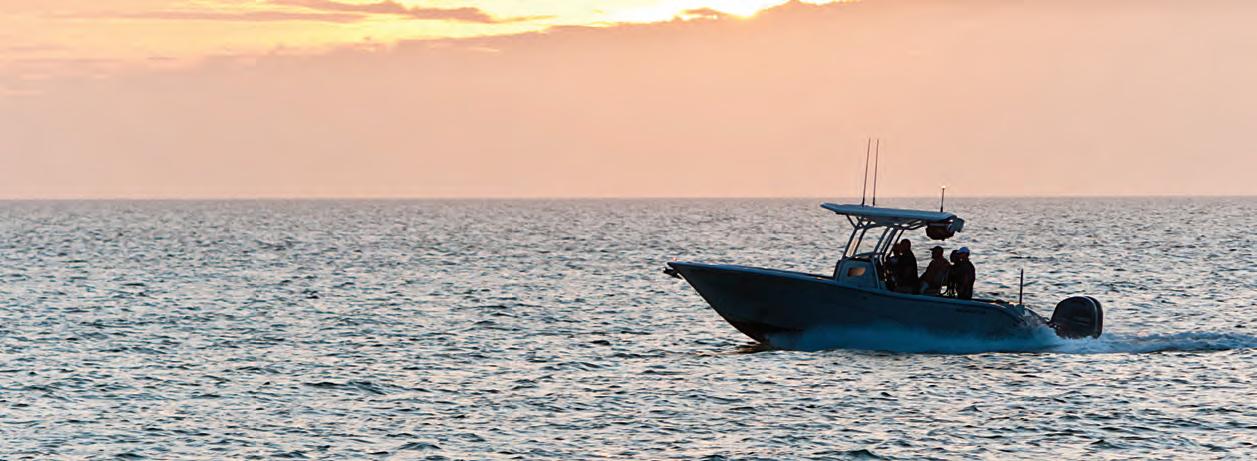
Are you ready to embark on your next on-water adventure? Before you set sail, here are fve things to know about boat insurance.
1. Boat insurance isn’t just for accidents
With comprehensive coverage, you’ll also be protected fnancially for theft, vandalism, and unexpected events like storms if you need repairs or replacements due to damage.
2. Accidents can happen to anyone
When accidents happen, boat insurance offers liability coverage for damages or injuries you cause while boating, up to specifed limits. It can also cover lawsuit costs if you’re sued.
3. Boat insurance can cover medical payments
Boat insurance offers a range of optional medical payments coverage limits, helping to cover medical expenses if you’re in an accident or someone is hurt on your boat, regardless of fault.
4. Most lenders require boat insurance
If you fnanced your boat, you’ll likely need boat insurance since most lenders require boat insurance to protect their investment. Additionally, some marinas or municipalities require proof of insurance for docking.
5. Progressive offers specialized boat coverages
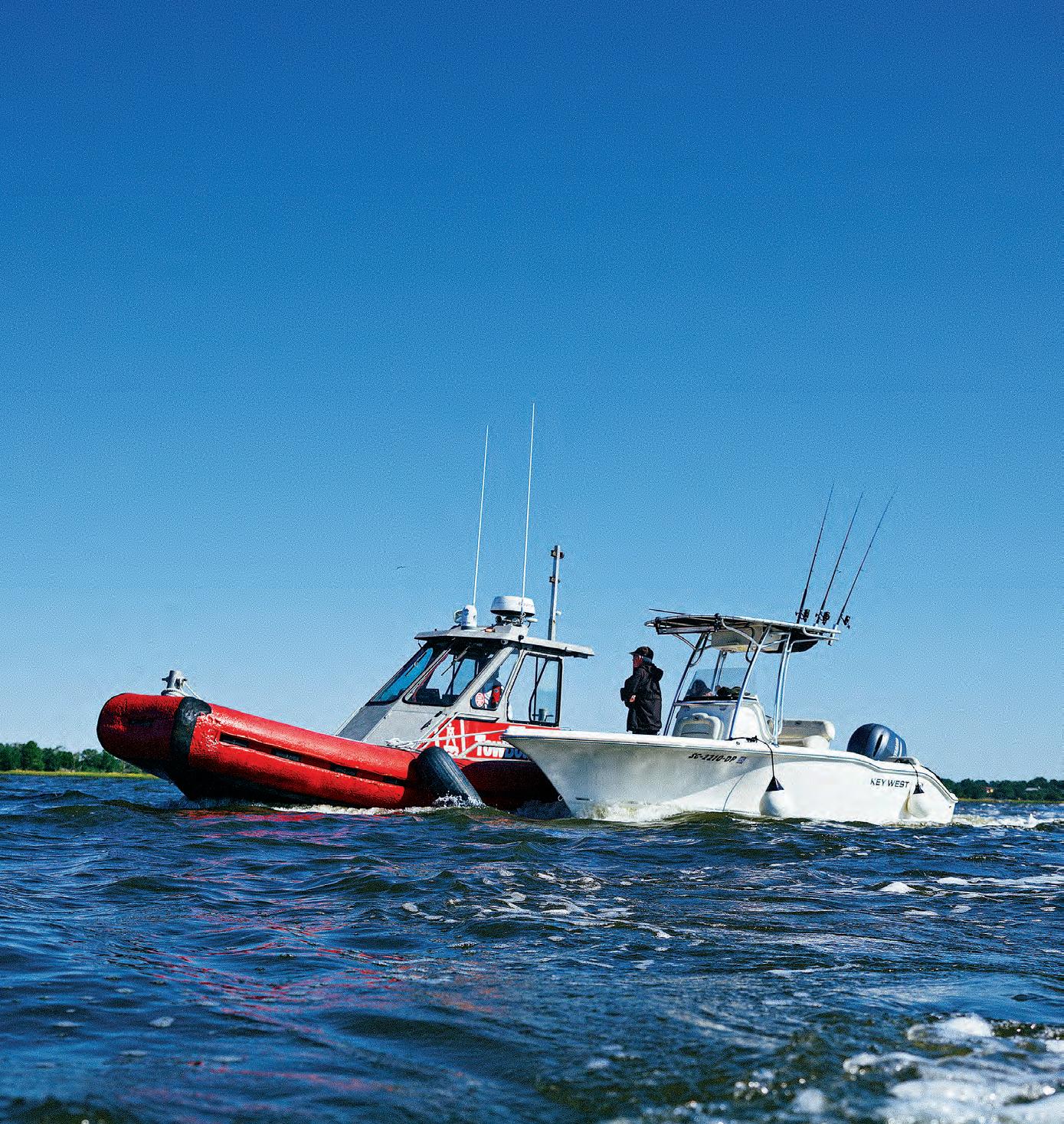
Ever worry about getting stuck on the water? Progressive’s Sign & Glide® On-Water Towing coverage** can help. It’s an additional coverage that steps in if your boat is disabled or breaks down on the water, paying for on-water towing, jump starts, soft ungroundings, and fuel delivery. Fuel cost isn’t included.
Don’t let unforeseen circumstances disrupt your voyage. Cruise with confdence thanks to Progressive Boat insurance. Because when it comes to your boat, peace of mind is the ultimate luxury.
Scan to get a quote in as little as 4 minutes.
to learn more.














By Will Schmidt
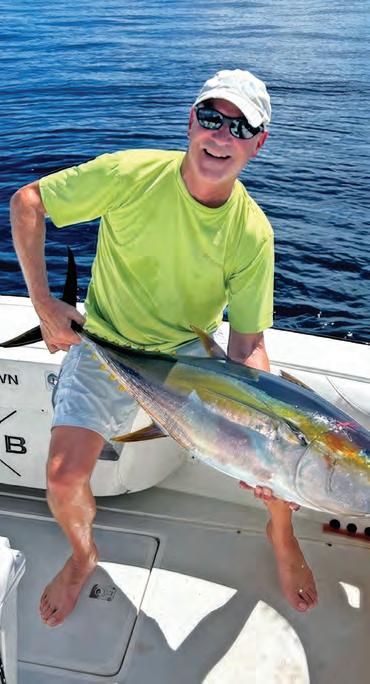
Tere were birds diving, porpoise rolling and he y yellow n tuna skyrocketing like Fourth of July reworks. Both on the water and in the boat, the energy was palatable. With one angler on the bow ready to cast a top water plug into the fray and me in the stern with ready to deploy live bait, the boat throttled back. !e plug went ying, meanwhile I simply dropped my bait behind the boat and started freelining. Almost instantly the plug was blasted in the air but not connecting. Meanwhile, I tossed a handful of baits o the back of the boat. By now the fray had subsided but the sh were clearly still looking for an easy meal. 50 feet behind me one of the chummers was blasted overhead by a 150 pound yellow n who was skyward bound a er it. Just below I could see my bait franticly swimming as another engulfed it, leading to a great battle before releasing the 100 pound class sh.
While top water shing for tuna is all the rave right now, it really makes sense to deploy multiple tactics to take advantage of these opportunities, as the school o en retreats as the boat nears. Our back up plan is very simple and almost always produces sh. As the boat gets into casting range of the school, we drop live bait o the stern and free line them. We always keep a couple ready to go. !is way, if the school disappears there are other baits ready for those who have been plugging.
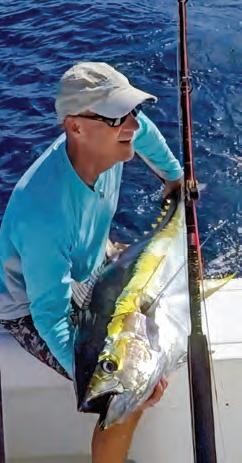
For bait google eyes or blue runners, rigging them on a 10/0 circle hook is ideal. Bridling the bait and using a non-slip loop knot presents the most natural movement as the baits ee. Also, tossing a handful of chummers in, as the surface activity disperses, usually brings shing looking to pick up stragglers into the strike zone. Chumming really helps keep the sh around, so make sure you have plenty of bait. When you get hit, give it a ve count real tight and hang on!
I like to use a bit heavier tackle with the live bait, as we o en seem to nd bigger sh. My go to is Shimano Terez BW Roller Striper medium heavy with a Talica 25A. I use 80lb braid to 80lb mono. !is is a great set up that’s fun for sh from 40 to 140 and can handle the occasional really big one. the rod with a better ghting angle. It also helps to keep the line away from the gunnel as a spiraling sh ascends. !is is a great asset for many anglers on these tough sh.
Will Schmidt is a seasoned tournament angler who has been writing about shing for more than two decades. Follow Will on Instagram @saltynstrong.


In Florida, we don’t wait on spring the way the rest of the country does. Our bass start thinking about the spawn early, and that in-between window when they’re moving from winter patterns to-ward the beds is one of the most exciting times to be on the water. It’s not full-blown bed fishing yet, and it’s not the deep winter grind either. It’s the transition. And if you hit it right, it’s when the biggest fish in the lake are at their absolute heaviest and most catchable.
During this phase, big females don’t just rush the shallows. They stage first. Think outside grass lines, ditch intersections, shell bars, canal mouths, and hard-bottom spots just off spawning flats. They want easy access to both worlds shallow enough to move up when conditions warm and deep enough to slide back if a cold front rolls through. Instead of randomly covering water, suc-cessful anglers focus on these “inbetween” areas where bass pause before committing.
The fun part about fishing the transition is that these fish are still in feeding mode. They’re fueling up before the hard work of spawning, which means reaction baits can shine. Swimbaits and
TYLER WOOLCOTT

lipless crankbaits are great for covering water along staging edges, especially around submerged vegeta-
tion. If they’re holding tighter to cover, slowing down with a Texas-rigged creature bait or a wacky-rigged stick worm can seal the deal. The key is not getting too shallow too fast; a lot of an-glers run straight to visible bedding areas and skip right past the best fish.
Florida weather adds another layer to the puzzle. A few warm, stable days can push fish forward in a hurry, while a stiff north wind can reposition them just as quickly. The calendar matters less than conditions. Watch water temperature trends, pay attention to wind direction, and look for areas that warm first, especially protected shorelines with darker bottoms. Transition bass adjust daily, some-times hourly, and the anglers who adjust with them are the ones holding up the heavy fish.
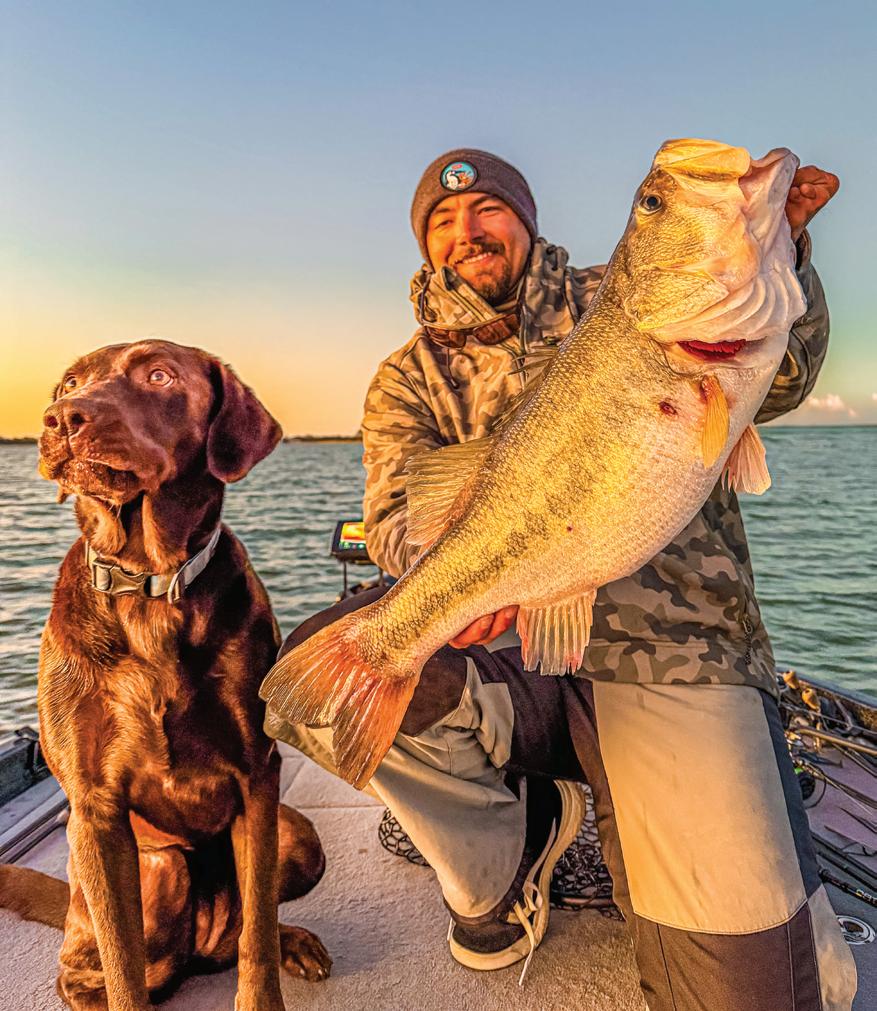
For me, this window is one of the most exciting times of the year. You’re not just sight-fishing beds, you’re hunting moving giants that are feeding and positioning with purpose. They’re thick, strong, and aggressive enough to commit. When you connect with one during the spawn transition, it’s not just another bite it’s often the bite that defines the season. And in Florida, that fish can show up on any cast.
Capt. Tyler Woolcott is a professional tournament angler, as well as owner/ operator of Florida Big Fish Adventures, providing bass and saltwater guided fishing trips: www.floridabigfishadventures.com.
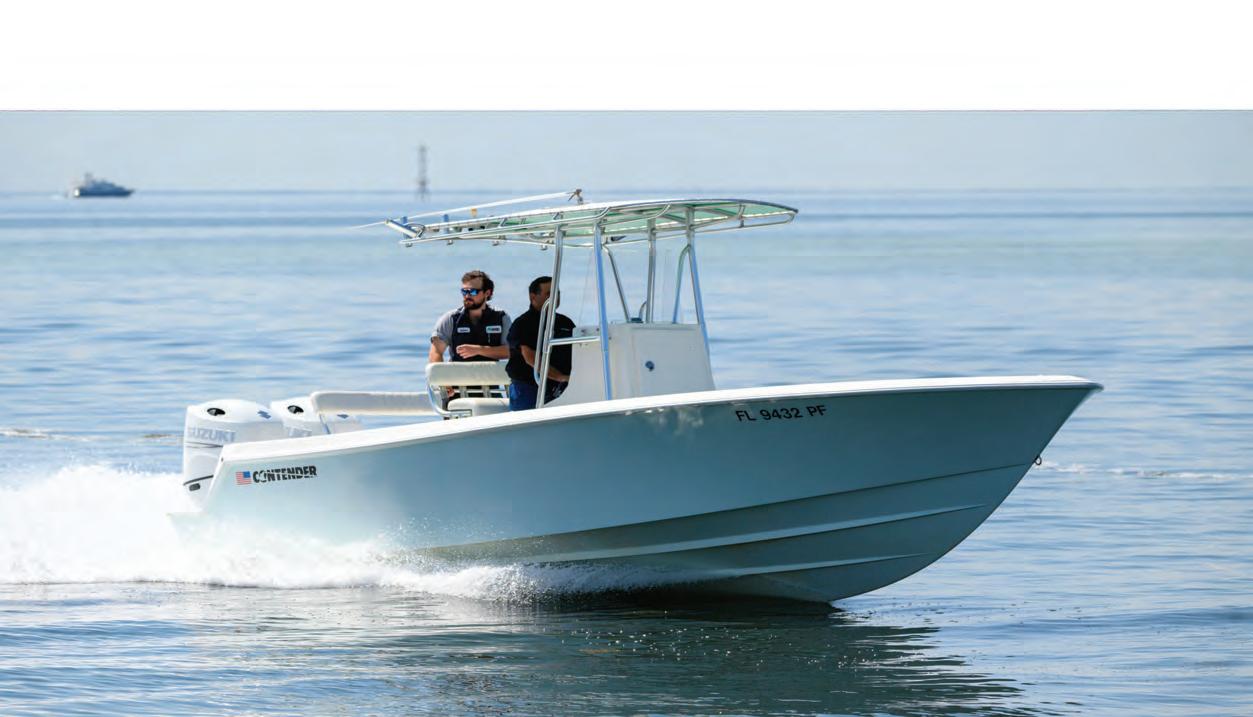
Mastry Engine Center has received the Suzuki Marine Super Service Award and has been ranked #1 in Suzuki Marine US Sales! 60 YEARS OF REPOWER EXPERIENCE!

RePower Packages designed to best ft your needs and not stretch your budget. Financing available.

Rest assured, all Mastry Suzuki RePowers are backed by Suzuki’s industry leading 5-year factory warranty.

Stationed strategically around the East Coast, all Suzuki RePower Centers have achieved the highest level of Suzuki certifcations to meet and exceed your repower needs.
When Considering A Repower, Consider These Factors:
•Every Authorized Mastry Suzuki RePower Center has decades of repower experience providing proper rigging, controls, propeller matching and in water testing
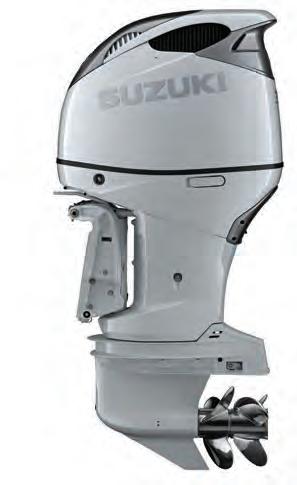
•With a Mastry Suzuki RePower, owners gain improved performance, less noise and greater reliability
•Mastry Suzuki RePower’s exclusive Owner’s Edge Program*
•Mastry Suzuki RePower Centers use authentic Suzuki OEM parts and have factory certifed technicians

Since 2014, Mastry Engine Center, has been building the premiere Suzuki Outboard repower network in Florida. Today, Authorized Mastry Suzuki Outboard Centers have been exceeding expectaions in the Southeast for over two decades. Recently Suzuki Marine requested Mastry Engine Center to expand the network throughout the Northeast. Now boat owners from Maine to Florida can be assured of the best support for their Suzuki outboard repower project. All Authorized Mastry Suzuki RePower Centers provide the best options, information and package pricing for excellent performance in repower.



*Get with the Program!
When you purchase a new Suzuki outboard from an authorized Mastry RePower Center you qualify to become a member of the Mastry Suzuki Owner’s Edge. Owners receive an identifcation card that provides them with important information about their Suzuki outboard motor as well as a passport to additional benefts during ownership. Members enjoy a detailed engine maintenance schedule, Mastry Suzuki RePower Trade Program and special pricing from Mastry Suzuki Partners.






With El Niño waning and cold fronts diminishing, water temperatures are rising. Once temperatures reach the lower 70s, the grass flats come alive. As March progresses and temperatures continue to warm, more and more baitfish move onto the grass flats. Snook, redfish, and seatrout follow the bait to feed. It’s truly a magical time of year to fish in Tampa Bay.
Now it’s time to wean yourself off shrimp and start using scaled sardines. Even though you can start catching baitfish on most Bay area grass flats in early March, don’t count on all flats having it. March is a transitional month. There are days when I still have to catch my bait in water 15 to 20 feet deep. That’s why it’s important to always carry a heavy deep-water castnet and a lighter shallow-water castnet. You just never know! Once you’ve loaded your livewell, it’s time to hit the flats.
Snook season reopens this month, and they’re finally starting to move out of the backcountry and the deep-water canals in search of food. Mangrove points and shorelines are excellent spots to catch snook. They like to hang out in these areas to easily ambush baitfish during a good incoming or outgoing tidal flow.
The best way to know if snook are in a feeding mood is to pitch out some live bait. Chumming not only triggers a bite, but it also gives you an idea of how many snook are in your chosen spot. Once snook start popping at some



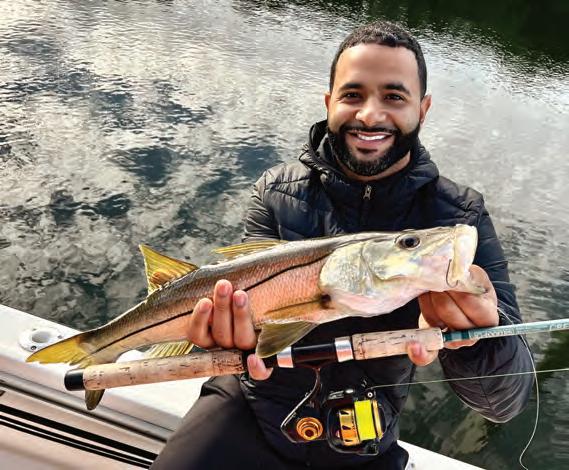
Last month, I caught very few redfish over 25 inches; most were less than 18 inches and are commonly called “rat reds.” Rat reds like to hang out around mangrove roots adjacent to deep-water channels and canals.
Continued on page 6




BY: CAPT. ANTHONY CORCELLA

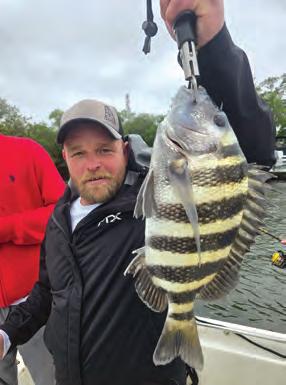
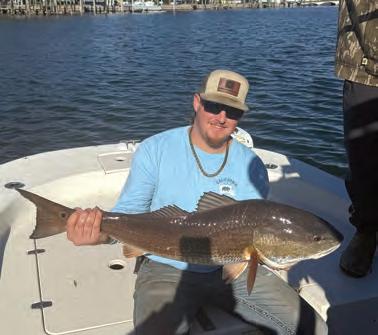
It’s that time of the year when water temperature starts rising, fish start biting, and it’s even better. Usually in March, we start seeing more mangrove, snapper, and sheepshead bites, and the bite is still on fire. Redfish start moving out onto the grass flats. We preferred dead-bait tactics, fishing the sand holes on the grass flats for redfish and snook. It’s so awesome to watch them pick it up and eat it.
The tackle that I like to use is a 7’6” medium-heavy rod on a 3000 to 4000 size reel, 15lb braid, 20lb
fluorocarbon leader with a 2/0 offset circle hook. After you’ve caught so many redfish, now it’s time to move onto rock piles out into the Bay, going after those sheepshead and mangrove snapper. They make great tacos, as everybody knows.
If you’re ever interested in booking a trip with us and you’re only two of you, we offer split trips to keep costs down. We do have a bunch of people down here out of town that just want to go out, and they don’t have a whole group, so we wanted to make it easy for everybody to go fishing with us. All you have to do is pick up the phone. Give us a call, and we’d love to take you guys out. Also, if you’re looking for the best Bait in town, check out Riviera Bait and Tackle. Jacob will hook you up with Bait, tackle, and local knowledge of Saint Petersburg. He is a great guy, easy to work with, and don’t forget to pick up a cold Yoo-hoo, which is a popular American chocolate-flavored drink. And don’t forget to pick up a bag of Q8 super baits, I promise you they won’t disappoint. It’s like using live bait. I hope these tips find you well. If you have any questions about our charters or need some information, feel free to give us a call. We love to talk fishing.


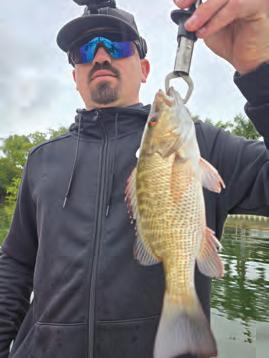
— What makes our charter service unique is that we cater to disabled veterans and wheel chair bound clients! Our boat is able to accommodate wheelchairs and is ADA compliant. IF YOU’RE A DISABLED VETERAN, YOUR TRIP IS FREE! This is our way of giving back to our veterans.
Capt. Anthony Corcella, Pocket Change Inshore Fishing Charter 727-432-6446 www.pocketchangefishingcharters.com
Check us out on Facebook, Instagram and TikTok

By Capt. Wes Tallyn
Most of us fishermen are attuned to the entire environment as we work our way through a winding salt marsh or look for something different offshore. Well, if you are working a shoreline and looking for fish in the shallows, you’ve probably seen some shorebirds and wading birds also looking to stalk their prey.

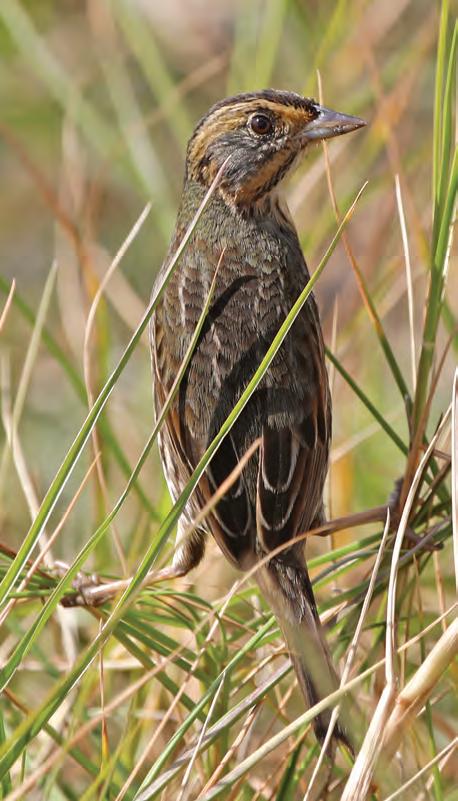
There are two species of sparrow, also known as “ sharp-tailed sparrows, “ that are unlike most other sparrow species.” These sparrows were then separated, creating the Nelson’s Sparrow and the Saltmarsh Sparrow. The two species look very much alike, and sometimes even the most expert birders can’t tell the difference. Their diet consists of small insects, crabs, and snails, which they hunt along the ground or upon ground vegetation. They can be very reclusive at times, but they tend to stay in the same general area if they find a reliable food source there.

Marsh grasses provide the best habitat for them. During lower tides, the sparrows will venture out to the edge of the grasses to take advantage of the exposed mud flat. That’s the best time to see these elusive birds! So

— Captain Wes Tallyn was raised in Florida and is a fisherman, birder, avid outdoors-man,
and environmental scientist. Wes has a focus on conservation and education in the community and is the owner of Snook Jam Outdoors. You can find him on
or call 727-410-5853.
Fishing in Tampa Bay has changed significantly. Once-productive spots like the middle grounds off Gandy Bridge and Weedon Island now yield fewer fish, with trout becoming scarce and only a handful of redfish and snook left to catch along mangroves. Overfishing—especially during peak season events with dozens of boats—has likely contributed to the decline. As someone who participates in these events, I wonder how we can balance organized fishing activities with the need to maintain good catches for those who can only fish on weekends.
Now let’s talk about how we can improvise to make up for the changes that have taken place over the years. New products and technologies can help us become better anglers and compensate for some of the losses caused by overfishing, red tides, and diminished seagrass and mangroves. GPS has made fishing much easier for both offshore and inshore anglers looking for new spots.
Winter (November-March) changes some of our techniques. Maybe we fish for deepwater species like grouper, grunts, seabass, and sheepshead on rocky bottom, and there are plenty of them in Tampa Bay, taking some of the pressure off flats species.
Spring (April-May) may be the first target species: mackerel, cobia, black
drum, trout, and mangrove snapper, with snook and redfish as wrap-up species.
Summer (June-September) tray mixing redfish, snook, mangrove snapper, black drum, and mackerel on the long run. If we all participate in reducing the damage, we stand a chance of giving the younger generation something to catch.
This month, my go-to species will be sheepshead, grunts (gray snapper), seabass, and red grouper. GPS with anchor lock makes life a lot easier than in the old days, when you were trying to anchor over a rocky patch or a ledge in Tampa Bay. There is plenty of software to help you read the screen at the bottom of your phone or tablet; it’s well worth the investment. I was able to mark over 180 spots in the bay from home on my tablet. So, let’s talk about fishing in the deeper waters of Tampa Bay.
Location: Rocky, hard bottom and ledges. You might ask, “How do I find them?” Simply start with a real Coast Guard chart for Tampa Bay; it will guide you to wrecks and hard bottom. Good software for your phone or Sonar unit. Next, study them both, make home notes, write down the GPS numbers, then do some T&M (time and money). Time to look for new spots, and money for gas. Believe me, it will pay for itself in a short period of time.
Tackle and Baits needed: Tackle for grouper: I prefer a 6000-series spinning reel, 40-pound braided line, and a 7-foot heavy-action spinning rod. Sheepshead, grunts, seabass, and mangrove snapper, a 3000 series spinning reel, 15-pound braided line, and a 7-foot medium action spinning rod. Hooks 1/0 to 4/0 circle hooks. Leader: 25-pound for smaller species and 40-pound for grouper.
My favorite baits: Fresh frozen Spanish sardines, squid, and shrimp. I start with squid to get the action going, and depending on the tackle, I will switch to sardines for grouper and squid (3/0 to 4/0 circle hooks) and shrimp for the small species (sheepshead, grunts, mangroves, and seabass) with a

1/0 circle hook. Over the years, I have migrated to using more jig heads in the ¼- to 2-oz range. My thinking has always been to use the lightest weight possible to keep the bait on the bottom. With slower tides that break the fish off the bottom to feed, it’s a blast, and that’s where some of the new products on the market have made it both exciting and a challenge.
A big mistake most anglers make is to thaw their baits. It’s best to freeze the bait and keep it frozen until it goes on the hook. By the time it reaches the bottom, it’s ready to be eaten. Thawing only makes it softer and easier to fall off the hook.
Here is a breakdown of the items I use and the software to catch these species.
Trolling Motor: Move by Power Pole with anchor lock; it’s a must-have item to help hold your marked spot.
Software: Fish Reveal (Phone-Tablet), Navionics Platinum Plus for vessel sonar.
Reels: Blackfin 3000 and 6000 spinning.
Rods: Blackfin inshore spinning and offshore spinning.
Braided Line: FINS 15 and 50-pound test.
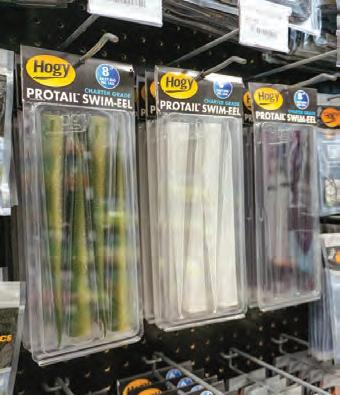
Jig Heads: Flashin Assassin for sheepshead, grunts, and seabass.
Hooks: Shrimp Walker is excellent for sheepshead and mangroves, either freelined or used with a 1/4oz or 1/2oz sinker.
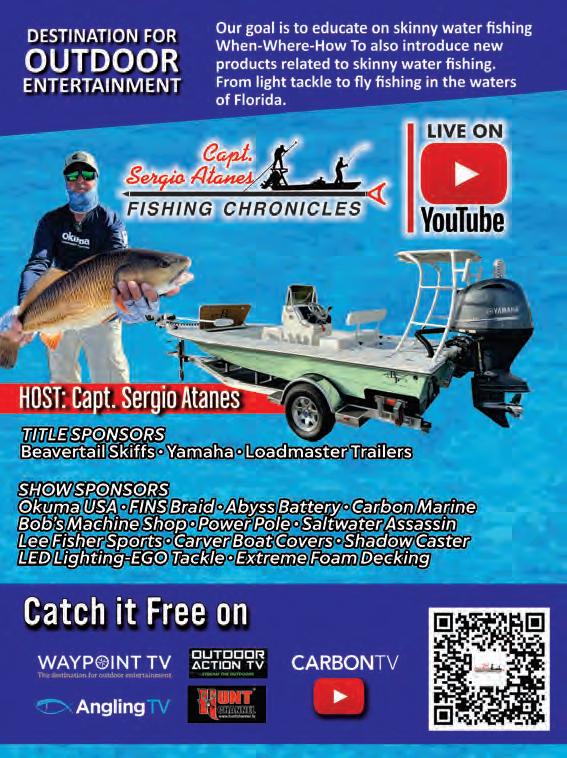
— Capt. Sergio Atanes is host of Florida West Coast Fishing Report on Facebook and YouTube. He also hosts Fishing Adventures Florida TV show airing on YouTube, Waypoint TV, Carbon TV, Outdoor Action, and Angling TV. Owner of Reelfishy.com Charter business covering the west coast of Florida with over 135 captains on staff. For information contact Capt. Sergio at (813) 973-7132 email: atanes@msn.com.


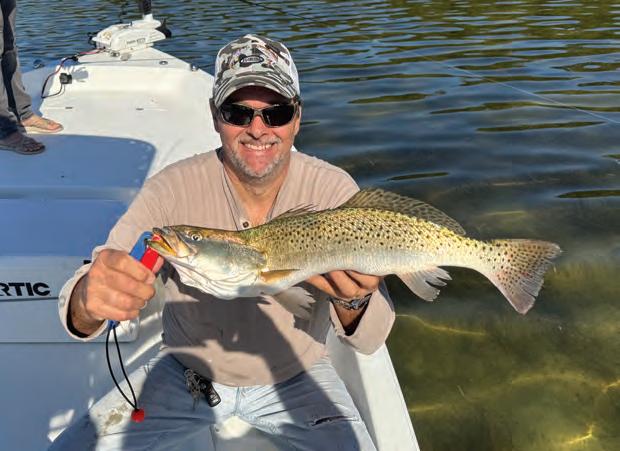
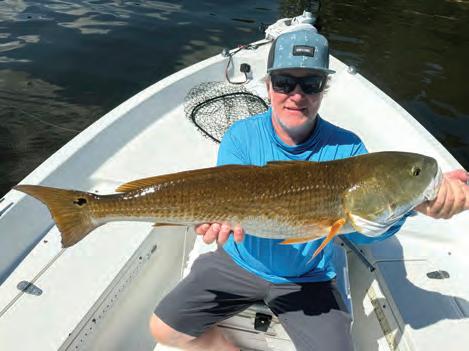
This month, with warmer water temperatures and higher tide phases, look for slot-size redfish on most grass flats around oyster beds. Also, be on the lookout for mullet. Redfish like to travel the flats with mullet and eat the baitfish and crustaceans the mullet kick up as they feed, while moving across the grass. The slot limit for redfish is between 18 and 27 inches. The bag limit is one fish per person, with a two-fish vessel limit.
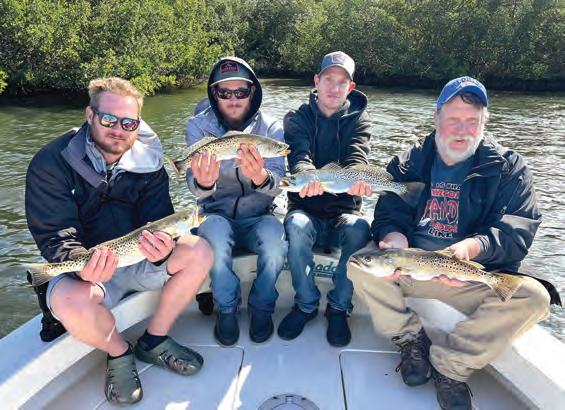
The seatrout fishing started out with a bang this year. There have been days when I’ve had to release as many large seatrout as we’ve kept. All have been caught on shrimp in deep water, and it doesn’t seem to matter if the tide is incoming or outgoing. Dead-end residential canals and channels protected from the wind by mangroves have been the hot spots.
Some days, clients catch them on the very first cast; other days, it may take a little while for them to respond to the bait. Once the scent of shrimp spreads throughout the water column and a few are caught, the action really starts to pick up. The slot limit for seatrout is between 15 and 19 inches. The bag limit is three fish per person, with a one-fish over 19inch vessel limit.

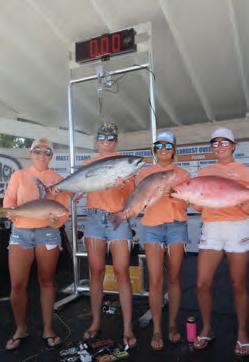
The sheepshead spawn in Tampa Bay is in full swing and runs right through April. Many people associate targeting sheepshead only with bridge and dock pilings. Sheepshead also spawn around rock piles, artificial reefs, and even over sandy potholes on most grass flats.
Sheepshead are referred to as “Convict Fish” and “Bait Stealers.” Some anglers claim that to catch them, you have to set the hook before they eat the
bait! I’m not sure about that, but if you get a bite and reel back in half a shrimp, toss it back out. You just might catch that fish on the second go around. The minimum size limit for sheepshead is 12 inches. The daily bag limit is eight fish per person, with a 50-fish vessel limit during March and April. Afishionado, “Always an Adventure.”
—Tampa Bay fishing guide Wade Osborne of “Afishionado Guide Services” has been plying the waters of Tampa Bay as a professional full-time captain, since 1997. Capt. Osborne offers inshore fishing charters on light tackle spin, fly or plug. He also offers eco-tours with an emphasis on photography. For more info., visit Afishionado.com or find Afishionado Guide Services on Facebook and Instagram. Email: wade.afishionado@gmail.com | Call/Text 813-286-3474







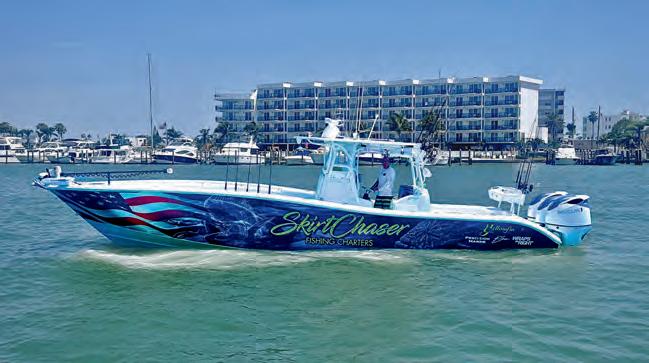





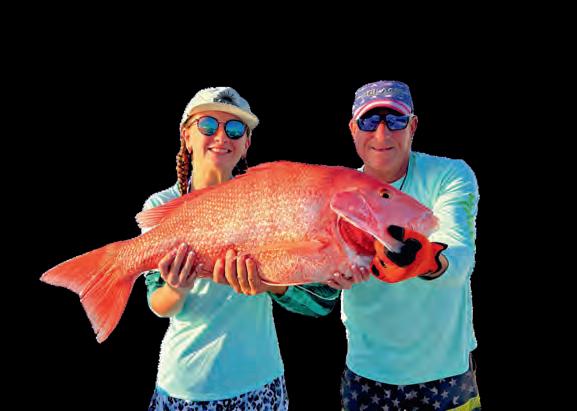

BY: CAPT. FRANK HUTCHKO

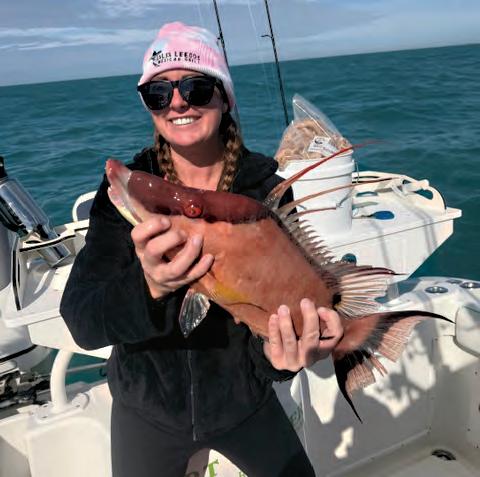
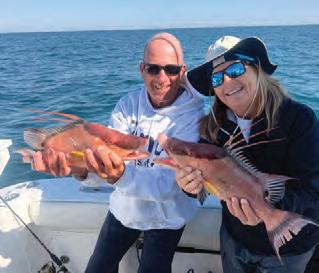
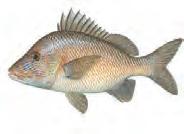
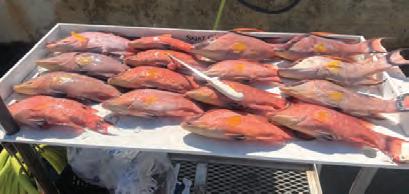
The weather has been less than ideal lately, but when we get a chance, we have been taking advantage of one of the best hogfish bite in recent years. On the last two trips, we saw quality fish. One trip with 17 keepers and the other with 16. Water temps are in the mid-50s right now, and cleaner water is the ticket! Our best bites have been 60 ft.
Hog ball jigs in the 2-3 oz range (we like pink) and shrimp presented right on the bottom. Our leaders are 20lb fluorocarbon, about 6-8 ft. We have been fishing the top side of a ledge or a good, rocky, hard bottom. Plenty of porgies and grunts to keep ya busy, as well as the gag and red grouper action.
But once the first hog bites, it seems to be game on after that!
The hog fight on light tackle is definitely why we love this fishing! These fish pull hard and will put a smile on any angler’s face! This Winter fishery has plenty of great weeks ahead, so if you have a chance to get out on the water, this would be the fish to target!
Capt. Frank Hutchko, owner of SkirtChaser Charters, a 21-year veteran-owned business, specializes in offshore fishing charters running out of Johns Pass/Madeira Beach, FL. Trips range from 4-12 hours and go out from 15-150 miles on their beautiful, fast 36’ Yellowfin. They have won the “Best of Florida” 4 years running and help locals and vacationers make memories that last a lifetime! | For more info, text or call Capt. Frank at 941-786-4620 or CaptainFrank@SkirtChaserCharters.com



MBY: CAPT. GEORGE HASTICK
arch can be a premier month to fish in the Tampa Bay area. With rising water temperatures and bait starting to show up on the flats, an explosion of fish activity in shallow water puts a little spring in fishermen’s steps. It creates an excitement and anticipation that fishermen can relate to. It’s that feeling the night before where you almost can’t fall asleep because you know it’s going to be good.
With typical water temperatures in the mid-60s to possibly 70 degrees, the fish will be active and very aggressive, which will benefit live-bait and artificial-fishing enthusiasts. For the live baiter, you will be able to stuff your livewell full of bait without fear of them dying due to the cool water, which will allow you to live chum to really get the action going!
For the artificial fisherwoman/fish-
erman, this is a great time, since the fish are in an aggressive mood and will chase bait. I like to throw a Saltwater Assassin Sea Shad by Bass Assassin in various colors, but I have been having great success with chicken on a chain and electric chicken. For live bait, reintroducing scaled sardines onto the flats is hard to beat.
Try to set up at points where the tides are going around a point or over a deep hole. These are ambush points where the snook will wait for bait to come to them.
Snook will be moving out of the backwaters and the multiple creek and river mouths to the flats just outside of these areas. They will feed very well on the moving tides, incoming and outgoing, but I find that when they are set up near the mouths in these areas, the outgoing tide produces a better, longer bite because the bait is pulled
Continued on page 18
By: Capt. George Hastick
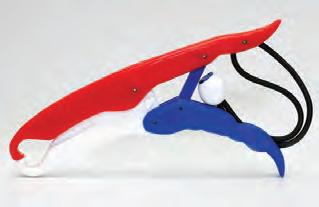
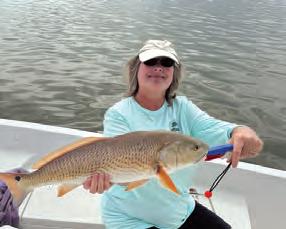
If you are looking for the best fish grip out there, look no further than The Fish Grip.
This is the original floating plastic fish grip developed by avid anglers. It took 16 years and 4 different models to get “The Fish Grip” to where it is today. I have been using the original fish grip for years on my charters, and it has been great! My clients, who might not be used to handling fish, can now do so safely and confidently without getting hurt. This is great for quicker pictures and less handling if the fish is going to be released. It allows us to control the fish, making the process quick and easy to return the fish to the water in a timely manner. If it is a keeper and perhaps a larger fish, it is still a great tool that makes it easy for anyone to handle a fish and stay in control. The Fish Grip also floats, which is great in case it is dropped overboard. Since they have a wide pad area on both sides of the gripping area, it doesn’t poke holes in the fish’s mouth as some other grippers do, and it forms a heart, but I’m not Sure if that’s intentional lol. They are very durable and hold up in saltwater environments. If you need smallersized grippers, they make the JR, which also floats, and the mini grip. The great thing is they are American-made right in Jackson, Mississippi. Check out their website at https://thefishgrip.net. They have other products worth looking at as well.






BY: CAPT. T J SHEA

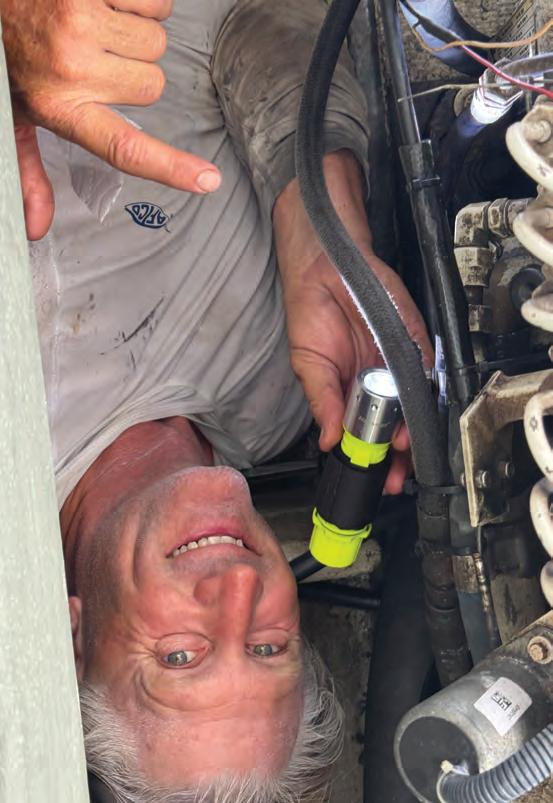
Ben Franklin coined the phrase “an ounce of prevention is worth a pound of cure.” Most say he was referring to fire safety, but I am convinced he was a boat owner working on a grueling task when it popped into his head. Outside of fire safety and maybe personal health, I can’t think of anywhere else this saying applies more than boat maintenance.
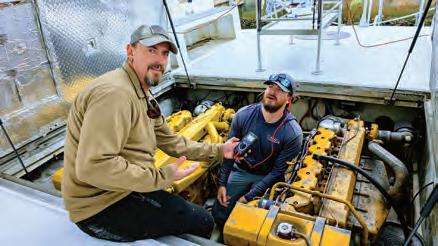
Every February, we channel our best HGTV hosts in an attempt to shine up one boat back into the gem of a newly built vessel. The project normally starts with a reasonable checklist. Minor gelcoat and fiberglass repairs, replacing all the components that have either completely broken or are on the verge, running some new wires in miserable places, and a full detail. Without planning to go beyond this list, we are suddenly cutting holes in the deck, pulling out a motor, or maybe gutting the entire electrical system. No matter what the job, one constant always rings true. If the original work was done with the foresight knowing it would have to be done again, it’s so much easier the next time around.
Salt, corrosion, water, dendrights (our madeup word for the green which spiders out and through wires when they go bad), all find a way to
Take heed of Ben’s advice. I learned the hard way more than once to save you from the same fate.
Continued on page 24





1
3
6
20



30



9
8
5
18
19
20 Fri 2:16 2.8 2:10 2.8 8:37 0.3 9:03 -0.4 7:34 7:42
21 Sat 3:03 2.6 2:39 2.9 9:09 0.5 9:48 -0.5 7:33 7:42
22
23 Mon 4:50 2.2 3:50 3.0 10:17 1.0 11:32
24
25
26 Thu 9:11 1.7 6:56 2.6 1:59 0.0 1:11 1.6 7:27 7:45
27 Fri 10:26 1.8 8:44 2.5 3:28 0.1 2:59
28
29
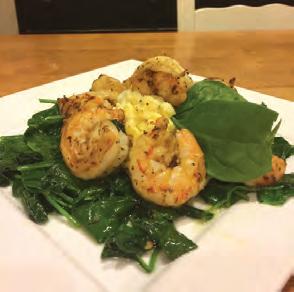
• ½ a bag of small red potatoes, fingerlings are great too
• 1 bag of baby spinach washed and ready to eat
• 1 lb. of large to jumbo shrimp
• ½ cup chopped parsley
• ¼ cup of olive oil divided
• 4 cloves peeled and finely chopped garlic
• Salt and pepper
• Seafood seasoning of choice
Prep: Clean, devein and dry shrimp, place in a small ziplock bag, add 1/8 cup of olive oil. Add 2 tbsp. seafood seasoning. Shake around until all shrimp are coated. Place in fridge. Wash potatoes, poke holes with a fork, and place in a pot of boiling water with a pinch of salt. Cook for 25 minutes.
In a large frying pan, simmer 2 tbsp. of olive oil and 2 cloves of garlic for a few minutes over medium heat. Add spinach. It will look like a lot, but it will cook down! Turn over spinach. Remove when wilted but bright green. This will take 3 to 4 minutes.



Remove spinach from pan and place to the side. Drain potatoes and place in a bowl for smashing. In the same pan you cooked the spinach in, add 2 more tbsp. of olive oil and the rest of the garlic. Cook for a few minutes. Add this mixture to the potatoes with the parsley and mash. If need be you can add butter, or milk to potatoes to smooth them if you don’t like them chunky. Shrimp: Use same pan again and heat to medium heat, remove shrimp from fridge and place in the pan with oil and seasonings. Cook shrimp a total of 5 minutes max!
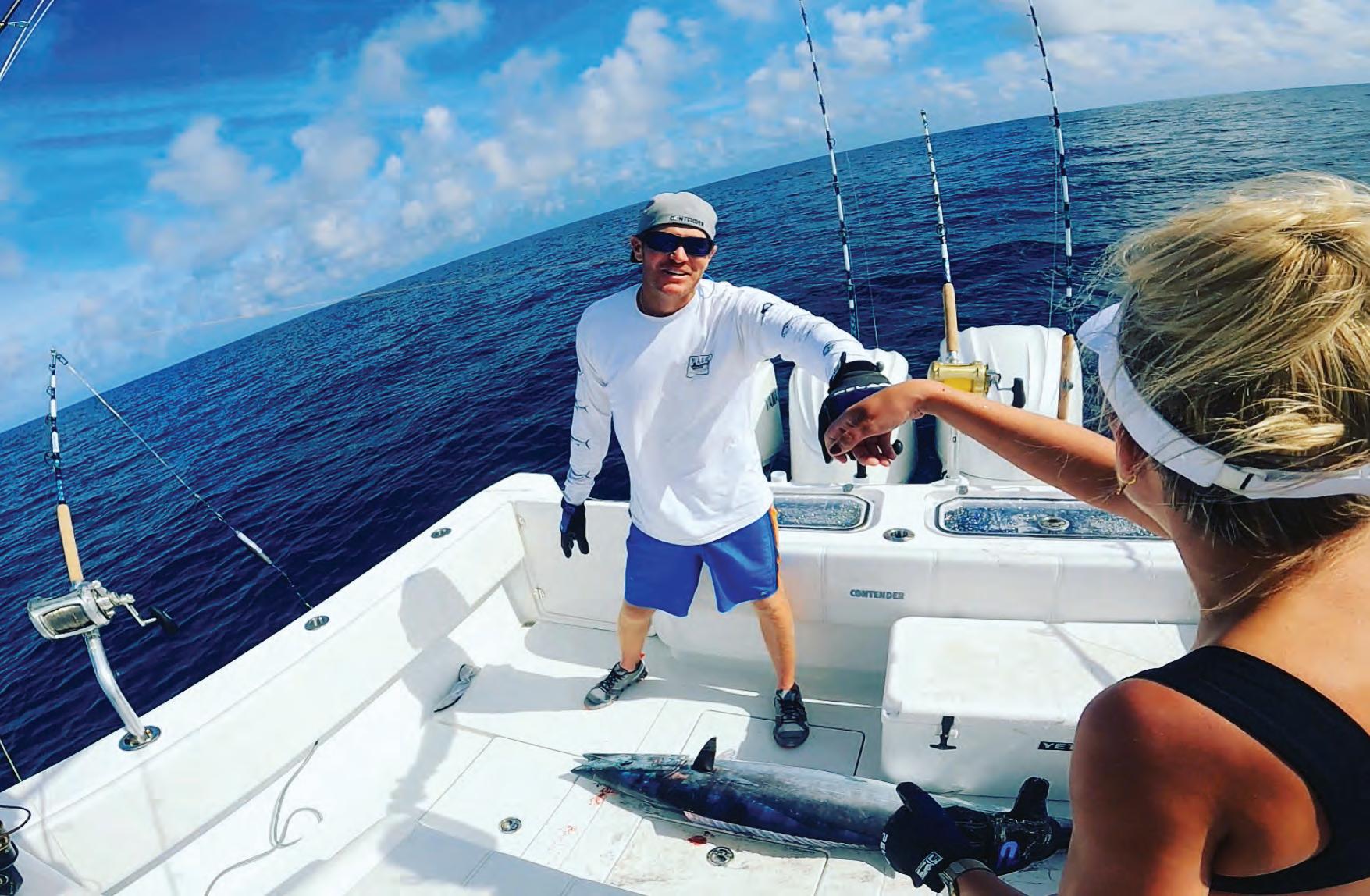
Astory that those who know us well have heard many times... A story that still makes me get on my feet to tell…A story that still gives me chills… Exactly why we go out there.
My husband Stephen mentioned the weather was going to be nice. We had one of the most beautiful prostaff Contender 39STs at the time with trip Yamaha 300s. Only weeks before, we had won the Old Bahama Bay Wahoo Charity Cup on this very boat in West End, Bahamas. Some days are hardcore, but this was a relaxed day, just getting out there to enjoy the boat and the weather with our dog, Red. We took only a few trolling rods and one gaff, ran out of St Pete Beach into the Gulf until we hit clean water, and settled into a decent trolling depth around 150.
We put the lines in the water, poured mimosas, and the three of us went up into the tower. I think I only had one sip of the mimosa before I heard one of the most aggressive bites I have heard. The line was absolutely SCREAMING. The timing, the sound, and the hope of what could be on the line combined for an excitement like no other. We looked at each other and quickly found our way down to the deck.
As we were reeling, we felt this was a big fish, and we were going to take our time and get everything ready to land it. Typically, when we gaff wahoo, we can control them with hand lining as they approach the boat. A slight turn of the boat towards the fish usually helps ensure success. With just the two of us, the boat was on autopilot. As the fish was coming in along the starboard side of the boat, we shifted things out of the way, including putting the Yeti cooler in the aft port corner, and (in hindsight, unfortunately) left a bent butt rod in the aft port corner rod holder. Ready with the gaff, I watched as my husband started handlining him in for the perfect landing… or so we thought. Suddenly, the fish makes its big move and beelines across the engines towards the opposite side of the boat, which was slightly cluttered and not conducive to success in landing a fish of this size. BOOM threw a gaff in the fish, sometimes the moment of knowing you got it--but not this time. I was on the transom of the boat, and the butt of the gaff got stuck inside the bent butt rod. With the
strength of the fish going absolutely crazy, the pressure was too extreme to be able to swing the fish under the gaff and around to the side of the boat.
Stephen took the gaff, and I hopped to the wheel to try to steer us out of this insane predicament. Our dog, Red, is in the tower, going crazy! Panic- I hear some strong language coming from Stephen, and I turn around to see the (only) gaff floating away. Slightly heartbroken, slightly hopeful, I run back to the transom and grab the line with Stephen and slowly pull on it as I peer over the edge between the engines. HE WAS STILL THERE.
This fish continued to dive hard to the port side, refusing to go back over to the clear starboard side. We have no gaff. Stephen walks the line up the gunwale a bit and carefully continues handlining the fish in; the line and tension are on the outside of the bent butt rod. We get this fish up, and it is still green. I manage to get my hands on the tail and hang on with a firm grip. The fish is thrashing like crazy and is so heavy, but I am not letting go. As I hold the tail up, the weight of his head is aiming downward deeper into the water. Strategically, I hop back over and try to help by bringing the line up more. Stephen is finally able to avoid the sharp teeth and secure his hands under the gill plate of the fish- yes! We throw the fish into the boat and WOW! Wow. Wow. I don’t know what was more surprising- that the fish was in the boat or the size of this Gulf Wahoo! Once he was calm, we put him on ice in the fish bag, with his tail hanging well beyond the bag’s edge. We brought Red down out of the tower, he hopped up on top of the wahoo in the bag and laid down, very proud of his catch.
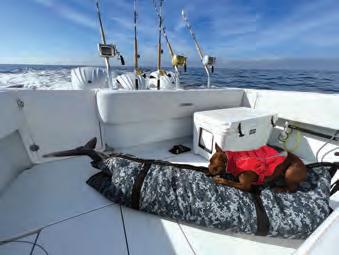
We enjoyed an epic ride in to weigh this amazing fish at Don’s Doc, and it came in at 82.05 pounds. Absolutely an amazing fish. We are still chasing the triple digit… check out our Instagrams for the video of landing this fish: @ballyhoo_boylenpoint @seachelle_boylenpoint
Continued from page 10
out into the bay. Try to set up at points where the tides are going around a point or over a deep hole. These are ambush points where the snook will wait for bait to come to them. If you see snook, do not cast directly at them; cast up-current and let your presentation come naturally to them with the moving water. Same goes for artificials, since baitfish do not attack snook lol. Make it seem like your lure is fighting the current to get away, which really entices a strike.
Reds will be schooling up, trailing mullet schools, and will also be mixed in with them. They are picking off the baits that the mullet scares out of the grass, as the school goes over it. They will move further onto the flat as the tide rises to make it to the mangroves and any oyster mounds that are in the area. Shrimp, scaled sardines, pinfish and cut bait will all work.
Trout also bite much better when the tide is moving. Look for them in grassy areas with many sand holes and along the grass flat edges where it drops off more sharply.

Areas to look at are the mouths of the rivers like the Alafia, the flats of Cockroach Bay, Fort De Soto, Weedon Island, and Cypress Point Park, to name a few.
Good Luck!
— Capt. George Hastick of “Fish Hunter Fishing Charters” in St. Petersburg, Fl. is the co-host of Florida West Coast Fishing Report and co-hosts Fishing Adventures Florida which is on five streaming channels and You Tube. He has been fishing the waters of the Tampa Bay area for over 40 years and guiding over 20 years.
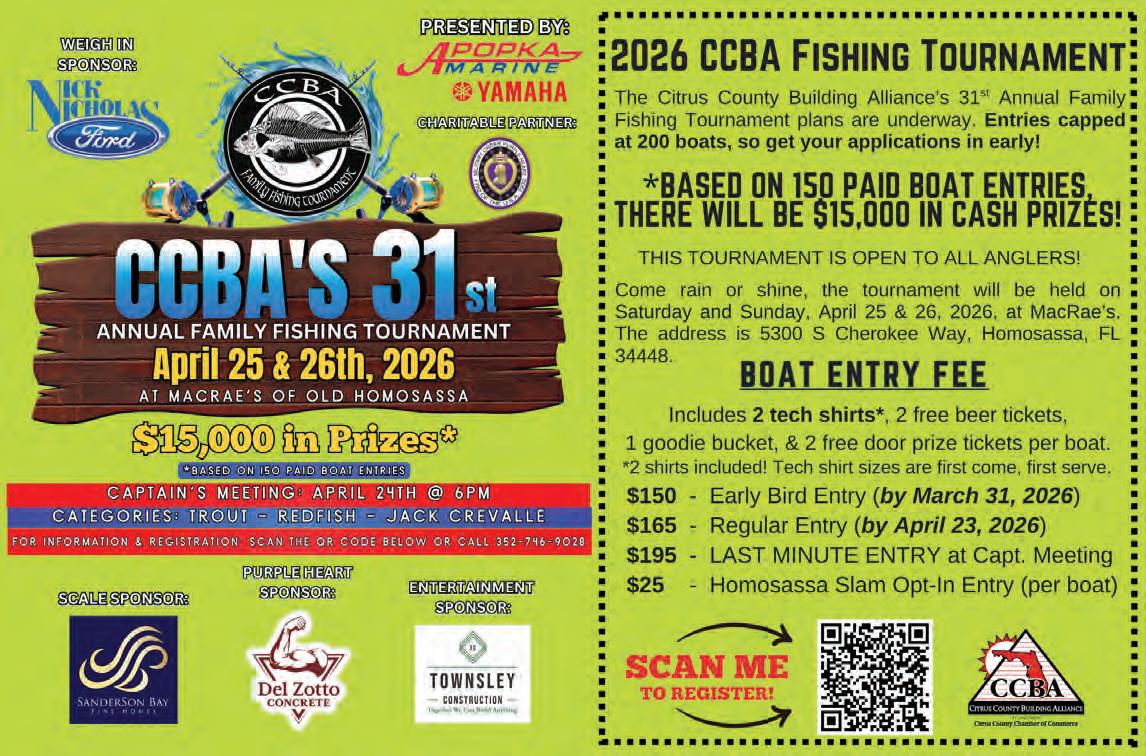
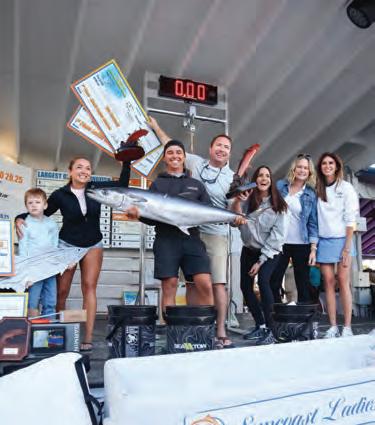
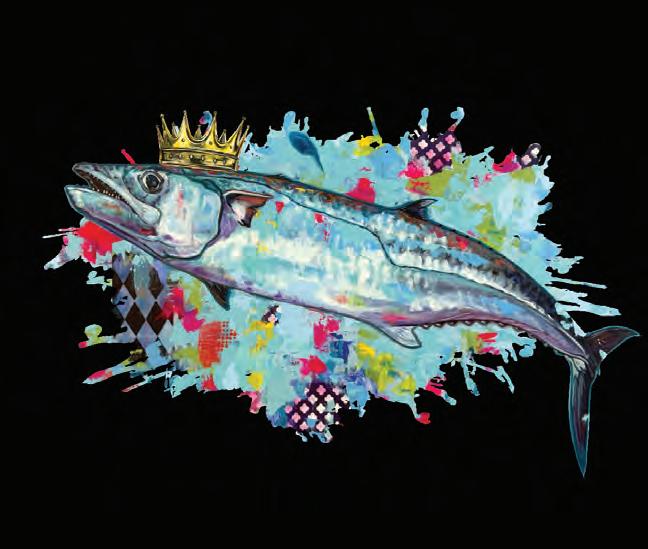
Have you ever tried tournament fishing? If so, you already know about the legendary “King of the Beach.” If you haven’t had the chance yet, this is your moment—this is the best tournament in town!
This spring, we proudly celebrate our 33rd Annual Tournament, and we’re taking the excitement to a whole new level with even more opportunities to win! This year, we’re we have some great prizes to go with the prize money…. Suzuki 300hp engine for Single Engine winner and an Owen & Sons Aluminum Slide On Trailer with a whopping 10,000lb capacity, worth $10,200, awarded to the fish weighed in closest to 20.26 lbs. And guess what? Any team can snag this prize! This prize is winnable from any division, including youth.
Here are three compelling reasons why you simply must fish the King:
**LEVEL PLAYING FIELD:** Thanks to the Old Salts, our competition is one of the fairest for all anglers out there. We maintain a 30-mile boundary to ensure boats of any size can compete, and we provide additional opportunities for single-engine vessels. Plus, forget about intimidating checkouts or shotgun starts—this is all about fun!
**OVER 60 PLACES TO WIN:** With six divisions—Overall, Single Engine, Spanish Mackerel, Traveling Angler, Ladies, and Youth—there’s something for everyone! Each division boasts cash and/or prizes, with approximately $300,000 up for grabs. Our first-place prize for the singleengine division is a stunning new 300hp Suzuki with a repower package valued at over $26,250.
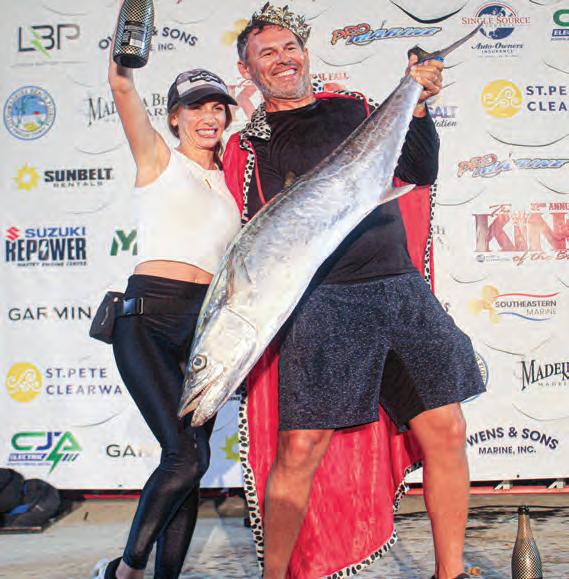
**LOW ENTRY FEES:** You can enter this fantastic tournament for as little as $300—almost half the cost of most Kingfish tournaments! That means less risk for you and far greater rewards. The overall first-place winner will be awarded approximately whopping $50,000!
But wait—this event is about so much more than just fishing. It’s a fullblown 3-day festival featuring a variety of marine-related art and craft vendors, a vibrant food festival showcasing local flavors, and Friday night is Community Night, complete with a free Kids Fishing Slam and live music! “Bringing together a community food festival and live music into our tournament seemed natural to us. Fishing is part of our community, and we warmly welcome everyone to join us,” shares Old Salt President Tom Verdensky.
Don’t forget, the Kids Seawall Tournament is on Friday night! Our team will be ready to assist the kids in fishing and measuring their catches, and we have exciting prizes for each age group. Everyone has a shot at winning in our Kids Only Raffle, and the first 500 sign-ups will receive a free Rod/Reel combo to fish with!
Join us at the Madeira Beach Recreation Complex, located at 200 Rex Place, Madeira Beach. Be sure to visit our website for the latest updates on everything you need to know—from the hottest fishing spots to the best places to stay with your boat! Don’t miss out on this unforgettable experience! The Old Salt Fishing Foundation hosts this semi-annual event to benefit several local charities. This spring, we will present checks to P.A.R.C., Celma Mastry Ovarian Cancer Foundation, and our very own Youth Summer Camp Programs.
To find out more information or to register for the tournament, go to www.OldSaltFishing.org, email amy@OldSaltFishing.org or call 727-216-6601.
















BY: CAPT. BILL RUTHERFORD
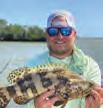
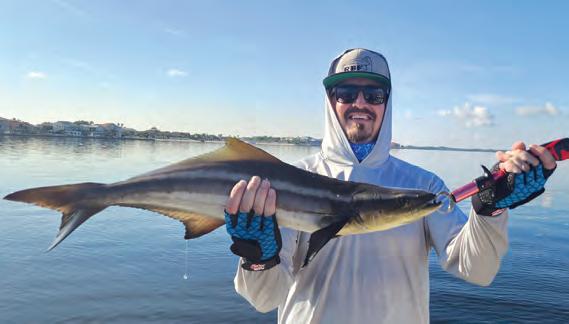
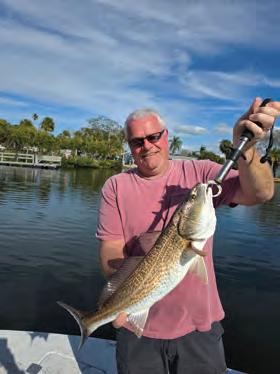
Spring is finally in the air after an uncomfortably cold start to the year. Fish that we haven’t seen since the Fall will be showing up towards the end of this month, and the usual suspects will be fired up, ready, and willing. The snook will be out of their winter slumber and ready to gorge on pilchards before making their way out to the beaches. The redfish will leave the canals and deep water to scour the flats, and the trout will be pre-spawn and stacking up on the grass flats. As the water temperatures approach the upper 60s and low 70s, the cobia and Spanish macs work their way into water depths within range of almost every recreational fisherman.

Cobia are my favorite fish to target in March as they move around the grass flats, following stingrays, sharks, and manatees. Sight casting them with bucktail jigs or swimbaits is about as much fun as you can have on the water around here. Elevated platform boats increase your chances of seeing them before they see you, but they aren’t exactly the most spooky fish when they’re following along behind a ray or manatee. Another easy way to target them is to drift the grass flats and fish for trout while dragging a popping cork behind you with a pinfish a couple of feet underneath it. A large enough pinfish eliminates most of the bycatch that you’ll get if you use a shrimp or pilchard.
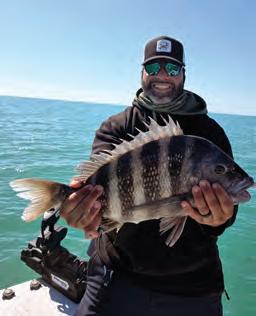
This is also your last chance to venture into the nearshore waters to find giant sheeps before they head west for the year. Pasco public reef #4 is a great jumping off point, and then cruise along the stone crab buoys from there looking for the rocky bottom.
— Captain Bill is a Florida native who grew up fishing the Gulf Coast. Being a proud Army Vet himself, he founded a charity called VetCatch that takes disabled veterans on cost free fishing trips in the Tampa Bay area. He guides out of New Port Richey fishing a 24-foot Shoalwater tower boat as well as the custom 25-foot VetCatch pontoon if needed for elderly/ disabled fisherman. www.rustybucket.fish.

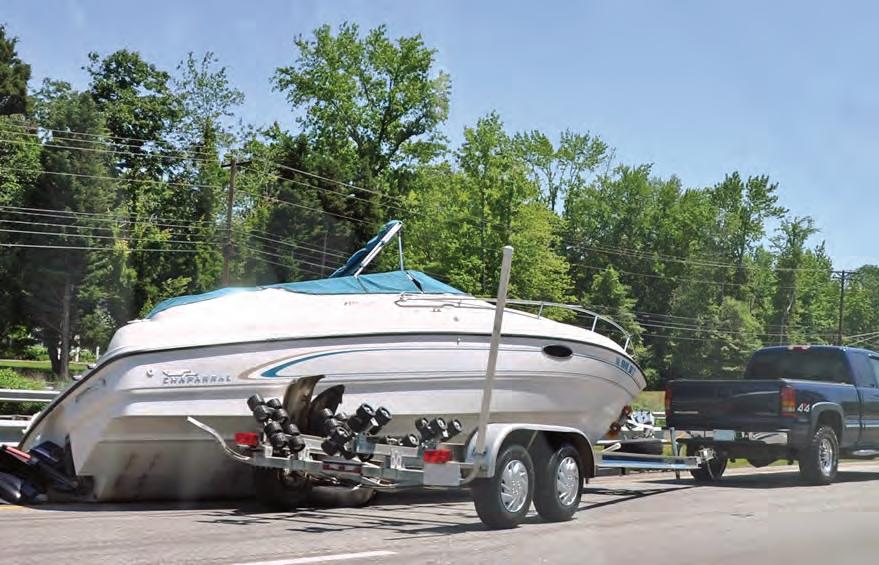
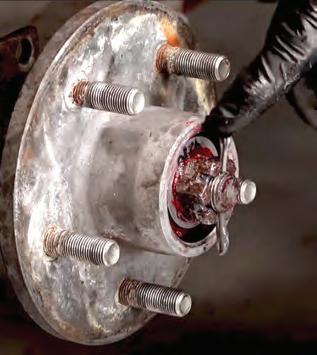
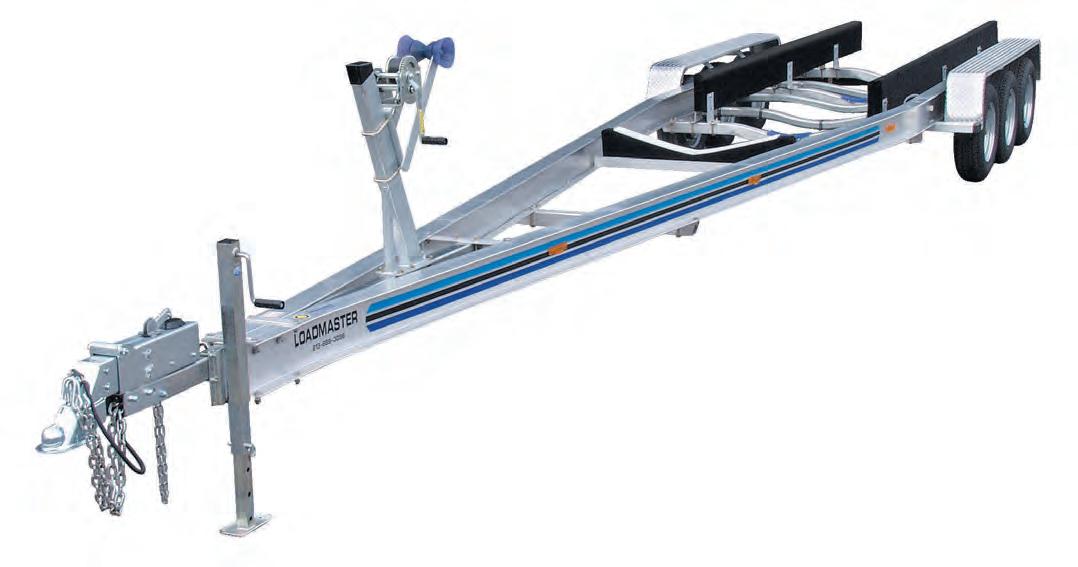
Awell-maintained trailer isn’t just about convenience— it’s about safety, longevity, and peace of mind every time you hit the road. Whether you’re hauling a boat, camper, utility trailer, or work equipment, routine maintenance prevents breakdowns and protects your investment. The good news is that most trailer upkeep is simple, predictable, and far cheaper than dealing with a roadside failure.
Start with the foundation: the tires. Trailer tires age faster than most people realize, especially in hot climates where UV exposure and heavy loads take a toll. Inspect tread depth, sidewall cracking, and air pressure before every trip. Under-inflated tires generate heat, which is the number one cause of blowouts. Don’t forget the spare—if it’s flat or dryrotted, it’s useless when you need it most.
Next, focus on the wheel bearings. These small components do big work, supporting thousands of pounds while spinning at highway speeds. Bearings should be cleaned, inspected, and repacked with fresh grease at least once a year, or more often for boat trailers that are repeatedly submerged. A failed bearing can lock up a wheel, damage the axle, and leave you stranded, so this is one task worth staying ahead of.
Lights and wiring are another common trouble spot. Corrosion, loose grounds, and worn connectors can cause flickering or dead lights, which is both unsafe and illegal. Test brake lights, turn signals, and running lights regularly. Applying dielectric grease to connections and keeping wiring secured and protected from road debris will dramatically reduce electrical headaches.
Brakes—if your trailer has them—deserve the same attention you’d give a tow vehicle. Electric brakes should be checked for proper adjustment and magnet wear, while surge brakes need clean fluid and leak-free lines. A trailer that doesn’t stop correctly puts enormous strain on your tow vehicle and increases stopping distance. Finally, give the frame, coupler, safety chains, and winch (if equipped) a thorough inspection. Look for rust, cracks, loose bolts, and worn components. Make sure the coupler locks securely onto the hitch ball and that chains are crossed and properly sized. A little lubrication on moving parts, like the jack and coupler latch, keeps everything operating smoothly.
Consistent trailer maintenance isn’t glamorous, but it’s the difference between a smooth trip and a stressful one. A few hours of care each season keeps your trailer dependable, safe, and ready for whatever you need to haul next.

Salt Strong is more than a fishing club; it is a movement to unite, inspire, and empower anglers nationally. Salt Strong Chapters are located from Texas to Florida to the Carolinas and offer the opportunity to Meet Local Anglers, Learn from Informative Speakers, Participate in Conservation Activities, and Win Awesome Giveaways. Go to SaltStrong.com to stay up to date and to learn more.
By: Darlene Shuman, PE,
President of Salt Strong Alliance, Florida Registered Professional Engineer and President of the Tampa Chapter of Salt Strong Fishing Club
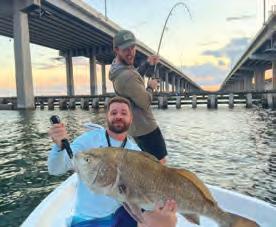
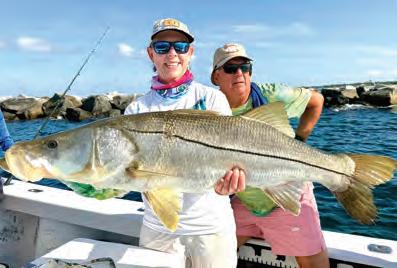
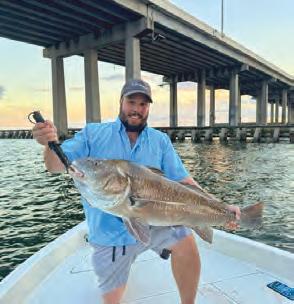
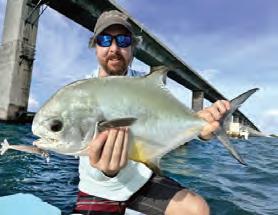
Look through almost any trophy inshore photo and there’s a good chance a bridge, dock, or causeway is somewhere in the background. That’s not a coincidence.
As anglers, we instinctively gravitate toward structure—and few things in Florida create structure, current, and ambush points like docks, bridges, and causeways. Add moving water, shade, and food delivery, and you’ve got prime real estate for redfish, snook, tarpon, trout, drum, and sheepshead. These aren’t just places to fish. They’re places where fish live.
Docks, bridges, and causeways all share a few critical ingredients that fish love:
• Current breaks – Pilings and bridge spans slow water, letting fish conserve energy while food washes past.
• Shade lines – Especially in warmer months, shade equals comfort and concealment.
• Ver tical structure – Pilings create edges, ambush lanes, and oyster growth zones.
• Consistent water movement – Tides funnel bait through predictable paths. In short: food comes to them, and predators don’t have to work hard to eat.
How
One of the biggest mistakes anglers make when fishing from docks, bridges, piers, or shorelines is ignoring the tide.
When you’re fishing from a fixed object, your lure presentation matters even more than when you’re in a boat.
Instead of casting straight into the current, cast up-current at an angle, then retrieve as the lure sweeps naturally with the flow. This does two things:
1. Keeps your lure moving like real bait
2. Covers a much larger strike zone
This “sweeping” technique is deadly around bridge pilings and dock edges, especially on moving water.
Making Good Fishing Spots Even Better
Here’s where things get exciting.
Under the Salt Strong Alliance’s DRIVE For CleanWater Initiative, we are partnering with the Florida Department of Transportation to transform these already-productive areas into even better habitat.
By adding nature-based water filtration and living structure—such as oyster substrates and multi-trophic systems— we are enhancing:
• Water clarity
• Forage production
• Fish habitat
Another highly effective tactic is walking with the current. Cast slightly up-current, let the lure drift naturally, and slowly move yourself along the dock, bridge rail, or shoreline as you retrieve. You’re essentially following the bait path—and staying in the 10% of water that holds 90% of the fish.
Target the 90/10 Zones
Not all water is equal. Focus on:
Up-current sides of pilings, down-current eddies, shadow lines, and transitions where sand meets rocks or oysters
If your lure isn’t passing right in front of fish holding zones, you’re just casting.
One of the most overlooked opportunities in Florida is wade fishing along causeways.
Causeways offer:
• Easy public access
• Shallow flats with deeper adjacent water
• Rock and oyster-lined edges
• Consistent tidal movement
For anglers without a boat—or those who just love stalking fish on foot— causeways are some of the most productive and accessible fisheries we have.
• Overall fishery health Oysters don’t just clean water. They create food webs. They attract bait. And bait attracts gamefish.
In other words, the same bridges, docks, and causeways anglers already rely on are being quietly upgraded into stronger, cleaner, more productive fisheries.
Next time you see a photo of a monster snook, redfish, or tarpon with a bridge in the background, remember: that structure didn’t just hold the fish—it shaped the ecosystem around it. With anglers, conservationists, and agencies working together, those iconic fishing spots are only getting better.
To learn more about how clean water, habitat enhancement, and fishing intersect, visit SaltStrongAlliance. com and DriveForCleanWater.com. Because protecting where fish live is how we protect the fishing we love.
Learn how - Just stop by our Salt Strong Fishing Club booth (245) at the Florida Saltwater Fishing Expo March 28-29 at the Ocean Center in Daytona Beach, Florida. This event brings together anglers, charter captains, marine businesses, conservation organizations, and fishing enthusiasts for a day dedicated to all things saltwater fishing. See you there!!
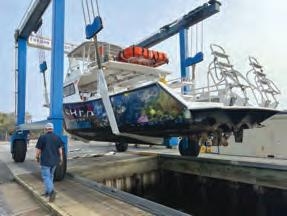
ruin your plans at the most inopportune time. On our boats, nothing is ever screwed in or fastened without applying a substance that will help us remove it when that time inevitably comes. Depending on what material we are working with, be it grease, anti-seize, even silicones or caulk, it will keep a stainless screw or bolt from becoming one with your boat. Hours of frustration with a cutting wheel and tap can be avoided with just a dab.
Your shift and throttle cables, fire suppression system, and fuel shut-off valves can be pricey and are always miserable to replace. A monthly checklist is a great way to remind yourself to maintain all your moving levers and cables. A quick spray with Yamashield or Corrosion X (our favorite) while engaging them will help prevent sticking or complete seizing. These products are a bit more expensive than WD-40, but worth every penny, in my opinion.
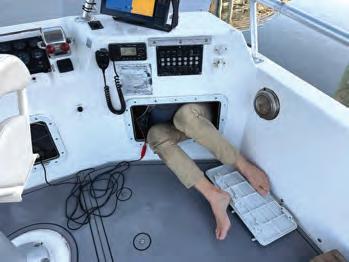
On the electrical side, a proper connection and a generous amount of dielectric grease will pay dividends down the road. When we do wiring, we only use heat-shrink connectors and the proper crimpers to secure the wire to the metal, without cutting the heat shrink. When my staff burns through or cuts the heart shrink, or the crimp just isn’t to my liking, I make them cut it and do it over. No exceptions.

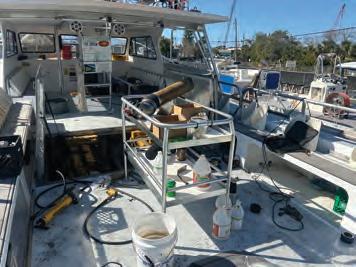
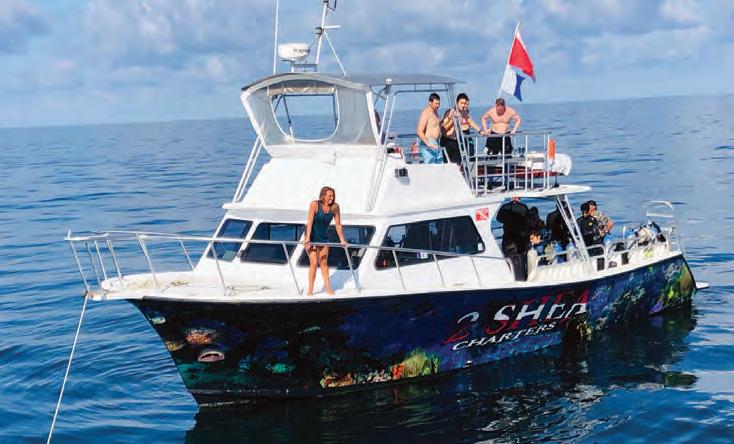
Their frustration always reminds me of Chevy Chase in Spies Like Us. When he complains about walking through the scorching desert while carrying all the warm but heavy clothes, he heads along the road to Dushanbe. Dan Ackroyd excitedly tells him that, at some point, he will thank him, given how cold it is up there. I do the same with my crew. Losing your live well pumps on an important charter or having a bilge pump stop working can be catastrophic in different ways. All because a crimp was done half-assed. On top of the worst-case scenario, tracking down electrical issues may be the most tedious job going. With multiple connections running through different compartments, any of which could be the fail point. That’s not how I want to spend my time. We also put a dab of dielectric on the female ends of the wires on our Raymarine MFDs to fill any voids in the plug. Air pockets are just an invitation for corrosion to become a highway. The two Raymarine Axiom Pro 12’s on our dive boat have been on the dash, exposed to the elements, for over five years without any problems. Doing things the right way takes a little more time and can be frustrating when you are trying to get a project done. Having owned boats and done much of the maintenance for over 30 years, I feel very qualified to speak on this. Take heed of Ben’s advice. I learned the hard way more than once to save you from the same fate.
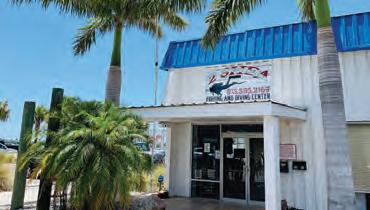
— Capt. TJ Shea. Owner/Operator 2 Shea Fishing and Diving Charters. TJ has been exploring above and below the Gulf of Mexico since he was 8 years old. Contact us at 813-385-2169 and at info@fishanddivetampa.com
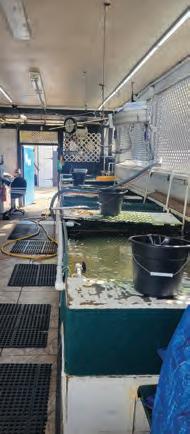





At its February meeting, the Florida Fish and Wildlife Conservation Commission (FWC) approved new management regions and regulations for spotted seatrout shing in the State of Florida. e rule changes establish nine management regions for spotted seatrout as well as regional regulations for recreational and commercial shing.
ese new regulations will go into e ect on April 1, 2026:
OPEN/CLOSED SEASONS
Recreational
» Panhandle: Open March 1–Jan. 31; Closed February.
» Big Band, Tampa Bay, Sarasota Bay, Charlotte Harbor, Southwest, Southeast, Northeast: Open year-round.
» Indian River Lagoon: Open Jan.1–Oct. 31; Closed Nov. 1-Dec. 31.
Commercial
» Panhandle, Big Bend, Tampa Bay, Sarasota Bay, Charlotte Harbor, Southwest, Southeast: Open Jun. 1–Oct. 31; Closed Nov. 1–May 31.
» Indian River Lagoon: Open May 1–Sept. 30; Closed Oct. 1-Apr. 30.
» Northeast: Open June 1–Nov. 30; closed Dec. 1–May 31
Recreational
» Big Band: Five (5) sh per person.
» Panhandle, Tampa Bay, Sarasota Bay, Charlotte Harbor, Southwest, Southeast, Northeast: Four (3) sh per person.
» Indian River Lagoon: Two (2) sh per person.
Commercial
» 50 sh (1 SPL);100 (≥2 SPLs) in all regions.
» Recreational - 15-19 inches
» Commercial - 15-24 inches
OVERSLOT ALLOWANCE
Recreational
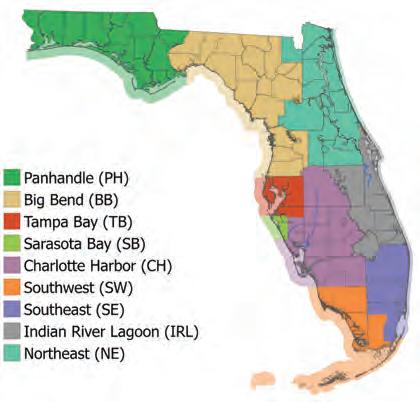
» All Regions: None. is regional management strategy has been implemented for some of Florida’s most popular inshore species, including red sh and snook, and now spotted seatrout. ese regions and regulations are part of the FWC’s holistic management is approach takes a more holistic view of the shery by evaluating multiple metrics, including shing, stakeholder experiences and environmental factors, at a smaller regional scale. It improves our understanding of regional di erences in environmental conditions and stakeholder experiences and provides greater exibility to address localized concerns.



» Panhandle, Big Bend, Tampa Bay, Sarasota Bay, Charlotte Harbor, Southwest, Southeast: One (1) sh over-slot allowed per vessel or per person if shing from shore
» Indian River Lagoon, Northeast: None
Commercial
For the full FWC commission meeting agenda and links to background reports, go to myfwc.com/about/commission/commissionmeetings/. For current spotted seatrout annual reviews, visit MyFWC.com/Marine and click on “Recreational Regulations” and “Spotted Seatrout.” ese documents provide a summary of the management metrics in each new management region.
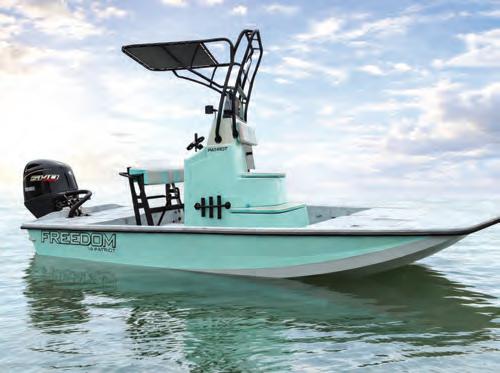
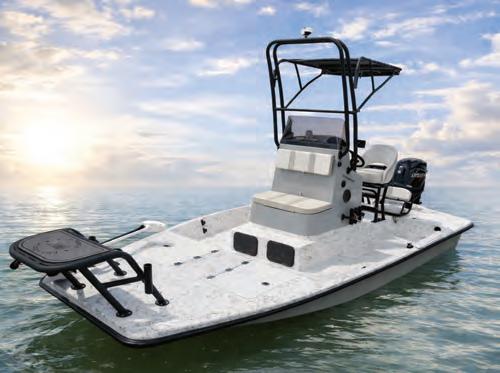


















It’s no fsh tale when you run with a John Deere. You can get everything done faster and easier, so you get more time on the water. Plus, our special offers make them the catch of the day.



By Capt. Jim Ross
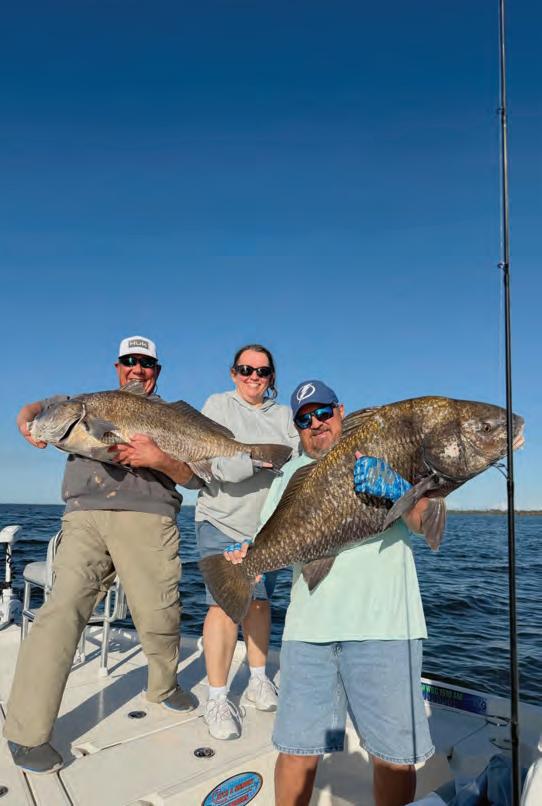
s a charter captain, as well as a regular contributor to the Brevard County, Florida edition of Coastal Angler Magazine, every year there are certain events that happen that I try to predict in advance so that clients and readers can catch more !sh. However, there are many times that even we so called “professionals” don’t get it exactly right. Obviously, my crystal ball isn’t 100 percent correct all of the time...maybe it needs a tune up. LOL!
ings like the giant black drum schooling up, spring cobia run, June tarpon run, fall mullet run, and winter pompano run aren’t things you can pin down to a certain day of the month, but most of the time we can at least predict the month. Hopefully, I can achieve at least a 90 percent e ciency rating a er doing this report for the past 25 years.
I was just telling my clients one day last week, a er catching a bunch of small trout and a couple of lady!sh, that the big uglies were probably going to show up in a few weeks and if they had a chance to come back out with me then that they may have a shot at catching some much larger !sh than the ones we had landed that morning. Just !ve minutes a er saying this I spotted something unusual about 500 yards up the at. It was exactly what I had just been talking about- a 300 !sh school of 30 to 50-pound black drum.
e !sh in this big school were happy-tailing and waking as they pushed their way down the at. We eased up to them, cast our shrimp in their direction, and as you !gured, the battles were on. All three anglers were hooked up to huge drum that had absolutely no respect for them. Drags screamed, rods doubled over, and dozens of yards of line dumped o their reels. Grunts and groans were heard between laughter and smiles as they worked to tire these beasts. e boat deck looked like a country bar dance oor as anglers shu ed and two-stepped under and over each other in an e ort not to lose their prized catches.
We ended up extending the trip from a 3/4 day to a full day outing because each !sh took 15 to 25-minutes to land.
e moral of the story? Don’t ever count on !sh to be there and don’t ever think that it’s not quite the right time to catch them. e bottom line is just go !shing every chance you get. at is the only way that you can be sure to catch your next memory.
Capt. Jim Ross is owner/operator of Fineline Fishing Charters on Florida’s Space Coast and host of “Catch a Memory Outdoors” live radio show and podcast. www. neline shingcharters.com • www.catchamemoryoutdoors.com





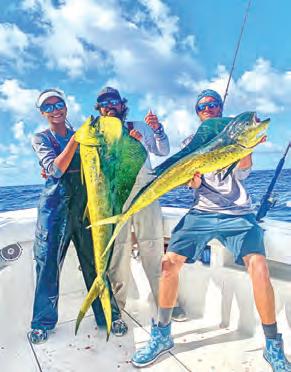
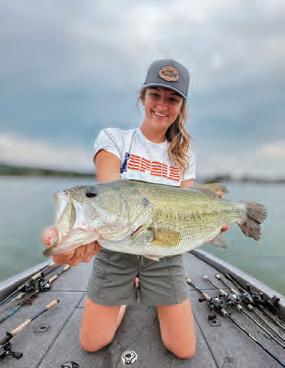



So many anglers have a “go-to” color lure that they swear by. What they do not understand is that the color of your lure barely makes the top three most important factors for catching tons of !sh.
Mistake #1 - e number one mistake anglers make is ignoring the importance of the size and pro!le of the lures they use. When snook, tarpon, red!sh, speckled trout or ounder are feeding, they o en become laser focused on that particular forage species. In other words, if they are feeding on a 6-inch mullet your 3-inch paddletail or shrimp lure will probably be ignored.
PRO TIP: Have a few of your rods rigged up with various sizes and pro!les of lures on them. I like to have a 3-inch paddletail, an arti!cial shrimp and a 4- to 5.5-inch jerk bait ( uke) rigged up when I can’t determine what bait is around. Try all three sizes and pro!les of lures until you !gure out what the !sh in the area are feeding upon.
Mistake #2 - e number two mistake most anglers make is thinking one retrieve style works best for all of the !sh all of the time. ere are so many di erent factors to consider when retrieving your lures. Here are a few to consider:
• Is the water cold or hot? Fish are cold blooded and move more slowly in cold water. is means that you have to slow down your retrieve when the water is cold. Conversely, you want to move your lure faster when the water is hot.
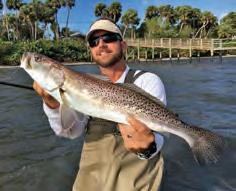
• What species are you targeting? Di erent !sh species like di erent retrieves. For instance, the best retrieve for a red!sh is slowly bouncing your lure o of the bottom. A tarpon likes a low and steady retrieve. A ounder likes a very slow bounce/dragging retrieve no higher than 12 inches from the bottom. A speckled trout likes a vertical jig and will usually hit the lure as it falls through the water column. Snook like a fast and erratic retrieve most of the time.
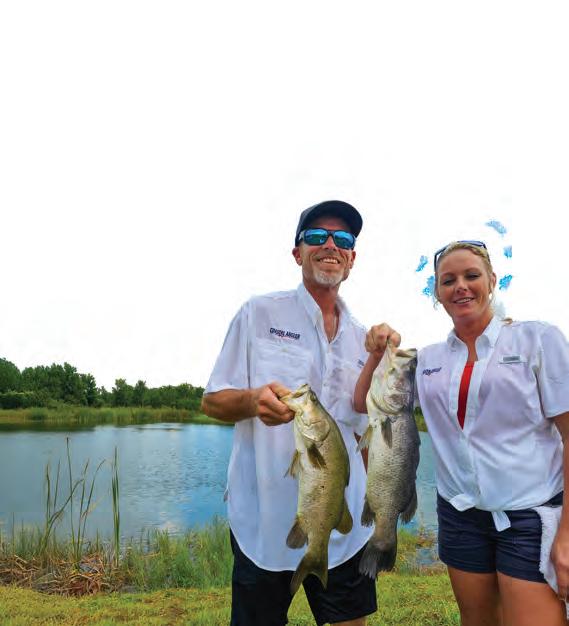
• Is the water clear or murky? Low light, cloudy skies and murky water scenarios makes it harder to get a !sh’s attention. Use a retrieve or lure that creates vibrations and ashes in the water. You also want to fan cast the area keeping your lure placement close together because they are less apt to seek out your lure. When it is sunny and the water is clear it is easier to get the !sh’s attention. You can make your casts further apart and make the !sh come to your lure.
Mistake #3 - e third biggest mistake is thinking !sh care about lure colors. A saltwater tackle box with white lures and something dark like root beer or purple is all that you need to catch any !sh. PERIOD. e bottom line is that if you want to catch more !sh, switch up your sizes and pro!les and vary your retrieves for di erent species and conditions. I GUARANTEE that you will catch more !sh.
Capt. Mike Smith is owner of Fish Your Ass O Charters.Reach him at (561) 339-2317, contact@ shyourasso .com or shyourasso .com.





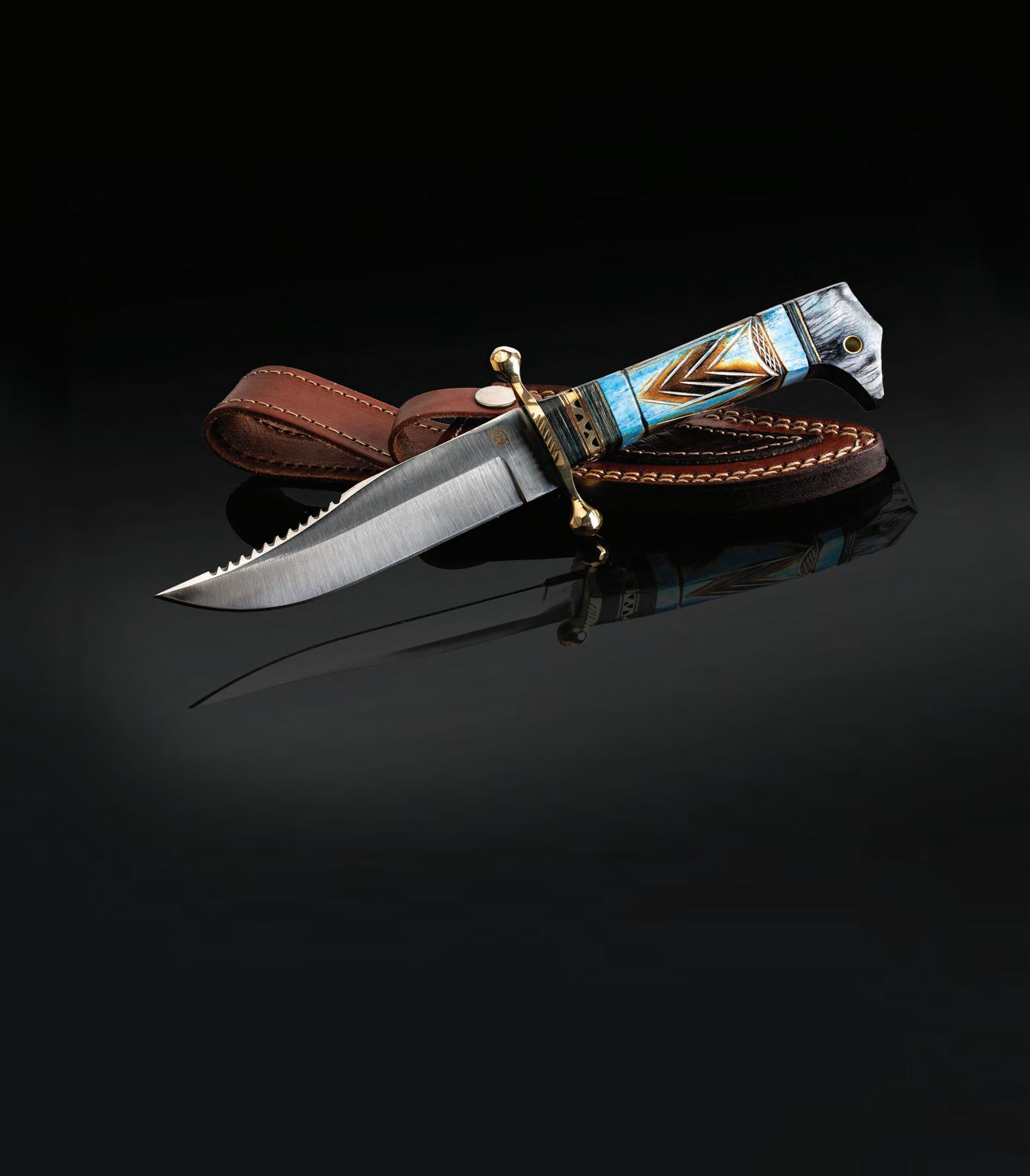
“It’s a beautiful knife with a great blade and a sure grip” — William B. Wilmington, NC
My friend Sergio is a mixed martial arts fighter. His shoulders are broad. His muscles have muscles. He’s not the kind of person you want to be on the wrong side of.
This manly man has a saying about being tough: You should either know how to fight or look like you do.
The message is simple enough. People spoiling for a fight usually don’t pick the biggest guy in the bar. If you look like someone who shouldn’t be messed with, you likely won’t be. With our Blue Bone Bowie Knife on your hip, that’s exactly the message you’ll send.
As beautiful as it is functional, this knife is 10" overall and features a high-quality 420 surgical stainless steel blade with a serrated spine. The handle is constructed of genuine natural bone with redwood spacers. On the handle you’ll find design work that’s carved by hand, a testament to its craftsmanship.
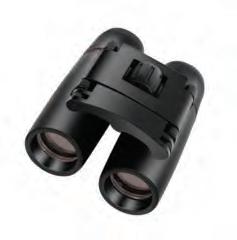
This knife is stick tang, meaning it won’t wimp out when you need it. This knife also features brass hand guards and brass spacers with file work, so you won’t lose your grip. For easy carrying, it comes with a genuine tooled leather sheath. CALL NOW! If you’re one of the rst 700 587 callers for this ad, we’ll throw in a pair of Stauer HD Pocket Binoculars — a $99 value — ABSOLUTELY FREE!
Walk around with the Blue Bone Bowie Knife and you’ll feel a lot safer. I know I do.
Knife Speci!cations:
• 10" overall length
• 420 surgical stainless steel and stick tang construction
• Genuine natural bone and redwood hand-carved handle
• Genuine leather sheath included
Blue Bone Bowie Knife
EXCLUSIVE FREE
Stauer Pocket Binoculars a $99 value with your purchase of the Blue Bone Bowie Knife
$299 $79* + S & P Save $220
*Special price only for customers using the offer code. 1-800-333-2045
Your Insider Offer Code: BBK164-02
California
please
regarding