
Suzuki, the “S” logo, and Suzuki model and product names are Suzuki Trademarks or ®. © 2026 Suzuki Marine USA, LLC. All rights reserved



















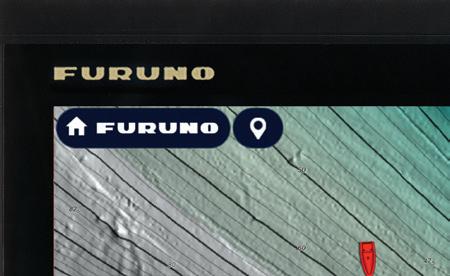
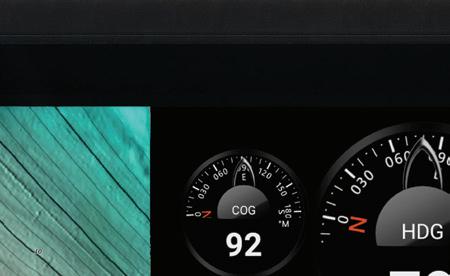


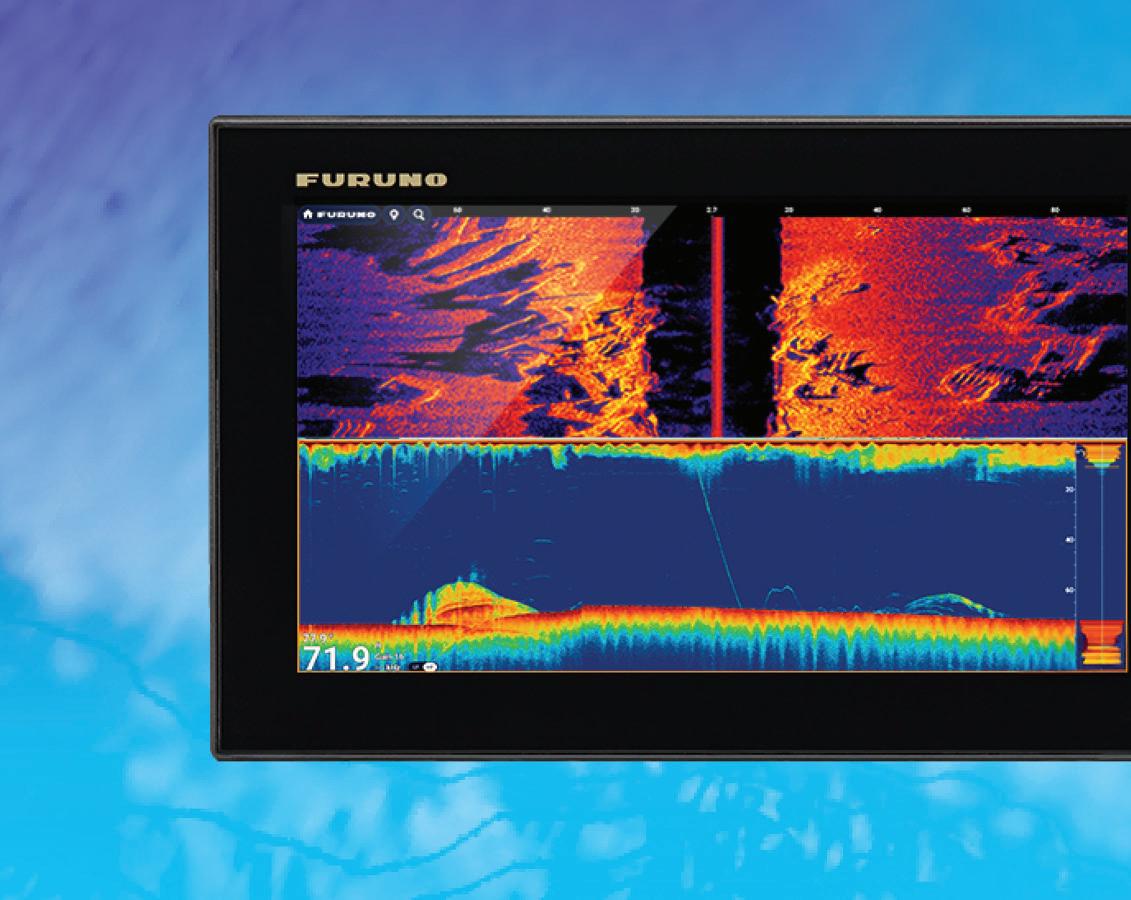

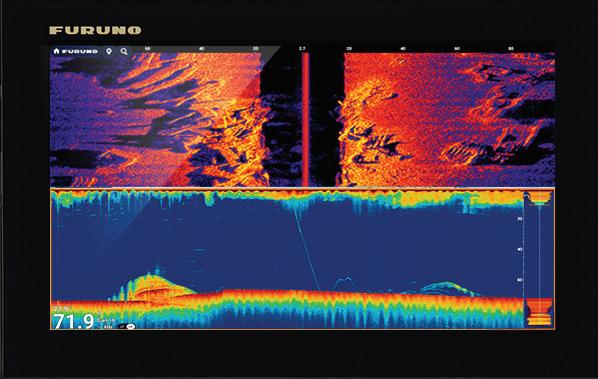
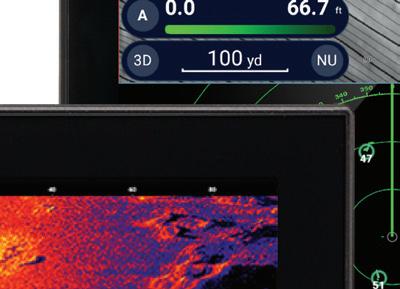
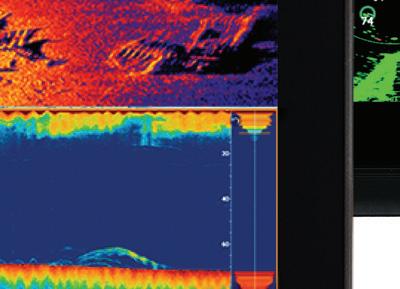
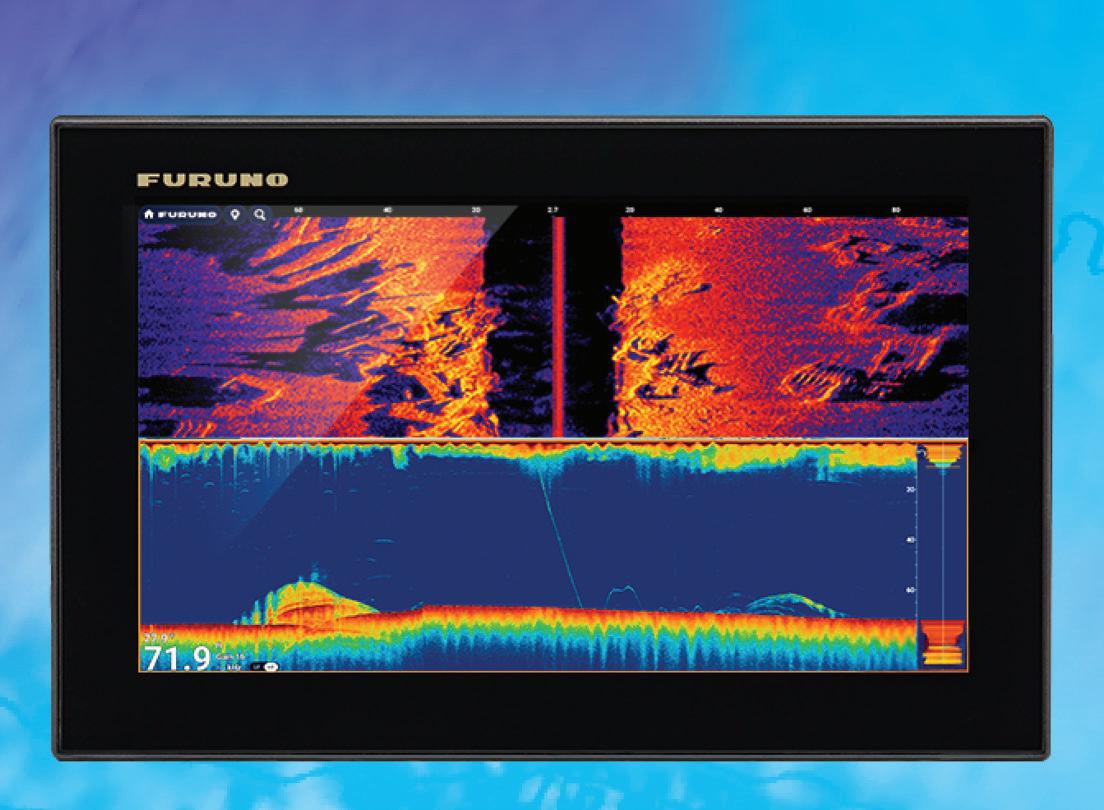
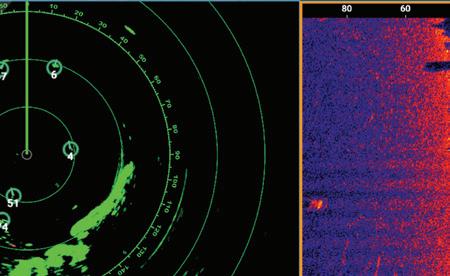



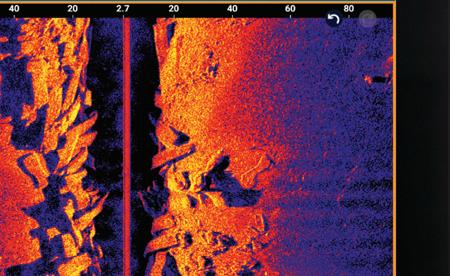









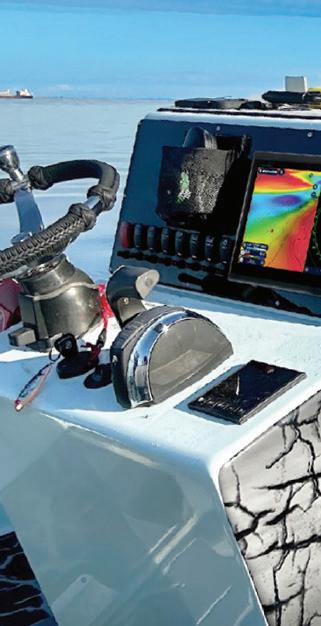




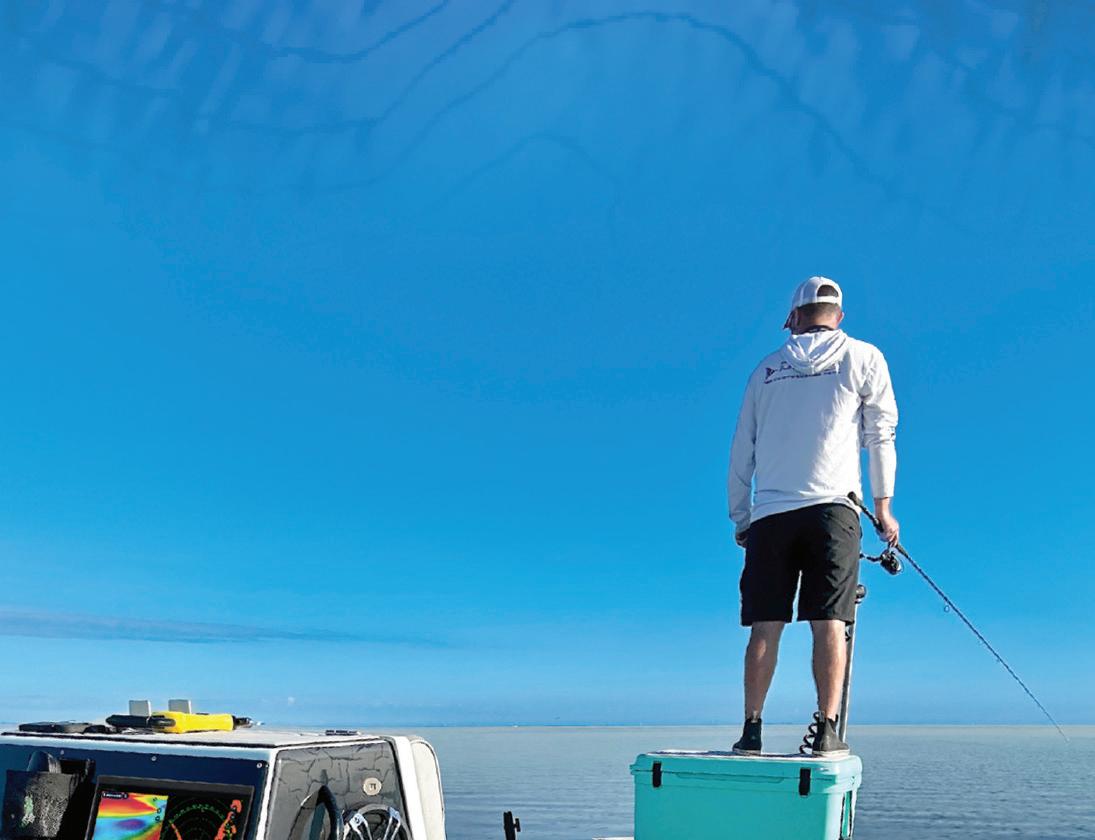
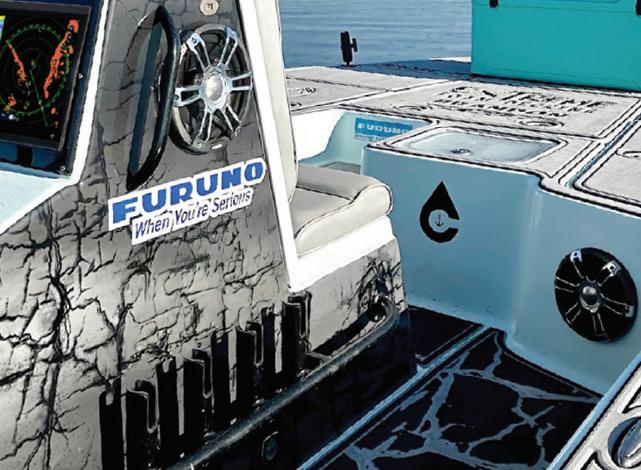



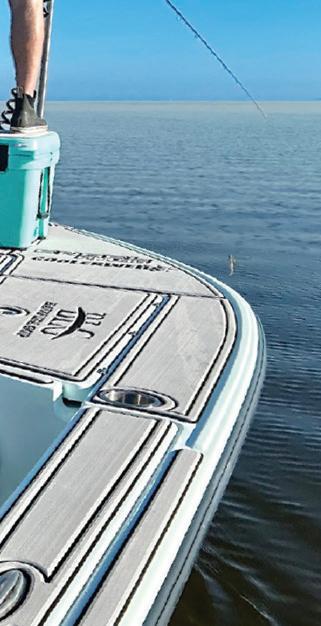





With this streamlined MFD, Furuno is bringing big-boat confidence to everyone. & More Fish











Less Stress





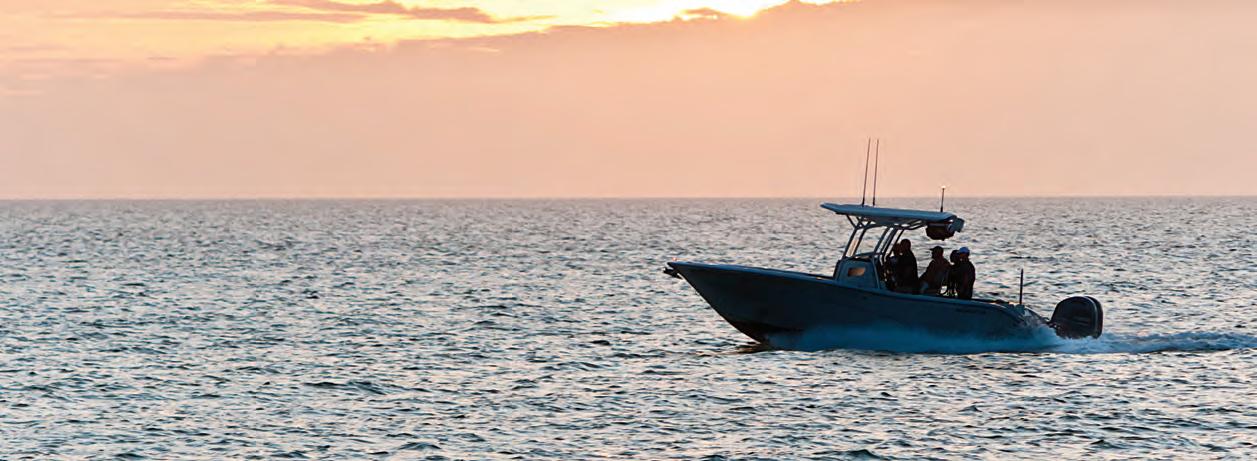
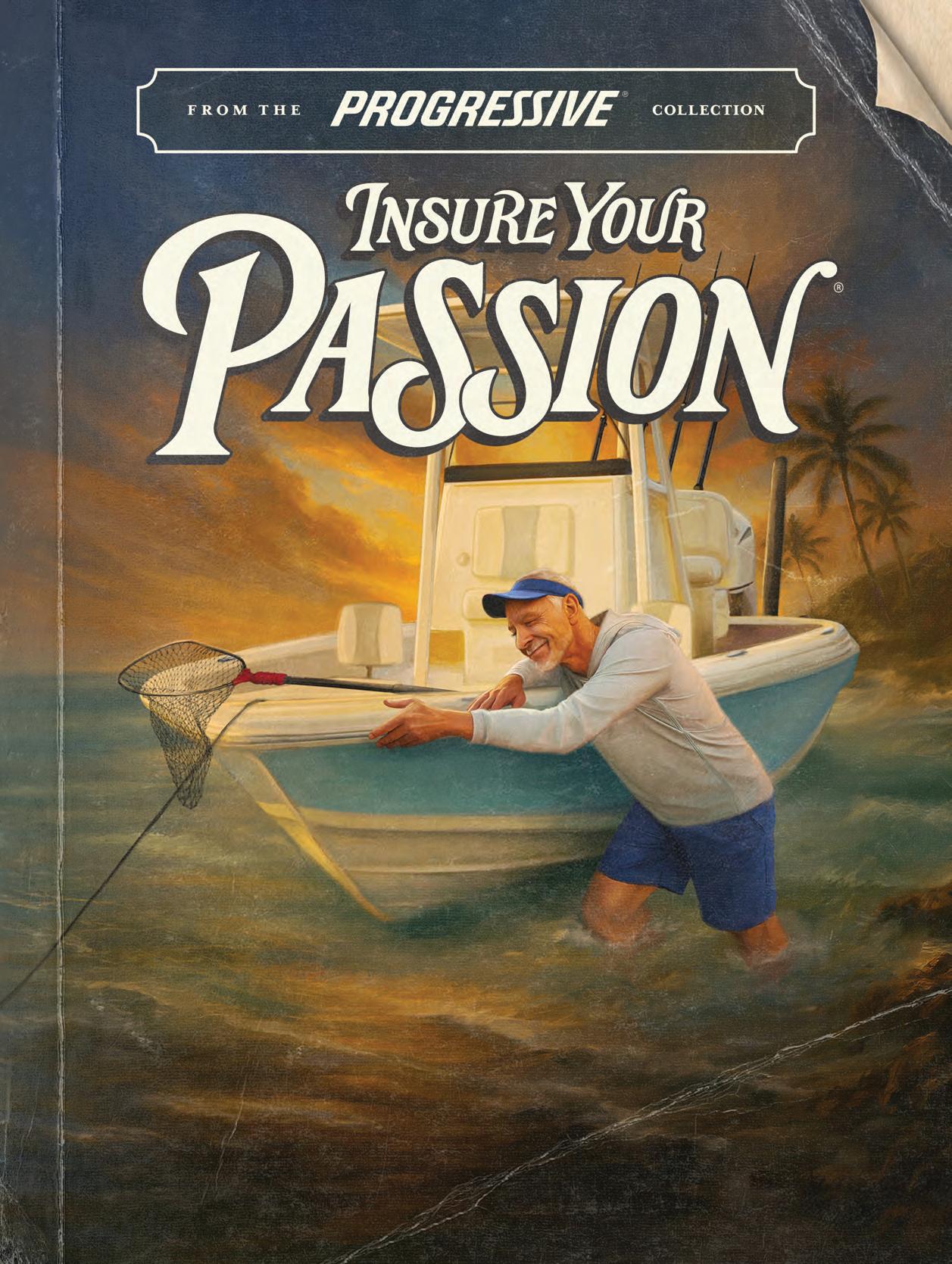
Are you ready to embark on your next on-water adventure? Before you set sail, here are fve things to know about boat insurance.
1. Boat insurance isn’t just for accidents
With comprehensive coverage, you’ll also be protected fnancially for theft, vandalism, and unexpected events like storms if you need repairs or replacements due to damage.
Accidents can happen to anyone
When accidents happen, boat insurance offers liability coverage for damages or injuries you cause while boating, up to specifed limits. It can also cover lawsuit costs if you’re sued.
3. Boat insurance can cover medical payments
Boat insurance offers a range of optional medical payments coverage limits, helping to cover medical expenses if you’re in an accident or someone is hurt on your boat, regardless of fault.
4. Most lenders require boat insurance
If you fnanced your boat, you’ll likely need boat insurance since most lenders require boat insurance to protect their investment. Additionally, some marinas or municipalities require proof of insurance for docking.
5. Progressive offers specialized boat coverages
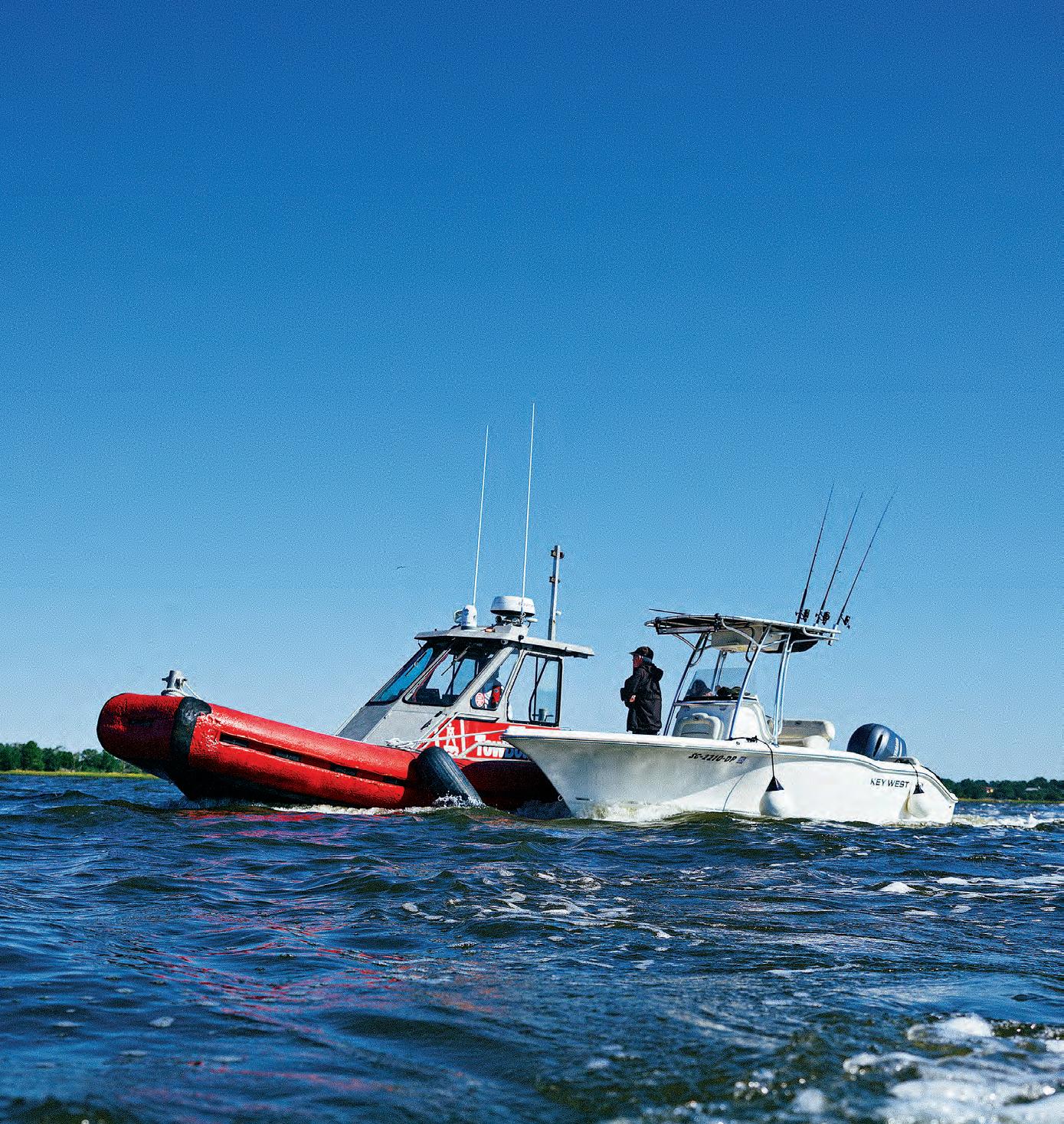
Ever worry about getting stuck on the water?
Progressive’s Sign & Glide® On-Water Towing coverage** can help. It’s an additional coverage that steps in if your boat is disabled or breaks down on the water, paying for on-water towing, jump starts, soft ungroundings, and fuel delivery. Fuel cost isn’t included.
Don’t let unforeseen circumstances disrupt your voyage. Cruise with confdence thanks to Progressive Boat insurance. Because when it comes to your boat, peace of mind is the ultimate luxury.
Scan to get a quote in as little as 4 minutes.
to learn more.












By A. deGruchy
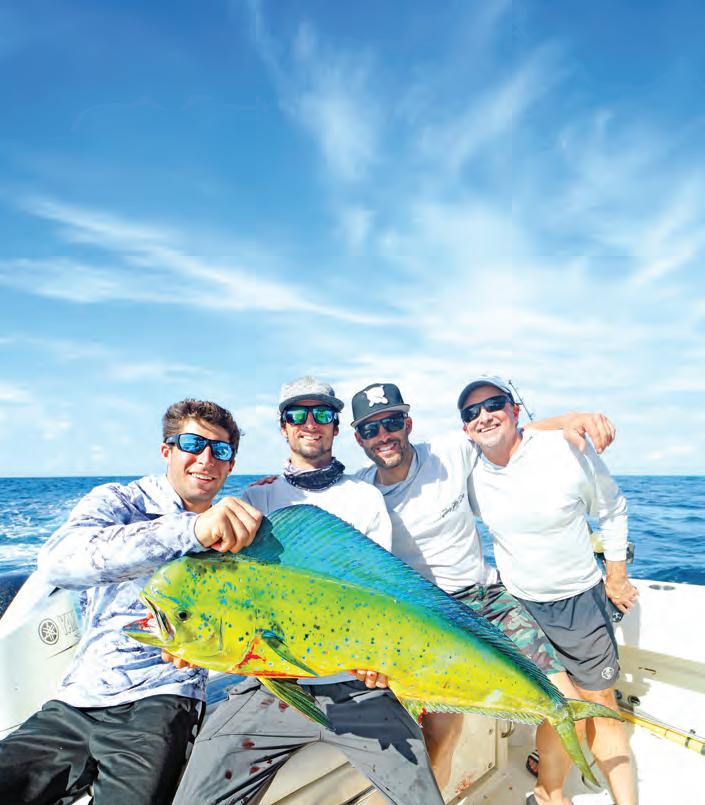
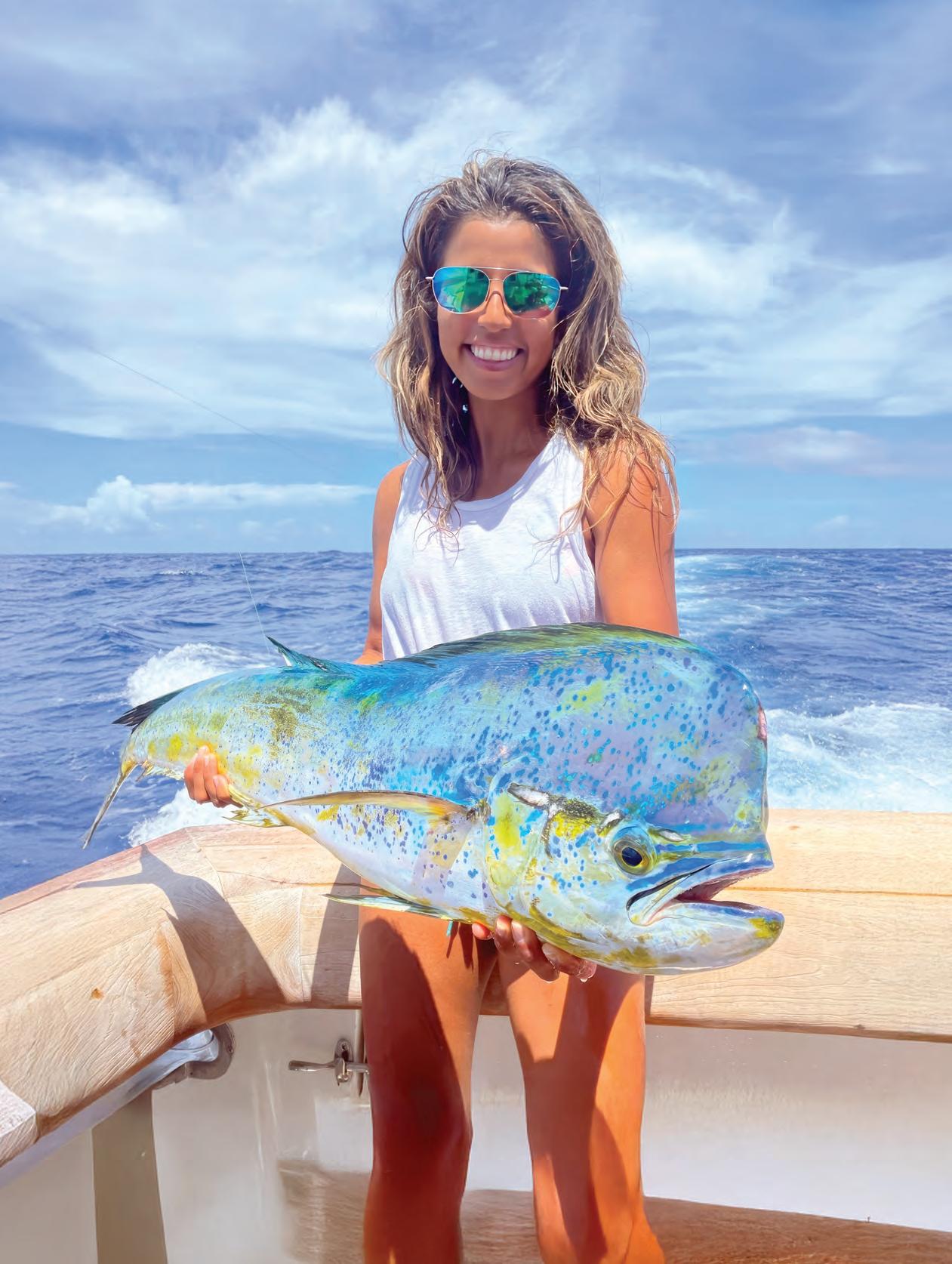
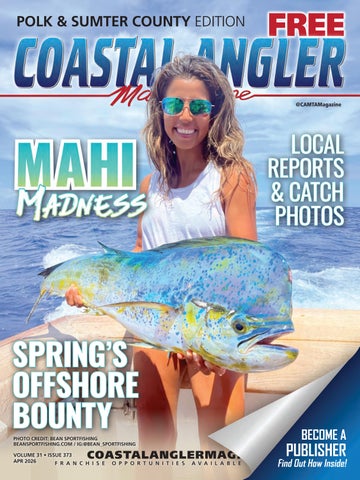
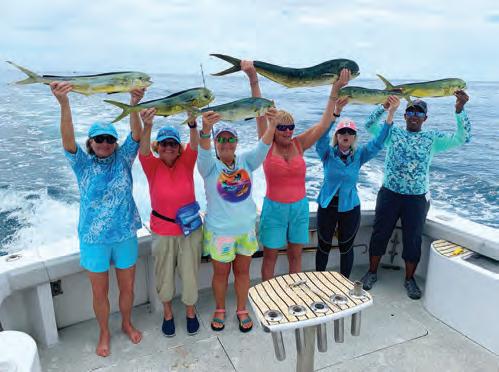
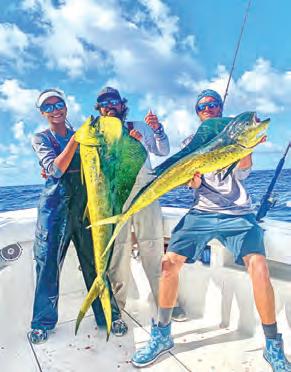
Mahi season is one of those drop everything and go times of year, and when we begin to slide from spring into summer, you can usually count on schools showing up o!shore. e warmer the water, the better it gets, especially when you nd clean blue water, good current edges, weed lines, oating debris, or any kind of structure holding bait in that 75- to 82-degree range. Fishing with Bean Sport shing in the Florida Keys and other parts of the state, over the past few years we’ve de nitely seen more smaller sh and fewer big cows and bulls, but that doesn’t mean they’re gone. When conditions line up, there’s always a chance a quality mahi-mahi is mixed in with the schoolies.
Mahi love anything moving, so live bait is tough to beat, and when they’re really red up, you can even catch them on y. Tackle-wise, we like running a 6500 size setup because you never know when a better sh shows up. e Penn Slammer IV 6500 paired with a Carnage III rod is a go-to for us, and the Penn Spin sher VII 6500 spinning combo is another solid option. We’ve had great success using the Mustad 7766D 6/0 hook, and for bait we’ll typically sh whitebait or troll Islamorada Flyers depending on the day.
When it comes to the table, blackened or fried mahi is hard to beat, and we only keep what we’re going to eat that day. Even though mahi are one of the fastest-growing sh in the ocean, conservation still matters, and being mindful about what you harvest goes a long way.
Bean Sport shing can run this type of trip, but it’s highly weather dependent o!shore. If you’re looking to book a dedicated o!shore charter in e Keys, I highly recommend LegaSea Charters. Capt. Joey can be reached at legaseacharters.com.
If you’re planning on visiting Islamorada, book at the fabulous ree Waters Resort and reach out to us about a special captain’s discount.
Follow deGruchy’s adventures on Instagram @bean_sport shing and on YouTube @BeanSport shing. To book a charter, visit beansport shing.com.


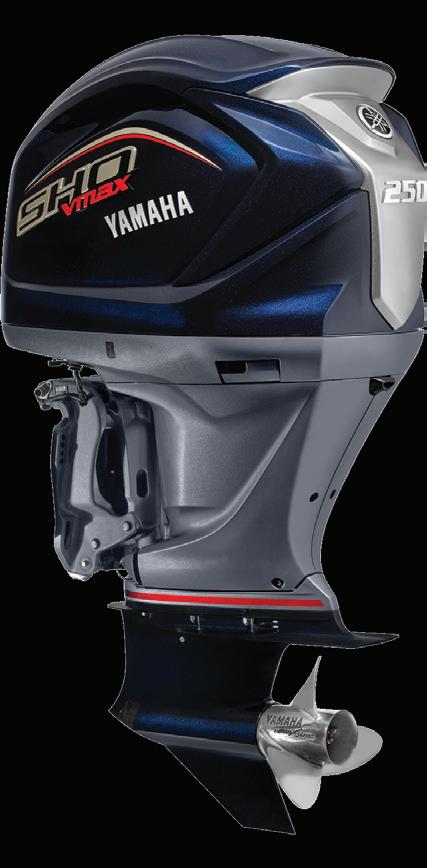

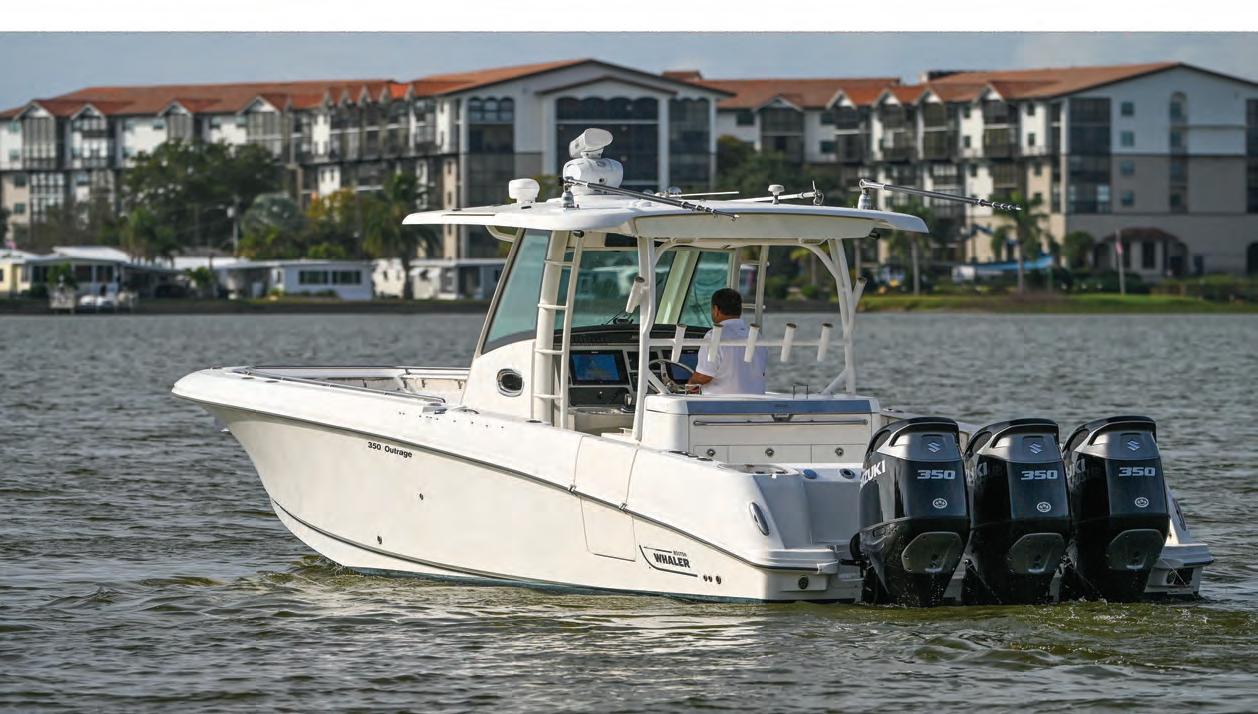
Mastry Engine Center has received the Suzuki Marine Super Service Award and has been ranked #1 in Suzuki Marine US Sales! 60 YEARS OF REPOWER EXPERIENCE!

RePower Packages designed to best ft your needs and not stretch your budget. Financing available.

Rest assured, all Mastry Suzuki RePowers are backed by Suzuki’s industry leading 5-year factory warranty.

highest level of Suzuki certifcations to meet and
Stationed strategically around the East Coast, all Suzuki RePower Centers have achieved the highest level of Suzuki certifcations to meet and exceed your repower needs.
When Considering A Repower, Consider These Factors:
•Every Authorized Mastry Suzuki RePower Center has decades of repower experience providing proper rigging, controls, propeller matching and in water testing
•With a Mastry Suzuki RePower, owners gain improved performance, less noise and greater reliability
•Mastry Suzuki RePower’s exclusive Owner’s Edge Program*
•Mastry Suzuki RePower Centers use authentic Suzuki OEM parts and have factory certifed technicians

Since 2014, Mastry Engine Center, has been building the premiere Suzuki Outboard repower network in Florida. Today, Authorized Mastry Suzuki Outboard Centers have been exceeding expectaions in the Southeast for over two decades. Recently Suzuki Marine requested Mastry Engine Center to expand the network throughout the Northeast. Now boat owners from Maine to Florida can be assured of the best support for their Suzuki outboard repower project. All Authorized Mastry Suzuki RePower Centers provide the best options, information and package pricing for excellent performance in repower.



*Get with the Program!
When you purchase a new Suzuki outboard from an authorized Mastry RePower Center you qualify to become a member of the Mastry Suzuki Owner’s Edge. Owners receive an identifcation card that provides them with important information about their Suzuki outboard motor as well as a passport to additional benefts during ownership. Members enjoy a detailed engine maintenance schedule, Mastry Suzuki RePower Trade Program and special pricing from Mastry Suzuki Partners.




Capt. Ashley Beall
If you were to ask me what my favorite month to fish in Tampa Bay is, I would have to say April. It seems like every year April is just absolutely on fire. Everything is live and vibrant, Spanish Mackerel are running the channels, big redfish and snook terrorize the flats and back country of Tampa Bay, big trout and flounder ambush prey from the grass flats and potholes in the shallows, tarpon start to show up usually the full moon of April, I have already seen some on deeper flats in late March. Water temperatures are usually just right and the weather is great, perfect for fishing.
Fishing for trout should be easy, basically you need to find good healthy sea grass with some sand holes mixed in here and there in about 3-6 ft of water and you will find trout. That doesn’t mean they won’t go deeper or shallower, I’ve had a 30” gator trout next to my boat in less than 2ft of water, big trout will lay shallow sometimes. Use live pilchards, pinfish or live shrimp free lined with a 1/0-2/0 circle hook or use a popping cork rigged with the same style hook and a live bait. You can cover more ground with artificial lures though and catch way more trout that way. Drift over the grass while casting around the boat like a clock hand moving. When you hook one, anchor and fish it out, repeat process and drift another section of that grass flat. Tip: If you are steadily catching 14.5” trout move to a different area as they usually hang out with trout of their own size, also where there is ladyfish, there will be trout.
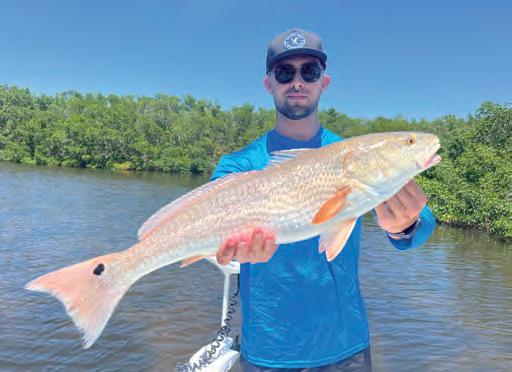
One of my personal favorite fish to catch in Tampa Bay, they’re beautiful fish that fight like a bulldog!! How can you not love that? You’ll find these fish roaming the shallow potholes (sand and grass mixed bottom) looking for prey or roaming the mangrove shorelines and oyster beds. One of my favorite ways to fish for redfish is to use cut pinfish. Cut the head and tail off as well as all the spines or fins and hook the tail end with a 2/0-3/0 circle hook or a jig head to help it sit on the bottom of there is stronger current. Cast out baits on all sides of the boat once you find a good school of mullet and back the drag all the way down. Set the rod in the rod holder and when the drag starts screaming tighten the drag back up and set the hook. Usually, you will catch a few or a lot back-to-back using this method. YOU’RE WELCOME. You can also catch redfish using live shrimp, pinfish or pilchards skipped under the mangroves, on the grass flats or around oyster beds and structures. Have fun.
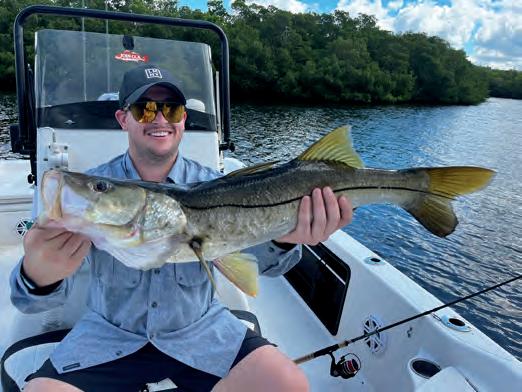
Snook are actually in season for harvest March-April if you have a snook stamp which can be purchased anywhere they sell fishing licenses. The slot in Tampa Bay currently is 28”-33” and it’s one per day. You can find snook in transition on the grass flats and on the edges of sandbars and mangrove shorelines. Sometimes they’ll hang around oyster beds and submerged structures as well. Best bait for snook is live pilchards, though they eat shrimp frequently when water temps are low. You can also use live pinfish and small grunts to get them to bite. I personally use 15 lb braid tied to 20lb-30lb fluorocarbon leader. Remember to always handle these fish with care and get them back into the water as quickly as possible, a lot of times they need to be revived after a hard fight. Put your bait in some shadows and near wood and you are pretty much guaranteed a snook.
Last but not least one of my personal favorite things about spring time is the arrival of Spanish Mackerel. Toothy, aggressive and powerful fish. A good way to get everyone on the boat hooked up is to find a school of these fish. Look for diving birds or large pods of bait getting smashed and there you will find them. They frequent the shipping channels deep grass flats and deeper edges of the bay and can be caught with artificials and live bait. Be sure to use long shank hooks as they are notorious for cutting off hooks with their teeth. Live pilchards are great bait and gotcha plugs work well too. Use heavier leader when fishing for Spanish Mackerel to help keep from getting cut off. Spanish mackerel respond well to chum. Some people say they are not good to eat but personally I love them smoked or grilled the same day as they were caught. I bleed them out and put them directly on ice and I mix saltwater with the ice and they come out great and really clean meat.






Florida Bass:
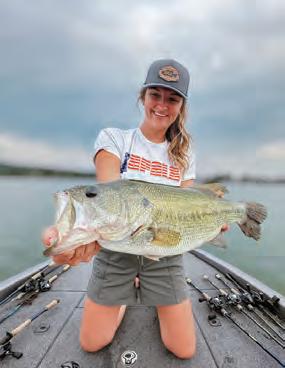
April is one of the best months of the year to target Florida largemouth bass at Tenoroc as fish are actively spawning or guarding beds. Water temperatures typically range from the upper 60s to mid-70s, which keeps bass shallow and aggressive. Focus on shallow flats, sandy pockets, and vegetated shorelines where bass build beds near cover such as lily pads, cattails, and hydrilla edges. Soft plastics like stick worms, creature baits, and lizards fished slowly around beds are excellent choices. Weightless worms or flukes can be especially effective when sight-fishing for bedding bass. Reaction baits such as spinnerbaits, chatterbaits, and shallow crankbaits can also trigger strikes from pre-spawn and cruising fish along grass edges and drop-offs. Early mornings and late afternoons remain productive, but bass will stay active throughout

much of the day during the spawn. Lakes Butterfly, 5, A, B, Legs, Long, Fishhook, and Shop continue to produce quality bass during the spring season. TrophyCatch-quality bass over 8 lbs. are commonly caught this time of year, so be sure to check out the TrophyCatch website for information on submitting your catch.
Spring brings excellent bream fishing as bluegill and shellcracker become increasingly active in warming water. Shellcracker (redear sunfish) typically begin spawning in April, often congregating on sandy or gravel bottoms in shallow areas near vegetation. Target shoreline cover, grass edges, and shallow flats in 2–5 feet of water using light spinning tackle. Live bait such as red wigglers, crickets, grass shrimp, or small pieces of nightcrawler work very well. Fishing beneath a small float with size 8–12 hooks allows anglers to keep bait suspended just above vegetation where panfish feed. When fish are aggressive, small inline spinners or beetle spins can provide fast action. Lakes Cemetery, Derby, A, B, Picnic, and Pine remain reliable spots for steady bream action and are excellent locations for anglers of all experience levels.
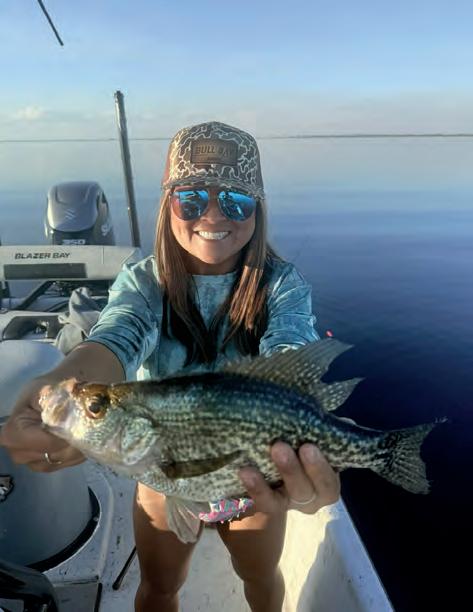
Crappie fishing can be excellent in April as fish move shallow to spawn. Look for crappie staging or bedding around submerged brush, fallen trees, grass edges, and shallow cover in 2–8 feet of water. Small jigs (1/32–1/16 oz) in colors such as white, chartreuse, or pink work well when paired with slow retrieves around structure. Live minnows fished under a small float can also be very effective when targeting shallow spawning fish. Early morning and late afternoon typically produce the best action. Lakes 4, 5, B, C, Legs, Long, and Picnic remain some of Tenoroc’s most productive lakes for spring crappie fishing.
By: Capt. Scott Taylor
I’mhoping that by the time this report is published that Central Florida will be back to the usual weather pattern of mid to upper 80’s for our daily temps and mid 60’s to start our mornings. So far this year Ma Nature has been totally off kilter with the constant mood swings of highs and lows, cold fronts, rain and/or high winds.
Starting out on the Kissimmee Chain fishing out of Camp Mack Lodge, Marina & RV Resort in Lake Wales we should be having a solid topwater bite going to start off our early mornings. I like focusing on open water early on with either a Devil’s Horse, Spook, or the ARK Rods Outlaw which is similar to the old Lucky Craft Sammy but a bigger profile. After the sun gets up higher in the sky and this bite dwindles down is when we’ll head for the jungle and start throwing hollow body frogs, Gambler EZ Swimmers, and start flipping some black & blue senkos.
Heading back west to Winter Haven fishing on the South Chain lure selection is different because of the difference in the size of the baitfish and clarity of the waters (on the lakes I fish). When the wolf packs are out schooling and chasing shad I’ve found it very hard to beat a silver with blue (or black) back, or solid white Pop-R. It is a perfect match to the shad/shiners in these lakes. From there I have a handful of stand-by’s that I never leave the dock without: these are not in order necessarily but we have Z-Man Jerk ShadZ in The Deal or Glimmer Blue (white), SMH WormZ wacky rigged in any color, and jerkbaits (pick your brand) that are silver, white, or any live minnow color combo you chose, and smaller profile Chatterbaits in 1/4oz or 3/16oz in natural shad/silver colors. By months end a silver rattle trap should be coming into play quite nicely as well.
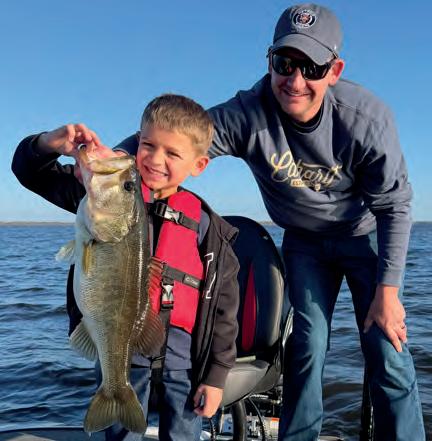
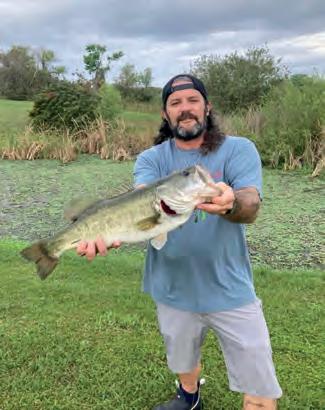
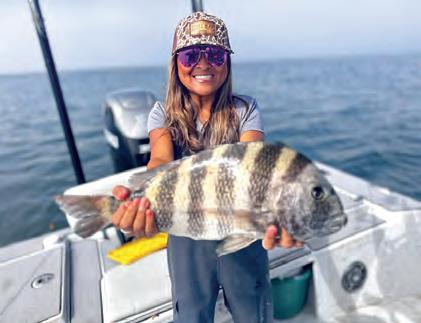
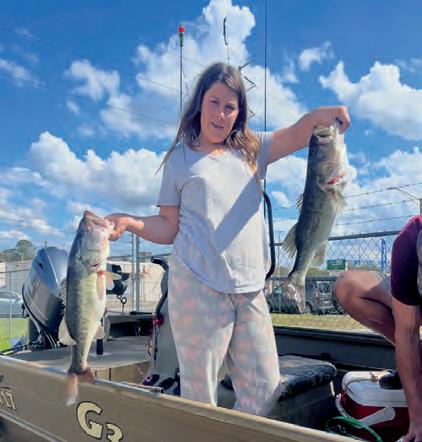
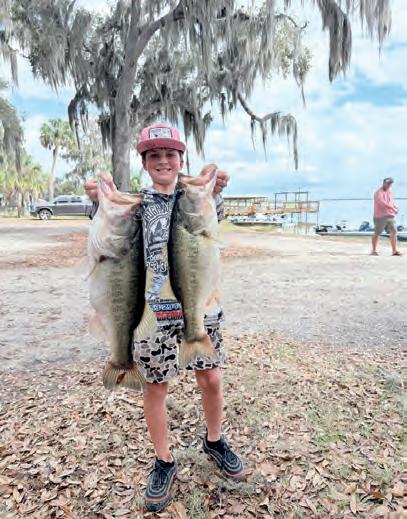
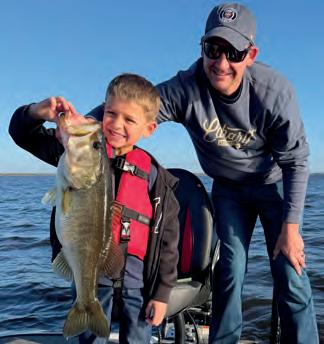

Submit your catches to be on the next editions bragboard
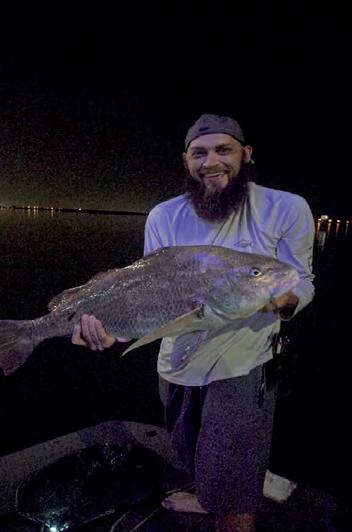
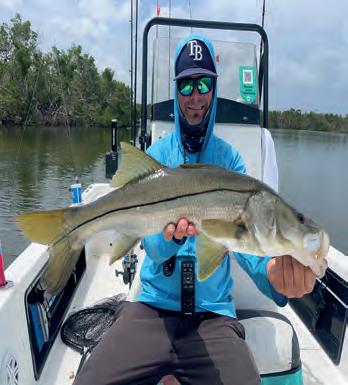
CAPT. MIKE SMITH
Are you tired of catching tons of 13 inch speckled trout and 16 inch snook?
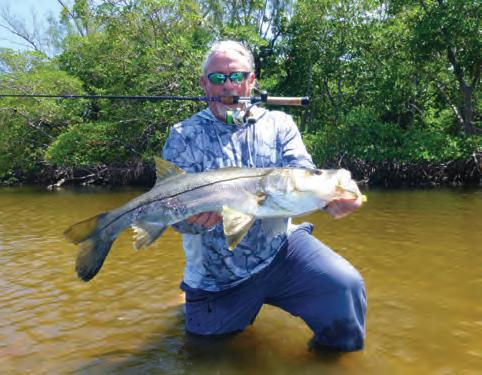
It’s time for you to switch to a big top water lure to catch big springtime sh. A walk-the-dog type of lure is an excellent choice. I like Zara Super Spooks, Mirrolure Top Dogs and Rapala Skitterwalks the best. Make sure to choose a lure that is at least four inches long. Hungry springtime sh are ready to eat a big meal as the water temperatures rise.
A larger lure has many advantages over smaller baits. e larger pro le and length creates more vibrations to attract monster sh from long distances. A larger lure allows you to cover more water because you can make longer casts. A larger lure also discourages most of the smaller sh from biting. You will catch fewer sh but they will be of much better quality.

e best topwater lure colors for speckled trout and snook are silver and white. Choose lures with silver or white sides
Pro Tip #1: Do yourself and the sh a favor and smush down the barbs on your treble hooks. You won’t lose any sh as long as you keep the line tight. e hooks will also come out of the sh and your hand much more easily.


and bellies. e back color doesn’t really matter because the sh will hit from under and behind the lures. e best retrieves for a walk-the-dog lure includes a pause every ten feet or so. Quite o en you will get a vicious reaction bite right a er the pause.
Pro Tip #2: e best leader material for walk-the-dog lures is mono lament. Mono lament line oats versus uorocarbon line that will sink and negatively a ect your topwater lure’s action. A short heavy leader, 12 to 15 inches is a great choice. Long leaders will o en negatively a ect your lure presentation. Many shermen believe that you can’t use topwater lures in the middle of the day. But they are wrong. You can use a topwater lure all day and catch huge speckled trout and snook. Topwater lures do work the best in low light scenarios. It can be sunrise or sunset but cloudy or stormy days are also great times to use big topwater lures. If you nd a school of mullet, cast your topwater lure just outside of the school. You want to make it easy for the snook and trout to distinguish your lure from the rest of the school.
Spring is a great time to catch huge snook and speckled trout with big topwater lures. ese sh need to fatten up again a er fasting through much of the winter. ey would rather eat one large calorie meal than have to chase a bunch of small sh around for the same caloric input.
Capt. Mike Smith, owner of Fish Your Ass O Charters, is an inshore shing guide who has been shing the inshore waters, oyster bars and grass ats of Florida for more than 40 years. Reach him at (561) 339-2317, email: contact@ shyourasso .com or visit shyourasso .com.
= approximately 8”
(10) year

First
If March is the warmup, April is go time.
By Capt. Michael Okruhlik
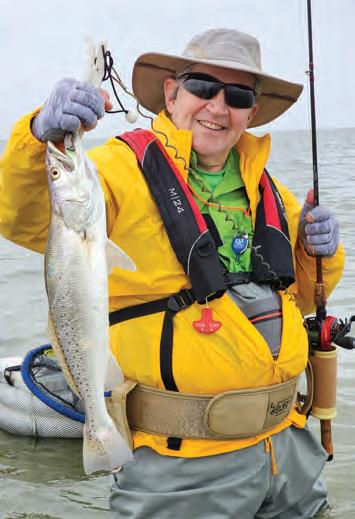





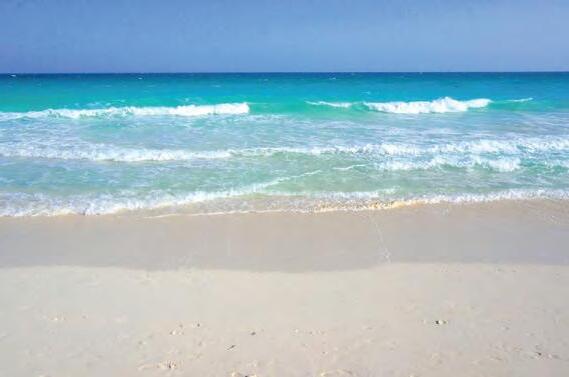
Longer days, greener water, and steady warming trends ip the inshore switch from “transition” to “feed.” e bait is thicker, the tides feel stronger, and the sh are no longer just staging — they’re hunting. April is when things start getting fun in a hurry. e key word this month is movement. By April, speckled trout are pushing onto reefs, sandbars, and grass edges with more consistency. Red sh are cruising shorelines, ooded grass, and marsh drains with purpose. Flounder settle into ambush points along drop-o s and current seams. Water temperature swings aren’t as drastic as early spring, but bait movement tied to tides becomes critical. Instead of asking where the warmest water is, start asking: Where is the cleanest moving water? Where is bait being pushed? Where is current creating ambush points? Points, drains, and wind-blown shorelines shine in April. If water is moving and bait is present, predators won’t be far away.
Unlike the slower mid-a ernoon bites of late winter, April o en rewards early risers. at rst light window can be electric — especially on calm mornings with bait dimpling the surface. is is when topwaters re-enter the rotation in a serious way. ere’s nothing subtle about an April blowup. But don’t force it. If sh are swiping and missing, switch to a so plastic or suspending bait and clean up the followers.
April sh are more aggressive, but they’re still opportunistic. Paddle tails, shrimp imitations, and swimbaits all shine, especially when worked with a con dent, steady retrieve. Water clarity should dictate your approach. In cleaner water natural colors and subtle action are key. In stained water, vibration and contrast matter more. If sh are chasing, cover water. If they’re following but not committing, slow down and add pauses. Let the sh tell you what they want.
April breezes can stack bait against shorelines and points. Wind creates feeding lanes. Instead of hiding from it, position yourself to use it. Dri with it. Fish into it. Work the edges it creates. Wind plus tide plus bait equals opportunity.
Next trip, challenge yourself by starting on a wind-blown shoreline and working it thoroughly. en move to a protected drain and compare activity. Pay attention. Which has more bait? Which has more strikes? Fishing in April is less about luck and more about reading conditions in real time.
April feels alive. e marsh hums. Birds dive. Mullet scatter. e sun carries warmth instead of warning. It’s the month where con dence returns, patterns stabilize, and sh feed longer and harder. Somewhere between the rst cast and the last dri , you’ll remember why spring inshore shing is hard to beat. e water’s warming and the sh are moving. Are you taking a kid shing?
Capt. Michael Okruhlik is the inventor and owner of Knockin Tail Lures® — https://knockintaillures.com.





It’s no fsh tale when you run with a John Deere. You can get everything done faster and easier, so you get more time on the water. Plus, our special offers make them the catch of the day.












TIM BAREFOOT

It’s o!cial…say hello to spring. Anglers can now look forward to targeting a wide variety of species, including black n tuna, wahoo, African pompano, and many other sought-a er sh. With these species actively feeding during their migration north, the opportunities for successful catches are abundant. Whether you prefer trolling, dri ing, or bottom shing, the spring months bring a wealth of options to ll your cooler with quality sh.

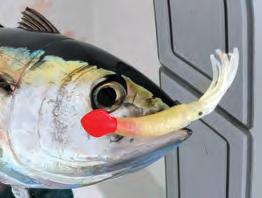
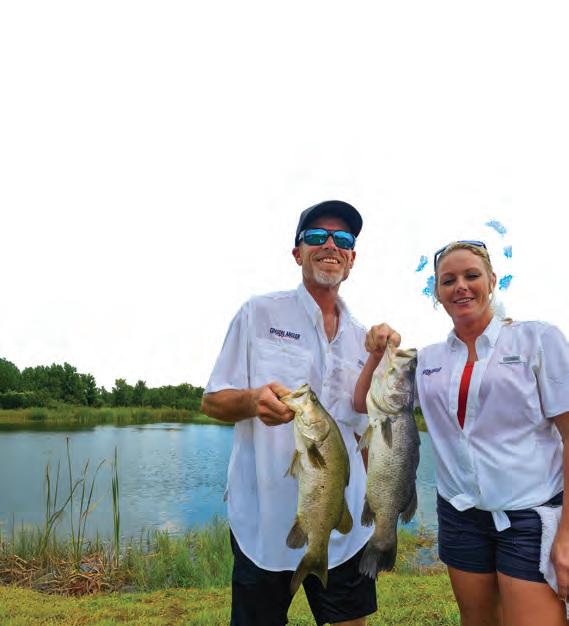
e troll bite will probably die as soon as the sun gets up around the nine or ten o’clock timeframe. is is when you need to change tactics. Stop trolling. Put the trolling motor over and start making strategic dri s with the light line out while bottom shing. I would also suggest putting a couple baits out under the kite, as this is the most e ective presentation with very little to no leader in the water. Have at least one person dedicated to the kite baits, if you’re shing a kite. is is one of the best times of the year to spend the night, especially here in North Carolina, as the night bite could be crazy good. Put the bright lights out and you will draw the squid, cigar minnows, sardines, and all the predators to you like moths to a porch light. If you have the ability to spend the night, April could be the month you see the ultimate results. Everything including ying sh are very susceptible to a Sibiki rig. Fill the live well with live baits and start shing on the daylight bite. Fish are like us; they like to eat breakfast and dinner, so be there early and late.
Be sure to keep an eye on the recorder while on the dri for the mid water marks. In addition to shing for the snappers, have rods at the ready for sh that show on the recorder way o the bottom. ese may very well be the African pompano, so have a rod ready with a jig that you can re down and erratically jig upwards 25 to 50 feet o the bottom and then let ascend back to the bottom. Repeat over and over as this will get bites! It’s not just African pompano that frequent these deeper waters. During the middle of the day, wahoo can be found surprisingly deep, and tuna also inhabit these depths. It only takes a few wahoo, black n or pompano to make a great box of sh to take home. is is also a good time to target the smaller snapper with smaller baits on “chicken rigs” with small circle hooks. When you’re on a good bite (using small circle hooks) I would strongly recommend feeling the bite, winding tight to it and stopping. is is when another snapper will jump on the second bait. You will load up quickly with delicious groceries when you’re catching two at a time.
Bring the heat… It’s on!
Learn more tips and techniques at barefootcatsandtackle.com and on Barefoot’s YouTube channel: @timbarefoot5698.
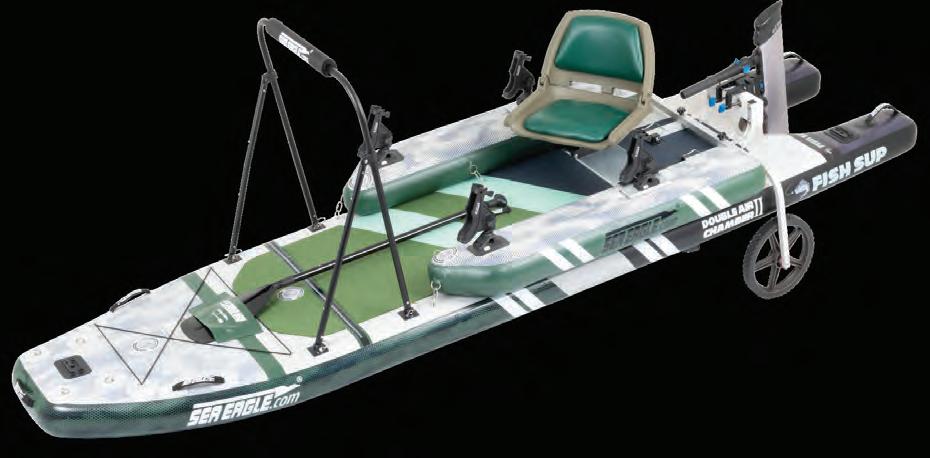
The versatility of the FishSUP™1210 is unmatched! Use it bare bones with just the board, a paddle & your !shing gear or deck it out with swivel seat, side pontoons, casting bar, motor and more! Incredibly stable, extra wide, swallow-tail !shing SUP holds up to 500 lbs! The FS1210 takes electric and gas motors up to 3 hp. There’s even an option for a bow trolling motor.
Choose From 6 Packages
Starting At Just $999
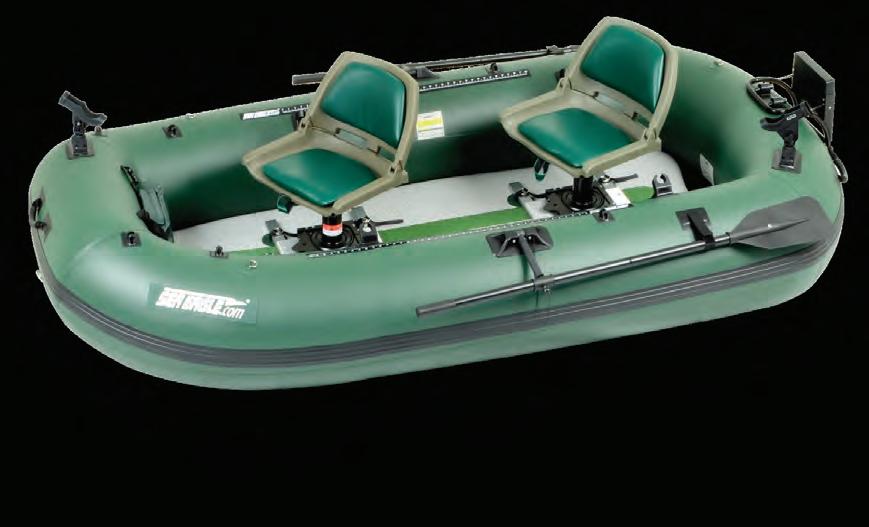
Perfect for !shing rivers, lakes and bays. The STS10 is a lightweight, roomy 1 or 2 person pontoon boat that’s packed with features anglers need & love including 2 built-in !sh rules, 4 built-in rod holders & 2 Scotty® mounts for more rod holders, anchor locks, camera posts or any other Scotty® accessory. Now available with a drop-stitch in atable oor or wooden oorboards.
Choose From 7 Packages
Starting At Just $1449
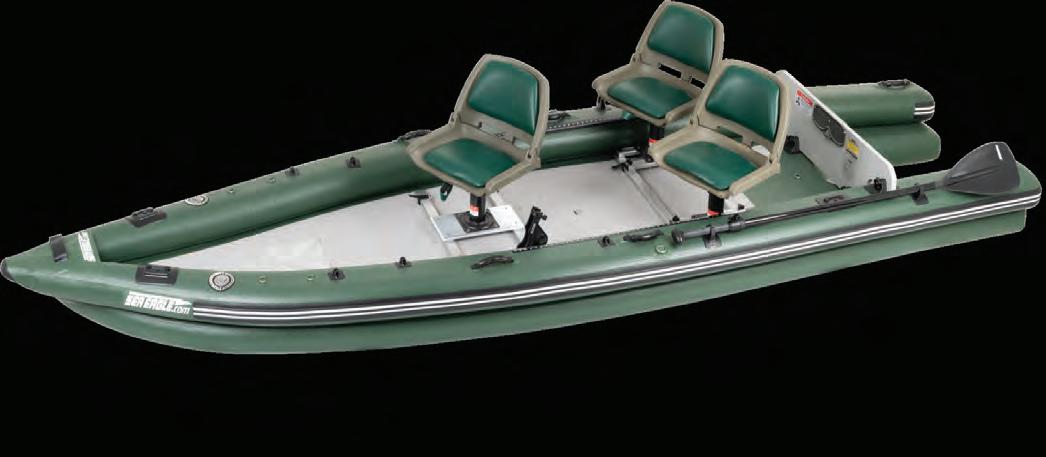
This “low-rider” gives you access to the water to reel in and release !sh easily. With a new patented outside, in atable, rigid keel the FSK16 glides through the water at speeds up to 21 mph to get you to the !sh fast! Perfect for 1-3 anglers and room for plenty of gear.
Choose From 9 Packages
Starting At Just $2999


By Julie Graham- ExploreTRV

As the last bite of winter gives way to the gentle stirrings of spring, Kentucky Lake comes alive. Located along the western edge of the Bluegrass State, this sprawling body of water—technically a reservoir—has long been a mecca for anglers, especially those in search of springtime crappie.
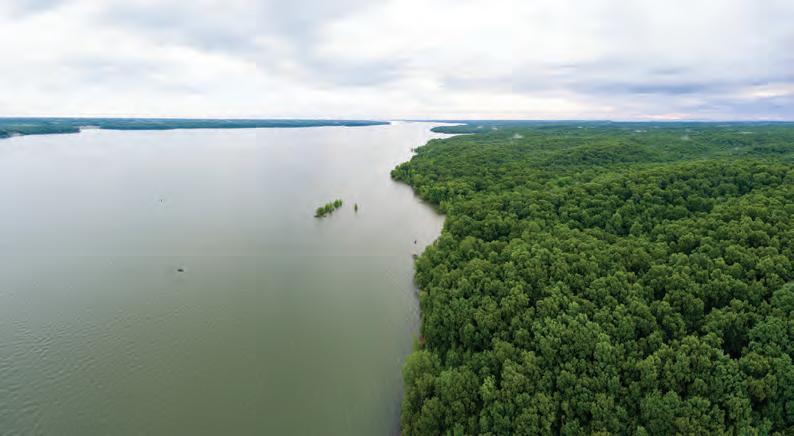
Kentucky Lake stretches a remarkable 184 miles from the Tennessee state line to the northernmost point at the Kentucky Dam making it the largest reservoir in the state and one of the largest in the U.S. e lake was formed in 1944 with the completion of the Kentucky Dam, a key project by the Tennessee Valley Authority (TVA). Today, the lake covers over 160,000 acres, with an average depth of 8-10 feet, though some areas reach even deeper. Its shoreline stretches over 2,000 miles, o ering countless coves, islands, and inlets that make it a paradise for anglers. Fishing enthusiasts quickly discovered the lake’s potential as a world-class destination for crappie, bass, and cat sh, earning it a reputation that has only grown over the decades. Feeding Kentucky Lake are several major tributaries (Blood River, Jonathan Creek, Big Sandy River) that become shing hotspots in early spring, especially where submerged timber


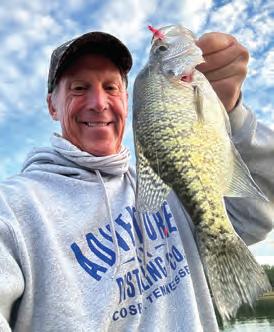
and man-made structures provide cover. Every seasoned angler in this region knows spring is crappie season. As water temperatures creep into the low 60s, crappie begin their migration from deep winter haunts to shallow spawning grounds— brush piles, stumps, and submerged structures along the shoreline. Preferred bait and techniques vary by angler, but some classics stand the test of time. Live minnows, o en rigged under a slip oat, are a go-to for many, especially during the pre-spawn. Jig shing is equally e ective, with popular choices like 1/16 or 1/32 oz. so plastics in chartreuse, white, and monkey milk colors. When the bite gets tough, tipping jigs with a small minnow or switching to hand-tied hair jigs can coax hesitant sh. Long-line trolling and spider rigging also dominate certain sections of the lake, especially in the deeper channels near creek mouths.
Mornings on the lake feel almost sacred this time of year. Fishermen, some in sleek bass boats, others in aluminum ski s passed down through generations, fan out across coves and creek arms, quietly working the banks. e goal is the same: feel the tap of a crappie on the line, set the hook, and haul in what many call the “gold of the lake.” For many, the draw of spring crappie shing isn’t just the thrill of the bite. It’s also the chance to connect with the natural rhythm of the season while sitting in a quiet cove as the dogwoods bloom, passing along stories, rods, and values to the next generation. At its core, Kentucky Lake is more than a reservoir. It’s a living, breathing legacy—a place where history, sport, and stewardship come together on every cast.
For more information on shing licenses and regulations, visit the Kentucky Department of Fish & Wildlife Resources website - fw.ky.gov - or the Tennessee Wildlife Resources Agency website - www.tn.gov/twra.html.


“I never expected it to be so beautiful that it takes your breath away.”
— Kaya C., on Stauer Opals
In a quaint village, nestled between rolling hills, lived a young woman with a deep appreciation for gemstones. Her grandmother gifted her a delicate cross pendant adorned with opals. "e opals shimmered with a mesmerizing play of colors, reflecting hues of blues, greens, and fiery oranges. Her grandmother shared the legend of the opals, believed to bring hope, purity, and luck to those who wore them.
Using this story as inspiration, Stauer brings you the Opal Spirit Cross Pendant. With over 2 total carats of Kyocera lab-created opals set in .925 sterling silver encased in yellow gold, this pendant is a radiant celebration of beauty and craftsmanship. Each opal captivates with a kaleidoscopic dance of fiery oranges blending into oceanic blues, streaked with flashes of vibrant green that seem to come alive with every movement. "e shimmering opals are skillfully arranged to create an enchanting, otherworldly glow, embodying the spirit of hope and harmony.
"is breathtaking combination of color and craftsmanship is available as a limited availability of

only 930 pieces, making it a rare and treasured addition to your jewelry collection. Plus, when you order today, you’ll receive the gold-!nished sterling silver chain—a $69 value—absolutely free!
Don’t miss your chance to own this exclusive tribute to timeless elegance and meaningful symbolism.
Necklace Speci!cations:
• 2 ½ ctw. Kyocera lab opals and DiamondAura® accents
• Yellow gold-finished .925 sterling silver setting
• 18" gold-clad .925 sterling silver chain Opal