
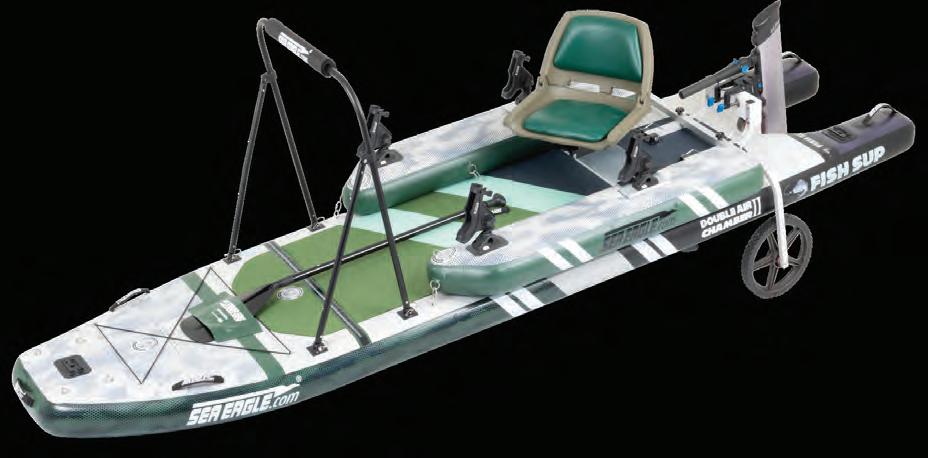
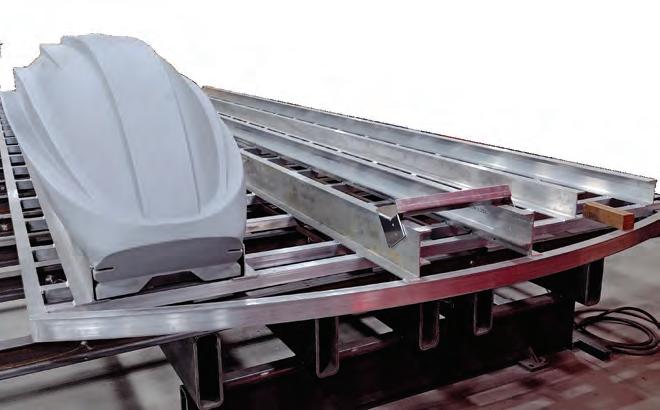
The versatility of the FishSUP™1210 is unmatched! Use it bare bones with just the board, a paddle & your !shing gear or deck it out with swivel seat, side pontoons, casting bar, motor and more! Incredibly stable, extra wide, swallow-tail !shing SUP holds up to 500 lbs! The FS1210 takes electric and gas motors up to 3 hp. There’s even an option for a bow trolling motor.
Choose From 6 Packages
Starting At Just $999
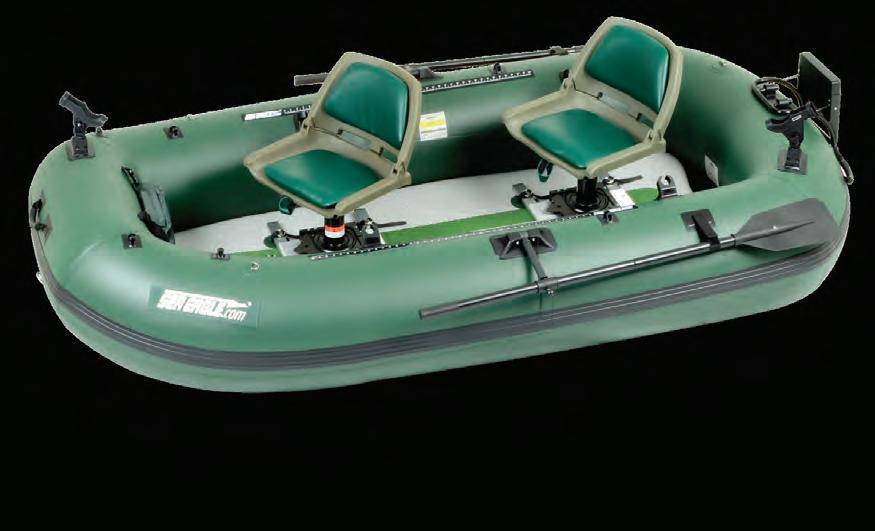
Perfect for !shing rivers, lakes and bays. The STS10 is a lightweight, roomy 1 or 2 person pontoon boat that’s packed with features anglers need & love including 2 built-in !sh rules, 4 built-in rod holders & 2 Scotty® mounts for more rod holders, anchor locks, camera posts or any other Scotty® accessory. Now available with a drop-stitch in atable oor or wooden oorboards.
Choose From 7 Packages
Starting At Just $1449
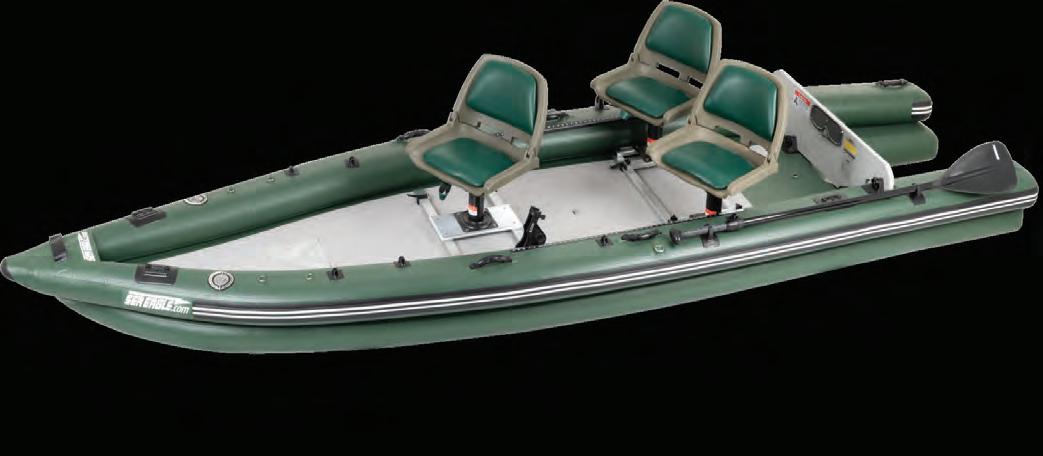
This “low-rider” gives you access to the water to reel in and release !sh easily. With a new patented outside, in atable, rigid keel the FSK16 glides through the water at speeds up to 21 mph to get you to the !sh fast! Perfect for 1-3 anglers and room for plenty of gear.
Choose From 9 Packages
Starting At Just $2999















Ever see a commercial harbor full of Furuno Marine Electronics and wonder why the pros rely on us?


See why here










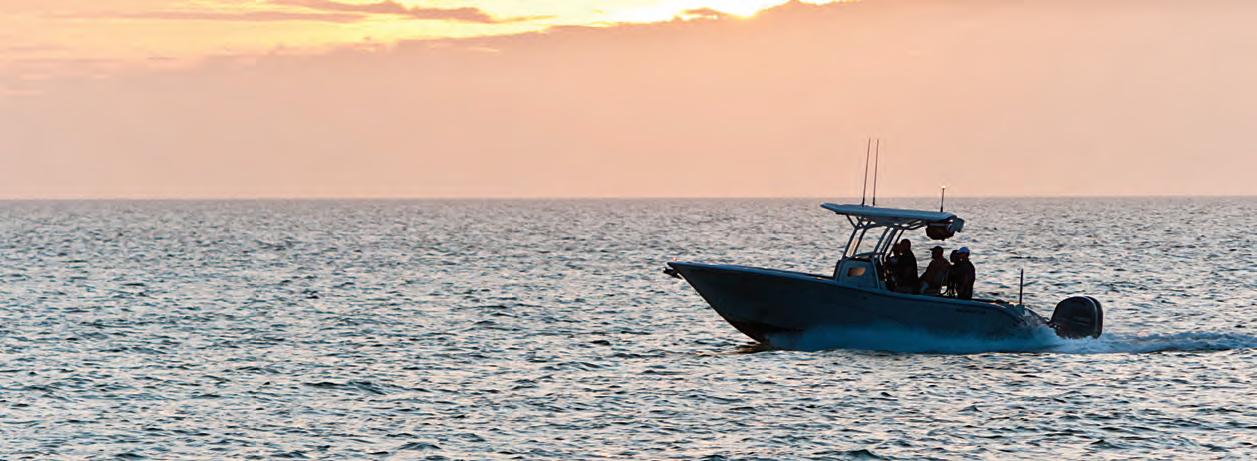
Are you ready to embark on your next on-water adventure? Before you set sail, here are fve things to know about boat insurance.
1. Boat insurance isn’t just for accidents
With comprehensive coverage, you’ll also be protected fnancially for theft, vandalism, and unexpected events like storms if you need repairs or replacements due to damage.
2. Accidents can happen to anyone
When accidents happen, boat insurance offers liability coverage for damages or injuries you cause while boating, up to specifed limits. It can also cover lawsuit costs if you’re sued.
3. Boat insurance can cover medical payments
Boat insurance offers a range of optional medical payments coverage limits, helping to cover medical expenses if you’re in an accident or someone is hurt on your boat, regardless of fault.
4. Most lenders require boat insurance
If you fnanced your boat, you’ll likely need boat insurance since most lenders require boat insurance to protect their investment. Additionally, some marinas or municipalities require proof of insurance for docking.
5. Progressive offers specialized boat coverages
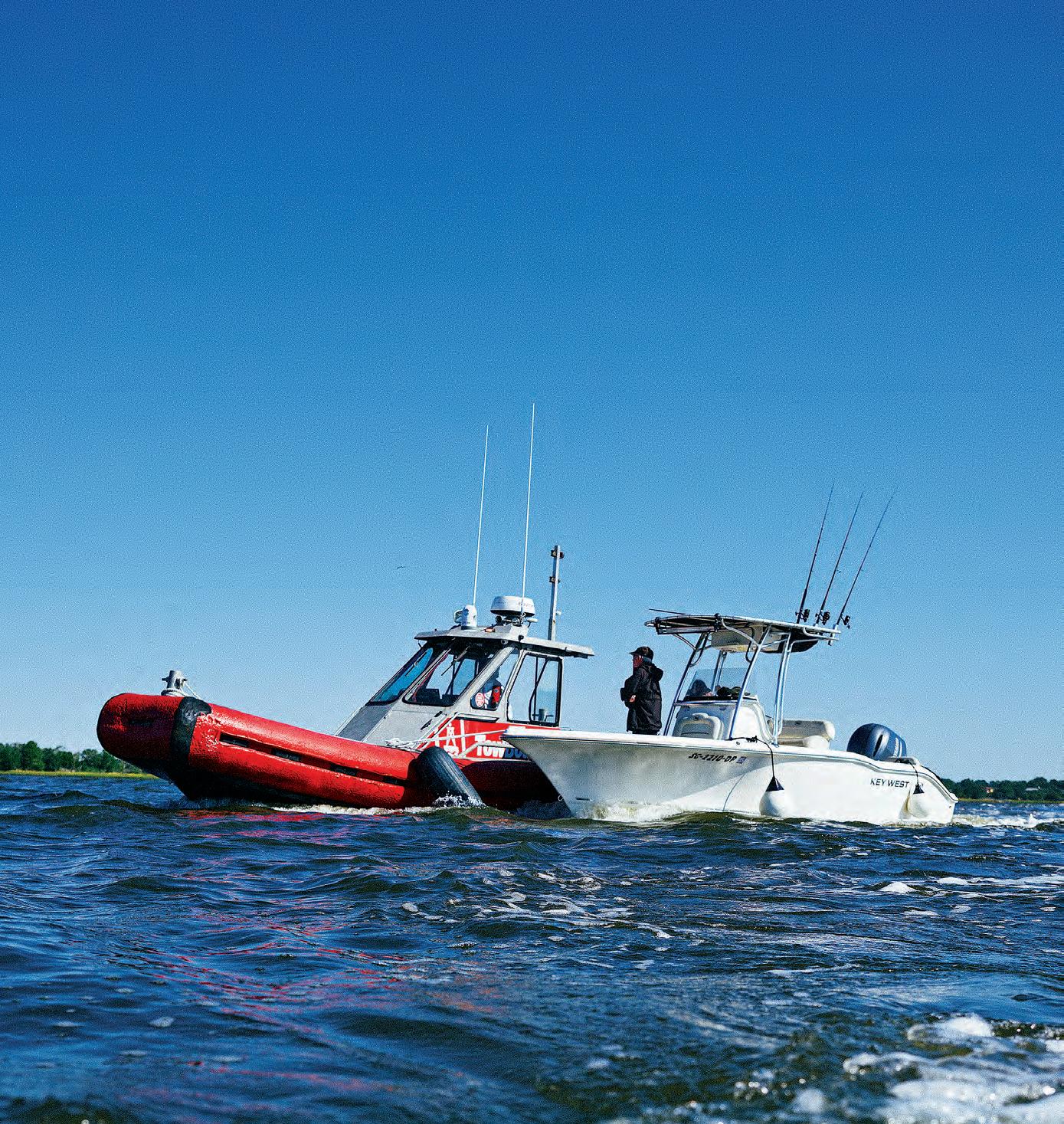
Ever worry about getting stuck on the water? Progressive’s Sign & Glide® On-Water Towing coverage** can help. It’s an additional coverage that steps in if your boat is disabled or breaks down on the water, paying for on-water towing, jump starts, soft ungroundings, and fuel delivery. Fuel cost isn’t included.
Don’t let unforeseen circumstances disrupt your voyage. Cruise with confdence thanks to Progressive Boat insurance. Because when it comes to your boat, peace of mind is the ultimate luxury.
Scan to get a quote in as little as 4 minutes.
to learn more.













By Will Schmidt
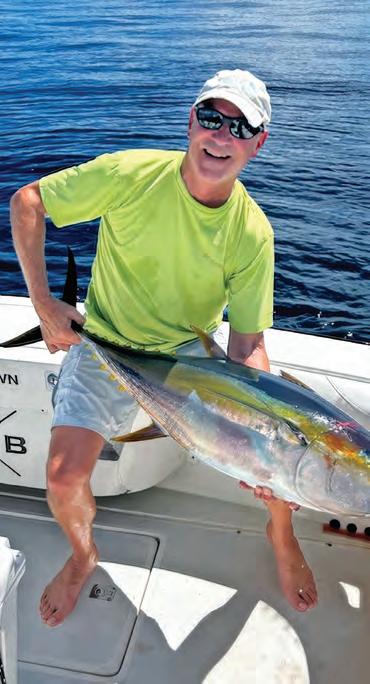
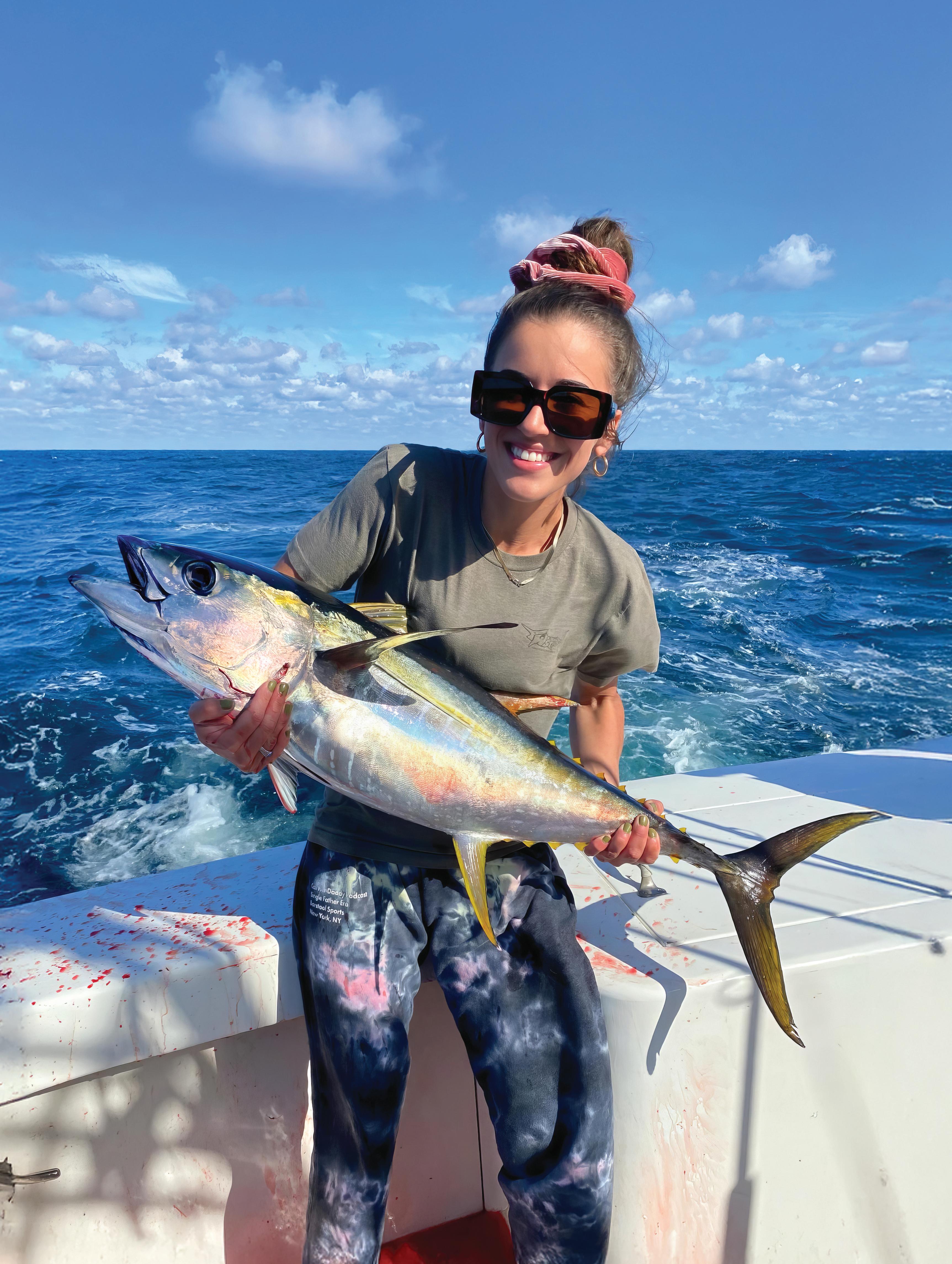
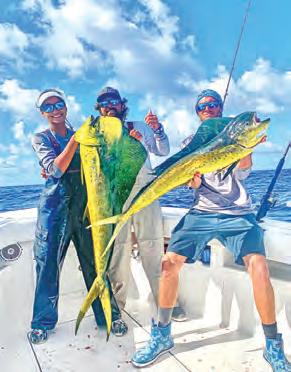
Tere were birds diving, porpoise rolling and he y yellow n tuna skyrocketing like Fourth of July reworks. Both on the water and in the boat, the energy was palatable. With one angler on the bow ready to cast a top water plug into the fray and me in the stern with ready to deploy live bait, the boat throttled back. !e plug went ying, meanwhile I simply dropped my bait behind the boat and started freelining. Almost instantly the plug was blasted in the air but not connecting. Meanwhile, I tossed a handful of baits o the back of the boat. By now the fray had subsided but the sh were clearly still looking for an easy meal. 50 feet behind me one of the chummers was blasted overhead by a 150 pound yellow n who was skyward bound a er it. Just below I could see my bait franticly swimming as another engulfed it, leading to a great battle before releasing the 100 pound class sh.
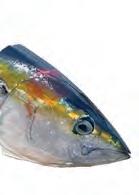
While top water shing for tuna is all the rave right now, it really makes sense to deploy multiple tactics to take advantage of these opportunities, as the school o en retreats as the boat nears. Our back up plan is very simple and almost always produces sh. As the boat gets into casting range of the school, we drop live bait o the stern and free line them. We always keep a couple ready to go. !is way, if the school disappears there are other baits ready for those who have been plugging.
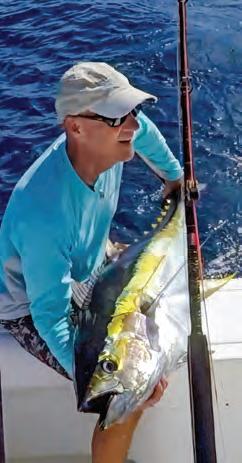
For bait google eyes or blue runners, rigging them on a 10/0 circle hook is ideal. Bridling the bait and using a non-slip loop knot presents the most natural movement as the baits ee. Also, tossing a handful of chummers in, as the surface activity disperses, usually brings shing looking to pick up stragglers into the strike zone. Chumming really helps keep the sh around, so make sure you have plenty of bait. When you get hit, give it a ve count real tight and hang on!
I like to use a bit heavier tackle with the live bait, as we o en seem to nd bigger sh. My go to is Shimano Terez BW Roller Striper medium heavy with a Talica 25A. I use 80lb braid to 80lb mono. !is is a great set up that’s fun for sh from 40 to 140 and can handle the occasional really big one. the rod with a better ghting angle. It also helps to keep the line away from the gunnel as a spiraling sh ascends. !is is a great asset for many anglers on these tough sh.
Will Schmidt is a seasoned tournament angler who has been writing about shing for more than two decades. Follow Will on Instagram @saltynstrong.


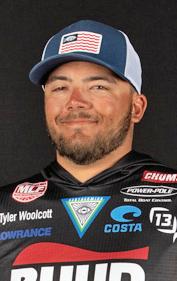
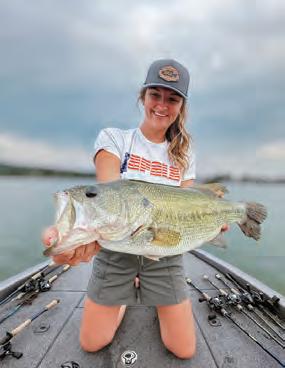
In Florida, we don’t wait on spring the way the rest of the country does. Our bass start thinking about the spawn early, and that in-between window when they’re moving from winter patterns to-ward the beds is one of the most exciting times to be on the water. It’s not full-blown bed fishing yet, and it’s not the deep winter grind either. It’s the transition. And if you hit it right, it’s when the biggest fish in the lake are at their absolute heaviest and most catchable.
During this phase, big females don’t just rush the shallows. They stage first. Think outside grass lines, ditch intersections, shell bars, canal mouths, and hard-bottom spots just off spawning flats. They want easy access to both worlds shallow enough to move up when conditions warm and deep enough to slide back if a cold front rolls through. Instead of randomly covering water, suc-cessful anglers focus on these “inbetween” areas where bass pause before committing.
The fun part about fishing the transition is that these fish are still in feeding mode. They’re fueling up before the hard work of spawning, which means reaction baits can shine. Swimbaits and
TYLER WOOLCOTT
lipless crankbaits are great for covering water along staging edges, especially around submerged vegeta-
tion. If they’re holding tighter to cover, slowing down with a Texas-rigged creature bait or a wacky-rigged stick worm can seal the deal. The key is not getting too shallow too fast; a lot of an-glers run straight to visible bedding areas and skip right past the best fish.
Florida weather adds another layer to the puzzle. A few warm, stable days can push fish forward in a hurry, while a stiff north wind can reposition them just as quickly. The calendar matters less than conditions. Watch water temperature trends, pay attention to wind direction, and look for areas that warm first, especially protected shorelines with darker bottoms. Transition bass adjust daily, some-times hourly, and the anglers who adjust with them are the ones holding up the heavy fish.
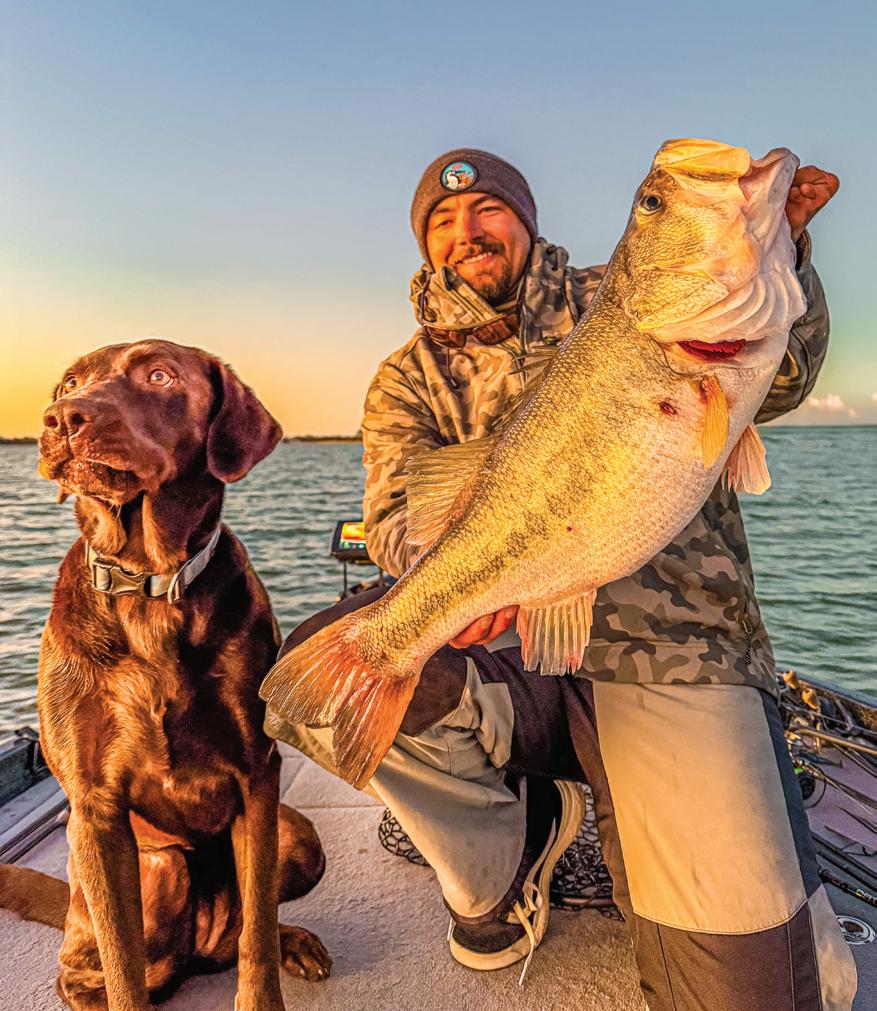
For me, this window is one of the most exciting times of the year. You’re not just sight-fishing beds, you’re hunting moving giants that are feeding and positioning with purpose. They’re thick, strong, and aggressive enough to commit. When you connect with one during the spawn transition, it’s not just another bite it’s often the bite that defines the season. And in Florida, that fish can show up on any cast.
Capt. Tyler Woolcott is a professional tournament angler, as well as owner/ operator of Florida Big Fish Adventures, providing bass and saltwater guided fishing trips: www.floridabigfishadventures.com.
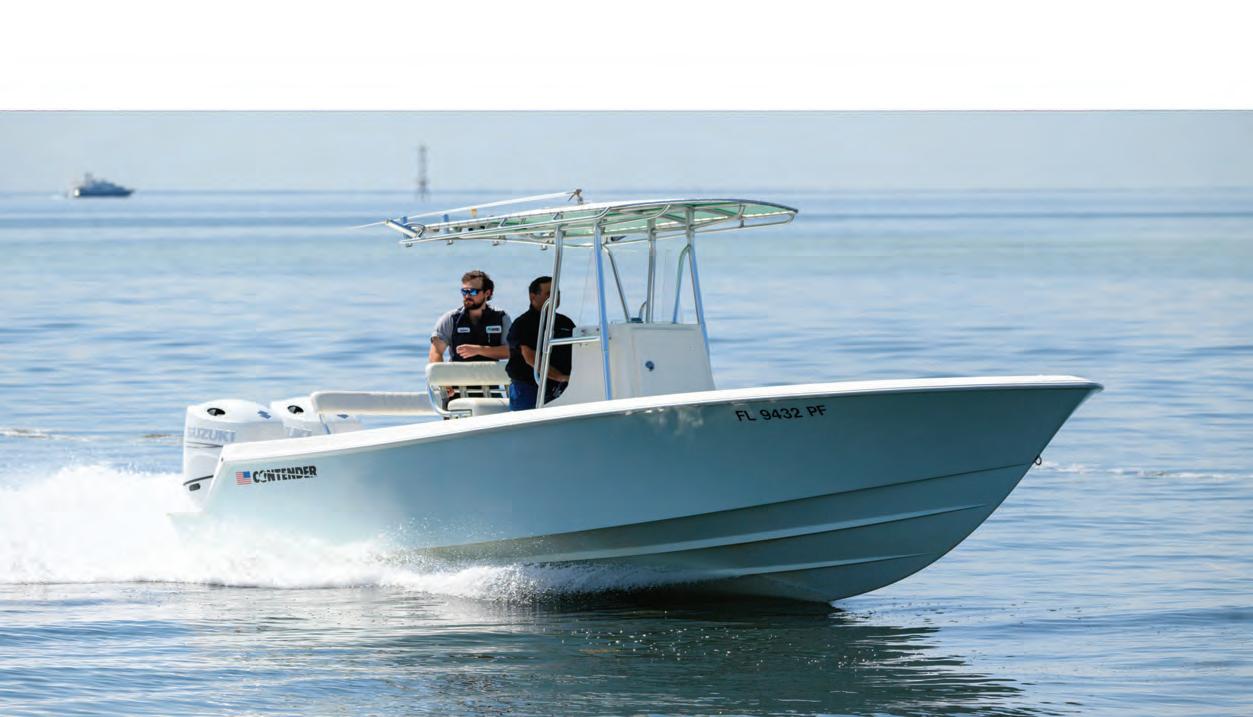
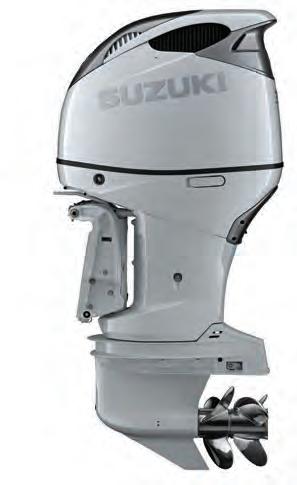
Mastry Engine Center has received the Suzuki Marine Super Service Award and has been ranked #1 in Suzuki Marine US Sales! 60 YEARS OF REPOWER EXPERIENCE!

RePower Packages designed to best ft your needs and not stretch your budget. Financing available.

Rest assured, all Mastry Suzuki RePowers are backed by Suzuki’s industry leading 5-year factory warranty.

Stationed strategically around the East Coast, all Suzuki RePower Centers have achieved the highest level of Suzuki certifcations to meet and exceed your repower needs.
When Considering A Repower, Consider These Factors:
•Every Authorized Mastry Suzuki RePower Center has decades of repower experience providing proper rigging, controls, propeller matching and in water testing
•With a Mastry Suzuki RePower, owners gain improved performance, less noise and greater reliability
•Mastry Suzuki RePower’s exclusive Owner’s Edge Program*
•Mastry Suzuki RePower Centers use authentic Suzuki OEM parts and have factory certifed technicians

Since 2014, Mastry Engine Center, has been building the premiere Suzuki Outboard repower network in Florida. Today, Authorized Mastry Suzuki Outboard Centers have been exceeding expectaions in the Southeast for over two decades. Recently Suzuki Marine requested Mastry Engine Center to expand the network throughout the Northeast. Now boat owners from Maine to Florida can be assured of the best support for their Suzuki outboard repower project. All Authorized Mastry Suzuki RePower Centers provide the best options, information and package pricing for excellent performance in repower.



*Get with the Program!
When you purchase a new Suzuki outboard from an authorized Mastry RePower Center you qualify to become a member of the Mastry Suzuki Owner’s Edge. Owners receive an identifcation card that provides them with important information about their Suzuki outboard motor as well as a passport to additional benefts during ownership. Members enjoy a detailed engine maintenance schedule, Mastry Suzuki RePower Trade Program and special pricing from Mastry Suzuki Partners.








With this March 2026 issue, (our 169th) we begin our FIFTEENTH year, bringing the world’s greatest FREE fishing magazine to North Central Florida and the Nature Coast. We began March 2012, with NO publishing experience, and really no clue what we were getting ourselves into. Even though we were not young, we are smart and we could learn. We were going to succeed no matter what, and we have! When we began, we were print only. Now we are on the web, and we have videos. Interested? Call me and I will tell you all about the videos.
Dr. Kevin McCarthy has been writing for us since our first issue. Every month he brings us something new and fresh. “Kevin, you are a treasure, and you are much appreciated!” See page 3 for FLORIDA WATERWAYS.
I also want to acknowledge and thank Capt. Tommy Derringer and Capt. Pat McGriff. Capt. Derringer (ST. AUGUSTINE page 16) joined us April 2012 and Capt. McGriff (KEATON BEACH page 12) joined us May 2012. Noel Kuhn (SURF & PIER page 16) has also been with us since our first year. “WOW! We so much appreciate their loyalty and dedication!
See page 10 for our Brag Board. Send me your catch photo to see your prize catch in our magazine.


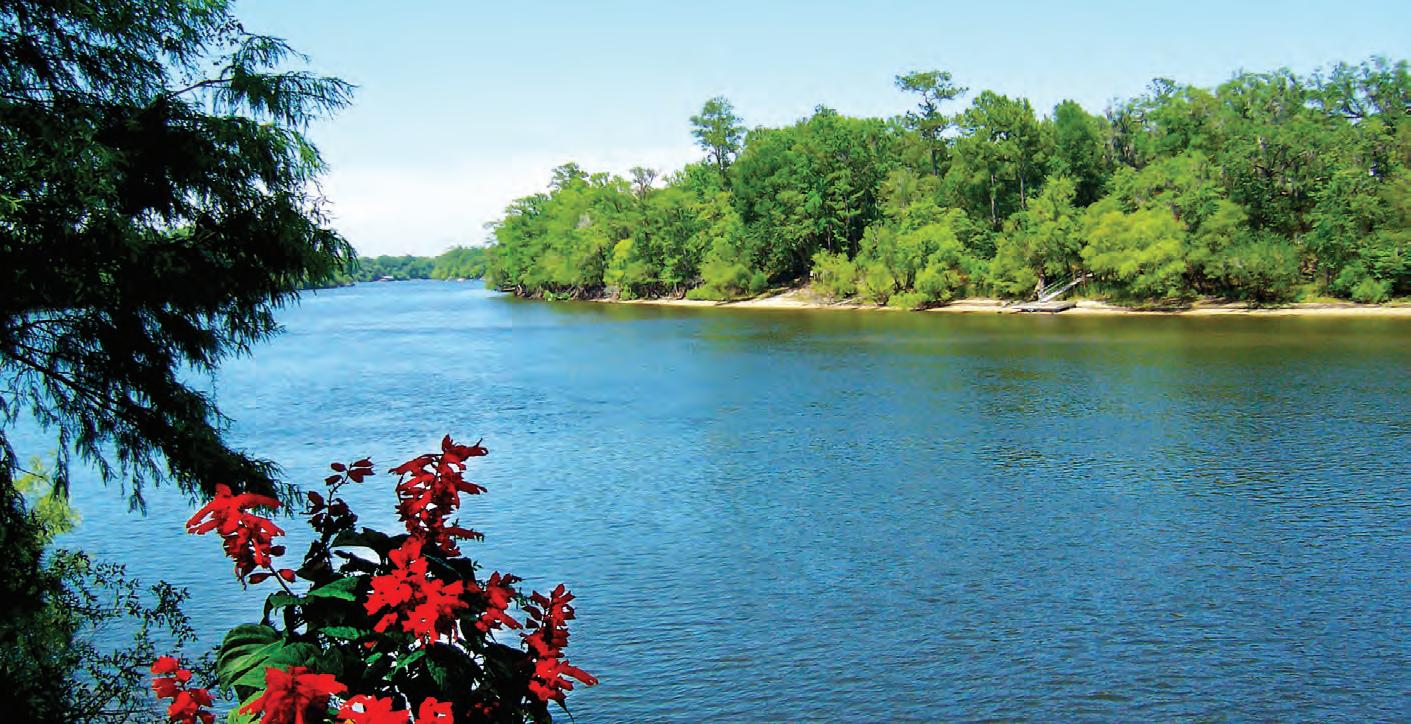
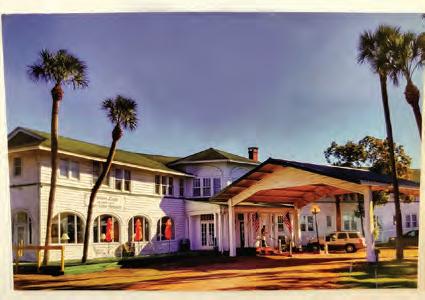
New advertiser this month, Old Florida RV Resort and Yacht Club, now open in Yankeetown. See page 8.
This month’s recipe, Sheet Pan Shrimp and Grouper Cheeks with Creamed Spinach and Wild/White Rice Pilaf, page 2, is delicious and a real crowd pleaser. Check out the easy creamed spinach.
As we begin our fifteenth year of publication, we first want to thank the wonderful folks at our Coastal Angler Corporate office for their ongoing support and assistance. We send a really big thank you to our family of franchise owners across the country, for their generous sharing of advice, photos, articles and sometimes, just an understanding and sympathetic ear. Thank you to our advertisers and distribution locations. Thank you to our writers for giving of their time and knowledge to provide us with timely forecasts and articles. Thank you to Kathleen, our graphic artist. You see her beautiful work on every page. Last, but certainly not least, thank you to YOU, our reader. If you stop reading our magazine, we are out of business in a hurry.
Again, I want to remind you to consult your medical advisor about getting your flu shot, Covid booster and for some of us, the RSV vaccine. You might also want to ask about the pneumococcal pneumonia vaccine. Stay smart; stay well and stay alive.
Lynn Crutchfield Co-Publisher Coastal Angler Magazine of North Central Florida/Nature Coast


North Central Florida
Nature Coast Staff SALES
Cary Crutchfield
EDITING & PRODUCTION
Lynn Crutchfield
GRAPHIC ARTS & DESIGN
Kathleen Stemley
CONTRIBUTING WRITERS
Dr. Kevin McCarthy Noel Kuhn
Capt. Jason Clark
Capt. Katie Jo Davis
Capt. Tommy Derringer
Capt. Andrew Fagan
Capt. Jonathan Hamilton
Capt. Dallas King
Capt. Pat McGriff
Capt. Brent Woodward
CONTACT INFORMATION crutch@coastalanglermagazine.com 352-542-0356


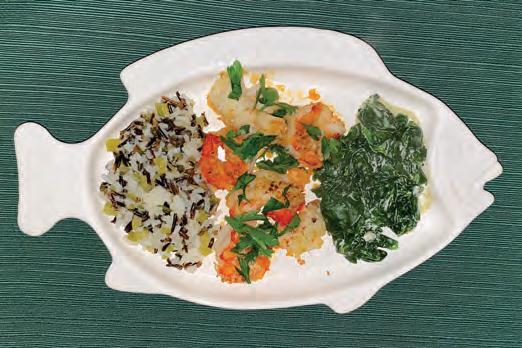
Thank you to The Crab Plant for the shrimp and grouper cheeks. Visit their Fresh Seafood Market or enjoy Cooked Seafood to go. You are welcome to sit at their table and view


beautiful Kings Bay while you enjoy your delicious, freshly prepared meal, watching manatees, dolphins, pelicans and boats. Or, you can carry it home; your choice. Open Tues-Thurs 10:00-5:30, Fri-Sat 10:00-8:00. 201 NW 5th St. Crystal River 352-795-4700.
Cook equal amounts wild and white rice, as per number of servings. Set aside. Melt a couple tablespoons butter in small saucepan and sauté celery and onion until tender. Mix in the two rices, salt to taste and keep warm.
If using fresh spinach, remove stems, rinse, place in large sauté pan. Cook on medium until spinach is wilted, add salt to taste. (If using frozen, cook as per package directions.) Add about four tablespoons cream cheese, and gently mix in with spinach. Thin with milk if it gets too thick. Keep warm.
• Jumbo Shrimp (five per serving)
• Grouper Cheeks (five per serving)
• Butter
• Salt and Pepper
• Grated Parmesan
• Panko Crumbs
• Spinach (9 oz. bag of fresh or pkg. of frozen)
• Cream Cheese
• Wild and White Rice
• Celery one stalk diced
• Green Onion four sliced
• Minced parsley for garnish
Preheat oven to 450 degrees. Line sheet pan with foil. Put a couple tablespoons butter on pan and stick in oven for a couple of minutes until butter melts. (Don’t let it burn!) Remove pan from oven. Place shrimp and grouper cheeks on pan and turn each over so that both sides are coated with a bit of butter. Season all with salt and pepper, sprinkle heavily with grated Parmesan and Panko. Bake for four to five minutes, until Panko is lightly browned. Serve with creamed spinach and rice pilaf. Garnish with minced parsley.
Another impressive seafood dish, and very quick and easy! You can substitute small chunks of boneless, skinless white or dark chicken for the grouper.
Lynn Crutchfield, Co-Publisher Coastal Angler Magazine of North Central Florida
By Kevin McCarthy
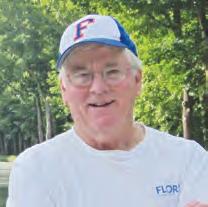
By Dr. Kevin M. McCarthy
AAs a professional linguist my whole career, I have been interested in anything dealing with our language, including names, for example nautical terms based on the names of people. Here are a few I have not mentioned before.
• Beaufort Scale: A scale for measuring wind speed based on observable sea conditions. It was developed in 1805 by Sir Francis Beaufort, a British naval officer and hydrographer. He had a strong interest in the value of accurate charts for those at sea since he had been shipwrecked at the age of fifteen because of a faulty, inaccurate chart.
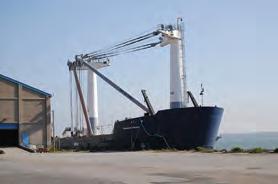
• Derrick: A type of crane or lifting machine used on ships. The name comes from a Thomas Derrick, a notorious 17th-century London hangman, whose gallows resembled the structure of the lifting apparatus.
• Grog: A mixture of water and rum traditionally issued to sailors in the Royal Navy. The name comes from Admiral Edward Vernon (nicknamed "Old Grog" because of his grogram cloak), who ordered the dilution of the rum ration in 1740 to curb drunkenness. A "grogram cloak" was a garment made from grogram fabric, a coarse material named from the French “gros gram,” a coarse grain.
• Davy Jones: Commonly known as "Davy Jones's Locker," this refers to the bottom of the ocean as the final resting place for drowned sailors. Its exact origin is debated; theories link it to Saint David (the patron saint of Wales), a 1630s pirate named David Jones, or a 17th-century pub owner who supposedly kidnapped sailors for "press-ganging". The term is used as a euphemism for death at sea.
• Mae West: A World War II nickname for inflatable life jackets. It was named after the curvaceous American actress Mae West because the inflated vest gave the wearer a buxom appearance.
• Plimsoll Line: A set of markings on a ship’s hull that indicates the maximum safe depth to which it can be loaded in various water densities. It is named after Samuel Plimsoll, a 19th-century British MP who campaigned against "coffin ships" (dangerously overloaded vessels) to protect sailors' lives. It is also called the “load line.” The line is a water line on a ship.

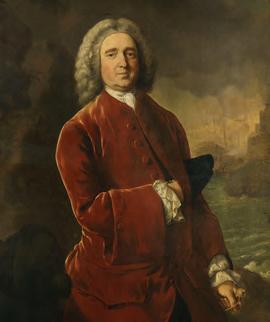
This year I hope to write about the nautical origin of some of our common words, for example “admiral,” “binnacle,” “compass,” “pier,” “sick bay,” and “stern.” Even landlubbers who never go to sea use a surprising number of such terms, perhaps unaware of the nautical origin of such terms. The images I’ve used here are all copyright free from Wikipedia. Congratulations to Lynn and Cary Crutchfield for successfully publishing this informative magazine for fourteen years. May they continue for another fourteen+ years.
Kevin McCarthy, the author of “Suwannee River Guidebook” (Amazon, 2009), can be reached at ceyhankevin@gmail.com.





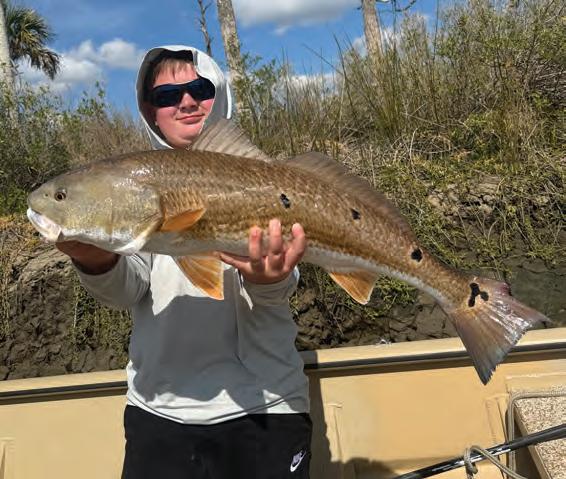
The month of March is a special month. It usually brings some warmer weather and excellent fishing!
Inshore, the sheepshead, trout and redfish bite remains excellent. I haven’t travelled more than a mile away from land to catch limits of sheepshead this winter, and the quality and amount has been excellent. Fiddler crabs and shrimp on a 1/0 owned mosquito hook have been the ticket. The redfish and trout have been deep in the
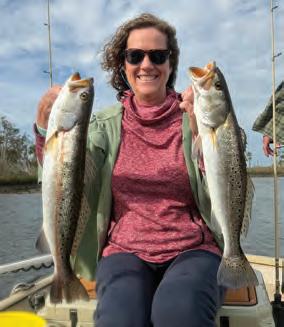
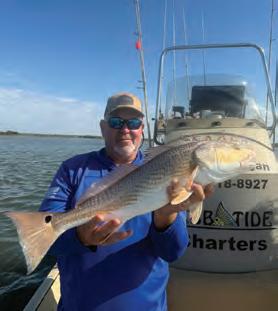
creeks, taking large mudminnows and big shrimp from Captains Cove.
Offshore, the sheepshead bite has been good when you get a good weather day, and the mag rice bite heats up this time of year 30 to 50 feet deep on or near your rock piles. Just freeline live shrimp to get the bite!
Tight lines and happy fishing
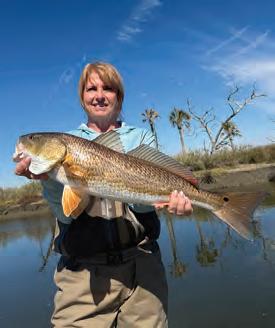
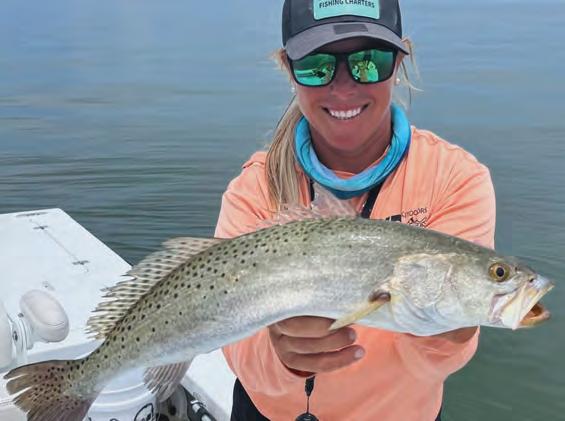
Spring is around the corner, and I am excited about warmer weather, as it is my favorite time to fish both inshore and nearshore. The trout are beginning to school up again near shallow water rocks and deeper channels, where the bait fish are found. Pompano and permit are always a great by-catch around the same rocky areas and rocky points.
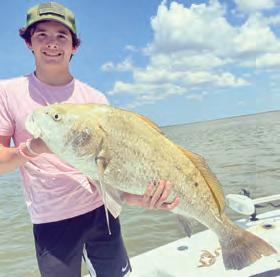
Red drum and black drum will begin moving out from deep in the creeks and rivers to the mouth of the creeks while they start to follow the mullet back to the outside. And the warming water temperatures will have them hungry.
Sheepshead are in their full spawn mode and are being found in 6 to 30 feet of water. Hogfish will begin
moving in for their late spring spawn as the water temperatures warm, so expect to find them a little shallower in the same areas where sheephead are concentrating.
March is always one of my favorite months to fish as many of our migratory fish begin moving north, including triple tail and permit. It also is the beginning of our spring snook season on the nature coast. Many of these fish are still schooled up in the rivers, but as water temperatures continue to rise, you can expect to find them along shallow water oyster bars as well.
Captain Katie Jo Davis KD OUTDOORS FiSHING CHARTERS
772-882-8932
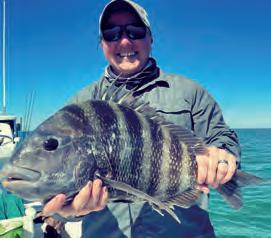
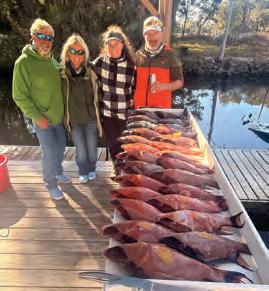











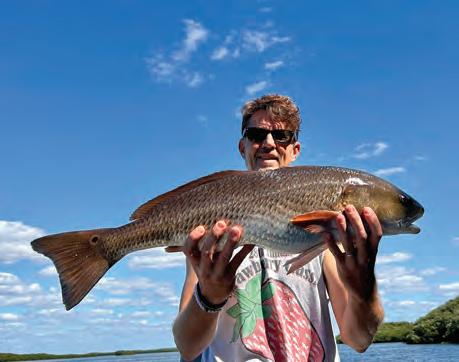


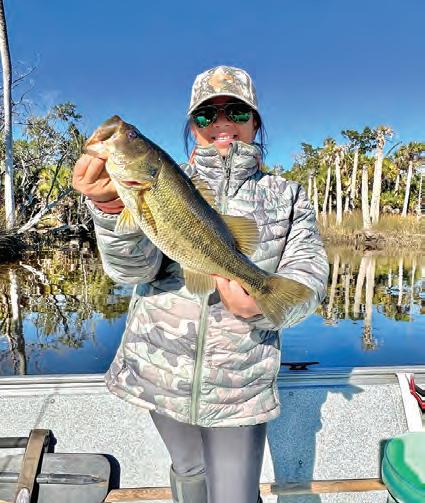
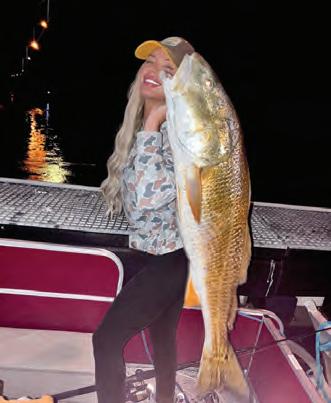
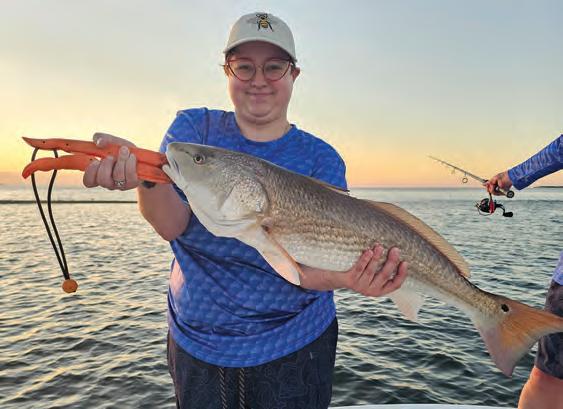
Hey anglers, the water is heating up, and the fish are loving it! With these warmer temps, expect the fish to start moving back out onto the grass flats and around the islands. Now with that said, don’t count the creeks out just yet. There are still plenty of fish to catch back there as well.
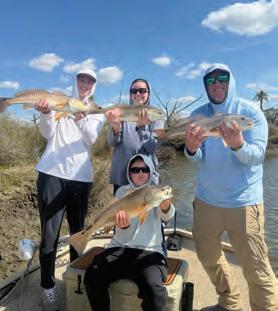
I've been having good luck on the flats and in the creeks consistently, and I absolutely love this time of year for my clients. Trout are plentiful everywhere, reds are doing pretty good, and it’s time for some big black drum to make their appearance.
Right now, regardless of where I fish, my go-to bait is either a popping cork with a paddle tail or with a shrimp. The shrimp is going to give you better odds while looking for reds and black drums, and the paddle tail is just great year round for trout.
So regardless of what you wanna do, now is the time to make it happen. Enjoy this awesome bite anglers!
Until next month, stay safe out there.
Capt. Jason Clark
In The Slot Fishing Charters 352-639-3209 www.intheslotfishing.com
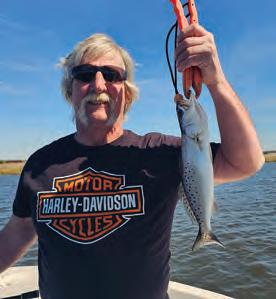


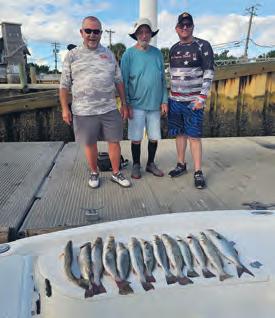
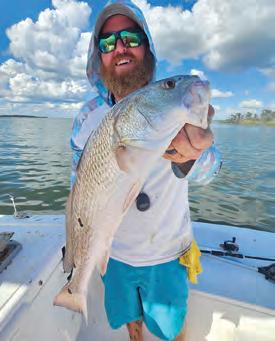
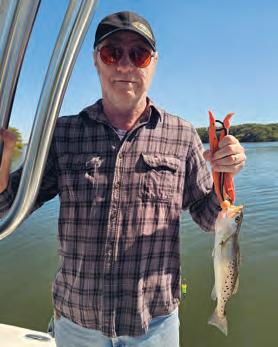





Hey guys and gals! Fishing has been solid this week with typical winter patterns setting up along the Big Bend. Cooler mornings have fish holding a little deeper early, then sliding up onto the flats once the sun gets high.
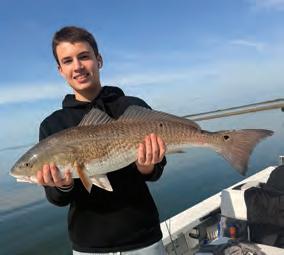
Redfish are steady around oyster bars and broken grass in 2 to 4 feet of water. Look for mullet activity and push water on higher tides. Gold spoons, paddletails, and cut mullet have all been producing.
Speckled trout are hanging in slightly deeper potholes and along channel edges early, especially on moving tides. As the day warms, they’re pushing onto the darkbottom flats. Soft plastics under a popping cork and suspending twitch baits are getting the better bites.
Black drum are mixed in around the same structure, particularly near creek mouths and oyster points. Shrimp on a jighead or knocker rig has been the go-to.
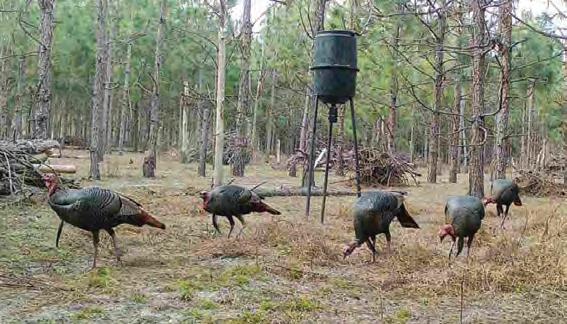
Don’t forget, turkey season is here and we would love to get y’all on the books to help you or your kid to get your first turkey! I look forward to hearing from you, and until next time, Keep it Reel Native!!!
Capt. Brent Woodward ReelNativeFishing.com 352-284-5514
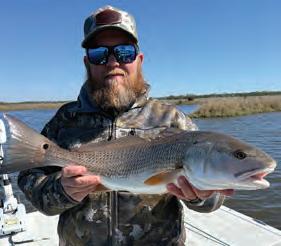
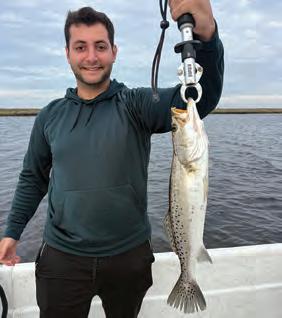
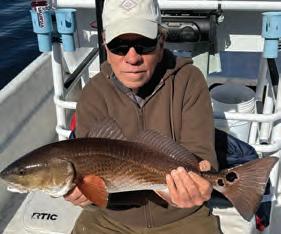
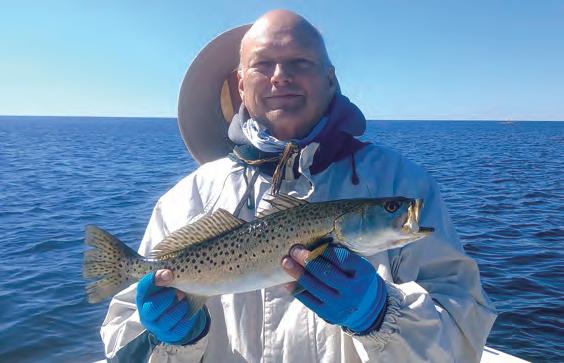
March is a magical month, as water temps come into the 60s and on through to the 70s, which is the magic number.
Once we hold 70 degrees over night for a couple of days, it usually is "On”. Trout, who spent the winter in deeper grass flats, will come alive and readily take suspending plus, unweighted plastic soft jerkbaits (I call Flukes.) jig and corks combos, lipped hard jerkbaits and well, pretty much anything you throw at them, should begin to fill your coolers in March.
I prefer to start off with MirrOlure's MirrOdines in the #27 and #17 models, and color choices will be up to you. I like the New Penny in the broken glass series, and the 808 in the broken glass gold. Paul Browns in the Devil and Soft-Dines will also take a slew of trout and reds this month. Can't say exactly where
you will find the trout, but would expect the larger trout to be on or near the rocks and close to the creek’s mouths. Fish the last of the incoming and the first two hours of the fall, for your best guess in March.
Reds will take most of the same artificials as the trout, but will be in the creeks or at the mouth of the same. Live shrimp will take their share, but Weedless spoons and suspending plugs will also score redfish in March. Cordell Redfins (a local favorite) will be the hard-to-beat as a redfish plug choice.
If you can't go in early (full moon is the 3rd) March plan a trip around the new moon (18th).
Meanwhile, Let's Go Fishing! Pat McGriff dba One More Cast guide service for 33 years! www.onemorecast.net onemorecast@gtcom.net cell: 850.838.7541
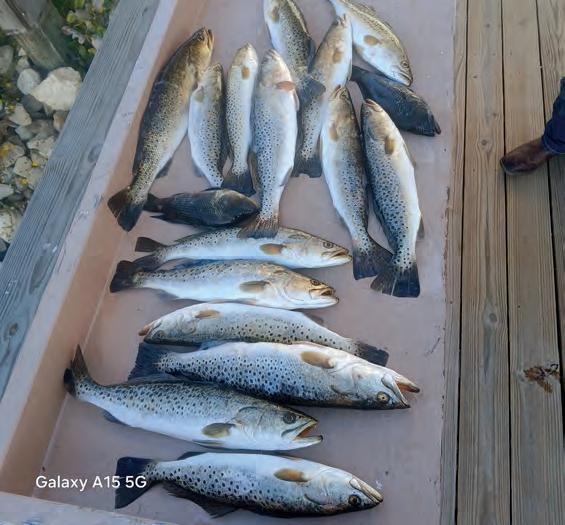

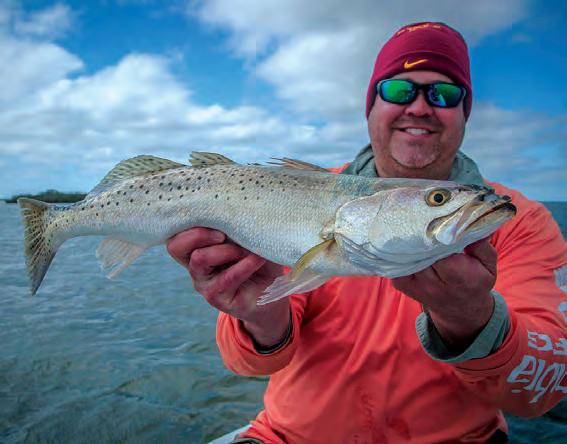
Springtime in Florida is my favorite time of the year. Turkeys are gobbling, slightly warmer weather, and the flats are coming back to life. This is hands down my favorite time of the year to catch big trout in Homosassa. There is nothing like watching that big yellow mouth crush a nose hooked jerk bait in 3 feet of crystal-clear water.
Trout fishing: look for hard yellow bottom and hard bottom points during the second half of the incoming tide, especially the afternoon incoming tides. These fish will move on the rocks (yellow bottom) when there’s enough water for them to feel comfortable. You can get in there too early and actually keep them from coming on the rock. So be patient and wait. Jumping mullet is a key sign that it’s getting right! I like the DOA CAL 5 inch in Glow or Glow/gold flake nose hooked on a 3/0 J hook. That’s my go-to. MirrODines also work pretty good as well.
Red fishing will start to increase as well on the outer islands. Fish will be transitioning out of the back and start working their way back to the outside. Shrimp or live pin fish under a cork is kind of hard to beat this time of the year. With the water clarity being so good, fly fishing can be good in March. I like throwing shrimp/bait fish pattern flies in these conditions.
Near shore rock piles will start coming alive with plenty of action for everyone. Grunts, snapper, and mackerel will keep your rods bent and make for one heck of a fish fry. Shrimp on a jig head will keep you busy.
Again, spring time fishing in Homosassa is really my favorite time of the year. I hope you can find the time to get out and enjoy it as much as I do.
As always stay safe,
Capt. Stump, Jonathan Hamilton 352-403-2073 www.homosassafishingcompany.com
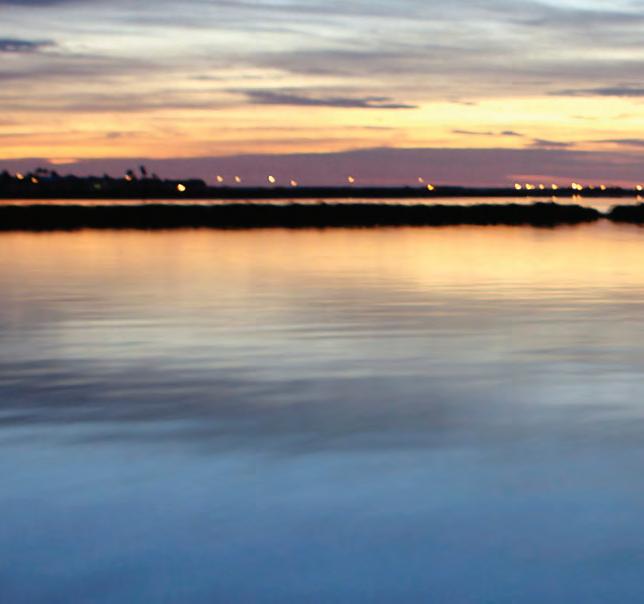
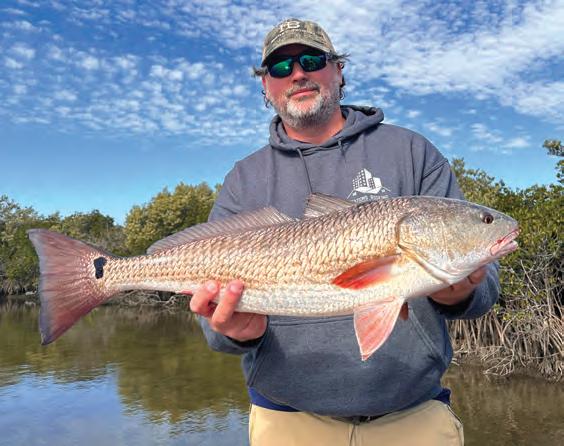
Spring is in the air! March starts an incredible change along the nature coast. Fish start easing back west from their winter holes.
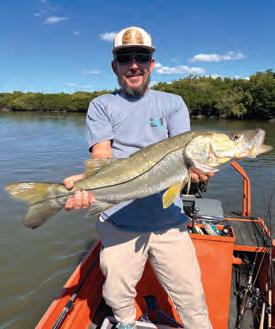
Snook season will start March 1st, as long as there is no closure due to our fish kill during the freezing temperatures in early February. This killed a significant amount of fish in our area. If you’re targeting snook, take care of them on the release! If you harvest them, don’t take more than you need. I have tried to push my customers that direction and it definitely makes a difference in our population. As I always say with snook, fish slowly and quiet and use a big bait!
Redfish will be feeling the warmth on rocky points and hard bottom areas off the mangroves. Shrimp work great until the pinfish and bait thieves show up to eat it. When that happens, I like to switch things up and throw a small gold spoon. A slow steady retrieve is one of my go-to methods for finding big reds using artificial. When all else fails this time of year, take it slow. Throw a nice chunk of cut mullet or cut lady fish on your favorite redfish spot and wait. I’ll wait 15 to 20 minutes for a bite while I soak cut bait before I move spots.
Trout will be on fire during the

March warming trend. Remember, it’s only one overslot per boat now, 15 to19 inches is our current slot. A popping cork with a shrimp or your favorite soft plastic in a natural shrimp color will normally get the trick done in 3 to 5 feet of water. I find hard bottom with patchy grass is the key. As always, only keep what you need!
God bless and tight lines
Captain Dallas King Pirate Flag Charters and Tours 352.601.8460
www.pirateflagcharters.com www.crystalriverfishingpros.com
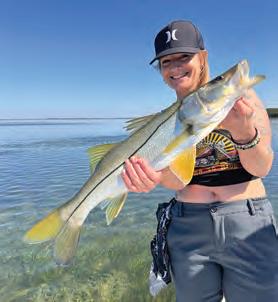

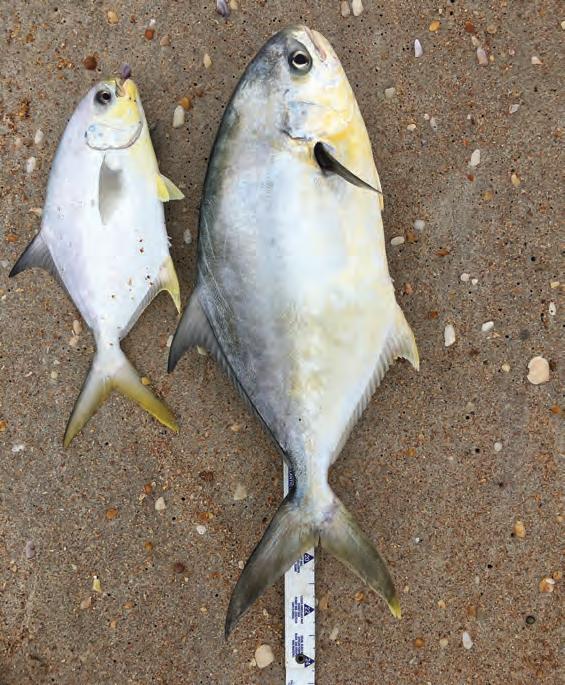
This March will be a lot different than previous months, due to eight straight days below FREEZING in Jacksonville! As I’m writing this, our surf temperature is 52 degrees! I only hope that as you’re reading this, the water temps are back above 60. At that point, the Whiting bite will have turned back on. 64 is the sweet spot, when the big pompano make it back from south Florida. To find the bite, google SST charts Rutgers, Jacksonville Beach pier or St Augustine pier.
All of my huge pompano, six pounds plus, have come early in the spring or very late in the fall. My mentors taught me that they can withstand colder water. They called them the scouts. My first big one was on Crescent Beach in early March. The air temp was 80, but the water hurt my feet because it was 64. When it comes to bait, I prefer blue crab knuckles or fresh clams. Live sand fleas bury in deep and are hard to catch, unless you have one of those 80 degree afternoons when they come up to feed.
Rigging is simple and tried and true, a double dropper tied with
30-pound monofilament and finished off with 2/0 circle hooks. No beads or floats are needed. Just remember this, all you need is a good bait and a hungry fish. Over the years, I have in my collection 20 different colors, 15 different shapes and 20 different sizes of beads and floats. However, the last three years I have gone back to naked rigs, no beads or floats. It is the same rig I was using in the 1970s, before anyone ever thought of putting jewelry on their rigs. More natural and more matching, the hatch is my formula for success.
If you want to take your catching to the next level without breaking the bank, join me for a seminar on the beach. Please visit guyharveyoutpost.com and look for outdoor adventures. They start this month and run through November. Or, contact me directly for a private class/adventure.
Noel Kuhn
43 years of surf fishing experience, surf fishing guide and long distance casting coach. Founding member of Florida Surf Casters club. 904-945-0660 www.TheSurfAngler.com
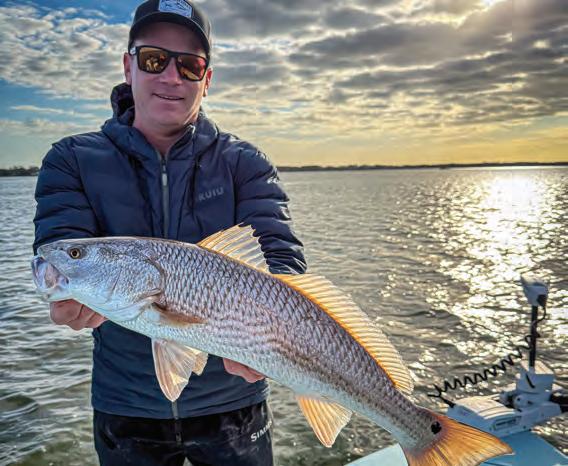
March is my absolute favorite time of the year to fish in Northeast Florida. It’s been an extra cold winter, and I think I can speak for all of us in saying, “I’m ready for some warmer weather!” Spring weather will bring in the baitfish (mullet, pogies, etc.) and just about every predatory fish will be on the hunt for a good meal. Redfish will still be up on the flats in schools, trout will be feeding along the ICW banks, and the drum and flounder will be stacked in the deeper creek holes. Just about everywhere you go, you’re going to run into some good fishing over the next couple of months. Redfish will remain schooled up, if the water temps stay on the cooler side. Look for the big schools of reds on the lower tide stages (especially on the negative low tides, we get with a good west wind). I like to find flats that have somewhat of a deeper escape route for the fish. A perfect setup would be a large flat on the edge of the ICW, that has a deeper area that drains into the ICW. The fish will absolutely stack up in those “drains” as the tide gets low. If live bait is your thing, a mud minnow or live shrimp pegged to a 1/4oz Saltwater Assassin jighead will be the perfect presentation to the schooled-up fish. If you’re going with artificials, I like to use a Saltwater Assassin paddle tail on the same jig. Locate the schools by looking for large wakes and/or “muds” that the fish will cause by moving around. Make sure to lead the fish by quite a bit, as they can and will be a little spooky this time of year. You can also find some big schools of redfish stacked in the creek holes on the same low tides. Push back as far as possible in the creeks, and find that last deep spot; you’re sure to find a few good fish hanging out waiting for
the tide to turn.
Redfish won’t get all the glory this time of year; it’s also trout time, as the water warms up a bit! I’ll toss my favorite top-water plug, the Berkley J-Walker 120 at first and last light along the ICW shell banks for some great big trout action. Once the sun comes up a bit, switch to a sub-surface plug or your favorite soft plastic on a jighead. The soft plastic and jighead rig account for a good number of trout catches on my boat this time of year. I like to use the twitch-twitch-pause retrieval method. The fish usually take the lure on the pause. Target creek mouths on the outgoing tide and the ICW shell banks on the incoming. Any kind of rocks, docks, or structure with moving water around them will also be holding some nice trout. And of course, the live shrimp under a popping cork sometimes can’t be beat.
March and April are typically the best times of the year for black drum in our area. The monster drum (sometimes up to 80 lbs.+) can be targeted in the deepest areas of the ICW, and in all the area inlets. A halved blue crab on the bottom is the bait of choice for these big dogs. The big ones will be spawning, so make sure to thoroughly revive them to ensure a healthy release, so they can take care of their business and keep the drum population thriving. The smaller “slot” sized black drum can be found in the creek holes and near deeper water structure, such as bridges and jetties. Live or dead shrimp, fiddler crabs, and clams fished along the bottom will all make for some great drum action.
Capt. Tommy Derringer www.InshoreAdventures.net 904-377-3734





At its February meeting, the Florida Fish and Wildlife Conservation Commission (FWC) approved new management regions and regulations for spotted seatrout shing in the State of Florida. e rule changes establish nine management regions for spotted seatrout as well as regional regulations for recreational and commercial shing.
ese new regulations will go into e ect on April 1, 2026:
OPEN/CLOSED SEASONS
Recreational
» Panhandle: Open March 1–Jan. 31; Closed February.
» Big Band, Tampa Bay, Sarasota Bay, Charlotte Harbor, Southwest, Southeast, Northeast: Open year-round.
» Indian River Lagoon: Open Jan.1–Oct. 31; Closed Nov. 1-Dec. 31.
Commercial
» Panhandle, Big Bend, Tampa Bay, Sarasota Bay, Charlotte Harbor, Southwest, Southeast: Open Jun. 1–Oct. 31; Closed Nov. 1–May 31.
» Indian River Lagoon: Open May 1–Sept. 30; Closed Oct. 1-Apr. 30.
» Northeast: Open June 1–Nov. 30; closed Dec. 1–May 31
Recreational
» Big Band: Five (5) sh per person.
» Panhandle, Tampa Bay, Sarasota Bay, Charlotte Harbor, Southwest, Southeast, Northeast: Four (3) sh per person.
» Indian River Lagoon: Two (2) sh per person.
Commercial
» 50 sh (1 SPL);100 (≥2 SPLs) in all regions.
» Recreational - 15-19 inches
» Commercial - 15-24 inches
OVERSLOT ALLOWANCE
Recreational
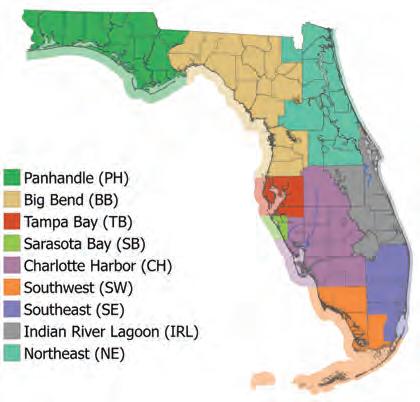
» All Regions: None. is regional management strategy has been implemented for some of Florida’s most popular inshore species, including red sh and snook, and now spotted seatrout. ese regions and regulations are part of the FWC’s holistic management is approach takes a more holistic view of the shery by evaluating multiple metrics, including shing, stakeholder experiences and environmental factors, at a smaller regional scale. It improves our understanding of regional di erences in environmental conditions and stakeholder experiences and provides greater exibility to address localized concerns.


» Panhandle, Big Bend, Tampa Bay, Sarasota Bay, Charlotte Harbor, Southwest, Southeast: One (1) sh over-slot allowed per vessel or per person if shing from shore
» Indian River Lagoon, Northeast: None
Commercial
For the full FWC commission meeting agenda and links to background reports, go to myfwc.com/about/commission/commissionmeetings/. For current spotted seatrout annual reviews, visit MyFWC.com/Marine and click on “Recreational Regulations” and “Spotted Seatrout.” ese documents provide a summary of the management metrics in each new management region.
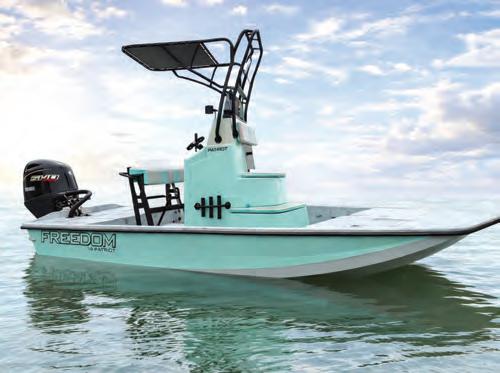
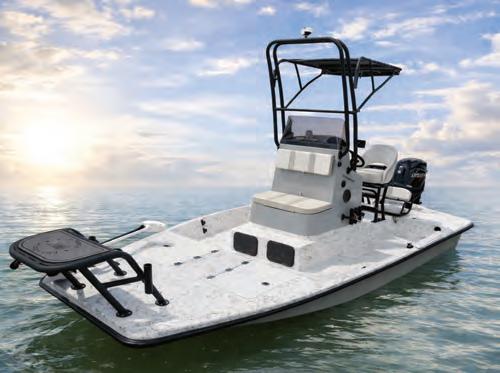


















It’s no fsh tale when you run with a John Deere. You can get everything done faster and easier, so you get more time on the water. Plus, our special offers make them the catch of the day.


By Capt. Jim Ross
s a charter captain, as well as a regular contributor to the Brevard County, Florida edition of Coastal Angler Magazine, every year there are certain events that happen that I try to predict in advance so that clients and readers can catch more !sh. However, there are many times that even we so called “professionals” don’t get it exactly right. Obviously, my crystal ball isn’t 100 percent correct all of the time...maybe it needs a tune up. LOL!
ings like the giant black drum schooling up, spring cobia run, June tarpon run, fall mullet run, and winter pompano run aren’t things you can pin down to a certain day of the month, but most of the time we can at least predict the month. Hopefully, I can achieve at least a 90 percent e ciency rating a er doing this report for the past 25 years.
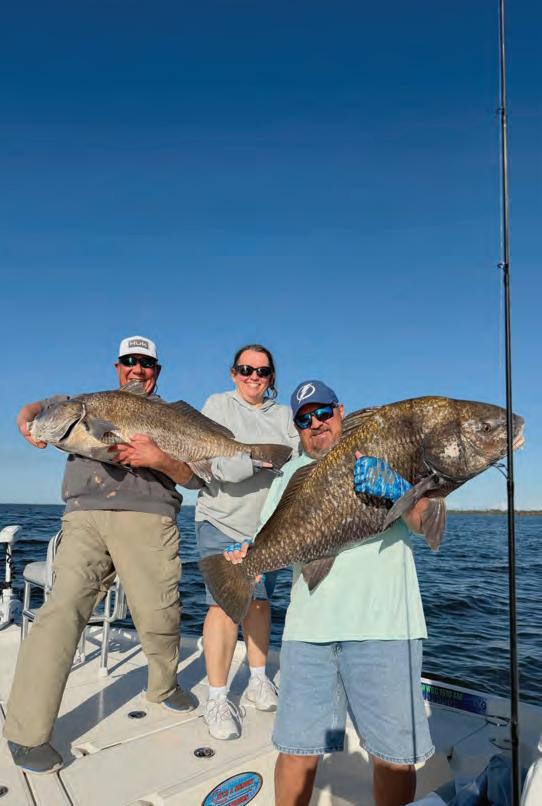
I was just telling my clients one day last week, a er catching a bunch of small trout and a couple of lady!sh, that the big uglies were probably going to show up in a few weeks and if they had a chance to come back out with me then that they may have a shot at catching some much larger !sh than the ones we had landed that morning. Just !ve minutes a er saying this I spotted something unusual about 500 yards up the at. It was exactly what I had just been talking about- a 300 !sh school of 30 to 50-pound black drum.
e !sh in this big school were happy-tailing and waking as they pushed their way down the at. We eased up to them, cast our shrimp in their direction, and as you !gured, the battles were on. All three anglers were hooked up to huge drum that had absolutely no respect for them. Drags screamed, rods doubled over, and dozens of yards of line dumped o their reels. Grunts and groans were heard between laughter and smiles as they worked to tire these beasts. e boat deck looked like a country bar dance oor as anglers shu ed and two-stepped under and over each other in an e ort not to lose their prized catches.
We ended up extending the trip from a 3/4 day to a full day outing because each !sh took 15 to 25-minutes to land.
e moral of the story? Don’t ever count on !sh to be there and don’t ever think that it’s not quite the right time to catch them. e bottom line is just go !shing every chance you get. at is the only way that you can be sure to catch your next memory.
Capt. Jim Ross is owner/operator of Fineline Fishing Charters on Florida’s Space Coast and host of “Catch a Memory Outdoors” live radio show and podcast. www. neline shingcharters.com • www.catchamemoryoutdoors.com








So many anglers have a “go-to” color lure that they swear by. What they do not understand is that the color of your lure barely makes the top three most important factors for catching tons of !sh.
Mistake #1 - e number one mistake anglers make is ignoring the importance of the size and pro!le of the lures they use. When snook, tarpon, red!sh, speckled trout or ounder are feeding, they o en become laser focused on that particular forage species. In other words, if they are feeding on a 6-inch mullet your 3-inch paddletail or shrimp lure will probably be ignored.
PRO TIP: Have a few of your rods rigged up with various sizes and pro!les of lures on them. I like to have a 3-inch paddletail, an arti!cial shrimp and a 4- to 5.5-inch jerk bait ( uke) rigged up when I can’t determine what bait is around. Try all three sizes and pro!les of lures until you !gure out what the !sh in the area are feeding upon.
Mistake #2 - e number two mistake most anglers make is thinking one retrieve style works best for all of the !sh all of the time. ere are so many di erent factors to consider when retrieving your lures. Here are a few to consider:
• Is the water cold or hot? Fish are cold blooded and move more slowly in cold water. is means that you have to slow down your retrieve when the water is cold. Conversely, you want to move your lure faster when the water is hot.
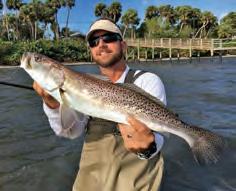
• What species are you targeting? Di erent !sh species like di erent retrieves. For instance, the best retrieve for a red!sh is slowly bouncing your lure o of the bottom. A tarpon likes a low and steady retrieve. A ounder likes a very slow bounce/dragging retrieve no higher than 12 inches from the bottom. A speckled trout likes a vertical jig and will usually hit the lure as it falls through the water column. Snook like a fast and erratic retrieve most of the time.
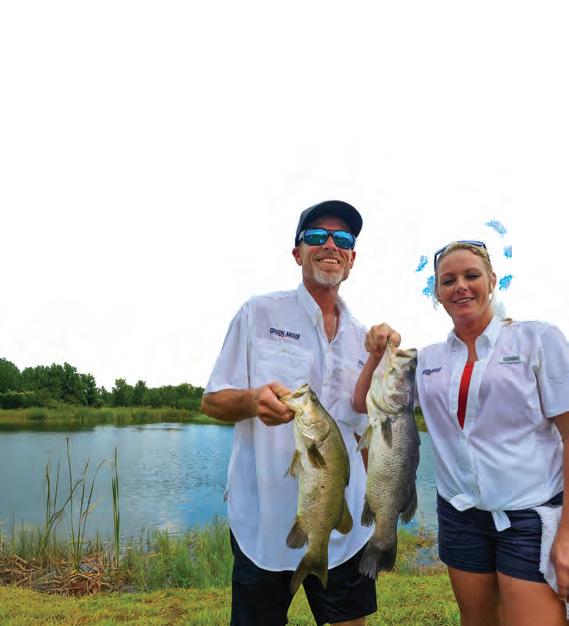
• Is the water clear or murky? Low light, cloudy skies and murky water scenarios makes it harder to get a !sh’s attention. Use a retrieve or lure that creates vibrations and ashes in the water. You also want to fan cast the area keeping your lure placement close together because they are less apt to seek out your lure. When it is sunny and the water is clear it is easier to get the !sh’s attention. You can make your casts further apart and make the !sh come to your lure.
Mistake #3 - e third biggest mistake is thinking !sh care about lure colors. A saltwater tackle box with white lures and something dark like root beer or purple is all that you need to catch any !sh. PERIOD. e bottom line is that if you want to catch more !sh, switch up your sizes and pro!les and vary your retrieves for di erent species and conditions. I GUARANTEE that you will catch more !sh.
Capt. Mike Smith is owner of Fish Your Ass O Charters.Reach him at (561) 339-2317, contact@ shyourasso .com or shyourasso .com.





“It’s a beautiful knife with a great blade and a sure grip” — William B. Wilmington, NC
My friend Sergio is a mixed martial arts fighter. His shoulders are broad. His muscles have muscles. He’s not the kind of person you want to be on the wrong side of.
This manly man has a saying about being tough: You should either know how to fight or look like you do.
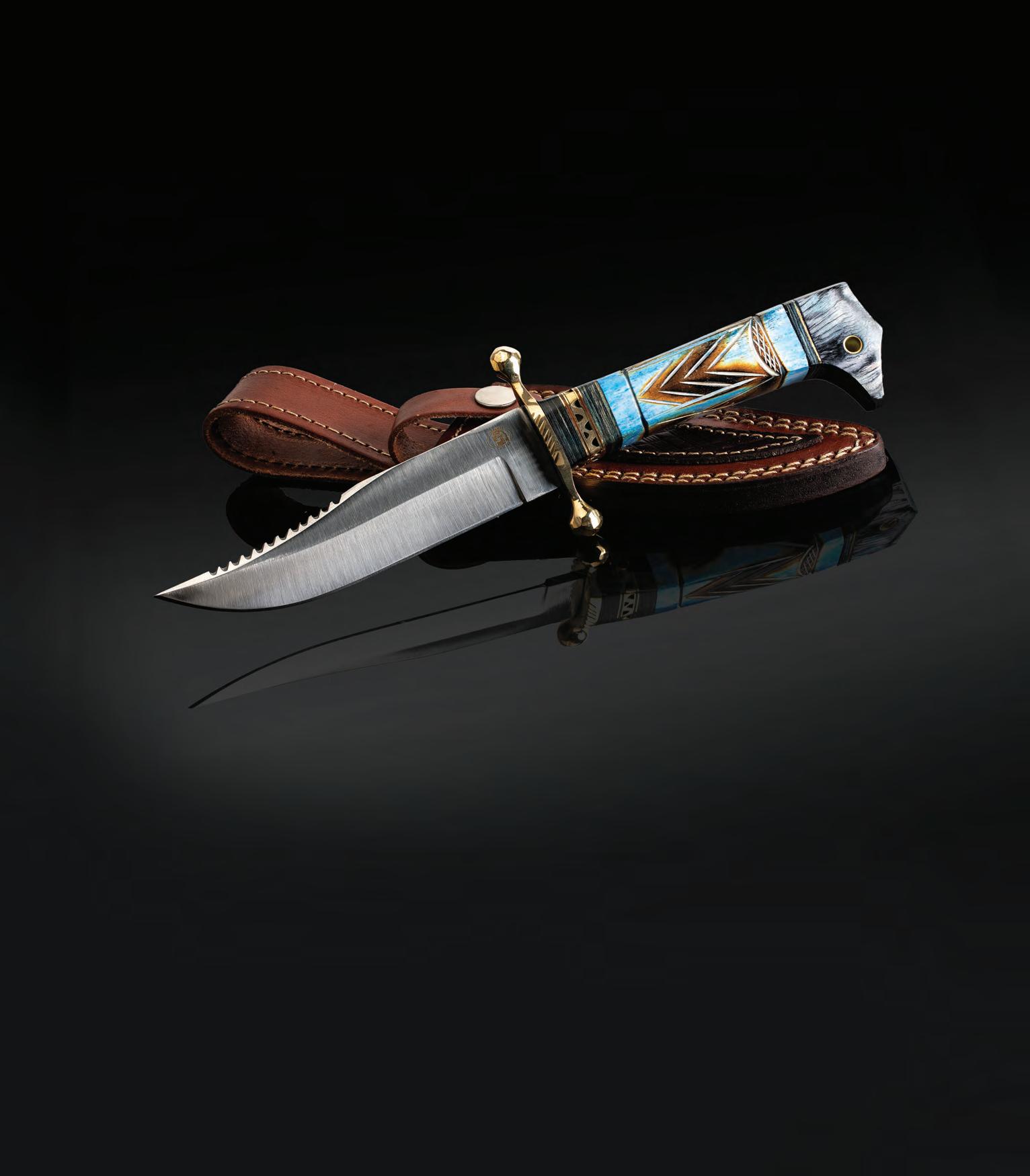
The message is simple enough. People spoiling for a fight usually don’t pick the biggest guy in the bar. If you look like someone who shouldn’t be messed with, you likely won’t be. With our Blue Bone Bowie Knife on your hip, that’s exactly the message you’ll send.
As beautiful as it is functional, this knife is 10" overall and features a high-quality 420 surgical stainless steel blade with a serrated spine. The handle is constructed of genuine natural bone with redwood spacers. On the handle you’ll find design work that’s carved by hand, a testament to its craftsmanship.
This knife is stick tang, meaning it won’t wimp out when you need it. This knife also features brass hand guards and brass spacers with file work, so you won’t lose your grip. For easy carrying, it comes with a genuine tooled leather sheath. CALL NOW! If you’re one of the rst 700 587 callers for this ad, we’ll throw in a pair of Stauer HD Pocket Binoculars — a $99 value — ABSOLUTELY FREE!
Walk around with the Blue Bone Bowie Knife and you’ll feel a lot safer. I know I do.
Knife Speci!cations:
• 10" overall length
• 420 surgical stainless steel and stick tang construction
• Genuine natural bone and redwood hand-carved handle
• Genuine leather sheath included
Blue Bone Bowie Knife
EXCLUSIVE FREE
Stauer Pocket Binoculars a $99 value with your purchase of the Blue Bone Bowie Knife
$299 $79* + S & P Save $220

*Special price only for customers using the offer code. 1-800-333-2045
Your Insider Offer Code: BBK164-02
California
please
regarding