

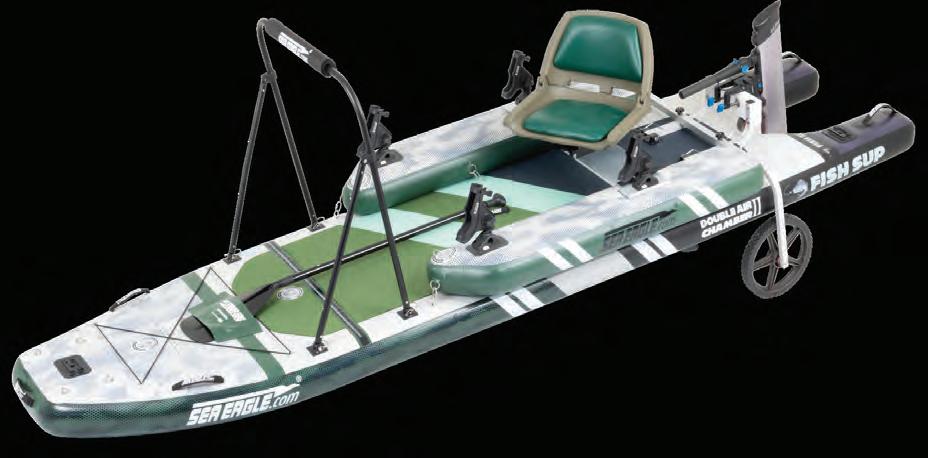
The versatility of the FishSUP™1210 is unmatched! Use it bare bones with just the board, a paddle & your !shing gear or deck it out with swivel seat, side pontoons, casting bar, motor and more! Incredibly stable, extra wide, swallow-tail !shing SUP holds up to 500 lbs! The FS1210 takes electric and gas motors up to 3 hp. There’s even an option for a bow trolling motor.
Choose From 6 Packages
Starting At Just $999
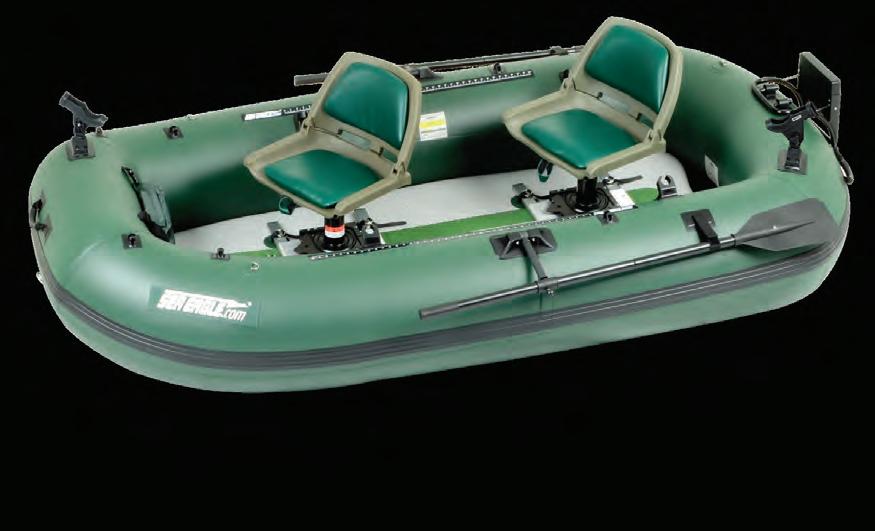
Perfect for !shing rivers, lakes and bays. The STS10 is a lightweight, roomy 1 or 2 person pontoon boat that’s packed with features anglers need & love including 2 built-in !sh rules, 4 built-in rod holders & 2 Scotty® mounts for more rod holders, anchor locks, camera posts or any other Scotty® accessory. Now available with a drop-stitch in atable oor or wooden oorboards.
Choose From 7 Packages
Starting At Just $1449
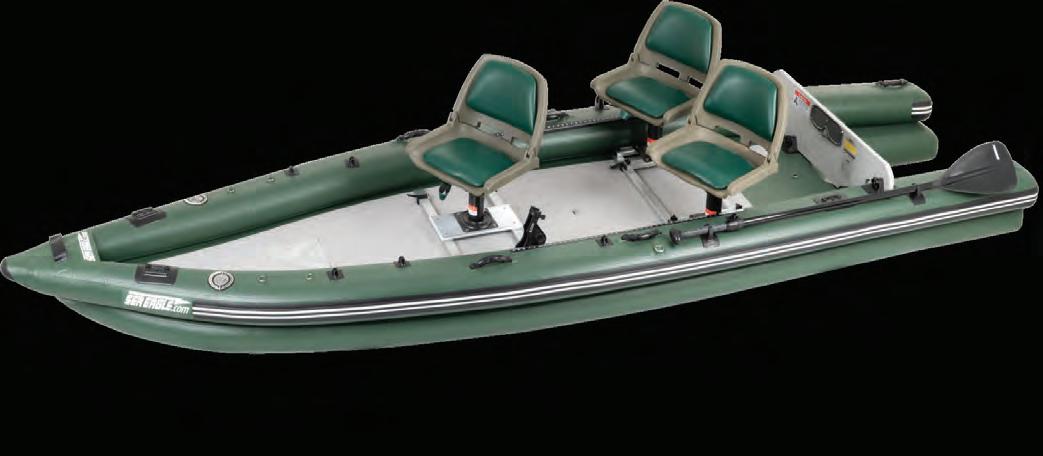
This “low-rider” gives you access to the water to reel in and release !sh easily. With a new patented outside, in atable, rigid keel the FSK16 glides through the water at speeds up to 21 mph to get you to the !sh fast! Perfect for 1-3 anglers and room for plenty of gear.
Choose From 9 Packages
Starting At Just $2999
















Ever see a commercial harbor full of Furuno Marine Electronics and wonder why the pros rely on us?


See why here










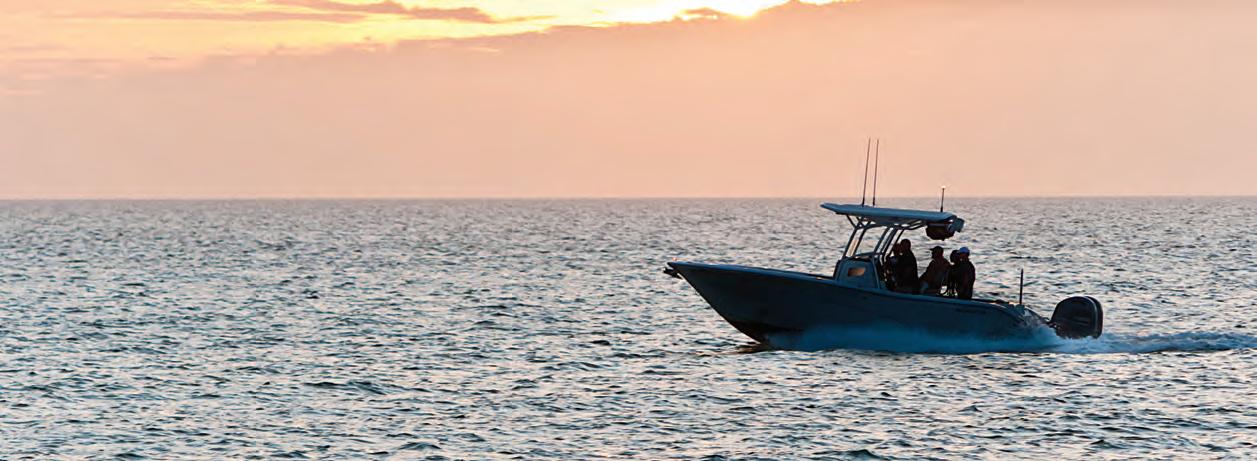
Are you ready to embark on your next on-water adventure? Before you set sail, here are fve things to know about boat insurance.
1. Boat insurance isn’t just for accidents
With comprehensive coverage, you’ll also be protected fnancially for theft, vandalism, and unexpected events like storms if you need repairs or replacements due to damage.
2. Accidents can happen to anyone
When accidents happen, boat insurance offers liability coverage for damages or injuries you cause while boating, up to specifed limits. It can also cover lawsuit costs if you’re sued.
3. Boat insurance can cover medical payments
Boat insurance offers a range of optional medical payments coverage limits, helping to cover medical expenses if you’re in an accident or someone is hurt on your boat, regardless of fault.
4. Most lenders require boat insurance
If you fnanced your boat, you’ll likely need boat insurance since most lenders require boat insurance to protect their investment. Additionally, some marinas or municipalities require proof of insurance for docking.
5. Progressive offers specialized boat coverages
Ever worry about getting stuck on the water? Progressive’s Sign & Glide® On-Water Towing coverage** can help. It’s an additional coverage that steps in if your boat is disabled or breaks down on the water, paying for on-water towing, jump starts, soft ungroundings, and fuel delivery. Fuel cost isn’t included.
Don’t let unforeseen circumstances disrupt your voyage. Cruise with confdence thanks to Progressive Boat insurance. Because when it comes to your boat, peace of mind is the ultimate luxury.
Scan to get a quote in as little as 4 minutes.
to learn more.
















By Will Schmidt
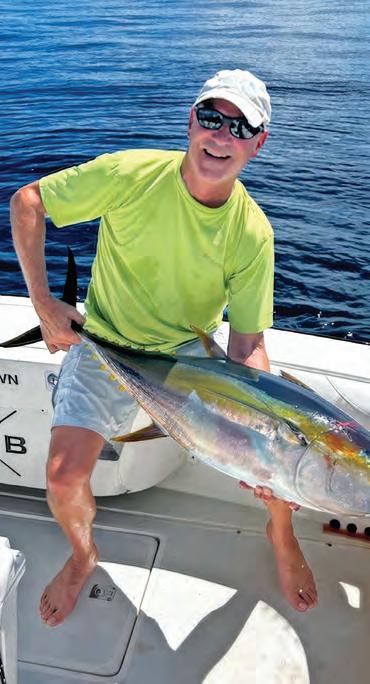
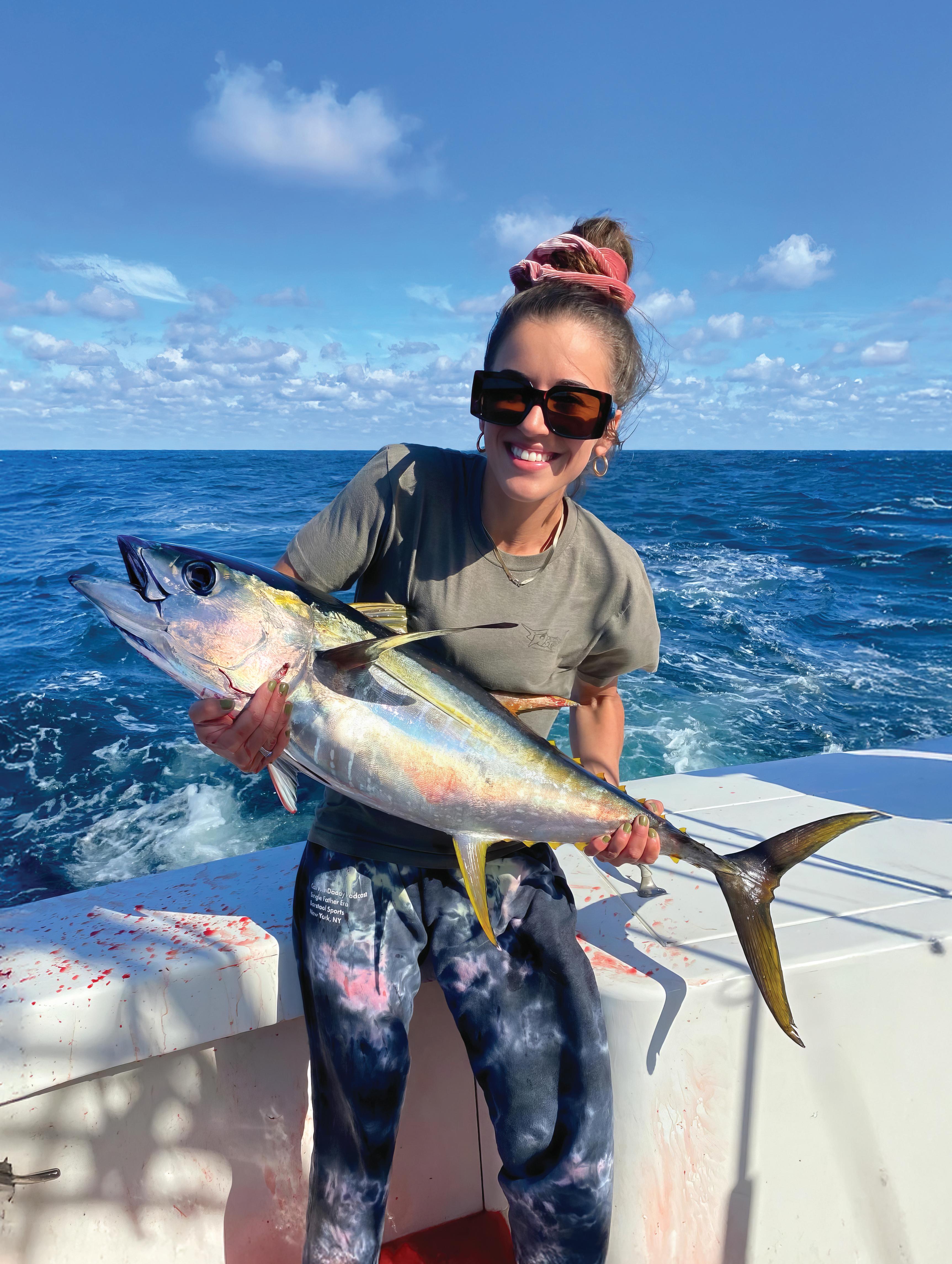
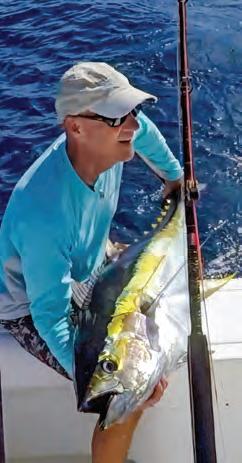
Tere were birds diving, porpoise rolling and he y yellow n tuna skyrocketing like Fourth of July reworks. Both on the water and in the boat, the energy was palatable. With one angler on the bow ready to cast a top water plug into the fray and me in the stern with ready to deploy live bait, the boat throttled back. !e plug went ying, meanwhile I simply dropped my bait behind the boat and started freelining. Almost instantly the plug was blasted in the air but not connecting. Meanwhile, I tossed a handful of baits o the back of the boat. By now the fray had subsided but the sh were clearly still looking for an easy meal. 50 feet behind me one of the chummers was blasted overhead by a 150 pound yellow n who was skyward bound a er it. Just below I could see my bait franticly swimming as another engulfed it, leading to a great battle before releasing the 100 pound class sh.
While top water shing for tuna is all the rave right now, it really makes sense to deploy multiple tactics to take advantage of these opportunities, as the school o en retreats as the boat nears. Our back up plan is very simple and almost always produces sh. As the boat gets into casting range of the school, we drop live bait o the stern and free line them. We always keep a couple ready to go. !is way, if the school disappears there are other baits ready for those who have been plugging.
For bait google eyes or blue runners, rigging them on a 10/0 circle hook is ideal. Bridling the bait and using a non-slip loop knot presents the most natural movement as the baits ee. Also, tossing a handful of chummers in, as the surface activity disperses, usually brings shing looking to pick up stragglers into the strike zone. Chumming really helps keep the sh around, so make sure you have plenty of bait. When you get hit, give it a ve count real tight and hang on!
I like to use a bit heavier tackle with the live bait, as we o en seem to nd bigger sh. My go to is Shimano Terez BW Roller Striper medium heavy with a Talica 25A. I use 80lb braid to 80lb mono. !is is a great set up that’s fun for sh from 40 to 140 and can handle the occasional really big one. the rod with a better ghting angle. It also helps to keep the line away from the gunnel as a spiraling sh ascends. !is is a great asset for many anglers on these tough sh.
Will Schmidt is a seasoned tournament angler who has been writing about shing for more than two decades. Follow Will on Instagram @saltynstrong.


PUBLISHER
BROOKS FINNESETH (843)628-9796 brooks@coastalanglermagazine.com CONTRIBUTING WRITERS
CHRIS POUNDER JACOB CYNAR
PAMELA CORWIN, SCDNR CAPT. MIKE ABLE ANGLING WOMENSEA SEA NUNEZ
NOAH CORCORAN CAPT. TIM DECKARD CAPT. JUSTIN RAVENELTREY CARDEN
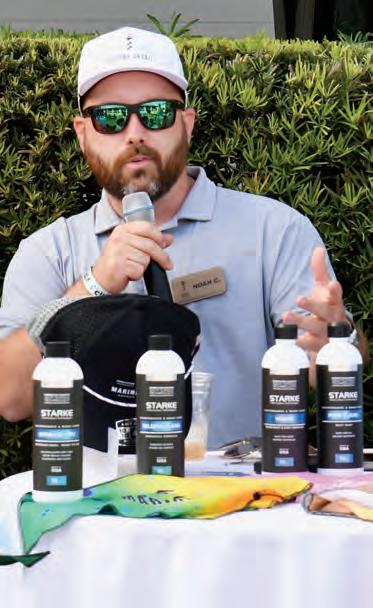
Noah Corcoran, Owner

by Noah Corcoran, Contributing Writer
If boats could talk, most of them would be asking the same question: “Why do I look like this?” Somewhere between your last sandbar trip and that one thunderstorm you definitely didn’t rinse after, the unholy trinity shows up tannin stains, rust, and black streaks. They don’t arrive loudly. No warning. Just one day you walk down the dock and your boat looks like it’s been quietly losing arguments to the environment.
Let’s start with tannin stains - the Lowcountry’s signature cocktail of swamp tea, river runoff, and organic nonsense. Tannins don’t care if your boat is brand new or older than your first flip phone. White gelcoat? Perfect. They’ll tint it like a bad sunburn and dare you to ignore it. And the longer you do, the more permanent they become. Tannins aren’t dirt they’re chemistry. Soap alone won’t cut it, no matter how hard you scrub or how aggressively you mutter under your breath.
Next up: rust stains, the passive-aggressive cousin of neglect. Rust doesn’t mean your boat is “rusting” it means water found metal, had a moment, and left you a reminder. Screws, rail bases, cup holders, trailers, and anchors rust loves a supporting cast. Ignore it long enough and it migrates, creeping into gelcoat pores like it pays rent. At that point, harsh acids start coming out… and that’s when people do real damage.
And finally, the crowd favorite: black streaks. The mascara of boats. These are caused by rubber seals, window gaskets, canvas, and gravity, always gravity. They start small, then multiply until your boat looks like it cried during docking. Scrubbing them with a dry brush is the fastest way to turn a clean streak into a permanent scar.
Here’s the punchline: most damage doesn’t come from the stains it comes from fighting them wrong.
Proper marine cleaners, correct dwell time, soft agitation, protection afterward that’s the difference between a boat that cleans up easily and one that needs “just one more compound pass” every season.
Detailing isn’t about making boats shiny. It’s about preventing regret.
Until next time - rinse it, protect it, and for the love of gelcoat… stop using the green Scotch-Brite and Bleach.
Questions about stains or long-term protection? Ask Noah at Marine Detail Supply Charleston
by Coastal Angler Magazine Lowcountry
f you’ve spent time at Haddrell’s Point Tackle in Mt. Pleasant then you know that next door is Fin to Feather and you’ve likely met Dave McAtee. Because when knowledge, experience, and passion show up in the Lowcountry you recognize it and remember where you found it. Right here at the fly shop and wing shooting arm of our local landmark.
I first met Dave when I was looking for a reel for my new tarpon rod that I had picked up in The Keys, he put me on a Sage 10 wt. and closed the deal. What started as a gear purchase turned into a conversation, and that conversation turned into much common ground and a new resource full of knowledge and passion.
Dave has been in Charleston three years now. Before that? Thirty years guiding in Colorado. Steamboat Springs was home. He ran a private club. Operated a guide service. Managed a destination lodge in Meeker called Seven Lakes Lodge. Trout fishing since he was three years old — his dad put a fly rod in his hands before most kids could tie their shoes.

Now he’s traded snowmelt for saltwater.
“Trout fishing comes easy for me,” Dave says. “I can catch trout most anywhere. Argentina, all over. But saltwater? That’s a different deal — and I love it.”
Coming from the Rockies to Charleston’s tidal creeks is no small transition. Here, the variables multiply. Wind. Tide.
Drift.
Water temperature. Clarity.
Species behavior.
“In the mountains, I understood the system,” Dave explains. “Here, there’s so much information. It’s the coolest thing ever.”
He bought a flats boat when he arrived — and quickly learned that poling skinny water in Charleston wind is an education in itself. Add anglers who may not have a tight fly cast, and things get interesting fast.
“The cast makes all the difference,” he says. “If you can’t put the fly in front of the fish without spooking it, you’re not catching them. Especially in winter.”
I overheard Dave giving advice to customers heading out for redfish recently. His instruction?
Smaller flies.
Accurate casts. Don’t overthink it.
In the winter, the water clears up and fish get spooky. That means longer leaders, finer tippet, and softer-landing patterns.
“They school up,” Dave says. “If you get in front of a school and don’t spook them, you’ve got a real shot.”
It’s simple advice — but only simple because it’s refined by experience.
One thing I’ve noticed about Haddrell’s Point — whether it’s the main store in East Cooper or the second location in West Ashley, (with the fly section inside), — is that talent seems to find its way here.
Some employees have been here for decades. Others, like Dave, bring fresh perspective from outside markets. But what they all share is approachability.
“This place isn’t pretentious,” Dave says. “It’s down to earth. You come in, you get an honest answer. If someone’s struggling with casting, we’ll go outside and work on it.”
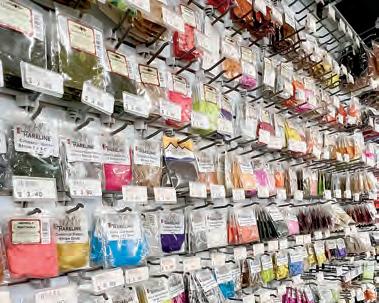
I’ve seen that firsthand — rods bending in the side parking lot, quick casting lessons happening between customers. No ego. Just help.
In a town loaded with fishing talent, that culture matters.
Dave credits local guides with helping him transition to Charleston waters. One even sold him his boat — and took him out to share spots and leave GPS tracks.
“That doesn’t happen everywhere,” he says. “There’s a lot of talent in this town. And a lot of good guys.”
Offshore, the numbers are rarely shared. Inshore, the knowledge is passed along a little more freely. That kind of collaboration keeps the community strong.
Dave still gives me grief when he sees me. “You’re not fishing enough,” he says. He’s right.
Because whether it’s trout in the Rockies or redfish on a winter flat, the formula stays the same: Show up. Cast well. Keep learning.
And maybe spend a little more time on the water.
CAPTAINS' MEETING
Friday, May 1st •7pm
Sunsets Shem Creek

FISHING DAYS
Saturday, May 2ndSaturday, May 23rd
Saturday, May 30th•5pm
Sunsets Shem Creek


by Trey Carden, Contributing Writer
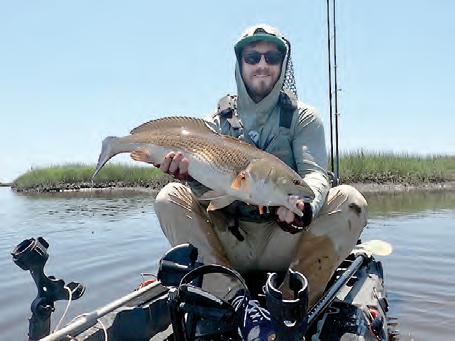
When the Lowcountry marsh finally shakes off its winter chill and spring begins to…spring, "fishing season" officially returns for many recreational kayak anglers. Winter coats are traded for our favorite SPF 50 shirts, water temperatures climb, and our favorite inshore species begin their steady migration back inshore. For members of the Lowcountry Kayak Anglers (LKA), this transition marks the start of a season-long obsession: the chase for the Angler of the Year (AOY) title.
The LKA Angler of the Year race is a multi-species, catch-photo-release kayak fishing tournament that challenges participants to target a different species every month. The leaderboard demands versatility, requiring anglers to find everything from the "Inshore Slam" trio—Red Drum, Speckled Trout, and Flounder—to other native heavy hitters you may have never considered targeting, like Ladyfish, Bowfin, and Black Drum.
Running from March through November, the tournament is open to anyone willing to wet a line from a little plastic boat. Because of the monthly species shifts, the unpredictability creates a level playing field for every skill level. Aside from the AOY tournament, there are meet and greets and other fun competitive tournaments like the Jurassic Classic and Battle at Paradise Charity tournament.
Right now, before the flowers have bloomed, is the perfect time to respool your reels, head to the local tackle shop for that new reel you’ve been pining for and maybe start stretching out a little to be ready for many crisp Lowcountry mornings and long days spent chasing fish.
Registration for Lowcountry Kayak Anglers Opened in February through the FishingChaos App. You can also find Lowcountry Kayak Anglers on Facebook.


FOLLY BEACH
Folly Beach Pier
Folly River Park
MT. PLEASANT
Mt. Pleasant Pier
Pitt St. Bridge
JAMES ISLAND
Bowens Island Sol Legare
Sunset/Demetre Park
WEST ASHLEY
Higgins Pier
West Ashley Greenway
West Ashley Park
Northbridge Park
DOWNTOWN
Waterfront Park Pier
Colonial Lake
Alberta Sottile Lake
Brittlebank Park

by Capt. Justin Ravenel, Contributing Writer
With it being so cold outside the only thing on my mind is island camping! All summer I think about campfires, clear water and hungry fish.
Now we all have our idea of heaven our “happy place”. Mine is with my girls camping on some random barrier island in the Lowcountry. Right now my girls are only 6 years old but they are always game to go on an adventure with Dad! Showing my girls the solitude and stillness of a sunny January morning in a tidal creek is on my bucket list. The only movement and sound being that of hungry schooling red fish patrolling up and down the creek. So far they have enjoyed overnight trips in the front yard and now it’s time to take it to the next level.
Utilizing my 23ft Carolina Skiff to tow my 14ft micro skiff is how we typically run these types of trips. This allows for plenty of gear to come along but also a way to get way back in the shallow water creeks offering the best of both worlds while out on the water.
Once we reach our destination I’ll unload and then anchor the big boat in a safe location. After we set up base camp it’s time to explore the area. Using the small boat, I can zip around and find all kinds of hidden gems that the big boat could never reach.
I know my girls will be too cool for old Dad one day so I am trying to soak up these moments with them as much as possible while I still can.
Our latest camping gizmo is our inflatable tent! We love how easy the set up and take down is. Not to mention is has a spot for a small portable wood stove for those cold nights. We typically cook breakfast each morning and prepare fresh lunches but our dinners are prepared a day or two before the trip. Homemade chicken noodle soup or beef stew over rice are some of my favorites for heating up in a Dutch oven at basecamp.


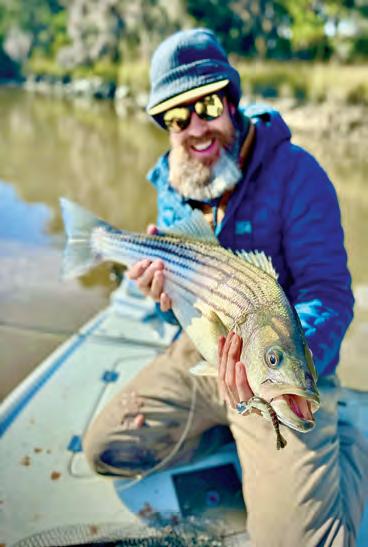
This time of year is our favorite time to target redfish and striped bass. If you know your waterways you can often find both fish inhabiting the same structure.
A “XL Texas Eye” rig by Eyestrike paired with your choice of soft plastic is enough to entice these aggressive fish to strike. Hopefully 2026 will be the year my girls hook their first striper but either way I know they’ll have a great time!
We also offer two hour private Dolphin or Alligator trips for up to 12 people. Both of our boats offer plenty of room for the entire family.







By Pamela Corwin, SCDNR Biologist
Every spring in South Carolina, just as the dogwoods bloom and the rivers warm, an old traveler comes home. The American shad migrates inland from the Atlantic Ocean, following instincts older than the state itself. Long before dams, highways, or city lights, shad runs turned the Santee, Edisto, Pee Dee, and Savannah Rivers into living highways of fish. Historical records have American shad migrating all the way to the upstate of South Carolina. Indigenous communities relied on them. Colonists marked the seasons by them. Entire towns planned their meals around their arrival.
The founding of America was in part due to American shad. George Washington was a commercial shad fisherman before he became a general. He owned shad nets, tracked harvests in his ledgers, and understood their value long before he became president. During the Revolutionary War, American shad helped save the Continental Army by feeding patriots when supplies ran thin. At the time, shad weren’t sportfish or symbols. They were survival and the result was our independence.
But that role didn’t end with the 18th century.
During World War II, American shad were again harvested as part of the domestic wartime food supply. Preserved shad and shad roe that were either salted, smoked, or frozen, were among the fish products shipped overseas to help support Allied forces and civilians during a time of rationing and uncertainty. Once again, this fish quietly served the country. Unfortunately, by the early 1900’s, the population had started to drastically decline along the East Coast.
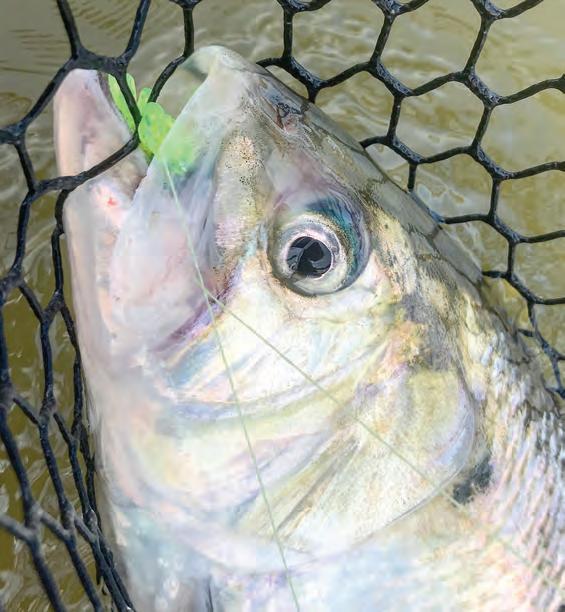
By the time I became a shad biologist, that long history felt almost impossible to imagine, especially in South Carolina. We are lucky enough to have strong shad migrations on certain rivers, but we also want to keep it that way. History has shown us that it takes a long time for shad populations to recover, if they recover, so remember to be good stewards and ethical anglers when fishing for shad.
American shad are anadromous, meaning they are hatched in freshwater, migrate to the ocean to grow, and return to freshwater to spawn.
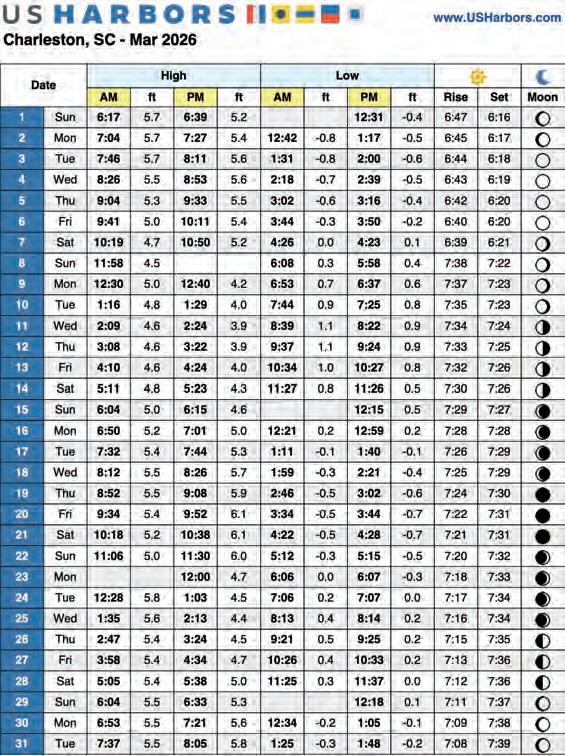
Spawning migration typically begins in late winter (January-April) as river temperatures reach the low–mid 50s °F.
Adults move upstream in search of their natal spawning grounds.
Spawning usually occurs at night in flowing freshwater over sand, gravel, or firm substrate.
Females broadcast eggs into the current; fertilization is external. They, however, never put all of their eggs in one basket! They are batch spawners, just in case of environmental factors.
Eggs hatch in about 6–12 days depending on water temperature.
Larvae and juveniles drift downstream and move into estuarine and coastal waters by late spring or summer.
Juveniles then migrate to the Atlantic, where they spend 3–6 years feeding and growing before returning to spawn.
Iteroparity (They Can Spawn More Than Once) vs Semelparity (They Die After Spawning)
Unlike many Pacific salmon, American shad are iteroparous, meaning some survive spawning and return to the ocean. However, repeat spawning rates vary by latitude. In southern systems like South Carolina, post-spawn mortality is almost 100%.

Most anglers here in South Carolina fish for shad in current seams below dams or along river bends where fish pause on their upstream migration. Shad need flow and current for their migrations, so keep that in mind. It is best to have a variety of weighted jig heads and splitshot in your tacklebox because of this.
• Light spinning tackle (6–7 ft rod, 6–10 lb line)
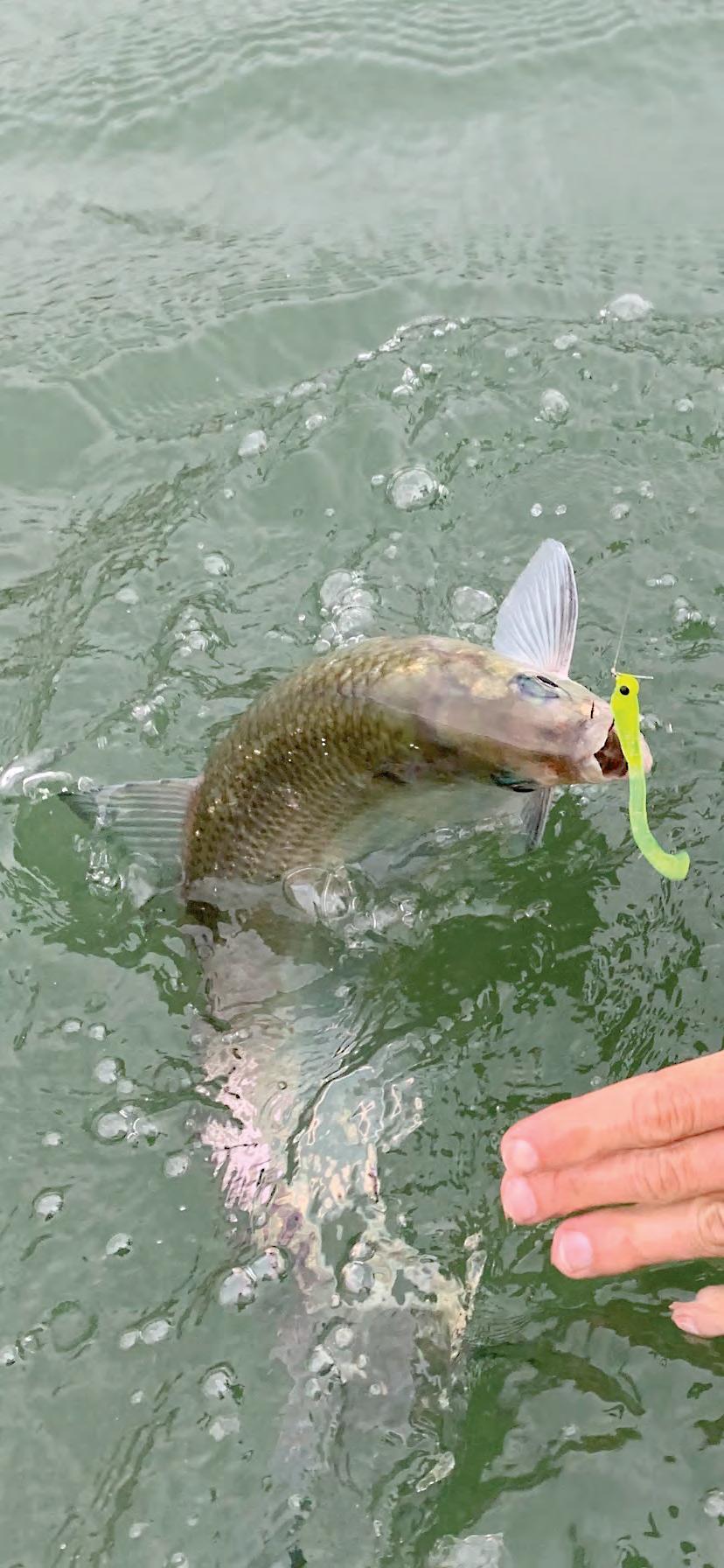
• Small shad darts (1/16–1/8 oz) in bright colors like chartreuse, pink, white
• Curly tail grubs or small spoons
• Chartreuse seems to be the most common color used for shad fishing, but you basically want something that is bright underwater.
FISHING FOR THEM:
It’s less about finesse and more about getting your lure or fly down
into the current and letting it swing naturally. Shad are moving upstream, so you’re often casting across current and retrieving just fast enough to stay in contact with the bottom (or close to the bottom). Shad swim in schools, so you may notice that there is no action, then all of a sudden, you’re hooking into
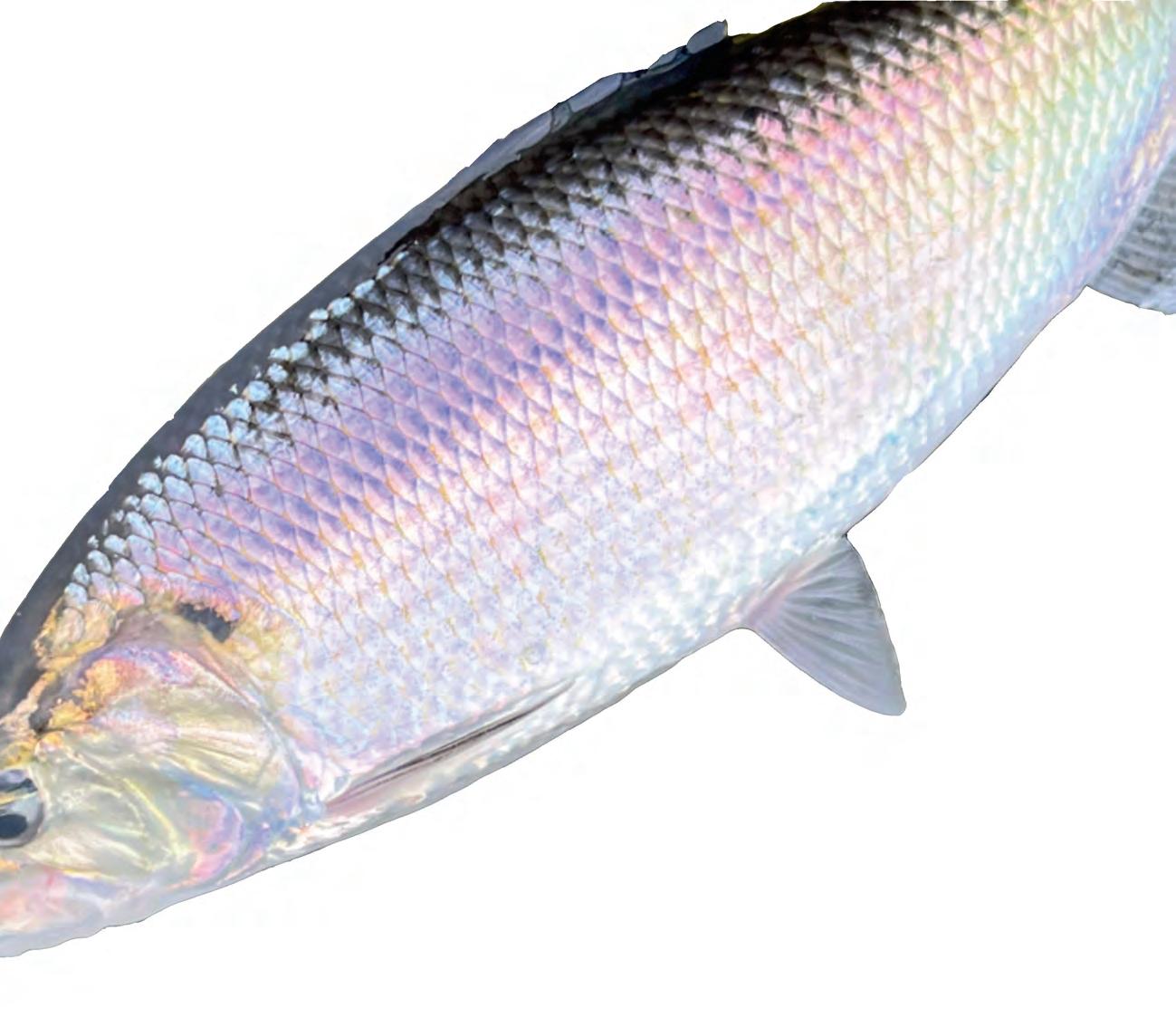
them for a few minutes. Keep this in mind if you think shad fishing is slow, because it can quickly become chaotic!
They’re not huge fish, with most running between 3–6 pounds, but they fight like they’ve got something to prove. That’s why they’re often called the “poor man’s tarpon.” Long runs, head shakes, current-assisted surges. On light tackle, they’re unforgettable.
These are the key differences between shad and most coastal fish we chase: every shad you catch is on a mission. It hatched in freshwater, slipped out to the Atlantic for years, and has returned against current and obstacle to reproduce. When you hook one, you’re not just fighting a fish, you’re intercepting a migration that has pulsed through these rivers for centuries. I’ve held American shad in my hands as data points and as benchmarks, but they’ve always been something more. They are proof that rivers remember, and that when we give nature a chance, it responds. Long after the nets, the wars, and the spreadsheets, the shad are still running.
And if we do our part, the next set of hands to hold one will be smaller and wide-eyed with river mud on their shoes, learning that the future of the run now belongs to them.
Pamela Corwin, SCDNR Biologist

By BeBe Dalton Harrison, Angling Women Wait...wrong article...
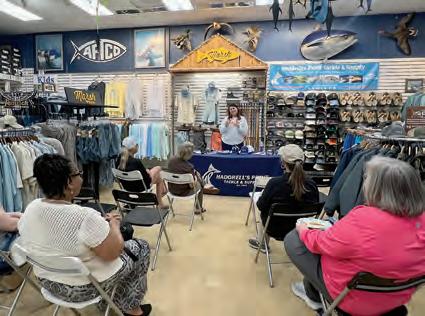
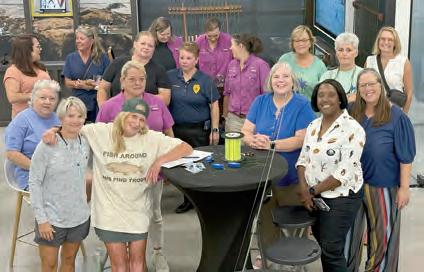
Calling all women who want to learn to fish or perfect their technique! Angling Women of the Lowcountry and Haddrell's Point Tackle are partnering for a jam-packed year of fishing instruction, education, and action! Beginning in March, we will have programs specifically for women that will help ignite and elevate your angling skills. We will have hands-on instruction, seminars on specific topics, on-the-water fishing meetups, and more. And in an effort to let everyone have the opportunity to join, we will be hosting events at both stores AND on the water. Each event will have a registration page and most will be free, but we want participants to sign up.
Beginning March 4, we will kick off our educational and fun-filled calendar. We start with a basics class-Fishing 101 at the West Ashley Store. This is a great time to refresh your knot tying skills or bring a friend who wants to learn. And on March 22, we have been invited to fish the stunning and pristine Hobcaw Barony in Georgetown. Each month, we will have a Women's Wednesday that will be held on the first Wednesday of the month at 6pm but this year, will alternate locations between West Ashley and Mt. Pleasant. In addition, the third Tuesday of each month will be an on-the-water meetup at a specific location. Check Haddrell's Point Tackle or message Angling Women on social media for the full calendar.
We will be highlighting amazing women of the lowcountry on topics like boating safety, fishing for target species, fishing with kids, throwing a cast net, offshore fishing, and much more. If there is a fishing topic that you want to learn more about, email it to anglingwomen@gmail.com. We will also highlight local resources and other ways that women can get involved or learn more including SCDNR Family Fishing Clinics, boating classes, and more. And the events on the water (we hope to offer bank opportunities as well as on a boat) are perfect to practice the skills and techniques you learn, meet like-minded women, and share tips and stories. And don't worry, we will always have extra gear if you need to borrow a rod or need lures or bait. We want to encourage women to learn, connect, and feel confident on the water.
Make this year the year that you focus on fishing for yourself. You will be glad you did!
Yours truly,
Lady Fishingdown...
I mean, The Angling Woman

March 27-28
Southern Drawl Redfish Showdown
Captains Meeting Meeting March 27
Tournament Day March 28 • Artificial Only redfish tournament Live weigh in, more information at southerndrawloutfitters.com
April 11
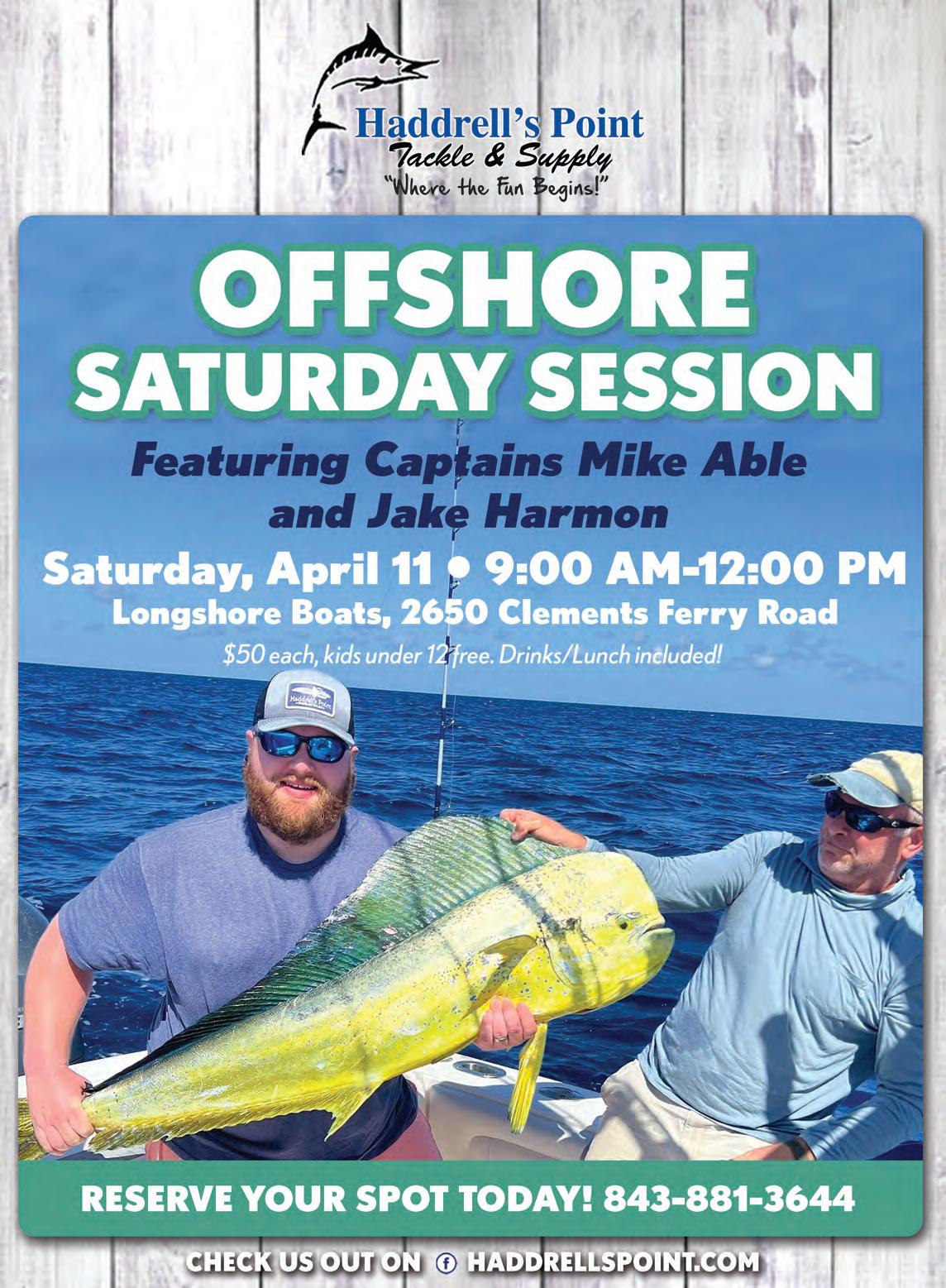
Haddrell’s Point Offshore Seminar
Featuring Captains Mike Able and Jake Harmon Longshore Boats Clement Ferry • Lunch and Drinks included Reserve your spot at 843-881-3644
April 25
Dolphin Slam
The Marina at Edisto Big Creek
More information at themarinaeb.com • 843-631-5055
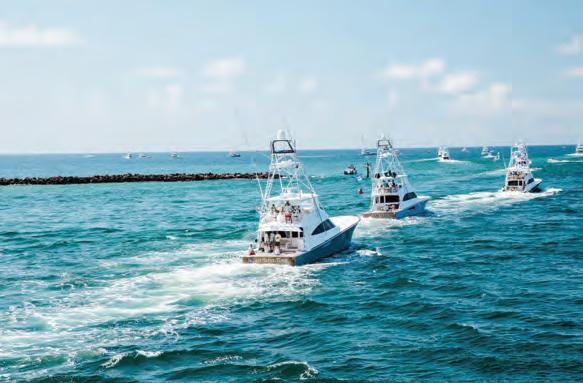
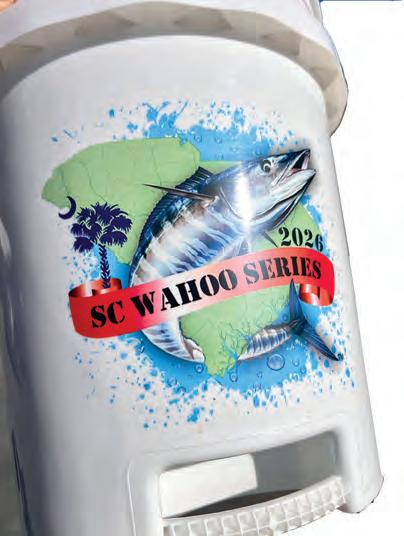
May 1-23
Third Annual Lowcountry Mahi Invitational
Fish Days 5/2 - 5/23 • Captain’s Meeting May 1 • 7pm Awards Ceremony 5/30 at Sunsets on Shem Creek
May 6-9
Charleston Billfish Invitational
Seabreeze Marina • 49 Immigration St. • 843-790-4001
May 20-23
58th Annual Georgetown Blue Marlin Tournament
Georgetown Landing Marina
More information at: www.georgetownlandingmarina.com
May 27-30
HMY Lowcountry Cup
Toler’s Cove Marina
More information at: www.hmy.com/yachting/events
June 17-20
Carolina Billfish Classic
Charleston Marina • 20 Patriots Point Rod 843-568-5230 https://fishhbcbc.com
June 24-28
Redd Reef Offshore Open
New Expanded Format. Same Great Cause More information at reddreefoffshoreopen.com
July 15-19
Edisto Invitational Billfish Tournament
Edisto Marina • 7303 dockside Rd.• Edisto Island, SC 29438
More information at: www.themarinaeb.com
August 7-8
3rd Annual Lowcountry Tarpon Open
More information at southerndrawloutfitters.com
Submit your upcoming events or tournament Info to: brooks@coastalanglermagazine.com


by Chris Pounder, Contributing Writer
inter weather slowed some things down at the pier, but we’re counting on the spring to get us back on track. Keep an eye on the water temperature for your signal to come give the fish a workout. Once the harbor is back above 55 degrees, the bite gets going, and when it hits 60 degrees you definitely want to visit.
Anglers should expect to see the return of flounder and black drum around the pilings and structure. Our resident flounder population can be enticed with mud minnows, live mullet, or hopping your favorite artificial lure along the bottom. Casting lures parallel to the railing and working along the shadows can produce an aggressive ambush strike when conditions are right. You’ll want to use fiddler crabs or shrimp near the pilings and try dropping your rig straight down when looking for black drum.
March is a good time to have multiple bait options when fishing the pier. Mud minnows make a tasty snack for lots of species. Anglers commonly use them to target red drum, trout, flounder, and blue fish. It should also be early enough in the season to throw some live shrimp out there without worrying about feeding some of the nuisance fish. Lastly, it’s usually a good idea if you have a light to light/medium rod rigged to throw artificials. Vudu, Zman, and Billy Bay are all popular varieties with pier fishermen.
Check in with staff anytime to get some helpful advice and then head down the pier to see what’s biting in March. Don’t forget to check out Charlestoncountyparks.com for information regarding summer tournament dates, open employment opportunities, and happenings at all the county parks. There’s a lot going on for the non-fishing members of your family as well.
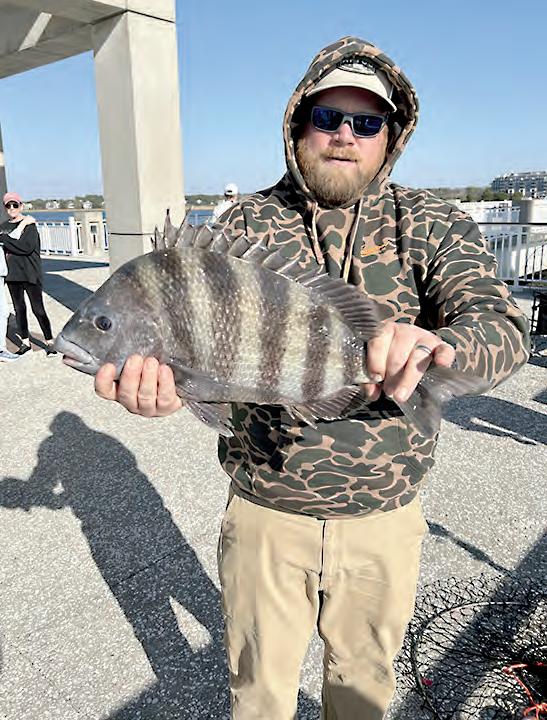
Brandon with an 8lb sheepshead
For any additional information about the pier or what’s biting this week feel free to call the River Watch Cafe & Gift Shop on the pier at 843-762-9946
Chris Pounder, CPRP Manager, Mount Pleasant Pier
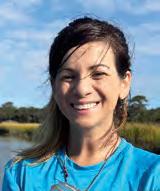
by Sea Sea Nunez, Contributing Writer
Sea Sea Nunez
Sea Sea's Honey Hole Bait & Tackle 901 8th St. Port Royal 843-379-2018
Facebook: SeaSeasHoneyHole
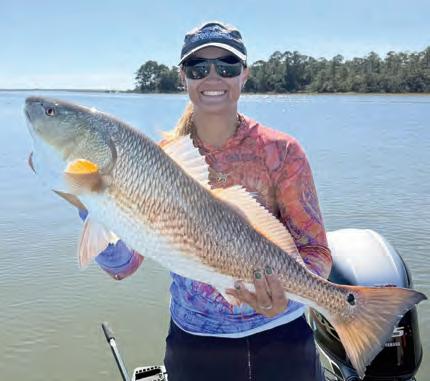
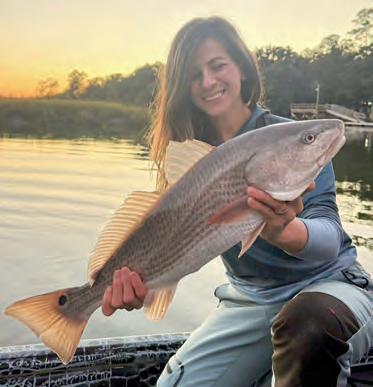
As we approach the Spring months, it's time to get excited! The water is still cold as water temperatures in February stay steady around 63 degrees and actually drop in March before warming back up mid March. During this time the best method of fishing for reds still remains; slow moving bait on the bottom. This can be either live bait such as a minnow, finger mullet or shrimp or artificial soft plastic, both with a use of a weighted jig head. After the halfway point in March the water will begin to warm bringing in the bait fish. This warmer weather will induce larger schools of redfish to break up into smaller pods to single reds to aggressively search for food. The water will continue to remain clear which is great for fishing. The arrival of March 1st is always anticipated as the use of a gig during these months can be a game changer and great fun! Don't forget, gigging isn't just for Flounder! Gigging for reds is also a great way to catch you some dinner. Sight fishing during the low tide continues to be effective. Bigger sheepshead will move back inshore from offshore. The month of March is a tell tale sign that Jack, Cobia, Triple Tail, and Shark fishing is around the corner. As a fisherman, being able to watch the low country waters come back to life is always a beautiful scene.
Sea Sea's has everything you need for successful Spring fishing and stay tuned for upcoming Fishing Tournaments by Sea Sea's Honey Hole!

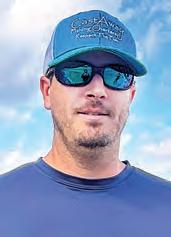
by Capt. Hunter Griffith, Contributing Writer
ebruary in the Lowcountry means prime redfish sight fishing on shallow, sunny flats as they school for warmth, with serious action on mud minnows, shrimp, and soft plastics. And there are plenty of opportunities for sheepshead, trout, flounder, and sea bass near structures like bridges and wrecks, especially on calm, warmer days with low tides. Patience and slow retrieves are key!
This time of the season we target redfish in particular (also called red drum). They are the star of the wintertime show! Look for large schools on mud flats, especially during low tides on sunny, warm days. Spy sheepshead, flounder and sea bass near wrecks and structures. And speckled trout are active in the cooler waters, often near oyster beds and creek mouths.
A number of techniques and baits for success in hooking these species include small, light-colored flies or soft plastics when spotting redfish schools, plus live bait such as mud minnows, shrimp (live or Gulp!), and cut menhaden/mullet.
Standard spinning gear with 8-12 lb line is effective, as well as soft plastics on jig heads or live bait on Carolina rigs (circle hooks).
Alternatively, a weighted cork with a live shrimp or mud minnow is excellent for trout and redfish, with fiddlers for sheepshead and mud minnows and curly tails for flounder.
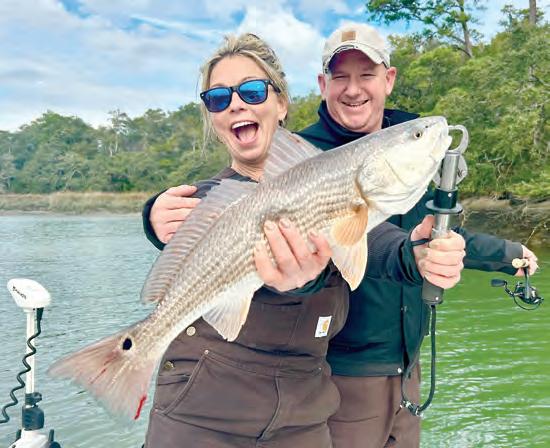
Luckily for us, clearer wintertime waters make it easier to find and catch these sporting fish!
Whether you’re a local or visiting the Lowcountry, booking a trip with a professional fishing guide is the perfect solo or family-friendly activity to enjoy during the Lowcountry's hibernation season.

Capt. Hunter Griffith
BeaufortCastawayCharter.com (843) 592-1062
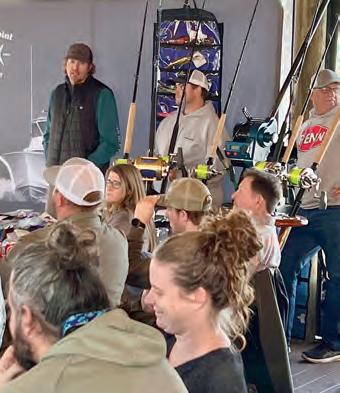
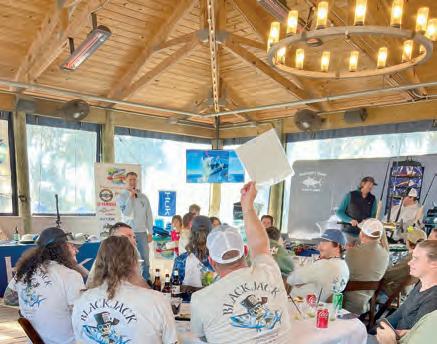
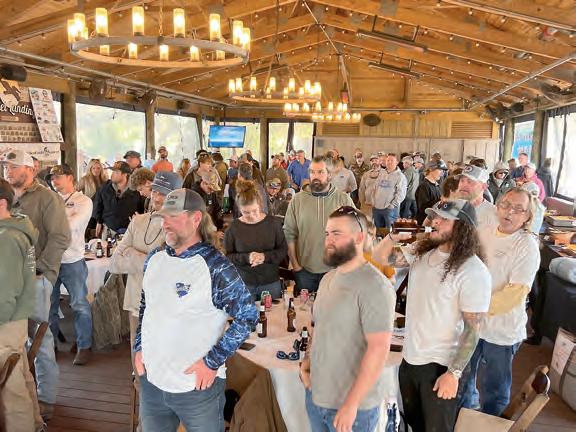
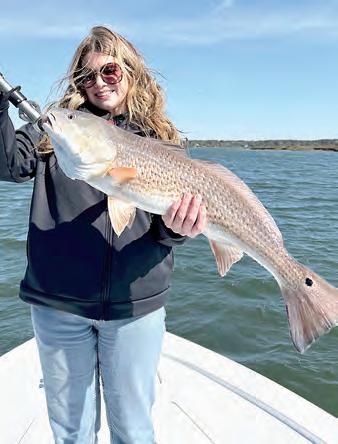
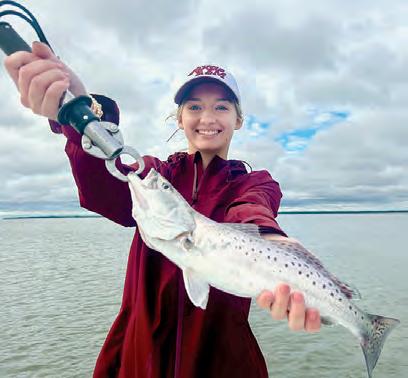
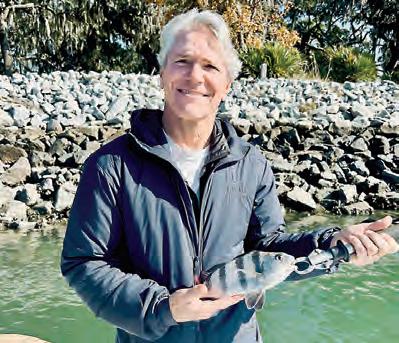
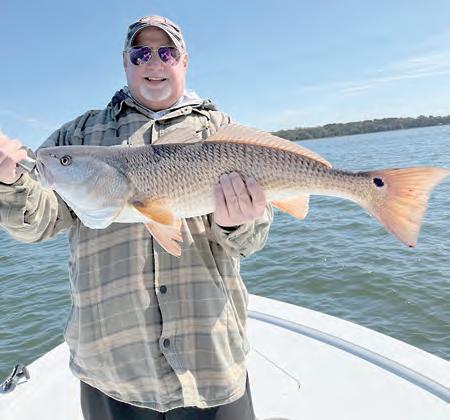
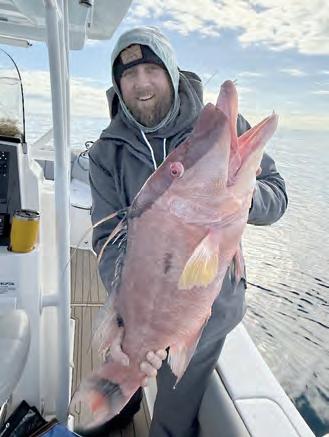
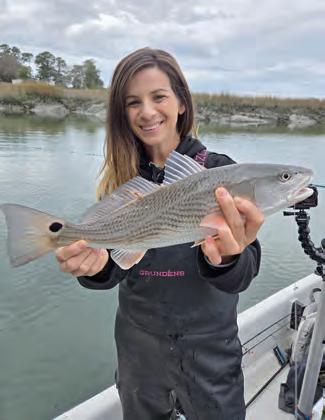
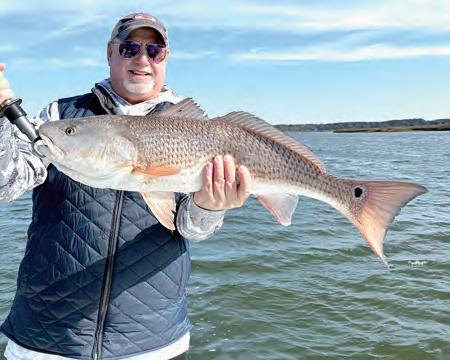
These guys are tired of the cold and ready to fish. Fishing days started February 12 and run through April 10th. Welcome

By Capt. Jim Ross
s a charter captain, as well as a regular contributor to the Brevard County, Florida edition of Coastal Angler Magazine, every year there are certain events that happen that I try to predict in advance so that clients and readers can catch more !sh. However, there are many times that even we so called “professionals” don’t get it exactly right. Obviously, my crystal ball isn’t 100 percent correct all of the time...maybe it needs a tune up. LOL!
ings like the giant black drum schooling up, spring cobia run, June tarpon run, fall mullet run, and winter pompano run aren’t things you can pin down to a certain day of the month, but most of the time we can at least predict the month. Hopefully, I can achieve at least a 90 percent e ciency rating a er doing this report for the past 25 years.
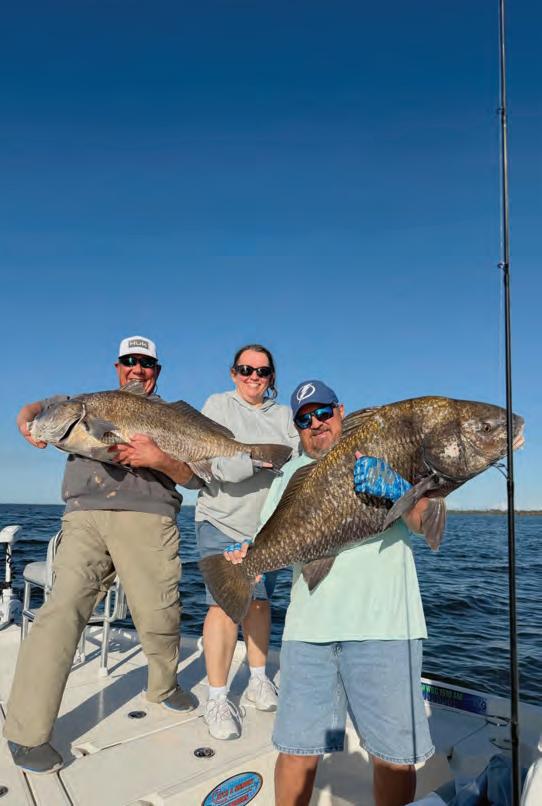
I was just telling my clients one day last week, a er catching a bunch of small trout and a couple of lady!sh, that the big uglies were probably going to show up in a few weeks and if they had a chance to come back out with me then that they may have a shot at catching some much larger !sh than the ones we had landed that morning. Just !ve minutes a er saying this I spotted something unusual about 500 yards up the at. It was exactly what I had just been talking about- a 300 !sh school of 30 to 50-pound black drum.
e !sh in this big school were happy-tailing and waking as they pushed their way down the at. We eased up to them, cast our shrimp in their direction, and as you !gured, the battles were on. All three anglers were hooked up to huge drum that had absolutely no respect for them. Drags screamed, rods doubled over, and dozens of yards of line dumped o their reels. Grunts and groans were heard between laughter and smiles as they worked to tire these beasts. e boat deck looked like a country bar dance oor as anglers shu ed and two-stepped under and over each other in an e ort not to lose their prized catches.
We ended up extending the trip from a 3/4 day to a full day outing because each !sh took 15 to 25-minutes to land.
e moral of the story? Don’t ever count on !sh to be there and don’t ever think that it’s not quite the right time to catch them. e bottom line is just go !shing every chance you get. at is the only way that you can be sure to catch your next memory.
Capt. Jim Ross is owner/operator of Fineline Fishing Charters on Florida’s Space Coast and host of “Catch a Memory Outdoors” live radio show and podcast. www. neline shingcharters.com • www.catchamemoryoutdoors.com





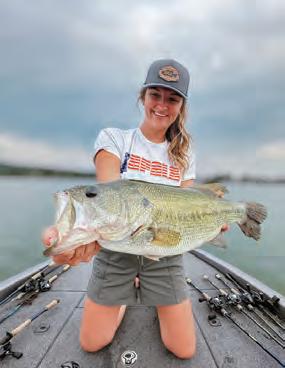



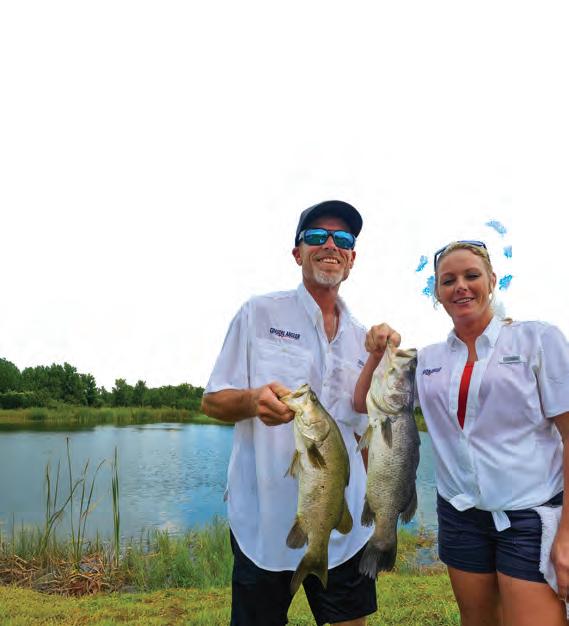
So many anglers have a “go-to” color lure that they swear by. What they do not understand is that the color of your lure barely makes the top three most important factors for catching tons of !sh.
Mistake #1 - e number one mistake anglers make is ignoring the importance of the size and pro!le of the lures they use. When snook, tarpon, red!sh, speckled trout or ounder are feeding, they o en become laser focused on that particular forage species. In other words, if they are feeding on a 6-inch mullet your 3-inch paddletail or shrimp lure will probably be ignored.
PRO TIP: Have a few of your rods rigged up with various sizes and pro!les of lures on them. I like to have a 3-inch paddletail, an arti!cial shrimp and a 4- to 5.5-inch jerk bait ( uke) rigged up when I can’t determine what bait is around. Try all three sizes and pro!les of lures until you !gure out what the !sh in the area are feeding upon.
Mistake #2 - e number two mistake most anglers make is thinking one retrieve style works best for all of the !sh all of the time. ere are so many di erent factors to consider when retrieving your lures. Here are a few to consider:
• Is the water cold or hot? Fish are cold blooded and move more slowly in cold water. is means that you have to slow down your retrieve when the water is cold. Conversely, you want to move your lure faster when the water is hot.
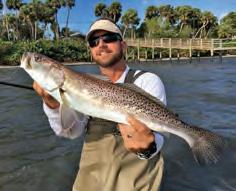
• What species are you targeting? Di erent !sh species like di erent retrieves. For instance, the best retrieve for a red!sh is slowly bouncing your lure o of the bottom. A tarpon likes a low and steady retrieve. A ounder likes a very slow bounce/dragging retrieve no higher than 12 inches from the bottom. A speckled trout likes a vertical jig and will usually hit the lure as it falls through the water column. Snook like a fast and erratic retrieve most of the time.
• Is the water clear or murky? Low light, cloudy skies and murky water scenarios makes it harder to get a !sh’s attention. Use a retrieve or lure that creates vibrations and ashes in the water. You also want to fan cast the area keeping your lure placement close together because they are less apt to seek out your lure. When it is sunny and the water is clear it is easier to get the !sh’s attention. You can make your casts further apart and make the !sh come to your lure.
Mistake #3 - e third biggest mistake is thinking !sh care about lure colors. A saltwater tackle box with white lures and something dark like root beer or purple is all that you need to catch any !sh. PERIOD. e bottom line is that if you want to catch more !sh, switch up your sizes and pro!les and vary your retrieves for di erent species and conditions. I GUARANTEE that you will catch more !sh.
Capt. Mike Smith is owner of Fish Your Ass O Charters.Reach him at (561) 339-2317, contact@ shyourasso .com or shyourasso .com.











“It’s a beautiful knife with a great blade and a sure grip” — William B. Wilmington, NC
My friend Sergio is a mixed martial arts fighter. His shoulders are broad. His muscles have muscles. He’s not the kind of person you want to be on the wrong side of.
This manly man has a saying about being tough: You should either know how to fight or look like you do.
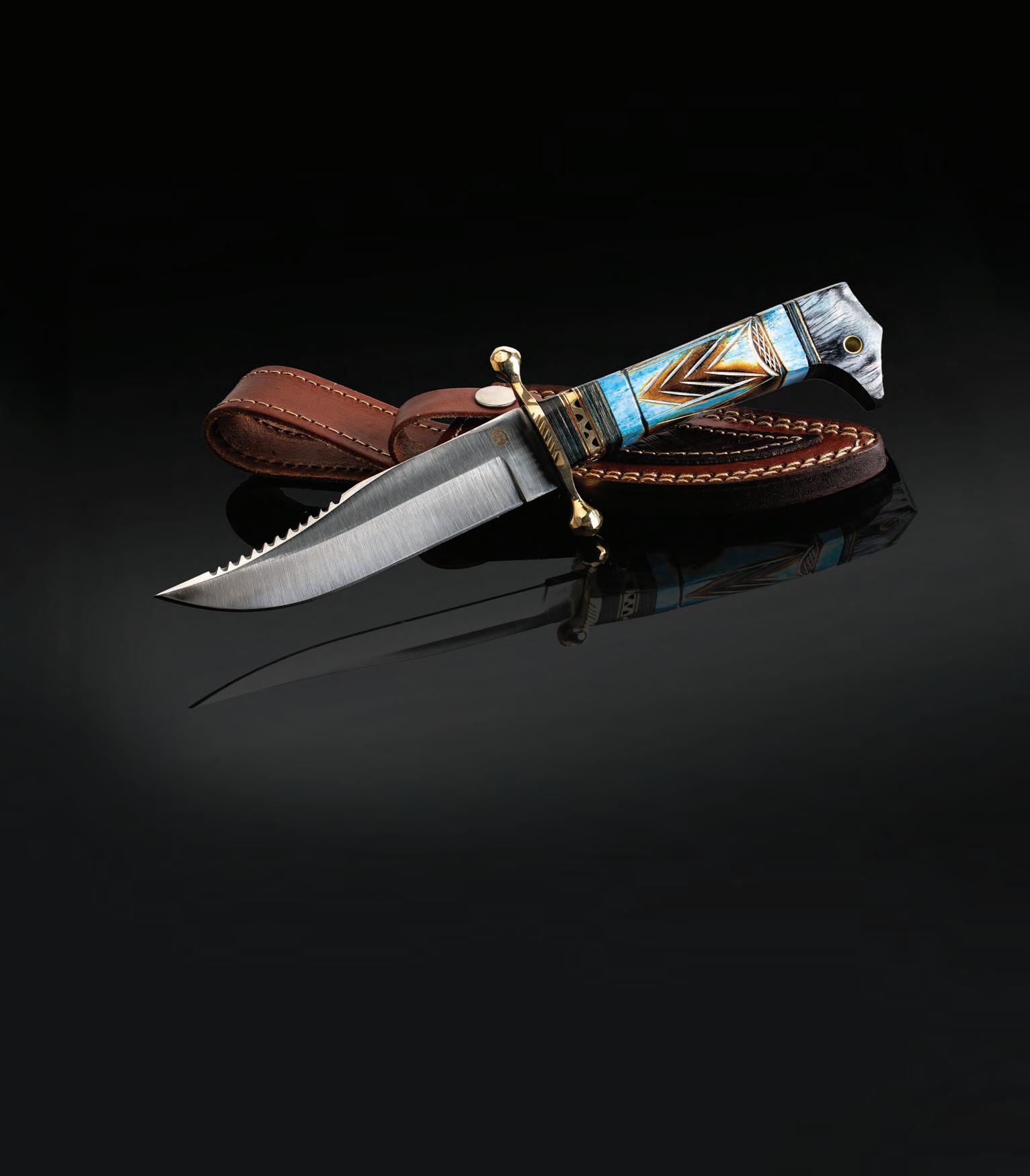
The message is simple enough. People spoiling for a fight usually don’t pick the biggest guy in the bar. If you look like someone who shouldn’t be messed with, you likely won’t be. With our Blue Bone Bowie Knife on your hip, that’s exactly the message you’ll send.
As beautiful as it is functional, this knife is 10" overall and features a high-quality 420 surgical stainless steel blade with a serrated spine. The handle is constructed of genuine natural bone with redwood spacers. On the handle you’ll find design work that’s carved by hand, a testament to its craftsmanship.
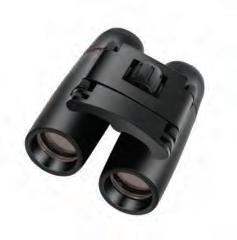
This knife is stick tang, meaning it won’t wimp out when you need it. This knife also features brass hand guards and brass spacers with file work, so you won’t lose your grip. For easy carrying, it comes with a genuine tooled leather sheath. CALL NOW! If you’re one of the rst 700 587 callers for this ad, we’ll throw in a pair of Stauer HD Pocket Binoculars — a $99 value — ABSOLUTELY FREE!
Walk around with the Blue Bone Bowie Knife and you’ll feel a lot safer. I know I do.
Knife Speci!cations:
• 10" overall length
• 420 surgical stainless steel and stick tang construction
• Genuine natural bone and redwood hand-carved handle
• Genuine leather sheath included
Blue Bone Bowie Knife
EXCLUSIVE FREE
Stauer Pocket Binoculars a $99 value with your purchase of the Blue Bone Bowie Knife
$299 $79* + S & P Save $220
*Special price only for customers using the offer code. 1-800-333-2045
Your Insider Offer Code: BBK164-02
California
please
regarding