






















TZT16X | 22X | 24X 24X
































TZT10X | 13X





TZT9E | 13E
























space 9"
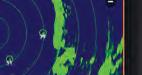
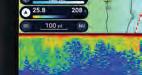
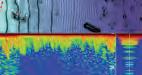
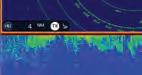
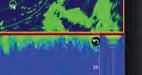
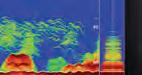
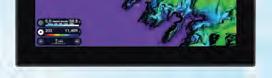
When helm space is at a premium, the 9" and 13" TZtouchE MFDs give you maximum screen area to view their eye-popping TZ MAPS charts and builtin TruEcho CHIRP™ Fish Finder with Side-Scan.



Plus, TZtouchE is fully networkable with the TZtouchXL family of 10", 13", 16", 22", & 24" MFDs and a wide range of best-in-class sensors – legendary Furuno Radars, Sonars, Fish Finders, Autopilots, and more.
Furuno... The reason to level up your helm!

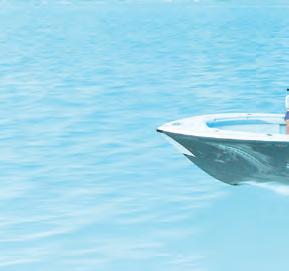
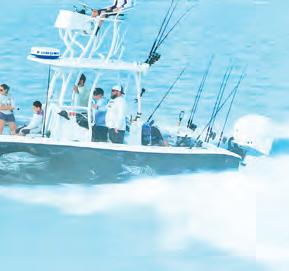




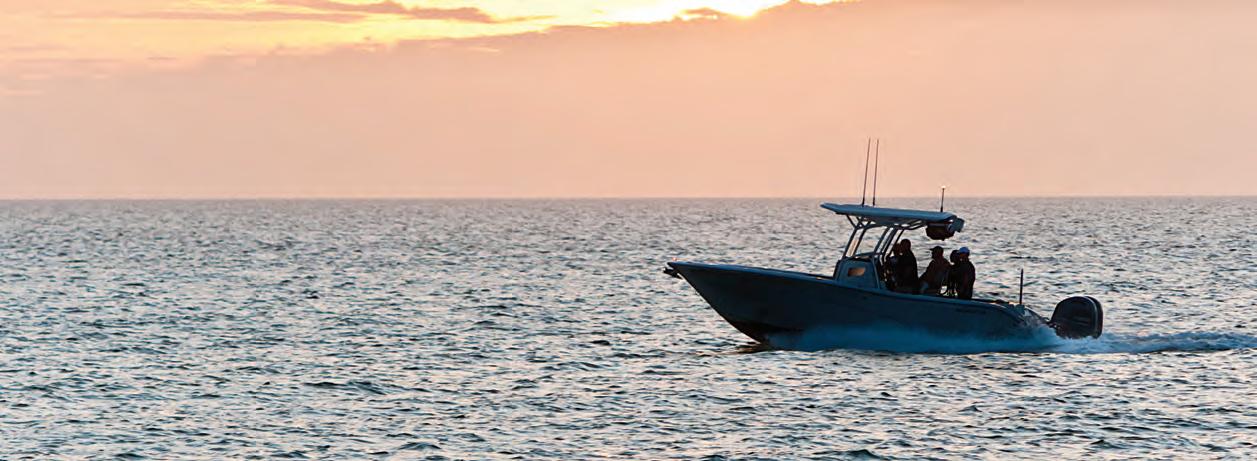
Are you ready to embark on your next on-water adventure? Before you set sail, here are fve things to know about boat insurance.
1. Boat insurance isn’t just for accidents
With comprehensive coverage, you’ll also be protected fnancially for theft, vandalism, and unexpected events like storms if you need repairs or replacements due to damage.
2. Accidents can happen to anyone
When accidents happen, boat insurance offers liability coverage for damages or injuries you cause while boating, up to specifed limits. It can also cover lawsuit costs if you’re sued.
3. Boat insurance can cover medical payments
Boat insurance offers a range of optional medical payments coverage limits, helping to cover medical expenses if you’re in an accident or someone is hurt on your boat, regardless of fault.
4. Most lenders require boat insurance
If you fnanced your boat, you’ll likely need boat insurance since most lenders require boat insurance to protect their investment. Additionally, some marinas or municipalities require proof of insurance for docking.
5. Progressive offers specialized boat coverages
Ever worry about getting stuck on the water?
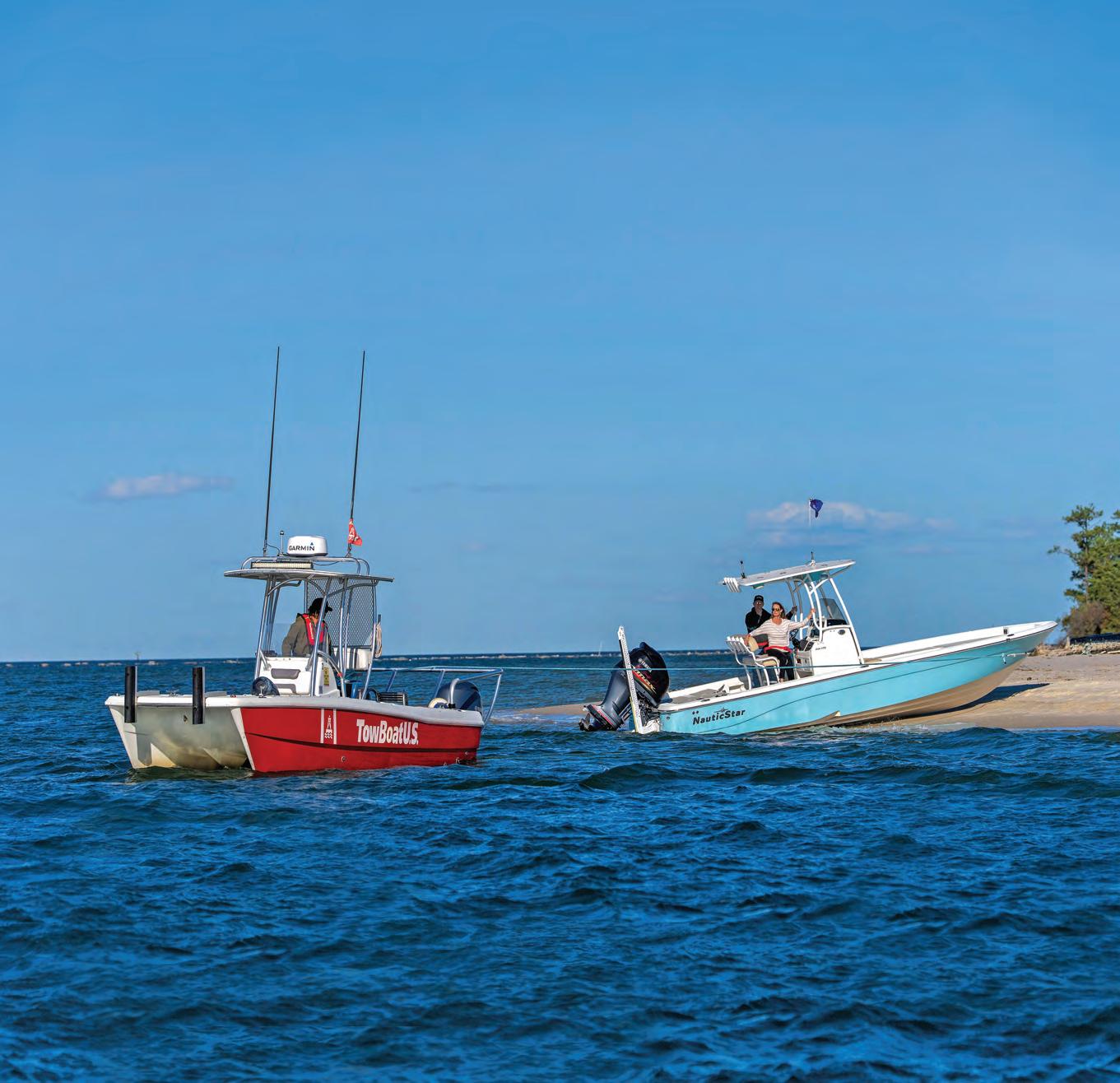
Progressive’s Sign & Glide® On-Water Towing coverage** can help. It’s an additional coverage that steps in if your boat is disabled or breaks down on the water, paying for on-water towing, jump starts, soft ungroundings, and fuel delivery. Fuel cost isn’t included.
Don’t let unforeseen circumstances disrupt your voyage. Cruise with confdence thanks to Progressive Boat insurance. Because when it comes to your boat, peace of mind is the ultimate luxury.
Scan to get a quote in as little as 4 minutes.
to learn more.












1
2
3
1
2
4
5
3
4
6
5
6
8
7
9
8
9
Lookout Bight, NC - Apr 2025


10 Thu 6:28 3.7 6:47
27




CAPT. TIM BAREFOOT barefootcatsandtackle.com
July is as hot as the tempers of recreational and commercial fisherman over red snapper. Like other articles in this magazine in the past, I’m going to rip the BandAid off of this scab and expose the raw meat of the wound about what has just happened. We had a glimmer of hope regarding a 60 day season of American Red Snapper harvest along the East Coast, but that was a rug pulled by someone that knows nothing about snapper and grouper populations, much less recreational and/or commercial fishing regarding red snapper and gag grouper. They want to put recreational and commercial fishermen against each other, while offering bogus solutions (without accurate data) to a manufactured problem. If you think there is a problem with American red snapper and gag grouper populations, just talk to any diver, wherever you live along the East Coast. They will tell you in no uncertain terms, there are more American red snapper and gag grouper now than in the last 35 years.
I’ve been hammering bottom fish for 40+ years now and I have never… I repeat NEVER seen as many American red snappers as right now. Talking with divers, they see giant schools of Americans that never existed in the past on every piece of bottom from 50 ft to 140 feet water depth and deeper. The gags that used to be few and far between in the depths that held the scamp grouper are now prevalent in big numbers, along with the American Snappers.
Because of the explosion of the American red snapper population, other populations have suffered such as Vermillion snapper, Seabass and other juvenile species. They eat EVERYTHING under 10 or 12 inches.
This will lead to additional problems/closures with Seabass, Vermillion snapper and other species.
What we have to realize is, they have constantly kept us divided. Recreational vs. commercial fishing, using quotas and regulations.
It’s time that people wake up and realize what the true story/agenda is and understand why they are trying to put us against each other. We HAVE to make the needed changes in the bureaucratic agencies making these regulations.


Cape Lookout Bight, NC - Apr 2025
1
2
3
2
3
5
6
4
5
6
7
9
8

1 Tue 10:00 3.9 10:35 5.0 4:09 -0.3 4:06 -0.4 6:51 7:28


4:58 3.8 5:25 3.6 11:15 0.5 11:31 0.5 6:41 7:34
9 Wed 5:47 3.8 6:09 3.8 11:54 0.5 6:40 7:34
10 Thu 6:28 3.7 6:47 4.0 12:19 0.4 12:32 0.4 6:38 7:35 11
12 Sat 7:37 3.7 7:52 4.3 1:44 0.3 1:40 0.4 6:36 7:37
13
16 Wed 9:50 3.2 10:14 4.2
24 Thu 4:41 3.9 5:11 4.4 10:51 0.1 11:27 0.1 6:21 7:46
25 Fri 5:35 4.0 6:04 4.9 11:36 -0.1 6:20 7:47
26 Sat 6:27 4.1 6:54 5.3 12:24 -0.2 12:25 -0.3 6:19 7:48
28
30
Breadman Ventures Guide Service • 910-467-1482
I8:03 4.1
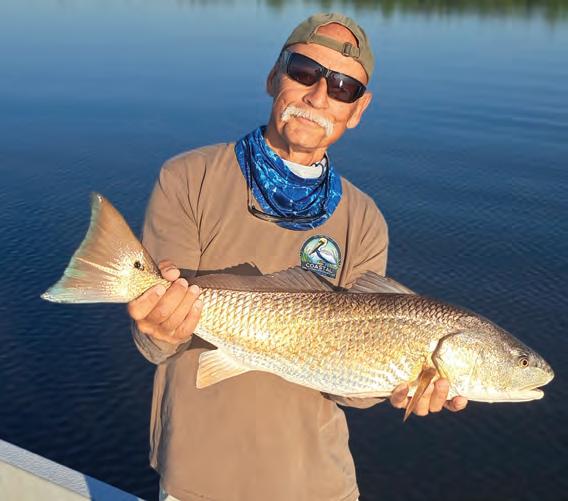
t has been a wonky June and I’m glad we are moving into the heat of summer. Around Sneads Ferry and Topsail, black drum are being caught around the area bridges, piers and deep water oyster rocks. Clams, fresh shrimp (I like them black and slimy for black drum) and crabs will catch the black drum. Sheephead are in a lot of the same areas. The speckled trout bite has been good for the people targeting specks and it is prime time for topwater plugs early in the morning. I have not targeted specs since the closure came into effect myself and am pretty excited about the reopening! Ledges, points and potholes in the area will produce speckled trout on topwater early mornings which is probably one of my favorite ways to catch them. The will also eat a trusty MirrOlure MR 17, Saltwater Assassin plastic under popping corks and Storm Shrimp. Live shrimp will also draw a strike at local bridges. Red drum is the big story in July. There are big schools on the flats, in the river and in the bays up and down the ICW. It’s just a matter of working slow to find a group without spooking them. Once you do find a group don’t pressure them too much! We are throwing MirrOlure topwater plugs, gold and copper spoons and Saltwater Assassin plastics at the reds. Stealth is key unless the fish are actively crashing on bait.



6 Knot Fishing Charters LLC • 252-648-1412
Fishing along North Carolina’s Crystal Coast, including the waters surrounding Atlantic Beach, Beaufort, and Morehead City, offers a true paradise for boaters. Whether you are an experienced boater or new to coastal fishing, the region provides an excellent opportunity to enjoy time on the water with family and friends while pursuing a variety of fish.
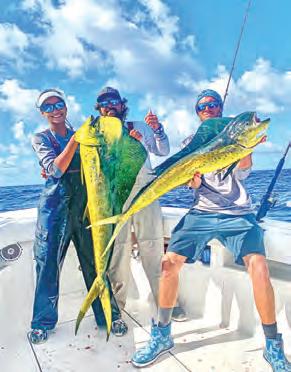
During July, water temperatures throughout the beaches, bays, and sounds typically reach 80 degrees or higher. These warm conditions attract a variety of fish, including Spanish Mackerel, King Mackerel, and Bluefish. Anglers may also encounter Cobia or even small schools of Dolphin (mahimahi) moving close to shore, adding excitement to any fishing trip.
The area features numerous public boat ramps that provide convenient access to nearby fishing.
Grounds, including handicap-accessible amenities. Recommended Trolling Equipment for Spanish Mackerel, King Mackerel, and Bluefish include #1 Trolling Planers Clark Spoons (sizes 0 and 00) or SquidNation Spoons with ball-bearing swivels, Silver and gold colored Spoons consistently catch these fish 1- to 5-ounce trolling weights, and Small birdrig teasers with approximately 4-foot leaders.
For most nearshore trolling situations, 20- to 30-pound rod and reel combinations are ideal. These setups perform well along the beachfront and within the inlets. Leaders should generally be 20 to 25 feet in length and constructed from 20- to 30-pound clear monofilament line.


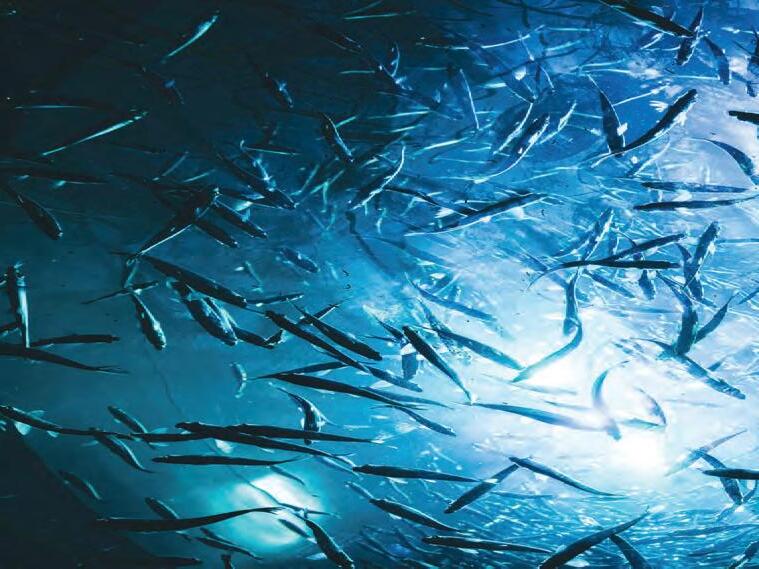
Trolling speeds typically range from 5 to 7 knots, depending on water clarity, weather conditions, and cloud cover. While underway, anglers should watch for schools of baitfish such as glass minnows, diving birds, current breaks, and underwater structure near artificial reefs marked on GPS charts (e.g., Artificial Reef 315). These are signs that predator fish such as Spanish Mackerel are feeding in the area which can significantly improve your success rates. Captain Ralph Mason has been a U.S. Coast Guard licensed captain for more than 22 years and is the owner/operator of 6 Knot Fishing Charters LLC in Morehead City, North Carolina. With decades of experience fishing the waters of North Carolina’s Crystal Coast, he is passionate about sharing his knowledge and love of fishing with anglers of all ages and skill levels. Captain Ralph and his crew take pride in creating an educational and enjoyable fishing experience. Guests are encouraged to participate in every aspect of the day’s fishing activities aboard the Southern Breeze, a 34-foot Buddy Harris sport fishing boat.





NORTH CAROLINA’S ULTIMATE OUTDOOR RETAILER SINCE 1953.





By Will Schmidt
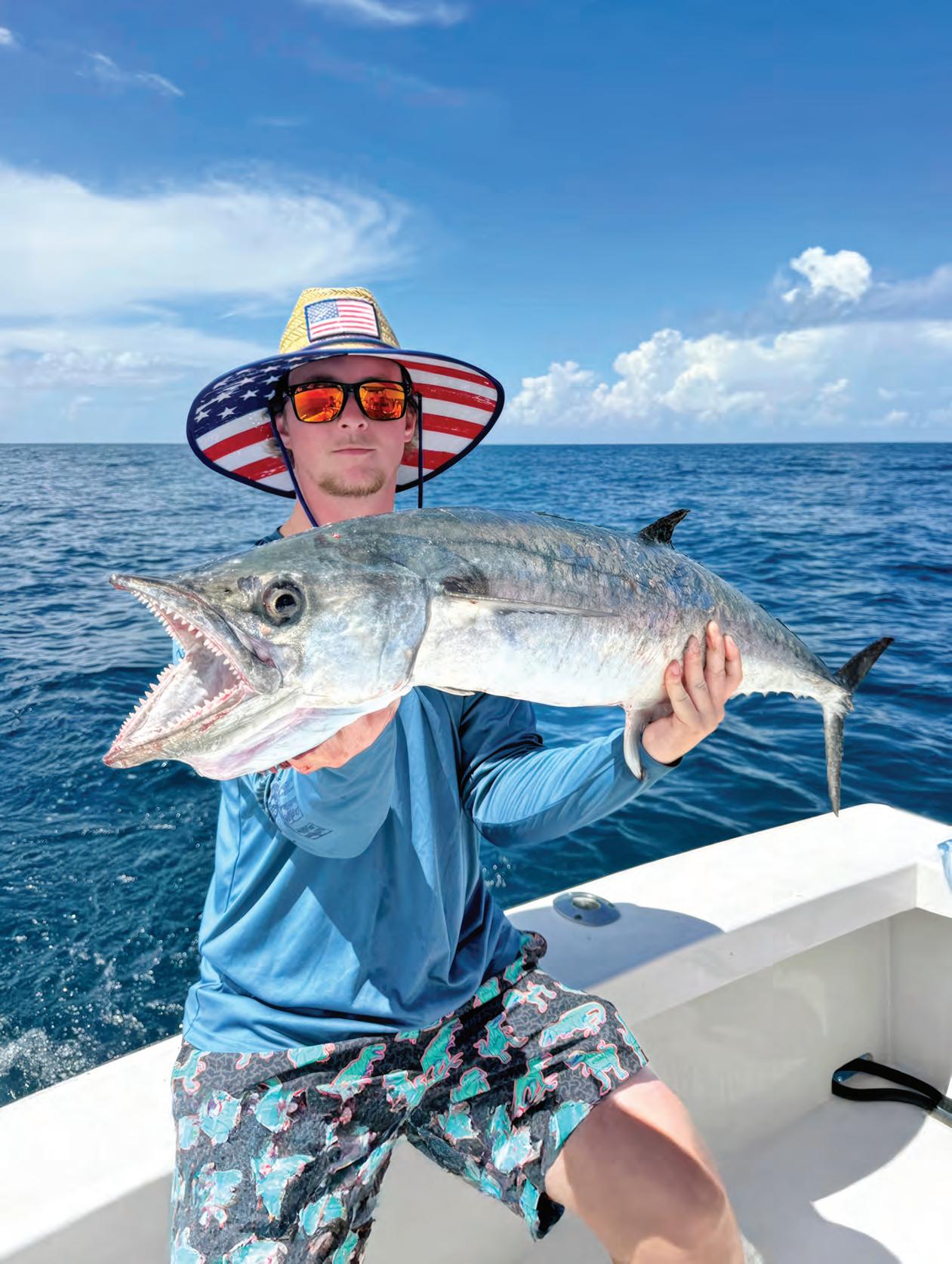
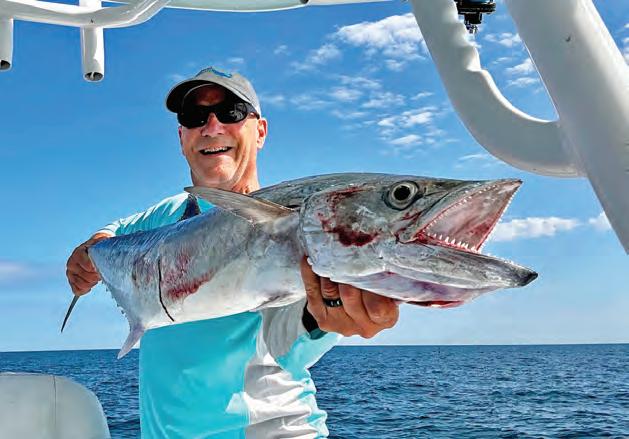
Nothing quite gets your heart rate up like the sound of drag screaming as a king rips line from the reel. Maybe it’s so exciting because for many, king!sh !shing can be slow, especially when targeting big !sh. e good news is there are some tournament proven techniques that can really help.
Perhaps the most well know tactic to bring kings to you is chumming. ere are several forms. Cutting up chunks of thread!ns and tossing them into the current is certainly a tried-and-true method. is is a great method especially if you are anchored. e challenge here is getting enough bait to keep the ow going. Another option we use in tournament !shing is a constant drip of menhaden oil. Using a bag like an IV bag you can set have a slow drip continually putting scent in the water as you troll. It’s great for covering ground and still helps to bring !sh to you at the same time. Unfortunately, menhaden oil has become a bit pricey.
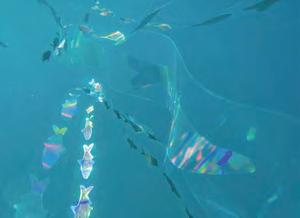
ese techniques work great, but on tournament days I believe there is so much scent in the water that they become less e$ective. So, now my new go to is to add an extra sensory stimulation in the form of eye candy. Speci!cally, a Fish Razr mylar dredge. Made of re ective strips that look like a school of bait, they shine like an underwater disco ball. Plus are easy to use and reusable so they are cost e$ective. Simply attach them to a kite rod or cleat and toss them over the side. I’ve literally had !sh in my spread within seconds of deploying the dredge.
For baits I do prefer big blue runners, but sometimes they can be hard to come by. A good trick when big baits are sparse is to double up smaller baits, like sardines or thread!ns. I use two hooks wired about 5 inches apart with a stinger o$ the second to create a larger pro!le o$ering. I believe the added ash of multiple baits helps as well.
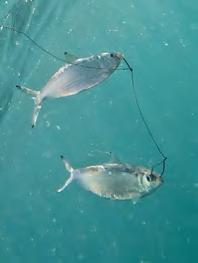
For tackle I like 20 to 30 pound trolling gear like a Shimano Terez medium action rod with Talica A 16. For years we went very light on our tackle thinking that kings had so mouths and needed to be babied. While they are somewhat more delicate, a big !sh is tough and you still need gear that can do the trick. is setup has a light enough tip and silky smooth drag to help absorb the initial hit but plenty of backbone to battle a hardier smoker king. A mono top shot also helps with that opening blow.
For me the key to king!sh !shing is to combine looking for them while also having them look for me. Adding the dredge to my spread is a real gamechanger.
Will Schmidt is a seasoned tournament angler who has been writing about shing for more than two decades. Follow Will on Instagram @saltynstrong.







ATYLER WOOLCOTT

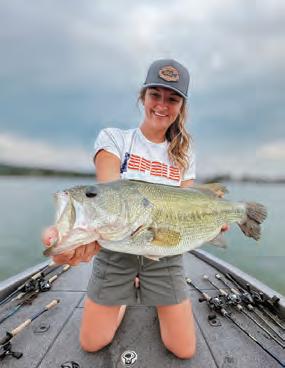
s the summer season settles in and water temperatures rise, many anglers automatically downsize their presentations in hopes of getting more bites. While smaller baits can certainly catch !sh, summer can also be one of the best times of year to target trophy bass with larger-pro!le lures. Big bass still need to feed, and they o en prefer a larger meal that provides more energy with less e ort.
One of the biggest reasons larger baits excel during the summer months is the abundance of bigger forage. Bluegill, shad and other bait!sh have had months to grow, giving bass access to larger prey. Matching the size of the available forage can o en help anglers attract the attention of the biggest !sh in the area.
Large worms, oversized swimbaits, big jigs, and magnumsized topwater baits are all excellent options for targeting quality !sh. While these presentations may not generate the same number of bites as smaller o erings, they o en appeal to more mature bass that are willing to commit to a larger meal. Many anglers are surprised by how o en a giant bass will choose the biggest bait in the boat.
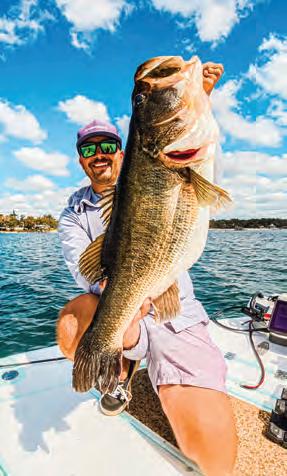
Con!dence is key when !shing larger baits. $ere may be longer periods between bites, but anglers should remember that the goal is quality rather than quantity. Staying committed to a bigger presentation can be di cult, especially when other anglers are catching smaller !sh, but patience is o en rewarded with the !sh of a lifetime.
If you’re looking to improve your chances of catching a trophy bass this summer, don’t be afraid to upsize your o erings. Bigger baits won’t guarantee a giant on every trip, but they can help put the odds in your favor. Sometimes one bite is all it takes, and that bite o en comes from the biggest !sh in the lake.
Capt. Tyler Woolcott is a professional tournament angler, as well as owner/operator of Florida Big Fish Adventures, providing bass and saltwater guided shing trips: www. oridabig shadventures.com.
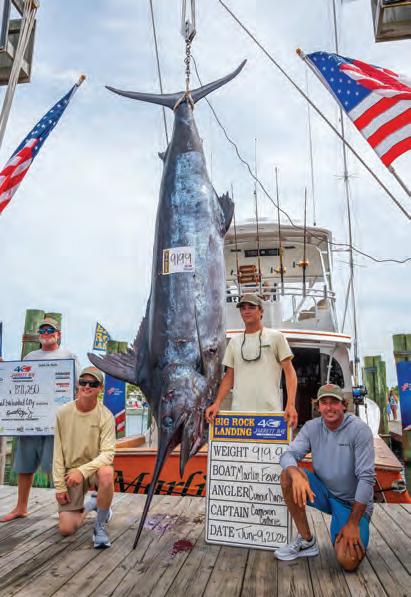
History was made, big checks were paid, and an insane at-the-buzzer leaderboard shakeup took place at the 68th Annual Big Rock Blue Marlin Tournament, held June 5–14, 2026 in Morehead City, North Carolina.
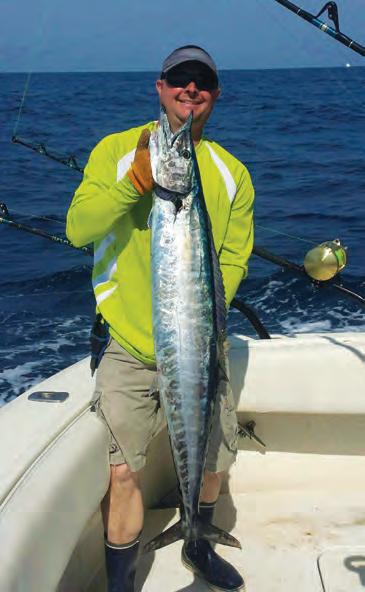
Marlin Fever brought the heat to Big Rock Landing on Day 2, bringing a tournament recordbreaking 919.9 lb. blue marlin to the scales, securing the Level V Fabulous Fisherman’s Prize worth $871,250 as the !rst blue marlin of at least 500 pounds weighed in. Eighteen-year-old Connor Daniel served as the designated angler and fought the !sh for roughly two hours. ($e crew later reported the marlin had recently eaten two sail!sh!)
Captained by Cameron Guthrie, the 63’ Jarrett Bay out of Wilson, NC, held the top spot on the leaderboard through Saturday’s !nal weigh-ins, delivering Marlin Fever the championship—and a staggering $6,513,188 payday.
And while Marlin Fever’s historic catch swept
all the blue marlin categories, it was the nail-biting weigh-in that came just before 10 p.m. on the last day of the tournament that topped o a dramatic week and sent spectators on the dock into a frenzy.
A er a grueling 6.5-hour !ght, Haphazard, a 60’ Spencer out of Manteo, NC captained by Joey Belton, delivered a true buzzer-beater. $e team arrived at Big Rock Landing just in time to weigh in one last blue marlin. It was 635.6 pounds—enough to catapult them into third place for heaviest blue marlin, knocking Free Ranger’s 597.4-pounder o the podium at the last minute. What an ending!
Fender Bender !nished in second with its 644.1-pound blue marlin weighed on Day 3, worth $467,962.50. Haphazard’s catch earned the team a $311,975 payday.
In the release division, Double G captured the title with 1,850 points a er releasing four blue and two white marlin, earning $168,937.50.
Doc Fees claimed the dolphin title and $584,500 with a 66.10-pound mahi; Magic Moment


won the wahoo division with a 53.4-pound catch; and Watertight won the tuna division with a 70.8-pounder.
A total of 278 boats !shed for a piece of the tournament’s record $9,038,225 purse.
For o cial results, payouts, and future dates, visit tournament.thebigrock.com and check them on facebook @bigrocktournament for all the tournament highlights.


TIM BAREFOOT

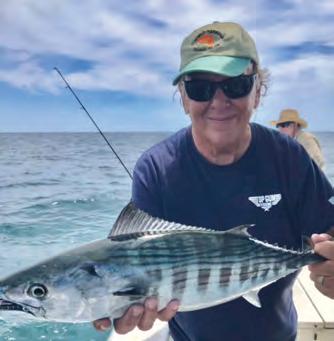
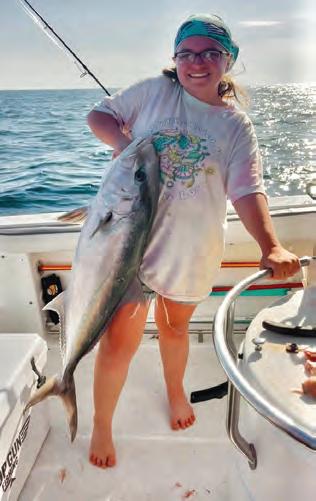
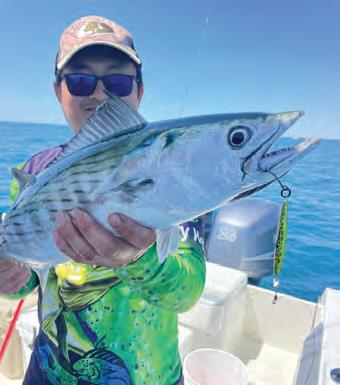
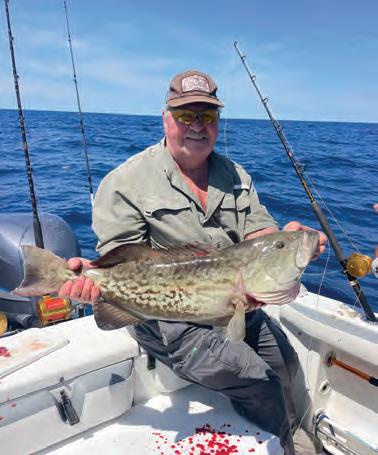
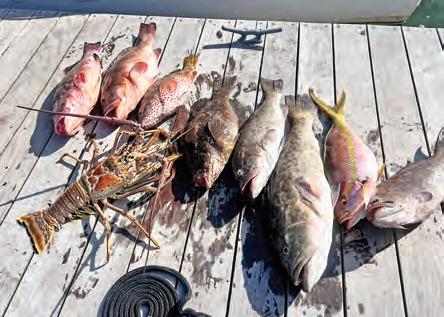
The surface water temperature will continue to climb in July, but the water temperature on the bottom will regulate itself to where it needs to be. $is is time of year to catch all the tropicals, starting now until early fall. Of course, the grouper and snapper bite will be o the chain, but this is when you will see all the snapper and grouper show up way north of Florida (as seen in photo). $ey will be available outside of their usual haunts and, of course, an occasional lobster. $is is truly the time of year to catch a giant grouper as well. I cannot emphasize this enough, but this is the time of year to spend an hour or more if necessary to Sabiki live cigar minnows and sardines for the ultimate bites on the bottom, not to mention the light line. Don’t be surprised to catch a giant wahoo on a 5-inch live cigar or sardine…elephants eat peanuts.
I would strongly suggest not playing loud music, not stomping around the deck, nor slamming cooler lids because the sail!sh and dolphin will swim up to the boat and check you out. $is is when you need to have a pitch rod ready. It’s never a bad idea to have a large squid on a pitch rod. Nothing in the ocean can refuse a well presented squid on the light line or pitch bait. It’s also not a bad idea to keep a frozen squid 50 to 75 feet deep using a small amount of weight (depending on the current).
kite for the ultimate presentation. If you have the correct weather pattern, I would strongly suggest spending the night o shore and using lights to attract the bait !sh. When you have a livewell chock full of live cigar and sardines and squid for the daylight bite, your success rate dramatically increases. Live squid or a live sardine on the bottom on a decoy jig has a life expectancy of !ve seconds or less. Don’t ask them to bite, demand the bite. Ask and you shall receive, my brothers and sisters. I’m not into all the “!shing,” per se; I’m into the catching...and there is a huge di erence. If you have the correct bait and make the correct presentation, you will get the bite!
Yes, we always carry a couple boxes of frozen cigar minnows and a box of frozen squid, but we always look for live bait, and we will spend some time on a school of bait using the Sabiki.
When the current is not running hard, a 1/4 or 3/8 oz. will get it down to the perfect depth. If the current is running a little bit, a 1/2 to 3/4 oz. might be needed. I would also suggest a live bait under a oat or under the
NOAA Fisheries recently adjusted the Atlantic blue!n tuna daily retention limits for recreational !shermen. $e adjusted limits took e ect June 1, 2026, and will extend through December 31, 2026, unless NOAA takes additional action later in the year to further adjust the retention limits or close the !shery.
As of June 1, 2026, the retention limits will be:
Highly Migratory Species
Vessel/Permit Type
Private vessels with Highly Migratory Species
Angling permits
Charter boats with Highly Migratory Species
Charter/Headboat permits, when fishing recreationally
Headboats with Highly Migratory Species
Charter/Headboat permits, when fishing recreationally
Limit per Vessel per Day/Trip (lengths in curved fork length)
2 bluefin tuna measuring 27 to <73”, of which only 1 may be a large school/small medium bluefin tuna (47 to <73”)
3 bluefin tuna measuring 27 to <73”, of which only 1 may be a large school/small medium bluefin tuna (47 to <73”)
6 bluefin tuna measuring 27 to <73”, of which only 1 may be a large school/small medium bluefin tuna (47 to <73”)
Note: $e retention limits are per vessel, per day/trip—not per angler. Regardless of the duration of a !shing trip, no more than a single day’s retention limit may be possessed or retained at the end of the trip upon landing. For example, whether a private vessel (!shing under the Angling category retention limit) takes a two-day trip or makes two trips in one day, the day/trip retention limit of 2 blue!n tuna, of which only 1 may be a large school/small medium, applies and may not be exceeded upon landing.
$e !sh are just like us. We prefer to eat breakfast, maybe lunch, and a good dinner. Be there for the daylight bite or the late a ernoon bite. Put some beautiful live bait on the bottom and expect immediate bites on the decoy jig.
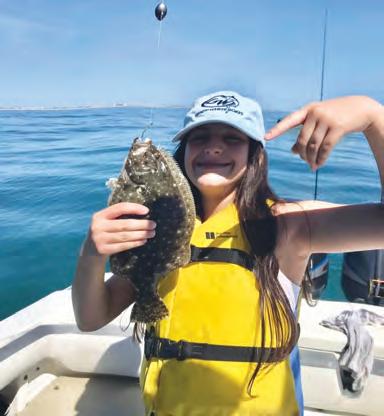
One of the most important pieces of advice for !shing in July is to ensure your children are prepared for the weather. A ernoon thunderstorms are common during this month, so it’s essential to dress them appropriately and be ready for sudden squalls. $is preparation is a fundamental part of the !shing experience.
Beyond safety, take the opportunity to teach your children the proper way to care for and release !sh. $ese practices instill a sense of respect for nature and promote responsible !shing. $e lessons learned during these outings will stay with them for a lifetime, making each !shing trip both enjoyable and educational.
Learn more tips and techniques at barefootcatsandtackle.com.
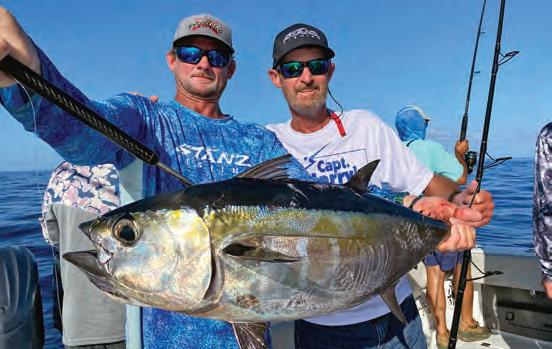
$e changes apply to Highly Migratory Species Angling and Highly Migratory Species Charter/Headboat permitted vessels when !shing recreationally. $e daily retention limits are e ective for all areas except for the Gulf of America, where NOAA Fisheries does not allow targeted !shing for blue!n tuna.
Catch reporting
Highly Migratory Species Angling and Highly Migratory Species
Charter/Headboat permitted vessel owners are required to report the catch of all blue!n tuna retained or discarded dead within 24 hours of landing or the end of trip by:
• Accessing the Highly Migratory Species Permit Shop
• Using the Highly Migratory Species Catch Reporting app
• Calling 888-872-8862 (Monday through Friday 8 a.m.-4:30 p.m.)
Keep up with all federal shing rules and regulations by visiting https://www. sheries.noaa.gov.

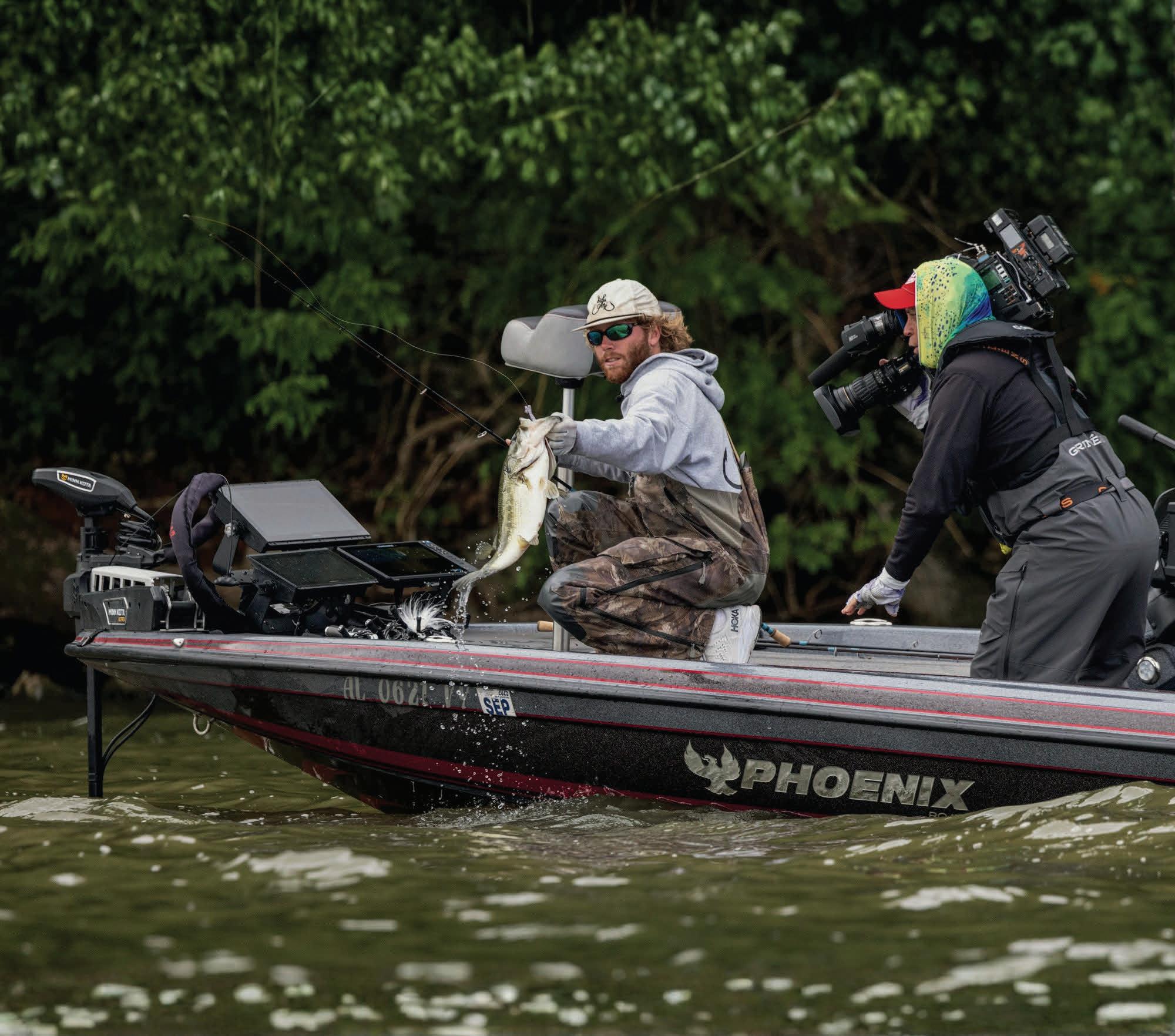
43,000 acres of legendary fishing from trophy bass, to world class sauger. A true Bill Dance Signature Lake.