






















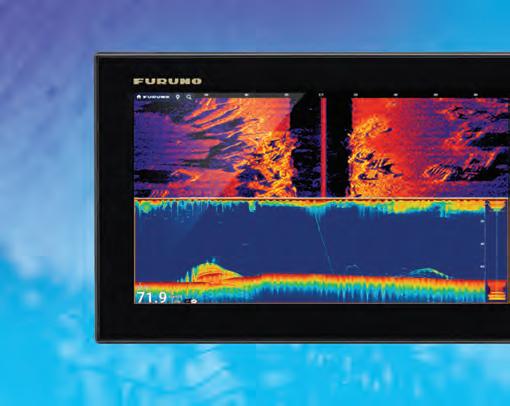

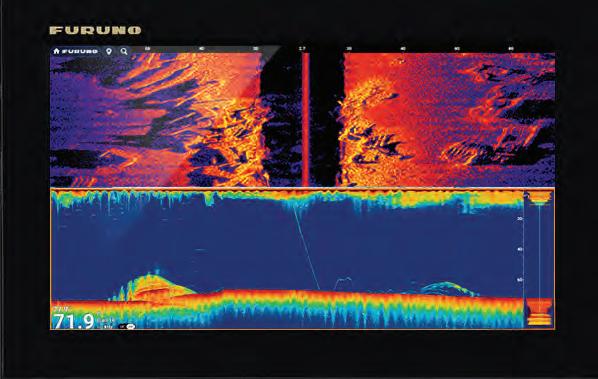
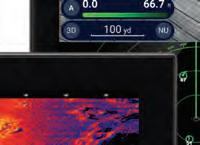
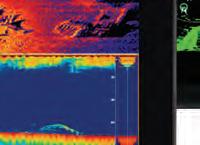
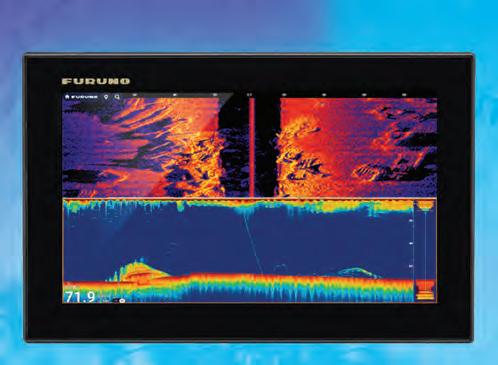
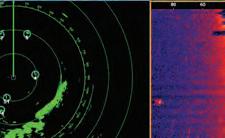
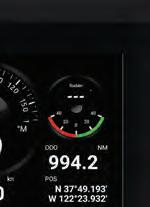




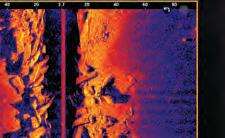

















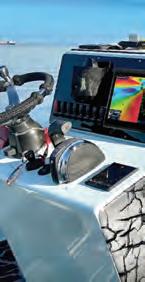
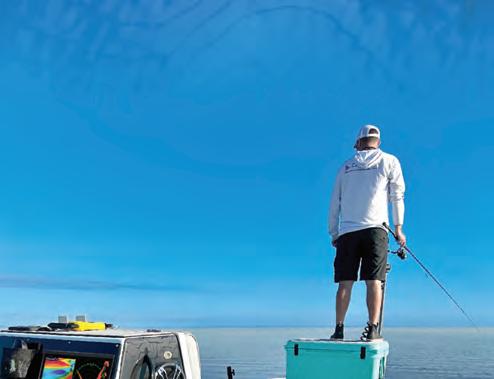



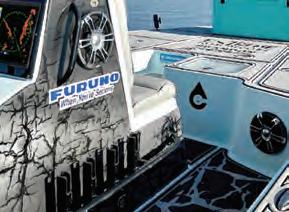





With this streamlined MFD, Furuno is bringing big-boat confidence to everyone. & More Fish
Less Stress






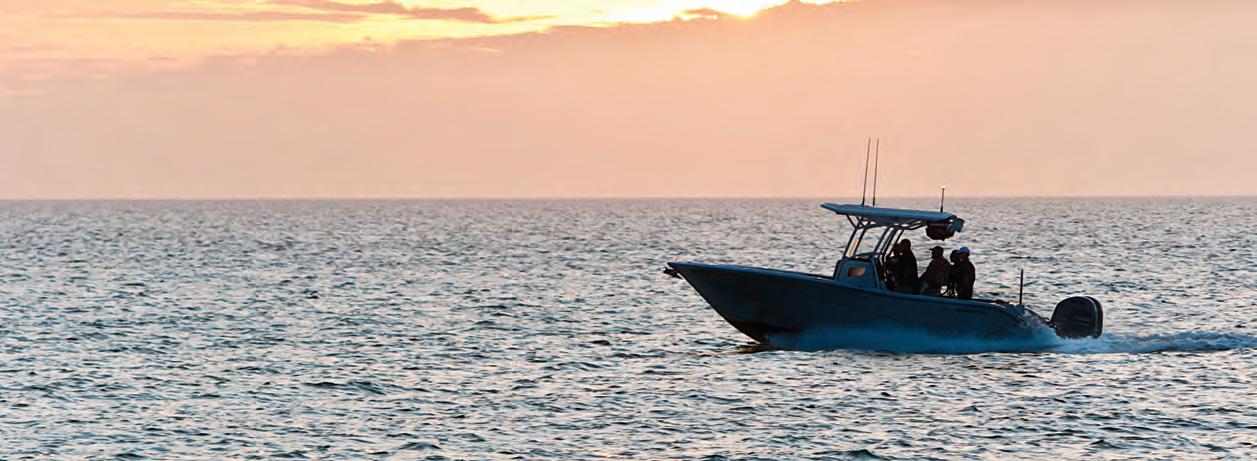
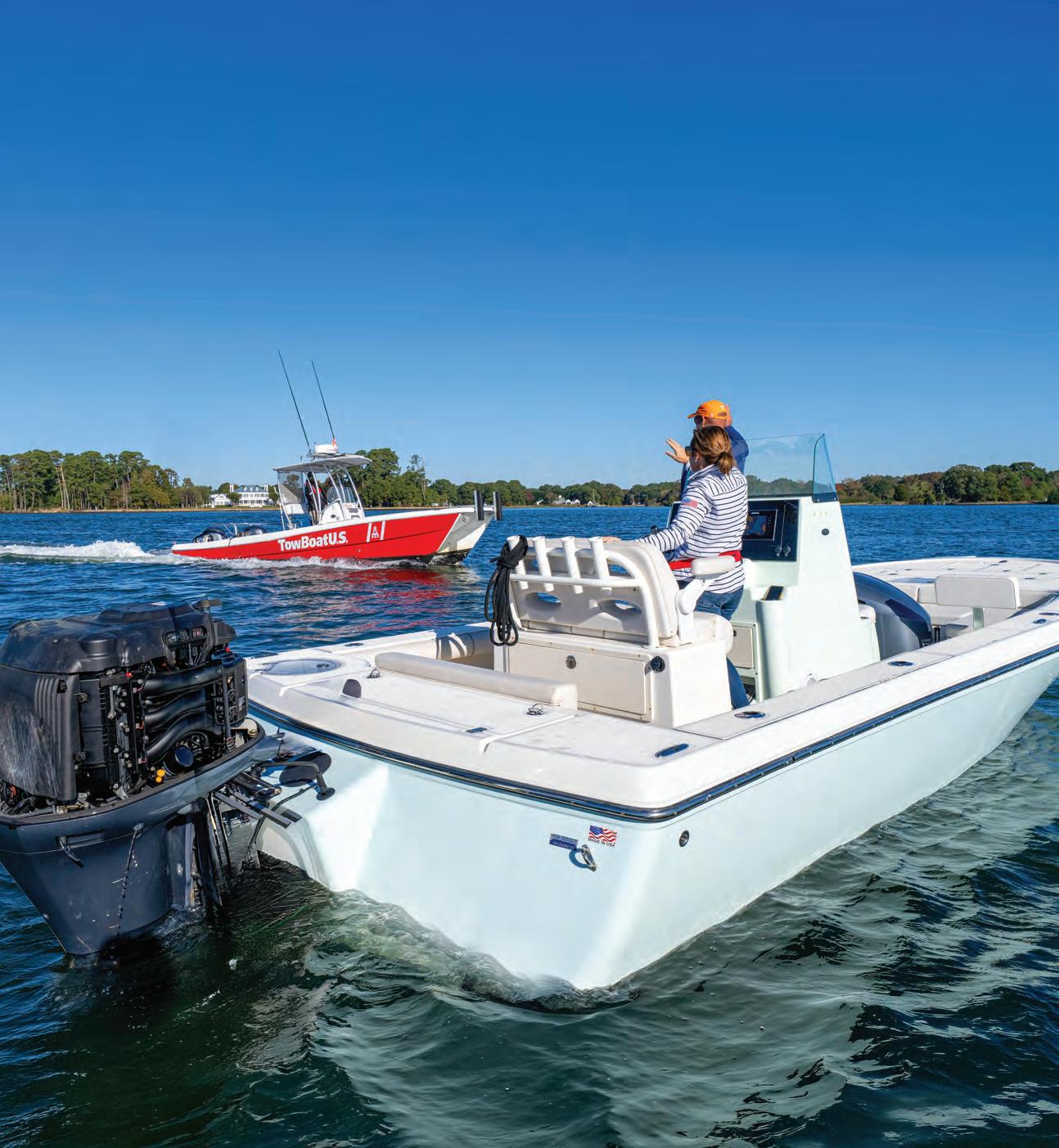
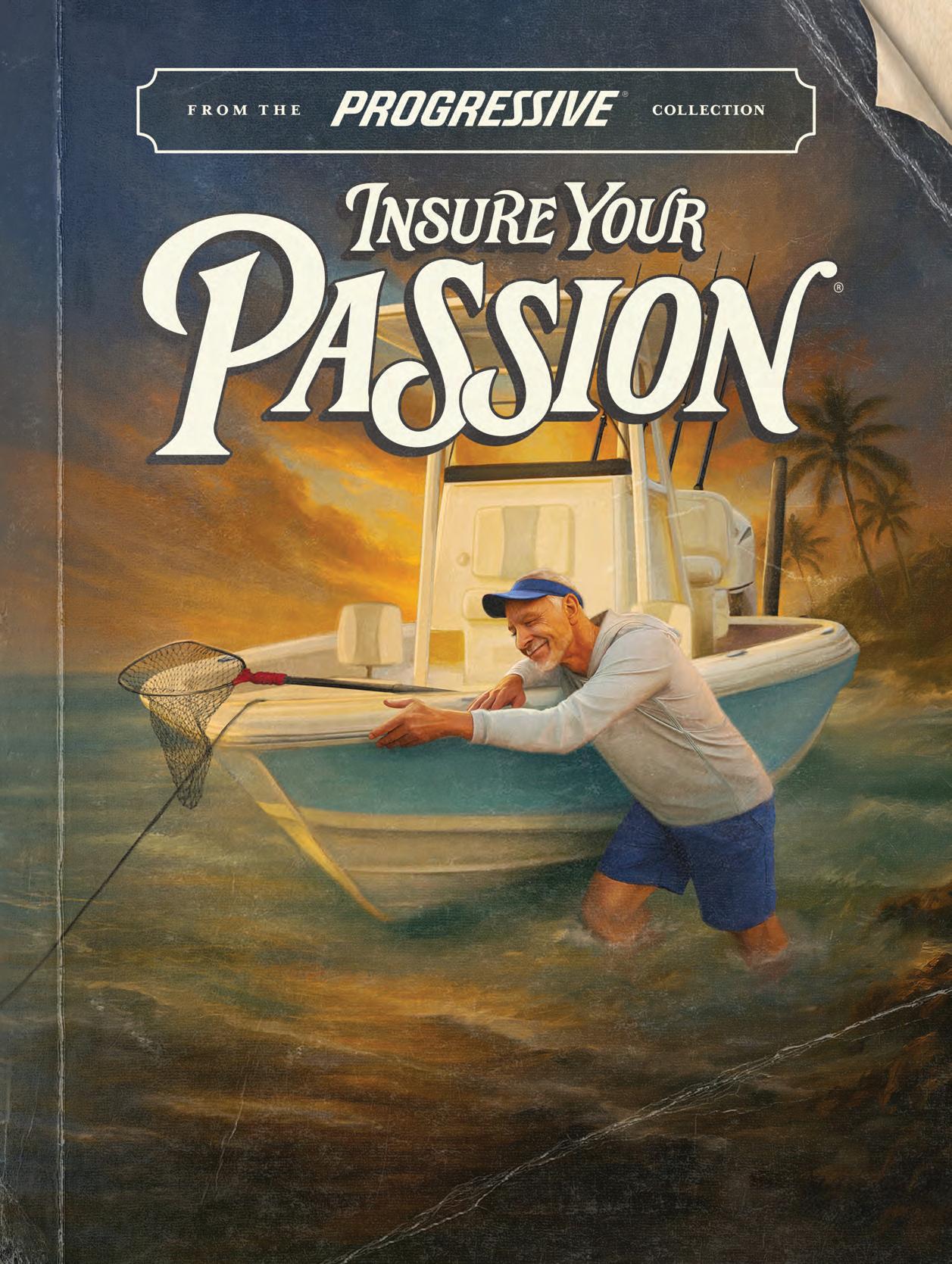
Are you ready to embark on your next on-water adventure? Before you set sail, here are fve things to know about boat insurance.
1. Boat insurance isn’t just for accidents
With comprehensive coverage, you’ll also be protected fnancially for theft, vandalism, and unexpected events like storms if you need repairs or replacements due to damage.
Accidents can happen to anyone
When accidents happen, boat insurance offers liability coverage for damages or injuries you cause while boating, up to specifed limits. It can also cover lawsuit costs if you’re sued.
3. Boat insurance can cover medical payments
Boat insurance offers a range of optional medical payments coverage limits, helping to cover medical expenses if you’re in an accident or someone is hurt on your boat, regardless of fault.
4. Most lenders require boat insurance
If you fnanced your boat, you’ll likely need boat insurance since most lenders require boat insurance to protect their investment. Additionally, some marinas or municipalities require proof of insurance for docking.
5. Progressive offers specialized boat coverages
Ever worry about getting stuck on the water? Progressive’s Sign & Glide® On-Water Towing coverage** can help. It’s an additional coverage that steps in if your boat is disabled or breaks down on the water, paying for on-water towing, jump starts, soft ungroundings, and fuel delivery. Fuel cost isn’t included.
Don’t let unforeseen circumstances disrupt your voyage. Cruise with confdence thanks to Progressive Boat insurance. Because when it comes to your boat, peace of mind is the ultimate luxury.
Scan to get a quote in as little as 4 minutes.
to learn more.












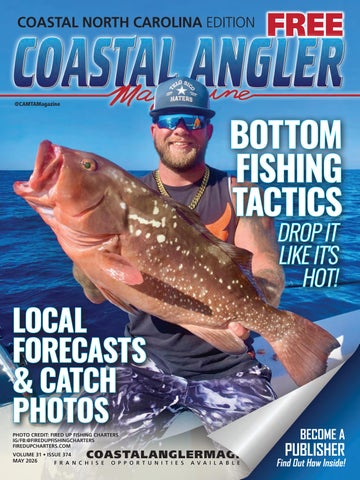
You probably noticed my attempt at a little humor with that title—just what we need a!er a long closed season. In my personal view, the closure has been unnecessary, much like the situation with Atlantic red snapper. Many of us are simply trying to catch seabass and grunts for dinner, but we keep getting pushed o our favorite spots where red snapper and gags are abundant. Yet, these species are still considered endangered. I think you know where I stand on this topic, so I won’t dwell on it any further.
As warm water moves in closer to the beach, expect to nd king sh and cobia frequenting the same spots where you’re catching gags when the water temperature rises above 68°F. Always have a pitch rod ready as cobia may swim right up to the boat. However, don’t be surprised if you catch cobia while bottom shing with a decor jig and an appealing bait. In fact, more cobia are o!en caught on the bottom than on the surface when anchored up and targeting grouper.
schools of cigar minnows and sardines on them. You don’t need to look any further when you nd this combination of bait because the sh will be right there. It’s always a good idea to keep one person on the Sabiki jigging up. A live sardine or a live cigar on a decoy has a life expectancy of under ten seconds around any kind of sh. We try to never leave the marina without a couple boxes of frozen cigar minnows and live pin sh. at live pin sh can sometimes be the best selection of all because it’s too large for any of the trash bites.
TIM BAREFOOT
of other species like vermilions, mangroves, grunts and seabass.

In addition to all the other stu on the bottom, it’s always good to keep a light line out for kings, black n, wahoo and dolphin. It’s not a bad idea to keep one under a %oat (so you can keep an eye on it) and another one without a %oat, but you have to be mindful of that bait getting back into props or under the boat tangling other lines.
I’ve always said, “Find the bait, nd the sh.” Go to all your familiar haunts with structure of one kind of another, whether it’s ledges, rock out crops, wrecks, etc. e bonus will be nding
Any kind of little snapper about the size of your hand makes for the ultimate bait. I’m no longer shing for barely-legal gag or scamp. Instead, I’m looking for one good bite at a time. I’ll let that bait soak on the bottom and be patient waiting for the old man to show up. Don’t get me wrong, more sh have been caught on frozen cigar minnows and sardines than all the other baits combined, but a live one is simply irresistible to every grouper and/or snapper out there. Period. Nearly everything on the bottom will take a whack at it, but only the sh with the correct sized mouth can eat that small snapper. Because the creel limits are so low, you’ll easily reach your grouper limit. Once you have, it’s wise to take advantage
If you’re anchoring and not just using the trolling motor, it’s a great idea to %y the kite. Keep a couple baits suspended with little to no leader in the water. Live greenies, cigs or sardines under the kite is the ultimate presentation. You can even get away with %uorocarbon using circle hooks depending on the current. Don’t hesitate to put a bait out with a small amount of weight in front of it to get it down 30 to 50 feet behind the boat. is will get you that large wahoo bite. ere are so many options available this time of year in the warmer water, so be ready to take advantage of all of them once you ll your cooler with one species or another. is is the ideal time to broaden your approach and become skilled in targeting not only di erent types of snapper and grouper, but also pelagics.
MAY you nd calm seas, tight lines and delicious dinners this month!
Learn more from Tim Barefoot at barefootcatsandtackle.com.
TIM BAREFOOT
Barefootcatsandtackle.com
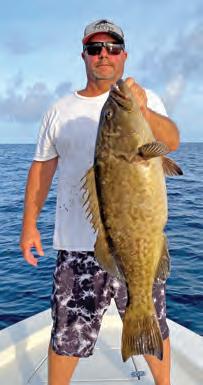
May has always been very special for me. I sold a lot of Scamps and Kings during the end of April and the whole month of May. We would keep the light line out catching Kings until it was not profitable. When the Scamp bite was hot and heavy, we wouldn’t even put the light line out because it took too much time to deal with a king that wasn’t worth much money. Absolutely, always have a couple boxes of frozen cigar minnows, but if possible, take live pinfish from the marina. Scamps see pinfish just like sailor’s choice as egg eaters, they identify them as a threat and will eat them, if for no other reason, just to kill him. They also love a live pin fish on the Decoy Jig, not to mention a live cigar or sardine on it is an instant bite as well. This requires spending time catching bait on the Sibiki. I know it takes precious time away from the fishing day, but leave early and understand that each one of those live cigars or sardines in the well is a bite, not to mention taking live pinfish you trap or castnet at the marina. Yes, the Gags and Reds are targets also along with those endangered American Red Snappers, but May is the ultimate Scamp bite.
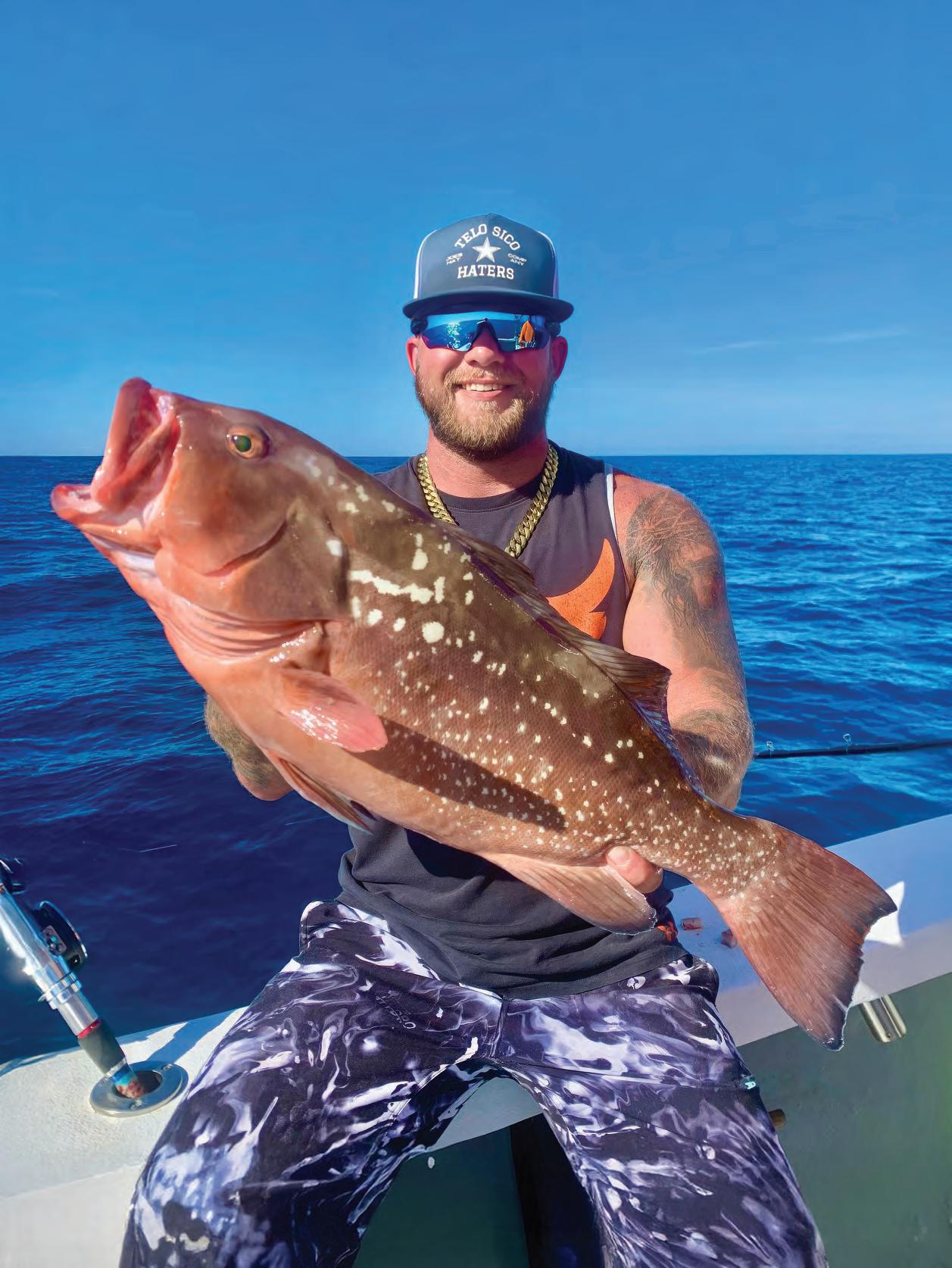
Where the Scamps live in the deeper water sometimes requires more than the 4-ounce crab. I’m a huge fan of the 8- and 12-ounce Squid Decoy Jigs also. As a matter of fact, the all-time IGF world record Scamp was caught on a 12-ounce Squid Decoy Jig by Teddy Wingfield, a young angler as seen in the photo. Do yourself a favor, pick a pretty day, dress your kids properly and take them out to this productive water depth. Maybe they’re not old enough or strong enough to handle the grouper bite, especially right on the bottom, but once you get them up off the bottom hand them the rod, or let them catch B liners and Triggerfish on smaller gear. They will never forget these trips and neither will you. Don’t forget, take plenty of video in addition to photos.

3
1
2
1
2
4 Mon 10:19 3.6 10:43 4.6 4:30 0.5 4:17 0.5 6:19 7:57
3
5 Tue 11:01 3.5 11:27 4.5 5:12 0.6 4:58 0.5 6:18 7:58
4
6 Wed 11:49 3.4 5:56 0.6 5:43 0.6 6:17 7:59
5
7 Thu 12:14 4.4 12:40 3.4 6:41 0.7 6:32 0.7 6:16 8:00
6
8 Fri 1:03 4.3 1:34 3.5 7:30 0.7 7:26 0.8 6:16 8:01
7
9 Sat 1:55 4.3 2:32 3.6 8:24 0.7 8:30 0.8 6:15 8:01
8 Tue 4:58 3.8 5:25 3.6 11:15 0.5 11:31 0.5 6:41 7:34
9 Wed 5:47 3.8 6:09 3.8 11:54 0.5 6:40 7:34
10 Sun 2:50 4.2 3:30 3.8 9:19 0.6 9:35 0.8 6:14 8:02
10 Thu 6:28 3.7 6:47 4.0 12:19 0.4 12:32 0.4 6:38 7:35
11 Mon 3:45 4.2 4:24 4.1 10:09 0.4 10:33 0.6 6:13 8:03
11 Fri 7:04 3.7 7:20 4.2 1:04 0.4 1:07 0.4 6:37 7:36
12 Tue 4:37 4.1 5:14 4.5 10:54 0.2 11:27 0.4 6:12 8:04
12 Sat 7:37 3.7 7:52 4.3 1:44 0.3 1:40 0.4 6:36 7:37
13 Wed 5:29 4.1 6:05 4.8 11:38 0.0 6:11 8:04
13 Sun 8:08 3.6 8:23 4.4 2:20 0.3 2:12 0.4 6:35 7:38
14 Thu 6:20 4.1 6:55 5.2 12:20 0.2 12:23 -0.2 6:11 8:05
14 Mon 8:39 3.5 8:56 4.4 2:54 0.3 2:43 0.4 6:33 7:38
15 Fri 7:11 4.2 7:43 5.5 1:13 0.0 1:10 -0.3 6:10 8:06
15 Tue 9:13 3.4 9:32 4.3 3:28 0.4 3:15 0.4 6:32 7:39
16 Sat 8:00 4.2 8:31 5.7 2:04 -0.1 1:59 -0.4 6:09 8:07
16 Wed 9:50 3.2 10:14 4.2 4:04 0.5 3:49 0.5 6:31 7:40
17 Sun 8:48 4.2 9:20 5.7 2:55 -0.2 2:48 -0.5 6:09 8:07
17 Thu 10:33 3.1 11:03 4.0 4:44 0.7 4:27 0.6 6:30 7:41
18 Mon 9:39 4.2 10:12 5.7 3:47 -0.2 3:40 -0.5 6:08 8:08
18 Fri 11:24 3.0 11:54 4.0 5:28 0.8 5:11 0.7 6:28 7:41
19 Sat 12:15 3.0 6:16 1.0 6:03 0.8 6:27 7:42
19 Tue 10:34 4.1 11:08 5.5 4:41 -0.2 4:36 -0.3 6:07 8:09
20 Wed 11:35 4.1 5:36 -0.1 5:35 -0.2 6:07 8:10
20 Sun 12:45 3.9 1:08 3.0 7:12 1.0 7:06 0.9 6:26 7:43
21 Mon 1:39 3.8 2:08 3.2 8:17 0.9 8:23 0.8 6:25 7:44
21 Thu 12:06 5.3 12:37 4.1 6:31 -0.1 6:36 0.0 6:06 8:10
22 Tue 2:40 3.8 3:14 3.5 9:17 0.7 9:35 0.6 6:23 7:45
22 Fri 1:04 5.0 1:39 4.2 7:27 0.0 7:39 0.3 6:06 8:11
23 Wed 3:44 3.8 4:16 3.9 10:06 0.4 10:33 0.3 6:22 7:45
23 Sat 2:03 4.8 2:42 4.2 8:26 0.0 8:48 0.4 6:05 8:12
24 Thu
24 Sun 3:02
25
25
26
26
27
28
28
29
30


www.USHarbors.com Cape Lookout Bight, NC - Apr 2025


• 910-264-9118
ITIME STAMP… 25 YEARS AGO. IN 2001 I BEGAN MY RELATIONSHIP WITH WADE WATANABE AT UNCW AND HARRY DANIELS WITH NORTH CAROLINA STATE UNIVERSITY REGARDING THE NEED FOR A FLOUNDER HATCHERY SYSTEM IN NORTH CAROLINA.
Update… 2026. The NCDMF is now looking for an advisory panel for solutions regarding southern flounder stocks that are supposedly depleted. DMF is actively pursuing people with knowledge regarding Southern Flounder that could help with the current situation.
I’ve had more than a dozen request from friends asking me to participate in this panel of “experts” to possibly guide NCDMF towards solutions regarding our current debacle with Southern Flounder in North Carolina State Waters
I said many years ago that if you ever saw me in another NC fisheries meeting, take a photograph because that’s not me. I refuse to ever get back into this INCESTUOUS/CORRUPT d en of vipers who regulate our fisheries management here in North Carolina
You can write down that I said this… North Carolina fisheries management along with our federal fisheries management regulators are bought and paid for. PERIOD. They do not have the will of the people in mind. They only have their own financial well-being and political advancement in mind and do as they are told. These people are corrupt to the core and Southern Flounder here in North Carolina is the poster child of this exact statement. We laid out all the evidence and numbers many years ago to Louis Daniels and his staff. They smiled, acted very cordial and looked as if they were in agreement when person to person, but would never give us the time of day for any meaningful cooperation for a hatchery advancement. And it was like pulling hen’s teeth to get cooperation for artificial reef deployment on nearshore reefs where the spawning of Southern Flounder occur.
All we were asking for back then, was to allow us to use our recreational fishing license monies for the EXISTING hatchery to produce millions and millions of 90 mm fingerlings to release into the western creeks along the Intracoastal waterway throughout the state. This would have created a flounder carpet throughout the state of North Carolina many years ago.
I realize I don’t have a PhD, nor do I have fisheries management experience, however, I have been fishing for many decades now and I saw what was possible with Wade Watanabe at UNCW and Harry Daniels at North Carolina State University. These two gentlemen along with John Miller, who was the director of zoology at North Carolina State university (Literally) wrote the book of stock enhancement potential of Southern Flounder in North Carolina. You should look up this book up read it, you’ll understand what they said way back then as it relates to our current situation.
We held the “Flat Bottom Girls Flounder Tournament” The first week of November for 15 years. We only accepted prizes for a live Flounder and we gave all these fish to UNCW and NCSU. The reason the tournament was held in November is because the females start to migrate out the inlets to the nearshore structure (where they were born) to spawn. The term “Flat Bottom Girls” is a play on the old Queen song but is reflective of only large flounder are female. Male flounder only grow to a maximum of 15 inches or so.
The research associates at these two universities under the guidance of Wade Watanabe and Harry Daniels trained the rest of the United States and Japan, on how to grow Southern Flounder fingerlings in hatchery environments. They used water temperatures and lighting manipulation to spawn these fish twice a year instead of once as in nature
Texas, along with many other Southern states, sent their research associates to Wrightsville Beach and Raleigh to study under Harry and Wade . It’s more than telling to me, and anyone looking at the facts of this situation, why it can be promoted and utilized in many other states and Japan, but not North Carolina where the research originated and was perfected.
I think it’s time for North Carolina citizens to realize how badly our politicians and fisheries management officials have hoodwinked us in the past. FIRE EVERY SINGLE ONE OF THEM, and start from scratch with common sense (problem solving ALPHA MALES) at the helm that are not concerned about what people think of them or their personal political advancement to run the agencies regarding fisheries management.
It’s time for North Carolina to be proactive rather than reactive in our fisheries management. We produced the evidence and facts a long time ago, and now it’s time to bring it all to fruition
Bring a hatchery system online to manage several of our “depleted stocks”.
This is just one part of the equation. First and foremost, show me the data that you have collected that would indicate stocks are depleted… and not just state waters, this is federal fisheries management also. I am specifically speaking about Gag Grouper, and American Red Snapper now. I know this is a whole other story, but I’ll leave you with this statement…
State and federal fisheries management agencies are not on our team as commercial and/ or recreational fisherman
They are bought and paid for (non-elected agencies) and do as they are told in order for the people at the very top to benefit, and we must endure the pain.
Enough is enough!!! GROW SOME STONES… stand up and tell your political representatives that you’re not going to take it anymore.
Remember… THEY WORK FOR US!
Thank you for your attention to this matter,

9
8
5
2
1
2
4
6
5
6
8
9
10
12
13
14
14
15
16
17
18
19
20
18
19
20
www.USHarbors.com Cape Lookout Bight, NC - Apr 2025
21 Mon 1:39 3.8 2:08 3.2 8:17 0.9 8:23 0.8 6:25 7:44
21 Thu 12:15 2.7 6:22 -0.1 6:10 0.0 6:02 8:09
22
22
23
24
25
23
24 Thu
25
26
27
28
29

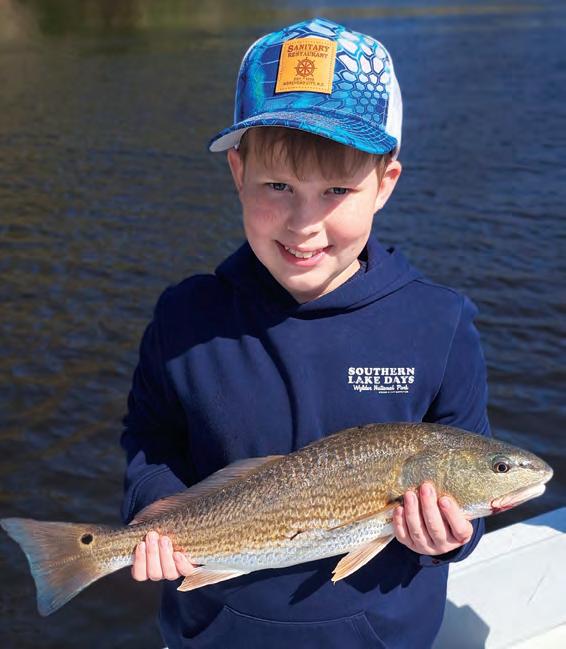
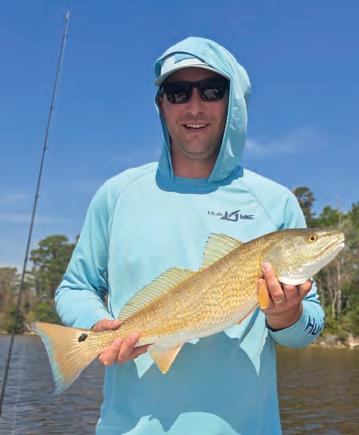
I’m going talk about a basic lure that should be in everyone’s tackle box if fishing inshore. That is the weedless spoon. Several brands make quality spoons such as Johnson, Cajun Thunder, Aquadream and there are several others. Spoons come in a variety of colors, and the fish will hit them all, although I prefer gold or copper. The weedless spoon is good for shallow water or deep water and can be fished a variety of ways. I usually have clients reel them not too fast, but not too slow, just steady. When working one myself I like to pause and let it flutter now and again.
The spoons come in a variety of sizes and each size has its place. A 1/2 ounce is a good all-around size and that is usually what I have clients using. It’s heavy enough that an inexperienced angler can cast it with no issues but not too heavy. If I encounter super shallow spooky fish, I will drop to a 1/8 or a 1/4-ounce size spoon. Less noise on entry, able to work those sizes slower in inches of water. I don’t use very many 3/4-ounce spoons. The 1 1/8-ounce spoons we use a ton targeting the old drum and “bulls”. They will attack those spoons just as aggressively as their younger brothers and sisters and that large spoon has a hook big enough it gets them in the mouth, usually in the corner. That cuts way down on deep hooked fish.
A spoon is a great search bait as you can cover so much ground while fishing them. Other species also will hit them including Flounder, Black Drum, Blues, Trout and Spanish. We target the big blues in the Neuse and Pamlico with the large 1 1/8-ounce size. I also target black drum with 1/8 and 1/4 when we find a spawning biomass in the summer that won’t eat shrimp. They will eat that small spoon. Hope this helps somewhere out along the way, and if you have hardly or never used one, I’d pick up a couple 1/2-ounce gold spoons and give them a whirl on your next trip out.





SUPPORT OUR UPCOMING EVENTS
May 16 -17 – Military Appreciation Fishing Tournament –Cedar Point
Aug 23 – Sep 29 –“Inshore Open” Fishing Tournament – Statewide Sept 17 – Crystal Coast Banquet – Morehead City
Oct 4th –Fishing for the Future Annual Kids Fishing Tournament – Swansboro
Oct 24-25 – “The Billy Burch Wide Open” Military Appreciation Fishing Tournament – Cedar Point


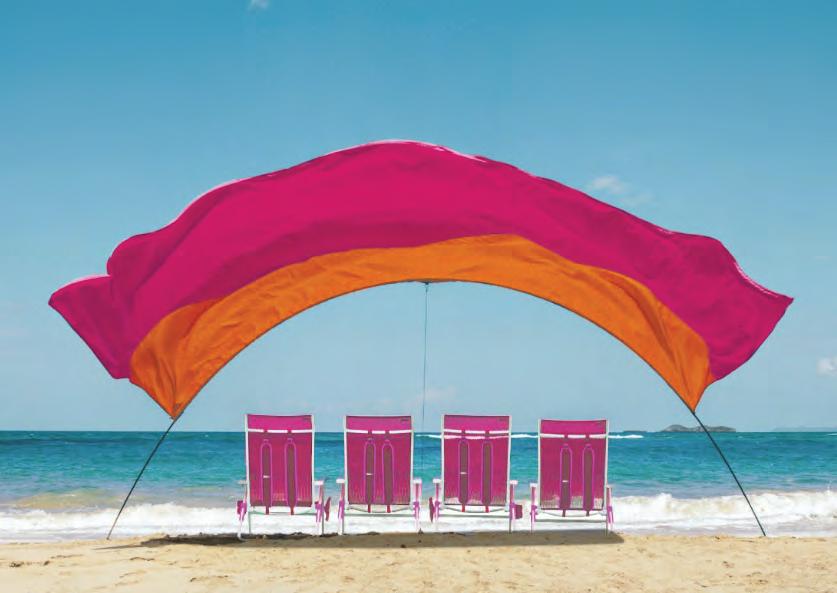
Top Gun Fishing • 757-761-2167
By now the Anglers of the Crystal Coast of NC are super excited that Spring fishing is in full swing! Cool spring water temps and warmer weather brings back the comfort of ocean activities as well as some delicious species that show up in our waters. Let’s talk about the how, where and when of these great species.
One of the most anticipated fish in mid-April to early May is the Atlantic Bonito (not to be confused with false albacore). These fish come to our local reefs to spawn and feed and can be found within a few miles right off the beach. Amazing fighters on light tackle and can be caught in many traditional ways including trolling, casting jigs and live baiting. A fantastic eating fish that mimics a mild Tuna can be delicious no matter what the preparation. Sashimi Poke bowls being the go to!
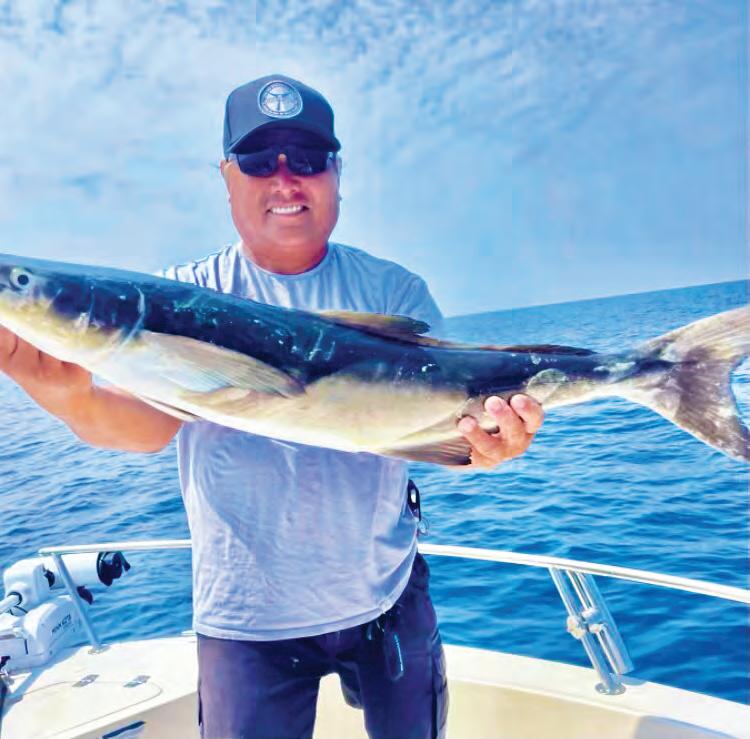
May also is the start of Cobia season in nearshore conditions. A huge fighting fish reaching common weights of 40 to 80lbs! Another delicious table fare fish. May brings the best season for all types of fishing up and down the coast. From Sea mullets on the beach to Mahi Mahi offshore. Whether you are on a boat or spending your day on a local pier you are sure to find some great action and good eats for your family! Be sure to always prepare with quality gear and tackle in case you lock on to the “big one”! A standard 4000 spinning reel with a medium heavy action rod combo will handle all the species during this season, also, always use a fresh spool of quality 30lb test braided line. You can find the best brands and selection at most tackle and fishing stores such as EJW outdoors in Morehead City NC, they will be sure to set you in the right direction. Always feel free to contact us with any questions or concerns or to book a great fishing trip for your Family. Thank you and best Fishes!

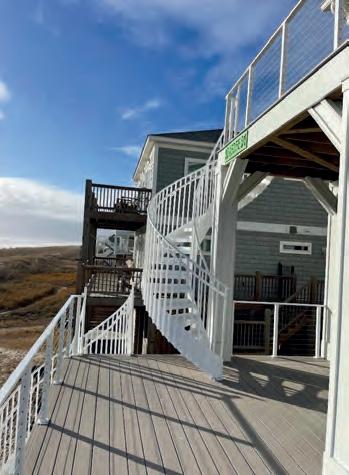

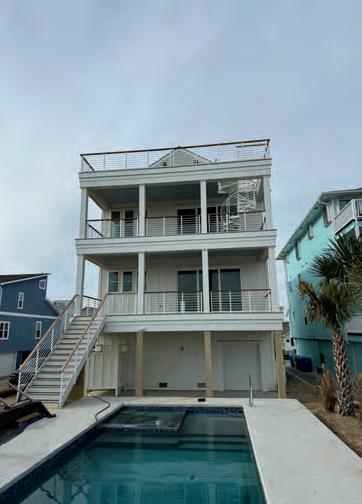
Spring is the perfect time to enhance your coastal home.
Open up your sightlines with a Cable Rail or Multi-Line Horizontal Rail System in durable, powdercoated aluminum, designed to maximize your beach or marsh views without sacrificing safety or style.
Create effortless access from deck to sand with a custom Spiral Stair or signature Carolina Curve. It’s the perfect solution for reaching the beach while helping keep salt and sand out of your home. Adding a secondary means of egress also provides peace of mind, giving your family added safety in the event of fire or emergency.
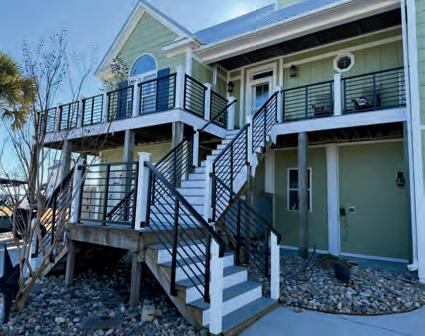
Want an even better view? Gain access to a roof deck without giving up valuable deck space by installing a Carolina Curve Spiral with beauty, function, and space-saving design all in one.
On the water side, upgrade your dock with a new Gangway, Walk Board, or Swim Ladder for safe, secure access to your boat and the water.
Complete your outdoor space with: • Privacy Screens • Bahama Shutters


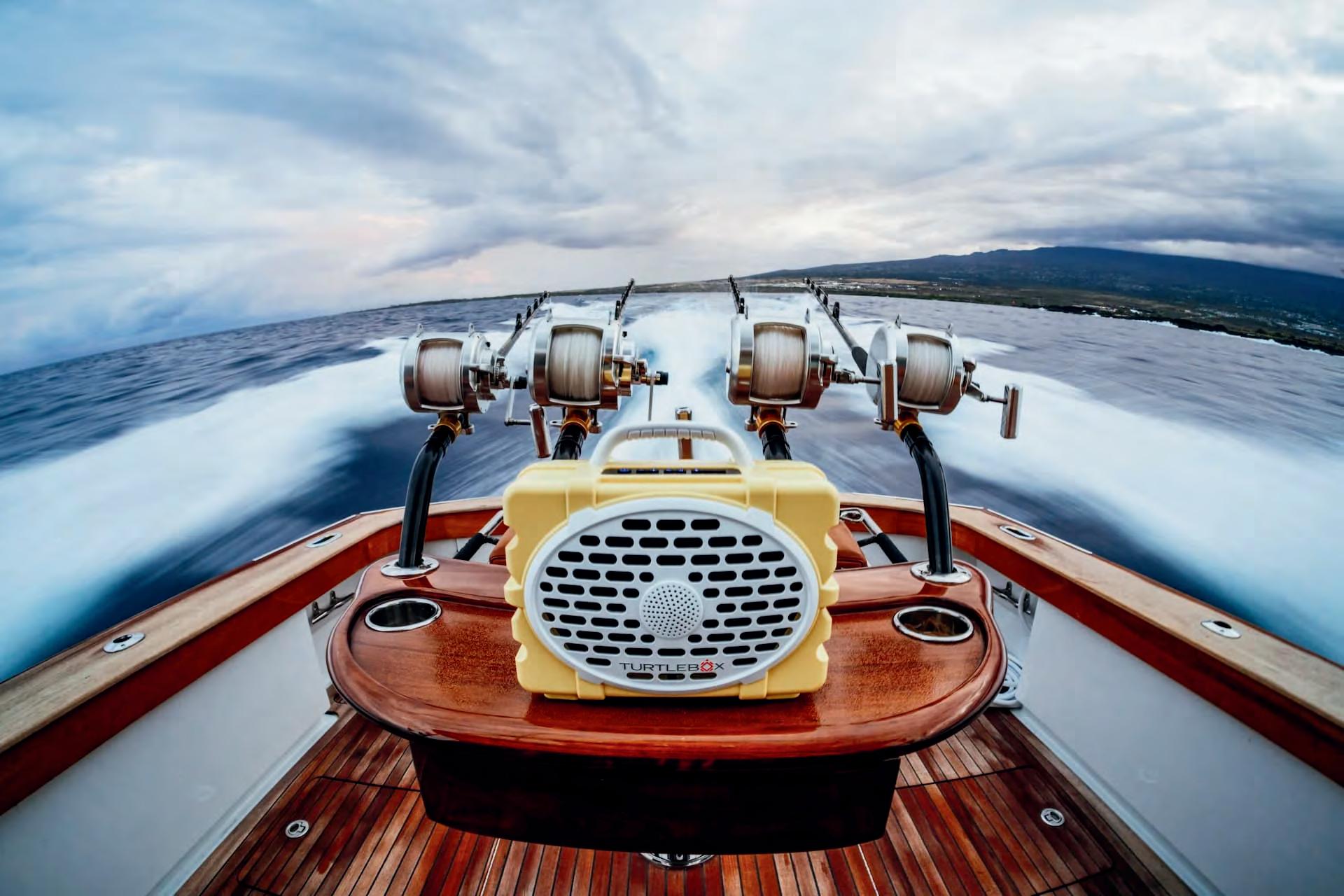
FREE SHIPPING ON MOST ORDERS OVER $75! FIGHTING LADY YELLOW

NORTH CAROLINA’S ULTIMATE OUTDOOR RETAILER SINCE 1953.


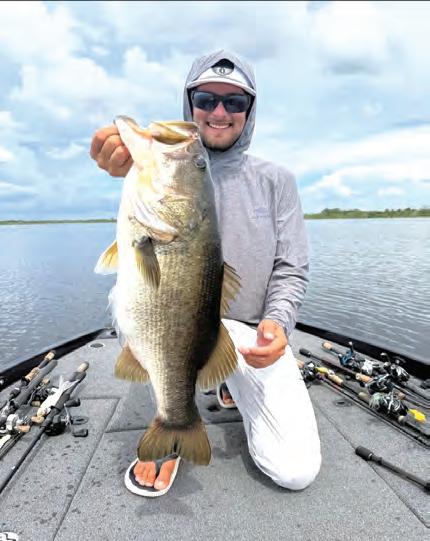
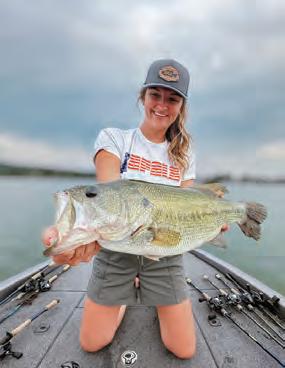
Lipless vibrating lures have long been staples in bass !shing, but few create more debate—or more bites—than the lipless crankbait (rattle trap) and the chatterbait. While both rely on vibration to trigger reaction strikes, their e ectiveness depends heavily on forage, seasonal timing, and even the rod and reel used to !sh them.
A lipless crankbait is a hard-bodied bait designed for speed and sound. Its tight vibration and internal rattles allow bass to locate it from long distances, making it ideal when !sh are actively feeding on bait!sh like shad. ese baits excel in open water or over submerged grass, where anglers can burn them, yo-yo them, or rip them free to trigger reaction strikes. For rattle traps, rod selection plays a major role in landing !sh. A 7’ to 7’3” mediumheavy rod with a moderate or moderate-fast action is ideal. e slightly so er tip allows bass to fully load the rod before the hooks engage, reducing the chances of pulling treble hooks free during surging !ghts. e longer length also helps make long casts, which is critical when covering water or targeting schooling !sh. You typically want to throw the trap on a faster gear ratio reel like a 7.1 or 7.3. e faster gear ratio helps pick up the line on long cast when you get a bite and need to catch up with the !sh.
A chatterbait, or bladed jig, produces a wider, thumping vibration and a more natural pro!le when paired with a so plastic trailer. is lure shines around shallow grass, docks, and wood, especially in stained water where bass rely more on vibration than sight. Chatterbaits o en mimic bluegill or bream, making them deadly around spawning areas and shallow cover. Because chatterbaits use a single heavy hook, anglers bene!t from a slightly di erent rod setup. A 7’ to 7’4” medium-heavy rod with a fast action provides the backbone needed to drive the hook home while still o ering enough tip to keep !sh pinned. is setup also allows anglers to control !sh quickly when pulling them out of thick cover.
Beyond lure, reel, and rod choice, matching the hatch remains one of the most important elements of success. Bass o en focus on a speci!c

By NPFL Pro Angler Joey Bloom
forage, and lures that match the size, color, and movement of that prey get bit more consistently. Chrome or white rattle traps imitate %eeing shad in open water, while green pumpkin or bluegillpattern chatterbaits blend perfectly into shallow cover scenarios. To maximize these techniques, anglers must learn to follow the bait throughout the season. In late winter and early spring, bait move toward warming %ats, making rattle traps excellent search tools.
A er the spawn, bluegill become a primary food source, and chatterbaits excel around shallow cover and spawning grounds. In summer, bait o en shi s to deeper grass lines or o shore structure, where slow-rolled chatterbaits can shine. Come fall, shad migrate into the backs of creeks, and rattle traps once again dominate as bass feed aggressively ahead of winter.
By pairing the right vibrating lure with proper reel and rod length and action—and matching it to seasonal forage—anglers can signi!cantly increase e ciency and landing percentage. In bass !shing, success o en comes down to details, and choosing the right reel and rod can be just as important as choosing the right bait.
Follow all of Joey Bloom’s shing and fun on Instagram, Facebook, and YouTube at Joey Bloom Fishing.
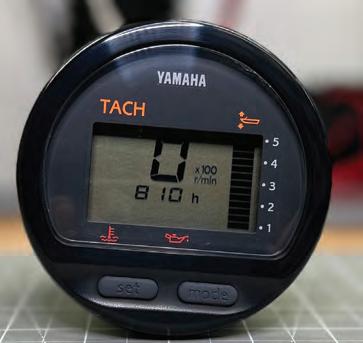
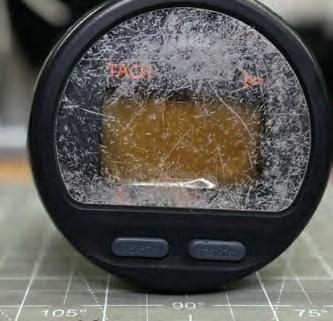



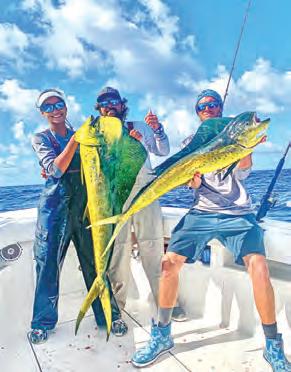



CAPT. MIKE SMITH
any anglers haphazardly run around searching for !sh. ey see a !shy looking point and anchor up and start casting. Hours later they give up and go home empty handed.
at !shy looking point probably does have !sh on it some of the time, but not all the time.
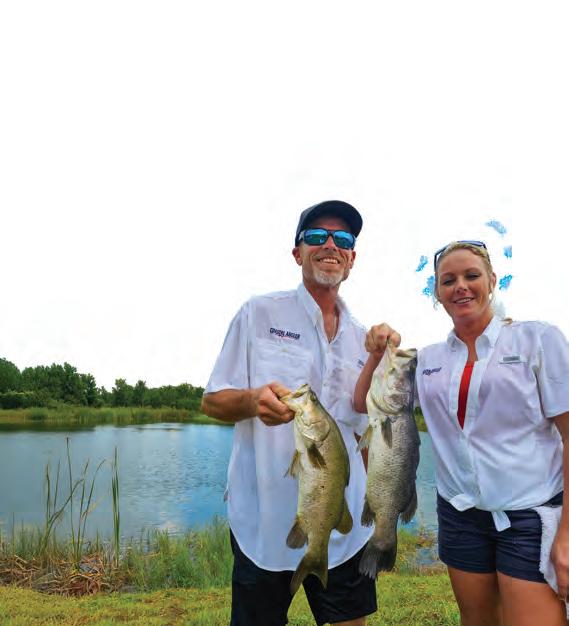
What did they do wrong? ey forgot that !sh move around based on water temperatures, food resources, currents, water quality and the presence of larger predators. In my experience, 80% of the !sh will be in 20% of the area based on those conditions.
Here are the three most important pro tips to help you catch more !sh.
1. Find Feeding Fish. My !shing charters always start by scanning mangrove shorelines, grass %ats, and spoil islands for feeding !sh. Obviously, this is the easiest way to !gure out where the !sh are.
If you can !nd baits being crushed by predatory !sh, then start casting there. Even if you only !nd nervous bait, that’s still a great spot to start casting.
2. Find Food Resources. When the !sh are not actively feeding your next best bet is !nding bait. Sometimes the bait is obvious and you can start casting along the edges of the schools.
If you can’t actually see any bait then let the birds tell you where it is and what size it is. Birds always know where the food is. When you see diving pelicans or a great blue heron perched on a mangrove branch you know there is bait there.
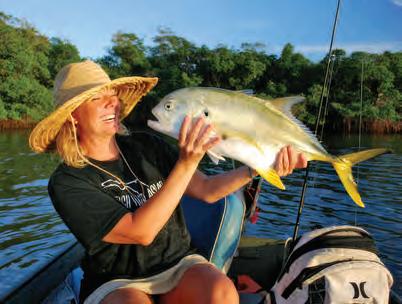
e various bird species will tell you what lures to cast. When you see small wading birds like snowy egrets, little blue herons, green herons and tri-colored herons, then you know to cast something small. is really helps because you can grab your three-inch paddle tail or 2.75 inch shrimp and know that you are !shing with the right size lure. ose smaller herons usually target baits that are three inches or smaller.
When you see great white egrets, great blue herons and brown pelicans it gets a little harder to !gure out the size of the baits to use. You know there is food there but those birds will eat anything from a two-inch minnow up to an eight-inch mullet.
is is when you need an assortment of di erent sizes and pro!les of lures. I usually have a three-inch paddle tail, an arti!cial shrimp and a four to !ve and half inch jerkbait (%uke) rigged on my rods. Start casting until you !gure out what the !sh want on that day.
3. Find Moving Water. e next important factor is moving water. All of the predatory inshore species that you want to catch like a little bit of current.
ey will typically be facing into the current waiting for some unsuspecting food resource to %ow past their ambush point.
Your strongest currents are going to occur during the full moon and the new moon. Coincidentally, the best !shing occurs around these two moon phases.
Go get ‘em!
Capt. Mike Smith, owner of Fish Your Ass O Charters, is an inshore shing guide who has been shing the inshore waters, oyster bars and grass ats of Florida for more than 40 years. Reach him at (561) 3392317, email: contact@ shyourasso .com or visit shyourasso .com.
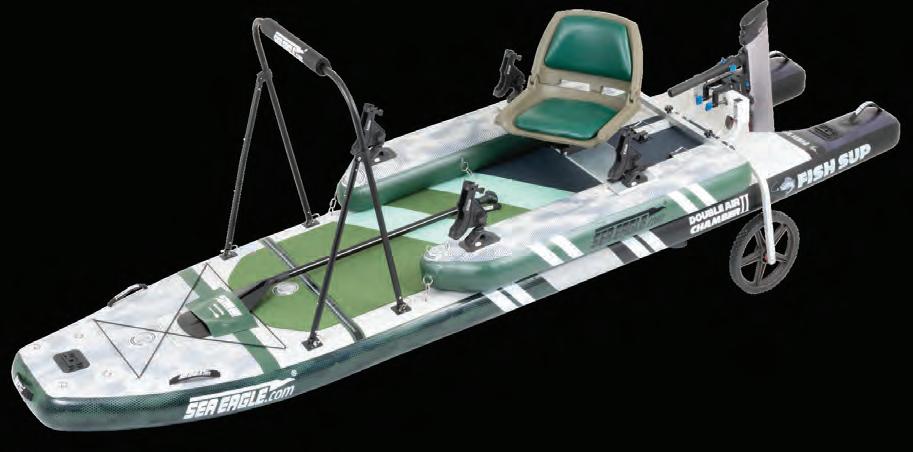
The versatility of the FishSUP™1210 is unmatched! Use it bare bones with just the board, a paddle & your !shing gear or deck it out with swivel seat, side pontoons, casting bar, motor and more! Incredibly stable, extra wide, swallow-tail !shing SUP holds up to 500 lbs! The FS1210 takes electric and gas motors up to 3 hp. There’s even an option for a bow trolling motor.
Choose From 6 Packages
Starting At Just $999
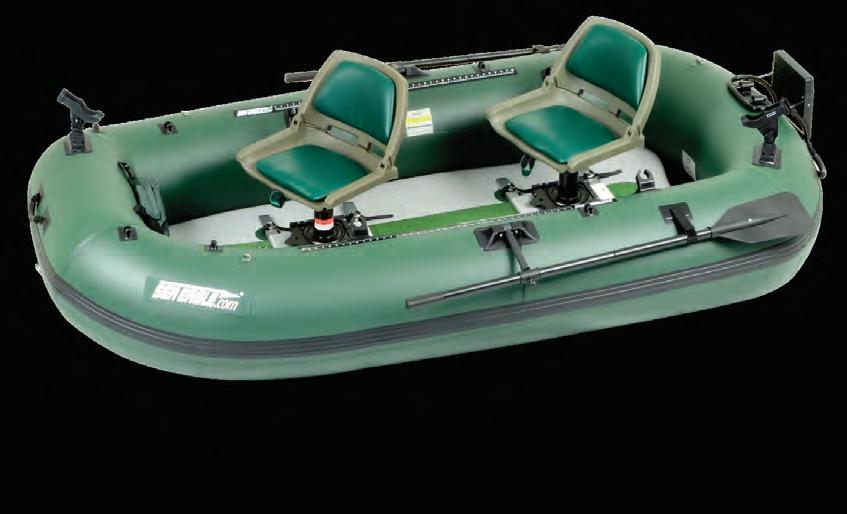
Perfect for !shing rivers, lakes and bays. The STS10 is a lightweight, roomy 1 or 2 person pontoon boat that’s packed with features anglers need & love including 2 built-in !sh rules, 4 built-in rod holders & 2 Scotty® mounts for more rod holders, anchor locks, camera posts or any other Scotty® accessory. Now available with a drop-stitch in atable oor or wooden oorboards.
Choose From 7 Packages
Starting At Just $1449
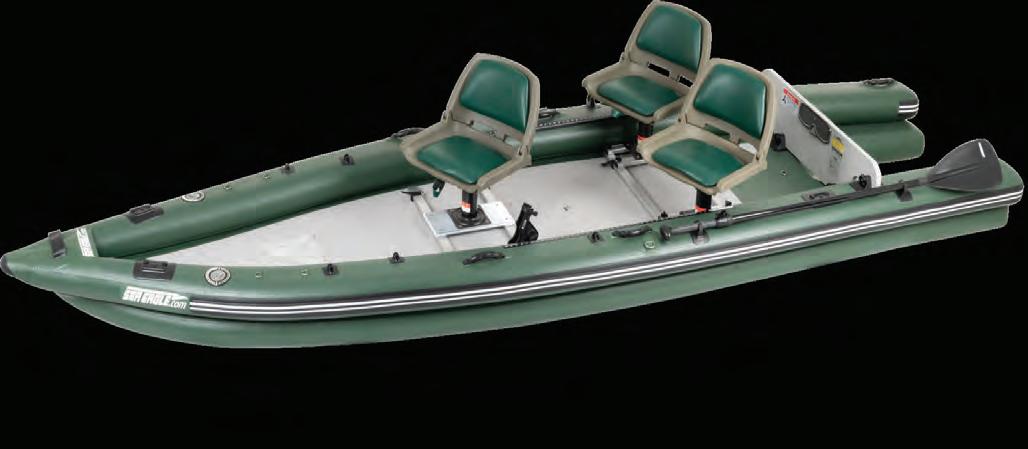
This “low-rider” gives you access to the water to reel in and release !sh easily. With a new patented outside, in atable, rigid keel the FSK16 glides through the water at speeds up to 21 mph to get you to the !sh fast! Perfect for 1-3 anglers and room for plenty of gear.
Choose From 9 Packages
Starting At Just $2999


Every spring, it feels like the bank bite will last forever. Fish are shallow, visible, and predictable cruising, spawning, and guarding fry. It’s the time of year when con!dence is high and decisions feel easy. But like everything in !shing, that window doesn’t stay open long. Before most anglers realize it, the !sh that were once easy to !nd have simply vanished.
at disappearance marks the beginning of what seasoned anglers know as the o shore shi . As water temperatures climb and the spawn wraps up, bass begin pulling away from the bank and setting up on o shore structure. Ledges, shell beds, brush piles, and subtle depth changes start to hold more !sh than the shoreline ever could. It’s not an overnight move, but it happens quickly enough that many !shermen get le behind, still casting to water that’s no longer alive.
One of the biggest mistakes anglers make during this transition is assuming the !sh have stopped biting. In reality, they’ve just relocated. Instead of being scattered along miles of bank, bass begin grouping up in smaller, more de!ned areas. e challenge
TYLER WOOLCOTT

shi s from covering water visually to understanding what lies beneath the surface. It becomes less about instinct and more about intention reading depth, structure, and subtle changes that aren’t visible at a glance.
Making the adjustment isn’t always easy, especially for anglers who are comfortable !shing shallow. It requires slowing down, trusting your electronics, and committing to areas that might not show immediate signs of life. But once you connect with your !rst o shore group, everything changes. What felt like a tough day can turn into a %urry of action in just a few casts, o en with better quality !sh than what the bank was o ering.
e o shore shi is more than just a seasonal pattern—it’s a turning point. It separates those who react to changing conditions from those who anticipate them. As summer approaches, the anglers who embrace the move away from the bank will !nd themselves ahead of the curve, dialing in on schools of bass that are no longer pressured by the crowds. And while the shoreline may feel empty, the real action is just a little deeper.
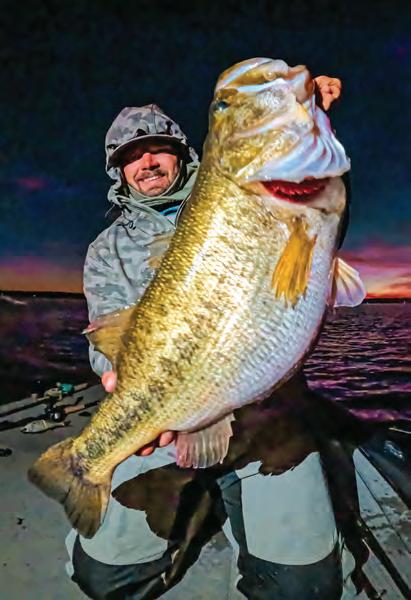
is a professional tournament angler, as well as owner/operator of Florida Big Fish Adventures, providing bass and saltwater guided shing trips: www. oridabig shadventures.com.

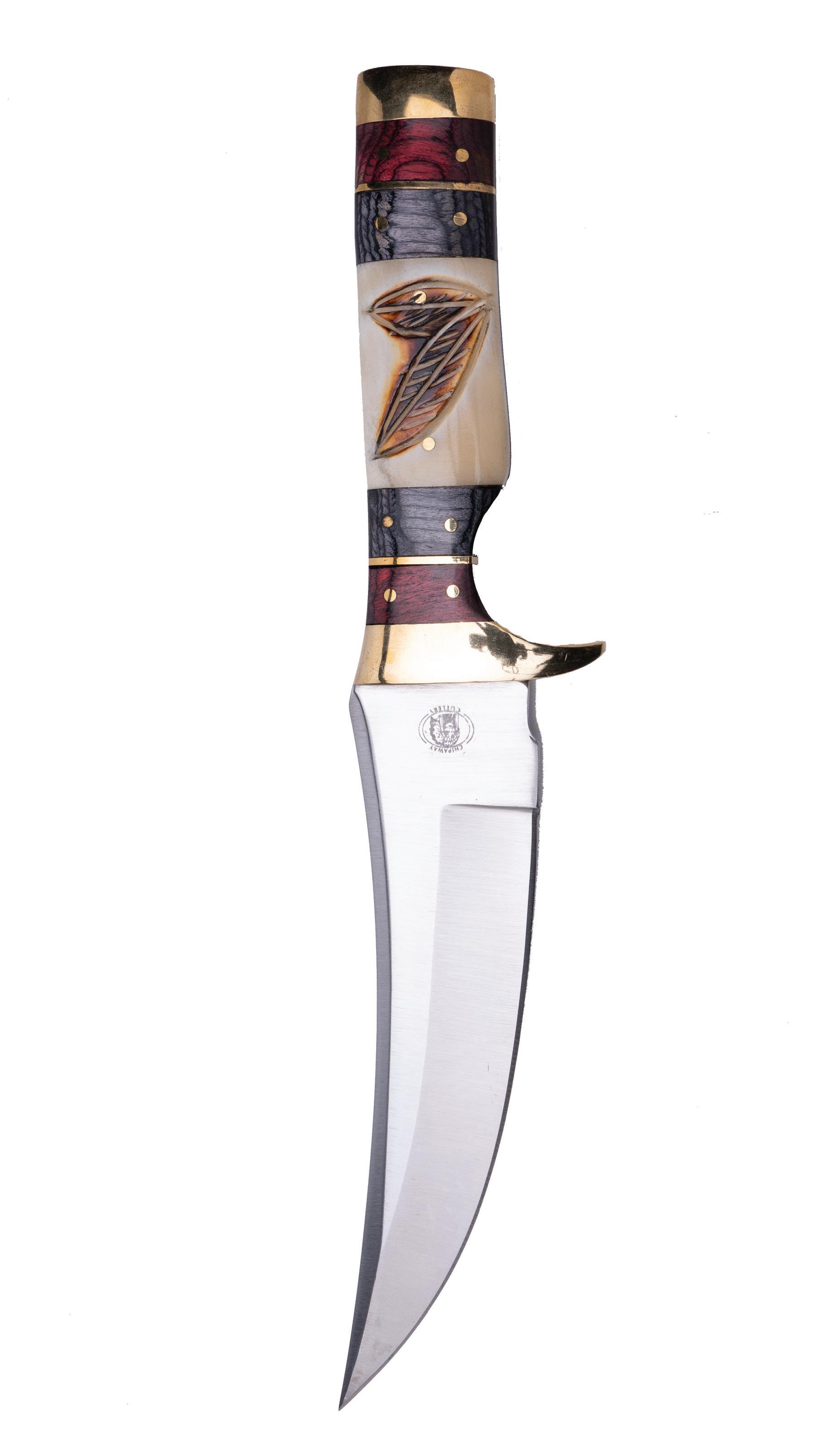
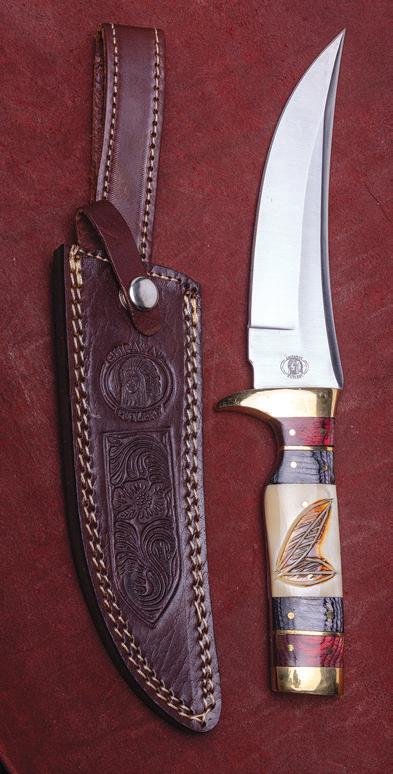
The very best hunting knives possess a perfect balance of form and function. They’re carefully constructed from fine materials, but also have that little something extra to connect the owner with nature. If you’re on the hunt for a knife that combines impeccable craftsmanship with a sense of wonder, the $79 Huntsman Blade is the trophy you’re looking for.
The blade is full tang, meaning it doesn’t stop at the handle but extends to the length of the grip for the ultimate in strength. The blade is made from 420 surgical steel, famed for its sharpness and its resistance to corrosion.


The handle is made from genuine natural bone, and features decorative wood spacers and a hand-carved motif of two overlapping feathers— a reminder for you to respect and connect with the natural world.


This fusion of substance and style can garner a high price tag out in the marketplace. In fact, we found full tang, stainless steel blades with bone handles in excess of $2,000. Well, that won’t cut it around here. We have mastered the hunt for the best deal, and in turn pass the spoils on to our customers.
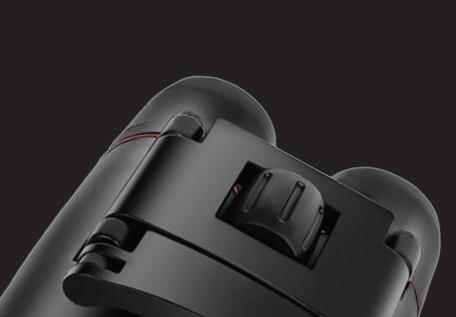
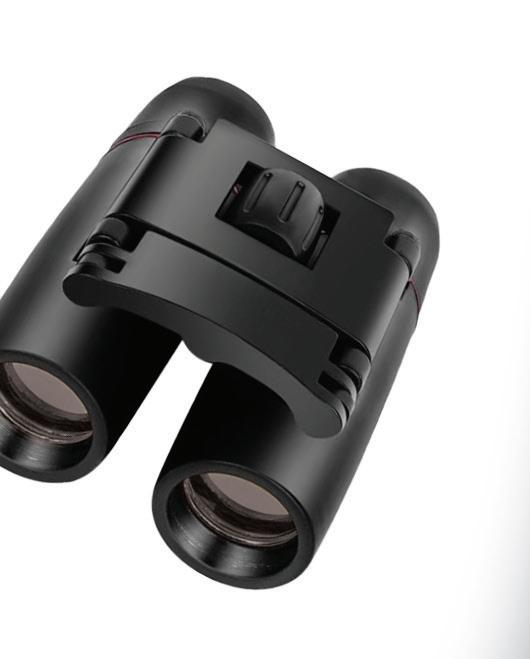
But we don’t stop there. While supplies last, we’ll include a pair of $99 Stauer power pocket binoculars and a genuine leather sheath FREE when you purchase the Huntsman Blade.
Your satisfaction is 100% guaranteed. Feel the knife in your hands, wear it on your hip, inspect the impeccable craftsmanship. If you don’t feel like we cut you a fair deal, send it back within 30 days for a complete refund of the item price.
Limited Reserves. A deal like this won’t last long. We have only 1120 Huntsman Blades for this ad only. Don’t let this beauty slip through your fingers. Call today!
Huntsman Blade $249*

Stauer® Pocket Binoculars -a $99 valuewith purchase of Huntsman Blade
Offer Code Price Only $79 + S&P Save $170 1-800-333-2045
Your Insider Offer Code: HBK321-03
You must use the insider offer code to get our special price.

*Discount is only for customers who use the offer code versus the listed original Stauer.com price.
What Stauer Clients Are Saying About Our Knives
“This knife is beautiful!”
— J., La Crescent, MN
“The feel of this knife is unbelievable...this is an incredibly fine instrument.”
— H., Arvada, CO

14091 Southcross Drive W., Dept. HBK321-03 Burnsville, Minnesota 55337 www.stauer.com
California residents please call 1-800-333-2045 regarding Proposition 65 regulations before purchasing this product.
• 12” overall length; 6 ¹⁄2” stainless steel full tang blade • Genuine bone handle with brass hand guard & bolsters • Includes genuine leather sheath