


George K. Regan, Jr. Publisher Boston Edition
Kahn
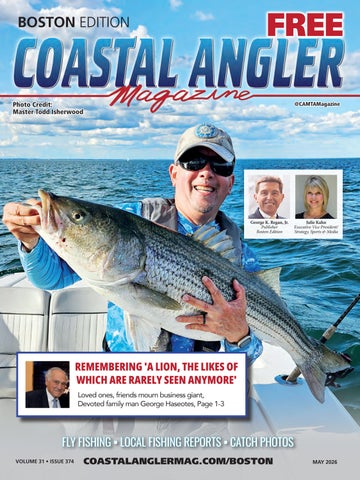
Photo Credit:
Master Todd Isherwood
Photo Credit:
Master Todd Isherwood


























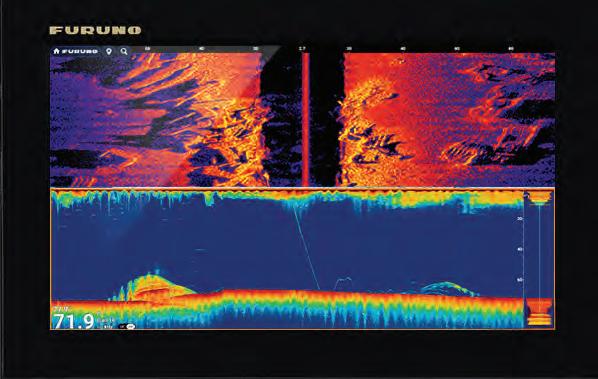


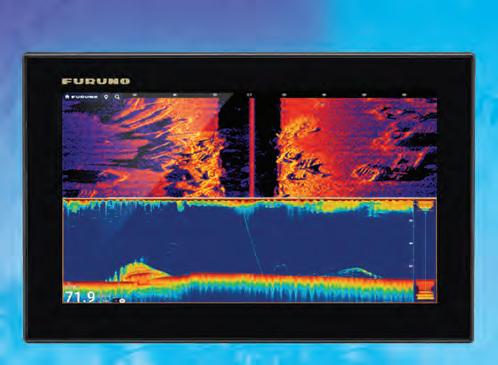
























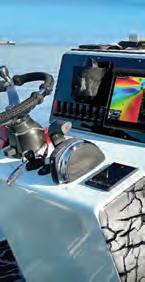
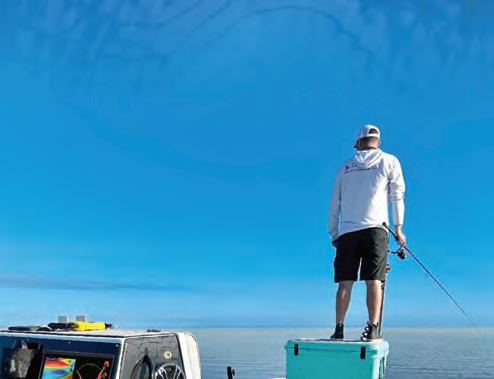



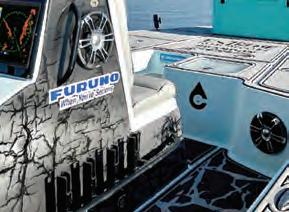



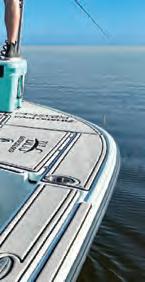


With this streamlined MFD, Furuno is bringing big-boat confidence to everyone. & More Fish

Less Stress









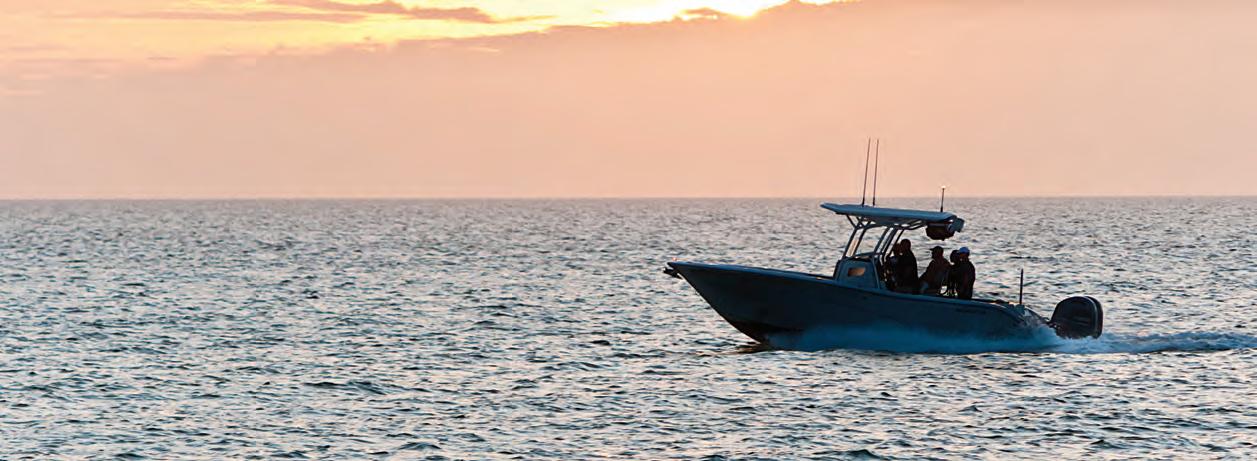
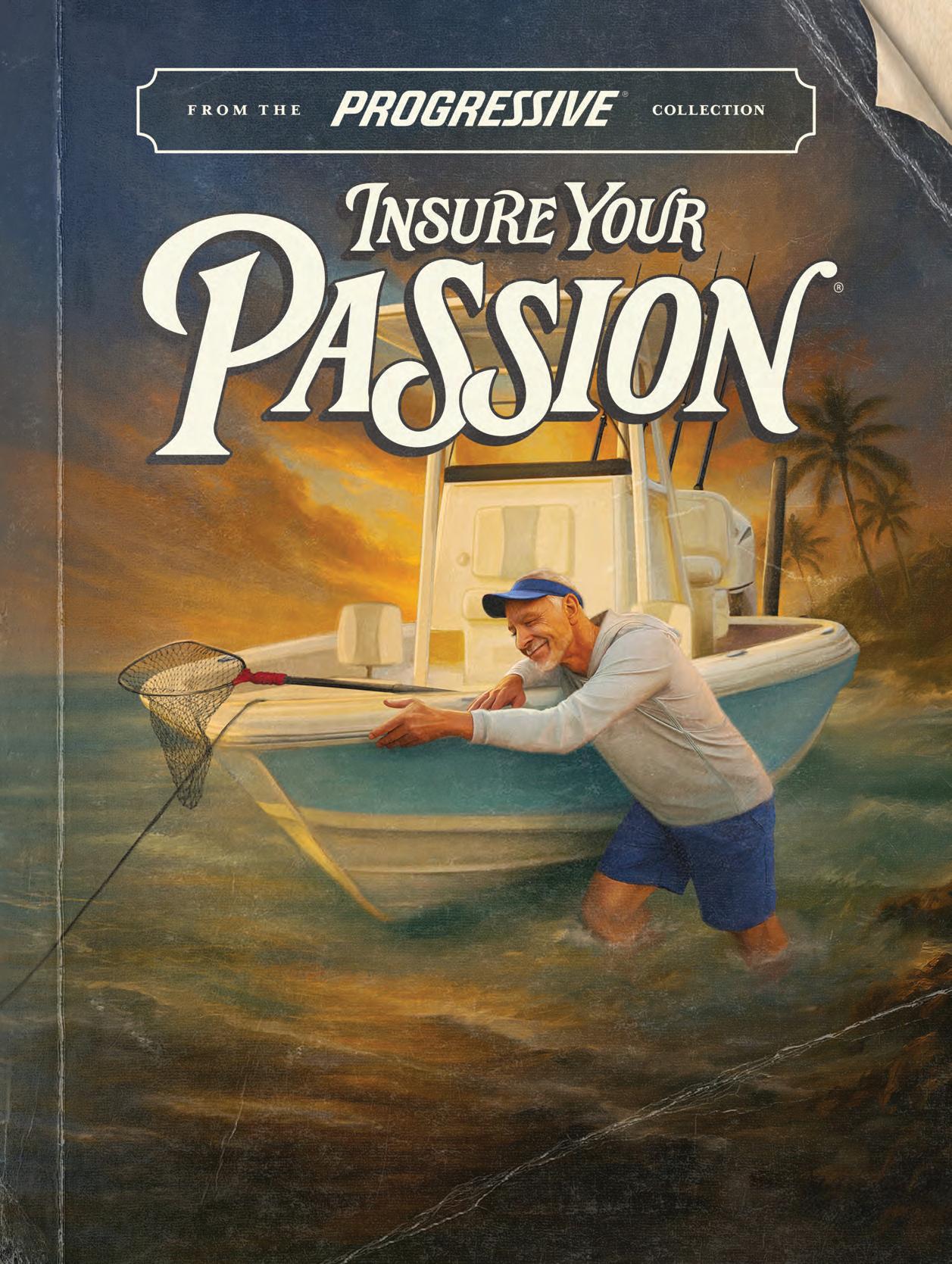
Are you ready to embark on your next on-water adventure? Before you set sail, here are fve things to know about boat insurance.
1. Boat insurance isn’t just for accidents
With comprehensive coverage, you’ll also be protected fnancially for theft, vandalism, and unexpected events like storms if you need repairs or replacements due to damage.
Accidents can happen to anyone
When accidents happen, boat insurance offers liability coverage for damages or injuries you cause while boating, up to specifed limits. It can also cover lawsuit costs if you’re sued.
3. Boat insurance can cover medical payments
Boat insurance offers a range of optional medical payments coverage limits, helping to cover medical expenses if you’re in an accident or someone is hurt on your boat, regardless of fault.
4. Most lenders require boat insurance
If you fnanced your boat, you’ll likely need boat insurance since most lenders require boat insurance to protect their investment. Additionally, some marinas or municipalities require proof of insurance for docking.
5. Progressive offers specialized boat coverages
Ever worry about getting stuck on the water? Progressive’s Sign & Glide® On-Water Towing coverage** can help. It’s an additional coverage that steps in if your boat is disabled or breaks down on the water, paying for on-water towing, jump starts, soft ungroundings, and fuel delivery. Fuel cost isn’t included.
Don’t let unforeseen circumstances disrupt your voyage. Cruise with confdence thanks to Progressive Boat insurance. Because when it comes to your boat, peace of mind is the ultimate luxury.
Scan to get a quote in as little as 4 minutes.
to learn more.














You probably noticed my attempt at a little humor with that title—just what we need a!er a long closed season. In my personal view, the closure has been unnecessary, much like the situation with Atlantic red snapper. Many of us are simply trying to catch seabass and grunts for dinner, but we keep getting pushed o our favorite spots where red snapper and gags are abundant. Yet, these species are still considered endangered. I think you know where I stand on this topic, so I won’t dwell on it any further.
As warm water moves in closer to the beach, expect to nd king sh and cobia frequenting the same spots where you’re catching gags when the water temperature rises above 68°F. Always have a pitch rod ready as cobia may swim right up to the boat. However, don’t be surprised if you catch cobia while bottom shing with a decor jig and an appealing bait. In fact, more cobia are o!en caught on the bottom than on the surface when anchored up and targeting grouper.
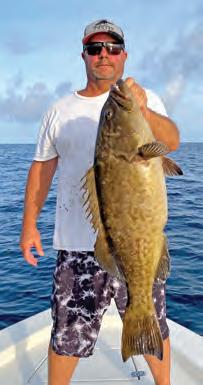
schools of cigar minnows and sardines on them. You don’t need to look any further when you nd this combination of bait because the sh will be right there. It’s always a good idea to keep one person on the Sabiki jigging up. A live sardine or a live cigar on a decoy has a life expectancy of under ten seconds around any kind of sh. We try to never leave the marina without a couple boxes of frozen cigar minnows and live pin sh. at live pin sh can sometimes be the best selection of all because it’s too large for any of the trash bites.
TIM BAREFOOT
of other species like vermilions, mangroves, grunts and seabass.

In addition to all the other stu on the bottom, it’s always good to keep a light line out for kings, black n, wahoo and dolphin. It’s not a bad idea to keep one under a %oat (so you can keep an eye on it) and another one without a %oat, but you have to be mindful of that bait getting back into props or under the boat tangling other lines.
I’ve always said, “Find the bait, nd the sh.” Go to all your familiar haunts with structure of one kind of another, whether it’s ledges, rock out crops, wrecks, etc. e bonus will be nding
Any kind of little snapper about the size of your hand makes for the ultimate bait. I’m no longer shing for barely-legal gag or scamp. Instead, I’m looking for one good bite at a time. I’ll let that bait soak on the bottom and be patient waiting for the old man to show up. Don’t get me wrong, more sh have been caught on frozen cigar minnows and sardines than all the other baits combined, but a live one is simply irresistible to every grouper and/or snapper out there. Period. Nearly everything on the bottom will take a whack at it, but only the sh with the correct sized mouth can eat that small snapper. Because the creel limits are so low, you’ll easily reach your grouper limit. Once you have, it’s wise to take advantage
If you’re anchoring and not just using the trolling motor, it’s a great idea to %y the kite. Keep a couple baits suspended with little to no leader in the water. Live greenies, cigs or sardines under the kite is the ultimate presentation. You can even get away with %uorocarbon using circle hooks depending on the current. Don’t hesitate to put a bait out with a small amount of weight in front of it to get it down 30 to 50 feet behind the boat. is will get you that large wahoo bite. ere are so many options available this time of year in the warmer water, so be ready to take advantage of all of them once you ll your cooler with one species or another. is is the ideal time to broaden your approach and become skilled in targeting not only di erent types of snapper and grouper, but also pelagics.
MAY you nd calm seas, tight lines and delicious dinners this month!
Learn more from Tim Barefoot at barefootcatsandtackle.com.


By George K. Regan Jr.

For George Haseotes, a member of one of America’s great entrepreneurial families, success was born of hard work, but passing along his wisdom to the people he loved was easy.
Like the summer he met with one of his nephews almost daily at a restaurant in Marshfield, a town on Massachusetts’ South Shore, in what
amounted to an informal master class in business and life.
“What stood out most to me was how he carried himself,” the nephew, Sam Williams, an associate at Bain Capital Real Estate in Boston, recalled. “He showed up for anyone, answered every phone call on the first ring, and never missed a chance to be with family.
I remember meeting him at the Bridgwaye almost every day one summer, listening to his stories about New England businesses and the people behind them. The way he shared what he knew made people want to be around him and learn from him.”
The willingness with which Mr. Haseotes shared his time, knowledge, and love was among the first things that those who knew him recalled this week, following his passing at age 94. Mr. Haseotes, a resident of Florida and Massachusetts, died March 18, 2026, while surrounded by people he loved at Good Samaritan Hospital in Palm Beach, Fla.
His wife, Kristen Williams Haseotes, said her husband was one of “the smartest, toughest, and sweetest men I have ever known. He was a giant, but in the end his greatest accomplishment in
his eyes was his children and grandchildren.”
Mr. Haseotes built his career, as did several of his siblings, at the helm of Cumberland Farms, the chain of convenience stores and gas stations that they grew into one the most prominent and visible companies across New England the East Coast of the United States. In addition to his pivotal role helping build the family company, he also owned dairy and cattle farms in upstate New York and, along with his wife, became a major real estate investor and developer in Florida and other locations in recent years.
“He had a love of the financial markets and bringing people together,” Mrs. Haseotes said. “Making deals is what he did every day. But farming was his passion.”
Numerous friends and loved ones remembered Mr. Haseotes this week
(Continued from Page 1)
for his humanity as much as for his business skills.
“He was a special person who would certainly say, ‘I did it my way,’ ” said his close friend Dean Metropoulos, an investor and businessman whose acquisitions have included Pabst Brewing Company and Hostess Brands. “A good human with a special life and ancestry, with love and pride for his family, and a very astute businessman who contributed to many whom he dealt with and certainly left his mark on we who knew him. Continue to enjoy your journey, my friend, and we will meet again.”
Michael McCloskey, a veterinarian and the co-founder and CEO of Select Milk Producers, the nation’s sixth largest milk cooperative, remembered Mr. Haseotes as “an inspiration, not only to me, but to countless others.”
“His energy, enthusiasm, and relentless desire to never stop learning and sharing was the bond of our friendship,” Mr. McCloskey said “When his name popped up as incoming call, a true sense of friendship would fill me with joy as I got ready to hear a new great adventure from one of the most interesting and
loving persons I have ever crossed paths with.”
Another friend, David Mackie, a real estate advisor, noted, “He was a good man, a world traveler, a great conversationalist… it’s a sad day in New England today.”
The story of Mr. Haseotes’ family began, like those of many other early 20th century newcomers to America’s shores, with dreams of a better life. He was one of eight children born to Vasilios Spiros Haseotes and Aphrodite Bassis Haseotes, Greek immigrants who settled and raised their family in Cumberland, R.I.
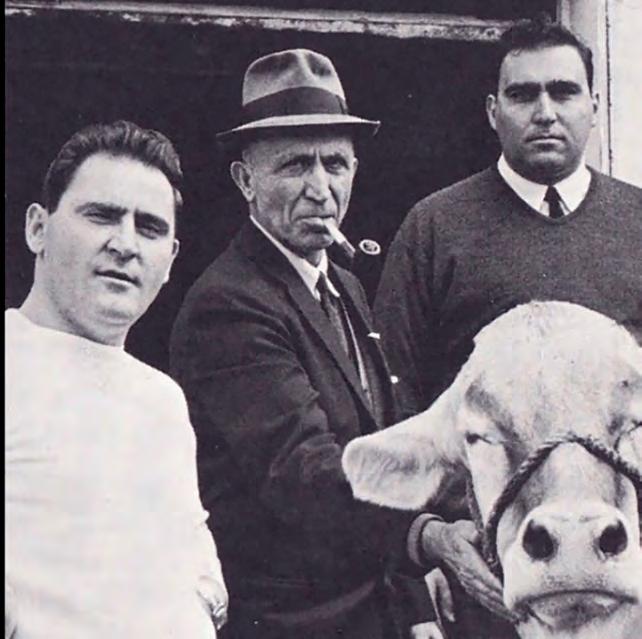
The origin of the business that Vasilios and Aphrodite founded is the stuff of legend: in 1939, with $84 and a single cow to their name, they started a dairy farm in their adopted hometown. Owing to their tireless work, and eventually that of their children, the Haseotes dairy farm became a growing concern.
Around this time, Mr. Haseotes spent one year studying – and boxing – at the University of Rhode Island. But when his brother Demetrios left home to serve in the US military in the Korean War, Mr. Haseotes returned home to work on
the farm, milking cows among other tasks. “He said his mother cried when he walked down the driveway with his bags,” his wife recalled.
In the 1950s, Mr. Haseotes’ family opened their first dairy store in Bellingham, Mass. Initially known for selling half gallon and gallon jugs of milk, the first Cumberland Farms location soon added a range of other products, making it New England’s first true convenience store. The journey from one dairy cow to multi-billion dollar company had begun.
Several Haseotes children joined in that busi-
ness journey. Within the expanding family company, Mr. Haseotes worked alongside his brother Byron and others. Among the projects they undertook was designing, building, and operating the largest experimental dairy farm under one roof in the country at that time. The company eventually ventured into gasoline sales, purchasing Gulf Oil and Chevron service stations in 10 Northeastern states in the mid-1980s and some 200 Exxon stations in 2003. The acquisitions propelled the already successful company to even greater heights.
In the mid-1970s, the Haseotes family pur-
(Continued from Page 2)
chased the second largest cranberry producing company in the world; they subsequently enhanced and sold that business a decade later to help finance the acquisition of the Gulf Oil assets in the Northeast.
As owners and operators of the Cumberland Farms empire, the Haseotes family developed a well-earned reputation for intelligent real estate acquisitions, carefully choosing profitable locations for new stores and gas stations – a corner spot with easy access at the intersection of two streets was always a preference. That focus on prime locations, one investment web site noted,
was “the silent engine that turned a dairy store into a regional powerhouse.”
Mr. Haseotes’ family eventually owned and operated more than 600 Cumberland Farms convenience stores and provided gas to some 2,500 service stations throughout New England, New York, the Mid-Atlantic states, and Florida through its Cumberland Gulf Group. The company was acquired by EG Group, an international fuel station and convenience store retailer, in 2019.
Throughout the decades, as the Haseotes family grew, one constant re-
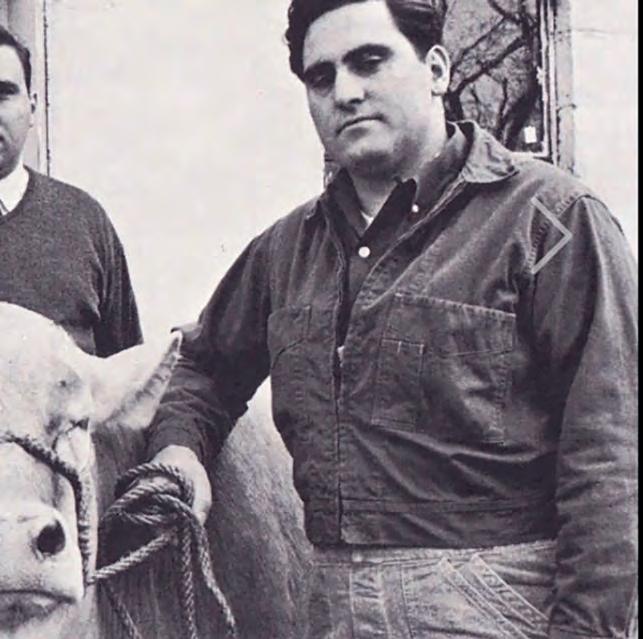
mained Mr. Haseotes’ devotion to those he loved; younger generations were the willing beneficiaries of his accrued wisdom and experience.
“I could go on and on about what uncle George taught me,” his nephew D.B. Haseotes said. “But what truly made him special was the relationships he had and treasured that spanned generations. If Uncle George respected you, you knew it. His tenacity for work, his love for family and willingness to help friends is something that was truly incredible to watch and learn from.”
Another nephew, Vasilios “Billy” Haseotes, noted that “Uncle George was a mountain of knowledge. I learned so much from him when it came to crops and cattle. He was the man to call over the years. He showed up to my ranch in Okeechobee at least three or four times a year to tell me how I could do things better. Every time he showed up, I learned something new.”
Kamil Salame, whose father was a dear friend of Mr. Haseotes for more than 45 years, though not a blood relative, considered Mr. Haseotes “a larger-than-life uncle to
me.” Mr. Salame added, “He was smart, tough, courageous, and devoted to his family and friends. A lion, the likes of which are rarely seen anymore.”
Mr. Haseotes is survived by his wife, Kristen Williams Haseotes; his children, George Williams Haseotes, Holly Haseotes Bonomo and her husband Richard, and Michael Haseotes and his wife Elizabeth Carroll; a stepdaughter, Katherine Maloy; and grandchildren Jamie Bonomo, Drew Bonomo, Grace Haseotes, and Cameron Haseotes. He was the stepfather of the late James Kay.
Mr. Haseotes was the brother of Dr. Hytho Pantazelos, Anastasia Marty, Lily Bentas, and JoAnn Tambakis. He is also survived by his former wives, Beverly Southwick Haseotes and Janis Murphy Haseotes, as well as many nieces and nephews. He was predeceased by his sister Erato Haseotes and brothers Byron Haseotes and Demetrios Haseotes.
A funeral service for Mr. Haseotes will be held Monday, March 30, at Assumption of the Virgin Mary Greek Orthodox Church, 97 Walcott St., Pawtucket, R.I. The viewing will be from 10 a.m. to noon, followed by the service. A collation will follow at the Waterman Grille.



(Marblehead, Salem Gloucester, and Scituate)
(Provincetown, Martha’s Vineyard, Cuttyhunk, Newport, Isle of Shoals)
By The Coastal Angler Staff

Among the other signature events happening in town this summer (250th anniversary of America’s birth, Sail Boston, the annual July 4th Pops concert and fireworks, Boston is primed for a prominent role in the 2026 FIFA World Cup. Massachusetts is serving as one of the United States’ key host regions for the global soccer event and will anchor New England’s participation in the largest tournament in the competition’s history.
With matches scheduled at Gillette Stadium— temporarily rebranded as “Boston Stadium”—and a series of fan festivals planned across the state, the event is expected to transform the region into a month-long international soccer hub.
Boston Stadium in Foxborough will host seven matches between June 13 and July 9, spanning both the group stage and knockout rounds.
The match schedule is as follows:
• June 13 – Group Stage
• June 16 – Group Stage
• June 19 – Group Stage
• June 23 – Group Stage
• June 26 – Group Stage
• June 29 – Round of 32
• July 9 – Quarterfinal
The matches will feature teams from multiple groups; among the confirmed matchups are Scotland vs. (June 19), Morocco England vs. Ghana (June 23), and Norway vs. France (June 26), underscoring the international draw of the Boston venue.
The Foxborough stadium, located about 27 miles from downtown Boston, will be one of 16 venues across North America and is expected to host roughly 65,000 spectators per match.
While matches themselves are concentrated in Foxborough, the broader strategy is regional. Organizers expect millions of visitors across Massachusetts, with Boston functioning as the cultural and logistical center of activity, according to Meet Boston, the city’s primary private sector marketing and visitor services organization.
This aligns with the FIFA model for 2026: large metropolitan areas serving as anchors for surrounding communities, rather than single-site host cities.
A major component of the World Cup experience will be the FIFA Fan Festival, designed as a free, large-scale public viewing and entertainment space.
The flagship fan festival is expected to take place at Boston’s City Hall Plaza, running throughout the tournament from approximately June 11 to July 19.
Key features will include:
• Live broadcasts of all World Cup matches
• Concerts and cultural programming
• International food and beverage vendors
• Sponsor activations and public viewing areas.
FIFA describes these festivals as the “central fan destination” outside stadiums—effectively extending the match-day atmosphere into the host city itself.
A broader network of fan events is planned, expected to include:
• Secondary viewing areas on Boston Common
• Neighborhood-level watch parties and cultural events
• Partnerships with local venues and sports teams
These decentralized events are intended to distribute economic and cultural impact beyond downtown Boston, reinforcing Massachusetts’ statewide role in hosting.
The World Cup is projected to bring hundreds of thousands—if not millions—of visitors to the Boston region.
A major sponsor of the tournament, Bank of America, expects a financial boon for the host regions, sparked by increased tourism and hospitality demand and opportunities for local businesses and cultural institutions.
In short, the arrival of the World Cup to our shores offers local fans of “The Beautiful Game” a combination of elite competition and fan experiences, designed to ensure that even those without match tickets can participate. And with Sail Boston, the largest maritime celebration ever to visit the United States, and the historic America 250 commemorations happening at the same time, Boston will be one hopping place this summer.

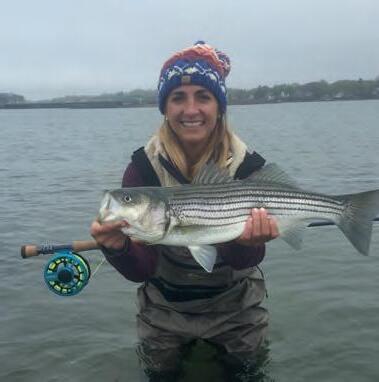
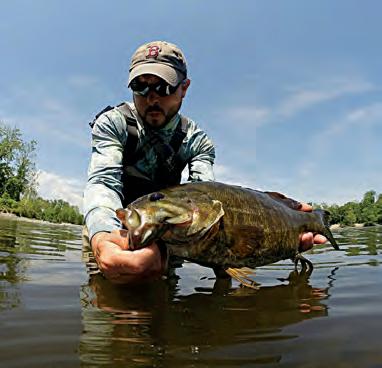
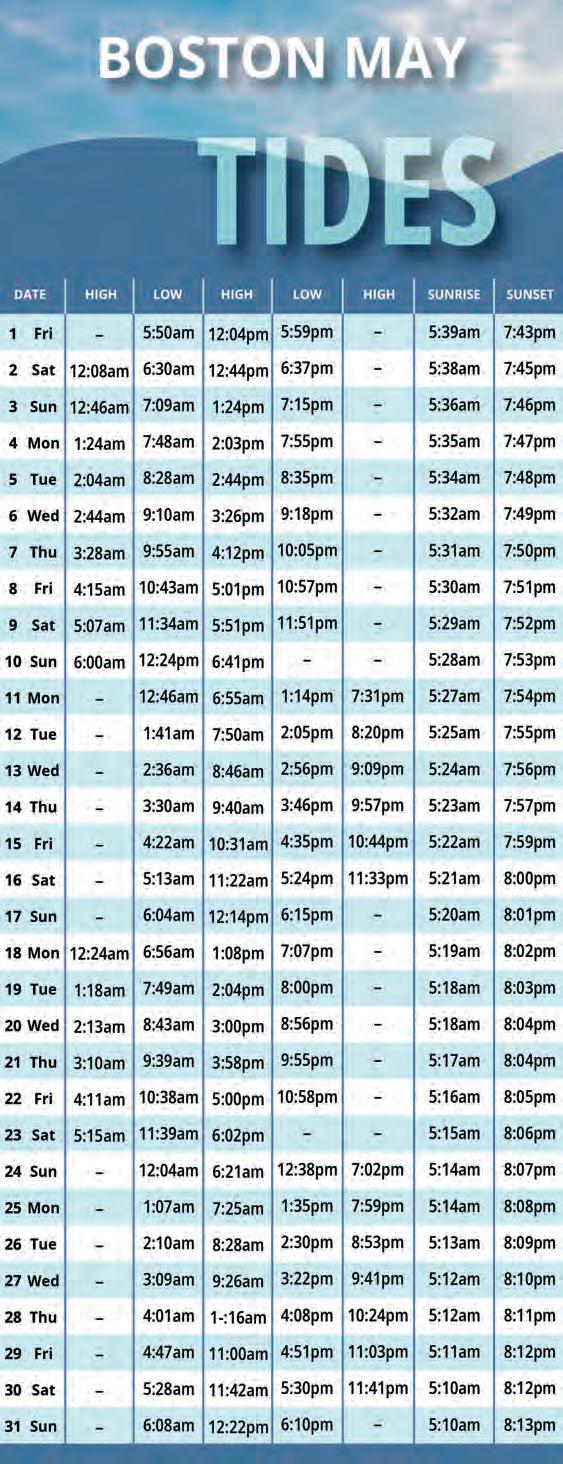
Coastal Angler Magazine, Boston
JOB TYPE: PART-TIME REQUIRED EXPERIENCE: FISHING & SALES
Coastal Angler Magazine, Boston, a company of Regan Communications Group, has an immediate opening for a Sales Representative for our Boston location.
RESPONSIBILITIES:
• Selling all advertising (both print and web)
• Directing content development (for print, website and social media)
• Procuring and editing copy from 5-8 writers monthly
• Managing the layout and collaborating on graphic design
• Creating concept and copy for print ads
• Delivering and managing the distribution of 10,000 copies monthly
• Maintaining all vendor/client relationships
REQUIREMENTS:
• A keen knowledge of the fishing industry.
• At least two years of sales experience.
• Candidate must be able to work effectively in a demanding and fast-paced environment.
Club Meeting: Tuesday, May 19th with Dr. Greg Skomal, MA DMF! Topic: White Sharks” Salisbury Senior Center 43 Lafayette Rd, Salisbury, MA 01952
Check our website (www.plumislandsurfcasters.org) for more details on upcoming events.
Meetings at 6:45 pm | Fishing seminar at 8:00 pm Free for all club members. $5 admission for Non-members


Lipless vibrating lures have long been staples in bass !shing, but few create more debate—or more bites—than the lipless crankbait (rattle trap) and the chatterbait. While both rely on vibration to trigger reaction strikes, their e ectiveness depends heavily on forage, seasonal timing, and even the rod and reel used to !sh them.
A lipless crankbait is a hard-bodied bait designed for speed and sound. Its tight vibration and internal rattles allow bass to locate it from long distances, making it ideal when !sh are actively feeding on bait!sh like shad. ese baits excel in open water or over submerged grass, where anglers can burn them, yo-yo them, or rip them free to trigger reaction strikes. For rattle traps, rod selection plays a major role in landing !sh. A 7’ to 7’3” mediumheavy rod with a moderate or moderate-fast action is ideal. e slightly so er tip allows bass to fully load the rod before the hooks engage, reducing the chances of pulling treble hooks free during surging !ghts. e longer length also helps make long casts, which is critical when covering water or targeting schooling !sh. You typically want to throw the trap on a faster gear ratio reel like a 7.1 or 7.3. e faster gear ratio helps pick up the line on long cast when you get a bite and need to catch up with the !sh.
A chatterbait, or bladed jig, produces a wider, thumping vibration and a more natural pro!le when paired with a so plastic trailer. is lure shines around shallow grass, docks, and wood, especially in stained water where bass rely more on vibration than sight. Chatterbaits o en mimic bluegill or bream, making them deadly around spawning areas and shallow cover. Because chatterbaits use a single heavy hook, anglers bene!t from a slightly di erent rod setup. A 7’ to 7’4” medium-heavy rod with a fast action provides the backbone needed to drive the hook home while still o ering enough tip to keep !sh pinned. is setup also allows anglers to control !sh quickly when pulling them out of thick cover.
Beyond lure, reel, and rod choice, matching the hatch remains one of the most important elements of success. Bass o en focus on a speci!c


By NPFL Pro Angler Joey Bloom
forage, and lures that match the size, color, and movement of that prey get bit more consistently. Chrome or white rattle traps imitate %eeing shad in open water, while green pumpkin or bluegillpattern chatterbaits blend perfectly into shallow cover scenarios. To maximize these techniques, anglers must learn to follow the bait throughout the season. In late winter and early spring, bait move toward warming %ats, making rattle traps excellent search tools.
A er the spawn, bluegill become a primary food source, and chatterbaits excel around shallow cover and spawning grounds. In summer, bait o en shi s to deeper grass lines or o shore structure, where slow-rolled chatterbaits can shine. Come fall, shad migrate into the backs of creeks, and rattle traps once again dominate as bass feed aggressively ahead of winter.
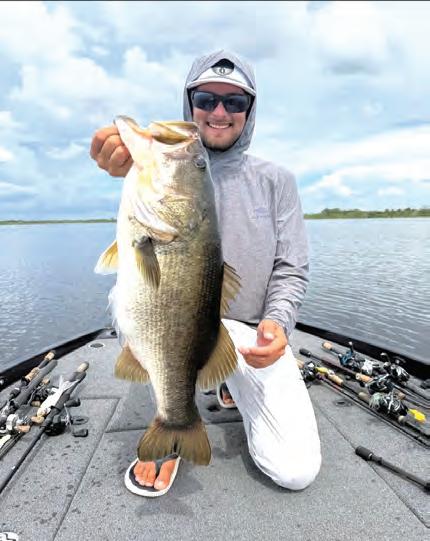
By pairing the right vibrating lure with proper reel and rod length and action—and matching it to seasonal forage—anglers can signi!cantly increase e ciency and landing percentage. In bass !shing, success o en comes down to details, and choosing the right reel and rod can be just as important as choosing the right bait.
Follow all of Joey Bloom’s shing and fun on Instagram, Facebook, and YouTube at Joey Bloom Fishing.




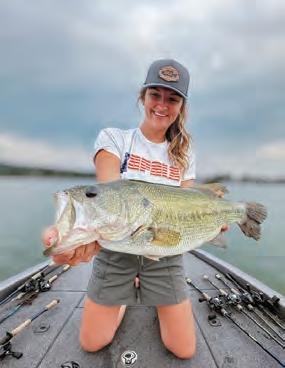




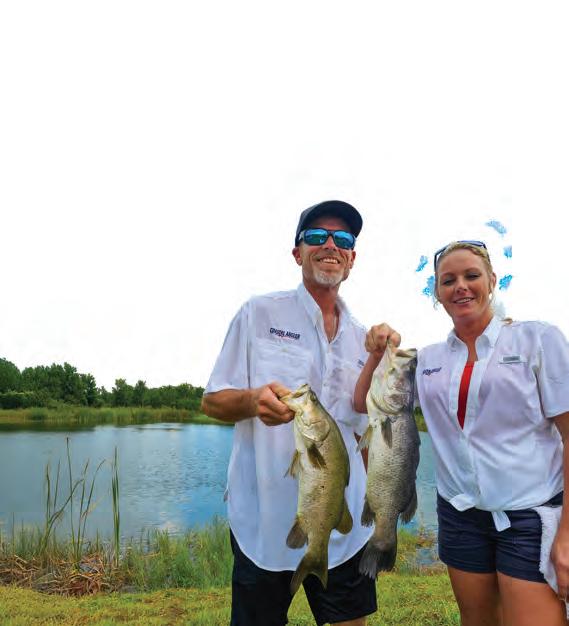
CAPT. MIKE SMITH

any anglers haphazardly run around searching for !sh. ey see a !shy looking point and anchor up and start casting. Hours later they give up and go home empty handed.
at !shy looking point probably does have !sh on it some of the time, but not all the time.
What did they do wrong? ey forgot that !sh move around based on water temperatures, food resources, currents, water quality and the presence of larger predators. In my experience, 80% of the !sh will be in 20% of the area based on those conditions.
Here are the three most important pro tips to help you catch more !sh.
1. Find Feeding Fish. My !shing charters always start by scanning mangrove shorelines, grass %ats, and spoil islands for feeding !sh. Obviously, this is the easiest way to !gure out where the !sh are.
If you can !nd baits being crushed by predatory !sh, then start casting there. Even if you only !nd nervous bait, that’s still a great spot to start casting.
2. Find Food Resources. When the !sh are not actively feeding your next best bet is !nding bait. Sometimes the bait is obvious and you can start casting along the edges of the schools.
If you can’t actually see any bait then let the birds tell you where it is and what size it is. Birds always know where the food is. When you see diving pelicans or a great blue heron perched on a mangrove branch you know there is bait there.
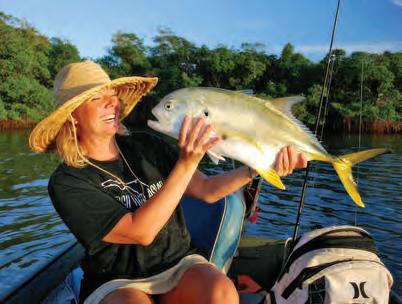
e various bird species will tell you what lures to cast. When you see small wading birds like snowy egrets, little blue herons, green herons and tri-colored herons, then you know to cast something small. is really helps because you can grab your three-inch paddle tail or 2.75 inch shrimp and know that you are !shing with the right size lure. ose smaller herons usually target baits that are three inches or smaller.
When you see great white egrets, great blue herons and brown pelicans it gets a little harder to !gure out the size of the baits to use. You know there is food there but those birds will eat anything from a two-inch minnow up to an eight-inch mullet.
is is when you need an assortment of di erent sizes and pro!les of lures. I usually have a three-inch paddle tail, an arti!cial shrimp and a four to !ve and half inch jerkbait (%uke) rigged on my rods. Start casting until you !gure out what the !sh want on that day.
3. Find Moving Water. e next important factor is moving water. All of the predatory inshore species that you want to catch like a little bit of current.
ey will typically be facing into the current waiting for some unsuspecting food resource to %ow past their ambush point.
Your strongest currents are going to occur during the full moon and the new moon. Coincidentally, the best !shing occurs around these two moon phases.
Go get ‘em!
Capt. Mike Smith, owner of Fish Your Ass O Charters, is an inshore shing guide who has been shing the inshore waters, oyster bars and grass ats of Florida for more than 40 years. Reach him at (561) 3392317, email: contact@ shyourasso .com or visit shyourasso .com.
The versatility of the FishSUP™1210 is unmatched! Use it bare bones with just the board, a paddle & your !shing gear or deck it out with swivel seat, side pontoons, casting bar, motor and more! Incredibly stable, extra wide, swallow-tail !shing SUP holds up to 500 lbs! The FS1210 takes electric and gas motors up to 3 hp. There’s even an option for a bow trolling motor.
Choose From 6 Packages
Starting At Just $999
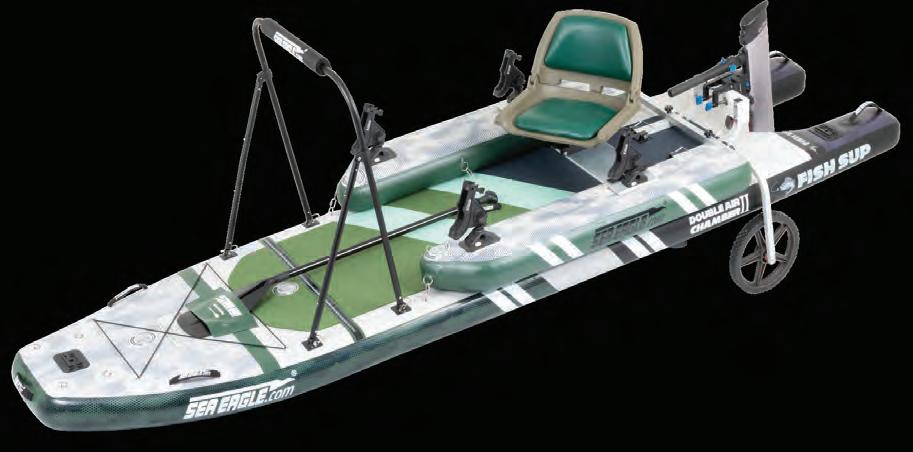
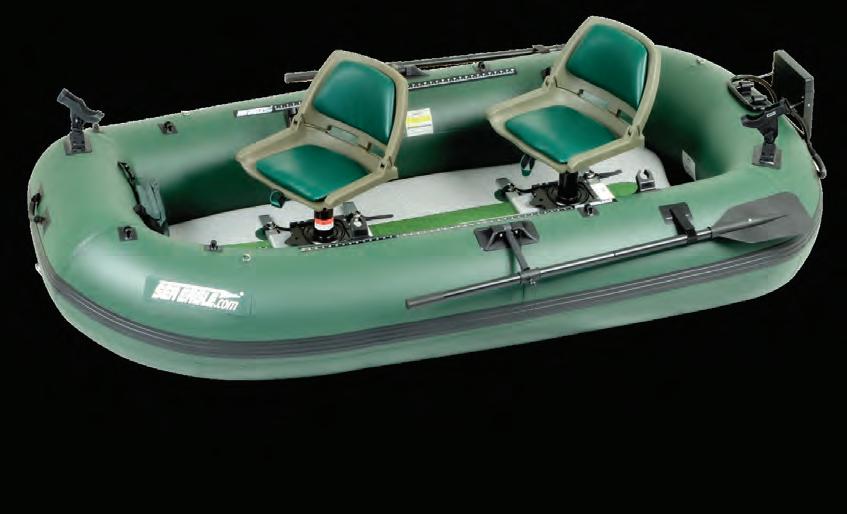
Perfect for !shing rivers, lakes and bays. The STS10 is a lightweight, roomy 1 or 2 person pontoon boat that’s packed with features anglers need & love including 2 built-in !sh rules, 4 built-in rod holders & 2 Scotty® mounts for more rod holders, anchor locks, camera posts or any other Scotty® accessory. Now available with a drop-stitch in atable oor or wooden oorboards.
Choose From 7 Packages
Starting At Just $1449
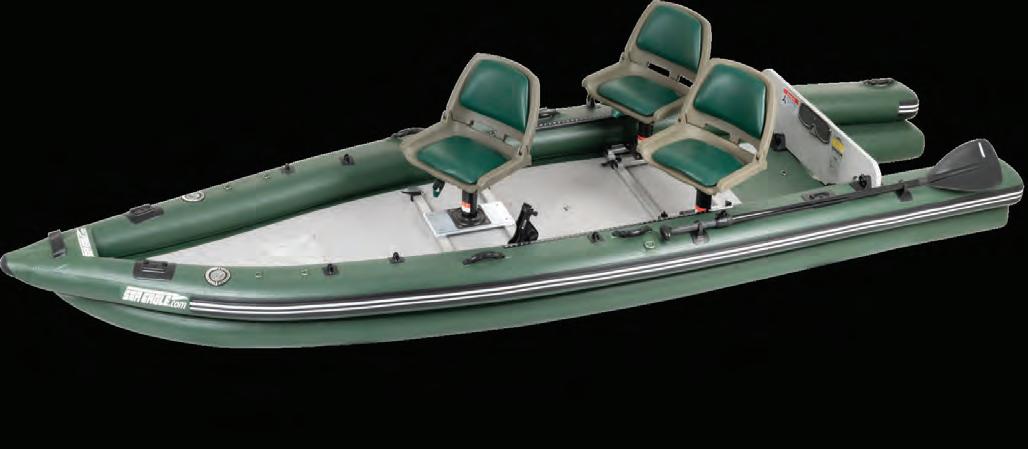
This “low-rider” gives you access to the water to reel in and release !sh easily. With a new patented outside, in atable, rigid keel the FSK16 glides through the water at speeds up to 21 mph to get you to the !sh fast! Perfect for 1-3 anglers and room for plenty of gear.
Choose From 9 Packages
Starting At Just $2999


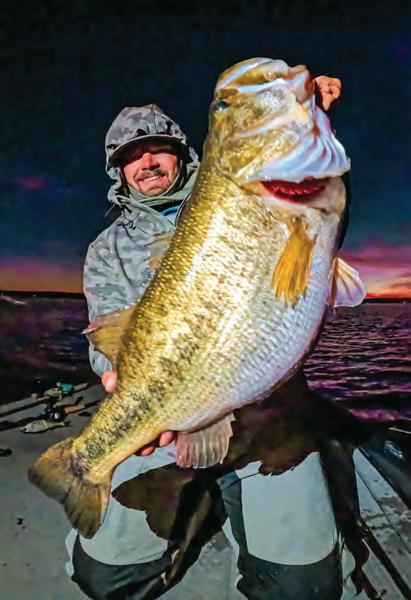
Every spring, it feels like the bank bite will last forever. Fish are shallow, visible, and predictable cruising, spawning, and guarding fry. It’s the time of year when con!dence is high and decisions feel easy. But like everything in !shing, that window doesn’t stay open long. Before most anglers realize it, the !sh that were once easy to !nd have simply vanished.
at disappearance marks the beginning of what seasoned anglers know as the o shore shi . As water temperatures climb and the spawn wraps up, bass begin pulling away from the bank and setting up on o shore structure. Ledges, shell beds, brush piles, and subtle depth changes start to hold more !sh than the shoreline ever could. It’s not an overnight move, but it happens quickly enough that many !shermen get le behind, still casting to water that’s no longer alive.
One of the biggest mistakes anglers make during this transition is assuming the !sh have stopped biting. In reality, they’ve just relocated. Instead of being scattered along miles of bank, bass begin grouping up in smaller, more de!ned areas. e challenge
TYLER WOOLCOTT

shi s from covering water visually to understanding what lies beneath the surface. It becomes less about instinct and more about intention reading depth, structure, and subtle changes that aren’t visible at a glance.
Making the adjustment isn’t always easy, especially for anglers who are comfortable !shing shallow. It requires slowing down, trusting your electronics, and committing to areas that might not show immediate signs of life. But once you connect with your !rst o shore group, everything changes. What felt like a tough day can turn into a %urry of action in just a few casts, o en with better quality !sh than what the bank was o ering.
e o shore shi is more than just a seasonal pattern—it’s a turning point. It separates those who react to changing conditions from those who anticipate them. As summer approaches, the anglers who embrace the move away from the bank will !nd themselves ahead of the curve, dialing in on schools of bass that are no longer pressured by the crowds. And while the shoreline may feel empty, the real action is just a little deeper.
is a professional tournament angler, as well as owner/operator of Florida Big Fish Adventures, providing bass and saltwater guided shing trips: www. oridabig shadventures.com.


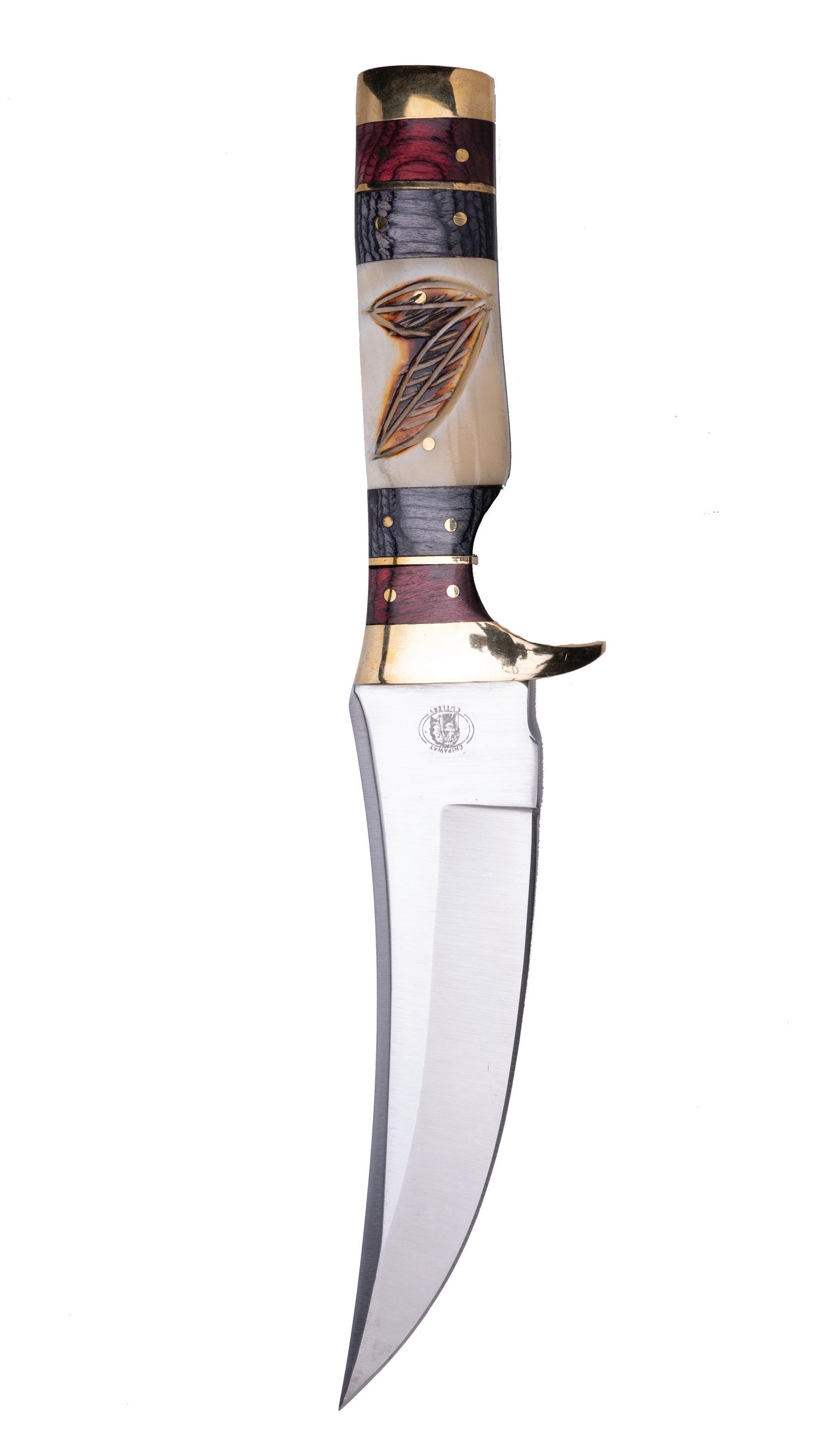
The very best hunting knives possess a perfect balance of form and function. They’re carefully constructed from fine materials, but also have that little something extra to connect the owner with nature. If you’re on the hunt for a knife that combines impeccable craftsmanship with a sense of wonder, the $79 Huntsman Blade is the trophy you’re looking for.
The blade is full tang, meaning it doesn’t stop at the handle but extends to the length of the grip for the ultimate in strength. The blade is made from 420 surgical steel, famed for its sharpness and its resistance to corrosion.


The handle is made from genuine natural bone, and features decorative wood spacers and a hand-carved motif of two overlapping feathers— a reminder for you to respect and connect with the natural world.


This fusion of substance and style can garner a high price tag out in the marketplace. In fact, we found full tang, stainless steel blades with bone handles in excess of $2,000. Well, that won’t cut it around here. We have mastered the hunt for the best deal, and in turn pass the spoils on to our customers.
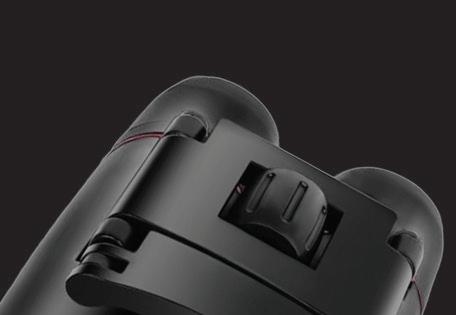
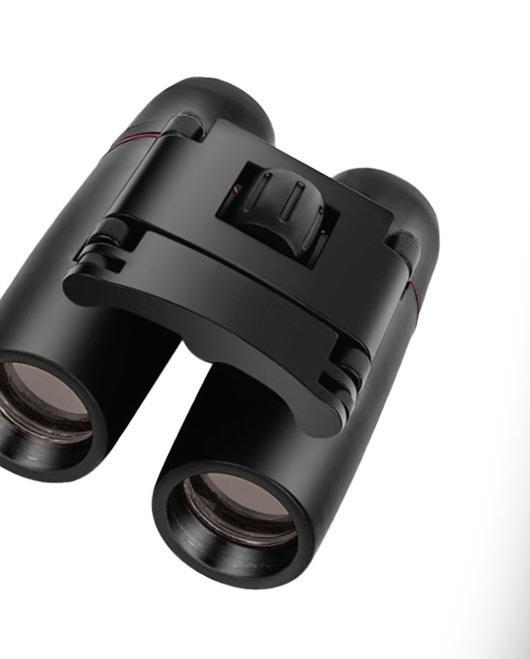
But we don’t stop there. While supplies last, we’ll include a pair of $99 Stauer power pocket binoculars and a genuine leather sheath FREE when you purchase the Huntsman Blade.
Your satisfaction is 100% guaranteed. Feel the knife in your hands, wear it on your hip, inspect the impeccable craftsmanship. If you don’t feel like we cut you a fair deal, send it back within 30 days for a complete refund of the item price.
Limited Reserves. A deal like this won’t last long. We have only 1120 Huntsman Blades for this ad only. Don’t let this beauty slip through your fingers. Call today!
Huntsman Blade $249*


Stauer® Pocket Binoculars -a $99 valuewith purchase of Huntsman Blade
Offer Code Price Only $79 + S&P Save $170 1-800-333-2045
Your Insider Offer Code: HBK321-03
You must use the insider offer code to get our special price.

*Discount is only for customers who use the offer code versus the listed original Stauer.com price.

What Stauer Clients Are Saying About Our Knives
“This knife is beautiful!”
— J., La Crescent, MN
“The feel of this knife is unbelievable...this is an incredibly fine instrument.”
— H., Arvada, CO

14091 Southcross Drive W., Dept. HBK321-03 Burnsville, Minnesota 55337 www.stauer.com
California residents please call 1-800-333-2045 regarding Proposition 65 regulations before purchasing this product.
• 12” overall length; 6 ¹⁄2” stainless steel full tang blade • Genuine bone handle with brass hand guard & bolsters • Includes genuine leather sheath