
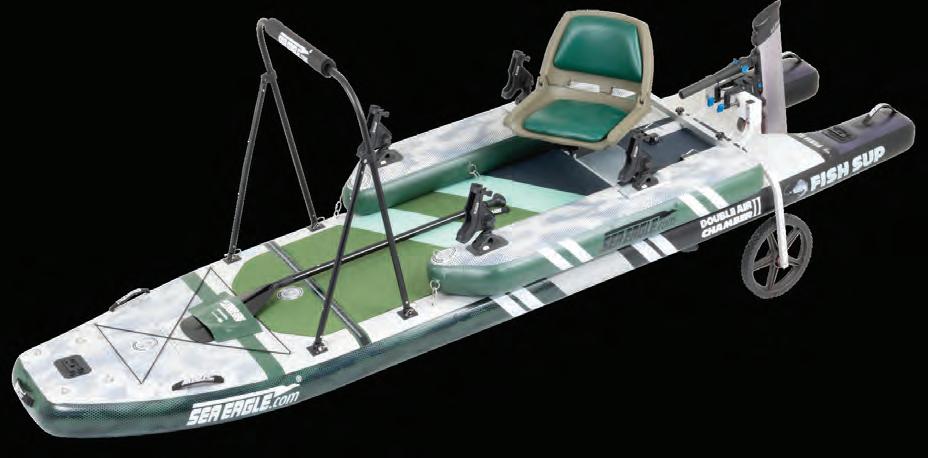
The versatility of the FishSUP™1210 is unmatched! Use it bare bones with just the board, a paddle & your !shing gear or deck it out with swivel seat, side pontoons, casting bar, motor and more! Incredibly stable, extra wide, swallow-tail !shing SUP holds up to 500 lbs! The FS1210 takes electric and gas motors up to 3 hp. There’s even an option for a bow trolling motor.
Choose From 6 Packages
Starting At Just $999
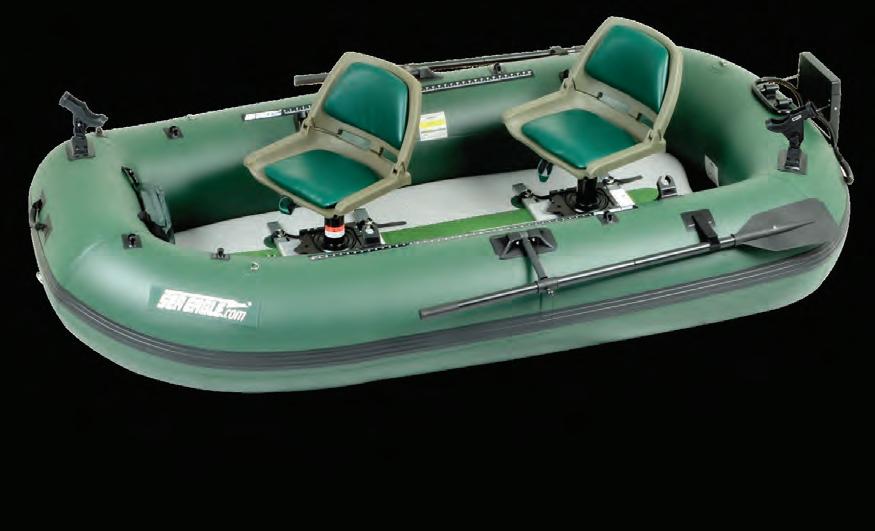
Perfect for !shing rivers, lakes and bays. The STS10 is a lightweight, roomy 1 or 2 person pontoon boat that’s packed with features anglers need & love including 2 built-in !sh rules, 4 built-in rod holders & 2 Scotty® mounts for more rod holders, anchor locks, camera posts or any other Scotty® accessory. Now available with a drop-stitch in atable oor or wooden oorboards.
Choose From 7 Packages
Starting At Just $1449
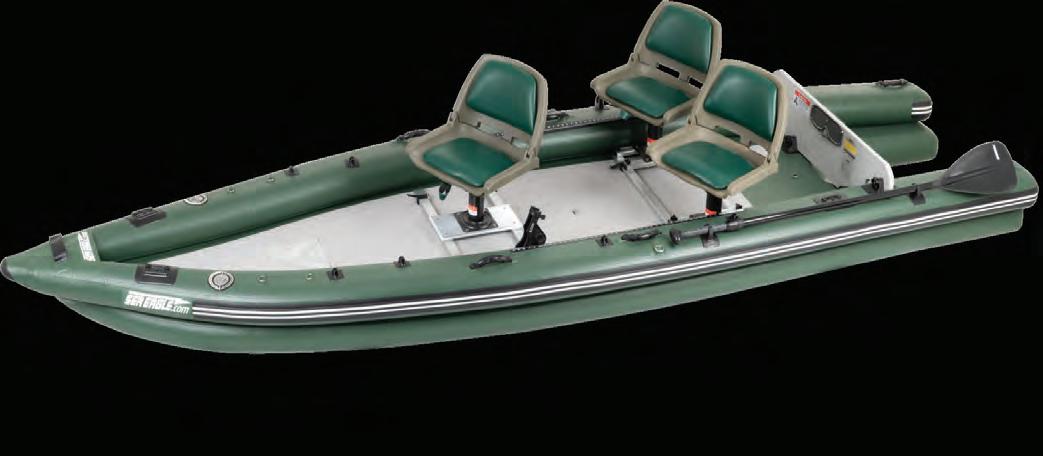
This “low-rider” gives you access to the water to reel in and release !sh easily. With a new patented outside, in atable, rigid keel the FSK16 glides through the water at speeds up to 21 mph to get you to the !sh fast! Perfect for 1-3 anglers and room for plenty of gear.
Choose From 9 Packages
Starting At Just $2999


















Ever see a commercial harbor full of Furuno Marine Electronics and wonder why the pros rely on us?


See why here










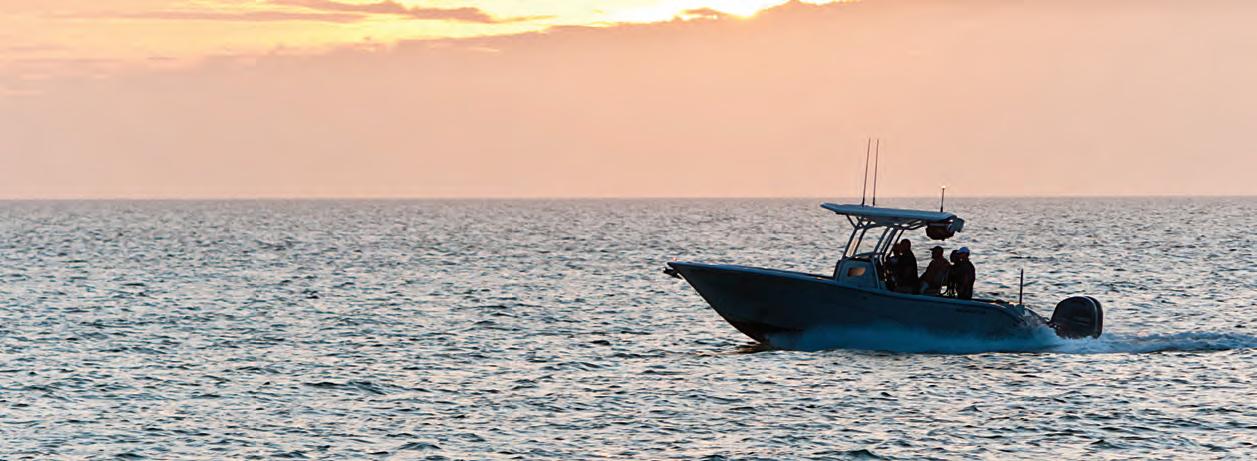
Are you ready to embark on your next on-water adventure? Before you set sail, here are fve things to know about boat insurance.
1. Boat insurance isn’t just for accidents
With comprehensive coverage, you’ll also be protected fnancially for theft, vandalism, and unexpected events like storms if you need repairs or replacements due to damage.
2. Accidents can happen to anyone
When accidents happen, boat insurance offers liability coverage for damages or injuries you cause while boating, up to specifed limits. It can also cover lawsuit costs if you’re sued.
3. Boat insurance can cover medical payments
Boat insurance offers a range of optional medical payments coverage limits, helping to cover medical expenses if you’re in an accident or someone is hurt on your boat, regardless of fault.
4. Most lenders require boat insurance
If you fnanced your boat, you’ll likely need boat insurance since most lenders require boat insurance to protect their investment. Additionally, some marinas or municipalities require proof of insurance for docking.
5. Progressive offers specialized boat coverages
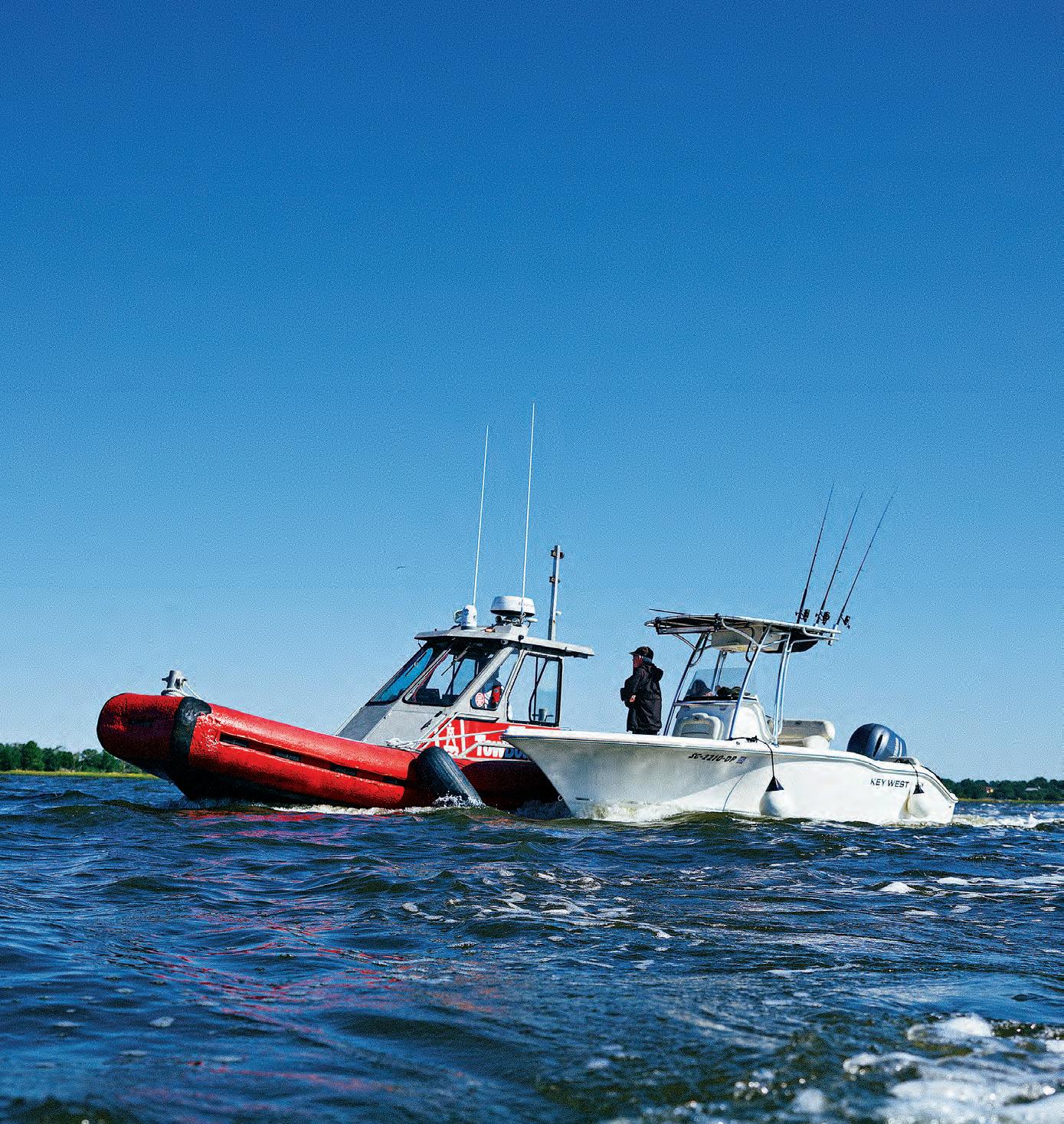
Ever worry about getting stuck on the water? Progressive’s Sign & Glide® On-Water Towing coverage** can help. It’s an additional coverage that steps in if your boat is disabled or breaks down on the water, paying for on-water towing, jump starts, soft ungroundings, and fuel delivery. Fuel cost isn’t included.
Don’t let unforeseen circumstances disrupt your voyage. Cruise with confdence thanks to Progressive Boat insurance. Because when it comes to your boat, peace of mind is the ultimate luxury.
Scan to get a quote in as little as 4 minutes.
to learn more.
















By Will Schmidt

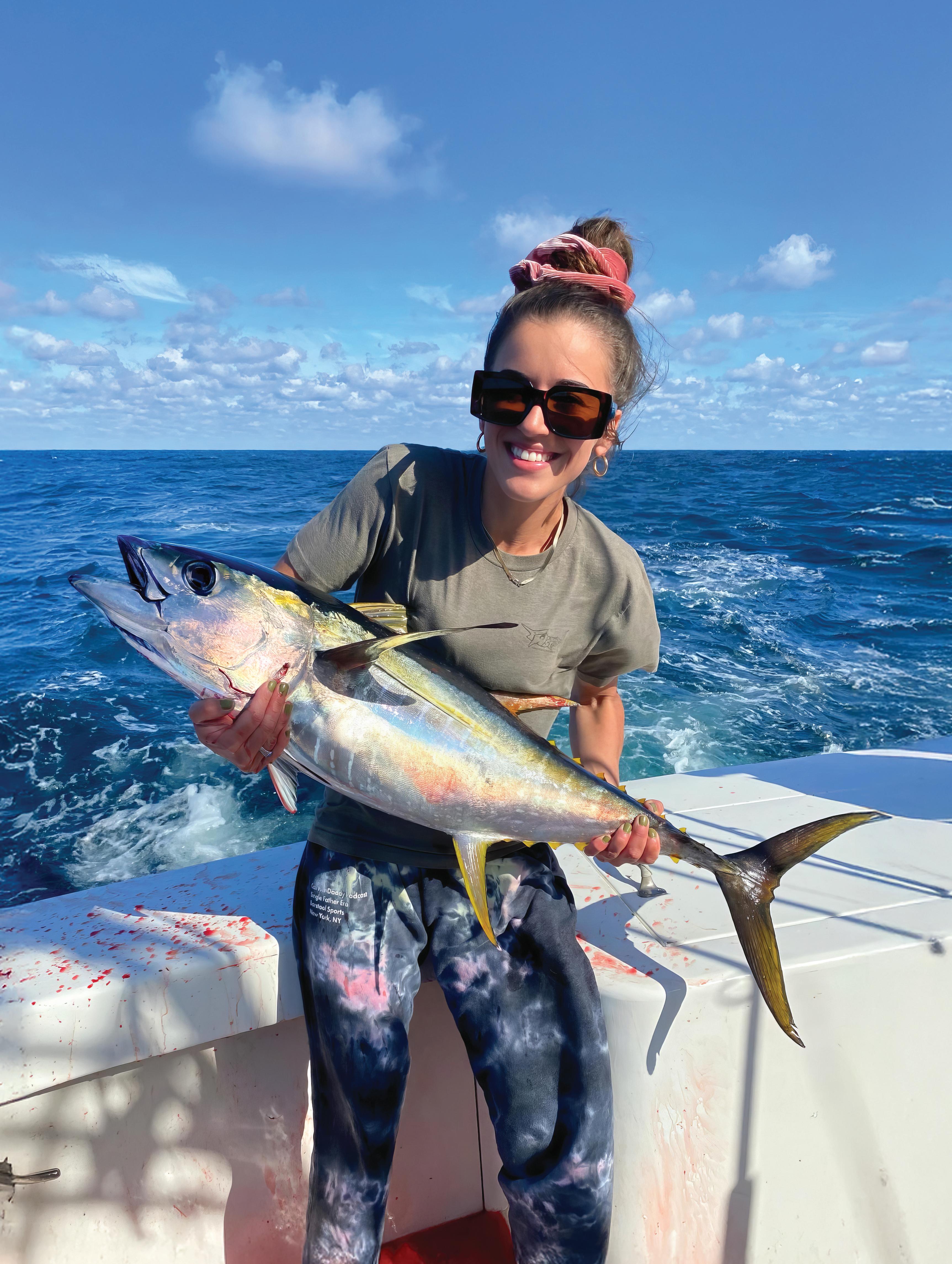
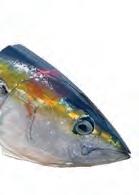
Tere were birds diving, porpoise rolling and he y yellow n tuna skyrocketing like Fourth of July reworks. Both on the water and in the boat, the energy was palatable. With one angler on the bow ready to cast a top water plug into the fray and me in the stern with ready to deploy live bait, the boat throttled back. !e plug went ying, meanwhile I simply dropped my bait behind the boat and started freelining. Almost instantly the plug was blasted in the air but not connecting. Meanwhile, I tossed a handful of baits o the back of the boat. By now the fray had subsided but the sh were clearly still looking for an easy meal. 50 feet behind me one of the chummers was blasted overhead by a 150 pound yellow n who was skyward bound a er it. Just below I could see my bait franticly swimming as another engulfed it, leading to a great battle before releasing the 100 pound class sh.
While top water shing for tuna is all the rave right now, it really makes sense to deploy multiple tactics to take advantage of these opportunities, as the school o en retreats as the boat nears. Our back up plan is very simple and almost always produces sh. As the boat gets into casting range of the school, we drop live bait o the stern and free line them. We always keep a couple ready to go. !is way, if the school disappears there are other baits ready for those who have been plugging.
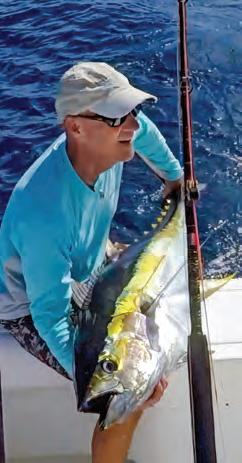
For bait google eyes or blue runners, rigging them on a 10/0 circle hook is ideal. Bridling the bait and using a non-slip loop knot presents the most natural movement as the baits ee. Also, tossing a handful of chummers in, as the surface activity disperses, usually brings shing looking to pick up stragglers into the strike zone. Chumming really helps keep the sh around, so make sure you have plenty of bait. When you get hit, give it a ve count real tight and hang on!
I like to use a bit heavier tackle with the live bait, as we o en seem to nd bigger sh. My go to is Shimano Terez BW Roller Striper medium heavy with a Talica 25A. I use 80lb braid to 80lb mono. !is is a great set up that’s fun for sh from 40 to 140 and can handle the occasional really big one. the rod with a better ghting angle. It also helps to keep the line away from the gunnel as a spiraling sh ascends. !is is a great asset for many anglers on these tough sh.
Will Schmidt is a seasoned tournament angler who has been writing about shing for more than two decades. Follow Will on Instagram @saltynstrong.



Advertise your business throughout Alabama

ACADEMT FOLEY
BALDWIN WELCOME CENTER
BASS PRO SHOPS
BEACH BUM OUTDOORS
BLUE GILL
BOA/BLUEWATER
BRUNSON’S NET SUPPLY
COASTAL LEADERS GROUP AT THE WHARF
EMERALD COAST MARINE
FELIX’S

GRANDER MARINE
GRANDER MARINE- WHARF
GULF SHORES BOAT SALES
GULF SHORES WALMART
HOOKED UP BAIT & TACKLE
J&M TACKLE
LARTIQUE’S SEAFOOD MARKET
LEGENDARY MARINA
LOST BAY TACKLE
MAGNOLIA BLOSSOM CAFE
MOMENTUM MAINE RV
ACADEMY SPORTS
ACADEMY SPORTS FESTIVAL CENTER
ALABAMA AQUARIUM
BIG BAD BREAKFAST
CAJUN CORNER
CHEVRON
DAUPHIN ISLAND WELCOME CENTER
DIP SEAFOOD MUDBUGS
DOG RIVER MARINA & BOAT WORKS
EZN STORAGE & DETAIL
FULL THROTTLE
GRAND BAY WELCOME CENTER
GREER’S MARKET
JEMISON’S BAIT & TACKLE
LARTIQUE’S ON THE HILL
RECREATIONAL SALES & SERVICES
OBA BOAT SALES
OYSTER HOUSE
PARADISE MARINE CENTER
R&R SEAFOOD
RALPH & KACOO’S
ROBERTSDALE WALMART
SAFE HARBOR MARINA
SAM’S BAIT & TACKLE
SAN ROC CAY MARINA
SAUNDERS YACHTWORKS
WALMART FOLEY
SARALAND WALMART
SHIP & SHORE
SOUTHERN BAIT & TACKLE
UJ CHEVROLET
WEST MARINE
WETLINE APPAREL
WIGMAN’S ACE HARDWARE
By Coastal Angler Magazine
On the Gulf Coast, a crawfish boil is never just a meal — it’s an event. There’s the steam rolling off the pot, the newspaper-covered tables, the stories that get bigger with every round, and someone always insisting, “Peel a few extra, just in case.”
And without fail, the next morning there’s a container of crawfish tails sitting in the fridge. The good news? That’s not a problem. That’s opportunity.
Leftover crawfish tails already carry the flavor of the boil — the spice blend, the heat, the time spent soaking. They don’t need much to turn into something completely different.
A skillet, real butter, fresh garlic, and a little brightness from lemon is enough to transform them into a rich, comforting dish that feels planned instead of pieced together.
The most important rule is simple: treat them gently.
Crawfish are fully cooked when they come out of the pot. All you’re doing now is warming them through and layering flavor. Keep the heat low, don’t walk away from the skillet, and pull them off before they have a chance to toughen up.
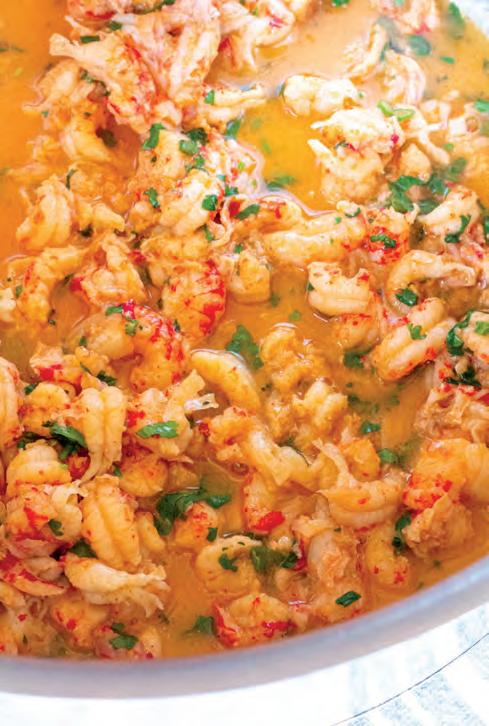
This Dockside Garlic Butter Crawfish recipe is perfect for stretching the life of a good boil. Spoon it over white rice for a quick supper, toss it with pasta for something a little heartier, or serve it with toasted French bread and let everyone dip straight into the skillet.
Because down here, we don’t let good seafood go to waste — and a great boil should always have a second act.

Ingredients:
About 24oz cooked Louisiana crawfish tails (thawed and drained if frozen)
1 cup butter
2 fresh garlic cloves, minced fine
1 tablespoon sliced green onions
1 tablespoon chopped parsley
1 teaspoon fresh lemon juice
1 teaspoon Louisiana hot sauce
¼ teaspoon Cajun or Creole seasoning
¼ teaspoon cracked black pepper
Preparation:


1.Place crawfish in a bowl and check for stray shell pieces or visible vein. Set aside.
2.Melt and season: In a skillet over medium-low heat, melt the butter. Stir in garlic and cook just until fragrant, about 30 seconds. Add green onions and stir briefly.
3.Warm gently: Fold crawfish tails into the butter mixture and heat 1–2 minutes, just until warmed thro
4.Finish and serve: Remove from heat and stir in Cajun seasoning, pepper, hot sauce, parsley, and lemon juice. Taste and adjust if needed. Serve over rice, pasta, or toasted French bread.
Performance Bulletin Available
60 YEARS OF REPOWER EXPERIENCE!
Mastry Engine Center has received the Suzuki Marine Super Service Award and has been ranked #1 in Suzuki Marine US Sales!
Repower packages designed to best fit your needs and not stretch your budget. Financing available.

Suzuki RePowers include a five-year Factory Direct Warranty.
Many of our Suzuki RePower Centers feature Water Accessible Drop Travel Lifts.
Stationed strategically around the southeast, all Suzuki RePower Centers have achieved the highest level of Suzuki Service Certifications to meet and exceed your repower needs.



















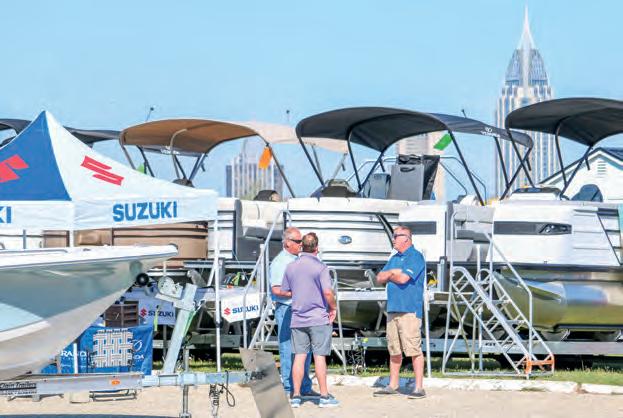
March 27–29, 2026, the show returns to the beautiful grounds of the USS Alabama Battleship Memorial Park in Mobile, and after last year’s rain cut things short, this one feels personal. The team behind the show knows they only get one shot at it each year — and they’re planning to make every minute count.
Expect three full days of boats, dealers, vendors, food trucks, and live entertainment all set against one of the best waterfront backdrops in Alabama. Whether you’re in the market for a new center console, looking to upgrade electronics, or just want to walk docks and talk boats, this show brings it all together in one place. Families can make a full day of it. Kids are welcome. Pets are welcome. There’s plenty of room to roam, grab a bite, catch up with friends, and soak in that early spring bay breeze.
And Saturday night? Stick around. The live concert has quickly become a crowd favorite and gives everyone a reason to stay after the sun goes down.
Event organizer Dustin Jackson shared “Our team has been working hard to find the right vendors, secure the dealers, schedule the talent and really just put together what we expect to be a fantastic show!”
Tickets are available now at boatshowonthebay.com, and you can also grab them at the gate. But if you’re planning to come — and you should — go ahead and lock it in early.
Because on the Gulf Coast, boating isn’t just a hobby. It’s a lifestyle. And this is the one weekend a year where the whole community comes together to celebrate it.
We’ll see you on the bay.











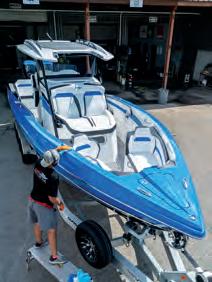
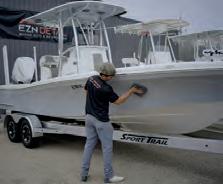
SBY: DUSTIN JACKSON COASTAL ANGLER MAGAZINE, EZN DETAIL
unscreen is a must when spending time on the water but many boat owners do not realize that certain sunscreens can stain boat upholstery especially white seats and white gunnels. These stains usually show up as yellow brown or orange marks and once they are there they can be very hard to remove.
The main reason sunscreen causes staining is because of what is inside it. Many sunscreens contain chemical UV blockers like avobenzone that react with heat water and minerals. When that reaction happens it can leave behind dark stains on vinyl upholstery and gel coat. Suntan lotions and tanning oils make the problem even worse because they often contain darker dyes bronzers and oils that are designed to darken skin. Those same dyes easily transfer onto white upholstery and soak into the material.
Heat plays a big role too. On hot days sunscreen stays oily and soft which allows it to spread and absorb into the upholstery faster. Once it bakes in under the sun it becomes much harder to clean and in some cases the staining can be permanent.
The best way to prevent sunscreen stains is by changing habits. Have everyone apply sunscreen outside the boat and give it time to soak in before sitting down. Towels or seat covers can also help protect high contact areas.
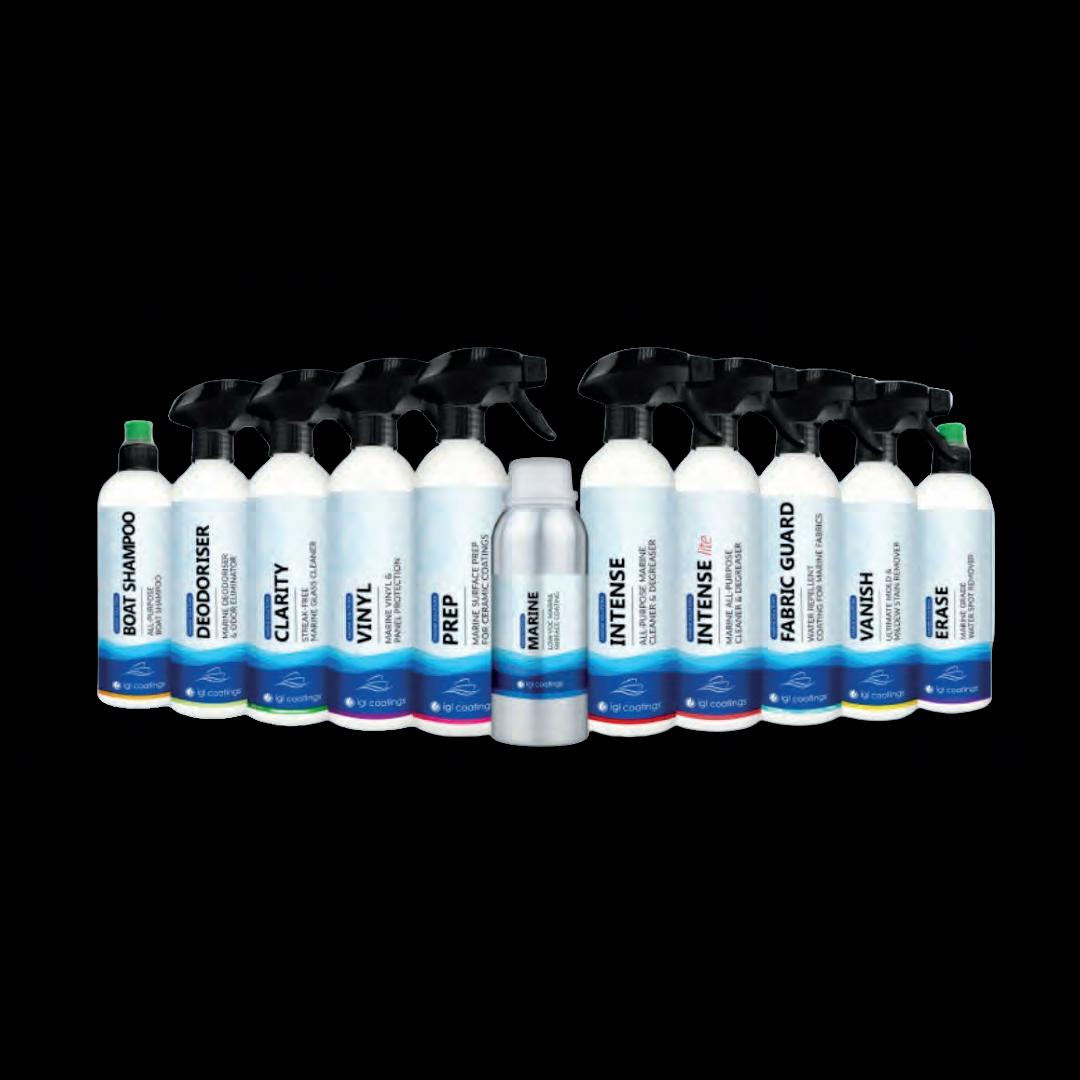
Another great option is ceramic coating for marine upholstery. A proper ceramic coating creates a protective barrier that helps repel oils and dyes making sunscreen residue much easier to wipe away before it stains.
Need extra protection for your vessel’s upholstery?
Contact EZN Detail and our team will get you taken care of!








Owners:
Dean Stinson & Wade Williams

There are two kinds of boaters on the Gulf Coast — the ones who make the boat ramp smooth and easy… and the ones everyone talks about later. Spring is here, the weather’s warming up, and that means ramps from Mobile to Orange Beach are about to get busy. A little preparation, and a little common courtesy, goes a long way in keeping tempers cool and lines moving.
Prep Before You Back Down
The staging area is your friend. Load your gear, remove straps, insert your drain plug, and untie your transom straps before you ever get in line. The ramp is for launching and loading — not for reorganizing your cooler. A good rule of thumb? If you’re parked on the slope longer than a couple of minutes without your boat moving, something’s off.
Have a Plan
Know who’s backing the trailer and who’s handling lines. Talk it through before you’re halfway down the ramp. Hand signals beat yelling every time, especially when there’s wind involved. If you’re new to backing a trailer, practice somewhere empty before a Saturday morning rush. We’ve all been there. Just maybe not at 9 a.m. on Memorial Day weekend.
Clear the Ramp Quickly
Once the boat floats free, move it to the courtesy dock or idle away so the next person can launch. Same goes for loading — pull up to the staging area to secure straps and drain water instead of blocking the lane.
Not everyone at the ramp runs a 30-foot center console. Some folks are launching a jon boat for the first time with their kids. A little patience keeps things civil — and keeps the day starting right.
At the end of the day, we all want the same thing: time on the water. A little awareness at the ramp means more time fishing and less time fuming.
Because on the Gulf Coast, the only thing that should be salty is the water.
March on the Gulf Coast is that in-between month. One weekend still feels like winter, the next has you itching to get back on the water. And when that first perfect weather window shows up, you don’t want to spend it troubleshooting at the dock.
Start with the basics. Check your battery charge and clean any corrosion from the terminals. A weak battery has a way of revealing itself at the worst possible moment. Look over your fuel lines and primer bulb, and if the fuel has been sitting since last fall, consider replacing it. Old gas can turn a great day into a long ride home.
Before you ever leave the driveway, test your bilge pump and livewell. It takes seconds and can save you from unnecessary stress. Give your safety gear a once-over too — make sure life jackets are in good shape, your fire extinguisher is charged, and everything is easy to access.
Don’t forget the trailer. Check tire pressure, inspect your straps, and confirm the lights are working. A blown tire or wiring issue on the way to the ramp isn’t how anyone wants to start the season.
A little preparation now means when the fish start moving and the weather lines up, you’re ready to launch — not repair. Because on the Gulf Coast, spring doesn’t wait, and neither should you.













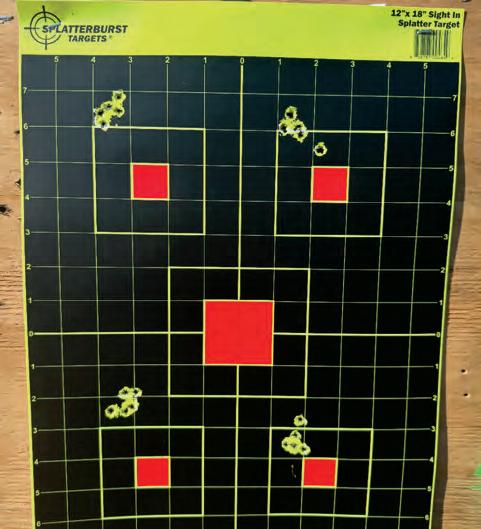
For many hunters, the off-season can feel like a long pause between the moments that matter most. At Rising Outdoor Initiative (ROI), we see it differently. The months between seasons are an opportunity—an opportunity to sharpen skills, build confidence, and deepen your connection to responsible outdoor recreation.
Target practice during the off-season is about far more than punching holes in paper. It’s about reinforcing safe firearm handling, refining fundamentals, and ensuring that when the season opens, you are prepared to make ethical, accurate shots. Consistency in practice builds muscle memory, strengthens focus, and helps identify areas for improvement before they become problems in the field.
Whether you’re a seasoned hunter or brand new to shooting sports, dedicating time to the range can dramatically improve your effectiveness and confidence. Focus on the basics: proper stance, breathing control, trigger discipline, and sight alignment. Start at comfortable distances and gradually challenge yourself. Incorporating different shooting positions—standing, kneeling, or prone—can also better simulate real-world scenarios.
Off-season practice is also a powerful educational tool. At ROI, we encourage families and first- time participants to use this time to learn under experienced mentorship. Structured practice sessions create a safe, welcoming environment where questions are encouraged and growth is supported.
Ultimately, preparation reflects respect—respect for wildlife, for fellow outdoorsmen and women, and for the traditions we carry forward. By committing to thoughtful, consistent target practice in the off-season, you ensure that when the moment arrives, you’re ready to make it count.

Please Visit ROI’s Website (www.risingoutdoorinitiative.org) for more information or to apply for an outdoor experience.
By: Jackie Howell
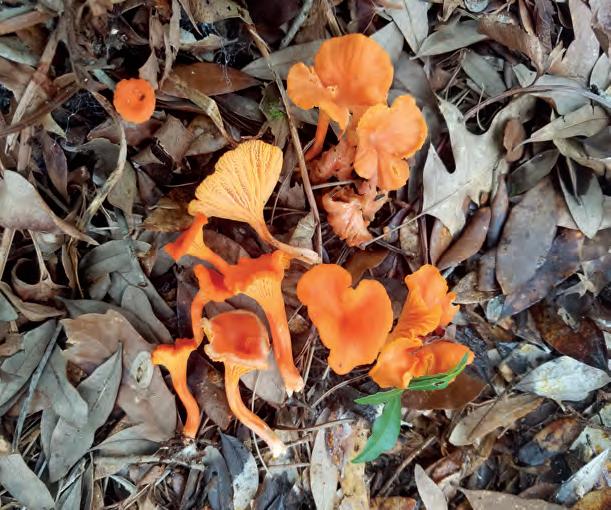
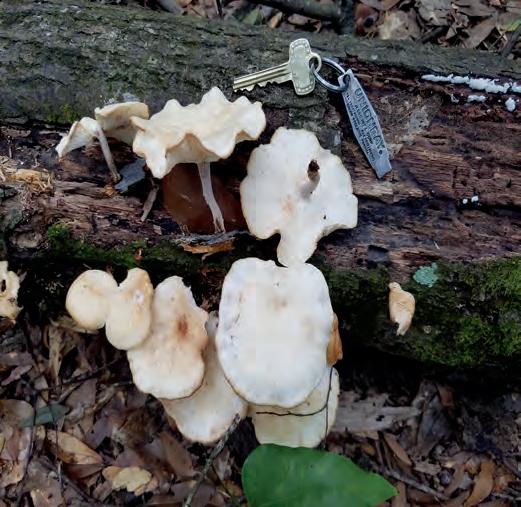
The Gulf Coast is rich in plant diversity, thanks to its warm climate and high humidity. These conditions also create ideal environments for fungi to thrive. From yeasts and molds to mushrooms, fungi appear in many forms and play vital roles in the health of both land and water ecosystems across the region.
Fungi are nature’s recyclers, breaking down organic material and returning nutrients to the soil. In nutrient-poor coastal soils—like those found in dunes, marshes, and barrier islands—certain fungi form beneficial partnerships with plants, helping them absorb water and nutrients more efficiently. These symbiotic relationships are especially important for maintaining the stability and resilience of Gulf Coast habitats.
Most fungi persist hidden from view as thread-like structures known as mycelium, which grow through soil, wood, or plant tissue. When environmental conditions are just right they produce fruiting bodies that release spores. For mushrooms, which are commonly observed in terrestrial habitats, they are ephemeral in nature, meaning their fruiting bodies are produced only at certain times of the year. This requires precise timing for observing and documenting for identification purposes
At the University of South Alabama, Dr. Juan Mata and his team in the Mycology Lab study fungi to better understand their roles in ecosystems. The team collects specimens, photographs them, studies them under the microscope, and analyzes their DNA to accurately identify species.
Recently, students in the lab have recorded new fungal species in Mobile County, including members of the genera Amanita and Cantharellus. These fungi form close relationships with trees native to the Gulf Coast. While some Amanita species are toxic, others like Cantharellus (commonly known as chanterelles) are prized for their culinary value. The lab also works with Lentinula raphanica, a mushroom species native to the Gulf Coast and a close relative of the shiitake.
Correct identification is essential—not only for safety and research, but also for appreciating the ecological importance of these organisms.
Not all fungi produce mushrooms. Many live invisibly inside the tissues of plants, where they may help defend against pathogens. Dr. Mata’s lab has found fungi living within Gulf Coast seagrasses such as turtle grass (Thalassia testudinum) and shoal grass (Halodule wrightii), which are critical to the health of shallow marine environments.
Ongoing studies have also uncovered fungi within tapegrass (Vallisneria neotropicalis), a native freshwater plant found in local rivers and bays. These fungi, previously reported in other plants around the world, are being recorded for the first time in tapegrass.
By documenting these fungal communities, researchers are building a foundation for future ecological studies and increasing public awareness of the biodiversity that exists right here in the Gulf Coast region. Understanding fungi and their roles helps us protect and manage the ecosystems we depend on.













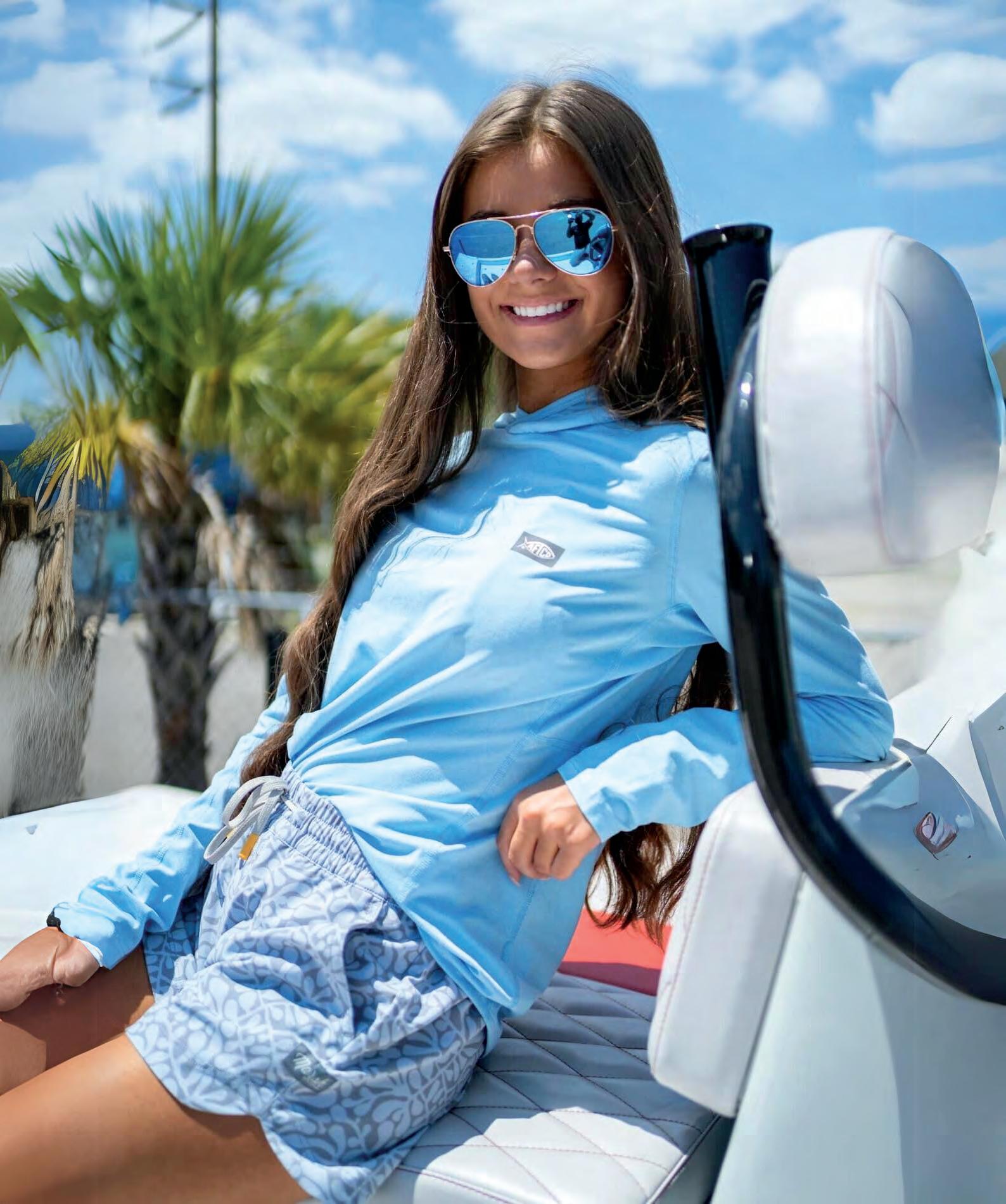


There’s something about March on the Gulf Coast that just feels like a reset button. The air shifts. The days get longer. And suddenly it’s not about surviving winter — it’s about getting back outside.


For anglers, that means checking tackle boxes and watching water temps. For hunters, it’s scouting, prepping for off-season work, and thinking ahead. For families, it’s weekend trips, cookouts, and any excuse to spend more time outdoors.

Spring is that sweet spot before the heat settles in. The mornings are cool enough for a hoodie, the afternoons warm enough to shed layers, and the water calls louder every weekend.
At EZN Outfitters, this is one of our favorite times of year. It’s when customers start coming in with plans — fishing trips, turkey season stories, beach weekends, long days on the bay. And every plan starts with the right gear.
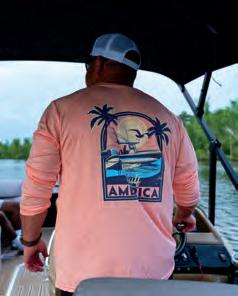
Lightweight performance shirts, durable shorts, hats that actually hold up in the wind, and everyday apparel that transitions from boat to dinner without missing a beat — that’s what spring is all about.
Because on the Gulf Coast, the outdoors isn’t just something we visit. It’s where we live.
Spring’s here. Time to gear up and get after it.
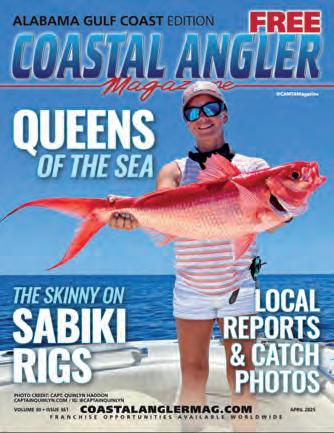
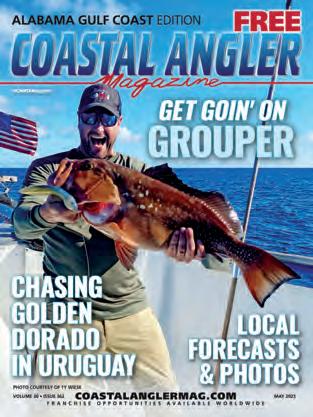
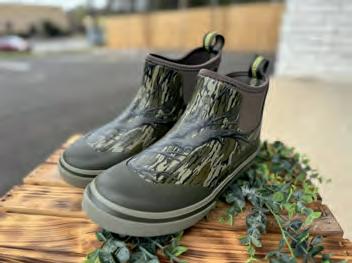
And if you’re going to spend your weekends chasing fish, working land, or soaking up sun, you might as well be comfortable doing it.




Get in front of 10,000+ outdoor-loving locals and tourists who actually read the ads—because they’re your people.
Build credibility by advertising in a magazine that’s been part of the Gulf Coast community for years. Readers believe what they see here.
Scan the QR Code with your Smartphone to get visit our website and get started!
Stop waiting on word-ofmouth. Reach high-value customers who are ready to spend—on boats, bait, gear, and everything in between.



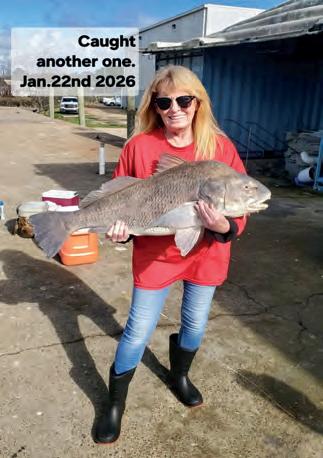



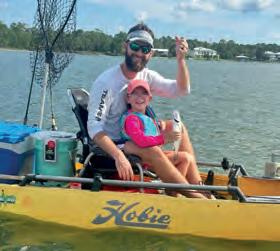
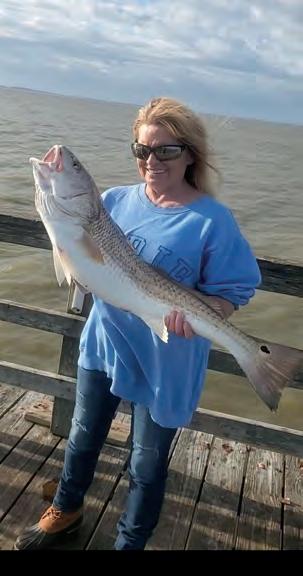
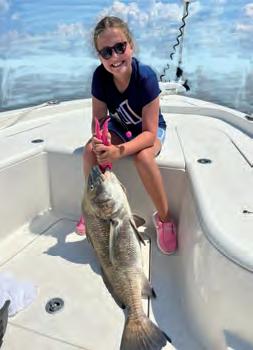

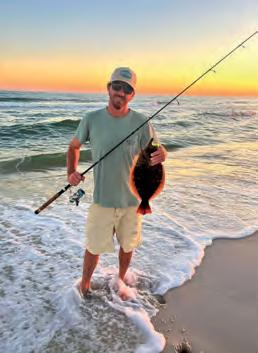

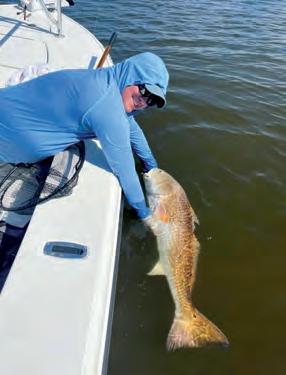
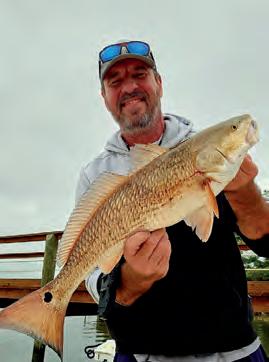

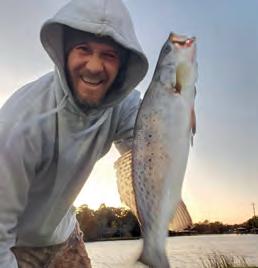
By Capt. Jim Ross
s a charter captain, as well as a regular contributor to the Brevard County, Florida edition of Coastal Angler Magazine, every year there are certain events that happen that I try to predict in advance so that clients and readers can catch more !sh. However, there are many times that even we so called “professionals” don’t get it exactly right. Obviously, my crystal ball isn’t 100 percent correct all of the time...maybe it needs a tune up. LOL!
ings like the giant black drum schooling up, spring cobia run, June tarpon run, fall mullet run, and winter pompano run aren’t things you can pin down to a certain day of the month, but most of the time we can at least predict the month. Hopefully, I can achieve at least a 90 percent e ciency rating a er doing this report for the past 25 years.
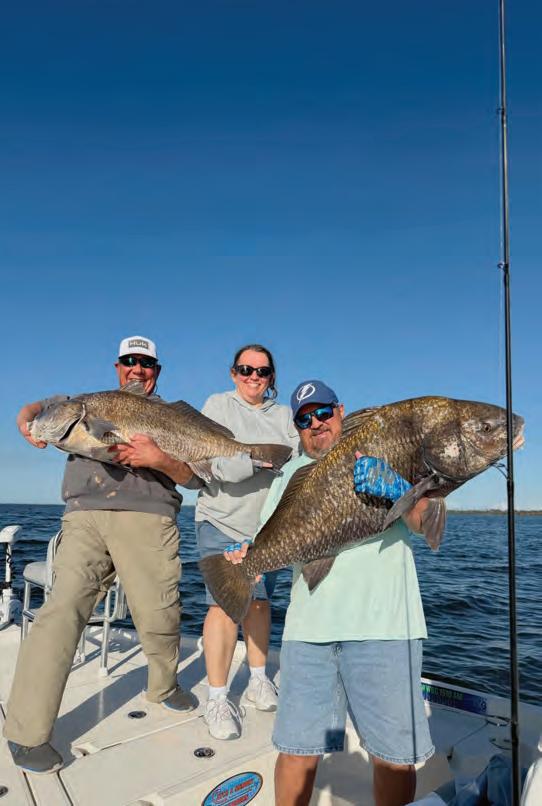
I was just telling my clients one day last week, a er catching a bunch of small trout and a couple of lady!sh, that the big uglies were probably going to show up in a few weeks and if they had a chance to come back out with me then that they may have a shot at catching some much larger !sh than the ones we had landed that morning. Just !ve minutes a er saying this I spotted something unusual about 500 yards up the at. It was exactly what I had just been talking about- a 300 !sh school of 30 to 50-pound black drum.
e !sh in this big school were happy-tailing and waking as they pushed their way down the at. We eased up to them, cast our shrimp in their direction, and as you !gured, the battles were on. All three anglers were hooked up to huge drum that had absolutely no respect for them. Drags screamed, rods doubled over, and dozens of yards of line dumped o their reels. Grunts and groans were heard between laughter and smiles as they worked to tire these beasts. e boat deck looked like a country bar dance oor as anglers shu ed and two-stepped under and over each other in an e ort not to lose their prized catches.
We ended up extending the trip from a 3/4 day to a full day outing because each !sh took 15 to 25-minutes to land.
e moral of the story? Don’t ever count on !sh to be there and don’t ever think that it’s not quite the right time to catch them. e bottom line is just go !shing every chance you get. at is the only way that you can be sure to catch your next memory.
Capt. Jim Ross is owner/operator of Fineline Fishing Charters on Florida’s Space Coast and host of “Catch a Memory Outdoors” live radio show and podcast. www. neline shingcharters.com • www.catchamemoryoutdoors.com







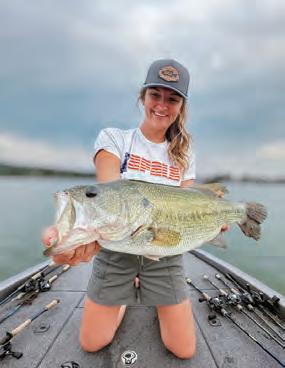




So many anglers have a “go-to” color lure that they swear by. What they do not understand is that the color of your lure barely makes the top three most important factors for catching tons of !sh.

Mistake #1 - e number one mistake anglers make is ignoring the importance of the size and pro!le of the lures they use. When snook, tarpon, red!sh, speckled trout or ounder are feeding, they o en become laser focused on that particular forage species. In other words, if they are feeding on a 6-inch mullet your 3-inch paddletail or shrimp lure will probably be ignored.
PRO TIP: Have a few of your rods rigged up with various sizes and pro!les of lures on them. I like to have a 3-inch paddletail, an arti!cial shrimp and a 4- to 5.5-inch jerk bait ( uke) rigged up when I can’t determine what bait is around. Try all three sizes and pro!les of lures until you !gure out what the !sh in the area are feeding upon.
Mistake #2 - e number two mistake most anglers make is thinking one retrieve style works best for all of the !sh all of the time. ere are so many di erent factors to consider when retrieving your lures. Here are a few to consider:
• Is the water cold or hot? Fish are cold blooded and move more slowly in cold water. is means that you have to slow down your retrieve when the water is cold. Conversely, you want to move your lure faster when the water is hot.
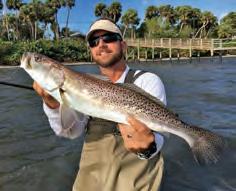
• What species are you targeting? Di erent !sh species like di erent retrieves. For instance, the best retrieve for a red!sh is slowly bouncing your lure o of the bottom. A tarpon likes a low and steady retrieve. A ounder likes a very slow bounce/dragging retrieve no higher than 12 inches from the bottom. A speckled trout likes a vertical jig and will usually hit the lure as it falls through the water column. Snook like a fast and erratic retrieve most of the time.
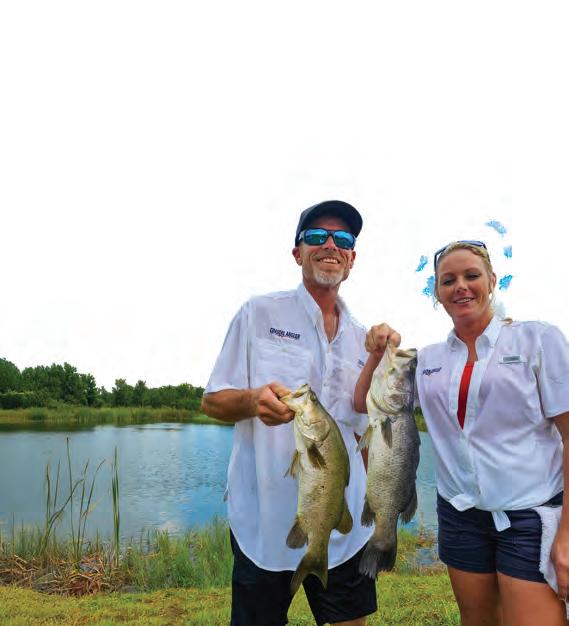
• Is the water clear or murky? Low light, cloudy skies and murky water scenarios makes it harder to get a !sh’s attention. Use a retrieve or lure that creates vibrations and ashes in the water. You also want to fan cast the area keeping your lure placement close together because they are less apt to seek out your lure. When it is sunny and the water is clear it is easier to get the !sh’s attention. You can make your casts further apart and make the !sh come to your lure.
Mistake #3 - e third biggest mistake is thinking !sh care about lure colors. A saltwater tackle box with white lures and something dark like root beer or purple is all that you need to catch any !sh. PERIOD. e bottom line is that if you want to catch more !sh, switch up your sizes and pro!les and vary your retrieves for di erent species and conditions. I GUARANTEE that you will catch more !sh.
Capt. Mike Smith is owner of Fish Your Ass O Charters.Reach him at (561) 339-2317, contact@ shyourasso .com or shyourasso .com.











“It’s a beautiful knife with a great blade and a sure grip” — William B. Wilmington, NC
My friend Sergio is a mixed martial arts fighter. His shoulders are broad. His muscles have muscles. He’s not the kind of person you want to be on the wrong side of.
This manly man has a saying about being tough: You should either know how to fight or look like you do.
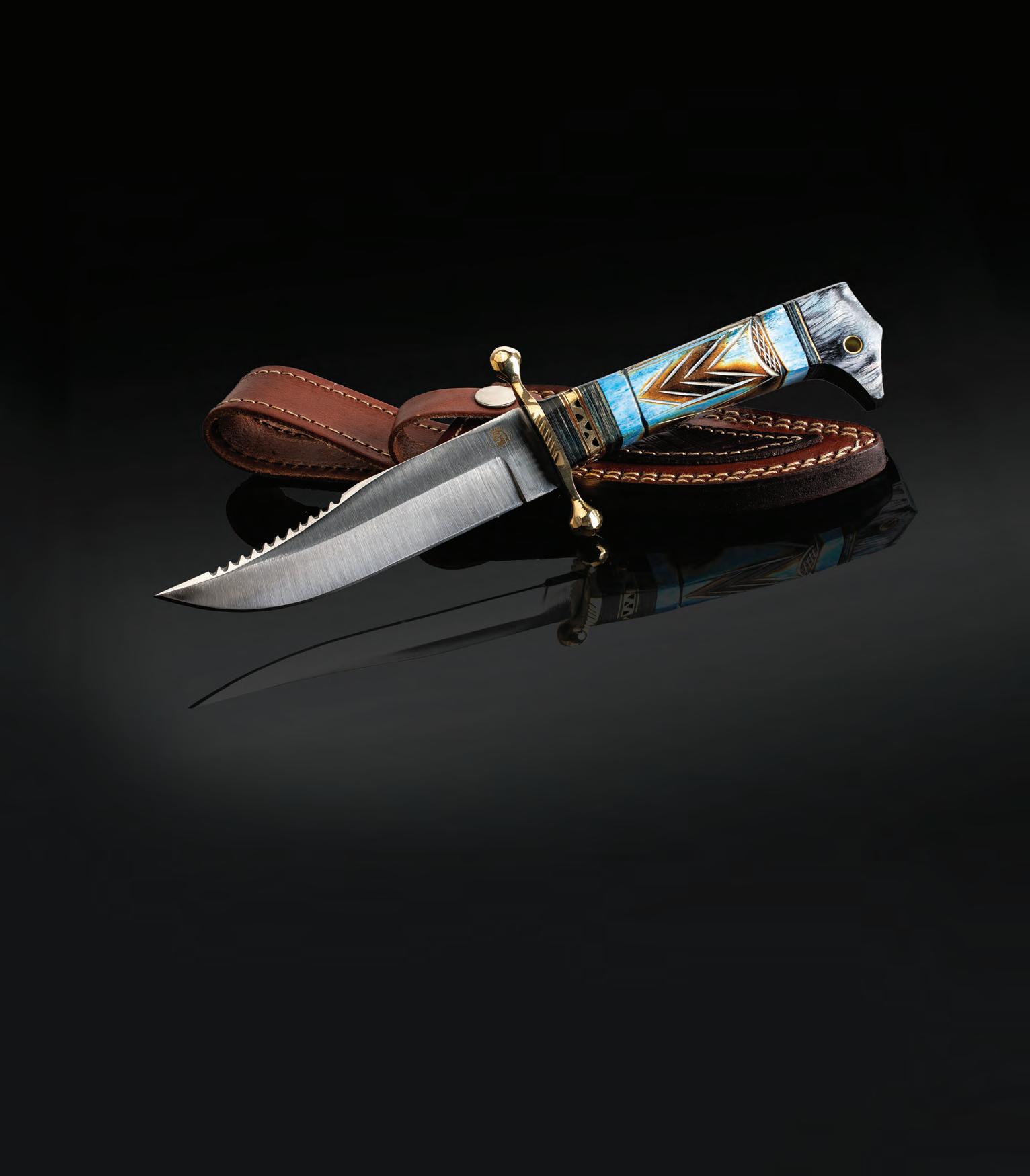
The message is simple enough. People spoiling for a fight usually don’t pick the biggest guy in the bar. If you look like someone who shouldn’t be messed with, you likely won’t be. With our Blue Bone Bowie Knife on your hip, that’s exactly the message you’ll send.
As beautiful as it is functional, this knife is 10" overall and features a high-quality 420 surgical stainless steel blade with a serrated spine. The handle is constructed of genuine natural bone with redwood spacers. On the handle you’ll find design work that’s carved by hand, a testament to its craftsmanship.
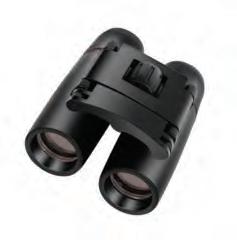
This knife is stick tang, meaning it won’t wimp out when you need it. This knife also features brass hand guards and brass spacers with file work, so you won’t lose your grip. For easy carrying, it comes with a genuine tooled leather sheath. CALL NOW! If you’re one of the rst 700 587 callers for this ad, we’ll throw in a pair of Stauer HD Pocket Binoculars — a $99 value — ABSOLUTELY FREE!
Walk around with the Blue Bone Bowie Knife and you’ll feel a lot safer. I know I do.
Knife Speci!cations:
• 10" overall length
• 420 surgical stainless steel and stick tang construction
• Genuine natural bone and redwood hand-carved handle
• Genuine leather sheath included
Blue Bone Bowie Knife
EXCLUSIVE FREE
Stauer Pocket Binoculars a $99 value with your purchase of the Blue Bone Bowie Knife
$299 $79* + S & P Save $220
*Special price only for customers using the offer code. 1-800-333-2045
Your Insider Offer Code: BBK164-02
California
please
regarding