

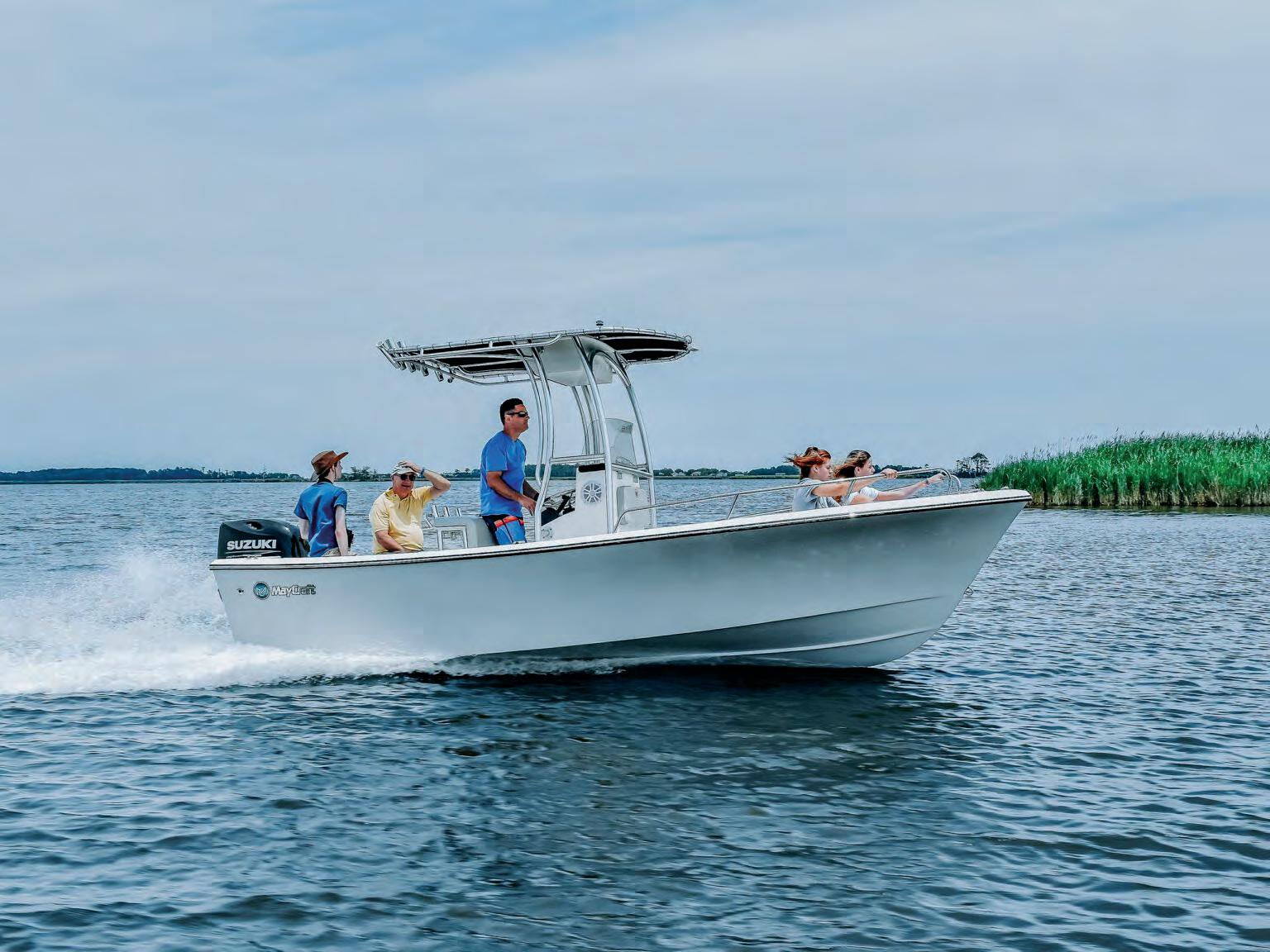
Suzuki, the “S” logo, and Suzuki model and product names are Suzuki Trademarks or ®. © 2026 Suzuki Marine USA, LLC. All rights reserved





















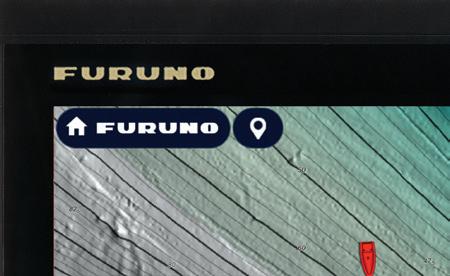




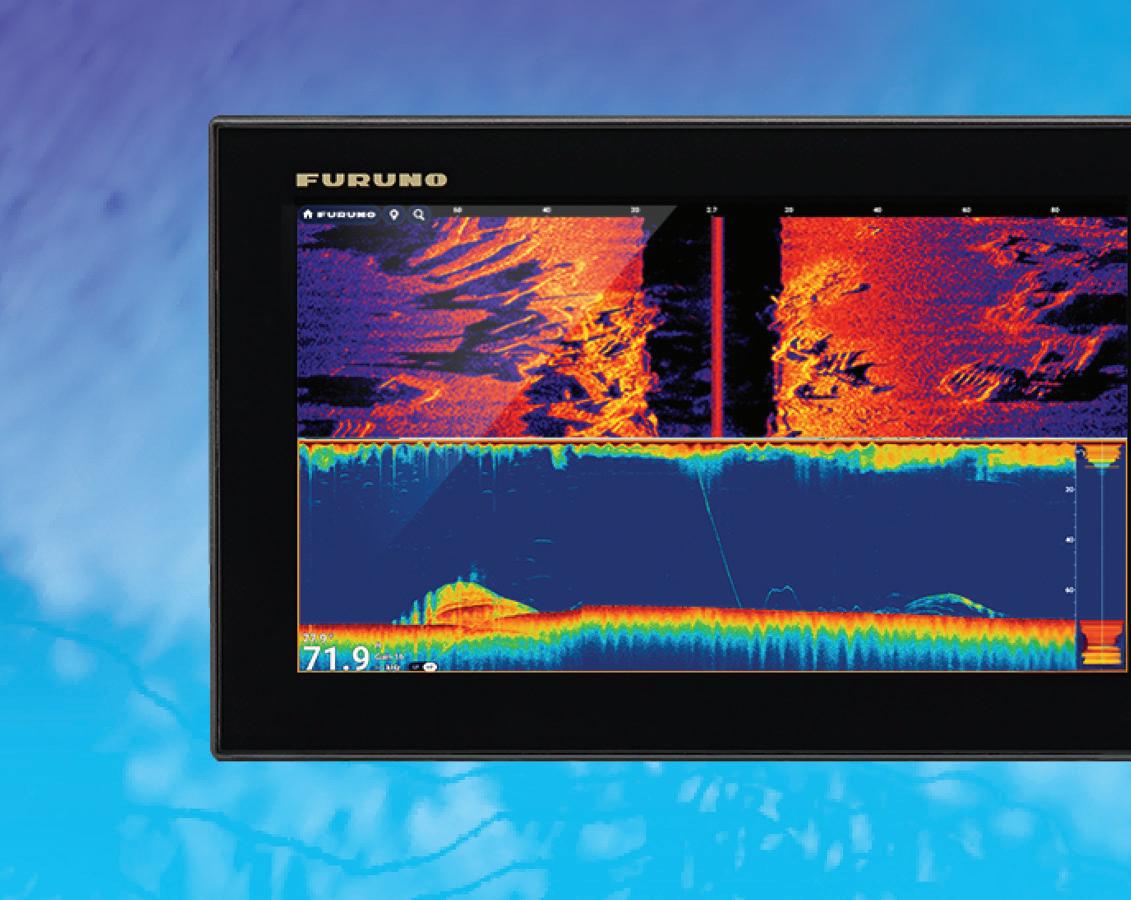

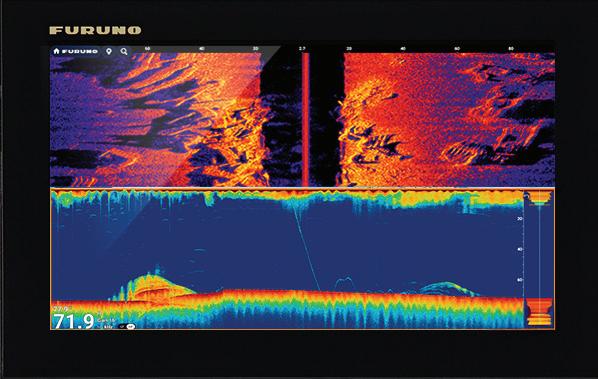
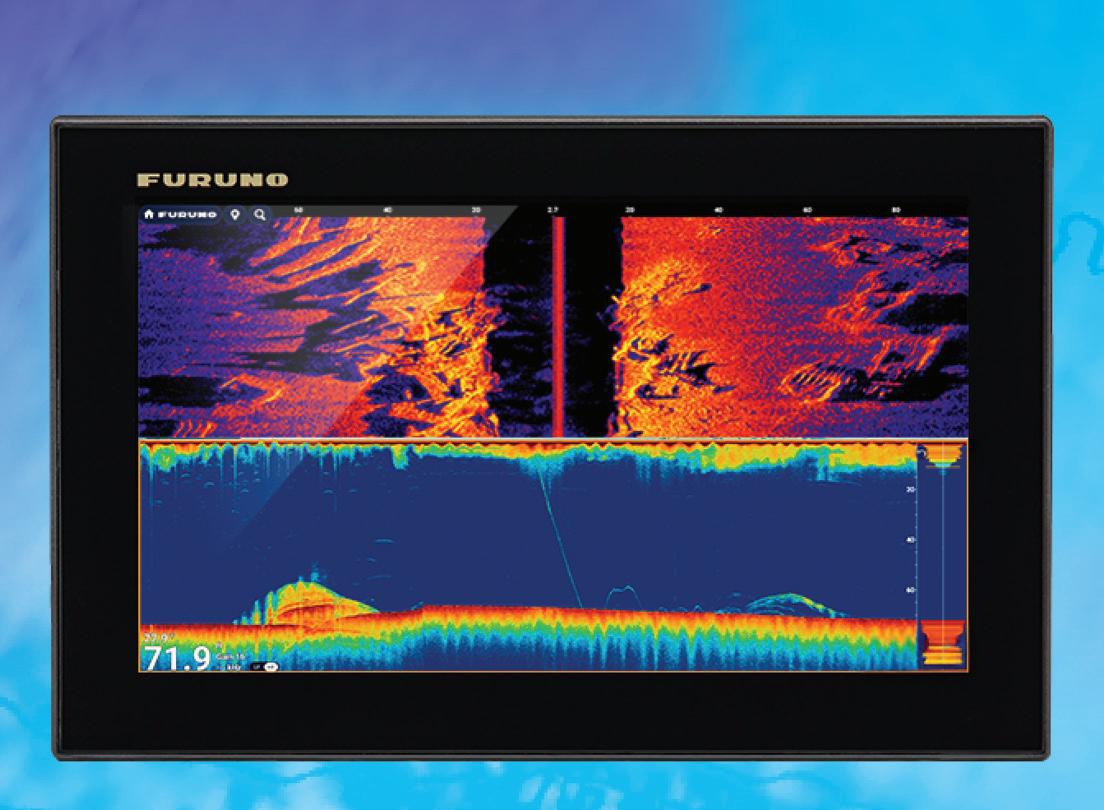
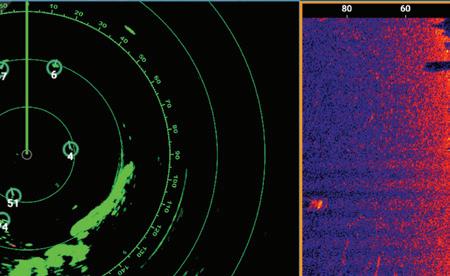
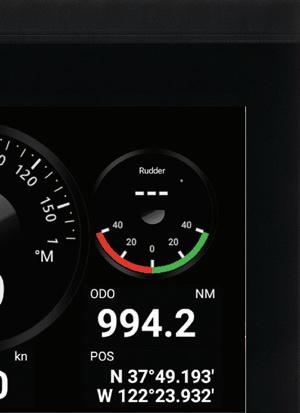




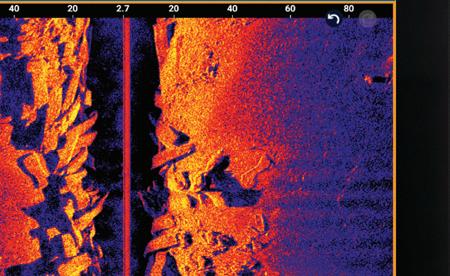










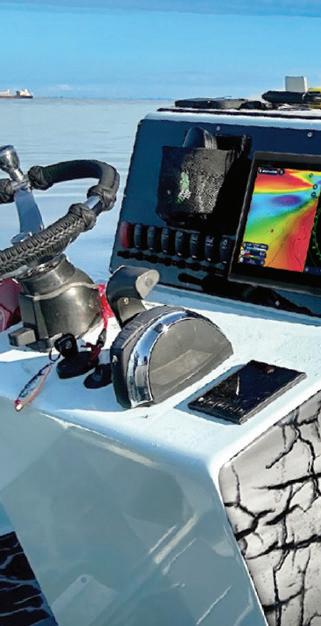





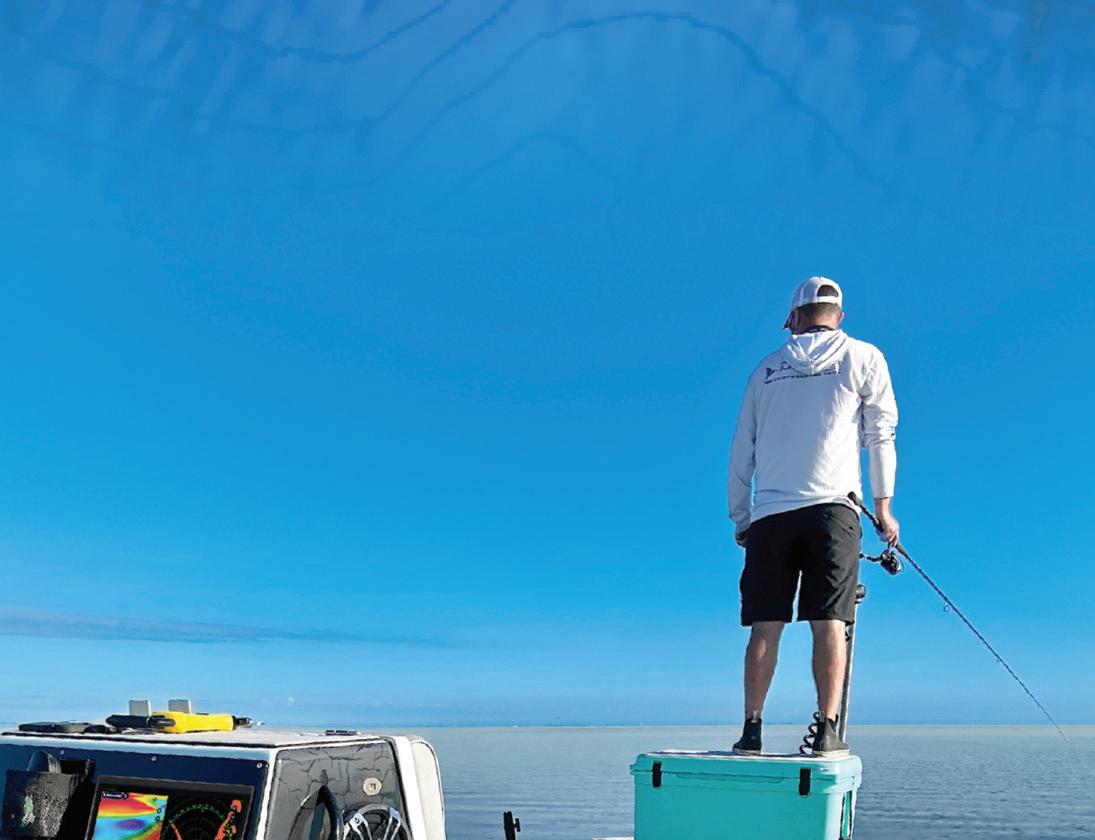
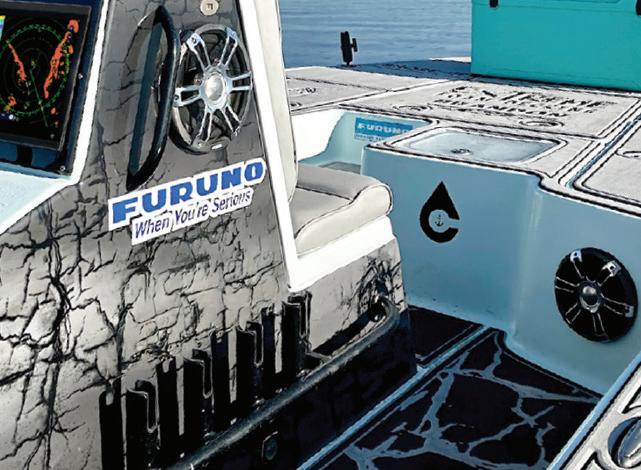



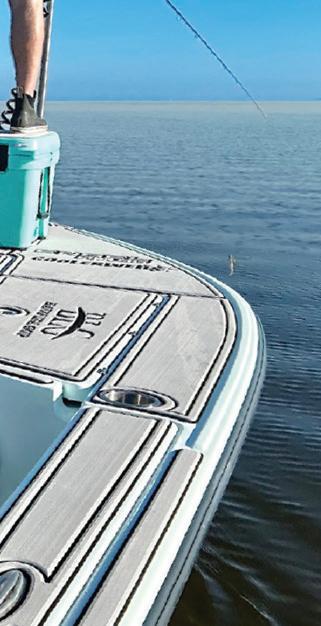





With this streamlined MFD, Furuno is bringing big-boat confidence to everyone. & More Fish












Less Stress





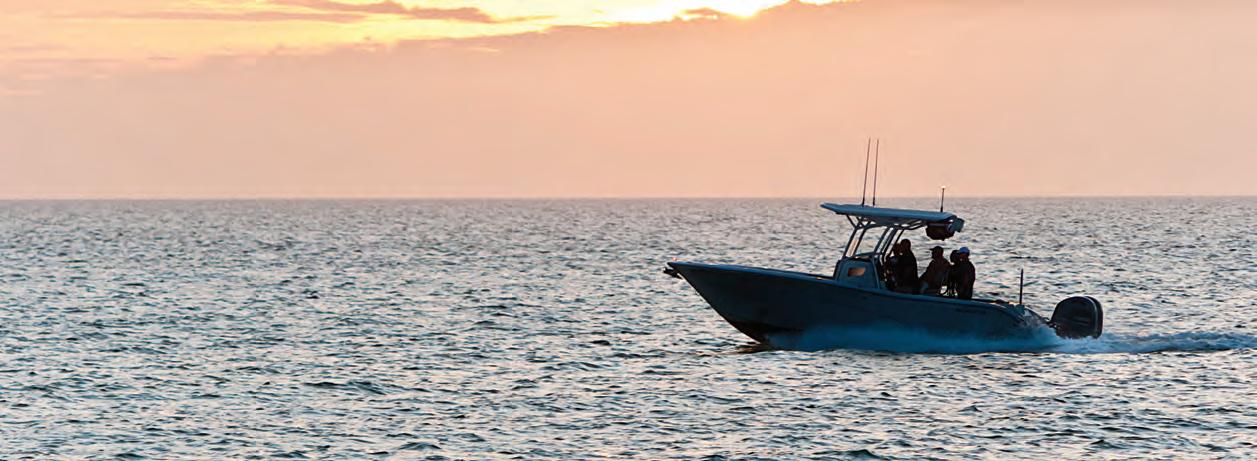
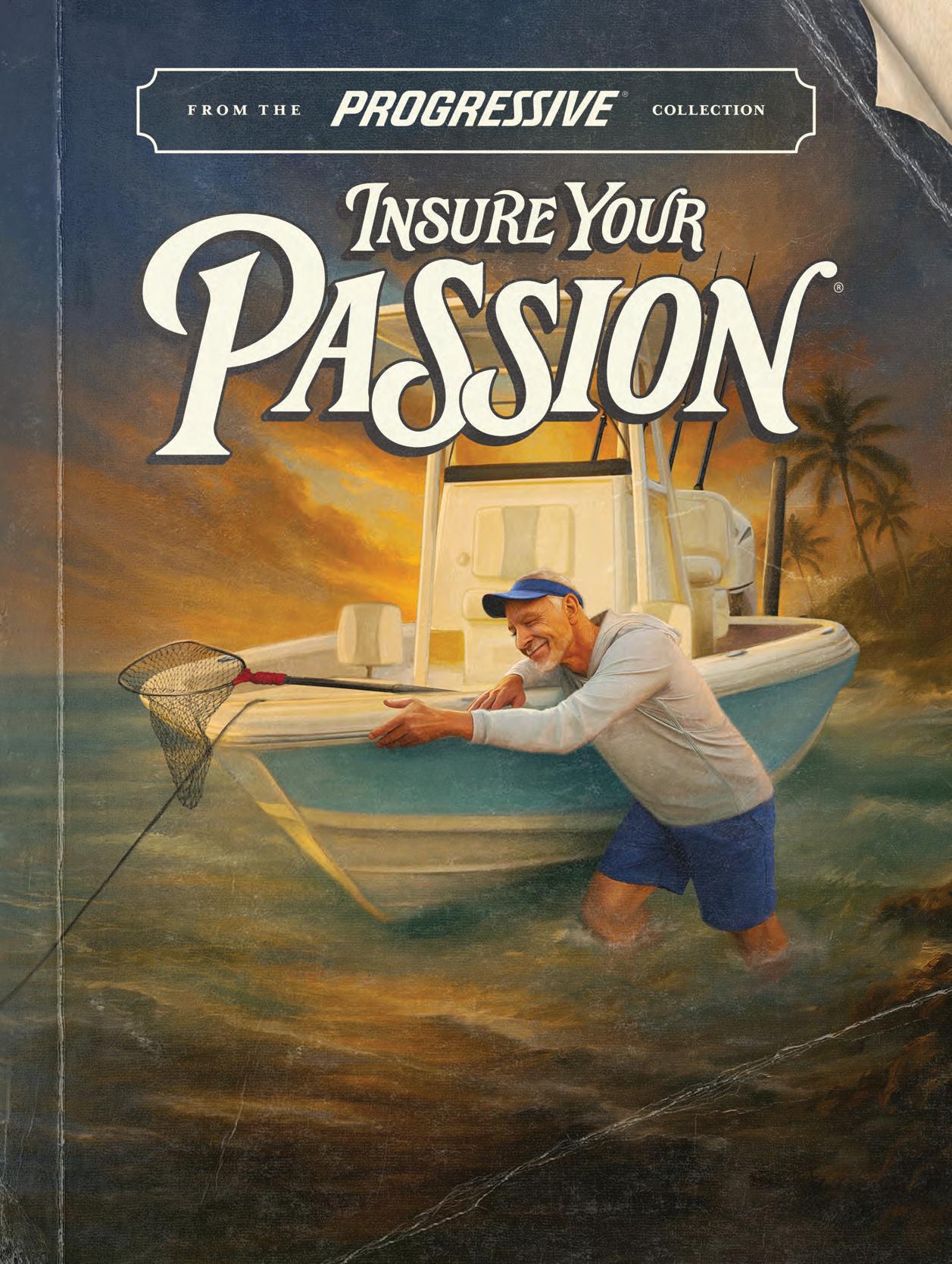
Are you ready to embark on your next on-water adventure? Before you set sail, here are fve things to know about boat insurance.
1. Boat insurance isn’t just for accidents
With comprehensive coverage, you’ll also be protected fnancially for theft, vandalism, and unexpected events like storms if you need repairs or replacements due to damage.
Accidents can happen to anyone
When accidents happen, boat insurance offers liability coverage for damages or injuries you cause while boating, up to specifed limits. It can also cover lawsuit costs if you’re sued.
3. Boat insurance can cover medical payments
Boat insurance offers a range of optional medical payments coverage limits, helping to cover medical expenses if you’re in an accident or someone is hurt on your boat, regardless of fault.
4. Most lenders require boat insurance
If you fnanced your boat, you’ll likely need boat insurance since most lenders require boat insurance to protect their investment. Additionally, some marinas or municipalities require proof of insurance for docking.
5. Progressive offers specialized boat coverages
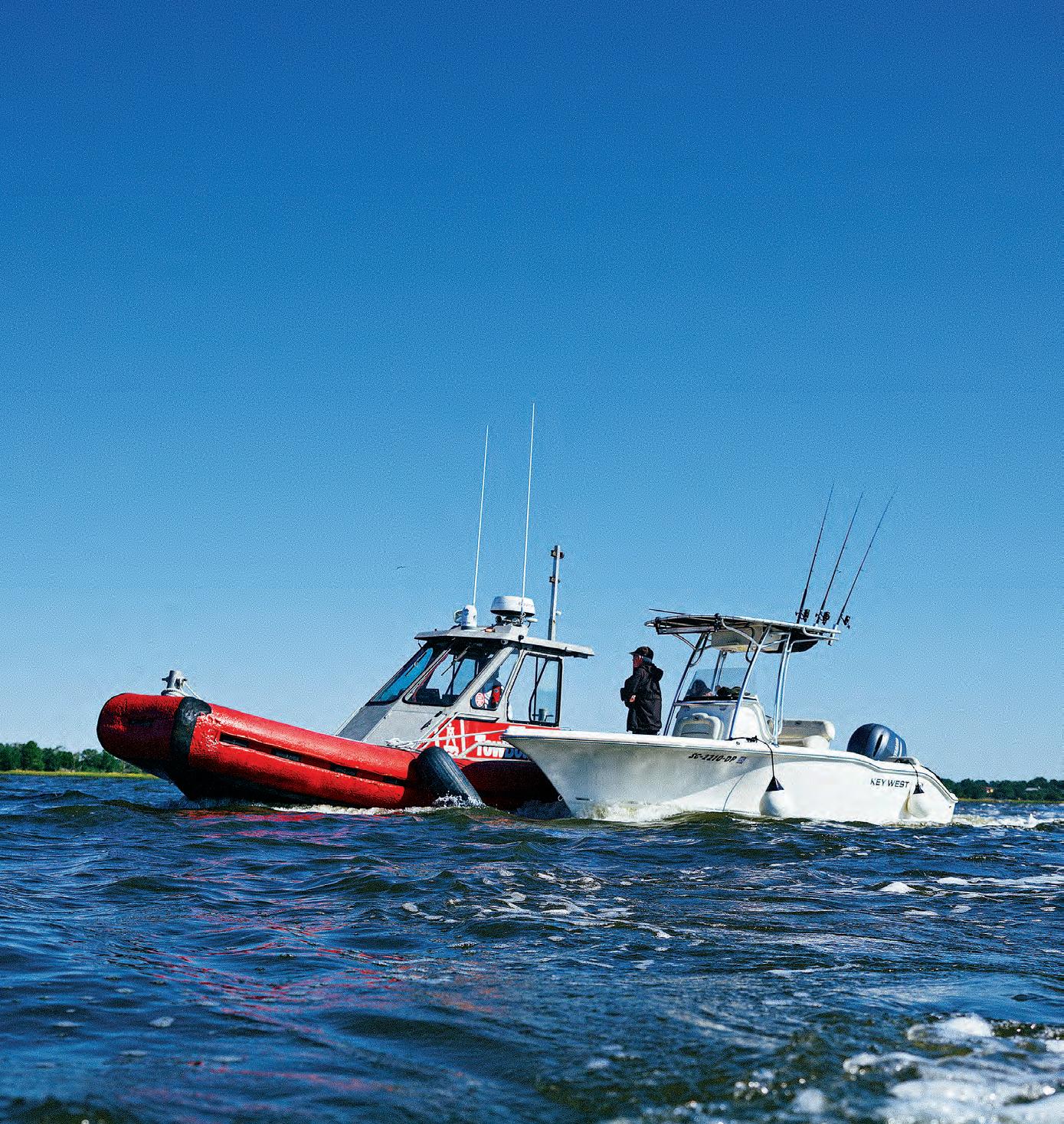
Ever worry about getting stuck on the water?
Progressive’s Sign & Glide® On-Water Towing coverage** can help. It’s an additional coverage that steps in if your boat is disabled or breaks down on the water, paying for on-water towing, jump starts, soft ungroundings, and fuel delivery. Fuel cost isn’t included.
Don’t let unforeseen circumstances disrupt your voyage. Cruise with confdence thanks to Progressive Boat insurance. Because when it comes to your boat, peace of mind is the ultimate luxury.
Scan to get a quote in as little as 4 minutes.
to learn more.














By A. deGruchy
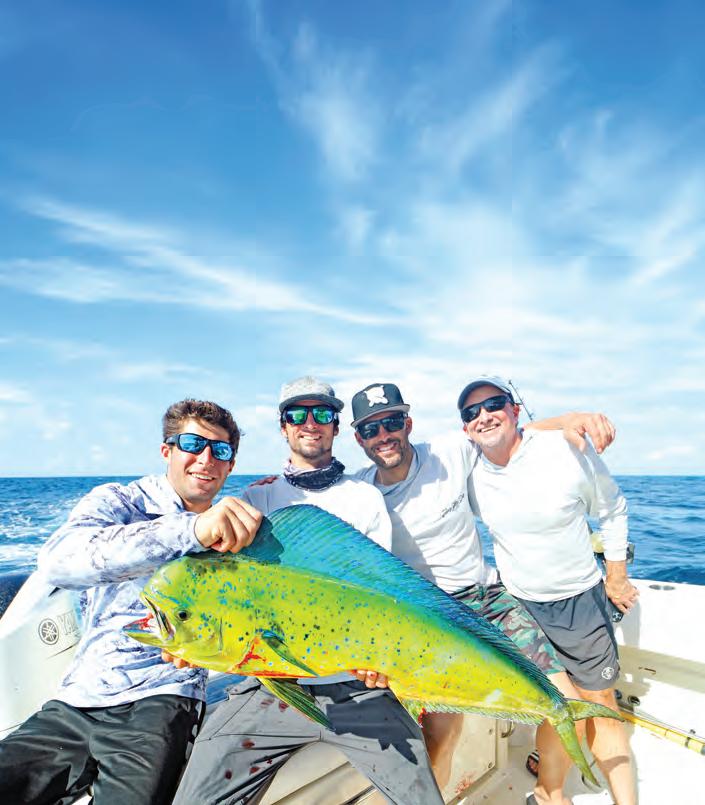
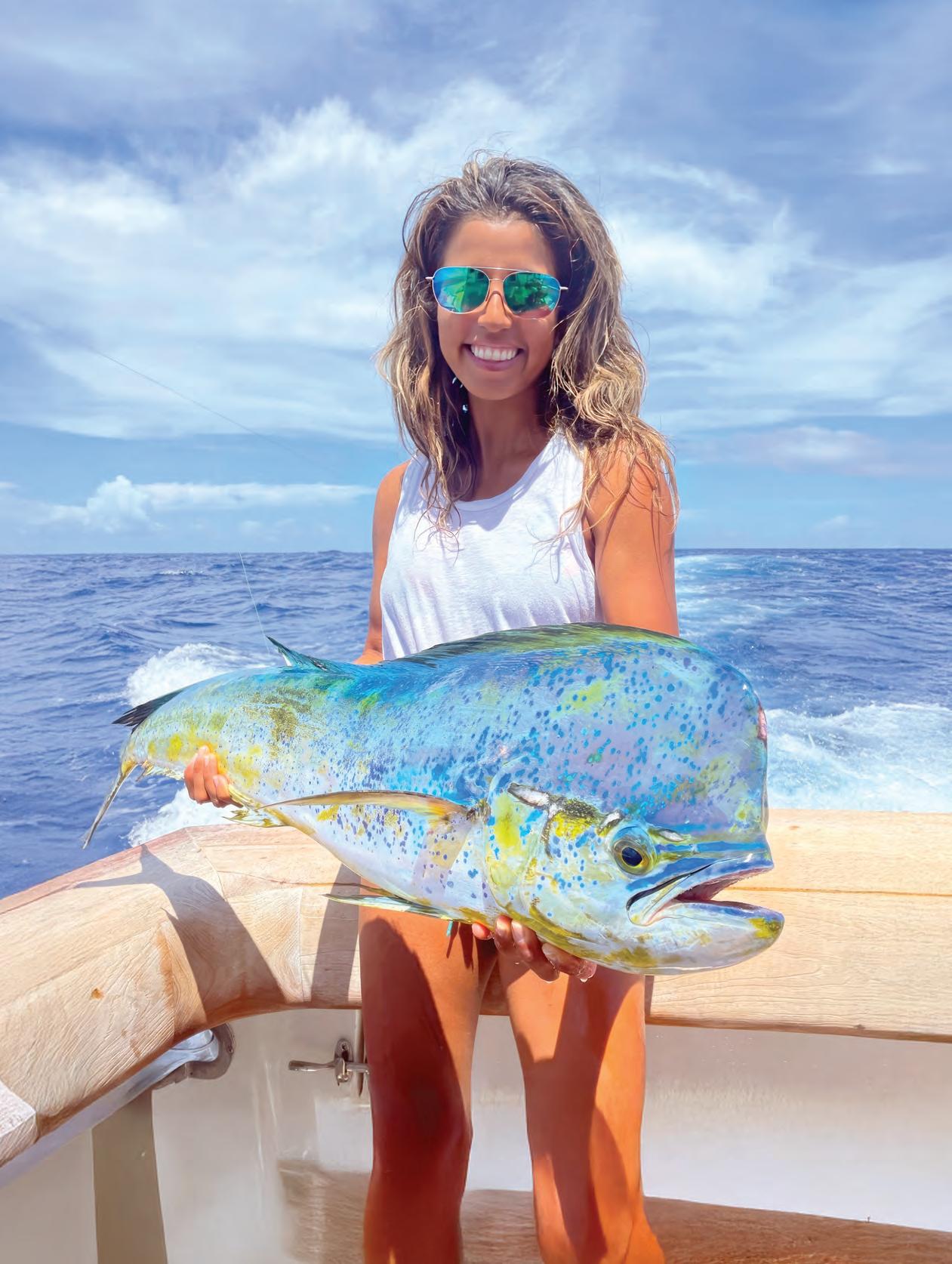
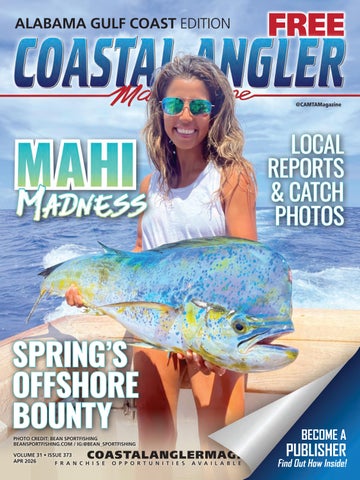
Mahi season is one of those drop everything and go times of year, and when we begin to slide from spring into summer, you can usually count on schools showing up o!shore. e warmer the water, the better it gets, especially when you nd clean blue water, good current edges, weed lines, oating debris, or any kind of structure holding bait in that 75- to 82-degree range. Fishing with Bean Sport shing in the Florida Keys and other parts of the state, over the past few years we’ve de nitely seen more smaller sh and fewer big cows and bulls, but that doesn’t mean they’re gone. When conditions line up, there’s always a chance a quality mahi-mahi is mixed in with the schoolies.
Mahi love anything moving, so live bait is tough to beat, and when they’re really red up, you can even catch them on y. Tackle-wise, we like running a 6500 size setup because you never know when a better sh shows up. e Penn Slammer IV 6500 paired with a Carnage III rod is a go-to for us, and the Penn Spin sher VII 6500 spinning combo is another solid option. We’ve had great success using the Mustad 7766D 6/0 hook, and for bait we’ll typically sh whitebait or troll Islamorada Flyers depending on the day.
When it comes to the table, blackened or fried mahi is hard to beat, and we only keep what we’re going to eat that day. Even though mahi are one of the fastest-growing sh in the ocean, conservation still matters, and being mindful about what you harvest goes a long way.
Bean Sport shing can run this type of trip, but it’s highly weather dependent o!shore. If you’re looking to book a dedicated o!shore charter in e Keys, I highly recommend LegaSea Charters. Capt. Joey can be reached at legaseacharters.com.
If you’re planning on visiting Islamorada, book at the fabulous ree Waters Resort and reach out to us about a special captain’s discount.
Follow deGruchy’s adventures on Instagram @bean_sport shing and on YouTube @BeanSport shing. To book a charter, visit beansport shing.com.



Advertise your business throughout Alabama
ACADEMT FOLEY
BALDWIN WELCOME CENTER
BASS PRO SHOPS
BEACH BUM OUTDOORS
BLUE GILL
BOA/BLUEWATER
BRUNSON’S NET SUPPLY
COASTAL LEADERS GROUP AT THE WHARF
EMERALD COAST MARINE
FELIX’S

GRANDER MARINE
GRANDER MARINE- WHARF
GULF SHORES BOAT SALES
GULF SHORES WALMART
HOOKED UP BAIT & TACKLE
J&M TACKLE
LARTIQUE’S SEAFOOD MARKET
LEGENDARY MARINA
LOST BAY TACKLE
MAGNOLIA BLOSSOM CAFE
MOMENTUM MAINE RV
ACADEMY SPORTS
ACADEMY SPORTS FESTIVAL CENTER
ALABAMA AQUARIUM
BIG BAD BREAKFAST
CAJUN CORNER
CHEVRON
DAUPHIN ISLAND WELCOME CENTER
DIP SEAFOOD MUDBUGS
DOG RIVER MARINA & BOAT WORKS
EZN STORAGE & DETAIL
FULL THROTTLE
GRAND BAY WELCOME CENTER
GREER’S MARKET
JEMISON’S BAIT & TACKLE
LARTIQUE’S ON THE HILL
RECREATIONAL SALES & SERVICES
OBA BOAT SALES
OYSTER HOUSE
PARADISE MARINE CENTER
R&R SEAFOOD
RALPH & KACOO’S
ROBERTSDALE WALMART
SAFE HARBOR MARINA
SAM’S BAIT & TACKLE
SAN ROC CAY MARINA
SAUNDERS YACHTWORKS
WALMART FOLEY
SARALAND WALMART
SHIP & SHORE
SOUTHERN BAIT & TACKLE
UJ CHEVROLET
WEST MARINE
WETLINE APPAREL
WIGMAN’S ACE HARDWARE
By Coastal Angler Magazine
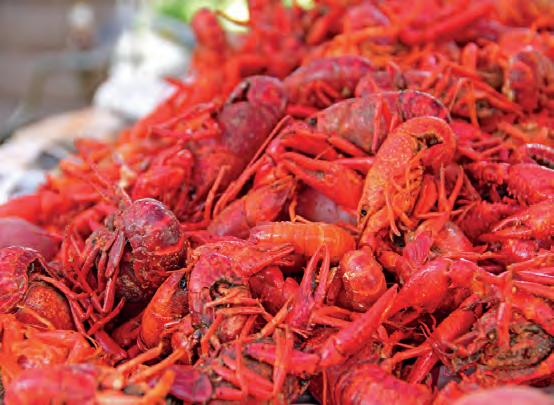
On the Gulf Coast, a crawfish boil is never just a meal — it’s an event. There’s the steam rolling off the pot, the newspaper-covered tables, the stories that get bigger with every round, and someone always insisting, “Peel a few extra, just in case.”
And without fail, the next morning there’s a container of crawfish tails sitting in the fridge. The good news? That’s not a problem. That’s opportunity.
Leftover crawfish tails already carry the flavor of the boil — the spice blend, the heat, the time spent soaking. They don’t need much to turn into something completely different.
A skillet, real butter, fresh garlic, and a little brightness from lemon is enough to transform them into a rich, comforting dish that feels planned instead of pieced together.
The most important rule is simple: treat them gently.
Crawfish are fully cooked when they come out of the pot. All you’re doing now is warming them through and layering flavor. Keep the heat low, don’t walk away from the skillet, and pull them off before they have a chance to toughen up.
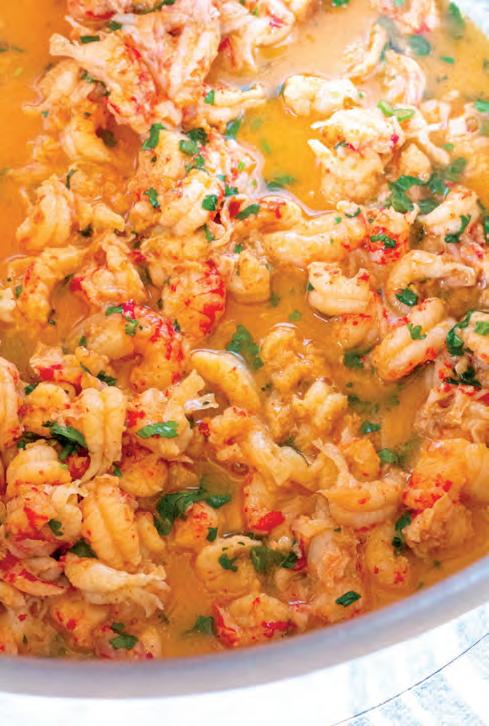
This Dockside Garlic Butter Crawfish recipe is perfect for stretching the life of a good boil. Spoon it over white rice for a quick supper, toss it with pasta for something a little heartier, or serve it with toasted French bread and let everyone dip straight into the skillet.
Because down here, we don’t let good seafood go to waste — and a great boil should always have a second act.

Ingredients:
About 24oz cooked Louisiana crawfish tails (thawed and drained if frozen)
1 cup butter
2 fresh garlic cloves, minced fine
1 tablespoon sliced green onions
1 tablespoon chopped parsley
1 teaspoon fresh lemon juice
1 teaspoon Louisiana hot sauce
¼ teaspoon Cajun or Creole seasoning
¼ teaspoon cracked black pepper
Preparation:

1.Place crawfish in a bowl and check for stray shell pieces or visible vein. Set aside.
2.Melt and season: In a skillet over medium-low heat, melt the butter. Stir in garlic and cook just until fragrant, about 30 seconds. Add green onions and stir briefly.
3.Warm gently: Fold crawfish tails into the butter mixture and heat 1–2 minutes, just until warmed thro
4. Finish and serve: Remove from heat and stir in Cajun seasoning, pepper, hot sauce, parsley, and lemon juice. Taste and adjust if needed. Serve over rice, pasta, or toasted French bread.













Along Alabama’s Gulf Coast, the water is part of everyday life. It’s the early morning runs out of Perdido Pass, the sound of shrimp popping along a grass flat, and the anticipation of a tight line when a redfish finally commits to a bait. The Gulf has given anglers along this coast generations of incredible fishing, but keeping it that way requires a little stewardship from the people who enjoy it most.
For many Gulf Coast anglers, fishing isn’t just about filling the cooler. It’s about the experience—the sunrise over calm water, the stories told at the dock, and the traditions passed down from parents to kids and friends to neighbors. Protecting these waters ensures that those moments are still waiting for the next generation.
One of the easiest ways anglers can help is by respecting size and bag limits. Regulations may change season to season, but they’re designed with one goal in mind—keeping fish populations healthy for the long haul. Taking what you plan to use and releasing the rest helps ensure species like speckled trout, redfish, and snapper remain abundant for years to come.
Practicing responsible catch and release can also make a big difference. Simple things—using circle hooks when fishing live bait, minimizing the time fish spend out of the water, and handling them carefully—can greatly improve survival after release. A healthy release today can mean another angler’s memorable catch tomorrow.
Keeping the Gulf clean is another responsibility that falls on everyone who spends time on the water. Discarded fishing line, plastic packaging, and bait containers can harm marine life and damage the environment. Taking a moment to properly dispose of trash—or even picking up debris left behind—helps protect the waters we all depend on.
Anglers can also help by protecting the habitats that make Gulf fishing so productive. Seagrass beds, oyster reefs, and marsh edges serve as nurseries for countless species. These areas support everything from baitfish and shrimp to the fish we spend our days chasing. Being mindful when running shallow water and avoiding unnecessary damage to these areas goes a long way toward keeping the ecosystem healthy.
The Gulf has always been a place where fishing stories begin—where the fish that got away somehow gets a little bigger every time it’s told. By respecting the resource and taking care of the waters we fish, anglers play a direct role in protecting that tradition.
After all, the future of Gulf Coast fishing depends on the choices we make every time we leave the dock.
March on the Gulf Coast is that in-between month. One weekend still feels like winter, the next has you itching to get back on the water. And when that first perfect weather window shows up, you don’t want to spend it troubleshooting at the dock.
Start with the basics. Check your battery charge and clean any corrosion from the terminals. A weak battery has a way of revealing itself at the worst possible moment. Look over your fuel lines and primer bulb, and if the fuel has been sitting since last fall, consider replacing it. Old gas can turn a great day into a long ride home.
Before you ever leave the driveway, test your bilge pump and livewell. It takes seconds and can save you from unnecessary stress. Give your safety gear a once-over too — make sure life jackets are in good shape, your fire extinguisher is charged, and everything is easy to access.
Don’t forget the trailer. Check tire pressure, inspect your straps, and confirm the lights are working. A blown tire or wiring issue on the way to the ramp isn’t how anyone wants to start the season.
A little preparation now means when the fish start moving and the weather lines up, you’re ready to launch — not repair. Because on the Gulf Coast, spring doesn’t wait, and neither should you.














FBY: DUSTIN JACKSON
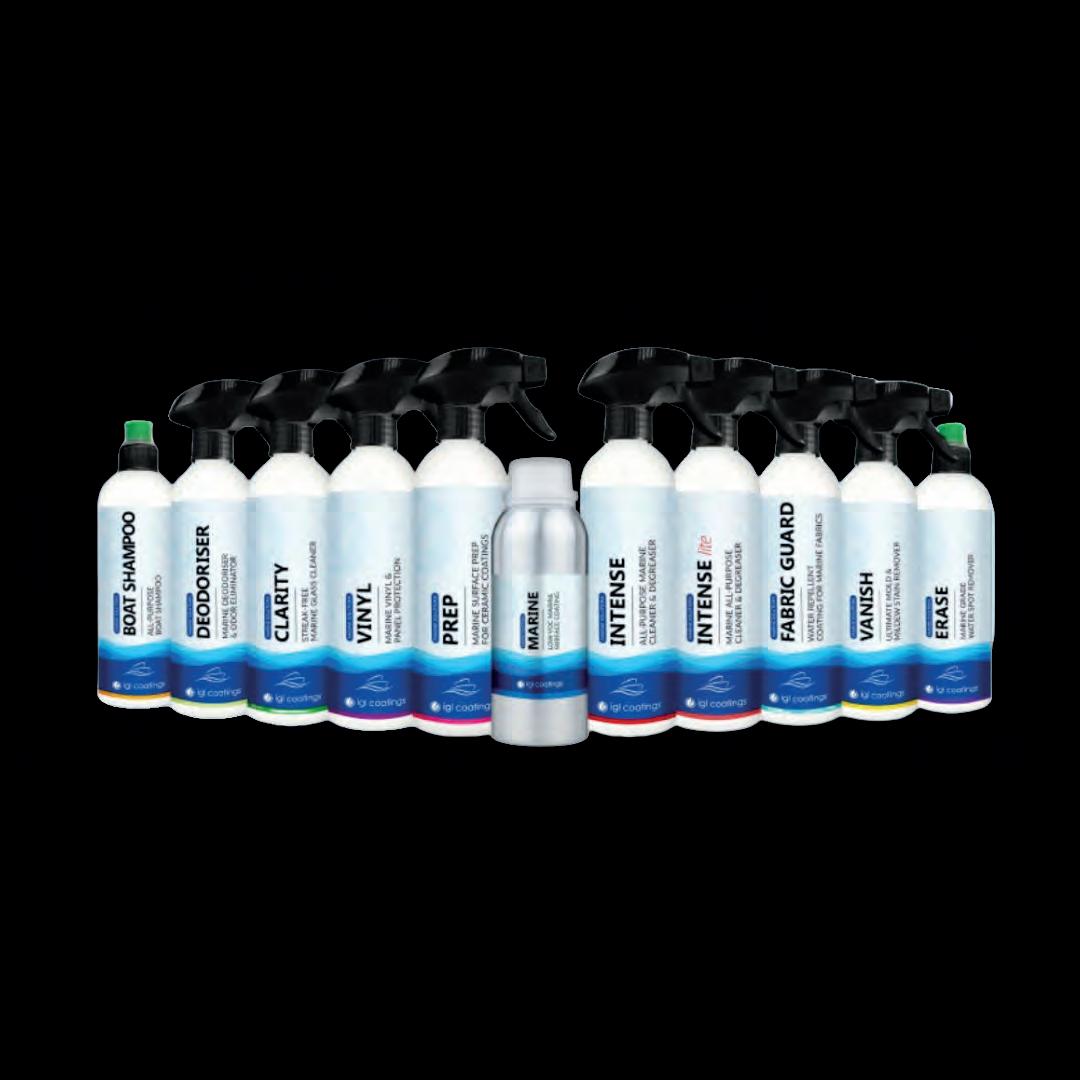
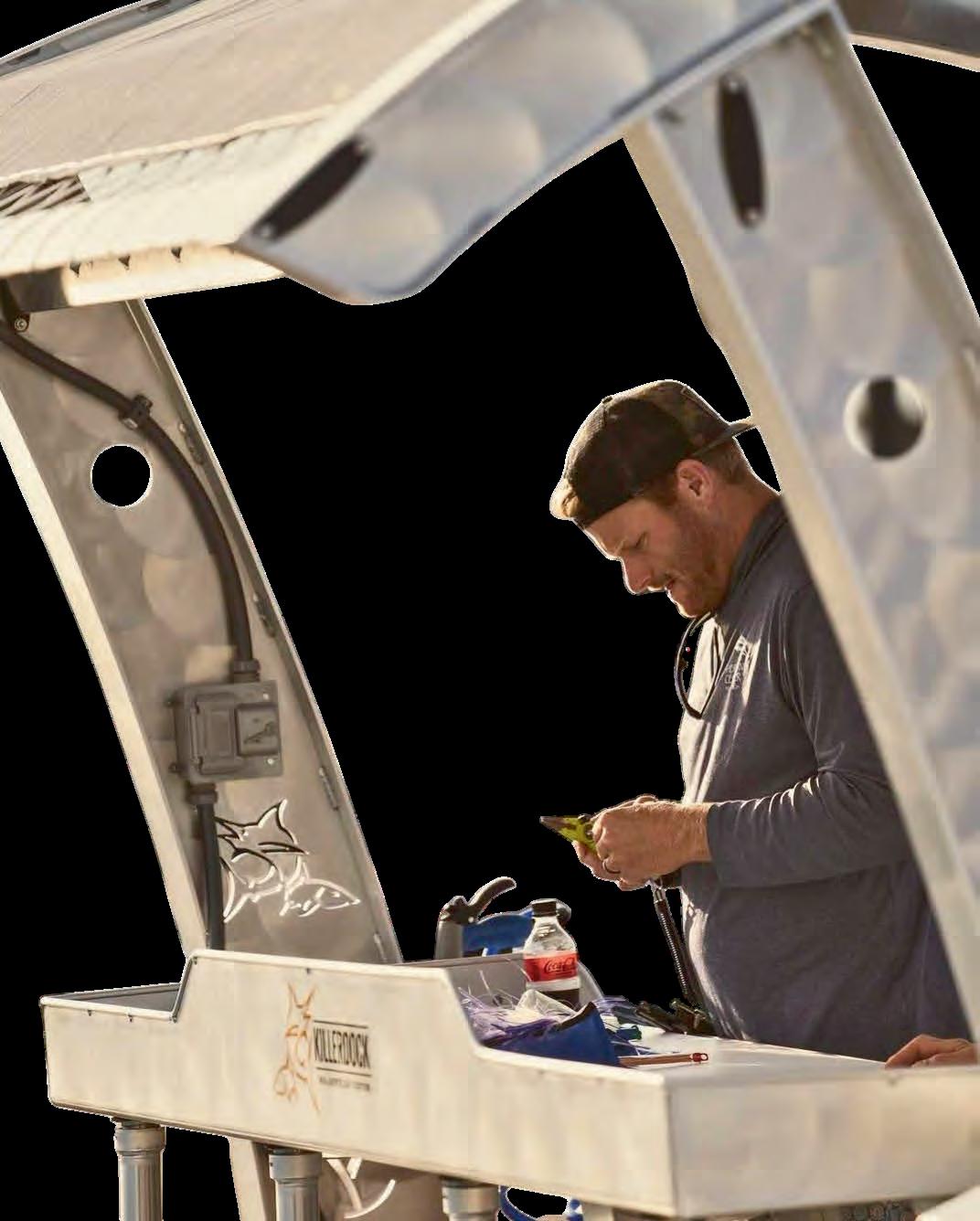
or many boat owners, giving the boat a good wash after a trip feels like enough to keep it in good shape. Washing is important, especially in a saltwater environment, but a wash alone only removes surface dirt and salt. Over time minerals, contaminants, and constant sun exposure begin to break down the gel coat. When that happens oxidation slowly forms and the boat starts to look dull and chalky. Once oxidation begins it also becomes much harder to keep the boat clean.
This is where professional marine detailing really makes a difference.
A professional detail goes much deeper than a normal wash. A trained detailer removes built up contaminants, corrects oxidation, polishes the gel coat, and applies protection designed specifically for marine conditions. These steps restore the surface and add protection against saltwater, UV exposure, and everyday use.
The biggest advantage is not just how the boat looks. It is how much easier the boat becomes to maintain.
When a boat has been professionally detailed the surface is smoother and properly protected. Salt, grime, and algae do not stick to the surface nearly as easily. That means your normal washes become quicker, easier, and much more effective.
Boats that only receive occasional washes slowly build up oxidation and staining. Each year it becomes harder to clean and eventually requires more serious restoration work.
Think of professional detailing as preventative maintenance for your boat. An annual professional detail protects the gel coat, preserves the boat’s value, and makes regular cleaning much easier all season long.
Need extra protection for your vessel? Contact EZN Detail and our team will get you taken care of!










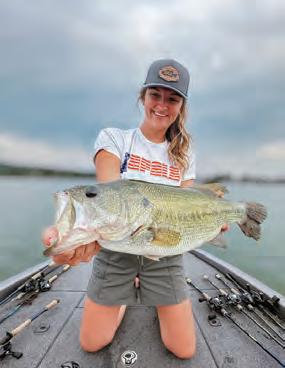
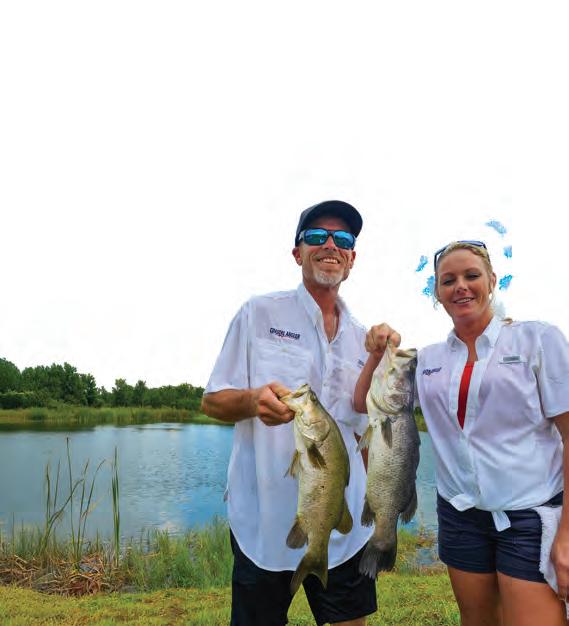
pring brings one of the most exciting freshwater fishing seasons along the inland waters of the Alabama Gulf Coast. As temperatures begin to rise and daylight increases, both bass and crappie become more active, offering anglers excellent opportunities to get on the water and enjoy productive fishing close to home.
Largemouth bass move into shallow areas during the spring as they prepare to spawn. Look for them around structure such as fallen trees, grass edges, docks, and shallow points. Early in the season, slow-moving lures like soft plastics, jigs, and spinnerbaits work well as bass transition from deeper winter water into warmer shallows. As the water continues to warm, topwater lures can also become effective during early morning and late afternoon hours.
Crappie fishing also reaches its peak in spring. These fish move into shallow coves, creek mouths, and areas with submerged brush or timber. Many anglers find success using small jigs or live minnows under a float, especially when targeting fish holding around structure. Patience and light tackle can make all the difference when crappie are staging near spawning areas.
For coastal anglers who are used to saltwater fishing, spring freshwater trips can provide a refreshing change of pace. Lakes, rivers, and ponds throughout the Alabama Gulf Coast region offer accessible opportunities to catch quality bass and crappie without traveling far from the coast.
At Rising Outdoor Initiative, we believe spring fishing is about more than just the catch. It’s a chance to introduce new anglers to freshwater fishing, enjoy time outdoors, and build a deeper appreciation for the natural resources that make the Gulf Coast region so special.
Please Visit ROI’s Website (www.risingoutdoorinitiative.org) for more information or to apply for an outdoor experience.
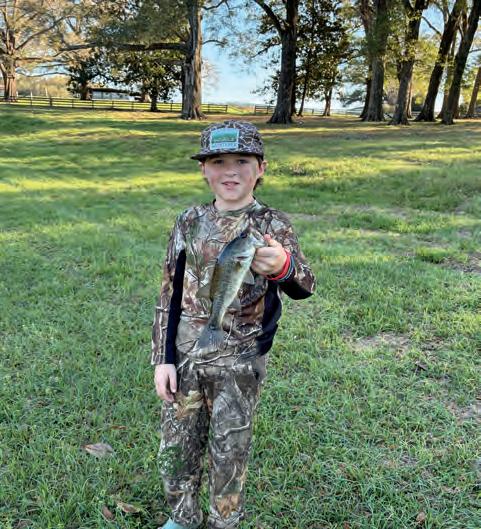
By: Jackie Howell
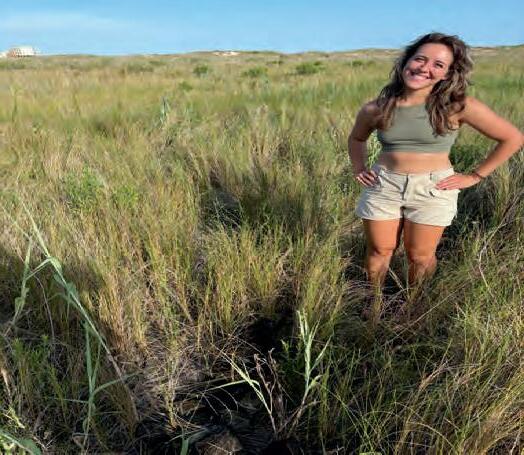
Along the Gulf Coast, barrier islands like Dauphin Island play a vital role in protecting shorelines, supporting wildlife, and maintaining the natural beauty that anglers and outdoor enthusiasts value. Beneath the surface of these sandy ecosystems, complex biological processes quietly sustain the plants that hold dunes together. At University of South Alabama, Master’s candidate Gracie Hankins is studying those processes to better understand how coastal habitats function.
Working in the FUNGGii Lab under Dr. Jeremiah Henning, Gracie’s research focuses on the decomposition of dune plants, as the role this process plays in nutrient cycling is vital for ecosystem productivity. Her field work is being conducted on the west end of Dauphin Island, where several key dune-building plants dominate the landscape. Species such as bitter panicgrass (Panicum amarum), slatmedoe cordgrass/salt hay (Spartina patens), and dune marsh-elder (Iva imbricata) are considered keystone species of the dunes. Their roots stabilize shifting sand, reduce erosion, and create habitat for insects, birds, and other wildlife.
Understanding how these plants break down after they die is an important part of understanding how dunes stay healthy. As plant material decomposes, nutrients are returned to the sand, helping new vegetation grow and strengthening the dune system.
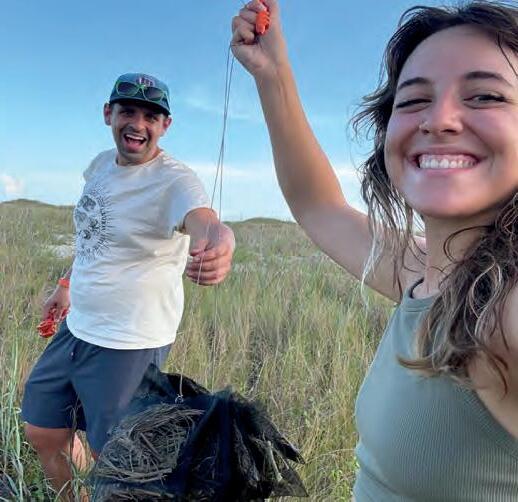
To study this process, Gracie prepared 480 litter bags filled with dried plant material. Each bag weighed about 10 grams at the start of the experiment. Some bags contained only one plant species—Panicum, Spartina, or Iva—while others included a mixture of all three. The bags were then distributed across four experimental conditions: an undisturbed control site, a disturbed site, a nutrient-addition site, and a site with both disturbance and added nutrients.
Every three months, Gracie weights the remaining plant material to track how quickly decomposition occurs under each condition. The project is ongoing, but it has already expanded thanks to a recently secured Walter F Coxe Research Grant from Alabama Audubon. The funding will allow for additional laboratory analysis of litter composition, specifically examining compounds such as lignin and cellulose. These structural components of plant cell walls are much slower to break down, and understanding their abundance may help explain differences in decomposition rates among species.
While her dune research focuses on coastal ecosystems, the second part of Gracie’s work takes place in the lab and reaches far beyond the Gulf Coast. She is also studying fungal symbionts associated with the Ram’s-head Lady Slipper, Cypripedium arietinum, a rare orchid species native to the northeastern United States.
Orchids often rely on fungi in their root systems to obtain nutrients, particularly during early growth. By isolating fungi from root samples, Gracie is helping researchers better understand these complex partnerships. So far, the team has successfully isolated, purified, and identified seven fungal strains from orchid roots. These include several known endophytes, as well as saprophytic and parasitic species.
Another shipment of orchid root samples is expected soon, allowing researchers to investigate whether seasonal changes influence the community of fungal symbionts.
Together, these two research efforts highlight the hidden biological interactions that sustain plant communities—from Gulf Coast dunes to northern forests. For coastal environments like Dauphin Island, understanding these processes may ultimately help scientists develop better strategies for protecting and restoring the fragile landscapes that anglers and wildlife alike depend on.




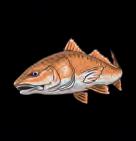
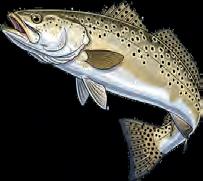
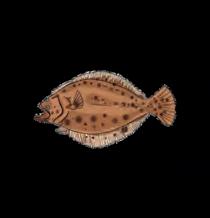



























There’s something about March on the Gulf Coast that just feels like a reset button. The air shifts. The days get longer. And suddenly it’s not about surviving winter — it’s about getting back outside.

For anglers, that means checking tackle boxes and watching water temps. For hunters, it’s scouting, prepping for off-season work, and thinking ahead. For families, it’s weekend trips, cookouts, and any excuse to spend more time outdoors.
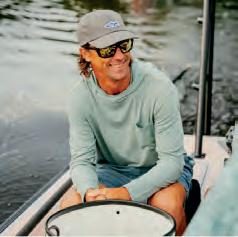

Spring is that sweet spot before the heat settles in. The mornings are cool enough for a hoodie, the afternoons warm enough to shed layers, and the water calls louder every weekend.
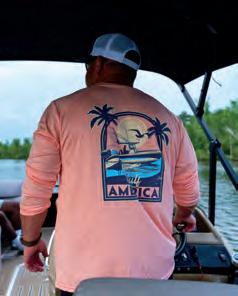
At EZN Outfitters, this is one of our favorite times of year. It’s when customers start coming in with plans — fishing trips, turkey season stories, beach weekends, long days on the bay. And every plan starts with the right gear.
Lightweight performance shirts, durable shorts, hats that actually hold up in the wind, and everyday apparel that transitions from boat to dinner without missing a beat — that’s what spring is all about.
Because on the Gulf Coast, the outdoors isn’t just something we visit. It’s where we live.
Spring’s here. Time to gear up and get after it.
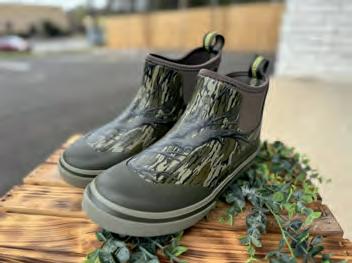
And if you’re going to spend your weekends chasing fish, working land, or soaking up sun, you might as well be comfortable doing it.




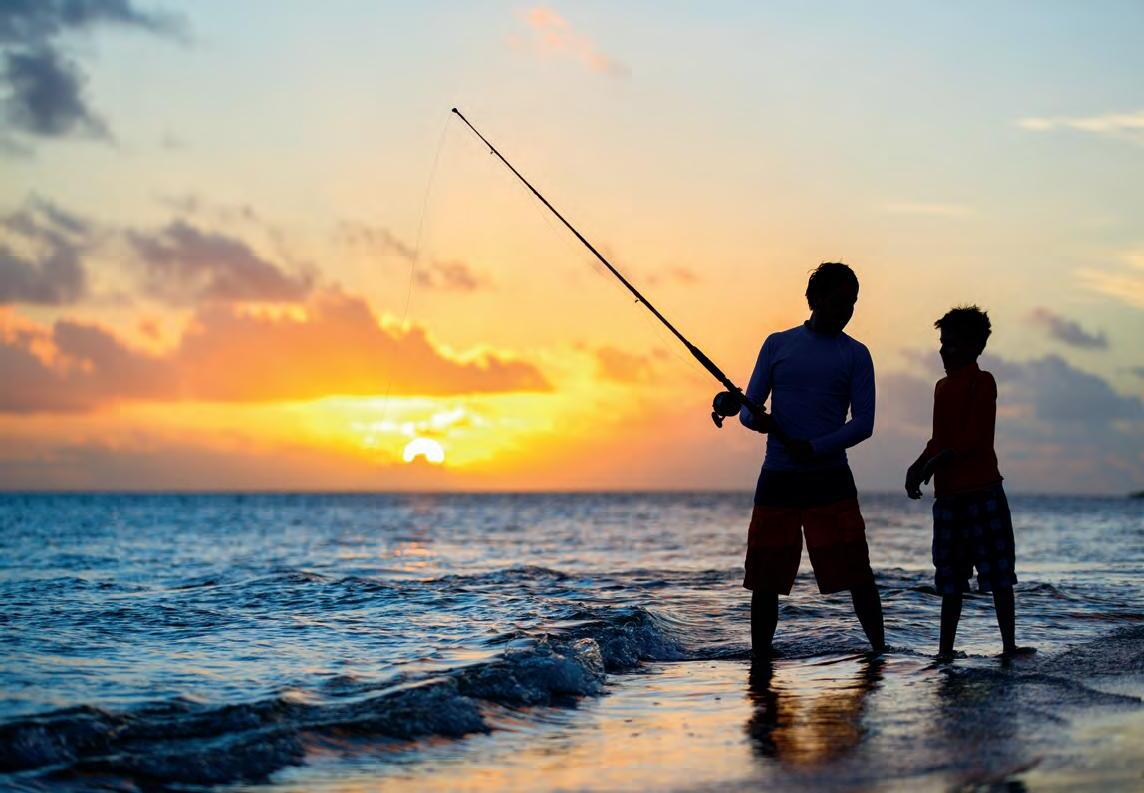
Get in front of 10,000+ outdoor-loving locals and tourists who actually read the ads—because they’re your people.
Build credibility by advertising in a magazine that’s been part of the Gulf Coast community for years. Readers believe what they see here.
Scan the QR Code with your Smartphone to get visit our website and get started!
Stop waiting on word-ofmouth. Reach high-value customers who are ready to spend—on boats, bait, gear, and everything in between.



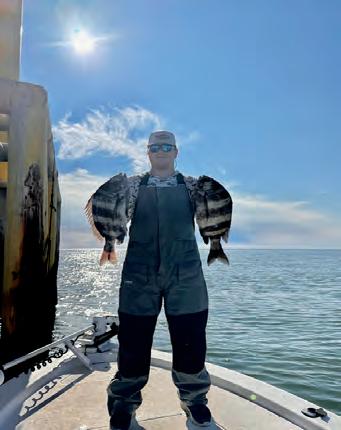


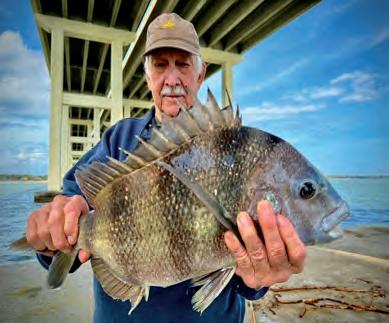
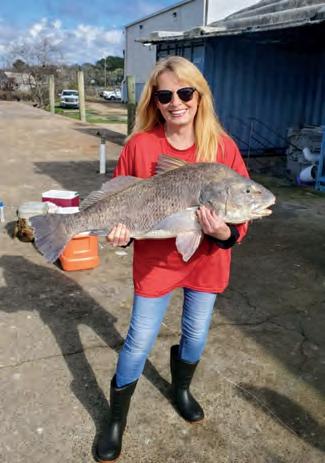

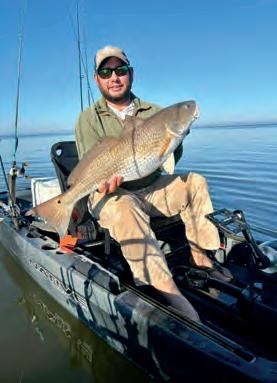
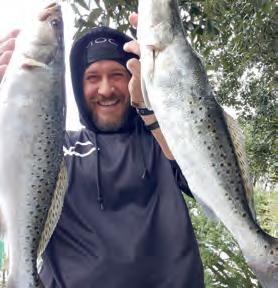
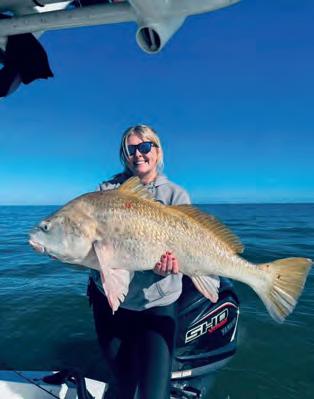







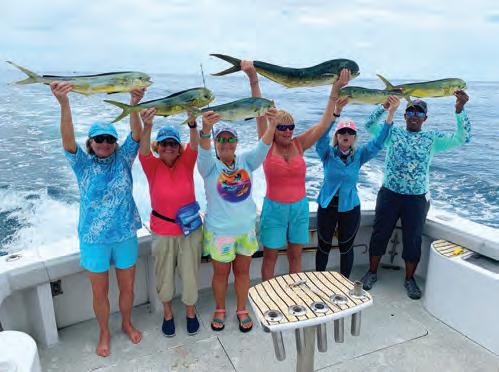






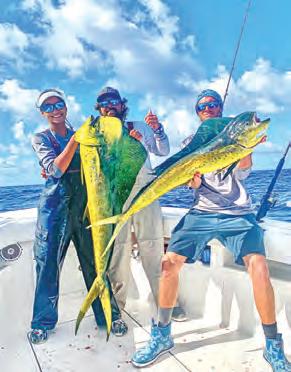


TIM BAREFOOT

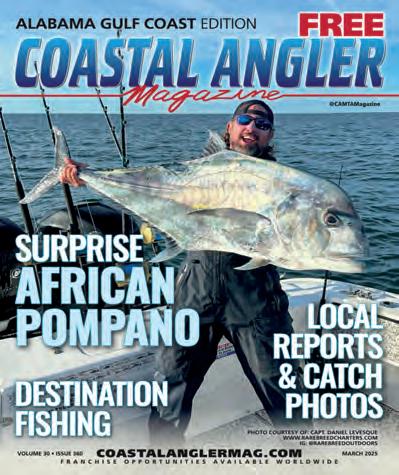
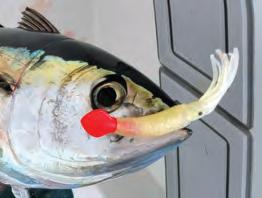
It’s o!cial…say hello to spring. Anglers can now look forward to targeting a wide variety of species, including black n tuna, wahoo, African pompano, and many other sought-a er sh. With these species actively feeding during their migration north, the opportunities for successful catches are abundant. Whether you prefer trolling, dri ing, or bottom shing, the spring months bring a wealth of options to ll your cooler with quality sh.

e troll bite will probably die as soon as the sun gets up around the nine or ten o’clock timeframe. is is when you need to change tactics. Stop trolling. Put the trolling motor over and start making strategic dri s with the light line out while bottom shing. I would also suggest putting a couple baits out under the kite, as this is the most e ective presentation with very little to no leader in the water. Have at least one person dedicated to the kite baits, if you’re shing a kite. is is one of the best times of the year to spend the night, especially here in North Carolina, as the night bite could be crazy good. Put the bright lights out and you will draw the squid, cigar minnows, sardines, and all the predators to you like moths to a porch light. If you have the ability to spend the night, April could be the month you see the ultimate results. Everything including ying sh are very susceptible to a Sibiki rig. Fill the live well with live baits and start shing on the daylight bite. Fish are like us; they like to eat breakfast and dinner, so be there early and late.
Be sure to keep an eye on the recorder while on the dri for the mid water marks. In addition to shing for the snappers, have rods at the ready for sh that show on the recorder way o the bottom. ese may very well be the African pompano, so have a rod ready with a jig that you can re down and erratically jig upwards 25 to 50 feet o the bottom and then let ascend back to the bottom. Repeat over and over as this will get bites! It’s not just African pompano that frequent these deeper waters. During the middle of the day, wahoo can be found surprisingly deep, and tuna also inhabit these depths. It only takes a few wahoo, black n or pompano to make a great box of sh to take home. is is also a good time to target the smaller snapper with smaller baits on “chicken rigs” with small circle hooks. When you’re on a good bite (using small circle hooks) I would strongly recommend feeling the bite, winding tight to it and stopping. is is when another snapper will jump on the second bait. You will load up quickly with delicious groceries when you’re catching two at a time.
Bring the heat… It’s on!
Learn more tips and techniques at barefootcatsandtackle.com and on Barefoot’s YouTube channel: @timbarefoot5698.
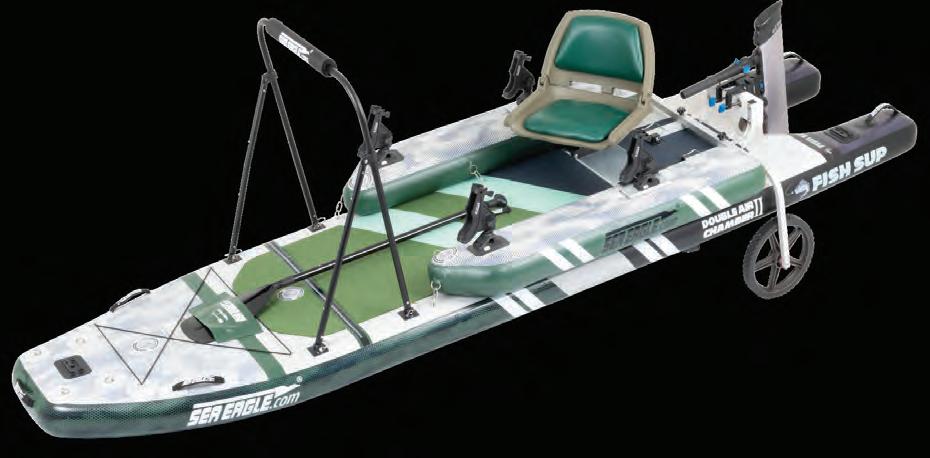
The versatility of the FishSUP™1210 is unmatched! Use it bare bones with just the board, a paddle & your !shing gear or deck it out with swivel seat, side pontoons, casting bar, motor and more! Incredibly stable, extra wide, swallow-tail !shing SUP holds up to 500 lbs! The FS1210 takes electric and gas motors up to 3 hp. There’s even an option for a bow trolling motor.
Choose From 6 Packages
Starting At Just $999
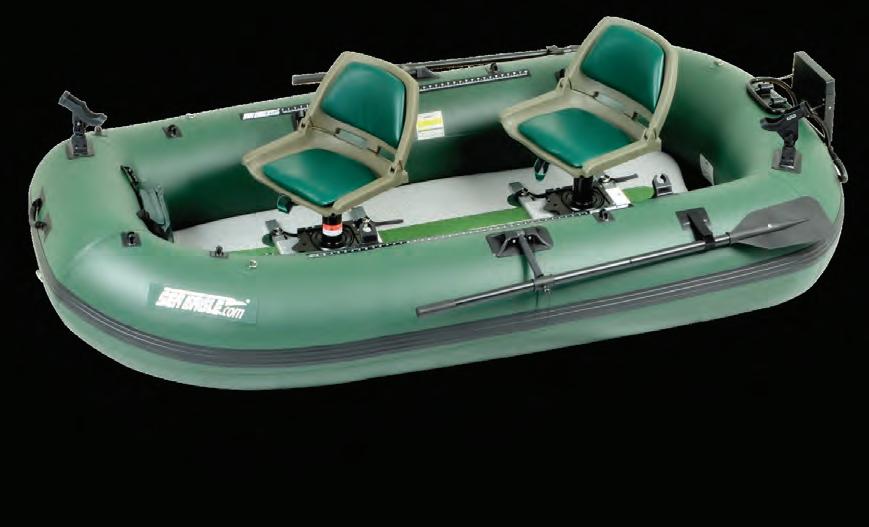
Perfect for !shing rivers, lakes and bays. The STS10 is a lightweight, roomy 1 or 2 person pontoon boat that’s packed with features anglers need & love including 2 built-in !sh rules, 4 built-in rod holders & 2 Scotty® mounts for more rod holders, anchor locks, camera posts or any other Scotty® accessory. Now available with a drop-stitch in atable oor or wooden oorboards.
Choose From 7 Packages
Starting At Just $1449
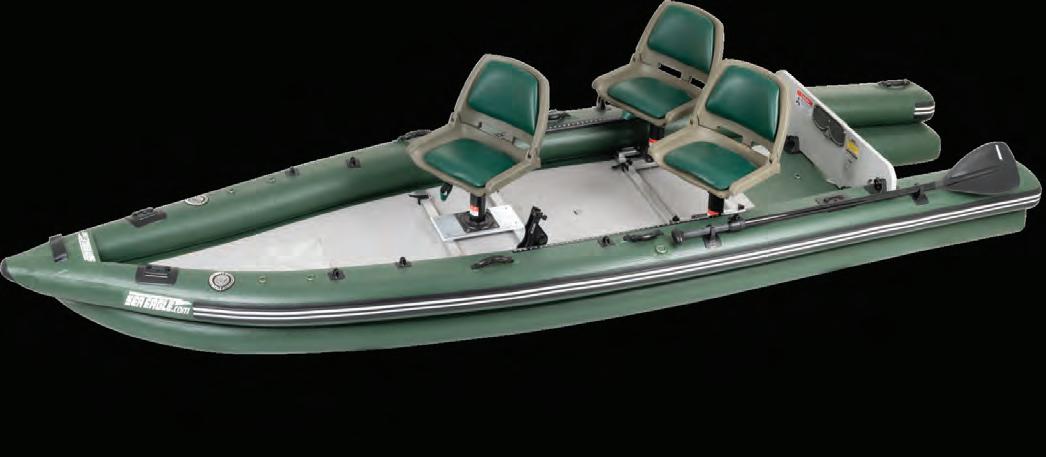
This “low-rider” gives you access to the water to reel in and release !sh easily. With a new patented outside, in atable, rigid keel the FSK16 glides through the water at speeds up to 21 mph to get you to the !sh fast! Perfect for 1-3 anglers and room for plenty of gear.
Choose From 9 Packages
Starting At Just $2999


By Julie Graham- ExploreTRV

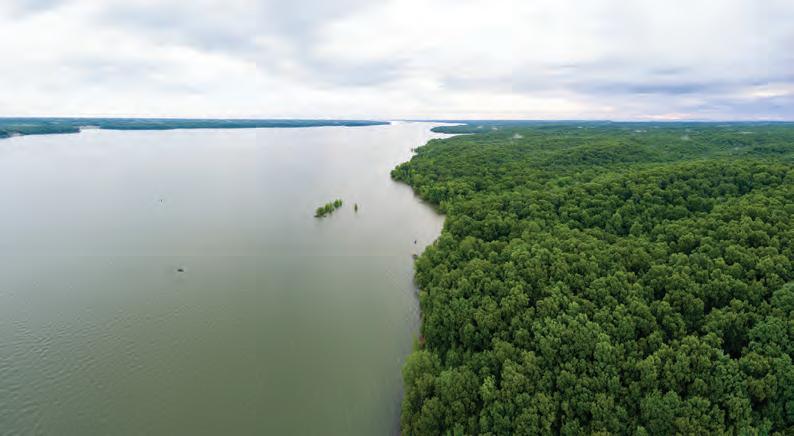
As the last bite of winter gives way to the gentle stirrings of spring, Kentucky Lake comes alive. Located along the western edge of the Bluegrass State, this sprawling body of water—technically a reservoir—has long been a mecca for anglers, especially those in search of springtime crappie.
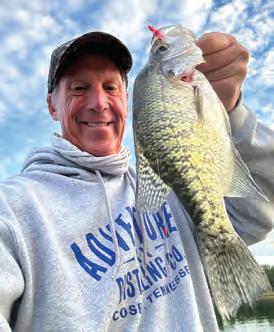
Kentucky Lake stretches a remarkable 184 miles from the Tennessee state line to the northernmost point at the Kentucky Dam making it the largest reservoir in the state and one of the largest in the U.S. e lake was formed in 1944 with the completion of the Kentucky Dam, a key project by the Tennessee Valley Authority (TVA). Today, the lake covers over 160,000 acres, with an average depth of 8-10 feet, though some areas reach even deeper. Its shoreline stretches over 2,000 miles, o ering countless coves, islands, and inlets that make it a paradise for anglers. Fishing enthusiasts quickly discovered the lake’s potential as a world-class destination for crappie, bass, and cat sh, earning it a reputation that has only grown over the decades. Feeding Kentucky Lake are several major tributaries (Blood River, Jonathan Creek, Big Sandy River) that become shing hotspots in early spring, especially where submerged timber


and man-made structures provide cover. Every seasoned angler in this region knows spring is crappie season. As water temperatures creep into the low 60s, crappie begin their migration from deep winter haunts to shallow spawning grounds— brush piles, stumps, and submerged structures along the shoreline. Preferred bait and techniques vary by angler, but some classics stand the test of time. Live minnows, o en rigged under a slip oat, are a go-to for many, especially during the pre-spawn. Jig shing is equally e ective, with popular choices like 1/16 or 1/32 oz. so plastics in chartreuse, white, and monkey milk colors. When the bite gets tough, tipping jigs with a small minnow or switching to hand-tied hair jigs can coax hesitant sh. Long-line trolling and spider rigging also dominate certain sections of the lake, especially in the deeper channels near creek mouths.
Mornings on the lake feel almost sacred this time of year. Fishermen, some in sleek bass boats, others in aluminum ski s passed down through generations, fan out across coves and creek arms, quietly working the banks. e goal is the same: feel the tap of a crappie on the line, set the hook, and haul in what many call the “gold of the lake.” For many, the draw of spring crappie shing isn’t just the thrill of the bite. It’s also the chance to connect with the natural rhythm of the season while sitting in a quiet cove as the dogwoods bloom, passing along stories, rods, and values to the next generation. At its core, Kentucky Lake is more than a reservoir. It’s a living, breathing legacy—a place where history, sport, and stewardship come together on every cast.
For more information on shing licenses and regulations, visit the Kentucky Department of Fish & Wildlife Resources website - fw.ky.gov - or the Tennessee Wildlife Resources Agency website - www.tn.gov/twra.html.



“I never expected it to be so beautiful that it takes your breath away.”
— Kaya C., on Stauer Opals
In a quaint village, nestled between rolling hills, lived a young woman with a deep appreciation for gemstones. Her grandmother gifted her a delicate cross pendant adorned with opals. "e opals shimmered with a mesmerizing play of colors, reflecting hues of blues, greens, and fiery oranges. Her grandmother shared the legend of the opals, believed to bring hope, purity, and luck to those who wore them.
Using this story as inspiration, Stauer brings you the Opal Spirit Cross Pendant. With over 2 total carats of Kyocera lab-created opals set in .925 sterling silver encased in yellow gold, this pendant is a radiant celebration of beauty and craftsmanship. Each opal captivates with a kaleidoscopic dance of fiery oranges blending into oceanic blues, streaked with flashes of vibrant green that seem to come alive with every movement. "e shimmering opals are skillfully arranged to create an enchanting, otherworldly glow, embodying the spirit of hope and harmony.
"is breathtaking combination of color and craftsmanship is available as a limited availability of

only 930 pieces, making it a rare and treasured addition to your jewelry collection. Plus, when you order today, you’ll receive the gold-!nished sterling silver chain—a $69 value—absolutely free!
Don’t miss your chance to own this exclusive tribute to timeless elegance and meaningful symbolism.
Necklace Speci!cations:
• 2 ½ ctw. Kyocera lab opals and DiamondAura® accents
• Yellow gold-finished .925 sterling silver setting
• 18" gold-clad .925 sterling silver chain Opal