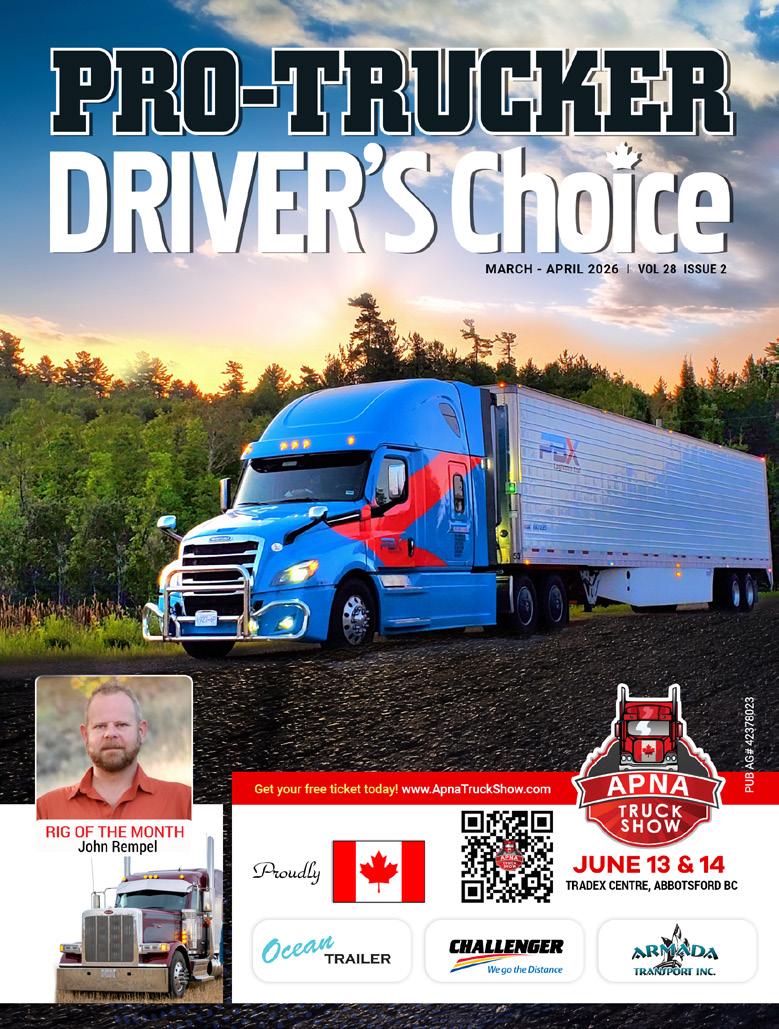
Pro-Trucker Driver Choice March April 2026 Edition
Our dedicated transportation division ensures each client’s portfolio encompasses tailor-made coverages; from private auto, cargo and pollution to D&O, bonding and warehousing. Our unique relationships with major transportation insurers, allows us to negotiate enhanced coverages at the most competitive rates available. Our in-house claims manager follows every claim along to a successful conclusion and is available 24 hours a day, 7 days a week.
If you have any questions concerning a competitive quote on your transportation insurance, or would like to set up a fleet or prorate account, please contact our Commercial Division and speak with one of our transportation specialists.
FROM THE EDITOR’S DESK
BY JOHN WHITE
Maybe It’s Time We Listened
There’s no shortage of opinions about what’s wrong with trucking in Canada right now. The government has its version. Associations have theirs. Consultants have charts and forecasts. But if you really want the truth, grab a coffee at a truck stop before sunrise and sit down with the drivers. They’ll tell you.
They’re not afraid of hard work. Never have been. What’s wearing them down is the squeeze. Rates soften, but expenses don’t. Insurance climbs. Parts cost more. Shop time stretches longer. Fuel bounces around. Somehow, the driver is expected to absorb it all and keep moving. And this “driver shortage”? It’s not just about numbers — it’s about conditions. Respect. Pay that matches responsibility. Real training, not rubber stamps. You don’t keep professionals by racing each other to the bottom.
Enforcement has drivers shaking their heads too. “Driver Inc.” didn’t appear yesterday. The ones playing by the rules have watched others cut corners for years. Now enforcement is increasing, but many are asking why it took so long.
ELDs and Hours of Service? Most drivers believe in safety. But the clock doesn’t understand real life. Snowstorms don’t pause the logbook. Border backups don’t stop the countdown. Detention time still comes off the driver’s clock. There’s nothing more frustrating than running out of hours twenty miles from home, staring at your driveway on the GPS, parked because the screen says you’re done. Worse yet, drivers talk about being forced to drive when they’re exhausted because the clock still has time left — and then being forced to lie in a bunk wide awake because the clock says it’s sleep time. Fatigue doesn’t follow a digital schedule.
We’ve got drivers coming here from around the world, many hardworking and determined. That’s a strength. But standards have to mean the same thing for everyone — training, language, professionalism. Fair across the board. At the same time, experienced drivers are being pushed out entirely, even though many would gladly run part-time or mentor. Experience doesn’t expire overnight.
There are still a lot of good drivers out there — the kind who’ll stop to help without hesitation. Maybe instead of talking about drivers, we should start listening to them. They’re the ones hauling this country, mile after mile.
EDITOR-IN-CHIEF
John White: john@ptmag.ca
PUBLISHER
Coast2Coast Business Pages Ltd.
ADVERTISING/MARKETING
Tony Arora: tony@coast2coastpages.com
John White: john@ptmag.ca
CONTRIBUTING WRITERS
• Colin Black • Greg Evasiuk
• Scott Casey • Dave Madill
• Glen Millard • Myrna Chartrand
• Andy Roberts
PHOTOGRAPHY
Ben Proudley • Alicia Cornish
David Benjatschek wowtrucks.com
BUSINESS PAGES
HEAD OFFICE #235 - 8138 128th St. Surrey BC V3W1R1 P: 604-724-8976 | F: 604-598-9264
tony@coast2coastpages.com I www.driverschoice.ca
The contents of this publication may not be reproduced by any means, in whole or in part, without prior written consent of the publisher. The advertiser agrees to protect the publisher against legal action based upon libelous or inaccurate statements; the unauthorized use of materials or photographs; and/or any other errors or omissions in connection with advertisements placed in the Magazine. The publisher can and will refuse any advertising which in his opinion is misleading or in poor taste. The publisher does not endorse or make claim or guarantee the validity or accuracy of any advertisement herein contained. All materials submitted for publication are subject to editing at the publisher’s discretion. The act of mailing or e-mailing material shall be considered an expressed warranty by the contributor that the material is original and in no way an infringement on the rights of others.
Publications Mail Agreement #42378023. Return Undeliverable Canadian Address to: #235 - 8138 128th St. Surrey BC V3W1R1.
RIG OF THE MONTH
Pictures by: David Benjakschek www.wowtrucks.com
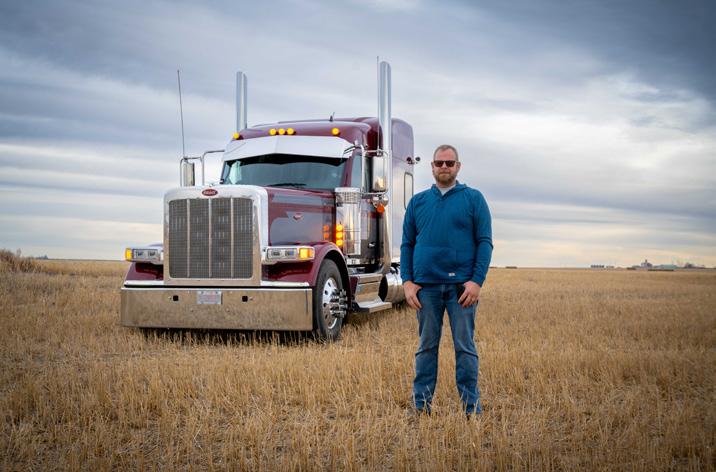
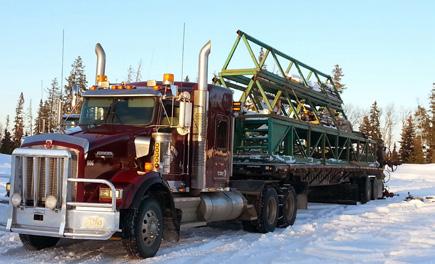
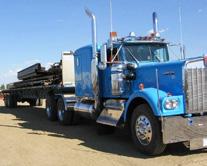
John Rempel, this month’s Rig of the Month, tells a story that began far from Canadian highways — in Mexico.
Our featured driver grew up admiring the brightly coloured trucks of his hometown, where rigs are rolling works of art — bold paint, polished chrome, and drivers who take real pride in their machines. As a young boy, he watched them pass and dreamed of one day being behind the wheel.
That passion didn’t stay behind when he came to Canada — and he’s not alone.
Across this country, drivers from Mexico, India, the Philippines, Eastern Europe, Africa, and countless other places bring that same fire for trucking with them. Different languages, different roads,
different beginnings — but the same love of diesel, chrome, and the open highway.
Canada’s trucking industry is stronger because of it. Immigration doesn’t take away from our industry; it adds to it. It fills seats, strengthens fleets, and brings pride, work ethic, and determination to our highways.
By: Marco van Maanen E.J.VandenBerg Trucking Ltd.
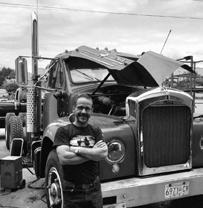
John Rempel
This rig represents more than one driver’s journey. It represents how trucking enthusiasm is shared around the world — and how Canada is richer because those dreams found a home here.
Once a trucker, always a trucker. That’s my story. As a young boy growing up in Mexico, I would sit in
the driveway waiting for the grain trucks to show up at the elevator where my father worked. Usually, I could hear them before I could see them. At that time, nothing gave me more pleasure than a glitzy Mexican truck jaking through the gears. Today, nothing gives me more satisfaction than clicking through a perfectly executed set of gears with a set of straight pipes.
Those Mexican trucks were cool. Often as colourful as the Mexican culture, these Peterbilts, Kenworths, and Freightliner Classics oozed with the personality of the driver. Of course, everything was customized. Flags on the antennas, airbrushed decals of the Virgin Mary or eagles or different states, lights of all colours, and aftermarket stacks, bumpers, and visors all perfectly polished. Inside, there were plush velvet curtains and patriotic mariachi music vibrating the air from custom speakers. Drivers always acknowledged me with a nod, a wink, or a honk and a wave. They became like family to me, and sometimes, they would even allow me to drive their truck through the yard. I was a little boy, and the trucks were big, so I would feel powerful and strong, invincible even. Like I was one of them, like I belonged with them, and like we were a team. That’s how I grew up and I loved it.
At a certain point in his life, my father decided to move to Canada to explore new opportunities. So, at the age of 11, I moved to Canada. Growing up in Canada I spent a lot of time with my dad, and, in particular, I learned to work. My dad was a skilled tradesman, so he worked in a variety of trades, especially home renovation. I wasn’t only taught to work, but to give it all I had. My dad
said that if something’s broken, you fix it. And if you fail, you try again, and again, and again, and again until it’s fixed. There was no quitting; there was always an open mindset to learning new things.
At the age of 19, I was working at Lode King trailers in Winkler, MB. And what did I see every day? Peterbilts, Kenworths and Freightliner Classics, coming to pick up their new trailers. Truck drivers who were excited about the future, trucks that were polished, customized, and loud. Most drivers would hook up to a new trailer, then walk to the office to pick up their paperwork. Invariably, before entering the office, they’d stop, turn around, and admire their truck with a little pride. Just like the guys in Mexico!
Eventually, a trucker friend invited me along for a trip. I was excited and wanted to learn more about trucking. What was it really like on the road?
My friend had a beautiful grey 379 with a 3406 Cat engine. To this day, it’s still one of the coolest trucks I’ve seen. He even let me drive for a while. I may not have had a license, but once again, as I guided the truck through the curves and over the hills in Ontario, I felt strong and in control. Clicking through the gears and jaking down the grades felt like music. With a wink and a nod, my friend told me I was a natural. This was my first taste of the freedom of the open road, and I was hooked.
Naturally, I immediately proceeded to obtain my Class 1 license and began my trucking career. My first job was hauling woodstoves from Winker MB to
West Virginia. I was driving a 1986 flat top Pete 379 with a 60 series Detroit and 10” straight pipes. Yes, 10-inch straight pipes! I loved that truck; it sounded cool, looked sharp, and it never let me down, even if it did use one and a half five-gallon pails of oil every week. I checked the fuel level every time I filled the oil! But I loved the truck, the road, and the job. I was looking cool, I was free, I was in control.
Over the next ten years, I enjoyed a variety of trucking experiences. I did some RGN work hauling Case IH equipment from the US into Manitoba and Saskatchewan. There’s nothing quite like delivering a new combine on your trailer—big and wide and king of the road! I learned to drive defensively during this period. To think ahead and plan for narrowing lanes over bridge decks, keep an eye on who was behind me, and to check that my load was secure. I also learned the value of good paperwork when the DOT stopped me at a scale in Ohio to inspect my logbook. Let’s just say that my paperwork skills at that time may have been a little weak, but they quickly improved after that stop!
Eventually, I found a betterpaying job hauling 22’ wide mobile homes from Wisconsin to north Saskatchewan. In the winter, we would deliver these homes to northern Manitoba using the winter road network, which, surprisingly, always went well.
Then, a friend coaxed me into slip-seating for a company pulling dry vans, allowing me to explore the US and Canada. I particularly enjoyed running south into Texas. For one, I despise the cold and love the heat. But more importantly, in
the southern states, I felt a lot more of the camaraderie that I experienced in Mexico as a young boy. I noticed the CB was always on, and there was always some chatter. If someone needed help with repairs, someone would pick up the mike to offer advice. If directions were needed, they were provided instantly. I noticed a true sense of community.
During this period, pulling vans, my negativity towards cold increased. One trip, after driving through a snowstorm near Chicago for five hours at 25-30mph, I ended up stuck in a rest area for nearly two days before the road reopened. I spend a similar amount of time behind an avalanche on Hwy 1 in the mountains near Golden, BC.
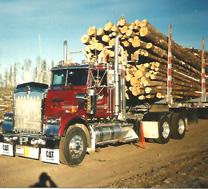
Despite the cold, I eventually ended up in northern Alberta. First in the logging industry and later in the oil industry. I learned two things in northern AB. First, how to chain up a truck fast. Second, the value of a bulldozer in the spring. I’m sure there’s still a stretched 2013 T800 Kenworth with mud around the axles somewhere in Alberta!
When COVID hit, I was laid off from the oil industry and moved my family to southern Alberta, where I found an opportunity to work with EJ Vandenberg Trucking in Nobleford, Alberta. I haul fertilizers, cereals and pulses throughout the northwestern US and western Canada just like the Mexican drivers of my childhood.
As they did, I enjoy arriving at a farmer’s yard or a prairie elevator with a perfectly executed set of shifts. I love the open road, whether it’s the sunset on the interstate, or the distant dust of combines in the field, or the quiet hum of tires on a moonlight night. In the agricultural side of trucking, there’s still a mutual appreciation of beautiful trucks, driving skill, and the open road. Farmers still appreciate a truck rolling into their yard, and I still enjoy giving the young-uns a smile, a honk and a wave.
Like they say, once a trucker, always a trucker!
Letters to the Editor
In the Jan/Feb 2026 edition, your story Miles, Minutes and Other Fairy Tales is right on. It’s surprising how many times, while doing both P&D local and highway, I encountered those situations—as many truckers have. Things look good on paper and on the computer, but life has many times when things change.
The story from the lady in Calgary, From Heartbreak to Highways, was awesome. She should be proud of what she has done. It’s also a good note to other females.
Even while I’m sitting at home nowadays due to forced retirement, I still have my Class 3 and can drive tandem. But most companies say that when you’re not driving, you’re in the shop, etc. I say give me a couple of days a week, or a few hours a day.
Glad to still read your letters, John. All the best, and keep up the stories and jokes.
Laurie N.
Hi Laurie,
That was a letter worth reading. You’re absolutely right — everything looks neat on paper and on a computer screen. Miles add up. Minutes behave. Then real life steps in with weather, traffic, breakdowns and late customers, and the “perfect plan” falls apart. Anyone who’s run P&D or highway knows the story. That’s exactly why I wrote Miles, Minutes and Other Fairy Tales — numbers don’t tell the whole truth.
I’m glad you mentioned the Calgary driver from From Heartbreak to Highways. She earned every mile, and if her story encourages even one more woman to step into this industry, it was worth printing.
As for forced retirement, I agree. Experience shouldn’t be treated like an on/off switch. A couple of days a week, mentoring, filling gaps — there’s real value there. Once a driver, always a driver.
Thanks for sticking with us, Laurie. We’ll keep the stories and the laughs coming.
All the best,
John
Pro-Trucker Driver’sChoiceMagazine
John, I wish to put forward the nomination of Mike Skory, a young truck operator from Alberta who manages his own heavy-haul business. I met him at the Haig scale when I had trailer scale issues and was overweight and had to reduce my back bundle. He jumped in to help me, and I never heard a word of complaint about anything other than discussing the lack of professional drivers out there. He and his dad have their own trucks and hire several others. I’m encouraged because he’s part of a dying breed that I grew up in and don’t see very often. He obviously loves the business and uses it to support his young family, whom he’s very attached to.
Myles Foreman
Editor’s reply:
Thank you, Myles, for taking the time to nominate Mike Skory.
Stories like this matter. They remind us that, despite all the talk about standards slipping or professionalism fading, there are still solid drivers out there who were raised right.
The fact that Mike jumped in to help you at the Haig scale without hesitation — no whining, no “not my problem” attitude — says more about him than any resume ever could. That’s the kind of driver many of us grew up around. If someone was overweight, broke down, or in a bind, you didn’t walk past — you grabbed gloves and got to work.
You’re right — that breed can feel rare some days. But it’s encouraging to hear about a young heavy-haul operator building a business with his dad, hiring others, and still taking the time to help a fellow driver. That tells me the foundation is solid.
Even better, he’s doing it to support his young family — and is proud of it. That’s what this industry has always been about.
We’ll be reaching out and telling Mike’s story in our next issue. Drivers like him deserve the recognition. Thanks again for shining a light on one of the good ones.
Government Took the Fuel Tax — Now Give Us Somewhere to Park
Ever see those long snakes of skidded tires that just make it into a pullout just big enough for a pickup truck? Ever wonder why? Well, it’s because there is just nowhere to park along our highways. Even in Alberta, where some “Roadside Turnouts” are provided, they are right beside the highway. Which affects your ability to rest properly.
Rest areas just aren’t available at measured intervals along most routes. This issue isn’t new, it’s just ignored by the government.
Downloading the cost of truck rest areas onto private business owners, whether major fuel cardlocks or national operators like Esso, Shell, Petro-Canada, and Flying J, is neither fair to enterprise nor effective for drivers. These businesses are forced to absorb secondary burdens such as bio-waste disposal, increased garbage, security issues, and wear on facilities, all of which erode already thin margins. In the end, drivers pay too, through restricted access, shorter dwell times, or outright closures.
Meanwhile, governments continue to collect substantial fuel taxes explicitly earmarked for transportation safety and infrastructure. In British Columbia, those revenues flow to the Province through fuel tax, carbon tax, and federal transfers tied to transportation corridors. Purpose-built rest areas and brake-check pullouts fall squarely within that mandate. Expecting private corporations to replace public infrastructure creates a distorted system where profit-driven spaces are tasked with fulfilling safety-critical
public functions.
The economic comparison is stark. Transport Canada and Statistics Canada data estimate the total social cost of road collisions in Canada at nearly $36 billion annually, equivalent to roughly 2 % of national GDP. Fatal collisions alone have been quantified at costs exceeding $8 million per case, once healthcare, emergency response, loss of productivity, and other societal costs are considered. By comparison, the lifecycle cost of a well-designed and maintained highway rest area, built to current provincial standards, is measured in the low millions of dollars. Investing in infrastructure that prevents fatigue-related crashes and unsafe parking is, therefore, a sound economic strategy when weighed against the societal costs of collisions.
By Scott Casey Scott,
our Rig of The Month for May 2003 has written “Ghostkeepers” a book about his years as a gun toting truck driver while serving as a Canadian Peacekeeper in the former Yugoslavia.
fatigue, weather, and mechanical failure carry outsized consequences. In such terrain, the absence of safe, accessible rest areas increases the likelihood of driver fatigue violations, unsafe parking, and brake failures, risks that directly endanger both commercial operators and the travelling public.
If the Government of British Columbia is serious about road safety, driver wellbeing, and supplychain resilience, then reinvesting fuel tax revenues into proper rest areas and brake-check facilities is not just reasonable, it is long overdue.
These figures reflect broad collision costs across all vehicle types, but commercial vehicle crashes often carry disproportionately high costs, from medical bills and insurance claims to extended closures that ripple through local and regional supply chains. Insurance data in Alberta, for example, show commercial vehicle claims escalating significantly.
The scale of the issue is undeniable. An estimated 3,000 trucks pass through Golden, BC every day, with at least 2,000 moving through Valemount daily. These corridors, along Highways 1, 16, and 5, 5A, are not optional routes; they are essential mountain passes where
While this argument is framed through the lens of British Columbia, the same conditions exist throughout Western Canada. Alberta, Saskatchewan, and Manitoba face similar freight volumes, long distances between services, and increasing reliance on private facilities to absorb public safety functions. A coordinated, western-provincial approach to restarea infrastructure would strengthen interprovincial trade, improve safety outcomes, and relieve private enterprise of responsibilities that properly belong to the government.
You know those long snakes you see.
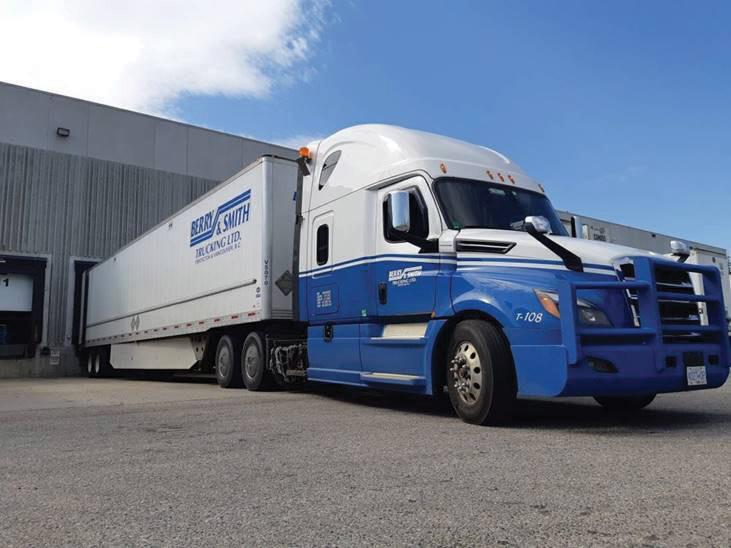
• $300 0 sign on b onus
• Increased mileage rate 10/2021
• Fuel Cap of 47 cent s p er litre
• Fuel p er formance pay pro gram
• Dire c t dep osit, paid t wice monthly
• Fas t cards and passp or t s preferre d
• N o cos t s atellite communication s ys tem
• Insurance/ license subsidy is upto 50 % , e qual monthly pay ment s, no interes t
• Late model tractor preferred
• Safet y b onus paid quar terly
• Scales/tolls/f a xes paid
• Group insurance
• Excellent home time and exible dispatch
• Paid pick ups and drops
• All miles paid/prac tical miles
Please call Dina or Kaolin at 1- 8 0 0- 66 3 -2339 or Send resumes to kaolinm@berryandsmith.com dinae@berryandsmith.com
• Stable company in business since 1954
Safe driving record • Mechanically sound tractor • Cross bo rde r ca pa bilit y • Cu s to m e r se r v ice focu s
Sadly Dave Madill passed on May 1st, 2025. He will always be fondly remembered and missed.
I roam across the nation from sea to shining sea The highways and the byways are old, old friends to me. Across mountains and across plains, through forest and shifting sand, I never cease to wonder at the glory of this land. The beauty of a sunset, the wonder of a storm
The beauty of this nation makes me glad that I was born. The vision through my windshield shows the beauty of this land, A land of peace and plenty, touched by God’s mighty hand.
Dave Madill
Drive
Smart Pro: A Chance for B.C.
Trucking Fleets to Help Shape the Future of Road Safety
Telematics has become a routine part of trucking operations in British Columbia, but its broader impact
on provincial road safety planning and insurance design is still emerging.
ICBC is inviting commercial fleets to participate in Drive Smart Pro, a six-month program, aimed at building a clearer picture of
real-world driving patterns across commercial fleet operators.
For trucking operators whose vehicles face steep grades, winter roads, and long-haul demands, Drive Smart Pro offers a meaningful way to ensure future provincial telematics programs and road safety initiatives reflect the realities of commercial transport haul demands.
How the Program Works
Drive Smart Pro is a six-month voluntary program designed to standardize and collect telematics data from participating commercial fleets. ICBC is using software to integrate data from multiple telematics providers, allowing fleets to participate without changing existing systems. The program examines key driving metrics such as speed, location, and harsh braking—metrics used to understand behaviour and crash risk.
All data is anonymized and used strictly for research. Participation does not affect commercial or personal insurance premiums or your driving score.
Why ICBC Fleetplan Customers Should Consider Participating
• Receive a 5% discount on ICBC Optional collision coverage on your next renewal after ICBC verifies data connectivity.
• Influence future insurance and road safety programs by contributing real fleet data.
• Highlight the unique operating conditions B.C. trucking fleets face daily.
• Strengthen industry leadership in evidencebased road safety.
Eligibility and Enrollment
Fleets must have an active ICBC Fleetplan policy and an existing telematics provider. Applications are open now, with details at icbc.com/drivesmartpro.
Why Your Participation Matters
As telematics continues to shape fleet management, this program gives B.C. carriers a direct role in helping ICBC evaluate how telematics can inform safer roads and more effective long-term policies. With the industry already invested in data-driven operations, Drive Smart Pro offers a practical and low barrier way to contribute to the future of trucking in the province.
Maintenance Isn’t Optional — Neither Is Health
Dedication to health is a choice. A hard one. Not an easy one by a long shot, so I’m not judging anyone who doesn’t engage, but those who do will see noticeable differences. Step one is to Google up “mitochondria” (big words make me sound smart) and then be prepared to hear everyone’s opinions and sad stories about second cousins who were a health nut and died anyway. It happens and provides good excuses for not engaging. Simple step one is to see the light, not on a scale but in a mirror or on recent pictures. Pant size is a good scale of progress, much better than a scale, because gravity pulls weight and muscles that you build trying to lose fat weigh more than the fat you lose.
The Scale House Miracle
I’m not at war with truck stops, but realistically, if you eat truck stop food, you have failed to prepare (taste great but...!). Prepacked nutritious food from home requires a dedication to good health. Personally, I avoid bread, but you do you! Prepacking goes against the corporate plans and convenience, but the price to pay is huge.
You have heard of microplastics. Bad news, it cannot be avoided. Every creature on the planet has it in its system, and I doubt it will decrease as we evolve further. But if there is a ray of sunlight, microplastics can be minimized. Once again, the answer is... “Homemade food with love and attention to detail can be the best hobby and
A trucker rolls up to the scale and sees the “OPEN” sign flashing. He mutters, “Well, there goes my good mood.”
By Marcel Larouche
passion for the new you.
You can find great inspiration for the finest on Facebook or YouTube, from your spouse. Whatever works, not judging! Nutrition and moves... give it a shot.
He pulls on, hands over his paperwork. The officer looks everything over and says, “You’re good to go. Have a safe day.”
The driver walks back to his truck shaking his head. His buddy on the CB asks, “What happened?”
Driver says, “I don’t know… either I finally did everything right, or that fella’s retiring at noon.”
Fuel Island Logic
Old driver says to a rookie, “Rule number one at the fuel island?”
Rookie says, “Don’t spill diesel?”
Old driver says, “Nope. Fuel. Pull ahead. Then go inside for your 45-minute shopping trip.”
Rookie nods. “What’s rule number two?”
Old driver grins. “If you forget rule number one, don’t make eye contact.”
Last of the Iron: Farewell to Kenworth’s Greatest Legends
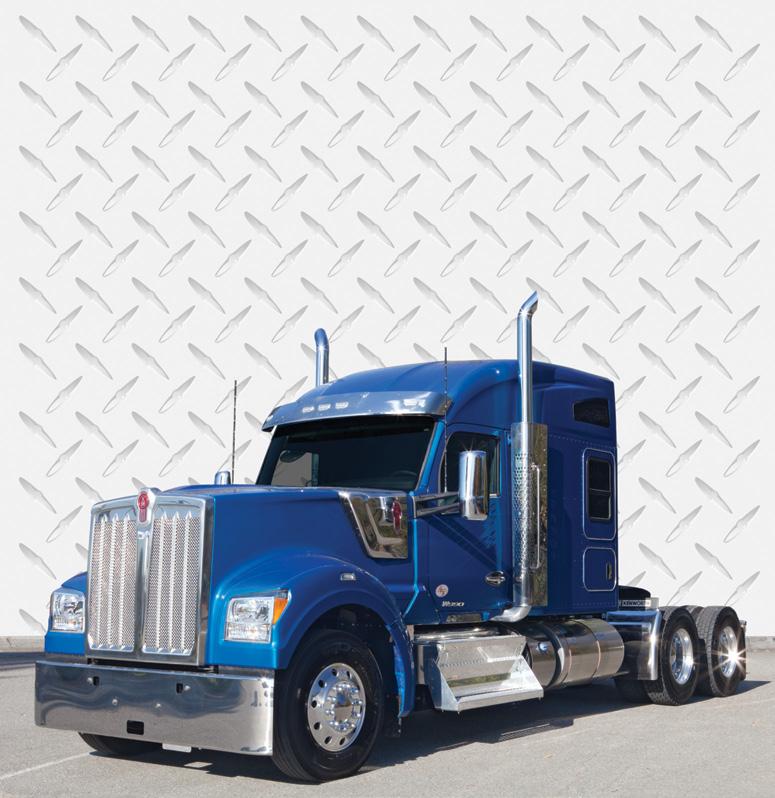
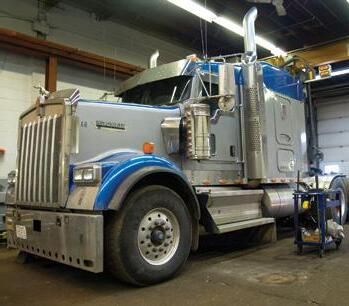
After several near-death experiences and several rumours of their demise, 2026 will mark the passing of some all-time greats in the trucking industry. Yes, it’s time to say goodbye to some of my favourites, the Kenworth W900, T800, and the C500. It’s wild to me to think that in a career spanning 30 years, these trucks have been available longer, and now we won’t be able to buy a new one ever again. For some, it may be good riddance, but for me, I’ll be mourning the loss like that of an old friend.
When I first got my papers, the company didn’t have a single Kenworth in the fleet. We had Freightliners, Volvos, Macks, the old Generals and one Pete 377. In the late 70’s, the company had specially ordered a bunch of K100S with a specific spec for hauling chips with A-trains. Long story short, the trucks were a year late, and the deal went bad. The result was a boycott of KW that lasted until after I left in 2010! When I asked about getting Kenworths, I was told they had small cabs, were too expensive, had that terrible 8-bag suspension, and so on. As much as I heard about how bad they were, the trucks I saw in the oilpatch were almost exclusively Kdubs, the W9’s I ran into on the highway were almost all well-loved... how could they be that bad??
My first experience driving a Kenworth came in the fall of 1999. I was working for Kiwi, and he bought a brand new 2000 W900B log truck. It was actually a bit of a shock when he put me on it for its inaugural winter. For one, it was only my second
winter hauling logs, and secondly, it was the newest truck in the fleet! It was the first of the infamous C15 6NZ Cats and rode on Neway air. The first time I got to drive it out to the bush, I knew I’d been lied to... it was so nice to drive! The truck was super quiet, smooth, shifted nicely, and had that big hood out front. I guess my dad and uncle were right about the small cab thing, but I didn’t care, I loved that truck!
A little history lesson on the W900...
The narrow-hood W-series trucks were introduced in 1961. In 1965, the W900A was introduced
By Greg Evasiuk
Greg is a 3rd generation trucker with over 1 million miles and 22 years in trucking.
with a wider hood to provide more room as diesels grew larger. An even bigger hood was added as an option in 1967 with the extended hood. In 1976, they introduced the Aerodyne sleeper, the first factoryavailable stand-up sleeper. The “A” model soldiered on until 1982, when
they changed the cab and added new modern square headlights on the W900B. The W900B was joined by its own long-hood variant, the W900L, in 1990. In 1994, Kenworth launched the Aerocab sleeper, its first fully integral sleeper, increasing cab space by a substantial margin. These sleepers were sold in mid-roof and raised-roof variations and in lengths from 32” to 84”. (That’s the Cole’s notes version. If you want to go more in depth or have more specific questions, message me on Instagram @semicrazyinc )
When I left to go out on my
own, the second truck I bought was my other favourite, the KW T800. That first one was a 1999 Cherry Black Daycab with a 525 N14 Select plus Cummins (another first for me) and rode on Hendrickson HN suspension. I’d now like to take the time to curse the person or persons responsible for building that truck with HN. I’ll start with this caveat: with an off-highway load of logs (like 25 or 30000kgs on the drives), it was awesome. With an empty trailer or God forbid bobtailing, it was torture! On the washboard, the backend would hop and bounce, possibly knocking it out of gear. On square edge bumps, it would simply punish your kidneys. That said, I really liked the truck!? The motor pulled great, it was quiet inside despite the 6” straight pipes, and it didn’t have a squeak or rattle in it. Considering how it rode I was really amazed how tight everything was in that truck.
My third truck was another T8, a green tri-drive with a 6NZ Cat, both Jakes, and a brakesaver. This one was another solid truck, but with the Neway Airride, it rode like a dream. A couple of years after that, I bought my first KW against my will, a sleeper. How do you buy a truck against your will? Well, you have a driver who won’t drive anything but a KW. Then the only truck you can find is the first ISX600 with a DPF, and it looks like it’s been ridden hard, put away wet. Next, you buy said truck for more than you wanted to pay to keep said driver. One month later, the driver quits, and you have a truck you never
knew you always wanted!
That T800 had all kinds of things I didn’t want when I was buying it; the 62” Aerocab flat was too big for logging, the 13,200 front was too light, narrow axles, 4.30 gears, and did I mention the dreaded ’08 ISX! Well, I ended up quitting logging that year, so that sleeper was a godsend for versatility. I broke a spring on the front end on the first load and realized it had a 16k lb beam, so I just put bigger springs in it. As mentioned, the narrow axles no longer allow logging. The last two things I didn’t want turned out to work well together. That motor had 23,000 hours on it when I sold it, which was almost unheard of for those early emissions ISX’s, but it was almost always spinning at 1600 rpm and working hard. It was either the gearing and a hard life or dumb luck that kept that motor trouble-free. This truck was like all the other KWs I drove/owned; it drove beautifully, and the cab was solid and rattle-free.
For anyone not in the know, the T8 is a setback-axle, sloped-nose version of the W900, with the same cab and sleeper options. They were also available in High hood and Wide hood versions (T800H and T800W, respectively), which I have never owned.
After I ran that ’09 for a couple of years, I bought myself a brand new Black W900 in the summer of 2015. Gorgeous truck, I had it rigged custom with powder-coated tanks and a headache rack. It turned out to be the one that got away. After running it for a year and a half, I got back into sales and tried to keep a driver on it hauling sand and mats for a while. When I realized it was being neglected (and I wasn’t making any money), I put it up for sale. I remember the last time I drove it, thinking, for a truck that has spent its life hauling in the bush and on the ice
roads, this truck still feels like new. The one truck of this trio of dying models I never owned or drove is the C500. They are unmistakable with their high, raised cabs, straight-through frame rails, and, in particular, the steel butterfly hood. C5S are ubiquitous in the oilfield and heavy-haul operations worldwide and have a reputation as one of the toughest trucks ever made. This reputation allows them to command 10’s of thousands more on the used market than any other similarly equipped truck. While I know the replacements for the others are already on the market, I haven’t yet seen what they plan to do for the C500. Buyers of them are passionate about their trucks, and I imagine the replacements will be met with a ton of resistance!
Well, that’s my long farewell to what has been an iconic run for KW. I, for one, will keep my old “A” model alive, and I’d imagine taking in a few more of the old ones that are worthy of saving. I have always enjoyed driving them and respect the quality with which they were built. I hope the new W990 and T880 can measure up, but I have my doubts. All the new trucks have so much more plastic inside to rattle free and too many complicated electronics to remain reliable for the years to come. I must be getting old because I long for the simpler times and feel like this is just another sign that the good old days are behind us!
Driving Skills
The dark mornings are starting to get lighter, thank goodness. That means I won’t be blinded by the fancy LED headlights most modern cars seem to be fitted with these days. I think there’s nothing worse when you’re on an unlit back road, and one of those cars comes towards you. Back in the good old days, if you had your full beam on as soon as you saw another car coming towards you, you dipped your lights, but these things don’t seem to have a dipped feature, or modern drivers just don’t give a toss.
Sitting behind them isn’t much better. When you’re stopped at lights or waiting at a junction, nobody seems to apply the parking brake; they all sit with their foot on the brake, so you get blinded by the LED brake lights.
I have a theory regarding why drivers keep their foot on the brake pedal. My youngest son finally decided he wanted to learn to drive. He’s 38, and I think all the money was piling up in his bank account; his bedroom is stuffed with computer games and techy stuff (yes, he still lives at home, which is probably why his bank account is so healthy), so there wasn’t much more he could buy that he had room for.
He booked some driving lessons, and things were going well. He passed the theory test and booked a practical driving test. About two weeks before his driving test, his instructor lost his licence due to a medical problem. No problem, I said. You can take your test in my car. I took him out for the two weekends, and on his
days off work, he had six days to get used to my car.
It was then I saw the reason drivers today sit at lights and junctions with their foot on the brake: when he came to the lights or a junction, he sat with his foot on the brake and the car in gear. Pulling away, he brought the clutch up and then slid his foot off the brake onto the gas. The only time he used the parking brake was when he was starting off on a hill.
By Colin Black
Colin Black lives in Bellshill, Lanarkshire, Scotland and has been driving truck for over 40 years. His story shows us once again that the problems drivers face are universal.
you by slapping his hand on his clipboard to indicate an emergency. And backing around a corner is no longer a thing. If you can drive into and back out of a car park space, your manoeuvring skills are within test limits.
What a way to teach people to drive! Maybe I’m just too old school, but whenever I stop, the parking brake goes on, the gearbox goes into neutral, and my foot comes off the clutch. That way, I’m reducing the wear on the clutch release bearing and not burning out my stop light bulbs too soon.
He stalled a few times until he got used to my car, but luckily, by the time his test came around, he was reasonably proficient with the clutch and pulled away with no problems. He passed with three minor incidents; the tester said it was a nice drive. But another modern way of teaching and testing had me rolling my eyes.
Things were very different from when I took my test. The tester looks around the car to make sure it’s roadworthy, then gets in and sticks a GPS on the dashboard and says, “ Follow the route dictated by the GPS. There was no emergency stop where the tester would suddenly surprise
But I suppose it’s basically the same as when I passed my test, the one for my car and the one for the truck, you’re legal on the road, now go and learn to be a driver.
My son certainly isn’t as bad as his mother was when she asked me to teach her to drive; her mom and dad were away to Cyprus on holiday and had a smaller, more modern car than I did.
Their car was driven into the driveway. She sat in the driver’s seat as I tried to tell her about the clutch, the brakes, and the handbrake. The engine was running when she slipped the car into reverse, let the handbrake off, then it was clutch up, gas down, and we shot out of the driveway across the road and almost into the garden of the house across from us.
I just managed to pull the handbrake on before the car took out the neighbour’s fence, end of lessons forevermore.