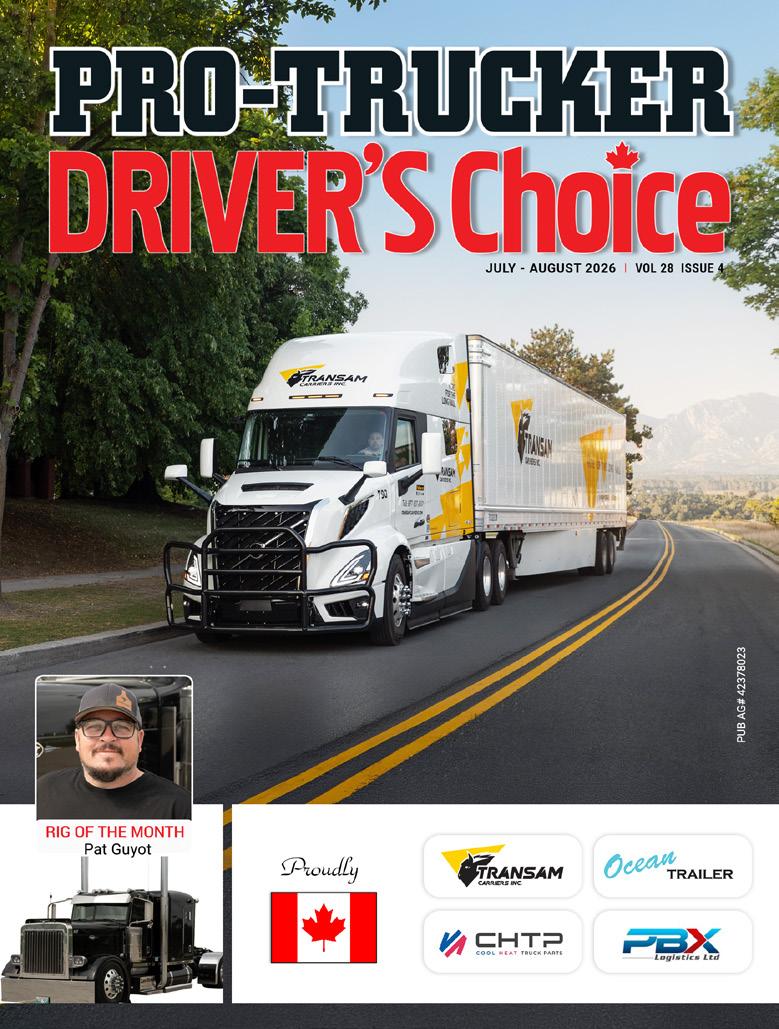
Pro-Trucker Driver Choice July August 2026 Edition
Our dedicated transportation division ensures each client’s portfolio encompasses tailor-made coverages; from private auto, cargo and pollution to D&O, bonding and warehousing. Our unique relationships with major transportation insurers, allows us to negotiate enhanced coverages at the most competitive rates available. Our in-house claims manager follows every claim along to a successful conclusion and is available 24 hours a day, 7 days a week.
If you have any questions concerning a competitive quote on your transportation insurance, or would like to set up a fleet or prorate account, please contact our Commercial Division and speak with one of our transportation specialists.
FROM THE EDITOR’S DESK
BY JOHN WHITE
Alberta Separation: Let’s Talk Facts Instead of Feelings
Happy Canada Day.
For most Canadians, it’s a day to celebrate this country. For some Albertans, however, it’s also become a time to reflect on the future of Confederation.
The Alberta separation movement didn’t appear overnight. It’s the result of years of frustration over pipelines, resource development, federal policies, taxation and the feeling that decisions affecting Alberta are increasingly being made thousands of kilometres away.
Whether those frustrations justify separation is a matter of opinion. Understanding why they exist shouldn’t be. One of the biggest flashpoints is Equalization. Spend five minutes on social media and you’ll probably read that Alberta “pays for everyone else.” The reality is more complicated.
Every Canadian pays federal taxes, including income tax, corporate tax, GST and other federal levies. Those dollars all go into one account called the Government of Canada’s General Revenue Fund. From that fund, Ottawa pays for everything it does—National Defence, Old Age Security, Employment Insurance, border security, Indigenous programs, infrastructure, health transfers to the provinces, interest on the national debt and Equalization.
Equalization isn’t funded by one province writing a cheque to another. It’s one of many federal programs paid from Ottawa’s general revenues. Frustration over federal taxation isn’t unique to Alberta. You’ll hear similar concerns in Saskatchewan, British Columbia and Ontario, where many people believe their provinces contribute more to federal revenues than they receive back in federal spending.
Alberta has become the face of that frustration because of its energy industry. High wages and profitable businesses have generated enormous federal tax revenues for decades. Saskatchewan’s resource economy, British Columbia’s diversified economy and Ontario’s manufacturing and financial sectors also contribute heavily.
Equalization, however, is based on a province’s fiscal capacity—its
EDITOR-IN-CHIEF
John White: john@ptmag.ca
PUBLISHER
Coast2Coast Business Pages Ltd.
ADVERTISING/MARKETING
Tony Arora: tony@coast2coastpages.com
John White: john@ptmag.ca
CONTRIBUTING WRITERS
• Colin Black • Greg Evasiuk
• Scott Casey • Dave Madill
• Glen Millard • Myrna Chartrand
• Andy Roberts
PHOTOGRAPHY
Ben Proudley • Alicia Cornish
David Benjatschek wowtrucks.com
P: 604-724-8976 | F: 604-598-9264
tony@coast2coastpages.com I www.driverschoice.ca
The contents of this publication may not be reproduced by any means, in whole or in part, without prior written consent of the publisher. The advertiser agrees to protect the publisher against legal action based upon libelous or inaccurate statements; the unauthorized use of materials or photographs; and/or any other errors or omissions in connection with advertisements placed in the Magazine. The publisher can and will refuse any advertising which in his opinion is misleading or in poor taste. The publisher does not endorse or make claim or guarantee the validity or accuracy of any advertisement herein contained. All materials submitted for publication are subject to editing at the publisher’s discretion. The act of mailing or e-mailing material shall be considered an expressed warranty by the contributor that the material is original and in no way an infringement on the rights of others.
Publications Mail Agreement #42378023. Return Undeliverable Canadian Address to: #235 - 8138 128th St. Surrey BC V3W1R1.
ability to raise revenue—not on whether a government spends wisely or poorly. Whether that formula is fair is a legitimate political debate, but understanding how it works is important.
Another misconception is who owns Canada’s natural resources. The provinces do. Alberta owns its oil and gas. British Columbia owns its forests and minerals. Saskatchewan owns its potash and uranium. Newfoundland and Labrador own their offshore oil.
Ottawa doesn’t own those resources. It collects federal taxes generated when those resources are developed, and those taxes become part of the General Revenue Fund.
Then there are pipelines. Many Albertans believe Canada has made it unnecessarily difficult to get our energy to world markets, costing jobs and investment. It’s an understandable frustration. But it’s also true that political borders don’t change geography. Pipelines still require investment, approvals and access to tidewater.
Which brings up an interesting point. If any province appears to have the greatest economic advantage from going it alone, it probably isn’t Alberta. It’s British Columbia. With the ports of Vancouver and Prince Rupert,
B.C. has direct access to world markets through the Pacific Ocean, along with a diversified economy built on forestry, mining, hydroelectric power, agriculture, tourism and technology. That’s not an argument for separation. It’s simply a reminder that geography matters. Ironically, Alberta’s decades-long push for pipelines to the West Coast proves exactly that.
Canada has always worked because the provinces complement one another. Alberta has energy. Saskatchewan has agriculture and potash. British Columbia has minerals, forests, and Pacific ports. Ontario has manufacturing and finance. Quebec has aerospace and hydroelectric power. Atlantic Canada connects us to the world through its ports and offshore resources. No province has everything. Together, we have almost everything.
Truck drivers have a habit of cutting through the noise. We deal in facts because facts keep us alive on the highway. This debate deserves the same approach. Whatever your views on Alberta separation, base them on facts, not slogans.
Canada isn’t perfect. But before we decide where this country goes from here, we’d better understand how it actually works. It’s time for an honest conversation.
YOUR ONE STOP S OP FOR DRIVETRAIN PARTS & SERVICE
RIG OF THE MONTH
Pictures by: David Benjakschek www.wowtrucks.com
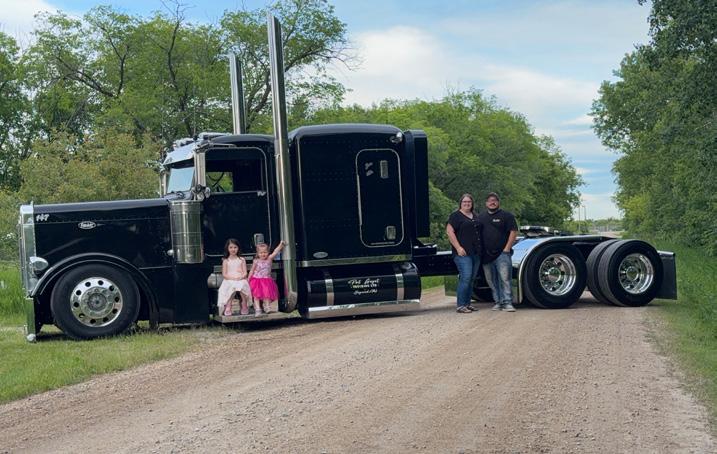
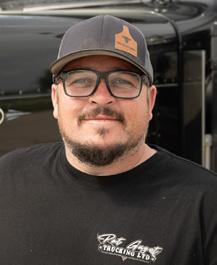
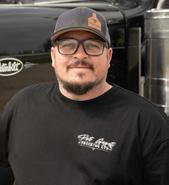
David Benjachuk from Wowtrucks.com nominated Pat Guyot as our July/August Rig of the Month driver. Pat is a great example of a successful farm boy-turned-trucker. Trained by his truckdriving dad and uncle, he began his education in trucking at an early age. He learned everything from the ground up, and although he may not have known it at the time, his future was sealed the first time he got in a truck. This is his story.
Iwas born in Notre Dame, Manitoba, on July 12, 1988. I’m a third-generation trucker, and I grew up on our family acreage just outside of Haywood, MB. I was obsessed with trucks right from a young age, going with my dad every chance I got. On weekends, I would spend my time helping my dad grease, change tires, and do anything that involved the truck. He would always get me to move the truck out of the shop to wash it, and now that I look back, I’m sure it was his way of getting me to help wash.
When I was 12 or 13, he told me to get into his truck on a Saturday morning, and we drove up our driveway, which was about half a mile long. When we got to the end, he said, “Ok, you’re up. You have to learn to back this up sometime, so I’ll see you back in the yard. He jumped out of the truck and walked back to the house. It took me a while, but I made it back. I learned to back up super bs before a straight trailer.
One of the first trucks I remember driving was an old 2-stick Mack on my uncle Don’s farm.
My cousin and I would take turns driving it in the field. It was loud, smoked black, and we loved every minute of it.
School wasn’t really my thing growing up. I eventually convinced my parents I was wasting my time there, so I quit in Grade 11. I got a job right away at the local gravel pit, loading trucks with sand and gravel—the same place my dad had worked when he was younger. I stayed there until July, then decided it was time to get my licence. The written test took me a few tries
Pat Guyot
because I figured I already knew everything and didn’t need to read the books. I found out pretty quickly that I was wrong. The company paired me with one of the senior drivers so I could gain experience, and on weekends I went to my uncle Don’s, where he helped me learn how to do my pre-trip inspection. When the day finally came for my road test, I was lucky enough to pass on the first try. I’m a pretty short guy, and the following Monday, when I showed up for my first day on my own, I opened the door to find a booster seat mounted in my truck. Ever since then, everyone has called me Booster.
I hauled gravel that whole summer, then, in the fall, when work slowed down, I decided to look for something else. I gave George Klassen a call, and he was a little hesitant at the start, but said he would give me a shot. I was soon hauling hanging hogs from the slaughter plants in Neepawa to the finishing plant in Winnipeg. Best of all, they gave me a pretty much brand-new Kenworth W900 to drive.
After doing that for about 8 months, I once again decided to try something different and went to work for New Hope Transport, where I pulled flat decks. I am beyond thankful for them because they were great for teaching guys the proper way. I spent a week in the tarp shed learning how to tarp loads of different types and then they paired me up with a city driver to learn the strapping side of it. My first solo runs were short trips to Saskatoon and back. After that, I pretty much ran Calgary and back with Super-B flat decks.
Always looking to broaden my experience with something new, I decided to work for Patenaude Trucking out of Holland, MB, pulling Super B grain trailers to Alberta
and back. Don and Winnifred were amazing people to work for. They gave me a 2006 Peterbilt 379 to drive. It had lots of chrome and lights, and I thought I was king of the world in that truck. From there, I bounced around a few different companies and back to some of the old ones always trying to find the right one.
I was always interested in equipment hauling, and the chance finally came when I got a job driving for Dale Leoppky, who was on with Q-line. By then I was old enough to travel south of the border and mainly ran Iowa back to Saskatchewan and Alberta. After a while, I told my dad I wanted to buy my own truck, and he said, “Well, you’re already doing the work, so there is no reason not to do it in your own truck.” So, I started hunting for a truck and was lucky when Q-line opened a yard in Winkler, and the guy who took the job to run it had a 2005 Peterbilt 379 for sale. We went to look at it, and it was perfect, already all set up to pull a flat deck. So, my parents helped me buy my first truck, and off I went.
My goal was to pull an RGN trailer, and not long after I bought my truck, I had the opportunity. I hauled lots of different things, mostly farm equipment: combines, sprayers. Then I had the opportunity to pull a 7-axle, and I enjoyed it.
I was headed home from SK one night when my dad called, saying he was broken down in Yorkton, SK, and needed me to haul his truck home. So, I told him I’d be there later that night, and we got it loaded up and were headed home. I told him when we left there’s only one rule: you can’t smoke in my truck, so every half hour, he made
me pull over so he could get out to have his cigarette. Then he decided he was going to drive, so I crawled into the bunk to sleep, and well, let’s just say there weren’t any more smoke breaks all the way home. He figured if he had the window open, that was good enough.
I met my wife, Erin, while working at Q-line. A couple of friends were going out for drinks after the Rider game in Regina and asked me to join them. We were all sitting at a table, and our drinks came, and Erin, whom I’d never met before, went to push the drink across the table, and over it went right into my lap, and we’ve been together ever since. I have to admit, though, it gets a little heated in our house when the Bombers and the Riders play.
That following year we got the devastating news that my dad was diagnosed with cancer. So, in March of 2013 I decided it was time to buy a brand-new truck. Peterbilt Winnipeg had a beautiful black 389 sitting in their showroom. Throughout my dad’s career, he never got to drive a new truck home from the dealer, so here was his opportunity. At that point, he was already too sick to drive, but at least he got to ride shotgun with me. In November of 2013, we lost him to his battle with cancer. I was lost, not sure what I was going to do. He was my role model. I asked
him everything, but I was lucky enough to have my uncle Don (dad’s brother) step up and help me with anything and everything I needed. Still can’t thank him enough for all the help. After a year of driving it, I sold the 389 because I was sick of the emissions control and I bought a 2006 Pete 379 with a CAT engine.
After a while, I wanted to try something different and moved over to Wild Wood Transport. They were good to work for, but I didn’t stay there long and decided to try hauling grain as an owner-op. I went over to a company out of Winkler hauling grain, and man, what a mistake that was. Stayed there for a few months and ended up having to sell my truck due to some issues with their pay package, but that happens sometimes.
I found a 2007 Peterbilt 386 with a C13 CAT in Toronto and headed home with it. After a few years, I had the opportunity to buy a stake in my brother-in-law’s fertilizer-spreading business. We got 2 Terragator spreaders and 2 more trucks, and I remember thinking, what have I got myself into having to have employees relying on me now, but it went very well. I would truck all winter and summer, then park the truck and run the fertilizing business in the spring and fall with my wife’s help, of course.
In July of 2019, we were blessed with our first daughter, Josie. That changed a few things, and I didn’t
want to be gone as much, so I took a job working for a good friend of mine at Pembina Hills Transfer, still pulling decks. He and his wife were amazing people, always willing to help when needed, and after a few years, I decided to focus on trucking and sold the fertilizer-spreading business. After about a year, I was really missing hauling the farm equipment and wanted to have my own trailer, so I decided to head back to RDK. I was thankful they took me back, and it felt like I never left. In Feb of 2023, we were blessed with our second daughter, Lila; now I was really outnumbered at home. After a few years of being back at RDK, I had the opportunity to buy a 2000 Peterbilt 379 again, so I sold the 386, and away we went; finally had my dream truck again. Then the opportunity came up to start pulling a RGN again, and with the big cat under the hood of the new truck, we took it. A few months later I ended up buying that trailer from them, and life was great; I had my amazing wife and daughters at home and my dream job.
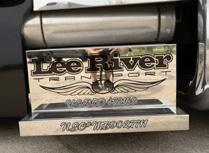
Then we got the email that RDK was bought out, and Jan 1, 2023, we were all switching over to Payne Transport (Mullen Corp). I didn’t know what to think, as I worked with these people most of the last 8 years, and they were like family, but I figured I must try it. So, Jan came, and not much changed at the start, but halfway through that first year, the changes began, and the following Feb I left. I like the small mom-andpop outfits and have never been a fan of the big corporate outfits, so we got a job at Lee River Transport out of Winnipeg. They mainly run decks and RGN across Canada and the USA, and are amazing people to work for.
In June of 2025, I decided to buy a 2013 Peterbilt 386 with a CAT to run in the winter. I went to Calgary
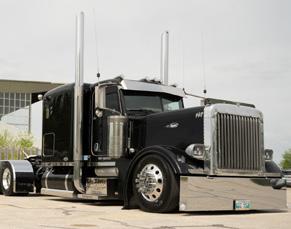
to pick it up, brought it home, and jumped right into it. I wanted to do some stuff to my other truck as it’s always been my dream to have a long, stretched-out, fancy 379, so off to the frame shop it went, and I stretched it to a 275 wheelbase. I did a few other things and finally got to drive it for a few months in the fall.
In Feb, I decided to try something completely out of my comfort zone and went up to do the winter roads in northern Manitoba and Ontario, and what an experience that was. It’s a whole different world up there. The one day we drove for 23 hours up to Tadoussac, MB, and only drove 174 km. I never left 2nd gear all day cause the road was so rough and the snow was deep.
This spring I took some time away from Lee River to help my sister and her husband out, hauling fertilizer to their floaters and spreading it. Then once I finished that, I had the opportunity to rent a gravel trailer and haul gravel for our local municipality, and I’m really enjoying it. It took a bit to get used to sleeping at home every night and only working till 6-ish every day, but my kids sure are liking having their dad home every night.
I’m not sure what the future holds for me, but my goal has always been to get my own authority one day and work a little closer to home, hauling equipment, gravel, and anything else anyone needs. I just haven’t had the courage to do it all yet. Lee River treats me too good to take that along onto my own authority, so once gravel dries up, I’ll jump back into my 2000 Peterbilt and hit the road again. I want to thank my wife, kids, and whole family for letting me follow my dream out here over the last 20 years; there’s nothing I could want more.
Letters to the Editor
Separation may sound good to some, but I lived through the Alberta boom-and-bust cycles that were common long before the oil sands were developed. When oil was high, everyone was busy. You couldn’t buy a parking spot because every oil patch truck was rolling. I’ve also seen the busts when rigs were parked, people lost their jobs, and trucks, oil rigs and heavy equipment were sold off for 10 cents on the dollar to vultures from the States. People didn’t have a choice; they headed to other provinces to look for work. I know because I was one of them, and it saved my ass. Some people have short memories, but without the ability to pick up and move from province to province, many of us would have been screwed. I’m Canadian, and I have no interest in being anything else.
An Alberta Canada Trucker
Editor’s Note: I remember following a beat-up old pickup truck from Alberta back in the 70s. We had just crossed the Pattullo Bridge from Surrey into New Westminster on what was Hwy 1 at the time, and I almost ran off the bridge laughing when I read its bumper sticker. It said, “Please God let there be another oil boom, and I promise I won’t P#%$ it all away this time.”
John,
Pro-Trucker Driver’sChoiceMagazine
You hit the nail on the head with your editorial, Eight Years After Humboldt and We’re Still Talking?
Eight years is long enough. Every time there’s another serious crash, politicians promise to do something. Then another committee gets formed, a photo op is planned, and everyone says the right things. Then it all goes quiet until the next tragedy.
Talking time is over. Either we’re serious about proper driver training and national standards, or we’re not. Families who’ve lost loved ones deserve more than another round of discussions. Enough reports. Enough excuses. It’s time to get it done.
Bob Philips Vancouver
Editor’s Note: Until all the provincial Transport Ministers start working together instead of protecting their own little kingdoms, history will continue to repeat itself. It definitely sounds like that old definition of crazy: “Doing the same thing over and over and hoping for a different outcome.”
Deaf Ears
For almost twenty years, I’ve been saying something that made people uncomfortable.
The trucking industry isn’t just moving freight across Canada. It’s moving people. Some willingly. Some not.
For years, those words were met with eye rolls, dismissals, and the familiar refrain: “That’s just conspiracy talk.” It was easier to believe that human trafficking belonged somewhere else, in distant countries, in movies, in dark alleyways. Not on the 401. Not at the truck stop outside Winnipeg. Not along the Trans-Canada Highway. Not in our own backyard.
But here we are.
Today, governments, police services, advocacy groups, and trucking associations openly acknowledge what many of us drivers have quietly witnessed for years: Canada’s transportation network is routinely exploited by human traffickers. Truck stops, rest areas, motels, logistics hubs, and major freight corridors have all become part of the landscape traffickers use because they offer exactly what organized crime needs: mobility, anonymity, and a constant flow of people.
This isn’t an indictment of truck drivers.
It’s the exact opposite. Professional drivers spend
more time on Canada’s highways than anyone else. They notice the vehicles that appear too often. The young girl who never gets out of the passenger seat. The motel room that changes occupants every few hours. The frightened teenager who won’t make eye contact while an older man answers every question for her.
By Scott Casey Scott,
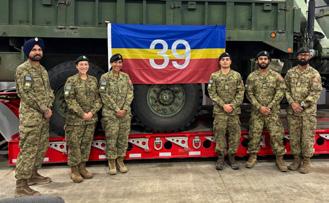
our Rig of The Month for May 2003 has written “Ghostkeepers” a book about his years as a gun toting truck driver while serving as a Canadian Peacekeeper in the former Yugoslavia.
dishonest. But there is another truth we have been reluctant to acknowledge.
Many drivers have reported these situations for decades. Many were ignored.
The industry often preferred to focus on cargo theft, fuel prices, electronic logging devices, and driver shortages. Human trafficking wasn’t considered a trucking issue.
It should have been. Because trafficking doesn’t only happen around trucks.
Sometimes it happens inside them.
That sentence makes people uncomfortable, but discomfort doesn’t change reality.
The overwhelming majority of truck drivers are honest, hardworking professionals. They sacrifice birthdays, anniversaries, holidays, and countless nights at home to keep this country supplied. To suggest otherwise would be
The drivers themselves have increasingly become victims of exploitation.
Not in the traditional image people associate with human trafficking, but in ways that share many of the same characteristics: coercion, dependency, manipulation, financial control, and the inability to simply walk away.
For years I have watched the industry change. Independent owner-operators disappeared under crushing operating costs while drivers became increasingly dependent on employers, recruiters, labour brokers, and temporary foreign worker programs that too often prioritize cheap labour over human dignity.
Many new Canadians arrive believing they are stepping into an opportunity. Instead, some find themselves tied to employers through debt, immigration status, housing arrangements, recruitment
fees, or threats of losing their ability to remain employed. They work impossible schedules, live in their trucks for weeks or months, earn less than promised, and are told to be grateful simply because they’re in Canada.
Legally, not every one of these situations constitutes human trafficking. But many fit a broader pattern of labour exploitation, and in some documented cases, authorities have identified situations involving forced labour or trafficking. We shouldn’t blur those legal distinctions, but neither should we ignore how exploitation can exist on a spectrum.
If that sounds familiar, it should. Because that’s exactly how exploitation begins.
When a person loses meaningful control over their freedom because someone else controls their income, transportation, housing, immigration status, or ability to leave, the conversation stops being just about employment.
It becomes about power. And power is what trafficking has always been about. The irony is almost unbearable.
The very people who spend their lives travelling Canada’s highways, watching for victims, are themselves increasingly vulnerable to being exploited by the same economic pressures and criminal opportunists that have infiltrated the industry.
Meanwhile, organized crime understands logistics better than most Fortune 500 companies. They understand routes. They understand timing. They understand supply chains. Why wouldn’t they exploit the same transportation infrastructure
that keeps our economy moving? Where there is movement, there is opportunity. And organized crime never misses an opportunity. The question we should have been asking twenty years ago wasn’t simply whether trafficking existed. It was why we weren’t protecting everyone caught in its orbit.
Imagine if every commercial driver in Canada received mandatory human trafficking awareness training. Imagine if every carrier were held to the same rigorous labour standards, rather than competing with companies willing to exploit vulnerable workers. Imagine if every weigh station, every dispatch office, every truck stop, and every logistics company understood not only how to identify trafficking victims, but also how to recognize when drivers themselves are being exploited. Imagine if reporting suspicious activity became as routine as performing a pre-trip inspection. Imagine how many lives, both inside and outside the cab, might have been changed.
Instead, we waited. Another police investigation. Another rescue. Another headline. Another promise to do better.
Then everyone acted surprised.
As a veteran, I’ve always believed that security isn’t just about defending borders. It’s about defending people. Threats don’t always arrive wearing a uniform. Sometimes they arrive wearing business attire. Sometimes they carry a clipboard. Sometimes they’re labour recruiters. Sometimes they’re organized criminals. Sometimes they’re sitting behind a dispatch desk. Sometimes they’re behind the wheel of a commercial truck.
Human trafficking isn’t just a
policing issue. It’s a transportation issue. It’s an immigration issue. It’s an issue of labour, economics, community and a Canadian one.
Every truck stop waitress who notices something isn’t right. Every fuel attendant who sees the same frightened face twice in one week. Every dispatcher who hears a conversation that doesn’t sit right. Every driver who trusts their instincts.
They’re all part of the front line, whether they realize it or not. The frustrating part isn’t that we’ve finally discovered the problem. It’s that many of us have been pointing at it for nearly twenty years. When someone says, “We need to raise awareness,” I can’t help but think back to every conversation where those concerns were dismissed as exaggeration or fearmongering.
Awareness was never the problem.
Listening was.
Canada’s trucking industry has an opportunity now, not simply to move freight safely, but to reclaim its identity. To protect not only the vulnerable people traffickers attempt to move across our highways, but also the honest drivers who are too often exploited by a system that treats them as disposable.
Because if we’re serious about ending exploitation, we can’t just look in the trailer. We have to look in the cab too.
After nearly twenty years of saying this, I wish I had been wrong.
Unfortunately, I wasn’t. My words just fell upon deaf ears.
The “BS Ratio”: Why the Grass Isn’t Always Greener in a New Truck
This topic came to me while listening to a friend talk about everything that was wrong with his current gig, like a large group of us drivers he’s experienced and could quit and be working somewhere new in a day. He had been talking to another acquaintance, who was enamoured with his own new job. Of course, he was now talking about going to this company too.
We’ve all been there: You’re staring at a closed gate three hours past your appointment time, your electronic logging device (ELD) is ticking away your driving window, and the dispatcher is blowing up your phone asking why you aren’t moving. You sit in your cab, pulling up a job board on your phone, convinced that some other carrier has a perfect, stress-free fleet waiting for you.
Here is a gentle reality check: Every single trucking job comes with its own specific flavour of crap.
Every lane and every type of hauling has its own baseline level of friction.
• Over-the-Road (OTR): Great windshield time and a chance to stack up big miles, but you’re living out of a sleeper berth for weeks on end, missing home, and eating truck stop food.
• Local Dedicated: You get to sleep in your own bed every night, but you’re battling city traffic, doing physical fingerprinting of freight, and dealing with back-to-back tight delivery windows.
• Intermodal/Regional: Steady routine, but you might spend half your life fighting lines at the rail yard or dealing with broken chassis equipment. There is no magical carrier out there where the shippers are always fast, the dispatchers are mind-readers,
and every mile is smooth sailing with open roads. The secret to a long career in this industry isn’t finding a company with zero downsides—it’s finding one where the trade-offs make sense for your life.
When you play “carrier roulette” and jump ship because you are frustrated, you aren’t escaping the headache—you are simply trading one set of problems for a brand-new set of problems. The question shouldn’t be, “How do I find a perfect trucking company?” Instead, ask yourself, “Which specific problems am I willing to tolerate?”
Calculating the Value Proposition
If every carrier has its downsides, how do you know when to stay in your current seat and when to turn in the keys? It all comes down to a simple equation: Does the pay and the benefits package outweigh the daily friction? This is the BS Ratio.
The Reality Check: If your current company pays you a solid rate per mile (or hourly), has a dependable health plan, keeps your truck well-maintained so you’re safe, and actually respects your home time requests, they are doing their core job.
Trucking is a tough, gritty economic transaction. You trade your time, your skill behind the wheel, and a high tolerance for logistics chaos in exchange for financial security. If the scale heavily tips in favour of good pay, solid benefits, and decent equipment, putting up with an annoying customer or a chaotic dispatch day is often just the price of admission.
The Mirage of the Shiny New Rig
The phrase “the grass is always greener” is a trap in this industry.
By Greg Evasiuk
Greg is a 3rd generation trucker with over 1 million miles and 22 years in trucking.
Recruiters will promise you the world—brand new trucks, guaranteed miles, and endless home time. But that’s just the sales pitch.
Once you sign on and the “honeymoon phase” fades, you will inevitably discover where the cracks are. You might trade a carrier with bad communication for one that micromanages you with driver-facing cameras. You might trade a slow shipper for a carrier that constantly deadheads you for no pay.
When to Actually Walk Away
To be clear, this isn’t an excuse to stay with a predatory or dangerous company. You should absolutely park the truck and hand in your two weeks if:
* The company forces you to run illegal or pressure you to violate safety regulations.
* The equipment is unsafe, and the shop refuses to fix DOT violations.
* They are constantly shorting your paycheck or messing with your documented miles.
But if your current complaints boil down to standard industry headaches—unavoidable traffic, a rude dock worker, or the occasional slow week—take a breath. Appreciate the stability, the steady freight, and the perks you *do* have. Sometimes, the best truck to be in is the one you’re already driving.
Dave Madill
Sadly Dave Madill passed on May 1st, 2025. He will always be fondly remembered and missed.
Advice to a Trucker’s Wife
So you’re married to a trucker; let me give you some advice, You think this will be easy; well, little girl, think twice.
You will often hear “I love you,” and he will tell you this by phone, Forget about your birthday; you will spend it all alone.
Comes to your anniversary, he’ll be out there on the road, He’ll spend many holidays delivering his load.
Sure, it has it’s good points; he’s never underfoot, When it comes to supper, there’s one less meal to cook.
Learn to like the smell of diesel; to him, it is cologne, It’s the first thing that will hit you as he walks into home.
When it comes to children, you said you wanted two; You’re the one that will look after them when you all get the flu.
The company will lie to him and tell him he’ll be home, You’ll plan a little party, then spend the night alone.
You will make your little nest; get settled in a groove, He’ll find a better company; then he will want to move,
Now I just hit the high points, but at least you know the score.
I could go into detail, there are so many more.
I’ll just wish you happiness, and wish you lots of luck,
By the way, little girl, you’re also married to the TRUCK.
APNA Truck Show 2026: A Resilient Celebration of Industry Unity, Business, and
Culture
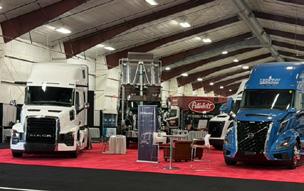
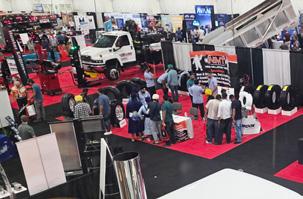
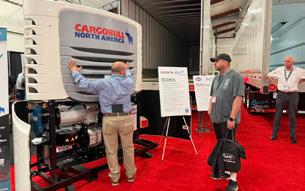
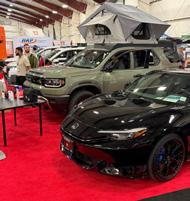
ABBOTSFORD, BC — The APNA Truck Show, Western Canada’s largest trucking event, was another success this past weekend, bringing together industry professionals, stakeholders, and community members from across the nation to the Tradex Centre in beautiful Abbotsford, BC.
The premier transportation event experienced a unique weekend trajectory. While Saturday morning saw a slower start to foot traffic, largely due to competing regional excitement and societal distractions like the FIFA World Cup matches, the momentum
rapidly shifted. By Saturday afternoon and throughout the entirety of Sunday, the exhibition floors were busier with traffic, resulting in an overall successful turnout.
“We anticipated that global events like FIFA on Saturday morning would present a temporary challenge for general attendance, but the transport community showed its incredible resilience,” said Tony Arora, Senior Manager of ADS Shows, the company that owns and produces the event. “By the afternoon and all day Sunday, the wider trucking industry and the community came out in full force to support the show, network, and enjoy the programming.”
brought meaningful connections with key decision-makers and buyers,” commented Bobby Saini, Senior Manager at ADS Shows. “Although we had to navigate some unique timing hurdles this year, the underlying value of bringing people together remains unchanged. The overall feeling from both vendors and attendees is that the 2026 show was a resounding success.”
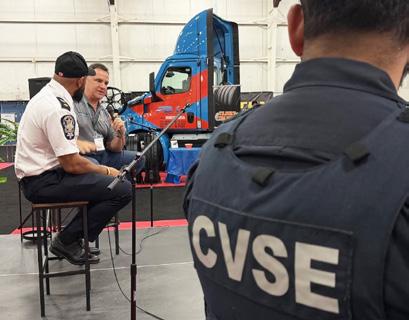
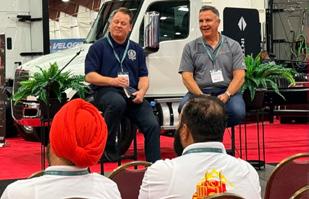
Another success at the 2026 APNA Truck Show was the “Ask an Expert Series”, organized and presented by the BC Trucking Association. Pertinent and meaningful questions were asked, which were answered by experts and officials.
Despite shifting market conditions, the exhibition stayed vibrant. Fleet owners, operators, and major suppliers engaged in vital faceto-face networking, showcasing the latest advancements in commercial vehicle technology, safety systems, and fleet management tools.
“The general consensus among our exhibitors was that the afternoon and Sunday crowds
Beyond the core commercial exhibits, the weekend offered an unforgettable celebration of South Asian culture, providing a unique crossover appeal that sets this event apart. The entertainment lineup brought massive energy to the crowd, highlighted by spectacular, show-stopping performances from legendary Punjabi artists Nachhatar Gill and Miss Pooja, both of whom absolutely wow’ed the packed audiences.
As a vital pillar for the Western Canadian supply chain, the APNA Truck Show continues to serve as an indispensable space for industry unity, business development, and community connection.
“Times have changed, and the transport sector relies heavily on these gatherings to stay connected and move forward collectively,” remarked Ron Dhaliwal, Senior Manager at ADS Shows. “The APNA Truck Show recognizes the evolving needs of our
industry. Seeing families enjoy worldclass cultural entertainment right alongside major business discussions on the show floor embodies exactly why this show is so critical to the community. We are already looking at new components to make the next show even bigger and better.”
APNA Truck Show management would like to send their heartfelt thanks, appreciation, and gratitude to all the vendors, sponsors, performers, and visitors who contributed to
making this weekend an outstanding success.
The APNA Truck Show is owned and operated by ADS Shows, a collaborated company with JGK Media Group. ADS Shows and JGK Media Group manage and produce various events and publications for the transportation, automotive and lifestyle industries across North America.
What If
Now I’ve been retired for over ten years, I sometimes sit watching the world go by, pondering the decisions of my younger life. There were a couple of young ladies who I might’ve ended up married to. But, if I hadn’t met and married the current Mrs Black, I wouldn’t have met her uncle Mitch.
I got my class 1 licence working for National Carriers, a subsidiary of British Rail. They had their own driving school with the same manoeuvring yard you would find at the official test centre, and they taught some of their drivers to operate their semi-truck and trailer outfits. I got my class 1, but the company kept me on my three-ton box van delivering parcels.
The only time I drove anything that pulled a trailer was when I worked a Sunday shift loading vans for the Monday morning. If you went in on a Monday and your truck wasn’t loaded, you had to get a clerk who would come with his chair and sit on the platform next to the pile of parcels at the rear of your truck. The driver picked up a box and read out the name and address for the clerk to write on his sheet. If you knew your route well, you could arrange the parcels in the order you were delivering them as you loaded them.
No computer-generated delivery sheets back then - everything was handwritten and required the customer’s signature on delivery. Today it’s a photograph of you holding the parcel taken on the
driver’s phone. 55 deliveries were normal for a Monday-toFriday week. If you worked on Sunday, you did 75 deliveries and got double time. Double time- whatever happened to that? After I’d been there for the mandatory period (you had to stay or pay back the cost of your training), I left to drive full-size, full-weight trucks.
By Colin Black
Colin Black lives in Bellshill, Lanarkshire, Scotland and has been driving truck for over 40 years. His story shows us once again that the problems drivers face are universal.
drivers redundant and subcontracted the transport out to the highest bidder.
Archibald Brechin was totally involved in whisky haulage, empty and full barrels in a sealed box van, or whisky in tankers going to bottling plants. I found out later that they had a high driver turnover. They would take on just about any driver when they were busy, then pay them off when things got quiet, usually around Christmas. Merry Christmas, you’re sacked.
I’d been there about a year when I met Mitch, and who knows, if I hadn’t met Mitch, I might have spent my life pulling tankers, or bulk grain trailers. Unlike today, back then you didn’t need a special addition to your licence to pull a tanker full of whisky. Now you need to sit through a hazardous goods course. Whiskey, who would have thought it was dangerous? After getting some experience on the tankers, I might’ve got a job pulling gas tankers; the money on the gas tankers was way above what ordinary drivers were getting. But of course, all good things must come to an end, as eventually the gas companies made all their
I spoke to a driver who had worked for a gas company; in addition to redundancy money, there was an offer of a job. The hourly rate was about half of what he was used to, and the depot he would be working from was about an hour’s drive away from his house.
Mitch was a real old-school trucker, a big man from the north of Scotland. In the lowlands we call highland men teuchters, it’s pronounced choochters. Although we don’t call them that to their face.
I was just a rookie driver when we met; I had never pulled a flatbed trailer or put a tarp on a load and tied it down. But, like all old-school drivers, Mitch and the other two drivers in the company, who were also pals of his, taught me all I needed to know. Mitch also had a book he’d compiled over the years; it was a list of the best places to get a return load home from just about anywhere in the country. And that was the start of my life as a truck driver, where every day’s a school day.
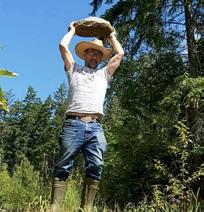
Since I committed myself to a slightly higher level of fitness, it has changed so many aspects of my life, including my ego! Did I say this out loud? LoL.
Someone came up to me and recognized me as if I was some big celebrity. Wow, ego boost! I do feel good about my health, so knowing that I have inspired someone (a fellow driver) really feels good, but I’m no spring chicken, and Toby Keith said it best “ I’m not as good as i once was but I’m as good once as I ever was” is quote to live by so I challenge myself with a little extra now and then.
Today, as I’m writing this on February 25th, I have just over 2 months to get serious about reaching my next personal challenge: doing 65 descent push-ups in one set on
my 65th birthday, May 9th 2026. Feel free to join in. In accordance with my many years of experience, consult with your spouse first before starting any exhausting new challenge; maybe a doctor’s opinion would be almost as good!
It is so easy to make excuses for not doing things we should, but it really is a mindset. We can always raise it a notch now and then if we put our mind to it. Eating real food, of course, is a big deal. Food without ingredient labels is the best. One meal a day is doable; avoiding junk food and picking fitness commitments only works if it’s a long-term investment. New Year resolutions are well-intentioned, but really... commitment is longterm, so once my 65th birthday has come and gone... not stopping there, because living has to be enjoyable,
Turn any sofa into a sofa bed by telling your wife to calm down.
By Marcel Larouche
and for me, I need to keep the chinup bar busy and challenges coming. Join me anytime, raising the load bars at home and on the road to new levels of purpose.
Have a great day.
Editor’s note: He did it! 65 at 65!
Most people have heard of Karl Marx, but few know of his sister Onya, an Olympic runner. Her name is still mentioned at the very start of every race.
Every woman is a doll. Now whether it is Barbie, Annabelle, or Voodoo is a roll of the dice.
I woke up this morning determined to drink less, eat right and exercise…
But that was 4 hours ago…when I was young and full of hope
Life Hack
BC MELT Program Requirements
As a carrier, if you are evaluating MELT graduates that are unable to demonstrate competency at these skills, please find out what school they attended. Speak to the school, inform the president of BCTA Dave Earle, and file a complaint with ICBC Driver Training Investigation and Compliance, as well as your MLA. We need to hold driver training schools accountable to turn out entry level professional drivers who have the required basic skills.
Is it okay if I use that as a re-amble to your article? It would have a stronger effect if people knew why it was being printed.
Do you think it would be a good idea for companies that find that students have not been fully trained, as per the course, - report the school or?
BC MELT Program Requirements
On October 18th, 2021, Mandatory Entry Level Training (MELT) became a requirement to gain your class one driver’s licence. The structure of the program was designed by the Ministry of Transportation and Infrastructure (now Ministry of Transportation and Transit) in conjunction with ICBC driver training and certification alongside an industry steering committee.
Course Total
Minimum 140 hours*
Theory
Minimum 47 hours
In Yard
Minimum 19 hours
In Cab – Off Road (backing, coupling)
Minimum 18 hours
In Cab – On Road
Minimum 50 hours
Practical Flex Time
Minimum 6 hours
In Cab Training:
- On road training requires the use of at minimum a 13 speed non-synchronized transmission
- At the discretion of the student, up to 10 hours may be taught with an automated transmission
- A minimum of 38 hours must be with a loaded trailer and 4 hours with an empty trailer
- A minimum of 4 hours bobtail and another 4 hours is discretionary
By Andy Roberts President Mountain Transport Institute
The strength of the BC MELT program are the practical skills evaluations that are required to be passed on two separate occasions without any coaching or assistance to qualify for your MELT Certificate. There are 13 different practical skills evaluations:
On-Road Evaluations
Basic and Urban Driving is a two-hour driving assessment to be conducted on roadways with speed limits under 80 km/h. If the student receives more than 15 demerits during the assessment they are unsuccessful and must repeat it. This evaluation must be passed on two separate occasions.
Highway and Mountain Driving is a two-hour assessment to be conducted on roadways with speed limits over 80 km/h. If the student receives more than 15 demerits during the assessment they are unsuccessful and must repeat it. This evaluation must be passed on two separate occasions. Note – depending on the location of the school, only highway driving may be assessed.
In-Yard Evaluations
Vehicle Pre-trip Inspection does not have a time limit and as part of the assessment the student needs to have memorized all the defects and major defects in Schedule 1 of NSC, Standard 13. If the student receives more than 15 demerits during the assessment they are unsuccessful and must repeat it. This evaluation must be passed on two separate occasions.
Coupling / Uncoupling are two separate evaluations. All steps in both evaluations must be completed with zero demerits. Both evaluations must be passed on two separate occasions.
Chain-up, Fifth Wheel Slide, Trailer Axle Slide are three separate evaluations. All steps in these three evaluations must be completed with zero demerits. All 3 evaluations
must be passed on two separate occasions.
Off-Road Evaluations
Backing there are five separate backing manoeuvres that must be passed on two separate occasions. All steps in the procedures must be completed with zero demerits to be successful. The backing skills required are: Straight-Line
Offset (sight-side without a guide)
Offset (blind-side with a guide)
90-Degree Alley-Dock (sight-side without a guide)
90-Degree Alley-Dock (blind-side with a guide)
All MELT graduates should be able to demonstrate competency in all 13 of these skills.
driver training program still need to be supported with onthe-job training, coaching / mentoring whatever you would
like to call it. Even the best schools can only teach things that are common to truck driving and more detail in company policies, specialized equipment operation, dispatch systems etc. need to be provided to new hires. Expecting a new driver to have the same production level as a veteran driver is unrealistic and sets the new hire up for failure. When experienced drivers take the time to help new drivers learn and operate safely everyone wins. We are all responsible to do our part in maintaining and increasing the quality of drivers in our industry. Unfortunately, some drivers aren’t interested in being professional and sometimes those need to be reported to their employers and in extreme cases the Police or CVSE.
*As a footnote, at MTI we believe that the minimum MELT hours are too short to properly deliver the curriculum. Our basic MELT program minimum hours equal 173.
If you require more information or would like to discuss this further, please contact Andy Roberts at Mountain Transport Institute Ltd:
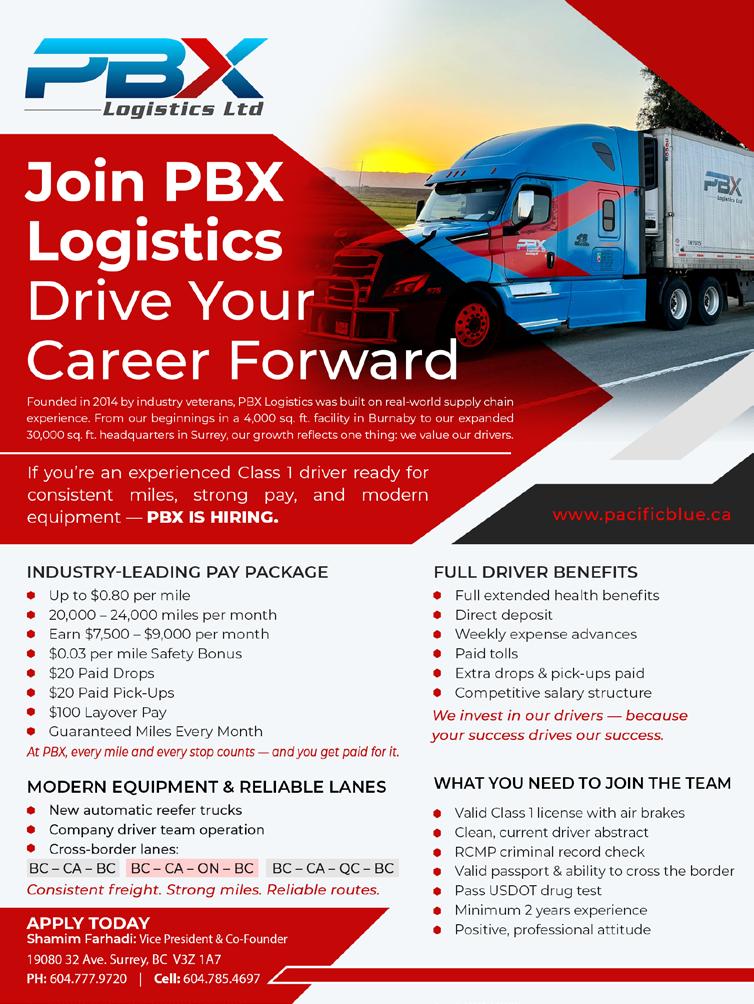
• $300 0 sign on b onus
• Increased mileage rate 10/2021
• Fuel Cap of 47 cent s p er litre
• Fuel p er formance pay pro gram
• Dire c t dep osit, paid t wice monthly
• Fas t cards and passp or t s preferre d
• N o cos t s atellite communication s ys tem
• Insurance/ license subsidy is upto 50 % , e qual monthly pay ment s, no interes t