












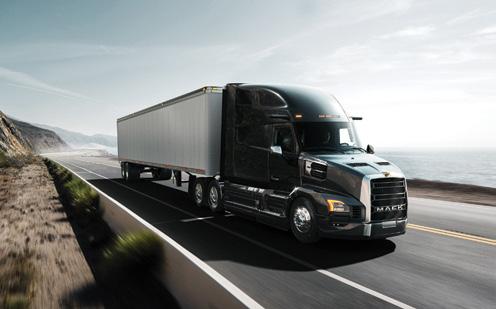
When the haul is long, every drop of fuel counts. Pioneerʼs enhanced aerodynamics and powertrain deliver up to 11% better fuel economy, engineered to go the distance without compromise.
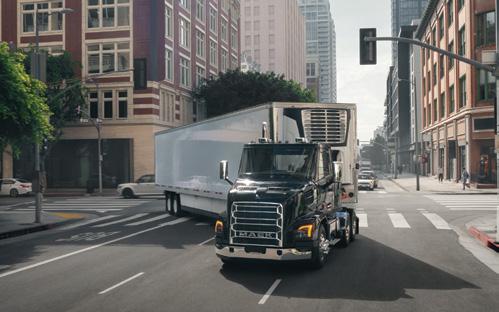
When regional routes get tight, precision matters. Anthemʼs redesigned frontal profile and reduced bumper-to-cab dimensions keep you in control through every turn, every block, and every delivery.
EXPLORE HIGHWAY

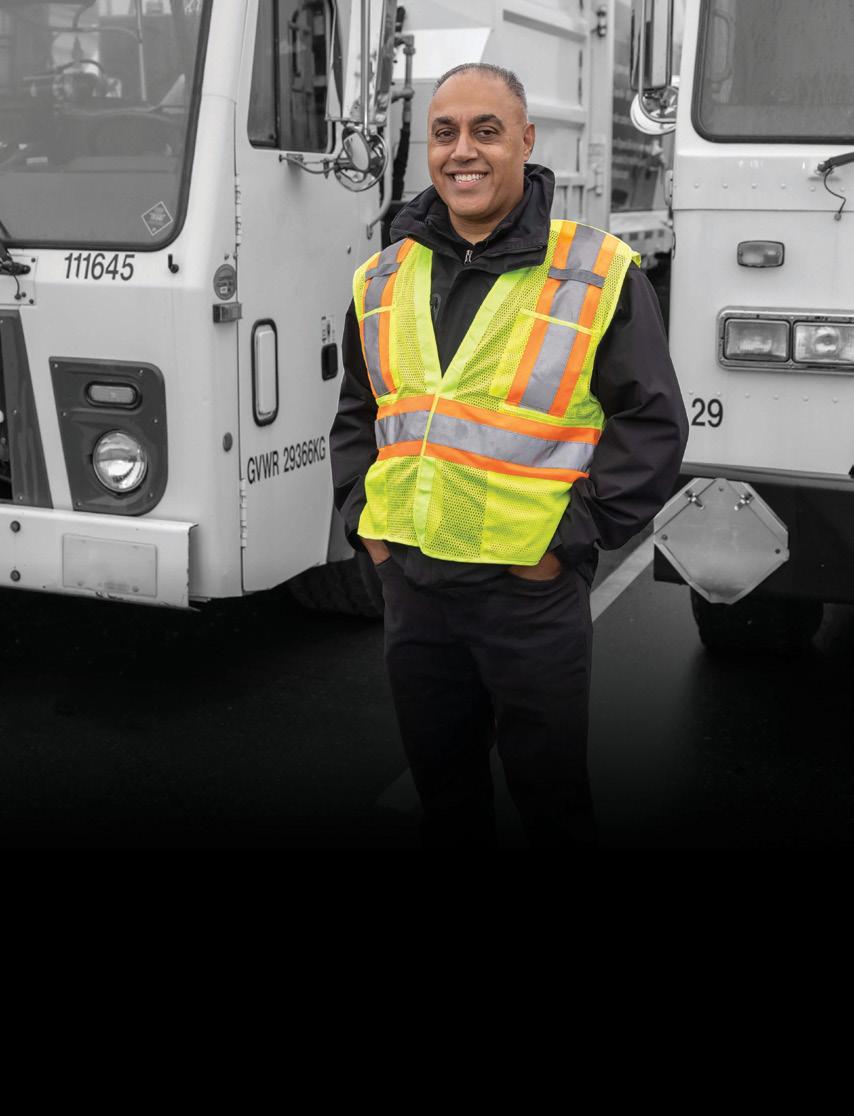
DRIVING WITH INTEGRITY: SAFETY, MAINTENANCE, AND THE STRENGTH OF OUR DRIVERS
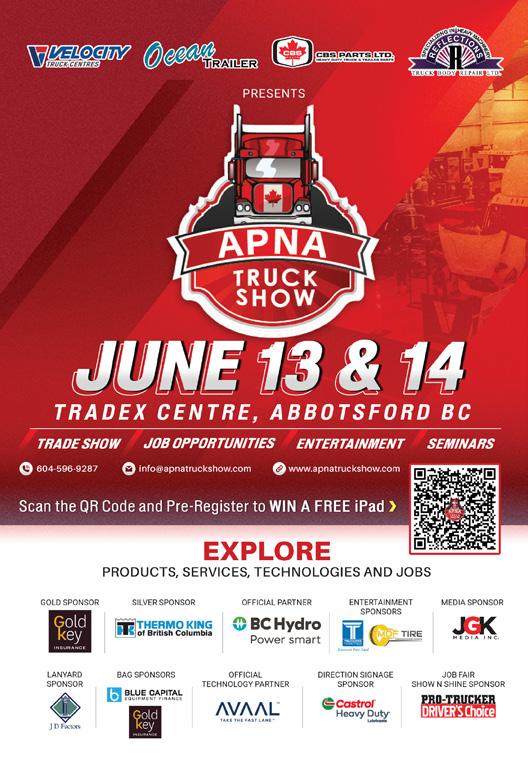
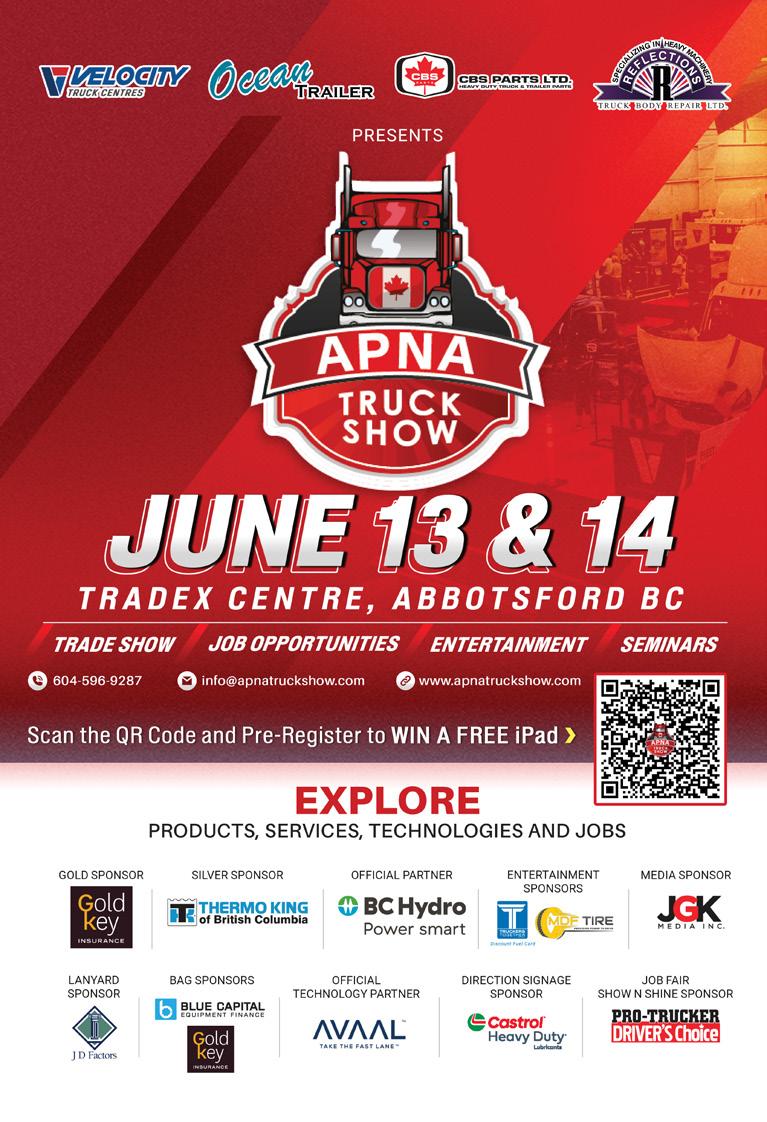
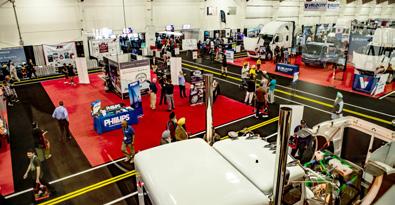
As we look toward June 13/14, the APNA Truck Show in Abbotsford stands as more than just a showcase of polished chrome and heavy machinery; it is a vital forum for the future of the Canadian trucking industry. At a time when the sector faces unprecedented scrutiny, the APNA Truck Show offers a timely opportunity to refocus on the pillars that keep our economy moving: safety, maintenance, and integrity.
Road safety is not a static goal but a daily commitment that begins long before a driver hits the roads and highways. It starts in the shop with rigorous preventative maintenance. Cutting corners on mechanical upkeep is a gamble with lives, and as equipment becomes increasingly sophisticated, the industry must prioritize high standards of service to ensure every vehicle on the road is fundamentally sound. A well-maintained fleet is the first line of defense in protecting both our drivers and the public.
However, mechanical safety cannot
be decoupled from the human element. We must confront the growing shadow of exploitation within the industry. From unfair wage practices to the pressures that force drivers to compromise on rest or equipment standards, exploitation erodes the very foundation of trucking. Professional drivers are the backbone of our supply chain, and they deserve a workplace defined by fair compensation and professional respect. Ending these practices isn’t just a moral imperative; it is essential for the long-term sustainability and reputation of our trade.
The upcoming show in Abbotsford is the perfect stage to lead these conversations. By bringing together carriers, drivers, and technicians, we can reinforce a culture where safety is non-negotiable and every worker is valued. Let’s use this event to drive the industry toward a safer, fairer, and more professional future.
See you all at the 2026 APNA Truck Show on June 13th and 14th.
nyknIqI nwl A~gy vDxw: sur~iKAw, r~K-rKwA Aqy swfy frweIvrW dI qwkq
ijvyN ik AsIN 13-14 jUn v~l dyK rhy hW, AYbtsPorf iv~c hox vwlw APNA Truck Show isr& cmkdy hoey krom Aqy BwrI mSInrI dI pRdrSnI qoN ikqy v~D hY; ieh kYnyfIAn tr~ikMg audXog dy Biv~K leI ie~k mh~qvpUrn mMc hY[ Aijhy smyN iv~c jdoN ies Kyqr ƒ bhuq izAwdw bwrIkI nwl dyiKAw jw irhw hY, ieh iek~T swfI AwriQkqw ƒ gqISIl r~Kx vwly mu~K QMmHW: sur~iKAw, r~K-rKwA Aqy iemwndwrI 'qy muV iDAwn kyNdirq krn dw ie~k sunihrI mOkw pRdwn krdw hY[
sVk sur~iKAw koeI siQr tIcw nhIN hY blik ie~k rozwnw dI vcnb~Dqw hY jo frweIvr dy hweIvyA 1 'qy cVHn qoN bhuq pihlW SurU ho jWdI hY[ ieh s^q rokQwm r~K-rKwA nwl vrkSwp qoN SurU huMdI hY[ mkYnIkl dyKBwl iv~c lwprvwhI vrqxI izMdgIAW nwl Kyfx dy brwbr hY, Aqy ijvyNijvyN aupkrx hor AwDuink huMdy jw rhy hn, audXog ƒ syvw dy au~c imAwrW ƒ qrjIh dyxI cwhIdI hY qW jo ieh XkInI bxwieAw jw sky ik sVk 'qy hr vwhn pUrI qrHW sur~iKAq hY[ ie~k vDIAw FMg nwl r~K-rKwA kIqw igAw PlIt swfy frweIvrW Aqy jnqw dovW dI sur~iKAw leI pihlI r~iKAw lweIn hY[
hwlWik, mkYnIkl sur~iKAw ƒ mnu~KI pihlU qoN v~K nhIN kIqw jw skdw[ swƒ audXog dy AMMdr vD rhy SoSx dy prCwvyN dw swhmxw krnw cwhIdw hY[ Zlq aujrqW qoN lY ky aunHW dbwA q~k jo frweIvrW ƒ Awrwm jW swzo-swmwn dy imAwrW nwl smJOqw krn leI mjbUr krdy hn, SoSx tr~ikMg dI buinAwd ƒ kmzor krdw hY[ pySyvr frweIvr swfI splweI cyn dI rIVH dI h~fI hn, Aqy auh shI muAwvzy Aqy pySyvr siqkwr vwly kMm dy sQwn dy h~kdwr hn[ ienHW pRQwvW ƒ ^qm krnw isr& ie~k nYiqk izMmyvwrI hI nhIN hY; ieh swfy vpwr dI lMby smyN dI siQrqw Aqy swK leI vI zrUrI hY[
AYbtsPorf iv~c Awaux vwlw SoA ienHW g~lW ƒ A~gy vDwaux leI ie~k sMpUrn plytPwrm hY[ kYrIArW, frweIvrW Aqy tYknISIAnW ƒ iek~Ty ilAw ky, AsIN Aijhy s~iBAwcwr ƒ mzbUq kr skdy hW ij~Qy sur~iKAw nwl koeI smJOqw nhIN kIqw jWdw Aqy hr kwmy dI kdr kIqI jWdI hY[ AwE AsIN ies smwgm dI vrqoN audXog ƒ ie~k sur~iKAq, inrp~K Aqy vDyry pySyvr Biv~K v~l iljwx leI krIey[
quhwƒ swirAW ƒ 13 Aqy 14 jUn ƒ 2026 dy APNA Truck Show qy imlWgy[

Editor-In-Chief
Advertising & Sales
Jag Dhatt
Art Director Ranjit Singh
IT Manager Ranjit Singh Bhamra
Cover Design Ranj Bhamra
Cover Photo Credit Anadolu Agency / Contributor
Contributing Writers
Jag Dhatt; Michael Howe; Pash Brar; Ray Gompf; Jimmy Gill; Staff Reporters
Translator
Tirath S. Khabra; Jesse Khabra
Cell: 604-767-4433
E: jag@jgkmedia.ca
F: 604-598-9264


jI ryA gON&, sI fI
sur~iKAw kI hY? kI sVk sur~iKAw ieh hY, hwdisAW dw kwrn nw bxnw, jW auhnW ‘c Swml nw hoxw? kI ieh pihlI vwr ‘c, kMm ƒ shI FMg nwl nw krn dy nqIijAW ƒ, inrDwirq krn leI idn Br hr siQqI dw ivSlySx krnw hY? jW kI ieh iehnW sB dw Aqy hor bhuq ku`J dw sumyl hY? '
hwlWik, mYN sur~iKAw bwry hor vI bhuq swry svwl pu~C skdw hW, pr mYƒ XkIn hY ik qusIN smJ gey hovogy ik sur~iKAw hryk siQqI dw ivSlySx krn dI ie~k mwniskqw hY Aqy hr kMm ƒ Awpxy Awp ƒ
jW iksy hor ƒ s~t-cot phuMcwey ibnW krn dI mwniskqw bxweI r~Kxw hY[
AsIN tRWsportySn dy kwrobwr ‘c hW, ies leI swfw idmwg sB qoN pihlW Awpxy kMm ƒ sur~iKAq FMg nwl, ibnW iksy Gtnw dy krn bwry socdw hY[ swƒ rukx dI, jo AsIN krn jw rhy hW aus bwry socx dI, Aqy ^qry dy cWs hox dy bwvjUd vI, ie~k fUMGw swh lYx Aqy hOly-hOly kdm pu`tdy hoey kMm krn dI loV hY[
audwhrn vjoN, Awpxy lof kIqy hoey tr~k ƒ bYk krnw kwPI iDAwn vrqx dI
jrUrq huMdI hY[ quhwƒ ieh XkInI bxwauxw cwhIdw hY, ik quhwfy ip~Cy vwlw rsqw sw& hY[ iPr qusIN ip~Cy muVdy ho, Awpxy Awp ƒ ies g`l dw iDAwn r`KidAW hoey ik BwvyN pihlW ip`Cy rsqw sw& sI, pr hwlwq ie~k pl ‘c bdl skdy hn[ hmySw sucyq rho[ kdy vI, iksy hor duAwrw inrDwirq kIqy gey, iksy byquky SifaUl qy AwpxI mMizl 'qy phuMcx dy dbwA ƒ, Awpxy au~qy hwvI nw hox idE, jo quhwƒ joKm lYx, kwƒn qoVn Aqy quhwfI AwpxI jwn ^qry ‘c pwaux leI mjbUr krdw hY[ Aqy ieh sB isr& quhwƒ kwbl frweIvr hox dw pRmwx dyx
leI kIqw jWdw hY[ jykr puAwieMt A qoN puAwieMt B q~k phuMcx ‘c Cy GMty l~gdy hn, qW iesƒ cwr GMitAW ‘c pUrw krn dI koiSS nw kro[
g~l ieh hY, ik jdoN sur~iKAw dI g~l AwauNdI hY, qW qusIN Awpxy swry PYsilAW dy Kud izMmyvwr huMdy ho, ijnHW dy nqIjy vjoN quhwfy idn dw sur~iKAq AMq huMdw hY[ koeI ifspYcr nhIN, koeI kwƒn nhIN, koeI mMg krn vwlw iSpr nhIN; sVk 'qy quhwfI sur~iKAw leI quhwfy qoN ielwvw hor koeI zuMmyvwr nhIN hY[
jdoN qusIN ieh g`l mMndy ho, ik sur~iKAw quhwfI vI au`nI hI izMmyvwrI hY, ijMnI quhwfy Awly-duAwly dy lokW dI Aqy jdoN auh vI iesy qrHW dI mwniskqw r~Kdy hox, qW hI hr koeI iksy nw iksy smyN Awpxy ipAwirAW kol sur`iKAq Gr jw skdw hY[ jykr qusIN aumId Anuswr sB kuJ shI FMg nwl krdy ho, Aqy bwkI swry vI Aijhw hI krdy hn, qW sur~iKAw dw tIcw hwsl kIqw jw skdw hY[
aus smyN sur~iKAw Awswn huMdI hY, jdoN hr koeI ie~ko g~l 'qy sihmq huMdw hY[ sur~iKAw lgBg AsMBv huMdI hY, jdoN hr koeI AwpxI mrzI krdw hY[ jdoN inXmW
dI pwlxw krnw isr& ie~k ivklp bx jWdw hY, qW sur~iKAw kmzor ho jWdI hY[ iksy Swrtk~t jW quhwfy 'qy pweI geI iksy mMg dI Kwqr inXmW ƒ AxgOilAw nw kro[
hwlWik, k`uJ sur~iKAw suJwA isr& suJwA hI huMdy hn, pr auhnW v~l iDAwn idE; sOilf pIlIAW lweInW dw mqlb hY ik hOlI c~lx vwlIAW g`fIAW ƒ pws nw kro, ikauNik quhwfI nzr qoN dUr ku`J Aijhw ho skdw hY jo hwdsy dw kwrn bx skdw hY[ hwdsw ho jwx dw Kqrw mu`l lYx dI koeI vI Aqy kdy vI jrUrq nhIN huMdI[
sur~iKAw dw mqlb ieh vI XkInI bxwauxw hY, ik quhwfw tr`k bhuq vDIAw hwlq ‘c hovy qW jo, jy koeI vI Inspeciton huMdI hY, qW quhwƒ icMqw krn dI loV nw pvy[ sur~iKAw Kqry nUM kMtRol krn Aqy pRbMiDq krn bwry hY[ joKm dw mulWkx krnw Asl ‘c ie~k sur~iKAw rxnIqI ivkisq krn dw ih~sw hY[ jykr quhwfI kMpnI dw koeI sur~iKAw pRbMDk (Safety Manager) hY Aqy auh AwpxI zuMmyvwrI inBw irhw huMdw hY, qW aus v`loN id~qy gey hr suJwA ƒ iDAwn nwl suxo[
jykr qusIN jW quhwfI kMpnI dw koeI vwhn iksy hwdsy ‘c Swml huMdw hY, jW jy
kMpnI dy tr`k iksy gMBIr Gtnw dw iSkwr ho jWdw hY, qW lybr kYnyfw quhwfy ibjins dI bhuq bwrIkI nwl jWc krygw[ auh sB qoN pihlW rokQwm leI, quhwfI lOg bu`k ‘c drz sur~iKAw Xojnw ‘c idlcspI lYxgy[ auh gMBIr siQqI ƒ pYdw hox qoN rokx leI swry krmcwrIAW ƒ id~qy gey sur~iKAw sMdySW ‘c idlcspI lYxgy[ lybr kYnyfw dI jWc dI SkqI Aqy sMBwivq nqIijAW dw swhmxw krn leI, XkInI bxwE, ik quhwfI kMpnI kol ie~k ilKqI sur~iKAw pRikirAw Xojnw hY, ieh swbq krn leI, ik kMpnI dI Xojnw bwry krmcwrI jwxdy hn, ik aus sur~iKAw Xojnw ‘c kI hY, Aqy sur~iKAw bwry ies qrHW g~l kro, ijvyN ik ieh quhwfI kMpnI leI sB qoN mh~qvpUrn cIz hovy[ jykr quhwfy kol auh ilKqI Xojnw nhIN hY, qW myrw suJwA hY ik qusIN iesƒ jldI qoN jldI iqAwr krnw SurU kr idE[
sur~iKAw ƒ hlky ‘c nhIN lYxw cwhIdw; jykr koeI mMdBwgI Gtnw vwprdI hY, qW ie~k cMgw vkIl quhwfI pYrvweI krn leI hoxw hI, quhwfw ie~ko ie~k bcwA ho skdw hY Aqy iPr vI, koeI gwrMtI nhIN hY[
huxy hI sur~iKAw dI mwniskqw Apxwaux dw smW hY[


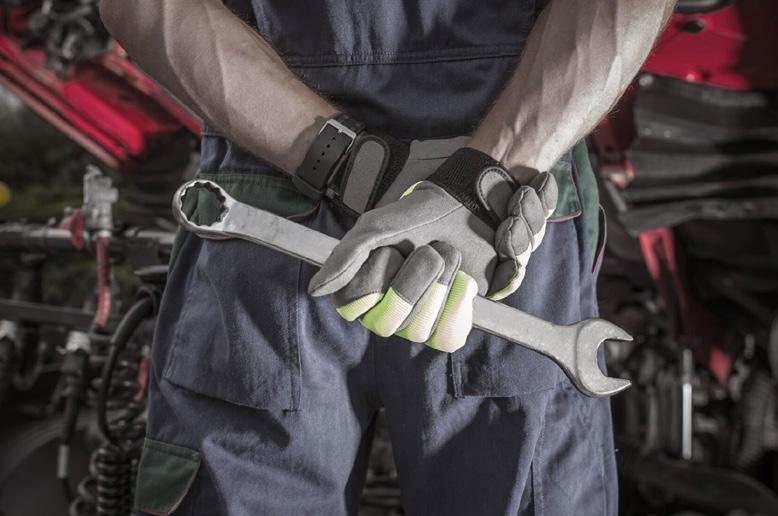
What is safety? Is it road safety, not being in, or causing wrecks? Is it analyzing every situation throughout the day to determine the ramifications of not doing it right the first time? Or is it a combination of all these, and more?
While I could ask many more questions about safety I’m sure you get the picture that safety is a mindset of analyzing each situation and keep a mindset on doing every task without injury to oneself or to another.
We’re in the business of transportation, so our minds think first and foremost about doing our job safely, without incident. We need to stop, think about what we are about to do, and even with an element of danger, take a deep breath and do the task step by step.
As an example, backing up your loaded rig takes an extra element of care. You must ensure your path behind is clear. Then you back up, reminding yourself that even thought it was clear at the start, things can change in an instant.
G. RAY GOMPF, CD
Always be aware.
Never allow the pressure of getting to your destination on some ridiculous schedule someone else sets and pressures you to take chances, break laws, and put YOUR life at risk. And all this to make you look efficient. If it takes six hours to get from point A to point B, don’t try to accomplish it in four.
The point is when it comes to safety, you’re in charge of all the decisions you make that result in a safe conclusion
to your day. No dispatcher, no a law, no demanding shipper; nobody is responsible for your safety on the road but you.
If and when you accept that safety is as much your responsibility as those around you and they share a similar mindset, only then everyone gets to go home to their loved ones at some point in time. If you do everything correctly, as expected, and everyone else does the same, the goal of safety can be achieved.
Safety is easy when everybody is on the same page. Safety is virtually impossible when everyone does their own thing. When rules are an option, safety is tenuous. Don’t allow rules to be sloughed off for the sake of any shortcut or demand put on you.
While some safety suggestions are just that, heed the suggestion; solid

yellow lines mean do not pass a slower vehicle as there could be something outside your line of sight that could cause a collision. Risking collision is not a risk you need to take.
Safety is also making sure your vehicle is in as top a shape so that you do not need to concern yourself if you happen to get into any level of inspection. Safety is about controlling and managing risk. Accessing risk is truly part of developing a safety strategy. If your company has a safety manager and he or she only wears one hat, listen to everything suggested to you.
If you or a vehicle in your company is involved in a wreck, or if there is a serious incident on company property, Labour Canada will be all over your business like white on rice. They will first of all be interested in your written safety plan for prevention. They will be interested

Trailers don’t get better with age. Spring shows what winter hides.
Canadian winters are tough on equipment. Salt and de-icing chemicals on our roads accelerate corrosion and speed up the deterioration of trailer, straight truck, and liftgate components. When the snow clears, the true condition of your equipment is revealed. You’ll need more than a wash. Glasvan has the service bays, licensed technicians, and instock parts to get your equipment back in working order.
Skip the search. Call Glasvan.
in the safety messages given to all employed to prevent a serious situation from arising. To withstand the power of a Labour Canada investigation and the possible repercussions, make sure your company has a written safety procedures plan, a plan to prove employees know what’s contained in that safety plan, and talk about safety as if it were the most important thing for your company. If you do not have that written plan, I suggest you get it started yesterday and get it completed the day before yesterday.
Safety is not to be taken lightly; should something unfortunate happen, having a good lawyer may be your only salvation and even then, there is no guarantee.
The time for safety mindset is now.
hY — mu~K mnorMjn im`s puUjw
PRyzr vYlI iv~c rOxkW muV vD rhIAW hn ikauNik Apxw tr~k SoA ies swl 13 Aqy 14 jUn ƒ AYbtsPorf iv~c Swndwr vwpsI leI iqAwr hY[ lgBg 10,000 drSkW dI aumId nwl, ieh SoA p~CmI kYnyfw dI d~KxI eySIAweI tr~ikMg kimaUintI leI sB qoN v~fy Aqy sB qoN rMgIly smwgmW iv~coN ie~k bxn jw irhw hY[
AYbtsPorf—jo ibRitS kolMbIAw dw ie~k mh~qvpUrn tr~ikMg kyNdr hY—hr swl ies SoA dI myzbwnI krdw hY, Aqy ieh smwgm pirvwrW, frweIvrW, audXog mwihrW Aqy pRSMskW ƒ iek~Tw krdw hY[ SoA iv~c kstm SoA tr~k, nvIN tYknolojI, sur~iKAw fYmo, vYNfr bUQ, Aqy pirvwr-imqr gqIivDIAW Swml huMdIAW hn, jo tr~ikMg audXog dI imhnq Aqy
Swn ƒ drswauNdIAW hn[
ies swl dw sB qoN v~fw AwkrSx hY pMjwbI sMgIq dI mShUr Aqy pRis~D gwiekw im`s pUjw[ AwpxI qwkqvr Awvwz, zbrdsq styj pRzYNs Aqy ih~t gIqW leI jwxI jwx vwlI ims pu~jw ies SoA iv~c lweIv prPwrm krn Aw rhI hY[ aunHW dI hwzrI nw isr& SoA ƒ cwr cWd lgweygI, sgoN sUby Br qoN pRSMskW ƒ vI iK~c ky ilAwvygI[
mnorMjn qoN ielwvw, Apxw tr~k SoA tr~ikMg kimaUintI ƒ mzbUq krn dy Awpxy imSn ƒ jwrI r~Kdw hY[ ieh smwgm audXog leI nY~tvrikMg dw mOkw idMdw hY, nvIAW syvwvW Aqy aupkrxW ƒ drswauNdw hY, Aqy frweIvrW Aqy kMpnIAW
ƒ iek~Ty is~Kx Aqy juVn dw mMc pRdwn krdw hY[ Kwxy-pIxy dy stwl, s~iBAwcwrk pRogrwm, b~icAW leI gqIivDIAW Aqy ieMtrYkitv ifsply—ie~Qy hr iksy leI kuJ nw kuJ hY[
ijvyN grmI dw mOsm nyVy Aw irhw hY, Apxw tr~k SoA pirvwrW Aqy dosqW leI iek~Ty hox, mnorMjn dw AwnMd lYx Aqy auhnW imhnqI lokW dw jSn mnwaux dw Swndwr mOkw hY jo swfy dyS ƒ clwauNdy hn[
13 Aqy 14 jUn ƒ AYbtsPorf iv~c Awpxw tr~k SoA nw Bu~lo[ Awpxy pirvwr, dosq Aqy b~icAW ƒ nwl ilAwE Aqy ies v~fy smwgm dw ih~sw bxo[ AsIN quhwfw svwgq krn leI iqAwr hW[
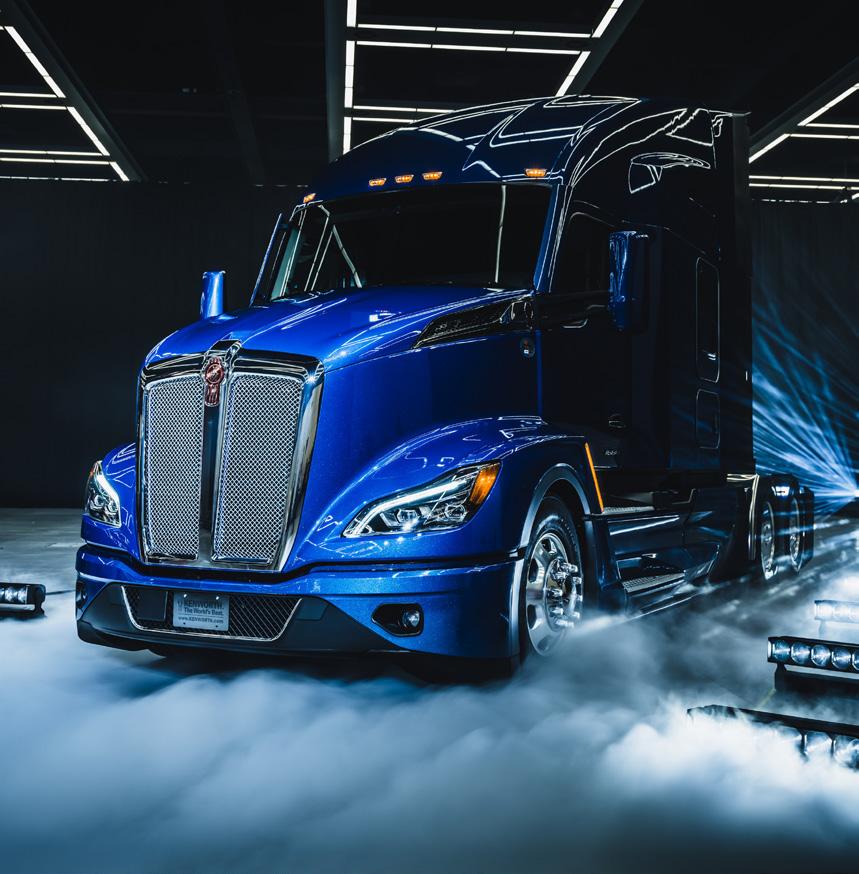
The pinnacle of Kenworth’s engineering: the T680, a masterpiece of aerodynamics designed for long-haul efficiency. This tractor combines a high-perfomance PACCAR powertrain with durable, easy-to-maintain components for unparalleled uptime. Enhanced with cutting-edge technology, it offers a driving experience that’s both intuitive and safe, reducing driver fatigue. The cabin, akin to the luxury found in top-tier automobiles, elevates comfort to new heights. Welcome to the next level of trucking with the Kenworth T680.
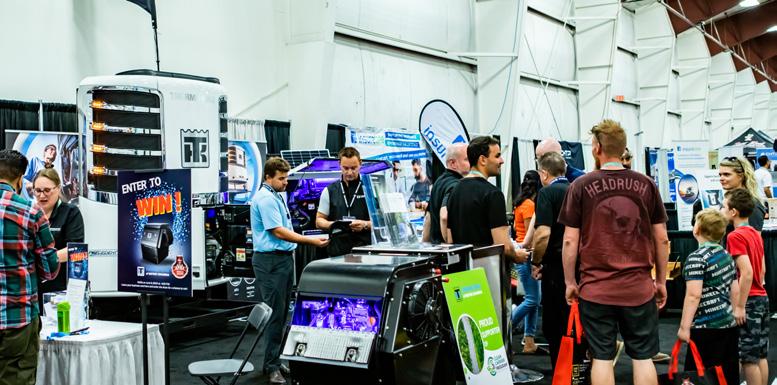
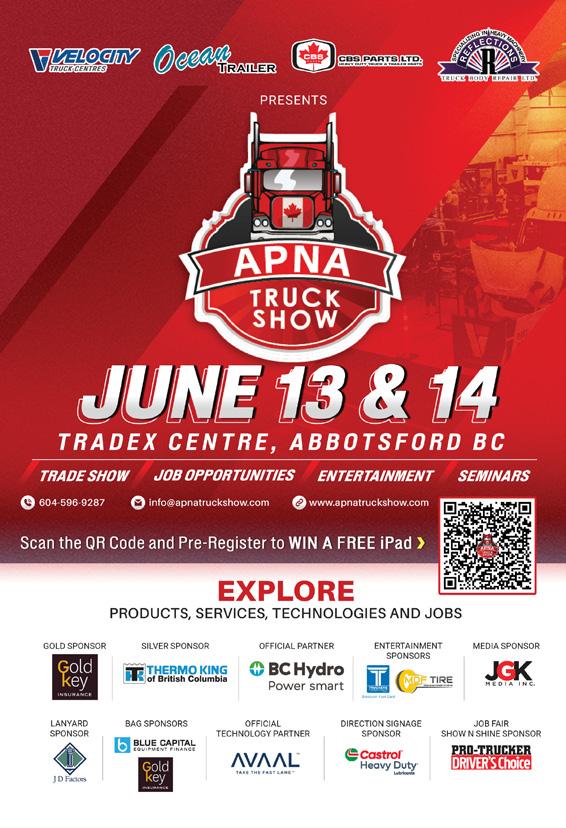
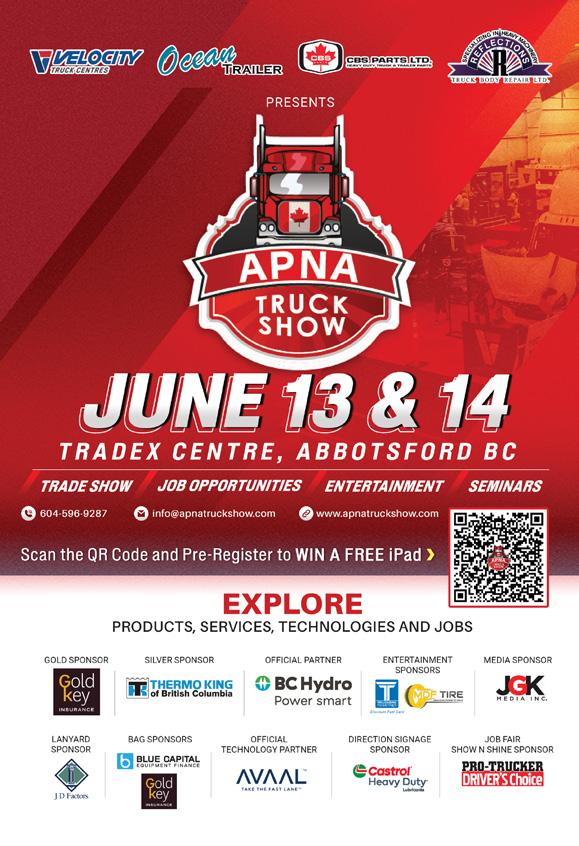
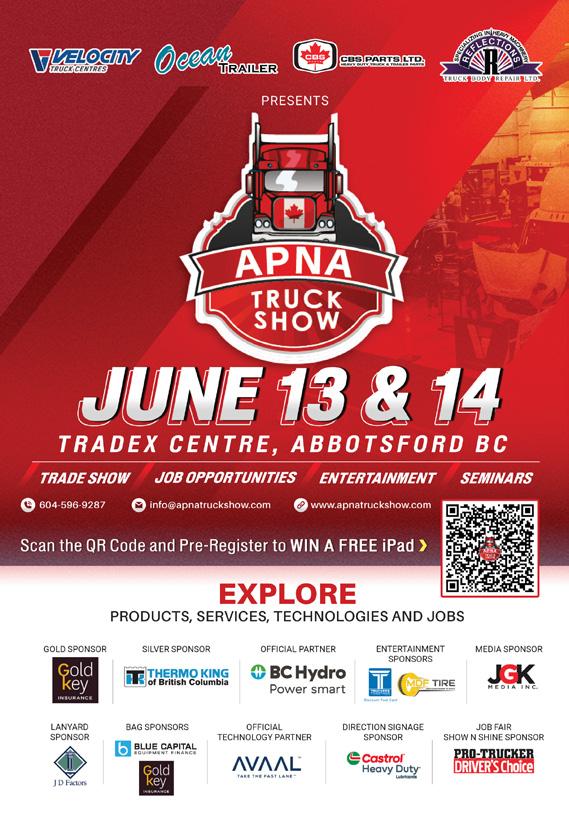
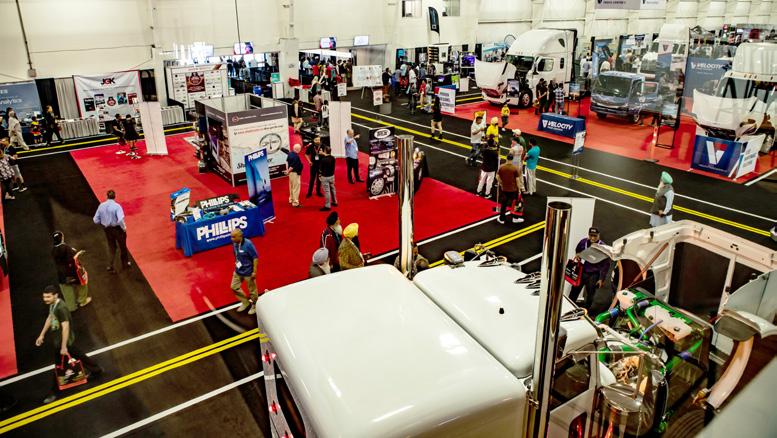
The excitement is building across the Fraser Valley as the Apna Truck Show prepares to roll back into Abbotsford on June 13 and 14, promising two unforgettable days of entertainment, community spirit, and celebration of Canada’s vibrant trucking culture. With an estimated 10,000 visitors expected, this year’s show is shaping up to be one of the largest and most dynamic events the South Asian trucking community has ever hosted.
Held at the heart of Abbotsford—one of British Columbia’s major trucking hubs—the Apna Truck Show has become a beloved annual tradition, drawing families, drivers, industry professionals, and fans from across Western Canada. The event showcases the pride, craftsmanship, and hard work that define the trucking world, from custom show trucks and new equipment displays to safety demonstrations, vendor exhibits, and family friendly attractions.
But the highlight of this year’s show is undoubtedly the arrival of Miss Pooja, one of Punjabi music’s most iconic and influential performers. Known for her powerful voice, energetic stage presence, and chart topping hits, Miss Pooja will take the stage to deliver a performance that promises to electrify the crowd and bring the community together in celebration. Her appearance is expected to draw fans from across BC and beyond, making this a must attend event for music lovers and trucking families alike.
Beyond the entertainment, the Apna Truck Show continues its mission of supporting and uplifting the trucking community. The event provides a platform for industry networking, showcases new technologies and services, and offers a space for drivers and companies to connect, learn, and celebrate their shared contributions to Canada’s economy. With food vendors,
cultural performances, children’s activities, and interactive displays, there is truly something for everyone.
As summer approaches, the Apna Truck Show offers the perfect opportunity for families and friends to come together, enjoy great entertainment, and celebrate the hardworking men and women who keep our country moving. Whether you’re part of the industry or simply looking for a fun weekend outing, this is an event you won’t want to miss.
Mark your calendars for June 13 and 14 in Abbotsford, BC. Bring your family, bring your friends, and come be part of one of the biggest community celebrations of the year. The Apna Truck Show is ready to welcome you.
For more information, visit www. apnatruckshow.com





















There are long lists of trucking firms that are going bankrupt. Truckers are selling equipment and trying to exit a struggling industry. But I am getting growing reports of rude behaviour towards drivers and abusive violence. It’s a real shame and I believe desperation and stress has lead people down abusive paths. Abuse has always been in trucking I think, but in bad times it seems to get worse.
I was dealing with the seller of a trailer, as my client was purchasing his trailer. The seller told me where he had worked. I knew the company well. He told me this firm kept him on the road for seven straight weeks. I was shocked. He said he told the owners son that after the current load he needed a break and not to call him. Instead, the owner himself started calling and demanding he go back to work. He told the owner he needed time off after seven weeks and had already told the son. The owner investigated and then ok’d the time off but had said many abusive things and never apologized. That was strike one as the driver said. But a few weeks later the son gave him an oversize load and refused to give him a permit. He said the permit was required but was told by the son to go around the scales at night and go the long way. When he was late for delivery, which is expected when a proper permit was refused by the son, the owner called the driver swearing at him. Strike two. When this driver got back from the load he went straight to the fleet insurance office with the license plates and quit the organization. More shouting and yelling from the owner ensued. This trucker escaped a very abusive firm. He said he makes less money at another firm, but money is not worth that kind of abuse and demands to do illegal activity.
The story of this firm does not end there. This same trucker has a friend who had a worse incident. It escalated to violence with the owner of the same firm. His friend went to the office, got in a shouting match and ended up in a physical fight with the owner. The owner was knocked to the ground and given a broken nose by this trucker. Violence is not the way. The owner has a reputation for reprehensible behaviour, and it continues.
I financed a truck, and that driver later got in a snowstorm accident. The leasing company showed me the emails sent by this same trucking firm owner to the insurance company demanding he be paid instead of the actual owner, which was the leasing company. His emails were incredibly rude and threatening, and the driver’s wife called me crying because she was also getting threatening calls along with her husband who was blamed for rising insurance costs. Recently 10 drivers with maxi trailers all walked out on this firm. They all quit together. I think it’s unbelievable that this firm remains in business.
Another form of abuse is lack of transparency with driver statements. I have seen so many transgressions when it comes to paying the driver. The rate given to the driver is not the actual rate the firm says it is. The firm keeps the difference but also takes a percentage as a dispatch fee. Practices like this need to be regulated. So many drivers are losing thousands in pay a year all due to rate dishonesty. I witnessed drivers coming into the office, seeing their pay cheques and yelling at the office staff and owners for ripping them off. You work to live, pay your bills and provide for your family; Not to have someone steal your hard work for their own wallet to fill.

Fuel costs have risen so much, so robbing drivers of their pay is just not right.
I had already mentioned there are trucking firms who refuse to purchase permits for over size and other permit required loads. Is this why it seems like there are more accidents and overpass strikes? If there is a permit, there is also a route to be followed. Are truckers taking the wrong route because they have no choice, to avoid a no permit situation? This puts not only the driver in danger, but also the public who share the roads with trucks. This is an abuse of power by refusing to provide a permit. The driver who speaks up, knowing their job requirements for a permit, makes it very sad. There is zero respect to the driver or to the public, and not to mention very dangerous.
As trucking continues to decline, it appears that the abuse increases. The lack of patience and respect to truckers and their families, as well as to all who share the road is very disheartening. I hope there are more regulations and more transparency in trucking with advances in technology. I think the de-regulation of the trucking industry in the USA in 1980 with the Motor Carrier Act brought nothing but problems. It allowed for too many carriers to enter the market and wages to be cut in half and a lot of deceit along the way. No one deserves abuse in any field. I know I have saved a few drivers from a bad experience by telling them about a firm’s bad reputation before they join. Those that listen are thankful. Those that didn’t listen and found out the hard way, always call to thank me for being honest. Do your homework if you can before joining a firm, but if it’s already too late, you can escape and quit. Save yourself abuse and find somewhere to work that appreciates and respects you.


A~jk~lH AijhIAW tr~ikMg kMpnIAW dIAW lMbI sUcI hY, jo idvwlIAw hox jw rhIAW hn[ tr~k frweIvr Awpxw swzoswmwn vyc rhy hn, Aqy sMGrS kr rhI ies ieMfstrI ‘coN bwhr inklx dI koiSS kr rhy hn[ pr mYƒ frweIvrW nwl ru~Ky ivvhwr Aqy Apmwnjnk ihMsw ‘c vwDw hox dIAW irportW iml rhIAW hn[ ieh Asl ‘c Srm dI g~l hY Aqy myrw mMnxw hY, ik inrwSw Aqy qxwA kwrn lokW dy durivvhwr krn qy sihx ’c vwDw krn dw kMm kr irhw hY[ myry iKAwl ‘c tr~ikMg ‘c durivvhwr hmySw hI irhw hY, pr mwVy smyN ‘c ieh hor vI bdqr huMdw jwpdw hY[
mYN ie~k tRylr dy vycx vwly nwl g~l kr rhI sI, ikauNik myrw klwieMt ausdw tRylr KrId irhw sI[ vycx vwly ny mYƒ d~isAw ik auh iks kMpnI leI kMm krdw sI[ mYN aus kMpnI ƒ cMgI qrHW jwxdI sI[ ausny mYƒ d~isAw, ik ies kMpnI ny ausƒ lgwqwr s~q h&iqAW q~k, sVk 'qy (kMm krdw) r~iKAw[ mYN hYrwn rih geI[ ausny ikhw ik ausny mwlk dy lVky ƒ d~isAw sI, ik ies lof qoN bwAd ausƒ Arwm krn dI sKq zrUrq hY, Aqy ausƒ &on nw kIqw jwvy[ pr ies dI bjwey, Kud
mwlk ny hI aus nUM &on krnw SurU kr id~qw, Aqy ausƒ kMm 'qy vwps Awaux leI mjbUr krn l~gw[ ausny mwlk ƒ ikhw, ik lgwqwr s~q h&qy kMm krn qoN bwAd ausƒ rYst krn dI sKq zrUrq hY Aqy auh pihlW hI ausdy lVky ƒ ie bwry d~s cu~kw hY[ mwlk ny ies g`l dI jWc kIqI Aqy iPr Cu~tI qW dy id~qI, pr bhuq swrIAW Apmwnjnk g~lW kihx qoN bwAd, Aqy ies durivvhwr leI aus ny kdy mw&I vI nhIN mMgI[ frweIvr ny ikhw ik ieh pihlI glqI (Stirke One) sI[ pr ku`J h&iqAW bwAd lVky ny ausƒ ie~k 'EvrsweIz' lof id~qw pr ies leI loVIdW lwzmI primt dyx qoN ienkwr kr id~qw[ ausny ikhw ik primt dI loV hY, pr lVky ny ausƒ rwq ƒ skylW (Scales) qoN bc ky in`klx leI, Awly-duAwly dI GuMm ky lMby rsqy rwhIN jwx leI ikhw[ jdoN ausƒ iflIvrI ‘c dyrI hoeI, jo ik suBwivk sI, ikauNik lVky ny shI primt dyx qoN mnHw kr id~qw sI, qW mwlk ny frweIvr ƒ &on kIqw Aqy ausƒ gwlHW k~FIAW[ ieh dUjI glqI (Stirke Two) sI[ jdoN ieh frweIvr lof qoN vwps AwieAw, qW auh is~Dw PlIt ieMSorYNs d&qr igAw, lwiesYNs plytW jmHW krvweIAW Aqy kMpnI
C~f id~qI[ ies qoN bwAd, mwlk ny hor vI gMd bikAw qy gu`sy ‘c bhuq glq g`lW kih ky jlIl kIqw[ ieh tr~kr ie~k bhuq hI Apmwnjnk Prm dy mwlkW dy durivvhwr qoN bc inkilAw[ ausny ikhw ik auh dUjI Prm ‘c G~t pYsy kmwauNdw hY, pr pYsw ies qrHW dy durivvhwr Aqy gYr-kwƒnI gqIivDIAW krn dIAW mMgW dy nwl-nwl AwpxI jwn nUM Kqry ‘c pwaux dI brwbrI nhIN kr skdw[
ies Prm dI khwxI ie~Qy hI Kqm nhIN huMdI[ iesy tr~kr dw ie~k hor dosq hY, ijs nwl ies qoN vI mwVI Gtnw vwprI[ ausy Prm dy mwlk dIAW gwlHW k`Fx qoN vD ky g~l h`QopweI q~k phuMc geI[ ausdw dosq d&qr igAw, au~Qy bihs hoeI Aqy mwlk nwl h~QopweI ho geI[ ies tr~kr ny mwlk ƒ zmIn 'qy ptkw id~qw Aqy ausdI n~k qoV id~qI[ ihMsw koeI rsqw nhIN hY[ mwlk dw ivvhwr bhuq hI ieqrwjXog Aqy Axmnu`KI sI, Aqy hor vI jo burI g`l h Yik aus dw ivvhwr Ajy vI ausy qrW hI jwrI hY[
mYN ie~k tr~k PweInWs kIqw sI, Aqy bwAd ‘c aus frweIvr dw snoA dOrwn
hwdsw ho igAw[ lIizMg kMpnI ny mYƒ iesy tr~ikMg Prm dy mwlk duAwrw bImw kMpnI ƒ ByjIAW geIAW eImylW idKweIAW, ijs ‘c mMg kIqI geI sI, ik Asl mwlk (jo ik lIizMg kMpnI sI) dI bjwey ausƒ Bugqwn kIqw jwvy[ aus dIAW eImylW bhuq hI ru~KIAW Aqy Dmkwaux vwlIAW sn, Aqy frweIvr dI pqnI ny mYƒ roNdI hoeI ny &on kIqw sI, ikauNik ausƒ Aqy ausdy pqI ƒ
DmkI Bry &on Aw rhy sn Aqy vD rhy bImy dy KricAW leI ausdy pqI ƒ zuMmyvwr TihrwieAw jw irhw sI[ hwl hI ‘c Maxi Trialers dy 10 frweIvr, ies Prm ƒ C~f ky cly gey[ auh swry iek~Ty hI kMm C~f gey[ mYƒ ieh AivSvwSXog l~gdw hY, ik ieh Prm Ajy vI kwrobwr ‘c bxI hoeI hY[
durivvhwr dw ie~k hor rUp frweIvr stytmYNtW ‘c pwrdrSqw dI kmI hY[ jdoN frweIvr ƒ Bugqwn krn dI g~l AwauNdI hY, qW mYN bhuq swrIAW glqIAW dyKIAW hn[ frweIvr ƒ id~qw igAw ryt auh Asl ryt nhIN huMdw jo Prm kihMdI hY[ Prm AslI Bugqwn Aqy kIqy gey Bugqwn dw Prk Awp hV`p lYNdI hY Aqy ies dy nwl-nwl ifspYc PIs vjoN qYA pRqISq vI lYNdI hY[ Aijhy GpilAW nUM n`Q pwaux dI zrUrq hY[ ryt dI byeImwnI kwrn bhuq swry frweIvr hr swl keI hzwr fwlrW dI AwpxI kmweI guAw rhy hn[ mYN frweIvrW ƒ d&qr ‘c AwauNdy, AwpxIAW qnKwhW dy cY~k dyKdy Aqy d&qr dy stw&
Aqy mwlkW 'qy aunHW ƒ DoKw dyx leI cIkdy hoey dyiKAw hY[ qusIN ijaUx leI, Awpxy ib~lW dw Bugqwn krn leI Aqy Awpxy pirvwr dI dyKBwl leI kMm krdy ho; ies leI nhIN ik koeI quhwfI imhnq dI kmweI quhwfI jyb coN corI krky hV`p lYx[ frweIvrW dI qnKwh mwrnI iblkul glq hY Aqy hux qyl dIAW kImqW ieMnIAW vD geIAW hn, ik ieh glq hi nhIN blik ie`k Gor pwp vI hY[
mYN pihlW hI izkr kIqw sI ik AijhIAW tr~ikMg PrmW vI hn, jo EvrsweIz Aqy hor loVINdy lofW leI primt KrIdx qoN ienkwr krdIAW hn[ kI iehI kwrn hY, ik hux izAwdw hwdsy Aqy Evrpws nwl tkrwaux dIAW GtnwvW lgwqwr vD rhIAW hn? jy primt hY, qW pwlxw krn leI ie~k inrDwirq rsqw vI huMdw hY[ kI tr~kr glq rsqw lY rhy hn, ikauNik aunHW kol primt nw hox dI siQqI qoN bcx leI koeI hor cwrw nhIN huMdw? ieh isr& frweIvr ƒ hI nhIN sgoN jnqw jo tr~kW nwl sVkW sWJIAW krdI hY, aunHW ƒ vI ^qry ‘c pwauNdw hY[ primt dyx qoN ienkwr krnw SkqI dI durvrqoN hY[ auh frweIvr jo primt dIAW zrUrqW ƒ jwxdy hoey Awvwz auTwauNdw hY, aus leI ieh bhuq duKdweI hY[ ieh frweIvr jW jnqw pRqI zIro snmwn hY, Aqy ieh bhuq ^qrnwk vI hY[
ijvyN-ijvyN tr~ikMg ‘c igrwvt jwrI hY, Aijhw l~gdw hY ik durivvhwr vD irhw hY[ tr~krW Aqy aunHW dy pirvwrW dy nwl-nwl sVk sWJI krn vwly swirAW pRqI sbr Aqy siqkwr dI kmI bhuq inrwSwjnk hY[ mYƒ aumId hY ik qknwlojI ‘c qr~kI dy nwl tr~ikMg ‘c vDyry inXm Aqy vDyry pwrdrSqw AwvygI[ mYƒ l~gdw hY ik 1980 ‘c AmrIkw ‘c Motor Carirer Act dy nwl tr~ikMg ieMfstrI dy fIrYgUlySn ny sm~isAwvW qoN ielwvw hor ku`J nhIN id`qw[ ies ny bhuq swry kYrIArW ƒ mwrkIt ‘c Awaux dI iejwzq id~qI Aqy mzdUrI A~DI rih geI Aqy rsqy ‘c bhuq swrw DoKw hoieAw[ iksy vI Kyqr ‘c koeI vI durivvhwr dw h~kdwr nhIN hY[ mYN jwxdI hW ik mYN keI frweIvrW ƒ iksy Prm dI mwVI swK bwry pihlW hI d~s ky mwVy AnuBv qoN bcwieAw hY[ ijnHW ny suixAw auh DMnvwdI hn[ ijnHW ny nhIN suixAw anHW nUM bwAd ‘c qMg qy AOKy ho ky pqw l~gw, auh hmySw mYƒ iemwndwr hox leI DMnvwd krn leI &on krdy hn[ jy ho sky qW iksy Prm ‘c kMm krn qoN pihlW AwpxI jWc pVqwl (Homework) zrUr kro, pr jy pihlW hI bhuq dyr ho cu~kI hY, qW qusIN au~QoN in`kl skdy ho Aqy kMm C~f skdy ho[ Awpxy Awp ƒ durivvhwr qoN bcwE Aqy kMm krn leI AijhI jgHw l~Bo jo quhwfI kdr krdI hovy Aqy quhwfw snmwn krdI hovy[


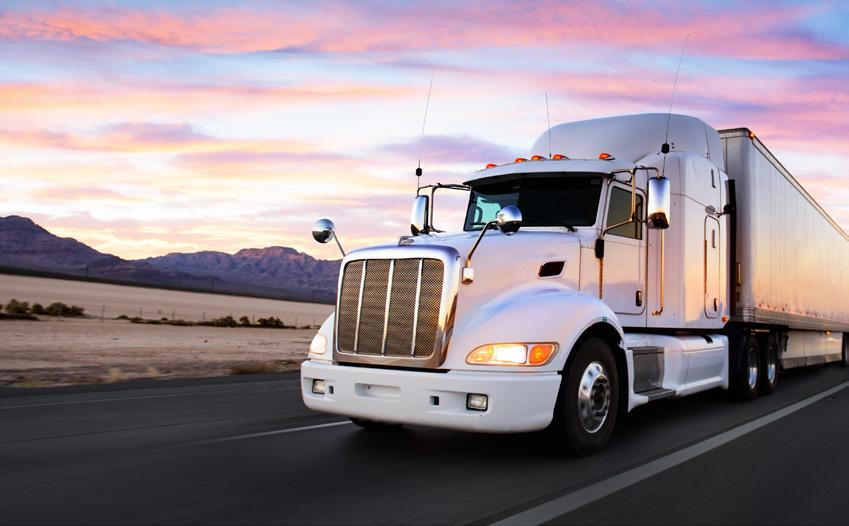

BY JGK STAFF
The backbone of the North American economy is showing signs of strain as diesel prices surge to levels not seen in years. From the ports of California to the distribution hubs of the Greater Toronto Area, truck drivers and fleet owners are grappling with a fuel crisis that threatens to upend the logistics industry and drive up the cost of living for millions of consumers.
As of April 2026, diesel prices have spiked dramatically across both nations. In Canada, the national average has climbed to approximately $2.35 per litre, a staggering 60% increase from just three months ago. South of the border, the situation is equally grim; while the U.S. national average sits near $4.80 per gallon, some regions—most notably California—are reporting pump prices as high as $8.00 per gallon.
The "Nail in the Coffin" for Small Fleets
For many owner-operators, the math of moving freight is no longer adding up. A single long-haul truck, which can hold upwards of 1,000 litres (approx. 260 gallons), now costs between $1,400 and $2,300 to fill. With some drivers refueling three times a week, fuel expenses have ballooned by thousands of dollars per month.
“We are hardly surviving,” says Harpreet Zepra, owner of Time-X Incorporated Trucking. “Overhead costs were already high, but these fuel prices
are a nail in the coffin.” '
While large carriers like Amazon or FedEx can mitigate these costs through sophisticated fuel surcharges, small and mid-sized carriers often lack the leverage to pass expenses onto customers immediately. The result is a "squeeze" that forces independent drivers to choose between operating at a loss or parking their rigs entirely.
Market analysts point to a "perfect storm" of geopolitical and economic factors:
• Geopolitical Conflict: Ongoing tensions in the Middle East, specifically involving Iran, have created a risk premium on crude oil, keeping Brent crude well above historical averages.
• Supply Scarcity: Global diesel inventories remain below the five-year average, exacerbated by refinery capacity constraints and seasonal shifts in demand.
• Economic Lag: The trucking industry was already in a fragile recovery following a multi-year slowdown in freight rates. This sudden spike has hit before companies could rebuild their cash reserves.
For those looking for a quick return to "normal," the outlook is sobering. The U.S. Energy Information Administration (EIA) recently revised its 2026 forecast, predicting that diesel prices will peak this month before potentially averaging out to
$4.80/gal for the remainder of the year.
In Canada, the Canadian Truck Operators Association (CTOA) is calling on federal and provincial governments to provide temporary tax relief or bridge financing to prevent a wave of bankruptcies. Without such interventions, the industry warns of a "pass-through" effect: as transportation costs rise, the price of groceries, construction materials, and retail goods will inevitably follow.
Industry experts suggest that the next 90 days will be a "survival of the fittest" period for North American logistics.
• Rate Volatility: Expect freight companies to review and adjust their pricing weekly rather than monthly to keep up with pump prices.
• Consumer Impact: High energy costs are expected to keep headline inflation elevated through the summer, likely delaying any potential interest rate cuts by central banks.
• Supply Chain Thinning: If smaller carriers are forced off the road, the resulting decrease in capacity could lead to shipping delays and further price hikes for essential goods.
For now, truckers like those in the Hamilton and Toronto corridors are flying by the seat of their pants. As one driver put it, "We don't know when it's going to end, and we're just trying to keep the wheels turning for one more week."

au~qrI AmrIkw dI AwriQkqw dI rIVH dI h~fI mMny jwx vwly tr~ikMg Kyqr 'qy fIzl dIAW vDdIAW kImqW kwrn BwrI dbwA dyKx ƒ iml irhw hY[ kYlIPornIAw dIAW bMdrgwhW qoN lY ky gRytr torWto eyrIAw dy ifstrIibaUSn h~b q~k, tr~k frweIvr Aqy PlIt mwlk bwlx dy ies sMkt nwl jUJ rhy hn[ ieh siQqI nw isr& lOijsitks ieMfstrI ƒ pRBwivq kr rhI hY, sgoN Awm lokW leI rihxsihx dI lwgq vDx dw Kqrw vI pYdw kr rhI hY[
ApRYl 2026 q~k, dovW dySW iv~c fIzl dIAW kImqW iv~c BwrI auCwl AwieAw hY[ kYnyfw iv~c rwStrI AOsq lgBg $2.35 pRqI lItr q~k phuMc geI hY, jo ik isrP iqMn mhIny pihlW nwloN 60% v~D hY[ AmrIkw iv~c vI siQqI kuJ AijhI hI hY; ij~Qy rwStrI AOsq $4.80 pRqI gYln dy nyVy hY, au~Qy kYlIPornIAw vrgy KyqrW iv~c kImqW $8.00 pRqI gYln q~k irport kIqIAW jw rhIAW hn[
Coty kwrobwrIAW leI v~fI cuxOqI bhuq swry Enr-EprytrW leI hux mwl Foxw Gwty dw sOdw bxdw jw irhw hY[ ie~k lMbI dUrI vwlw tr~k, ijs iv~c 1,000 lItr qoN v~D qyl pYNdw hY, ƒ Brn leI hux
$1,400 qoN $2,300 q~k dw Krcw Aw irhw hY[ keI frweIvr h&qy iv~c iqMn vwr qyl
BrvwauNdy hn, ijs nwl aunHW dw mhInwvwr Krcw hzwrW fwlr vD igAw hY[
tweIm-AYks ienkwrporyitf tr~ikMg dy mwlk hrpRIq zyprw dw kihxw hY, "swfw guzwrw muSkl ho igAw hY[ Krcy pihlW hI izAwdw sn, pr fIzl dIAW ienHW kImqW ny swfw l~k qoV ky r~K id~qw hY["
jdoN ik AYmwzwn jW PYfAYks vrgIAW v~fIAW kMpnIAW 'iPaUl srcwrj' rwhIN ieh Krcw gwhkW 'qy pw idMdIAW hn, Coty kwrobwrIAW kol AijhI koeI shUlq nhIN huMdI[ nqIjy vjoN, keI frweIvr Awpxy tr~k KVHy krn leI mjbUr hn[
kImqW vDx dy kwrn
mwihrW Anuswr ies dy ip~Cy keI mu~K kwrn hn:
• BU-rwjnIiqk tkrwA: m~D pUrb (Kws krky eIrwn) iv~c c~l rhy qxwA kwrn k~cy qyl dIAW kImqW au~c p~Dr 'qy bxIAw hoeIAW hn[
• splweI dI kmI: ivSv p~Dr 'qy fIzl dw stwk ipCly pMj swlW dI AOsq nwloN G~t hY[
• AwriQk susqI: tr~ikMg audXog pihlW hI mMdI qoN auBrn dI koiSS kr irhw sI, Aqy qyl dIAW kImqW iv~c ies
Acwnk vwDy ny kMpnIAW dy bcy-Kucy PMf vI Kqm kr id~qy hn[
kI rwhq dI aumId hY?
jo lok jldI rwhq dI aumId kr rhy hn, aunHW leI ^brW bhuq cMgIAW nhIN hn[ XU.AY~s. AYnrjI ienPrmySn
AYfiminstRySn (EIA) ny Anumwn lgwieAw hY ik fIzl dIAW kImqW ies mhIny isKr 'qy rihxgIAW Aqy swl dy bwkI ih~sy leI AOsq $4.80/gal dy Aws-pws rih skdIAW hn[ kYnyfw iv~c, 'kYnyfIAn tr~k Eprytrz AYsosIeySn' (CTOA) srkwr qoN tYksW iv~c Cot dI mMg kr rhI hY[ jykr Aijhw nhIN huMdw, qW gRosrI, auswrI sm~grI Aqy hor zrUrI cIzW dIAW kImqW hor vDxgIAW[
Awaux vwly mhIinAW iv~c kI hovygw? mwihrW Anuswr Agly 90 idn tr~ikMg Kyqr leI bhuq mh~qvpUrn hoxgy:
• BwVy dIAW drW: kMpnIAW hr h&qy Awpxy ryt bdl skdIAW hn[
• mihMgweI: qyl dIAW au~cIAW kImqW kwrn mihMgweI vDygI, ijs kwrn bYNkW v~loN ivAwj drW Gtwaux iv~c dyrI ho skdI hY[
• splweI cyn 'qy Asr: jykr Coty tr~kr kMm bMd krdy hn, qW splweI iv~c dyrI ho skdI hY Aqy cIzW dI Gwt ho skdI hY[
iPlhwl, hYimltn Aqy torWto dy rUtW 'qy c~lx vwly frweIvrW leI siQqI bhuq nwzuk hY[ ie~k frweIvr ny ikhw, "swƒ nhIN pqw ik ieh kdoN Kqm hovygw, AsIN b~s iksy qrHW kMm clwaux dI koiSS kr rhy hW["
Iwent to visit my friend in Vancouver Washington a few days after his daughter passed away from cancer. I was going to help clean out her rental home and comfort my friend. We realized he would not really have any need to go back to the area, as he lived in another state. So, we decided to go to some eateries his daughter had enjoyed and honour her memory.
We went to eat at so many spots! First was Original Hotcake & Steak House in Portland. My friend and his daughter had been many times after soccer and other activities. There was a big line up, but it went fast. We both enjoyed a junior breakfast with a huge pancake, an egg and choice of meat. I had bacon, he had sausage. The pancake was delicious! We only got junior meals because it was more than enough food and we still had a lot of eating to do!
Next, we checked out hot dogs at Roake’s in Milwaukie. We had tried to go get some cheese popcorn first, but the business was long out of business. Roake’s was tiny and packed with so many people trying to get in. We each had a coney dog and shared some hand cut fries. Both were delicious. The fries were matchstick cut and very salty. We ate inside at some stools and made friends with some folks heading
up to Canada for hockey soon.
Next, we headed to Flying Pie’s Pizzaria. The whole area was packed. Parking was difficult, but we finally found a spot. There was an upside-down table and chairs glued to the ceiling. We watched as they hand tossed the pizza in the air. The pizza was delicious! Piled high with toppings. We did not leave the leftovers behind!
The next day we had to try Voodoo Donuts because his daughter liked them. I didn’t find them to be anything great. They were only ok to me. I would not go back. We headed to Hood River because that is where my friend’s daughter had been married. We ate along the waterfront at Pfriem Family Brewers. His daughter had eaten with her mom along the waterfront. We had to wait about 30 minutes for a table. We shared a fried chicken sandwich with fries and coleslaw and mac n cheese. I would go back in the summer to walk along the waterfront and enjoy the view.
That night we headed to the Vancouver waterfront. We had pasta at Grassa Handcrafted Pasta and then some ice cream at Salt & Straw. The views were amazing and the food was fantastic. I would definitely go back to both. I had spaghetti and meatballs for dinner and a scoop of honey lavender and a brittle ice cream. Delicious! I walked the board walk along
the water to eat my ice cream.
We had to try some Jersey Mike’s subs the next day; a favorite of his daughter. We split a hot Italian sub. I would definitely get one of these subs again. I should have bought some of the pepper relish they use. I regret that. Then next was Raising Cane’s. This place was packed! We shared a Box combo with 4 chicken fingers, some coleslaw, Texas toast and crinkle cut fries. I liked the lemonade but Chick-Fil-A has better lemonade and chicken. I thought the chicken didn’t have much flavor, so I don’t know why all the commotion.
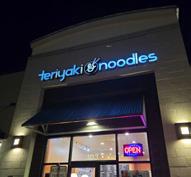
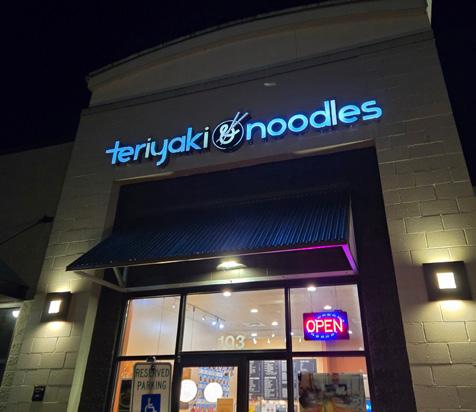
Next, we stopped at Mr. Maple for donuts. This was my friend’s daughter’s favorite. I have to agree. The donuts were much better here than Voodoo Donuts. Then we headed to Gorilla Burger. I had spotted Gorilla Burger in a gas station on my previous visit a year prior. My friend and his daughter thought I was crazy. I said “I can tell it’s good” and vowed I would return. Both my friend and his daughter did try it and said it was a great burger! I knew I was right! I split one with my friend and even the crinkle cut fries were good! We laughed at the memory of me being right. The last place we ate was Teriyaki & Noodles. We split a Teriyaki chicken. The significance of this was this was the last bite of food my friend’s daughter had before she passed from metastatic breast cancer at age 37. We were very solemn as we ate there. It had been take-out which was brought to the home where she passed away. We ate silently in the restaurant. It was worthy of a last bite of food.
We ate a lot of food over a few days. Each place we stopped brought memories. Knowing my friend is unlikely to go back to that area, makes me feel good that we made new memories and cherished the old memories. He remembered so much by stopping at all these places. If you lose a loved one, a great way to remember them is to go enjoy their favorite food, whether at home or a restaurant. You’ll be surprised at how all the memories come flooding back. My next stop will be in Canada for a Cinnamon Toast Crunch Frosty at Wendy’s. That was her favorite cereal. PASH
COURTESY: NEWS CANADA
Did you know that without a subsidy, a four-litre jug of milk that costs about $7.50 in southern Canada can cost over $50 in a northern grocery store? For many northern families, higher grocery prices are part of everyday life, and they reflect realities most Canadians never experience.
When Roads Don’t Lead to the Grocery Store
Many northern communities aren’t connected to the rest of Canada by permanent roads. Groceries can’t be delivered by truck or train yearround, like they are in most southern communities.
As a result, most food is flown to communities. For some communities with water access, non-perishable food can be delivered by ship during the summer when the ice has melted, and waterways are open. In the winter, nonperishable food can be shipped for short periods by ice roads, which is more affordable than air transport.
Air delivery is essential, especially for fresh food, but it isn’t always reliable. Flights are often delayed or cancelled because of storms, strong
winds, poor visibility or extreme cold. When planes can’t land, fresh food doesn’t arrive.
Transportation challenges are only part of the story. Many northern communities have just one or two grocery stores, with limited competition and smaller customer bases.
The cost of shipping, storing and keeping food fresh, especially fruits and vegetables, is shared across fewer shoppers. As a result, nutritious foods are often the most expensive and the least consistently available.
There are supports that help reduce the cost of groceries in the North and improve access to affordable food. One example is Nutrition North Canada, which currently helps 124 isolated northern communities through a retail subsidy.
The highest subsidy is applied to essential foods such as frozen produce, milk, and infant formula. For example, a grocery cart of bagged milk, bananas, eggs and flour that costs $140 before the

subsidy can be reduced to $30, saving families $110.
Even with these measures, the cost of living is very high in the North, particularly for people living on fixed or low incomes. Improving food affordability over time depends on continued collaboration between communities, governments and partners to strengthen local food systems and infrastructure.

kI qusIN jwxdy ho ik sbisfI qoN ibnW, du~D dw ie~k cwr-lItr vwlw j~g, ijsdI kImq d~KxI kYnyfw iv~c lgBg $7.50 hY, au~qrI kirAwny dI dukwn iv~c $50 qoN v~D ho skdI hY? keI au~qrI pirvwrW leI, kirAwny dIAW vDIAW kImqW rozwnw jIvn dw ih~sw hn, Aqy ieh AijhIAW hkIkqW ƒ drswauNdIAW hn jo izAwdwqr kYnyfIAnW ny kdy AnuBv nhIN kIqIAW[
jdoN sVkW kirAwny dI dukwn q~k nhIN jWdIAW
bhuq swry au~qrI BweIcwry p~kIAW sVkW rwhIN bwkI kYnyfw nwl nhIN juVy hoey
hn[ d~KxI BweIcwirAW vWg ie~Qy swrw swl tr~kW jW tRynW rwhIN kirAwny dw swmwn nhIN phuMcwieAw jw skdw[
nqIjy vjoN, izAwdwqr Bojn hvweI jhwzW rwhIN ByijAw jWdw hY[ pwxI dI phuMc vwly kuJ BweIcwirAW leI, grmIAW iv~c jdoN br& ipGl jWdI hY Aqy jl mwrg Ku~lH jWdy hn, jhwzW rwhIN ^rwb nw hox vwlw Bojn phuMcwieAw jw skdw hY[ srdIAW iv~c, Aijhw Bojn br& dIAW sVkW (ice roads) rwhIN QoVHy smyN leI ByijAw jw skdw hY, jo ik hvweI AwvwjweI nwloN ssqw hY[
hvweI splweI zrUrI hY, Kws krky qwzy Bojn leI, pr ieh hmySw BrosymMd nhIN huMdI[ qU&wnW, qyz hvwvW, G~t idRStI jW bhuq izAwdw TMF kwrn aufwxW iv~c Aksr dyrI huMdI hY jW r~d ho jWdIAW hn[ jdoN jhwz lYNf nhIN kr skdy, qW qwzw Bojn nhIN phuMcdw[
G~t ivklpW dw mqlb hY au~cIAW kImqW
AwvwjweI dIAW cuxOqIAW khwxI dw isr& ie~k ih~sw hn[ keI au~qrI BweIcwirAW iv~c isr& ie~k jW do kirAwny dIAW dukwnW hn, ij~Qy mukwblw sImq hY Aqy gwhkW dI igxqI G~t hY[
Bojn, Kws krky PlW Aqy sbzIAW ƒ Byjx, stor krn Aqy qwzw r~Kx dI lwgq G~t KrIddwrW iv~c vMfI jWdI hY[ nqIjy vjoN, pOSitk Bojn Aksr sB qoN mihMgy huMdy hn Aqy bhuq G~t auplbD huMdy hn[
ikhVI cIz kirAwny ƒ vDyry ikPwieqI bxwauNdI hY au~qrI Kyqr iv~c kirAwny dI lwgq ƒ Gtwaux Aqy ikPwieqI Bojn q~k phuMc ƒ ibhqr bxwaux leI keI shwieqw pRxwlIAW hn[ ie~k audwhrx 'inaUtRISn nOrQ kYnyfw' hY, jo ies smyN pRcUn sbisfI rwhIN 124 v~K-v~K au~qrI BweIcwirAW dI mdd kr rhI hY[
sB qoN v~D sbisfI zrUrI Bojn pdwrQW ijvyN ik jMmIAW hoeIAW sbzIAW, du~D Aqy b~icAW dy PwrmUly 'qy id~qI jWdI hY[ audwhrx vjoN, du~D dIAW QYlIAW, kyly, AMfy Aqy Awty dI ie~k kwrt ijsdI kImq sbisfI qoN pihlW $140 hY, auh Gt ky $30 rih skdI hY, ijs nwl pirvwrW dI $110 dI bcq huMdI hY[
ienHW aupwvW dy bwvjUd, au~qr iv~c rihx dw Krcw bhuq izAwdw hY, Kws krky inSicq jW G~t Awmdn vwly lokW leI[ smyN dy nwl Bojn ƒ ikPwieqI bxwauxw sQwnk Bojn pRxwlIAW Aqy buinAwdI FWcy ƒ mzbUq krn leI BweIcwirAW, srkwrW Aqy BweIvwlW ivckwr inrMqr sihXog 'qy inrBr krdw hY[
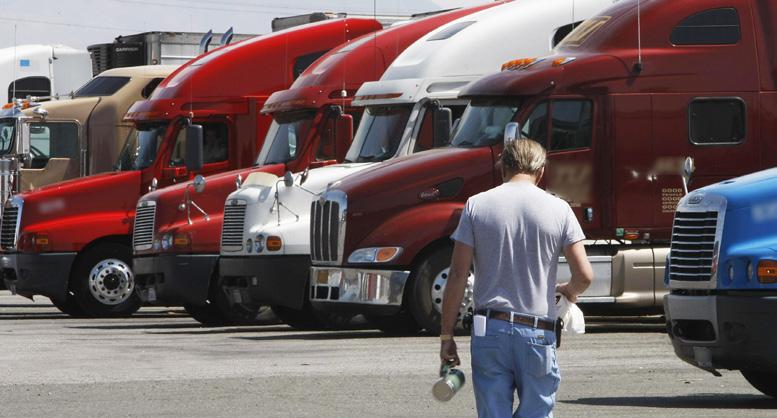
BY JAG DHATT
For decades, the trucking industry has been hailed as the backbone of the Canadian economy, a symbol of the hard-working spirit that keeps the nation moving. However, in 2026, a darker reality has pulled into the fast lane of our national discourse. Beneath the surface of logistics and efficient supply chains lies a predatory underground economy fueled by immigration fraud, systemic wage theft, and profound human suffering. To protect the integrity of Canada’s borders and the basic dignity of labor, the exploitation of vulnerable drivers must be stopped immediately.
The crisis often begins long before a driver ever turns an ignition key on Canadian soil. It starts with the widespread abuse of the Labour Market Impact Assessment (LMIA) process, where predatory consultants and unscrupulous carriers essentially sell jobs to desperate newcomers. Current reports indicate that some workers are paying staggering sums between $10,000 and $70,000 just to secure a work permit. This creates a modern form of debt bondage, where newcomers arrive in Canada already tens of thousands of dollars in the red. This financial burden makes them easy targets for further abuse, as their legal status is often tied to a specific employer, leaving
them effectively trapped and unable to complain about mistreatment without risking deportation.
Central to this cycle of exploitation is the "Driver Inc." shell game, a taxevading scheme where carriers force employees to incorporate as independent contractors. By misclassifying these workers, companies callously avoid paying for essential benefits like Employment Insurance, the Canada Pension Plan, vacation pay, and statutory holidays. This model shifts the burden of taxes and professional liability onto the driver while stripping away the safety net of workers' compensation. By operating this way, companies gain an unfair and illegal competitive advantage, undercutting legitimate businesses that choose to play by the rules. It is not merely a legal loophole; it is a direct assault on Canadian labor standards that turns employees into disposable assets.
The consequences of this system are not limited to financial fraud; they are frequently life-threatening. Exploited drivers are often pressured to operate unsafe, poorly maintained equipment or to exceed legal driving hours to meet impossible deadlines. When these "chameleon carriers" are eventually
flagged by authorities, they simply shut down their operations and reopen under a new name to dodge fines and accountability. The silence of the victims is bought with fear; even as wage theft becomes rampant, few drivers come forward because the threat of losing their immigration status acts as a powerful silencer.
Ending this cycle requires more than just public awareness; it requires aggressive and coordinated enforcement from the federal government. To move forward, agencies like the Canada Revenue Agency and Service Canada must continue to synchronize their data to flag companies where "independent contractors" are clearly functioning as employees. Furthermore, Canada must move toward decoupling work permits from specific employers to provide workers with the mobility to leave abusive situations without jeopardizing their residency. Finally, penalties must be increased so that they no longer represent a simple "cost of doing business." Canada’s trucking industry should be a gateway to a better life, not a trap, and it is time to pull the brakes on immigration fraud to ensure the Canadian dream does not turn into a nightmare on our highways.
ƒ Kqm krnw
dhwikAW qoN, tr~ikMg audXog ƒ kYnyfIAn AwriQkqw dI rIVH dI h~fI vjoN SlwGw kIqI geI hY, jo ik dyS dI gqISIlqw ƒ bxweI r~Kx vwly imhnqI lokW dw pRqIk hY[ hwlWik, 2026 iv~c, swfy rwStrI sMvwd iv~c ie~k hnyrI hkIkq swhmxy AweI hY[ lOijsitks Aqy kuSl splweI cynW dI sqHw dy hyTW iemIgRySn DoKwDVI, pRxwlIgq aujrqW dI corI, Aqy fUMGy mnu~KI du~KW duAwrw clwieAw jw irhw ie~k iSkwrI zmIndoz ArQcwrw mOjUd hY[ kYnyfw dIAW srh~dW dI AKMfqw Aqy ikrq dI mUl mirAwdw dI r~iKAw leI, kmzor frweIvrW dy SoSx ƒ qurMq roikAw jwxw cwhIdw hY[
ieh sMkt Aksr frweIvr v~loN kYnyfw dI DrqI 'qy pYr r~Kx qoN bhuq pihlW SurU ho jWdw hY[ ieh lybr mwrkIt iempYkt AsYsmYNt (LMIA) pRikirAw dI ivAwpk durvrqoN nwl SurU huMdw hY, ij~Qy iSkwrI slwhkwr (consultants) Aqy byeImwn kYrIAr Asl iv~c loVvMd nvyN Awaux vwilAW ƒ nOkrIAW vycdy hn[ mOjUdw irportW d~sdIAW hn ik kuJ krmcwrI isrP vrk primt pRwpq krn leI $10,000 qoN $70,000 dy ivckwr BwrI rkm Adw kr rhy hn[ ieh krzy dI gulwmI dw ie~k AwDuink rUp pYdw krdw hY, ij~Qy nvyN Awaux vwly kYnyfw phuMcx vyly pihlW hI hzwrW fwlrW dy krzy hyT huMdy hn[ ieh iv~qI boJ auhnW ƒ hor SoSx dw Awswn iSkwr bxwauNdw hY, ikauNik auhnW dI kwƒnI siQqI Aksr ie~k ivSyS mwlk nwl juVI huMdI hY, ijs nwl auh pRBwvSwlI FMg nwl Ps jWdy hn Aqy ifport hox dy fr qoN ibnW durivvhwr dI iSkwieq krn iv~c Asmr~Q huMdy hn[
ies SoSx dy c~kr dy kyNdr iv~c "frweIvr ieMk." (Dirver Inc.) skIm hY, jo ik tYks corI krn dw ie~k qrIkw hY ij~Qy kYrIAr Awpxy krmcwrIAW ƒ suqMqr TykydwrW vjoN rijstr krn leI mjbUr krdy hn[ krmcwrIAW ƒ glq SRyxI iv~c r~K ky, kMpnIAW ruzgwr bImw (EI), kYnyfw pYnSn plwn (CPP), Cu~tIAW dI qnKwh Aqy kwƒnI Cu~tIAW vrgy zrUrI lwBW dw Bugqwn krn qoN bcdIAW hn[ ieh mwfl tYksW Aqy pySyvr izMmyvwrI dw boJ frweIvr 'qy pw idMdw hY, jdoN
ik aunHW qoN vrkrz kMpnsySn vrgw sur~iKAw Gyrw Koh ilAw jWdw hY[ ies qrIky nwl kMm krky, ieh kMpnIAW ie~k Anuicq Aqy gYr-kwƒnI mukwblybwzI dw Pwiedw auTwauNdIAW hn, Aqy aunHW jwiez kwrobwrW ƒ nukswn phuMcwauNdIAW hn jo inXmW Anuswr c~ldy hn[ ieh isr& ie~k kwƒnI kmI nhIN hY; ieh kYnyfIAn lybr imAwrW 'qy is~Dw hmlw hY[
ies pRxwlI dy nqIjy isr& iv~qI DoKwDVI q~k sImq nhIN hn; ieh Aksr jwnlyvw huMdy hn[ SoSx dw iSkwr frweIvrW 'qy Aksr Asur~iKAq, mwVI dyKBwl vwly aupkrx clwaux jW AsMBv smW sImwvW ƒ pUrw krn leI kwƒnI frweIivMg GMitAW qoN v~D kMm krn leI dbwA pwieAw jWdw hY[ jdoN ieh "igrigt kYrIAr" (chameleon carirers) AiDkwrIAW duAwrw PVy jWdy hn, qW auh jurmwny Aqy jvwbdyhI qoN bcx leI Awpxw kMm bMd kr idMdy hn Aqy nvyN nwm hyT dubwrw KolH lYNdy hn[ pIVqW dI cu~p fr nwl KrIdI jWdI hY; BwvyN aujrqW dI corI rwmpur (bhuq izAwdw) ho rhI hY, iPr vI bhuq G~t frweIvr A~gy AwauNdy hn ikauNik iemIgRySn siQqI guAwaux dw ^qrw aunHW ƒ cu~p rihx leI mjbUr krdw hY[
ies c~kr ƒ Kqm krn leI isrP jnqk jwgrUkqw qoN v~D dI loV hY; ies leI sMGI srkwr v~loN s^q kwrvweI dI loV hY[ A~gy vDx leI, kYnyfw rYvyinaU eyjMsI (CRA) Aqy srivs kYnyfw vrgIAW sMsQwvW ƒ aunHW kMpnIAW dI pCwx krnI cwhIdI hY ij~Qy "suqMqr Tykydwr" Asl iv~c krmcwrIAW vjoN kMm kr rhy hn[ ies qoN ielwvw, kYnyfw ƒ vrk primtW ƒ Kws mwlkW nwl joVn dI pRQw ƒ Kqm krnw cwhIdw hY qW jo krmcwrIAW ƒ AwpxI irhwieS ƒ Kqry iv~c pwey ibnW durivvhwr vwlIAW siQqIAW ƒ C~fx dI AwzwdI iml sky[ AMq iv~c, jurmwny ieMny vDwey jwxy cwhIdy hn ik auh isr& "kwrobwr dI lwgq" nw rih jwx[ kYnyfw dw tr~ikMg audXog ie~k ibhqr jIvn dw rwh hoxw cwhIdw hY, nw ik ie~k jwl, Aqy ieh smW hY ik iemIgRySn DoKwDVI ƒ roikAw jwvy qW jo kYnyfIAn supnw swfy hweIvyA 'qy frwauxw supnw nw bx jwvy[
BY JGK STAFF
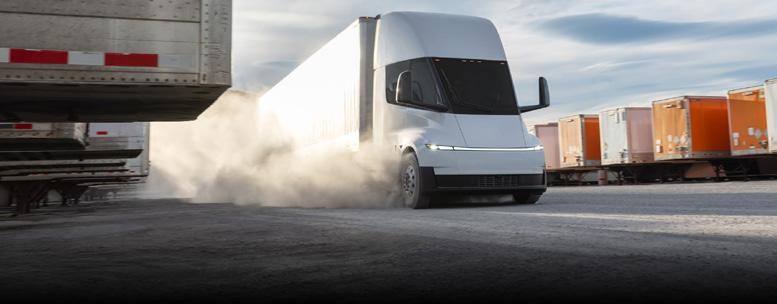
Tesla has officially entered a new chapter in its decade-long pursuit of electrifying heavy transport. On April 29, 2026, the company confirmed that the first Tesla Semi has rolled off its state-of-the-art, high-volume production line at the dedicated 1.7-million-squarefoot facility adjacent to Gigafactory Nevada. This milestone signals the end of the truck’s "pilot phase" and the beginning of a push to capture nearly 20% of the North American Class 8 market.
The Semi’s path to the production line has been famously arduous. Since its dramatic 2017 unveiling, the program was repeatedly sidelined as Tesla prioritized high-volume passenger vehicles like the Model Y. While early "hand-built" units were delivered to PepsiCo in late 2022, those vehicles were essentially rolling laboratories.
The 2026 production version is a fundamentally different machine. Engineers have stripped approximately 1,000 lbs from the chassis by migrating to a 48-volt low-voltage architecture—a technology inherited from the Cybertruck—which significantly reduces the weight and complexity of the wiring harnesses. Additionally, the adoption of the 4680-battery cell format has allowed for a structural battery pack that increases rigidity while lowering the overall center of gravity.
Tesla is launching two distinct trims designed to address both regional
distribution and long-haul logistics:
• Standard Range: 325 miles per charge | ~$260,000USD
• Long Range: 500 miles per charge | ~$290,000USD
What sets the Semi apart from its competitors is its extreme energy efficiency. Real-world fleet data from partners like ArcBest and DHL show the Semi consuming between 1.55 and 1.7 kWh per mile at a full 82,000-lb gross combination weight. For context, a traditional diesel truck consumes the energy equivalent of roughly 5.5 kWh per mile.
Powering this efficiency is an 800kW tri-motor drivetrain producing a staggering 1,072 horsepower. Unlike traditional diesel rigs that struggle on steep inclines, the Semi can maintain highway speeds even at a 6% grade, providing a significant safety and throughput advantage for mountaincorridor logistics.
One of the primary hurdles for electric trucking has been downtime. Tesla is addressing this with the Megawatt Charging System (MCS). The Semi supports charging speeds of up to 1.2 MW, allowing the truck to recover 60% to 70% of its range in just 30 minutes.
This window is strategically designed to align with federally mandated 30-minute rest breaks for drivers. Tesla is already expanding its "Megacharger" network across major freight corridors,
including a recent partnership with Pilot Travel Centers to install dedicated stalls at key truck stops across the United States.
While the upfront cost of the Tesla Semi is higher than a standard diesel tractor (which typically retails for $150,000 to $180,000), the Total Cost of Ownership (TCO) paints a different picture.
• Energy Savings: At roughly $0.31 per mile for electricity versus $0.67 for diesel, high-mileage fleets can save over $70,000 annually in fuel alone.
• Maintenance: With no diesel aftertreatment systems, no multi-speed transmissions, and regenerative braking that preserves traditional brake pads, maintenance costs are projected to be 40% lower.
The new Nevada facility is designed for an ultimate capacity of 50,000 units per year. While analysts expect a gradual ramp-up—projecting between 5,000 and 15,000 deliveries for the remainder of 2026—demand remains high. Recent orders include a massive 370unit commitment from major logistics providers and a 60-truck order for California port drayage.
As Tesla scales "the machine that builds the machine," the sight of a silver, silent Class 8 tractor on the I-80 is about to go from a rare sighting to an industry standard.


BY: BCTA/SAFETY DRIVEN
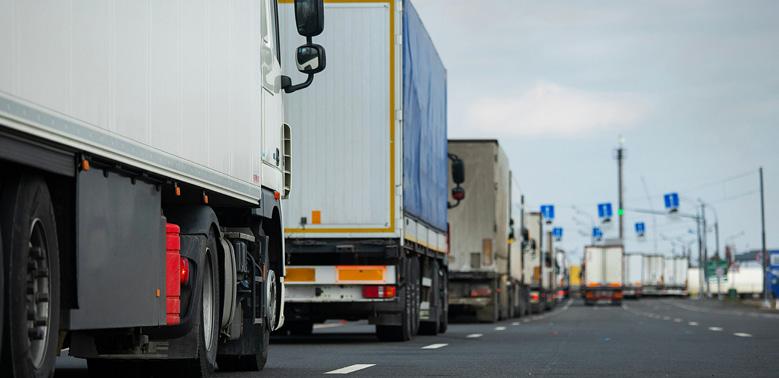
In March 2026, the BC Trucking Association reviewed 20 years of transborder freight data from the U.S. Department of Transportation to better understand how goods are moving by truck between British Columbia and the United States.
The review looked at truck freight moving through BC’s 17 land border crossings between 2006 and 2025, connecting BC with Washington, Idaho, Montana, and Alaska. The findings point to a clear shift: cross-border trucking volumes have been steadily declining since 2022 and have not returned to the highs seen during the post-pandemic rebound.
That matters because the decline does not appear to be primarily driven by recent U.S. tariffs. Instead, the data suggests a longer-running structural downturn that was already underway before tariffs became a major part of the conversation.
After the 2009 global economic slowdown, cross-border trucking volumes between BC and the U.S. climbed steadily. That trend was interrupted in 2020 during the pandemic, followed by a sharp rebound in 2021 and 2022 that pushed activity above prepandemic levels.
But beginning in 2022, that momentum shifted. Trucking volumes have declined consistently since then, continuing through 2025. The pattern suggests the sector is facing deeper economic and competitive pressures, rather than a short-term disruption.
The slowdown is not affecting every commodity group in the same way.
In the Canada-to-U.S. direction, wood and wood products have seen the most significant decline, falling 38% since 2021. Given the historical importance of forestry to BC’s export economy, this decline has a major influence on overall
freight trends.
At the same time, some categories are moving in the opposite direction. Machinery and electrical goods increased 59% over the same period, while foodstuffs rose 24%, showing that some sectors remain resilient despite the broader slowdown.
In the U.S.-to-Canada direction, machinery and electrical goods remain the dominant commodity group entering BC. However, transportation equipment has pulled back sharply, declining 39% since 2022.
Together, these trends show that the cross-border slowdown is not a universal collapse. It is concentrated in specific sectors, while others continue to grow.
BC’s cross-border truck freight continues to move through a small number of major crossings. The Douglas / Pacific Highway crossings in Surrey
remain the dominant hub, accounting for roughly two-thirds of all truck freight by dollar value over the 20-year period.
The next largest crossings are Abbotsford-Huntingdon, Kingsgate, Osoyoos, and Aldergrove. Together, the top five crossings handle 98% of all truck freight moving between BC and the United States.
While the overall distribution has changed only modestly over time, Kingsgate has become more important, overtaking Abbotsford-Huntingdon as BC’s second busiest commercial crossing by 2025.
The analysis points to three important conclusions.
First, the downturn is real and persistent. Cross-border trucking volumes have been declining since 2022, and the trend predates the current tariff discussion.
Second, the slowdown is sector specific. Wood product exports and transportation equipment moving into Canada have declined sharply, while machinery, electrical goods, and foodstuffs have shown growth or resilience.
Third, BC’s cross-border freight system remains heavily concentrated. Douglas / Pacific Highway continues to carry most of the truck freight, while the top five crossings continue to handle nearly all BC-U.S. truck movements.
BC carriers are operating in a market where steady cross-border growth can no longer be assumed. If U.S.-bound freight plays a smaller role in the years ahead, companies will need to plan for that reality.
That shift also creates opportunity.
population grows, major construction and infrastructure projects move forward, and domestic supply chains continue to evolve.
There may also be new opportunities in east-west freight movement as Canada looks to strengthen internal trade. At the same time, efforts to diversify export markets beyond the United States could increase the importance of BC’s ports, creating potential growth in port-related trucking, drayage, and intermodal movements.
BC’s trucking industry has adapted to downturns before. The difference now is the length and consistency of the current decline. Carriers that recognize the shift early, reassess their strategies, and identify new domestic and port-related opportunities will be better positioned for the road ahead.

• Real Estate Litigation
• Business Litigation
• Trust Estate Disputes
• Breaches of Fiduciary & Corporate Duties
• Negligence Claims
• Shareholder Remedies
• Supply Chain Disputes
• Employment Law
• Family Disputes
• Mergers & Acquisitions
• Corporate Finance & Securities
• Supply Chain Agreements
• Commercial Issues
• Technology & Licensing
• Corporate Governance
BY JGK STAFF
In the high-stakes world of long-haul logistics, the difference between a profitable delivery and a catastrophic roadside failure often rests on a few pounds per square inch. As fuel prices remain volatile and safety regulations tighten in 2026, industry experts are highlighting a fundamental but frequently overlooked factor in fleet management: proper tire inflation.
Maintaining the correct tire pressure is the most direct way to optimize fuel economy. When a heavy truck’s tires are underinflated, the "rolling resistance" increases significantly. Essentially, the engine has to work harder to move the same load, leading to a measurable spike in fuel consumption. Industry data suggests that even a 10% drop in pressure can result in a 1.5% decrease in miles per gallon. For a fleet operating dozens of
rigs across the continent, those fractions of a percent translate into thousands of dollars in lost revenue every month.
Beyond the balance sheet, the safety implications are paramount. Underinflated tires generate excessive heat due to the increased flexing of the sidewalls. This heat is the primary catalyst for tread separation and blowouts, which can lead to a complete loss of vehicle control. In a rig weighing upwards of 80,000 pounds, a sudden blowout isn't just a mechanical failure; it is a major public safety hazard that can cause multivehicle accidents and prolonged highway closures.
The integrity of the cargo—the "load"—is also at risk. Properly inflated tires provide the stable footprint necessary for balanced weight distribution. Under-
inflation causes uneven contact with the road, leading to excessive vibration and "bouncing" that can shift or damage fragile freight. Furthermore, correct pressure ensures the rig responds predictably during emergency braking and sharp maneuvers, keeping the driver and the shipment secure.
Modern solutions, such as Automatic Tire Inflation Systems (ATIS) and realtime telematics, are becoming standard for the industry. However, experts agree that technology is no substitute for regular manual inspections. "A pre-trip check is the cheapest insurance policy a driver can have," says Marcus Thorne, a veteran safety consultant. "It’s not just about saving rubber; it’s about ensuring everyone on the road makes it home."
lMbI dUrI dy lOijsitks dI au~cdwA vwlI dunIAw iv~c, ie~k lwBdwiek iflIvrI Aqy sVk iknwry hox vwlI iksy v~fI durGtnw ivckwr AMqr Aksr kuJ PSI 'qy inrBr krdw hY[ ijvyN ik 2026 iv~c qyl dIAW kImqW AsiQr hn Aqy sur~iKAw inXm s^q ho rhy hn, audXog dy mwhr PlIt pRbMDn iv~c ie~k buinAwdI pr Aksr nzrAMdwz kIqy jwx vwly kwrk ƒ aujwgr kr rhy hn: twierW iv~c hvw dw shI dbwA[
twierW dy dbwA ƒ shI r~Kxw qyl dI bcq ƒ vDwaux dw sB qoN is~Dw qrIkw hY[ jdoN ie~k BwrI tr~k dy twierW iv~c hvw G~t huMdI hY, qW "roilMg roDkqw" kw&I
v~D jWdI hY[ Asl iv~c, ieMjx ƒ auhI Bwr cu~kx leI izAwdw imhnq krnI pYNdI hY, ijs nwl qyl dI Kpq iv~c mwpxXog
vwDw huMdw hY[ audXog dy AMkVy d~sdy hn
ik dbwA iv~c 10% dI kmI nwl mweIlyj iv~c 1.5% dI igrwvt Aw skdI hY[
mhWdIp Br iv~c c~lx vwly drjnW tr~kW vwly PlIt leI, ieh Coty pRqISq hr mhIny hzwrW fwlrW dy nukswn iv~c bdl jWdy hn[
iv~qI nukswn qoN ielwvw, sur~iKAw dy pihlU sB qoN mh~qvpUrn hn[ G~t hvw vwly twier sweIfvwlW dy izAwdw muVn kwrn bhuq izAwdw grmI pYdw krdy hn[ ieh grmI twier dy Ptx dw mu~K kwrn bxdI hY, ijs nwl vwhn dw kMtrol pUrI qrHW Ku~s skdw hY[ 80,000 pwaUNf qoN v~D vzn vwly tr~k iv~c, Acwnk twier Ptxw isr& ie~k mkYnIkl nuks nhIN hY; ieh jnqk sur~iKAw leI ie~k v~fw ^qrw hY jo keI vwhnW dy hwdisAW Aqy hweIvyA dy lMby smyN q~k bMd hox dw kwrn bx skdw hY[
mwl (lof) dI slwmqI vI ^qry iv~c huMdI hY[ shI FMg nwl Bry hoey twier sMquilq Bwr vMf leI zrUrI siQrqw pRdwn
krdy hn[ hvw G~t hox nwl sVk nwl twier dw sMprk Asmwn ho jWdw hY, ijs nwl bhuq izAwdw vweIbRySn Aqy "auCwl" pYdw huMdw hY jo nwzuk swmwn ƒ nukswn phuMcw skdw hY[ ies qoN ielwvw, shI dbwA ieh XkInI bxwauNdw hY ik AYmrjYNsI bRyikMg Aqy qyz moVW dOrwn tr~k shI qrHW kMtrol iv~c rhy, ijs nwl frweIvr Aqy swmwn dovyN sur~iKAq rihMdy hn[
AwDuink h~l, ijvyN ik AwtomYitk twier ieMPlySn isstm (ATIS) Aqy rIAltweIm tYlImYitks, audXog leI imAwrI bx rhy hn[ hwlWik, mwhr sihmq hn ik qknwlojI inXmq jWc dw bdl nhIN hY[ ie~k qjrbykwr sur~iKAw slwhkwr, mwrks Qorn kihMdy hn, "Xwqrw qoN pihlW kIqI jWc sB qoN ssqI bImw pwilsI hY jo ie~k frweIvr kol ho skdI hY[ ieh isr& rbV bcwaux bwry nhIN hY; ieh XkInI bxwaux bwry hY ik sVk 'qy hr koeI sur~iKAq Gr phuMcy["



G. RAY GOMPF, CD
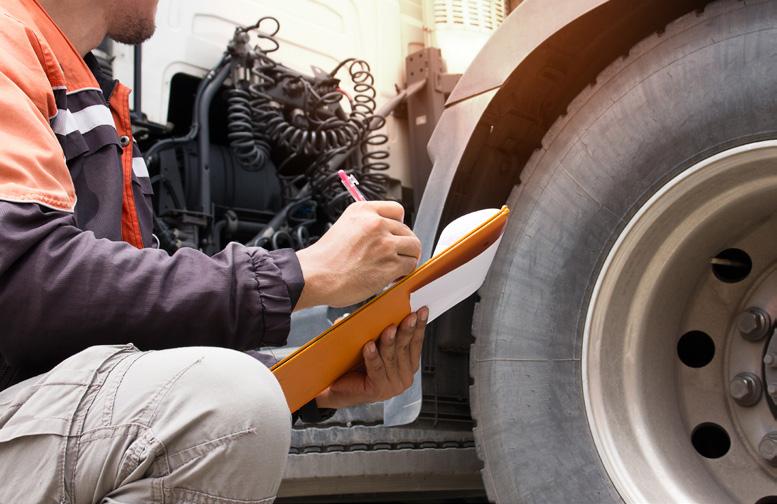
For your company or single truck, don’t forget maintenance. It’s equally as important as fuel, and perhaps more important than insurance. It is the life blood that keeps your truck, or any equipment, alive and healthy.
Those aren’t just powerful, provocative words. Without a solid maintenance program, you could be killed.
The multi-daily inspection on each vehicle by each driver isn’t just a legal requirement, it’s for the peace of mind for that driver. And should that driver also be the owner, it’s to continue in the business that provides all what you aspire.
Regular maintenance includes checking the main items, engine oil, fluids, belts, hoses, and electrical connections. But, too often, the really important things, like tires, suspension, and wheel attachment are overlooked or given but a cursory glance.
When you see the oil level down a bit, you don’t wait until the dipstick is dry before you add a little. Then why would you try to get another day out of a suspension leaf when you see a crack? Why would you risk another minute when you see a rub mark on an air suspension bag? Why would you risk a blowout on a steering tire that’s worn to the point of a cord being visible? In fact, why would you wait for so long to seek out a wheel alignment and not cause that steer tire to wear unevenly? Why does that wobble in the steering wheel not give you concern? Why did you not hear audible air leakage and fix it before you were pulled into the scale and became a statistic as a result of a level one inspection? These are all maintenance questions you should be asking yourself every day.
Of course, let’s not ever forget about brakes. A truck shouldn’t need to apply more than four or five pounds of brake application to stop. Drivers need to watch
that brake application gauge and have brakes properly adjusted; and just because the truck has automatic slack adjusters doesn’t mean brakes are adjusted properly. In Ontario, brake adjustment is not allowed by a mere driver and must be done by qualified professionals. Sadly, other provinces require drivers to be competent in adjusting brakes.
Factually, all of the above-mentioned issues are a glowing red sign that says your maintenance program is totally insufficient.
The driver is only one set of eyes that should be able to offer some diagnostic information, but it’s the highly skilled mechanic that should be aware of situations about to arise with every vehicle and mitigate any problem with any vehicle for which he or she is responsible to ensure is roadworthy at all times.
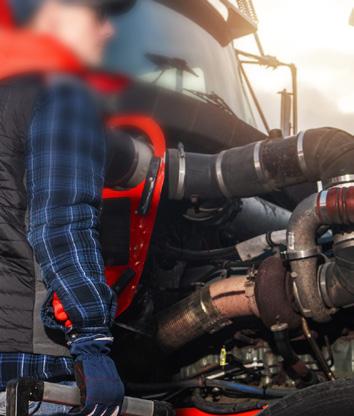
of having the jobs of truck driver and mechanic being separate individuals with different job descriptions.
Too often, because the driver is really just the second set of eyes to diagnose issues, the driver isn’t the trained eyes of the mechanic. So, the smart companies have their trucks inspected on a regular schedule by the trained eyes rather than simply relying on the drivers who are not as well trained.
Yes, in some very small operations the driver and the mechanic are one and the same. On the road, while wearing the driver’s hat, he or she does the driver inspections, but they're also looking for those wear points that may dictate how their weekend is going to be spent. Larger companies will have the luxury
Too many drivers are afraid to make notations on their daily inspection sheet for fear that if something goes wrong and something untoward happens during their shift, that they will be “blamed” for whatever situation happens. The point of the daily inspection is to ensure maintenance information gets to the hands of whomever needs to correct the issue. That’s also the reason there’s a list of critical issues that would prevent the vehicle from being used until the critical issue is fixed.
Like the supply chain, the maintenance chain has many links and many different people sharing responsibility. The driver is not alone in this chain but is one of the critical points of diagnosis. Make sure your drivers are trained well.
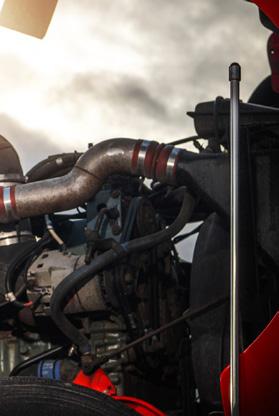
quhwfI kMpnI hovy jW ie~k iek~lw tr~k, r~K-rKwA ƒ kdy nw Bu~lo[ ieh Enw hI mh~qvpUrn hY ijMnw qyl, Aqy Swied bImy nwloN vI v~D[ iehI auh cIz hY jo quhwfy tr~k jW iksy vI swzo-swmwn ƒ c~ldw Aqy shI hwlq iv~c r~KdI hY[
ieh isr& kihx dIAW g~lW nhIN hn[ ie~k mzbUq myntynYNs pRogrwm qoN ibnW, quhwfI jwn vI jw skdI hY[
hr frweIvr v~loN hr vwhn dI rozwnw keI vwr kIqI jwx vwlI jWc isr& ie~k kwƒnI zrUrq hI nhIN hY, sgoN ieh frweIvr dI mwnisk SWqI leI vI hY[ Aqy jykr auh frweIvr Kud mwlk vI hY, qW ieh aus kwrobwr ƒ jwrI r~Kx leI zrUrI hY jo quhwfIAW swrIAW aumIdW pUrIAW krdw hY[
inXmq r~K-rKwA iv~c mu~K cIzW dI jWc Swml huMdI hY, ijvyN ik ieMjx dw qyl, qrl pdwrQ, bYltW, hoz Aqy ibjlI dy knYkSn[ pr, Aksr Asl iv~c mh~qvpUrn cIzW, ijvyN ik twier,
sspYNSn, Aqy vHIl AtYcmYNt ƒ nzrAMdwz kr id~qw jWdw hY jW isr& ie~k auprlI Jwq mwrI jWdI hY[
jdoN qusIN dyKdy ho ik qyl dw p~Dr QoVHw G~t hY, qW qusIN qyl pwaux leI if~psit~k dy su~kx q~k ieMqzwr nhIN krdy[ iPr jdoN qusIN sspYNSn lIP iv~c qryV dyKdy ho, qW qusIN aus qoN ie~k hor idn kMm lYx dI koiSS ikauN krdy ho? jdoN qusIN eyAr sspYNSn bYg 'qy rgV dw inSwn dyKdy ho, qW qusIN ie~k hor imMt dw vI Kqrw ikauN mu~l lYNdy ho? qusIN stIAirMg twier dy Ptx dw joKm ikauN auTwauNdy ho jdoN auh ieMnw Gs igAw hovy ik ausdI qwr idKweI dyx l~g pvy? Asl iv~c, qusIN vHIl AlweInmYNt krvwaux leI ieMnw ieMqzwr ikauN krdy ho Aqy stIAirMg twier ƒ glq qrIky nwl Gsx idMdy ho? stIAirMg vHIl dI QrQrwht quhwƒ icMqw iv~c ikauN nhIN pwauNdI? qusIN hvw dy lIk hox dI Awvwz ikauN nhIN suxI Aqy iesƒ TIk ikauN nhIN krvwieAw ies qoN pihlW ik quhwƒ skyl (scale) 'qy roikAw jWdw Aqy lYvl 1 ieMspYkSn dy nqIjy vjoN qusIN ie~k AMkVw bx jWdy? ieh swry r~K-rKwA dy svwl hn jo quhwƒ hr roz Awpxy Awp ƒ pu~Cxy cwhIdy hn[
byS~k, swƒ bRykW bwry kdy nhIN Bu~lxw cwhIdw[ ie~k tr~k ƒ rukx leI cwr jW pMj pONf qoN v~D bRyk pRYSr dI loV nhIN hoxI cwhIdI[ frweIvrW ƒ aus bRyk AYplIkySn gyj 'qy nzr r~Kx dI loV hY Aqy bRykW ƒ shI qrHW AYfjst krvwauxw cwhIdw hY; Aqy isr& ies leI ik tr~k iv~c AwtomYitk slYk AYfjstr hn, iesdw mqlb ieh nhIN hY ik bRykW shI qrHW AYfjst hn[ EntwrIE iv~c, isr& ie~k frweIvr duAwrw bRyk AYfjstmYNt krn dI iejwzq nhIN hY Aqy ieh Xog pySyvrW duAwrw kIqI jwxI cwhIdI hY[ A&sos dI g~l hY ik, hor sUibAW iv~c frweIvrW qoN bRykW ƒ AYfjst krn iv~c mwhr hox dI aumId kIqI jWdI hY[
Asl iv~c, au~pr d~sy gey swry mu~dy ie~k cmkdw lwl sMkyq hn jo kihMdy hn ik quhwfw r~K-rKwA pRogrwm pUrI qrHW nwkw&I hY[
frweIvr isr& A~KW dw ie~k joVw hY ijsƒ kuJ fwiegnOsitk jwxkwrI pRdwn
krn dy Xog hoxw cwhIdw hY, pr ieh au~c kuSl mkYink hY ijsƒ hryk vwhn bwry pYdw hox vwlIAW siQqIAW qoN jwxU hoxw cwhIdw hY Aqy iksy vI vwhn dI sm~isAw ƒ h~l krnw cwhIdw hY ijs leI auh ieh XkInI bxwaux leI izMmyvwr hY ik vwhn hr smyN sVk 'qy c~lx dy Xog hovy[
Aksr, ikauNik frweIvr Asl iv~c sm~isAwvW dI pCwx krn leI A~KW dw isr& dUjw joVw huMdw hY, frweIvr kol mkYink vWg isKlweI pRwpq A~KW nhIN huMdIAW[ ies leI, isAwxIAW kMpnIAW Awpxy tr~kW dI jWc inXmq smyN 'qy isr& aunHW frweIvrW 'qy inrBr rihx dI bjwey, jo ieMny isKlweI pRwpq nhIN huMdy, isKlweI pRwpq mwhrW duAwrw krvwauNdIAW hn[
hW, kuJ bhuq hI Coty kwrobwrW iv~c frweIvr Aqy mkYink ie~k hI ivAkqI huMdy hn[ sVk 'qy, frweIvr vjoN kMm krdy hoey, auh frweIvr vjoN inrIKx krdy hn, pr auh aunHW Gswvt vwly ih~isAW (wear pionts) ƒ vI dyK rhy huMdy hn jo ieh qYA kr skdy hn ik aunHW dw vIkYNf ikvyN bIqygw[ v~fIAW kMpnIAW kol ieh shUlq huMdI hY ik tr~k frweIvr Aqy mkYink dIAW nOkrIAW v~K-v~K ivAkqIAW duAwrw kIqIAW jWdIAW hn ijnHW dy kMm dy vyrvy v~Kry huMdy hn[ bhuq swry frweIvr AwpxI rozwnw inrIKx SIt 'qy not ilKx qoN frdy hn ikauNik aunHW ƒ fr huMdw hY ik jykr aunHW dI iSPt dOrwn kuJ glq jW AxsuKwvW vwprdw hY, qW aunHW ƒ aus siQqI leI "doSI" TihrwieAw jwvygw[ rozwnw inrIKx dw audyS ieh XkInI bxwauxw hY ik r~KrKwA dI jwxkwrI aus ivAkqI q~k phuMcy ijs ny sm~isAw ƒ TIk krnw hY[ iehI kwrn hY ik gMBIr mu~idAW dI ie~k sUcI huMdI hY jo vwhn dI vrqoN ƒ audoN q~k rokdI hY jdoN q~k aus gMBIr sm~isAw ƒ TIk nhIN kr ilAw jWdw[
splweI cyn vWg, myntynYNs cyn dIAW vI keI kVIAW hn Aqy keI v~K-v~K lok izMmyvwrI sWJI krdy hn[ frweIvr ies lVI iv~c iek~lw nhIN hY, blik auh jWc dy mh~qvpUrn pVwvW iv~coN ie~k hY[ XkInI bxwE ik quhwfy frweIvr cMgI qrHW isKlweI pRwpq hn[
The BC Trucking Association (BCTA) is pleased to once again be part of the APNA Truck Show, taking place June 13–14. As one of the province’s most wellattended industry events, the show brings together carriers, suppliers, and stakeholders for two days of connection, business development, and insight into the issues shaping trucking in BC.
As part of this year’s event, BCTA will be sponsoring the Ask an Expert seminar series— an interactive feature designed to bring practical, real-world knowledge directly to attendees. Rather
than traditional presentations, these sessions focus on live Q&A, giving participants the opportunity to engage directly with subject matter experts and get answers to the questions that matter most to their operations.
The goal is simple: make expert insight more accessible. Whether it’s compliance requirements, safety considerations, or navigating dayto-day operational challenges, these sessions are intended to provide clarity and actionable information in a format that encourages open dialogue.
BY BCTA
BCTA is currently working to bring together a strong lineup of experts from across the industry, including regulatory, safety, and insurance perspectives. More details on speakers and session timing will be shared in the lead-up to the show.
For BCTA, participation in the APNA Truck Show is about meeting industry where it is— on the ground, in conversation, and focused on practical solutions. Be sure to stop by on June 13 -14 and bring your questions. See you at the show!
bI.sI. tr~ikMg AYsosIeySn (BCTA) 13-14 jUn ƒ hox vwly Awpxw tr~k SoA dw ie~k vwr iPr ih~sw bx ky bhuq KuS hY[ sUby dy sB qoN v~D pRis~D audXoigk smwgmW iv~coN ie~k hox dy nwqy, ieh SoA kYrIArW, splwierW Aqy ih~sydwrW ƒ AwpsI sWJ, kwrobwrI ivkws Aqy bI.sI. iv~c tr~ikMg audXog ƒ pRBwivq krn vwly mu~idAW bwry jwxkwrI sWJI krn leI do idnW leI ie~k mMc 'qy ilAwauNdw hY[
ies swl dy smwgm dy ih~sy vjoN, BCTA "mwhr qoN pu~Co" (Ask an Expert) sYmInwr lVI ƒ spWsr krygI—ieh ie~k Aijhw ieMtrAYkitv pRogrwm hY jo hwzrIn q~k ivhwrk Aqy Asl-sMswr dI jwxkwrI
is~Dy qOr 'qy phuMcwaux leI iqAwr kIqw igAw hY[ rvwieqI pySkwrIAW dI bjwey, ieh sYSn is~Dy svwl-jvwb (Q&A) 'qy kyNidRq hoxgy, ijs nwl BwgIdwrW ƒ ivSw mwhrW nwl is~DI g~lbwq krn Aqy aunHW dy kwrobwr leI mh~qvpUrn svwlW dy jvwb pRwpq krn dw mOkw imlygw[ iesdw audyS sDwrn hY: mwhrW dI rwey ƒ vDyry sulB bxwauxw[ cwhy auh inXmW dI pwlxw, sur~iKAw dy nukqy hox, jW rozwnw dy kMmkwjI cuxOqIAW dw swhmxw krnw hovy, iehnW sYSnW dw mksd AijhI jwxkwrI pRdwn krnw hY ijs 'qy Aml kIqw jw sky Aqy jo Ku~lH ky g~lbwq krn ƒ auqSwihq kry[
BCTA ies smyN audXog dy v~K-v~K
KyqrW, ijvyN ik rYgUlytrI, sur~iKAw Aqy bImw mwhrW dI ie~k mzbUq tIm iek~TI krn leI kMm kr rhI hY[ bulwirAW Aqy sYSnW dy smyN bwry hor vyrvy SoA dy nyVy Awaux 'qy sWJy kIqy jwxgy[
BCTA leI, Awpxw tr~k SoA iv~c ih~sw lYx dw mqlb audXog dy lokW nwl is~Dw juVnw Aqy ivhwrk h~lW 'qy iDAwn kyNdirq krnw hY[ 13-14 jUn ƒ zrUr AwE Aqy Awpxy svwl nwl lY ky AwE[ SoA iv~c imldy hW!


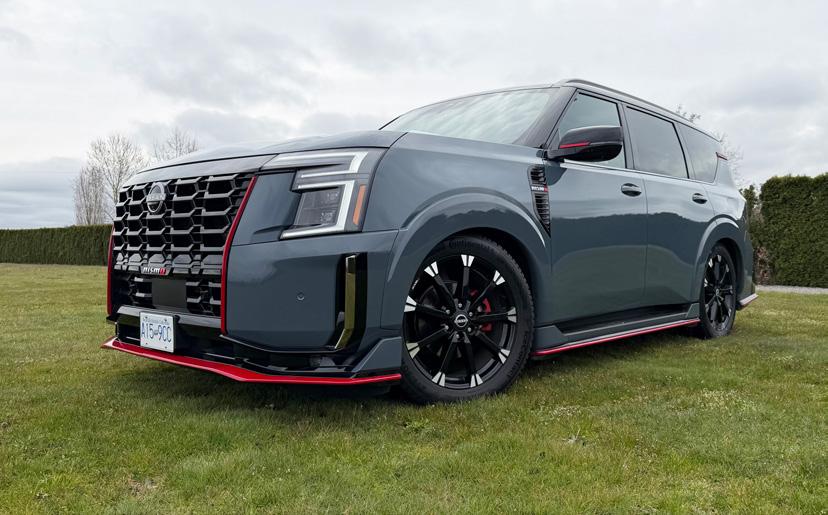
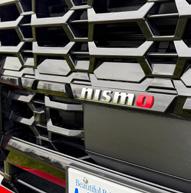
The Sport Utility Vehicle (SUV) is the most sought-after class of vehicle in North America, and for good reason. It does everything well for every season for most families. Sitting higher, functional in summer and winter, and with generally more cargo room than the “car”, the SUV is what we can find parked in most driveways. The word Sport Utility Vehicle definitely addresses the utility aspect; sadly, many aren’t living up to the Sport aspect, and this is where the Nissan Armada Nismo checks that box oh so well.
The 2026 Nissan Armada Nismo is what happens when you take a sixthousand-pound, three-row luxury cruiser and hand the keys to a team of engineers who clearly grew up with posters of import tuners on their walls. While the top-tier Platinum Reserve trim is designed to pamper you in quilted leather and soft-touch surfaces,
the Nismo is designed to awaken your senses. It’s the perfect blend of familyhauling utility and that aggressive street-racer DNA that we have loved since the first time we saw tuned-up cars on the big screen.
Even from afar, the Armada Nismo doesn't just look different; it looks like it’s about to take part in a street race. So many people turned their heads to see this SUV, and from across various generations. Both high school kids and middle-aged adults took out their smartphones to snap some pictures.
Whereas the Armada Platinum trim uses sophisticated chrome and subtle body lines to scream executive comfort, the Nismo screams "Fast and Furious." This Armada is draped in an aggressive aero kit, complete with a blacked-out honeycomb grille, deep front chin spoilers, and that signature
JAG DHATT
Nismo red pinstripe that wraps around the entire base of the SUV. The 22-inch NISMO RAYS forged-alloy wheels are what make the package complete. These 9-spoke wheels are significantly lighter than the cast wheels on the Platinum, reducing weight and making the Armada feel far more nimble on its feet.
Step inside the Armada Nismo and the luxury cabin turns into a cockpit. While the Platinum offers an upscale luxury vibe with brown leathers and wood trim, the Nismo is performance focused. Charcoal leather and deep red Alcantara grips you in all the right places when tackling those windy roads. The red stripe on the steering wheel and the Nismo-branded tachometer remind you every time that this isn’t your normal Armada. The interior even features adjustable front seat bolsters to keep you locked in during some spirited driving.
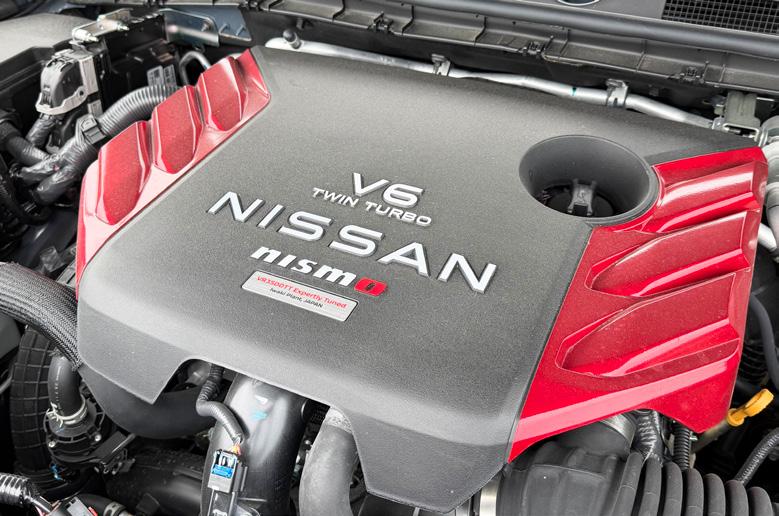
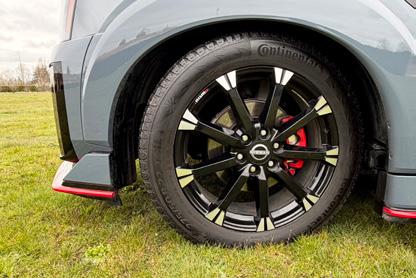
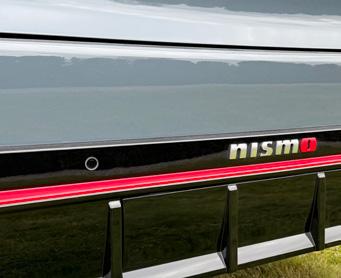
Under the hood, the Armada get a special Nismo-tuned 3.5-liter twinturbo V6. While the regular Armada is no slouch at 425 horsepower, the Nismo bumps that to 460. While not immediately evident at lower rpms, you feel that extra power most in the mid-range, perfect for when you need to merge or pass. Sharper throttle mapping and a 9-speed automatic that
is recalibrated to hold gears longer let that V6 sing through a less restrictive performance exhaust. Plus, with Active Sound Enhancement, the cabin fills with a deep, mechanical growl that makes every gear shift feel intentional and visceral.
Above and beyond the looks, interior, and an impressive engine,
the real magic is the handling, and it’s impressive. The Nismo sits with a wider, bolder stance thanks to standard fender flares and a specially tuned Adaptive Electronic Air Suspension. In a regular Armada, or most SUVSs, taking sharp corners involves a fair amount of body roll. The driver and passengers bounce around during tight turns and on twisty roads. In the
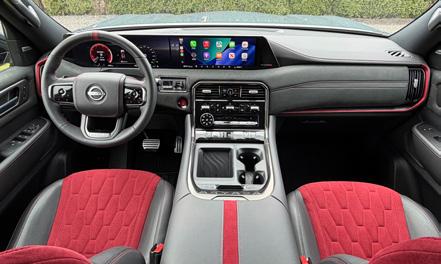
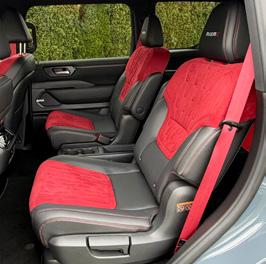
Armada Nismo however, the suspension stiffens up, the electric power steering becomes more communicative, and the SUV stays remarkably flat. Initially, I had some reservations about how the Armada Nismo would handle; it’s a big, heavy vehicle so how well could it really handle? Well, surprise me it did. I was able to dive into corners with confidence, trusting that the quicker steering ratio will put the nose exactly where you want it, which it did. It doesn't just handle well for an SUV; it genuinely handles with the intuition and enthusiasm of a sports sedan, and in this
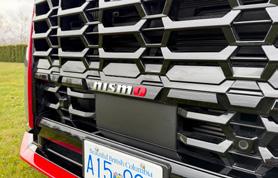
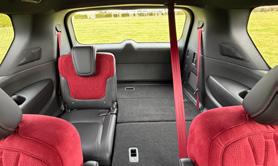
case, puts the word SPORT back into SUV.
There’s one aspect of the Armada Nismo that may be a deterrent for some buyers and that is its price. At just under $105,000 CAD, it’s a serious investment. But here is how I justify it: we call these vehicles SUVs, yet for most of them, the "S" for "Sport" is silent. They’re just Utility Vehicles, and something most have become accustomed to. The Nismo is different. It actually respects the acronym. You’re paying for the ability to have a massive,
three-row family hauler that doesn't force you to surrender your love for driving. It’s the ultimate best of both worlds: the space to haul the whole crew, and the performance to make you feel like you’re behind the wheel of something special every time you hit the gas. For the driver who refuses to grow up completely, that’s worth every penny. And if the Fast and Furious franchise ever needed a proper tuner SUV that would fit into their “armada”, then the Armada Nismo would be the ideal choice.
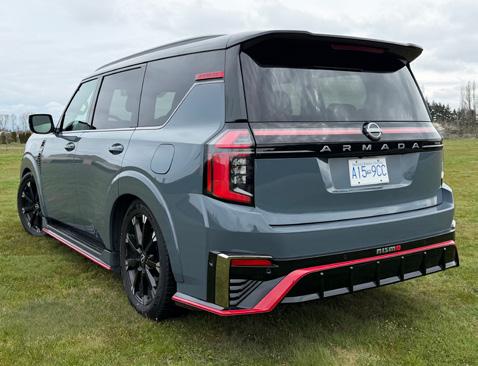
Introducing the all-new Volvo VNR
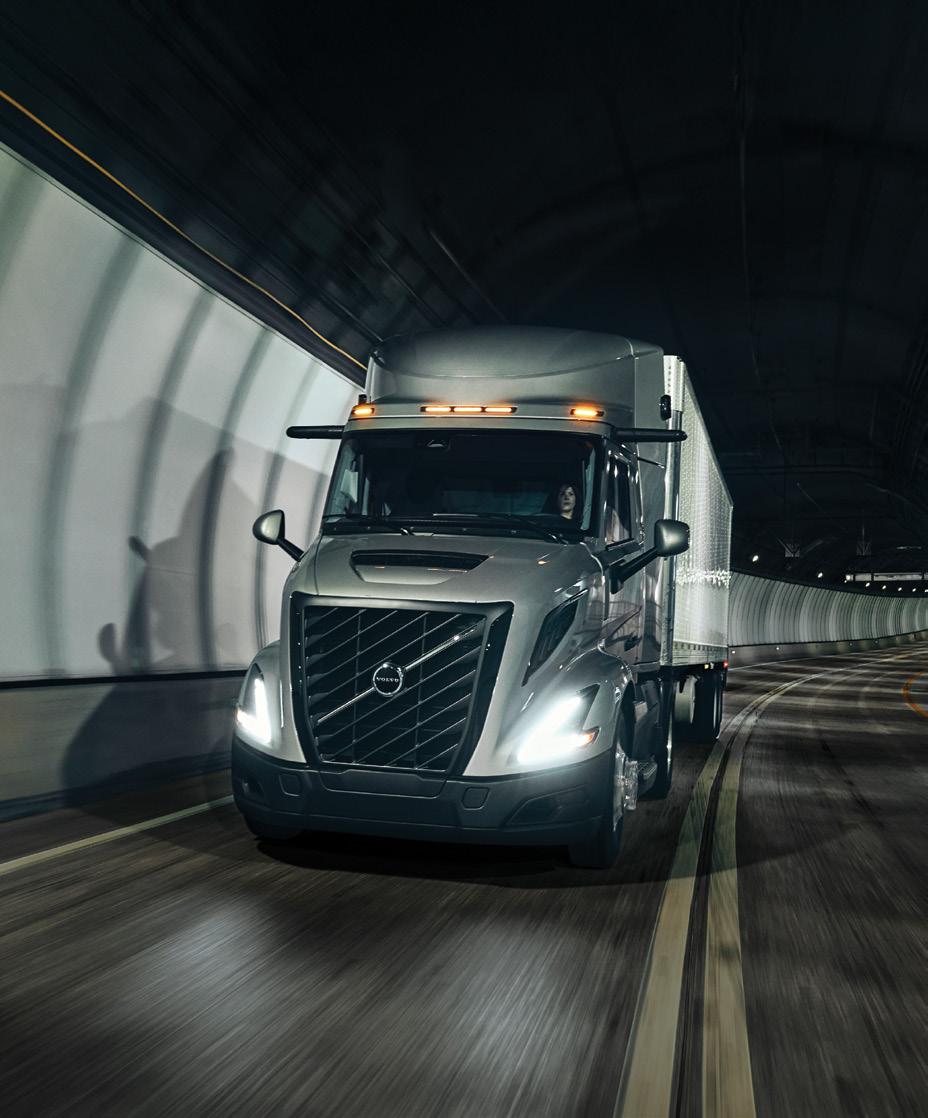
The new Volvo VNR promises to redefine your expectations for productivity, safety, and maneuverability. Boasting up to 7.5% improved fuel efficiency compared to our legacy model. A new era is arriving for Class 8 local and regional haul. Learn more at volvotrucks.ca
Volvo Trucks. Driving Progress
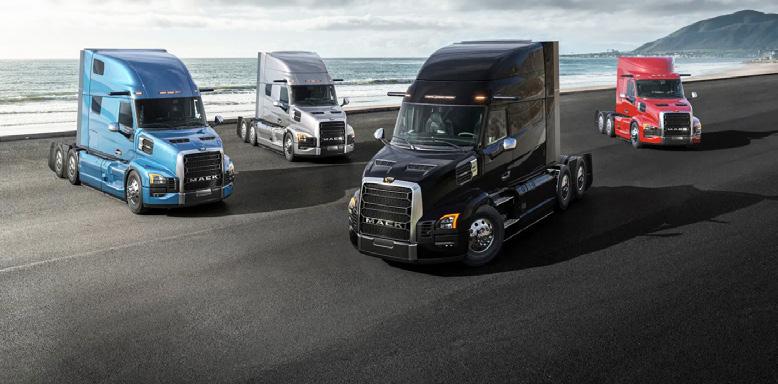
With more than a century of expertise behind them, Mack highway trucks have earned their legendary reputation. Whether you're traveling 100 kilometers or 10,000, the all-new Anthem and Pioneer deliver the reliability, comfort, efficiency, and safety needed to handle whatever lies ahead.
The all-new Mack Pioneer™, setting a new benchmark in long-haul trucking, is the most aerodynamic and driverfocused highway truck Mack has ever produced. Introduced in April 2025 alongside Mack’s 125th anniversary, the Pioneer represents the future of the brand’s highway lineup. Its bold design reflects Mack’s legacy of durability, while also incorporating industry-first innovations and advanced technologies. Available across the U.S. and Canada in multiple configurations—including day cabs and short-, medium- and longsleeper options—it is built to meet a wide range of operational needs.
For enhanced driver comfort, the Pioneer offers the Mack Integrated Parking Cooler as an optional upgrade. This advanced electric auxiliary power unit (APU) keeps the cab cool during warm nights by using the truck’s batteries and integrated HVAC system— eliminating the need to idle the engine.
The result is improved comfort, greater energy efficiency and reduced emissions, making it an ideal solution for long-haul drivers.
Safety is also a top priority. The Pioneer comes standard with frontal airbags and features Mack Protect, a proprietary advanced driver assistance system (ADAS) that integrates the latest active and passive safety technologies for commercial vehicles.
The all-new Mack Anthem sets a new standard for regional haul applications. Completely redesigned, it offers improved maneuverability, enhanced fuel efficiency and exceptional driver comfort. A shorter bumper-to-back-ofcab (BBC) length—12 inches shorter than the Pioneer—makes it especially well-suited for tight spaces and urban environments.
The Anthem’s redesigned hood significantly improves forward visibility, allowing drivers to see approximately 12 feet closer to the front bumper compared with previous models, helping reduce the risk of front-corner collisions. It also delivers up to a 10% improvement in fuel efficiency, providing a meaningful cost advantage for fleet operators.
Advanced safety features include
BY: JAG DHATT
an optional digital mirror system that reduces blind spots, a standard front airbag and an Integrated Curtain Airbag (ICA) system that deploys during rollover events to protect the driver. Additional driver assistance technologies have demonstrated a 43% reduction in nearmiss incidents during controlled testing.
The Anthem and Pioneer are also equipped with Mack Connect, the company’s most advanced telematics platform, giving fleet managers greater visibility and control over operations.
Whether operating a Mack Pioneer or Mack Anthem, drivers benefit from the MyMack driver app, which allows them to remotely pre-heat or cool the cab, check fluid levels and monitor tire pressure. Over-the-air software updates eliminate the need for service appointments, while predictive maintenance technology helps reduce unplanned stops by up to 20%. Integration with Mack’s GuardDog Connect system automatically shares service data with dealers, reducing overall downtime by 37% compared with previous-generation models.
The Mack Pioneer and Anthem are available to order. For more information about these new Mack trucks, visit your local Mack dealer or www.macktrucks.com.
ie~k sdI qoN vI v~D qzrby nwl, mYk hweIvyA tr~kW ny AwpxI mhwn pRis~DI K~tI hY[ cwhy qusIN 100 iklomItr dI Xwqrw kr rhy hovo jW 10,000 dI, iblkul nvyN AYNQm Aqy pwienIAr auh BrosyXogqw, Awrwm, kuSlqw Aqy sur~iKAw pRdwn krdy hn jo A~gy Awaux vwlI iksy vI cuxOqI nwl nij~Tx leI loVINdI hY[
iblkul nvW mYk pwienIAr (Mack Pioneer™), lMbI dUrI vwlI tR~ikMg ‘c ie~k nvW mwpdMf sQwpq kr irhw hY, mYk duAwrw hux q~k iqAwr kIqw igAw sB qoN v~D AYrofwienwimk Aqy frweIvr-kyNidRq hweIvyA tr~k hY[ ApRYl 2025 iv~c mYk dI 125vIN vrHygMF dy nwl pyS kIqw igAw, pwienIAr bRWf dy hweIvyA lweInA~p dy Biv~K ƒ drswauNdw hY[ iesdw swnH ifzweIn mYk dI hMFxswrqw vwly ipCokV ƒ drswauNdw hY, jdik audXog iv~c pihlI vwr pyS kIqIAW geIAW kwFW Aqy au~nq qknIkW vI Swml hn[ AmrIkw Aqy kYnyfw ‘c keI mwflw iv~c auplbD hY, ijs iv~c fyA kYb Aqy Coty, drimAwny Aqy lMby slIpr AwpSn Swml hn, ieh keI qrHW dIAW fRweIivMg zrUrqW ƒ pUrw krn leI bxwieAw igAw hY[
frweIvr dy vDyry Awrwm leI, pwienIAr ie~k ivklipk A~pgRyf vjoN mYk ieMtIgRyitf pwrikMg kUlr dI pySkS krdw hY[ ieh au~nq ielYkitRk AYgzlrI pwvr XUint tr~k dIAW bYtrIAW Aqy ieMtIgRyitf HVAC isstm dI vrqoN krky grm rwqW dOrwn kYb ƒ TMfw r~Kdw hY, ijs nwl ieMjx ƒ cwlU (idle) r~Kx dI zrUrq Kqm ho jWdI hY[ nqIjy vjoN ibhqr Awrwm, G`t qyl ^pq Aqy G~t DUMAW in`kldw hY, jo iesƒ lMbI dUrI dy frweIvrW leI ie~k AwdrS h~l bxwauNdw hY[
sur~iKAw vI ie~k mu~K qrjIh hY[ pwienIAr ‘c mUhrly eyArbYg stYNfrf AwauNdy hn Aqy ies iv~c mYk pRotYkt dI ivSySqw hY, jo ik ie~k mlkIAq vwlw au~nq frweIvr shwieqw pRxwlI (ADAS) hY jo vpwrk vwhnW leI nvInqm srgrm Aqy pYisv sur~iKAw qknIkW ƒ joVdw hY[
iblkul nvW mYk AYNQm KyqrI FoAwFuAweI leI ie~k nvW imAwr inrDwrq
krdw hY[ pUrI qrHW nvyN ifzweIn vwlw, ieh ibhqr cwl-Fwl, vDIAw qyl ^pq Aqy frweIvr nUM bhuq hI Awrwm pRdwn krdw hY[ ie~k CotI bMpr-tU-bYk-AwP-kYb lMbweI, jo pwienIAr nwloN 12 ieMc CotI hY, iesƒ qMg QwvW Aqy SihrI vwqwvrx leI ivSyS qOr 'qy FukvW bxwauNdI hY[
AYNQm dy nvyN ifzwien vwly hu~f dI swhmxy dI id~K ‘c kw&I suDwr kIqw hY, ijs nwl frweIvr ipCly mwflW dI qulnw iv~c PrMt bMpr dy lgBg 12 Pu~t hor nyVy dyK skdy hn, ijs nwl swhmxy dy kony dIAW t~krW dy joKm ƒ Gtwaux ‘c mdd imldI hY[ ieh bwlx kuSlqw iv~c 10% q~k dw suDwr vI pRdwn krdw hY, jo PlIt AwprytrW nMU ie~k bhuq G`t lwgq vwlw lwB pRdwn krdw hY[
au~nq sur~iKAw ivSySqwvW iv~c ie~k ivklipk ifjItl imrr isstm Swml hY, jo blweINf spOts ƒ GtwauNdw hY, ie~k stYNfrf PrMt eyArbYg Aqy ie~k ieMtIgRyitf krtn eyArbYg isstm jo tr~k dy pltx dI sUrq iv~c frweIvr dI sur~iKAw leI Ku~l jWdw hY[ vwDU frweIvr shwieqw qknIkW ny inXMqirq tYsitMg dOrwn hwdisAW dy nzdIkI mwmilAW iv~c 43% dI kmI idKweI hY[
AYNQm Aqy pwienIAr mYk knYkt nwl vI lYs hn, jo kMpnI dw sB qoN au~nq tYlImYitks plytPwrm hY, jo PlIt mYnyjrW ƒ sMcwln 'qy vDyry id~K Aqy inXMqrx idMdw hY[
cwhy mYk pwienIAr clw rhy hovo jW mYk AYNQm, frweIvr MyMack frweIvr AYp dw lwB lY skdy hn, jo auhnW ƒ irmot nwl kYb ƒ pihlW hI grm jW TMfw krn, PlUief dy lYvl cY`k krn Aqy twier pRYSr dI ingrwnI krn dI AwigAw idMdI hY[ Evr-d-eyAr sOPtvyAr Apfyts srivs ApOieMtmYNtW dI zrUrq ƒ Kqm krdy hn, jdoN ik CyqI hox vwlI murMmq qknIk AxpCwqy stwpW ƒ 20% q~k Gtwaux iv~c mdd krdI hY[ mYk dy gwrffOg knYkt isstm nwl eykIkrx AwtomYitk hI fIlrW nwl srivs fYtw sWJw krdw hY, ijs nwl ipClI pIVHI dy mwflW dI qulnw iv~c ku~l fwaUntweIm iv~c 37% dI kmI AwauNdI hY[
mYk pwienIAr Aqy AYNQm Awrfr krn leI auplbD hn[ iehnW nvyN mYk tr~kW bwry vDyry jwxkwrI leI, Awpxy sQwnk mYk fIlr 'qy jwE jW www.macktrucks.com 'qy jwE[
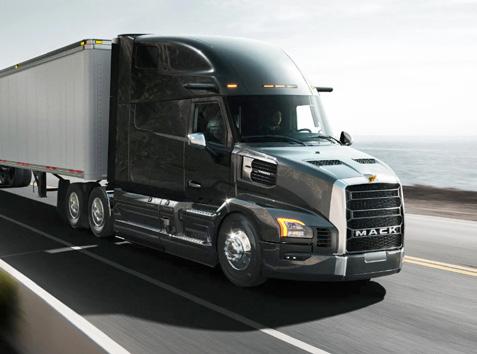













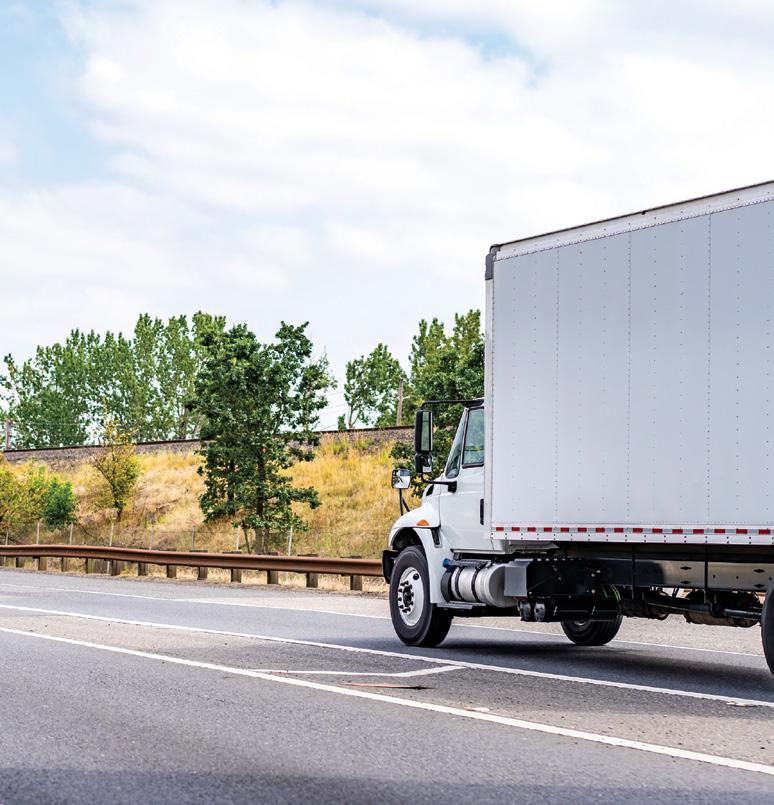







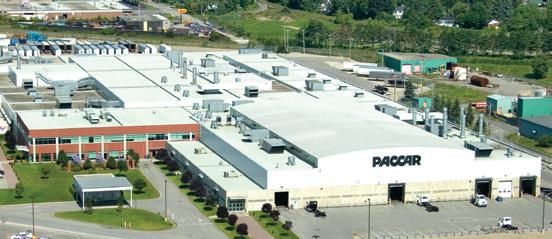

Peterbilt’s versatile lineup of medium duty and heavy duty trucks is designed to exceed the needs of customers in virtually any application. Our trucks feature durable construction, innovative safety technologies, spacious, comfortable interiors and a selection of proprietary PACCAR engines and transmissions for outstanding performance and efficiency. And, our trucks are proudly Made in Canada at our world-class facility in Ste. Therese, Quebec.
Visit your Peterbilt dealer to order your new trucks today!