









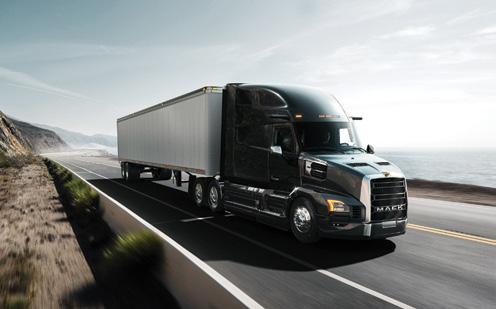
When the haul is long, every drop of fuel counts. Pioneerʼs enhanced aerodynamics and powertrain deliver up to 11% better fuel economy, engineered to go the distance without compromise.
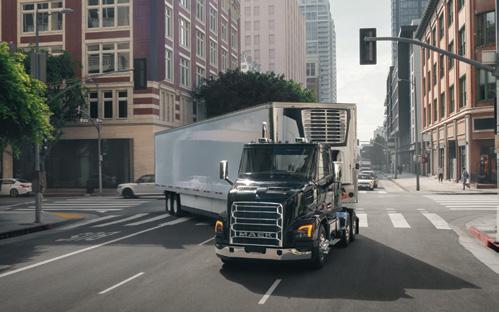
When regional routes get tight, precision matters. Anthemʼs redesigned frontal profile and reduced bumper-to-cab dimensions keep you in control through every turn, every block, and every delivery.
EXPLORE HIGHWAY



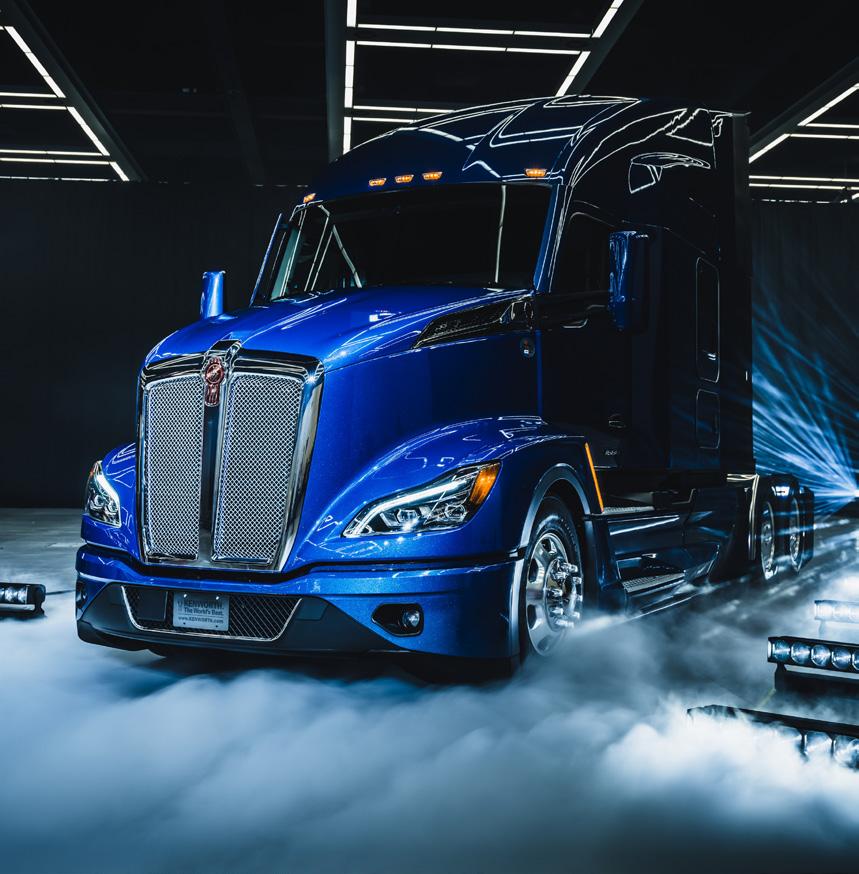
The pinnacle of Kenworth’s engineering: the T680, a masterpiece of aerodynamics designed for long-haul efficiency. This tractor combines a high-perfomance PACCAR powertrain with durable, easy-to-maintain components for unparalleled uptime. Enhanced with cutting-edge technology, it offers a driving experience that’s both intuitive and safe, reducing driver fatigue. The cabin, akin to the luxury found in top-tier automobiles, elevates comfort to new heights. Welcome to the next level of trucking with the Kenworth T680.
MOVING FORWARD TOGETHER: SUMMER, UNITY, AND THE ROAD AHEAD
As the summer sun hits the highways across the country, the trucking industry enters its busiest, most demanding season. While clear skies and dry roads offer a welcome break from winter’s unpredictability, summer brings its own unique set of hazards. Construction zones are in full swing, traffic volumes swell with holiday travelers, and high temperatures place intense physical stress on both our drivers and their equipment. Staying vigilant, monitoring tire pressures, and ensuring proper rest aren’t just safety tips; they are the baseline for protecting our drivers and keeping Canada's supply chain moving smoothly.
That spirit of resilience and shared responsibility was on full display last month at the APNA Truck Show. Seeing our vibrant community gather under one roof was a powerful reminder of what makes this industry special. It wasn’t just an exhibition of spectacular trucks and cutting-edge logistics technology; it was a showcase of unity. Fleets, owner-operators, and industry
suppliers came together to share ideas, address shared challenges, and celebrate the diverse workforce that drives Western Canada's economy forward.
Looking ahead to the rest of the year, the landscape is shaping up to be one of both transition and adaptation. While freight markets navigate shifting economic cycles, our focus will increasingly turn toward integrating smart safety technologies, addressing regulatory updates, and optimizing fleet efficiency. The road through autumn and winter will undoubtedly bring new challenges, but the collaborative energy we felt at the show proves we are ready to meet them head-on.
None of this would be possible without you. We want to extend a heartfelt thank you to our readers, drivers, and partners for your unwavering support of Desi Trucking Magazine. Thank you for keeping us a part of your journey and stay safe out there on the road.
ie~kTy A~gy vDxw: grmIAW, eykqw Aqy Aglw s&r
ijvyN hI dyS Br dy hweIvyA 'qy grmIAW dI Du~p cmkdI hY, tRikMg ieMfstrI Awpxy sB qoN ru~Jy Aqy cuxOqIpUrn sIzn iv~c dwKl ho jWdI hY[ hwlWik sw& Asmwn Aqy su~kIAW sVkW srdIAW dIAW muSklW qoN rwhq idMdIAW hn, pr grmIAW Awpxy nwl kuJ v~Kry ^qry lY ky AwauNdIAW hn[ sVkW dy inrmwx kwrj zorW 'qy hn, Cu~tIAW mnwaux vwilAW krky tRYiPk bhuq vD igAw hY, Aqy au~cw qwpmwn swfy frweIvrW Aqy aunHW dy vwhnW dovW 'qy BwrI srIrk dbwA pwauNdw hY[ cOks rihxw, twierW dy pRYSr dI jWc krdy rihxw Aqy pUrI nINd lYxw isr& sur~iKAw dy nukqy nhIN hn—blik ieh swfy frweIvrW dI sur~iKAw Aqy kYnyfw dI splweI cyn ƒ inrMqr c~ldw r~Kx leI bhuq zrUrI hn[
swfy BweIcwry dI iehI ihMmq Aqy sWJI izMmyvwrI ipCly mhIny APNA Truck Show dOrwn sw& dyKx ƒ imlI[ Awpxy jIvMq ieMfstrI pirvwr ƒ ie~k C~q hyTW iek~Ty hoey dyKxw ies g~l dw pRmwx sI ik ikhVI cIz ies ieMfstrI ƒ ^ws bxwauNdI hY[ ieh isr& Swndwr tR~kW Aqy nvIN lOijsitks qknwlojI dI pRdrSnI nhIN sI; ieh swfI eykqw dw pRqIk sI[ PlIt mwlkW, EnrAwprytrW Aqy ieMfstrI dy splwierW
ny ie~kTy ho ky ivcwr sWJy kIqy, sWJIAW cuxOqIAW 'qy crcw kIqI, Aqy aus iviBMn vrkPors dw jSn mnwieAw jo p~CmI kYnyfw dI AwriQkqw ƒ A~gy vDwauNdI hY[
swl dy bwkI mhIinAW v~l dyKIey qW, ieh smW bdlwA Aqy nvIAW hwlqW muqwbk Flx vwlw l~g irhw hY[ ij~Qy Pryt mwrkIt AwriQk auqwr-cVHwA iv~coN lMG rhI hY, au~Qy hI swfw mu~K iDAwn smwrt sur~iKAw qknwlojIAW ƒ Apxwaux, nvyN inXmW ƒ smJx Aqy PlIt dI kwrguzwrI ƒ ibhqr bxwaux v~l hovygw[ pqJV Aqy srdIAW dw s&r XkInn nvIAW cuxOqIAW lY ky Awvygw, pr SoA dOrwn jo sWJI aUrjw AsIN mihsUs kIqI hY, auh swbq krdI hY ik AsIN hr muSkl dw ft ky swhmxw krn leI iqAwr hW[
ieh sB kuJ quhwfy ibnW sMBv nhIN sI[ AsIN Awpxy swry pwTkW, frweIvrW Aqy BweIvwlW dw Desi Trucking Magazine ƒ hmySw BrvW huMgwrw Aqy swQ dyx leI idloN DMnvwd krdy hW[ swfy s&r dw ih~sw bxy rihx leI SukrIAw, Aqy sVk 'qy hmySw sur~iKAq rho[

Editor-In-Chief
Advertising & Sales Jag Dhatt
Art Director Ranjit Singh (Orangebox Media)
IT Manager Ranjit Singh Bhamra
Cover Design Ranj Bhamra
Cover Photo Credit Anadolu Agency / Contributor
Contributing Writers Jag Dhatt; Michael Howe; Pash Brar; Ray Gompf; Jimmy Gill; Staff Reporters
Translator
Tirath S. Khabra; Jesse Khabra
Cell: 604-767-4433 E: jag@jgkmedia.ca

koeI smW huMdw sI jdoN tr~k frweIvr cMgI kmweI kr lYNdy sn Aqy ieh bhuqI purwxI g~l nhIN hY[ fIrygUlySn (inXmW iv~c iF~l) ny aunHW cMgIAW qnKwhW ƒ bxweI r~Kx iv~c mdd nhIN kIqI, pr 2011 qoN bwAd dy mukwbly ieh igrwvt dI spIf G`t rhI[
kdy smW sI jdoN tr~k frweIvrW ƒ mIl dy ihswb nwl nhIN, sgoN GMitAW dy ihswb nwl Bugqwn kIqw jWdw sI, ikauNik kYrIArW ƒ pqw huMdw sI ik hryk frweIvr ny ikMny GMty kMm kIqw hY[ pr iPr "mwlkAwprytr" (Owner-operator) dw isDWq bxwieAw igAw Aqy "mIl dy ihswb nwl" Bugqwn krnw mwlk-AwprytrW Aqy kMpnI frweIvrW dovW leI ie~k inXm
bx igAw[ GMitAW dy ihswb nwl qnKwh imlx dw irvwj ku`J vrgW ƒ C~f ky bwkI swirAW leI Kqm ho igAw[
mIl dy ihswb nwl imlx vwlw Bugqwn Aksr sUbweI G~to-G~t aujrq qoN vI G~t huMdw sI[ 1996 iv~c, mYN pRqI mIl AwpxI Asl lwgq dw pqw lgwaux leI ie~k spRYfSIt iqAwr kIqI sI, Aqy ieh lgBg 2.37 sYNt sI[ iPr vI, AOsq mwlkAwprytr dw muAwvzw Aksr 1.00 fwlr pRqI mIl qoN G~t huMdw sI Aqy bhuq vwr mwlk-Awprytr AwpxI Kud dI qnKwh vI nhIN k~F pwauNdy sn[
mYN in~jI qOr 'qy mihsUs kIqw ik myrI dr, jo 1.20 fwlr dy Aws-pws sI, auh
kw&I nhIN sI, ies leI mYN Awpxw bImw Kud ilAw Aqy auhnW lof bRokrW nwl kMm kIqw ijnHW ƒ mYN jwxdw sI Aqy ijnHW 'qy mYN Brosw krdw sI[ mYN Aijhw koeI vI lof lYx qoN ienkwr kr id~qw jo myrI spRYfSIt dI hr AweItm, ijs iv~c myrI qnKwh vI Swml sI, leI loVINdw mwlIAw pYdw nhIN kr irhw sI[
audoN mYN Ploirfw qoN aupj (produce) lY ky jWdw sI Aqy audoN ryt kw&I cMgy sn[ tmwtr Aqy qrbUj torWto jW mWtrIAl dy bwzwrW iv~c vDIAw Bugqwn krdy sn, ies leI mYN ie~k Aijhw lof l~B lYNdw sI jo vwpsI dw fIzl Aqy Ploirfw q~k dw QoVHw Krcw pUrw kr idMdw sI, Aqy kYnyfw leI vwpsI dw lof bImw, tr~k dI ikSq, myrI
qnKwh (Minimum wages qoN kw&I au~pr), twier, murMmq Aqy hor KricAW ƒ pUrw kr idMdw sI[ aus smyN auhnW rytW iv~c sMcwr (commuincaiton) dy Krcy vI Swml huMdy sn, jo ik spRYfSIt dI ie~k
AijhI AweItm sI ijs ƒ izAwdwqr lok
Bu~l jWdy sn ik auh auhnW ƒ bhuq mihMgI pY rhI hY[
A~j, 2000 dy dhwky dy SurU dy mukwbly fIzl dIAW kImqW iqMn guxw ho geIAW hn, pr Ploirfw vrgy aupj vwly KyqrW qoN ryt hux aus smyN dy mukwbly A~Dy qoN vI G~t rih gey hn[
mUl rUp iv~c, auh kYrIAr ijnHW ny vDIAw kMm kIqw, aunHW ny nukswn auTwauxw bMd kr id~qw, jdik Coty kYrIAr ies
Dwrnw 'qy c~l rhy hn ik "jy twier GuMm rhy hn qW qusIN munwPy iv~c rih skdy ho"[ scweI ieh hY ik auh isr& hr pYnI dy Krcy 'qy nzr r~K ky Aqy aupkrnW dI sWB-sMBwl bMd krky hI munwPy iv~c rih skdy hn[ qnKwhW iv~c ktOqI krnw, twierW ƒ pUrI qrHW Gsw ky clwauxw ies fr nwl ik ikqy iksy Inspeciton iv~c PVy nw jwx, Aqy iPr G~t isKlweI pRwpq frweIvrW ƒ r~Kxw, ieh sB Krcy Gtwaux
Asl iv~c, jo lok bhuq izAwdw ktOqI krdy hn, auh isr& audoN q~k hI itk skdy hn jdoN q~k ku`J glq nhIN ho jWdw[ qnKwhW ie~k igxnXog AMkVw hn ijs leI bjt bxw ky kMm clwieAw jw skdw hY[ murMmq Aqy sWB-sMBwl vI kw&I igxnXog hY Aqy iesƒ ie~k F`ukvyN bjt duAwrw bxweI r~Kxw cwhIdw hY[
pr sw& g~l ieh hY ik jy ryt nhIN iml irhw, qW bjt iv~c ktOqI huMdI hY[ jy bjt iv~c ktOqI huMdI hY, qW kwrobwr dI siQrqw S~kI SRyxI iv~c clI jWdI hY[
jo ivAkqI s^q bjt 'qy kMm nhIN krdw Aqy Awpxy swry KricAW ƒ pUrI qrHW nhIN jwxdw, ausdw idvwlIAw hoxw qYA hY[ jo ivAkqI G~t kImq vwlw mwl Fohx leI sihmq huMdw hY, auh Awpxy Awp ƒ DoKw dy irhw hY[ Foey jwx vwly mwl qoN G~to-G~t ie~k pYnI pRqI mIl dw munwPw zrUr imlxw cwhIdw hY, nhIN qW ausƒ iSpr dy fOk 'qy hI ipAw rihx dyxw cwhIdw hY, BwvyN hmySw leI ikauN nw hovy[
s~c qW ieh hY ik ies nwl koeI Prk
nhIN pYNdw ik qusIN ie~k tr~k clw rhy ho jW hzwr, koeI vI lMby smyN q~k lwgq qoN G~t ryt 'qy mwl nhIN FoA skdw[ jo ivAkqI Aijhy kYrIAr leI kMm krdw hY jo lgwqwr ssqy BwA 'qy mwl FoA ky twier GuMmdy r~Kdw hY, ausƒ iksy hor kYrIAr ƒ l~Bxw SurU kr dyxw cwhIdw hY, jo Aijhw nhIN krdw[
bwzwr iv~c cMgw mwl mOjUd hY jo bhuq vDIAw Bugqwn krdw hY[ ie~k Coty kwrobwrI mwlk-Awprytr vjoN, quhwfy kol iesƒ l~Bx leI smW jW aUrjw nhIN ho skdI, ies leI quhwƒ lof bRokrW 'qy inrBr rihxw pY skdw hY[ iksy vI mukwbly vwly kwrobwr vWg, ie~Qy cMgy lof bRokr hn jo splweI cyn iv~c AwpxI loVINdI siQqI ƒ smJdy hn, Aqy dUjy auh hn jo ie~k hI lof nwl Awpxy swry Krcy k~Fxw cwhuMdy hn[ ieh ie~k AzmwieS Aqy glqI vwlI pRikirAw hY, pr qusIN ijnHW ƒ vI kwl krdy ho Aqy aus qjrby dy nqIjy dw ie~k pUrw irkwrf r~Ko[ jy qusIN dyKdy ho ik lok quhwfy aupkrnW dI vrqoN AwpxI Swndwr jIvn SYlI ƒ PMf dyx leI kr rhy hn, qW koeI hor l~Bo jo ieh smJdw hovy ik quhwfy vDIAw pRdrSn qoN ibnW, auh splweI cyn iv~c isr& ie~k hor kVI hn[


G.
There was a point in history when truckers made a decent living and not all that’s long ago. Deregulation didn’t help maintain those decent wages, but it was a slower pace of decline than since 2011.
Once upon a time, truck drivers weren’t paid by the mile but by the hour because carriers knew exactly how many hours each driver worked but then the classification “owner
operator” was created and a whole different “by the mile” became the norm for both owner operator contractors and company drivers alike. Hourly wages became a lost consideration for all but a few classifications.
By the mile often produced income below the provincial minimum wage. Back in 1996 I produced a spread sheet to determine my real costs per mile,
and it was near $2.37 cents then. Yet, the average owner operator compensation was often under $1.00 per mile and far too often owner operators couldn’t take their own wages.
I personally recognized that my rate, in the $1.20 range, just wasn’t cutting it, so I got my own insurance coverage, and worked with load brokers I knew and trusted. I refused to take loads under an amount
that wasn’t producing enough revenue to pay for every item on my spreadsheet including my wages.
I was also running produce out of Florida then and rates then were pretty good. Tomatoes and watermelon paid well to the Toronto or Montreal markets so I’d find a load that would cover return fuel plus a bit to Florida and the return load to Canada paid insurance, truck payment, my wages well above minimum wage, tires, maintenance and assorted items. Communication costs were covered back then in those rates. It was a spreadsheet item most guys forgot was costing them a lot.
Today, with fuel prices triple from the early 2,000 years, rates out of the produce belts, like Florida, are now less than half of what they were back then. Basically, those carriers that did well, started to stop eating losses and smaller carriers operating on the concept of “if the wheels are turning you can keep it in the black”. Frankly they can only keep it in the black by watching every penny of cost and simply stop maintaining
equipment. Cutting wages. Run tires to bald praying they aren’t called in for any kind of inspection. Then the hiring of illtrained operators, all to cut costs.
Truly, those that cut too much muscle can only sustain until something goes haywire. Wages are a calculable number for which budgeting will sustain. Maintenance and repairs also is quite calculable and must be sustained by an adequate budget.
Flat out though, if the rate isn’t there the budgets get cut. If the budgets get cut, then the stability of the operation slips into the questionable category.
He who does not operate on a strict budget, knowing fully what his numbers are, all of them, is destined for an appointment with an insolvency trustee. He who takes under-priced freight ever, is deluding himself. Freight moved must pay enough for at the very least one penny of profit per mile, or it should sit on the shipper’s dock, forever if need be.
Frankly, it doesn’t matter whether you’re a one truck operation or a thousand truck operation, no one can move freight below cost for very long. He who works for a carrier who consistently uses cheap freight to keep the wheels turning should start to look for another carrier for which to work, who doesn’t.
There is good freight out there that pays very well. As a small business owner operator trucker, you don’t have the time or energy to find it so you may have to rely on load brokers. Like any competitive business there are good load brokers who understand their necessary position in the supply chain and then there are those load brokers who want to cover their entire costs with a single load. It’s a trial-and-error thing, but keep immaculate records of who you call, the result of that experience. If you find people using your equipment to finance their lavish lifestyle, find another that understands without you performing well, they are merely another link in the supply chain.


ivSv p~Dr 'qy ie~k v~fy kUtnIqk smJOqy ny au~qrI AmrIkw dy tr~k frweIvrW Aqy suqMqr Enr-EprytrW dI jyb ƒ v~fI iv~qI rwhq dyx dw rsqw sw& kr id~qw hY[ sMXukq rwj AmrIkw Aqy eIrwn ivckwr hoey ie~k AMqirm smJOqy qoN bwAd, 60 idnW dI jMgbMdI qihq AmrIkI jl sYnw dI nwkwbMdI htw id~qI geI hY, ijs nwl 'stRyt AwP hwrmuz' ƒ AiDkwrq qOr 'qy vpwrk qyl tYNkrW leI dubwrw KolH id~qw igAw hY[ pYtrolIAm dI AwvwjweI leI dunIAw dy ies sB qoN mh~qvpUrn smuMdrI rsqy dy Ku~lHdy hI qyl bwzwrW iv~c qurMq igrwvt dyKx ƒ imlI[ bRYNt krUf dI kImq $100 dI h~d qoN hyTW if~g ky lgBg $77 pRqI bYrl 'qy Aw geI, jdoN ik vYst tYksws ieMtrmIfIeyt (WTI) dy vwAdw bwzwr dI kImq $74 qoN hyTW Aw geI[ ipCly cwr mhIinAW qoN Psy hoey l~KW bYrl qyl ƒ AMqrrwStrI pwxIAW iv~c jwx dI kwƒnI mnzUrI imlx nwl, qyl dIAW kImqW ƒ vDwaux vwlw BU-rwjnIiqk qxwA hux ^qm ho irhw hY[
kmrSIAl pMpW 'qy qyl Brvwaux vwly frweIvrW leI ieh iv~qI lwB qurMq dyKx ƒ nhIN imlygw, ikauNik irtyl fIzl dIAW kImqW Awm qOr 'qy k~cy qyl dIAW mwrkIt kImqW nwloN QoVHI dyrI nwl if~gdIAW hn[ audXog dy mwhrW dw Anumwn hY ik k~cy qyl dI ies BwrI igrwvt dw Asr kYnyfw Aqy AmrIkw dy tr~k stwpW 'qy pUrI qrHW idKweI dyx iv~c do qoN iqMn h&qy l~gxgy[ ie~k vwr jdoN ieh smW inkl jwvygw, qW frweIvr pRqI gYln Aqy pRqI lItr dIAW kImqW iv~c lgwqwr igrwvt dI aumId
kr skdy hn, ijs nwl ipClI srdIAW
dy AMq qoN tRWsportySn sYktr ƒ incoV rhy BwrI KricAW qoN ie~k bhuq hI loVINdI rwhq imlygI[
aUrjw bwzwr iv~c Aw irhw ieh bdlwA trikMg BweIcwry dy v~K-v~K ih~isAW 'qy v~Ko-v~Krw Asr pwvygw, jo kMpnI frweIvrW Aqy suqMqr EprytrW dovW dI kmweI ƒ pRBwivq krygw[ kMpnI frweIvrW leI, jo AwpxI jyb iv~coN bwlx dw Bugqwn nhIN krdy, ieh bdlwA nOkrI dI siQrqw lY ky Awvygw[ qyl dIAW kImqW iv~c siQrqw dw mqlb hY ik kMpnIAW ƒ hor QwvW qoN Krcy Gtwaux leI mjbUr nhIN hoxw pvygw, ijs nwl frweIvrW dy prPwrmYNs bons sur~iKAq rihxgy, g~fIAW dI myntynYNs shI smyN 'qy hovygI, Aqy Pryt dI mMg siQr rihx nwl lgwqwr mIl imldy rihxgy[
hwlWik, ies siQqI iv~c sB qoN v~fy jyqU suqMqr Enr-Eprytr hn[ ikauNik fIzl dw Krcw ie~k Enr-Eprytr dw sB qoN v~fw Krcw huMdw hY, hwl hI dy auqwr-cVHwA ny auhnW dI Gr lY jwx vwlI kmweI ƒ burI qrHW pRBwivq kIqw sI, Kws krky jdoN pMpW 'qy qyl dIAW kImqW iPaUl srcwrj dy mukwbly qyzI nwl vDIAW sn[ fIzl dIAW bys kImqW iv~c qyzI nwl igrwvt dw mqlb hY ik tYNk Brn iv~c bhuq G~t pUMjI PsygI, ijs nwl kYS Plo dI dI auplbDqw) iv~c qurMq suDwr hovygw Aqy Awpxw tr~k clwaux vwilAW leI pRqI mIl Su~D munwPw vDygw[
iksy kMpnI nwl lIz 'qy juVy EnrEprytrW leI, Awaux vwly h&iqAW iv~c iPaUl srcwrj dy gixq ƒ smJxw mh~qvpUrn hovygw[ ikauNik iPaUl srcwrj h&qwvwrI rwStrI AOsq 'qy ADwrq huMdy hn Aqy ipCly fytw Anuswr igxy jWdy hn, ies leI ieh do-DwrI qlvwr vWg kMm krdy hn[ ijvyN hI pMp dIAW kImqW if~gxgIAW, srcwrj qoN hox vwlI Awmdn vI hOlI-hOlI hyTW AwvygI[ hwlWik, ies gxnw iv~c kudrqI dyrI dy kwrn, EprytrW ƒ ie~k Cotw ijhw munwPy vwlw smW imlygw ij~Qy auhnW dw AwpxI jyb 'coN hox vwlw qyl dw Krcw, srcwrj dI Awmdn dy if~gx dy mukwbly qyzI nwl Gtygw, jo auhnW dI Su~D kmweI ƒ AwrzI qOr 'qy vDweygw[ pMp 'qy imlx vwlI qurMq rwhq qoN ielwvw, ieh smJOqw au~qrI AmrIkw dI smu~cI splweI cyn iv~c siQrqw Aqy BrosyXogqw vwps ilAwvygw[ qyl dIAW siQr kImqW dw mqlb hY ik mYnUPYkcrr Aqy irtylr volwtweIl spwt mwrkIt 'qy inrBr rihx dI bjwey Brosy nwl lMby smyN dy Pryt iekrwrnwmy lwk kr skdy hn[ ies nwl kYrIArW leI lgwqwr lynW dI auplbDqw Aqy siQr mwl imlxw XkInI hovygw[ hwlWik audXog dy mwhr ies 60 idnW dy AwrzI smJOqy kwrn swvDwnIpUrvk aumId jqw rhy hn, iPr vI iehnW iSipMg lynW dy Ku~lHx nwl au~qrI AmrIkw dy tr~krW ƒ Awpxw auh munwPw vwps hwsl krn dw ie~k vDIAw mOkw imlygw jo hwl hI dy qyl sMkt ny Koh ilAw sI[























Amajor diplomatic breakthrough on the global stage is poised to deliver significant financial relief directly to the wallets of North American truck drivers and independent owner-operators. Following an interim agreement between the United States and Iran, a 60-day ceasefire has led to the lifting of the U.S. naval blockade, officially reopening the Strait of Hormuz. As the world’s most critical maritime chokepoint for petroleum transit reopened, energy markets reacted instantly. Brent crude plunged past the $100 threshold to settle around $77 a barrel, while West Texas Intermediate futures dipped past $74. With millions of barrels of previously gridlocked oil now cleared for international waters, the massive geopolitical risk premium driving up fuel prices for the last four months is finally deflating.
For commercial drivers pulling up to the pumps today, the financial impact will not be immediate, as retail diesel prices historically lag behind raw crude market drops. Industry experts project that this sharp decline in oil will take two to three weeks to fully materialize at truck stops across Canada and the United States. Once that lag time clears, drivers can expect a steady downward adjustment in per-gallon and per-liter pricing, providing a much-needed reprieve from the brutal operating overhead that has squeezed the transportation sector since late winter.
of the trucking community in distinct ways, heavily influencing the bottom line of company drivers and independent operators alike. For company drivers, who do not pay for fuel out of pocket, the market shift offers crucial job stability. Lower fuel volatility means fleets are not forced to aggressively cut variable expenses elsewhere, which helps protect driver performance bonuses, keeps equipment
rapid drop in base diesel costs means significantly less capital is tied up in filling tanks, which immediately frees up vital cash flow and improves net margins per mile for those who own and run their own equipment.
For leased owner-operators, navigating the mechanics of the fuel surcharge will be critical in the coming weeks. Because fuel surcharges are pegged to weekly national averages and calculated on trailing data, they act as a double-edged sword. As pump prices drop, surcharge revenue will eventually adjust downward as well. However, due to the natural lag time in these calculations, operators will likely experience a brief, profitable window where their actual outof-pocket fuel costs drop faster than their surcharge revenue declines, offering a temporary boost to net earnings.

maintenance schedules on track, and ensures consistent mileage as freight demand steadies.
This shifting energy landscape will impact different segments
The biggest winners in this scenario, however, are the independent owner-operators. Because fuel represents an owner-operator's single largest variable expense, recent market volatility severely compressed take-home pay, particularly when out-of-pocket pump prices rose faster than standard fuel surcharges could adjust. A
Beyond immediate pump relief, the deal injects desperate predictability back into the broader North American supply chain. More stable oil prices mean manufacturers and retailers can confidently lock in long-term shipping agreements instead of relying on a volatile spot market. This translates to more consistent lane availability and predictable freight volumes for carriers. While industry analysts urge cautious optimism given the temporary 60-day timeline of the framework, the reopening of these shipping lanes gives North American truckers a prime opportunity to rebuild the profit margins that the recent energy squeeze took away.

Igot a call from a long-time client wanting to replace his existing truck. He said he was getting pulled into the scales a lot and needed a different truck. I received all his documentation and then when I saw his credit I was shocked. There was so much debt, with credit cards and a line of credit. But one debt stood out to me. It was a car loan for $100,000. I called the client and asked what the car was. He said it was for his daughter, who was only a few years out of high school. The girl had tried to get a car loan, but was declined, so dad got the loan. Does a girl this age really need an expensive car?
As I told the client, I never had a $100k car, so why does a girl in her early 20’s need one? He said his daughter insisted on getting the car. She was making the payments, while dad carried it on his debt load. The payment was $1400! First, that’s a lot for a young person to pay, and I’m sure the insurance is a few hundred a month as well. The girl cannot save money, and has nothing left after making the payment and insurance. With gas at over $2/ litre, there goes the rest of her pay cheque.
I told the dad that due to him carrying this car loan for his daughter, now it would be extremely difficult to finance his truck. I said his own work; his livelihood, is now affected by his daughter’s expensive taste in cars. He was surprised. When I finally found a bank to take his truck deal, the rate was very high, and the bank too was questioning the car loan.
A rule my dad taught us was ‘if you don’t have the money, then
don’t buy it.’ Only a home is the exception to the rule. So, if you want a car, you better have the cash to pay for it. At age 18 my dad made me pay car insurance in one yearly payment. I was not allowed monthly installments. So, if I wanted to continue driving, I had to pay the insurance for the whole year in one lump sum. I will tell you, this rule made me work much harder.

I deal with financing people every day and I am always surprised by the amount of debt they carry. They drive fancy cars, wear expensive clothes and have huge houses. Yet none of these items are paid. There are huge amounts owing on credit cards, lines of credit, and the house is not paying down because they have a line of credit mortgage instead of installment loan. So, they cover the payment of this mortgage by depositing a pay cheque, but the mortgage never pays down. As soon as the cheque goes in, it gets eaten up by daily expenses, bills, credit card payments and then the interest. The mortgage doesn’t move. It’s a real shame because it goes on like this for years.
I spoke to another client who

has been turned down by every bank for a loan. His credit cards and line of credit are maxed out, but he does have some equity in his home. I asked him how much he puts on his line of credit which is owing $50k. He said $500 a month. $400 of that goes toward interest. So, he’s paying down only $100/month. It will take him over 41 years to pay that line of credit off at that rate. I suggested rolling that debt in to his mortgage which is coming due in in 6 months. He feels hopeless, but glad that I took the time to explain how no bank wants deal with him and why. His solution is to hopefully find a strong co-signor to secure his loan for the truck loan he wants. This situation will take a long time to fix and he knows it.
With trucking being slow for so many years, I feel that it is getting more and more difficult to get approvals to purchase equipment. Income is lower, but the biggest obstacle is large amounts of debt. Listen to my dad. If you cannot pay for it with cash, then do NOT buy it. Save first. You don’t have to show off with expensive things and be in endless debt. In this economy, and with trucking being so slow, all of us in the industry should buy with caution. I have told many a driver to repair and hold equipment because they cannot afford the payment to buy new. Some unethical people may encourage a purchase you cannot afford, but I hope you will only buy out of necessity for work, and not to impress others. Fancy things don’t prove anything to anyone, and I hope you will teach your kids that unless they have the cash saved, don’t try to buy a $100k car.
BY: JAG DHATT
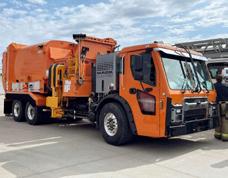
The City of Kingston, Ontario, is turning its ambitious vision of becoming “Canada’s Most Sustainable City” into tangible, quiet reality on its streets. In a major stride toward its green transit goals, the municipality has successfully integrated two fully automated Mack LR Electric battery-electric vehicles (BEVs) into its municipal solid waste (MSW) fleet, marking a milestone for the city's environmental stewardship initiatives.
Introduced last July to coincide with Kingston’s transition to automated, cartbased roadside collection, the zero-emission side-loaders have officially crossed the one-year service milestone. Operating five days a week, the heavyduty electric trucks have faced the full gamut of Canadian seasonal weather, proving that electrification is viable even for demanding municipal duty cycles.
For municipalities hesitant about the transition from traditional diesel powertrains to electric, Kingston’s real-world data offers strong reassurance. According to Karen Santucci, Kingston's Director of Public Works and Solid Waste, the vehicles have seamlessly matched the rigorous demands of daily route collection.
“Their performance is top-notch,” Santucci noted, highlighting that the reception from both the public and solid waste operators has been overwhelmingly positive. Operators benefit from a drastically quieter cabin
environment and reduced vibrations, while residents enjoy a significantly lower noise profile during early morning collection rounds.
While urban transit buses often dominate green fleet conversations, return-to-base vocational segments—like refuse collection—are actually the low-hanging fruit for municipal electrification:
• Predictable Duty Cycles: Routes are predetermined, allowing fleet managers to optimize energy consumption and schedule precise charging windows.
• Regenerative Braking Advantages: The relentless stopand-go nature of residential garbage collection maximizes regenerative braking systems, constantly feeding kinetic energy back into the battery pack to extend operational range.
• Localized Zero Emissions: Eliminating diesel exhaust directly at the street level improves localized air quality in the very neighborhoods the trucks serve.
The capital investment for
the zero-emission trucks was bolstered by funding support from the Federation of Canadian Municipalities (FCM), a critical resource for cities bridging the initial financial gap of adopting premium green technology.
To ensure long-term operational success, Kingston prioritized local maintenance infrastructure. The electric sideloaders were spec'd with bodies from Quebec-based LaBrie Environmental Group and purchased through the Ottawaheadquartered Surgenor Truck Group. Crucially, Surgenor’s dedicated facility right in Kingston handles specialized EV service and support.
“When choosing a vendor, we wanted to ensure these vehicles could be maintained right here in Kingston,” explained Brent Fowler, Director of Corporate Asset Management and Fleet. Partnering with a heavyduty dealer practically down the street ensures minimal downtime and keeps technical expertise within the community.
George Fotopoulos, Mack Trucks' Vice President of E-mobility, commended the deployment, stating that Kingston is demonstrating true leadership by pairing an ambitious sustainability roadmap with real-world, heavyduty investments. As more Canadian municipalities watch Kingston's success, the quiet hum of electric refuse trucks may soon become the new normal coast to coast.
BY JGK STAFF
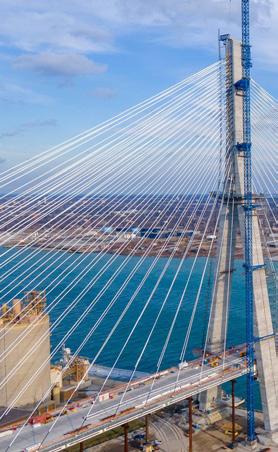
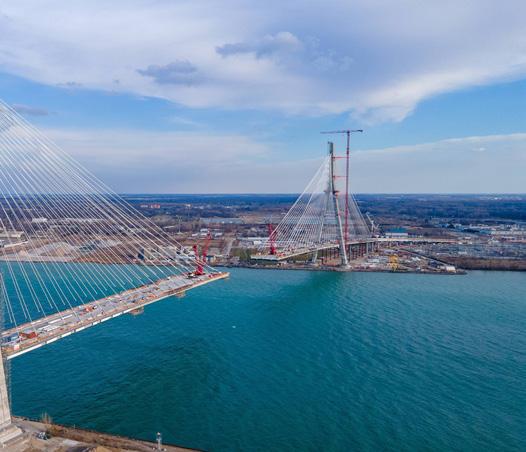
The trucking industry’s long-awaited relief at the northern border has ground to a sudden halt. The grand opening of the $6.4-billion Gordie Howe International Bridge has been indefinitely delayed following a political standoff triggered by President Donald Trump, leaving North America’s most critical freight corridor in logistics limbo.
The six-lane cable-stayed bridge connecting Detroit and Windsor, Ontario, was scheduled for an official ribbon-cutting ceremony. However, the launch was abruptly canceled as U.S. officials, led by Commerce Secretary Howard Lutnick, demand a renegotiation of the original 2012 deal, claiming the U.S. is not being fairly compensated despite Canada entirely financing the construction.
For cross-border motor carriers, this political gridlock represents a devastating financial blow. The Canadian Trucking Alliance (CTA) recently projected that the new bridge would save carriers anywhere from $20,000 to $100,000 per fleet per month in operational overhead.
These massive savings were expected to come from two key factors:
• The "Toll Tax": The bridge's proposed introductory commercial toll rates were set
at roughly $12 per axle ($9.60 for pre-registered fleets). In stark contrast, the aging, privately owned Ambassador Bridge has jacked its tolls up to a staggering $20 to $27 per axle— costing a standard five-axle big rig up to $135 for a single oneway crossing.
• Direct Highway Connections: The Gordie Howe Bridge features a direct link from Ontario’s Highway 401 straight to Michigan’s Interstate 75. Currently, trucks utilizing the Ambassador Bridge must crawl through a agonizing five-kilometer stretch of Huron Church Road in Windsor, hitting up to 17 traffic lights. Bypassing this bottleneck would eliminate heavy stop-and-go idling, reduce severe equipment wearand-tear, and save the industry an estimated 850,000 hours annually.
With the bridge sitting empty, the auto-heavy, "justin-time" manufacturing supply chain remains incredibly vulnerable. The Detroit-Windsor gateway handles over $390 million in daily trade—a quarter of all U.S.-Canada merchandise traffic.
Faced with exorbitant Ambassador Bridge tolls, many fleets have resorted to a 108-kilometer detour north to Sarnia's Blue Water Bridge. This shift has grown so severe that the Blue Water Bridge recently overtook the Ambassador Bridge as the busiest commercial border crossing on the continent.
"Protecting North American competitiveness requires practical, pro-growth solutions," said Stephen Laskowski, president of the CTA, emphasizing that the industry desperately needs the new bridge's automated X-ray customs technology and traffic redundancy. For now, however, truck drivers can only look at the completed, multi-billion-dollar lifeline from a standstill—waiting to see who blinks first.
au~qrI srh~d (bwrfr) 'qy rwhq dI aufIk kr rhI tr~ikMg ieMfstrI ƒ ie~k v~fw Jtkw l~gw hY[ 6.4 iblIAn fwlr dI lwgq nwl bxy ‘gorfI hwE ieMtrnYSnl ibRj’ dy audGwtn 'qy rwStrpqI fonwlf trMp v~loN pYdw kIqy isAwsI rOly kwrn Axim~Qy smyN leI rok lgw id~qI geI hY[ ies kwrn au~qrI AmrIkw dw sB qoN Aihm Pryt lWGw ivcwly hI ltk igAw hY[
iftrwiet Aqy ivMfsr, EntwrIE ƒ joVn vwly ies 6-lyn dy pul dw audGwtn hox vwlw sI[ pr AmrIkI AiDkwrIAW, Kws krky kwmrs sYktrI hwvrf lutink dy kihx 'qy ies ƒ Acwnk r~d kr id~qw igAw[ AmrIkw hux 2012 dy Asl smJOqy ƒ dubwrw bdlx dI mMg kr irhw
hY[ AmrIkw dw dwAvw hY ik aunHW ƒ ies dw pUrw Pwiedw nhIN iml irhw, BwvyN ik ies pul dI swrI PMifMg kYnyfw srkwr v~loN kIqI geI hY[
srh~d pwr c~lx vwly tr~ikMg AwprytrW leI ieh isAwsI iK~coqwx ie~k v~fw AwriQk nukswn hY[ 'kYnyfIAn tr~ikMg AlwieMs' (CTA) dy muqwbk, jykr ieh nvW pul Ku~lHdw hY, qW hr tr~k kMpnI Awpxy PlIt dy ihswb nwl hr mhIny 20,000 qoN 100,000 fwlr q~k bcw skdI hY[
ies bcq dy do mu~K kwrn hn:
• tol tYks (Toll Tax): ies nvyN pul 'qy kmrSIAl tr~kW leI SurUAwqI
tol ryt lgBg $12 pRqI AYksl r~iKAw igAw sI (Aqy rijstrf PlItW leI $9.60)[ ies dy ault, purwxy Aqy pRweIvyt 'AYMbYsfr ibRj' ny Awpxw tol vDw ky $20 qoN $27 pRqI AYksl kr id~qw hY[ XwnI ie~k Awm 5-AYksl vwly v~fy tr~k ƒ au~QoN lMGx leI ie~k pwsy dw 135 fwlr q~k tol dyxw pYNdw hY[
• is~Dw hweIvyA sMprk: gorfI hwE ibRj EntwrIE dy hweIvyA 401 ƒ is~Dw imSIgn dy I-75 hweIvyA nwl joVdw hY[ iPlhwl, AYMbYsfr ibRj dI vrqoN krn vwly tr~kW ƒ ivMfsr dI 'ihaUron crc rof' dy 5 iklomItr dy jwm iv~coN lMGxw pYNdw hY, ij~Qy lgBg 17 tRYiPk lweItW AwauNdIAW hn[ nvW pul Ku~lHx nwl ieh jwm ^qm ho jwvygw, fIzl dI bcq hovygI, g~fIAW dI tu~t-B~j GtygI, Aqy ieMfstrI dy swlwnw 850,000 GMty bcxgy[ pul dy bMd rihx kwrn, Kws krky Awtomoitv dI splweI cyn bhuq pRBwivq ho rhI hY[ iftrwiet-ivMfsr bwrfr qoN rozwnw 390 imlIAn fwlr qoN v~D dw vpwr huMdw hY, jo ik AmrIkw-kYnyfw dy ku~l vpwr dw cOQw ih~sw hY[
AYMbYsfr ibRj dy mihMgy tol qoN bcx leI, keI tr~k kMpnIAW hux 108 iklomItr dw vwDU c~kr k~t ky srnIAw dy 'blU vwtr ibRj' rwhIN jw rhIAW hn[ ieh tRYiPk ieMnw vD igAw hY ik blU vwtr ibRj hux pUry mhWdIp dw sB qoN ru~iJAw hoieAw kmrSIAl bwrfr bx igAw hY[
CTA dy pRYzIfYNt stIPn lwskovskI ny ikhw, "kwrobwr ƒ vDwaux leI swƒ Aijhy h~l cwhIdy hn jo Asl iv~c kMm Awaux[" aunHW zor dy ky ikhw ik tr~ikMg ieMfstrI ƒ ies nvyN pul dI Awtomyitf AYks-ry kstm qknwlojI dI s^q loV hY qW jo kstm dw kMm qyzI nwl ho sky[ pr iPlhwl, tr~k frweIvr isr& ies iqAwr KVHy ArbW fwlr dy pul v~l vyK hI skdy hn Aqy isAwsI msly h~l hox dI aufIk kr rhy hn[


BY JGK STAFF
If you haul cross-border freight, it’s time to double-check your mirrors. The U.S. government just threw a massive wrench into North American trade by refusing to automatically renew the USMCA (the old NAFTA agreement) in its current form.
What does that mean in plain English? The deal isn’t dead— your border transponder will still work tomorrow, and the current rules technically run until 2036. But instead of locking in
Washington's biggest issue centers around the automotive sector—which happens to be the highest-paying, most consistent freight on the road.
Right now, 75% of a vehicle's parts have to be made in North America to cross the border dutyfree. The U.S. wants to crank that up to 82% and mandate that at least half of those parts are built strictly in American factories. They want to pull manufacturing out of Canada and Mexico and
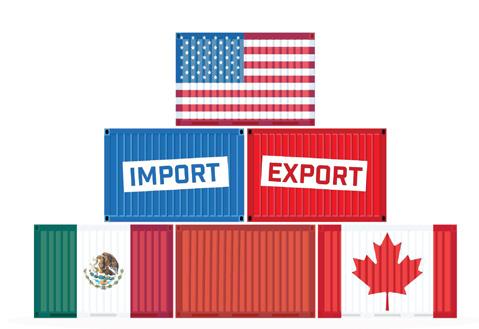
a smooth, predictable 16-year extension, Washington is forcing Canada into grueling, mandatory annual reviews. For Canadian trucking, the era of stable, predictable cross-border hauling just hit a patch of black ice.
bring it back to the States. If they get their way, the traditional, high-volume freight lanes that Canadian carriers rely on are going to shift dramatically.
For Canadian fleets and owner-operators, this creates
three massive headaches:
• Capital Freezes: Buying a new rig, upgrading a terminal, or signing a multi-year freight contract requires long-term certainty. With the trade agreement now hanging in the balance year after year, many fleets are going to park their expansion plans and freeze spending until they see which way the wind blows.
• Border Bottlenecks: To enforce these strict new rules, U.S. Customs is going to demand meticulous paperwork for every load of manufacturing parts. If every trailer needs a deep audit to prove where its cargo was built, key ports of entry could easily turn into parking lots.
• Getting Cut Out: There is a growing fear that the U.S. might bypass Canada altogether and sign a separate side deal with Mexico. If Ottawa gets isolated, Canadian carriers will be left fighting an uphill battle against aggressive U.S. protectionism.
The actual negotiations are set to kick off on July 20 in Mexico City. From here on out, every July will bring a new deadline to iron out these structural differences.
For Canadian truckers, the message is clear: brace for volatility. The fluid, open-border trucking networks that have kept rigs rolling smoothly across the 49th parallel for decades are entering a period of major uncertainty.

ie~Qy ies ^br dw pMjwbI iv~c srl Aqy sp~St Anuvwd hY, jo swfy tr~kr vIrW dy pVHn Aqy smJx leI iblkul Awswn hY:
jykr qusIN srh~d pwr mwl lY ky jWdy ho, qW hux Awpxy SISy cMgI qrHW cY~k kr lE[ AmrIkw srkwr ny USMCA (ijs ƒ pihlW NAFTA ikhw jWdw sI) ƒ mOjUdw rUp iv~c A~gy vDwaux qoN sw& mnHw kr id~qw hY, ijs nwl au~qrI AmrIkw dy vpwr iv~c ie~k v~fw AiV~kw pYdw ho igAw hY[
is~DI Aqy sw& BwSw iv~c ies dw kI mqlb hY? ieh smJOqw Ajy ^qm nhIN hoieAw — quhwfw bwrfr tRWspoNfr k~lH vI kMm krygw Aqy mOjUdw inXm kwƒnI qOr 'qy 2036 q~k c~lxgy[ pr Agly 16 swlW leI ies fIl ƒ Awrwm nwl lwk krn dI bjwey, vwiSMgtn hux kYnyfw ƒ hr swl s^q smIiKAw krn leI mjbUr kr irhw hY[ kYnyfIAn tRikMg ieMfstrI leI, srh~d pwr inrivGn kMm c~lx dw suKwvW smW hux ie~k muSkl moV 'qy Aw igAw hY[
vwiSMgtn dw sB qoN v~fw rOlw Awtomoitv (g~fIAW Aqy pwrts) sYktr ƒ lY ky hY— jo ik rof 'qy sB qoN vDIAw pYsw dyx vwlw
Aqy lgwqwr c~lx vwlw Pryt hY[
ies smyN inXm ieh hY ik iksy vI g~fI dy 75% pwrts au~qrI AmrIkw iv~c bxy hoxy cwhIdy hn qW jo auh ibnW iksy tYks dy srh~d pwr kr skx[ pr AmrIkw hux ies ƒ vDw ky 82% krnw cwhuMdw hY Aqy nwl hI ieh Srq r~K irhw hY ik aunHW iv~coN A~Dy pwrts isr& qy isr& AmrIkw dIAW PYktrIAW iv~c bxy hox[ auh mYnUPYkcirMg ƒ kYnyfw Aqy mYksIko iv~coN k~F ky vwps AmrIkw lY ky jwxw cwhuMdy hn[ jykr auh Awpxy mnsUibAW iv~c kwmXwb ho gey, qW kYnyfIAn kYrIArz dy sB qoN c~ldy rUt burI qrHW pRBwivq hoxgy[
kYnyfIAn PlIt mwlkW Aqy EnrEprytrW leI ieh iqMn v~fIAW musIbqW KVHIAW krdw hY:
• nvyN ^ricAW 'qy rok: nvW tr~k KrIdxw, trmInl ƒ v~fw krnw, jW lMby smyN dy Pryt kMtrYkt sweIn krn leI kMm dw p~kw pqw hoxw zrUrI hY[ pr hux hr swl vpwrk smJOqw A~D ivcwly ltkx kwrn, keI kMpnIAW Awpxy vwDy dy plwn rok dyxgIAW Aqy audoN q~k nvW ^rcw nhIN krngIAW jdoN q~k siQqI sw& nhIN huMdI[
• bwrfr 'qy jwm: ienHW s^q inXmW
ƒ lwgU krn leI, US kstmz hr ie~k lof dy pwrts dw pUrw kwgzI ihswbikqwb mMgygw[ jykr hr tRylr dI ies g~l leI fUMGI jWc hox l~g peI ik aus iv~c l~idAw mwl ik~Qy bixAw sI, qW mu~K bwrfrW 'qy tr~kW dIAW lMbIAW lweInW l~g skdIAW hn[
• kYnyfw dw iek~ly rih jwxw: ieMfstrI iv~c ieh fr vI v~D irhw hY ik AmrIkw Swied kYnyfw ƒ pwsy krky mYksIko nwl v~KrI sweIf fIl kr lvy[ jykr Etwvw (kYnyfw) iek~lw rih igAw, qW kYnyfIAn kYrIArW ƒ AmrIkw dIAW s^q nIqIAW A~gy iek~ilAW lVnw pvygw[
ies sbMDI Asl g~lbwq 20 julweI ƒ mYksIko istI iv~c SurU hox jw rhI hY[ hux qoN bwAd, hr swl julweI dw mhInw ienHW m~qBydW ƒ sulJwaux leI ie~k nvIN fY~flweIn lY ky Awvygw[
kYnyfIAn tRkrW leI is~Dw sunyhw hY: Awaux vwly auqwr-cVHwA leI iqAwr rho[ ijnHW Ku~lHy bwrfrW Aqy nY~tvrkW sdkw ipCly keI dhwikAW qoN swfy tr~k 49vIN pYrll (kYnyfw-AmrIkw bwrfr) 'qy Awrwm nwl GuMm rhy sn, auh hux v~fI AinSicqqw dy dOr iv~c dwKl ho rhy hn[

My previous neighbour from Yaletown in downtown Vancouver invited me for a visit in his current area of Kitsilano. My sister used to live in Kitsilano before she moved to France, so I have fond childhood memories of the area. I would be sent to stand in line at Sophie’s Cosmic Café early Sunday morning, and my sister and brother-in-law would come an hour after when I was at the front of the line. I was also sent to go get fresh salsa from the Safeway. That Safeway is now demolished and will soon become condo’s.
We decided to walk everywhere, because with the amount of food we were going to eat, we needed to walk it off. The first stop was aperitivo or happy hour at Fred’s. It was Italian like my friend. We shared a sausage pizza and meatballs. We saved the sauce from the meatballs to dip our pizza crust in. My Italian friend suggested we keep the sauce for dipping the crust as a little trick he knew. The staff tried to take our sauce stash away 4 times and we fought to keep it for dipping. Both the meatballs and pizza were good. The toppings
weren’t consistent on the pizza. Some slices didn’t have olives or pepperoncini. It should be more consistent for each slice. The bathrooms I will add were very clean and nice, and worth a visit.
As we walked away from Fred’s, down the street there were a lot of people inside and outside a café. I insisted on investigating. It was Goldie’s Donuts & Bakery. The donuts were almost sold out. My friend didn’t want to get anything but as he says it, “I forced him” to eat half a donut. I got mango passionfruit as there weren’t many choices and we cut it in half. OMG! It was SO good! No wonder all these people were there! I will definitely go back! It melted in your mouth and reminded me of a fresh Krispy Kreme, but tropical.
Next, we walked over to Joe’s Italian. We both got fettucine alfredo with added chicken and iced tea. The homemade iced tea was delicious! Joe’s is always busy because it’s freshly made pasta and sauces at a low prices. I couldn’t finish my pasta. I wrapped up about half along with the piece of focaccia bread they
give with each order. My friend kept adding water to the iced tea to make it last longer. I found my chicken a bit salty, but for the cheap price, who can complain?
With my doggy bag in hand, we walked to Killer Ice Cream. My friend and I had gone last summer and he couldn’t wait to have cherry ice cream again. They blend the fruit right in. He had cherry and I had mint chocolate chip and orange swirl in a waffle cone. We shared to taste each flavour. I will come back. As long as they have cherry, my friend will want to go there, so I will have to go because of his peer pressure. By really it won’t be difficult for me to agree to go anytime I’m invited.
I was very sluggish at this point. It was a lot of food in a few hours. I literally wanted to curl up and sleep in the ice cream shop. Walking back to my car woke me up from my food coma enough to drive home.
Kitsilano area is a great spot to explore. I recall trying on my first Dior dress as a 14-year-old back when my sister lived in the area. There is good shopping and good food in Kitsilano. On our walk to the car, I saw a few other spots I want to check out for my next visit. Coming back, I will definitely go a bit earlier so I can have more donut selection at Goldie’s. My friend has endlessly said I peer pressured him in to eating that donut. I said to him that after all that food, the one thing I liked the best was the unplanned donut. We found it randomly, so if you see a crowd, always stop to investigate. I’m sure glad I stopped!
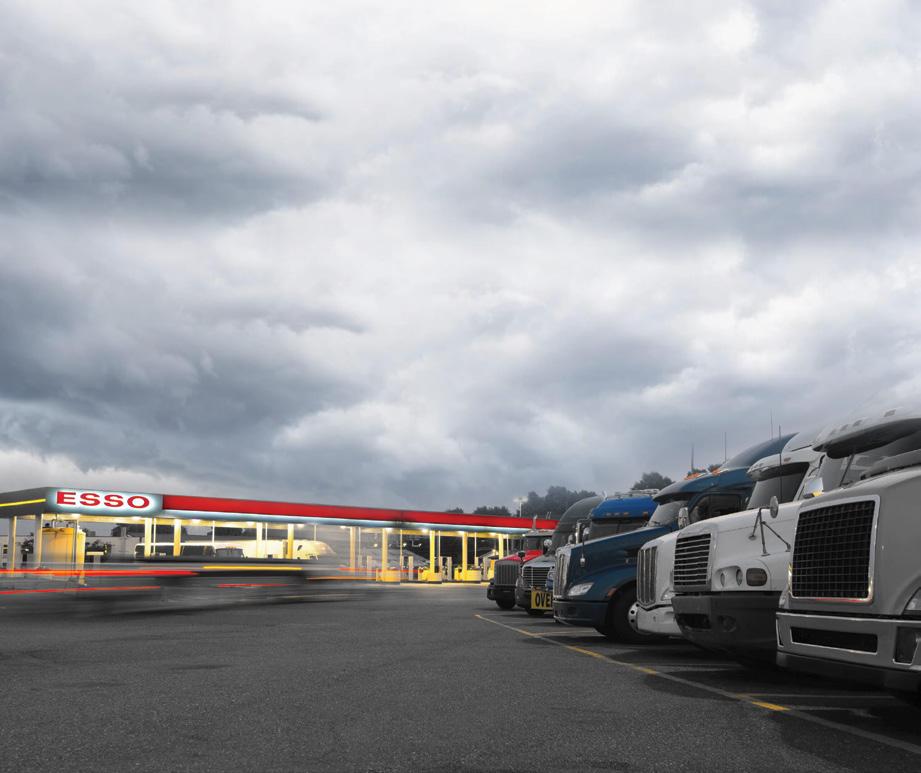
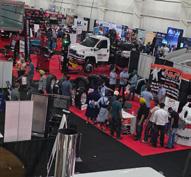
ABBOTSFORD, BC — The APNA Truck Show, Western Canada’s largest trucking event, was another success this past weekend, bringing together industry professionals, stakeholders, and community members from across the nation to the Tradex Centre in beautiful Abbotsford, BC.
The premier transportation event experienced a unique weekend trajectory. While Saturday morning saw a slower start to foot traffic, largely due to competing regional excitement and societal distractions like the FIFA World Cup matches, the momentum rapidly shifted. By Saturday afternoon and throughout the entirety of Sunday, the exhibition floors were busier with traffic, resulting in an overall successful turnout.
"We anticipated that global events like FIFA on Saturday morning would present a temporary challenge for general attendance, but the transport community showed its incredible resilience," said Tony Arora, Senior Manager of ADS Shows, the company that owns and produces the event. "By the afternoon and all day Sunday, the wider trucking industry and the community came out in full force to support the show, network, and enjoy the programming."
Despite shifting market conditions, the exhibition stayed vibrant. Fleet owners, operators, and major suppliers engaged in vital face-to-face networking, showcasing the latest advancements in commercial vehicle technology, safety systems, and fleet management tools.
"The general consensus
among our exhibitors was that the afternoon and Sunday crowds brought meaningful connections with key decisionmakers and buyers," commented Bobby Saini, Senior Manager at ADS Shows. "Although we had to navigate some unique timing hurdles this year, the underlying value of bringing people together remains unchanged. The overall feeling from both vendors and attendees is that the 2026 show was a resounding success."
Another success at the 2026 APNA Truck Show was the “Ask an Expert Series”, organized and presented by the BC Trucking Association. Pertinent and meaningful questions were asked, which were answered by experts and officials.
Beyond the core commercial exhibits, the weekend offered an unforgettable celebration of South Asian culture, providing a unique crossover appeal that sets this event apart. The entertainment lineup brought massive energy to the crowd, highlighted by spectacular, show-stopping performances from legendary Punjabi artists Nachhatar Gill and Miss Pooja, both of whom absolutely wow'ed the packed audiences.
As a vital pillar for the Western Canadian supply chain, the APNA Truck Show continues to serve as an indispensable space for industry unity, business development, and community connection.
"Times have changed, and the transport sector relies heavily on these gatherings to stay connected and move forward collectively," remarked Ron Dhaliwal, Senior Manager at ADS Shows. "The APNA Truck

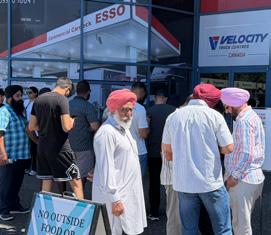
Show recognizes the evolving needs of our industry. Seeing families enjoy world-class cultural entertainment right alongside major business discussions on the show floor embodies exactly why this show is so critical to the community. We are already looking at new components to make the next show even bigger and better."
APNA Truck Show management would like to send their heartfelt thanks, appreciation, and gratitude to all the vendors, sponsors, performers, and visitors who contributed to making this weekend an outstanding success.
The APNA Truck Show is owned and operated by ADS Shows, a collaborated company with JGK Media Group. ADS Shows and JGK Media Group manage and produce various events and publications for the transportation, automotive and lifestyle industries across North America.

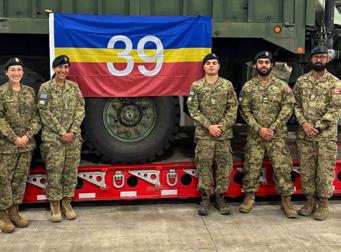
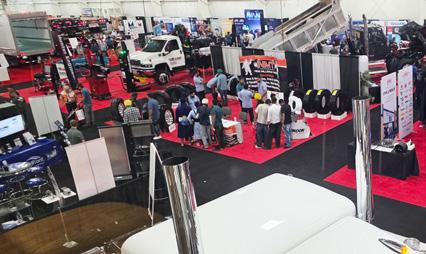
AYbtsPorf, bI.sI. — p~CmI kYnyfw dw sB qoN v~fw trikMg smwgm, "Awpxw tr~k SoA", ies lMGy vIkYNf ie~k hor v~fI sPlqw dy nwl sMpMn hoieAw[ ies ny KUbsUrq AYbtsPorf, bI.sI. dy tRyfYks sYNtr ivKy dyS Br dy audXoigk mwhrW, ih~sydwrW Aqy BweIcwry dy mYNbrW ƒ ie~k sWJy mMc 'qy iek~Tw kIqw[
ies pRmu~K tRWsportySn smwgm ny vIkYNf dOrwn ie~k ivl~Kx r&qwr dyKI[ hwlWik SnIvwr dI svyr ƒ lokW dI Awmd QoVHI hOlI rhI, ijsdw mu~K kwrn FIFA vrlf k~p dy mYcW vrgy KyqrI auqSwh Aqy smwijk ruJyvyN sn, pr jldI hI ies ny qyzI PV leI[ SnIvwr dupihr q~k Aqy AYqvwr dy pUry idn dOrwn, pRdrSnI hwlW iv~c lokW dI BwrI BIV dyKx ƒ imlI, ijs dy is~ty vjoN ieh smwgm pUrI qrHW sPl irhw[
"swƒ aumId sI ik SnIvwr svyry PIPw vrgy globl smwgmW kwrn Awm hwzrI iv~c kuJ smyN leI cuxOqI Aw skdI hY, pr tRWsport BweIcwry ny AwpxI Swndwr idRVqw idKweI," ies smwgm dI mlkIAq Aqy pRbMDn krn vwlI kMpnI, ADS SoAz dy sInIAr mYnyjr tonI AroVw ny ikhw[ "dupihr q~k Aqy AYqvwr ƒ pUrw idn, smu~cw trikMg audXog Aqy BweIcwrw SoA dw smrQn krn, AwpsI sMprk bxwaux Aqy pRogrwmW dw AwnMd lYx leI pUry auqSwh nwl A~gy AwieAw["
bdldy hoey mwrkIt hwlwq dy bwvjUd, pRdrSnI iv~c pUrI rOxk rhI[ PlIt mwlkW, AwprytrW Aqy pRmu~K splwierW ny Awhmo-swhmxy iml ky mh~qvpUrn nY~tvrikMg kIqI, Aqy vpwrk vwhn qknwlojI sur~iKAw pRxwlIAW Aqy PlIt pRbMDn swDnW iv~c hoeIAW nvInqm qr~kIAW dw pRdrSn kIqw[
"swfy pRdrSkW dI Awm rwey ieh sI ik dupihr Aqy AYqvwr dI BIV ny mu~K PYslw lYx vwilAW Aqy KrIddwrW nwl swrQk sbMD sQwipq kIqy," ey.fI.AY~s. SoAz dy sInIAr mYnyjr bObI sYxI ny it~pxI kIqI[ "hwlWik ies swl swƒ smyN dIAW kuJ ivl~Kx rukwvtW dw swhmxw krnw ipAw, pr lokW ƒ ie~kju~t krn dw mu~K mu~l brkrwr irhw[ ivkryqwvW Aqy drSkW dovW v~loN ieho mihsUs kIqw igAw ik 2026 dw ieh SoA ie~k byimswl sPlqw sI[" bI.sI. trikMg AYsosIeySn v~loN AwXoijq Aqy pyS kIqI geI "AYsk AYn AYksprt sIrIz" (Ask an Expert Series) 2026 dy Awpxw tr~k SoA dI ie~k hor v~fI sPlqw sI[ ies dOrwn FukvyN Aqy mh~qvpUrn svwl pu~Cy gey, ijnHW dy jvwb mwhrW Aqy AiDkwrIAW v~loN id~qy gey[
mu~K vpwrk pRdrSnIAW qoN ielwvw, ies vIkYNf ny d~KxI eySIAweI s~iBAwcwr dw ie~k ABu~l jSn vI pyS kIqw, ijs ny ies smwgm ƒ hornW nwloN iblkul v~Krw Aqy AwkrSk bxw id~qw[ mnorMjn dy
pRogrwmW ny BIV iv~c BwrI joS Br id~qw, ijs iv~c pRis~D pMjwbI klwkwrW nC~qr ig~l Aqy ims pUjw dIAW Swndwr Aqy Xwdgwr pySkwrIAW Swml sn, ijnHW ny KcwKc Bry pMfwl dw idl ij~q ilAw[
p~CmI kYnyfIAn splweI cyn dy ie~k mh~qvpUrn QMmH vjoN, "Awpxw tr~k SoA" audXoigk eykqw, vpwrk ivkws Aqy BweIcwrk sWJ leI ie~k byh~d zrUrI mMc vjoN AwpxI syvw inBwauxw jwrI r~K irhw hY[
"smW bdl igAw hY, Aqy tRWsport Kyqr Awps iv~c juVy rihx Aqy smUihk qOr 'qy A~gy vDx leI iehnW iek~TW 'qy bhuq izAwdw inrBr krdw hY," ADS SoAz dy sInIAr mYnyjr rOn DwlIvwl ny ikhw[ "Awpxw tr~k SoA swfy audXog dIAW bdldIAW loVW ƒ cMgI qrHW pCwxdw hY[ SoA dy mu~K hwl iv~c v~fIAW vpwrk crcwvW dy nwl-nwl pirvwrW ƒ ivSv p~DrI s~iBAwcwrk mnorMjn dw AwnMd lYNdy dyKxw hI ieh drswauNdw hY ik ieh SoA BweIcwry leI ieMnw mh~qvpUrn ikauN hY[ AsIN Agly SoA ƒ hor vI v~fw Aqy ibhqr bxwaux leI pihlW hI kuJ nvyN pihlUAW 'qy kMm kr rhy hW["
Awpxw tr~k SoA dI mYnyjmYNt v~loN aunHW swry ivkryqwvW, spWsrW, klwkwrW Aqy drSkW dw qih idloN DMnvwd Aqy AwBwr pRgt kIqw jWdw hY, ijnHW ny ies vIkYNf ƒ ie~k Swndwr sPlqw bxwaux iv~c Awpxw vfmu~lw Xogdwn pwieAw[
SOURCE: NEWSCANADA

Small business owners play many roles: CEO, accountant, sales manager, IT specialist and fraud prevention agent.
Many owners feel they know their stuff when it comes to fraud prevention. A 2024 study found that 63 per cent of businesses reported feeling confident about protecting themselves against payment fraud and cybercrime.
But confidence isn’t always the same thing as knowledge, and for fraud prevention to work, everyone in the company needs to be prepared.
“Having open conversations about potential scams helps everyone be more aware,” says Piraveena Tharmalingam, a Vice President in Canadian Business Banking at TD. “It’s especially important for employees responsible for accepting or making payments on behalf of the business, but everyone needs to play a part.”
Here are the most common fraud schemes, and variations, that all business owners and
employees need to watch out for, and some cyber safety tips:
• Phishing: Fraudulent messages designed to look like they’re from a legitimate source — they can be emails (phishing), SMS text messages (smishing), QR codes (quishing) or phone calls (vishing). They ask recipients to enter sensitive or confidential information, usually to validate an account, then provide that information to the fraudster. Encourage employees to question unusual requests from external sources, double-check senders’ email addresses and never click on suspicious links.
• Business email compromise: When fraudsters send emails impersonating a company official or vendor to trick their victim into initiating a payment. They fake, or "spoof," a legitimate email address by changing one or more characters from the actual address. Look out for unusual, urgent requests, especially if they seem rushed. If anything feels off, take the extra step to validate that the request is legitimate.
• Malware: Software used to access computer systems and gather sensitive information. It's possible to download malware
without knowing it, for example from clicking on a phishing email, or an advertisement on the internet. If pop-ups or unfamiliar screens show up on your computer, disconnect from the network and contact an IT professional.
• Ransomware: A type of malware that infects computers, locks down data and encrypts them until the victim hands over a payment to restore access. All employees should know it's not worth the risk to open attachments from unknown senders—legitimate companies trying to get in touch with you will find another way.
Any business, no matter how small, can become the target of fraud. There are simple steps owners and employees can take to help minimize risk: not clicking on links unless they’re from verified sources, reconciling business accounts regularly and talking to the bank about what security features are available. Building a culture of employees who think critically and communicate openly can help keep businesses safe and prevent fraud.
Coty kwrobwrW dy mwlk keI qrHW dIAW BUimkwvW inBwauNdy hn: ijvyN ik CEO AkwaUNtYNt (lyKwkwr), sylz mYnyjr, IT mwhr Aqy Prwf (DoKwDVI) rokU eyjMt[
bhuq swry mwlkW ƒ l~gdw hY ik jdoN Prwf rokx dI g~l AwauNdI hY, qW auh sB kuJ jwxdy hn[ ie~k 2024 dy AiDAYn iv~c pwieAw igAw ik 63 PIsdI kwrobwrW ny pymYNt Prwf (Bugqwn DoKwDVI) Aqy sweIbr AprwDW qoN Awpxy Awp ƒ sur~iKAq r~Kx dy mwmly iv~c AwqmivSvws mihsUs krn bwry irport kIqI[
pr AwqmivSvws hmySw igAwn dy brwbr nhIN huMdw, Aqy Prwf rokx dI muihMm ƒ sPl bxwaux leI kMpnI dy hr ivAkqI dw iqAwr hoxw zrUrI hY[
TD bYNk ivKy kYnyfIAn ibzns bYNikMg dI vweIs pRYzIfYNt, iprwvInw QrmwilMgm kihMdI hY, "sMBwivq skYmW bwry Ku~lH ky g~lbwq krnw hr iksy ƒ vDyry jwgrUk bxwaux iv~c mdd krdw hY[" "ieh auhnW krmcwrIAW leI Kws qOr 'qy mh~qvpUrn hY jo kwrobwr dI qrPoN Bugqwn svIkwr krn jW krn leI izMmyvwr hn, pr ies iv~c hr ie~k ƒ AwpxI BUimkw inBwaux dI loV hY["
ie~Qy sB qoN Awm Prwf skImW, aunHW dy v~K-v~K rUp, Aqy kuJ sweIbr sur~iKAw suJwA id~qy gey hn ijnHW bwry swry kwrobwrI mwlkW Aqy krmcwrIAW ƒ swvDwn rihx dI loV hY:
• iPiSMg ieh Aijhy DoKwDVI vwly sunyhy huMdy hn jo dyKx iv~c iksy BrosyXog sroq qoN Awey pRqIq huMdy hn — ieh eImyl SMS tYkst mYsyj, QR kof jW &on kwlW dy rUp iv~c ho skdy hn[ ieh pRwpqkrqwvW ƒ sMvydnSIl jW gupq jwxkwrI drj krn leI kihMdy hn, Awm qOr 'qy Kwqy dI puStI krn dy bhwny, Aqy iPr auh jwxkwrI DoKybwz q~k phuMcw idMdy hn[ krmcwrIAW ƒ bwhrI sroqW qoN Awaux vwlIAW Axjwx bynqIAW 'qy svwl cu~kx, Byjx vwilAW dy eImyl piqAW dI do vwr jWc krn Aqy S~kI ilMkW 'qy kdy vI kil~k nw krn leI pRyirq kro[ • ibzns eImyl kMpromweIz: ieh
audoN huMdw hY jdoN DoKybwz iksy kMpnI dy AiDkwrI jW ivkryqw dw rUp Dwr ky eImyl Byjdy hn qW jo pIVq ivAkqI ƒ Bugqwn SurU krn leI guMmrwh kIqw jw sky[ auh Asl eImyl pqy iv~coN ie~k jW do A~Kr bdl ky ie~k nklI jW "spU&" eImyl pqw bxwauNdy hn[ Axjwx, zrUrI bynqIAW 'qy nzr r~Ko, Kws krky jy auh bhuq kwhlI iv~c kIqIAW jwpdIAW hox[ jykr kuJ vI S~kI l~gy, qW ieh puStI krn leI vwDU kdm cu~ko ik bynqI Asl hY jW nhIN[
• mwlvyAr (Malware): ieh Aijhy swPtvyAr huMdy hn jo kMipaUtr isstmW q~k phuMc bxwaux Aqy sMvydnSIl jwxkwrI iek~TI krn leI vrqy jWdy hn[ Axjwxy iv~c vI mwlvyAr fwaUnlof ho skdw hY, audwhrn leI iksy iPiSMg eImyl 'qy kil~k krn nwl, jW ieMtrnY~t 'qy iksy ieSiqhwr rwhIN[ jykr quhwfy kMipaUtr 'qy Acwnk pOp-A~p jW Axjwx skRInW idKweI dyx, qW nY~tvrk qoN knYkSn htw idE Aqy iksy IT mwhr nwl sMprk kro[
• rYnsmvyAr (Ransomware): ieh mwlvyAr dI ie~k iksm hY jo kMipaUtrW ƒ sMkrimq krdI hY, fytw ƒ lwk kr idMdI hY Aqy iesƒ audoN q~k ienikRpt r~KdI hY jdoN q~k pIVq ivAkqI dubwrw phuMc pRwpq krn leI Bugqwn (i&rOqI) nhIN kr idMdw[ swry krmcwrIAW ƒ ieh pqw hoxw cwhIdw hY ik Axjwx Byjx vwilAW dIAW PweIlW ƒ KolHxw ^qry qoN KwlI nhIN hY — jo Asl kMpnIAW quhwfy nwl sMprk krnw cwhuMdIAW hn, auh koeI hor rsqw l~B lYxgIAW[
koeI vI kwrobwr, BwvyN auh ikMnw vI Cotw ikauN nw hovy, DoKwDVI dw inSwnw bx skdw hY[ ku~J Aijhy sOKy kdm hn jo mwlk Aqy krmcwrI joKm ƒ Gtwaux leI cu~k skdy hn: ijvyN ik ilMkW 'qy audoN q~k kil~k nw krnw jdoN q~k auh iksy pRmwixq/BrosyXog sroq qoN nw hox, kwrobwrI KwiqAW dw inXimq qOr 'qy imlwn krnw (irkwrf cY~k krnw), Aqy bYNk nwl ies bwry g~l krnw ik ikhVy-ikhVy sur~iKAw PIcr auplbD hn[ krmcwrIAW iv~c ie~k Aijhw mwhOl iqAwr krnw ij~Qy auh gMBIrqw nwl socx Aqy Ku~lH ky g~lbwq krn, kwrobwrW ƒ sur~iKAq r~Kx Aqy DoKwDVI ƒ rokx iv~c mdd kr skdw hY[


Catalys Lubricants, a Canadian leader in lubricant distribution and manufacturing for over 35 years, today announced a significant expansion through a new distribution agreement with Chevron Canada Limited. This agreement enables Catalys to distribute Chevron products throughout the Prairie provinces of Saskatchewan and Manitoba, marking a pivotal

step in the company's national growth strategy.
This development is more than just a geographical expansion for the Montreal-based family business; it further establishes Catalys Lubricants as a national distributor and manufacturer. The agreement also extends their longstanding partnership with Chevron into new markets across Saskatchewan and Manitoba, reinforcing their position as a key Canadian partner for one of the world's leading energy companies.
"This new distribution contract with Chevron Lubricants is a key milestone in our growth strategy and reflects our partners’ confidence in our expertise and ability to provide reliable, high-performance solutions," explained Jean-François Crevier, President of Catalys Lubricants.
The strong partnership between Crevier Group, the holding company of Catalys Lubricants, and Chevron Canada Limited began in 2009 with the distribution of Chevron’s premium lubricant products in Eastern Canada and expanded into British Columbia in 2013.
With this latest expansion, Catalys Lubricants continues to demonstrate its capacity to serve diverse industries from coast to coast. By leveraging its extensive distribution network and manufacturing capabilities, the company is well-positioned to meet the evolving needs of its customers.


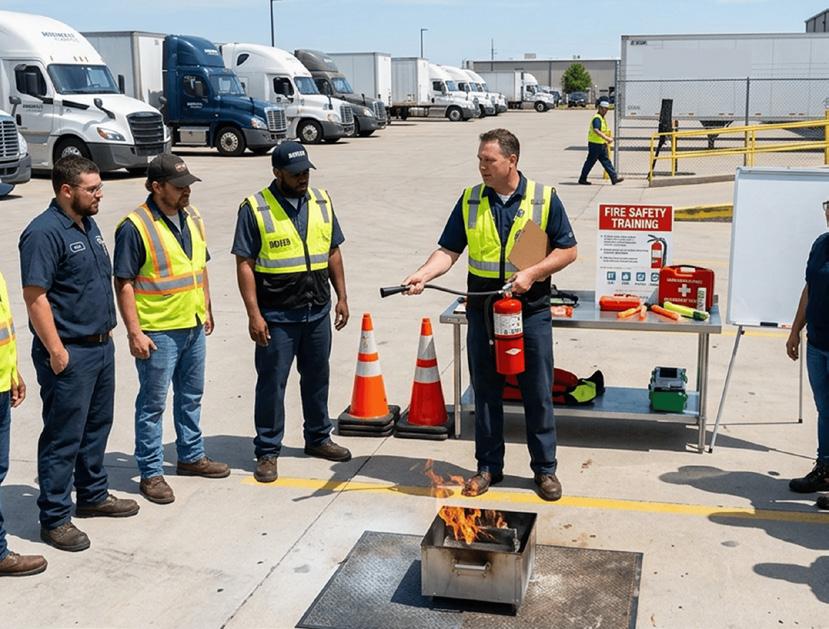
June often brings change to the workplace. In BC’s trucking, moving, and storage industries, that may mean seasonal hires, student workers, new drivers, warehouse workers, swamper crews, yard staff, dispatch support, or employees returning to work after time away. It may also mean existing workers taking on new tasks, moving to a different site, or facing hazards they have not worked around before.
That is why orientation matters. A strong safety orientation is not just a form to complete on a worker’s first day. It is a key step in helping workers understand the hazards of the job, the procedures they are expected to follow, and who they can go to when they have questions or concerns.
Under BC’s Occupational Health and Safety Regulation, employers must ensure young and new workers receive
BY: SAFETY DRIVEN
health and safety orientation and training specific to their workplace before they begin work. A young worker is anyone under 25, while a new worker can be any age. This includes someone who is new to the workplace, returning to a workplace where hazards have changed, affected by changes in workplace hazards, or relocated to a workplace with different hazards.
In trucking, moving, and
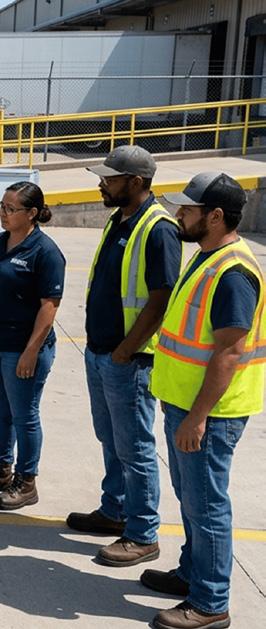
storage, those hazards can change quickly. A worker may be loading freight in a warehouse one day, helping with a residential move the next, or working around forklifts, trucks, trailers, ramps, loading docks, traffic, customers, and changing weather conditions. Even experienced workers may need additional orientation if the worksite, equipment, process, or hazard changes.
A good orientation should clearly explain workplace health and safety rules, the worker’s supervisor and contact information, emergency procedures, first aid arrangements, personal protective equipment, and how to report injuries, illnesses, unsafe conditions, or near misses.
Workers should also understand their rights and responsibilities, including the right to refuse unsafe work.
For trucking employers, this may include reviewing safe yard movement, coupling and uncoupling, load securement expectations, pre-trip procedures, working alone, fatigue reporting, and communication protocols. For moving and storage employers, it may include safe lifting, stair carries, customer-site hazards, use of dollies and straps, vehicle loading, slips and trips, and how to stop work when a task cannot be completed safely.
Orientation should also be practical. Workers need more than verbal instructions or a quick review of a policy. WorkSafeBC recommends task-specific training that includes an overview of the job, a demonstration of the task, and observation to confirm the worker can perform the task safely. This is especially important when workers are using equipment, entering busy yards, handling heavy or awkward items, or working at unfamiliar locations.
Supervision is also part of the process. New workers may hesitate to ask questions, especially if they are trying to make a good impression or keep up with a crew. Supervisors can help by checking in early, watching for unsafe shortcuts, encouraging questions, and making it clear that stopping to ask is better than guessing.
Employers should also document orientation and training. Keeping records helps confirm what was covered, when it was completed, and whether additional training was provided. A checklist can make orientation more consistent and can be customized to reflect the specific hazards of a trucking, moving, storage, warehouse, yard, or office environment.
This is also a good time to look at how your Joint Health and Safety Committee supports new and returning workers. A strong committee can help identify workplace hazards, review inspection findings, discuss worker concerns, and support practical improvements before incidents happen. For companies in trucking, moving, and storage, this may include reviewing hazards in yards, warehouses, shops, loading areas, customer sites, and vehicle operations.
SafetyDriven offers Joint Health and Safety Committee training to help employers and worker representatives understand how to build and run an effective committee, conduct workplace inspections, identify hazards, and complete risk assessments. If your committee needs a refresh, or if new members have joined, training can help ensure everyone understands their role in supporting a safer workplace.
Before the busy season gets further underway, employers should take time to review their orientation process. Ask whether it reflects the actual work being done, whether seasonal and returning workers are included, whether supervisors know what to cover, whether the Joint Health and Safety Committee is involved where appropriate, and whether workers receive followup after their first few shifts.
A safe start can shape how a worker approaches the job long after orientation is over. When workers understand the hazards, know the procedures, and feel comfortable speaking up, they are better prepared to protect themselves, their co-workers, customers, and the public.
Safety begins before the first shift. Make orientation clear, specific, documented, and ongoing. Visit SafetyDriven.ca to learn more.
jUn dw mhInw Aksr kMm vwlI QW 'qy bdlwA lY ky AwauNdw hY[ BC dy trikMg, mUivMg Aqy storyj audXogW iv~c, iesdw mqlb sIznl (mOsmI) BrqI, stUfYNt vrkr, nvyN frweIvr, vyArhwaUs vrkr, svYNpr krU, Xwrf stwP, ifspYc sport, jW kuJ smyN bwAd kMm 'qy prqx vwly krmcwrI ho skdy hn[ iesdw mqlb ieh vI ho skdw hY ik purwxy vrkrW ƒ nvyN kMm sONpy jw rhy hn, auh iksy v~KrI sweIt 'qy jw rhy hn, jW Aijhy ^qirAW dw swhmxw kr rhy hn ijnHW dy Awly-duAwly aunHW ny pihlW kMm nhIN kIqw hY[
iesy krky ErIAYNtySn mwieny r~KdI hY[ ie~k mzbUq sur~iKAw ErIAYNtySn isr& ie~k Pwrm nhIN hY ijsƒ vrkr dy pihly idn Brnw huMdw hY[ ieh vrkrW ƒ kMm dy ^qirAW, aunHW qoN aumId kIqIAW jWdIAW pRikirAwvW ƒ smJx, Aqy svwl jW icMqwvW hox 'qy auh iks kol jw skdy hn, ieh jwxn iv~c mdd krn leI ie~k Aihm kdm hY[
BC dy EkUpySnl hYlQ AYNf syPtI rYgUlySn dy qihq, mwlkW leI ieh XkInI bxwauxw lwzmI hY ik nOjvwn Aqy nvyN vrkrW ƒ kMm SurU krn qoN pihlW aunHW dI kMm vwlI QW dy ihswb nwl ishq Aqy sur~iKAw ErIAYNtySn Aqy tRyinMg imly[ nOjvwn vrkr auh huMdw hY ijsdI aumr 25 swl qoN G~t hovy, jdoN ik nvW vrkr iksy vI aumr dw ho skdw hY[ ies iv~c auh ivAkqI Swml huMdw hY jo kMm vwlI QW 'qy nvW hY, AijhI kMm vwlI QW 'qy vwps Aw irhw hY ij~Qy ^qry bdl gey hn, kMm vwlI QW dy ^qirAW iv~c hoey bdlwA qoN pRBwivq hY, jW v~K-v~K ^qirAW vwlI iksy hor kMm vwlI QW 'qy bdilAw igAw hY[
trikMg, mUivMg Aqy storyj iv~c, auh ^qry qyzI nwl bdl skdy hn[ ie~k vrkr ie~k idn vyArhwaUs iv~c Pryt lof kr irhw ho skdw hY, Agly idn iksy Gr dI iSPitMg iv~c mdd kr irhw ho skdw hY, jW PorkilPtW, tr~kW, tRylrW, rYNpW, loifMg fOks, tRYiPk, gwhkW, Aqy bdldy mOsm dy hwlwqW dy ivckwr kMm kr irhw ho skdw hY[ ie~QoN q~k ik qjrbykwr vrkrW ƒ vI vwDU ErIAYNtySn dI loV ho skdI hY jykr vrksweIt, swzoswmwn, pRikirAw, jW ^qirAW iv~c bdlwA huMdw hY[
ie~k cMgI ErIAYNtySn iv~c kMm vwlI QW dy ishq Aqy sur~iKAw inXmW, vrkr dy suprvweIzr Aqy sMprk jwxkwrI, AYmrjYNsI pRikirAwvW, Pst eyf dy pRbMDW, (PPE) in~jI sur~iKAw swDn, Aqy s~tW, ibmwrIAW,
Asur~iKAq siQqIAW jW hwdsw huMdy-huMdy bcx dI irport ikvyN krnI hY, bwry spSt qOr 'qy smJwieAw jwxw cwhIdw hY[ vrkrW ƒ Awpxy AiDkwrW Aqy izMmyvwrIAW ƒ vI smJxw cwhIdw hY, ijs iv~c Asur~iKAq kMm krn qoN mnHw krn dw AiDkwr vI Swml hY[ trikMg mwlkW leI, ies iv~c Xwrf dy AMdr sur~iKAq AwvwjweI, trylr joVnw qy KolHxw, lof bMnHx dIAW aumIdW, pRI-itRp dI jWc, iek~ly kMm krnw, Qkwvt dI irport krnw, Aqy kimaUnIkySn pRotokol dI smIiKAw krnw Swml ho skdw hY[ mUivMg Aqy storyj dy mwlkW leI, ies iv~c sur~iKAq qrIky nwl Bwr cu~kxw, pOVIAW 'qy smwn lY ky jwxw, gwhkW dI sweIt dy ^qry, fOlIAW Aqy stRYps dI vrqoN, g~fI dI loifMg, iqlkx Aqy if~gx dy ^qry, Aqy jdoN koeI kMm sur~iKAq FMg nwl pUrw nw ho skdw hovy qW kMm ƒ ikvyN rokxw hY, Swml ho skdw hY[
ErIAYNtySn pivhwrk vI hoxI cwhIdI hY[ vrkrW ƒ isr& zubwnI hdwieqW jW pwilsI dI srsrI smIiKAw qoN v~D dI loV huMdI hY[
WorkSafeBC kMm dy ihswb nwl Kws tRyinMg dI is&wrS krdw hY ijs iv~c kMm dI rUpryKw, kMm kr ky idKwauxw, Aqy ieh puStI krn leI ingrwnI Swml hovy ik vrkr kMm ƒ sur~iKAq FMg nwl kr skdw hY[ ieh Kws qOr 'qy audoN mh~qvpUrn huMdw hY jdoN vrkr swzo-swmwn dI vrqoN kr rhy hox, ivAsq XwrfW iv~c jw rhy hox, BwrI jW AjIb Awkwr dIAW cIzW ƒ sMBwl rhy hox, jW Axjwx QwvW 'qy kMm kr rhy hox[
suprivzn vI ies pRikirAw dw ie~k ih~sw hY[ nvyN vrkr svwl pu~Cx iv~c iJjk skdy hn, Kws krky jy auh ie~k cMgw pRBwv pwaux dI koiSS kr rhy hox jW bwkI tIm dy nwl qwlmyl bxweI r~Kxw cwhuMdy hox[ suprvweIzr SurUAwq iv~c hI jWc krky, Asur~iKAq Swrtk~tW 'qy nzr r~K ky, svwl pu~Cx ƒ auqSwihq krky, Aqy ieh spSt krky mdd kr skdy hn ik AMdwzw lgwaux nwloN ruk ky pu~C lYxw ibhqr hY[ mwlkW ƒ ErIAYNtySn Aqy tRyinMg dw irkwrf vI r~Kxw cwhIdw hY[ irkwrf r~Kx nwl ieh puStI krn iv~c mdd imldI hY ik tRyinMg iv~c kI-kI Swml kIqw igAw sI, ieh kdoN pUrI hoeI sI, Aqy kI koeI vwDU tRyinMg id~qI geI sI[ ie~k cY~kilst ErIAYNtySn ƒ vDyry inrMqr bxw skdI hY Aqy iesƒ trikMg, mUivMg, storyj, vyArhwaUs, Xwrf, jW AwiPs dy mwhOl dy Kws ^qirAW dy ihswb nwl iqAwr
kIqw jw skdw hY[ ieh dyKx dw vI ie~k vDIAw smW hY ik quhwfI 'juAwieMt hYlQ AYNf syPtI kmytI' nvyN Aqy vwps Awaux vwly vrkrW dI ikvyN mdd krdI hY[ ie~k mzbUq kmytI kMm vwlI QW dy ^qirAW dI pCwx krn, inrIKx dy nqIijAW dI smIiKAw krn, vrkrW dIAW icMqwvW 'qy crcw krn, Aqy hwdsy hox qoN pihlW ivhwrk suDwrW dI is&wrS krn iv~c mdd kr skdI hY[ trikMg, mUivMg Aqy storyj nwl juVIAW kMpnIAW leI, ies iv~c XwrfW, vyArhwaUsW, vrkSwpW, loifMg KyqrW, gwhkW dIAW sweItW, Aqy vwhnW dy sMcwln iv~c ^qirAW dI smIiKAw krnw Swml ho skdw hY[
SafetyDriven mwlkW Aqy vrkrW dy numwieMidAW ƒ ieh smJx iv~c mdd krn leI 'juAwieMt hYlQ AYNf syPtI kmytI' dI tRyinMg pRdwn krdw hY ik ie~k pRBwvSwlI kmytI ikvyN bxweIey Aqy clweIey, kMm vwlI QW dw inrIKx ikvyN krIey, ^qirAW dI pCwx ikvyN krIey, Aqy joKm dw mulWkx ikvyN pUrw krIey[ jykr quhwfI kmytI ƒ irPRYSr (duhrweI) dI loV hY, jW jy nvyN mYNbr Swml hoey hn, qW tRyinMg ieh XkInI bxwaux iv~c mdd kr skdI hY ik hr koeI ie~k sur~iKAq kMm vwlI QW bxwaux iv~c AwpxI BUimkw ƒ smJy[ ruJyvyN vwlw sIzn hor A~gy vDx qoN pihlW, ruzgwrdwqwvW ƒ AwpxI ErIAYNtySn pRikirAw dI smIiKAw krn leI smW k~Fxw cwhIdw hY[ ieh pu~Co ik: kI ieh Asl iv~c kIqy jw rhy kMm ƒ drswauNdI hY? kI mOsmI Aqy vwps Awaux vwly vrkrW ƒ ies iv~c Swml kIqw igAw hY? kI suprvweIzr jwxdy hn ik kI-kI Swml krnw hY? kI ij~Qy loV hovy au~Qy juAwieMt hYlQ AYNf syPtI kmytI Swml hY? Aqy kI vrkrW ƒ aunHW dIAW pihlIAW kuJ iSPtW qoN bwAd PIfbYk imldw hY [
ie~k sur~iKAq SurUAwq ies g~l ƒ qYA kr skdI hY ik ie~k vrkr ErIAYNtySn ^qm hox qoN lMby smyN bwAd vI kMm pRqI kI nzrIAw r~Kdw hY[ jdoN vrkr ^qirAW ƒ smJdy hn, pRikirAwvW ƒ jwxdy hn, Aqy Ku~lH ky bolx iv~c sihj mihsUs krdy hn, qW auh AwpxI, Awpxy swQI krmcwrIAW, gwhkW Aqy jnqw dI sur~iKAw krn leI ibhqr qrIky nwl iqAwr huMdy hn[
sur~iKAw pihlI iSPt qoN pihlW hI SurU huMdI hY[ ErIAYNtySn ƒ spSt, Kws,irkwrfb~D, Aqy inrMqr bxwE[ hor jwxn leI SafetyDriven.ca 'qy jwE[
SOURCE: NEWSCANADA

After a long winter, most of us look forward to warmer weather so we can spend more time outdoors in parks, lakes, and beaches. But more folks out on the water means more frequent boating incidents.
According to the Lifesaving Society, 85 per cent of boating drowning victims weren’t wearing a floatation device even though most had them on their boat. Fortunately, you can keep yourself safe by picking flotation devices you and your family find comfortable and will wear.
Your first big decision is what type of safety equipment to bring. Here are some tips for picking the device that’s right for you, from Transport Canada’s Boating Office:
These offer the best flotation and visibility: they only come in red, orange and yellow. They’re designed to turn you on your back automatically when you’re in the water, so they can keep
you breathing even if you’re unconscious, Lifejackets are generally designed to be put on in an emergency, because they can restrict your ability to move and might be uncomfortable to wear for extended periods of time. It’s important to keep them as accessible as possible.
PFDs are by far the most popular option with recreational boaters: they’re affordable and widely available. They come in a wide range of colours and are lighter, less bulky and give you greater range of movement than a lifejacket, so you can wear them longer. Although they will keep you afloat, PFDs do not generally turn you face-up in the water. If you boat during spring, fall or in cold water (15 C or below), consider a PFD with good thermal protection, like a floatation coat or floater suit.
Inflatable PFDs are even more
comfortable and easy to move in, but they must always be worn when on deck or in an open boat to be considered an approved piece of safety equipment. You also have to be at least 16 years old to use them. Not all models inflate automatically, and even those that do might inflate too slowly if you need help or are a weak swimmer. Every inflatable PFD has a backup tube to inflate it with your mouth, but if you’re struggling to stay afloat, using that tube could be difficult. These devices must also be regularly maintained according to the manufacturer’s guidelines.
Selecting the lightest or least bulky device to wear can be tempting, but don’t lose sight of what you’re buying it for—safety. Making a smart choice before you leave the dock might mean the difference between life and death out on the water.
Learn more about safe boating at canada.ca/boatingsafety.
G. RAY GOMPF, CD
There are many examples across the transportation industry of when, where and how to know when to replace your equipment. When I was in the Army, they used a formula that made sense, at least to me. They took the purchase price of the equipment, and all maintenance and repairs to that equipment must not exceed the original cost of the equipment. In other words, if the equipment cost $100,000 to purchase, then the total cost of repairs and maintenance over however many years that equipment is in service must not exceed $100,000.
Many carriers have developed their own methodologies for replacing equipment. Others may just keep the equipment maintained well enough to keep it working daily.
Some carriers lease their equipment from a leasing company which is basically the financing option used and place that decision to replace to the lease company. Essentially, when the lease is complete, the equipment is returned and then sold off by the leasing company which owns the equipment. You get a new piece of equipment with a new cost now upgrade your spreadsheet.
This way, the carrier has upto-date equipment, some leases include maintenance and repairs which allows the carrier to not worry about vehicle acquisition, maintenance and replacement. Their focus can remain on providing transport services to customers who are demanding yet pay well.
Then there are those carriers
that may end up buying the used equipment from the lease company. Some small carriers buy brand new then service that truck, repairing as necessary, for decades. The whole point is you find a way that works for your operation and plan your budgets for all eventualities.
He who properly maintains his equipment well, using a planned schedule, wins the equipment battle, he who uses the “if it ain’t broke don’t fix it’ methodology just may have to fix well before he may have wanted to effect repairs and too often at an inspection site.
Whether you buy new every other year, replace every five years, or you keep it working until it simply can’t remain profitable, whether you lease forever, is all your choice. If you buy and then maintain until it falls off the road, there is one phrase that speaks volumes. You are either paying for the truck you’re driving or you’re paying for the next one.
Even if your equipment is debt free, you must get as close to having that next one paid for as you buy it.
The original premise of this article was how long should equipment last presumably before it’s replaced. That question truly isn’t an easy reply. The consideration factors are varied and even confusing. Pick a solution that works for you.
Some small business owner operator truckers develop an attachment for their equipment where they spend much more time with their equipment than their family. There’s a feeling
about that equipment that can’t be explained rationally. They maintain to keep that relationship working for them.
I know people that are still using every day, trucks originally built in the fifties and those trucks, although antiques, still earn their keep. No doubt there have been more than a few rebuilds. There are still many trucks from the 70s and 80s plying the highways as they have for decades and putting to shame those brand spanking trucks fresh with their unreasonable price tags.
In conclusion, there’s no right answer to premise. It depends on the size of the operation, it depends on that personal relationship developed with the equipment, it depends on whether you want to keep museum pieces that have some real meaning to you and others who appreciate old iron. I know, I attend Athens Truck Show every year. I truly enjoy that old iron some of which is more than one hundred years old and still works.
trWsportySn audXog iv~c AijhIAW bhuq swrIAW audwhrxW hn ijnHW qoN pqw l~gdw hY ik Awpxy tr~kW ƒ kdoN Aqy ikvyN bdlxw hY[ jdoN mYN POj iv~c sI, qW auh ie~k Aijhw PwrmUlw vrqdy sn jo myry leI bhuq swrQk sI[ auh g`fIAW dI KrId kImq lYNdy sn, Aqy aus g`fI dI swrI sWB-sMBwl Aqy murMmq dw Krcw ausdI Asl kImq qoN v~D nhIN hoxw cwhIdw sI[ dUjy SbdW iv~c, jykr iksy tr`k ƒ KRIdx leI 1,00,000 fwlr Krc kIqy gey sn, qW ijMny vI swl auh tr`k cldw irhw hovy, aus au~qy murMmq Aqy sWB-sMBwl dw ku~l Krcw 1,00,000 fwlr qoN v~D nhIN hoxw cwhIdw[
bhuq swrIAW trWsport kMpnIAW ny Awpxw swjo smwn bdlx leI Awpxy nvyN qrIky ivkisq kIqy hn[ k`uJ lok aupkrnW r~K-rKwA ieMnI cMgI qrHW krdy hn ik auh rozwnw kMm krdy rihx[
ku`J kYrIAr AwpxIAW g~fIAW lIizMg kMpnI qoN ikrwey 'qy lYNdy hn, jo ik Asl iv~c ie~k iv~qI ivklp hY, Aqy bdlx dw PYslw lIizMg kMpnI 'qy C~f idMdy hn[ Asl iv~c, jdoN lIz pUrI ho jWdI hY, qW aupkrn vwps kr id~qw jWdw hY Aqy iPr lIizMg kMpnI duAwrw vyc id~qw jWdw hY, jo ik aus aupkrn dI mwlk huMdI hY[ quhwƒ nvIN kImq dy nwl ie~k nvW aupkrn iml
jWdw hY, hux Awpxy ihswb-ikqwb ƒ ies muqwibk ApgRyf kro[
ies qrHW, kYrIAr kol A`p-tU-fyt aupkrn huMdy hn[ k`uJ lIzW iv~c murMmq Aqy r~K-rKwA Swml huMdw hY, ijs nwl kMpnIAW ƒ vwhn pRwpqI, r~K-rKwA Aqy bdlx bwry icMqw krn dI loV nhIN pYNdI[ auh Awpxw pUrw iDAwn aunHW gwhkW ƒ trWsport syvwvW pRdwn krn 'qy hI r`KdIAW hn jo vDIAw syvwvW cwhuuMdy hn ijnHW leI vDIAw Bugqwn krdy hn[
iPr auh kYrIAr hn jo lIz kMpnI qoN vrqy gey aupkrn KrId skdy hn[ ku`J
Coty kYrIAr iblkul nvW tr~k KrIddy hn Aqy iPr dhwikAW q~k loV Anuswr murMmq krdy hoey ausƒ clwauNdy hn[ Asl g~l ieh hY ik qusIN ie~k Aijhw qrIkw l~Bo jo quhwfy kMm dy Anuswr sdw kMm kry Aqy swrIAW sMBwvnwvW leI Awpxy b`jt dI Xojnw bxwE[
jo ivAkqI ie~k Xojnwb~D smW-swrxI dI vrqoN krky Awpxy aupkrnW dI cMgI qrHW sWB-sMBwl krdw hY, auh aupkrnW dI lVweI ij~q jWdw hY[ jo ivAkqI "jy ieh tu~itAw nhIN hY qW iesƒ TIk nw kro" vwlI nIq Anuswr cldw hYY, ausƒ Swied audoN murMmq krnI pY jwvy, jdoN auh iblkul vI ieh krvwaux dy nw qW Xog huMdw hY qy nw hI aus kol smW huMdw hY Aqy Aksr ieh iksy ieMspYkSn sweIt 'qy huMdw hY[
BwvyN qusIN hr dUjy swl nvW tr`k KrIddy ho, hr pMj swlW bwAd bdldy ho, jW qusIN iesƒ audoN q~k clwauNdy ho jdoN q~k ieh munwPw dyxw bMd nhIN kr idMdw, jW BwvyN qusIN hmySw leI lIz 'qy lYNdy ho, ieh sB quhwfI cox hY[ jy qusIN KrIddy ho Aqy iPr audoN q~k sWB-sMBwl krdy ho jdoN q~k ieh sVk 'qy c~lx dy kwbl nhIN rihMdw, qW ie~k khwvq hY jo bhuq ku`J kihMdI hY[ qusIN jW qW aus tr~k leI Bugqwn kr rhy ho jo qusIN clw rhy ho jW qusIN Agly tr~k leI Bugqwn kr rhy ho[
jI ryA gON&, sI fI
BwvyN quhwfy aupkrn krzw-mukq hn, quhwƒ Agly tr~k ƒ KrIdx smyN ausdI kImq cukwaux dy nyVy phuMcxw cwhIdw hY[
ies lyK dw Asl ivSw ieh sI ik aupkrnW ƒ bdly jwx qoN pihlW ikMnw smW c~lxw cwhIdw hY[ aus svwl dw Asl iv~c koeI Awswn jvwb nhIN hY[ ies iv~c ivcwr krn vwly kwrk iBMn Aqy aulJx vwly vI hn[ ie~k Aijhw h~l cuxo jo quhwfy leI kMm krdw hY[
ku`J Coty kwrobwrI tr~k mwlkW dw Awpxy aupkrnW nwl ie~k moh ijhw ho jWdw hY ij~Qy auh Awpxy pirvwr nwloN Awpxy aupkrnW nwl izAwdw smW ibqwauNdy hn[ aus aupkrn bwry ie~k AijhI Bwvnw hY ijsdI qrksMgq ivAwiKAw nhIN kIqI jw skdI[ auh aus irSqy ƒ Awpxy leI kMm krn leI brkrwr r~Kdy hn[
mYN Aijhy lokW ƒ jwxdw hW jo Ajy vI hr roz pMjwhivAW (1950 dy dhwky) iv~c bxy tr~kW dI vrqoN kr rhy hn Aqy auh tr~k, BwvyN auh purwqn hn, Ajy vI AwpxI kmweI krdy hn[ ibnW S~k aunHW iv~c keI vwr v~fy p~Dr 'qy murMmq hoeI hovygI[ 70 Aqy 80 dy dhwky dy Ajy vI bhuq swry tr~k hweIvyA 'qy c~l rhy hn ijvyN auh dhwikAW qoN kr rhy hn, Aqy auh aunHW nvyN tr~kW ƒ SrimMdw kr rhy hn jo AwpxIAW Axauicq kImqW nwl huxy Awey hn[
is~ty vjoN, ies ivSy dw koeI ie~k shI jvwb nhIN hY[ ieh kMm dy Awkwr 'qy inrBr krdw hY, ieh aupkrnW nwl ivksq kIqy gey in~jI irSqy 'qy inrBr krdw hY, ieh ies g~l 'qy inrBr krdw hY ik kI qusIN AijhIAW purwxIAW cIzW r~Kxw cwhuMdy ho ijnHW dw quhwfy Aqy dUijAW leI koeI Asl ArQ hY jo purwxy lohy dI kdr krdy hn[ mYN jwxdw hW, mYN hr swl eyQnz tr~k SoA iv~c jWdw hW[ mYN Asl iv~c aus purwxy lohy dw AnMd lYNdw hW ijnHW iv~coN ku`J sO swl qoN v~D purwxy hn Aqy Ajy vI kMm krdy hn[
The Ontario government’s massive rollout to permanently raise speed limits to 110 km/h across nearly 89% of its 400-series highway network will explicitly exclude commercial truck traffic, the Ministry of Transportation of Ontario (MTO) has confirmed.
The speed limit expansion, which rolls out incrementally through September 30, 2026, applies to major corridors including Highways 400, 401, 402, 403, 416, and 417, as well as the Queen Elizabeth Way (QEW). While passenger vehicles will legally be permitted to travel at the elevated threshold, heavy commercial trucks will remain bound by traditional safety parameters.
The MTO clarified that heavy trucks will continue to be legally required to have their maximum speeds capped at 105 km/h via mechanical or electronic speed limiters. This statutory restriction keeps commercial fleets operating under the province's existing Highway Traffic Act safety guidelines, irrespective of the newly posted highway signs.
To reinforce compliance amid the expanding differential speed zones, the province has also significantly increased enforcement penalties. Legislative updates have boosted the minimum fine for speed limiter tampering or non-compliance offenses on commercial vehicles from $250 up to $1,000.
BY: JGK STAFF
This stringent policy framework has been widely welcomed by safety advocates and the Ontario Trucking Association (OTA). Industry leaders emphasize that maintaining the 105 km/h cap is vital to protecting the traveling public, reducing greenhouse gas emissions, and mitigating the severity of highspeed commercial collisions, even as passenger vehicles accelerate past them on the newly modernized corridors.
For further context on this provincial rollout, you can check out this Ontario Speed Limit Expansion Report which covers the broader highway updates happening across the network.
EntwrIE srkwr v~loN Awpxy
400-sIrIz hweIvyA nY~tvrk dy lgBg 89% ih~sy 'qy spIf ilmt (gqI sImw) ƒ sQweI qOr 'qy vDw ky 110 iklomItr pRqI GMtw (km/h) krn dy v~fy PYsly qoN BwrI kmrSIAl tr~kW ƒ sp~St qOr 'qy bwhr r~iKAw igAw hY, ijsdI puStI EntwrIE dy tRWsport mMqrwly (MTO) ny kIqI hY[
spIf ilmt vDwaux dw ieh PYslw 30 sqMbr, 2026 q~k pVwAvwr qrIky nwl lwgU kIqw jw irhw hY, ijs iv~c hweIvyA 400, 401, 402, 403, 416, 417, Aqy kvIn AYilzwbYQ vyA (QEW) vrgy mu~K rUt Swml hn[ ij~Qy Awm svwrI g~fIAW ƒ kwƒnI qOr 'qy ies vDy hoey h~d q~k c~lx dI iejwzq hovygI, au~Qy hI BwrI kmrSIAl
tr~kW ƒ pihlW qoN qYA sur~iKAw inXmW dy dwiery iv~c hI rihxw pvygw[
MTO ny sp~St kIqw hY ik BwrI tr~kW leI mkYnIkl jW ielYktRwink 'spIf ilimtr' rwhIN AwpxI AiDkqm gqI ƒ 105 km/h 'qy hI sImq r~Kxw kwƒnI qOr 'qy lwzmI rhygw[ ieh kwƒnI pwbMdI kmrSIAl PlItW ƒ sUby dy mOjUdw hweIvyA tRYiPk AYkt dy sur~iKAw idSwinrdySW ADIn hI r~KdI hY, BwvyN hweIvyA 'qy nvyN sweIn borf kuJ vI kihx[
ies v~KrI spIf ilmt vwly zonW iv~c inXmW dI pwlxw ƒ s^qI nwl lwgU krn leI, sUby ny aulMGxw krn vwilAW 'qy jurmwny vI kw&I vDw id~qy hn[ kwƒnI
bdlwvW qihq kmrSIAl vwhnW 'qy spIf ilimtr nwl CyVCwV krn jW inXmW dI pwlxw nw krn dy AprwD leI G~to-G~t jurmwnw $250 qoN vDw ky $1,000 kr id~qw igAw hY[
ies s^q nIqI dw sur~iKAw mwhrW Aqy EntwrIE trikMg AYsosIeySn (OTA) v~loN BrvW svwgq kIqw igAw hY[ audXoigk AwgUAW dw kihxw hY ik 105 iklomItr pRqI GMtw dI sImw ƒ brkrwr r~Kxw sVkI sur~iKAw, gRInhwaUs gYsW dy inkws ƒ Gtwaux Aqy qyz r&qwr kwrn hox vwly iBAwnk sVk hwdisAW ƒ rokx leI byh~d zrUrI hY, BwvyN ik Awm g~fIAW ienHW nvyN korIforW 'qy aunHW qoN A~gy lMGdIAW nzr Awaux[



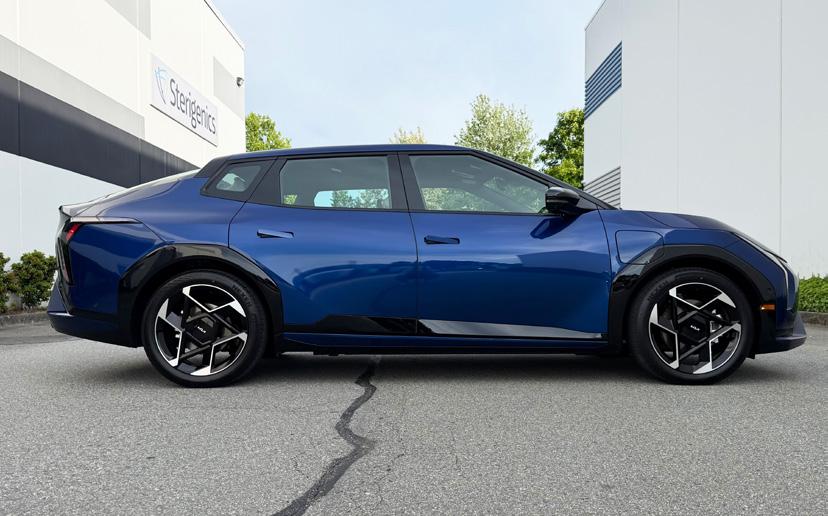
JAG DHATT
While the crossover and SUV markets continue to dominate the automotive landscape, there is still a clear space for the traditional sedan. The electric sedan segment is expanding as more manufacturers branch out, and consumer interest is seeing a distinct resurgence. When provincial EV rebate programs faced cancellations, sales understandably dipped; however, with the federal incentive program back in full swing, buyers are actively looking at electric options again.
Kia is capitalizing on this momentum by expanding its electric lineup with the highly anticipated EV4, arriving alongside the new EV5, and sporting one of the lowest entry prices for any EV in Canada. After spending a full week behind the wheel, I can confidently say that, apart from one specific element,
I’d highly recommend this car to anyone looking to park a capable, budget-friendly EV in their driveway.
Let’s get the elephant out of the room right away: with the exception of a few choice angles, the silhouette of the EV4 just isn’t a great one. The back end feels disconnected from the sharp, cohesive design language we’ve come to love on other modern Kia vehicles. It leaves you with the impression that the design team pulled cues from multiple different models and smashed them together into one shape.
However, there is a method to the madness. What the EV4 sacrifices in classic beauty, it regains in pure engineering efficiency. This polarizing shape allows the car to slice through the air with an impressive drag coefficient of just 0.23. In this era of efficiency, form and
function simply prevail over sheer aesthetics. When you look at the broader picture, the rest of the car is actually quite decent. Our Wind GT-Line test vehicle came equipped with upgraded 19-inch wheels (replacing the standard 17-inch units); while they undeniably sharpen the car's stance, keep in mind they will slightly reduce maximum driving range.
Step inside, and the experience is the complete polar opposite of the exterior. The EV4’s cabin is beautifully executed: open, airy, and genuinely inviting.
True to the brand's current design philosophy, the cockpit shares a highly intuitive layout with its siblings, utilizing familiar digital displays, crisp control buttons, and excellent overall roominess. Our GTLine tester featured a perfectly contoured three-spoke steering

wheel packed with accessible secondary controls. Wireless Apple CarPlay and Android Auto come completely standard. Opting for the upper-tier GTLine also rewards you with a premium-looking, high-contrast black-and-white interior color scheme that looks well above its price point.
Beneath the floor, Kia offers Canadian buyers two distinct battery choices: a standard 58.3 kWh pack in the base Light trim, or a larger 81.4 kWh pack reserved for the Wind, Wind Premium, GT, and our GT-Line Limited tester.
For now, power is sent exclusively to the front wheels: a dual-motor, all-wheel-drive variant isn't available (just yet). Total output stands at a modest 201 horsepower and 209 lb-ft of
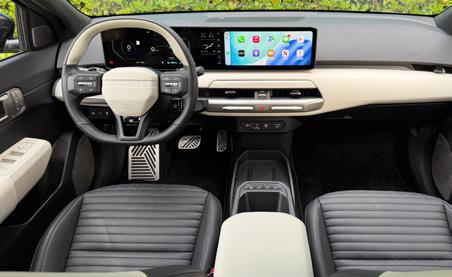
torque. While the single-motor setup means the EV4 won't give you neck-snapping acceleration, it provides more than enough power for the average daily commuter.
During my week of mixed highway and city driving around the Lower Mainland, I managed to extract a stellar 505 km of real-world range on a single charge. This is a highly practical highway cruiser. A road trip from Vancouver to Whistler or even straight through to Kelowna is easily achievable without heavy range anxiety. When you do need to plug in, the EV4 utilizes Kia’s dedicated 400-volt architecture, allowing it to charge up from 10% to 80% on a DC fast charger in roughly 30 minutes. It also retains the incredibly handy Vehicle-toLoad (V2L) functionality, letting
you power small devices and electronics directly from the car.
It might sound a bit odd to say, but many modern EVs are beginning to drive similarly. They all share that distinct instant torque, minimal body roll due to a low center of gravity, and a slightly stiffer suspension setup that hints at a sports-car feel.
The EV4 fits right into this rhythm, offering a thoroughly enjoyable, quiet, and composed ride. It soaked up road imperfections with ease, maintaining its composure whether the pavement was smooth or scarred. The steering feels remarkably accurate and responsive, making tight parking maneuvers and daily tracking effortless.
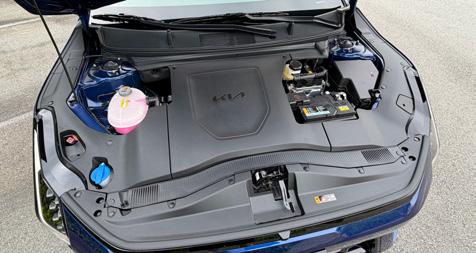
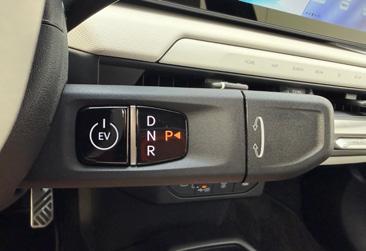
Key Specifications & Pricing
Starting Price: $41,271
Price as Tested (GT-Line Limited): $51,995
Powertrain: Single-motor FWD (201 hp / 209 lb-ft torque)
Battery Sizes: 58.3 kWh (Light) / 81.4 kWh (As Tested)
Tested Range: 505 km (Mixed City/Highway)
Charging: 10% to 80% in ~30 minutes (DC Fast Charging)
Initially, I worried that a single-motor configuration might feel underpowered on our local highways. Visually and on paper, you wonder if it's enough. Surprisingly, it was plenty adequate. You just have to remember that this isn't trying to be an ultra-sporty performance EV. Merging onto the highway or overtaking a slower driver lingering in the left lane was an absolute breeze. Furthermore, Kia’s i-Pedal regenerative braking system works beautifully. Regenerative systems can feel vastly different across manufacturers, but once I mastered the EV4's calibration, true one-pedal driving became second nature, rarely requiring the friction brakes at all.
I had been looking forward to getting behind the wheel of the EV4 for months, and it genuinely did not disappoint. Did I occasionally find myself wishing for a bit more power? Yes. Would a dual-motor AWD option be nice? Sure. Do I wish it had a heads-up display? Of course.
But here is the reality: adding those features would have driven the price up significantly, and frankly, they simply aren’t necessary. While a dual-motor setup offers a bit more winter peace of mind, for our milder Vancouver climate, a front-wheel-drive setup paired with a good set of winter tires is all you actually need. Kia has done a phenomenal job balancing affordability with capability here. It ticks almost every single box, making it a highly attractive option for anyone ready to make the electric switch.
Introducing the all-new Volvo VNR
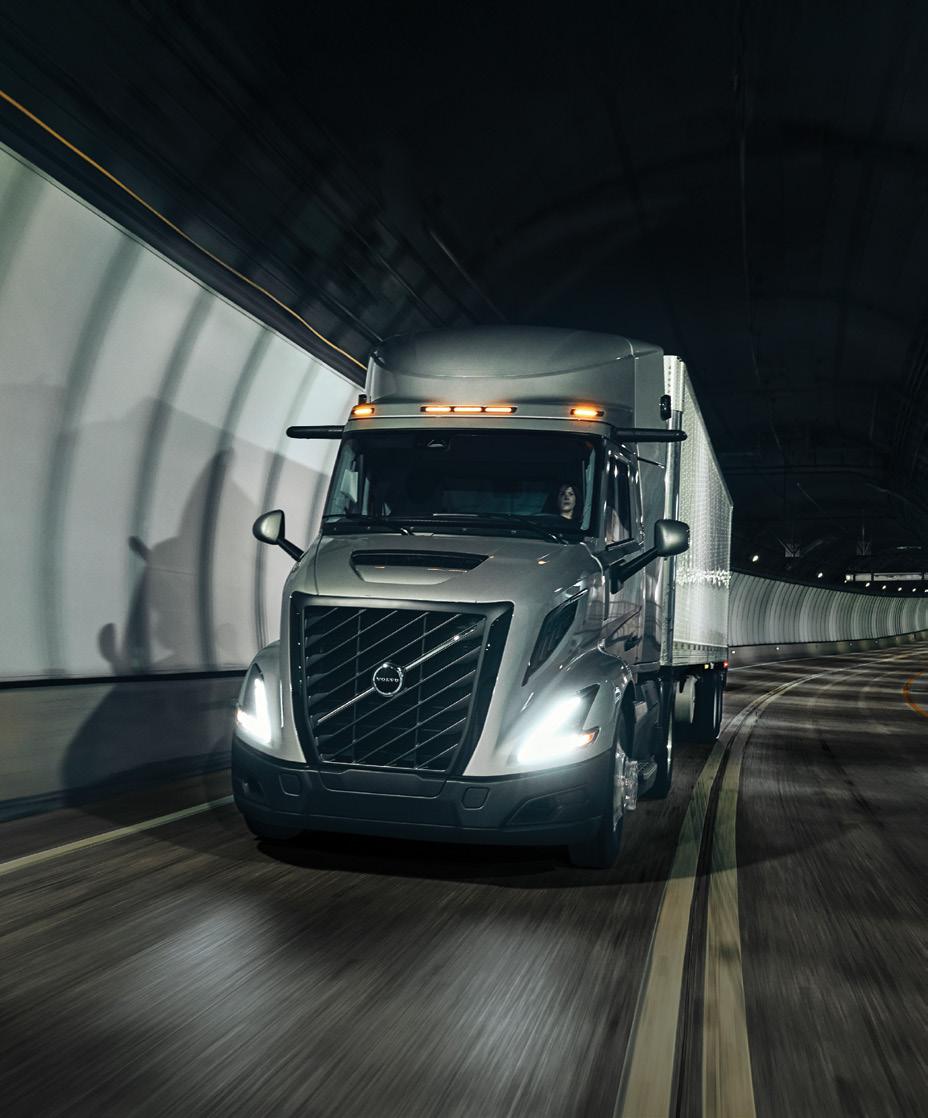
The new Volvo VNR promises to redefine your expectations for productivity, safety, and maneuverability. Boasting up to 7.5% improved fuel efficiency compared to our legacy model. A new era is arriving for Class 8 local and regional haul. Learn more at volvotrucks.ca
Volvo Trucks. Driving Progress
BY: JAG DHATT
Mack Trucks has introduced a heavy-duty innovation designed to tackle one of the most frustrating and costly headaches for commercial truck operators: windshield damage. Dubbed Mack® ImpactShield™, the new technology brings advanced automotive-grade glass directly to Class 8 vocational and highway trucks, promising a dramatic reduction in cab maintenance and unplanned shop visits.
Developed in collaboration with Corning Automotive Glass Solutions, ImpactShield marks the first-ever commercial application of Corning Fusion5 Glass in a heavy-duty truck. The specialized, one-piece bonded curved windshield is engineered specifically to survive harsh operating conditions where traditional glass routinely fails.
According to data released by Mack, the performance metrics of the ImpactShield represent a significant leap forward compared to standard commercial vehicle glass:
• 2x Greater Sharp-Impact Resistance: Deflecting flying gravel and jobsite debris that typically cause chips and immediate starring.
• 5x Greater Scratch
Resistance: Withstanding the gritty micro-abrasions caused by hard-working wipers and dirt.
• 2x Better Thermal Shock Resistance: Preventing the rapid crack propagation that occurs during severe, sudden temperature swings.
While the technology offers massive benefits to general logistics fleets, it is uniquely suited for the extreme environments navigated by Canadian truck drivers. Trucking through a Canadian winter means facing a brutal combination of loose road salt, heavy tire spray, coarse gravel, and sub-zero temperatures.
For standard windshields, the real enemy is often the defrost cycle. Blasting heat onto a freezing pane of glass creates immense thermal stress—a physical phenomenon called thermal shock—which can instantly split a small stone chip into a spiderweb across the driver’s line of sight. ImpactShield’s doubled thermal shock threshold directly addresses this issue, ensuring the glass handles aggressive heating during frozen winter mornings without cracking. Furthermore, its lightweight design improves defroster efficiency, helping
operators clear ice and snow faster to get on the road safely.
The ImpactShield windshield will debut as a standard feature on the all-new Mack Granite vocational truck, with order books opening later this year and production kicking off in January 2027. Recognizing its broad appeal, Mack will also offer the technology as an upgrade option on its newest highway and long-haul models, including the Mack Pioneer, Anthem, and Keystone.
For owner-operators and fleet managers across Canada, the math behind the upgrade is simple. By substituting fragile glass with an ultradurable alternative, Mack is effectively cutting down on glass replacement fees and the compounding costs of tractor downtime.
To learn more about how Mack Trucks is incorporating advanced operator safety and durability across its latest product line, you can check out this Mack Pioneer Passive Safety Video. This video demonstrates Mack's recent push toward building reinforced cabs and smarter driver-protection systems.
Mack tr~ks ny ie~k byh~d mzbUq nvIN kwF pyS kIqI hY, jo kmrSIAl tr~k cwlkW leI sB qoN v~D prySwnI Aqy Krcy dw kwrn bxn vwlI sm~isAw— XwnI ivMfSIlf dy tu~tx—ƒ h~l krygI[ Mack® ImpactShield™ nwm dI ieh nvIN tYknwlojI klws 8 dy vokySnl Aqy hweIvy tr~kW iv~c AYfvWsf AwtomoitvgRyf SISw lY ky AweI hY, jo kYibn dI myntynYNs Aqy gYryj dy Acwnk c~krW ƒ kwPI h~d q~k Gtw dyvygI[
korinMg Awtomoitv glws silaUSnz dy sihXog nwl iqAwr kIqI geI ieh iempYktSIlf, ie~k hYvI-ifaUtI tr~k iv~c 'korinMg iPaUzn5 glws' dI pihlI kmrSIAl vrqoN hY[ ieh Kws qOr 'qy ifzweIn kIqI geI ie~k-pIs vwlI golwkwr ivMfSIlf aunHW Krwb hwlwqW dw swhmxw krn leI bxweI geI hY ij~Qy Awm SISy Pyl ho jWdy hn[
Mack v~loN jwrI kIqy gey AMkiVAW muqwbk, Awm kmrSIAl SIiSAW dy mukwbly iempYktSIlf dI kwrguzwrI bhuq ibhqr hY:
• 2 guxw v~D s^q tkrwA J~lx dI smr~Qw: ieh sVk qoN au~fx vwlI b~jrI Aqy jObsweIt dy mlby ƒ AwswnI nwl pCwV idMdI hY, ijs nwl SISy 'qy ic~p jW qryVW nhIN AwauNdIAW[
• 5 guxw v~D skRYc ryisstYNs (KrocW qoN bcwA): ieh vweIprW Aqy im~tI-G~ty kwrn pYx vwlIAW brIk KrocW ƒ AwswnI nwl J~l skdI hY[
• 2 guxw ibhqr Qrml SOk ryisstYNs: ieh qwpmwn dy Acwnk bdlwA kwrn SISy ƒ qyzI nwl iqVkx qoN rokdI hY[
hwlWik ieh tYknwlojI swry loijsitks
PlItW leI PwiedymMd hY, pr kYnyfw dy s^q mOsm iv~c tr~k clwaux vwly pMjwbI Aqy hor kYnyfIAn frweIvrW leI ieh vrdwn swbq hovygI[ kYnyfw dIAW srdIAW iv~c tr~k clwaux dw mqlb hY — sVkW 'qy
iK~lirAw lUx, twierW qoN au~fdI gwr, motI b~jrI Aqy mweIns qwpmwn dw swhmxw krnw[
Awm ivMfSIlfW leI sB qoN v~fw duSmx Aksr tr~k dw fIPROstr huMdw hY[ jdoN jMmy hoey SISy 'qy Acwnk qyz grm hvw pYNdI hY, qW SISy 'qy bhuq izAwdw qwpmwn dw dbwA bxdw hY[ ies nwl SISy 'qy ipAw ie~k Cotw ijhw p~Qr dw inSwn vI qurMq v~fI qryV iv~c bdl jWdw hY Aqy frweIvr dy swhmxy pUrw jwlw bx jWdw hY[ iempYktSIlf dI du~gxI Qrml SOk smr~Qw iesy sm~isAw ƒ h~l krdI hY, ijs nwl srdIAW dIAW svyrW iv~c SISw ibnW iqVky qyzI nwl sw& huMdw hY[ ies dw hlkw ifzweIn fIPROstr dI kwrguzwrI ƒ vI vDwauNdw hY, qW jo frweIvr jldI br& sw& krky sur~iKAq s&r 'qy inkl skx[
iempYktSIlf ivMfSIlf sB qoN pihlW iblkul nvyN Mack Granite vokySnl tr~k iv~c stYNfrf PIcr vjoN imlygI, ijs dI buikMg iesy swl dy AKIr iv~c SurU hovygI Aqy pRofkSn jnvrI 2027 qoN SurU hovygI[ ies dI BwrI mMg ƒ dyKdy hoey, mYk ies tYknwlojI ƒ Awpxy nvyN hweIvy Aqy lONg-hwl mwflW (ijvyN ik Mack Pioneer, Anthem, Aqy Keystone) iv~c vI ApgRyf AwpSn vjoN dyvygw[
kYnyfw Br dy Enr-EprytrW Aqy PlIt mYnyjrW leI ies dw ihswb-ikqwb bhuq is~Dw hY: kmzor SISy dI QW ie~k byh~d mzbUq ivklp cux ky, Mack tr~ks frweIvrW dy SISy bdlx dy Krcy Aqy tr~k KVHy rihx kwrn hox vwly nukswn ƒ pRBwvSwlI FMg nwl Gtw irhw hY[
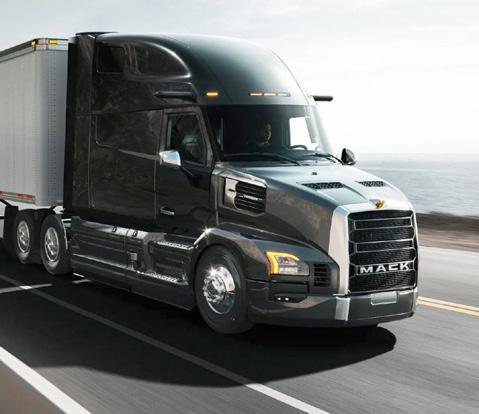























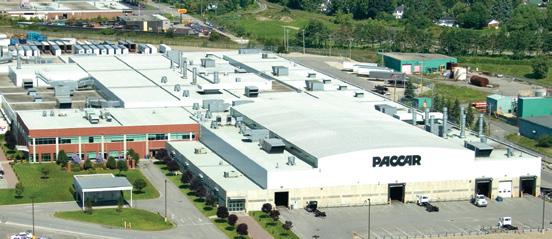

Peterbilt’s versatile lineup of medium duty and heavy duty trucks is designed to exceed the needs of customers in virtually any application. Our trucks feature durable construction, innovative safety technologies, spacious, comfortable interiors and a selection of proprietary PACCAR engines and transmissions for outstanding performance and efficiency. And, our trucks are proudly Made in Canada at our world-class facility in Ste. Therese, Quebec.
Visit your Peterbilt dealer to order your new trucks today!