

andtheMakingof and the Making of
SocialChangeinCoastal Social Change in Coastal
Bangladesh Bangladesh
This research was conducted by Coady Institute and partners with support from the Christian Commission for Development Bangladesh (CCDB)
2026 © Coady Institute, St Francis Xavier University (StFX)
Creative Commons Attribution-NonCommercial-ShareAlike 2 5 Canada License http://creativecommonsorg/licenses/by-nc-sa/2 5/ca/
All or parts of this publication may be copied and distributed for non-commercial purposes without requesting written permission, provided the author(s) and Coady Institute are explicitly acknowledged as the source of the material. Any work adapted from this material must also be made available to others under identical terms
This study is part of the Engage: Women’s Empowerment and Active Citizenship project and is funded by Global Affairs Canada

For more information about the research and the report, please contact:
Coady Institute
St Francis Xavier University PO Box 5000
Antigonish, NS, Canada, B2G 2W5
wwwcoadystfxca
coady@stfxca
+1 902 867 3960
1 866 820 7835 (within Canada)
Marian Turniawan and Dr Ibtesum Afrin, Coady Institute1
June 2026
The authors are both women of Asian descent, living in Canada, with one of the researchers being originally from Bangladesh (although not from the study region) In our positions at Coady Institute, we have supported the ENGAGE project as a “learning partner” and have built relationships with the staff at the CCDB headquarters in Dhaka, who have played various roles in the project across research and educational engagements and learning exchanges We are both familiar with CCDB’s work through ENGAGE but had no prior relationships with the study participants 1
2
In September 2025, we, along with CCDB staff members , travelled to Patharghata, a coastal region of Bangladesh, to speak with four women participating in a growing, community-based social movement This movement has been catalyzed in part by ENGAGE, a five-year Global Affairs Canada-funded initiative co-designed by the Coady Institute and five partner organizations, including the Christian Commission for Development in Bangladesh (CCDB). Through ENGAGE, women form groups, participate in training, and engage with one another to address challenges such as livelihood insecurity, gender inequality, and climate vulnerability At the same time, the processes described here extend beyond the boundaries of a single program, as the women draw on these spaces to nurture relationships, broaden learning opportunities, and initiate actions that reach beyond their ENGAGE groups.
Therefore, this collaboration is driven primarily by the four women’s knowledge and lived experience, which are generated and shared through everyday practices, relationships, and collective action The villages where our collaborators live are part of Patharghata, a sub-district and an administrative region located in the Barguna District of Bangladesh. The location is significant as it is an important coastal hub characterized by mangrove forests and rivers, located in close proximity to the Bay of Bengal, which significantly shapes people’s way of living in that region Being a riverine place, Patharghata’s geography is shaped by ongoing environmental pressures and shifting livelihood conditions, making it a site of continuous adaptation for those who inhabit the area, which is even more difficult for women as they navigate gender and cultural norms and patriarchal structures.
We want to clarify that this dissemination of knowledge is the result of extensive research Traditionally, a research report would have been an ideal output; however, as we went through the analysis process, we were moving back and forth in determining the nature and structure of the “report”. We realized that this is not a traditional report; rather, it is a portrayal of people’s lived experience.
2
We would also like to acknowledge and express gratitude to our colleague from CCDB, Munniara Yesmin Munni, who provided invaluable support by translating for Marian, who does not speak Bengali, and by contributing her own insights to the interview questions, conversations, and debriefs after each interview
After much deliberation, we agreed to consider it a narrative-based analytical learning piece – by which we mean the heart of the learning comes from the women’s stories – followed by the researchers’ analysis If you take the two pieces separately, each provides readers with a unique way to understand social movements and learning ecologies ; however, collectively, they complement each other to deepen understanding of social movements. This learning piece explores how women’s learning ecologies are shaped and expanded through their participation in this movement, and how these processes contribute to the negotiation of power and social change Rather than focusing solely on program implementation or outcomes, we centre the perspectives of the women themselves, examining how they learn, experiment, share knowledge, and act within the social and material conditions of their lives. In doing so, we seek to understand how change unfolds through interconnected processes of learning and knowledge building, relationship-building, and collective engagement
Across these networks, learning emerges as multi-sited and relational, occurring not only in formal training spaces but also within households, in fields and markets, and through group interactions. Women share knowledge with neighbours and family members, adapt practices to local socio-ecological conditions, and support one another in accessing resources and opportunities Through these processes, they contribute to the expansion of learning ecologies that are both grounded in local realities and shaped through collaboration.
Engagement in these learning processes is closely tied to negotiations of power within households, communities, and institutions. As women apply new knowledge, demonstrate its value, and build relationships of trust, they begin to shift how they are perceived – as contributors, decision-makers, and leaders These shifts are not linear or uniform; rather, they are negotiated over time through interactions with family members, peers, and other local actors and are shaped by existing social norms and constraints.
In bringing these stories together, we seek to understand how women, through their own practices and relationships, contribute to processes of social transformation. By centering their voices and experiences, this report highlights how learning, collaboration, and ongoing negotiation intersect in everyday life, revealing how change is not only enacted, but collectively constructed and sustained.
4
This series seeks to challenge traditional research practices of de-identifying study participants and re-interpreting stories solely through the authors’ voices. We often encounter news and interviews with scholars, activists, and organizers, but rarely do we get the same in-depth recounting from community members in their own voices. To move away from extractive practices, we bring the women grassroots members to the forefront and provide a platform for them to share their thoughts and opinions on pressing matters at the heart of action for social change and community-led development, in their own voices.
Acknowledging the importance of respecting participants’ agency over how they are represented in knowledge outputs, we asked each woman if she would like to be identified using her real name, and if she would like pictures of herself included in disseminated materials. We followed ethics procedures of ongoing informed consent, where the women could withdraw consent for their names, images, and anything they shared to be used anytime until publication While we identified potential benefits and risks from our perspectives when seeking consent, we believe participants are best positioned to assess these benefits and risks for themselves. It was therefore important to give them the choice of whether to have their identities linked to their stories. All four women gave permission to use their names and their images.
The majority of this report is dedicated to hearing each woman’s story individually. The narratives have been assembled from different parts of our interviews with each woman to form a clear summary of each theme or question. We composed a patchwork of excerpts from their interviews to illustrate their daily lives, arranged in the order of their life stories. This collection reflects their experiences as they discussed key life events, the recent past, and their current situations By reflecting on milestones, we can outline their stories in a chronological sequence that aligns with their rites of passage. While it does not include all details from the interviews (as each interview was over an hour long), the compilation preserves each woman’s reflections and accurately represents
4
We understand that this is traditionally done to protect identities and minimize risks of harm to those participating in research However, over time, these practices have become the default, and there is sometimes a patronizing assumption that study participants are unable to assess such risks themselves and determine their level of consent
her voice on the main themes that emerged from our conversations. Translation was used, as the interviews were conducted in Bengali One of the authors is a native Bengali speaker, so they were able to verify the translation’s accuracy Some sentences from the transcripts were paraphrased, and grammatical adjustments were made for clarity.
This narrative-based analytical piece consists of interviews with Zumur Rani, Sujoya Rani, Bakul Begum, and Rahima Begum Each section begins with a brief description of the woman we interviewed, then proceeds to the dialogue We began each interview with the same question to understand what their lives were like before participating in the movement, and why they were motivated to join ENGAGE. Following a semi-structured approach, we allowed the conversation to flow from their responses. While we had some broad topics we wanted to cover going into each conversation, we also allowed space for emergence – to follow the thread of each woman’s story to hear what she felt was important to share. Therefore, our follow-up questions differed in each interview, though they broadly explored examples of what they’ve been learning; if/how/with whom they are sharing their learnings; reflections on their leadership journey and conceptions of leadership broadly; and transformations they have been experiencing or are seeing in their communities and their impacts We conclude this piece with a brief analysis of what we heard, then critically reflect on the study’s limitations and point to areas for further inquiry.
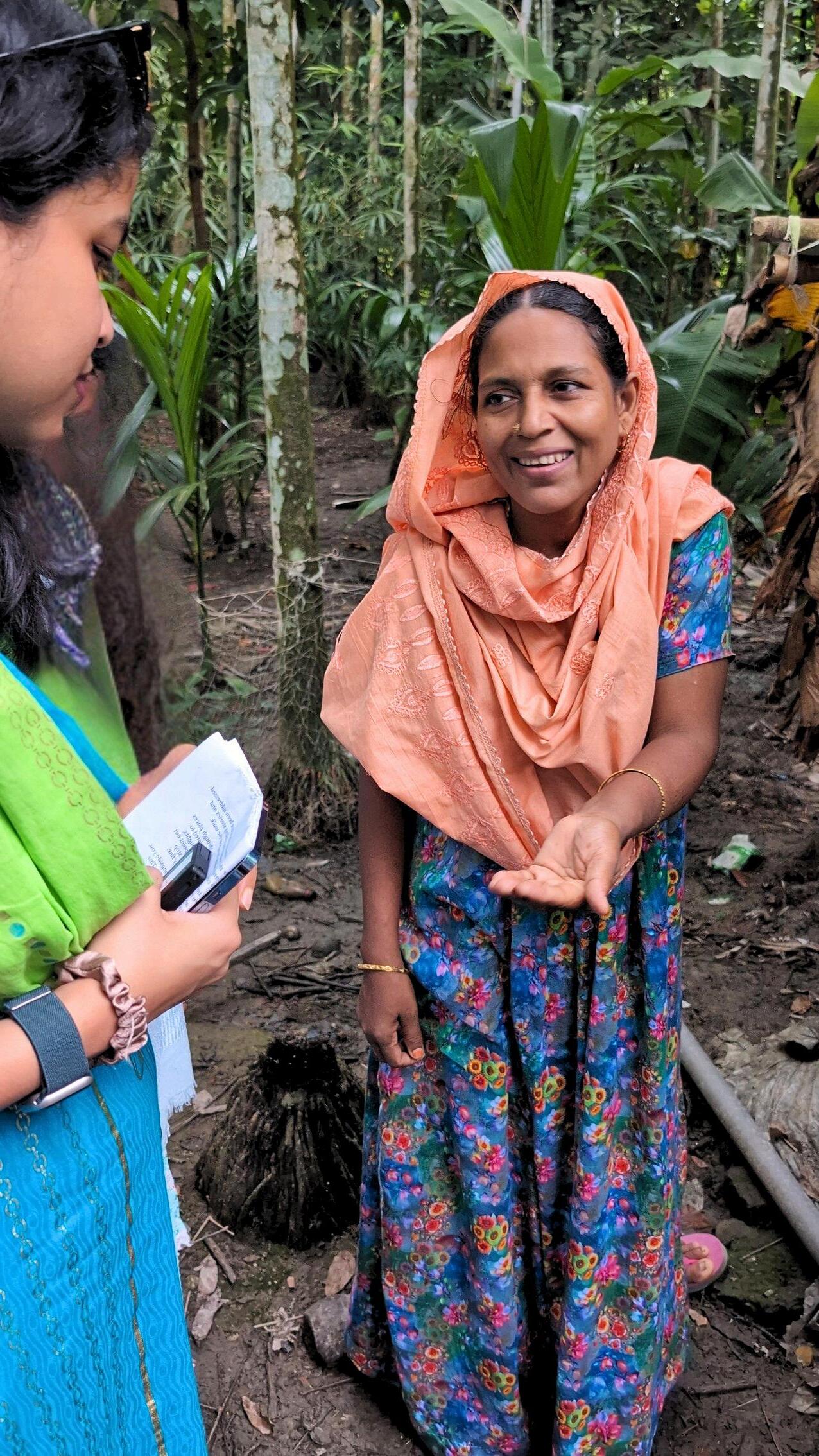
Zumur Rani is a grassroots social movement member, a wife, a mother, and a leader for her community. In addition to managing many caregiving and household responsibilities, she gains livelihood through agriculture and supports her husband’s tea shop She is known for her curiosity and entrepreneurial spirit, as she juggles many business activities and continues to cultivate learning networks through her engagement with the social movement. We met Zumur at her house one morning to hear her life story and learn about her involvement in the local social movement The following interview is just a glimpse of Zumur’s life and the ways she has navigated complex care duties, several business ventures, and commitment to the social movement, while nurturing her own curiosity and innovation through experimentation and drawing inspiration from others.
Q: Tell us a bit about yourself. What was your life like before you became involved in the ENGAGE project?
Zumur: My life has been very difficult. My husband is ill, so I have many responsibilities along with all the household work and livelihood activities. I studied up to class 10, then I got married in 2010, about 15 years ago After marriage, I came to this house and stayed busy with household duties I didn’t really do anything outside. Before the CCDB ENGAGE project, I didn’t go anywhere – not even to Patharghata. I mostly stayed at home.
Then my husband became ill. He had two strokes. After the first one, one side of his body was paralyzed With treatment, he improved somewhat, but he was never fully cured After that, he couldn’t work anymore, so we set up a small shop for him. The shop became very important to him. Even in his sleep, he would talk as if he were serving customers – asking if they had paid, looking for money. I would tell him, “You are at home; what are you saying?” He doesn’t like staying at home, so he spends most of his time at the shop. My mother-in-law helps by opening it in the morning, and they manage it together throughout the day
After his second stroke, it became more serious. His memory was affected, and he lost awareness Now he is more or less okay, but he still can’t remember things properly Around that same time, my father-in-law also had a stroke and was sick for a year before he passed away.
That was the period when everything changed for me. I had to step out of the house and take on all the responsibilities. I had to go to different places and manage everything myself, including fieldwork
Before all this, I didn’t grow many kinds of crops. I was mostly occupied with household work – cooking, eating, and managing the home. Now I cultivate many things, like the ones you see here: long beans, radish, red spinach, okra, pumpkin, and fruit trees. I have to take the initiative for everything. Even though my husband is very sick, he supports me and never objects
Earlier, I used to help him with paddy work. After he got sick, it was all on me. My mother-in-law and I cut and carry the paddy ourselves during Poush , and we only hire one or two people when necessary. The land is quite big – about one kura – so I still have to hire labourers for some parts, like cultivation. But after that, I manage the rest myself: clearing weeds, applying fertilizer and pesticides 5
6 I decided to take on this work because hiring labourers costs money, and I don’t always have that. If I can do it myself, I can save that expense. That’s why I stepped out without worrying about what others might say. Listening to people’s objections won’t help me move forward. No one will come and do my work for me If the work needs to be done, I have to do it myself
Along with all this, I also go to the market once or twice a week. I have to buy medicine for my husband because he can’t do it himself or recognize what he needs. So, I take care of that too; I even have to go again tomorrow to get his medicine.
Q: Does anyone say anything about you going to the market?
Z: No. My husband and my mother-in-law never say anything about me going to the market. They support me. My mother-in-law was the one who supported me,
saying, “You go.” Even his father never forbade me; he never said, “Don’t go,” or “Where are you going?” or “What are you doing?” My mother-in-law supported me, saying, “You go, you have work, you go to that place” She encouraged me and never created any obstacles. And my son would stay at home with her, so I didn’t have to take him. He stays very well-behaved with his grandmother.
Now, from society... I mean, some things are said. They don’t say it to my face, but they talk behind my back They say, “She goes to the market every day What does she do there?” But they don’t say it at my home I mean, they talk amongst themselves. They tell others, and then those people come and tell me that soand-so is saying this and that.
But no one at my father’s house says these things. Because, you see, I am now forced to do this I don’t just do it for fun. If I don’t do this, my household can’t run It comes to a complete standstill My child’s education was also suffering; it had come to such a state. That’s why they don’t say anything.
Z: My son is studying – he is 11 years old But I also teach him things, and he helps around the house. It feels good when he wants to learn from me, and that he can take my work forward, and he can do it on his own. I can leave him with the work and go somewhere. A few days ago, I went to see someone who was sick somewhere. My husband was also sick; he was at home. Then I told my son, “Baba, you cook Cook and feed your father” He cooked mashed potatoes and rice After cooking, he fed his father Then I came back and saw that the cooking was done.
He is interested in learning these things on his own, and he even shares what he knows. For example, the other day, he had a dada (older brother) in this house, who is older than him? His mother had gone for a visit, and my son went and taught him how to cook fish, saying, “Cook it this way” So, then his older uncle said, “Boy, today’s cooking was very good.”
Q: Wow! That’s great that he can cook and work alongside you at times. It sounds like you have a lot of responsibilities. What interested you in engaging in a social movement? What kinds of things have you learned through your participation in the group?
Z: CCDB ENGAGE started in 2021, and I joined in 2022 At first, a woman from that corner of the village asked, “Do you want to enroll your name in CCDB ENGAGE?” I said, “Yes, I will,” but at that time, I didn’t know much. I just did it. After that, when I started joining the meetings, I learned about so many subjects and understood many things, and that developed my interest. Before, I didn’t have much interest. But as I started attending training and seeing what others around me were doing, my interest began to grow
I’ve learned many things through the ENGAGE trainings and by listening to others in my group. My first training was on vermicompost. Then, I got one training on ABCD, one on leadership, and one on value chains. I found the value chain one of the most useful. We did a role-play on the paddy business. How we will sell paddy, where we can go to get a better price, things like that So, first, those who come to the village offer a low price Then the wholesalers offer a little more. And for the transport, we have to spend more money. But if we go directly to the mill, we don’t have much expense, only the transportation cost. And we don’t need a middleman, meaning we don’t have to say, “You must give me this much money,” or “I will sell at this rate.” We don’t have to do that. If we go to the mill, we get the price directly
Before, they used to come to our house to buy the paddy. Then we would just sell it to them. At that time, we didn’t know what happened where. But now I know. I need to have a plan for doing business, how I will do it, and how much money I have. Can I manage with this money? I need to plan these things first, and then I can start any business I didn’t know these things before, but after this training I have understood them, and I like learning them
I’ve also started selling at the market; I have sold moong daal (a type of lentil) and duck eggs. I don’t have chickens right now, but I have 18 ducks, and seven of them lay eggs. I sell those too. With that money, I cover my son’s educational expenses, his papers, pens I buy those things myself I don’t have to ask his father for it His father gives some of the money for my son’s school, but I provide most of it. Right now... the ducks have stopped laying eggs. So, I don’t have any
money now. His father is covering the expenses. But when my ducks are laying eggs or when I sell the ducks, then I manage everything myself
The ABCD training was also very helpful. Ever since I took it, I have been interested in cultivating in front of my house. Cultivating all these different crops is new for me, I mean, completely new. Now I feel that I can do it better than before. Before, I didn’t pay that much attention to it. It was like, if it grows, it grows; if it doesn’t, it doesn’t I mean, I didn’t give it much importance But now, I take great care of it I think that if it produces, say, five fruits, I can eat one and sell two. So before, I didn’t have that much interest. Now I am trying to do it better because if it improves, it will benefit me and my family.
This year, I also planted sunflowers. I had the field plowed with a machine, then I spread fertilizer with a machine I created the lines myself, and my mother-in-law planted the seeds After that, I covered them with soil and watered them The plants grew big, and then they flowered. But after flowering, I saw there were caterpillars. So, what was I to do? If I hire someone for the work, I have to pay them. Then, finding no other way, I myself carried the drum (sprayer) on my shoulder and sprayed the medicine. After spraying the medicine, the flowers were good I only planted in a small area, and I harvested 45 kg of seeds, which I processed, yielding 17 kg of oil I could use and sell
Q: It sounds like you’re very entrepreneurial, creating your own businesses. And you’ve had to adapt to a lot of difficult conditions. Can you provide some examples of ways you adapted what you were doing to get better results for your crops?
Z: Because we have storms with heavy rain, we deal with rot Before, I used to just plant seeds on the ground, but then they would rot Many of my vegetables would get destroyed. When I first planted these, it rained a lot. I covered them with polythene sheets on all four sides. After covering them, they were not ruined, meaning they didn’t rot. If I hadn’t used the polythene, the seedlings would have been destroyed, all of them I have polythene sheets, and I used them to cover everything so that water and rain couldn’t get in
I also plant seedlings up high, using these sacks and other containers. That way, they grow well, and I can use them during the off-season. When I don’t have any
vegetables from the fields, I can pick some and use or eat them. In the field, my vegetable plot is there if the water level rises, it will be submerged So, that’s why I can’t even plant in the field much anymore The amount of rain has increased, and the number of storms has increased as well. So, I’ve planted them at home. You can see over there I’ve planted in those sacks and put them up on the roof.
I’ve been creative using this hanging method At first, the trainers told us to do it in sacks Then I thought, how much can really be done just in sacks? Then I used the things I had discarded and left unused, and hung them up in my own way. Then, for the seedlings, the thing I use as a tray for them was also my own idea. My husband told me, “You should prepare the seedbeds and sow the seeds.” Then he brought those paper bags from the shop. He said, “You can make the seedbeds in these” There were ripe papayas, so I also used their skins to grow seedlings
I’ve also found other ways to start seeds. Over here, I have spread the jute sticks on top of that pile of straw. There’s straw underneath. We had cut that straw and kept it on top, but it got ruined in the rain. So, instead of seeing it as waste, I thought of it as fertilizer and spread the jute sticks over it Now, it has sprouted very beautifully
These techniques have helped me successfully grow vegetables. I also learned about vermicomposting without a chari (concrete ring for composting). The didi (older sister) from the house next to mine made it on top of mud. She has a chari too, since she was enrolled in the ENGAGE group with me But she has the space, so she tried it on the mud I don’t have enough space, so I couldn’t But you can go see it. She made a circle in the mud, placed the sacks at the bottom, and then added cow dung on top. Her fertilizer is very good. She sells it too. She has made two of them.
Q: That’s wonderful to hear that you’re learning from others in the movement. Are you also sharing things you’ve learned with people in your family or other people that you know?
Z: Anytime I learn something new, through training or from other members, I tell my husband, “They taught us this and that today; they told us to do this and
that.” He then incorporates those things. So, he also learns from me and applies it to his business
I’ve also been good at managing business, I think, because I learned by watching my father sell puffed rice. He used to sell it at the market. He didn’t teach me directly, but I would sit beside him and watch when I was maybe 10 or 11. Then I understood how it was done, and I still remember how to do this business. I can keep all the financial calculations in my mind Whatever I spend, I tell my husband, “This much money was spent here, and I took this much money These were my expenses, and this is what’s left.” I don’t hide anything from him. I tell him everything. I tell him all the accounts. For example, with the money calculation, he may not remember it, but I still tell him and keep track as well. If I don’t manage it, he can’t manage. So, my husband learns these things from me.
My son has also learned things from me As I mentioned earlier, he helps me with all the work; he goes with me to the fields, and he even helps with the cooking. He learns by watching me. And he also does things on his own. For example, you see those flower plants over there? He did those. He planted them himself. He saw me working with seeds, and then he started saying, “Ma, I want to do something too I have to plant flowers” After that, he started doing all this
Q: That’s great that he has this curiosity and interest in learning and caring for these plants on his own, and also learning by watching you. With all the things that you’ve learned, have you shared information or provided support to others in your community more broadly?
Z: A kaki (Aunt-like figure) from the house over there asked me, “You all are doing this; how do you do it? I am highly interested in doing this.” But she thinks she would have to buy the chari, so she hasn’t progressed much yet. And there are other ladies in my neighbourhood who saw what I was doing, so they have also started the vermicompost I was the first one, me and this didi on this side, we were the first ones to receive the training and chari In our area, six people have done it after seeing us. Their interest grew, and then they asked, “Can we do this? We are interested.” Then they were called to participate in the training and received a chair. They are new to the movement, and I was the first one among them.
Some are discouraged when they think they’ll have to buy a chari. But, as I told you earlier, my neighbour was able to do it using mud instead of a chari
Even after they receive the training and the chari, I guide them. That didi from the other house, when she started, she called me and said, “Show me how to do it.” I told her, “Take the cow dung in a sack and let it dry.” If the moist part dries up, then the earthworms can eat it well. But if it’s wet, then it’s soft, and they can’t eat it So that becomes a problem First, she dried it, and then she put it in the chari Then she called me again, “What should I do now?” She had dried it so much that it became completely hard. So, I told her to add water. When you add water, it will soften a bit, enough for the worms to be able to eat. Then, after adding water, she mixed it in again, and it worked. Honestly, I feel quite good when people ask me to teach them; I know something; that’s why they come to me to find out
Q: It sounds like you’ve made many connections since you joined the movement. Can you share some examples of how you and others have shown leadership in the movement and changes you’ve seen because of those actions?
Z: During the leadership training, I ended up going to the government office for the water tank. At that time, someone from Char Lathimara, who was a member of another group, discussed the matter and submitted an application during the meeting That’s when I found out She had learned that water tanks had arrived in the Upazila and that anyone who wanted to apply could do so. So, when we heard that, we asked the members of our group, “Do you want to go? Tanks have come to the Upazila.”
The four of us went initially I didn’t know anyone, so I asked someone from CCDB to go with us, since I didn’t know whom to speak to or where to go The CCDB staff member directed us to the officer, and we told him that we had a water problem and needed a tank. Then he asked, “Are you from Kalmegha Union?” We said yes, and he said, “Many tanks have been given to Kalmegha Union.” Then I said, “No, in our area, this Guta Basa, there are no tanks at any house. There is one for our temple, but other than that, there are no tanks” The officer said, “There are none available right now; come back after a month.”
We found out what papers we needed to submit for the application – a photocopy of our voter ID card and a photograph We brought these papers back after a month, but he said that they haven’t been approved by the ministry yet We talked with the officer and took his phone number. We will go back again in a month and keep trying.
Even from this story, you can see there has been a change. Before, I didn’t even know that if I went to that place, like a government office, I could get things done Now I have learned that if I go to this place, I can get this work done, and I have found out what else I can access. Like, in one of our trainings, we learned that the Youth Development office provides many kinds of training … for fish, ducks, chickens, and raising cattle. So we thought, let’s also submit an application for the group we have, or even for those outside it. The papers I have submitted are training materials on ducks and chickens for boys, girls, and everyone together, ages 18 to 35 And they will let us know when the trainings are
We have also been to the agriculture office many times. The first time, I went there with a didi from my neighbourhood, just the two of us. We had gone for a machine to draw water. During that time, there was no water for us... in the months of Choitro, Boishakh, Jyeshtho, there’s no water So, the crops we cultivate dry up Then, after talking about that matter, we also said, “Create an opportunity for a women’s group for us.” Then one of the officers there even arranged it. He said, “Yes, a group will be formed.” A meeting was supposed to be held at my house.
If I have any agricultural problems, I go directly to the office Once, there was a man from the Joba group at the agriculture office who was a lead farmer We discuss things with him. For example, I had planted okra, and they got infested with leda poka (caterpillars). So, I said, “Brother, this is happening; my crops are getting ruined. What should I do?” Then I spoke with his wife, and she said, “Use this medicine, and the insects will be gone.” So, we get good information when we connect with people at these offices
Aside from advocating for things and accessing services at the government offices, we have many discussions within our group. If there is a problem, the few of us who are here go to each other and ask, “Would it be good to do this job?” “Or will this be bad?” We discuss and advise each other.
I am the one who informs group members about meetings that happen once a month. I remember the date the meeting was held and the date of the next one.
We don’t hold the meeting here; there’s a school on the other side, and that’s where we meet There are 25 people on the other side, in this Dolon Chapa group The 25 of us go to the village on the other side and sit there So, I bring everyone from this side. I don’t generally inform over the phone. Since everyone is nearby, I go tell them in person that there’s a meeting today at 3 PM and that they should come. Then we all go together.
In our monthly meetings, there are many discussions We talk about who does what, what work we do, and we sit there and discuss these things Many members have also become entrepreneurs, thinking, “We can also do it.” And now the didis around me also go to the market themselves to sell their produce. Now they don’t depend on men anymore.
Q: Thank you for sharing your story. It sounds like you have experienced many positive changes through your participation in this movement. Is there anything else you’d like to share?
Z: Everyone working together or women going out, this is a new thing. And the transformation that has happened inside me, that’s recent, from 2024. I wasn’t like this before. Before, I used to be scared, thinking whether I should do this or not; there was hesitation in my mind Before 2024, I wouldn’t go to the market I didn’t go; there was no need, or I was scared to go But now I think, what is there to fear! I can go, or I can do this work; this feeling has grown inside me. Before, that hesitation used to work, thinking that I probably couldn’t do it. But now, I have the confidence; if you tell me to go somewhere, I can go and talk directly. Before, I didn’t have this in me. This hesitation used to work inside me. Now I have dealt with it myself
I can’t really say how I overcame it. What mostly happened was that after I went to a leadership training, a sort of change came over me. Sujoya didi conducted the training. Then, seeing her, I mean, seeing her example, we also understood that we can do it too. If she can do it, we can too. That’s why I have transformed.
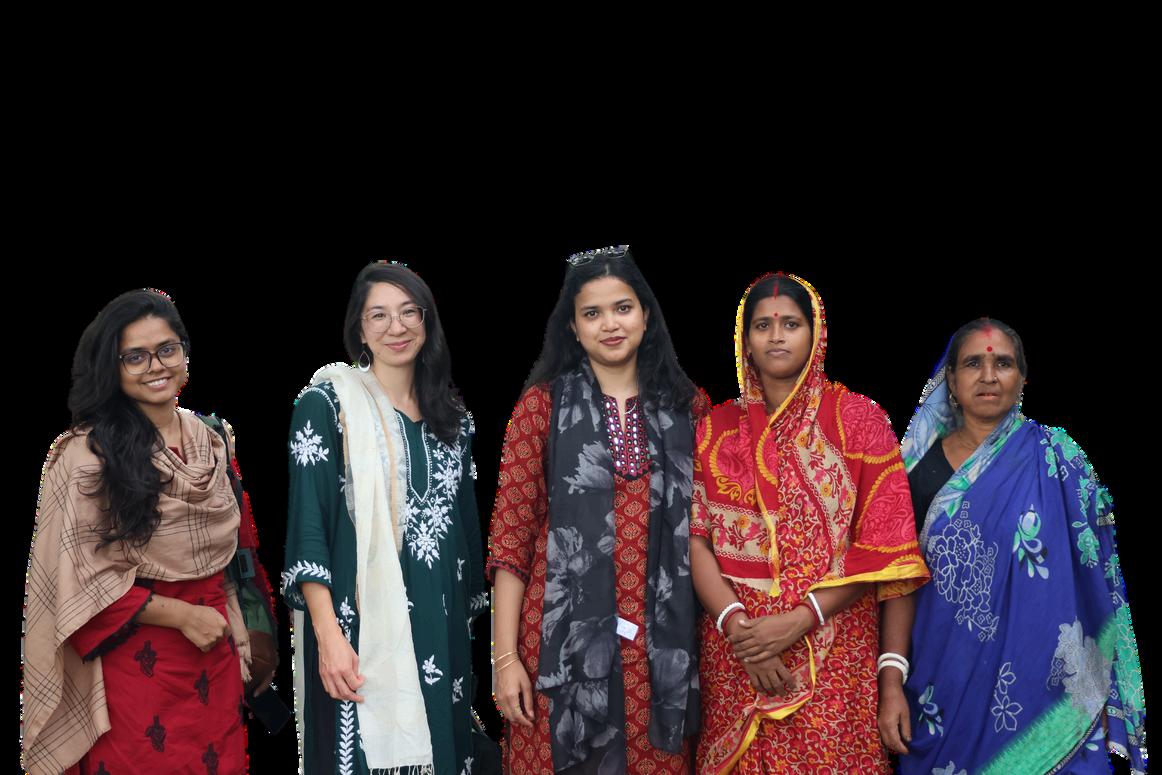
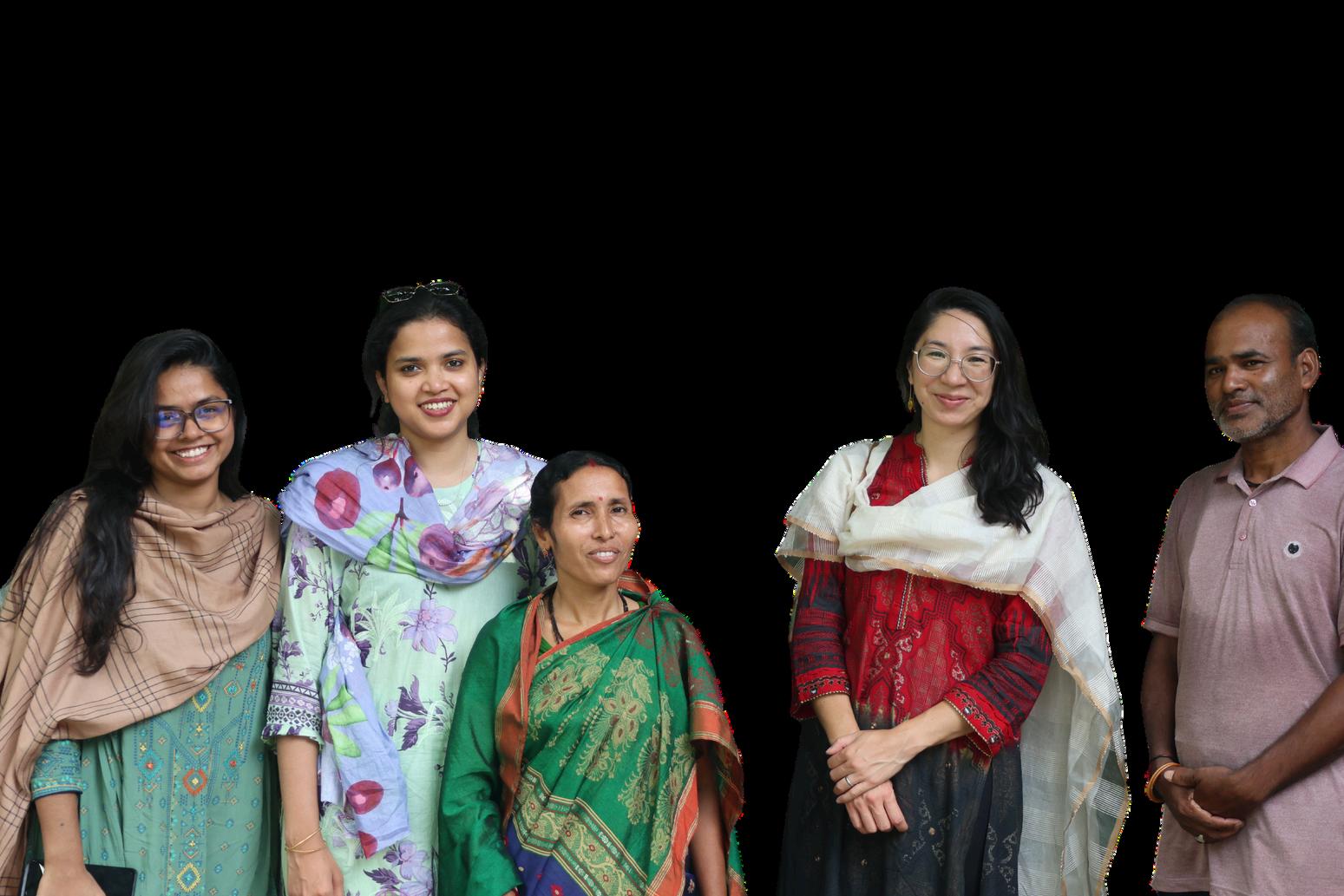
L to R: Munniara Yesmin Munni (CCDB), Marian Turniawan (Coady), Dr Ibtesum Afrin (Coady), Zumur Rani, and fellow community member
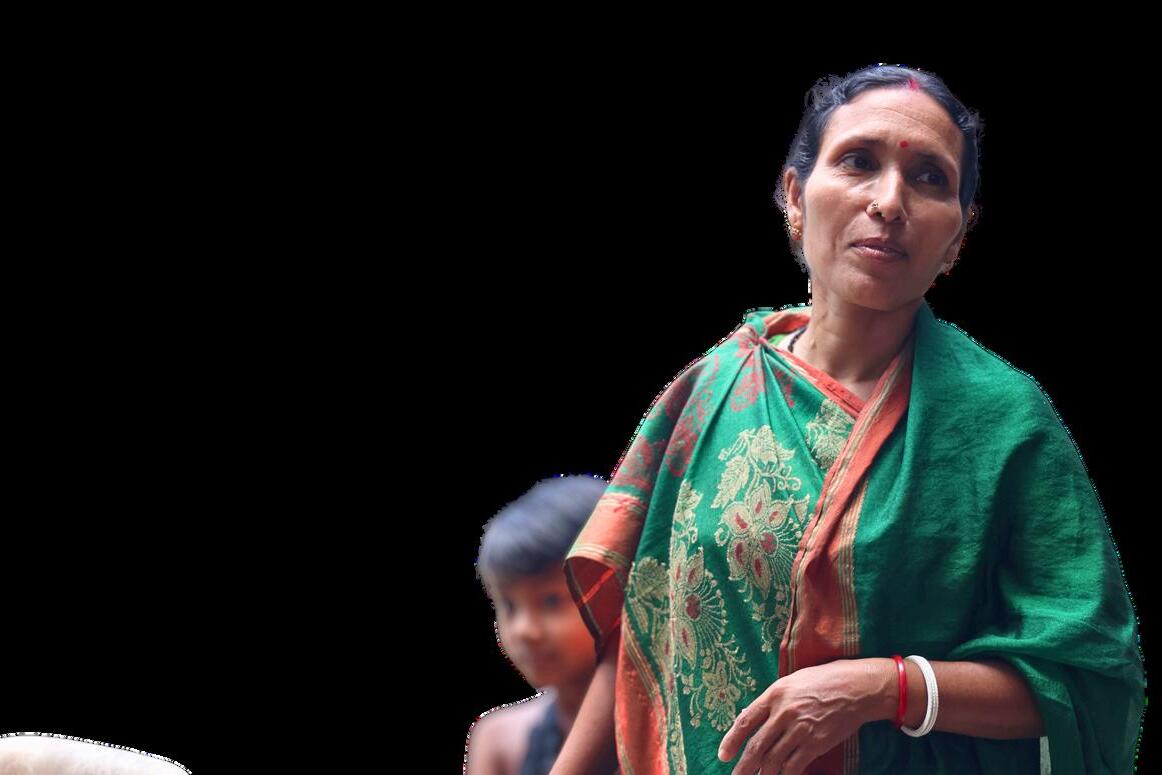
Sujoya Rani is a grassroots women’s leader, a wife, a mother, and a strong advocate for her community. In addition to caregiving and household management, she earns a livelihood through agriculture and is well known in her village for her persuasive speaking skills, which she uses to advocate on behalf of her community. She is also known for her curiosity and the knowledge she shares, both informally and as a trainer, on a variety of topics related to agriculture and leadership. We met Sujoya at her house one morning to hear her life story and learn about her involvement in the local social movement. The following interview is just a glimpse of Sujoya’s life and the ways she has nurtured her curiosity through engagement with new learnings, broadened the impacts of her learnings and experimentation through formal and informal knowledge sharing in her family and community, and shown leadership in advocating for positive changes for those around her and more broadly. Sujoya also invited her husband to join part of the conversation, so some of his contributions are brought in below
Q:
Tell us a bit about yourself. What was your life like before you became involved in the ENGAGE project? What interested you in engaging in a social movement?
Sujoya: Before joining the ENGAGE group, my life revolved mainly around raising children and household work; I had never worked outside the home Before 2021, my work was making fans, wallmats, tablecloths, and quilts, which I learned from my mother, aunts, and elder sister. I was interested in doing other things, but I didn’t get many opportunities.
7
Back then, this place was like a jungle; it was very uncultivated. I had some vegetables I would plant for our own consumption, but the supply was limited I often had to buy more I wasn’t cultivating for selling; I never thought I would improve my financial condition. If I were stuck in 2021, I wouldn’t be able to meet my own needs, not like this. Just cooking and eating for the family – that’s it.
In this area, there are actually very few NGOs. The few that do exist will usually give a loan, but beyond that, they don’t offer any other support or teach you anything When I think about socio-economic change, I see it here with CCDB I haven’t seen this kind of approach in other NGOs. Others mainly come and give money. Sometimes, when there are floods or tidal surges, projects come for a year or two, and during that time, they try to bring some changes. They do provide some relief, but not to the same extent. The way CCDB supports our mental change, our economic change, and the overall change – I really haven’t seen this kind of work in any other NGO I’ve only experienced this through ENGAGE.
I have been part of the ENGAGE group since 2023. I heard that an ENGAGE group had formed on the other side of the village, and they had invited only two people from our side I didn’t know about the group at first, but one day a woman from our village told me there was a meeting happening there They said they wouldn’t usually include people from this far away, but because they knew me well, they allowed me to join the group.
Since 2023, I’ve been fully involved. When I first went to a CCDB training, I used to talk very little but the way they encouraged me, I never had that before After I attended some meetings and participated in discussions, they appreciated my contributions and selected me as the group's vice-president. Since then, I’ve been attending different training sessions with them, and that’s how I’ve continued on this journey. I took the ABCD training, vermicompost training, gender-responsive budgeting (GRB), advocacy, leadership, and, recently, agriculture I got quite a lot of training in agriculture, which I needed because I have a lot of land at home After that, I completed leadership training, and more recently, I started training in value chain management and economic budget management. The GRB training is related to budgeting, and there was also a business management training – someone came here to conduct it, and I attended that too. But I benefited the most from the two-day leadership training. I can talk to you like this now because of that training
7
Asset-Based Community Development (ABCD) is an approach that focuses on identifying and mobilizing the existing strengths, skills, relationships, and resources within communities – rather than emphasizing needs or deficits At the Coady Institute, ABCD is a central approach that underpins our work by supporting communities to lead their own development, build on local assets, and strengthen social connections to achieve sustainable and inclusive change.
Q: And was your family supportive of you joining the group?
S: My husband has been supportive since the beginning of my participation in the group He takes part in local plays and even did one for CCDB on climate change before I joined the movement, so he was already acquainted with them When I first started going, we didn’t really know what it would be like, so even if there was a little concern, he now sees how I mingle with everyone, and there is no worry about my participation. Even though he was supportive from the beginning, a few obstacles were posed by others.
Sujoya’s husband added: At first, her brothers-in-law – my elder brothers – were a bit skeptical that she was going out here and there. They even said to her, “You are a daughter-in-law of the house, going around like this.” But she said, “No, it’s not a bad thing; you all can see for yourselves. See how it goes.” Then I explained to them, “It’s not a bad thing at all. I have also gone and have talked to them, and you’ll all see that it’s a good thing that she’s part of this group” Now, they are the ones who come to her and ask for seeds, starters, fertilizer, and earthworms These things are her contribution. I also assured them that CCDB teaches good things; I have been involved in cultural events they’ve held before.
S: Other members of the group on the other side have faced quite a few obstacles with their families But in our area, it’s a bit different – more of an exception In our village, our family is at the lowest level in terms of education, and we’re “poor” in terms of income; in every other family, there is one or two people in government service. Because of this, we didn’t face the same kinds of barriers here.
On the other side, where most of the women in our group live, they had many problems at the beginning If we called for training or meetings, we had to keep calling because people wouldn’t come. But now, if I call, people come right away. This change didn’t happen on its own – people in our area are more selfconfident now, and every family has become more aware. CCDB also sometimes calls the men to the office, so the men are becoming aware too. They’ve come to understand CCDB’s work and how it does what it does Because of all this, there has been a significant transformation. Now, even people from outside the area are very interested in becoming members and learning. This is the change.
Q: You mentioned that transformation has been happening. Can you give us an example of a transformation you’ve experienced and the impact it has had?
S: Participating in this program has facilitated changes in me – in my selfperception, self-confidence – and these changes have also affected my daughters’ lives My elder daughter was born in 2010 She chose to study science, and she studies attentively. Her school is quite far away – about 5-7 kilometres from here, at least – and is renowned. Her father takes her there in the morning. My youngest was born in 2020 and goes with me wherever I go.
Because I started going out more, meeting people, and building confidence, I began to think differently about my older daughter She was very shy, and I worried she might face difficulties when she goes to college in a few years. That’s when I realized she needed a better education. She was studying at a local school before, but the quality wasn’t very good, so I decided to switch her to a different school.
One day, I was out in the field harvesting lentils, and I told my daughter to call her teacher. She did, but since she’s a good student, the school didn’t want to let her go. Still, I said, “No, I have to take my daughter.” They didn’t respond, but I kept going there for five to seven days. At the same time, I contacted a teacher from the new school where I wanted to enroll her. He told me to bring her on a Monday, as transfers aren’t done every day, and he assured me they would arrange the transfer certificate later So, I went ahead and got her admitted
Before, I would never have been able to make a decision like that. Now, my daughters have seen these changes in me, and I feel they respect and value me more. Because of this, there has been a lot of change for my daughter as well. She now knows about other places, such as Canada, and is exposed to the outside world Her confidence has also grown.
The school is still far, so her father drops her off in the morning. But she comes back on her own. She travels from the school to the market, then to another station, and then another. Before, she wouldn’t even go from our home to that nearby house without me, but now she can travel all that way by herself So, this change in her began with the change in me
Q: Wow, it seems like your family has learned a lot from you. Do you have any other examples of the impacts of sharing your learnings with family or neighbours?
S: Well, when I return from training, I share what I’ve learned with my husband and other family members.
Sujoya’s Husband added: I’ve had only developments with her contributions For example, see our neighbour over there, how he has clothes spread over the seedlings? This is something he learned because of the knowledge she has shared. She showed me that if you spread out some seeds and lay this cloth over them to protect them, it will be better. I hadn’t even thought like this.
S: The red spinach is extremely delicate A splash of rain, just one shower, and the soil gets muddy Using the cloth this way, the red spinach won’t spoil
Sujoya’s Husband added: What a change it brings. Honestly, I mean, it never even crossed my mind that it could be done this way. It was her idea. Then our neighbour came over, looked at that, and asked why we did that. I told him the whole story, and he said, “I have never seen this anywhere” He noticed that our red spinach had sprouted, so he replicated this approach on his land This change is a very good thing; I see that her importance is greater than mine, and that is also my gain.
S: Yes, when people come by, they get curious seeing the technologies. The other day, someone came to see how I planted the red spinach I mean, it’s something I find uncommon I levelled the soil, then I added vermicompost After that, I spread the jute mat. Then I covered it with a thin mosquito net, and I haven’t removed that. If I remove it now and it rains, the red spinach will mix with the soil and be ruined. Many people come to see this method. If my neighbours come, they ask me about it.
Q: It sounds like you’re good at problem-solving! Do you have any other examples of the things you’ve learned about growing crops here?
S: Come over here… you’ll see an experiment I’m doing to see the benefits of vermicompost myself. Since I made the fertilizer, I have to see its benefits. So, I
planted betel leaves throughout this area, and I put vermicompost on that half but not on this half The benefit I saw with the vermicompost was on that side You see there’s a difference between that side and this side? The betel leaves are small, the greenness... I used vermicompost there. I didn’t use it on this side.
I wanted to see the change for myself. For my own practical learning. I wanted to learn about its quality and whether it has any benefits. That was the first time I’ve applied it Now, I will apply it everywhere I will put vermicompost in all these sacks And that red spinach and radish I planted were with vermicompost I use it for all my work.
I also started cultivating peanuts this year. I did a little bit long ago, in the field. Peanuts are widely cultivated in our area. But this year, I did a bit more. I’ll show you the land in the back I had planted about 1,500 turnips across the area, and after the turnips were harvested, the land became completely dry There was no moisture in the soil. Then I thought, what should I do? I can’t leave the land fallow. I told my husband, “Let’s plant peanuts.” But how to plant peanuts? They won’t sprout if you just throw them. Ants will eat them up, and they will never sprout in that dry soil. So, we came up with an idea. We thought, let’s make a line, put some vermicompost in it, and plant a peanut on top of it That way, it will have some moisture from the soil and the vermicompost I put a handful of vermicompost, planted the peanut, and then covered it. My peanuts grew so well that the plants were this big.

Q: You’re very innovative! It’s great that you are already seeing the benefits of the fertilizer you’re making firsthand. You mentioned earlier that you also conduct training. Can you tell us how you began doing that? And do you enjoy it?
S: When the CCDB staff heard me speak, they asked if I could conduct training at their office. I told them I could do it if they taught me. Before that, I had never taught anyone – I’m a housewife, and my life was mainly raising children and managing household work. I had never worked outside the home. But they encouraged me and said, “You can do this – you already know how to speak well with others We will teach you the rest” After that, I took the training, and now I conduct training myself.
I really enjoy being a trainer. The last time I went to conduct an advocacy training, people asked if I could do it. I told them, “Why wouldn’t I be able to?” I said I might need a little help from the staff for the first session, but after that I would be able to do it – or at least I would try my best
I always try to do my best. And if I get stuck somewhere, I ask for help. I don’t hesitate to admit where I need support. But now, especially for leadership training, I feel that I don’t need much help anymore.
The leadership training has really changed my confidence in how I speak with people. Now I’m able to meet with people from outside, connect with them more deeply, and support them. If I can take on a leadership role, it benefits me and also my village.
For example, I went to the agriculture office and said, “You should provide us with agriculture training,” and then I followed up by going there myself for the climate-resilient agriculture training. A few days later, when I called the officer, he remembered me from when we met at CCDB. It felt really good that I didn’t have to explain who I was. This has increased my self-confidence, and now I’ve been able to connect others with these offices and share what I’ve learned.
Q: That’s wonderful to hear. Are there any other examples that you’d like to share around how you’ve used your leadership skills to benefit the community?
S: I organized a program on March 8th last year at our group leader’s house, and I invited the Chairman . While we were preparing for the meeting, we discussed how to present something to him that reflects the collective good rather than just personal benefits Our group is based in Hoglapasha, but I can’t demand something only for Hoglapasha – I have to think about the welfare of the whole union. As women, we all have to go to the market, so we need to think about what would benefit everyone. 8
As a group, we talked about our rights It’s uncomfortable for us to use the same public toilet as men, so I raised the demand for two separate toilets for women in the market, and everyone in the group agreed.
When the Chairman came to the meeting, we presented this issue and told him we wanted two public toilets for women in our area – one in each of the two markets in our union He gave verbal approval, but he also told us, “I can’t approve this based on an informal request You can raise your demands here, but you also need to follow formal procedures.” So, after that, we went to his office and submitted a formal application. He passed the bill, but unfortunately, after August 5th, it was no longer possible to implement it.
Even though it didn’t happen, this demonstrates how, after the leadership training, my enthusiasm and confidence grew I started speaking in front of larger audiences, and without that confidence, I wouldn’t have been able to speak to the Chairman.
Q: In that example, you were already thinking beyond your own group and acting for the benefit of the whole community. As you’ve seen more changes happening like this, how are people learning from each other, and what role do you see yourself playing in helping others move forward together?
S: There has been an overall change in the neighbourhood, not just in individual families. Now, in things like agriculture or any project, people are not like they were before; they learn from seeing each other. For example, vegetables. Before, in our area, they only cultivated one crop in the fields – paddy. Now, along with paddy, they grow mung beans, peanuts, chillies, sunflowers, and other crops. There’s also some change in home vegetable gardening from seeing each other
Personally, I’ve gained a lot through the social movement. I now speak in various places, at different meetings. For example, now when I go to my daughter’s school, I can speak there. I advocated for the students to have breaks. I spoke on to the Chairman during the meeting on March 8th. When I go to a government office, I speak If there’s any program, I speak there too Doing this has increased my recognition
When I can learn, through me, more people can learn. If I am well-off alone, that’s not truly being well-off. When we are all well-off together, that is what’s good. I try to do that for everyone. Let five more people learn, let five more people be benefitted Whatever I learn, I come back and share it with the group during our monthly meetings
In those meetings, we also talk about current issues. Last month, for example, we discussed dengue, and after that, agriculture. The others are like me as well –when they learn something new, they bring it back to the group and share it. We also encourage each other to look for new learning opportunities When I see that someone is interested in what I’m sharing, or that they have leadership potential, I encourage them. I might say, “next time, you can lead this training”. Why should I do it alone? Everyone should participate.
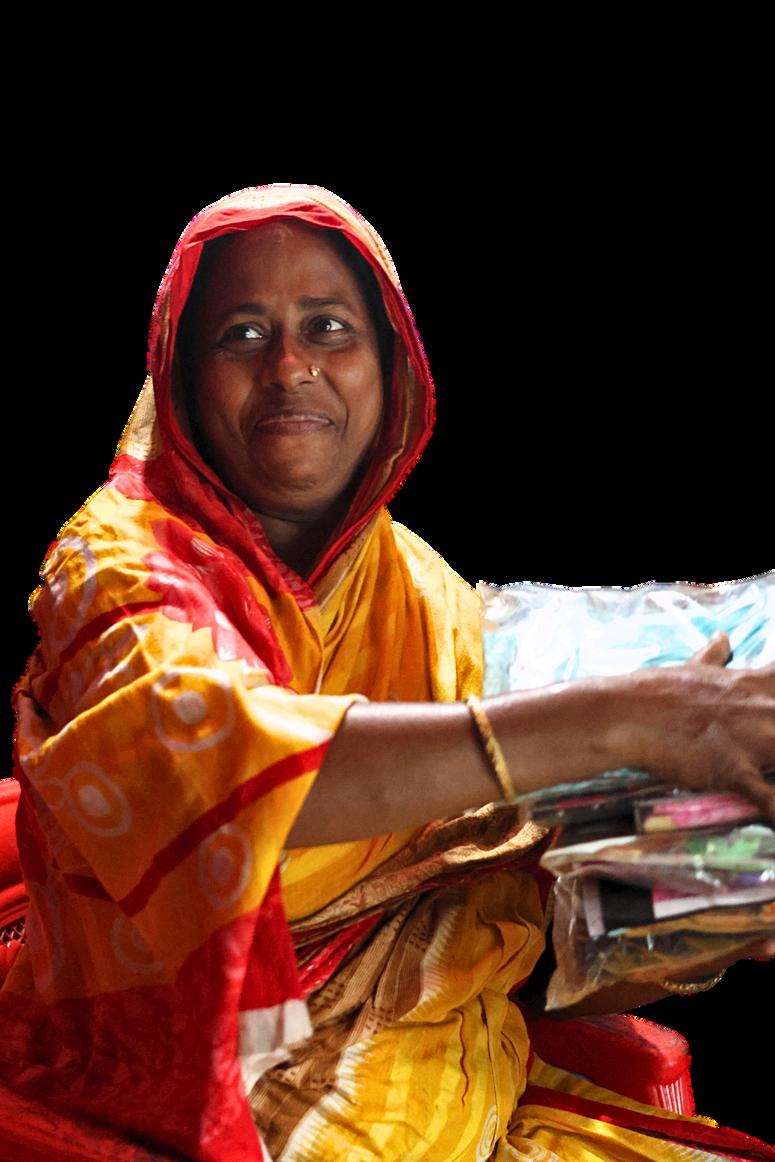
Rahima Begum is a grassroots women’s leader, a wife, a mother, a grandmother, and a fisherwoman. Primarily engaged in caregiving and household management, she plays a central role in her village due to her strong leadership in the community’s well-being We met Rahima at her house one rainy afternoon to hear her life story and about her involvement in the social movement. The following interview is just a glimpse of Rahima’s life and the ways she tackled barriers, charted her path to new learning, and shared those learnings with others for the community’s betterment.
Q: Tell us a little bit about yourself. What was your life like before you became involved in the ENGAGE project? What interested you in engaging in a social movement?
Rahima: My life was very different before I became involved with ENGAGE and CCDB. I studied only up to Class 8. Back then, my parents were afraid to let girls’ study too much because they thought it would harm the family’s honour Sometimes I would secretly go to school without telling my father. But because of poverty, I could not continue my education. Even now, when I see educated people, I still feel like studying again. My heart still wants to learn
After marriage, my life became limited to household work. I used to cook, clean, eat, and sleep. My husband worked as a road construction laborer, and we lived in poverty I depended on him for everything
If my daughters asked for pens or notebooks for school, I could not always provide them There were many people in the household, including my in-laws, and life was difficult At that time, I kept thinking to myself, “What can I do? How can I improve my life?”
I always had the desire to stand on my own feet, but I didn’t know how. Nobody guided me or explained what I could do. Then one day I went to visit my sister in Mathbaria and saw that she had a sewing machine I became curious and asked her to teach me I learned to sew by watching and practicing on my own I even stitched clothes for my eldest daughter and my mother-in-law by hand with a needle and thread. Later, I started sewing clothes for other people. They would give me 50 takas (CDN $5) for each piece, and with that money, I slowly supported my family. That was around seven or eight years ago. Looking back now, I feel that if I had started earlier, my life might have been different
At the same time, there were many social restrictions on me. My husband would not let me leave the house much. He would say, “Why are you going to meetings? People will talk badly. You will lose your modesty.” He was very shorttempered, so when he became angry, I stayed quiet. Later, when he calmed down, I would explain things to him gently I told him, “Nothing bad will happen if I go If we interact with people and learn new things, won’t that help our family?” I explained that learning from others could improve our household and help us do things better.
Before joining ENGAGE, I hardly went anywhere except a few nearby houses. I did not know many people, and I did not know much about women’s rights, health, or leadership Because of poverty and lack of awareness, I even married off my daughters at a young age. At that time, I thought that was normal. Later, after joining meetings and learning more, I realized how harmful early marriage can be. Now I tell other people not to do what I did. Sometimes they tell me, “But you married your daughters young, too.” Then I say honestly, “I did not know better at that time Now, I forbid everyone Child marriage still happens, but they don’t invite us there, saying we create obstacles to that I have become a strong advocate against child marriage, and I say, “I’ll call 999 (toll-free national emergency number of Bangladesh); that’s why they don’t even inform me. I have realized the harm, and I am no longer afraid of anyone.”
When I became involved with ENGAGE and CCDB, many things in my life began to change At first, I joined meetings slowly, and then I became more interested
9
I realized I enjoyed interacting with people and learning new things. Gradually, I gained courage Earlier, I did not have confidence in myself, but now I feel much stronger I feel that I can do many things now, Insha’Allah
Today, my life is busier than before. Earlier, I stayed inside the house all day, but now I move around freely, attend meetings, help people, and even assist women during childbirth. I just delivered one baby in the morning and another in the afternoon There was a time when I could not step outside the house, but now people call me when they need help I feel good that I can support others
My husband has also changed over time. Earlier, he would stop me from going out, but now he asks when I have meetings and tells me to go after I finish my work. I also make sure to manage household responsibilities properly so no one can criticize me Over time, through these meetings and experiences, I learned how to speak to people, solve problems, and support others I teach my daughters whatever I learn as well.
I feel that joining ENGAGE has changed my thinking and my confidence. Before, I only thought about surviving day to day. Now I think about how women in our community can move forward together I want to continue learning and helping people so that others who are struggling like I once did can also find a path forward.
Q: Would you kindly share with us what kept motivating you?
R: What motivated me most was seeing that change was actually possible. Earlier, I used to think there was no way forward for women like us. There was always a lack in the household, and it was usually women who thought most about how to manage those difficulties. I kept thinking, “What can be done? How can life improve?” That thought stayed in my mind all the time
When I first became involved, I was not even a member of the group. The first meeting I attended was with the Baleshwar group. At that time, Hamida bhabi was the president, and I became the vice-president. After that, as I started moving around more and meeting people, I realized there were many women in the area who were helpless and needed support and guidance Within three or four months, I became involved in forming another group here, and later I 9 Bhabi is the Bangla kinship term for sister-in-law (brother’s wife)
became its president. Then more and more people wanted to join. One person would say, “Put my name down,” and another would also ask to join Seeing that people were becoming interested gave me courage and motivation to continue
At the beginning, many people criticized me. Some people would tell my fatherin-law, “Your daughter-in-law is always running around with that CCTV,” because they could not even pronounce the organization’s name, CCDB, properly. They would ask, “How much money do they give you? Why are officers always coming to your house?” My son would sometimes repeat these comments, too, because people talked so much. But I told my family, “Let people talk. They will talk today, tomorrow, and maybe for a few more days, but eventually they will stop. One day they will come to us themselves.” And honestly, that is what happened. Now those same people come to my house asking for help or asking to be included in groups and activities
I think another motivator was learning new things. Whenever I attended training or sessions, I gained experience and started thinking differently. I would come home and sit quietly and think, “What can I do with this? How can I apply it in my life?” Then I tried those ideas in practice. When I saw good results, I felt encouraged I would show others and say, “Look, I did this, and it worked” That gave me confidence
Through these training sessions and experiences, I also became involved in helping people in various ways. Now I work as a traditional birth attendant and help deliver babies. Earlier, I would not even go to people’s houses because my husband would get angry if I went out too much. But gradually, as I gained experience and confidence, that fear disappeared
People now come to me on their own. I do not have to call them. I think people come because of behaviour and trust. You cannot speak harshly to people or become angry. If someone makes a mistake, you have to explain patiently and help solve the problem When people see that, they trust you
My biggest motivation now comes from seeing that my efforts are helping my family and others around me. Earlier, my husband struggled a lot to maintain the household. Through my work and earnings, I was even able to help send him abroad to Oman. Right now, he is still struggling there, but I continue managing the household, my children, and my grandchildren here When I look back at my earlier life and compare it to now, I feel proud that I did not stop despite the criticism and obstacles.
What keeps me going is the feeling that I am no longer stuck. I have learned many things, I can help people, and I can guide other women who are struggling like I once did That gives me the strength to continue
Q: Would you be able to share with us what kind of training you received that has helped you become selfsufficient and organize your community?
R: The first training I received was on leadership. At first, I did not really understand what leadership meant Then, slowly, I learned that a leader is not someone who just calls themselves a leader A real leader is someone whom other people accept and trust. If ten people say, “Yes, this person is suitable; this person speaks well, behaves well, and stands by people,” then that person becomes a leader. Not everyone can become a leader.
After learning these things, I started applying them in my own life and community I became more involved with the group and eventually became president. I feel very good about that because, to me, leadership means taking responsibility for people and standing beside those who are helpless. I learned that leadership is not about saying, “I am everything.” Leadership means walking shoulder to shoulder with others, listening to people, helping solve problems, and supporting the community together
The leadership training helped me organize people properly. For example, when the office informs me that there will be a group meeting at 3 o’clock, I go door to door the day before to personally inform everyone. I know women have household work, children, and many responsibilities, so I never tell them at the last minute If I cannot find someone at home, I call them I keep the group register with all the phone numbers If their phone is not reachable, I go to their house myself. I even tell people to come ten minutes early so everyone can settle down before the meeting begins.
Because of this, almost everyone attends our meetings. Sometimes only two or three people may be absent, but usually everyone comes Even extra people come and sit nearby because they are interested Sometimes they sit in the yard, and when it rains, they sit inside the house. I even arranged a sitting space for them myself. Nobody told me to do it. I did it because I wanted people to feel comfortable when they came to meetings at my house.
Another thing I learned was that knowledge should be shared. If someone from our group attends a training, I ask them to stand up at the next group meeting and explain to everyone what they learned This way, knowledge does not stay with only one person. Everyone learns together.
Over time, these trainings helped me become confident in speaking with organizations and advocating for my community. I remember when CODEC came and formed groups in nearby areas I saw that many poor and vulnerable people from our village were left out, especially those living near the riverside, where erosion was severe. I went directly to speak with the officers. At first, they said they could not form another group. But I explained to them that most at-risk people should receive support first. I told them about the river erosion, damaged roads, and the struggles people in our village faced. Finally, they agreed and told me to form another group with 25 people
After returning home, I personally selected the poorest and most vulnerable households because I know the condition of people in my area very well. I prepared the list and sent it to them. Later, the group was approved, and at the meeting everyone said, “Make Rahima Apa the president.” That gave me a lot of courage because I realized people trusted me
The training also changed how I think about women’s abilities. One day during a distribution event, a man complained about some disorganization and said, “This is what happens when women are given responsibility. If men had done it, this would not have happened.” I immediately told him, “Why are you saying women cannot do things? Women can do everything men can do if they have the opportunity” I truly believe that now Women fish, go to markets, raise children, manage households, and support communities. If women get the chance to learn and participate, they can lead too.
Now, many organizations know me and contact me directly. Whenever new activities happen in the area, people often say, “Call Rahima Apa; she will manage it well” That makes me feel happy because earlier I was someone who hardly o organize and guide
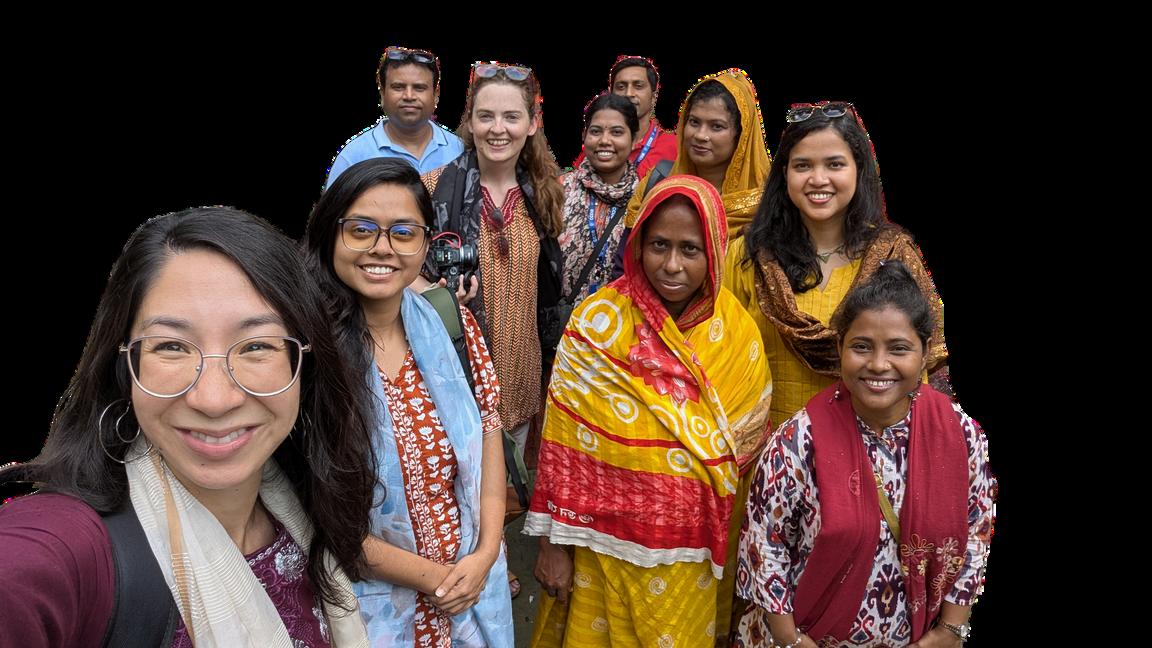
Rahima Begum (centre) pictured with researchers Marian Turniawan (left), Dr Ibtesum Afrin (right) and fellow members of Coady and CCDB staff
Q: Fascinating. You have been organizing your community and advocating for women’s rights. As you mentioned, you have worked with various women’s groups and organizations. Could you share with us how you envision creating space for more women like you who want to take on the role of organizing a social movement? Have you had any incidents in which you shared your knowledge with other women and mentored them?
R: Yes, definitely. Through these groups, I have built very strong relationships with many women. Of the 25 women in my group, I have close bonds with at least 15 or 16 Earlier, many of us stayed at home and did not interact much outside our family circles But now we support each other, talk openly, and help one another in different ways. These relationships became much deeper than just attending meetings together.
I always feel that if women learn something useful, they should share it with others rather than keep it to themselves Whatever I learn, I try to teach other women, especially my daughters and women in my family I have two daughters, and I taught both of them how to use a sewing machine. I even bought sewing machines for them and gave one to my daughter at her in-laws’ house. I told them, “You should work and not depend only on your husband.” I also helped set up a poultry farm for one of my daughters and arranged for a shed to be built for her Now she is running that poultry business herself, using chickens from my own farm Seeing her become more self-reliant makes me very happy
Whatever I learn from training or meetings, I teach my daughters as well. I want them to know things that I never had the chance to learn earlier in life. I also encourage other women in my family and community. For example, I often tell my older sister to raise chickens and ducks or start small farming activities instead of sitting idle at home Now her farm is doing very well, even better than mine in some ways. I feel proud seeing that.
I never think that I should move forward while others remain behind. I do not want a life where I alone benefit, and others simply watch. I want everyone around me to progress with me That is always my thought process Sometimes women come to me wanting to learn sewing or other skills, but feel nervous because they do not know anything yet. I tell them not to worry. I say, “Bring your
fabric to my house, and I will show you practically how to cut and sew.” I teach them slowly, step by step, whenever I have time
I also try to make sure opportunities are shared fairly within the group. I once told Roni Apa that the same women should not always be selected for training. I said, “Everyone should get the chance to learn.” So now, if one woman attends training for one month, I encourage another woman to go the next time. I want more women in the village to gain confidence and knowledge together
I especially encourage women who seem shy or afraid to speak. Sometimes during meetings, I notice someone with leadership qualities who hesitates to speak. Then I speak to her separately and encourage her. I tell her, “Get up and speak. Even if you make mistakes, it is not a problem. The more you practice, the easier it becomes” I share my experience with them because I could not speak confidently earlier Now I can speak in front of people because I kept trying
I think creating space for more women starts with supporting one another and moving together. If one woman walks alone, people may criticize her or try to stop her. But if many women move together, learn together, and support each other, then it becomes much harder for society to silence them That is why I always try to create opportunities for women to participate, learn new things, and speak for themselves.
Q:
Can you share from your work experience how you see gender norms inform women’s involvement in social movements and what kinds of societal change you are observing?
R: Women face obstacles everywhere. In every place and in every kind of work, women face barriers. Even from childhood, women are taught differently. There are social, family, and religious expectations that people place on women. No matter how much work a woman does outside the home, she is still expected to manage all household work Cooking, childcare, caring for the family, these responsibilities always remain with women. During disasters, women suffer even more. When floods or cyclones happen, women and children face the greatest difficulties.
Earlier in our village, women rarely spoke openly or left the home If women became sick, they stayed silent because of shame Many older women suffered
from illnesses for years without telling anyone. They could not even speak about women’s health issues openly But now I see a big change Now women come and talk If someone has a problem, they ask questions and seek help Sometimes women come to me privately and say, “Apa, this happened; what should I do?” Earlier, they would never have discussed these things. Now they are learning to speak up instead of suffering silently.
I also see changes in how women participate in public life Before, if there was a meeting, women would hesitate to attend Now, if there is a meeting or training, women run to join it. When we organize meetings through ENGAGE or other groups, many women come, and even those who are not members sit nearby to listen and learn. One woman sees another woman participating, and then she gains courage, too. This is how change spreads.
I think there has also been a big change regarding education and child marriage Earlier, girls often did not go to school regularly, and child marriage was very common. I myself married my daughters off young because I did not know better at that time. But now women understand these issues differently. Mothers now take their daughters to school themselves and encourage them to continue studying If a child misses school, mothers go and speak with teachers These things did not happen before
Women’s work has changed, too. Earlier, many women only stayed inside the house. Now women are raising chickens and ducks, farming vegetables, sewing clothes, and earning income. I myself never imagined I would do agriculture in my own yard Earlier, I thought such hard work was not for me Now I farm vegetables, sell chillies, raise poultry, and manage many things Women are realizing they can contribute economically as well.
Some people still criticize women for going outside or attending meetings. But, for me, modesty is not about locking women inside the house. A person’s values and intentions matter more If women learn something useful, that knowledge helps not only them, but also their children and grandchildren.
Compared to five or seven years ago, I see an enormous change in our village. Earlier, women were unaware of meetings, training, healthcare, or opportunities outside the home. Now women speak more confidently, seek medical help, participate in groups, and support one another One woman learns something, and another woman follows after seeing her That is how society changes slowly I feel that compared to before, there has been a significant change in women’s awareness and participation.
Bakul Begum is a grassroots women’s leader, a wife, a mother, and a grandmother. Primarily engaged in caregiving and household management, she plays a central role in sustaining intergenerational kinship ties and is a respected figure in her village for her strong presence in the community’s well-being We met Bakul at her house one afternoon to hear her life story and about her involvement in the social movement. The following interview is just a glimpse of Bakul’s life and the ways she tackled barriers, charted her path to new learning, and shared those learnings with others for the community’s betterment.
Q: Tell us a bit about yourself. What was your life like before you became involved in the ENGAGE project? What interested you in engaging in a social movement?
Bakul: Before joining the group, my life was very limited. I used to sit at home all day. I would pray, read the Quran, and sometimes visit neighbours, but still my days wouldn’t pass. Right after my marriage, my husband didn’t let me go outside much. He used to say it would violate purdah and people would talk badly Because of that, I stayed mostly 10
inside the house. There were times when my children would come from Patharghata after walking such a long distance, and I could not even give them 10 taka as allowance I had to ask my husband for everything. Those were very difficult days. But since childhood, I have always wanted to do different kinds of work.
Purdah is the notion tied to religious and social practices, commonly maintained by practicing Muslims The notion derives from women’s safety in public spaces, where modest clothing requires chaperoning by male family members and establishes the physical seclusion of women from the public (particularly men) 10
Then I started noticing women from my neighbourhood going somewhere regularly I became very curious I used to ask them, “Where do you go? Can you take me with you?” I didn’t like sitting at home alone all the time Since I never used to go out anywhere, seeing them go together made me interested. Later, in 2023, there was a vacant spot in a local group connected to CCDB, and because I was so enthusiastic, they included me. Since then, I have been attending almost every meeting. I really enjoy going there. After I started liking the meetings, I kept telling the apa (elder sister) and dada (CCDB staff), “Please take me to the trainings too” I wanted to learn more
At first, attending training felt scary. There were leadership training sessions and other sessions. Slowly, I became comfortable. Then I started bringing those lessons home and trying them in my own life. I learned about topics such as vermicompost, financial management, ABCD, and farming methods I also explained these ideas to my husband when he came home from Dhaka I told him, “If we do things this way, maybe we can improve our lives a little.”
After that, I slowly started raising chickens and ducks. Now I have around 20 ducks and almost 20 chickens. They lay eggs regularly. I even served you eggs from my own ducks and chickens today I sell eggs too I have earned around 6,000–7,000 taka (CDN $50-65) from them, and we also eat them ourselves whenever we want. Earlier, I had to ask for every small thing, but now I can manage some money on my own.
I also learned different farming techniques from the training. For example, in our area, when water rises, crops in low-lying land often rot and are destroyed In the training, they taught us sack gardening, so even if the main crops are damaged, we can still grow vegetables in sacks and keep them in higher places. During winter, many vegetables grow very well that way. These are things I never knew before.
So, for me, joining the group changed many things Before, I only stayed inside the house and passed the time somehow Now I go to meetings, attend training, learn new things, and apply them in my own life. I feel good doing this work.
Q: You have mentioned that participating in a social movement started gradually for you and that you had to convince your family. What do they think of your participation in movement building and leadership now? Is there anything you want to share with us that highlights potential impacts you see your family experiencing?
B: At the beginning, it was not easy for me to go outside and participate in these activities My husband was living in Dhaka at that time, and he did not want me to work in the fields or move around outside too much. I had some land of my own, and I wanted to cultivate it, but he would say, “If you go to the field and work beside other men, what will people say? I am not here; people will talk about you.” At that time, I listened to him and stayed home. But after joining CCDB, I slowly began changing
I faced many obstacles in the beginning. People in the community talked a lot because my husband was away, and I had started attending meetings and training. But honestly, I didn’t care anymore. I did it of my own will. I thought, let people say whatever they want. Through CCDB, I gained courage. Before, I was not this confident Now I feel stronger than before My courage has increased, and I don’t feel weak anymore I like this change in myself
After joining the Engage group, I started attending meetings and training regularly. There were training sessions on leadership, vermicompost, ABCD, value chain, financial management, and many other topics. Whenever my husband came home from Dhaka, I would tell him everything I learned I explained to him how these ideas could help our family For example, I told him that in our area, crops often get destroyed when floodwater rises, so we should also try sack gardening and other methods to protect our food. I explained that if one crop gets ruined, we still need something to survive on.
Then I slowly started applying these things myself Earlier, we cultivated only Amon rice, but after joining CCDB, I started trying other crops One time, while my husband was away, I planted sunflowers by myself. Later, when he came home, he harvested the sunflowers and saw the results with his own eyes. I asked him, “Now tell me honestly, doesn’t this feel good?” He said, “Yes, this is very good.” After that, his attitude changed a lot. He started encouraging me and
telling me, “Go on, there is no problem. You can go.” That gave me even more confidence
Now we work together. I teach him what I learn, and we discuss things together. Sometimes I show him how to do something, and we both work side by side. He asks me for advice about farming and household decisions. Most of the time, he listens to what I say. Of course, if I say something wrong, he corrects me too, but now we discuss things together Earlier, I never imagined this would happen
My children are also very supportive. They tell me, “If doing this keeps you healthy and active, then keep doing it.” They say staying busy is good for me. Even my daughter and son-in-law now ask for my opinion when making important decisions. They are building a house now, and they keep asking us where and how they should build it I visited the place many times and gave suggestions because a house is something for a lifetime
So, I feel that many things have changed in my family because of my involvement in these activities. Earlier, I stayed quiet at home and depended on others. Now my family values my opinions, asks for my advice, and supports the work I do That makes me feel very good
Q: That is wonderful. Looks like your persistence and curiosity brought about a sustainable change in your life. Could you also share with us how you mobilize your community?
B: I try to mobilize people by first practicing things in my own life and then encouraging others to see what is possible I share what I learn with my family, relatives, and neighbours so that they can also benefit from it. For example, when I visit my parents’ house, I encourage them to cultivate vegetables on their rooftop using drums and sacks. I told them, “Plant water spinach, spinach, eggplant, chilli saplings – you’ll be able to eat your own produce.” They followed my advice, and now they are benefiting from it From just two drums of water spinach, they harvest enough for themselves for several days They also grew Bombay chillies (Scotch bonnets) and ginger after I showed them the sack cultivation method. When they see the results, they say, “What a good idea this was.”
I also encourage people in my neighbourhood to adopt these practices If I learn
something useful through CCDB training, I try it myself first and then share it with others I tell people, “If something works well, you should try it this way too” Earlier, I grew vegetables casually, but after receiving training, I became more intentional. Now we grow vegetables enough for our family, make compost fertilizer ourselves, and no longer need to buy many things from the market. Seeing these changes motivates me to encourage others as well.
I also support women in practical ways For example, I encouraged my mother to raise chicken so she would not need to buy eggs and could make use of leftover food. Even if she cannot always do the work herself now because of her age, she appreciates the idea and often says that these suggestions are helpful. My daughter has also become very aware by observing me. She experiments with cultivation herself, takes seeds from me, and applies what she learns. In this way, knowledge passes from one person to another
In our community, we try to move forward together. If someone sees my vermicompost setup and wants one too, I speak to the apas (sisters) from CCDB on their behalf. When support opportunities come, people often ask me to help connect them. I try to encourage and guide them as much as I can. I believe leadership means supporting one another and ensuring that opportunities are shared
I have also taken the initiative in solving community problems. Earlier, women in our area had to suffer a lot to collect water at night. I decided that we needed a tube well at home. Even when others discouraged the idea, I remained determined My son supported me financially, and I managed the whole process myself while my husband was away Workers stayed at our house for several days, and I handled everything from arranging food to supervising the work. Now the tube well benefits not only my family but also neighbouring women who come to collect water. Even when it broke down, I learned to repair it myself. I feel proud that something I initiated has reduced hardship for many people in the community
Q: You have done incredible work for your family and your community. Can you tell us a little about how you nurtured your curiosity and innovation, and how you adapted them in your life and leadership role? How do you see the future of the social movement you have been part of?
B: From a very young age, I have always had a curiosity about doing something different and useful. However, after marriage, my life became mostly confined within the household. My husband was worried about social criticism and did not want me to go outside often because people in the community would talk negatively about women who moved around freely while their husbands were away I was married very young and initially knew very little about household responsibilities Over time, however, I began learning through observation, practice, and experience.
As I became more confident, people in the community gradually began to come to me for advice and support. Even for simple things, like building a clay stove, they would ask me to come and see whether it was done properly If someone fell ill, women in the area often asked me to accompany them to hospitals or medical appointments. I realized that although we are ordinary women with limited formal education, we still hold knowledge, experience, and the ability to help one another. That understanding shaped my leadership. I learned that leadership does not always come from formal positions; sometimes it comes from being dependable, curious, and willing to learn
My curiosity also pushed me to experiment and learn practical skills. Earlier, I used to raise ducks and chickens, but many of them died from diseases because I did not know how to treat them. Instead of giving up, I started consulting livestock officers and veterinarians. I would go to the livestock hospital on my own, ask questions about vaccines and medicines, and learn how to care for poultry properly Gradually, I began vaccinating not only my own ducks and chickens but also those of others in the community. If I bought a vial of vaccine, I would share it with households nearby and help vaccinate their poultry as well.
I learned many things simply by observing carefully and building confidence over time For example, I watched my older son administer injections to my mother, and through that I became confident enough to learn basic medical support myself. Women in the area often feel uncomfortable going to male practitioners
for certain treatments, so I began helping them with injections or saline when needed People trusted me because I was willing to learn, ask questions, and help others without hesitation
At first, people criticized me for moving around independently and speaking to doctors or officials on my own. They would say that a woman whose husband was away should not go outside so much. But eventually, I stopped paying attention to those comments As my husband became more supportive, I also gained greater confidence in myself Over time, the same community that once criticized me began to recognize my contributions and seek my guidance. When conflicts arise between family members or neighbours, people often come to me for advice. I always encourage them to solve problems with understanding and mutual respect because I believe that unity is what keeps families and communities strong
Looking toward the future, I hope the social movement we have been part of continues to grow through shared learning and mutual support. Earlier, many of us stayed silent or felt incapable, but now women are learning new techniques, earning respect in their families, supporting their neighbours, and solving problems together I believe this kind of collective growth will continue if we continue to stand together as a community
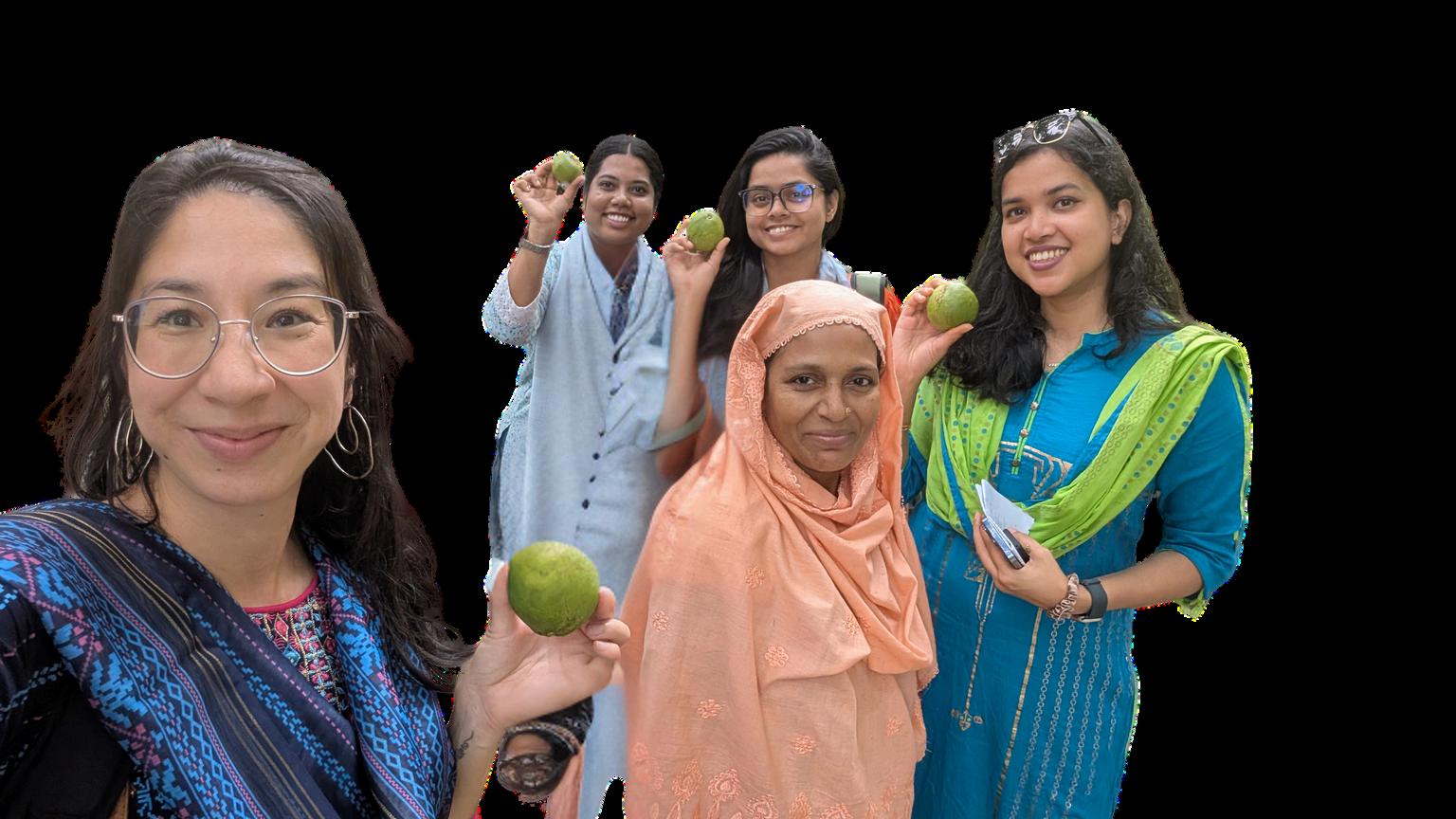
Looking across the stories of Zumur, Sujoya, Rahima, and Bakul, waves of social change are evident at multiple scales and rhythms, emerging through the interplay of learning, relationships, and collective action. While ENGAGE helped create conditions that supported these processes, the changes described here are rooted in the women’s own practices, decisions, and interactions within their households and communities. Each narrative highlights a distinct pathway, but together, they illustrate how social transformation unfolds through interconnected, everyday practices.
The interviews illustrate that learning is a relational, place-based process that is experiential, embodied, and socially embedded, weaving together diverse knowledge systems across formal and informal spaces Throughout these stories, the women described how knowledge is produced, flows through their lives, and reshapes their self-perception. The learning is multi-sited, taking place not only in formal training or institutional spaces, but also within the household, in neighbours’ yards, out in fields, and at the market. Learning is also multidirectional, moving between peers and neighbours, and across generations within families As this learning circulates across these interconnected sites and relationships, it is accompanied by a growing sense of self-confidence that shapes how women see themselves and act within their households and communities. Across the interviews, the women recounted stories of practicebased experimentation, observation, and imitation, as well as iterative adaptation to shifting socio-ecological conditions. As learning is embedded in everyday practices and relationships, the ways knowledge is shared and circulated have important implications for power, shaping who is recognized as knowledgeable and who is able to influence others.
As knowledge is recognized within families and communities, it also reinforces the women’s self-confidence In Bakul’s story, her lifelong curiosity and commitment to learning gradually translated into a growing sense of confidence in her own knowledge and abilities. As others in her community began to seek her advice and support, her recognition of the value of her experiential knowledge reinforced this self-confidence, enabling her to see herself as capable and dependable. Her expanded learning not only contributed to her family and community but also fostered a stronger sense of self and leadership
These narratives show how learning circulates across scales, from individual interest and household application to group sharing and broader community uptake. This mobilization often takes place through demonstration, as the women apply new techniques in their own fields or around their homes, making the results visible to others Sujoya’s story provides numerous examples of these processes She describes how, after participating in training, she not only practices new techniques on her land but also actively shares that knowledge with others. She has become a formal trainer (and encourages others to facilitate and share their knowledge), she shares insights during group meetings, and her approaches are adopted through informal knowledge exchange with family members and neighbours Through these distributive processes, we can see learning as collective rather than solely individual
The narratives highlight how, as knowledge is shared and mobilized, the women adapt and rework practices in response to household contexts and local ecological constraints, such as flooding and limited land availability. For example, Zumur shared how she expanded the idea of hanging sack gardening to use many types of containers and other materials from around her home to grow off the ground to mitigate the loss of crops during flooding or heavy rain. She also repurposed ruined straw as a fertilizer and growing medium for jute, instead of seeing the straw as waste. Furthermore, she shared how another woman she knows came up with an alternative vermicomposting method that doesn’t require a chari, instead using mud, which is readily available on her land These examples show how knowledge acquired through training is blended with the women’s own ideas to produce contextually grounded solutions and illustrate that the women are not passive recipients but active producers of knowledge –experimenting, assessing outcomes, and refining practices over time. While these innovations may currently be small-scale and incremental, they support adaptability and innovation in agricultural and livelihood practices for these women and their networks
Importantly, the ways in which knowledge is shared have implications for power relations Practices such as reporting back after trainings, rotating participation in learning opportunities, and encouraging others to take on facilitation roles contribute to a more equitable distribution of knowledge. Rather than consolidating expertise within a few individuals, these strategies help to build collective capacity. As Rahima explained, she encourages women to share what they learn with others “so knowledge does not stay with only one person”. She also ensures that the same people are not selected for training each time, because she believes opportunities should be shared fairly within the group This mindset contributes to more distributed forms of leadership, where multiple women take on roles as teachers, facilitators, and connectors within their communities. As we see here, knowledge sharing is not only a learning process but also a political one. While these women still operate within broader structural constraints, such actions and decisions regarding knowledge sharing can help reshape who is seen as knowledgeable and who has the authority to lead
These dynamics illustrate how the broadening of learning ecologies functions as a key mechanism of change within these communities. By linking formal and informal spaces of learning, enabling the circulation and adaptation of knowledge, and fostering collective ownership over both learning and leadership, the women in this movement create conditions in which they can experiment, innovate, and support one another. In doing so, it not only strengthens individual capacities but also contributes to wider shifts in social relations, as knowledge, confidence, and authority become more widely shared across the community. These processes are not only technical but also relational, grounded in practices of mutual support and care that sustain the ways knowledge is shared, reinforced, and taken up across households and communities
While access to these learning spaces and opportunities is not necessarily equal (among these women and others in their communities) – and is shaped by time, mobility, and social permissions within households and communities – these women are aware of this inequity and express a desire to expand access As Rahima shared, “I never think that I should move forward while others remain behind. I do not want a life where I alone benefit, and others simply watch”.
While all four women live in the same coastal region of Bangladesh and navigate common gendered expectations around mobility, labour, and decision-making, they also come from different familial, religious, and socio-economic contexts that shape how these norms are experienced and contested. Across their stories, we see a number of strategies emerge through which these norms and power relations are navigated and negotiated These include building credibility through practice and demonstrating social and economic value; drawing on personal convictions and collective spaces of learning and support to legitimize new forms of action; leveraging personal strengths, such as curiosity, responsibility, and communicative ability; and transforming necessity into opportunities for expanded agency and innovation. Through these stories, we can see the range of pathways through which the women navigated and reshaped gendered norms and power relations across their households and communities.
Demonstration of social and economic value has built credibility within the household, leading to women’s growing influence over finances, agricultural practices, and decisions related to children’s and grandchildren’s education For Bakul, whose earlier life was shaped by strict adherence to purdah and her husband’s control over her movements, participation began with an innate curiosity that had long been constrained. Her desire to learn, which was sparked by observing other women, became the entry point into the social movement. Through training and experimentation, she began to apply new agricultural and livelihood practices, gradually demonstrating their value to her household Rather than directly confronting restrictive norms, she navigated them by building credibility through practice. As her contributions became visible and beneficial, her husband’s stance shifted, and household decision-making evolved into a more dialogical process. We see that her curiosity was nurtured and legitimized through the movement’s structures of learning and support.
Rahima’s experience similarly reflects how deeply embedded gender norms can be renegotiated through a combination of personal conviction and collective engagement. Having faced early marriage, limited access to education, and restrictions on her mobility, her initial position was one of constrained agency. Yet, her strong sense of responsibility and moral clarity became a foundation for her leadership Participation in the movement provided her with both the
language and the platform to act on these values. She moved from navigating restrictions within her own household to actively challenging norms at the community level, encouraging women to attend meetings, seek healthcare, and engage in income-generating activities. Her leadership illustrates how individual transformation and broader normative change are intertwined, with her growing confidence enabling her to both model and advocate for alternative possibilities for women’s roles.
Sujoya’s story highlights a different, though equally significant, pathway of negotiating norms and power. Entering the movement with a supportive husband, she did not face the same degree of intra-household restriction, though she still encountered skepticism from extended family. Her approach was to leverage her communicative strengths and curiosity, engaging deeply with training opportunities and quickly translating these into practice and broadening them through experimentation Through consistent knowledge sharing – within her household, group, and wider community – she built social capital and credibility. Her husband’s reflections on her growing importance in the household point to a reconfiguration of gendered power relations, in which her expertise in agriculture and leadership is not only recognized but also relied upon In this case, participation in the movement amplified existing relational support and personal strengths, enabling her to move more rapidly into positions of influence and advocacy.
For Zumur, the renegotiation of norms was initially driven less by aspiration and more by necessity. Her husband’s illness compelled her to take on responsibilities that required her to leave the home, engage more heavily in agricultural work, and participate in market activities – roles that might otherwise have been constrained by social expectations. This necessity provided a socially acceptable entry point (at least in the eyes of her family) into expanded mobility and decision-making. However, through her engagement with the social movement and exposure to peers’ practices and training, she transformed this necessity into a site of innovation and agency Her entrepreneurial mindset and willingness to experiment allowed her to adapt agricultural practices to local environmental conditions, improving household food security and generating income. Importantly, she extended these practices beyond the household, sharing knowledge with neighbours and supporting others in adopting similar approaches. Over time, what began as a response to crisis contributed to personal transformation and broader shifts in community norms, as she continued to gain confidence and other women began to engage more openly in market and agricultural activities.
These examples demonstrate that participation in this social movement builds on the existing dispositions, experiences, and motivations of these women toward increased expressions of agency and shifting of social norms Curiosity, resilience, communicative ability, and a sense of responsibility were already present across these women’s lives, and the movement provided an enabling environment for these qualities to be expressed, strengthened, and recognized. In doing so, it supported women not only in navigating existing power structures but also in gradually reshaping them Power is therefore not simply transferred but renegotiated through everyday practices, relationships, and decisions, leading to subtle yet significant shifts in what is considered possible and acceptable for women in their households and communities.
Taken together, the learnings and reflections presented above point to processes of social transformation that are both relational and situated. Across these stories, learning, participation, and relational support converge in transformations that are both deeply personal and collectively significant. The interviews and discussion section above traced how the women are expanding their learning ecologies and negotiating social norms and power, leading to transformations that take shape across scales and connect individual shifts in confidence and capacity to broader changes in households and communities.
The dynamics explored here illustrate that change is not driven solely by increased access to resources or by formal (often externally driven) interventions, but by situated practices embedded within specific socio-ecological contexts Through these stories, we see how Sujoya, Zumur, Bakul, and Rahima expanded their knowledge through experimentation, observation, and exchange, which helped them navigate environmental uncertainty, adapt livelihood strategies, and reshape the material and social conditions of their lives. Therefore, the resilience they are building can be seen as a relational and collective process, produced through networks of learning, sharing, and mutual support
Throughout these stories, the emerging leadership is not individualistic but distributed, relational, and grounded in care. The women describe leadership as being expressed through mentoring others, sharing knowledge, encouraging participation, and advocating for collective needs such as access to resources, services, and opportunities Forms of care, such as supporting family members, attending to community well-being, and responding to others' needs, serve as foundations for social and political engagement, enabling women to build trust, legitimacy, and influence within their communities.
While these narratives highlight important pathways through which learning ecologies and relational practices contribute to social change, it is also necessary to consider the limits of this analysis and the conditions under which these transformations unfold. First, the analysis draws on a small number of narratives,
each shaped by specific contexts and experiences, which do not fully capture the diversity of women’s experiences within the broader community, including those who are less able to participate in such initiatives or whose experiences in the movement have differed from the voices of those interviewed here. Additionally, although knowledge sharing and collective learning are framed as contributing to more equitable outcomes, power dynamics within groups and communities still shape who benefits most from these processes. Therefore, it would be interesting to deepen this research through additional interviews and more participatory methods to better understand a range of women’s experiences in this movement.
Second, while the conversations highlighted shifts in agency, confidence, and participation, there was limited discussion on enduring structural constraints, including gendered divisions of labour, access to resources, and institutional power A longitudinal perspective would help assess the extent to which these changes are sustained over time, particularly as formal sources of support – such as training opportunities and access to CCDB staff through the ENGAGE program – may shift or diminish. Although the movement has already expanded beyond ENGAGE, its longer-term trajectory remains shaped by structural limitations, as well as broader socio-economic instability, political uncertainty, and environmental pressures, including the impacts of climate change in the region. Examining these dynamics over time could provide deeper insights into the effectiveness of these broader learning ecologies in fostering more equitable structures and transforming social norms.
Despite these limitations, the transformations these women describe have so far been sustained through the iterative process of observing others act, nurturing curiosity, gaining courage and confidence, and replicating those actions. As women observed their peers participating, experimenting, and speaking out, they became more willing to do so themselves. This process, supported by peer networks, shared practices, and collective problem-solving, and building on the strengths, knowledge, and skills of the women, has already enabled change to move beyond the individual to begin reshaping community norms, contributing to the gradual normalization of women’s participation in public decision-making, economic activities, and collective action.
Importantly, these transformations remain uneven and contingent, shaped by structural constraints related to gender, mobility, access to resources, and institutional power Yet, within these constraints, the women’s practices reflect ongoing processes of negotiation and adaptation that enable them to expand
their agency and influence. As we can see here, social transformation is not linear or complete but is emergent and continually being formed, grounded in everyday actions that reshape relationships, redistribute knowledge and power, and reconfigure what is possible for women within their communities.
We want to express our deep gratitude to Bakul Begum, Rahima Begum, Sujoya Rani, and Zumur Rani for sharing their time and stories, for welcoming us into their homes, and for their hospitality, care, and delicious food! Their support made this work possible This study was part of the ENGAGE project, funded by Global Affairs Canada, and we appreciate their financial allocation and commitment to research. We also thank CCDB staff – Imran Kibria, Sabiha Sultana, Munniara Yesmin Munni, Avijiit Ghosh, Roni apa, and others – for accompanying us during the fieldwork, coordinating travel, assisting with participant information, and organizing accommodations, travel, and meals We are grateful to our colleagues at Coady Institute for their support and to the StFX Research Ethics Board reviewers for their valuable insights. Research is an ongoing process, and every interaction has contributed to shaping this work.
To learn more:
Participating organizations for this research: Funding provided by: