COURSE HANDBOOK
Martha Fanjoy | Saliwe Mutetwa-Zakariya
I am saying that whatever you do, wherever your talents take you always be conscious of, always FEEL the world around you…. Don’t insulate yourselves from the world’s problems, throw yourselves into them. They need you …. To channel your talents and ideals where the world most needs them is to live by the rules of StFX. It is the standard against which you and I will be judged. It is also the way to ensure that yours is a meaningful and happy life.
- Katherine Fleming, 1989
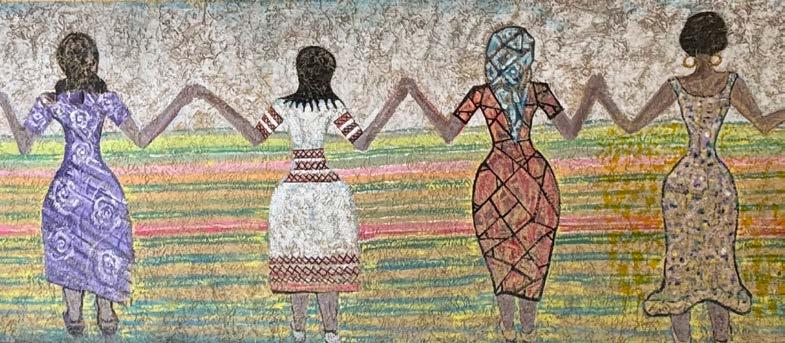
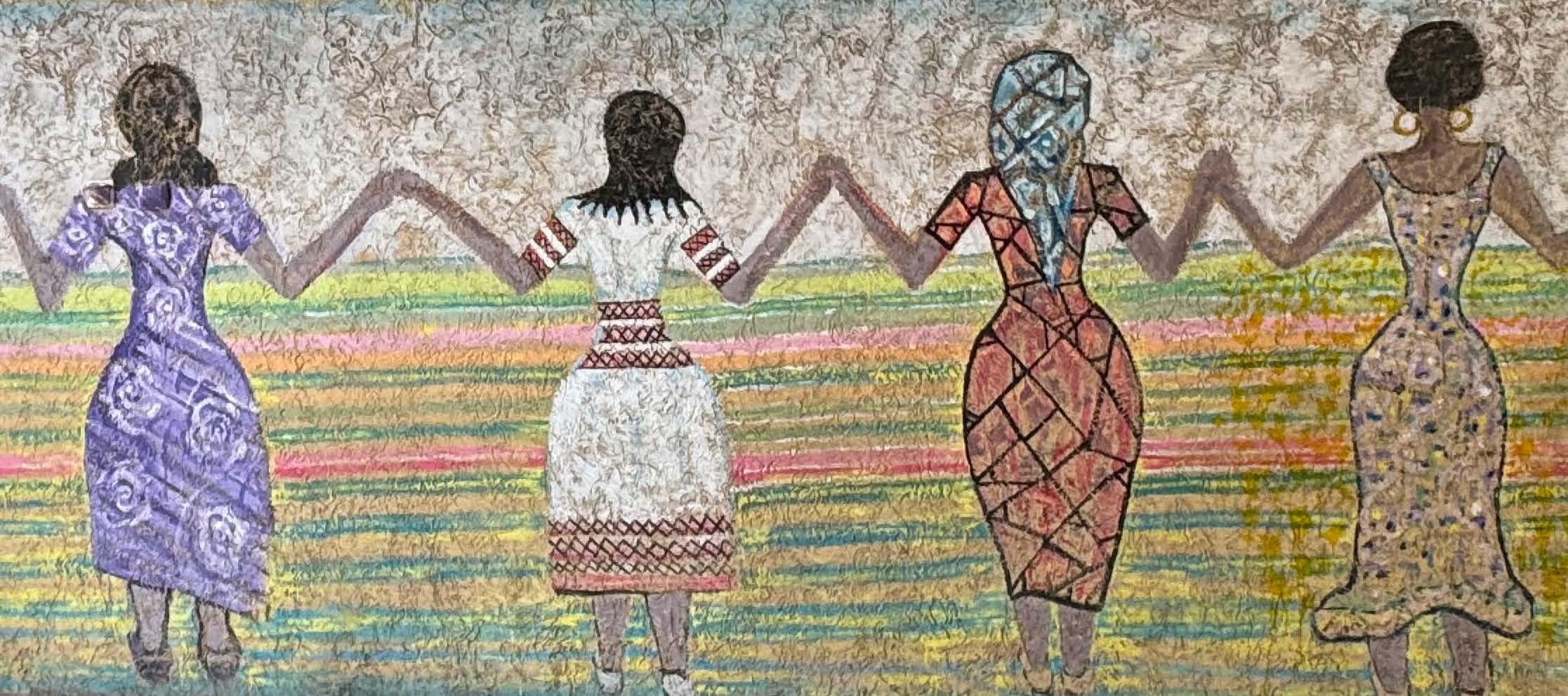
Cover artwork by: Tesfaye G/michael - Sisterhood, collaboration and love which are all values of women.
Katherine Fleming Women’s Leadership Course Course Handbook
Welcome Women Leaders!
INTRODUCTION OF THE KATHERINE FLEMING AWARD
The Katherine Fleming women’s leadership course is inspired by the commitment and humanitarian efforts of development practitioner, Katherine Fleming. A graduate of St. Francis Xavier University in 1985 and Rhodes Scholar, Katherine worked for UNICEF in various roles. She dedicated her life to addressing child poverty.
With support from friends and family of Katherine Fleming, African women leaders have built their knowledge and skills to enhance contributions to communities they work with. This course, designed by the Coady Institute, draws on leadership development content created for community development leaders who seek to engage with facilitators and a diverse cohort of women on issues of leadership styles, reflection, self-care, collective action, financial wellbeing, and other skills they may wish to focus on and draw upon the wisdom within the group.

This resource kit is designed to set out activities for participation along with complementary exercises and further reading for reviewing. You are welcome to use this with other women in your community and draw on as much of what is in here as you wish. You are invited to adapt activities, add some you find more relevant, and leave out any that are not.
WELCOME FROM COADY AND THE NYAPACHUMA MEMORIAL FOUNDATION
On behalf of the Coady and Nyapachuma Memorial Foundation teams, we warmly welcome you as a participant in the Katherine Fleming Women’s Leadership course offered by the Coady Institute in partnership with the Nyapachuma Memorial Foundation.
We are delighted that you have made us a part of your leadership journey. Thank you for your commitment to making change happen in your home community. We hope that the week together provides you with ample opportunity for connection, reflection, and learning.
All the best in your program!
Sincerely,


Martha Fanjoy, PhD Director of Programs, Coady Institute Executive Director, Nyapachuma Mmorial Foundation
ABOUT COADY INSTITUTE
The Institute is located on the campus of St. Francis Xavier University in Antigonish, Nova Scotia, Canada, in the traditional and unceded territory of the Mi’kmaq and Wolastoqey peoples. The Coady Institute, established in 1959 by St. Francis Xavier University, is recognized globally for contributing to community-led development and leadership training. Named after Reverend Dr. Moses Coady, a key figure in the Antigonish Movement, the Institute draws inspiration from this movement, which began in the 1920s. Aimed at addressing the widespread poverty among farmers, fishers, miners, and other marginalized groups in Eastern Canada, the movement, led by Coady and his team, initiated a method combining adult education with collective action focused on the economic needs of communities. This approach empowered individuals to transform their circumstances and prospects. In response to the movement’s success, St. Francis Xavier University’s Board of Governors 1928 appointed Rev. Dr. Coady as the first director of its Extension Department, effectively endorsing this participatory education and community mobilization model.
In collaboration with partners in Canada and across the globe, the Institute is committed to reducing poverty and transforming societies by strengthening local economies, by building resilient communities, and by promoting social accountability and good governance. Coady Institute is committed to breaking down and transforming the North-South divide by bringing people together to exchange innovations and learn from each other. These programs focus on leadership and community development and are informed by adult education principles.
Working together with our partners from around the world, Coady strives to continuously improve and develop our online, on campus and off campus educational programs, addressing the issues and challenges that face our communities both locally and globally. I encourage you to take a moment to explore these many opportunities via the Coady website.
THE NYAPACHUMA MEMORIAL FOUNDATION
The Nyapachuma Memorial Foundation (NMF) is a women -led organization based in Zambia that works to advance the rights, leadership, and wellbeing of young women and girls. Rooted in a legacy of compassionate, community-based leadership, NMF creates spaces for intergenerational dialogue, mentorship, and learning, supporting young women to build confidence, leadership skills, and collective power to shape their own futures.
Through community engagement, advocacy, and partnerships with educational institutions, NMF addresses structural and cultural barriers that limit women’s opportunities, including gender-based abuse and the misuse of power such as sextortion. By centering care, dignity, and accountability, the Foundation champions leadership that is ethical, relational, and committed to social justice—values that inform both this course and NMF’s broader movement-building work
You can learn more about the Nyapachuma Memorial Foundation here https://nyapachuma.org/about/ .
EDUCATION AT COADY
The programs of the Coady Institute are rooted in the belief and experience that learning is fundamental to social change.
Coady offers educational programming for emerging and established community leaders with a passion for social change. Coady’s approach to adult education is practice-focused and participatory, informed by learner-centered and assetbased methods that hold the potential for both personal growth and societal transformation.
The Institute’s understanding of adult learning is informed by a learner-centered approach and reflective practice, a learning practice reminiscent of the Antigonish Movement. Learners’ knowledge/expertise and practice/skills are assets they bring with them into the classroom, whether physical or virtual. Learning is done by the learner, not done to or for the learner. Learners are drivers of their own learning journey.
Coady staff bring these same principles of adult learning to our courses, in both design and facilitation. Central to this approach are our commitments to:
y Diverse voices amongst our facilitation teams and resource persons;
y The importance of connecting theoretical and conceptual learning to practice; and
y The fostering of an open learning climate, inviting participation from diverse learners.
HOW TO USE THIS COURSE HANDBOOK
This handbook contains resources, activities and exercises designed to inspire, guide, and empower you on your leadership journey. It complements course content to deepen your understanding of topics, and as a reminder to return to. Open your mind, engage with the content, and remember you are not alone on this path. Together, we are building stronger, healthier communities and organizations led by responsive and empowered women leaders.
THE KATHERINE FLEMING WOMEN’S LEADERSHIP COURSE
COURSE DESCRIPTION
The Katherine Fleming Women’s Leadership Course is designed as a collaborative space for African women leaders, both experienced and emerging, to connect, learn, and grow. Over five days, participants will explore and apply practical tools and frameworks that strengthen leadership skills and drive action for economic agency, justice, and inclusion.
This immersive learning experience invites you to recognize and build upon your unique assets and gifts as a community leader while fostering a supportive network of peers. Together, we will focus on community-led, community-driven approaches to social change, enabling you to lead with confidence and create meaningful impact.
LEARNING INTENTIONS
By the end of this course, participants will be able to:
Apply Leadership Frameworks and Tools: Analyze and apply diverse leadership frameworks and associated tools to address challenges faced by women leaders.
Identify Community-Based Practices for Change: Evaluate and propose community practices, values, and actions that support women’s leadership and contribute to socio-economic development.
Reflect on Lived Experiences for Growth: Critically reflect on personal leadership experiences to identify at least three strengths and motivations that inform future practice.
Create a Leadership Action Plan: Design and present a detailed action plan outlining steps to implement leadership initiatives within their context.
The full course syllabus is included in Appendix A on page 41
OUR APPROACH TO LEARNING
The richness of participants’ experiences and knowledge, as well as the skills they bring, add to the great potential for learning about leadership. Our understanding of learning focuses on a learner-centred approach to learningteaching dynamics. Learning is done by the learner, not to or for the learner.
As humans are meaning-making beings, in this program we will collaboratively seek to make meaning of our experiences in leadership and community development at the local/community, regional, and global levels.
The teaching learning dynamic in this course is centred around problemposing education informed by reflective practice. Practitioners are invited to learn during and from experience, engaging in reflection in and on their own community development and leadership practice. Reflective practice involves asking questions to deepen understanding as well as being open to growth in leadership practice. Drawing from existing perspectives and experiences to engage in reflective practice, critical inquiry, and dialogue, the group will share and learn from each other’s experiences, strengths, assets, and challenges to identify emerging issues and possibilities to support women’s advancement locally and globally with an emphasis on their economic agency.
RELATIONAL APPROACHES
CHECK-IN’S AND GROUNDING ACTIVITIES
Check-in’s and grounding activities are central to creating learning spaces that foster relationship building, safety, and sense of belonging. Check-ins aim to develop a sense of unity and community as participants celebrate one another’s successes and recognize shared challenges. Grounding Activities, such as breathing exercises, visualization, and affirmations support individuals in mindfulness, focusing, and managing stress.
Check-in’s and Grounding exercises as part of facilitation practice supports trust building, connection, and mindfulness.
Resources
The Circle Way: “The Power of a Good Check-in”: https://www.thecircleway.net/articles/2024/9/30/resource-bundle-check-ins
The Circle Way Resource Bundle Check-in’s: https://www.thecircleway.net/articles/2024/9/30/resource-bundle-check-ins
Resources for Check-ins and Check-outs: https://docs.google.com/document/d/16_EczHrPD6Yg380jC6Uqqc5kU2zOFOdxn1svfHOgfqE/ edit?tab=t.0#heading=h.lb5zsuk1a0ii
“The circles of women around us weave invisible nets of love that carry us when we’re weak, and sing with us when we are strong.”
- SARK
THE 4A SEQUENCE FOR LEARNING TASKS
The 4A Sequence is a helpful model for planning conference breakout sessions, workshops, plenaries, keynote addresses, panels and even entire events! By using this four-part sequence, learning is maximized and the focus on learners and what they need is maintained. Start your learning event with an Anchor, end it with an Away, Add new content in a variety of settings, and then invite engagement with the content using creative ideas to Apply. This model will help ensure a learning-centered conference or other large group gathering.
4 Steps for Learning that Lasts - Global Learning Partners
ANCHOR
ANCHOR A task that has the learner access their own prior knowledge or experience with the topic / content / or similar experience (e.g., respond to an open question about their experience, reflect on visuals or data to spark thinking, etc.).
AWAY A task that connects the new learning back to the life of the learner and its future use (e.g., a personal action plan, commitment, projection into future, etc.).
ADD A task that has the learner hear / see / experience a substantive new piece of content: information, research, theory, skill (e.g., this can be with PowerPoint, film clip, demonstration, etc.).
APPLY A task that has the learner do something (there and then) with the new content (e.g., practice, application, case studies, compare, etc.).
BUILDING OUR LEARNING COMMUNITY
COMMUNITY OF CARE, CIRCLE OF HANDS AND CONNECTION (GROUP AGREEMENTS)
An important part of creating our Learning Community and creating a learning environment that is a “safe” and/or “brave space” is developing group agreements. For our learning space, we will use the “Circle of Hands” to guide how we will come together in this space; what we need for a brave/ safe experience as well as what we don’t want.
Circle of Hands - Activity Option:
Participants place their hands next to one another to form a circle on a large piece of flipchart paper and trace around each hand. Invite everyone to write inside the circle what they need for a safe, welcoming, and brave learning experience. Give them 10 minutes.
Summarize responses.
Next, invite participants to write down the things they don’t want to see happening during the course on the outside of the circle of hands. Give them 10 minutes.
Ask the group for ideas on how they will address things that they have outside the circle if they occur. Take note of these on the flip chart. The group agreements are in the circle of hands. The group can always return to the circle of hands when necessary. Put the circle up on a wall where it will be a visual reminder of our Community Care.
EXPLORING LEADERSHIP
Exploring leadership models and reflecting on lived experiences shape leadership with the practices that resonate with our communities and honor the gifts, knowledges and values we carry. While some women leaders draw on other models for leadership, many draw on their ability to build relationships, support others on their teams, and seek out opportunities to improve communities they work with.
Think, Pair & Share Activity: Sharing leadership experiences
Divide up participants into pairs and invite them to interview each other using the following questions:
y What does leadership look like in your experience?
y How does leadership feel in your experience?
y What tradeoffs can leadership imply in your experience?
Give the pairs 20 minutes to do these interviews and take notes.
Invite 4-5 pairs to share their notes from their interviews.
INTRODUCING LEADERSHIP STYLES
LEADERSHIP STYLES FOR INDIVIDUAL, COMMUNITY, AND MOVEMENT BUILDING
Leadership in community development and social change rarely looks like a single person in charge. Instead, leadership is often shared, relational, and shaped by context. The three leadership styles below: Service Leadership, Transformational Leadership, and Primal Leadership, help us name different ways leadership shows up in practice. Most community practitioners move between these styles depending on the situation, rather than holding only one.
We will focus on exploring the following types of relational leadership, being mindful that there are variations and additional practices that may come up in discussions:
y Service Leadership: A leader who is a good listener; is empathetic, has an ability to heal, is aware, persuasive, has foresight, is a good steward, has a commitment to the growth of people, and builds community.
In community development, service leadership is especially powerful because it builds trust, strengthens relationships, and challenges assumptions that leadership must be hierarchical or authoritative. This style often shows up in quiet acts of care, mentoring, and holding space - forms of leadership that are frequently undervalued but essential to sustained collective action.
y Transformational Leadership: A leader who is able to mobilize people around them through values-based charisma and motivation.
Within movements and community-led development, transformational leadership plays a key role in naming injustices, articulating alternatives, and helping people believe that change is possible. This style helps shift collective direction, challenge unjust rules, and build momentum for system -level change.
y Primal leadership: A leader who depends on leading with emotional intelligence (EI). Such a leader is self-aware, has social awareness, can selfmanage, and manages relationships.
In community and movement contexts, primal leadership is critical for sustaining collective work over time. It helps practitioners navigate conflict, hold emotional complexity, prevent burnout, and maintain trust during periods of uncertainty or struggle. Movements often falter not because of lack of vision, but because relationships and emotional wellbeing are not attended to- making primal leadership essential.
LEADERSHIP AS COLLECTIVE PRACTICE
Rather than choosing one “best” leadership style, community and movement leadership relies on the interaction of all three. Service leadership nurtures relationships and dignity, transformational leadership provides direction and inspiration, and primal leadership sustains emotional health and connection. Together, these styles support systems change by shifting relationships, beliefs, power, and long-term capacity for collective action.
“Solidarity between women can be a powerful force of change and can influence future development in ways favourable not only to women but also to men.”
Nawal El-Saadawi Egyptian Feminist Writer, Activist,
Physician, and Psychiatrist
Activity: Mapping Collective Leadership
Purpose:
To shift from individual leadership to shared leadership ecosystems.
Process:
In small groups imagine a real challenge you community faces.
Ask:
“What kind of leadership does this situation require?”
On flipchart paper, map:
y Where service leadership is needed
y Where transformational leadership is needed
y Where primal leadership is needed
Resources for African Women Community Development Leaders
Leadership in community and movement work is shared, relational, and shaped by context. The resources below connect leadership styles to lived practice across Africa.
Leadership Style
Service Leadership
Leadership rooted in listening, care, stewardship, and growing others
Relevant Resources & Why They Matter
The Power Panel Podcast
Stories of African women leading through service, mentoring, care, and responsibility to community.
https://birdsongafrica.com/the-power-panel-podcast/
African Women Are Driving Local Development (SDG Local Action)
Practical examples of women strengthening communities through relationship based, care centred leadership.
https://sdglocalaction.org/african-women-local-development/
Leadership in Africa Redefined (Podcast with Taaka Awori)
Conversations with African leaders mobilizing change through values, courage, and collective vision.
Transformational Leadership
Leadership that inspires shared vision, mobilizes people, and challenges systems
Primal Leadership
Leadership grounded in emotional intelligence, self awareness, and relationships
https://podcasts.apple.com/us/podcast/leadership-in-africaredefined-podcast/id1728826038
African Women Are Leading, but More Support Is Needed (UN Africa Renewal)
Explores women’s leadership as movement leadership—shifting power, narratives, and systems. africarenewal.un.org
House of African Feminisms – Podcast Series
Explores feminist leadership, healing, wellbeing, and sustaining movements through emotional wisdom. houseofafricanfeminisms.org/listen
Africa Wiki Women (AWW) Voices
Stories of relational leadership, mentorship, and sustaining collective spaces in community and digital movements. https://diff.wikimedia.org/?s=africa+wiki+women+voices
African Women Podcast (Melissa Babil)
Leadership as Collective Practice
Leadership shifts depending on context, need, and moment
Profiles African women leading across climate action, sustainability, mental health, and community development—showing how leadership styles blend and shift in practice.
https://www.youtube.com/playlist?list=PLBZN4zDoCHRR3ZmVFX3hIh6N4euwMqp_
LEADERSHIP IN OUR COMMUNITIES
Activity: HerStories and African Women’s Leadership Timeline
African Women’s Timeline: Creating HerStories
As we have explored, leadership styles and experiences can vary. HerStory activities deepen our own understanding of stories of women leaders in our own communities. History is rich and diverse, yet often not told from our perspectives.
“If the history of Africa was written by Africans and by women, I think we would find many unsung heroes.”
Sahle-Work
Zewde, President of Ethiopia
To re-examine from a women’s lens, HerStories explore key moments, movements, policies, people, and trends affecting African women’s lives, rights, and struggles.
To engage in HerStory work participants share key learnings around leadership experiences and styles and write down their responses. The group should keep in mind that there are many stories of women leaders that we can learn from
Introducing HerStory Template: Activity Option
Identify key moments, movements, policies, people, and trends affecting African women’s lives, rights, successes, and challenges. To the right is a chart that will help you and/or participants organize their work. Remember to reflect on the impact this history has had on you as an African woman.
Time Period
Name the key moments, movements, policies, people and/or trends
Time period
Name the key moments, movements, policies, people and/or trends
Time Period
Name the key moments, movements, policies, people and/or trends
Time period Name the key moments, movements, policies, people and/or trends
HerStory: Individual Exercise
Consider your personal history and list 3-5 moments or life events (ex. A success, an adversity faced, life stage, relationship, etc.) that have impacted your leadership. After you finished add them into the larger timeline.
Time period Significant moment or life event Impact
Next, consider how the events in the African Women’s Timeline have impacted your own story or the stories of the women in your family and/or community. List 3-5 intersections and their impact.
Time period Key moments, event, movement, policy, person or trend Impact
Resource: The Story Kitchen: https://thestorykitchen.org/
The Story Kitchen was born from listening to the stories of our grandmothers, mothers, mothersin-law, sisters and daughters and realizing that the stories women hold about their lives in our country are rarely documented, heard, or taught. In 2011 a group of like-minded colleagues began discussing the idea of using storytelling to work toward the goal of women’s empowerment. They decided to start an organization that would provide a platform for diverse women to share their stories, to listen to one another, to share their stories, and to transform their lives through storytelling. Together, they established The Story Kitchen in September 2012.
HerStory project: https://thestorykitchen.org/project/her-story/
Articles/News: https://thestorykitchen.org/category/news/
EXPLORING POWER, PATRIARCHY, INTERSECTIONALITY AND LEADERSHIP FOR SOCIAL CHANGE
EXPLORING GENDER, POWER, PATRIARCHY, AND INTERSECTIONALITY
Leadership does not exist outside of power. Every act of leadership—who speaks, who decides, who is listened to, and whose labour is valued—takes place within social, cultural, political, and economic systems shaped by unequal power relations. For women leaders, these dynamics are often experienced most sharply through gendered power and patriarchy, and through the ways gender intersects with other forms of oppression and privilege.
This section invites participants to deepen their understanding of how power operates, how patriarchal systems are maintained, and why intersectional approaches are essential for leadership that promotes justice, dignity, and collective wellbeing.
UNDERSTANDING POWER
Power is often understood as authority, control, or the ability to make decisions over others. While these forms of power are visible and important, they represent only part of how power operates in our lives and communities.
Power is not only held by individuals or institutions, it is also relational and systemic. It is expressed through norms, beliefs, customs, language, and everyday practices that shape what is seen as “normal,” “acceptable,” or “possible.” Some forms of power are highly visible, such as laws or leadership structures. Others are invisible, operating through social expectations and internalized beliefs that can limit people’s sense of agency without ever being named.
For many women, power is experienced not only through formal exclusion from decision -making spaces, but through more subtle dynamics: being interrupted or ignored, having expertise questioned, carrying additional emotional labour, or being expected to “prove” legitimacy in ways men are not. These everyday experiences matter, because they shape confidence, participation, and long -term leadership sustainability.
PATRIARCHY AS A SYSTEM
Patriarchy is not simply individual prejudice or harmful behaviour by men. It is a system of power that privileges masculinity and male authority while devaluing women, femininity, and care -based forms of leadership. Patriarchy is sustained through laws and policies, but also through social norms, religious interpretations, cultural traditions, family expectations, and economic systems.
In many contexts, patriarchal power operates most strongly in informal spaces, where decisions are made “outside the meeting,” through networks of male authority, elders, or influential figures. As a result, women may gain formal positions or representation without experiencing meaningful shifts in influence or decision -making power.
Women leaders often pay social and relational costs for challenging patriarchal norms. They may be criticized for being “too outspoken,” accused of neglecting family roles, or framed as “acting like men.” These pressures are not accidental, they work to discipline women back into socially acceptable roles and to protect existing hierarchies.
Recognizing patriarchy as a system helps move the conversation away from individual blame and toward collective strategies for change.
INTERSECTIONALITY: WHY GENDER IS NEVER THE ONLY FACTOR
Women do not experience power or patriarchy in the same way. Intersectionality helps us understand how gender interacts with other aspects of identity and social location—such as race, ethnicity, class, age, disability, sexuality, religion, citizenship, and rural or urban location, to shape lived experience.
For example:
y A young woman leader may face age -based dismissal as well as gendered expectations.
y A woman from a marginalized ethnic group may experience racism alongside sexism.
y A woman with fewer economic resources may face greater risks when challenging authority.
y A woman living with disability may encounter both gendered and ableist barriers to participation.
Intersectionality reminds us that leadership spaces are not automatically inclusive simply because women are present. Without intentional attention, existing inequalities can be reproduced among women themselves, privileging some voices while silencing others.
An intersectional approach to leadership asks:
y Whose experiences are centered?
y Whose knowledge is trusted?
y Who bears the greatest risks and costs?
y Who is missing from the room—and why?
POWER, GENDER, AND LEADERSHIP FOR SOCIAL CHANGE
Leadership for social change requires more than increasing the number of women in visible roles. It involves shifting the conditions that shape power, including relationships, rules, resources, and underlying beliefs about gender and authority.
Challenging patriarchy and gendered power is rarely linear or comfortable work. It often involves backlash, fatigue, and uncertainty. Intersectional leadership does not seek to eliminate these tensions, but to navigate them with awareness, solidarity, and shared responsibility.
As we move through this course, participants are invited to reflect on their own leadership journeys within systems of power, to recognize both the constraints and the possibilities they face, and to consider how their leadership can contribute, however modestly, to shifting power toward greater equity, dignity, and collective wellbeing.
Questions for Reflection:
y What forms of power do I hold?
y Where do I reinforce or resist patriarchy?
y What biases do I need to confront?
Additional Sources:
Intersectionality Resource Guide and Toolkit: An Intersectional Approach to Leave No One Behind (UN Women)
https://www.unwomen.org/sites/default/files/2022-01/Intersectionality-resource-guideand-toolkit-en.pdf#:~:text=This%20does%20not%20require%20an%20%27add%20 and,is%20willing%20to%20sit%20with%20the%20discomfort
Intersectionality 101: what it is and why is it important? (Womankind Worldwide)
https://www.womankind.org.uk/intersectionality-101-what-is-it-and-why-is-itimportant/#:~:text=Without%20an%20intersectional%20lens,%20our%20efforts%20 to,just%20end%20up%20perpetuating%20systems%20of%20inequalities.
The Urgency of Intersectionality (Kimberlé Crenshaw)
https://www.youtube.com/watch?v=akOe5-UsQ2o
SYSTEMS CHANGE – HOW CHANGE HAPPENS
Activity: Systems Change - How Change Happens Case Study
“On Paper, Everything Is Working”
Case Handout
Women’s Leadership and Climate Resilience in Luwero District
Purpose of the Case:
This is a fictionalized composite case1 describes development initiative that achieved many of its stated goals—yet left key questions unanswered about power, voice, and sustainability. You are invited to step into the role of a change leader and make sense of what is happening, what is not, and why. There are no “right” answers. The case is intentionally incomplete - just like real life.
CONTEXT
Luwero District is predominantly rural and increasingly affected by climate change. Unpredictable rainfall, prolonged dry seasons, and episodes of flooding have placed pressure on smallholder farming households, most of whom depend on rain -fed agriculture.
Women play a central role in farming, water management, and household food security. Yet customary land tenure systems and community decision -making forums are largely dominated by men, particularly elders and male household heads.
In response to growing climate vulnerability, the District Government partnered with an international donor and a national NGO to implement a Women - Centered Climate Resilience Program.
THE PROGRAM
The program was designed with a strong commitment to women’s leadership and gender equality.
Over a three -year period, it included the following components:
1. Capacity Building
y Over 600 women participated in leadership and public-speaking training.
y Women farmers received training in climate -smart agriculture and water management.
y Selected women were mentored to take on leadership roles in community committees.
2. Formal Representation
y District bylaws were revised to require at least 40% women’s representation on:
Water user committees
Community land management committees
y New committees were elected in line with these requirements.
3. Resources and Financing
y Women’s savings groups received small grants for climate adaptation activities.
y Funds were earmarked for women-led agricultural initiatives.
y Program reports highlighted increased access to resources for women.
4. Visibility and Recognition
y Women leaders were featured in program events and donor visits.
y District officials publicly praised the program as a “model of gender-responsive climate action.”
REPORTED RESULTS (END OF YEAR 3)
According to the final program report:
y All targeted committees met the minimum requirement for women’s representation.
y Women’s participation in trainings exceeded targets.
y Climate adaptation projects were successfully implemented.
y Local government officials expressed satisfaction with program outcomes.
y Donors described the program as “highly successful.”
On paper, the program delivered.
LIVED REALITIES (WHAT PEOPLE ARE SAYING QUIETLY)
Despite these achievements, conversations with women leaders and field staff suggest a more complicated picture.
From Women Committee Members
y “I sit on the committee, but I rarely speak.”
y “When I speak, the chair says, ‘We will discuss this later.’”
y “Decisions are made before the meeting, somewhere else.”
From Women Leaders at Home
y “My husband says I am neglecting my family.”
y “I am accused of trying to be ‘like a man.’”
y “Some women stopped coming to meetings because of gossip.”
From Program Staff
y “We did everything we were supposed to do.”
y “The policies are there.”
y “The women are trained.”
y “But something is not shifting.”
From Community Observers
y “Women are visible now - but power is something else.”
y “These committees exist, but real decisions still happen informally.”
A CRITICAL INCIDENT
During a severe dry season, emergency funds were needed to repair a damaged irrigation channel.
Although a woman - chaired committee existed, negotiations about how to allocate funds took place privately between male elders, local politicians, and influential landowners.
By the time the committee met formally:
y Decisions had already been made.
y Women were informed, not consulted.
y When a woman questioned the process, she was told she was being “disrespectful.”
WHERE THINGS STAND NOW
As the program ends:
y Women remain in leadership positions, but many feel isolated.
y Formal structures exist, but informal authority remains unchanged.
y Some women have gained confidence, others have withdrawn.
y Program staff feel proud and uneasy at the same time.
A follow- on phase is being discussed.
YOUR ROLE
You are a development practitioner and leader familiar with contexts like this, perhaps working in climate change, governance, education, health, or economic justice.
You are being asked to reflect on this program not as an evaluator, but as a change leader.
DISCUSSION QUESTIONS
Please address the questions below using evidence from the case.
1. What Has Changed?
y For women?
y For institutions?
y For access to resources?
y For visibility and legitimacy?
2. What Has Not Changed?
y Where does power still sit?
y Whose influence remains informal and unspoken?
y What feels fragile or reversible?
3. Who Benefits - and Who Bears the Cost?
y Who benefits from the changes that have been made?
y Who bears social, emotional, or relational costs?
y Whose labour keeps the program “looking successful”?
4. Leadership Questions
y What risks are women leaders navigating—publicly and privately?
y What burdens are invisible in program reports?
y What kinds of leadership are being rewarded? Which are being punished?
5. Looking Ahead
If you were responsible for the next phase of this work:
y What would you keep?
y What would you change?
y What feels politically difficult, but necessary?
Questions for Reflection:
y What stood out to you most in this case?
y What felt familiar from your own work or community?
y Even when people tried to help, what made change difficult?
y Who had the most influence over what happened?
y Whose voices or experiences mattered least?
y How did relationships help or limit change?
y Where did trust seem strong or weak?
y What assumptions or “ways of thinking” shaped people’s actions?
y What was treated as normal or unchangeable?
y What would need to change beyond individual behaviour for this situation to truly shift?
The case above demonstrates the importance of taking a systems level approach to social change.
Systems change is about shifting the conditions that shape how things usually work, so that better outcomes become normal rather than exceptional. A system includes not only programs and services, but also the rules, relationships, power dynamics, and beliefs that influence everyday decisions. When communities focus only on fixing immediate problems, systems often remain unchanged and the same issues re - emerge over time. Systems change takes a longer view, asking not just what needs to improve, but why things operate the way they do and who has the power to shape them.
Rao and Kelleher’s Domains of Change framework helps make systems change more practical by identifying four interconnected domains where change happens.
y The first domain is resources: money, time, people, information, and infrastructure. This is often the most visible level of change and the one organizations are most used to working in. However, systems rarely shift through resources alone. Sustainable change requires attention to the deeper conditions that determine how resources are controlled, accessed, and valued.
y The second domain is rules, which include laws, policies, funding criteria, organizational procedures, and informal norms about “how things are done.” Rules can enable or constrain community leadership and often reflect existing power structures.
y The third domain, relationships and power, focuses on who has influence, whose knowledge is trusted, and how decisions are made. Trust, collaboration, and shared leadership are central here.
y The fourth and deepest domain is beliefs and social norms: the assumptions, values, and stories that shape what people see as possible or legitimate. These beliefs often operate invisibly, yet they strongly reinforce how the system functions.
The Domains of Change framework reminds us that systems are held in place by multiple, interconnected forces, and lasting change usually involves movement across more than one domain at a time. No single organization, community, or strategy can shift all domains alone. Systems change is therefore closely connected to movement building and solidarity, different actors working in aligned ways, from different positions, to shift resources, challenge rules, transform relationships, and change narratives over time. Community-led systems change is not about doing everything, but about understanding where your work fits within a larger collective effort to create more just and equitable systems.
Returning to the case above, think though:
y Where was most energy invested?
y Which quadrant was weakest?
y What backlash emerged- and why?
y Thinking through a systems lens, how would you approach the work differently?
Systems Change: Recommended Readings & Listening
Donella Meadows – Thinking in Systems: A Primer
A clear, accessible introduction to systems thinking that explains why problems persist and where small shifts can create lasting change.
https://donellameadows.org/systems-thinking-resources/
Aruna Rao & David Kelleher – “Unpacking Change Using the Gender at Work Framework”
Introduces the Domains of Change - resources, rules, relationships, and social norms - highlighting informal power, culture, and belief change in systems. https://genderatwork.org/resources/
Kania, Kramer & Senge – The Water of Systems Change (FSG)
Explores how systems are shaped by less visible forces such as power dynamics, relationships, and mental models.
https://www.fsg.org/resource/the-water-of-systems-change/
NPC – Systems Change: A Guide to What It Is and How to Do It
A practical, plain language guide for nonprofits and community organizations, with real world examples.
https://www.thinknpc.org/resource-hub/systems-change-a-guide-to-what-it-isand-how-to-do-it/
Deepa Iyer – Social Change Now: A Guide for Reflection and Connection
Focuses on movement building, solidarity, and the many roles people play in collective systems change.
https://www.buildingmovement.org/books-and-tools/social-change-now/
Podcast: We Are For Good
Accessible conversations with practitioners and movement leaders about systems change, power, and collective action.
https://www.weareforgood.com/podcast
Activity: Applying systems change to your work
Domains of Change – Reflection Template
Focus / Issue being explored: ________________________________________________________________________
RESOURCES
(What is visible and material?)
y What resources exist?
y Who controls them?
y Whose resources are missing or undervalued?
Notes:
RELATIONSHIPS & POWER
(Who has influence?)
y Who decides?
y Whose voices matter?
y Where is trust strong or weak?
Notes:
RULES
(Formal and informal rules)
y What policies, practices or norms shape this issue?
y What needs to change?
Notes:
BELIEFS & SOCIAL NORMS
(What people believe is normal or possible)
y What assumptions shape behaviour?
y What stories need to change?
Notes:
FROM REFLECTION TO ACTION
We began by creating a sense of community, support, and collaboration. Each day opened with warm greetings and check-ins. Checki ins, grounding, and reflection bring us together in the present moment and remind us of our gifts and purpose. HerStories uplifted and inspired our space and challenged the existing narrative. Exploring the intersection of power, patriarchy, and the importance of intersectional approaches have led us to reflect on leadership that benefits everyone, while exploring systems change has helped us reflect on how to disrupt and transform harmful structures and systems. Moving to reflection to action helps us think through the approaches and tools that can guide and shape leadership practices to facilitate and mobilize the changes our communities and societies need.
We must design a future that is shaped by women and girls that realises their rights and aspirations to a world where equality is a reality.
Amina J Mohammed, Deputy Secretary-General of the United Nations
LEADERSHIP ACTION PLANNING FOR COMMUNITY LED CHANGE
Community led action planning differs from traditional project planning. Rather than starting with fixed solutions, it begins with relationships, context, and shared purpose.
In community led leadership:
y Action plans are living documents, not fixed roadmaps
y Leadership is distributed, not centralized
y Reflection, adaptation, and learning are ongoing
y Care and sustainability are integral to effective leadership
Strong leadership action plans ask:
y Where is my leadership most useful right now?
y Who must be involved for change to be meaningful?
y What conditions (power, relationships, norms) need to shift?
Success is measured not only by activities completed, but by:
y Strengthened relationships and trust
y Increased voice and agency
y Shifts in power and narratives
y Sustained collective action over time
As you complete this final exercise and prepare your Leadership Action Plan, consider:
What kind of leadership am I choosing to practice, and what kind of future am I helping to shape?
Your action plan is not an endpoint-it is a commitment to practice, shaped by reflection, relationship, and responsibility.
Activity: Final Integrative Exercise & Foundation for the Leadership Action Plan – 40%
Leadership in community and movement work is not about producing perfect plans or individual solutions. It is about intentional action grounded in relationship, context, and collective responsibility. This final exercise brings together the key ideas explored throughout the course and serves as the core foundation for the Leadership Action Plan assignment.
Participants are invited to develop an action plan that reflects:
y Leadership as relational and collective
y Change as systems based and non linear
y Accountability to community realities
y Care, sustainability, and ethical leadership practice
The purpose is not to design a large project, but to articulate where you will place your leadership, with whom, and how your actions contribute to community led change.
Your final action plan should demonstrate:
y Clear grounding in community context
y Understanding of systems and power
y Thoughtful use of leadership styles
y Realistic, relational, and accountable actions
y Reflection on support, care, and sustainability
STEP 1: ROOTING LEADERSHIP IN PURPOSE AND COMMUNITY
Individual Reflection
Effective action planning begins with understanding who you are accountable to and why your leadership matters.
Reflect on the following:
y What community, group, or movement am I accountable to in my leadership?
y What issue, challenge, or opportunity feels most urgent now?
y Why does this matter to me personally, and why does it matter to my community?
Connection to Assignment:
Your Leadership Action Plan should clearly identify the community context and issue or focus area guiding your leadership.
STEP 2: UNDERSTANDING THE SYSTEM YOU ARE WORKING WITHIN
Community led change requires attention to systems, not just activities. Using the Domains of Change framework explored on Day 3, participants analyze the system connected to their leadership focus.
STEP 3: IDENTIFYING LEADERSHIP CONTRIBUTIONS
Leadership in community work is shared and situational. Participants reflect on how they will contribute within the system, drawing on leadership styles explored in the course.
Participants consider:
y What kind of leadership is most needed in this context right now?
Service leadership (care, listening, stewardship)
Transformational leadership (vision, mobilization, narrative change)
Primal leadership (emotional intelligence, trust, sustainability)
y Which leadership practices align most closely with my strengths and values?
y Where do I need collaboration, support, or shared leadership?
STEP 4: LEADERSHIP ACTION COMMITMENTS (PLAN FOR SUBMISSION)
Participants translate reflection into concrete, accountable commitments that will form the backbone of their Leadership Action Plan.
Leadership Action Commitment
Leadership Focus
y What issue or change are you committing to engage with?
Community Accountability
y Who are you accountable to? Who needs to be involved in this work?
Planned Leadership Actions (Next
y One concrete action you will take
3–6 Months)
y One relationship you will strengthen or build
y One practice you will shift, stop, or approach differently
Support and Care
y What support do you need to sustain this leadership work?
y How will you care for yourself and others while engaging in change?
Learning and Accountability
y Who will you check in with after the course?
y How will you remain accountable and continue learning?
RESOURCES: Tools for Leadership Action Planning
Leadership action planning in community and movement contexts is most effective when it is relational, systems aware, and grounded in lived realities . The resources below support reflective, community led action planning rather than technical project management.
Participants are encouraged to draw selectively on these tools to deepen understanding, clarify leadership contributions, and sustain collective action over time.
Gender at Work – Domains of Change Framework
A practical framework for understanding how change happens across visible and invisible dimensions of systems, including power, relationships, and social norms.
https://genderatwork.org/resources/
Useful for: Mapping systems • Identifying leverage points • Designing actions beyond programs
Donella Meadows – Thinking in Systems
A foundational introduction to systems thinking, highlighting why complex problems persist and where small, strategic actions can create meaningful change.
https://donellameadows.org/systems-thinking-resources/
Useful for: Non linear change • Long term thinking • Avoiding quick fixes
PATH – Planning Alternative Tomorrows with Hope
A participatory, strengths based planning approach that supports shared visioning and collective action rooted in community values.
https://inclusive-solutions.com/path/
Useful for: Community led planning • Collective visioning • Translating values into action
Deepa Iyer – Social Change Now
A guide to leadership as shared roles within movements, with strong emphasis on sustainability, care, and collective responsibility.
https://www.buildingmovement.org/books-and-tools/social-change-now/
Useful for: Sustainable leadership • Avoiding burnout • Movement building roles
Primal Leadership (Emotional Intelligence)
Explores how emotional intelligence supports trust, resilience, and long term collective work. https://www.danielgoleman.info/primal-leadership/
Useful for: Navigating conflict • Building trust • Sustaining leadership practice
Leadership action plans are living commitments. These resources can be revisited as leadership practice evolves, relationships deepen, and contexts shift.
KATHERINE FLEMING WOMEN’S LEADERSHIP COURSE 2026
Lusaka, Zambia
April 27 – May 1 2026
Co-hosted between Coady Institute and The Nyapachuma Memorial Foundation
Description
The Katherine Fleming Women’s Leadership Course is designed as a collaborative space for African women leaders, both experienced and emerging, to connect, learn, and grow. Over five days, participants will explore and apply practical tools and frameworks that strengthen leadership skills and drive action for economic agency, justice, and inclusion.
This immersive learning experience invites you to recognize and build upon your unique assets and gifts as a community leader while fostering a supportive network of peers. Together, we will focus on community-led, community-driven approaches to social change, enabling you to lead with confidence and create meaningful impact.
Learning Goals and Outcomes
After completing this course participants will be able to:
y Apply Leadership Frameworks and Tools: Analyze and apply diverse leadership frameworks and associated tools to address challenges faced by women leaders.
y Identify Community-Based Practices for Change: Evaluate and propose community practices, values, and actions that support women’s leadership and contribute to socioeconomic development.
y Reflect on Lived Experiences for Growth: Critically reflect on personal leadership experiences to identify at least three strengths and motivations that inform future practice.
y Create a Leadership Action Plan: Design and present a detailed action plan outlining steps to implement leadership initiatives within their context.
Approach to Teaching and Learning
The richness of participants’ experiences and knowledge, as well as the skills they bring, add to the great potential for learning about leadership. Our understanding of learning focuses on a learner-centred approach to learning-teaching dynamics. Learning is done by the learner, not to or for the learner.
As humans are meaning-making beings, in this program we will collaboratively seek to make meaning of our experiences in leadership and community development at the local/ community, regional, and global levels.
The teaching learning dynamic in this course is centred around problem-posing education informed by reflective practice. Practitioners are invited to learn during and from experience, engaging in reflection in and on their own community development and leadership practice. Reflective practice involves asking questions to deepen understanding as well as being open to growth in leadership practice. Drawing from existing perspectives and experiences to engage in reflective practice, critical inquiry. and dialogue, the group will share and learn from each other’s experiences, strengths, assets, and challenges to identify emerging issues and possibilities to support women’s advancement locally and globally with an emphasis on their economic agency.
Co-Facilitation Model
The Katherine Fleming Women’s Leadership Course is designed to create a co-learning space, where women leaders from across Africa can learn and share tools and concepts to grow both their individual and community leadership. To ensure a broad range of perspectives, the course will be co-facilitated by a team of facilitators who bring a broad range of approaches in women’s leadership related to movement building towards equity, justice, and economic agency as well as geographic coverage.
Course Readings and Materials
All readings and materials will be shared in electronic format. Handouts may be provided in class. You will be provided with a course resource kit at the end of the week.
Assessment
Participants will be asked to complete three assignments which will make up 80 percent of the course mark. Twenty percent will be based on participation. You are expected to attend all 5 days of the course and maintain presence and focus throughout
y Herstory assignment (20%)
y Personal Leadership Reflection (20%)
y Leadership Action plan (40%)
y Participation (20%)
Topics and Schedule
1 Building our community Leadership Styles Morning
Expectations, circle of hands, Trust, course intentions Afternoon
Leadership Experiences
Leadership in Our Communities
Introduction to Herstory
2 Understanding Power, Patriarchy, and Intersectionality
3 Connecting Sysmtems Change to CommunityLed Development Morning
Afternoon
4 From Reflection to Implementation Morning
5
Leadership for Individual and Collective Action
What is Systems Change Domains of Change – Case study
How Change Happens – applying it to our work
Change in Action Panel: Hearing from community members Afternoon Developing your change action plan
Action Plan presentations Afternoon
Action Plan presentations con’t
From Individual Leadership to Collective Action Celebration Dinner!
FACILITATION REFLECTIONS FROM GRADUATES AND PARTNERS
We stay in touch with many of our graduates to continuously learn what works and what does not to share with other changemakers. Here are some of their reflections:
y Be the change you want to see: If you do not believe that change is possible, it will be hard to convince others that it is. If you do not think everyone has something to contribute and value their contributions, you will likely be disappointed when you ask people to participate.
y Practice what you preach: Building abundance is a holistic practice. We cannot merely talk about how to do it; we must embrace the principles in our life and work. If you see building abundance as only being something you are “paid to do,” and you are not genuine in your hopes for a better community, you will have difficulty inspiring others to get involved.
y Never underestimate the importance of hard work: Organizing people around a shared concern or opportunity can be challenging, especially initially. People are busy and have commitments of their own, and you may need to make sacrifices of your own; however, remember that change has never taken place without sacrifice. That said, organizing around something that people already care about (from within) and building on strengths often generates more energy and passion for change, making community-building actions easier and more sustainable in the long run.
y Change is hard, but the process can be fun: Think about ways to make your organizing fun and engaging. It is not all on you to do this, but you may want to think about what makes coming together as enjoyable as possible in the early stages. Food? Sense of belonging? Door prizes? Cultural activities? Kids activities? Can you build meetings onto the informal ways that people already come together? It does not have to be elaborate or expensive; however, it could be something small that makes people want to return. That said, you should not always have to provide incentives for people to come; this responsibility and leadership could rotate between members.
y Find the “movers” and the “shakers” in your community: In every community, there are community leaders – they show their leadership by taking action, not necessarily by formal title or position. When they speak, people listen. When they ask for help, people respond because they trust their communities. They also often have connections to people inside and outside the community, between Elders and youth, government and
leadership, community, and partners (we also call them “gappers”). They often see the “big picture.” Although these people are often overstretched in community life already, they can be important in the initial stages to get things moving, motivate others to join, make connections, and talk about your activities in everyday conversations.
y Be transparent and “upfront” throughout the process: Nothing generates more suspicion and distrust than misinformation or disinformation – even if the information is something no one wants to hear, it is difficult to share, or you think it is “none of their business.” There are limitations to this “tip.” You are the best person to know when to share information.
y “Crabs in the Bucket”: There will always be people who criticize those who try to make a change in your community. They will attempt to pull you down as they feel threatened by change or the loss of power or resources. Think about ways to get this person on board, or find a mediator who has respect on both sides of the issue to help make peace, or at least neutralizes the situation – whether it is real or perceived. If this is not possible, sometimes all you can do is ignore it. One of our alumni told us of a saying that they used with their youth group whenever someone talked severely about them: “Quack! Quack! Like water off my back…moving on.” Again, internal conflict is a sensitive issue that very much depends on your situation and relationships. Only you can decide what will work. Also, those people who are so opposed to something often do it because they feel strongly –which means they care. Attempting to see things from their perspective can be helpful. Once they are listened to and feel validated, it is possible to engage them in community work.
y Sustainability: Sustainability lies in relationships, not necessarily in the idea itself. Sometimes people will come together to organize around an idea, project, or situation, and once they get the job done, they go back to life as usual. This is a normal part of the ebb and flow of community life. It does not mean that the initiative was not sustainable; it just means that you accomplished your original goal and are moving on. When another situation arises, calling on these people (or they can call on you) to act again (relationships) is a measure of your sustainability as a community.
That said, if you want the initiative to continue over a more extended period, you may want to think about who will “take the lead” when you move on and how you can build up their skills and capacities to do it long before you have to go. Involve them in decision-making, organizing, and behind-the-scenes work. Recognize their contributions, and ask them to lead or speak at community events.
y Follow the energy: pay attention to those who show up. Build relationship capacity and encourage outreach. Often community events grow due to excitement, personal buy-in and positive information. People are inspired by passion, and investors are inspired by the qualitative and quantitative measurements of in-kind contributions. Whoever and how many are in the room are the right people and the right amount.
y The power of the “redirect:” One of the essential qualities of a facilitator is to be able to redirect negative energy into the positive without belittling or dismissing considerable problems everyone faces and the reasons behind them. Some examples our graduates have shared with us:
Be upfront: “We acknowledge the challenges we have, but for a couple of hours, we are going to set them aside and start with our strengths and see where it takes us…”
Meet people where they are and listen to what is on their minds, but ask them to think about “what it looks like when it’s fixed.”
Ask people to think about or tell stories about times in the past when they successfully dealt with a similar issue (or someone they know has). Have a conversation about what made this success possible: who was involved? What was your role? Why did this happen? How? Can we do this again? What can we learn about our past to deal with this issue in the present or future?
Find someone who understands the problems but can see and speak about how to get to the “other side.” This person often has vision and can get people to focus on the solution rather than getting “stuck” in the downward spiral of the problem.
Start small with the resources at hand: Community action does not have to start with a proposal, funding, or a start-and-end date. Often, the most successful initiatives begin with what you have and are simple to achieve (“low-hanging fruit”). They build momentum, confidence, and relationships, which are critical building blocks for future actions that may be more ambitious.
When actions are too large, they often require outside resources from institutions, and then you must fit your agenda into someone else’s instead of the other way around. Institutions often move more slowly, are less flexible, and are more bureaucratic than community groups, and they can sometimes slow you down. Decide what you can do with your resources first and then what you need to do in partnership with others. The balance is different in every community.
If you work for an institution, think about ways to make your processes for partnership simpler and more accessible to community members. Is there a way to RESPOND to community action instead of driving or delivering it within your pre-determined programs and desired results? Do you have “matching grant” initiatives where communities can generate their ideas and contributions, and have you RESPONSIVELY invest in them? Could you start your initiatives with a deliberate assetmapping exercise (as we did in this workshop) as a way to generate mutually beneficial ideas that suit both community and institutional agendas?
y Choose your partners wisely: As groups become more organized and ambitious, you may need to partner with an outside institution or supporter to get to the next level. Negotiate this partnership with clear intention and respect, and be clear on your agenda. Ensure this partner understands your working methods and that they will not undermine your efforts or overwhelm you with too many resources or bureaucratic red tape.
y Find your champions: Just as every community needs a champion (or ideally CHAMPIONS who cater to the strengths of its members), find someone who shares your passions and has a foot within an institution and a heart in your community to help move your initiative forward.
y Test the tools: Building abundance can seem simple in principle but hard in practice. Sometimes, you just need to test out some of the tools and trust the process. “Learn by doing,” and then you can internalize the principles in a way that makes sense to you and your experiences.
y Appreciation: “A candle loses no light by lighting another….” Show gratitude. Shine the light on others. Lift each other up. Consider having a community celebration to recognize community members who contribute to making life better for all. Reinforce the positive, generate a new kind of energy, and it will resonate.
SELF CARE
Self-care has become a main trending topic in contemporary society. It speaks to the importance of implementing strategies to manage stress, have work-life balance, and avoid “burnout”. Self-care is critical for leaders working alongside communities that they have a deep personal connection to. Working in areas that have impacted your family, community, and/ or nation adds a layer of emotional and spiritual toll. Self-care strategies often include things like getting enough sleep, eating well, enjoying leisure activities and personal care such as massages and pedicures. Women are natural nurturers and have long been the backbone for caring for our communities. Leadership literature identifies this as a significant difference between men and women in leadership roles. As women, we take on the care of our families, our homes, and our communities, especially when we are working to impact healthy changes in those spheres. We often overlook our own well-being to ensure the well-being of others. But as the saying goes, we cannot pour from an empty cup. We must care for our spirits, minds, bodies and hearts in order to care for others.
Activity Option
Participants pair up to discuss which self-care practices they may use from those shared by facilitators and/or other participants and 2-3 are invited to share back to the larger group.
Engaging Support (60 mins)
Scenarios of Support: Small group activity where participants role play various scenarios of gaining support from household family members.
Resources:
Video: “Thrive: Self-care Strategies for Women in Leadership: https://www.youtube. com/watch?v=TQAqZX8L9m8
Change it Up curriculum (https://cmbm.org/mind-body-resources/ )
MIND
Coady