Coady Institute’s Innovation series, launched in 2015, showcases the work of Coady faculty, associates, and partners. Acting as a bridge between academic and practitioner worlds, Coady Institute contributes new ideas, new ways of putting ideas into practice and innovative ways of creating transformative experiences in our educational programs.
All or parts of this publication may be copied and distributed for non-commercial purposes without requesting written permission, provided the author(s) and Coady Institute are explicitly acknowledged as the source of the material. Any work adapted from this material must also be made available to others under identical terms.
The work presented in this report was carried out with the financial support of the Government of Canada provided through Global Affairs Canada. The views expressed herein do not necessarily represent those of Global Affairs Canada or the Government of Canada.
Coady Institute
St. Francis Xavier University
PO Box 5000
Antigonish, NS
Phone: (902) 867-3960
Phone: 1-866-820-7835 (within Canada)
Fax: (902) 867-3907
Web: www.coady.stfx.ca Canada B2G 2W5
Email: coady@stfx.ca
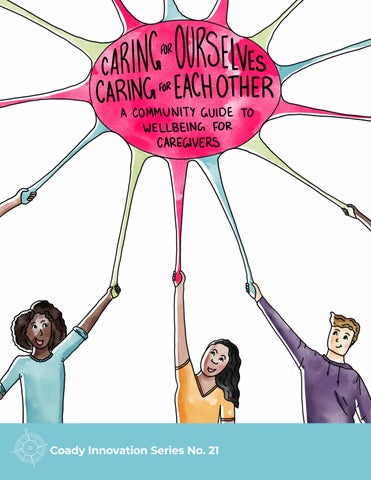
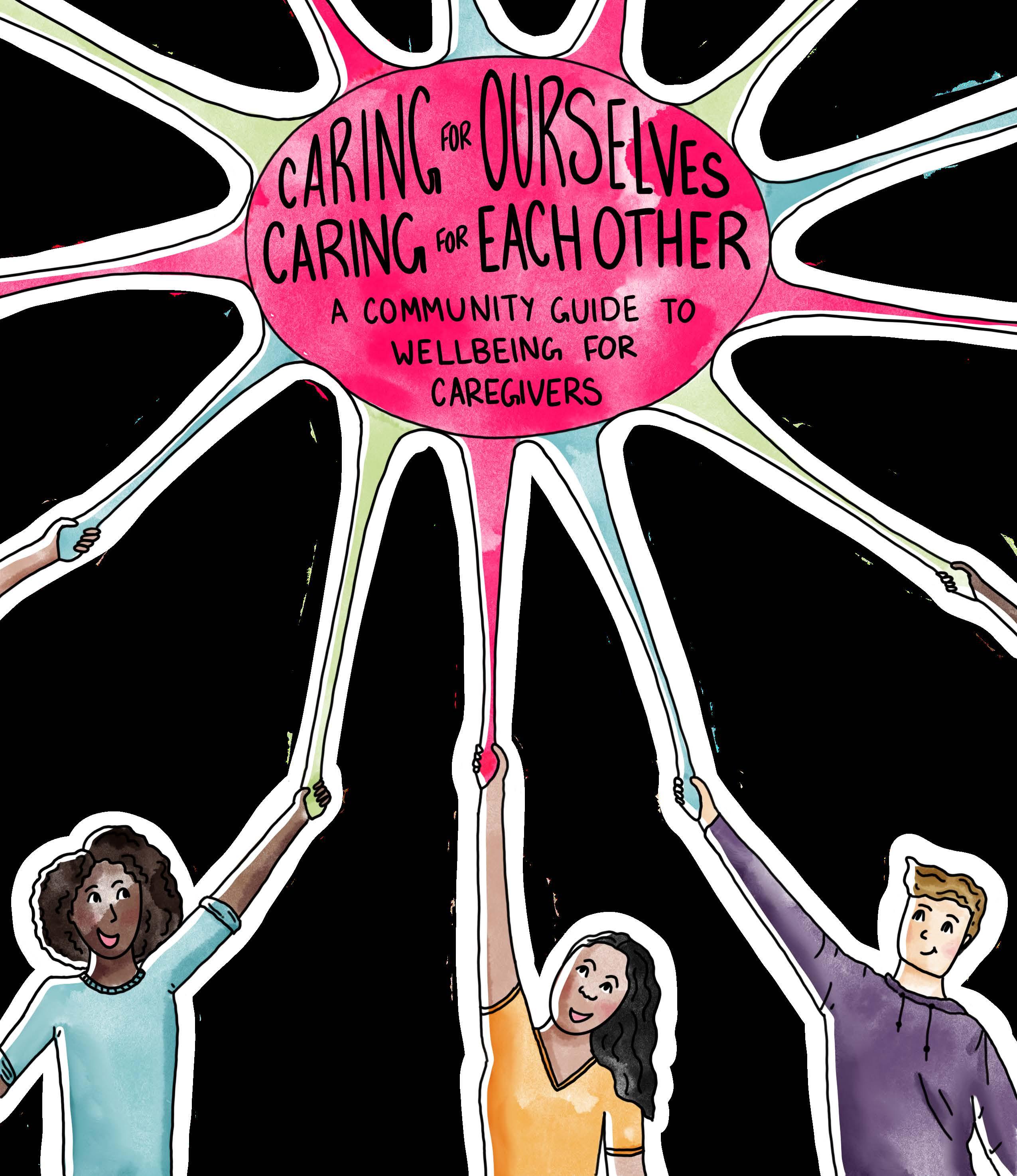
CARING FOR OURSELVES, CARING FOR EACH OTHER:
A COMMUNITY GUIDE TO WELLBEING FOR CARETAKERS
Jennifer DeCoste
Amy
Sedgwick
Wellington Sousa
2026
LAND ACKNOWLEDGMENT & EXPRESSION OF GRATITUDE
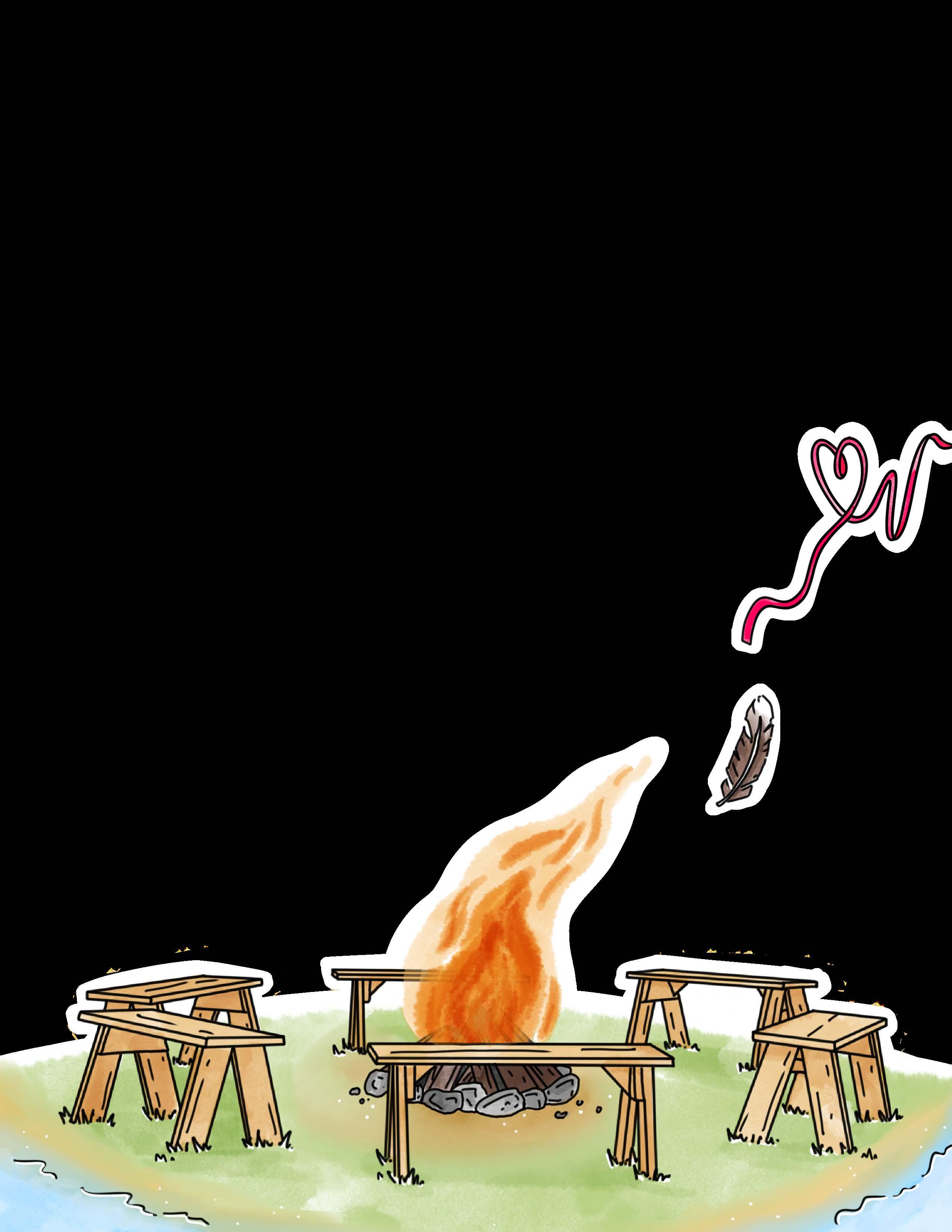
The Care for Caretakers Fellowship took place at FireLoch, a retreat centre south of Antigonish/Nalikitquniejk on Lochaber Lake in Mi’kma’ki. We acknowledge and give thanks to the land, which was an essential part of our healing process. We are deeply grateful to the water, trees, fire, air, and birds which played a central part in our activities.
We’lalin Samqwan. Thank you water, for the gift of a closing blessing and ritual on our final day. For keeping us hydrated with nourishing teas throughout our time together.
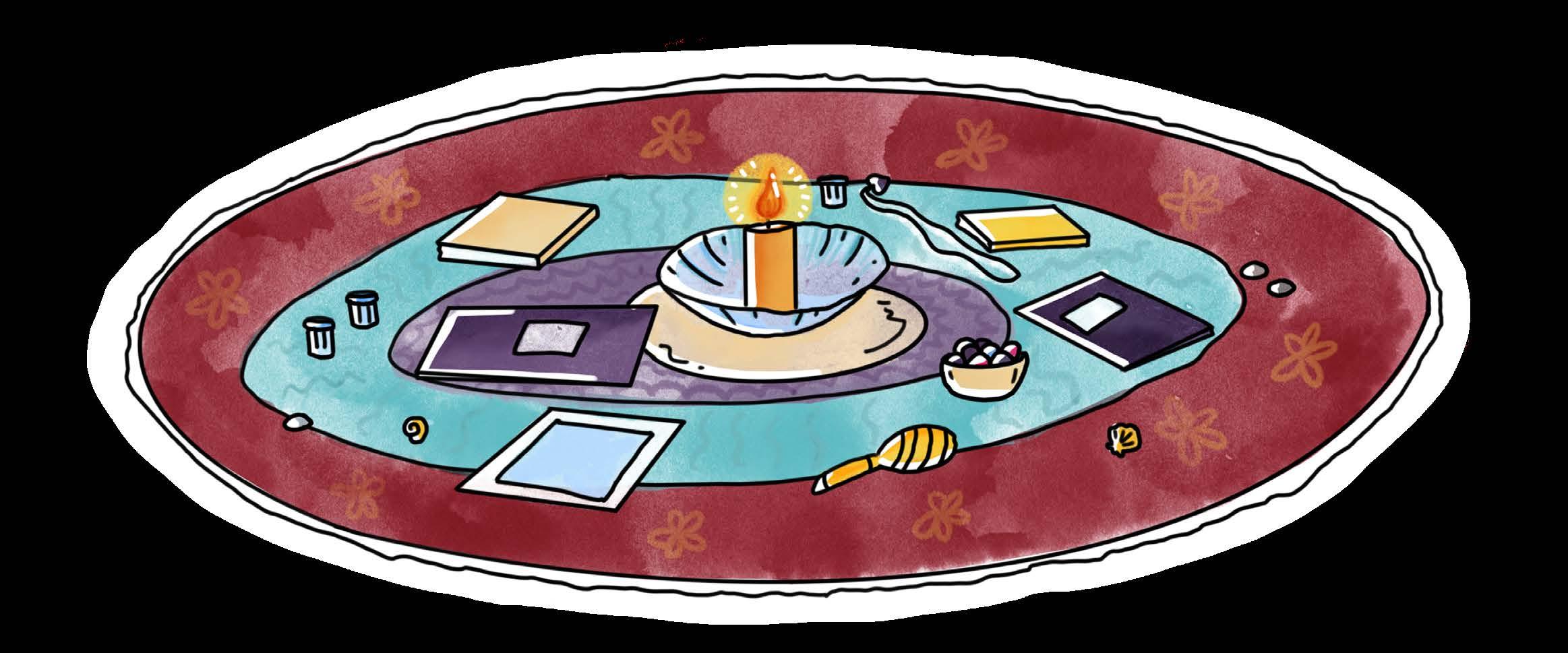
We’lalin Puktew. Thank you fire, for the gift of your flame on our altar, and your warmth in the sauna.
We’lalin Kitpu. Thank you eagle, for gifting us with your presence during our closing circle and song time.
We’lalin Tumkutiaska’qamikt. Thank you, trees, for holding hammocks for us to rest in and bearing witness to our songs. Thank you to our grief tree for holding ribbons to mark our losses.
We’lalin Wksigqamuk. Thank you earth, for holding our bodies and providing nourishing food to sustain us.
Deep gratitude to the Mi’kmaq for stewarding and caring for this land for millennia. May we endeavour to learn from your example and become good stewards of the land.
Amy Sedgwick
WELCOME TO THE COMMUNITY GUIDE TO WELLBEING FOR CARETAKERS
This guide was created by and for people who care for others in their communities. You might be a nonprofit worker, volunteer, grassroots organizer, healer, or support person - someone who shows up for others and weaves a strong social tapestry. We call you a community caretaker
Many caretakers carry a heavy load, and their caretaking work can be both professional and personal. Their contributions, whether voluntary or at work, can be meaningful, but they can also be draining. Burnout is common, and can show up as exhaustion, a sense of being overwhelmed or disconnected, or a feeling of not making a difference no matter how hard you try. And yet, these experiences are rarely talked aboutespecially in rural areas, where support can be harder to find. Caretaking work in community is also often ‘expected’ as a cultural/gender-specific norm, and taken for granted.
This guide is part of a project called the Care for Caretakers Fellowship, which took place in North Lochaber, a rural community in Antigonish County, Nova Scotia. We are glad to share with you the experience of thirteen community caretakers who responded to an invitation for a six month long Fellowship pilot program, all of whom were actively experiencing burnout. Our goal was to learn from each other about the contributing factors to burnout so that we could share what we learned in larger community conversations about how to take better care of caretakers. Rather than focusing on what was broken, we asked: What helps you get through hard times? What supports your wellbeing, even in the midst of burnout? The program launched with an immersive, three day, in-person retreat at FireLoch Gathering Place - a nature-based space dedicated to healing and connection. Over the next six months, participants engaged in ongoing peer support, reflection, and learning in a community of practice, and then reunited for two final days to celebrate their efforts and commit to important next steps.
This guide was created as a shared resource through our participatory research process: a collaborative approach where our community of participants and facilitators co-investigated, learned, and acted on shared concerns12. Through embodied movement, storytelling, peer dialogue, and group reflection, participants reflected on their own lived experiences of wellbeing and identified practices they found helpful in mitigating burnout. What emerged were strengths people were already drawing on: strong social ties, nature, acts of self-care, cultural and spiritual practices, professional support, and mindset shifts. We learned that recovery wasn’t just uniquely personal, but rather, there were common threads: being grounded in connection, place, and everyday moments of togetherness. And so we share these insights with you today, as a gift from our community.
This guide is organized around the strengths and resources that caretakers named as vital to their recovery and resilience. You’ll also find gentle prompts to help you reconnect with what matters to you. It’s not a how-to manual. It is shared as a companion - a reminder that you are not alone, that your wellbeing is worth tending to, and that solutions exist within community to support burnout recovery.
Take what speaks to you. Leave what doesn’t. Return when you need to. This is your space to breathe, reflect, and feel supported - because you deserve care too.
1. Baum, F., MacDougall, C., & Smith, D. (2016). Participatory action research. Journal of Epidemiology & Community Health, 60(10), 854–857. https://doi.org/10.1136/jech.2004.028662
2. Reason, P., & Bradbury, H. (Eds.). (2008). The SAGE handbook of action research: Participative inquiry and practice (2nd ed.). SAGE Publications.
A Note on Care and Support
This resource is intended as a guide, not a clinical or therapeutic tool. It is designed to support reflection, conversation, and awareness, and it does not replace professional medical, psychological, or crisis care. If you or someone you are supporting is experiencing acute distress, immediate safety concerns, or requires urgent support, additional care is available. The following resources can support you, or help you connect others to appropriate support in Canada:
z If you are in immediate danger or need urgent medical support, call 9-1-1.
z If you or someone you know is thinking about suicide, call or text 9-8-8. Support is available 24 hours a day, 7 days a week.
z For emotional crisis referral services and information on other mental health supports, visit the Mental health support: Get help page on Canada.ca (available in English and French).
z For additional support:
o Kids Help Phone (youth and young adults): Call 1-800-668-6868 or text CONNECT to 686868 for 24/7 counselling and support.
o Hope for Wellness Help Line (Indigenous support): Call 1-855-242-3310 or access online chat for 24/7 support.
o Crisis Services Canada: Call 1-833-456-4566 or text 45645 for distress and crisis support.
With care,
Jennifer DeCoste, FireLoch Gathering Place & Retreat
Amy Sedgwick, Wingspan/ Amy Sedgwick OT
Wellington Sousa, Coady Institute, St. Francis Xavier University
WHY START WITH STRENGTHS? A COMMUNITYLED AND NON-CLINICAL APPROACH TO SUPPORT BURNOUT RECOVERY
What is Burnout?
Burnout is recognized by the World Health Organization as an occupational phenomenon, not a medical condition. In the International Classification of Diseases (ICD-11), it is described as “a syndrome conceptualized as resulting from chronic workplace stress that has not been successfully managed. It is characterized by three dimensions:
1) feelings of energy depletion or exhaustion;
2) increased mental distance from one’s job, or feelings of negativism or cynicism related to one’s job; and
3) a sense of ineffectiveness and lack of accomplishment.”3
A Glimpse of Burnout in Community Care
While the ICD-11 frames burnout as a workplace phenomenon, personal experience and research increasingly show that this definition does not fully reflect the experiences of community caretakers - especially those working in nonprofit, grassroots, and rural contexts. For many, the boundaries between personal and professional life are deeply blurred.4 5 Care doesn’t begin and end with a work shift; it stretches across roles (mother, brother, nurse, confidant, colleague, teacher…), spaces (group homes, community centres, homes…), and relationships. It includes holding space for others in moments of grief, answering late-night texts from community members, and managing family responsibilities alongside unpaid or under-resourced care work.
The stories shared in the Care for Caretakers Fellowship project reflect exactly that. Participants describe burnout resulting not only from the demands of their jobs, but from the accumulation of emotional and relational responsibilities - some formal, and many unrecognized even by the participants themselves. Underfunding, shifting priorities, and poor leadership culture in non-profit work were strong contributing factors to burnout, but the sense that community caretakers lacked agency to affect those systemic problems was named as the most significant barrier to wellbeing. One participant spoke of how organizational changes, combined with caregiving responsibilities at home and ongoing community volunteer expectations that blurred the lines with their professional commitments, left them feeling pulled in all directions with no space to rest. Burnout, in this context, wasn’t a clearly defined workplace issue, but a depletion driven by their offering of care and commitment to others, and a sense of loneliness in their efforts to keep everything going.
3. World Health Organization. (2025). International classification of diseases for mortality and morbidity statistics (11th Revision, Version: 2025-01). World Health Organization. https://icd.who.int/browse/2025-01/mms/en#129180281
4. Laurenzi, C. A., Skeen, S., Rabie, S., Coetzee, B. J., Notholi, V., Bishop, J., Chademana, E., & Tomlinson, M. (2021). Balancing roles and blurring boundaries: Community health workers’ experiences of navigating the crossroads between personal and professional life in rural South Africa. Health & Social Care in the Community, 29(5), 1249–1259. https://doi.org/10.1111/hsc.13153
5. Rapp, D. J., Hughey, J. M., & Kreiner, G. E. (2021). Boundary work as a buffer against burnout: Evidence from healthcare workers during the COVID-19 pandemic. The Journal of applied psychology, 106(8), 1169–1187. https://doi.org/10.1037/apl0000951
Why Start with Strengths?
When talking about burnout, it’s easy to focus on what’s not working - what’s broken, missing, or overwhelming. In this project, we chose to begin with what’s already strong. This approach is known as Asset-Based CommunityLed Development (ABCD). It invites us to look at what people and communities already know, do, and have. It’s a way of seeing strength - especially in places and people that are often overlooked as knowledge holders, or where effective solutions are seen to be lacking6 7. Starting with strengths helped create space to look at what was working, and to imagine how those strengths could be built on and shared. This was an extension of care from our community to the community caretakers in the Fellowship, as we worked together to identify, celebrate, and make plans to engage with the most effective tools in our community to directly impact wellbeing.
When we talk about assets in this context, we mean anything that helps people hold on, feel supported, or move toward healing. These things could be personal, relational, cultural, or tied to place. What we tracked during this Fellowship were the things people often don’t label as “resources,” but that make a real difference in a sense of wellbeing in our day-to-day lives. These were not prescribed interventions. By having each participant explore and name what they found helpful, we uncovered our own wisdom. Storytelling from a place of exploring our existing assets reminded us all that the caretakers in this Fellowship were not just recipients of care, they were also sources of great knowledge and strength.
This guide isn’t clinical advice - and it’s not meant to be.
Starting with strengths doesn’t mean ignoring pain or complexity. It means recognizing that recovery is often relational, layered, and likely already happening - even in small, quiet ways. We know that burnout cannot be understood outside of systemic barriers like chronic underfunding and leadership challenges in the non-profit sector8 9. We suspected and then confirmed that individual and community efforts to enhance wellbeing at a personal level work best alongside larger community efforts to name and resolve those known contributors to burnout. In sharing stories about truly impactful interventions, we learned that these efforts need to happen in tandem to be most effective. while caretakers are taking individual and collective action to enhance wellbeing and sustain themselves, community has a role to play in removing barriers to funding and shifting the way that we support the leadership of community focused work - with funding that fills the pay gap, dedicates support for the wellbeing of non-profit teams and volunteers, and recognizes and publicly celebrates the essential work of this sector with shared stories, awards events, that champion the work of the community caretakers. Everyone has a role to play.
Many participants also shared how meaningful it was to talk to a doctor to access therapy or receive medical care. This guide affirms that those professional services are important - and that they work best when they complement individual efforts to tap into existing community resources like time in nature, peer support, and acts of self care.
6. Russell, C., & McKnight, J. (2022). The connected community: Discovering the health, wealth, and power of neighborhoods. Berrett-Koehler Publishers.
7. Mathie, A., & Cunningham, G. (Eds.). (2008). From clients to citizens: Communities changing the course of their own development. Practical Action Publishing.
8. Essien, N. D., Nakato, J. F., Diala, A. K., & Okafor, G. (2025). Burnout and compensation equity in mission-driven workforces: A systemic review of HR interventions in healthcare and nonprofit sectors. International Journal of Management & Entrepreneurship Research, 7(5), 394–403. https://doi.org/10.51594/ijmer.v7i5.1917
9. National Council of Nonprofits. (2023). 2023 nonprofit workforce survey results. Retrieved from https://www.councilofnonprofits. org/files/media/documents/2023/2023-nonprofit-workforce-survey-results.pdf
PATHS TO SUPPORT RECOVERY THROUGH COMMUNITY STRENGTHS
Let’s take a moment to celebrate the practices, spaces, relationships, and resources that community caretakers already draw on to stay well. You might already be doing some of these things - this is a space to recognize what’s helping you and explore what might help even more.
Community and Social Support
In many of the stories shared in the Fellowship, people spoke about the strength they found in relationships with others. Sometimes it was a friend who called at the right time, other times a neighbour who noticed their efforts, a community circle that held space to debrief or celebrate, or a family member who quietly showed up to handle work behind the scenes. These moments offered connection, encouragement, and a simple but powerful reminder: you matter to someone.
Support came through relationships: woven informally, sustained over time, and often built in kitchens, gardens, text threads, and walkable paths.
You may already be part of this kind of care. You may be holding space for others or noticing who holds space for you.
Community and Social Support
Take a moment to reflect: Where are care and connection already showing up in your life right now, and how are they supporting you?
Practicing care: What’s one meaningful gesture you could carry out this week to deepen a connection that matters to you?
Nature and Physical Environments
For many, being in nature offered a sense of calm they could not find anywhere else. Sometimes it was just the act of making time to step away for a few minutes and be outside. The water, trees, wind, and sky offered space to breathe, grieve, and begin feeling whole again.
These moments were not grand nor far away. Some found peace walking along a trail or sitting by the sea. Others returned to gardening, watching birds, or simply standing outside with their face to the sun. These moments were about returning to themselves, to the land, and to what matters most.
Nature offered more than beauty. It brought rhythm, perspective, and permission to slow down. For some, that was where healing began.
You might already have spaces like this in your life. You might visit them often, or only now and then. This is an invitation to notice what those spaces offer you.
Nature and Physical Environments
Take a moment to reflect: When was the last time you felt grounded or at ease in a natural space, and what did it offer you?
Practicing care: What’s one meaningful way you could reconnect with the land or your surroundings this week?
Personal Development and Self-Care
For some, burnout marked a turning point for their lives. It became a much-needed moment to pause, take stock, and slowly begin tending to themselves. This didn’t always mean spa days or shifts to scheduled routines. It meant learning to rest without guilt, to say no without shame, and to start noticing what the body and heart were asking for. Many people named that they needed more time than expected to shift into this space and way of being.
Personal development looked different for everyone. Some found strength in journaling or taking courses. Others needed therapeutic support on a long journey of learning and unlearning. There are many ways to experiment with trusting our own insight again, make lasting change to old patterns, or to simply make space for joy again. Self-care was clearly not a luxury, it was a quiet act of reclaiming time, energy, and attention, and like any substantial shift, it required diligence to stick to new patterns until they became integrated.
If you are already doing small things to care for yourself, or exploring new ways to grow, this is something to recognize and honour. Even small steps matter.
Personal Development and Self-Care
Take a moment to reflect: What’s one way you’ve honoured your own wellbeing recently?
Practicing care: What’s one small thing you could offer yourself this week as an act of rest, growth, or kindness?
Professional and Therapeutic Support
In some stories, reaching out for professional support was a turning point. Whether it was a doctor who truly listened, a therapist who helped untangle the overwhelm, or a care provider who named what was happening - these moments brought relief, direction, and space to breathe.
Support didn’t come all at once. For some, it was a long time before they could access the care they needed. But when they did, it helped them rest, make decisions, and begin to feel more like themselves again.
Professional care didn’t replace community or inner strength, but added to it. Sometimes we need outside support to help us carry what has become too much.
You might be connected to a support system already, or maybe you are still looking. Either way, it’s okay to ask for help. It’s okay to need others.
Professional and Therapeutic Support
Take a moment to reflect: Can you recall a time when professional or therapeutic support helped you feel more like yourself - and what did that make possible?
Practicing care: What’s one supportive step you could take - or consider taking- that would honour where you are and what you need right now?
Mindset and Cognitive Strategies
In some of the stories, people shared how they began to shift the way they saw themselves, their situations, and what they had control over. These mindset shifts didn’t come easily or quickly, but over time, they made space for new ways of thinking, responding, and healing.
This might have looked like letting go of guilt, or realizing that burnout wasn’t a personal failure. It might have meant giving themselves more compassion.
These small shifts often opened the door to bigger changes, like choosing rest without shame, recognizing limits, or simply noticing the good in a day.
You may already be doing this kind of work quietly, in the background. You may be unlearning old beliefs or reframing how you talk to yourself. These are powerful acts of care.
Mindset and Cognitive Strategies
Take a moment to reflect: What’s a shift in perspective or self-talk that has helped you move through something hard?
Practicing care: What’s one thought or belief you’d like to nurture this week that supports your growth or well-being?
Cultural and Spiritual Practices
In some of the stories, people turned to spiritual or cultural practices that brought them comfort, perspective, and a sense of belonging. These moments didn’t always involve formal religion or structured rituals, sometimes it was a return to traditional ceremonies, or a quiet moment with ancestors, or a walk in nature that felt sacred and served the need to be connected to something outside of ourselves.
These practices helped people make meaning in the midst of difficulty. They offered a sense of continuity, connection to something larger, and a language for grief, healing, and hope. For some, spirituality helped restore a sense of self that burnout had fractured.
This kind of connection can be deeply personal. You may already have practices, places, or beliefs that help you feel grounded and held. You may be carrying traditions that support others, too.
Cultural and Spiritual Practices
Take a moment to reflect: What practice, ritual, or tradition helps you feel most connected to yourself, your people, or something greater?
Practicing care: What’s one way you might return to - or deepen - a practice that brings you strength or meaning?
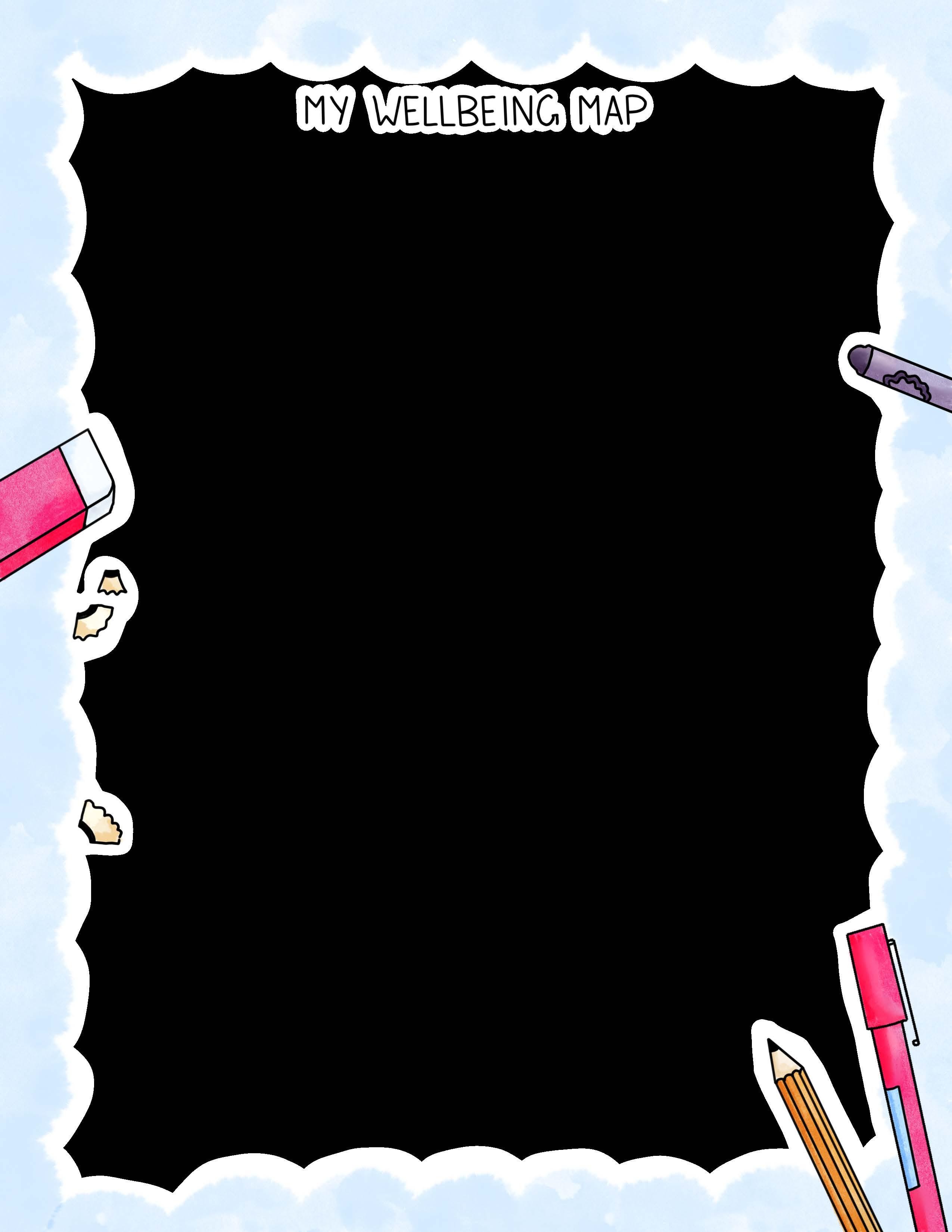
WHAT WOULD YOU ADD? MY WELLBEING MAP
This list of assets we provided came out of the experience during the Care for Caretakers Fellowship, and this is an open-ended list. There are many paths to wellbeing, and no two stories are the same. You carry your own wisdom, shaped by your life, your community, your challenges, and your joys. You may already know what helps you heal, what sustains you, or what sparks your sense of purpose. Or maybe you’re still figuring it out - and that’s okay too.
This is your invitation to name the strengths, supports, and practices that matter most to you. What helps you stay well? What (or who) do you turn to when things feel heavy? What gives you a sense of meaning, direction, or peace?
You might start with questions like:
z What helps me feel grounded when I’m overwhelmed?
z Who helps me feel like I belong?
z Where do I go - physically or mentally - when I need to recharge?
z What values, memories, or practices guide me through hard times?
Try the following in the next page:
The next page is yours to use however you like. You might want to list people, places, or practices that support you. You could draw, doodle, or create a personal “map” of your wellbeing. There are no rules - just an opportunity to reflect, to notice, and to honour your experience.
1. Title the page: My Wellbeing Map
2. In the center, write your name or draw something that represents you. It could be a symbol, a shape, or whatever feels right.
3. Around the center, draw circles or shapes and fill them in with the people, places, routines, values, and inner strengths that support you.
4. You can keep it simple or get creative - add color, lines, or connections between things.
5. You can come back to it anytime and add more as things shift or grow, but this can be a helpful resource to use as a prompt when feeling isolated or wondering where to turn for support.
You carry your own wisdom, shaped by your life, your community, your challenges, and your joys
WHAT WE OFFERED THAT LANDED WELL
During the Fellowship, we discovered that learning can also be a form of rest. Many of our practices blended reflection, creativity, and movement in ways that helped fellows restore emotional resilience and deepen their wellbeing.
One of the most transformative resources was Karla McLaren’s Language of Emotions. This framework helped us see emotions not as problems to be fixed, but as messengers with valuable information. For example, anger can signal that a boundary has been crossed, sadness can invite us to release and rest, and fear can sharpen our instincts. Learning to interpret these signals gave fellows a stronger sense of agency and self-understanding.
To make this work practical, we introduced simple tools such as:
z Emotion charts for naming and tracking feelings across the week.
z Guides for setting healthy boundaries through visualizations and reflection prompts.
z Emotion work inventories to notice when our care for others is nourishing or draining. Alongside this emotional literacy, we engaged in embodied practices. Using InterPlay10 methods, we explored movement, play, and storytelling as ways to express what words sometimes cannot. Singing together became a surprising source of collective strength, while journaling gave quieter space for integration.
These practices reminded us that caring for ourselves and each other requires more than ideas - it needs movement, voice, boundaries, and reflection. Each tool and practice offered new ways to listen deeply: to ourselves, to one another, and to what is needed to sustain long-term care in community.
10. To learn more about InterPlay and its practices, visit www.interplay.org
wellbeing is not simply a private matter, but a collective one
FINAL THOUGHTS
Burnout is often framed as an individual struggle, something to be solved through personal resilience or professional services alone. Yet what we have learned through this fellowship and the participatory research that accompanied it is that recovery is rarely an isolated journey. It is rooted in connection, in community assets, and in everyday acts of togetherness.
The Care for Caretakers Fellowship showed us that the very things that sustain community caretakers in their work - relationships, culture, nature, self-care practices, and shared learning - are also what sustain them in times of stress and recovery. These assets remind us that wellbeing is not simply a private matter, but a collective one. When communities create spaces to acknowledge struggle, share wisdom, and mobilize what they already have, they not only help individuals heal, but strengthen the fabric of collective resilience.
The insights captured here affirm that caring for caretakers is not a luxury, it is essential to building healthier, more vibrant communities. This work begins with recognizing that no one heals alone - our wellbeing is always intertwined with the people and places around us. By leaning into that truth, we can continue to create ripples of change, shifting how burnout is understood and addressed, and reminding us that the road to recovery is one we walk together.
A Thank you Note
First, a thank you, from the bottom of our hearts, to the participants of the 2024 Care for Caretakers Fellowship for their courageous participation in the first offering of this important program. From the beginning, they knew that their experiences would serve not only their own healing but also help shape a path for many others to follow - and the fact that they showed up with such vulnerability, honesty, and deep generosity has enabled us to name assets and next steps to make an important shift in the way we support community caretakers.
Their willingness to share the personal and professional realities of burnout gave language to what so many in the nonprofit sector have felt but struggled to express. By naming fundamental truths, these pilot program participants made it safer for others to do the same, and we envision this program as a pebble dropped into a pond, where the ripples will help shift burnout from a silent, hidden struggle to a visible, shared challenge that deserves care, attention, and collective response. The insight and leadership expressed in this program is already rippling outwardinforming future programs, changing organizational cultures, and inspiring unique community-led efforts to do a better job of caring for community caretakers.
We are also thankful to the Change Lab Action Research Initiative (CLARI) for funding the research component of this fellowship. Their partnership has been invaluable in capturing the learnings from this pilot, ensuring that the voices and experiences of community caretakers inform not only future offerings of the program, but also broader conversations about wellbeing in the nonprofit sector.
And finally, to those who have engaged with this workbook, implementing the tools and taking small steps to identify your own assets for improved wellbeing: thank YOU! It is the cumulative work of everyone taking small steps that will lead to the larger change we all want to see happen for staff, leaders, and volunteers in the