RESULT BRIEF
September 2022
September 2022
Insights from women-led micro-enterprises owned and managed by members of SEWA
The members of SEWA are the poorest of the poor. To provide them with sustainable livelihood opportunities, SEWA has tried to organize them based on their skills into economic organizations wholly owned and managed by workers, thereby integrating the informal sector women workers at all stages of the value chain. While these economic organizations owned and managed by the workers
are self-sustaining and have provided work and income security to hundreds of informal sector women workers, they do not have surplus capital tosustainthemselvesagainstthemarketshockslike the current pandemics.
In the current pandemic, while the global and national supply chains were disrupted and have not resumed fully for over two years, how do
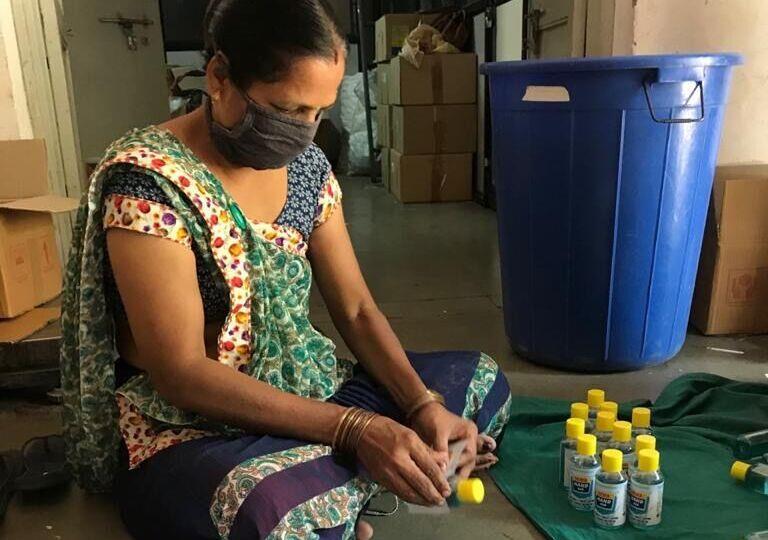
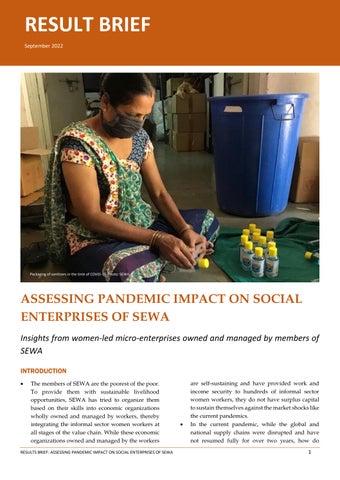
economic enterprises of the poor sustain themselves and continue providing work and income security to all. What kind of repurposing is needed? What kind of planning and risk mitigation strategiesarerequiredforsuchMSMEsofthepoor? Thisresearchprojectaimstostudythisrepurposing of the supply chains by STFC, Gitanjali, RUDI, and Kamla during the present crisis and prepare a risk mitigation strategy for the future. The outcome of this study could also be a vital learning document for other MSMEs and be used to develop a training program.
All social enterprises of SEWA are established based on the felt needs of its members. They are owned and managed by informal sector women workers. The initial investments have come from loans from various sources. STFC and RUDI have used loans and venture capital. Kamla and Gitanjali borrowedworkingcapitalfromsisterorganizations of SEWA and repaid them when they started making income. Surplus income or profit is being reinvested for marketing, training, branding, and skill upgradation.
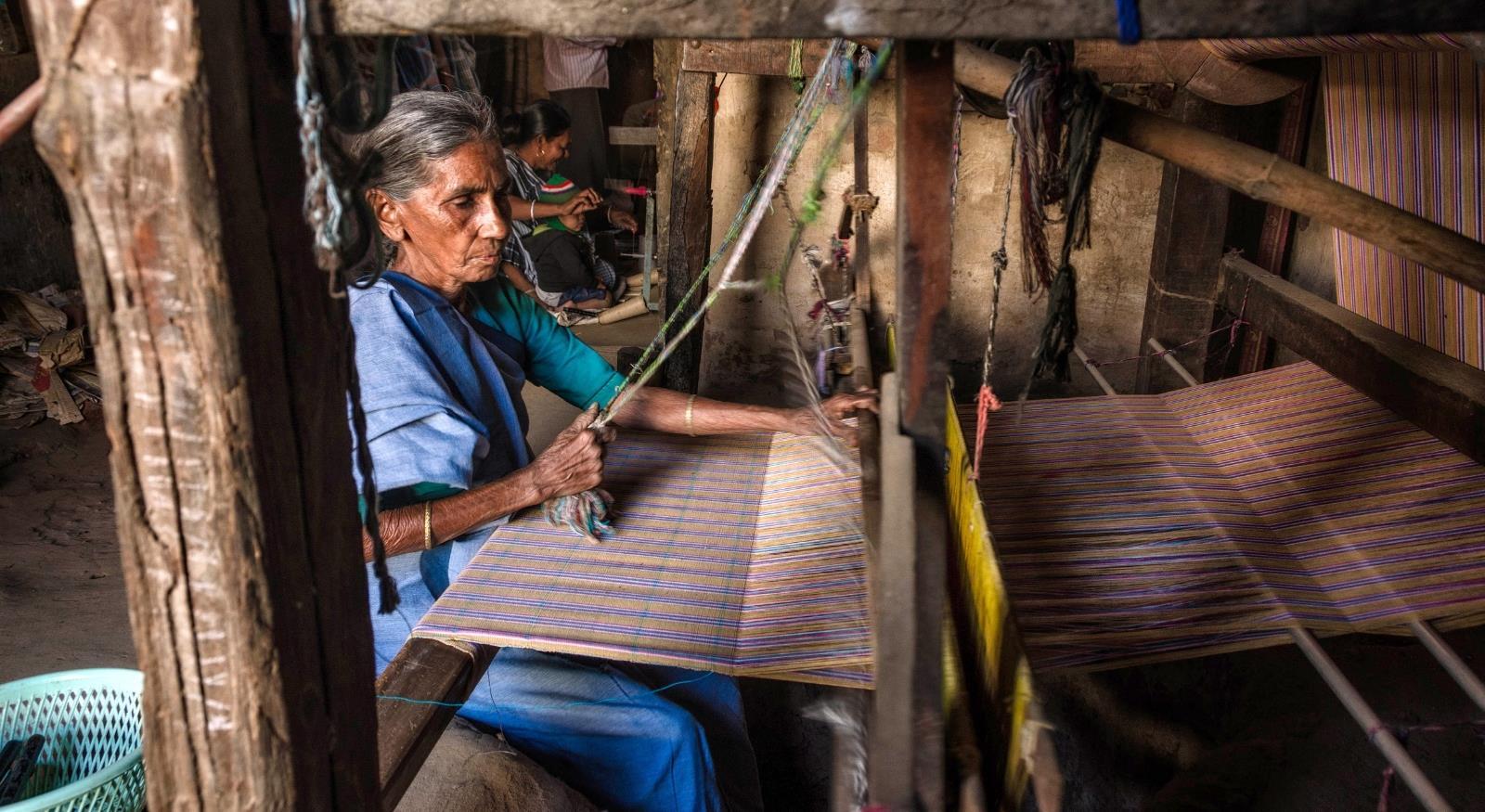
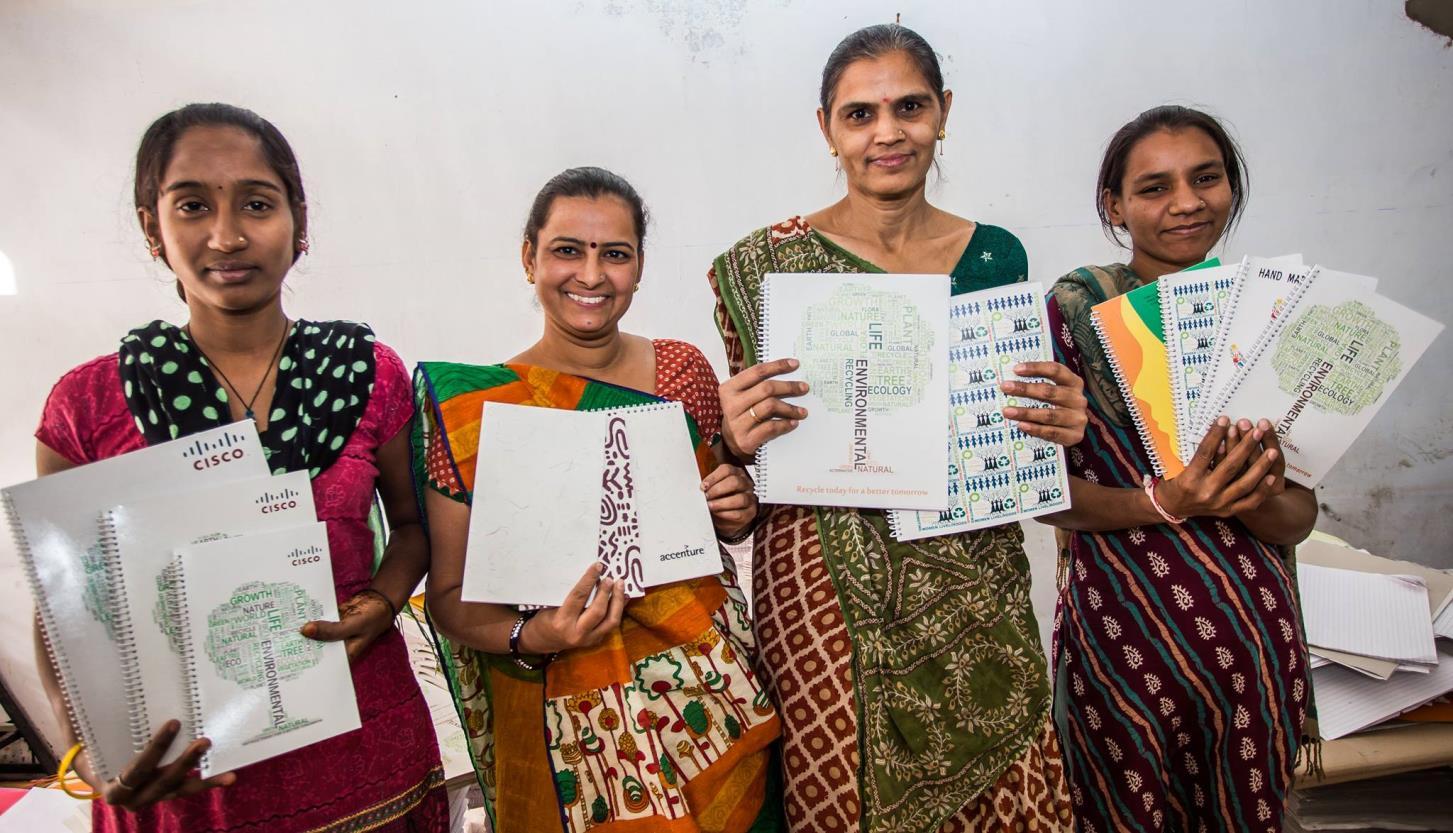
SEWA's social enterprises are less structured and have mostly grown organically. The most innovative feature of these enterprises is the use of women's traditional skills, which were not seen as income-generating activities. For example, embroidery, craft, sewing, cooking, and spice selling were never considered income-generating actions in villages.
SEWAfeelsthatthecontributionsandchallengesof women-led social enterprises are not recognized in
Strong network
Large membership base
the economy. The authorities and investors do not understand the number of risks women take in establishing, managing, and sustaining a social enterprise. Women enterprises face market risks and risks arising from climate change and natural shocks. Innovative financing and risk management approaches must transfer these risks to the larger economy. Lack of incentives, affordable credit, and stringent regulatory compliance are significant barriers to growth. There is no tax incentive from the Government for women-led social enterprises in India.
At SEWA, members do not just remain workers or membersbutbecomeownersandmanagersoftheir trade. Currently, SEWA has more than 110 cooperatives and three economic enterprises owned and managed by its women members. The collective impact of SEWA's social enterprises touches many aspects of working women's lives, such as income, health, social security, child-care, and most importantly, recognition and self-respect. As a result, SEWA is achieving social impacts such as preservation of traditional crafts and skills and women empowerment and economic effects such as sustainable livelihoods, income generation, and job creation. For example, up to 90% of the income generated at Kamla is utilized to provide work and income to women food processors, farmers, and other women-run microenterprises.
The social enterprises of SEWA have suffered substantial financial losses in the ongoing pandemic. Repurposing the supply chain was most challenging for SEWA; strategizing, acquiring new skills,andfindingmarketstooktimeandexhausted whatever limited savings and contingency amount
Quality products at reasonable rates
Ownership
Ability to adapt, scale-up and scale-down operations
Large market within SEWA
Digitization
CDR funding
Collaborations with government schemes and projects
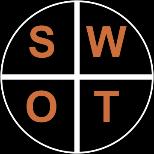
Lack of marketing skills
Low recognition as brand
Limited spending on advertisements
High staff-turnover ratio – specially with freelancers and designers.
Low use of technology
Competitors,
Sustainability (Economic slow-down, natural shocks – disasters and Pandemic)
Unpredictable nature of financial support (FCRA Amendments)
these enterprises had. In addition, most women workers experienced increased mental stress, anxiety, and isolation during the lockdowns and restrictions. SEWA members are owners, managers, and primary consumers of products and services offered by SEWA enterprise. Thus, a sense of ownership and belongingness is very high. Impacts of COVID-19 will be felt for months and years; thus, women-led social enterprises need long-term blended recovery support and planning assistance.
Rudi has a strength of 4000 Rudibens spread across Gujarat, Uttar Pradesh, and Maharashtra. Rudi is training SEWA members from the states of Rajasthan, Assam, and Jammu & Kashmir to establish a company base through Rudibens. The company plans to expand the number of Rudibens to 10,000 and their current income levels from 6,000 to 10,000. Rudi's financial target is to increase the turnover from 20 to 25 crores. STFC is planning to launch fabric with block printing for house accessories such as bedsheets, curtains, and pillows.Anewlineofbrownpaperofficestationery materials is being designed and produced at Gitanjali.
It took five years for Kamla (Bodakdev) to be a profitable social enterprise. However, the Kamla
team expects its Bakery and Canteen facility to generate profits within two years. Furthermore, Kamla plans to strengthen and expand the capacities of its centers in Sanand, Ahmedabad, Patan,andMehsanatocreatemoreemploymentfor women. Kamla also aspires to sell food products at MetroStationsshortly.Currently,SEWAisrevising the business plans of its social enterprises to price in market challenges caused by the pandemic.
There are several distinct implications for womenled social enterprises in India. First, the risk from women-led social enterprises is exceptionally high as their awareness of risks and management is less. Also, women are more vulnerable and likely to be affected by natural and market shocks. Second, their investment needs are diverse and long-term. Thus, blended support is more suitable for womenled enterprises. Third, most women-led enterprises have participatory governance structures, making decision-making need-based and demand-driven but slow. Forth, women-led enterprises in India are exposed to multiple risks and lack risk managementcapacities.Fourth,theyareleastlikely to recover, and the speed of recovery is slow. Fifth, there is a lack of recognition and support from the Government; incentives are few, and the burden of regulatory compliance is much more.
We recommend the following course of action for SEWA, the Government, and donors.
1.1 To SEWA
Social enterprises of SEWA have a shallow carbon footprint. Therefore, the growth or expansion strategy should promote a green economy.
SEWA must find more institutional buyers as high-margin clients and expand online sales within India.
SEWA should launch a national federation of social enterprises for training and investment. SEWA is capable of providing both leadership and strategic direction.
1.2 To the Government
The Government must introduce a seven-year moratorium on compulsory registration, credentials to avail credit, and paying taxes to incentivize women-led enterprises.
Shape policies to procure goods and services from women-led social enterprises for various schemessuchasthe Public DistributionSystem (PDS) and Anganwadies. "The Ministry of MSME's Public Procurement Policy (2018) mandates that every Central Ministry/Department/PSUs should target 25
1 Srinivas G. Roopi. 2021. Incentivize procurement from women-owned businesses through tax breaks and subsidies: IWWAGE-TQH report suggests. ETGovernment.com.
percent of their procurement from the MSEs sector, of which 3 percent must be from the women-owned MSEs. This can be increased; incentivize the private sector to procure from women-owned businesses through tax breaks and subsidies."1
A policy framework is needed to recognize distinct contributions made by social enterprises.
1.3 To Donors
Launch a separate venture capital or funds targeting women-led enterprises in India.
Promote the concept of blended finance – a combination of grant, loan, capacity building, anduseoftechnology.Theinvestmentcouldbe directly made in SEWA's effort to establish SEWABazzarintheformof blendedfinanceby COADY and other donors.
Commission a national scoping study of social enterprises in India, capturing issues, challenges, impacts, and opportunities.
SEWA is consolidating its micro-enterprises under SEWA BAZZAR; donors must consider offering technical know-how and financial support for at least three years.
https://government.economictimes.indiatimes.com/news/ governance/incentivize-procurement-from-women-ownedbusinesses-through-tax-breaks-and-subsidies-iwwage-tqhreport-suggests/87801789