The W. TOLIVER BESSON Collection
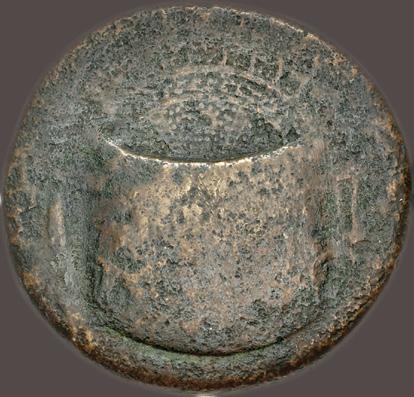
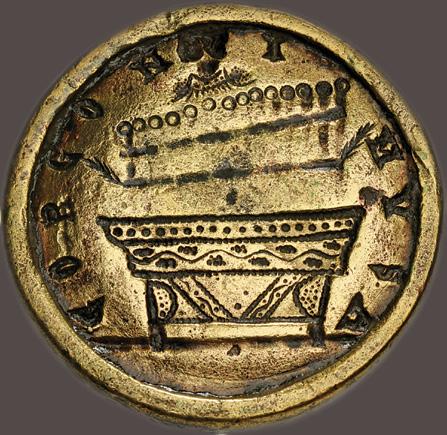
Keystone Auction 17 July 22, 2026
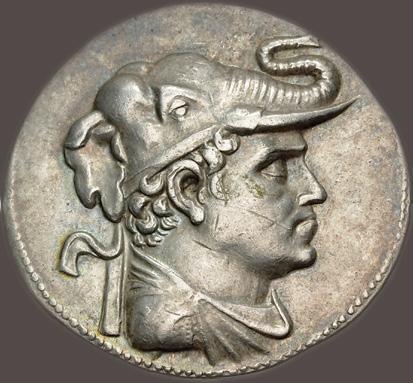
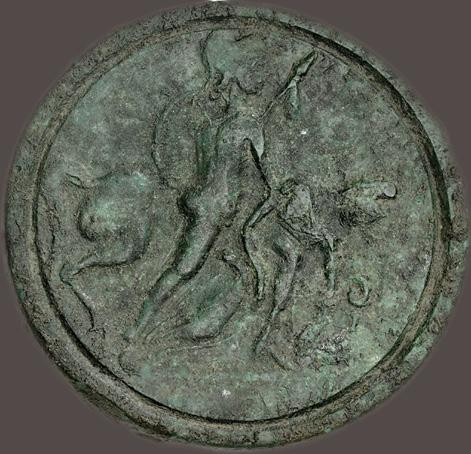
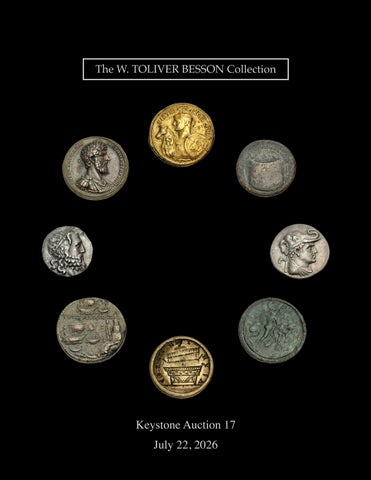
Keystone Auction 17 July 22, 2026
The W. Toliver Besson Collection
22 July 2026
10:00 AM EST
Featuring:
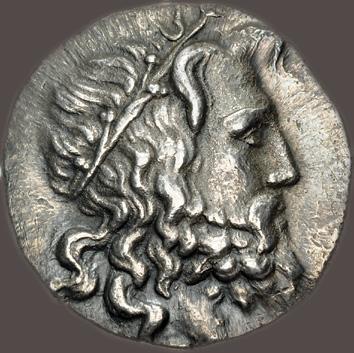
Mark Antony & Cleopatra Tetradrachm
Published Acropolis of Pella Bronze
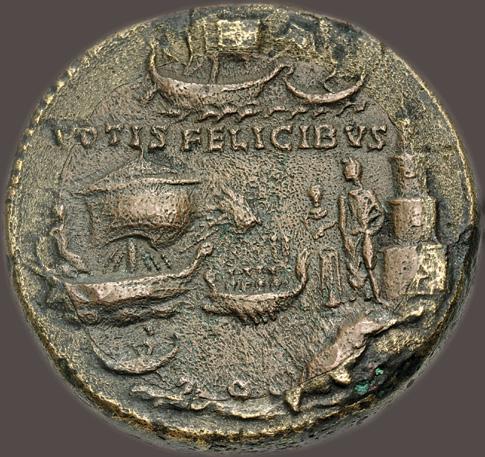
An Affordable Colosseum Sestertius
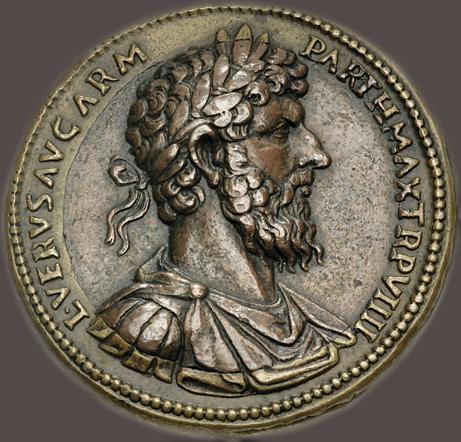
Impressive Bimetallic Medallion of Commodus
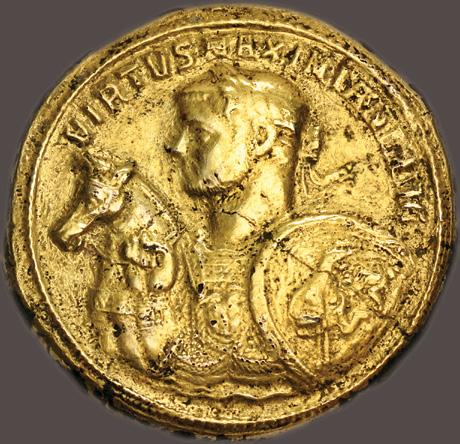
Maximianus Tres Monaetae Medallion
An Important Selection of Roman Contorniates
Extremely Rare Struck Bimetallic Cavino
US Office
PO Box 479
Lancaster, PA 17608-0479
Phone (717) 390.9194 • Fax (717) 390.9978
California Office
CNG Authorized Partner
4040 Macarthur Blvd., Suite 307
Newport Beach, CA 92660
Phone (949) 932.0500

UK Office
De Morgan House, 57-58 Russell Square London WC1B 4HS, UK Phone +44.20.7495.1888 Fax +44.20.7499.5916
EU Office
Noordeinde 64a 2514GK, The Hague, NL Phone +31.851.301.541
Proof Polierte Platte
Mint State/Uncirculated Stempelglanz
Extremely Fine (EF) Vorzüglich
Very Fine (VF)
Sehr Schön
Flan Bruni Fondo Specchio
Fleur de Coin Fior di Conio
Superbe Splendido
Très Beau Bellissimo
Fine Schön Beau Molto Bello
Good/Fair Gut
AD Anno Domini
Æ Bronze
Bien
Bello
BE Bithynio-Pontic Era IY Indictional Year
BI Billon
MBS Mail Bid Sale
AE Actian Era CE Common Era mm Mintmark
AH Anno Hegirae
AR Silver
AV Gold
Cf. Confer (compare) PB Lead
c/m Countermark p. Page
CY Civic Year (Era) pl. Plate
BBS Buy or Bid Sale EL Electrum RPE Roman Provincial Era
BC Before Christ FPL Fixed Price List RY Regnal Year
BCE Before the Common Era g Gram
SE Seleukid Era
See Bibliography on our website, www.cngcoins.com, for a complete list of reference abbreviations.
Beneficiary: Classical Numismatic Group, Inc.
US$ Account:
Northwest Bank
€ Account:
£ Account:
HSBC Bank plc HSBC Bank plc
100 Liberty St., Warren PA 16365 60 Queen Victoria Street, London EC4N 4TR 60 Queen Victoria Street, London EC4N 4TR
Account Number: 243374218
ABA Number: 7216021910
BIC or SWIFT: NWBIUS33
Account Number: 84309198
Sort code: 40 12 76
IBAN: GB82HBUK40127684309198
BIC or SWIFT: HBUKGB4B
Account Number: 71170910
Sort code: 40 11 60
IBAN: GB45HBUK40116071170910
BIC or SWIFT: HBUKGB4B
Classical Numismatic Group, Inc. is a United States limited company. Auction license number AY002406. United Kingdom Registration No. FC035702, Branch No. BR020787.
All lots in this auction were in the possession of CNG in CNG’s Lancaster, Pennsylvania office no later than 27 May 2026. This information is provided for the protection of buyers in the event that US import restrictions are introduced subsequent to that date on any of the types of coins that are included in this auction.
Coins that have been encapsulated (“slabbed”) by a grading and/or authentication service may not be returned for any reason, including authenticity, if they have been removed from the encapsulation (“slab”).
CNG would like to thank Jan Moens (jan.moens@bvdmc.com) for creating and providing the Numismatica Medievalis font used in this sale.
This is a public and Internet auction conducted by Classical Numismatic Group, Inc. (CNG). Bidding in the auction constitutes acceptance of the following terms:
1. The property listed in this catalogue is offered for sale by CNG for itself and as agent for various owners and other consignors. We reserve the right to reject any bid, to determine the opening price, to set bidding increments, to vary the order of the auction, to reopen bidding in the case of a dispute, to withdraw any lot, to bid on behalf of CNG, to bid on behalf of the consignor, to permit the auctioneer to bid on his own behalf, and to permit the consignor, where reserves have been agreed, to bid on his own lots. CNG may loan or advance money to consignors or prospective bidders, and may have an interest other than commission charges in any lot. CNG may bid on its own account as an “insider” with information not available to the public.
2. A buyer’s fee will be charged to all successful bidders as follows on the hammer price:
A. 25% for written, fax, email, and telephone bids.
B. 22.5% for floor bids placed in person at the auction and electronic bids placed directly on www.cngcoins.com. All written bids, email bids, nonlive telephone bids, live internet bid registrations, and live telephone bid registrations must be received before 5PM Eastern time on the day before the auction begins. CNG reserves the right to change the format of www. cngcoins.com at any time.
3. All coins are guaranteed genuine. Attribution, date, condition, and other descriptions are the opinion of the cataloguer, and no warranty is expressed or implied. Please note that an auction sale is not an approval sale. Grading is subjective and the opinion of the cataloger. The photographs and videos (when available) of each coin provide additional information for the bidder and supplement the written description found in the catalog. It is the responsibility of the bidder to view photographs and videos and draw their own conclusion as to the quality of the coin they are bidding on. CNG expressly makes no guarantee that our grade and coin descriptions will match those provided by others. No refund will be provided due to grade or “adjectival” comments by a third-party grading service if a coin is submitted for grading after the sale. Any claim of lack of authenticity must be made in writing by the original purchaser immediately after discovery that an item is not authentic, and upon making such a claim the original purchaser must immediately return the lot to CNG in the same condition as at the time of the auction. Any coin returned as “not authentic” which CNG feels is genuine will be submitted to the International Association of Professional Numismatists Authentication Bureau (IBSCC) for final decision of authenticity. No refund shall be made on such coins until the IBSCC makes their determination. This includes coins that have been submitted to a third-party grading service after the auction. Coins that have been previously encapsulated (“slabbed”) by a grading and/or authentication service may not be returned for any reason, including authenticity, if they have been removed from the encapsulation (“slab”). If payment is made by credit card, rights of return are governed by these Auction Terms which supersede any rights of return promulgated by the card issuer. Estimates are intended as a guide only and not as a statement of opinion of value.
4. Invoices are due and payable immediately upon receipt. Interest and late fees of 2.0% per month, or at the highest rate permitted by law, whichever is less, from the date of the auction, shall be payable on invoices not settled within 30 days of the auction date. Payment may be made by check or bank wire. Credit cards (Visa or MasterCard) will be accepted; credit card payments will not be accepted more than 14 days after the sale date. Payment by credit card for printed sale auctions will be charged a 2.5% handling fee. Payment by check must be made in either US dollars ($) drawn on a US bank or British sterling (£) drawn on a British bank. All successful bidders outside North America and the United Kingdom will be charged an additional $20 fee for bank charges that are the result of international wire transfer fees; this fee will be deducted for credit card or check payment as described above. CNG may reduce or compromise any charge or fee at its discretion.
5. Bidders not known to us must provide us with satisfactory credit references or pay a deposit as determined at CNG’s discretion before bidding. Minors are not permitted to bid without written consent of a parent guaranteeing payment. CNG may require payment in full from any bidder prior to delivery of lots. Title does not pass until lots are paid in full. Upon receipt of lots, the buyer assumes full responsibility for loss or damage. Delivery to the buyer’s address of record shall constitute receipt by the buyer regardless of the identity of the person accepting delivery.
6. Estimates are in U.S. dollars ($US) and bids must be in even dollar ($) amounts. CNG will execute mail bids on behalf of mail bidders. Subject to reserves and opening prices, mail bids will be executed at one bidding increment (approximately 10%) over the next highest bid. In the case of identical bids, the earliest bid wins. A mail bid has priority over an identical floor bid. Bid by lot number. No lots will be broken. Bidders are responsible for errors in bidding. Check your bid sheet carefully.
7. All lots are subject to reserve unless otherwise indicated.
8. Bidders personally guarantee payment for their successful bids, including bidders executing commission bids from other parties and bidders representing corporations or other entities. Buyers accepting commission bids from other parties do so at their own risk and remain responsible for payment under these Auction Terms.
9. At the conclusion of bidding for each lot, the sale contract is concluded and the successful bidder becomes liable for immediate payment under these Auction Terms. In the event a successful bidder fails to make full payment within 30 days of the auction date, CNG reserves the right either: (a) to require payment as provided under these Auction Terms; or (b) to deem the sale incomplete and to re-auction the material, in which case the successful bidder agrees to pay for the reasonable cost of such a sale and also to pay any shortfall between the re-auction price and the successful bidder’s purchase price. CNG reserves all rights that it is entitled to under the Pennsylvania Uniform Commercial Code, including the right to offset any sums due from a successful bidder against any future consignment or purchase or monies or goods in possession of CNG.
10. Sales tax, postage, handling and insurance are the responsibility of the buyer and are added to all invoices where appropriate. For buyers in the United Kingdom, CNG may import lots into the United Kingdom prior to shipment and charge buyers the import Value Added Tax. On any tax not paid by the purchaser which should have been paid, even if not invoiced by CNG, the purchaser agrees to pay the same on demand together with any interest or penalty that may be assessed. It is the responsibility of the buyer to comply with foreign customs and other regulations.
11. Prices realized are published after the sale and are mailed with CNG’s next publication. Prices realized are also posted after the sale on CNG’s web site: www.cngcoins.com
12. Bidders hereby waive any claim for incidental, consequential or exemplary damages arising from this auction. The sole remedy that any participant in the auction shall have for any claim or controversy arising out of the auction shall be a refund, without interest, of all or part of the purchase price paid by the participant.
13. All rights granted by CNG or otherwise available to bidders and purchasers, under these Auction Terms or otherwise, are personal and may not be assigned or transferred to any other person or entity, whether by operation of law or otherwise. No third party may rely on any benefit or right conferred by these Auction Terms. Bidders acting as agents must disclose the agency in writing to CNG prior to the auction; otherwise rights are limited to the agent and are not transferable to the undisclosed principal.
14. Any dispute regarding this auction shall be governed by the laws of Pennsylvania and shall be adjudicated only by the Lancaster County Court of Common Pleas or the U.S. District Court for the Eastern District of Pennsylvania; all bidders submit themselves to the personal jurisdiction of these courts for this purpose, consent to service of process by registered or certified mail, and waive any contrary provisions of Articles 14 or 15 of the French Civil Code and any similar provisions in any jurisdiction. All bidders consent to the confidentiality of consignors’ identities and waive any right to require disclosure of the name of the consignor or owner of any auction lot, whether such right is based on New York GOL §5-701(a) or any other provision in any jurisdiction. In any dispute regarding this auction, the prevailing party shall be entitled to recover its reasonable costs and attorney fees.

Mike Gasvoda President

Victor England Consulting Director


Steve Lloyd Numismatist Islamic Specialist

Dave Michaels Manager Shows & Consignments

Aleeza Brown Numismatist Consignments

Consulting Director

Operations

Kan Liu (Vera) Manager Consignments

Caroline Holmes Numismatist Consignments

Marten Scherpenzeel Numismatist Consignments



Lance Hickman Vice President Sales

Bill Dalzell Vice Presisdent Numismatics

Julian Okun-Dubitsky Numismatist Consignments

Miles Thompson Numismatist Consignments

Oliver Reece Numismatist Consignments British & World Coinage

Katie Vint Numismatist Consignments

Angelien Ponsioen Numismatist Consignments





Cataloging











Accounting

Gasvoda Administrative Assistant
A.J. Gatlin IT Consultant
Tim Wilkes Islamic Consultant
John W. Yurchak Printing Control
Jeffrey B. Rill Auctioneer PA License No. AU006206
Brian Callahan Auctioneer PA License No. AU005870
With the CNG Bidding Portal, you can:
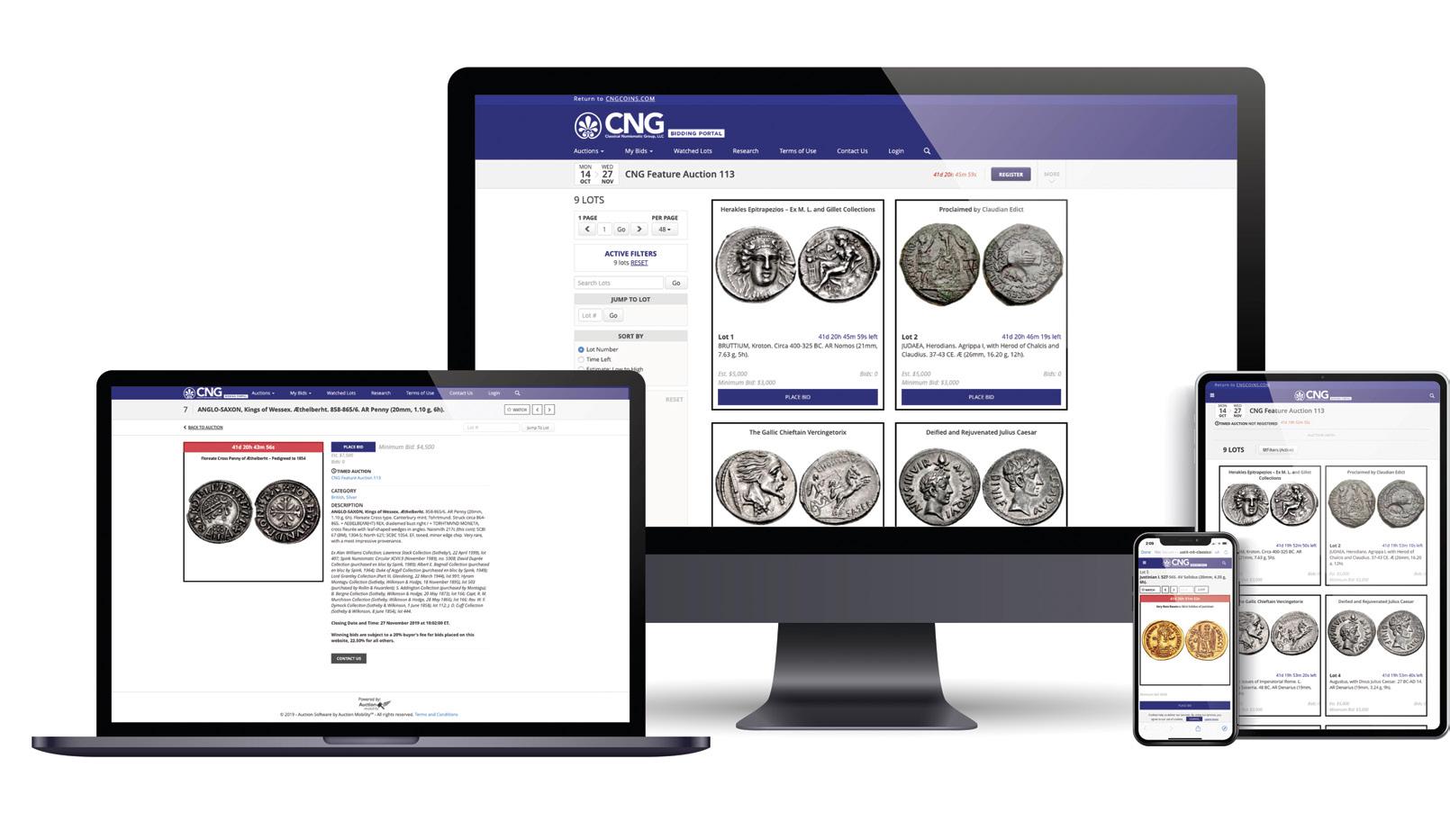
• Log on and bid at any time at auctions.cngcoins.com
• View the lots, follow the bidding, and see hammer prices as they are sold
• Hear and see the auctioneer live
• Enjoy all the advantages of an auction room bidder to win your favorite lots
To bid live in this Feature auction:
• Visit our new Bidding Portal before the auction at auctions.cngcoins.com
• Register online with your email address and a password
• Once approved, you may place pre-bids up until the moment the lot opens in the auction room
• Login to join the auction and participate live
Please Note
• If you have not already registered for our bidding platform, you must create a new registration at auctions.cngcoins.com/register. Your old cngcoins.com handle and password will not allow you to log on or bid.
• You must register to bid before 5PM EST on Tuesday, May 19, 2026
• All lots won through the CNG Bidding Portal will be subject to a 22.5% buyer’s fee






Auction lots may be viewed at our Lancaster Office from June 24 – July 21, 2026, by appointment only. Lancaster Office Hours: 10 AM - 5 PM (Monday - Friday).
Auction lots will be available for viewing at the Summer FUN Show, 9-11 July, at the Orange County Convention Center, 9800 International Drive, Orlando, FL.
Enlargements of all single lots and selected multiple lots may be viewed on the internet at

We are sorry, but photographs of individual coins in multiple lots cannot be provided.
This sale will be conducted live online from our Lancaster, PA Office
Lots will be mailed from our Lancaster, PA office subsequent to the sale
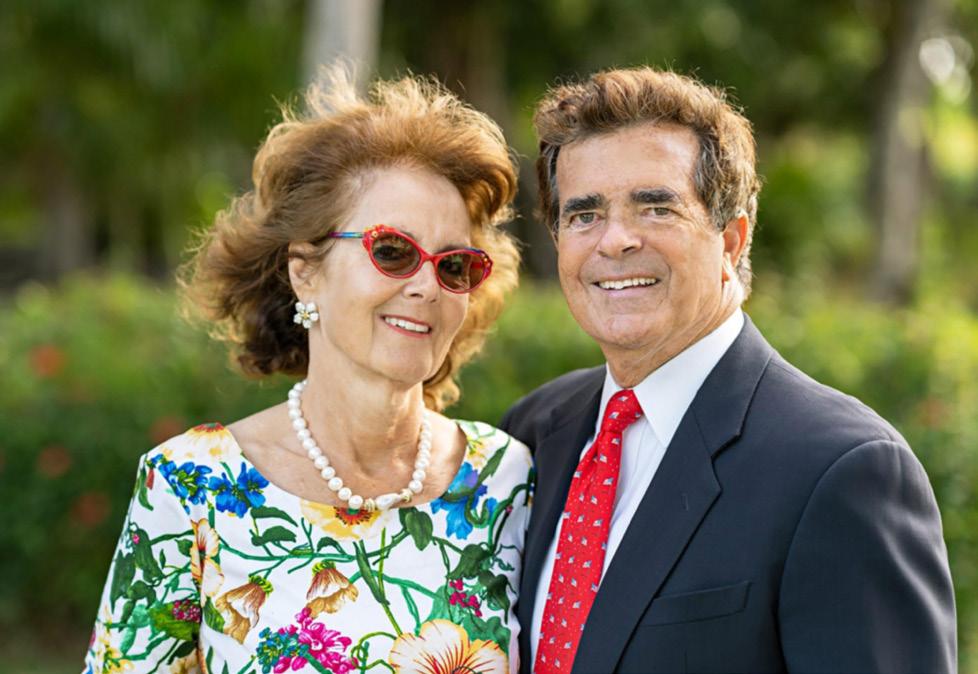
CNG is proud to present the W. Toliver Besson Collection. As a youth, Tollie spent time in France, where his father General Frank S. Besson Jr. (see lot 359) was stationed. He began collecting following a visit to a Paris flea market, where he convinced his mother to buy him a Roman bronze coin for his twelfth birthday. Over the years, he collected various Greek, Roman, and world issues. In 2020, he sold parts of his early collections with CNG, to allow him to specialize further and focus more on contorniates and other late Roman medallions.
The collection offered here represents the culmination of these efforts. Large and impressive bronzes from the Greek through Byzantine periods present collectors with a bounty of coins to bid on. Roman provincial medallions are particularly well represented, with many of the pieces listed and featured in RPC. The same theme is repeated in the Roman Imperial section, with sestertii and medallions for collectors of all levels. The highlight of the sale is the core collection that Tollie has focused on over the past several years, the Roman contorniates. Thirty-two lots depicting rare mythological types, victorious athletes and charioteers, and even ancient musicians make this the largest group that CNG has ever presented. The sale is rounded out by a group of Renaissance issues by Giovanni Cavino and other ancient artists copying ancient Roman sestertii, medallions, and various ancient themes.
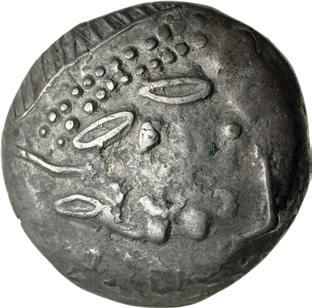
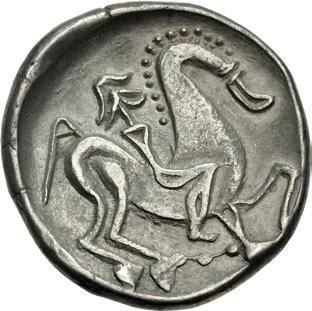
1. EASTERN EUROPE, Imitations of Philip II of Macedon. 2nd century BC. AR Tetradrachm (25.5mm, 13.24 g, 5h). Kinnlos (Chinless) type. Mint in the central Carpathian region. Celticized laureate head of Zeus right, without chin / Celticized horseman right; line with three pellets below. OTA 244/14; Lanz 562; KMW 1150-53; CCCBM I 52-54. Toned, minor marks. Near EF. An excellent specimen. ($300)
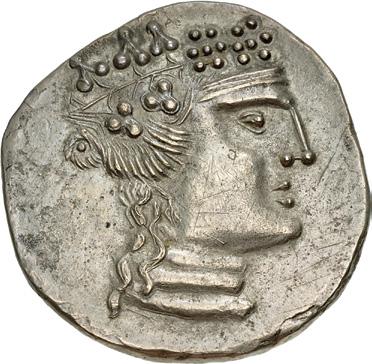
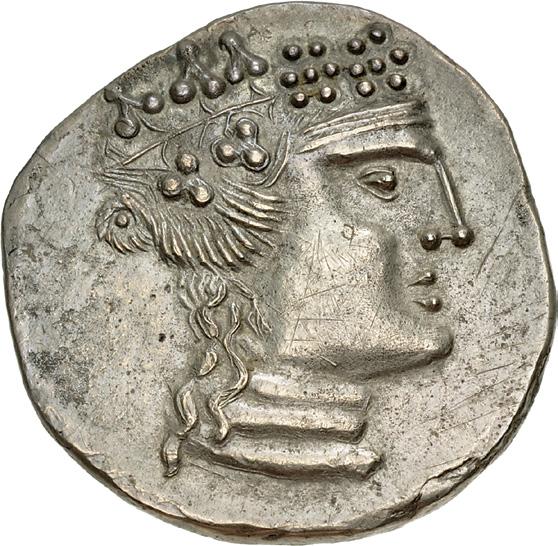
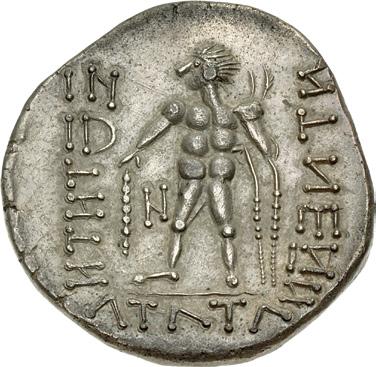
2. EASTERN EUROPE, Imitations of Thasos. Circa 90-75 BC. AR Tetradrachm (30.5mm, 16.67 g, 11h). ‘Auflösung der Legend’ (Degraded legend) type. Mint in the lower Danube region. Head of young Dionysos right, wearing ivy wreath / Herakles standing facing, head left, holding club in right hand, lion’s skin draped over left arm N to inner left. Lukanc Ve groupe, –; OTA Klasse III/3; Lanz 971-3; KMW –; CCCBM I –. Toned, minor marks. EF. ($500)
Ex Goldberg 80 (3 June 2014), lot 3234.
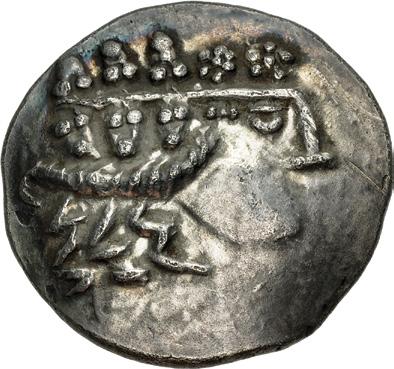
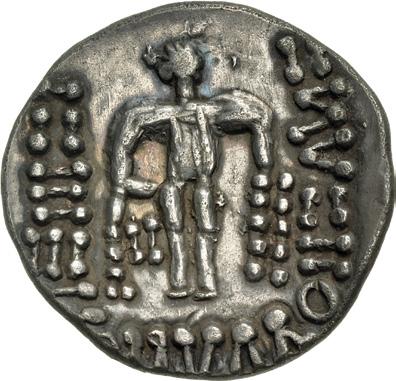
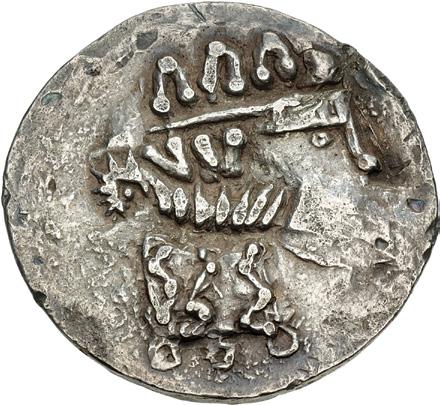
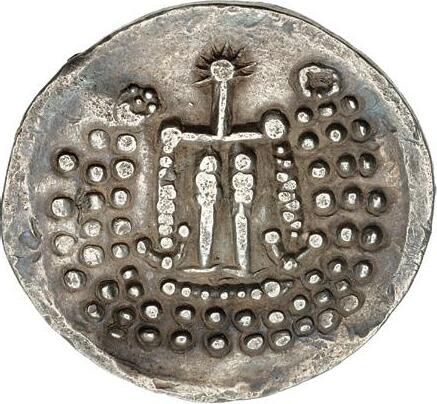
3. EASTERN EUROPE, Imitations of Thasos. Circa 90-75 BC. AR Tetradrachm (32mm, 16.31 g, 12h).
‘Rippenlegende’ (Ribbed legend) type. Mint in the lower Danube region. Head of young Dionysos right, wearing ivy wreath / Herakles standing facing, head left, holding club in right hand, lion’s skin draped over left arm; II to inner left. Lukanc VIe groupe, –; OTA Klasse IV/4 var. (rev. right); cf. Lanz 981; cf. KMW 1524-5; cf. CCCBM I 234. Toned with hints of iridescence, minor marks, bent flan. Near EF. ($300)
Purchased from Barry Rightman, 18 July 2012.
4. EASTERN EUROPE, Imitations of Thasos. Circa 90-75 BC. AR Tetradrachm (36mm, 15.36 g, 12h).
‘Punktelegende’ (Dots legend) type. Mint in the lower Danube region. Head of young Dionysos right, wearing ivy wreath / Herakles standing facing, radiate head left, holding club in right hand, lion’s skin draped over left arm. Lukanc VIIe groupe –; OTA Klasse V, 12; cf. Lanz 989; cf. KMW 1530; CCCBM I S233. Toned, some roughness, scratches. Near VF. ($150)
Ex Triskeles 15/VAuctions 318 (15 December 2015), lot 4.
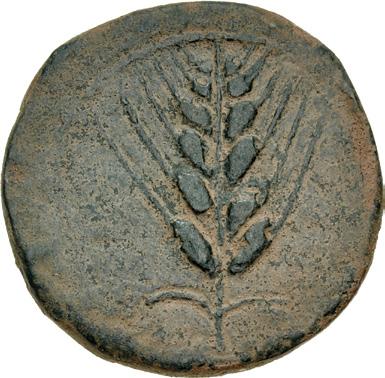
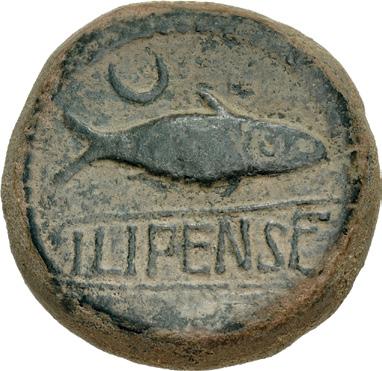
5. IBERIA, Ilipense. 2nd century BC. Æ As (31mm, 24.46 g, 12h). Grain ear / Shad right; crescent above, ethnic within lines below. ACIP 2335. Earthen dark green patina. VF. ($300)
Ex Freeman & Sear inventory KGM024 (16 August 2011).
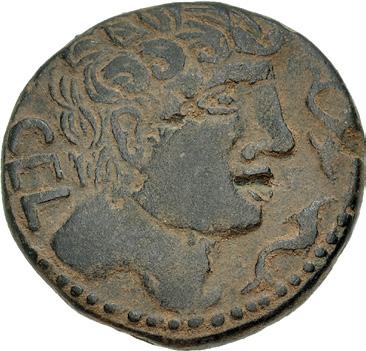
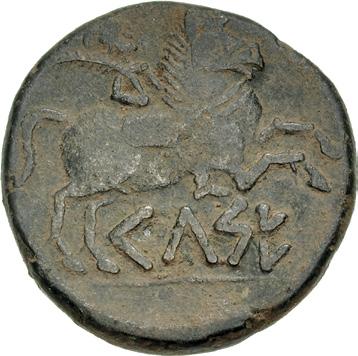
6. IBERIA, Kelse. Circa 45-44 BC. Æ As (29.5mm, 18.39 g, 4h). Bare male head right, drapery at neck; two dolphins to right / Rider, holding palm frond, on horseback right. ACIP 1490. Earthen dark brown surfaces, small flan flaw on obverse. Good VF. ($100)
Purchased from Kirk Davis, 2012.
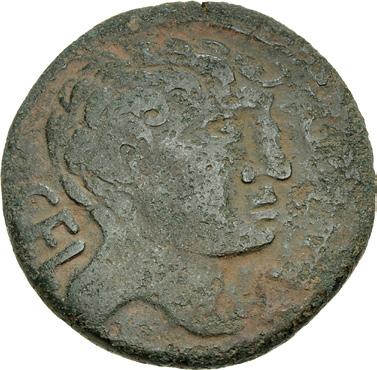
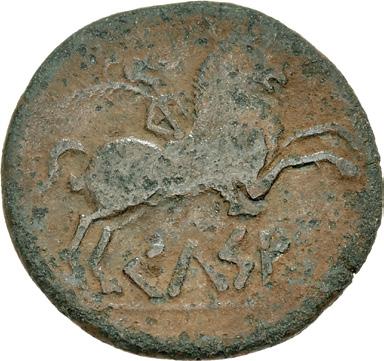
7. IBERIA, Kelse. Circa 45-44 BC. Æ As (31mm, 16.00 g, 7h). Bare male head right; two dolphins to right (faintly visible) / Rider, holding palm frond, on horseback right. ACIP 1490. Earthen green patina, some roughness. Good Fine. ($75)
Ex Áureo & Calicó 236 (22 September 2011), lot 280.
Ex Roma E-Sale 23
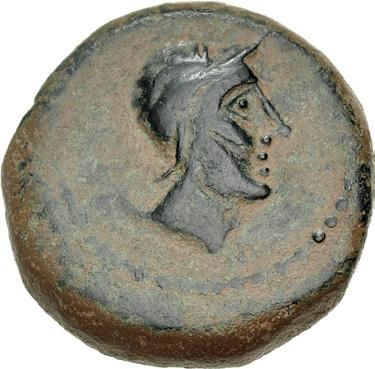
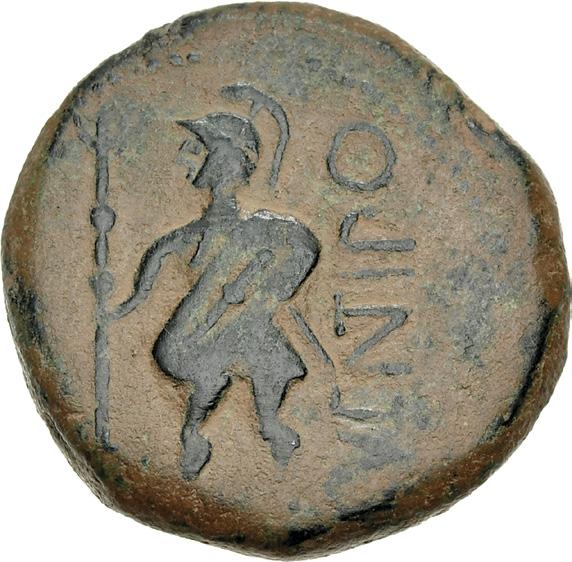
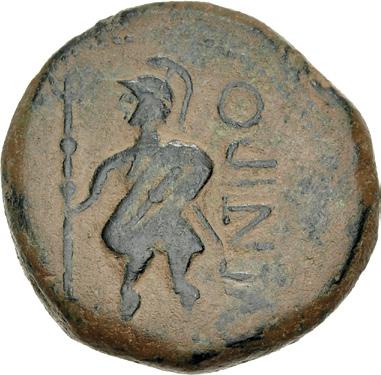
January
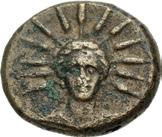
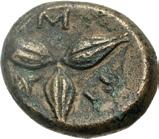
9. LUCANIA, Metapontion. Circa 300-250 BC. Æ (13.5mm, 2.16 g). Facing head of Helios / Three barley grains radiating from center; cross-torch between two grains. Johnston, Bronze 53; HN Italy 1689. Brown surfaces, trace deposits. VF. ($100)
Ex Shirley Hanberry Collection (Goldberg 96, 14 February 2017), lot 2107 (part of).
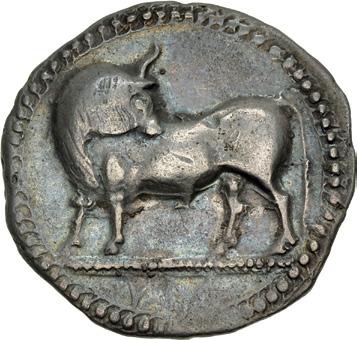
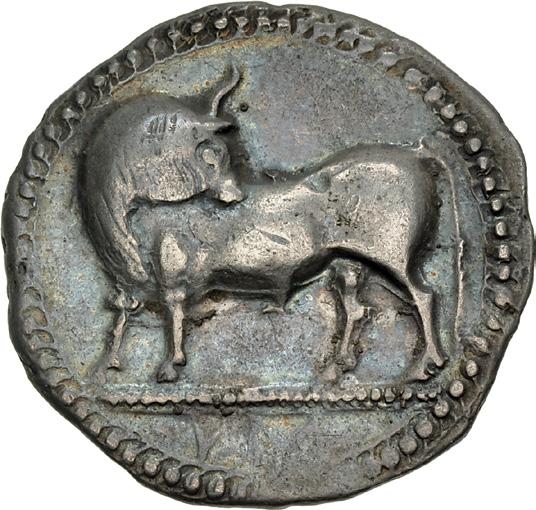
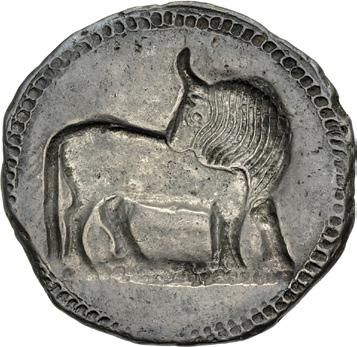
10. LUCANIA, Sybaris. Circa 550-510 BC. AR Nomos (29mm, 7.97 g, 12h). Bull standing left, head right; VM in exergue / Incuse of obverse; no ethnic. S&S Class B, pl. XLVIII, 4–8; Gorini 2; HN Italy 1729. Deep iridescent tone. Good VF. ($750)
Ex Goldberg 74 (4 June 2013), lot 3404; Superior (10 December 1988), lot 1374; Superior (16 June 1976), lot 400.
Ex Norman Davis Collection – Pedigreed to 1966
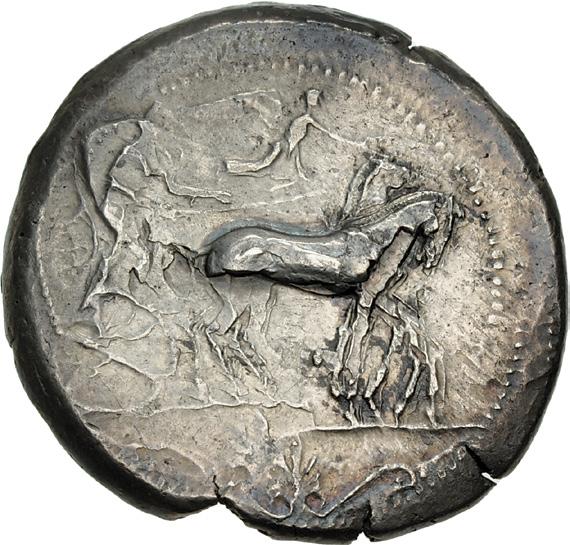
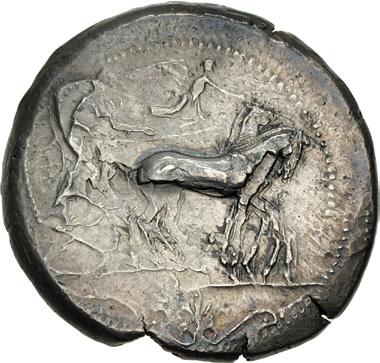
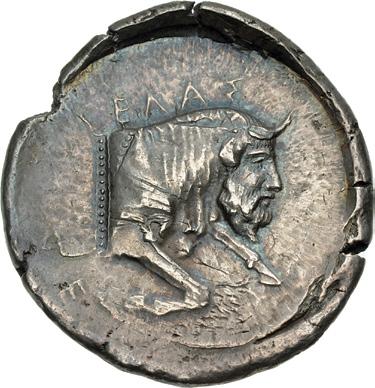
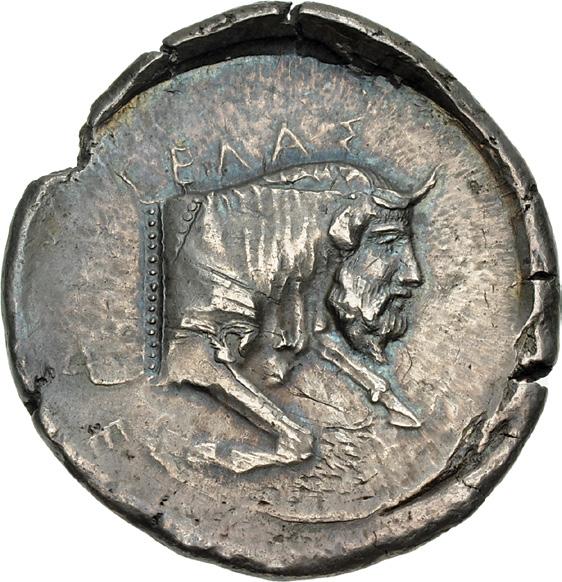
11. SICILY, Gela. Circa 450-440 BC. AR Tetradrachm (31mm, 17.22 g, 7h). Charioteer, holding kentron and reins, driving slow quadriga right; above, Nike flying right, crowning horses; palmette with long tendrils in exergue / Forepart of man-headed bull right. Jenkins, Gela, Group IV, 357 (O69/R142); HGC 2, 343; Boston MFA 247 = Warren 230 (same dies); Davis 32 (publ. 1969; this coin); de Luynes 954 (same dies); McClean 2255 (same dies). Toned. Good VF. Overstruck on an uncertain type. ($2000)
Ex Heritage 3021 (6 January 2013), lot 21470; Harlan J. Berk inventory; Norman Davis Collection (Numismatic Fine Arts XI, 8 December 1982), lot 25; Seaby Coin & Medal Bulletin 575 (June 1966), no. A448.
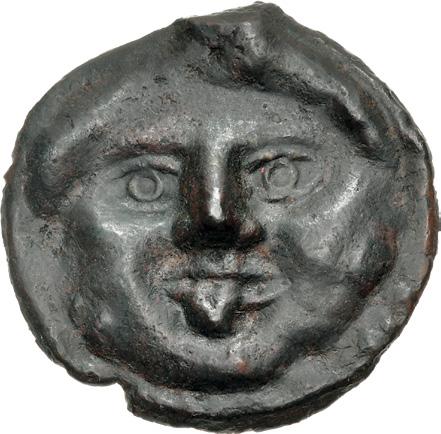
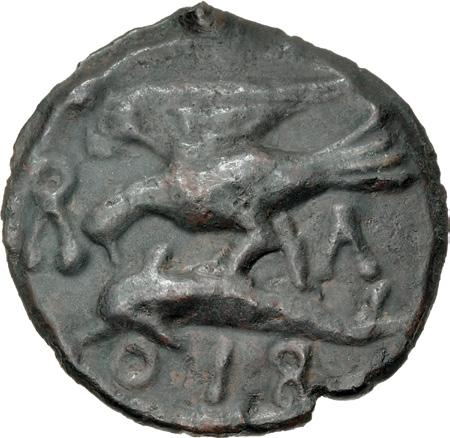
12. SKYTHIA, Olbia. Circa 400-380 BC. Cast Æ (36mm, 21.54 g, 12h). Facing gorgoneion / Sea eagle flying left, wings raised, holding in its talons a dolphin left; full ethnic around. Anokhin 187; Frolova & Abramzon 217; CN Online type 21435; HGC 3, 1885. Dark red-brown patina. Good VF. Rare with ethnic in this orientation. ($500)
Ex Classical Numismatic Group Electronic Auction 354 (1 July 2015), lot 26.
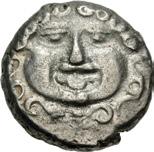
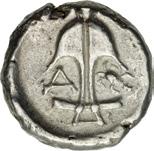
13. THRACE, Apollonia Pontika. Circa 410/04-341/23 BC. AR Tetrobol (13mm, 2.87 g, 7h). Attic standard. Facing gorgoneion / Anchor; A and crawfish flanking. Topalov, Apollonia 45; CN Online 21301; cf. HGC 3, 1323. Minor die wear. Good VF. ($100)
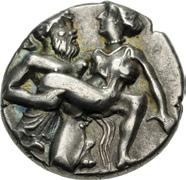
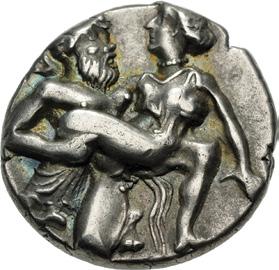
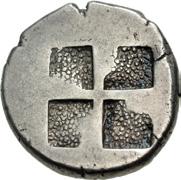
14. ISLANDS off THRACE, Thasos. Circa 412-404 BC. AR Drachm (16mm, 3.48 g). Ithyphallic satyr advancing facing, head right, carrying off protesting nymph / Quadripartite incuse square. Le Rider, Thasiennes 8; CN Online Type 20749; HGC 6, 336. Attractive iridescent tone, light scrape at edge on reverse. Good VF. Fine style. ($500)
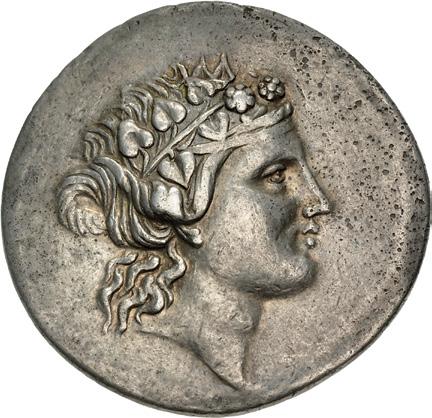
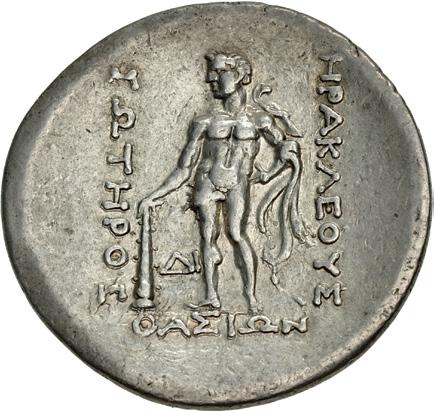
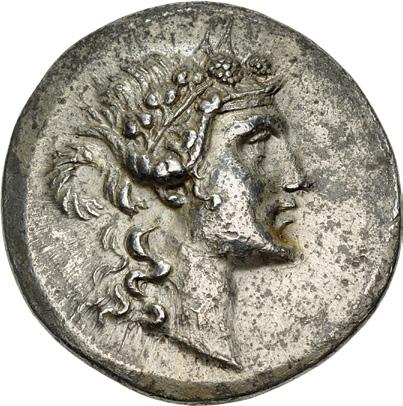
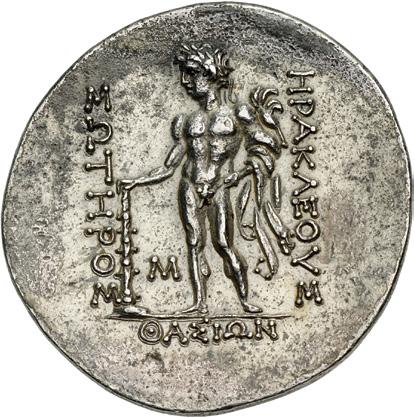
15. ISLANDS off THRACE, Thasos. Circa 150-140 BC. AR Tetradrachm (36mm, 16.85 g, 12h). Wreathed head of young Dionysos right / Herakles standing left, right hand on club set on ground, lion skin draped over left arm; ΔI monogram to inner left. Prokopov, Silberprägung, Group II, 27 (V B2/R 23); Le Rider, Thasiennes 51; CN Online Type 20812; HGC 6, 358. Toned, some porosity on obverse. Good VF. ($300)
Ex Hunter Collection (Goldberg 72, 5 February 2013), lot 4341.
16. ISLANDS off THRACE, Thasos. Circa 150-140 BC. AR Tetradrachm (33mm, 17.03 g, 12h). Wreathed head of young Dionysos right / Herakles standing left, right hand on club set on ground, lion skin draped over left arm; M to inner left. Prokopov, Silberprägung, Group IV, 39 (V D2/R 35); Le Rider, Thasiennes 51; CN Online Type 21027; HGC 6, 358. Toned, traces of find patina. Near EF. ($500)
Ex Andre Constantine Dimitriadis Collection (Heritage 3032, 10 April 2014), lot 23152; Coin Galleries (15 February 1995), lot 1350.
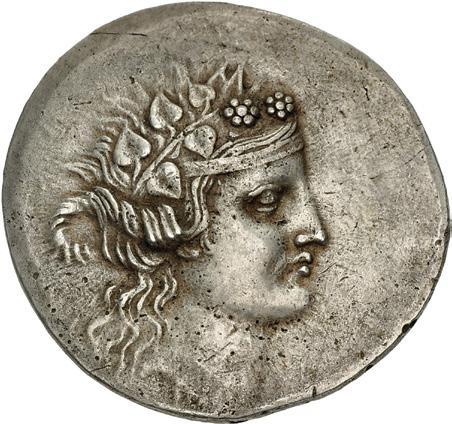
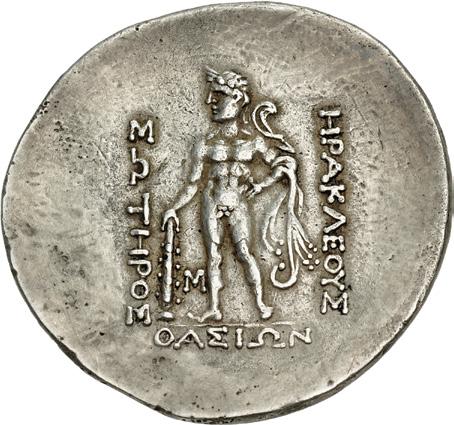
17. ISLANDS off THRACE, Thasos. Circa 150-140 BC. AR Tetradrachm (28mm, 16.83 g, 12h). Wreathed head of young Dionysos right / Herakles standing left, right hand on club set on ground, lion skin draped over left arm; M to inner left. Prokopov, Silberprägung, Group VII, 111–6 var. (V G1/R – [unlisted rev. die]); Le Rider, Thasiennes 51; CN Online Type 21027; HGC 6, 358. Toned, minor porosity, cleaning marks. VF. ($300)
Ex Classical Numismatic Group Electronic Auction 293 (19 December 2012), lot 36; Gorny & Mosch 121 (10 March 2003), lot 62. 15 16
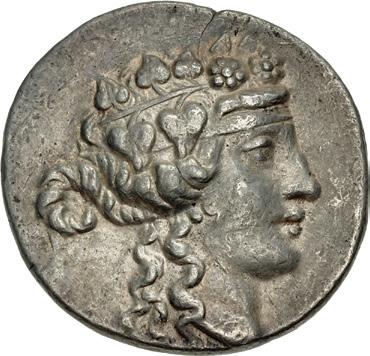
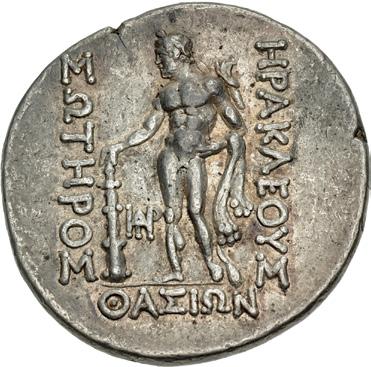
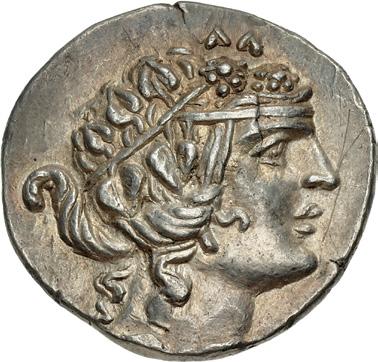
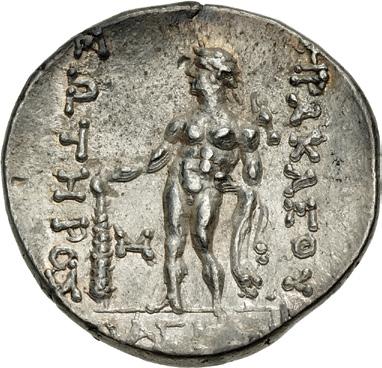
18. ISLANDS off THRACE, Thasos. Circa 90-75 BC. AR Tetradrachm (30mm, 16.80 g, 12h). “Imitative” series. Wreathed head of young Dionysos right / Herakles standing facing, head left, holding club, lion skin draped over left arm; monogram to inner left. Prokopov, Silberprägung, Group XIV, 1090–6 var. (V CD1/R – [unlisted rev. die]); CN Online Type 20912; HGC 6, 359. Toned. Good VF. ($200)
Ex R.G. Collection (Heritage 3020, 6 September 2012), lot 24933.
19. ISLANDS off THRACE, Thasos. Circa 90-75 BC. AR Tetradrachm (31mm, 16.67 g, 12h). “Imitative” series. Wreathed head of young Dionysos right / Herakles standing facing, head left, holding club, lion skin draped over left arm; monogram to inner left. Prokopov, Silberprägung, Group XVI, 1434–7 var. (V DA10/R – [unlisted rev. die]); CN Online Type 12884; HGC 6, 359. Toned, slight bend in flan. EF. ($300)
Ex R.G. Collection (Heritage 3020, 6 September 2012), lot 24932.
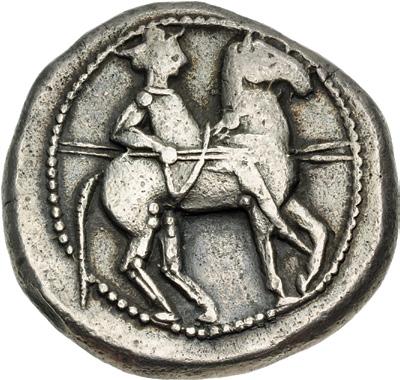
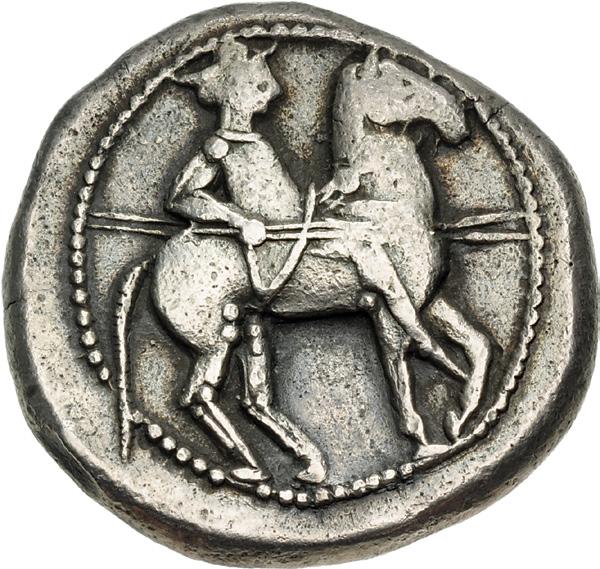
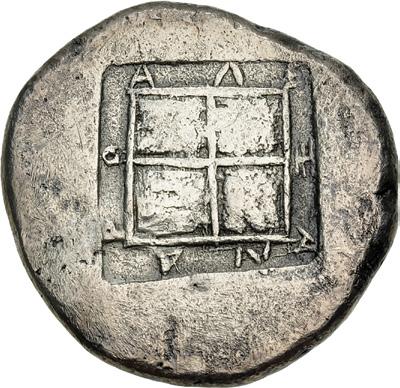
20. KINGS of MACEDON. Alexander I. 498-454 BC. AR Oktadrachm (33mm, 29.21 g, 10h). Aigai mint. Struck circa 480/79-470 BC. Horseman, wearing chlamys and petasos, and holding two spears, riding right / AΛE-ΞA-NΔ-PO around raised quadripartite square; all within incuse square. Raymond Group 1, 1–3 var. (unlisted dies); HGC 3, 754 (this coin illustrated). Toned, indication of repair in field below horse. VF. ($3000)
Ex Classical Numismatic Group Electronic Auction 366 (13 January 2016), lot 410; Goldberg 47 (25 May 2008), lot 123.
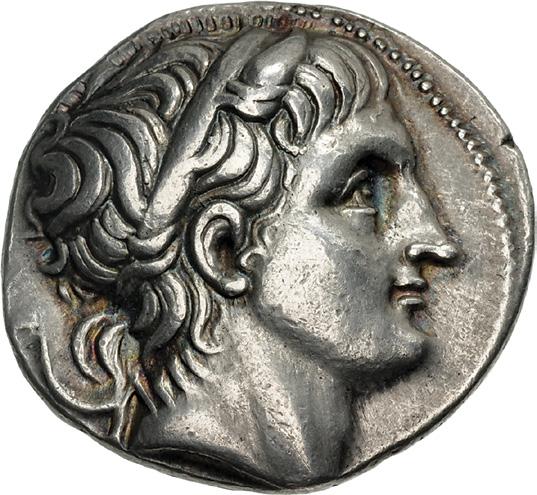
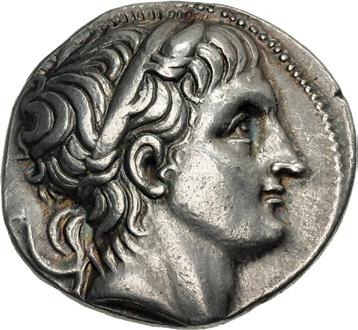
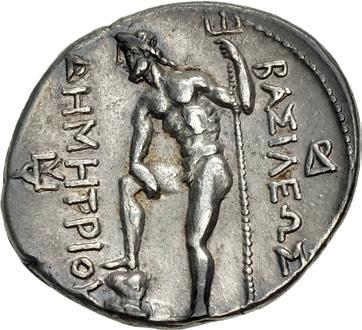
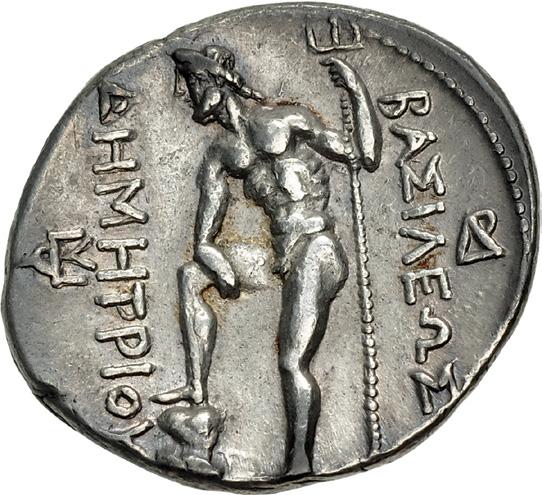
21. KINGS of MACEDON. Demetrios I Poliorketes. 306-283 BC. AR Tetradrachm (30mm, 16.75 g, 8h). Amphipolis mint. Struck circa 289-288 BC. Diademed and horned head right / Poseidon Pelagaios standing left, right foot on rock, holding trident; monograms to outer left and outer right. Newell 124, obv. die CXX; HGC 3, 1014b. Toned, with some iridescence. Good VF. ($1000)
Ex Goldberg 80 (3 June 2014), lot 3286; Classical Numismatic Group Electronic Auction 209 (22 April 2009), lot 77.
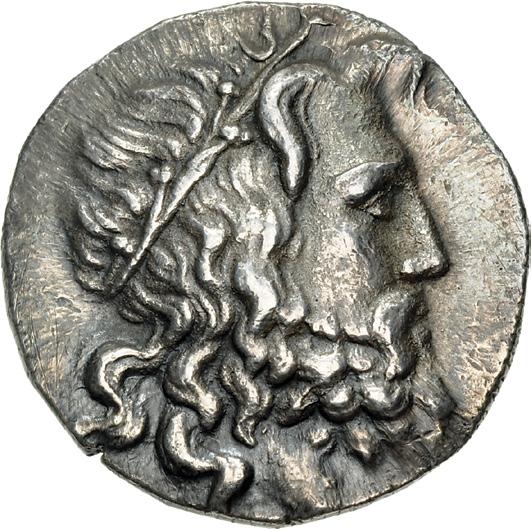
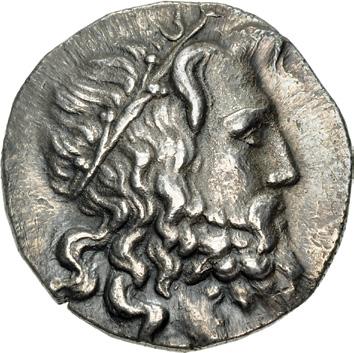
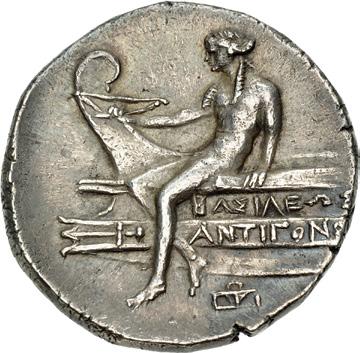
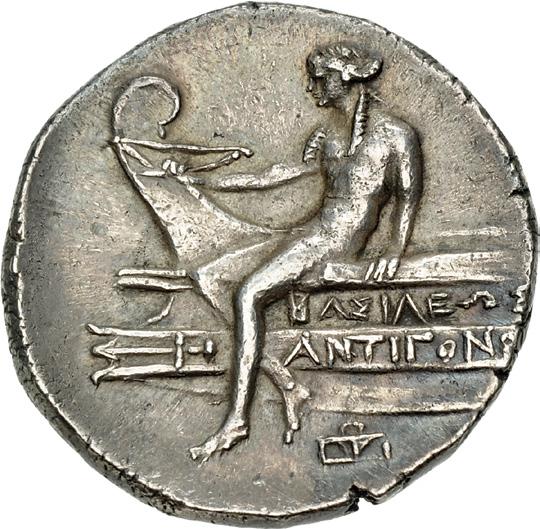
22. KINGS of MACEDON. temp. Antigonos II Gonatas – Demetrios II Aitolikos. 246/5-229 BC. AR Tetradrachm (29mm, 16.93 g, 11h). Amphipolis or Pella mint. Wreathed head of Poseidon right / Apollo, testing bow, seated left on prow left; monogram below. TEA Period III, Group 37, 164c (O25/R155 – this coin); HGC 3, 1051 (Antigonos III Doson). Toned. Good VF. ($2000)
Ex Andre Constantine Dimitriadis Collection (Heritage 3032, 10 April 2014), lot 23140; Stack’s (18 July 1990), lot 77.
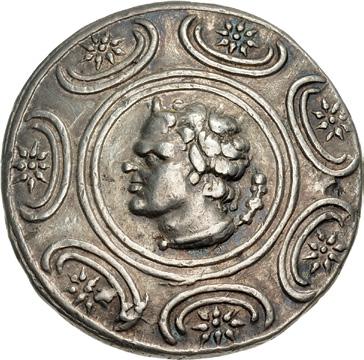
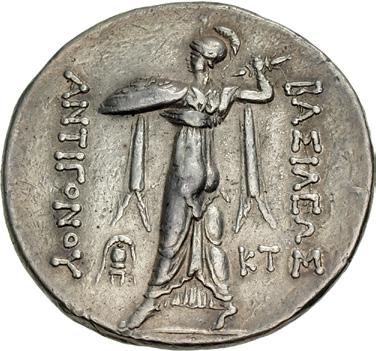
23. KINGS of MACEDON. Antigonos III Doson. 229-221 BC. AR Tetradrachm (30mm, 17.10 g, 9h). In the types of Antigonos II Gonatas. Amphipolis or Pella mint. Horned head of Pan left, lagobolon over shoulder, in the center of a Macedonian shield / Athena Alkidemos advancing left, holding shield decorated with aegis, preparing to cast thunderbolt; crested Macedonian helmet to inner left, KT to inner right. TEA Period IV, Group 5, 23 (O6/R22); HGC 3, 1042 (Antigonos II Gonatas); W. Sales, Ancient Coin Collecting II, Numismatic Art of the Greek World (Krause, 1997), p. 44 (this coin). Toned, with some iridescence. Good VF. ($750)
Purchased from Tom Cederlind, 2 June 2011.
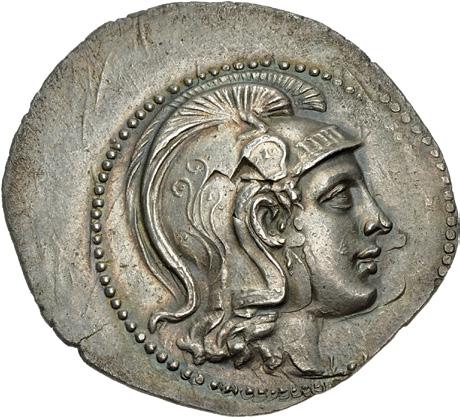
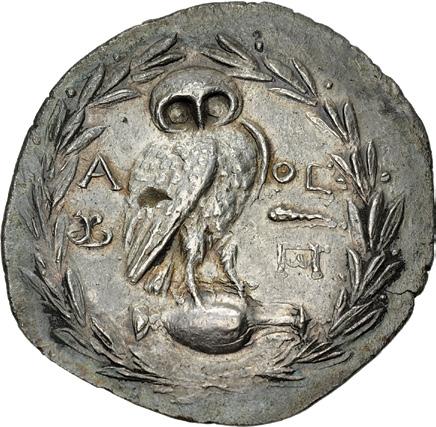
24. ATTICA, Athens. Circa 165-42 BC. AR Tetradrachm (37.5mm, 16.38 g, 1h). New Style coinage. Struck 165150/149 BC. Helmeted head of Athena Parthenos right / Owl standing right, head facing, on amphora; monogram to left; to right, club above monogram; all within wreath. Thompson 24 (same obv. die); HGC 4, 1602. Iridescent tone, double struck. EF. Overstruck on uncertain type. ($1500)
Ex Andre Constantine Dimitriadis Collection (Heritage 3032, 10 April 2014), lot 23186; Golden Gate Collection (Coin Galleries, 14 April 1993), lot 273.
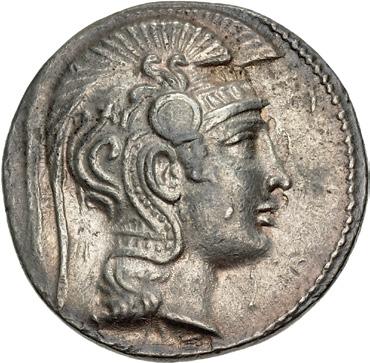
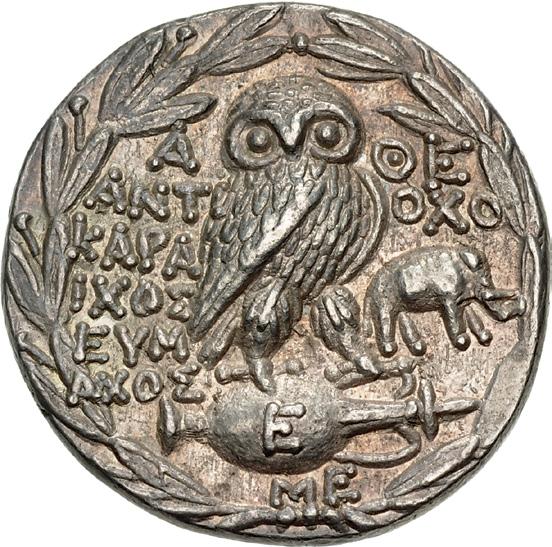
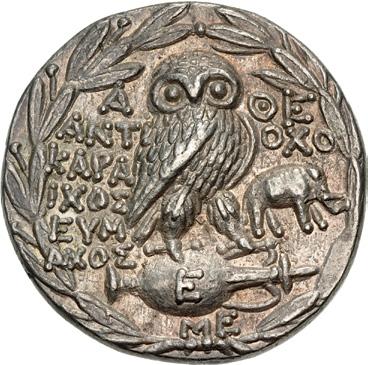
25. ATTICA, Athens. Circa 165-42 BC. AR Tetradrachm (30.5mm, 16.80 g, 12h). New Style coinage. Antiochos, Karaichos, and Eumachos, magistrates. Struck 131/0 BC. Helmeted head of Athena Parthenos right / Owl standing right, head facing, on amphora; magistrates’ names in fields; to right, elephant standing right; E on amphora, ME below; all within wreath. Thompson 397l–m (same obv. die); HGC 4, 1635. Toned. Good VF. ($1000)
Ex Edward J. Waddell inventory 49571 (January 2012); Hess-Divo 320 (26 October 2011), lot 150.
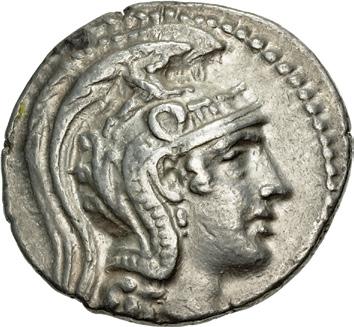
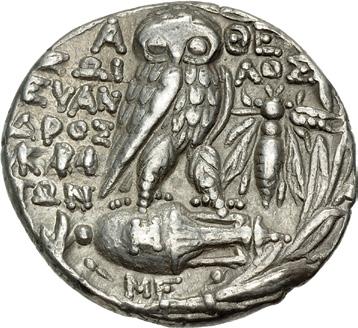
26. ATTICA, Athens. Circa 165-42 BC. AR Tetradrachm (29.5mm, 16.23 g, 12h). New Style coinage. Zoilos, Euandros, and Zoilos, magistrates. Struck 109/8 BC. Helmeted head of Athena right / Owl standing right, head facing, on amphora; magistrates’ names in fields, bee to right; H on amphora, ME below; all within wreath. Thompson 719c (same obv. die); HGC 4, 1602. Lightly toned. Good VF. ($300)
Ex Classical Numismatic Group inventory 954616 (July 2013); Roma (21 May 2013), lot 288.
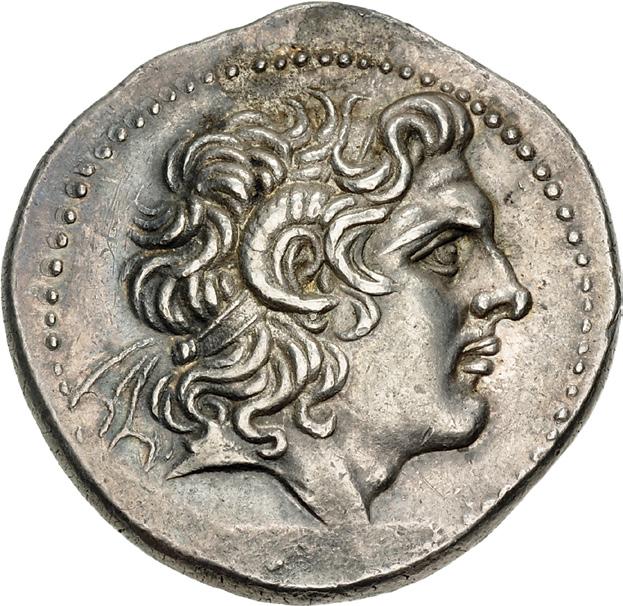
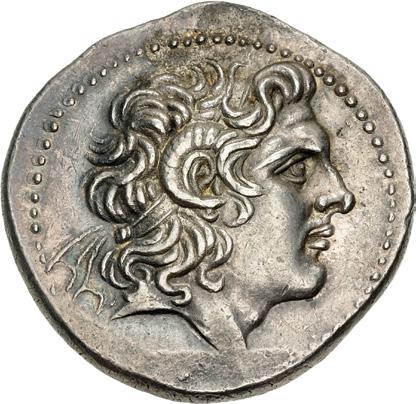
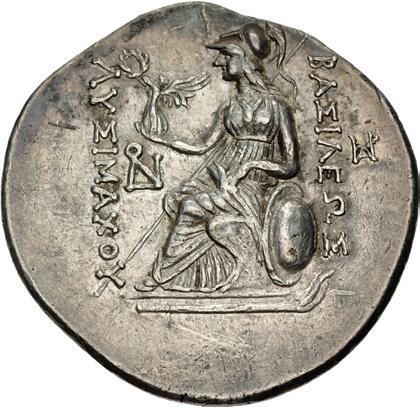
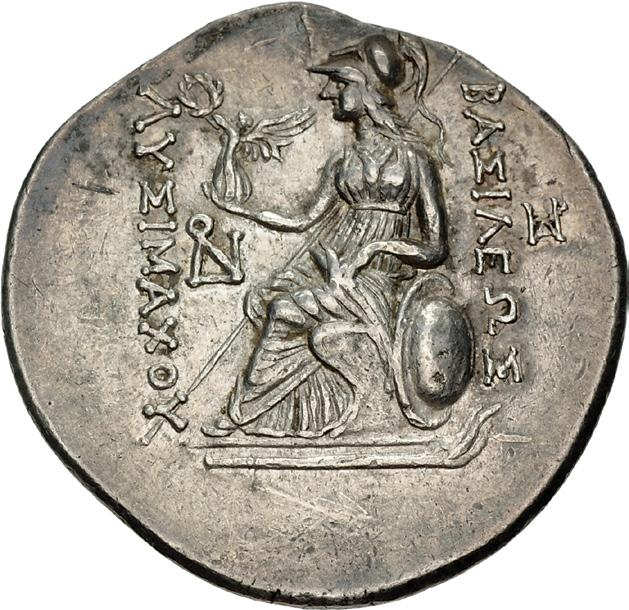
27. MYSIA, Kyzikos. Late 3rd-early 2nd centuries BC. AR Tetradrachm (34mm, 17.11 g, 12h). In the name and types of Lysimachos of Thrace. Diademed head of the deified Alexander right, with horn of Ammon / Athena Nikephoros seated left, left arm resting on shield, spear behind; monogram to inner left and outer right; in exergue, long torch right. SNG BN 2550 (same dies); Müller 383. Toned. Near EF. Very rare. ($1000)
Ex Roger Liles Collection (Classical Numismatic Group 94, 18 September 2013), lot 453; Leu 38 (13 May 1986), lot 56.
The dating of this issue is based on the appearance of contemporary issues with different monograms in the 1952 Dniyé hoard (Seyrig, Trésors 5.12) and 1955 Diyarbakir hoard (ibid., 4.16), both of which were deposited in the early 2nd century BC.
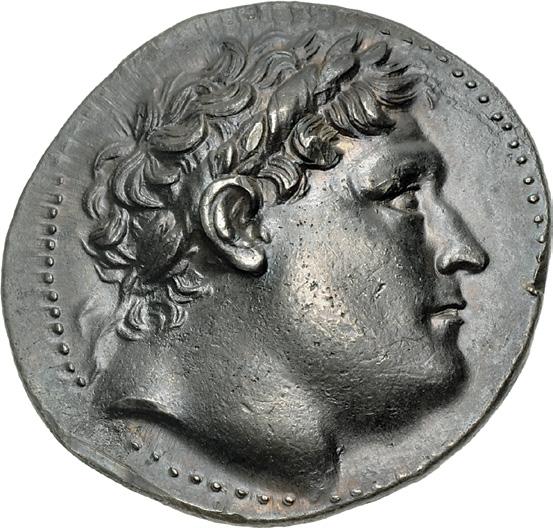
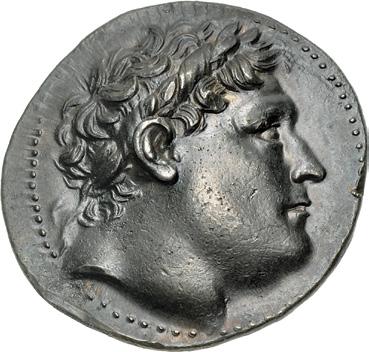
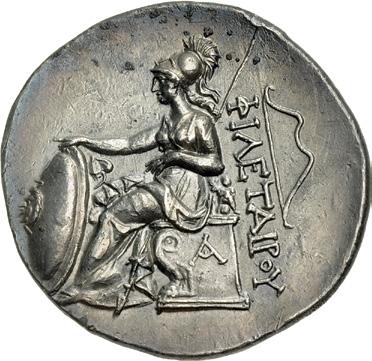
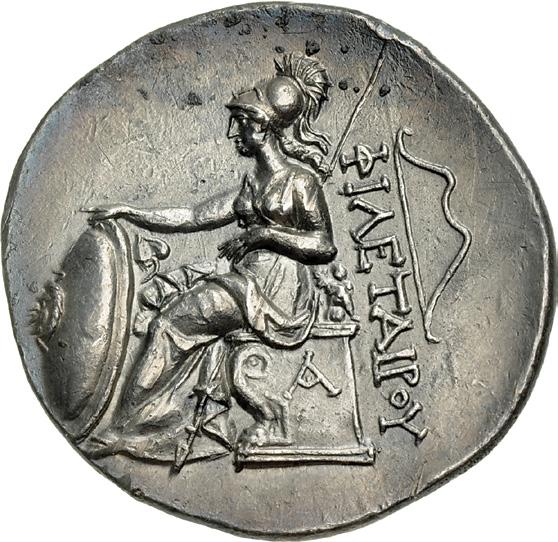
28. KINGS of PERGAMON. Eumenes I. 263-241 BC. AR Tetradrachm (30mm, 16.99 g, 12h). In the name of Philetairos. Pergamon mint. Struck circa 263-255/0 BC. Laureate head of Philetairos right / Athena enthroned left, holding shield, left elbow resting on sphinx seated right; spear diagonally in background, ivy leaf to inner left, bow to outer right, monogram on throne. Westermark Group III, obv. die XXV; CN Online Type 8453. Toned, a couple of light scuffs. Near EF. ($2000)
Ex Classical Numismatic Group 93 (22 May 2013), lot 357.
The eunuch Philetairos played a canny “game of thrones” in the years following the death of Alexander the Great. Entrusted with an immense treasure in the fortress city of Pergamon by Lysimachos of Thrace, Philetairos soon switched his allegiance to Lysimachos’ rival Seleukos I in return for a promise of autonomy within his own realm. Seleukos defeated and killed Lysimachos at Kauropedion in 281 BC, but was assassinated himself soon thereafter. The Pergamene Kingdom officially broke from the Seleukid realm a few years later.
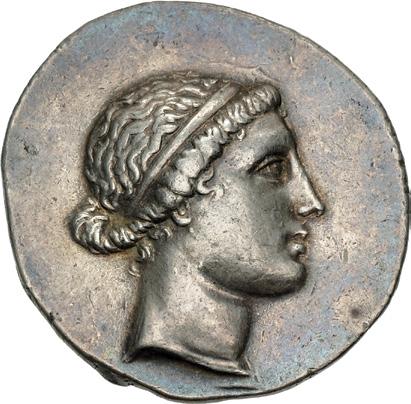
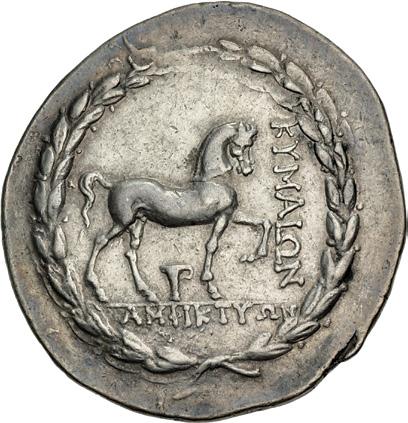
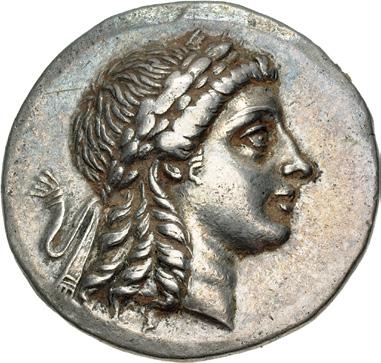
29. AEOLIS, Kyme. Circa 151/0-143/2 BC. AR Tetradrachm (34mm, 16.48 g, 1h). Stephanophoric type. Amphiktyon, magistrate. Head of the Amazon Kyme right, wearing tainia / Horse prancing right; one-handled cup below; all within wreath. E-E&E-Ö, Phase 1; Oakley obv. die 77; BMC 83. Iridescent tone. Good VF. ($500)
Ex Nilus Coins inventory 25460 (15 April 2011).
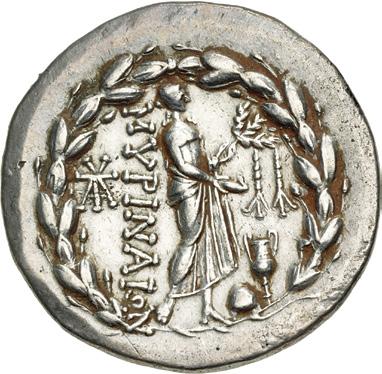
30. AEOLIS, Myrina. Circa 155-143 BC. AR Tetradrachm (31.5mm, 16.02 g, 12h). Stephanophoric type. Laureate head of Apollo right / Apollo Grynios standing right, holding phiale and filleted laurel branch; monogram to left, omphalos and amphora at feet to right; all within laurel wreath. Sacks Issue 27, obv. die 51. Iridescent tone, earthen deposits. Good VF. ($500)
Ex Heritage 3046 (14 April 2016), lot 31117.
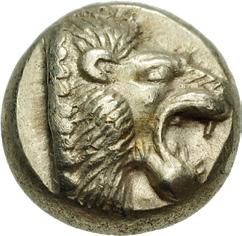
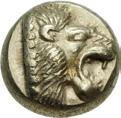
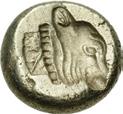
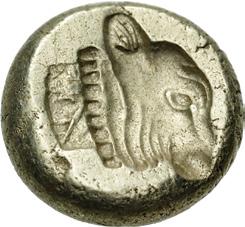
31. LESBOS, Mytilene. Circa 521-478 BC. EL Hekte – Sixth Stater (10mm, 2.54 g, 9h). Head of roaring lion right / Incuse head of calf right; rectangular punch behind. Bodenstedt Em. 13; HGC 6, 938. A couple of light marks. Good VF. Well centered. ($500)
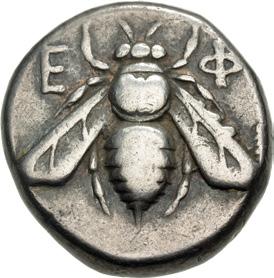
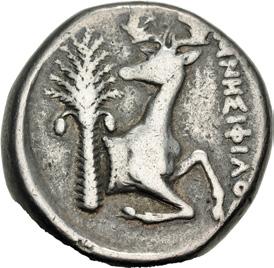
32. IONIA, Ephesos. Circa 390-325 BC. AR Tetradrachm (22mm, 15.21 g, 12h). Mnesiphilos (I), magistrate. Class D, circa 370-360 BC. Bee with straight wings / Forepart of stag right, head left; palm tree to left. Karwiese II, Series 11.1, 429, dies O55/R5. Toned. Near VF. ($500)
Ex Heritage 3042 (17 September 2015), lot 29090.
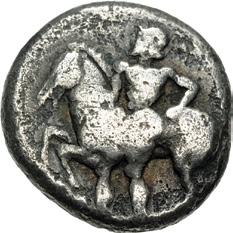
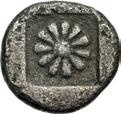
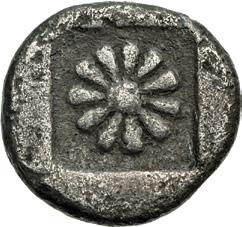
33. IONIA, Erythrai. 5th century BC. AR Obol(?) (10mm, 1.04 g). Nude male leading horse left, holding rein / Rosette pattern within incuse square. SNG Ashmolean 606 (same dies). Toned, traces of find patina, light roughness. VF. ($100)
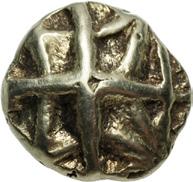


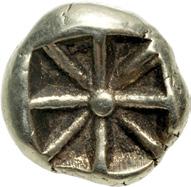
34. IONIA, Uncertain. Circa 625-600 BC. EL Hemihekte – Twelfth Stater (8mm, 1.15 g). Lydo-Milesian standard. Geometric figure resembling a star, composed of a cross centered upon a polygon of eight sides / Quadripartite incuse square with a pellet in the center; each quarter contains a diagonal line radiating from the central pellet. McFadden 3; SNG Kayhan 699–700. Trace deposits. Good VF. ($500)
Ex John Jencek inventory T0607.
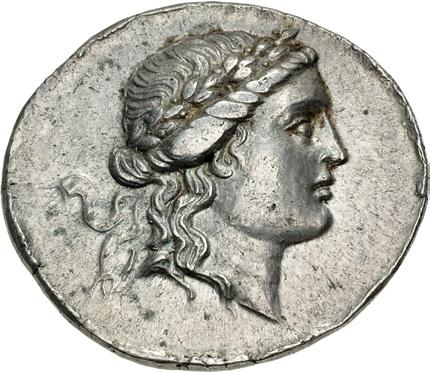
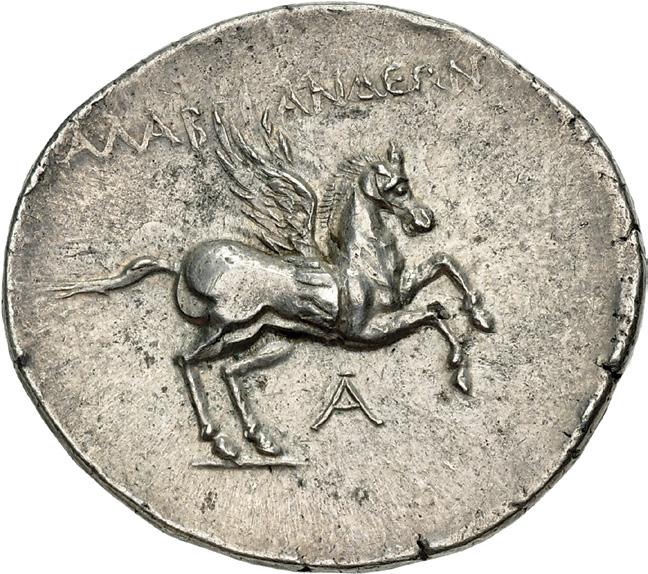
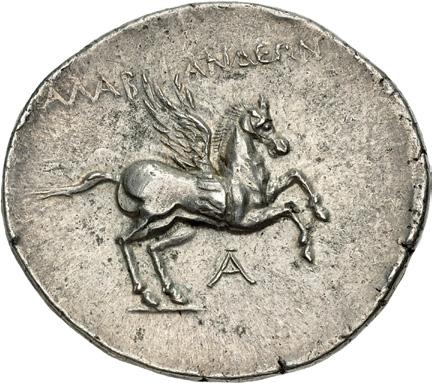
35. CARIA, Alabanda. Circa 167/6 BC. AR Tetradrachm (35.5mm, 16.75 g, 12h). Dated CY 1. Laureate head of Apollo right / Pegasos alighting right; A (date) below. Meadows, Alabanda, Series 4, 19 (A14/P18); Waggoner, New, Series 4; HN Online 451; DCA2 472. Faintly toned, trace deposits, light hammering around edge (likely to fit prior bezel). Good VF. ($2000) Ex Baldwin’s 114 (7 March 2024), lot 37; Morton & Eden 104 (14 November 2019), lot 70; Lanz 20 (13 April 1981), lot 244.
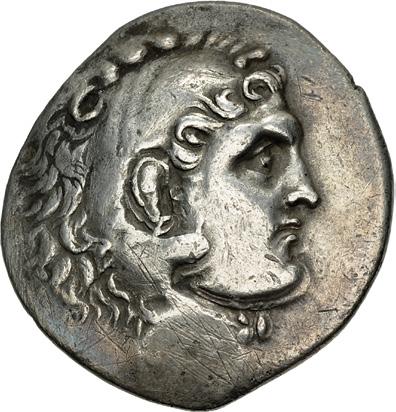
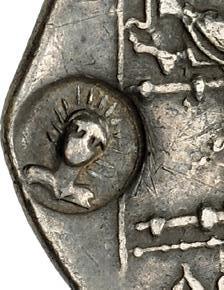
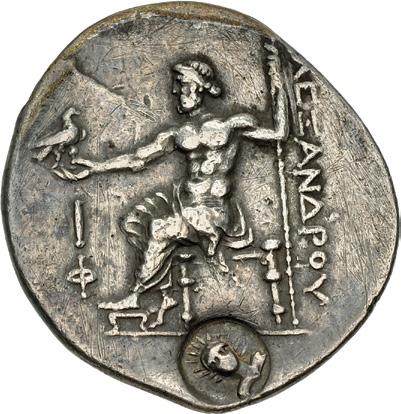
36. LYCIA, Phaselis. Circa 218/7-186/5 BC. AR Tetradrachm (32.5mm, 16.67 g, 12h). In the name and types of Alexander III of Macedon. Dated CY 10 (209/8 BC). Head of Herakles right, wearing lion skin / Zeus Aëtophoros seated left; in left field, I (date) above Φ; c/m: radiate head of Sol facing within incuse circle. Heipp-Tamer 223–5 var. (V22/R– [unlisted rev. die]); Price 2848; DCA2 479. Iridescent tone, numerous light scratches. VF. Countermark VF. ($100) Ex Heritage 3046 (14 April 2016), lot 31050.
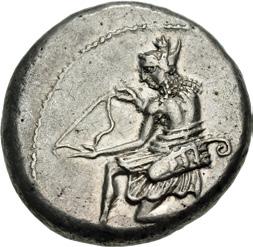
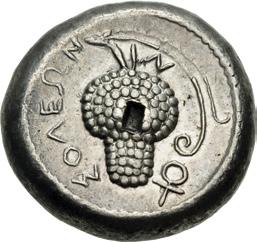
37. CILICIA, Soloi. Circa 440-410 BC. AR Stater (20mm, 10.56 g, 7h). Amazon kneeling left, bowcase at her side, holding bow / Grape bunch on vine; IN to right of stem, ankh-like symbol to lower right; all within dotted circle. Casabonne Type 2; SNG BN 137 var. (NI on rev.; same obv. die). Lightly toned, underlying luster, test punch on reverse. Near EF. ($300)
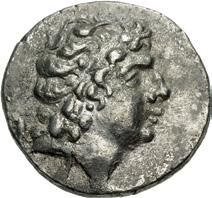
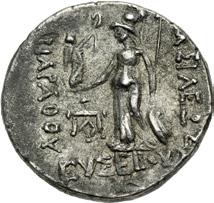
38. KINGS of CAPPADOCIA. Ariarathes IX Eusebes Philopator. Circa 100-85 BC. AR Drachm (17mm, 4.03 g, 12h). Mint B (Eusebeia-Mazaka). Dated RY 4 (97/6 BC). Diademed head right, with Mithradatic style portrait / Athena Nikephoros standing left; monogram to inner left, Δ (date) in exergue. Simonetta 4; HGC 7, 845 (mint A); DCA2 525. Toned, traces of find patina. Good VF. ($75)
Purchased from Glenn Schinke. Ex Shirley Hanberry Collection (Goldberg 96, 14 February 2017), lot 2107 (part of), purchased from Frank Kovacs.
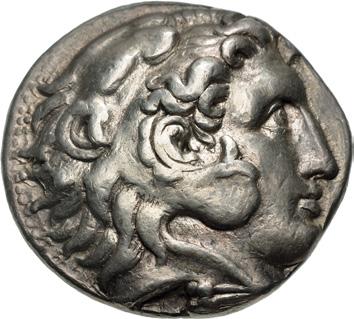
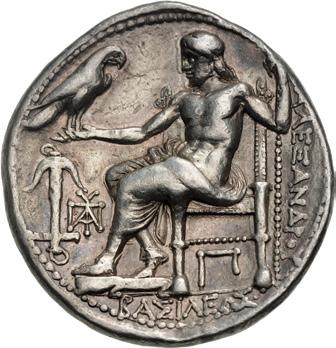
39. SELEUKID EMPIRE. Seleukos I Nikator. Second satrapy and kingship, 312-281 BC. AR Tetradrachm (28.5mm, 17.16 g, 9h). In the name and types of Alexander III of Macedon. Babylon II mint. Struck circa 311-300 BC. Head of Herakles right, wearing lion skin / Zeus Aëtophoros seated left; anchor and monogram in left field, Π below throne. SC 94.3d; Price 3349; HGC 9, 10g. Toned. VF. ($400)
Purchased from PBJI Antiquities, 11 May 2012.
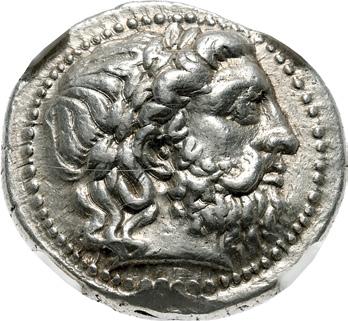
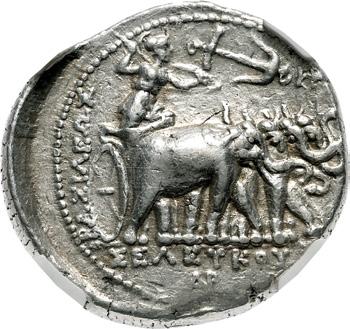
40. SELEUKID EMPIRE. Seleukos I Nikator. Second satrapy and kingship, 312-281 BC. AR Tetradrachm (27mm, 17.19 g, 12h). Seleukeia on the Tigris II mint. Struck circa 296/5-281 BC. Laureate head of Zeus right / Athena, brandishing spear and shield, in quadriga of elephants right; anchor and monogram above, AP in exergue. SC 130.28; HGC 9, 18a. Toned. In NGC encapsulation 6708833-013, graded Ch VF, Strike: 4/5, Surface: 4/5. ($1500)
Ex Goldberg 145 (25 February 2025), lot 538; Morton & Eden 108 (22 October 2020), lot 152 (since conserved); Classical Numismatic Group Electronic Auction 389 (18 January 2017), lot 332.
With the successful conclusion of the Babylonian War against Antigonos Monophthalmos in 309 BC, Seleukos I Nikator had secured his western border. He then turned his eyes eastwards and attacked Chandragupta, the ruler of the Mauryan Empire in northern India. Sometime around 303 BC a peace treaty was agreed, one term of which was that Seleukos would receive 500 elephants from Chandragupta. The chariot pulled by four elephants on this coin is believed to serve as a reminder of these elephants.
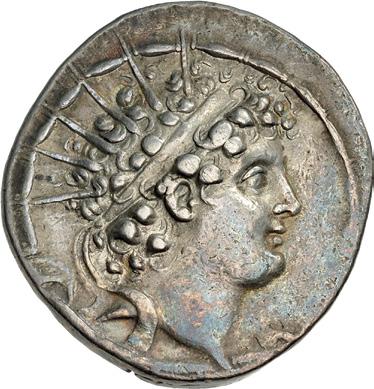
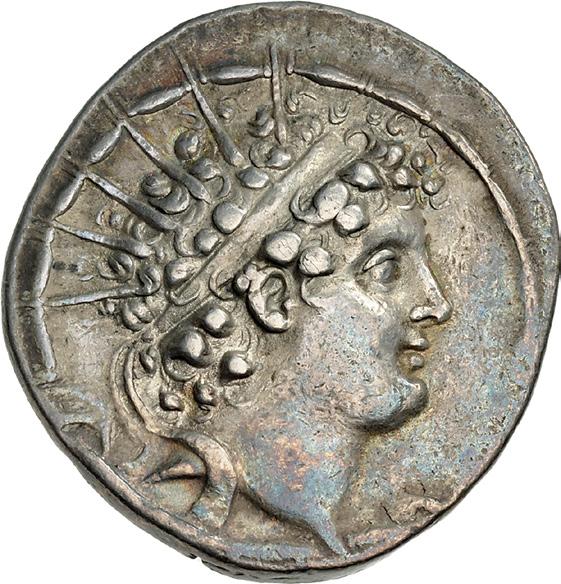
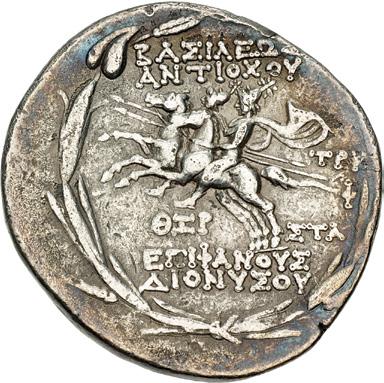
41. SELEUKID EMPIRE. Antiochos VI Dionysos. 144-142 BC. AR Tetradrachm (30.5mm, 16.48 g, 1h). Antioch on the Orontes mint. Dated SE 169 (144/3 BC). Radiate and diademed head right / The Dioskouroi riding left, holding couched lances; to right, TPY above Φ above ΣTA; ΘΞP (date) below; all within wreath of laurel, ivy, and grain ears. SC 2000.2a; HGC 9, 1032; DCA2 118. Iridescent tone, small scrape at edge on reverse. Good VF. ($1000)
Ex Goldberg 96 (14 February 2017), lot 1780.
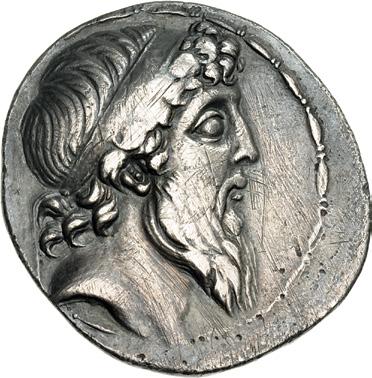
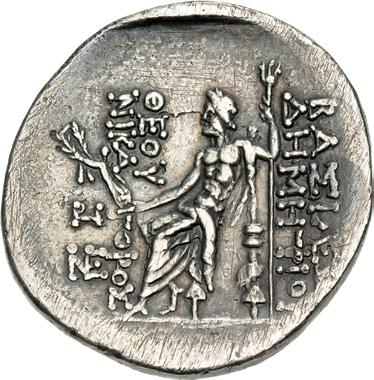
42. SELEUKID EMPIRE. Demetrios II Nikator. Second reign, 129-125 BC. AR Tetradrachm (31.5mm, 15.54 g, 12h). Tarsos mint, “Royal workshop”. Diademed head right within fillet border / Zeus Nikephoros seated left; two monograms to outer left. SC 2156.2b; Houghton, Second, Group C, dies A3/P– (unlisted rev. die); HGC 9, 1117a. Toned, extensive scratches. Near VF. ($150)
Ex Shirley Hanberry Collection (Goldberg 96, 14 February 2017), lot 2107 (part of).
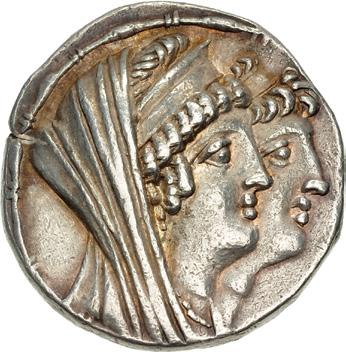
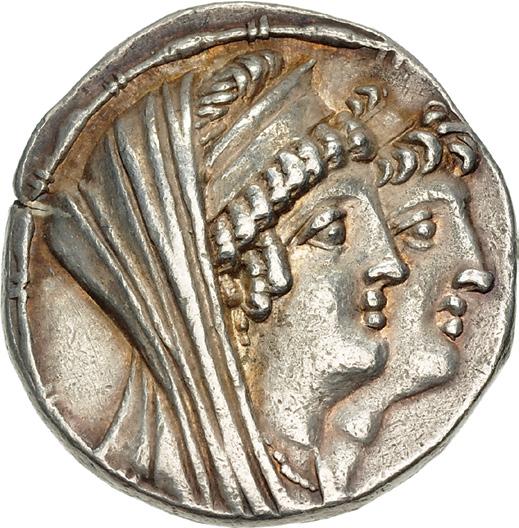
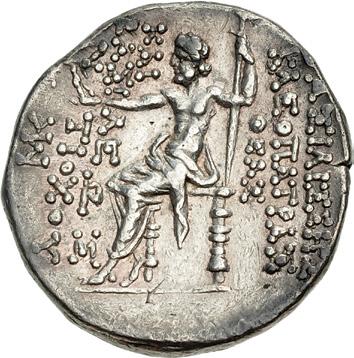
43. SELEUKID EMPIRE. Kleopatra Thea & Antiochos VIII. 125-121 BC. AR Tetradrachm (28.5mm, 16.56 g, 12h). Ptolemaïs (Ake) mint. Undated issue, struck circa 124 BC. Jugate busts right of Kleopatra, wearing veil and stephane, and Antiochos VIII, wearing diadem / Zeus Nikephoros seated left; monogram to outer left. SC 2271.1; HGC 9, 1182g. Toned, with golden hues around the devices. Good VF. ($750)
Ex California Collection (Heritage 3037, 4 January 2015), lot 30089; Heritage 3021 (6 January 2013), lot 21489.
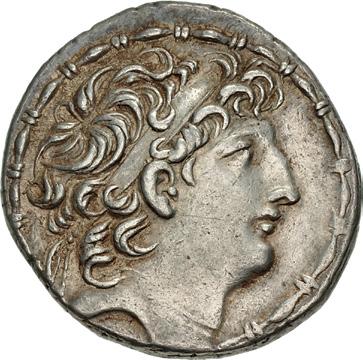
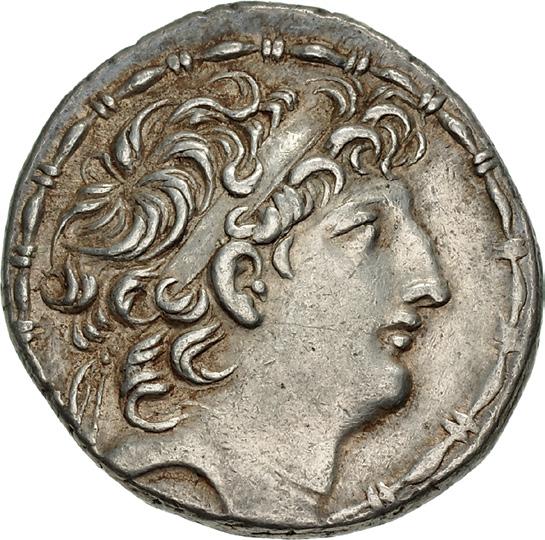
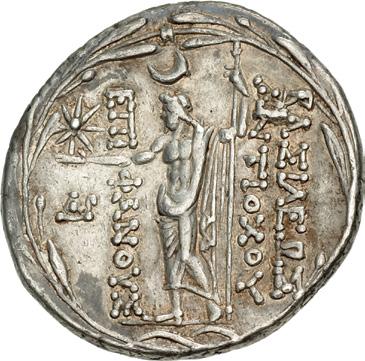
44. SELEUKID EMPIRE. Antiochos VIII Epiphanes (Grypos). 121/0-97/6 BC. AR Tetradrachm (29.5mm, 16.79 g, 12h). Ptolemaïs (Ake) mint. Struck circa 121/0-113 BC. Diademed head right / Zeus Ouranios, drapery around waist, standing left, holding star and scepter; monogram to outer left; all within wreath. SC 2336.2a; HGC 9, 1197h. Toned, trace deposits. Good VF. ($200)
Ex Edward J. Waddell inventory 49654 (26 April 2012).
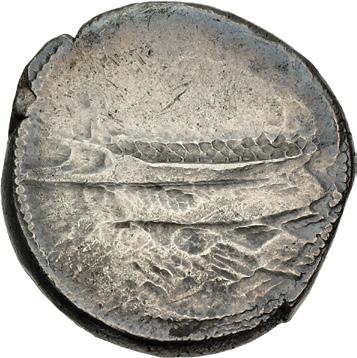
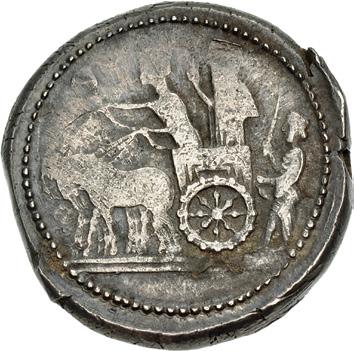
45. PHOENICIA, Sidon. `Abd`aštart (Straton) II. Circa 342-333 BC. AR Dishekel (29mm, 25.84 g, 12h). Dated RY 10 (333/2 BC). Phoenician galley left; [– (date [in Phoenician]) above], waves below / King of Persia and driver in chariot drawn by two horses left; to right, King of Sidon standing left, in Egyptian dress, holding cultic scepter and votive vase. E&E-S Group IV.5.1.g, 1882–3 (D21/R30); HGC 10, 242; DCA2 845. Toned, areas of flat strike, double struck on obverse. Fine. ($500)
Purchased from David Hendin, January 2012.
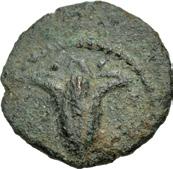
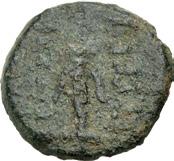
46. JUDAEA, Hasmoneans. John Hyrkanos I (Yehohanan). 135-104 BCE. Æ Prutah (15mm, 2.04 g, 1h). In the name of Seleukid king Antiochos VII Euergetes (Sidetes). Jerusalem mint. Uncertain date, struck circa 132-130 BC. Lily / Upright anchor; [date below]. Hendin 6165a or b; Meshorer p. 30; SC 2123; HGC 9, 1103; DCA2 149. Dark green patina, roughness. VF. ($75)
Ex Shirley Hanberry Collection (Goldberg 96, 14 February 2017), lot 2107 (part of), purchased from Frank Kovacs.
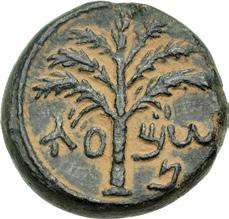
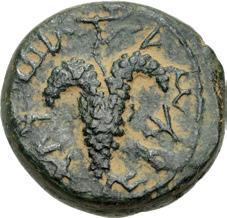
47. JUDAEA, Bar Kochba Revolt. 132-135 CE. Æ (18.5mm, 7.62 g, 6h). Undated, attributed to year 3 (134/5 CE). Palm tree with two bunches of dates / Grape bunch. Mildenberg 158 (O4/R8); Hendin 6467; Meshorer 302. Earthen dark green patina. Good VF. ($400)
Ex English Private Collection.
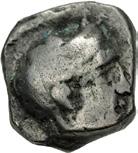


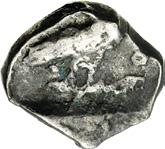
48. PHILISTIA (PALESTINE), Uncertain mint. Mid 5th century-333 BC. AR Hemiobol (6mm, 0.36 g, 1h). Imitating Athens. Helmeted head of Athena right / Owl standing right, [head facing]; [olive spray to left]. Gitler & Tal VII.4HO. Toned, trace deposits. Fine. ($75)
Ex Shirley Hanberry Collection (Goldberg 96, 14 February 2017), lot 2107 (part of), purchased from Frank Kovacs.
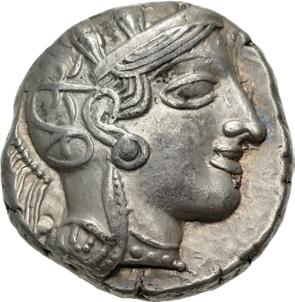
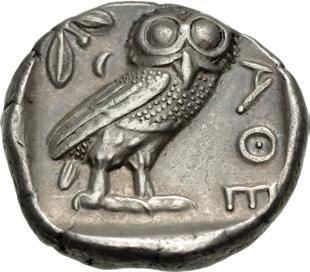
49. EGYPT, Pharaonic Kingdom. Uncertain pharaoh(s). Late 5th–mid 4th centuries BC. AR Tetradrachm (23.5mm, 17.13 g, 9h). Imitating Athens. Helmeted head of Athena right, with frontal eye / Owl standing right, head facing; olive spray and crescent to left; all within incuse square. Van Alfen, Mechanisms, Group III.A.1, Fig. 1 = Buttrey Type B; Van Alfen, Owls, pl. 8, 2. Attractively toned. Good VF. High relief. ($300)
Ex Freeman & Sear inventory G7842 (1 April 2008; as an official Athens issue).
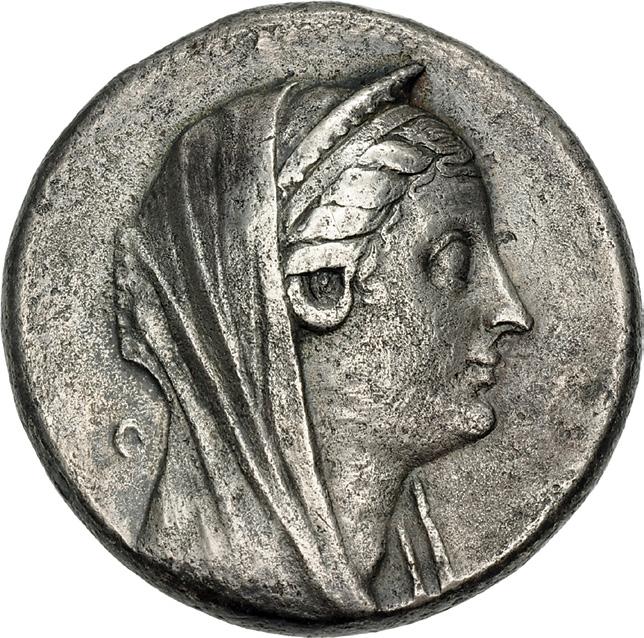
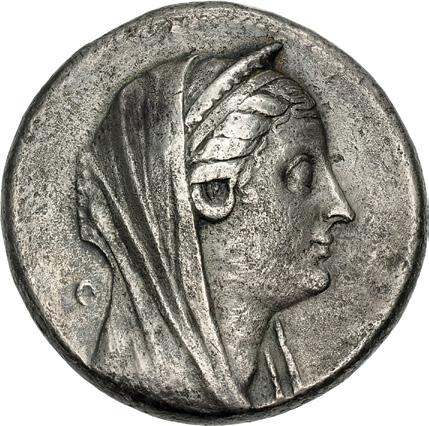
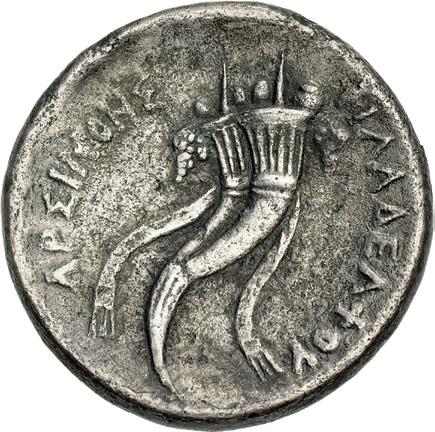
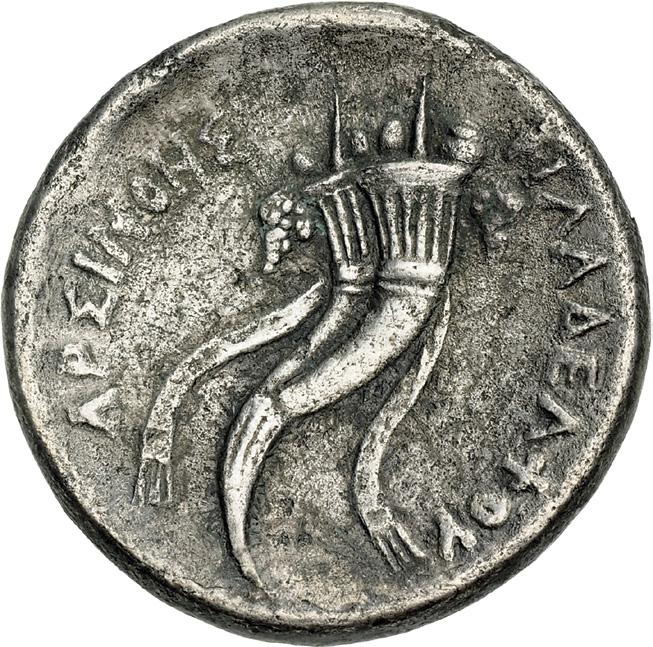
50. PTOLEMAIC KINGS of EGYPT. Arsinoe II Philadelphos. Died 270/268 BC. AR Dekadrachm (35.5mm, 33.39 g, 12h). Alexandreia mint. Struck under Ptolemy II, circa 261/0-253/2 BC. Head right, with ram’s horn, veiled and wearing stephane; lotus-tipped scepter in background, O to left / Double cornucopia with grape bunches hanging at sides, bound with fillet. CPE 333 (same dies as illustration); Svoronos 492; Troxell, Arsinoe, Group 2, p. 42; SNG Copenhagen –. Toned, traces of find patina, some light roughness and porosity. Near VF. Very rare. ($2000)
Ex Pegasi Auctions XXV (8 November 2011), lot 276; Classical Numismatic Group Electronic Auction 233 (26 May 2010), lot 257 (erroneously as Θ issue).
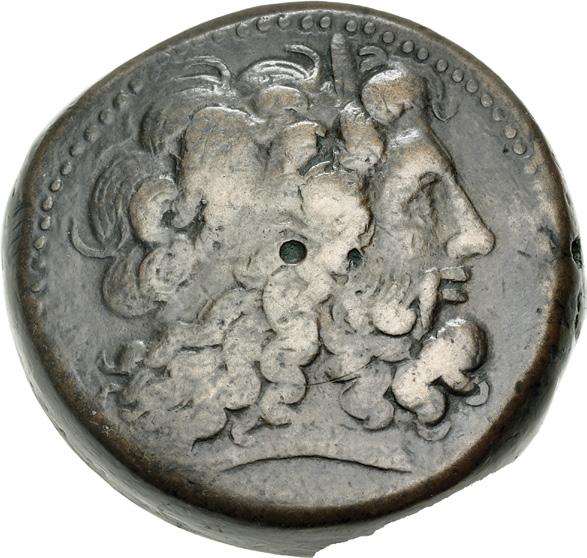
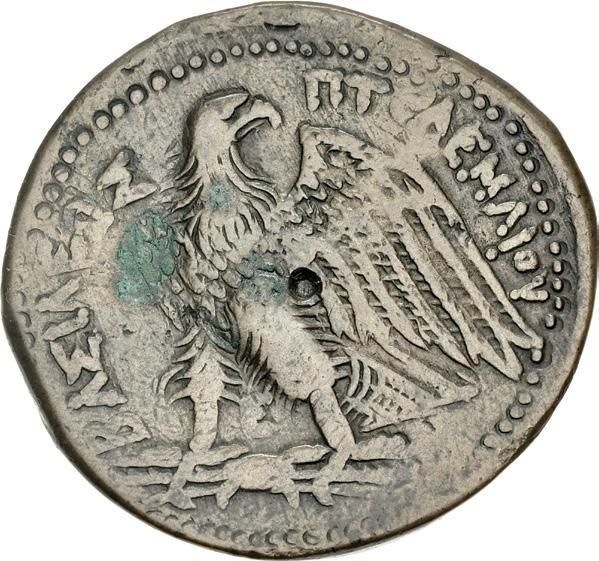
51. PTOLEMAIC KINGS of EGYPT. Ptolemy III Euergetes. 246-222 BC. Æ Oktobol (45.5mm, 106.00 g, 12h). Alexandreia mint. Series 4B. Horned head of Zeus-Ammon right, wearing tainia with basileion / Eagle with open wings standing left, head right, on thunderbolt; E between legs. CPE B365; Svoronos 446 (Ptolemy II); SNG Copenhagen 142 (Ptolemy II). Dark brown patina. Near VF. ($300)
Ex J. P. Righetti Collection (Classical Numismatic Group Electronic Auction 348, 8 April 2015), lot 20.
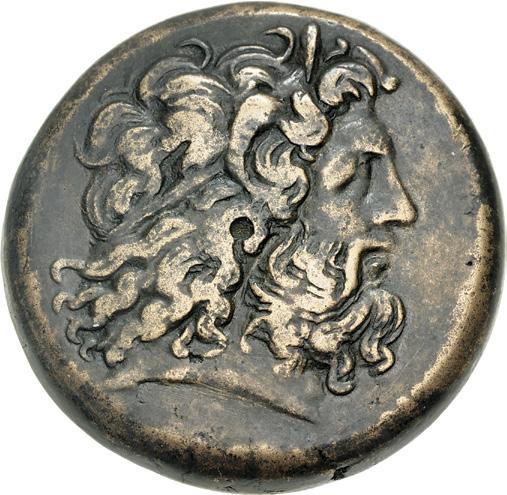
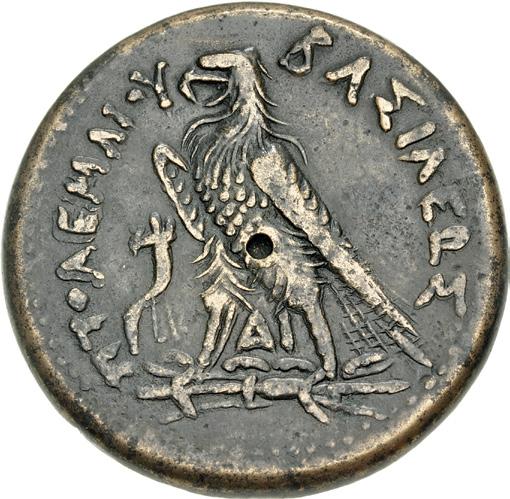
52. PTOLEMAIC KINGS of EGYPT. Ptolemy IV Philopator. 222-205/4 BC. Æ Drachm (41.5mm, 68.30 g, 12h). Alexandreia mint. Series 5D, circa 219-205/4 BC. Horned head of Zeus-Ammon right, wearing tainia with basileion / Eagle, with closed wings, standing left on thunderbolt; filleted cornucopia to left, ΔI between legs. CPE B495; Svoronos 1125; SNG Copenhagen –. Brown surfaces. VF. ($200)
Ex Harlan J. Berk inventory cc83916 (14 August 2015); Berk BBS 193 (30 April 2015), lot 378.
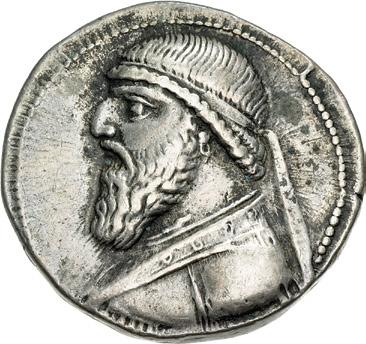
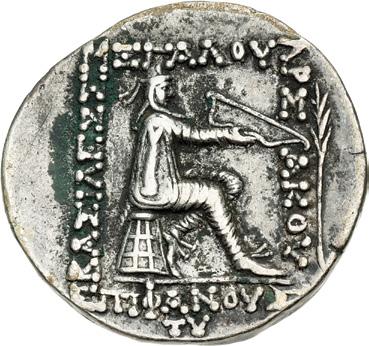
53. KINGS of PARTHIA. Mithradates II. 121-91 BC. AR Tetradrachm (31mm, 16.14 g, 12h). Seleukeia on the Tigris mint. Phase I, circa 122/121-119/18 BC. Diademed bust left / Archer (Arsakes I) seated right on omphalos, holding bow; palm to outer right; TV in exergue. SNP Type Ib/1b.δ; Sellwood 24.4; Sunrise 284; Shore 67. Toned, deposits. Good VF. ($500)
Ex Heritage 3046 (14 April 2016), lot 31182.
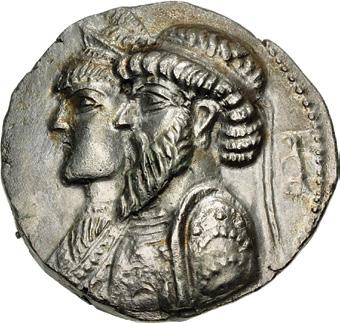
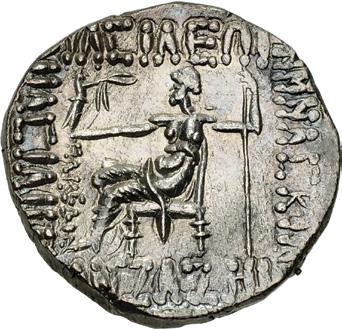
54. KINGS of ELYMAIS. Kamnaskires III, with Anzaze. Circa 82/1-73/2 BC. AR Tetradrachm (28mm, 16.02 g, 12h). Seleukeia on the Hedyphon mint. Dated SE 231 or 234 (82/1 BC or 78/7 BC). Conjoined busts of Kamnaskires III, diademed and draped bust and wearing long beard and torque, and Anzaze, draped and wearing stephane and necklace, left; anchor symbol to right / Zeus-Belos enthroned left, holding in outstretched right hand Nike, standing right and holding wreath, and scepter in left; ΠAKEΛΩN (sic) to inner left; traces of date in exergue. van’t Haaff Type 7.1.1-1a-1-2a; cf. Alram 454; cf. DCA2 462. Some iridescence, tooling. EF. ($300)
Ex Goldberg 85 (2 June 2015), lot 3060.
On the historical record, the Kingdom of Elymais remains rather mysterious, having left behind little in the way of written records aside from a few Aramaic inscriptions and its extensive coinage. Located at the mouth of the Persian Gulf, its people likely descended from the Elamites, who built a flourishing Bronze Age civilization that was eventually absorbed into the Achaemenid Persian Empire. Under the Seleukids, the region gradually reasserted its autonomy, which prompted Antiochos III the Great to mount an expedition into Elymais, where he was killed by an archer in 187 BC. Virtually nothing is known of the next 40 years, but circa 147 BC a ruling dynasty, the Kamnaskirids, arose and began to strike coins in Elymais. The new monarchy at first supported the Seleukids but, after about 140 BC, became a Parthian vassal state. Its coinage reflects this shift, starting off as Hellenistic in character and soon becoming more Parthian in appearance.
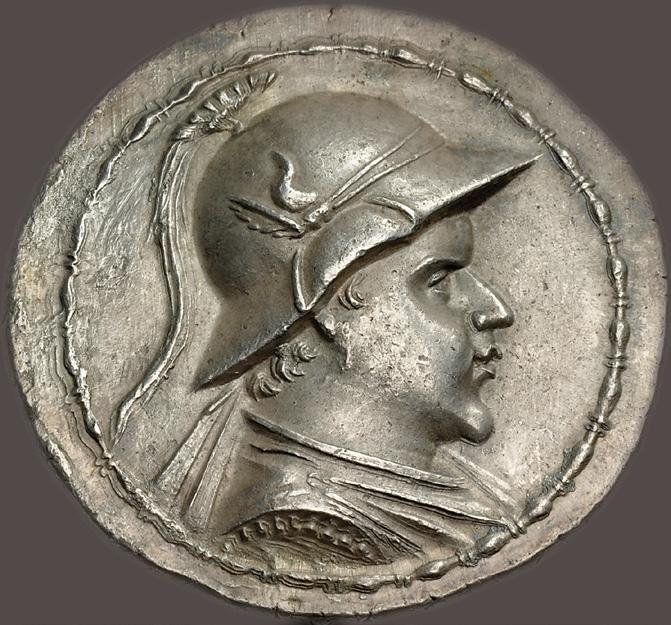
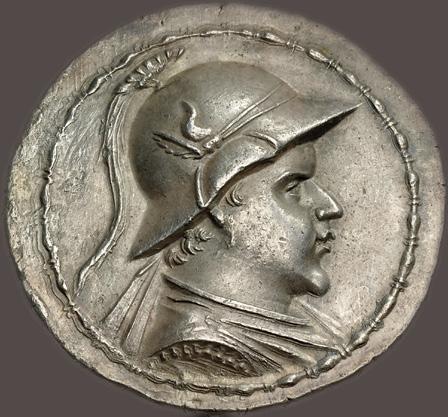
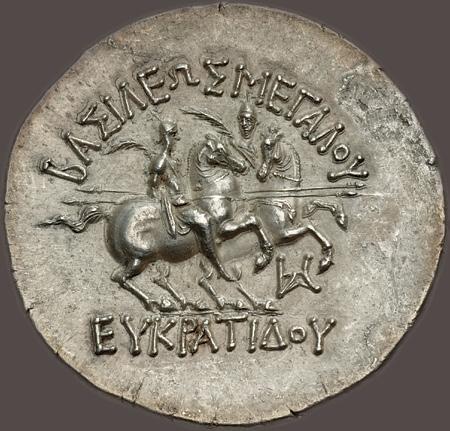
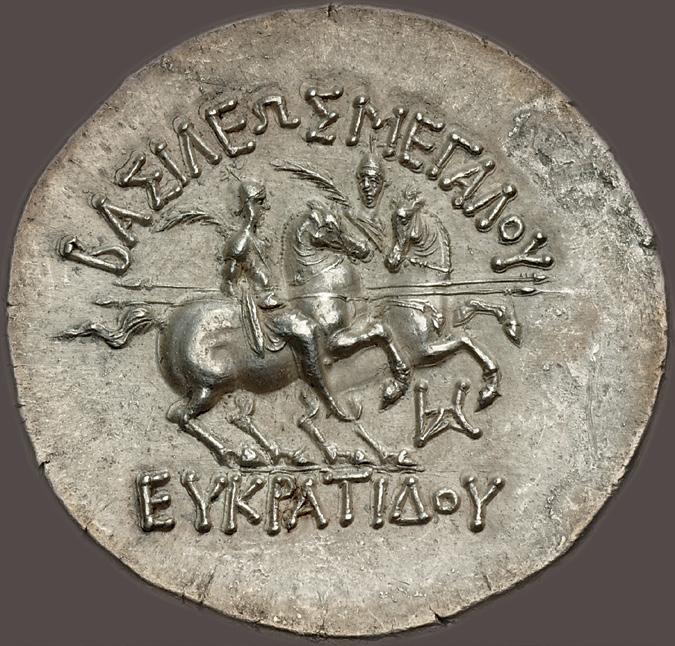
55. BAKTRIA, Greco-Baktrian Kingdom. Eukratides I Megas. Circa 170-145 BC. AR Tetradrachm (37mm, 16.79 g, 12h). Helmeted, diademed, draped, and cuirassed bust right / The Dioskouroi, holding couched spears and palm fronds, on horses rearing right; monogram in lower right field. Bopearachchi 6X; SNG ANS 472; HGC 12, 131. Toned, a few obverse cleaning marks. Superb EF. Struck on a broad flan. ($1000) Ex Freeman & Sear inventory G12201.
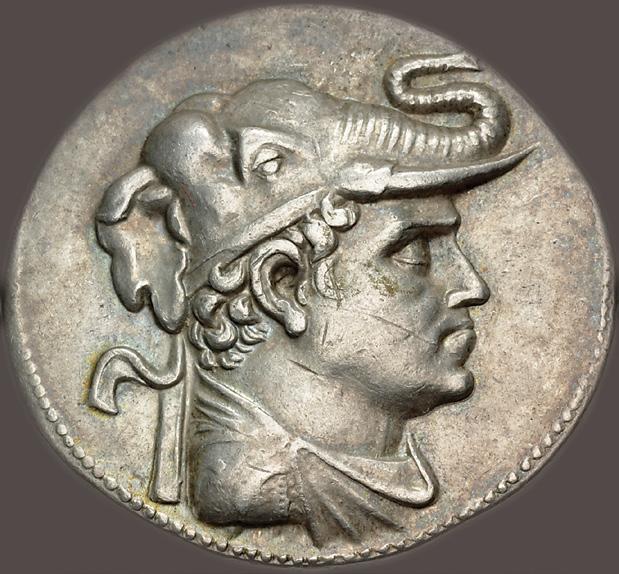
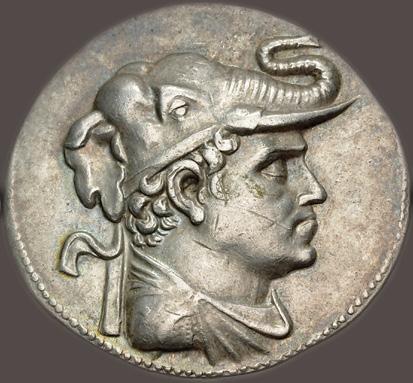
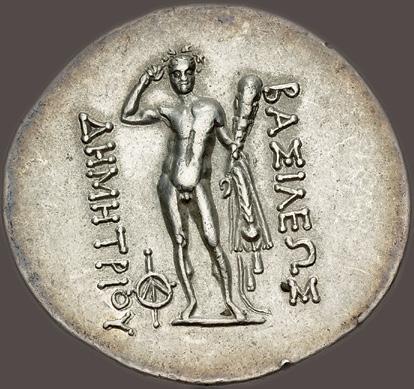
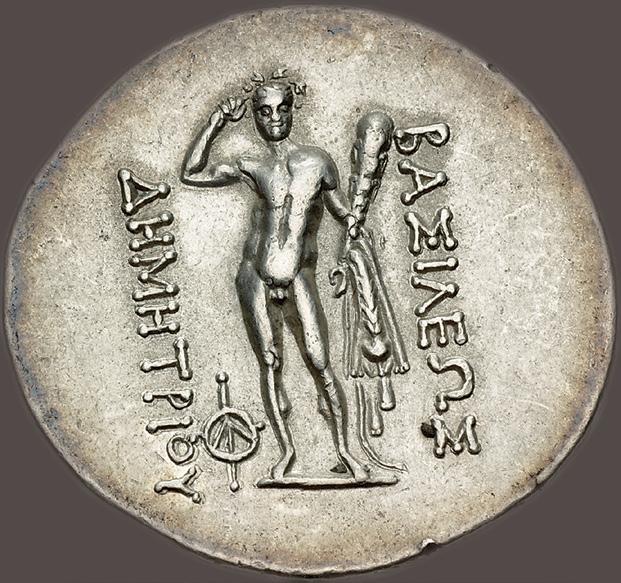
56. BAKTRIA, Greco-Baktrian Kingdom. Demetrios I Aniketos. Circa 200-185 BC. AR Tetradrachm (34.5mm, 16.72 g, 12h). Diademed and draped bust right, wearing elephant skin headdress / Herakles standing facing, crowning himself, holding club and lion skin; monogram to inner left. MPHB Group IIB, 63 (O18/R47); Bopearachchi 1F; SNG ANS 190; HGC 12, 63. Attractively toned. Near EF. ($3000) Ex Freeman & Sear inventory G12201.
Demetrios, son of Euthydemos I, succeeded to the Greco-Baktrian throne circa 200 BC, probably after a period of joint rule with his father. In his account of the campaigns of Antiochos III, Polybios mentions that the Seleukid king was impressed with the qualities of Demetrios and betrothed one of his own daughters, named Laodike, to him. A Greek inscription discovered in Tajikistan, dated to circa 200 BC, identifies Euthydemos as “greatest of kings” and names Demetrios as “his son, the glorious, victorious and remarkable.” A period of turmoil in the Mauryan Kingdom of India apparently encouraged Demetrios to launch an invasion of northern India, conquering a huge swath to the north of the Peninsula and establishing the basis for future Greek rule in the region. His coins show him wearing an elaborate headdress in the form of an elephant’s head, including trunk and tusks. This is not just a reference to his Indian conquests, but also an homage to Alexander the Great, the first Westerner to enter India. The figure of Herakles crowning himself on the reverse alludes to tales of the demigod hero’s travels to India. His adopted epithet of Aniketos (“Invincible”) was apparently accurate, as he appears never to have been defeated in battle.
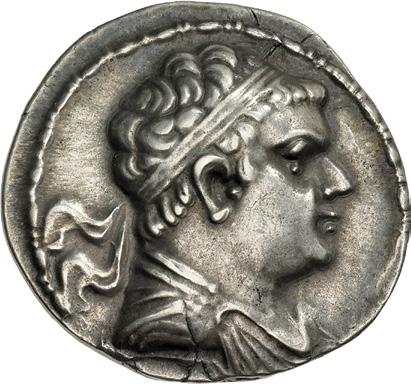
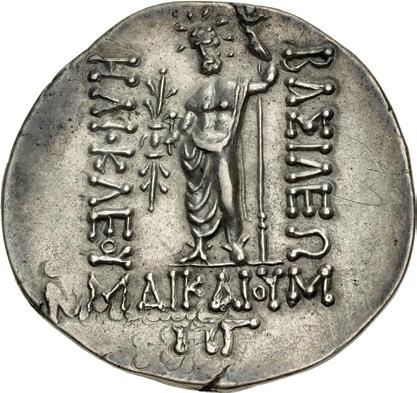
57. BAKTRIA, Greco-Baktrian Kingdom. Heliokles I Dikaios. Circa 145-130 BC. AR Tetradrachm (35mm, 16.12 g, 12h). Diademed and draped bust right / Zeus standing facing, holding thunderbolt and scepter; ΠΓ in exergue. Bopearachchi 1J; SNG ANS 636; HGC 12, 169. Toned, area of double strike on reverse. Good VF. ($300)
Ex Heritage inventory 229319001.
Heliokles I appears to have been the son of Eukratides I Megas, the long-reigning Greco-Baktrian ruler who brought the eastern kingdom to its zenith. The few near-contemporary records we have state Eukratides was slain by his own son, but neglect to mention the parricide’s name, leaving open the possibility that it was another son, possibly one Plato, whose short-lived coinage seems to be contemporary with that of Heliokles. Whichever son did the deed, the death of Eukratides seems to have opened the floodgates of invasion, for within 15 years the Greco-Baktrian Kingdom ceased to exist, although the neighboring Indo-Greek kingdoms managed to hold out for another century and a half.
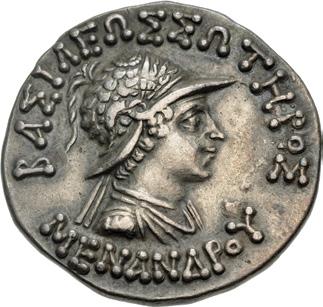
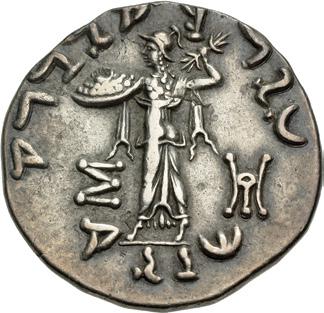
58. BAKTRIA, Indo-Greek Kingdom. Menander I Soter. Circa 155-130 BC. AR Tetradrachm (27mm, 9.80 g, 12h). Diademed and draped bust right, wearing crested helmet adorned with pelt, wing, and gorgoneion / Athena Alkidemos advancing left; Σ and monogram flanking. Bopearachchi 15B; SNG ANS 850-3; HGC 12, 182. Toned, small obverse die break, small reverse lamination. Good VF. ($300) Ex Heritage 3016 (14 April 2016), lot 29166.
Menander I Soter, known as Melinda in Indian lore, is likely the most famous Greek ruler of the far east, and is the only one whose reign left an indelible imprint on Indian historical traditions. His reign overlapped and extended beyond that of Eukratides I Megas in Baktria, apparently beginning circa 155 BC in the northern Punjab. His was reputedly born near Sagala (modern Sialkot, Pakistan) and later made that city his capital. How he rose to power is unrecorded, but he successfully resisted the efforts of Eukratides to invade and absorb this region in about 150 BC. When Eukratides was assassinated in 145 BC, Menander counter-invaded and seized all of that king’s Indian possessions. Ultimately he ruled a large swath of northern India that extended as far south as the Hindu holy city of Mathura. An enduring tradition paints Menander as a convert to Buddhism, and a long conversation between the king and a Buddhist sage named Nagasena is recorded in a text called the Melinda Panha (”Questions of Melinda”). He is described as “learned, eloquent, wise, and able, and a faithful observer... of all the various acts of devotion and ceremony” required by the faith. “Many were the arts and sciences he knew... as a disputant he was hard to equal, harder still to overcome.” It concludes, “as in wisdom so in strength of body, swiftness, and valour there was found none equal to Milinda in all India. He was rich too, mighty in wealth and prosperity, and the number of his armed hosts knew no end.”
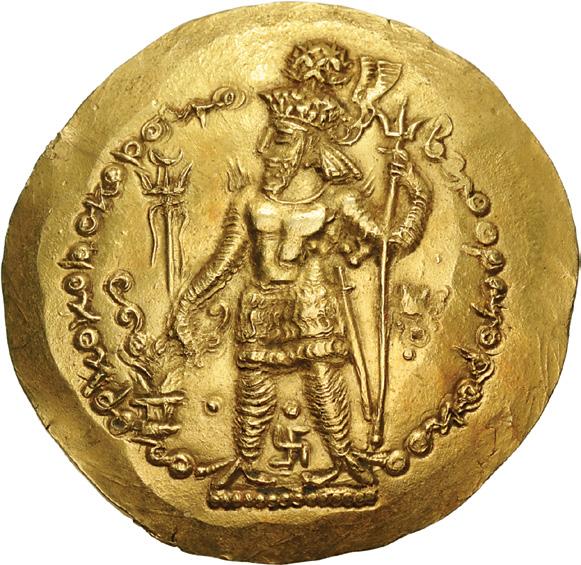
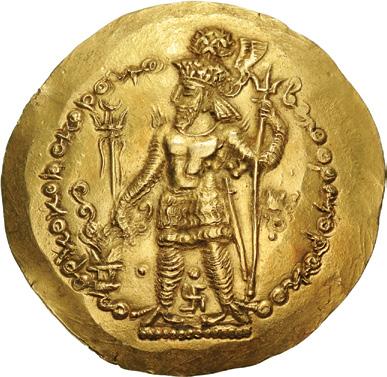
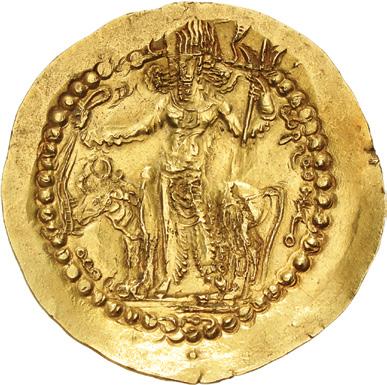
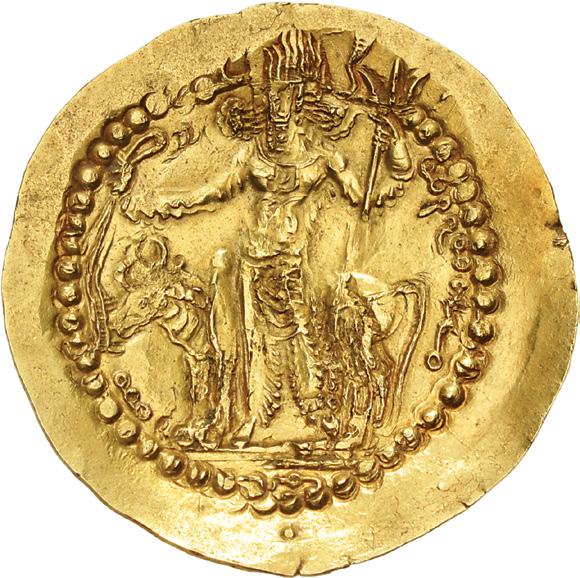
59. KUSHANO-SASANIANS. Vahrām (Bahram) I. Circa AD 330-365. AV Dinar (33mm, 8.03 g, 12h). Boxlo (Balkh) mint. Vahram standing left on ground line, wearing lotus crown with ribbons and surmounted by pomegranate, flames at shoulders, sacrificing at altar and holding trident; to left, trident standard above altar, middle prong surmounted by crescent; pellet to right of altar; between legs, pellet above swastika; triple pellets below arm; nandipada to right / Siva standing facing, holding diadem and trident; behind, the bull Nandi standing left. Cf. Cribb, Kidarites 1B; MK 750; ANS Kushan 2360; Donum Burns –; Zeno 263956 (same obv. die). Toned. EF. An exceptional example, well struck on both sides. ($1500)
Purchased from Pars Coins. Ex Heritage 3040 (9 April 2015), lot 29160.
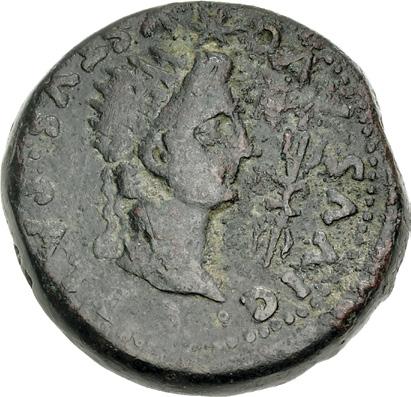
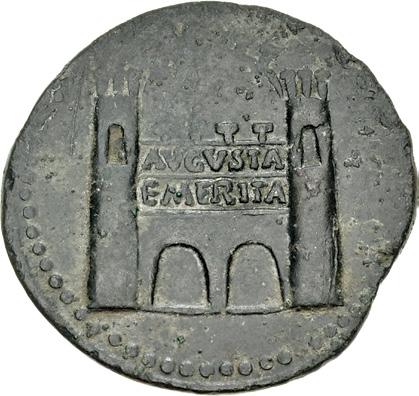
60. IBERIA, Emerita. Divus Augustus. Died AD 14. Æ Dupondius (34mm, 24.88 g, 6h). Struck under Tiberius. Radiate head of Augustus right; star above, thunderbolt before / City gate and walls with two arches and two towers, inscribed AVGVSTA/EMERITA. ACIP 3386; RPC I 21. Brown patina with trace deposits, some roughness. Good Fine. ($300)
Purchased from Vilmar Numismatics, January 2013. Ex Archer M. Huntington Collection (Vico 131, 9 October 2012), lot 555 (HSA 1001.1.23827); Cervera Collection.
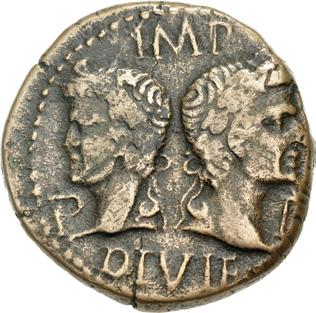
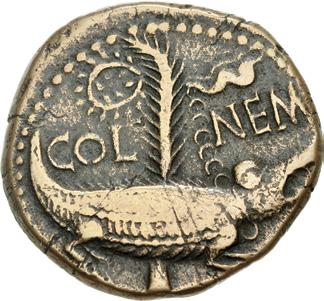
61. GAUL, Nemausus. Augustus, with Agrippa. 27 BC-AD 14. Æ Dupondius (26mm, 12.36 g, 5h). Struck AD 10-14. Heads of Agrippa, wearing combined rostral crown and laurel wreath, and Augustus, laureate, back to back; P-P across field / Crocodile right, chained to palm frond with wreath at top with long ties to right; two palm fronds at base. RPC I 525; SNG Copenhagen 700-1. Brown patina, light scratches. Near VF. ($150) Ex Goldberg 81 (1 September 2014), lot 1553.
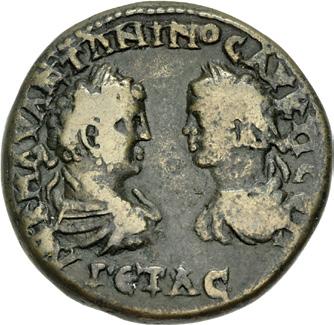
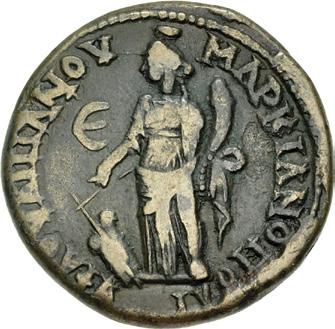
62. MOESIA INFERIOR, Marcianopolis. Caracalla & Geta. AD 209-211. Æ Pentassarion (27mm, 12.92 g, 1h). Flavius Ulpianus, legatus Augusti pro praetore. Struck AD 210-211. Laureate, draped, and cuirassed bust of Caracalla right, vis-à-vis laureate and draped bust of Geta left / Tyche Soteiros standing facing, head left, wearing kalathos, holding rudder and cornucopia; Є (mark of value) to upper left. H&J, Marcianopolis 6.20.38.3; AMNG I 652 var. (rev. legend); Varbanov 1086 var. (same). Yellow-brown patina, minor marks. Near VF. ($100)
Purchased from Roma Numismatics, 30 October 2012.
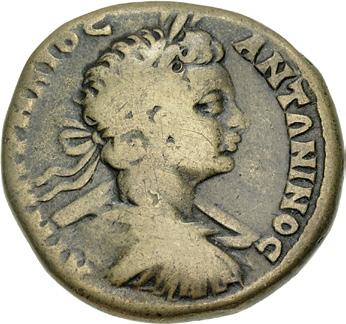
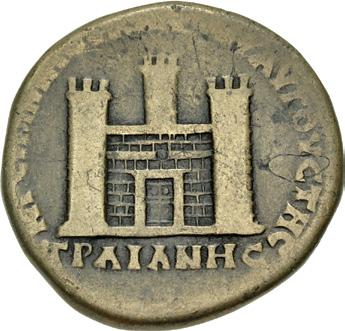
63. THRACE, Augusta Traiana. Caracalla. AD 198-217. Æ (28mm, 14.84 g, 7h). Quintus Sicinius Clarus, legatus Augusti pro praetore. Struck under Septimius Severus, circa AD 201-204. Laureate, draped, and cuirassed bust right, seen from behind / City gate with closed door and three towers. Schönert-Geiss, Augusta Traiana cf. 230 (for type, both dies unlisted); Varbanov 1242 var. (legends). Yellow-brown surfaces, minor marks. Good Fine. Very rare variety. ($75)
Purchased from Rudnik Numismatics. Ex J.P. Righetti Collection (Classical Numismatic Group Electronic Auction 215, 29 July 2009), lot 406; Auctiones AG 29 (12 June 2003), lot 217.
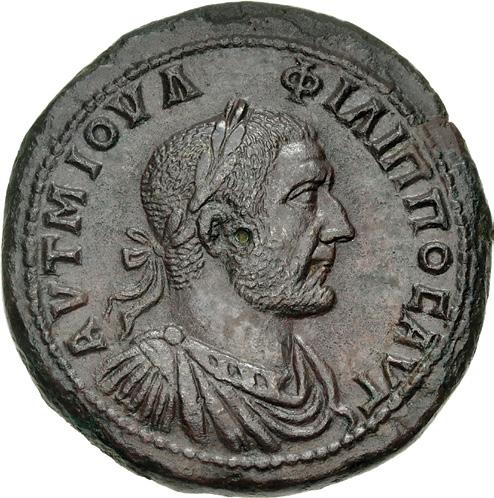
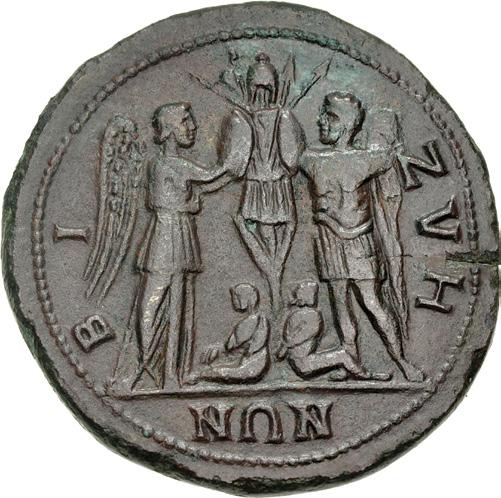
64. THRACE, Bizya. Philip I. AD 244-249. Æ Medallion (41mm, 39.54 g, 7h). Laureate, draped, and cuirassed bust right, seen from the front / To left, Nike standing right; to right, Philip standing left wearing military dress, both supporting trophy of arms at center; below, two bound captives flanking trophy. Tachev, Bizye 1-2 var. (O1/R–, rev. die unrecorded); Jurokova, Bizye 132; RPC VIII Online 48683 (this coin cited); Varbanov 1537. Red-brown surfaces with green, minor deposits, smoothing with details enhanced. Good VF. ($1000)
Purchased from Pegasi Numismatics, April 2018. Ex Mūnz Zentrum 177 (14 September 2016), lot 160; G. Hirsch 317 (18 February 2016), lot 2351.
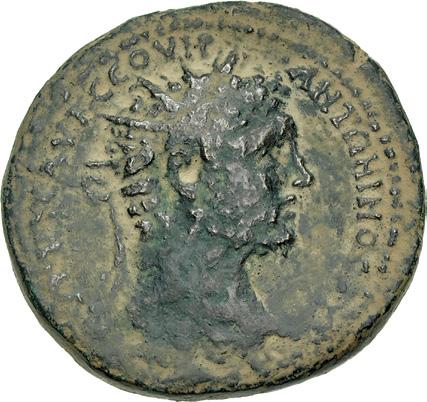
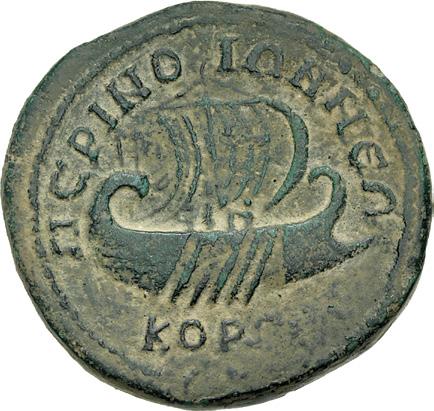
65. THRACE, Perinthus. Caracalla. AD 198-217. Æ (35mm, 24.80 g, 12h). Radiate head right / Galley under sail right, with oarsmen. Schönert, Perinthos 570 (obv. die C); Varbanov 257 (same obv. die as illustration). Earthen green surfaces. Good Fine. ($200)
Ex Classical Numismatic Group 94 (18 September 2013), lot 870.
RPC Online Feature Coin
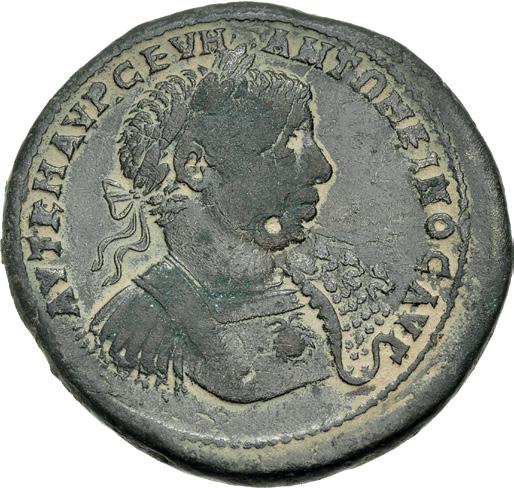
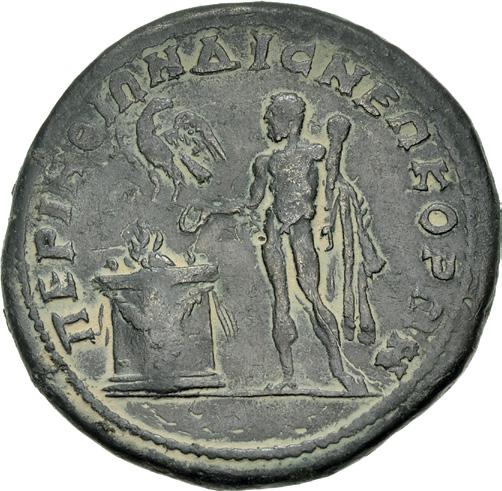
66. THRACE, Perinthus. Elagabalus. AD 218-222. Æ Medallion (42mm, 36.06 g, 6h). Laureate and cuirassed bust right, wearing aegis, seen from the front; gorgoneion on breastplate / Herakles standing left, sacrificing from patera over garlanded and lighted altar to left with right hand, holding club and lion’s skin in left; in upper left field, eagle left, head right. Schönert, Perinthos 724 (obv. die F); RPC VI Online 977.8 (this coin); Varbanov 396 corr. (bust type). Earthen brown patina, minor marks. VF. ($2000)
Ex Triton XVIII (6 January 2015), lot 872.
RPC Online Feature Coin
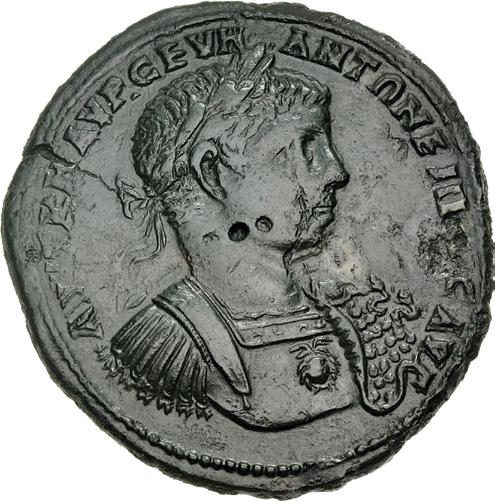
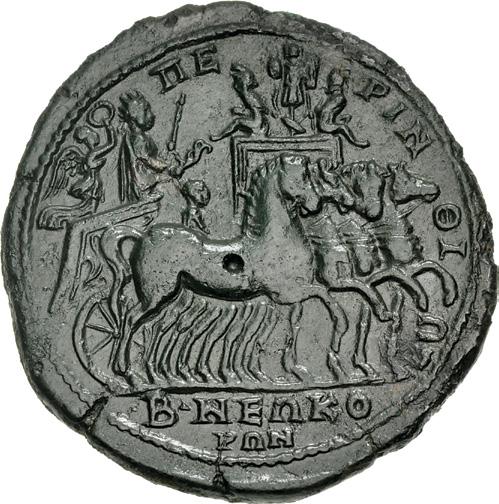
67. THRACE, Perinthus. Elagabalus. AD 218-222. Æ Medallion (40mm, 30.97 g, 7h). Laureate and cuirassed bust right, wearing aegis, seen from the front; gorgoneion on breastplate / Elagabalus, radiate and togate, standing right in slow quadriga right, holding scepter and apluster; behind, Nike crowns him with a wreath; before, charioteer, seated right, holding reins; above, trophy of arms on platform, two bound captives seated at its base. Schönert, Perinthos 718 (obv. die F); RPC VI Online 985.5 (this coin); Varbanov 372. Brown patina, minor marks and porosity, flan crack, smoothing, details enhanced. Good VF. Very rare. ($3000)
Ex Numismatica Ars Classica 150 (2 December 2024), lot 887; Lanz 117 (24 November 2003), lot 998.
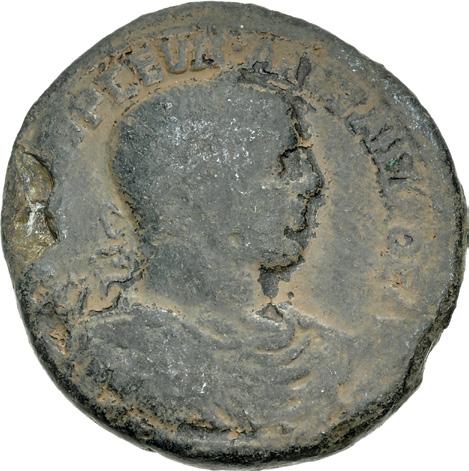
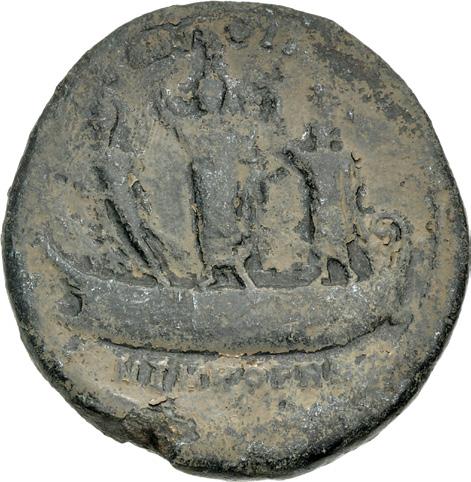
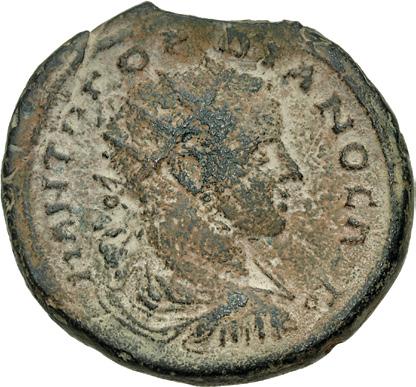
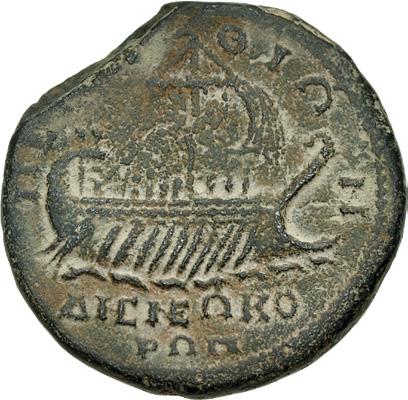
68. THRACE, Perinthus. Severus Alexander. AD 222-235. Æ (38mm, 32.93 g, 1h). Laureate, draped, and cuirassed bust right, seen from the front / Seveus Alexander standing left on galley sailing left, raising right hand and holding scepter in left; to left stands Isis Pharia standing left, holding billowing sail; to right stands Serapis standing left, placing crowing the emperor with a wreath. Schönert, Perinthos 782 (same dies); RPC VI Online 1050.9 (this coin); Varbanov 460. Earthen brown surfaces, smoothing, some corrosion. Fine. LOT SOLD AS IS, NO RETURNS. ($100)
Ex R. D. Frederick Collection (Classical Numismatic Group Electronic Auction 290, 7 November 2012), lot 244 (repatinated since).
69. THRACE, Perinthus. Gordian III. AD 238-244. Æ (33mm, 23.12 g, 1h). Radiate, draped, and cuirassed bust right, seen from behind / Galley under sail right, with oarsmen. Schönert, Perinthos 809-10 (obv. die D); RPC VII.2 581.5 (this coin); Varbanov 527. Earthen brown patina, edge flaw. Near VF. ($150)
Ex Classical Numismatic Group Electronic Auction 318 (15 January 2014), lot 411.
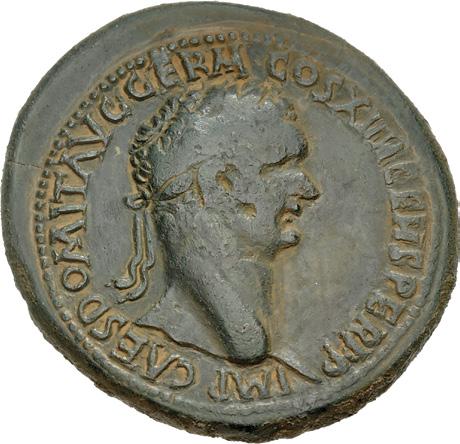
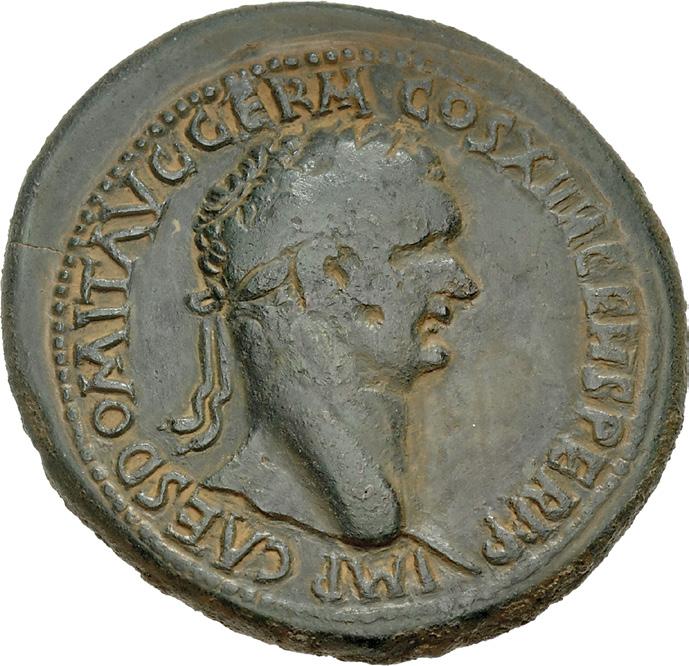
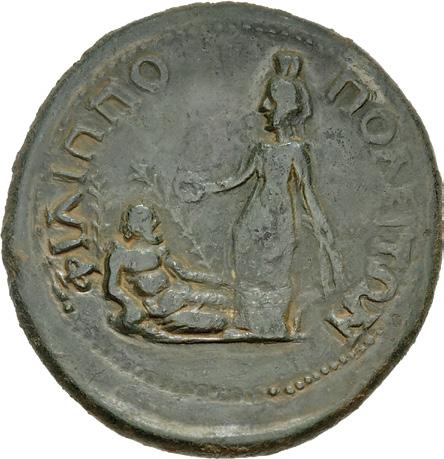
70. THRACE, Philippopolis. Domitian. AD 81-96. Æ Hexassarion (37.5mm, 25.94 g, 8h). Struck AD 88-January 89. Laureate head right / Tyche, wearing kalathos, standing left, holding patera and grain ears; to left, river-god Hebrus reclining right, holding reed and resting elbow on urn from which water flows; a second reed behind him. Varbanov, Philippopolis II.5.5 (O5/R1); Mouchmov, Philippopolis 3; RPC II 351; Varbanov 622. Earthen green-brown patina, minor marks. Near VF. ($100)
Ex Roma E-Sale 28 (2 July 2016), lot 254.
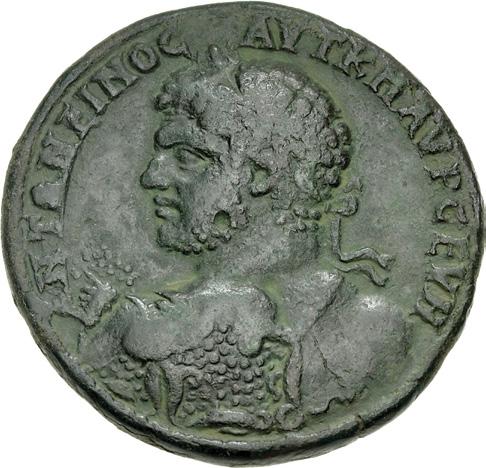
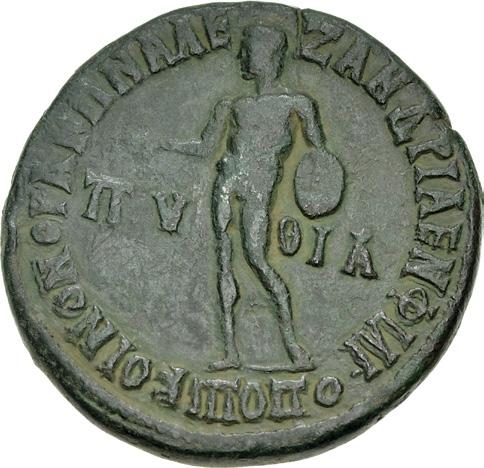
71. THRACE, Philippopolis. Caracalla. AD 198-217. Æ Medallion (40mm, 37.98 g, 6h). Thracian Alexandrian and Pythian Games issue. Struck AD 215. Laureate, heroic bust left, wearing aegis, seen from behind / Discobolus standing facing, head left, holding stone ball and disc. Varbanov, Philippopolis XV.5.2.1.4 (this coin cited and illustrated); Peter, Koinon 3 (V1/ R3); Mouchmov, Philippopolis 370; Varbanov 1433. Green patina, light porosity, scratches. Near VF. Rare. ($2000)
Ex Triton XX (10 January 2017), lot 446; Triton XVI (8 January 2013), lot 687.
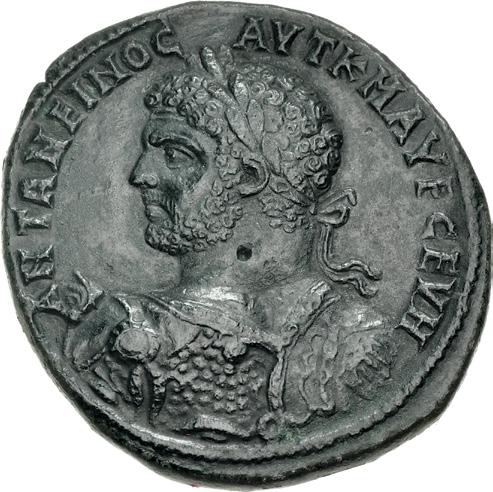
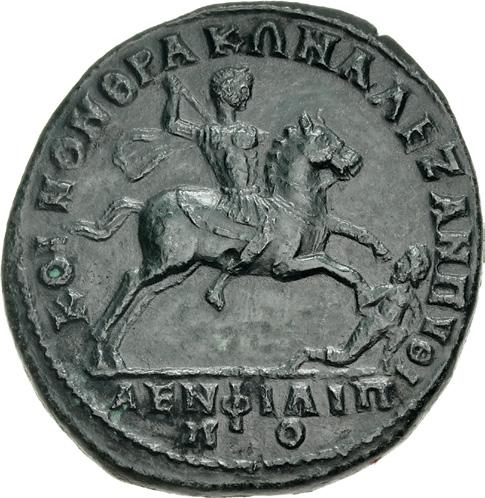
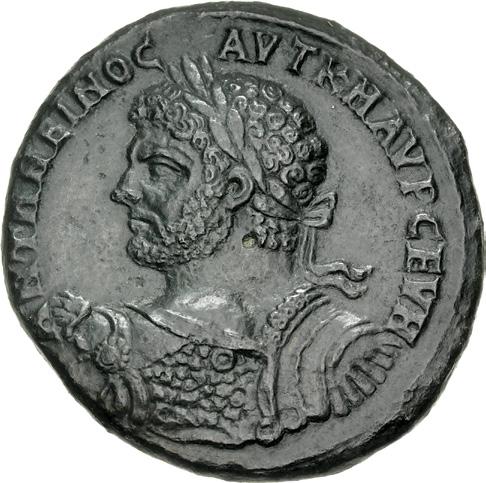
72. THRACE, Philippopolis. Caracalla. AD 198-217. Æ Medallion (41mm, 39.13 g, 12h). Thracian Alexandrian and Pythian Games issue. Struck AD 215. Laureate, heroic bust left, wearing aegis, seen from behind / Caracalla on horseback right, wearing military dress, chlamys flowing behind, about to spear fallen enemy kneeling right below. Varbanov, Philippopolis
XV.6.5.2.3 (this coin cited); Peter, Koinon 2 (V1/R2); Mouchmov, Philippopolis 364; Varbanov 1421. Dark brown surfaces, smoothed and tooled. Good VF. ($300)
Purchased from Glen Schinke, 8 September 2017. Ex Goldberg 100 (5 September 2017), lot 2195; Bertolami-ArtCoins Roma 6 (10 December 2012), lot 1058; Classical Numismatic Group 69 (8 June 2005), lot 945.
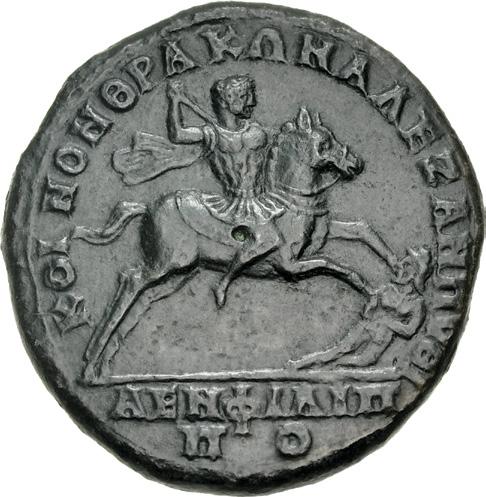
73. THRACE, Philippopolis. Caracalla. AD 198-217. Æ Medallion (40mm, 35.65 g, 12h). Thracian Alexandrian and Pythian Games issue. Struck AD 215. Laureate, heroic bust left, wearing aegis, seen from behind / Caracalla on horseback right, wearing military dress, chlamys flowing behind, about to spear fallen enemy kneeling right below. Varbanov, Philippopolis XV.6.5.2.4 (this coin cited and illustrated); Peter, Koinon 2 (V1/R2); Mouchmov, Philippopolis 364; Varbanov 1421. Dark brown surfaces, smoothed and tooled. Good VF. ($300)
Ex Nomos Obolos 4 (February 2016), lot 681.
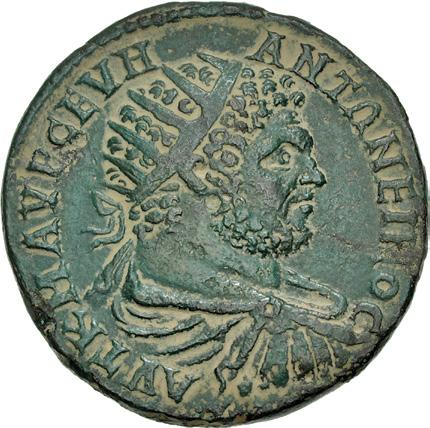
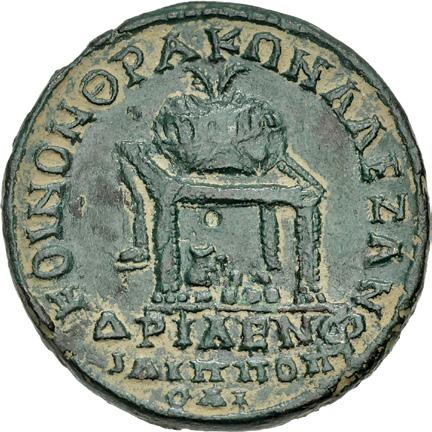
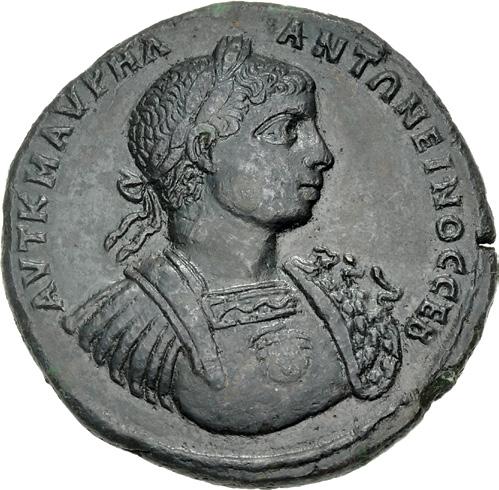
74. THRACE, Philippopolis. Caracalla. AD 198-217. Æ (35mm, 22.31 g, 1h). Thracian Alexandrian and Pythian Games issue. Struck AD 215. Radiate, draped, and cuirassed bust right, seen from behind / Agonistic prize crown containing two palm fronds, inscribed [ΠYΘIA], set on table with lion’s feet seen in perspective; below, amphora and five voting balls to right. Varbanov, Philippopolis XV.9.7.4.1 (O2/R2, this coin cited and illustrated); Peter, Koinon 24 var. (V4/ R–, rev. die unrecorded); Mouchmov, Philippopolis 373-81 var. (rev. arrangement); Varbanov 1485-88 (same). Green surfaces with earthen highlights, smoothing. Good VF. ($500)
Ex Patrick C. Tan Collection (Heritage 3032, 10 April 2014), lot 23806; Classical Numismatic Group 94 (18 September 2013), lot 871.
The reverse of this medallion is one of many similar types struck by Philippopolis to commemorate the Pythian Games (τὰ Πύθια), one of the four Greek Panhellenic Games that occurred in the second year of each four-year Olympic cycle. Held in honor of Apollo, the god of arts and “civilization,” these games featured competitions for athletics, music, and poetry, and were meant to evoke the best of Greco-Roman culture. This particular event in AD 215, coming as it did in during Caracalla’s march east to fight the Persians, must have invested the event with further significance: by situating the occurrence of the games at such a crucial moment, the gods had signaled their approval for Caracalla’s enterprise against the “barbarians.”
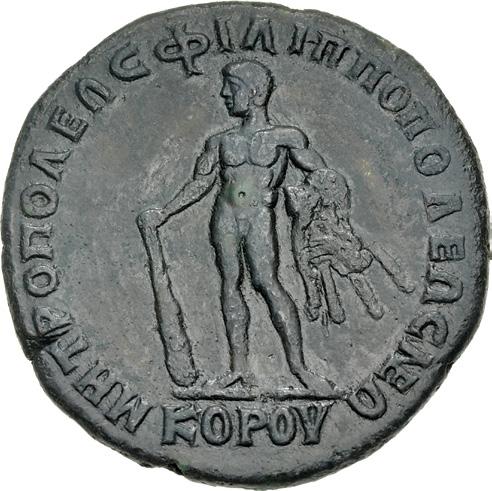
75. THRACE, Philippopolis. Elagabalus. AD 218-222. Æ Medallion (41mm, 34.28 g, 12h). Laureate and cuirassed bust right, wearing aegis, seen from the front; gorgoneion on breastplate / Herakles standing facing, head left, leaning on club and holding lion’s skin. Varbanov, Philippopolis XVII.9.2.1 (this coin cited and illustrated); RPC VI Online 493.3 (this coin); Mouchmov, Philippopolis 464; Varbanov 1721 var. (bust). Dark brown surfaces, smoothed and tooled. Good VF. ($750)
Ex Goldberg 75 (24 September 2013), lot 2628; Goldberg 74 (4 June 2013), lot 3630.
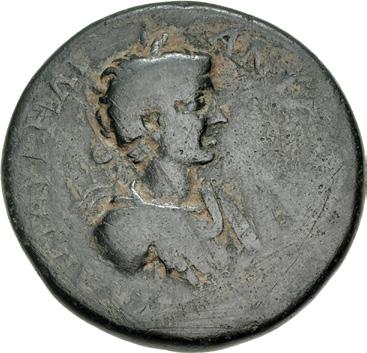
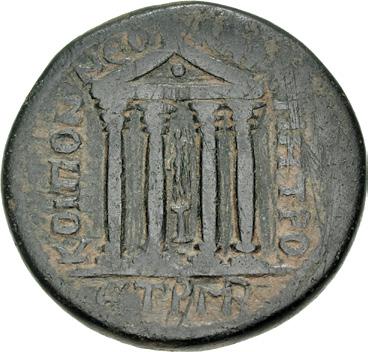
76. PONTUS, Neocaesarea. Caracalla. AD 198-217. Æ (30mm, 15.42 g, 6h). Dated CY 142 (AD 205/6). AY KAI M AYPHΛI ANTΩNINOC, laureate, draped, and cuirassed bust right, seen from the front / KOI ΠONT NЄOKAIC NЄω MHT, tetrastyle temple of Ma-Zeus, statue holding scepter on pedestal, head left, within; pellet in pediment; ЄT PMR (date) in exergue. Çizmeli –; RG –; RPC V.3 –. Brown patina with earthen highlights, scratches. Good Fine. ($100)
Ex VAuctions 321/London Coin Galleries 3 (10 November 2016), lot 66.
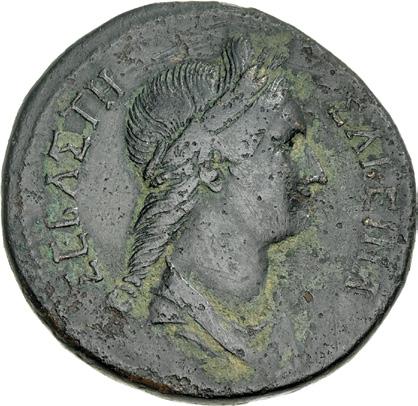
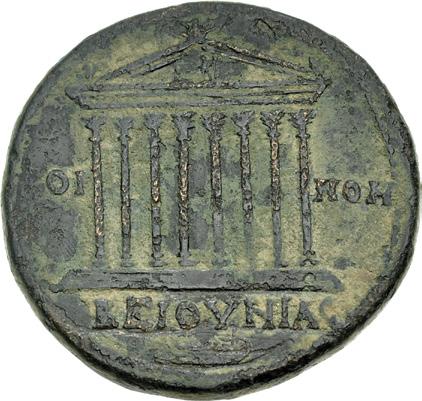
77. BITHYNIA, Koinon of Bithynia. Sabina. Augusta, AD 128-136/7. Æ (34mm, 23.47 g, 6h). Struck under Hadrian. Diademed and draped bust right, her hair in plait down her neck / Octastyle temple on podium of two steps, pellet in center; Genius sacrificing in pediment; below, prow. RPC III 1023.5 (this coin); RG 52; BMC 28-9. Earthen green surfaces, light porosity. Near VF. Rare. ($150)
Purchased from John Jencek, June 2011.
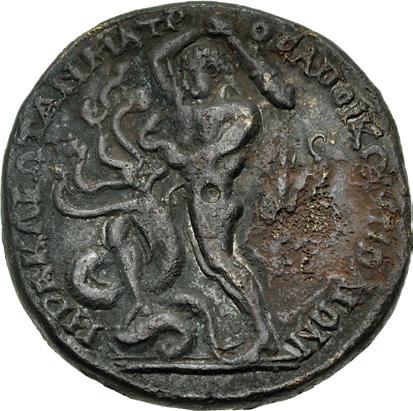
78. BITHYNIA, Heraclaea Pontica. Gordian III. AD 238-244. Æ (34mm, 24.24 g, 6h). Laureate and cuirassed bust right, seen from the front, eagle on breastplate / Herakles and the Lernaean Hydra – Herakles standing left, grasping one of the Hydra’s heads with his left hand, holding club overhead with his right hand and preparing to strike the Lernaean Hydra before him; behind, quiver and bow. RPC VII.2 2086.6 (this coin); RG 217. Brown surfaces, roughness. Near VF. Rare. ($500)
Ex Leu Numismatik Web Auction 9 (23 February 2019), lot 670; Numismatik Naumann 64 (1 April 2018), lot 264.
For his Second Labor, Herakles had to kill the Lernaean Hydra, the offspring of Typhon and Echidna, and the sibling of the Nemean Lion, the Chimaera, and Kerberos. Inhabiting the swamp near Lake Lerna in the Argolid, the creature possessed numerous mortal and one immortal head on its single body; should one head be removed, two more would grow in its place. When Herakles reached the swamp where the Hydra dwelt, he drew it out of its lair near the spring of Amymone. Thereupon, wielding a harvesting sickle, he attempted to decapitate the creature. When this proved unsuccessful, because of the Hydra’s regenerative ability, Herakles enlisted the assistance of his nephew Iolaos, who devised a plan: once Herakles had cut off one of the creature’s heads, Iolaos would cauterize the stump with a burning firebrand. The plan succeeded, and the Hydra was destroyed. Herakles placed its one immortal head under a large rock on the sacred way between Lerna and Elaius and dipped his arrows in its poisonous blood.
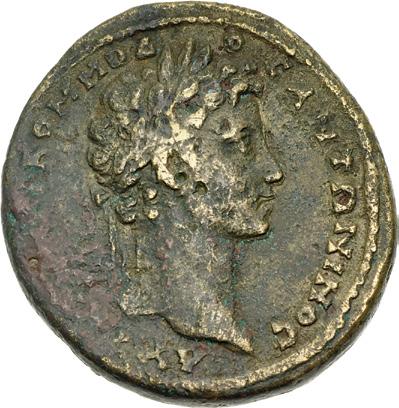
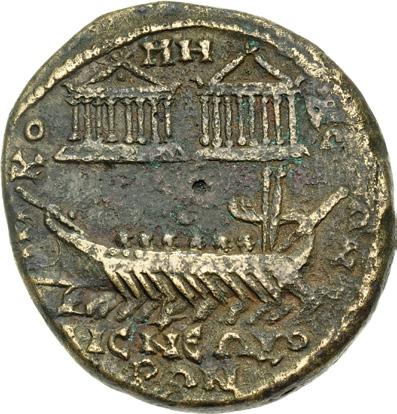
79. BITHYNIA, Nicomedia. Commodus. AD 177-192. Æ Tetrassarion (32mm, 25.29 g, 1h). Struck circa AD 180-182. Laureate head right / Galley with oarsmen left with two vexilla at stern; above, two octastyle temples. RPC IV.1 Online 5668.7 (this coin); RG 165. Yellow-brown surfaces, roughness. Good Fine. Very rare. ($300)
Ex Classical Numismatic Group 87 (18 May 2011), lot 831.
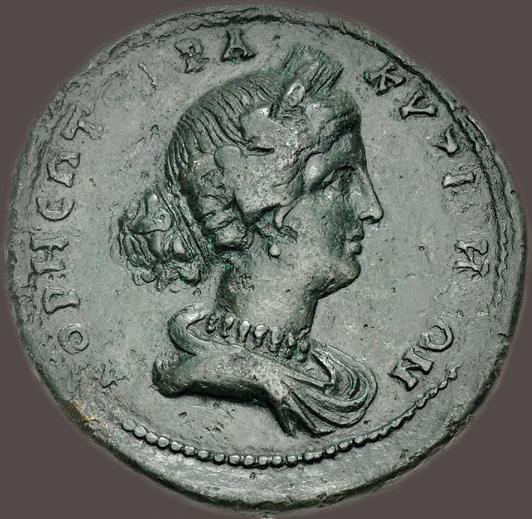
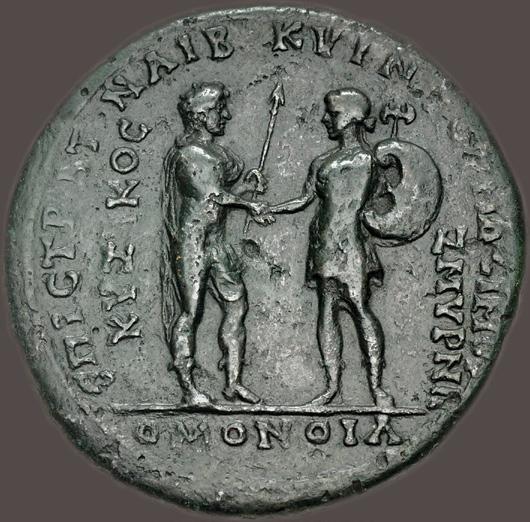
80. MYSIA, Cyzicus. temp. Commodus. AD 177-192. Æ Medallion (44mm, 36.79 g, 6h). Homonoia with Smyrna Naevios Quintos Maximos, strategos. Struck circa AD 180-182. Wreathed and draped bust of Kore Soteira right, wearing necklace / To left, the hero Kyzikos standing right, nude but for chlamys over shoulder, holding spear; to right, the Amazon Smyrna standing left, holding labrys and pelta; both clasping right hands. Von Fritze, Autonome, Group VI, 6l; Franke & Nollé Typus IV, 1037 (VsA/Rs4); RPC IV.2 Online 763.2 (this coin); SNG BN –. Dark green surfaces, minor marks, smoothing. VF. Extremely rare, two recorded in RPC. ($1500)
Purchased from Edward J. Waddell, 20 June 2018. Ex Künker 304 (19 March 2018), lot 1213; Hauck & Aufhäuser 14 (6 October 1998), lot 100.
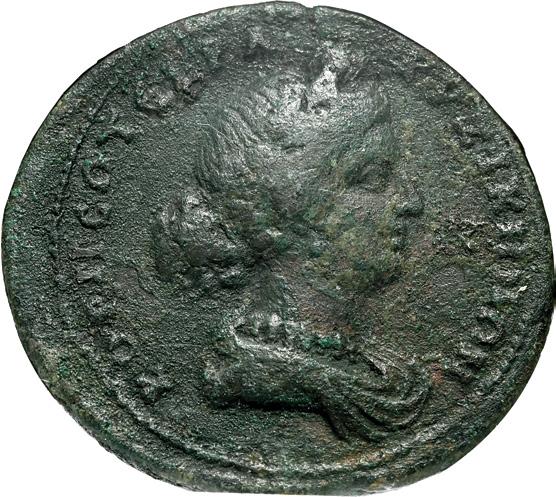
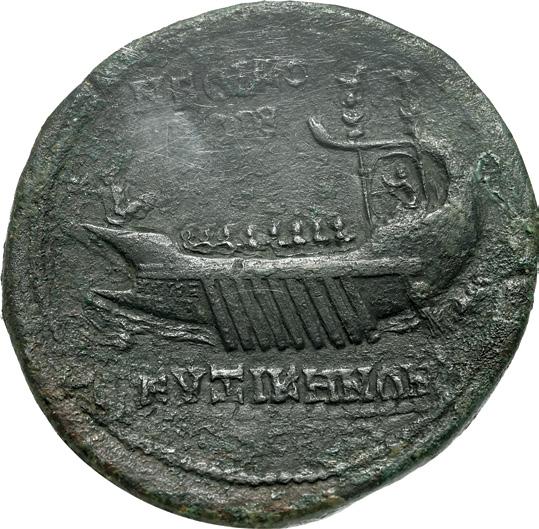
81. MYSIA, Cyzicus. temp. Commodus. AD 177-192. Æ Medallion (44mm, 40.77 g, 1h). Struck circa AD 180-192. Draped bust of Kore Soteira, wearing grain wreath and necklace / Galley left with oarsmen and a helmsman; on prow, Triton holding fish and oar; on stern, two vexilla; in water below boat, fish to left, dolphin to right. RPC IV.2 Online 760; SNG BN 566; von Fritze, Autonome, Group VI, 6h. Green and brown patina. In NGC encapsulation 8213881-020, graded Ch VF, Strike: 5/5, Surface: 3/5. Extremely rare, two recorded in RPC, only this coin in CoinArchives. ($2000)
Ex Heritage 61485 (24 March 2025), lot 23031.
The appearance on this and the previous impressive medallions of Kore Soteira, the Greek “Savior Maiden” and an alternate form of the goddess Persephone, harkens back to much earlier issues of Cyzicus, the well-known silver tetradrachms struck between the fifth and second centuries BC (see CNG Feature Auction 132, lots 349 and 351 for examples). Persephone was deeply tied to Cyzicus in the city’s lore, with the city itself being considered the maiden’s dowry offered by Zeus to Hades upon their marriage, and the eternally youthful goddess thus becoming the protectress of Cyzicus.
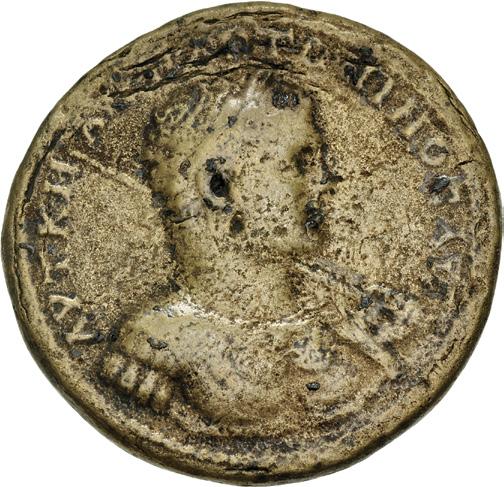
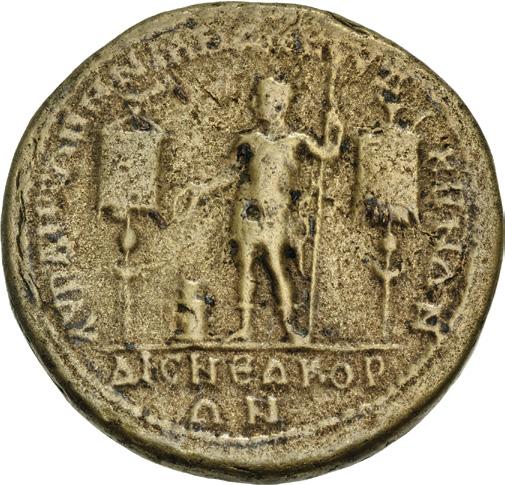
82. MYSIA, Cyzicus. Caracalla. AD 198-217. Æ Medallion (41mm, 33.89 g, 1h). Laureate and cuirassed bust right, wearing aegis, seen from the front; gorgoneion on breastplate; holding scepter over left shoulder / Caracalla standing facing, head left, wearing military attire, sacrificing from patera over lighted altar and scepter; between two vexilla. RPC V.2 Online 710 (this coin cited); SNG BN 776-7. Yellow-brown surfaces, some roughness, trace deposits. Good Fine. Very rare, four recorded in RPC. ($150)
Ex R. D. Frederick Collection (Classical Numismatic Group Electronic Auction 286, 5 September 2012), lot 218; Classical Numismatic Group Electronic Auction 235 (23 June 2010), lot 347.
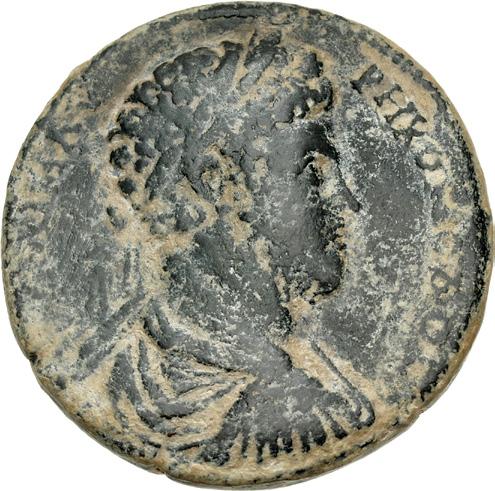
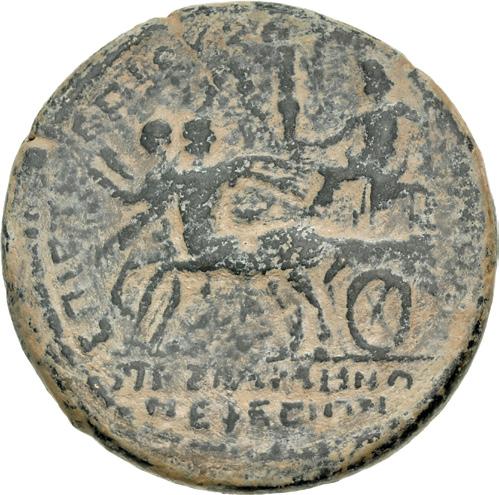
83. MYSIA, Pergamum. Commodus. AD 177-192. Æ Medallion (41mm, 37.37 g, 6h). Homonoia with Ephesus Publius Aelius Pius, strategos. Struck circa AD 180-182. Laureate, draped, and cuirassed bust right, seen from behind / Asklepios, holding cult idol of Artemis Ephesia and serpent-entwined staff, seated in biga drawn by two centaurs, one centaur holds a torch. Weisser, Pergamon 1220b; Franke & Nollé –; Kampmann –; RPC IV.2 Online 11331.1 (this coin); SNG BN –. Earthen brown surfaces, smoothing, flan crack. Good Fine. Extremely rare, only this coin in RPC, one other known to Weisser in the Winterthur Museum collection. ($750)
Ex Classical Numismatic Group Electronic Auction 342 (14 January 2015), lot 412.
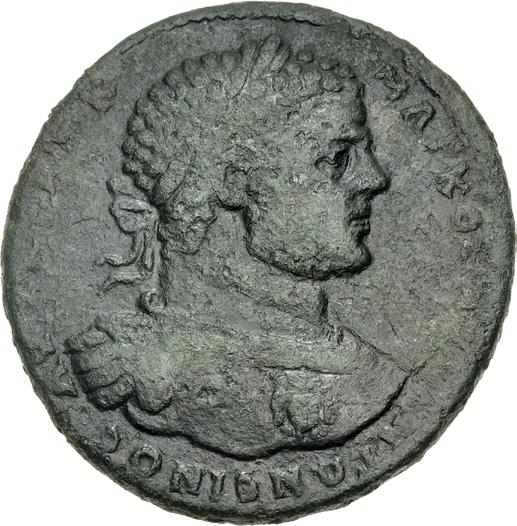
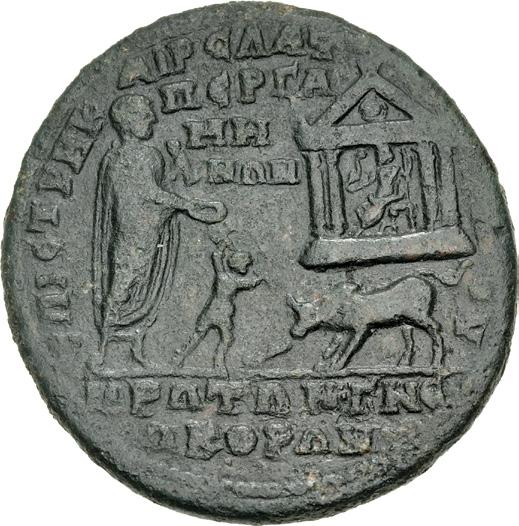
84. MYSIA, Pergamum. Caracalla. AD 198-217. Æ Medallion (43mm, 43.59 g, 6h). Marcus Cairellius Attalos, strategos. Laureate and cuirassed bust right, seen from the front; gorgoneion on breastplate / Caracalla, togate, standing right, holding patera and volumen, facing tetrastyle temple; within, Asklepios seated left, holding serpent in outstretched arm and scepter; between them; victimarius standing right, holding mallet, about to strike a bull standing left. Weisser, Pergamon 1780; RPC V.2 Online 37 (this coin cited); SNG BN 2246. Dark green patina, slight roughness, smoothing. Near VF. ($750)
Ex New York Sale XXIII (6 January 2010), lot 59.
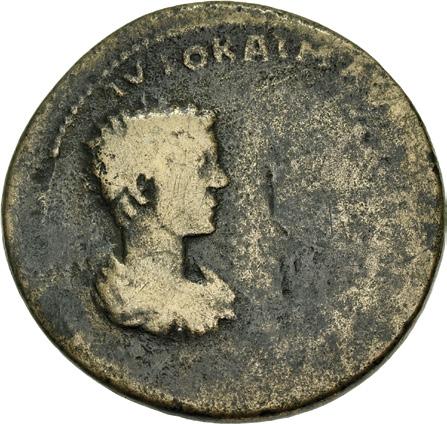
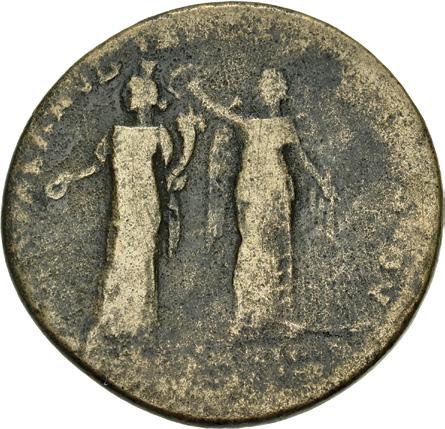
85. MYSIA, Pergamum. Caracalla, with Geta as Caesar. AD 198-217. Æ Medallion (37mm, 20.92 g, 6h). Damnatio Memoriae. Claudianus, son of Terpandros, strategos. Laureate, draped, and cuirassed bust of Caracalla right, seen from behind vis-à-vis [bare-headed, draped, and cuirassed bust of Geta left, seen from behind] / Tyche standing facing, head left, wearing kalathos, holding patera and cornucopia; crowned by Nike standing to right holding palm. Weisser, Pergamon 1650; RPC V.2 Online 799; SNG BN –. Yellow-brown surfaces, light roughness. Fine. Rare. Portrait of Geta erased, Caracalla’s damnatio memoriae of Geta applied after his murder in AD 211. ($200)
Purchased from Nemesis Optimo, 5 April 2012.
The majority of Caracalla’s damnatio memoriae were applied at Stratonicaea in Caria; the other city where it occured with great frequency was Pergamum.
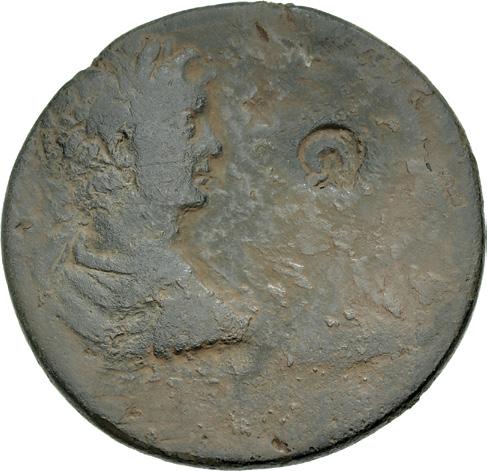
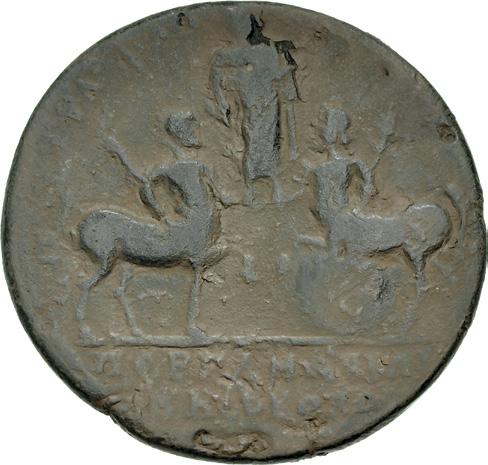
86. MYSIA, Pergamum. Caracalla, with Geta as Caesar. AD 198-217. Æ Medallion (40mm, 25.21 g, 6h). Damnatio Memoriae. Flavius Xenokrates, strategos. Laureate, draped, and cuirassed bust of Caracalla right, seen from behind vis-à-vis [bare-headed and cuirassed bust of Geta left, seen from the front, gorgoneion on breastplate]; c/m; wreath within round incuse / Two centaurs, each holding scepter, supporting Asclepios standing facing, leaning on serpent-entwined staff to left. Weisser, Pergamon 1660; RPC V.2 Online 1238; SNG BN 2253. For c/m: Howgego 480. Earthen brown surfaces, some roughness, delamination flaw on reverse. Fine. Extremely rare, three recorded by RPC. Portrait of Geta erased, Caracalla’s damnatio memoriae of Geta applied after his murder in AD 211. ($500)
Ex Naville Numismatics 30 (2 April 2017), lot 171 (since repatinated).
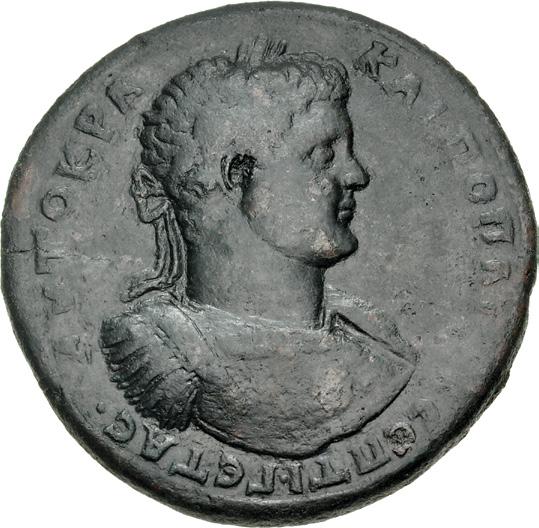
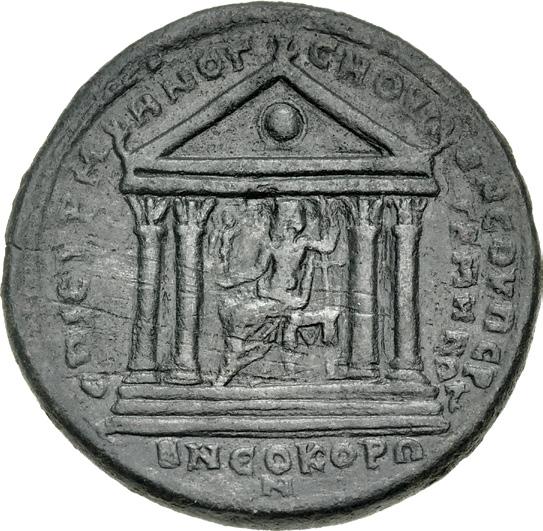
87. MYSIA, Pergamum. Geta. AD 209-211. Æ Medallion (44mm, 50.23 g, 6h). Monogenes II the Younger, strategos. Laureate and cuirassed bust right, seen from the front, with gorgoneion on breastplate / Zeus Nikephoros seated left, holding Nike who crowns him and long scepter, within tetrastyle temple, clipeus in pediment. Weisser, Pergamon 1672 var. (bust); RPC V.2 Online 339 this coin); SNG BN –. Brown surfaces, minor marks, scratches and smoothing, details enhanced. Near VF. Extremely rare, the only specimen recorded in RPC. One more of this type known to Weisser with a different bust. ($1000)
Ex Classical Numismatic Group 102 (18 May 2016), lot 734; Classical Numismatic Group 99 (13 May 2015), lot 446.
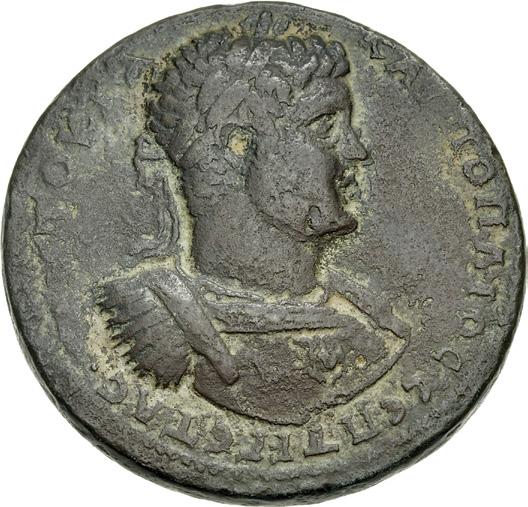
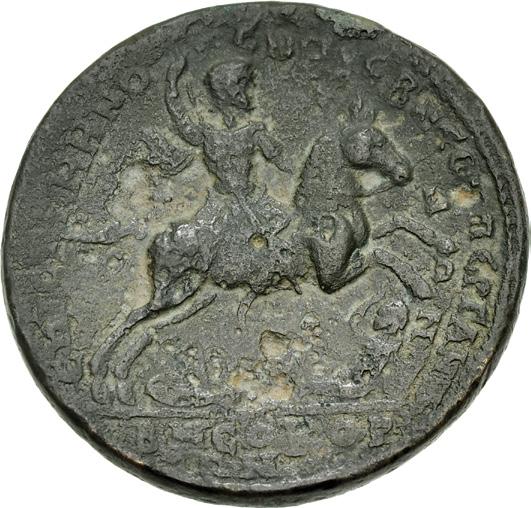
88. MYSIA, Pergamum. Geta. AD 209-211. Æ Medallion (43mm, 47.33 g, 6h). Monogenes II the Younger, strategos. Laureate and cuirassed bust right, seen from the front, with gorgoneion on breastplate / Geta, in military attire, on horseback galloping right, spearing bound captive kneeling right below; to his left, shield. Weisser, Pergamon –; RPC V.2 Online 88 (this coin); SNG BN 2217 corr. (as Caracalla). Brown patina with earthen highlights, porosity, spots of corrosion. Near VF. Rare. ($500)
Ex Heritage 3026 (25 September 2013), lot 23298; Heritage 3021 (6 January 2013), lot 21318.
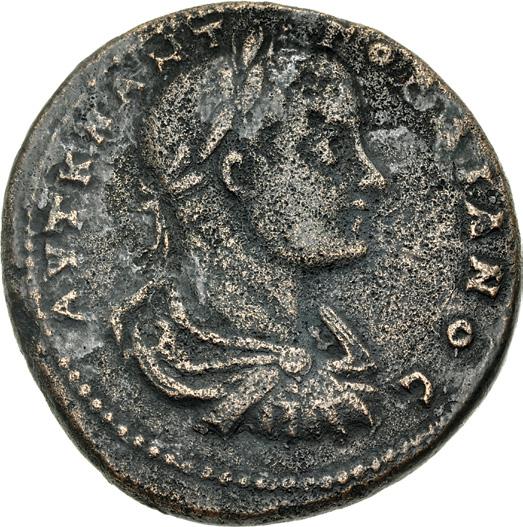
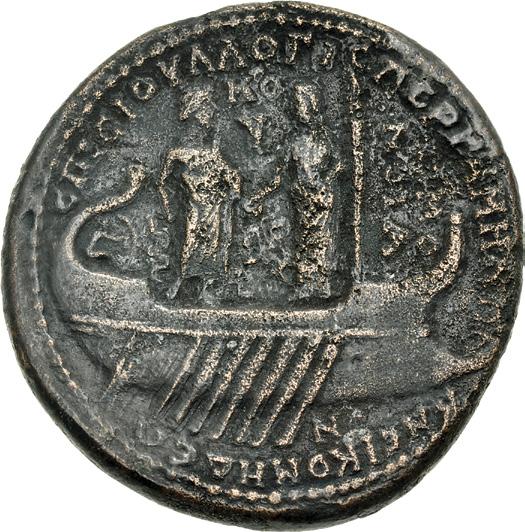
89. MYSIA, Pergamum. Gordian III. AD 238-244. Æ Medallion (42.5mm, 44.02 g, 12h). Homonoia with Nicomedia Iulius Logismos, strategos. Laureate, draped, and cuirassed bust right, seen from behind / Asklepios standing facing, head right, leaning on serpent-entwined staff to left; to right, Demeter standing facing, veiled head left, holding poppy and torch; both stand on galley with oars; on stern, helmsman. Weisser, Pergamon 2330; Franke & Nollé Typus I, 1628 (dies C/3); Kampmann, Homonoia, 101 (V57/R88); RPC VII.1 173.1.10 (this coin); SNG BN 2280. Brown surfaces, porous. Near VF. Rare. ($500)
Ex Clarence & Helen Zaar Maritime Collection (Classical Numismatic Group 87, 18 May 2011), lot 853.
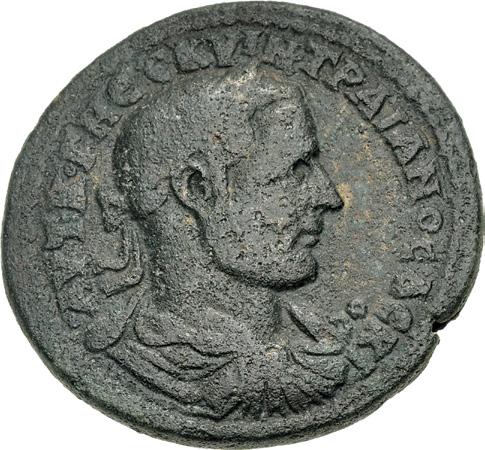
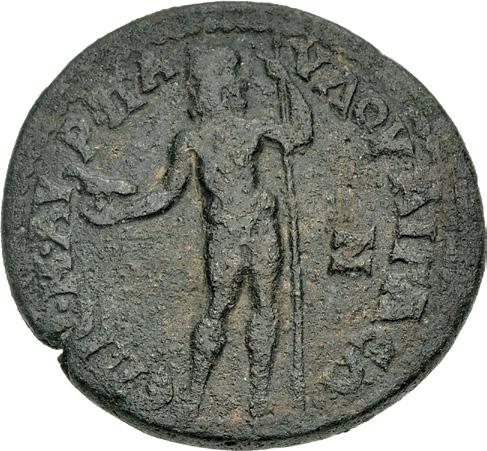
90. AEOLIS, Aegae. Trajan Decius. AD 249-251. Æ Medallion (40mm, 40.17 g, 12h). Marcus Aurelius Paulus, strategos. Laureate, draped, and cuirassed bust right, seen from behind / Zeus standing facing, head left, holding eagle in outstretched hand and long scepter. RPC IX 569; BMC 30; SNG von Aulock 1601. Brown surfaces, light roughness. Near VF. ($500)
Ex Leu Numismatic AG Web Auction 15 (27 February 2021), lot 1140.
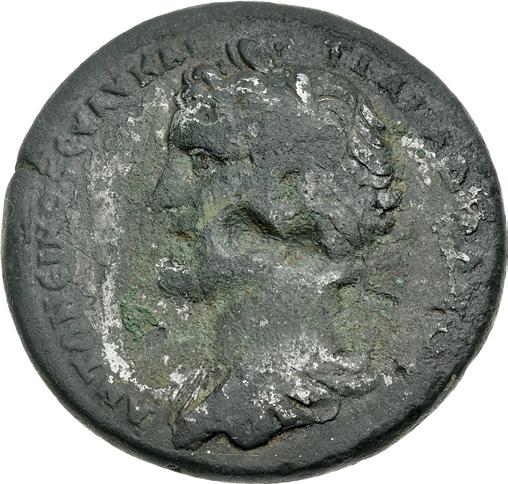
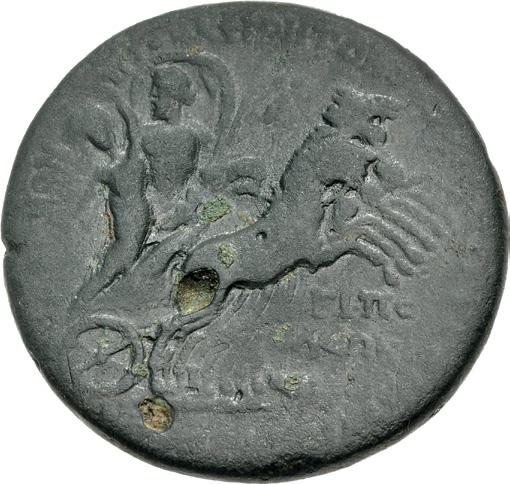
91. IONIA, League of Thirteen Cities. Antoninus Pius. AD 138-161. Æ Medallion (42mm, 45.65 g, 5h). Marcus Claudius Fronto, asiarch of the Koinon of Asia and archierus of the Koinon of the Thirteen Cities. Struck circa AD 140-144. Laureate and draped bust left, seen from behind / The Abduction of Persephone: Hades, with billowing chlamys, standing in quadriga right, holding scepter and carrying off protesting Persephone; above, small Eros flying right, holding torch and guiding the horses’ reins; below, overturned kalathos containing flowers. Gillespie 7-8; RPC IV.2 Online 2296.8 (this coin); BMC 2 var. (rev. legend arrangement). Brown patina, slight roughness, flan flaws, trace silvering remaining. Fine. ($500)
Ex Roma E-Sale 32 (7 January 2017), lot 569; Numismatik Naumann 45 (3 July 2016), lot 433.
The League of Thirteen Cities was originally founded as the Ionian League in the 7th century BC. The 12 original members were Miletus, Myus, Priene, Ephesus, Colophon, Lebedus, Teos, Clazomenae, Phocaea, Chios, Erythrae, Chios and Samos. Smyrna joined in 298 BC, bringing the number to 13. The confederation proved remarkably enduring,as the series of medallions struck under Antoninus Pius, eight centuries after its founding, attests.
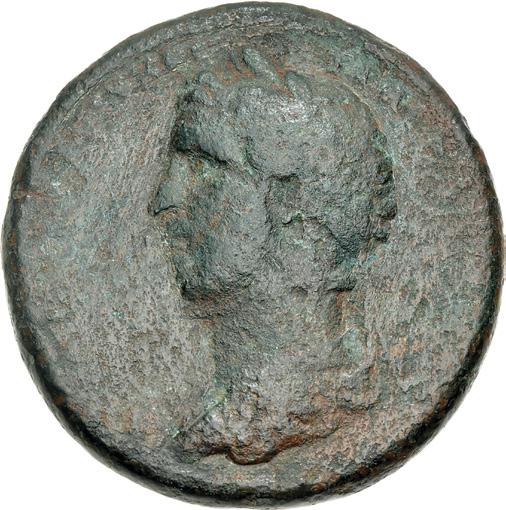
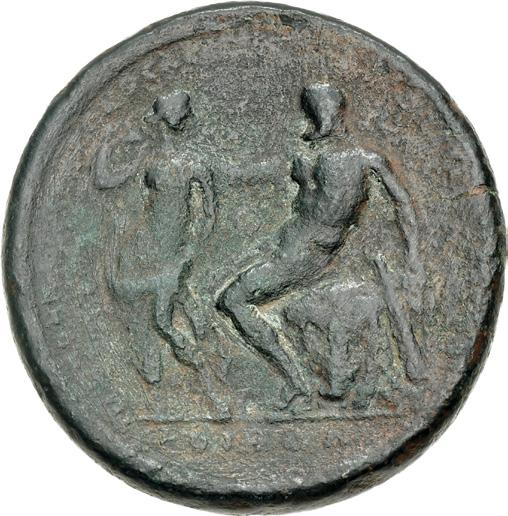
92. IONIA, League of Thirteen Cities. Antoninus Pius. AD 138-161. Æ Medallion (42mm, 50.28 g, 12h). Marcus Claudius Fronto, asiarch of the Koinon of Asia and archierus of the Koinon of the Thirteen Cities. Struck circa AD 140-144. Laureate and draped bust right, seen from behind / Omphale standing facing, head right; to right, Herakles seated left on rock draped with lion’s skin, hand on her shoulder; to right, club leaning against rock. Gillespie 15-16; RPC IV.2 Online 955.6 (this coin). Green and brown surfaces, porosity, scratches. Good Fine. ($750)
Ex Numismatica Ars Classica 92 (Part II, 23 May 2016), lot 2241.
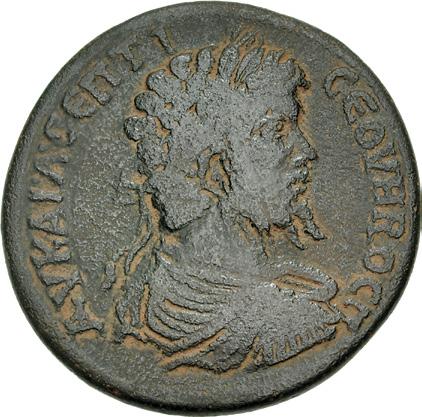
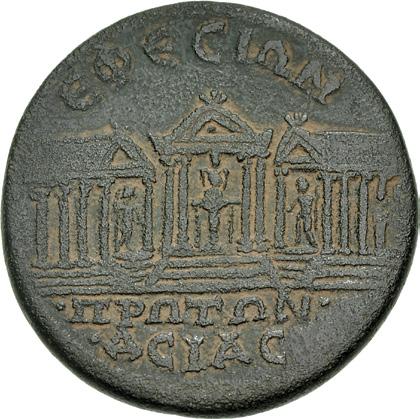
93. IONIA, Ephesus. Septimius Severus. AD 193-211. Æ (34mm, 19.21 g, 5h). Laureate, draped, and cuirassed bust right, seen from behind / At center, tetrastyle temple, seen from the front, containing a cult statue of Artemis Ephesia standing within, wearing kalathos and having supports; on either side, tetrastyle temples, seen in perspective, each containing a statue of the emperor, holding a long scepter. Karwiese, MvE 5 426 (Vs3/Rs63); RPC V.2 Online 69574 (this coin cited); BMC 261 var. (obv. legend). Earthen brown surfaces, porosity, smoothing and tooling. Near VF. Extremely rare, one of two recorded in RPC. ($500)
Ex Roma E-Live Auction 4 (29 November 2018), lot 573.
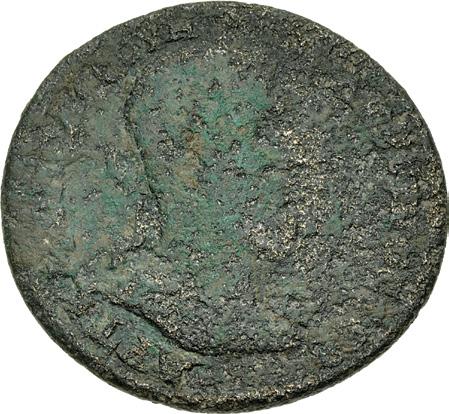
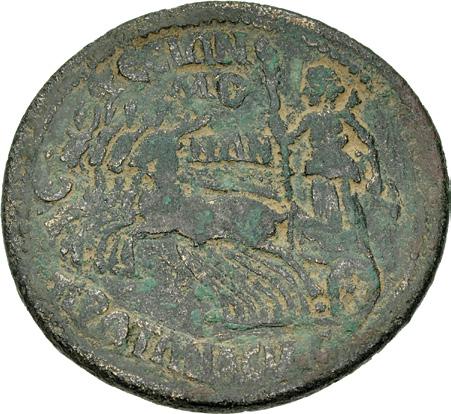
94. IONIA, Ephesus. Macrinus. AD 217-218. Æ (37mm, 20.16 g, 6h). Laureate and cuirassed bust right, seen from the front / Artemis standing left in quadriga of stags left, quiver at shoulder, holding long torch and bow. Karwiese, MvE 5 599 (Vs10/Rs10); RPC V.2 Online 730; BMC –. Earthen green surfaces, roughness, deposits. Fine. Extremely rare, the second known. ($100)
Purchased from Gerhard Rohde, January 2012.
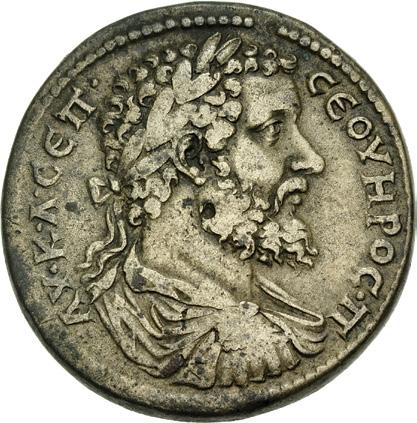
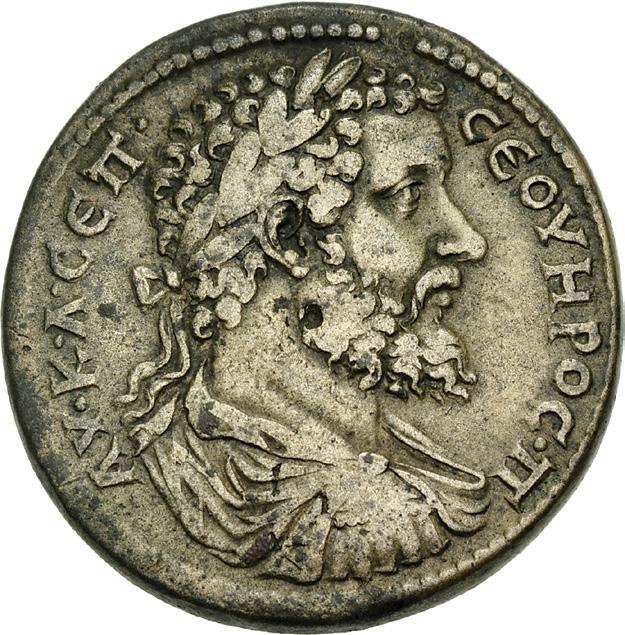
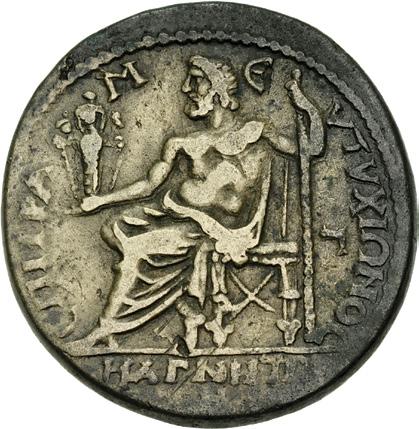
95. IONIA, Magnesia ad Maeandrum. Septimius Severus. AD 193-211. Æ Hexassarion (34mm, 27.17 g, 12h).
Eutychion, grammateus. Struck AD 195-198. Laureate, draped and cuirassed bust right, seen from behind / Zeus enthroned left, holding cult statue of Artemis Leukophryene and long scepter. Schultz 145 (V3/R4); RPC V.2 Online 69739 (this coin cited). Brown patina, minor marks. VF. Very rare. ($500)
Purchased from Edward J. Waddell, 9 December 2011. Ex Künker 193 (26 September 2011), lot 836.
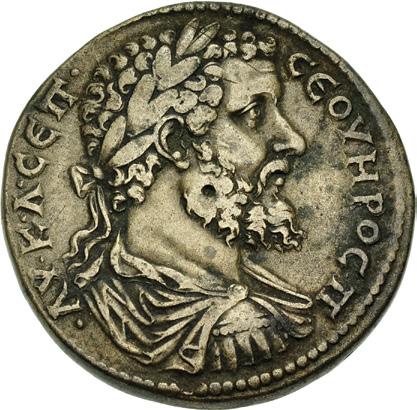
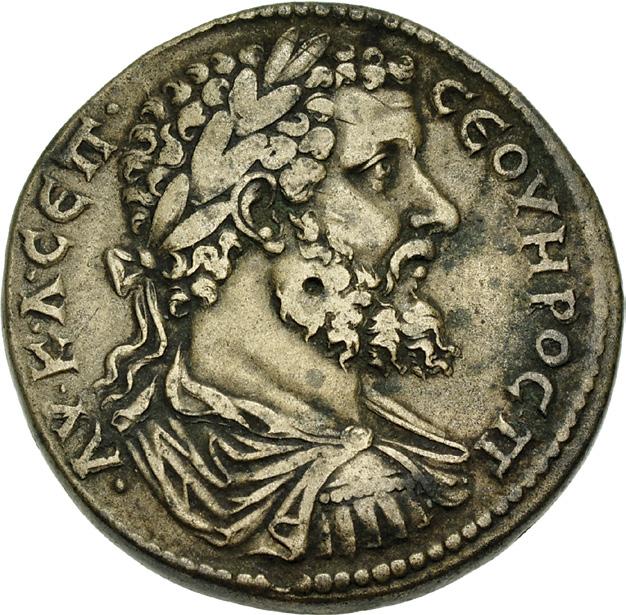
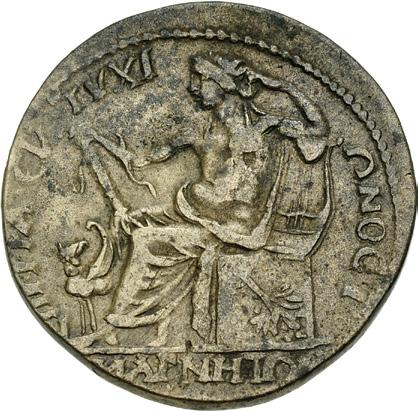
96. IONIA, Magnesia ad Maeandrum. Septimius Severus. AD 193-211. Æ Hexassarion (34mm, 24.02 g, 6h). Eutychion, grammateus. Struck AD 195-198. Laureate, draped and cuirassed bust right, seen from behind / Apollo enthroned left, throne ornamented with laurel branch, holding bow and quiver, resting on lyre and propping head on hand; at feet left, griffin standing left, head right. Schultz 142 var. (V3/R– [not paired with this obv. die, rev. die unrecorded]); RPC V.2 Online 69740 (this coin cited). Brown patina, minor marks. VF. Extremely rare, one of three recorded in RPC. ($500)
Purchased from Edward J. Waddell, 9 December 2011. Ex Künker 193 (26 September 2011), lot 835.
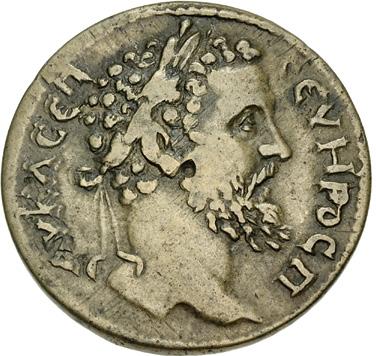
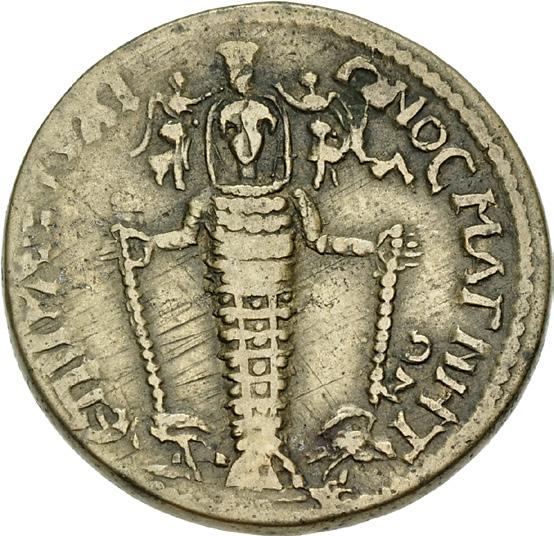
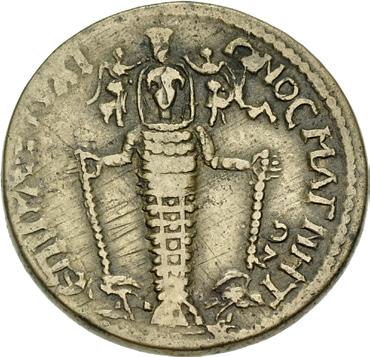
97. IONIA, Magnesia ad Maeandrum. Septimius Severus. AD 193-211. Æ Pentassarion (30mm, 15.44 g, 6h).
Eutychion, grammateus. Struck AD 195-198. Laureate head right / Cult statue of Artemis Leukophryene, wearing veiled kalathos and having supports, crowned by two Nikai; eagles at base of supports. Schultz – (both dies unrecorded); RPC V.2 Online 69738. Brown patina, flan preparation marks. Near VF. Wonderful depiction of the cult statue. ($200)
Purchased from Tom Cederlind, September 2010.
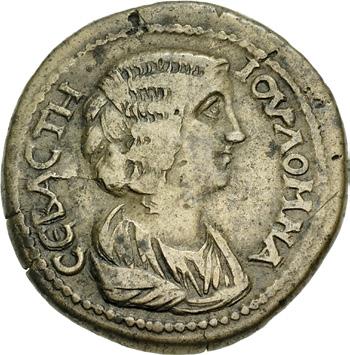
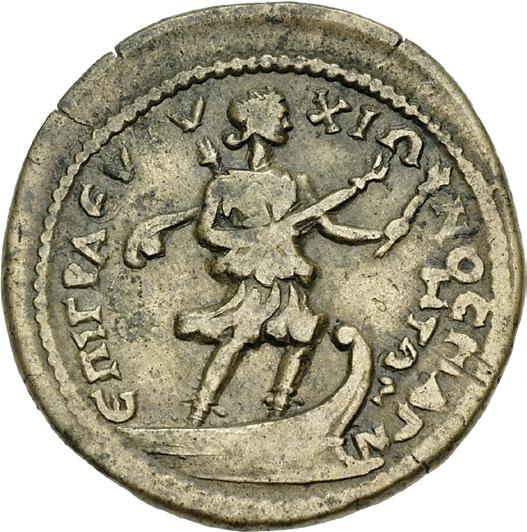
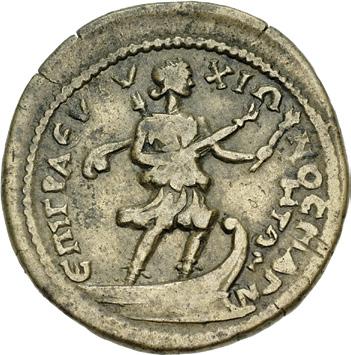
98. IONIA, Magnesia ad Maeandrum. Julia Domna. Augusta, AD 193-217. Æ Pentassarion (28.5mm, 11.64 g, 5h).
Eutychion, grammateus. Struck under Septimius Severus, AD 195-198. Draped bust right / The Founder Leukippos standing on prow right, quiver on right shoulder, holding torch in each hand. Schultz – (both dies unrecorded); RPC V.2 Online 69744. Brown patina, minor marks. Near VF. Extremely rare, two recorded in RPC. ($150)
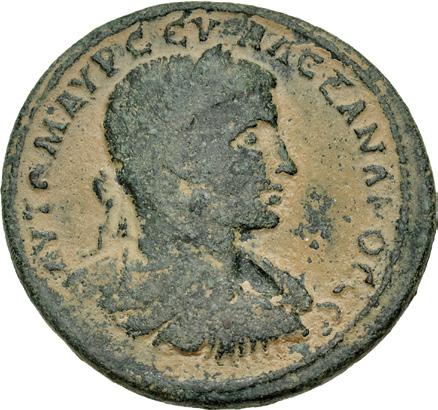
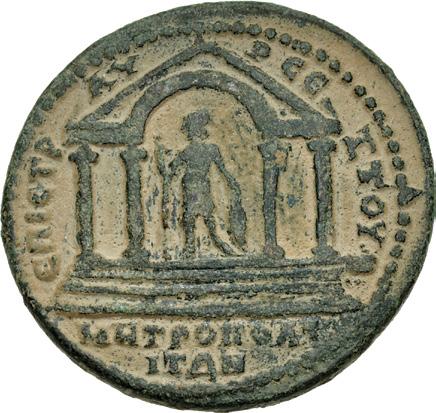
99. IONIA, Metropolis. Severus Alexander. AD 222-235. Æ (36mm, 21.30 g, 12h). Aurelius Sextus II, strategos. Laureate, draped, and cuirassed bust right, seen from behind / Military figure (Ares or the emperor?) standing facing, head left, holding spear and resting hand on grounded shield, within tetrastyle temple with arcuated lintel. RPC VI Online 4845.2 (this coin). Earthen green surfaces. Good Fine. Extremely rare, one of two known. ($300)
Ex Classical Numismatic Group Electronic Auction 326 (7 May 2014), lot 279.
The name Metropolis (meaning “mother city” in Greek) was adopted by many cities on the Greek mainland and Anatolia. Metropolis in Ionia, located about 40 km southeast of Izmir, was inhabited as early as Hittite times, when it was called Puranda. It came into prominence as one of the chief cities of the Hellenistic Kingdom of Pergamon between the fourth and third centuries BC. It was built up extensively during the Roman period and remained an important cultural center into Byzantine times. The cult of Ares, possibly depicted on the reverse of this medallion, was popular in the city and archeologists have uncovered the remains of a temple dedicated to the war god, one of only three identified in the Greek world.
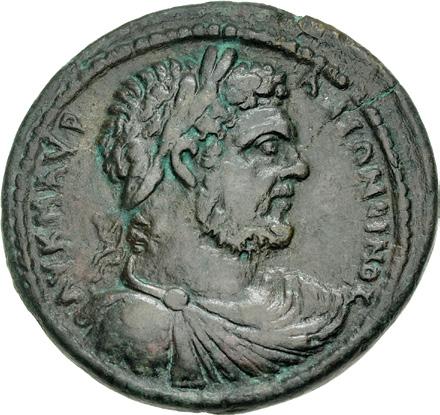
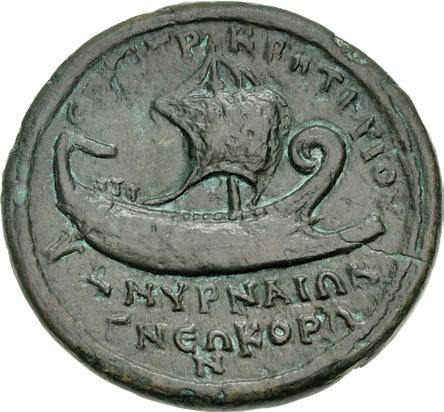
100. IONIA, Smyrna. Caracalla. AD 198-217. Æ (36mm, 24.36 g, 6h). Tiberius Claudius Kretarios, strategos. Struck circa AD 212-215. Laureate, draped, and cuirassed bust right, seen from the front / Galley under sail to right. Klose LIX, Serie D, Gruppe b, 16 (V4/R16); RPC V.2 Online 1483; SNG Von Aulock 2221 (same dies). Dark brown patina with touches of green and red, smoothing. Good VF. Rare. ($750)
Purchased from Ralph DeMarco, 12 January 2017.
Caracalla visited Smyrna during his grand tour of Anatolia in AD 214-215. The city had received the prestigious title “Neokoros” for building a temple to the cult of the reigning emperor. Smyrna now had three such temples, the first two having been dedicated to the cults of Tiberius and Hadrian. The galley depicted on this very rare issue surely refers to the mode of travel by which Caracalla and his entourage arrived at the port city.
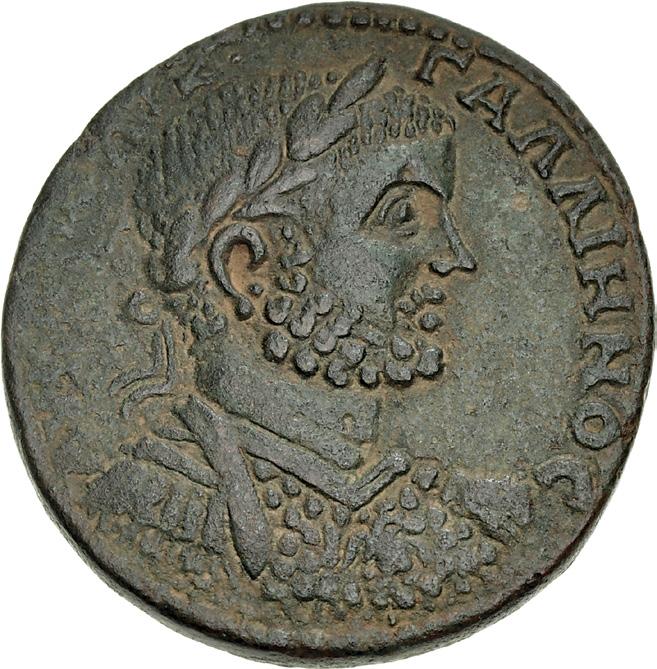
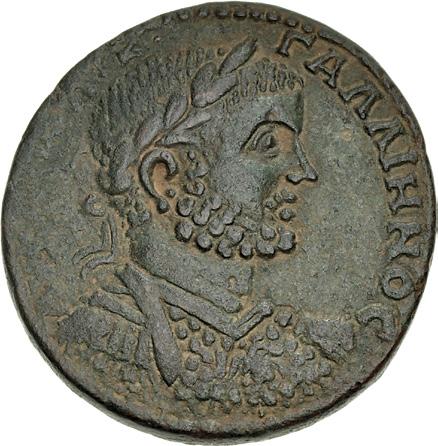
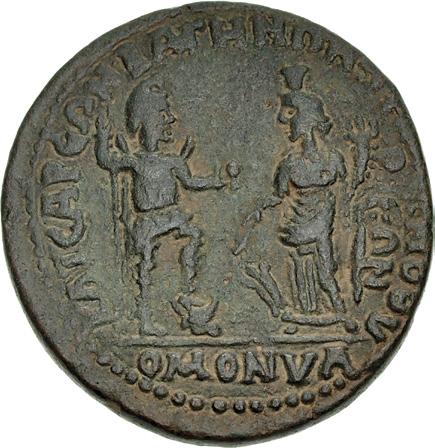
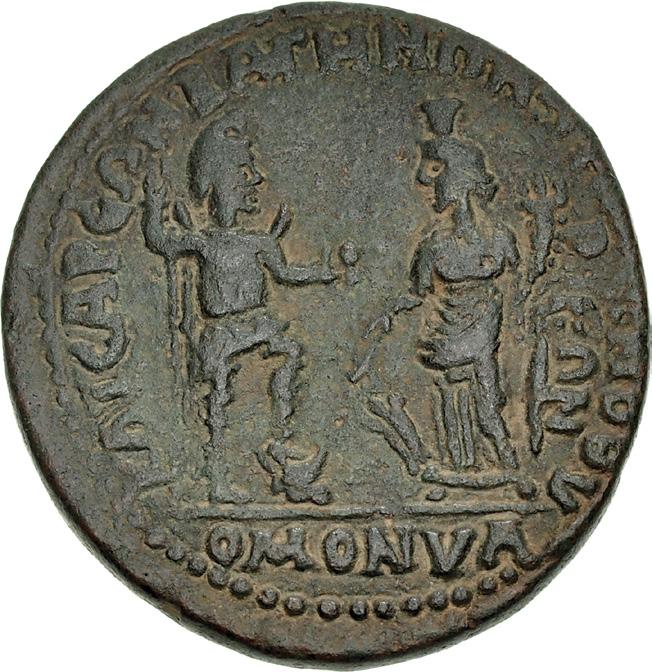
101. LYDIA, Bagis. Gallienus. AD 253-268. Æ (36mm, 31.66 g, 6h). Homonoia with Temenothyrae. Laureate and cuirassed bust right, seen from the front, gorgoneion on breastplate / Mên standing right, wearing Phrygian cap and crescent on shoulders, resting right foot on helmet, holding pine cone and long scepter, facing Tyche of Bagis standing left, wearing kalathos, holding cornucopia and rudder. Hochard 162 (D44/R70); Kurth 117; Franke & Nollé Type I, 91-2 (VsA/Rs1); RPC X Online 83269. Brown patina with earthen highlights, light pororsity. Good VF. ($500)
Purchased from Brian Kritt, 12 January 2017.
Mên was a prominent Phrygian moon god worshipped in the western interior parts of Anatolia, and later the entire Roman Empire, as a male counterpart to the goddesses Artemis/Diana and Selene/Luna. He is usually depicted wearing a Phrygian cap and a crescent moon behind his shoulders. He presided over lunar months, healing, fertility, and divine justice, frequently acting as a protector of tombs, in which his effigy was often placed near the entrance.
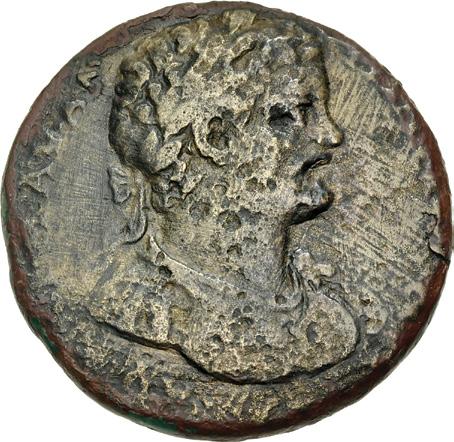
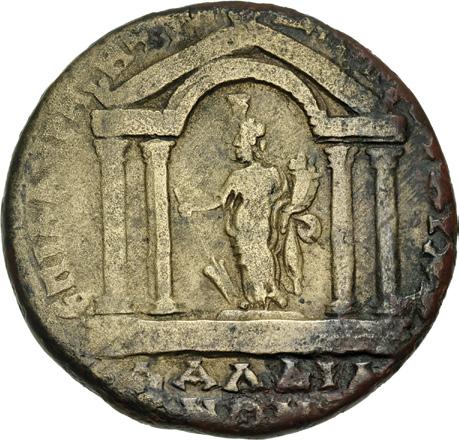
102. LYDIA, Daldis. Caracalla. AD 198-217. Æ (37mm, 27.00 g, 9h). Lucius Aurelius Metrodoros, first archon Laureate, draped, and cuirassed bust right, seen from the front, gorgoneion on breastplate / Statue of Tyche Soterios standing left, wearing kalathos, holding rudder and cornucopia, within tetrastyle temple with arcuated lintel. Hochard 349 (D15/R14) = Kurth 44 = RPC V.2 Online 58953 (this coin). Yellow-brown surfaces, roughness, scratches. Near VF. Unique – the sole example recorded in the primary references. ($150)
Ex R. D. Frederick Collection (Classical Numismatic Group Electronic Auction 286, 5 September 2012), lot 225; Classical Numismatic Group Electronic Auction 109 (2 March 2005), lot 114; Antioch Associates (24 September 2001), lot 101 (but there incorrectly identified as Septimius Severus).
Little is known about the Lydian town of Daldis, situated in the central Anatolian highlands, aside from its Roman Provincial coinage, which is fairly diverse and starts in the reign of Vespasian. The tetrastyle temple depicted here as containing a cult statue of Tyche may have been one of several similar shrines within the city; other coins depict the figure of Apollo seated within a similar arched enclosure.
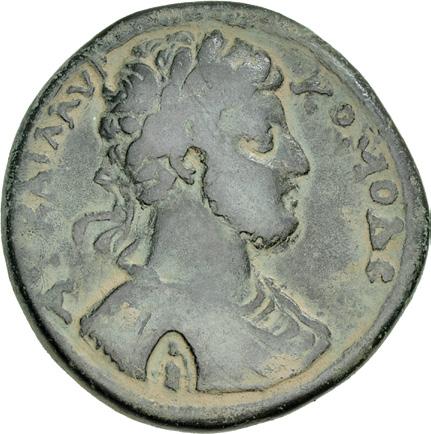
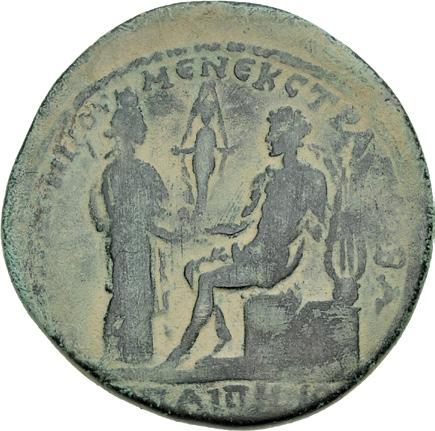
103. LYDIA, Hypaepa. Commodus. AD 177-192. Æ (36mm, 24.04 g, 12h). Apollonios, son of Menekrates, first strategos for the second time. Struck circa AD 179-180. AV KAI Λ AVP KOMOΔC (sic), laureate and draped bust right, seen from front; c/m: Artemis Anaïtis within oval incuse / On left, turreted Tyche standing right, holding transverse scepter; on right, Apollo Kitharoedos seated left on base, supporting lyre set on globe; both supporting statue of Artemis Anaïtis between them. Hochard 771 var. (D–/R92, obv. die unrecorded); Altınoluk 68 var. (obv. legend); Kurth 158 corr. (obv. legend) = RPC IV.2 Online 1289.7 (this coin). For c/m: Howgego 233. Earthen green patina, light scratches. Coin and c/m: Good Fine. Rare. ($200)
Ex Classical Numismatic Group Electronic Auction 353 (17 June 2015), lot 293.
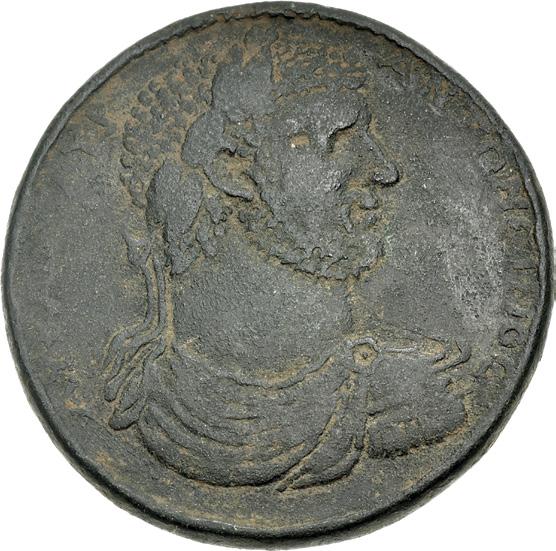
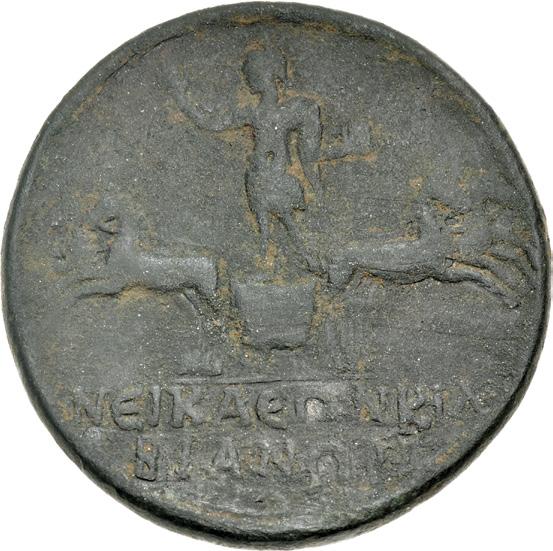
104. LYDIA, Nicaea Cilbianorum. Caracalla. AD 198-217. Æ Medallion (45mm, 52.05 g, 6h). Laureate, draped, and cuirassed bust right, seen from behind / Caracalla, laureate, standing facing, head left, in spread quadriga, raising right hand and holding globe. Hochard 264 (D45/R66); Kurth 107; RPC V.2 Online 58847 (this coin cited). Brown patina with earthen highlights, slight roughness, reverse scrape, edges hammered. VF. Extremely rare, one of three cited in RPC. ($1500)
Ex Leu Numismatik Web Auction 8 (29 June 2019), lot 657; Savoca 19 (10 December 2017), lot 207.
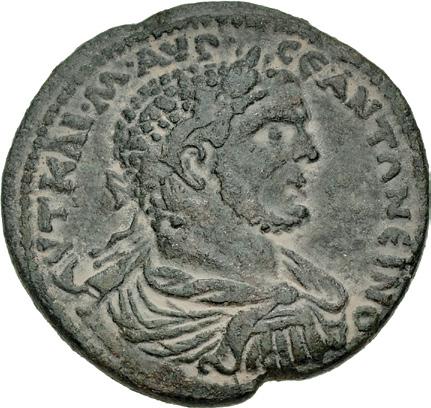
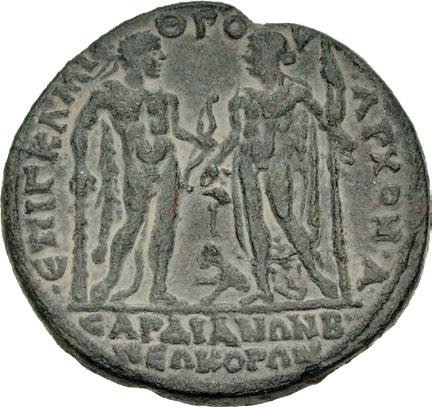
105. LYDIA, Sardis. Caracalla. AD 198-217. Æ (35mm, 21.47 g, 6h). Gaius Claudius Mithres, first archon. Laureate, draped, and cuirassed bust right, seen from behind / On left, Herakles standing facing, head right, holding bow and leaning on club, lion’s skin draped over shoulders; on right, Dionysos standing facing, head left, holding thyrsos and kantharos; at feet left, panther. Hochard 2014 (D225/R505); Kurth 500; RPC V.2 Online 73195 (this coin cited). Earthen green patina. VF. Rare. ($500)
Ex Dr. Patrick H. C. Tan Collection (Goldberg 98, 6 June 2017), lot 2255 (hammer $3,600).
Hochard and Kurth Plate Coin – RPC Feature Coin
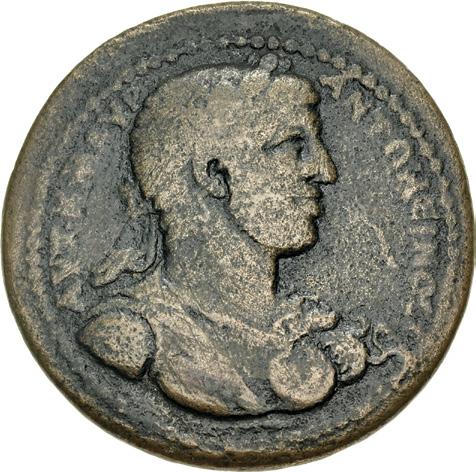
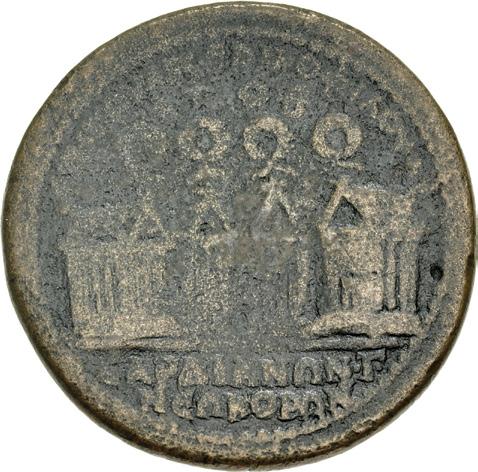
106. LYDIA, Sardis. Elagabalus. AD 218-222. Æ Medallion (39mm, 28.85 g, 6h). Sulpicius Hermophilos, first archon for the second time. Laureate and cuirassed bust right, decorated with aegis, seen from the front / Four tetrastyle temples, the outer two seen in perspective, each surmounted by a wreath. Hochard 2044 (D247/R541) = Kurth 571 = RPC VI Online 4500.1 (this coin). Red-brown patina, some roughness. Good Fine. Extremely rare, four recorded in RPC. ($300)
Ex R. D. Frederick Collection (Classical Numismatic Group Electronic Auction 282, 11 July 2012), lot 167.
Plate Coin
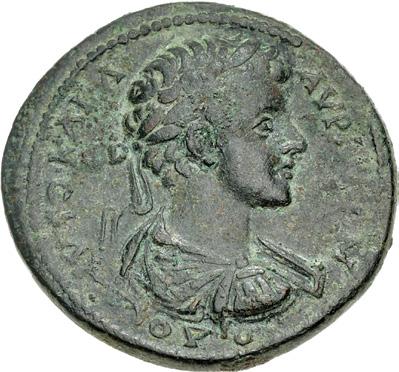
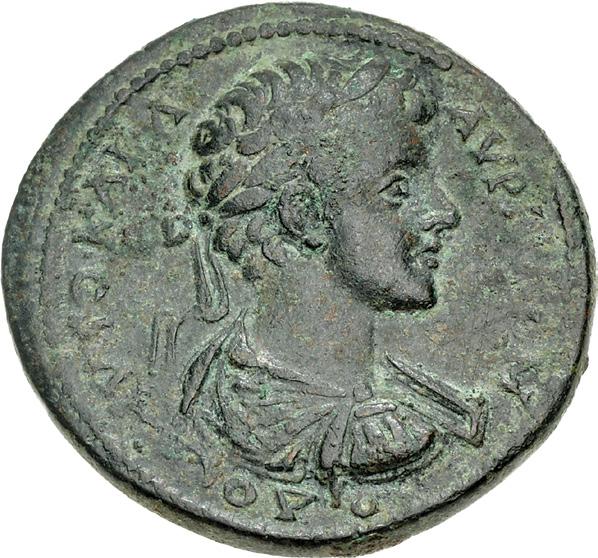
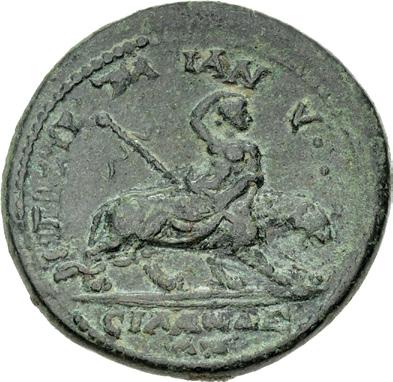
107. LYDIA, Silandus. Commodus. AD 177-192. Æ (32mm, 17.63 g, 12h). Tatianos, strategos. Struck circa AD 177179. Laureate, draped, and cuirassed bust right, seen from behind / Dionysos reclining left, looking right, raising hand to head and holding filleted thyrsus, on panther advancing right. Hochard 2238 (D12/R21); Kurth 60 = RPC IV.2 Online 1442.7 (this coin). Earthen green patina. VF. Rare. ($400)
Purchased from Edward J. Waddell, 14 December 2012. Ex Group CEM (Classical Numismatic Group 90, 23 May 2012), lot 1009.
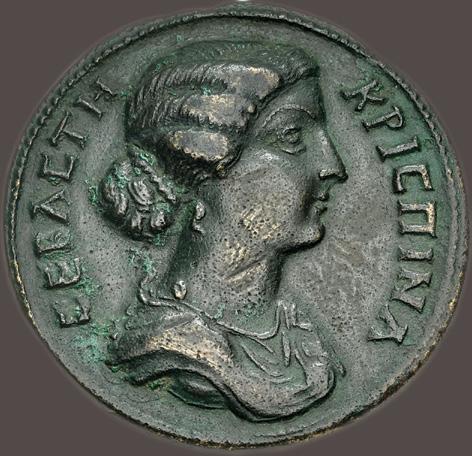
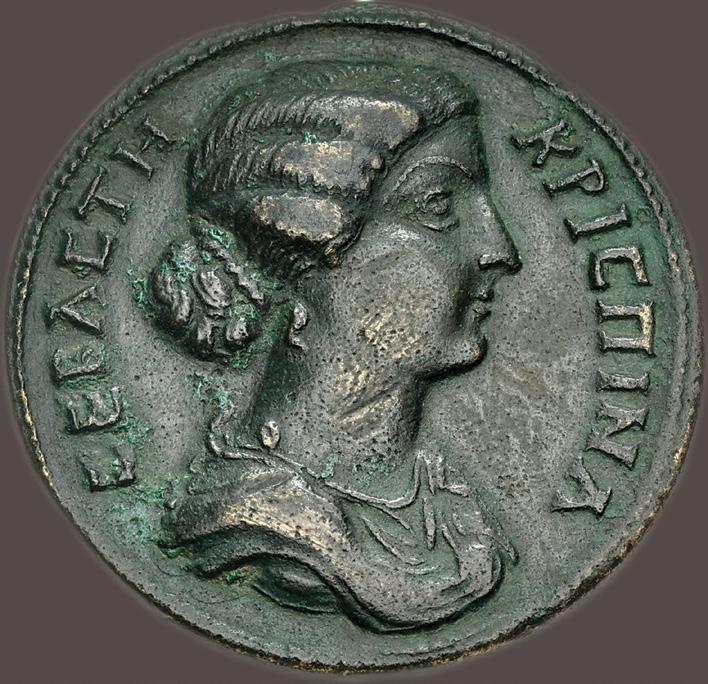
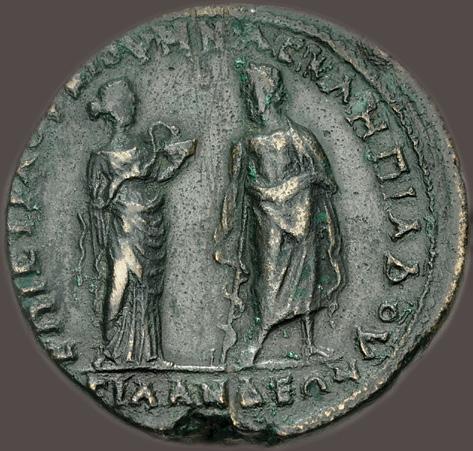
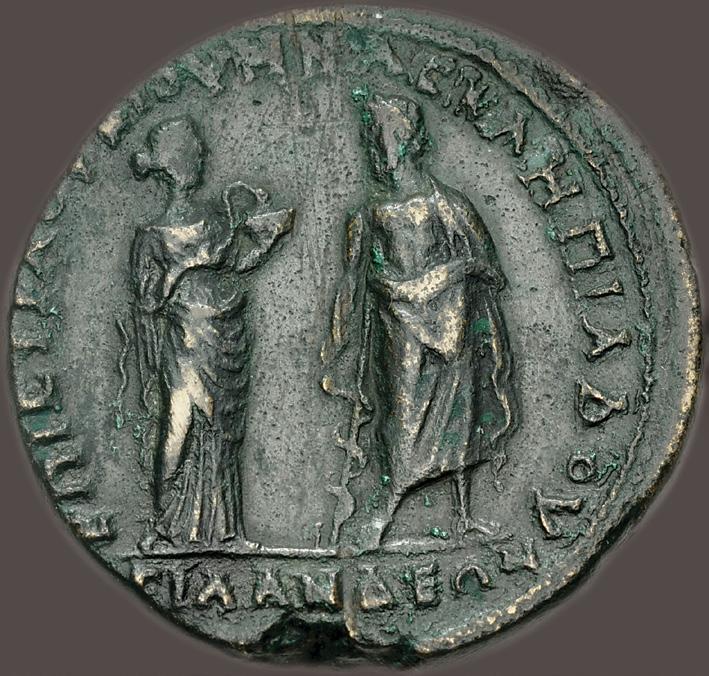
108. LYDIA, Silandus. Crispina. Augusta, AD 178-182. Æ Medallion (39mm, 34.04 g, 6h). Lucius Minatius Asklepiades, strategos. Struck late in the reign of Marcus Aurelius or early Commodus, circa AD 178-183. Draped bust right / On left, Hygieia standing facing, head right, feeding serpent from patera held in her arms; on right, Asklepios standing facing, head left, leaning on serpent-entwined staff to left. Hochard 2250 (D19/R33) = Kurth 72 = SNG von Aulock 3178 = RPC IV.2 Online 1496.1 (this coin). Brown patina with green, porosity, edge chip. VF. Unique – the sole example recorded in the primary references. ($2000)
Ex Numismatica Ars Classica 100 (29 May 2017), lot 1275; Finarte 1104 (20 March 1997), lot 342; Leu 18 (5 May 1977), lot 211; Hans von Aulock Collection.
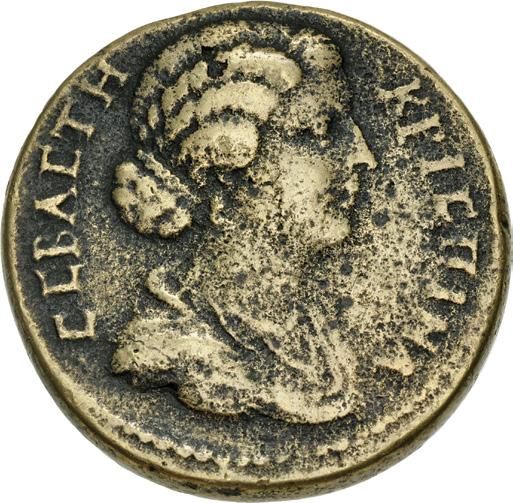
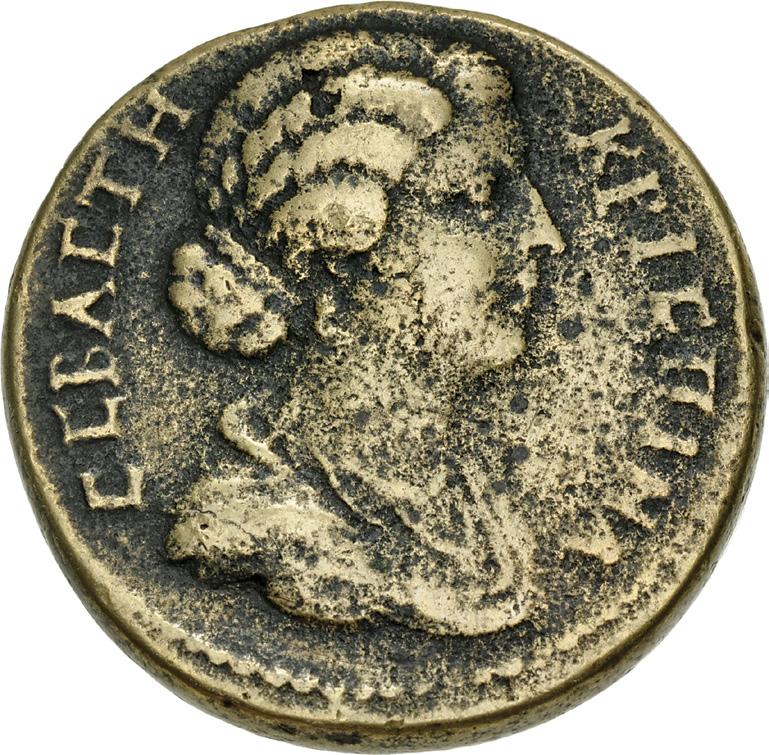
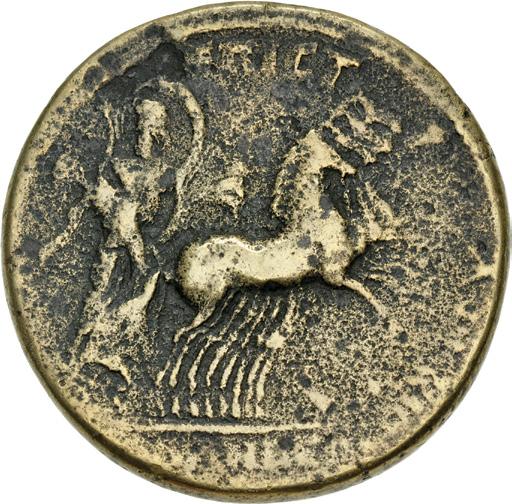
109. LYDIA, Silandus. Crispina. Augusta, AD 178-182. Æ Medallion (42mm, 49.62 g, 12h). Lucius Minatius Asklepiades, strategos. Struck late in the reign of Marcus Aurelius or early Commodus, circa AD 178-183. Draped bust right / The Abduction of Persephone: Hades standing in galloping quadriga right, head left, with billowing chlamys, carrying off struggling Persephone. Hochard –; Kurth 71 = RPC IV.2 Online 11554.1 (this coin). Yellow-brown surfaces, porosity, some find patina. Good Fine. Unique – the sole example recorded in the primary references. ($500)
Ex Estate of Thomas Bentley Cederlind (Classical Numismatic Group Electronic Auction 395, 12 April 2017), lot 284.
Hades fell in love with Persephone, the daughter of Demeter, and asked Zeus for permission to marry her. Zeus feared to offend his eldest brother by outright refusal, but knew also that Demeter would not forgive him if Persephone were committed to the underworld. In a political move, Zeus stated that he could neither give nor withhold his consent. This emboldened Hades to abduct Persephone as she was picking flowers in a meadow and carry her away to the underworld.
Unpublished – River God with Bull
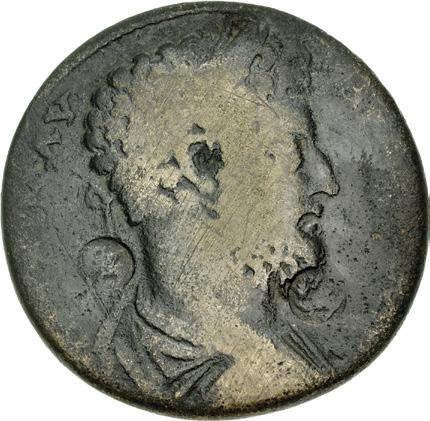
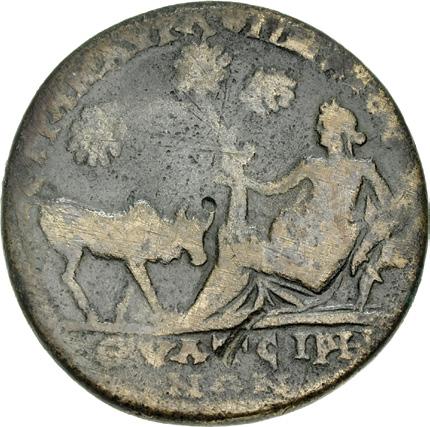
110. LYDIA, Thyateira. Commodus. AD 177-192. Æ (35mm, 24.53 g, 1h). Marcus Aurelius Athenaios, strategos. [AV K] M AVPH K[OMOΔOC], laureate, draped, and cuirassed bust right, seen from behind; c/m: laureate bust (of Caracalla?) right within incuse circle (two c/ms) / CTPA M AVP AΘHNAIOV ΘVATЄIPH/NΩN, river-god Lydos reclining left, resting elbow on urn from which water flows, holding tree; to left, bull butting right. Hochard –; Kurth –; RPC IV.2 Online –. For c/m: Howgego 93. Brown patina, porosity, scratches. Good Fine. Extremely rare and unpublished. ($150)
Purchased from Moneta, 15 April 2011.
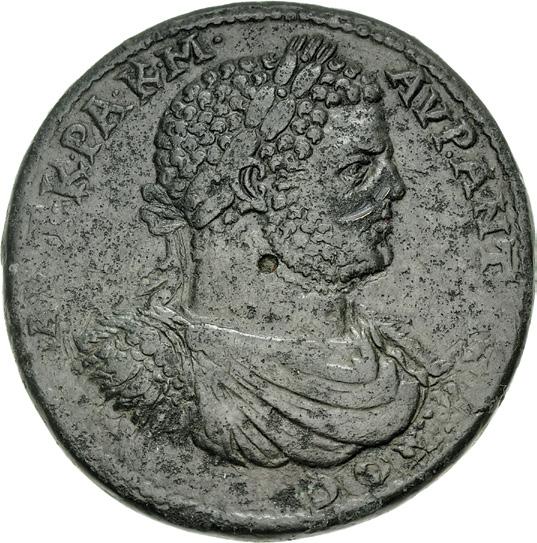
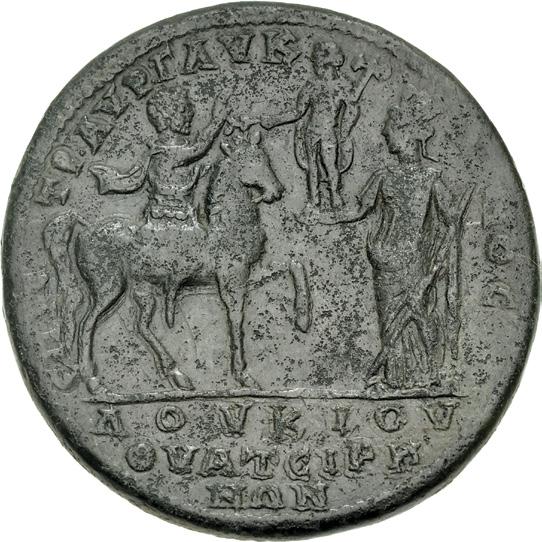
111. LYDIA, Thyateira. Caracalla. AD 198-217. Æ Medallion (44mm, 47.25 g, 6h). Aurelius Glykon, son of Lucius, strategos. Laureate, draped, and cuirassed bust right, seen from the front / Caracalla, in military dress, on horseback right, raising hand; to right, Tyche standing left, wearing turreted crown, holding transverse scepter and statue of ApolloTyrimnaios. Hochard 2491 (D106/R195); Kurth 314; RPC IV.2 Online 77291 (this coin cited). Brown patina, porosity, tooled. VF. Rare. ($1500)
Ex Leu Numismatik Web Auction 30 (13 July 2024), lot 1360; Papillon 3 (29 November 2020), lot 291.
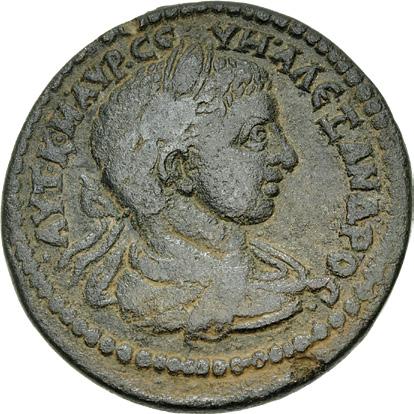
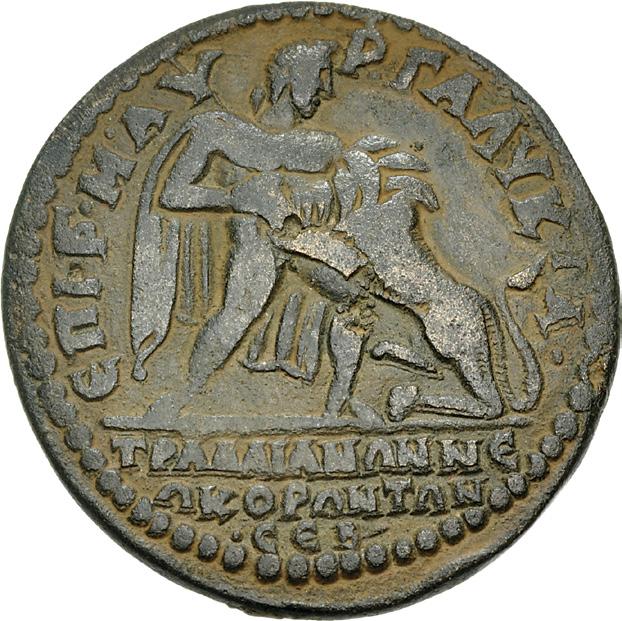
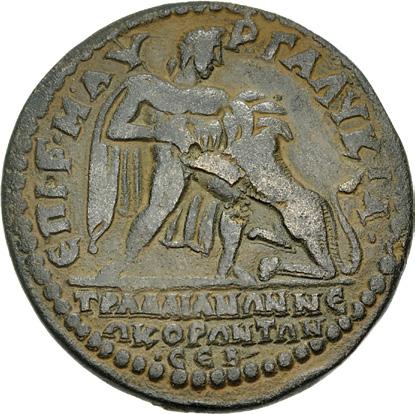
112. LYDIA, Tralles. Severus Alexander. AD 222-235. Æ (34mm, 18.81 g, 6h). Marcus Aurelius Glaukias, grammateus Laurate, draped, and cuirassed bust right, seen from behind / Herakles standing right, wearing lion’s skin, wrestling the Nemean lion. Kurth 312; RPC VI Online 5085. Green-brown patina with earthen highlights. Near VF. Extremely rare, only one recorded in RPC. ($200)
Purchased from Ralph DeMarco, January 2012.
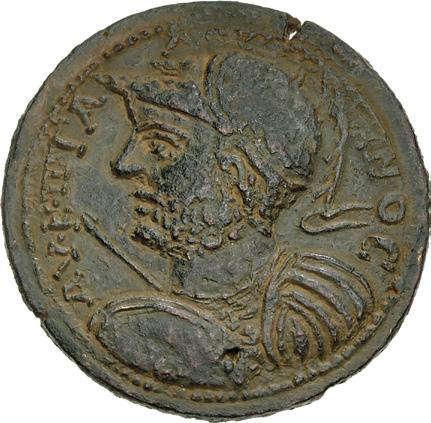
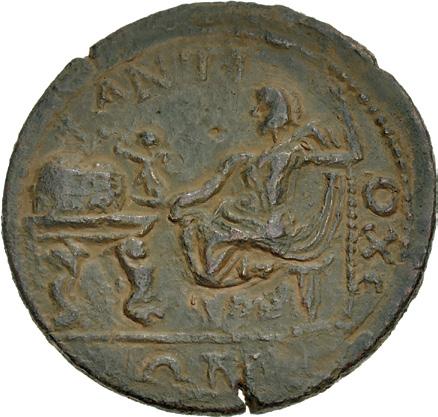
113. CARIA, Antiochia ad Maeandrum. Gallienus. AD 253-268. Æ (35mm, 20.59 g, 6h). Radiate, helmeted, and cuirassed bust left, seen from the front, holding spear and shield / Zeus Capitolinus seated left, holding Nike and long scepter; to left, agonistic urn containing two palms set on table with lion’s feet; two-handled urn below table. RPC X Online 60034 (this coin cited); BMC 58 var. (rev. legend arrangement); SNG Copenhagen 63 var. (same). Earthen red-brown surfaces. VF. ($500)
Ex Classical Numismatic Group Electronic Auction 413 (31 January 2018), lot 253 (conserved since).
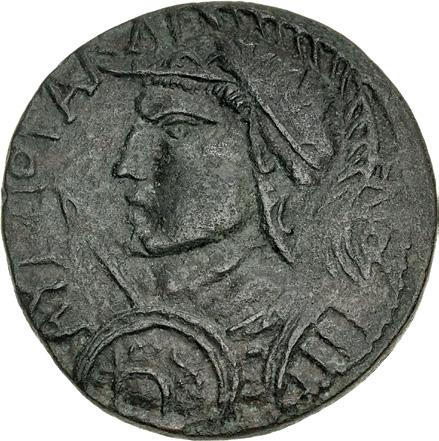
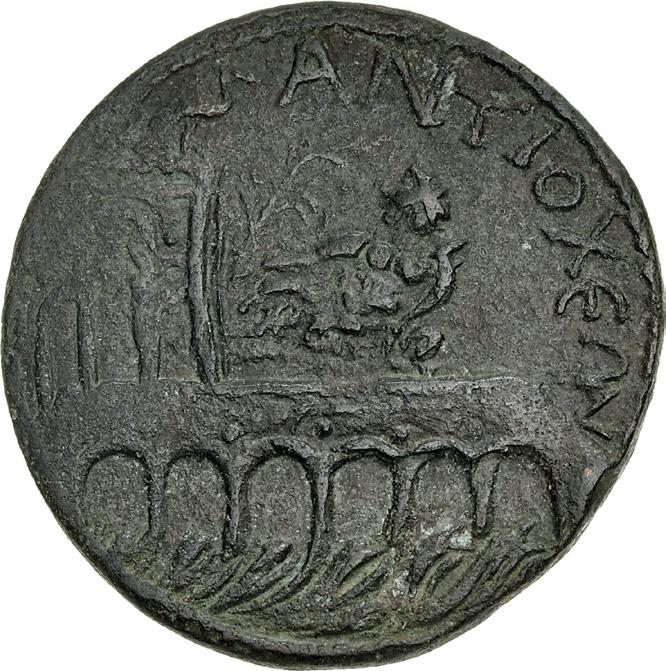
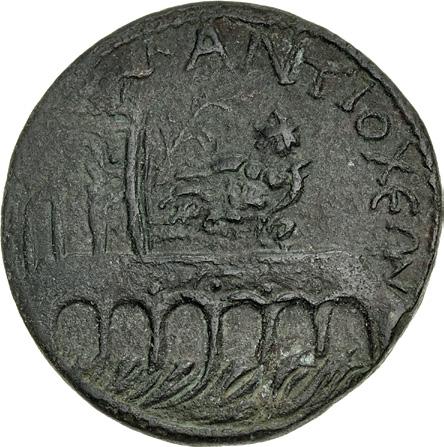
114. CARIA, Antiochia ad Maeandrum. Gallienus. AD 253-268. Æ (36mm, 23.40 g, 12h). Radiate, helmeted, and cuirassed bust left, seen from the front, holding spear and shield decorated with gorgoneion / Six-arched bridge across the Maeander river; triple-bayed gateway to left; on rail, river-god Maeander reclining left, leaning on upturned urn and holding reed and cornucopia; on gate, stork standing right. RPC X Online 60041 (this coin cited); SNG München 92; SNG von Aulock 2430. Brown patina with earthen green highlights, slight porosity. VF. ($200)
Ex Leu Numismatik Web Auction 4 (24 June 2018), lot 511.
The elaborate bridge over the River Maeander, depicted on this and the following large bronzes of Gallienus, made Antiochia ad Maeandrum a strategic site in western Anatolia. The bridge survived for many centuries and was accordingly the scene of several major battles in history, most of them in the Crusader era. The modern remnants of the town has a few visible ruins, but has never been systematically excavated.
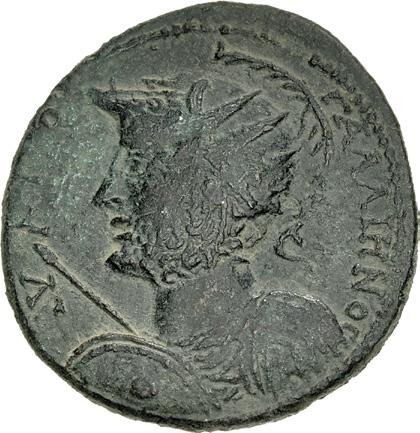
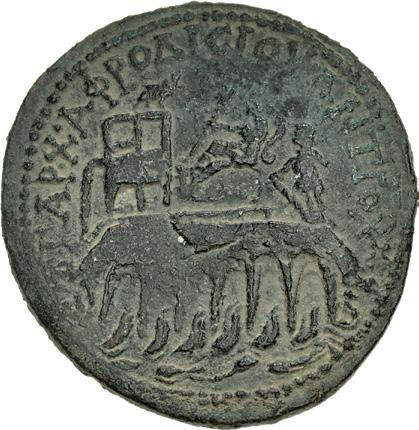
115. CARIA, Antiochia ad Maeandrum. Gallienus. AD 253-268. Æ (35mm, 19.86 g, 6h). Aphrodisios Hierax, archon. Radiate, helmeted, and cuirassed bust left, seen from the front, holding spear and shield / Six-arched bridge across the Maeander river; triple-bayed gateway to left; on rail, river-god Maeander reclining left, holding reed and cornucopia; to right, figure walking left, holding staff; on gate, stork standing right. RPC X Online 60044; SNG von Aulock 2431. Earthen green patina. VF. Rare variety with archon’s name. ($200)
Ex Goldberg 145 (26 February 2025), lot 664.
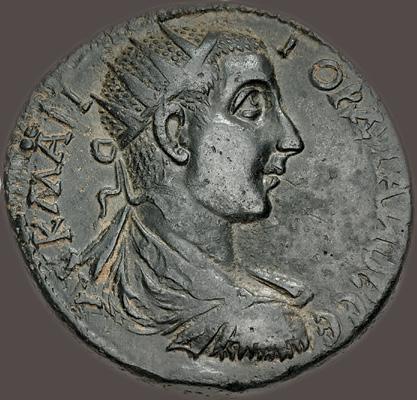
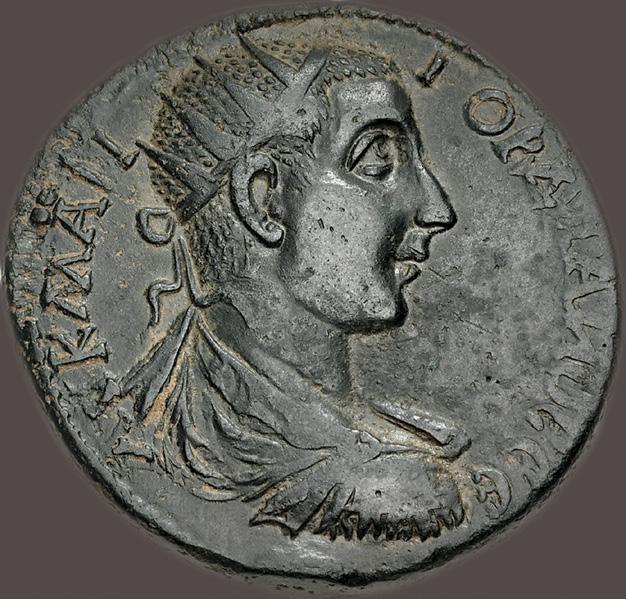
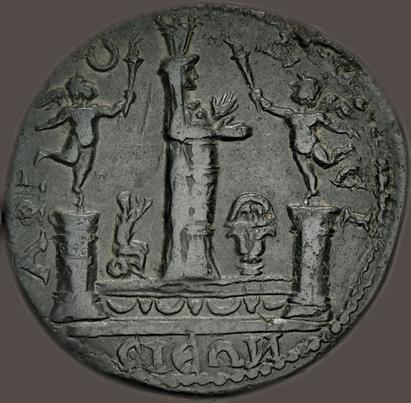
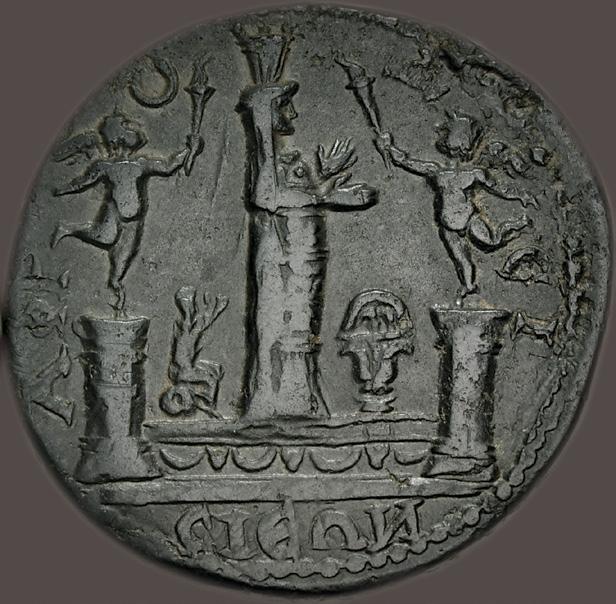
116. CARIA, Aphrodisias. Gordian III. AD 238-244. Æ Triassarion (32.5mm, 21.88 g, 12h). Radiate, draped, and cuirassed bust right, seen from behind / Cult statue of Aphrodite of Aphrodisias right, between priestess seated right and fountain; on either side, Eros on cippus holding torch facing inwards. MacDonald, Coinage, Type 180 (O229/R418); RPC VII.1 618.4 = Cornell 105 (this coin); BMC 16. Dark brown patina, earthen highlights. Good VF. ($1500)
Purchased from Edward J. Waddell, 21 March 2022. Ex Triton XXV (11 January 2022), lot 646; David Simpson Collection (Triton V, 15 January 2002), lot 1730.
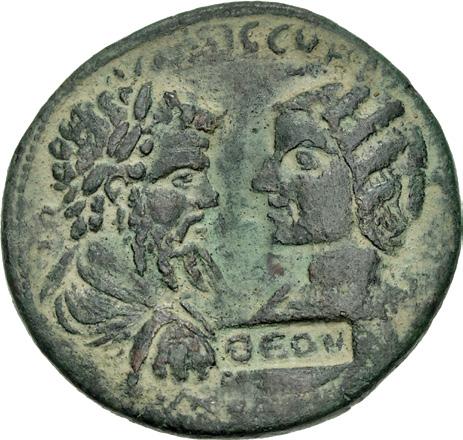
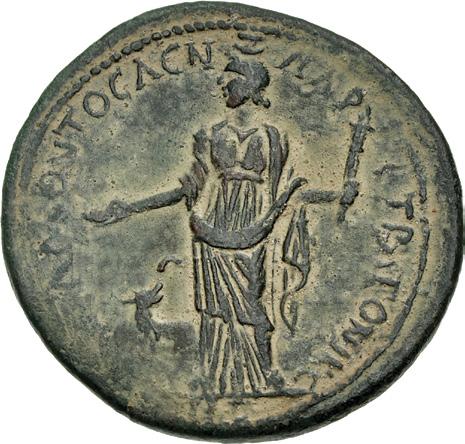
117. CARIA, Stratonicaea. Septimius Severus, with Julia Domna. AD 193-211. Æ (37.5mm, 24.67 g, 12h). Flavius Leon, son of Lainas, archon. Struck circa AD 205-209. Laureate, draped, and cuirassed bust of Septimius, seen from behind vis-à-vis draped bust of Domna; c/m: ΘEOY within rectangular incuse / Hecate standing facing, head left, wearing kalathos, holding patera and torch; at feet left, dog standing left, looking right. RPC V.2 Online 73615 (this coin cited); BMC 54; SNG von Aulock 2675. For c/m: Howgego 536. Earthen green patina. VF. ($200)
Purchased from Classical Numismatic Group inventory 991029, 12 December 2014. Ex Baldwin’s 90 (24 September 2014), lot 1376; Roma II (2 October 2011), lot 703.
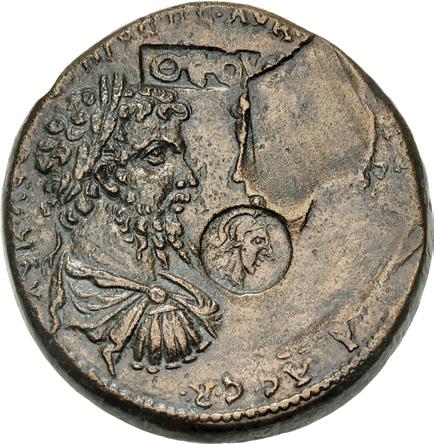
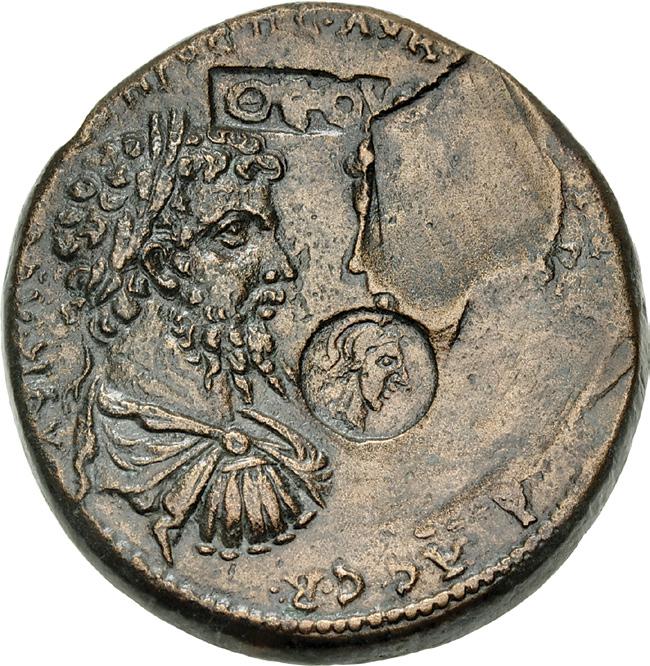
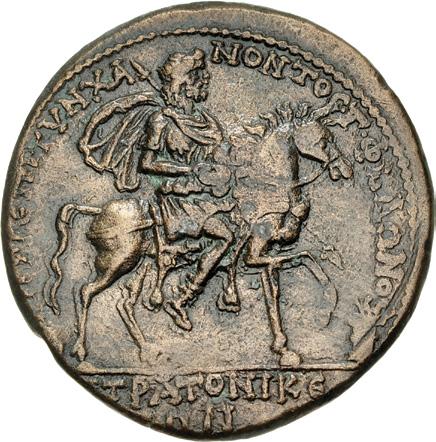
118. CARIA, Stratonicaea. Septimius Severus, with Geta as Caesar. AD 193-211. Æ (36mm, 28.95 g, 6h). Damnatio Memoriae. Philon, prytanis. Laureate, draped, and cuirassed bust of Septimius, seen from behind, vis-à-vis [laureate, draped, and cuirassed bust of Geta]; c/ms: helmeted head of Roma within circular incuse, and ΘEOY within rectangular incuse / Zeus Panamaros, draped, on horseback right, holding transverse scepter in left hand; at feet right, lighted altar. RPC V.2 Online 73901; SNG von Aulock 8162. For c/ms: Howgego 188; 536. Red-brown surfaces, light pororsity. VF. ($500)
Ex Classical Numismatic Group 129 (13 May 2025), lot 400.
Upon Septimius’ passing in AD 211, his sons Caracalla and Geta assumed joint rule of the empire. Their joint rule was a failure; the Imperial Palace was separated into two sections and they threatened to divide the empire between them. During the Festival of Saturnalia, December 211, Caracalla tried unsuccessfully to have his brother assassinated. But a week later, at an arranged meeting in their mother’s quarters, Geta was murdered by Caracalla’s centurions.
Caracalla immediately ordered a damnatio memoriae of his brother’s image: statues were removed, paintings were destroyed or, like the Severan Tondo erased, and coins were recalled to have his image carved out. This damnatio was especially apparent on the provincial coinage of Pergamum in Mysia and Stratonicaea in Caria. It is estimated that approximately 95% of the dual bust types at Stratonicea have had the portrait of Geta erased, many of them having a countermark of Roma or Caracalla stamped over his bust.
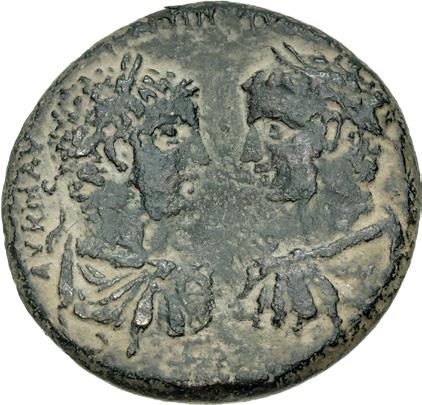
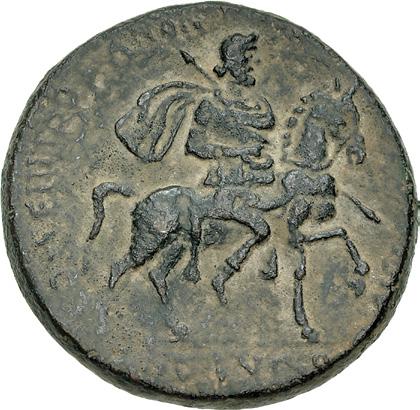
119. CARIA, Stratonicaea. Caracalla, with Geta as Caesar. AD 198-217. Æ (35mm, 25.81 g, 12h). Philon, prytanis Struck under Septimius Severus. Laureate, draped, and cuirassed bust of Caracalla, seen from behind vis-à-vis laureate, draped, and cuirassed bust of Geta, seen from behind / Zeus Panamaros, draped, on horseback right, holding transverse scepter; at feet right, lighted altar. RPC V.2 Online 92018; CNG 126, lot 457. Earthen green patina, slight roughness. VF. Very rare. ($1000)
Ex Classical Numismatic Group Electronic Auction 309 (21 August 2013), lot 160 (hammer $4,750).
This coin is among the rare surviving 5% which did not succumb to the damnatio; Geta’s portrait has been preserved. There are very few specimens in CoinArchives with an unaltered portrait.
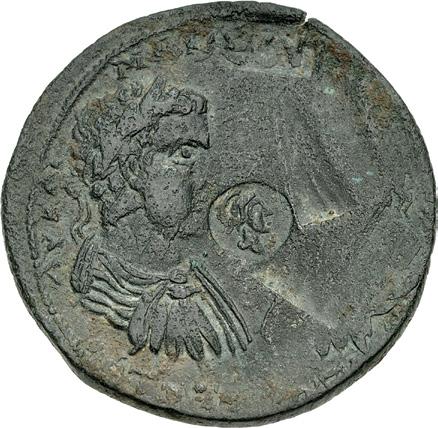
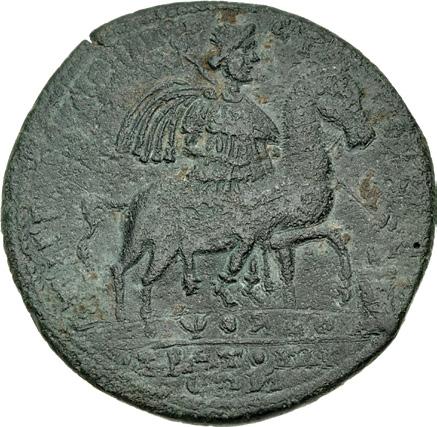
120. CARIA, Stratonicaea. Caracalla, with Geta as Caesar. AD 198-217. Æ (36mm, 19.87 g, 12h). Damnatio Memoriae. Iason, son of Kleoboulos, grammateus. Struck under Septimius Severus, circa AD 205-209. Laureate, draped, and cuirassed bust of Caracalla, seen from behind vis-à-vis [bareheaded, draped, and cuirassed bust of Geta]; c/ms: helmeted head of Roma within circular incuse, and ΘEOY within rectangular incuse / Zeus Panamaros, draped, on horseback right, holding transverse scepter in left hand; at feet right, lighted altar. RPC V.2 Online 74178 (this coin cited); SNG von Aulock 2685. For c/ms: Howgego 188; 536. Earthen green patina, trace deposits, slight roughness. VF. ($200)
Purchased from Edward J Waddell, 12 December 2017. Ex Dr. Walter Neussel Collection (Peus 420, 1 November 2017), lot 390; Gilbert Steinberg Collection (Numismatica Ars Classica/Spink Taisei, 16 November 1994), lot 862.
RPC Online Feature Coin – One of Two Known
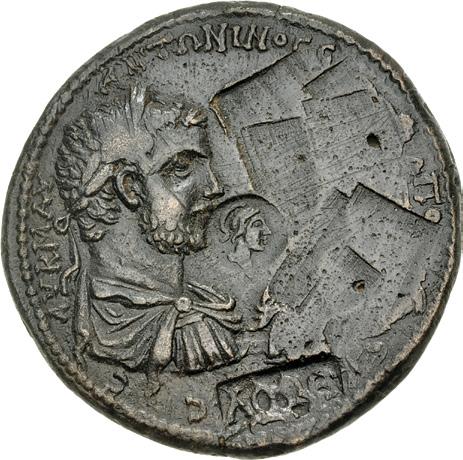
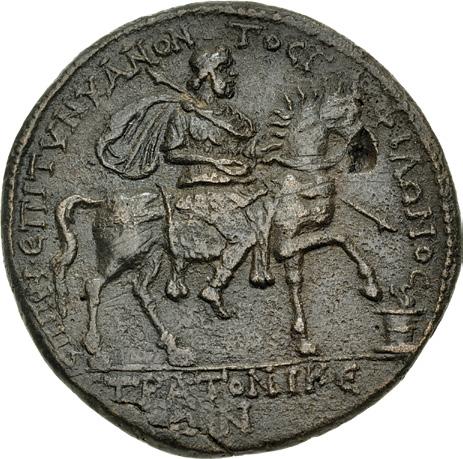
121. CARIA, Stratonicaea. Caracalla, with Geta as Caesar. AD 198-217. Æ (38mm, 27.02 g, 12h). Damnatio Memoriae. Philon, prytanis. Struck under Septimius Severus. Laureate, draped, and cuirassed bust of Caracalla, seen from behind vis-à-vis [laureate, draped, and cuirassed bust of Geta, seen from behind]; c/ms: helmeted head of Roma within circular incuse, and ΘEOY within rectangular incuse / Zeus Panamaros, draped, on horseback right, holding transverse scepter; at feet right, lighted altar. RPC V.2 Online 92018 (this coin cited). For c/ms: Howgego 188; 536. Brown patina, pitting, reverse flan flaw. Good VF. Extremely rare, one of two recorded in RPC. Portrait of Geta erased, Caracalla’s damnatio memoriae of Geta applied after his murder in AD 211. ($500)
Ex Classical Numismatic Group 126 (28 May 2024), lot 457.
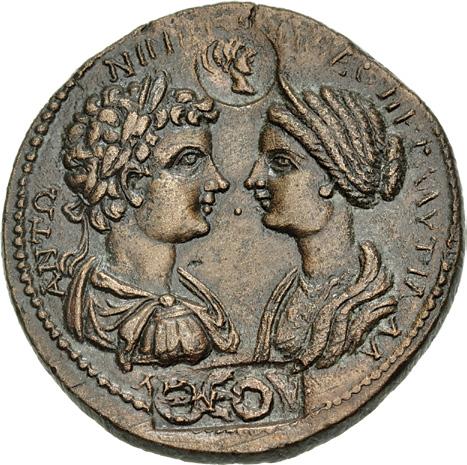
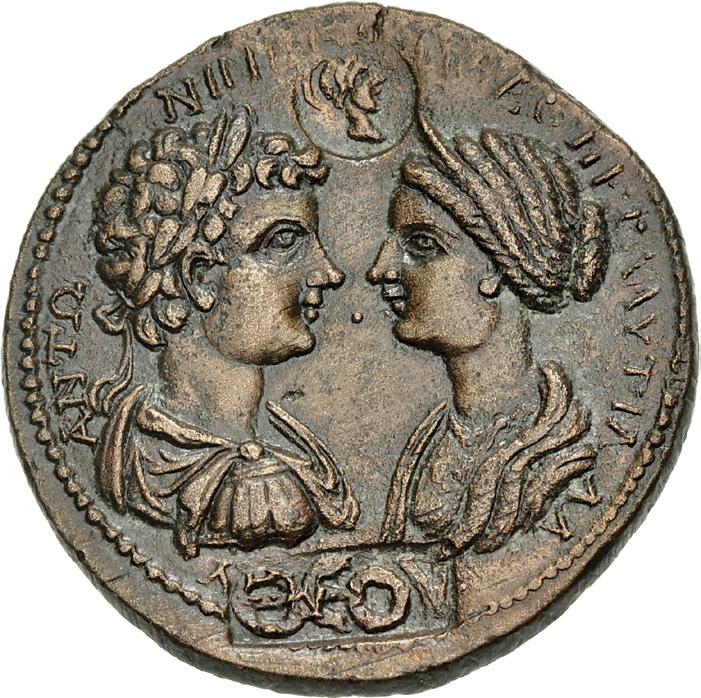
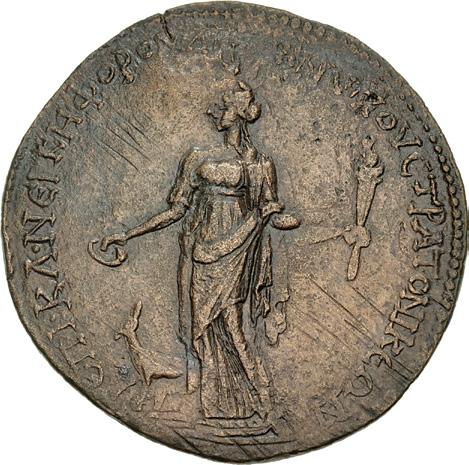
122. CARIA, Stratonicaea. Caracalla, with Plautilla. AD 198-217. Æ (38.5mm, 24.59 g, 12h). Claudius Nikephoros, son of Dionysios, prytanis. Struck under Septimius Severus, circa AD 202-203. Laureate, draped, and cuirassed bust of Caracalla, seen from behind vis-à-vis draped bust of Plautilla; c/ms: helmeted head of Roma within circular incuse, and ΘEOY within rectangular incuse / Hecate standing facing, head left, wearing kalathos, holding patera and torch; at feet left, dog standing left, looking right. RPC V.2 Online 73688 (this coin cited). For c/ms: Howgego 188; 536. Red-brown surfaces, flan preparation marks. Good VF. ($1000)
Ex Triton XXVIII (14 January 2025), lot 463.
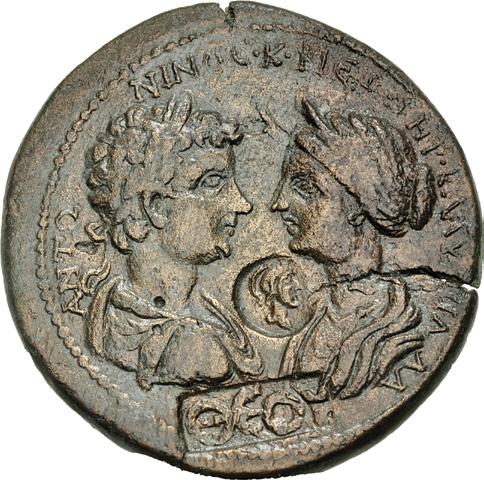
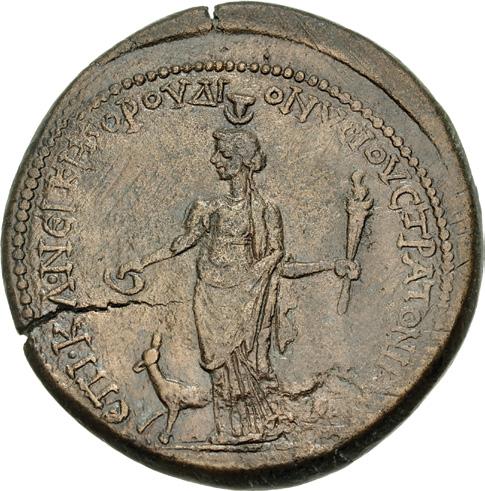
123. CARIA, Stratonicaea. Caracalla, with Plautilla. AD 198-217. Æ (40mm, 35.41 g, 12h). Claudius Nikephoros, son of Dionysios, prytanis. Struck under Septimius Severus, circa AD 202-203. Laureate, draped, and cuirassed bust of Caracalla, seen from behind vis-à-vis draped bust of Plautilla; c/ms: helmeted head of Roma within circular incuse, and ΘEOY within rectangular incuse / Hecate standing facing, head left, wearing kalathos, holding patera and torch; at feet left, dog standing left, looking right. RPC V.2 Online 73688 (this coin cited). For c/ms: Howgego 188; 536. Red-brown surfaces, light porosity, flan preparation marks, flan crack. VF. ($300)
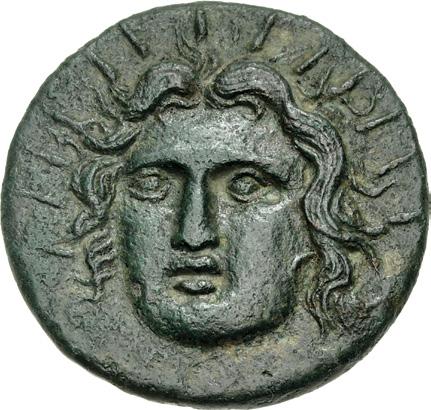
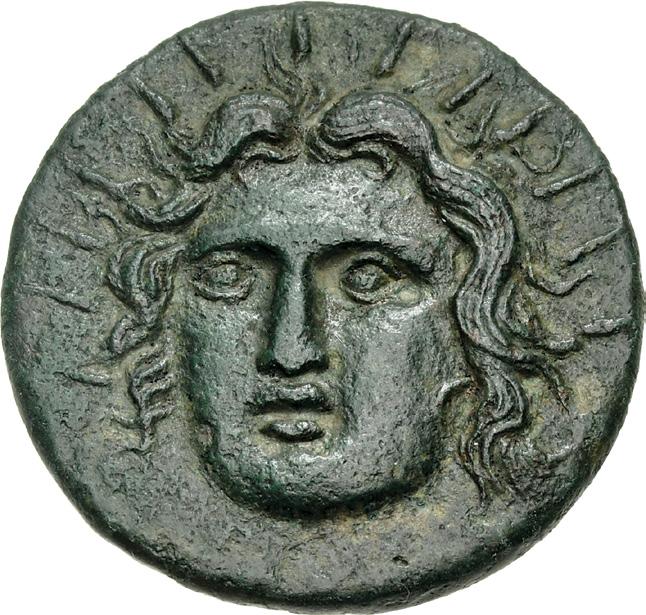
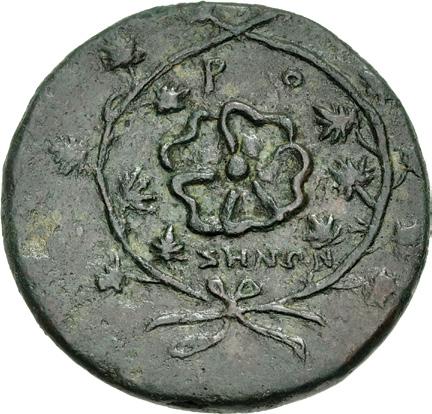
124. ISLANDS off CARIA, Rhodos. Rhodes. Late 1st century BC-mid 1st century AD. Æ Drachm (35mm, 20.51 g, 12h). Zenon, tamias. Radiate head of Helios facing slightly left / Full-blown rose within oak wreath; ZHNΩN below rose. Ashton, Early 97 var. (Helios’ facing slightly right); RPC I, p. 454-5 (for discussion of series); SNG Keckman –; BMC 343 var. (same). Dark green patina with earthen highlights, slight roughness. VF. Rare. ($500)
Purchased from Pegasi Numismatics, February 2013. Ex Banca Italiana di Sconto Collection (Part II, Santamaria, 27 March 1928), lot 264.
According to Pindar (Ol. 7.13-17), the island Rhodos was said to be born of the union of Helios, the sun god, and the nymph Rhode. Dating from the time of the arrival of the Minoans in the 16th century BC, Rhodos is steeped in early history. By the third century BC, the city of Rhodes had formed strong cultural and political ties with the Ptolemies in Alexandria, and the Rhodo-Egyptian alliance controlled much of the Aegean trade. Macedonian armies under Demetrios I Poliorcetes laid siege to Rhodes in 305 BC, in an attempt to break up this alliance. Demetrios sued for peace a year later, leaving a massive store of military equipment which the Rhodians sold, using the proceeds to build a statue to their sun god Helios. This statue is now known as the Colossus of Rhodes. The Colossus, one of the Ancient Wonders of the World was toppled in a massive earthquake in 226 BC, and its remains lay on the ground for over 800 years (Strabo 14.2.5) before being sold as scrap following the Arab Conquest in AD 654 (Constantine VII Porphyrogenitus, De administrando imperio XX-XXI).
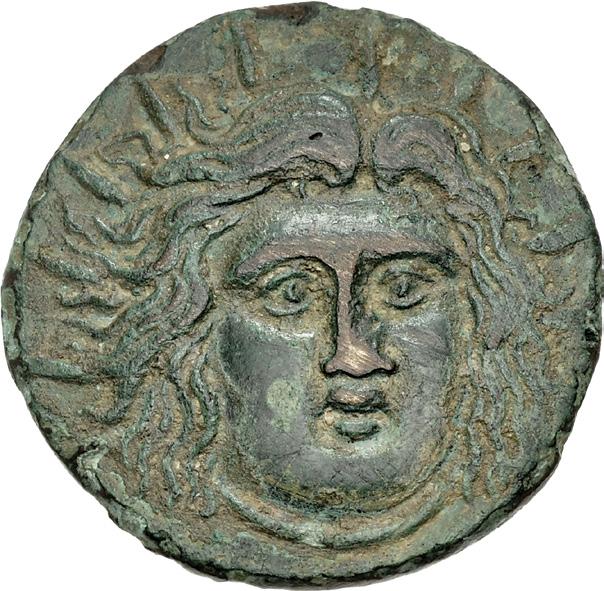
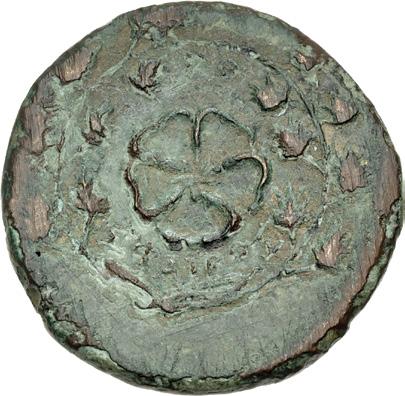
125. ISLANDS off CARIA, Rhodos. Rhodes. Late 1st century BC-mid 1st century AD. Æ Drachm (33mm, 18.09 g, 12h). Sphairos, tamias. Radiate head of Helios facing slightly right / Full-blown rose within oak wreath; ΣΦAIPOΣ below rose. Ashton, Early 105-6; RPC I, p. 454-5 (for discussion of series); SNG Keckman –; BMC 345. Earthen green patina, some chipping of the patina at the edges. VF. ($500)
Ex W. F. Stoecklin Collection (Nomos Obolos 8, 2 December 2017), lot 300; Münzhandlung Basel 10 (15 March 1938), lot 348.
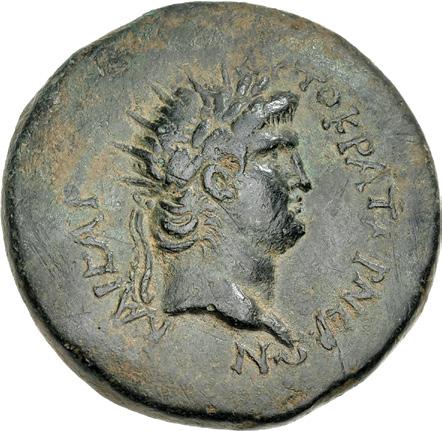
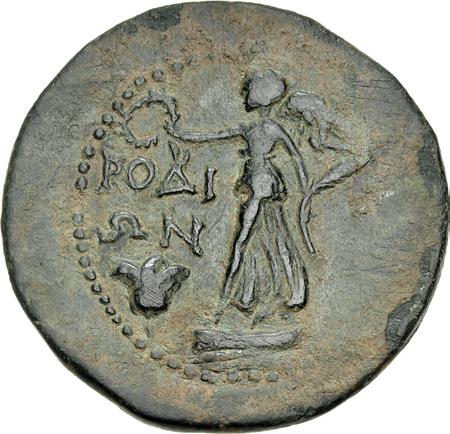
126. ISLANDS off CARIA, Rhodos. Rhodes. Nero. AD 54-68. Æ (36.5mm, 25.92 g, 12h). Struck circa AD 62-68. Radiate and laureate head right / Nike standing left on prow, holding wreath and palm frond; rose to lower left. RPC I 2772 corr. (bust); SNG Keckman 769 corr. (same); SNG von Aulock 2859 corr. (same). Earthen brown patina, light scratches. VF. ($500)
Ex Classical Numismatic Review XLII.2 (Spring 2017), no. 455669; Classical Numismatic Group Electronic Auction 389 (18 January 2017), lot 447.
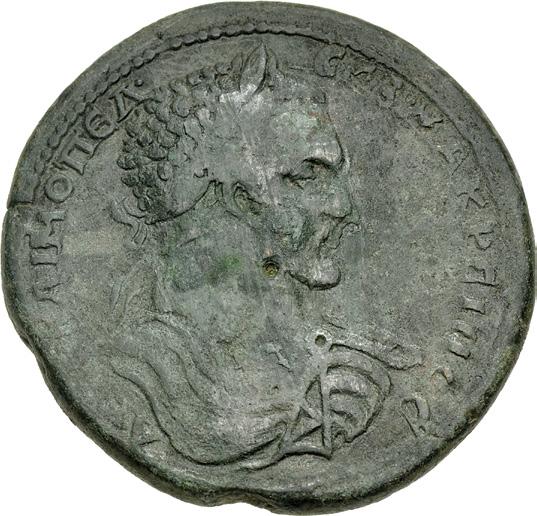
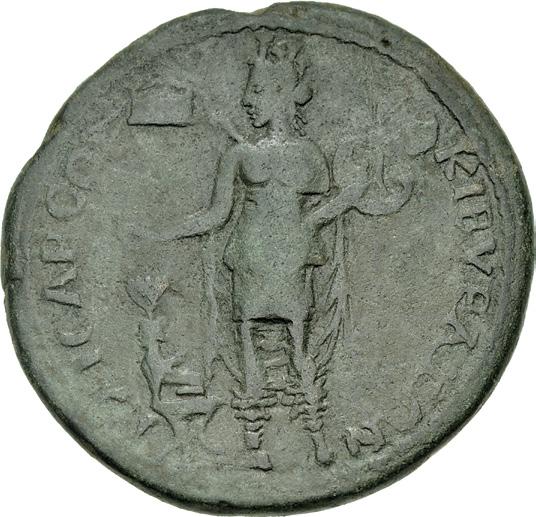
127. PHRYGIA, Cibyra. Macrinus. AD 217-218. Æ Medallion (44mm, 44.75 g, 6h). Laureate, draped, and cuirassed bust right, seen from behind / Tyche, as an Amazon, standing facing, turreted head left, holding patera and spear with pelta and labrys, bow over left shoulder; at feet left, sphinx seated left on tripod; in upper left field, basket of Cibyra. RPC V.2 Online 1265 (this coin cited); BMC 52. Green patina, scratches. Near VF. Very rare. ($500)
Ex Leu Numismatik Web Auction 6 (9 December 2018), lot 579.
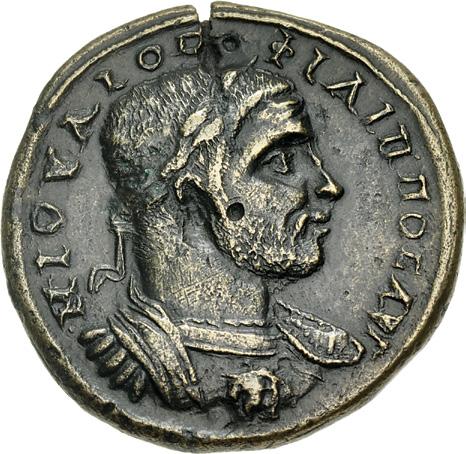
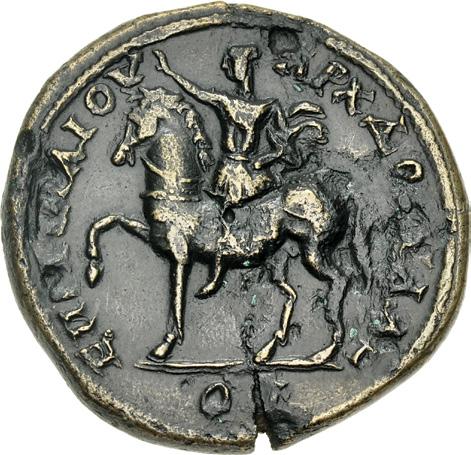
128. PHRYGIA, Dorylaeum. Philip I. AD 244-249. Æ (38.5mm, 33.24 g, 6h). Marcus Aurelius Timaios, first archon and stephanephoros. Laureate and cuirassed bust right, seen from the front, gorgoneion on breastplate, aegis on left shoulder / Philip, in military dress, on horseback left, raising right hand, chlamys flowing behind. von Aulock, Phrygiens 291-2; RPC VIII Online 20669 (this coin cited). Yellow-brown surfaces, reverse corrosion, flan crack. VF. Very rare, one of four recorded in RPC. ($1500)
Ex Leu Numismatik Web Auction 2 (26 November 2017), lot 433.
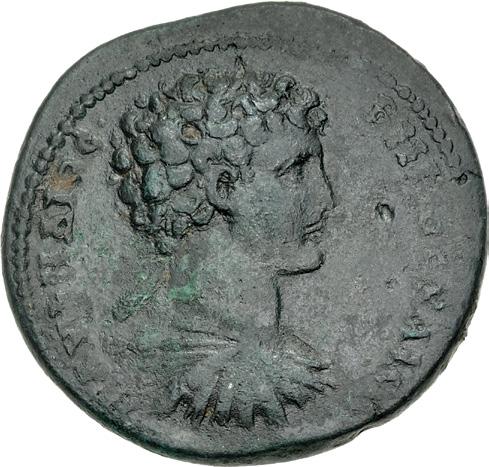
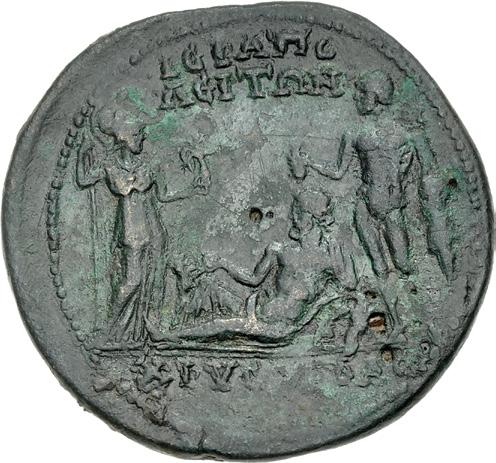
129. PHRYGIA, Hierapolis. Marcus Aurelius. As Caesar, AD 139-161. Æ Medallion (41mm, 29.29 g, 12h). Struck under Antoninus Pius, circa AD 139-146. Bareheaded, draped, and cuirassed bust right, seen from behind / River-god Chrysorrhoas reclining left, resting elbow on urn from which water flows, holding grain ears and poppies; XPVCOPOAC below; to left, Athena standing right, holding spear and Nike; to right, Hermes standing left, holding purse and caduceus, chlamys draped over arm. RPC IV.2 Online 2004; SNG von Aulock 3655. Red-brown patina with green, minor porosity, smoothing. VF. ($1000)
Purchased from Frank L. Kovacs, 24 November 2018.
Not to be confused with the Syrian river of the same name, Weber (NC XIII [1913], p. 16), notes: “The Chrysoroas (sic) was probably a mountain stream flowing to the north of Hierapolis. As the name shows, its sands must have contained gold.”
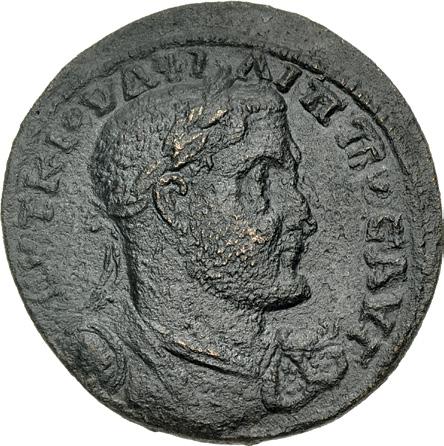
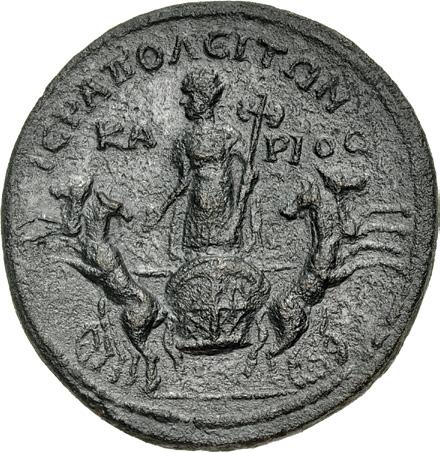
130. PHRYGIA, Hierapolis. Philip I. AD 244-249. Æ (36.5mm, 24.74 g, 12h). Laureate and cuirassed bust right, seen from the front, wearing balteus, aegis on left shoulder / Apollo Karios standing facing, radiate head left, in spread quadriga, holding patera and labrys. RPC VIII Online 20712 (this coin). Brown surfaces, slight roughness. VF. Extremely rare, only this coin cited in RPC and CoinArchives. An exceptional depiction of Apollo in spread quadriga. ($500)
Ex Numismatik Naumann 66 (3 June 2018), lot 303.
Ex von Aulock Collection – One
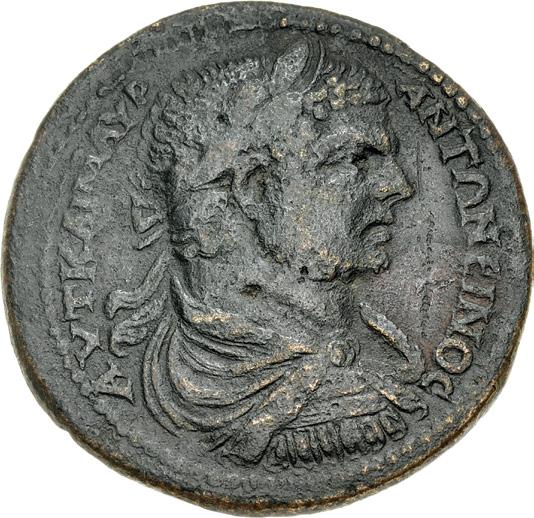
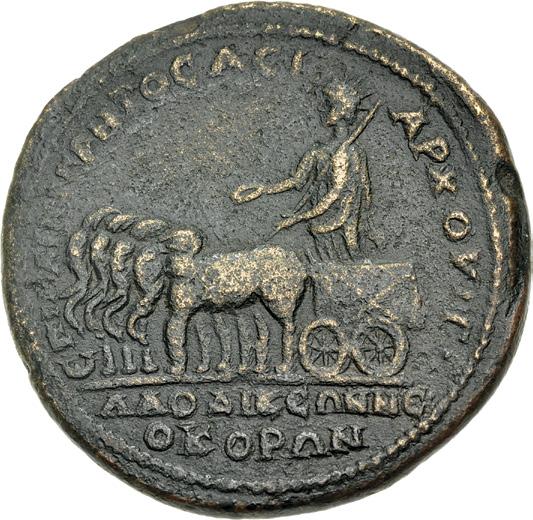
131. PHRYGIA, Laodicea ad Lycum. Caracalla. AD 198-217. Æ Medallion (43mm, 45.38 g, 6h). Lucius Aelius Pigres, Asiarch for the third time. Struck AD 214-217. Laureate, draped, and cuirassed bust right, seen from behind / Caracalla standing left in quadriga of elephants, holding patera and eagle-tipped scepter. von Aulock, Phrygiens –; RPC V.2 Online 543 = SNG von Aulock 3857 (this coin). Brown patina, porosity, minor flan flaws. Near VF. Extremely rare, one of two known. ($2000)
Ex Künker 280 (26 September 2016), lot 725; Leu 20 (25 April 1978), lot 348; Hans von Aulock Collection.
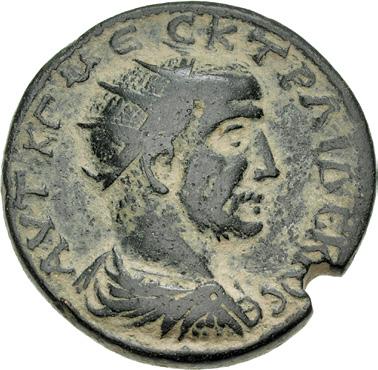
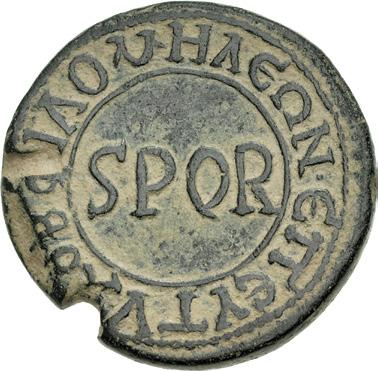
132. PHRYGIA, Philomelium. Trajan Decius. AD 249-251. Æ (31mm, 21.85 g, 1h). Eutyches II, magistrate. Radiate, draped and cuirassed bust right, seen from behind / S P Q R within circular border. RPC IX 899; BMC 43. Earthen green patina, edge flaw. Near VF. ($100)
Ex Numismatik Naumann 75 (3 March 2019), lot 484.
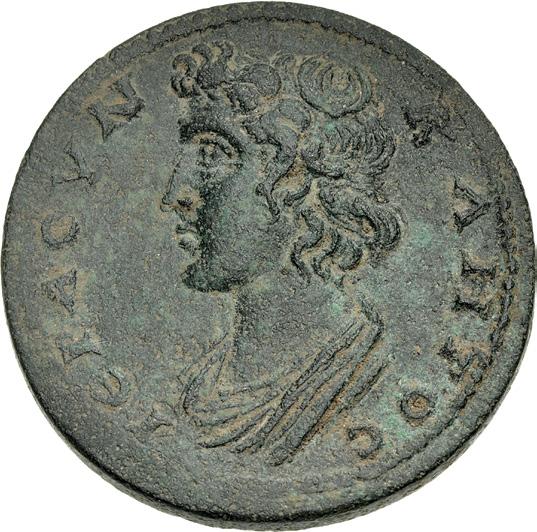
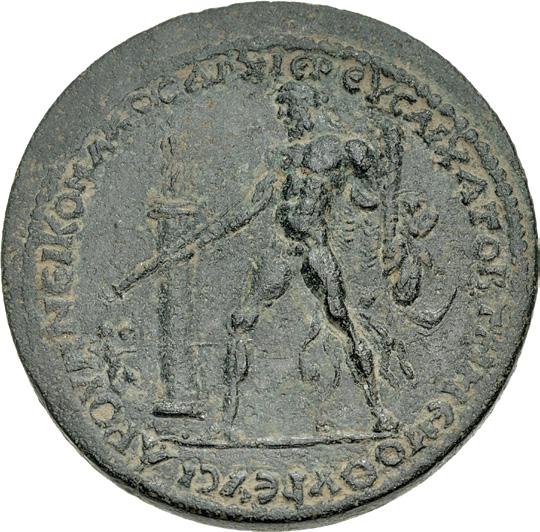
133. PHRYGIA, Temenothyrae. temp. Philip I. AD 244-249. Æ Medallion (44mm, 50.26 g, 6h). Gaius Arruntius Nikomachos Tiberianianus, high priest and first archon for the second time. Draped bust of the Senate left / Herakles advancing left, holding torch and club with lion’s skin; to left, column surmounted by deity holding scepter; to lower left, Eros standing right, pulling at robe attached to Herakles’ leg. RPC VIII Online 20262 (this coin cited); BMC 12. Green patina with earthen highlights, slight porosity. VF. ($1500)
Ex Leu Numismatik AG Web Auction 32 (7 December 2024), lot 1141; Leu Numismatik Web Auction 28 (9 December 2023), lot 2320.
The reverse of this coin, depicting Herakles holding a torch with Eros tugging at his robes, certainly depicts a wedding scene, likely Herakles’ marriage to Omphale. Omphale, the queen of Lydia, bought Herakles as a slave for the sum of three silver talents. Herakles was indentured to her for three years; during this time, he completed tasks similar to the 12 Labors demanded by Eurystheus. They included: capturing the Kerkopes; slaying the vine-grower Syleus; defeating the Lityerses; enslaving the Itoni; killing the serpent Ophiuchos; and burying Ikaros after he had fallen from the sun. Additionally, he and Omphale switched clothes and he was forced to perform women’s tasks while in her service as a form of humiliation. Upon completion of his three years of service, the two wed in a lavish ceremony in the grove of Dionysos.
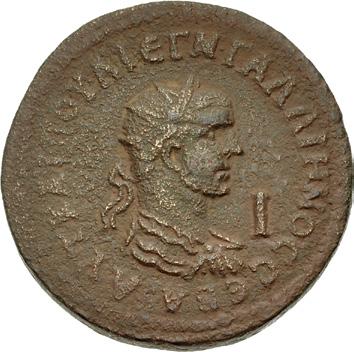
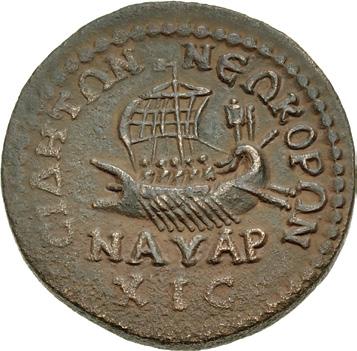
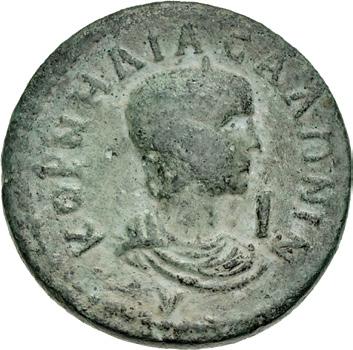
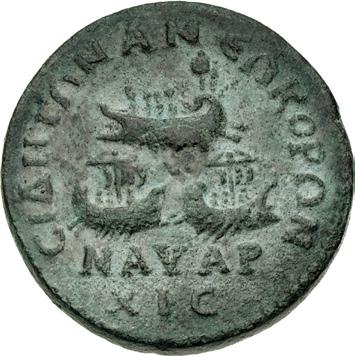
134. PAMPHYLIA, Side. Gallienus. AD 253-268. Æ Dekassarion (29mm, 17.38 g, 7h). Radiate, draped, and cuirassed bust right, seen from behind; I (mark of value) before / Galley with oarsmen at sail left; vexillum at stern. RPC X Online 62629 (this coin cited); SNG BN 881; SNG Pfälzer 857-8. Red-brown surfaces, some roughness. VF. ($300)
Ex Classical Numismatic Group Electronic Auction 413 (31 January 2018), lot 260.
135. PAMPHYLIA, Side. Salonina. Augusta, AD 254-268. Æ Dekassarion (29mm, 18.62 g, 12h). Struck under Gallienus. Draped bust right, wearing stephane; I (mark of value) before / Three galleys: Top galley with oarsmen left, vexillum at stern; bottom galleys with oarsmen and sail right. RPC X Online 62680 (this coin cited); SNG BN –; SNG Pfälzer –; SNG von Aulock 4858-9. Earthen green patina. VF. Very rare variety without crescent on obverse, three recorded in RPC. ($300)
Ex Classical Numismatic Group 93 (22 May 2013), lot 849.
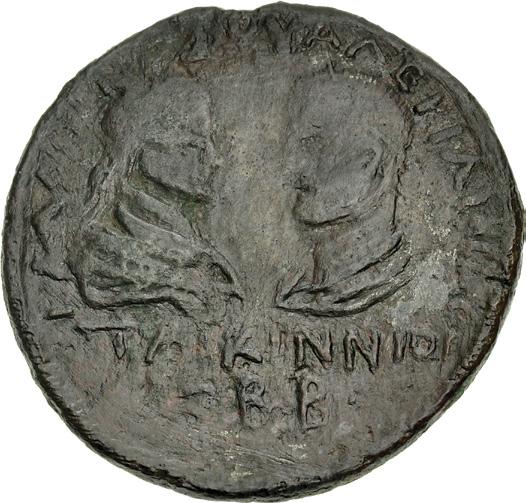
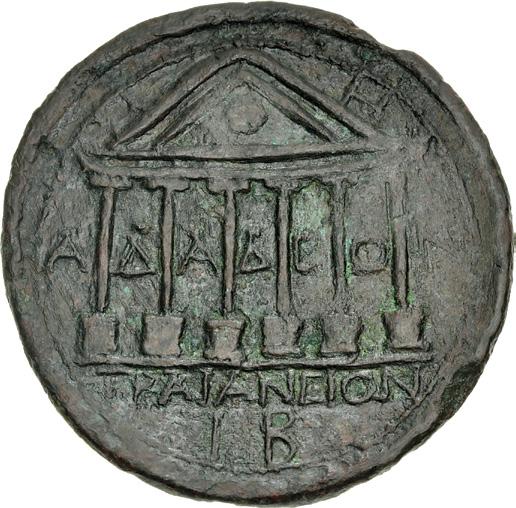
136. PISIDIA, Adada. Valerian I, with Gallienus. AD 253-260. Æ Medallion (43.5mm, 31.62 g, 11h). Laureate, draped, and cuirassed bust of Gallienus right, seen from behind vis-à-vis laureate, draped, and cuirassed bust of Valerian I left, seen from the front / Hexastyle temple with clipeus in pediment. von Aulock, Pisidiens 114-6; RPC X Online 63311 (this coin cited); BMC 7. Dark brown surfaces, slight roughness, heavily smoothed and tooled. Near VF. Rare. ($200)
Purchased from Ralph DeMarco, 12 January 2017. Ex VAuctions 321/London Coin Galleries 3 (10 November 2016), lot 155 (smoothed, tooled, and repatinated since).
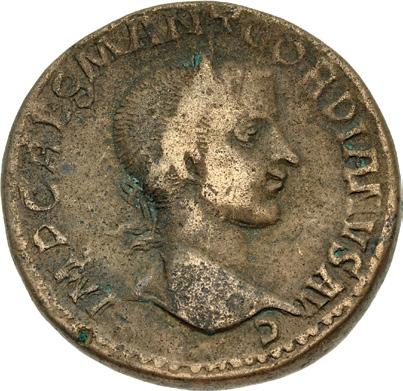
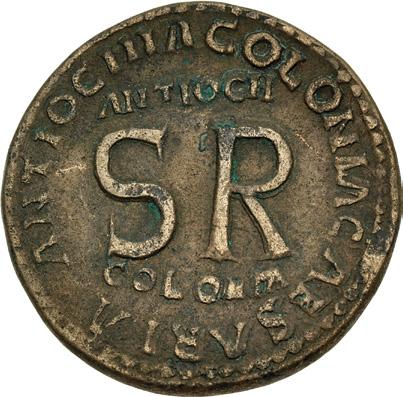
137. PISIDIA, Antiochia. Gordian III. AD 238-244. Æ (33mm, 25.96 g, 7h). Laureate head right / Large S R between legends. Krzyźanowska dies XI/52; RPC VII.2 Online 2720; SNG BN 1241 var. (bust). Light brown surfaces, light porosity. Good Fine. ($100)
Ex Classical Numismatic Group Electronic Auction 257 (8 June 2011), lot 263.
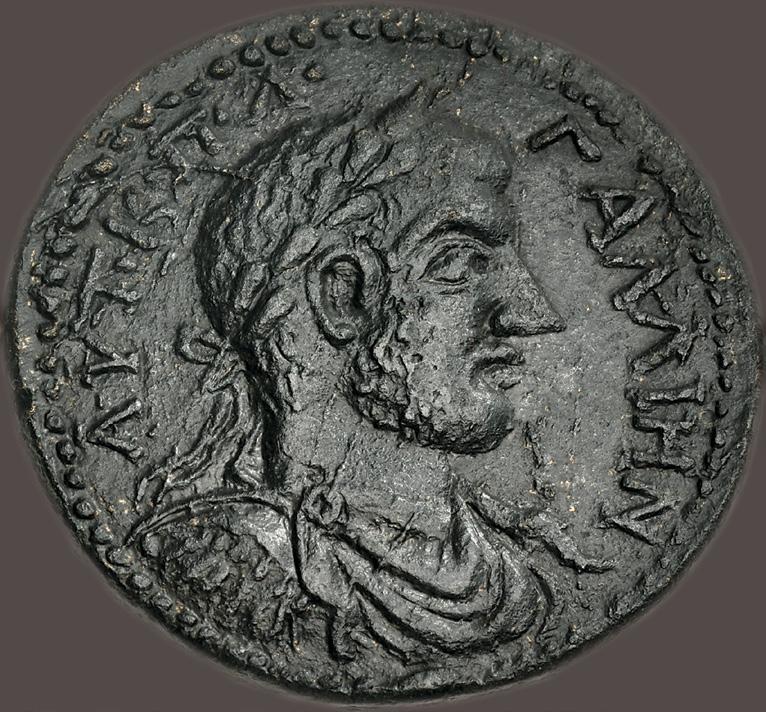
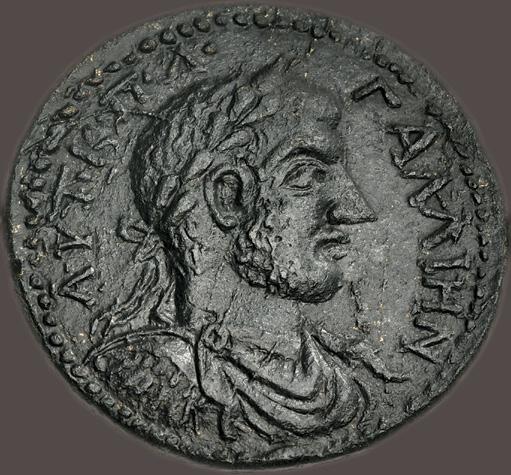
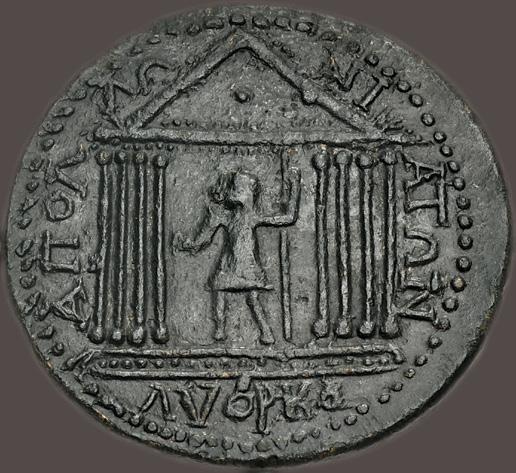
138. PISIDIA, Apollonia-Mordiaeum. Gallienus. AD 253-268. Æ Medallion (42mm, 32.58 g, 6h). Laureate, draped, and cuirassed bust right, seen from front / Statue of Gallienus standing left, holding globe and spear; within octastyle temple, pellet in pediment. von Aulock, Pisidiens 157-183; RPC X Online 63370; SNG BN 1365-6. Brown surfaces, obverse die breaks, minor cleaning marks. Good VF. A rare large, medallic provincial bronze for this late period. Boldly struck for issue, rare as such. ($2000)
Ex Classical Numismatic Review XLVII.1 (Winter 2022), no. 5592094; Gorny & Mosch 280 (11 October 2021), lot 330; Numismatik Naumann 87 (1 March 2020), lot 330 (conserved since).
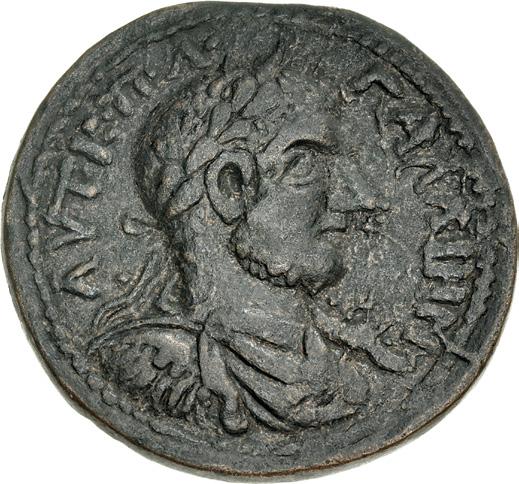
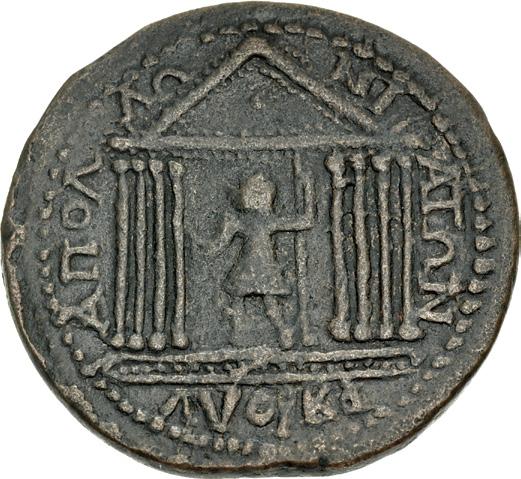
139. PISIDIA, Apollonia-Mordiaeum. Gallienus. AD 253-268. Æ Medallion (43mm, 38.08 g, 6h). Laureate, draped, and cuirassed bust right, seen from front / Statue of Gallienus standing left, holding globe and spear; within octastyle temple, pellet in pediment. von Aulock, Pisidiens 157-183; RPC X Online 63370; SNG BN 1365-6. Brown surfaces, slight roughness. VF. ($300)
Ex Leu Numismatik Web Auction 20 (16 July 2022), lot 2033; Chaponnière & Firmenich 13 (16 May 2021), lot 469.
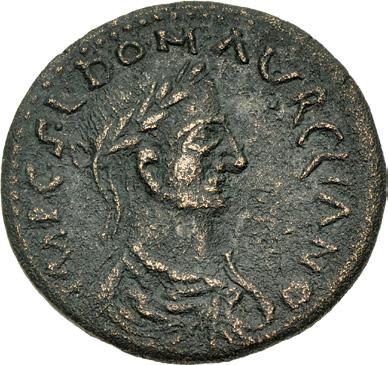
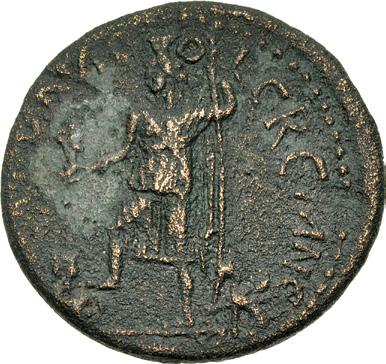
140. PISIDIA, Cremna. Aurelian. AD 270-275. Æ (32mm, 14.37 g, 7h). Laureate, draped, and cuirassed bust right, seen from behind / Tyche standing left, holding imperial bust and scepter, resting foot on river-god Kestos swimming left, looking right; at right, griffin seated left, paw on wheel. von Aulock, Pisidiens 1539–1553, 1647-1654; RPC X Online 63428; SNG BN 1527. Red-brown surfaces, roughness. Near VF. ($100)
Purchased from Tom Cederlind, 6 September 2012.
The Third Century Crisis circa AD 235-285 saw a drastic reduction in Roman provincial coinage. This piece struck under Aurelian represents one of the last provincial bronzes issued anywhere in the Empire, save for Egypt.
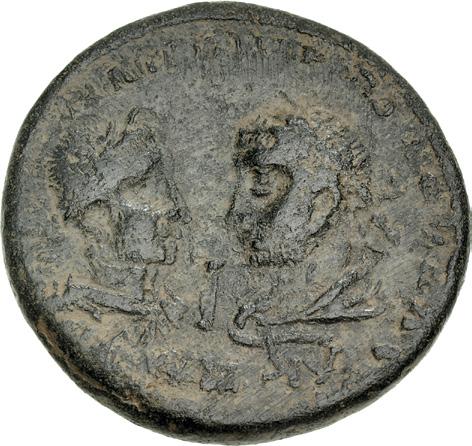
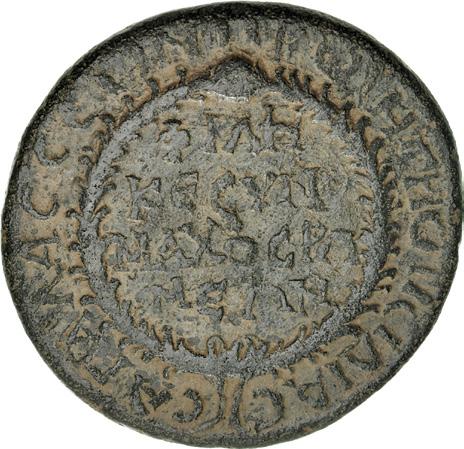
141. PISIDIA, Sagalassus. Valerian I, with Gallienus. AD 253-260. Æ Dekassarion (39mm, 31.18 g, 6h). Laureate, draped, and cuirassed bust of Valerian I right, seen from behind vis-à-vis laureate, draped, and cuirassed bust of Gallienus left, seen from behind; I (mark of value) between / ΦIΛK/KЄ CYN/MAXOC PΩ/MЄΩN in four lines within wreath, legend around. RPC X Online 63492 (this coin cited); SNG BN –. Earthen green patina, porosity, obverse die shift. Near VF. ($200)
Ex Leu Numismatik Web Auction 3 (25 February 2018), lot 612.
RPC Online Feature Coin – Very Rare City
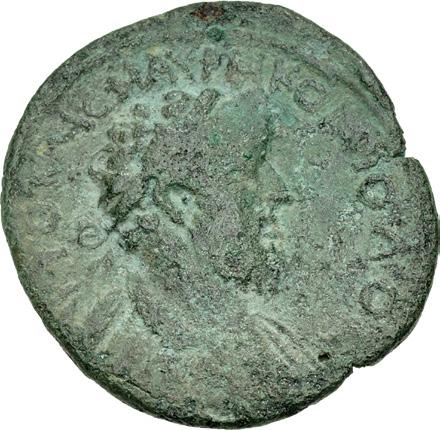
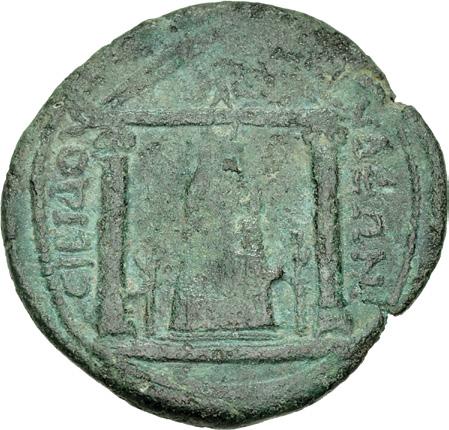
142. PISIDIA, Sibidunda. Commodus. AD 177-192. Æ (37mm, 16.11 g, 5h). Laureate, draped, and cuirassed bust right, seen from behind / Cult statue of Artemis Pergaia standing facing within distyle temple; flanked by sphinx seated on short column, facing inward; eagle with wings displayed in pediment. von Aulock, Pisidiens –; RPC IV.3 Online 10185.1 (this coin); SNG Righetti 1440. Green patina, light roughness. Near VF. Extremely rare, one of two recorded in RPC. ($150)
Ex VAuctions 321/London Coin Galleries 3 (10 November 2016), lot 31.
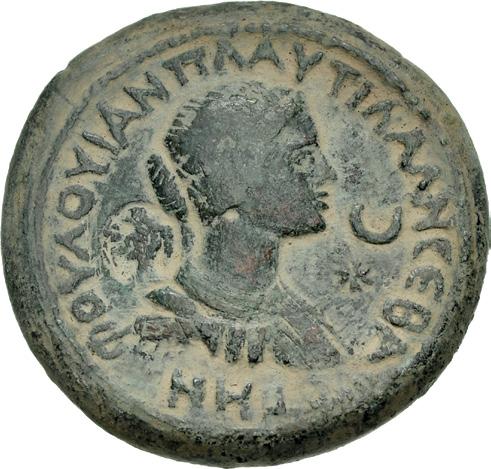
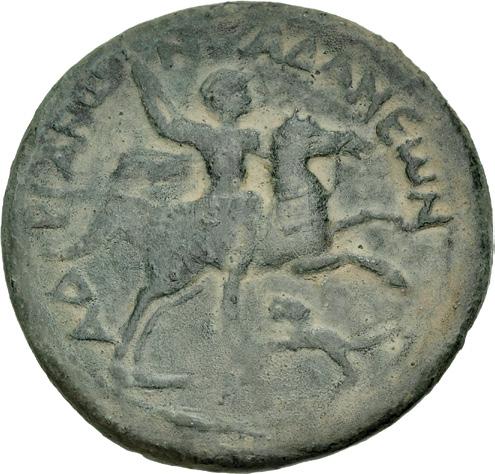
143. CILICIA, Adana. Plautilla. Augusta, AD 202-205. Æ (40mm, 40.67 g, 7h). Struck under Septimius Severus. Draped bust right; star to left; crescent above star to right; c/m: Nike standing left within circular incuse / Caracalla in military attire, on horseback galloping right, preparing to spear lion below, running left. Levante, Adana 191; RPC V.3 Online 77505; SNG BN –; SNG Levante 1228. For c/m: Howgego 257. Earthen green surfaces, slight porosity. Good Fine. Very rare. ($400)
Purchased from Holyland Numismatics, 15 April 2011.
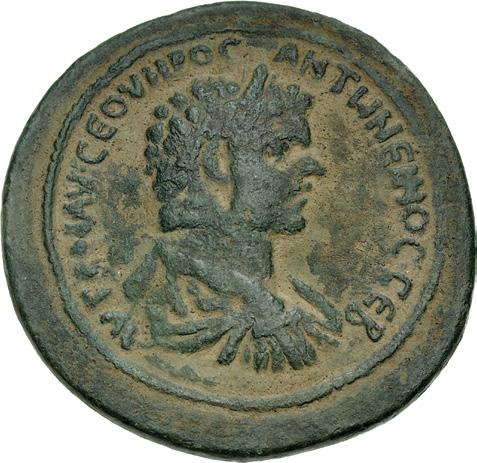
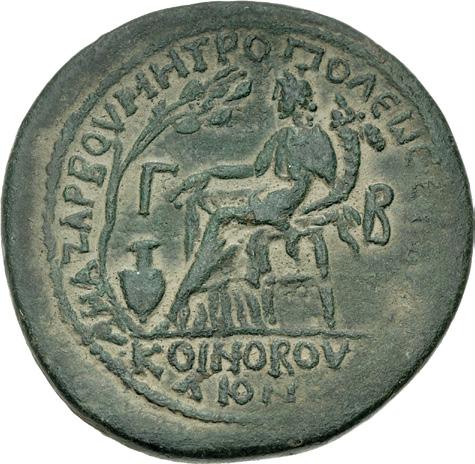
144. CILICIA, Anazarbus. Caracalla. AD 198-217. Æ Pentassarion (39mm, 28.92 g, 12h). Dated CY 232 (AD 213/4). Laureate, draped, and cuirassed bust right, seen from behind / Koinoboulion, turreted and veiled, seated left, dropping pebble into voting urn and holding cornucopia; tree before; ЄT BΛC (date) in legend. Zeigler 313 (Vs2/Rs4); RPC V.3 Online 84570 (this coin cited); SNG BN 2048; SNG Levante 1410. Earthen brown patina. VF. ($300)
Purchased from Holyland Numismatics, 10 April 2014. Ex Heritage 3024 (18 April 2013), lot 24792; Roma 4 (30 September 2012), lot 2295; Art Coins Roma 5 (14 May 2012), lot 621; Gorny & Mosch 138 (7 March 2005), lot 1748.
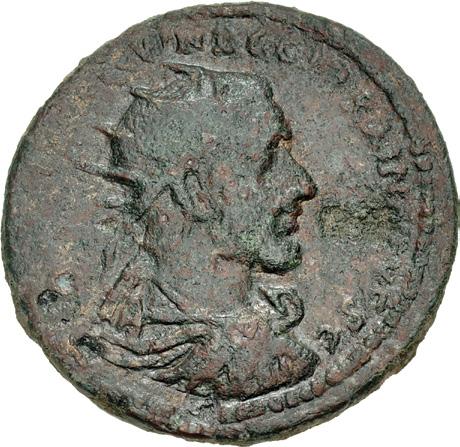
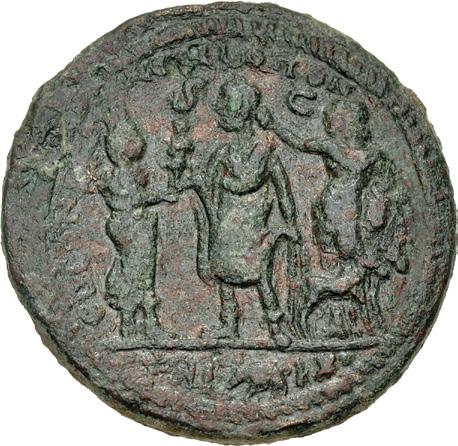
145. CILICIA, Mallus. Trajan Decius. AD 249-251. Æ (38mm, 28.29 g, 6h). Radiate, draped, and cuirassed bust right, seen from behind / Decius, togate, standing left, presenting small statue of Marsyas to Tyche, turreted, standing right holding cornucopia; to right, Amphilochos, holding branch and crowning the emperor with a wreath; pair of yoked oxen before; in exergue, boar left. RPC IX 1431; SNG BN 1931; SNG Levante 1292-3. Red-brown surfaces, obverse corrosion, smoothing and tooling. Near VF. ($200)
Ex Leu Numismatik Web Auction 3 (25 February 2018), lot 649.
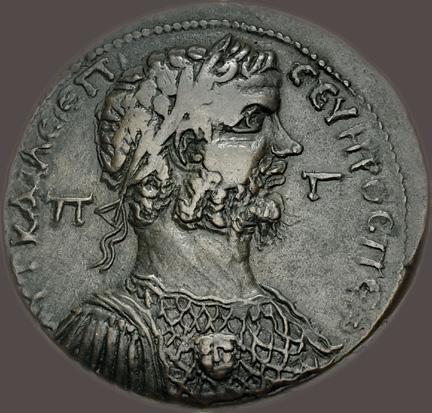
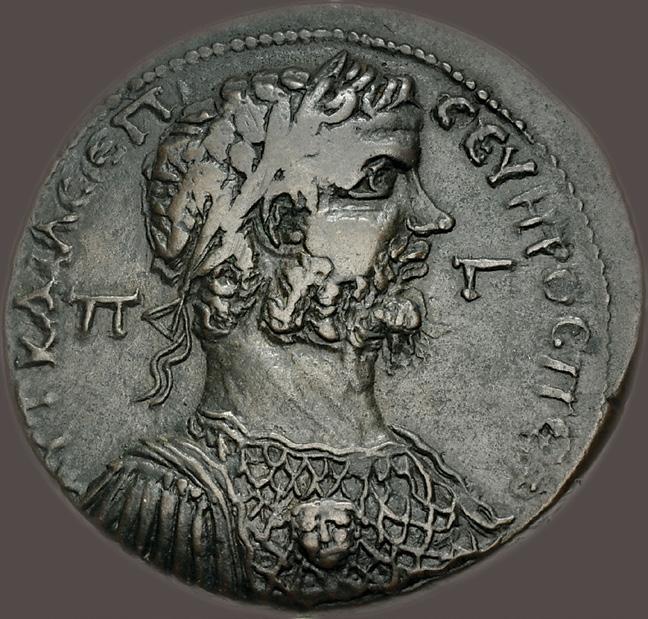
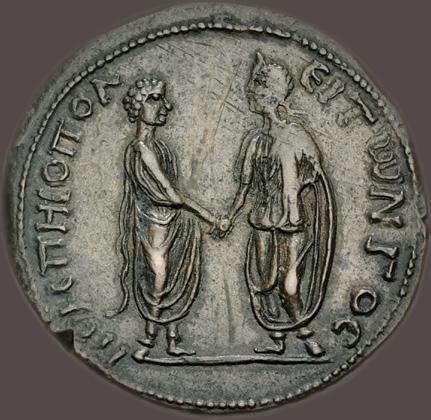
146. CILICIA, Pompeiopolis. Septimius Severus. AD 193-211. Æ (35mm, 25.82 g, 12h). Dated CY 273 (AD 207/8). Laureate and cuirassed bust right, seen from the front, gorgoneion on breastplate / Caracalla, laureate, and Geta, bareheaded, standing facing one another, both togate, clasping hands. RPC V.3 Online 79791 (this coin cited); SNG BN –; SNG Levante –. Brown patina, scratches. VF. Extremely rare, one of three recorded in RPC. ($500)
Ex Hunter Collection (Goldberg 72, 3 February 2013), lot 4491; Münzen und Medaillen AG 41 (18 June 1970), lot 574; Thomas Ollive Mabbott Collection (H. Schulman, 6 June 1969), lot 2207; Cahn 71 (14 October 1931), lot 913.
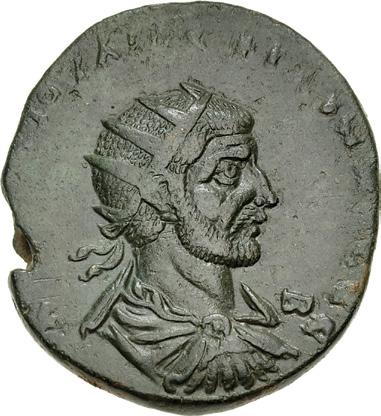
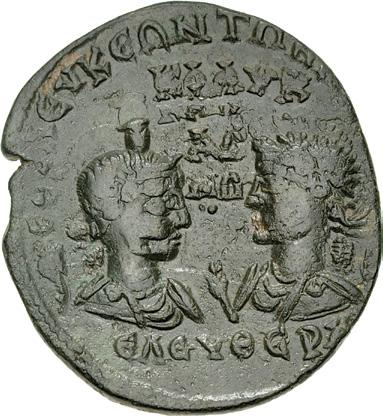
147. CILICIA, Seleucia ad Calycadnum. Philip I. AD 244-249. Æ (32mm, 20.02 g, 6h). Radiate, draped, and cuirassed bust right, seen from behind / Draped and turreted bust of Tyche, right, wearing kalathos, cornucopia behind, vis-à-vis laureate and draped bust of Apollo, left, branch before. RPC VIII Online 2169; SNG BN 1039-42 var. (placement of rev. legend); SNG Levante 778 var. (same). Olive green patina, edge flaw. Good VF. ($150)
Purchased from Brian Kritt, 12 January 2013.
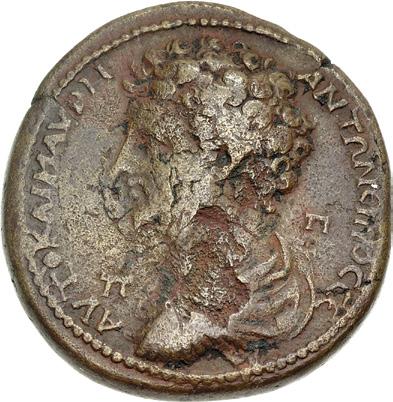
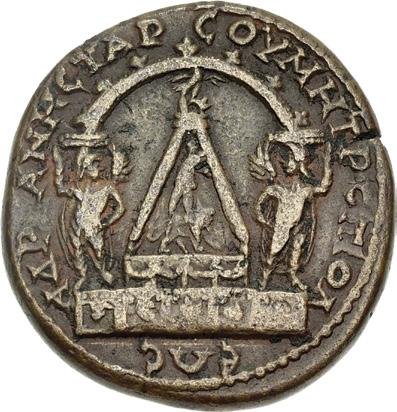
148. CILICIA, Tarsus. Marcus Aurelius. AD 161-180. Æ (32mm, 27.50 g, 12h). Struck under Marcus Aurelius and Lucius Verus, co-emperors, circa AD 161-162. Bareheaded, draped, and cuirassed bust left, seen from behind / Altar of Sandan – Sandan standing right on horned lion right within pyramidal monument surmounted by eagle; to either side, winged figure wearing Phrygian cap supporting domed canopy; all atop raised platform. RPC IV.3 Online 10720.2 (this coin); SNG BN –; SNG Levante –. Red-brown patina, roughness. Near VF. Extremely rare, one of two recorded in RPC. ($300)
Ex VAuctions 321/London Coin Galleries 3 (10 November 2016), lot 28.
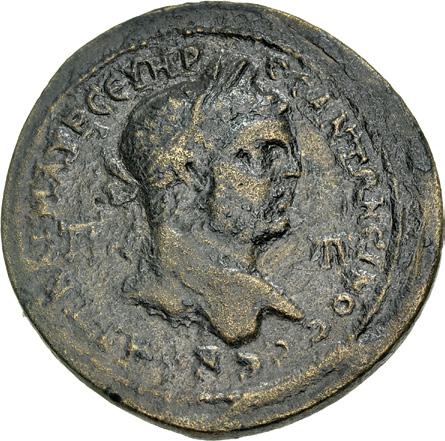
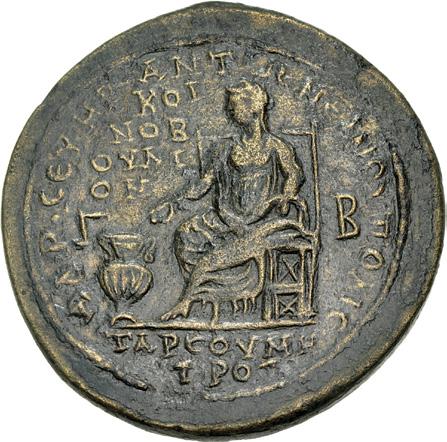
149. CILICIA, Tarsus. Caracalla. AD 198-217. Æ (36mm, 24.56 g, 6h). Laureate head right / Koinoboulion, turreted and veiled, seated left, dropping pebble into voting urn. RPC V.3 Online 84977 = Lindgren III 916 (this coin cited); SNG BN –; SNG Levante –. Glossy tan and brown patina, roughness. VF. Extremely rare with this legend variety, one of three recorded in RPC. ($200)
Ex R. D. Frederick Collection (Classical Numismatic Group Electronic Auction 284, 8 August 2012), lot 167; Garth R. Drewry Collection (Classical Numismatic Group Electronic Auction 110, 16 March 2005), lot 127; Henry Clay Lindgren Collection (Classical Numismatic Group 35, 20 September 1995), lot 1123.
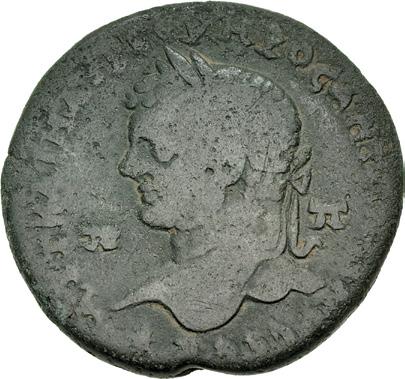
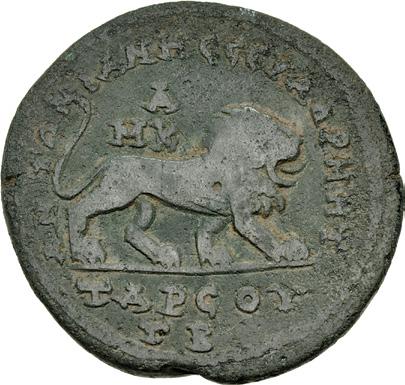
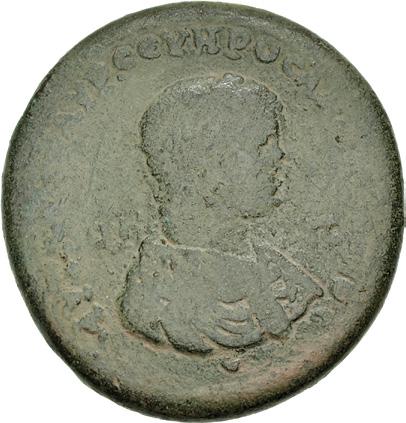
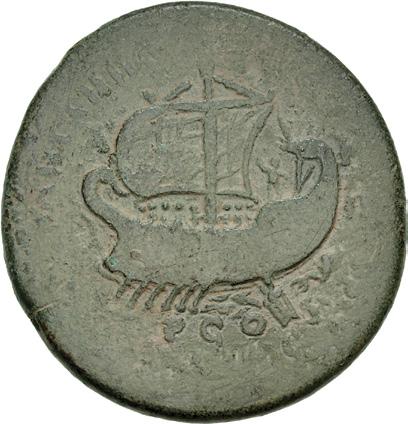
150. CILICIA, Tarsus. Caracalla. AD 198-217. Æ (33mm, 16.49 g, 12h). Laureate head left; below, star / Lion advancing right. RPC V.3 Online 84248; SNG BN –; SNG Levante 1052. Green patina with earthen highlights. Fine. ($75)
Purchased from Gerhard Rohde, 6 December 2012.
151. CILICIA, Tarsus. Caracalla. AD 198-217. Æ (33mm, 23.27 g, 6h). Bust right, wearing crown and garments of the demiourgos, seen from the front; below, pellet / Galley with full sail and oarsmen left, helmsman at stern. RPC V.3 Online 84707; SNG BN –; SNG Levante –. Earthen green patina, roughness. Good Fine. ($100)
Ex Classical Numismatic Group Electronic Auction 270 (14 December 2011), lot 236.
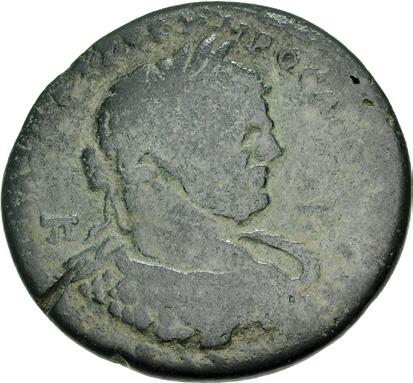
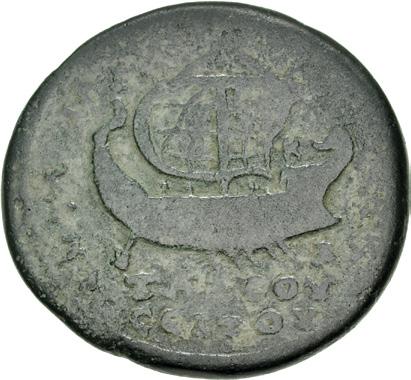
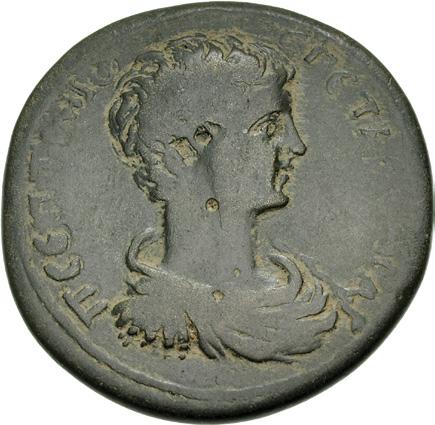
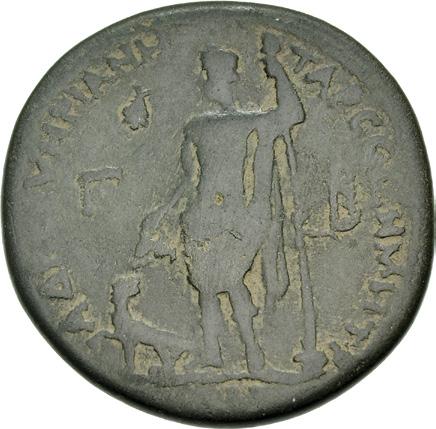
152. CILICIA, Tarsus. Caracalla. AD 198-217. Æ (33mm, 18.46 g, 6h). Laureate and cuirassed bust right, seen from behind / Galley with full sail and oarsmen left. RPC V.3 Online 84710; SNG BN 1506-8; SNG Levante –. Earthen green patina, slight porosity. Fine. ($100)
Purchased from Apollo Numismatics, 14 September 2014.
153. CILICIA, Tarsus. Geta. As Caesar, AD 198-209. Æ (35.5mm, 21.61 g, 12h). Struck under Septimius Severus. Bareheaded, draped, and cuirassed bust right, seen from the front / Dionysus standing facing, head left, holding kantharos and thyrsos; at feet left, panther; in upper left field, grape bunch on the vine. RPC V.3 Online 84761; SNG BN –; SNG Levante –. Green patina with earthen highlights, scratches. Good Fine. Very rare. ($150)
Purchased from Roma Aeternae Numismatics, 7 July 2017.
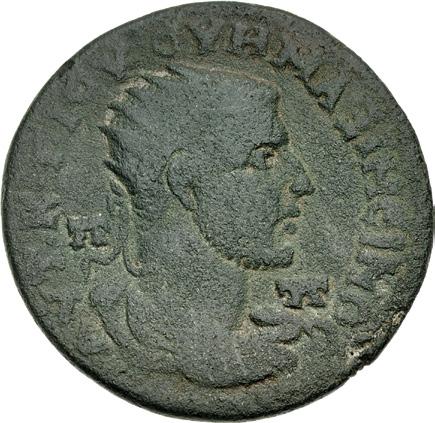
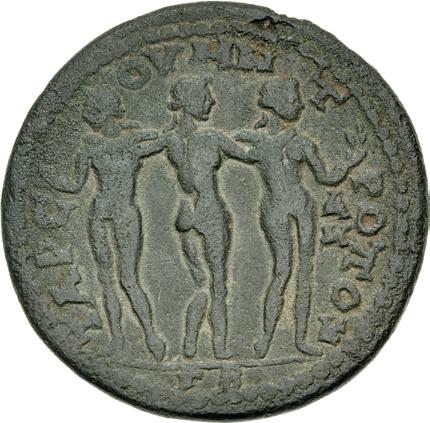
154. CILICIA, Tarsus. Maximinus I. AD 235-238. Æ (36mm, 25.00 g, 7h). Radiate, draped, and cuirassed bust right, seen from behind / The Three Graces (Charites) standing, arms around each other’s shoulders; the central figure seen from behind and facing right, those on ends facing front, heads left and right, respectively, and holding flowers. RPC VI Online 7113.12 (this coin); SNG BN –; SNG Levante 1096; Staal 36.1.1 (this coin illustrated on cover and pl. 6). Dark green patina with earthen highlights, slight roughness. VF. ($1000)
Purchased from Freeman & Sear, 26 April 2012. Ex Triton XV (3 January 2012), lot 1422.
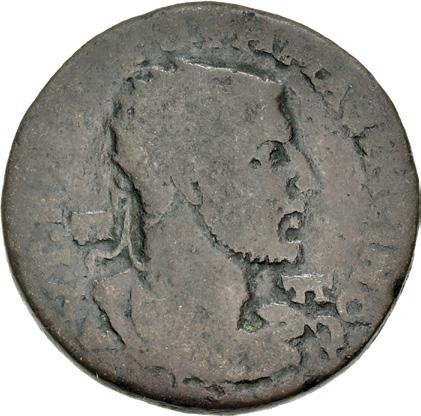
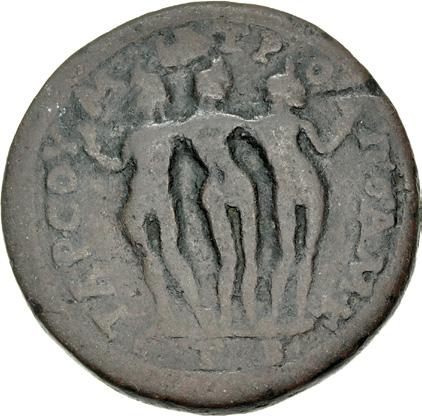
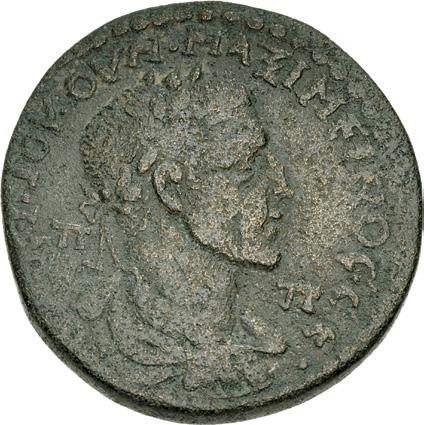
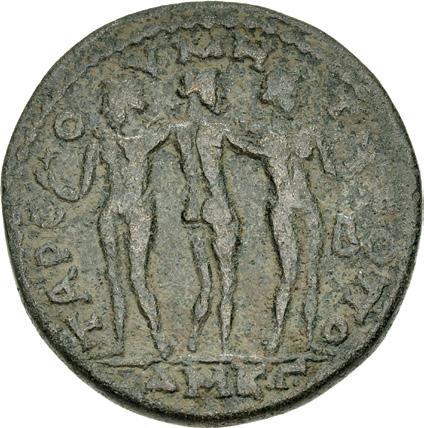
155. CILICIA, Tarsus. Maximinus I. AD 235-238. Æ (35mm, 23.39 g, 6h). Radiate, draped, and cuirassed bust right, seen from behind / The Three Graces (Charites) standing, arms around each other’s shoulders; the central figure seen from behind and facing right, those on ends facing front, heads left and right, respectively, and holding flowers. RPC VI Online 7113; SNG BN –; SNG Levante 1096. Red-brown patina, porosity, scratches, reverse scrape. Near Fine. ($100)
Purchased from Jonathan K. Kern, 14 August 2015.
156. CILICIA, Tarsus. Maximinus I. AD 235-238. Æ (35mm, 24.10 g, 6h). Laureate, draped, and cuirassed bust right, seen from behind / The Three Graces (Charites) standing, arms around each other’s shoulders; the central figure seen from behind and facing right, those on ends facing front, heads left and right, respectively, and holding flowers. RPC VI Online 7112; SNG BN 16005-6; SNG Levante –. Green-brown surfaces, light porosity. Near VF. ($150)
Ex Leu Numismatik Web Auction 4 (24 June 2018), lot 585.
Ex Leu Numismatik Web Auction 15 (27 February 2021), lot 1340. 155
RPC Online Feature Coin
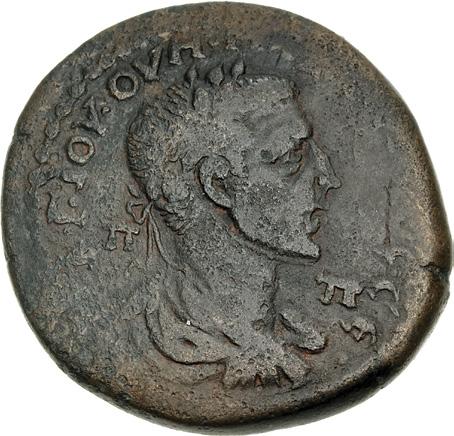
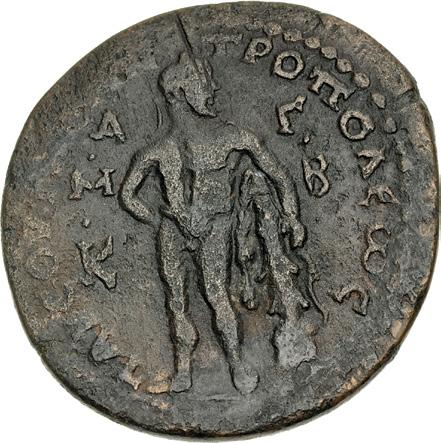
157. CILICIA, Tarsus. Maximinus I. AD 235-238. Æ (37mm, 28.67 g, 6h). Laurate, draped, and cuirassed bust right, seen from behind / Herakles standing facing, head right, holding club set on rock, draped in lion’s skin to right. RPC VI Online 7102.5 (this coin); SNG BN 1609; SNG Levante –. Brown patina, porosity, reverse scrape. Near VF. Very rare. ($300)
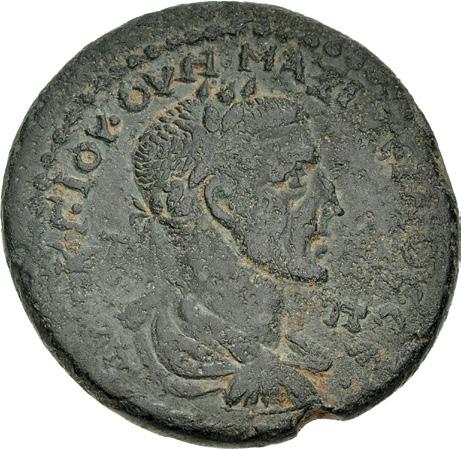
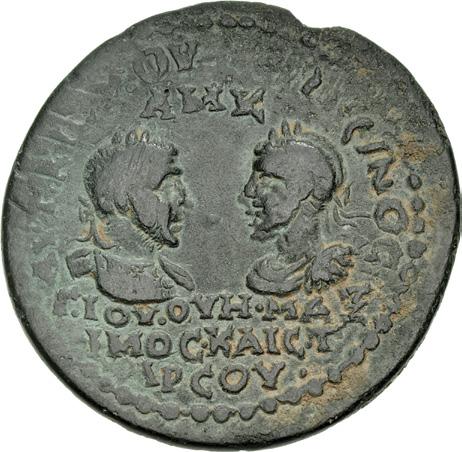
158. CILICIA, Tarsus. Maximinus I, with Maximus Caesar. AD 235/6-238. Æ (38mm, 28.81 g, 6h). Laureate, draped, and cuirassed bust right, seen from behind / Radiate, draped, and cuirassed bust of Maximinus I right, seen from the front visà-vis laureate, draped, and cuirassed bust of Maximus left, seen from the front. RPC VI Online 7115.4 (this coin); SNG BN –; SNG Levante 1105. Green patina with earthen deposits, small edge flaw. VF. ($300)
Ex Kelly J. Krizan, M.D. Collection (Classical Numismatic Group 93, 22 May 2013), lot 920; Classical Numismatic Group 53 (15 March 2000), lot 1151; New York Sale II (2 December 1999), lot 159; Classical Numismatic Auctions XX (25 March 1992), lot 447.
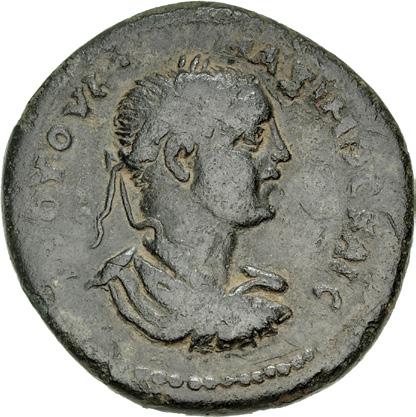
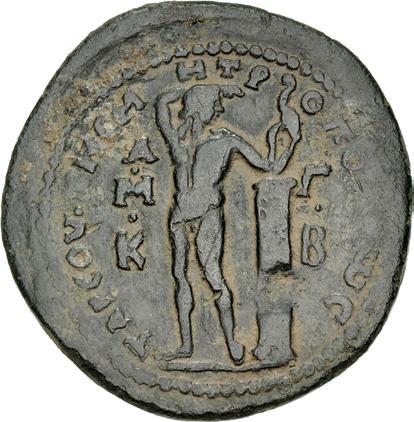
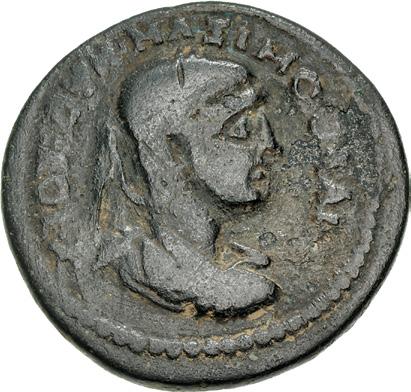
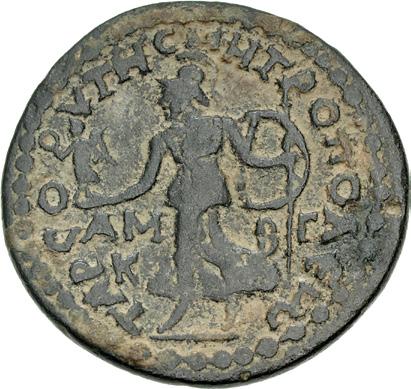
159. CILICIA, Tarsus. Maximus. Caesar, AD 235/6-238. Æ (34.5mm, 17.68 g, 1h). Struck under Maximinus I. Laureate, draped, and cuirassed bust right, seen from behind / Apollo, standing facing, head right, raising arm over his head, holding bow, and leaning on column to right. RPC VI Online 7140.7 (this coin); SNG BN 1617-8; SNG Levante 1106. Dark green patina with earthen highlights, light scratches. Near VF. ($150)
Ex Kelly J. Krizan, M.D. Collection (Classical Numismatic Group 93, 22 May 2013), lot 926; Berk BBS 108 (12 May 1999), lot 770.
160. CILICIA, Tarsus. Maximus. Caesar, AD 235/6-238. Æ (33mm, 16.81 g, 6h). Struck under Maximinus I. Laureate, draped, and cuirassed bust right, seen from behind / Athena advancing left, holding Nike, spear, and shield. RPC VI Online 7142.4 (this coin); SNG BN –; SNG Levante 1107-8. Dark brown patina, roughness, small scrape on obverse, reverse deposits, obverse tooled. Fine. Rare. ($100)
Ex Classical Numismatic Group Electronic Auction 263 (31 August 2011), lot 243.
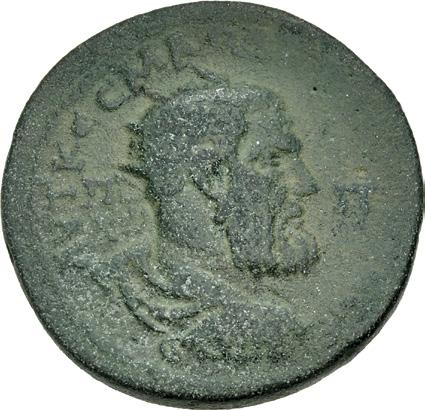
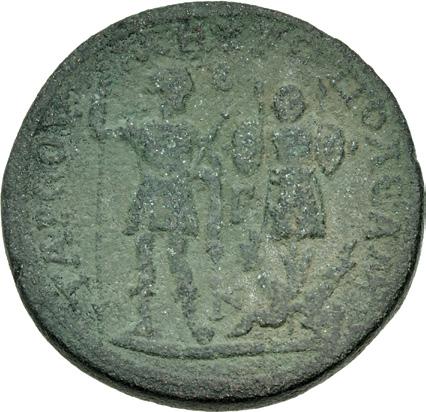
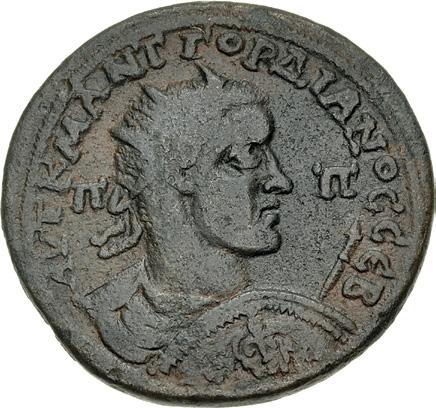
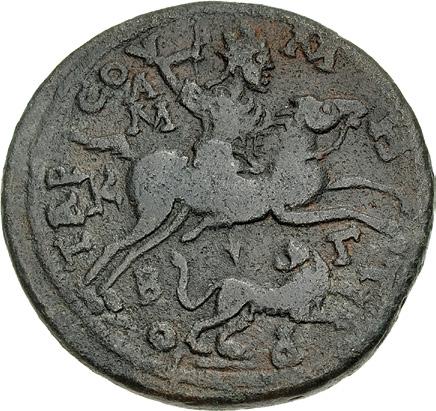
161. CILICIA, Tarsus. Pupienus. AD 238. Æ (35mm, 26.30 g, 6h). Radiate, draped, and cuirassed bust right, seen from behind / Pupienus, radiate and in military attire, standing facing, head right, holding spear and parazonium; to right, trophy of arms with two bound captives seated at its base. RPC VII.2 2989; SNG BN –; SNG Levante 1115. Earthen green patina, porosity. Near VF. Very rare. ($200)
Purchased from First Numismatic GmbH, 16 August 2011.
162. CILICIA, Tarsus. Gordian III. AD 238-244. Æ (36mm, 25.01 g, 12h). Radiate and draped bust right, seen from behind, holding spear and shield decorated with gorgoneion / Gordian, radiate and in military dress, on horseback galloping right, thrusting spear at lion below. RPC VII.2 3060; SNG BN 1722; SNG Levante 1132 var. (reverse legend). Brown patina, slight roughness. Near VF. ($100)
Ex Leu Numismatik Web Auction 15 (27 February 2021), lot 1346.
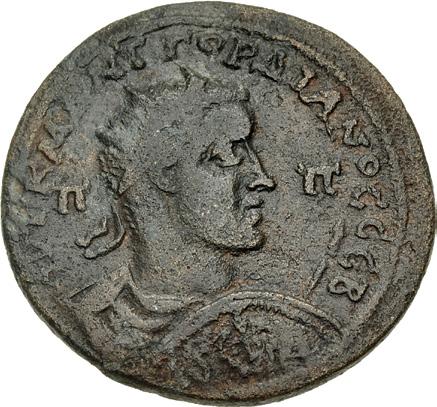
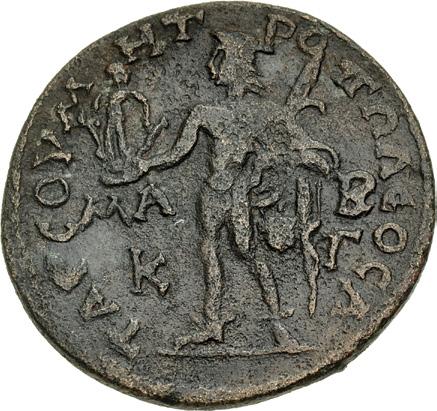
163. CILICIA, Tarsus. Gordian III. AD 238-244. Æ (36mm, 17.80 g, 12h). Radiate and draped bust right, seen from behind, holding spear and shield decorated with gorgoneion / Perseus standing facing, head left, wearing chlamys, holding statue of Apollo Lykeios holding wolves, harpa, and head of Medusa. RPC VII.2 3094; SNG BN 1710; SNG Levante –. Brown patina, some roughness. Near VF. Extremely rare, three recorded in RPC. ($150)
Ex Leu Numismatik Web Auction 15 (27 February 2021), lot 1343.
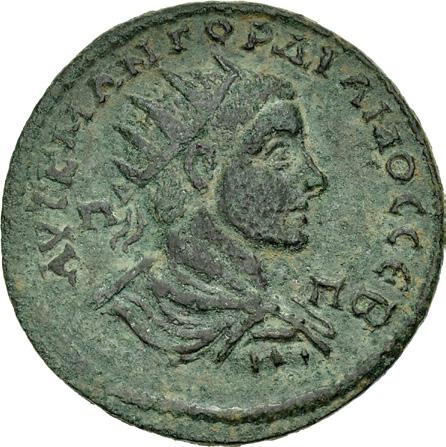
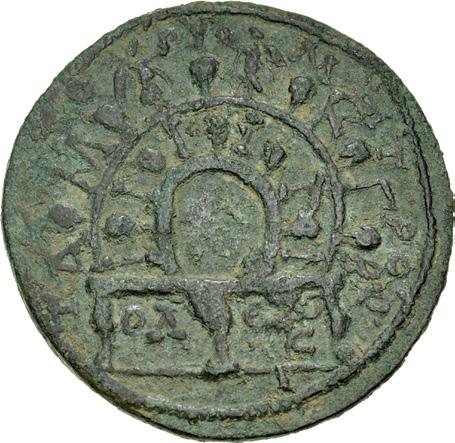
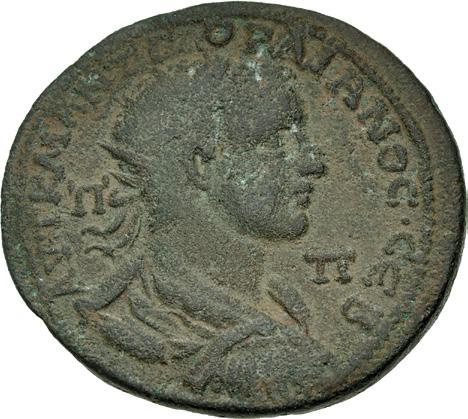
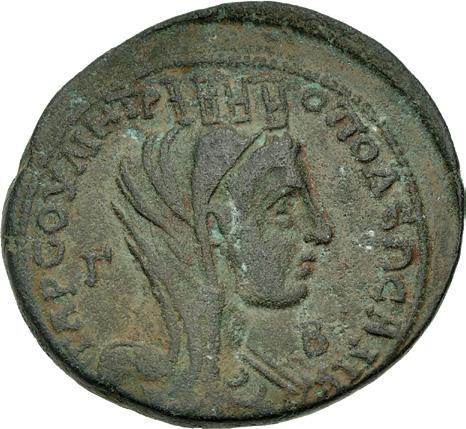
164. CILICIA, Tarsus. Gordian III. AD 238-244. Æ (37mm, 26.42 g, 7h). Radiate, draped, and cuirassed bust right, seen from behind / Double crown of the Cilicarch on table with three legs, outer crown with six imperial busts and two Nikai, inner crown with five imperial busts. RPC VII.2 3044; SNG BN 1650 var. (rev. legend, number of heads on rev.); SNG Levante 1135 var. (same). Earthen green patina. VF. ($200)
Ex VAuctions 354/Pars Coins 10 (16 November 2020), lot 197; Leu Numismatik Web Auction 12 (30 May 2020), lot 882 .
165. CILICIA, Tarsus. Gordian III. AD 238-244. Æ (38.5mm, 25.17 g, 6h). Radiate, draped, and cuirassed bust right, seen from behind / Turreted, draped, and veiled bust of Tyche right. RPC VII.2 3123; SNG BN 1700; SNG Levante 1145 var. (bust). Earthen brown and green patina, slight roughness. Near VF. Rare. ($150)
Purchased from Tom Cederlind, 23 September 2010.
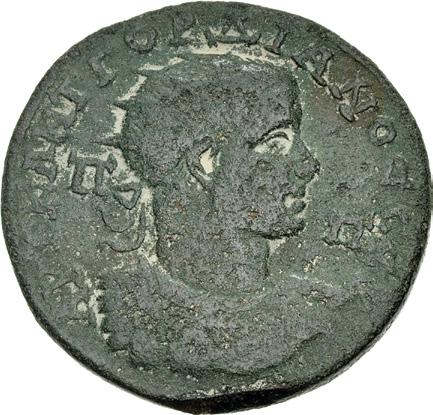
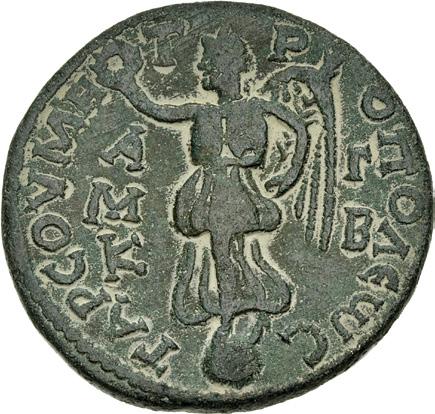
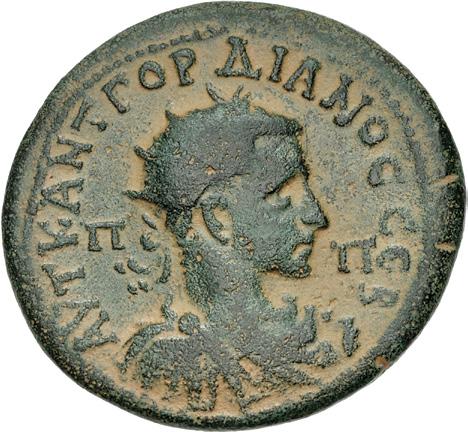
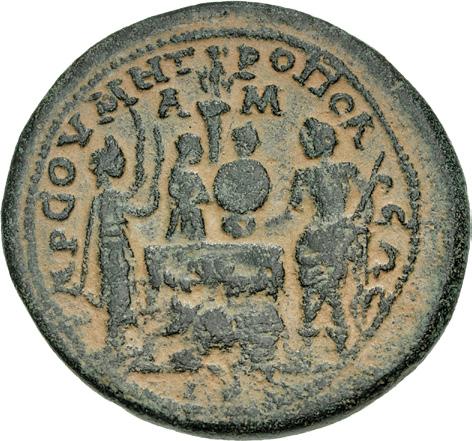
166. CILICIA, Tarsus. Gordian III. AD 238-244. Æ (36mm, 22.08 g, 6h). Radiate, draped, and cuirassed bust right, seen from the front / Nike standing left on globe, holding wreath and palm frond. RPC VII.2 3089.5 (this coin); SNG BN 1693-4; SNG Levante 1124. Green patina with earthen highlights, light obverse roughness. Good Fine. Rare. ($150)
Ex Kelly J. Krizan, M.D. Collection (Classical Numismatic Group 93, 22 May 2013), lot 930; Gorny & Mosch 90 (12 October 1998), lot 673.
167. CILICIA, Tarsus. Gordian III. AD 238-244. Æ (39mm, 26.30 g, 12h). Struck AD 241-244. Radiate, draped, and cuirassed bust right, seen from front / Perseus, holding patera, harpa and head of Medusa, and Demeter (or priestess?), holding lighted torch in each hand, flanking garlanded altar with bull lying left before; behind altar, upper portion of two figures (statues of Tranquillina and Gordian?), that on the right holding round shield; further in background, column surmounted by cult statue of Apollo Lykeios holding wolves. RPC VII.2 3142; SNG BN 1644; SNG Levante 1119. Earthen brown patina. Near VF. ($300)
Purchased from Zurqieh, 25 September 2017.
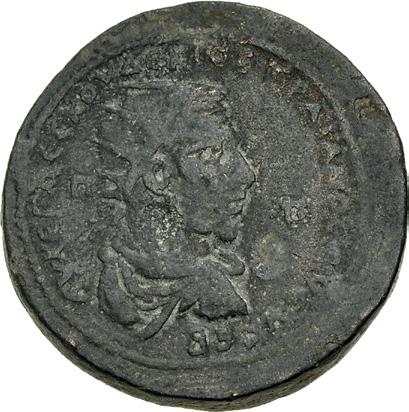
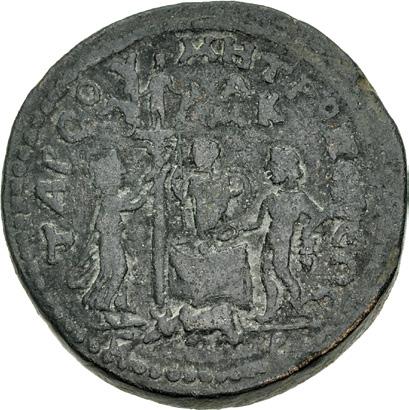
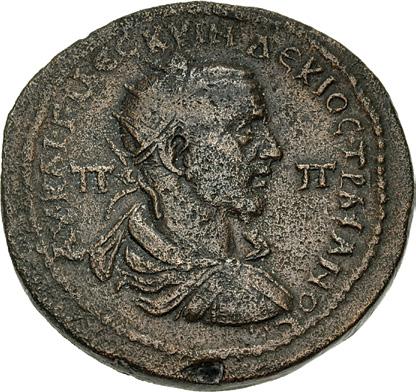
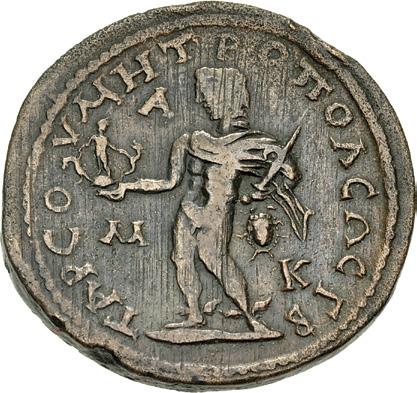
168. CILICIA, Tarsus. Gordian III. AD 238-244. Æ (34mm, 26.54 g, 6h). Radiate, draped, and cuirassed bust right, seen from behind / Perseus, holding patera, harpa, and head of Medusa, and Demeter (or priestess?), holding lighted torch in each hand, flanking garlanded altar with bull lying left before; behind altar, upper portion of male figure holding spear and shield; further in background, column surmounted by cult statue of Apollo Lykeios holding wolves. RPC VII.2 3149; SNG BN 1767; SNG Levante 1165. Brown patina with minor deposits, slight roughness. Near VF. ($150)
Ex Leu Numismatik AG Web Auction 8 (29 June 2019), lot 782.
169. CILICIA, Tarsus. Trajan Decius. AD 249-251. Æ (34mm, 26.63 g, 6h). Radiate, draped, and cuirassed bust right, seen from behind / Perseus standing facing, head left, wearing chlamys, holding statue of Apollo Lykeios holding wolves, harpa, and head of Medusa. RPC IX 1360; SNG BN 1557-8; SNG Levante –. Red-brown surfaces, obverse porosity, flan preparation marks, edge marks. Near VF. ($150)
Purchased from Tom Cederlind, 4 June 2015.
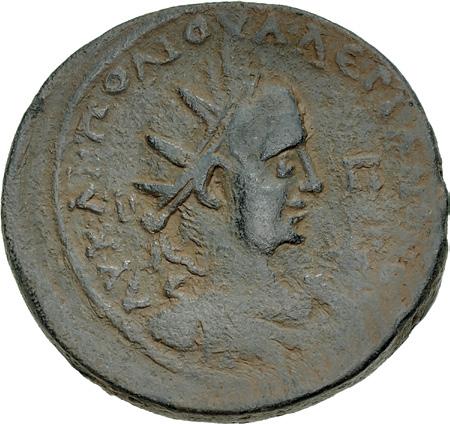
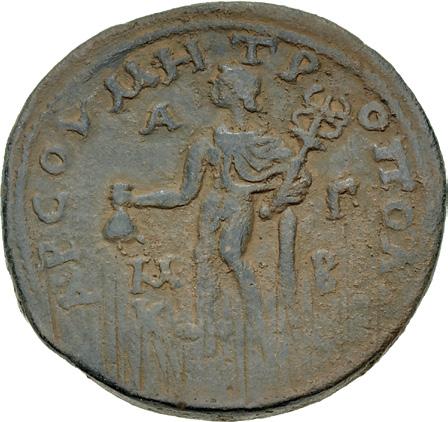
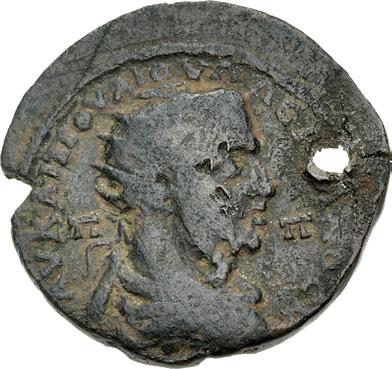
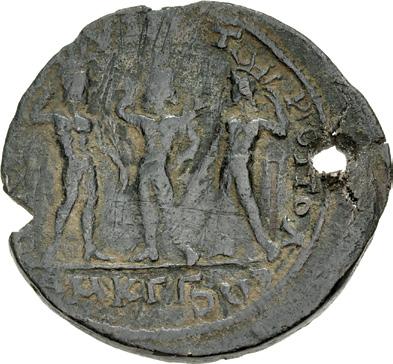
170. CILICIA, Tarsus. Valerian I. AD 253-260. Æ (37mm, 33.67 g, 12h). Struck under Valerian I and Gallienus, coemperors. Radiate, draped, and cuirassed bust right, seen from the front / Hermes standing facing, head left, wearing chlamys draped over shoulder and winged pedalia, holding purse and caduceus. RPC X Online 60560 (this coin cited); SNG BN 1798 var. (bust); SNG Levante –. Brown surfaces, porosity, flan preparation marks. Near VF. ($200)
Ex Roma E-Sale 17 (25 April 2015), lot 465 (conserved and repatinated since).
171. CILICIA, Tarsus. Valerian I. AD 253-260. Æ (30mm, 14.92 g, 6h). Games issue. Struck under Valerian I and Gallienus, co-emperors. Radiate, draped, and cuirassed bust right, seen from behind / Three athletes standing facing, each holding palm and crowning himself. RPC X Online 60605; SNG BN 1814-6; SNG Levante 1187. Earthen brown patina, scratches, obverse flan flaw, holed. Good Fine. ($100)
Purchased from Harlan J. Berk, 6 January 2012.
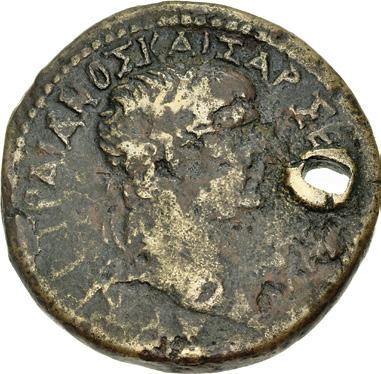
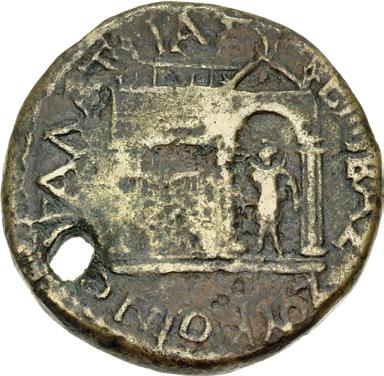
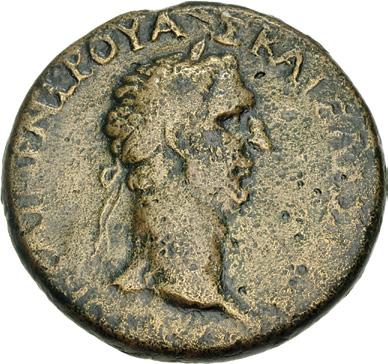
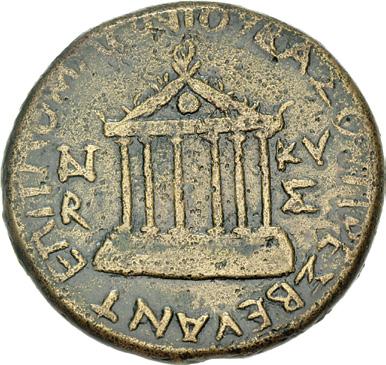
172. GALATIA, Koinon of Galatia. Trajan. AD 98-117. Æ (31mm, 21.57 g, 1h). Titus Pomponius Bassus, presbeutes. Laureate head right / Statue of Mên standing left within distyle temple seen in perspective; clipeus in pediment, acroteria on cornices and apex. Arslan, Coins –; RPC III 2892.2 (this coin); SNG BN 2426 corr. (described as hexastyle temple). Yellowbrown surfaces, roughness, holed. Fine. Very rare, one of four recorded in RPC. ($100)
Ex VAuctions 321/London Coin Galleries 3 (10 November 2016), lot 17.
173. GALATIA, Ancyra. Nerva. AD 96-98. Æ (31.5mm, 18.99 g, 7h). Titus Pomponius Bassus, presbeutes and antistrategos. Laureate head right / Hexastyle temple of Roma and Augustus on podium with steps; globe in pediment. Arslan, Coins 56 var. (rev. legend); RPC III 2829. Yellow-brown surfaces, porosity. Near VF. ($200)
Ex Classical Numismatic Group Electronic Auction 584 (2 April 2025), lot 816.
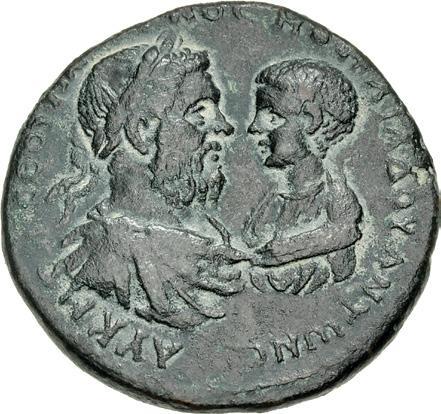
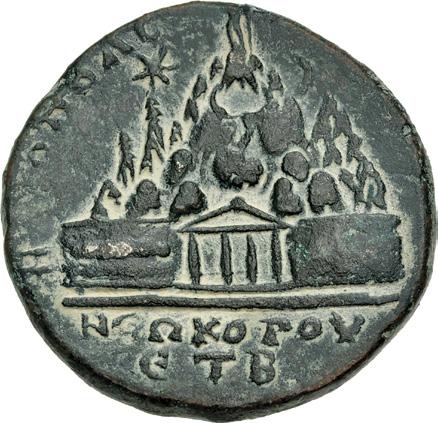
174. CAPPADOCIA, Caesarea-Eusebia. Macrinus, with Diadumenian as Caesar. AD 217-218. Æ Double Unit (36mm, 25.94 g, 12h). Dated RY 2 (AD 218). Laureate, draped, and cuirassed bust of Macrinus right, seen from front vis-à-vis bareheaded and draped bust of Diadeumenian left, seen from the front / Mount Argaeus surmounted by figure holding globe and scepter; star and crescent in upper field; at base of mountain, tetrastyle temple between two agonistic crowns; ЄT B (date) in exergue. Ganschow, Münzen 668e = RPC V.3 Online 66827 (this coin cited); Sydenham, Caesarea 507 var. (rev. legend). Dark green surfaces with earthen highlights. Good VF. Superior to the specimens plated in Ganschow. ($1500)
Ex Triton XVI (8 January 2013), lot 716.
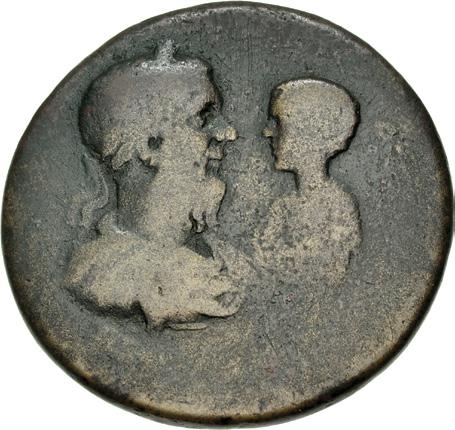
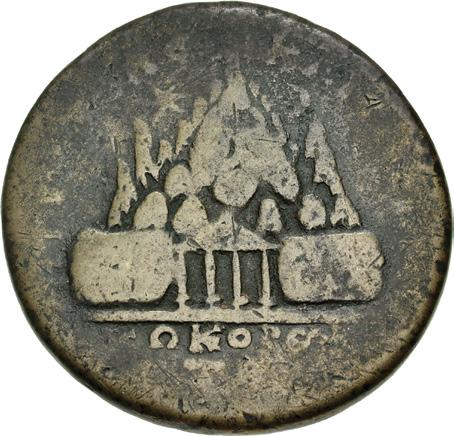
175. CAPPADOCIA, Caesarea-Eusebia. Macrinus, with Diadumenian as Caesar. AD 217-218. Æ Double Unit (37mm, 28.26 g, 12h). Dated RY 2 (AD 218). Laureate, draped, and cuirassed bust of Macrinus right, seen from behind visà-vis bareheaded and draped bust of Diadeumenian left, seen from the front / Mount Argaeus surmounted by figure holding globe and scepter; star and crescent in upper field; at base of mountain, tetrastyle temple between two agonistic crowns; ЄT B (date) in exergue. Ganschow, Münzen 668; RPC V.3 Online 66827; Sydenham, Caesarea 507 var. (rev. legend). Brown patina, porosity, scratches. Fine. ($100)
Ex Classical Numismatic Group Electronic Auction 432 (14 November 2018), lot 189.
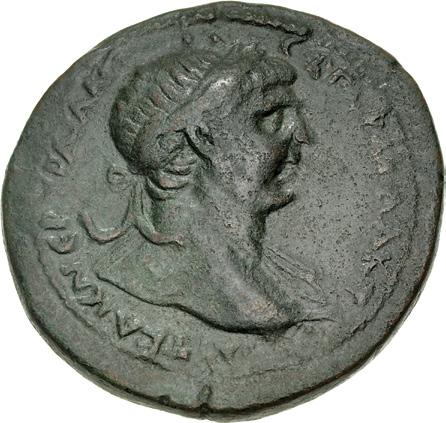
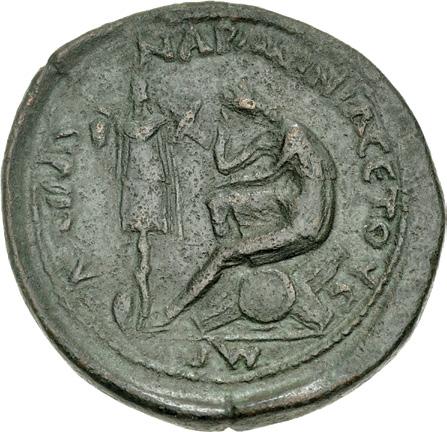
176. ARMENIA MINOR, Nicopolis ad Lycum. Trajan. AD 98-117. Æ (36.5mm, 27.76 g, 12h). Dated RY 17 and CY 43 (AD 113/4). Laureate bust right, drapery on left shoulder; ZI (date) in legend / Armenia seated left on shields, in attitude of mourning; trophy of arms to left; ЄTOY MΓ (date) in legend. Dalaison, Nicopolis Type 6, 30 (D19/R30); RPC III 2944; RG 8; SNG von Aulock 146. Green patina, minor marks. Near VF. ($300)
Ex Leu Web Shop R1 (7 March 2025), lot 91; Leu Numismatik Web Auction 30 (13 July 2024), lot 1490.
The kingdom of Armenia Minor was given to Aristobulus by Nero in AD 54. It was then annexed by Vespasian and incorporated into Cappadocia with its main city being Nicopolis ad Lycum (modern Yesilyayla in Turkey). Trajan led his military campaign against Armenia, and once again, it was annexed into the Empire in AD 114, which is commemorated on this sestertius-sized coin issued that same year.
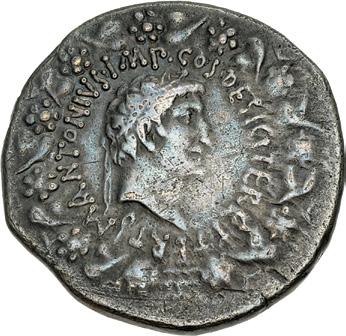
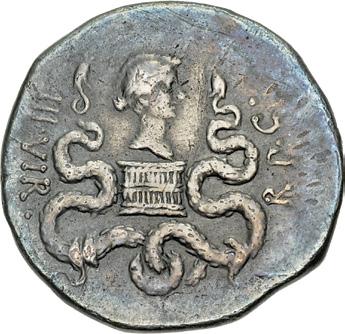
177. ASIA MINOR, Uncertain. Mark Antony and Octavia. Summer-autumn 39 BC. AR Cistophorus (28.5mm, 11.40 g, 12h). Ephesus mint(?). Head of Antony right, wearing ivy wreath; lituus below; all within wreath of ivy and flowers / Draped bust of Octavia right above cista mystica, flanked by interlaced serpents with heads erect. Hiltmann, Type 1; RPC I 2201 (Cistophoric mint); CRI 262; Sydenham 1197; RSC 2. Toned, marks and scratches under tone. VF. ($500)
Ex Classical Numismatic Group Electronic Auction 389 (18 January 2017), lot 558.
Shortly after the Battle of Philippi in 42 BC, cracks began to appear in the Second Triumvirate. Antony’s affair with Cleopatra, queen of Egypt, and his designs on Rome’s eastern holdings, prompted Octavian to formulate a binding agreement that would buy him time. At Brundisium a pact was signed, bringing about a reconciliation and some semblance of peace. As a condition of this reconciliation, Antony was married to Octavian’s widowed sister, Octavia. She stayed with him in Athens while he continued to prepare for a war against Parthia, and where, in 39 BC, he was associated with the “New Dionysus.” In 37 BC, she helped negotiate the Pact of Tarentum, which renewed the triumvirate until 33 BC. Antony, by this time, however, had renewed his affair with Cleopatra. He remained in the East, where he married the queen, and subsequently fathered several children. In 32 BC, as a renewal of civil war became imminent, Antony divorced Octavia. In the aftermath of Antony’s death, Octavia, known for her loyalty and nobility, brought Antony’s surviving children to Rome to live with her.
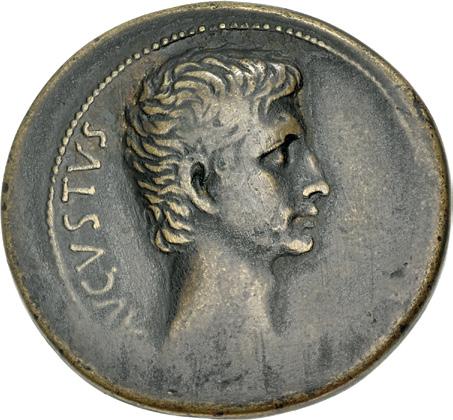
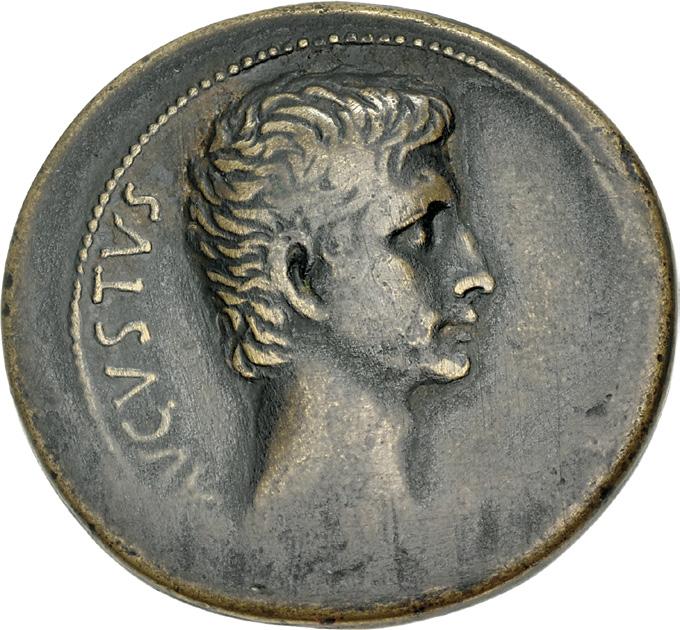
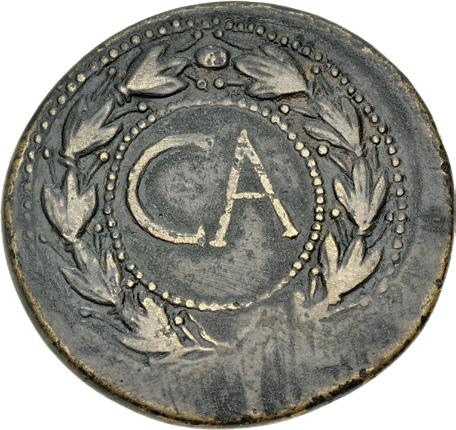
178. ASIA MINOR, Uncertain. Augustus. 27 BC-AD 14. Æ “Sestertius” (37mm, 22.85 g, 12h). Struck circa 25 BC. Bare head right / Large CA within pelleted border and laurel wreath. Howgego, Coinage, Class 2a; RPC I 2233; SNG von Aulock 6671. Brown patina, trace deposits, scratches, flan preparation marks. VF. ($500)
Purchased from John Jencek, 7 February 2013.
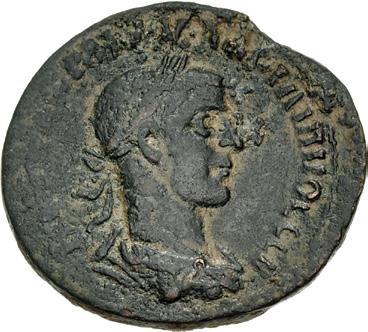
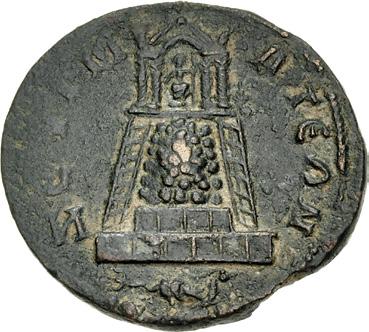
179. COMMAGENE , Zeugma. Philip II. AD 247-249. Æ Tetrassarion (30.5mm, 13.58 g, 6h). Laureate, draped, and cuirassed bust right, seen from behind / Tetrastyle temple with peribolos containing grove enclosed by colonnades; in exergue, capricorn right. McAlee p. 328, E; RPC VIII Online 8196 (this coin cited); Butcher 31c; SNG Copenhagen 35. Dark brown patina with earthen highlights, areas of roughness. VF. ($100)
Ex Richard Deyo Collection (Classical Numismatic Group Electronic Auction 266, 19 October 2011), lot 273.
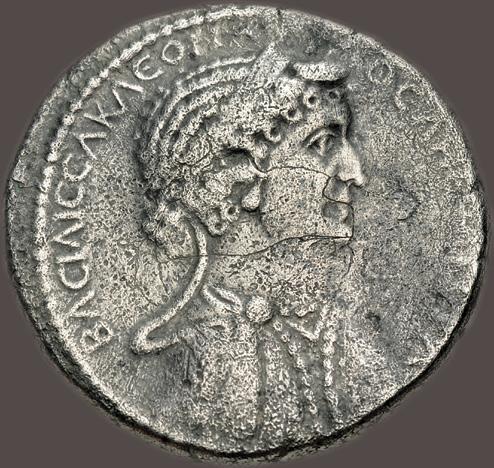
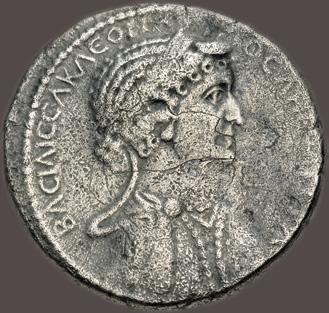
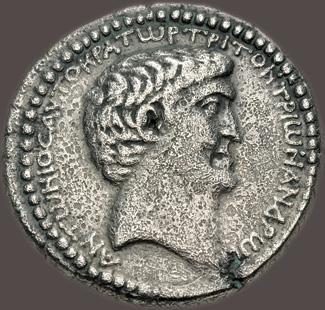
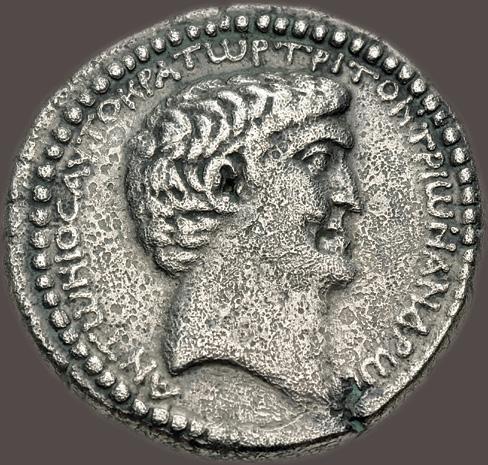
180. SELEUCIS and PIERIA, Antioch. Mark Antony & Cleopatra VII of Egypt. 36 BC. AR Tetradrachm (27mm, 13.80 g, 12h). Struck circa 36-34 BC. Diademed bust of Cleopatra right, wearing earring, necklace, and embroidered dress / Bare head of Marc Antony right. McAlee 174; RPC I 4094; Prieur 27; HGC 9, 1361. Toned, porosity, lamination and edge flaw, banker’s mark. VF. Clear portraits and well centered. ($5000)
Ex Classical Numismatic Group 129 (13 May 2025), lot 425.
These remarkable silver tetradrachms were probably struck at Antioch during the Parthian / Armenian campaign of 36-34 BC to honor perhaps the most famous “power couple” of all time. The talented die engraver has taken particular care to give Cleopatra a powerful, almost masculine profile to complement Antony’s pugnacious portrait. Ancient historians note that Cleopatra was not incomparably beautiful (although none suggest she was anything less than pleasing to gaze upon), but her remarkable mind, her musical voice, and the vast wealth of her kingdom made her irresistible to two of the most powerful men of the age: Julius Caesar and Mark Antony. The titles display Cleopatra’s dominance in the relationship, depicting her on the obverse and touting her as “Queen Cleopatra, new (or “young”) goddess,” while Antony remains only a mortal “victorious general and Triumvir.”
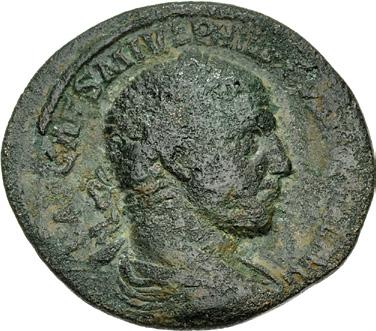
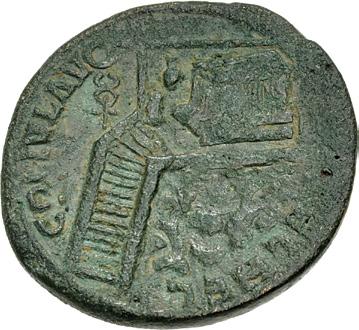
181. COELESYRIA, Heliopolis. Philip I. AD 244-249. Æ (31mm, 13.17 g, 7h). Laureate, draped, and cuirassed bust right, seen from behind / Aerial view of the temple of Hermes Heliopolitanus; to left, altar and urn, with approaching stairway left on rocky and wooded outcropping; caduceus in left field. Sawaya Série 46, 517-527 (D88/R205); RPC VIII Online 6472 (this coin cited). Earthen green patina, some roughness. Near VF. ($300)
Ex VAuctions 321/London Coin Galleries 3 (10 November 2016), lot 126.
Ex Shoshana Collection – Illustrated in Samuels
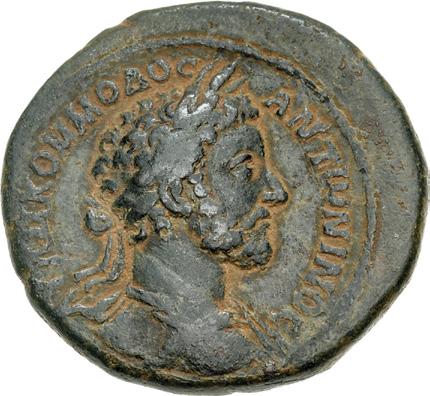
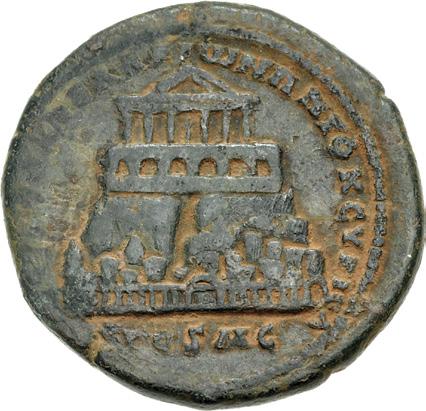
182. DECAPOLIS, Pella. Commodus. AD 177-192. Æ (35mm, 26.15 g, 11h). Dated CY 246 (AD 183/4). Laureate, draped, and cuirassed bust right, seen from behind / Acropolis of Pella with hexastyle temple and statue standing in center. The temple is placed on a podium supported by pillars; at the base of mountain, a colonnade with gateways. Spijkerman 9; RPC IV.3 Online 6588; Sofaer 7; Shoshana I 20691 = SRM 216 (this coin). Earthen brown surfaces, light smoothing. VF. Finer than any recorded in RPC. ($4000)
Ex Shoshana Collection (Part I, Heritage 3003, 8 March 2012), lot 20691; Sotheby’s (29 September 1988), lot 395.
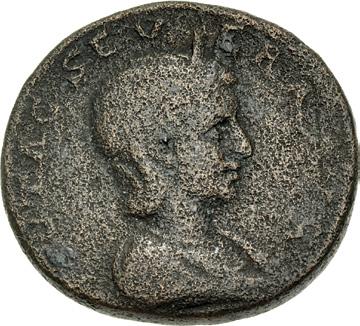
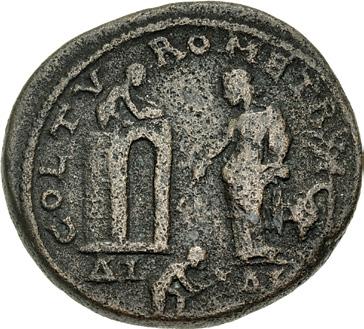
183. PHOENICIA, Tyre. Otacilia Severa. Augusta, AD 244-249. Æ (30mm, 22.89 g, 6h). Struck under Philip I. Draped bust right, wearing stephane / The Building of Carthage: Dido standing left, holding a ruler and scepter, surveying construction; mason above gate, worker with pick-axe digging before gate; murex shell and palm tree to right of Dido. RPC VIII Online 26496 (this coin listed); Rouvier 2454; BMC –. Red-brown surfaces, porosity. Good Fine. Extremely rare, one of three recorded in RPC. ($300)
Ex VAuctions 321/London Coin Galleries 3 (10 November 2016), lot 129.
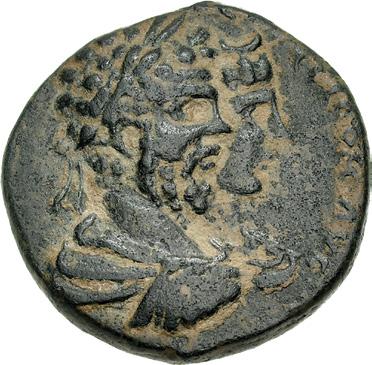
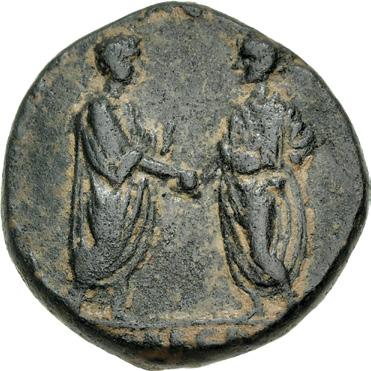
184. JUDAEA, Aelia Capitolina (Jerusalem). Septimius Severus, with Julia Domna, Caracalla, and Geta. 193-211 CE. Æ (30mm, 23.11 g, 12h). Jugate busts right of Septimius Severus, laureate, draped, and cuirassed, seen from behind, with Julia Domna, draped, crescent over head / Caracalla and Geta, both togate, standing vis-à-vis, clasping right hands. Cf. Meshorer Aelia 81; cf. Kadman Aelia 87; RPC V.3 Online 1716; Rosenberger 48; Sofaer 74-5. (refs. for type, legends unclear). Earthen brown surfaces, slight porosity. Near VF. ($750)
Ex Dr. Patrick Tan Collection; Classical Numismatic Group inventory 503622 (1 February 2019); Goldberg 104 (13 June 2018), lot 3134.
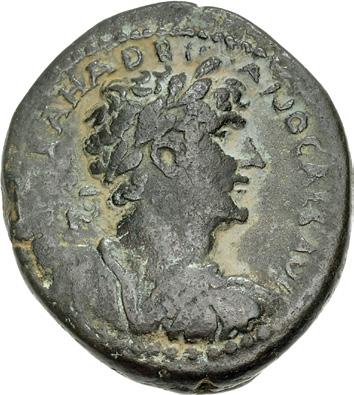
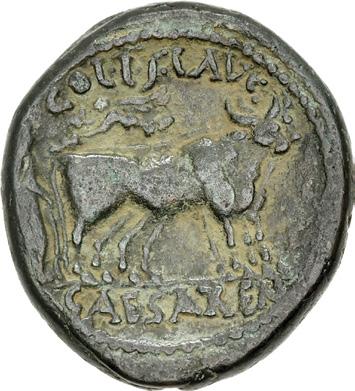
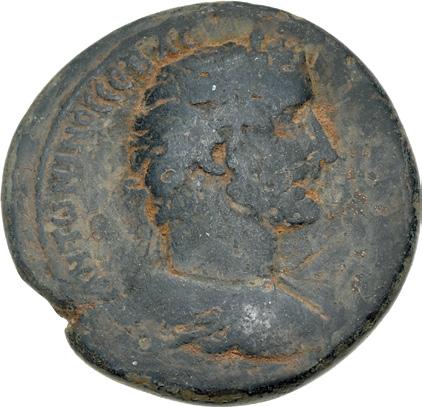
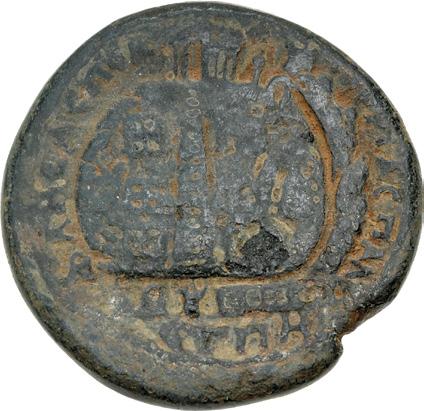
185. JUDAEA, Caesarea Maritima. Hadrian. 117-138 CE. Æ (29mm, 21.16 g, 12h). Laureate, draped, and cuirassed bust right, seen from behind / Hadrian as founder plowing right with two oxen; above, Nike flying left, crowning emperor with wreath. Kadman, Caesarea 27; RPC III 3958; Rosenberger 24; Sofaer 26-7. Green patina with earthen highlights, light porosity. VF. ($100)
Purchased from Amphora Coins, 6 January 2012.
186. JUDAEA, Neapolis. Antoninus Pius. 138-161 CE. Æ (34mm, 24.18 g, 12h). Dated CY 88 (160/1 CE). Laureate, draped, and cuirassed bust right, seen from behind / Mount Gerizim with two peaks; between, ravine with sloping roadway; left peak with temple in perspective; to right, steep stairway with shrines attached; right peak with shrine on top and trees at base; colonnade before with open gateway; ЄT ΠH (date) in exergue. RPC IV.3 Online 10934; cf. Kropp, Roman, Fig. 11 (rev.); Rosenberger 9; Sofaer 20. Earthen brown surfaces, smoothing, details enhanced. Near VF. ($200)
Ex Shoshana Collection (Part I, Heritage 3018, 5 September 2012), lot 20420.
The modern day city of Nablus in the northern West Bank, Neapolis was located in a strategic position between Mts. Ebal and Gerizim, the latter of which figured prominently on its coinage. This mountain, sacred to the Samaritans, was believed to have been the location chosen by Yahweh for a holy temple rather than the Temple Mount in Jerusalem, some 40 miles south. The Samaritan shrine on Gerizim can be clearly seen on this bronze of Antoninus Pius, together with the staircases leading up to it. However, the original temple was destroyed by the Hasmonean king John Hyrcanus in 112-111 BCE, so the shrine seen here seems to be a retrospective view, like that of the Jerusalem temple façade seen on coins of the Bar Kochba Revolt.
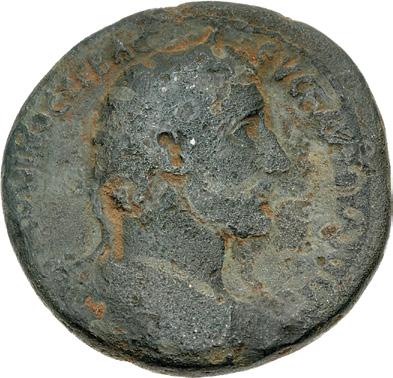
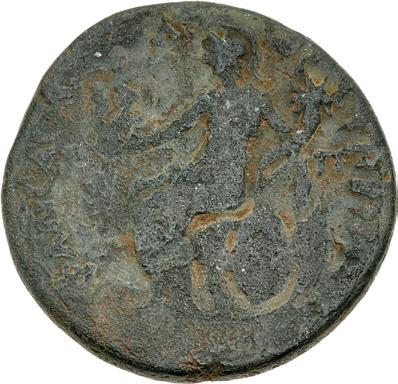
187. JUDAEA, Neapolis. Antoninus Pius. 138-161 CE. Æ (32mm, 20.78 g, 12h). Dated year CY 88 (159/60 CE). Laureate, draped, and cuirassed bust right, seen from behind / Roma seated left on arms; holding Nike, who crowns her with a wreath, and cornucopia; ΠH (date) to right. Meshorer, City-Coins 129; RPC IV.3 Online –; Rosenberger –; Sofaer 28. Earthen brown surfaces, smoothing and tooling. Good Fine. Extremely rare. ($300)
Ex Shoshana Collection (Part I, Heritage 3018, 5 September 2012), lot 20648.
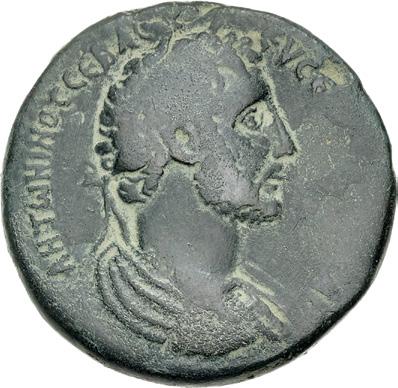
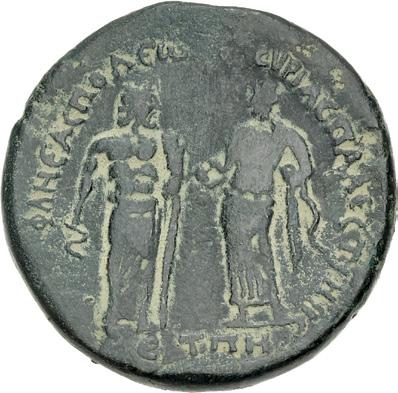
188. JUDAEA, Neapolis. Antoninus Pius. 138-161 CE. Æ (32.5mm, 21.15 g, 11h). Dated RY 88 (159/60 CE). Laureate, draped, and cuirassed bust right, seen from behind / Asklepios standing facing, head right, holding serpent-entwined staff to left, vis-à-vis Hygieia standing facing, head left, feeding serpent from patera held in her arms; ЄT ΠΗ (date) in exergue. Meshorer 128; RPC IV.3 Online 6325; Rosenberger –; Sofaer 27. Dark green to black patina with earthen deposits, some light smoothing. Near VF. Extremely rare, only this example in CoinArchives, and the authors of RPC cite only one specimen – the British Museum example. This coin superior to the BM specimen. ($1000)
Purchased from Amphora Coins, 6 January 2012. Ex Dr. Stephen Gerson Collection (Gemini VI, 10 January 2010), lot 719.
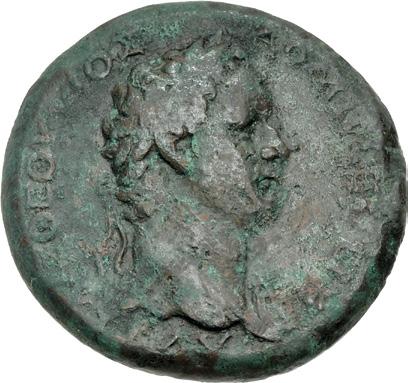
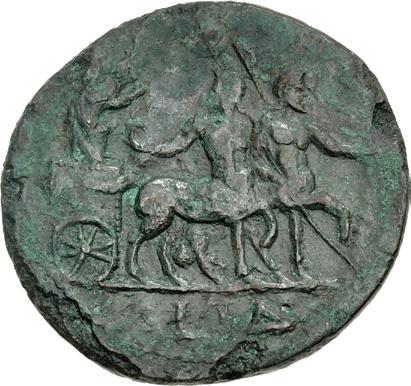
189. EGYPT, Alexandria. Domitian. AD 81-96. Æ Drachm (33mm, 20.89 g, 12h). Dated RY 14 (AD 94/95). Laureate head right / Domitian, raising right hand and holding scepter and reins, driving biga of centaurs right; each of the centaurs holds a Nike and scepter; L IΔ (date) in exergue. Köln 406; Dattari (Savio) 6726 = RPC II 2704.8 (this coin); K&G 24.223; Emmett 253.14 (R2). Brown and green surfaces, some roughness, edge chips, smoothing with details enhanced. Near VF. ($200)
Ex Naville Numismatics 29 (26 February 2017), lot 369; Giovanni Dattari (†1923) Collection.
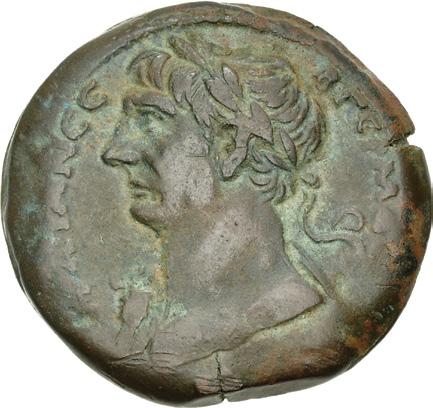
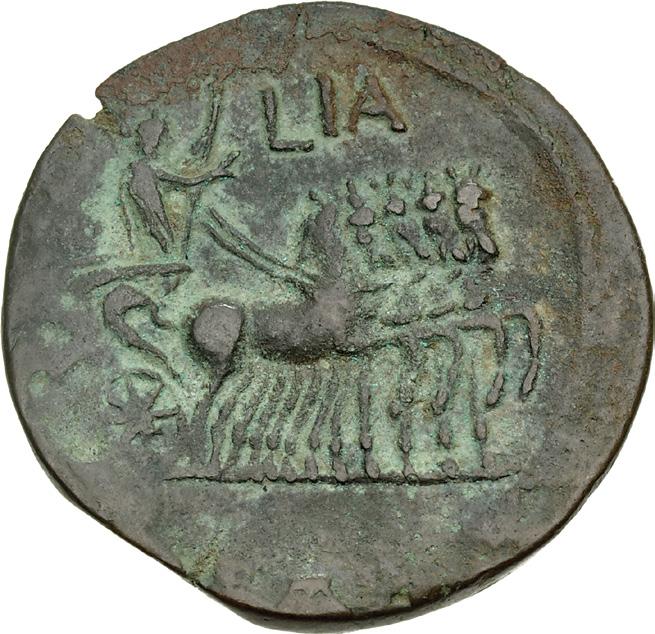
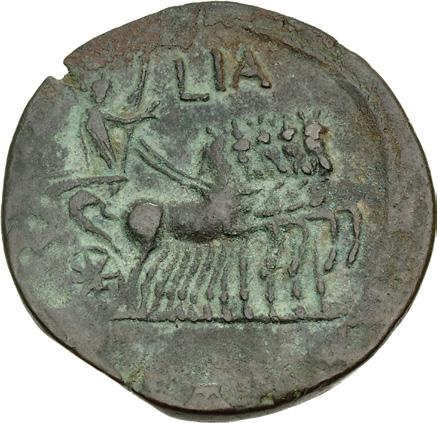
190. EGYPT, Alexandria. Trajan. AD 98-117. Æ Drachm (35mm, 24.17 g, 12h). Dated RY 11 (AD 107/8). Laureate bust left, aegis on right shoulder / Trajan, laureate and togate, holding branch and eagle-tipped scepter, driving slow quadriga right; L IA (date) above. Köln –; Dattari (Savio) 741; K&G 27.107 corr. (bust); RPC III 4221.3; Emmett 459.11. Brown and green patina with earthen highlights, flan void on reverse. VF. Extremely rare, three recorded in RPC, none of them illustrated. ($1000)
Ex Classical Numismatic Group inventory 912394 (9 December 2011).
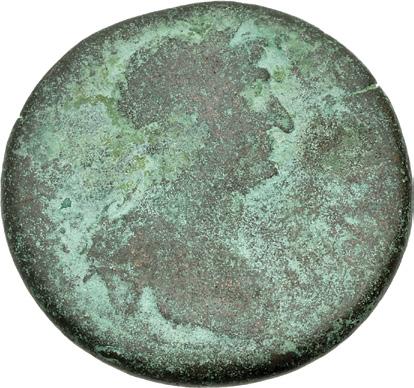
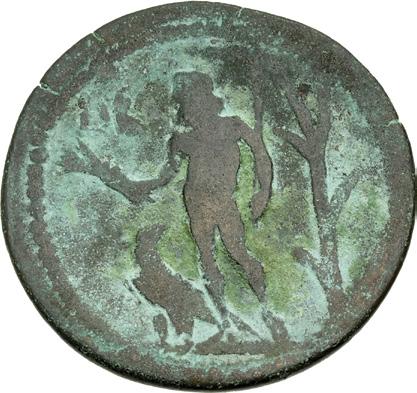
191. EGYPT, Alexandria. Trajan. AD 98-117. Æ Drachm (34mm, 15.24 g, 12h). Dated RY 12 (AD 108/9). Laureate heroic bust right, aegis on left shoulder / Zeus standing facing, head left, holding thunderbolt and scepter; at feet left, eagle standing left, head right, with wings gathered; to right, tree; L IB (date) in upper left field. Köln 518 var. (bust type); Dattari (Savio) –; K&G –; RPC III 4341.2.2 (this coin); Emmett 610 (R5). Earthen green patina. Near Fine. Extremely rare, one of two recorded in RPC. ($100)
Ex Greenpoint Collection (Classical Numismatic Group Electronic Auction 287, 26 September 2012), lot 325; Berk BBS 87 (13 September 1995), lot 649.
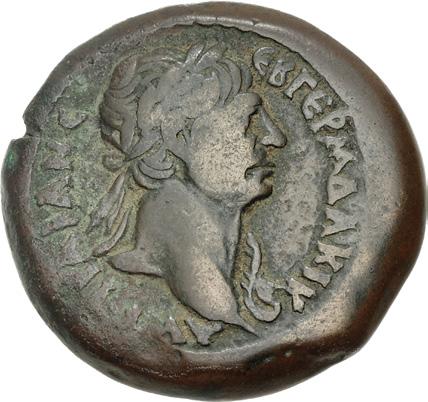
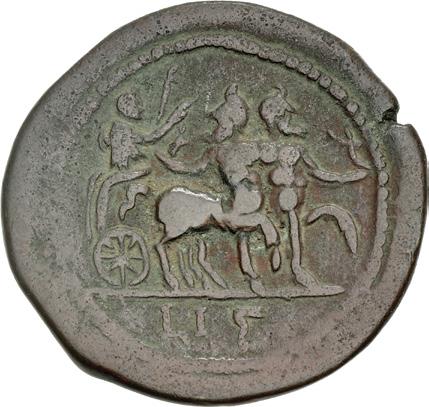
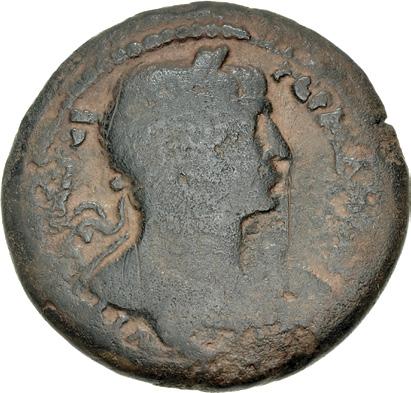
192 193
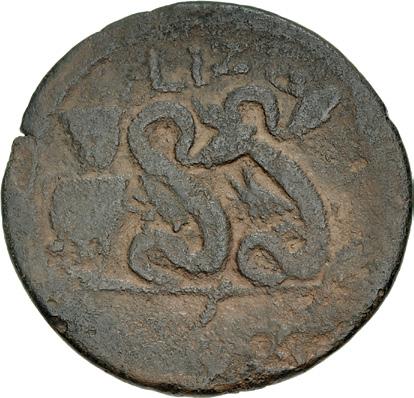
192. EGYPT, Alexandria. Trajan. AD 98-117. Æ Drachm (35mm, 24.35 g, 12h). Dated RY 16 (AD 112/3). Laureate bust right, aegis on left shoulder / Trajan, laureate and togate, holding eagle-tipped scepter, driving biga of centaurs right, each centaur holds a Nike; L Iς (date) above. Köln 620 var. (date placement); Dattari (Savio) –; K&G 27.484; RPC III 4668; Emmett 464.16 (R5). Brown patina with earthen highlights, slight roughness. Near VF. ($300)
Purchased from Apollo Numismatics, 14 September 2014.
193. EGYPT, Alexandria. Trajan. AD 98-117. Æ Drachm (34mm, 16.01 g, 12h). Dated RY 17 (AD 113/4). Bust right wearing wreath of grain ears, drapery on left shoulder / Biga of winged serpents, each wearing pschent, carrying kalathos with grain ears; L IZ (date) above. Köln –; Dattari (Savio) –; K&G 27.563-4 var. (bust); RPC III 4803.1; Emmett 538.17. Earthen red surfaces, porosity, scratches and scrapes. Good Fine. ($100)
Purchased from Amphora Coins, 6 January 2012.
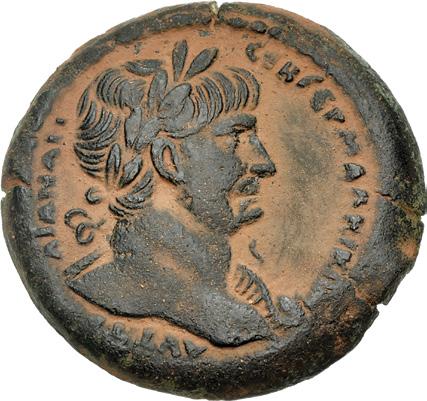
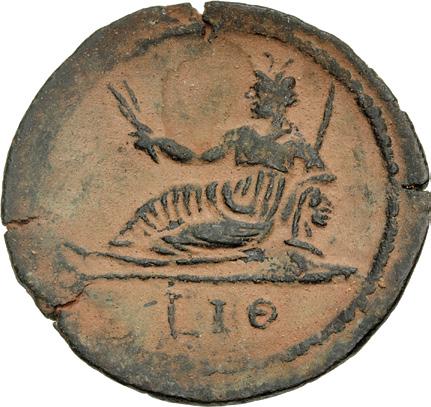
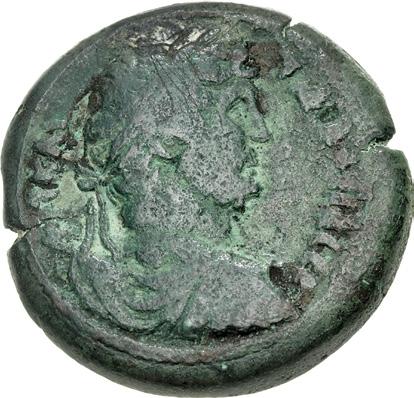
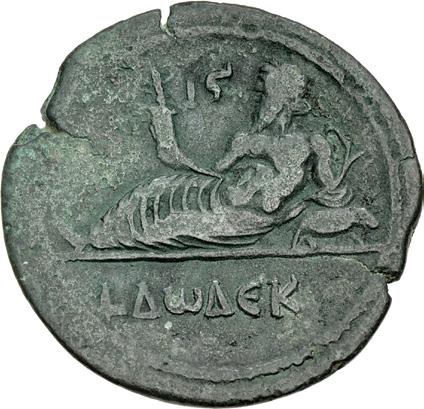
194. EGYPT, Alexandria. Trajan. AD 98-117. Æ Drachm (35mm, 19.51 g, 12h). Dated RY 19 (AD 115/6). Laureate bust right, aegis on left shoulder / Euthenia reclining left on andro-sphinx, wearing grain ear wreath, holding grain ears and scepter; L IΘ (date) in exergue. Köln 690; Dattari (Savio) 7026; K&G 27.634; RPC III 4902.6; Emmett 486.19. Earthen redbrown surfaces. VF. ($300)
Ex Heritage 3040 (9 April 2015), lot 29169.
195. EGYPT, Alexandria. Hadrian. AD 117-138. Æ Drachm (34mm, 22.19 g, 11h). Dated RY 12 (AD 127/8). Laureate, draped, and cuirassed bust right, seen from behind / Nilus reclining left on hippopotamus, holding cornucopia and reed; Iς above, L ΔωΔЄK (date) in exergue. Köln 992-3; Dattari (Savio) 1805; K&G 32.462; RPC III 5717; Emmett 1015.12. Green patina, slight roughness. Good Fine. ($100)
Ex Berk BBS 217 (30 November 2021), lot 470.
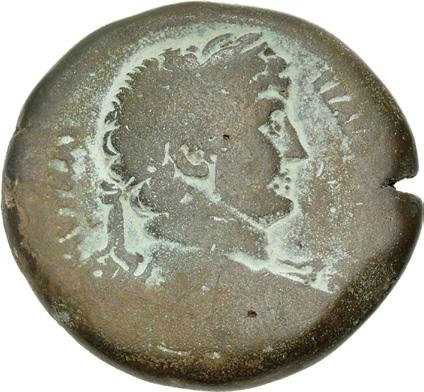
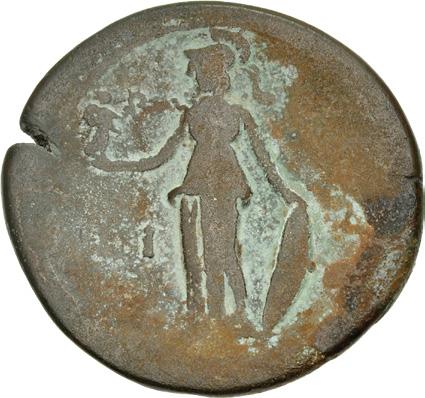
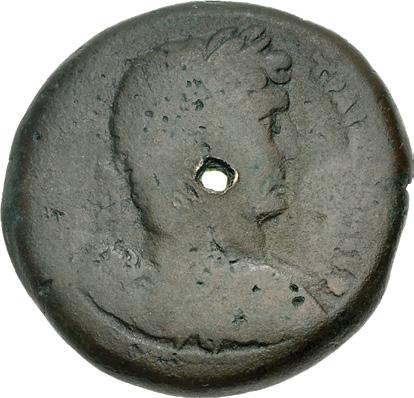
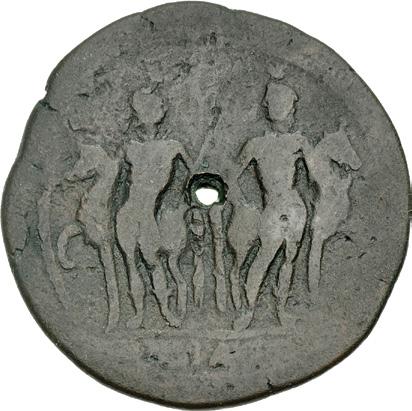
196. EGYPT, Alexandria. Hadrian. AD 117-138. Æ Drachm (34.5mm, 24.10 g, 12h). Dated RY 14 (129/30 AD). Laureate, draped, and cuirassed bust right, seen from behind / Athena standing facing, head left, holding crowning Nike, left hand on grounded shield; L I Δ (date) in left field. Köln 1009-10; Dattari (Savio) 7562; K&G 32.481; RPC III 5739; Emmett 923.14. Brown patina with earthen green highlights. Fine. ($75)
Purchased from Imperial Coins & Artifacts, 4 April 2012.
Ex Dattari Collection
197. EGYPT, Alexandria. Hadrian. AD 117-138. Æ Drachm (34mm, 21.97 g, 11h). Dated RY 14 (129/30 AD). Laureate, draped, and cuirassed bust right, seen from behind / The Dioscuri standing facing, holding spears, in front of their horses; stars above, crescent between them; L IΔ (date) in exergue. Köln 1012; Dattari (Savio) 7615; K&G 32.482; RPC III 5741.9 (this coin); Emmett 949.14 (R5). Brown patina, light roughness, scratches, pierced. Fine. ($100)
Ex Naville Numismatics 29 (26 February 2017), lot 386; Giovanni Dattari (†1923) Collection.
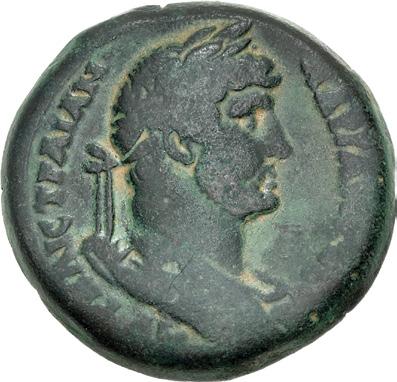
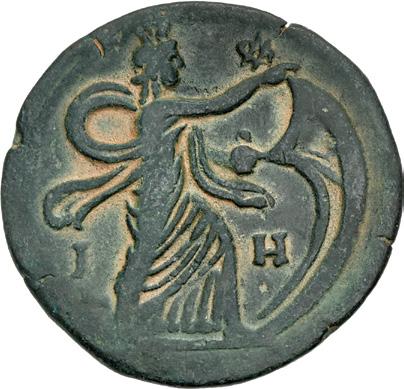
198. EGYPT, Alexandria. Hadrian. AD 117-138. Æ Drachm (32.5mm, 22.76 g, 12h). Dated RY 18 (AD 133/4). Laureate, draped, and cuirassed bust right; seen from behind / Isis Pharia, holding billowing sail and sistrum, advancing right; L I H (date) across field. Köln 1118-9; Dattari 1759; K&G 32.586; RPC III 5893; Emmett 1000.18. Brown and green surfaces with earthen highlights. Near VF. ($100)
Purchased from John Jencek, 13 December 2013.
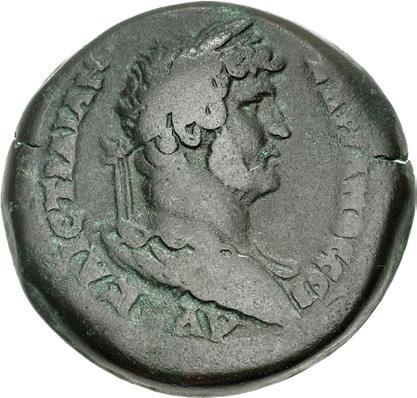
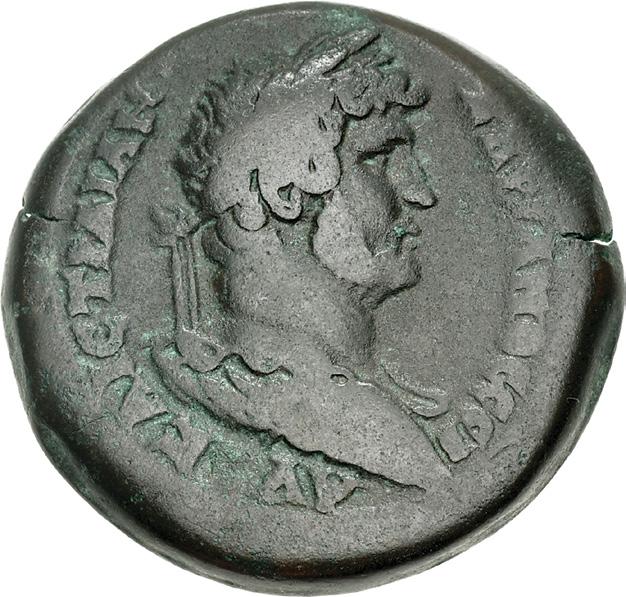
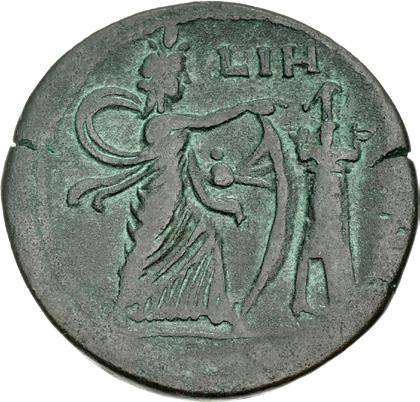
199. EGYPT, Alexandria. Hadrian. AD 117-138. Æ Drachm (34mm, 24.77 g, 12h). Dated RY 18 (AD 133/4). Laureate, draped, and cuirassed bust right, seen from behind / Isis Pharia, holding billowing sail, advancing right, before the Pharos of Alexandria, which is surmounted by a statue and two Tritons; L IH (date) above. Köln 1121-2; Dattari (Savio) 1768; K&G 32.588; RPC III 5895.97 (this coin); Emmett 1003.18. Brown patina with green earthen highlights, slight roughness. Near VF. ($300)
Ex Robert O. Ebert Collection (Stacks Bowers & Ponterio 174, 11 January 2013), lot 5354 (part of).
RPC Online Feature Coin and Staffieri Plate Coin – Ex Dattari Collection
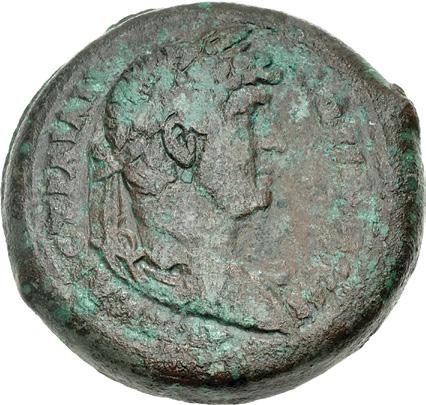
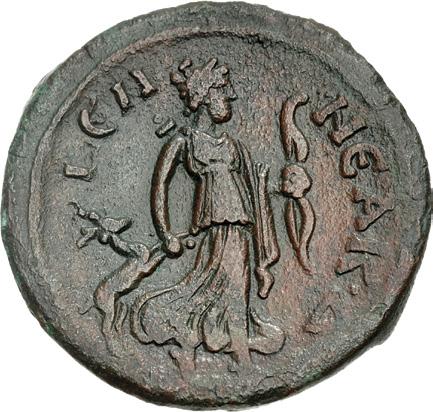
200. EGYPT, Alexandria. Hadrian. AD 117-138. Æ Drachm (35mm, 27.15 g, 12h). Dated RY 19 (AD 134/5). Laureate, draped, and cuirassed bust right, seen from behind / Artemis advancing right, wearing chiton and peplos, holding a bow and grasping the forelegs of a stag; L ЄN NЄAKΔ (date) around. Köln 1163; Dattari (Savio) 1615 = RPC III 5955.18 = Figari & Mosconi 290 (this coin); K&G 32.634; Emmett 916.19 (R5); Staffieri, Alexandria In Nummis 75 (this coin). Green patina, slight roughness. VF. ($2000)
Ex Giovanni Maria Staffieri Collection (Triton XXI, 9 January 2018), lot 82, purchased from Renzo Canavesi, Sagno, 1996; Renzo Canavesi Collection (Sagno); Dr. Piero Beretta Collection (Milan); Giovanni Dattari (†1923) Collection.
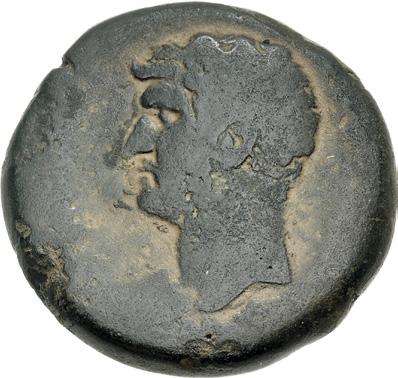
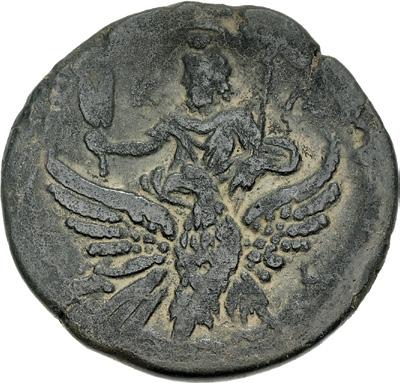
201. EGYPT, Alexandria. Hadrian. AD 117-138. Æ Drachm (32mm, 22.25 g, 12h). Dated RY 21 (AD 136/7). Bare head left / Serapis, holding grain ears and scepter, reclining left on eagle standing facing, head left, with wings displayed; L K A (date) across field. Köln –; Dattari (Savio) 1840; K&G 32.748; RPC III 6199A; Emmett 1034.21. Earthen brown patina, light porosity, edge flaws. Good Fine. Very rare. ($100)
Purchased from Amphora Coins, 6 January 2012.
The god Sarapis was a syncretistic Hellenistic-Egyptian god whose worship combined Greek and Egyptian religious beliefs. The name itself is formed by a combination of the Egyptian god of the Underworld, Osiris (Ausar), with Apis (Hapi), a manifestation of the regenerative god Ptah. As the chief god of the new Ptolemaic dynasty, Serapis soon became the subject of the chief royal cult. The belief in an afterlife made it one of the more popular mystery cults, and portraits of the god are known throughout the empire. In Alexandria a large temple complex, the Serapeum, was constructed, and continued to operate until it was destroyed by an angry Christian mob in the late 4th century AD.
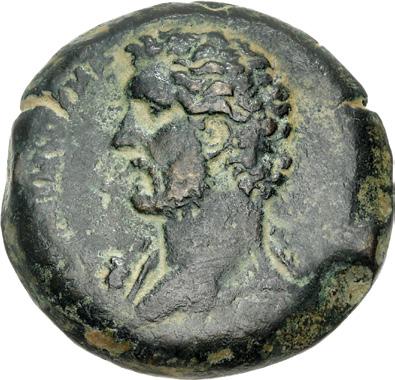
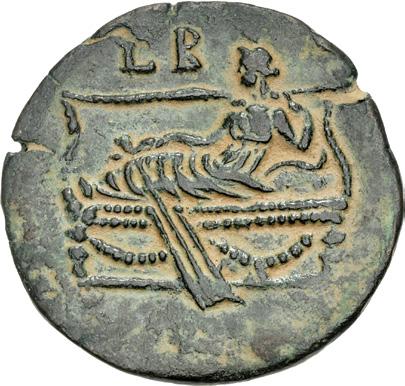
202. EGYPT, Alexandria. Antoninus Pius. AD 138-161. Æ Drachm (33mm, 22.41 g, 12h). Dated RY 2 (AD 138/9). Bareheaded bust left, aegis on right shoulder / Tyche, wearing kalathos and reclining left on garlanded lectisternium, holding rudder, resting elbow on pile of pillows and propping head on hand; L B (date) above. Köln 1312 var. (bust type); Dattari (Savio) 2889; K&G 35.33 var. (same); RPC IV.4 Online 104.8 (this coin); Emmett 1687.2. Green and brown surfaces with earthen highlights, minor edge flaws. VF. Rare. ($200)
Ex Classical Numismatic Group Electronic Auction 296 (13 February 2013), lot 208.
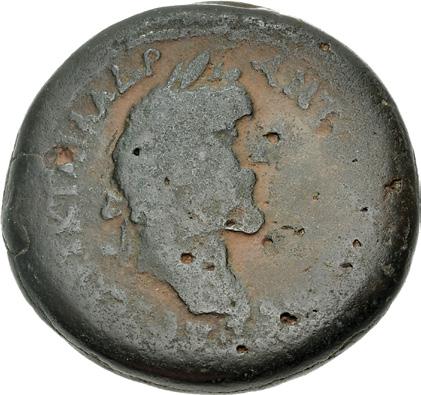
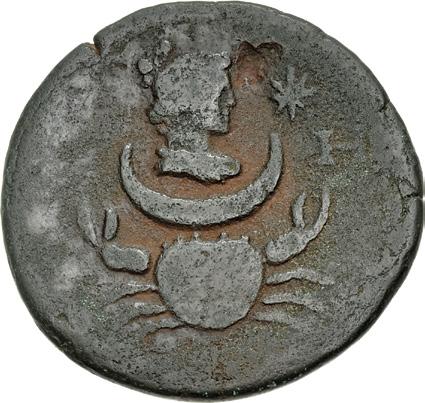
203. EGYPT, Alexandria. Antoninus Pius. AD 138-161. Æ Drachm (34mm, 24.46 g, 12h). Zodiac series. Dated RY 8 (AD 144/5). Laureate head right / Moon in Cancer – Draped bust of Selene (Moon), set on crescent; to right, star; below, crab (Cancer); L H (date) across field. Köln 1494; Dattari (Savio) 2964; K&G 35.270; RPC IV.4 849.30 (this coin); Emmett 1681.8. Red-brown patina with earthen highlights, porosity. Fine. ($500)
Ex H. Mitchell Collection (Classical Numismatic Group Electronic Auction 389, 18 January 2017), lot 502.
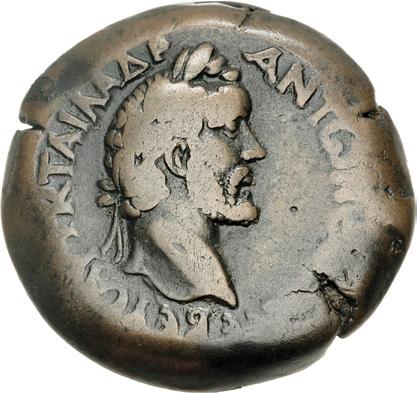
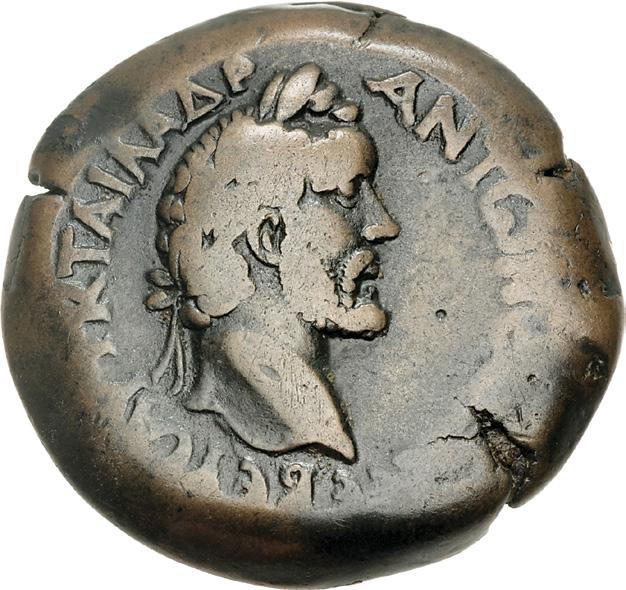
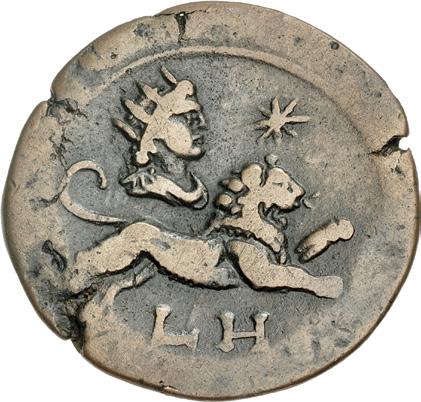
204. EGYPT, Alexandria. Antoninus Pius. AD 138-161. Æ Drachm (34mm, 22.96 g, 12h). Dated RY 8 (AD 144/5). Laureate head right / Sun in Leo – Radiate and draped bust of Helios (Sun) right; to right, eight-rayed star; below, lion (Leo) leaping right; L H (date) below. Köln 1495-6; Dattari (Savio) 2968; K&G 35.278; RPC IV.4 858; Emmett 1530.8. Brown patina. Good Fine. ($400)
Purchased from Apollo Numismatics, 14 January 2019.
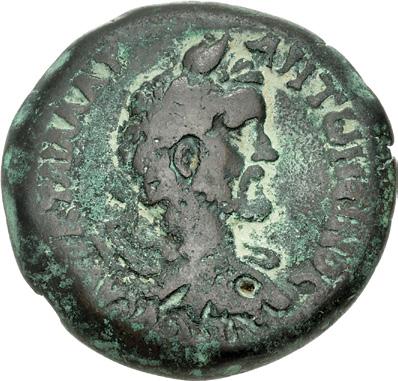
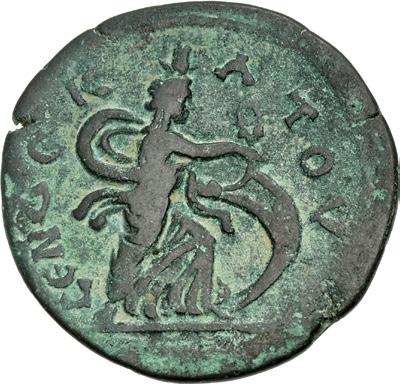
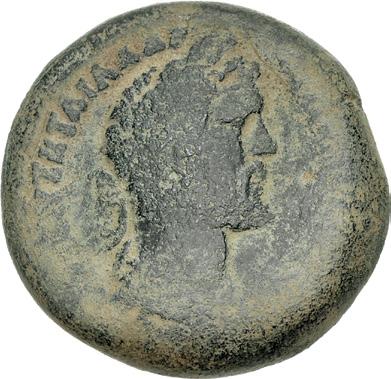
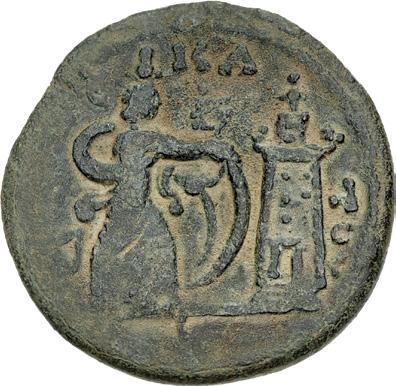
205. EGYPT, Alexandria. Antoninus Pius. AD 138-161. Æ Drachm (32mm, 21.21 g, 12h). Dated RY 11 (AD 147/8).
Laureate, draped, and cuirassed bust right, seen from behind / Isis Pharia, holding billowing sail and sistrum, advancing right; L ЄNΔЄ KATOV (date) around. Köln 1580; Dattari (Savio) 2670; K&G 35.407; RPC IV.4 1053.21 (this coin); Emmett 1590.11. Green patina with earthen highlights. Near VF. ($200)
Ex Classical Numismatic Group Electronic Auction 264 (21 September 2011), lot 332.
206. EGYPT, Alexandria. Antoninus Pius. AD 138-161. Æ Drachm (32mm, 20.30 g, 11h). Dated RY 12 (AD 148/9).
Laureate, draped, and cuirassed bust right, seen from behind / Isis Pharia, holding billowing sail and sistrum, standing right before the Pharos of Alexandria, which is surmounted by a statue and two Tritons; L ΔωΔЄKATOV (date) around. Köln 1605; Dattari (Savio) 8571; K&G 35.434; RPC IV.4 Online 1106.181 (this coin); Emmett 1592.12. Earthen green patina, light porosity. Fine. ($150)
Ex Heritage 3020 (6 September 2012), lot 25077.
The protector of sailors, Pharia was just one of the various appellations given to Isis. This association with sailors emanated from the Pharos – or Lighthouse – of Alexandria, indicated on this issue by holding a billowing sail.
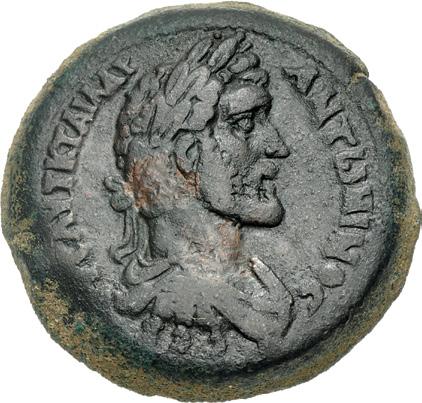
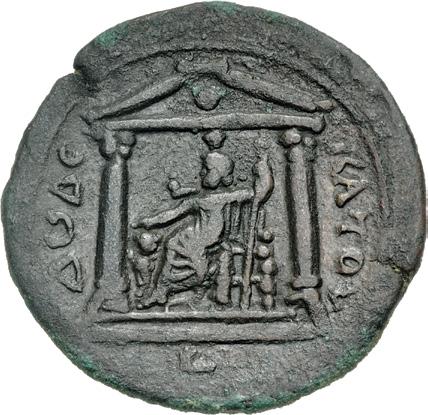
207. EGYPT, Alexandria. Antoninus Pius. AD 138-161. Æ Drachm (35mm, 32.41 g, 12h). Dated RY 12 (AD 148/9).
Laureate, draped, and cuirassed bust right, seen from the front / Statue of Serapis seated left, extending hand over Cerberus and holding scepter; all within distyle temple, globe in pediment; ΔωΔЄ ΚATOY (date) around. Köln 1617-20 var. (obv. legend); Dattari (Savio) 8906 var. (same); K&G 35.443-4 var. (same); RPC IV.4 1117.45 (this coin); Emmett 1668.45. Brown and red patina, slight roughness. VF. ($300)
Ex Classical Numismatic Group 91 (19 September 2012), lot 770.
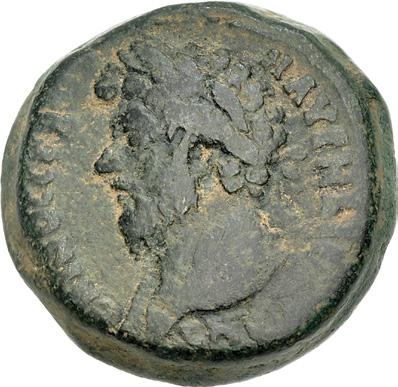
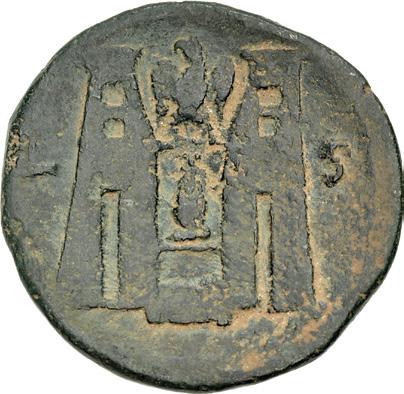
208. EGYPT, Alexandria. Marcus Aurelius. AD 161-180. Æ Drachm (34mm, 31.68 g, 12h). Dated RY 6 (AD 165/6). Laureate bust left, drapery on right shoulder / Pylon of the temple of Osiris containing a facing canopus jar in entranceway at top of a tall flight of stairs; between towers, eagle standing facing, head left, with wings displayed; L ς (date) across field. Köln –; Dattari (Savio) 3568; K&G 37.279; RPC IV.4 2900.4 (this coin); Emmett 2099 (R4). Earthen green surfaces. Near VF. Very rare architectural type that is only recorded for this year. ($1500)
Ex Classical Numismatic Group Electronic Auction 294 (16 January 2013), lot 509.
The canopic jar gets its name for the port city of Canopus in the Delta. Kanopus was also the name of the pilot of Menelaos’s ship in The Iliad, and it is uncertain whether the city’s demotic name was hellenized to Canopus to reflect the Homeric myth, or whether Homer adopted the maritime name from the city. In any case the Egyptian god Osiris was worshiped in Canopus in the specific form of a jar or reliquary, and the name became attached by Egyptologists to the four jars used to hold the viscera of the mummified dead, as well as the cult objects associated with Osiris and Isis.
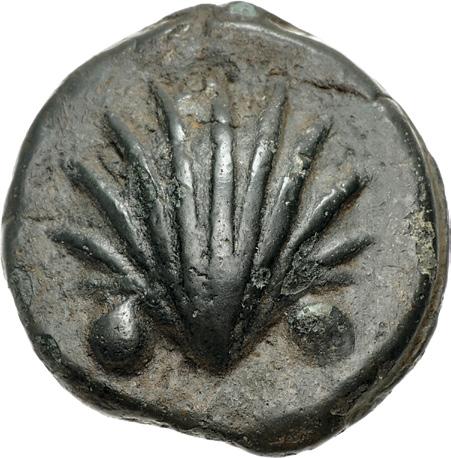
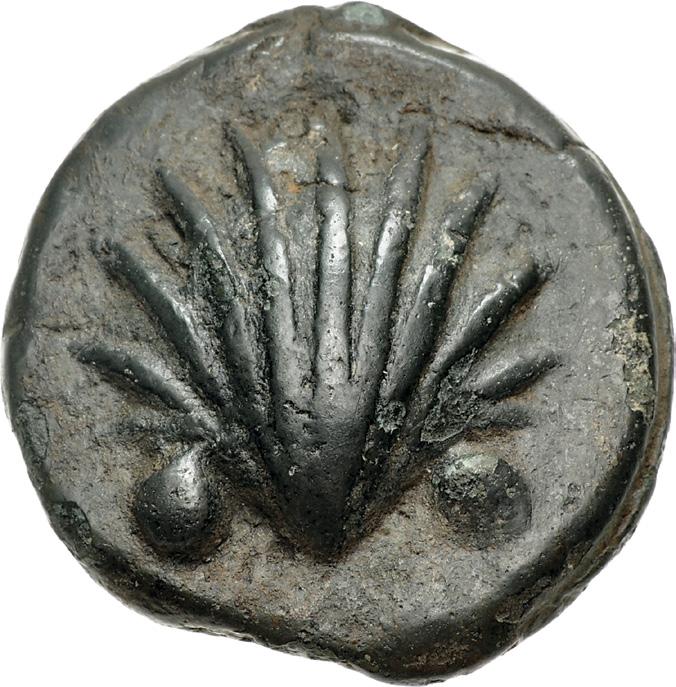
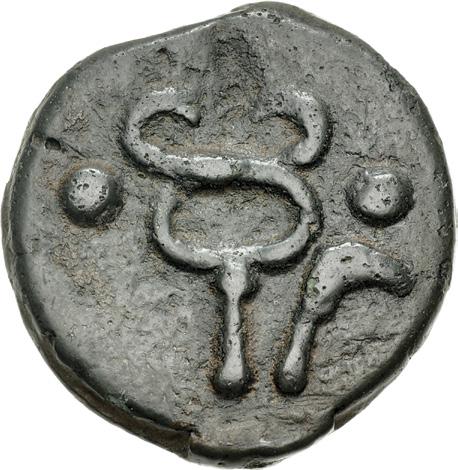
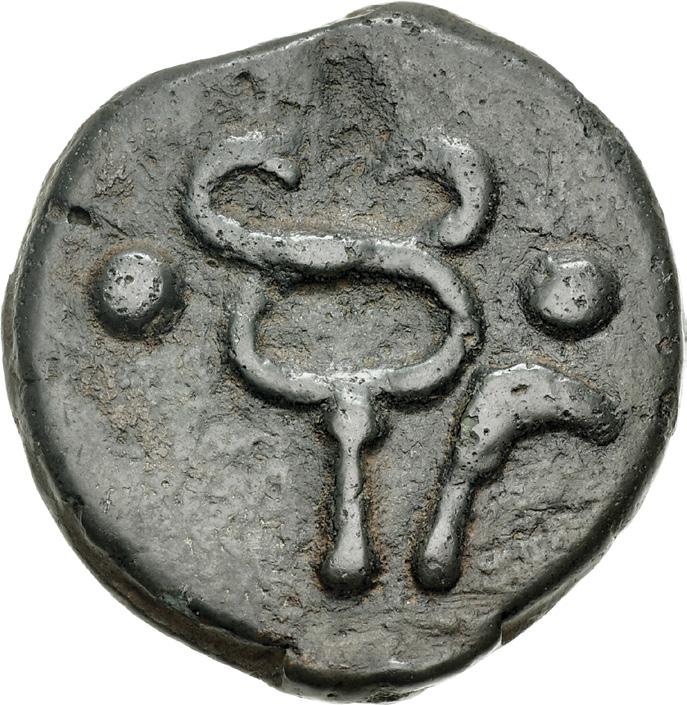
209. Anonymous. Circa 240 BC. Æ Aes Grave Sextans (36mm, 49.27 g, 6h). Sickle series. Rome mint. Scallop-shell; •• (mark of value) across field / Caduceus; sickle to right, •• (mark of value) across field. Crawford 25/8; ICC 52; HN Italy 304; RBW 45. Dark green patina with earthen highlights, flan crack, slight roughness, casting void on reverse. Good VF. ($1000)
Ex Plus 20 Collection (Classical Numismatic Group 130, 23 September 2025), lot 389 (hammer $3000); Numismatica Ars Classica 138 (18 May 2023), lot 326; Künker 124 (16 March 2007), lot 8215; Lanz 72 (29 May 1995), lot 335.
The story of Rome’s adoption of bronze coinage is a complex one. While the Roman Republic was officially founded circa 510 BC, its rather rustic population resisted the Greek innovation of coined money for more than two centuries before an abortive start in the last quarter of the fourth century BC. This consisted of small bronze coins bearing a head of Apollo and a man-headed bull reverse, along with the Greek legend ΡΩΜΑΙΩΝ. Likely produced under contract at the Campanian Greek city of Neapolis, these circulated very little, and seemingly outside of Rome proper. When the Romans resumed issuing bronze coins circa 280 BC, they looked not toward the Greeks, but toward the Etruscan- and Oscan-speaking peoples of the Italian heartland, who already had an established system utilizing huge coins of literal, as opposed to fiduciary, value. Rather than being produced by hammer and dies, these Aes Grave (”heavy bronze”) coins were created by pouring molten bronze into a mold, resulting in a roughened surface scant in fine detail. Hence, the designs were simple and crude by the standards of the Greeks. The main denomination, or As, weighed in at a full Roman pound, or about 325 grams of leaded bronze. Denominations included the As, Semis (half), Triens (third), Quadrans (quarter), Sextans (sixth), and Uncia (twelfth). Practical considerations resulted in a staged reduction in weight. By circa 240 BC, when this sextans was produced, the As now weighed somewhat less than 300 grams, as a quick calculation of this piece at 49.27 grams times six will show. By 225 BC, the Roman As weighed in at a still-hefty 275 grams. Despite the evident clumsiness in using such large pieces in everyday commerce, the Romans and their Italian allies clung to the unwieldy Aes Grave system until midway through the Second Punic War, circa 217-211 BC, when it was gradually replaced by a series of struck bronze denominations on a much reduced fiduciary standard.
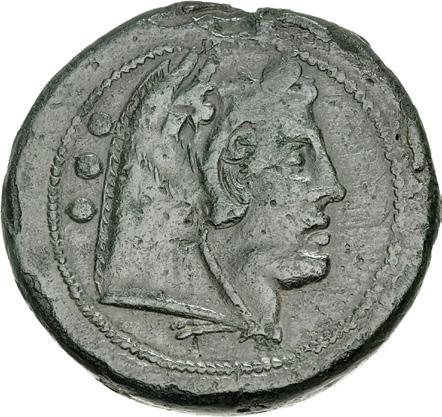
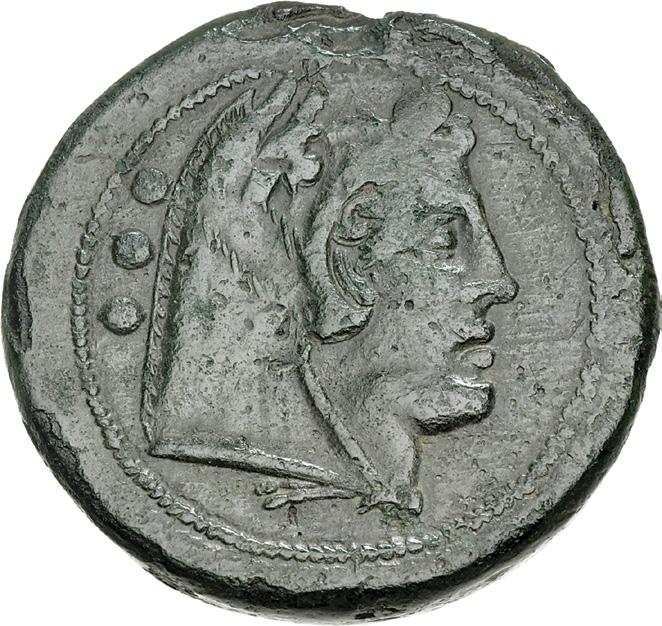
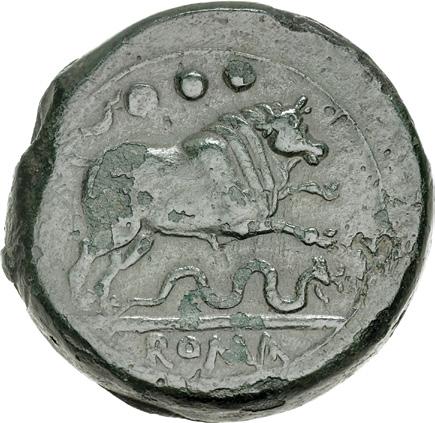
210. Anonymous. Circa 217-215 BC. Æ Quadrans (35.5mm, 37.55 g, 2h). Rome mint. Head of Hercules right, wearing boar skin headdress; ••• (mark of value) to left / Bull charging right; ••• (mark of value) above, snake below. Crawford 39/2; Sydenham 94; RBW 106. Dark green patina which is chipped in areas on the reverse. Good VF. ($1000)
Ex Property of Princeton Economics acquired by Martin Armstrong (Classical Numismatic Group Electronic Auction 275, 7 March 2012), lot 58; Henry Platt Hall Collection (Part I, Glendining, 19 July 1950), lot 450.
This quadrans is part of the first struck bronze series issued by Rome since the tiny Romano-Campanian issues. Aside from the as itself, still a cast piece weighing 128 grams, Crawford 39 includes a triens, quadrans, sextans, uncia, and semuncia (”half-ounce”). The series represents a large step toward the coinage reform of 212-211 BC, in which all bronze denominations were struck on a much reduced standard.
211. Q. Marcius Libo. 148 BC. AR Denarius (19mm, 4.04 g, 9h). Rome mint. Helmeted head of Roma right; X (mark of value) below chin / The Dioscuri, each holding spear, on horseback riding right. Crawford 215/1; Sydenham 395; Marcia 1; RBW 915. Toned, areas of slight roughness, a few shallow scratches, edge marks. Good VF. ($150)
Ex Doctore Collection (Classical Numismatic Group Electronic Auction 592, 30 July 2025), lot 410.
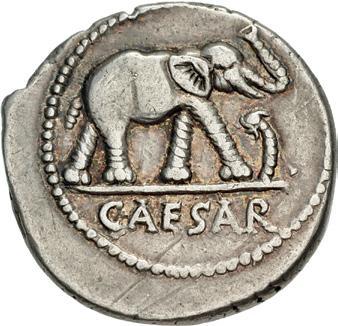
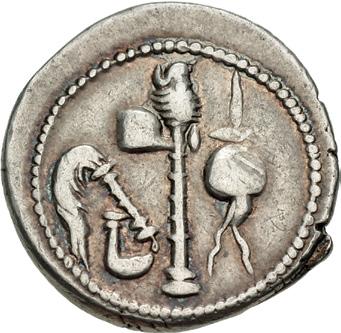
212. The Caesarians. Julius Caesar. April-August 49 BC. AR Denarius (18mm, 3.68 g, 10h). Military mint traveling with Caesar. Elephant advancing right, trampling on horned serpent / Emblems of the pontificate: simpulum, aspergillum, securis, and apex. Crawford 443/1; CRI 9; Sydenham 1006; RSC 49; RBW 1557. Attractive iridescent toning, scrapes. Good VF. ($1000)
Ex Classical Numismatic Group 129 (13 May 2025), lot 469.
This is the first coinage to bear Julius Caesar’s name, commencing after Caesar crossed the Rubicon in January 49 BC and seized control of the bullion stores in the public treasury left behind by the panic-stricken senate and their champion, Pompey the Great. Despite being the most widespread of all Caesar’s coins, the types still are somewhat mysterious. Authorities have even debated which side is which: Crawford describes the elephant as the obverse, but other experts dispute this. The symbolism is commonly held to show the triumph of good (elephant) over evil (serpent or dragon). Alternatively, the “horned serpent” may represent a carnyx, a dragon-shaped horn used by the Celtic tribes in Gaul, whom Caesar had recently overcome in his epic eight-year conquest, in which case the elephant would represent Caesar himself or Rome. Unlike Pompey, Caesar brazenly placed his own name on the coinage without having the constitutional authority to do so, as Sulla had done 33 years before. The reverse depicts the emblems of the Pontifex Maximus, an office Caesar had possessed since 63 BC.
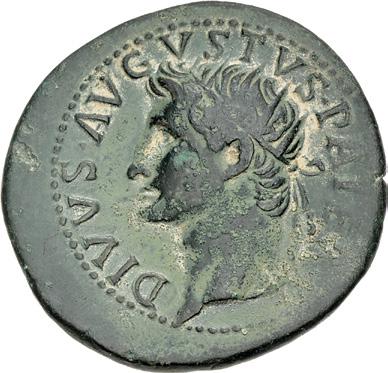
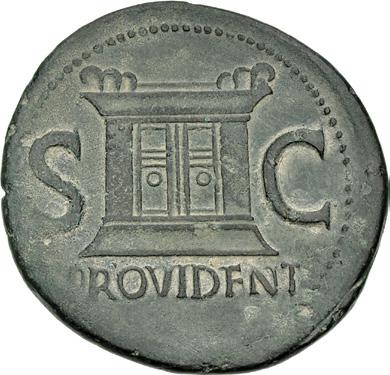
213. Divus Augustus. Died AD 14. Æ As (32mm, 10.80 g, 12h). Rome mint. Struck under Tiberius, circa AD 22/2330. Radiate head left / Altar, with closed, double-paneled door; acroteria above to left and right. RIC I 81 (Tiberius); Elkins, Monuments Figure 68. Green surfaces, earthen deposits. Good VF. Struck on a broad flan. ($200)
Purchased from Pegasi Numismatics, 2 Febrary 2012.
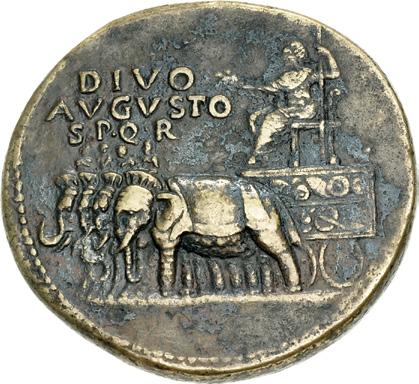
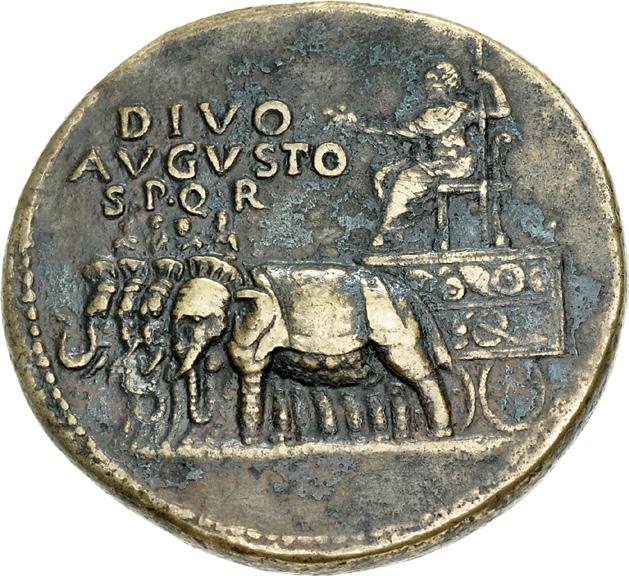
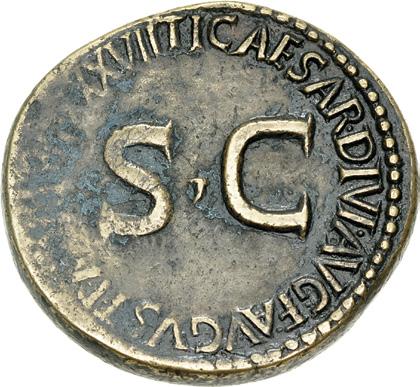
214. Divus Augustus. Died AD 14. Æ Sestertius (34mm, 23.93 g, 12h). Rome mint. Struck under Tiberius, AD 35-36. Statue of Augustus, holding branch and scepter, seated left on throne set on ornate car drawn by four elephants; each elephant has its own mahout / Legend around large S • C. RIC I 62 (Tiberius). Brown surfaces, brassy highlights, tooling on obverse. VF. ($500)
Ex Pegasi Numismatics inventory 10900212; Münzhandlung Basel 8 (22 March 1937), lot 541 (erroneously labeled as 542 on the plate).
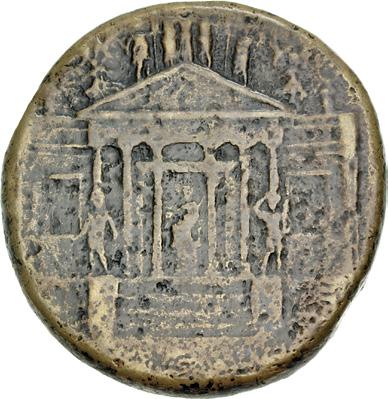
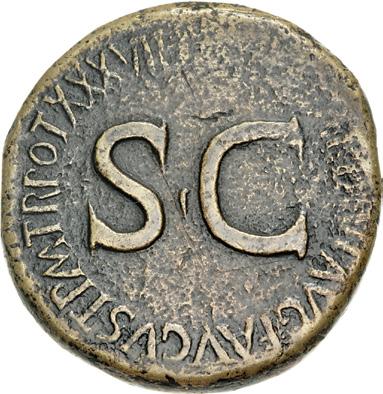
215. Tiberius. AD 14-37. Æ Sestertius (31.5mm, 25.31 g, 5h). Rome mint. Struck AD 35-36. The Temple of Concordia: Hexastyle temple with flanking wings; Concordia seated within, Hercules and Mercury standing on flanking podia; Jupiter, Juno, Minerva and Victories above pediment / Legend around large S • C. RIC I 61; cf. Elkins, Monuments Figure 69 (for obv. type). Brown patina, edge marks. Fine. ($300)
Purchased from Allen G. Berman, 18 February 2022.
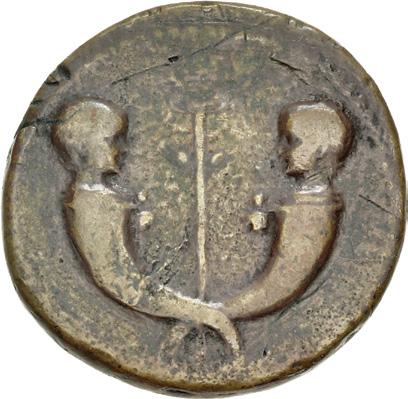
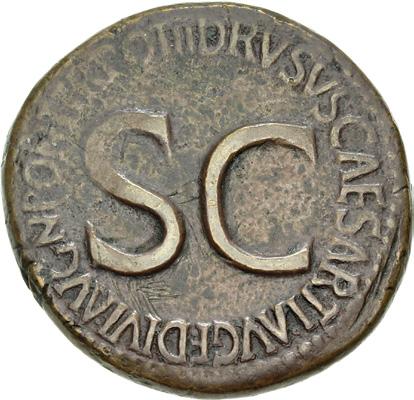
216. Tiberius & Germanicus Gemellus. AD 19-37/8 and 19-23/4, respectively. Æ Sestertius (33mm, 25.18 g, 6h). Rome mint. Struck under Tiberius, AD 22-23. Crossed cornucopia, each surmounted by the bareheaded bust of a boy, visà-vis; winged caduceus between / Legend around large S • C. RIC I 42 (Tiberius). Brown surfaces, smoothing, marks. Near Fine. ($300)
Purchased from Wayne Philips, 7 October 2011. Reportedly ex Kress 190 (14 November 1985).
An Attractive Coin in Hand
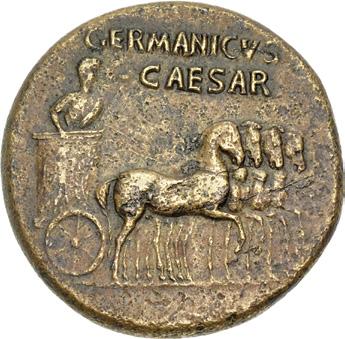
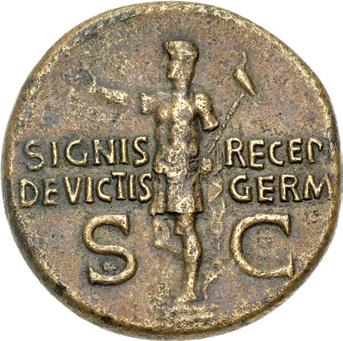
217. Germanicus. Died AD 19. Æ Dupondius (28mm, 15.70 g, 6h). Rome mint. Struck under Gaius (Caligula), AD 3741. Germanicus driving triumphal quadriga right, holding eagle-tipped scepter and reins / Germanicus standing left, raising hand and holding aquila. RIC I 57 (Gaius). Light brown patina. VF. An attractive coin in hand. ($500)
Purchased from Mynthandel, July 2015.
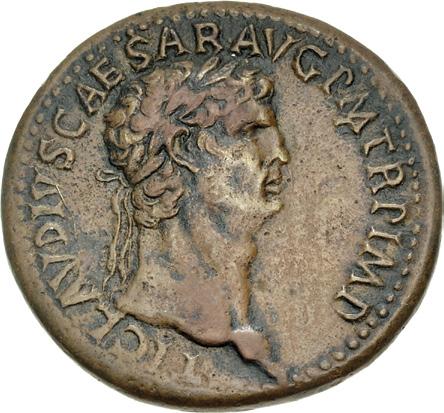
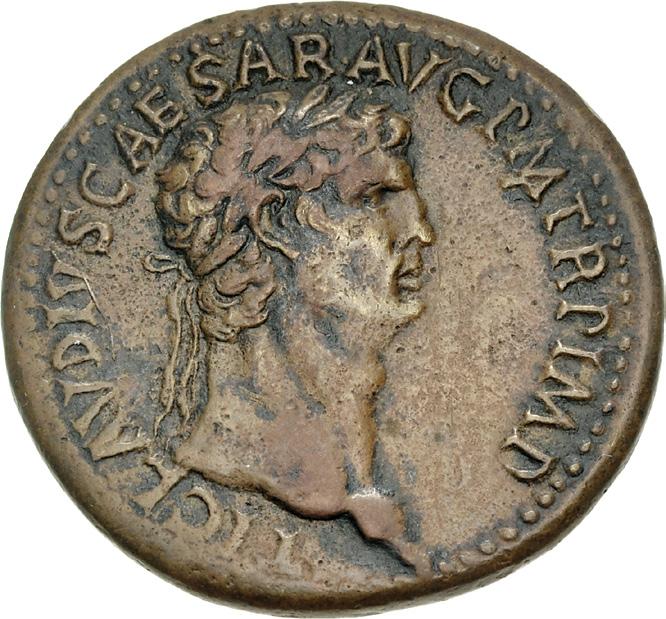
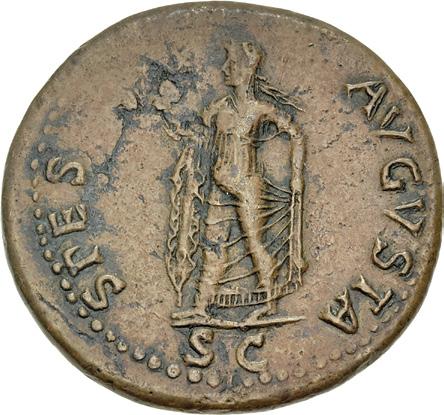
218. Claudius. AD 41-54. Æ Sestertius (36mm, 25.01 g, 6h). Rome mint. Struck AD 41-42. Laureate head right / Spes advancing left, holding up flower and raising hem of skirt. RIC I 99; von Kaenel Type 55. Brown patina with dark deposits, minor smoothing, a few edge marks. VF. ($500)
Ex Classical Numismatic Group 115 (16 September 2020), lot 620; ANS Collection, Estate of Dr. John F. Lhotka, Jr. (Gemini VII, 9 January 2011), lot 737.
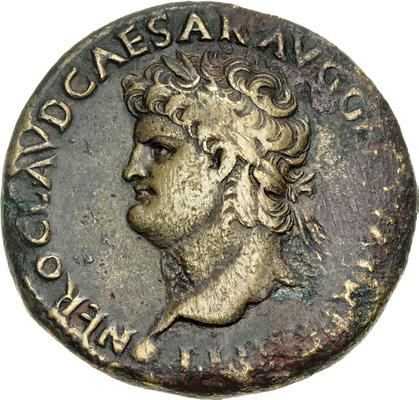
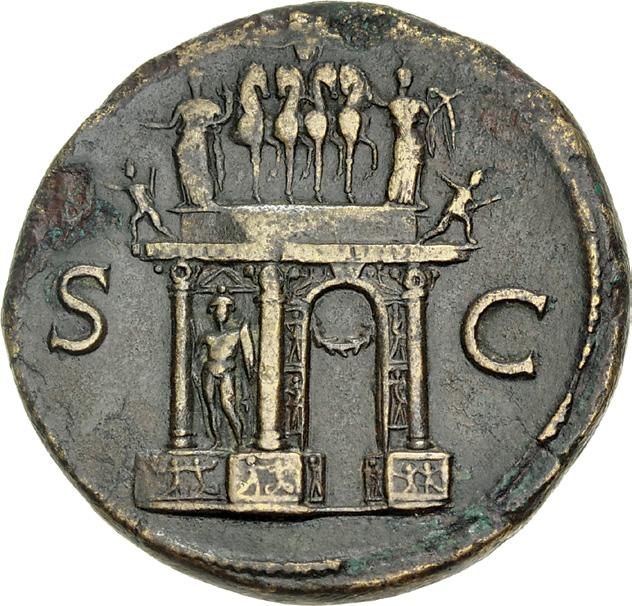
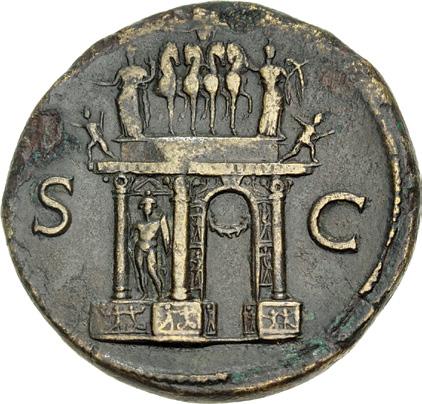
219. Nero. AD 54-68. Æ Sestertius (33.5mm, 22.46 g, 7h). Lugdunum (Lyon) mint. Struck AD 65. laureate head left, globe at point of neck / Triumphal arch surmounted by statue of emperor in quadriga accompanied by Pax and Victory, flanked by two soldiers; a nude, helmeted statue of Mars in side niche of arch; ornamental reliefs on the faces and plinths of the arch. RIC I 393; WCN 414; Lyon 74; cf. Elkins, Monuments Figure 79 (for rev. type). Brown patina, some red and brassy highlights, old corrosion, cleaning scratches on obverse, edge marks. VF. An important architectural reverse. ($600)
Ex Cederlind 166 (3 October 2012), lot 200.
The arch to Nero was built in AD 62 to celebrate his victories in the Parthian War and the seizure of Artaxata. It was dismantled by decree of the senate upon is death in AD 68 as part of the damnatio memoriae to remove his memory form public spaces. No physical evidence of the structure survives outside of the few depictions on Nero’s coins.
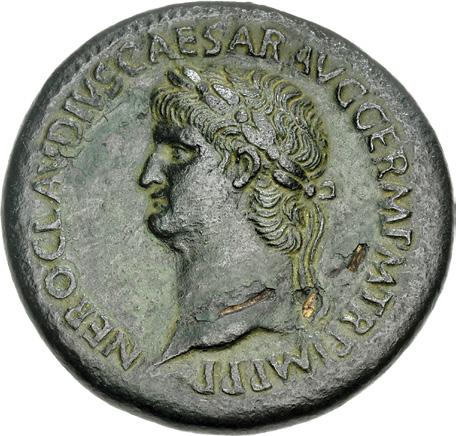
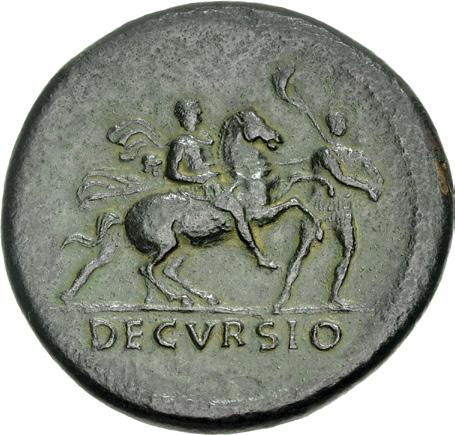
220. Nero. AD 54-68. Æ Sestertius (37mm, 25.29 g, 6h). Rome mint. Struck circa AD 63. Laureate head left / Nero on horseback prancing right, holding spear; to right, foot soldier advancing right, looking back, holding vexillum, and with a second foot soldier, helmeted, running behind horse. RIC I 108; WCN 78. Green surfaces, smoothed, tooled, gouges on obverse, areas of fill, edge mark. VF. LOT SOLD AS IS, NO RETURNS. ($200)
Ex Estate of Dale Sigler, Tarzana, California (Heritage 3020, 11 September 2012), lot 25614.
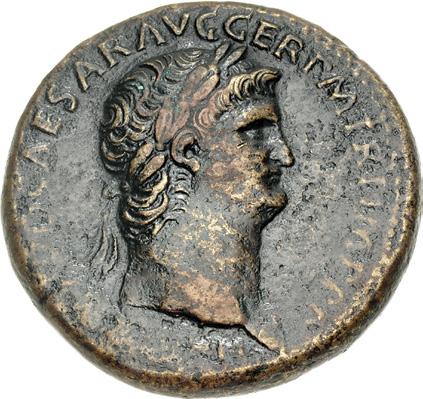
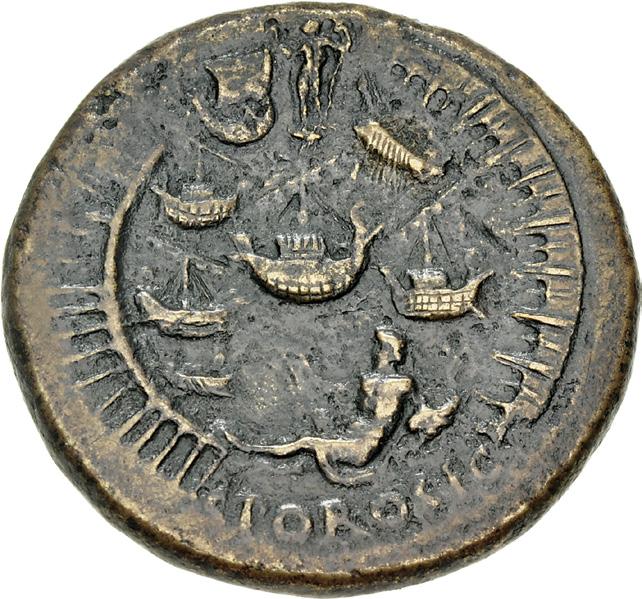
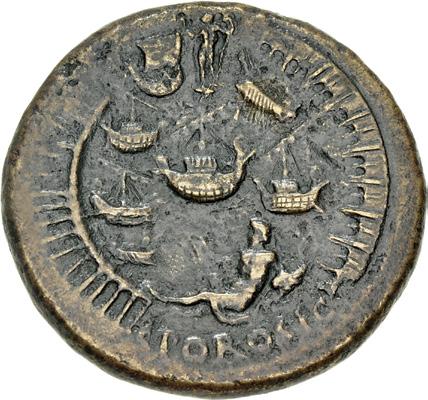
221. Nero. AD 54-68. Æ Sestertius (34mm, 26.92 g, 6h). Rome mint. Struck circa AD 64. Laureate bust right, wearing aegis / Port of Ostia: seven ships within the harbor; at the top is a pharus surmounted by a statue of Neptune; below is a reclining figure of Tiber, holding a rudder and dolphin; to left, crescent-shaped pier with portico, terminating with figure sacrificing at altar and with building; to right, crescent-shaped row of breakwaters or slips, terminating with a figure seated on rock. RIC I 178; WCN 120; Elkins, Monuments Figure 83. Brown patina with brassy highlights, some smoothing, tooled. VF. Important architectural reverse. ($2000)
Purchased from Baldwin’s, 20 May 2011.
While Julius Caesar recognized the value of expanding Rome’s port facilities at Ostia, it was Claudius who began actual building in AD 42. As part of the construction, one of Caligula’s pleasure galleys was scuttled and filled with cement; above it was constructed a lighthouse surmounted by a statue of Neptune. Although the actual date of completion is not certain, it must have occurred shortly before this sestertius was minted. A further expansion of the facilities was required under Trajan and Hadrian. By the fourth century, however, the port’s importance began to diminish as a result of silting. Soon the region became a breeding ground for malaria and was abandoned.
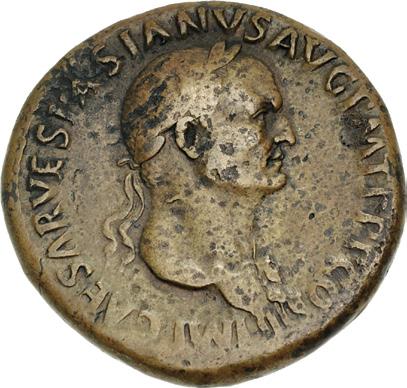
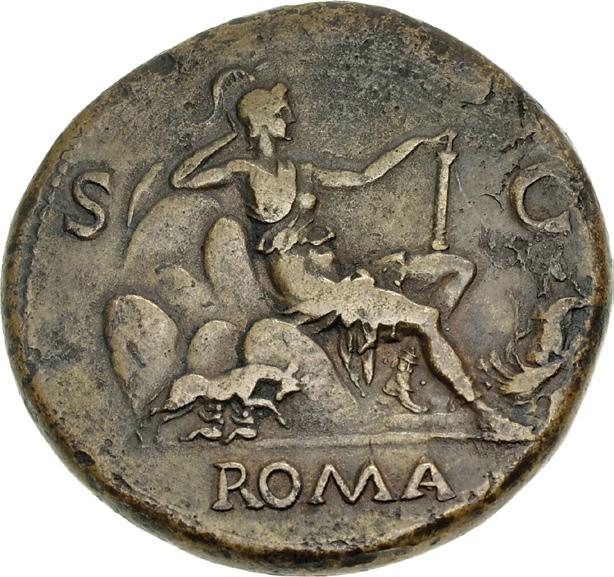
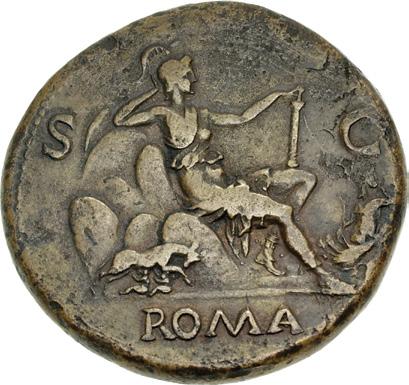
222. Vespasian. AD 69-79. Æ Sestertius (33mm, 25.58 g, 5h). Rome mint. Struck AD 71. Laureate bust right, wearing aegis / Roma seated right on the seven hills of Rome, propping head on hand and holding parazonium; to left, she-wolf and twins; to right, the River Tiber reclining left, holding reed. RIC II.1 108; BMCRE 774 (Tarraco mint, same dies). Brown patina, some roughness. Good Fine. Fine style. Extremely rare. All known examples are struck from the same reverse die, indicating a very small output. ($1000)
Ex Phil Peck (“Morris”) Collection (Heritage 3071, 7 January 2019), lot 32069.
This reverse type was struck to celebrate the resurgent Rome. From AD 68-69 civil war took its toll, but Rome was victorious under the capable leadership of Vespasian. While Galba had claimed that Rome was reborn, Vespasian liked to think of Rome as resurgent and victorious. This issue was initially limited to sestertii alone in the first and second emissions.
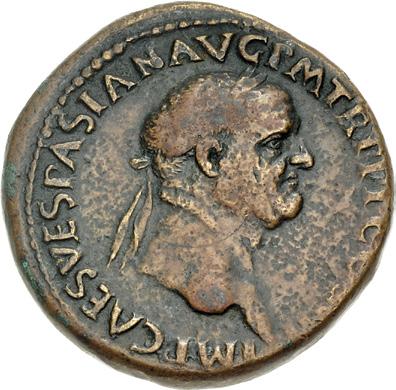
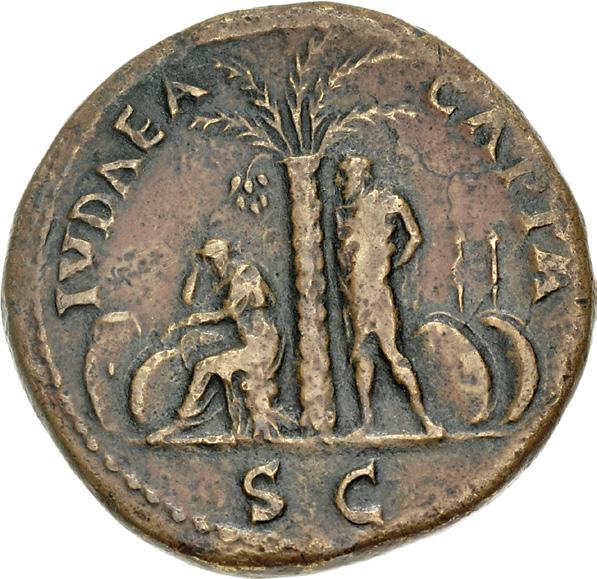
223. Vespasian. AD 69-79. Æ Sestertius (32mm, 24.88 g, 6h). “Judaea Capta” commemorative. Rome mint. Struck AD 71. Laureate head right / IVDAEA CAPTA, S C in exergue, palm tree; to left, Judaea seated left on cuirass; to right, male captive standing left, his hands bound behind his back; both figures surrounded by arms. RIC II.1 165; Hendin 6532. Tan, red, and brown surfaces, minor roughness. VF. ($1500)
Ex Classical Numismatic Group 88 (14 September 2011), lot 1259.
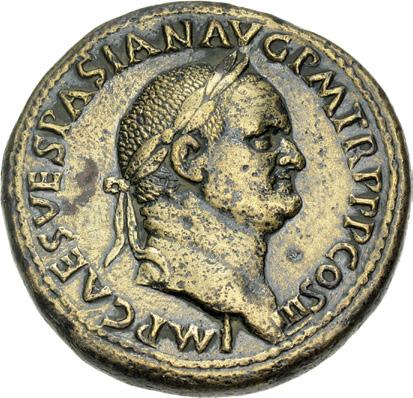
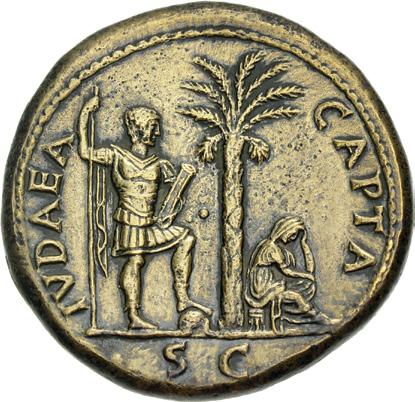
224. Vespasian. AD 69-79. Æ Sestertius (33.5mm, 26.30 g, 6h). “Judaea Capta” commemorative. Rome mint. Struck AD 71. Laureate head right / IVDAEA CAPTA, S C in exergue, palm tree; to left, Vespasian standing right, with left foot on helmet, holding spear and parazonium; to right, Judaea seated right on cuirass, in attitude of mourning. RIC II.1 167; Hendin 6534. Patina stripped, brassy surfaces, smoothed, tooled. Good VF. ($1000)
Ex Heritage 3123 (2 May 2025), lot 31117; Goldberg 110 (4 June 2019), lot 1783 (before patination removal).
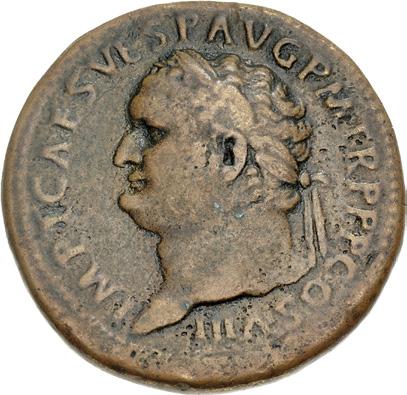
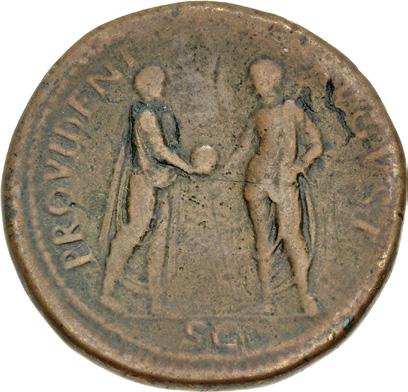
225. Titus. AD 79-81. Æ Sestertius (33mm, 22.01 g, 6h). Rome mint. Struck AD 80-81. Laureate head left / Divus Vespasian and Titus standing facing each other, together holding globe over rudder between them. RIC II.1 162. Light redbrown surfaces, light smoothing, a few scratches, a few flan flaws on reverse. Near VF. ($500)
Purchased from Kirk Davis, 4 February 2011.
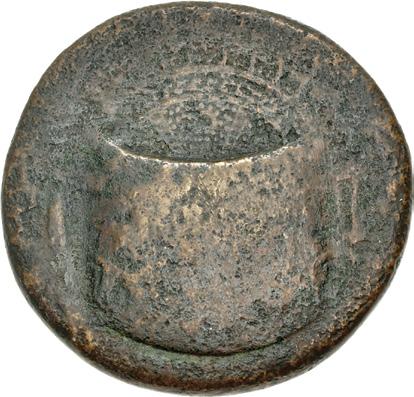
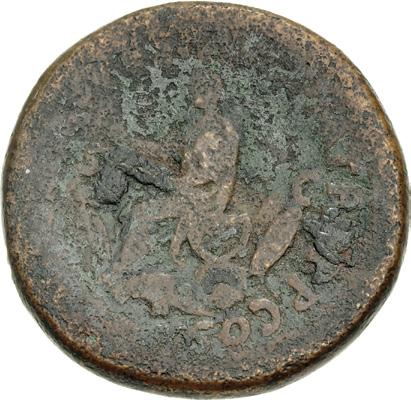
226. Titus. AD 79-81. Æ Sestertius (33.5mm, 24.96 g, 6h). Rome mint. Struck circa AD 80. View of the Flavian Amphitheater (The Colosseum) from the southeast, seen from aerial perspective and containing imperial box; Meta Sudans to left, porticus of the Baths of Titus to right / Titus seated left on curule chair, left arm across lap, holding branch in outstretched right hand; around, helmets, shields and cuirass. RIC II.1 184; Elkins Type C, 6 (A4/P6); BMCRE 190 (same dies); Elkins, Monuments, Figure 96 (same dies as illustration). Tan-brown patina. Near Fine/Fair. Very rare and of great historical interest. ($4000)
Ex Property of Princeton Economics acquired by Martin Armstrong (Classical Numismatic Group Electronic Auction 271, 11 January 2012), lot 79 (hammer $5000).
This sestertius offers a bird’s eye view of the most famous landmark of ancient Rome. Construction on the Colosseum began in AD 71 during the reign of Vespasian, and dedication ceremonies were held in 75 after the completion of the first three stories. In 80, the remaining two stories were completed, and new dedication ceremonies were conducted in June, celebrated on this sestertius of Titus. Elkins, in his recent article on these pieces, argues that they were commemorative pieces distributed by Imperial munificence at games held in the Colosseum.
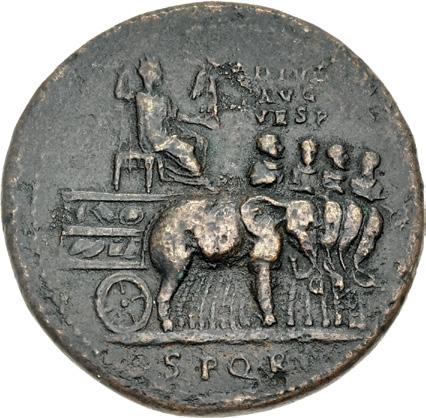
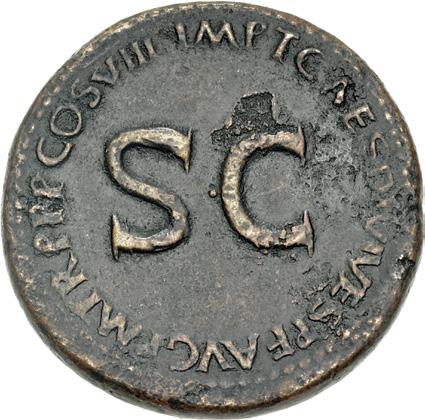
227. Titus. AD 79-81. Æ Sestertius (34.5mm, 21.30 g, 6h). Rome mint. Struck under Titus, AD 80-81. Deified Vespasian seated right, holding scepter and Victory in cart drawn by a quadriga of elephants with riders / Legend around large S • C. RIC II.1 257 (Titus). Dark brown patina with tan highlights, some roughness. VF. ($750)
Ex Estate of Thomas Bentley Cederlind (Classical Numismatic Group Electronic Auction 372, 6 April 2016), lot 417; Numismatica Ars Classica 84 (Part II, 21 May 2015), lot 1823 (hammer 800 CHF).
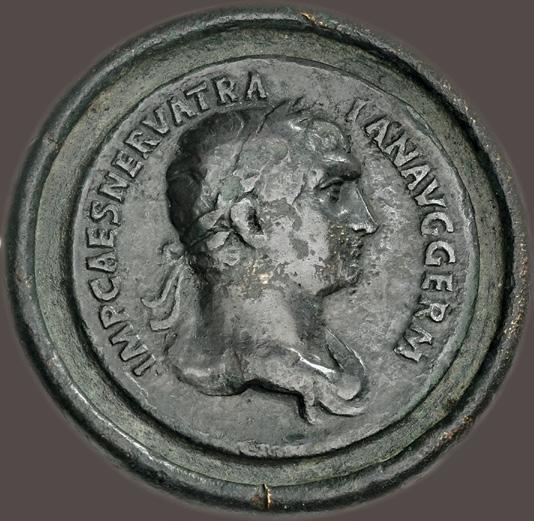
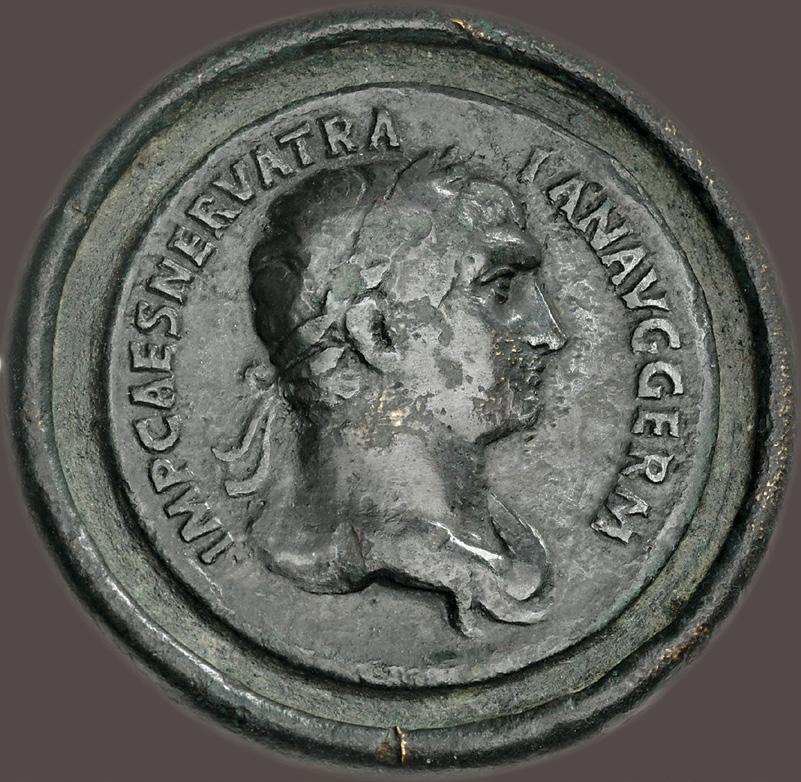
228. Trajan. AD 98-117. Æ Medallion (44mm, 47.64 g). Rome mint. Struck circa 100-102. IMP CAES NERVA TRAIAN AVG GERM, laureate and draped bust right / Blank as made. F. Gnecchi, Bronzi unilaterali e prove di conio,” in RIN XX (1907), p. 35, 1 and pl. III, no. 1 = Woytek 920g (this coin); Gnecchi –; Banti –. Green-brown patina, gouge on reverse. VF. Unique – the sole known example and one of the only uniface medallions of Trajan. ($3000)
Ex Oslo Myntgalleri 28 (6 May 2022), lot 469; Classical Numismatic Group 31 (9 September 1994), lot 978; Sotheby’s (10 April 1992), lot 224; H. C. Levis Collection (Ars Classica XI, 18 June 1925), lot 498; Giovanni Pansa (1865-1929) Collection.
Other auction appearances of this piece are slightly incorrect. It is not a contorniate, but a medallion contemporary to Trajan. Some sales cite it as being found in Rome in 1905, but the earliest description of the piece merely attributes it to the collection of Giovanni Pansa, a noted Italian numismatist who resided in Sulmona.
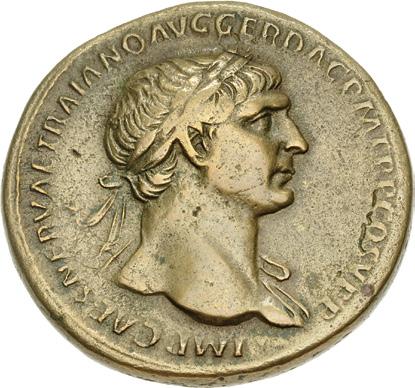
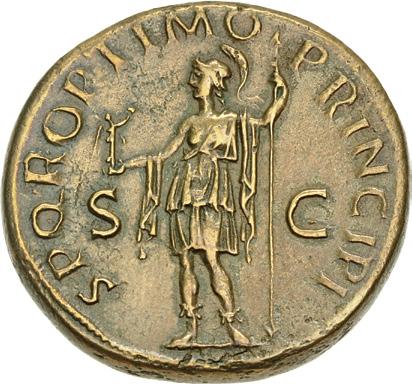
229. Trajan. AD 98-117. Æ Sestertius (33.5mm, 28.17 g, 6h). Rome mint. Struck mid AD 107-108. Laureate bust right, slight drapery / Roma standing left, holding Victory and reversed spear. RIC II 483; Woytek 299bC; Banti 119. Brassy surfaces. VF. ($300)
Ex Cederlind 164 (16 May 2012), lot 226.
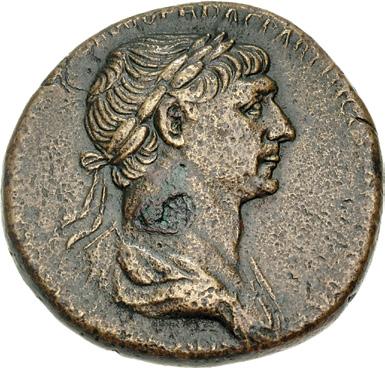
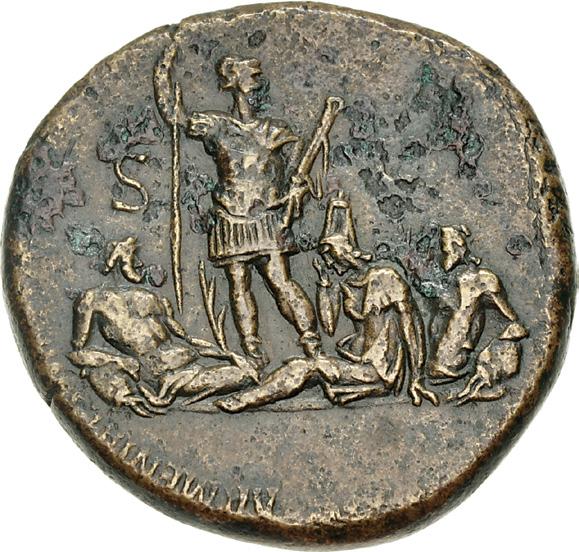
230. Trajan. AD 98-117. Æ Sestertius (31mm, 24.15 g, 6h). Rome mint. Struck after 20 February AD 116-August 117. Laureate and draped bust right / Trajan, wearing military attire, standing slightly left, head right, holding reversed spear and parazonium; around feet, Armenia, Tigris, and Euphrates: to right, Armenia resting hand on head flanked by Euphrates and Tigris, both reclining on urn from which water flows and holding reed. RIC II 642; Woytek 590v–3; Banti 29. River patina, areas of roughness. Near VF. ($400)
Purchased from Pegasi, 11 September 2009.
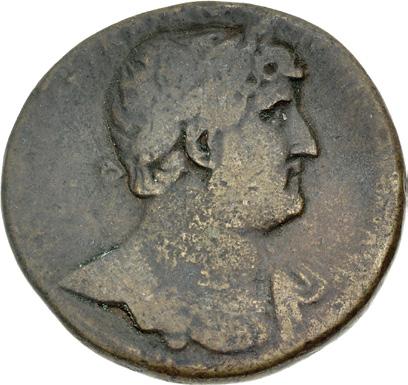
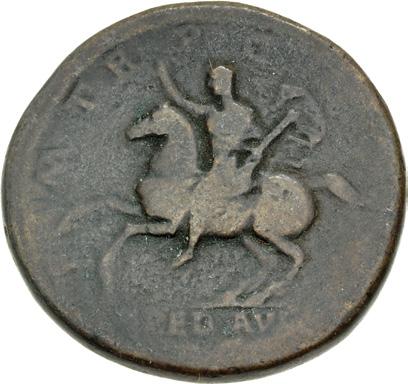
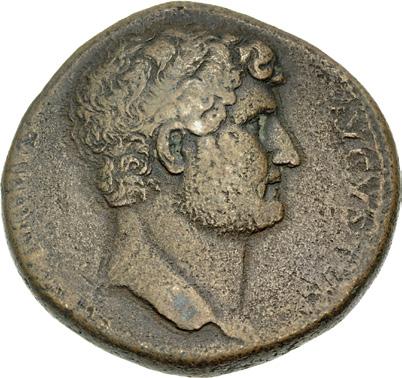
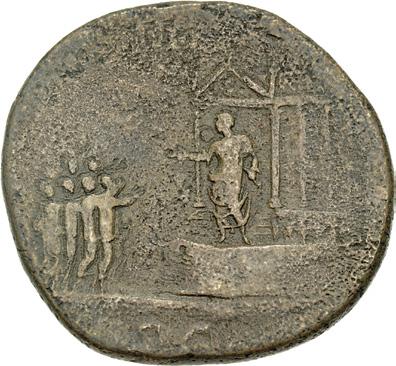
231. Hadrian. AD 117-138. Æ Sestertius (33mm, 25.24 g, 6h). Rome mint. Struck late AD 121-123. Laureate and cuirassed bust right, cropped of its pteryges / Hadrian riding left, one hand raised, the other carrying spear. RIC II.3 641; Banti 306. Brown surfaces. Fine. ($100)
Ex Classical Numismatic Group Electronic Auction 376 (15 June 2016), lot 427.
232. Hadrian. AD 117-138. Æ Sestertius (32.5mm, 22.26 g, 5h). Rome mint. Struck circa AD 125-126/7. Bare head right / Emperor standing left on the Rostra in the Forum, addressing citizens with hands raised in acclamation; tetrastyle temple to right. RIC II.3 827 (R2); Banti 201; Elkins, Monuments Figure 127. Brown surfaces, some porosity. Fine. Very rare. Fine style portrait of Hadrian. ($500)
Ex Classical Numismatic Group Electronic Auction 361 (14 October 2015), lot 935; Tony Hardy Collection (Classical Numismatic Group 67, 22 September 2004), lot 1461.
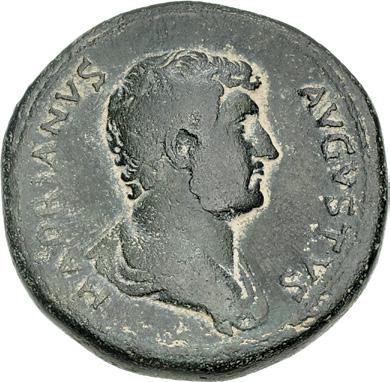
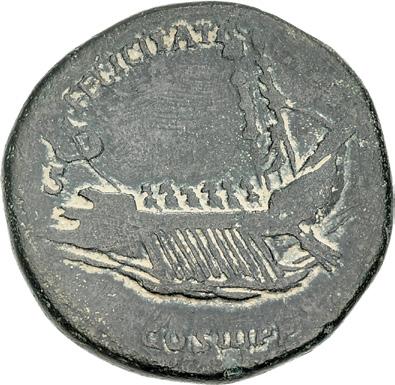
233. Hadrian. AD 117-138. Æ Sestertius (31.5mm, 22.20 g, 12h). Rome mint. Struck circa AD 129-130. Bareheaded and draped bust right / Galley left with six rowers and hortator; vexillum on prow, two signa at stern. RIC II.3 1292; Banti 345. Dark green-brown surfaces, smoothing, earthen deposits. Near VF. ($200)
Ex Classical Numismatic Group Electronic Auction 300 (10 April 2013), lot 217.
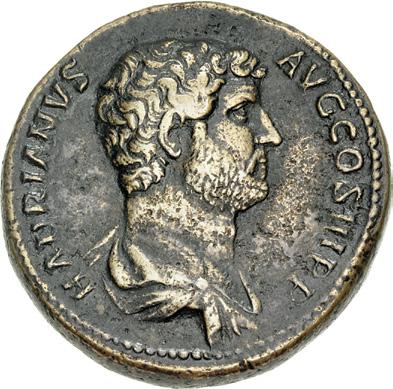
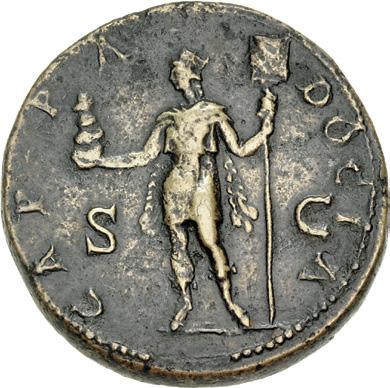
234. Hadrian. AD 117-138. Æ Sestertius (31.5mm, 25.94 g, 5h). “Travel series” issue (“Provinces cycle”) – The province alone. Rome mint. Struck circa AD 130-133. Bareheaded and draped bust right / CAPPA DOCIA, Cappadocia, wearing turreted headdress, standing left, holding Mount Argaeus and vexillum. RIC II.3 1637; Banti 117. Dark brown and tan patina. VF. ($500)
Ex Goldberg 109 (29 January 2019), lot 2140; Classical Numismatic Group Electronic Auction 276 (21 March 2012), lot 403 (hammer $1,650).
Hadrian visited Cappadocia, located in southern-central Anatolia, twice during his reign. In October AD 117, he traversed the region during his long tour of inspection while in route from Syria back to Rome after attaining the throne earlier that year. He returned in June of AD 123 during his passage east for a summit meeting with the Parthian King Osroes I (AD 109-129) aimed at averting renewed hostilities between the two empires.
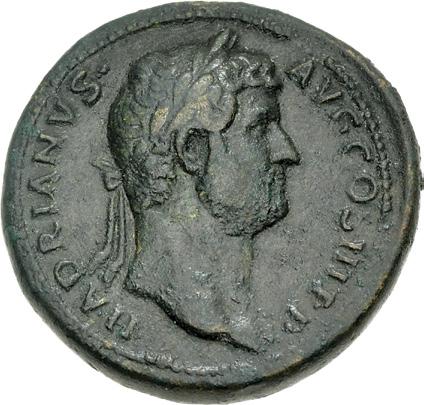
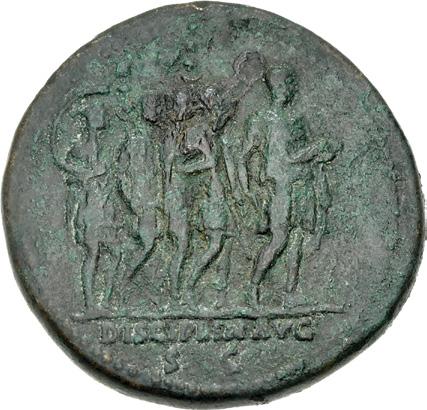
235. Hadrian. AD 117-138. Æ Sestertius (34mm, 29.54 g, 6h). Rome mint. Struck circa AD 130-133. Laureate head right / DISCIPLIN AVG/ S C in two lines in exergue, Hadrian, holding volumen, advancing right, leading a line of soldiers carrying three signa, bringing up the rear is a trumpeter with cornu. RIC II.3 1908 (R2; this coin illustrated); Banti 240. Green patina, slightly rough surfaces. VF. Very Rare. ($500)
Ex Heritage 3021 (7 January 2013), lot 21543; Sternberg VII (24 November 1977), lot 638.
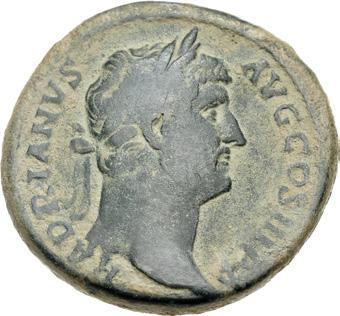
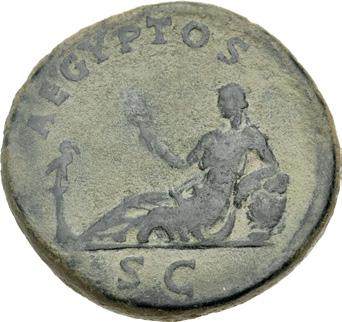
236. Hadrian. AD 117-138. Æ As (27mm, 14.92 g, 12h). “Travel series” issue (“Provinces cycle”) – The province alone. Rome mint. Struck circa AD 130-133. Laureate head right / AEGYPTOS, Egypt reclining left, holding sistrum, resting elbow on basket; to left, ibis standing right on column. RIC II.3 1600. Dark green patina, earthen encrustation. Fine. ($200)
Ex Classical Numismatic Group Electronic Auction 353 (17 June 2015), lot 481.
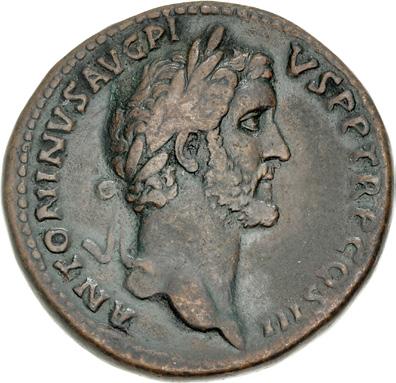
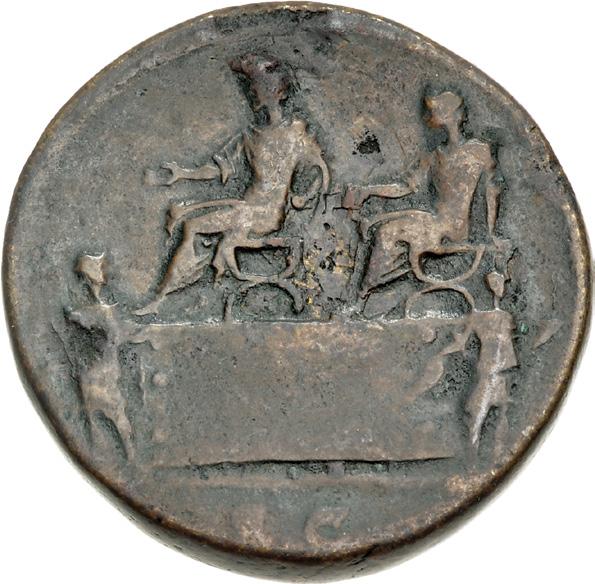
237. Antoninus Pius. AD 138-161. Æ Sestertius (32mm, 25.40 g, 12h). Rome mint. Struck circa AD 141-143. Laureate head right / Antoninus Pius and Marcus Aurelius seated left on sella castrensis on raised daïs, extending hand; to left and right, lictor standing, holding rod. RIC III 628; Banti 374. Dark green and brown surfaces, smoothing. VF. ($300)
Purchased from Ancient Roman Coins, February 2011.
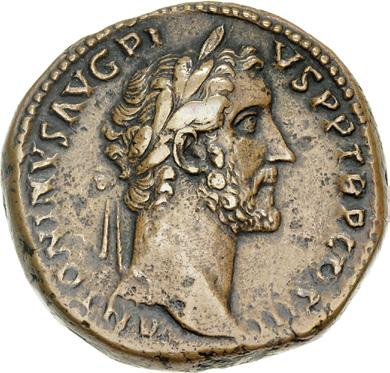
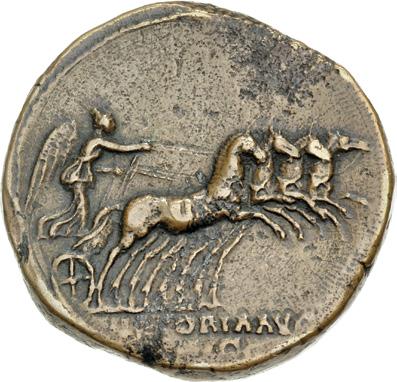
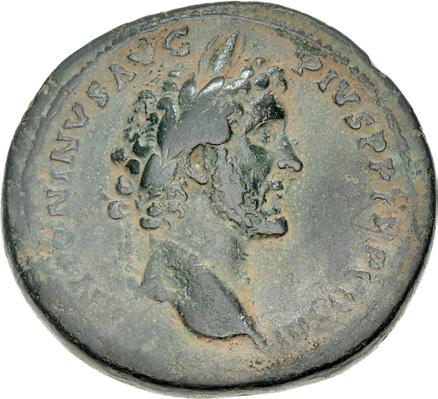
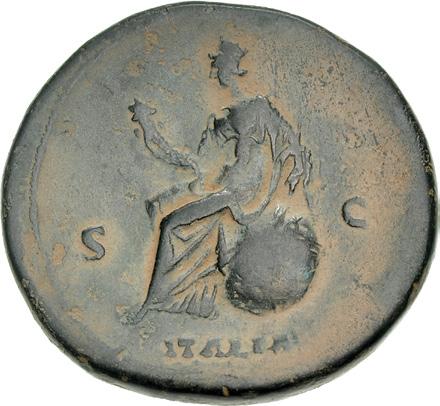
238. Antoninus Pius. AD 138-161. Æ Sestertius (31mm, 25.64 g, 12h). Rome mint. Struck circa AD 141-143. Laureate head right / Victory driving galloping quadriga right, holding reins. RIC III 653; Banti 508. Brown surfaces, light smoothing, edge scuff. Good VF. An attractive coin in hand. ($200)
Purchased from Brian Kritt, January 2014. Ex Glendining’s (14 December 1988), lot 423.
239. Antoninus Pius. AD 138-161. Æ Sestertius (35.5mm, 26.74 g, 12h). Rome mint. Struck circa AD 141-143. Laureate head right / Italia seated left on globe with zones and stars, wearing towered crown, holding cornucopia and scepter. RIC III 746a; Banti 194. Dark green patina, earthen deposits, some minor cleaning marks. Near VF. ($100)
Ex Roma E-Sale 82 (15 April 2021), lot 1350.
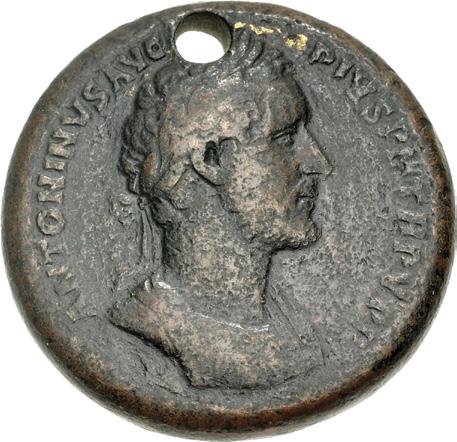
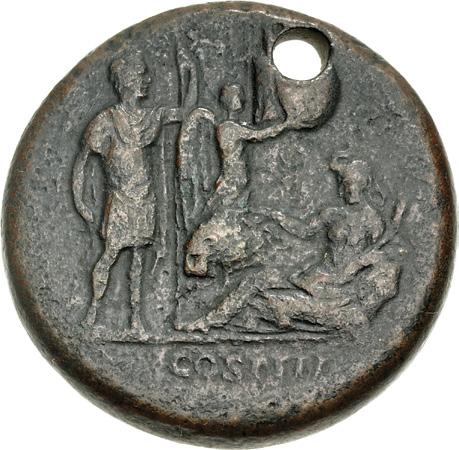
240. Antoninus Pius. AD 138-161. Æ Medallion (37mm, 49.30 g, 12h). Rome mint. Struck AD 145-147. ANTONINVS
AVG PIVS P M TR P V PP, laureate and cuirassed bust right / COS IIII in exergue, the emperor stands to the right with a scepter in his left hand; in front of him Victory erects a trophy; to the right in the foreground, Alexandria (or Africa) reclines on a rock to the left, wearing an elephant headdress and holding two grain ears in her left hand; with her right hand she strokes a lion. Gnecchi II, p. 11, 23, pl. 45, 7 and 47, 1 var. (obv. legend); Banti 126 var. (same). Dark brown patina, holed, smoothing, tooling. Fine. Very rare. ($750)
Ex Gorny & Mosch 308 (12 November 2024), lot 3488.
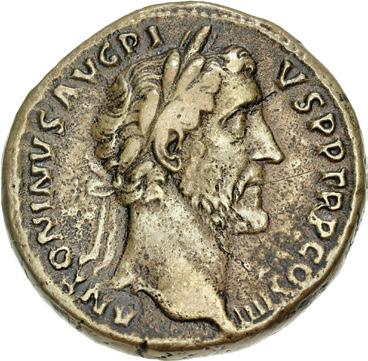
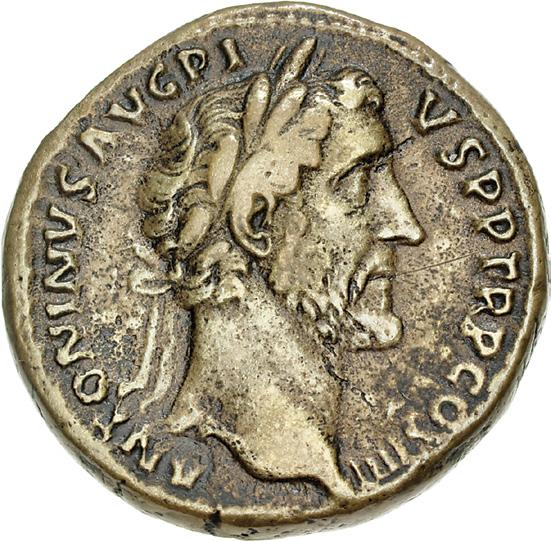
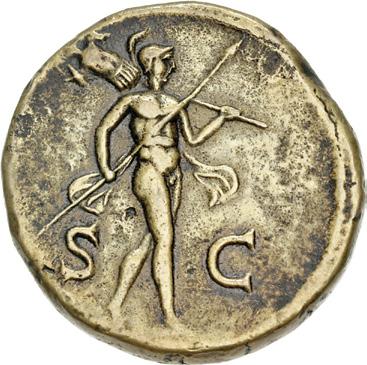
241. Antoninus Pius. AD 138-161. Æ Sestertius (29.5mm, 21.89 g, 12h). Rome mint. Struck AD 147. Laureate head right / Mars advancing right, holding transverse spear and trophy over shoulder. RIC III 778; Banti 363. Brown river patina with brassy highlights, scratch on obverse. VF. ($200)
Ex Áureo & Calicó 285 (14 December 2016), lot 1186.
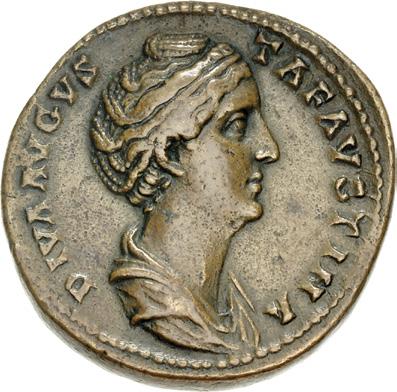
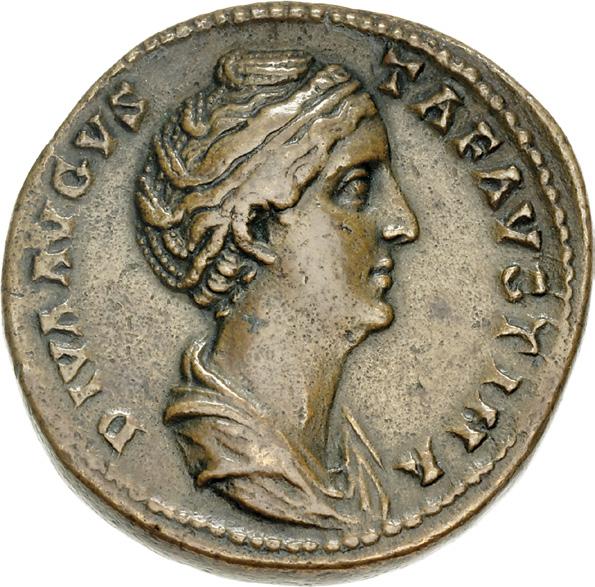
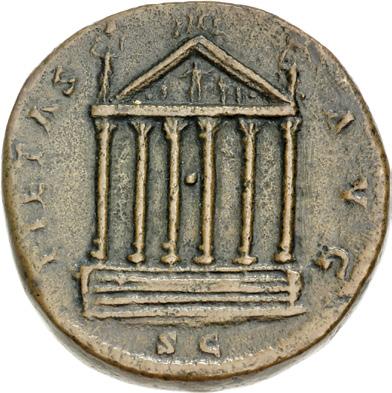
242. Diva Faustina Senior. Died AD 140/1. Æ Sestertius (32mm, 28.14 g, 12h). Rome mint. Struck under Antoninus Pius, circa AD 143-144. Draped bust right, wearing pearls bound on top of her head / PIETAS AVG, S C in exergue, the Temple of Antoninus Pius and Faustina: hexastyle temple façade set on a stepped base; ornate pediment decorated with figures; roof line surmounted by facing quadriga; figures with billowing veils at ends. RIC III 1148 (Pius); Banti 96. Attractive brown river patina. VF. Rare architectural reverse. ($750)
Purchased from Del Parker, 5 January 2012. Ex Noble 86 (21 November 2007), lot 3449; Triton I (2 December 1997), lot 1483.
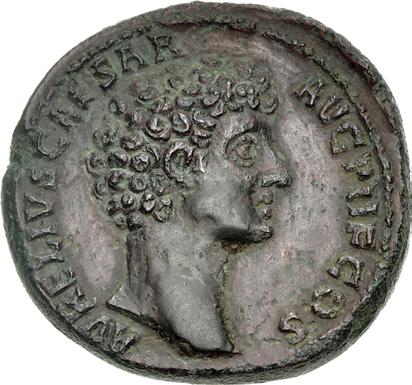
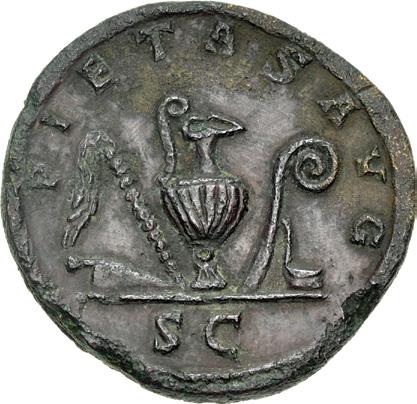
243. Marcus Aurelius. As Caesar, AD 139-161. Æ Sestertius (33mm, 25.13 g, 5h). Rome mint. Struck under Antoninus Pius, AD 140-144. Bare head right / Emblems of the pontificate: secespita, aspergillum, guttus, lituus, and simpulum. RIC III 1234a (Pius); Banti 230. Red-brown surfaces, heavily smoothed, tooled. VF. ($300)
Purchased from Herakles Numismatics, 10 April 2014.
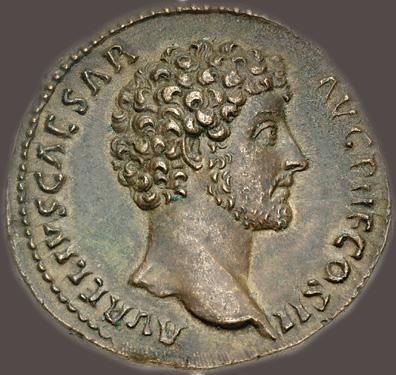
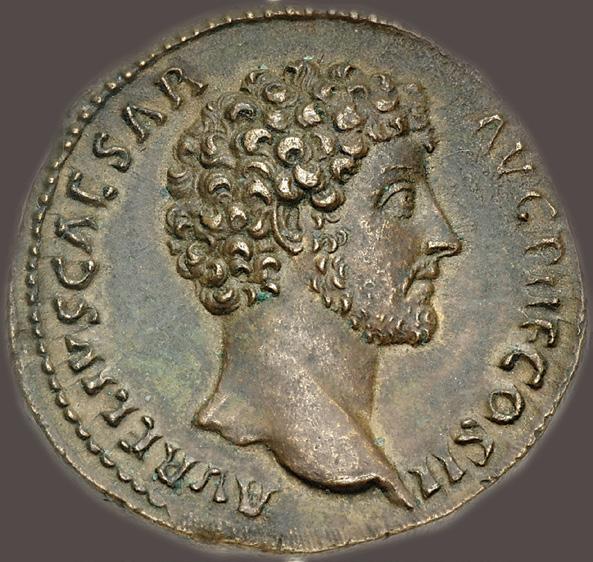
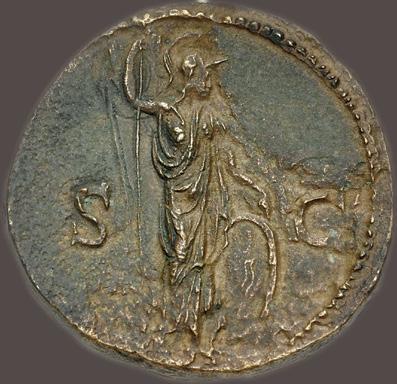
244. Marcus Aurelius. As Caesar, AD 139-161. Æ Sestertius (32mm, 25.40 g, 12h). Rome mint. Struck under Antoninus Pius, AD 145. Bare head right / Mars standing right, holding spear and resting hand on shield set on ground. RIC III 1245 (Pius); Banti 289. Brown patina, roughness on reverse. Near EF. Amazing, high-relief portrait. ($1500)
Purchased from Heritage in Long Beach, 12 February 2012.
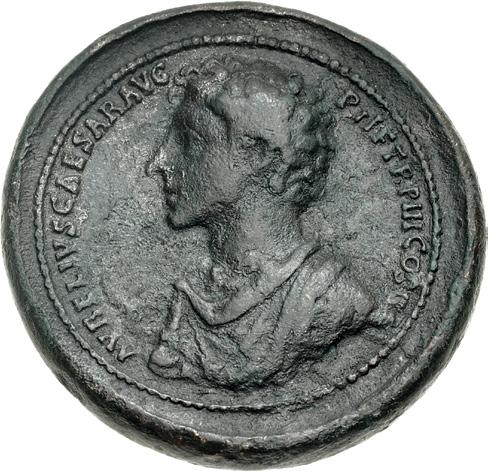
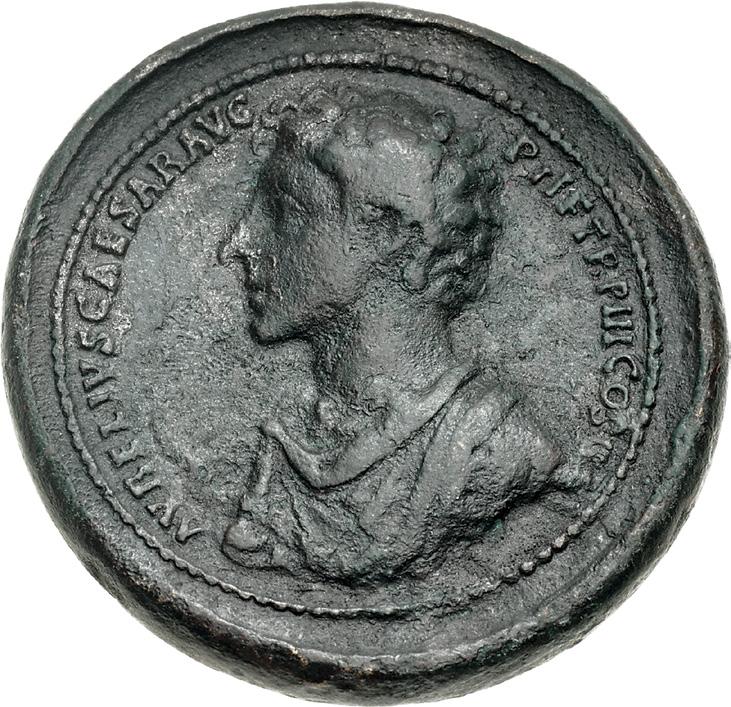
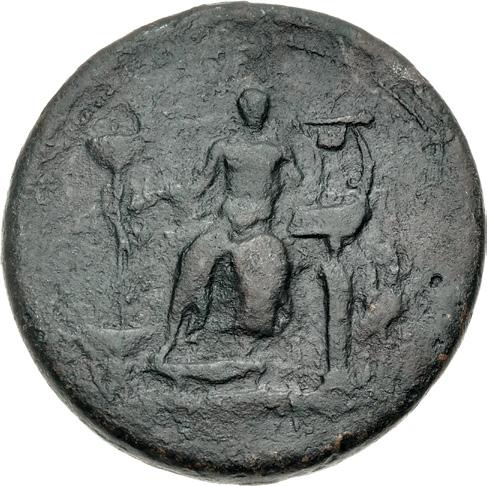
245. Marcus Aurelius. As Caesar, AD 139-161. Æ Medallion (40mm, 46.34 g, 12h). Rome mint. Struck under Antoninus Pius, AD 148-149. Bareheaded and draped bust left / Apollo seated to front on raised dais, loins and knees draped, feet resting on footstool, his left hand plucking strings of a lyre set on a column, griffin at base; his right hand holding a plectrum; to his right (viewer’s left), a Delphic tripod entwined with a serpent. Gnechhi vol. II, p. 35, 68 and plate 65, 4 (same dies); Banti 536. Dark green-brown and red patina, some roughness. Near VF. Very rare and impressive, the reverse showing more detail than the example plated in Gnecchi. ($3000)
Ex Triton XXV – Session 5 (25 January 2022), lot 5389.
The reverse likely depicts a cult statue located in the cella of the Temple of Apollo built by Augustus on Palatine Hill, on a spot struck by lightning and therefore considered sacred to the god. The temple was held to be the most magnificent of his architectural creations, although very little of it remains today.
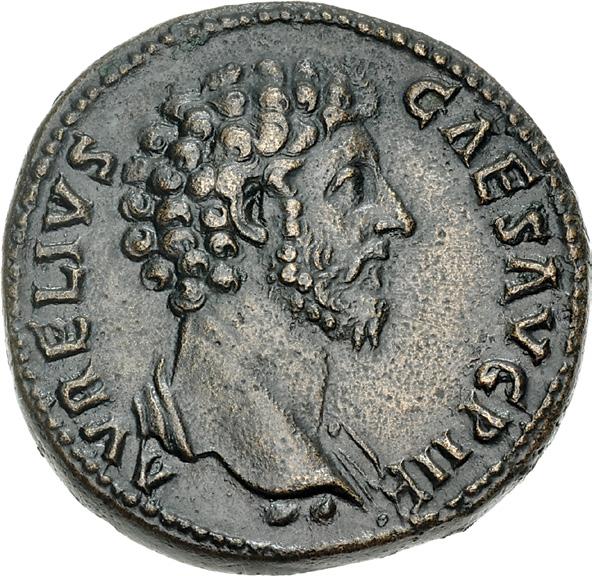
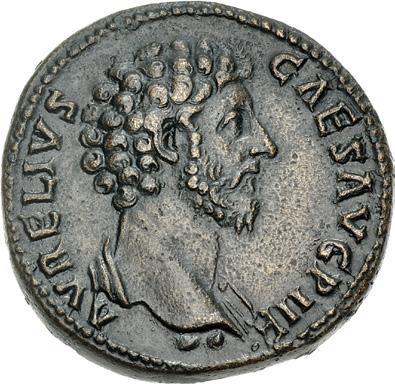
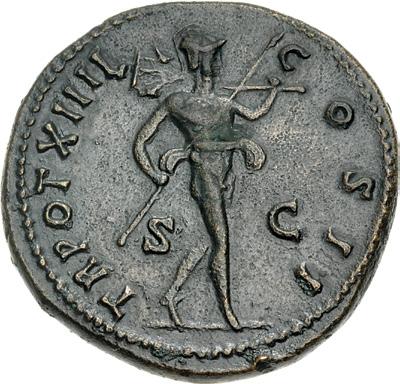
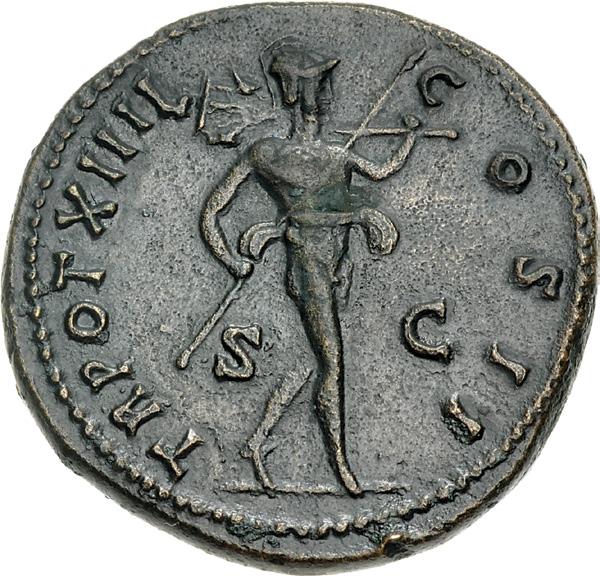
246. Marcus Aurelius. As Caesar, AD 139-161. Æ Sestertius (32mm, 24.33 g, 11h). Rome mint. Struck under Antoninus Pius, AD 159-160. Bareheaded bust right, slight drapery / Mars advancing right, holding spear and trophy over shoulder. RIC III 1352Aa (Pius); Banti 383. Brown patina, minor roughness, edge mark. Good VF. ($500)
Ex Gemini VIII (with Heritage, 14 April 2011), lot 350.
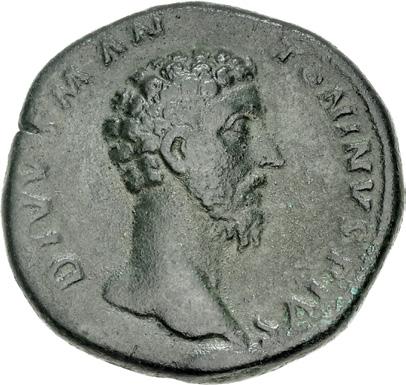
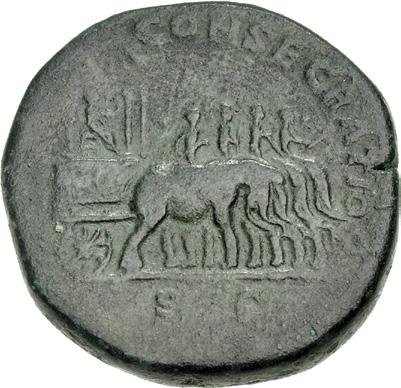
247. Divus Marcus Aurelius. Died AD 180. Æ Sestertius (33mm, 27.58 g, 11h). Rome mint. Struck under Commodus, AD 180. Bare head right / Aurelius, holding Victory, seated right on chair within shrine set on cart drawn right by quadriga of elephants with drivers. RIC III 661 (Commodus); MIR 18, 488-6/10; Banti 52. Dark green patina. Near VF. ($200)
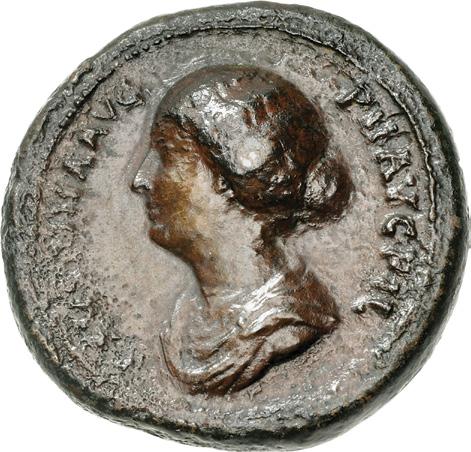
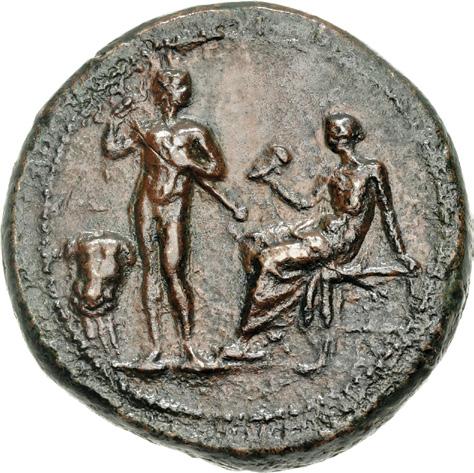
248. Faustina Junior. Augusta, AD 147-175. Æ Medallion (39mm, 51.87 g, 10h). Rome mint. Draped bust left / Mars, naked, standing facing, head right holding sword and uncertain object; on the right, Venus seated left, offering helmet to Mars; to far left, cuirass. Gnecchi II, p. 39, 11, pl. 67, 9 (this coin cited and illustrated); MIR 18, –; Banti 149 (this medallion cited and illustrated). Brown surfaces, areas of corrosion, smoothing. VF. Extremely rare. ($2000)
Purchased from Künker, 25 September 2021. Ex Vicomte de Sartiges Collection (Ars Classica XVIII, 10 October 1938), lot 271; Baron Friedrich von Schennis Collection (J. Hirsch XXIV, 10 May 1909), lot 1658.
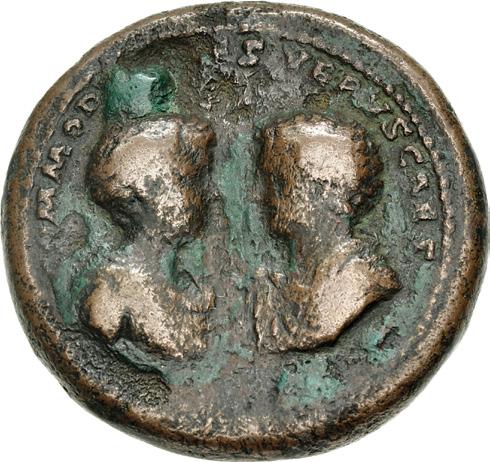
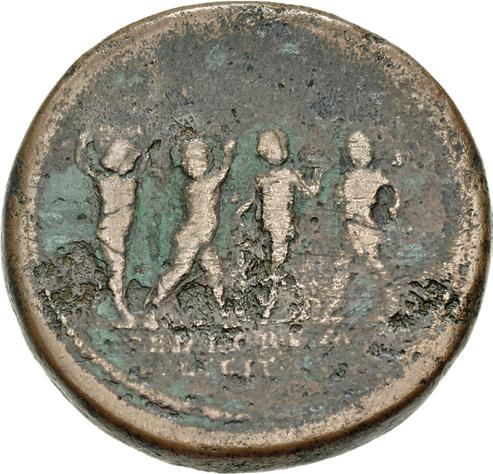
249. Commodus and Annius Verus. As Caesars, AD 166-169. Æ Medallion (40mm, 54.37 g, 12h). Dynastic issue. Rome mint. Struck AD 167-169. COMMOD VS CAES VERVS CAES, bareheaded and draped busts of Commodus and Annius Verus facing each other / TEMPORVM/ FELICITAS in two lines in exergue, the Four Seasons, as young boys, dancing and showing their attributes: from left to right, Spring carries a basin on his head, Summer holds a sickle in right hand above his head, Autumn holds a hare and a tray full of fruit, Winter wears a hood over his head and holds a bird which he has just captured, probably a wild duck. Gnecchi p. 44, 1, pl. 72, 1; MIR 18, 1048-1/12-22; Banti –. Green and brown surfaces, some cleaning marks, roughness. Fair. Extremely rare. ($1500)
Ex Phil Peck (“Morris”) Collection (Heritage 3071, 7 January 2019), lot 32137; Riechmann XX (18 September 1922), lot 735; Marie Fenerly Hristic (Christitch) Collection (Egger XLI, 18 November 1912), lot 1231; Dr. Pavlakis Fenerlis (Fenerly Bey) Collection (1833–1911).
The marriage between Marcus Aurelius and Faustina the Younger was fraught with numerous untimely deaths among their children. At the time of this medallion’s issue, the couple had already had 12 of their eventual 13 children. Of these, six had died, thereby leaving Commodus and his younger brother, Marcus Annius Verus, as the sole surviving male heirs. The reverse harkens to hopeful longevity, with the four seasons depicted as young boys. Alas, Annius Verus died in 169 at the age of 7, leaving Commodus the sole surviving heir to the throne.
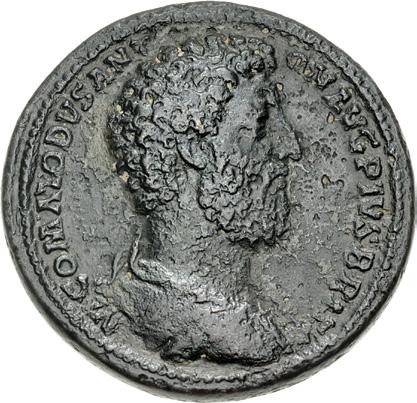
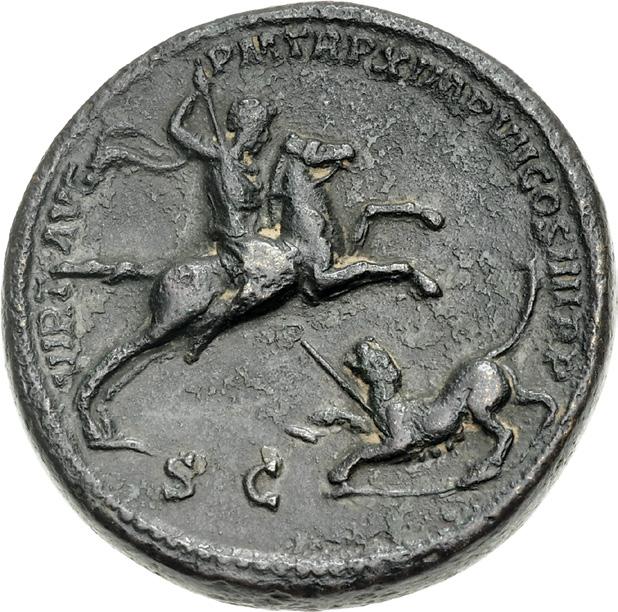
250. Commodus. AD 177-192. Æ Sestertius (34mm, 32.54 g, 12h). Rome mint. Struck AD 185. Bareheaded and draped bust right / Commodus on horseback galloping right, striking panther with spear, which is already wounded by spear in its chest. RIC III 453b; MIR 18, 667-6/13; Banti 491. Dark green-brown surfaces, areas of porosity and earthen deposits. VF. Rare. ($2000)
Ex Classical Numismatic Group 99 (13 May 2015), lot 663; Collection of an Athenian Amateur (Ciani, 12 December 1921), lot 118.
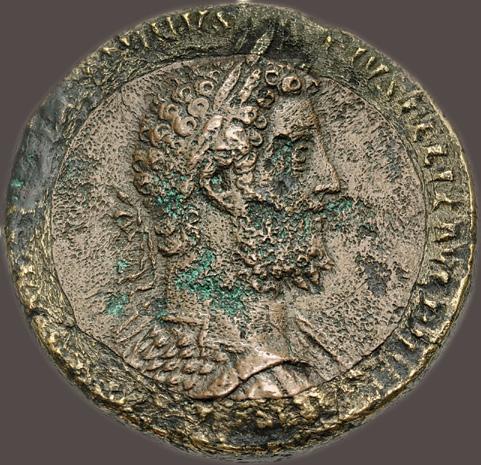
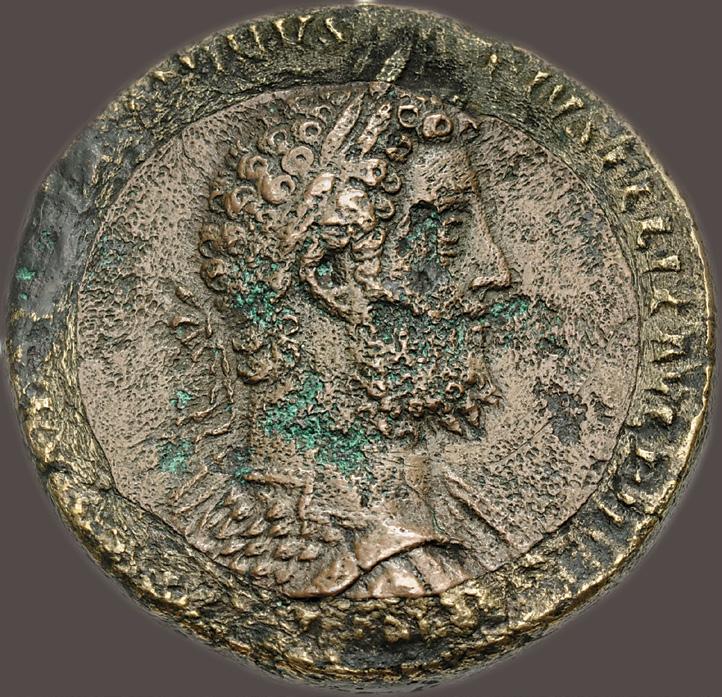
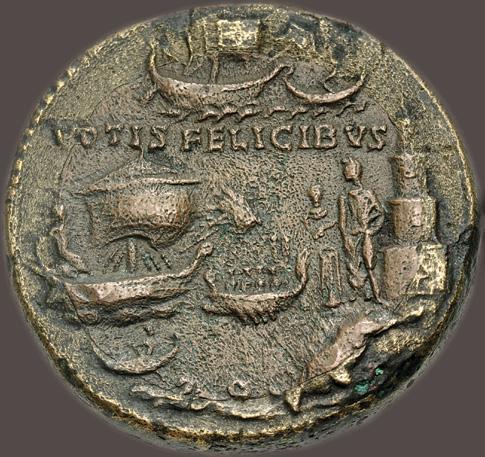
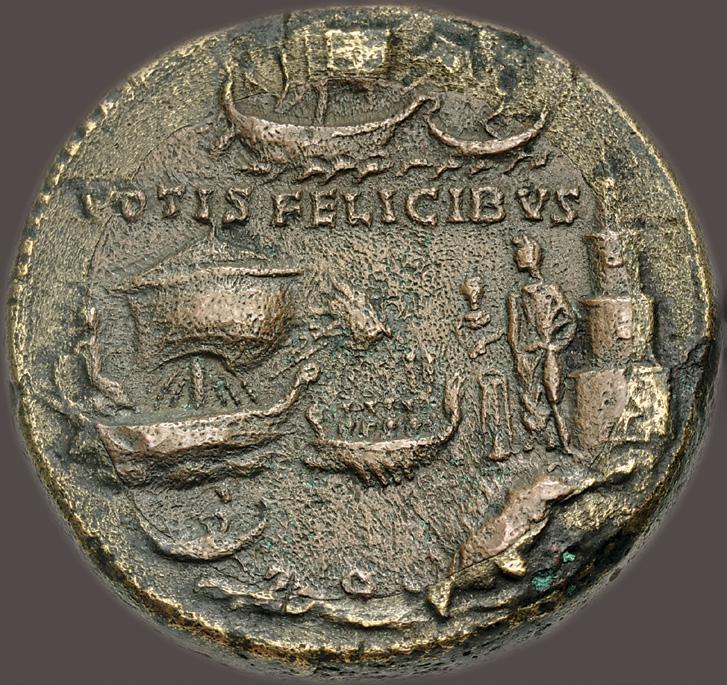
251. Commodus. AD 177-192. Æ Bimetallic Medallion (38mm, 55.70 g, 11h). Rome mint. Struck AD 189-190. [M COMMODVS ANTO]NINVS PIVS FELIX AVG BRIT, laureate and cuirassed bust right / VOTIS FELICIBVS, Commodus and another figure sacrificing at a tripod altar in the harbor of Ostia, below them a slain bull and a patera, behind them a lighthouse, while two grain ships sail into the harbor, one of them piloted by Serapis, and two smaller ships row out to meet the grain ships. Gnecchi II, p. 71, 172; MIR 18, 1139-1/31; Banti 521. Light brown patina, areas of corrosion. VF. Bold details on reverse. Very rare. ($6000)
Ex Künker 419 (17 March 2025), lot 491; Künker 273 (14 March 2016), lot 811; Virgil M. Brand (†1926) Collection (Part 1, Sotheby’s, 1 July 1982), lot 109.
A reoccurrence of the Antonine Plague of the late 2nd Century struck Rome in AD 189 during the reign of Commodus. During this bout of the outbreak, a riot broke out among the Roman populace during the races at the Circus Maximus. The rioters blamed the powerful Praetorian Prefect, Marcus Aurelius Cleander, and marched on Commodus’ residence in the Quintilian suburb to have their grievances heard. Commodus acquiesced to the mob’s demands and had Cleander and his son executed. Cassius Dio recounts the episode in his Historia Romana (LXXIII.13.1-6)
With the immediate crisis averted, Commodus sought to ameliorate the grain situation. To this end he took vows to Neptune for safe passage of the next shipment of Egyptian grain (commemorated on another contemporary medallion). This very rare medallion offered here likewise recounts this episode. Its legend, VOTIS FELICIBVS (with joyful/happiest vows), recounts the answered prayers. The medallion’s design depicts Commodus at the port of Ostia witnessing the arrival of the Egyptian grain ships (piloted by Serapis). Thus, the crisis was resolved and duly commemorated on these very rare medallions.
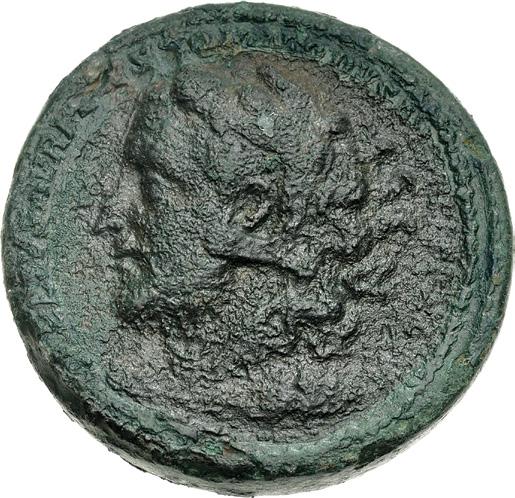
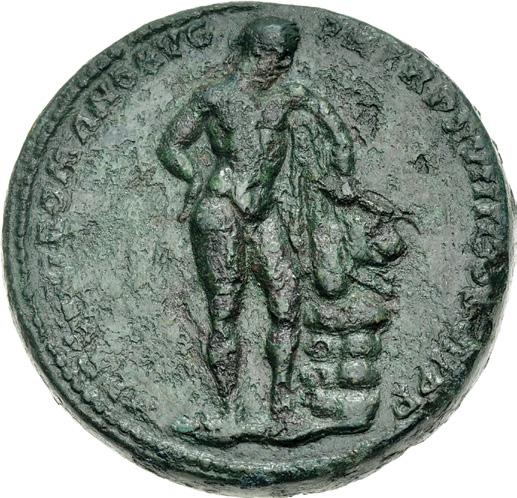
252. Commodus. AD 177-192. Bimetallic Medallion (42mm, 71.36 g, 11h). Rome mint. Struck AD 192. Head of Commodus as Hercules left, wearing lion skin headdress / Hercules laureate with features of Commodus, nude to right, right hand on hip and bow in left. With his armpit he leans on the club, around which the skin of a lion can be seen, and which rests on a pile of rocks. Gnecchi II p.55, 33 and pl. 80, 5/p. 54, 29 and pl. 80, 2 (for obv./rev. types); MIR 18, 1163-2/73; Banti 109; Vermeule, Roman, 45. Green and brown patina, corrosion on obverse, smoothing in the fields on reverse. Near VF. Very rare. ($3000)
Ex Leu Numismatik AG Web Auction 20 (16 July 2022), lot 2522.
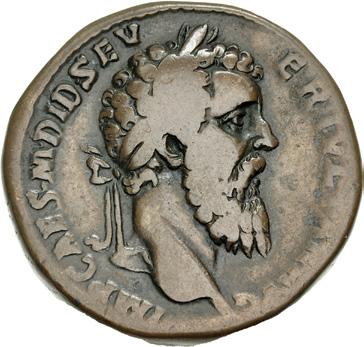
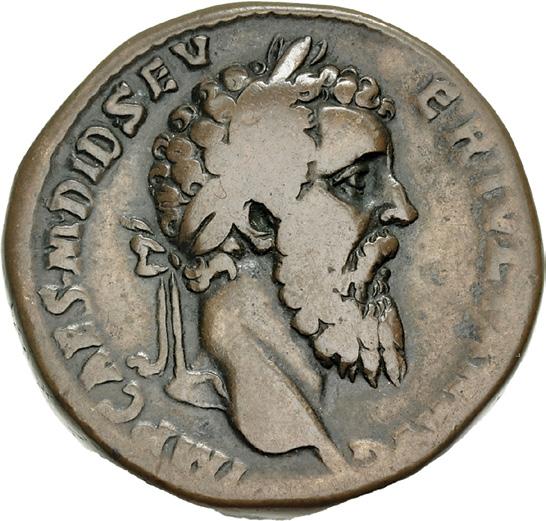
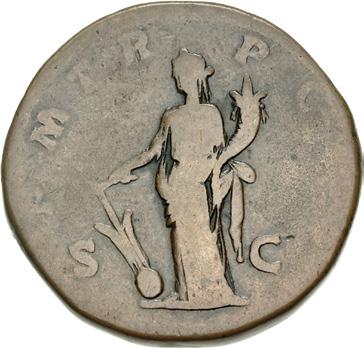
253. Didius Julianus. AD 193. Æ Sestertius (29mm, 20.16 g, 6h). Rome mint. Laureate head right / Fortuna standing left, holding rudder set on globe and cornucopia. RIC IV 15; Banti 5. Attractive brown patina. Good Fine. Bold portrait. ($500)
Ex Cederlind 157 (14 December 2010), lot 238.
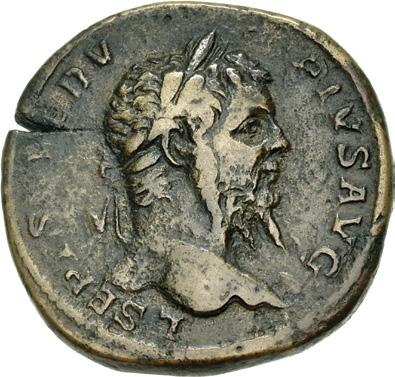
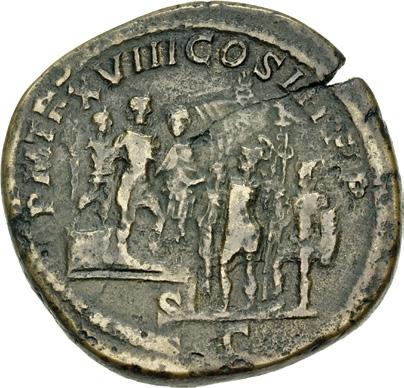
254. Septimius Severus. AD 193-211. Æ Sestertius (32mm, 20.82 g, 12h). Rome mint. Struck AD 210. Laureate bust right, slight drapery / Septimius, Caracalla, and Geta on platform, guarded by lictor standing before platform and holding fasces, addressing two soldiers who hold a signum and an aquila; between the soldiers, head and forepart of horse. RIC IV 800b; Banti –. Brown patina, double struck on reverse, flan crack. Near VF. Very rare. ($500)
Ex Berk BBS 125 (27 February 2002), lot 761.
This Adlocutio type refers to Septimius’ campaign against Scottish tribes, in the course of which he fell ill and died (February AD 211).
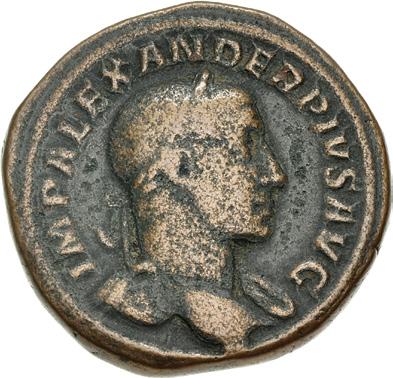
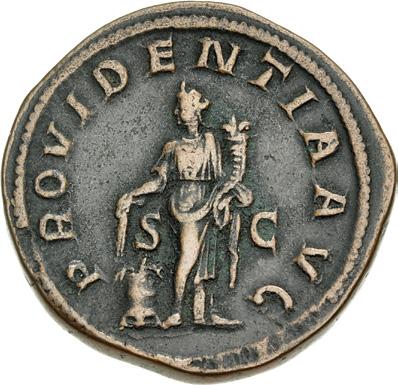
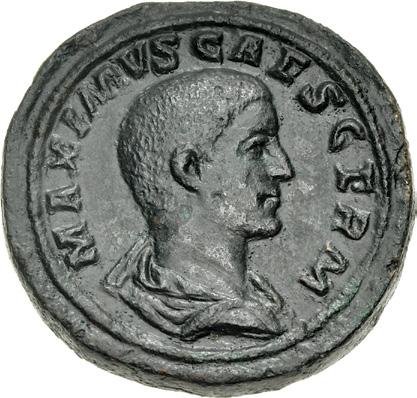
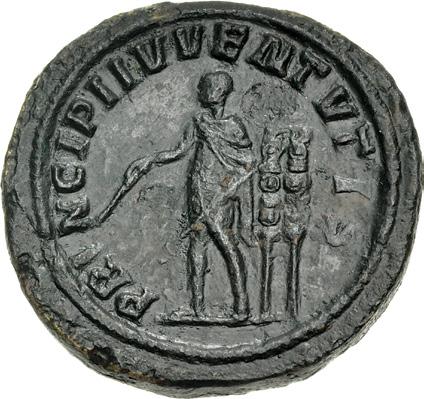
255. Severus Alexander. AD 222-235. Æ Sestertius (32mm, 26.23 g, 11h). Rome mint. 15th emission, AD 232. Laureate bust right, slight drapery / Providentia standing left, holding cornucopia and two grain ears over modius filled with grain ears. RIC IV 642; BMCRE 883-7; Banti 147. Dark brown patina, coppery highlights, light roughness. Fine. ($75)
Ex Pegasi Auctions XXIII (23 November 2010), lot 552.
256. Maximus. Caesar, AD 235/6-238. Æ Sestertius (34mm, 33.53 g, 12h). Rome mint. 3rd emission of Maximinus I, late AD 236-237. Bareheaded and draped bust right / Maximus standing left, holding baton and transverse spear; two signa to right. RIC IV 13 (Maximinus I); BMCRE 213-7 (Maximinus); Banti 6. Dark brown patina, smoothed, tooled. Good VF. Struck on a heavy flan. ($200)
Ex Oslo Myntgalleri AS 28 (6 May 2022), lot 396; Münz Zentrum 65 (9 November 1988), lot 1108.
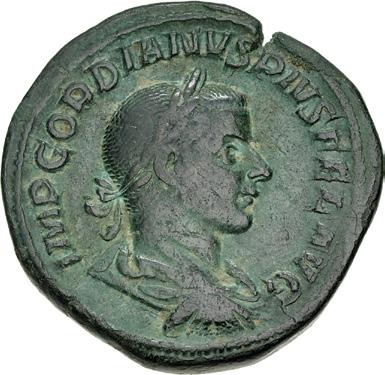
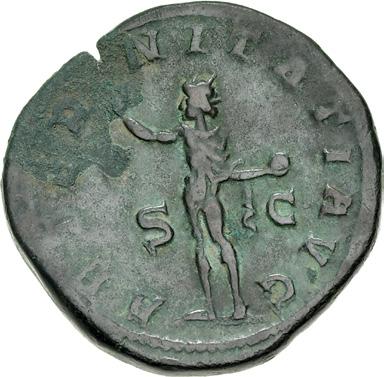
257. Gordian III. AD 238-244. Æ Sestertius (31.5mm, 21.10 g, 12h). Rome mint, 1st officina. 8th-11th emissions, late AD 240-early 243. Laureate, draped, and cuirassed bust right / Sol standing left, raising hand and holding globe. RIC IV 297a; Banti 20. Green patina, traces of earthen deposits. Near VF. ($75)
Purchased from Freeman & Sear, March 2015.
Proto-contorniate Double Sestertius
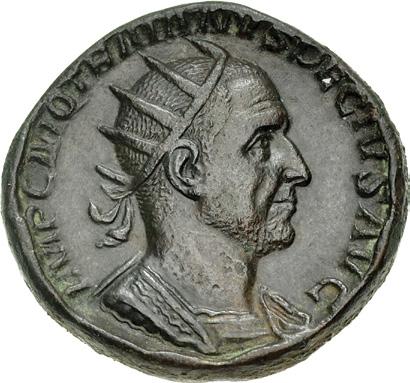
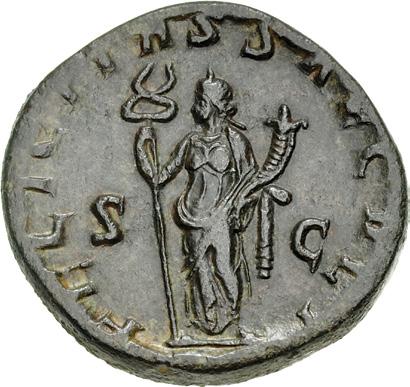
258. Trajan Decius. AD 249-251. Æ Double Sestertius (33.5mm, 30.28 g, 11h). Rome mint, 4th officina. 3rd emission, AD 250. Radiate and cuirassed bust right / Felicitas standing left, holding long caduceus and cornucopia. RIC IV 115a; Banti 9. Dark red-brown patina, smoothing. Good VF. A proto-contorniate, the edges having been tapped to create raised rims. ($500)
Ex Goldberg 103 (20 February 2018), lot 2207; Bertolami Fine Arts 29 (22 March 2017), lot 610.
Proto-contorniate is the modern term used to describe Roman Imperial and Provincial bronze coins of the first, second, and early third centuries with hammered-up edges. These raised edges on the rims probably occurred after these bronze issues no longer circulated and ceased to be part of the currency in general use. These proto-contorniates are of both emperors and empresses and consist almost exclusively of earlier sestertii, dupondii, and asses. Although several different theories to explain this alteration have been offered over the years, it is generally accepted today that these were given by friends and family to each other as New Year’s gifts, perhaps in the late third and first half of the fourth centuries. This was first proposed by Andreas Alföldi in Die Kontorniaten (Budapest, 1943). The rims hammered in this manner gave them a distinctive appearance.
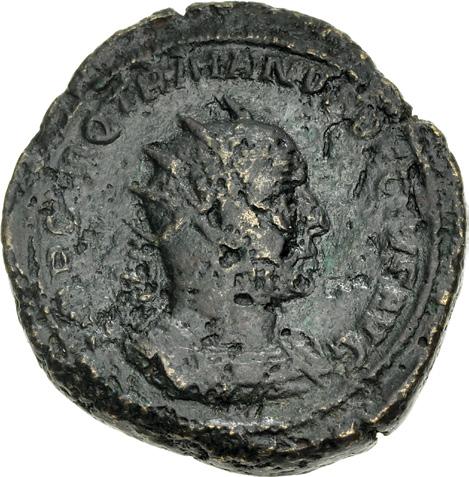
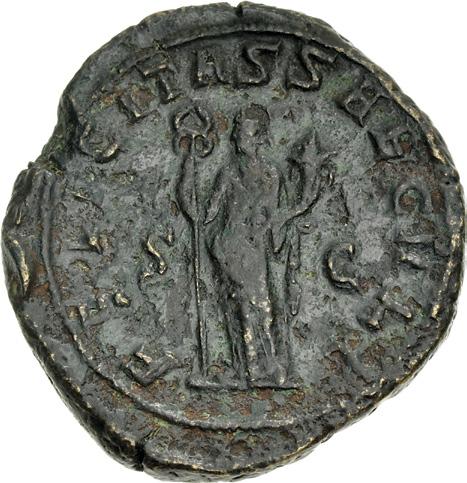
259. Trajan Decius. AD 249-251. Æ Double Sestertius (38mm, 42.41 g, 12h). Rome mint, 4th officina. 3rd emission, AD 250. Radiate and cuirassed bust right / Felicitas standing left, holding long caduceus and cornucopia. RIC IV 115a; Banti 9. Green-brown patina, areas of roughness, smoothing, edge mark. Fine. ($300)
Purchased from Pegasi Numismatics, September 2018.
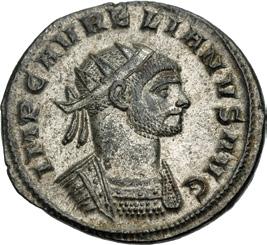
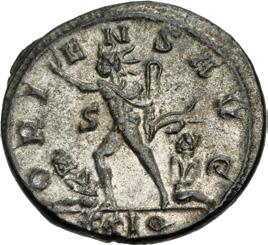
260. Aurelian. AD 270-275. Antoninianus (22mm, 3.83 g, 6h). Siscia mint, 4th officina. 8th emission, summer AD 274. Radiate and cuirassed bust right / Sol advancing left between two captives, raising hand and holding whip; S|–//XXIQ. RIC V Online 2337; RIC V 255; BN 880-1. Silvered, toned. EF. ($100)
Ex Palladium inventory F5994.
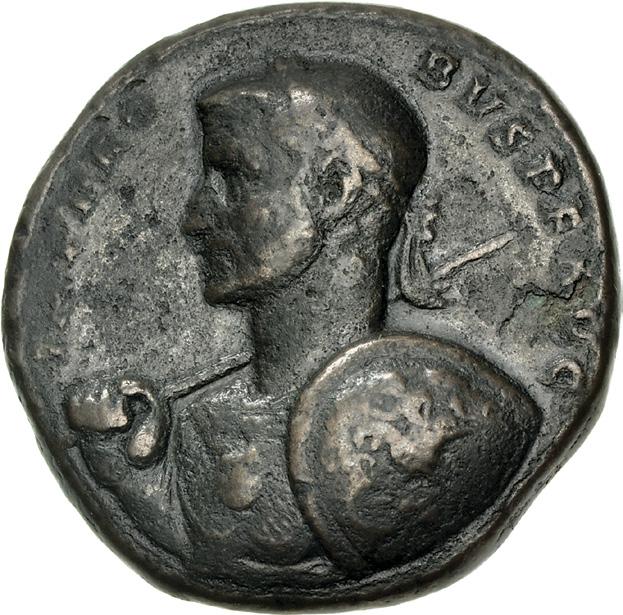
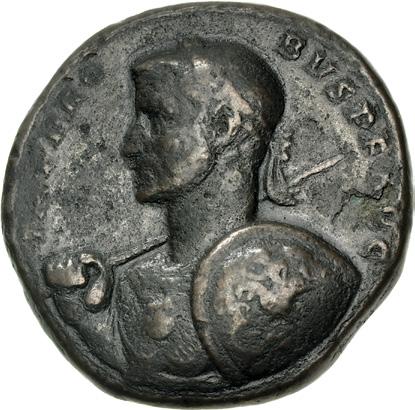
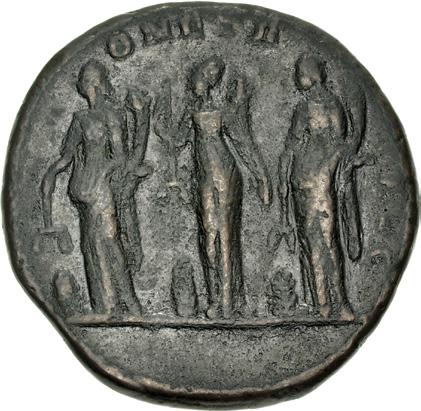
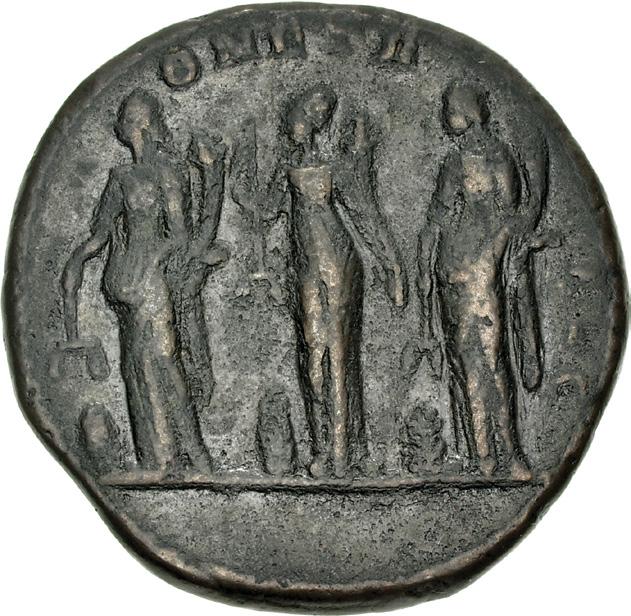
261. Probus. AD 276-282. Æ Medallion (34mm, 26.51 g, 12h). Rome mint. 5th festive emission, first half AD 281. IMP PRO BVS P F AVG, laureate and cuirassed half-length bust left, breastplate adorned with gorgoneion aegis, holding spear over shoulder and shield decorated by horseman motif / M ONETA AVG, the Tres Monetae standing left, each holding scale over pile of coins and a cornucopia. Gnecchi II 20 and pl. 120, 4 (same obv. die); S. Estiot, “Les émissions festives de l’atelier de Rome sous le règne de l’empereur Probus (276-282 AD)” in NZ (2019), 51 (D1/R10). Dark brown-green patina, some details enhanced. Good Fine. ($1500)
Ex Nilus Coins inventory 30715 (1 August 2017).
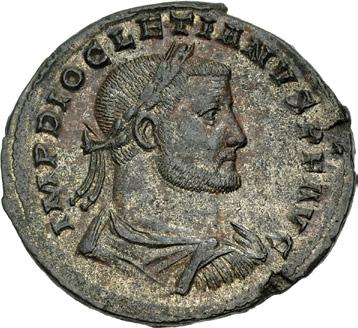
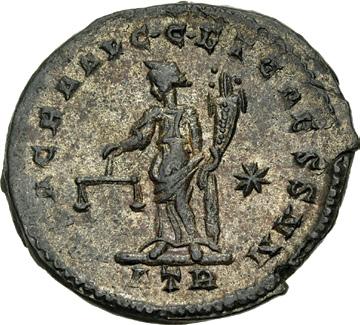
262. Diocletian. AD 284-305. Æ Follis (29.5mm, 8.33 g, 6h). Treveri (Trier) mint, 1st officina. Struck circa AD 300-301. Laureate, draped, and cuirassed bust right, seen from behind / Moneta standing left, holding scales and cornucopia; –|*//ATR. RIC VI 463. Dark brown patina and toned partial silvering. Near EF. ($100)
Ex Leu Numismatik Web 32 (7 December 2024), lot 2135; Rauceby Hoard, Lincolnshire (PAS ID LIN-F6D516; BM Ref 2016 T649).
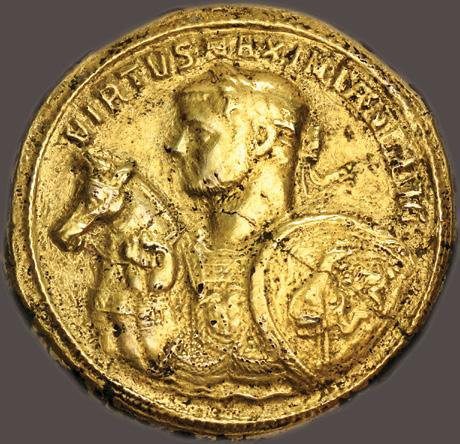
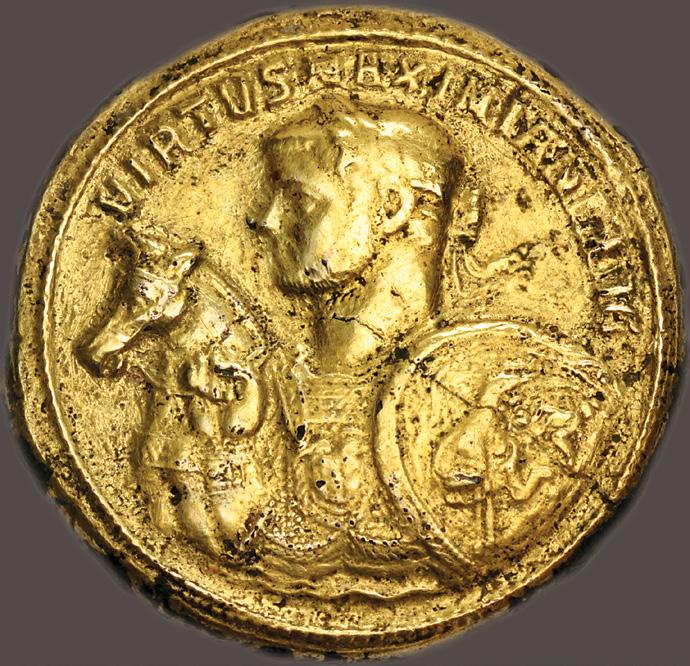
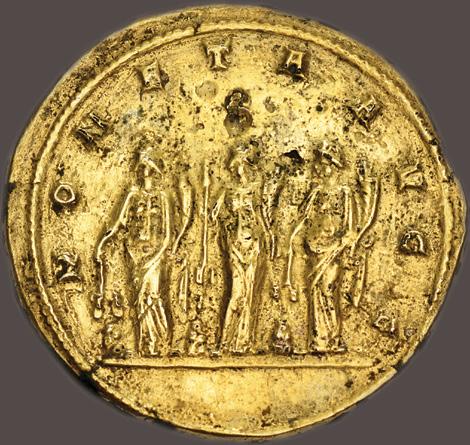
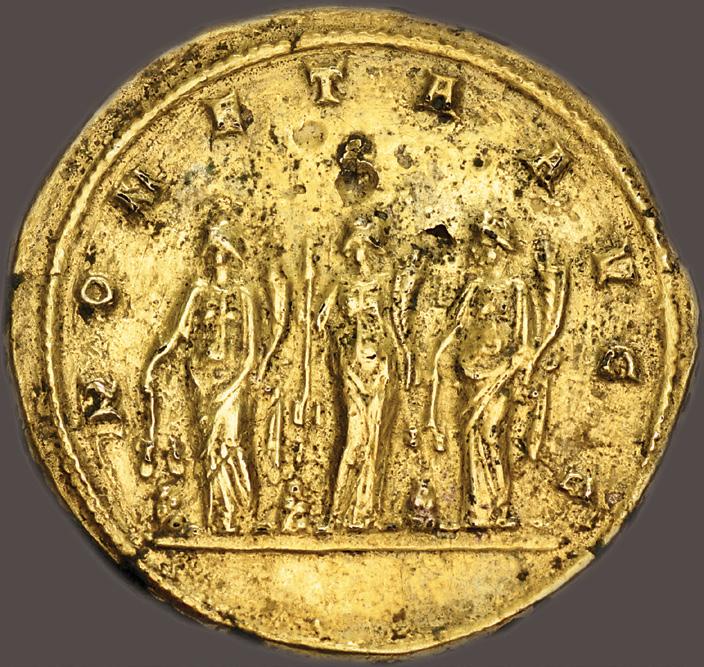
263. Maximianus. First reign, AD 286-305. Æ Medallion (37mm, 26.02 g, 12h). Rome (or Carthage) mint. Struck AD 297-298. VIRTVS MAXIMIANI AVG, laureate and cuirassed half-length bust left, breastplate adorned with gorgoneion aegis, holding a horse by the bridle and carrying a shield on his shoulder which is decorated by the she-wolf left, head right, nursing the twins Romulus and Remus / MONETA AVGG, the Tres Monetae standing left, each holding scale over pile of coins and a cornucopia. Gnecchi II p. 129, 18 and pl. 127, 6; G. Malingue, “Un médaillon de bronze de l’Empereur Maximien Hercule frappé à Carthage” in BSFN (2007), p. 121, fig. 10. Gilt, minor breaks in gilding, scratches, flan crack smoothing. VF. ($5000)
Ex Numismatica Ars Classica 138 (18 May 2023), lot 819; Numismatica Ars Classica 100 (29 May 2017), lot 618.
The Tres Monetae, female personifications of the metals of gold, silver, and bronze used to strike coins, regularly appear on Imperial medallions during the economic crisis of the second half of the third century and reflect the efforts of a series of emperors to revive the economy through monetary reform. By the time of the Tetrarchy, massive inflation had crippled the economy and Diocletian implemented dramatic economic reforms, which included the introduction of the silver argenteus and bronze follis in AD 294/5.
G. Malingue in his 2007 article hypothesizes that this series of medallions was possibly struck in Carthage utilizing resources from the Rome mint.
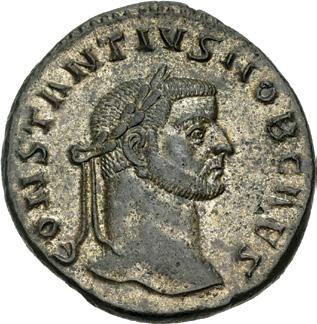
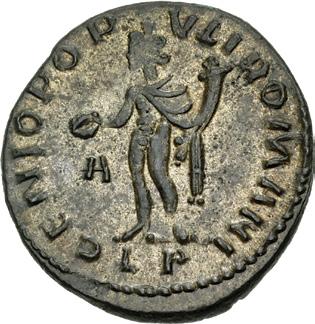
264. Constantius I. As Caesar, AD 293-305. Æ Follis (25.5mm, 8.60 g, 6h). Lugdunum (Lyon) mint, 1st officina. Struck circa AD 298. Laureate head right / Genius standing left, holding patera and cornucopia; A|–//LP. RIC VI 38a; Lyon 109. Toned near complete silvering. Good VF. ($100)
Ex Classical Numismatic Group Electronic Auction 584 (2 April 2025), lot 827; Rauceby Hoard, Lincolnshire (PAS ID LIN-F6D516; BM Ref 2016 T649).
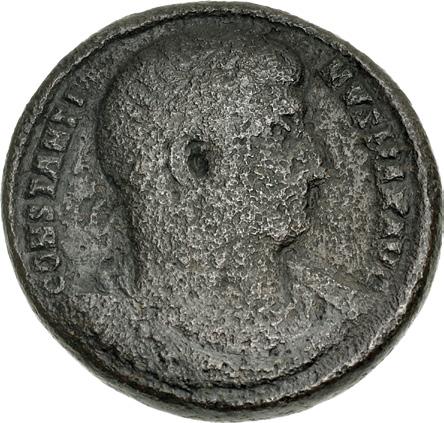
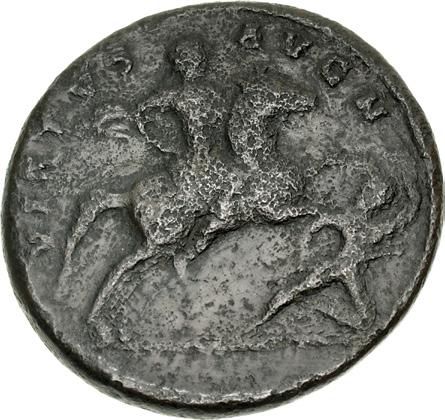
265. Constantine I. AD 307/310-337. Æ Medallion (36mm, 32.77 g, 12h). Rome mint. Struck AD 327-333/337. CONSTANTI NVS MAX AVG, rosette-diademed, draped, and cuirassed bust right / VIRTVS AVG N, Constantine I, wearing military attire, on horseback galloping right, thrusting spear held transversely at an enemy kneeling right, head left, raising hand, to lower right. Gnecchi II 20 and pl. 131, 34; RIC VII 309; Ntantalia – but cf. R48 (for rev. die). Brown patina, porosity, smoothing. Near Fine. Very rare. ($400)
Ex Phil Peck (“Morris”) Collection (Heritage 3071, 6 January 2019), lot 32266. This reverse die was also used for medallions of Constantine’s sons dated to AD 337-340. So, while RIC dates this issue to AD 327-333, this particular medallion may have been struck at the end of Constantine’s reign circa AD 337.
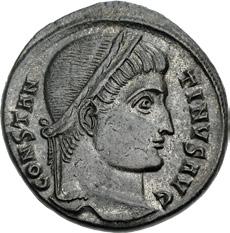
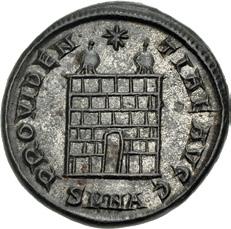
266. Constantine I. AD 307/310-337. Æ Follis (18.5mm, 3.76 g, 12h). Nicomedia mint, 1st officina. Struck AD 324-325. Laureate head right / City gate with two turrets, without doors, star above; SMNA. RIC VII 90. Dark brown patina and toned partial silvering. Near EF. ($100)
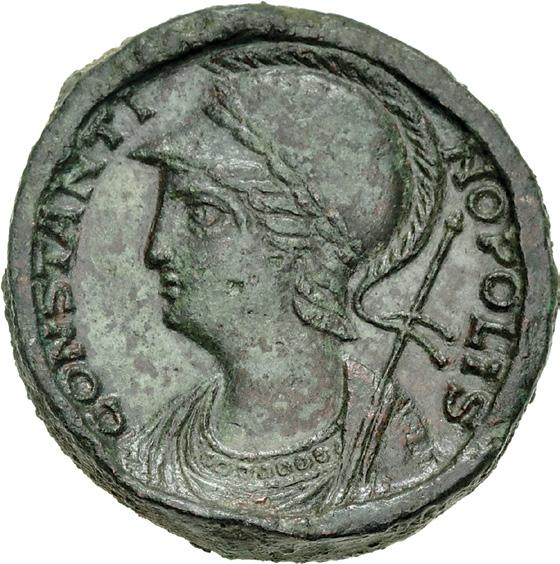
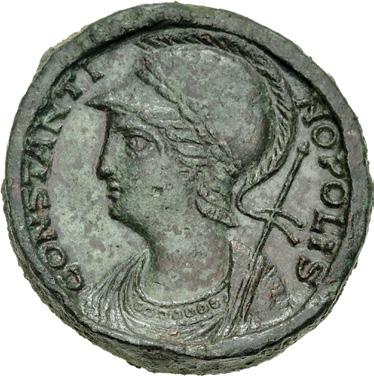
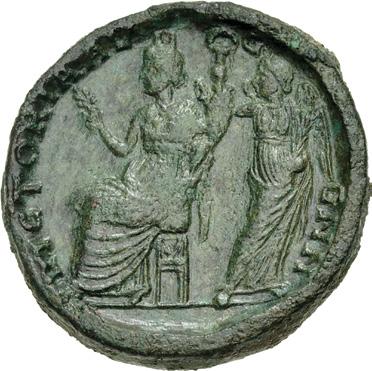
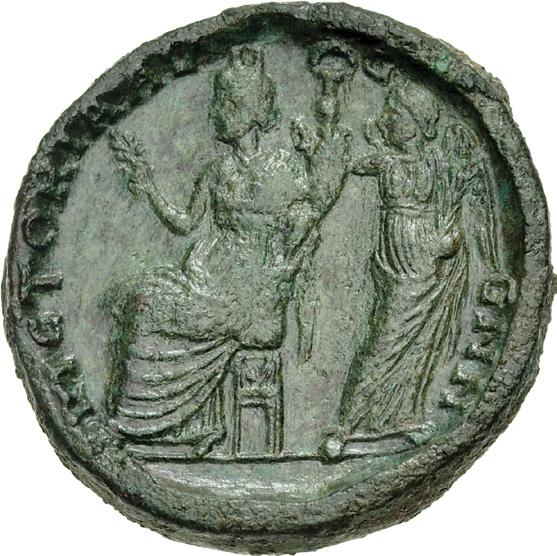
267. Commemorative Series. AD 330-354. Æ Medallion (29.5mm, 22.70 g, 12h). Rome mint. Struck AD 340-347. CONSTANTI NOPOLIS, laureate, helmeted, and mantled bust of Constantinopolis left, holding scepter over shoulder / VICTORIA AV G G NN, Constantinopolis, turreted, seated left, holding olive branch and cornucopia, being crowned by Victory, to right, standing left, holding wreath and palm frond. Gnecchi II 8; Ntantalia 11 (V7/R8); Kent 14. Dark green patina, smoothed, some tooling, edges hammered as a proto-contorniate. Good VF. Very rare. ($3000)
Ex Roma E-Sale 23 (9 January 2016), lot 633; Gorny & Mosch 224 (13 October 2014), lot 688.
In AD 324, Constantine I the Great selected the Greek city of Byzantium on the Bosphorus as the site of a new capital city to replace Rome, which he had come to believe was too distant from the Roman Empire’s wealthy eastern provinces and the strategically vital Balkans. Originally dubbed New Rome, the city was superbly situated at the crossroads of Europe and Asia, and would, he hoped, provide a fresh start for the empire under the newly favored Christian faith. The formal transfer came on May 11, AD 330, at which time the new capital was already being called Constantinopolis after its founder. Embellished by successive emperors and controlling trade between the Mediterranean and Black Sea, Constantinople swiftly became the wealthiest and most populous city in the world. During the reign of Theodosius II (AD 402-450), a formidable set of massive fortifications was constructed, making the city nearly invulnerable to attack by the siegecraft of the day. Throughout the fourth and fifth centuries, the East Roman Empire throve while the Western half succumbed to barbarian invasion and economic collapse.
This bronze medallion, intended as a handout to favored officials, was struck at the Rome mint during the joint reign of Constantine’s sons, Constantius II and Constans (AD 340-350). It reaches back to the pagan past to present Constantinopolis as an armor-wearing goddess, a virtual twin of Roma, venerable female personification of Rome. While Christian imagery had already begun to appear on Roman coinage, none is present here: The reverse depicts Constantinopolis, now dressed in civilian garb and wearing a turreted headdress similar to that of Tyche, seated to left and crowned by Victoria, another pagan goddess, along with a legend celebrating the “victories of our emperors.” Intriguingly, the edge was subsequently hammered up, perhaps in the early fifth century, turning the piece into a contorniate, a type of medallion or token issued in conjunction with public festivals and games during the late Roman Empire.
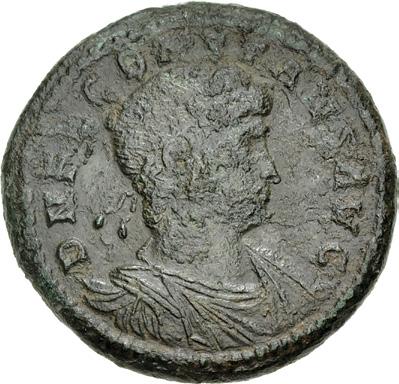
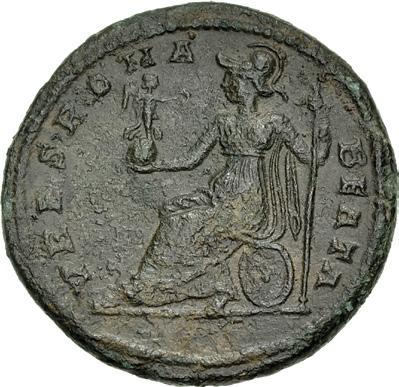
268. Constans. AD 337-350. Æ Medallion (32mm, 19.05 g, 6h). Rome mint. Struck AD 337-340. D N FL CONSTANS AVG, rosette-diademed, draped, and cuirassed bust right / VRBS ROMA BEATA, Roma, helmeted, seated left on shield, holding Victory on globe right and scepter. Gnecchi II 32; Ntantalia 90 (V67/R60). Dark green-brown patina, some roughness. Near VF. Very rare. ($750)
Ex Property of Princeton Economics acquired by Martin Armstrong (Classical Numismatic Group Electronic Auction 275, 7 March 2012), lot 171; Cornelius C. Vermeule III Collection (Classical Numismatic Group 50, 23 June 1999), lot 352; Henry Platt Hall Collection (Part II, Glendining’s, 16 November 1950), lot 2041.
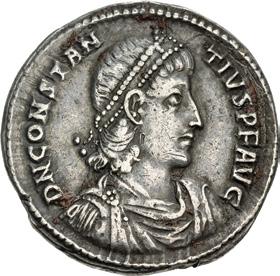
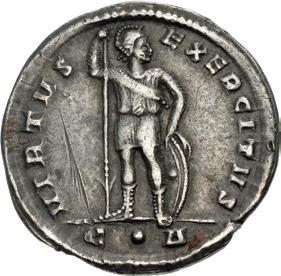
269. Constantius II. AD 337-361. AR Light Miliarense (22.5mm, 4.42 g, 12h). Constantinople mint, 4th officina. Struck AD 351-355. Pearl-diademed, draped, and cuirassed bust right / Soldier standing facing, head right, holding reversed spear and resting hand on shield set on ground to right; C•Δ. RIC VIII 100; RSC 326a. Toned, scratches and marks, edge marks, deposits. VF. Rare. ($400)
Ex Collection of a Mentor (Naville 73, 8 May 2022), lot 680.
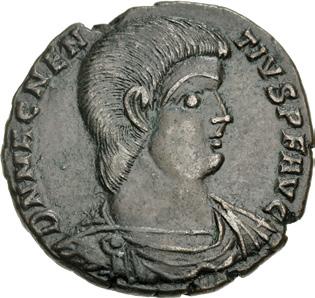
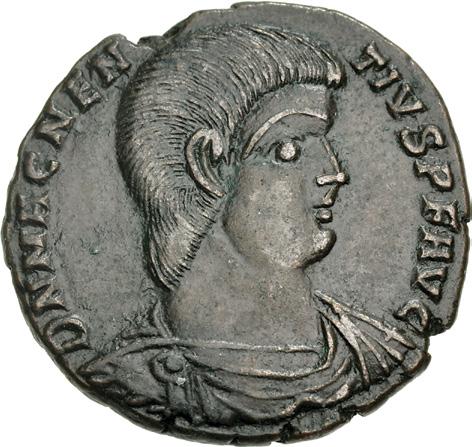
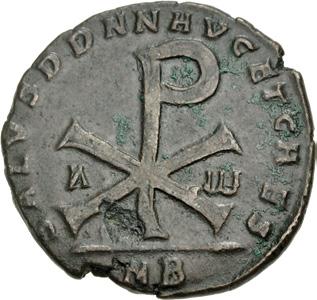
270. Magnentius. AD 350-353. Æ (25.5mm, 7.91 g, 6h). Ambianum (Amiens) mint. 7th emission, early-10 August AD 353. Bareheaded, draped, and cuirassed bust right / Large Christogram; A - ω flanking; AMB. RIC VIII 34; Bastien 135. Glossy dark brown patina with some verdigris. Good VF. ($100)
Ex Harlan J. Berk inventory cc64202 (16 January 2012).
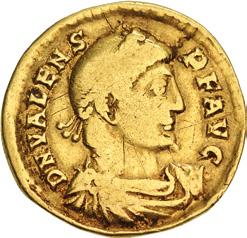
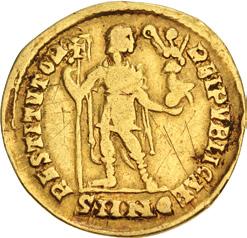
271. Valentinian I. AD 364-375. AV Solidus (21.5mm, 4.18 g, 12h). Antioch mint, 8th officina. Struck late AD 366-367. Pearl-diademed, draped, and cuirassed bust right / Valentinian standing facing, head right, holding labarum with staurogram on banner and Victory on globe left; ANTH•. RIC IX 2a.xvi; Depeyrot 27/2. Toned, clipped, scratches. Near VF. ($400)
Ex St. James’s 103 (15 April 2025), lot 3.
272. Valens. AD 364-378. AV Solidus (20.5mm, 3.81 g, 6h). Nicomedia mint, 5th officina. Struck AD 364. Pearldiademed, draped, and cuirassed bust right / Valens standing facing, head right, holding labarum and Victory on globe left; SMNЄ. RIC IX 2d.1; Depeyrot 10/2. Toned, scratches, graffiti, mount marks. Fine. ($400)
Ex Classical Numismatic Group Electronic Auction 584 (2 April 2025), lot 853; VAuctions 334/Triskeles 26 (7 December 2018), lot 846.
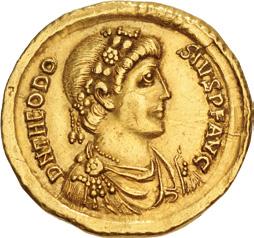
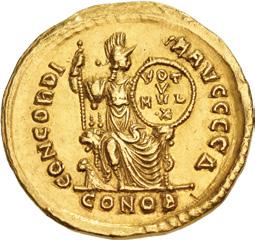
273. Theodosius I. AD 379-395. AV Solidus (20.5mm, 4.49 g, 6h). Constantinople mint, 4th officina. Struck AD 383385. Rosette-diademed, draped, and cuirassed bust right / Constantinopolis enthroned facing, head right, foot on prow, holding scepter and shield inscribed VOT/ V/ MVL/ X in four lines; Δ//CONOB. RIC IX 47b.4; Depeyrot 38/1. Toned, area of scratches, light hairlines, light deposits. Near EF. ($600)
Ex Classical Numismatic Group Electronic Auction 589 (18 June 2025), lot 709.
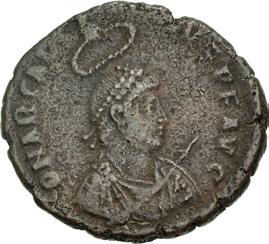
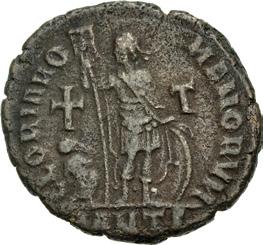
274. Arcadius. AD 383-408. Æ (21.5mm, 4.65 g, 11h). Antioch mint, 6th officina. Struck AD 383-388. Pearl-diademed, draped, and cuirassed bust right, holding spear pointing forward and shield; manus Dei above holding wreath / Arcadius, wearing military attire, standing facing, head left, holding labarum and resting hand on shield set on ground to right; at feet to left, bound captive kneeling right, head left; (cross)|T//*ANTS. RIC IX 60 var. (bust type). Dark brown surfaces, porosity. Near VF. ($75)
Ex Pegasi 138 (18 August 2009), lot 451.
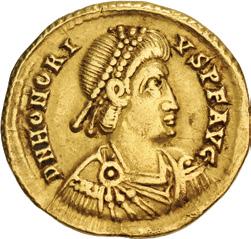
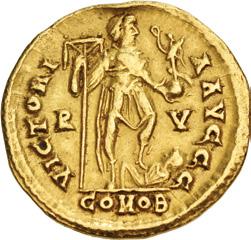
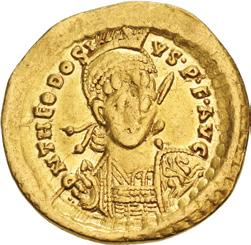
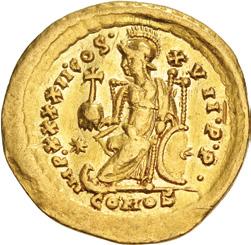
275. Honorius. AD 393-423. AV Solidus (21mm, 4.42 g, 6h). Ravenna mint. Struck AD 402-406. Pearl-diademed, draped, and cuirassed bust right / Honorius standing right, foot spurning captive, holding labarum and Victory on globe left; R|V//COMOB. RIC X 1287; Ranieri 12; Depeyrot 7/1. Toned. VF. ($500)
Ex Numismatik Naumann 151 (6 April 2025), lot 971.
276. Theodosius II. AD 402-450. AV Solidus (20.5mm, 4.30 g, 6h). Constantinople mint. Struck AD 443-450. Pearldiademed, helmeted, and cuirassed bust facing slightly right, holding spear over shoulder and shield / Constantinopolis seated left, holding globus cruciger and scepter, foot on prow; shield to right; star to left; COMOB. RIC X 293; Depeyrot 84/1. Toned with some luster, thin dig on reverse. VF. ($400)
Ex 1930’s Collection of Robert W. Hubel of Michigan (Classical Numismatic Group Electronic Auction 584, 2 April 2025), lot 857.
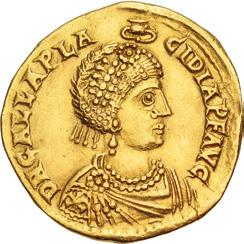
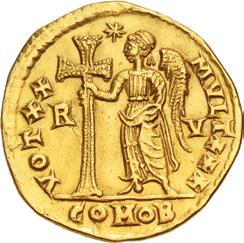
277. Galla Placidia. Augusta, AD 421-450. AV Solidus (20mm, 3.87 g, 12h). Ravenna mint. Struck under Valentinian III, AD 425-426. Pearl-diademed and draped bust right, wearing earring and necklace, shoulder decorated with Christogram; being crowned by manus Dei above / Victory standing left, holding long jeweled cross; star to upper left; R|V//COMOB. RIC X 2012; Ranieri 73; Depeyrot 13/2; Füeg, Corpus 49.15 (this coin); Lacam, Civilisation pl. CII, 2 (this coin illustrated); Biaggi 2333. Repaired, smoothed, tooled. VF. LOT SOLD AS IS, NO RETURNS. ($2000)
Ex Peh Family Collection (Heritage 3125, 27 August 2025), lot 30035; Gemini VIII (with Heritage, 14 April 2011), lot 501 (hammer $9,000); Lacam Collection (Dürr-Michel, 8 November 1999), lot 137 (since repaired, smoothed, and tooled); E. Bourgey (23 May 1910), lot 250 (illustrated on pl. III).
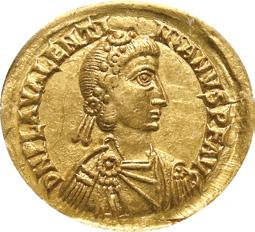
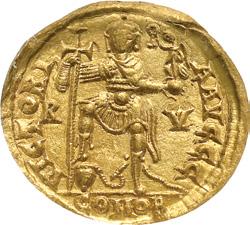
278. Valentinian III. AD 425-455. AV Solidus (20mm, 6h). Ravenna mint. Struck AD 426-circa 430/455. Rosettediademed, draped, and cuirassed bust right / Valentinian, wearing military attire, standing facing, foot on human-headed serpent coiled below, holding long cross and Victory on globe left; R|V//COMOB. RIC X 2010; Ranieri 95; Depeyrot 17/1. Toned. In ICG encapsulation 2912630156, graded MS 60. ($500)
Ex Property from an English Private Collection (Classical Numismatic Group Electronic Auction 589, 18 June 2025), lot 714; Heritage 3012 (2 January 2011), lot 24760.
Son of the brief-reigning Constantius III and the formidable Galla Placidia, daughter of Theodosius I, Valentinian III spent his early years in the care of his uncle, the Eastern Roman Emperor Theodosius II. After the death of Honorius in AD 425, the Western throne was seized by a military cabal who placed a relative nonentity, the Chamberlain Johannes, on the throne. Theodosius II found this intolerable and sent a military task force to install the six-year-old Valentinian III as Emperor of the West, with Galla Placidia acting as regent. After a number of misadventures, the Eastern army succeeded and Valentinian was formally crowned in Rome on 23 October, AD 425. Valentinian would go on to “reign” for nearly 30 years, although he grew into an ineffectual and pleasure-loving ruler who left the actual governing to a succession of court eunuchs while a series of powerful generals, chiefly Bonafatius and Flavius Aetius, fought against each other to secure dominance over the rapidly shrinking West Roman Empire. As with his similarly long-reigning but ineffectual uncle Honorius, the few acts Valentinian undertook on his own initiative turned out to be disastrous, chiefly the murder, by his own hand, of his chief general, Flavius Aetius, on 21 February AD 454. A year later, Valentinian was himself assassinated by two followers of Aetius. Poor leader that he was, Valentinian’s long reign was the only form of stability the western empire possessed and his sudden removal proved predictably catastrophic, with the West Roman Empire surviving his murder by only 21 years.
Roman “contorniates” (from the Italian contorno = border or edge) are a fascinating and enigmatic series of medallions produced in the 4th and 5th centuries distinguished by their turned up edges. Likely produced in private, non-Imperial workshops, the contorniates feature a dizzying array of types including ones derived from older Imperial coins, popular myths, famous writers and philosophers, and numerous circus and games related designs. Alföldi saw in them a form of Senatorial anti-Christian propaganda, but modern interpretations by Peter Franz Mittag challenge this, focusing instead on the contorniates in the context of the popular Roman practice of giving medallions or large bronze sestertii as new year’s gifts. Mittag’s view handily explains the use of the various Imperial coin types: as the original sestertii and proto-contorniates wore out and were lost to time, enterprising Romans replaced them with their own concoctions.
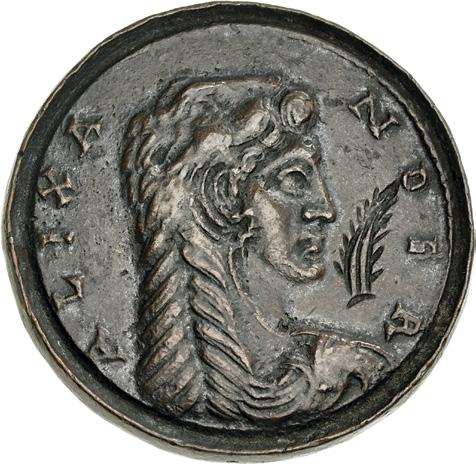
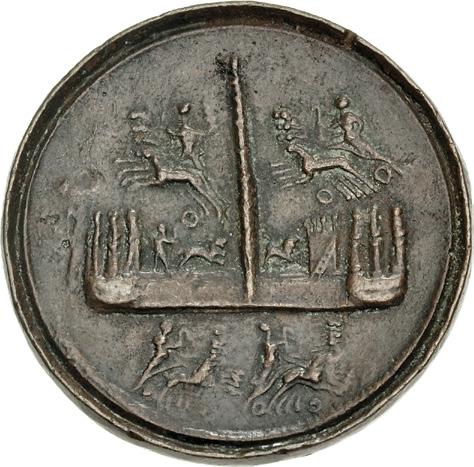
279. Contorniates. Late 4th-5th centuries AD. Cast Æ Contorniate (38mm, 31.39 g, 12h). Alexander III ‘the Great’ of Macedon. A 17th century cast from a lost original. ALEXA NDER, draped bust of Alexander right, wearing lion’s skin; palm frond “engraved” to right / Aerial view of chariot race in the Circus Maximus: spina with obelisk of Augustus flanked by metae, tholos on left(?), and statues of horseman and boar left; two quadrigae left above; two quadrigae right below; to left, standing figure; to right, rider or equestrian statue left. Alföldi, Kontorniat 31 (dies 8/144). Brown patina. Good VF. Rare. This is not an original coin, but a Renaissance copy ($500)
Ex Leu Numismatik Web Auction 8 (29 June 2019), lot 1945 (hammer 3200 CHF).
All examples of these dies are casts from a now lost original and can easily be identified by the identical “engraved” palm frond on each example. Specimens exist from the d’Este Collection with their countermark (Alföldi 31.1) as well as the Apostolo Zeno (1668-1750) Collection (Alföldi 31.7), indicating they were likely made in the 17th century.
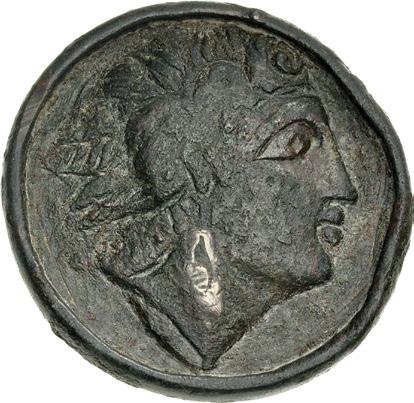
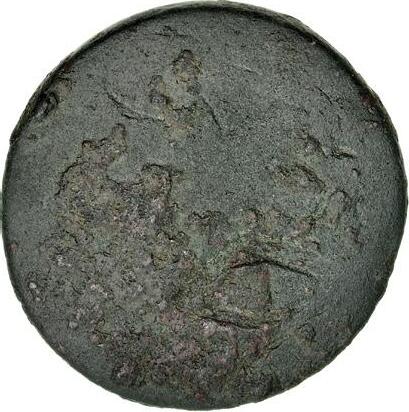
280. Contorniates. Late 4th-5th centuries AD. Æ Contorniate (33mm, 21.46 g, 6h). Alexander III ‘the Great’ of Macedon. Diademed head of Alexander the Great right / [A-LEX-A-ND-ER MAG, Alexander on horseback left, spearing fallen soldier to lower left; shield below horse; in exergue, MACEDON]. Alföldi, Kontorniat 46 (dies 12/10). Green and red-brown patina with some deposits, edges hammered and obverse details re-engraved in antiquity, the reverse design nearly worn smooth. Near VF/Poor. Rare. ($200)
Ex Künker 318 (11 March 2019), lot 2075.
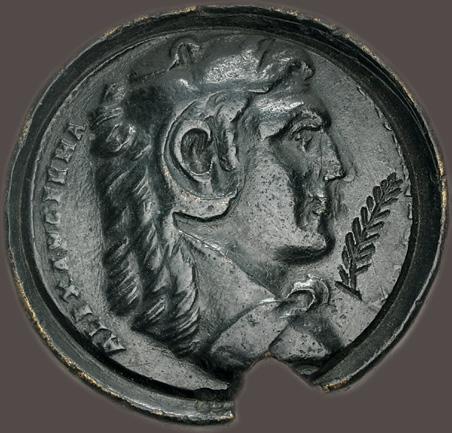
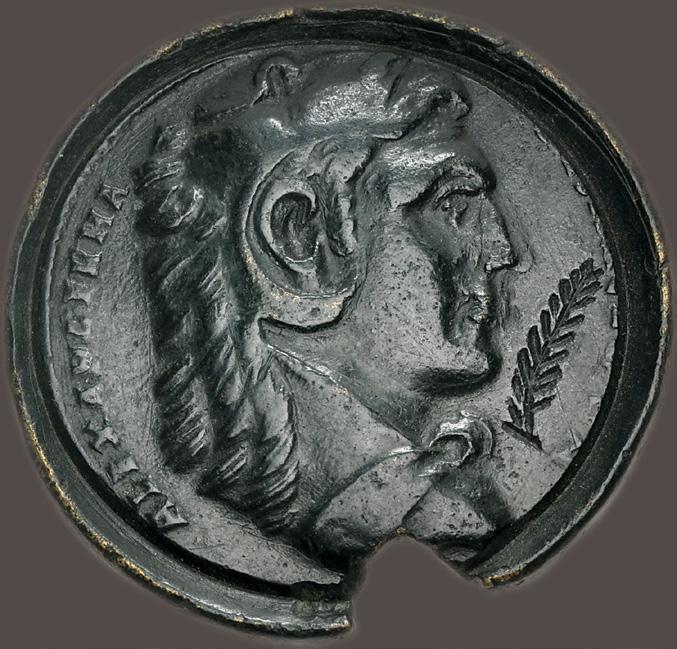
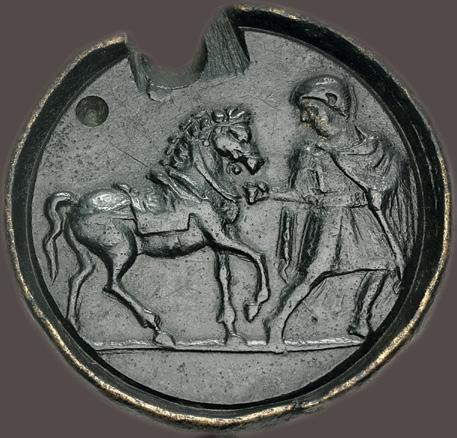
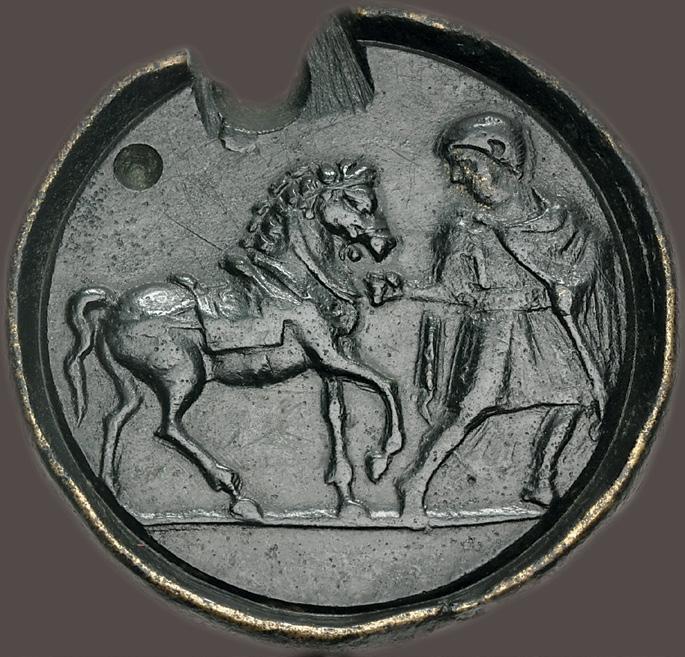
281. Contorniates. Late 4th-5th centuries AD. Æ Contorniate (36mm, 28.40 g, 7h). Alexander III ‘the Great’ of Macedon. ALEXANDER MA [GNVS MACEDON], draped bust of Alexander right, wearing lion’s skin; palm frond engraved to right / Male figure advancing right, head left, leading bridled and saddled horse. Alföldi, Kontorniat – (dies 15/197; unlisted combination). Glossy dark green patina, contemporary piercing and associated edge chip, with another attempted piercing, minor cleaning marks. Good VF. A beautiful example of an unpublished die combination, with this reverse type unrecorded with any Alexander obverse. Unique. ($2000)
Purchased from Harlan J. Berk, April 2016. Ex Gemini XI (12 January 2014), lot 535; Pegasi 130 (21 January 2004), lot 414 (photo of reverse on front cover); New York Sale II (2 December 1999), lot 376.
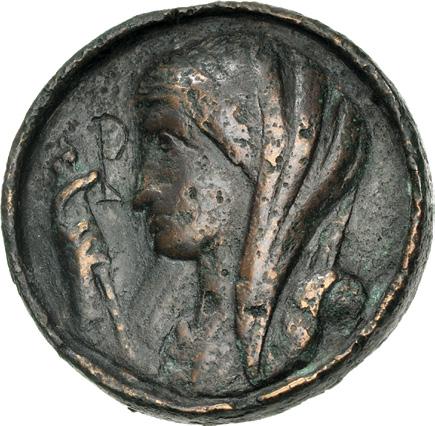
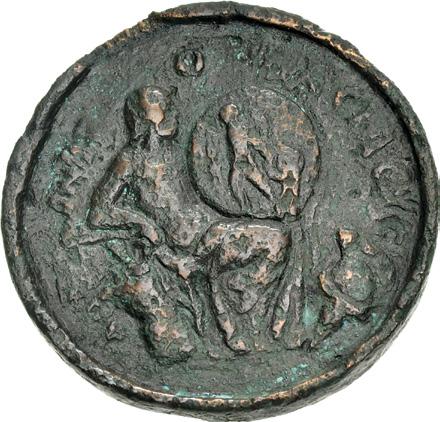
282. Contorniates. Late 4th-5th centuries AD. Æ Contorniate (35mm, 25.05 g, 5h). Olympia, Mother of Alexander the Great. Veiled bust of Olympia left, holding scepter; P engraved in left field / [ALEΞ-ANDP]-O CEBACAЄYC, Alexander the Great seated right on throne, resting hand on shield decorated with warrior and captive(?); cuirass to lower left, helmet to lower right. Alföldi, Kontorniat 61 (dies 20/11). Brown and green surfaces, roughness. Near VF. Rare. ($1500)
Purchased from Frank Kovacs, June 2016. Ex Gorny & Mosch 191 (11 October 2010), lot 2702 (since conserved).
Ex Mabbott Collection – Alföldi Plate Coin
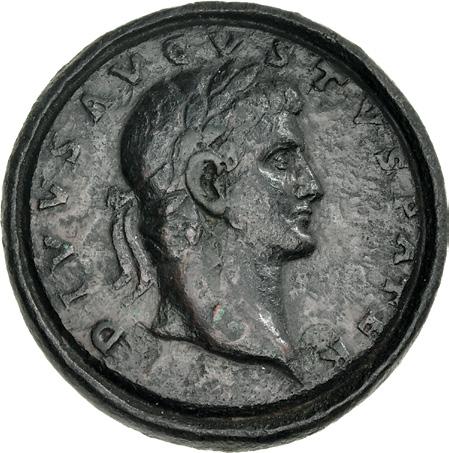
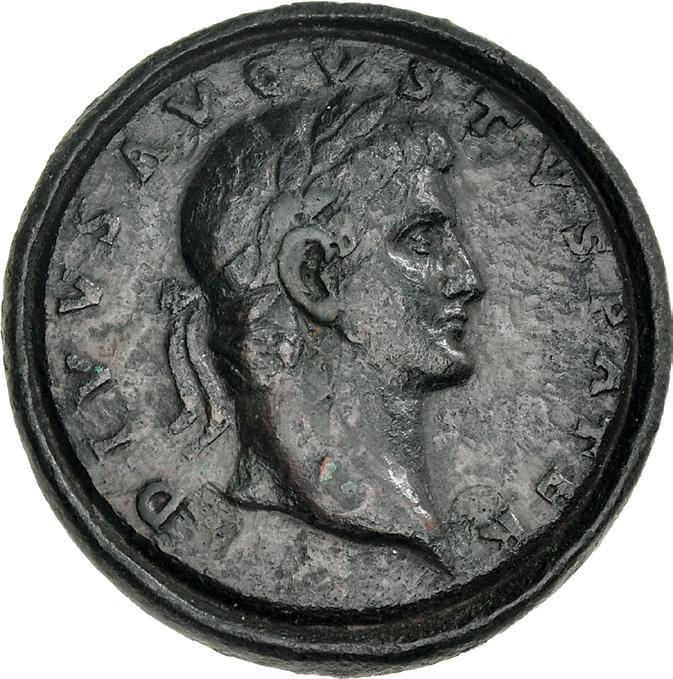
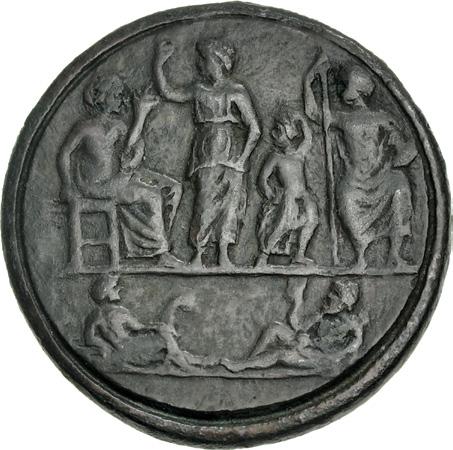
283. Contorniates. Late 4th-5th centuries AD. Æ Contorniate (36mm, 23.28 g, 12h). In the name of Divus Augustus. DIVVS AVGVSTVS PATER, laureate head right / Assembly of the Gods: the deified Augustus, with eagle at feet, standing facing in attitude of address, to left, Fortuna seated right, holding cornucopia; to right, winged figure standing left before Mars seated facing, head left, holding spear and shield; in exergue, figures of Terra reclining left and and Oceanus right with mythological creature behind each. Alföldi, Kontorniat 117.7 (dies 42/96; this example). Brown patina, smoothed and tooled (prior to the Mabbott sale). VF. Rare. ($1000)
Ex Künker 419 (17 March 2025), lot 588 (hammer €4600); Classical Numismatic Group XVIII, 3 December 1991), 628; Thomas O. Mabbott Collection (Hans M.F. Schulman, 27 October 1969), lot 4849.
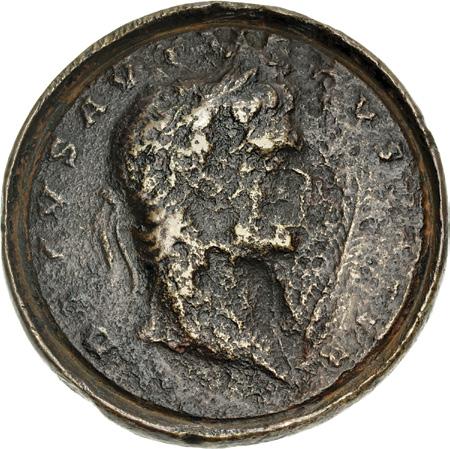
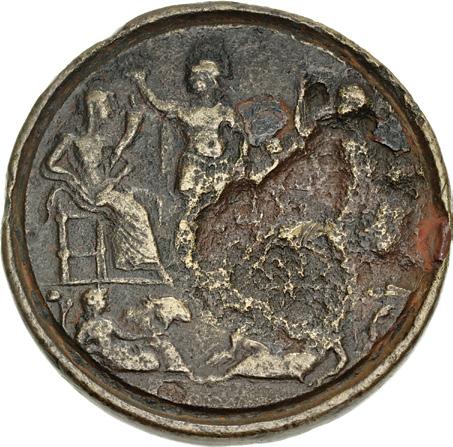
284. Contorniates. Late 4th-5th centuries AD. Æ Contorniate (36mm, 24.55 g, 6h). In the name of Divus Augustus. DIVVS AVG[VST]VS PATER, laureate head right; palm frond engraved in right field / Assembly of the Gods: the deified Augustus, with eagle at feet, standing facing in attitude of address, to left, Fortuna seated right, holding cornucopia; to right, winged figure standing left before Mars seated facing, head left, holding spear and shield; in exergue, figures of Terra reclining left and and Oceanus right with mythological creature behind each. Alföldi, Kontorniat 117 (dies 42/96). Brown patina, areas of heavy corrosion. VF. Rare. ($300)
Ex Harmers 1 (25 September 2000), lot 198.
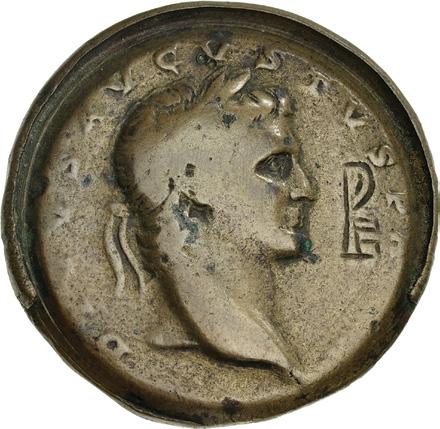
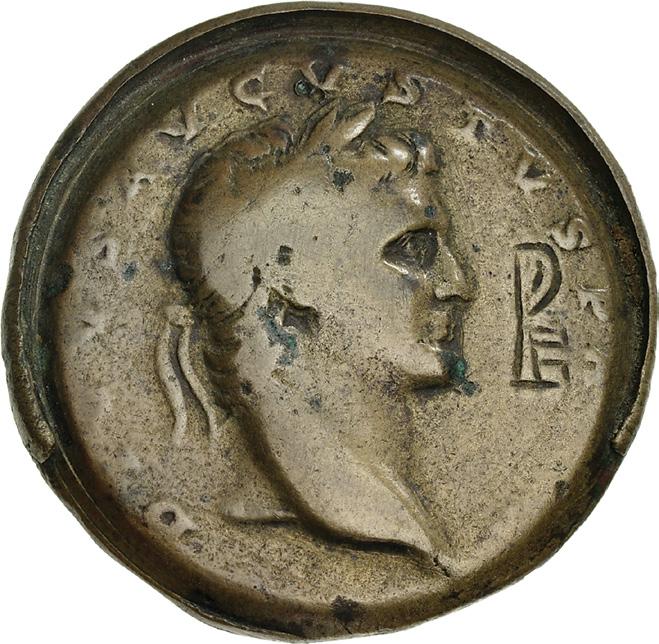
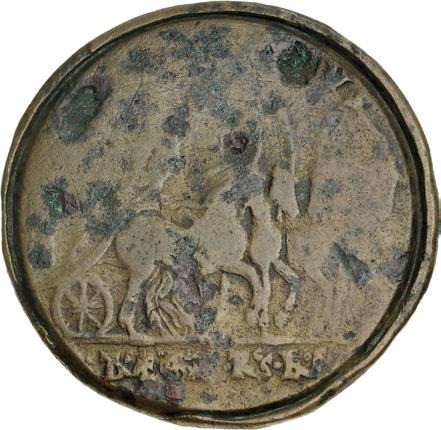
285. Contorniates. Late 4th-5th centuries AD. Æ Contorniate (36mm, 23.60 g, 11h). In the name of Divus Augustus. DIVVS AVGVSTVS PA[TER], laureate head right; monogram engraved in right field / [AVR-ELIAN]VS, the charioteer Aurelianus, head left, holding flail and palm frond, driving four plumed horses right; in exergue, names of the four horses in monogram. Alföldi, Kontorniat 124 (dies 44/161). Brown patina, some spots of inactive of corrosion, rim partly broken, scratches. Fine. Extremely rare – only one example of this combination known to Alföldi. ($300)
Ex Leu Numismatik Web Auction 2 (3 December 2017), lot 881.
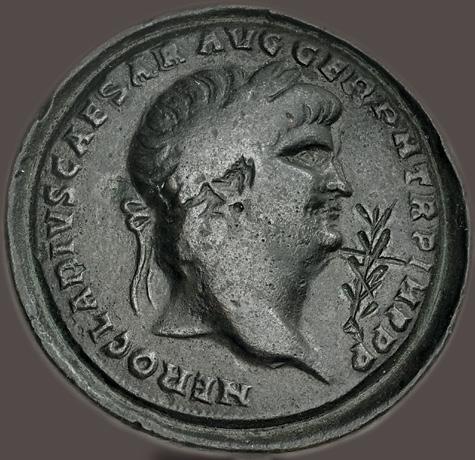
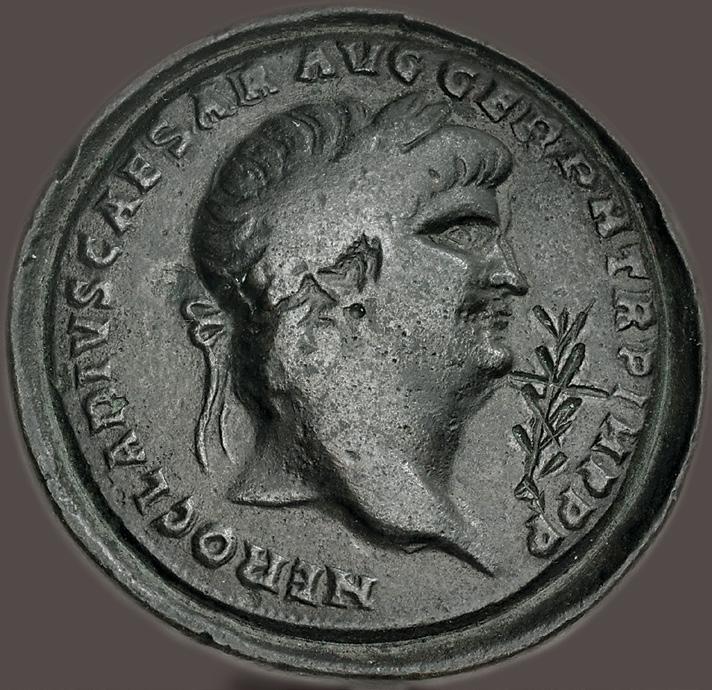
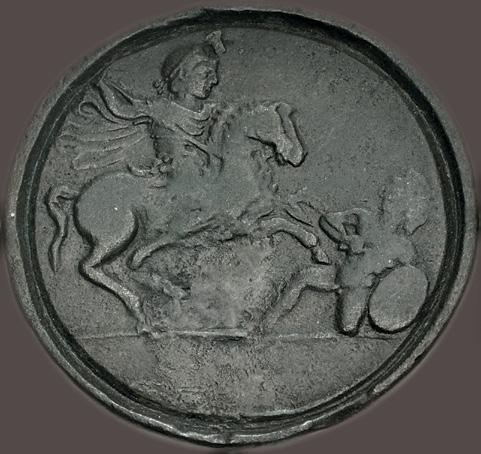
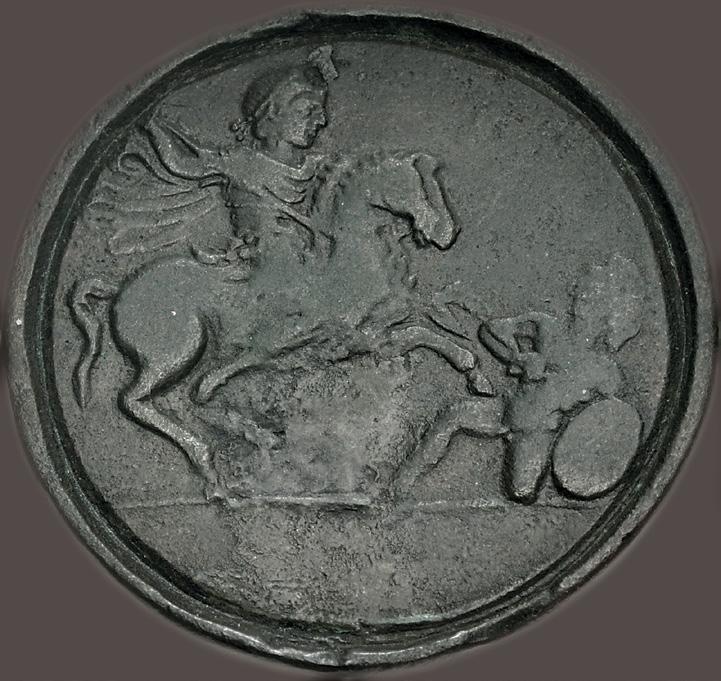
286. Contorniates. Late 4th-5th centuries AD. Æ Contorniate (39mm, 25.88 g, 6h). In the name of Nero. NERO CLADIVS (sic) CAESAR AVG GER P M TR P IMP P P, laureate head right; palm frond engraved and crossed out in right field / Emperor on horseback, spearing fallen soldier to lower right, head left, holding shield. Alföldi, Kontorniat 173.12 (dies 54/124; this coin). Dark green patina. VF. Rare. ($3000)
Ex Numsmatic Ars Classica 150 (2 December 2024), lot 928; Nomos Obolos 5 (26 June 2016), lot 874; Heritage Europe 46 (20 May 2015), lot 89; J. Schulman 265 (28 September 1976), lot 537; Thomas Olive Mabbott Collection (Hans M.F. Schulman, 27 October 1969), lot 4877; Prof. Angelo Signorelli Collection (Part III, Santamaria, 13 March 1953), lot 1462.
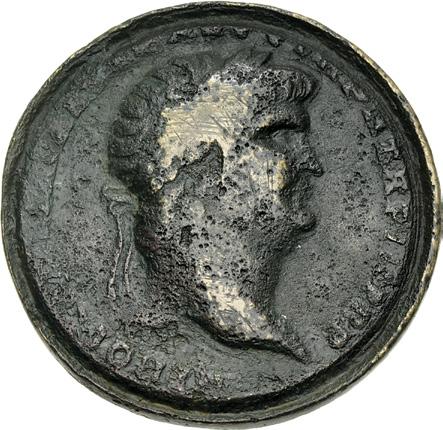
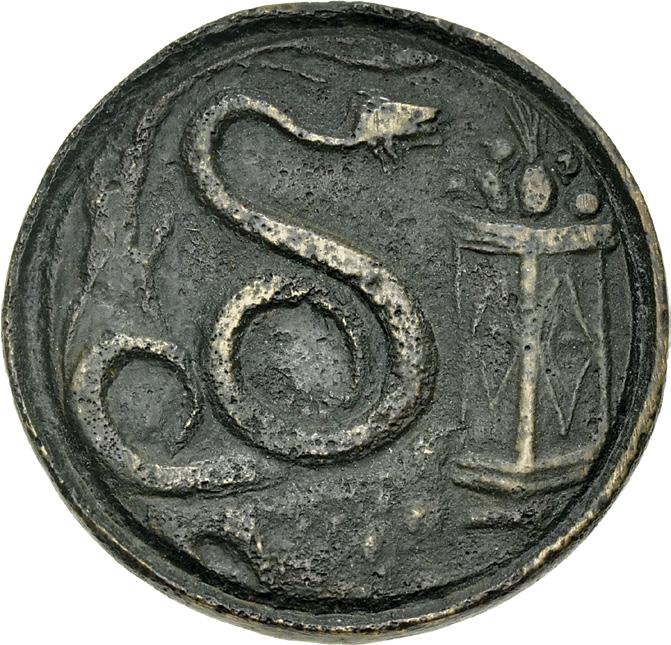
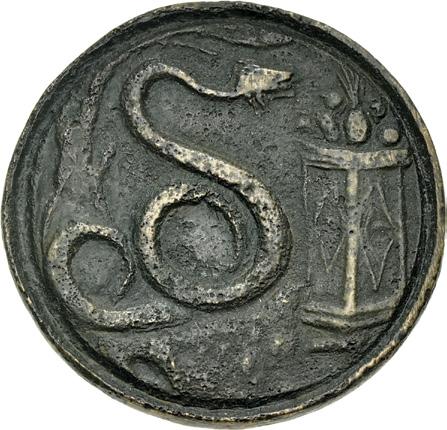
287. Contorniates. Late 4th-5th centuries AD. Æ Contorniate (36mm, 21.93 g, 5h). In the name of Nero. NERO C[LADIVS (sic) CAESAR AVG GER] P M TR P IMP P P, laureate head right / Serpent coiled right beneath tree; to right, altar topped with fruits. Alföldi, Kontorniat 180 (dies 54/47). Brown patina, some porosity, scratches. Near VF. Very rare – only two examples of this reverse type in CoinArchives. ($500)
Purchased from Frank Kovacs, December 2015.
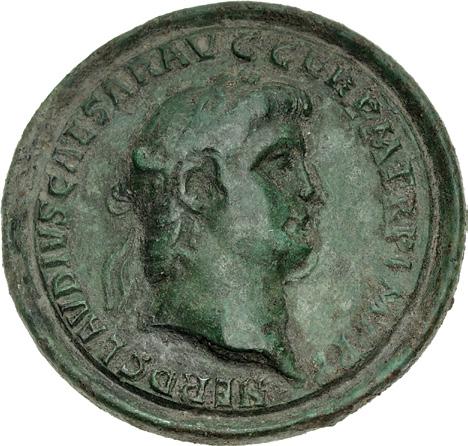
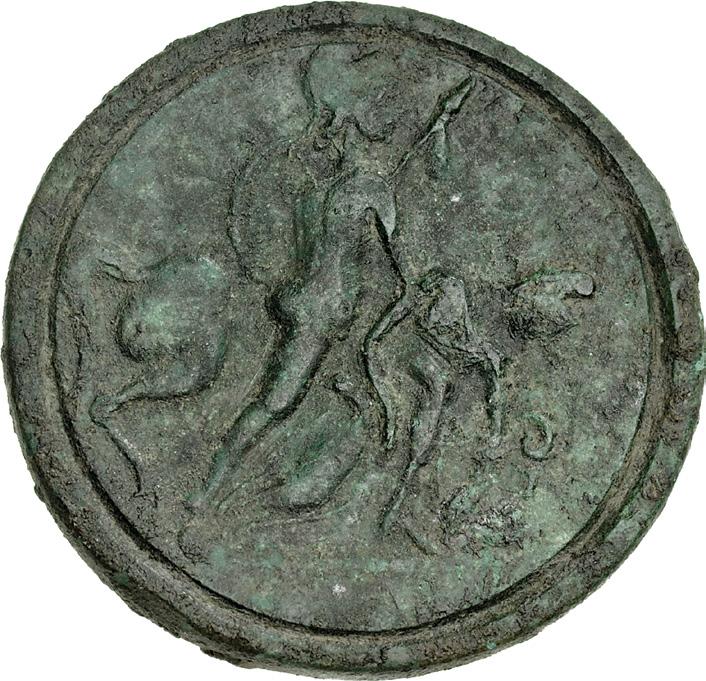
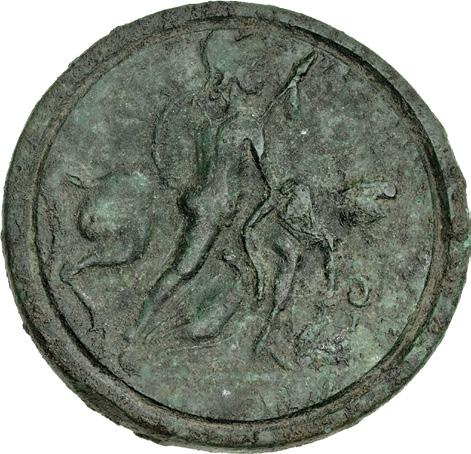
288. Contorniates. Late 4th-5th centuries AD. Æ Contorniate (38mm, 26.02 g, 12h). In the name of Nero. NERD (sic) CLAVDIVS CAESAR AVG GER P M TR P IMP P P, laureate head right / Achilles advancing right, holding spear and shield, catching the wounded Amazonian queen Penthesilea as she falls from her horse. Alföldi, Kontorniat 196 (dies 59/77). Green patina with earthen deposits. VF. An extremely rare die combination with only one known to Alföldi, and only this example in CoinArchives. ($2500)
Purchased from Vilmar, April 2017. Ex Numismatica Ars Classica 92 (24 May 2016), lot 2538.
The story of the Amazon Queen Penthesilea, daughter of Mars and Otrera, first queen of the Amazons, is part of the epic mythology of the Trojan War. After the death of Hector, Penthesilea took the field and killed many Greeks, but ultimately fell to the famous Achilles. Several different versions of the story are recorded by ancient writers and one wonders which was in the minds of the fourth-century AD Romans who held this contorniate.
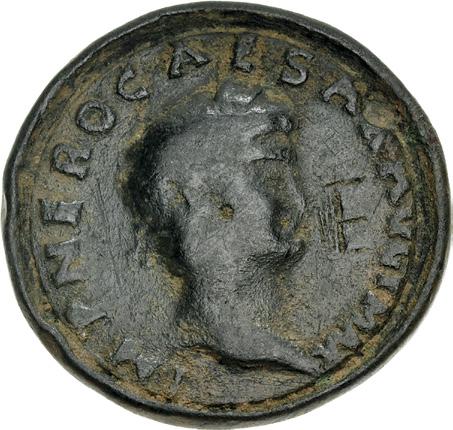
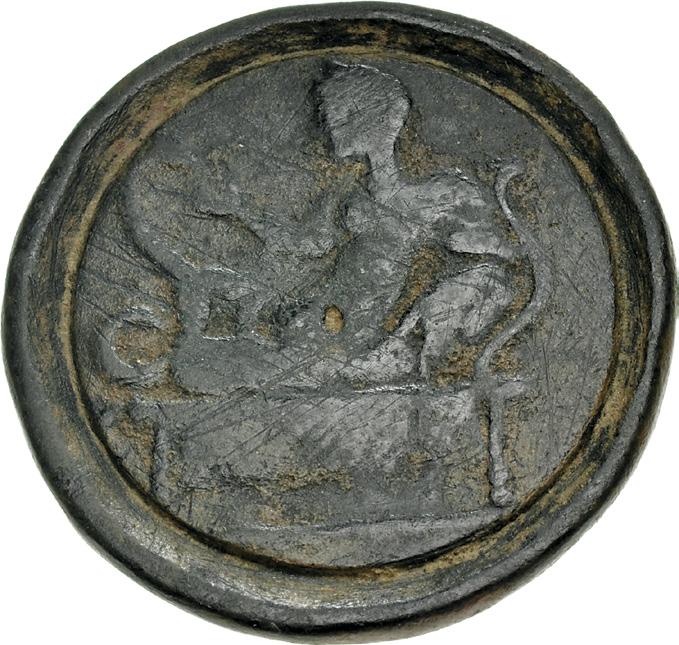
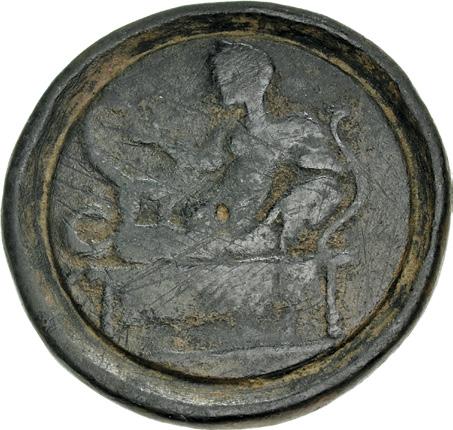
289. Contorniates. Late 4th-5th centuries AD. Æ Contorniate (37mm, 24.40 g, 7h). In the name of Nero. IMP NERO CAESAR AVG P MAX, laureate head right; E engraved in right field / Olympias reclining left on couch, extending hand to serpent coiled at feet. Alföldi, Kontorniat 200 (dies 60/6). Dark green patina with brown earthen deposits, scratches. Fine. Rare. ($300)
Ex Nomisma S.p.a. 55 (4 April 2017), lot 45.
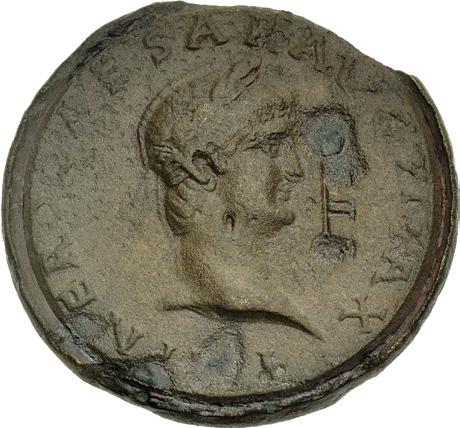
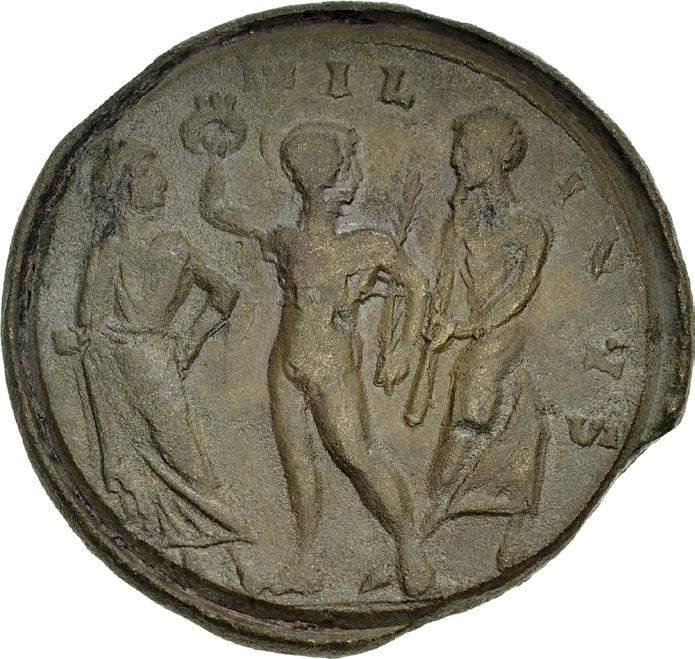
290. Contorniates. Late 4th-5th centuries AD. Æ Contorniate (37mm, 25.45 g, 6h). In the name of Nero. IMP NERO CAESAR AVG P MAX, laureate head right; monogram engraved in right field / FIL-INVS, nude figure of the athlete Filinus standing facing, head right, holding wreath and palm frond; to left, female figure standing left, head right; to right, young male figure standing left, holding trumpet. Alföldi, Kontorniat 221 (dies 61/219); Sachero 33 (this example). Brown patina, areas of roughness, ragged edge. VF. Very rare – only eight known to Alföldi. ($1000)
Ex Varesi 75 (12 November 2019), lot 175; Montenapoleone 8 (11 May 1988), lot 373.
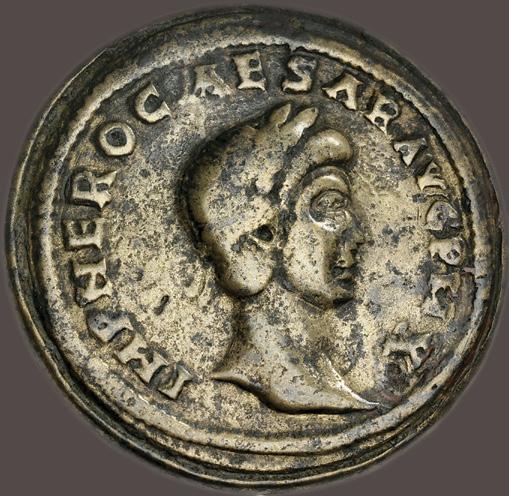
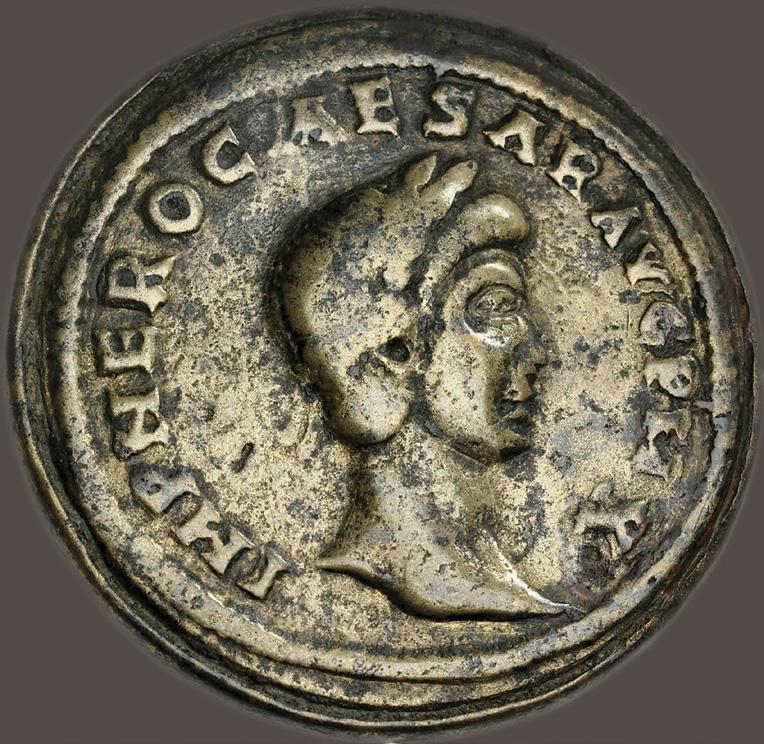
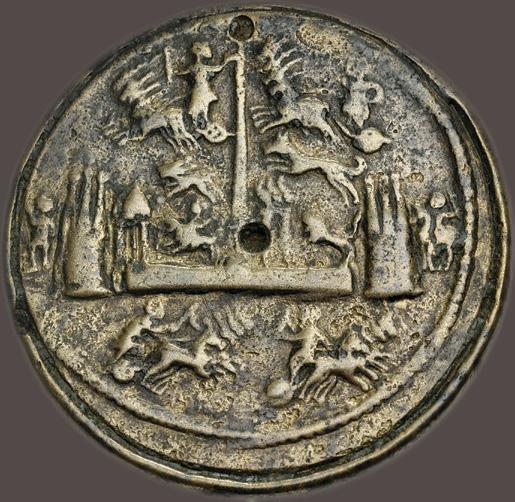
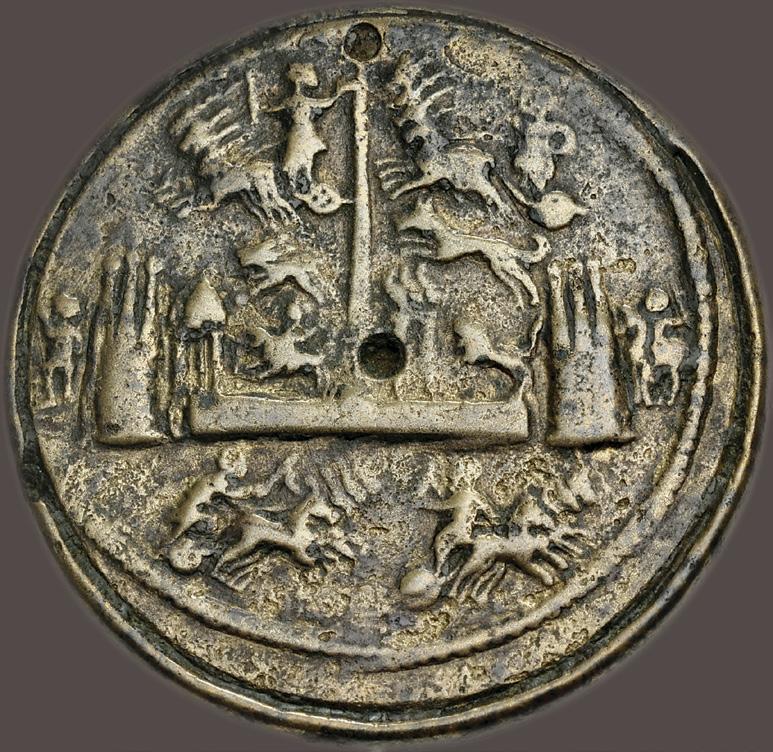
291. Contorniates. Late 4th-5th centuries AD. Æ Contorniate (41mm, 37.22 g, 12h). In the name of Nero. IMP NERO CAESAR AVG P M X, laureate head right / Aerial view of chariot race in the Circus Maximus: spina with obelisk of Augustus flanked by metae, tholos on left(?), and statues of horseman and boar left; two quadrigae left above; two quadrigae right below; to left, standing figure; to right, rider or equestrian statue left. Alföldi, Kontorniat 230 (dies 125/145). Brown patina with minor deposits, two attempted piercing on reverse that do not distract from the complex scene. Near VF. Rare. ($2000)
Ex Roma XII (29 September 2016), lot 672.
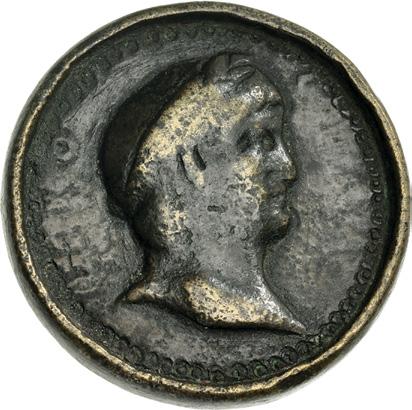
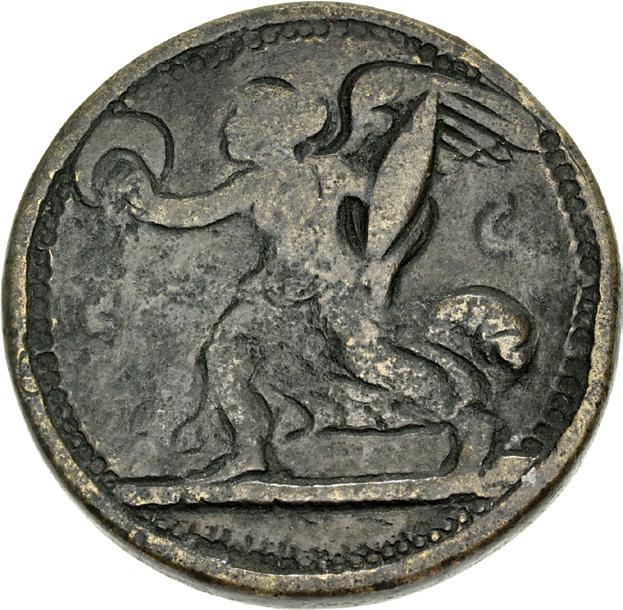
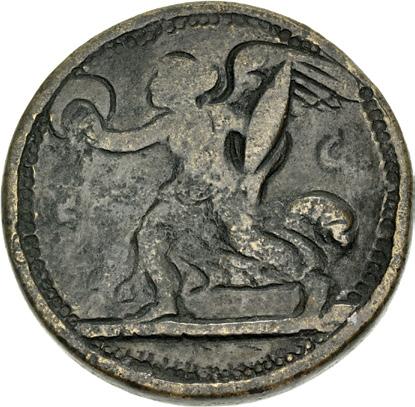
292. Contorniates. Late 4th-5th centuries AD. Cast Æ Contorniate (33mm, 25.73 g, 6h). In the name of Nero. [NER]O [AVGVSTVS], laureate head right; additional engraving to add a beaded border and to enhance NER and the portrait / Victory advancing left, holding wreath and palm frond; [S] C flanking; additional engraving to add a beaded border and to enhance Victory. Alföldi, Kontorniat 545. Brown patina, some minor smoothing(?). VF. Many of the details on this example were reengraved in antiquity, as is common particularly on the cast contorniates. Rare. ($300)
Ex Bertolami 279 (13 March 2024), lot 91.
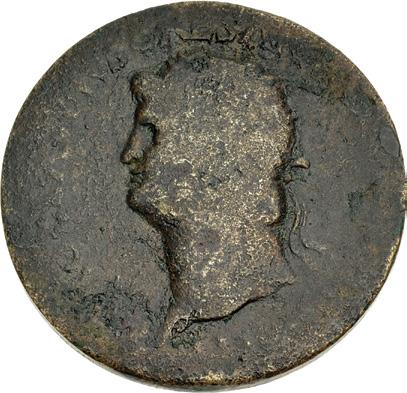
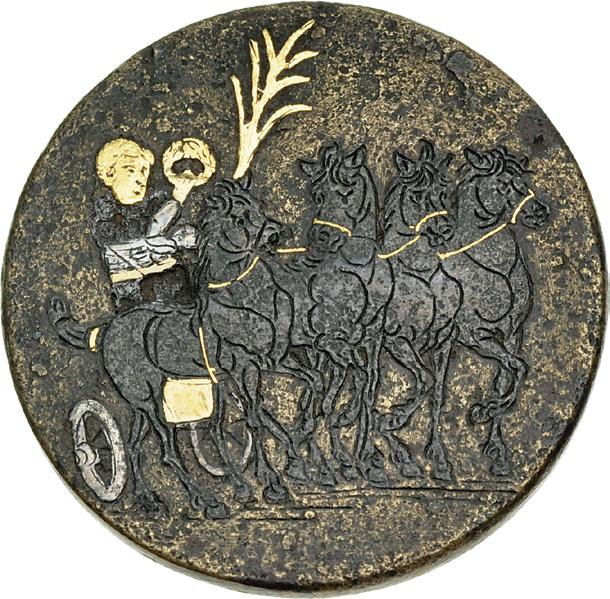
293. Contorniates. Late 4th-5th centuries AD. Æ Sestertius re-engraved and inlaid with gold and silver (24mm, 17.80 g).
Engraved on an original bronze sestertius of Nero. Laureate head of Nero left / The reverse scraped flat and engraved with a charioteer holding wreath and palm frond, driving big slightly right. The charioteer’s head, the wreath, palm frond, and the horses’ tack inlaid in gold, his body, the chariot, and the horses inlaid in silver. Alföldi, Kontorniat 677 and pl. 225, 7 (this example). For host coin: cf. BN 292 (same obv. die). Brown surfaces, some inlay missing on charioteer’s body. Mostly as made. A unique, individually made object of great artistic interest. ($1000)
Purchased from Frank Kovacs, August 2016. Ex Gemini V (6 January 2009), lot 867.
Alföldi incorrectly notes that this piece was in the Historisches Museum Basel. The museum has no record of it in their archives.
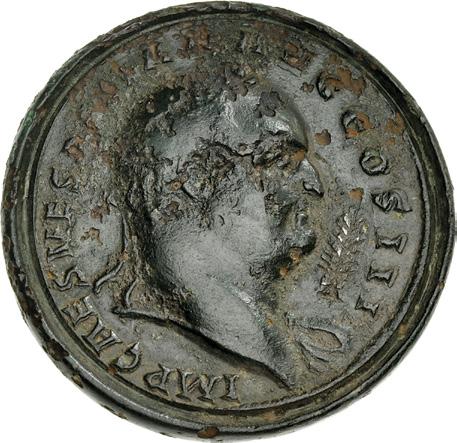
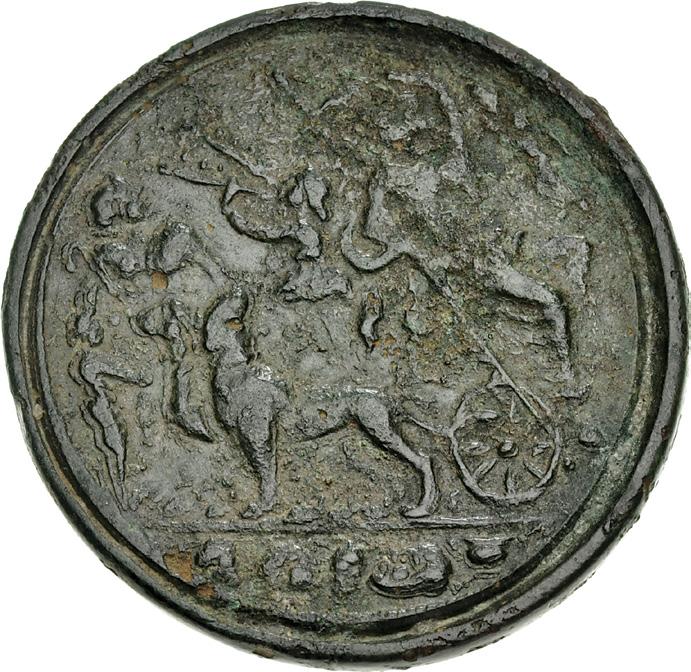
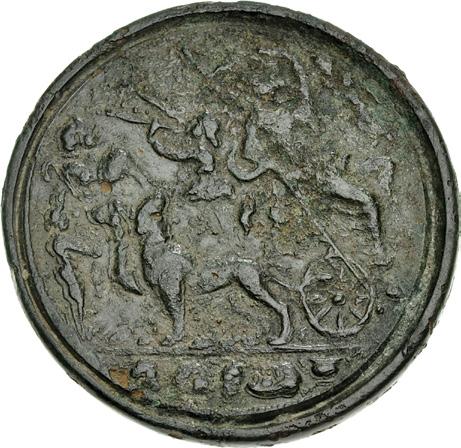
294. Contorniates. Late 4th-5th centuries AD. Æ Contorniate. In the name of Vespasian. IMP CAES VESPASIAN AVG COS III, laureate bust right, slight drapery; palm frond engraved to right / Bacchus reclining right in biga drawn by panthers left; to right, cupid flying left, holding grape bunch; to left, satyr standing right, holding a pedum; two maenads in background; in exergue, rhyton, pedum, satyr mask, grape bunch, Selinos mask, and amphora. Alföldi, Kontorniat – (dies 64/15; unlisted combination). Green patina, areas of corrosion. VF. Extremely rare and unpublished in the standard references. ($750)
Ex M.G. Collection (Hirsch 355, 12 February 2020), lot 2068; Lanz 151 (30 June 2011), lot 987.
Bacchus was, according to his mythology, the son of Zeus and Semele, reared by the nymphs on Mt. Nysa, and god of fertility and wine. Numerous and somewhat contradictory myths regarding his life and acts exist. Having grown to manhood, Dionysus wandered through many lands, teaching men the culture of the vine and the mysteries of his cult. He was followed by an entourage which included satyrs, maenads, nymphs, and the drunken Silenus. Many festivals were held in his honor; most famous were the Lesser or Rural Dionysia (in late December), the Greater or City Dionysia (in late spring), the Anthesteria (in early spring), and the Lenaea (in winter). Characteristically, the worship of Dionysus was ecstatic. Devotees mystically joined with the god through hypnotic music, dancing, consumption of wine and the raw flesh of sacrificial animals. Various representations show Dionysus as a full-grown bearded man, as a beast, and – as on this contorniate – a delicate, effeminate youth. The Romans identified him with the Italic god Liber and with Bacchus, who was more properly the god of wine. From the music, singing, and dancing at the festivals of Dionysus developed the dithyrambos and ultimately Greek drama. As knowledge of the world to the east expanded with Alexander’s campaigns as far as India, so did the regions from which Dionysus was thought to arrive. In the Hellenistic and Roman periods, he was often depicted as arriving in triumph from India in a car drawn by panthers, as on our piece.
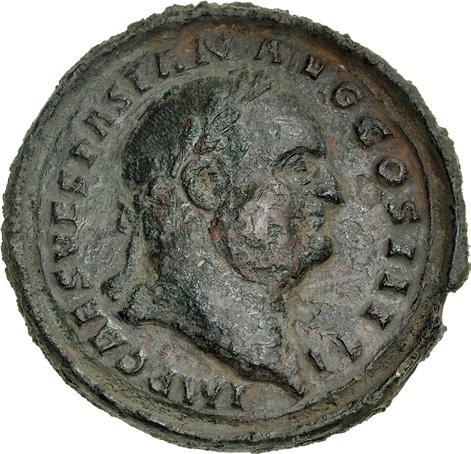
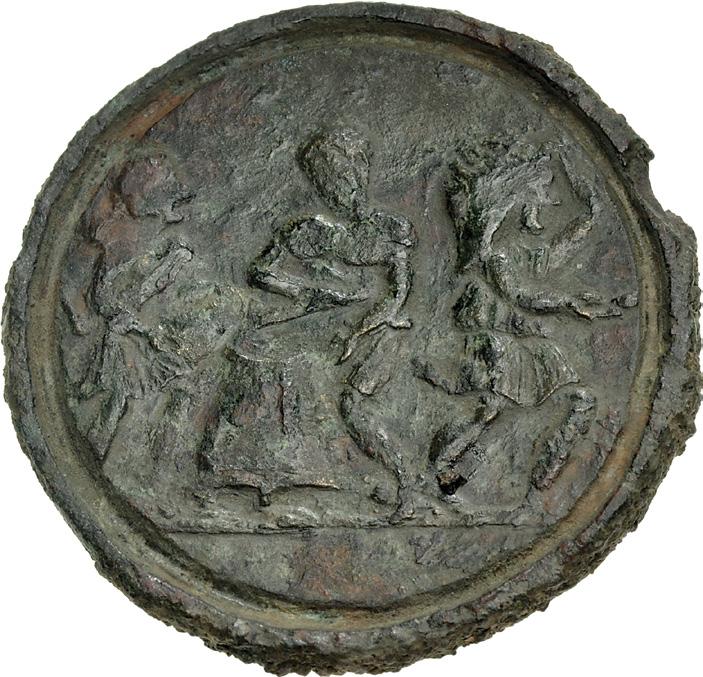
295. Contorniates. Late 4th-5th centuries AD. Æ Contorniate (38mm, 24.74 g, 6h). In the name of Vespasian. IMP CAES
VESPASIAN AVG COS III, laureate bust right, slight drapery / Grain distribution scene: figure seated slightly left behind modius, scooping grain(?); to left, figure standing right holding empty vessel towards modius; to right, figure advancing right with filled sack on his back. Alföldi, Kontorniat 239 (dies 64/115). Rough brown and green patina, smoothed and tooled. VF. Extremely rare. ($1000)
Ex Numismtica Ars Classica 106 (10 May 2018), lot 1722.
In his description of this fascinating scene, Alföldi describes the figure on the left pouring grain into the modius. In this cataloger’s interpretation, that figure is arriving at the distribution with an empty vessel, about to be filled by the official seated behind the modius. To the right, another individual, having already received his grain, walks off with a full sack on his back. Alföldi notes one example of this reverse paired with a Nero obverse, and four of the present type, paired with Vespasian. Not merely rare on contorniates, this particular distribution scene is unparalleled in numismatics at large.
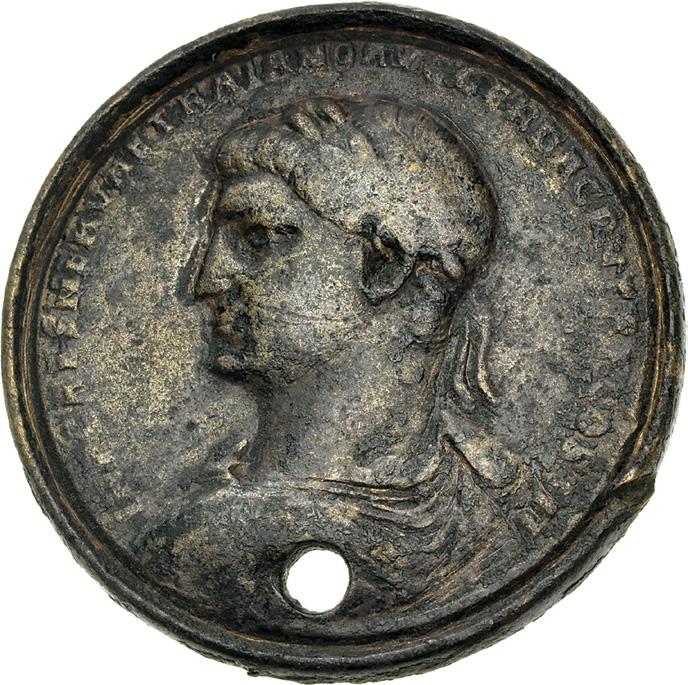
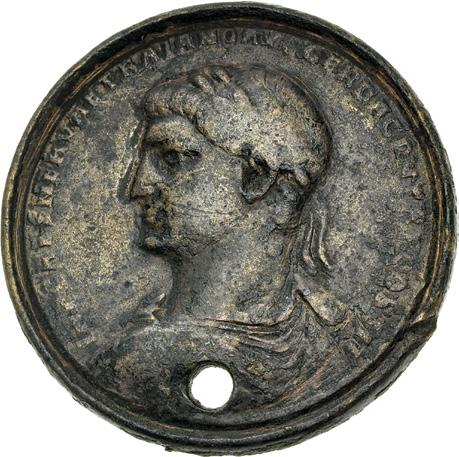
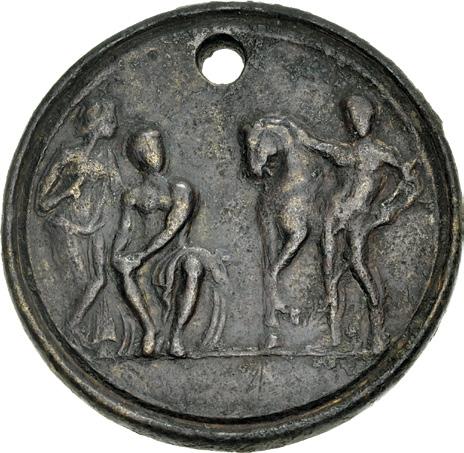
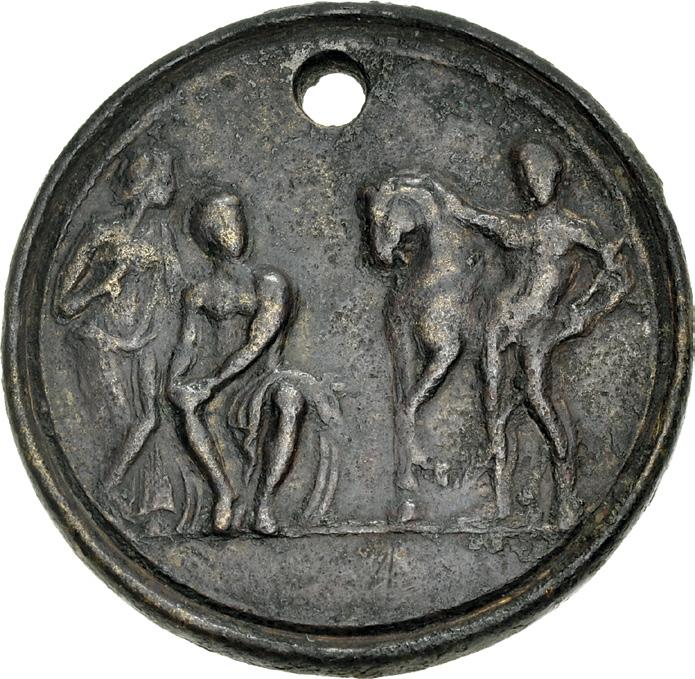
296. Contorniates. Late 4th-5th centuries AD. Æ Contorniate (37mm, 28.33 g, 6h). In the name of Trajan. IMP CAES
NERVAE TRAIANO AVG GER DAC P M TR P COS III, laureate, draped, and cuirassed bust left, seen from behind / Helen of Troy standing right, resting arm on one of the Dioscuri seated right; to right, the other standing left, holding spear and resting hand on mane of horse standing left. Alföldi, Kontorniat 254 (dies 66/56). Brown patina, minor marks, holed. Good Fine. Extremely rare – only eight known to Alföldi, and only this specimen in CoinArchives. ($1500)
Ex Nomos Obolos 17 (20 December 2020), lot 670.
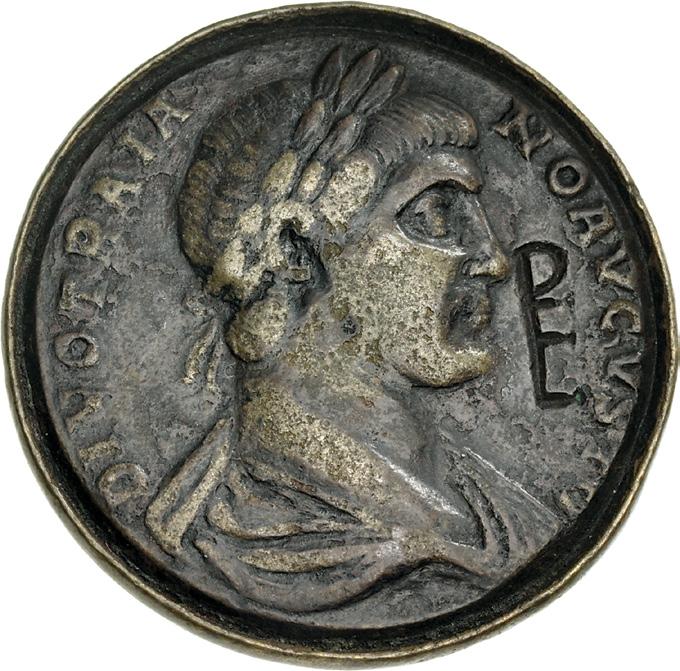
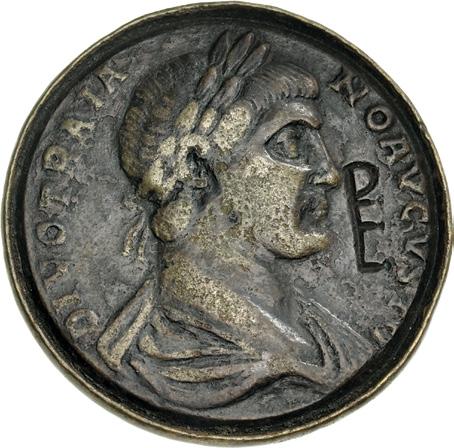
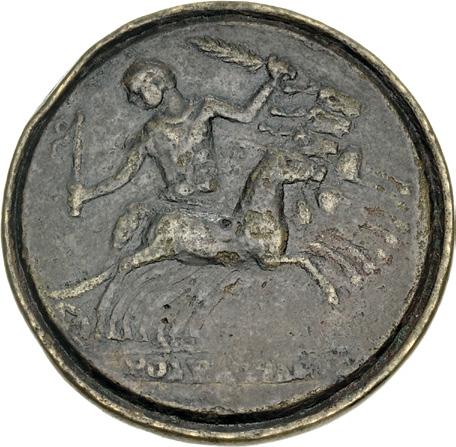
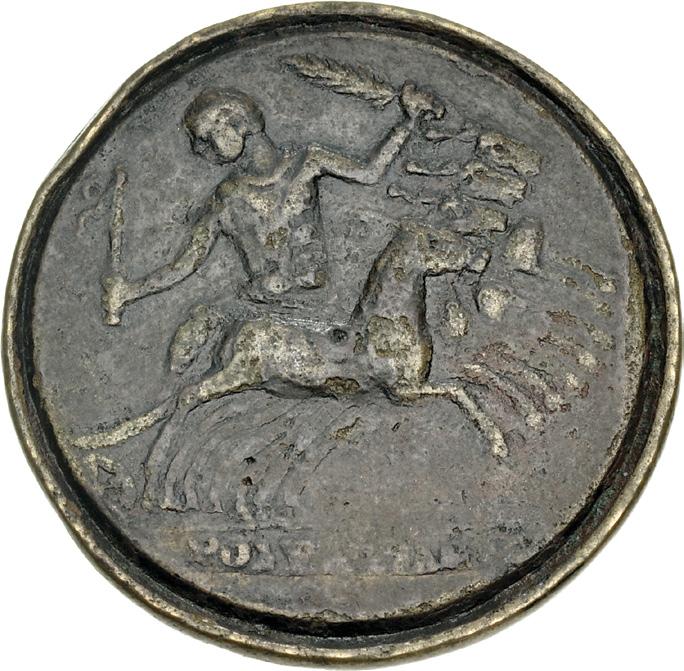
297. Contorniates. Late 4th-5th centuries AD. Æ Contorniate (37mm, 20.98 g, 1h). In the name of Divus Trajan. DIVO TRAIA NO AVGVSTO, laureate and draped bust right; monogram engraved to right / The charioteer Polystefanus in quadriga right, head left, holding flail and palm frond; POLVSTEFANVS in exergue. Alföldi, Kontorniat 345.17 (dies 85/150; this example). Brown patina, minor roughness, edge ding. VF. Very rare. ($1000)
Ex Varesi 74 (29 April 2019), lot 108; Montenapoleone 8 (11 May 1988), lot 373; Robert J. Myers 1 (18 November 1971), lot 618.
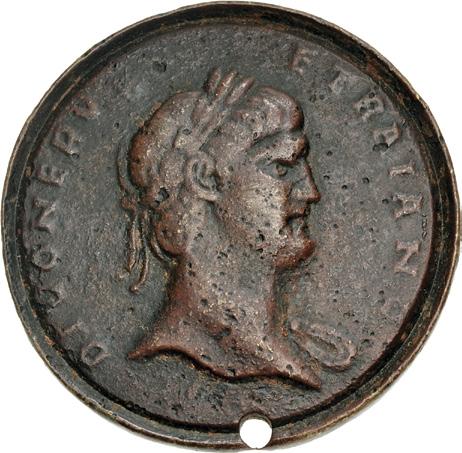
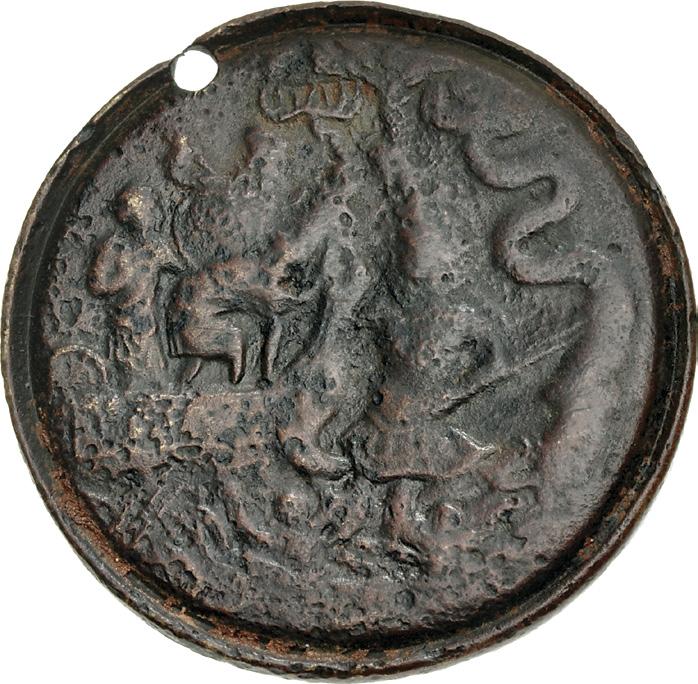
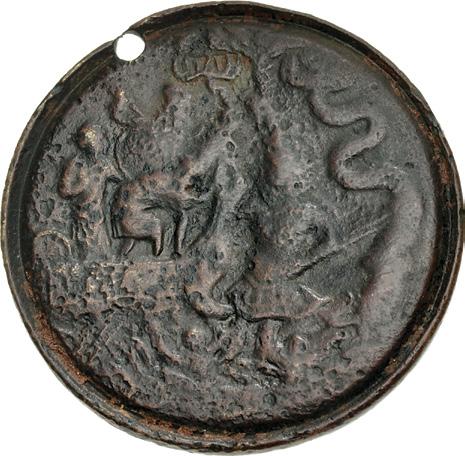
298. Contorniates. Late 4th-5th centuries AD. Æ Contorniate (37.5mm, 23.53 g, 7h). In the name of Divus Trajan. DIVO NERVA E TRAIANO, laureate bust right, slight drapery / Scylla, to right, attacking Ulysses’ ship and crew, to left; three crew members fighting right on ship’s prow, two helpless in sea below. Alföldi, Kontorniat 360 (dies 89/84). Red-brown patina, minor roughness, holed. Good Fine. Rare. ($1000)
Ex Classical Numismatic Group 127 (17 September 2024), lot 638; Philip DeVicci Collection (Classical Numismatic Group 54, 14 June 2000), lot 1869; Harlan J. Berk BBS 85 (9 March 1995), lot 557.
As with many contorniates, the reverse of this piece depicts a popular ancient myth: the tale of Ulysses navigating the treacherous straight between the whirlpool Charybdis and the monster Scylla:
Thus, dreading death, with fast-set eyes we watch’d Charybdis; meantime, Scylla from the bark
Caught six away, the bravest of my friends.
With eyes, that moment, on my ship and crew
Retorted, I beheld the legs and arms
Of those whom she uplifted in the air; On me they call’d, my name, the last, last time
Pronouncing then, in agony of heart. (Hom. Od. 12.287-294 [Cowper’s translation])
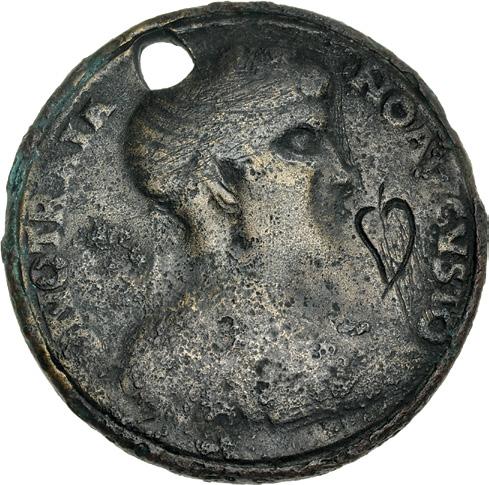
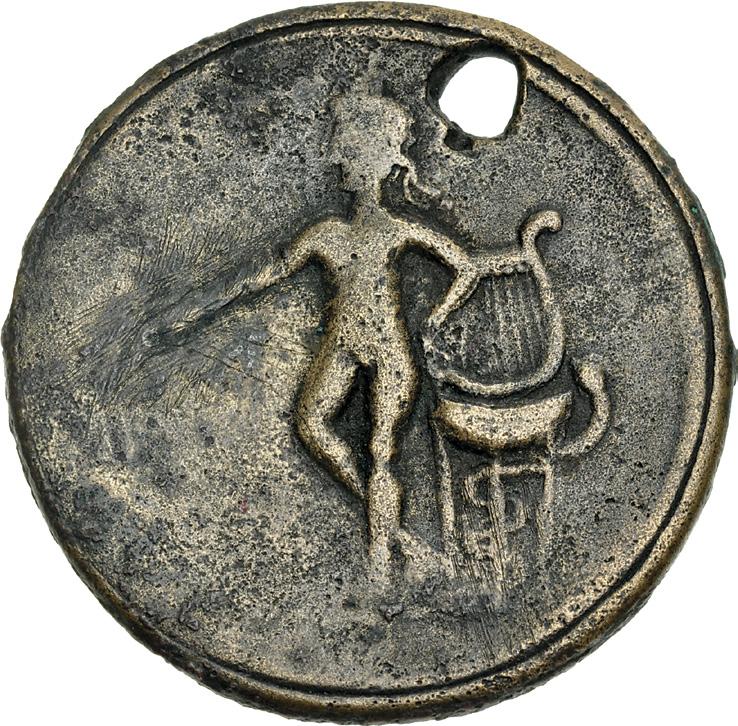
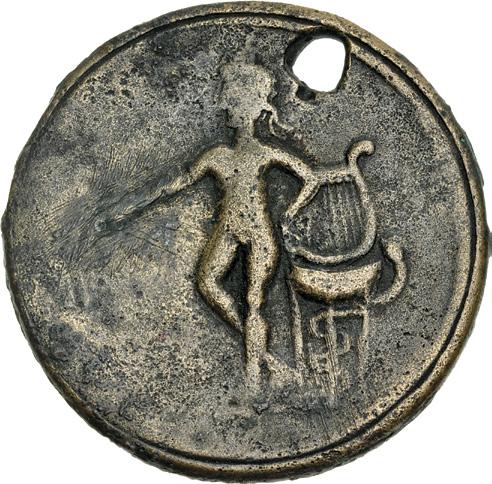
299. Contorniates. Late 4th-5th centuries AD. Æ Contorniate (40mm, 25.13 g, 12h). In the name of Divus Trajan. DIVO TRAIA NO AVGVSTO, laureate, draped, and cuirassed bust right; leaf engraved in right field / Apollo standing left, legs crossed, holding [branch tied with fillet] in right, left elbow resting on lyre set on serpent-entwined tripod to right. Alföldi, Kontorniat 381 (dies 129/33). Brown surfaces, minor porosity, some cleaning scratches, holed. Fine. Very rare. ($500)
Ex Classical Numismatic Group Electronic Auction 401 (12 June 2017), lot 570.
Charioteer Eutimius with his Horses
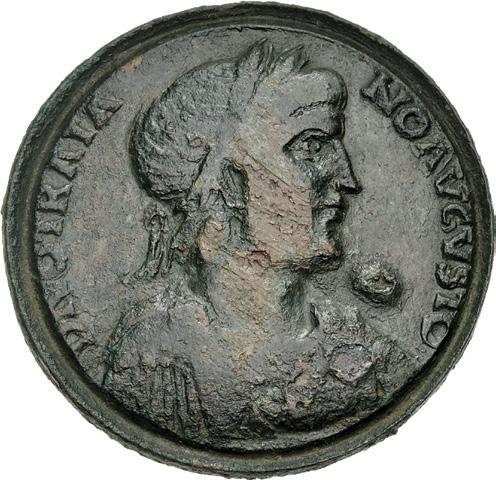
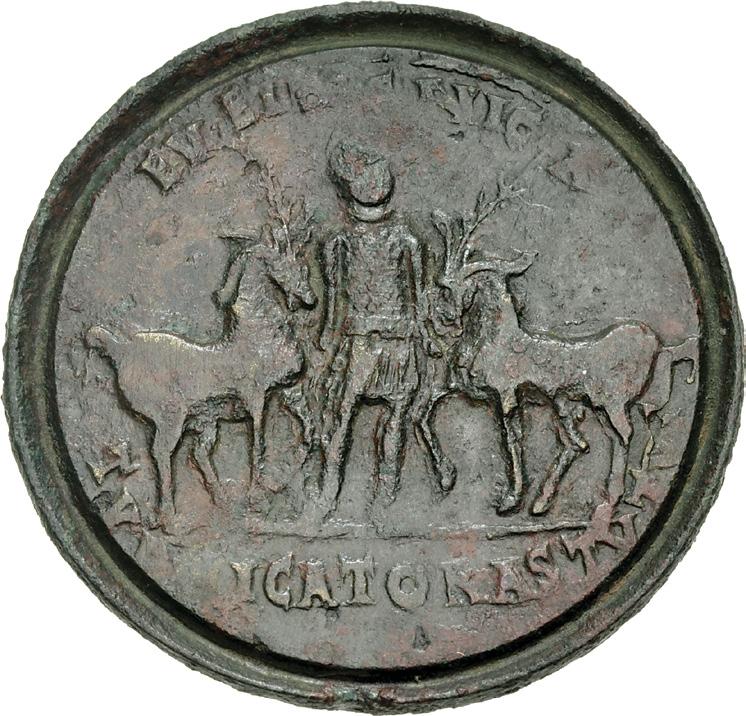
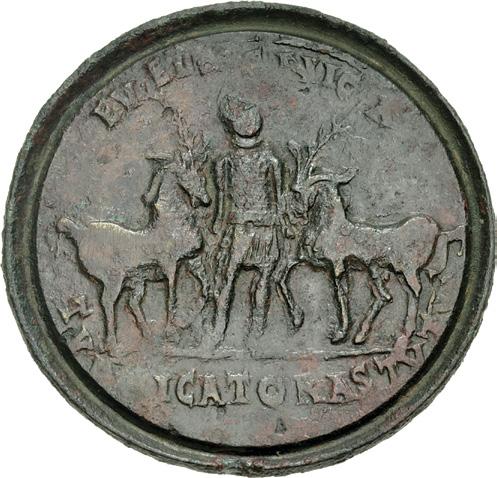
300. Contorniates. Late 4th-5th centuries AD. Æ Contorniate (40mm, 31.02 g, 6h). In the name of Divus Trajan. DIVO TRAIA NO AVGVSTO, laureate, draped, and cuirassed bust right; leaf engraved in right field / EVTIMI NICA, Eutimius standing facing, holding bridles of his horses Turificator and Astutus; below, TVRIFICATOR ASTVRTVS. Alföldi, Kontorniat 383 (dies 129/198). Green and red-brown patina, scuff on cheek, areas of corrosion, smoothed. Near VF. Very rare. ($1000)
Ex Naville 24 (17 July 2016), lot 694; Numismatica Ars Classica 54 (24 March 2010), lot 1340.
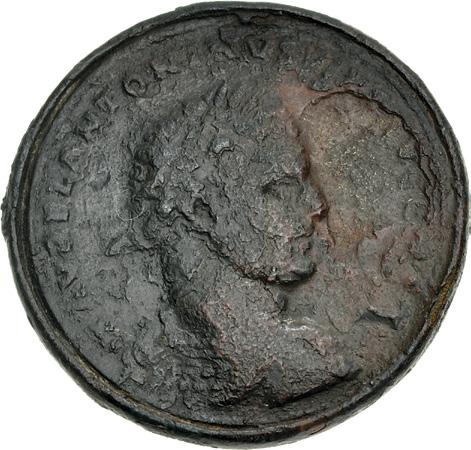
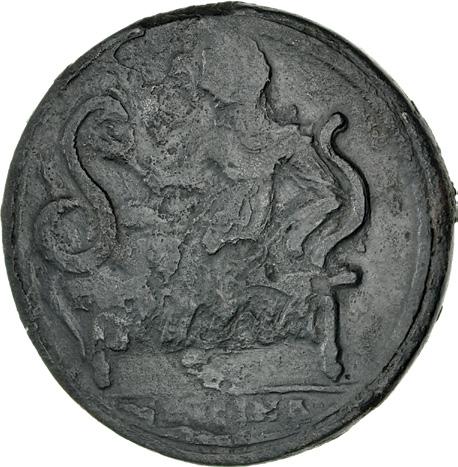
301. Contorniates. Late 4th-5th centuries AD. Æ Contorniate (38mm, 23.72 g, 12h). In the name of Caracalla. M AVREL ANTONINVS PIVS AVG B[RIT], laureate and cuirassed bust right / Olympias reclining left on couch, extending hand to serpent coiled at feet; [RE]GINA in exergue. Alföldi, Kontorniat 408 (dies 96/7). Dark gray brown and red-brown surfaces, areas of corrosion, roughness, smoothing. Near VF. Very rare. ($300)
Ex Harmers 1 (25 September 2020), lot 203.
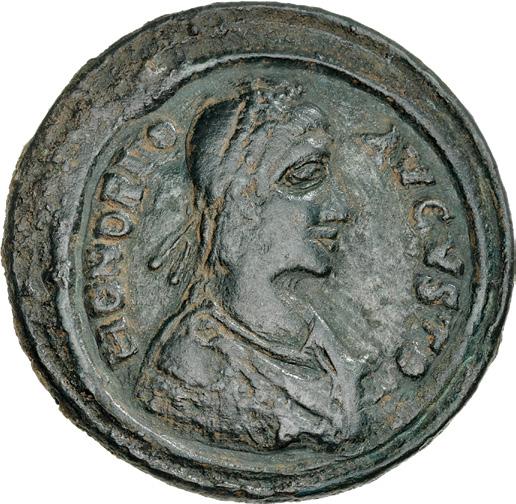
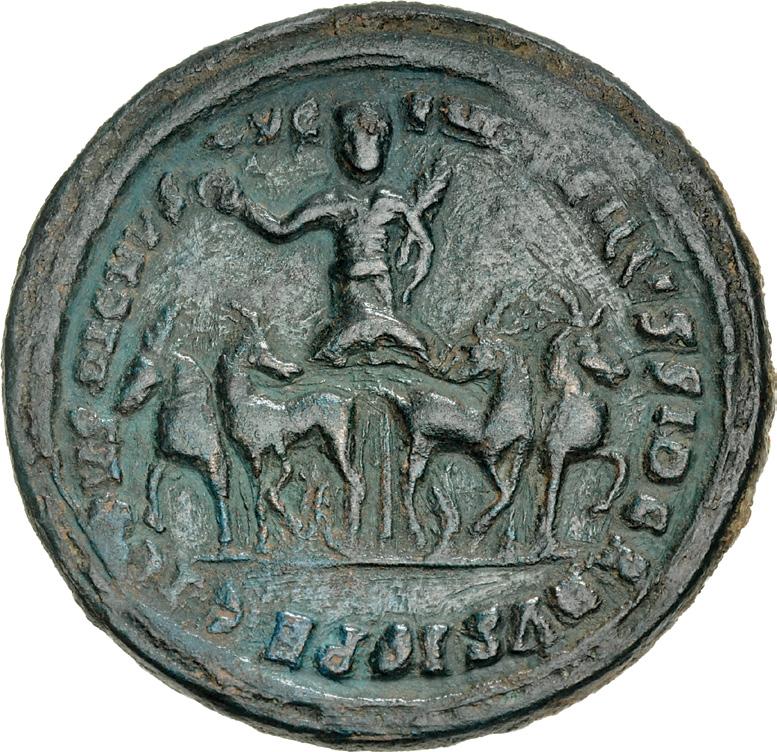
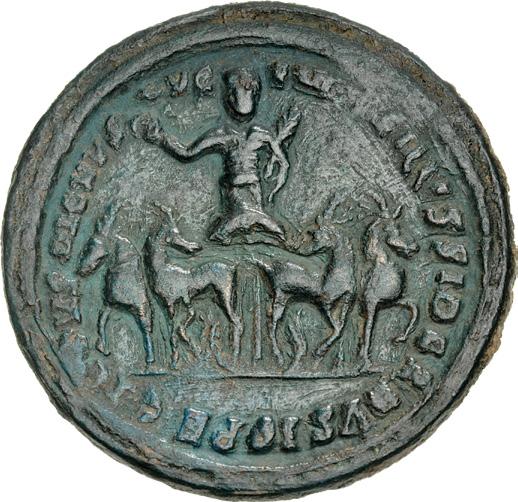
302. Contorniates. Late 4th-5th centuries AD. Æ Contorniate (42mm, 31.39 g, 1h). In the name of Honorius. HONORIO AVGVSTO, diademed, draped, and cuirassed bust right / SPECIOSVS DIGNVS EVGENIVS ACHILLES SIDERIVS, the charioteer Eugenius, head right, holding wreath and palm frond, in facing quadriga drawn by the horses Speciosus, Dignus, Achilles, and Siderius. Alföldi, Kontorniat 448 (dies 134/179). Green surfaces with earthen deposits, smoothed and tooled. VF. Very rare. ($2000)
Ex Roma E-Sale 26 (30 April 2016), lot 1037.
This series of contorniates features a stock reverse type of a victorious charioteer in a facing quadriga. The reverse names the charioteer, Eugenius, and his horses, Speciosus, Dignus, Achilles, and Siderius.
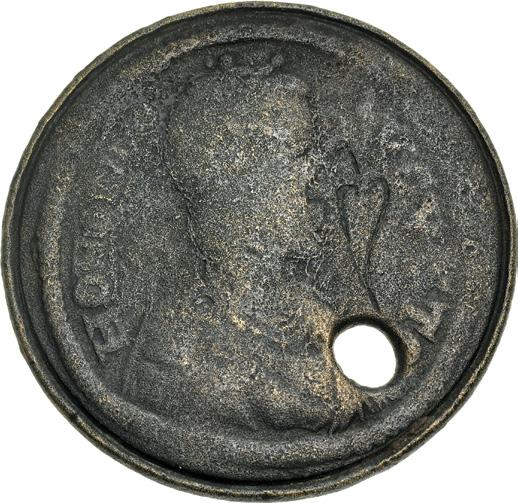
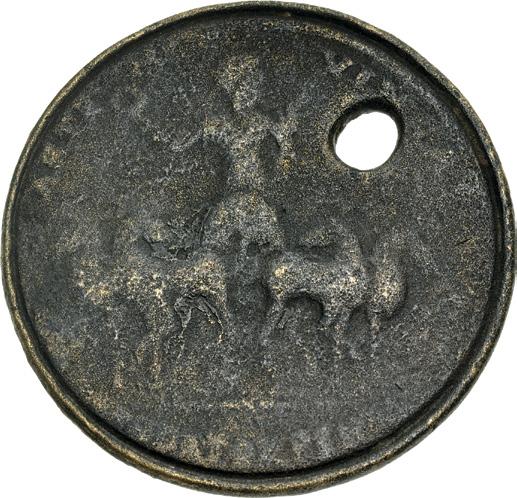
303. Contorniates. Late 4th-5th centuries AD. Æ Contorniate (42mm, 29.58 g, 6h). In the name of Honorius. HONORIO AVGVSTO, diademed, draped, and cuirassed bust right / ARTEMI VINCA, the charioteer Artemius in facing quadriga, head right, holding wreath and palm frond; below, INVNDATOR PENNA. Alföldi, Kontorniat 450 (dies 135/184). Brown patina, holed. Near Fine. Very rare. ($300)
This contorniate is another example of the stock reverse type of a victorious charioteer in a facing quadriga that was seen in the previous lot. All examples name the charioteer and his horses, but in this case only two are named, Inundator and Penna.
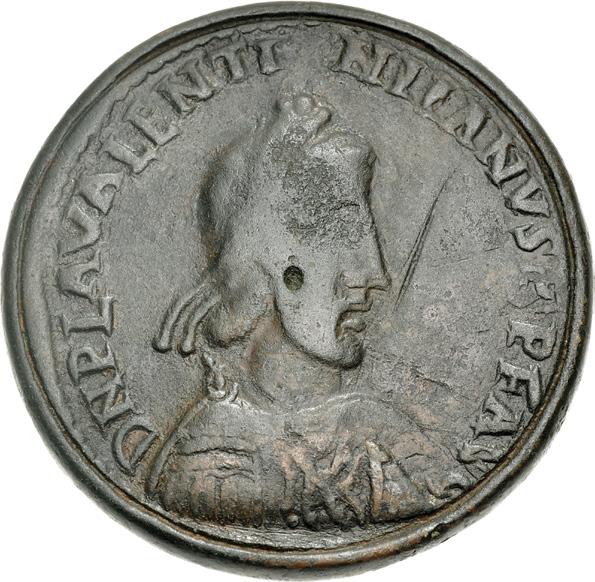
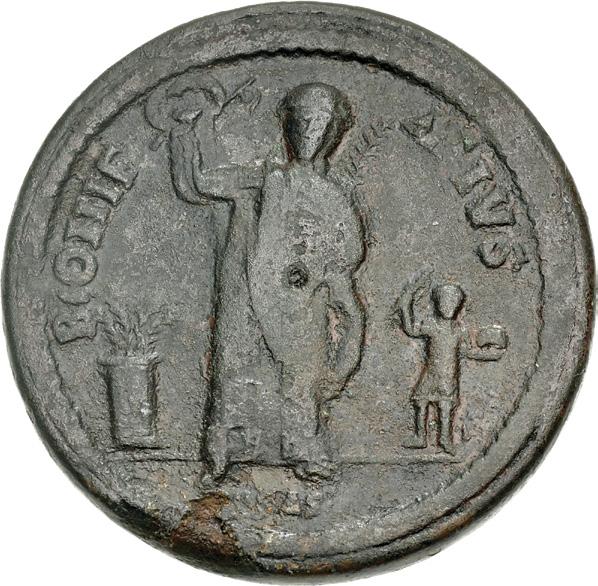
304. Contorniates. Late 4th-5th centuries AD. Æ Contorniate (47mm, 73.91 g, 12h). In the name of Valentinian III. D N PLA VALENTI NIANVS P F AVG, diademed, draped, and cuirassed bust right; crude monogram engraved to right / BONIF ATIVS, the athlete(?) Bonifatius, holding wreath and palm frond; to left, three palm fronds within container; to right, boy holding palm frond and uncertain object. Alföldi, Kontorniat – (dies 141a/220; unlisted combination). Green surfaces, reverse slightly double strike, smoothed and tooled. Good Fine. Unique. An unlisted die combination in Alföldi, with one example of the obverse and two of the reverse recorded. ($1500)
Ex Naville 43 (23 September 2018), lot 585; Roma E-Sale 46 (5 June 2018), lot 876; Numismatik Naumann 48 (20 November 2016), lot 676; Roma 10 (27 September 2015), lot 912.
Alföldi was not able to identify what was held in the main figure’s left hand on the reverse, but he suggests that the figure is either a musician or an athlete – certainly not the famous general of the same name. The palm frond on this example confirms the attribution of an athlete, if it is indeed original to the piece.
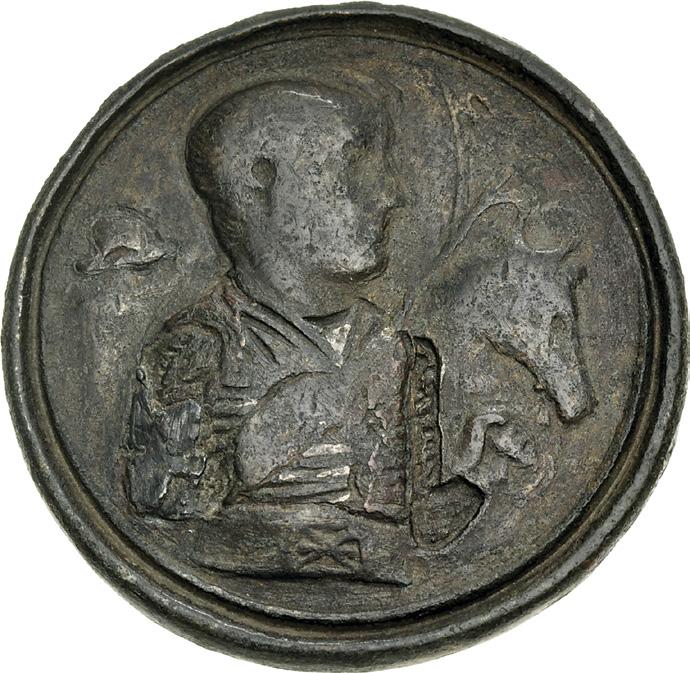
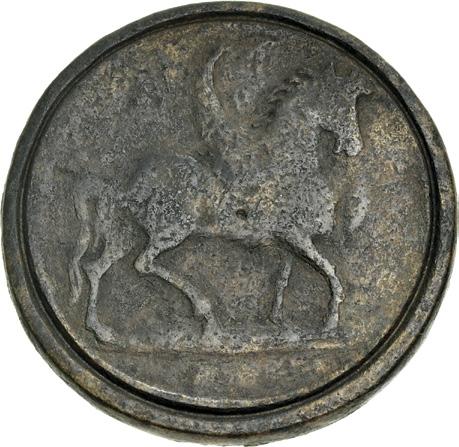
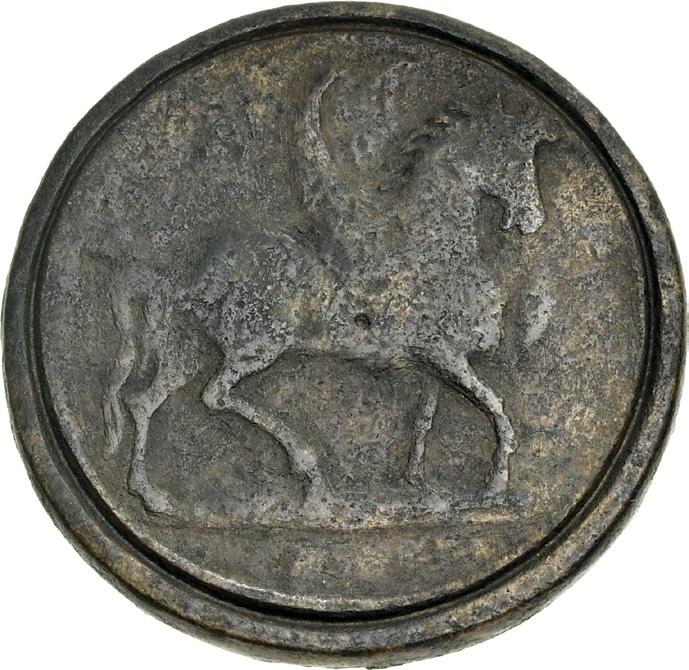
305. Contorniates. Late 4th-5th centuries AD. Æ Contorniate (37mm, 26.85 g, 12h). Half-length figure of charioteer right, wearing lorica aurigae, holding transverse whip and horse by the bridle; galea to left / Pegasus standing right. Alföldi, Kontorniat – (but cf. obv. dies 115-122 for similar). Brown patina, obverse re-engraved in antiquity, areas of inlay lost but with traces of niello and silver remaining in a few spots, faint cleaning scratches. Good Fine. Unique – struck from an obverse die unlisted by Alföldi, and with an entirely unattested reverse type. ($2000)
Ex Leu Numismatik Web Auction 34 (5 July 2025), lot 3395 (hammer 3800 CHF).
This depiction of a standing Pegasus is unique in the contorniate series. The nearest comparison is another unique piece depicting Pegasus being washed, watered, and crowned, sold in lot 894 of our Triton XXIX auction (hammer $40,000). Rather than depicting the mythical winged horse himself, the type may more likely represent a mythicized image of a real race horse, effectively claiming him to be as fast as Pegasus himself. This interpretation is supported by the obverse type, a remarkably detailed half-length figure of a charioteer. Clad in splendidly detailed lorica auriga (charioteer’s leather armor) and with a leather galea (racing helmet) behind him, the figure holds a whip and a horse by the bridle.
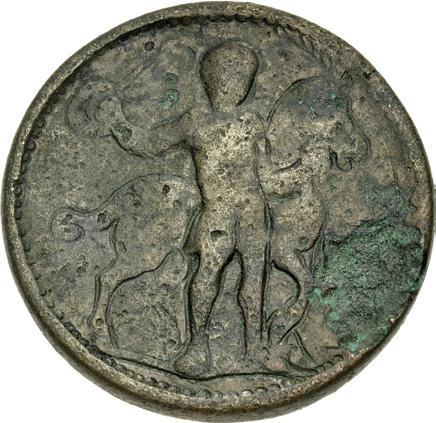
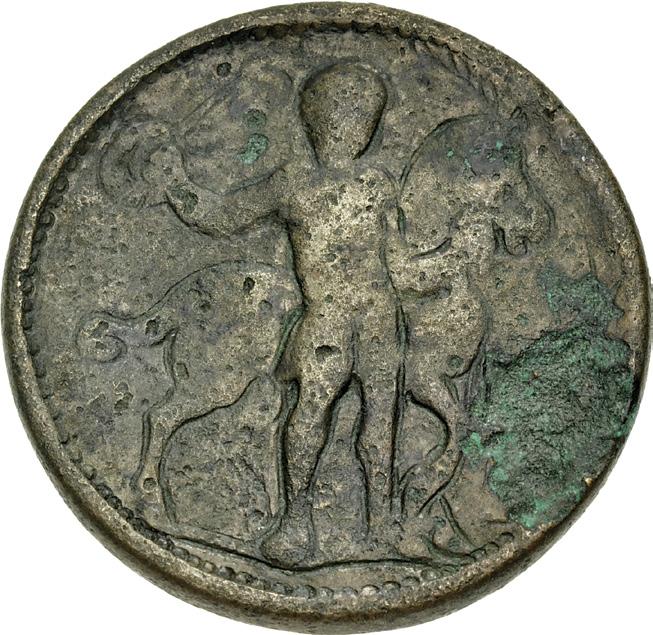
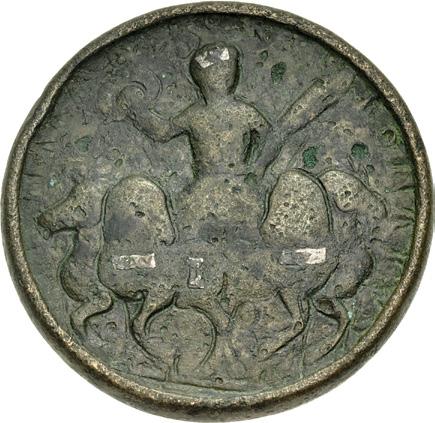
306. Contorniates. Late 4th-5th centuries AD. Cast Æ Contorniate (35mm, 25.03 g, 12h). Figure standing facing, holding wreath and bridle of horse in background standing right; additional engraving to add a beaded border and strengthen the figures / Charioteer in facing quadriga, holding wreath and palm frond; part of horse tack inlaid in silver; additional engraving to add [...] DONATVS above and to strengthen the details. Alföldi, Kontorniat 626. Green and brown patina, patches of roughness and corrosion, partially re-engraved in antiquity. Good Fine. Extremely rare – only three in Alföldi, none with this name engraved, and this the sole example in CoinArchives. ($300)
Ex Leu Numismatik Web Auction 16 (22 May 2021), lot 3793.
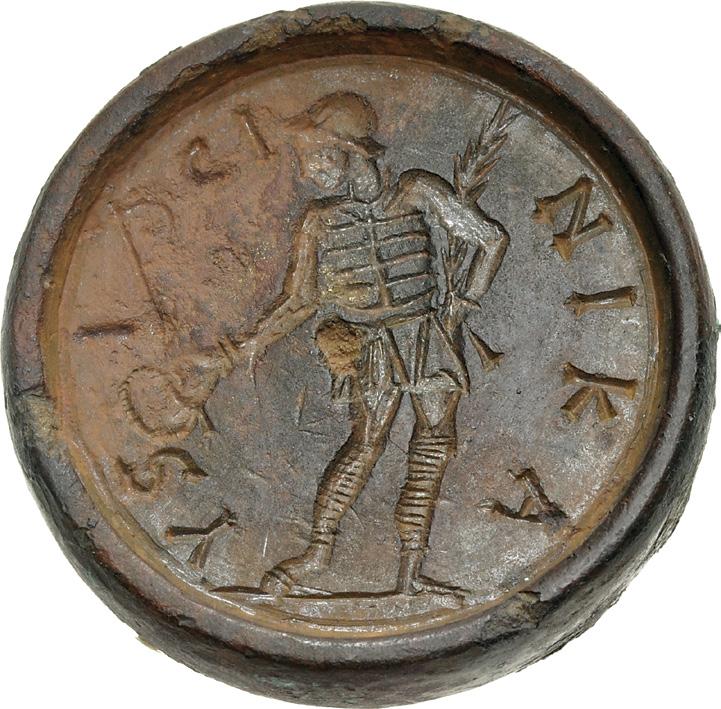
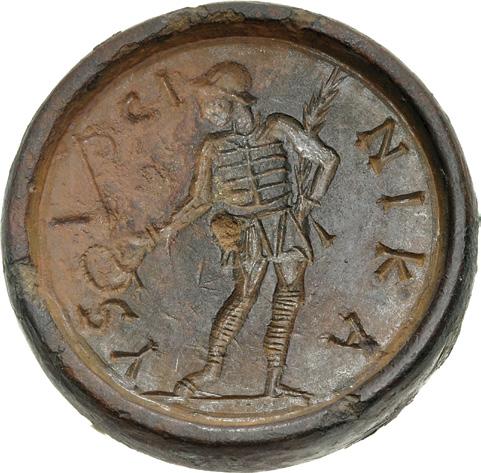
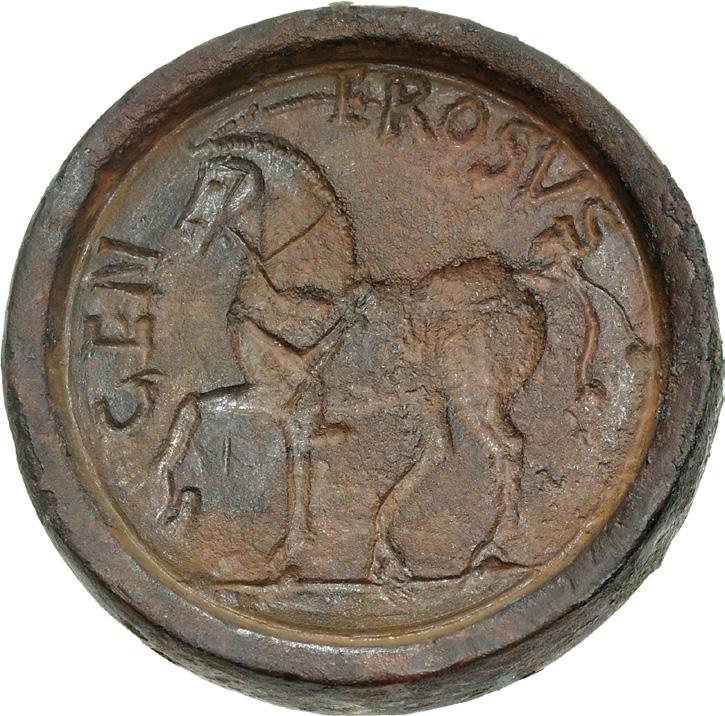
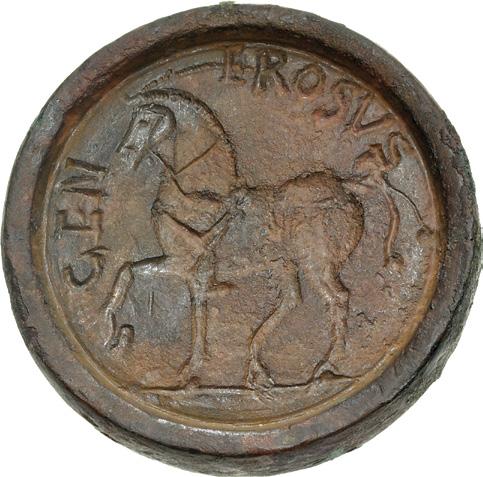
307. Contorniates. Late 4th-5th centuries AD. Æ Contorniate (38mm, 40.61 g, 4h). YS I C I NIKA, the charioteer Eusiches standing left, laureate, wearing lorica aurigae, holding wreath, whip, and palm frond (all engraved in incuse) / GEN EROSVS, the horse Generosus standing left (all engraved in incuse). Alföldi, Kontorniat – (but cf. 642-9 for similar engraved pieces). Red-brown patina, minor smoothing. Good VF. Unique and unpublished, from an extremely rare series of incuse contorniates. ($2000)
Ex Bertolami E-Auction 83 (6 June 2020), lot 1361.
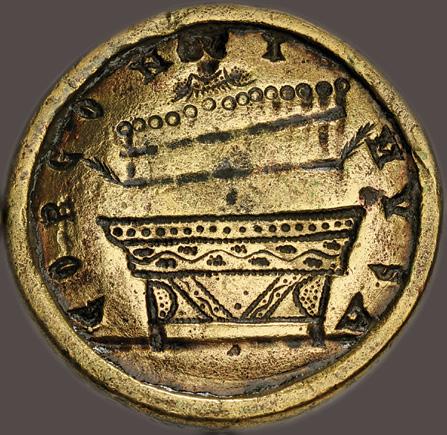
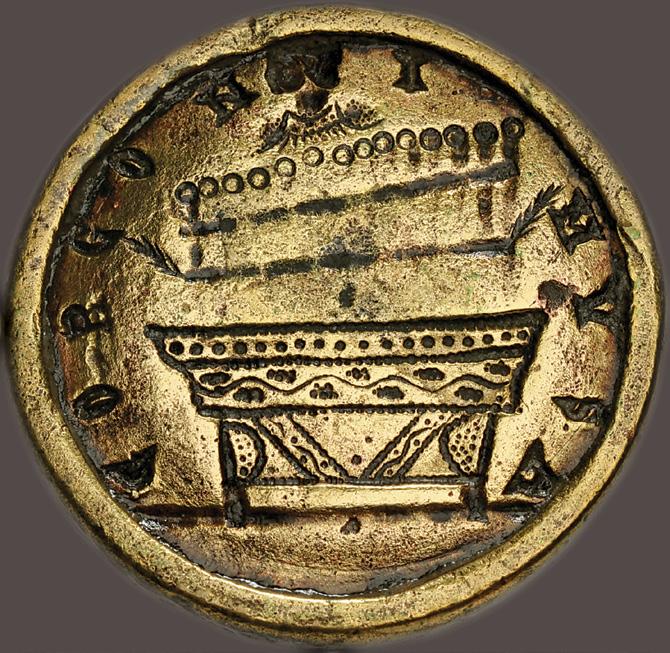
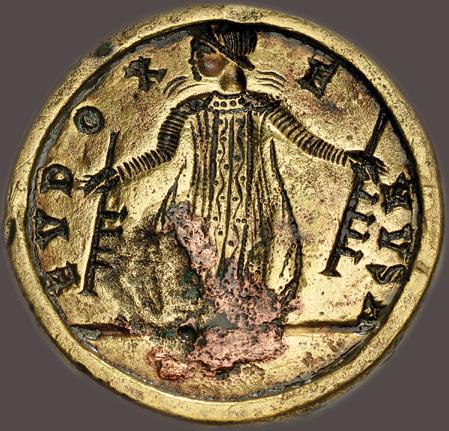
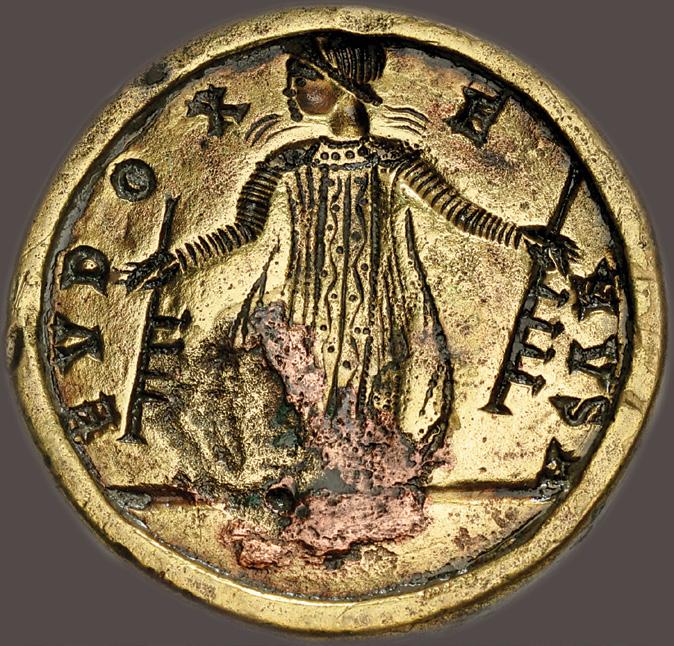
308. Contorniates. Late 4th-5th centuries AD. Æ Contorniate (38mm, 40.61 g, 4h). GORGON I MVSA, Gorgonius standing behind and playing a hydraulis (water organ); all in incuse / EVDOX E MVSA, the tibicen (tibia player) Eudoxius standing facing on ground line, head left, wearing chiton and holding tibia in each hand; all in incuse. Alföldi, Kontorniat –(but cf. rev. dies 221-5 for hydraulis, and no. 654-5 for tibicen). Toned brassy surfaces, slight porosity, areas of deposits. Good VF. Unique. ($1500)
Ex Classical Numismatic Group 127 (17 September 2024), lot 639.
Musicians, mimes, and dancers were as much of a fixture of the Roman circus as the races themselves. Though not as popular a theme for contorniates, there are a limited number of types that depict or name musicians. Among them are five dies that depict the hydraulis, or water organ. Invented by Ctesibius of Alexandria in the third century BC, the hydraulis is the first instrument to use a keyboard. Water would be pumped through a bellows into a chamber where it would compress air, forcing it through pipes of varying lengths to produce notes, which were controlled by the keys. The present piece depicts the instrument and it’s player Gorgonius in incuse and is entirely unrecorded. The reverse features a standing figure of Eudoxius, a tibicens or double-flute player, holding each flute separately in his hands. Two other incuse examples are known with this type, both naming the musician Makarius.
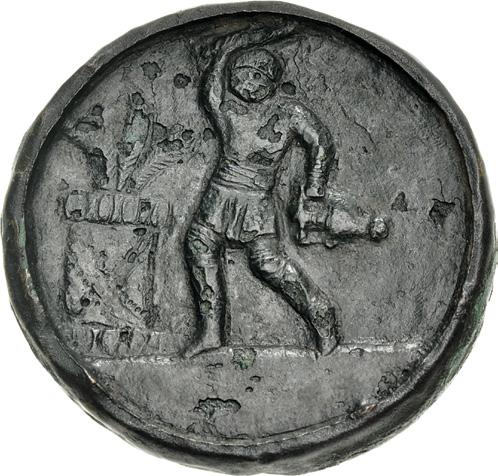
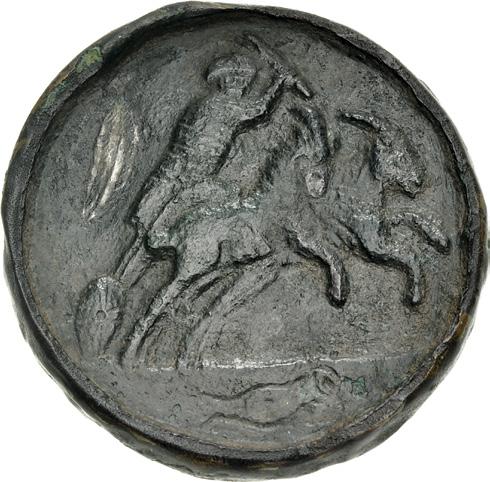
309. Contorniates. Late 4th-5th centuries AD. Æ Contorniate (40mm, 28.67 g, 9h). Boxer standing left, wearing caesti, holding prize urn and uncertain object in raised hand; to left, three palm fronds in container / Charioteer holding whip and driving biga right, horses wearing palm fronds on their heads; uncertain design engraved in exergue, uncertain object inlaid in silver to left. Alföldi, Kontorniat –. Dark green surfaces, roughness and areas of corrosion, smoothed and tooled. Near VF. Unpublished and unique. LOT SOLD AS IS, NO RETURNS. ($750)
Purchased from Frank Kovacs, December 2015. Ex Gorny & Mosch 191 (11 October 2010), lot 2703 (since altered).
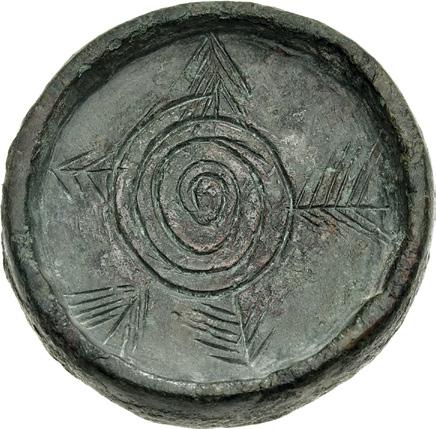
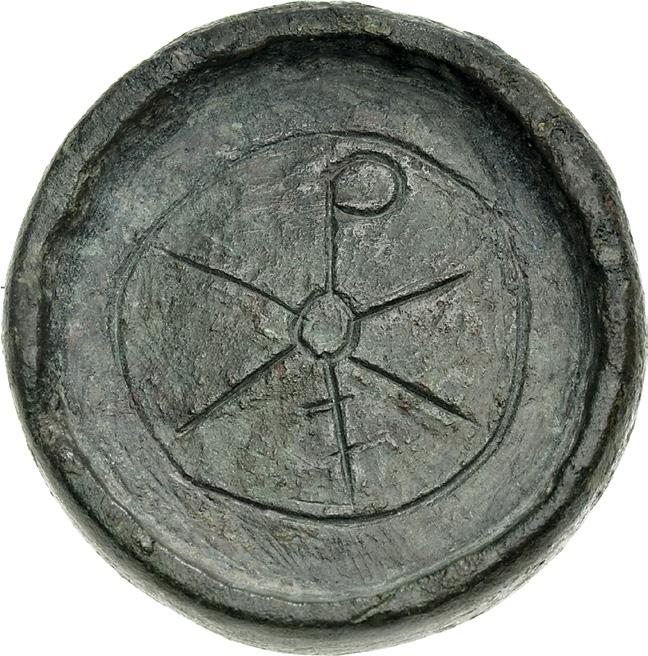
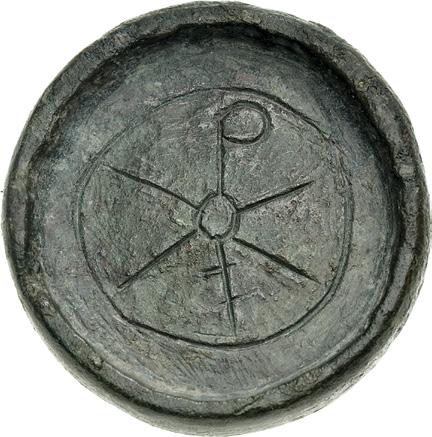
310. Contorniates. Late 4th-5th centuries AD. Æ Contorniate (33mm, 30.45 g). Engraved spiral shape (labyrinth?) with five branches emanating from edge / Engraved Chi-Ro within circle. Mondello, “Using and Reusing Tokens: Some Remarks about Christian Graffiti on Contorniates,” in Tokens; Cultures, Connections, Communities (2019), no. 22 and fig. 9 (this example); Alföldi, Kontorniat –. Green-brown surfaces, some smoothing. VF. Unique. ($300)
Ex Jacquier 50 (16 September 2022); Jacquier 39 (12 September 2014), lot 812; Jacquier 29 (Summer 2002), lot 629.
Mondello demonstrates that the Christian Chi-Rho and cross types often seen engraved onto contorniates are better understood as general good-luck symbols, as they are frequently found in context with other lucky symbols, like the PE monogram, ivy leaf, and palm frond.
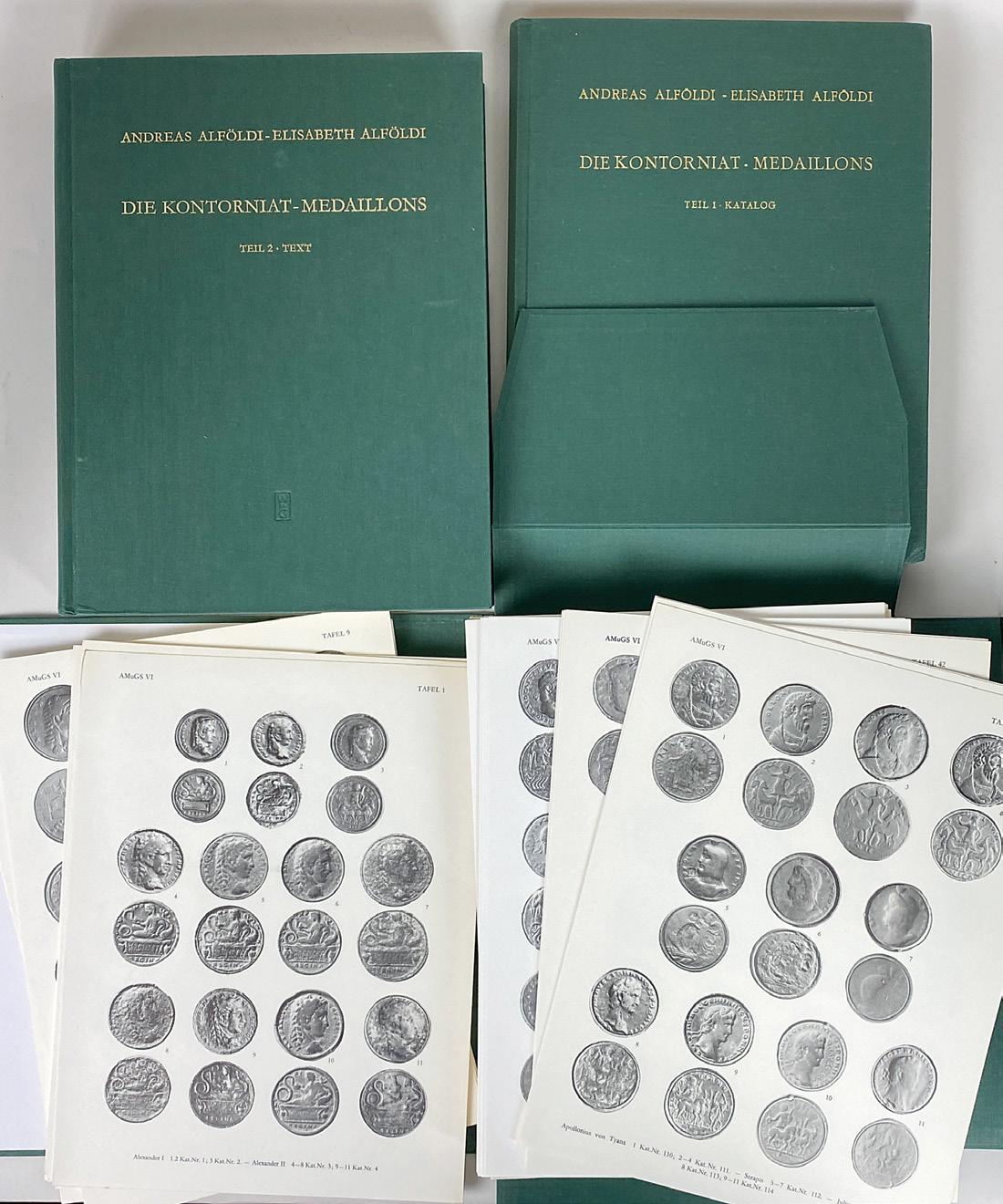
311. Alföldi, A., Alföldi, E. & Clay, C. L. Die Kontorniat Medaillons. Teil 1: Katalog. Teil 2: Text. (Berlin; Walter de Gruyter, 1976-1990). two volumes. Large 4to. 232 pages; 212 plates loose in folder, 3 folding tables. All volumes in the original green publisher’s cloth, gilt. Fine condition. ($500)
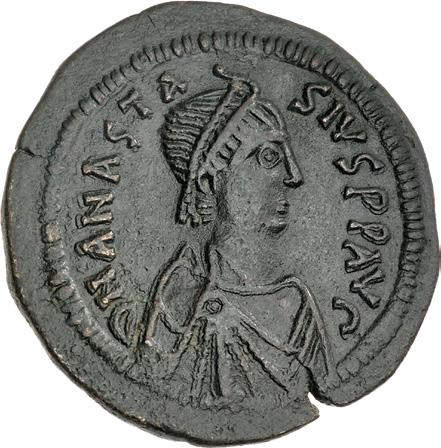
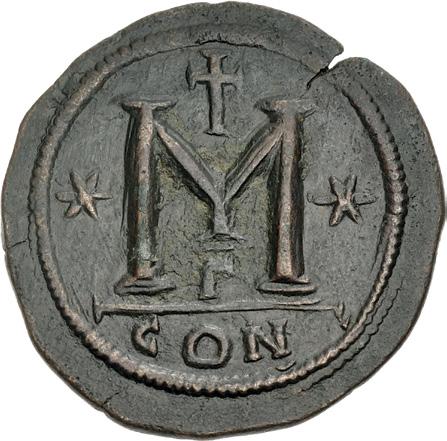
312. Anastasius I. 491-518. Æ Follis (36mm, 17.80 g, 6h). Constantinople mint, 3rd officina. Struck 512-517. Diademed, draped, and cuirassed bust right / Large M, cross above; stars flanking; Γ//CON. DOC 23d; MIBE 27; SB 19. Dark browngreen patina, minor flan crack. Good VF. ($200)
Purchased from Tom Cederlind, 6 September 2012.
Anastasius came to the East Roman throne as a career civil servant and quickly displayed an administrator’s aptitude for tinkering with government efficiency, and thereby bolstering the treasury. Upon his accession, the Roman bronze coinage had fallen into a deplorable state, mainly confined to tiny, poorly made nummi of fluctuating value relative to the standard gold coin of the realm, the solidus. These minuscule bronzes, weighing less than a gram, were valued at between 7,000 and 8,400 to the solidus, Twenty nummi were required to buy a bread roll and hundreds or thousands were needed for other everyday transactions. Anastasius retained the nummus as a basic unit, but in AD 498 undertook a major reform creating a series of new bronze denominations, each clearly marked with a Greek letter denoting the number of nummi each coin was worth. M, the Greek numeral for 40, appeared on the back of the largest of these new bronzes, the follis; also struck were the half-follis, marked with a K (20), the 10-nummis piece, or decannumia, marked with an I (10), and a 5-nummis piece (pentanummia), marked with an Є (5). The reform took place in two stages; the first version of the follis was an intermediate-sized coin of around 24 mm and 8-10 grams in weight. After AD 512, this was replaced by a much larger coin of around 35-40 mm and double the weight of the earlier issue. The rate of exchange was now fixed at 180 folles to the solidus. The number of mints was also greatly increased, with the reverse of each coin carrying a mint mark and a Greek letter denoting the workshop, or officina, where it was struck. Anastasius’ coinage reform does indeed seem to have increased government revenues, as the emperor famously left his successor a full treasury and substantial annual budget surplus. Its effect on the common people is less clear, with some chroniclers at the time complaining that the new coinage system had further impoverished the poor.
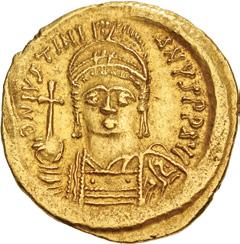
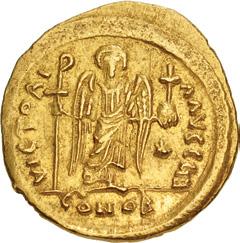
313. Justinian I. 527-565. AV Solidus (19.5mm, 4.44 g, 6h). Constantinople mint, 12th officina. Struck 542-565. Helmeted and cuirassed bust facing, holding globus cruciger and shield / Angel standing facing, holding long staff surmounted by staurogram and globus cruciger; star to right; IB//CONOB. DOC 278 (Carthage); MIBE 7; SB 140. Toned. Good VF. A scarcely encountered officina. ($400)
Purchased from Joel Malter, 29 April 2006.
Justinian I’s currency reform circa AD 538 was primarily concerned with bronze coins, but it introduced new iconography which altered the appearance of the gold solidus as well. In place of the three-quarter armored portrait that was originally introduced by Constantius II two centuries before, Justinian introduced a new fully frontal effigy of the emperor, still helmeted and cuirassed, holding in his right hand a cross set on a globe, the globus cruciger, symbolizing the worldwide triumph of Christianity. Rendered in low relief with few features to distinguish one ruler from another, this became the archetype for Byzantine numismatic portraiture for the next four centuries and beyond.
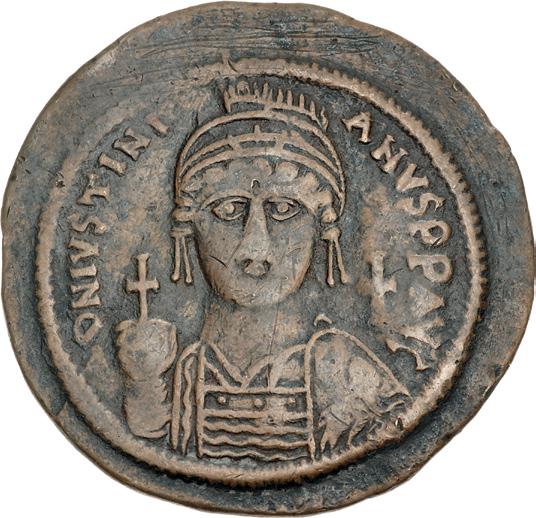
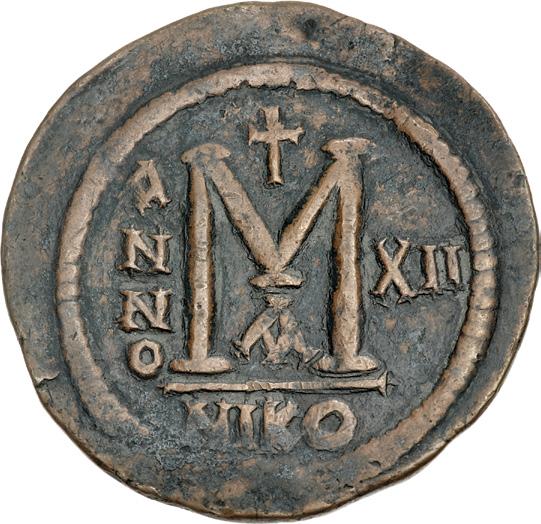
314. Justinian I. 527-565. Æ Follis (43.5mm, 22.96 g, 7h). Nicomedia mint, 1st officina. Dated RY 12 (AD 538/9). Helmeted and cuirassed bust facing, holding globus cruciger and shield; cross to right / Large M, cross above; A/N/N/O - XII (date) across field; A//NIKO. DOC 115a; MIBE 113a; SB 201. Dark brown patina, somewhat wavy flan, some scratches. VF. ($100)
Purchased from Palmyra Heritage, 2 February 2012.
In AD 538, the Emperor Justinian initiated a coinage reform that saw the bronze follis, valued at 40 nummi, increased in diameter and weight by up to 35%. Smaller denominations were likewise resized in respect to their relation to the follis. The formally profile portrait of the emperor now became fully frontal (see previous note on a gold solidus of Justinian), and the reverse now carried the regnal year in Roman numerals (ANNO XII). The reasons for the reform are unclear, but it came at the peak of East Roman expansion that had, for the time being, filled the privy purse with gold looted from the Vandal Kingdom’s treasury in Carthage. Justinian may have believed the relative values of bronze and gold needed to be rebalanced. Also, the large and impressive bronze coins seemed part and parcel of his campaign to restore Roman greatness. Military reversals, along with a terrible plague and its associated economic upheaval, soon resulted in a reduction in weight back to nearly the levels set by Anastasius, although the changes in iconography and the addition of the regnal date. proved enduring.
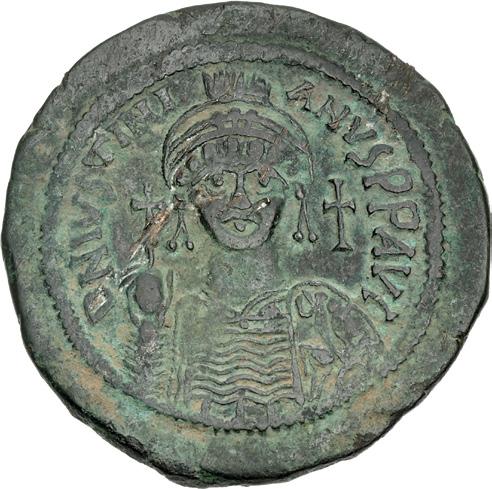
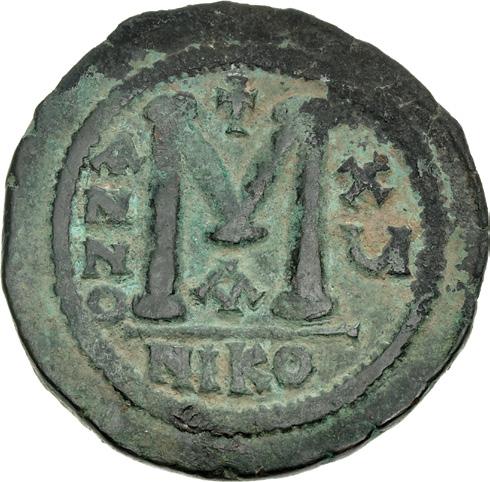
315. Justinian I. 527-565. Æ Follis (40mm, 24.82 g, 6h). Nicomedia mint, 1st officina. Dated RY 15 (AD 541/2). Helmeted and cuirassed bust facing, holding globus cruciger and shield; cross to right / Large M, cross above; A/N/N/O - X/Ч (date) across field; A//NIKO. DOC 120a; MIBE 113a; SB 201. Dark green-brown patina, slightly wavy flan, light scuff. Good VF. ($100)
Ex Andre Constantine Dimitriadis Collection (Heritage 3035, 3 September 2014), lot 32222.
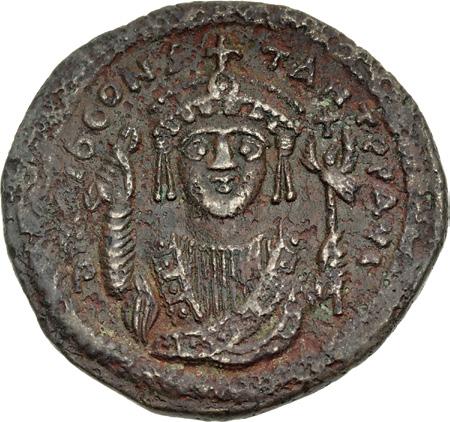
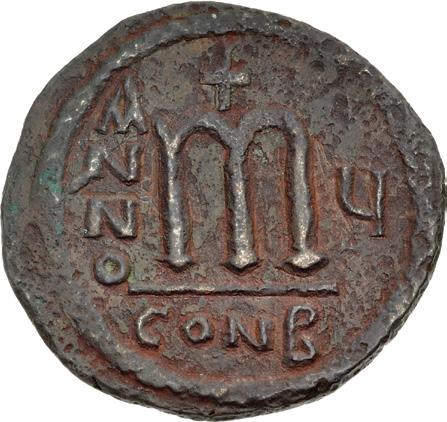
316. Tiberius II Constantine. 578-582. Æ Follis (36mm, 15.29 g, 6h). Constantinople mint, 2nd officina. Dated RY 5 (AD 578/9). Crowned facing bust, wearing consular robes, holding mappa and scepter surmounted by eagle supporting cross / Large M, cross above; A/N/N/O - Ч (date) across field; CONB. DOC 11b; MIBE 25; SB 430. Dark red and earthen-brown patina, some roughness and cleaning scratches. VF. ($75)
Ex Andre Constantine Dimitriadis Collection (Heritage 3035, 3 September 2014), lot 32215 (part of).
A talented soldier, Tiberius II Constantine strove hard to stem the tide of defeat and invasion on all imperial fronts. With military resources limited, the Slavs pushing into Greece, the Lombards laying siege to Ravenna, and the Persians invading Armenia, he had his hands full. Temporarily buying off the Slavs and Lombards, he concentrated on the Persian front and was rewarded when his general Maurice won a notable victory. Free-spending where Justin had been overly frugal, Tiberius seems to have tried an early version of “stimulus spending” which nearly bankrupted the state. Charismatic and affable, Tiberius perhaps deserved a longer reign, but fell ill after eating some poorly prepared (or possibly poisoned) food. He died after naming his protege Maurice as his successor
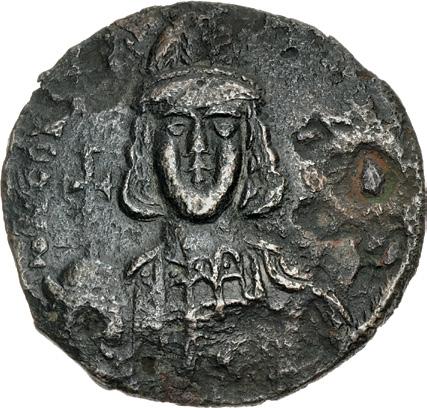
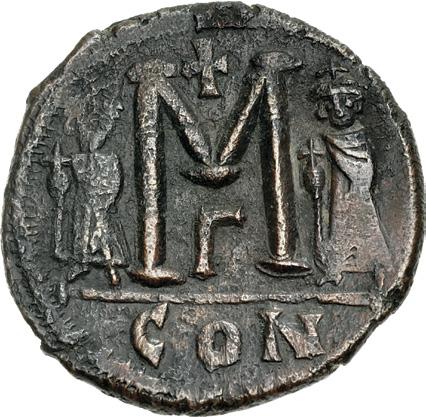
317. Constantine IV Pogonatus, with Heraclius and Tiberius. 668-685. Æ Follis (34.5mm, 15.38 g, 6h). Constantinople mint, 3rd officina. Struck 668-673. Helmeted and cuirassed bust facing, holding globus cruciger / Large M, cross above; flanked by crowned facing figures of Heraclius and Tiberius, both wearing chlamys and holding globus cruciger; Γ//CON. DOC 28c; MIB 77; SB 1173. Dark brown surfaces, corrosion. Near VF. . ($150)
Ex Freeman & Sear inventory B3925 (2 February 2012).
To Constantine IV belongs credit for finally stemming the Muslim tide that threatened to sweep away the Byzantine Empire and roll over all of Europe in the later seventh century. The eldest son of Constans II, he faced a host of crises upon his succession, mainly the loss of the Empire’s richest provinces, the decimation of the Byzantine navy, and a badly depleted set of resources and options. He fought back with energy and ingenuity, preparing Constantinople for the inevitable siege that commenced six years after his accession, in AD 674. There the Byzantines unleashed a “secret weapon,” Greek Fire, an incendiary mixture that could be projected through tubes as with a modern flame-thrower. It caught the Arab fleet utterly unprepared and caused the first great Muslim defeat since the Hejira. Constantine’s army also defeated the Arabs on land in Asia Minor and forced the Caliph to sign a 30-year peace treaty on terms favorable to the Byzantines. Constantine had to cede much of the Balkans to the new Bulgarian tribe, however, a development that boded ill for the future. One of the best of the early Byzantine rulers, Constantine died young at age 33, leaving the throne to his mercurial son Justinian II. His nickname Pogonatus (”Bearded”) is possibly a bit of a misnomer as, judging from his coin portraits and a mosaic depicting him in Ravenna, he was either clean-shaven or wore a relatively short beard. It is perhaps more aptly applied to his father, Constans II, who was exceedingly hirsute.
Constantine IV also made a valiant effort to restore the Byzantine coinage after decades of decline. He struck both gold solidi of much improved workmanship and an impressive bronze follis restored to its size and weight as during the reign of Justinian I the Great, an example of which is offered here.
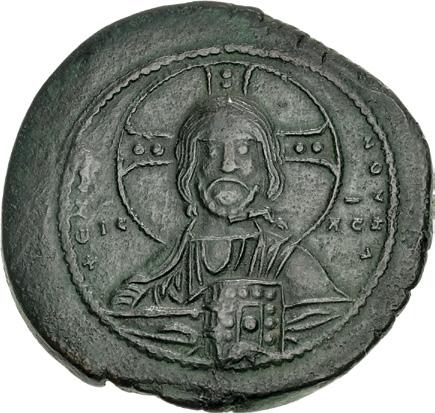
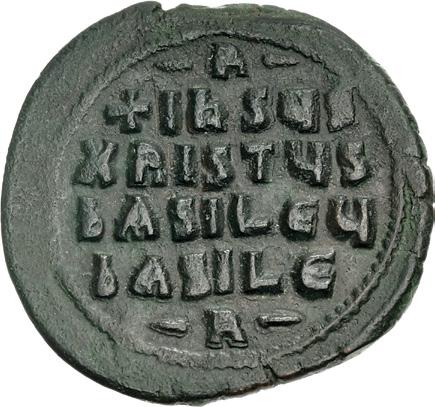
318. Anonymous Folles. temp. Basil II & Constantine VIII, circa 976-1025. Æ Follis (35mm, 18.42 g, 6h). Constantinople mint. Facing bust of Christ Pantokrator, raising hand in benediction and holding Gospels; one pellet on Gospels, two pellets in bars of nimbus / Legend in four lines; – R – decoration above and below. DOC A2.18; SB 1813. Attractive dark green patina. Good VF. ($200)
Ex Pars Coins inventory PCW-B561 (11 May 2012).
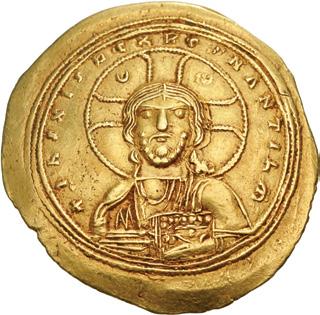
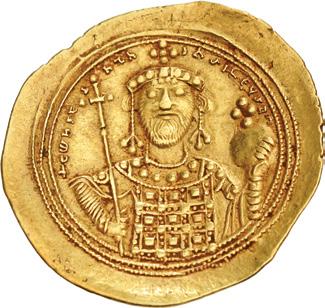
319. Constantine IX Monomachus. 1042-1055. AV Histamenon Nomisma (26mm, 4.37 g, 6h). Constantinople mint. Facing bust of Christ Pantokrator; upturned crescents in upper quarters of nimbus / Crowned facing bust of Constantine, wearing loros, holding cruciform scepter and globus cruciger. DOC 3; Füeg II 3.A.8/6; SB 1830. Toned, deposits. Good VF. ($400)
Ex Andre Constantine Dimitriadis Collection (Heritage 3035, 3 September 2014), lot 32338, purchased from Spink, March 1985.
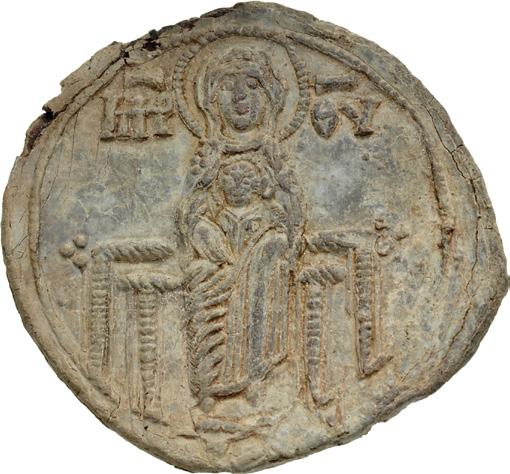
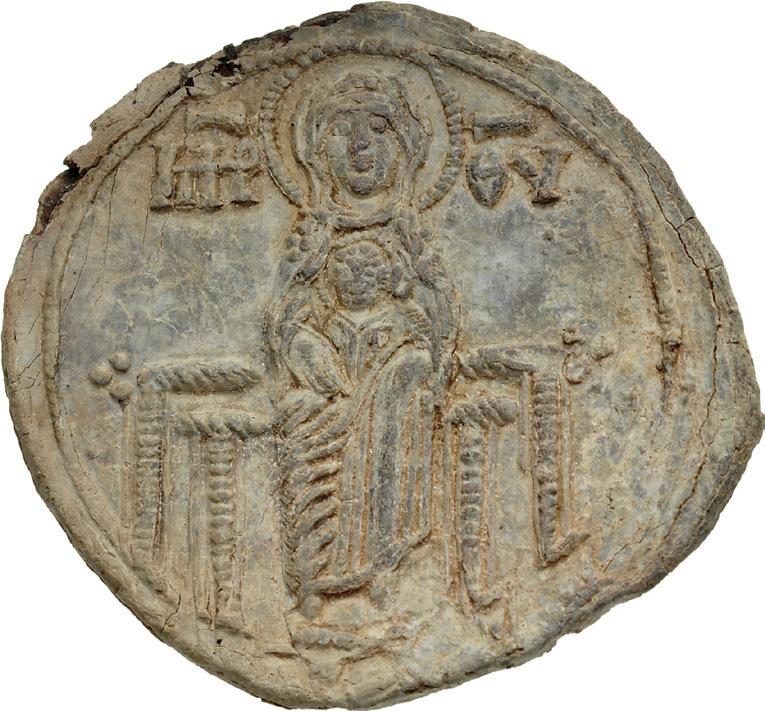
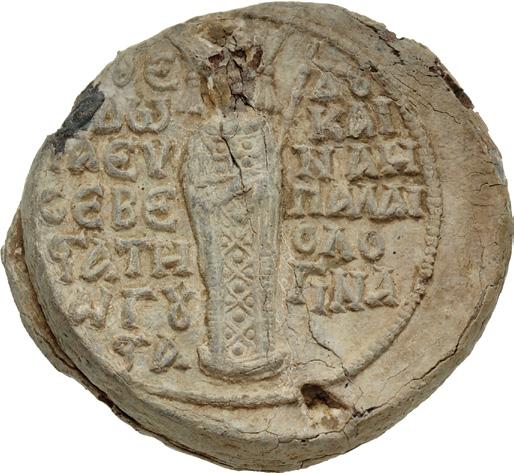
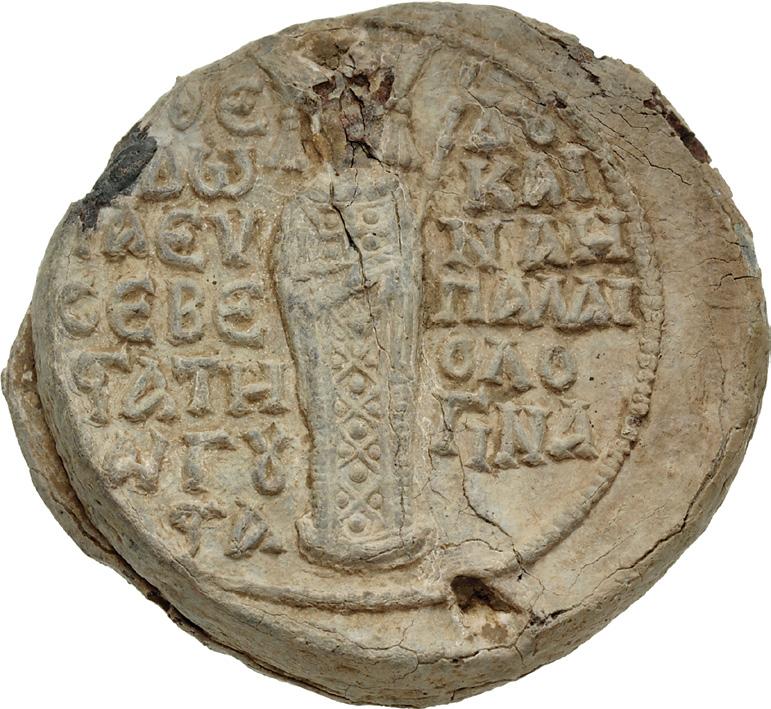
320. Theodora Doukaina Palaiologina. Augusta, 1259-1282. PB Seal (40mm, 46.46 g, 12h). The Theotokos Platytera, nimbate, seated facing, holding nimbate facing bust of the Holy Infant on lap / ΘЄ/[O]Δω/PA ЄV/ CЄBЄ/(CT)ATH/ (AV) Γ(OV)/(CT)A - Δ(OV)/KAI/NA H/ ΠAΛAI/OΛO/ΓINA in two columnar groups flanking crowned facing figure of Theodora, wearing loros, resting hand on breast and holding jeweled scepter. BLS I 122b; DOCBS 6, 105.2 = BZS.1947.2.370. Tan surfaces, a couple of minor marks. EF. Very rare. ($1000)
The Empress Theodora Doukaina Palaiologina was the wife of Emperor Michael VIII, who restored Constantinople to Byzantine rule in 1261 after nearly decades under control of the Latin crusaders. She was born into the influential Doukas clan and was niece to Emperor John III Doukas Vatatzes (1221-1254), who ruled the Nicaean Byzantine exile state in western Anatolia. In 1253 she was married to Michael Pailaiologos, a rising star in the Nicaean military. Michael soon maneuvered his way into becoming regent for the seven-year-old John IV Laskaris (1258-1261), then co-emperor, then sole ruler when he had John IV deposed and blinded in 1261. Theodora thus became empress and was presumably crowned in Constantinople when Michael reclaimed the city in July 1261. The marriage was not a tranquil one: Michael reportedly became enamored of a former empress, the widow of John III, and was preparing to divorce Theodora before being talked out of it by the Patriarch of Constantinople. Theodora seems to have taken little part in her husband’s energetic rule of the restored Byzantine state, but was known for her charitable work and support of monasteries.
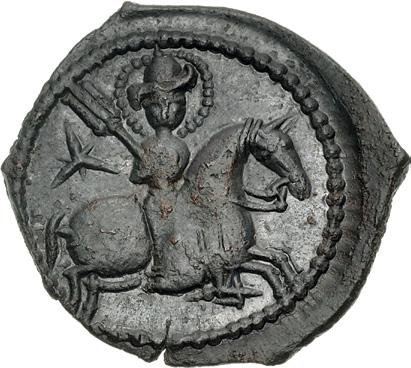
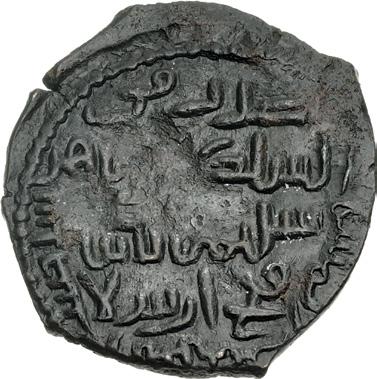
321. Seljuqs, Rum. Rukn al-Din Sulayman b. Qilich Arslan. As sultan, AH 593-600 / AD 1197-1204. Æ Fals (34mm, 8.13 g, 7h). Horseman type. Without mint-name. Dated AH 595 (AD 1198/9). Horseman advancing right, holding mace; star to left / Legend citing Rukn al-Din Sulayman bin Qilich Arslan, mint, and AH date. Broome 57B; Izmirlier 101.1; Album 1205.2. Attractive dark green patina with areas of red. EF. ($100)
S&S Plate Coin
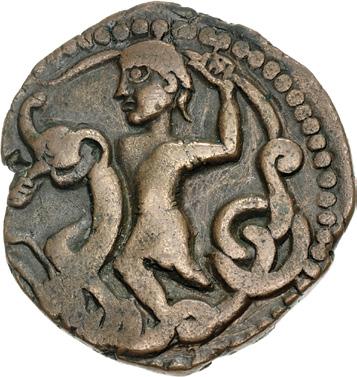
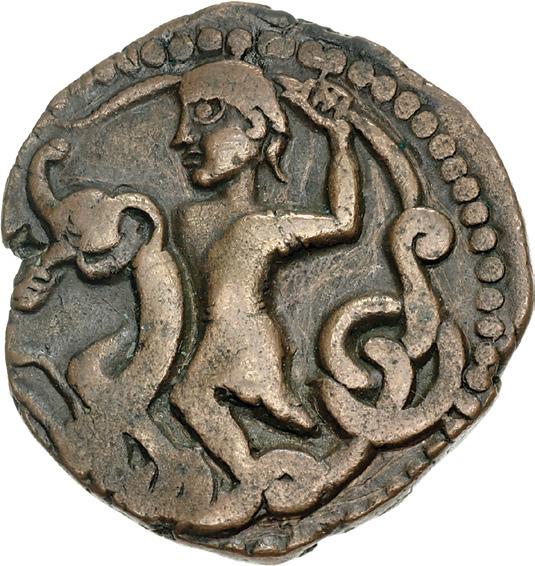
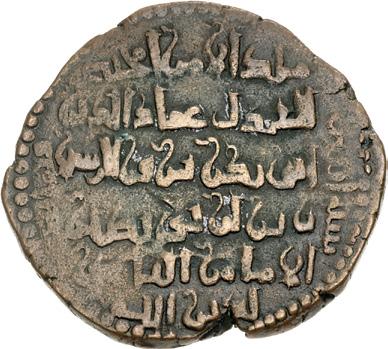
322. Artuqids of Khartpert. ‘Imad al-Din Abu Bakr. AH 581-600 / AD 1185-1203. Æ Dirham (30mm, 13.67 g, 9h). Citing the Abbasid caliph al-Nasir as overlord. Unlisted (Khartpert[?]) mint. Dated AH 582 (AD 1186/7). Figure on dragon left, holding its neck and tail / Name, title, and genealogy of Imad al-Din Abu Bakr, and name and title of Abbasid caliph in five lines; AH date in left and right outer margin. S&S 21.1 (this coin illustrated); Album 1825.1. Attractive brown patina. VF. Extremely rare. ($1000)
Ex Sternberg XIII (17 November 1983), lot 1261.
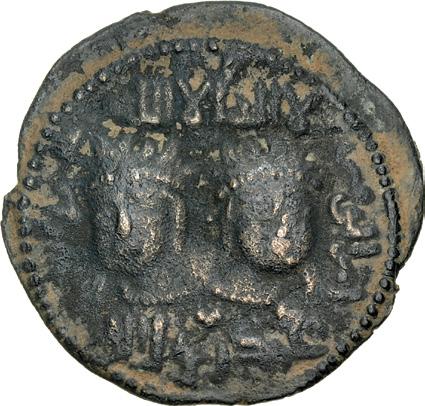
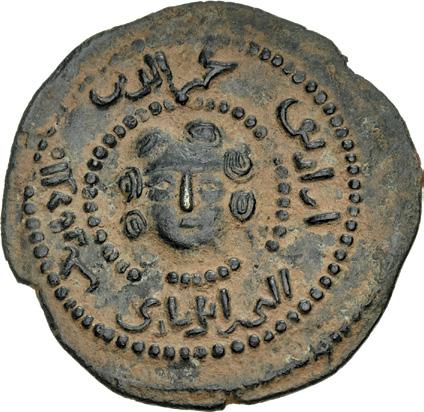
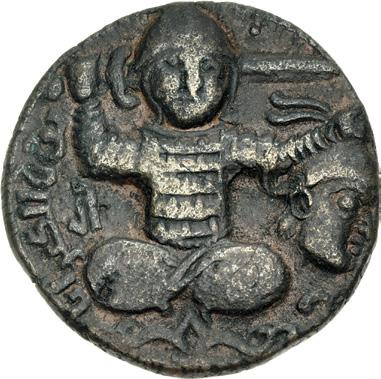
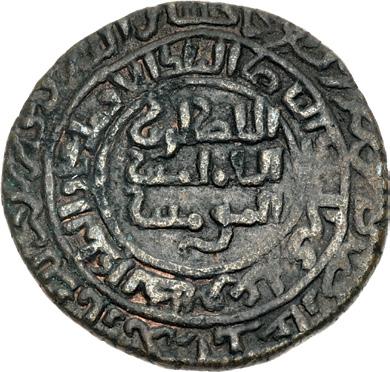
323. Artuqids of Mardin. Najm al-Din Alpi. AH 547-572 / AD 1152-1176. Æ Dirham (35.5mm, 11.17 g, 6h). Citing the Abbasid caliph al-Mustanjid as overlord. Unlisted (Mardin[?]) mint. Undated, but struck AH 560-566 (AD 1165-1170). Two diademed and draped male heads facing slightly away from one another; in margins, Kalima above and below, name and title of Abbasid caliph to right and left / Facing female head, wearing necklace; name, title, and genealogy of Najm al-Din Alpi in outer margin. Whelan Type IV, 44-5; S&S Type 30.1; Album 1827.5. Orangish earthen dark brown patina, roughness. Near EF. ($150)
Ex Warden Family Collection (Classical Numismatic Group 97, 17 September 2014), lot 853.
324. Artuqids of Mardin. Husam al-Din Yuluq Arslan. AH 580-597 / AD 1184-1200. Æ Dirham (31mm, 12.97 g, 3h). Citing the Ayyubid rulers al-Afdal ‘Ali and al-Zahir Ghazi as overlords. Unlisted (Mardin[?]) mint. Dated AH 596 (AD 1199/1200). Turk, in military outfit and cross legged, seated facing, holding severed head and raised sword; name and title of Nur al-Din Arslan Shah to left; ornamental scrollwork in exergue / Name and titles of Abbasid caliph in three lines; names and titles of Ayyubid overlord in inner margin; name of Husam al-Din Yuluq Arslan and AH date in outer margin. Whelan Type IV, 58 (for rev.); S&S Type 36.1; Album 1829.4. Brown patina. Good VF. ($200)
Ex Warden Family Collection (Classical Numismatic Group 97, 17 September 2014), lot 867.
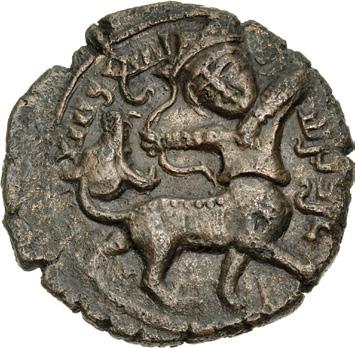
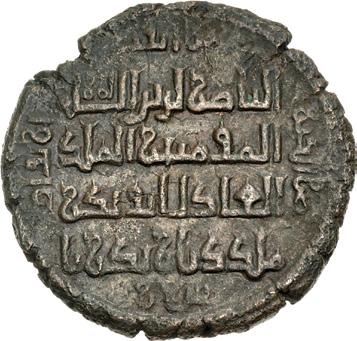
325. Artuqids of Mardin. Nasir al-Din Artuq Arslan. AH 597-637 / AD 1200-1239. Æ Dirham (30mm, 12.56 g, 3h).
Citing the Abbasid caliph al-Nasir and Ayyubid ruler al-Adil I as overlords. Mardin mint. Dated AH 599 (AD 1202/3). The zodiac sign Sagittarius: Centaur advancing right, head facing, drawing bow at head of dragon emerging from his tail; mint name and AH date around / Names and titles of Abbasid caliph al-Nasir and Ayyubid ruler al-Adil I in four lines; name of Nasir al-Din Artuq Arslan in margin. Whelan Type II, pp. 111-2; S&S Type 38.2; Album 1830.2. Brown patina. Near EF. ($300)
Ex Warden Family Collection (Classical Numismatic Group 97, 17 September 2014), lot 870.
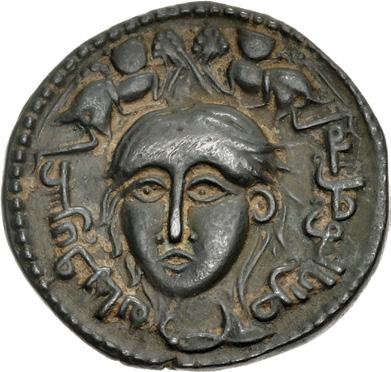
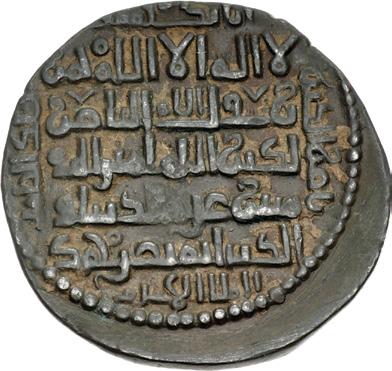
326. Zangids of al-Mawsil. Nasir al-Din Mahmud. AH 683-690 / AD 1284-1291. Æ Dirham (32mm, 14.51 g, 4h).
Citing the Ayyubid rulers al-Kamil Muhammad and al-Ashraf Musa as overlords. al-Mawsil mint. Dated AH 620 (AD 1224/5). Draped bust facing slightly left, wearing hair in fore-knot; two winged creatures above mint formula and AH date in left and right fields / Name and titles of Saif al-Din Ghazi in seven lines and margins. Whelan Type II, 187-8; S&S Type 66; Album 1870.1. Earthen brown patina. Good VF. ($200)
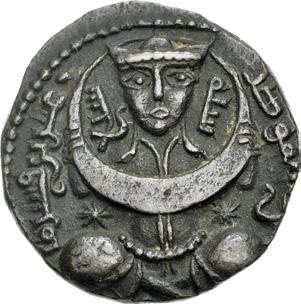
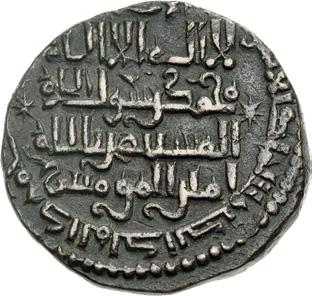
327. Zangids of al-Mawsil. Nasir al-Din Mahmud. AH 683-690 / AD 1284-1291. Æ Dirham (24.5mm, 9.06 g, 9h).
Citing the Ayyubid rulers al-Kamil Muhammad and al-Ashraf Musa as overlords. al-Mawsil mint. Dated AH 627 (AD 1229/30). Crowned Turkish female figure, holding crescent-circle, seated facing between two stars; mint formula and AH date around / Kalima and name and titles of Abbasid caliph in five lines; name and titles of Nasir al-Din Mahmud in outer margin. Whelan Type III, 189-90; S&S Type 67; Album 1870.2. Dark brown patina. Near EF. ($300)
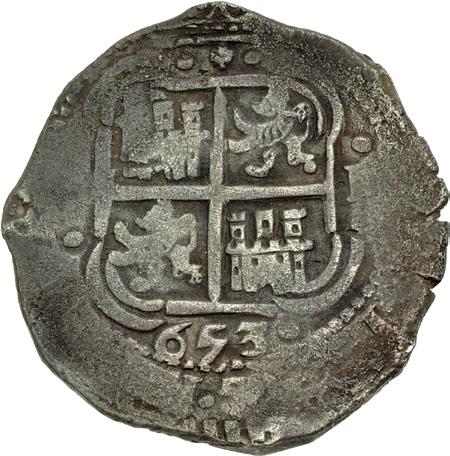
Colonial
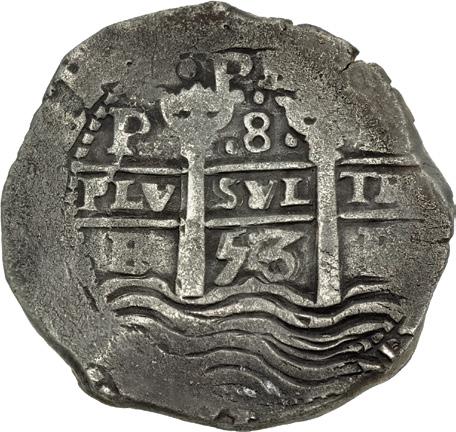
AR 8
26.34
Cob issue. Potosí mint. Dated 1653 P E P H. Quartered arms within polylobe / Crowned Pillars of Hercules set on ocean waves. Menzel Po-278; KM 21. Toned, porosity. Near VF. ($300)
Ex Classical Numismatic Group Electronic Auction 477 (23 September 2020), lot 691, purchased from Paul Karon, June 2013.
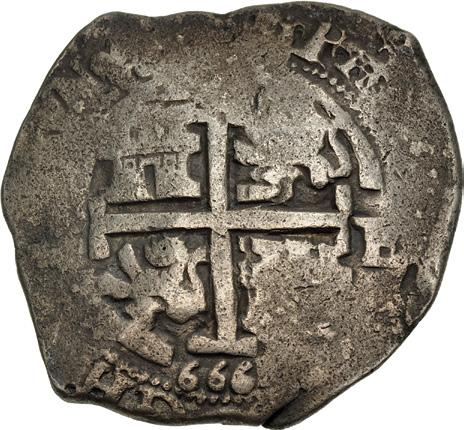
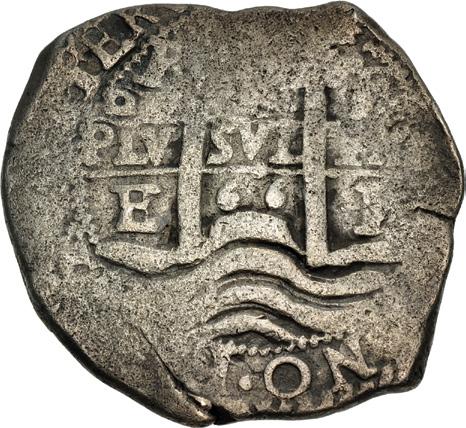
Purchased from Sedwick, January 2013.
across fields
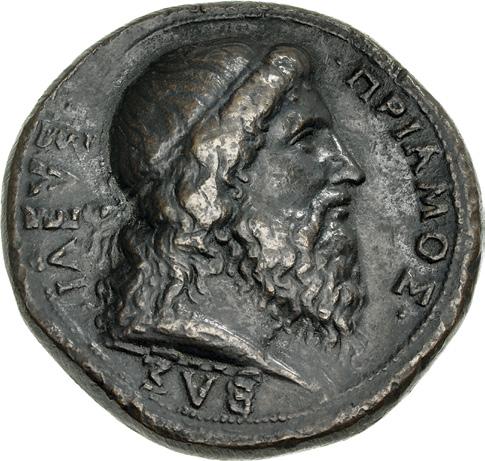
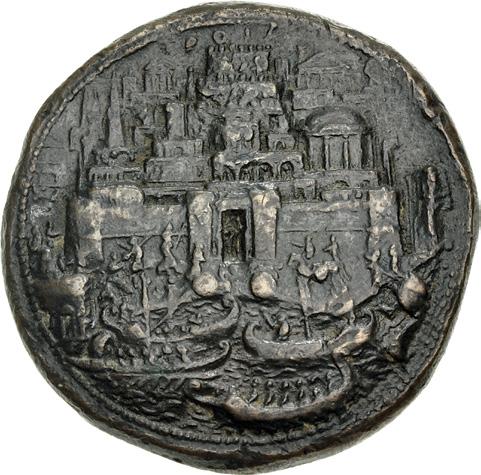
330. ANCIENT THEMES. Priam, King of Troy. Æ Medal (39mm, 38.77 g, 12h). By Alessandro Cesati, “il Grechetto” (fl. 1538-1564). Later cast. ΒΑΣΙΛΕΥΣ · ΠΡΙΑΜΟΣ ·, diademed and draped bust of Priam right, wearing long beard / TROIA, view of the walled city Troy, showing numerous temples and buildings; the citadel in upper center with wall inscribed ΙΛΙΟΝ; shore with Greek soldiers and galleys in water. Attwood 941. Brown patina. Good VF. ($500)
Ex Classical Numismatic Group Electronic Auction 449 (31 July 2019), lot 726.
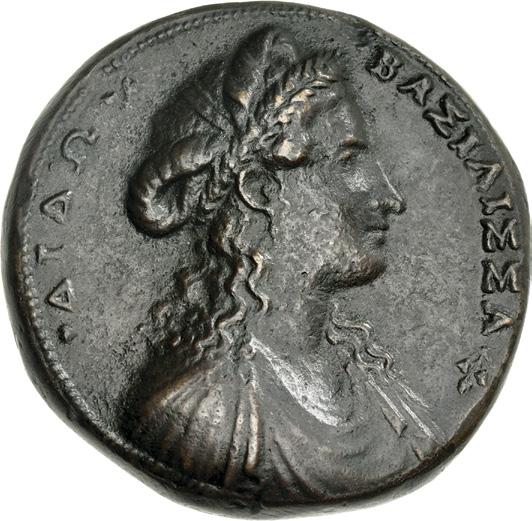
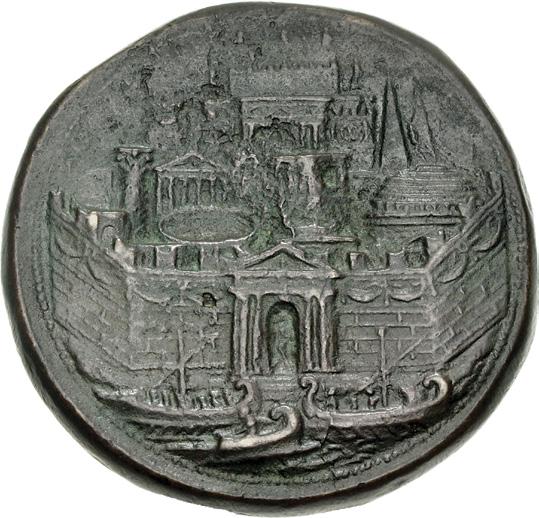
331. ANCIENT THEMES. Dido, Queen of Carthage. Æ Medal (42mm, 57.94 g, 6h). By Alessandro Cesati, “il Grechetto” (fl. 1538-1564). Later cast. ΔΙΔΩ ΒΑΣΙΛΙΣΣΑ, draped bust of Dido right / View of Carthage, seen from aerial perspective; three galleys at base of city’s marine walls; above on left, [ΚΑΡΧΗΔΩΝ]. Attwood 942. Brown and green patina. VF. ($300)
Purchased from Moneta, August 2019.
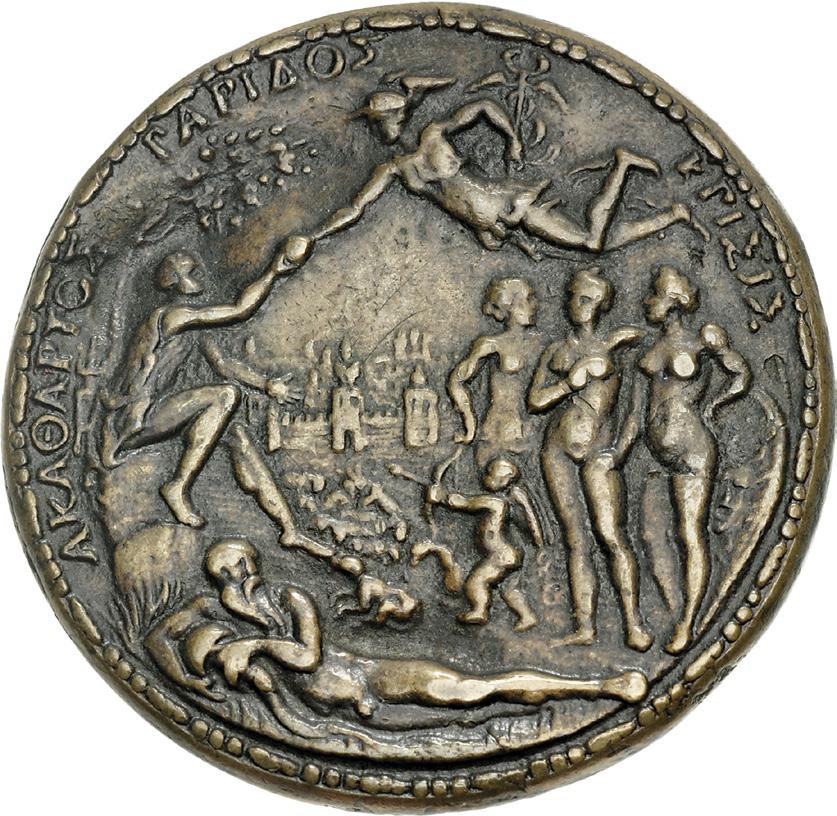
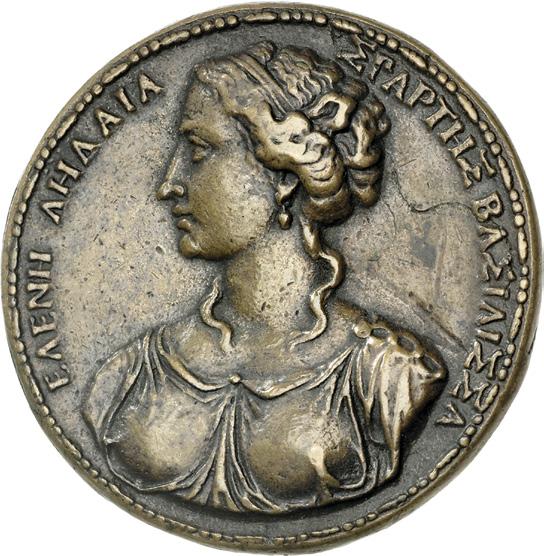
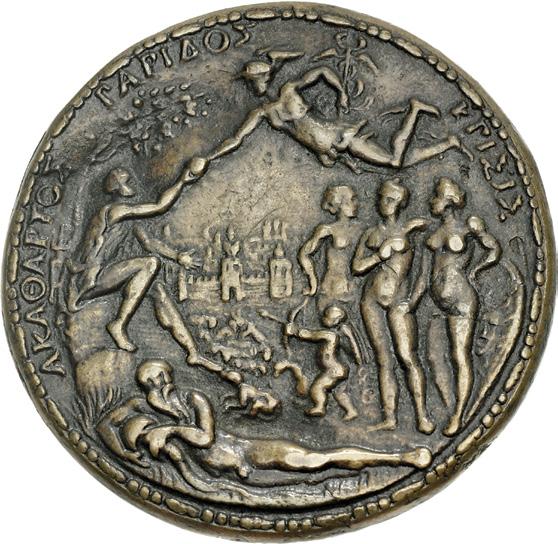
332. ANCIENT THEMES. Helen of Troy. Æ Medallion (45mm, 34.91 g, 6h). In the style of D. Poggini (15201590). Later cast. EΛENH ΛHΔAIA ΣΠAPTHΣ BAΣIΛIΣΣA, bust facing, head left, wearing fillet, earring, and chiton / AKAΘAPTOΣ ΠAPIΔOΣ KΓIΣIΣ, the judgment of Paris: Paris seated right below a tree, receiving the apple from Mercury, flying above and holding caduceus; to right, Juno, Venus, and Minerva standing left along with Cupid, shooting an arrow at Paris; in background, a flock of sheep before the city walls of Troy; in foreground, river god reclining left, holding overturned urn from which water flows. Attwood 809. Warm brown patina, slight bend. VF. A finely made cast. With an old collector’s ticket in a fine hand, indicating it was purchased at auction in 1921. ($500)
Ex Stack’s, Bowers & Ponterio 182 (10 January 2014), lot 1320.
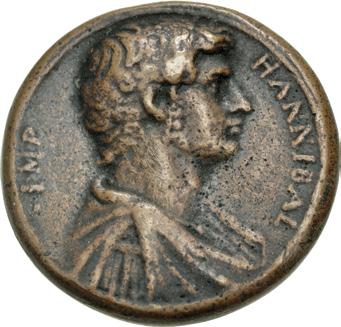
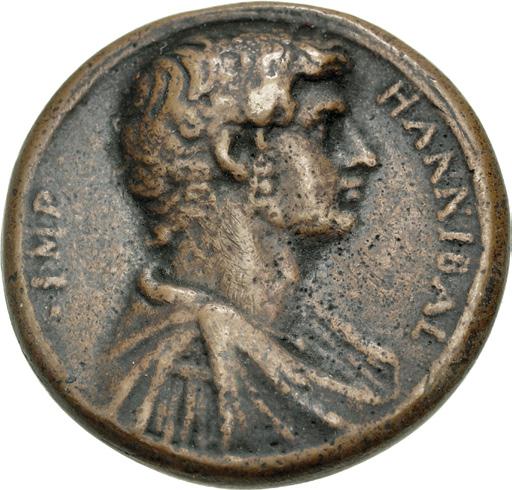
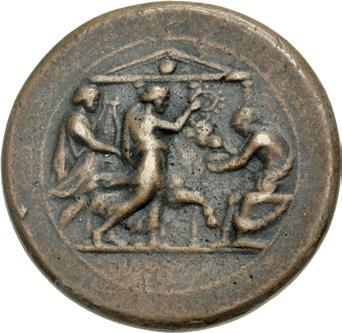
333. ANCIENT THEMES. Hannibal the Great. 247-183/1 BC. Æ Medal (27mm, 14.40 g, 6h). By Valerio Belli (circa 1468-1546). Later cast. IMP HANNIBAL, draped and curiassed bust right / Two figures standing right, holding lyre and wreath respectively, leading bull towards a third, smaller figure standing left on dais; tetrastyle temple in background. Atwood 387/383 (for obv./rev.). Brown patina. VF. ($100)
Ex Roma E-Sale 60 (1 August 2019), lot 1188.
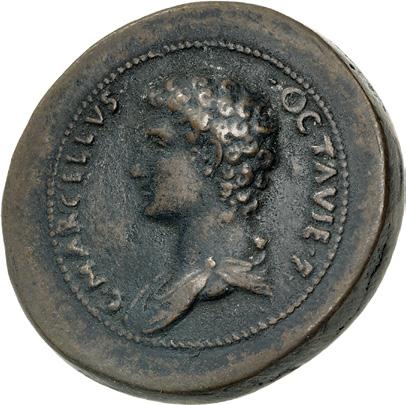
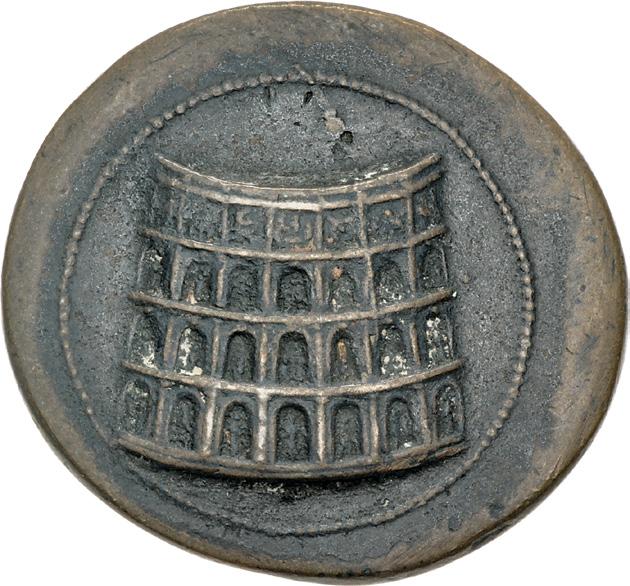
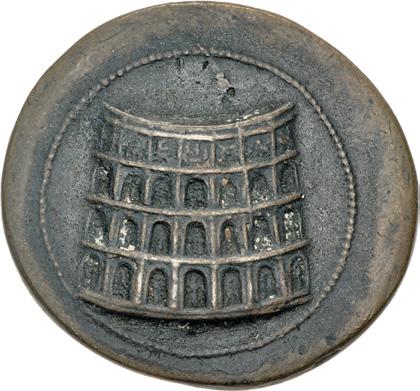
334. ANCIENT THEMES. M. Claudius Marcellus, nephew of Augustus. 42-23 BC. Æ Medal (34mm, 30.69 g, 12h). By Valerio Belli (circa 1468-1546). Later cast. C · MARCELLVS · · OCTAVIE · F ·, bareheaded and draped bust left / View of an amphitheater. Palladio –; Attwood –; Basel III.42. Brown patina. VF. ($150)
Ex RBW Collection (Numismatica Ars Classica 63, 17 May 2012), lot 715; Münz Zentrum 161 (11 January 2012), lot 895.
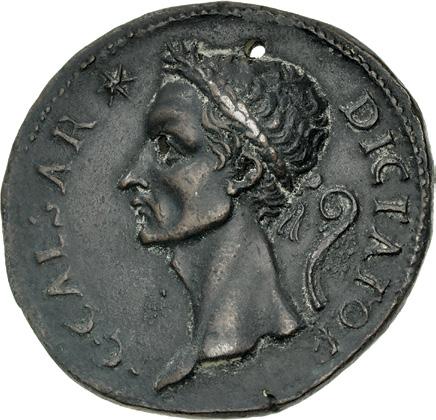
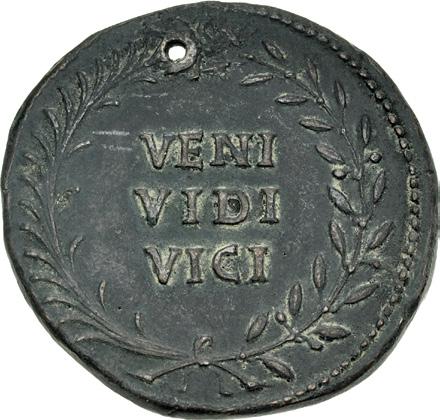
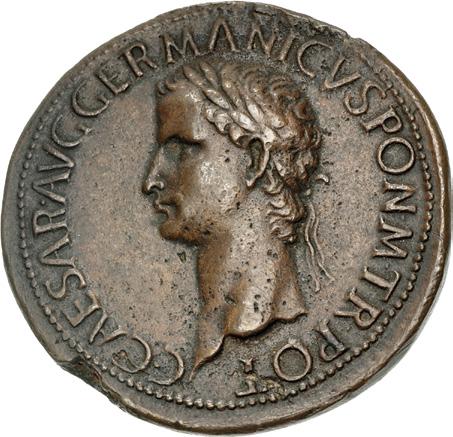
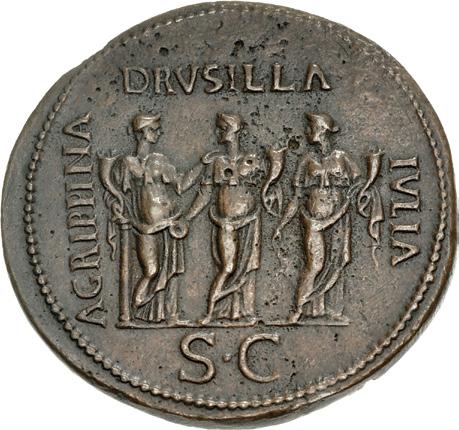
335. ANCIENT THEMES. Julius Caesar. 100-44 BC. Æ “Sestertius” (36mm, 22.09 g, 12h). By Giovanni da Cavino (1500-1570). Later cast. CAESAR DICTATOR, laureate head of Julius Caesar left; star before forehead, lituus behind / VENI/ VIDI/ VICI within wreath. Johnson & Martini 1260-5. Brown surfaces with applied green deposits, holed. Good VF. ($100)
Ex Classical Numismatic Group 475 (26 August 2020), lot 717; RBW Collection (Classical Numismatic Group Electronic Auction 377, 29 June 2016), lot 729 (repatinated since); Baldwin’s 39 (11 October 2004), lot 1945.
336. ANCIENT THEMES. Gaius (Caligula). AD 37-41. Æ “Sestertius” (37mm, 19.68 g, 6h). By Giovanni da Cavino (1500-1570). Later cast. C · CAESAR · AVG · GERMANICVS PON M TR · POT, laureate head left / The three sisters of Gaius (Caligula): Agrippina, Drusilla, and Julia; AGRIPPINA DRVSILLA IVLIA around; S C in exergue. Johnson & Martini 1333-1348. Brown patina. Good VF. An attractive, high-quality cast. ($100)
Ex Jencek Historical Enterprises 25 (9 September 2014), lot 129.
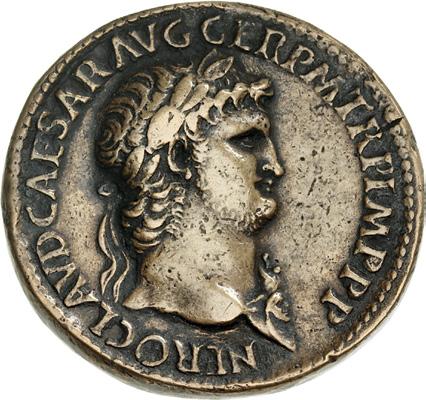
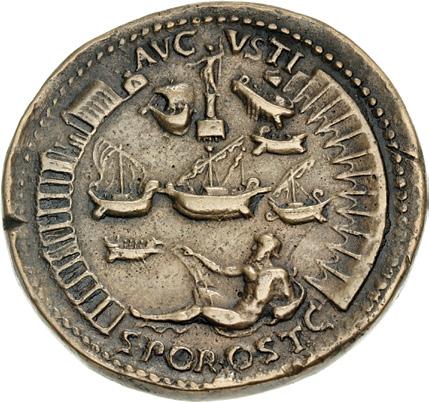
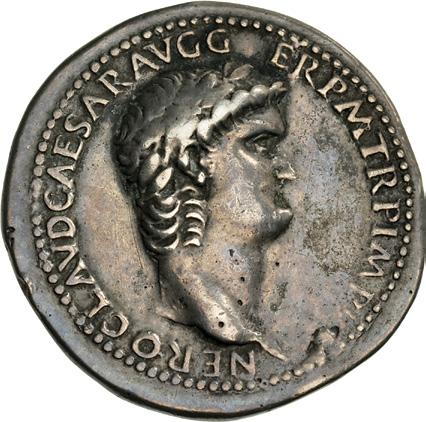
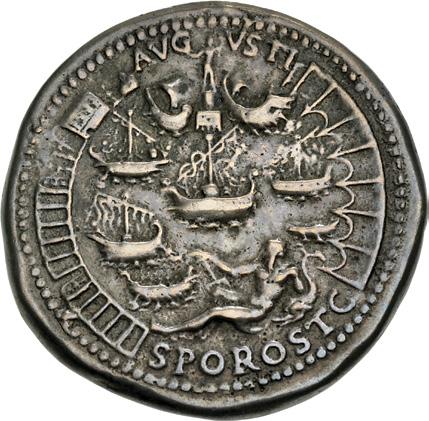
337. ANCIENT THEMES. Nero. AD 54-68. Æ “Sestertius” (34mm, 22.90 g, 7h). By Giovanni da Cavino (1500-1570). Later cast. NERO CLAVD CAESAR AVG GER P M TR P IMP P P, laureate bust right, aegis at point of bust / Port of Ostia: seven ships within the harbor; at the top is a pharus surmounted by a statue of Neptune; below is a reclining figure of Tiber, holding a rudder and dolphin; to left, crescent-shaped pier with portico, terminating with figure sacrificing at altar and with building; to right, crescent-shaped row of breakwaters or slips, terminating with a figure seated on rock; AVG VSTI above, SPQR OST C below. Johnson & Martini 1389-1407. Brown patina. Good VF. A high-quality cast. ($200)
Purchased from London Ancient Coins, December 2022.
338. ANCIENT THEMES. Nero. AD 54-68. AR “Sestertius” (35.5mm, 18.35 g, 12h). By Giovanni da Cavino (15001570). Later cast. NERO CLAVD CAESAR AVG G ER P M TR P IMP [...], laureate bust right; trace of aegis at point of bust / Port of Ostia: seven ships within the harbor; at the top is a pharus surmounted by a statue of Neptune; below is a reclining figure of Tiber, holding a rudder and dolphin; to left, crescent-shaped pier with portico, terminating with figure sacrificing at altar and with building; to right, crescent-shaped row of breakwaters or slips, terminating with a figure seated on rock; AVG VSTI above, S P Q R OST C below. Cf. Johnson & Martini 1391-1402 (for type). Toned, scratches, area of smoothing(?). VF. A rare silver cast. ($200)
Ex Classical Numismatic Group Electronic Auction 430 (10 October 2018), lot 482; ArtCoins Roma e23 (17 February 2015), lot 1215.
When compared to those listed by Johnson & Martini, the arrangement of the obverse legend and of the ships in the harbor are distinctly different on this example. It may not trace back to the work of Cavino himself, and may instead be a somewhat later copy.
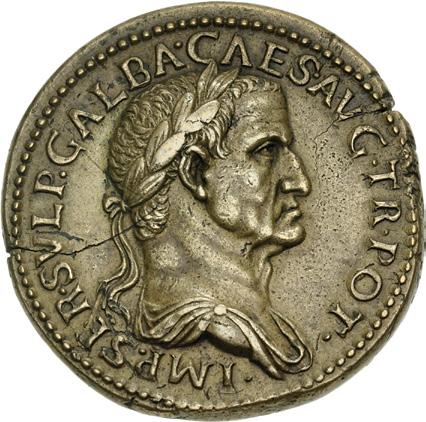
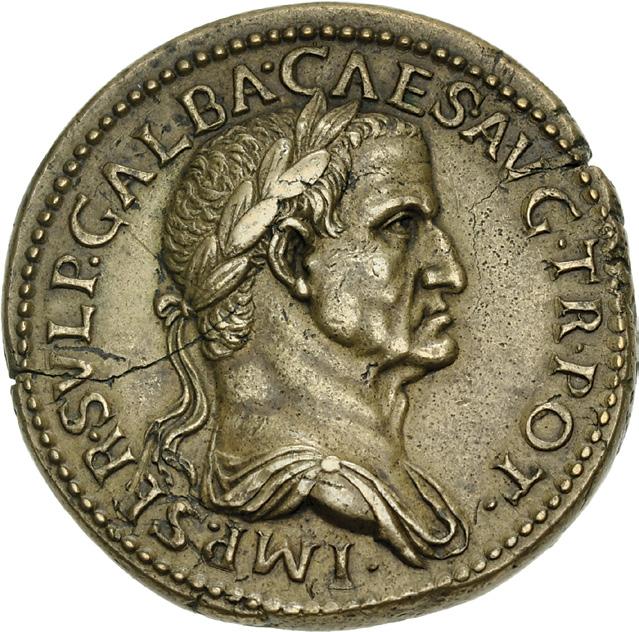
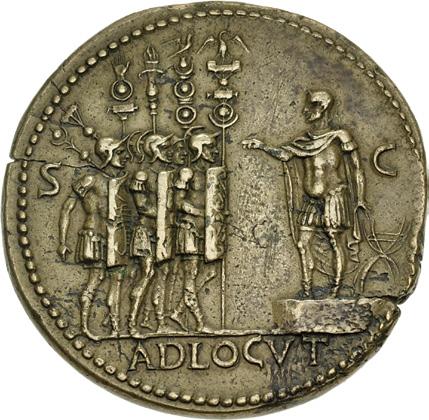
339. ANCIENT THEMES. Galba. AD 68-69. Æ “Sestertius” (35mm, 25.41 g, 7h). By Giovanni da Cavino (15001570). IMP SER SVLP GALBA CAESA AVG TR POT, laureate and draped bust right / Galba standing left on daïs, extending right hand in gesture of address; behind him a sella castrensis (camp stool); in front of him stand five soldiers right, all helmeted, holding shields; two holding signa over shoulders; behind, two signa and two aquilae; S C across fields, ADLOCVT in exergue. Johnson & Martini 1448-1462. Brown patina. EF. An exquisite and very rare struck example. ($1000)
Purchased from from Jonathan Kern.
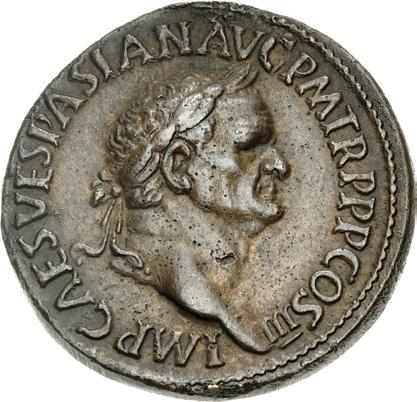
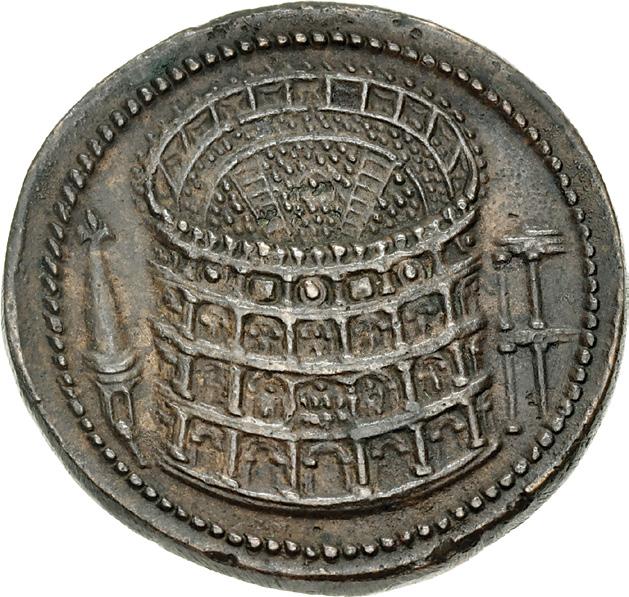
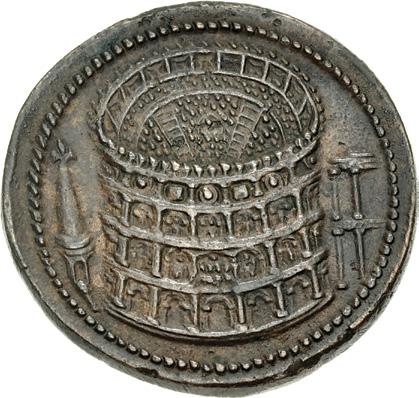
340. ANCIENT THEMES. Vespasian. AD 69-79. Æ “Sestertius” (34mm, 21.26 g, 7h). By Giovanni da Cavino (15001570). Later cast. IMP CAES VESPASIAN AVG P M TR P P P COS III, laureate head right / View of the Flavian Amphitheater (The Colosseum), seen from aerial perspective; Meta Sudans to left, porticus of the Baths of Titus to right; interior dotted with spectators. Johnson & Martini 1566-74. Warm brown surfaces. Near EF. A high quality cast. ($500)
Ex Goldberg 74 (4 June 2013), lot 3586.
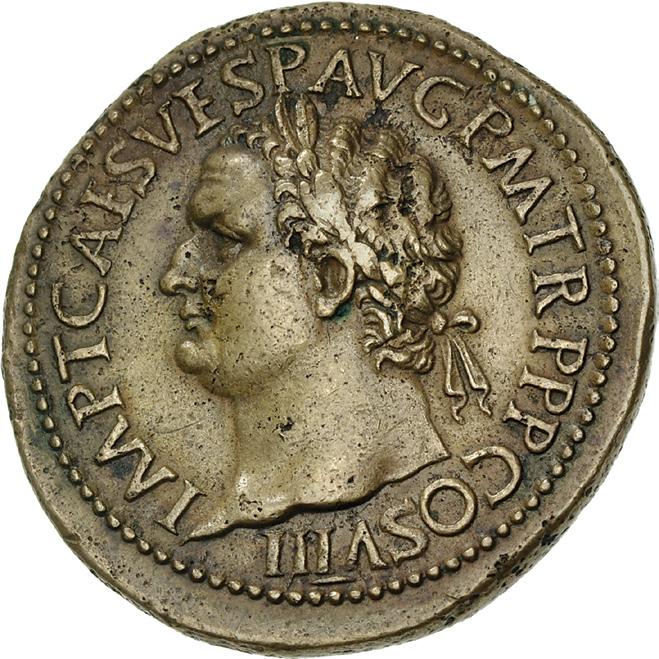
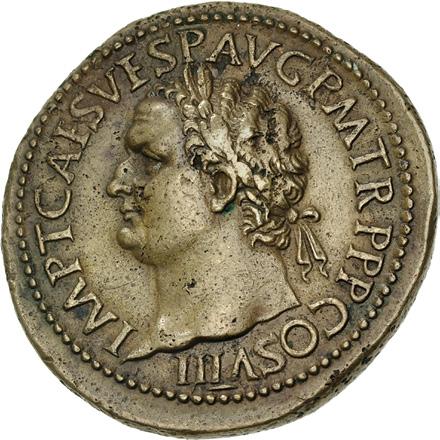
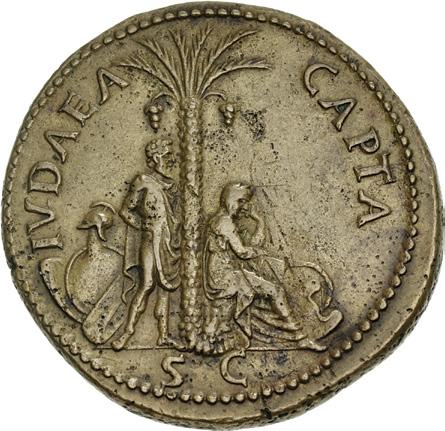
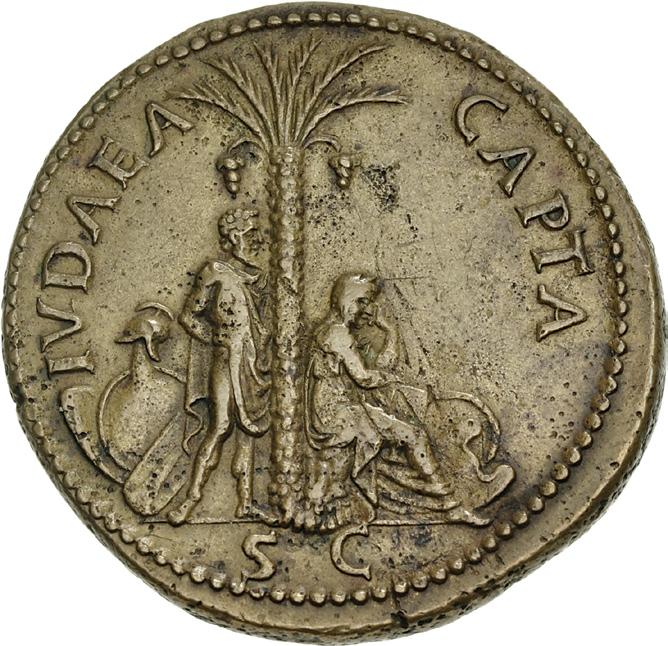
341. ANCIENT THEMES. Titus. AD 79-81. Æ “Sestertius” (37mm, 27.50 g, 6h). By Giovanni da Cavino (1500-1570). IMP T CAES VESPA AVG P M TR P P P COS VIII, laureate head left / IVDAEA CAPTA, Judaea seated right under palm tree in mourning, male captive standing right with hands bound behind back, arms around; S C in exergue. Johnson & Martini 1582-1600. Brown patina. EF. Very rare struck example. ($1000)
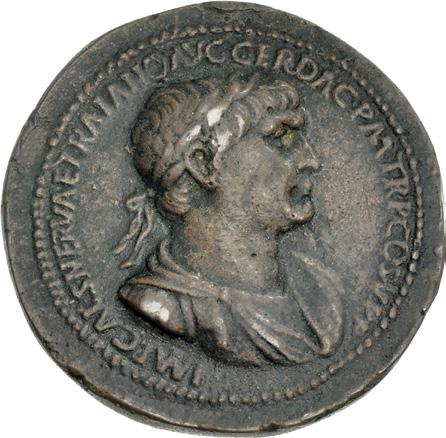
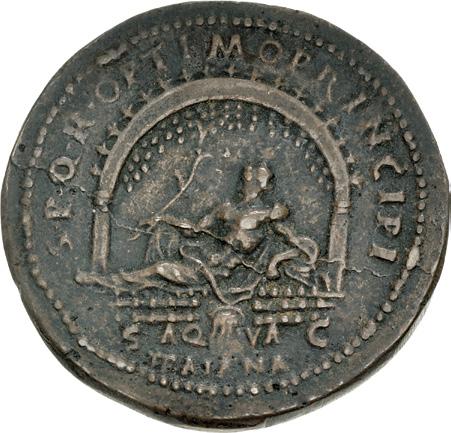
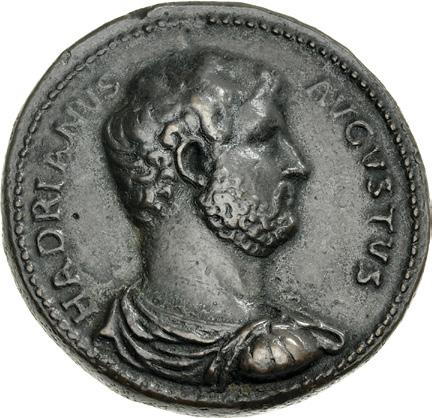
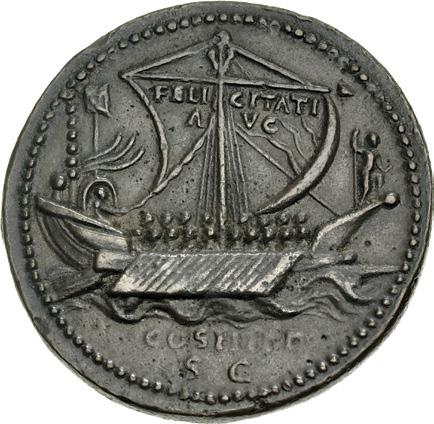
342. ANCIENT THEMES. Trajan. AD 79-81. Æ “Sestertius” (27mm, 20.21 g, 5h). By Giovanni da Cavino (15001570). Later cast. IMP CAES NERVA TRAIANO AVG GER DAC P M TR P COS V P P, laureate, draped, and cuirassed bust right / S P Q R OPTIMO PRINCIPI, Genius of the Aqua Traiana reclining left under arched and ornamented grotto supported by two columns, holding reed and leaning on urn from which water flows; in exergue, AQ VA/ TRAJANA flanked by S C. Johnson & Martini 1656-1658. Brown surfaces. VF. ($100)
Purchased from John Jencek, April 2014. Ex Classical Numismatic Group Electronic Auction 475 (26 August 2020), lot 722.
343. ANCIENT THEMES. Hadrian. AD 117-138. Æ “Sestertius” (35mm, 28.38 g, 7h). By Giovanni da Cavino (15001570). Later cast. HADRIANVS AVGVSTVS, draped and cuirassed bust right / Galley right under full sail; sail inscribed FELI CITATI/A VG in two lines; COS III P P/S C in two lines in exergue. Johnson & Martini 1660-9. Brown surfaces. Near EF. ($150)
Ex Robert O. Ebert Collection (Stack’s, Bowers and Ponterio 174, 11 January 2013), lot 5308. 342 343
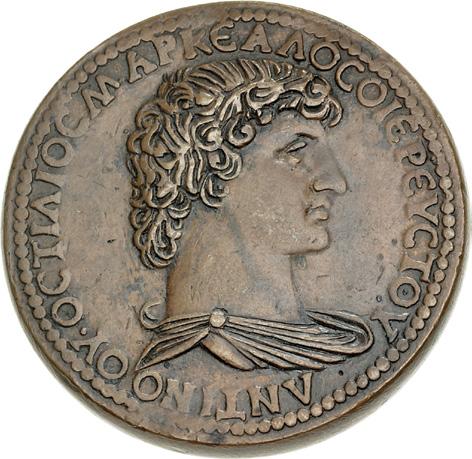
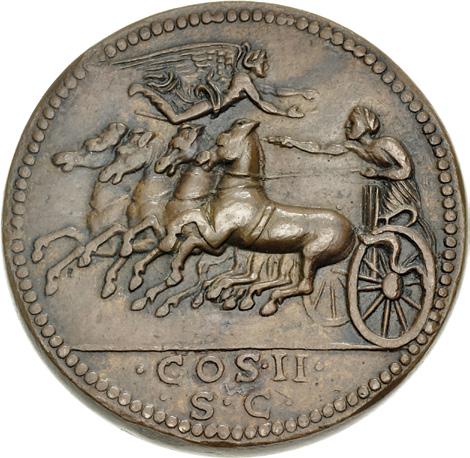
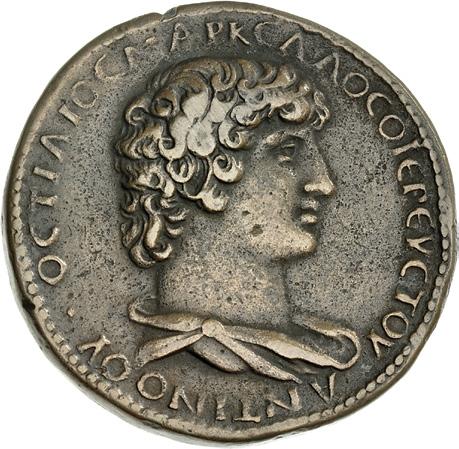
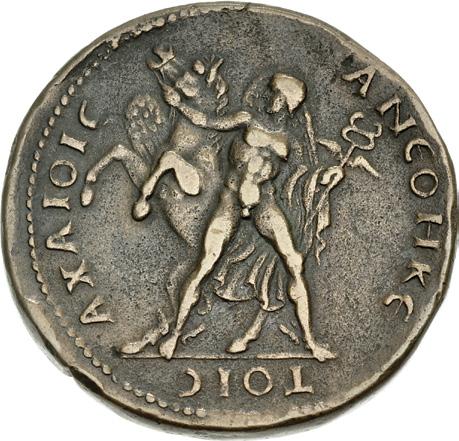
344. ANCIENT THEMES. Antinoüs. Died AD 130. Æ “Sestertius” (38mm, 41.66 g, 11h). By Giovanni da Cavino (1500-1570). Later cast. OCTIΛIOC MAPKЄΛΛOC O IЄPЄYC TOY ANTINOOY ·, bareheaded and draped bust right / Charioteer driving quadriga left; above, Victory flying right, crowning charioteer; in exergue, COS II/ S C. Cf. Johnson & Martini 1695-6/1788-99 (for obv./rev. types). Brown patina. EF. ($150)
Ex Classical Numismatic Group Electronic Auction 449 (19 November 2014), lot 657.
345. ANCIENT THEMES. Antinoüs. Died AD 130. Æ “Sestertius” (37mm, 30.61 g, 5h). Hostilius Marcellus, priest of Antinoüs. By Giovanni da Cavino (1500-1570). Later cast. OCTIΛIOC MAPKЄΛΛOC O IЄPЄYC TOY ANTINOOY ·, bareheaded and draped bust right / ANЄΘHKЄ TOIC AXAIOIC, Hermes standing facing on ground line, head left, holding rearing bull and winged kerykeion (caduceus). Johnson & Martini 1695-1702. Brown patina. Good VF. ($100)
Ex Elsen 142 (14 September 2019), lot 415.
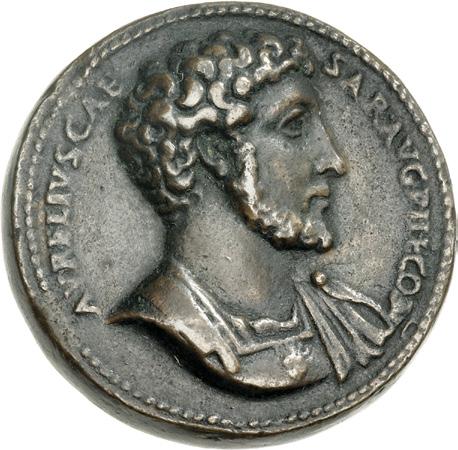
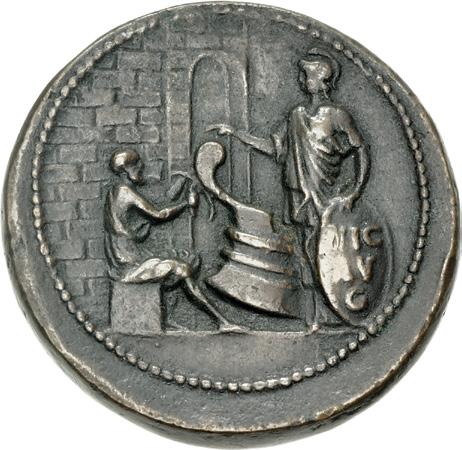
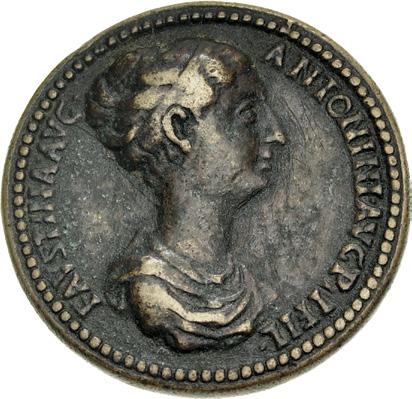
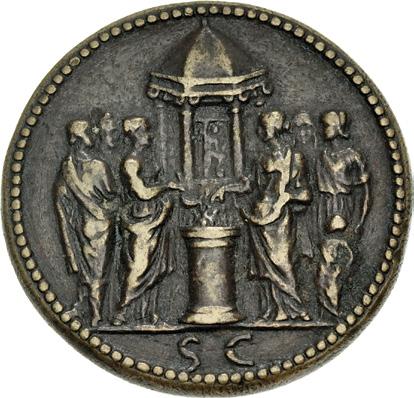
346. ANCIENT THEMES. Marcus Aurelius. As Caesar, AD 139-161. Æ “Sestertius” (37mm, 39.02 g, 5h). By Giovanni da Cavino (1500-1570). Later cast. AVRELIVS CA SAR AVG P III COS, draped and cuirassed bust right / Argus seated right constructing the Argo, to right; to right, Minerva standing left, resting hand on shield with legend VIC/ AV/G. Martini & Johnson 1724-5. Brown patina. VF. ($150)
Ex Property of Princeton Economics acquired by Martin Armstrong (Classical Numismatic Group Electronic Auction 318, 15 January 2014), lot 1138.
347. ANCIENT THEMES. Faustina Junior. Augusta, AD 147-175. Æ “Sestertius” (34mm, 21.31 g, 6h). By Giovanni da Cavino (1500-1570). Later cast. FAVSTINA AVG ANTONINI AVG PI FIL, draped bust right / Faustina standing left with child standing behind, sacrificing over lighted altar; to left before altar, attendant standing left, holding simpulum; behind on either side, two female attendants; in background, statue of Neptune standing right with left foot on globe, holding trident and dolphin within hexastyle belvedere, of which four columns are visible. Johnson & Martini 1729-38. Brown patina. VF. ($100)
Ex Classical Numismatic Group Electronic Auction 401 (12 July 2017), lot 668.
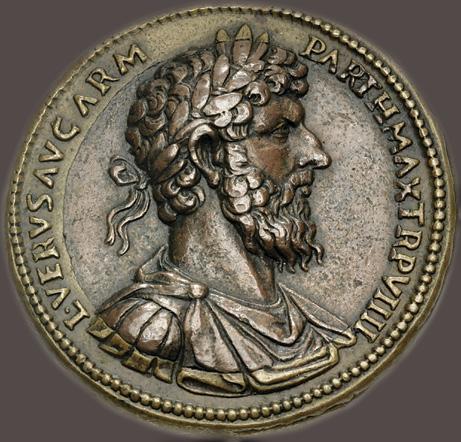
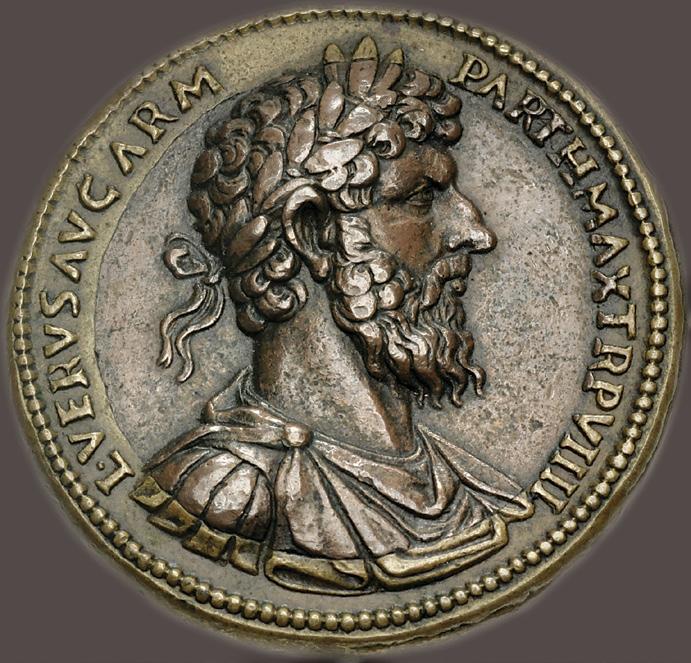
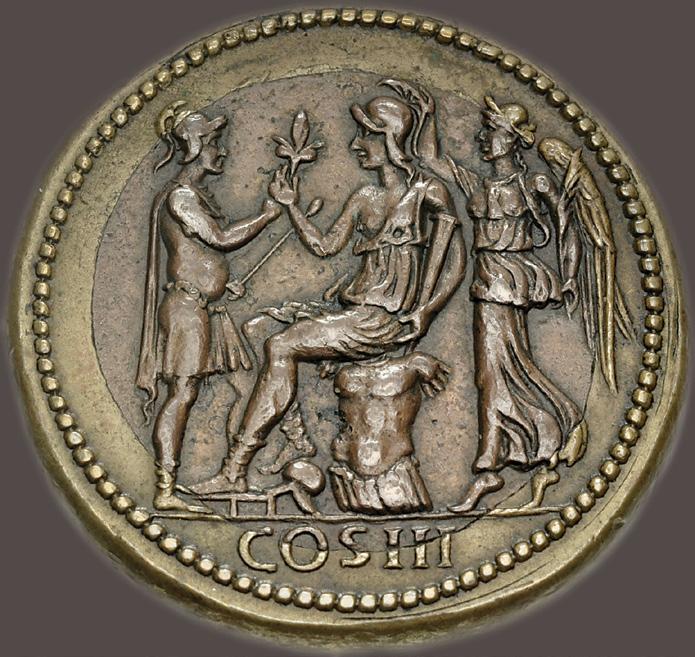
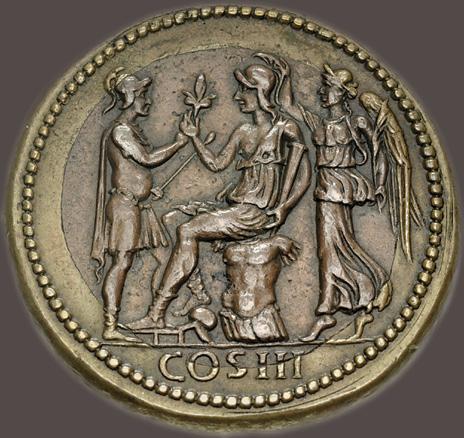
348. ANCIENT THEMES. Lucius Verus. AD 161-169. Æ “Medallion” (36mm, 38.87 g, 6h). By Giovanni da Cavino (1500-1570). L · VERVS ΛVC ΛRM PΛRTH MΛX TR P VIIII, laureate, draped, and cuirassed bust right / Roma seated left on cuirass, one foot on stool, the other on helmet, handing flower to military figure (emperor?) standing right; to right, Victory alighting left, crowning Roma with wreath COS III in exergue. Cf. Johnson & Martini 1748, 1750-4 (for type). Beautiful warm brown patina. EF. Extremely rare struck bimetallic issue. The bimetallic strikes are the rarest and most impressive pieces of the entire Cavino series. ($4000)
Ex Leu Numismatik 1 (25 October 2017), lot 419 (hammer 8500 CHF); Sternberg XXV (25 November 1991), lot 534.
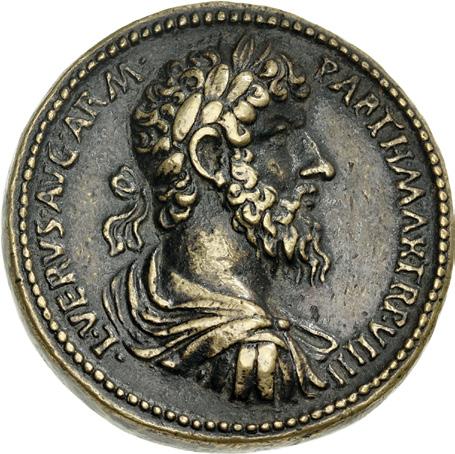
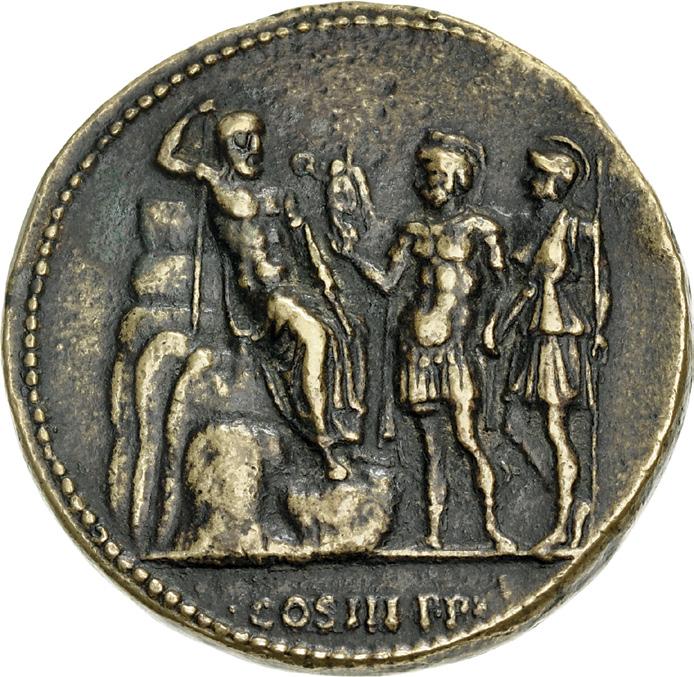
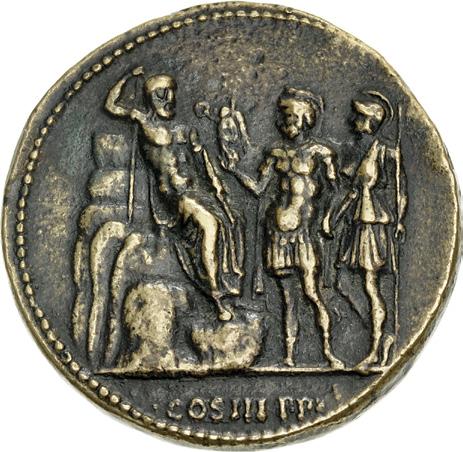
349. ANCIENT THEMES. Lucius Verus. AD 161-169. Æ “Medallion” (37mm, 39.85 g, 7h). By Giovanni da Cavino (1500-1570). Later cast. L VERUS AVG ARM PARTH MAX TR P VIIII, laureate, draped, and cuirassed bust right / Jupiter, holding scepter and baton, seated slightly right on seven hills of Rome, receiving Victory from emperor, who stands left; to right, Virtus standing left, crowning emperor with wreath; in exergue, COS III P P. Johnson & Martini 1759. Brown patina. Near EF. A good quality cast. ($200)
Ex Classical Numismatic Group Electronic Auction 350 (6 May 2015), lot 678; Roma E-Sale 13 (29 Nov 2014), lot 646.
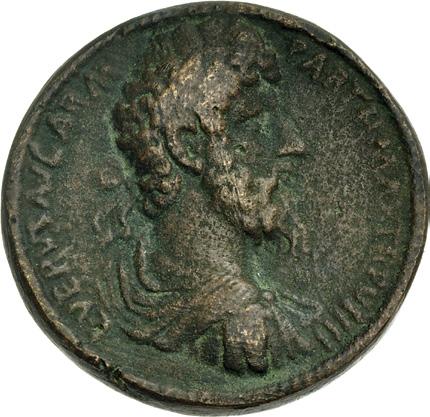
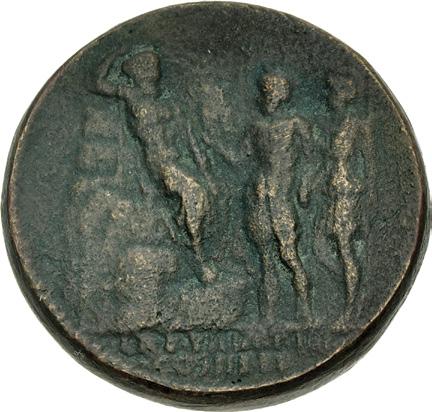
350. ANCIENT THEMES. Lucius Verus. AD 161-169. Æ “Medallion” (34mm, 25.93 g, 6h). By Giovanni da Cavino (1500-1570). Later cast. L VERUS AVG ARM PARTH MAX TR P VIIII, laureate, draped, and cuirassed bust right / Jupiter, holding scepter and baton, seated slightly right on seven hills of Rome, receiving Victory from emperor, who stands left; to right, Virtus standing left, crowning emperor with wreath; in exergue, TR P VIII IMP IIII/ COS III P P. Johnson & Martini 1760-2. Brown and green patina. Near VF. ($100)
Ex Münzzentrum 189 (11 September 2019), lot 597.
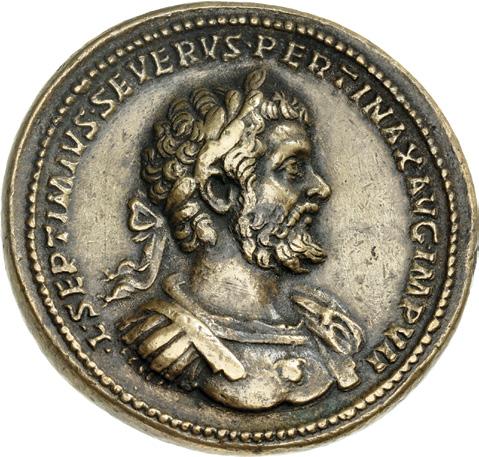
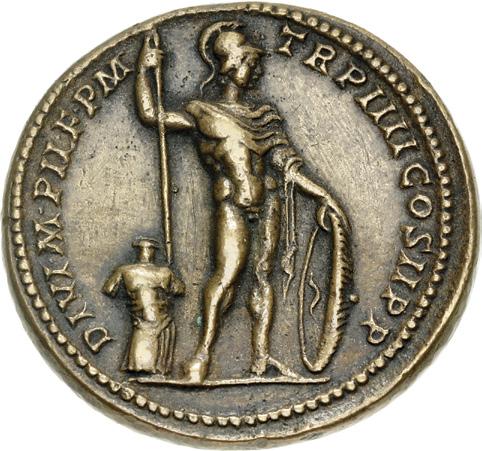
351. ANCIENT THEMES. Septimius Severus. AD 193-211. Æ “Medallion” (39mm, 30.46 g, 6h). By Giovanni da Cavino (1500-1570). Later cast. L · SEPTIMIVS SEVERVS · PERTINAX AVG IMP VII, laureate and cuirassed bust facing slightly right / DIVI M PII F P M TR P IIII COS II P P, Mars standing right, holding spear and resting shield on ground; cuirass to left. Johnson & Martini 1810-23. Brown patina, lightly chased. Near EF. A high quality cast. ($100)
Ex Jencek Historical Enterprise 19 (11 March 2014), lot 151.
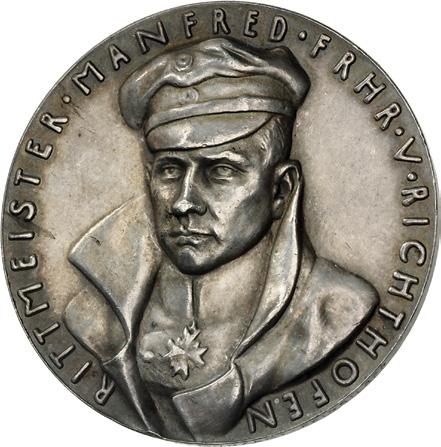
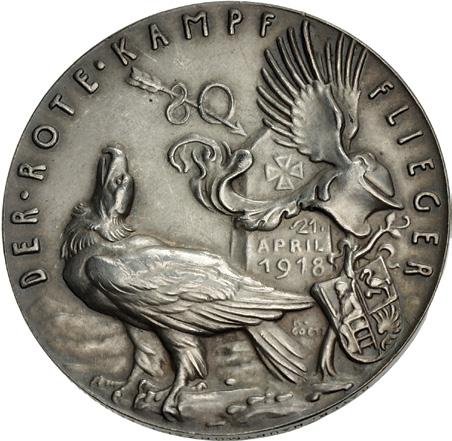
352. GERMANY, German Empire. Manfred von Richthofen (The Red Baron), freiherr and fighter ace. 1892-1918. AR Medal (36mm, 19.48 g, 12h). On his death. By K. Goetz. Dated 21 April 1918. RITTMEISTER · MANFRED · FRHR · V · RICHTHOFEN, bust facing slightly left, wearing cap, overcoat, and Iron Cross / DER · ROTE · KAMPF FLIEGER, eagle standing left, head raised; to right, winged helmet set on branch bearing coat-of-arms; in background, plinth inscribed with iron cross and 12/APRIL/1918; above, 89 pierced by arrow (the incorrect number of his aerial kills). Zetzmann 6038; Kienast 288 note. Toned. UNC. ($200)
Born into an aristocratic Prussian family in 1892, Manfred von Richtofen attained fame as “the Red Baron” during World War I, both for his 80 air victories and his habit of flying a fighter aircraft, first an Albatross biplane and later a Fokker DR-1 triplane, painted bright red. On this Goetz medal he is celebrated as “der rote kamp fleiger” (literally ”the red war flier”), by which he was known in Germany, where he he was a national hero. His death during a low-altitude aerial battle over the Somme on April 21, 1918, commemorated by this metal, remains controversial to this day. His shoot-down was initially credited to the Canadian flying ace Arthur “Roy” Brown, but most historians now believe a ground gunner from an Australian machine gun unit fired the fatal shot. After his Fokker crash-landed in the British sector, Richtofen’s funeral was held by the nearest Allied squadron, No. 3 of the Royal Australian Flying Corps, who buried him with full honors, including wreaths inscribed “To Our Gallant and Worthy Foe.”
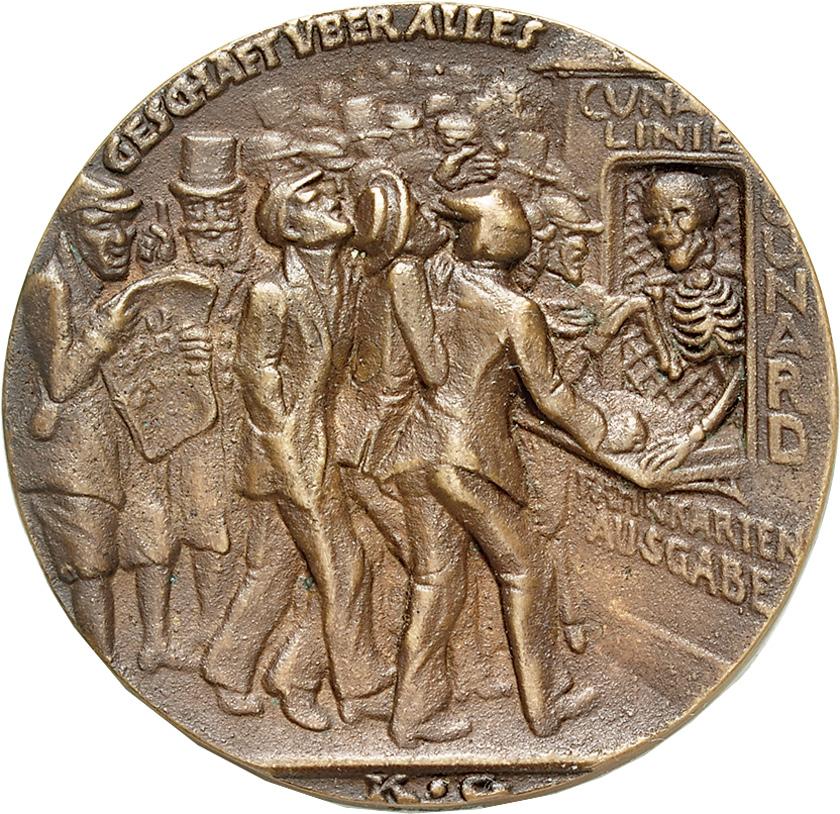
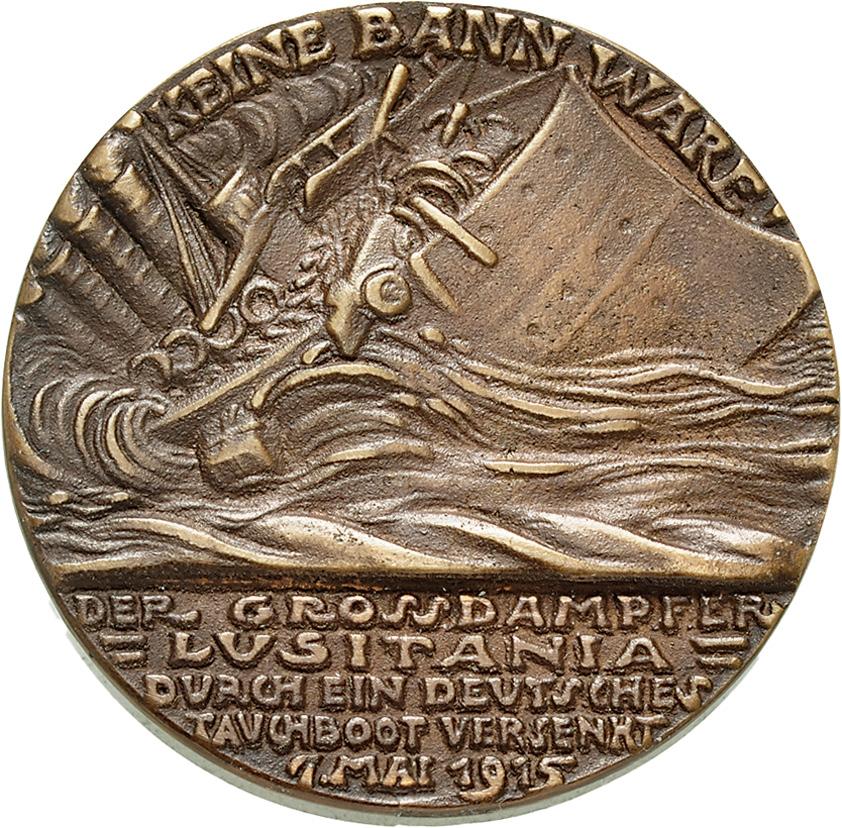
353. GERMANY, German Empire. Wilhelm II. Emperor, 1888-1918. Æ Medal (55mm, 42.81 g, 12h). The Sinking of the S. S. Lusitania. By K. Goetz. Dated 7 May 1915. KEINE BANN WARE!, the Lusitania sinking in heavy seas; in five lines in exergue, DER GROSSDAMPFER/=LUSITANIA=/DURCH EIN DEUTSCHES/TAUCHBOOT VERSENKT/7 MAY 1915 / GESCHAFT UBER ALLES, skeleton (as Death) standing left within ticket booth marked CUNA[RD]/LINIE and CUNARD above and to right, and FAHRKARTEN/AUSGABE below; to left, queue of passangers, one of whom reads a newspaper with the headline U/BOO[T]/GEFAH[R]. K GOETZ on edge. Burns, Commemoration 3a1; Eimer 1941A var. (date); Kienast 156. Brown surfaces. EF. Rare Goetz original. ($200)
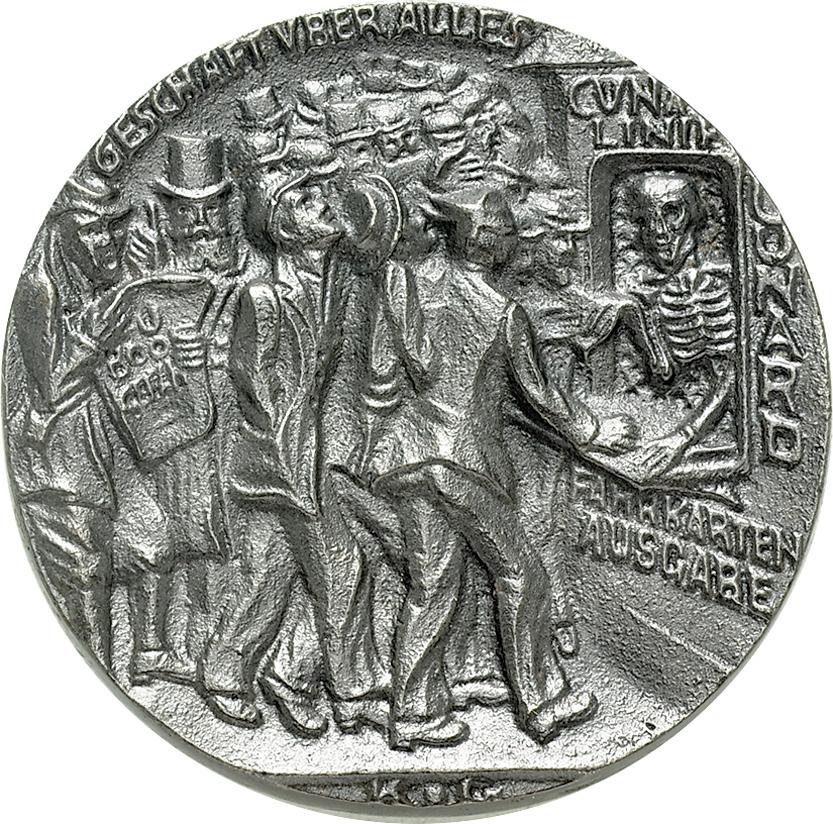
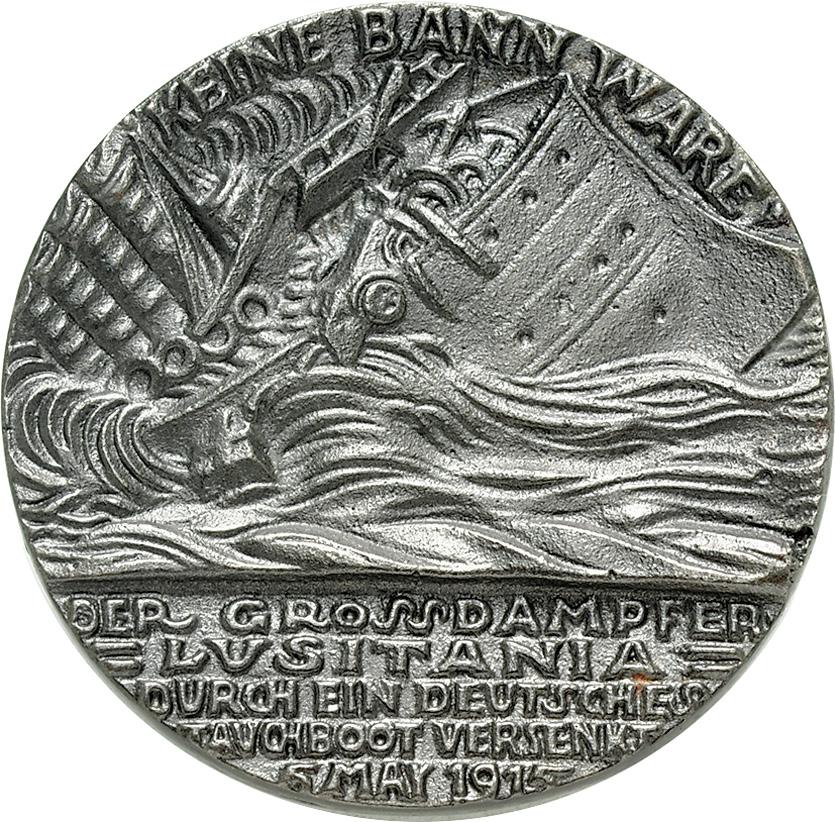
354. GERMANY, German Empire. Wilhelm II. Emperor, 1888-1918. Iron Medal (54mm, 60.13 g, 12h). The Sinking of the S. S. Lusitania. British copy issued by Gordon Selfridge, after K. Goetz. Dated 5 May 1915. KEINE BANN WARE!, the Lusitania sinking in heavy seas; in five lines in exergue, DER GROSSDAMPFER/=LUSITANIA=/DURCH EIN DEUTSCHES/ TAUCHBOOT VERSENKT/5 MAY 1915 / GESCHAFT UBER ALLES, skeleton (as Death) standing left within ticket booth marked CUNA[RD]/LINIE and CUNARD above and to right, and FAHRKARTEN/AUSGABE below; to left, queue of passangers, one of whom reads a newspaper with the headline U/BOO[T]/GEFAH[R]. Burns, Commemoration 2a1; BHM –; Eimer 1941Ab; cf. Kienast 156 (for prototype). EF. Includes original box and propaganda leaflet. Very rare. ($100)
Purchased from Karl Stephens, January 2014.
Entering passenger service with the Cunard Line in 1907, the Lusitania continued the line’s heavily-traveled service between Liverpool and New York City. After the outbreak of World War I, however, relations between Great Britain and Germany diminished, as the two became enemies within the conflict. This lead to Germany’s declaration of submarine warfare upon the British Isles and a ‘no-sail zone’ for any vessel flying the British flag. On 7 May 1915, the Lusitania was identified by a German U-Boat, torpedoed, and sank in 18 minutes, killing over 60% of the passengers. The vessel went down 11 miles off the Old Head of Kinsale, Ireland, and instantly became an iconic symbol for American involvement into the now global conflict.
Satirical German medallist Karl Goetz made the original medal concerning this event, but widespread attention from the British audience demanded a further supply of the medal, resulting in a copy such as this example. Though grim and gruesome from a British (and to a smaller degree, American) perspective, these medals were popular and desired for the memory of the liner and her ill-fated passengers. The copies were produced with the proceeds benefitting various charities.
355. GERMANY, Weimar Republic. 1918-1933. AR Medal (35mm, 19.37 g, 12h). 800th Anniversary of Otto von Bamberg Christianizing Pommerania. By K. Goetz. Dated 1124 and 1924. DAS · CHRISTEN TVM · DEN · POMMERN, Otto standing facing, raising cross and holding crozier; coats-of-arms flanking; in exergue, OTTO VON BAMBERG / 1124 · SO · SOLL · ES BLEIBEN · ALLE ZEIT · 1924, Christ on cross; behind, griffin rampant left. Kienast 317. Toned. UNC. ($200)
Purchased from J. Diller, October 2014.
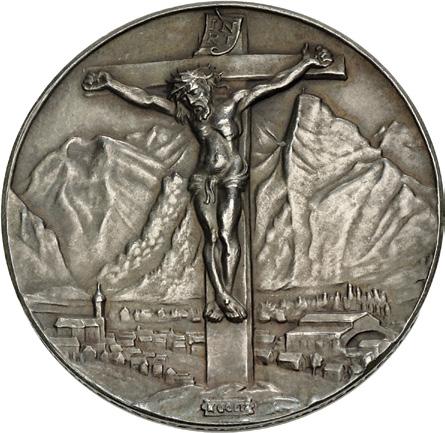
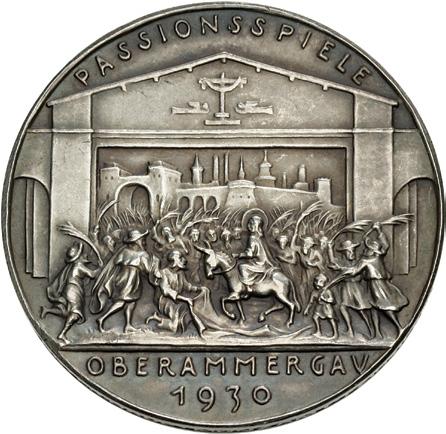
356. GERMANY, Weimar Republic. 1918-1933. AR Medal (26mm, 19.79 g, 12h). Annual Passion Play in Oberammergau. By K. Goetz. Dated 1930. Christ on cross before view of Oberammergau / PASSIONSSPIELE, view of the Passion Play; in exergue, OBERAMMERGAV/ 1930. Kienast 448. Toned. UNC. ($150)
Purchased from Ephesus Numismatics, November 2013.
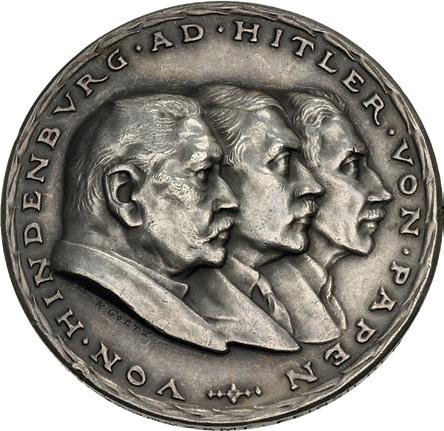
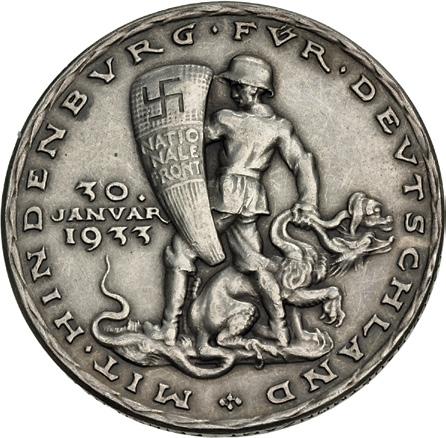
357. GERMANY, Third Reich. Adolf Hitler, with Paul von Hindenburg and Franz von Papen. Chancellor, 1933-1945. AR Medal (36mm, 19.33 g, 12h). Appointment of Hitler, Papen, and Hindenburg. By K. Goetz. Dated 30 January 1933. VON · HINDENBVRG · AD · HITLER · VON · PAPER, jugate busts of Hindenberg, Hitler, and von Papen right / MIT · HINDENBVRG FÜR · DEVTSCHLAND, German soldier standing left, holding two-headed beast by neck and shield decorated with swastika and NATIO/NALE/ FRONT; 30/ JANVAR/ 1933 in left field. Kienast 484. Toned, edge marks. EF. ($500)
Purchased from Paul Bosco, January 2014.
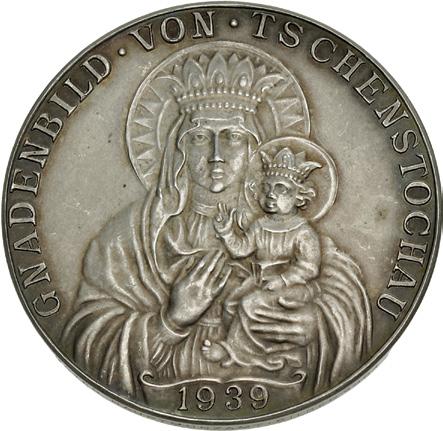
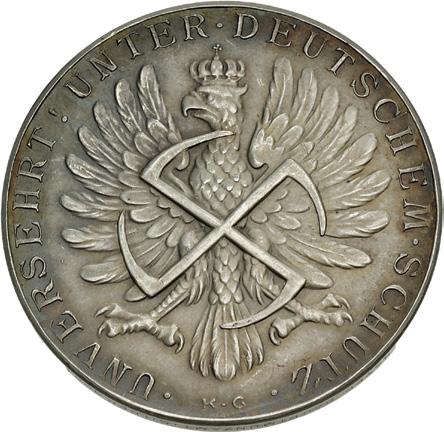
358. GERMANY, Third Reich. 1933-1945. AR Medal (36mm, 19.94 g, 12h). Capture of Częstochowa. By K. Goetz. Dated 1939. GNADENBILD · VON · TSCHENSTOCHA, Our Lady of Częstochowa: Madonna facing, holding infant Christ; 1939 on ribbon below / UNVERSEHRT! UNTER · DEUTSCHEM · SCHUTZ, crowned eagle facing with wings spread, head left; swastika on breast. Kienast 562. Toned. UNC. Rare. ($400)
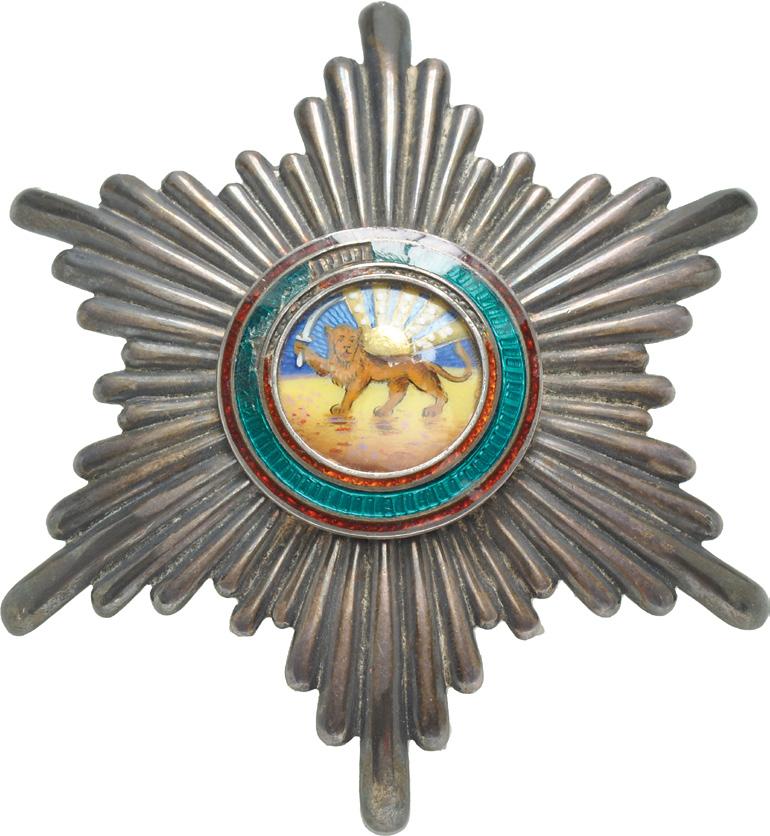
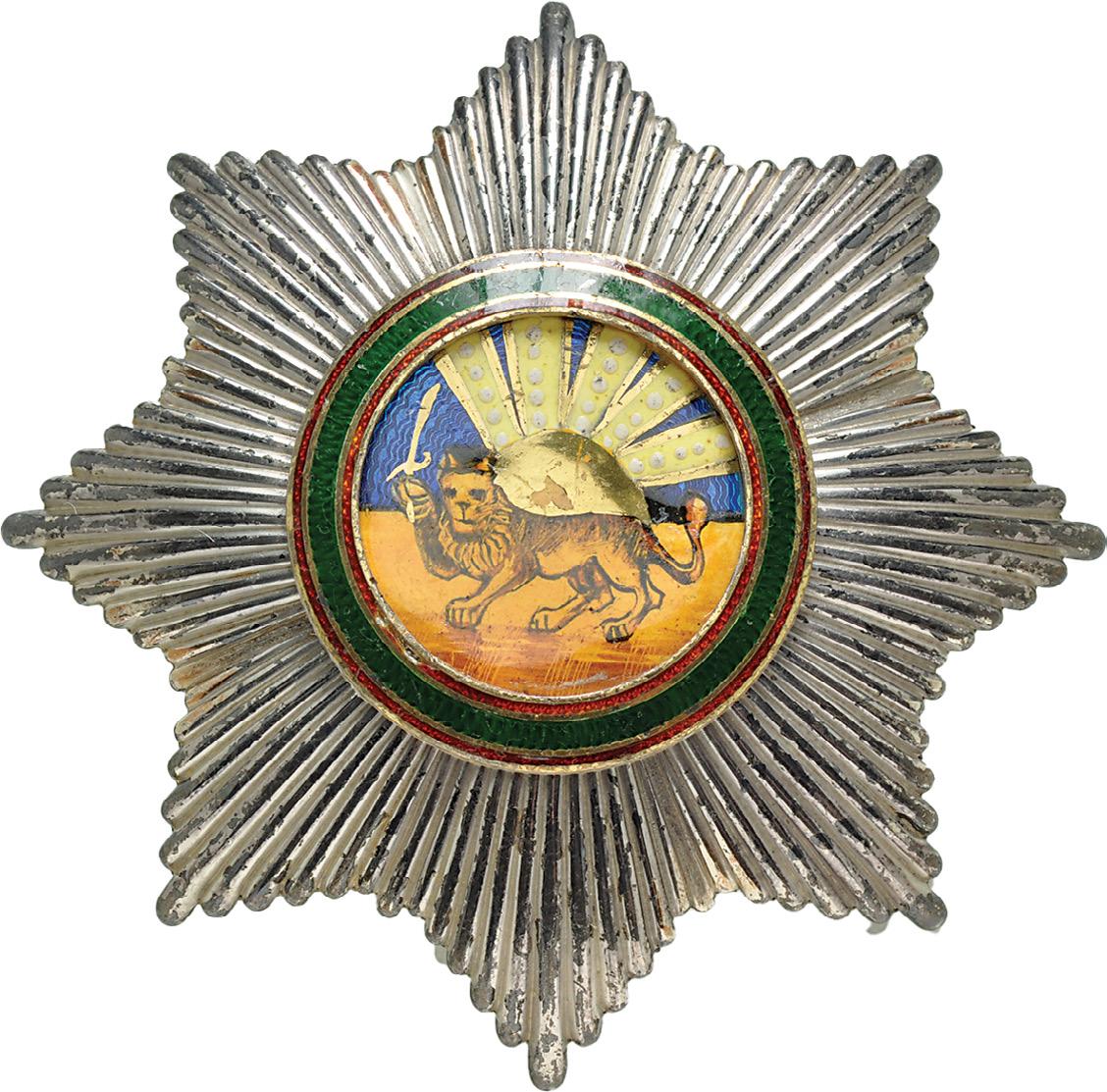
359. IRAN. Iranian Order of Homayoun, second class – Silver and enamel breast star. (65x75mm, 48.50 g). Made by Artus Bertrand. Presented to Gen. Frank Besson Jr.. Toned. Some chipping to enamel. In original box. ($500)
Gen. Frank S. Besson Jr., the collector’s father, was one of the most consequential general officers to serve in the U.S. Army during and after World War II. Born in 1910, he was the son of a colonel in the U.S. Army Corps of Engineers. In 1932, Frank Jr. graduated West Point and received a further M.S. degree in civil engineering from MIT in 1935. He focused on military logistics and was tasked with developing several technologies that would prove critical in the coming war, including portable steel pipelines, perforated steel planking used on landing strips, and the portable Bailey Bridge, used extensively in all theaters. As a Lt. Colonel in 1943, he was attached to the Third Military Railroad Service, which ran across Iran to provide critical supplies to the Soviet forces fighting on the eastern front. Within a year he was promoted to brigadier general and placed in charge of all the Army’s railroads; at 34 he was then the youngest general officer in the U.S. ground forces. For his accomplishments in building up the Persian railway network, the Pahlavi government of Iran presented him with the Order of Homayoun, issued to foreign officials who had rendered distinguished service to Iran (the first of the two enameled medals offered herein). After the war, Frank Jr. continued his Army career, eventually reaching the four-star rank of a full general and serving as head of the Army Materials Command (AMC), a major branch of the armed services. He was instrumental in implementing new technologies and practices that kept the U.S. Army on the forefront of logistics, including containerized cargo and roll-on/roll-off (”ro-ro”) transportation packaging for vehicles that ended up revolutionizing civilian shipping in the worldwide market. Frank Jr. retired from the Army in 1970 and was appointed by President Richard Nixon to the Amtrak board of directors in 1971, on which he served until 1977. Gen. Frank Besson Jr. died in 1985 and is buried in the West Point Cemetery. The U.S. Army logistics support ship General Frank S. Besson, commissioned in 1988, is named in his honor, and serves as the name ship for a class of eight similar vessels.
360. IRAN. Iranian Order of Homayoun – Silver and enamel breast star. (95mm, 114.7 g). As made. ($500) Ex Goldberg 106 (4 September 2018), lot 2206. 359
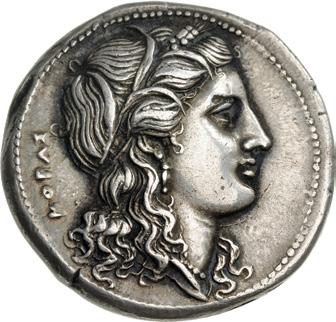
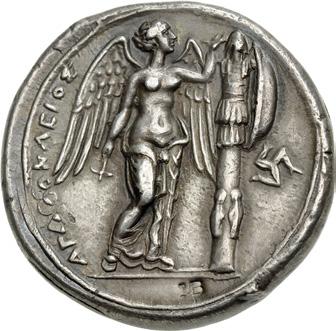
361. ELECTROTYPES, SICILY. Syracuse. Agathokles. 317-289 BC. Electrotype “Tetradrachm” (27mm, 18.75 g, 12h). British Museum electrotype ([MB] on reverse). Wreathed head of Kore right; KOPAΣ to left / Nike standing right, erecting trophy to right; triskeles to outer right; AΓAΘOKΛEIOΣ to left. Head, Guide –; GPCG –; cf. BMC 379 (for prototype). Toned. As made. ($200)
Ex Roma E-Sale 75 (20 October 2020), lot 1092.
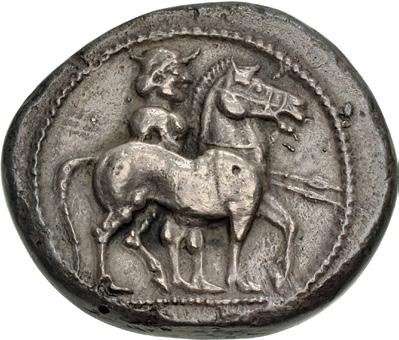
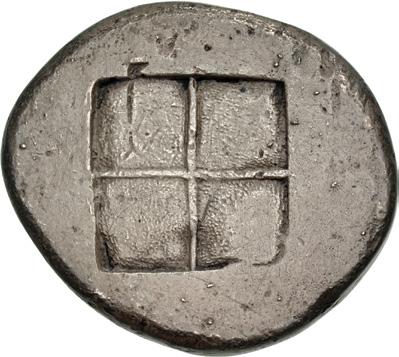
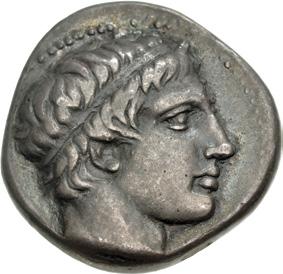
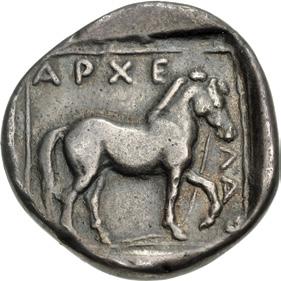
362. ELECTROTYPES, KINGS of MACEDON. Alexander I. 498-454 BC. Electrotype “Oktadrachm” (33mm, 19.67 g). Unsigned British Museum electrotype by Robert Ready or his sons. Horseman, wearing chlamys and petasos, and holding two spears, standing right behind horse advancing right / Quadripartite incuse square. Head, Guide, Period II.B., –; GPCG –; cf. BMC p. 140, 1 (for prototype). Toned. As made. ($200)
Ex Johnson Family Collection (Classical Numismatic Group Electronic Auction 445, 5 June 2019), lot 848, purchased from William Koonce, 2 May 1969.
363. ELECTROTYPES, KINGS of MACEDON. Archelaos. 413-400/399 BC. Electrotype “AR Stater” (23mm, 9.65 g, 12h). Unsigned British Museum electrotype. Head of Apollo right, wearing tainia / Horse standing right, foreleg raised, wearing bridle with trailing rein, within incuse square. Head, Guide, Period II.B., –; GPCG –. Toned. As made. ($100)
Ex New Zealand Collection (Classical Numismatic Group Electronic Auction 584, 2 April 2025), lot 1127.
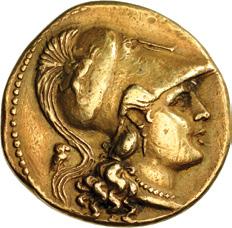
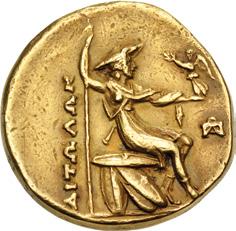
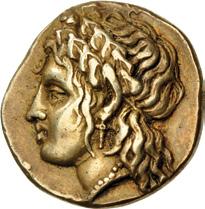
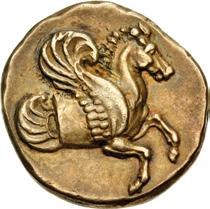
364. ELECTROTYPES, AITOLIA. Aitolian League. Circa 220-205 BC. Cast “AV Stater” (21mm, 4.91 g, 5h). British Museum electrotype by Robert Ready (marked R R on edge). Head of Athena right, wearing crested Corinthian helmet decorated with serpent, single-pendant earring, and necklace; small owl to left / Aitolos, wearing kausia and sheathed sword, seated right on pile of Gallic shields, holding spear upright in right hand, left hand holding small Nike standing right, holding wreath; monogram to right. Head, Guide, Period V.B., 14; cf. GPCG pl. 36, 13 (for prototype). Toned. As made. ($100)
Ex New Zealand Collection (Classical Numismatic Group Electronic Auction 584, 2 April 2025), lot 1131.
365. ELECTROTYPES, MYSIA. Lampsakos. Circa 394-350 BC. Cast “AV Stater” (17mm, 3.35 g, 12h). British Museum electrotype by Robert Ready (marked R R on edge). Head of female satyr left, wearing ivy wreath, earring, and necklace / Forepart of Pegasos right. Head, Guide, Period III.A, 18; cf. GPCG pl. 18, 25 (for prototype). Toned. As made. ($100)
Ex New Zealand Collection (Classical Numismatic Group Electronic Auction 584, 2 April 2025), lot 1143.
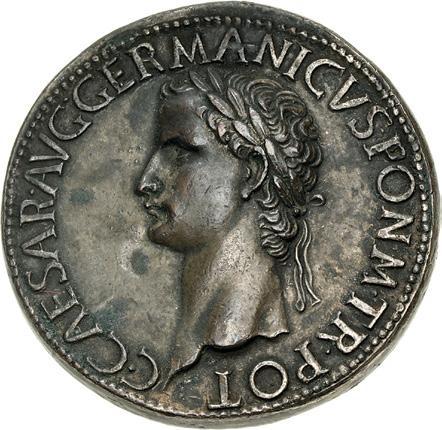
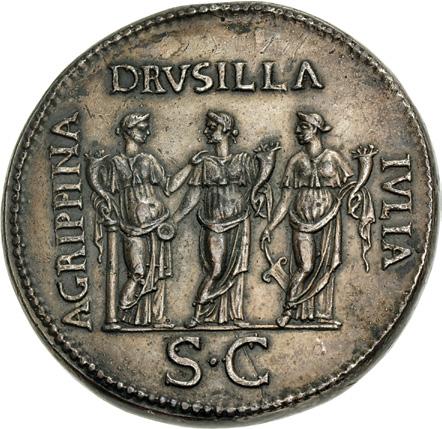
366. ELECTROTYPES, ROMAN IMPERIAL. Gaius (Caligula). AD 37-41. Æ “Sestertius” (37mm, 31.19 g, 6h). British Museum electrotype ([MB] on edge) of a Cavino “Sestertius”. Laureate head left / The three sisters of Gaius (Caligula): Agrippina, Drusilla, and Julia; AGRIPPINA DRVSILLA IVLIA around; S C in exergue. Cf. Johnson & Martini 1333; cf. BM inv. B.11242 (for rev.). Brown surfaces. As made. Evidence of uncertain undertype (?) on reverse. ($150)
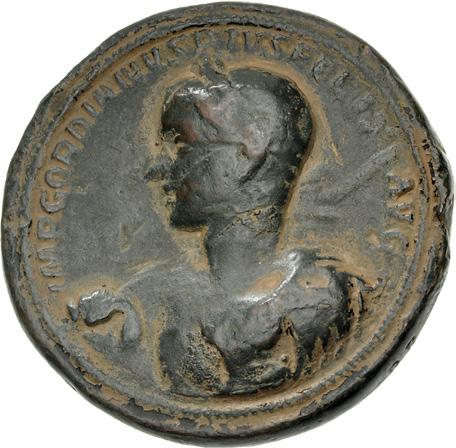
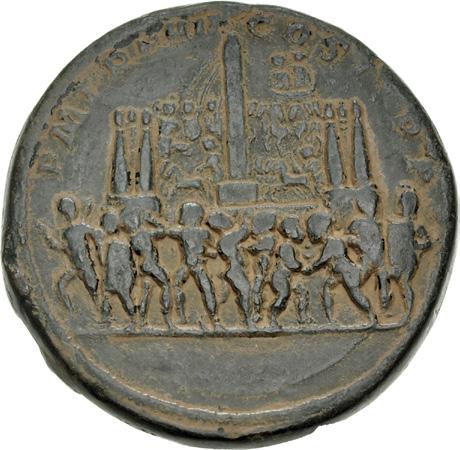
367. REPRODUCTIONS, ROMAN IMPERIAL. Gordian III. AD 238-244. Electrotype “Æ Bimetallic Medallion” (37mm, 48.16 g, 2h). British Museum electrotype by Robert Ready (marked R R on edge). Laureate, draped and cuirassed bust left, holding spear over shoulder / Scene in the Circus Maximus: spina (obelisk in the center, two metae to either side) with two chariots racing left; above, three soldiers carrying palm fronds and Gordian and Victory (who crowns him with wreath) facing in chariot drawn by six horses; in foreground (from left to right): wounded gladiator being led away by an attendant, two boxers fighting, two pancratists, two wrestlers, two gladiators. Cf. Grueber 5 and pl. XLI, 4; cf. Gnecchi 27 and pl. 104, 10. Repatinated. VF. ($150)
Ex Classical Numismatic Group Electronic Auction 354 (1 July 2015), lot 795 (since repatinated); Classical Numismatic Group Electronic Auction 132 (1 February 2006), lot 312.
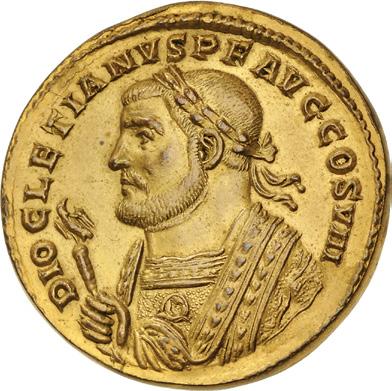
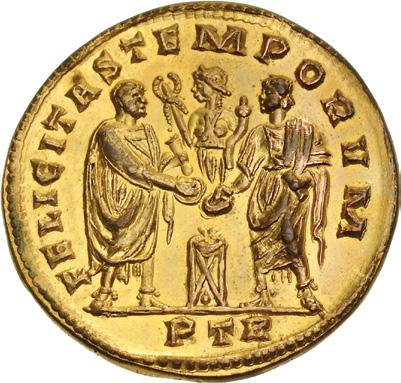
368. REPRODUCTIONS, ROMAN IMPERIAL. Diocletian. AD 284-305. Gilt Cast “AV Medallion” (33mm, 13.89 g, 6h). After a Treveri (Trier) mint issue of AD 303. Made by Etiemnne Bourgey, circa 1920s. Laureate bust left, wearing consular robes and holding eagle-tipped scepter / Emperors standing vis-à-vis, sacrificing over altar; behins, Felicitas standing facing, head left, holding caduceus and cornucopia. Edge: E. BOURGEY 7. R. DROUOT PARIS 17. Cf. RIC VI 27 = Beaurains 311 (for original); Kent-Hirmer –; Toynbee –. Toned. As made. ($300)
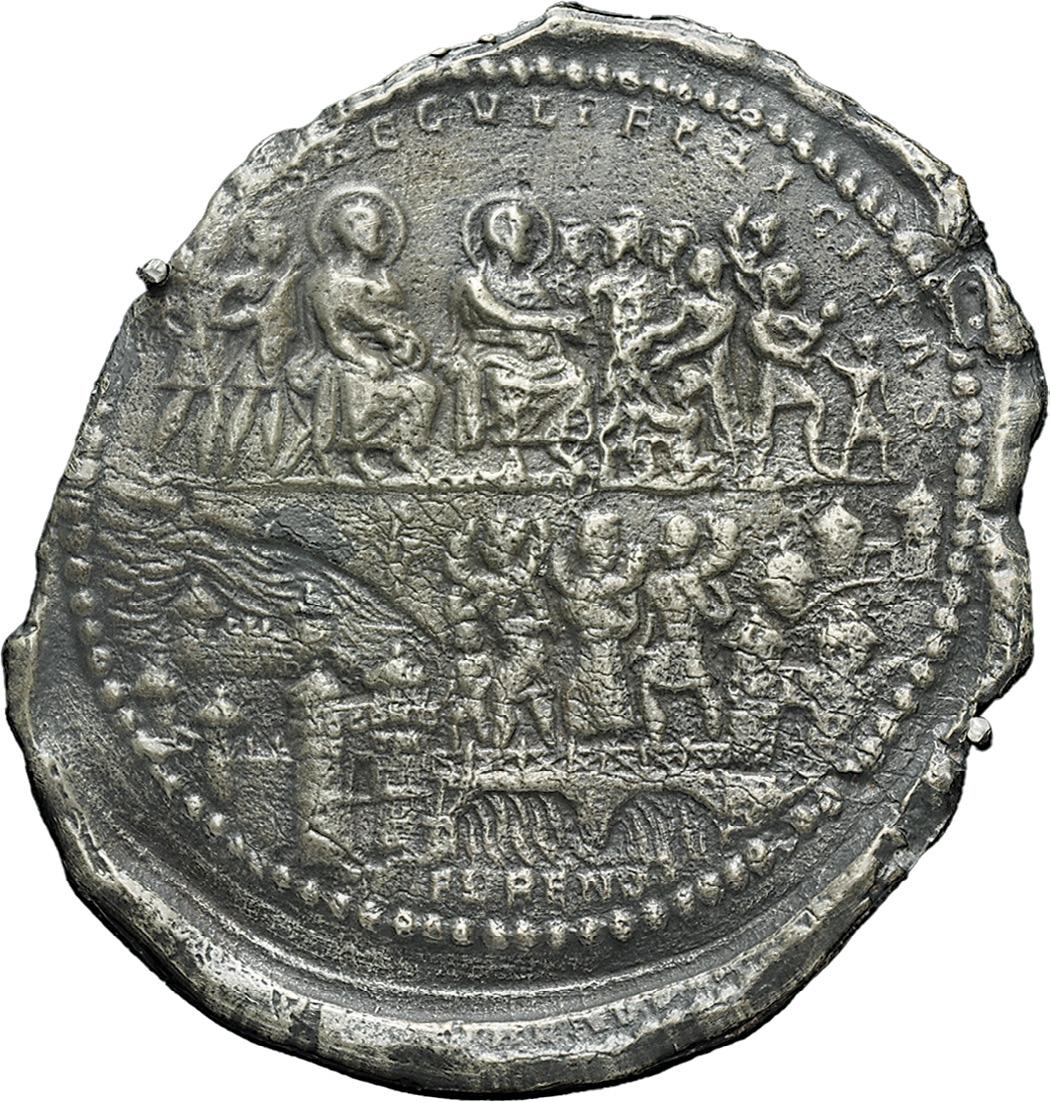
369. REPRODUCTIONS, ROMAN IMPERIAL. Maximianus. AD 284-305. Tin Cast “PB Uniface Medal (85mm). After a lead trial of the reverse of a circa AD 300 uncertain mint, possibly Lugdunum (Lyon), AV multiple medallion found at Lyon in the Saône River in 1862. SAECVLI FELICITAS, scene in two panels: upper panel depicting two emperors (Maximianus and Constantius I), each nimbate and laureate, seated right, receiving group of people in supplication; behind, five soldiers flanking the emperors; lower panel depicting figures (two males, one female, and one child), advancing left across the Rhine Bridge (FL RHENVM below); to left, the city of Mainz (marked MOCONTI/ACVM to right, the Castellum Mattiacorum (marked CASTEL) // Blank. Cf. M. R. Alföldi, “Zum Lyoner Bleimedallion,” SM 8 (1958), pp. 63-68 (for original lead piece). As Issued. Comes complete and mounted in original box of issue. ($75)
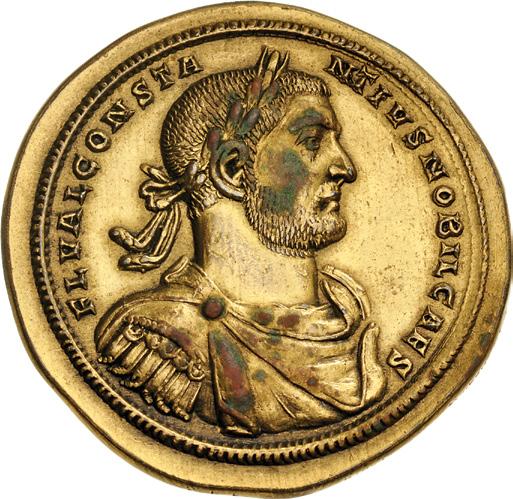
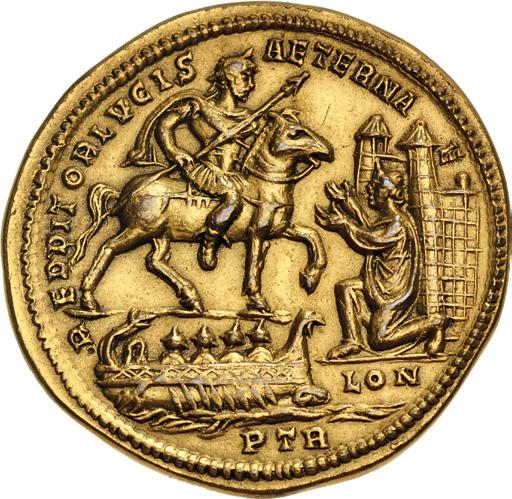
370. REPRODUCTIONS, ROMAN IMPERIAL. Constantius I. As Caesar, AD 293-30. Gilt Cast “AV Medallion Multiple” (42mm, 24.58 g, 12h). After an original electrotype of a now-lost Treveri (Trier) mint issue of AD 297 medal from the Arras Hoard, discovered in 1922 and made by Étienne Bourgey in Paris, circa 1929. Laurete, draped, and cuirassed bust right / Constantius on horseback right, holding spear, approaching London kneeling in supplication before city gate, LON below; below, galley sailing right on Thames; PTR. Edge: 7. R DROUOT E. BOURGEY PARIS 143. Cf. RIC VI 34 = Beaurains 218 = KentHirmer pl. 152, 585 = Toynbee pl. 8, 4 (for original). Toned, areas of red and green deposits. As made. ($1500)
Ex Classical Numismatic Group Electronic Auction 343 (28 January 2015), lot 751.
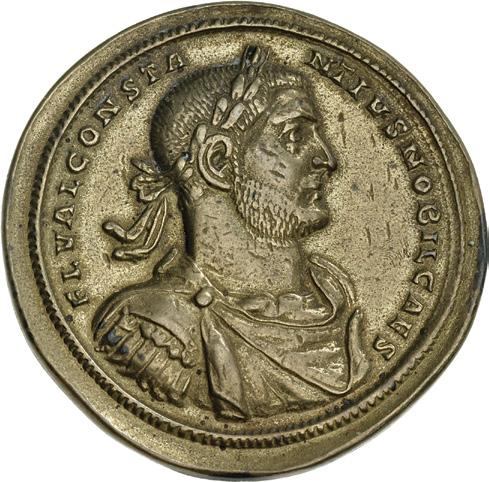
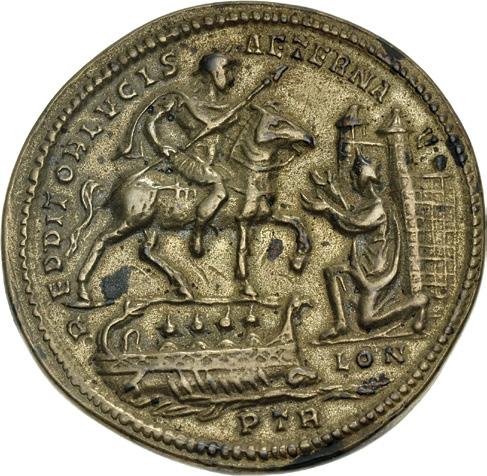
371. REPRODUCTIONS, ROMAN IMPERIAL. Constantius I, as Caesar. AD 293-305. Gilt Cast “AV Medallion Multiple” (40mm, 20.17 g, 12h). After an original electrotype of a now-lost Treveri (Trier) mint issue of AD 297 medal from the Arras Hoard, discovered in 1922 and made by Étienne Bourgey in Paris, circa 1929. Laurete, draped, and cuirassed bust right / Constantius on horseback right, holding spear, approaching London kneeling in supplication before city gate, LON below; below, galley sailing right on Thames; PTR. Cf. RIC VI 34 = Beaurains 218 = Kent-Hirmer pl. 152, 585 = Toynbee pl. 8, 4 (for original). With brass plating to represent original gold now toned, field marks, plating worn at places. Good VF. ($500)
Ex Roma E-Sale 43 (3 February 2018), lot 946.
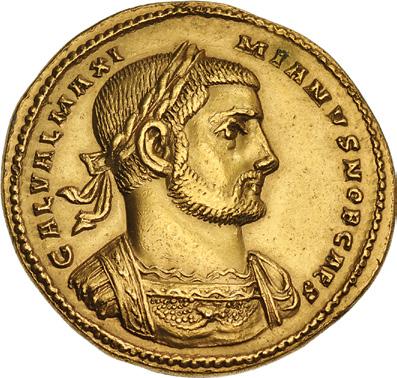
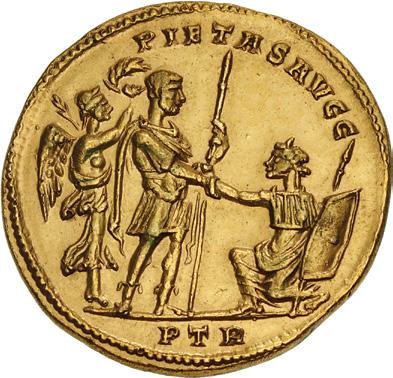
372. REPRODUCTIONS, ROMAN IMPERIAL. Galerius. As Caesar, AD 293-305. Gilt Cast “AV Medallion” (33mm, 15.49 g, 6h). After a Treveri (Trier) mint issue of AD 303. Unsigned, but possibly made by Spink & Son, circa 1920s. Laureate and cuirassed bust right / Emperor, holding spear, standing right, raising kneeling female figure, holding spear and shield; to left behind emperor, Victory standing right, holding wreath. RIC VI –; cf. Beaurains 222 and note (for original); cf. Kent-Hirmer pl. 152, 586 (for rev.; Constantius I - same die); cf. Toynbee pl. 8, 5-6 (same). As made. ($300)
Ex Classical Numismatic Group Electronic Auction 343 (28 January 2015), lot 752.
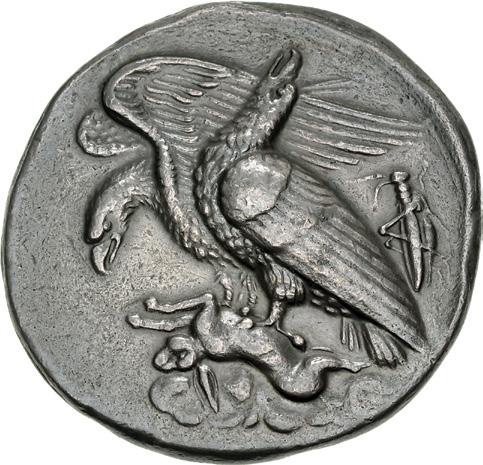
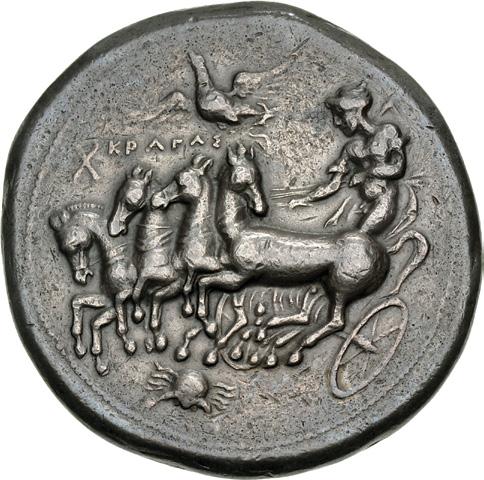
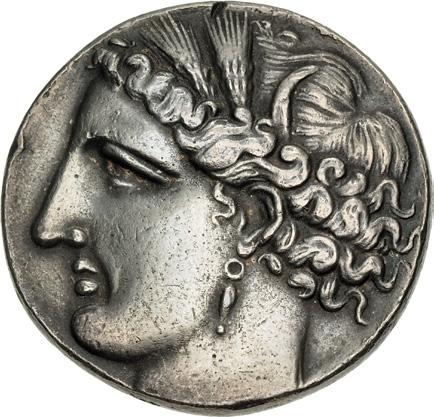
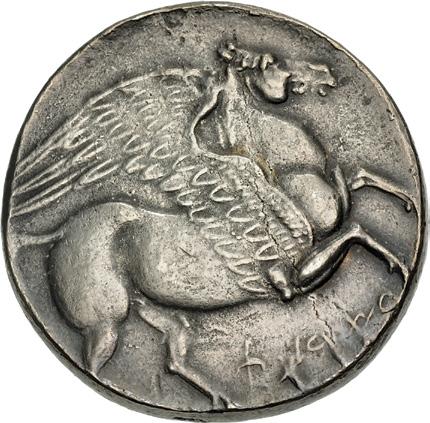
373. BECKER FORGERIES, SICILY. Akragas. Circa 408-406 BC. AR “Dekadrachm” (40mm, 35.25 g, 12h). Dies by Carl Wilhelm Becker (1772-1830). Charioteer driving galloping quadriga left, above, eagle flying left; crab below / Two eagles standing right on dead hare lying on rock, the eagle in foreground with wings closed and head raised, the other with wings spread and head lowered; grasshopper behind. Hill, Becker 15. Toned, edge marks. As made. ($500)
Ex Johnson Family Collection (Classical Numismatic Group Electronic Auction 445, 5 June 2019), lot 834, purchased from William Koonce, 2 May 1969.
374. BECKER FORGERIES, SICILY. Uncertain Punic mint. First Punic War. Circa 264-241 BC. AR “5 Shekels –Dekadrachm” (35mm, 35.44 g, 10h). Dies by Carl Wilhelm Becker (1772-1830). Head of Tanit left, wearing wreath of grain ears and single-pendant earring / Pegasos flying right; Punic B’RŠT (= “In the land”) below.. Hill, Becker 134. Toned, some marks and bumps. Good VF. ($300)
Ex Allan Smith, M.D. Collection (Classical Numismatic Group Electronic Auction 375, 1 June 2016) lot 878 (there misattributed as a Peter Rosa production).
Please refer to our online bibliography at www.cngcoins.com for a complete listing of specialized and general references used, and abbreviations.
Banti A. Banti. I grandi bronzi imperiali. 9 Vols. Florence. 1983-1986.
BMC Various authors. Catalogue of Greek Coins in the British Museum. 29 Vols. London. 1873-1927.
BMCRE H. Mattingly et al. Coins of the Roman Empire in the British Museum 6 Vols. London. 1932-1962.
BN J. Giard. Bibliothèque Nationale, catalogue des monnaies de l’empire romain. 3 Vols. Paris. 1976-present. Bodenstedt F. Bodenstedt. Die Elektronmünzen von Phokaia und Mytilene. Tübingen. 1981. Boehringer E. Boehringer. Die Münzen von Syrakus. Berlin and Leipzig. 1929. Bopearachchi O. Bopearachchi. Monnaies Gréco-Bactriennes et Indo-Grecques. Paris. 1991. Depeyrot G. Depeyrot. Les monnaies d’or (Diocletian à Constantin I, Constantin II à Zenon). Wetteren. 1995-1996. Calicó X. Calicó. The Roman avrei catalogue. 2 Vols. Barcelona. 2002.
CNS R. Calciati. Corpus Nummorum Siculorum: la monetazione di bronzo. 3 Vols. Italy. 1983-87. Crawford M. Crawford. Roman Republican Coinage. 2 Vols. Cambridge. 1974. CRI D. Sear. The History and Coinage of the Roman Imperators 49-27 BC. London. 1998. Fischer-Bossert W. Fischer-Bossert. Chronologie der Didrachmenprägung von Tarent 510-280 v.Chr. Berlin 1999. Flament C. Flament. Le monnayage en argent d’Athènes. De l’époque archaïque à l’époque hellénistique (c. 550-c. 40 av. J.-C.). Lovainla-Neuve. 2007.
Hendin D. Hendin. Guide to Biblical Coins. 6th Edition. New York. 2021. HN Italy N.K. Rutter, ed. Historia Numorum. Italy London. 2001.
Kumar S. Kumar. Treasures of the Gupta Empire. A Catalogue of Coins of the Gupta Dynasty. San Francisco. 2017. Meshorer Y. Meshorer. A Treasury of Jewish Coins from the Persian Period to Bar Kokhba. Jerusalem. 2001.
MK R. Göbl. Münzprägung des Kušanreiches. Vienna. 1984.
MIR R. Göbl, et al. Moneta Imperii Romani. 5 Vols. Vienna. 1984-present.
Price M.J. Price. The Coinage in the Name of Alexander the Great and Philip Arrhidaeus London. 1991. Prieur M. Prieur. A type corpus of the Syro-Phoenician tetradrachms and their fractions from 57 BC to AD 253. Lancaster. 2000.
RIC H. Mattingly, et al. The Roman Imperial Coinage. 10 Vols. London. 1923-1994.
RPC A. Burnett, et al. Roman Provincial Coinage 9 Vols. London and Paris. 1992-present.
RSC D. Sear, et al. Roman Silver Coins. 5 Vols. London. 1978-1987.
SC A. Houghton & C. Lorber. Seleucid Coins: A Comprehensive Catalog. 2 Parts. Lancaster. 2002 and 2008.
Sellwood D. Sellwood. An Introduction to the Coinage of Parthia 2nd edition. London. 1980.
SNG ANS Sylloge Nummorum Graecorum, American Numismatic Society. New York. 1969-present.
SNG BM Black Sea Sylloge Nummorum Graecorum, British Museum, 1: The Black Sea. London. 1993.
SNG Copenhagen Sylloge Nummorum Graecorum, Danish National Museum. Copenhagen. 1942-1979.
SNG BN Sylloge Nummorum Graecorum, Cabinet des Médailles, Bibliothèque Nationale. Paris. 1993-2001.
SNG Kayhan Sylloge Nummorum Graecorum, Turkey 1: The Muharrem Kayhan Collection Istanbul. 2002.
SNG Levante Sylloge Nummorum Graecorum, Switzerland; E Levante - Cilicia. Bern. 1986.
SNG Lloyd Sylloge Nummorum Graecorum, Lloyd Collection. London. 1933-1937.
SNG Lockett Sylloge Nummorum Greacorum, Lockett Collection London. 1938-1949.
SNG München Sylloge Nummorum Graecorum, München Staatlische Münzsammlung. Berlin. 1968-present. SNG von Aulock Sylloge Nummorum Graecorum, Sammlung Hans Von Aulock. Berlin. 1957-1968. Starr C. Starr. Athenian coinage 480-449 BC London. 1970.
Svoronos J. Svoronos.
. Athens. 1904-08. Traité E. Babelon. Traité des monnaies grecques et romaines. 9 Vols. Paris. 1901-1932. Weidauer L. Weidauer. Probleme der frühen Elektronprägung. Fribourg. 1975.
Album S. Album. A Checklist of Popular Islamic Coins. 3rd ed. Santa Rosa. 2011. Biaggi E. Biaggi. Monete e zecche medievali italiane dal seculo VIII al seculo XV. Torino. 1992. Bitkin V. Bitkin. Composite Catalogue of Russian Coins. 2 vols. Kiev. 2003. BMC Vandals W. Wroth. Catalogue of the Coins of the Vandals, Ostrogoths and Lombards and of the Empires of Thessalonica, Nicaea and Trebizond in the British Museum. London. 1911. (Reprinted as Western and Provincial Byzantine Coins in the British Museum.) CIS S. Goron and J.P. Goenka. The Coins of the Indian Sultanates. New Delhi. 2001. CNI Corpus Nummorum Italicorum. 20 Vols. Rome. 1910-1943. Davenport J.S. Davenport. Various works on European crowns.
ESC H.A. Seaby & P.A. Rayner. The English Silver Coinage from 1649. London. 1992. Friedberg R. Friedberg. Gold Coins of the World. 8th ed. Clifton. 2009.
KM C.L. Krause & C. Mishler. Standard Catalogue of World Coins Krause Publications. Iola. Levinson R.A. Levinson. The Early Dated Coins of Europe. Clifton, NJ. 2007. Lunardi G. Lunardi. Le monete delle repubblica di genova. Genoa. 1975.
MEC P. Grierson & M. Blackburn. Medieval European Coinage Cambridge. 1986.
MIB W. Hahn. Moneta Imperii Byzantini. 3 Vols. Vienna. 1973-81.
MIBE W. Hahn and M.A. Metlich. Money of the Incipient Byzantine Empire. Vienna. 2000.
MIR Various. Monete Italiane Regionali. 5 Vols. Pavia. ND.
NM G. Depeyrot. Le numéraire mérovingien. 5 vols. Wetteren. 1998-2001. North J.J. North. English Hammered Coinage. 2 Vols. London. 1963, 1975.
SB D. Sear, et al. Byzantine Coins and Their Values. 2nd edition. London. 1987.
SCBC Standard Catalogue of British Coins. London. Annually.
SCBI Various authors. Sylloge of the Coins of the British Isles.