POLICY BRIEF
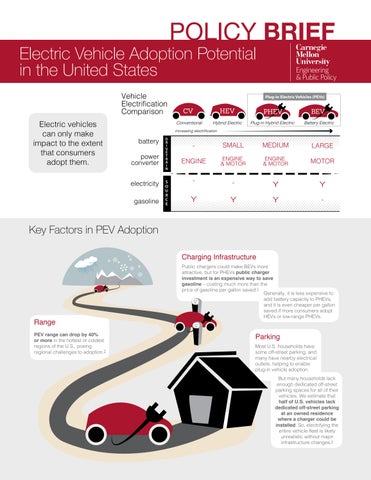
Electric Vehicle Adoption Potential in the United States Vehicle Electrification Comparison
Electric vehicles can only make impact to the extent that consumers adopt them.
Plug-in Electric Vehicles (PEVs)
CV
HEV
PHEV
BEV
Conventional
Hybrid Electric
Plug-in Hybrid Electric
Battery Electric
increasing electrification
battery power converter electricity gasoline
D R I V E T R A I N
S O U R C E
-
SMALL
MEDIUM
LARGE
ENGINE
ENGINE & MOTOR
ENGINE & MOTOR
MOTOR
-
-
Y
Y
Y
Y
Y
-
Key Factors in PEV Adoption Charging Infrastructure
Range PEV range can drop by 40% or more in the hottest or coldest regions of the U.S., posing regional challenges to adoption.2
Public chargers could make BEVs more attractive, but for PHEVs public charger investment is an expensive way to save gasoline – costing much more than the price of gasoline per gallon saved.1 Generally, it is less expensive to add battery capacity to PHEVs, and it is even cheaper per gallon saved if more consumers adopt HEVs or low-range PHEVs.
Parking
Most U.S. households have some off-street parking, and many have nearby electrical outlets, helping to enable plug-in vehicle adoption. But many households lack enough dedicated off-street parking spaces for all of their vehicles. We estimate that half of U.S. vehicles lack dedicated off-street parking at an owned residence where a charger could be installed. So, electrifying the entire vehicle fleet is likely unrealistic without major infrastructure changes.3