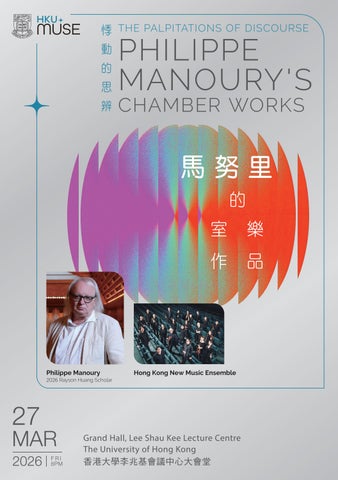
【HKU MUSE House Programme】The Palpitations of Discourse: Philippe Manoury’s Chamber Works
Grand Hall, Lee Shau Kee Lecture Centre
The University of Hong Kong
Welcome to the Grand Hall
Thank you for coming to this HKU MUSE event. To ensure that everyone enjoys the music, please switch off your mobile phones and any other sound and light emitting devices before the performance. Unauthorised photography and audio/video recordings in the Hall are prohibited. Enjoy the concert and come again.
Presented by
Soubresauts
Sulla Ciacona
Réseaux
Dérèglements
Argumenta
Hypothèses du sextuor
Linus Fung, clarinet
Roberto Trillo, violin
Pun Chak-yin, cello
Linda Yim, piano
Karen Yu, percussion
*guest musician
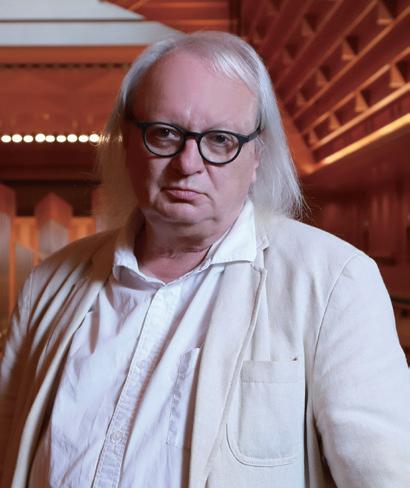
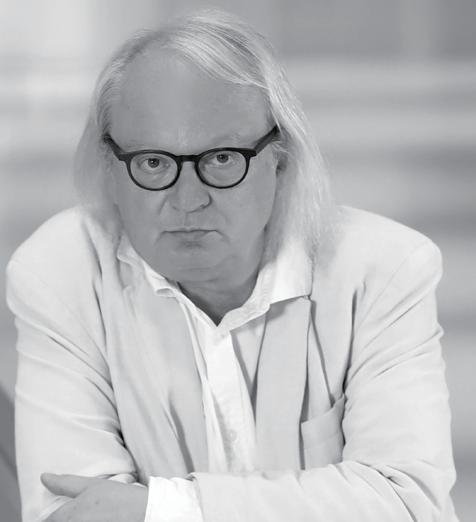
PHILIPPE MANOURY
Philippe Manoury is regarded as one of the most important French composers, in addition to being a researcher and forerunner in the field of live electronics. Despite in-depth training as a pianist and composer instructed by Max Deutsch (a student of Schoenberg) and Michel Philippot, among others—he considers himself to be self-taught. "The composition must be born from an inner longing, and requires no preconditions." Accordingly, he began his first compositional experiments on his own in parallel to his first lessons in music, and, at the age of 19, his works were already being performed at major festivals for new music. His breakthrough culminated with the premiere of his piano piece Cryptophonos in 1974, interpreted by Claude Helffer.
Following two years of teaching at Brazilian universities, his compositional interest in mathematical models brought him to the Paris Institut de Recherche et Coordination Acoustique/Musique (IRCAM). He worked there from 1981 together with the mathematician Miller Puckette on a programming language for interactive live electronics (very well-known today as MAX-MSP). Between 1987 and 1991, he composed Sonus ex machina, a cycle focusing on the real-time interaction between acoustic instruments and computer-generated sounds—a topic that continues to influence his artistic work and theoretical texts.
Alongside orchestral pieces such as Sound and Fury (2009), Synapse (2009), and Echo-Daimónon (2012), recent years have seen the premieres of Manoury's string quartets (Stringendo and Tensio, both 2010; Melencolia, 2013; Fragmenti, 2016) and instrumental works with electronics (Partita I for viola, 2007; Partita II for violin, 2012; Le temps, mode d’emploi for two pianos, 2014). The moment of interaction characterises his approach: he turns them into a sound laboratory where new interactive possibilities are tested, expanding music theatre as a form.
He further explored spatial arrangement of musicians in the concert hall in his work In situ , awarded the Orchestral Prize in Donaueschingen in 2013. The composition was later extended into the Köln Trilogie, a large-scale spatial triptych. Following Ring (2016) and a reprise of In situ (2017), the trilogy concluded with Lab. Oratorium (2019), a multimedia work weaving texts by Ingeborg Bachmann, Hannah Arendt, and Georg Trakl. Manoury also collaborated with director Nicolas Stemann on music theatre work Kein Licht (No Light) and later composed the Kein
Licht Suite (2021). That same year saw premieres of Mouvements for piano and ensemble and Das wohlpräparierte Klavier , a large-scale work for piano and electronics.
The 2023/24 season saw the completion of Manoury's orchestral triptych ( Anticipations , 2022; Rémanences-Palimpseste , 2023; Présences , 2024). The 2024/25 season is marked by a major opera premiere: Patrick Hahn, Philippe Manoury, and Nicolas Stemann have developed a libretto based on Karl Kraus' World War II tragedy Die letzten Tage der Menschheit (The Last Days of Mankind). Another work for the Orchestre National de France, inspired by Pierre Boulez's Notation VIII, was premiered for Boulez's 100th anniversary.
Manoury has held various teaching and artistic positions in institutions including Ensemble intercontemporain (1983–1987), Conservatoire de Lyon (1987–1997), Orchestre de Paris (1995–2001), Festival d'Aix-en-Provence (1998–2000), and the Scène nationale d'Orléans (2001–2003). He was Professor Emeritus of the University of California San Diego from 2004 to 2012. In 2013, he was named Professor of Composition at the Académie Supérieure de la Haute École des Arts du Rhin in Strasbourg. His own academy for young composers took place from 2015 to 2018 as part of the Musica Festival in Strasbourg. Following an invitation from the Collège de France, in 2017 he was given the "Chaire Annuelle de Création Artistique".
Manoury has received numerous awards for his work. In 2014, he was named Officier des Arts et des Lettres by the French Ministry of Culture. Manoury is a member of the honorary committee of the French-German Fund for Contemporary Music/Impuls Neue Musik. In summer 2015, he was elected as a member of the Berlin Akademie der Künste.
Manoury's works are published by Universal/Editions Durand. A collection of texts by and about the composer can be found on his blog at www.philippemanoury.org.
World-renowned French electroacoustic composer Philippe Manoury makes his first visit to Hong Kong as the 2026 Rayson Huang Scholar at HKU. During his residency, he has led composition workshops, delivered talks on digital technology, creativity, and opera in the age of AI, and will be honoured with a dedicated chamber concert by the Hong Kong New Music Ensemble tonight.
What is Real-Time Electronics Composition?
2026 Rayson Huang Lecture
Rethinking Opera in the 21st Century
26 MAR 2026 | THU | 6PM
Hung Hing Ying Building, HKU
Programme Notes
Philippe Manoury sees himself as a link between the European musical tradition and the spirit of experimentation found in electronic and computer music, emphasising that even "classical" composers were experimenters in their times. He believes "music is born wherever one is willing to welcome it", with its meaning arising from the organisation of vibrations into forms that stimulate both the senses and the intellect. As he puts it, "The idea of a grammar of sound is for me above all a way of bringing out a musical meaning". For Manoury, musical ideas can stem from other art forms, personal experiences, or simply from the act of composing. He considers notation and visual elements essential to the creative process.
Influenced by composers such as Karlheinz Stockhausen and Pierre Boulez, Manoury explores synchronising electronics with live performances. He pioneers real-time interactive technologies such as pitch tracking, score following, and signal processing in works like Jupiter (1987) and Pluton (1988). His electronic works maintain a strongly humanistic ethos where technology supports rather than dominates the performer, often creating a real-time musical dialogue responsive to the nuances of each performance. His acoustic writing is also deeply informed by his electronic research. It blends spectral analysis and spatial thinking into chamber and orchestral works. To illustrate how music evolves, Manoury draws a parallel to flocking birds. He describes how moving together cohesively without a single leader reflects the organic nature of musical development.
Soubresauts for Solo Flute
Despite the challenges of the pandemic, Manoury remained productive during 2020–21. Among his new works is his earlier flute concerto Saccades
Festival of New Music, streamed from the Pierre Boulez Saal in Berlin on July 11, 2020. The piece is dedicated to flautist Emmanuel Pahud.
Saccades was also premiered by Pahud on July 8, 2018 at the Kölner Philharmonie with the Gürzenich Orchestra Cologne under the direction of François-Xavier Roth. Manoury describes the spirit of the concerto as restless and constantly in motion, culminating in a solo flute ending passage. While Manoury felt this solo was too short, Pahud approached him with the idea of creating a stand-alone work as a "résumé of the concerto". This suggestion paved the way for the creation of Soubresauts, which is based on musical motifs extracted from
Manoury describes the piece as "music of intranquility, similar to the writings of Beckett in which ideas are catapulted one after the other, with neither beginning nor end. Everything starts in a spiral, with soubresauts (jolts)". This work features constant juxtaposition of flutter-tongue articulation and regular playing, frequent tempo changes and rubato, with occasional flexibility of timing in sustained notes marked by non mesuré
Sulla Ciacona for String Trio (2022)
Sulla Ciacona was commissioned by the United Instruments of Lucilin, a contemporary music ensemble based in Luxembourg founded in 1999, with the support of the Ernst von Siemens Music Foundation. The ensemble collaborates closely with the Grand Théâtre de Luxembourg for contemporary opera productions, which have included the premiere of Manoury's Thinkspiel, Kein Licht, for mezzosoprano, electronics, and ensemble staged by Nicolas Stemann.
In a video profile published by United Instruments of Lucilin, Manoury expressed his desire for his music to resemble a living, organic being that is dynamic yet rigorous. Completed on June 27, 2022 in Amsterdam, Sulla Ciacona embodies this quality through its rich sonorities created by varied bow techniques including arco, pizzicato, col legno tratto, and differences in vibrato and dynamics. Musical elements are exchanged among the trio with occasional rhythmic regularity.
Réseaux & Dérèglements from Etudes for Piano, Book II (2021)
Réseaux & Dérèglements were commissioned by the Orléans Concours International where Manoury served as the President of Jury. Composed in anticipation of a second book of piano studies, Réseaux & Dérèglements were premiered by semi-finalist Lorenzo Soulès in April 2022 at Salle de l'Institut in Orléans. According to Manoury, "They can be played in any order, and not even necessarily together. They nonetheless answer one another because they both refer to certain types of behaviour, or even automation, which are only of real interest when they deviate from the paths which were supposed to be natural to them".
As suggested by its title, Réseaux (Networks) is a short study inspired by the concept of connected lines. Manoury rejects the unnatural straight paths found in technical networks designed for efficiency. Instead, he embraces lines as "sinuous, sometimes abrupt, some may even seem broken". It is the unpredictable nature that
stands out, reflecting his perspective on how music evolves. Precise attention was given to rhythm and dynamics amidst the chaotic contour. The notation features a wide range of dynamics, often within brief musical phrases. This approach of marking the starting point of each line while leaving its destination ambiguous encourages reflection by listeners.
Réseaux focuses on the journey each line takes and the echoes it leaves behind. The piece begins in a closed position and gradually expands into the lower register. A monophonic texture dominates, with moments of homophonic writing emerging as the piece develops. Manoury's use of pedals creates various levels of resonance, allowing the lingering sounds to become the central feature of the piece. As he describes it, "as if the lines, once travelled, left sound remanences around them, memories or shadows that retain an indistinct echo of what has lived".
Dérèglements (Unbalancing) is a longer study. In contrast to Réseaux, it begins in the lower register and maintains a thicker texture throughout. Reflecting Manoury's exploration of the grammar of sound, the opening is constructed from three layers, "relatively stable low-pitched trills, musical leaps, and repeated chords". The interplay between these layers consistently disrupts the musical balance and creates a sense of instability. This process of "unbalancing" is embodied by the dynamic changes and shifting equilibrium, as each musical gesture attempts to take hold, only to be destabilised in turn. The second section introduces a chorale with variations, creating a relatively robust structure defined by rich chords. Earlier musical ideas reappear and revolve around the chorale, but they fail to destabilise it. Towards the end, the chorale fades away, leaving only scattered remnants of the opening layers. These fragments drift in different directions, evoking a sense of unsettled order.
Argumenta for Two Percussionists (2020)
Argumenta was composed for and dedicated to Mathias Reumert and Anders Kann Elten, who premiered the work on October 30, 2021 at Festival Offbeat in Copenhagen. The duo later included Argumenta on their 2023 album released by the Danish label Ekkozone. Reflecting on the work, Manoury explained: "The title Argumenta is quite abstract but implicitly evokes a kind of joust or conversation in which the two musicians exchange ideas and proposals that will serve as a basis for confrontations. Sometimes, the two protagonists 'talk' about the same thing in the same voice; sometimes, they continue to talk about the same thing, but in more individual ways; and sometimes, they oppose, pursue, interrupt, or influence each other".
Reumert's longstanding connection to Manoury's music began when he performed Le Livre des Claviers (1988) as a student at the University of California San Diego, where Manoury served as a professor. Argumenta was composed at Reumert's request upon his return to Denmark. Its instrumentation was developed collaboratively by Manoury and the duo, taking into account the performers' ease of movement between instruments and the technical possibilities it afforded. Given Manoury's preference for keyboard percussion, the piece centres on two marimbas and two vibraphones, supplemented by smaller instruments such as two octaves of crotales and two sets of maracas and claves.
A central focus of Argumenta is the pursuit of "ductility" on the marimba, achieved through virtuosic playing that surpasses the traditional limitations of legato phrasing previously considered unattainable. The piece synthesises keyboard techniques Manoury had developed in earlier works like Le Livre des Claviers and in later compositions including Neptune (1991) and États d'alerte (2014). These include the use of four mallets and the innovative use of mallet damping in place of pedal damping to individually mute notes on the vibraphone.
Throughout the piece, the marimbas and vibraphones serve as the primary voices, while auxiliary percussion provides punctuation, signalling shifts in subject matter and emotional tone. The polyphonic writing in Argumenta is intricately woven, with musical complexity emerging not only from simultaneous lines but also from the nuanced interplay between attack and decay, which sustains a conversational texture throughout the piece.
Hypothèses du sextuor (2011)
Commissioned by Festival Musica in Strasbourg, France, Hypothèses du sextuor was premiered by Ensemble Accroche Note on October 6, 2011. The piece features flute (also piccolo and alto flute), clarinet (also bass clarinet), piano, violin, cello, and marimba (also crotales).
As recounted by Jérémie Szpirglas, the work's title emerged serendipitously from a conversation Manoury had with art curators in Japan, who had recently organised an exhibition called Hypothèses du cristal (Hypothesis of Crystal). Manoury found the concept of "hypothesis" fitting, as his music explores how the six musicians are unable to fully coexist as a unified ensemble throughout the piece. In Hypothèses du sextuor, each instrument retains its own distinct voice, and the sextet never truly converges around a unified idea. This is reminiscent of six individuals whose thoughts never align, structurally akin to Luigi Pirandello's play Six Characters in Search of an Author (1921), where disparate voices exist in parallel rather than in harmony.
The compositional process was shaped by two significant events. While composing in a small village in Corrèze, Manoury found inspiration in the snowfall outside, which led him to reflect on the repetitive motif of Debussy's prelude Des pas sur la neige (Footprints in the Snow). At the same time, Manoury was experimenting with producing harmonics on the piano by touching its strings, discovering that the major and minor seconds in Debussy's prelude could be perceived differently depending on the chosen harmonics. These influences led Manoury to weave an element inspired by Debussy's Des pas sur la neige into the piece, not in the form of a literal quotation, but as a subtle thread connecting the six voices. He suggests that this approach permeates the composition with a sense of "whiteness", with the varying musical directions evoking the meandering imprints of footprints in snow, reflecting the evolving, intersecting, and wandering nature of the sextet's musical ideas.
Programme notes by
Rosanne Lee
BA in Music, The University of Hong Kong
MM in Vocal Performance, Johns Hopkins University
DMA in Performance, Voice, University of Michigan
Graduate Certificate in Musicology, University of Michigan
Biographies
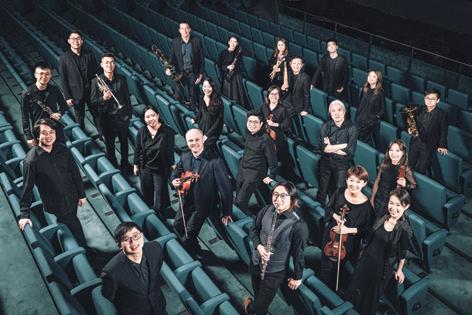
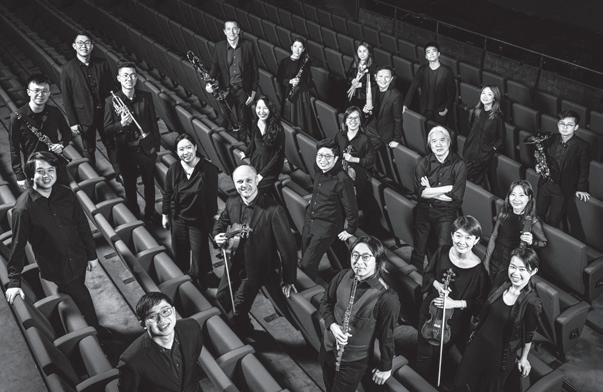
Hong Kong New Music Ensemble
Founded in 2008 by William Lane, the Hong Kong New Music Ensemble (HKNME) is Asia's leading new music group, dedicated to presenting contemporary music to the highest possible standard. Renowned for its exciting performances, HKNME's productions extend beyond the concert stage to educational outreach events, interdisciplinary collaborations and research projects with a global network of artistic associates.
The Ensemble has led numerous world and regional premieres of important contemporary works—a number of which commissioned by HKNME—at prestigious music festivals and venues around the world, including the Hong Kong Arts Festival, New Vision Arts Festival (Hong Kong), Tongyeong International Music Festival/ISCM (South Korea), ECHOFLUXX Festival of New Media (Czech Republic), CYCLE Music and Art Festival (Iceland), Shanghai New Music Week (China), Beijing Music Festival (China), Hong Kong Week (Taiwan), MONA FOMA (Australia), Hong Kong Music Series (London), Angel Orensanz Center (New York), and Wilsey Center for Opera (San Francisco).
The Ensemble has collaborated with renowned organisations such as Zuni Icosahedron, the Hong Kong Chinese Orchestra, Guangdong Modern Dance Company, soundpocket, Studio Acht, and Alice Theatre Laboratory. HKNME has also been invited to organise events in partnership with the Hong Kong Arts Centre, West Kowloon Cultural District Authority, Spring Workshop, Asia Society Hong Kong Center, Osage Gallery, and the Goethe-Institut Hongkong. HKNME is also a regular collaborator with music departments of many tertiary institutions in Hong Kong, including the Chinese University of Hong Kong (Ensemble-in-Residence, 2023–24) and the Hong Kong Academy for Performing Arts (Resident Company, 2015–16).
HKNME has been annually funded by the Hong Kong Arts Development Council since 2012.
Angus Lee, conductor and flute
Angus Lee is a Hong Kong-based performer-composer. He received specialist training in new music at the Lucerne Festival Academy, where he benefitted from working under the likes of Susanna Mälkki, Matthias Pintscher, and Pierre Boulez. In particular, Lee performed as a soloist at Boulez's 90th birthday celebration and his memorial concert at the Lucerne Festival to critical acclaim. Lee joined HKNME in 2016 after returning to Hong Kong.
Lee is equally in demand as a composer, with recent premieres of major works including the artificial intelligence opera Chasing Waterfalls (commissioned by Semperoper Dresden), his orchestral works Des flammes... and ... aux cendres (commissioned by the HK Phil), the electroacoustic ensemble work hic / nunc (commissioned by Music Biennale Zagreb), and the multimedia work ... but only the radiant, shimmering— (commissioned by the Hong Kong Composers' Guild).
Lee has been a faculty member in the Department of Music at the University of Hong Kong since 2022 and is the coordinator of the Department's performance curriculum.
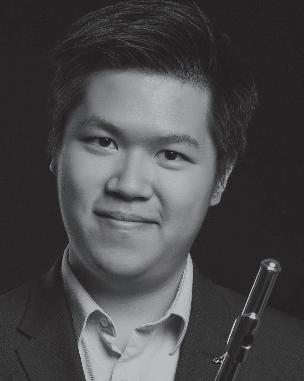
Marco Leung, flute
Hong Kong-born flautist Leung Chun Yin Marco is an active performer of his generation. He has collaborated regularly with HKNME as guest player in recent years. As a versatile performer, he has also curated different highly acclaimed chamber performances for various local festivals and performed as concerto soloist with different orchestras. Marco is currently the Music Director of the Chung Chi Wind Orchestra at the Chinese University of Hong Kong in addition to being a dedicated music educator as conductor and chamber coach in various institutions.
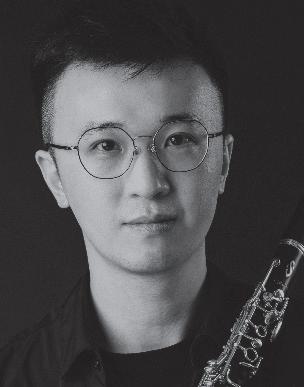
Linus Fung, clarinet
Linus Fung Yat Shan is a versatile Hong Kong-born, raised, and based uprising musician who works as a clarinettist of HKNME, Wuji Ensemble, Freespace Ensemble, Viva Pipers, TimeCrafters, and LENK Quartet, among other occasions as clarinet soloist. Developing his recent passion on the exploration of electroacoustic live clarinet performance, Linus performed Ecotone, KONG (produced and presented by Freespace Ensemble), Lychee Goklok (commissioned and presented by HKNME), and Snorkelling in Plastic (supported by Hong Kong Arts Development Council) as clarinettist, concept, composer, and music director.
Roberto Trillo, violin
Roberto Alonso Trillo is a performer, theorist, and artist working across contemporary, experimental, and classical music. He appears as a soloist, chamber musician, and collaborator across Europe, Asia, and North America, and is a founding member of several chamber ensembles. His recordings on labels including Kairos and NEOS document an ongoing engagement with contemporary composition and hybrid performance practices. In parallel, his research investigates post-instrumental and networked music practices shaped by AI and machine learning, addressing aesthetic and political questions of automation, authorship, and cultural production. He is an Associate Professor at the Hong Kong Baptist University.
William Lane, viola
William Lane performs as a soloist, orchestral, and chamber musician in Australia, Asia, Europe, and North America. He studied under Jan Sedivka, Bruno Giuranna, and Garth Knox, as well as at the International Ensemble Modern Academy in Germany and the Lucerne Festival Academy in Switzerland under Pierre Boulez. He was a prize-winner of Valentino Bucchi Competition in Rome in 2005. Lane was the principal viola of Ensemble Resonanz and a member of the HK Phil, and has appeared as a guest violist of Ensemble Modern and Lucerne Festival Strings. Based in Hong Kong since 2008, he is the CEO and violist of HKNME.
Pun Chak-yin, cello
Pun Chak-Yin, born and raised in Hong Kong, earned his Diploma and Bachelor of Music in Cello from the Hong Kong Academy for Performing Arts (HKAPA) in 2012 and 2015, studying under Karey Kwok-Chee Ho. Pun completed his Master of Arts in Cello Performance under Prof. David Strange at the Royal Academy of Music in 2017 and received the Mary Stuart Harding entrance award.
Pun has been awarded scholarships including the Breguet Trey Lee Scholarship in Pursuit of Musical Excellence, Freemason's Lodge Scholarship, First Initiative Foundation Music Scholarship, and Breguet Trey Lee Performing Arts Scholarship. Pun currently teaches at the HKAPA Junior Music Programme and serves as a cello tutor at the University of Hong Kong. In 2021, Pun joined HKNME as an associate musician.
Linda Yim, piano
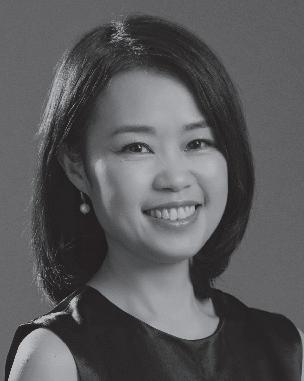
Linda Yim is a core member of HKNME. She joined the HK Phil as guest principal Keyboard for the 2022 season. Linda currently teaches at the Hong Kong Baptist University (HKBU) and the University of Hong Kong. She is proactive in promoting classical and modern music education. Linda graduated from HKBU, the Hong Kong Academy for Performing Arts, the Royal College of Music in London, the Sydney Conservatorium of Music, and University of Sydney, where she obtained her Master of Music Studies degree majoring in piano.
Joanne Li, piano*
Joanne Li Wen-juan graduated from the Hong Kong Academy for Performing Arts (HKAPA). Her teachers include Associate Prof. Xiao Mei, Prof. Dan Zhao-yi, and Prof. Gabriel Kwok. She currently serves as a collaborative pianist at the HKAPA and a faculty member in piano at the University of Hong Kong.
Li has been invited to perform concertos with some of China's leading symphony orchestras, including Shenzhen Symphony Orchestra, Guiyang Symphony Orchestra, and Shanghai Opera House Symphony Orchestra, under the baton of distinguished conductors such as Zhang Guo-Yong and Zhu Qi-yuan.
Li has received numerous awards in piano competitions held in Japan, Belgium, Italy, and the Netherlands. Recent engagements in Hong Kong include performances at the Hong Kong Composers' Guild Concert, PCMF Prism Chamber Music Festival, the Opus Series, and Chilled Steps at Tai Kwun.
* guest musician
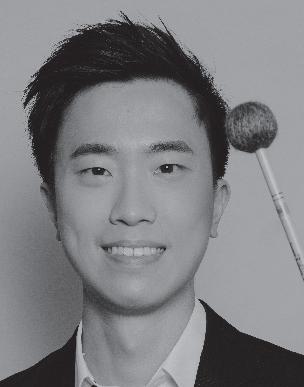
Karen Yu, percussion
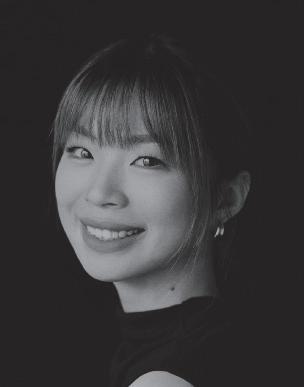
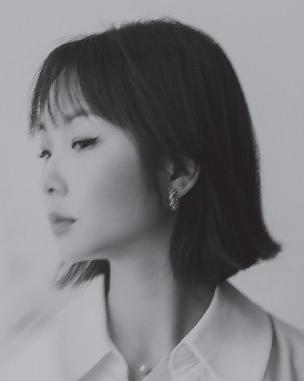
A percussionist, sound artist, and curator based in Hong Kong, Karen Yu enjoys exploring the intersection of sound-making, audience engagement, and cross-disciplinary collaboration. Deriving from her background as a percussionist, her creative practice revolves around sound object and bodily movement improvisation, as well as weaving people together through collaborative experiences. She is currently the Artistic Director of Contemporary Musiking Hong Kong, a co-founder of chamber percussion group The Up:Strike Project, and an associate musician of HKNME.
Samuel Chan, percussion
Winner of the Percussive Arts Society Solo Percussion and Great Plains Marimba Competitions, Samuel Chan has performed in renowned concert halls across continents.
Highlights include solo appearances with the Houston Symphony, collaborations with ensembles including the HK Phil, Malaysian Philharmonic, Hong Kong Sinfonietta, HKNME, World Percussion Group, and at festivals such as Lucerne, Pacific, Verbier, and Tanglewood. He is also a member of The Up:Strike Project. Chan has presented clinics at institutions like Indiana University and teaches at the Hong Kong Academy for Performing Arts (HKAPA) and the University of Hong Kong. He holds degrees from Colburn School, Juilliard, New England Conservatory, and the HKAPA.