CAST LIST
Clytemnestra
Cassandra Agamemnon
Aegisthus
Watchman
Herald/Soldier
Molly Barbery
Victoria Pregent
Jeru Hall
Mark Mahaffey
Kat Davidson
Emma Jones
Chorus
Emotion
Faith Wisdom
Action
Kat Davidson
Victoria Pregent
Mark Mahaffey
Jeru Hall
PRODUCTION STAFF
Director: Ayden Sharp
Stage Manager: Zoe Brandt
Lighting Designers: Ayden Sharp and Zoe Brandt
Lighting Technician: Jesse McIntyre
Light Board Operator: Tristan Olsen
Sound Designer: Ayden Sharp
Sound Board Operator/Programmer: Kaitlyn Williams
Costume Designer: Ayden Sharp
Costume Crew: Molly Barbery, Alex Kinsey, Emma Jones
Hair/Makeup Designer: Alex Kinsey
Run Crew: Mia Powell
Musical Director: Kat Davidson
Scenic Painter: Jeru Hall
House Manager: Kristina Caputo
PLOT SYNOPSIS
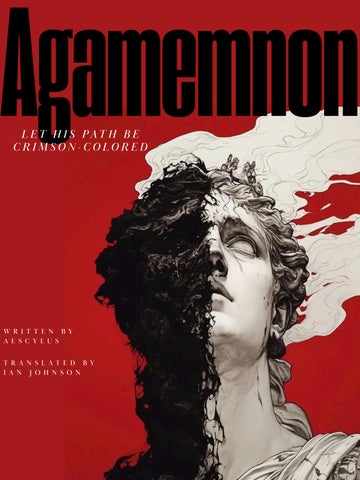
Long ago, the House of Atreus was cursed to be a house of blood, a never-ending cycle of horrific violence that all began with Atreus butchering his nephews and serving them as a meal to their father, Thyestes.
Decades later, when King Agamemnon, son of Atreus, sailed with his army to fight against Troy alongside his brother, Menelaus, he angered the Goddess Artemis. To appease the Goddess, he was forced to sacrifice his daughter, Ipheginia, in return for wind to push the fleet to Troy.
Ten years have passed, and Clytemnestra has held onto the throne in her husband’s absence through wit and cunning. However, her grief and need for revenge have been fueling her, along with her lover, Aegisthus, son of Thyestes and cousin to Agamemnon.
When a trail of signal fires comes from Troy, Clytemnestra knows that the city has been captured and Agamemnon will return home victorious. Soon, she will execute her plan for revenge.
DIRECTOR’S NOTE
Although titled Agamemnon, this narrative belongs to Queen Clytemnestra. I chose to focus on the feminine strength of this story and how women can take back control of the plot. Although the women follow the archetypes of Ancient Greek theatre, a modern perspective adds a refreshing change. Everything in this story is caused by male pride. Furthermore, it begs the question, why is a woman condemned for the same actions a man is praised for?
The thread through this play that I chose to follow is the idea of fire. The House of Atreus burns itself down from the inside out, each character bringing about their own demise by following the cycle of blood and fire. Additionally, I also chose to explore the characters and their personal fires. What keeps them burning? And what happens when that fire goes out?
Ancient Greek theatre is one of the first forms of theatre, and theatre has evolved significantly since its infancy. These 2500-year-old plays lack the direct conflict and action we are used to witnessing in modern theatre. Some defining aspects of these classic plays are the absence of onstage violence, the use of a chorus to provide context or commentary, men playing women’s roles, and the storyline broken into segments. In this production, we acknowledge these traits while adding elements to contemporize the experience for our modern audience. This style of theatre challenges today's patrons, encouraging immersion in a world created through words and storytelling rather than through direct conflict and action.
As you watch this production, I encourage you to actively participate in the experience by focusing on the text and the connection to the characters. Immerse yourself in the story as it unfolds before you and enjoy!