CMDA Volume 57 • Number 3• Fall 2026
TODAY
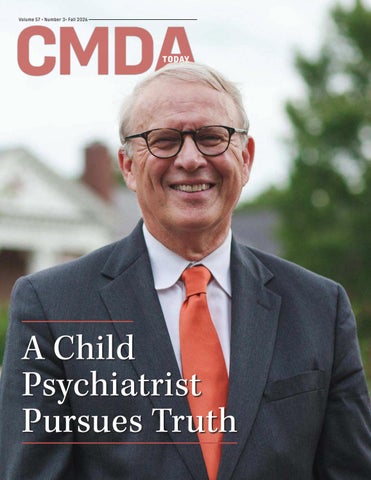
A Child Psychiatrist Pursues Truth
Paid Advertisement
CEO Editorial Mike Chupp, MD, FACS
Our Promise to You “A physician is our Lord God’s mender of the body.” —Martin Luther1
A
s co-leader of CMDA’s first ever reformation tour across Germany and the Czech Republic in 2025, I discovered several Martin Luther quotations about healthcare and healthcare professionals. Such quotes, like the one above, revealed the reformer’s strong view that those who practice healthcare or surgery are God’s emissaries to the sick and injured. The integration of faith and divine purpose to healthcare has long been the raison d’être of CMDA since medical students founded the organization at Northwestern University in Chicago, Illinois in 1931. I moved with my wife Pam and our two youngest daughters from Tenwek Mission Hospital in Kenya to Bristol, Tennessee 10 years ago to join Dr. David Stevens as Executive Vice President of CMDA. Pam and I marvel at God’s gracious providence for our family after we accepted that position and made the ministry transition. God was also faithful and true through my next transition to become CMDA’s CEO three years later at the invitation of CMDA’s Board of Trustees. Several years before moving back to the U.S., I noted a recurring testimony from short-term volunteer healthcare professionals serving at Tenwek Hospital. Such professionals were thrilled with opportunities to pray and even sometimes share their faith with our Kenyan patients or trainees, but they would confess to me: “Mike, it is so exciting and fulfilling to share my faith or to pray with staff and patients here at Tenwek, but I just can’t practice these activities at home.” When I would ask, “Why not?” the answer usually had to do with real or perceived policies preventing healthcare professionals from engaging in what their antagonists called “proselytization” of patients or their families. These policies and busy, demanding practices resulted in a near total absence of an open witness that Christ was Lord of their lives through daily interactions with patients, staff and colleagues in the U.S. I started to call this phenomenon the “disturbing disconnect” or “Christian doctors’ dissociative disorder.” About 18 months ago, our national leadership team and board began a formal discussion about the core value proposition CMDA brings to Christ followers in healthcare. We agreed to develop a “brand promise”—a short statement of purpose to inspire and define our engagement within our Community – Advocacy – Service – Equipping (CASE) ministry framework. A task force of senior CMDA leaders with support from trustees worked for six months to deliver the following promise to our members and other constituents:
“Your Faith and Healthcare Connected.”
At the 2026 CMDA National Convention in Loveland, Colorado, I had the opportunity to share this new brand promise to the CMDA House of Representatives, as well as during my CEO challenge to a crowd of more than 1,100 during the convention. While I envisioned sharing an inspiring update and challenge to our members (and I certainly hope that happened), I came away with a profound personal challenge that those of us in leadership had made a serious commitment to our membership. We were making a promise, or vow, before God to come alongside Christ followers in healthcare like you, so we might help you connect your faith (“…of greater worth than gold…” [1 Peter 1:7]) AND your healthcare practice to the glory of God. “Your Faith and Healthcare Connected ” means you never have to choose between being a faithful follower of Christ and being an excellent healthcare professional. Through CMDA, your biblical convictions, professional calling and daily patient care are brought together in a community that educates, encourages and equips you to serve with both clinical excellence and Christ-centered compassion. Whether you are caring for patients, navigating ethical challenges, mentoring others or advancing truth in healthcare, CMDA helps you integrate your faith into every aspect of your vocation, so God is glorified and lives are transformed through the healing ministry of healthcare in Christ’s name. CMDA Today is one of the resources helping you connect your faith to your practice. In this issue, you will read of the courage of Dr. Allen Josephson, a highly accomplished and respected Chair of Child Psychiatry at the University of Louisville, who courageously stood by the evidence and his decades of experience in treating children with gender dysphoria. You will also be inspired by a nurse who brought the light of the glory of the gospel of Christ to the streets of Bangkok, Thailand on a recent Global Health Outreach (GHO) team caring for victims of human trafficking in that dark place. I want to extend my appreciation to CMDA Today Editor Rebeka Honeycutt, assisted by Vice President of Communications and Events Mandi Morrin, for faithfully playing their part in helping our members keep their faith and healthcare connected until Christ returns or calls them home. Endnotes 1 Luther, LW, Vol. 54, pp. 53-54
Mike Chupp, MD, FACS, is the CEO of CMDA. He graduated with his medical degree from Indiana University in 1988 and completed a general surgery residency at Methodist Hospital in 1993. From 1993 to 2016, he was a missionary member of Southwestern Medical Clinic in St. Joseph, Michigan, while also serving as a career missionary at Tenwek Mission Hospital in Kenya.
cmda.org | 3
VOLUME 57 | NUMBER 3 | FALL 2026
EDITOR Rebeka Honeycutt
EDITORIAL COMMITTEE Gregg Albers, MD John Crouch, MD Autumn Dawn Galbreath, MD Curtis E. Harris, MD, JD Van Haywood, DMD Rebecca Klint-Townsend, MD Debby Read, RN
CMDA TODAY
The Journal of the Christian Medical & Dental Associations
AD SALES
423-844-1000
In This Issue
DESIGN
Ahaa! Design + Production
PRINTING Pulp
CMDA is a member of the Evangelical Council for Financial Accountability (ECFA). CMDA Today™, registered with the U.S. Patent and Trademark Office. Fall 2026, Volume LVII, No. 3. Printed in the United States of America. Published four times each year by the Christian Medical & Dental Associations® at 2604 Highway 421, Bristol, TN 37620. Copyright© 2026, Christian Medical & Dental Associations®. All Rights Reserved. Distributed free to CMDA members. Non-doctors (US) are welcome to subscribe at a rate of $35 per year ($40 per year, international). Standard presort postage paid at Bristol, Tennessee. Undesignated Scripture references are taken from THE HOLY BIBLE, NEW INTERNATIONAL VERSION®, NIV® Copyright © 1973, 1978, 1984, 2011 by Biblica, Inc.® Used by permission. All rights reserved worldwide. Other versions are noted in the text.
CHRISTIAN MEDICAL & DENTAL ASSOCIATIONS P.O. Box 7500, Bristol, TN 37621 888-230-2637 main@cmda.org • cmda.org If you are interested in submitting articles to be considered for publication, visit cmda.org/publications for submission guidelines and details. Articles and letters published represent the opinions of the authors and do not necessarily reflect the official policy of the Christian Medical & Dental Associations. Acceptance of paid advertising from any source does not necessarily imply the endorsement of a particular program, product or service by CMDA. Any technical information, advice or instruction provided in this publication is for the benefit of our readers, without any guarantee with respect to results they may experience with regard to the same. Implementation of the same is the decision of the reader and at his or her own risk. CMDA cannot be responsible for any untoward results experienced as a result of following or attempting to follow said information, advice or instruction.
4 | CMDA TODAY | FALL 2026
12 ON THE COVER
A Child Psychiatrist Pursues Truth
28
How to Lead Up as a Trainee Davis Melin, DO, MPH; and M. Mark Melin, MD, FACS
Allan M. Josephson, MD One psychiatrist’s stand for truth resulted
in a legal battle with his employer
18
Sharing Hope: A GHO Thailand Testimonial Lori Price, BSRN
A GHO team leader gives a detailed testimony on sharing Christ in Thailand
22
Touch in The Digital Age of Healthcare David Crippin, MD, FAAFP
Groundwork and practical tips to effectively lead in the service of God
32
The Dr. John Patrick Bioethics Column
The Tragedy of Forgotten Cultural History John Patrick, MD
Why cultural amnesia threatens ethics, healthcare and society
See PAGE 35 for CLASSIFIED LISTINGS
How physical touch and caring for patients go hand in hand
REGIONAL MINISTRIES
Connecting you with other Christ-followers to help better motivate, equip, disciple and serve within your community Western Region: Wes Ehrhart, MA • 6204 Green Top Way • Orangevale, CA 95662 • 916-716-7826 • wes.ehrhart@cmda.org Midwest Region: Connor Ham, MA • 2435 Lincoln Avenue • Cincinnati, OH 45231 • 419-789-3933 • connor.ham@cmda.org Northeast Region: Bill Reichart, MDiv • P.O. Box 7500 • Bristol, TN 37621 • 678-350-8539 • bill.reichart@cmda.org Southern Region: Grant Hewitt, MDiv • P.O. Box 7500 • Bristol, TN 37621 • 402-677-3252 • south@cmda.org
THE CHRISTIAN MEDICAL & DENTAL ASSOCIATIONS ® Changing Hearts in Healthcare . . . since 1931.
Ministry News COMMUNITY
VIE Poster Session
Northeast Regional Director Position Available
Looking for an opportunity to be sharpened by like-minded believers while showcasing your research project? Join us for the annual VIE Poster Session at the 2027 CMDA National Convention in the Cincinnati, Ohio Area on April 29 – May 2, 2027. Any student, resident or fellow in the healthcare field is eligible to participate. Come share your clinical vignette, case report/ series, basic-science report, clinical/transaction report or literature review. We especially are looking for presentations in areas of spirituality, ethics, education, computational biology, mathematical modeling, biophysics, biotechnology, biomedical science, medicine, surgery, dentistry, nursing, medical humanities and more. VIE is a French word for “life” and represents the acronym for “Vignettes, Initiatives, Innovations and Education,” as well as our recognition of and commitment to stirring godly passions and life throughout CMDA and His kingdom through presentation of scholarly work. Prizes will be awarded for the posters that score highest on visual and oral presentation. There is no submission fee, so submit your abstract by December 31, 2026. For more information, visit cmda.org/vie.
CMDA is seeking a full-time Regional Director for the Northeast—a region of significant strategic importance, encompassing major academic medical centers and a growing network of campus and community CMDA chapters. This is a unique opportunity to invest in the spiritual formation and development of Christian healthcare trainees and professionals in a region shaping the future of American healthcare. Use the QR code above to view the job description. To express interest, please send a resume and cover letter detailing your personal faith journey and commitment to Christian values to CMDA Human Resources (hr@cmda.org) or visit cmda.org/careers to apply.
Find Connection in Your Specialty Among our various ministries, CMDA’s Specialty Sections give you the unique opportunity to equip, network and fellowship with colleagues in your specific healthcare specialty. Organized by CMDA members, the sections listed below provide a wealth of resources for those who wish to connect with their colleagues. 1. Addiction Medicine Section (AMS) 2. Christian Academic Physicians and Scientists (CAPS) 3. Christian Healthcare Executive Collaborative (CHEC) 4. Christian Physical Rehab Professionals (CPRP) 5. Christian Surgeons Fellowship 6. Coalition of Christian Nurse Practitioners (CCNP) 7. Dental Hygienists Section 8. Dermatology Section 9. Emergency Medicine Section 10. Family Medicine Section (FMS) 11. Fellowship of Christian Optometrists (FCO) 12. Fellowship of Christian Physician Associates (FCPA) 13. Fellowship of Christian Plastic & Reconstructive Surgeons (FCPRS) 14. Neurology Section 15. Obstetrics and Gynecology Section 16. Psychiatry Section 17. Ultrasound Education Section (UES) To learn more about each section, visit cmda.org/specialtysections. Contact ccm@cmda.org for more information about getting involved or starting a section.
“Students, residents, fellows…I highly encourage you to consider submitting a research poster to CMDA. You will not regret it! You’re going to love the conference, and you’ll be able to share what you’ve learned with other people, with other trainees…[you’ll] experience…a truly life-changing weekend at the convention.” —2026 National Convention Poster Presenter
cmda.org | 5
Ministry News MEMBER NEWS
Upcoming Events
Year-end Giving
Dates and locations are subject to change. For a full list of upcoming CMDA events, visit cmda.org/events.
Thank you to the number of donors who gave during CMDA’s fiscal year-end giving campaign. Your gifts, prayers and encouragement carried us through this season. Together, you helped claim the full $250,000 matching gift challenge and gave a total of $662,045, including the match. While we didn’t reach our full $1.1 million goal, every dollar given is already at work helping to bring a Christian witness in healthcare through the ministries of your CMDA. We are deeply grateful for your partnership in helping fulfill the mission of CMDA, and we can’t wait to see what God will accomplish through this community of Christians in healthcare in the year ahead.
In Memoriam Our hearts are with the family members of the following CMDA members who have passed in recent months. We thank them for their support of CMDA and their service to Christ. • Theodor Habel, MD – La Crosse, Wisconsin Member since 2013 • Michael J. Joyce, MD – Apollo Beach, Florida Member since 1986
Memoriam and Honorarium Gifts Gifts received April through June 2026 • • • • • • • • • • • • •
Perham Baptist Church in honor of Kristen Huston Aimee Wilkins in honor of Kristen Huston Perham Baptist Church in honor of Yani Medeiros Aimee Wilkins in honor of Yani Medeiros Joan Lingen in honor of Dr. Al Halls Peter Shih in honor of Robert Shih Anne Ryan in honor of Linda Howard Stan Hickson in honor of Julie Rosá, MD Tina Slusher in memory of the family of Bong le Kim Linda McKinney in memory of George Louis Stewart Ayodeji Falokun in memory of Olufunmi Abiodun Falokun Andrew Makowski in memory and honor of Drs. Doug and Ruth Lindberg Robert Smith in memory of Deborah Ann Smith
For more information about honorarium and memoriam gifts, please contact stewardship@cmda.org.
6 | CMDA TODAY | FALL 2026
2026 Great Commission Dental Conference September 11-12, 2026 • Dallas-Forth Worth, Texas 2026 Women Physicians & Dentists in Christ (WPDC) Annual Conference September 17-20, 2026 • Niagara Falls, New York Mentoring with a Coach Approach September 25-26, 2026 • Virtual 2026 Midwest Fall Conference September 25-27, 2026 • Norton Shores, Michigan 501 Foundations in Coaching September 29 – November 3, 2026 • Virtual 2026 Greece Tour – In the Footsteps of Paul October 2-11, 2026 • Greece Remedy West October 10, 2026 • Riverside, California 2026 Northeast Regional Retreat October 23-25, 2026 • North East, Maryland 503 Coaching: Change, Transition and Transformation November 13-14, 2026 • Virtual Marriage Enrichment Weekend January 8-10, 2027 • Monterey, California 2027 West Coast Conference January 14-18, 2027 • Cannon Beach, Oregon New Zealand Tour March 23 – April 3, 2027 • New Zealand 2027 CMDA National Convention April 29 – May 2, 2027 • Cincinnati, Ohio Area Turkey Tour May 22-30, 2027 • Turkey
CMDA International Tours You are invited to join us for a CMDA International Tour. These tours are unlike any other because each tour includes incredible Bible teaching and cultural experiences. Plus, you will meet other Christian healthcare professionals and create friendships that will last a lifetime. Tours each year are headed to New Zealand, Turkey, Italy and more. Each tour is limited to around 50 participants, and they fill up quickly. Make your reservations today by visiting cmda.org/tours.
HEALTH care EVERYWHERE www.lukesociety.org
TEACHING HEALING
Jesus went through all the towns and villages, in their synagogues, the good news of the kingdom and every disease and sickness. When he saw the crowds, he had compassion on them." — Matt. 9:34-35
PREACHING
Paid Advertisement
Ministry News RESOURCES
The Point of Medicine The Point of Medicine, formerly The Point Blog, is an online forum aiming to stimulate thought and discussion on the most pressing issues in healthcare. Through this forum, we hope to educate, encourage and equip healthcare professionals and the church to practice and advocate for good medicine—that which is God-honoring and committed to the flourishing of the patient as an image bearer. Articles on this forum are intended to promote scholarship and biblical wisdom, providing clarity on the issues of the day, to bring glory and honor to God. To join the conversation, visit cmda.org/point.
care professionals think deeply and biblically about the controversial issues they face in their practice. These issues include abortion, gender ideology, assisted suicide and the ability to practice healthcare according to their biblical beliefs. The curriculum consists of video modules lasting approximately 25 to 30 minutes. Each module has two didactic sessions followed by questions allowing group discussion, plus each module includes a facilitator guide. Standing Strong in Practice joins the two previous iterations of this curriculum: Standing Strong in Training and Standing Strong with the Church. For more information and to access all three versions of the curriculum, visit cmda.org/ standingstrong.
Faith in Healthcare—The CMDA Matters Podcast Are you listening to CMDA’s podcast with CEO Dr. Mike Chupp? Faith in Healthcare: The CMDA Matters Podcast, formerly known as CMDA Matters, is the premier audio resource for Christian healthcare professionals. This popular weekly podcast shares powerful stories and explores the issues that matter most to you, along with the latest news from CMDA and healthcare. A new episode is released each Thursday, and interview topics include bioethics, healthcare missions, financial stewardship, marriage, family, advocacy updates and much more. Plus, you’ll get recommendations for new books, conferences and other resources designed to help you as a Christian in healthcare. Listen to Faith in Healthcare—The CMDA Matters Podcast on your smartphone, your computer, your tablet…wherever you are and whenever you want. For more information, visit cmda.org/cmdamatters.
Standing Strong in Training As the latest addition to CMDA’s long list of resources for our members, Standing Strong in Practice is an on-demand video series created specifically for graduate healthcare professionals committed to following Jesus. It is designed to help health-
8 | CMDA TODAY | FALL 2026
Paid Advertisement
Paid Advertisement
L I F E T I M E M E M B E R
“OUR LIFETIME MEMBERSHIP IN CMDA has paid dividends again and again. CMDA was our lifeline during medical school, and it continues to impact how we practice, how we deal with difficult ethical issues and how we strive to fulfill our callings. THROUGH CMDA, WE HAVE MADE LIFELONG FRIENDS.” —Drs. J. Matthew and Cara Brown CMDA Lifetime Members
CMDA LIFETIME MEMBERSHIP — A LIFELINE FOR A LIFETIME When you become a CMDA Lifetime Member, you make a lifetime commitment to the ministry of CMDA. More importantly, you make a lifetime investment in bringing the hope and healing of Christ to the world. It is truly A LIFELINE FOR A LIFETIME. It also means no annual dues payments. You make a one-time payment, and then you are a member for life! Plus, you gain access to exclusive resources and events just for lifetime members. With new lower rates for Lifetime Members, you could see cost savings up to 60 percent from annual membership dues based on your age and category in healthcare. To learn more about being a Lifetime Member, scan the QR code or visit cmda.org/lifetime.
C H R I S T I A N M E D I C A L & D E N TA L A S S O C I AT I O N S ® P.O. Box 7500 | Bristol, TN 37621 | 888-230-2637 | cmda.org Paid Advertisement
Ministry News
Legal Assistance for CMDA Members As a result of a partnership between CMDA and Alliance Defending Freedom (ADF), we offer free legal consultations for CMDA members who may be experiencing conscience freedom issues in the workplace. Exclusively available to CMDA members, this program is designed to serve members who feel they are being discriminated against in the workplace due to their firmly held moral and religious beliefs. We believe conscience freedoms have profound ethical and religious importance within the healthcare profession, and we encourage colleagues, institutions and governments to respect these freedoms. If you feel your conscience freedoms are at risk, please visit cmda.org/legal.
CMDA Learning Center The CMDA Learning Center offers complimentary continuing education courses for CMDA members. This online resource is continuing to grow with new courses to help you in your practice as a Christian healthcare professional. All continuing education courses are available at NO COST to CMDA members. For more information and to access the CMDA Learning Center, visit cmda.org/learning.
CMDA Go App Have you downloaded CMDA Go yet? Our mobile app, CMDA Go, is available to download, so visit your device’s app store to download it today. In the CMDA Go app, you can set up your personal CMDA profile, check out the latest news from CMDA, listen to podcasts, renew your membership, make your dues payments, access a variety of downloadable resources, interact with other members through the discussion forms and join group chats. For more information, visit cmda.org/app. 10 | CMDA TODAY | FALL 2026
Faith Prescriptions Available exclusively for CMDA members, Faith Prescriptions is an on-demand video series that provides training on everything from LGBTQ issues in the healthcare arena, to praying with your patients and sharing your faith in ethical and appropriate ways with colleagues and patients. Faith Prescriptions is a revision of the program Grace Prescriptions, which has been in circulation for several years on DVD, but this updated and improved series is available video-on-demand. It is free to CMDA members and simply requires your member login and password to access all sessions, as well as all video training sessions, within the CMDA Learning Center. For more information, visit cmda.org/learning.
Saline Process Training Events Studies demonstrate the fact that a majority of patients want their healthcare professionals to consider their spiritual needs and desires. Yet, many in healthcare are uncomfortable addressing their patients’ religious concerns. How can clinicians address both the physical and spiritual aspects of their patients? What can we offer to patients that goes beyond their physical needs in a truly holistic way? A Saline Process seminar includes 10 hours of concepts and practical tools for integrating faith into day-to-day patient interactions with sensitivity and respect. This includes incorporating spiritual history-taking, praying with patients and fostering real-time connections with God during patient care. Saline Process has been taught to 50,000 healthcare workers in more than 120 countries around the globe, many of whom work in secular or other majority religion settings wary of Christianity. It equips healthcare workers to impact their workplace for Christ by being salt and light. It disciples, trains and coaches those workers to skillfully and confidently assess where a patient is in their journey toward faith in Christ. Using permission, sensitivity and respect, participants are introduced to practical tools that help personalize an approach to share Jesus’ love according to each patient’s needs. Upcoming Saline Process Training Events October 16-17, 2026 • Fresno, California October 30-31, 2023 • Birmingham, Alabama November 10-11, 2026 • Louisville, Kentucky November 20-21, 2026 • Boston, Massachusetts To learn more and register, visit cmda.org/saline.
There’s a seat for you
table
at the
Psalm 23:5
APRIL 29 - MAY 2, 2027 Cincinnati, Ohio Area
Register now at natcon.cmda.org
This activity has been approved for AMA PRA Category 1 Credits™
2 0 2 7 C M D A N AT I O N A L C O N V E N T I O N Paid Advertisement
A Child Psychiatrist Pursues Truth Allan M. Josephson, MD Photos courtesy of Alliance Defending Freedom 12 | CMDA TODAY | FALL 2026
A
s the son of an evangelical pastor, I saw human behavior up close. I observed my father handling various family crises: a marriage in dissolution, a child running away from home, a business failure. To these problems, he brought common sense plus his Christian faith. He was able to help numerous people this way, but I wanted to add science to the mix. So I attended medical school to study psychiatry. My career went well. I taught and practiced psychiatry in three different medical schools, though I didn’t plan for it to end the way it did. I had my dream academic job, where 30 people answered to me; I lectured nationally and internationally; and I planned to write another book. How do you get God to laugh? Tell Him your plans! He had plans for Allan Josephson, but I just didn’t know them yet. I hope in my story you may find encouragement and wisdom as you face your challenges. I will share events surrounding the lawsuit against my university employer, insights into transgenderism, the heart of this suit and, finally, thoughts on dealing with the secular world, which has given rise to the transgender phenomenon. As a note, gender dysphoria refers to the distress experienced when one’s gender identity does not match one’s biological sex.
held the symposium “Gender Dysphoria in Children: Understanding the Science and Medicine,” a recording of which remains online with more than 230,000 views.1 What I said at the Heritage Foundation wasn’t particularly dramatic or controversial. These kids have problems, and those problems need to be explored and addressed before they are rushed into dangerous medications and more invasive treatments. So we need to be careful, perform good psychotherapy and apply developmental principles. I also mentioned how we should not acquiesce to children merely because they ask. Instead, we provide guidance for young children. They do not know enough of what is involved in becoming a healthy adult. This goes against the cultural mantra that says, “Children know their gender if they are insistent, persistent and consistent in their views.” No, they do not. Within a short period of time, news of my remarks reached the university’s LGBT center. Those activists began agitating by contacting my dean. Soon, a few faculty in my division began doing the same, running into the office of my chair, saying he needed to do something about me. Sadly, the chair was not strong enough to say, “Look. Go back to your office. Josephson has done a good job here. Deal with your anxiety.” That could have stopped things right there.
My Story
Something has happened in our culture—it has become a cancel culture. When this happened to me, I joked I was cancelled before being cancelled was cool! After all, cancel culture started in academia and then metastasized to the rest of the culture. I enjoyed teaching others how to practice psychiatry, but I noticed subtle shifts in my public lectures and my seminar classes on family relationships. Then it was not so subtle. I saw students advocate for a cause first then pursue truth second. Scholarship and the pursuit of truth was pushed away. In early 2016, then-CMDA CEO Dr. David Stevens was looking for someone to speak on transgender matters. Given my background in child psychiatry, human development and families, he asked for my help. I recorded an audio interview with him on transgender issues, and the rest is history. Ryan Anderson was planning to host a panel on the science of transgender medicine at the Heritage Foundation. A pediatrician and an endocrinologist were already scheduled to present, but they needed someone from psychiatry, preferably child psychiatry. In October 2017, we cmda.org | 13
LEGAL ASSISTANCE FOR CMDA MEMBERS
A
s a result of a partnership between CMDA and Alliance Defending Freedom (ADF), we offer free legal consultations for CMDA members who may be experiencing conscience freedom issues in the workplace. Exclusively available to CMDA members, this program is designed to serve members who feel they are being discriminated against in the workplace due to their firmly held moral and religious beliefs. We believe conscience freedoms have profound ethical and religious importance within the healthcare profession, and we encourage colleagues, institutions and governments to respect these freedoms. If you feel your conscience freedoms are at risk, please visit cmda.org/legal.
In November 2017, I was demoted from my leadership position as Director of Child and Adolescent Psychiatry at the University of Louisville. In fact, while giving a deposition in another case, I received word I needed to come to the chair’s office to pick up a letter. That letter told me I was no longer in touch with my division after successfully leading them for almost 14 years, and I would need to step down from my leadership responsibilities. I was stunned. I’ll never forget that moment.
14 | CMDA TODAY | FALL 2026
Over the next three months, I mulled this over. Should I sue my university? I got all kinds of advice. The most direct was from Dr. Paul McHugh who had written in Public Discourse: “But gird your loins if you would confront this matter. Hell hath no fury like a vested interest masquerading as a moral principle.”2 He was right, but I carried on anyway, oblivious to the fury I would face. As I had been working quite closely with attorneys from Alliance Defending Freedom (ADF), I asked them, “Could you help me?” Their response: “Of course!” It took time to think through everything that fall, to pray about how to proceed and to talk with my wife Jeri about how the Lord was leading us. Ultimately, in March 2019, we filed a free speech lawsuit. My attorney joked, “You have heard the phrase, ‘I wouldn’t make a federal case out of it.’ Well, you just did!” The next six years involved countless ups and downs. Shortly before filing, my faculty position was terminated. I endured much loneliness and great sadness, as people stopped talking to me. My wife was my rock. Her strength inspired me every day. My legal team became my friends. And yes, I had to find a way to support my family! My attorneys kept winning battles along the way, and then in summer 2024, we experienced more exhilaration as the U.S. Court of Appeals for the Sixth Circuit ruled for us unanimously, issuing a decision that bolstered free speech protections for faculty from Michigan to Tennessee.
After that resounding victory, we had another round of settlement talks: a last round before it would be time for a jury trial. We had low expectations, as previous attempts at mediation failed. This time, however, was different. After eight long, harrowing hours going back and forth, the university agreed to pay a substantial amount—almost $1.6 million—allowing us to move on with our lives! So much went in to these proceedings. Should we as Christians even sue in the first place? We got all kinds of advice on that too. We read Acts 16 with new meaning. You will remember Paul and Silas threw out a spirit from a woman who had been following them around. A judge apprehended them, had them beaten and threw them in jail. After an earthquake broke down the doors to the jail, the judges sent an order to free Paul and Silas. Paul, with boldness and indignation, said, “No! Let them come themselves and escort us out” (Acts 16:37b). Those leaders had violated the law and had to be held accountable. Asserting oneself like this is a strong witness. I came to see that removing me from my division chief position and then terminating me was like Paul and Silas being jailed. Both acts were illegal. Litigation is the mechanism our Founding Fathers put in place for us to assert our freedoms and hold government officials accountable. After all, they had to obey the law too. The more I reflected on Scripture, I came to see we as believers have always been a persecuted minority. This is the life of faith. We must live out our witness in such situations, and often, that means taking actions to protect those who come after us. A good friend of mine, pediatrician Dr. Steve Wright, gave me a call and said, “I read this and I thought of you.” “You’re blessed when your commitment to God provokes persecution. The persecution drives you even deeper into God’s kingdom. Not only that—count yourselves blessed every time people put you down or throw you out or speak lies about you to discredit me. What it means is that the truth is too close for comfort and they are uncomfortable. You can be glad when that happens—give a cheer even!— for though they don’t like it, I do. And all heaven applauds. And know that you are in good company. My prophets and witnesses have always gotten into this kind of trouble” (Matthew 5:10-12, MSG). I found out what all Christians inevitably confront—if you live for Christ, you will be attacked. I had been living a peaceful, comfortable Christian life, but I hadn’t been challenged like this. I came to understand evil in ways I had never imagined.
Insights into Transgenderism
It was the late 1970s when I saw my first transgender case. I saw several more before my psychiatric training ended in 1981.
These patients, all men desiring to be women, were obviously troubled, and the choice of a different sex was a dramatic effort at solving a problem. They were unusual cases, hard to wrap my mind around. As more cases came to my attention, the drivers seemed more and more cultural. My thinking was, “This cannot be true.” That was the start of my deeper understanding that this was not merely a clinical issue but also a cultural and spiritual one. Alexander Solzhenitsyn penned the essay “Live Not By Lies.”3 Our words must reflect reality. It is impossible for a man to become a woman by merely declaring it. As I looked at the phenomenon, I came across the work of Dr. Paul McHugh, chair of psychiatry at Johns Hopkins University. He had shut down the sex change program at Johns Hopkins because it didn’t make a difference. There was no science to this!
I found out what all Christians inevitably confront—if you live for Christ, you will be attacked. Dr. McHugh remains a friend to this day. When news of my legal victory became known, he was the first person to congratulate me. An article of this length cannot fully address the numerous lies, distortions and deceptions in this journey. Here are but a few:
• World Professional Association for Transgender Health
(WPATH) is an activist organization—several are not even clinicians, yet this organization has significantly shaped transgender care. • Changing one’s sex has gone from unthinkable to unquestionable. Ideologues and activists have declared it a normal phase of development, “settled science.” They lied. It is not. • Research started to come in from throughout the world. Most recently, research from Finland by Kaltia and colleagues has shown these youth have significant psychopathology, far from a variant of normal development.4 • There have been attempts to change language: “sex,” a scientific term, became conflated with “gender,” a psychological term. Sex was “assigned” at birth, rather than “identified”— and often before birth. cmda.org | 15
What causes gender dysphoria? As in most psychiatric disorders, the cause is multifactorial. We do know these youth are anxious and hypersensitive, and they are not prepared for adulthood. Protecting them when they need something else is child neglect. Children deserve better. The idea they are to be protected from every uncomfortable emotion must be rejected. I received a complaint from a medical student before I was removed from leadership who said she didn’t feel safe on my inpatient child psychiatry rotation. I was perplexed. Did she fear physical assault in a hospital setting? Then I saw students at Yale Law School shout down Kristen Waggoner, the president and CEO of ADF. They shouted, “Protect trans kids!” Then it clicked. This is where the anxiety comes from. These individuals are overwhelmed with the tasks and expectations of their sex. They can’t handle any stress. It’s not that they have not been protected; instead, they have been protected too much. To disagree with them is to hate them. To avoid any stressful situation, one has two options: decrease the attendant stress or strengthen your coping skills. If you are overwhelmed by the stress of college calculus, remove the class from the curriculum or study more intensively. Transgender ideology is removing calculus from the curriculum. For these individuals, a wishful thought comes up: “Maybe I don’t have to be a woman (man).”
16 | CMDA TODAY | FALL 2026
As difficult as the journey was, God’s hand was moving in our lives. We believe He has more for us to do. There is a world who needs His truth and love. My Thoughts on Relating to the Secular/ Trans World
Get out there. I was a comfortable Christian. Probably too comfortable. It is essential for all believers to share the truth of God’s creative and enduring love.
Be excellent. I got to know all I could about gender ideology. I realized I could not challenge these broadening clinical issues without knowing my field as deeply as possible.
As difficult as the journey was, God’s hand was moving in our lives. We believe He has more for us to do. There is a world in need of His truth and love.
Do not apologize for any reasonable act or statement. Our opponents always desire this.
Endnotes
Prepare for intimidation. “You don’t believe that, do you?” “Did you do research?” Here is where they want you to apologize. You will wonder: “Apologize for what?” Don’t apologize for being right, even if someone claims to have hurt feelings. You will be attacked for your views, but even more for your personhood. I still remember reading, “Allan Josephson, the transphobic professor,” on the front page of our local newspaper. Now, that is intimidating. They want you to feel intimidated. This is hard for families. My grandchild at the age of seven saw a headline about me. She went to her mother asking, “Is Papa going to jail?” We must deal with rejection, and we must accept we will be hated by some. We all want to be liked, so this verse is hard. Jesus said: “But since I picked you to live on God’s terms, and no longer on the world’s terms, the world is going to hate you” ( John 15:19, MSG). We hear much about affirming care, but the truth is we should affirm people, not bad ideas. Any limit is experienced as difficult, but it is not harmful. To live as you were created, male or female, may feel difficult, but it is not harmful. Take care of your friends and family. My loving wife of 52 years has been an amazing partner. I found out some things about her skill set. I always knew she was a wonderful educator and musician, but I discovered she was an effective “paralegal.” Numerous times throughout our journey she would come in to my office and excitedly say, “Look what I found,” showing me some important article she found online. For some, fighting the battle in the courts will be inevitable. The Lord led me to Alliance Defending Freedom. I came to see its attorneys—including Kristen Waggoner, Tyson Langhofer, Travis Barham, David Cortman and Logan Spena—as friends. I greatly valued their intelligence and legal skills. No, this is not how I thought my career would end. Travis Barham called me one afternoon, after my case was done. A neuroscience researcher from Columbia University was trying to reach me. It turns out Columbia wanted to award me their 2025 Academic Freedom Prize Award!
1 https://www.heritage.org/gender/event/gender-dysphoria-childrenunderstanding-the-science-and-medicine 2 McHugh, Paul. Transgenderism: A Pathogenic Meme. Public Discourse, June 10, 2015 3h ttps://www.solzhenitsyncenter.org/live-not-by-lies 4 Sami-Matti Ruuska et al. Psychiatric Morbidity Among Adolescents and Young Adults who Contacted Specialised Gender Identity Services in Finland in 1996-2019: A Register Study. Acta Paediatrica doi.org/10.1111/apa.70533
Allan M. Josephson, MD, is a CMDA Lifetime Member, serving as chair of the Psychiatry Section for three years. Dr. Josephson received his medical degree from the University of Alberta in Canada. He completed general psychiatry training at the University of Minnesota, as well as specialty training in child and adolescent psychiatry. He taught family studies and family therapy, publishing broadly. Dr. Josephson served as chair of the Family Committee of the American Academy of Child and Adolescent Psychiatry. He received the Oskar Pfister Award from The American Psychiatric Association recognizing his significant contributions to the study of psychiatry and religion. His successful career in academic psychiatry included chairing divisions of child psychiatry in Georgia, Minnesota and Kentucky. He has authored more than 50 scientific publications and co-edited three books. The book he co-edited with John Peteet, Handbook of Spirituality and Worldview in Clinical Practice, has been used in psychiatry residencies throughout the country. Toward the latter part of his career, he spoke clearly about the need for thorough evaluations of children and adolescents who experience gender dysphoria. These views led to the termination of his academic leadership position at the University of Louisville. In 2019, he sued the university for impeding his free speech. This case was recently settled for $1.6 million in Dr. Josephson’s favor. For standing up for free speech, Dr. Josephson has been recognized by several organizations. He most recently received the prestigious Academic Freedom Prize from Columbia University, New York.
GET INVOLVED CMDA Advocacy is dedicated to serving as a Christian healthcare voice in the public, to the media and to the government, through grassroots advocacy efforts on both state and federal levels. If you would like to get involved in our advocacy work on conscience freedoms and other issues, please contact advocacy@cmda.org. To keep up with the latest updates from CMDA’s Advocacy team, listen to The Voice of Advocacy podcast or read The Advocacy Report enewsletter, visit cmda.org/advocacy.
cmda.org | 17
SHARING HOPE A GHO Thailand Testimonial Lori Price, BSRN
Have you ever considered what your life would look like had you NOT been born in the United States? Chances are, it would look incredibly different. Allow me to introduce you to two women I recently met while serving on a short-term healthcare mission trip with CMDA’s Global Health Outreach (GHO).
18 | CMDA TODAY | FALL 2026
N
ight falls over Thailand, and the streets awaken with a relentless pulse. Bars blast loud dance music, neon lights flash across the pavement and the air is thick—heavy with an odd sewer stench, perfume and the weight of desperation. It is a Las Vegas strip type of atmosphere. The women are everywhere—standing on sidewalks, crowding doorways, lining the alleys, their eyes searching for customers. They are exposed, objectified, yet human, each one carrying a story of pain and hope in equal measure. Their circumstances vary per individual, yet they are all quite similar. “Zira” and “Bethany” arrived in this large city just five short days before we met, only to find themselves amidst the cacophony of the nightlife and its noise. They were both promised gainful employment at a retail store so they could help provide food for their families in Uganda. Originally from an incredibly poor region, they were unable to find work in their home country. Both desired to ease the daily burdens of life their families faced. Much to their shock, their new reality was that they were now enslaved to a bar with extraordinary requirements. They were deceived and sold into sex slavery. Their visas were taken from them and held by the employer. Manipulation and exploitation would become their daily experience. Their accumulated debts from traveling were used as a means of controlling them and eliminating any possibility of leaving. Feeling helpless and unable to fully comprehend the depth of their situation, they wandered together in despair amongst the throng. Men from all over the world sit nearby, alone or in groups. They have come seeking what cannot satisfy, a moment of pleasure, enslaved by sin that leaves them empty even as they believe they hold control. Both women and men are captives, bound in ways only Jesus can redeem. Yet, even here, God is not absent. He has always been here. His light is revealed in the small, tender ways that speak louder than words: a listening ear, a prayer offered in faith, a gentle hand extended in care. Sometimes that care is a side hug offered by a team member, not as an advance, not as flirtation, but as a true, loving act. For women who have been treated as objects their entire lives, such a simple embrace communicates dignity, safety and human connection. It’s a glimpse of Christ’s unconditional love.
GET INVOLVED GHO is dedicated to providing healthcare while spreading the gospel by sending medical, dental and surgical teams around the world. GHO welcomes all varieties of healthcare professionals, undergraduate students, graduate school students and non-healthcare servants. To learn more about how you can participate, visit cmda.org/gho.
Our 17-person healthcare team with CMDA’s Global Health Outreach (GHO) was set up in the floors directly above a coffee shop, partnering with an established non-government organization to provide a week-long healthcare clinic for their neighbors in the Nana Red Light District. We came alongside their well-established outreach team to provide medical and dental services, free of charge, to any and all who sought care. The national team members slipped into the night to pass out personal cmda.org | 19
invitations, in eight different languages, for the clinic services. They attempt to convey value to each individual through caring conversation and an offer for medical services. Often, their employer requires a negative HIV test every three months. The local clinics charge $100 for this test, so a number of women came through the door seeking an HIV test. Others had a medical concern, while some desired a women’s health exam or sexualty transmitted disease testing. The team sought to identify each woman’s needs and address their concerns. “Zira” and “Bethany” came looking to have their teeth cleaned. While talking with staff, it quickly became clear these young women, barely adult age, were distraught over their circumstances and extremely fearful of “the work” they were facing and the consequences for not performing. Through her tears, Bethany spoke of her father, who was also her pastor back home, and how ashamed he would be to know what was being required of her for work. Both women were trapped by deception, now owned by a madame demanding money as repayment for the travel, housing and food. Unmet employer expectations would bring them beatings, abuse, withholding of food and increased debt. The traffickers have refined their systems, keeping these women enslaved without any money or the ability to speak the native language to find help. These two women were overwhelmed by their current circumstances where any hope for escape was dim. Unfortunately, this is a common scenario in our dark world. Any one of us could have been tricked into a similar fate. Our healthcare team is the draw that brings women into the clinic, but it is through the loving staff of our Thai national partners that women are exposed to a glimmer of hope, a way out of 20 | CMDA TODAY | FALL 2026
their desperation. Traumatized women are seen and heard, and they are given value and shown another way. No judgment and no pressure, only the love of Jesus and a path out. Some of the women have begun to take real steps toward freedom, leaving sex work behind and finding safety. They are not yet followers of Christ, but God’s redeeming work is already visible in their lives. Others are not yet open, while some turn away and some remain in chains. And the men, too, are captives—slaves to desires that promise more but deepen their emptiness. Our acts of mercy and truth go hand in hand. Compassion opens doors, but it is the gospel that brings life. We tell them that Jesus Christ sees them, loves them and can save their souls. The true Light, which enlightens everyone, has come into the world.
“THE TRUE LIGHT THAT GIVES LIGHT TO EVERYONE WAS COMING INTO THE WORLD. HE WAS IN THE WORLD, AND THOUGH THE WORLD WAS MADE THROUGH HIM, THE WORLD DID NOT RECOGNIZE HIM. HE CAME TO THAT WHICH WAS HIS OWN, BUT HIS OWN DID NOT RECEIVE HIM. YET TO ALL WHO DID RECEIVE HIM, TO THOSE WHO BELIEVED IN HIS NAME, HE GAVE THE RIGHT TO BECOME CHILDREN OF GOD” (JOHN 1:9-12). “Zira” and “Bethany,” by the divine intervention of God, were rescued BEFORE they were required to prostitute themselves. Along with four others, they were taken to safe houses. Each one courageously took risky steps of faith to leave that life behind
JOIN GHO ON THE MISSION FIELD
Global Health Outreach (GHO) is one of CMDA’s short-term international missions outreaches. Every year, GHO sends 40 healthcare mission teams around the globe to places like Central America, South America, Africa, Western Europe, the Middle East and Asia. We serve the poor and needy who often have no access to healthcare service by offering primarily medical and dental care, as well as some surgical care. Our trips are open to anyone interested in missions. We have plenty of opportunities for you to grow your skills through healthcare missions. Healthcare professionals see a variety of and severity of diseases not common in the U.S., and students have several opportunities for mentoring during the trips. On all of our mission trips, our primary goal is evangelism and discipleship. We want to make disciples who will make disciples. You have the opportunity to step outside your comfort zone and learn to rely on the Lord to work in and through you as you minister in Jesus’ name. Scholarships are available to help cover costs, plus GHO recently lowered the price of trip fees to trips to Central America, India, Thailand and the Philippines. We truly are one body, united in Christ Jesus, looking to be His humble servants on the mission field for His glory! GHO’s next trip to Thailand is scheduled for January 30 – February 6, 2027, and applications are now being accepted. So come, join us on the mission field! Joining a team is easy. Visit cmda.org/gho to find a trip that fits your schedule, submit your application and then join us as we share the gospel around the world through healthcare. and begin a healing work in their lives. Their journey will be long, as it takes approximately a year to be legally repatriated back to their home countries. It will be difficult, as they will be required to testify against the trafficker. They will be housed and supported throughout their entire journey by dedicated and loving staff who will demonstrate the love of Jesus. The women will be provided trauma counseling and offered individual support through each step of the process. They will be guided through the legal process to obtain the correct documents required for repatriation across international borders. We pray they will each personally come to know the true love of Jesus and His healing in their hearts. In addition to running the local coffee shop, the national ministry also operates a small residential shelter to house women who are in the process of repatriation. All staff working in the coffee shop are people who were freed from trafficking and were provided training to lead them to moral employment. Stable employment opportunities to earn a living wage are essential for each woman. Native women seeking help are offered various paths to train for future employment. Some learn to bake goods sold at the coffee shop, learn administrative skills or become a waitress or barista. Others learn to make jewelry or beaded
ornaments to sell. Some will train in the beauty salon and take up doing nails or hair. Restoration programs are designed to bring holistic emotional, spiritual and relational healing to the women served. All are counseled and provided tangible tools and practical assistance leading to them being healed and empowered to thrive on their own after being trafficked. Walking through the red light district, through the chaos and the noise, we are reminded that we are not bringing God to a place where He is absent. We are joining Him in what He is already doing—shining light, offering mercy and calling the lost toward freedom. He is the way, the truth and the life. Even over the pounding music and flashing neon, His light shines. He is drawing hearts to Himself, and one day, His light will overcome every shadow.
“THE LIGHT SHINES IN THE DARKNESS, AND THE DARKNESS HAS NOT OVERCOME IT” (JOHN 1:5). Can you have any doubt that God has immeasurably blessed you? Be grateful for where the Lord has you. Be grateful to live where you live. In addition, thank you for being a part of providing the essential prayer and materials needed to make a difference. Through your donations to CMDA and GHO, you have supplied dental bibs, gauze, speculums, germicidal wipes, swabs and more supplies needed to run a clinic in a faraway land. It is an honor and privilege to travel on a mission team twice a year, serving the “least of these” in third-world countries. Your support makes it all possible.
“THE KING WILL REPLY, ‘TRULY I TELL YOU, WHATEVER YOU DID FOR ONE OF THE LEAST OF THESE BROTHERS AND SISTERS OF MINE, YOU DID FOR ME’” (MATTHEW 25:40). Author’s Note: Contributing insights included from team participant Mark Evans, DDS. Lori Price, BSRN, became a believer as a young adult. Missions was always part of her commitment to the Lord to serve Him, so early on she became interested in missions, hung out with people involved in missions and served on various mission boards. Her journey with Global Health Outreach (GHO) began in 2015 immediately after she graduated from nursing school. Since that time, she has participated on one or two trips annually with GHO. Several years after making a dear friend in Tanzania on a GHO trip, they decided to start training with GHO to become team leaders. Together, they lead two trips annually to Ecuador and Thailand. Lori continues to work full-time as an emergency room nurse in an 84-bed emergency department. Although retirement is in her thoughts, missions will always be an important part of her life.
cmda.org | 21
TOUCH in the DIGITAL AGE of HEALTHCARE David Crippin, MD, FAAFP
22 | CMDA TODAY | FALL 2026
cmda.org | 23
I
Jesus reached out his hand and touched the man. ‘I am willing,’ he said. ‘Be clean!’ And immediately the leprosy left him. — Luke 5:13
often marvel at how little today’s healthcare professionals touch their patients. Touch in a healthcare setting includes social contact, palpation and examination. Instead, they hover over their computer screens, avoiding eye contact or any form of meaningful human interaction during their visit time. I hesitate to call several of these “interactions” healthcare appointments or consultations, as they are devoid of a handshake or hug for a hurting soul or even eye contact between healthcare professional and patient. They also lack any openended questions or even cursory dialogue about jobs or families in the quest of a rigid information gathering exchange taking the place of a decent physical exam. Of course, this will soon lead to robots or computers doing our jobs for us, along with artificial intelligence (AI) to derive a diagnosis and treatment plan, based on a narrow scope of data. As more patients opt for virtual visits, AI has the potential to take over our roles with virtual data acquisition, monitoring of blood sugars, etc., providing instantaneous, readily available interactions and advice. Add in the time constraints of numerous compulsory questions to ask while fulfilling your computer data clerk entry function, and this leaves little time or energy to function as a caring, compassionate healthcare professional. It is good to occasionally step back and ask questions like, “Is my current role and passion being fulfilled in my current workplace/career?” or “What is my current ministry within healthcare actually costing me?” If we are not paying some price for our Christian witness, for being the caring, loving hands and feet of Christ to bring hope, the gospel and love, then are we really following Jesus in our non-Sunday morning lives? Long ago, I remember my dermatology attending reminding us, “If you know what it is, you don’t have to touch it, and if you don’t know what it is, you shouldn’t touch it.” Or in current vernacular, “Don’t sweat the petty, and don’t pet the sweaty.”
24 | CMDA TODAY | FALL 2026
Long before medical school, I read about the awful outcomes of infants raised without touch in horrific orphanages, touted as “the future” by B.F. Skinner and other utopian pioneers. Sadly, I also saw numerous children adopted out of impersonal wards in developing countries, children who were left with permanent damage caused by lack of touch or love as much as inadequate nutrition. More recently, I witnessed numerous patients in long-term care facilities die of loneliness, isolation and despair, abandoned by both family and society. I have experienced even orthopedic physicians avoiding joint palpation, strength testing, range of motion evaluations and other physical exam-based modalities. Fortunately, my attendings during training were clear that the basic appointment or consult included a non-rushed or boxed-in history and a hands-on exam (inspection, palpation, auscultation) before the tests, diagnosis and treatment plan. After residency, I read Jesus, MD by CMDA CEO Emeritus Dr. David Stevens and Gregg Lewis, and I was particularly moved by the power of human touch. We live in a world of trauma and pain as we seek to both heal the sick and be the loving hands and feet of our Savior. Jesus could have virtually healed thousands of ill people from heaven; instead, He understood our need for personal interactions and relationships to experience love, care and a therapeutic bond leading to physical, emotional, mental and spiritual healing. We are now honored to carry on this practice and service as His representatives. When you add touch and caring, compassionate healthcare comes at a cost. On each one of the healthcare mission trips I’ve participated in, I was told the national doctors never touched their patients. In one makeshift clinic, we treated more than 1,000 patients with scabies, numerous skin afflictions and limited access to water or clean clothes. We shook hands, hugged the hurting and wore gloves around open wounds, palpated where necessary, auscultated countless chests and abdomens and took showers with Lindane solution at the end of the week (no availability of Per-
methrin five percent cream or Ivermectin pills). We did not have unlimited vinyl gloves, nor did we want to have the barrier of actual human touch these created (soap and hand sanitizer following). It was clear our willingness to be vulnerable, to be fully human in our interactions and to be genuine in our attempt to treat all as equal beings made in the image of God did have an impact. I vividly recall a group of men carrying an emaciated man on a stretcher for miles to the American Christian physician at our makeshift jungle clinic. He was clearly in pain, weak and dying. As I evaluated him after a limited history via a translator and an actual exam, it was clear he suffered from end-stage pancreatic cancer. I explained to him the diagnosis, lack of treatment at this time and limited time left (days or hours). He told me he was already aware of his near-death situation, but his last wish was to see me and have me hold his hand and pray with him. I explained to him I did not possess the gift of divine healing, but I served a Savior who can heal and perform miracles. He tightly held my hand as I prayed for his healing in both the present and the future world. By placing his trust in Jesus and following Him in this life and the next, he is someone I will look for in heaven as we worship our divine King together. I felt so honored to be used by God in such a powerful moment, but I still tear up thinking about my inadequacy to heal and touch in comparison to Dr. Jesus.
Examples of Jesus healing include touching the dead daughter of a ruler (Matthew 9:25), palpating the eyes of two blind men (Matthew 20:33), taking Peter’s ill mother-in-law by her hand (Matthew 8:14-15), holding up a woman crippled by satanic forces (Luke 13:13) and even having forbidden contact with lepers (Matthew 8:3). These were not isolated incidents, as noted in Luke 4:40, with a number of people being healed by Jesus’ touch and power. His harshest critics, the Pharisees, were more concerned about appearing clean and righteous than having inner purity and true righteousness before God. They confronted Jesus about eating with sinners and those with unclean hands (Mark 7:5, Matthew 9:10). Eating customs in the culture at the time included using their hands to scoop off food from a shared platter. Clearly, Jesus was focused on bringing hope and salvation to the sinners who needed healing, rather than the learned rule makers who felt they were so righteous. We may feel pure after a Betadine scrub before surgery, but we are really fecal by-products of sin in need of divine cleansing. In addition to the ire of the religious leaders, Jesus clearly would have been viewed with some opposition for the upheaval of much tradition, customs and dietary/cleanliness rules. He was fully God and fully man (2 Timothy 2:8), but man has always had a hard time accepting how fully human Christ was via the incarnation (Philippians 2:6-8). Like the Greeks in the first churches, we find it difficult to picture Jesus laughing, burping or being physically afflicted in any way. I believe Jesus did experience infected slivers, influenza and other influences of a fallen world. As our sympathetic high priest familiar with our temptations and weaknesses (Hebrews 4:14-16), He knew the threat of Satan during isolation
Jesus could have healed all from a distance. In the Gospels, I see how weary He was from teaching, loving and healing the masses, and I wonder if He was ever tempted to heal the entire village at once and then relax on the beach. Instead, He was in the middle of the poor, the sick, the unclean, the lepers and the bleeding, and He sought to touch As Jesus and his disciples were leaving Jericho, a large the eyes of the blind, grasp the hands of the leper and crowd followed him. Two blind men were sitting by hug the children running toward Him. Why did Jesus almost always heal and love by close personal contact, and what did this practice cost Him? Jesus demonstrated He was Lord of the Sabbath (Luke 6:5) and Lord of Creation (Colossians 1:15), and the rules governing man did not apply to Him (Colossians 2:13-15). Our Lord ushered in a new era of personal relationship with God and the indwelling of the Holy Spirit, a redefining of deeper love for one another and God. As noted in the Sermon on the Mount, we have the freedom to follow God’s direction even when it contradicts prior Old Testament Levitical rules and traditions, as well as various religious and societal norms and regulations.
the roadside, and when they heard that Jesus was going by, they shouted, ‘Lord, Son of David, have mercy on us!’ The crowd rebuked them and told them to be quiet, but they shouted all the louder, ‘Lord, Son of David, have mercy on us!’ Jesus stopped and called them. ‘What do you want me to do for you?’ he asked. ‘Lord,’ they answered, ‘we want our sight.’ Jesus had compassion on them and touched their eyes. Immediately they received their sight and followed him. —Matthew 20:29-34
cmda.org | 25
and hunger (Matthew 4) as well as in the midst of all forms of human suffering including injury and illness. Being on the frontlines of reaching the poor and infirmed always carries a risk of contracting disease or spreading infection to others. Clearly, with a mission to heal and save, it seems unlikely Jesus, on a specific timeline and mission, would contract a deadly disease or harm others by carrying or spreading germs. No doubt, Jesus did experience sickness, pain, hunger and an occasional hammer on His thumb working as a carpenter. With His focus on His mission, while anticipating the rejection by men, risk of physical hardship and loss of social status, Jesus demonstrated following a higher calling. This was demonstrated in His interactions with the world of sick, contagious, hurting, rejected, downtrodden and oppressed patients. He is familiar with suffering and carried our infirmities/ diseases (Isaiah 53:3-4, Matthew 8:17). So how do we incorporate the example of Jesus into our daily lives and clinical settings? In today’s corporate clinical world, Jeus would have been reprimanded and terminated for not wearing gloves at all times,
When Jesus came into Peter’s house, he saw Peter’s mother-in-law lying in bed with a fever. He touched her hand and the fever left her, and she got up and began to wait on him. When evening came, many who were demon-possessed were brought to him, and he drove out the spirits with a word and healed all the sick. This was to fulfill what was spoken through the prophet Isaiah: ‘He took up our infirmities and bore our diseases.’ —Matthew 8:14-17
26 | CMDA TODAY | FALL 2026
for giving handshakes or hugs to weeping patients and for touching the dead, the bleeding and the contagious without the constraints of triple gloving, N-95 double masking, gowns, face shields and self-contained air supply systems (Luke 5:8, Leviticus 13-15). We see current examples of missionary healthcare professionals contracting the current Ebola strain (only supportive care treatment for the Bundibugyo strain available). We applaud their willingness to go and serve despite the risks. Others have been killed, left homeless or lost spouses or children to violent opposition, as they have chosen to follow Jesus in much more difficult environments than where most of us live and practice. One of my missionary friends, Dwaine Holmes, was called from rural Iowa to serve in the jungles of Ecuador. He completed multiday jungle walks collecting new species of venomous snakes to make extra money for supplies. He explained the key to reaching the indigenous tribal people of the Amazon forest was to be like them. Similar to Hudson Taylor in China blending into the people he was trying to reach, Dwaine walked miles with the hunting parties and joined ritualistic cleansing of drinking bitter tea (Wayus), followed by vomiting and sharing his dreams and ideas to develop a deep connection to the people. Drinking fermented food made with copi-
While he was saying this, a synagogue leader came and knelt before him and said, ‘My daughter has just died. But come and put your hand on her, and she will live.’ Jesus got up and went with him, and so did his disciples. Just then a woman who had been subject to bleeding for twelve years came up behind him and touched the edge of his cloak. She said to herself, ‘If I only touch his cloak, I will be healed.’ Jesus turned and saw her. ‘Take heart, daughter,’ he said, ‘your faith has healed you.’ And the woman was healed at that moment. When Jesus entered the synagogue leader’s house and saw the noisy crowd and people playing pipes, he said, ‘Go away. The girl is not dead but asleep.’ But they laughed at him. After the crowd had been put outside, he went in and took the girl by the hand, and she got up. —Matthew 9:18-25
ous saliva (Chica) was also practiced in several of these villages. While I never went to these extremes, I did rush home to take an Albendazole or Cipro on various occasions after consuming unknown substances in the interior of Brazil or Central America. Prayerfully consider these examples of being willing to step outside of your trained comfort zone for the sake of human connection. A willingness to “smell like the sheep,” be vulnerable and touch all in some fashion, should be part of our core both inside and outside of clinics and hospital. How we integrate a humble, human-based encounter into the modern practice of healthcare will prove challenging. If we are desiring our “work lives” to be also a ministry, we need to prayerfully consider our willingness to be different than the world. Explore your part of a caring Christ-centered, therapeutic bond that can only occur in a close, non-distracted, doctor-patientHoly Spirit interaction. Consider your need to make eye contact with a human rather than a screen, and have physical contact with all, while palpating the area of concern and a handshake, hug or a prayer where appropriate. Jesus often healed and fed along with preaching and teaching. As we are literally the empowered healing
hands and feet of Christ, the world needs to see us demonstrate a difference, a sweet aroma of sharing the risen Savior and hope. David Crippin, MD, FAAFP, is a board-certified family physician, a fellow of American Academy of Family Physicians (AAFP) and a member of CMDA since 1981. He practiced the full scope of family medicine in northwest Iowa since 1988 and recently retired from active practice. He was the recipient of the Iowa Family Physician of the Year Award in 2002. He completed undergraduate education at Bethel University, St. Paul, Minnesota and residency in Sioux City, Iowa. In addition to his passion to teach patients, medical students and residents, he has been privileged to participate in a number of healthcare mission trips to Central and South America. He is married and has two sons (one of whom is a family physician) and four grandchildren. He is also cofounder of Ebenezer Stone Ministries, which is dedicated to being a place of healing, sharing and vision to fellow physicians suffering the emotional trauma and burnout inflicted by the impossible demands placed on them by both self and their corporate systems. For more information, visit ebenezerstoneministries.org.
cmda.org | 27
Dr. Davis Melin recently graduated from Liberty University College of Osteopathic Medicine and is now a PGY-1 in the department of physical medicine and rehabilitation at Mayo Clinic. He wrote this article with his dad, Dr. Mark Melin, who leads the wound care clinic at Mayo Clinic.
HOW TO LEAD UP AS A TRAINEE Davis Melin, DO, MPH; and M. Mark Melin, MD, FACS
Wait, How Do I Do This? Did you take a leadership class in medical school? How did you learn to lead? Or would you even consider yourself to be a leader? Physicians in training are expected to be leaders, yet how many of us have formal training in leadership? Maybe you’ve had opportunities to lead a sports team, participated in school clubs, held a position in student government or were a leader in your workplace prior to a career in healthcare. Maybe you have never directly led anything and dread leading a team during your residency or as an attending. Perhaps you are in a position of leadership right now but are uncomfortable and dread the demands placed on you. In the end, whether we like it or not, we as healthcare professionals are looked up to and held in high esteem, we have direct and indirect influence and we are in a position of authority. In short, healthcare professionals are called to lead. 28 | CMDA TODAY | FALL 2026
“In short, healthcare professionals are called to lead.”
What is Leadership?
“Everything rises and falls on leadership” is the drumbeat of author John Maxwell’s lifetime of work on leadership. In other words, the success or failure of people and organizations depends on leadership. This is because leadership is, at its essence, influence. Leaders move their people toward a worthy end, for their good and ultimately to bless those they serve. Leadership is not mere management. As Michael Useem writes in his book Leading Up, “The distinction is between running the office and adding value to it, between discharging our responsibilities and exceeding them.”1 Leaders add value and exceed beyond mere duty. Servant leadership is a common buzzword in the leadership world, especially in Christian circles. Healthcare at its roots is a vocation of service, not in a consumeristic way, but in a “selfless giving of yourself ” way. Servant leadership is a calling to offer our service first to God and then to others. J. Oswald Sanders writes in his timeless classic Spiritual Leadership, we are to have an ambition that “carries out a burning desire to be effective in the service of God…” and “True greatness, true leadership, is found in giving yourself in service to others.” Sanders summacmda.org | 29
rizes, “The real spiritual leader is focused on the service he and she can render to God and other people, not on the residuals and perks of high office or holy title.”2 CMDA CEO Emeritus Dr. David Stevens writes in the introduction to his and Rev. Bert Jones’ book, Servant Leadership: Proverbs for Today’s Leaders, “Servant leaders are servants first and leaders second. It would be more accurate to call them ‘leader servants.’ They want to help those who lead to become all God designed them to be by helping them to reach their full potential.”3 If we are to be leader-servants as healthcare students, residents, fellows and someday as healthcare professionals, where is the best place to start? As a recent medical school graduate and soon-to-be resident, I (Davis) have been reflecting upon this question from my own sense and feeling of having inadequate formal and structured leadership training to lead my team well, especially since residencies are increasingly looking for medical students with leadership skills. As trainees, we are in a unique position since we are under someone else’s teaching and prescriptive authority. The question then is, how can I lead those who lead me? Or put another way how can I “lead up?”
Lead Yourself and Others with Love
To be a leader does not necessarily mean you hold a formal leadership position, nor does it mean you are aiming to be a hospital CEO or department chair someday (which are both worthy pursuits!). You can lead right where you are, with no one “under you,” because leadership begins by leading yourself well. This is a distinctly Christian calling, as J. Oswald Sanders writes in Spiritual Leadership, “All Christians are called to develop God-given talents, to make the most of their lives, and to develop to the fullest their God-given gifts and capabilities.” Numerous resources are available on how to develop ourselves through practices of spiritual formation, goal-setting and other worthwhile habits, but to start, we have one primary, biblical objective, the greatest commandment itself: love. Every day we must receive the love God has for us most beautifully displayed in Jesus, and from that place of receiving His infinite and boundless love, let God’s love lead us, and then we will naturally lead others in love. Dr. Stevens emphasizes this point in the introduction to Servant Leadership, “Servant leaders are not feared; instead, they are loved, respected and praised by their followers. Followers know that such leaders will willingly sacrifice themselves for the good of their followers and the mission of the group.”
Pay Attention to Leaders Around You
Leadership skills, as with most things in life, are more “caught” than “taught:” you learn at the gut-level when you see poor leadership versus excellent leadership. This is where learning to be a world-class leader begins: be coachable, be trainable, have an unquenchable intellectual curiosity, pay attention, observe and listen intently to leaders around you and reflect on their decisions and the outcomes, both when things go well and poorly. Ask yourself, “What is that leader’s effect on other people?” 30 | CMDA TODAY | FALL 2026
When that person enters the room, are people relaxed or tense, calm or intimidated, happy or frightened? When they leave the room, do people express frustration or is there a sense of feeling refreshed and empowered? Good leaders add oxygen to a room and create an atmosphere of discussion. Does the leader actively seek to develop personal relationships with their team, find opportunities to serve them and offer constructive feedback? Simply paying close attention and noting how you and other people interact with leadership reveals how people feel about their leaders. In addition, how the team experiences the leader is directly related to their investment and commitment to a common goal. Having the humility to learn from your own mistakes and the mistakes of others will allow you to both have a reflective self-accountability and a shared sense of team and that patient outcomes are rarely individual mistakes, but rather less than precise team efforts gone astray. Pointing a finger is not leadership; extreme accountability and ownership, while heavy on the soul initially, give the best opportunities to lead and elevate others around you in leading up. As trainees, our healthcare education, with the patient at the center, starts and ends with self-accountability.
How to Lead Up
Now that we’ve laid some groundwork on why leadership matters, how can you “lead up” when you’re not in charge? Leading up means you’re pursuing the improvement of others by influencing them positively, being an active encourager and communicating effectively to who is in charge. This is how you can effectively demonstrate personal power versus positional power. Author and pastor Craig Groeschel introduced me to this concept. The principles are simple yet immensely helpful. So, if you want to lead up as a trainee, remember and apply these five basic principles.
1. Honor Matters
If you want to lead, you need to learn how to be under the authority of others, even if that person is a poor leader. Do you pay attention when they speak to you? Do you ask for feedback, showing you care about their opinion? When they leave the room, do you complain, do you speak well about them or do you simply keep quiet so as not to contribute to team negativity? Even if they are not a good leader, you can set yourself apart by not tearing them down behind their back. In the end, our highest authority is God Himself, and we will answer to Him for our work, because when we serve, we are ultimately serving Jesus Himself. Paul teaches this beautifully in Colossians 3:2324: “Whatever you do, work heartily, as for the Lord and not for men, knowing that from the Lord you will receive the inheritance as your reward. You are serving the Lord Christ” (ESV).
2. Timing Matters
Value the leader’s time and space. Communicate efficiently yet effectively, whether it’s text, email, a phone call or in person.
Face-to-face conversations remain the most valued form of communication and are even more rare in this digital era. This is where your AI is most acutely demonstrated: “Actual Intelligence.” If you have a meeting with your leader, have a specific set of topics you want to discuss (written on paper is always impressive) and stay focused. Complete the meeting prior to the planned end, thereby “donating” time back to that person and telling them you value their time, insights and wisdom.
3. Motives Matter
Your motive in leading up must be this: to further the mission, not to make yourself look good or to make others look bad. Useem writes in Leading Up, “Leading up is [not] a call for undermining authority or seizing power. It is about effective exercise of power for the greater good…leading up is a call to building on the best in everybody’s nature.” This is counter-cultural since we all want to impress others and look like the hero. However, people see right through you if you’re more committed to your own success than the team’s success. As a team member, focus relentlessly on the team and the healthcare organization where you serve.
4. Initiative Matters
If you want to be trusted and make an impact, lighten the leader’s load. As Groeschel poignantly puts it, “The best team members don’t need to be told what to do because they find important things to do.”
5. Truth Matters
With a spirit of grace, tell your leaders the truth. If something isn’t working well, after reflection, prayer and perhaps talking to a trusted person, tell them. Groeschel strongly summarizes this principle in this way: “Truth always trumps flattery.” Useem makes a claim to a higher authority when he writes in Leading Up, “Sometimes we fear what the boss will say. Sometimes we question our right to say it. Yet all of us have a transcendent obligation to convey what our superior should hear.” The leader and your team will know you care and value the mission if you are brave enough to tell the truth. It is important to recognize you may be wrong in your interpretation since leaders may not share all the relevant details. Share and be open to their responses.
Conclusion
The care of our patients and their family members as well as our patient outcomes depend upon these foundational truths. Our faith in Jesus as the epitome of the servant leader allows our colleagues and communities to instinctively depend upon us as people of honesty, integrity, accountability and leaders who can “lead up” and also follow and respect other leaders. Remember, everything rises and falls on the leadership. To lead well, you must first lead yourself by following the Greatest Commandment to love God with everything you are and everything you have and then go forth and love others.
Recommended Resources 1S piritual Leadership: Principles of Excellence for Every Believer by J. Oswald Sanders 2 Leading Up: How to Lead Your Boss So You Both Win by Michael Useem 3S ervant Leadership: Proverbs for Today’s Leaders by Dr. David Stevens and Bert Jones 4 “The Calling to Leadership Development” from Faith in Healthcare— The CMDA Matters Podcast 5 John Maxwell Leadership Podcast 6C raig Grochel Leadership Podcast
Endnotes 1 Useem, M. (2001). Leading Up: How to Lead Your Boss So You Both Win. Crown Business. 2 Sanders, J. O. (2007). Spiritual Leadership: Principles of Excellence for Every Believer. Moody Publishers. 3 Stevens, D., Jones, B. (2017). Servant Leadership: Proverbs for Today’s Leaders. CMDA.
Davis Melin, DO, MPH, was born and raised in Minnesota and grew up in a family that loved playing hockey and going camping (especially in the Boundary Waters!). Dr. Melin went to Wheaton College in Illinois where he studied biology and the University of Minnesota for a masters of public health where he studied epidemiology, then he attended medical school at Liberty University College of Osteopathic Medicine in Virginia. He is thrilled to be starting residency in physical medicine and rehabilitation at the Mayo Clinic. He has served in leadership positions during medical school with his university’s physical medicine and rehabilitation club, as well as serving on the education committee for two years for the American Osteopathic College of Physical Medicine and Rehabilitation, plus one year as a medical student ambassador for the American Association of Physical Medicine and Rehabilitation. Dr. Melin is interested especially in inpatient medicine, lymphatics, wound care and teaching/mentoring. He has been married to his lovely wife Mandy for five years, and they have two children, Moses and Eden. M. Mark Melin, MD, FACS, is the Medical Director of the Gonda Vascular Center Wound Clinic. His interests include management of lymphedema/lymphatic stasis in the wounded patient, the endothelial glycocalyx, adjunctive micronutrient and bionutrient application to wound care, diosmin Micronized Purified Flavonoid Fraction (MPFF), polygenic abnormality impact upon wound resolution, wound pH and biofilm management and emerging technologies in wound products and wound technologies. He participated in the educational activities of the Wound Fellowship program, under the direction of the University of Minnesota Physical Medicine and Rehabilitation Department. Additional interests and research include human physiology and adaptability in the weightlessness of space travel and its translation to improving patient cares on terra firma and achieving nominal human function in environmental extremes and the extremes of healthcare. He joined the Aerospace Medical Association (AsMA) and the Space Surgical Association (SSA) in 2021.
cmda.org | 31
Bioethics The Dr. John Patrick Bioethics Column
THE TRAGEDY OF FORGOTTEN CULTURAL John Patrick, MD
32 | CMDA TODAY | FALL 2026
I
n Watership Down, Richard Adams describes how a ragamuffin collection of rabbits ran away from a rigidly controlled warren because one of them “knows” trouble is coming. He proves to be a prophet. They evade the police force of the home warren and live rough. Not to spoil the story for you, except to say they deal with four different “cultures” before they find their own warren, which is definitely not based on a tyrannical religious conformity, existential self-absorption or Marxist totalitarianism. Having experienced and rejected three cultures, multiculturalism is not a possibility. The hypocrisy of saying one thing and committing to another, like countless modern elites, does not appeal, and only a tacit world of mutual trust got them through their wanderings.
Children need fathers who model righteousness and courage. Without such a father, they will follow the street substitute. Without a deeply experienced family commitment to the Judeo-Christian narrative of meaning, social norms decay. Trust is the cement that holds the social narrative together. It comes in both positive and negative forms, knowing what people will and will not do with certainty because that is who we are! Hungarian-British polymath Michael Polanyi called it tacit knowledge, and British theologian Lesslie Newbigin expounded the idea for Christians in his book Foolishness to the Greeks. We know what is good and right, but we lack the will to act accordingly. The evidence that we are flawed is undeniable.
We are now living in a “low trust” culture where politicians proclaim multiculturalism but show disrespect for all cultures that don’t believe as they do, that all values are equally valid, that life is not sacred, that any limitation on sexual proclivities is barbaric and that abortion is a human right.
Almost the first sentence a child speaks is a version of, “Not fair!” It is rapidly followed by special pleading, manipulation and lying. Unlike much modern educational psychology, which wants to see the child as inherently good, the Bible is more sophisticated, acknowledging we know the good but often fail to perform. A weekly reminder in church that we have erred from God’s ways should be salutary and character building as we work out our salvation, because God is at work in us to will and do His good pleasure. We cannot do this alone.
During the last century or so in our Western culture, we have experienced two world wars and seen Marxist states kill millions of their own citizens. In the last 50 years, millions of babies were aborted because they were unwanted and might limit the lives of their parents. The time when most people did not lock their doors, when divorce was rare, when the Ten Commandments were recognized as wise and when abortion was illegal has passed us by. The consequences of these changes are seen in family life, in guilt-ridden depression, in epidemic levels of anxiety in undergraduate students, in premarital sexual activity leading to an inevitable epidemic of sexually transmitted disease and in addictions ravishing lives in catastrophic numbers. Our technological achievements are incredible, but wisdom is lost from our vocabulary, social unrest is rampant and the elite cannot even define a woman. As Christians, we ought to be able to explain this strange conjunction, loss of wisdom and technological brilliance. When the children of Israel were released from Egypt and were assembled in Sinai, God gave them 10 fundamental rules. He gave no explanatory rationale for these rules but simply said, “I am the Lord your God who brought you out of Egypt...” (Exodus 20:2). In Deuteronomy 4-5, he told them they would flourish if they kept these rules and would face punishment if they neglected them, but He would keep His covenant and not forget them. The task of imprinting these rules on each generation was to be the responsibility of the family, especially the father. “And these words that I command you today shall be on your heart. You shall teach them diligently to your children, and shall talk of them when you sit in your house, and when you walk by the way, and when you lie down, and when you rise” (Deuteronomy 6:6-7, ESV). Jewish history is not a “feel good” history but a stark reminder of moral consequences.
When Jesus came to the Jews, their leaders were trying to keep the law in order to deserve heaven. Jesus told them, “The law is good but by trying to keep it you will never be good enough to get into heaven” (Matthew 5:20, paraphrase). Then He transformed the purpose of the law. It is to teach us that we cannot earn salvation and heaven. The law is a schoolmaster to bring you to Christ, as Paul described it in Galatians 3. When the Holy Spirit came to the early church, it overwhelmed them, so much so they tried communal living. It failed in a few weeks, as the church began to learn salvation was not merely an overwhelming experience but also a process of transformation by the daily renewal of their minds, not a phrase that receives the continuous exposition it needs. Why not? The early Christians were transformed by the continual use of the means of grace, attending to the teaching of doctrine, celebrating the Lord’s supper and becoming a group of people who loved one another because of God’s love being poured into them. They learned to pray Acts 2:22 as their minds were transformed. Although infanticide is not referenced in the New Testament, early Christians did not kill their unwanted babies, plus they loved children abandoned by other parents. Roman officials noticed this and reasoned, “If they protect their babies, they will outbreed us,” and this is what happened. Persecution and martyrdom did not stop the inexorable growth of the church until the 20th century, when we began to reject the gift of fertility. Now we are facing a worldwide demographic crisis.
cmda.org | 33
The ancient world did not care for the sick and indigent poor, but Christians did. In the second century of Christendom, Greek physician Galen was perhaps the earliest influential physician to be astonished when Christians stayed to care for the sick when the plague came to Rome, often at the cost of their own lives. Galen himself took off to his country estate until the epidemic faded. For him and for radical evolutionists, that was the most rational thing to do. The question of how healthcare should be practiced was answered differently six centuries before Galen by the incredible polytheistic, pagan physicians on the island of Cos. They realized trust was their greatest therapeutic tool, so they pushed back against the idea of combining killing and caring because it would diminish a thoughtful patient’s trust in the physician. Their oath for future doctors requires a total rejection of killing, including abortion and euthanasia. Their wisdom lasted until the 1930s! Now there are those who want to make killing a required part of healthcare. The Hippocratic principles are no longer taught in most undergraduate programs. The Georgetown Mantra (beneficence, nonmaleficence, respect for autonomy and justice) is not subjected to proper discussion. Even at the simplest level, a proper discussion which would ask, “Are these four principles equally important, or are some more fundamental than others?” All healthcare professionals who love their profession and wish to preserve it must become more articulate about that love, beginning with knowing at least some of the history that began two and a half millennia ago on Cos and then also reading psychiatrist Jay Lifton’s Nazi Doctors. In ancient times, those knowledgeable about herbs knew they could kill as well as cure. Because money changes hands when people die, they undoubtedly saw physicians who were bribed to assist. The public suspected this and didn’t easily trust physicians. The pagan physicians had learned trust was therapeutic, and they reasoned that publicly committing themselves to the rejection of killing patients would increase trust. The Hippocratic Oath was not a graduation commitment but a condition of entering medical training. The effectiveness of an oath depends upon the ethics of the oath taker. These amazing Hippocratic physicians knew medicine was essentially a moral activity, as our calling is to help every patient discover what they “ought” to do. Physical facts do not and logically cannot produce moral injunctions. These ancient principles fit easily into Christian beliefs and were not challenged in the Christian West until the late 19th century when eugenics became popular. The Nazis were committed to breeding a master race, so they immediately encouraged physicians to kill useless mouths, ultimately leading to the gas chambers. After World War II, German philosophers were explicit about the implications. German legal scholar Ernst-Wolfgang 34 | CMDA TODAY | FALL 2026
Böckenförde wrote, “The liberal, secularized state is nourished by presuppositions that it cannot itself guarantee.”1 This includes justice, freedom and human rights, which do not exist in the animal world guided only by instincts. I have written in this column before about law professor Arthur Leff, who showed how the law needs transcendent power and judgment if it is to be able to coherently defend justice against power. British ethicist Oliver O’Donovan demonstrated that ethics are dependent on theological foundations, and American author Rosaria Butterfield demonstrated how the homosexual agenda is removing the right to freedom of conscience. That should keep you reading until Christmas if you put aside a couple of hours a week for serious reading, which, in a world of distraction, is itself an act of rebellion. Endnotes 1 Ernst-Wolfgang Böckenförde, ‘The Rise of the State as a Process of Securalization,’ in Religion, Law, and Democracy: Selected Writings, ed. Mirjam Künkler and Tine Stein (Oxford: Oxford University Press, 2020), 153 (italics in original).
John Patrick, MD, studied medicine at Kings College, London and St. George’s Hospital, London in the United Kingdom. He has held appointments in Britain, the West Indies and Canada. At the University of Ottawa, Dr. Patrick was Associate Professor in Clinical Nutrition in the Department of Biochemistry and Pediatrics for 20 years. Today he is President and Professor at Augustine College and speaks to Christian and secular groups around the world, communicating effectively on medical ethics, culture, public policy and the integration of faith and science. Connect with Dr. Patrick at johnpatrick.ca. You can also learn more about his work with Augustine College at augustinecollege.org. To hear more from Dr. Patrick, visit johnpatrick.ca to listen to the Dr. John Patrick Podcast.
Classifieds To place a classified advertisement, contact communications@cmda.org. Paid Advertisement
Dentist — Husband and wife team looking to add three to four new doctors to our offices. We are located in central Washington, and all practices have the latest technology and are equipped to conduct the full range of dentistry including Invisalign, implants, bone grafts, all-on-x, endo, dentures and more. The environment is FUN, and hygienists and assistants are well trained! Mentorship available. Offering $20,000 in relocation costs. Expected income is $400,000+. Contact via text at 425-647-5846 if interested.
Disciple-making Physician Assistants — Do you long to see God work through your physician assistant practice? We are the largest vasectomy reversal practice in the U.S. Our two-fold mission is to help all our patients multiply physically and help some multiply spiritually. Thus, we train spiritually and medically. If you proficiently enjoy simple skin suturing; if you want to make disciple-making disciples of Jesus among your patients; and if God is calling you to this work, we can train you in this medical ministry to fulfill the Great Commission. Come join us at our Warwick, Rhode Island or Fort Gibson, Oklahoma locations. Contact drdavid@thereversalclinic.com.
C M DA Learning Center Continuing Education and Specialized Training for Healthcare Professionals The CMDA Learning Center offers an array of original courses on a wide range of topics designed to help educate and advance your knowledge in key areas within healthcare.
cmda.org/learning
cmda.org | 35
NON-PROFIT ORG
U.S. Postage
PAID
Bristol, TN Permit #1000
P.O. Box 7500 • Bristol, TN 37621 www.cmda.org • 888-230-2637
Paid Advertisement
Take your skills to
the ends of the earth. Are you passionate about your work... and the nations? Talk to us about how healthcare opens doors to make Christ known in places where there are few, if any, followers of Jesus.
Want to learn more? Scan to watch our video!