

Letter from Our President and CEO

At Cheshire Medical Center, we strive to improve health outcomes for the communities we serve. To do this effectively, we must assess ourselves as an institution, as well as the health needs of our fellow community members.
Cheshire’s Center for Population Health makes this possible by conducting a Community Health Needs Assessment every three years. The assessment asks patients and local residents to identify what makes a community healthy, which we then review and design programs to help in those areas of need.
With help from the Healthy Monadnock Alliance (a regional partnership of community leaders serving as our public health network), our stakeholders identified four priority areas in our last Community Health Needs Assessment: improving healthcare access, behavioral health supports, aging population services and substance use disorder prevention and supports.
This report highlights some implementation strategies we’re employing to tackle the identified needs. At a glance, here is how we are making an impact:
• Improving healthcare access: We are providing paramedic services to several towns in the Greater Monadnock Region that do not have reliable paramedic-level emergency medicine services for their residents. Cheshire’s Paramedic Intercept Program is the primary paramedic response for the towns of Alstead, Marlow, and Walpole.
• Behavioral health supports: Cheshire’s Family & Community Care clinic started an Injury Prevention Resource Room, which provides free items to ensure the safety of its patients and staff. These items include gun locks, helmets, baby gates and life jackets.
• Aging population services: Cheshire’s Palliative Care team provides comfort for inpatients living with any terminal illness and their families, while also improving their quality of life. A majority of patients served through the program are age 65 and older.
• Substance use disorder prevention and supports: Teenagers who have trusted relationships with adults are consistently found to be less likely to misuse substances. Cheshire’s Orthopaedics Department has been providing support for local athletic training programs, aimed at creating positive relationships between students and local healthcare providers.
In the following pages, you’ll read more about the programs and people responsible for some of the initiatives that are helping us improve health outcomes and meet the needs of our community. Together, we are working to deliver compassionate and exceptional care to all we serve.
Joseph L. Perras, MD President and CEO
What are community benefits?
All charitable healthcare organizations in New Hampshire must develop annual community benefit plans to “ensure the unique healthcare needs of a community are met.” Each year, Cheshire Medical Center files our Community Benefit Plan with the Attorney General’s Charitable Trust Unit, outlining the nature and amount of our spending on specific categories of need. In this document, we’re sharing an overview of our spending on specific need categories and additional ways we support our communities.
Whether they are individual employee efforts — giving a talk in the community, serving on a local board of directors, leading a healthrelated activity in a local school — or large programs sponsored by Cheshire, all efforts make a significant difference in the health status of our community.
We also remain committed to serving as the healthcare safety net provider in our area by offering charity care and other financial assistance for members of our community who may be uninsured or are considered low-income.
The Communities We Serve
The hospital serves the Monadnock Region of New Hampshire, which includes 22 towns and the city of Keene in Cheshire County and 10 towns in western Hillsborough County.
Priority Health Needs
In total, Cheshire Medical Center provided more than $10.1 million in community benefits, such as unreimbursed charity care, behavioral health services, health professions education, subsidized health services, and community-building activities. These contributions are in addition to the more than $12.4 million in unreimbursed, government-sponsored Medicaid and Medicare costs absorbed by the medical center.
$ 22,600,644 TOTAL VALUE
$12,416,143 in government-sponsored healthcare
Numbers reported to Attorney General in January 2026.
Total value OF COMMUNITY BENEFITS for Fiscal Year 2025
$454,630 in community health services
$3,395,608 in health professions education
$2,620,097 in subsidized health services
$277,228 in financial and in-kind contributions
$1,210,938 in community-building activities
$2,226,000 in charity care/financial assistance
$10,184,501
CHESHIRE PROVIDED COMMUNITY BENEFIT no government-sponsored healthcare
The priority areas in this report were identified by the
Community Health Needs Assessment.
Every three years, the Center for Population Health at Cheshire Medical Center engages community leaders and members across the Monadnock Region in a Community Health Needs Assessment to identify the unique assets, challenges, and supports needed to improve the health and wellbeing of our population. The latest needs assessment was conducted in 2025 and identified additional priority areas to be addressed next year. Stay tuned!
Mobile Food Pantry AVAILABLE IN AREA TOWNS
To help fight local food insecurity, The Community Kitchen’s Mobile Food Pantry, supported by Cheshire Medical Center, is available in several Greater Monadnock Region communities. The program—started in 2022—is designed to bring fresh, nutritious food to local residents who do not have easy access to a food pantry in their community.
The pantry is open to all Monadnock Region residents who are experiencing food insecurity, meaning they lack reliable access to sufficient, affordable and nutritious food. Participants are asked to bring proof of address—anything with their name and street address on it—with them on the day of the pantry to register.

To learn more about this program, visit thecommunitykitchen.org/programs or call (603) 352-3200.
Paramedic Intercept Program
PROVIDES EMERGENCY SERVICES TO AREA TOWNS
Several towns in the Greater Monadnock Region lacked reliable paramedic-level emergency medical services for their residents.
To help solve this issue, Cheshire Medical Center launched its Paramedic Intercept Program in the fall of 2023, providing paramedic services from a person trained to give emergency medical care to people who are injured or ill, typically in a setting outside of a hospital, to communities experiencing gaps in this care.
Cheshire employs two full-time and four part-time paramedics who can respond to emergency medical assistance calls in area towns. The program serves as the primary paramedic response for the towns of Alstead, Marlow, and Walpole, and provides services
to other communities in the region when needed.
Between emergency calls, our paramedics take an active role supporting patient care in Cheshire’s Emergency Department and other care areas.
Our paramedics are specially equipped with advanced skills to augment the care provided by ancillary, nursing and provider staff. For instance, team members often place ultrasound guided IVs, assist with resuscitations, or provide advanced airway management.
This team also helps when patients need to be transferred to larger facilities for critical care that is not available locally and assist with continuing advanced therapies with local EMS partners to get our patients to the correct care destination.
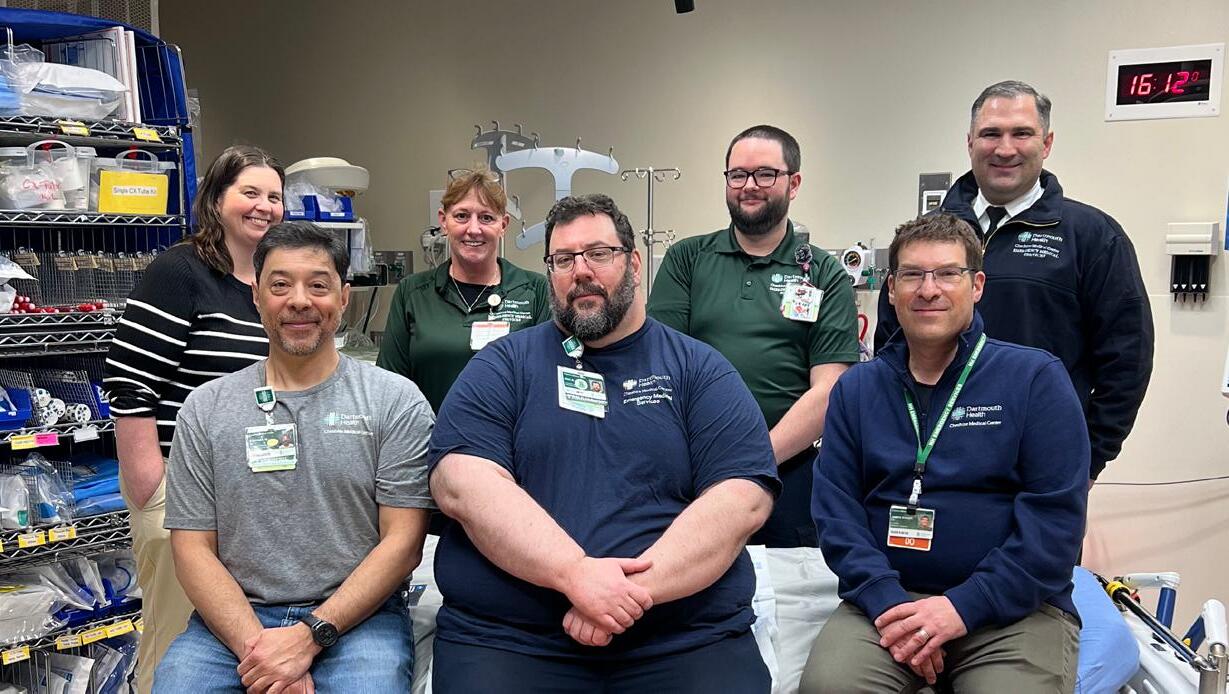
Manager of EMS and Emergency Management Ryan Hornblower (top left) and EMS Medical Director and Associate Medical Director of Cheshire’s Emergency Department James Suozzi, DO (bottom right) with intercept paramedics (left to right top row) Debra Daignault, Camron Kennedy and Gregory Seymour and (left to right bottom row) Stephen Monteiro and Eric Boystak .
“The Paramedic Intercept Program delivers a meaningful benefit to our community by expanding access to
paramedic-level care, while helping patients receive the right care at the right
time.”
Ryan Hornblower, EMS and emergency manager
6 staff members helped with this program the team was called for service 77 times
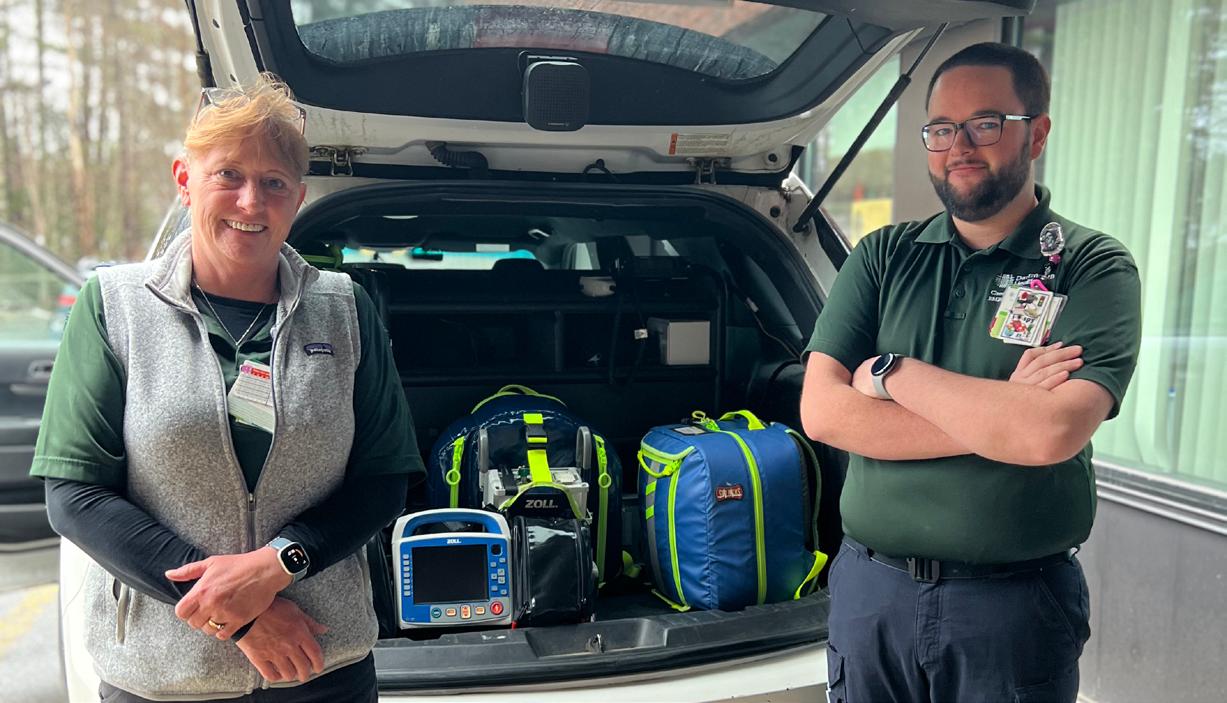
Intercept paramedics Debra Daignault and Camron Kennedy stand with the vehicle and equipment used on emergency medical assistance calls in the Greater Monadnock Region.
Resource Room LIMITS BARRIERS TO INJURY PREVENTION

There shouldn’t be barriers to injury prevention.
That’s why Cheshire Medical Center’s Family & Community Care clinic started its Injury Prevention Resource Room, which provides free items to ensure the safety of its patients and staff. These items include gun locks, helmets, baby gates and life jackets.
The resource room—started in late 2024—gave equipment to 55 families in 2025, with 15 staff members assisting with the program.
In addition to providing injury prevention
equipment, programs like these act as a centralized hub for public safety education and have a direct impact on reducing local injuries and associated healthcare costs.
Moving forward, Cheshire aims to increase funding for the program to expand the number of items available and the number of patients and staff who can receive them.
For more information on Cheshire Medical Center’s Injury Prevention Resource Room, Family & Community Care clinic patients can call 603-354-6900.
“These items are available to anyone who has a need—not just a financial one. With how challenging things are right now, it’s meaningful to provide practical tools that help protect our patients and strengthen the safety of our community.”
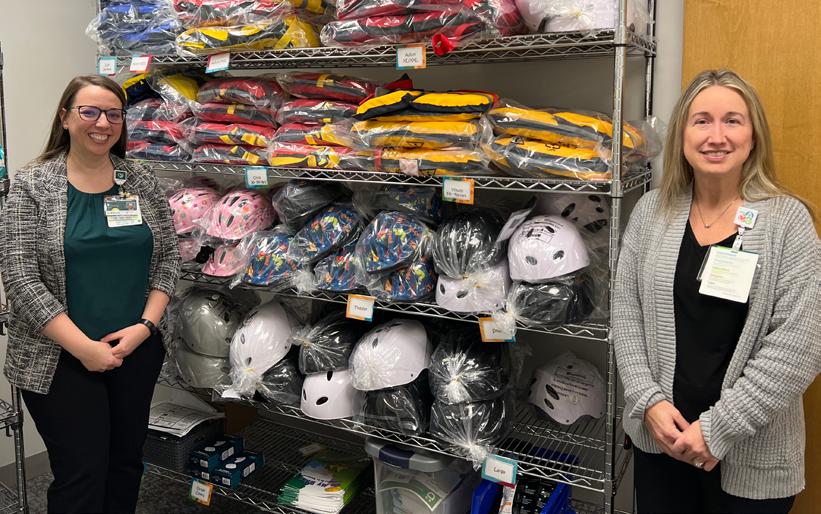
42 bike helmets
life jackets 25 lock boxes
18 window guards
15 cabinet locks 12 outlet covers
9 baby gates
7 pack-andplays 20 gun locks
Annika O’Rourke, administrative supervisor for Cheshire Medical Center’s Family & Community Care clinic
Annika O’Rourke, administrative supervisor, and Shauna Page, RN, BSN, nursing supervisor, in the Family & Community Care resource room.
Annual Wellness Visits
FREE PREVENTATIVE CARE FOR MEDICARE RECIPIENTS
Meet Jennifer Joy, RN, a nurse from the Collaborative Care team, who offers Annual Wellness Visits.
These visits are annual preventative care appointments—covered by Medicare Part B—that are designed to help patients stay healthy through preventative care.
Prior to joining Cheshire’s staff in 2025, Joy spent most of her 30 years in nursing with a community and ambulatory health focus, which she brings to her Annual Wellness Visits role.
“A holistic approach to wellness is something that I, as a nurse, value immensely,” Joy said, “and the Annual Wellness Visit definitely aligns with that.”
Rather than focusing on one specific diagnosis or acute illness, Annual Wellness Visits review every aspect of a patient’s health.
“We are looking at a patient’s overall wellness and the ways we can mitigate health risk by identifying risk factors and strategies to combat them, utilizing screenings, vaccinations and education, as well as assisting our patients with accessing community resources,” Joy said.
Early detection of any health issue leads to better outcomes. Through Annual Wellness Visits, Joy is able to review health risks, assess medical history, discuss the social determinants of health and create a personalized plan to help patients reach their health goals.
For Medicare Part B recipients, this service is completely free and has no copay. To schedule an Annual Wellness Visit, call 603-354-6760.
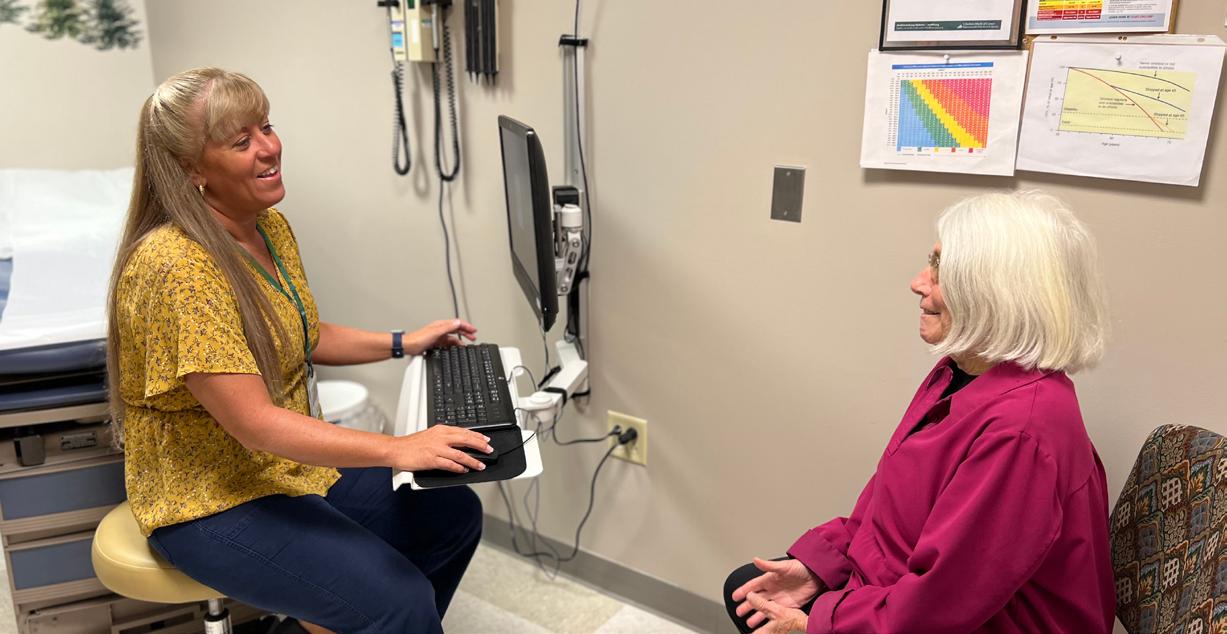
Jennifer Joy, RN, speaks with a patient during an Annual Wellness Visit.
Compassionate Companions
PROVIDE COMFORT TO PATIENTS
For patients in need of emotional support during their stay, Cheshire Medical Center offers Compassionate Companions to provide comfort.
These specially trained volunteers are available for patients on end-of-life care, receiving chemotherapy or any inpatients in need of emotional support and socialization.
Compassionate Companions—started in 2023 through Cheshire’s Palliative Care program—aim to provide a calm, non-judgmental presence for patients, especially those who are at Cheshire for extended periods of time or may not have loved ones visiting them in the hospital. The companions can sit and talk with patients, read out loud, play music or share silence.
“We are so grateful for the volunteers who give their time and support to our patients and families,” said Jennifer McCalley, LICSW, ACHP-SW, social worker and program manager in Cheshire’s Palliative Medicine and Oncology departments, who helped start the program.
The Compassionate Companions program is one of Cheshire’s Community Benefits—a non-billable program Cheshire offers to improve the health and well-being of our community.
If you or a loved one would benefit from a Compassionate Companion visit, Jennifer McCalley can be reached at 603-354-5454 ext. 2122 or at jmccalley@cheshire-med.com.

Athletic Training Program
BUILDS RELATIONSHIPS BETWEEN TEENS AND ADULTS
Teenagers who have strong, trusted relationships with adults, such as a parent or mentor, are consistently found to be less likely to misuse substances
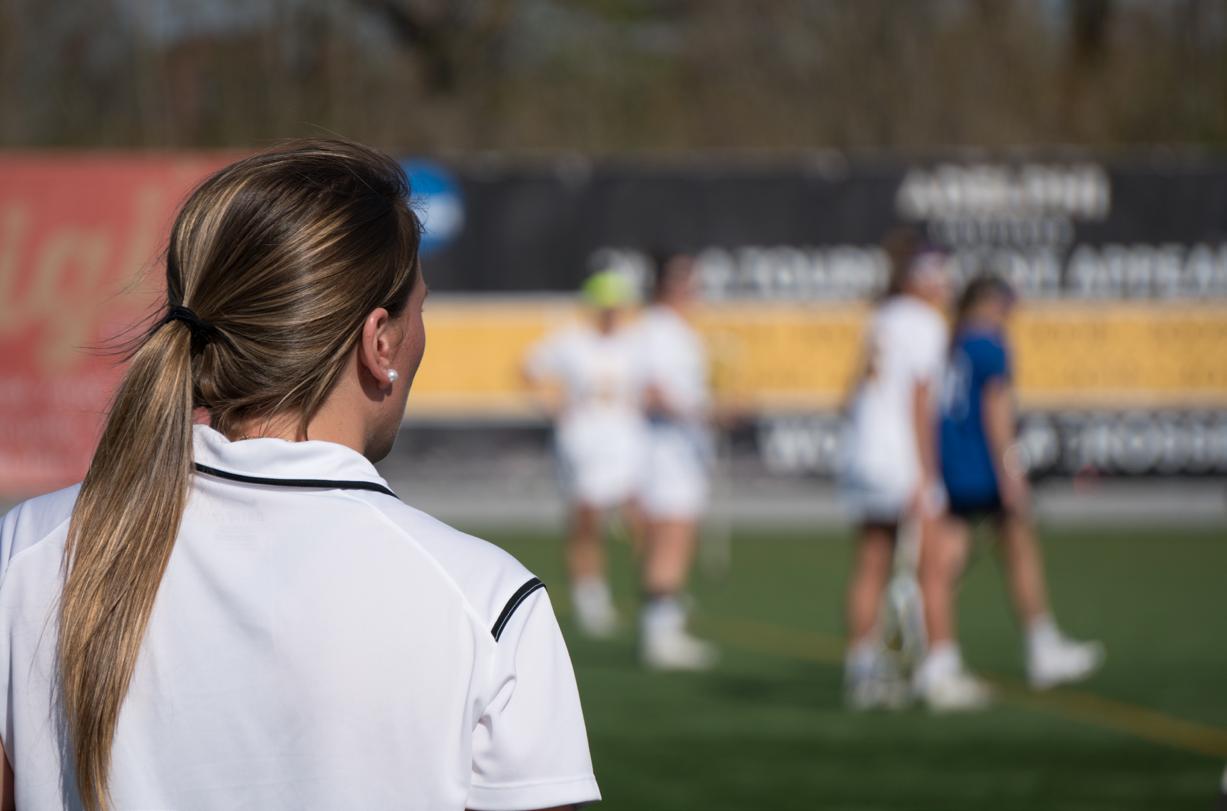
To help foster these relationships, Cheshire Medical Center’s Orthopaedics Department has been providing support for local high school athletic training programs, aimed at creating positive experiences for students with local healthcare providers.
The program offers athletic training services—such as concussion management, muscle taping, and game-day medical coverage—to help prevent, diagnose, treat, and rehabilitate injuries.
Cheshire has offered this program for more than 20 years. Currently, these services are available to students at Keene High School and Monadnock Regional Middle High School, as well as to the Keene Swamp Bats, Keene State College and Franklin Pierce University.
By fostering connections between providers and teens beyond athletic training, Cheshire is helping ensure that local students have the reliable support they need to make informed choices about their mental and physical health.
“Athletic
trainers don’t just treat injuries; they protect potential. By educating athletes, building trust and promoting healthy choices, they play a vital role in preventing a substance use disorder before it begins.”
Ashley DeLea, MS, ATC, N.H.LAT, practice manager for Orthopaedics and Sports Medicine
5 Cheshire Medical Center employees helped with this program
500 local students participated in this program
4 schools participated in this program
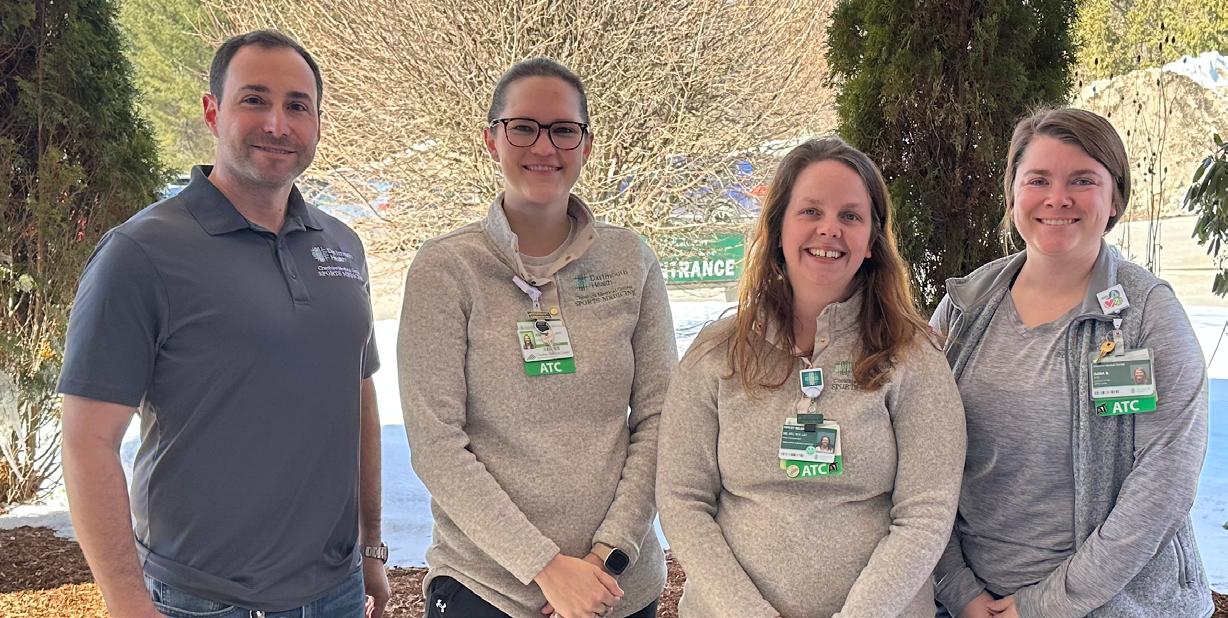
Left to right: Neal Goldenberg, MD, MA, orthopaedic surgeon and director of Sports Medicine; Jessica MacDonald, athletic trainer; Ashley DeLea, practice manager of Orthopaedics and Sports Medicine and Dana Sleezer, athletic trainer.
Palliative Care Program
IMPROVES PATIENTS QUALITY OF LIFE
178 patients seen by our Palliative Care team
67 % of patients seen were 65 years-old or above
Being diagnosed with a life-limiting illness can be overwhelming, for both patients and their loved ones.
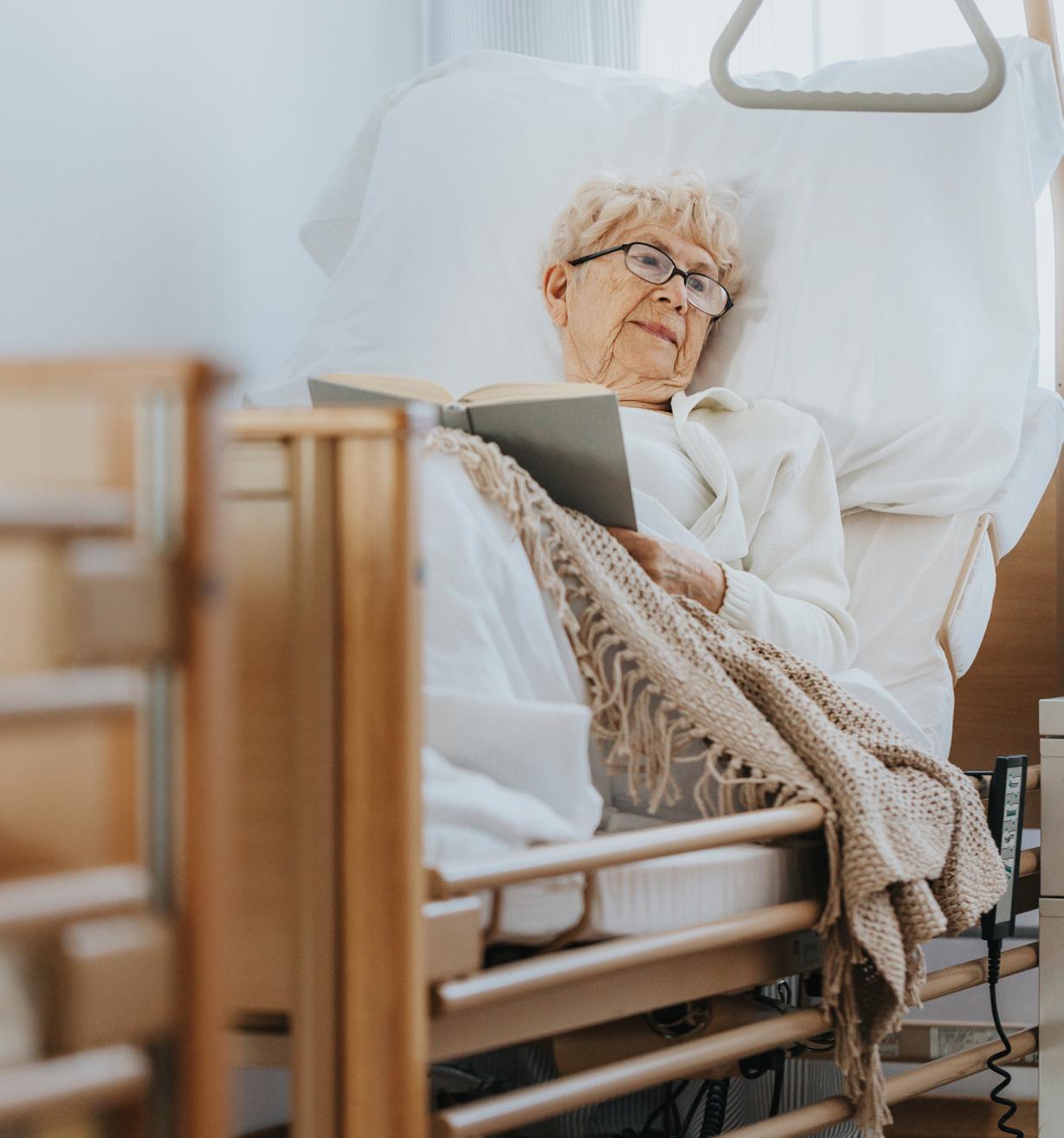
To help, Cheshire Medical Center’s Palliative Care team provides comfort for inpatients living with any terminal diagnosis—and their families—while also improving their quality of life. The team is also able to help cancer patients in the outpatient setting.
The team consists of physicians and nurses who specialize in this supportive care, as well as a social worker and trained volunteers.
Services provided, in office visits and hospital stays, include:
• Relieving symptoms, such as pain and shortness of breath
• Helping patients and families understand their diagnosis and treatment options
• Assisting patients and families with the emotional stress of the diagnosis and treatment
Of the patients seen through the Palliative Care program, a majority are age 65 or older, due to the increased likelihood of that population having complex medical issues. However, younger patients living with terminal illnesses can also benefit from receiving this support.
Palliative care support is proven to improve a patient’s quality of life and satisfaction in care, while also reducing the burden placed on caregivers and loved ones. In cancer care specifically, this care is shown to alleviate pain, depression, fatigue and mental distress.
For more information about Cheshire Medical Center’s Palliative Care program, call 603-354-6570 or visit cheshiremed.org/palliative-care.
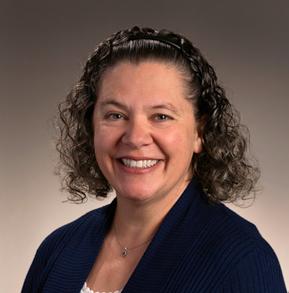
“The biggest benefit for older patients is they tend to have multiple health issues, where recommendations to help one problem can end up making another worse. We help them shift the focus back to what is important to them as an individual and help weigh the options based on that.”
Amanda Hepler, MD, Palliative Care provider
4 staff members assisted with the program

Center for Population Health
Cheshire Medical Center
580 Court Street, Keene, NH 03431
603-354-5460
cheshiremed.org/about/community-benefits-reporting