Translating the unchanging gospel for changing generations pg. 4
A HERITAGE OF PLANTING
Creation care as an act of faithful obedience pg. 18
WHERE YOU SEND ME, I WILL GO
Two brothers transformed by Christ and obedient to where He calls pg. 24
A
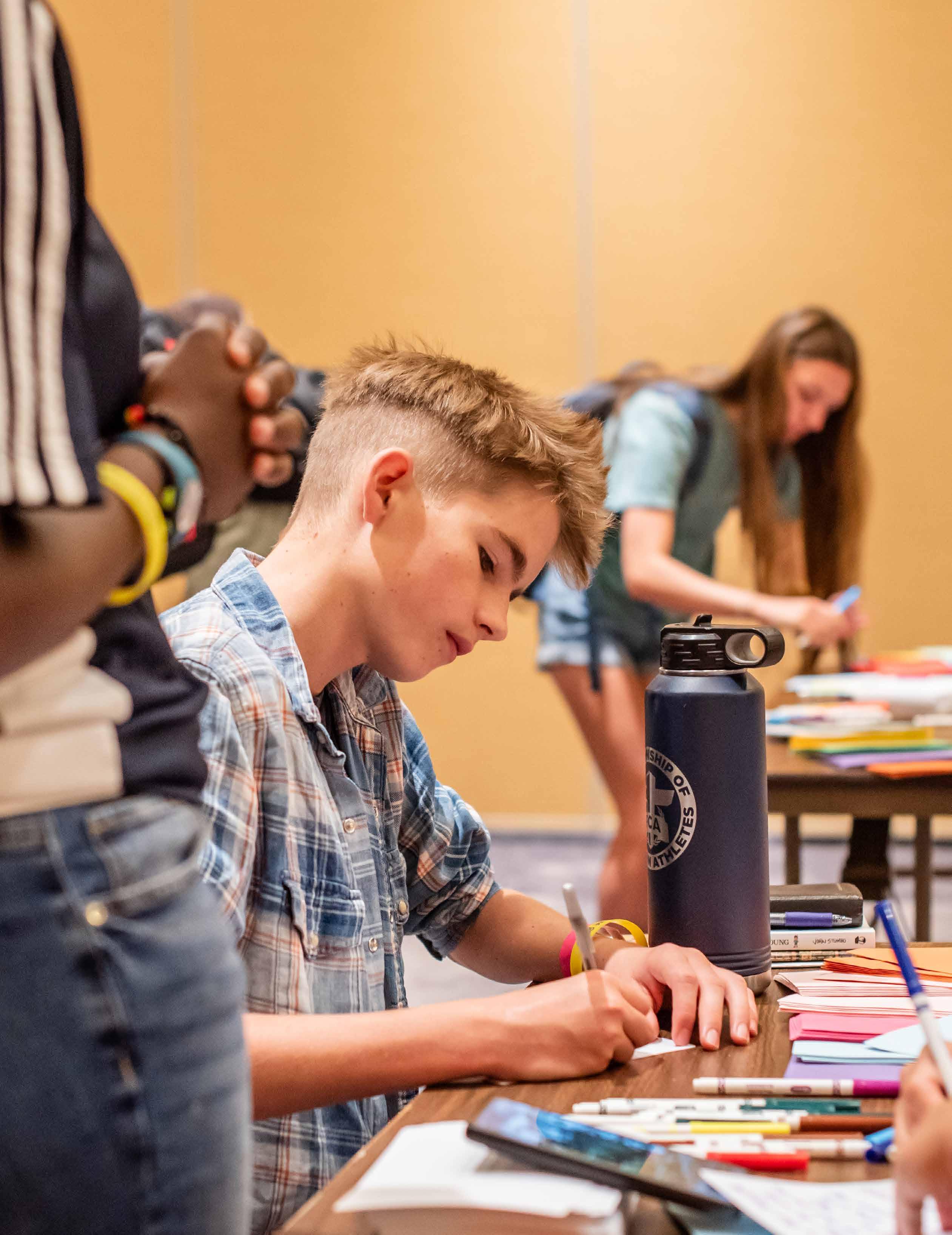
Do you remember what it was like being a teenager? If you’re like me, the details of school events, church activities, or family gatherings are likely a little fuzzy. It’s a shame that I don’t remember what the middle school cafeteria smelled like anymore or what class I took in the third hour of my sophomore year in high school. Those details may have mattered to me at the time, but they didn’t matter enough to shape the person I am today. However, the things that I do remember most clearly are the people—especially those who had a positive influence on me. The friends who always wanted to hang out on Friday nights and the adults who were intentional with me, who took me to play Frisbee golf and challenged me to lean into Jesus. These are the memories that I carry with me and that have shaped me into the person I am today.
Let’s face it, though—growing up in our current globalized society is vastly different from the way you and I grew up. Today’s teenagers are navigating issues that would have likely paralyzed us in our adolescent years. They have more noise in the cacophony of voices influencing their lives, more building blocks of identity to play with, and more spaces to define where they belong. Students are constantly streaming music, watching or making YouTube videos, or doomscrolling to fill their days, and it’s tempting to think that the voices that once influenced and formed faith in prior generations are obsolete or dead. But I don’t think it’s a matter of the church having an outdated voice; it’s more about how we use our voice and whether we are finding innovative ways to equip students, train leaders for ministry, and share the gospel.
In The Alliance, we are constantly looking for and developing new ways of bringing all of Jesus to the world. On my team in Alliance Youth, we have built a way to confirm, clarify, and invite students into the call of God on their lives through our AY Called initiative. We are creating new ways to train youth pastors for ministry through our Youth Ministry Leadership Certificate on the Alliance Center for Leadership Development platform, and we are using social media and digital spaces to encourage students toward prayer and the deeper life.
The church’s voice will never be obsolete as long as it remains faithful to its mission of leading people to Jesus and making disciples of all nations. The Alliance is one of those voices that will bring all of Jesus to all the world in every segment of society and to every generation. The methods and platforms may change, but the message of hope, healing, and redemption remains the same.
Director for Alliance Youth
Toney Circulation Fulfillment Julie Connon
Contact alifesubs@cmalliance.org for address and subscription changes.
Contact alliancelife@cmalliance.org for questions, submissions, and advertising information.
Contact media@cmalliance.org for press inquiries.
All Scripture quotations are taken from the New International Version® (NIV®), 2011 edition, unless otherwise noted.
ALLIANCE LIFE is published by The Christian and Missionary Alliance, One Alliance Place, Reynoldsburg, OH 43068. Printed in the USA. Member, Evangelical Press Association.
POSTMASTER: Send address changes to ALLIANCE LIFE , One Alliance Place, Reynoldsburg, OH 43068.
When requesting a change of address, please give both the old and new addresses. Direct all correspondence and changes of address to ALLIANCE LIFE One Alliance Place, Reynoldsburg, OH 43068. Toll free: (877) 284-3262; email: alliancelife@cmalliance.org. Website: www.alliancelife.org.
The Alliance is committed to world missions, stressing the fullness of Christ in personal experience, building the Church, and preaching the gospel to the ends of the earth. ALLIANCELIFE carries on the tradition of more than 144 years of publishing stories of God at work through Alliance people in the United States and throughout the world.
www.alliancelife.org
cover: Photograph by Hannah Packard
04 Christ -Centered
DISCIPLESHIP IN THE AGE OF 6-7
Translating the unchanging gospel for changing generations by Evan Barber | pg. 4
KINGDOM JUSTICE AND MERCY
The American church’s gospel witness in a secular age | by Jasmine Young | pg. 8
AM I MY BROTHER’S KEEPER?
Partnering with our spiritual siblings beyond the suburbs by Andrew Meher | pg. 12
FREE VERSE
Quotes from the Kingdom | pg. 15
TOZER ANTHOLOGY
Compiled by Harry Verploegh | pg. 15
18 Acts 1:8
A HERITAGE OF PLANTING
Creation care as an act of faithful obedience | by Buzz Maxey | pg. 18
WHERE YOU SEND ME, I WILL GO
Two brothers transformed by Christ and obedient to where He calls by Hannah Packard | pg. 24
FOUNDATIONS
A Personal Work of Faith by Howard Van Dyck | pg. 34
Accepted as a Daughter | by Becky, an
international worker | pg. 36
DISCIPLESHIP IN THE AGE OF 6-7
Translating the unchanging gospel for changing generations
by Evan Barber
If you read Deuteronomy 6:7 to a room full of teens today, there’s a good chance you might get a completely different reaction from what you would have in previous years. Regarding God’s laws, this verse says, “Impress them on your children. Talk about them when you sit at home and when you walk along the road, when you lie down and when you get up.” In other words, whatever else you’re doing, build intentional conversation about God into it.
But today, “6:7” may be the only part of the verse your teens hear. For reasons no one can fully explain, “6-7” has become a cultural rallying cry—a catchall placeholder for any age, height, test score, or really any number (or word) that teens might want to swap out. Dictionary.com even chose “67” as their word of the year for 2025.
Why does this matter? Because if we desire to convey the beauty and value of discipleship to Jesus to the next generation, we have to start by understanding the world
they’re growing up in. Even if where we want them to go won’t ever change, how they get there could shift based on where they begin.
COMMUNICATING CROSS-CULTURALLY
Lesslie Newbigin, an author and missionary to India in the 1930s, wrote in his book The Gospel in a Pluralist Society, “If the gospel is to be understood, if it is to be received as something which communicates truth about the real human situation . . . it has to be communicated in the language of those to whom it is addressed and has to be clothed in symbols which are meaningful to them.” Newbigin believed that effective communication to any group of people requires understanding the way they communicate and adjusting accordingly.
When Jesus told parables, He used what was already familiar to those around Him to make deeper points about the Kingdom of God. He did not lead with ecstatic visions about the third heaven; instead, He talked about what those around Him already knew well: wheat, weeds, seeds, harvest, dough, yeast, sheep, and goats. He met people exactly where they were—and from there, He invited them deeper.
The same thing was true of Paul in Acts 17 when he was speaking at the Areopagus in Athens. In Greece at that time, there was a popular poem about Zeus called
Photography by MacKenzie Carr
“Phaenomena,” written by Aratus, which said that “we are also his offspring.” But instead of fighting idolatry head-on or trying to ignore it, the Apostle Paul fearlessly hijacked this poem about a pagan god to redirect his audience to the gospel. After introducing them to the God of heaven and Earth, in Acts 17:28 he told his audience, “For we are indeed his offspring” (ESV), subversively borrowing from the cultural context. He understood both his audience’s culture and the gospel well enough to use the former in service of the latter.
In these ways, the Bible and Christian history point to the importance of “culture translation” on the path to discipleship. And it is in this space that the ministry I am a part of, Axis, does its work.
THE GOOD, THE BAD, AND THE BIBLE
point of view. This is just as true for teens as it is for anyone else.
“The single most powerful causal influence on the religious lives of American teenagers and young adults is the religious lives of their parents.”
At Axis, we’ve often used what we call the “Good/Bad/Bible” framework to set up conversations with teens about culture and discipleship. Here’s how it works: whenever we come across a piece of media or some other cultural artifact that our teens care about, we try to ask three simple questions: “What’s good about it?” “What’s bad about it?”and finally, “What does the Bible say about it?” The order of these questions is crucial. Parents and caring adults who feel overwhelmed and frustrated by pop culture may want to jump to the second or third question. But by starting the conversation with an acknowledgement of what’s good, we open doors to talk about what’s perhaps not so good and to bring up any relevant passages of Scripture.
As Dr. Douglas Stone, Dr. Bruce Patton, and Dr. Sheila Heen point out in their book Difficult Conversations , “Changes in attitudes and behavior rarely come about because of arguments, facts, and attempts to persuade. How often do you change your values and beliefs—or whom you love or what you want in life—based on something someone tells you? And how likely are you to do so when the person who is trying to change you doesn’t seem to be aware of the reasons you see things differently in the first place?” For whatever reason, when we believe that someone is trying to understand our point of view, our defenses go down, and we’re more willing to listen to their
The second question is, “What’s bad about it?” But your primary goal here is not to tell teens what you think the issues are, but to ask questions and create a space where they can voluntarily acknowledge any issues they see. The Gospels record Jesus asking 307 different questions to people about a whole range of issues. As Martin Copenhaver describes in his book Jesus Is the Question, these are questions about about longing, compassion, identity, faith, doubt, worry, love, healing, and abundance. In other words, Jesus asked about topics that mattered to others—not just topics that mattered to Him. Along the way, Jesus is also asked 183 questions, but He only answers three of them directly. Now, if anyone was in the position to offer definitive answers to people’s questions, it was Jesus. But He often saw it as more important to turn others’ questions back around and invite them to reexamine the ideas and assumptions they were bringing to the table. We are invited to follow His conversational example.
The third question, again, is “What does the Bible say about it?” Now, if you think, These teens don’t care what I think about the Bible, here is some encouragement, particularly for parents and other primary caregivers. In Dr. Christian Smith and Dr. Amy Adamczyk’s 2021 book Handing Down the Faith, they compare their own 200 in-depth interviews with religious parents to existing national databases. After doing so, they emphatically concluded:
The single, most powerful causal influence on the religious lives of American teenagers and young adults is the religious lives of their parents. Not their peers, not the media, not their youth group leaders or clergy, not their religious school teachers. Myriad studies show that, beyond a doubt, the parents of American youth play the leading role in shaping the character of their religious and spiritual lives, even well after they leave home and often for the rest of their lives.
Digging deeper into the research, the number-one predictor of teens following in their parents’ faith footsteps is when parents regularly talk with their kids about faith in ordinary, everyday circumstances—just like Deuteronomy 6:7 says.
In addition, making time to do things with the next generation that they enjoy, without an agenda, can not only help improve the relationship, but can help make them more receptive to the ideas we want to convey. So, given this, and given the importance of questions when it comes to discipleship, we leave you with seven questions you can ask your teens about life, faith, and culture.
1. What’s the best thing going on in your life right now?
2. What’s the hardest thing going on in your life right now?
3. If you could ask God one question, what would it be?
4. When is the time you’ve felt closest to God?
5. When is the time you’ve felt furthest away from God?
6. What’s one way that pop culture can bring us closer to God?
7. What’s one way it can take us further away from God?
WHAT IS AXIS?
Axis translates pop culture to help parents and caring adults understand and disciple their teenagers. Since 2007, Axis has helped millions of parents and caring adults navigate conversations with their teens, creating resources to help bridge the gap between the generations. For more help understanding your teens’ world, go to axis.org/ct and sign up for their Culture Translator newsletter.
Evan Barber is the senior editor and podcast host at Axis. For 10 years, he has led teams of researchers, writers, speakers, and content creators in leveraging pop culture to help parents show teens how faith is relevant to every aspect of their lives. Evan is currently studying philosophy and society through the University of Aberdeen.
KINGDOM JUSTICE AND MERCY
The American church’s gospel witness in a secular age
by Jasmine Young
Justice engagement is part of the church’s prophetic push in a post-church world, a spiritual weapon against secularism in today’s Western culture. It is a gateway to our missional movement in America.
You might rebuff by saying, “Well, we focus on the unreached elsewhere because folks in the U.S. have access to the gospel.” But I contend that most folks here have met Christian religion but don’t necessarily know Jesus. Understanding and embracing the gospel is another element entirely, and the masses walking our streets do not know its superiority and freedom. When we think about the lost in our local communities, there is a striking similarity to the unreached in our overseas missional communities—we can’t pastor them until we reach them. The truth is this: many of our closest neighbors may know about Jesus without ever having met Jesus.
The Christian and Missionary Alliance is not just an organization that crosses cultures by crossing oceans; we are also a church that crosses barriers by crossing our local streets.
ACT JUSTLY, LOVE MERCY, WALK HUMBLY
This is about evangelism and outreach into the hard places nearest to us. Yet I often sense that folks get anxious when they hear words like justice, concerned that the church is being asked to participate in an ulterior, worldly agenda. Not at all. We, the church, do have an agenda— but it is Jesus’ agenda alone that we seek. And His agenda is not only for our eternal salvation but it’s also that the world which groans for a Savior may actually meet Him.
10:18); He demands that we care for those whom society has left without (see Deut. 24:19–21); He restores the outcast (see Mark 1:40–42). He has made us an example to the nations (see Acts 13:47), and Jesus has outright charged us to prioritize justice and mercy as much as our sacrifices (see Matt. 23:23).
God expects us to do something when we see injustice, and He allows us to hold our deepest challenges in tension before Him as He seeds restoration.
THE JESUS AGENDA
A chief challenge of our justice engagement as a church is remaining unified while recognizing that unity is not defined as sameness but as oneness. There is no better place for justice-making than in Jesus’ Church—diverse yet unified, whole yet healing.
Biblical justice must never be reduced to a rhetorical volley of opposing philosophical ideas. In the gospel, justice is always personal. If ever we depersonalize sin, the root of injustice, we also inadvertently dismiss the symptoms of the oppressed and quench the power of justice-making in their lives. Demonstrating Kingdom justice and mercy is, in every respect, our gospel witness to our neighbors. It is the gospel personified—the heart of Jesus expressed through us—allowing us to not only share His heart, but to also become His hands and feet. The invitational and culturally relevant connections made when Jesus’ Church engages in Jesus’ justice make room for His greater wonders to be seen while combatting the secularism that has taken hold in our communities.
In the gospel, justice is always personal.
Jesus’ agenda for us is as expressed in Micah: “To act justly and to love mercy and to walk humbly with your God” (6:8). God reveals Himself across the canon of Scripture as just and merciful—One who overlooks our offenses and rescues us anyway. A God who provides for us even when we reject His perfect provision for us (see Gen. 3:21). Yes, He has a heart for the stranger in our lands (see Lev. 19:33–34; Deut.
Jesus’ agenda of Kingdom justice and mercy is a prophetic one, pushing against our culture and reminding the world that justice belongs to Jesus. It’s also an eternal agenda because Jesus taught us to pray that God’s will be done on Earth as it is in heaven. I don’t blame the world for having tried to figure it out on its own. But worldly justice has missed the main idea, that the laws of our empires simply aren’t good enough. And we can’t have the Kingdom without the King.
Demonstrating the justice and mercy of Jesus is not simply about doing things. And it is not just a theology— it is our theology. It isn’t about what we do so much as it is who we are: Jesus’ representatives on Earth, diversely gifted to serve the Body in unity and called to show the world His goodness.
Our engagement in Kingdom justice will not be perfect. We are not perfect people; we are maturing people. We also need to accept that God’s mouthpiece will sometimes be a donkey, so we must listen for His truth among the noise (see Num. 22:21–35). His Word will still go forth and will not return to Him empty. Justice engagement isn’t exactly second nature for most of us. It’s messy, and we can feel clumsy in its pursuit. But do it clumsily. Do it anyway.
THE FOUR LS
What are some practical ways to engage in Kingdom justice and mercy? In the Metropolitan District, we promote a framework, pioneered by Rev. Dr. Kelvin Walker, for individual and corporate justice engagement that involves four steps: listening, lamenting, learning, and launching.
We listen intently, to understand rather than just to reply. And in justice-making, it’s important to recognize that we’re listening to those who aren’t accustomed to being heard. Listen carefully to what is said and what is unsaid.
We lament the wrongdoing in their lives and suffer with them in the same way our compassionate Christ enters the pain of those He meets. This is shepherding, making space for the poor and oppressed to experience the freedom of surrendering their pain for hope.
We learn. We are likely to feel distanced from the pain of their experience because it can be hard to understand another’s troubles. Learning is a selfdirected effort to catch up to their lived experience without requiring them to relive it for our education. Listening and lamenting are cyclical with learning, layered like an onion.
Finally, after we have become closer to our neighbors’ felt needs, having understood their risks and inspired by Spirit-led action, we’re ready to launch. Being neither desensitized nor overzealous, we can strike a balance that promotes reconciliation and restoration to those whom we serve.
FAITH THAT DEMONSTRATES
Justice engagement is time consuming. But the truth is, the work of Kingdom justice and mercy is not a mere appendage to our faith but the natural outflow from our faith. In James’ epistle, he strongly argues that faith alone isn’t demonstration enough of the Christian life.
He asks, “What good is it, my brothers and sisters, if someone claims to have faith but has no deeds? Can such faith save them?” (James 2:14). What good is it to possess faith and then not show forth any works that demonstrate our faith? James warns that inactive faith is a dead (unfruitful, impotent, not life-giving) faith. The Word is alive, and so we ought to be alive with the Word. Possessing faith without demonstrating it to others by being the hands and feet of Jesus is dead religion.
Friends, we know that Jesus didn’t come down from heaven to our finite Earth to give us religion but to free us from it. We’re not saved to simply wait for our second life but to work out this salvation here. And so, being free and free indeed, we ought to do so with all urgency and reverence. Why? Because “it is God who works in you both to will and to do for His good pleasure” (Phil. 2:13, NKJV).
We can’t act alone—we must be Spirit-led in justicemaking. Kingdom justice and mercy isn’t an act of our own strength. It promotes restitution where we may desire retribution, reconciliation where we can only muster protest. It’s about restoration when our hurting hearts may demand reparation. It is about serving others when our pride prefers to be served. It’s about embodying in our words and deeds a Spirit-led, Jesus-repping witness of reconciliation, restoration, and service—“just as the Son of Man did not come to be served, but to serve, and to give his life as a ransom for many” (Matt. 20:28).
We can both preach the gospel and live it. This is not only foundational to our faith, it is Simpsonian—in our DNA as the Alliance family for such a time as this. It is our apostolic calling, our prophetic bent. This must be our rhythm, our call and response. Our evangelism is in vain if our good news has a limit to its effect on our society.
The work of justice also transforms the worker. Through this work, we become blessed, better developed as individuals, better connected to others, more fulfilled, and more sensitive to the Holy Spirit—since it’s His work in and through us. Justice and mercy engagement in our communities also spares us from the temptation of isolation; being confined to our contemporary cathedrals does not benefit a post-church, ever-secular Western society.
Jesus is reminding us today that we are the salt of the earth, the light of the world. “Let your light so shine before men, that they may see your good works and glorify your Father in heaven” (Matt. 5:16, NKJV). Salt and light. In word and deed.
Jasmine Young is the coordinator for the Kingdom Justice and Mercy core value of the Metropolitan District, equipping leaders to pursue biblical justice as an expression of the holistic gospel.
AM I MY BROTHER’S KEEPER?
Partnering with our spiritual siblings beyond the suburbs
by Andrew Meher
Down on the beach in Asbury Park, New Jersey, about two hours away from where I live, A. B. Simpson once preached a sermon entitled “Mutual Responsibility,” in which he asked the question, “Am I my brother’s keeper?” His goal was to help relatively comfortable American Christians see the plight of people around the world experiencing poverty and darkness.
Simpson explained that we should keep from doing harm to our brothers and sisters in any way, “material, physical, social or spiritual.” And beyond this, it is our responsibility to do good to them and promote their prosperity wherever there is opportunity.
Though he often emphasized the saving of souls in caring for our global neighbors, Simpson did not ignore their social plights, even declaring that lacking knowledge of their condition was “no excuse.”
“Some day,” he preached, “we shall be counted responsible, and God will look in our face and say, ‘The voice of thy brother’s blood is crying unto me from the depths of woe.’ And we shall not dare to say, ‘I knew it not, was I my brother’s keeper?’”
His hope, it seems, was to help fuel our imagination for being a part of a global community, first of Christians, but also of humans, imploring us to care for our neighbors, whether near or far.
IGNORANCE IS NO EXCUSE
Among the issues faced by the global human family, Simpson names those who have been enslaved, orphans, widows, and babies flung into the streets as horrors that demand our attention. Simpson’s basic point is quite significant: Christians must recognize humanity as our siblings and that we have a responsibility to look after the needs of all. Ignorance is no excuse.
But beyond the confines of what is familiar, our siblings around the globe are often forgotten.
This is especially true for those of us who live in suburban communities across the United States. It is very easy to perform the tasks of daily life with relative comfort and forget those beyond our immediate context. But why does that happen?
Is it because we are busy? Or distracted? Or preoccupied?
These are all true to a greater or lesser extent, but as someone who has pastored in the suburbs of New York City for the past 15 years, I think there is something else. The very nature of the suburbs makes it especially challenging to recognize the needs of our spiritual siblings beyond our neighborhoods.
OUR DIVIDED NEIGHBORHOODS
We can easily identify our spiritual siblings as those in our own local churches, and of course the people we see on a day-to-day basis. But in the suburbs, those two groups of people are often very similar to us in socioeconomic background and cultural heritage.
While suburban demographics are slowly changing in terms of cultural background, the economic demographics tend to remain homogenous. This is how suburbs were designed to work.
From the beginning of their existence in the United States, suburbs have always been structured around two socioeconomic realities: to create working-class neighborhoods close to factories and quiet neighborhoods for affluent people to escape the din and disease of cities. To put it another way, if you had the money to be in a certain town, you could be there. If you didn’t have the money, you couldn’t.
What’s more, suburbs have historically utilized boundaries such as railroads, highways, hedges, zoning laws, and other discriminatory policies such as redlining to further separate those from lower economic brackets from higher earners—and to keep neighborhoods racially segregated.
Adding to the complexity of this history, evangelical Christians jumped at the opportunity to move out of dense cities into the new suburbs emerging after World War II. Who could blame them? Less noise, more space, beautiful landscapes—what’s not to love? In fact, some evangelicals even advertised these suburbs as a kind of “new Eden” where Christian families could “escape the evils of the city.”
I’m not trying to say that living in a suburb is bad—but I am trying to help us see how living in these places forms us and shapes us, often at the expense of remembering our spiritual siblings in other places.
In fact, in his book on the history of the suburbs, Crabgrass Frontier, social historian Kenneth T. Jackson
Illustration by Erin Lillie
comments that “the physical organization of neighborhoods, roads, yards, houses, and apartments—sets up living patterns that condition our behavior.”
Life in these suburbs caused a new problem to emerge for the Church: a Christian could go their entire lives seeing little or no socioeconomic or cultural difference among the people they interact with on a daily, weekly, or yearly basis.
Escaping the city quickly turned into the need to keep ourselves safe and separate from “those people.” Unfortunately, these kind of habits would condition even Christians to see some places as good and safe and others as bad or dangerous.
This deeply affects our ability to see the global human community as spiritual siblings, because those of us who live in the suburbs live in a world that isolates us from need and creates a sense of difference.
WHAT IS THE CHURCH TO DO?
What is the church to do to overcome these problems? How can we continue to take up Simpson’s challenge to see our brothers and sisters outside of our own particular location as part of the same family and to take up their cause as our own? How can we identify with them as Jesus does?
I believe the simple answer is to double down on two strengths we already have in our Alliance family.
First, let’s press further into the seemingly average, mundane kind of work being done in places like food pantries, shelters, after-school programs, prisons, and free clinics on a consistent basis. Let’s make it a normal practice for everyone in our churches to serve their neighbors, not just specialized ministries that only some participate in. If we are shaped by our environments, then we must be reshaped to be near strangers, prisoners, or people who are hungry or sick—because that is where we find Jesus, saying, “I was hungry, and you fed me. I was thirsty, and you gave me a drink. I
was a stranger, and you invited me into your home. I was naked, and you gave me clothing. I was sick, and you cared for me. I was in prison, and you visited me” (Matt. 25:35–36, NLT). Jesus is not telling us just to be nice to less fortunate people, but rather that moments of service are where we encounter Him.
I’ve read the stories in this very publication time and time again about people doing these things and the fruit it has produced. Let’s generate so many stories like this that we lose track, and watch how it shapes our suburban churches in new ways.
A second, and equally important, strength to develop further is the partnerships among our Alliance churches of diverse cultural or socioeconomic demographics. As was mentioned at General Council in 2025, 51 percent of churches in the U.S. Alliance are now distinctively non-majority culture, worshiping Jesus in nearly 40 different languages every Sunday! What might be the possibilities for sharing life cross-culturally like this in our own, or nearby, neighborhoods, counties, or states? How might relationships forged in these places and developed consistently over years (not days, weeks, or months) help us to overcome the malformation to which the suburbs can contribute? Imagine how much we can learn from one another!
I hope this may open our eyes to different ways of thinking about our gospel work, provide creative ministry opportunities previously unavailable without collaboration, and a fresh vision for the Kingdom of God to be filled with people of every nation, tribe, and tongue.
Andrew Meher is the lead pastor of Highlands Community Church in West Milford, New Jersey, and is part of the Alliance Writers Collective. He has been ordained by The Alliance since 2016.
THE TOZER
ANTHOLOG Y
“The angel said to the women, ‘Do not be afraid, for I know that you are looking for Jesus, who was crucified. He is not here; he has risen, just as he said.’”
—MATTHEW 28:5–6 a
“Our God is a redeeming God, a God who is determined to reclaim his fallen world, setting it free from its enslavement to corruption and bringing it to a final state of glory.”
—DOUGLAS J. MOO
“He has shown you, O mortal, what is good. And what does the Lord require of you? To act justly and to love mercy and to walk humbly with your God.”
—MICAH 6:8
“The earth is the Lord’s, and everything in it. The world and all its people belong to him.”
—PSALM 24:1, NLT
Compiled by Harry Verploegh
There is an exquisite appropriateness in our celebrating the Resurrection of Christ in the spring. When nature is waking to life again after her long winter of sleep, it is then that the thoughts of Christians everywhere are turned to the wonder of the Savior’s coming out of the tomb after His ordeal with sin and death.
Christ’s Resurrection was an act once accomplished at a given moment in history. It does not in any sense depend upon seasons or celebrations, nor does the miracle of springtime add anything to the glory of the once-done deed.
The workings of God in nature cast a warm light upon His workings in redemption, and the springtime of life on earth illustrates the miracle of life in the new creation.
It is hard to imagine anything less hopeful than the sight of a burial. When the body of Christ was taken down from the cross, wrapped in a clean linen cloth and laid in a new tomb hewn out of rock, how many who looked on had the faith to hope that inside three days this dead Man would be walking again among men and women, alive forevermore?
Faith can afford to accept the appearance of defeat, knowing the true believer cannot be defeated finally. “Because I live, you also will live” (John 14:19).
—from This World: Playground or Battleground? Originally published in Alliance Life on March 27, 1991.
inFocus
“But the wisdom that comes from heaven is first of all pure; then peace-loving, considerate, submissive, full of mercy and good fruit, impartial and sincere. Peacemakers who sow in peace
reap a harvest of righteousness.”
—James 3:17–18
Photograph by Olivia, Alliance Video
y grandmother, who we called “Meemaw,” was always planting trees. She not only thought they were beautiful, but that they were also an investment for the future. Meemaw appreciated the earth very much and felt incredibly blessed to have 80 acres on her farm in northern Indiana. She was always expressing her gratitude to the Lord and worshiping Him while caring for the earth.
Meemaw’s three daughters inherited that same passion. Each spring, they would get seedlings from the Indiana Forestry Department and have a sort of tree-planting fest. Her daughter Shirley, my mom, went to the mission field and carried that same enthusiasm for the environment with her. My mom had a love for the earth and everything green. She was saddened by any garbage she would see and would regularly pick it up to dispose of it. And if you were to ever visit any of the four locations where she served on the mission field, you would see little forests she has left behind around the homes she lived in.
As you would imagine, all of us kids learned from my mom’s example, and we’re all still planting trees, picking up garbage, and promoting creation care wherever we go. And now, my own sons are following in our footsteps.
My son Ben, who serves with CAMA, works hard to teach rural farmers how to avoid pesticide use and how to farm organically. My other son, Dani, works with a foundation that’s dedicated to protecting rainforest areas that are home to tribal communities who rely on those forests for their way of life.
THE DEEPER ISSUES
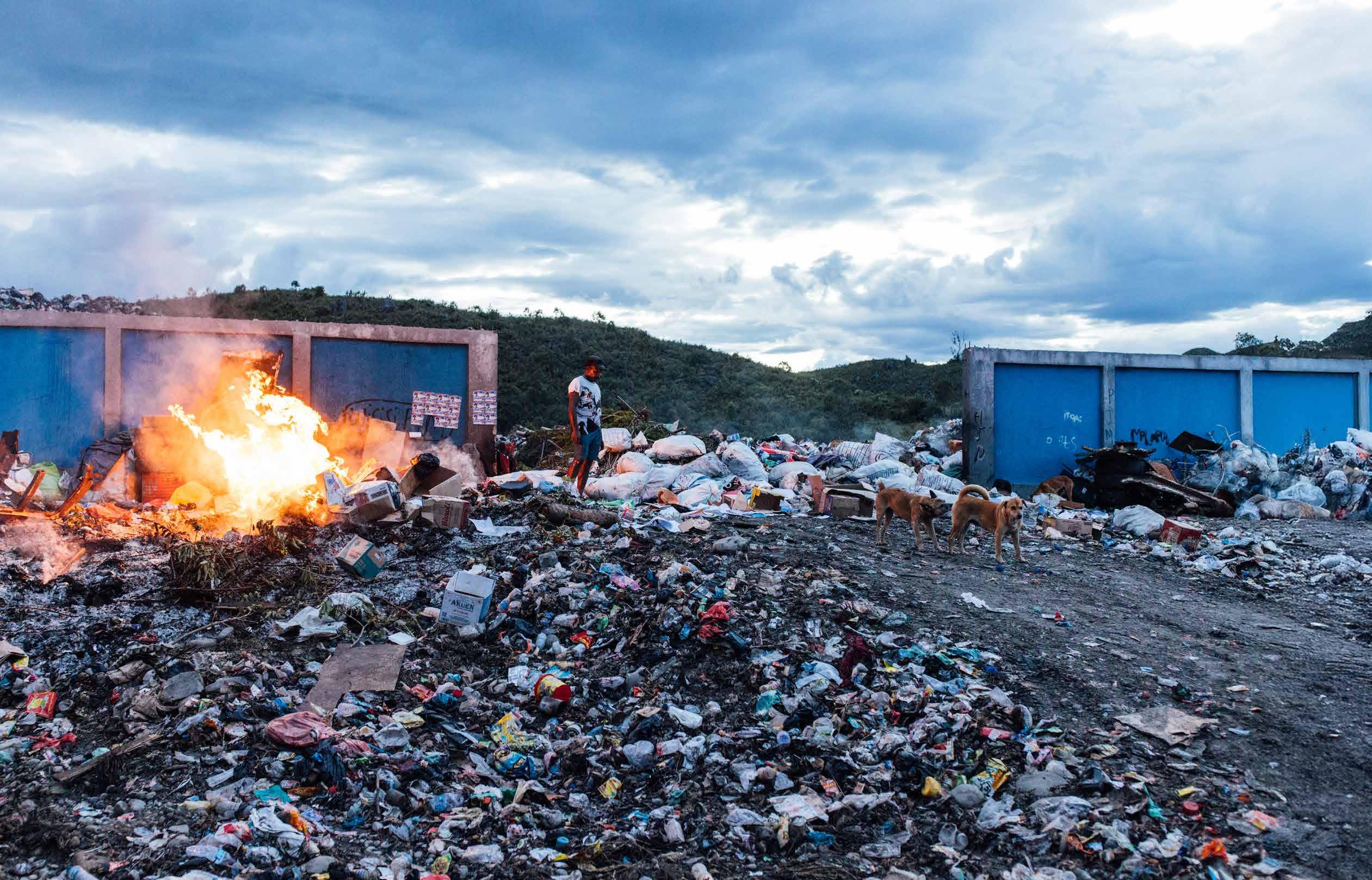
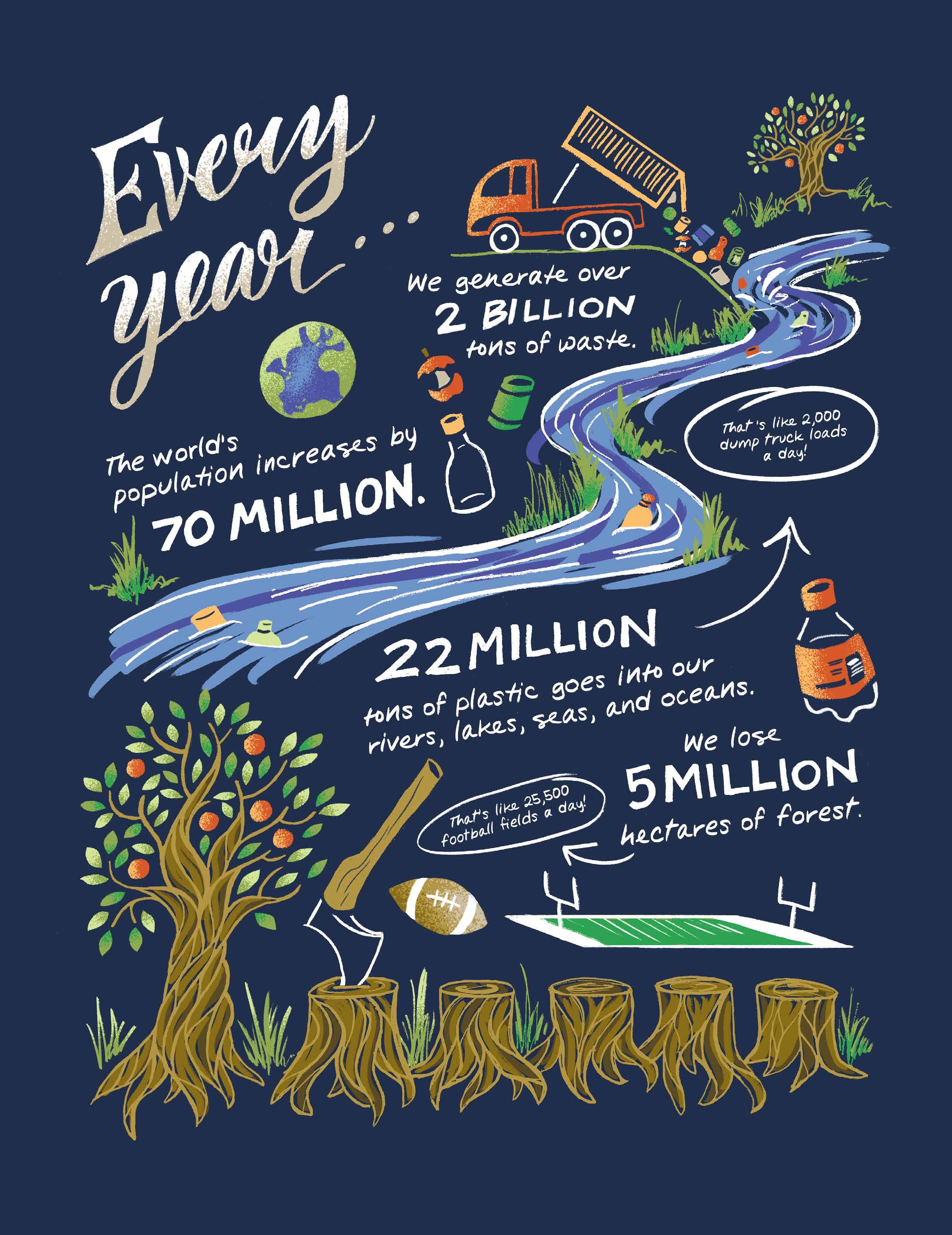
So, what is the issue that we’re talking about here? It’s that God’s creation needs help. Each year, the world’s population increases by approximately 70 million and generates over 2 billion tons of waste. Of that waste, about 22 million tons of plastic goes into our rivers, lakes, seas, and oceans each year. That’s equal to 2,000 dump truck loads every day. The truth is that a lot of that waste will be around for hundreds and maybe even thousands of years. Water that is essential for humanity’s survival is being polluted, and there is a net loss of 5 million hectares of forests annually. And sadly, it is often the poor and the marginalized that suffer the most from this destruction of the environment.
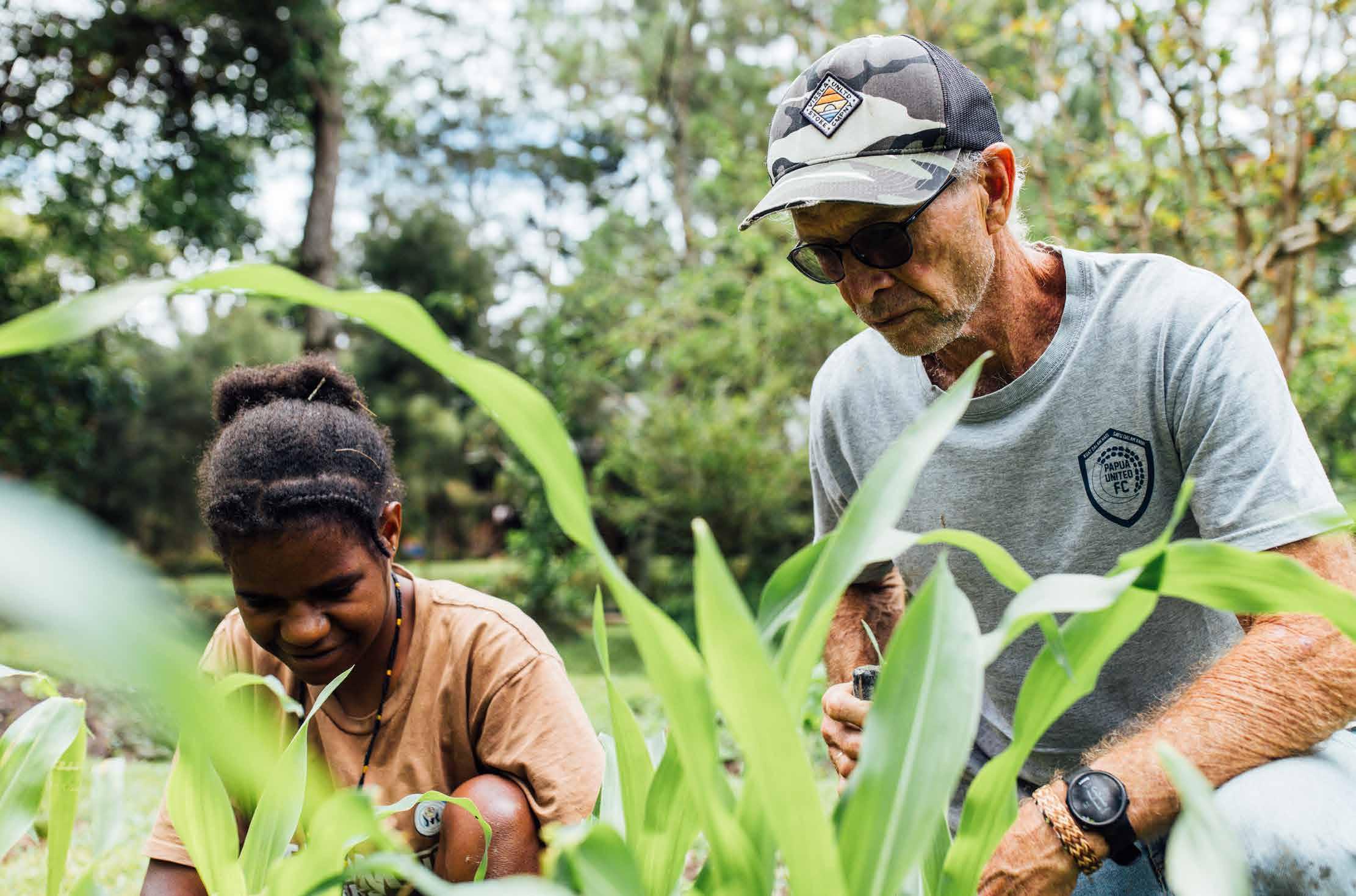
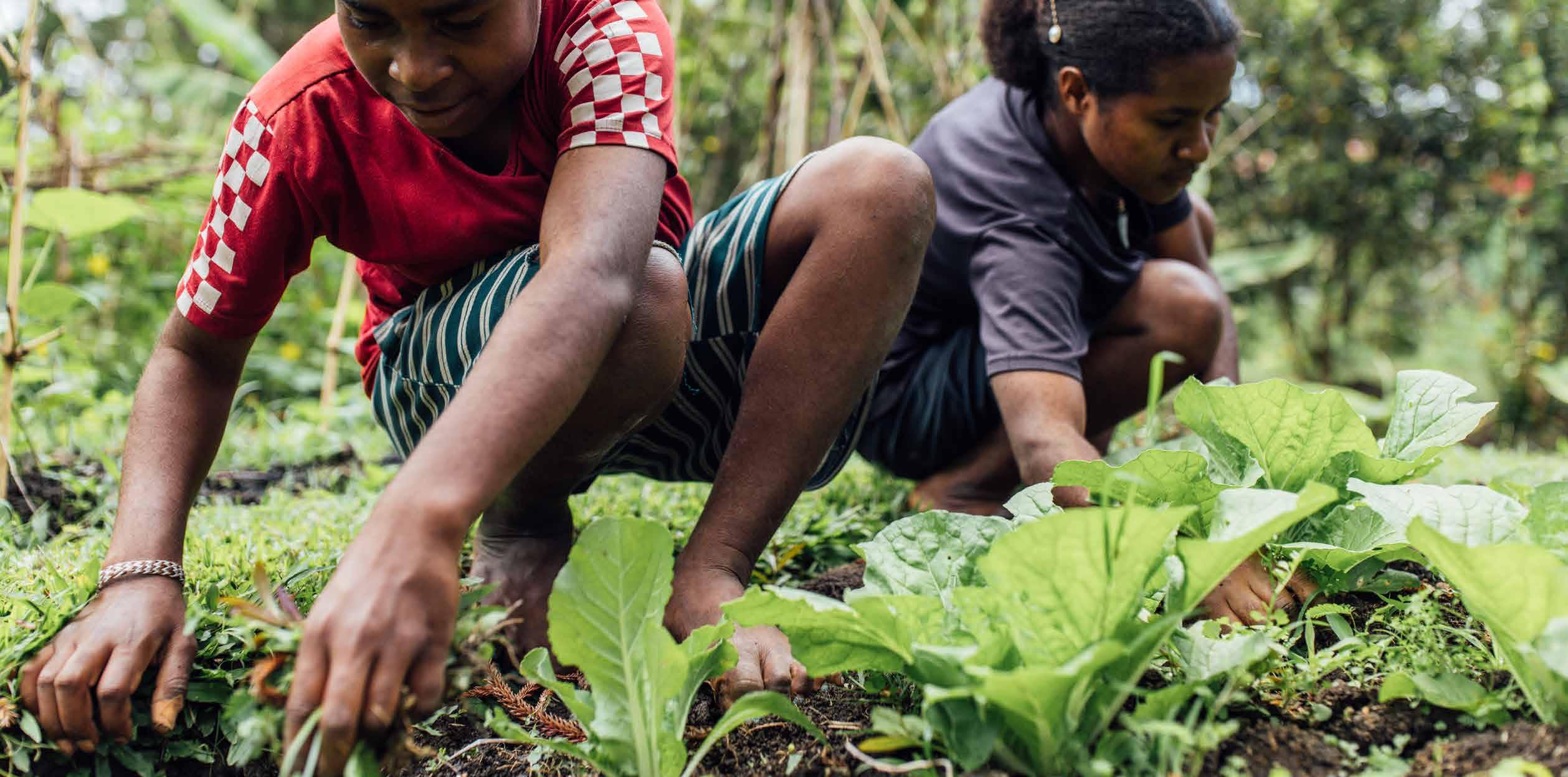
Above: Buzz Maxey sits with a local woman in a garden in Papua, Indonesia.
As Christ followers, we cannot choose to ignore these statistics. As I contemplate those who’ve gone before me, like Meemaw, I’m reminded that service to people and concern for creation are both rooted in our love for the Lord. We can make a difference, but it involves change. By changing how we live, we can inevitably influence others to change as well.
LOCAL IMPACT
In 2024, Silimo, a remote mountain village in Indonesia where my wife, Myrna, and I serve, suffered the worst floods in recent history. Village elders told us they had never heard of or seen such heavy rains and flooding. Bridges were washed away, landslides destroyed gardens, and the hydroelectric system we built many years ago was demolished.
Since the invention of chainsaws, large-scale logging has devastated the high-elevation rainforest above the village, triggering severe flash floods that threaten life and livelihood. And this kind of flooding has not been isolated to just Silimo—Indonesia as a whole faced 1,200 floods that year. Right now, Alliance workers in Sumatra,
Indonesia, are involved in relief operations where floods caused by deforestation have taken the lives of 1,200 people and displaced nearly a million villagers. I’m no environmental scientist, as my background is in relief and development, but I can see how environmental degradation has had a huge negative impact on our attempts to help people holistically.
As we look at the condition of the environment, it is essential to see it all through the eyes of the marginalized, because it is the poor who tend to bear the scars of the world’s ecological sins. As Christians, since we know that God’s heart is for the least of these, we need to do all we can to alleviate their suffering. For instance, if I’m trying to improve a community’s health, but up the river there are gold miners who are dumping mercury into the rivers to process their gold, then no amount of preventative health training I do is going to make a long-term difference. The consequences of environmental degradation affect all aspects of human life. Recently, we’ve seen a rise in localized, torrential rains worldwide, and rampant deforestation is a global reality. Trees are needed for pumping oxygen into the
air and storing harmful carbon in the ground. Forests are our natural protectors, and when we remove trees and their deep root systems, we expose the earth to the elements, hastening erosion and increasing flood risks.
WHY CREATION CARE MATTERS
The situation is dire, but there is hope—and it starts with us. If we change how we live, we can influence others, which could lead to a collective impact toward improved stewardship of God’s creation. And it is also a wonderful opportunity to be a witness to the world. You may ask, “Well, how do we do that?” As my former boss from CAMA, Phil Skelly, always used to say, “Just start somewhere and do something.”
Much like in Silimo, a fellow international worker (IW) faced environmental challenges in an Indonesian village where mangroves had been destroyed, which threatened the local fish population. Alongside his Bible translation work, he began a mangrove restoration project. And after 20 years, the village saw literal life return to their shores. Fish that were drawn to the mangroves provided food and income, which in turn increased people’s health and financial independence, giving better educational opportunities for their communities. Today, the Ambai tribe not only has the New Testament in their native language but also a sustainable source of food and income from the increased fish population.
Environmental issues are deeply human issues, and so if we care about people, then we must care about the environment that sustains them.
The Lausanne Movement has greatly impacted the evangelical world in its attitude toward a more holistic ministry. At the 2010 Lausanne conference in Cape Town, over 4,000 Christian leaders from nearly 200 countries gathered and affirmed that creation care is integral to the gospel, stating that, “To proclaim the gospel that says ‘Jesus is Lord’ is to proclaim the gospel that includes the earth, since Christ’s Lordship is over all creation. Creation care is thus a gospel issue.”
God has a purpose for His creation, and we are meant to take care of it as His stewards. Genesis 1:31 tells us that “God saw all that he had made, and it was very good.” I love the Berkeley translation that says God saw what He had made, and it was “excellent indeed.”
In Genesis 2:15, Scripture talks about God entrusting us humans to care for the earth. The Hebrew word for caretakers is shomer and is defined as a legal guardian or someone charged with protecting another’s property. God owns all of creation and has made us the shomers of His property—a sacred and a holy mandate. “The earth is the Lord’s, and everything in it, the world, and all who live in it” (Ps. 24:1).
HOW CAN WE RESPOND?
So, what are some practical steps that we can take? I want to challenge you with a few ideas that you could easily implement. Leaders in organizations, churches, or even families could begin by developing a policy or statement on creation care, affirming their commitment to environmental stewardship as a form of obedience to God. In the Alliance Missions Indonesia field, our own statement reads, “Creation care is an act of obedience to God’s Word. We honor God by honoring His creation. Stewardship of the earth is an act of worship and is essential to loving our neighbor.” We are committed to preventing ecological degradation in our areas of influence, and we can do so by leading by example.
Several years ago, we did a distribution of 5,000 tree seedlings through our local Indonesian Alliance church. We invited the regency head, the head of the police, teachers, pastors, and village elders to all come and learn. We planted together and grew together in our understanding of our roles in creation care. It was a wonderful day in which I was able to share Scripture and explain what it is that motivates us. Imagine if we asked each Alliance member worldwide to plant a tree. Think of the millions of trees that could be planted all around the world in a single day!
As Christ followers, we need a holistic approach to ministry. True holistic care nurtures our bodies, souls, minds, and the earth around us. This is what our Lord mandates and is what the world desperately needs. When we as leaders respond, we send a valuable message to the communities where we serve that we take seriously our role as God’s stewards of His earth. Being responsible stewards of the earth in Jesus’ name is an important authenticator of the gospel that we preach.
Meemaw went to her heavenly reward long ago, but I believe she would be very proud to see not only her great-grandchildren, but also millions of devoted Christ followers caring for the earth, cherishing the beauty of nature, worshiping God, and proclaiming Him as Creator. May her legacy inspire us all to steward and care for the earth with that very same reverence and love. So, friends—let’s start somewhere and do something!
Buzz Maxey and his wife, Myrna, have been working with CAMA Services in Indonesia for many years, specializing in leadership development, education, and disaster response. Buzz is passionate about uplifting local communities, focusing on enduring solutions that empower individuals and communities for generations to come.
To watch and share a video of this message, visit
cmalliance.org/video/a-heritage-of-planting/
Photograph by Olivia, Alliane
by Hannah Packard
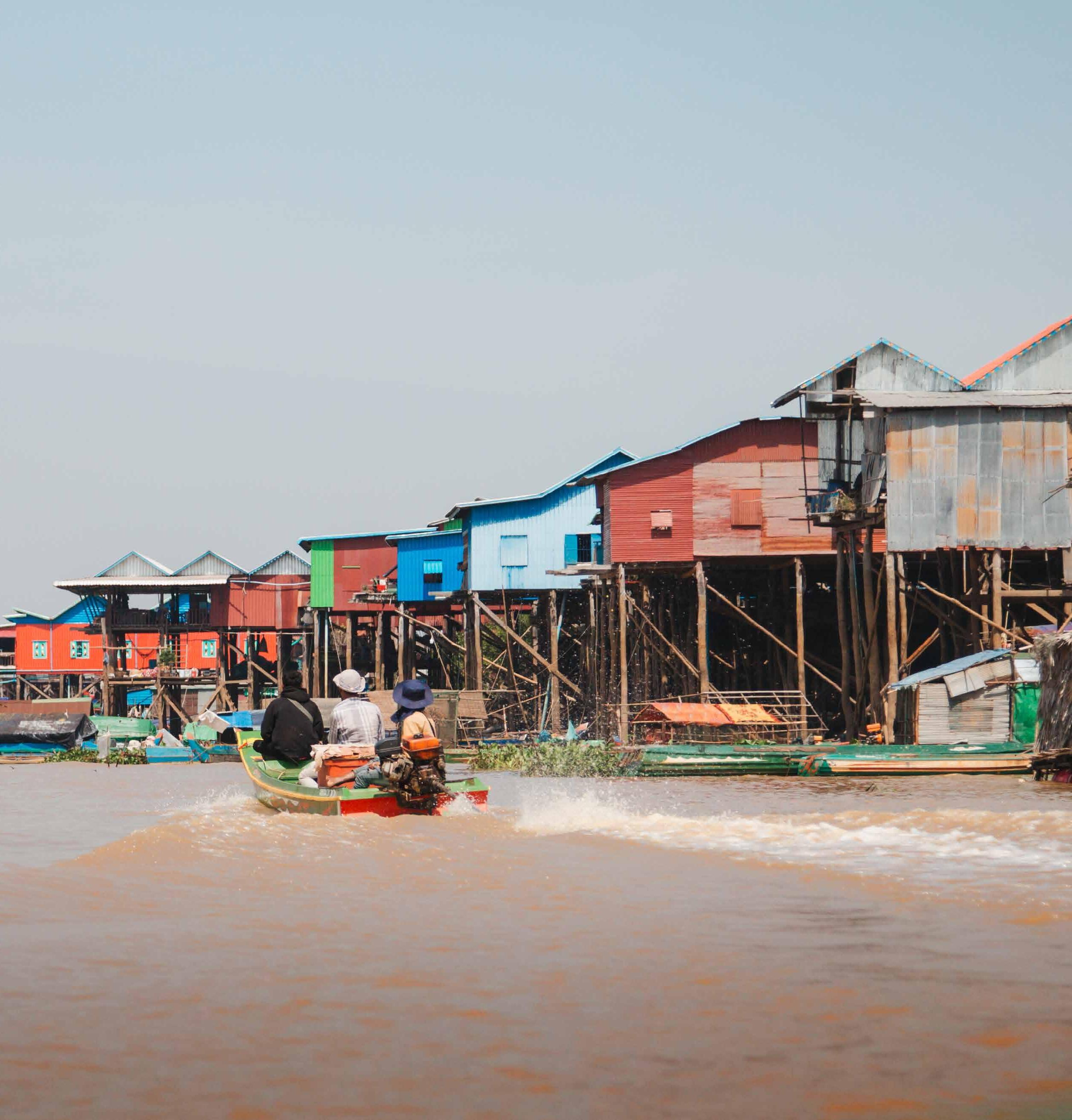
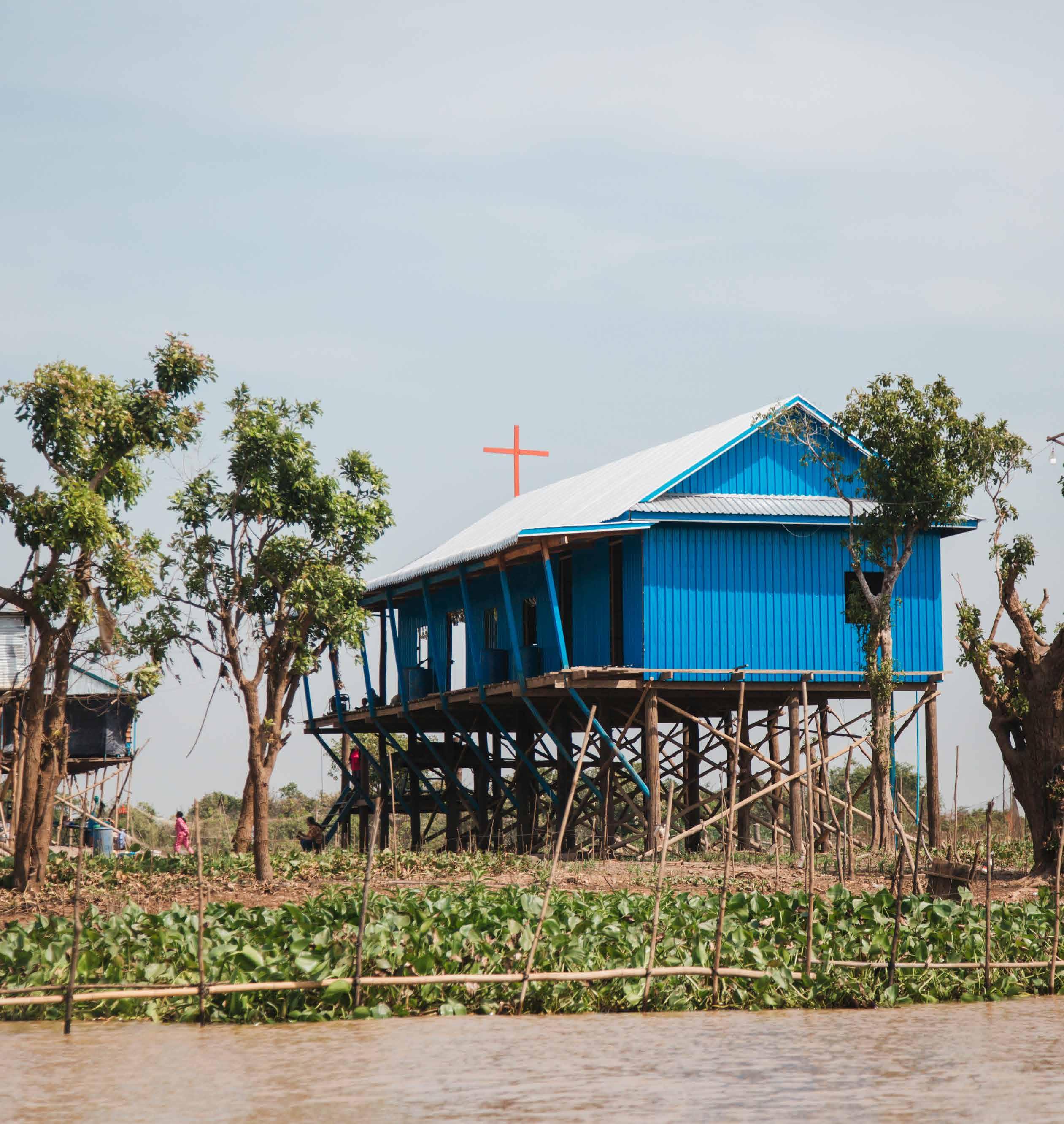
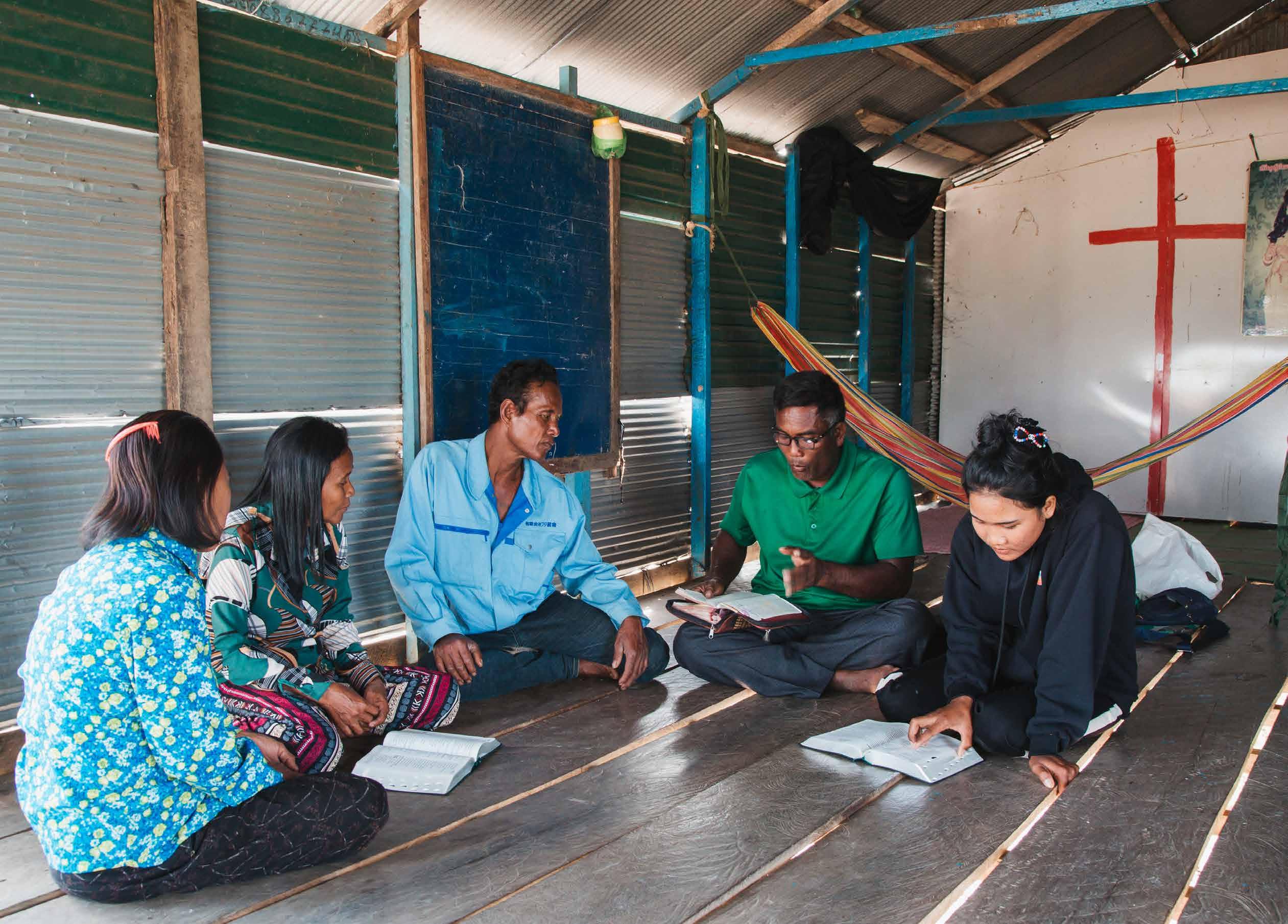
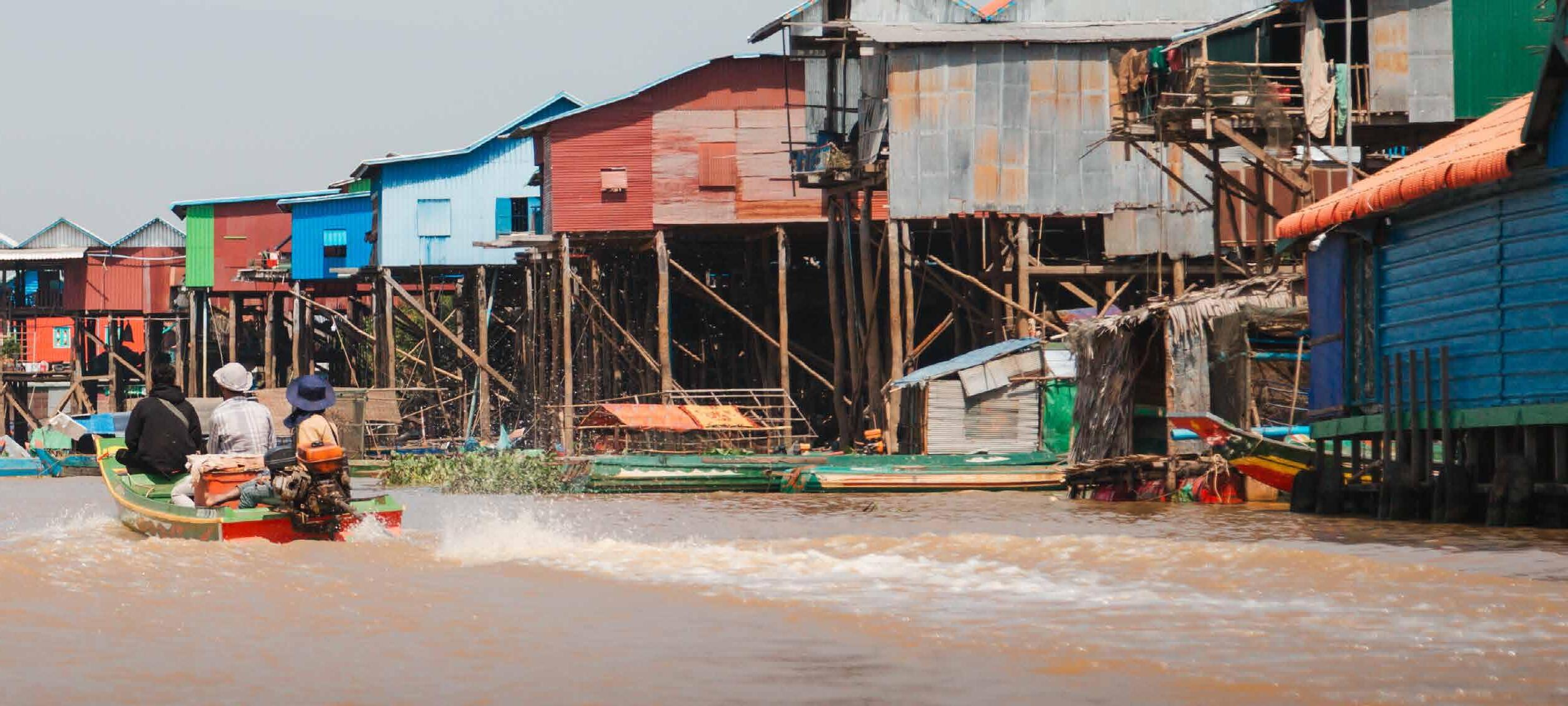
This photo: The local Cambodian Alliance church in Kampong Khleang during the dry season.
Photograph by Hannah Packard
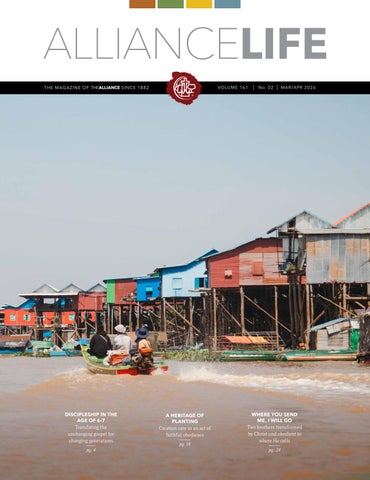
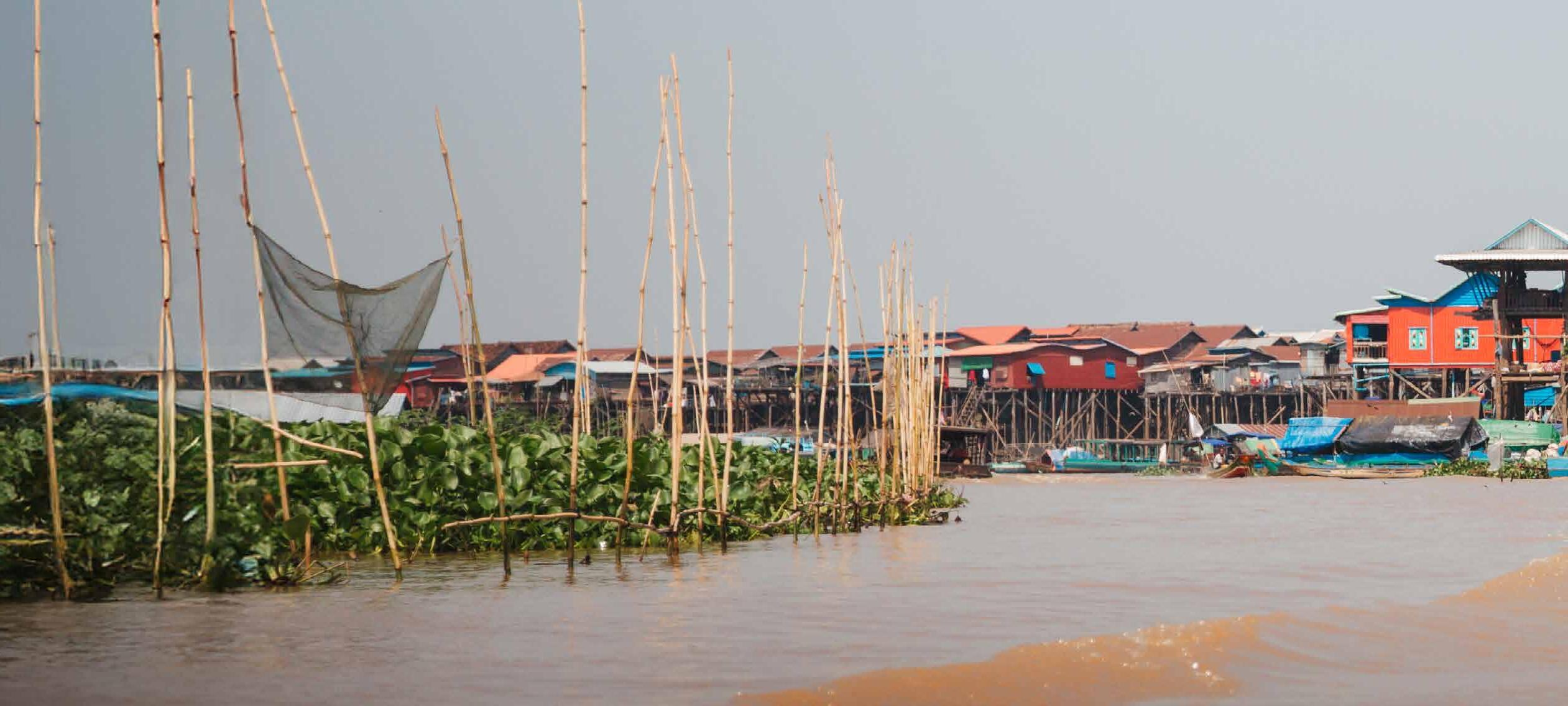
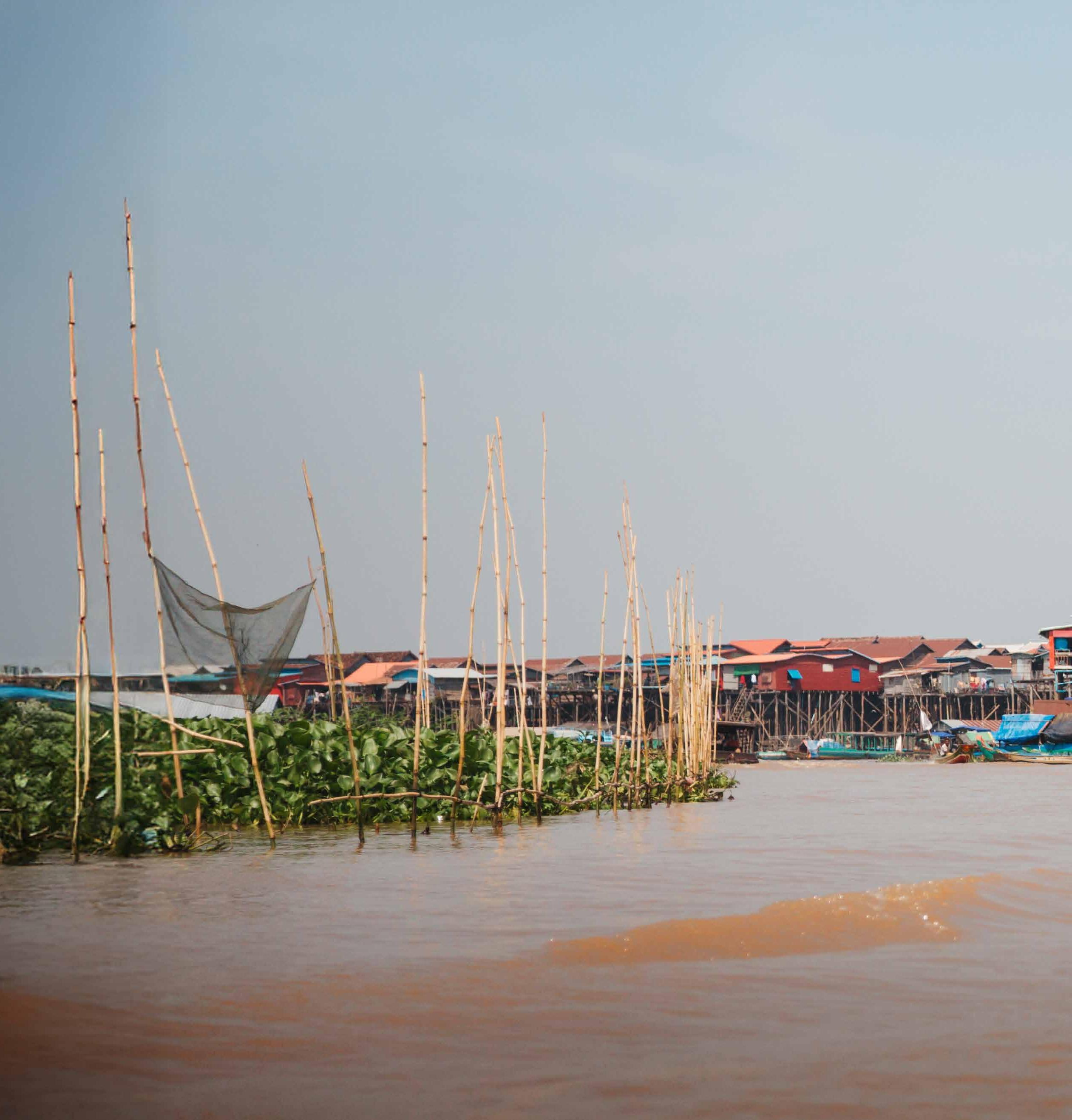
Driving in a bus down bare dirt roads was not how I expected to arrive in Kampong Khleang—a “floating village” near Siem Reap, Cambodia. For much of the year, heavy rains cause the water levels of the nearby Tonlé Sap Lake to rise dramatically, surrounding the stilted houses and turning the streets and alleys into waterways. But it was January, in the dry season, and the water had returned to its banks. As we walked toward the local Alliance church—an electric robin’s egg blue structure in the distance— international workers Soeuth and Syna Lao pointed out certain homes and buildings as we passed. Next door to the church, there was one house on tall stilts, which they told us was Kean’s home, a local church leader and the person whose story we had come to hear. This was the second part of a continuing story about two brothers and God’s call on their lives.
Kean and his brother Kong grew up around the Tonlé Sap Lake. As teenagers, they were wild, rough, and afraid of nothing. According to one of their childhood friends, Savy, Kong would even hunt crocodiles with his bare hands, selling their skins to be made into purses, shoes, or belts. And as the years passed, these wild boys grew up into even rougher men—especially Kong, whose recklessness had hardened into violence.
HEALING A BROKEN MAN
As adults, Savy, Kong, and their other friend, Sen, lived with their families as squatters in a village called Tuol Krous. These were evil men—criminals, often drunk, and physically abusive to their wives and children. “I had no love for anybody,” Kong said of those days. Things were so bad that, one by one, their wives and children began running away.
Kong eventually decided to leave his friends behind to go and find his wife, Kune. He followed her trail to Anlong Veng, where he found her changed. She was part of a Cambodian Alliance church—which she begged him to attend with her and their small son. He refused. Yet it was at this time that God caught hold of him.
“One day, I was working in an empty charcoal oven when the wall caved in on me and my little boy,” Kong said. “I heard my wife cry out, ‘Jesus, help my husband!’ I felt two
hands grip my shoulders, and I realized I was already outside the cave.” Injured and coughing up blood, Kong’s right eye popped out of its socket. His wife and his neighbor helped him to the closest hospital, where every doctor he saw told him that they could not treat him. “I told my wife, ‘You must take me to your church. I have no other hope,’” he said.
Once there, Kong asked the pastor, Pastor Dy, to pray for him. “As he prayed,” Kong shared, “I felt something from inside was pulling my eyeball to its place, and when everyone opened their eyes to look at me, I shouted, ‘I am healed!’”
Feeling overwhelmed with joy and awe, Kong realized what God had done for him. This healing sparked an urgency in his heart. He wanted to go and tell everyone about Jesus, and he prayed fervently that God would give him direction. “From now on,” he prayed, “whether I live or die, I am devoted to You. Where You send me, I will go.”
As soon as he was able, Kong rode on his motorbike to visit his nine siblings to tell them about Jesus. The drastic change in him caught everyone’s attention. Their violent brother had become a kind and gentle one, and that testimony captured their hearts.
Among those most affected by Kong’s transformation was his younger brother, Kean. Kean, who had been a Buddhist priest for many years, heard the message of salvation that Kong presented to him, and it stirred his heart. He decided that he wanted to be part of the family of God too. “I asked my brother, ‘How can I follow Jesus?’” Kean says. “I prayed, ‘God, where You send me, I will go.’”
Kong continued to preach the gospel—first in his own village, where the testimony of his transformation began to lead people to put their trust in Jesus. Then he began traveling longer distances to bring the good news.
In 2018, when he visited Tuol Krous again, Kong went to look for Savy. It was a shocking reunion for Savy, who, perhaps more than most, saw the extreme transformation in his friend. It captured his attention in such a way that after Kong shared the story of salvation, Savy immediately accepted Jesus as his Lord and Savior. His subsequent transformation in character became a further amazement to the community. If Jesus could transform these men, what couldn’t He do?
ON THE LAKE AND THE LAND
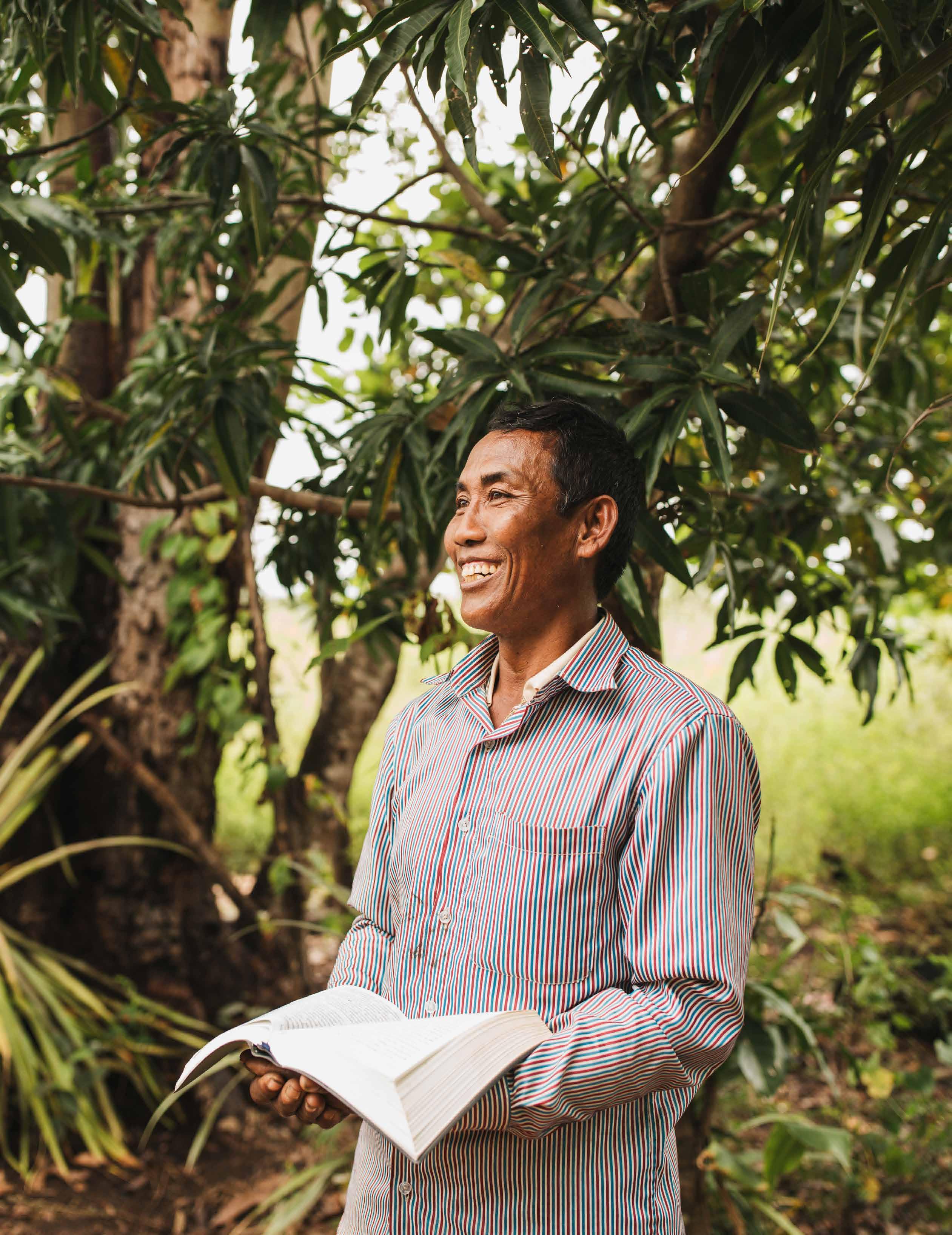
God also lit an urgent spark in Kean to go and preach the gospel. While Kong rode his motorbike near and far to minister on land, Kean became a church planter, overseer, and leader, ministering to those people living on the lake in the floating villages. At that time, Kean worked in law enforcement and was very well respected in the area. With boldness, he committed himself to preaching the gospel—especially to Buddhist monks and priests, village leaders, and other local police. A devoted disciple of God’s Word, Kean spent much time studying Scripture.
Kong and Kean threw themselves into spreading the gospel as true evangelists. And while they did ministry on their own, they also often helped and ministered alongside one another.
The church in Anlong Veng and surrounding villages, as well as near Siem Reap, were multiplying and growing rapidly. Alliance international workers, Soeuth and Syna Lao, who were busy strengthening the local churches and doing extensive discipleship work, found themselves barely able to keep up with the number of new believers coming to Christ.
If Jesus could transform these men, what couldn’t He do?
Opposite: Kong was called to minister on land, traveling far and wide
Left: God led Kean to minister in the floating villages of Tonlé Sap Lake.
on his motorbike.
Photographs by Hannah Packard (left) and Olivia, Alliance Video (right)
In April 2022, it was in this season of fruitfulness that Kong and Kean went together on a small tuk-tuk to another province to minister. Yet in a moment of inexplicable tragedy, the brothers’ vehicle was hit by a dangerously speeding 18-wheeler truck. Kong died on impact. Kean, who had suffered a head injury and a few cuts, was taken to the local emergency room for treatment.
At Kong’s funeral, Savy spoke about his friend as tears streamed down his face. “Kong is resting with Jesus now, but his amazing legacy is still alive and is living inside of me and inside my family,” he said. “I am saved and so is my family—thanks to the testimony of the transformed life in my dear friend, Mr. Kong.”
As for Kean, he grieved. He had planned to minister together with Kong for many more years to come. He felt as though God had removed his right arm, Syna told us.
CARRY ON THE TORCH
It was less than a year later that we visited Kampong Khleang. After a small church service in that robin’s egg blue church and eating lunch together, I followed Syna and two Alliance Video team members up to Kean’s house. I remember the hush and holiness of that moment—and the grief. Kean had lost his older brother, and Soeuth and Syna had lost their dear friend.
Kean told us his story—of how he met Jesus, of the ministry he had done by himself and with his brother, and about the accident. He stood up to show us exactly where there had been tire marks on his clothes after the
collision. And he told us where God was leading him. “When I said yes to God’s call, I didn’t fully understand how hard it would be,” he says. “Following Jesus means carrying my cross just like He did.”
Shortly after his brother went to be with Jesus, Kean quit his job. Soeuth and Syna were surprised to hear this—he had a very successful job as a chief of police; why would he quit before retirement? But as he prayed, Kean had begun to feel a sense of urgency, that life is short, and that people were dying every day who had never heard the good news of Jesus. “I see sheep without a shepherd, and I’m ready to take care of them,” Kean says. “They are lost and confused. I have no reward on Earth to offer them, but God promised a bigger reward.”
The demands of the ministry were difficult, but Kean dedicated himself to the task with all his heart, even travelling without money, trusting God that He would provide—even if it meant putting his life at risk so that people would hear the good news.
The floating villages around Tonlé Sap are remote and difficult to reach, costing valuable resources just to get there. “It’s a lonely place, so they welcome the visit,” Syna says. “Kean demonstrates that love of Christ by going to visit them, even when nobody is willing to go to them.”
With passion in his voice, Kean says, “As long as God gives me breath, I will continue to carry on the torch of my brother, and this is what keeps me going in the hardships. My God is faithful.”
Photographs by Hannah Packard
WILLING TO GO
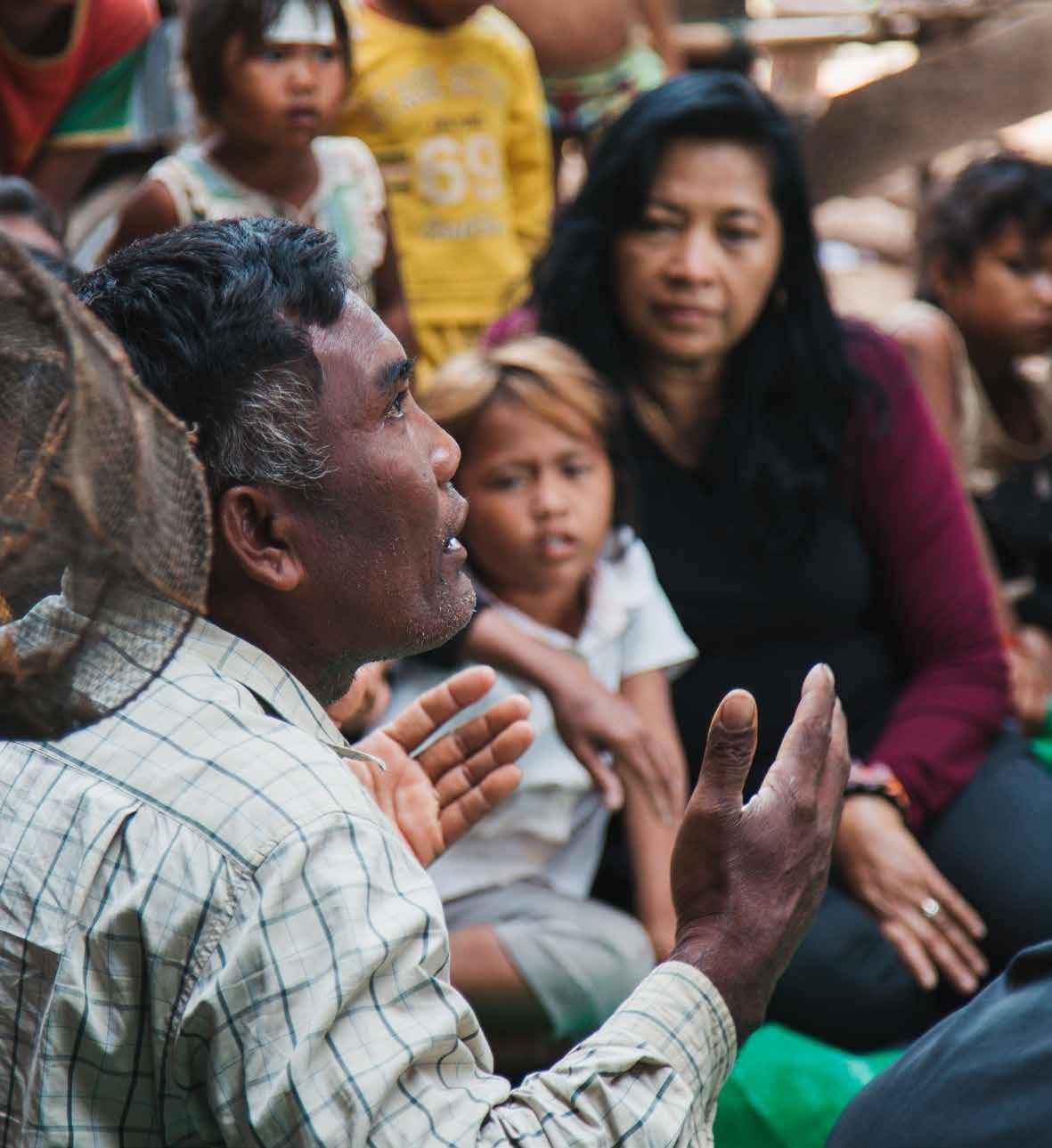
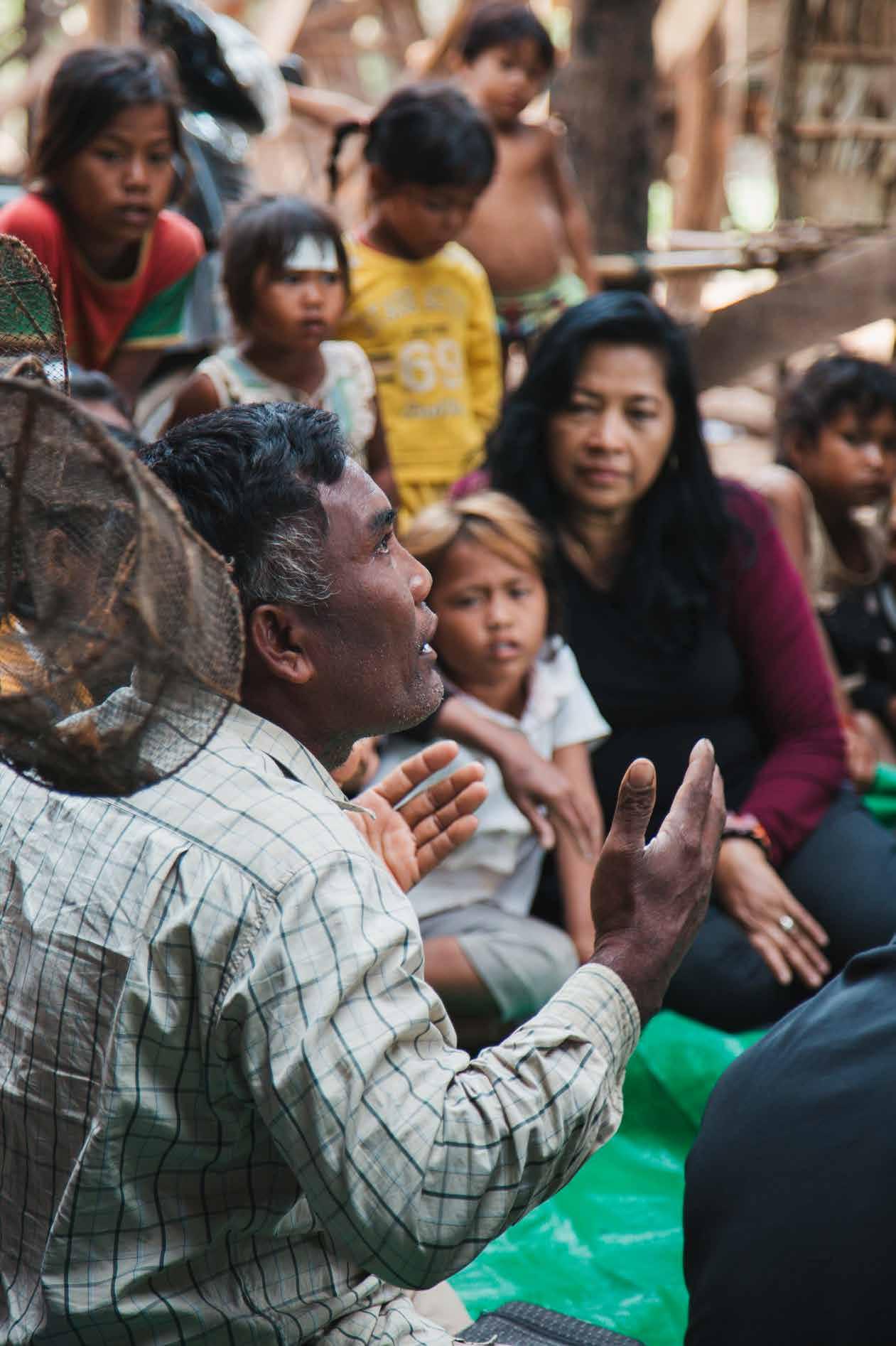
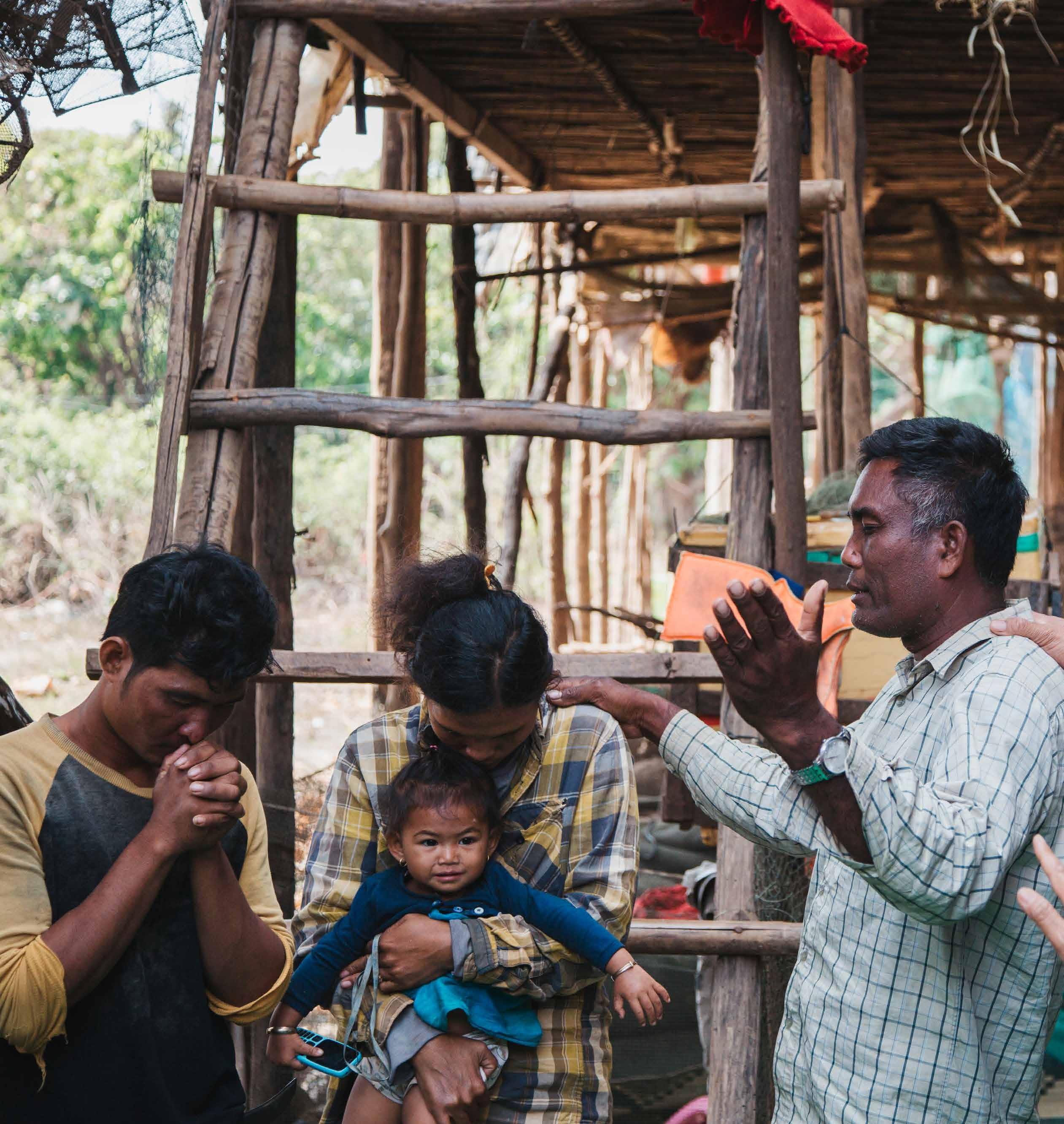
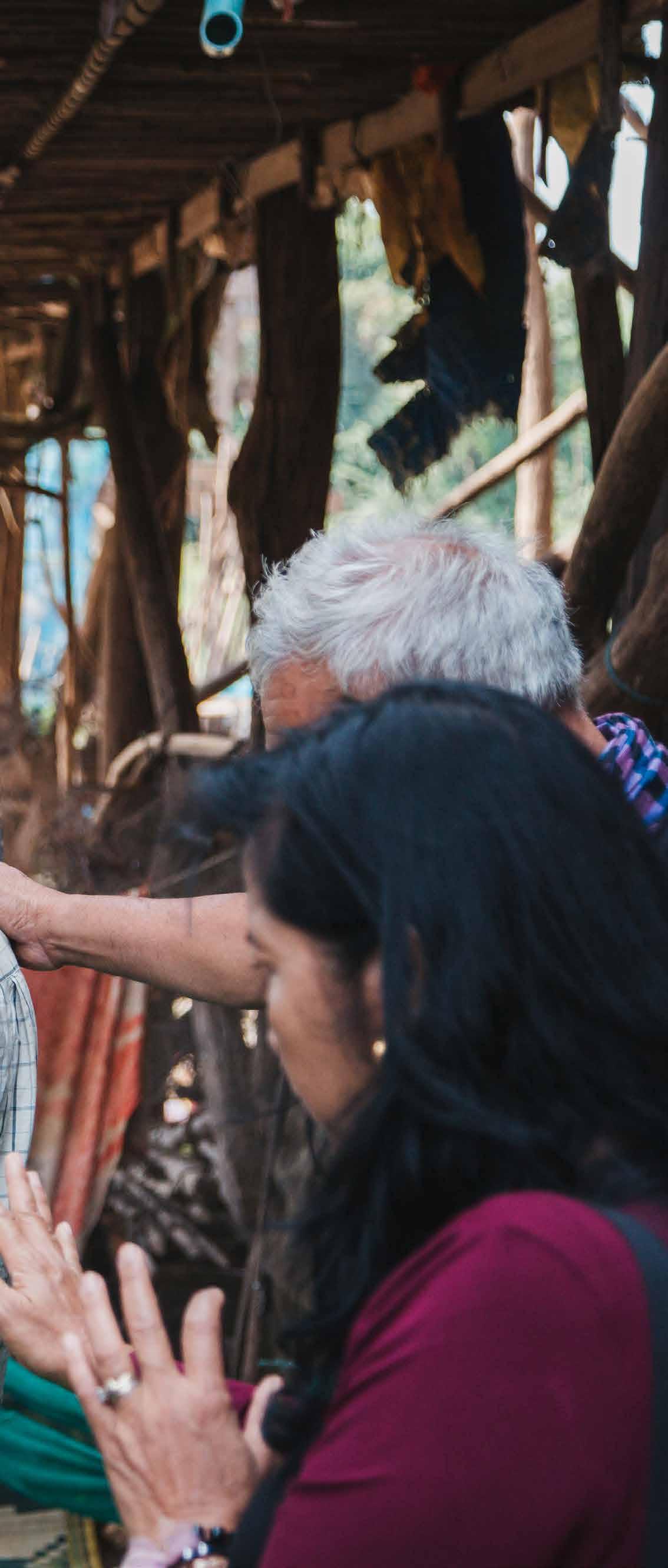
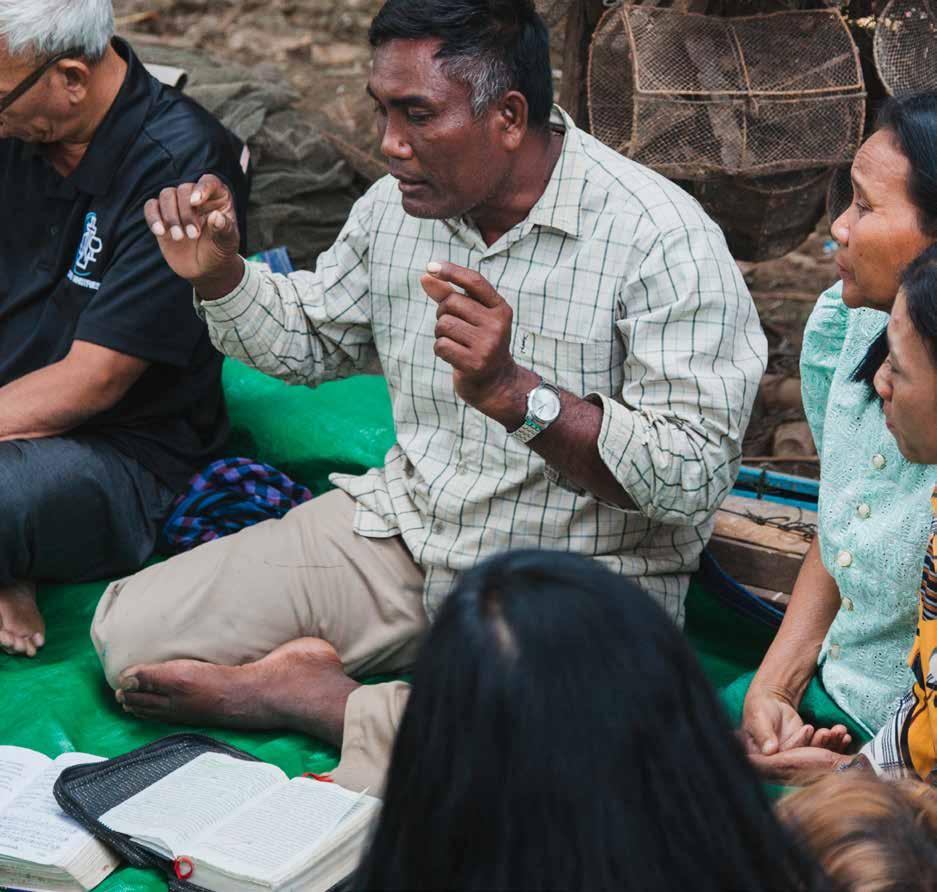
After the interview, we followed Kean as he went to minister to a local family in another nearby floating village. Walking down the streets there, he stopped to speak to nearly every person we passed, eliciting bright smiles from many. At the family’s house, he spoke and prayed with them. Then, almost out of nowhere, a tarp was produced, which was laid on the ground in front of their home. Sitting together with the family, some other local believers, and even several others who were drawn by the sight, Kean led a time of worship and teaching from Scripture. It was simple, peaceful, and awash in the presence of the Holy Spirit.
When I think of all the church services and gatherings of believers I have had the privilege of attending, that day on the tarp will always be one of the most precious. And I think I will always carry with me the testimony of these men’s lives—whose hearts of obedience before the Lord vowed, “Where You send me, I will go.”
Hannah Packard is the managing editor of Alliance Life magazine. She earned her master of divinity from Asbury Theological Seminary in 2021 and is pleased to serve the Lord, and The Alliance, through storytelling.
To watch the videos of this story, visit: cmalliance.org/video/out-of-the-ashes/ cmalliance.org/video/whereyou-send-me-i-will-go/
Photographs by Hannah Packard
A PERSONAL WORK OF FAITH
by Rev. Howard Van Dyck; an obituary originally published in The Alliance Weekly on September 24, 1952. Edited by Alliance Life staff.
Born in Morlunda, Sweden, Emma Charlotte Ek was converted to faith in Christ at 18 years of age, and subsequently her original plans gave way to the divine call to missionary service. She sought to join the China Inland Mission and set out in faith for London, England. Assigned first to assist in a mission to seamen and later in town evangelism, she asked the Lord for 12 converts as a token of assurance; she was granted 70. She sailed for China in 1891.
After language study near the coast, Miss Ek was
sent to the Szechuan province and labored successfully among the women, also opening outstations. During her service there, she met Rev. Martin Ekvall of The Christian and Missionary Alliance, and their friendship ripened into marriage in February 1900.
They labored for two years in the Central China Alliance Mission and for eight years at the Alliance Tibetan Border Mission at Min Hsien. Of Mrs. Ekvall’s work there, Rev. William Christie, then chairman of our West China Mission, writes she was “a most earnest missionary,
and an aggressive and untiring evangelist among the women, many of whom she led to the Lord.”
Returning to China from furlough in 1912, the Ekvalls were stationed in Wuchang, central China. Here Mr. Ekvall engaged in church and evangelistic work on station and outstations, while Mrs. Ekvall turned to the women’s work and visitation in city and country. But a girl who was blind begging at the gate of the mission compound aroused Mrs. Ekvall’s sympathies.
Starting with three girls housed in a borrowed building, Mrs. Ekvall then rented a suitable place for her growing school near the Alliance church and finally purchased a substantial two-storied home for 50 blind girls. They were taught by instructors in Chinese Braille. The Bible was their major study and hymn singing their favorite entertainment. They memorized whole books of Scripture and the hymnal.
The school for the blind was not a mission project, but Mrs. Ekvall’s own personal work of faith, for which she was not afraid to trust God. She did not solicit funds, but “asked the Lord and told the people.” As a result, the necessary funds were always supplied.
After several successful years in work for the blind, she opened a separate school for Deaf boys and girls. From that school, 48 graduates are now earning their living.
Rev. and Mrs. Ekvall had five children, of whom two daughters and their son died in China. In January 1939, Mr. Ekvall laid down his life in their adopted country, and Mrs. Ekvall hoped also to finish her course in that land. Though later forced to leave China, she continued active on behalf of the Wuchang Blind School up to the last week of her life.
Editor’s note: In August 2020, one of Emma’s grandchildren, Ray Smith, reported that the school had continued in operation, with the People’s Republic of China even erecting a statue commemorating her work in front of the school’s new campus in 2018.
MTHE PEOPLE WE SERVE
y name is Nadia.* I was living in Toluca, Mexico, cleaning houses for a living after a difficult divorce when a better job opportunity arose. It was for a live-in maid position in Guadalajara, which is the same city where my 19-year-old son lives. Relocating to a new place was overwhelming. I wanted to begin attending church, but it was challenging to get to the nearest church in Guadalajara because there was not much safe transportation for the hour-long commute. So, I began to pray for a church closer to home. God answered my prayers! Now I attend an Alliance church, Aliento de Vida Poniente, which is only five minutes from my home.
I have found a true family of believers at Aliento de Vida. I enjoy the Sunday morning services and the Wednesday pastoral sessions where Pastor Jose Doniz offers spiritual guidance and prayer for our growing congregation. I have even been able to experience healing and forgiveness from deep traumas. I am so thankful for the restoration I have experienced since I began attending there!
*Name changed
YOUR GENEROSITY in action
ACCEPTED AS A DAUGHTER
by Becky, an Alliance worker serving in West Africa
Tenain was born out of wedlock to her 15-year-old mother. To hide the family’s shame, she was given away to a distant relative. She was not sent to school or given the same privileges as other children in the home. As she grew, she began to take on most of the work around the home.
When Tenain’s relative took a second wife, her workload doubled, and the sister-wives began to fight over her. She was only 14 years old and had grown increasingly unsafe and uncomfortable as a young teen in a home without parental guardians.
Aissa, Tenain’s mother, never got past the stigma of having a child out of wedlock and had been ostracized by most of her family. She eventually moved to the neighboring country of Senegal but stayed in touch with her daughter, always making sure Tenain had her current phone number.
ESCAPING TO SENEGAL
When things became progressively worse for Tenain, she felt she had no other option but to run away and make the 839-mile trip to find her mother. The plan seemed possible until she got to the Senegalese border. Lacking the appropriate paperwork, Tenain was kicked off her bus and denied entry into Senegal. Officials told her the only option was to return to the home she had fled. Tenain was terrified to go back. The man she worked for was violent, and she feared how he would react to her attempt to leave his household. As night was falling, a man recognized Tenain’s distress and offered to help. Sensing she had no other choice, Tenain went with him. What followed were days of terror, much of which Tenain has never been fully able to share. The man didn’t get her the paperwork he’d promised to obtain. Instead, after three days, he smuggled her across the border and left her to navigate the rest of the journey on her own.
RESPONDING TO A BRUTAL REALITY
Tenain’s story reflects the brutal reality for countless adolescent girls across West Africa, whose lives are marked by hardship, injustice, and trauma. In this region, being a girl often means facing overwhelming challenges. Research shows that, when it comes to education, child marriage, adolescent fertility, justice, security, and inclusion, the most difficult places to be a girl are concentrated in West Africa.
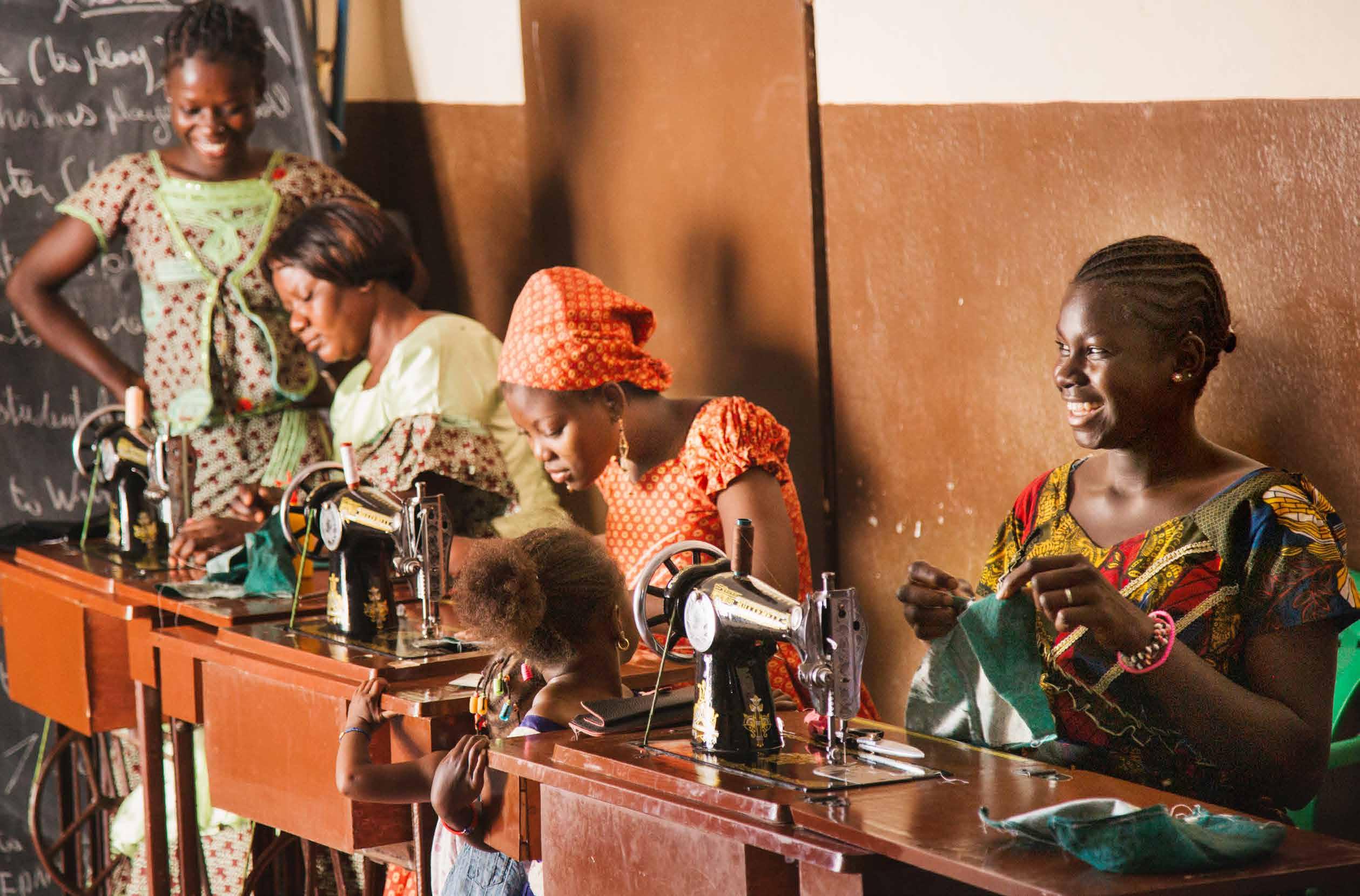
That’s why, in 2013, with the prayers and support of the Alliance family, we launched Hands of Honor (HOH), a church-based advocacy program committed to providing girls in our communities with a different, hope-filled path. HOH works with local Alliance churches and partners to provide vulnerable girls—primarily child laborers—with safe community, literacy education, vocational training, and life skills training.
Today, there are over 150 participants in the Hands of Honor program. Your generous gifts continue to provide girls like Tenain with the opportunity for a better life—all while expanding the program into other parts of West Africa.
In Senegal, HOH is making a growing impact through La Grace, a Christian vocational school. Its strong reputation in the community has led to full classrooms and increased attendance. Every year, through your generosity and prayers, vulnerable adolescent girls learn valuable culinary and hospitality skills in a Christcentered environment where they have the chance to hear and respond to the gospel. They are becoming valuable contributors to their families and community and being strengthened to change the trajectory of their lives.
In a nearby West African country, HOH has grown from eight participants in one location to 116 participants in six locations. Increasing economic challenges, violence, and political instability have only increased the vulnerability of adolescent girls across the country and the need for more intervention by our HOH staff.
THE GOSPEL IMPACT YOU ARE MAKING
For many participants, HOH is the first place they encounter a follower of Jesus and hear and understand His gospel that brings salvation and freedom.
Sarah* recently completed the three-year HOH program, receiving her tailoring license and a sewing machine to start her own business. At the graduation ceremony, she shared that the greatest gift wasn’t the sewing machine but the Christian teaching she had received since becoming involved with HOH. She’s not alone. In 2024, participants overwhelmingly reported that Bible storying was the most impactful part of the program for them as well.
That’s been Tenain’s story. When Jesus led her to our HOH program—facilitated in a slum community in Dakar, Senegal—she was deeply traumatized, anxious, and disheartened. We had begun a new story set focused on the lives of women who had encounters with Jesus. As she listened, I noticed a change in Tenain. I could tell she saw herself as the women in those stories. She recognized Jesus’ care and compassion, the value and worth He placed on these women, and the grace and mercy He extended to them.
Tenain, a child who’d been abandoned, neglected, and never felt of any value to her family and community, began to recognize her worth as a child of God. She began to experience hope again as she understood Jesus as her Savior, as the Healer of the wounds she carried. Today, Tenain is literate, a vocational school graduate, and small business owner.
Tenain’s story is possible only because of people like you. The work is far from finished, however. Across West Africa, many more adolescent girls like her remain unseen and undervalued, facing injustices that demand action. The opportunity is before us to step into their stories, offer a hope-filled future, and guide them toward the purpose, healing, and compassion they can experience only in Jesus.
*Name changed
TEACH JOB SKILLS TO GIRLS IN STRUGGLING COMMUNITIES
Through your giving to Hands of Honor, you will provide literacy education, vocational training, and
life skills training to girls like Tenain in two West African countries. As these girls are empowered with new skills in Christ-centered learning environments, they will be uniquely positioned to experience God’s compassion and receive guidance from His Word. To open doors for vulnerable West African girls to gain financial independence and realize
their God-given worth and dignity, visit cmalliance.org/hands-of-honor. Learn more about Alliance strategic projects throughout the world in need of your prayers and financial support by accessing the 2025–2026 Strategic Giving Opportunities Gift Catalog at cmalliance.org/25-strategic-gift-catalog or by calling toll-free (866) 443-8262.
inFocus
All the Way to Calvary
by A. B. Simpson
Crucified with Christ my Savior, To the world and self and sin.
To the death-born life of Jesus
I am sweetly ent’ring in.
In His fellowship of suff’ring,
To His death conformed to be, I am going with my Savior
All the way to Calvary.
’Tis not hard to die with Jesus
When His risen life we know.
’Tis not hard to share His suff’rings
When our hearts with joy o’erflow.
In His resurrection power He has come to dwell in me, And my heart is gladly going
All the way to Calvary.
If we die, we’ll live with Jesus, If we suffer, we shall reign. Only thus the prize of glory Can the conqueror attain.
Oh, how sweet on that glad morning Should the Master say to thee, “Yes, My child, thou didst go with Me All the way to Calvary.”
Photograph by Olivia, Alliance Video
PRAYER IS PRIMARY
Requests from Alliance workers
TAIWAN
Recently, a deeply troubled young man carried out violent attacks across public spaces in Taipei, resulting in multiple deaths and serious injuries. The incident revealed growing tension, frustration, and spiritual need many in Taiwan are experiencing. Our hearts grieve, and we are praying for healing, peace, and truth to take root in our city.
Soon following that incident, a strong earthquake struck off of Taiwan’s east coast. We felt the shaking late at night, but thankfully our family was safe and there were no reported casualties. However, a short-term team scheduled to arrive was canceled due to concerns about aftershocks. This was a difficult loss, both for gospel opportunities in Taiwan and for the youth eager to grow in mission.
Please lift up our community in prayer as disasters across our area occur and ask God that they would reveal the need for Him to those here who are lost and seeking.
— Chris and Jamie, Alliance workers serving with Envision
MIDDLE EAST
“Where would you be now, if you weren’t following Jesus?” This was a question that was batted around last month at a gathering of our believing friends. Some the group were international workers, so many of their answers involved a life of pursuing the American dream. The rest, believers from the majority religion in our context, shared about the spouses they would have had, the careers that they were denied, and the potential life they had given up because of their faith. But Nasir’s* answer took the group by surprise.
“I would be back in my home country in Africa, as part of a separatist movement, fighting for a cause,” he shared. “I’ve always been searching for a reason to live, and though I grew up pretty much my whole life in the Middle East, my life as a refugee is one full of dead ends. If I weren’t following the Son, I would be surrendering my life to a revolutionary cause.”
Nasir’s admission was not a casual, out-ofcontext comment. The truth was, that very day he had chosen to publicly declare his commitment to Jesus by being baptized in a swimming pool at an Airbnb. The witnesses were the men who had been discipling him and the fellow believers he had journeyed with for the past two years. A thoughtful, cautious young man, Nasir took his time to decide to follow Jesus, and then to testify to his decision through baptism, and we give praise to the Father for his firm faith.
This month, would you intercede for Nasir, that he might be a light to his family? He has already shared about his journey with many of them, and we are hopeful for his testimony in his community. And would you pray that our community in the Arab world might be characterized by disciple-making disciples, that we may have the joy of many more baptisms, and many more lives saved?
*Name changed
—an Alliance international worker couple serving with aXcess
Below: As disasters occur in an around Taipei, Taiwan, ask God to reveal Himself to the lost.
ALLIANCE FAMILY NEWS
From around the block to the ends of the earth
TO THE FIELD
AFRICA
GUINEA
Joel D. and Amanda Griffin and family, in October. The Griffins serve with Envision.
CONGO
John L. and Charlene A. Stirzaker, in October. The Stirzakers serve with aXcess.
ASIA-PACIFIC
TAIWAN
Jonathan T. and Thanh Binh T. Luu, in October. The Luus serve with Envision.
CENTRAL ASIA
MONGOLIA
Mark D. and Cinda S. Wood, in October. The Woods serve with aXcess.
EUROPE
BALKANS
Amanda E. Gosline, in November. Amanda serves with CAMA.
GERMANY
Frank and Irene Williamson, in October. The Williamsons serve with Envision.
SOUTH AMERICA
PARAGUAY
Maria V. De Leon Flores, in October. Maria serves with aXcess.
UNITED STATES
ATLANTA
Jason R. and Toni Wiggins, in November. The Wiggins serve with Envision.
PERSONNEL CHANGES
Mary E. Barnhart, youth pastor, Living Christ Church C&MA, Nyack, N.Y.
Guo Jie Chen, assistant pastor, Honolulu (Hawaii) Harvest Chinese Christian Alliance Church
Jon A. Davidson, missions leader, Long Beach (Calif.) Alliance Church
Lucas S. Delgehausen, NextGen pastor, Riverside Church, Sauk Rapids, Minn.
Joseph A. DiLuzio, pastor, Alliance Bible Church, Waco, Tex.
Justin E. Fischer, family life pastor, Pine Knolls Alliance Church, South Glens Falls, N.Y.
Edgar Florendo, pastor, Valley International Gospel Church, Panorama City, Calif.
Jennifer L. Hampshire, international worker in residence, Mid-Atlantic District
Sung S. Han, senior pastor, Gospel Mission Church of New York, Oakland Gardens, N.Y.
Wilbert S. Henderson, pastor emeritus, LEAD Community Church, Toledo, Ohio
Benjamin D. Henderson, associate pastor, LifePointe Church, Louisville, Ky.
Samuel H. Hughes, associate pastor, Locust Valley Chapel C&MA, Coopersburg, Pa.
Craig Packnick, student and family discipleship leader, Metropolitan District
Joshua Peacock, pastor of discipleship, Anchor Church of the C&MA, Tacoma, Wash.
Joshua D. Pedde, ministry director, Root River Community Church, Rushford, Minn.
Ramon Rosa, assistant pastor, Long Island Alliance Church, Dix Hills, N.Y.
Patricia R. Rousu, Riverside student operations, Riverside Church, Big Lake, Minn.
Ryan S. Smith, youth pastor, Corry (Pa.) C&MA Church
Nathaniel K. Thallman, Greenhouse resident, First Alliance Church, Lexington, Ky.
Sidney W. Turner, assistant pastor, The Church at Burns Park, North Little Rock, Ark.
Kenberlynn P. Xiong, Christian education minister, Hawaii Life Church of the C&MA, Pahoa, Hawaii
Tou H. Yang, youth pastor, Hmong New Hope Alliance Church, Auburn, Ga.
RETIRED
Mark R. Failing, Alliance South Central
Nha T. Kue, Hmong District
Jimmy J. Kunes, Western PA District
Gordon R. Munro, Central Pacific District
Floyd W. Shutt II, Ohio Valley District
Paul L. Stump, Alliance Southeast
Nkangle Vang, Hmong District
Daniel J. Wolf, Alliance Southeast
Peter G. Wong, South Pacific Alliance
WITH THE LORD
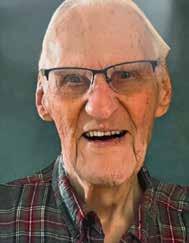
Carl Eckdahl
March 31, 1927–November 1, 2025
Born in Redwing, Minn., Carl spent his childhood on a farm. He came to know Jesus at a young age, and in 1944, at an evangelistic campaign, he committed his life to Jesus. He went on to attend St. Paul (Minn.) Bible College (now Crown College) and graduated in 1948. It was in his second year that he met Ione Driemeyer, and they were married on June 15, 1949. They both received a calling into missions in college.
Together they embarked on a journey of Alliance ministry in the U.S. in 1948 and then to Costa Rica in 1957. They were in Ecuador from 1958–1993. Carl ministered as a Bible teacher/director at the Seminario Bíblico Alianza in Guayaquil, Ecuador. The current library there was named after his labors: Bíblioteca Carlos Eckdahl. Carl and Ione influenced hundreds of people to know and serve God while at the seminary— from tiny rural churches, evangelistic outreaches, or large city churches where his students served. He partnered with missionaries and Ecuadorian nationals throughout Ecuador
Joyful Living Vibrant Faithful
Artful Healthy Fulfilled
At Shell Point® , you’ll enjoy a fulfilling lifestyle where you can explore, worship, learn, grow and even continue to serve. And with new additions to our campus, like Tribby Arts Center, a sparkling centerpiece for the arts, and the state-of-the-art Larsen Health Center, you can rest on a firm foundation, knowing that your needs will be taken care of – both now and in the future.
Unparalleled setting. Unparalleled lifestyle.™
Shell Point is located in Fort Myers, Florida, just minutes from the islands of Sanibel and Captiva.
training the national church to carry on the ministry.
In 1995, Carl and Ione were named Alumni of the Year at Crown College. Then on February 2, 1999, the Lord called Ione home. He met Peggy Kjersten in 2003 at a Bible study. They were married on September 13, 2003, and continued serving together for several more years.
Carl is survived by his sons David, Michael, and Paul; 8 grandchildren; and 26 great–grandchildren.
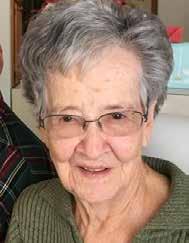
Margaret “Peggy” Louise Klodt
September 27, 1926–October 25, 2025
Peggy was born on a farm near Staples, Minn., as the youngest of three children. Raised in a strong Christian, home she committed her life to Christ at an early age and never wavered from her faith.
Always more of a tomboy, she much preferred working with her dad and brother out in the barn with the animals as opposed to helping her mom and sister in the house. Her favorite pet was a goat named Nancy that she had for over 10 years. She also
loved riding the big Clydesdale work horses. She attended a one-room schoolhouse where, for a while, there were only eight students, eventually graduating from Staples High School in 1944. She was a teacher in one room schoolhouses for three years before she met and married Archie Kjersten, who had just returned from fighting in WWII. They married in 1948 and settled in the Minneapolis/St. Paul area. Peggy worked for a telephone company doing customer support for 11 years before her first child was born. She then became a stay-at-home mom to raise their children. Always very social, she was very involved in church and the neighborhood.
When Archie passed away in 1997, Peggy started attending a neighborhood Bible study that was led by retired C&MA international worker, Carl Eckdahl. Six years later, when they were both 76 years old, they got married. She was thrilled to be part of the large Eckdahl family. Peggy enjoyed helping Carl with his visitation ministry, which they continued into their 90s. She is survived by children Loren and Rebecca; 5 grandchildren; and 8 great-grandchildren.
Your Senior Living begins at A ll iance Community
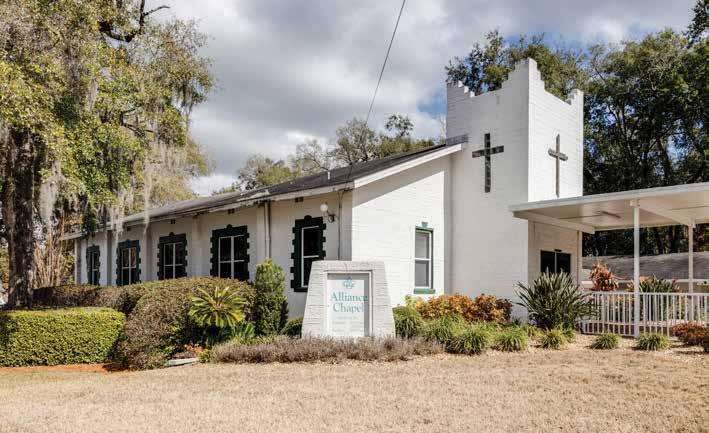
At Alliance Community in DeLand, Florida, we’ve been building a future for seniors for over 71 years—where meaningful connections and comprehensive care go hand-in-hand. Our forward-thinking, family-style approach, combined with full access to services and amenities—empowers every resident to create a lifestyle that reflects not only who they are today, but who they aspire to be tomorrow.
SERVICES
• Independent Living with homes, villas and apartments
• Assisted Living with all-inclusive pricing and private apartments
• 5-Star Rehabilitation Center
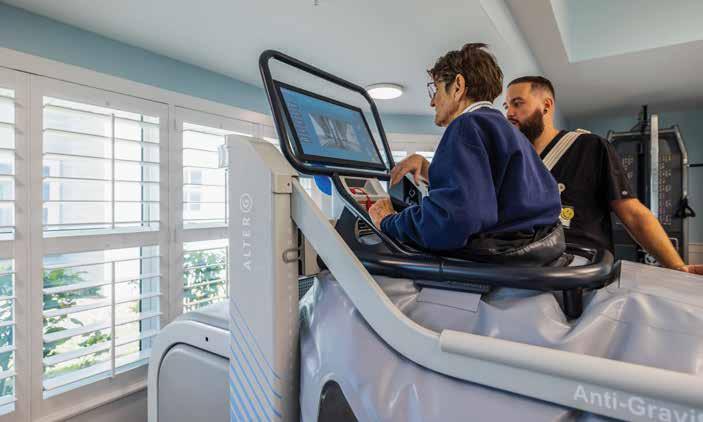
• 32 Rehabilitation Beds with Technologically Advanced Equipment like the AlterG Treadmill
• Wellness Program for Independent Residents
• Faith Based Activities and Chapel
• Heated Pool with activities provided by our Therapy Department
• Continuing Care Retirement Community with a LifePlan program for all stages of your senior years
Schedule a tour today to learn more!
Lois Jaan Yocum Long
February 18, 1942–September 19, 2025
Born in Warren, Ohio, Lois graduated from Champion High School and then went on to earn a bachelor’s degree from Nyack College (New York, N.Y.). She married Robert H. Long at North Mar C&MA Church on June 27, 1964. Lois worked as a missionary and teacher and led an after-school Japanese language program. She served for approximately 25 years with the C&MA in several locations in Japan, including Tokyo and Osaka.
She enjoyed babysitting, cooking, and flower arranging in her free time.
Lois is survived by her husband; daughter Lisa and son Nathan; and 2 grandchildren.
Sharon Lee Davis
February 28, 1940–October 29, 2025
Born in Omaha, Nebraska, Sharon was the eldest of seven siblings. At the age of 11, she committed her life to Jesus followed Him with an unwavering faith.
Her deep faith and love for learning led her to attend St. Paul (Minn.) Bible College (now Crown College), where she majored in Christian education and missions. While there, she met the love of her life, Ronald Davis, with whom she celebrated 61 years of marriage in 2025.
On June 6, 1964, they were married in Omaha and together built a partnership grounded in faith, compassion, and ministry. They had three sons together and served in various states before the Lord called them to serve at May Valley Alliance Church in Renton, Wash., in 1980. They served there for 27 years and continued to attend even after retiring.
Sharon truly loved helping others, and that is what led her to become a counselor. She decided to attend Seattle Pacific University in the mid-1980s to complete her master’s degree in community counseling. She became a licensed mental health counselor, and her warmth and empathy touched countless lives and reflected her belief in the inherent worth of every person.
Sharon is survived by her husband; sons Galen, Brian, and Kevin; 8 grandchildren; and 6 great-grandchildren.
Sharon “Sheri” Joyce Thomas April 19, 1951–October 10, 2025
Born in Euclid Ohio, Sheri lived a life marked by devotion to her faith and family. She attended Baldwin Wallace College (now Baldwin Wallace University) in Berea, Ohio, where she earned a BA in education and where she also met her husband, Toby, on a blind date. She went on to teach third grade in New London, Ohio, as she and Toby built a home on the family farm. When their first baby came along, Sheri chose to be a stay-at-home mom. Although she did not return to teaching, her passion for education and nurturing spirit left a lasting impression on countless students.
A woman of deep faith, Sheri accepted salvation while attending New London Alliance Church in New London, Ohio, and held onto her profound love for the Lord through all her health challenges. Her desire for others to find and grow in faith was evident in how she lived each day—with kindness, humility, and unwavering belief.
In addition to the people she loved, Sheri was enthusiastic about a few things in life: knowing and loving God, playing and watching golf, the Cleveland Guardians, and finding a cure for illnesses. As a survivor of breast cancer, she was an advocate for early and proactive detection. When she received news of her multiple myeloma diagnosis, she brought hope and tenacity to the fight. Her desire for others to find and grow in faith was evident in how she lived each day with kindness, humility, and unwavering belief.
As a young girl, Sheri was recruited to sprint in the junior Olympics. She was fast and had a fierce competitive spirit. She loved to outrun boys in her bare feet! She also loved playing and watching baseball. Sheri’s love for competition was apparent aways, whether playing euchre, pinochle, table tennis, or any activity where victory could be achieved. Of course, she passed this down to her children and grandchildren along with the wisdom of how to play and be a good sport.
Sheri is survived by her husband; children Trent, Danielle, and Kim; and 10 grandchildren.