
STAFF
Foundation Director
Jenny North
Director of Finance, Property and Investments
Hamesh Patel
Learning and Development Manager
Rosy Phillips
Proactive Programmes Manager
Nelly Koko-Konan
TRUSTEES
Susanna O’Leary (Chair)
Ola Opoosun (Deputy Chair)
Katy Cornish
Clare Evelyn
Tom Ingham Clark
Peter Jonas
Meredith Niles
Neel Patani
WHAT’S INSIDE

Open Grants Team
Laura Street (Head of Open Grants)
Jack Abbotts (Large Grants Lead)
Ayesha Tariq (Small Grants Lead)
Letizia Gambacorta (Grants Officer)
Catherine Godack (Grants Officer)
Team Coordinator
Giovanna Pasini
Dhruv Patel
Amir Rizwan
Hugo Robinson
Niki Scordi
Hugo Slim
Mary Ann Slim
Tom Stoddart-Scott
The Clothworkers’ Foundation (Reg Charity no 274100) First Floor, 16 Eastcheap, London EC3M 1BD
www.ClothworkersFoundation.org.uk
We’re on LinkedIn & Instagram (@ClothworkersFoundation).
ABOUT THE FOUNDATION

The Clothworkers’ Foundation was established, and endowed, by The Clothworkers’ Company in 1977. It exists to make grants and investments to charities and social businesses operating across our mission areas, and these are enabled by the management of our assets, and by generous donations from The Clothworkers’ Company.
Since 1977, we have distributed more than £194 million to organisations working for disadvantaged and marginalised communities across the UK.
OUR VISION, MISSION AND VALUES
VISION
An equitable society where all can participate and thrive.
MISSION
We support charities and social businesses that work with marginalised and disadvantaged people and communities, and those working towards a more equitable society.
VALUES
• Equitable – We work to promote equity in our grantmaking and organisation, and to identify and manage bias. We strive to increase participation and representation at all levels of our organisation to advance better decision-making.
• Adaptive – We strive to be responsive to the needs of our grantees and to listen to them as experts. We learn from them, from our peers and from our own experience, to drive improvements in our work. We adapt to external change when necessary.
• Enabling – We strive to provide funding and support that enables our grantees to be more impactful and sustainable, and which minimises burdens on them. We aim to empower our own team through flexible and trust-based ways of working.
• Collaborative – We seek to work with other funders, research organisations, and networks. We do this to serve grantees more effectively, to learn, and to share our learning with others to maximise our joint impact.

DIRECTOR’S FOREWORD
In 2025, we faced a real operational challenge, and turned it into a stronger strategic direction. Our Open Grants Programme, which funds capital projects for charities and social enterprises across the UK, has been seeing rising demand since 2023. Applications had more than doubled, putting pressure on our success rates, decision times, and budgets. We also knew this wasn’t unique to us, with many grantmakers experiencing the same trend.
Thanks to generous donations from The Clothworkers’ Company, our Trustees were able to increase our grantmaking budgets. This meant we could respond to some of that additional demand, but we knew we needed a more considered, longer-term approach as well. In 2025, we designed and launched our Impact Framework. It’s a simple scoring system, published on our website, that helps us prioritise organisations embedding lived experience into their decision-making, and projects that can drive meaningful change in delivery, reach, or sustainability.
Alongside this, we introduced a two-stage application process for some grants, and took time
to review every question we ask, making sure we’re only asking for what’s genuinely useful to our decision-making or learning.
Redesigning a grant programme while continuing to keep it running is a challenge, and it stretched our capacity. We didn’t pause our grantmaking during this time, and I’m really grateful for the Team’s and Trustees’ commitment to staying open. It also gave us a valuable opportunity to build on what we’ve learned over the first three years of our strategy, especially through our Equity Programmes.
Our Racial Equity, Economic Equity, and Disability Equity Proactive Programmes support organisations led by the communities they serve. The insight and experience from these programmes played an important role in shaping the Impact Framework and sharpening our impact goal for the Open Grants Programme: supporting organisations – led by and for their communities – to own and care for assets that help them thrive.
Our communities are facing significant political, financial, and environmental challenges, and we’re committed to investing in their security, strength, and resilience.
Almost a year on, we’re seeing that the Impact Framework is helping us manage demand, which we expect to remain high. As we move towards the end of our current strategy, we’ll be able to say more about the difference it’s making to what, and who, we fund.
Thank you for reading this report. I hope you enjoy finding out more about our work in 2025, and some of the organisations we’ve had the privilege of supporting.
Jenny North, Foundation Director
SUMMARY FINANCIAL REPORT 2025
Donations & Gifts (principally from The Clothworkers’ Company) ≈
(12%)
Investments & Rental Income
(88%)
2025EXPENDITURE
£12.61 MILLION
£11.1 MILLION
Grants (excluding recommitted funds) ≈ £10.36m (82%)
Costs of Generating Income ≈ £0.32m (3%)
Charitable Support Costs ≈ £1.93m (15%)
INCOMING RESOURCES
Donations and Gifts
Investment and Rental Income
Total Incoming Resources
RESOURCES EXPENDED
Costs of Generating Income
Charitable Expenditure Grants Support Costs
Total Resources Expended
Net (Outgoing)/Incoming Resources
Gains on Investment Assets
Net Movement in Funds
Fund Balances Brought Forward at 1 January
FUND BALANCES CARRIED FORWARD AT 31 DECEMBER
FIXED ASSETS
Tangible Fixed Assets
Social Investments at Cost Investments at Market Value
NET CURRENT ASSETS
Current Assets
Creditors – due within one year
Net Current Assets plus Fixed Assets
Creditors – due after one year Net Assets
RESTRICTED FUNDS Permanent Endowment
Endowment
Endowment
Investment Other Restricted Funds
UNRESTRICTED FUNDS Designated General and Other
424,655
3,691 70,517 128,190 1,613 424,655
The full report and accounts of The Clothworkers’ Foundation can be found on the Charity Commission website.
2,640 10,412 13.052 (283) (10,645) (1,679) (12,607) 445 29,101 29,546 350,556 380,102 1,974 335,790 51,073 (8,240) 380,597 (495) 380,102 71,743 131,013 452 2,911 61,018 110,944 2,021 380,102
GRANTMAKING: A CLOSER LOOK
OPEN GRANTS PROGRAMME
This is our largest programme, which stayed open throughout our 2025 redesign. We make hundreds of grants under this programme each year – they range in size from a few thousands of pounds to fund equipment or repairs, to £150,000 to contribute to significant construction and refurbishment projects.
We received 1,790
applications, an increase of 37% from the previous year (2024). We awarded 438 grants.
RESPONDING TO DEMAND
Inevitably, the hugely increased demand meant that the funding success rate for eligible applications fell, even as the number of grants we made stayed steady.
In 2025, the success rate for Small Grants (up to £15,000) was 31%. The success rate for Large Grants (£15,000 and more) was
22%. A combined success rate of 28% is a significant decrease on last year’s 47%.
As part of our redesign, we published an Impact Framework, new Application Guidance, and a new website to help us be as clear as possible about the types of applications we are most likely to fund. We plan to publish more insights for applicants in 2026.
You can read more about our Small Grants on page 14.




PROACTIVE GRANTS
Proactive Grants are developed in line with our strategy and are not open to applications.
EQUITY PROGRAMMES
In 2025, we completed building our Disability Equity Programme – meaning all three Equity Programmes have launched, following Racial Equity in 2023 and Economic Equity in 2024. These programmes have
made three-year, unrestricted grants to support the strategic development of organisations working to advance equity in each of these respective areas.
Each of the programmes has a Learning Partner commissioned to work alongside grantees, supporting their learning and ours. Reporting under these programmes is frequent and conversation-based, allowing us to build trust and insight over time. As set out in the Director’s Foreword, our experience of grantmaking on these ‘equity’ themes is influencing
2025GRANT DISTRIBUTION
£10.61 MILLION
our wider programmes.
Our Disability Equity Programme focuses on organisations run by and for Deaf and Disabled People, as well as organisations that provide the infrastructure for Disabled People’s campaigning and advocacy work. You can read more on page 18.
GRANTS FOR GRANTS
In 2025, we completed the redesign of our long-standing ‘Regular Grants’ portfolio. It now aims to provide multi-
Clothworker Members’ Fund ≈ £0.14m (>1%)
Research, Development & Partnerships
£0.08m (<1%)
Grants for Grants
£0.61m (6%)
Proactive Programmes
£1.13m (11%)
Open Grants (Large and Small)
£8.65m (81%)
GRANTMAKING: A CLOSER LOOK (CONTINUED)
year ‘grants for grants’ to organisations making onwards grants to individuals experiencing economic or other disadvantage. Support for individuals has deep roots in livery company philanthropy, and this giving allows our funding to reach those we otherwise couldn’t, and support those organisations that are experts in this area.
You can read more about our Grants for Grants on page 22.
RESEARCH, DEVELOPMENT AND PARTNERSHIP (RDP)
This small fund allows us to explore initiatives and organisations that are not eligible for our strategic programmes, but where we believe there is potential to develop our knowledge and impact. We are long-term supporters of the Funders for Race Equality Alliance and IVAR’s Open & Trusting initiative under this fund, and we complete audits of our grantmaking data and our approaches in partnership with both of these organisations.
SPOTLIGHT: UNIT 38
This year, we funded Unit 38 for the second time. Unit 38 is an
architects’ collective that supports community-led projects in building, managing, and collectively owning assets. It works with constituted and unconstituted groups across the UK to develop architectural and business plans, set up governance structures, find funding, and negotiate with landlords and local authorities.
Through Unit 38’s work, we are learning more about the support needed by community organisations to make capital projects a success. This information directly impacts our approach to the Open Grants Programme, particularly in understanding the work small organisations have done before they are even able to make an application to us.
In 2025, our RDP fund also allowed us to make Wellbeing Grants to 10 recipients of the Open Grants Programme in the same year. Our own grantee monitoring and our conversations with our Equity Programme grantees helped us develop an awareness of the impact running small charities and social businesses can have on leaders and teams – as they deal with rising demand, diminishing funding, and sometimes a hostile environment for their work. These grants were
particularly aimed at small, community-led organisations taking on large projects.
Our £5,000 Wellbeing Grants don’t solve those problems, but they allow us to show we value the people behind the work, and that we believe there should always be some funding available to be directed towards staff support and development, fun, and time away from the frontline.
SOCIAL INVESTMENT
We completed two new social investments in 2025, adding to our small portfolio of investments in funds, equity investments, and direct loans to organisations. We consider social investment opportunities in line with our mission, and where we believe that repayable finance could meaningfully improve the reach, impact, and sustainability of a venture or ventures.
SPOTLIGHT: ALPHA GROVE
We were delighted to complete a loan to Alpha Grove Community Centre. In 2022, we provided the organisation a grant of £150,000 to refurbish its toilets and showers. This project had a transformational
“
[SOCIAL INVEST-
MENT] SUPPORTS
LONG-TERM FINAN-
CIAL RESILIENCE, NOT JUST DELIVERY.
[Alpha Grove]
impact on how the centre was used (increasing occupancy from 30% to 80%). Alpha Grove is the last pre-war building on the Isle of Dogs, and the centre is wellused by the area’s diverse communities. Following the successful refurbishment, the organisation’s trustees began to plan a more ambitious reconstruction and regeneration project to fully realise the centre’s potential.
We have provided a loan of £500,000 to allow Alpha Grove to undertake this work, alongside further investment of £250,000 from The City Bridge Foundation. Ugo Ikokwu, who grew up in sight of the centre and is now the organisation’s Chair, said:
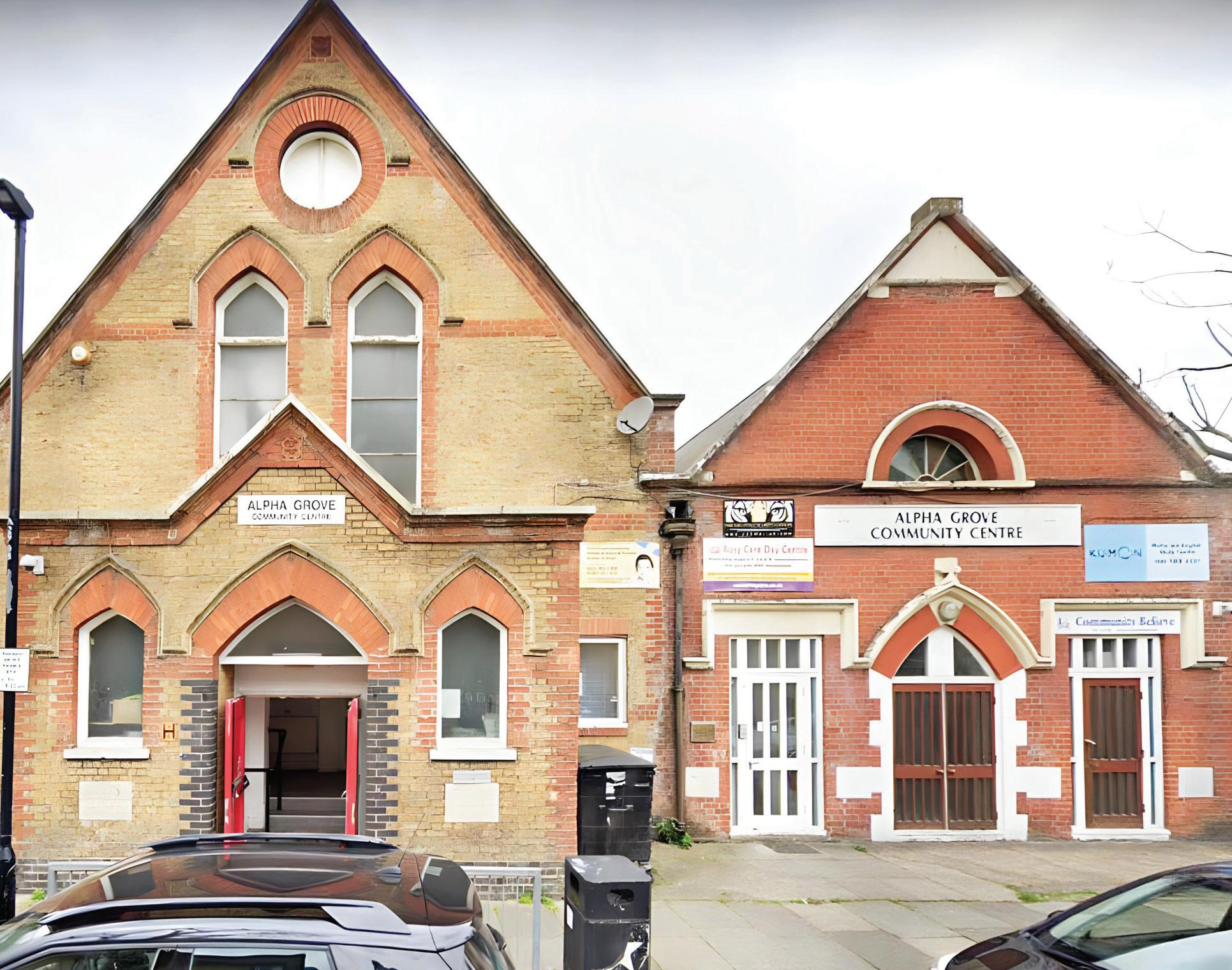
‘Alpha Grove is already a muchloved community space, and this project will allow us to do more for local people – welcoming more residents, hosting more activities, and generating reliable income to sustain the centre long term. We sought part of the funding as social investment because it supports long-term financial resilience, not just delivery, and allows the centre to grow its own income while remaining rooted in community use.
‘Clothworkers’ support has evolved alongside the project, from an early grant that helped us get started to social investment that’s enabling delivery at scale. That continuity of partnership has made it possible to plan with confidence, and turn ambition into something
real and lasting.’
SPOTLIGHT: SOCIAL TECH VENTURES FUND
We have agreed a £250,000 loan to the Social Tech Ventures Fund. This new fund will back technology startups that tackle social and environmental challenges, while prioritising revenue generation. The Fund will invest at pre-seed and seed stages, providing flexibility in meeting founder needs and different growth paths. It will target overlooked, impactled ventures underserved by traditional early-stage funding. We are investing alongside Friends Provident Foundation, Barrow Cadbury Trust, The Linbury Trust, and The Social Tech Trust.
GRANTS FOR HOUSING SPOTLIGHT:
For a funder with a mission to support marginalised and disadvantaged individuals and communities, housing is an unavoidable issue. People on low incomes and those experiencing discrimination face unaffordable rents, insecure tenancies, poor housing quality, and homelessness.
For those who end up homeless or in temporary accommodation, jobs become impossible to maintain, health declines, and children’s education suffers. For others, they may find themselves unable to even rent in the communities they work, or where their friends and families are nearby.
Conversely, secure affordable housing can be the first step on the route to stability for individuals as well as families, and serves as a cornerstone of flourishing communities.
In this section, we shine a light on the many ways we support organisations using housing to improve lives and strengthen communities. These examples come from across our programmes.
OPEN GRANTS: LATCH
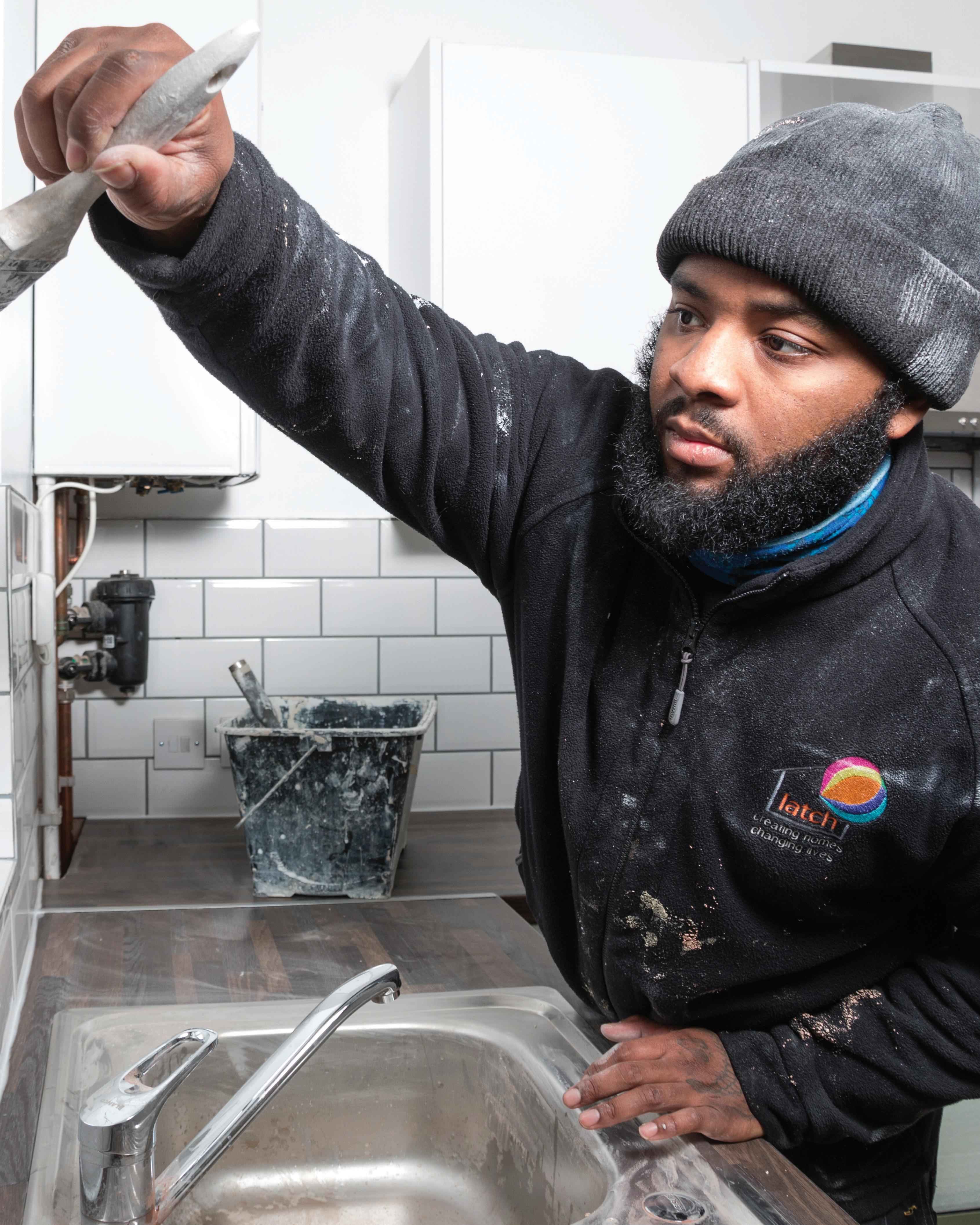
Leeds Action to Create Homes (LATCH) turns unused properties into affordable, supported homes for people experiencing homelessness. The charity acquires empty and derelict houses, renovates them for energy-efficiency, and turns them into homes again. The houses are let as affordable homes for those in need, with expert support provided to help people maintain their tenancy and move back towards independence.
Unemployed volunteers and trainees participate in the renovation work, gaining construction skills and experience.
In 2025, we provided £100,000 towards the refurbishment of six longterm derelict houses –providing stable homes for those who need them, improving neighbourhoods, and providing training opportunities for 24 people.
OPEN GRANTS: HAPANI
Horn of Africa People’s Aid
North Ireland (HAPANI) is a charity supporting refugees and asylum seekers resettling in Northern Ireland. It provides emergency aid to those living in destitution, as well as English classes and access to education support. Beyond this, the charity partners with public services and the voluntary sector to foster integration, and longterm self-sufficiency for refugees.
Northern Ireland has a shortage of social and private market rentals – refugees and asylum seekers struggle to find accommodation, exacerbated by anti-immigration hostility and the unaffordability of deposit costs. To address these issues, HAPANI has set up a community-led housing subsidiary. Initially, the subsidiary acquired three properties that are let to refugees at affordable rents, and without the requirement for a guarantor or deposit.
In 2025, we provided £125,000 towards the purchase and refurbishment of another three empty properties, creating
SPOTLIGHT: GRANTS FOR HOUSING (CONTINUED)
more homes for those that need them.
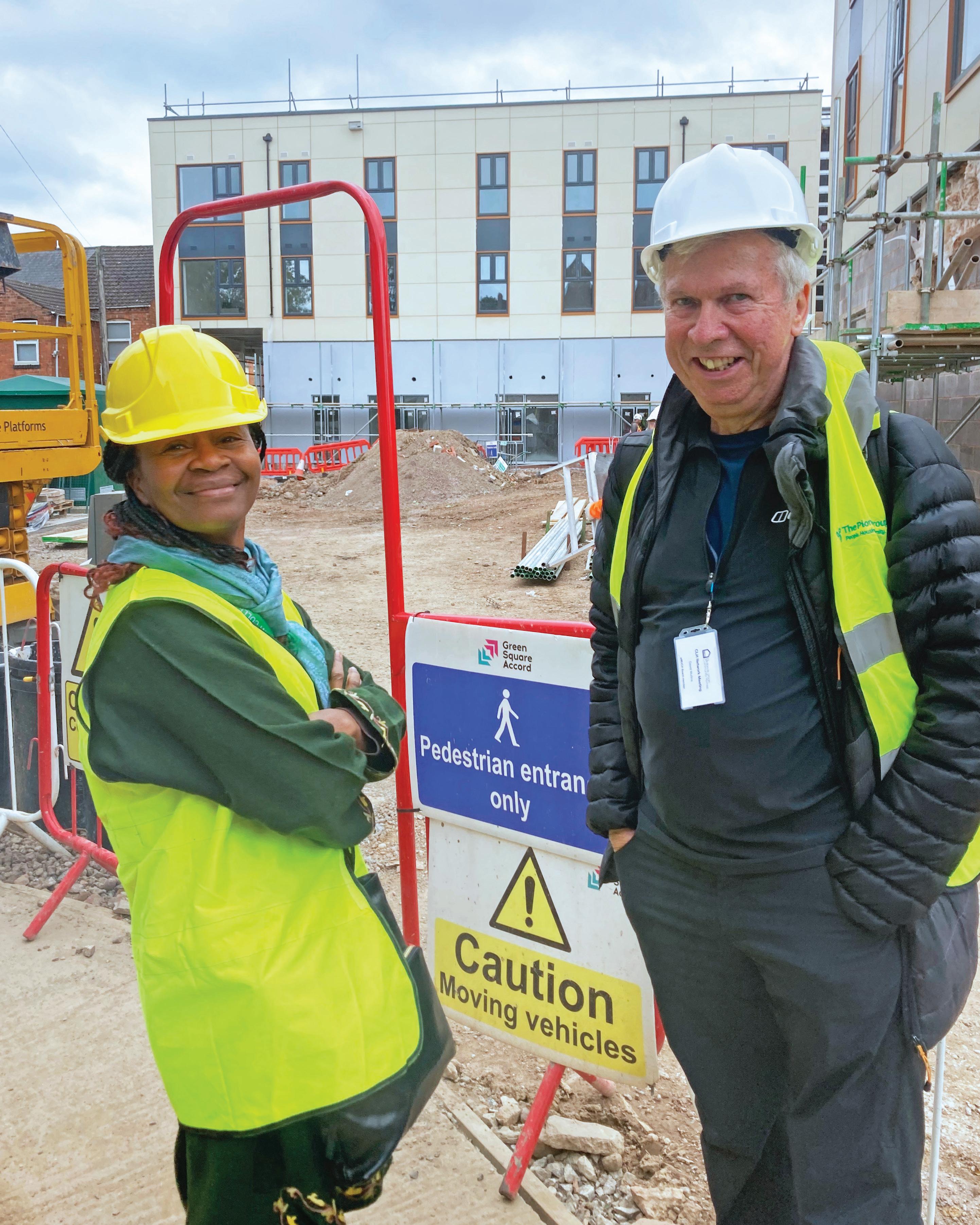
PROACTIVE GRANTS: WMUCH
Community Land Trusts (CLTs) are a tried-and-tested democratic structure by which communities may own and build on land that the private and public sectors might overlook, creating houses in perpetuity for local people.
But community groups still need the same professional and technical skills as any other house builders require. West Midlands Urban Community Housing (WMuch) is funded under our multi-year
Economic Equity Programme, and it provides the support for CLTs and other communityowned groups to build and own housing long term all over the West Midlands. The organisation has supported more than 85 homes to date and has a pipeline of more than 120.
RDP GRANTS: UNIT 38
Funded under our Research, Development and Partnership Programme, Unit 38 collaborates with groups at risk of displacement and in insecure housing, such as lowincome residents, migrants, and renters.

In partnership with communities, as well as landowners and local authorities, Unit 38 designs and shapes housing projects that prioritise affordability, collective ownership, and long-term stability. Unit 38 uses participatory design and co-research methods to allow residents and potential residents to take an active role in developing new housing or improving existing housing. This includes co-designed retrofit plans for housing estates that lead to insulated homes for residents, improving health and reducing energy use and bills.
Previous page: LATCH volunteer helps decorate a home.
This page and facing page: The Stirchley Co-operative Development (Birmingham). The £6.6 million, community-led initiative is supported by WMuch. Aimed at providing 39 affordable homes and three commercial spaces for local cooperative businesses by the end of 2026, the building is designed with eco-friendly features and includes common garden spaces for residents.
SMALL GRANTS
Under our Open Grants Programme, Small Grants (up to £15,000), are designed to get relatively small amounts of capital funding into the hands of small charities.
Since its launch in 2006, it has prioritised responsiveness and accessibility, offering a singlestage application process and making decisions within 12 weeks. Only organisations with an income under £2 million are eligible, as we want this funding to strengthen the infrastructure of smaller charities – helping them become more sustainable, engage more people, and better support their staff and volunteers.
In 2025, demand surged. Applications had increased by 176% since 2022, reflecting both a tougher funding environment and the rising need across the sector. In response, our Small Grants budget was increased to £2.65 million, and we awarded 312 grants.
As set out elsewhere, we also introduced our Impact Framework across the Open Grants Programme, placing greater emphasis on
organisations that embed lived experience in their leadership and on projects that drive meaningful organisational change. This shift is allowing us to deal with demand while also enabling us to target those organisations led by and for those they serve, and pursuing projects that support a change in recipients’ impact, reach, or sustainability.
Despite these changes, funding continues to span diverse organisations, communities, and geographies – as the data below shows.
• Nearly 25% of grants went to charities with an income of £50,000 or less.
• 41% of grants awarded were between £7,500 and £12,500.
• London received the highest number of grants, but funding reached organisations in every region of the UK, with increased awards in Northern Ireland.
• 27% of Small Grants went to digital infrastructure projects.
• 59% of organisations were meeting immediate
needs for disadvantaged and marginalised communities – including advice provision, day services, food banks, and befriending. The remainder were supporting longer term outcomes in areas such as youth work and employment support.
• Organisations supporting Disabled People received the most grants, followed by those working with minoritised communities, people facing economic disadvantage, and disadvantaged young people.
Our two case studies demonstrate the big impact of these small grants for recipients and their communities.
FORT-4-YOUTH FOUNDATION
Fort-4-Youth is a new organisation supporting young people from migrant backgrounds, or those who are asylum seekers, in Kent. These young people are often socially isolated and dealing with stressful situations – but cannot access mainstream
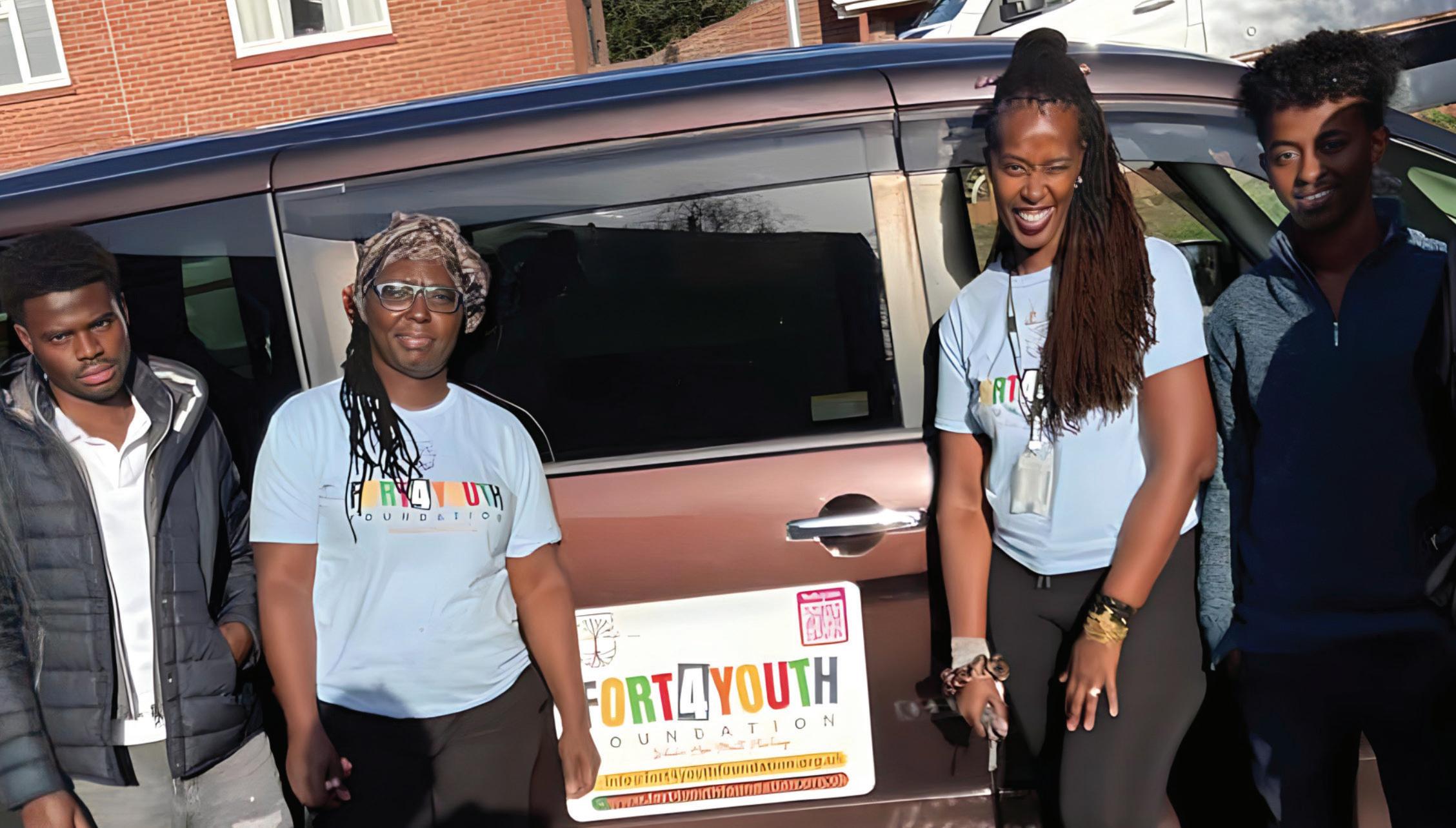
services due to low income, language barriers, or lack of transportation.
The foundation provides culturally aware one-to-one counselling, group therapy, peer mentoring, and family workshops. In 2025, more than 180 young people accessed its services. These activities facilitate better mental health and wellbeing, build confidence, and support skills development that enables improved integration.
Poor public transport links between towns in Kent and the unaffordability of buses and trains for young people meant that too many weren’t able to access the support that Fort4-Youth provides. The charity is now providing support to young people that enables them
to join one-to-one and group services – facilitated by our grant of £15,000 for a minibus. When young people living in care transition into independent living, the minibus is used to help them move into new accommodation.
PAN INTERCULTURAL ARTS
Pan Intercultural Arts serves people rebuilding their lives after trauma, violence, and abuse. The main groups it works with are survivors of trafficking, young refugees, and young people at risk of being victims, or perpetrators, of crime. These experiences make individuals fearful and anxious, unable to fully participate in life and the wider community.
Pan Intercultural Arts uses music, drama, creative writing,
and visual arts to build safe spaces where people can express themselves, make connections, build skills, and develop their confidence. The majority of the organisation’s facilitators are previous programme participants.
One service user said, ‘Pan gave me the spark I needed to continue my life.’
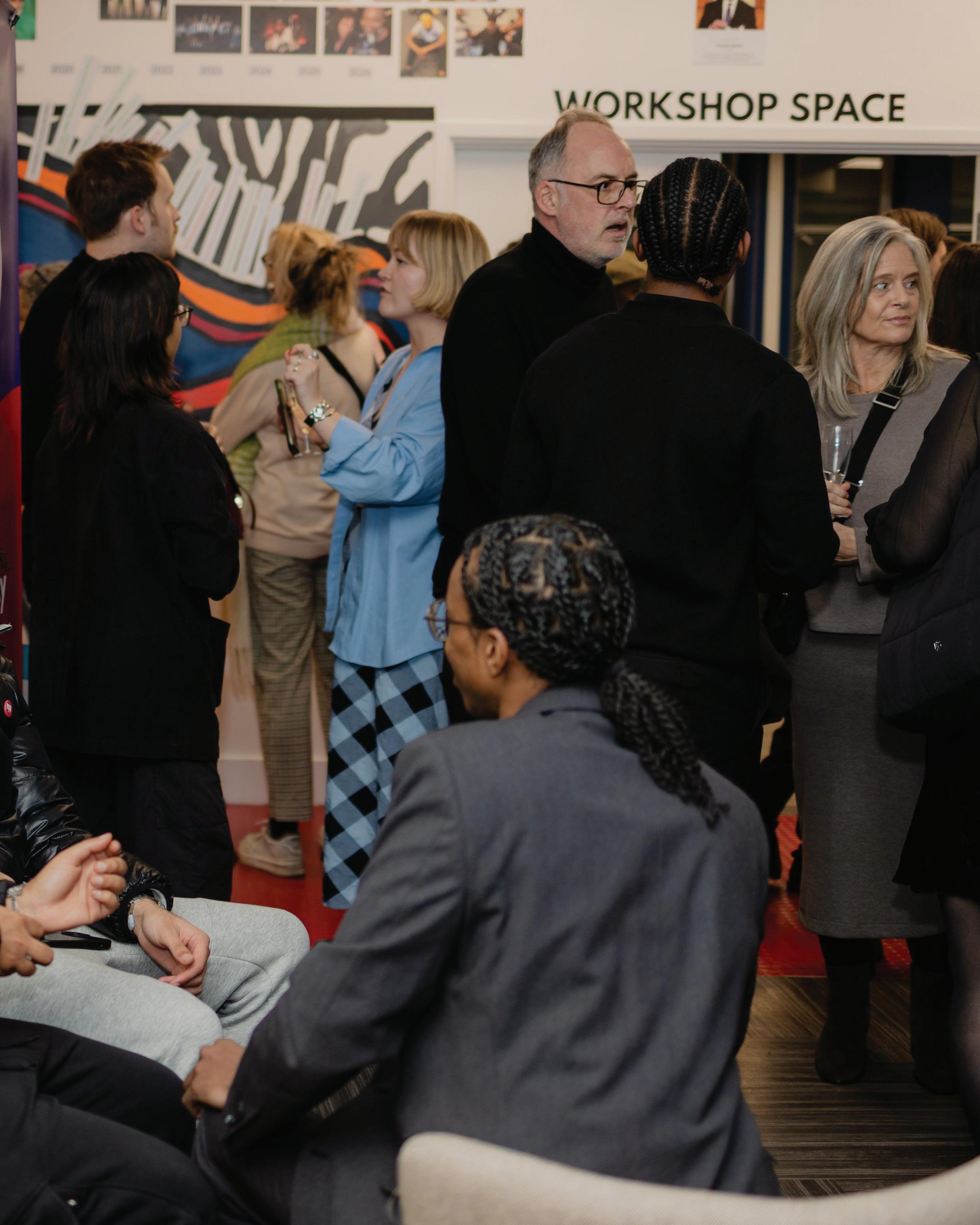
In 2025, the charity moved to its own permanent base in Lambeth for the first time. Our £10,000 grant helped free it from renting unfriendly, unsuitable spaces that were difficult for participants to access (either hard to get to or inconsistently available). The new space was designed for and by the charity and its users, and will enable the organisation to double delivery over the next four years.
“
THE DOORS ARE OPEN! THIS IS OUR NEW PAN CENTRE — A PLACE FOR CREATIVITY, COMMUNITY, AND CONNECTION ... A BUILDING IS NEVER JUST BRICKS AND FURNITURE — IT IS PEOPLE.
AS WE SETTLE INTO THIS NEW HOME FOR OUR COMMUNITIES, WE WANT TO SAY A HEARTFELT THANK YOU TO EVERYONE WHO GAVE THEIR TIME, SKILL, AND GENEROSITY TO MAKE THIS POSSIBLE.
Facing page: The new Pan Intercultural Arts Centre, filled with local community members for an event. Courtesy of Joanna Nicole Photography.

[PAN INTERCULTURAL ARTS]
DISABILITY EQUITY SPOTLIGHT:
As part of our 2023–27 strategy, the Disability Equity Programme provides multi-year core funding to help organisations implement or adapt their strategies and strengthen their operations.
Historically, a significant proportion of The Foundation’s funding has been distributed in support of Disabled People. However, to date, the majority of our grants have been made to organisations working for, or on behalf of, Disabled People.
The Disability Equity Programme reflects our growing awareness that disability discrimination intersects with other forms of injustice, affecting the participation and inclusion of Disabled People across society. This programme reinforces our commitment to engage with and fund organisations that are led by people with direct lived experience of the barriers their work seeks to tackle – a theme also of our Racial and Economic Equity Programmes. These factors led us to focus the programme on Deaf and Disabled People’s Organisations (DDPOs).
We developed the programme in two phases. As we finalised
the programme strategy, the Alliance for Inclusive Education (ALLFIE) was the first to join our programme portfolio, and then delivered two Disability Justice Workshops for our Grants Team.
Our further research into the sector led us to organisations working on specific issues within Disability Justice, and servicing specific communities, but also to the crucial, and underfunded, infrastructure organisations that can support wellbeing, inclusion, and advocacy across systems for all Disabled People.
Over the next three years, The Clothworkers’ Foundation will fund ALLFIE, Deaf and Ethnic Women’s Association (DEWA), Disability Wales/Anabledd Cymru, and Inclusion London. The Disability Equity Programme will be supported by learning partner Disability Rights UK.
All these organisations are anchored in the Social Model of Disability and the principles of Disability Justice.
ALLFIE
ALLFIE was co-founded in the 1990s by a small group of like-
minded individuals. One of those individuals was Micheline Mason: a Disabled woman who had been denied the right to go to school, and who did not want her Disabled daughter to experience the same educational segregation. Initially, this early work focused on bringing parents of Disabled children and Disabled People together, helping children and young Disabled People to access mainstream schools.
Since this early period, ALLFIE has campaigned for the removal of systemic barriers in teaching, learning, and assessment, and for representation in the curriculum, policies, and legislation. In particular, it campaigns for the complete desegregation of education for all Disabled People.
Today, ALLFIE is entirely led by Disabled People. Leading the lobby for change in Inclusive Education as a right for all, the charity promotes a wider understanding of the benefits of Inclusive Education for all students, not just Disabled children and young people, including individuals labelled as having ‘special educational needs’. ALLFIE promotes Inclusive
SPOTLIGHT: DISABILITY EQUITY (CONTINUED)
Education across the education sector from early years, schooling, further, higher, adult and continuing education as a human rights and social justice issue.
DEWA
Deaf Ethnic Women’s Association (DEWA) was originally established, in 1992, as the Asian Deaf Women’s Association. It was created in response to a lack of services for Asian Deaf women who use sign language, as well as to address the need for culturally and linguistically appropriate support.
Over time, the organisation transitioned to serving a wider range of women, and it still serves a socially-excluded and often-overlooked community. DEWA creates safe and accessible spaces where Deaf ethnic women can connect and grow, providing services that include one-to-one support, workshops, community activities, and programmes that build confidence and resilience.
DISABILITY WALES
Disability Wales (DW), also known as ‘Anabledd Cymru’, was established in 1972 and registered as a limited
company in 1986. In 2003, its members voted for the organisation to be run and controlled by Disabled People and to formally adopt, and advocate for, the Social Model of Disability. Its constitution requires that all its directors identify as Disabled People. Full voting membership is reserved to Disabled People’s Organisations (DPOs) that are constitutionally run and controlled by Disabled People. This representative governance ensures that lived experience remains central to the organisation’s work.
The organisation is the Welsh national membership body of Disabled People’s Organisations, striving for the rights of all Disabled People whose vision is an inclusive, equitable, and barrier-free society. DW’s activities include championing the Social Model of Disability, campaigning to influence public policy, and community building for DPOs through working together to develop knowledge, skills, and networks. Acting as a link between Disabled People, policy makers, and the wider public, DW ensures that the lived experience of Disabled People informs and influences decisionmaking at all levels.
INCLUSION LONDON
Inclusion London is a Deaf and Disabled People’s Organisation (DDPO), established in 2008. It is a capacity-building membership organisation for other DDPOs across London, run and controlled by Disabled People from across impairment groups. Inclusion London’s 80plus members serve more than 70,000 Disabled People annually.
Today, Inclusion London promotes Disabled People’s equality and inclusion via disability equality and justice campaigns, as well as policy work in London and on a UK-wide level. It also provides accessible training, support, and peer networking opportunities to help DDPOs deliver effective and inclusive services, collaborate together, and establish a strong and influential collective voice on issues affecting the communities they are serving.
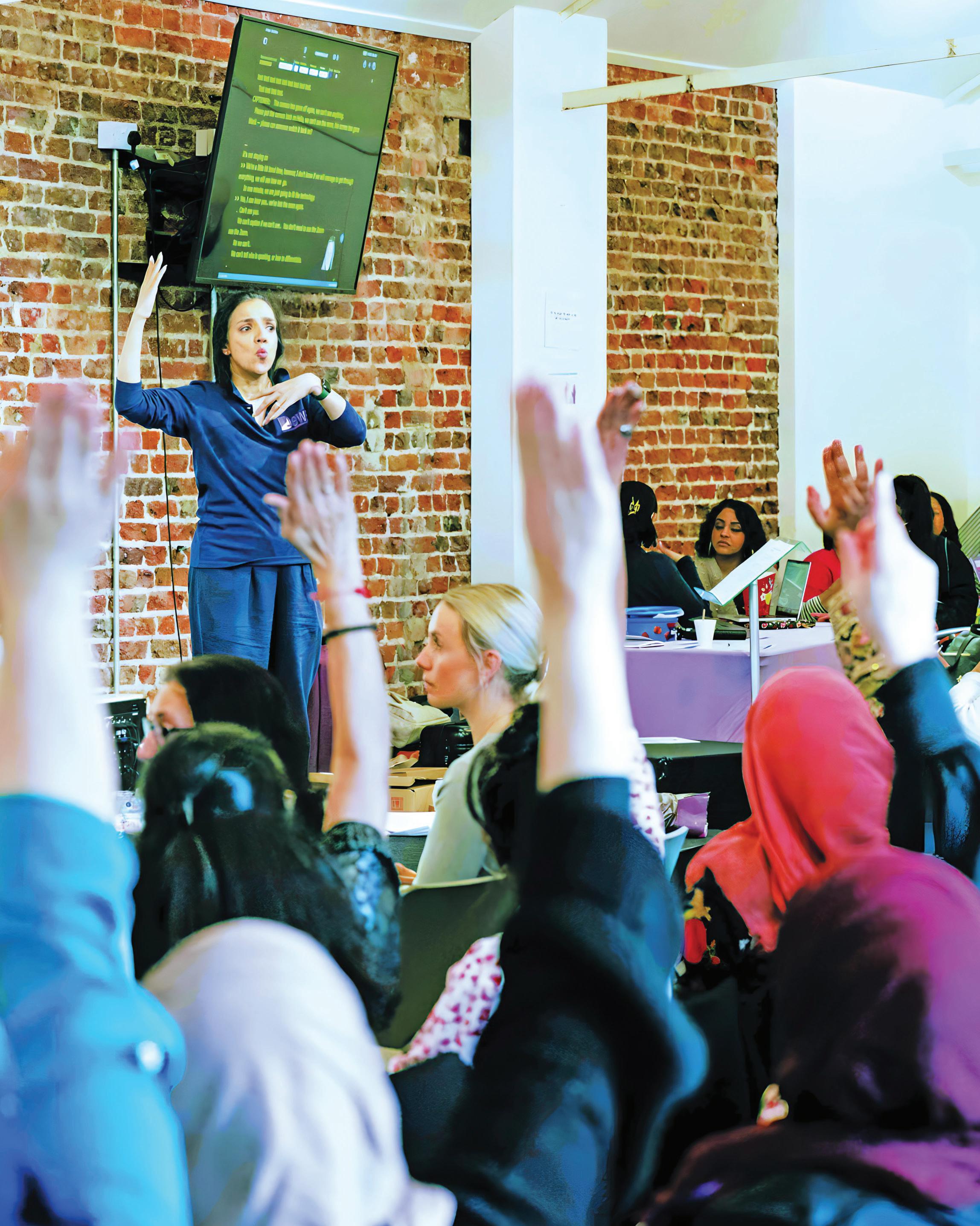
Page 20: International Women’s Day event with Deaf Ethnic Women’s Association (DEWA).
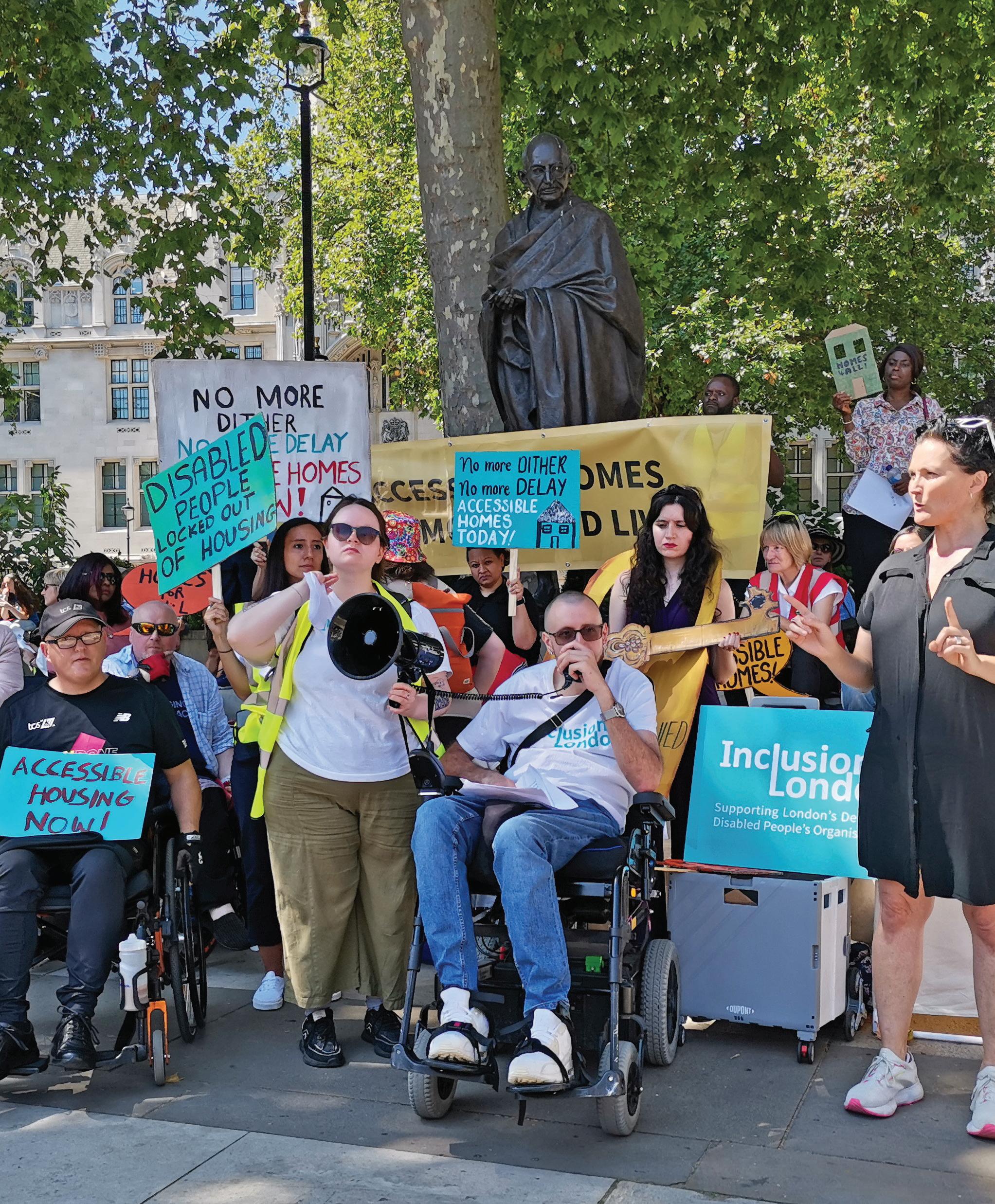
Page 23: Inclusion for London, campaigning for more accessible housing. Photo courtesy of Natasha Hurst Photography.
GRANTS FOR GRANTS
Awarding grants directly to individuals is one of the oldest forms of philanthropy, especially embedded within livery companies and their charities. Today, we retain it as one of the ways we achieve impact, but now we deliver it in partnership with organisations that have expertise in the needs of those individuals.
The organisations we fund reach their grantees in a variety of ways, often with non-financial support and help alongside the grants. Grants can meet immediate
needs, or support individuals to study or train for the future.
In 2025, we provided ‘grants for grants’ support for people with vision impairment, care leavers, those leaving prison, Learning Disabled People, children and families living on low incomes, older people facing disadvantage, and refugees. We aim to make multi-year grants wherever possible, and to include overhead costs where needed. In some cases, we have been giving to the
same organisations for more than a decade.
BUTTLE
Buttle improves the lives of children and young people experiencing financial hardship and crisis. It provides targeted grants, often for essential items – such as beds, household appliances, school equipment, or safe housing improvements – to families and young people whose wellbeing, education, or development is at risk.
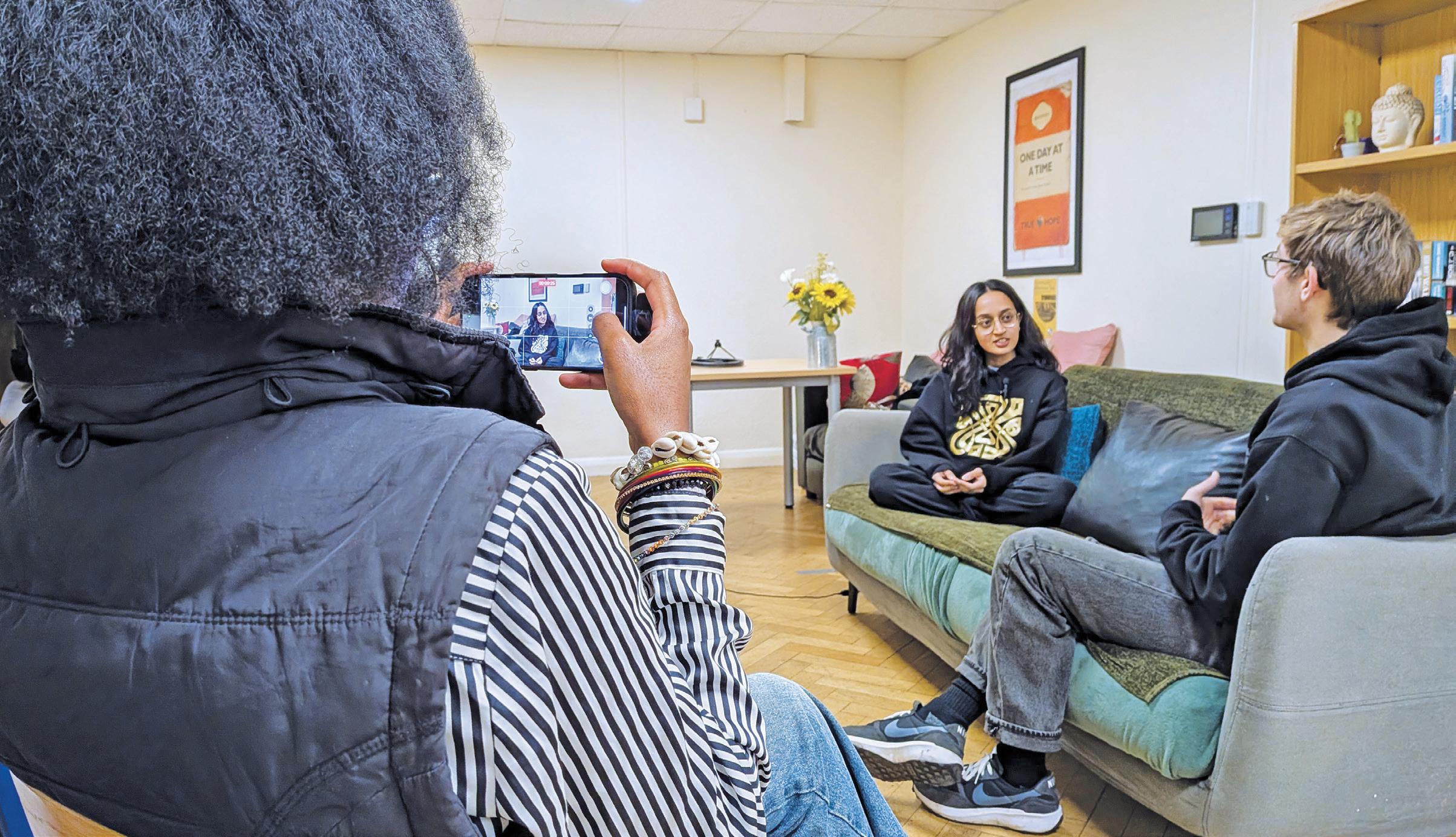
Page 24: A member of Buttle’s Youth Advisory Panel interviews another young person for the charity’s co-produced Estranged Young People report.
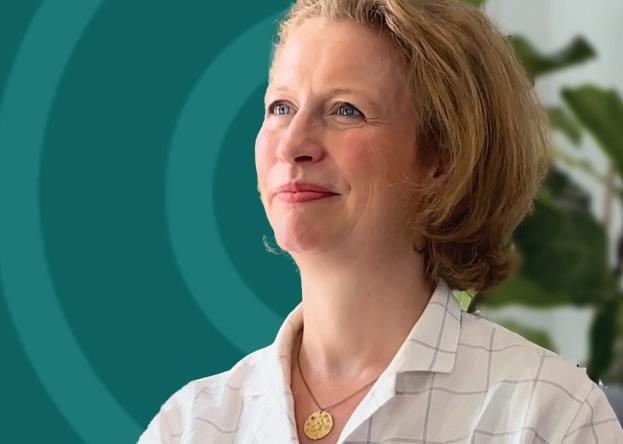
Page 25: Portrait provided by Friends of the Elderly, where our grants for grants are supporting older people experiencing financial hardship.
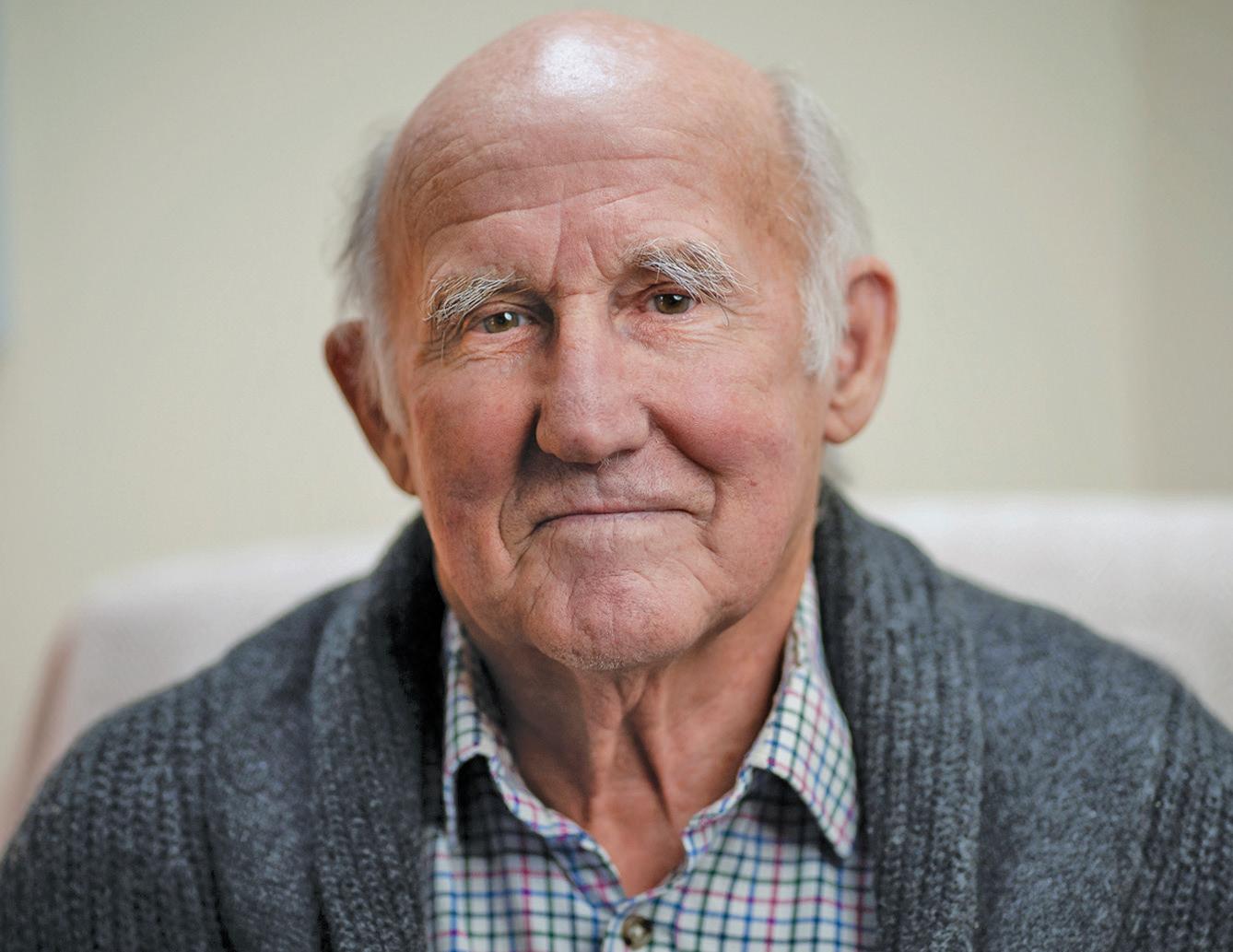
Our funding of £120,000 (over three years) supports the charity’s Chances for Children Grants programme, which provides individual grants of up to £2,400 to more than 2,000 families a year.
By working closely with frontline professionals such as social workers and support organisations, Buttle ensures its funding is applied where it can have a direct and measurable impact on vulnerable individuals’ stability, wellbeing, and opportunity – providing them with the essentials they need to feel included, capable, and hopeful about their futures.
FRIENDS OF THE ELDERLY
Friends of the Elderly supports
older people experiencing loneliness, financial hardship, or poor health. Its grants to individuals help them ‘live well in later life’, maintaining independence and covering essential household bills and more. This financial support is offered alongside companionship initiatives and community services – a combination designed to bring security, dignity, and quality of life to vulnerable older people across the UK.
Our £120,000 funding (over three years) supports the more than 700 grants the 120-year-old charity distributes annually.
SETTLE
Settle has been helping London’s
care leavers make successful transitions into settled, independent accommodation and avoid homelessness since 2015. The organisation supports vulnerable young people with tenancies and money management, but also with their wellbeing as they live alone for the first time (without family support to fall back on).
Care leavers are often in need of financial support for household items – as well as sometimes for urgent needs like food or energy costs. Our funding of £100,000 (over three years) allows Settle to offer this financial support when young people need it. We also provide funding for smallbut-meaningful experiences like cinema trips or meals out to support wellbeing and joy.
“
SETTLE ARE REALLY GOOD; THEY GET THINGS DONE AND FOLLOW THROUGH. THEY ARE UNDERSTANDING AND FLEXIBLE ... IT’S HELPED ME EVEN MORE THAN I THOUGHT IT WOULD.
[SETTLE GRADUATE]
Facing page: This image was taken during one of Settle’s coaching sessions. These sessions are flexible and led by the young person, helping them develop their own strengths and overcome systemc barriers.




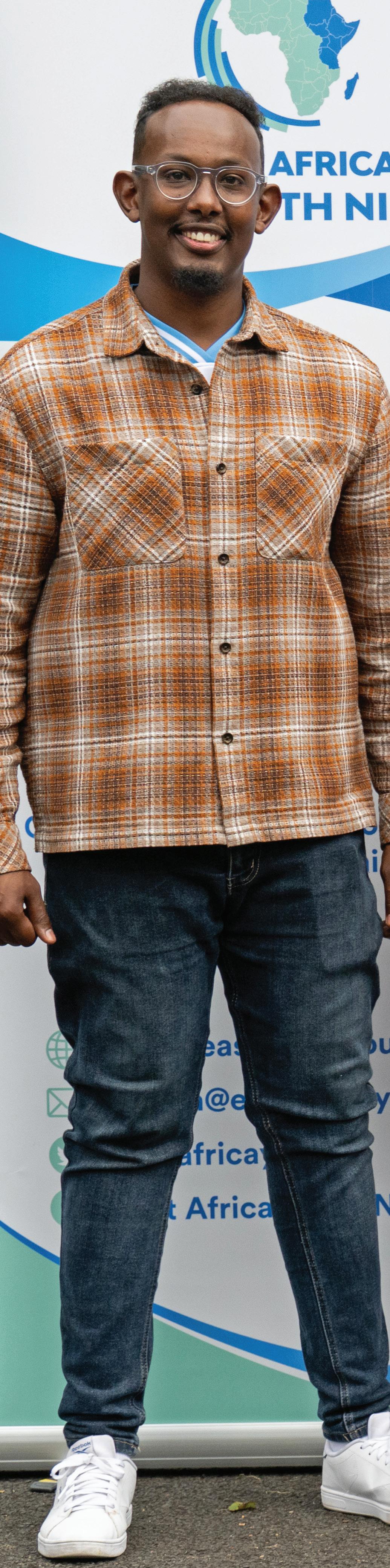
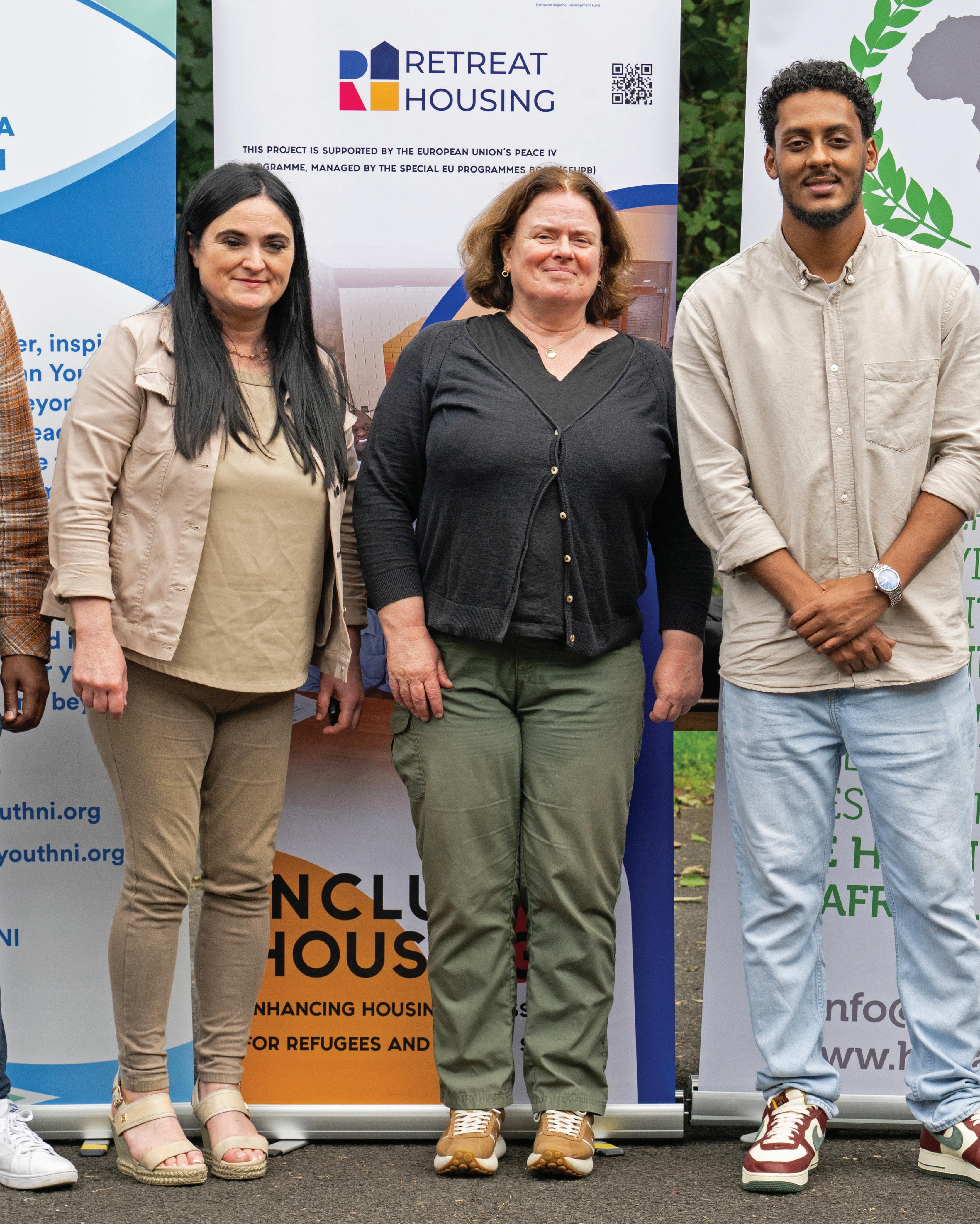
Inside Cover: Photo of summer event from Open Grants recipient HAPANI (a charity supporting refugees and asylum seekers resettling in Northern Ireland). Read more on page 10.
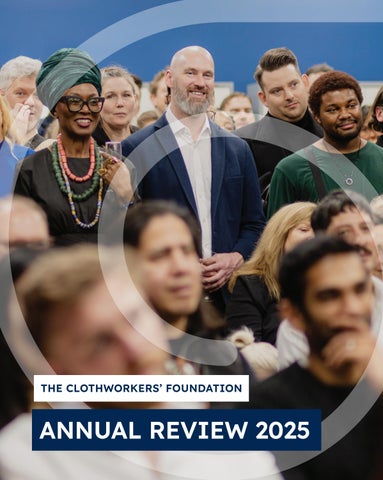
Cover image: Photo from Open Grants recipient Pan Intercultural Arts (a charity serving people rebuilding their lives after trauma, violence, and abuse), during the opening of its new community centre. Courtesy ofJoanna Nicole Photography. Read more on page 14.