Clinique La Prairie Waste Management Guidelines
CLP Resort - Handbook

CSR, 2024

INTRODUCTION
As part of its Sustainability Strategy, Clinique La Prairie SA (CLP) is committed to advancing toward a circular economy philosophy. The first step involves taking control of and organizing waste management with heightened awareness. To this end, CLP has decided to introduce a document outlining the fundamental waste management measures to be implemented at each CLP Resort.
This document consists of mandatory operational and reporting guidelines.
1. GENERAL DESCRIPTION
Waste management is a critical sector for ensuring safety, quality, and sustainability. Therefore, CLP asks for its partner to closely monitor the waste division, its logistics and its quantities.
1.1. Relevant sectors for Clinique La Prairie
Due to its four pillars, Clinique La Prairie Resort engages in numerous activities that generate various types of waste. These can be categorized into four main sectors.
Housekeeping & office sector: Refers to conventional household waste that requires recycling for certain materials.
Food & Beverage: Refers to logistical aspects in food service, including food storage, recycling, and the management of reusable packaging.
Technical & electronics sector: Involves complex materials that may contain batteries and toxic substances. This sector also includes bulky waste that could emerge from renovation.
Medical & pharmaceutical sector: Involves specific logistics to ensure compliance with hygiene and security standards in medical centers.
1.2. Type of waste in Clinique La Prairie
The variety of waste can be distinguished in 6 types:
» Type 1 - Incinerable
» Type 2 - Recyclable
» Type 3 - Organic
» Type 4 - Confidential paper
» Type 5 - Hazardous Chemicals
» Type 6 – Medical

2. INSTRUCTIONS
2.1. Storage Instructions
Each type of waste has a proper method for storage, management, and transport. Based on Swiss legislation, the following main restrictions must be respected by CLP. Please follow these guidelines as closely as possible, in accordance with your local legislation. If any adaptations are necessary, please make sure to highlight, justify, and describe them to the CLP CSR Department.
Type 1 –Incinerable:
Type 2 –Recyclable:
Type 3 –Organic:
- Characteristics: Any non-dangerous urban waste that cannot be valorized. This type of waste needs to be incinerated.
- Preferred valorization method: Work with a company that reuses energy from incineration.
- Forbidden method: Bury the waste.
- Characteristics: Any non-dangerous urban waste that can be recycled. Some materials can be sold or processed without charge, as they can be reused as raw materials for other industries.
- Preferred valorization method: Work with waste management partners that are transparent with the life cycle of the materials.
- Forbidden method: Store some recyclable materials in the incinerable waste.
- Characteristics: Organic waste (from F&B activities) must be handled according to hygiene regulations Please manage this type of waste following the state rules.
- Preferred valorization method: Work with a partner that transforms it into organic fertilizer or converts it into biogas for industrial use.
- Forbidden method: Mix with incinerable waste in any F&B activities
Type 4 –Confidential Paper:
Type 5 –Hazardous Chemicals:
- Characteristics: To respect business confidentiality and protect client and patient data, it is mandatory to separate documents containing sensitive information.
- Preferred valorization method:
1. Store separately under lock and key, then transport separately for destruction, usually through incineration. A document proving transport and destruction is required.
2. Destroy them internally, for example, using a shredder. In this case, the paper can be recycled and treated accordingly.
- Forbidden method: Managing it as simple paper waste.
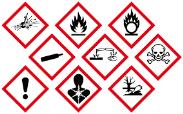
- Characteristics: Any packaging used for products deemed hazardous to human health or the environment, or considered a risk, must be stored separately.
- Preferred Valorization Method: This type of waste must be transported under high-security measures and destroyed through incineration. Storage must be located outdoors or in an open space to prevent the concentration of hazardous gases.
- Forbidden Method: Managing this waste as simple plastic or incinerable waste is strictly prohibited. The packaging is considered contaminated and cannot be recycled.
Type 6 –
Medical:
- Characteristics: Medical waste must follow strict legal procedures. Any waste falling under this category must strictly adhere to relevant national recommendations for handling (proper transport, official bins, and hygienic standards).
- Preferred Valorization Method: Establish a detailed logistics procedure and an official waste management partnership.
- Forbidden Method: Mixing sharp waste and blood-containing materials with household waste, which could endanger housekeeping staff.
2.2. Logistic instructions
Once the final plans are validated, a waste logistics model should be created and shared. Waste flows and collection routes must be considered. CLP has two recommendations:
1. Planning for Each Type of waste: Each type of waste has its own logistic in order to ensure they are treated separately. Special attention needs to be given to Type 5 and Type 6
2. Prioritize Partners with a sustainable focus: The chosen partner must be able to provide the weight of the waste collected, detail the kilometers traveled to transport the waste, and be transparent about the lifecycle of the waste managed. Whenever possible, CLP Resorts should collaborate with partners using trucks that have low CO2 emissions.
2.3.
Reporting instructions
Two templates (Table of Waste Management and Table of Waste Quantity) are provided by CLP CSR Department. Those documents are non-exhaustive and should be adapted to each Resort's location, depending on the country and geographical context.
It is required to carefully report the following information:
- Table 1: Table of Waste Management:
o Needs to be constructed before the opening of the Resort
o Needs to be updated every year
- Table 2: Table of Waste Quantity:
o It is essential that all values are recorded in weight
o Needs to be completed Monthly and shared every year
Although the reporting templates are adaptable, they must meet the expectations described in points 2.1 and 2.2 in terms of operations.
3. TEMPLATES
3.1. Table of Waste Management
Pleaserespectthedivisionandcompletethebluesquaresthatarerelativetoyourownlogistic. Type of waste
Urban incinerable waste
1incinerable
2Recyclable
Urban waste and medical waste posing low risk and can be treated as conventional waste.
Industrial waste unsorted Bulk waste resulting from a technical intervention that is not considered hazardous
Wood Solid wood or engineered wood.
Paper & cardboard Paper and cardboard from documents, post, deliveries or packaging
Glass Bottles, pots, cosmetic packaging or broken items
Plastic Bottles, food packaging, protection film …
PET bottles Plastic that has the official PET packaging
Aluminum Alimentary or beverage empty cans and other aluminum packaging.
Iron all items in any iron materials
Cups of coffee Cups of coffee from coffee machine (Nespresso)
Sector / Department Intermediate Final
(partner & methods)
Treatment (transformation and location)
All
Technical
Technical and Logistic
All
Housekeeping, F&B and Technical
All
All
Technical and F&B
Technical
F&B and Housekeeping 3O
Food waste Organic waste that comes from food waste or meal preparation F&B Oil Comestible oil F&B
Confidential paper Any printed document that contains some personnal data or confidential data
4C
5Hazardous chemical
Hazardous chemical Toxic and chemical products presenting a risk of poisoning or contamination to nature or humans.
Blood waste
6Medical waste
HK, F&B and Medical
Object presenting a risk of contamination containing blood. Medical
Sharped waste Sharped or pointed objects that present a risk of physical injury and infection Medical
Medicine Expired medicine of medications in liquid, pill, or cream forms Medical
3.3. Table of Waste Quantity
Pleasespecifytheunitofweightyouareusingforthereporting.
Urban Waste
Type 1 Incinerable Waste
Type 2 Wood
Type 2 Paper - Cardboard
Type 2 Glass
Type 3 Organic
Type 2 Plastics
Type 2 Iron
Type 2 Aluminium
Type 2 PET
Type 3 Oil
Type 4 Confidential Paper
Type 2 Coffee Cups
Type 2 Electronical Waste
Type 2 Lights & Neons
Type 1 Industrial Waste
Medical and Hazardous Waste
Type 5 Hazardous Waste
Type 6 Blood Waste
Type 6 Sharped Waste