
HOW LONG DOES SCIATICA
TAKE TO HEAL? REALISTIC
TIMELINES AND WHAT HELPS RECOVERY

INTRODUCTION
If you’re dealing with sciatica right now, one of the first things you probably want to know is: how long is this going to last?
It’s a fair question. When you’re struggling with shooting pain down your leg, pins and needles, or deep ache in your lower back and buttocks, you want a clear answer. The truth is, sciatica recovery looks different for everyone. Some people feel a noticeable shift within a few weeks.
Others deal with it for months. And if you’ve had it for a long time, you might be wondering whether it will ever fully go away.
I’ve worked with hundreds of people with sciatica and sciatica-like symptoms here in Milton Keynes, and I can tell you this: most people do get better. The timeline depends on a few things, and that’s exactly what we’ll go through in this presentation.

WHAT IS SCIATICA?
Sciatica isn’t a condition on its own. It’s a set of symptoms caused by irritation or compression of the sciatic nerve, the longest nerve in your body, which runs from your lower back through your buttock and down each leg.
When something presses on or irritates that nerve, you can get:
• Sharp or burning pain down the back of one leg
• Pins and needles or numbness in the leg or foot
• A deep ache in the buttock or hip
• Weakness or heaviness in the affected leg
• Pain that gets worse when sitting for long periods
The most common causes are disc herniations (where a disc in the spine bulges and compresses a nerve), piriformis syndrome (where a tight muscle in the buttock compresses a nerve), and trigger points in the gluteal muscles that can mimic sciatica symptoms.
Here’s something that often surprises people: only about 8-10% of backrelated problems are truly nerve-related (Stafford et al., 2007). Many cases of “sciatica” are actually muscular, which means they respond well to the right hands-on treatment.
You can read more about how sciatica works in our full guide:
REALISTIC HEALING TIMELINES: WHAT DOES THE RESEARCH SAY?
One of the most helpful things I can do is give you a realistic picture of what to expect. Here’s a breakdown based on published research and what we see in the clinic:
ACUTE PHASE (0-6 WEEKS)
This is where most people see the biggest changes. Inflammation starts to settle, pain begins to ease, and movement gradually comes back. A clinical review by Valat et al. (2010), published in Best Practice & Research Clinical Rheumatology, found that most acute sciatica episodes improve within 4-6 weeks with conservative (non-surgical) management. We see this pattern a lot in the clinic. People who come in early and start treatment within the first few weeks tend to respond well and recover faster.
SUB-ACUTE PHASE (6-12 WEEKS)
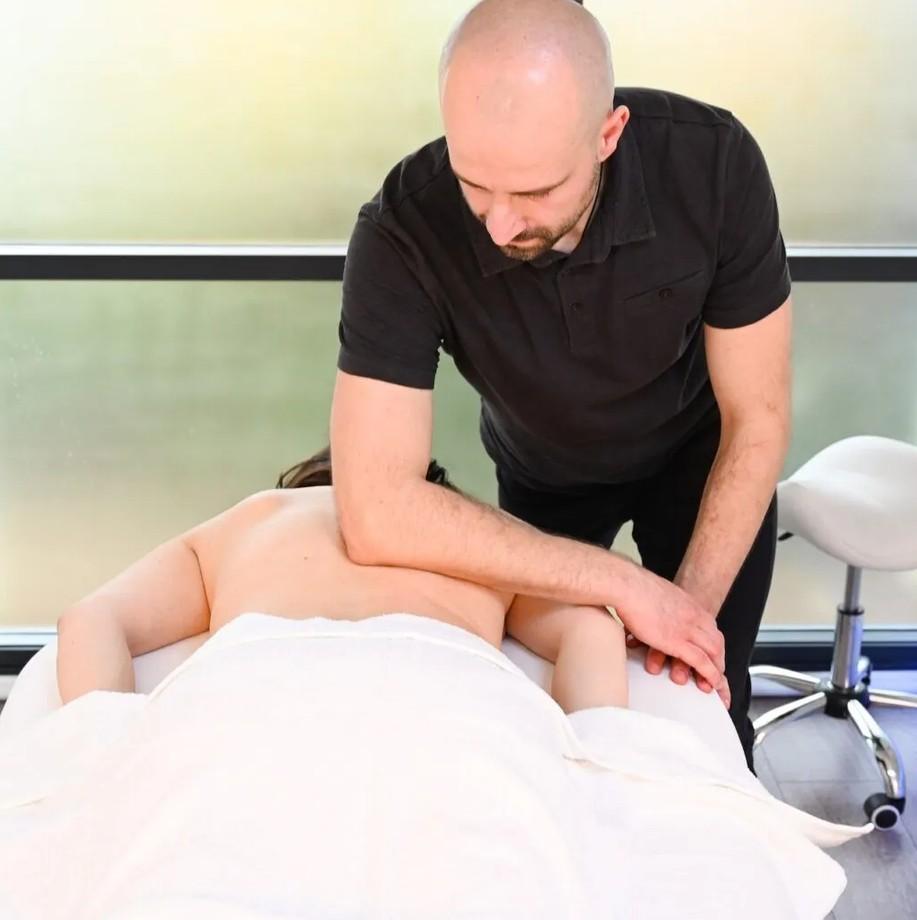
This is the deeper recovery stage. The sharp pain may have settled, but stiffness, tightness, and occasional flare-ups can linger. Muscles that have been compensating start to rebalance. This phase is where clinical massage and targeted rehab exercises make the biggest difference, helping your body fully recover rather than getting stuck at “80% better.”
CHRONIC OR PERSISTENT (12+ WEEKS)
Fewer people still have symptoms after three months. Valat et al. (2010) found that around 20-30% of people still report some pain at one year, which shows why correct treatment matters rather than just “waiting it out.”

FULL RESOLUTION (UP TO 12 MONTHS)
A landmark study published in the New England Journal of Medicine (Peul et al., 2007) followed 283 people with disc-related sciatica over a year. The results showed that around 95% of people recovered within 12 months, regardless of whether they had surgery. The surgery group felt better faster in the first few weeks, but the conservative treatment group caught up over time.
That’s encouraging news. It tells us the body has a strong ability to heal, and the right treatment and support can help that process along.
WHAT AFFECTS HOW FAST YOU RECOVER?
Not everyone heals at the same pace. From what we see in the clinic and from what the research shows, these are the biggest factors: How long have you had symptoms before starting treatment? The sooner you get help, the faster you tend to recover. Waiting months before seeking treatment can mean a longer road back.
Whether you stay gently active or rest completely. Total bed rest often makes things worse. Gentle movement, walking, and staying as active as you comfortably can tend to speed things up. Muscle tension patterns and trigger points. Tight, knotted areas in the glutes, lower back, and hips can keep the nerve irritated long after the original cause has settled. These need targeted treatment to release properly. Your posture and daily habits. Sitting at a desk for hours, long drives, and sleeping in awkward positions—all of these can slow recovery if they aren’t addressed. Stress, anxiety, and fear of movement. This is a big one. Research consistently shows that psychological factors like stress and worry about pain can slow healing down. When your nervous system is on high alert, your muscles stay tense and your pain sensitivity increases.
Compliance with aftercare exercises. The people who do their stretches and exercises between sessions tend to recover noticeably faster than those who rely on treatment alone. The underlying cause. A disc issue, piriformis syndrome, and muscular trigger points each have slightly different recovery timelines. Getting the right assessment matters.

KEY TAKEAWAYS
• Most acute sciatica episodes improve within 4-6 weeks, with research showing that around 95% of people recover within 12 months (Peul et al., 2007).
• Recovery speed depends on how early you start treatment, your activity levels, stress, posture habits, and the underlying cause.
• Clinical massage can help by releasing muscle tension, addressing trigger points, and reducing nerve irritation, especially when combined with exercise and self-care.
• At Clinical Massage MK in Milton Keynes, we work with people to identify the root cause of their sciatica and create a personalised treatment plan to help them feel like themselves again.
• If you’ve been putting off getting help, the research is detailed: earlier treatment tends to mean faster recovery.